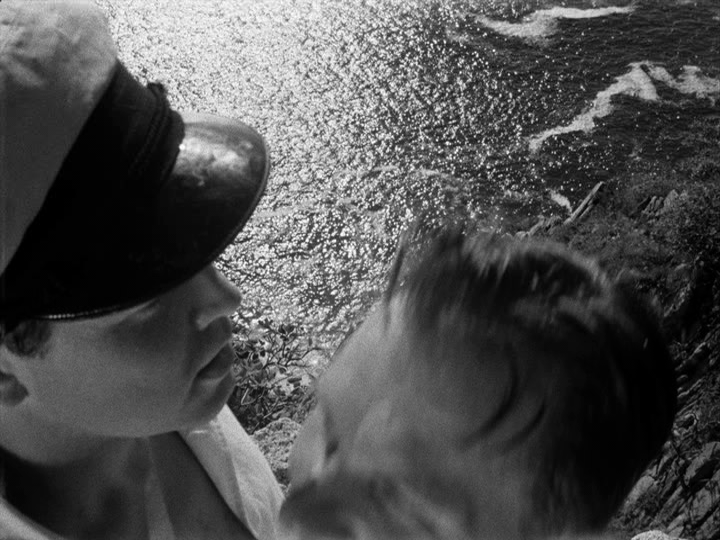
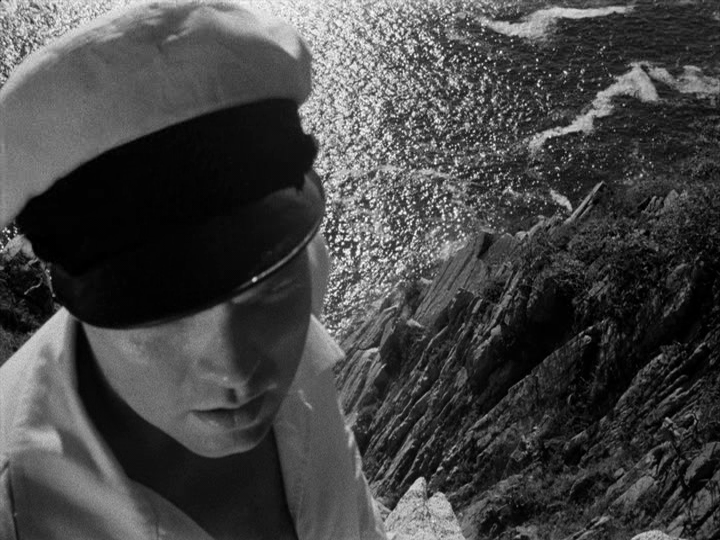
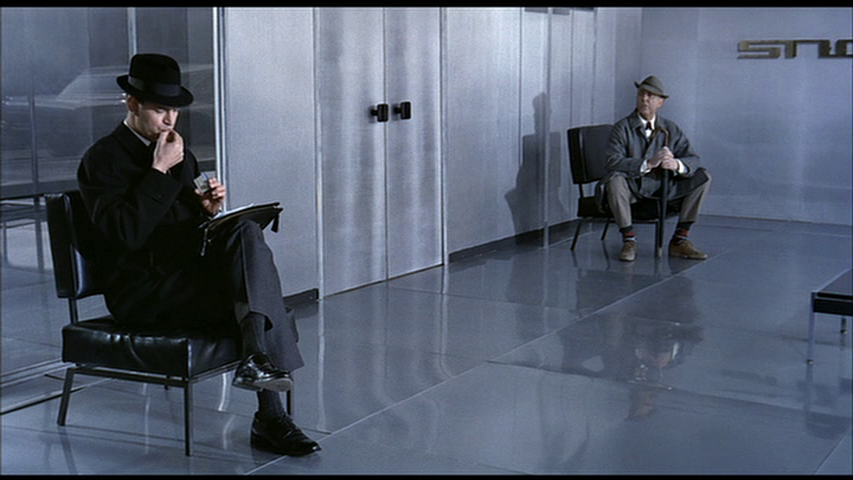
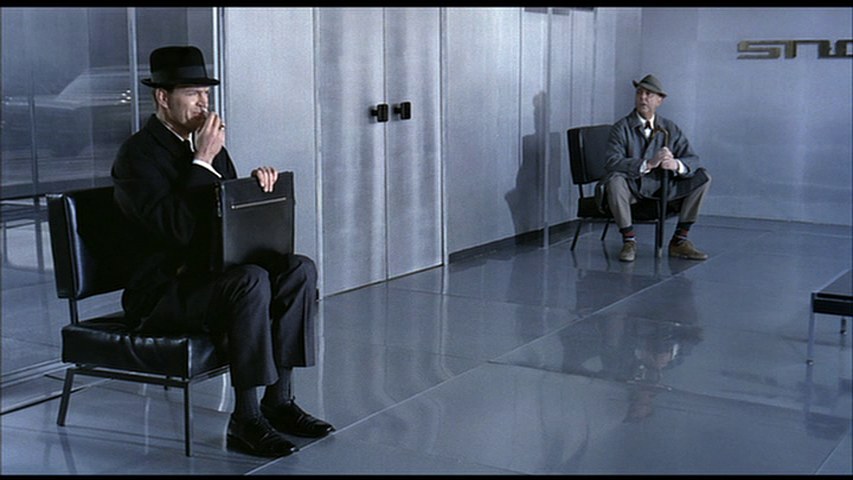
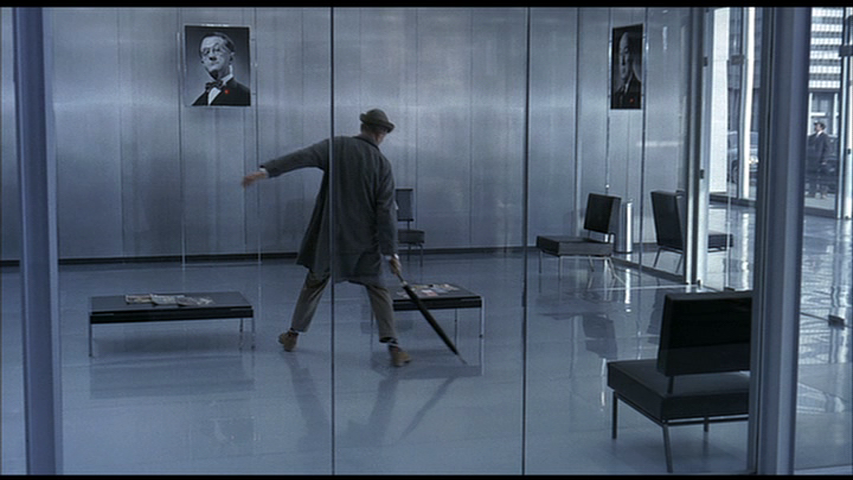
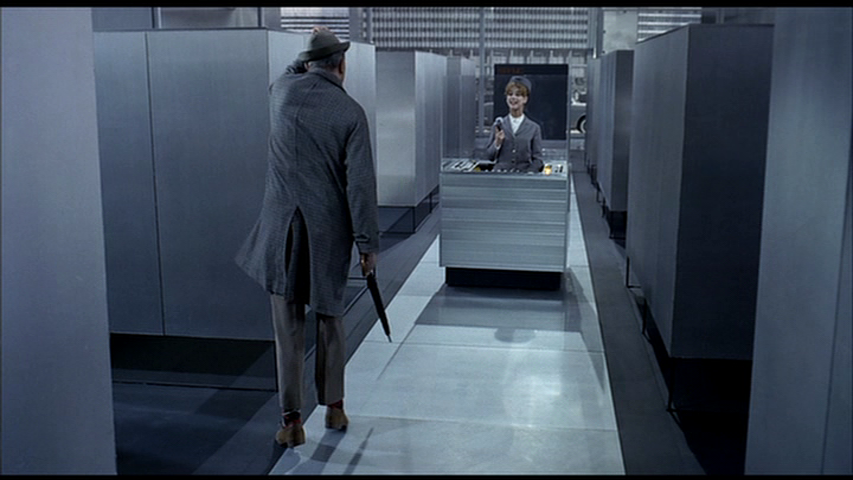
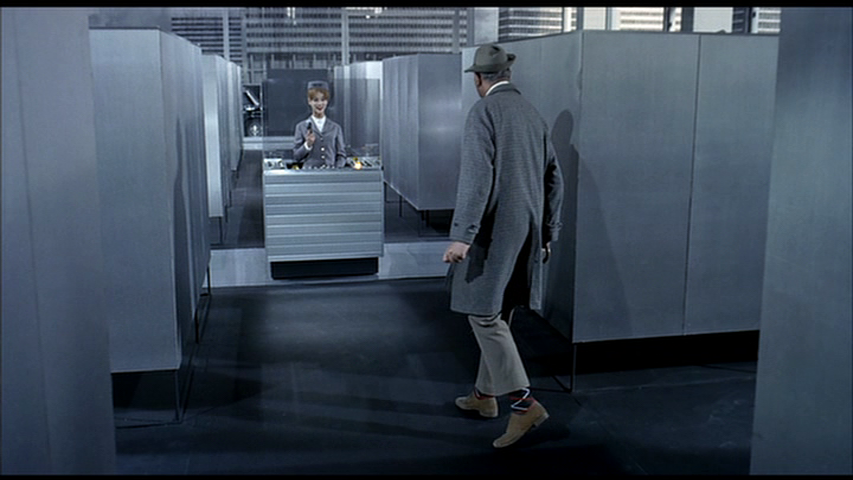
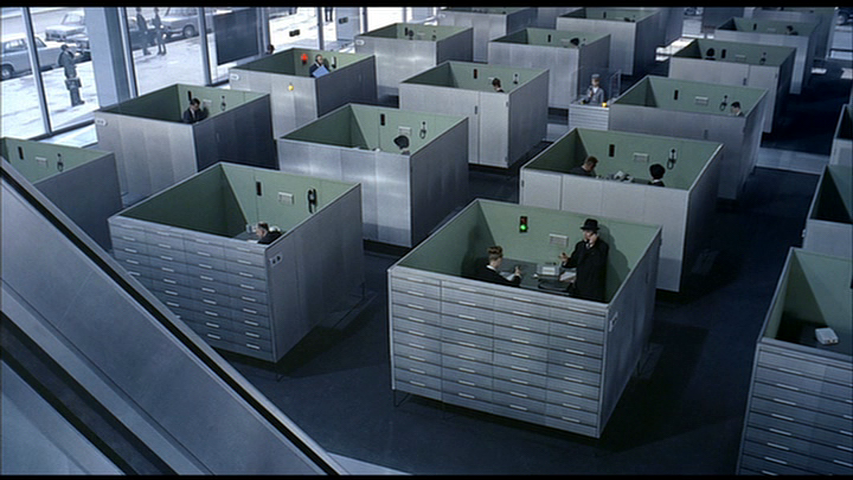
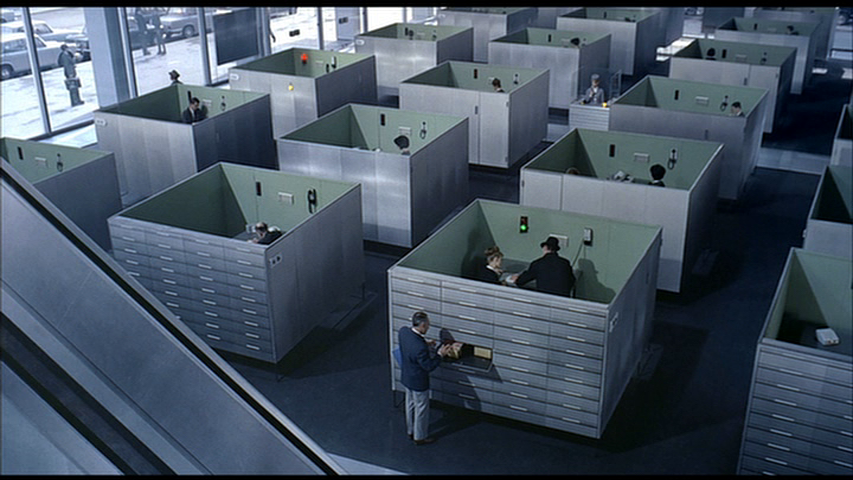
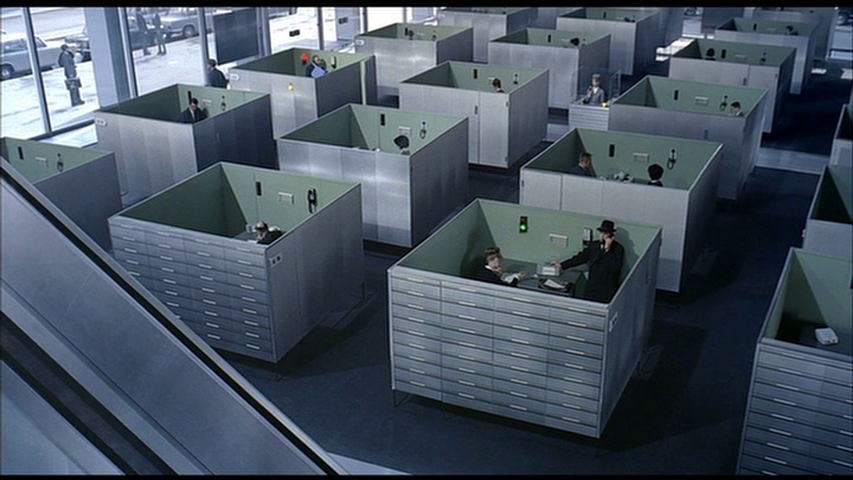
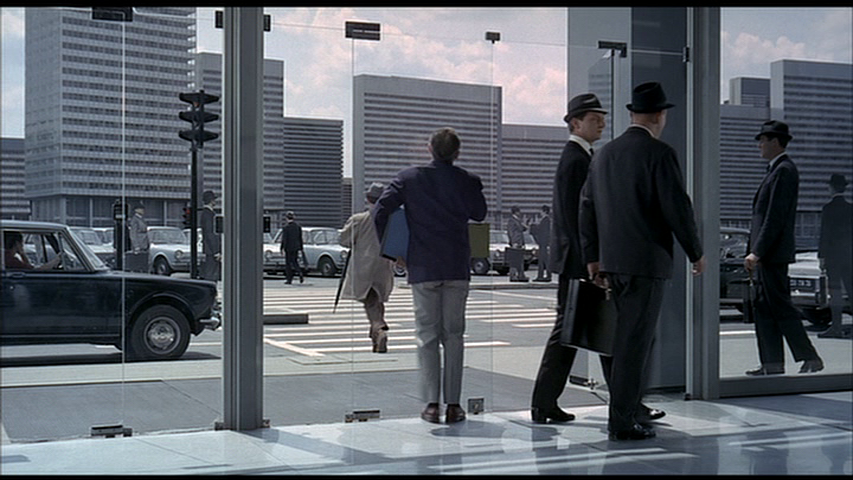
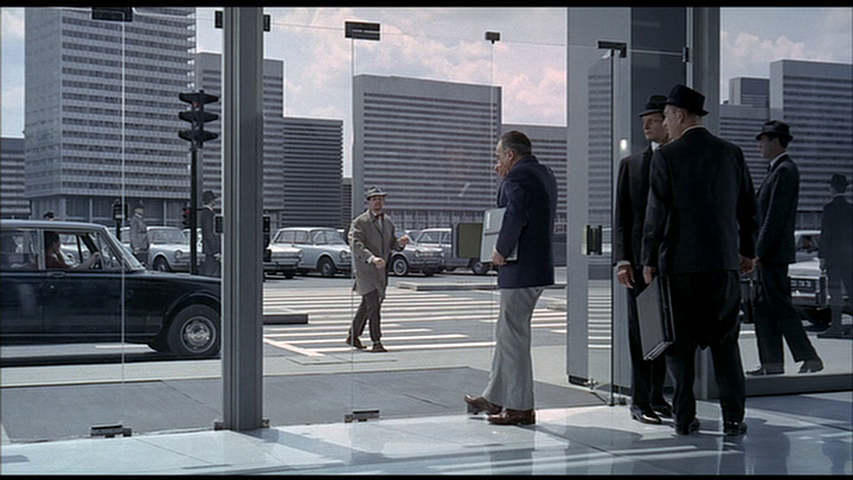
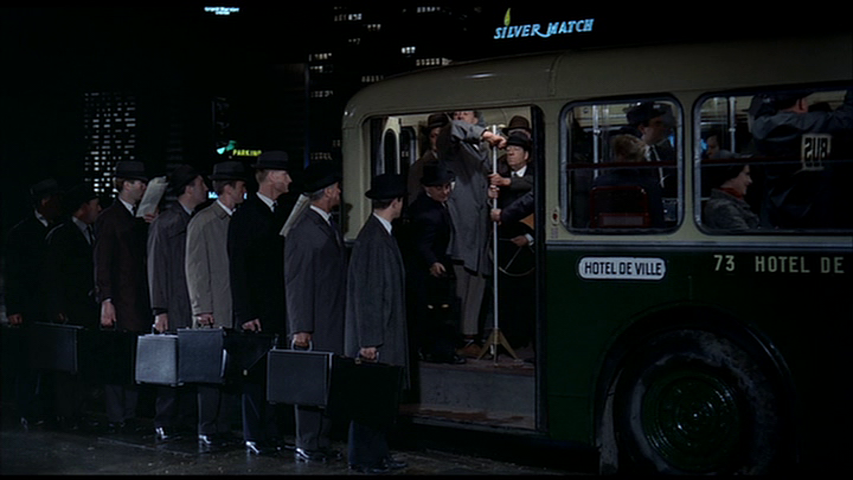
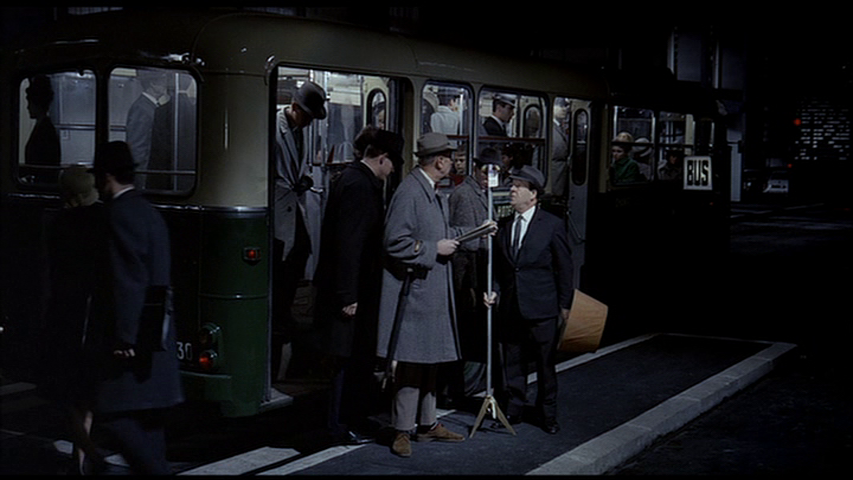
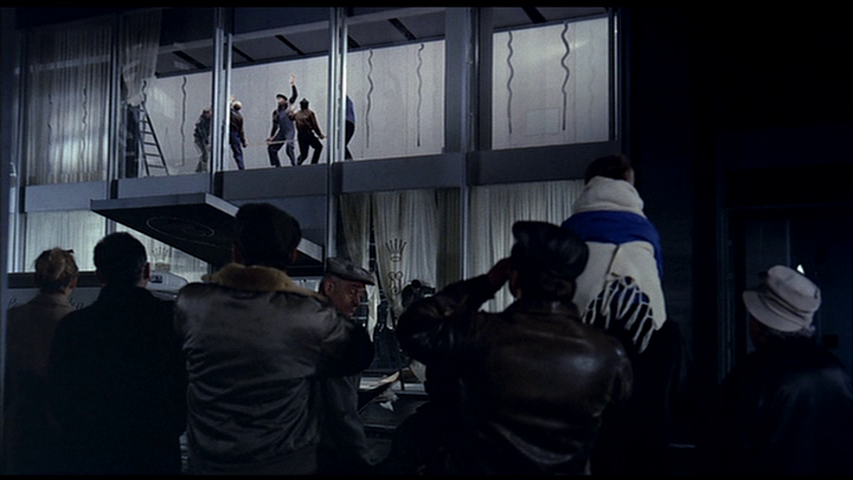
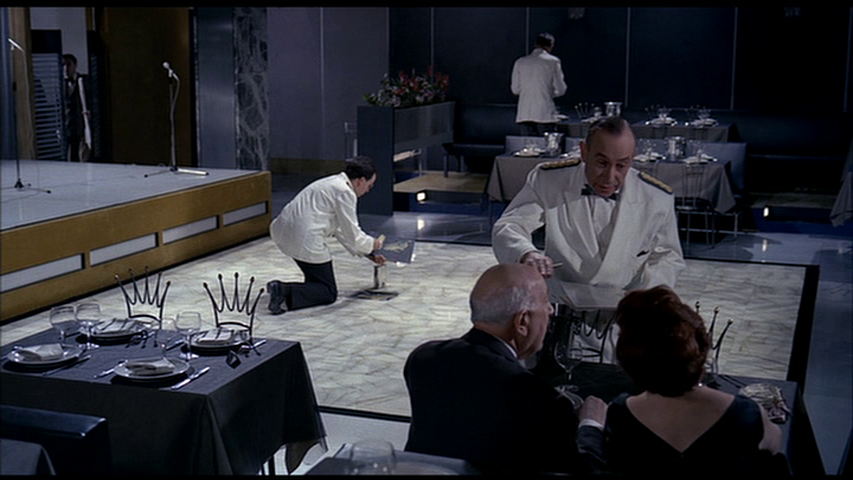
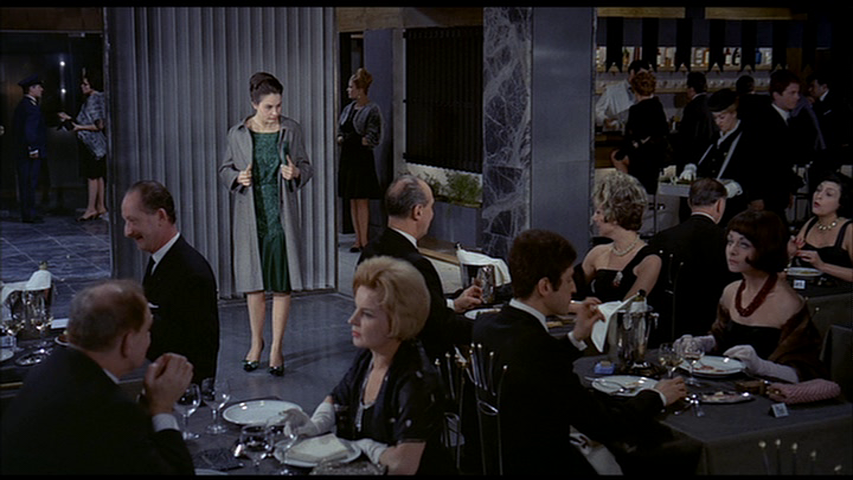
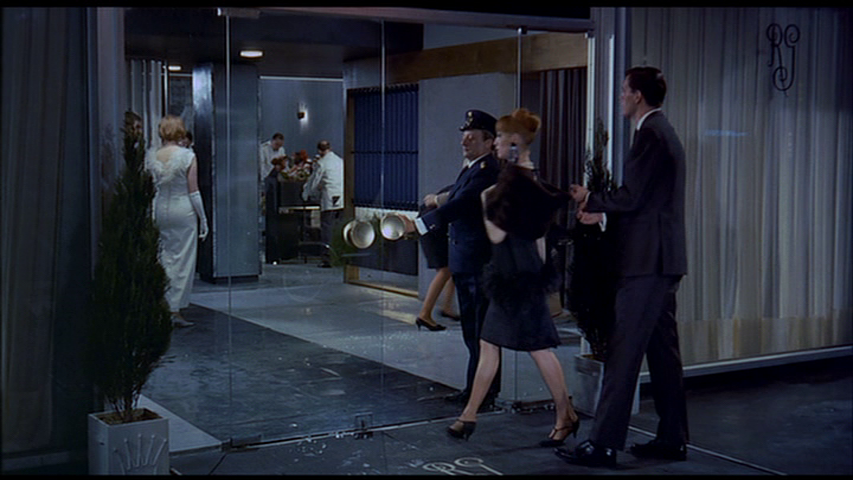
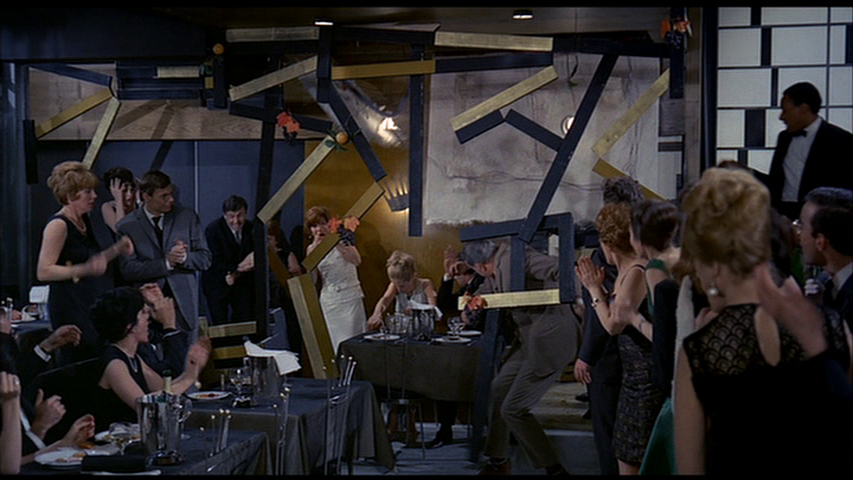
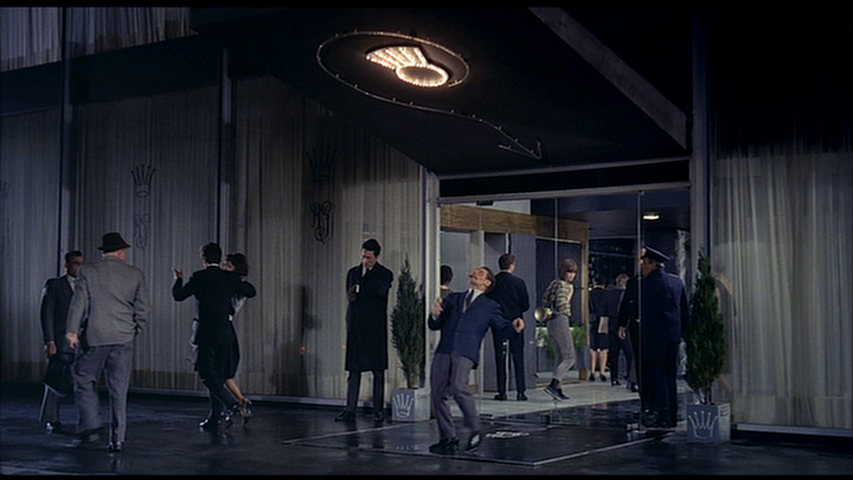
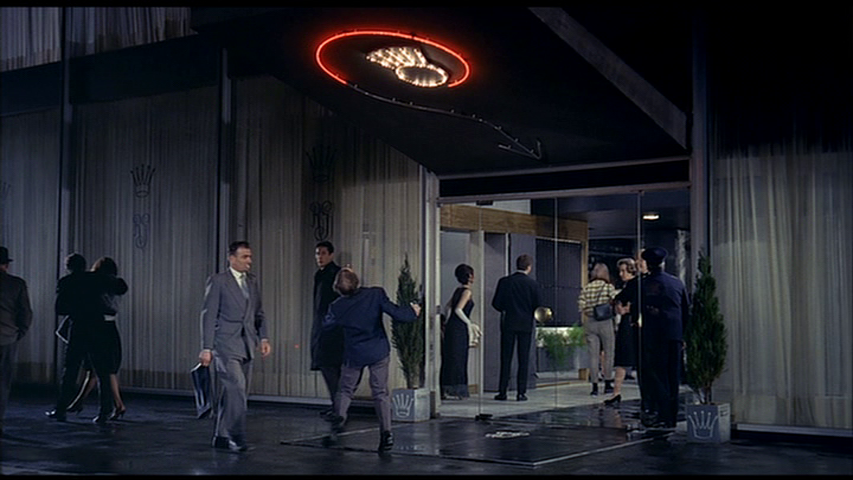
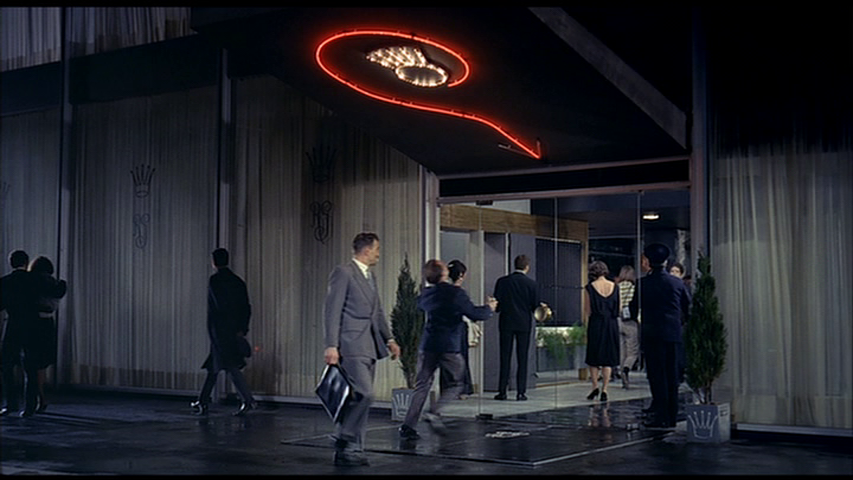
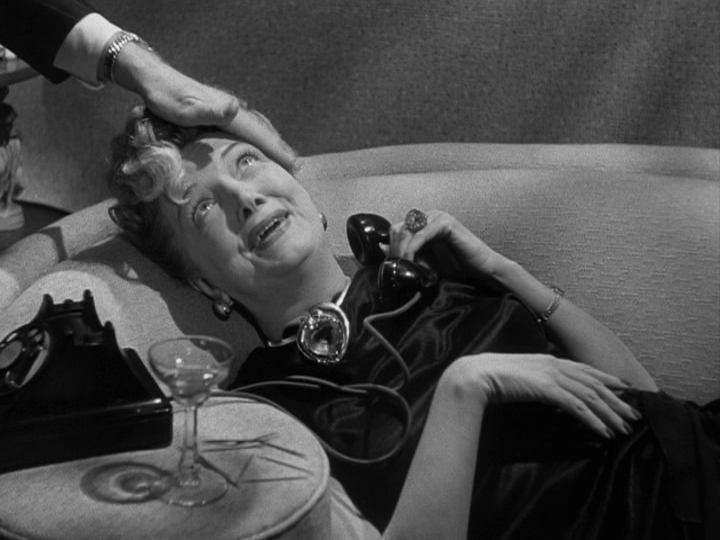
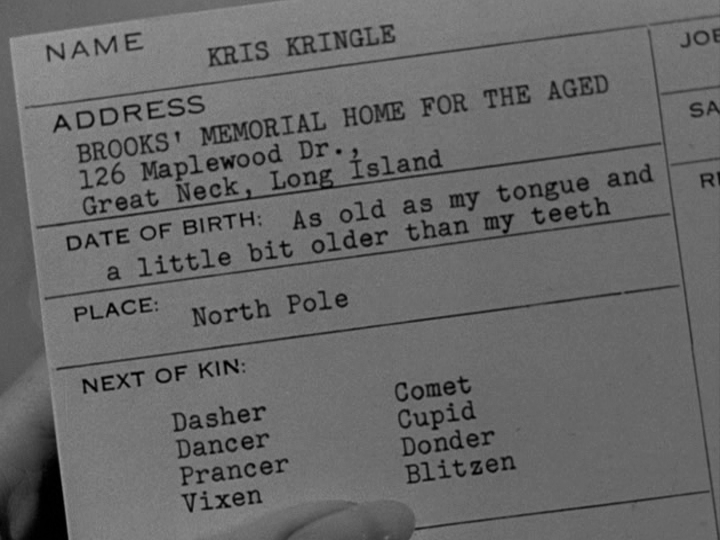
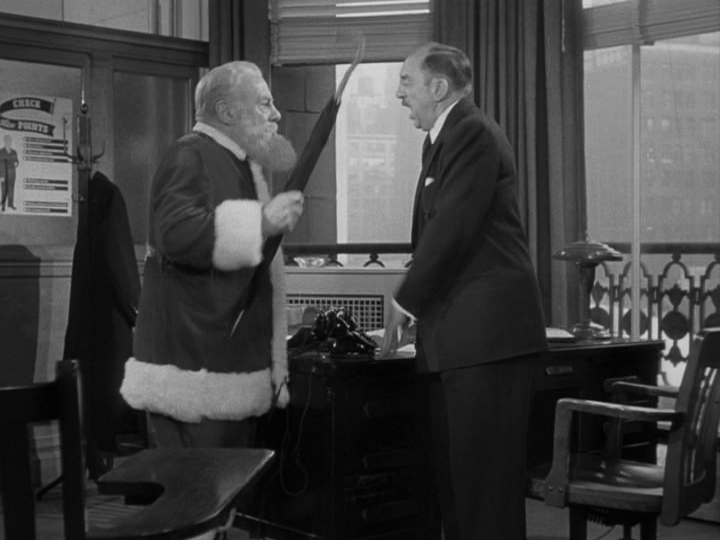
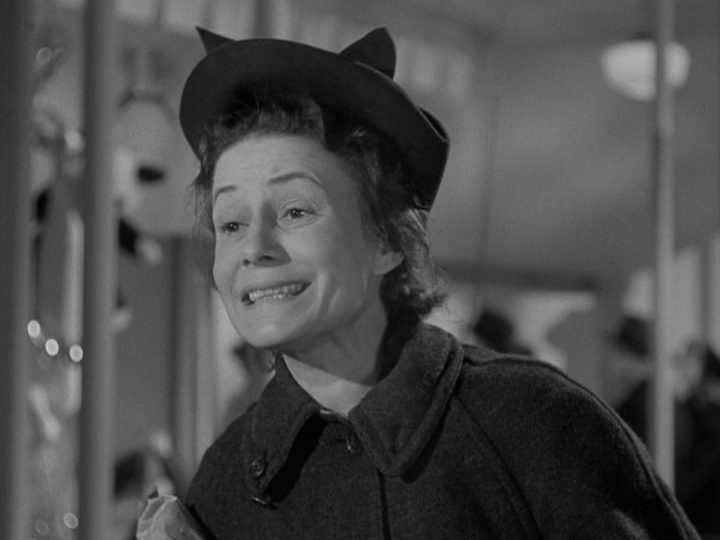
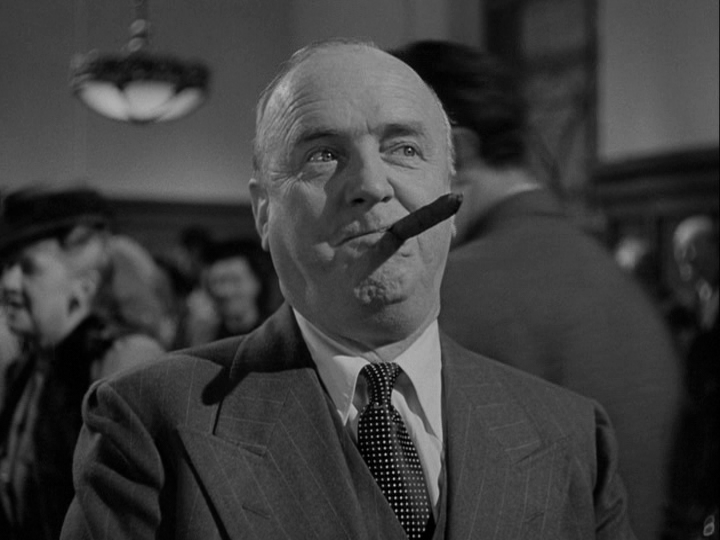
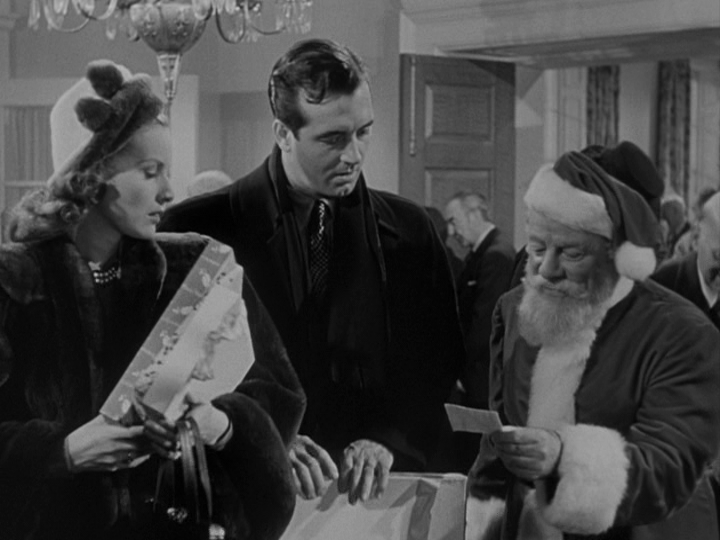
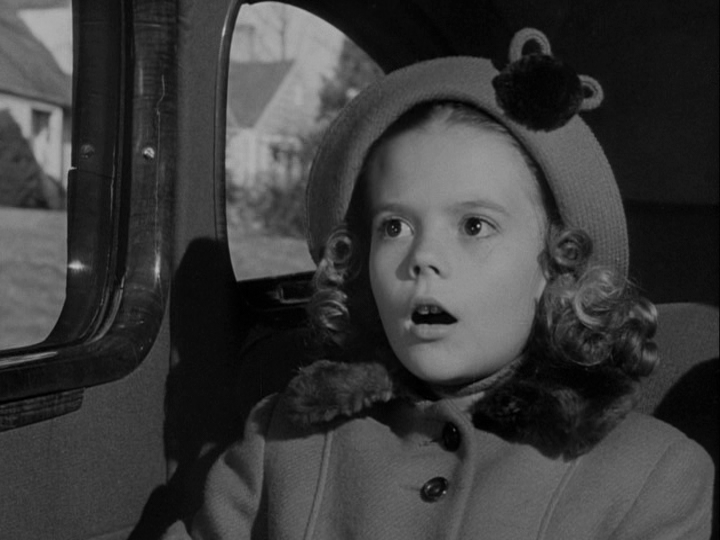
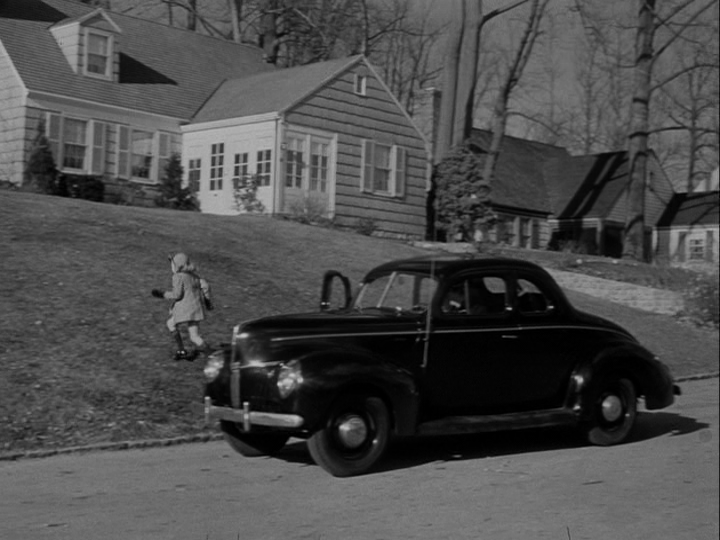
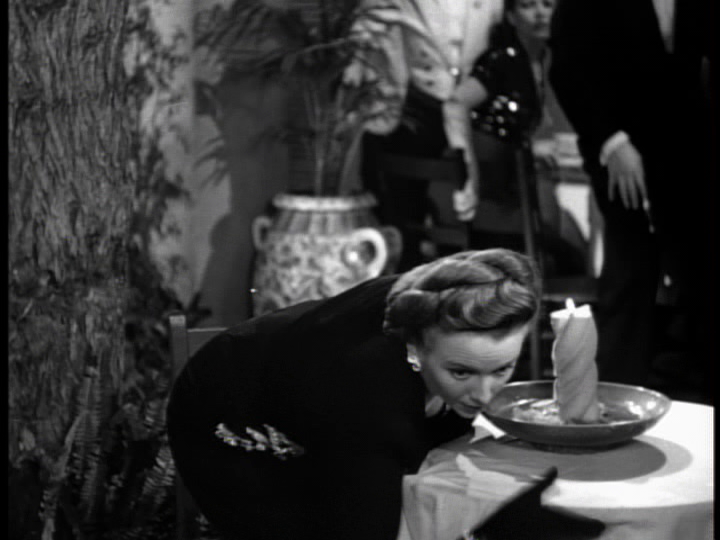
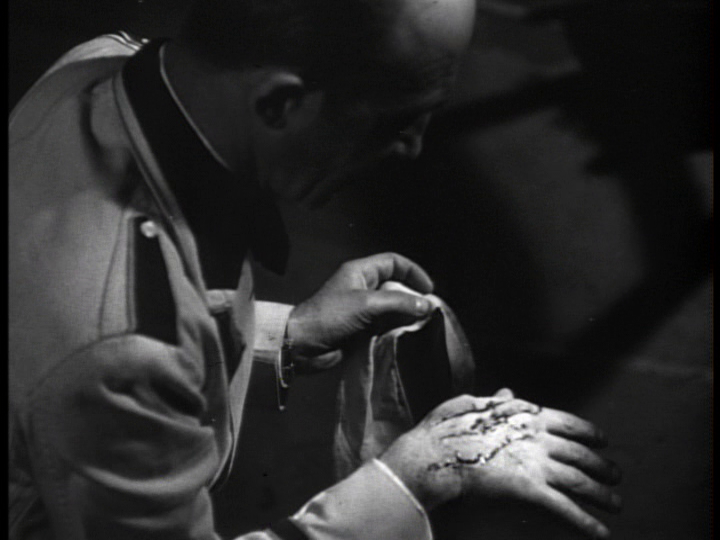
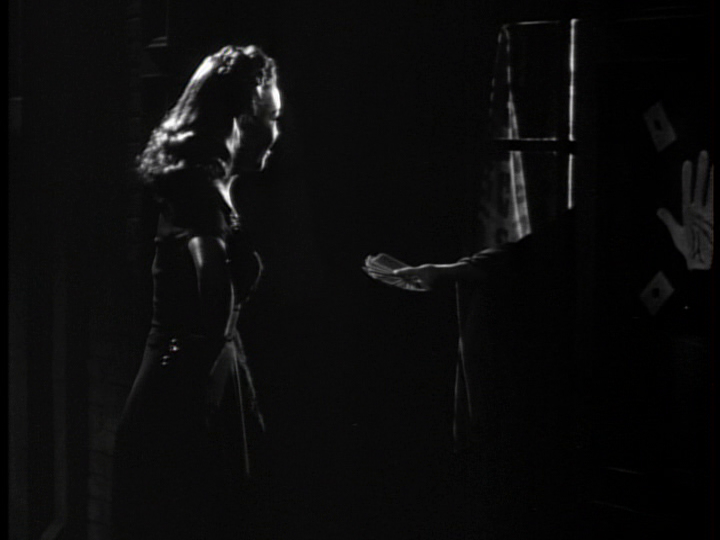
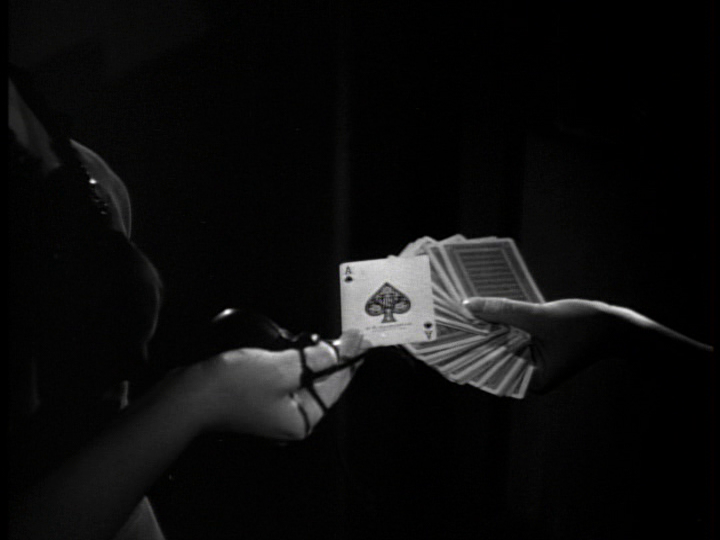
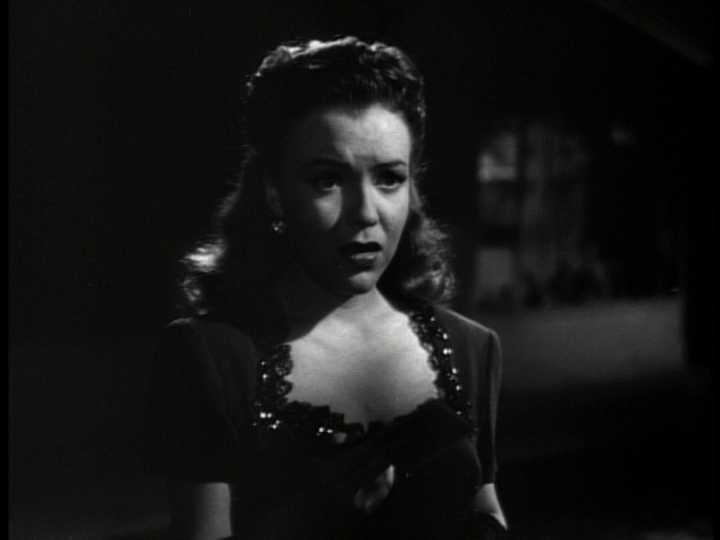
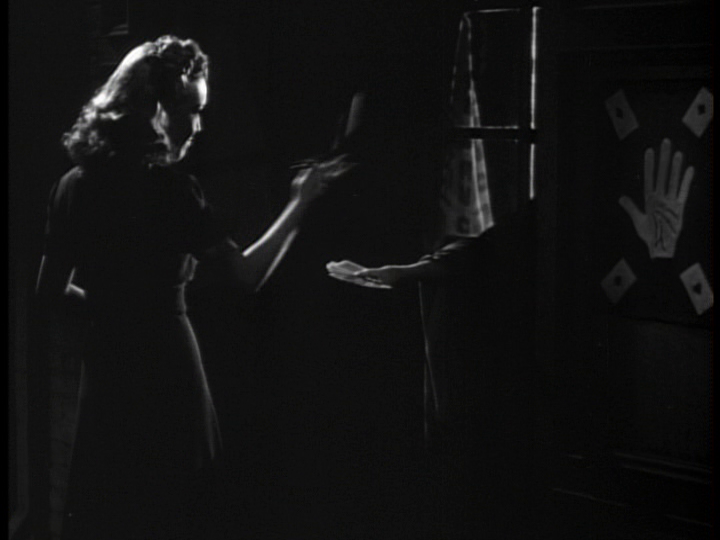
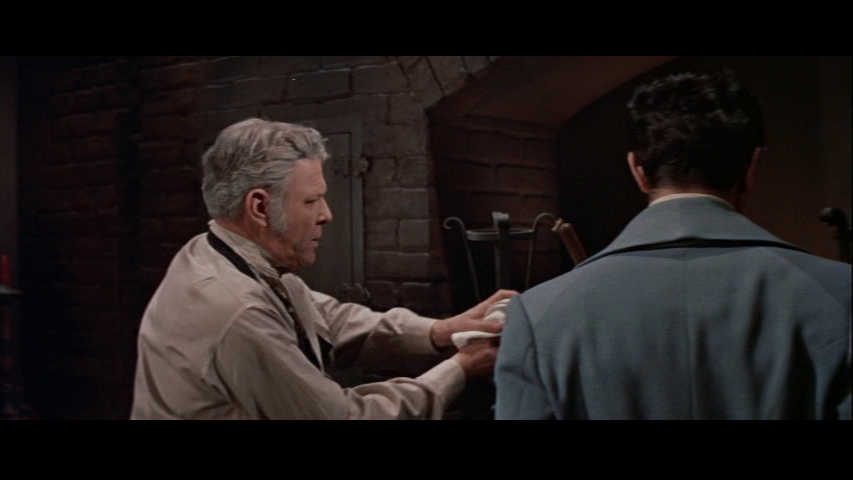
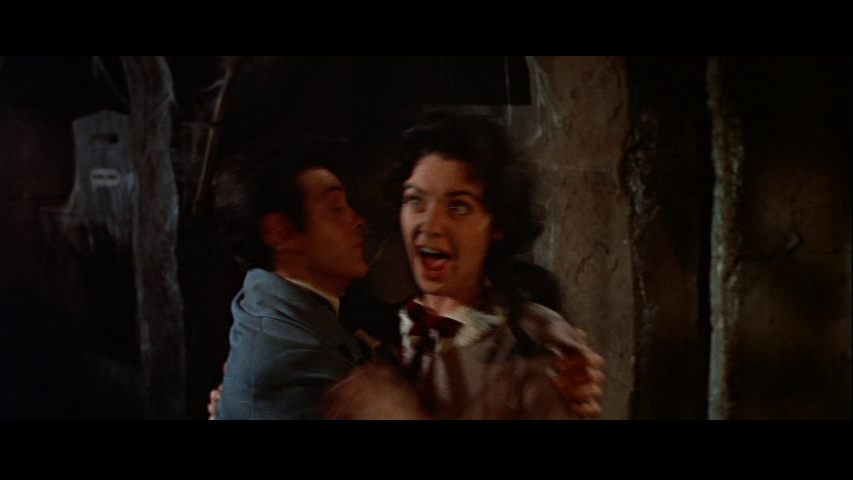
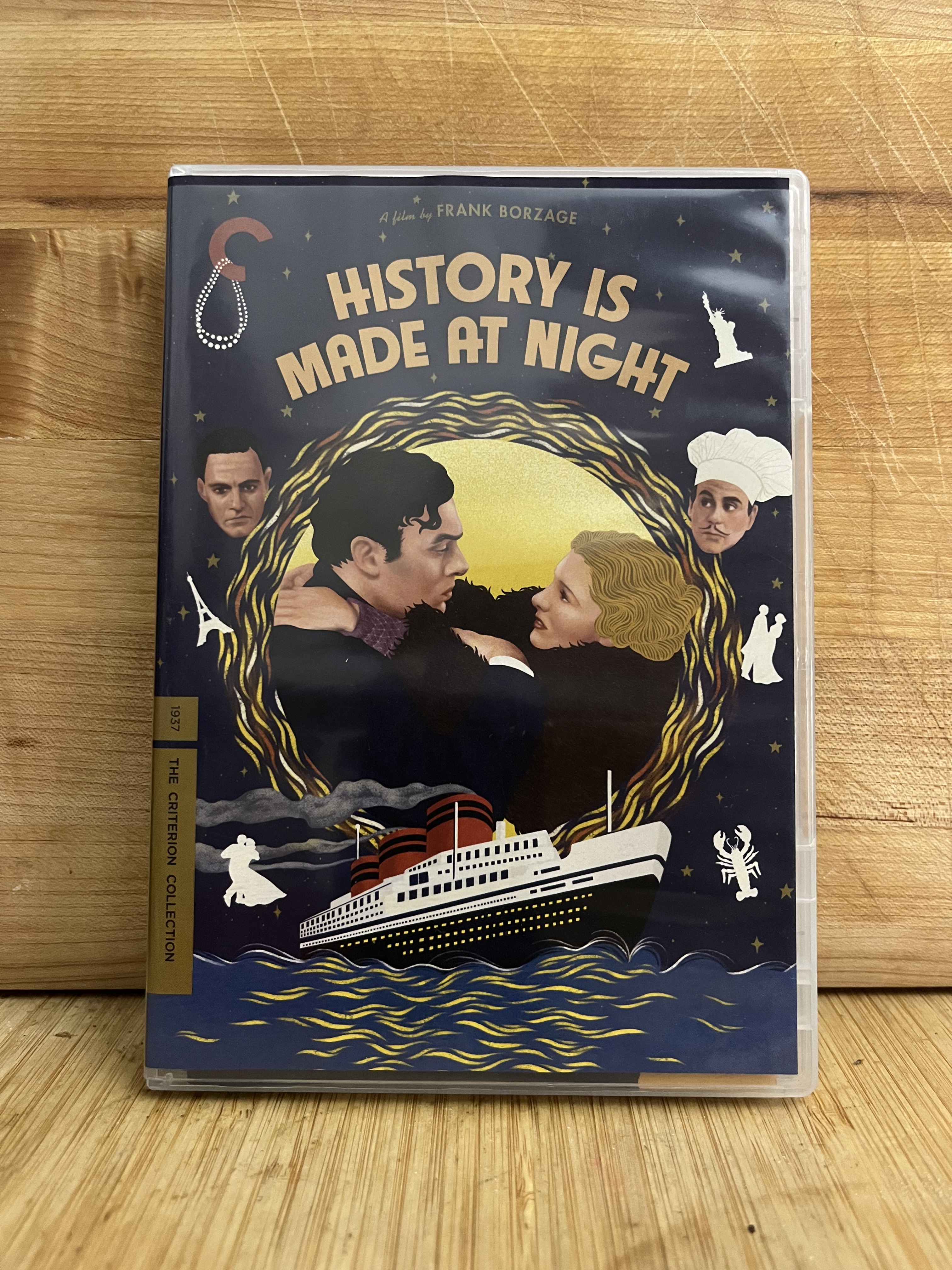
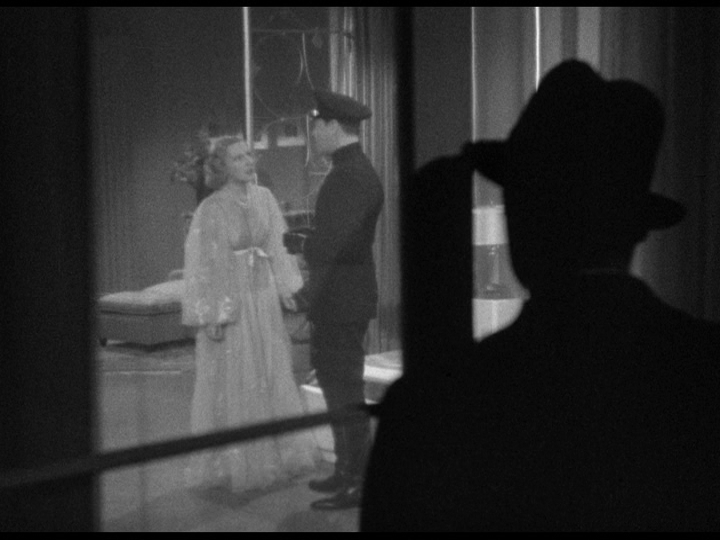
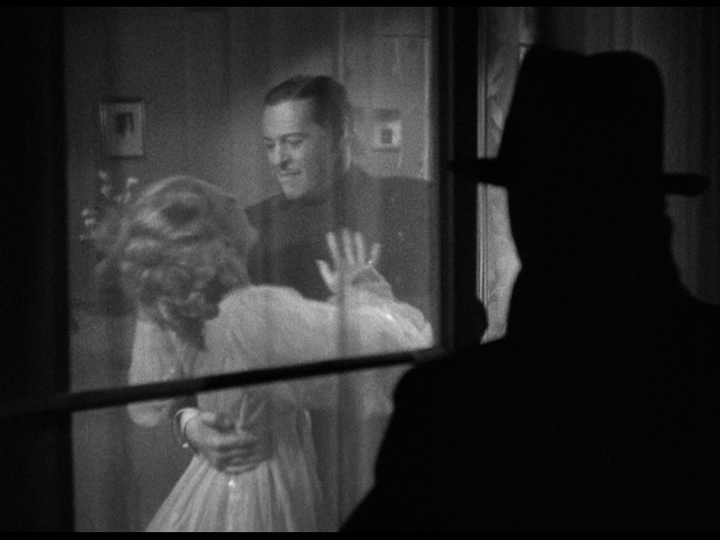
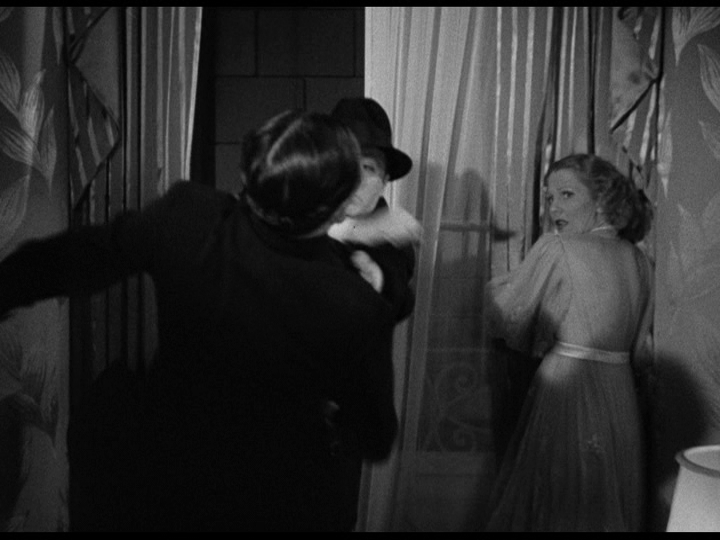
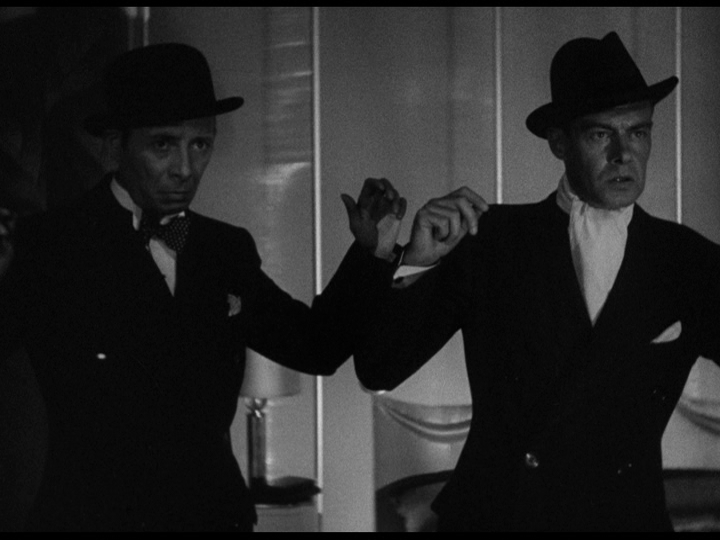
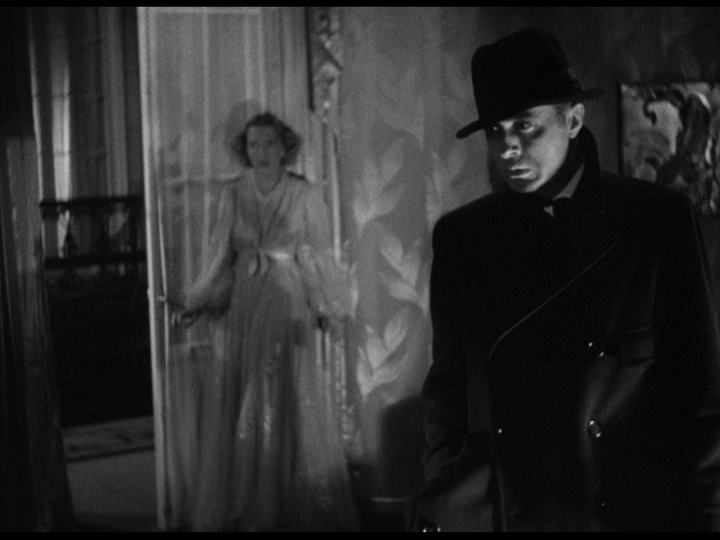
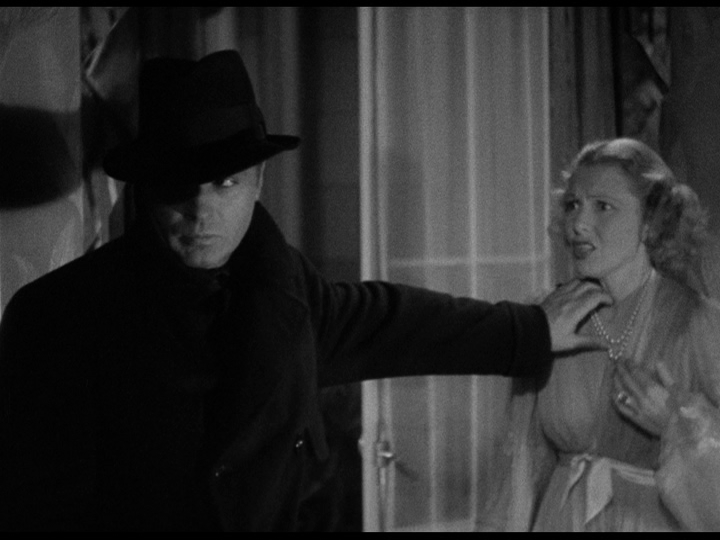
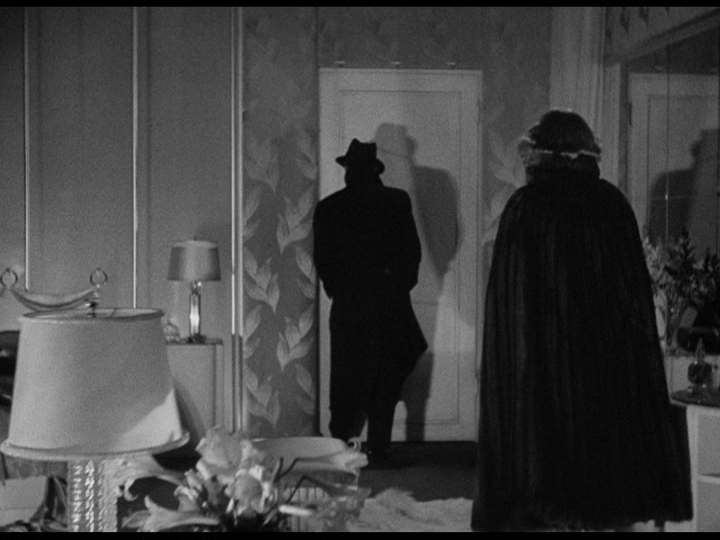
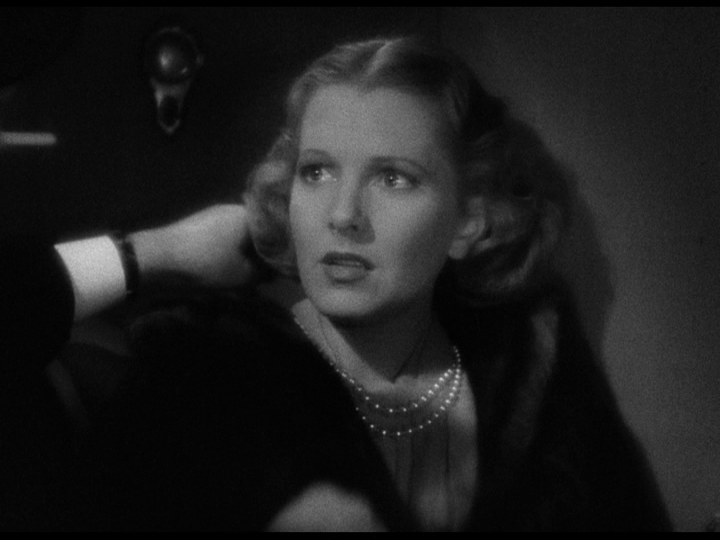
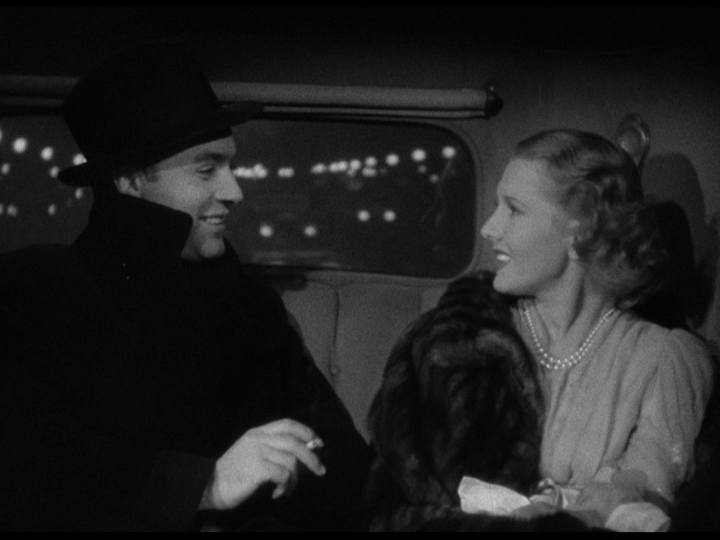
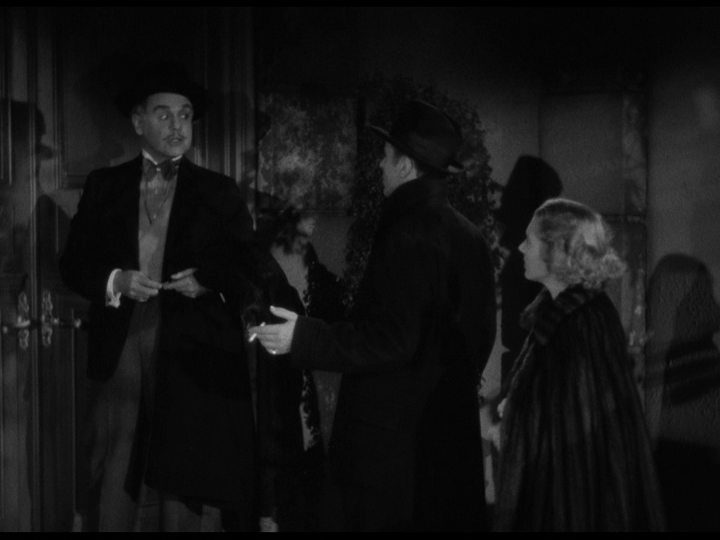
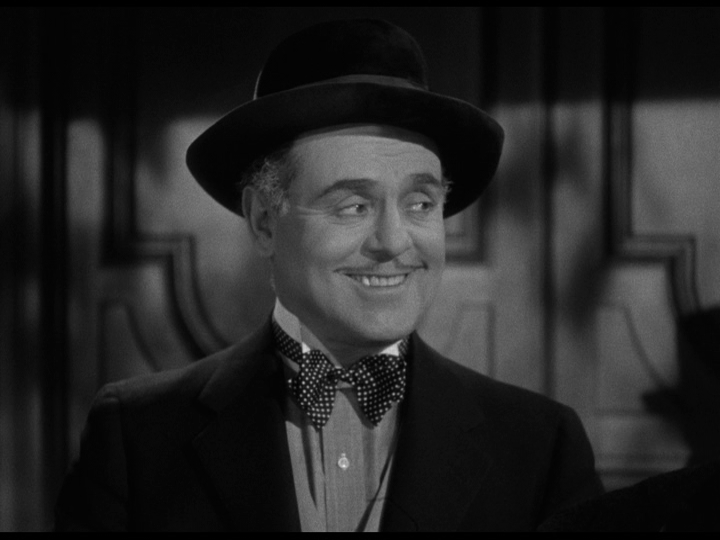
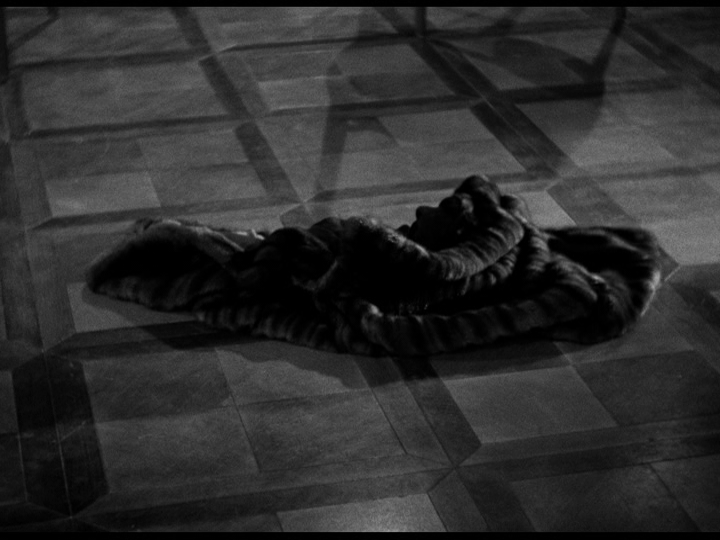
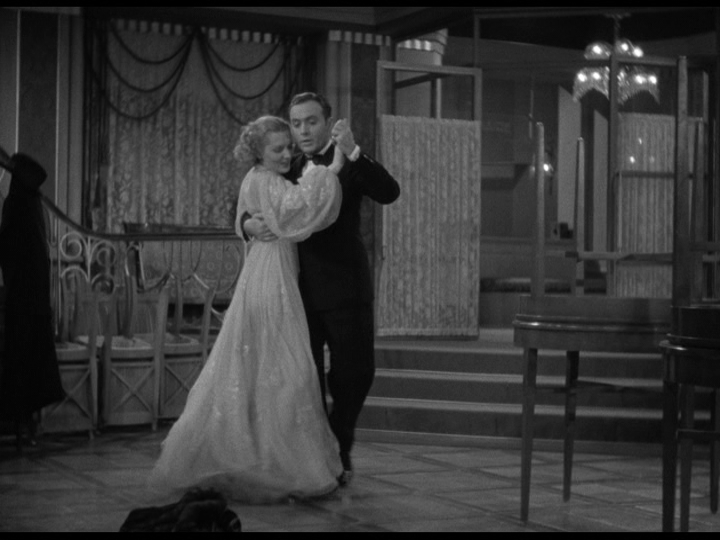
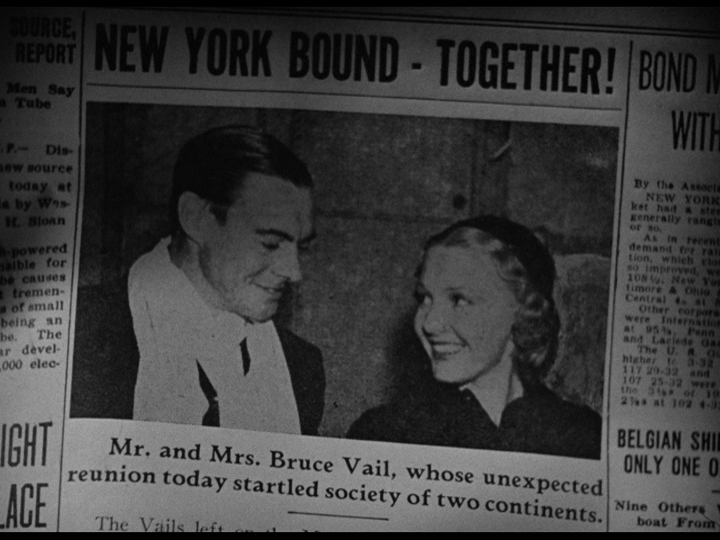
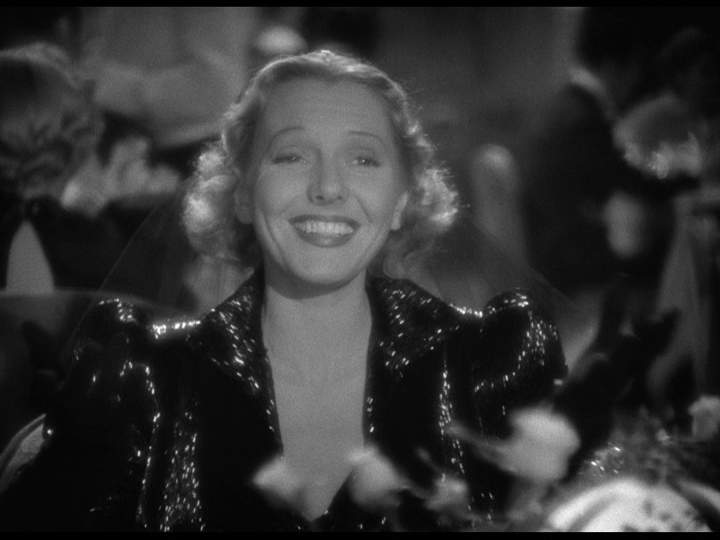
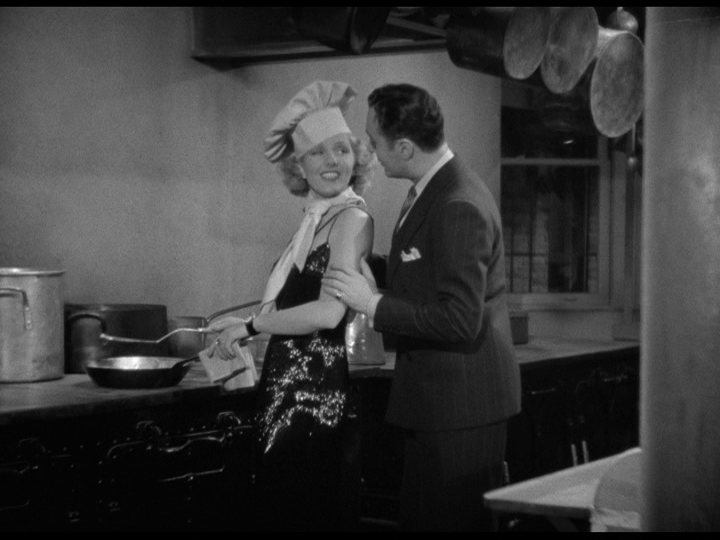
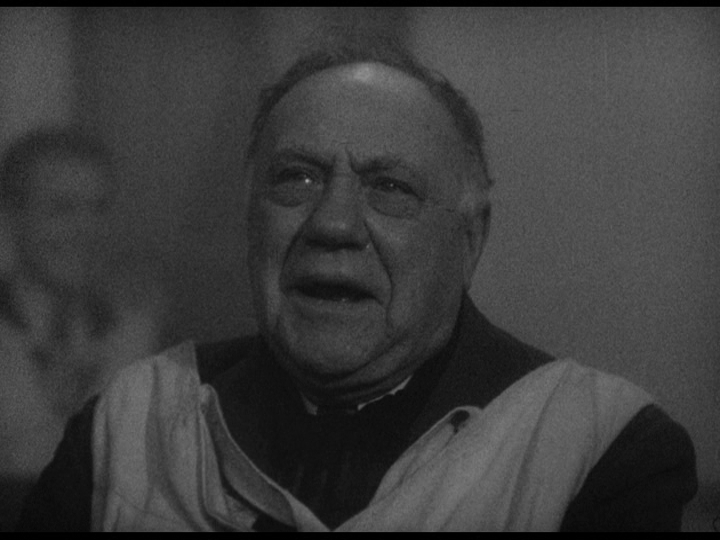
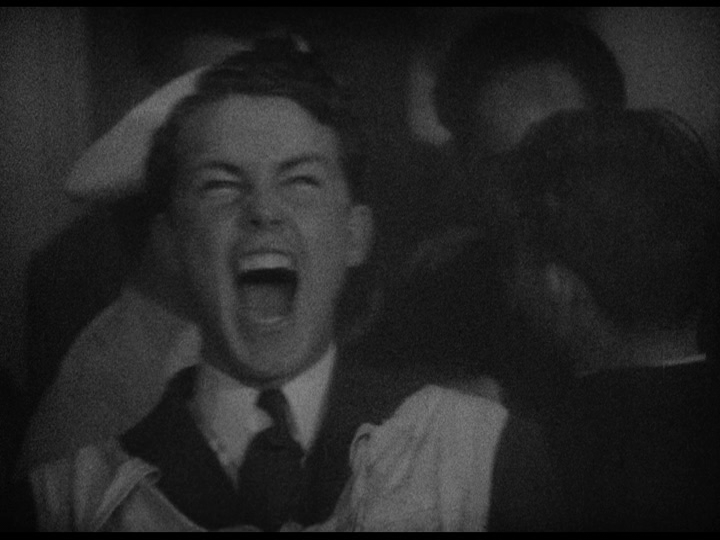
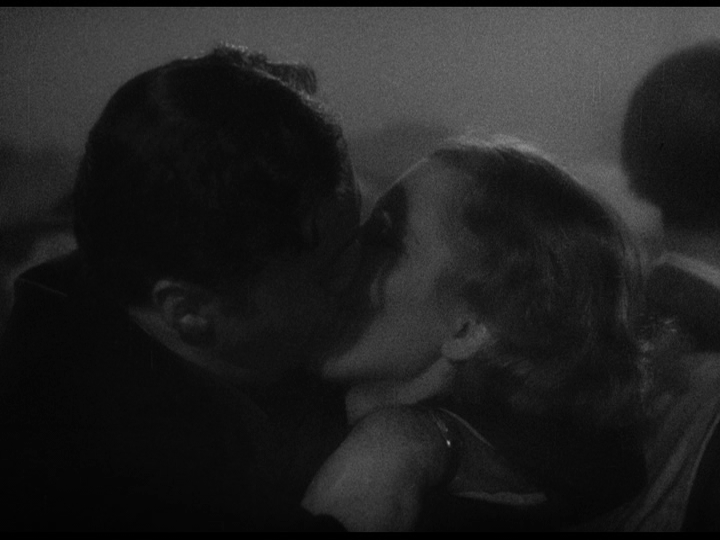
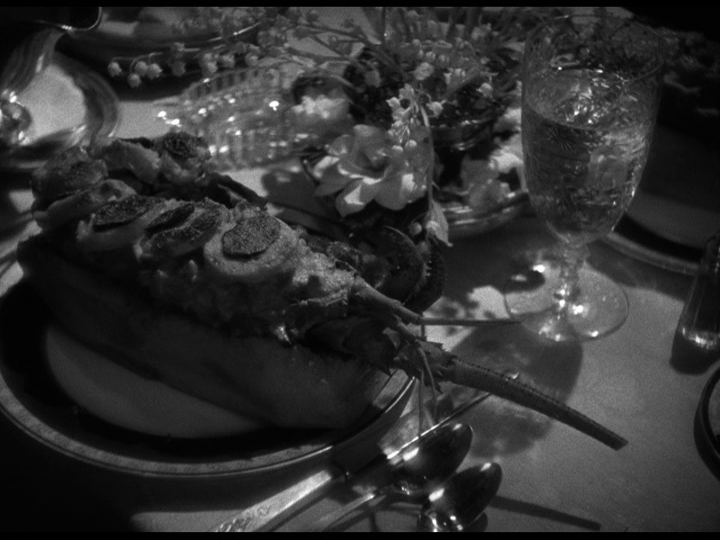
April, 2025 Drink & a Movie: Chapuline + Black Sheep

I didn’t conceive of it as such, but my “Drink & a Movie” series is a fair approximation of my personal cinema and cocktail canons because (predictably, in retrospect) I have mostly chosen to write about my “go-to” directors and ingredients and scenes and techniques, the ones I’ve spent the most time thinking about and which have therefore played the biggest roles in shaping my point of view as a cinephile and drinker. My tastes are constantly evolving, though, and to conclude my three-post-long celebration of crème de cacao I’ve selected two new discoveries from the past few years.

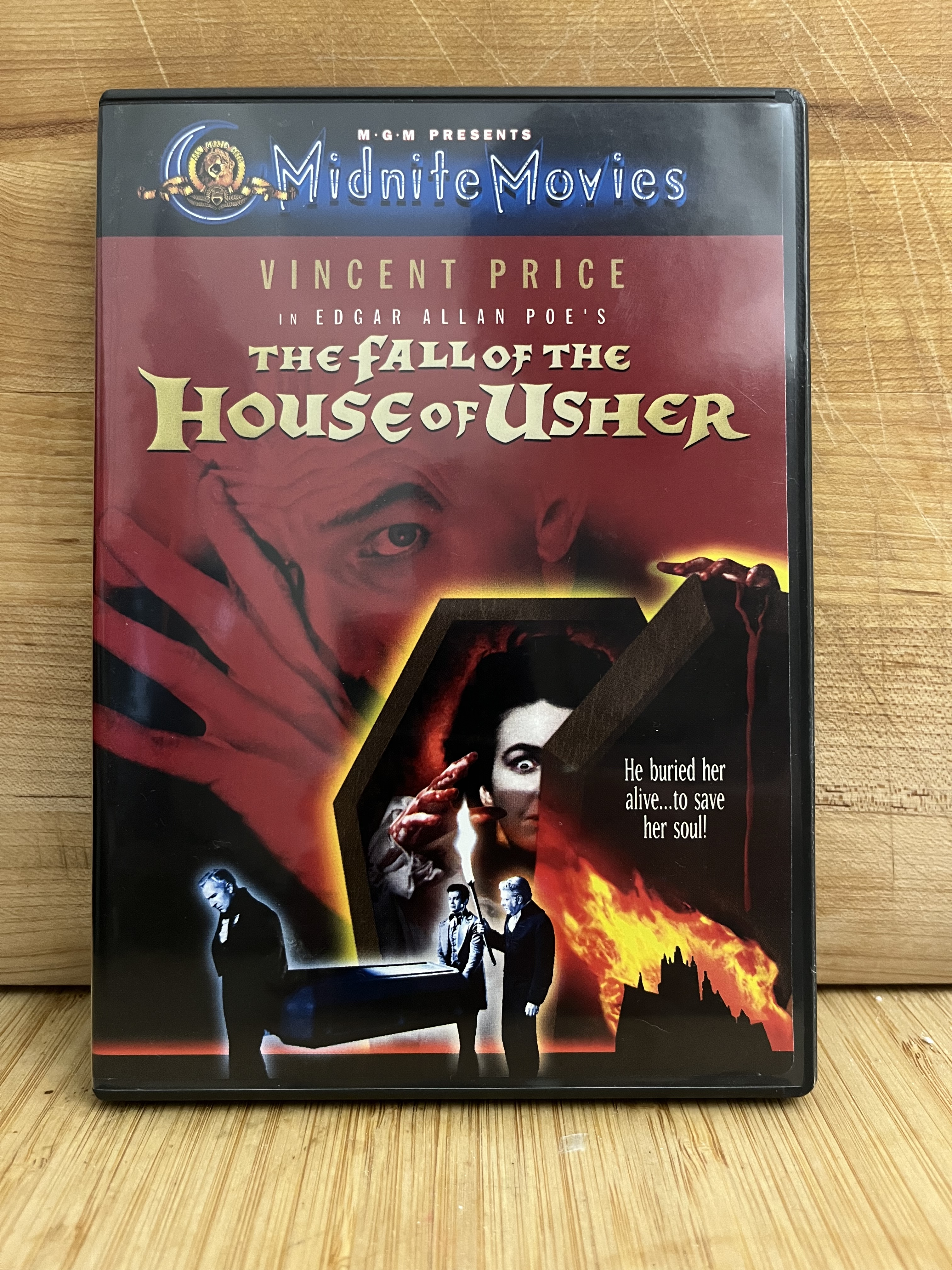
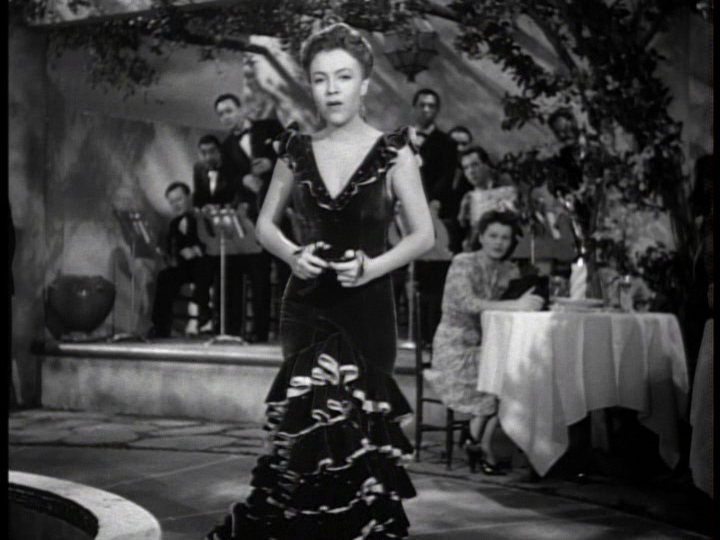
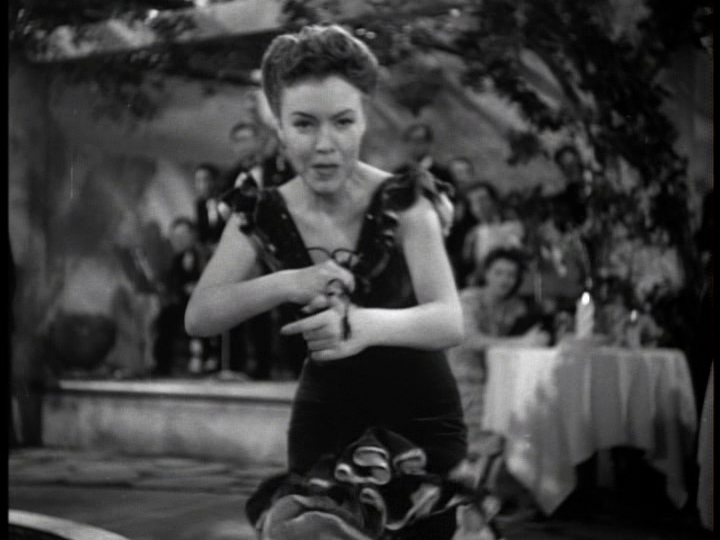
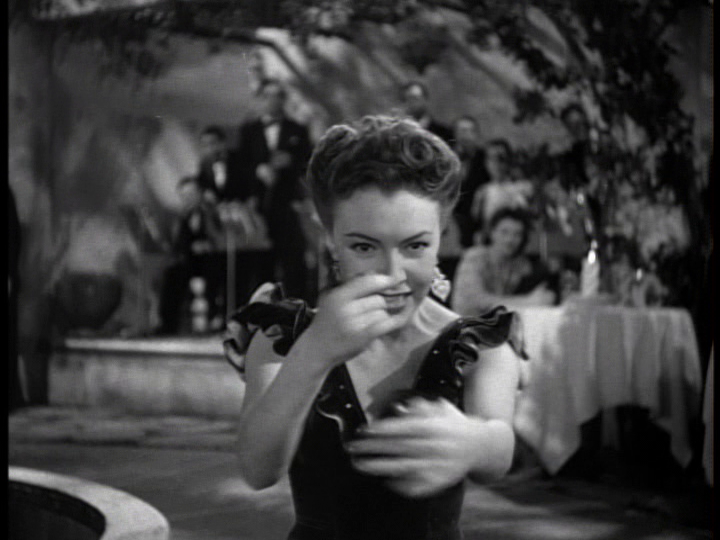
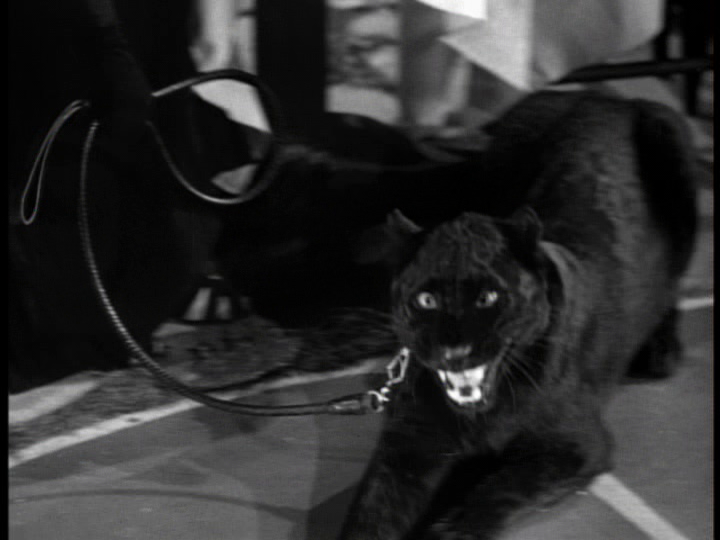
Shortly after I watched Black Sheep for the first time, I talked about it first in an “Ithaca Film Journal” home video recommendation as “total catnip for me,” then again a few months later in my “Top Ten Movies of 2023” post as “the most fun I had with a movie all year.” Here’s a picture of my bare-bones 20th Century Fox “Cinema Archives” DVD copy:
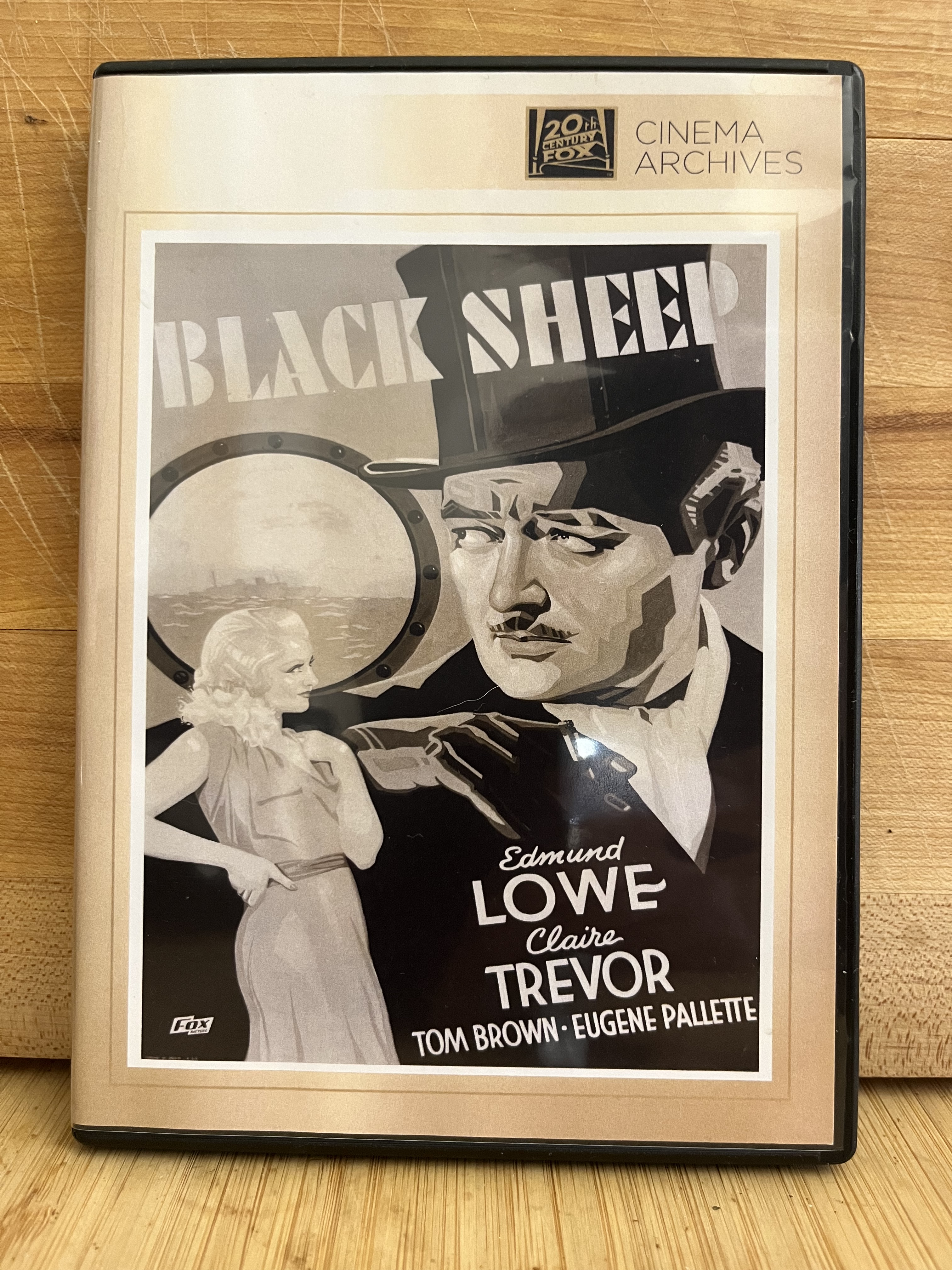
Black Sheep DVD case

Unfortunately, although I originally saw this film on the Criterion Channel as part of a collection called “Directed by Allan Dwan,” it doesn’t appear to be streaming anywhere right now.

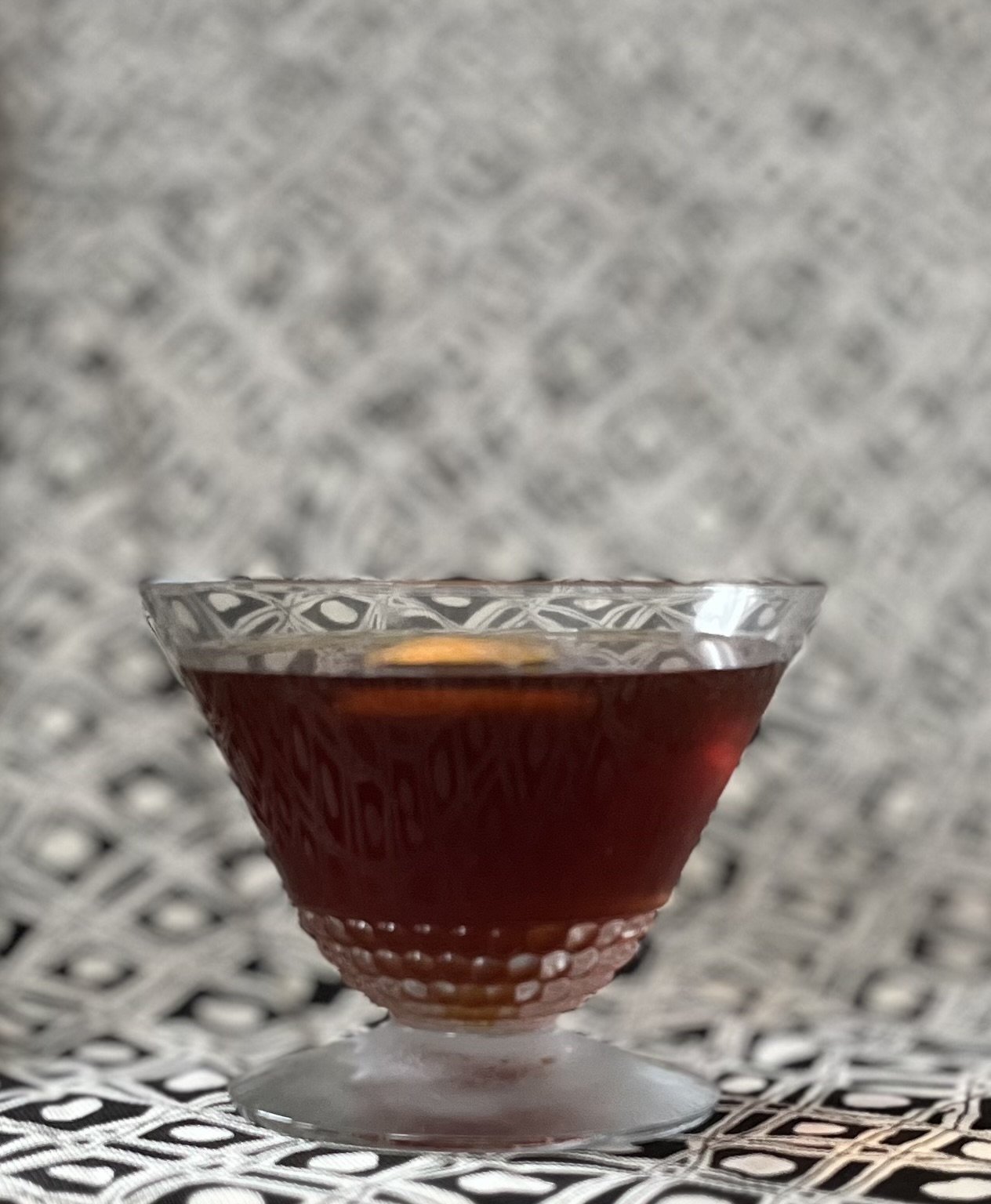
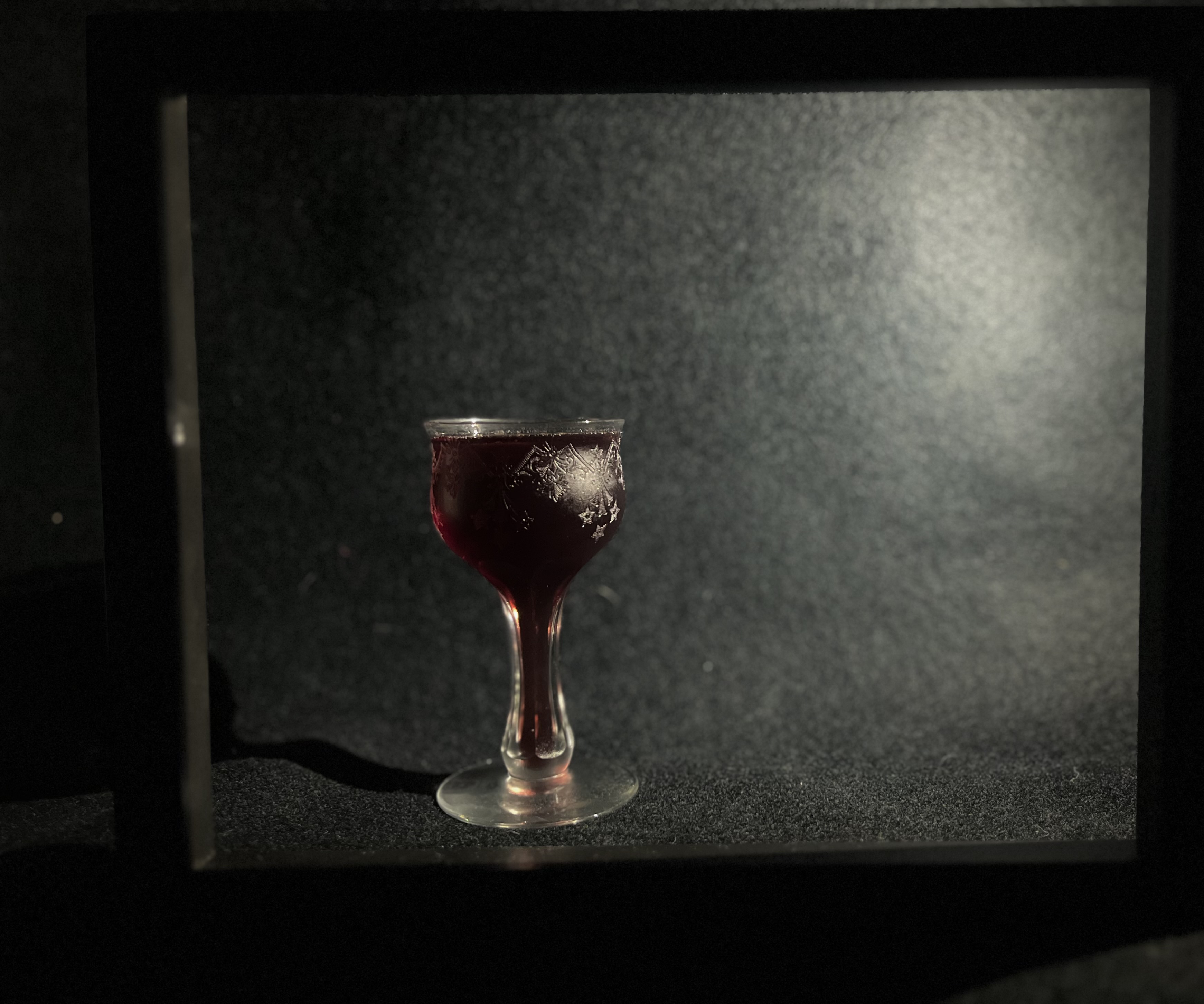
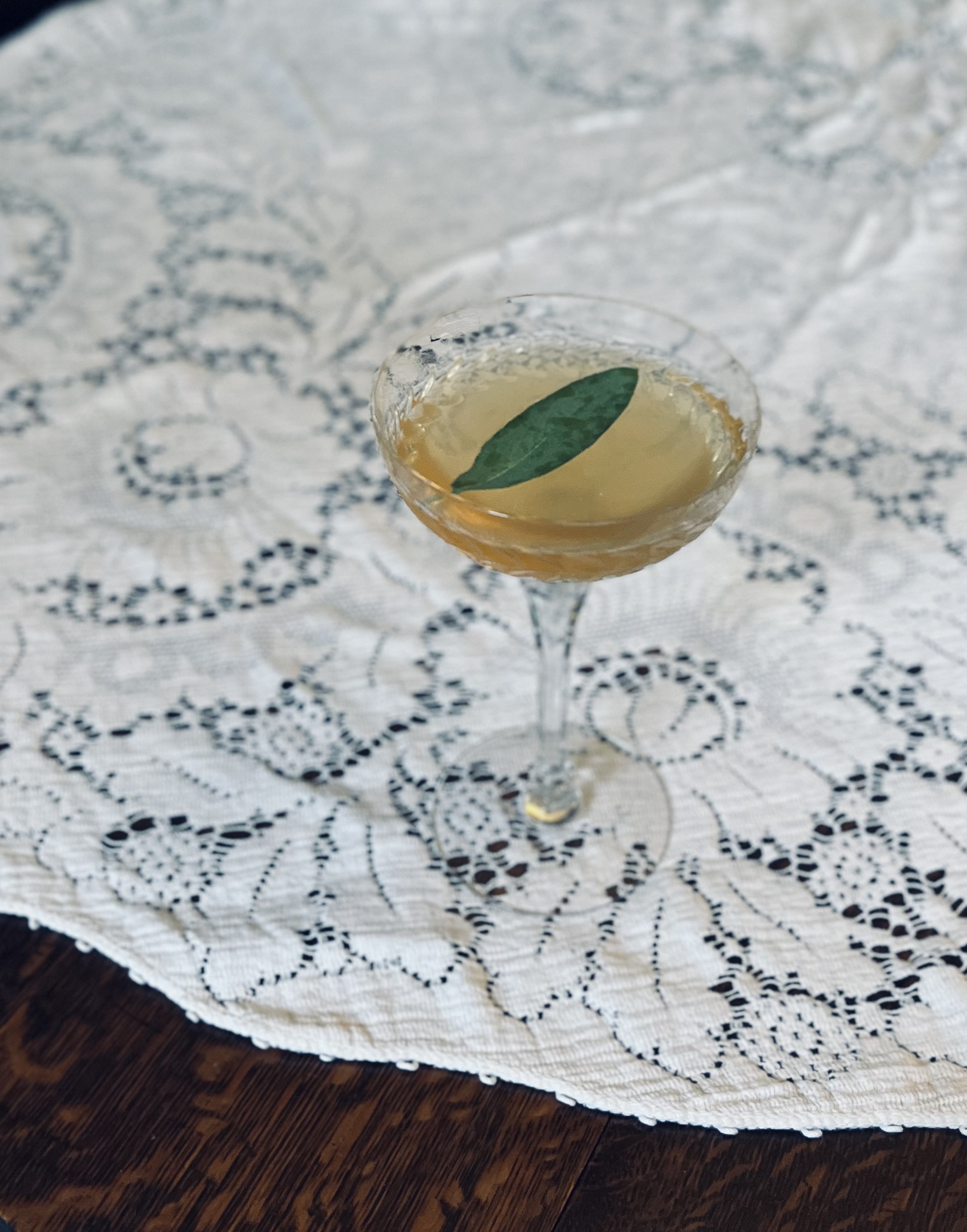
One of the things I found so delightful about Black Sheep are the old-school drinks heroine Claire Trevor’s Janette Foster orders: she asks for, in sequence, crème de menthe, a crème de menthe frappé, and Dubonnet. I wanted to offer a more complex alternative to Janette’s usuals like I did with the sweet vermouth on the rocks with a twist ordered by Andie MacDowell’s Rita Hanson in my Drink & a Movie entry for Groundhog Day, and I quickly settled on the Chapuline, a delightful variation on the grasshopper created by Toby Maloney of Chicago’s The Violet Hour. He specifically calls for green crème de menthe, but does so while making a joke related to presentation: “the white pales in comparison.” I’ve never been able to find the bottle by Marie Brizard he recommends and every verdant variety that *is* available in Ithaca tastes unbearably artificial in comparison to Tempus Fugit Glaciale, so that’s what we went with. In addition to tasting much better, I submit that it also looks just fine in this yellow glass we picked out to serve it in. Here’s how we make it:

1 oz. Crème de cacao (Tempus Fugit)
1 oz. Crème de menthe (Tempus Fugit)
3/4 oz. Pisco (Macchu Pisco)
1 oz. Heavy cream

Shake all ingredients vigorously with ice and double strain into a chilled cocktail glass. Garnish with a spanked (to release its aromas) fresh mint leaf.

Chapuline in a cocktail glass with a pearl necklace

As he notes in The Bartender’s Manifesto, Maloney’s goal was “to prove that [he] could take a gauche drink and make it at least interesting, at best delicious.” Mission accomplished! The first thing you notice is its beautifully silky texture. The flavor that pops is peppermint immediately followed by chocolate–the effect would be almost exactly like eating a York Peppermint Pattie except that there’s also a burn which resolves into grape on the finish, as if the drink was morphing from a grasshopper to a stinger, the other classic cocktail most commonly associated with crème de menthe. You wouldn’t get this with a barrel-aged spirit like cognac, obviously, so the choice of pisco is quite brilliant!

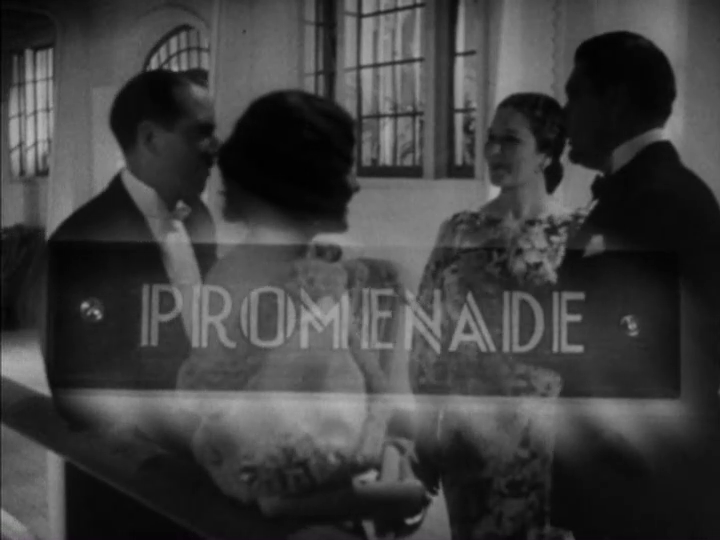
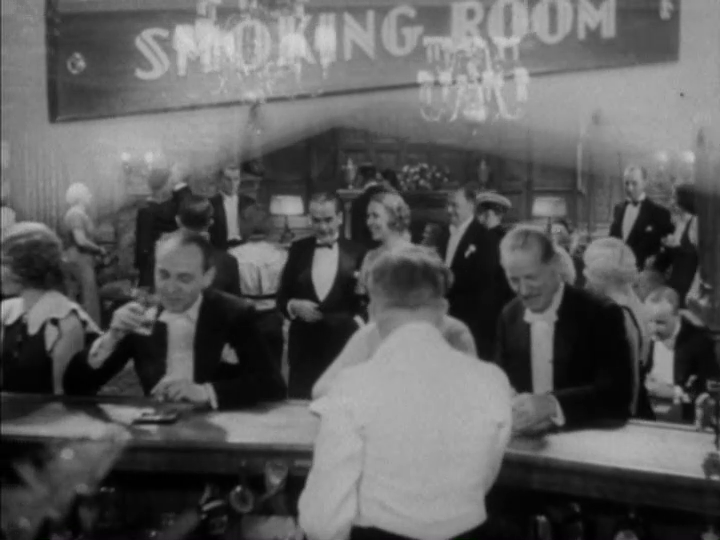
Maloney’s recipe includes instructions to shake “like it owes you money,” which is actually a pretty excellent segue into discussion of Black Sheep since income, like the film’s camera movements, represents both freedom and confinement for its protagonist John Francis Dugan (Edmund Lowe) and the other characters. As Frederic Lombardi writes in his book Allan Dwan and the Rise and Decline of the Hollywood Studios, “the opening shots of the film give a full sense of the great breadth of the ship Olympus but as the story unfolds, there are increasing attempts to restrict the space in which Dugan can move, so that he must literally know his place.” To start at the beginning, an introductory montage provides a tour of the ship’s first-class spaces:
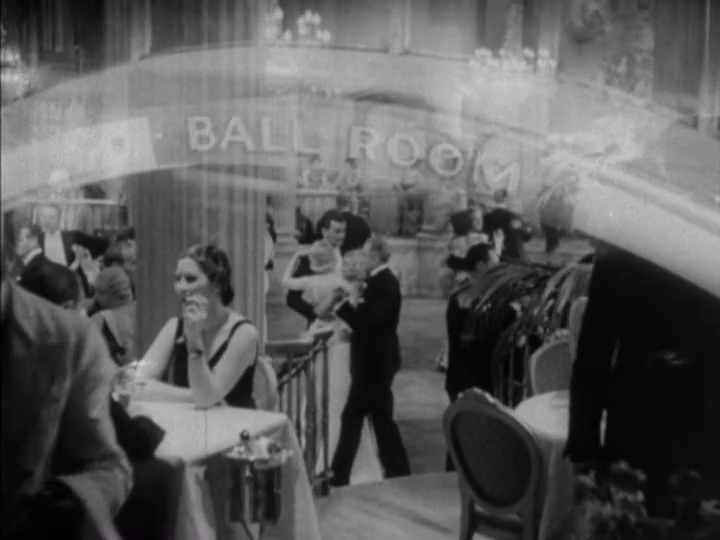
Double-exposed shot of a sign that reads "Ball Room" superimposed over that space
Double-exposed shot of a sign that reads "Smoking Room" superimposed over that space
Double-exposed shot of a sign that reads "Promenade" superimposed over that space

Before the gliding camera comes to rest on this sign:
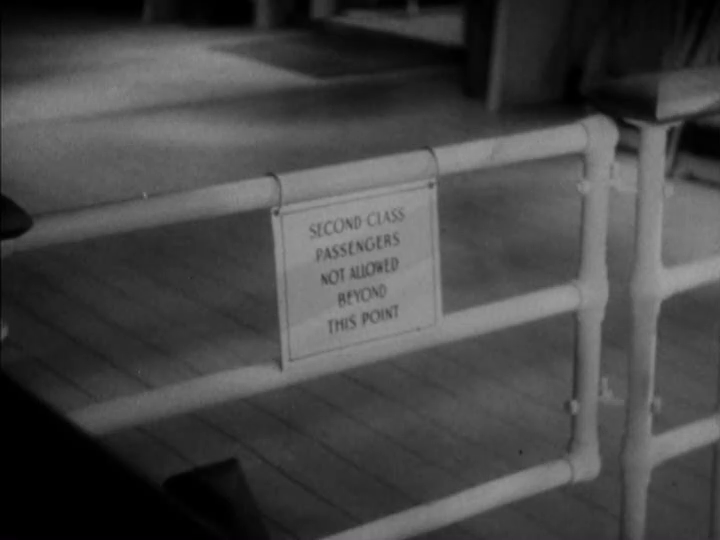
Close-up of a sign on a railing that reads "Second class passengers not allowed beyond this point"

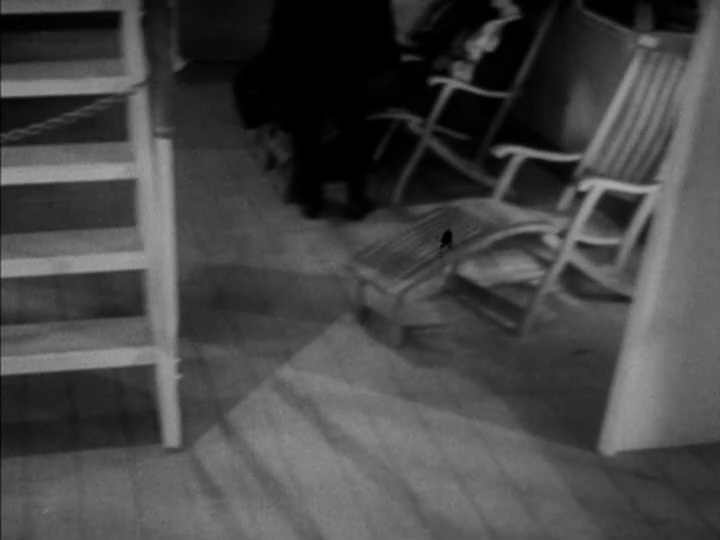
And then goes tumbling down the stairs:
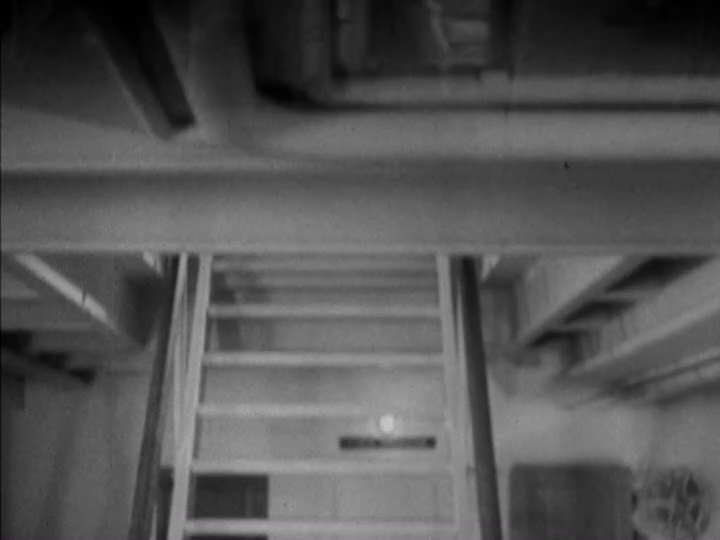
Close-up of the top of the stairs that the sign in the previous shot blocked
Close-up of the bottom of the stairs from the last two shots
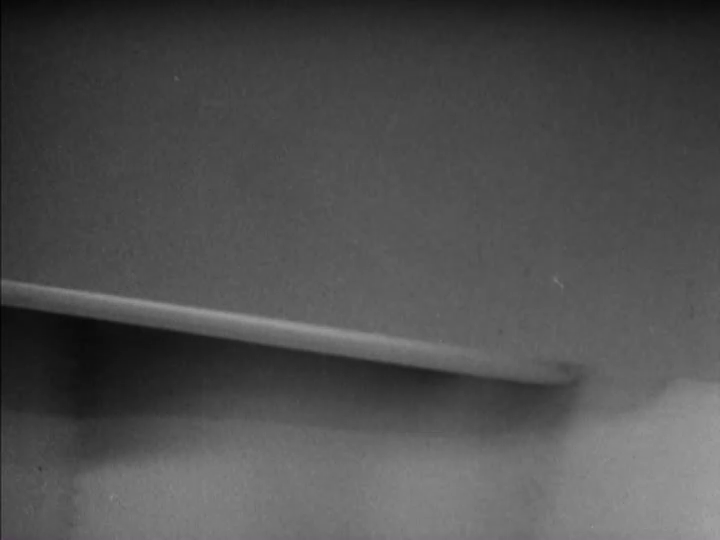
Close-up of the ceiling of the deck that the stairs lead to, which in combination with the previous two screengrabs creates the impression of a fall

Moving at a much faster pace than it did earlier, cinematographer Arthur Miller’s camera now repeats its double-exposure trick to show us we’ve been taken down a notch to second class:
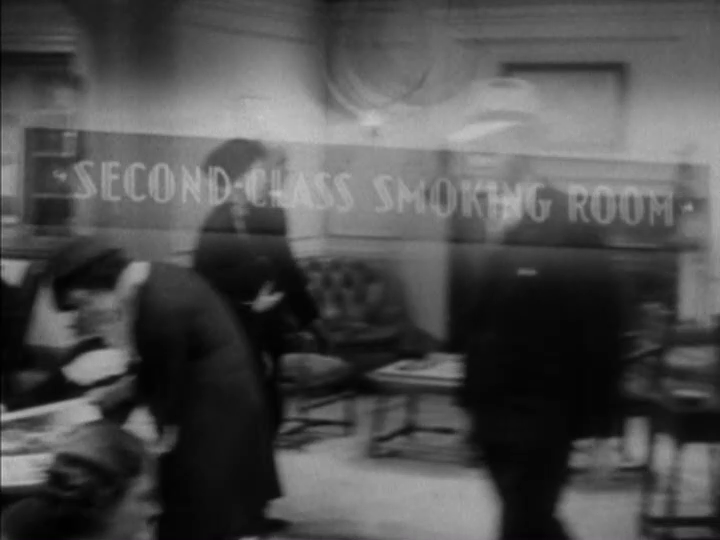
A sign that reads "Second-class smoking room" superimposed over that space, which is blurry because the camera is tracking rapidly to the right

Before it finally stops on a sign and cuts to Dugan playing solitaire:
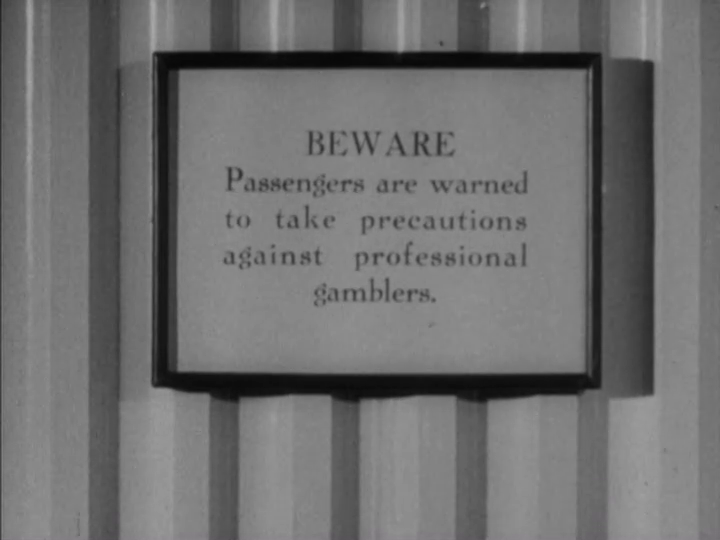
Close-up of a sign that reads "Beware: Passengers are warned to take precautions against professional gamblers"
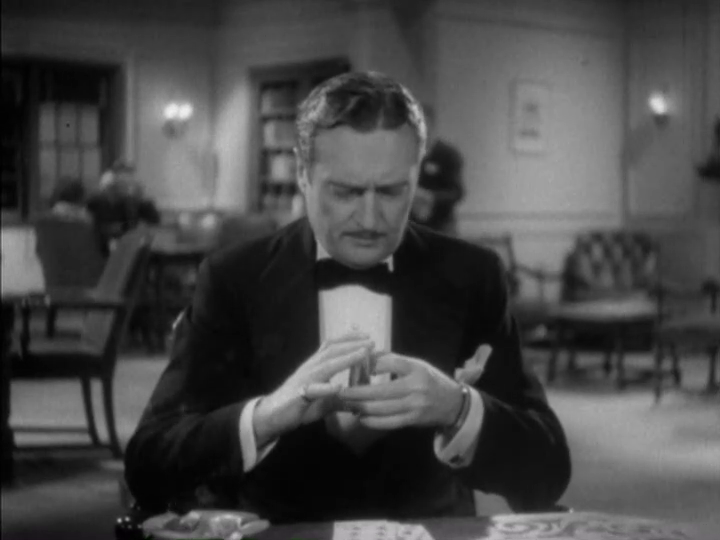
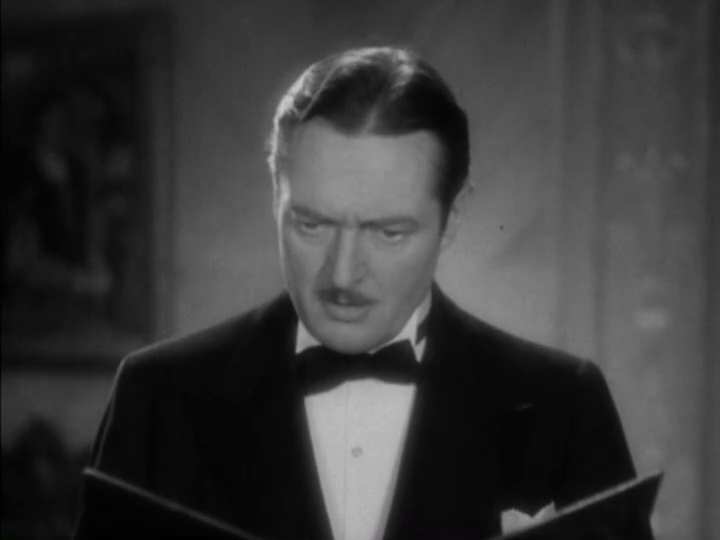
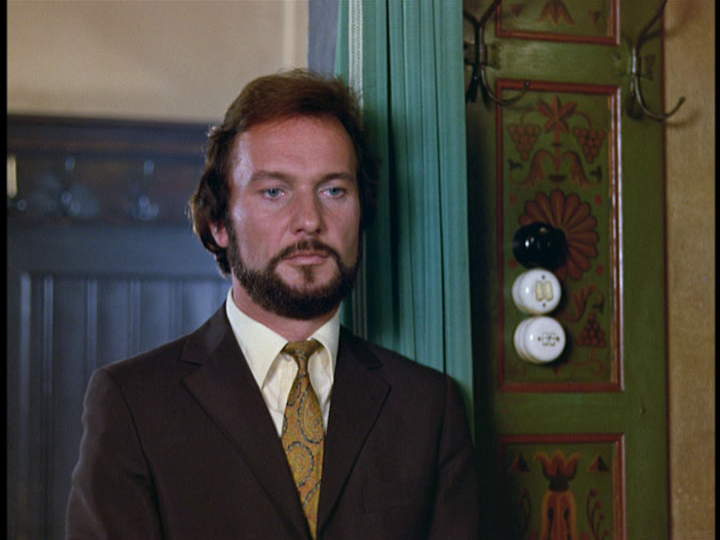
Close-up of John Francis Dugan

In just the first of many examples of what Fernando F. Croce calls Black Sheep‘s “limpid storytelling,” our logical assumption that he must be one of the sharps that the people on board the Olympus are cautioned to be wary of is confirmed by the two shots which follow him looking up from his game at his fellow denizens of the second-class smoking room.
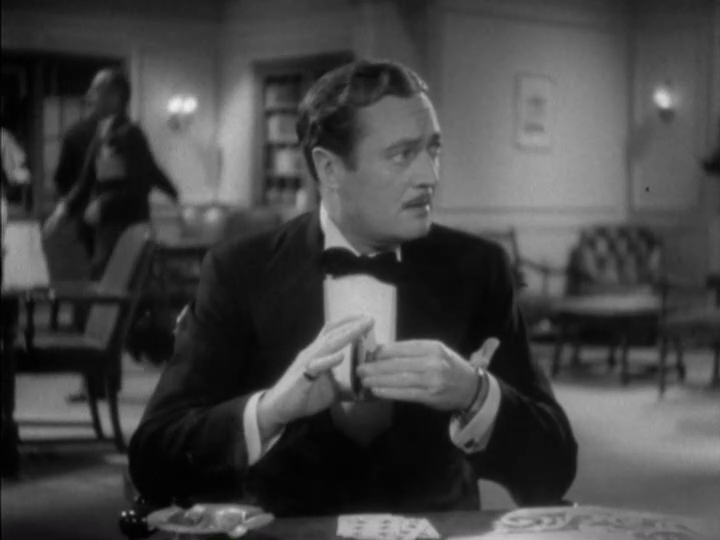
Medium shot of Dugan looking stage left

First a woman indignantly responds to her companion’s suggestion that they play bridge for a tenth of a cent per point by saying, “I should say not! I lost 55 cents at a twentieth last night. I’ll play for a fortieth or nothing.”

Medium shot of a bridge player looking indignant

Then one man responds to another’s suggestion that they play checkers by saying, “I don’t mind if you don’t play for money.”
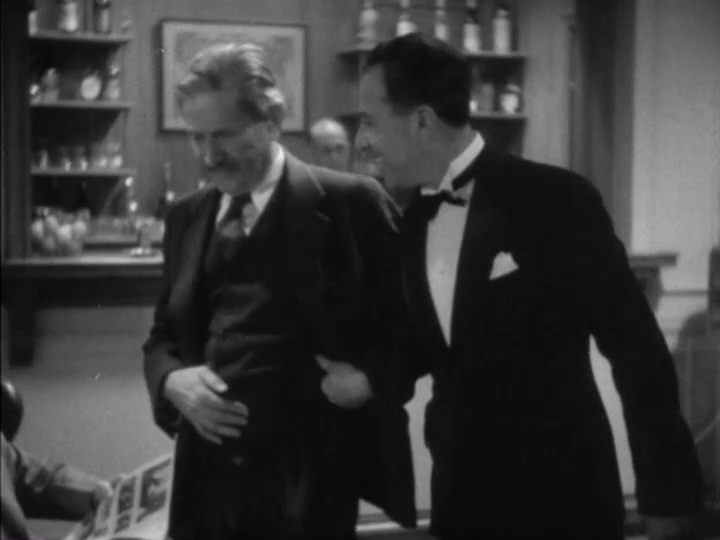
Medium shot of two men walking arm-in-arm to an offscreen checker board

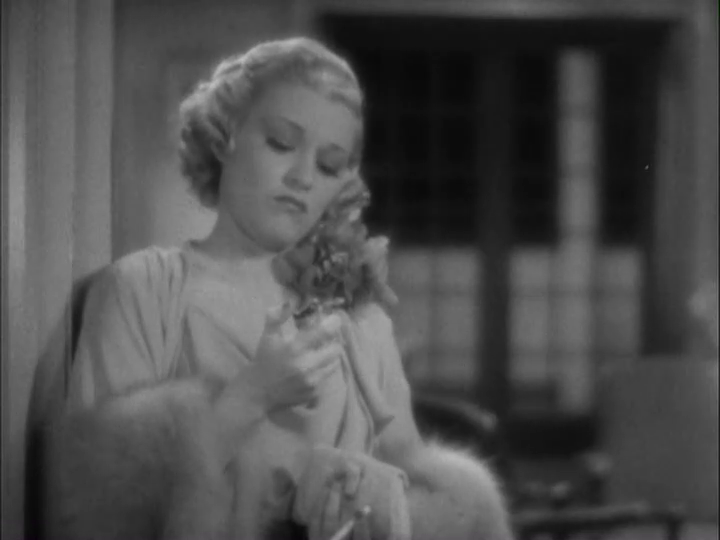
Dugan shakes his head and returns to his game, but is soon distracted by an offscreen clicking noise which a quick tracking shot soon reveals to be caused by Foster’s vain attempts light a cigarette:
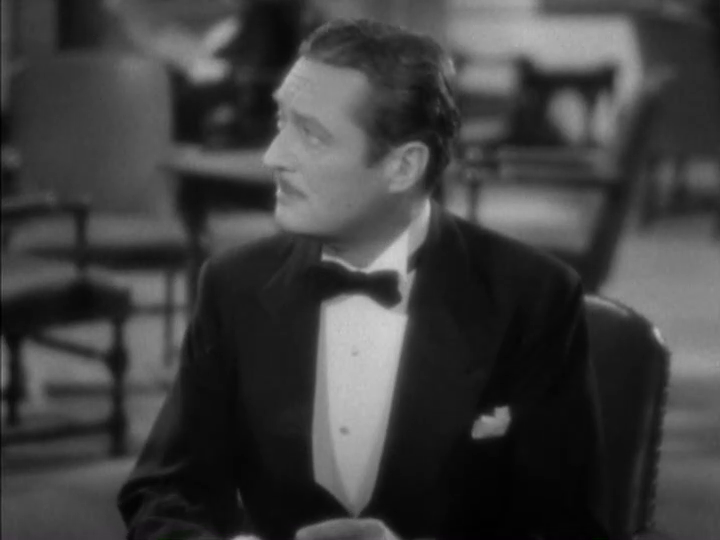
Medium shot of Dugan looking up and stage right
Medium shot of Claire Trevor's Janette Foster looking down and to stage left at a lighter that doesn't work

And with that we’re off and running! Foster’s lighter doesn’t work because it isn’t supposed to: “that’s how I meet so many nice people,” she informs Dugan. It’s a toss-up for me whether the *very* best thing about Black Sheep is the dialogue by director Allan Dwan (who wrote the story that the movie is based on) and screenwriter Allen Rivkin or the chemistry between its stars, who David Cairns brilliantly describes as “so delightful together you long for a whole season of Thin Man type romps for them to connive through (as he says, “sometimes film history just misses a trick”) although these things are of course related. The snappy one-liners come fast and furious right from the start: when Foster asks if she can buy Dugan a drink, his reply is “I don’t know, can you?” A few beaters later she labels them “two good mixers with no ingredients.” Then a bit further on after the two sneak upstairs to “see how the rich people live,” Dugan condenses a whole lifetime of back story into just a handful of sentences. “There are two things that always floor me,” he tells Foster, “horses and dames. One keeps me broke, the other crazy, and you can’t depend on either of them.” When she quips, “don’t tell me a horse jilted you!” he replies in kind: “yes, and a girl kicked me.”
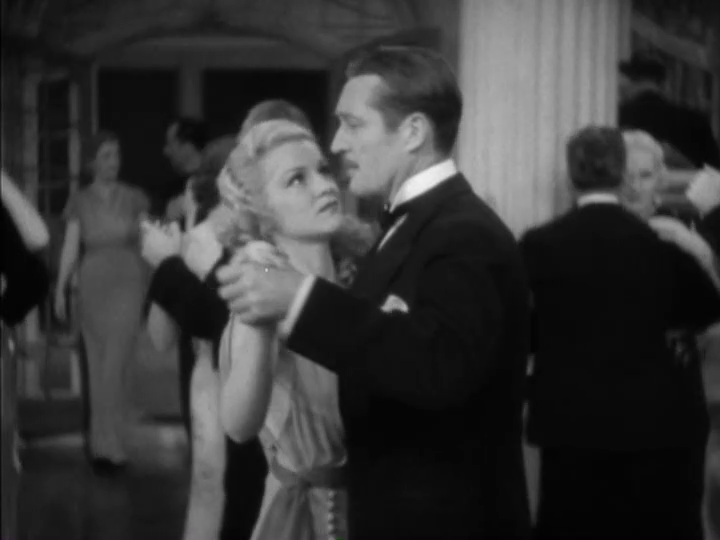
Medium-long shot of Dugan and Foster talking as they dance

But then he adds: “that was twenty years ago. Forget it.” Speaking of coin flips, in addition to sharing a profession in common with the main character of last month’s Drink & a Movie selection Bob le Flambeur, Dugan similarly uses them as an external signifier of his deference to the Fates:
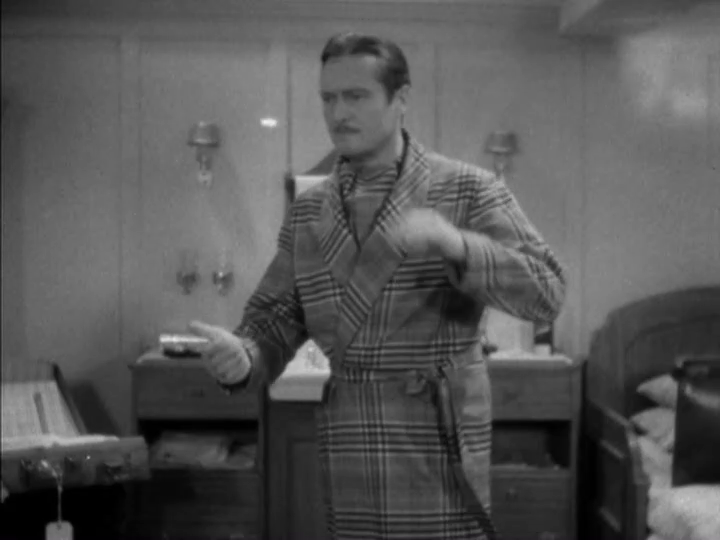
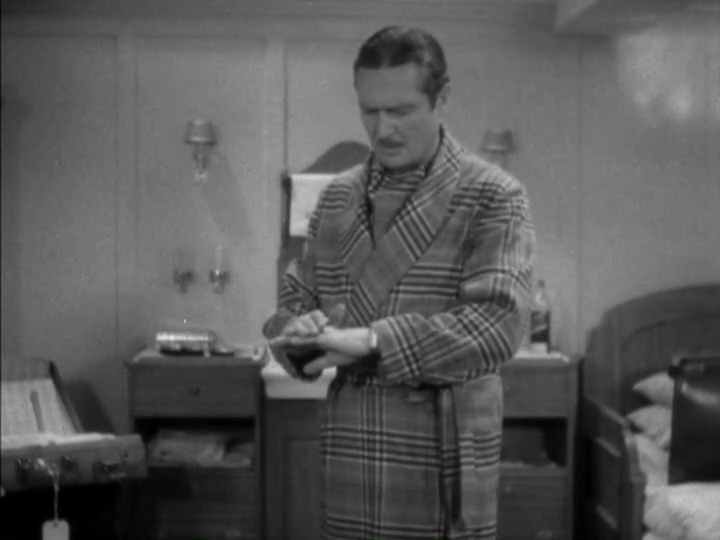
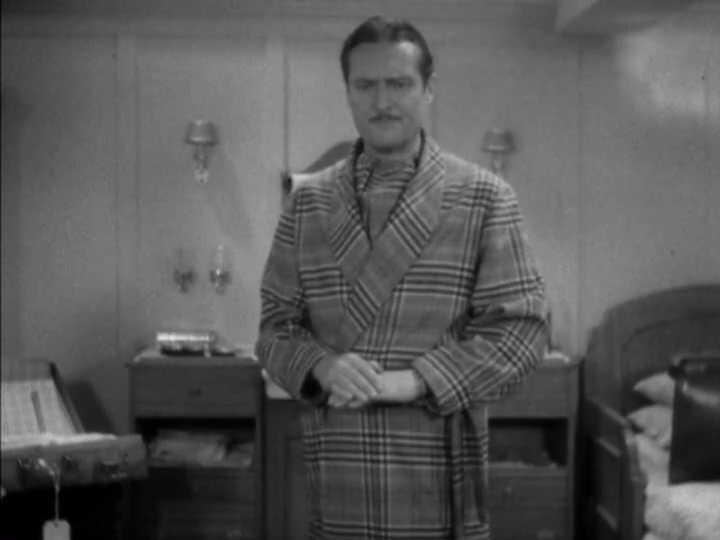
Medium-long shot of Dugan, who is wearing a bathrobe, preparing to catch a coin in midair
Medium-long shot of Dugan lifting his hand and peering at the result of the coin flip
Medium-long shot of Dugan looking somewhat displeased at the result of the coin flip

“Dugan and Foster stay in business,” he says after this one, referring to the partnership they have entered into to help a young man named Fred Curtis (Tom Brown) they observed getting fleeced in poker during their upper deck sojourn who also, as it happens, turns out to be Dugan’s son. This fact is revealed in a moment that Matt Strohl describes as “an emotional bolt of lightning in the middle of the film” which occurs after Dugan has helped Curtis win back some of the money he lost to Eugene Pallette’s and Jed Prouty’s buffoonish oil tycoons Colonel Upton Calhoun Belcher and Orville Schmelling by posing as his friend, but only at the expense of his own profits when he is forced to accept the checks Curtis wrote them as payment or risk giving up the ruse. He’s right in the middle of getting tough with Curtis (“I’ve got $1800 coming from you and I want it–in cash”) when suddenly he spots a set of framed photos:
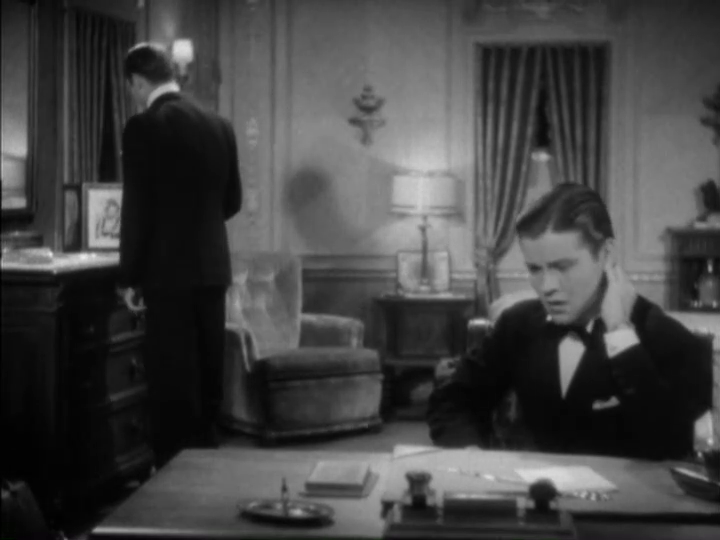
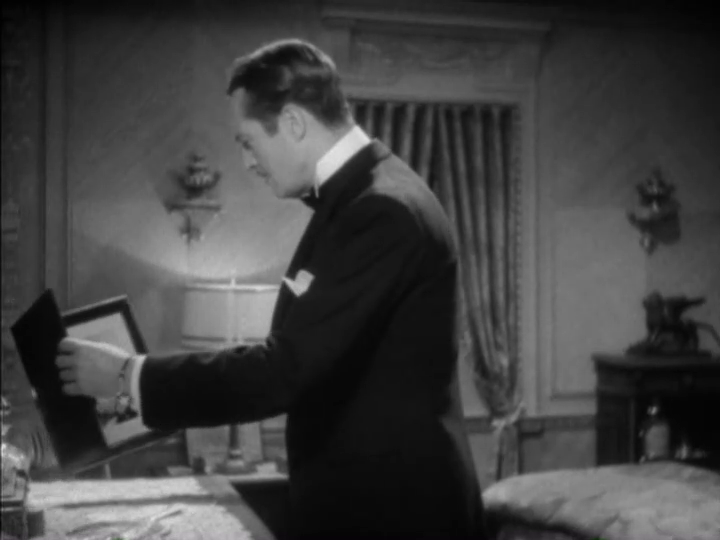
Curtis looks stressed in the foreground while Dugan spies a framed set of photos in the background
Medium shot of Dugan picking up the photos
Close-up of Dugan looking stunned

“What’s the matter?” Curtis asks him after he notices the older man’s reaction:
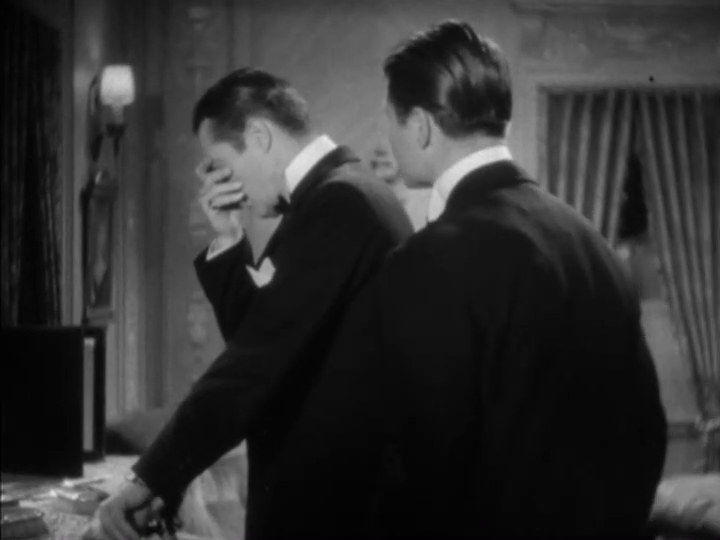
Medium shot of Curtis asking Dugan, who has his head in his hand, what is the matter

“Oh, nothing, nothing–I probably had too much to drink or something,” Dugan stammers. He gives no further explanation, but immediately changes his tune regarding repayment. “Where’s that note for those rubber checks?” he asks, then looks on with what my daughter Lucy would call a “thin smile” while Curtis writes it:
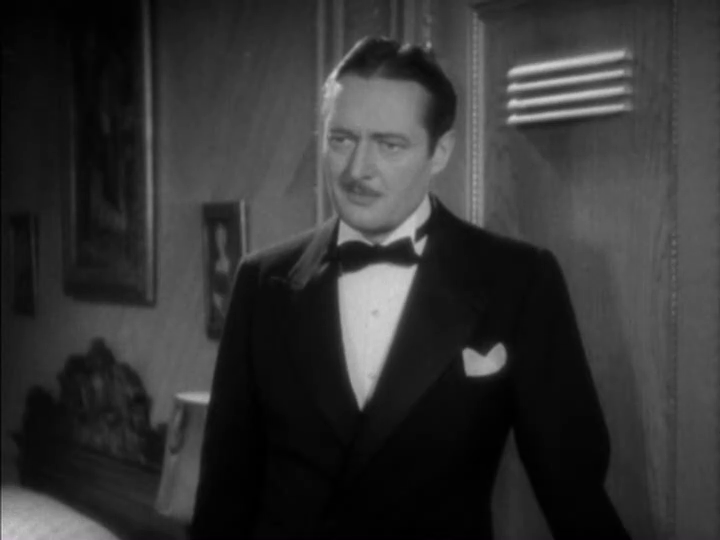
Medium-long shot of Dugan looking bemused

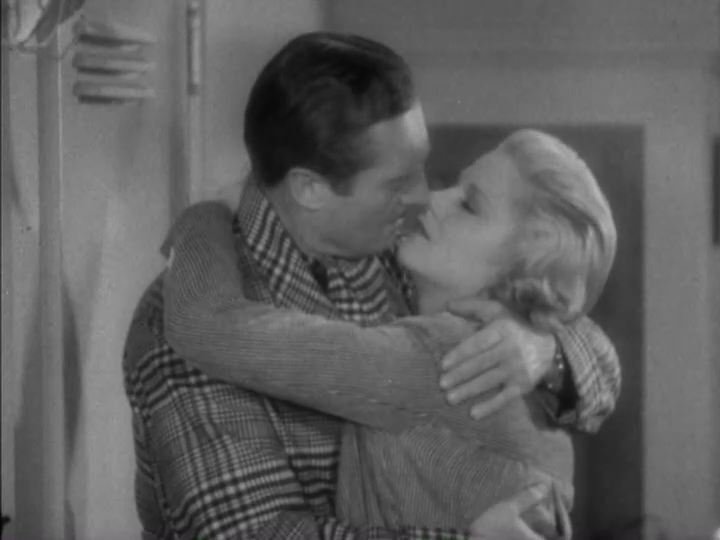
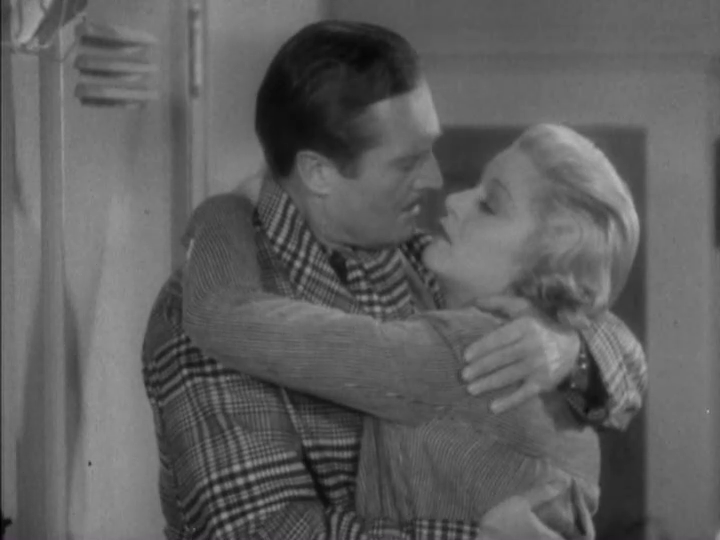
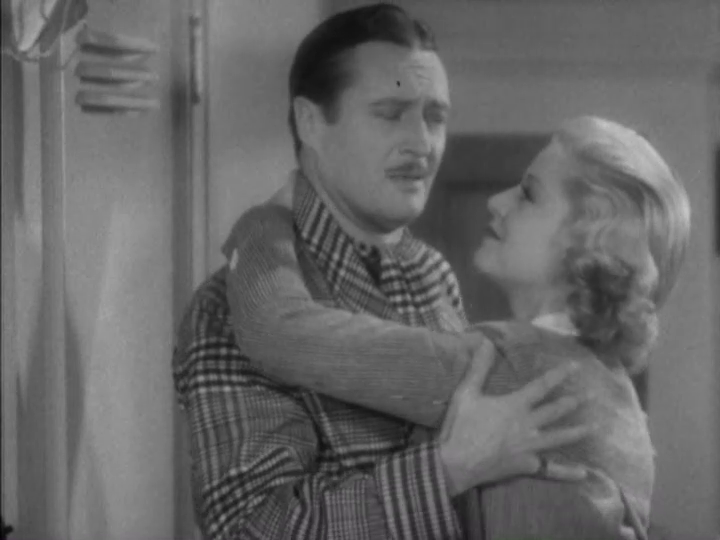
As Strohl notes, although Dugan never reveals his discovery to Curtis even through the end of the film, “that one reaction scene reverberates and lends weight to everything that follows,” including what I think must be the romantic non-kiss in the history of cinema. It takes place about halfway through a 30-second-long shot that begins right after the coin flip depicted above when Dugan notices Foster’s hand on the lapel of his bathrobe:
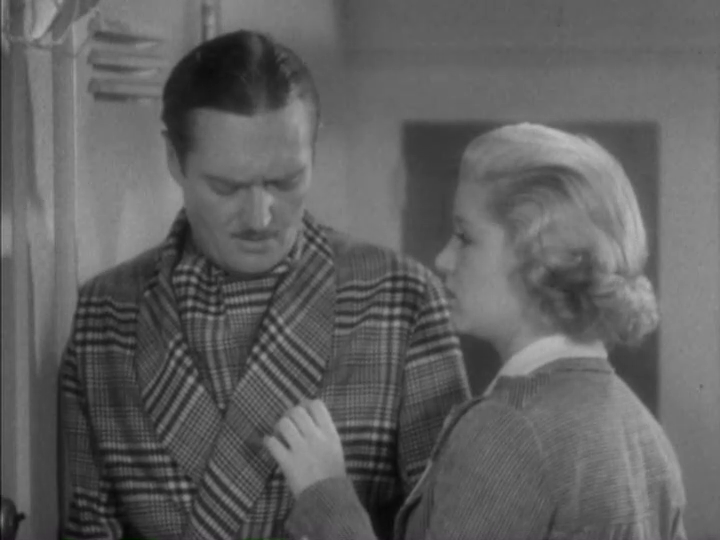
Medium shot of Dugan looking at Foster's hand

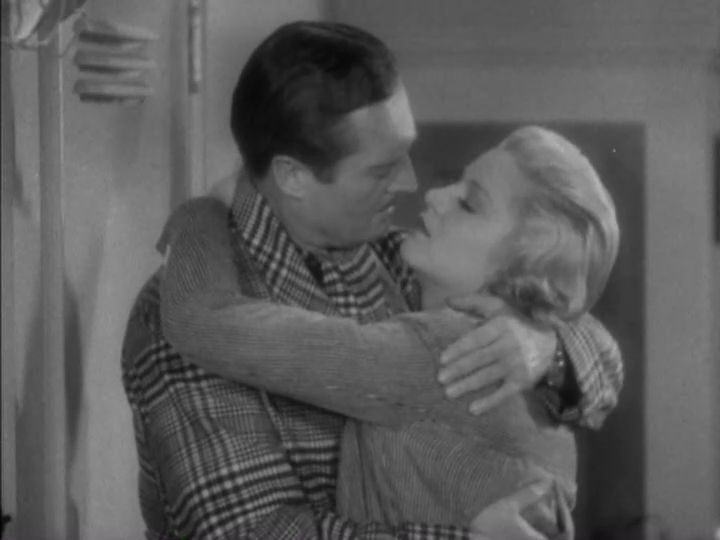
They put their arms around each other and lean in, but suddenly he pulls back:
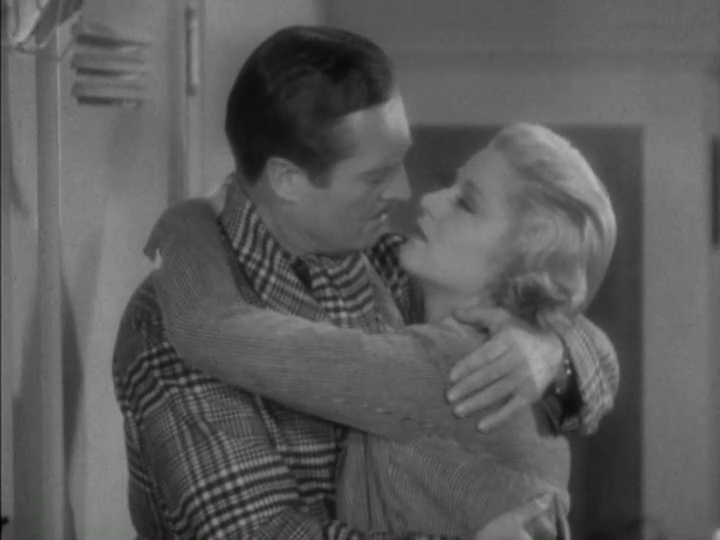
Medium shot of Dugan and Foster leaning in for a kiss . . .
Dugan and Foster lean in closer
Suddenly Dugan pulls back

It’s just for a second and they lean in again, but the result is the same:
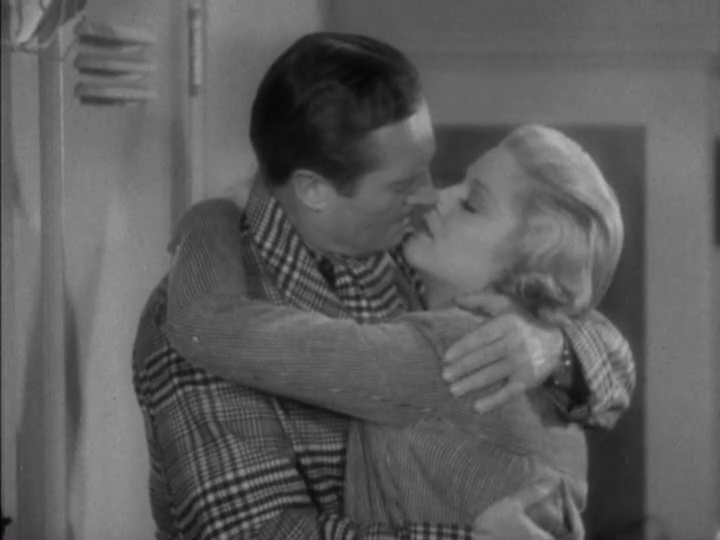
Medium shot of Dugan and Foster leaning in to each other again
Dugan pulls back again
Foster smiles as Dugan raises his head

Foster is already smiling as he lets out a perplexed sigh and is laughing by the time he calls for the steward to “take this lady out of here”:
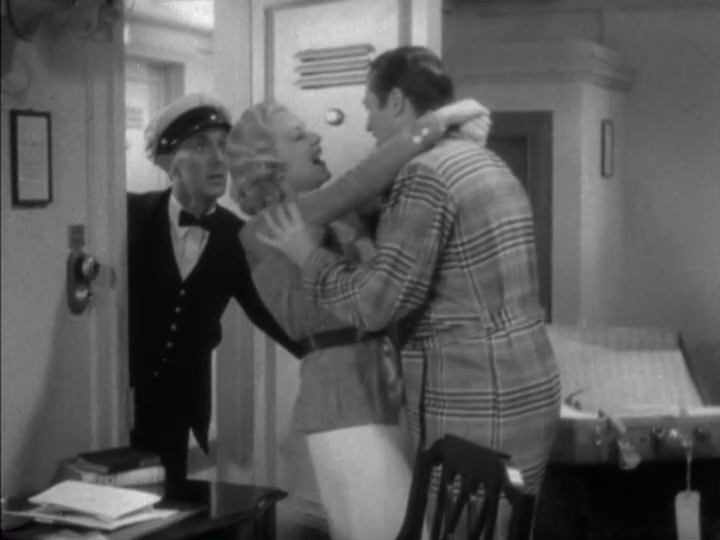
Medium-long shot of Foster, her arms still around Dugan's neck, laughing as steward opens the door and looks puzzled

Destiny can bring lovers together but in my experience the key to a happy marriage is that you have to really like each other! Dugan is clearly wondering what the heck happened to him and there’s work still to be done, so the wedding bells will have to wait, but these two clearly have a future together and he’s earned it. And that brings us right back to where we started! The steward appears in this scene because Dugan is supposedly under lock and key, and as Lombardi notes “restriction of movement is a severe violation for a Dwan character and film,” but Dugan “uses his room arrest to serve his ends.” In other words, all those attempts to put Dugan in his place ultimately fail, which is another connection between him and Bob Montagné: they both remain true to themselves no matter how down and out they find themselves and are eventually rewarded. Which now makes three “exceptions to the rule” I wrote about in my February Drink & a Movie post about The Young Girls of Rochefort, suggesting that it’s time to update my notion that “the human experience of trying to become a better person” is a theme of this series. After all, resisting the temptation to change more than you need to can itself be a challenge. Which, come to think of it, is the secret to the Chapuline’s success, too, isn’t it? Toby Maloney elevated the grasshopper by tweaking its proportions just a bit and adding one single ingredient. Or, to reframe this in terms that Dugan and Bob (and Kenny Rogers) would appreciate, sometimes the highest form of wisdom is knowing how to quite when you’re ahead.

Cheers!

All original photographs in this post are by Marion Penning, aka my loving wife. Links to all of the entries in this series can be found here.
March, 2025 Drink & a Movie: All In + Bob le Flambeur

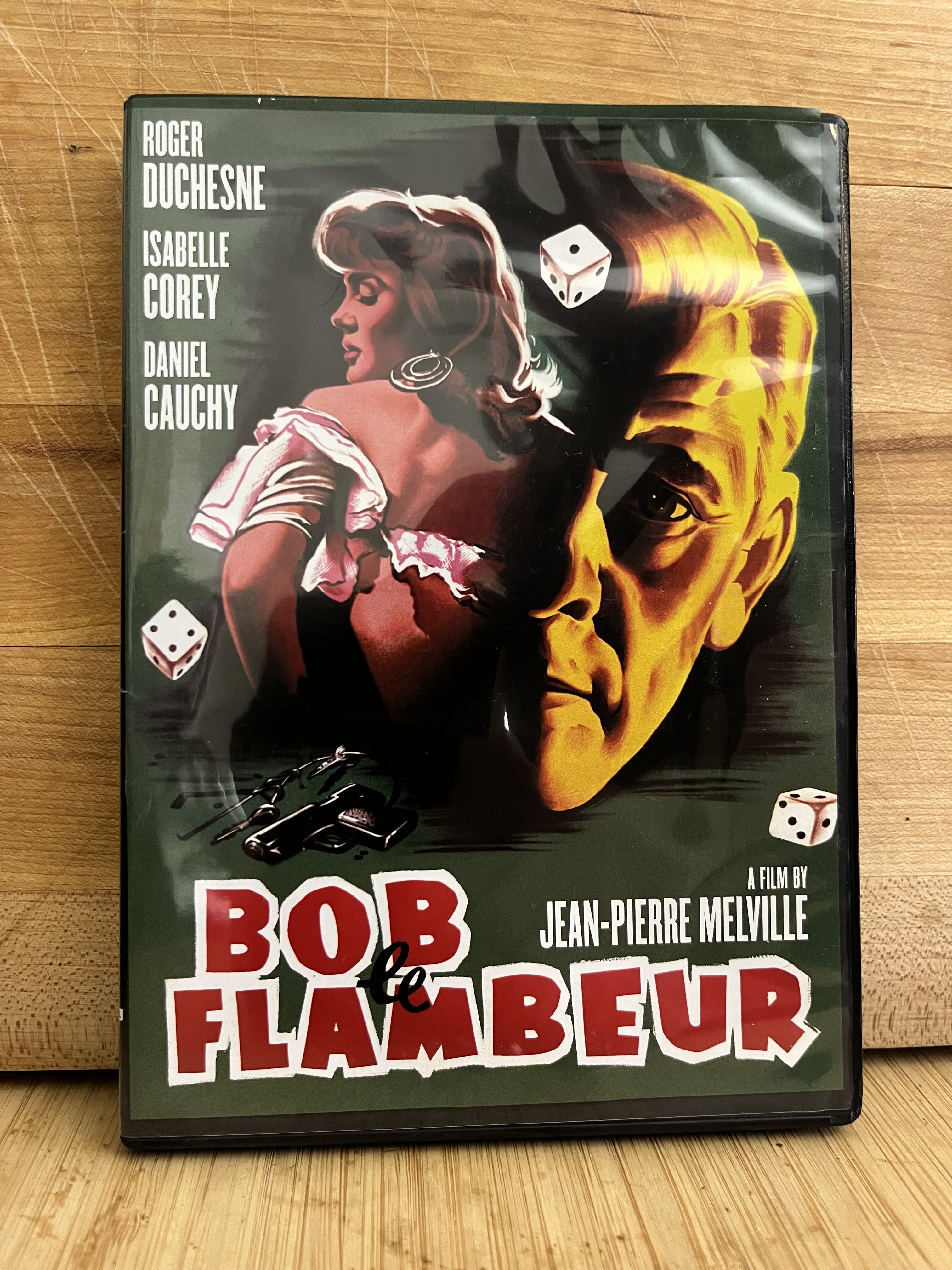
From where I’m standing the net impact of expanded legalized sports betting has clearly been negative. Research shows that it results in increased levels of debt for individual consumers, athletes are subject to unconscionable levels of abuse because of it, and the constant barrage of ads and ridiculous celebrity parlays makes the experience of watching sports on TV less fun. For all of these reasons I’d probably support more regulation at this point despite my libertarian inclinations, but as long as it remains so easy to place a bet, I will selfishly continue to enjoy doing so during certain times of year. March is one of them because of the NCAA Tournament, so lately I’ve been thinking about my favorite titular (which disqualifies Howard Ratner) movie gambler, Bob Montagné (Roger Duchesne). Here’s a picture of my Kino Lorber DVD copy of the film he lent his name to, Bob le Flambeur:

Bob le Flambeur DVD case

It is also available for rental from a variety of other platforms, and some people (including current Cornell University faculty, staff, and students) may have access to it through Kanopy via a license paid for by their local academic or public library as well.

The drink I’m pairing it with was created by Natasha David as boozy version of her favorite thing to eat, “dark, bitter chocolate.” Here, per Imbibe, is how you make her All In (which for the uninitiated is a poker term which refers to the act of pushing all of one’s chips into the middle of the table) cocktail:

1 1/2 ozs. Rye (Pikesville)
3/4 oz. Campari
3/4 oz. Dry vermouth (Dolin)
1/4 oz. Crème de cacao (Tempus Fugit)

Stir all ingredients with ice and strain into a chilled cocktail glass. Express a lemon twist over the top and discard.

All In in a cocktail glass

This concoction’s nose is dominated by lemon from the twist, and my brain therefore immediately latched on to the citrus notes in the Campari and Dolin on the sip. There’s also a lot of burn from the rye, though, which combines to create an initial impression not unlike drinking grappa. The swallow and finish are all very dark (think 85+% cacao) chocolate. David specifies rye that is 100-proof or higher, making this a perfect place to showcase Pikesville, which clocks in at 110 and is totally my jam these days. She also described her goal being “to create a dry chocolate cocktail that wasn’t limited to a dessert drink—a cocktail that could be enjoyed any time of the day,” and in that regard the All In is a resounding success.

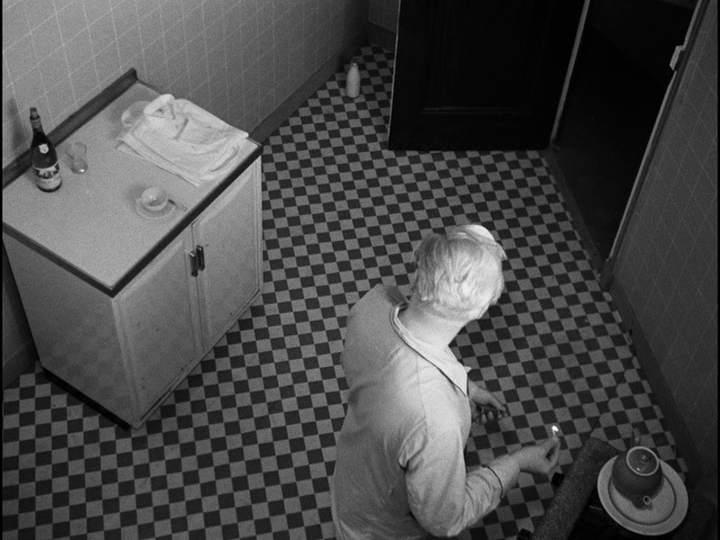
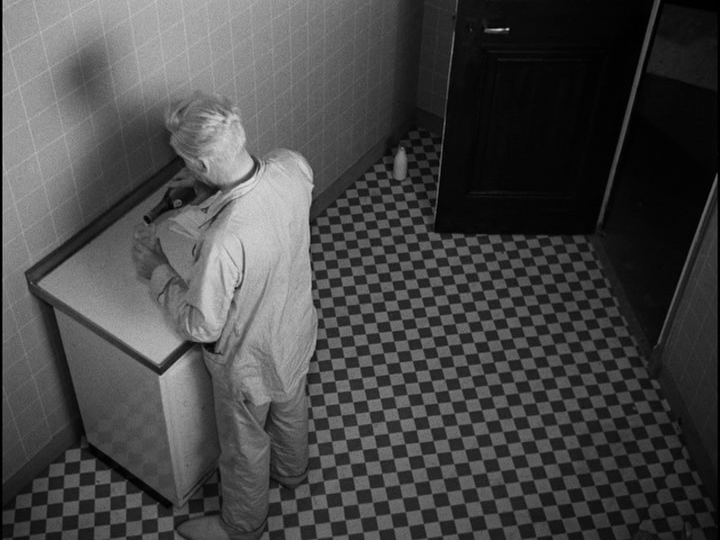
Bob would appreciate this beverage, as he is no stranger to imbibing during the daylight hours. Here, for instance, we see his best laid plans for breakfast being waylaid by a tempting bottle of wine:

Overhead shot of Bob reading the label on a bottle of wine
Bob pauses while lighting the stove on the other side of the room to look back at the bottle
Overhead of shot of Bob pouring himself a glass of wine

His luxurious apartment, which has one of the best views in the history of cinema and a slot machine in the closet:

Bob standing in front of a giant window with a great view of Paris
Bob pulling the lever on the slot machine he keeps in a closet

“Absolutely massive American car,” as Nick Pinkerton says in his DVD commentary track (where he also identifies it as a 1955 Plymouth Belvedere):

Medium shot of Bob's car

And the fact that he appears to have a standing invitation to join any high-stakes game in Paris all suggest that he must have been more disciplined in his youth, but he is become, in the words of his best friend Roger (André Garet), a “pitiful” compulsive gambler who squanders every big win by taking his profits elsewhere and promptly losing them.

Roger gives Bob some tough love after a bad night at the casino

Because he does so in style, though, and according to a moral code that includes generosity to those even less fortunate as one of its primary tenets, he nonetheless remains an idol to the young men in his circle like Paolo (Daniel Cauchy), whose late father knew Bob back in his gangster days:

Medium shot of Bob regaling Paolo, who is dressed similarly, about a bad bead

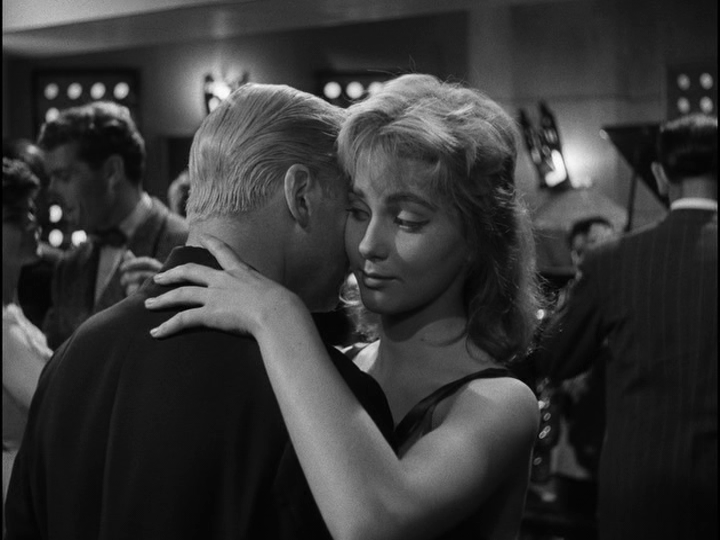
A hero to young women like Isabelle Corey’s Anne, to whom he provides pocket money and a place to sleep with no expectation of repayment in any form:

Medium shot of Anne dancing with Bob

And the object of fraternal or maternal affection from compatriots like Roger and Simone Paris’s Yvonne, who purchased her café with a loan from him:

Medium shot of Yvonne talking to Bob over a glass of pastis

As well as the recipient of professional courtesy from René Havard’s Inspector Morin of the police, whose life he once saved:

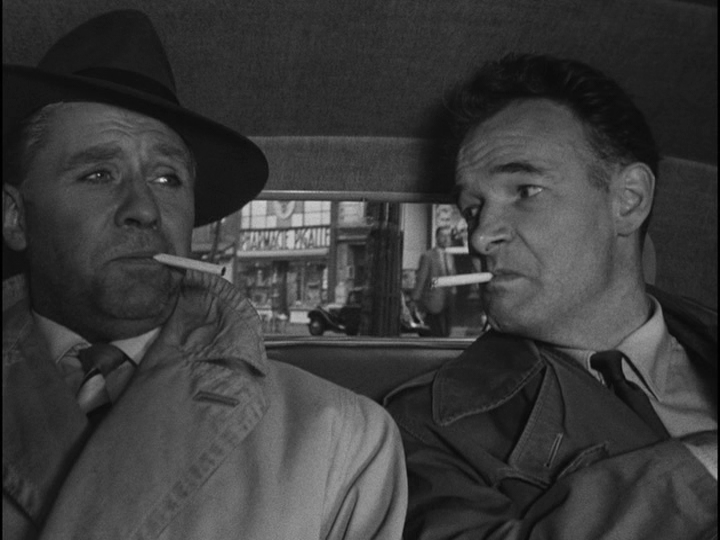
Inspector Morin and Bob talk in the back seat of a police car while smoking cigarettes

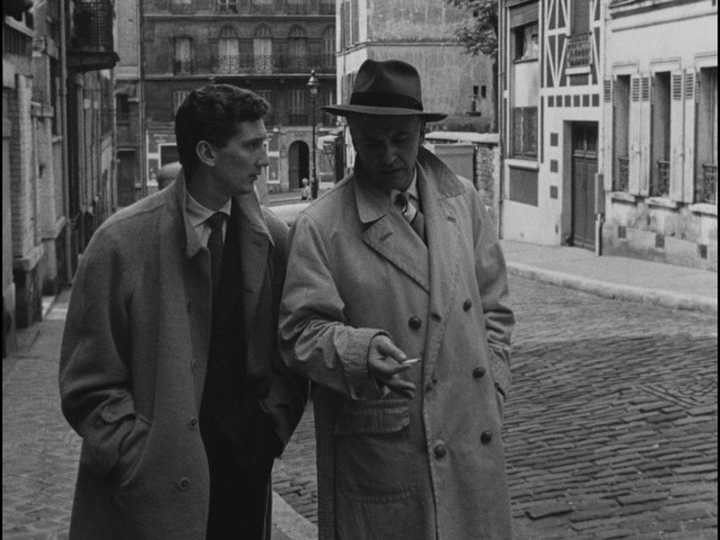
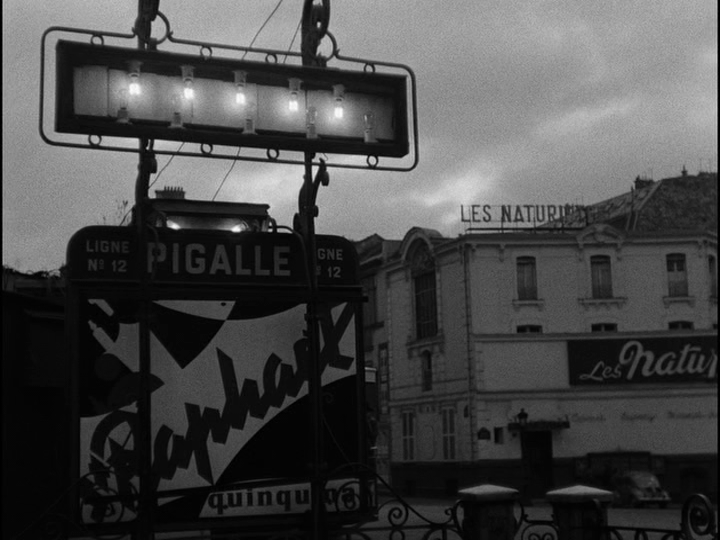
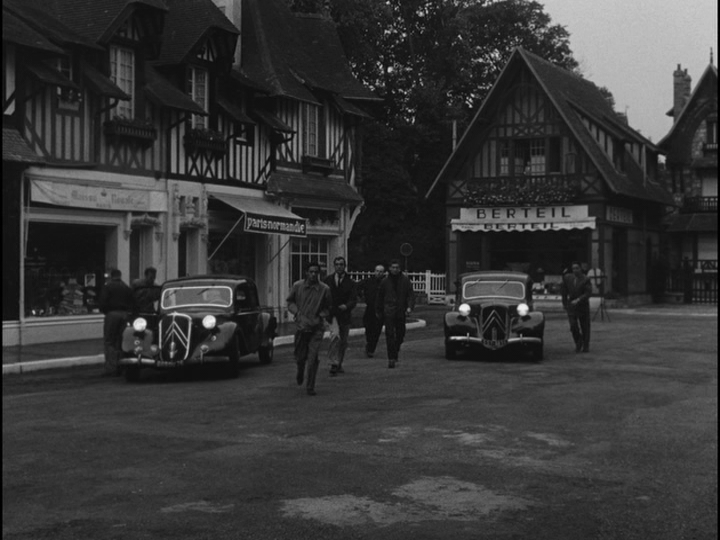
If you didn’t know this was a caper movie, you’d never guess it from the first 37 minutes, which function more as a sort of nature documentary showing Bob in his natural environment. As Glenn Erickson observes in his review of Kino Lorber’s 4K Ultra HD + Blu-ray copy of the film which came out last year, the location shooting makes it “a literal time capsule of a long-gone Montmartre, a collection of nightclubs and bars where colorful, unsavory night crawlers plot their next moves.” It begins with a monologue that characterizes the Parisian neighborhood as “both heaven and . . . hell” with the image of a descending funicular and accompanying musical cue during the ellipse.

Establishing shot of the Basilique du Sacré-Cœur de Montmartre
Long shot of the Montmartre funicular
Long shot of neon signs at dawn

Anne is introduced as an illustration of how “people of different destinies” cross paths in the pre-dawn hours not by name, but as a girl “with nothing to do” who is “up very early . . . and far too young” who passes a cleaning lady hurrying to work on the street:

Long shot of Anne passing a cleaning lady on the street

Finally, we meet Bob playing craps in an establishment featuring the first example of what J. Hoberman calls “the insistent checkerboard patterns that make the movie so emphatically black-and-white”:

Bob playing craps in a room with checkerboard-patterned walls

They appear again on the walls of Roger’s office, where author of A History of the French New Wave Cinema Richard Neupert argues they function “to remind the viewer that Bob, with his flowing white hair, sees the world as one big board game”:

Long shot of Bob and Roger talking in the latter's office, which is decorated in a checkerboard pattern reminiscent of the one in the previous image

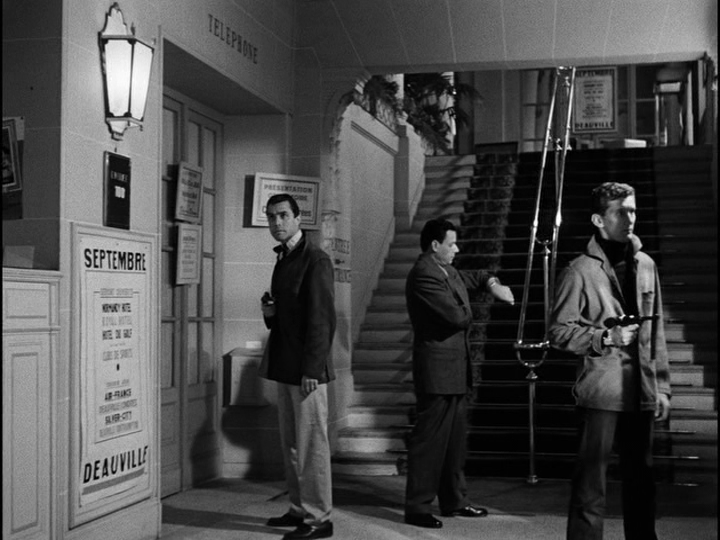
Per Neupert, Bob le Flambeur inspired the French New Wave with its “raw, low-budget style that mixes documentary style with almost parodic artifice.” My favorite examples of both tendencies can be found in the rehearsals which lead up to the attempted robbery that Bob begins to plan after he learns that the safe in the Deauville casino will have 800 million francs (which as near as I can work out is about 20 million USD today) at 5am the morning of the upcoming Grand Prix race. After he and Roger find someone (Howard Vernon as McKimmie, who insists on a 50% cut of the take) to finance their operation in the first of many scenes that the 2001 remake of Ocean’s Eleven directed by Steven Soderbergh pays homage to, the “recruitment waltz” begins:

Medium shot of Bob recruiting someone to help him rob the Deauville casino
Medium shot of Roger signing up another member of their crew

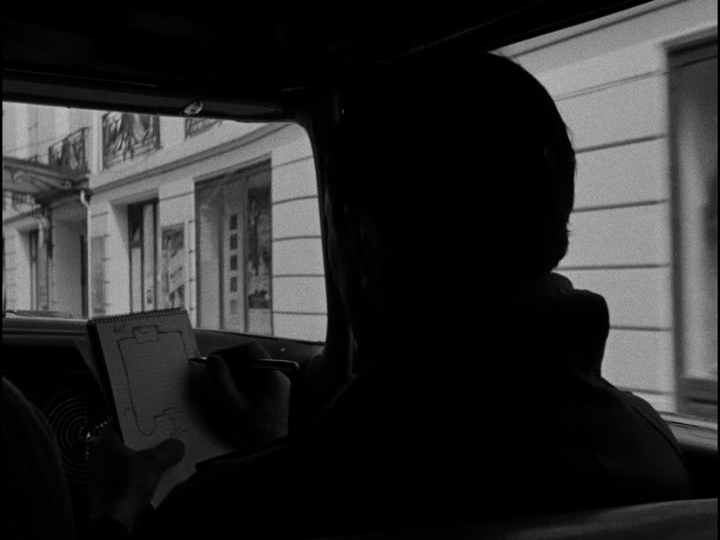
With their team assembled, they set about casing the joint by circling it repeatedly in a car and sketching an outline in a minute-long scene that embodies the “documentary style” Neupert describes:

The Deauville casino through the window of a car
The car's passenger sketches the outline of the building

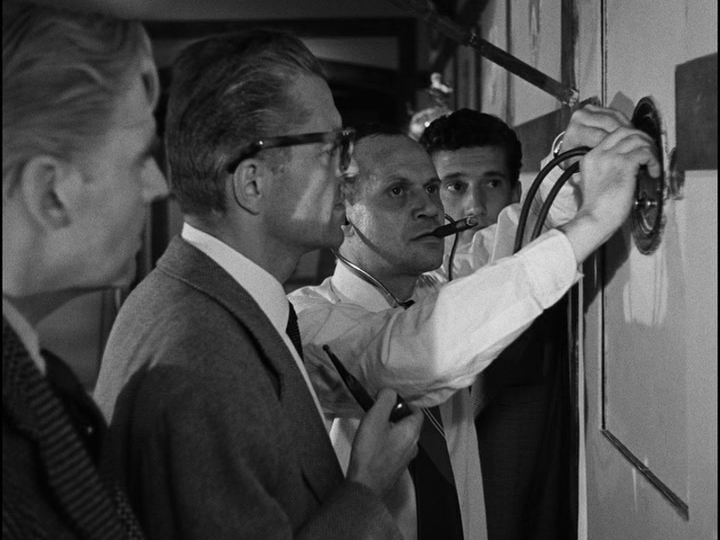
They also obtain blueprints and specs which they use to obtain a safe so that Roger can practice opening it:

Medium shot of Roger opening a safe as Bob, Paolo, and McKimmie look on

And best of all draw chalk outlines of the casino on a grass field so that they get an accurate sense of the space:

Medium shot of Bob gesturing at a floor plan
Bob directs a member of his crew to the spot on the outline of the casino where he is supposed to stand during the robbery
Bob standing at his spot

We also see Bob’s vision of how the operation is supposed to in a casino of empty of anyone except him and his crew, a technique borrowed by my July, 2023 Drink & a Movie selection Inside Man among scores of other films:

Bob imagines his crew arriving at the casino
The crew at their posts with guns drawn
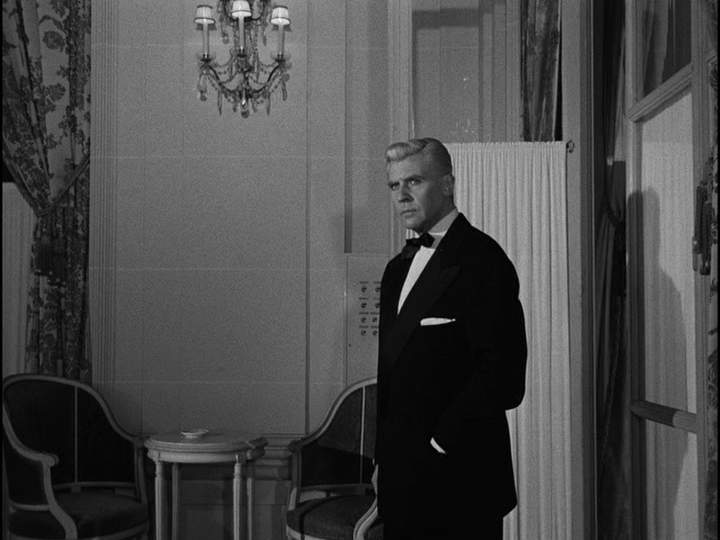
Bob in a tuxedo at his spot at the top of the stairs

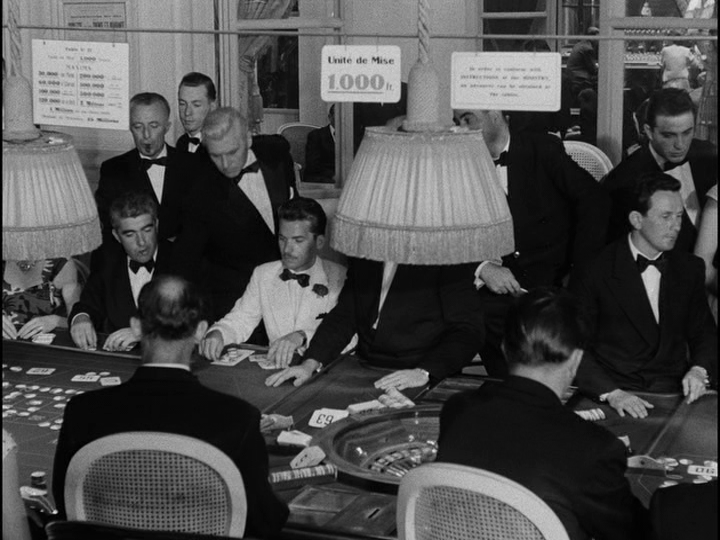
We never see the actual heist, though, because although Bob arrives at the casino to scope things out at 1:30am as planned in a stylish low-light sequence:

Long shot of blurry car headlights next to blurry streetlights that look like flowers

Instead of making contact with Claude Cerval’s Jean, their guy on the inside, like he’s supposed to, he forgets his promise to himself and Roger not to gamble until it is over and places a bet:

Long shot of Bob placing a bet on roulette

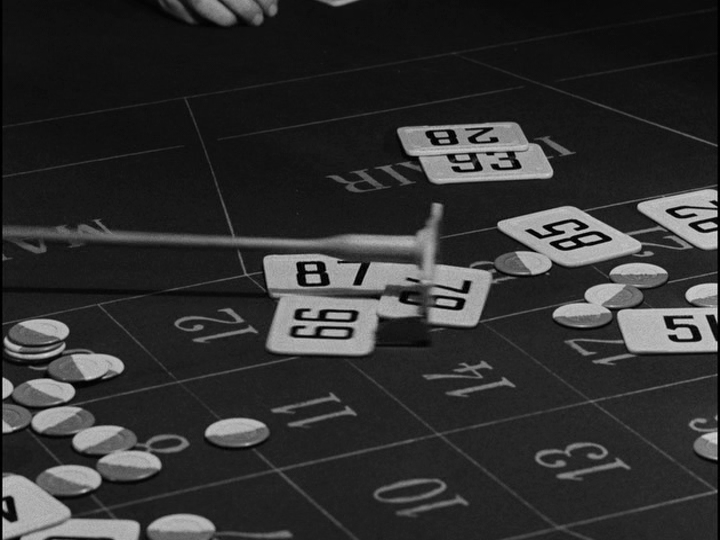
He wins, so he places another, this time at odds of 38 to 1:

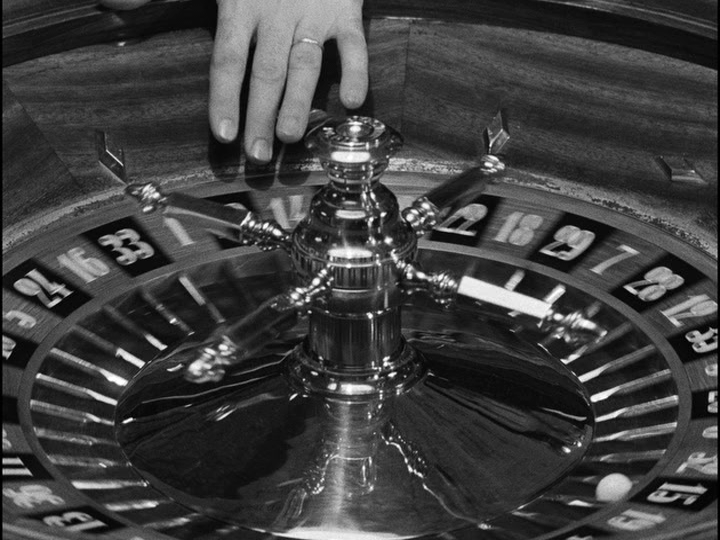
Close-up of bets being placed on 15 in roulette

That hits, too:

Close-up of a roulette wheel landing on 15

And suddenly Bob is off on the heater of his life. The voiceover informs us although the roulette is over by 2:01, “the chemin de fer continues”:

Long shot of Bob playing chemin de fer

He is successful there, and at 2:45 he enters a the high-rollers room:

Medium shot of Bob entering the "private room"

It’s difficult to say for sure how much he wins there, but by 3:30 he has attracted a crowd of onlookers:

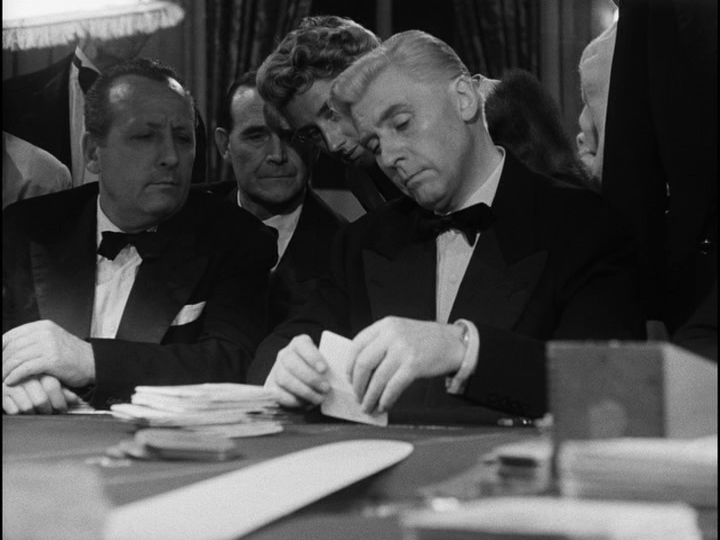
Well-dressed strangers look over Bob's shoulders to see what cards he has

And not long after that, he’s tipping the croupier one million francs at a time:

Bob picks up a 1 million franc chip to tip the croupier

Based on the stacks of chips in shots like this, it appears that Bob’s winnings total nearly as much as the 400 million francs he and his crew are expecting to make from robbing the casino. Suddenly he chances to look at his watch and sees that it’s 5am:

Close-up of Bob's watch showing the time as 5:00

He shouts, “change all this, now!” and sprints to the entrance, but it’s too late: the police, tipped off by Jean and his wife (Colette Fleury) and an informant (Gérard Buhr) armed with details that Paolo carelessly let slip to Anne, are waiting for Bob’s crew when they arrive and Paolo dies in the shootout which ensues:

Overhead shot of Paolo "getting it," as the fella says

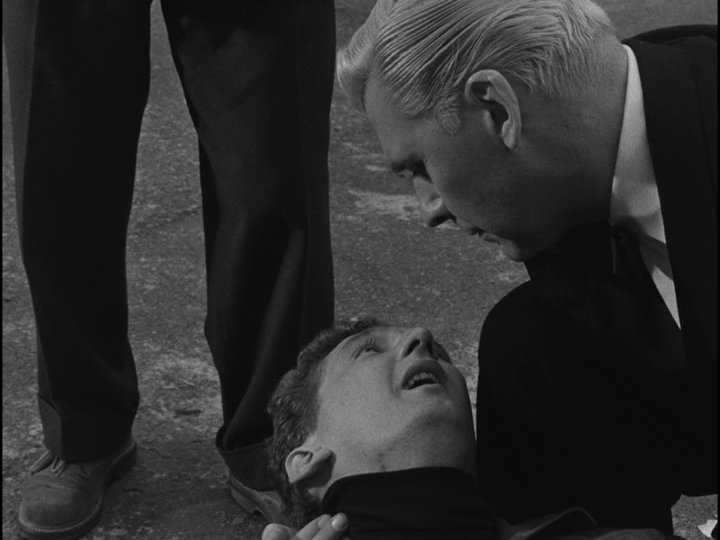
Bob arrives just in time to cradle his protege in his arms as his life expires:

Close-up of Bob cradling Paolo in his arms as he dies

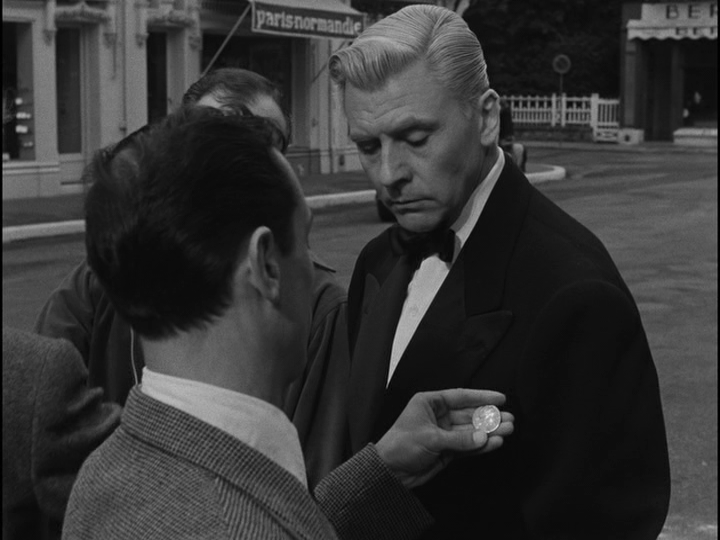
As Inspector Morin places Bob and Roger in handcuffs, one of his officers removes a coin from Bob’s pocket that we saw him flipping earlier.

A police officer inspects the coin he just removed from Bob's pocket

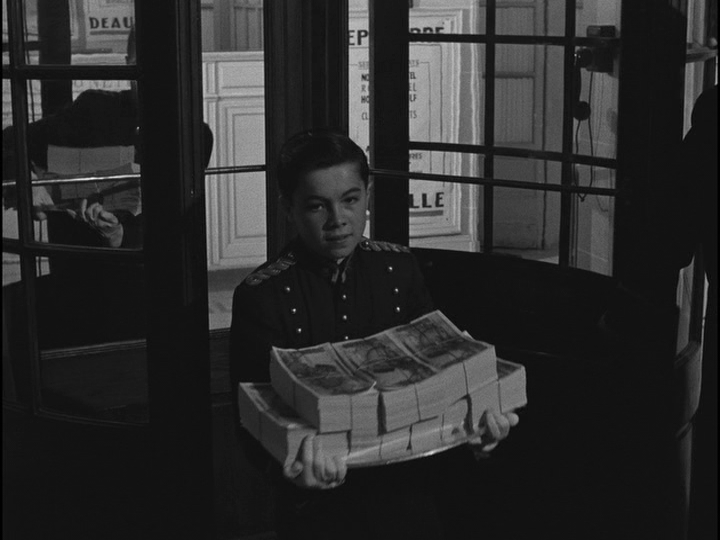
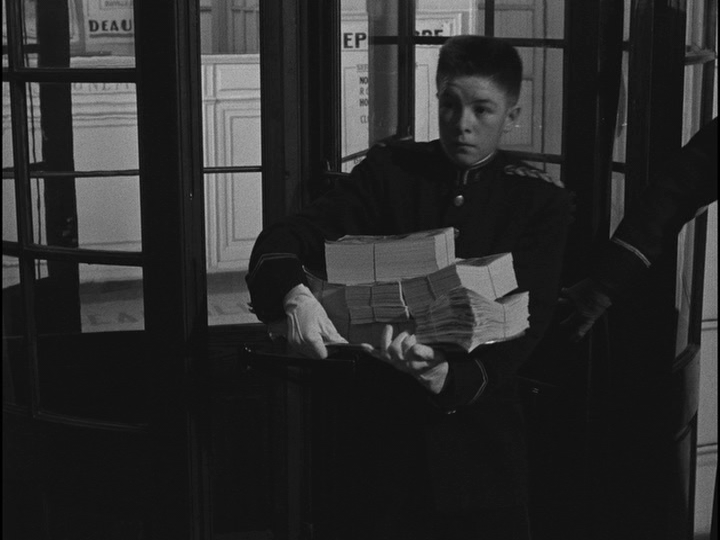
“I’ve known it was double-headed for ten years,” Roger tells him. “And I’ve known you knew for ten years,” Bob replies. “Paulo knew too,” he adds. Just then the somber mood is broken by a procession of bellhops bringing out Bob’s winnings:

Medium shot of a bellhop holding a tray of cash
Another bellhop with an arm full of cash
The police help one of the bellhops load the money he is carrying into the trunk of a police car

“And don’t let any of it go missing!” Bob says as he is led into a squad car. “Criminal intent to commit . . . you’ll get five years,” Morin says as he offers Bob and Roger cigarettes.

Medium shot of Inspector Morin offering cigarettes to Bob and Roger, who sit behind him in a car

“But with a good lawyer, you might get away with three years,” he continues. “With a very good lawyer, and no criminal intent, maybe an acquittal!” Roger adds. And finally Bob: “If I play my cards right, I might even be able to claim damages!” The movie ends with a amazing shot of his car sitting in front of the Deauville shore as the sun rises behind it:

Long shot of Bob's car in the bottom 1/3 of the frame and the coast in the top 1/3 of the frame, with empty sand in between

Dave Kehr writes in an essay that appears in his book When Movies Mattered that “[director Jean-Pierre] Melville is often described as an existentialist, but to execute a scene like the finish of Bob le Flambeur, even in jest, you need to have some faith in the basic benevolence of the world–some faith in a higher, protective power, such as the ‘luck’ that Bob turns his back on and that then returns, in the end, to save and reward him after all.” I couldn’t agree more with the first part of this statement, but would quibble just a bit with the latter. Bob never *abandons* Lady Luck; rather, ever the gentleman, he tries to take a hint and move on when it seems like he has lost her favor, but when he realizes his error, he’s more than happy to come home. As the voiceover remarked earlier as the seconds ticked down to 5:00, “that’s Bob the gambler as his mother made him!” I noted last February in a post about The Young Girls of Rochefort that a friend has suggested that the theme of this series is “the human experience of trying to become a better person.” I suppose that must make Bob le Flambeur another exception to this rule.

Cheers!

All original photographs in this post are by Marion Penning, aka my loving wife. Links to all of the entries in this series can be found here.

February, 2025 Drink & a Movie: Theobroma + Ali: Fear Eats the Soul

Between Valentine’s Day in February and Easter in March/April, I think it’s fair to say we’re in the “chocolate quarter” of the calendar year! In honor of such, this is the first of three Drink & a Movie posts in a row that will feature a drink made with one of my favorite underrated heroes of the back bar: crème de cacao. As Paul Clarke notes in The Cocktail Chronicles, its bad reputation is likely attributable “the substandard quality of many chocolate liqueurs” prevalent on the market until Tempus Fugit Spirits’ version became widely available about ten years ago. It and the Giffard white crème de cacao that I prefer in the 20th Century cocktail I wrote about in 2022 for reasons of color are both excellent, though, and there’s no longer any use to shy away from this ingredient. As described in a post on his blog, Clarke created this month’s drink, the Theobroma, as his version of a chocolate martini. Here’s how to make it:

2 ozs. Reposado tequila (Mi Campo)
1/2 oz. Punt e Mes
1/4 oz. Bigallet China-China
1 tsp. Crème de cacao (Tempus Fugit)
2 dashes Bittermens Xocolatl Mole Bitters

Stir all ingredients with ice and strain into a chilled cocktail glass. Garnish with an orange twist.

Theobroma in a cocktail glass

The Theobroma begins with orange on the nose and an impression of sweet and bitter on the sip which quickly comes into focus as agave and chocolate. “Definitely a tequila drink,” said my loving wife, and I wouldn’t want to use something much more assertive than Mi Campos, which in my opinion is currently the best value in the reposado category available here in Ithaca, NY. It is rested in wine barrels, which contributes vanilla flavors also prominent in Tempus Fugit’s crème de cacao that come through on the swallow along with spice and more orange. Clarke’s description of his concoction as “a bold, elbow-throwing mixture that’s unafraid to let its chocolate flag fly” is spot-on, and I’m not going to try to improve on it!

Believe it or not, the chocolate martini was created by actors Rock Hudson and Elizabeth Taylor on the set of the movie Giant. The book Rock Hudson: His Story contains the tale:

Rock and Elizabeth stayed in rented houses across from each other, and it was in one of those houses on a Saturday night in 1955 that they invented the chocolate martini. They both loved chocolate and drank martinis. Why not put chocolate liqueur and chocolate syrup in a vodka martini? They thought it tasted terrific and made a great contribution to society until they began to suffer from indigestion. “We were really just kids, we could eat and drink anything and never needed sleep,” Rock said.

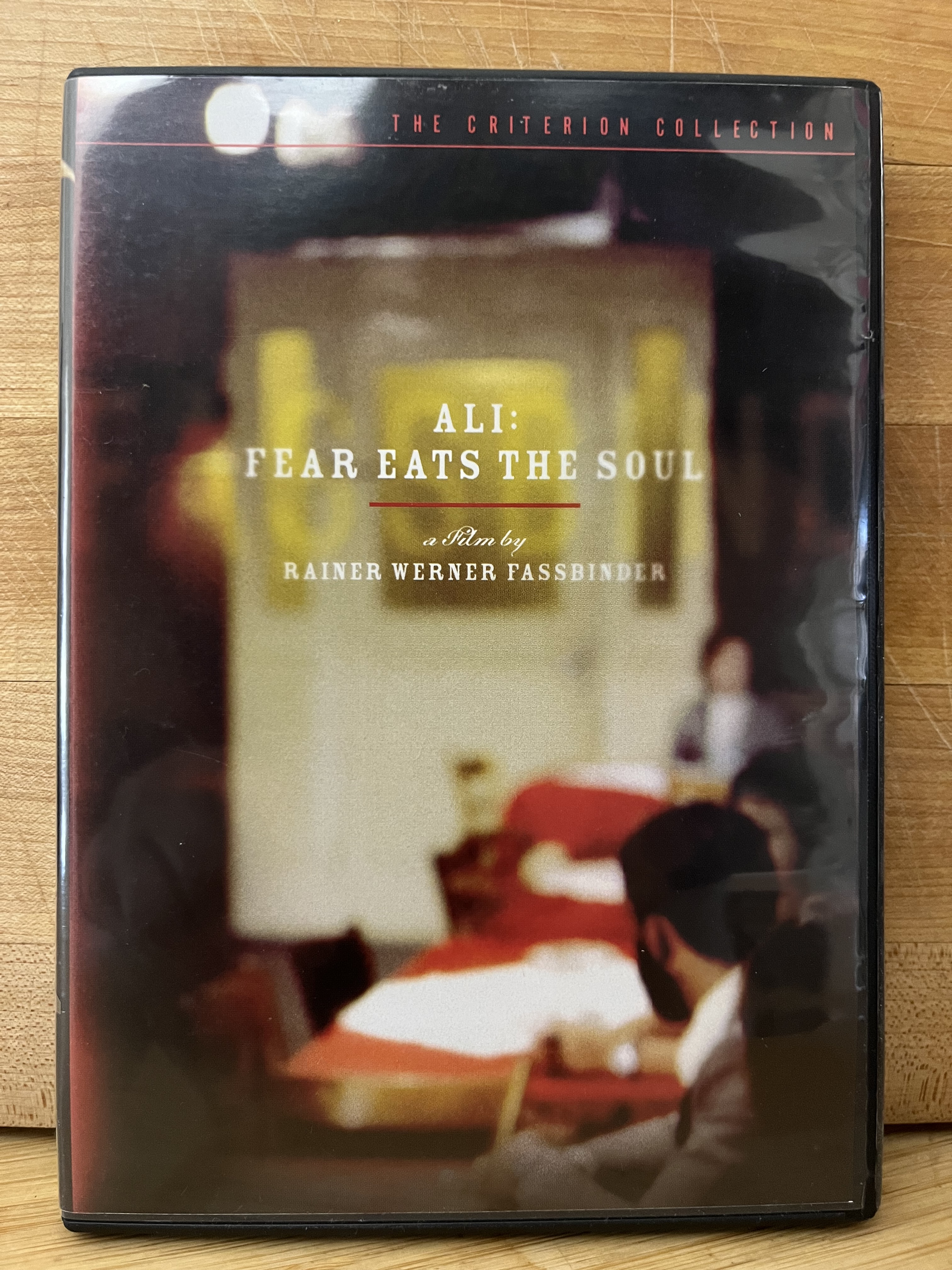
Given these origins, what better film to pair with the Theobroma than a riff on the Rock Hudson vehicle All That Heaven Allows that hails from Germany, “the land of chocolate,” and involves stomach problems as a plot point? I am, of course, referring to Ali: Fear Eats the Soul. Here’s a picture of my Criterion Collection DVD:

Ali: Fear Eats the Soul DVD case

It is also streaming on the Criterion Channel and Max with a subscription, can be rented from a variety of other platforms, and some people (including current Cornell University faculty, staff, and students) may have access to it through Kanopy via a license paid for by their local academic or public library as well.

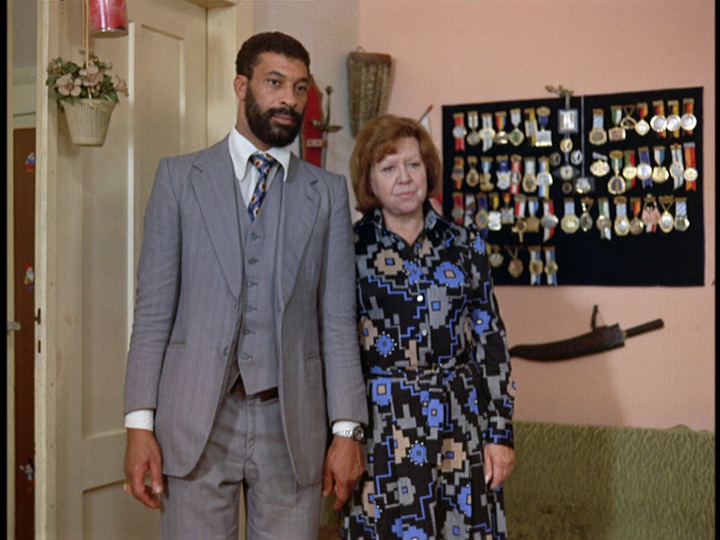
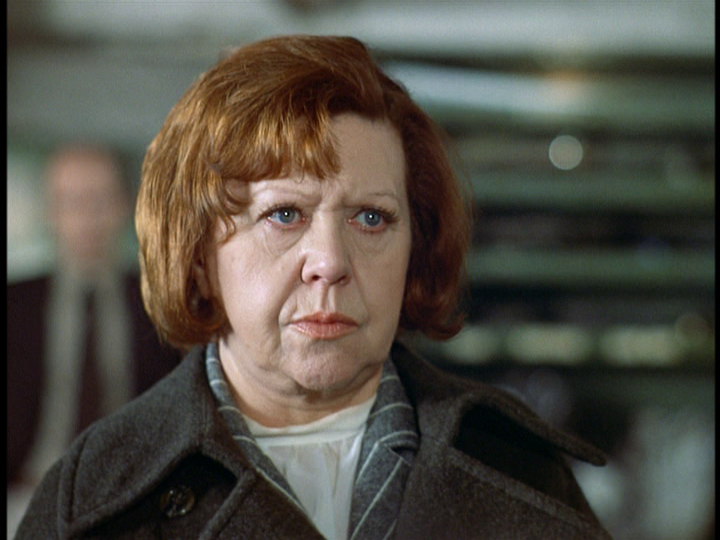
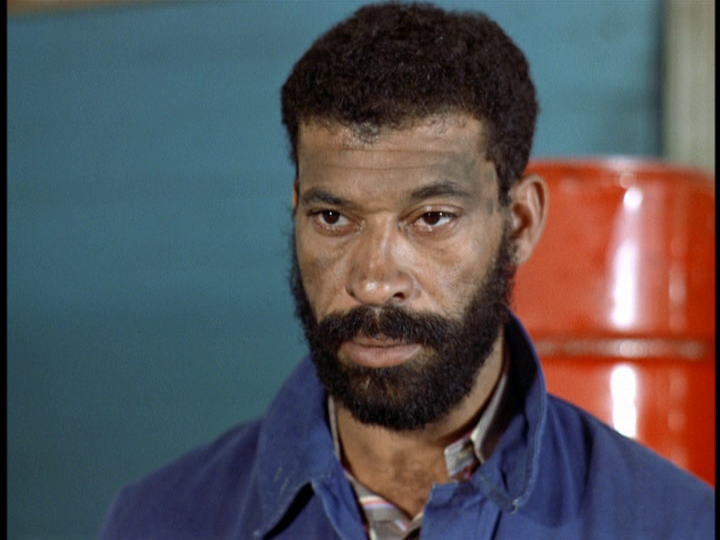
As Klaus Ulrich Militz writes in his book Personal Experience and the Media, the relationship between Ali: Fear Eats the Soul and All That Heaven Allows “is not as clear as it may seem at first.” For starters, although both films revolve around a May-December romance, director Rainer Werner Fassbinder must have conceived of his movie before he encountered its supposed inspiration for the first time in autumn 1970 because “a rough outline of the film’s story-line is told by the chambermaid in the film The American Soldier,” which he shot two months earlier. The fact that his protagonists Emmi (Brigitte Mira) and Ali (El Hedi ben Salem) enter into a relationship with each other at the beginning of it also represents a major structural break with the earlier movie directed by Douglas Sirk, which “largely follows the emancipatory logic of the melodramatic genre because his heroine only gradually manages to overcome her passivity before she eventually commits herself to her lover.” Nonetheless, per Militz, “the fact remains that when Fassbinder eventually made Ali: Fear Eats the Soul in 1973 this was done under the impression of Sirk’s films.”

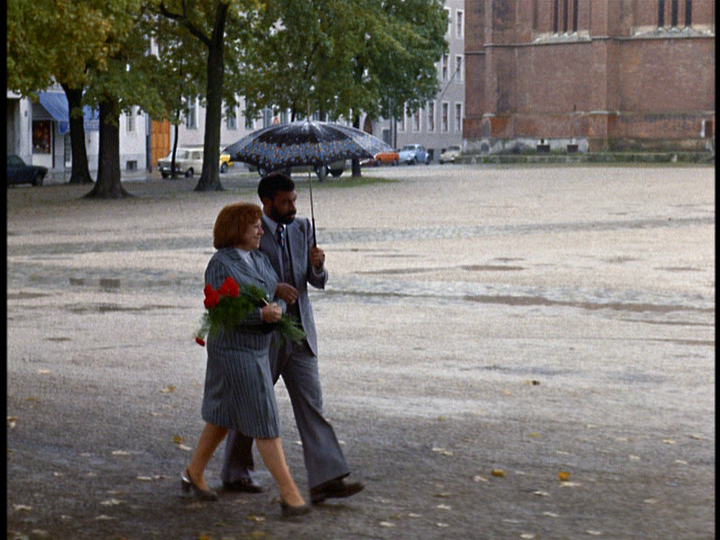
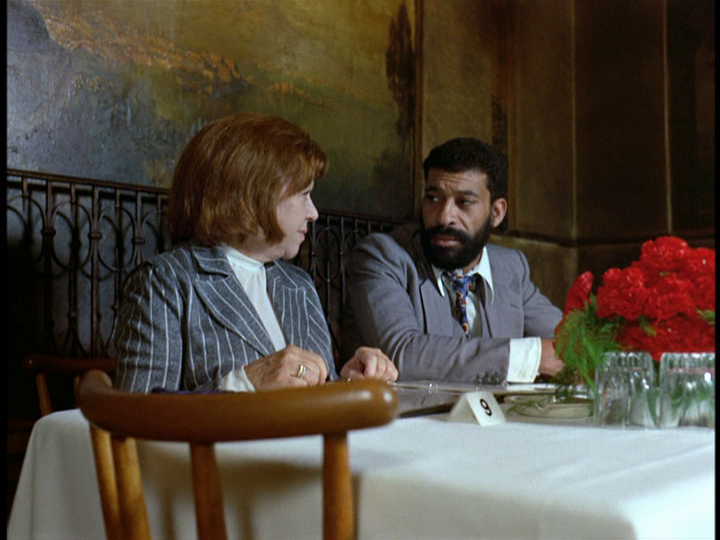
One place many people feel the influence of All That Heaven Allows is in Fassbinder’s use of color. For instance, in her chapter for the book Fassbinder Now: Film and Video Art, Brigitte Peucker observes that the “formal, conformist grey clothing” that Emmi and Ali get married in marks them as “constrained by the social order,” but that it’s offset “by the Sirkian red carnations that emblematize emotion”:

Long shot of Ali and Emmi walking hand in hand: he holds an umbrella, and she has a bouquet of carnations in her arms
Medium shot of Ali and Emmi seated at a restaurant with the carnations on the table in front of them

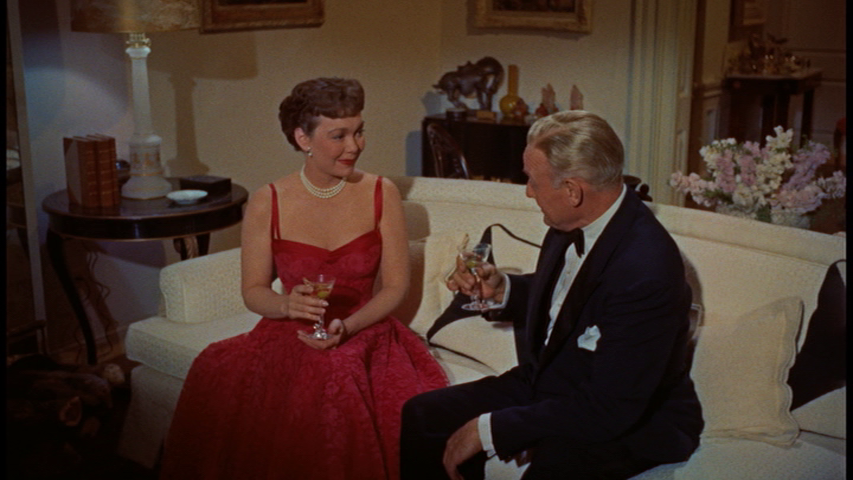
This seems to echo what Brian Price describes in his chapter for the book A Companion to Rainer Werner Fassbinder as the typical reading of the vibrant red dress Jane Wyman’s Cary Scott wears in Heaven to show “what remains inside and–owing to social constraints–invisible.”

Medium shot of Cary Scott sitting on a couch in a red dress drinking martinis with a man in a tuxedo

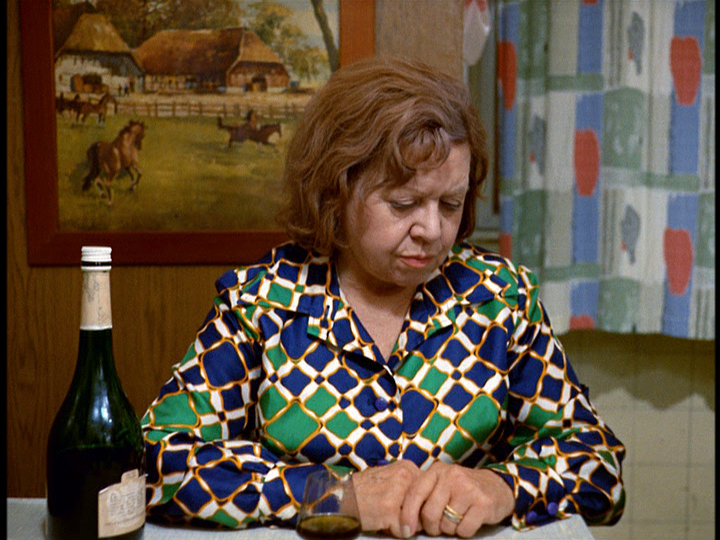
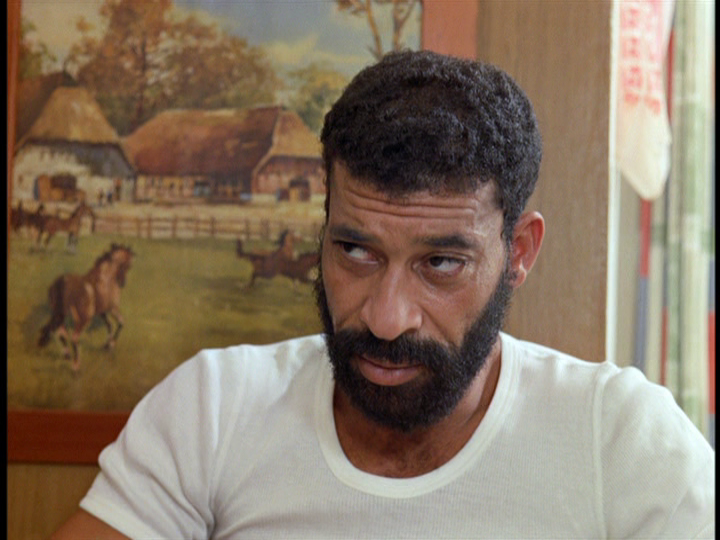
As he notes, though, Emmi’s flowers are different in that “Fassbinder’s colors, unlike Sirk’s, tend toward disharmony and away from the kind of color coordination that makes analogy possible.” Pointing out that the man Cary is with in the image above, Conrad Nagel’s Harvey, is wearing clothing that matches the furniture they are sitting on, Price argues that this provokes a simile: “Harvey, we might say, is like a couch, something to rest on, something solid but soft, immovable–and worst of all for Harvey, something inanimate, or merely functional.” Contrast this with the dresses Emmi favors elsewhere in Ali, such as the one she has on as she sits “in front of an amateur painting of horses running executed in pale yellow gold tones decidedly less bold than the ones Emmi wears” and curtains “which are no less busy than her dress but are nevertheless discordantly situated with respect to it–baby blue instead of navy blue, a dull grayish green instead of the saturated green to which it stands, in the overall composition, in odd contrast”:

Medium shot of Emmi in the dress and sitting in front of the painting and curtains referenced above

To Price “the contrast eludes metaphor” and because “this green is not like that green, then Emmi cannot be defined by the objects and spaces that constitute her on a contingent–and thus reversible–basis.”

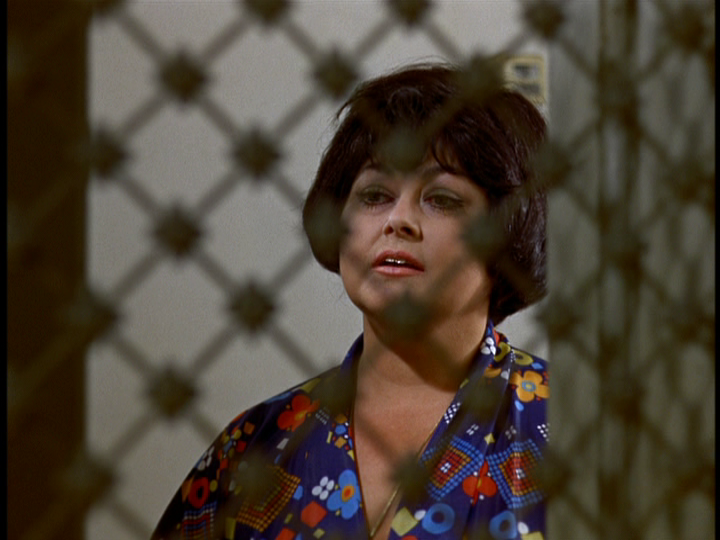
My loving wife explained to me that this is also a wrap dress like the one designed by Diane von Furstenberg, which per this Time Magazine article she created “for the kind of woman she aspired to be: independent, ambitious, and above all, liberated.” Fascinatingly, it also states that “von Furstenberg was told from a young age that ‘fear is not an option.'” The similarity of that quote to the title of this month’s movie may be just a coincidence, but Emmi’s fashion sense surely isn’t, especially when you consider how many of these garments she has in her wardrobe:

Another wrap dress...
...and another...
...and another.

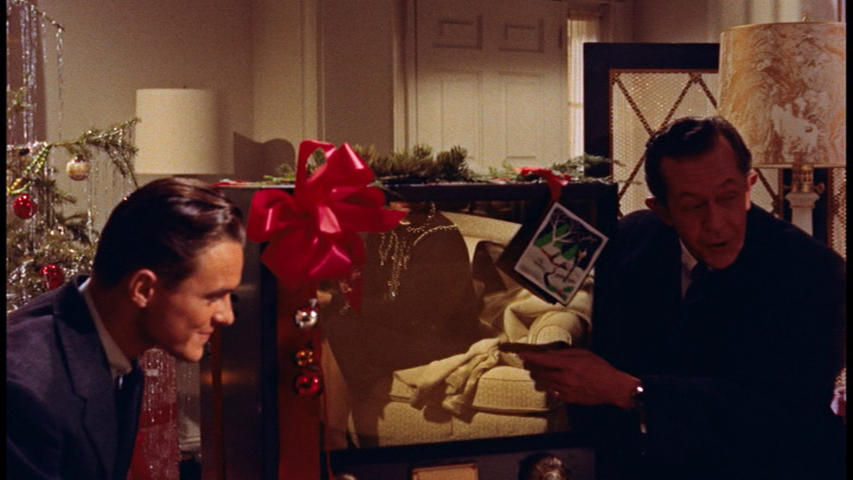
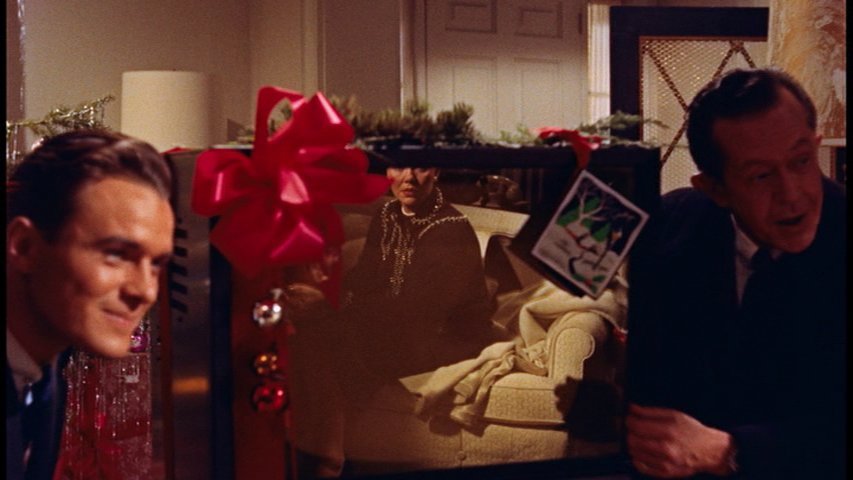
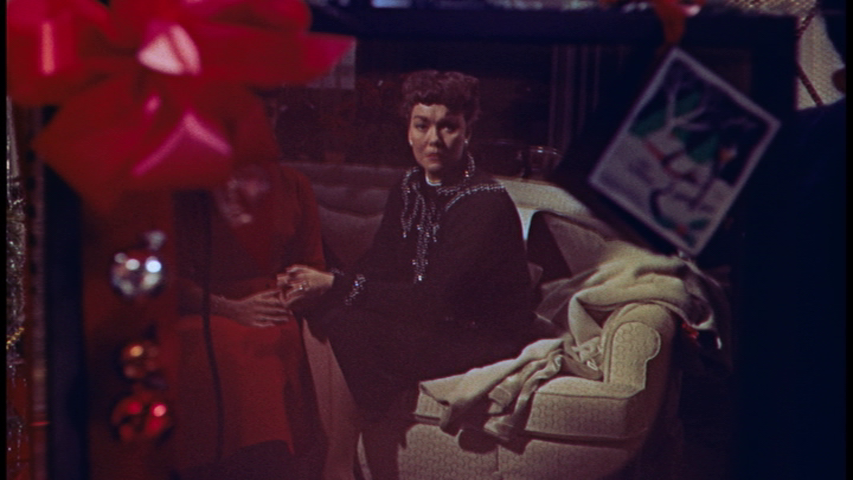
Fassbinder similarly uses the television and frames within frames that appear in Heaven, represented here by a single powerful camera movement:

Medium shot of Cary's son Ned (William Reynolds) and a salesman (Forrest Lewis) presenting her with a television
As the camera tracks in on her reflection...
It creates the appearance that she is inside it.

As a launchpad to do his own thing. He transforms the TV from a would-be prison cell into an symbol for the respectable German family that Emmi’s son Bruno (Peter Gauhe) believes she has disgraced with her choice of husband:

Meanwhile, almost every other aspect of the film’s mise-en-scène is a cage. This includes the wedding where Ali and Emmi celebrate their wedding:

Ali and Emmi at a restaurant, framed in a doorway

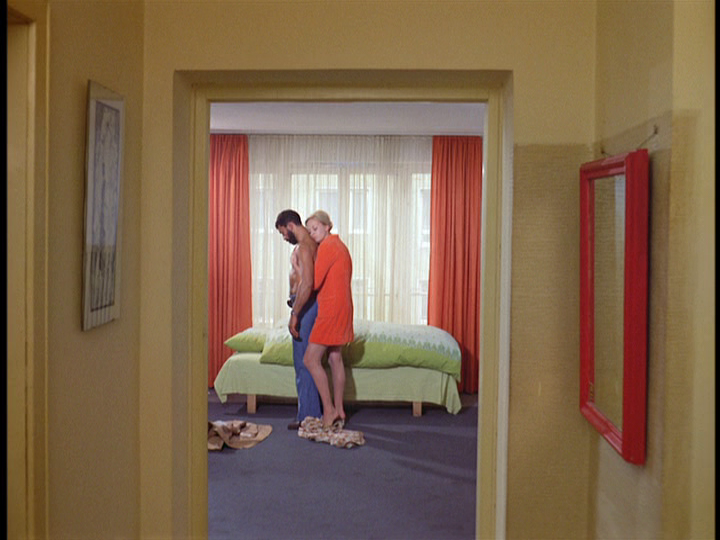
The apartment and bedroom where Ali seeks solace (and couscous!) after his relationship with Emmi calcifies into yet another instrument of exploitation:

Ali and his mistress Barbara are shown in long shot through a railing as she opens the door of her apartment to him
Barbara holds Ali in an interior long shot framed by a doorway

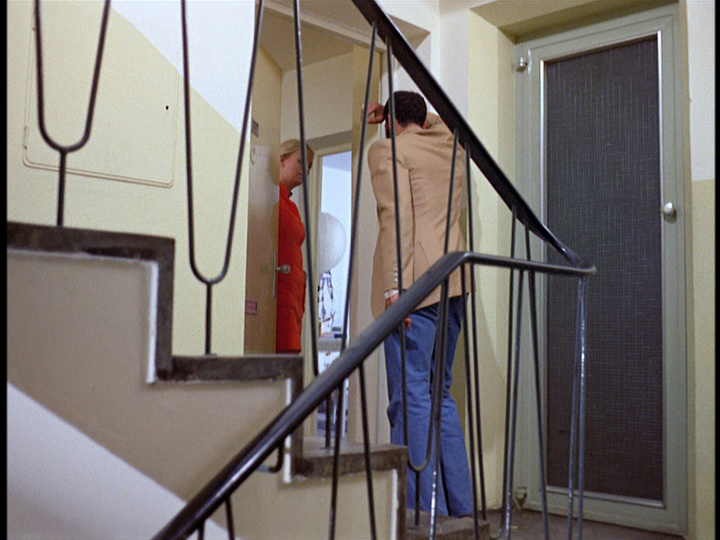
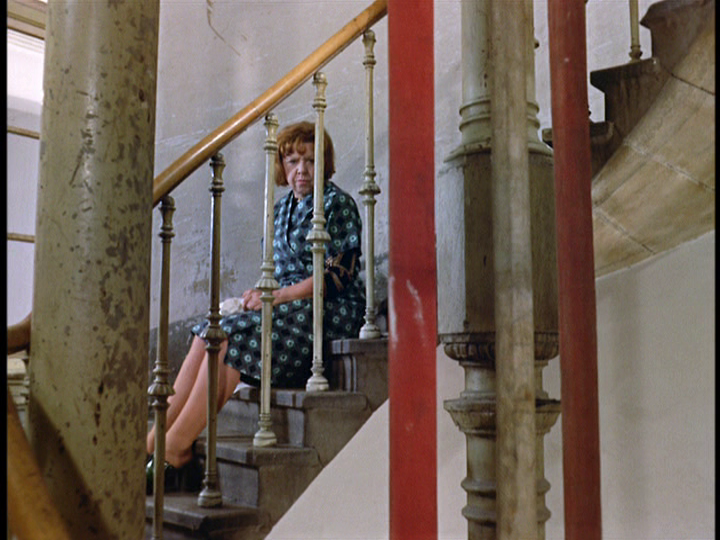
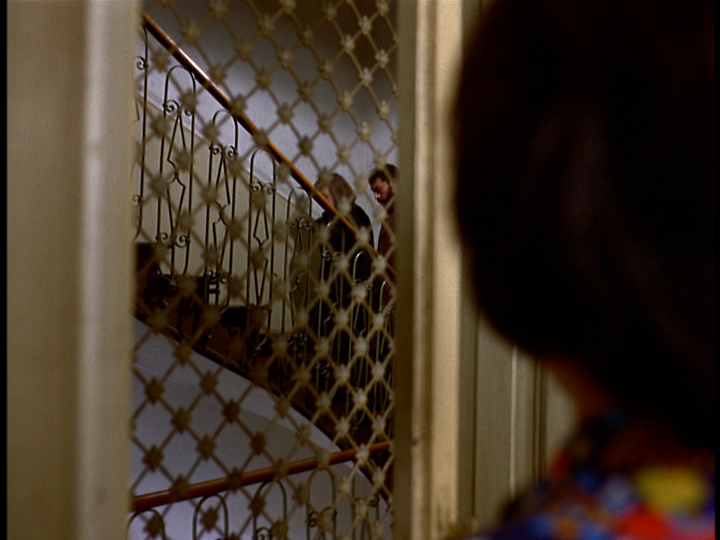
The stairwell where Emmi eats lunch alone after being shunned by her charwomen:

Long shot of Emmi with her lunch on a stairwell behind a railing

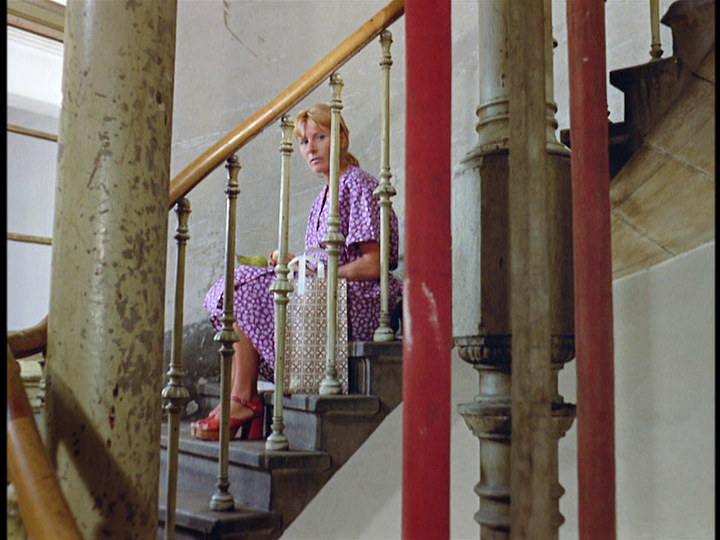
Then, once back in their good graces, joins them in giving the cold shoulder to their new co-worker Yolanda (Helga Ballhaus), a Herzegovinian immigrant:

Yolanda eats lunch alone in a composition which echoes the previous one

And a shot-reverse shot of a nosy neighbor (Elma Karlowa) watching Ali and Emmi mount the stairs of her building that, Manny Farber writes in an essay collected in the book Negative Space, “suggests all three, like all Fassbinder’s denizens, are caught in a shifting but nevertheless painful power game of top dogs and underdogs”:

Over-the-shoulder shot of Ali and Emmi going up the stairs behind a metal screen
Medium shot of Mrs. Kargus, who is also behind a screen

But my favorite aspect of Ali is reminiscent less of Sirk than something Richard Jameson once said about the movie Once Upon a Time in the West. He described it as “an opera in which arias are not sung but stared,” and that’s a perfect fit for this film as well! You can practically hear the thoughts of Asphalt Bar proprietress Barbara (Barbara Valentin) as she sizes up Emmi, who has appeared in her establishment for a second time hoping to find Ali:

And those of the waiter (Hannes Gromball) at the restaurant “where Hitler used to eat from 1929 to ’33” (!) as he contemplates his unusual customers:

Medium shot of a waiter

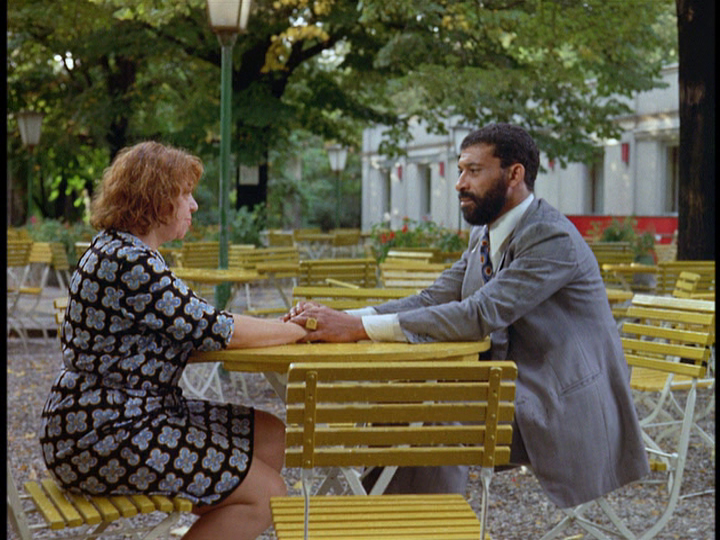
“Sometimes, long silences seem to be an expression of the social hostility encountered by Emmi and Ali, as in the climactic scene in an outdoor cafe immediately before their regenerative vacation,” notes James C. Franklin in a Literature/Film Quarterly article called “Method and Message: Forms of Communication in Fassbinder’s Angst Essen Seele Auf (the movie’s German title) where “the interaction of the visual image and the silence creates an atmosphere of utter coldness and hostility”:

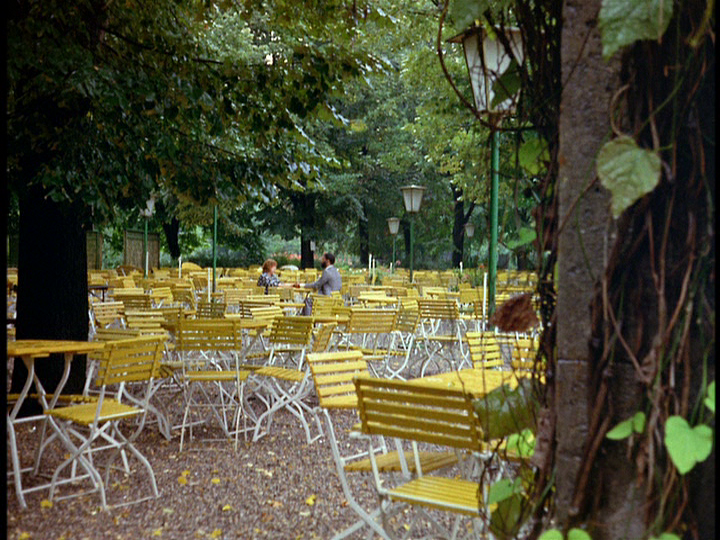
Extreme long shot of Ali and Emmi in a sea of yellow tables
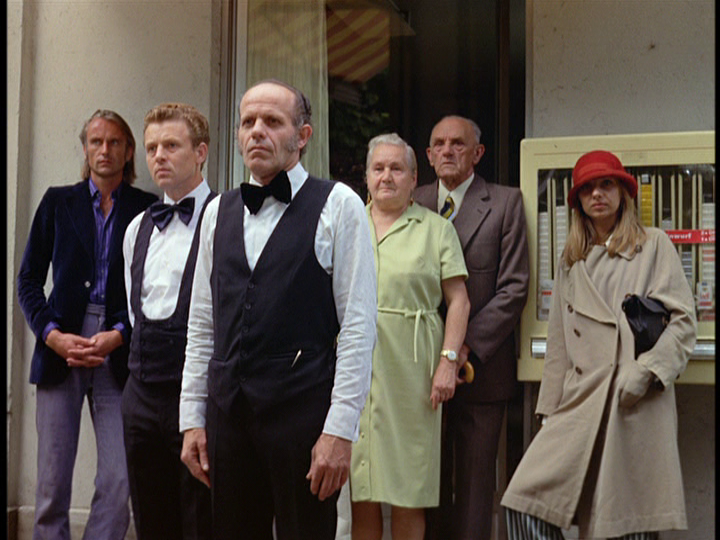
A crowd of waiters and customers stare at Ali and Emmi
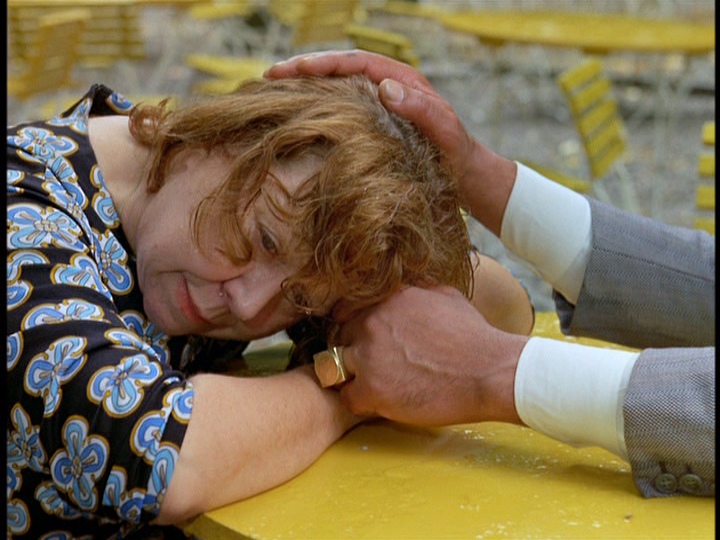
Close-up of Ali caressing Emmi's hair as she weeps

However, my favorite examples of where (as Franklin eloquently puts it) “there is much to be heard in the silence of the soundtrack” are the looks Ali and Emmi give each other the morning after he first comes back from a night out blackout drunk:

Medium shot of Emmi staring at Ali
Reverse shot of Ali staring back

And then doesn’t arrive home at all:

Another medium shot of Emmi staring at Ali
And another reverse shot of Ali staring back

The latter occur in the film’s final ten minutes. In a response to a chapter in Robert Pippin’s book Douglas Sirk: Filmmaker and Philosopher for the national meeting of the American Society for Aesthetics that he posted on Letterboxd, Matt Strohl comments on a phenomenon that he calls the “double ending” of subversive melodramas whereby “an ostensible happy ending is subverted by some unsettling element, which might then prompt us to reflect on whether it was really such a happy ending after all and to reinterpret the film in this light.” Although All That Heaven Allows concludes with Cary resolving to “come home” to her lover Ron (Hudson), both scholars argue that we should feel uneasy about this, Pippin (as paraphrased by Strohl) because Cary “did not make the decision to enter into this relationship” but rather “fell into it because of Ron’s newfound need for a caretaker” and Strohl because “Cary has not gotten over her fears and become a full-fledged agent, but rather has slid into a different socially-defined gendered role that she has not actively chosen.”

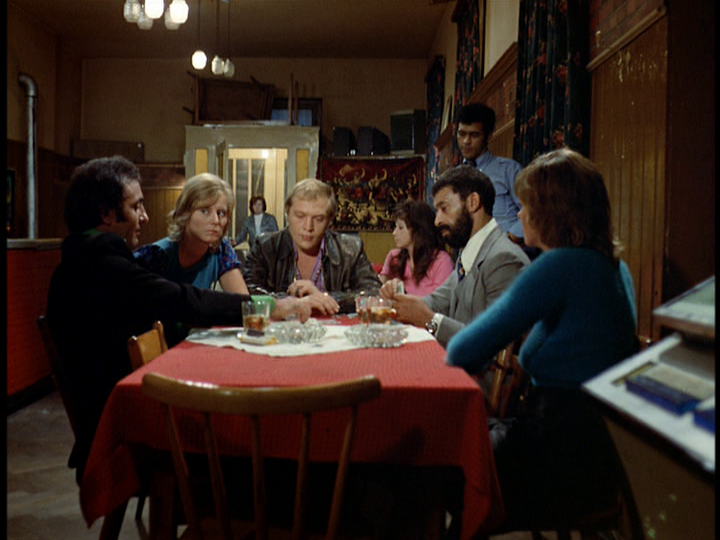
Ali: Fear Eats the Soul is a different kind of beast. The scene after the second staredown depicted above opens with Ali “gambling away a week’s wages” (as Barbara points out to him) at the Asphalt Bar:

Long shot of Ali seated at a table in the Asphalt Bar playing cards

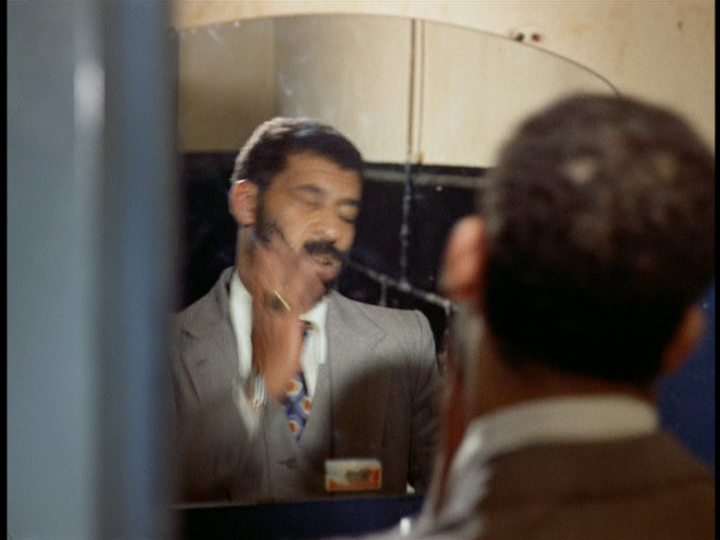
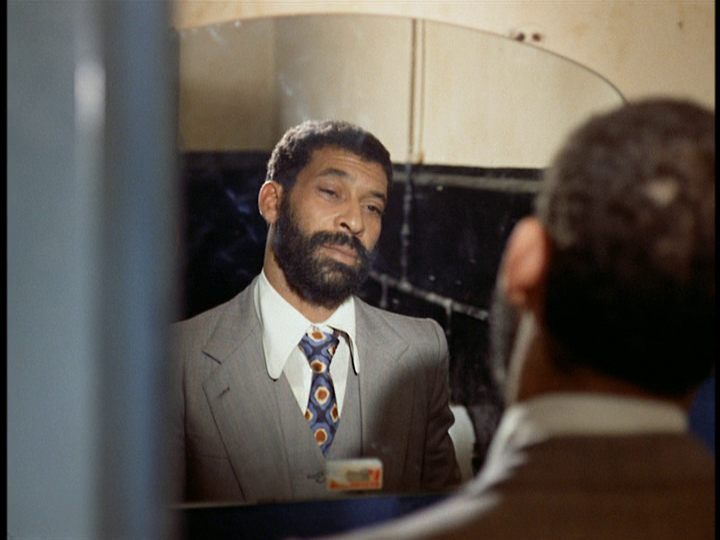
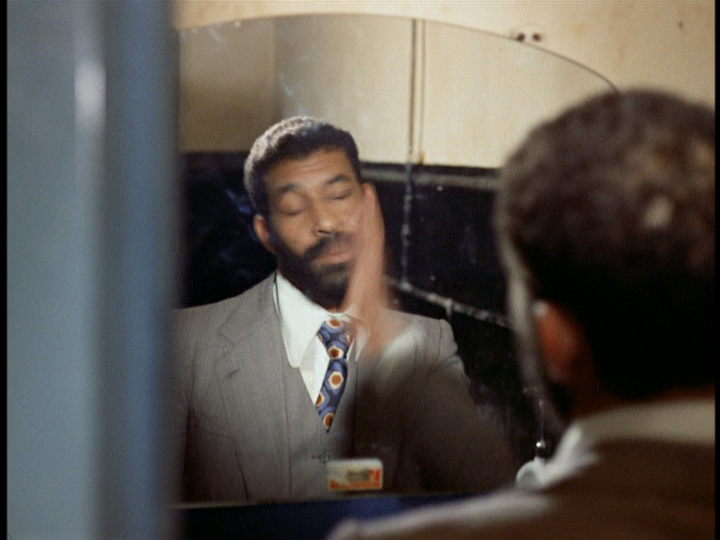
He busts out and sends a friend to his place for 100 more marks. While he waits for the money, Ali goes to the restroom and proceeds to slap himself in the face multiple times in a weird twist on Jackie Gleason’s Minnesota Fats freshening-up routine in The Hustler:

Medium shot of Ali slapping himself in the face as he looks in a mirror
Continuation of the previous shot
Continuation of the previous two shots

As he sits back down at the table and immediately proceeds to lose a hand, Emmi enters the bar in the background:

Emmi enters the Asphalt Bar in the background as Ali continues gambling in the foreground

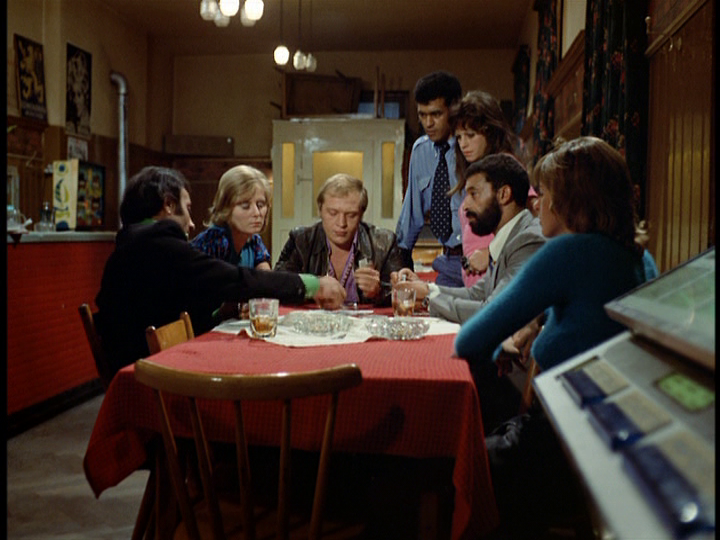
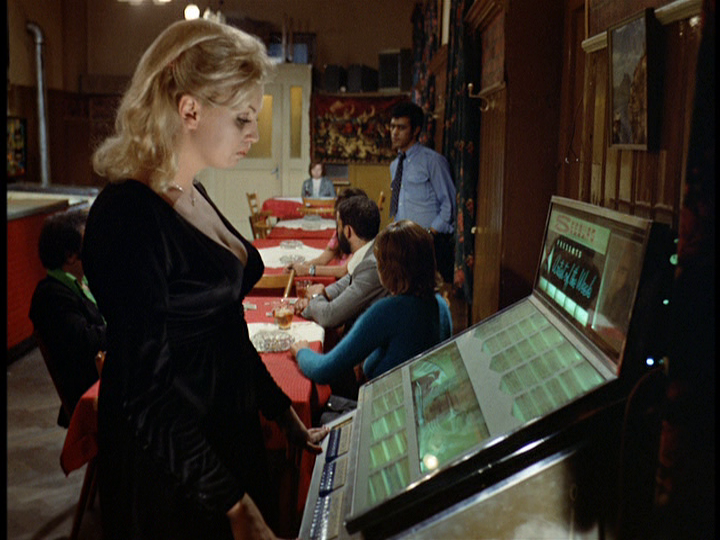
Barbara brings her a Coke, the drink she ordered the night she met Ali, and Emmi asks her to play the tune they later danced to. Ali and his companions stare at Emmi as Barbara selects the song on the jukebox in the foreground of a three-layer composition:

Three-layer composition: Barbara programs the jukebox in the foreground, Ali and his companions stare at Emmi in the middle ground, and she sits at a table in the background

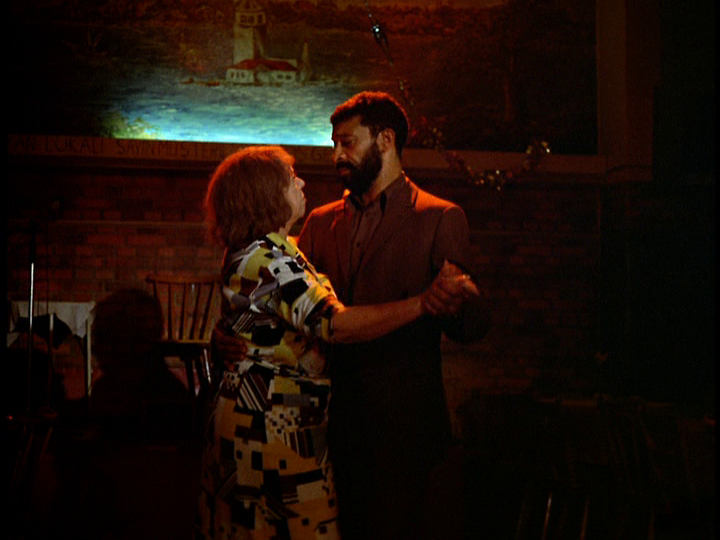
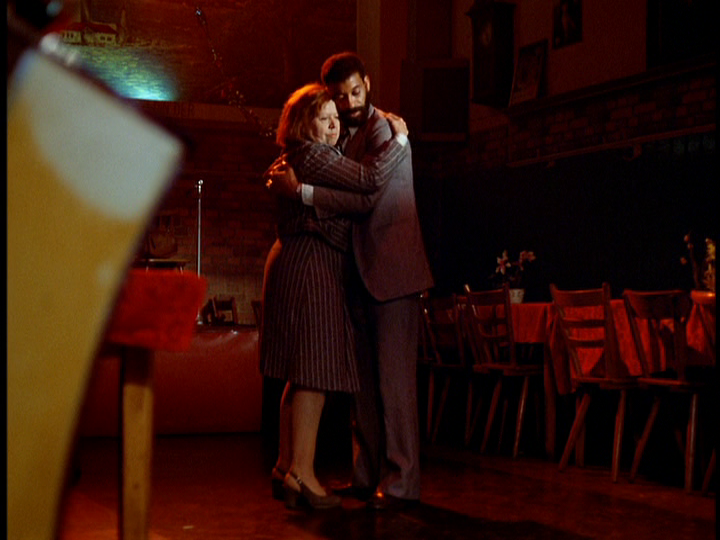
As soon as the music begins playing, Ali stands up and asks Emmi to dance. As the sway back and forth he confesses that he has slept with other women, but she assures him the it isn’t important and that he’s a free man who can do as he likes. “But when we’re together, we must be nice to each other,” she says. “Otherwise, life’s not worth living.”

Long shot of Ali and Emmi slow dancing

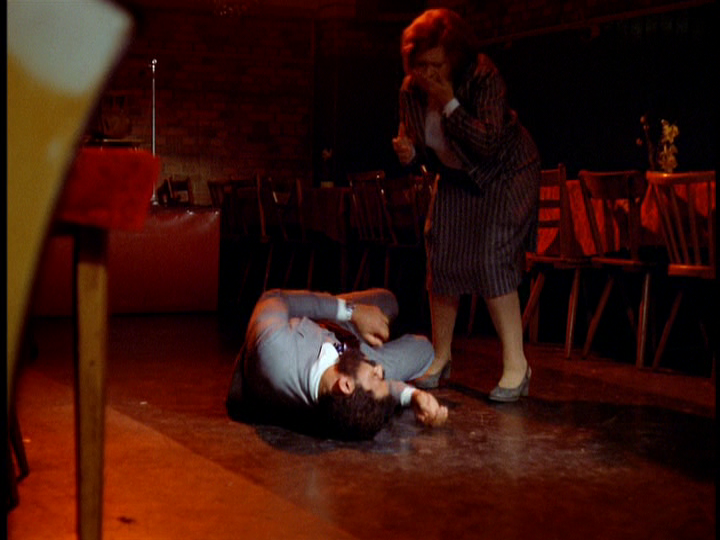
“I don’t want other women,” he responds. “I love only you.” Suddenly, he collapses to the ground, moaning in pain:

Long shot of Emmi gasping as Ali writhes in pain on the ground

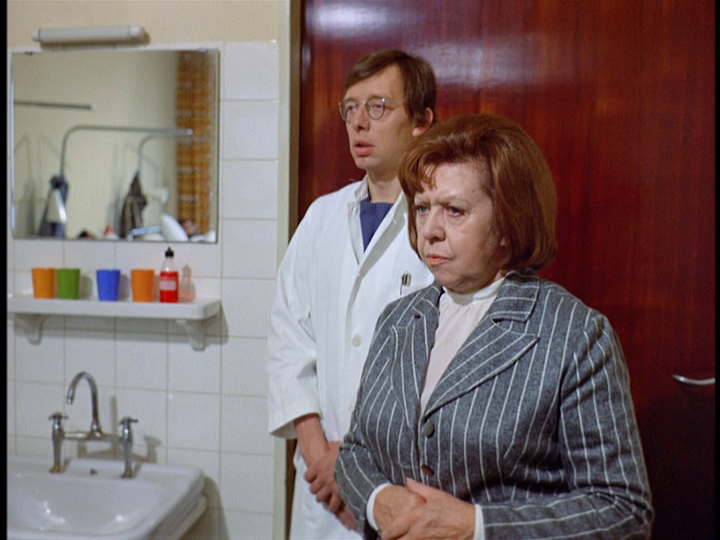
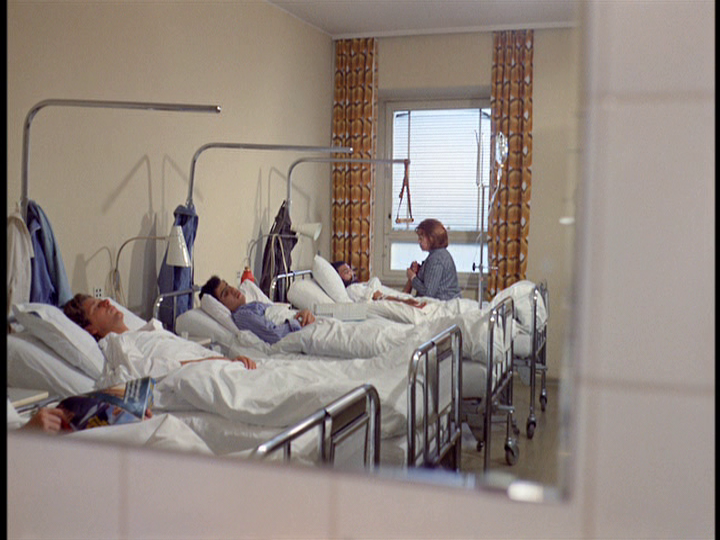
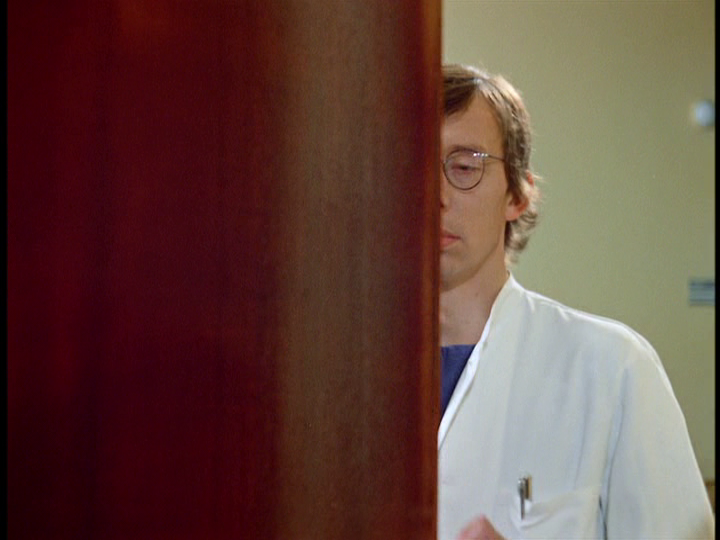
The final scene takes place in a hospital. “He has a perforated stomach ulcer,” a doctor (Hark Bohm) tells Emmi. “It happens a lot with foreign workers. It’s the stress. And there’s not much we can do. We’re not allowed to send them to convalesce. We can only operate. And six months later they have another ulcer.”

Medium shot of a doctor giving his diagnosis of Ali's condition to Emmi

“No he won’t,” Emmi insists. “I’ll do everything in my power. . . . ” The clearly skeptical doctor interrupts her: “Well, the best of luck anyway.” Emmi walks over to Ali and the camera tracks in on their reflection in the mirror:

Long shot of Emmi holding Ali's hand reflected in a mirror

The doctor closes the door:

Medium shot of the doctor closing the door

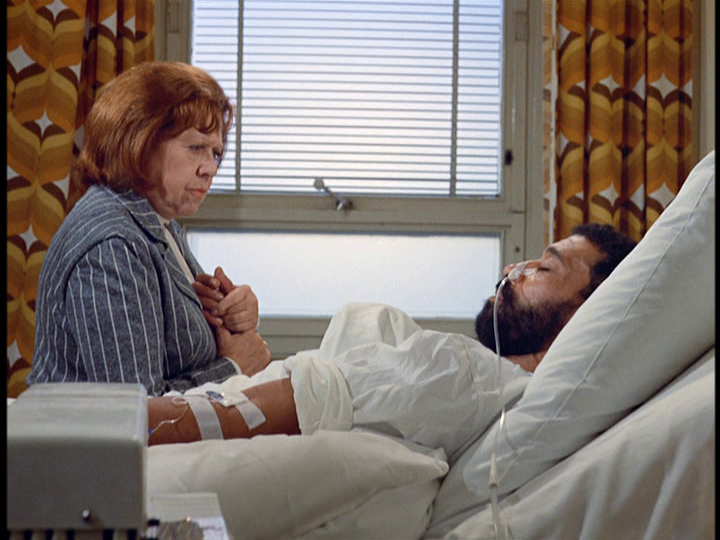
And the film ends with a shot of Emmi crying as she holds an unconscious Ali’s hand:

Medium shot of Emmi holding Ali's hand

The utility of the “double ending” for Strohl is that it can explicate an otherwise inchoate sense that “there’s something off” about a Hollywood ending. There’s obviously no need for that here, but if broaden this concept and reinterpret it through the lens of the drink writing idea of a “finish,” it can also give voice to whatever lingers in your mind after the final credits have rolled. Ali‘s finish is the same as the Theobroma’s: they’re both bittersweet, which, if you don’t think that’s appropriate to the Valentine Season, you’ve never really been in love.

Cheers!

All original photographs in this post are by Marion Penning, aka my loving wife. Links to all of the entries in this series can be found here.
January, 2025 Drink & a Movie: Don’t Give Up the Ship + The Lady from Shanghai

The San Francisco Nog created at Waltham, Massachusetts bar Deep Ellum has been a favorite in our house ever since Frederic Yarm wrote about it on his Cocktail Virgin Slut blog a few years ago. With Fernet Branca on my mind, it was natural that my thoughts would also turn to San Francisco, since for reasons Grant Marek chronicled for SFGate that spirit is linked to the city “in the same way that Malort is to Chicago and Guinness is to Dublin, Ireland.” This led me to a movie filmed there that I’ve been entranced with ever since I encountered stills from it in David Cook’s A History of Narrative Film as an undergraduate film studies major: The Lady from Shanghai. A dairy-based beverage would be a terrible fit for its hot and sweaty first half, so instead I’m taking a cue from the yacht the Circe which belongs to the titular lady Elsa Bannister (Rita Hayworth) and her husband Arthur (Everett Sloane) and pairing it with the Don’t Give Up the Ship cocktail that most drinks historians agree first appeared by that name (there’s also a concoction called a Napoleon in The Savoy Cocktail Book with the exact same ingredients) in Crosby Gaige’s 1941 Cocktail Guide and Ladies Companion, but which, like the Last Word I wrote about in 2023, owes its present-day popularity to Seattle’s Zig Zag Cafe.

Extreme long shot of the Circe.

As Jason O’Bryan noted in The Robb Report, there are now two versions of the drink. He favors the rendition made with Cointreau and sweet vermouth, but my loving wife and I enjoy the one that features Grand Marnier and Dubonnet Rouge more. He’s actually a fan of both and describes the original as “a lower-toned winter drink,” which is obviously appropriate to the season, and we think it’s a better platform for the fernet as well. Using a movie comparison that I appreciate as a child of the 90s, O’Bryan speculates on his Drinks and Drinking blog that this “may be a Happy Gilmore/Billy Madison situation.” Anyway, the recipe by Zig Zag’s Ben Dougherty which O’Bryan and others link to is no longer on Food & Wine magazine’s website, but you can still find it in their 2007 Annual Cookbook. Here’s how to make it:

1 1/2 ozs. Gin (Junipero)
1/2 oz. Dubonnet Rouge
1/4 oz. Grand Marnier
1/4 oz. Fernet Branca

Stir all ingredients with ice and strain into a chilled glass.

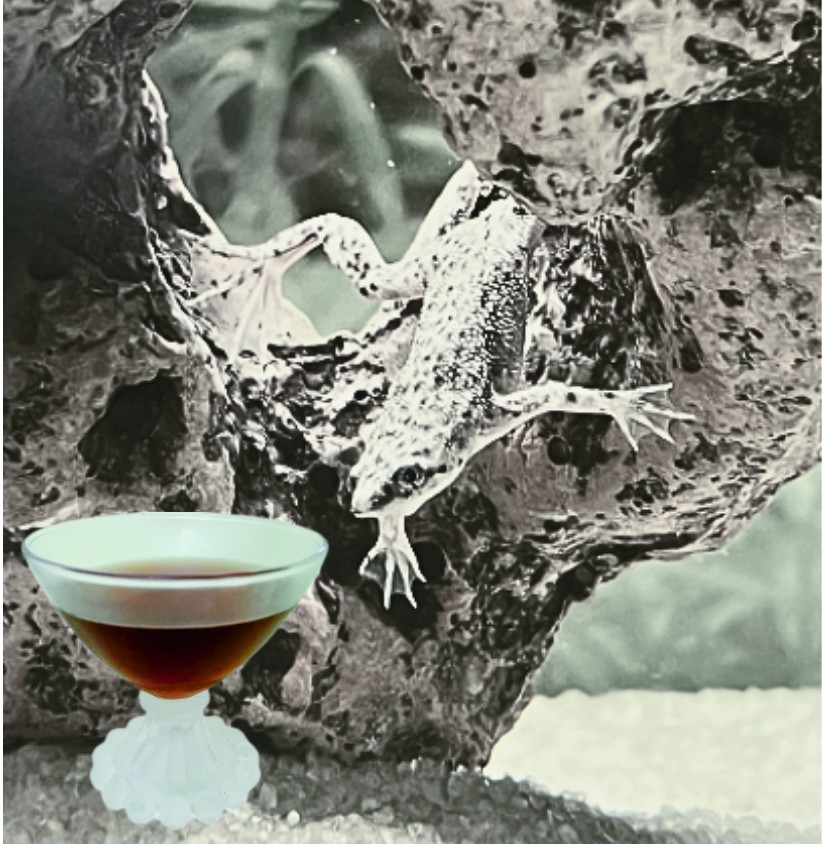
Don't Give Up the Ship in a cocktail glass in front of an enlarged picture of a frog

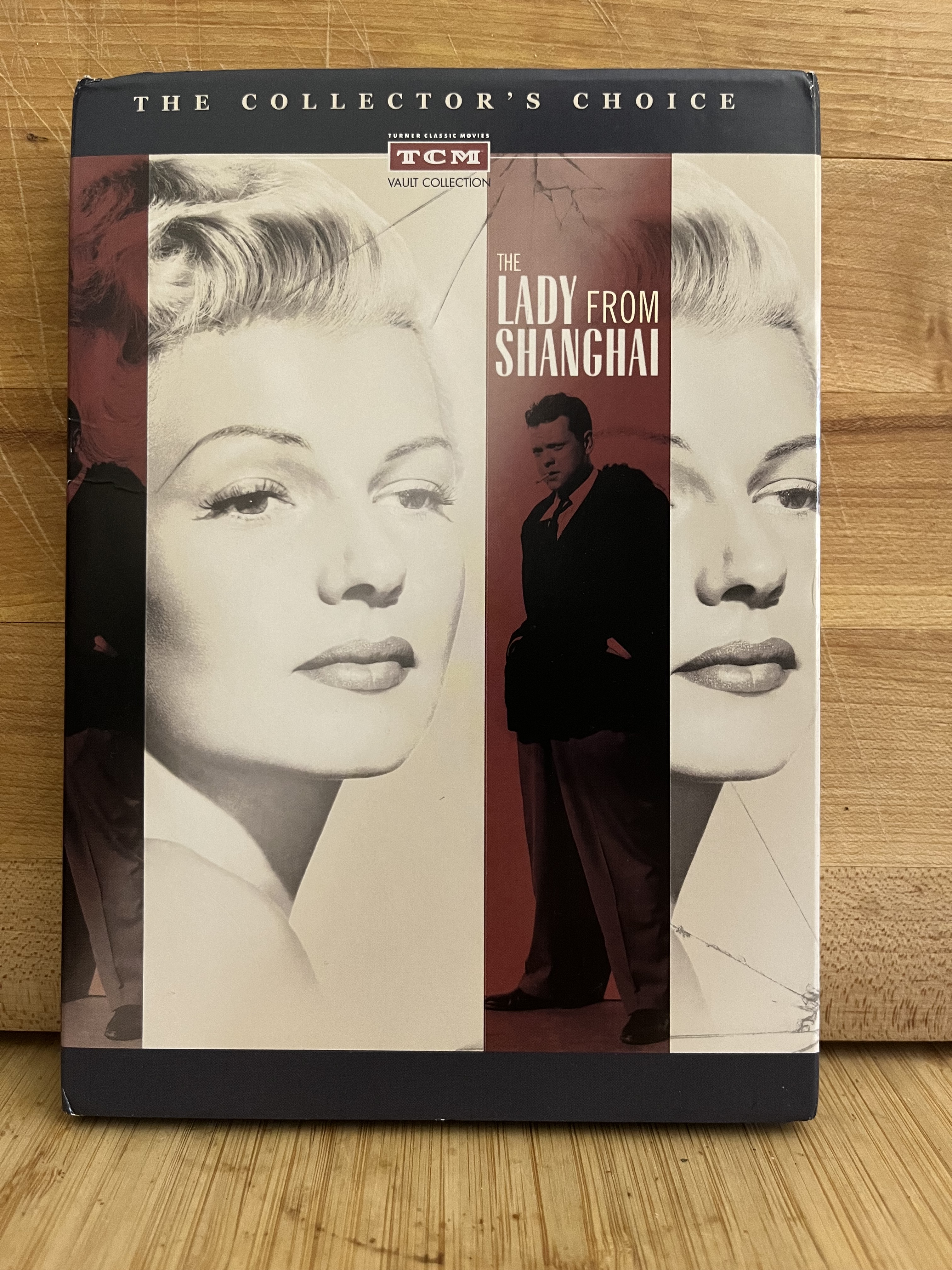
Junipero is ideal here because it’s made in San Francisco and also matches O’Bryan’s call for a “big, robust, juniper-forward” selection. In addition to being delicious, Grand Mariner is also made with a brandy base, which as Eddie Mueller says in his description of the Sailor Beware cocktail he created to pair with The Lady from Shanghai for his Noir Bar book seems “a likely libation for sinister shyster Arthur Bannister.” Both the gin and fernet are very prominent, so steer clear if you aren’t a fan of those ingredients. But if, like us, you love them: full speed ahead! On to the film. Here’s a picture of my TCM Vault Collection Blu-ray/DVD:

The Lady from Shanghai DVD case

It can also be rented from a wide range of streaming video platforms.

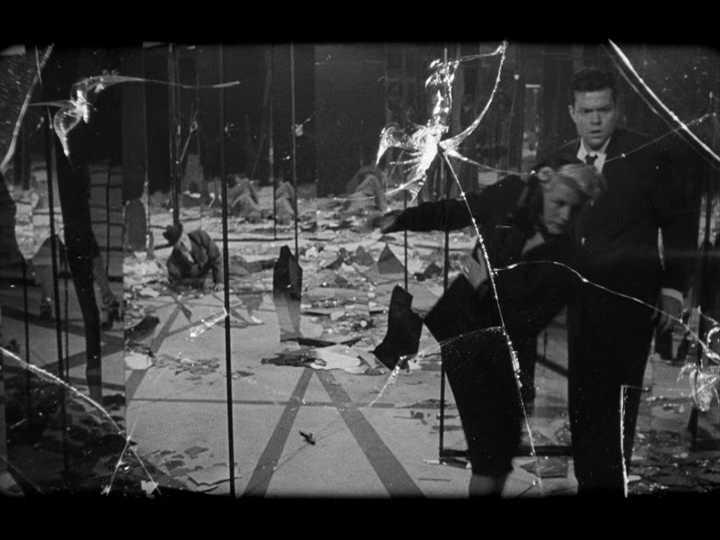
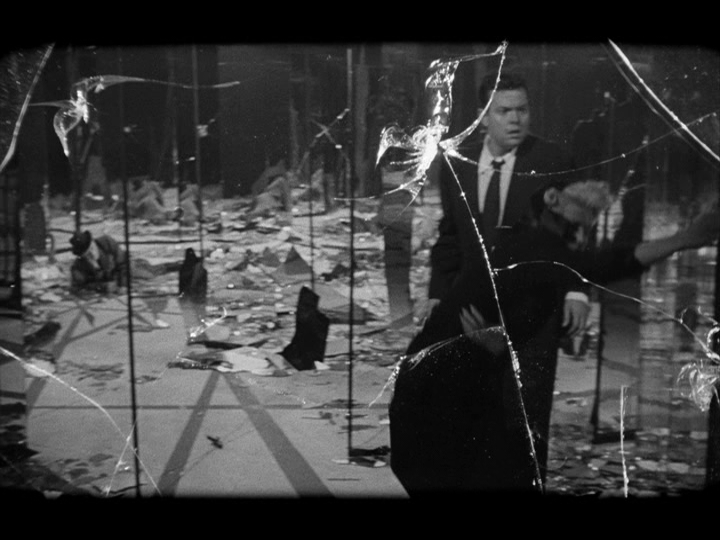
Dave Kehr famously called The Lady from Shanghai “the weirdest great movie ever made,” but as James Naremore writes in his book The Magic World of Orson Welles, “its strangeness did not result from an early, deliberate plan.” Instead, he argues that as a result of some combination of interference by Columbia Pictures and the “weariness, contempt, or sheer practical jokery” of its director, “the movie seems to have been made by two different hands.” Naremore points to the fact that it was “reduced by almost an hour from its prerelease form” and “substantially revised” at the behest of studio chief Harry Cohn (who allegedly offered $1,000 to anyone who could explain its plot to him after viewing the rough cut) as his primary evidence for this, but I haven’t read anywhere that Welles ever intended to edit the film himself and it’s hard to know for sure what exactly a finished version that he had more say in might have looked like. Based on the interviews with him that Peter Bogdanovich compiled into the book This Is Orson Welles and reads from on the commentary track on my DVD, for instance, the single-take version of the opening Central Park sequence (which American Cinematographer reported set a record for the longest dolly shot ever filmed) was always destined to be cut apart and down. It’s also not as if every shot overseen by Welles that made the final cut is beyond reproach. As Naremore says about one that I’m unfortunately no longer able to not see, the decision to use a panning movement which causes the jagged edges of glass at the corners of the frame below to move “is clearly a director’s error”:

Moving glass shards, part one
Part two
Part three

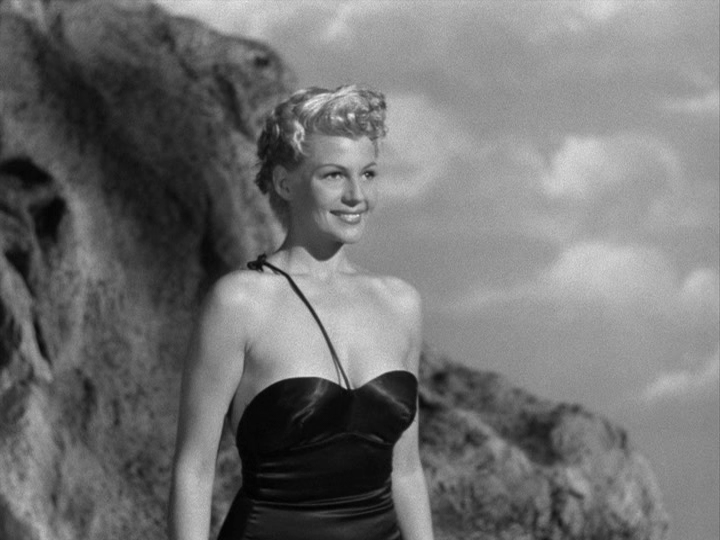
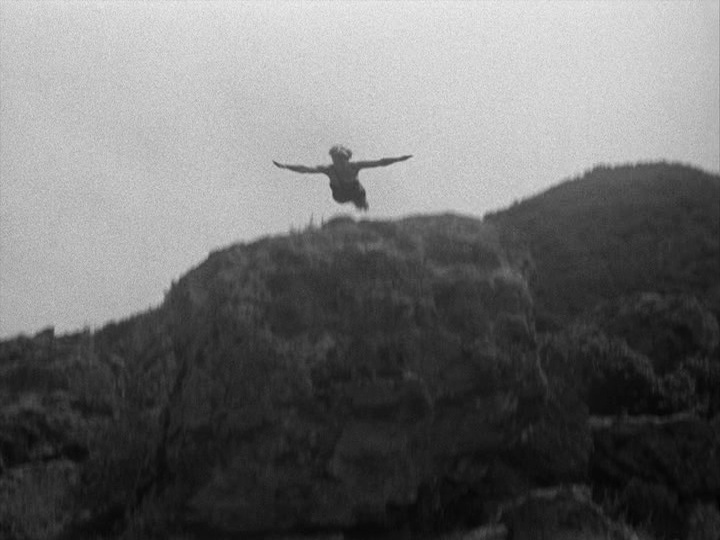
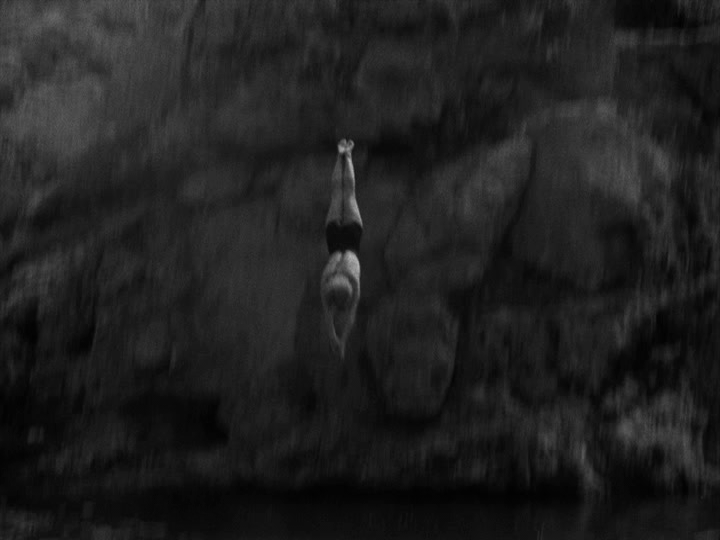
Welles’s biggest objection seems to have been to the music by Heinz Roemheld, exemplified for him by the “Disney”-esque glissando added to this dive:

Medium shot of Elsa Bannister in a bathing suit
Long shot of Elsa at the top of a dive
Long shot of Elsa right before she enters the water

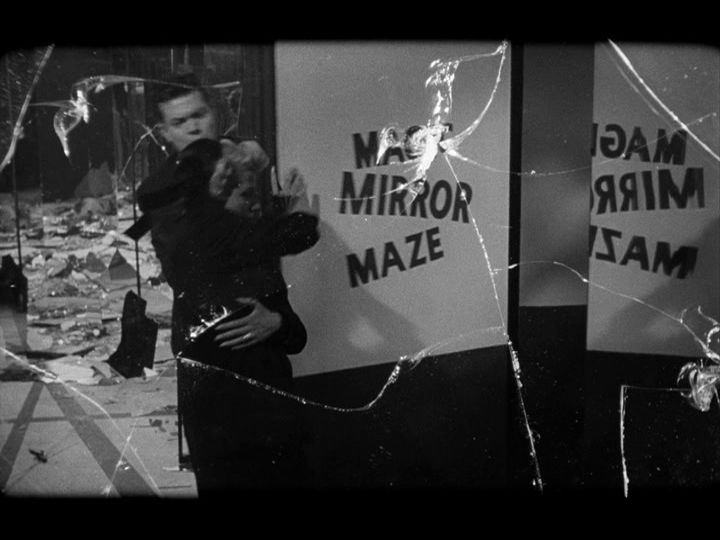
And although I don’t actually have a problem with the way the climactic Magic Mirror Maze shootout sounds today, it’s hard not to be intrigued when Welles tells Bogdanovich that it “should have been absolutely silent except for the crashing glass and ricocheting bullets–like that, it was terrifying.” Even more obviously tragic are the cuts from the final shooting script for the Acapulco sequence which Naremore describes in Biblical terms as depicting Glenn Anders’s George Grisby “tempting” Welles’s Michael O’Hara atop a mountain:

As Grisby and O’Hara stroll up the hillside from the beach, Grisby’s remarks are systematically played off against American tourists in the background, whose conversations about money become obsessive and nightmarish. We see a little girl attempting to get her mother to buy her a fancy drink. “But mommy,” she says, “it ain’t even one dollar!” Then a honeymoon couple walks past. “Sure it’s our honeymoon,” the young man says, “but that’s a two-million dollar account.” An older lady and her husband cross in front of the camera, arguing about taxi fare. “I practically had to pay him by the mile,” the lady complains. A gigolo speaks to a girl seated on a rock. “Fulco made it for her,” he announces. “Diamonds and emeralds–must’ve cost a couple of oil wells. And she only wears it on her bathing suit.” Another young couple walks up the steps from the beach, the man rubbing his nose with zinc oxide as he mutters, “but listen, Edna, you’ve got to realize pesos is real money.” Two girls enter the scene, one of them saying “Heneral–that means General–in the army like. Only this one’s rich.” Meanwhile, through all of this, Grisby babbles about the atomic bomb and the end of the world, ultimately turning and asking O’Hara, “How would you like to make five thousand dollars, fella?”

All that remains of this dialogue are the line from the gentleman afraid of sunburn and the Spanish lesson (although you can also see a couple of the other characters) and as a result all of this meaning is pretty much entirely lost.

Grisby talks to Michael in a crowd of tourists, part one
Continuation of the previous shot which shows Michael more clearly

And yet! This scene is nonetheless burned into my memory because it ends with one of my favorite shots in the whole history of cinema. Grisby explains that all Michael needs to do to earn the money he’s offering is to kill someone. “Who, Mr. Grisby?” O’Hara asks. “I’m particular who I murder.” Cut to a sharp-focus close-up of Grisby’s face that contrasts strikingly with a softer one of Michael’s, which Naremore argues is an example of how “glamorous studio portrait photography contributes to the film’s aura of surrealism:

Close-up of Grisby's face
Close-up of Michael's face

“It’s me,” Grisby says. What follows is brilliantly disorienting because when combined with an earlier establishing shot that places the two men on a sort of parapet:

Long shot showing that Grisby and Michael are talking on a parapet overlooking the ocean

The high angle perspective makes it look like Grisby is falling off the edge of the frame to his death when he says “so long, fella!” and suddenly steps away:

Grisby steps to his left...
...and because of the high angle it looks like he's falling off the bottom of the frame
Michael looks at the spot that Grisby just disappeared from

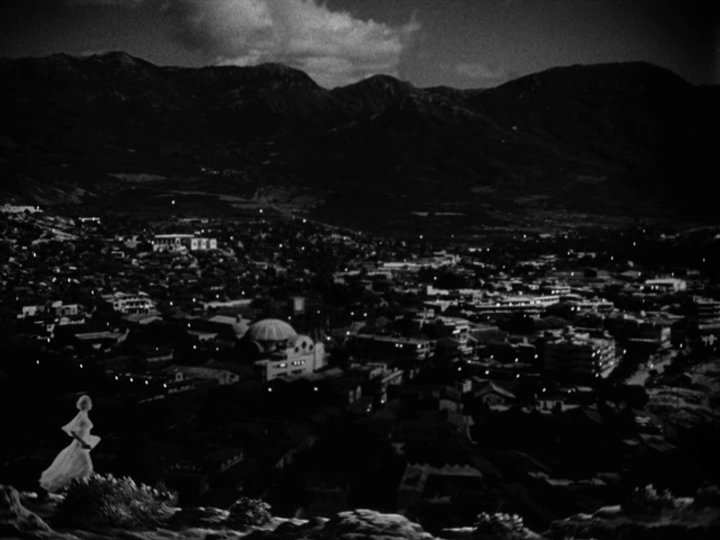
This impression is compounded by the fact that the next scene includes an image of Elsa looking ghostlike as she runs in front of a nighttime cityscape in a white dress:

Elsa in a white dress running in front of Acapulco at night

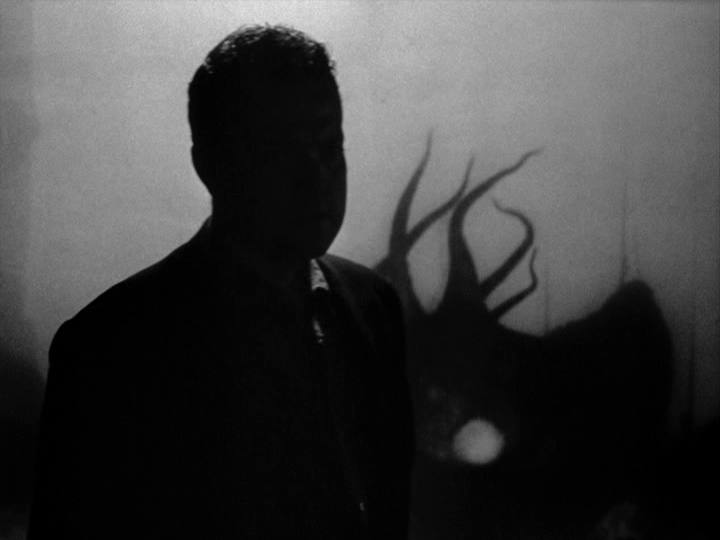
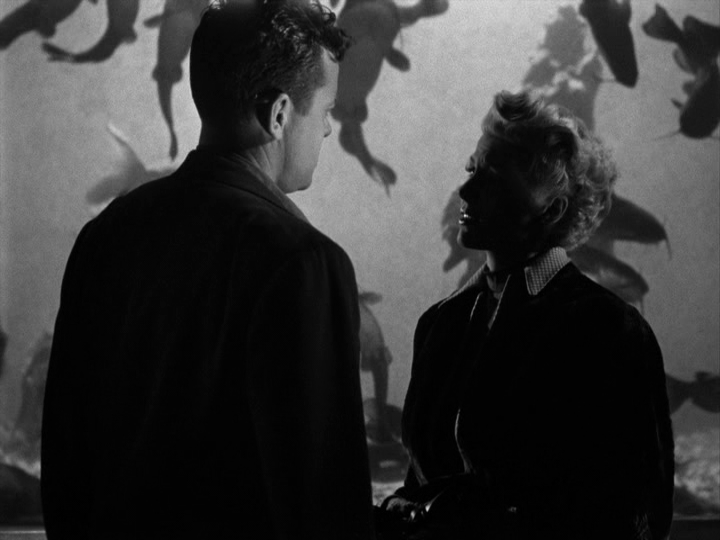
To the point that it’s strange to hear her and Michael talk about Grisby in the present tense. Equally unforgettable is their later meeting in the Steinhart Aquarium, which Brian Darr called “its most striking location shoot” in an article for SFGate, that features them talking in silhouette as sea creatures of symbolic import swim by:

Michael standing in front of an octoups
Michael and Else talk as sharks swim in the tank behind them

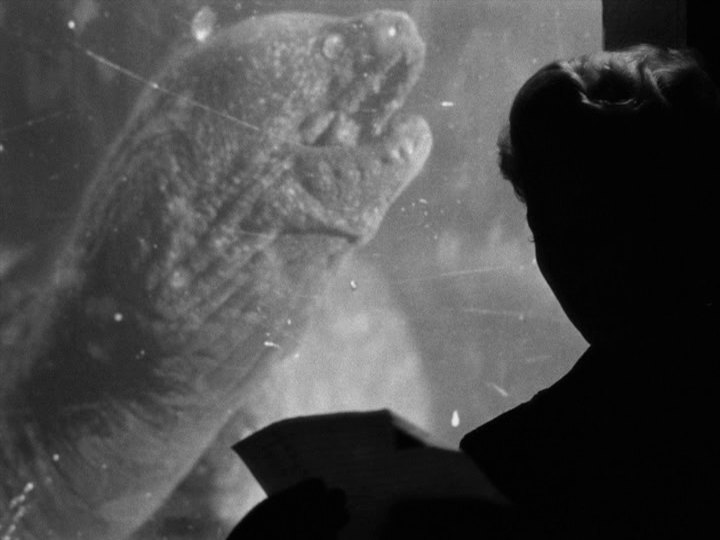
And a moray eel enlarged to monstrous proportions which reminds me of the one at the National Aquarium in Baltimore we visited every snow day when we lived there:

Elsa stands in front of an enlarged shot of a moray eel

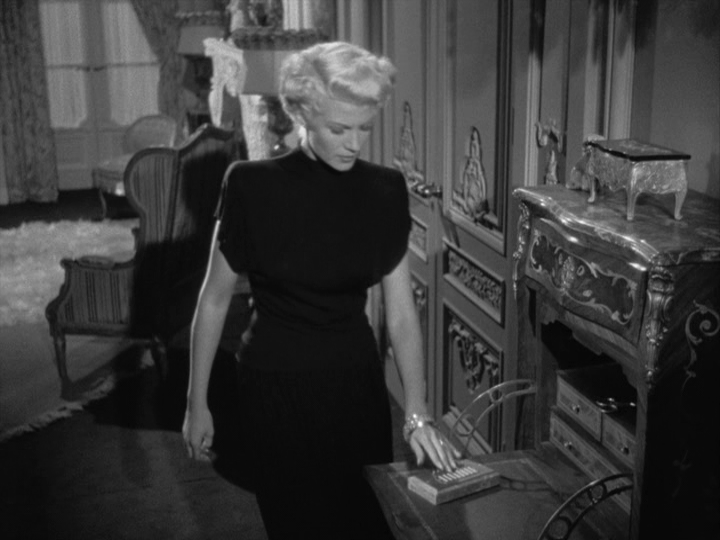
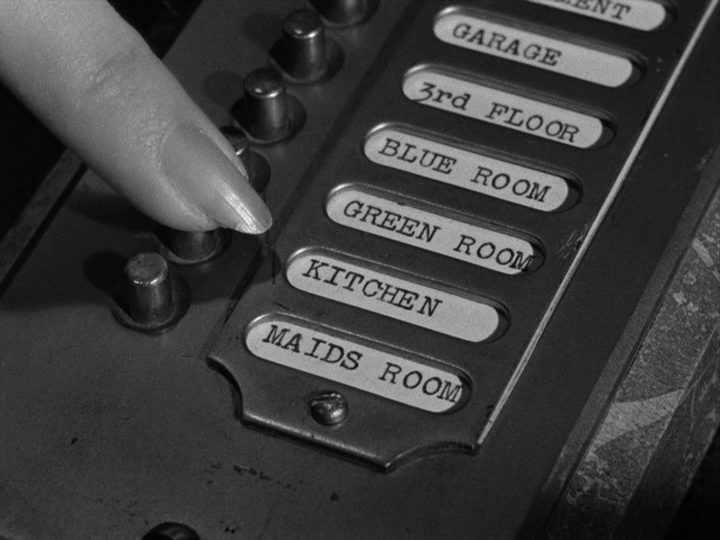
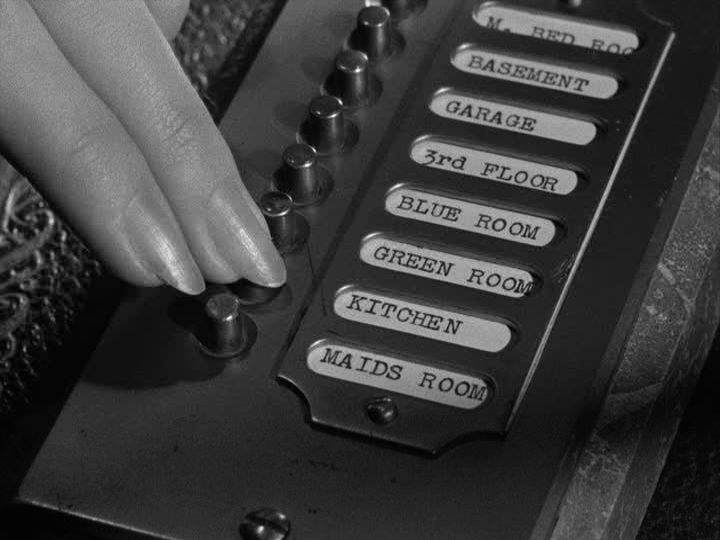
I also love the shots of Elsa stabbing at buttons on an intercom which appear to cause a man who has been shot to burst through a door in another room:

Medium shot of Elsa pushing a button on an intercom
Close up of Elsa finger pushing the button labeled "Kitchen"
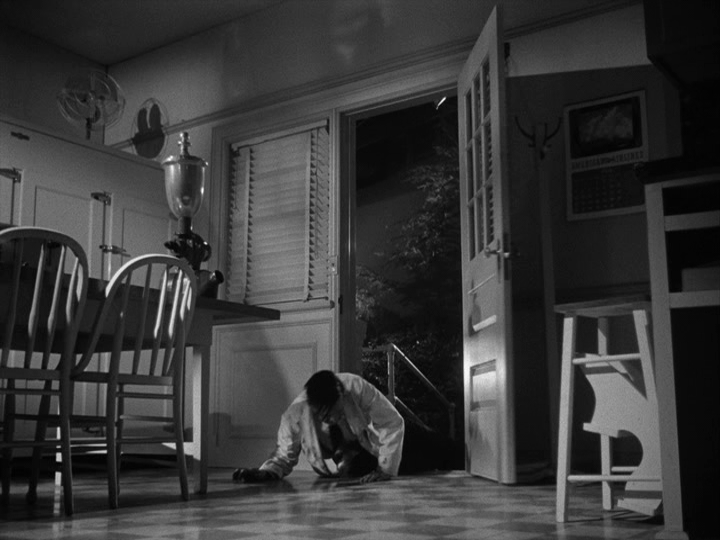
Long shot of a man who has been shot bursting through a door

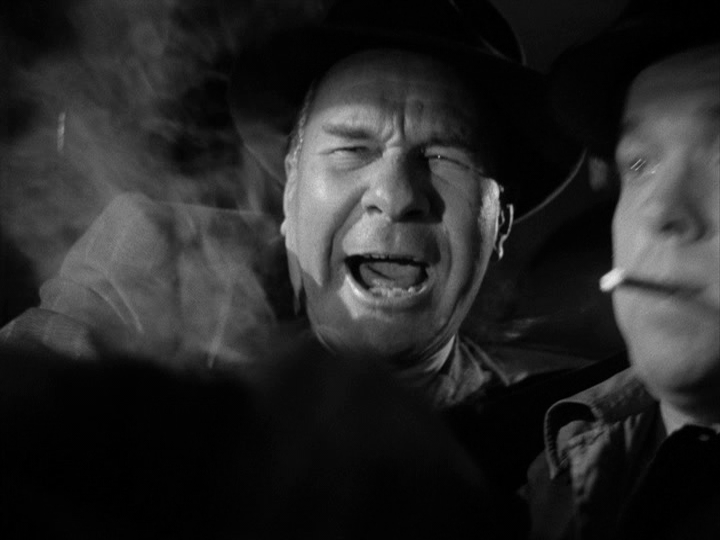
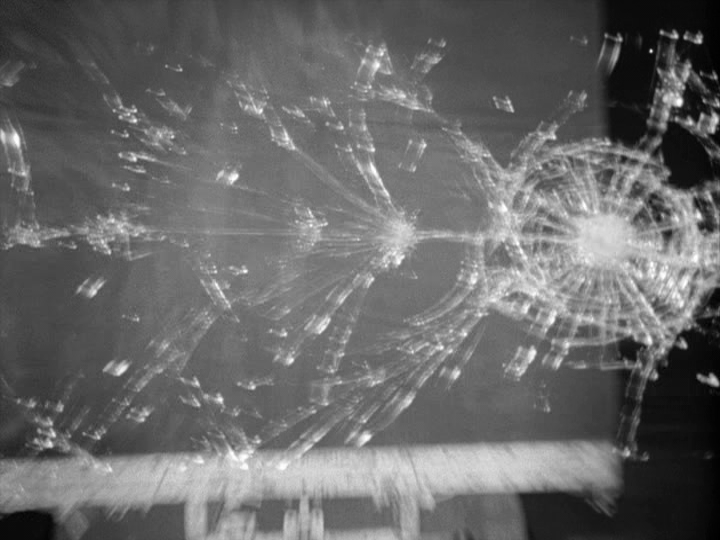
And a car carrying Michael and Grisby to accelerate and collide with the truck in front of it:

Another close-up of Elsa's finger pushing a button
Close-up of Grisby yelling
POV shot of a cracked windshield

Finally, as American Cinematographer amusingly noted, “the climax of the picture, during which the antagonists shoot it out in this mirrored room, is one of those unforgettable cinematic moments that seem to occur all too rarely these days.”

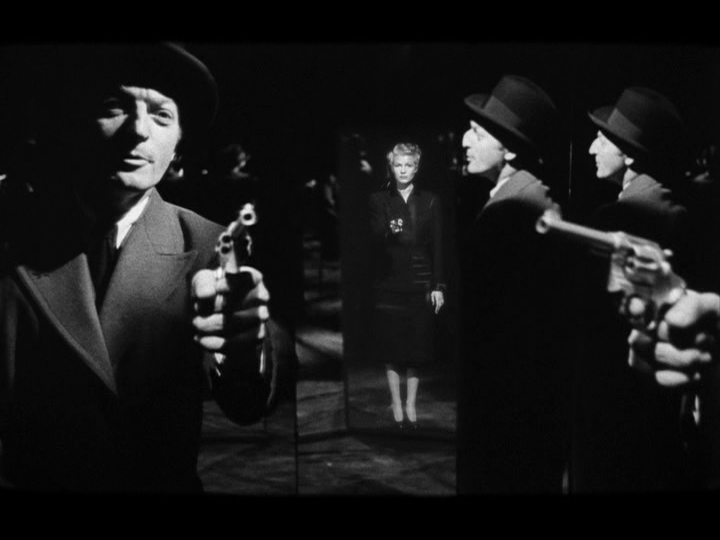
Tripartite split screen shot showing multiple mirrored images of Arthur and Else pointing guns at each other
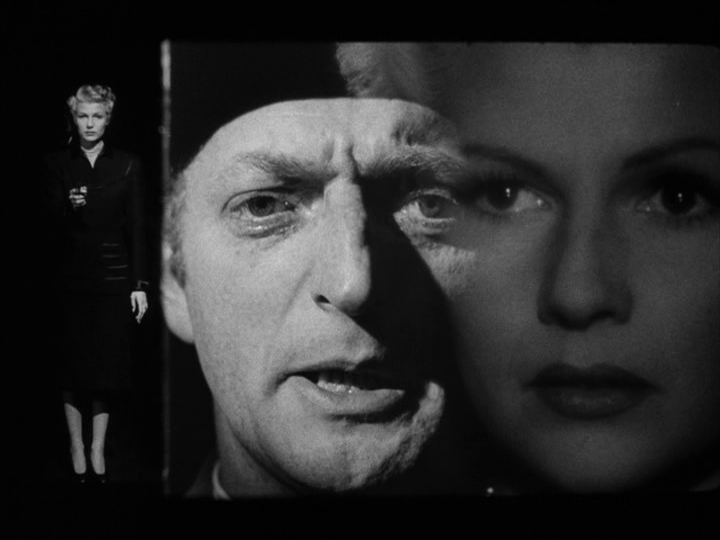
Another split screen shot with Elsa still pointing a gun at Arthur on the left, a close-up of Arthur's face in the middle, and a close-up of Elsa's face on the right
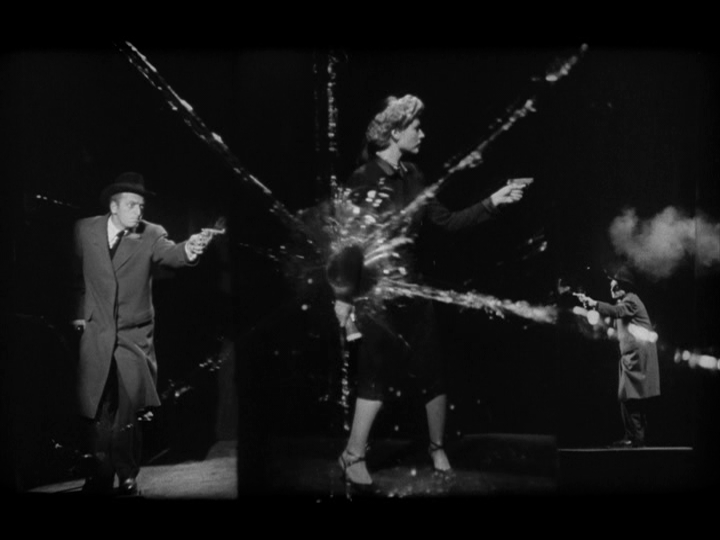
One more tripartite split screen showing Arthur on the left and right shooting at Elsa, who is in the center shooting back, with bullet-cracked glass over everyone

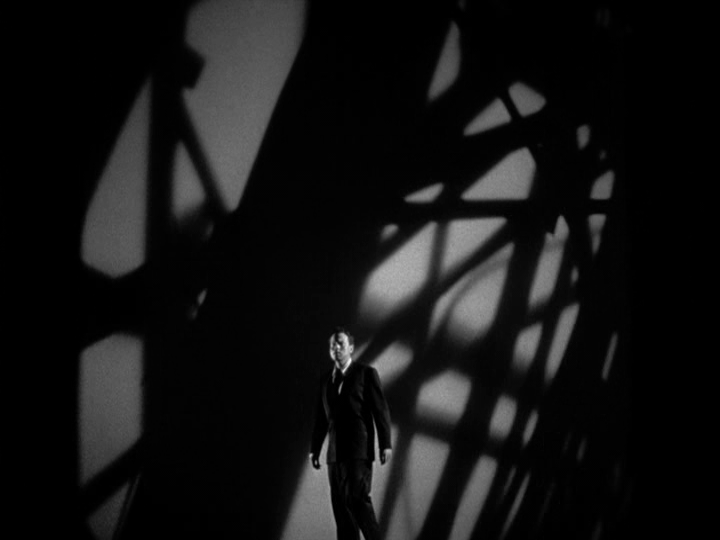
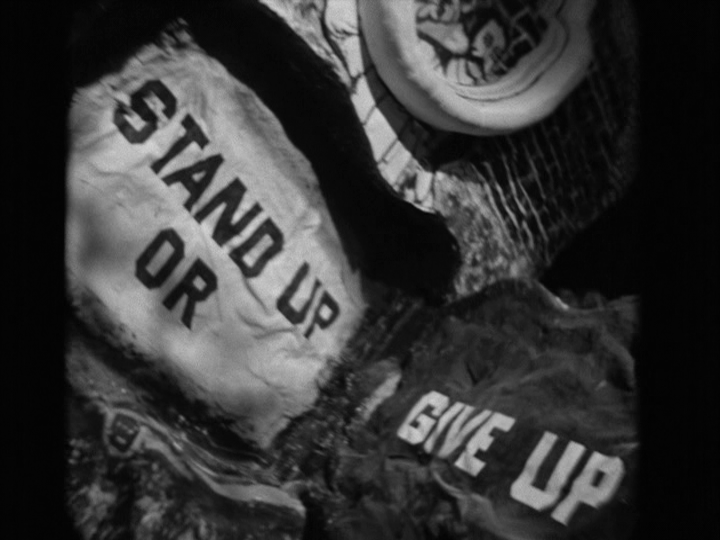
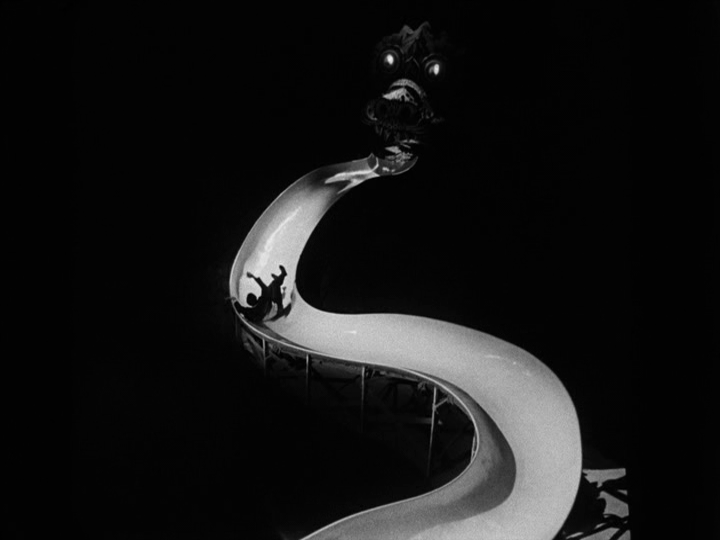
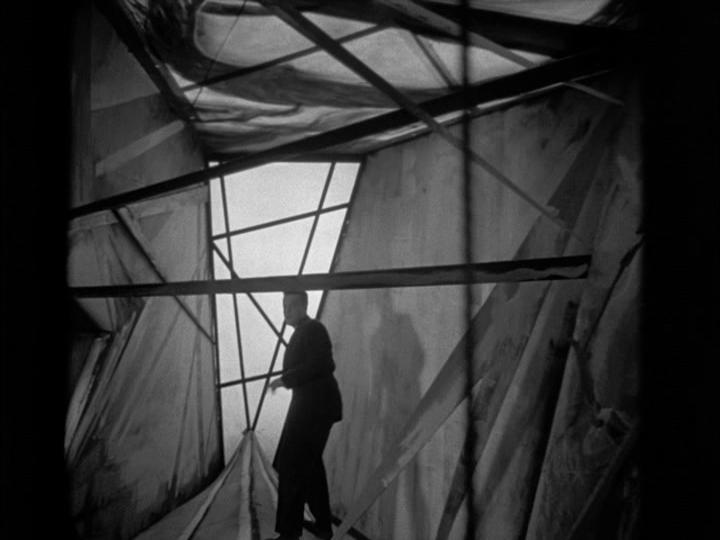
The joke is that those words were written in 1948, not tweeted out yesterday! Sure, the Crazy House sequence that precedes this one, which Welles told Bogdanovich would have been even more acclaimed had it remained intact, is reduced to just 90 seconds of shadows, signs, and slides:

Long shot of Michael walking in front of an elaborate web of shadows
Set decorations painted with the words "Stand Up or Give Up"
Long shot of Michael tumbling down a long, twisting slide toward a dragon face

But a little bit of The Cabinet of Dr. Caligari (which according to Simon Callow’s biography Welles screened for his cast and crew) goes a long way.

Michael walks through a German Expressionism-style hallway with weirdly shaped doors

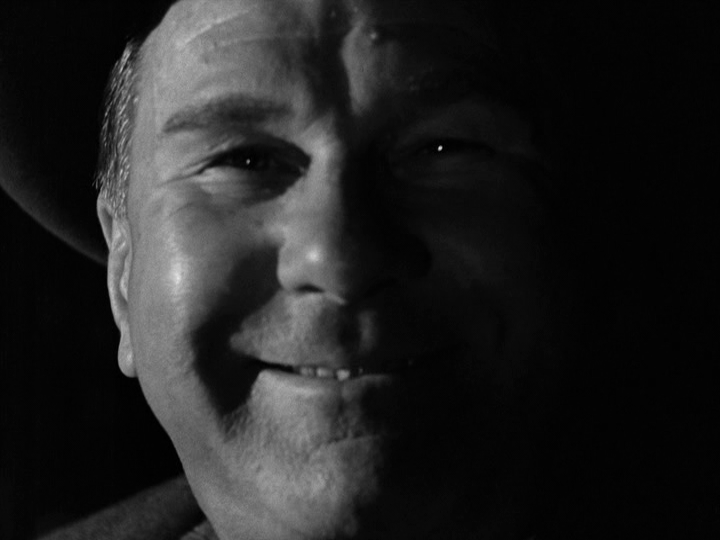
And in the end Naremore concludes that “there is a sense in which all of Columbia’s tampering with the film has not been as disruptive as, say, RKO’s revisions of The Magnificent Ambersons.” To him this is primarily because it is “characterized by a sort of inspired silliness, a grotesquely comic stylization that has moved beyond expressionism toward absurdity.” This certainly is true of Glenn Anders’s performance, which Bogdanovich describes as “free in its eccentricity and eccentric in its freedom.”

Chiaroscuro close-up of Grisby

I think it’s also because as Robert B. Pippin observes in his book Fatalism in American Film Noir, “Michael plans to be a novelist” and “what we are hearing as the voiceover appears to be the novel he has written after all these events are over,” so the inconsistencies can all be chalked up as bad writing or the sins of an unreliable narrator.

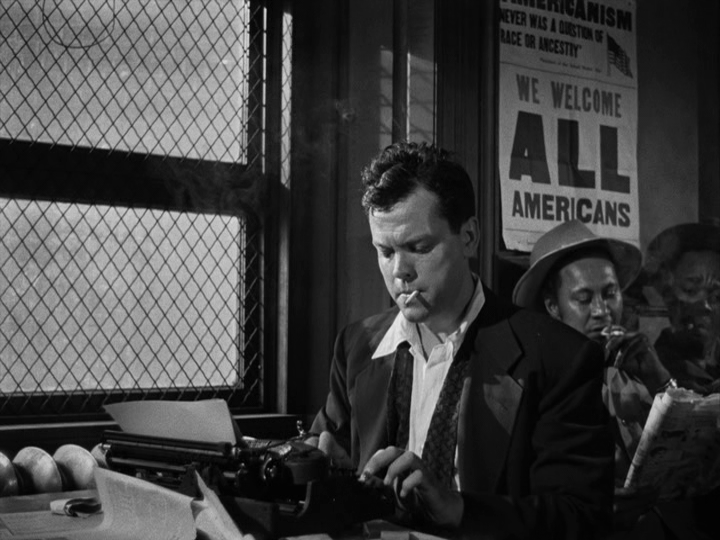
Michael at work at a typewriter

Last but not least Barbara Leaming notes in her biography of Welles that he “read and assimilated [Bertolt] Brecht” shortly before The Lady from Shanghai in preparation for a collaboration that never came to fruition, which to her “explains the peculiar presence of the otherwise incongruous (and hitherto mysterious) Chinese theater sequence toward the end.” Although the translations of the film’s unsubtitled Cantonese dialogue that Kelly Oliver and Benigno Trigo provide in their book Noir Anxiety demonstrate that these scenes are thematically consonant (the opera “performs the trial of a woman accused of being a sinner”) with the rest of the work, her observations that this is also the reason no one in the audience seems bothered by Michael and Elsa talking since “the alienated acting of the Chinese theater is perfectly tolerant of interruptions and disturbances” and that “Brecht writes that the Chinese actor occasionally looks directly at the audience, even as he continues his performance–and so it is in this sequence when the police arrive” remain valid:

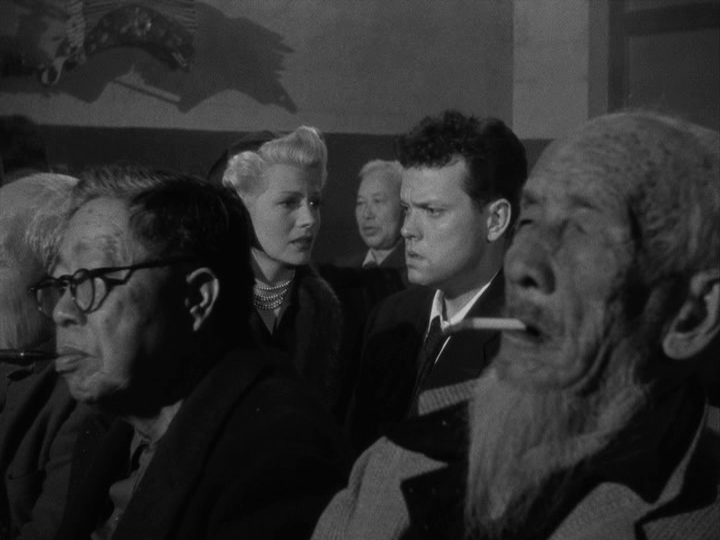
Long shot of Elsa and Michael talk in an audience of theatergoers who could care less
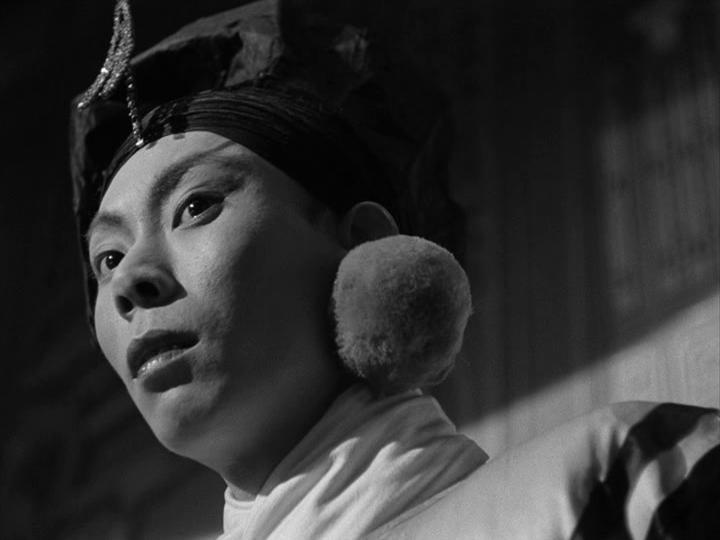
An actor on stage looks at the police officers who have entered the theater

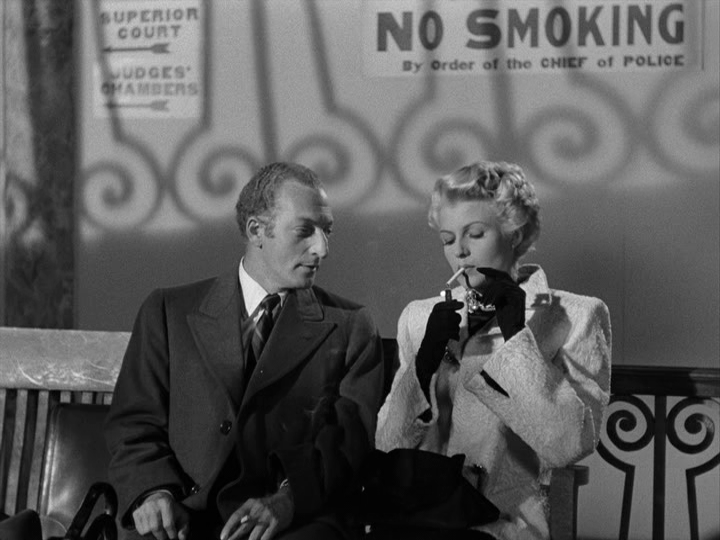
As does her suggestion that “the Chinese theater sequence illuminates the distinctly odd–almost chilly–acting style that permeates the film as a whole.” So, yeah, The Lady from Shanghai is an odd duck of a film! But here’s something even crazier: it also appears to be an inspiration for my December, 2022 Drink & a Movie selection Elf! Compare this shot of two people blatantly flaunting smoking regulations:

Arthur and Else enjoy cigarettes right in front of a sign that says "No Smoking"

With this one:

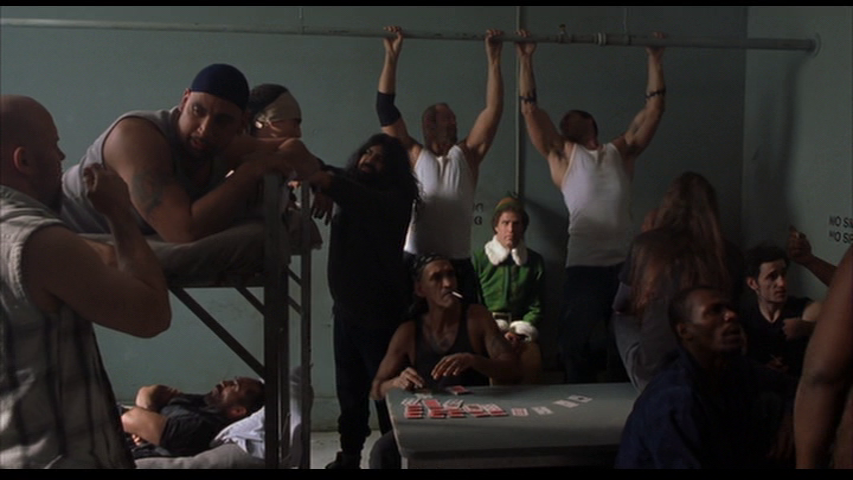
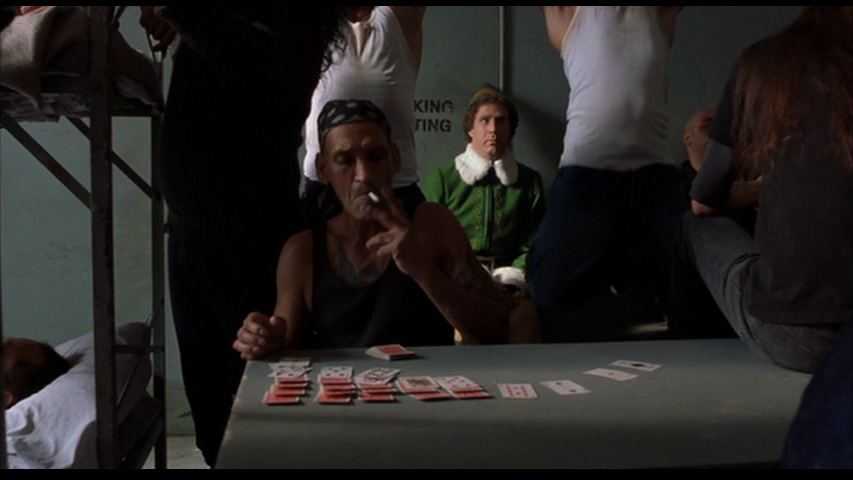
A extra in Elf similarly flaunts a "No Smoking" sign in jail

Which, okay, you’re not convinced. I get it. But consider as well this description of Michael from Joseph McBride’s Welles biography:

Part of what makes Welles’s film so unsettling is the ironic tension between the moral issues and the characters’ apparent lack of interest in them. K.’s whole life in The Trial is changed by his investigation into the principles behind his case, and Quinlan in Touch of Evil spends most of his time rectifying the moral inadequacy of the law; but in The Lady from Shanghai O’Hara treats his legal predicament as only an unpleasant adventure he must get through so he can move on to a more important concern–Elsa Bannister, the lawyer’s wife. Unfortunately, as he discovers, she is the instigator of the whole complex murder plot, and the issues encroach heavily on his fate despite his avoidance of them. At the end he has been forced to formulate a philosophical position similar to the tragic understanding Welles’s other heroes achieve, but of a less definitive nature.

Doesn’t that sound a lot like the exact inverse of the way the contagious goodness of a certain “deranged elf-man” we all know and love teaches a cynical world how to believe again? Something to ponder while you enjoy your drink!

Cheers!

All original photographs in this post are by Marion Penning, aka my loving wife. Links to all of the entries in this series can be found here.
December, 2024 Drink & a Movie: Nouveau Sangaree + Playtime

Thanksgiving dinner was one of the first meals I ever taught myself to cook. My roommates and I moved off campus prior to our sophomore year at the University of Pittsburgh, and to our delight we learned that we could earn a free turkey by accruing points when we did our grocery shopping at the local Giant Eagle. Thus was born an annual “Friendsgiving” tradition which became my earliest foray into wine pairing when I turned 21. Having no real idea what I was looking for, it’s little wonder that I gravitated toward the endcaps laden with colorfully-labeled Beaujolais nouveau. Although it’s no longer a fixture on my holiday table, I usually can’t resist the urge to pick up a bottle or two every year for old time’s sake. Most (including this year’s selection, the Clos du Fief Beaujolais-Villages Nouveau La Roche 2024 I purchased from Northside Wine & Spirits) are genuinely enjoyable on their own, but my preferred use for them is in Jim Meehan’s Nouveau Sangaree from The PDT Cocktail Book. Here’s how to make it:

2 ozs. Beaujolais nouveau (Clos du Fief Beaujolais-Villages Nouveau La Roche 2024)
1 1/2 ozs. Bonded apple brandy (Laird’s 10th Generation)
1/2 oz. Sloe gin (Hayman’s)
1/4 oz. Maple syrup
2 dashes Angostura bitters

Stir all ingredients with ice and strain into a chilled cocktail glass. Garnish with grated cinnamon.

Nouveau Sangaree in a cocktail glass inside a frame that evokes the Schneller scene from the movie Playtime

As Robert Simonson said when writing about this drink for the New York Times, “sloe gin and maple syrup remind you that life should be sweet during the holidays.” The former amplifies the floral and fruity notes of the wine, while the latter creates a creamy texture and combines with the caramel and vanilla flavors of the applejack to linger on the palate. The overall impression is something like a poached pear. Meehan’s recipe specifically calls for “Grade B” maple syrup, but as I mentioned back in August, 2022 that rating no longer exists, so use “Grade A Dark Robust” or just the best stuff you can find. Finally, he employs an apple fan garnish, which probably would announce the presence of the brandy more clearly, but this is a bit fussy for us and we’re happy with just grated cinnamon.

The movie Playtime is a perfect match for this beverage because its centerpiece Royal Garden sequence embodies the celebratory and improvisational nature of the celebrations from my 20s I want to commemorate. They’re also both great fits for the month of December. In the case of the cocktail that’s because it can help use up leftover bottles of wine, while the movie employs a seasonally-appropriate green and red color scheme to great effect. Here’s a picture of my Criterion Collection DVD copy of the latter:

Playtime DVD case

It can also be streamed on the Criterion Channel with a subscription and rented from a variety of other platforms, and some people (including current Cornell University faculty, staff, and students) may have access to it through Kanopy via a license paid for by their local academic or public library as well.

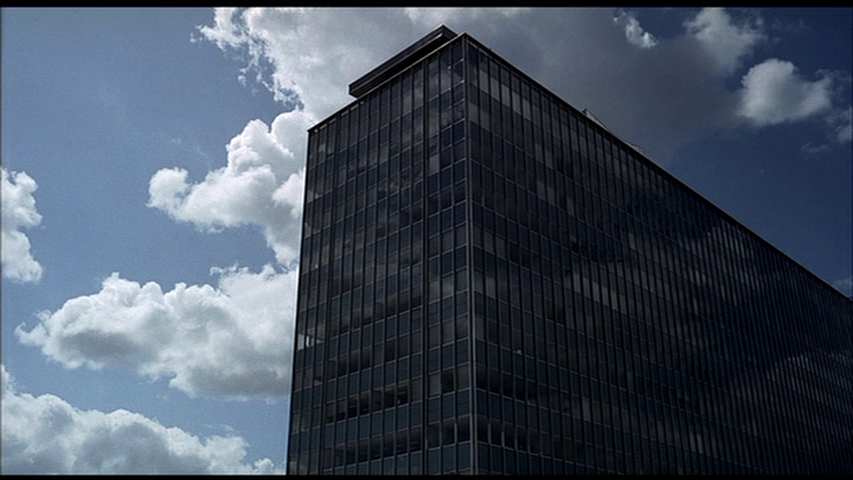
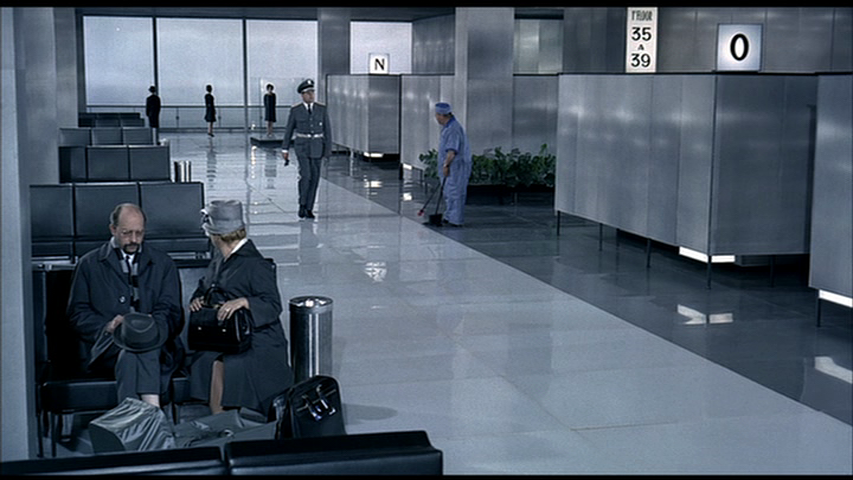
Playtime begins in a place that my loving wife, watching it for the first time, assumed was some sort of anteroom to the afterlife, a reading that I imagine director Jacques Tati would have loved. An opening credits sequence featuring clouds, which ties it to some of my other favorite movies, gives way to an establishing shot of a glass and steel skyscraper:

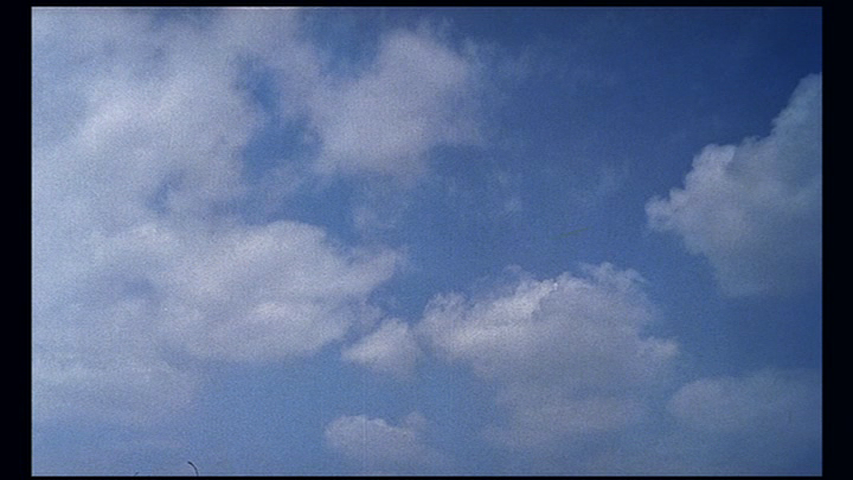
Shot of clouds which concludes Playtime's opening credits sequence
The aforementioned establishing shot of a tall building

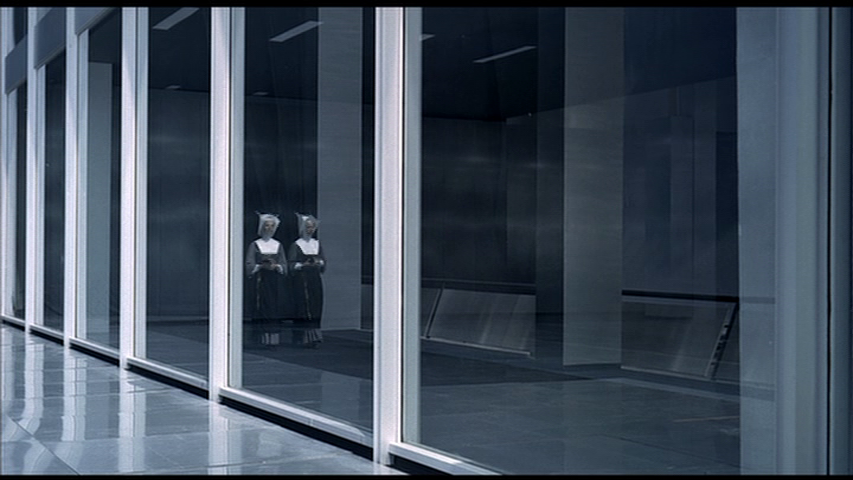
The first human beings we see are two nuns:

Two nuns walks side-by-side down a corridor which we see through an exterior window

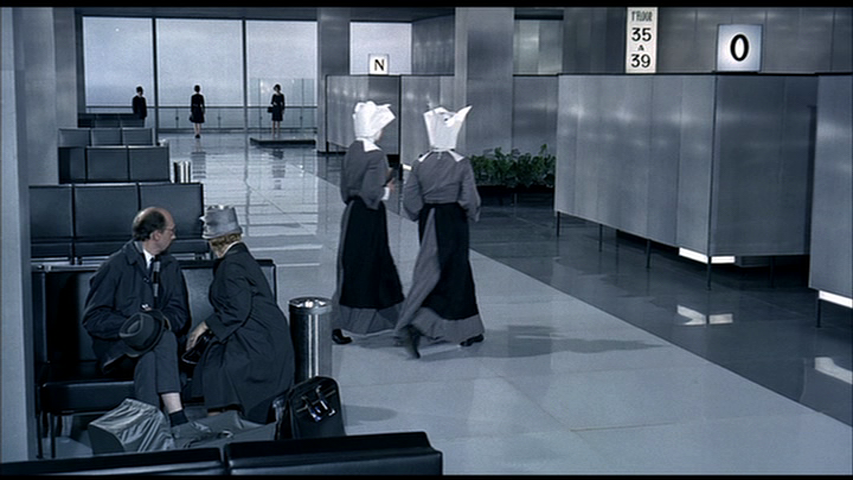
And a cut on motion sets up the film’s first gag. Two people, a man and a woman, talk in the foreground.

A man and a woman in the foreground look at the two nuns from the previous shot as they pass by

We can tell from their conversation that he’s going somewhere: “wrap your scarf around so you don’t catch cold,” his companion tells him, and “take care of yourself.” They also talk about the other people who appear in the frame with them, including first a man who “looks important” and then “an officer”:

The man and the woman in the foreground look at a man in a suit in the background...
...then a military officer

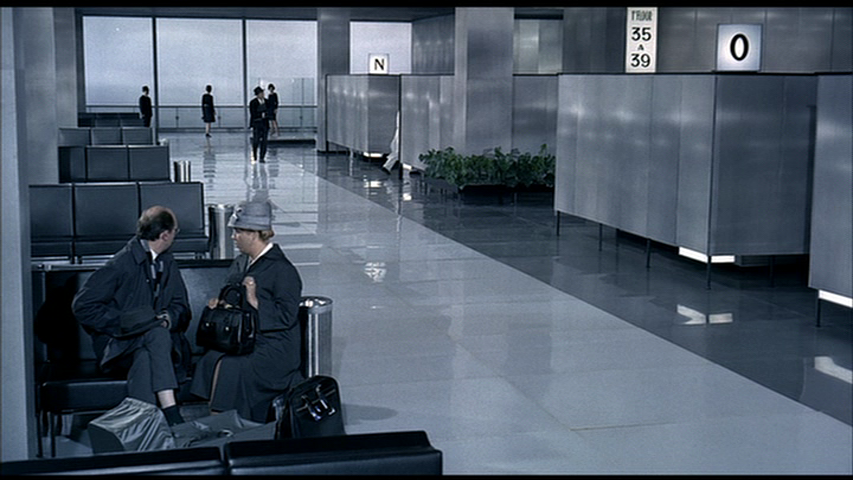
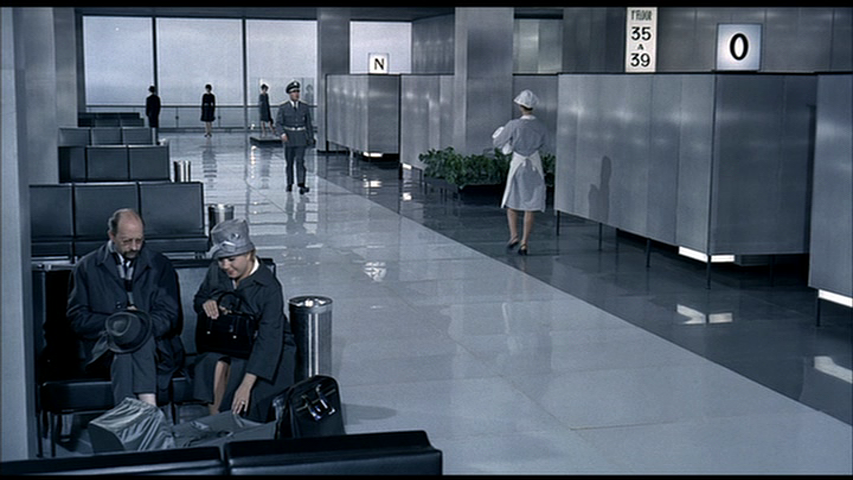
It’s only when a woman who looks like she could be a nurse carrying a bundle of towels that resemble an infant in swaddling clothes appears accompanied by the sound of a baby crying that we notice the gray stroller in front of them which up until this point had completely blended into its surroundings:

The woman comforts the baby in the carriage we only now see in front of her as a cleaning woman walks away in the background carrying a bundle of towels

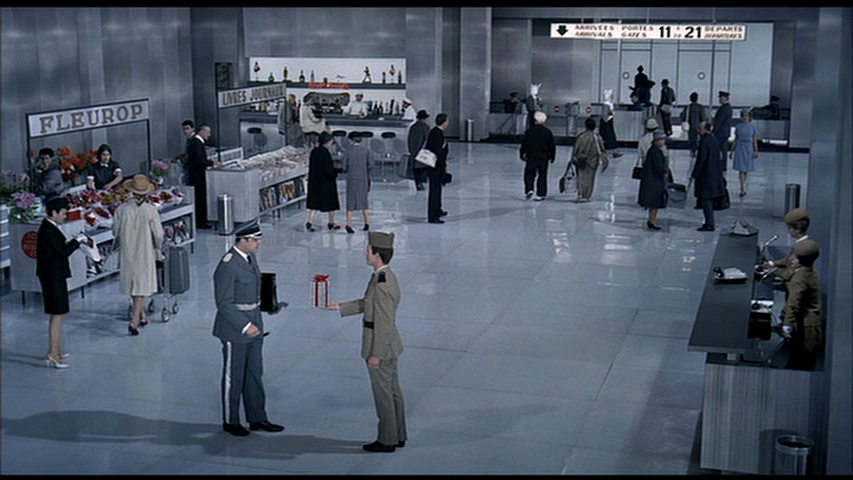
This is just the first of many instances of what Lucy Fischer (who was chair of the film studies department at Pitt when I was a student there) calls “one of the major functions of Tati’s remarkable soundtracks” in a Sight & Sound article called “‘Beyond Freedom & Dignity’: An Analysis of Jacques Tati’s Playtime“–the way they “provide aural cues to guide our visual perception.” As Fischer notes, he uses color the same way, beginning with the elaborate presentation of a gift which we pick out from a crowded monochrome mise-en-scène in large part because of its bright red bow:

An officer presents his superior with a gift wrapped in a red bow in the foreground of a crowded composition

It’s also an early example of what Lisa Landrum identifies as Tati’s use of color to “symbolically to reveal narrative and allegorical meaning” in her chapter in the book Filming the City, here as a “crimson reminders of life’s more sensual pleasures.”

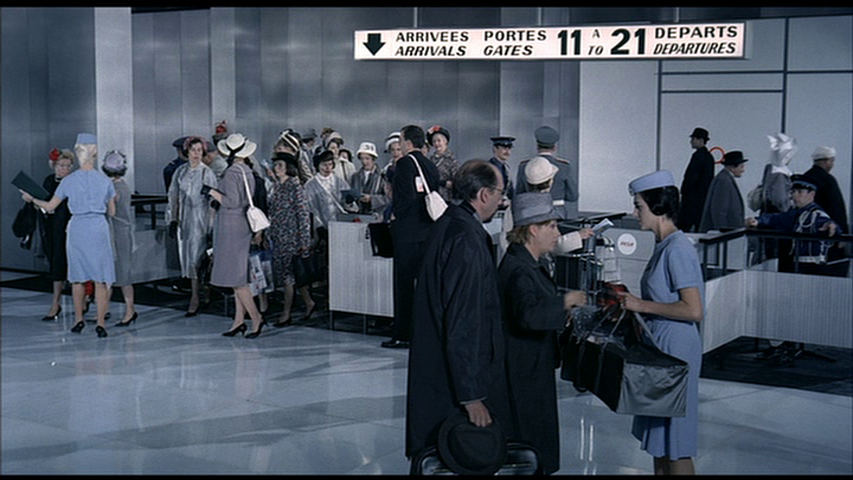
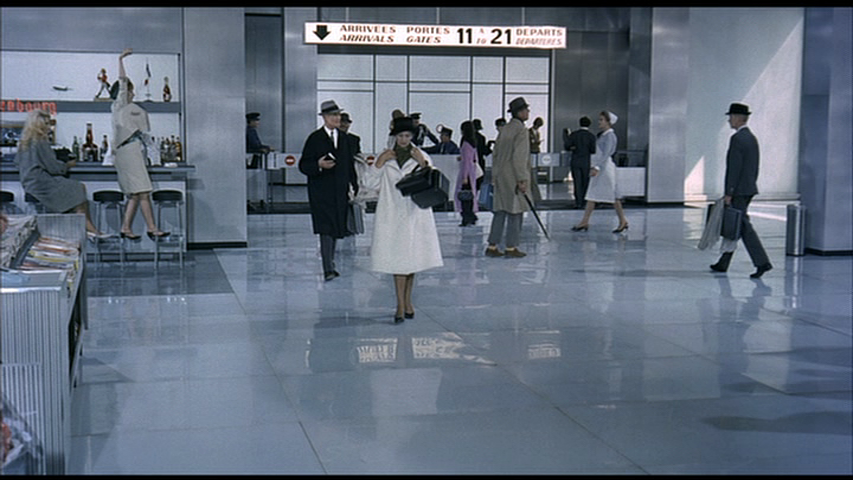
We next encounter a gaggle of American tourists who will eventually lead us out of what by now we realize is an airport:

A group of American tourists arrive in the background

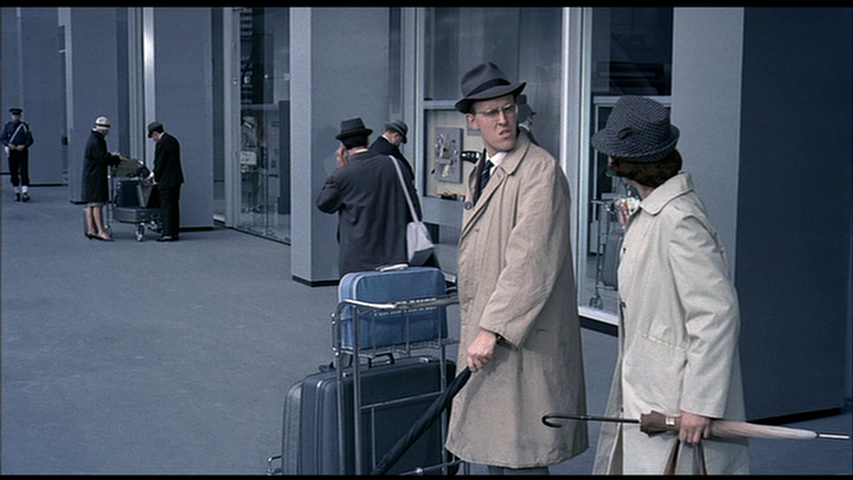
Followed by the introductory appearance of our ostensible protagonist Monsieur Hulot (Tati) with his signature hat, overcoat, and umbrella in the background of the same scene:

Monsieur Hulot looking as befuddled as ever in the background of a shot with nothing in particular in the foreground

And the inaugural example of what Jonathan Rosenbaum refers to as “‘false’ Hulots” a few moments later:

An indignant man informs a woman that he is "not Hulot"

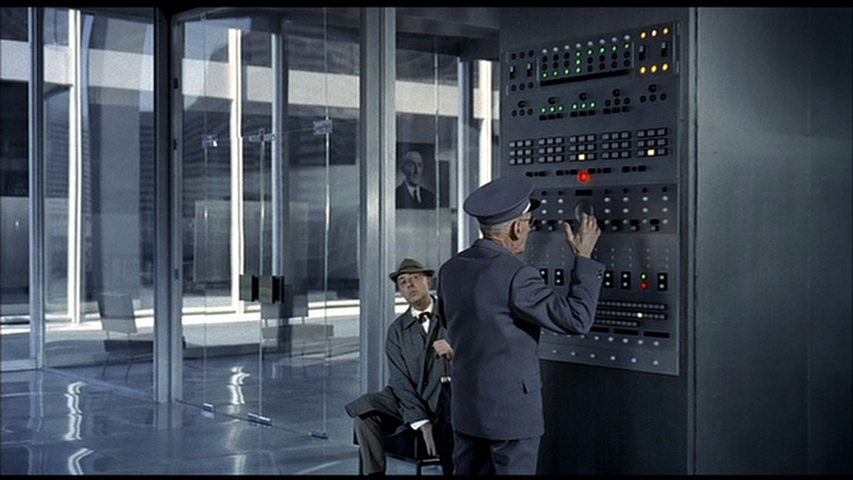
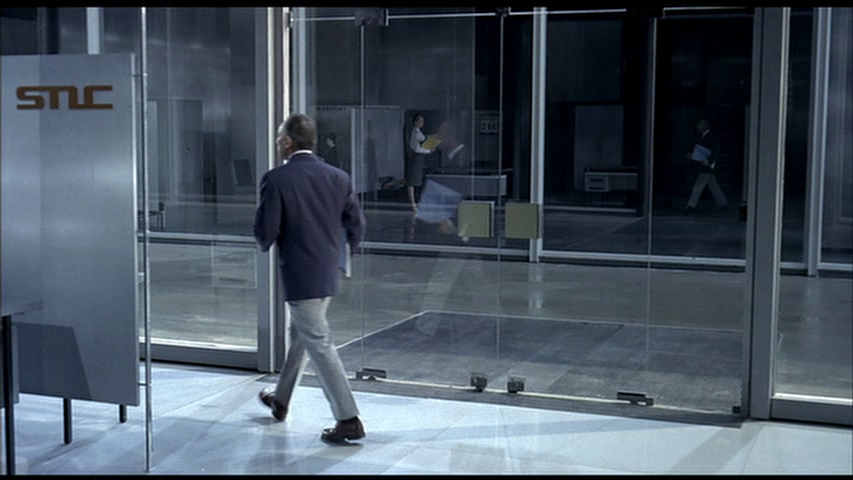
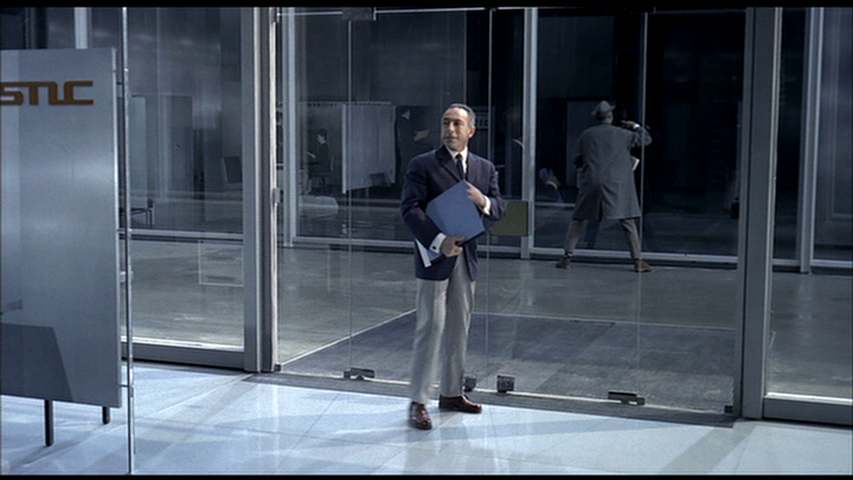
It’s unclear (and completely irrelevant) what Hulot is doing at the airport, but we next encounter him making his way to an appointment in another modern high-rise, where he is announced via the most over-engineered intercom system on this side of Toontown:

A doorman wrestles with a complicated intercom

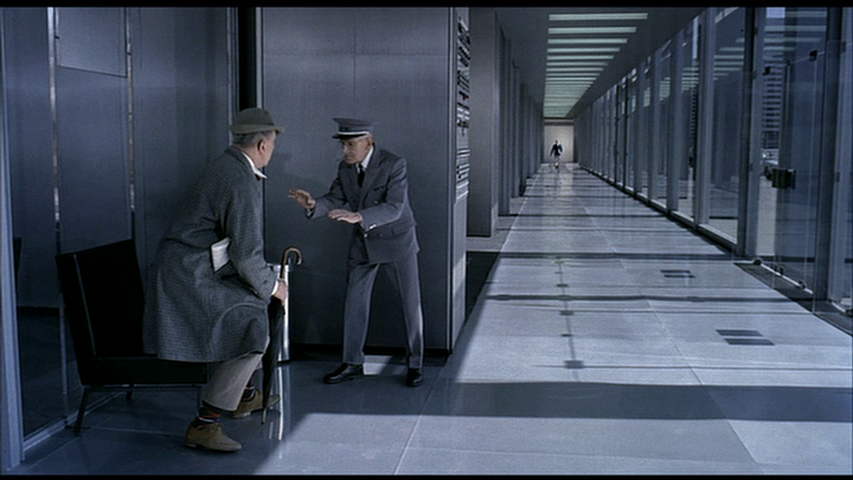
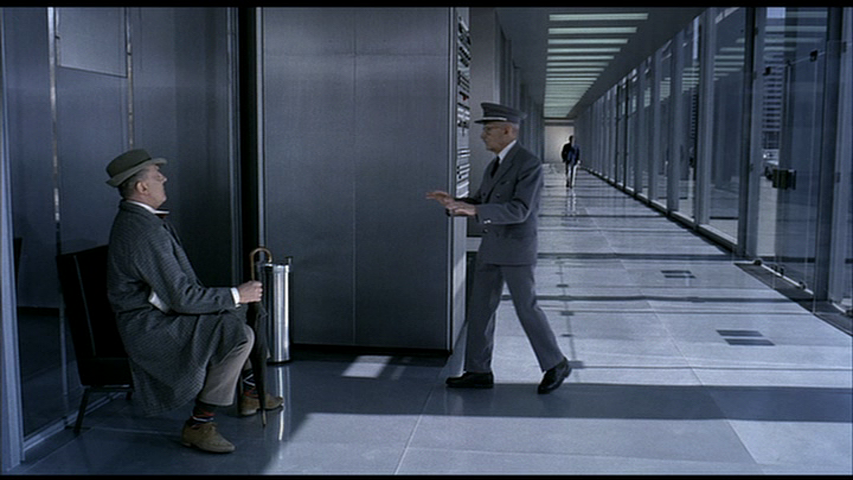
We hear the footsteps of the man he’s there to meet, Monsieur Giffard (Georges Montant), before we see him approaching down a deep focus corridor so long that the doorman (Léon Doyen) tells Hulot to sit back down twice:

Hulot's first rising, in the foreground of the left side of a bifurcated frame, with a long corridor to the right
The doorman once again urges Hulot to sit back down as Monsieur Giffard continues to approach down the corridor on the right side of the frame

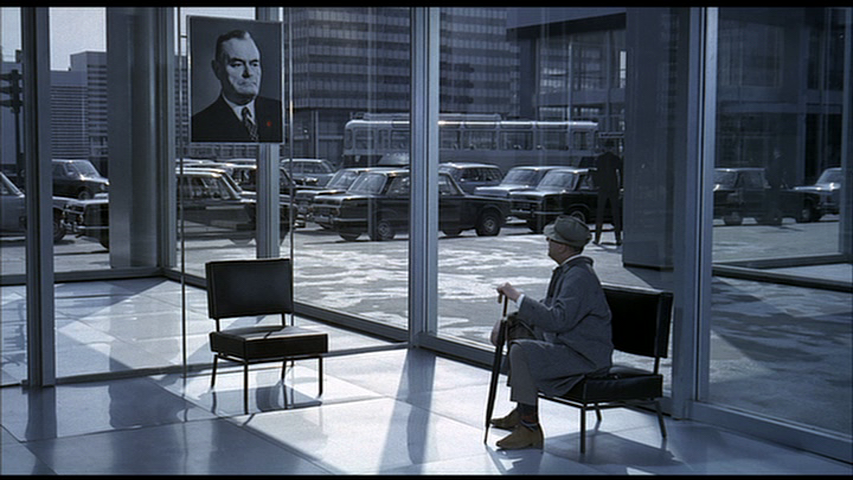
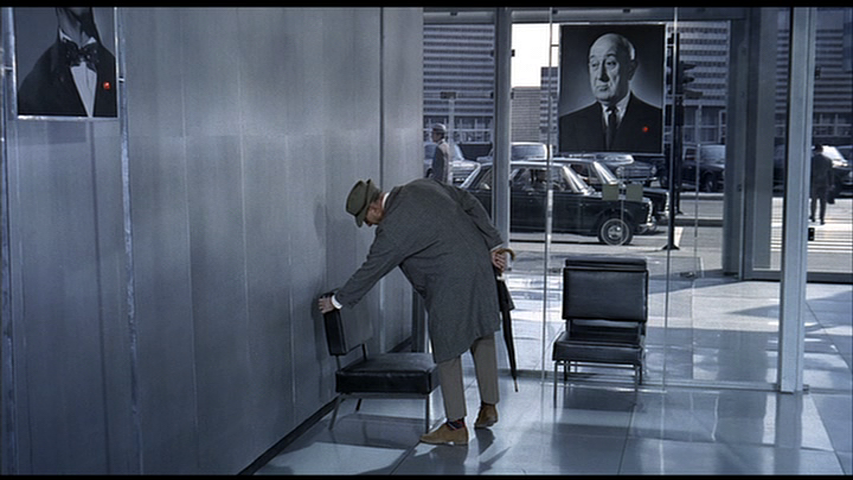
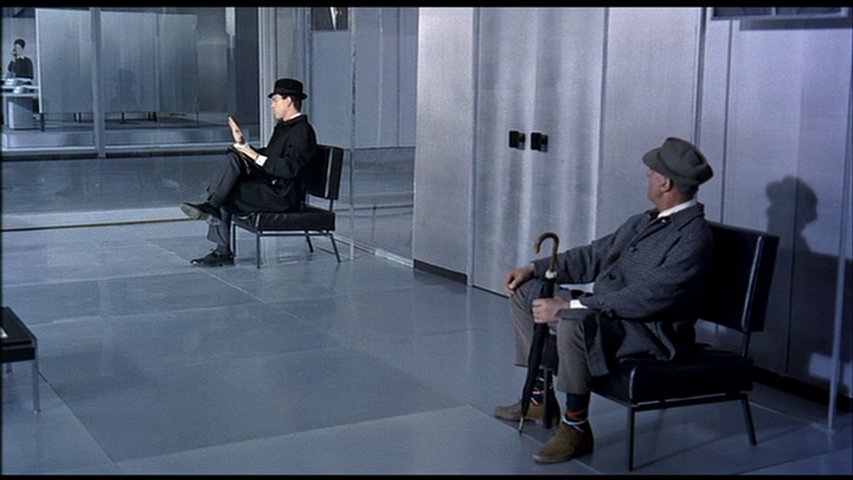
When Giffard finally arrives, he ushers Hulot into a display case-like waiting room filled with portraits that seem to disapprovingly watch his every move:

Hulot looks back at a portrait that seems to be eying him disapprovingly
Hulot pushes on the back of a chair while another portrait seems to look askance at him

A man with fascinatingly robotic habits that seem to mark him as a natural inhabitant of this sterile environment:

Hulot watches his companion inspect his nails...
...take a breath mint...
...and apply nasal spray

And a slippery floor that causes what Rosenbaum describes as “the first significant curve in the film that undermines all the straight lines and right angles dictated by the architecture and echoed by all the human movements”:

Long shot of Hulot sliding on the floor

Giffard and Hulot wind up chasing each other through a maze of cubicles in which a receptionist’s rotating chair creates the impression of turning a corner and getting nowhere:

Hulot tips his hat to a receptionist...
...then turns a corner to find that he's somehow still facing her

Green (bottom right of frame) and red lights (top left) draw our attention to two people who don’t realize they’re standing right next to each other talking on the phone:

Monsieur Giffard talks to Monsieur Lacs, who's in the same room as him, on the phone
Giffard retrieves a file from the cabinets on the outside of cubicle that Lacs is in...
...then returns to his own cubicle to read off figures from whatever file he consulted to him over the phone

And Giffard’s reflection results in them losing each other for good when Hulot leaves the building they’re both in for the identical one next door:

Monsieur Giffard turns a corner...
...Hulot arrives at the same spot looking for him, but thinks he's in the building next door because of his reflection....
...and they lose each other for good when Giffard is called away before they can sort out what is going on

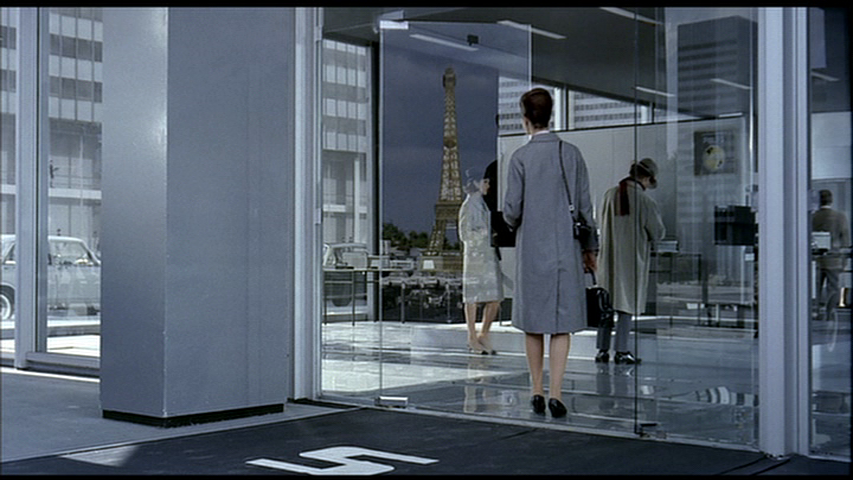
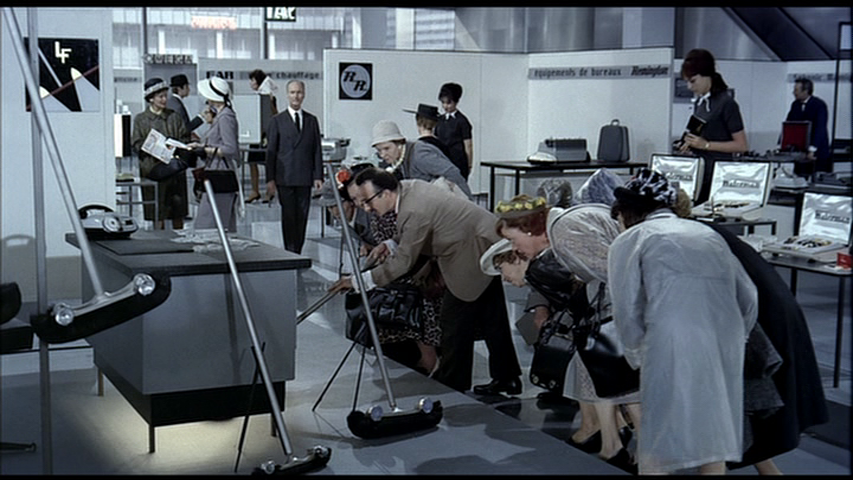
The next 20 minutes or so of the film unfold during a business exposition that both Hulot and the Americans from the airport find themselves attending, him by accident and them on purpose. One tourist named Barbara (Barbara Dennek) pursues an illusive “real Paris” that she’s only able to glimpse in reflections while her companions ooh and aah over a broom with headlights:

Barbara sees the Eiffel Tower reflected in a glass door
A man demonstrates a broom with headlights to a group of admiring American tourists

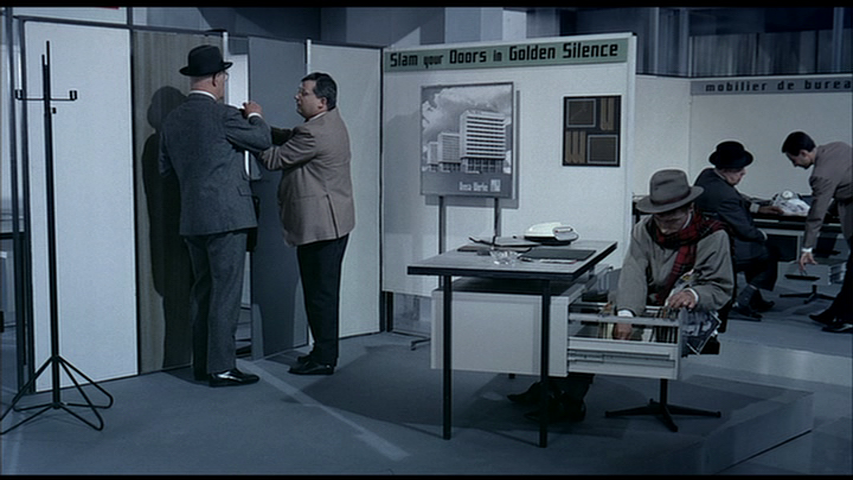
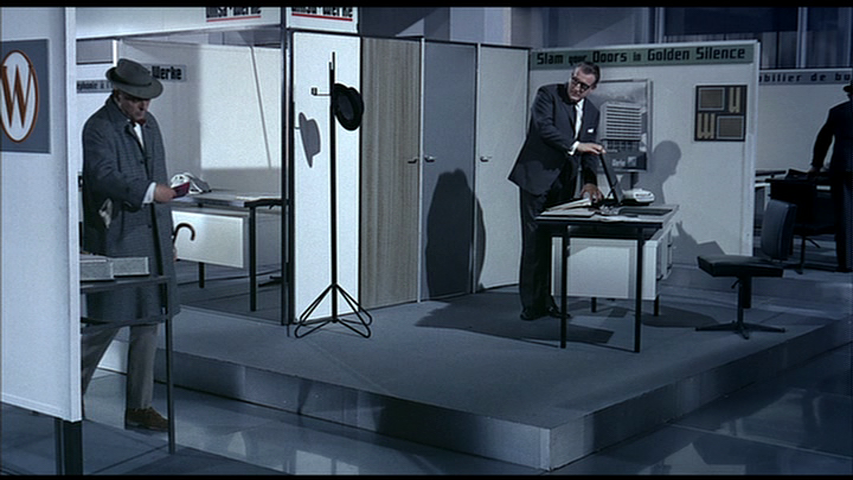
Meanwhile, Hulot is mistaken (due to confusion with another false Hulot) for first a corporate spy by a German businessman whose company’s motto is “Slam your Doors in Golden Silence,” then a lamp salesman when he loses his trademark outerwear:

A "false" Hulot rifles through files at a booth for a German company with the slogan, "Slam your Doors in Golden Silence"
The owner of the German company misidentifies Hulot as the man who was going through his files
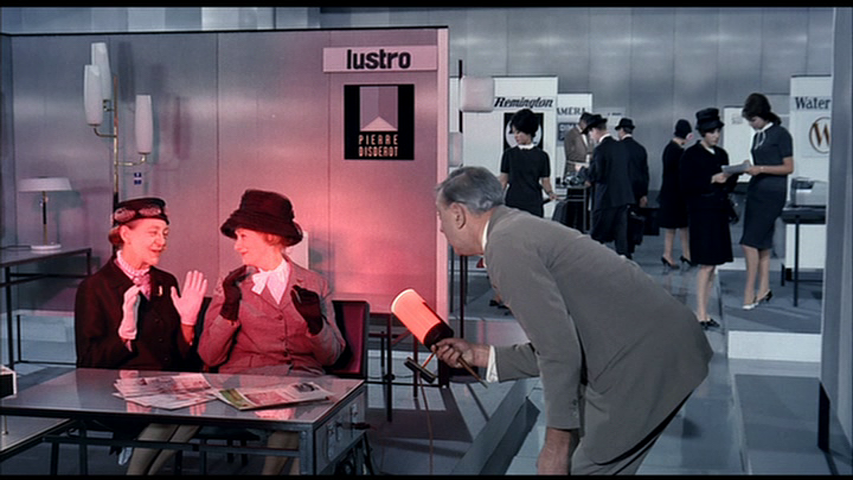
Hulot "fixes" a lamp for two women who have mistaken him for a salesmen

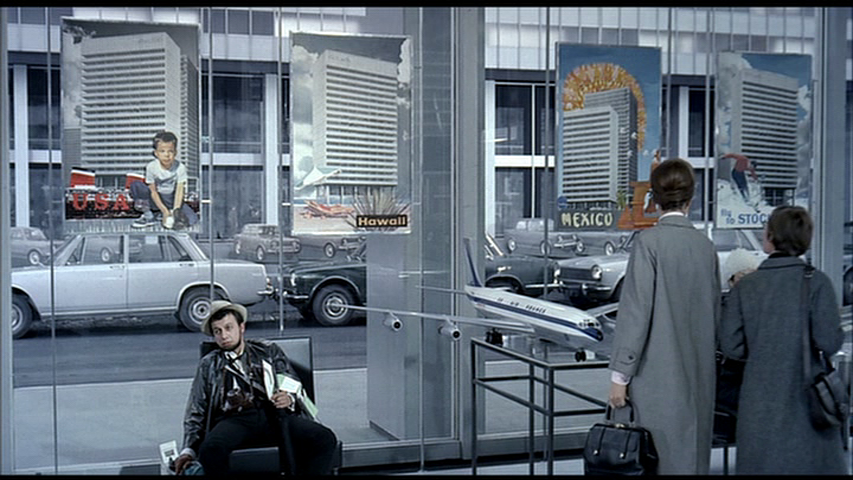
The sequence ends with Tati making his critique of the sameness of contemporary architecture more explicit via a set of travel agency posters:

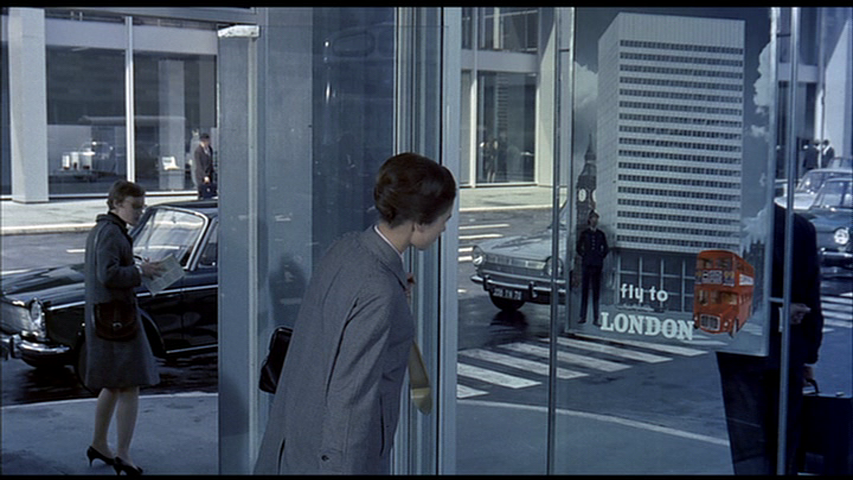
Barbara looks at a poster for London which features a high-rise remarkably like the one she's standing in, only it has a red double-decker bus in front of it
Barbara looks at three more posters for the U.S.A, Hawaii, and Mexico with the same high-rise on it

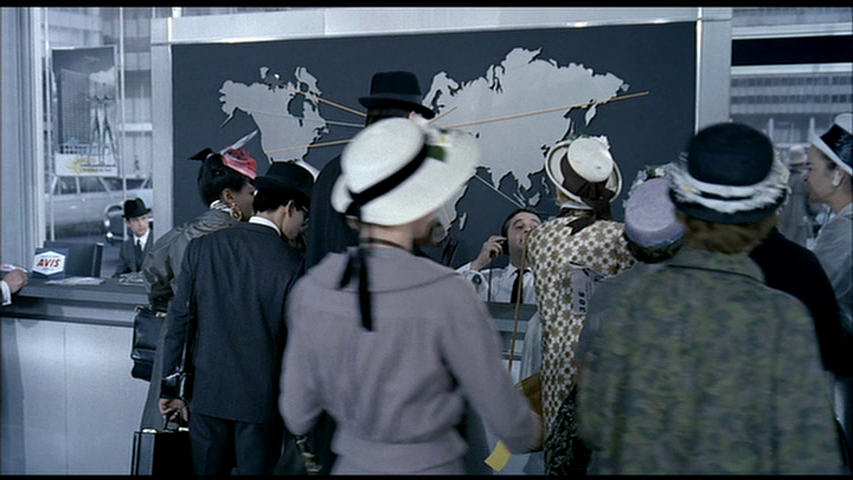
Hulot watching the appearance of a disembodied pair of dancing feet created by a busy travel agent on a stool with wheels when viewed from behind:

A busy travel agent sitting on a wheeled stool is overwhelmed by customers
Hulot watches the travel agents feet, which when viewed from behind appear to be dancing
Continuation of the previous shot

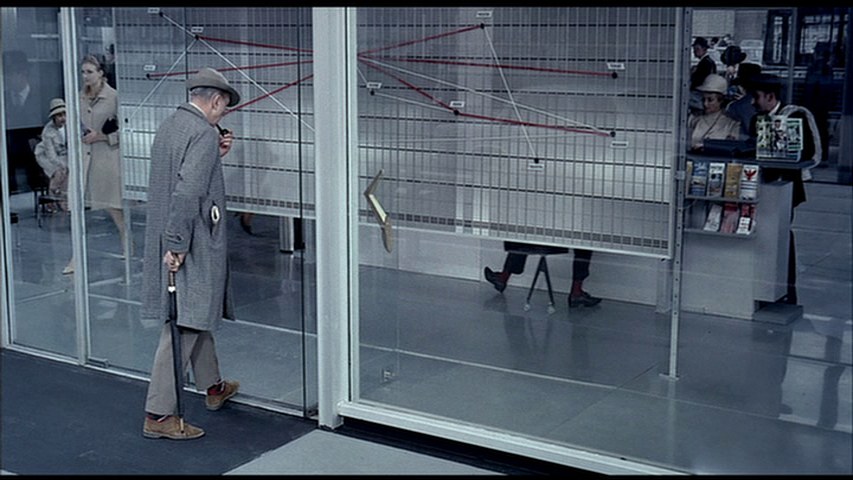
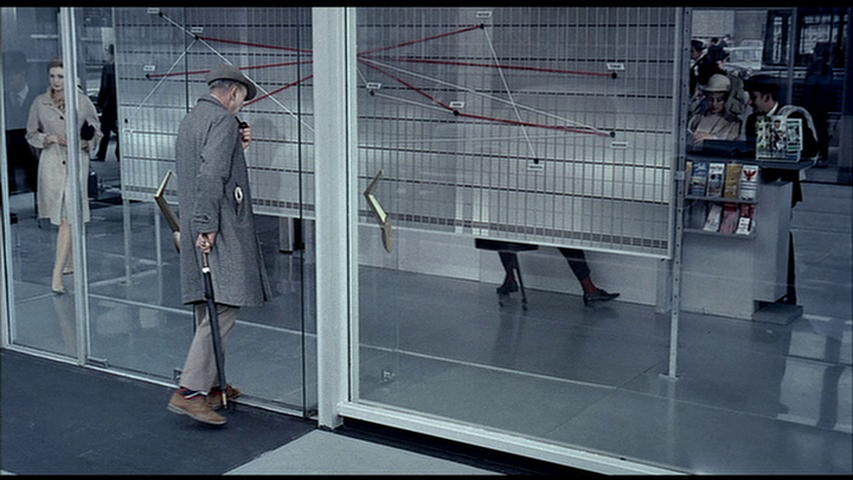
And Giffard bumping his nose when he attempts to wave down yet another false Hulot through yet another pane of glass:

Monsieur Giffard runs after a man he thinks his Hulot...
...and hits his nose on a glass door

The gap to the three set pieces that are the reason Playtime rates as one of cinema’s all-time great comedies in my book is bridged by a transition featuring a nice bit of business whereby Hulot holds onto a lamp thinking it’s part of the bus he’s riding:

Hulot holds onto a lamp thinking it's a bus pole
Hulot gets off the bus still holding onto the lamp
The man whose lamp Hulot is holding onto explains his mistake

As soon as he disembarks, he is hailed by an old army buddy named Schneider (Yves Barsacq) who invites him to the apartment that inspired this month’s drink photo:

Schneider shows off his apartment, which looks like it's inside a picture frame, to Hulot

We view everything that transpires over the subsequent ten minutes from this same outside view, and when the camera pulls back to also show the neighbors’ living room as well, characters who can’t really see each other seem to be interacting. The apartment next door turns out to belong to Giffard, and the Schneiders and Hulot appear to stare in surprise when he comes inside with a bandaged nose:

Monsieur Giffard comes home and his neighbors appear to react to his bandaged nose, even though they can't actually see him

The sequence also includes what look to us like offended reactions to rude gestures:

Hulot appears to show his backside to the Giffards

And, best of all, a striptease:

Schneider appears to strip for Mademoiselle Giffard, part one
Part two
And part three

After departing, Hulot finally meets up with Giffard in a crowd of bystanders watching some construction workers who look like they’re performing a vaudeville routine:

Extreme long shot of construction workers moving a window, who look like they are performing some kind of dance
Continuation of the previous shot
Giffard finally finds Hulot in the crowd of people watching the construction workers

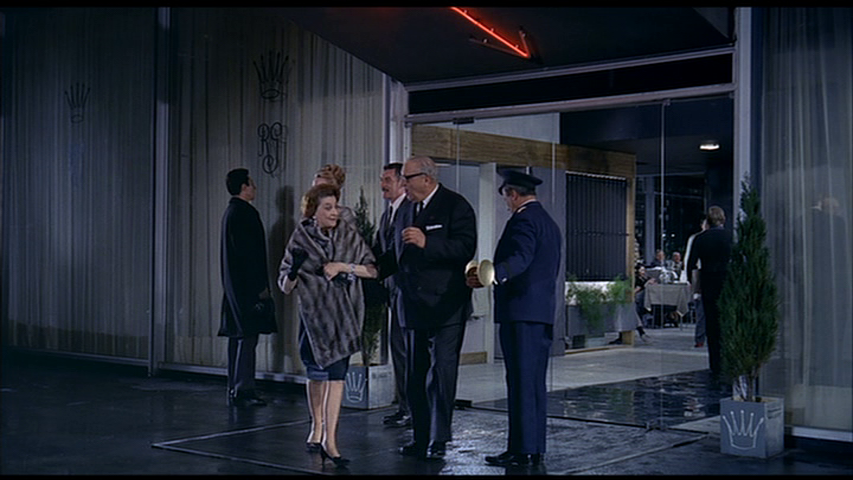
Before finding himself at the soft opening of an establishment called the Royal Garden at the invitation of the doorman (Tony Andal), another friend from his military days. Of course, this tour-de-force, nearly hour-long sequence has been going on for twenty minutes by the time he arrives, which is about par for the course according to Malcom Turvey, who calculates in his book Play Time: Jacques Tati and Comedic Modernism that Hulot is on screen less than 50% of the movie up to this point. I’d need a whole separate post to do justice to the way the nightclub basically falls apart over the course of a single service to the delight of its guests, who have more and more fun as the evening spirals further and further out of control, but highlights include a waiter fixing a broken tile in the background while another pantomimes saucing a fish in the foreground using the exact same motions:

The labor of building and cooking is connected via the gestures of two waiters

Barbara and her companions arriving to complaints from the locals that they’re “so tourist,” but also admiring comments about how chic her outfit is, which solidifies a theme running throughout the film that there’s actually very little we can do to control how other see us and that this is neither inherently positive or negative:

Long shot of Barbara standing in the Royal Garden in a green dress as the other customers talk about her in French

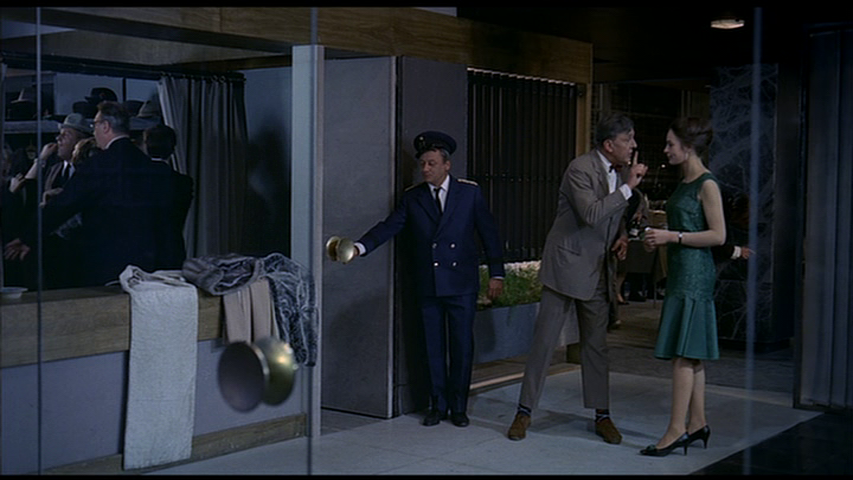
Hulot’s friend letting people in and out of a mobile invisible door after Hulot walks into it and shatters the glass:

A doorman uses a handle to let Royal Garden guests exit through an invisible door
The door is now located a few feet in front of the entrance to the nightclub
And now it opens into the coat room

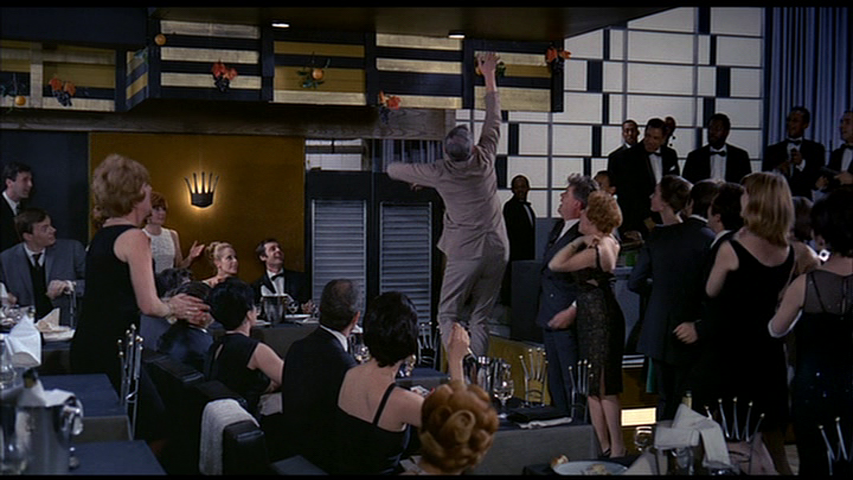
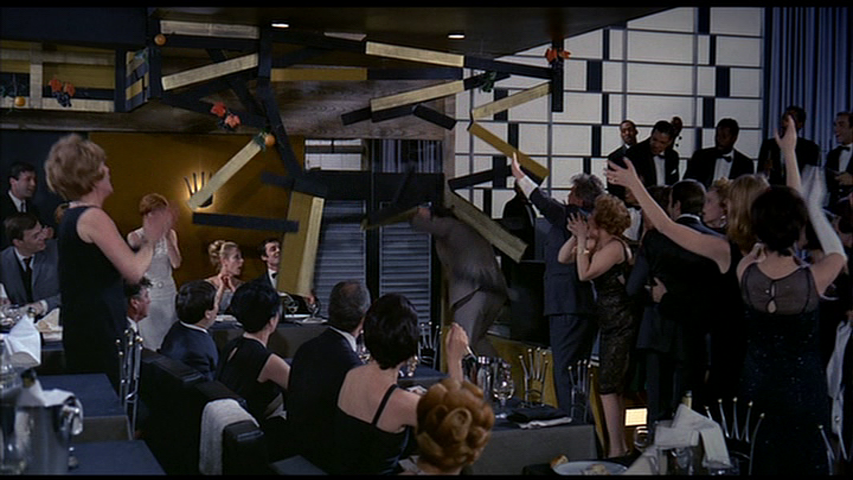
A ceiling that comes tumbling down when Hulot leaps for a golden apple decoration at the behest of a wealthy customer named Schultz (Billy Kearns), whose nationality Turvey finds significant because “it is Americans and American culture that disrupt the homogeneity of the modern environment, thereby allowing for the carnivalesque, utopian moments of communal enjoyment,” and which further ties the movie to the drink I’m pairing it with via the Laird’s:

Longshot of Hulot leaping for a golden apple decoration
The drop ceiling that the apple was affixed to begins to fall
Continuation of the previous shot

A drunk who has just been kicked out of the Royal Garden following its neon arrow sign back inside:

A drunk looks up and is transfixed by a neon yellow crown
As a red neon arrow also appears, the drunk spins around in an effort to follow it
The arrow points to the door of the Royal Garden, so the drunk re-enters the nightclub

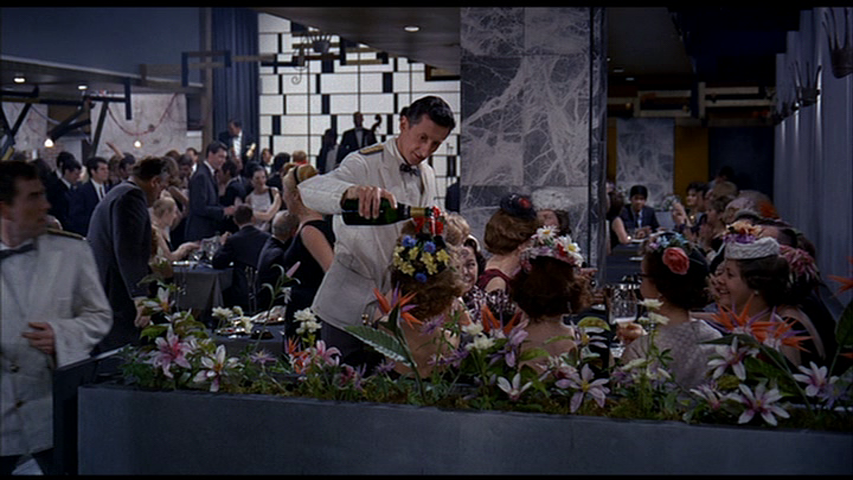
Flowers that look like they’re being watered with champagne:

Long shot of a waiter pouring champagne, which from our perspective looks like he's watering the flowers on his customers' hats

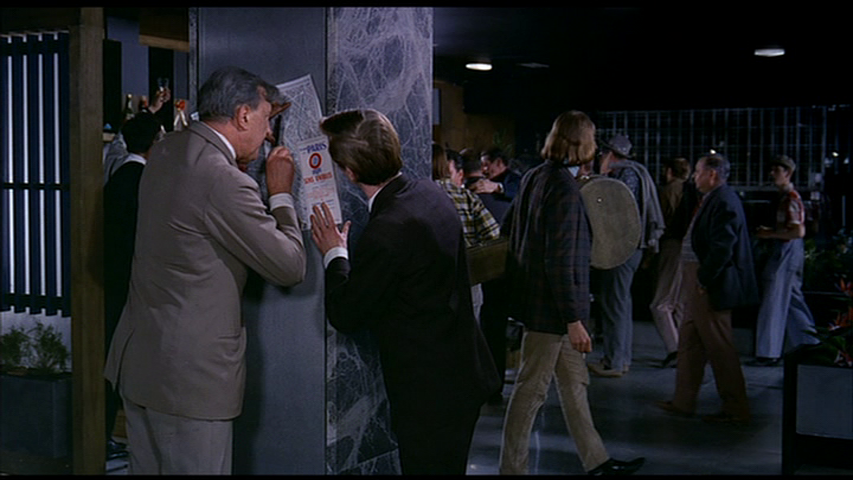
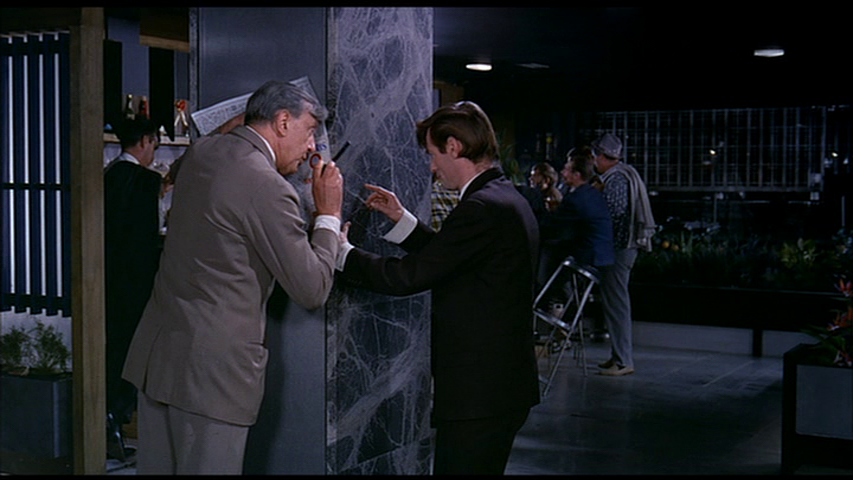
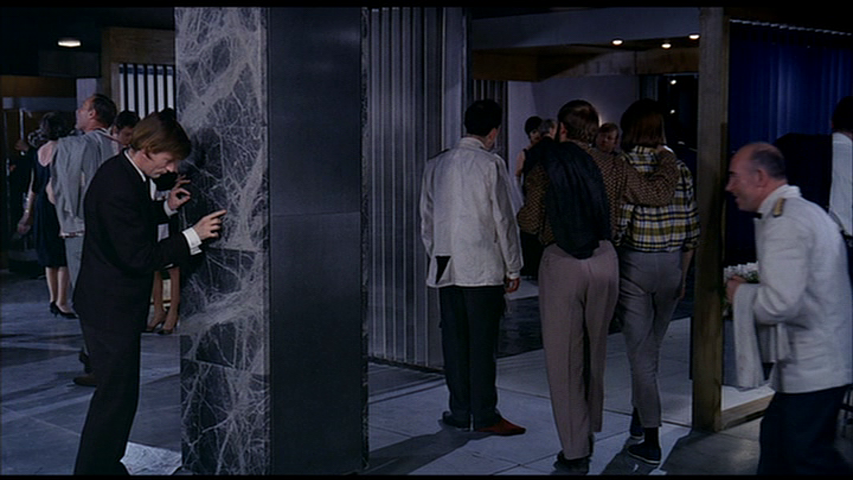
And another drunk confusing the lines on a marble pillar for a map:

Hulot uses a map to give directions to a drunk...
...who gets confused between the map and the lines on the marble pillar Hulot is propping it against
The map now lies on the floor, but the drunk continues trying to trace a route

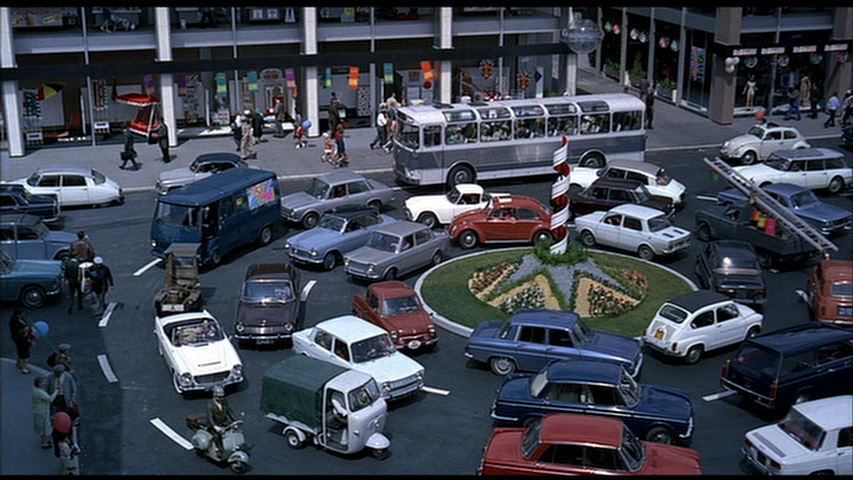
But for all the joyful anarchy of this scene, my favorite part of Playtime is definitely its ending. As Barbara and her tour group make their way back to the airport the following morning, Paris transforms into a carnival, complete with a traffic circle carousel that stops and restarts when a man puts a coin in a parking meter:

Overhead shot of a traffic circle that looks like a carousel

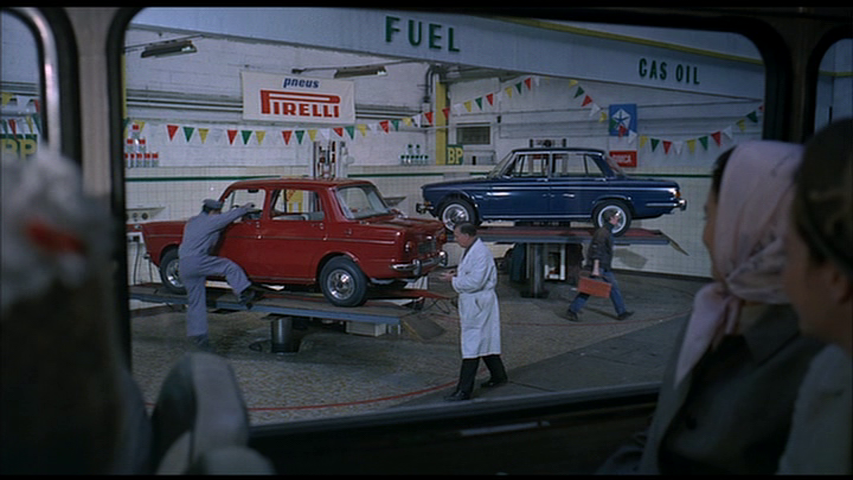
A hydraulic lift ride:

A mechanic leaps onto a hydraulic lift supporting a bright red car next to another one with a blue car on it

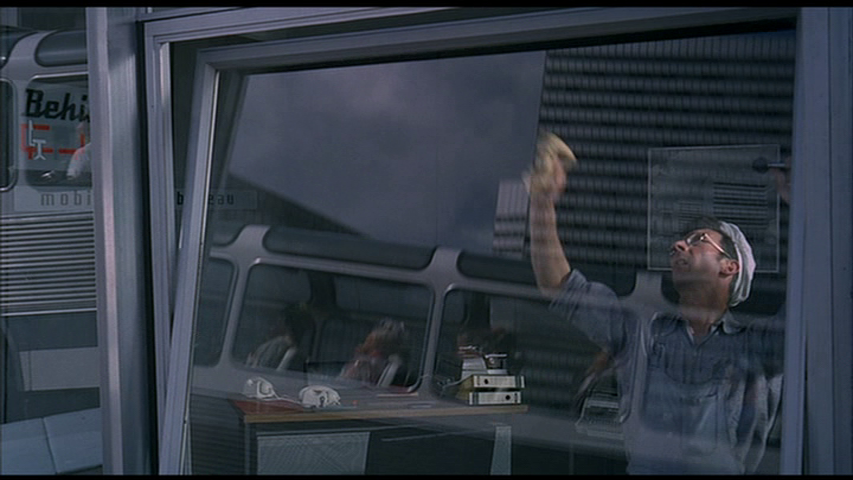
A vertiginous effect created by a tilted window:

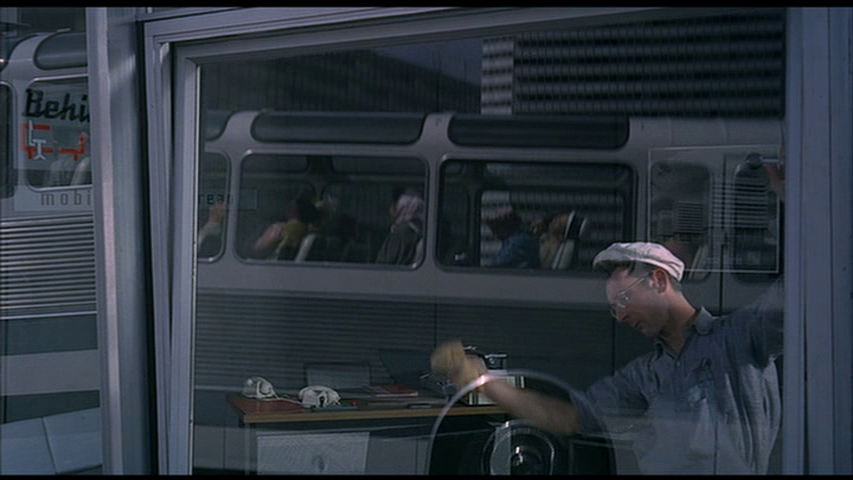
As a man tilts the window he's cleaning...
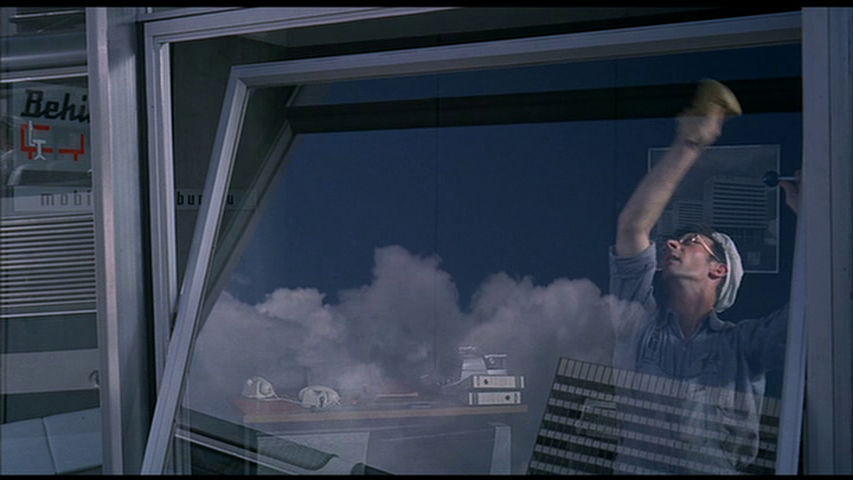
...the bus reflected in it seems to move up and down...
...and the soundtrack suggests that the people on it are experiencing a carnival ride

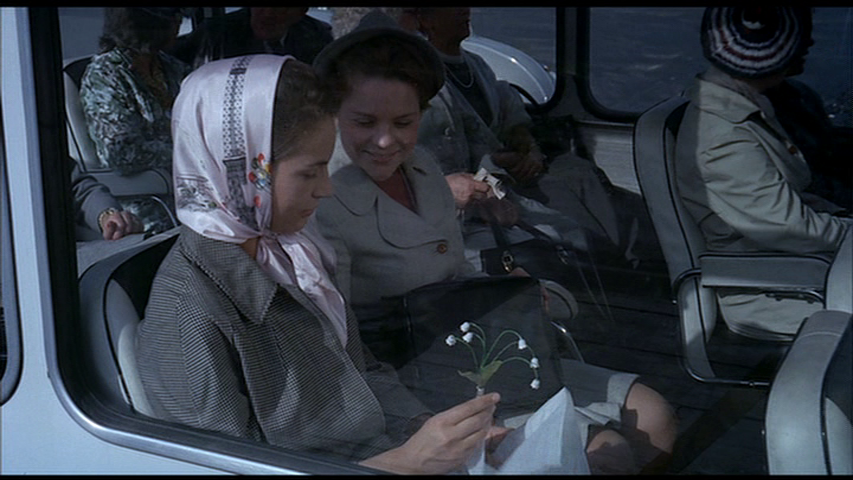
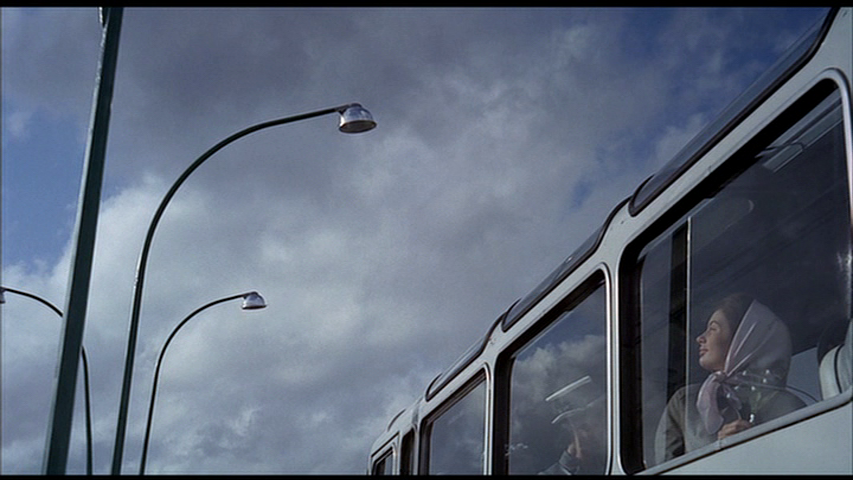
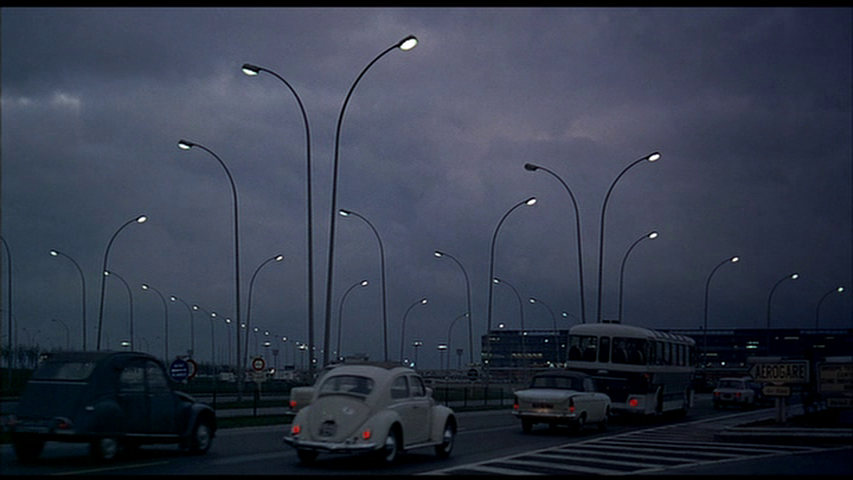
And streetlights that will now forever remind you of lilies of the valley thanks to a thoughtful parting gift that Hulot gives Barbara:

Barbara looks at the lily of the flower that Hulot has given her...
...then out the window of her bus at the streetlights it's passing under, which have a similar appearance
Extreme long shot of the bus amidst a forest of streetlights

As Sheila O’Malley writes in a blog post about the movie, “if urban alienation is portrayed in Playtime (and it is), it is portrayed in a way that is distinctly absurdist, turning the mundane into the surreal. It does not bemoan the fate of modern man, it does not say, ‘Oh, look at how we are all cogs in a giant wheel, and isn’t it so sad?’ It says, ‘Look at how we behave. Look at how insane it is. We need to notice how insane it is, because it’s hilarious.’” While you absolutely can read the film as a critique of what automation and commercialism have done to the world of the 1960s and today, I prefer to treat it the same way O’Malley does, as a how to guide to finding pleasure in it: keep your eyes open, use your imagination, and don’t take yourself to seriously. Which is pretty good advice for stress-free hosting and family dinners, too, so: happy holidays!

Cheers!

All original photographs in this post are by Marion Penning, aka my loving wife. Links to all of the entries in this series can be found here.
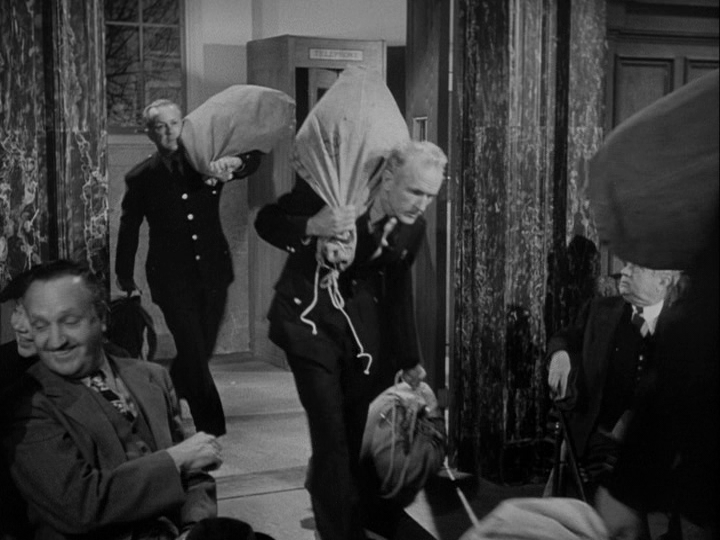
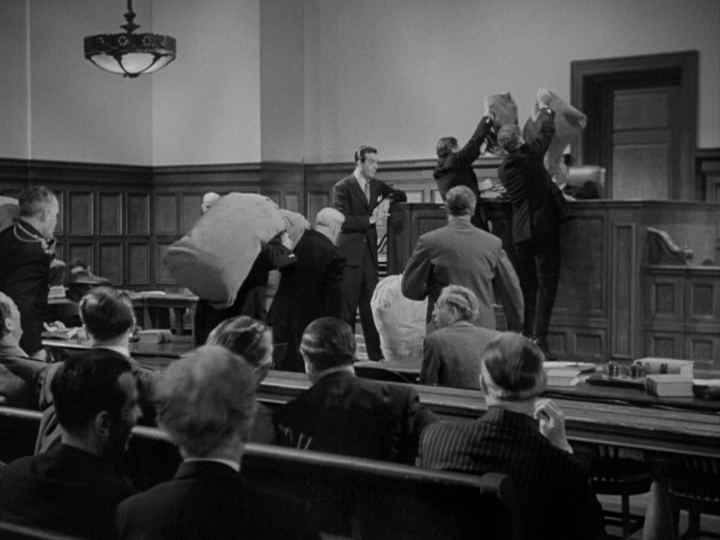
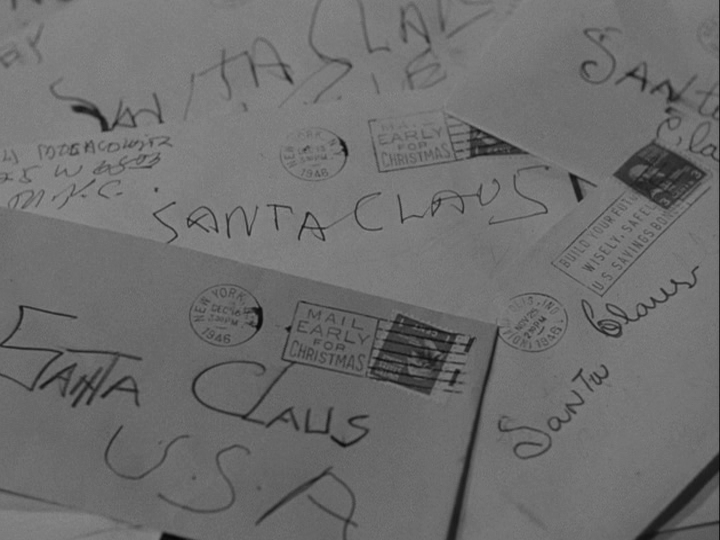
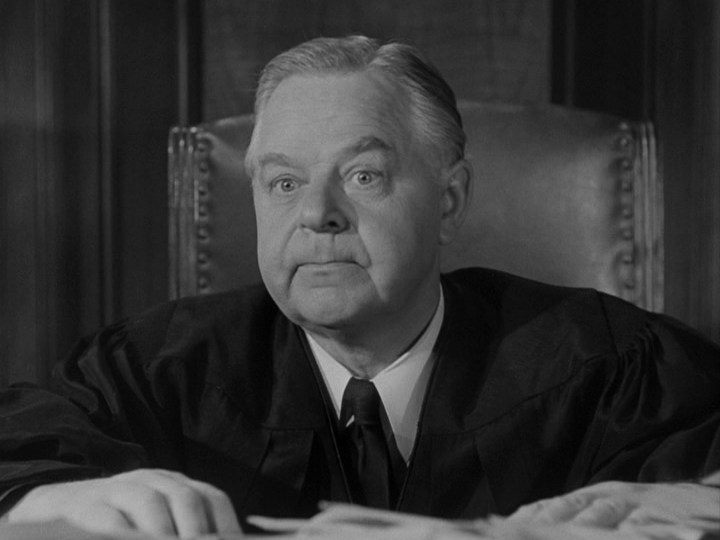
Bonus Drink & a Movie Post #4: Pumpernickel + Miracle on 34th Street

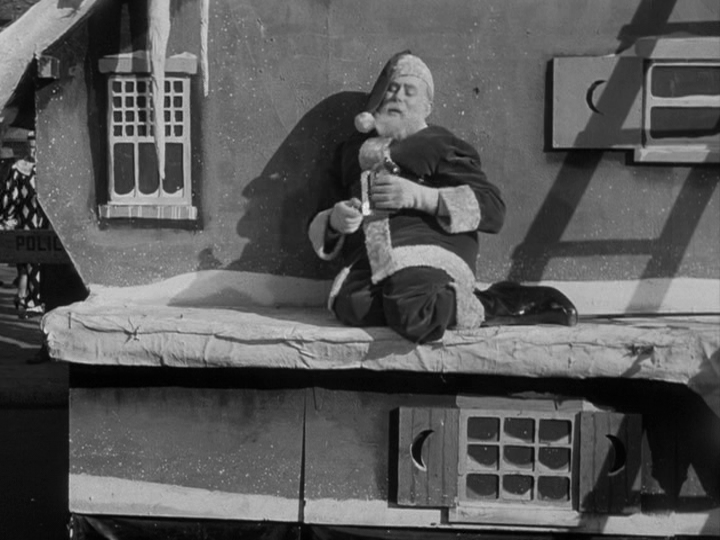
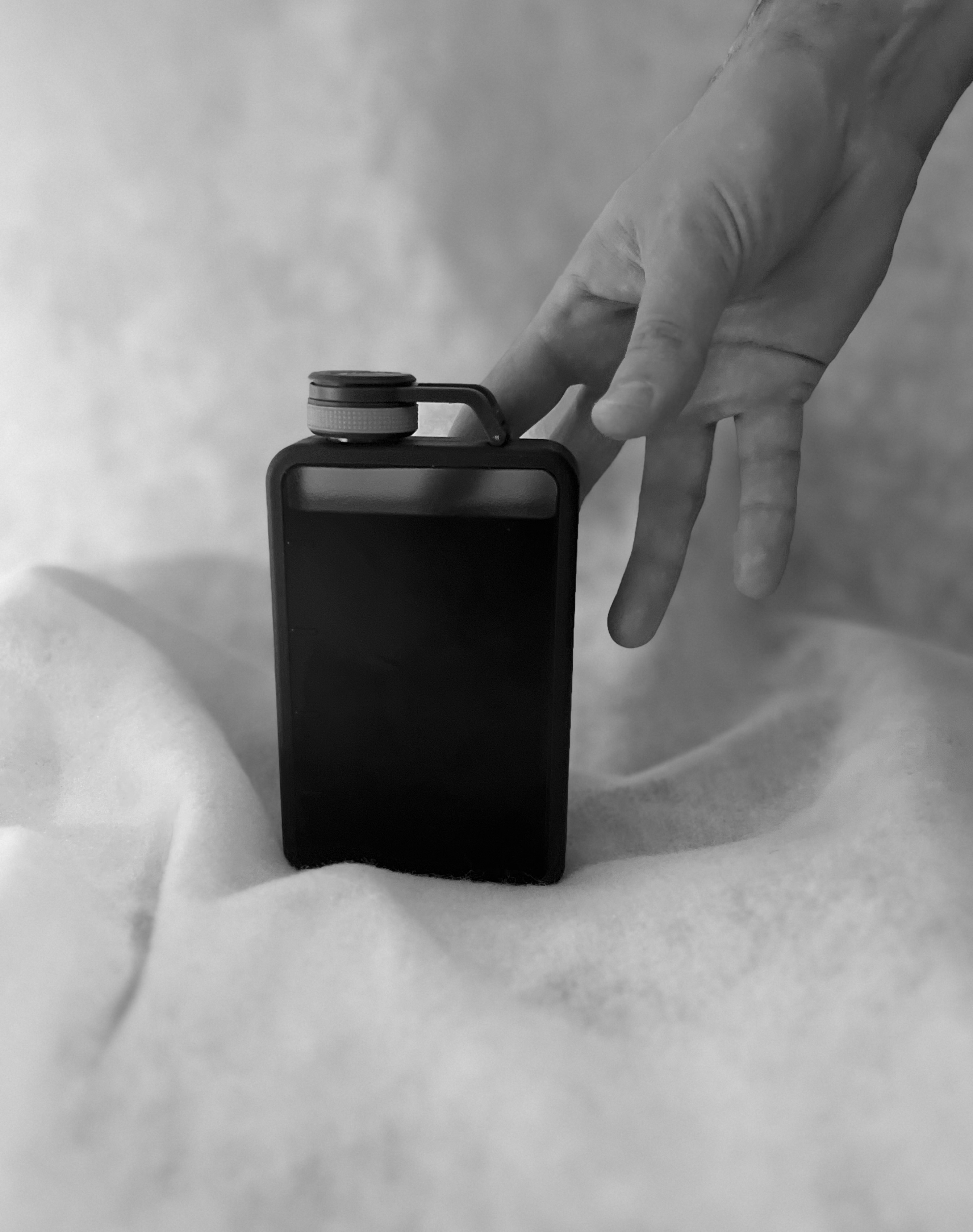
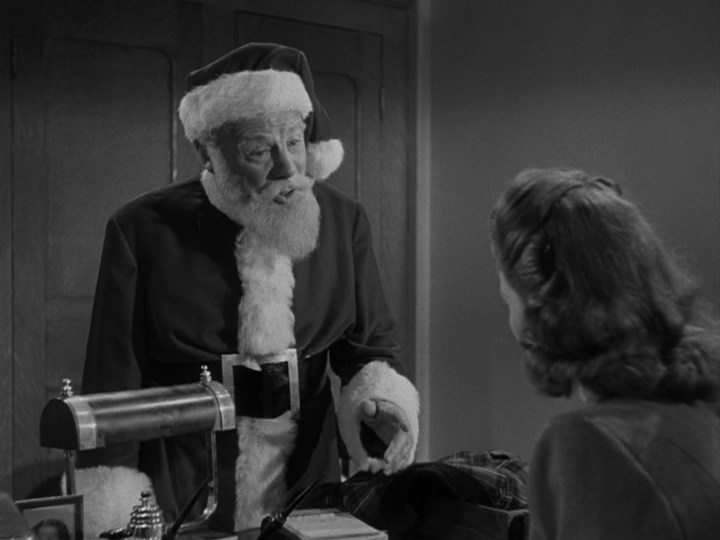
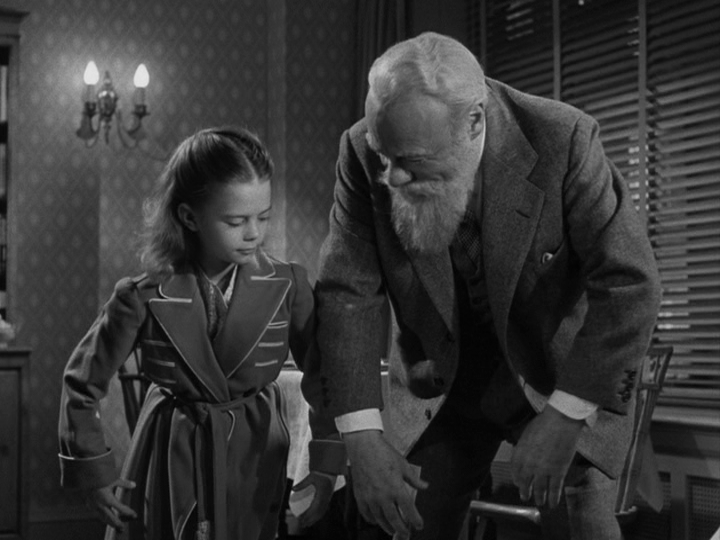
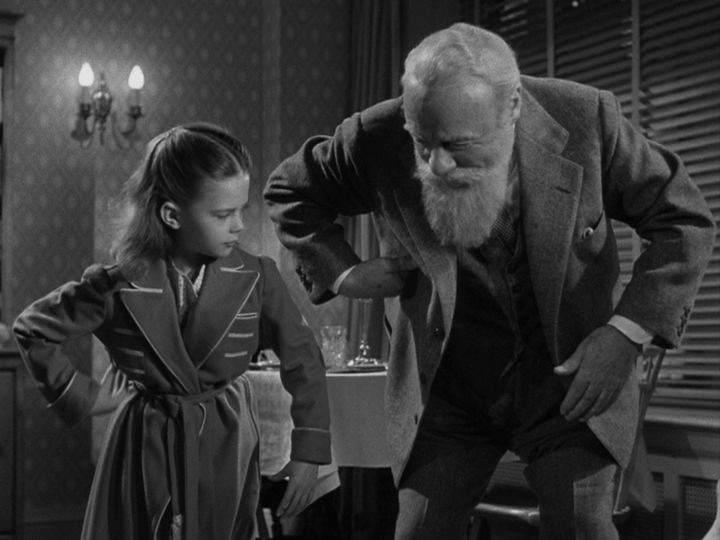
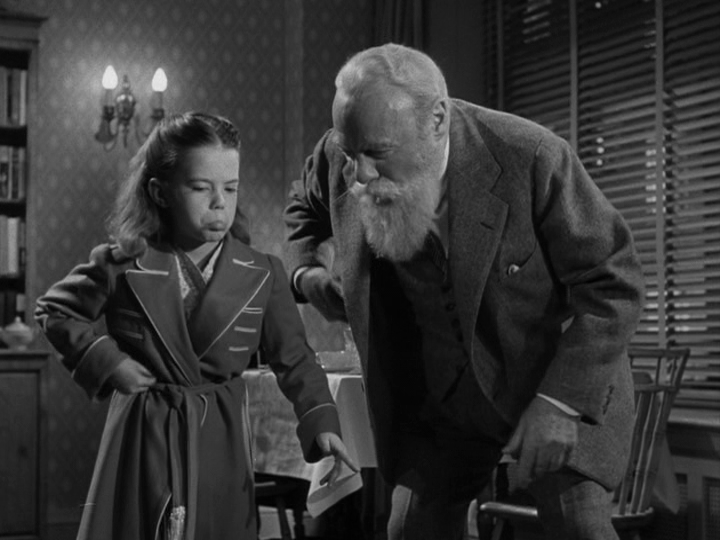
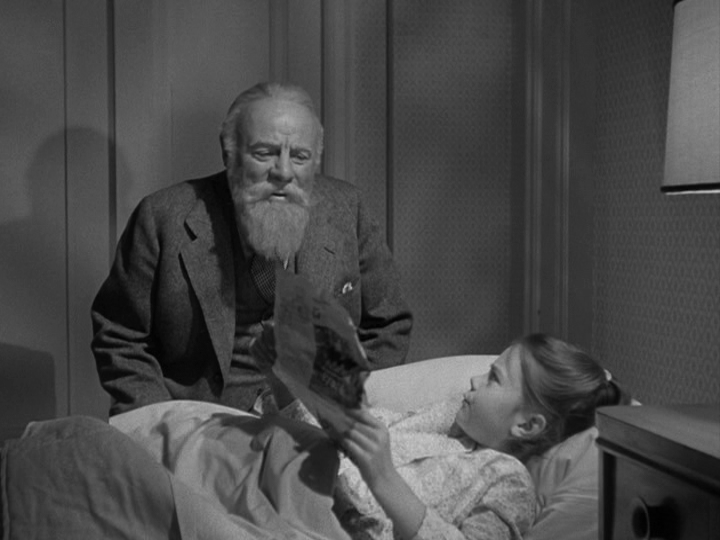
As I have mentioned on this blog before, the first movie my family traditionally watches after Thanksgiving is Miracle on 34th Street, which made it an obvious choice to fill one of the six “bonus” Drink & a Movie slots I need to get me to my goal of 54 total posts. The beverage we’re pairing it with is from Sarah Baird’s Flask book and it would surely be just as effective at keeping the intoxicated Santa Claus (Percy Helton) Macy’s originally hired to star in their annual holiday parade warm as whatever is in this bottle:

Macy's Santa Claus is intoxicated

I’ll bet it tastes better, too! The recipe is a creation by New York-based bartender Sother Teague, who writes that it was inspired by shots of Rittenhouse rye that a friend of his used to serve with 14 dashes of Angostura bitters added to them, which turned it dark like the bread that the drink is named after. Here’s how you make Teague’s version, which Baird describes as “the perfect flask cocktail to sip after a long Thanksgiving of listening to relatives argue about politics, television, and who makes the best green bean casserole”:

3 ozs. 100-proof rye (Rittenhouse)
1 1/2 ozs. Ramazzoti amaro
1 oz. Punt e Mes
14 dashes Angostura bitters
Lemon twist

Stir all liquid ingredients with ice, express the lemon twist over them, and funnel into a flask.

Black and white photo of a Pumpernickel cocktail in a flask with a hand reaching for it from above

This is a seriously bitter drink, but it’s also delicious, and to me this makes it ideal for slowly consuming over the course of an entire evening via very small sips. The Ramazzoti tastes to my palate like a milder version of one of my favorite amaros for Manhattan variations, Amaro Montenegro, and it works beautifully here in combination with Punt e Mes as a counterpoint to the Angostura. Rittenhouse is my go-to rye for cocktails, and while it isn’t necessary in this drink per se, you definitely want something high ABV.

Our 20th Century DVD Fox DVD copy of Miracle comes packaged with the colorized version of the film created in the 80s, but I don’t think anyone has ever watched it all the way through, because why would they? Here’s a picture of the case:

Miracle on 34th Street DVD case

The film is also available on Disney+ with a subscription or via a number of other platforms for a rental fee. Ostensibly a film about whether or not Santa Claus really exists, Miracle stars (Best Actor in a Supporting Role Oscar notwithstanding) Edmund Gwenn as a man named Kris Kringle who we first meet attempting to correct the reindeer work of a window dresser (Robert Gist) which inspired this month’s drink photo:

Dressing a holiday window display, part one
Dressing a holiday window display, part two
Dressing a holiday window display, part three

When he proves to be a great success at replacing the aforementioned drunk Santa in their parade, Macy’s employees Doris Walker (Maureen O’Hara) and Julian Shellhammer (Philip Tonge) ask him to continue playing the role for the duration of the holiday season. Needing to find him a place to stay when he isn’t at the store, their highly questionable original plan is for Shellhammer to ply his wife (Lela Bliss) with “triple-strength” martinis as a preface to asking her if Kris can use their spare bedroom.

Mr. Shellhammer helps his wife, who feels wonderful, with the phone

It works, but by that time lawyer Fred Gailey (John Payne) has already leaped at the excuse to see single mother Doris, his neighbor, more often by offering up his extra bed. Kris is a hit with Macy’s customers and although Fred annoys Doris by taking her daughter Susan (Natalie Wood) to see him while he’s working (“We should be realistic and completely truthful with our children and not have them growing up believing in a lot of legends and myths,” she tells him), everything seems to be going well otherwise–until she finds out that Kris openly identifies himself as the genuine article:

Close-up of Kris's employment card

Leading her to worry that he may be insane. This ultimately results in a petty and vindictive store psychologist named Granville Sawyer (Porter Hall) who Kris bops on the head (which, to be fair, is assault) getting him committed:

Kris deals Granville Sawyer a well-deserved blow with his umbrella

And it’s up Fred to get him released by successfully executing the unorthodox strategy of proving in court that Kris really is who he says. What’s interesting about Miracle is it’s clear that no one in the movie over the age of ten actually has any doubts on the matter, and they divide not along lines of believers and non-believers but rather those who think Kris’s delusions are harmless or even valuable and those who consider them dangerous. Hall of Fame character actor Thelma Ritter, in her first (uncredited) screen role, is unequivocally in the former camp:

Close-up of Thelma Ritter's unnamed character

While Mr. Sawyer is the champion of the latter. Doris and Mr. Shellhammer aren’t sure at first, but when Mr. Macy himself concludes that Kris’s insistence on sending parents to other stores to get the toy their children want if that’s where the best price can be found is good for his bottom line (“we’ll be known as the helpful store, the friendly store, the store with a heart, the store that places public service ahead of profits–and, consequently, we’ll make more profits than ever before!”), they quickly come around. The real drama, though, accompanies Fred’s attempts to convince Judge Henry X. Harper (Gene Lockhart), who has to balance his apparently sincere desire to faithfully discharge his public duty with the need to appease the electorate who gets to decide if he will continue in his role. Score is kept by the number of approving or concerned looks his political advisor (William Frawley) shoots him every time the hearing takes an unexpected turn:

A worried Judge Harper looks across the courtroom at his political advisor...
...who silently confirms that yes, he is right to be concerned

Meanwhile Kris, far from being a mere pawn in the games of others, has been pursuing an agenda of his own the whole time. “Christmas isn’t just a day,” he tells Doris, “it’s a frame of mind, and that’s what’s been changing. That’s why I’m glad I’m here–maybe I can do something about it. And I’m glad I met you and your daughter: you two are a test case for me.” She’s obviously confused, so he continues, “yes–you’re sort of the whole thing in miniature. If I can win you over, then there’s still hope.”

Kris explains his objectives to Doris

It isn’t just Mr. Macy’s approval that makes up Doris’s mind, but also witnessing the ripple effects of his altruism. His practice of referring customers elsewhere instead of pushing overstock on them is soon adopted as official store policy, then co-opted by rival department store Gimbel’s, then rolled out to all of each of their branch locations resulting in the following photo op:

Kris looks at a check that Misters Macy and Gimbel have just presented him with
And thus was born “compassionate conservatism”

And a promise to procure a much-needed expensive new x-ray machine for a doctor (James Seay) Kris knows:

Medium shot of Dr. Pierce expressing his gratitude to Kris for his new x-ray machine

Kris sets the stage for Susan’s conversion by teaching her the joys of imaginative play by showing her how to be a monkey:

Medium shot of Kris showing Susan how to be a monkey, part one
Medium shot of Kris showing Susan how to be a monkey, part two
Medium shot of Kris showing Susan how to be a monkey, part three

And after much prodding she finally tells him what she really wants for Christmas:

Susan shows Kris what she wants for Christmas:
Close-up of a picture of Susan's dream home

No, not a doll’s house: a real one. Interestingly, this dream is similar to one harbored by Fred, who confides to Kris that someday he’d like to get a place in Long Island. “Not a big house,” he tells him, “one of those junior-partner deals around Manhasset.” Anyway, just when Kris’s mental competency hearing seems to be definitively heading south, Susan writes him a letter that Doris appends a note of her own to:

Close-up of Susan's letter to Kris
Close-up of Doris's postscript to Susan's letter

And it morphs into a deus ex machina that arrives just in the St. Nick of time when a couple of opportunistic United States Post Office employees named Al (Jack Albertson) and Lou (Guy Thomajan) identify it as a way to finally relieve themselves of thousands of previously undeliverable letters addressed to Santa…

…thus handing Fred the ability to provide Judge Harper with an out in the form of the ability to appeal to a higher legal authority. He has all of the letters that have been delivered to the court house dumped out on Harper’s desk:

Bringing the letters into the courtroom
Dumping the letters out on Judge 
Harper's desk
Pile of letters

Harper makes eye contact with his political adviser one last time:

Judge Harper looks to his political adviser for guidance...
...and receives an approving nod

Then announces that, “since the United States government declares this man to be Santa Claus, this court will not dispute it. Case dismissed!” Miracle ends with Kris providing Doris, Fred, and Susan directions home from a Christmas party they’re all attending which will supposedly help them “miss a lot of traffic.”

Kris gives Doris and Gailey directions home.

As they’re driving along, Susan’s eyes suddenly go wide:

Close-up of Susan looking astonished by something she has seen out her window

“Stop, Uncle Fred! Stop!” she cries and hurtles herself out of the car.

Susan runs toward something

The camera pans left, and we see that she’s running toward a house that’s a dead ringer for the picture she showed Kris, only this one has a “For Sale” sign in front of it:

Susan's dream house come to life

Doris and Fred follow her inside, where Doris admonishes her: “you know you shouldn’t run around in other people’s houses!” “But this is my house,” Susan replies, “the one I asked Mr. Kringle for!”

Susan tells Doris and Gailey that they're standing inside her Christmas present

As she runs to see whether or not there’s a swing (“there is one!”), Fred takes Doris in his arms and kisses her. “The sign outside says it’s for sale,” he says, “we can’t let her down.” Then: “it even makes sense to believe in me now. I must be a pretty good lawyer. I take a little old man and legally prove that he’s Santa Claus.” But suddenly he stops mid-sentence, distracted by something offscreen:

Close-up of a cane that looks an awful lot like Kris's

“Oh no, it can’t be!” Doris exclaims. “It must have been left here by the people who moved out!” But it certainly does look a lot like the one we saw Kris with earlier, and as “Jingle Bells” plays in the background, Fred replies, “maybe I didn’t do such a wonderful thing after all.”

Medium shot of Fred Gailey wearing an expression that suggests he may now believe in Santa Claus

Nothing here definitively dispels the possibility that Kris is just a guy who knows how to read toy advertisements and real estate listings, but the film’s style and tone has inarguably evolved from its opening credits sequence that features an almost neo-realist following shot of him walking the streets of Manhattan:

Kris walking the streets of New York

To this fantastical conclusion. And yet, to its enormous credit, it does not matter which side we come down on. The important thing is that Susan has discovered (as I recently suggested to my own budding rationalist) that life is more fun when not everything has a strictly logical explanation, and as long as you’re confident that all of your options are good ones, it can occasionally be liberating to take a break from constant decision making and let the universe choose for you. We are a secular family, so for us Jesus isn’t the reason for the Christmas season. This is what the holiday is all about. And that’s why Miracle on 34th Street isn’t only the first Christmas movie we watch each year, but also one of our favorites.

Cheers!

All original photographs in this post are by Marion Penning, aka my loving wife. Links to all of the entries in this series can be found here.
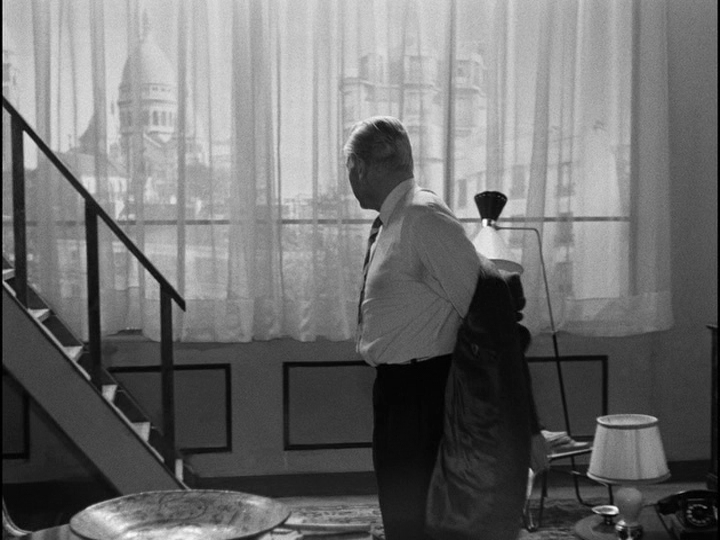
November, 2024 Drink & a Movie: USS Richmond Punch + The Searchers

USS Richmond Punch was a big hit when I made it for Thanksgiving a few years ago. It’s on the menu again this year, so I definitely wanted feature it in this month’s Drink & a Movie post. When thinking about what film to pair it with, the name immediately made me think of one of cinema’s great antiheroes, unapologetic former Confederate soldier Ethan Edwards (John Wayne) from The Searchers. Interestingly, David Wondrich identifies the recipe as originating during the Civil War era, which means it theoretically could be the concoction in this punch bowl:

Ethan Edwards serves himself a glass of punch

The way we make it combines elements from the article linked to above and the recipe in Wondrich’s book Punch: The Delights (and Dangers) of the Flowing Bowl:

6 lemons
1 1/2 cups caster sugar
2 cups black tea
2 cups Jamaican rum (Smith & Cross)
2 cups cognac (Pierre Ferrand 1840)
2 cups ruby port (Graham’s Six Grapes)
4 ozs. Grand Marnier
2 750 ml bottles sparkling wine (Roederer Estate Brut)

Prepare an oleo-saccharum by removing the peels from the lemon, trying to get as little of the pith as possible, and muddling them with the sugar. Set aside for at least an hour. Meanwhile, juice the lemons and make the tea by pouring 16 ounces of hot (but not boiling) water over two tea bags and steeping for exactly five minutes. Add the lemon juice and tea to the oleo-saccharum and strain into a gallon container. Add the spirits and refrigerate overnight. When ready to serve, add to a punch bowl with a block of ice and the sparkling wine. Garnish with lemon slices and grated nutmeg.

As a special occasion beverage, this is definitely a time to break out your favorite spirits, which is why we go with Smith & Cross, Pierre Ferrand 1840 Original Formula, and Roederer Estate Brut. We are a family of tea drinkers and that flavor is prominent here, which is one of the main reasons we love this punch, which is sweet and tart and just a bit effervescent. It does pack a wallop, though, and the tannins on the finish will make you want to take another sip and then another, so handle with care! Or, you know, just be sure to snack liberally while you imbibe.

The screengrabs in this post are from my Warner Home Video DVD copy of the film, which is still going strong after 25 years:

The Searchers DVD case

It can also be rented from a number of streaming video platforms. The Searchers is hardly immune from the sins of representation which plague many classic westerns: see, for instance, Tom Grayson Colonnese’s observation in the collection of essays on the film edited by Arthur Eckstein and Peter Lehman that allowing the Navajo extras who play Comanches to speak their own language is as discordant “as if when we meet the Jorgensens, they have Italian accents, or as if the Hispanic Comanchero who finally leads the searchers to Scar speaks with a heavy Swedish accent.” Unlike most of them, though, racism is one of its explicit themes. It begins, famously, in “Texas 1868” (as an introductory title card reads) with Dorothy Jordan’s Martha Edwards opening a door:

Medium shot of a woman in silhouette framed by a doorway with a beautiful desert landscape in front of her, part one
Part two
Part three

As the camera tracks forward, following her outside, a tiny figure on horseback emerges out of the striking desert landscape:

The woman in the previous shots, now outside, watches as a rider so small that it's hard to pick him out of the landscape approaches

As it draws closer, Martha is joined first by her husband Aaron (Walter Coy):

Medium shot of Aaron with Martha behind him

Then their three children. “That’s your Uncle Ethan!” says Pippa Scott’s Lucy to Robert Lyden’s Ben.

Medium shot of Lucy and Ben.

Inside, Ethan lifts his youngest niece Debbie (Lana Wood) to the rafters:

Medium shot of Ethan lifting Debbie

And although he declines to answer Aaron’s question about where he’s been for the past three years, he does specify that it wasn’t California, gazing at Martha the whole while:

Ethan gazes at Martha as he talks to Aaron

The final member of the family, Jeffrey Hunter’s Martin Pawley, is introduced in the next scene in a variation on Ethan’s entrance:

Shot of Martin riding toward the house which echoes the framing of the opening images of The Searchers
Martin leaps off his horse
Martin prepares to enter the house after dismounting

“Fella could mistake you for a half-breed,” Ethan tells him over dinner.

“Not quite: I’m one-eighth Cherokee, and the rest is Welsh and English,” he replies. “At least that’s what they tell me.” You see, “it was Ethan who found you, squalling under a sage clump after your folks had been massacred,” Aaron explains. “It just happened to be me,” Ethan says, “no need to make more of it.” That night before the children to go bed, he makes Debbie a present of what Frank Nugent’s screenplay describes as “something appropriate to Maximilian of Mexico”:

Close-up of the medal Ethan gives to Debbie
Lucy places the medal around Debbie's neck

Moments later, he tosses Aaron two bags of double eagles by way of clarifying that he expects to pay his way.

Ethan tosses Aaron two bags of coins

“That’s fresh minted–there ain’t a mark on it!” Aaron observes, to which Ethan simply says, “so?” The next morning breakfast is interrupted by a visit from Ward Bond’s Reverend Captain Samuel Johnson Clayton and his company of Texas Rangers, who are looking for cattle rustlers who they think have run off the herd belonging to Lars Jorgensen (John Qualen), whose son Brad (Harry Carey Jr.) has been “sittin’ up with” Lucy. Their intention is to deputize Aaron and Marty, but Ethan tells his brother to stay close in case the real culprits were Comanche. As they prepare to depart, Clayton chivalrously declines to observe a goodbye which makes it clear that Ethan and Martha are in love with each other:

Clayton stares straight ahead while Ethan and Martha gaze tenderly at each other behind him

The posse is 40 miles away when Marty rides up to Ethan to comment that “there’s something mighty fishy about this trail.”

Medium shot of Marty and Ethan talking atop their horses

Sure enough, Brad finds his father’s prize bull with a Comanche lance in it.

Brad discovers the body of his father's prize bull

Ethan is the first to realize what it means: “stealing the cattle was just to pull us out. This is a murder raid.” The most likely targets are either the Jorgensen or Edwards places, and the majority of the Rangers ride for the former because it’s closer. Marty immediate heads for home against the advice of Ethan, who observes that their horses need rest and grain. The younger man obviously thinks he’s being callous, but the anguished look on Ethan’s face as he rubs down his horse is anything but:

Close-up of Ethan with heartbreak in his eyes

The attack itself isn’t shown, only the brilliantly tense lead-up to it which features outstanding crepuscular lighting:

A devastating camera movement toward Lucy when she realizes what’s about to happen:

The camera tracks toward Lucy at the moment she understands what's going on
Her hand goes to her mouth
And she screams

And a terrifying shadow falling over a tombstone that informs us that Ethan and Aaron’s mother was also killed by Comanches:

Debbie sits in front of her grandmother's tombstone
And a shadow falls over it

It ends on a close-up of the Comanche chief Scar, who unfortunately is played by a white man (Henry Brandon), blowing a horn to signal the start of the attack:

Scar blows a horn to signal the start of the attack on the Edwards place

Fade to black. Ethan is proven right about the horses when he and Mose Harper (Hank Worden), who stayed behind with him, overtake Marty and ride past him:

Extreme long shot of Marty with his saddle, but no horse
Marty chases after Ethan and Mose as they ride away

But they arrive too late to help. Ethan discovers Martha’s body in another reprise of the film’s opening shot:

Ethan holds a bloody dress
Ethan, in silhouette, looks through the front door of the Edwards place

Aaron and Ben are also dead, while Debbie and Lucy have been captured. And thus begins the titular search. The same number of men ride out after the girls as went looking for Jorgensen’s cattle earlier, and soon enough they’re following a trail of corpses as warriors Aaron wounded die on the trail. Ethan shoots out the eyes of one, prompting Clayton to ask him, “what good did that do you?”

Mose pantomimes Ethan’s cold reply: “by what you preach, none, but what that Comanche believes, ain’t got no eyes, can’t enter the spirit land and has to wander forever between the winds. You get it, Reverend.”

Medium shot of Mose pointing to his eyes...
...and then wagging his finger

Sam Girgus writes in his book Hollywood Renaissance: The Cinema of Democracy in the Era of Ford, Capra, and Kazan, “of course, Ethan doesn’t ‘get’ that he really has just described his own life and destiny of wandering over a nightmare landscape that denies ‘the spirit’ and the value and meaning of life,” but I find it significant that his action is prompted by Brad desecrating the body first with a rock:

Brad lifts a stone

In fact, not even Ethan’s most extreme racist actions or sentiments expresses are unique to him, which seems to support the statement Joseph McBride and Michael Wilmington make in their monograph on director John Ford that “it is chillingly clear that Ethan’s craziness is only quantitatively different from that of civilization in general.” Anyway, he soon locates the raiders they’re looking for and proposes that they wait until nightfall and then jump them. Clayton decides they’ll try to run off their horses instead. Ethan disagrees, but Clayton says, “that’s an order.” Ethan replies by hurling a canteen at him with the words, “yes sir, but if you’re wrong, don’t ever give me another.”

Long shot of Ethan letting Clayton knows what he thinks of his plan

This is followed by another one of the movie’s great set pieces, a frantic ride to a strong defensive position across a river that features lots of great parallel and intersecting lines after Clayton’s plan fails and the posse finds itself surrounded:

A line of Comanches hems the posse in on the right...
...while another flanks them on the left
The posse rides toward the camera in extreme long shot with Comanche riders chasing them on both sides

Ethan continues the search alone with Brad and Marty because, as Clayton acknowledges, “this is a job for a whole company of Rangers, or this is a job for one or two men.”

Clayton and his Rangers part ways with Ethan, Brad, and Marty

Three become two a few minutes of screentime later when Brad suicidally confronts the Comanches alone after Ethan finds and buries Lucy’s defiled body, which we hear but don’t see:

Medium shot of Ethan and Marty looking offscreen at Brad's last ride

The final two searchers lose the trail soon after. “We’re beat and you know it,” Marty says. Ethan’s reply is my favorite line in this or any film (obsolete pejorative slang aside), because it’s basically the inverse of my philosophy of life: “Injun’ll chase a thing till he thinks he’s chased it enough, then he quits. Same way when he runs. Seems like he never learns there’s such a thing as a critter’ll just keep comin’ on.”

Ethan explains to Marty why there search will prove successful in the end

They briefly return home to the Jorgensens in a sequence that features framing which ought to look familiar by now:

Mrs. Jorgensen framed in a doorway that echoes the film's opening
Mr. Jorgensen joins his wife outside

But are off again the next morning in pursuit of a lead that came to the Jorgensens in the form of a letter, much to the chagrin of daughter Laurie (Vera Miles), who reveals to Marty that “you and me have been goin’ steady since we was three years old.”

Laurie reveals to Marty that they're already an item

A big chunk of what happens next is shown in flashback as Laurie reads a letter that Marty writes to her, including his accidental (he thought he was trading for a blanket, not a bride) marriage to a woman named Wild Goose Flying in the Night Sky (Beulah Archuletta) that many people find distasteful in the way it’s played for comedy, but which M. Elise Marubbio defends as essential to understanding how “Ford’s direction throughout the film suggest an understanding of racism as a neurosis that permeates a community, including the viewer” in a chapter in the book Native Apparitions: Critical Perspectives on Hollywood’s Indians:

Medium shot of Wild Goose Flying in the Night Sky, who unlike many people I would *not* describe as "fat," trying on a bowler hat

And an encounter with a cavalry troupe that has just massacred an entire Comanche village, including Marty’s wife, who ran off (possibly to look for Debbie) after she heard the two men talking about Scar.

Long shot showing the aftermath of a massacre
The dead body of Wild Goose Flying in the Night Sky

Ethan and Marty finally catch up with him in New Mexico Territory, where the medal Ethan gave Debbie at the beginning of the film reappears during a conversation in which the chief reveals that two of his sons were killed by white settlers:

Close-up of scar wearing the medal Ethan gave to Debbie

Debbie (now played by Natalie Wood) is there, too, and runs after Ethan and Marty when they leave to warn them they’re in danger:

Debbie runs down a distant sand dune toward Ethan and Marty, who are in the foreground
Debbie urges Marty to leave

When she tells them, “these are my people,” Ethan pulls his gun.

Medium shot of Ethan drawing a gun on Debbie

But Marty is having none of it:

Medium shot of Marty drawing a gun on Ethan

They’re interrupted by a poison arrow which wounds Ethan in the shoulder and escape (without Debbie) to a nearby cave where they fend off another attack:

Ethan and Marty shooting at Scar's band from inside a cave

And where Ethan attempts to write a will that leaves all of his possessions to Marty on the grounds that he has “no blood kin,” to which Marty says, “I hope you die.”

Long shot of Marty confronting a wounded Ethan with a knife

Which finally brings us to the wedding in the screengrab at the beginning of this post, where Laurie, who McBride and Wilmington describe as “resplendent in the virginal white of her wedding dress,” harshly echoes the sentiments Marty almost just stabbed Ethan for when he tells her he has to leave one last time to retrieve Debbie, who they’ve just been notified is camped nearby with Scar and the rest of his band. “Fetch what home?” she cries. “The leavings of Comanche bucks sold time and again to the highest bidder with savage brats of her own? Do you know what Ethan will do if he has a chance? He’ll put a bullet in her brain. I tell you, Martha would want him to.”

Laurie tells Marty what she really thinks

This leads pretty directly to the film’s key moments. Marty daringly sneaks into the camp alone and convinces Debbie to leave with him, but has to kill Scar in self defense, raising the alarm.

The Rangers ride in after them, and Ethan claims Scar’s scalp, which judging from his face doesn’t bring the closure he expected:

Close-up of Ethan looking disoriented

Just then he spots Debbie:

Medium shot of Debbie looking terrified

Marty tries and fails to prevent him from riding after her:

Marty attempts to drag Ethan off his horse

And Ethan catches up with Debbie in front of another cave:

Debbie runs toward a cave in extreme long shot
Ethan catches up with Debbie in extreme long shot
Medium shot of Debbie looking scared as Ethan's legs and torso approach her in the foreground

Robert Pippin writes in Hollywood Westerns and the American Myth that The Searchers revolves around the mystery of what happens next:

Ethan lifts Debbie like he did at the beginning of the film when she was younger
Ethan lowers Debbie and they look at each other...
...then embrace

To Glenn Kenny it’s “an unabashed and matter of fact depiction of the mysterious workings of grace” which can’t be parsed in any rational way, while to Pippin “what we and [Ethan] discover is that he did not know his own mind, that he avowed principles that were partly confabulations and fantasy.” Whatever the case may be, and while I find Ethan every bit as compelling a character as I did in my youth when I first discovered this film, what I find myself pondering the most these days is what this scene and the final one that follows it say about America. After all, as Jeffrey Church points out in an article published in the journal Perspectives on Political Science, “the film is not called ‘The Searcher.'” Much ink has been spilled about the way Ethan stands alone in the final scene after Mr. and Mrs. Jorgensen (Olivia Carey) take Debbie inside, then Laurie and Marty push past him:

The Jorgensens take Debbie inside their home in a shot which echoes the film's first one
Laurie and Marty push past Ethan as he stands in the Jorgensen's doorway

I think it’s absolutely essential to note that after John Wayne, the actor, clutches his arm in a moving homage to silent film star Harry Carey (father of the actor who plays Brad and husband to the actress who plays Mrs. Jorgensen), Ethan, the character he plays, chooses to turn and walk away:

John Wayne pays tribute to Harry Carey
Ethan turns to walk away

Girgus reads Marty’s presence as “dramatically [subverting] Ethan’s wish to form a nation of one without any responsibility to anyone outside of himself” by turning their search for Debbie into a social experience that mirrors “the situation of America as a democracy of continued relevance to its own people and for the world during a period of increasing activism by minorities and people of color,” which seems just as true today as it did in 1956 when The Searchers was released or 1998 when Girgus’s book was published. But where he argues that Ethan “cannot (my italics) enter the interior spaces of the house” despite the fact that he “represents steadfast masculine strength, power, and aggression that constitute essentials for the survival of any society, including a democracy,” Pippin emphasizes the absence of a reconciliation scene with Ethan and suggests that he may instead be recusing himself from participating in the one taking place within because it is “while not a complete fantasy, much more fragile than those ‘inside’ are prepared to admit.”

My point with all this is that Ethan is, to borrow some phrases from the film, “a human man.” As are, of course, the Comanches he spends its runtime opposing. And the country built on their bones is indeed “a fine, good place to be.” But it can be even better. So let’s spare a thought for all of them as we gather around the communal punch bowl this Thanksgiving, because those who forget the past are doomed to repeat it.

Cheers!

All original photographs in this post are by Marion Penning, aka my loving wife. Links to all of the entries in this series can be found here.
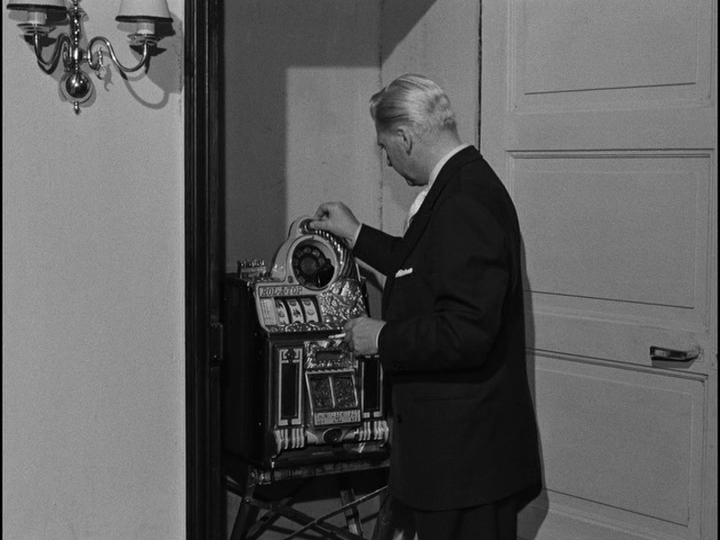
October, 2024: Lion’s Tale + The Leopard Man and House of Usher

I had so much fun creating a double feature for last year’s October Drink & a Movie post that it was an easy decision to do it again. This time I’m celebrating the film I’ve long thought of as my favorite B movie, The Leopard Man, and the one which recently stole that crown, House of Usher. Here’s a picture of my Warner Archive Collection DVD copy of the former:

The Leopard Man DVD case

And here’s a picture of my MGM “Midnite Movies” DVD edition of the latter:

House of Usher DVD case

The Leopard Man is also currently streaming on Watch TCM until November 19 and is available for rental and purchase on a variety of platforms, while House of Usher can be rented and purchase on Apple TV+.

This month’s beverage pairing was admittedly inspired primarily by The Leopard Man‘s title, but although the Lion’s Tale would almost certainly be too spicy for the delicate palate of Vincent Price’s Roderick Usher (as Paul Clarke notes in The Cocktail Chronicles, where the recipe we use comes from, a little bit of St. Elizabeth Allspice Dram goes a long way), its bold pumpkin pie spice flavors make it a perfect match for the film he appears in and other scary season fare. Here’s how you make it:

2 ozs. Bourbon (Evan Williams Single Barrel)
1/2 oz. Lime juice
1/2 oz. Allspice liqueur (St. Elizabeth)
1 tsp. Simple syrup
1 dash Angostura bitters

Shake all ingredients with ice and strain into a chilled cocktail glass.

Lion's Tale in a cocktail glass

Clarke garnishes this drink with a lime wheel, which is probably what I would do if I was making it during the summer, but in the fall we typically serve it unadorned as pictured above. In addition to its name, I was drawn to the Lion’s Tale right now because I’ve been itching to make a bourbon drink before my bottle of Evan Williams Single Barrel, far and away the best you can get at its price point, runs out. Without too many other ingredients to compete with, this is a great showcase for it. If you’re using a less full-bodied whiskey, consider employing a 2:1 simple syrup to counter the pungency of the lime juice and allspice liqueur.

Both films featured in this post are about contagion, but neither involves a literal disease. In the case of The Leopard Man, it’s bad luck which is passed from character to character. The film begins with P.R. man Jerry Manning (Dennis O’Keefe) introducing his star client Kiki Walker (Jean Brooks) to his latest idea for drumming up publicity, a tame leopard:

Jerry enters Kiki's dressing room with a leopard on a leash

At first Kiki isn’t impressed:

Medium shot of Kiki looking skeptical about the leopard

But then Manning explains that he envisioned Kiki making a grand entrance with the cat during the act of a rival performer named Clo-Clo (Margo):

Medium shot of Kiki after she has been convinced

Kiki and the leopard do cut a striking figure together:

Kiki makes her grand entrance

And initially the stunt achieves its desired affect of getting everyone’s attention; however, Clo-Clo takes exception to having the spotlight stolen from her, and deliberately frightens the leopard with her castanets in what interestingly appears to be a point-of-view shot from the perspective of the cat:

POV shot of Clo-Clo approaching with her castanets, part one
POV shot of Clo-Clo approaching with her castanets, part two
POV shot of Clo-Clo approaching with her castanets, part three

It recoils, then lunges away into the night, but not before scratching the hand of a waiter:

Medium shot of a frightened leopard
Medium shot of Kiki losing her grip on the leopard's leash
Close-up of the hand of the waiter that has been scratched by the leopard

Later that evening everyone is looking for the escaped leopard. A boy shines a flashlight on Clo-Clo’s legs:

Medium shot of a boy with a flashlight
Close-up of Clo-Clo's legs

She stamps and the light goes out, but the camera stays with her as she walks through the streets. A fortune teller friend Maria (Isabel Jewell) calls out, “take a card, Clo-Clo, see what the night holds for you.”

A fortune teller holds out a deck of cards to Clo-Clo

Her face tells us everything we need to know about the significance of the ace of spades she draws:

Close-up of the ace of spades
Close-up of Clo-Clo's ashen face

But she quickly recovers and flicks it away, calling “faker!” back over her shoulder:

Clo-Clo tosses the card she drew away

Clo-Clo greets people as she passes them and the camera stays with her until suddenly it doesn’t. “Hello, chiquita,” she says to a girl in a window, and with that the narrative torch has been passed:

Clo-Clo greets Teresa Delgado

This is Teresa Delgado (Margaret Landry) and she is about to be sent on a nighttime errand to get cornmeal for the tortillas for her father’s dinner in a scene which lasts five full, harrowing minutes of screentime and ends with the unforgettable image of her blood seeping through the crack beneath her front door:

Pool of blood, part one
Pool of blood, part two
Pool of blood, part three

The film spends some time investing in exposition after Teresa’s funeral. A posse is formed to track down the animal that killed her. Maria reads Clo-Clo’s fortune again, but no matter how hard she tries to avoid it, the ace of spade keeps appearing. “What did they say before the bad card came up?” she asks. “You will meet a rich man and he will give you money,” Maria replies. Finally, Jerry introduces Kiki to a local museum curator named Galbraith (James Bell) who was on the posse with him. At dinner that night Galbraith gestures at a fountain with his pipe and says, “I’ve learned one thing about life. We’re a good deal like that ball dancing on the fountain. We know as little about the forces that move us and move the world around us as that empty ball does about the water that pushes it into the air, let’s it fall, and catches it again.”

Galbraith gestures at a fountain with his pipe
A glass ball floats atop a fountain

The next scene picks Clo-Clo up again as she tries to sweet talk a flower seller into giving her a free rose. “My mistress, Señora Consuelo Contreras, does not have to beg for flowers. She won’t miss one,” says another customer (Fely Franquelli).

Rosita gives Clo-Clo a flower

As was the case with Teresa Delgado, the camera stays with her, but this time only for awhile. Consuelo (Tula Parma), the girl she works for, actually turns out to be both our new subject and the next murder victim, and the moments just before her death feature another POV shot, we think showing a branch bending under the weight of the leopard that’s about to kill her:

Bending branch, part one
Bending branch, part two
Bending branch, part three

Except that at the crime scene the next morning, Jerry offers a different theory: “it might not be a cat this time,” he suggests to a skeptical police chief (Ben Bard) and Galbraith.

Jerry's presents his hypothesis to Galbraith and Police Chief Robles

The second half of the film chronicles his efforts to prove his hunch correct. Clo-Clo receives $100 from the wealthy benefactor Maria saw in her future, but the death card is still after her and the scene after it appears one final time is her last.

Close-up of a $100 bill
Close-up of the ace of spades

Everyone thinks she’s the leopard’s third victim except Jerry, who correctly interprets signs that Clo-Clo put lipstick on right before she was killed as evidence that her murderer was a man. When the skinned, week-old carcass of the cat is found shortly afterward in a canyon that Galbraith searched by himself earlier, he finally has a suspect. Kiki and Consuelo’s boyfriend Raoul (Richard Martin) help him successfully set a trap. Galbraith escapes, though, and flees into a procession that commemorates the slaughter of a peaceful village of Native Americans by Spanish conquistadores, which per J.P. Telotte links his crimes to that tragedy “to suggest a continuum of such inexplicable human horrors”:

Long shot of a train of hooded marchers with candles

Jerry and Raoul quickly apprehend him and extract an explanation of sorts as they drag him away: “I didn’t want to kill, but I had to.”

Galbraith confesses

Speaking specifically about Consuelo he continues, “I looked down. In the darkness I saw her white face. The eyes full of fear. Fear! That was it. The little frail body, the soft skin. And then, she screamed.” Suddenly a shot rings out and Galbraith falls dead, shot by Raoul. As Telotte notes, this is a superficially classic resolution: “The publicity agent-detective has played his hunch and unraveled a murder mystery; the killer has confessed and is killed in retribution.” Except that this isn’t how the movie ends. The final images are instead of Jerry and Kiki walking away as Robles informs Raoul that he will have to stand trial for Galbraith’s death in the background:

Jerry and Kiki exit in the foreground as Robles talks to Raoul in the background

The parting reminder that Raoul must be punished because “he too bears that murderous potential, a dark and unpredictable possibility that society, for its own preservation, has to repress” leaves us “with a sense that there is no real ending yet in sight, certainly no true consolation here for the victims’ families, and no satisfying feeling that things have at least been ‘made right,’ just a disturbing residue from these terrible events.” Chris Fujiwara, writing in his monograph about director Jacques Tourneur, suggests that The Leopard Man‘s disturbing effect derives from the fact that the doom which circulates from character to character represents “a debt that no one owes and that is owed to no one but that nonetheless insists on being paid.” There is no such doubt about who must pay the bills in House of Usher, at least not in the mind of the last male heir of the titular family. He lives in a mansion which we encounter at the beginning of the film as Mark Damon’s Philip Winthrop rides up to it through a desolate landscape that director Roger Corman explains in his autobiography How I Made a Hundred Movies in Hollywood and Never Lost a Dime he opportunistically shot following a forest fire:

Medium shot of Philip Winthrop on a horse looking at something offscreen
The subject of Philip's gaze: the titular Usher mansion

He is admitted inside by a servant named Bristol (Harry Ellerbe), who cryptically asks him to remove his boots in a high-angle shot which almost seems like it’s from the house’s perspective:

Bristol asks Philip to remove his boots

We learn why in the next scene. Roderick, who is none too pleased by Philip’s presence, is afflicted with hypersensitive hearing: “sounds of any exaggerated degree cut into my brain like knives,” he explains.

Roderick winces and covers his ears

Roderick orders Philip to leave, but Philip informs him that he isn’t going anywhere without his fiancée Madeline (Myrna Fahey). She is supposedly bedridden, but appears in the room moments later:

Medium shot of Madeline in a pink nightdress

And that’s basically the film’s entire plot! Roderick reluctantly agrees to let Philip stay and leads Madeline back to bed. While they’re gone coals jump out of the fireplace and singe Philip’s pants:

Close-up of a fireplace
Medium shot of Philip brushing coals off his pants

That evening the house trembles, and looking out the window Philip spies a crack running its entire length:

Medium shot of Philip craning his neck to look at something
Point of view shot from Philip's perspective of a crack running the length of the house

One his way down to dinner a few minutes later, a chandelier falls from the ceiling and misses him by mere inches:

Philip looks up in horror at the chandelier about to fall on him
Close-up of the falling chandelier
Philip dives and narrowly avoids being hit by the chandelier

The next morning Philip visits the kitchen and says he wants to take Madeline’s breakfast to her. A cauldron of gruel, which per Bristol “is the most she’s ever eaten in the morning,” edges ever closer to Philip while they talk, but luckily Bristol notices before it burns him:

Close-up of the pot of gruel
The pot appears to attack Philip
Bristol rescues Philip from the pot

Up in Madeline’s room Philip tries to persuade her to leave with him. “Perhaps you’ll feel differently after you’ve seen,” she says, and takes him downstairs to the family crypt. She shows him the coffins of her great-grandparents, grandparents, parents . . . and an empty one labeled “Madeline Usher.”

Close-up of Madeline's coffin

Suddenly, as they talk a coffin tumbles down nearly on top of them:

A coffin begins to fall
Madeline screams
The coffin pops open, revealing a skeleton

“I think you still do not understand,” Roderick tells Philip in the aftermath of this incident, “and I think it’s time that you did.” They repair to the balcony, where Roderick explains that the land around the house once was fertile, which is depicted through an effectively haunting camera effect:

Flashback to the Usher land's heyday

Then they go back inside for my favorite scene, a history of the Usher line accompanied by close-ups of each family member’s anachronistically modern portraits and a list of their crimes. Anthony Usher was a “thief, usurer, merchant of flesh” and Bernard Usher was a “swindler, forger, jewel thief, drug addict.”

Close-up of Anthony Usher's portrait
Close-up of Bernard Usher's portrait

Francis Usher was a “professional assassin,” while Vivian Usher was a “blackmailer, harlot, murderess. She died in a madhouse.” Finally, Captain David Usher is identified as a “smuggler, slave trader, mass murderer.”

Close-up of Francis Usher's portrait
Roderick and Philip look at Vivian Usher's portrait
Roderick and Philip look at David Usher's portrait

At the conclusion of the tour, Roderick shares the thesis which governs his life:

This house is centuries old. It was brought here from England. And with it every evil rooted in its stones. Evil is not just a word. It is reality. Like any living thing it can be created and was created by these people. The history of the Ushers is a history of savage degradations. First in England, and then in New England. And always in this house. Always in this house. Born of evil which feels, it is no illusion. For hundreds of years, foul thoughts and foul deeds have been committed within its walls. The house itself is evil now.

In an interview with Lawrence French, Corman suggests that the fictional painters of these portraits (which in real life were created by artist Burt Schoenberg) “may have been picking up the distortion from the evil in the minds of the people he was painting.” This would be another example of transmissibility, but I like my loving wife’s explanation that they are a creation of the house better, especially since it reinforces the claim Corman makes in How I Made a Hundred Movies that in this film “the house is the monster.” Consider this exchange between Roderick and an incredulous Philip from the same scene:

RODERICK: Mr. Winthrop, do you think those coals jumping from the fire onto you were an accident? Do you think that chandelier falling was an accident? Do you think that falling casket was an accident?

PHILIP: Are you trying to tell me that the house made those things happen?

RODERICK: Yes.

Philip is unconvinced, though, and shouts at Roderick, “I’ll tell you what’s evil in this house, sir: you!” He finally persuades Madeline to leave with him, but she dies before they can depart. Or so Philip thinks. We catch on before he does that all is not as it seems thanks to the twitch of a finger as she lies in her casket:

Madeline's finger moves even though she's supposedly dead

Philip doesn’t notice, but Roderick sure does, and he reacts exactly like you’d expect someone who just realized their beloved sister is actually alive to:

Roderick quickly closes the lid of Madeline's casket even though he knows she's alive

The next morning over coffee, Bristol accidentally lets it slip that Madeline was prone to catalepsies. Philip now suspects that they buried her alive, but when he breaks open her casket, it’s empty:

Philip breaks the lock on Madeline's casket with an axe
Close-up of Madeline's empty casket

Things escalate quickly from here. Roderick won’t tell Philip where he has hidden Madeline’s body and Bristol doesn’t know. After a day of fruitless searching, Philip collapses into a tormented surrealist nightmare sequence featuring multiple generations of evil Ushers that ends with Madeline screaming:

Dream sequence, part one
Dream sequence, part two
Dream sequence, part three

Upon awakening, he confronts Roderick again, who in the course of their conversation reveals that he is tortured by the sounds of Madeline moving even now. As he describes her “scratching at the lid with bloody fingernails, staring, screaming, wild with fury, the strength in her,” we cut to her bloody fingers emerging from beneath the lid of her coffin:

Close-up of Madeline's bloody fingers

The climax includes a close-up of Madeline’s red eyes reminiscent of the murderous eyes of Sister Ruth which I talked about in my August Drink & a Movie post about Black Narcissus:

Close-up of Madeline with murder in her eyes

And lots and lots of fire:

The House of Usher in flames, part one
The House of Usher in flames, part two

With a presidential election looming, the political dimensions of these two films fairly leap off the screen, and viewed as a double feature, I think they do have a cogent message. It’s not enough to just remember our nation’s twin original sins of genocide and slavery like the participants in the ceremony which concludes The Leopard Man, but as demonstrated by House of Usher, guilt absolutely can be taken to nihilistic and pathological extremes. What unites them even more directly is their compactness: with runtimes of 66 and 79 minutes respectively, these are two of the most brilliantly concise films you’re ever going to see. Which, come to think of it, is another thing they have in common with a Lion’s Tale–after all, it’s basically just a whiskey sour with extra zip. So here’s to good ingredients and technique and letting them speak for themselves!

Cheers!

All original photographs in this post are by Marion Penning, aka my loving wife. Links to all of the entries in this series can be found here.
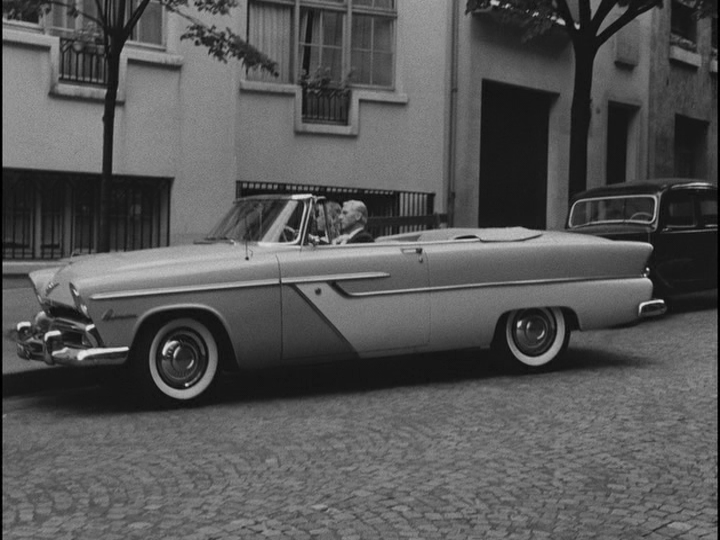
September, 2024 Drink & a Movie: Autumn Winds + History Is Made at Night

Although the majority of it technically falls within summer, it’s hardly any wonder that in the United States the month of September is more closely associated with fall when it marks the beginning of the school year, return of football, and appearance of pumpkin beer on grocery store endcaps. This makes the Autumn Winds created by St. Louis bartender Matt Seiter and collected in Gary Regan’s The Joy of Mixology a perfect cocktail to highlight right now because it uses sage, which I’ll always associate with Thanksgiving stuffing no matter how many times I combine it with ingredients like peaches and tomatoes, to whisper of the season to come while still offering up enough lemony brightness to make it a great porch sipper. Here’s how you make it:

2 ozs. Gin (Citadelle)
1/2 oz. Bénédictine
1/2 oz. Brown Butter Sage liqueur (recipe follows)
1 dash Angostura bitters

Make the Brown Butter Sage liqueur by browning 10 tablespoons of butter, stirring constantly, over medium heat. Remove from heat, add 3/4 oz. lemon juice and a chiffonade of 12-15 sage leaves, and rest for 10 minutes. Add 1 cup simple syrup and 12 ozs. vodka (Tito’s) and allow to stand at room temperature for 4-6 hours. Refrigerate overnight, skim solids from the top of the mixture, and strain into a bottle. Make the cocktail by shaking all ingredients with ice, straining into a chilled champagne coupe, and garnishing with a spanked fresh sage leaf.

Autumn Winds in a champagne coupe

If you’ve never spanked a sage leaf, it’s exactly what it sounds like, and you don’t want to skip this step as it releases odors that are essential to the way the drink works. Regan mentions that a small amount of butter solids will remain in the liqueur even after straining, which is true, and that it’s best to shake the bottle before mixing to make sure you get all of that flavor. Seiter calls for Ransom Old Tom, the first gin I ever fell in love with, in this Feast Magazine article, and I’m sure it works great, especially in late September when it actually starts to get cold! But I like Citadelle because it resonates not just with baking spices in the liqueur, but also the lemon, plus it’s an additional (along with the Bénédictine) French connection to this month’s movie. Speaking of which:

History Is Made at Night contains one of the most deliriously happy endings in cinema history, but even more than most movies made in the 1930s, its atmosphere is redolent with signs of World War II. Here’s a picture of my Criterion Collection DVD release:

History Is Made at Night DVD case

It can also be streamed via The Criterion Channel with a subscription, and some people (including current Cornell University faculty, staff, and students) may have access to it through Kanopy via a license paid for by their local academic or public library as well.

Andrew Sarris famously argued in The American Cinema: Directors and Directions 1929-1968 that “History Is Made at Night is not only the most romantic title in the history of cinema but also a profound expression of [director Frank] Borzage’s commitment to love over probability.” The specific paramours in this case are Charles Boyer’s Paul Dumond and Jean Arthur’s Irene Vail, who as the film begins is attempting to leave her husband, Colin Clive’s sadistic and irrationally jealous shipping magnate Bruce Vail. Unwilling to accept the possibility that she hasn’t been cheating on him, but unable to prove that she has, he devises a scheme to “catch” her in his chauffeur Michael’s (Ivan Lebedeff) arms in order to prevent the divorce from becoming final (because she will no longer be “blameless” in the eyes of the law). Unfortunately for Vail, Paul just happens to be putting a drunken companion to bed (“you can’t drink all of the wine in Paris in one night–it’s practically impossible!”) next door from the apartment where the tawdry scene will play out and hears something:

Paul hears something

He creeps out onto the balcony and peers through the neighboring window:

Paul climbs out onto a balcony . . .
Makes his way to the apartment next door . . .
And spies Michael talking to Irene.

When Michael begins to force himself on Irene, Paul makes a split-second decision to pose as a robber. He pulls his hat down over his eyes:

Paul pulls the brim of his hat over his eyes

Climbs inside:

Paul climbs inside Irene's apartment

And lays Michael out with what Nick Pinkerton amusingly characterizes as “one of those right-on-the-chin one-punch knockout swings so prevalent in Golden Age Hollywood filmmaking”:

Paul knocks out Michael

Just then Vail and his lawyer Norton (George Meeker) come rushing in. Paul holds them with a pretend gun (the old finger in the coat pocket trick):

Norton and Vail with their hands up
Paul and his "gun"

“Steals” Irene’s pearl necklace and other jewelry as they look on and then orders her to get her coat:

Finally, Paul locks Vail and his lawyer in the closet and he and Irene make their escape:

Cue the film’s first of many major tonal shifts. As described by Hervé Dumont in his book Frank Borzage: The Life and Films of a Hollywood Romantic, “after this busy, Dashiell Hammett-like aperitif, regulated like a ballet and photographed in the style of film noir (Gregg Toland), we go into an English waltz.” Once they are alone together in a cab, Paul first offers a puzzled Irene a cigarette, then returns her necklace and jewels:

Irene doesn't understand why Paul is returning her pearl necklace

He explains that he is not, in fact, a thief and merely wanted to help her out of a sticky situation, to which she says, “all I can seem to say is ‘oh!'”

Irene is at a loss for words

Paul proposes dinner and instructs the driver to head to an establishment called the Château Bleu when she accepts. Unfortunately, the neon sign out front goes out right as they arrive. This doesn’t deter Paul, who addresses the gentleman locking up (Leo Carrillo): “Cesare, you are not closing!” He replies, “no, we are not closing–we are closed!”

Paul interrupts Cesare from closing the Château Bleu

But Paul appears to know more about this man than just his name, and by playing to his vanity (“everyone here knows that you are the greatest chef in Paris, that is no news, but would you believe that you were that famous in America?”) convinces him to reopen the kitchen for a private engagement:

Medium shot of a flattered Cesare

The musicians and their leader (George Davis) who preceded Cesare out the door are brought back even more easily by the mere mention of a champagne party:

"Champagne!?" says George Davis's maestro

And with that what Dumont calls “the paradigm of sequence of seduction” is off and running. Paul orders lobster cardinale (which according to Saveur was invented in Baltimore, where I spent most of the 2010s, by the way) à la Cesare and salad chiffonnade. Then he draws a face on his hand, as one does, and introduces Irene to “the woman he lives with,” Coco:

Paul introduces Irene to Coco

I admit to feeling perplexed by this particular decision the first few times I watched History, but part of the shtick is that Coco doesn’t have a filter, which gives Paul a way to let Irene know that he is single and ask her what the hell precipitated the scene in her apartment earlier without technically violating societal norms. Dan Callahan further observes that when she reappears toward the end of the film, “Borzage uses this comic explosion to keep us off balance, unguarded, making us laugh so that when the lovers are reminded of their problems, we feel their pain much more deeply.”

Coco (reprise)

Anyway, Paul and Irene tell Cesare to keep their food warm, much to his chagrin, and commence to dance until dawn, with Irene discarding clothing all the while. To again quote Dumont:

The camera frames Irene’s shoes, pans to her mink stole lying on the floor, and finally insistently follows the languorous steps of the dancers. The polysemy of images makes this erotic striptease–Irene is only wearing a long silk negligee–the outward expression of confidence and progressive abandonment (without saying a word, she says more to aul than she has ever said to her husband), but also one of detachment, of breaking off: jewels, shoes, and mink are signs of Bruce Vail’s property.

Irene's shoes . . .
. . . her mink . . .
And her, dancing with Paul.

But although to them the night they have passed together qualifies as the year that Paul must wait as a gentleman before its in good taste for him to utter the one the “only thing important enough to say to [Irene] tonight,” they soon discover that they are not yet free to be together. Irene returns home, she thinks just to pack up her belongings, to find Vail waiting for her. He leads her and the police to believe that Paul’s blow killed Michael, when in reality he finished the poor guy off himself:

Bruce Vail in the lobby with a poker

Then tells her that unless she joins him on a trans-Atlantic steamer that very afternoon, he’ll commit all of his resources to “finding the murderer.” Cut to Paul at the Château Bleu, where–surprise!–he is the head waiter. He recommends a French 75 to the man he put to bed the previous evening as a hangover cure, then writes the special du jour on a blackboard:

Close-up of the specials

He’s expecting Irene to join him at five o’clock, and when his shift is over buys a newspaper to read while he waits. That’s when he sees this headline:

Paul reads about Irene leaving for New York in the newspaper

He resolves to follow Irene to New York, but locating her proves to be more challenging than he expected, because duh. Luckily Cesare decided to join him, and the two hatch a scheme to convince the owner of a restaurant called Victor’s to hire them to turn it into the hottest place in the city, which they do. Finally, one night Irene shows up in a dress that I’d *love* to see sparkle on a good nitrate print and claims the table he has ordered the staff to keep empty for her every night.

Medium shot of Irene in a shimmery black dress

Sure, she’s with Vail, but yada yada yada the next thing you know she’s showing Paul how to make “eggs à la Kansas” the following morning:

Irene makes Paul breakfast

And that, two-thirds of the way through History Is Made at Night, is when things *really* start to get interesting. Because, as noted by Brian Darr, screenwriters Gene Towne and Graham Baker appear to have intentionally capitalized on the 25th anniversary of the sinking of the Titanic by ending the movie with a ship hitting an iceberg! There is, as yet, no hint of this in the breakfast scene depicted above, but on a postprandial stroll Irene lets it slip that the reason she and Vail were about to depart for Paris on the Hindenburg (seriously) was so that she could testify against the man arrested for the death of Michael. Paul barely hesitates: he and Irene will return to Paris on Vail’s boat the Princess Irene because he cannot allow an innocent man to go to the guillotine for a crime he believes he committed. And suddenly the stakes Borzage are gambling become clear. He is famous for placing obstacles between his romantic leads, but this one is a doozy even by his standards: the barrier is their own human decency. The film’s climax reenacts their star-crossed love affair, but on a bigger canvas to emphasize the universality of their plight. When Vail orders the captain of the Princess Irene to speed forward despite the hazardous conditions his vessel is sailing through, ostensibly to set a record but really to destroy Paul and Irene, he is no longer imperiling just their lives, but thousands of others.

Close up of the Princess Irene's engine order telegraph reading "full speed ahead"

Their union was already on death row, but once the ship starts sinking and its lifeboats fill up, the sentence is extended to hundreds of other couples.

Passengers of the Princess Irene running to its lifeboats
Passengers boarding a lifeboat
Lifeboats being lowered into the water

The fundamental injustice of the two soulmates being separated from one another has been compounded, their sacrifice takes on even more heroic dimensions, and the only suitable reward is a miracle: although he and Irene don’t know it yet, Paul has already been acquitted, and a pardon comes through for their fellow passengers at the eleventh hour as well: “attention everyone, attention. The forward bulkheads are holding and the ship is in no danger of sinking,” comes the unexpected announcement. “Help is on the way. The lifeboats are standing by and you will soon be with your families.” Their reactions represent the full range of emotions that Paul and Irene, who for now still think they’ve only been granted a stay of execution, will presumably soon feel:

One man celebrates by smoking a cigar . . .
. . . while another cries . . .
. . . and yet another shouts for joy.

The final image of a kiss promises that our heroes truly will live happily ever after:

Paul and Irene kiss

…at least until the Germans march into Paris about three years later. Of course, we could take things one step further and read the suicide of Bruce Vail as anticipating the end of that conflict. This, ultimately, is what connects this month’s movie and drink in my mind: the thing to remember about autumn is that it’s followed by winter, spring, and summer, just as war follows peace follows war. So be merry, pour yourself another glass of champagne, and have another helping of lobster cardinale:

Close-up of Cesare's famous dish next to Paul and Irene's champagne of choice, Pink Cap '21

Because the worst of times must by definition eventually get better, and nothing gold can stay.

Cheers!

All original photographs in this post are by Marion Penning, aka my loving wife. Links to all of the entries in this series can be found here.
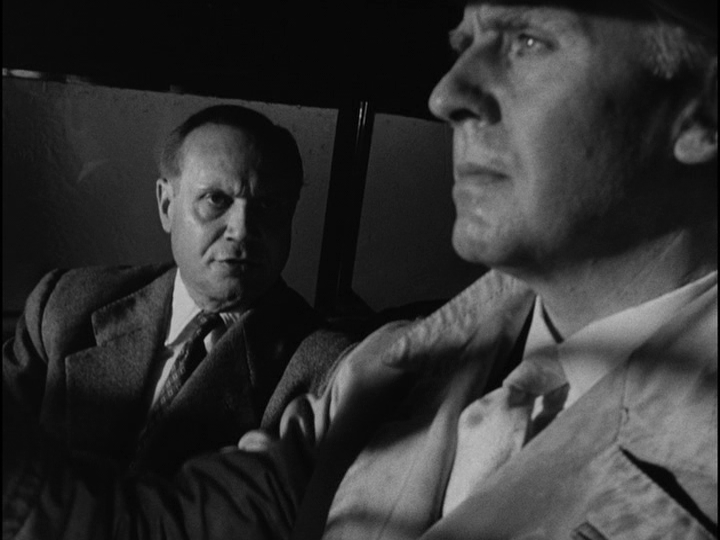
Book Review: Eddie Muller’s Noir Bar + Forbidden Cocktails

Covers of the two books reviewed in this post

Thanks to Raquel Stecher’s Out of the Past blog, I recently became aware of two books published by Turner Classic Movies based on the same premise as my Drink & a Movie series: that cocktails and movies are natural partners! The first, Eddie Muller’s Noir Bar by TCM personality Eddie Muller aka “The Czar of Noir,” came out last fall and features a selection of movies from the titular genre paired with a combination of classic and modern cocktails as well as a handful created by the author, a former bartender turned “professional drinker,” which he defines in the introduction as “somebody who imbibes every day but never gets drunk. Well, almost never.” This is a pretty good label for me, too, and I appreciate Muller’s emphasis on accessible ingredients and recipes which can be easily adapted to a variety of circumstances over obscure spirits and elaborate techniques. It lends itself to smart pairings, too, as in the case of The Breaking Point, which he calls “the finest film ever made from a Hemingway book” and matches with the famous novelist’s “personal spin on a Caribbean classic,” the Hemingway Daiquiri. Although it may seem like an obvious choice, Muller justifies it with a suggestion to either substitute mezcal as the base spirit to better connect with the film’s Baja California setting or use Captain Morgan white rum as an homage to the character played by John Garfield.

Other thoughtful combinations include pairing The Big Sleep with a Gimlet because they feature prominently in another work by Raymond Chandler, the author of the novel that the film is based on; Force of Evil with a drink by Los Angeles bartender Paul Sanguinetti called The Blacklisted by way of acknowledging the “political imbroglio” that impacted key noir figures like the movie’s screenwriter Abraham Polonsky; and Side Street with San Francisco bartender Todd Smith’s Black Manhattan for the poetic reason that it’s a worthy companion to the film that Muller lauds as “the best New York noir.” I love the decision to use director Luis Buñuel’s personal Martini recipe in the pairing with Sweet Smell of Success, and I enjoyed both of Muller’s inventions that I tried, the Sailor Beware paired with The Lady from Shanghai and the Hammett Martini paired with The Maltese Falcon, which features a split-base spirit combination of vodka and rum that was new to me.
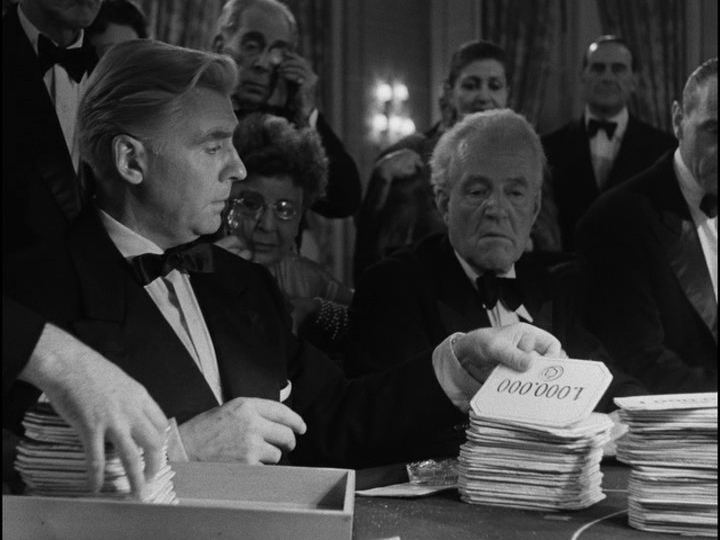
Noir Bar is organized alphabetically by movie title, which makes sense, and features ephemera from Muller’s personal collection like a prop “Wanted” poster from The Hitch-Hiker that reminds me of Ted Haigh’s Vintage Spirits and Forgotten Cocktails, which I intend as a high compliment! It also contains some of the most stylish (the black backgrounds were a great choice) and creative drink photography I’ve ever seen. I don’t endorse *every* aspect of Muller’s philosophy: I tend to agree with Toby Maloney’s statement in The Bartender’s Manifesto that “it’s gauche, it’s gross” to rub expressed citrus peels over the rim of a glass, for instance. All of them reflect Muller’s years of experience behind the stick, though, and represent a definite point of view, and I’d love to come over to the “full-scale cocktail lounge” in his garage for happy hour sometime!
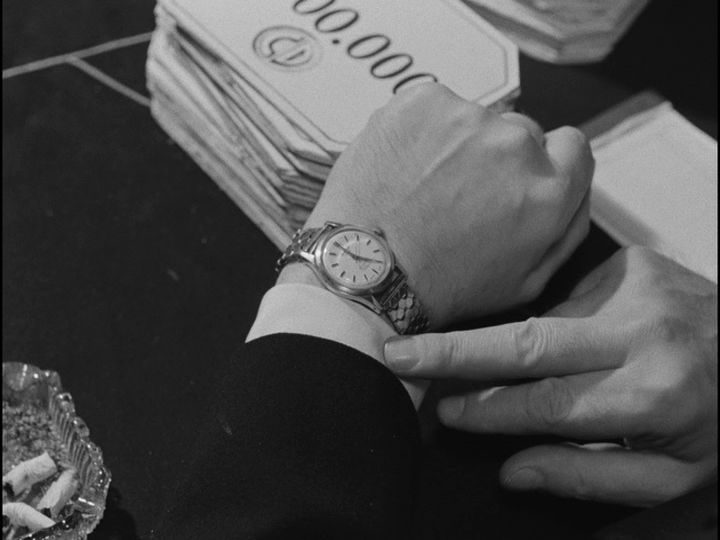
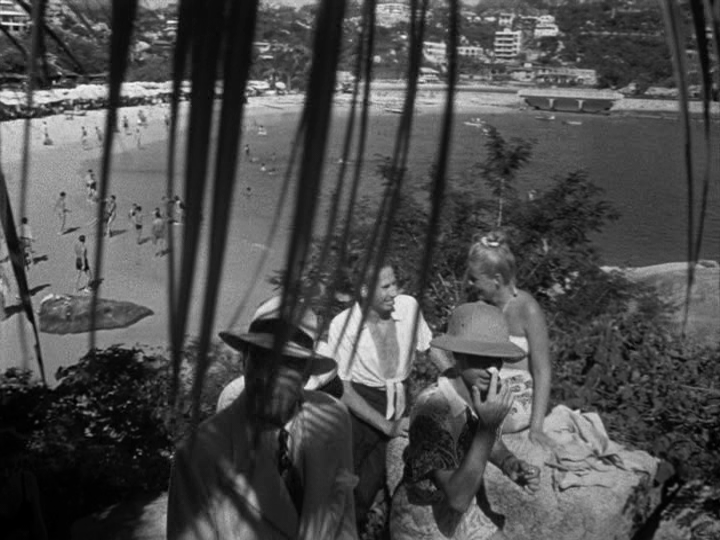
André Darlington’s Forbidden Cocktails, which features “libations inspired by the world of pre-Code Hollywood,” unfortunately doesn’t stand up well to a side-by-side comparison. To lead with the positives, many of the film descriptions are quite good, such as the analysis of which “paradise cocktail” exactly we’re watching someone prepare in One Way Passage, and I like how it consists entirely of original creations made from ingredients from that period of film history, which stretched from roughly 1930 when the Motion Picture Producers and Distributors of America adopted the Hays Code to 1934 when they actually began enforcing it. But I wish it would have gone further in this direction by telling you in detail how to set up and stock an early 1930s bar and then offering a curated library of drinks that could be made with those ingredients which includes both classics and original creations along with the movie pairings. The main problem with going all-in on the latter is that Darlington’s recipes are mostly just slight variations on existing drinks, which would be fine were it not for the fact that they don’t always represent an improvement over the original. The My Pal Rye which accompanies Night Nurse, for instance, is a perfectly credible riff on an Old Pal, only it isn’t at all clear to me why this rather edgy film calls for a variation which “takes things in a softer direction” by switching out dry vermouth for Lillet Blanc. A more successful example is the Rose-Colored Glasses paired with 42nd Street, which replaces the creme de cacao in an Alexander cocktail with raspberry syrup to give it an attractive pink hue that evokes a line from the movie, but even this seems like only half an idea: why not add a floral component as well? The book also isn’t organized in any logical fashion, contains far less appealing pictures, and seems impersonal next to Muller’s guided tour of his sometimes delightfully idiosyncratic noir canon.
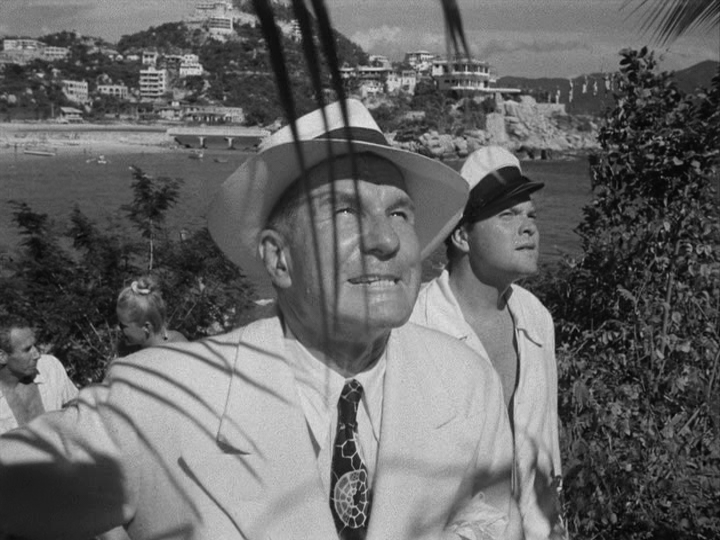
I applaud the fact that both books are available in spiral-bound editions and feature indexes organized around ingredients to make it easier to find and flip to a recipe you can make with the bottles you have on hand, and I’m going to enjoy having each of them in my collection–there are still a number of recipes in Forbidden Cocktails that I want to try! But Noir Bar is clearly my top recommendation. It would make a fabulous gift for lovers of that genre who also enjoy an occasional drink, drinkers who also like movies, or anyone who throws parties for people from either of the aforementioned groups who might enjoy picking it up off a coffee table and flipping through it.