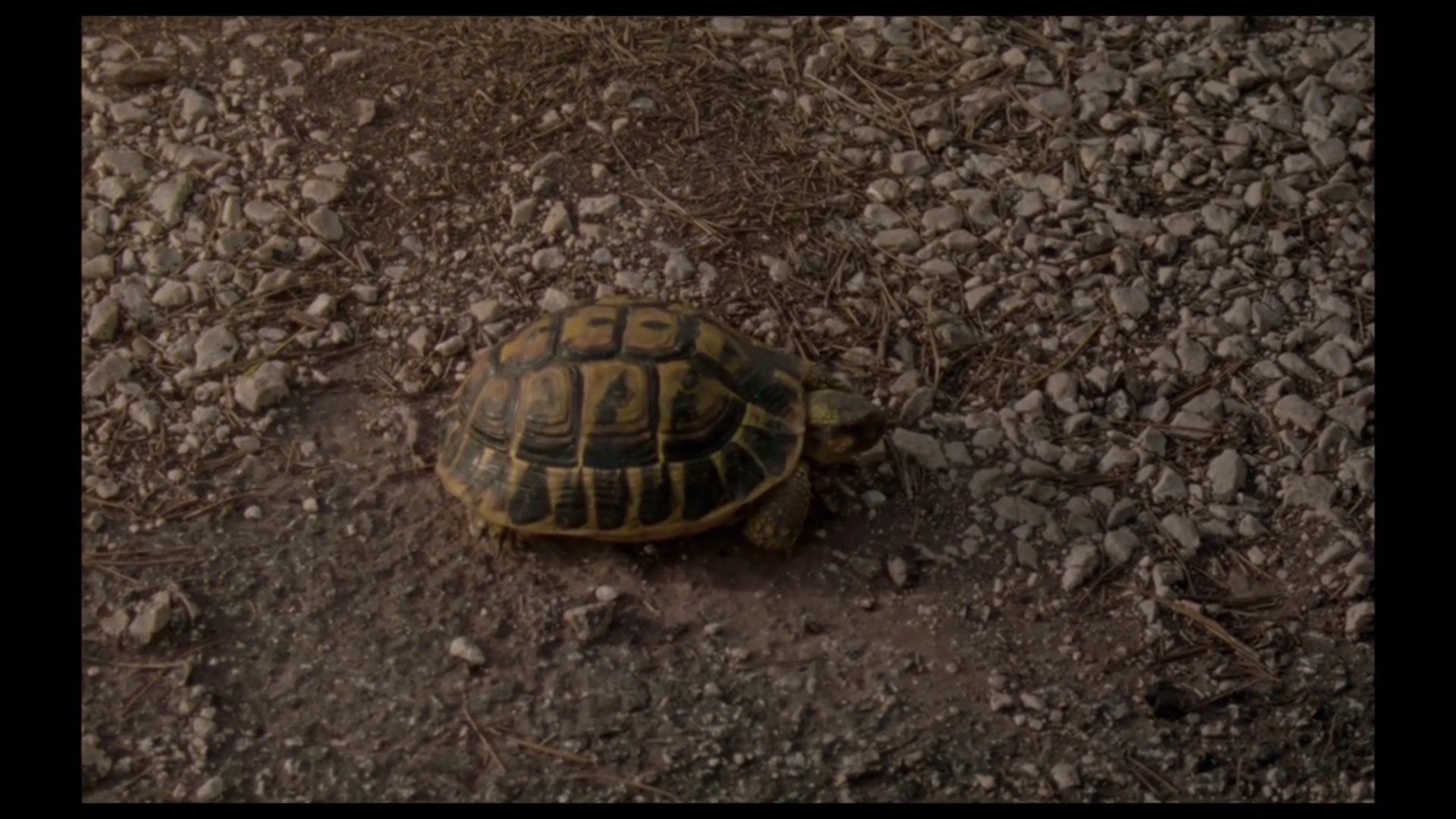
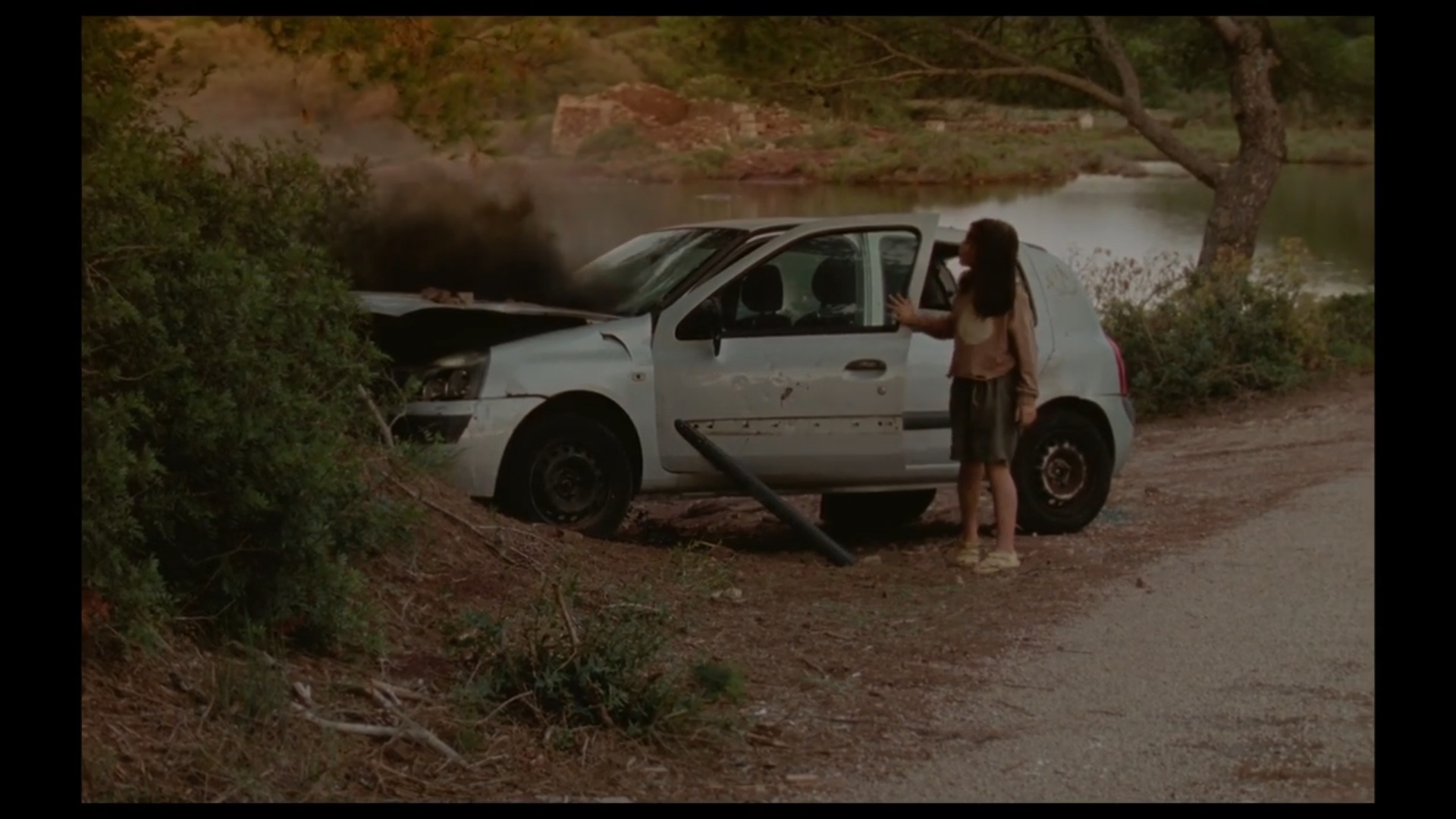
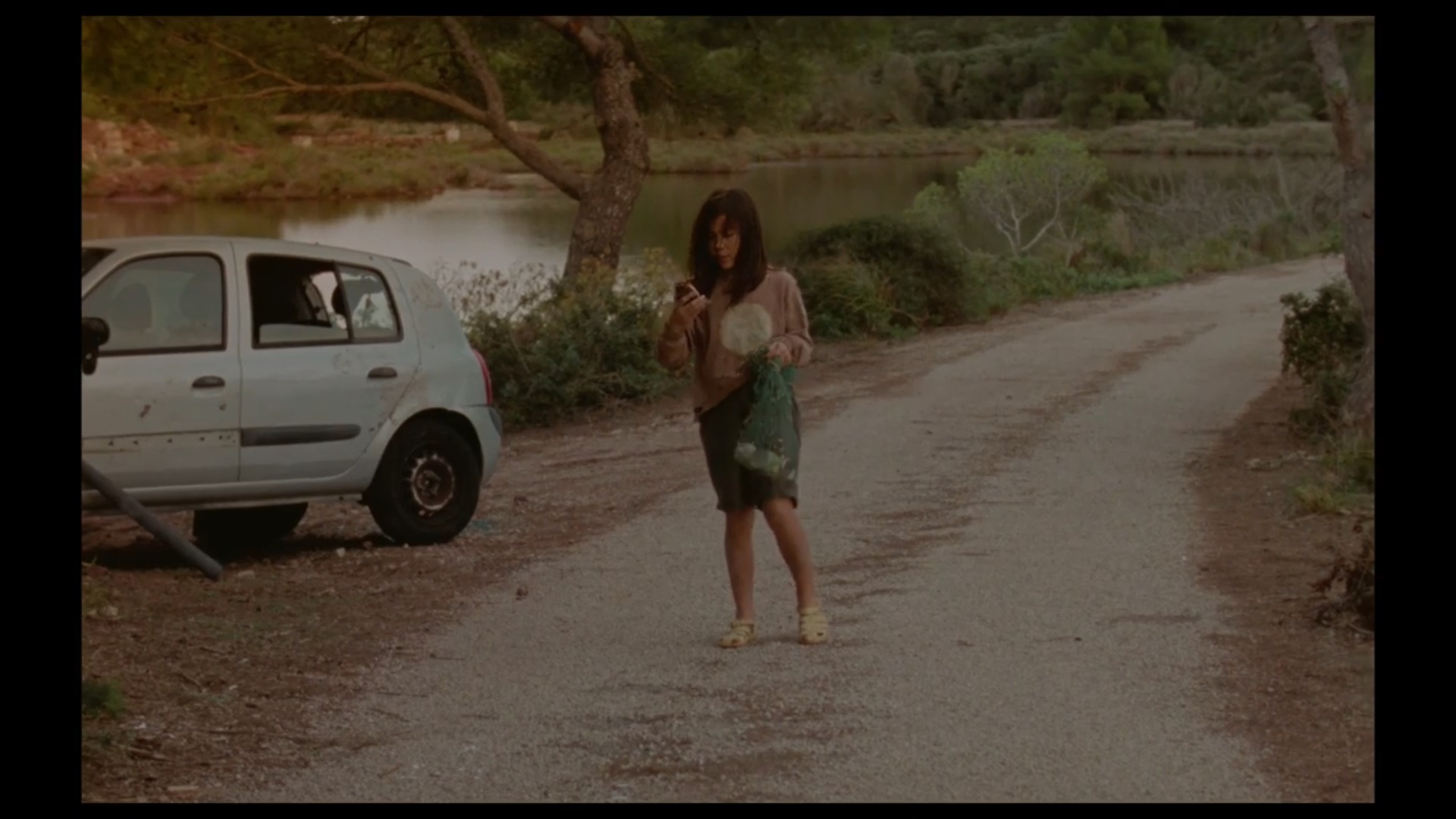
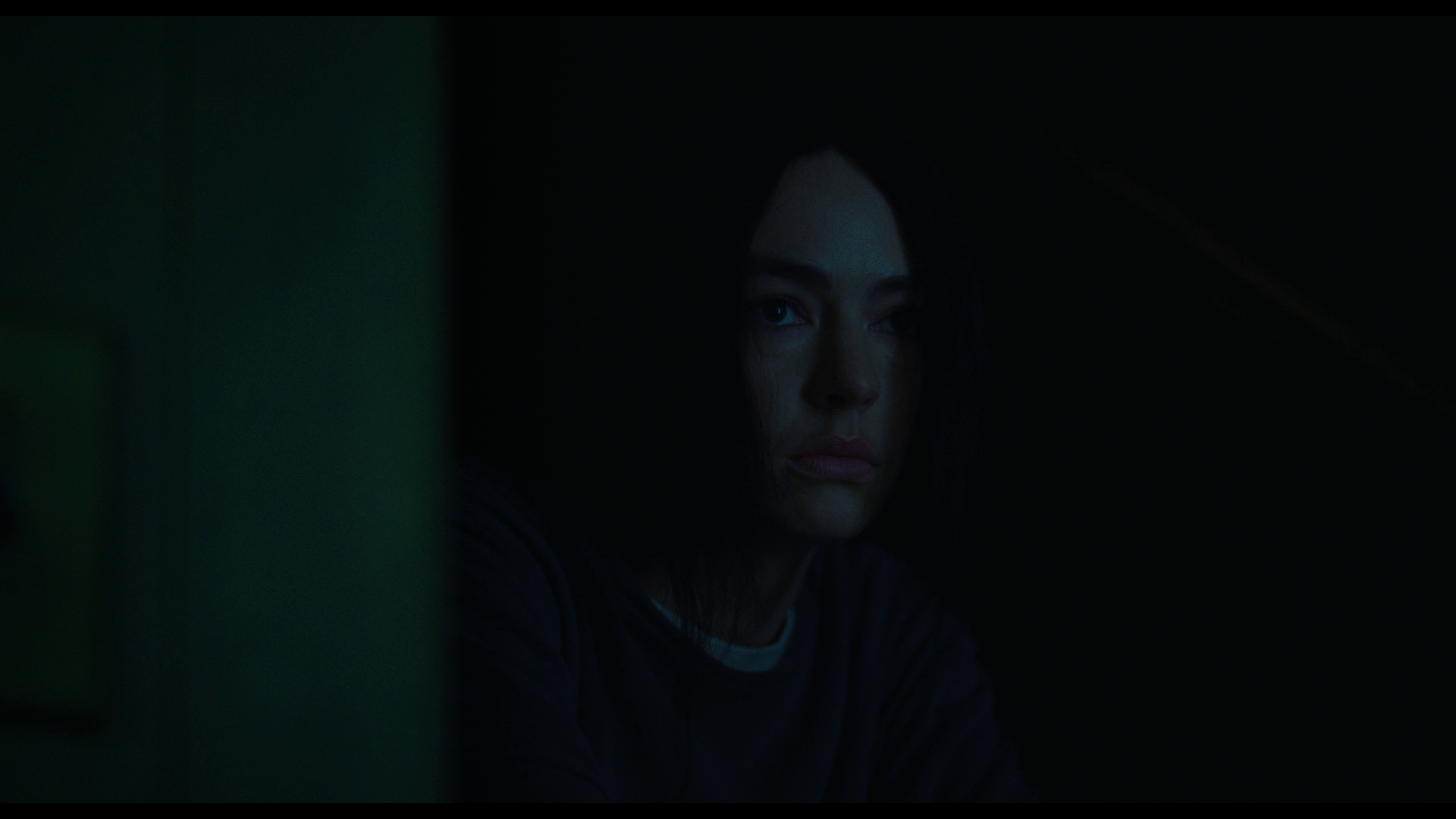
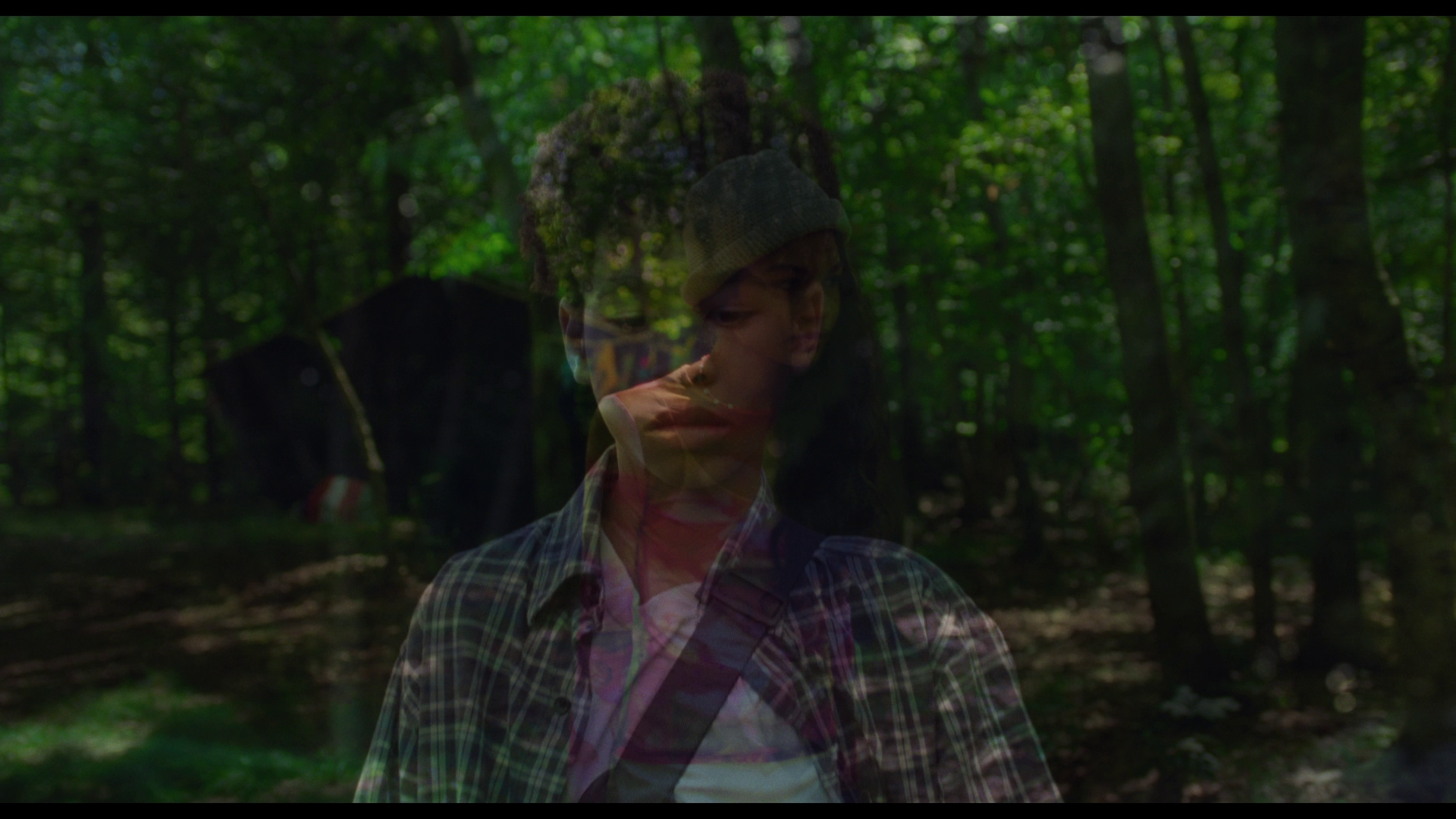
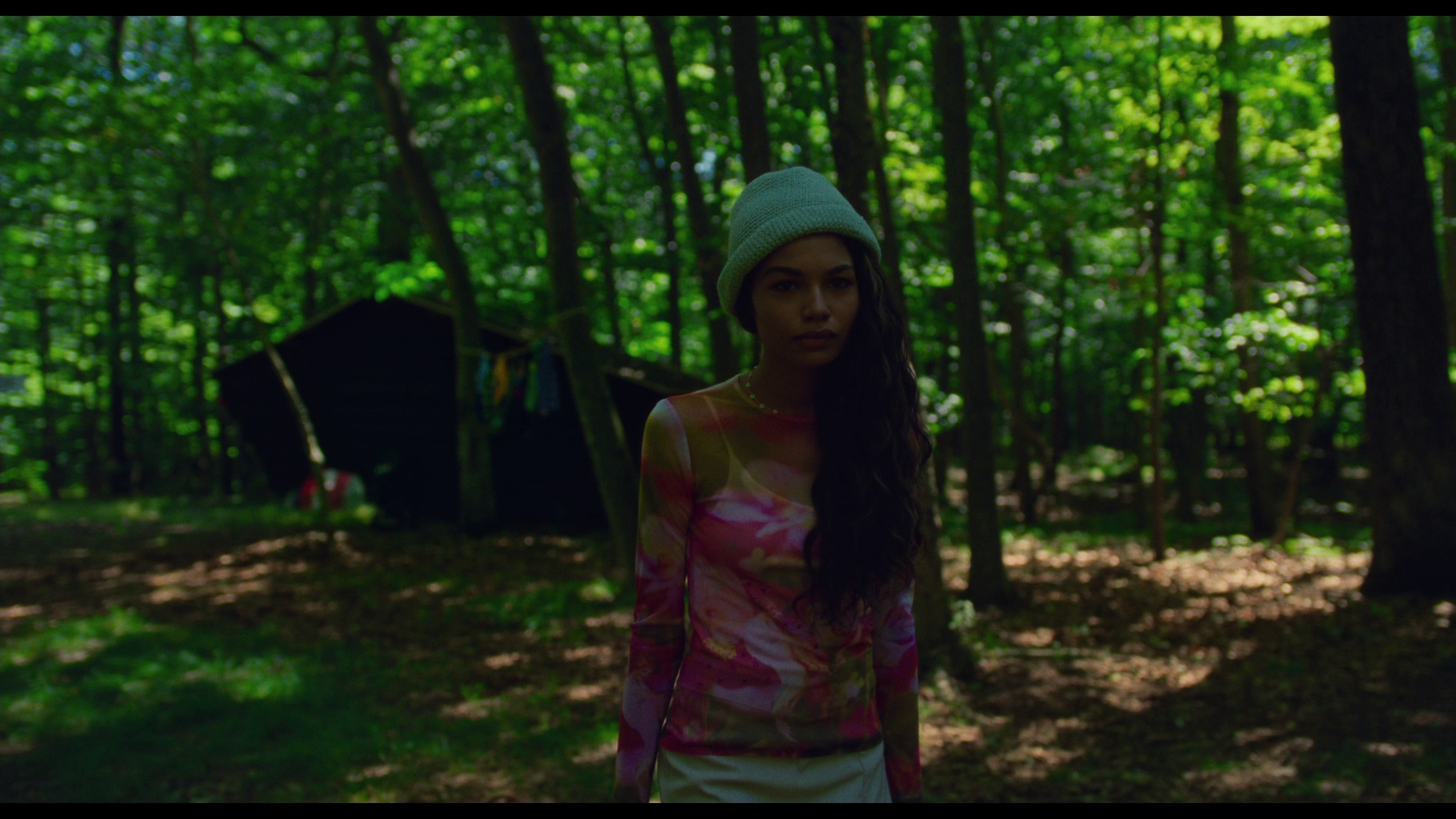
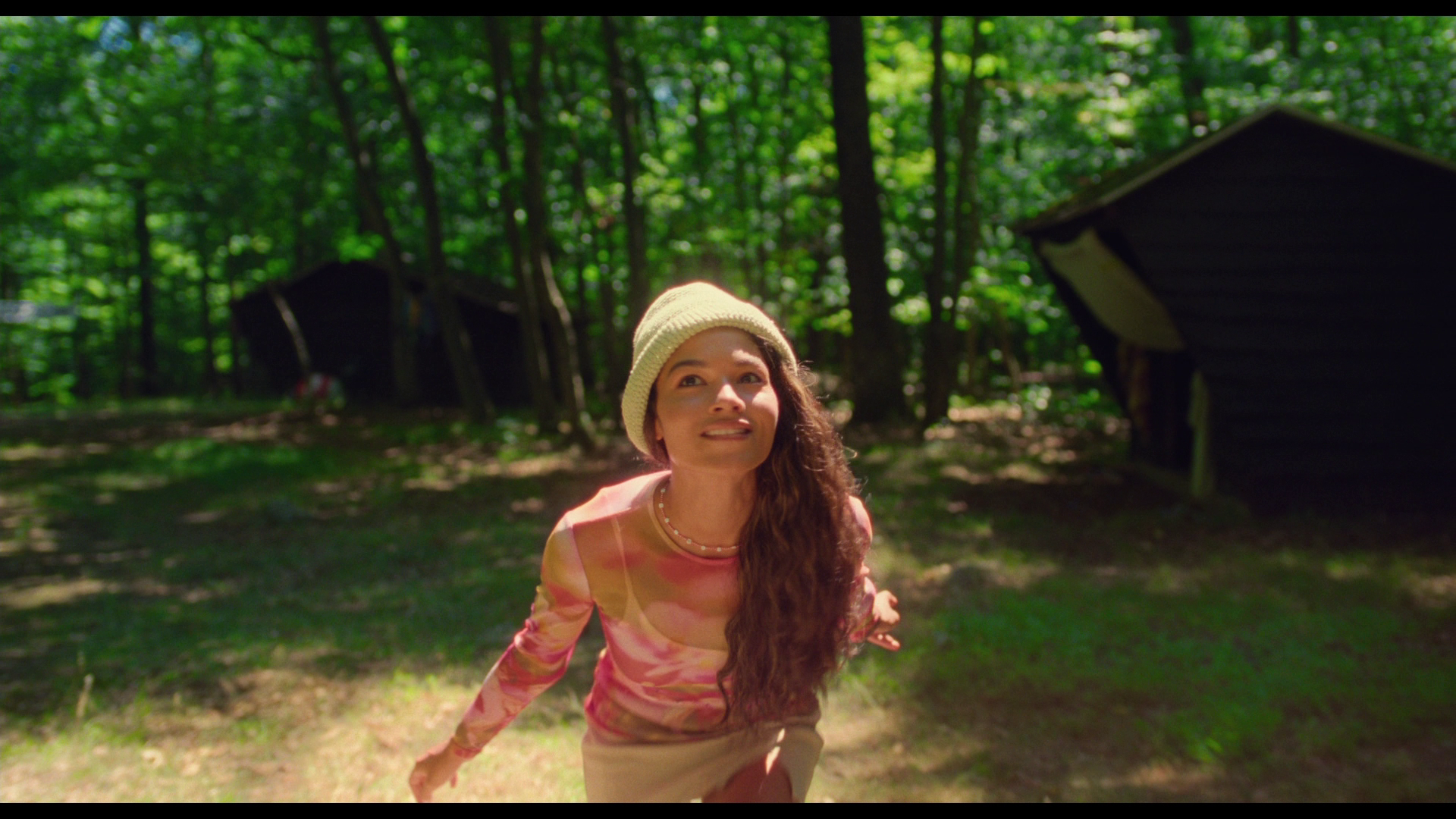
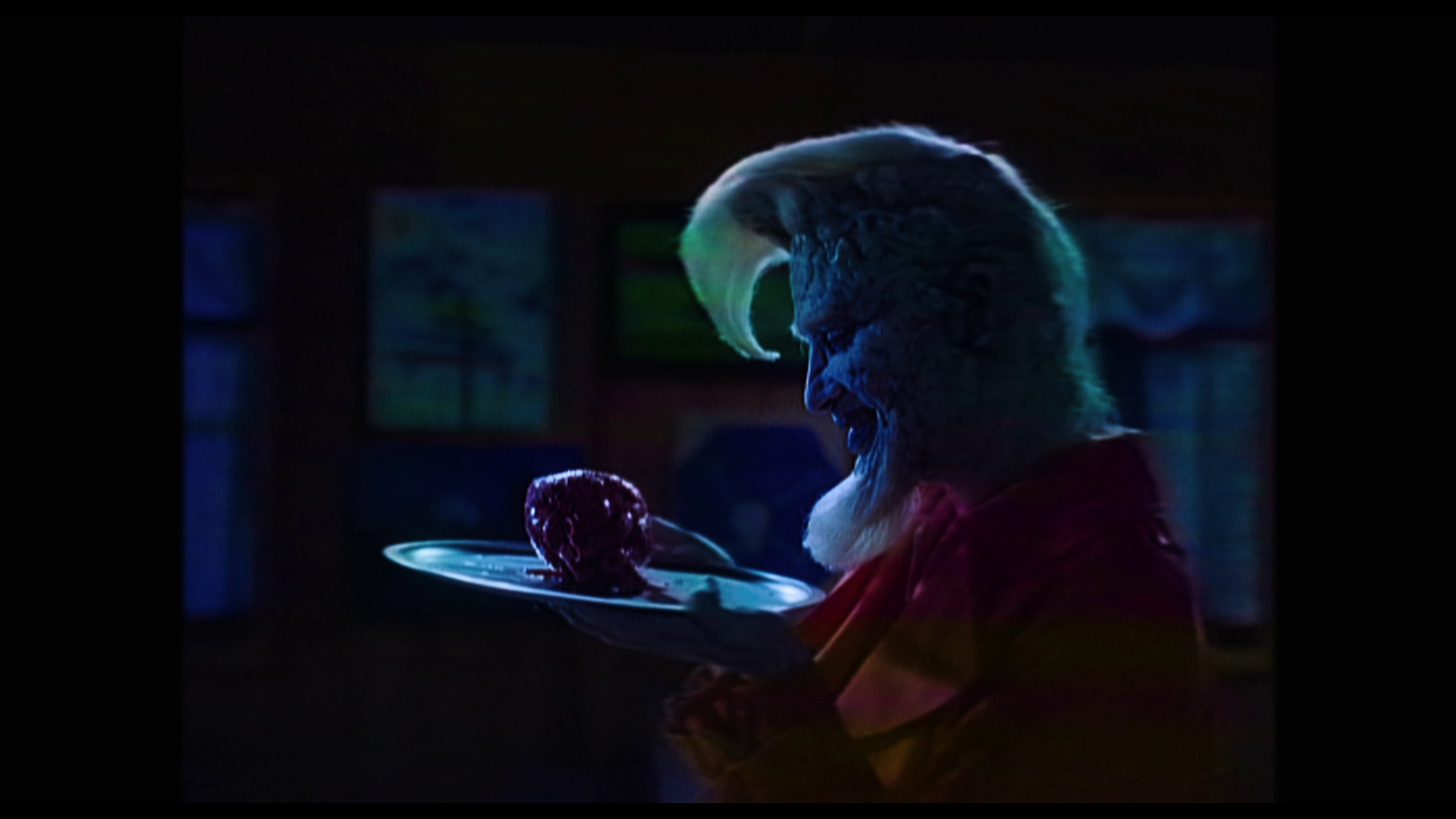
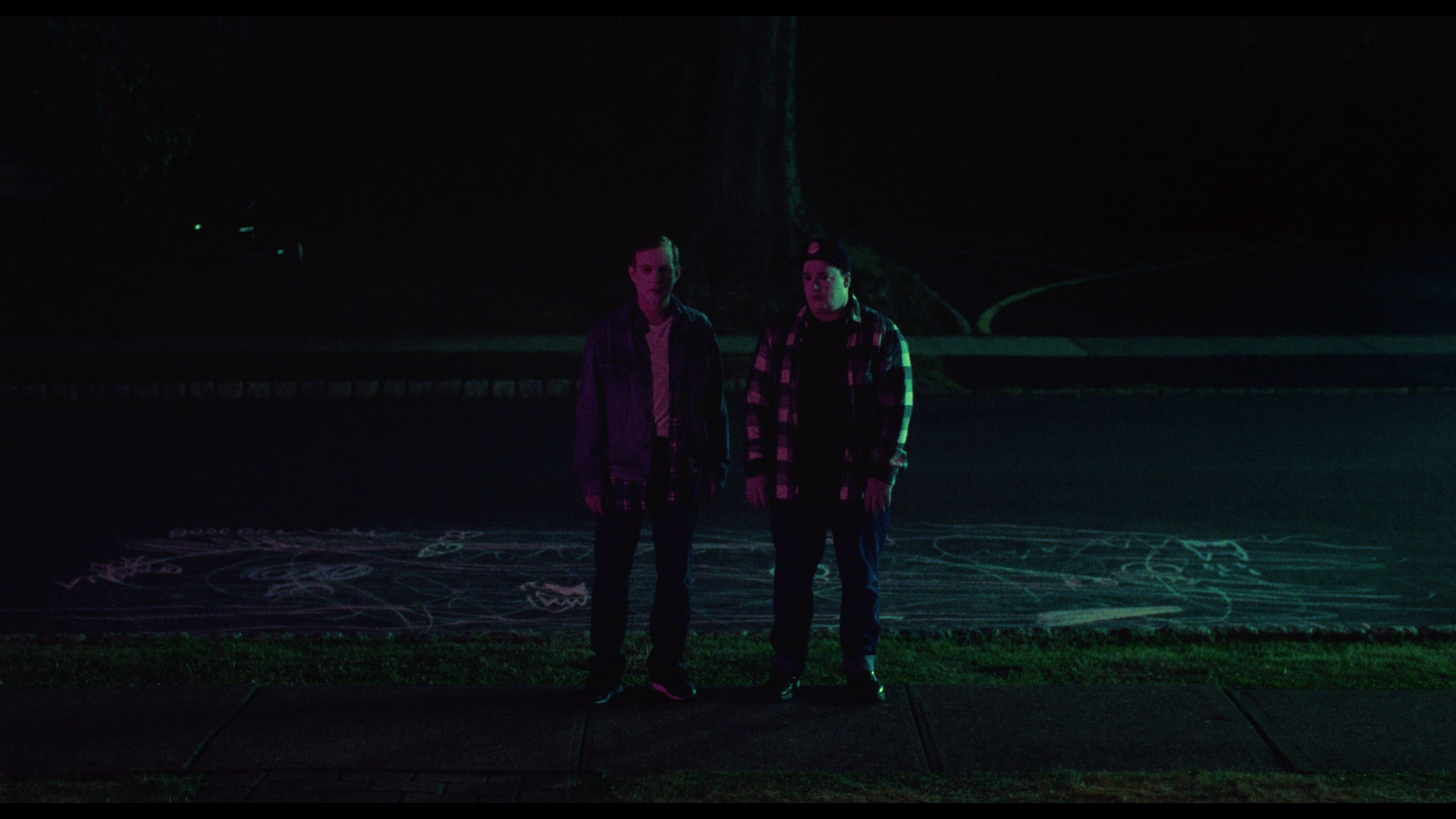
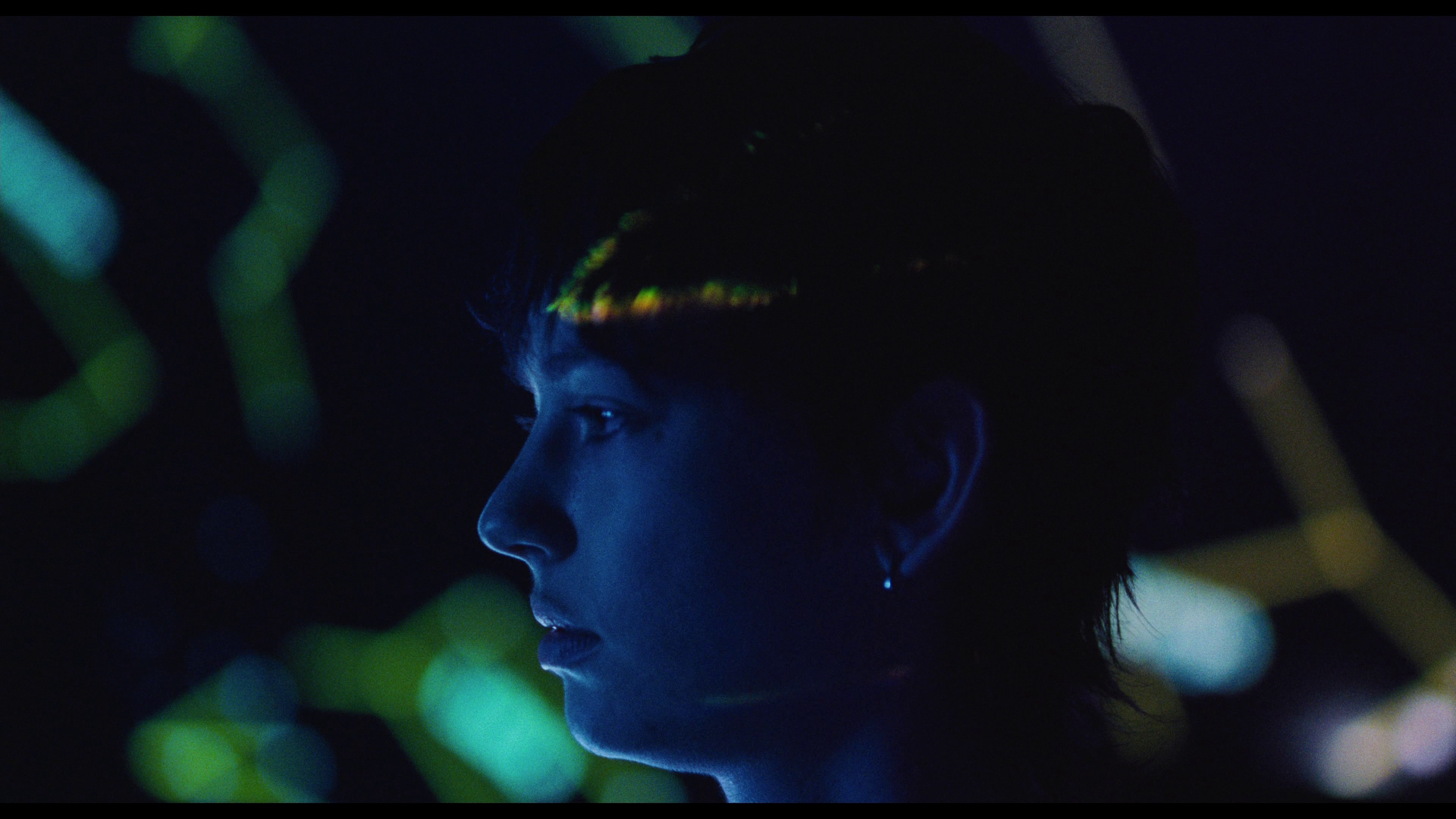
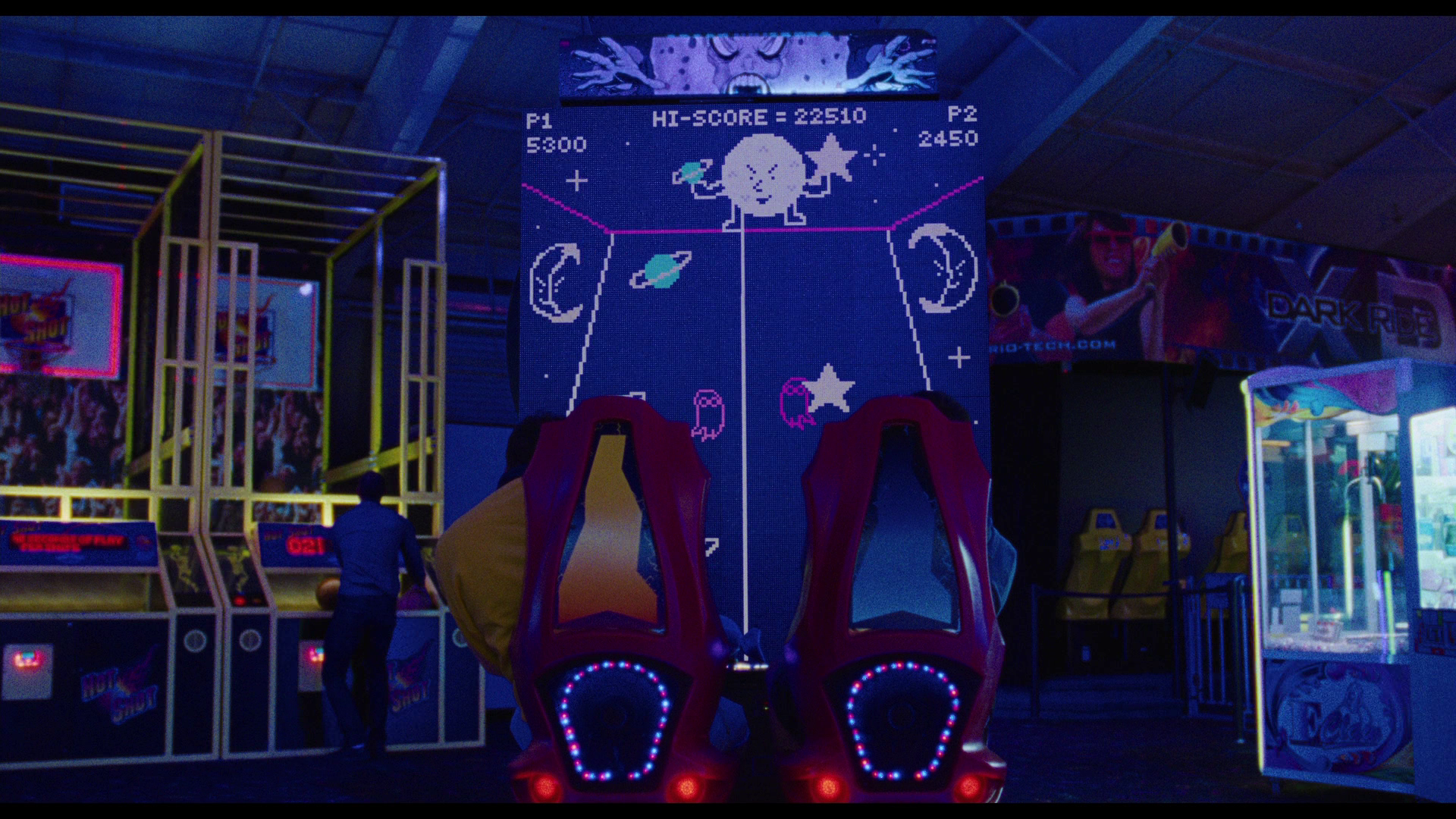
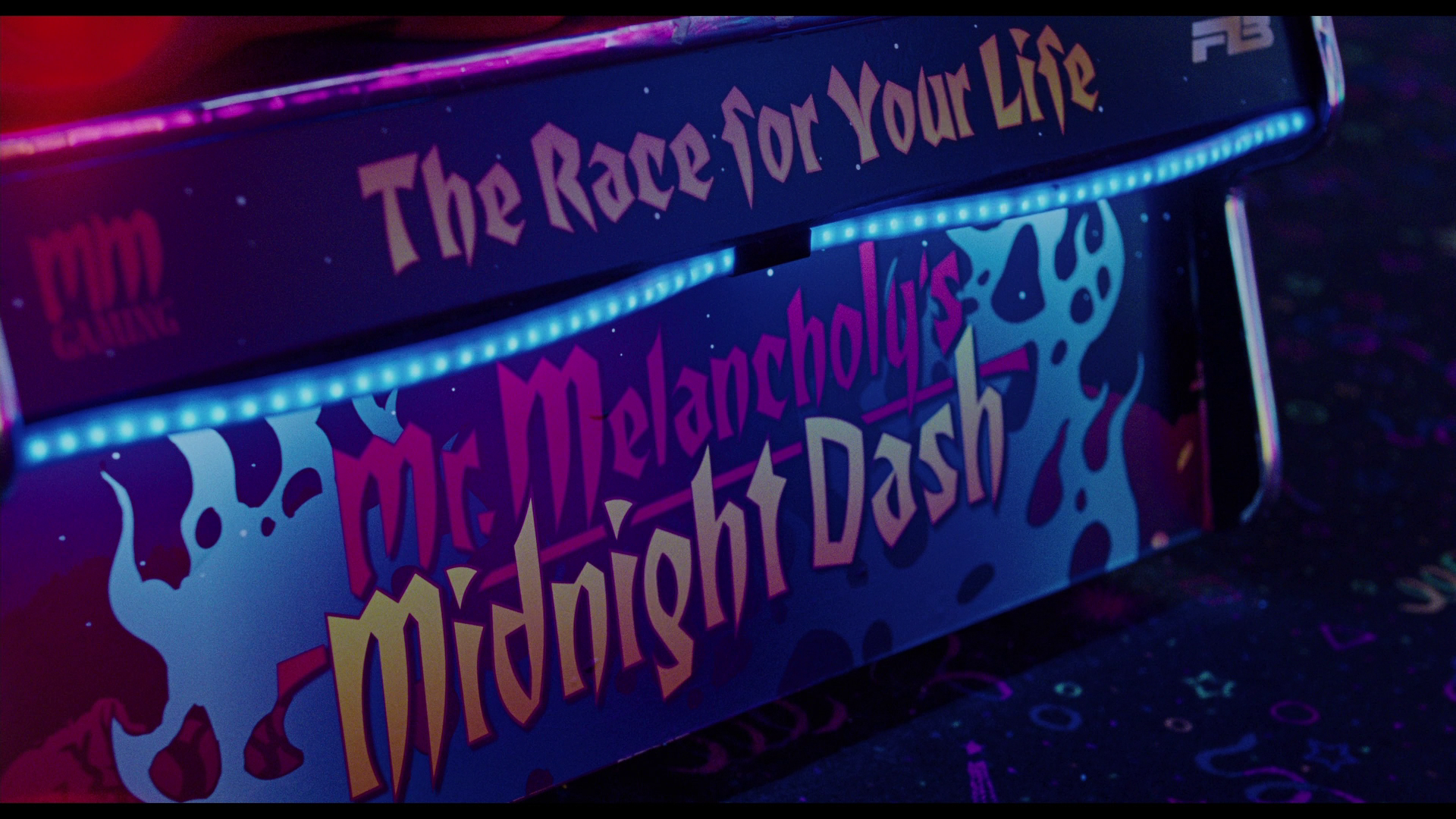
MOON: Why are you in the middle of the road? Let me tell you why you’re in the middle of the road. Once, a long, long time ago, there was a tiny molecule riding the surface of the sea.
Our molecule was thrown about. The water was rough, and it had to adapt or break. But then a storm came up, and our molecule was struck by lightning. This charged it with a strange energy. This was the origin of life, or Ool.
So there was our molecule in the sea. Our sea was soupy, warm and dense, with a bloom of oily bubbles in the crest of the waves. Our molecule sealed itself inside one of these bubbles, and that was the first body.
The whole world was coming to pieces molecule by molecule now and swimming like grease bubbles in a cup of coffee, disappearing into the intergalactic ooze and gasses all around–including his own body. He lost his skin, his skeleton, his pulmonary veins–sneaking out into the ooze like eels, they are, reeking phosphorus, his neural ganglia–unraveling like hot worms and wiggling down the galactic drain, his whole substance dissolving into gaseous nothingness until finally he was down to one cell. One human cell: his; that was all that was left of the entire known world, and if he lost control of that one cell, there would be nothing left. The world would be, like, over. He has to rebuild himself and the entire world from that one cell with a gigantic act of will–too overwhelming. Where does a man start? With California Route 1 so he can get out of here in his car? or will it turn out to be merely the filthy Rue Ventru with the Bastille mobs waiting? or start with the car? the differential? how do they make the bastards? or the beach? all those freaking grains of sand? the marsh grass? the tourist cabins? got to put every blue door back? or the ocean? or leave it dry? save making all those filthy blind bathosphere black animals down there . . . or the sky? how far does it go? the Big Dipper? the Ursa Minor? the Delphinium? suppose it is really infinite concentric spheres of crystal making infinite gelatinous submarinal vibrations? the Dead? the Pranksters? Kesey, Kesey’s out for good, Kesey and the bathosphere brutes–but with a superheroic effort he begins. But by the time he gets himself remade, it is too much. It is overwhelming. He makes his car. He makes the parking lot and the beginning of the road out. He’ll make the rest of it as he goes along. Freak it! Split! Leave the rest of the known world to its own devices, out in the gasses. He jumped into the car and gunned off; and smashed it into a tree. A tree he hadn’t even put back yet. But the crash somehow pops the whole world back. There it is; back from the fat-bubbling ooze. The car is smashed, but he has survived. Survived!
I started smoking my freshman year of college, as one does, and continued to inhale a pack or two a week for the next ten years or so. I stopped when my oldest daughter was on the way, but the first thing I do whenever she and her sister and My Loving Wife Marion go out of town for more than a few days is pop across the street to buy a pack of Pall Malls. The ability to “take it or leave it” that I tell myself this represents was always the ideal for my relationship with alcohol as well, but like many people I started to imbibe more during the pandemic and never recalibrated until the waning days of my “Drink & a Movie” project, when I decided that my liver had earned a six-month vacation.
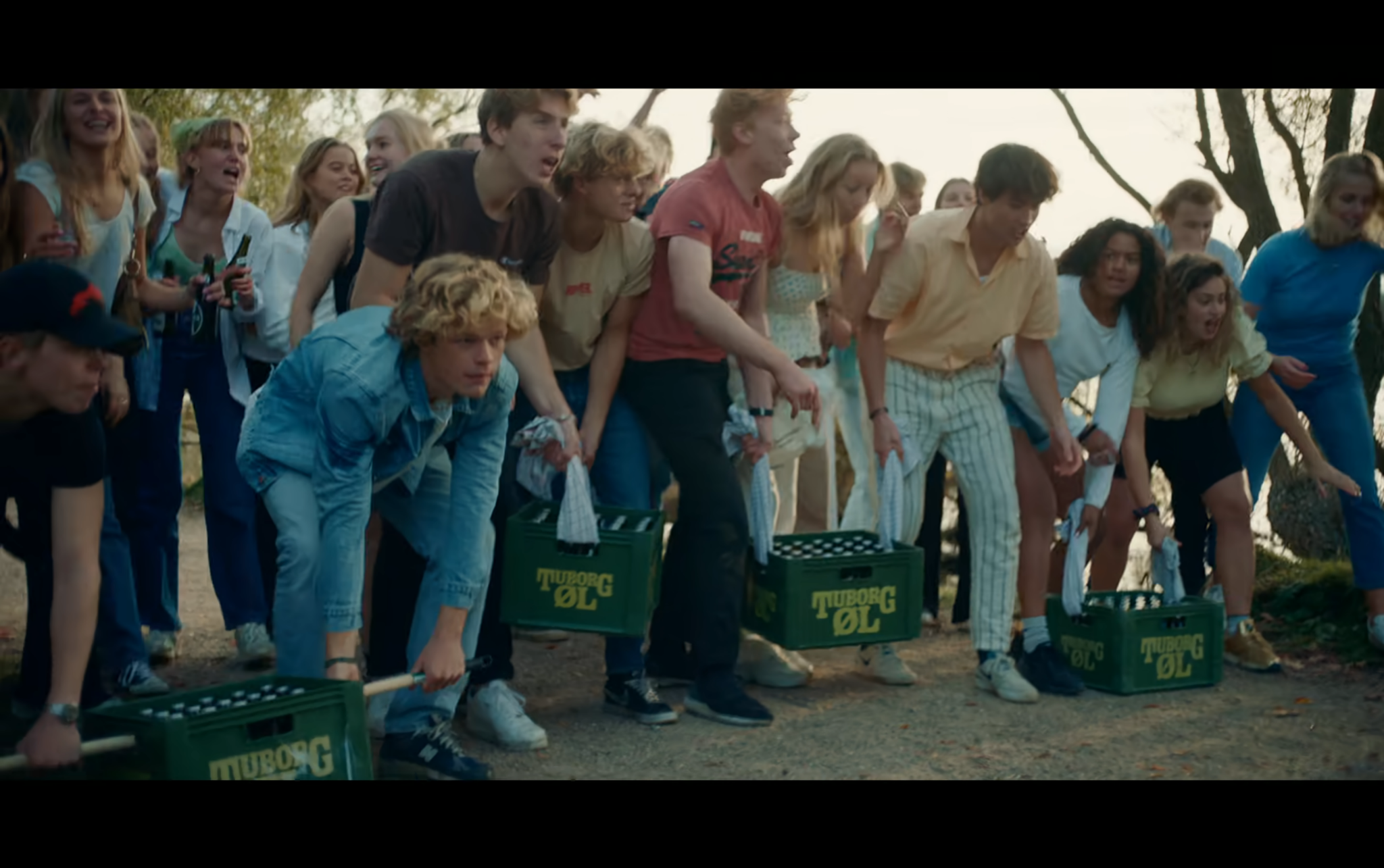
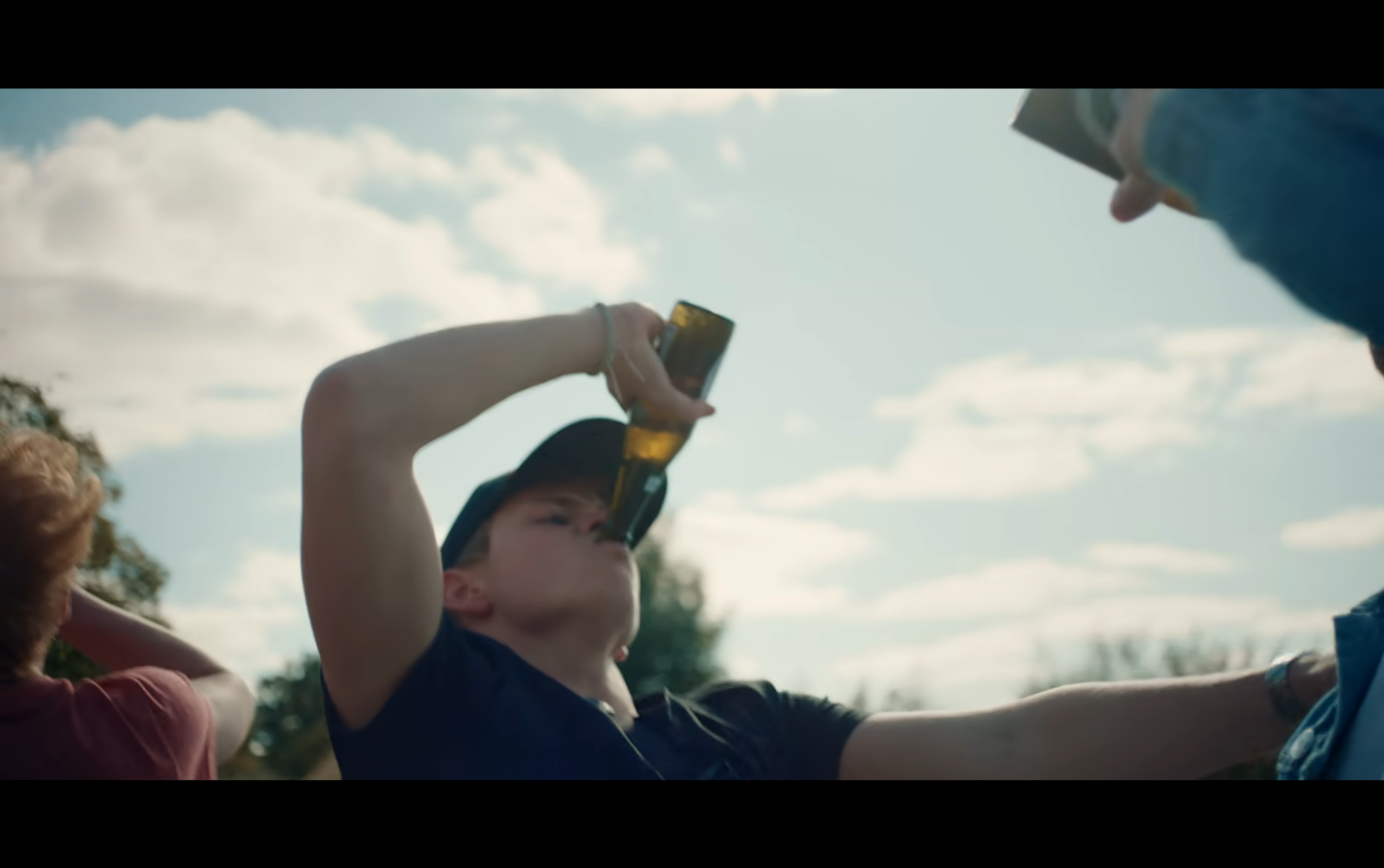
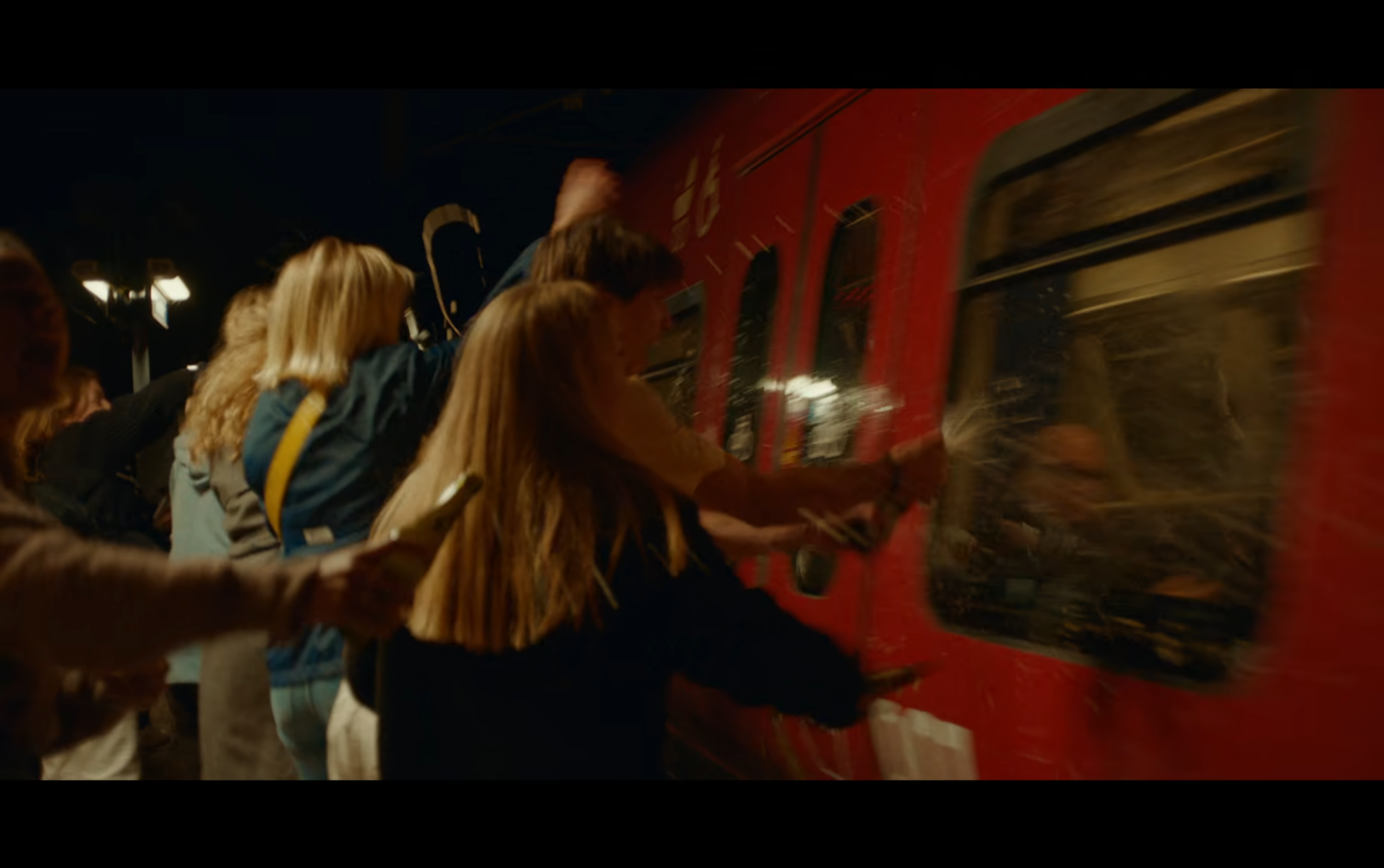
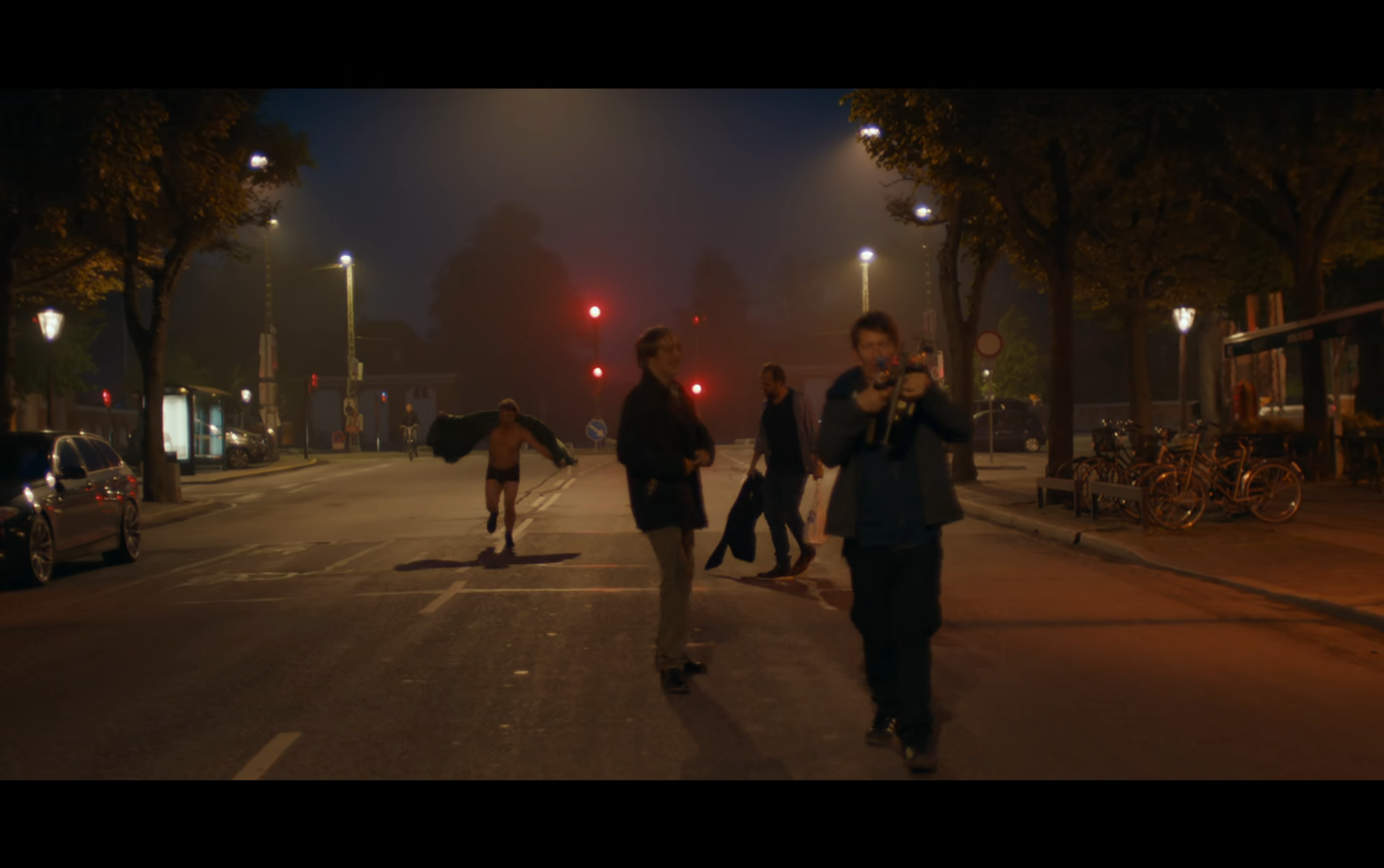
In this regard I was not unlike the four friends in Another Round, which interestingly took home the Academy Award for Best International Feature Film at the ceremony most closely associated with COVID. Although it opens with a pre-credit sequence depicting inebriated high schoolers competing in a “lake race” that requires each team to consume an entire case of beer and wreaking havoc on Copenhagen’s public transit system:
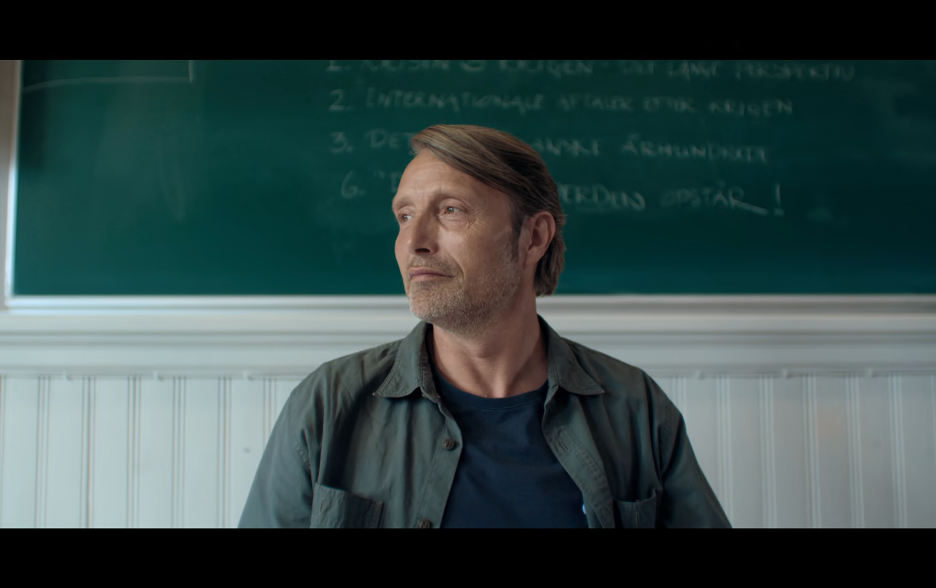
The plot starts with Mads Mikkelsen’s Martin declining to drink at a 40th birthday celebration for his fellow teacher Nikolaj (Magnus Millang). It has previously been established that he has become a shadow of his younger self:
“Too bad you’re so sensible,” says their friend Peter (Lars Ranthe). “But the question is, what’s sensible?” asks Nikolaj and leaps into an account of what he describes as a “theory” by the Norwegian philosopher and psychiatrist Finn Skårderud that “humans are born with a blood alcohol content (BAC) that’s 0.05% too low.”
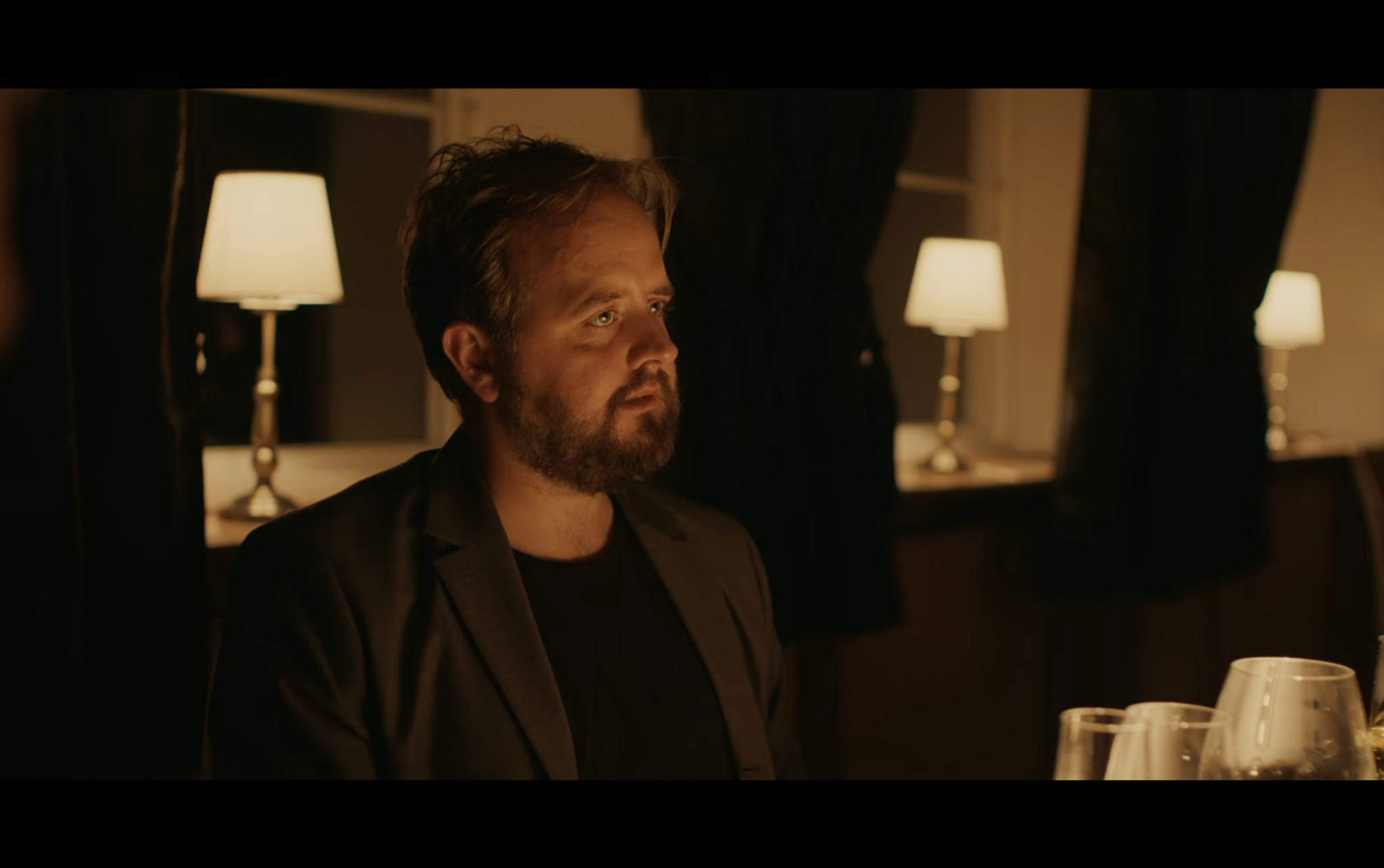
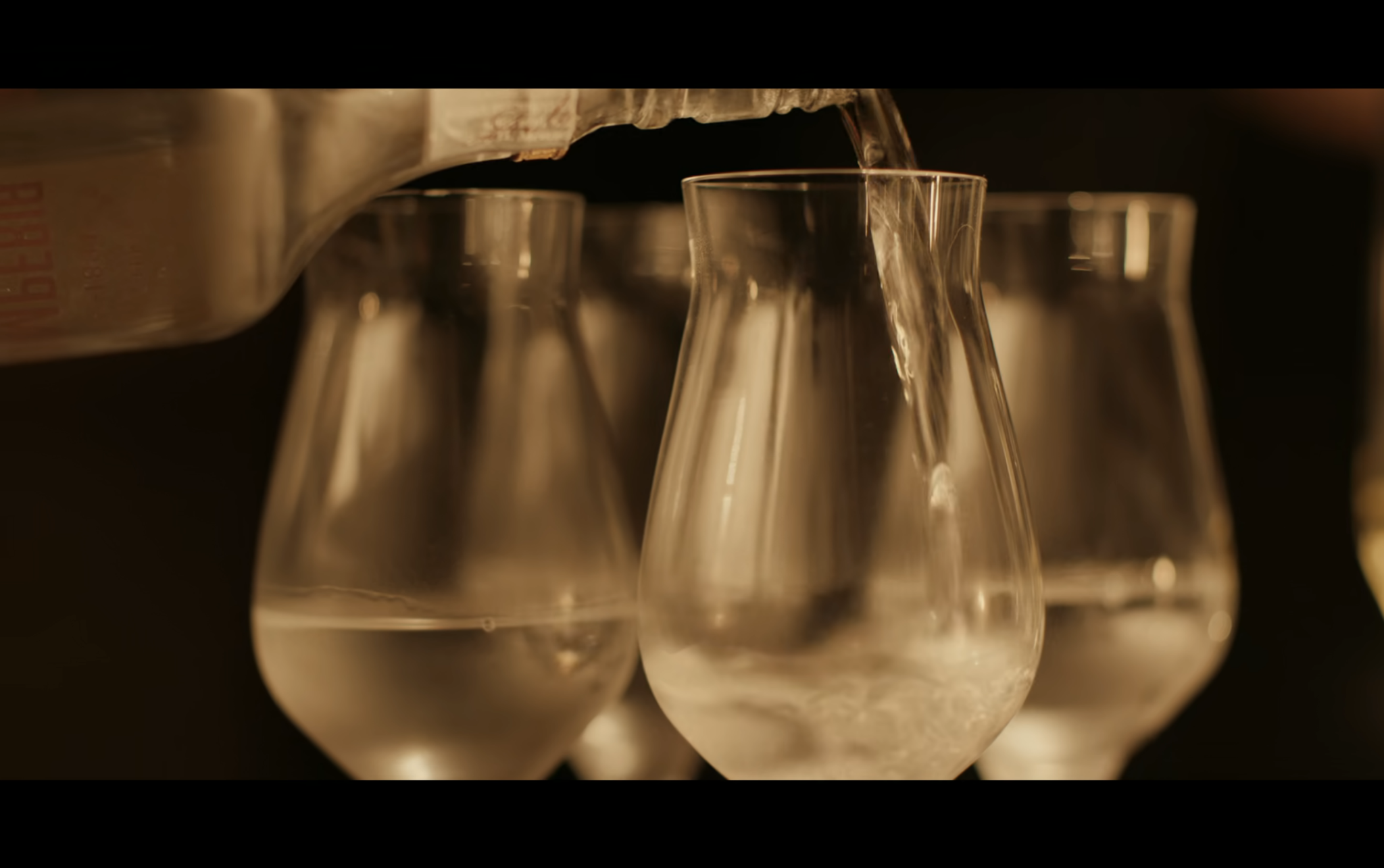
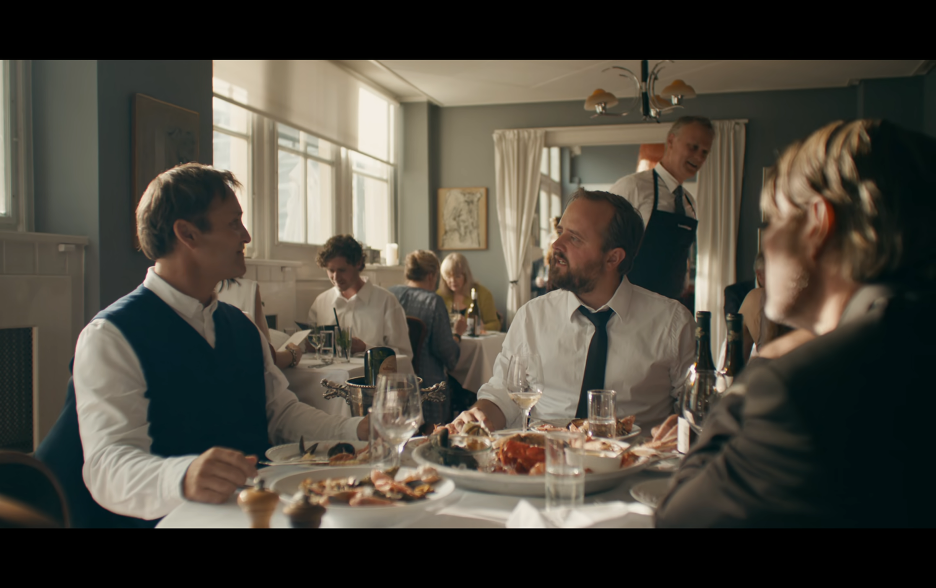
Which, Skårderud later told the Norwegian Broadcasting Corporation, is “fake news,” although he noted in the same interview that he served “as a sort of consultant” on the film at the request of director Thomas Vinterberg and characterized its depiction of drinking as “balanced.” Anyway, Martin’s resolve breaks down during a caviar service that includes vodka that per their sommelier “would put a smile on the Tsar’s face”:
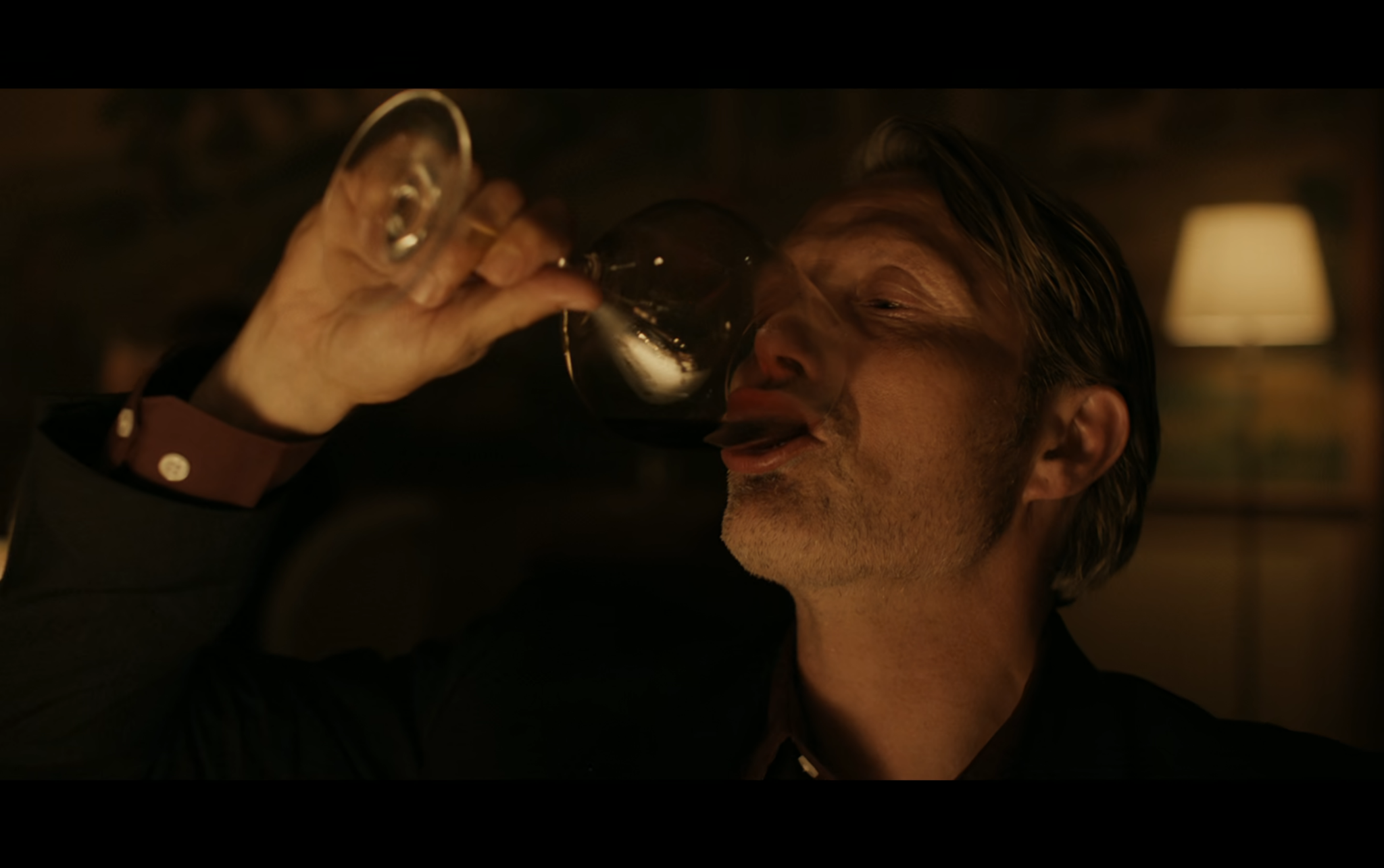
And after Nikolaj takes the liberty of ordering a “really, really good glass of wine for Martin” prior to the arrival of the main course, then another when he downs it in one gulp:
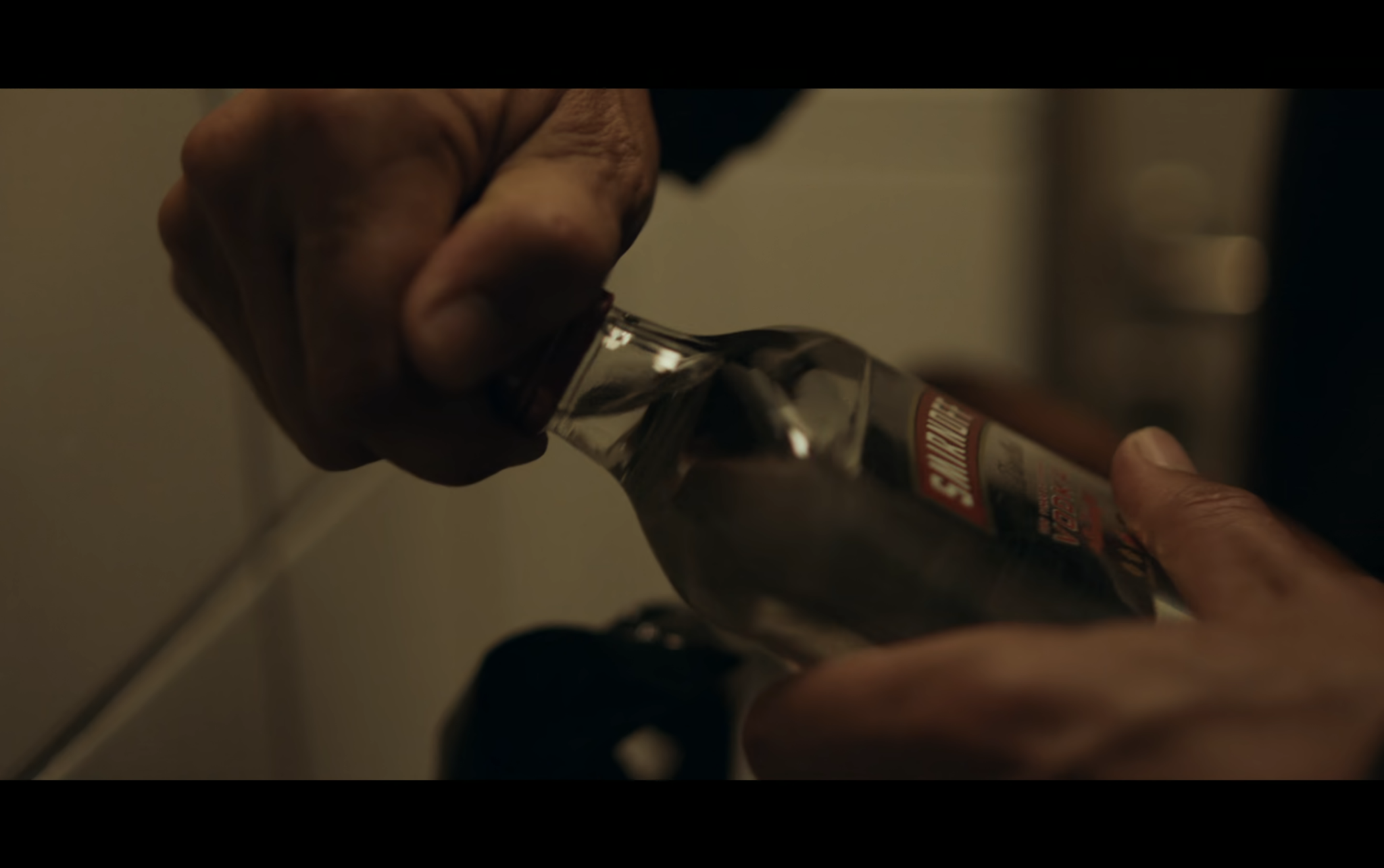
The evening turns into a bacchanal that’s more fun than he’s had in years. Martin decides to put Skårderud to the test the next weekday by bringing a fifth of Smirnoff to school:
Nikolaj finds out when Martin asks him for a ride home and immediately calls Peter and their fourth dinner companion Tommy (Thomas Bo Larsen) to propose an experiment: they will drink during working hours in quantities that will help them maintain Skårderud’s supposed 0.05% BAC ideal, stopping each day at 8pm and taking weekends off, with the goal of collecting evidence of “increased social and professional performance.” They, too, decide to clothe their project in literary aspirations, although whereas for me “Drink & a Movie” was a means to the end of writing more, the “brilliant psychological essay” they are ostensibly going to produce is more transparently an academic justification for behavior their employer and families presumably wouldn’t approve of. Crucially, they also neglect to define a time limit like I did early on, and thus fail to pace themselves, first increasing their target BAC to .1% on a very flimsy pretext, and then impulsively deciding to “examine the entire spectrum of alcohol” by deliberately drinking to the point of “total oblivion,” which has predictable results:
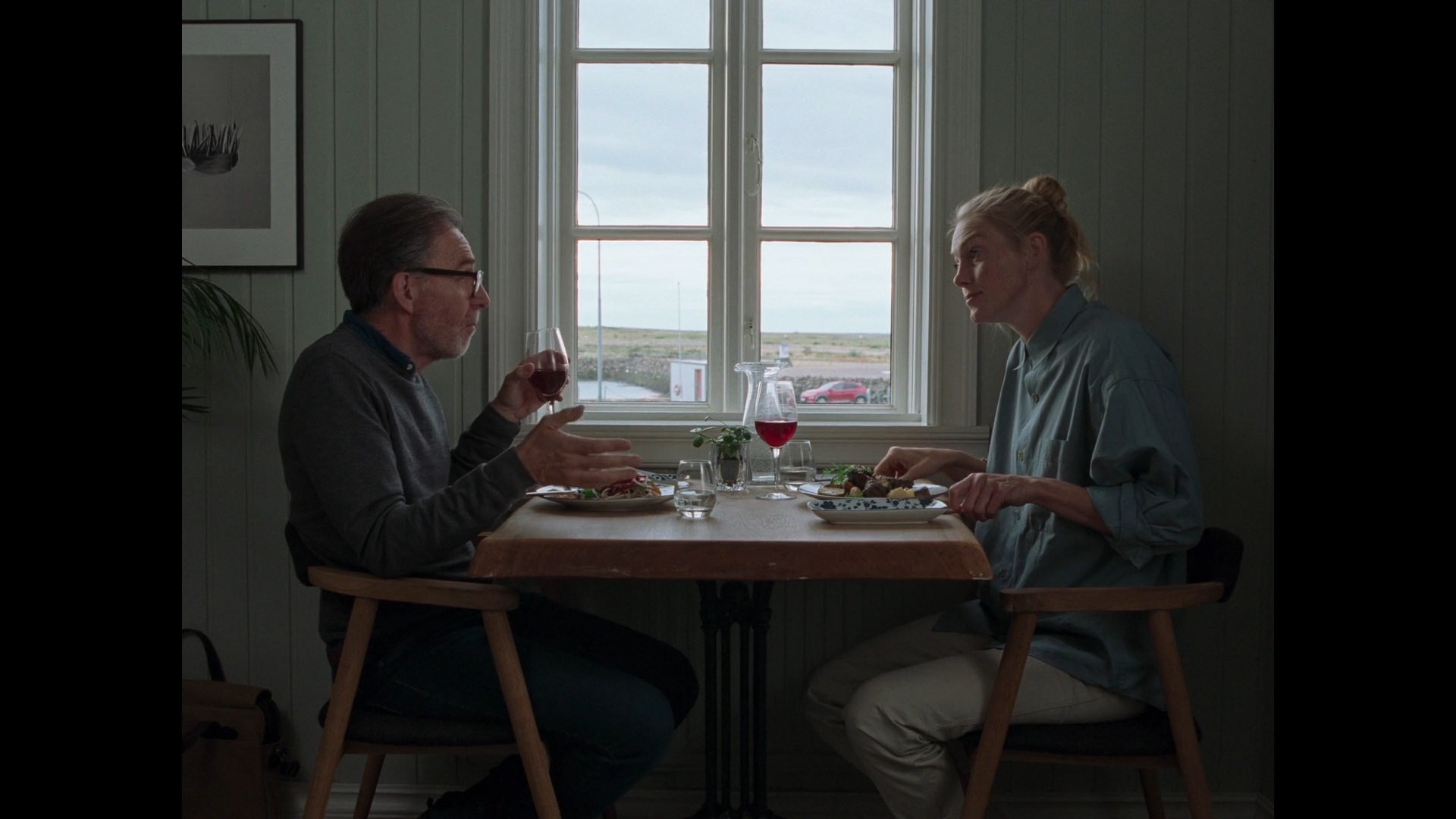
My project never got out of hand like this, but I definitely was ready for it to be over long before it was scheduled to end. While my intention was never to quit for good, I hope I haven’t ever come off like Anders Mossling’s asshole art gallery owner from The Love That Remains, who ruins a business lunch by droning on and on about a research study that he claims proved that it was healthy to drink up to an entire bottle of wine a day, but remains virtually unknown because its findings are “politically incorrect.”
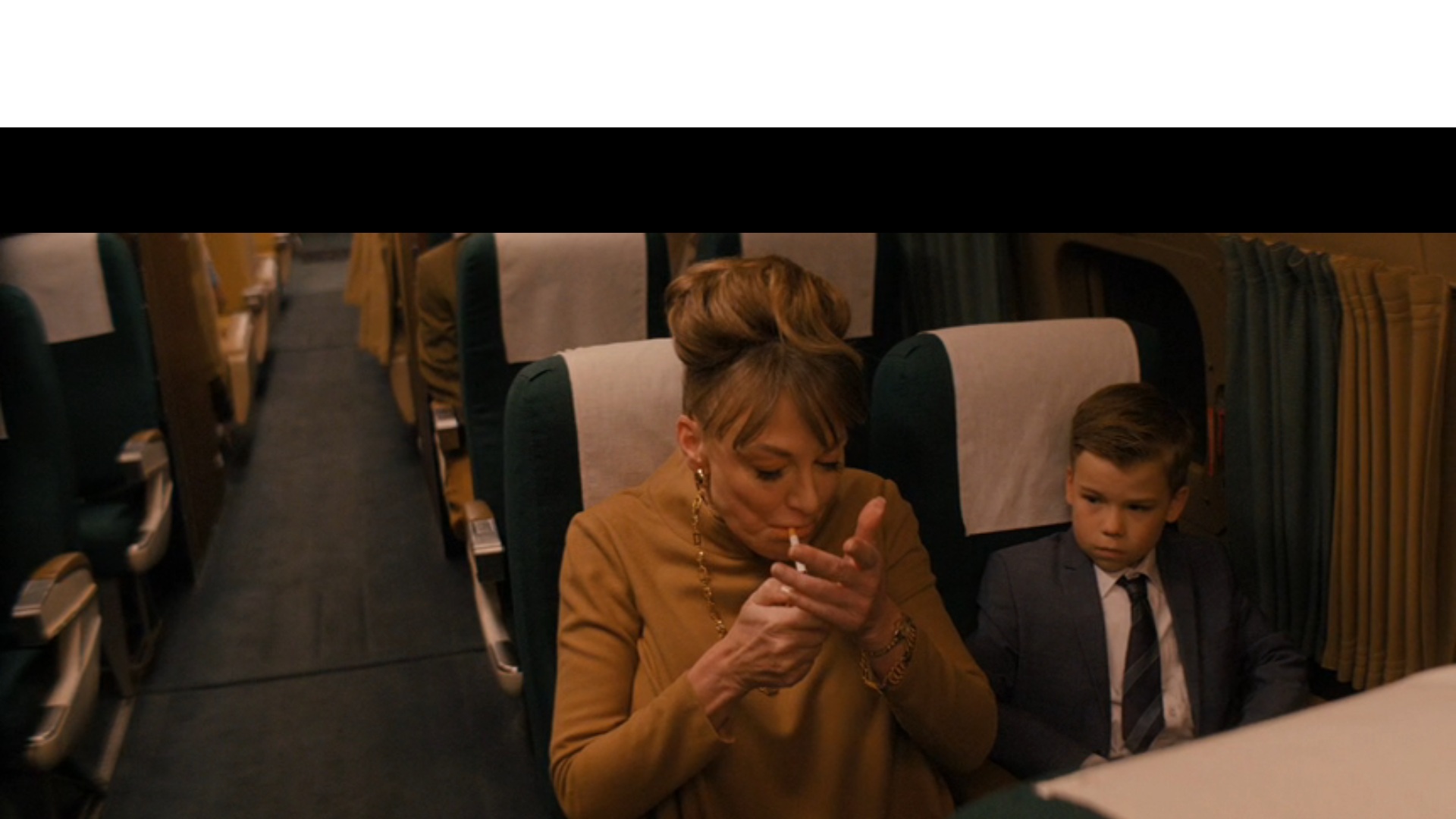
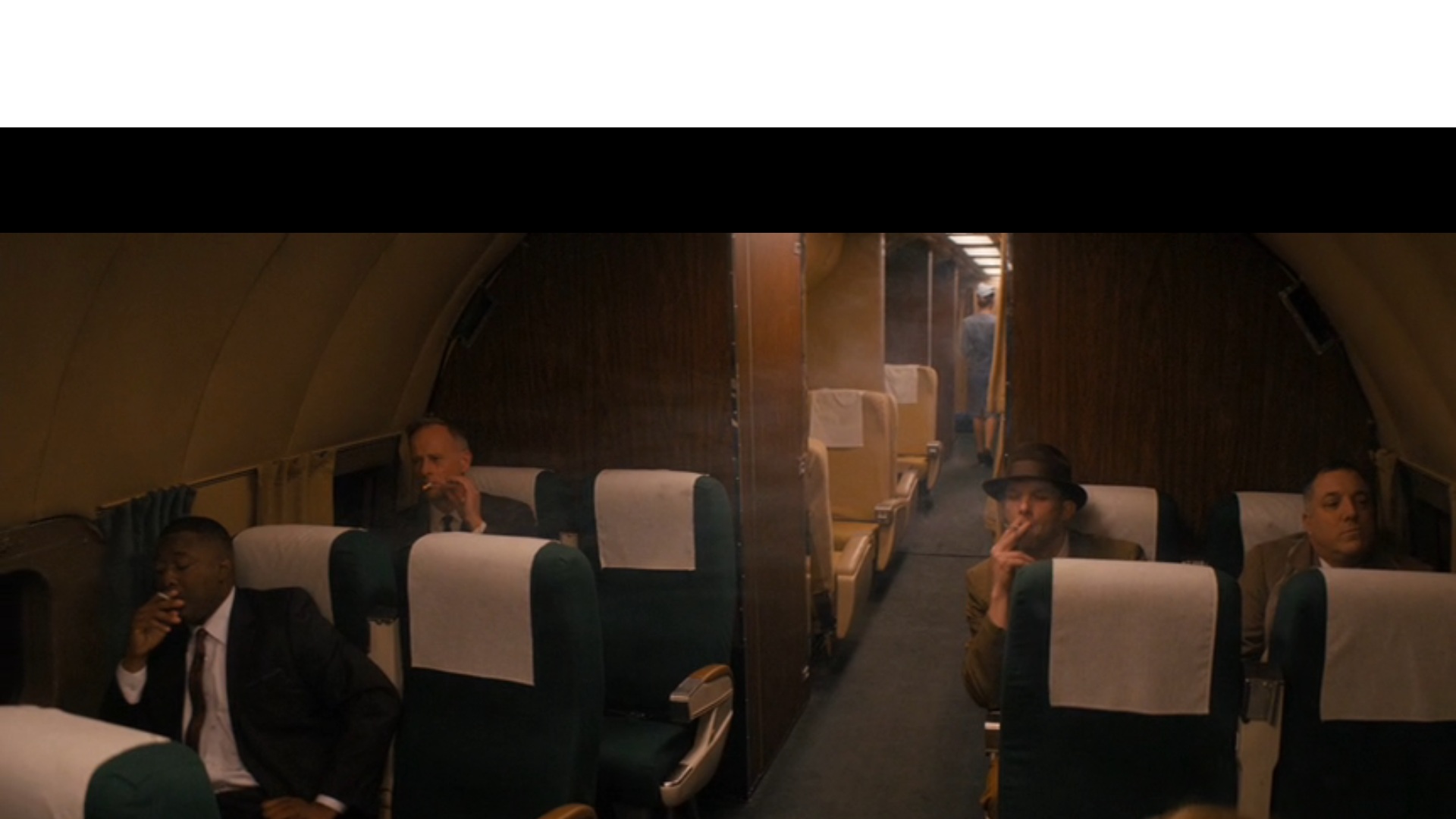
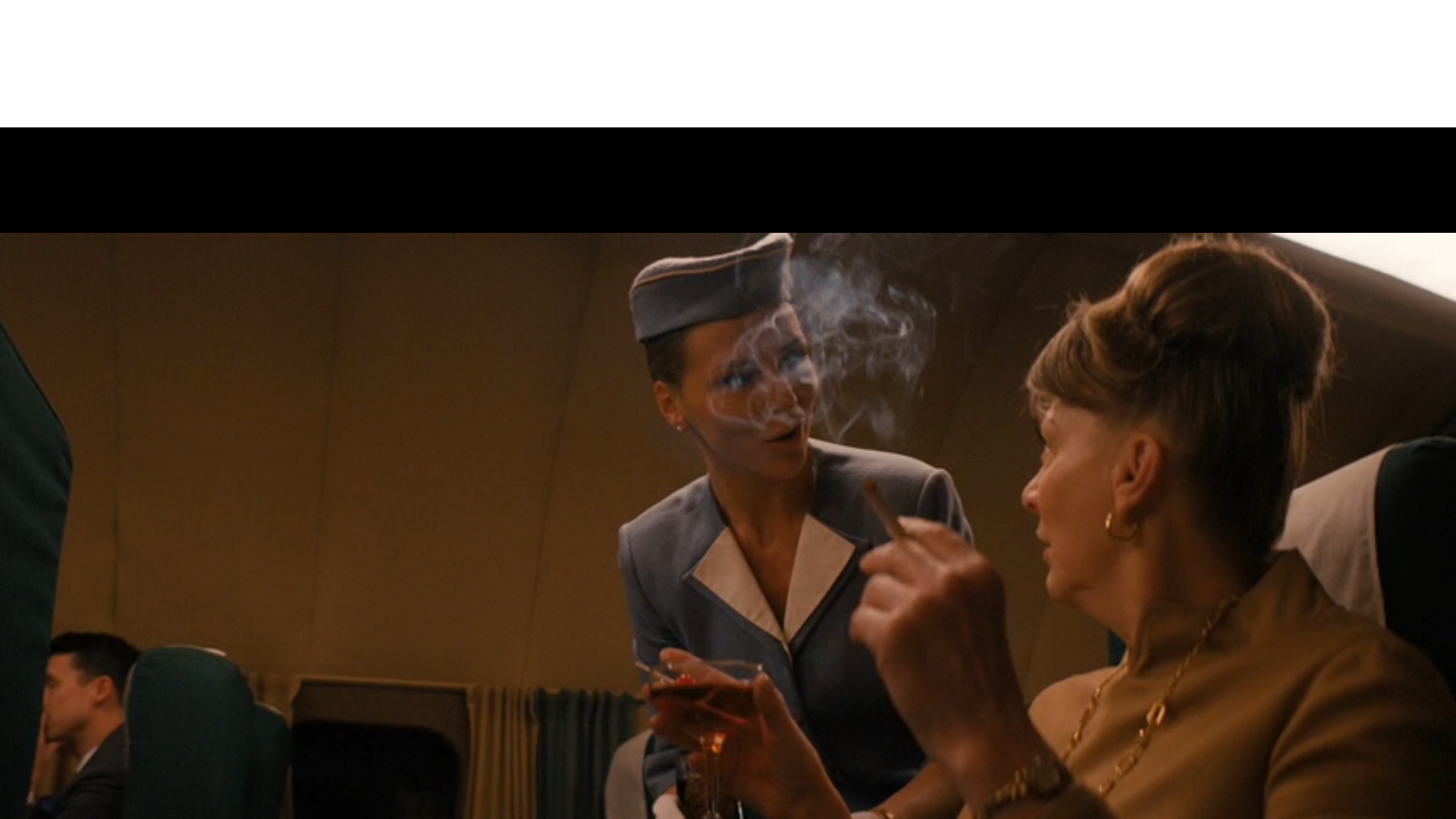
Even as I’m envious of the drink service Kelly Eviston-Quinnett’s Helen receives while flying coach:
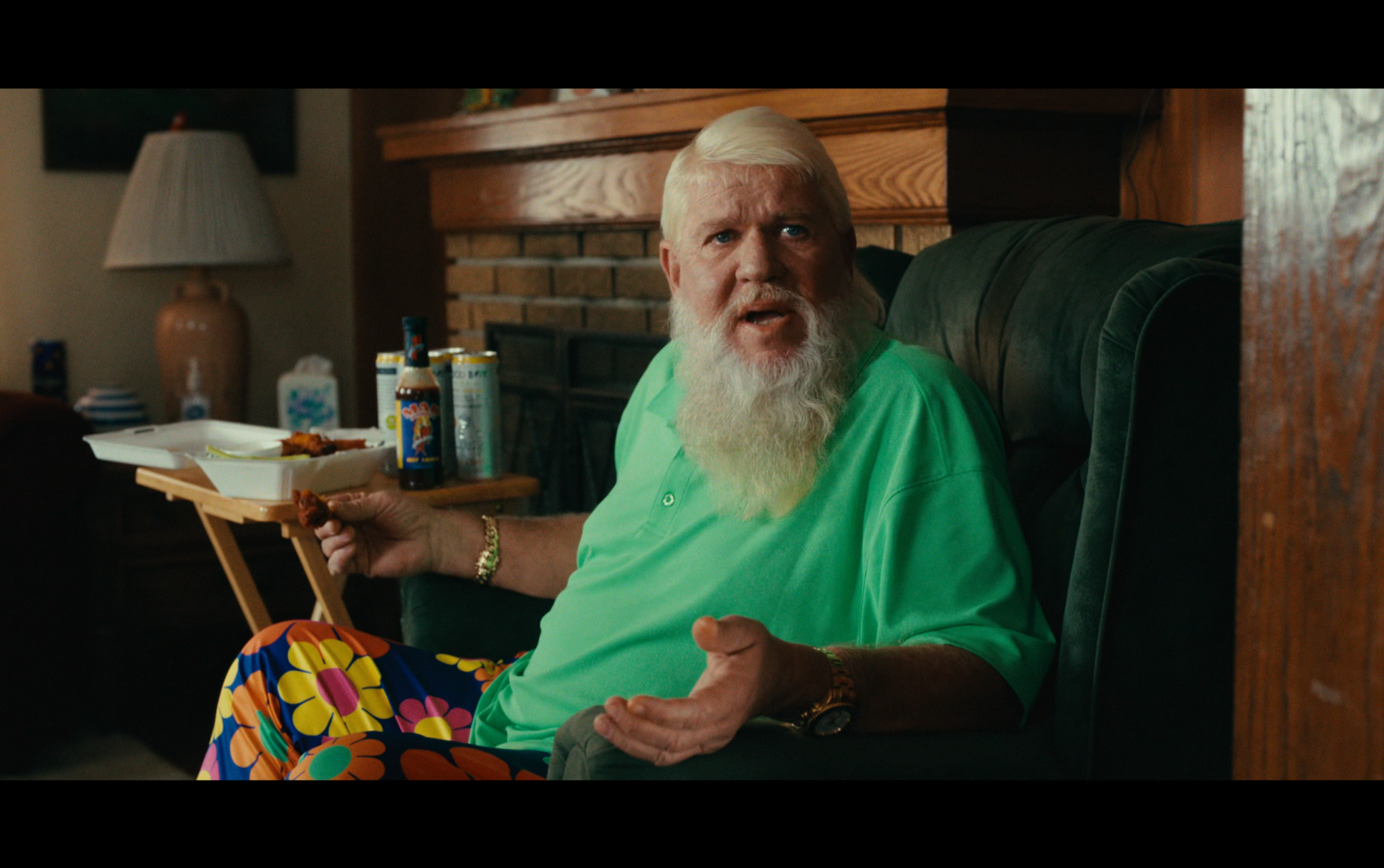
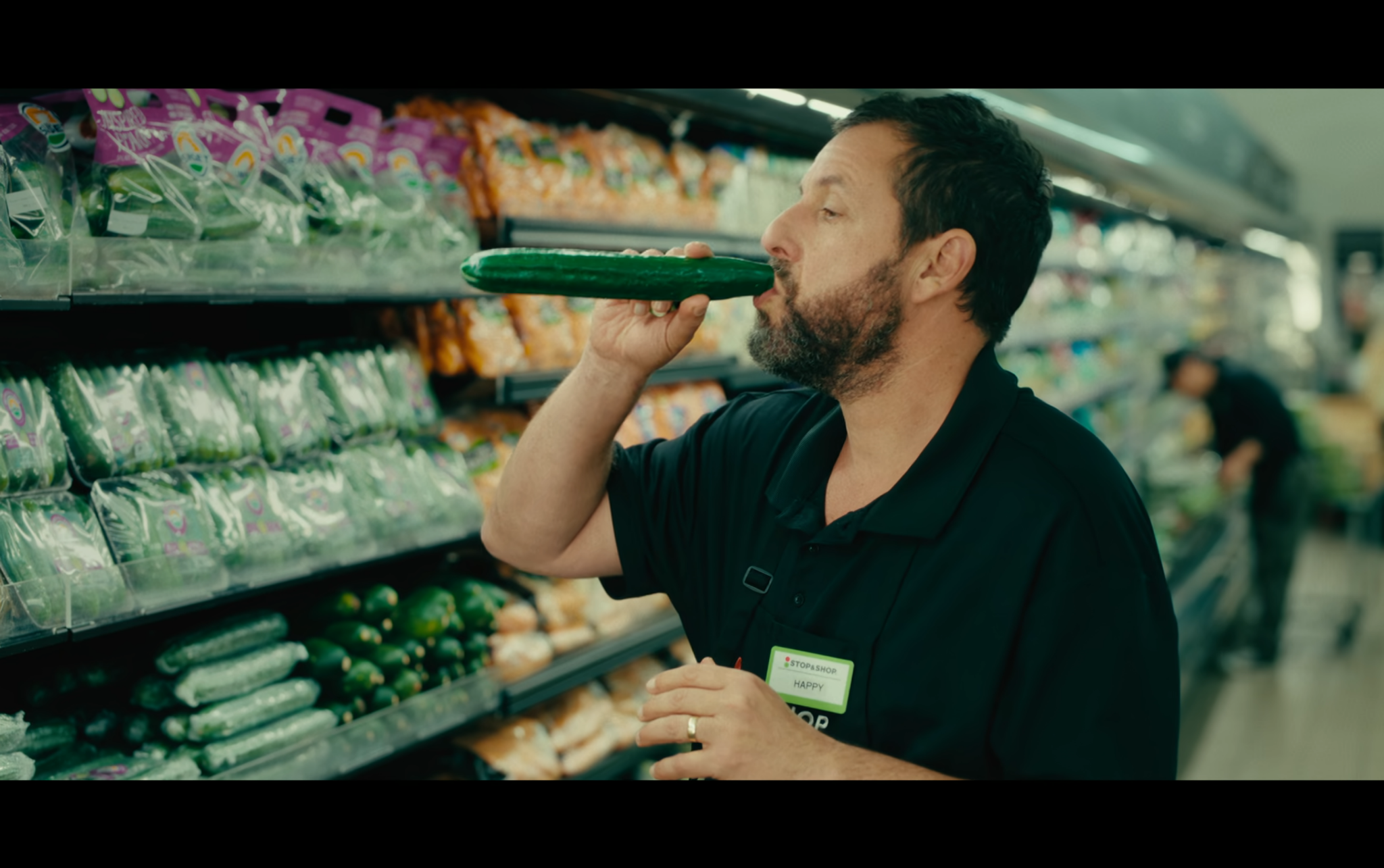
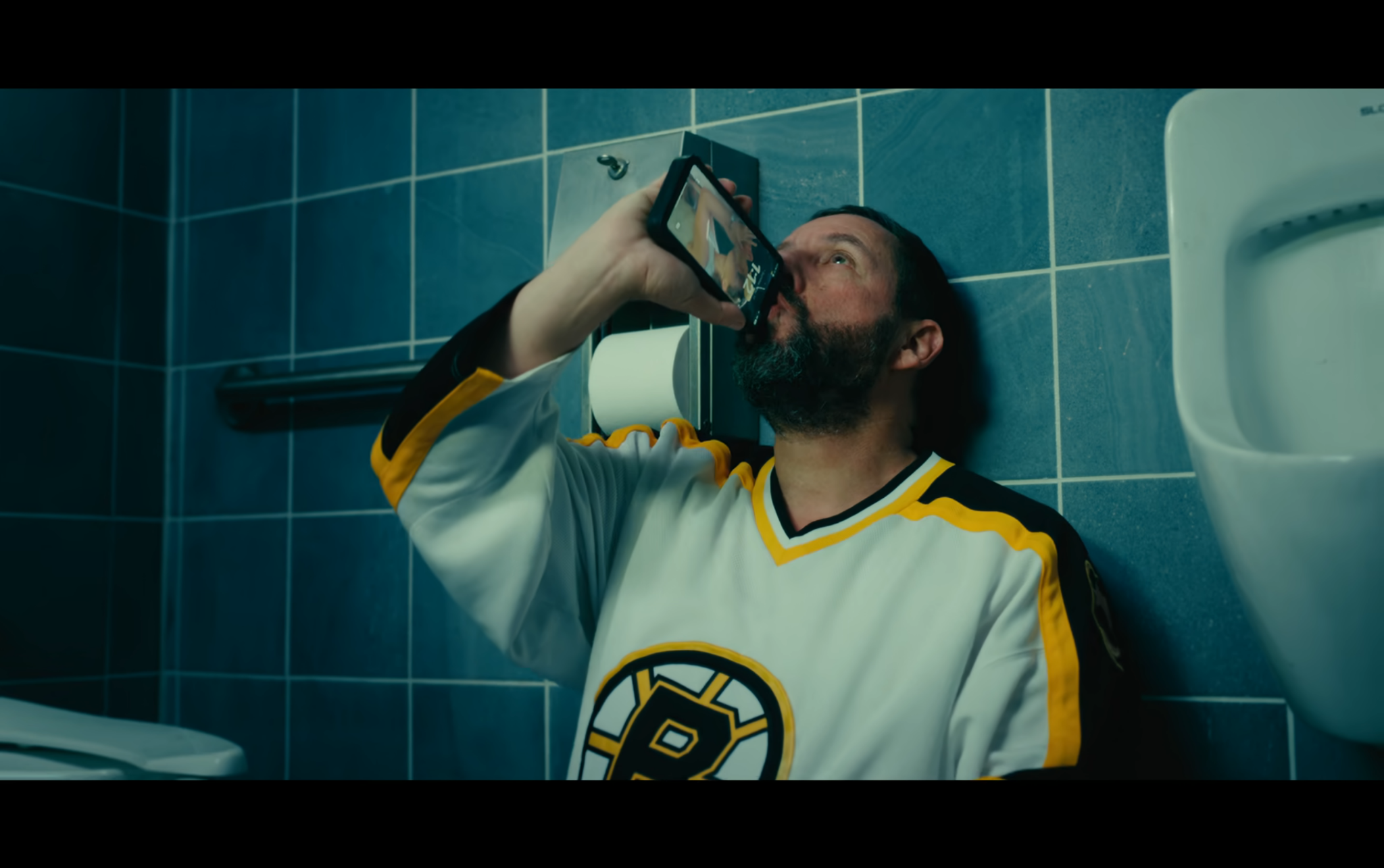
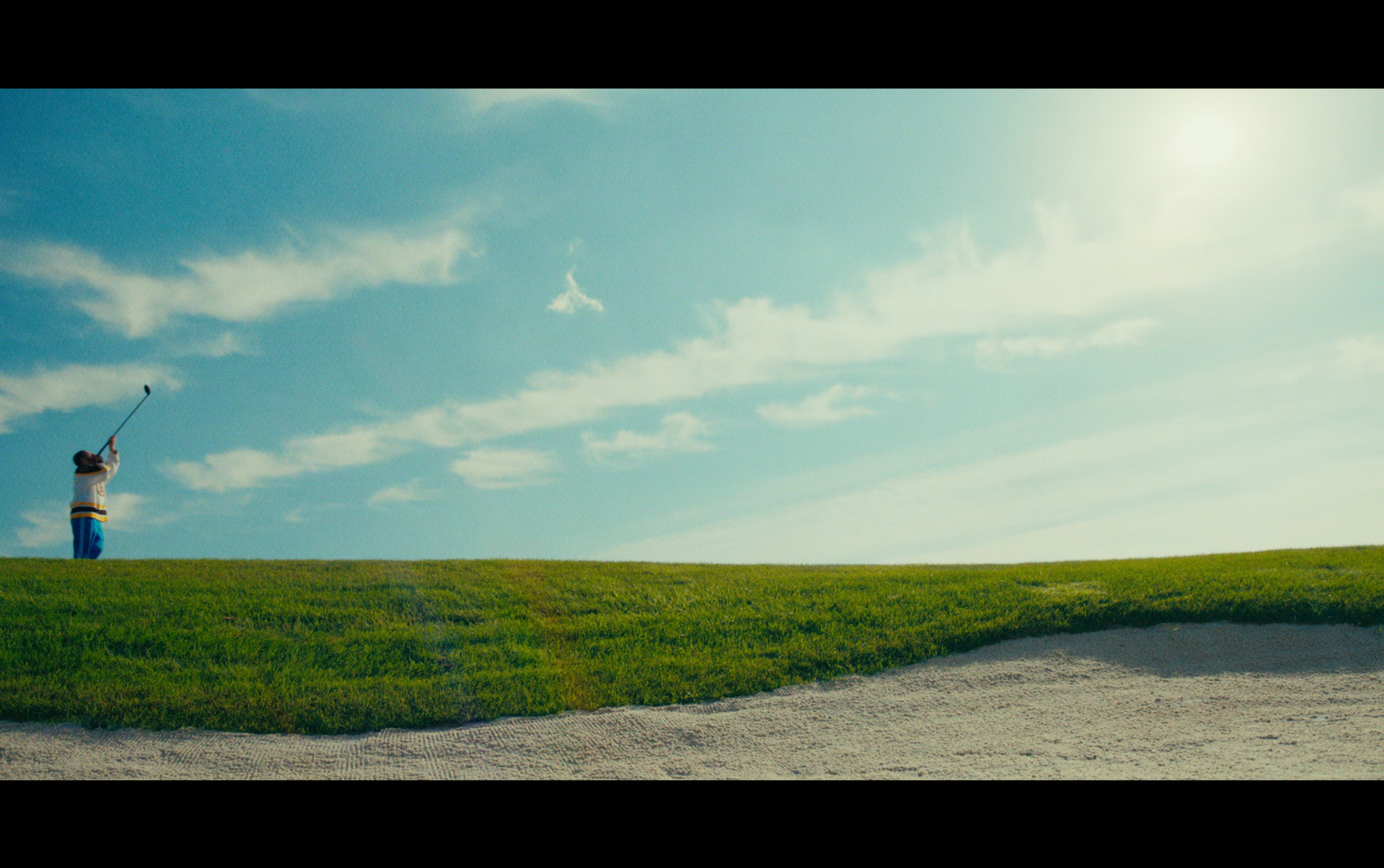
Just because I choose to drink doesn’t mean I feel the need to make a virtue out of it or that I’m entitled to do so whenever and wherever I want! After all, the main lesson my time off taught me is that much more of my caloric intake from alcohol than I ever imagined was truly “empty” in the sense that it wasn’t coming from beverages I prepared for myself because I wanted them, but rather ones I made simply as a result of not having anything better to do. What drove this home for me was a scene from Happy Gilmore 2. Adam Sandler’s titular protagonist has retired from golf and started drinking as an escape from accidentally killing his wife Virginia (Julie Bowen) with an errant drive. Forced to stop after an incident involving public drunkenness, he takes the sport back up again to earn money to put his daughter (Sunny Sandler) through ballet school when John Daly (who is hilarious playing himself) convinces him that it will be worth all the practice time required to shake off the rust by arguing, “what else are you going to do, sober boy? You can’t drink no more.”
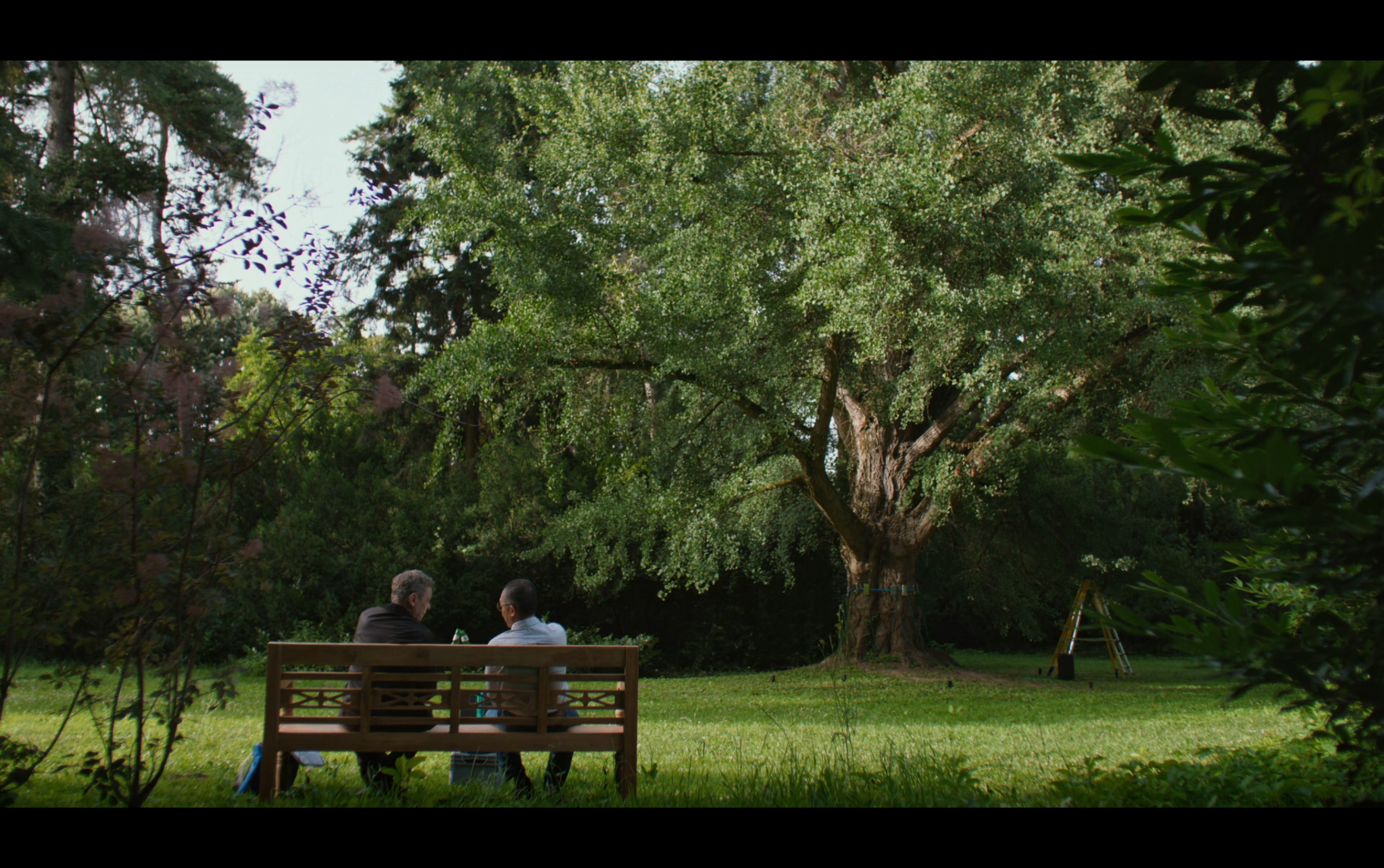
I also discovered that not having the option of making a cocktail regularly led to me doing something completely unrelated and useful, such as going for a run. Again and again I’d find myself thinking, “I’d normally be drinking right now, but I don’t miss it.” Abstinence just as often resulted in me choosing to go with a sugary soft drink instead, though, and as Tony Leung and Sylvester Groth’s characters find in Silent Friend, there’s a lot to be said for the way booze can make boredom itself productive:
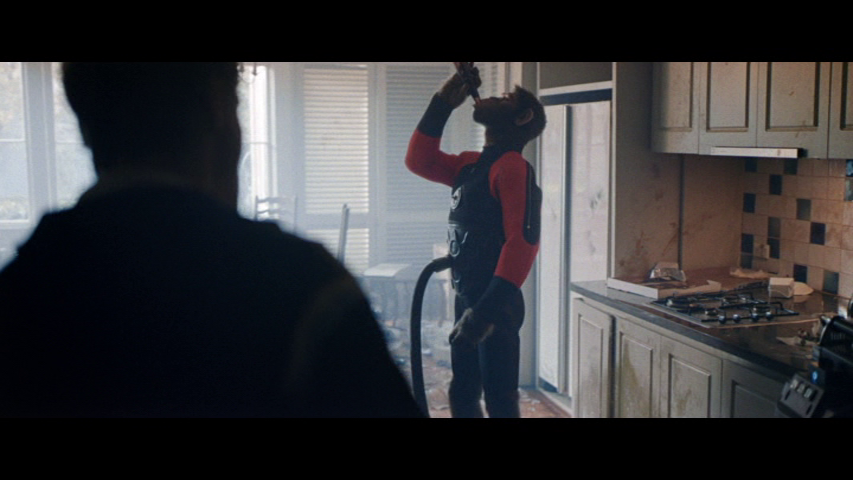
The main thing, I think, is not to deceive oneself, which is a note for the people behind the camera, too. François Truffaut famously once told Gene Siskel that “every film about war ends up being pro-war,” and to pick on a movie I like, the “Come Undone” sequence from Better Man is a good demonstration of how trying to make drinking look dangerous always carries the risk of portraying it as tragically glamorous instead:
To its credit, the film does course-correct by depicting Robbie Williams’ rock bottom as, in the words of Clint Worthington, “a monkey weeping over lines of coke while dressed in a space-age fat-sucking vacuum suit”:
Much the same way that Happy Gilmore 2 chooses to make its hero’s problem drinking into a running joke about how he can turn literally anything into a flask:
But while I absolutely do not mean to argue that the topic should be considered off-limits for any movie that chooses to tackle it, I am intrigued by the way Power Ballad replaces the spirits that would typically lead to its hero questioning his life choices with non-alcoholic beer, which pointedly renders booze irrelevant.
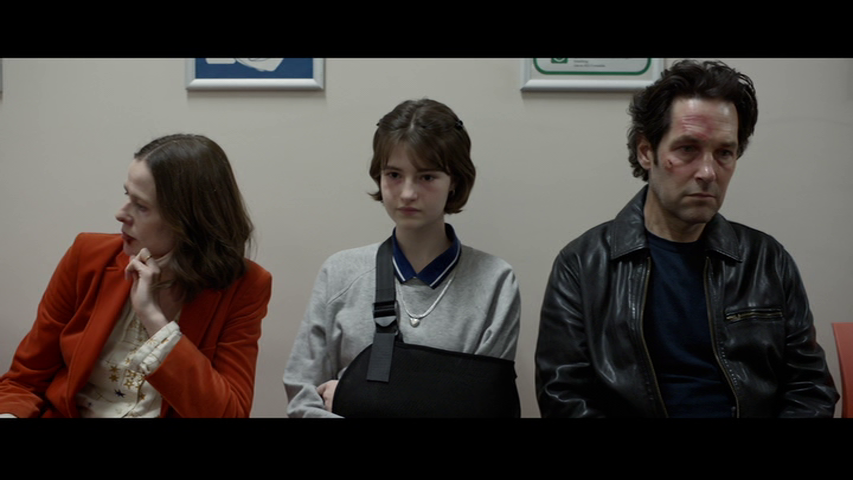
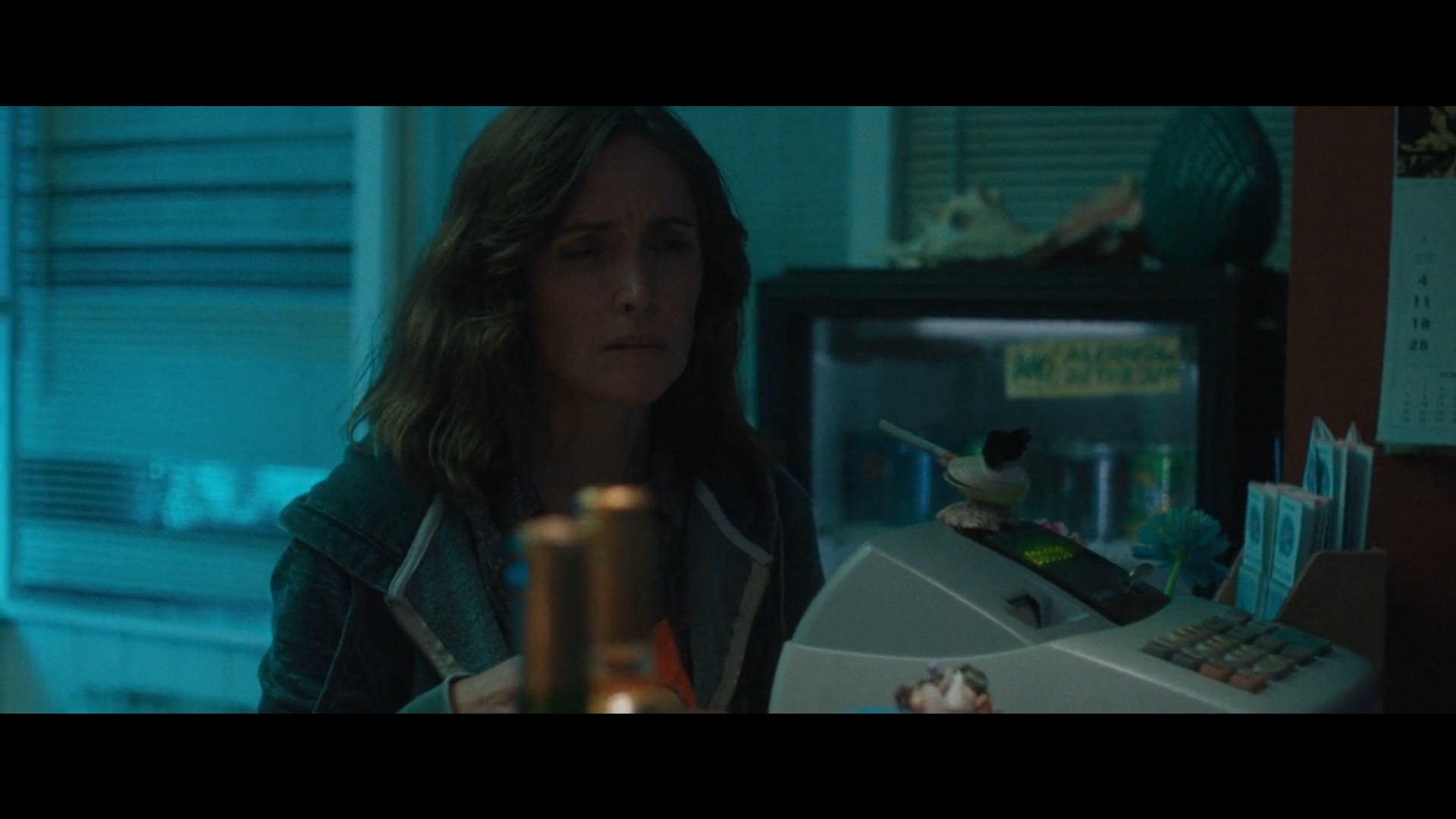
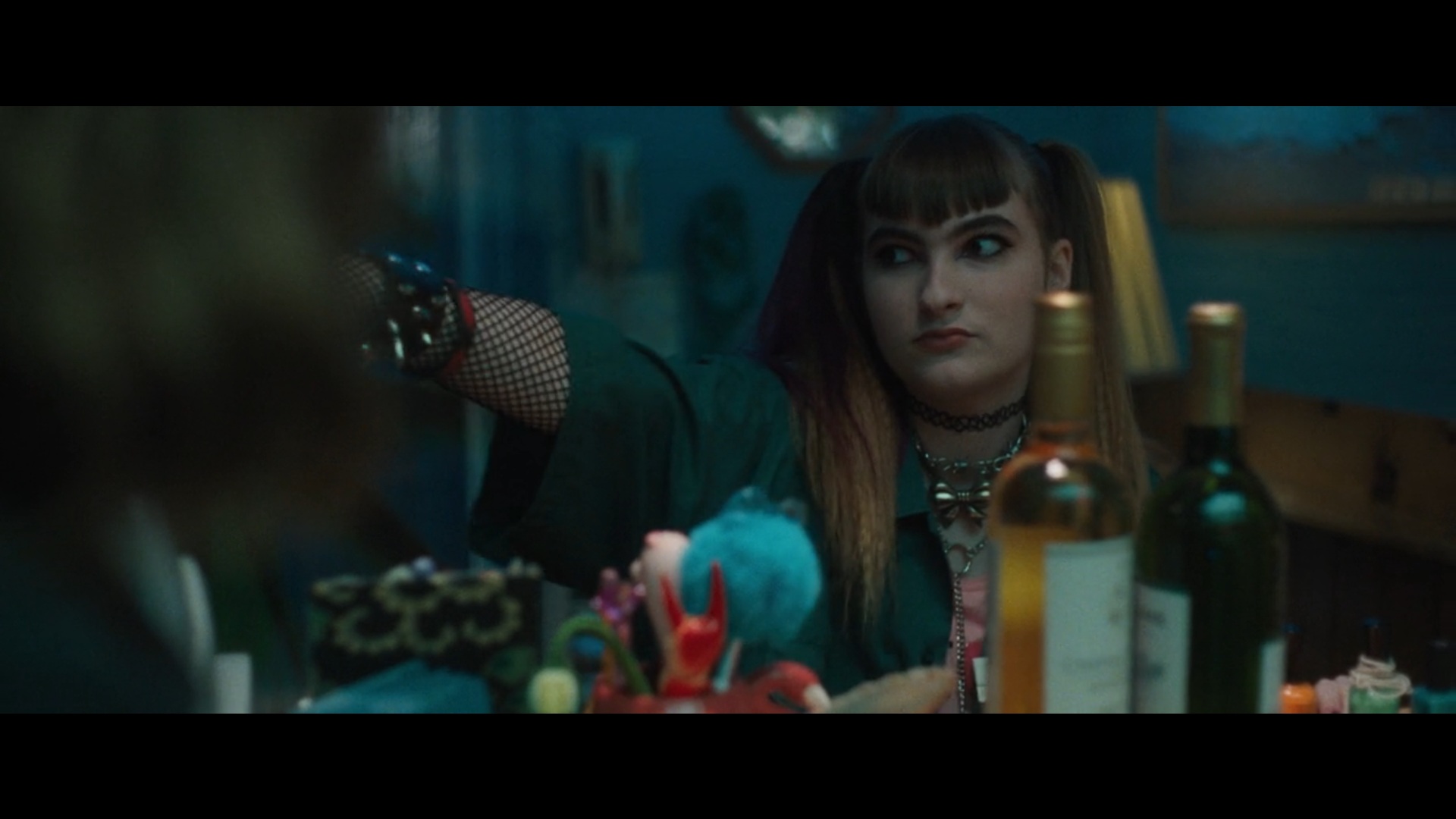
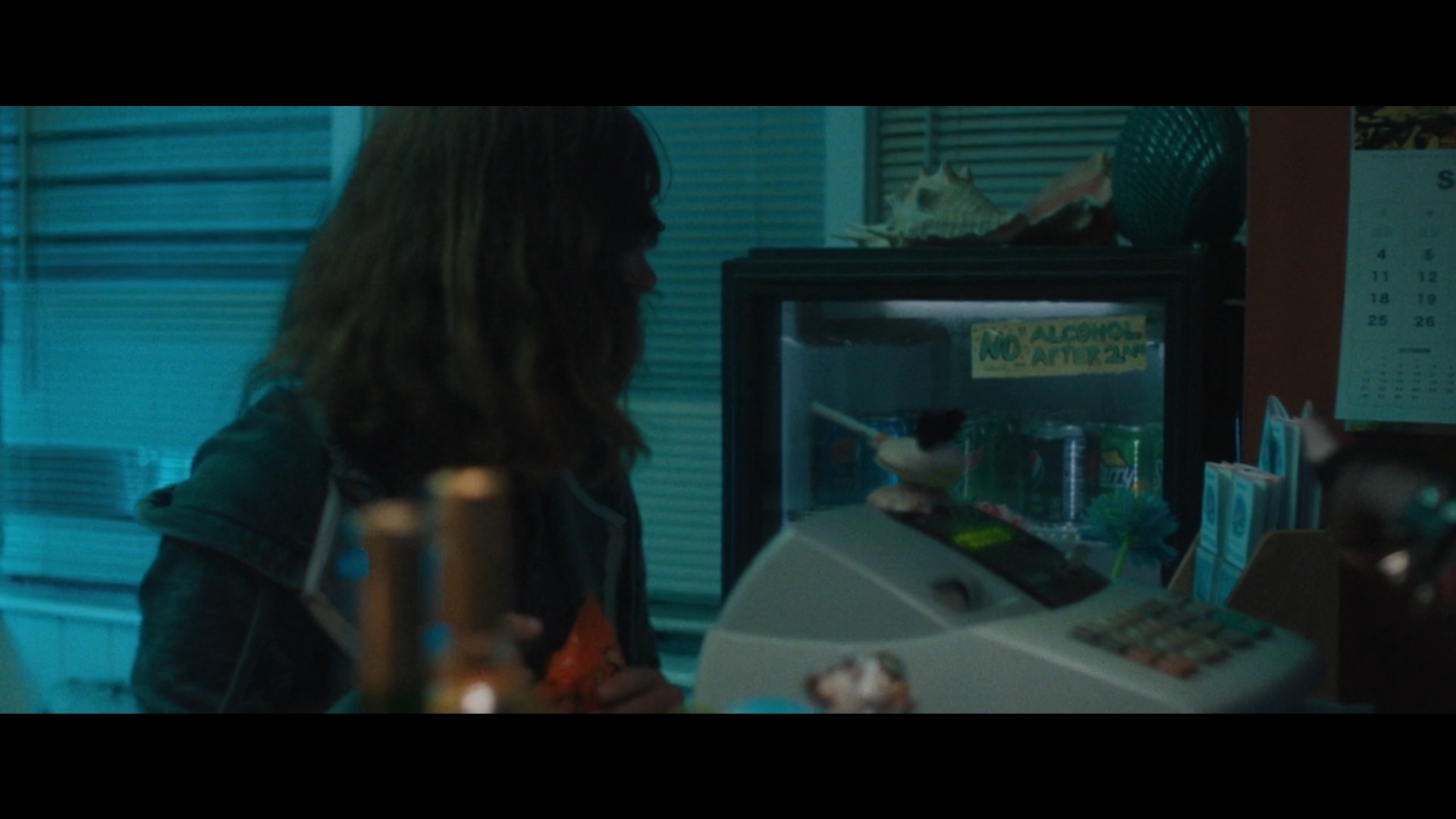
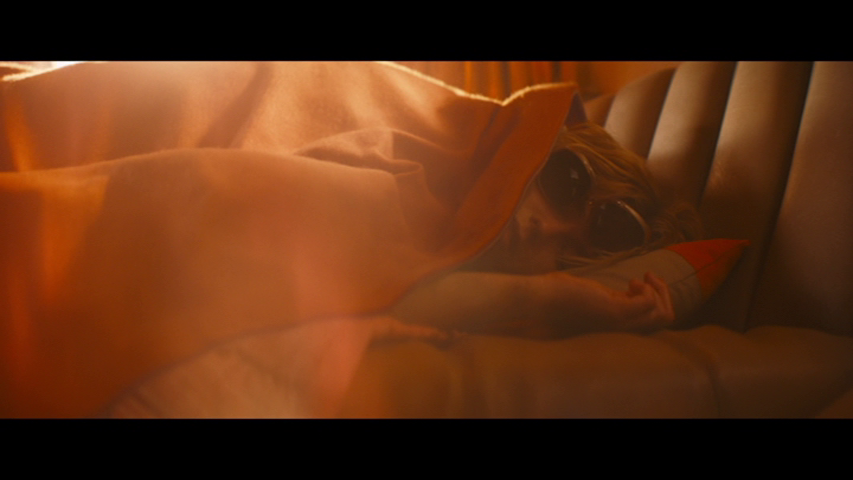
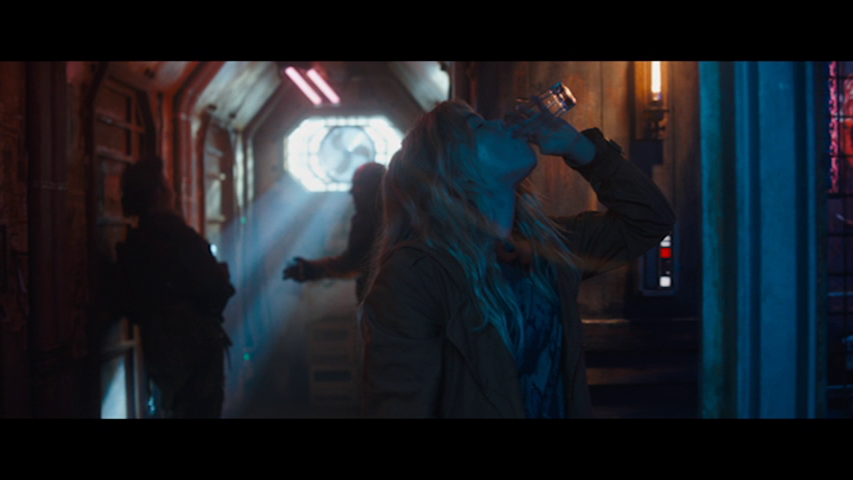
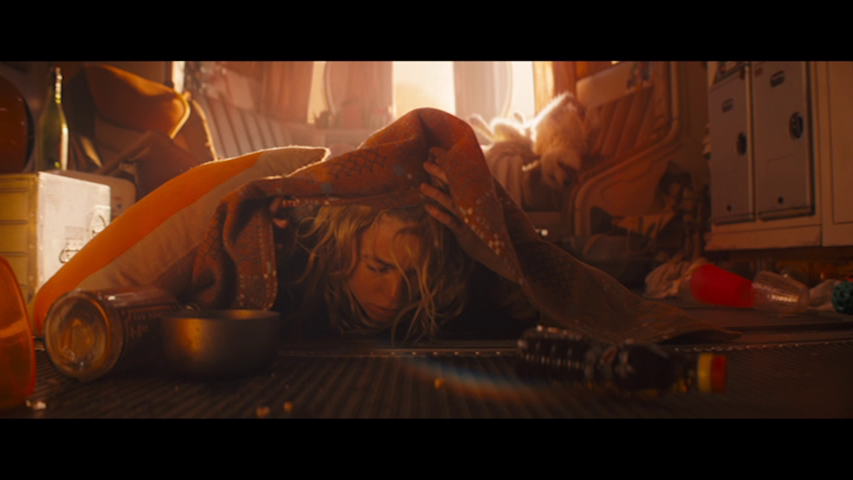
Such scenes are perhaps best saved for ones that take substance abuse as their actual subject, like If I Had Legs I’d Kick You, which channels Cormac McCarthy’s post-apocalyptic novel The Road in a cautionary tale I now take even more to heart about how there’s a proper time and a place to imbibe. That whole movie can be read as a feature-length gloss on these two sentences: “he’d found four quarts of bonded whiskey still in the paper bags in which they’d been purchased and he drank a little of it in a glass with water. It made him dizzy before he’d even finished it and he drank no more.” The argument of Legs being that when the time and place are never and nowhere like they are for Rose Byrne’s Linda, that’s a problem with the world, not any individual trying to live within it.
This thankfully isn’t the case for me, but even though my kids are getting older and don’t require constant attention like Linda’s daughter, I’m finding myself waiting until after they go to bed to fix a drink now that I’m no longer conditioned to head straight to our bar as soon as I hear the clock strike five. After all, as director Paul Feig said to the BBC last year, cocktails are one of the great perks of the adult world.
That word “adult” brings us back to Another Round and the binge-drinking youths it begins with. Supergirl similarly starts out with Milly Alcock’s Kara getting plastered as a rite of passage:
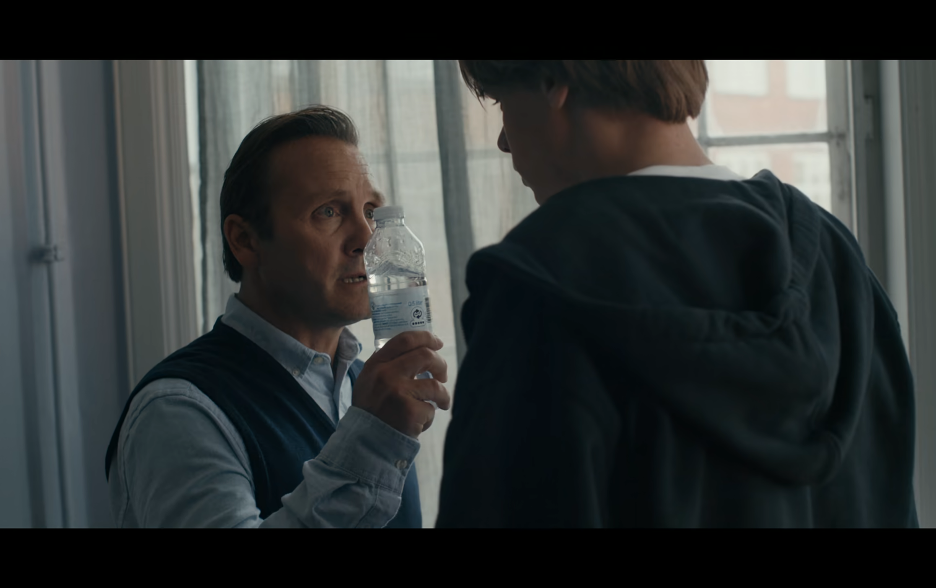
But where the only real consequences for her are hangovers that she can easily shake off with a shot of yellow sun, Martin and his pals represent a range of eventual outcomes for their students. Nothing all that bad ever happens to Peter, and he even helps a student pass his oral exams by irresponsibly (“don’t make a habit of it,” he says) encouraging him to take swigs from a bottle of “water” to calm his nerves:
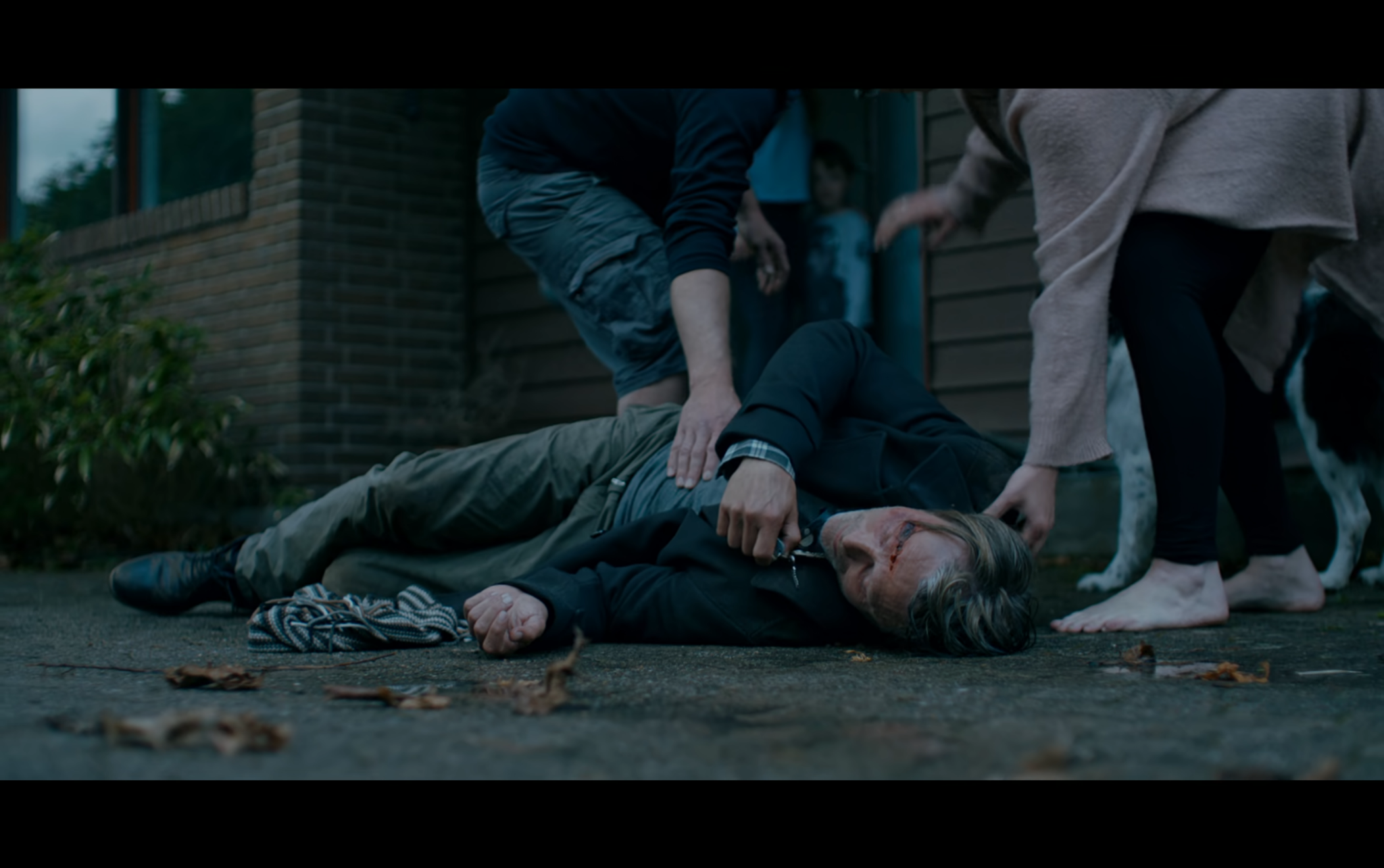
On the other side of the spectrum is Tommy, who meets the same fate as Icarus:
Nikolaj’s incontinence leads to a separation, but he reports that in its aftermath he and his wife “have a new kind of connection”:
While Martin progresses in the opposite direction, first rekindling his own marriage and career, but then pushing his wife away and falling back into a malaise at work when the buzz wears off:
The movie concludes with him receiving a series of texts from her that say “I miss you too . . . a lot,” though, indicating that hope is far from lost.
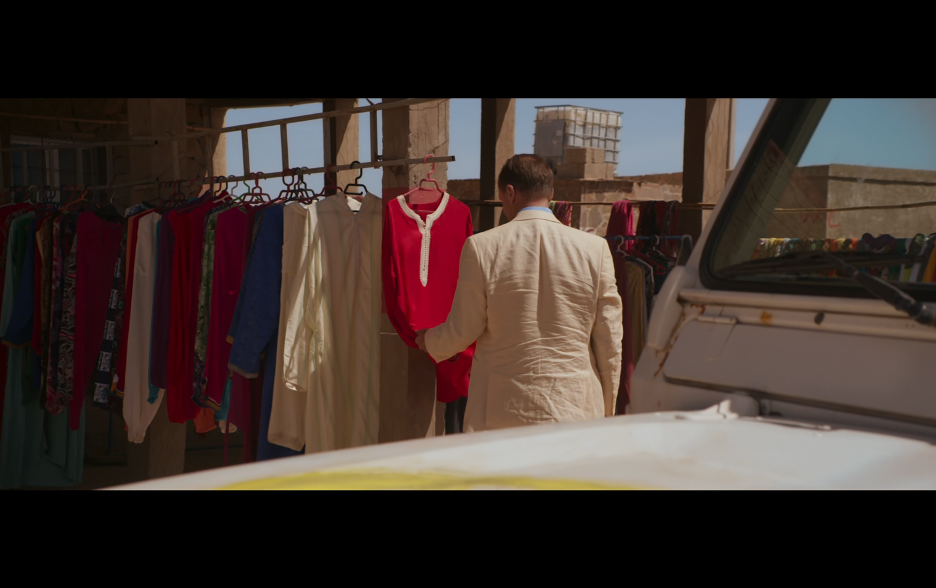
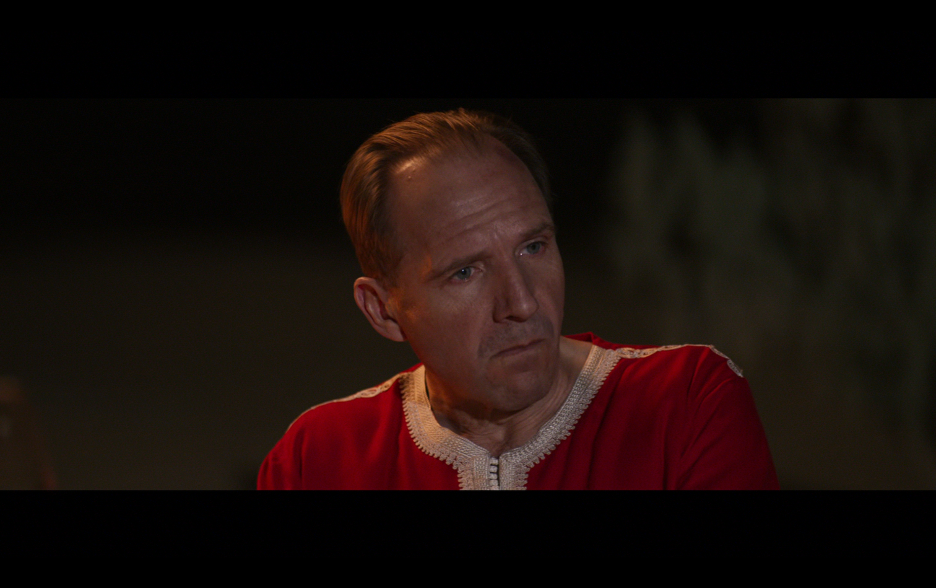
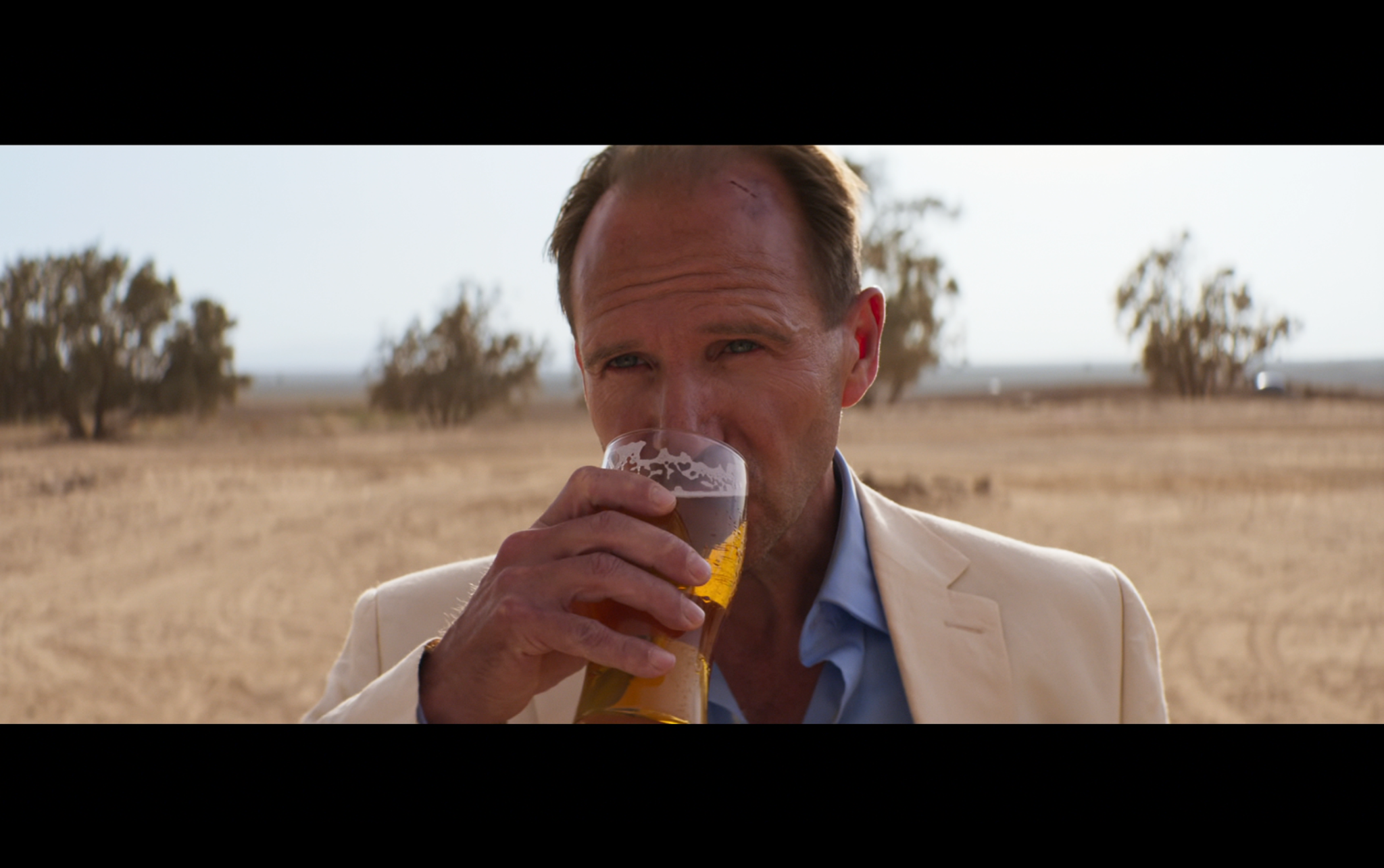
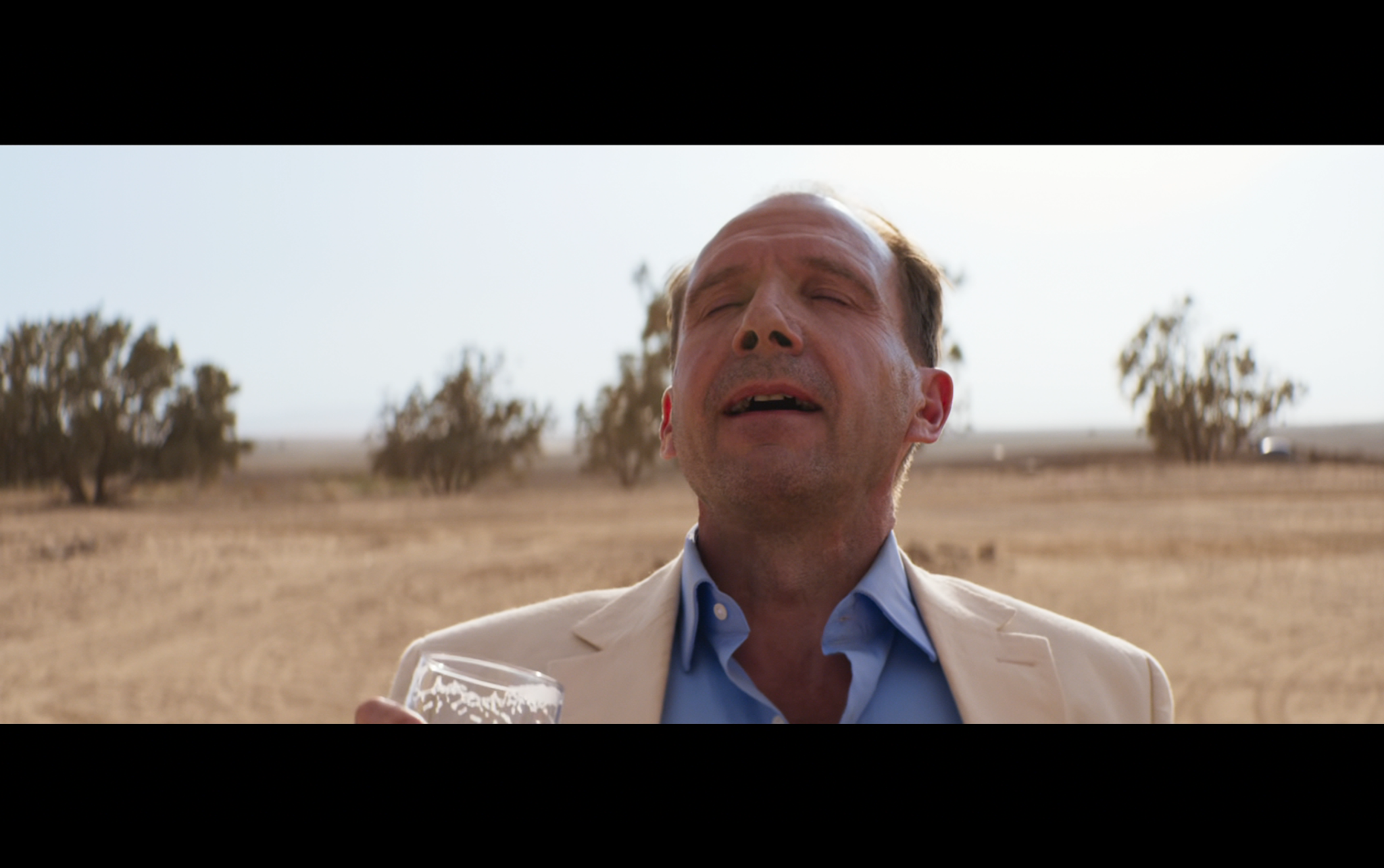
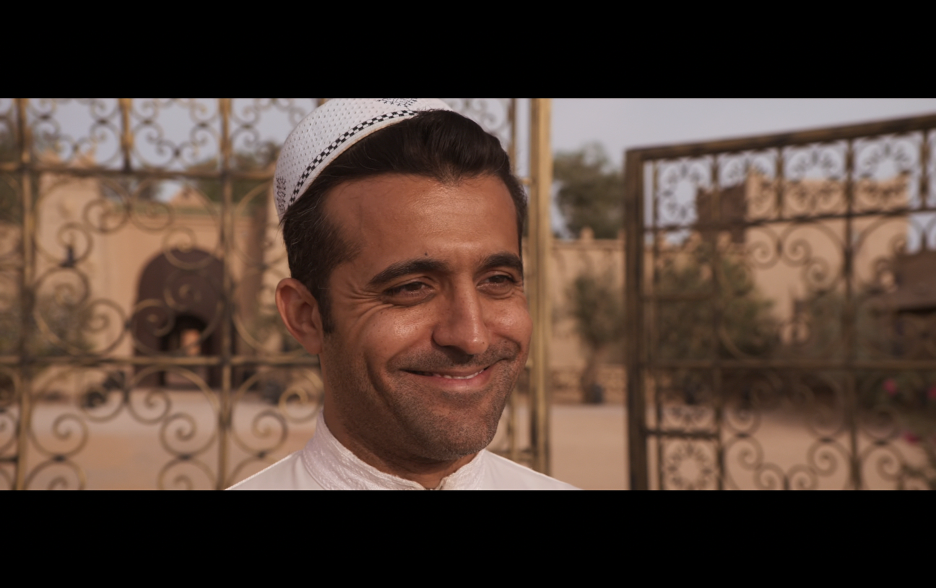
In these final moments he reminds me a bit of Ralph Fiennes’ David Henninger from The Forgiven, who accepts an ice-cold beer from Mourad Zaoui’s previously skeptical butler Hamid as a reward for what they both see as a “noble gesture,” agreeing to accompany the father (Ismael Kanater) of the Berber fossil hunter he ran over with his car on a voyage to bury the boy in the deserts of southern Morocco where he was born. Along with the shirt David purchases on the way back and wears to dinner that night:
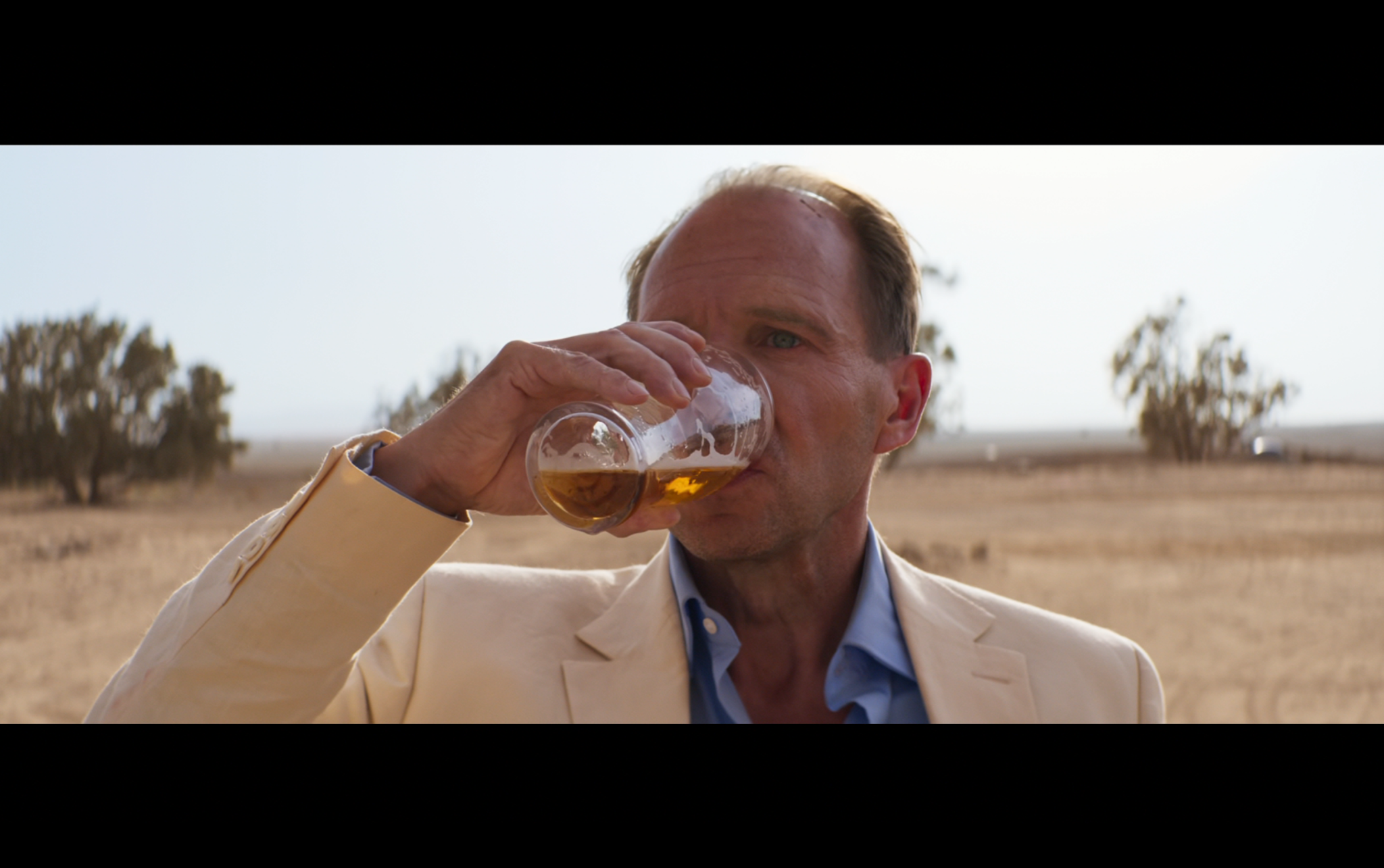
The greedy satisfaction he takes in this pint does a pretty amazing job of capturing the decidedly uncinematic note that Lawrence Osborne finishes the novel that the film was adapted from on: “it never occurred to him why he had not been forgiven, because he had forgiven himself.”
It’s too bad that director John Michael McDonagh didn’t have the good sense to realize it! But the Hollywood ending which follows doesn’t matter for our purposes. What does is the pleasure David so obviously takes in this would-be benedictory tipple. He is perhaps being too generous to himself, but this is in part because Hamid gives him permission in the form of a smile:
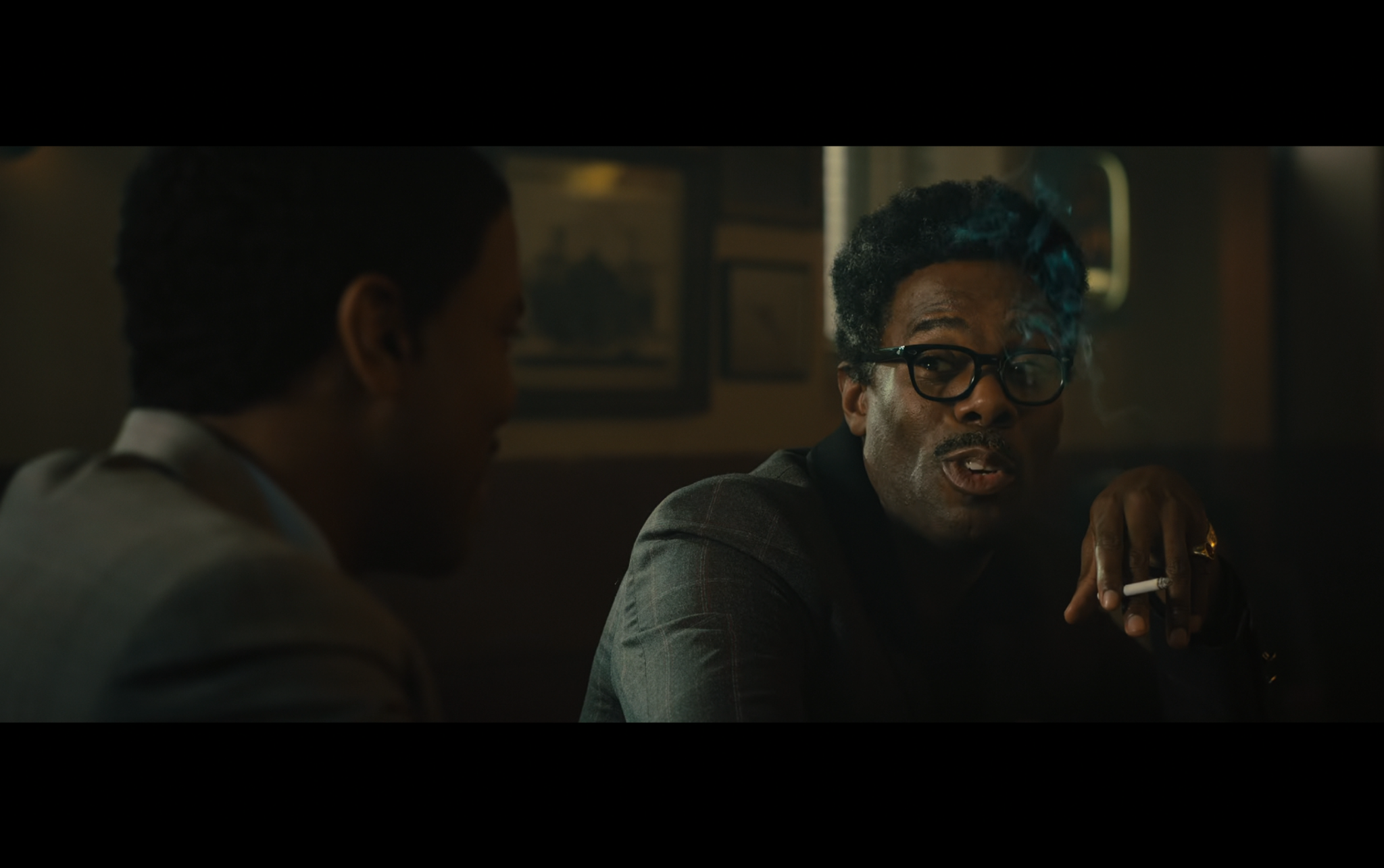
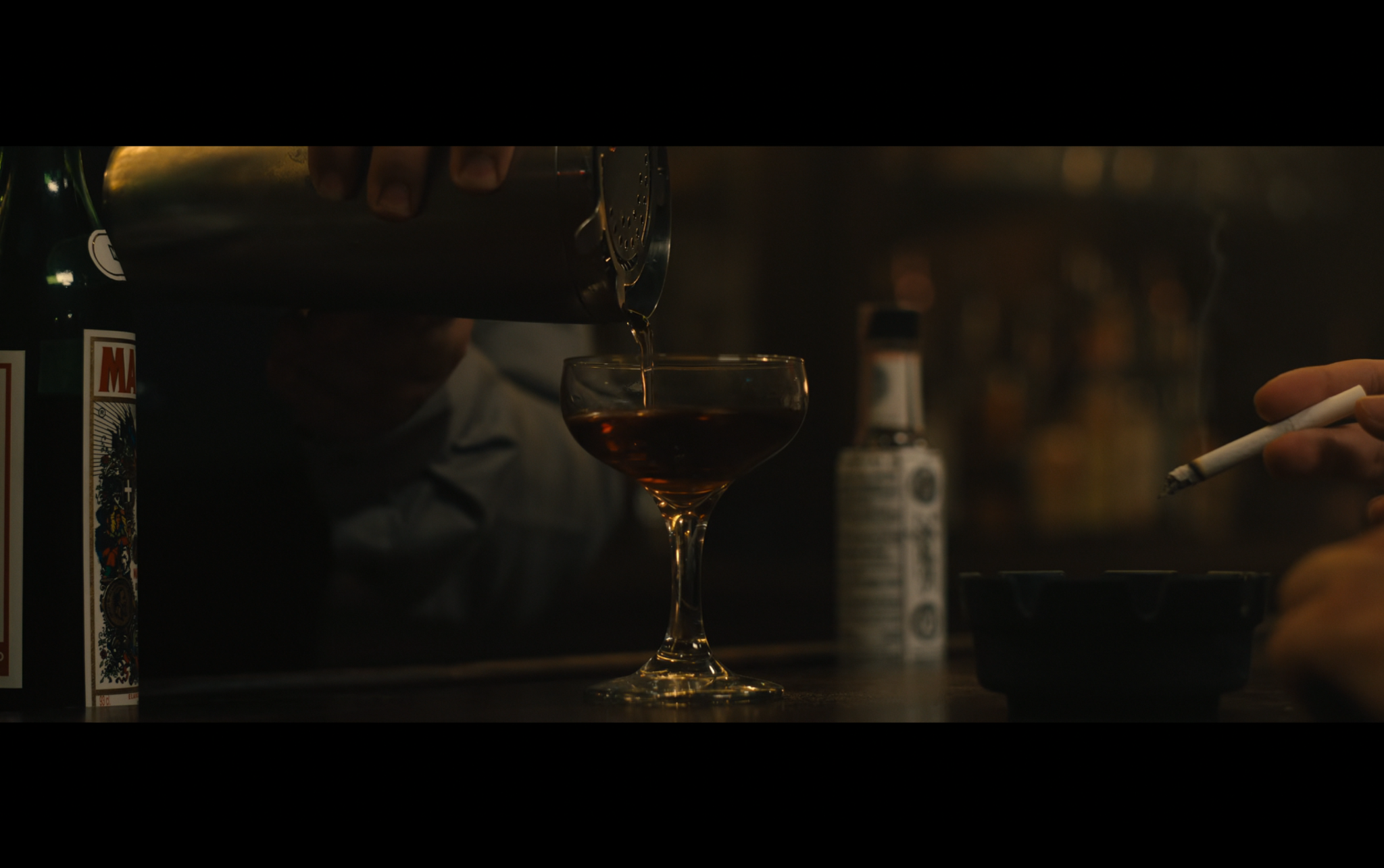
It’s an act of hospitality, which even more than wearing the right thing and having the right glass is what makes an adult beverage the special moment Paul Feig says cocktails in particular should always be. Such is the case with the Manhattan that Colman Domingo’s titular protagonist orders in Rustin to usher a drinking companion into a new world. “After two you’ll be a changed man,” he says:
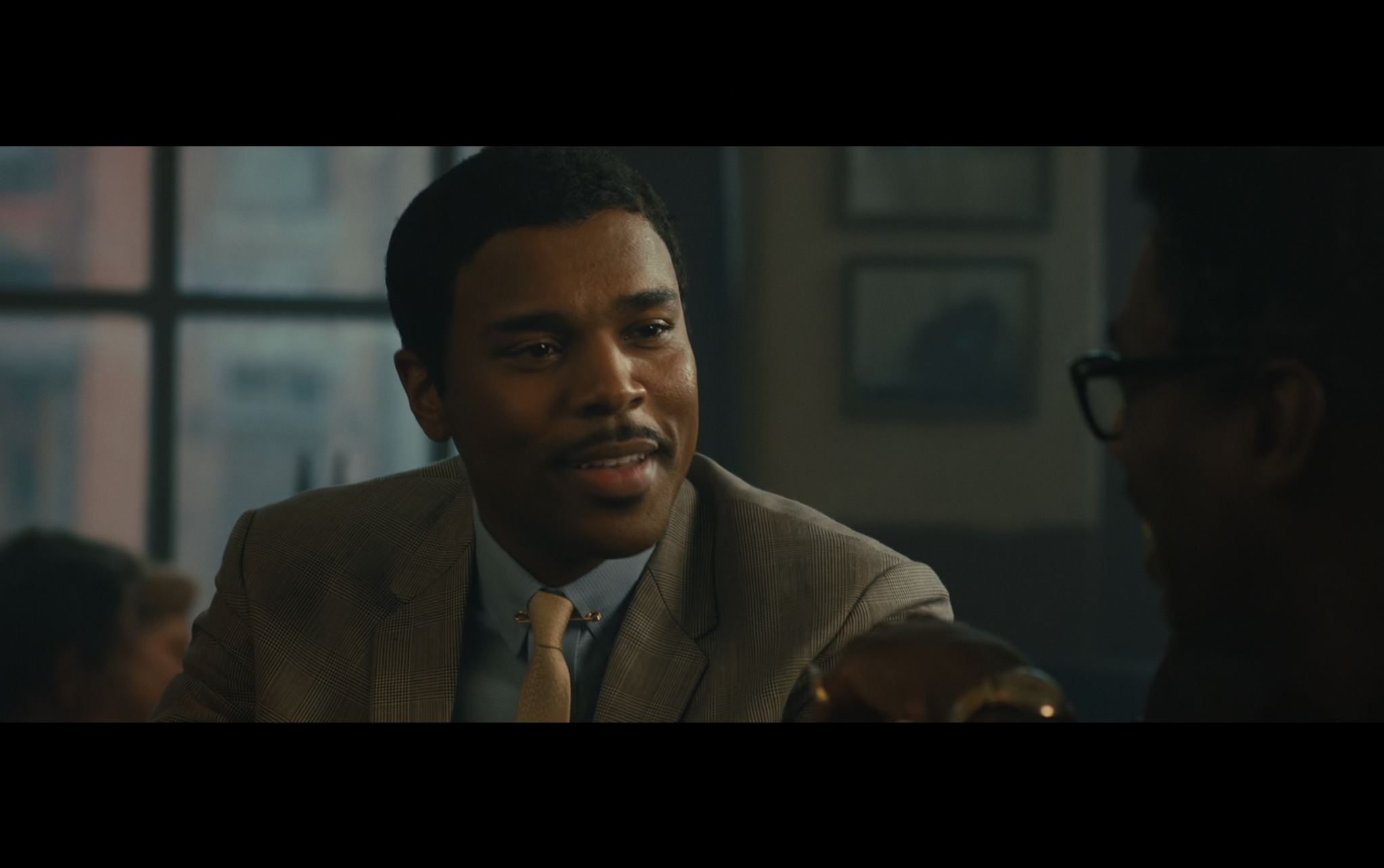
To which Johnny Ramey’s Elias Taylor replies, “well in that case give me three”:
There have been at least that many great versions of this favorite concoction in my own life, most recently the “house” Manhattan that Marion and I finally perfected last month. Years in the making, it’s designed to be shared. We drink them plenty often when it’s just us, to be sure, but even then each one is cause for celebration.
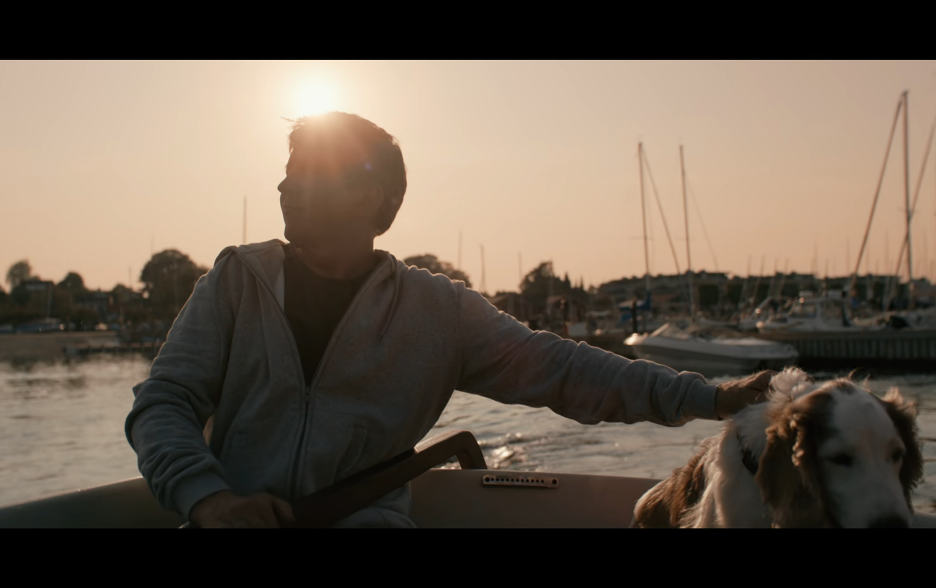
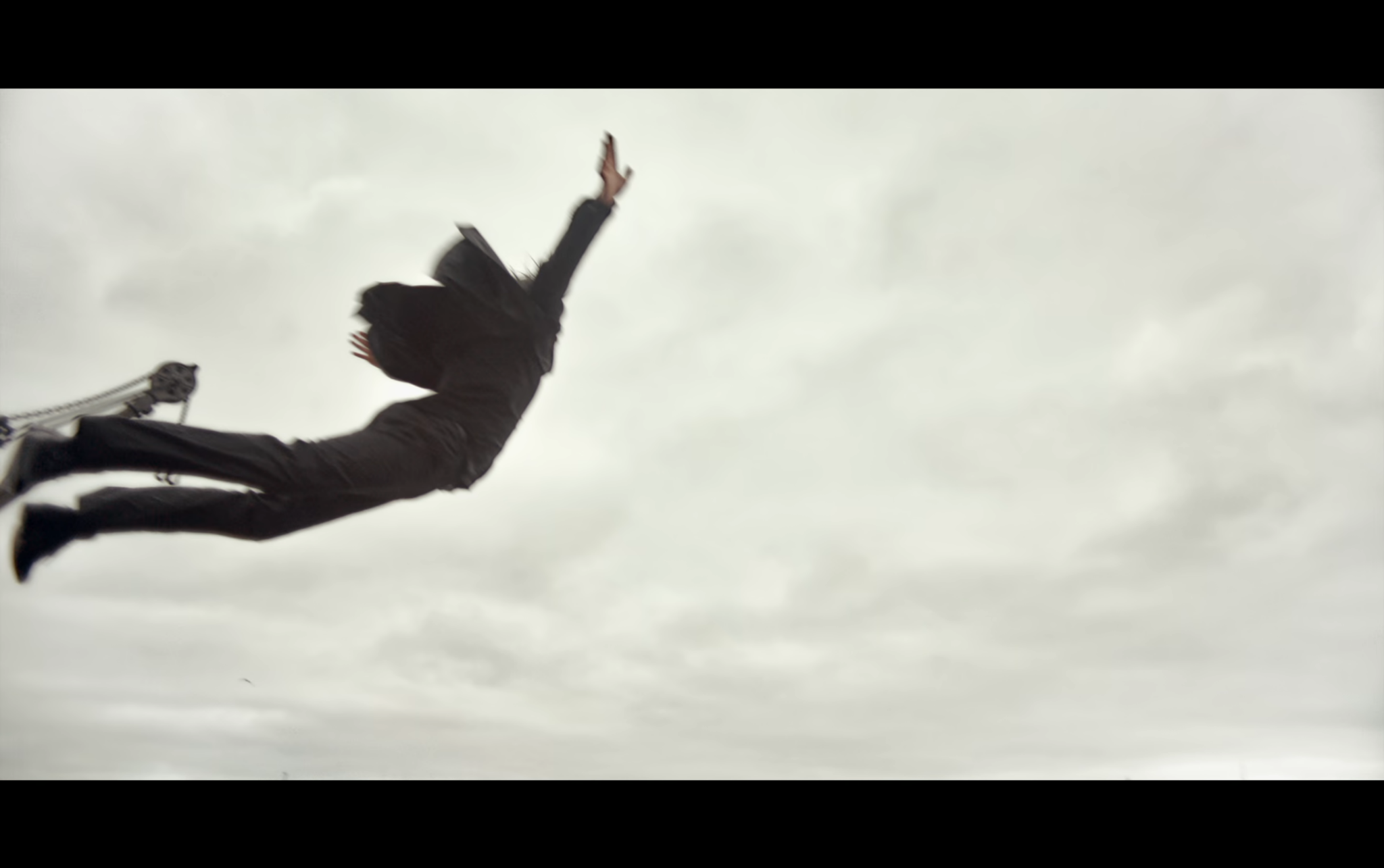
Another Round ends with Martin sending his spouse one last text which reads, “I think Tommy is rooting for you.” When she replies with a message that says, “me too,” he joins his friends in celebrating their students’ graduation with them in the street, throwing himself into a euphoric dance that culminates in a leap into Copenhagen Harbour:
The movie leaves him suspended in mid-air because it’s too early to say whether or not he, unlike Henninger, has said what he had to. In this moment, it doesn’t matter. The lyrics of the Scarlet Pleasure song which plays over this scene go, “fuck what they are saying, what a life.” But there’s another way to express this sentiment, and it’s the same way I capped off all my Drink & a Movie posts:
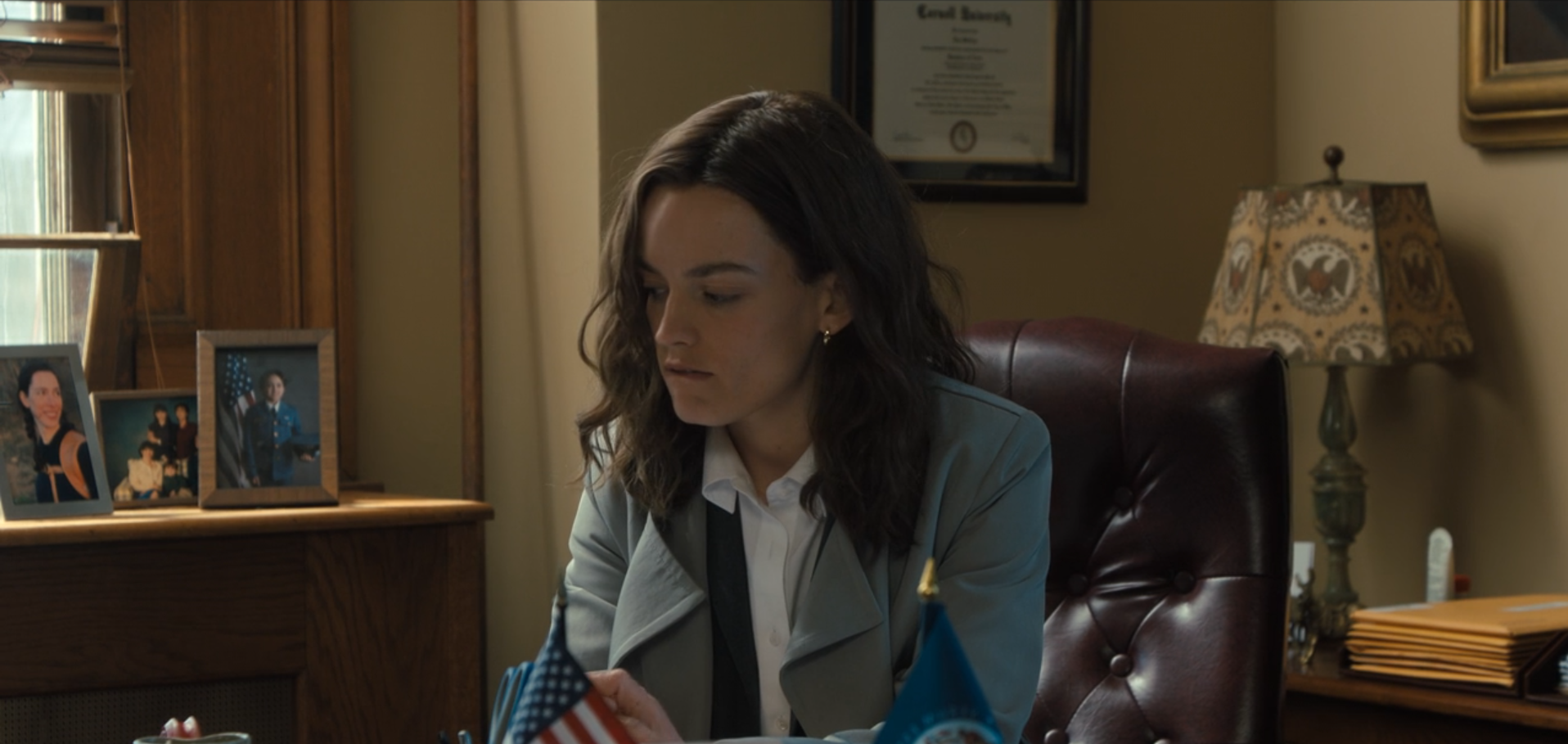
ROYALTON: Do you understand? Burns knew he was going to win. It was already decided. A week before the Prix, Goldman and Sirrus met with several other major players at the Carlyle Hotel. They met there as they had for years, just as their fathers had met, and as their sons and heirs will still meet. They met to negotiate the finish order of the Grand Prix.
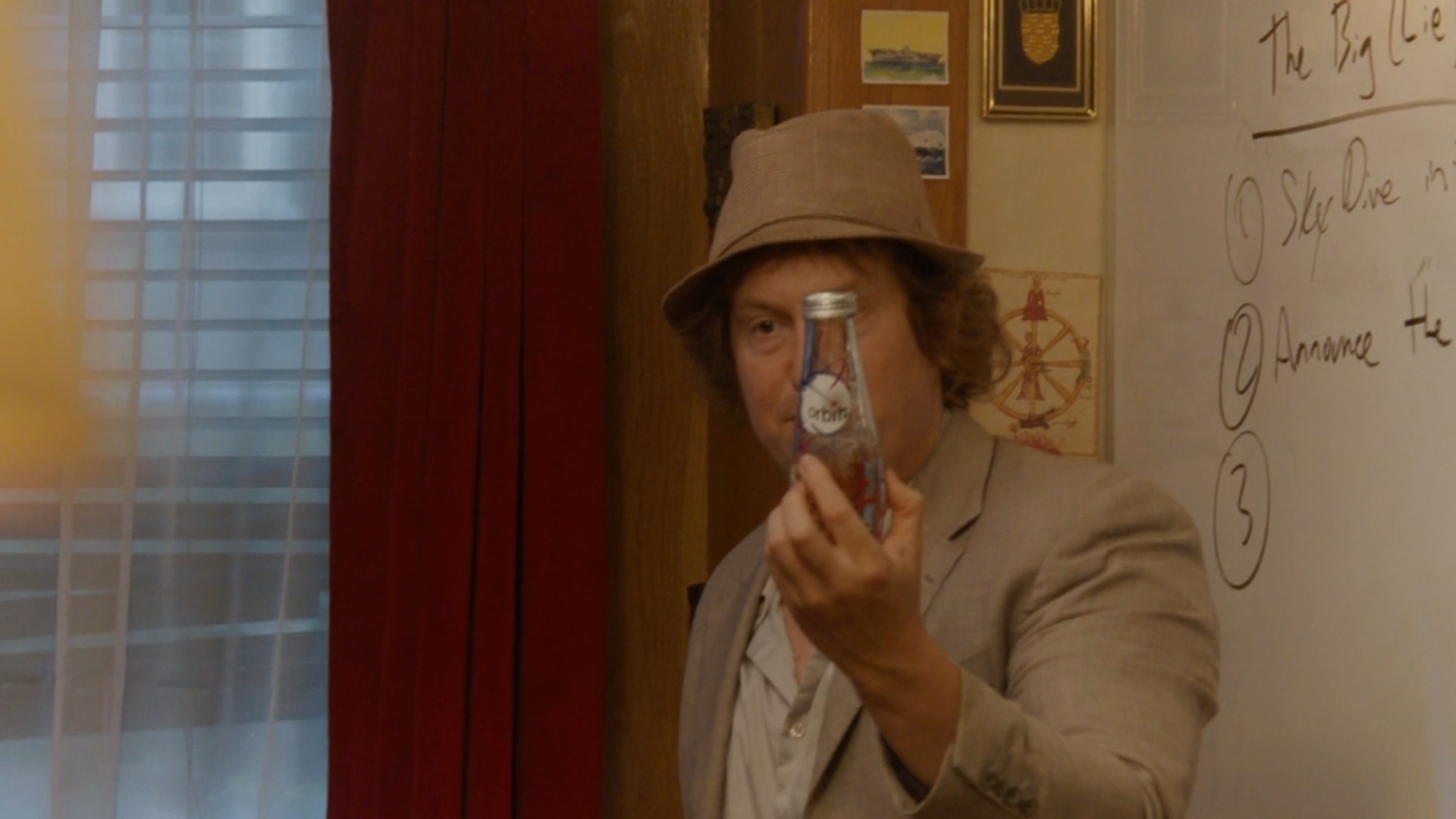
Home Video Recommendation: I’m normally wary of biopics, especially when they’re about people whose work I’m familiar with like Anthony Bourdain, but I’m cautiously optimistic about Tony because it’s directed by Matt Johnson, whose Nirvanna the Band the Show the Movie is probably my favorite comedy of 2026. I’m already angry that it isn’t going to get nominated for a Best Film Editing Oscar, and this bottle of Orbitz, a load-bearing element in the time travel plot, is headed for my personal Movie Prop Hall of Fame:
The holdover highlight is once again The Odyssey, which continues its run at both Cinemapolis and the Regal, but if your plans include more than just a trip to the cinema, consider seeing I Want Your Sex at the former instead. Here’s what I recently said about it on Letterboxd:
Olivia Wilde is spending 2026 crusading against the “fertility crisis” by making date night movies that actually do increase the chances that dinner and a movie are followed by enjoyable consensual sex! This one is more adventurous than The Invite but as aphrodisiacs, it’s a draw.
There’s not much happening on the special events front this week, but noteworthy repertory options include screenings of family favorite The Sandlot at the Regal Monday-Wednesday and two showings of Love & Basketball, another excellent sports movie, at Cinemapolis on Tuesday.
Home Video Recommendation:Obsession recently concluded an eight-week run as my favorite new film in Ithaca theaters, which will likely be the longest of Movie Year 2026. While that hardly guarantees an appearance on my annual Top Ten (Percent) list–The Phoenician Scheme missed the cut last year despite holding this honor–I do find myself thinking about it fairly often. Like this shot, for instance:
Which corresponds to the first moment Michael Johnston’s Bear says anything that could be construed as an apology. In other words, he’s saying “I’m sorry” to his own reflection! This is a hard film to talk about without verging into “spoiler” territory, so I don’t want to say much more here, but check out my Letterboxd movie diary entries here and here for further thoughts after you watch it. Obsession is now streaming on Peacock with a subscription and is available from Universal Pictures Home Entertainment via a variety of other rental and purchase options, including physical media.
Previous “Ithaca Film Journal” posts canbe found here.A running list ofall of my “Home Video” recommendations can be found here.
“It was raining last night and I couldn’t sleep, so I started my favorite TV show again, The Pink Opaque.”
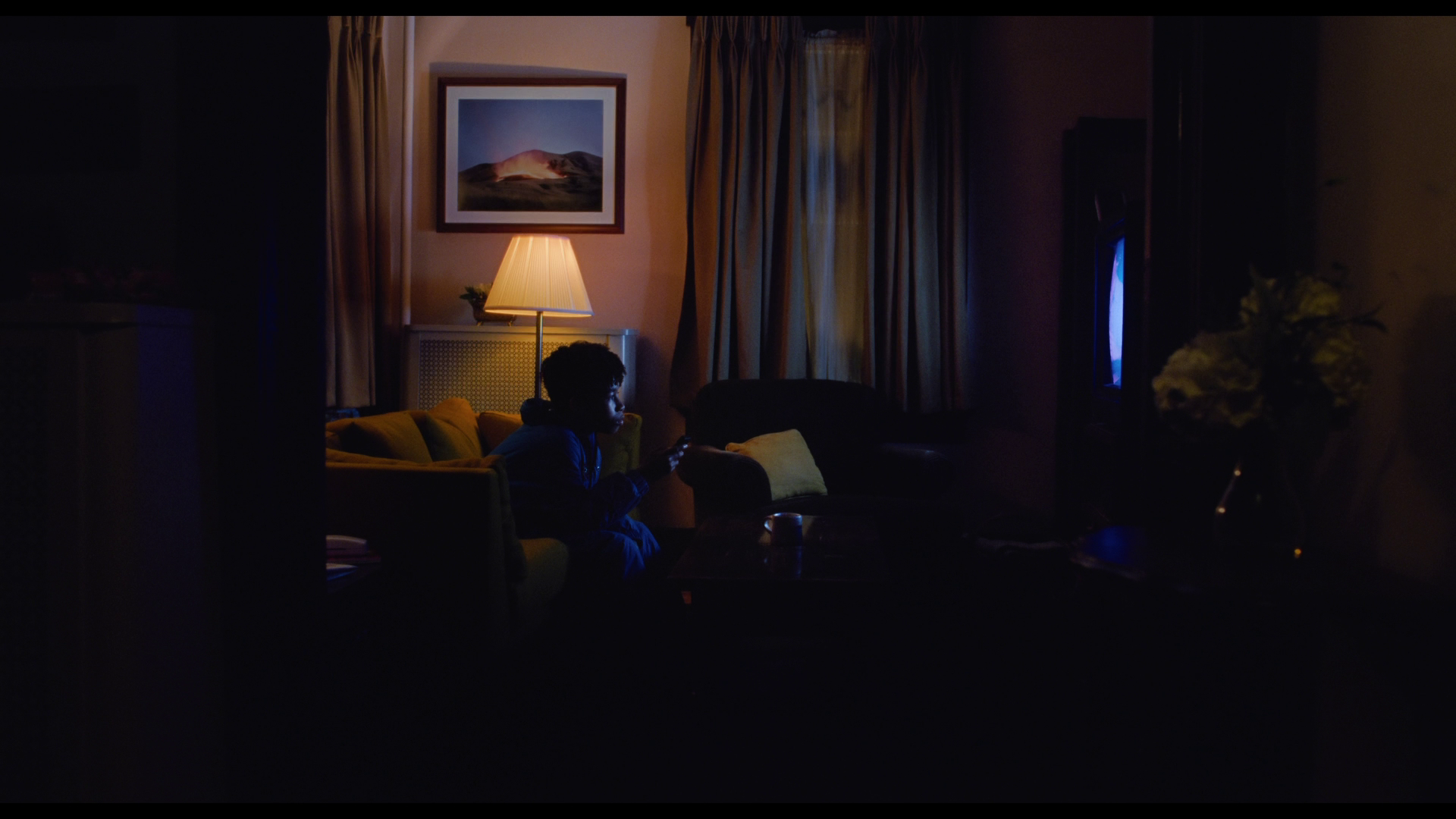
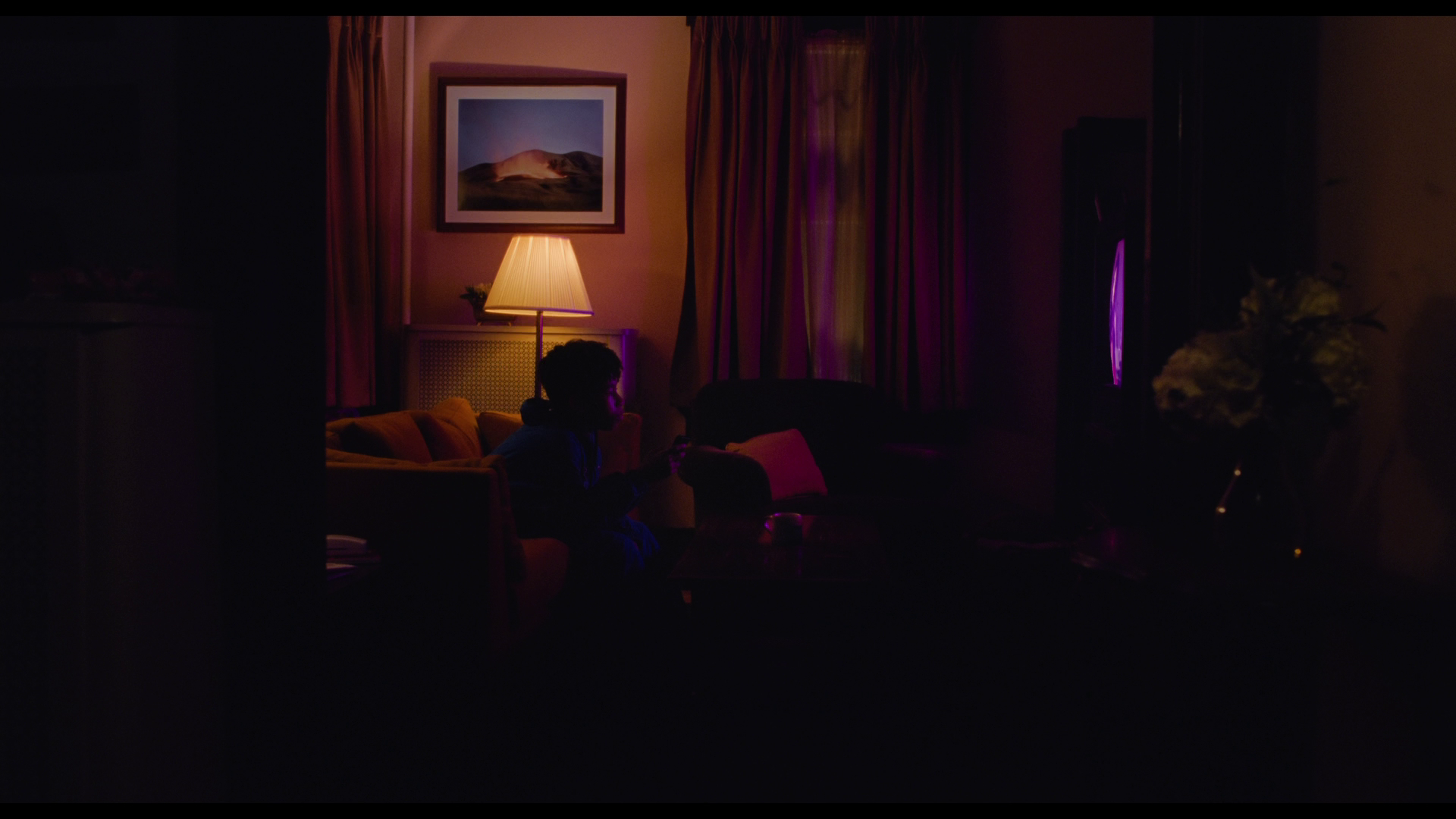
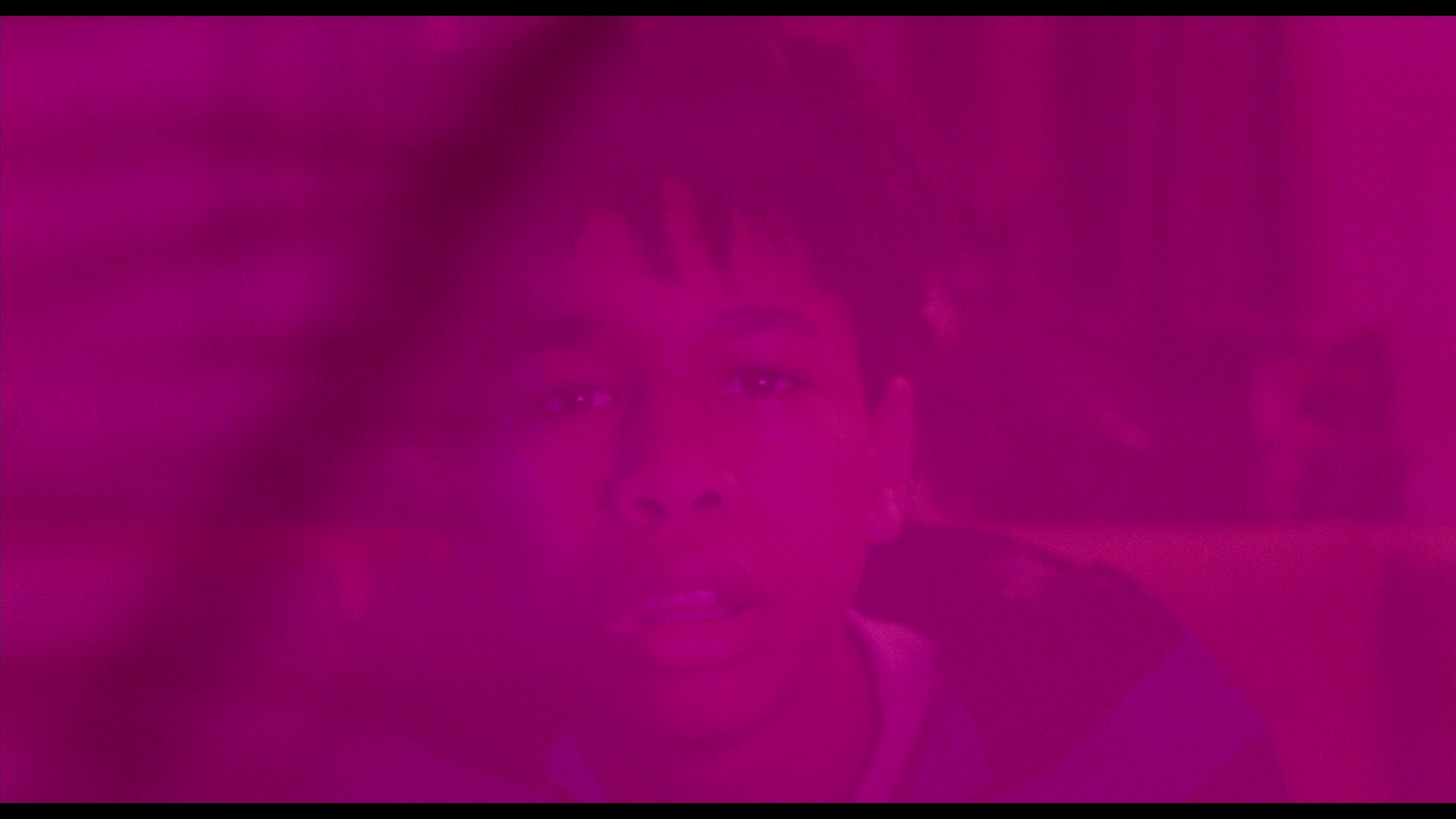
So says Justice Smith’s Owen in voiceover in the first scene which follows I Saw The TV Glow‘s title card. The film is nearly four minutes old at that point, and we already know a little something about TPO because it’s there right from the start, appearing first in the form of a younger version of Owen (Ian Foreman) watching a television in his living room that suddenly goes the color of Manic Panic Fuschia Shock in the movie’s second shot:
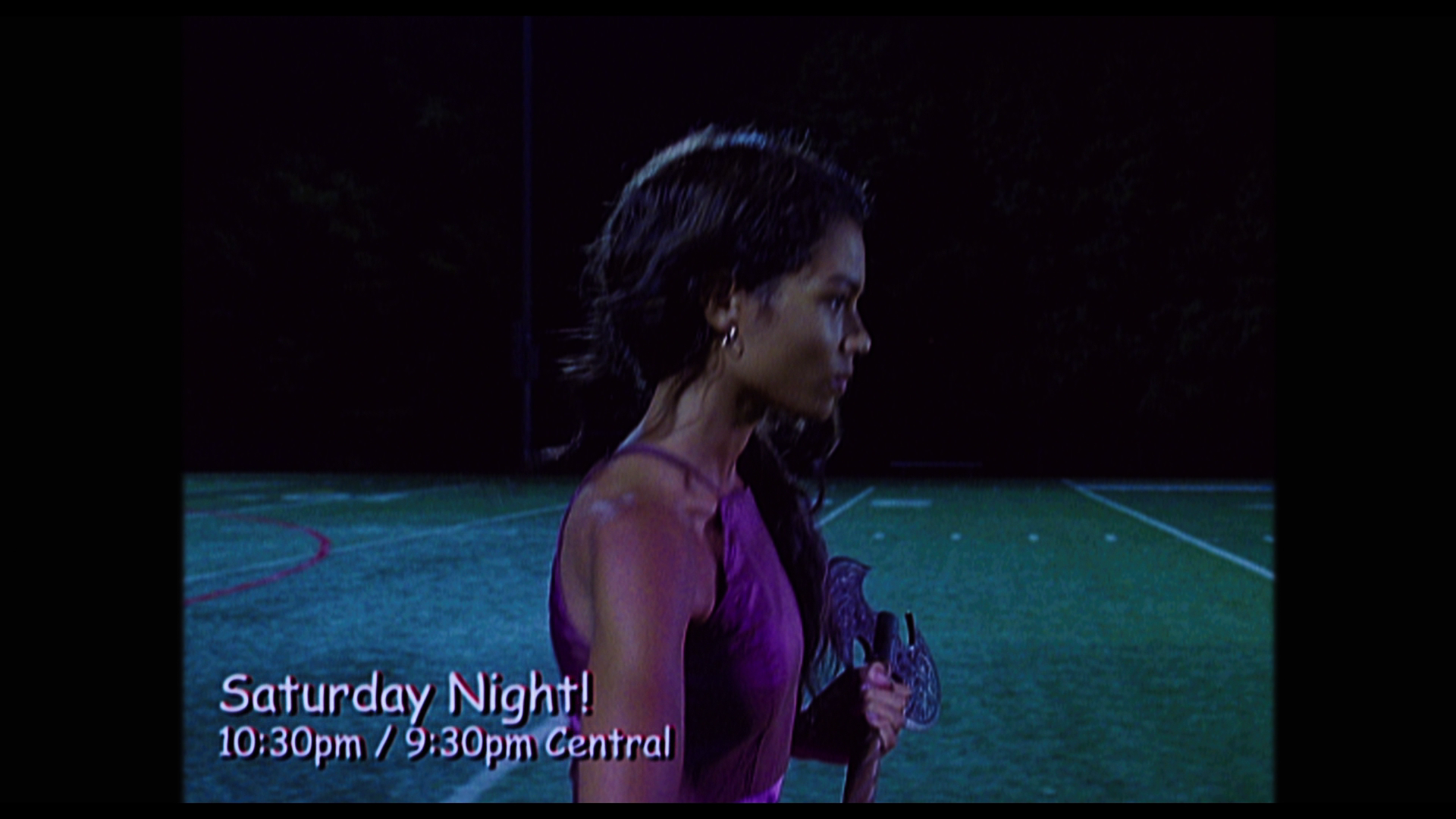
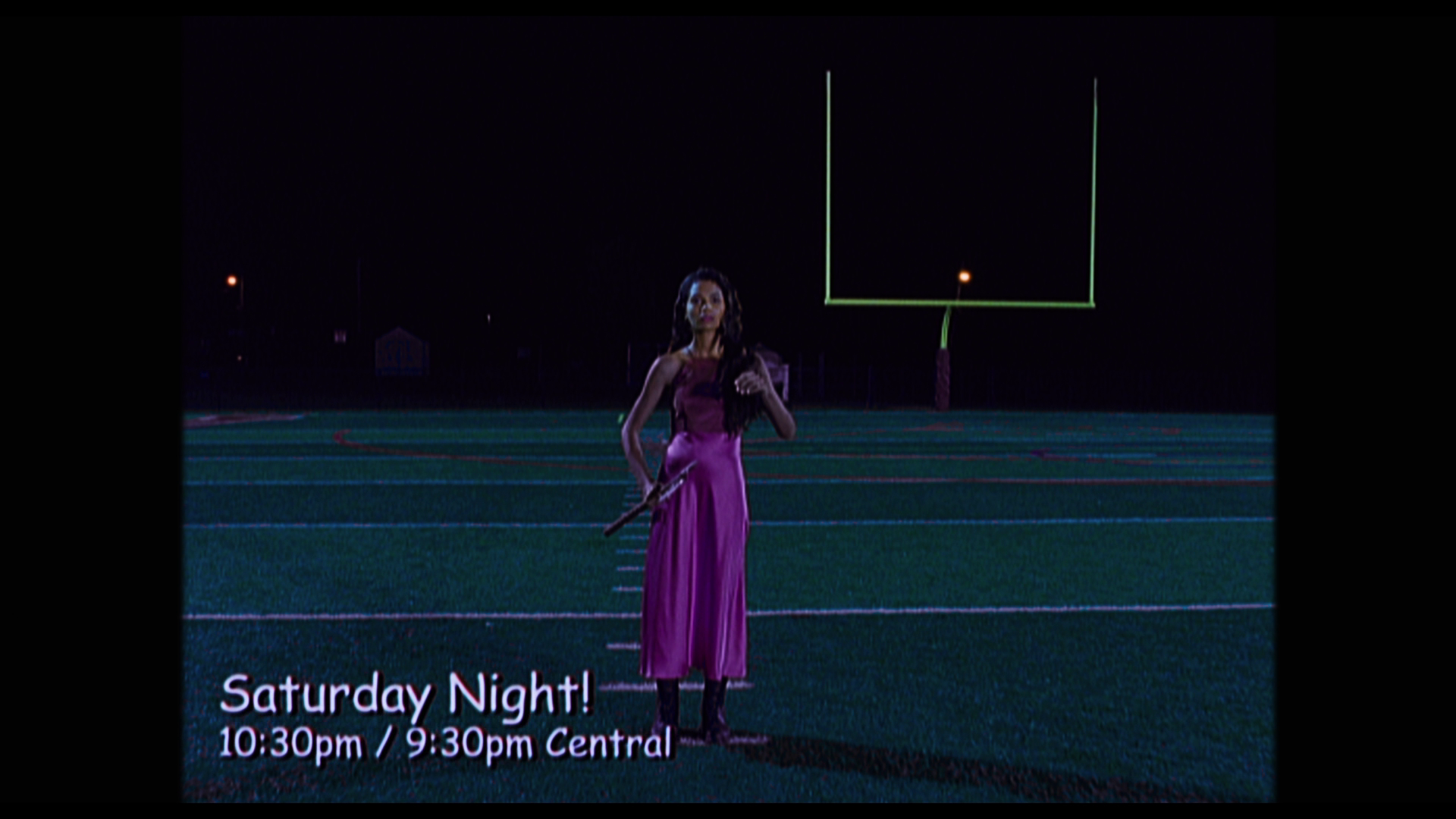
Then takes over the screen in the third shot with a promo for this week’s episode that features one of its two heroes Isabel (Helena Howard) striding confidently across a football field with an axe:
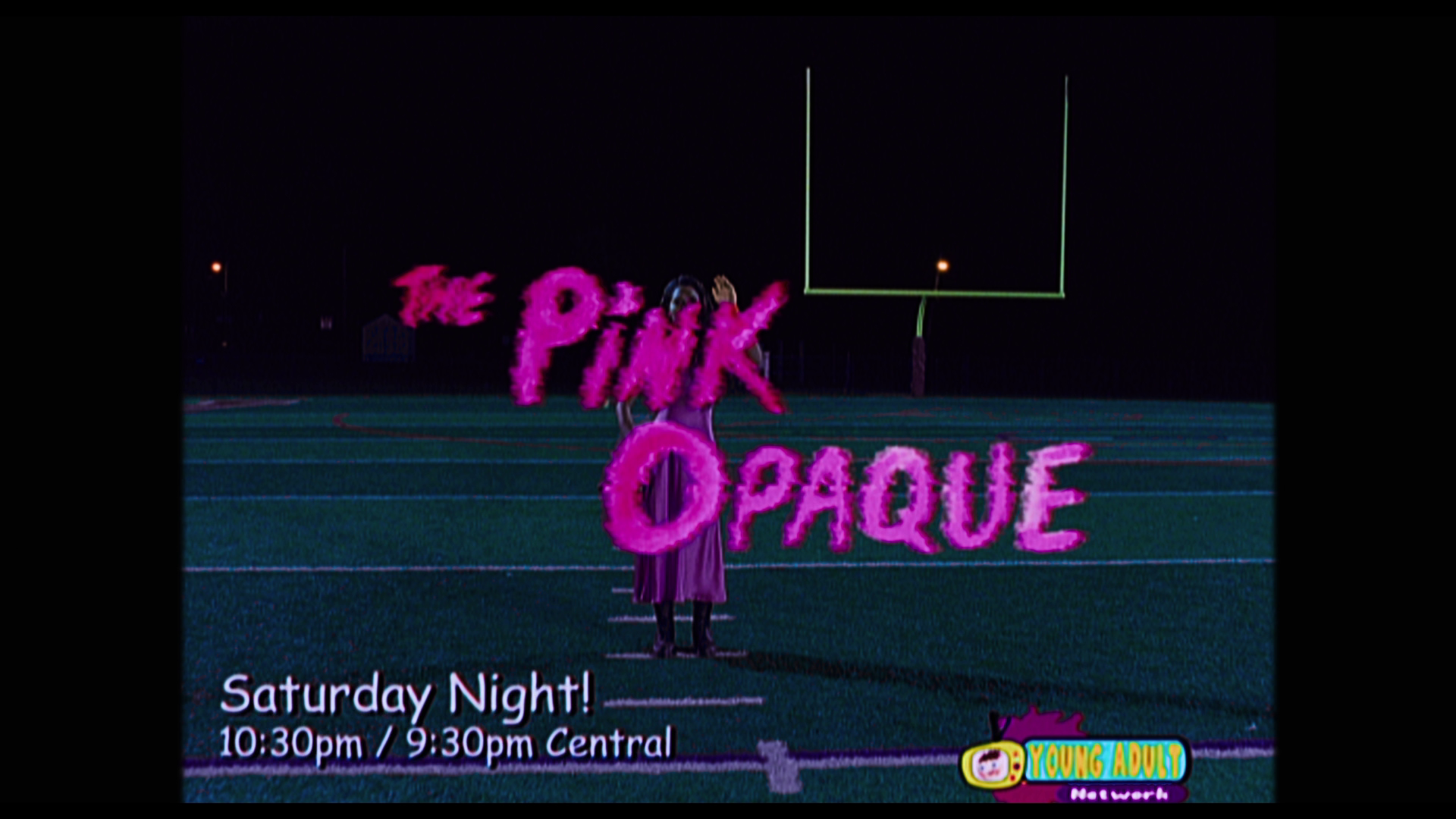
In a gesture you’d never notice if you weren’t looking for it, she seems to wave at Owen from under the show’s title:
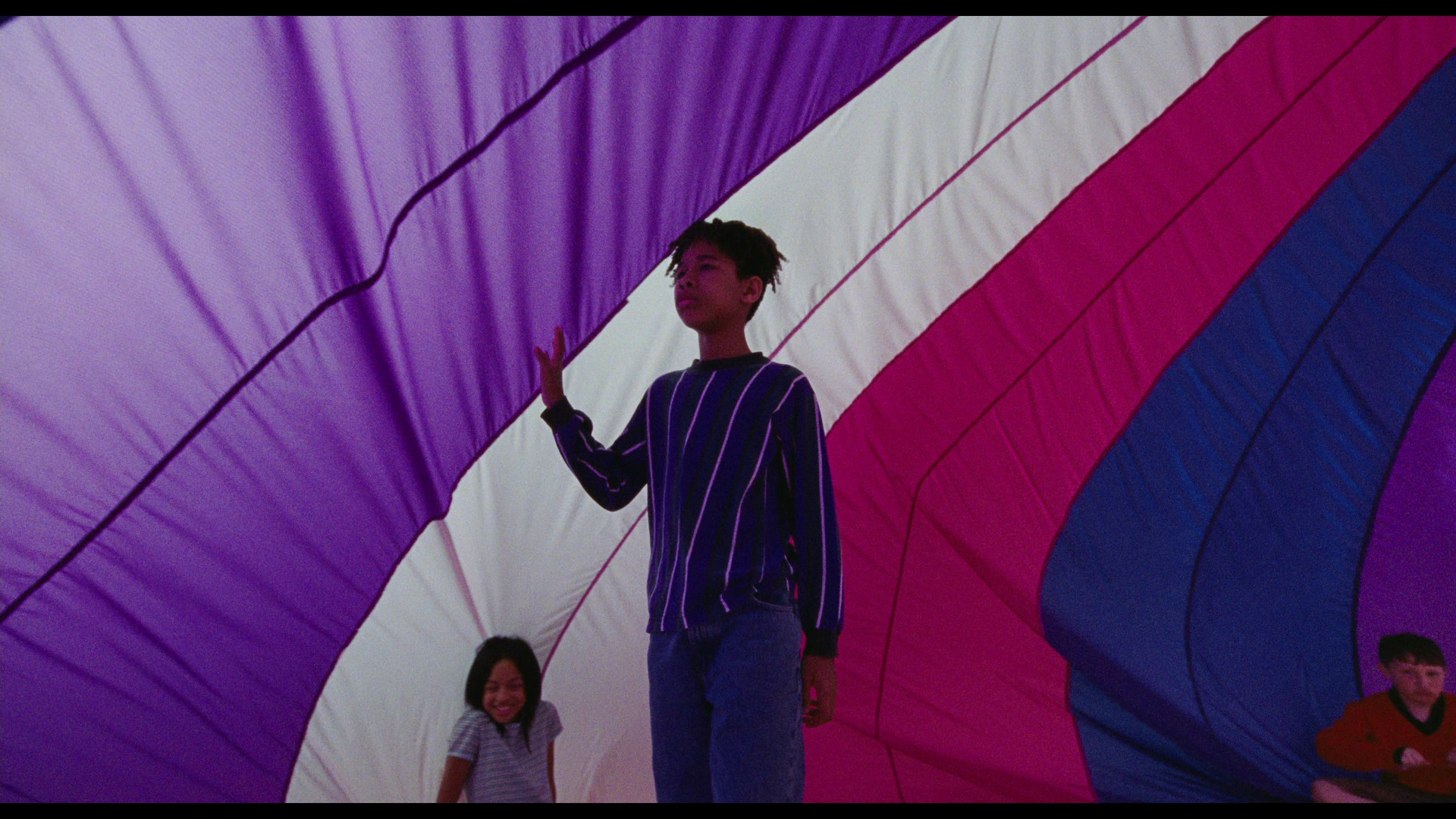
But he isn’t looking for it and doesn’t react. There’s a dissolve from his face to a group of school children that includes him playing parachute games in the gym:
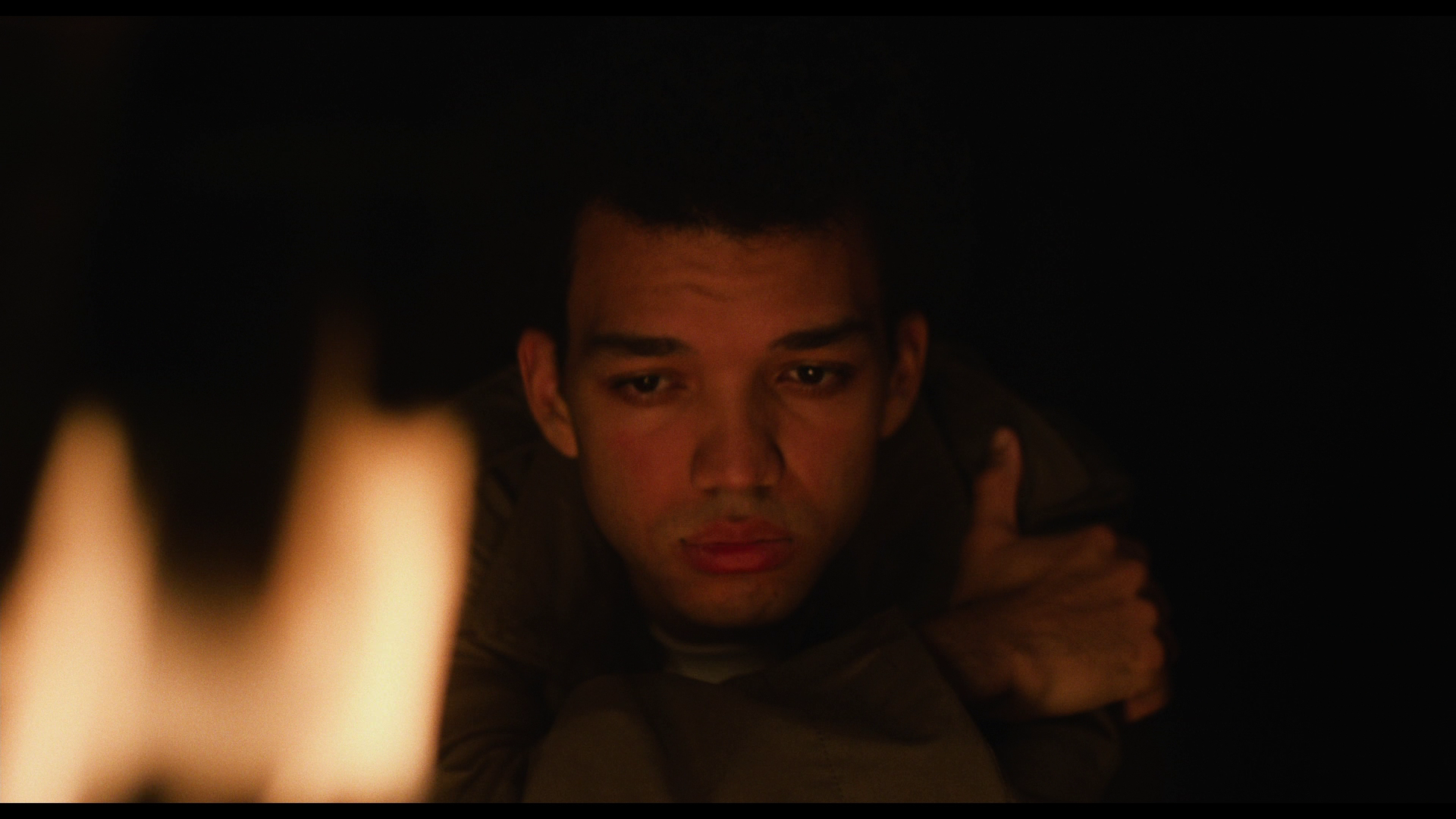
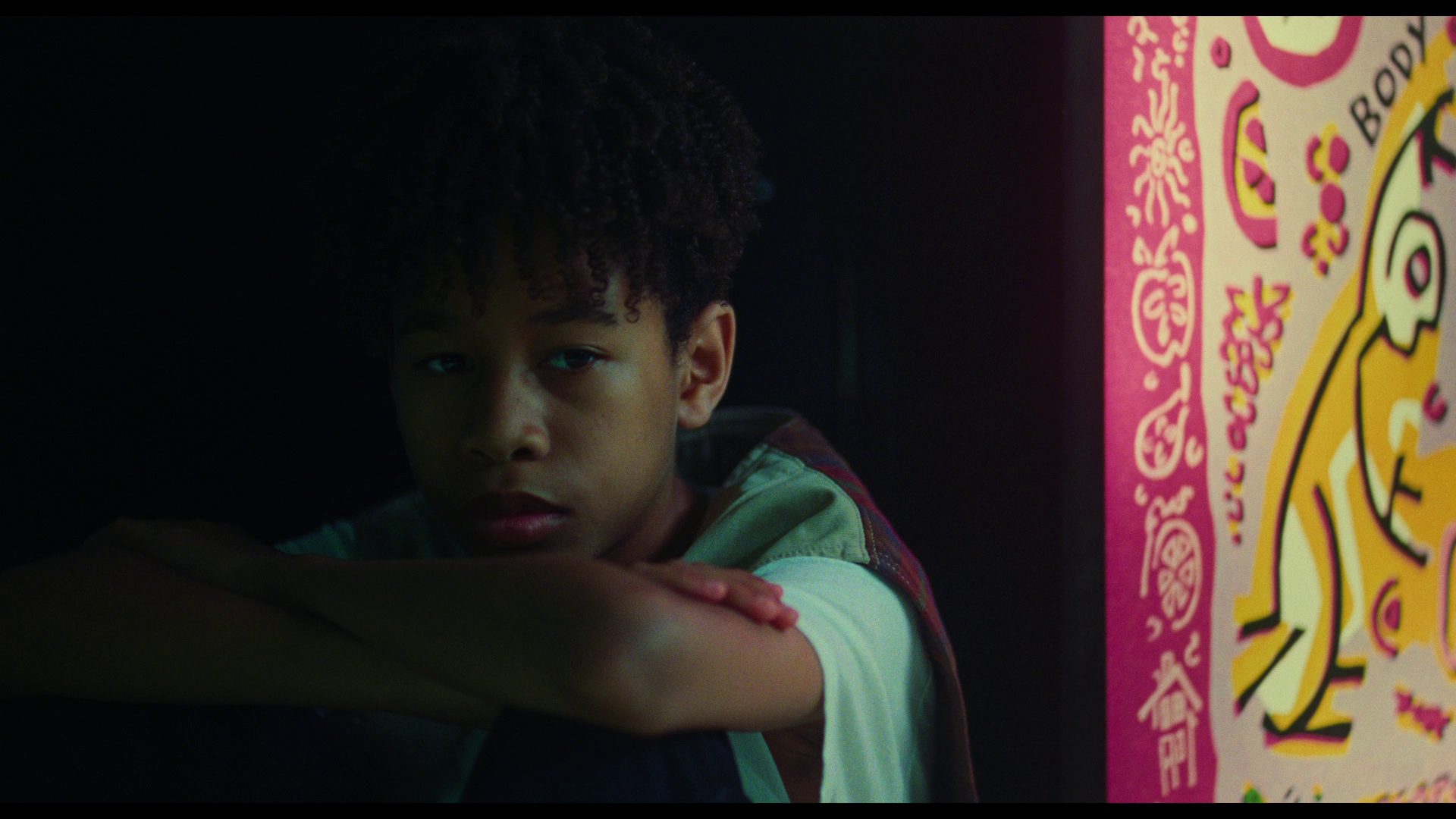
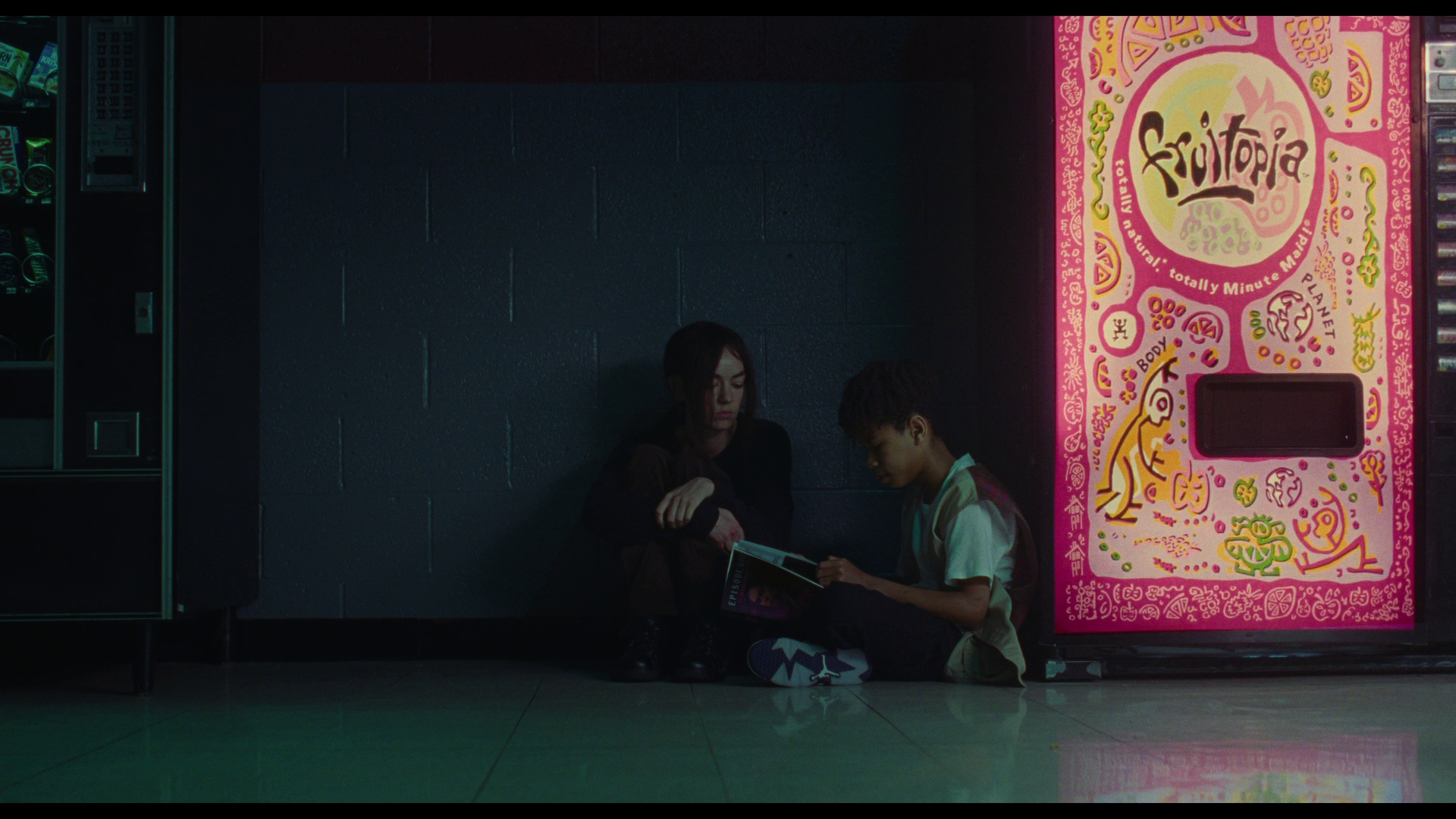
Then that title card, and then we’re off. The shot of adult Owen staring into a campfire above cuts to one set on election night 1996 (as we’re informed by another set of handwritten pink titles), where under the light of a Fruitopia machine older kid Maddy (Jack Haven) will properly introduce him to the television program which will (not) change his life. “It’s a kid’s show, right?” he asks:
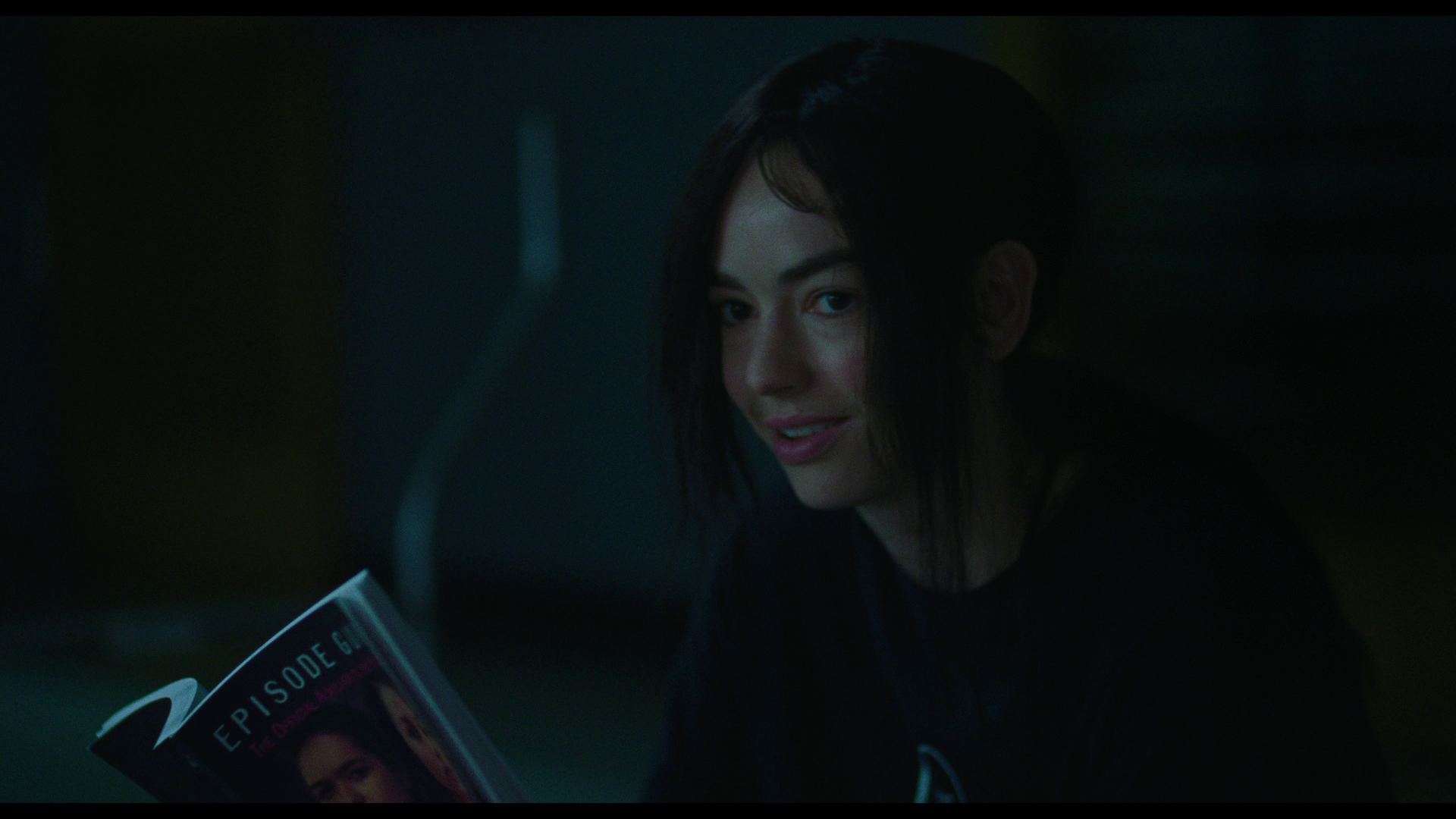
“No, no way. Who told you that?” Maddy says incredulously, putting down the episode guide she’s been reading. “I mean, yeah, technically it’s on the Young Adult Network, but it’s way too scary and the mythology is way too complicated for most kids.”
She deems his reply (“I see commercials for it all the time–it looks amazing!”) sufficiently respectful, and the scene continues with her lending him the episode guide:
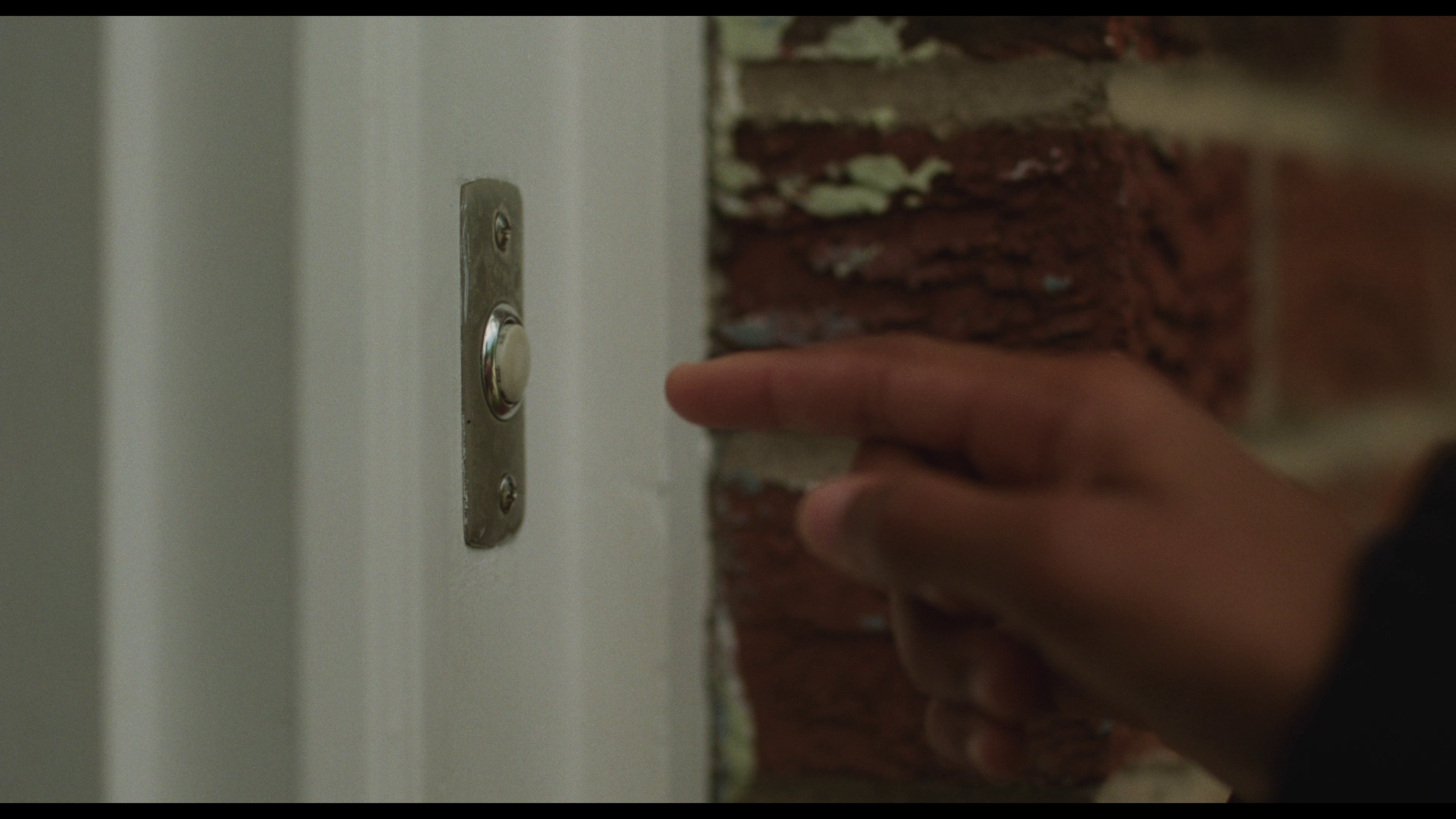
And ends with a plan being hatched when Owen admits that his early bedtime doesn’t permit him to watch it when it comes on Saturdays at 10:30pm as “the last show in the block before they switch to black-and-white reruns for old people.” Thus it is that a couple of scenes later when Owen’s mom (Danielle Deadwyler) drops him off at a friend’s house for a sleepover, he only pretends to ring the bell:
And instead scurries off to Maddy’s to watch The Pink Opaque with her and her friend Amanda (Emma Portner). The episode that airs that night features an opening-credits font instantly recognizable to all fans of Buffy the Vampire Slayer:
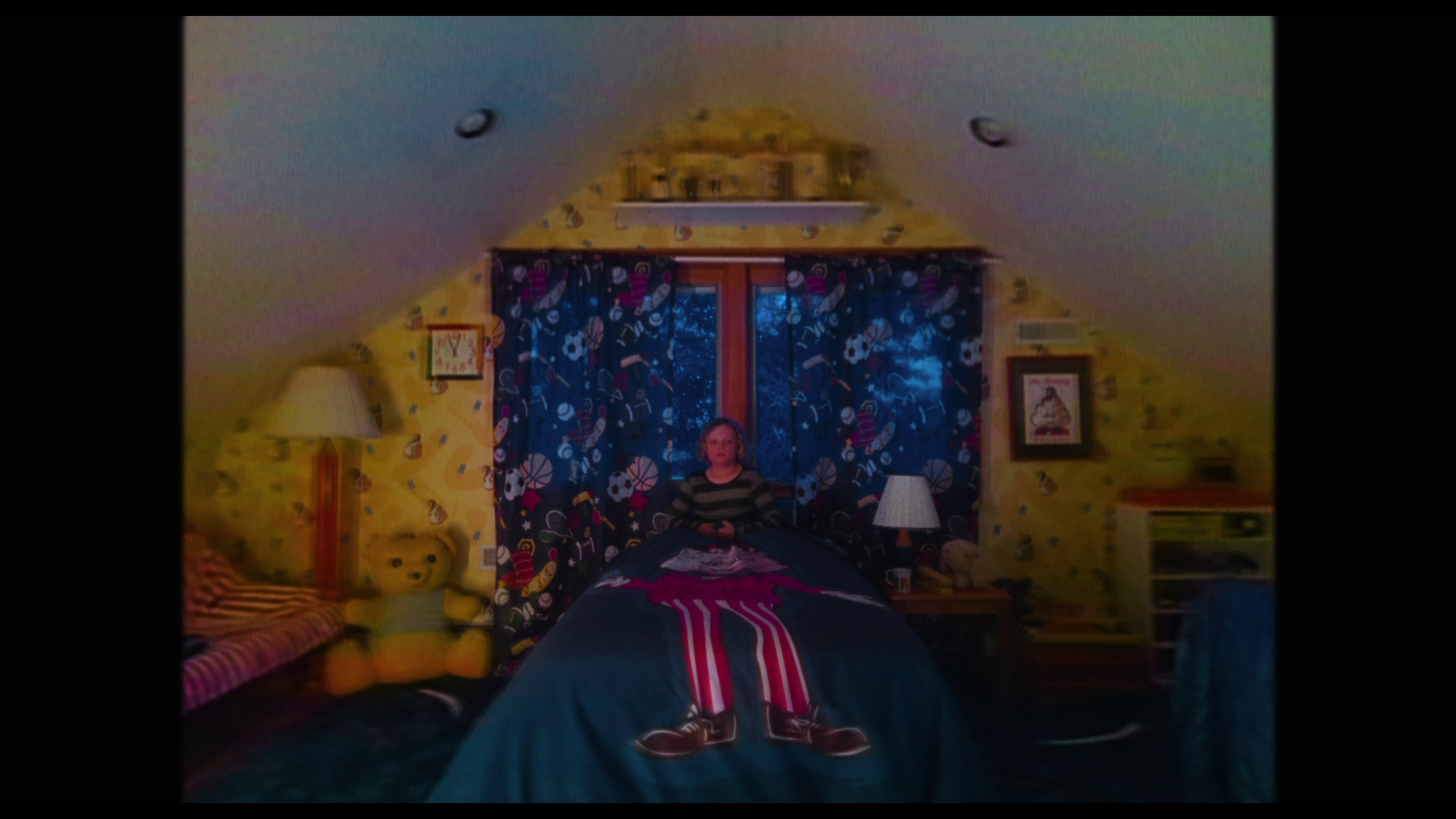
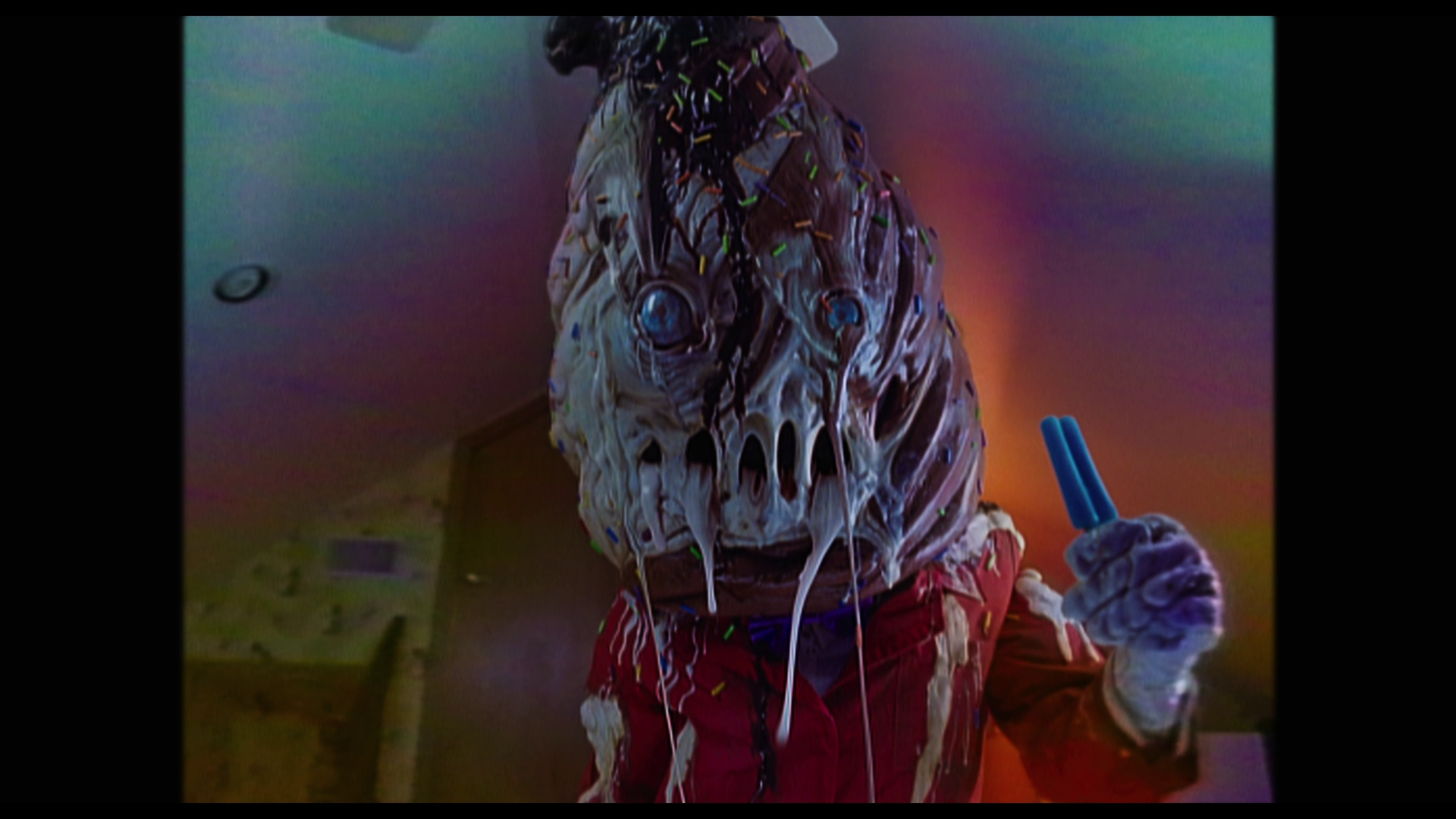
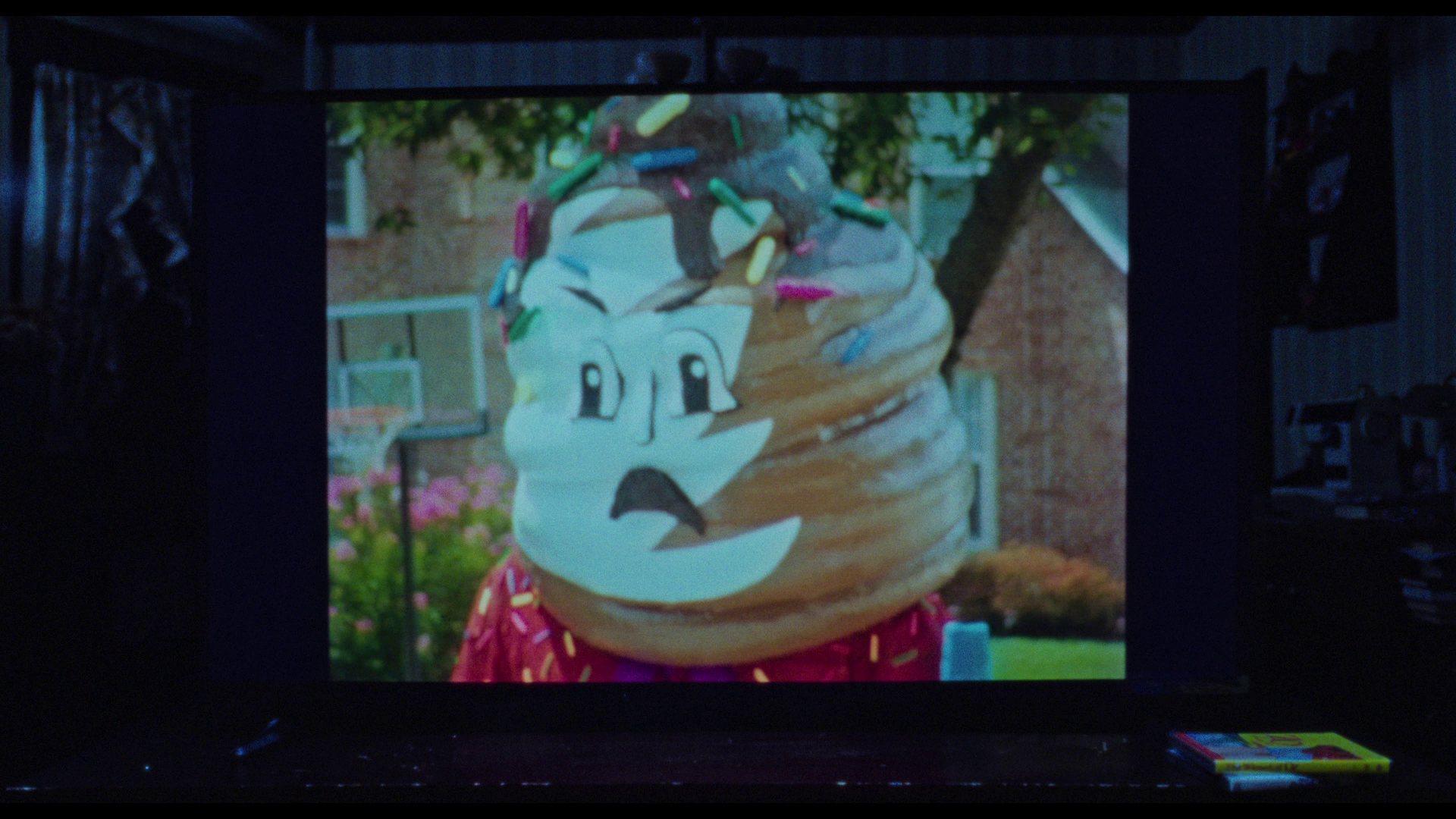
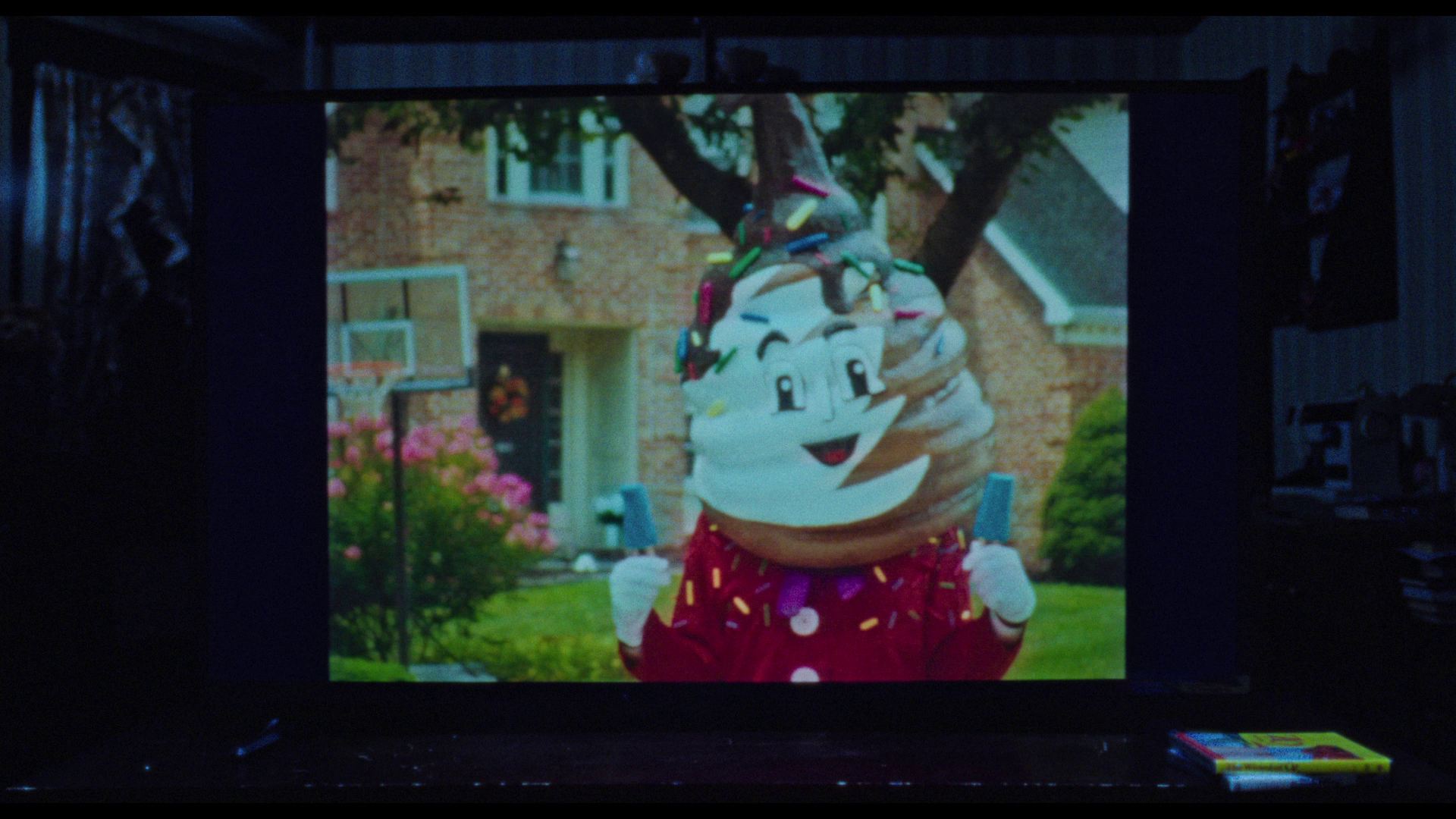
And a terrifying incredible melting ice cream man that appears to be about to devour a child in their own bedroom, who as William Hughes noted in an article for the AV Club is basically “a horror-movie version of ice cream mascot Mr. Tastee” from the classic Nickelodeon television program The Adventures of Pete & Pete:
The sequence ends with Maddy saying that she identifies more closely with the series’ other protagonist Tara (Lindsey Jordan) than Isabel, who she describes as “kind of a drip,” and confessing that “sometimes The Pink Opaque feels more real than real life”:
And a dissolve first from Owen to Isabel as he walks back to his friend’s house the following morning:
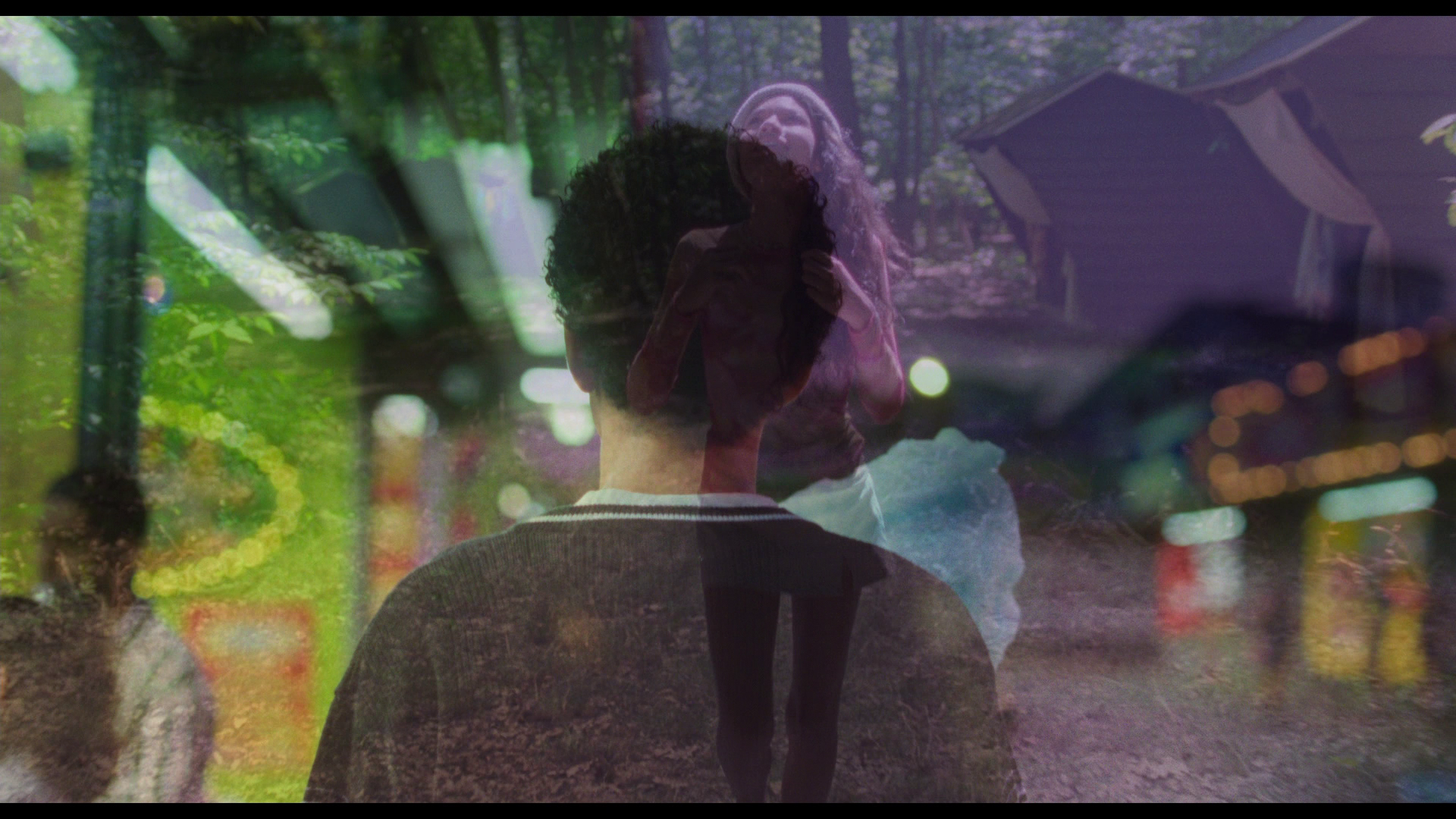
Then from a carefree, sunlit Isabel back to Owen (now played by Smith) at a carnival two years later:
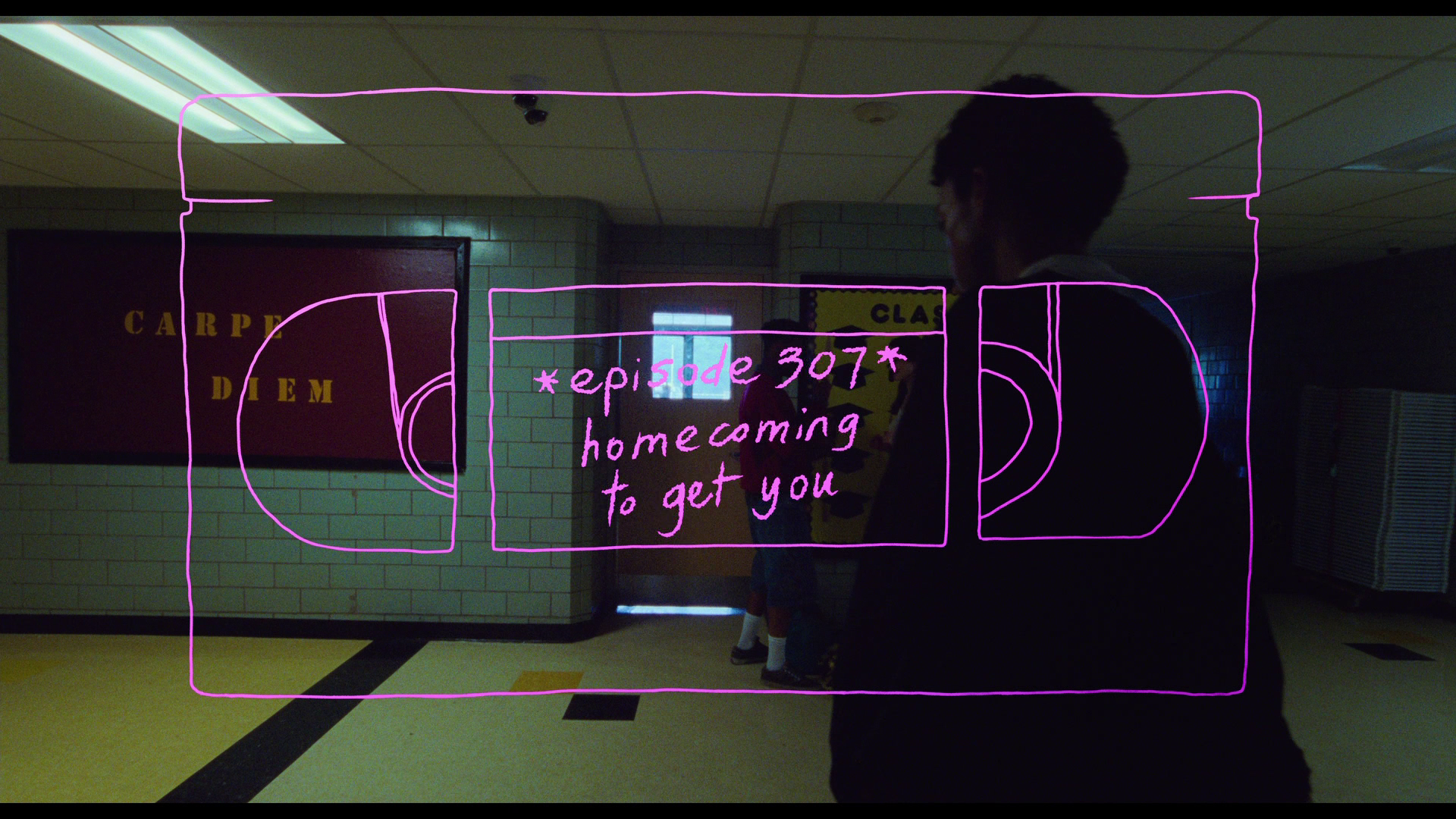
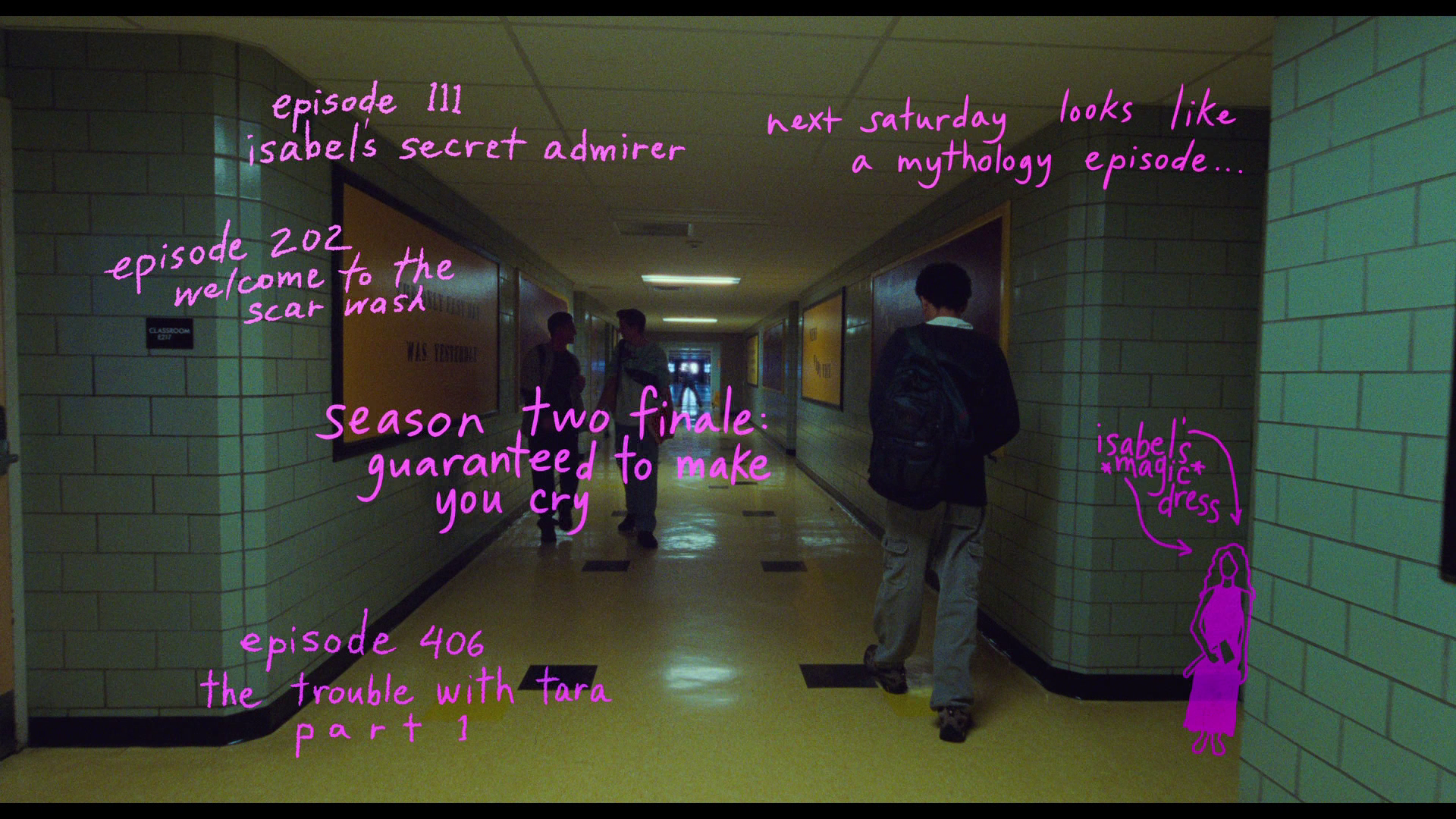
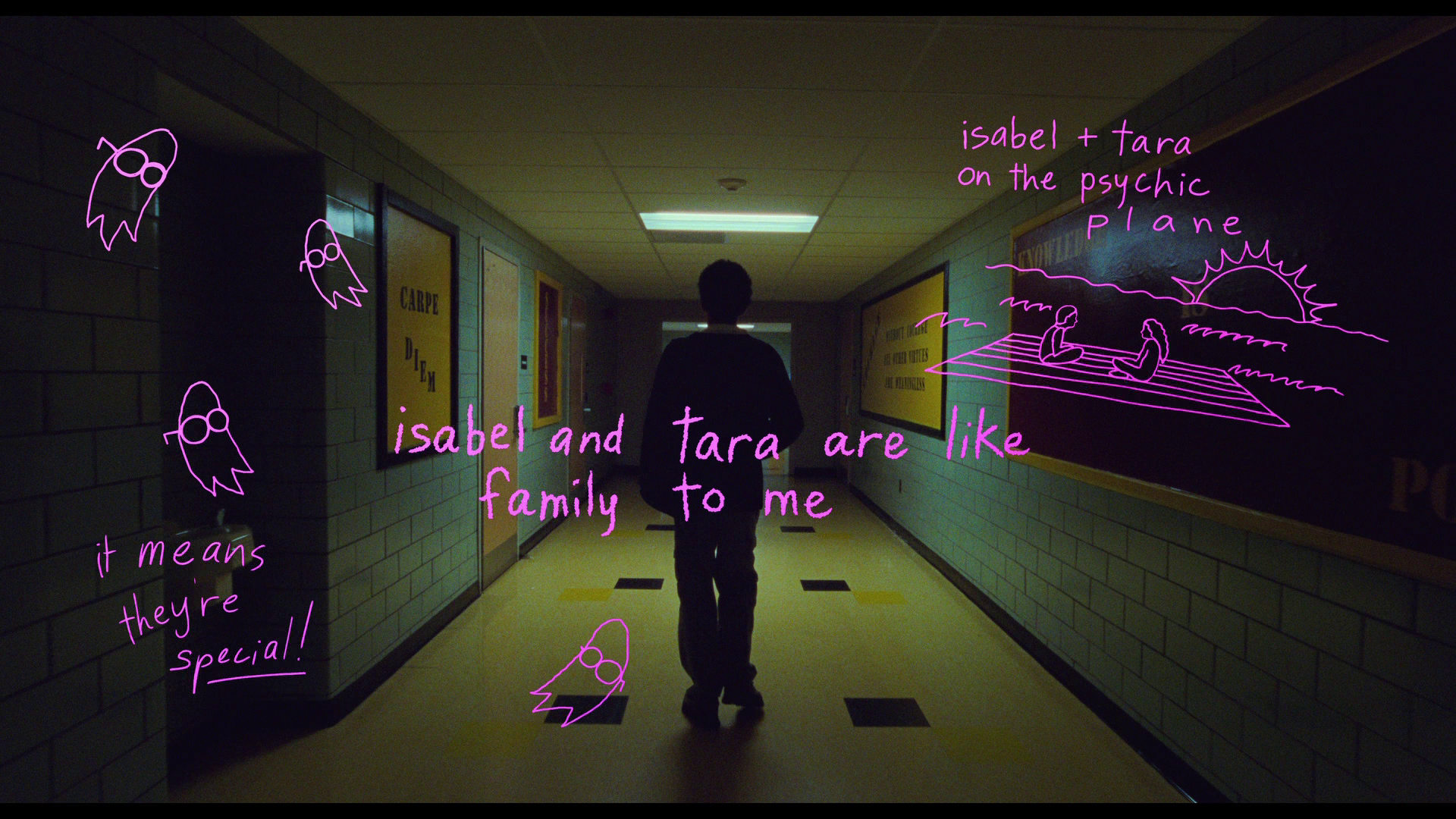
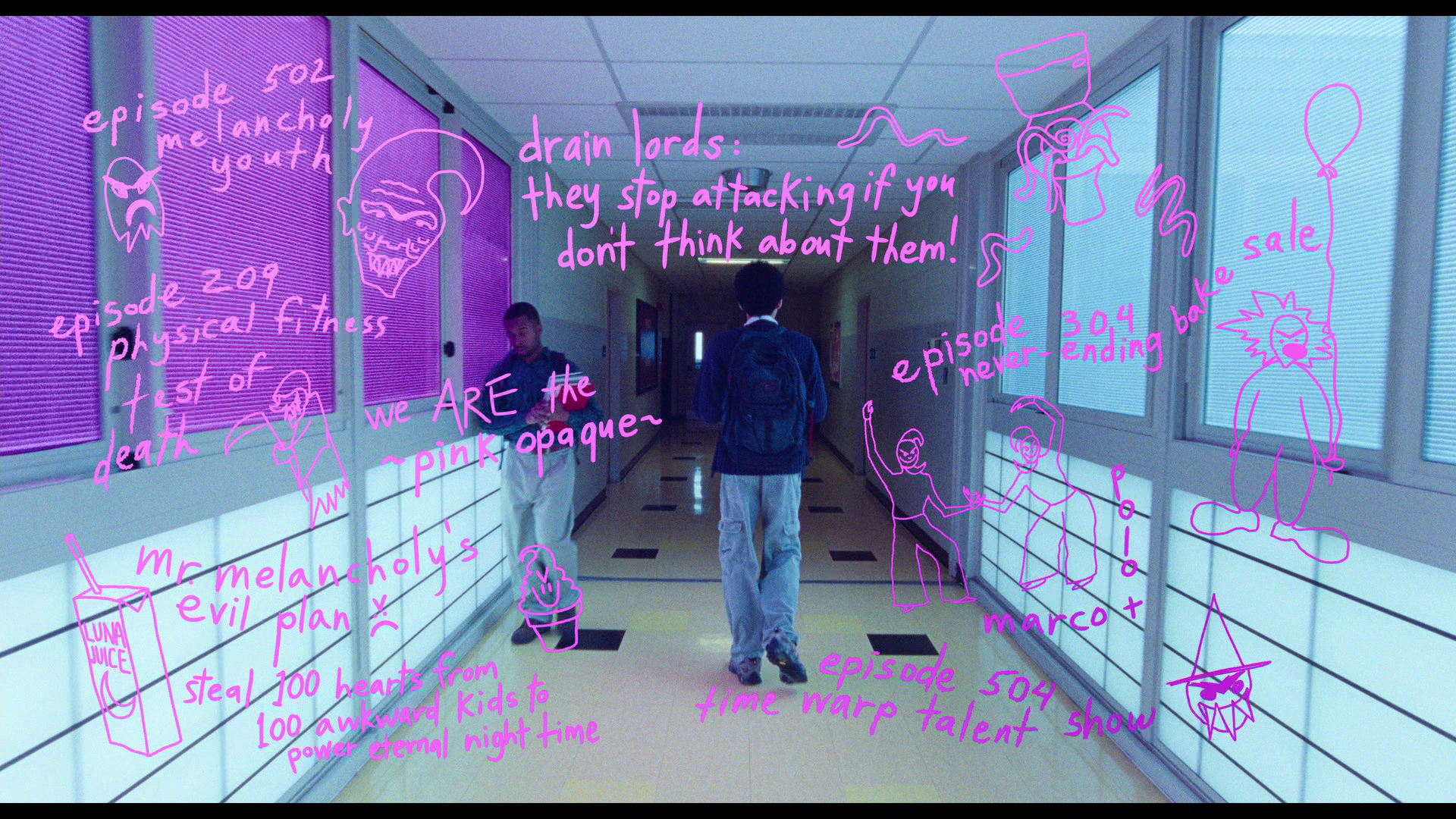
With Owen’s change in orientation toward Isabel seeming significant even if it isn’t yet clear why. We learn more about what actually happens on The Pink Opaque in this sequence than any other courtesy graphics representing the tape recordings Maddy has been making Owen, who still isn’t allowed to stay up late enough to watch the show live, which accompany a long shot of him walking through their school as a song Caroline Polachek created for the film called “Starburned and Unkissed” plays in the background:
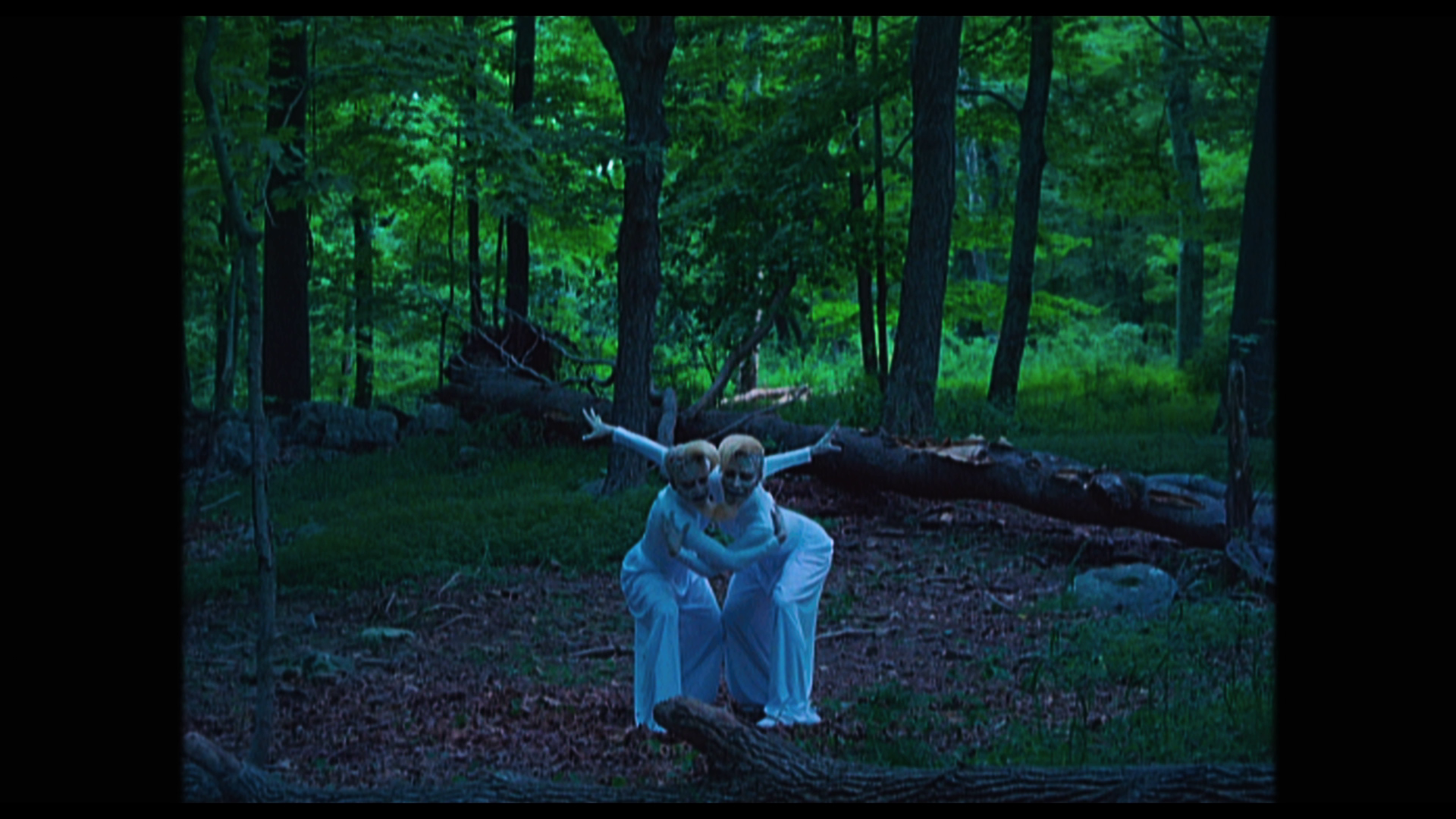
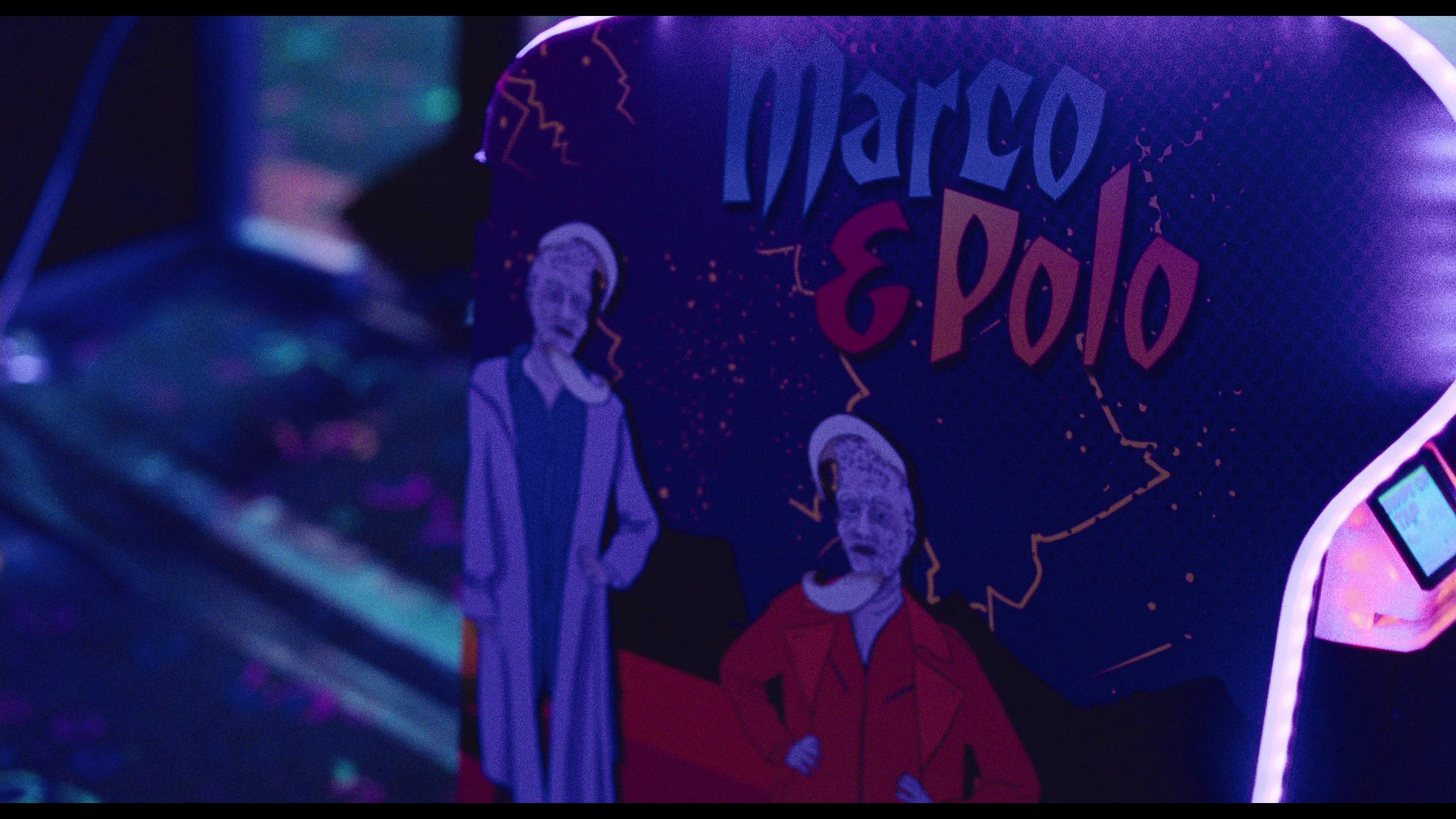
And excerpts from a re-run of the pilot episode where we meet the demons Marco and Polo and the “big bad” Mr. Melancholy (all also played by Emma Portner) for the first time:
And in which Tara replies to Isabel’s question “am I going crazy?” by portentously admonishing her, “never let anyone convince you of that.”
The following scene contains what must be TV Glow‘s most oft-quoted line. Owen spots Maddy eating lunch alone on the bleachers and, mustering up the courage to actually TALK to her again, says that he’d like to come over again to watch The Pink Opaque live. “I like girls,” she says. “You know that, right?” She asks if he likes girls. Or boys. His reply: “I think that I like TV shows.”
The following Saturday Maddy tells Owen that she’s leaving town because she’ll die if she stays. “I don’t know how, exactly, but I know it’s true,” she says.
“If you leave, I won’t have anyone to watch The Pink Opaque with,” he replies.
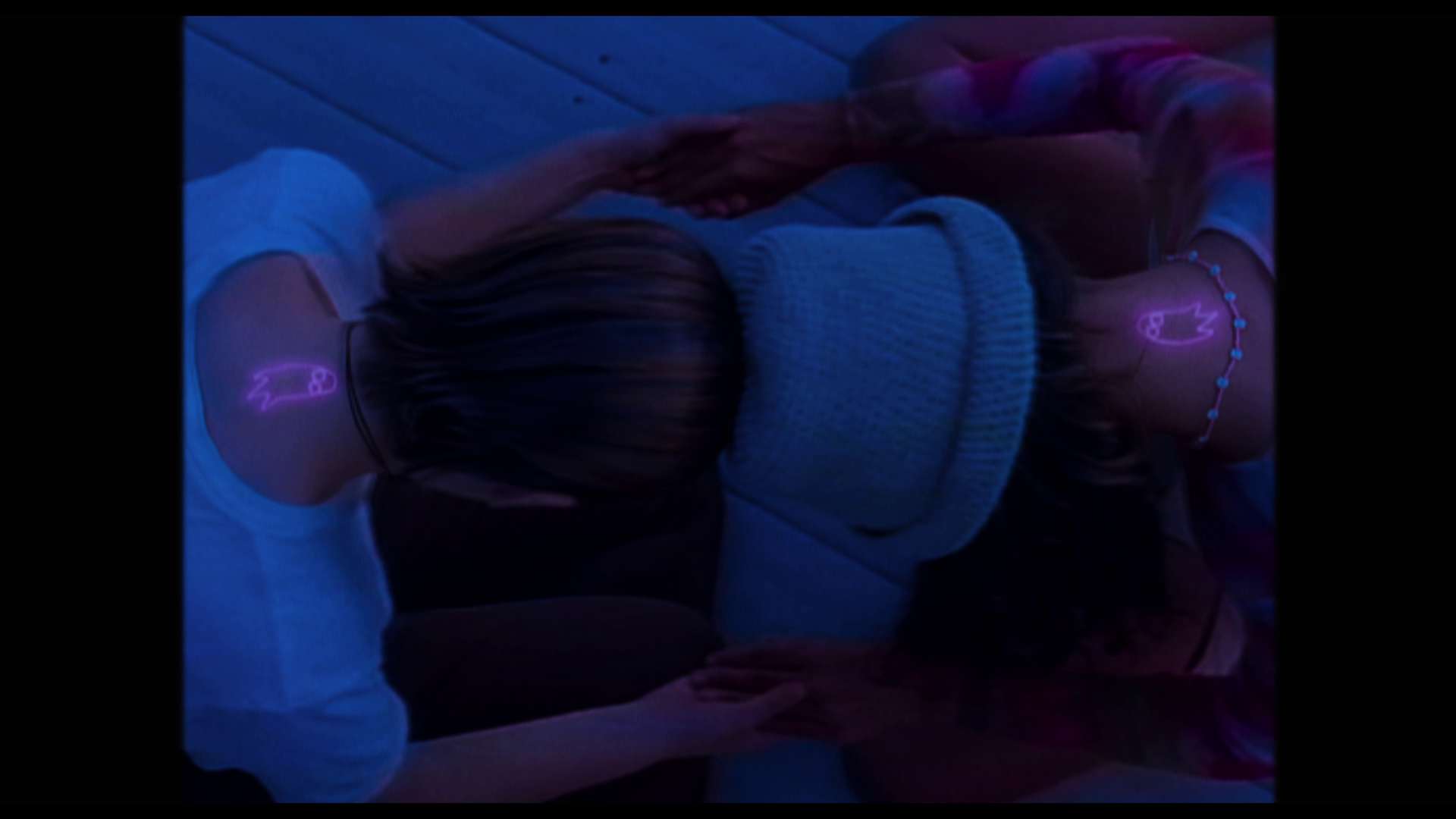
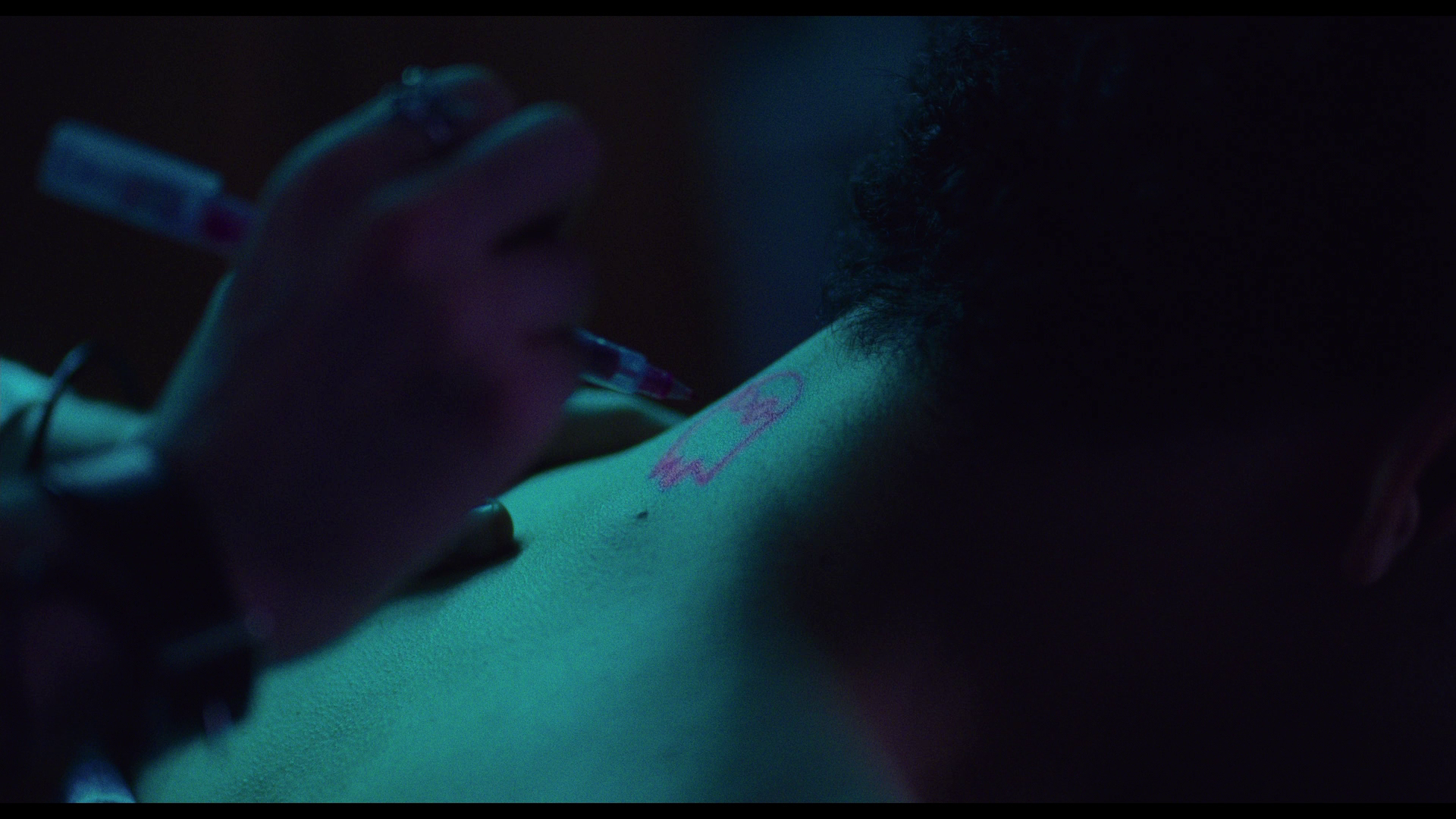
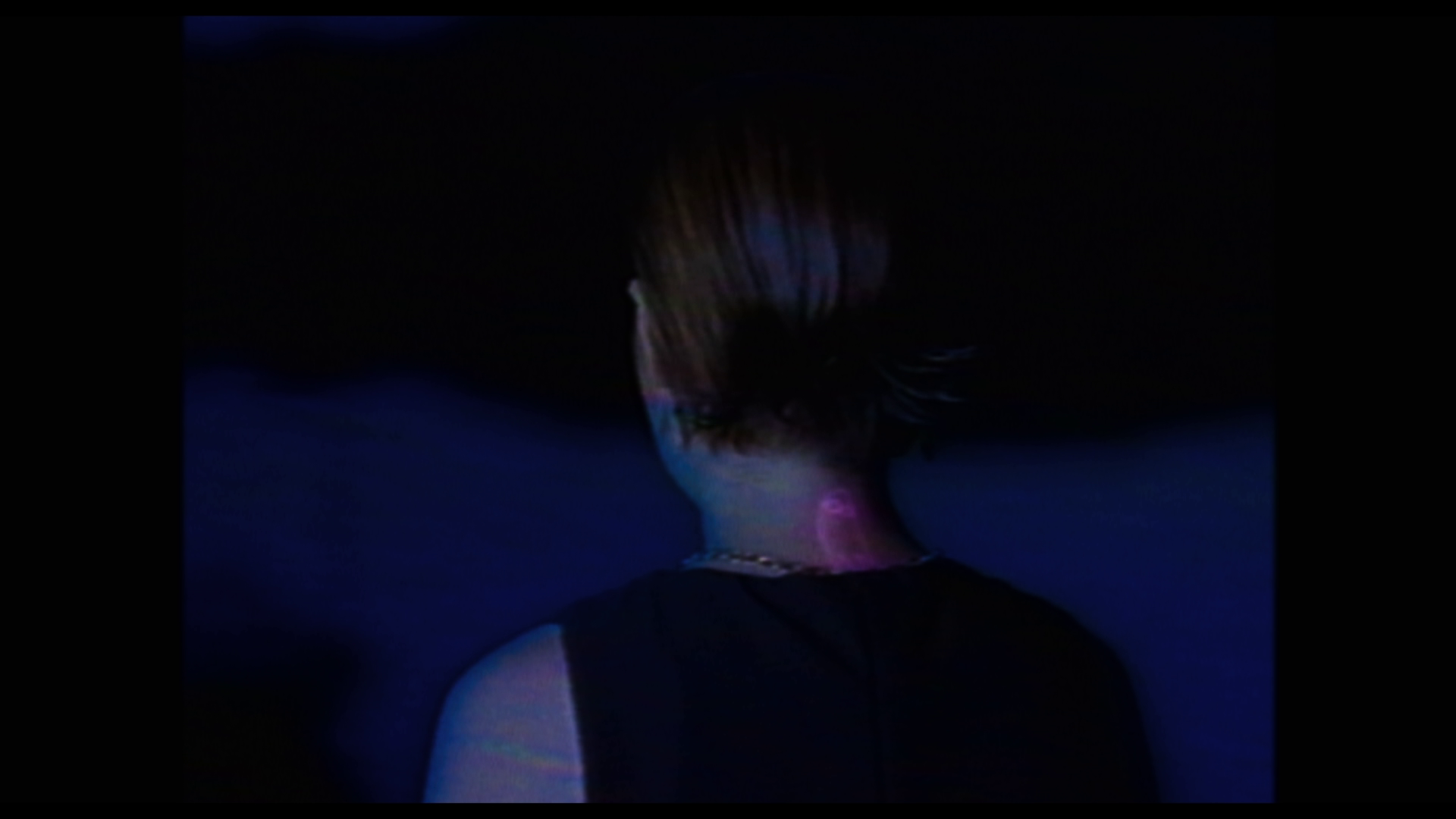
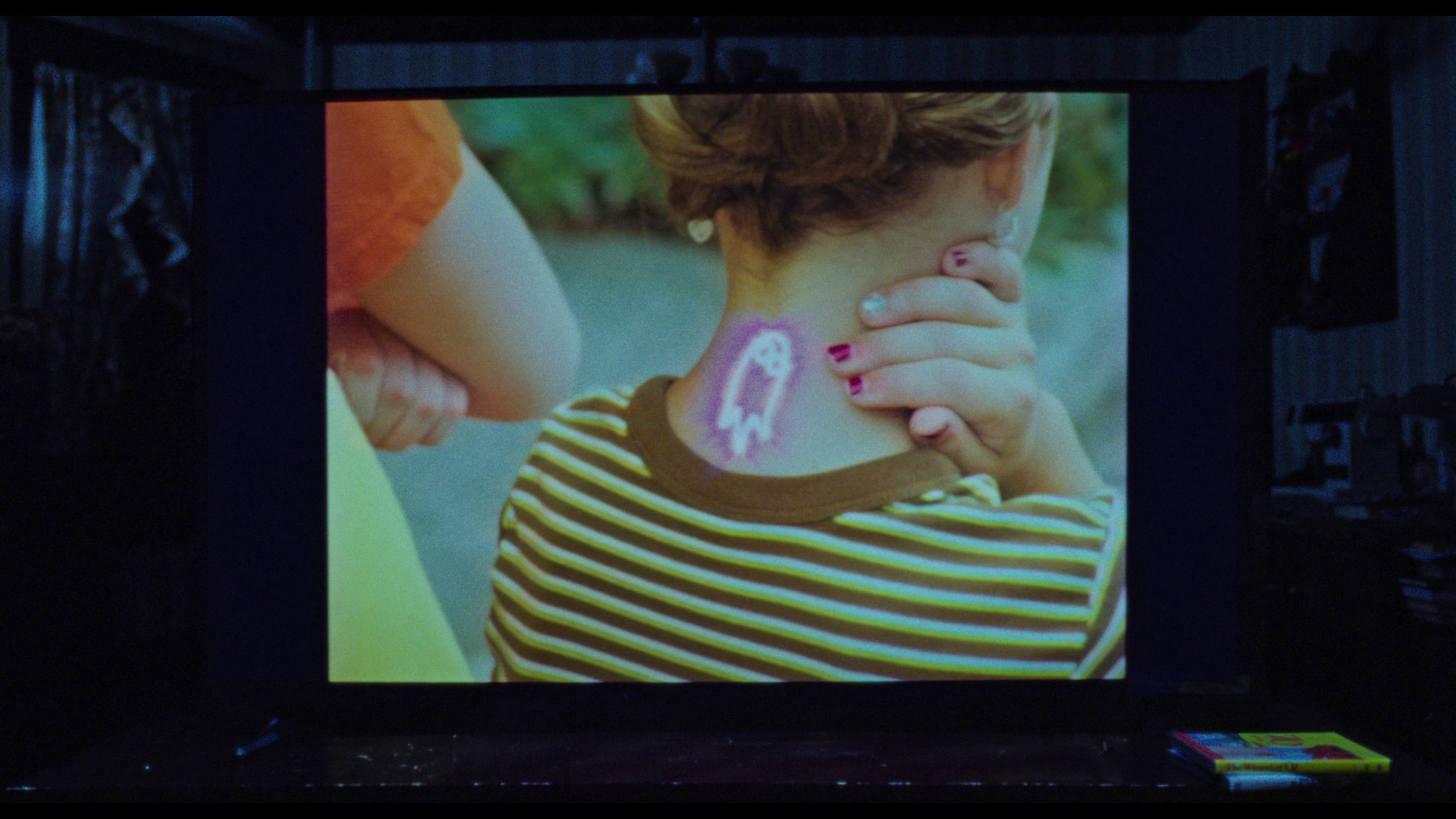
She tattoos his neck with a pink marker:
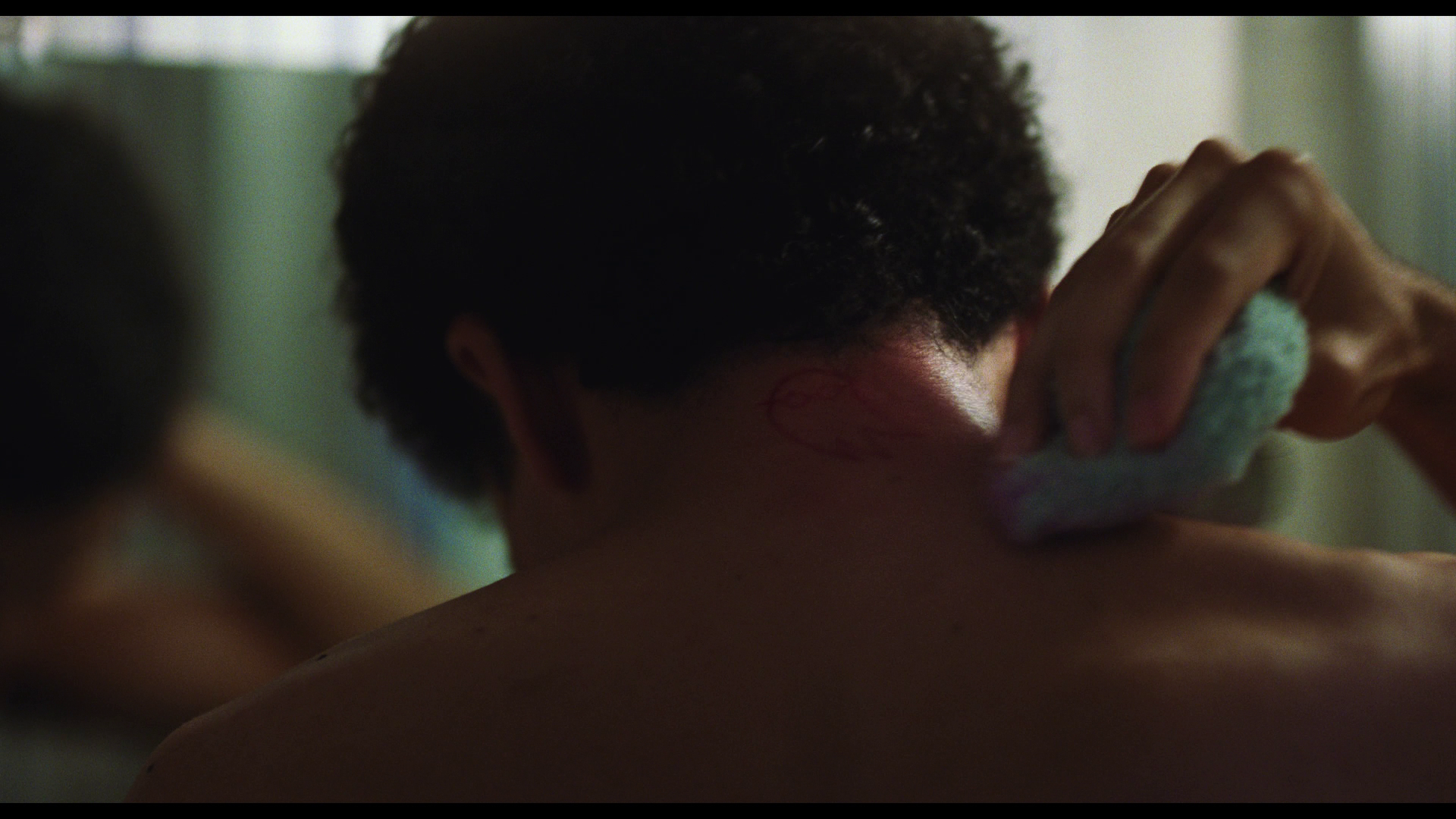
But the next morning he furiously scrubs it off:
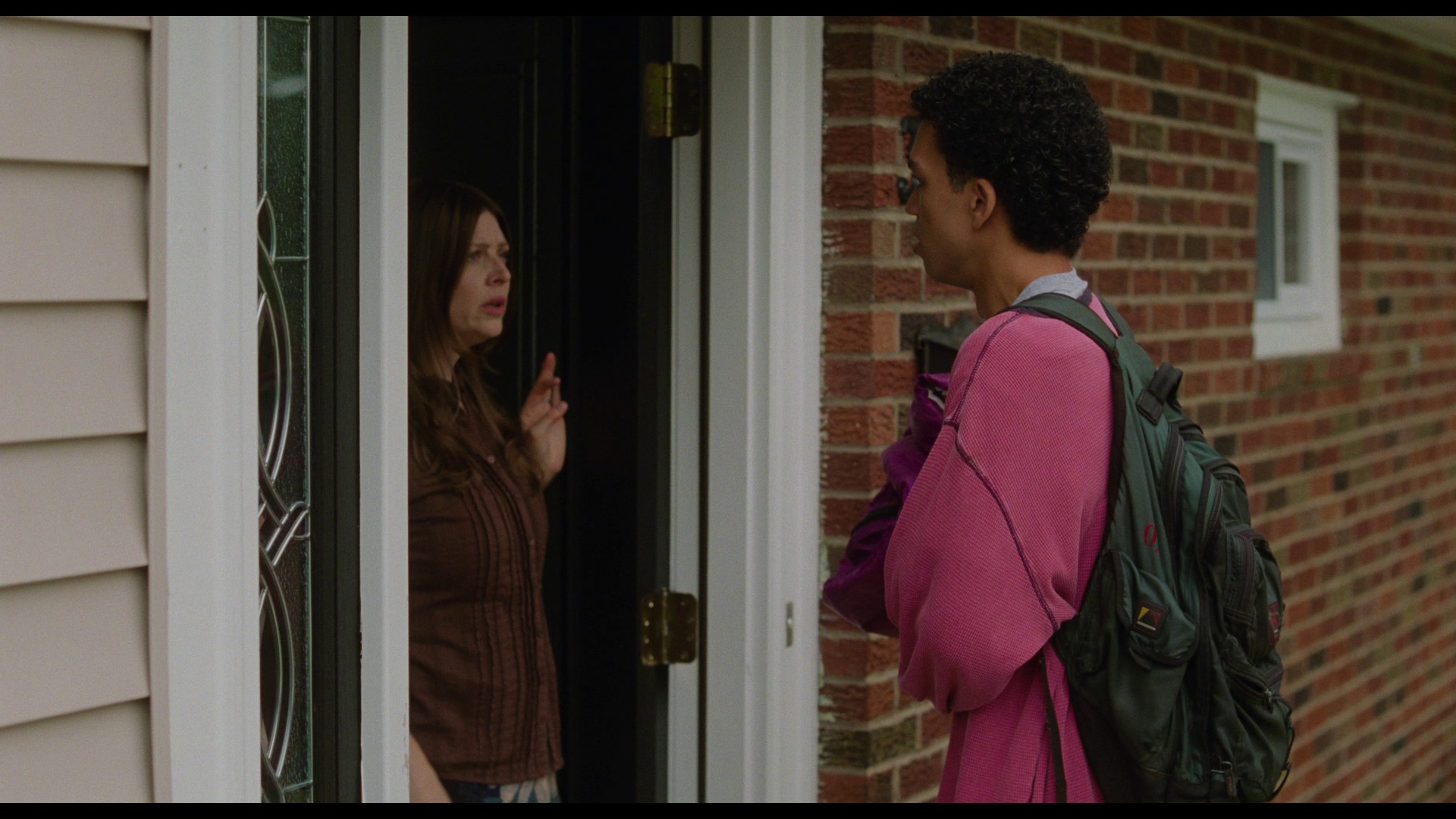
And instead of running away with her, he asks a woman played by the actress who portrayed Tara Maclay on Buffy to help him:
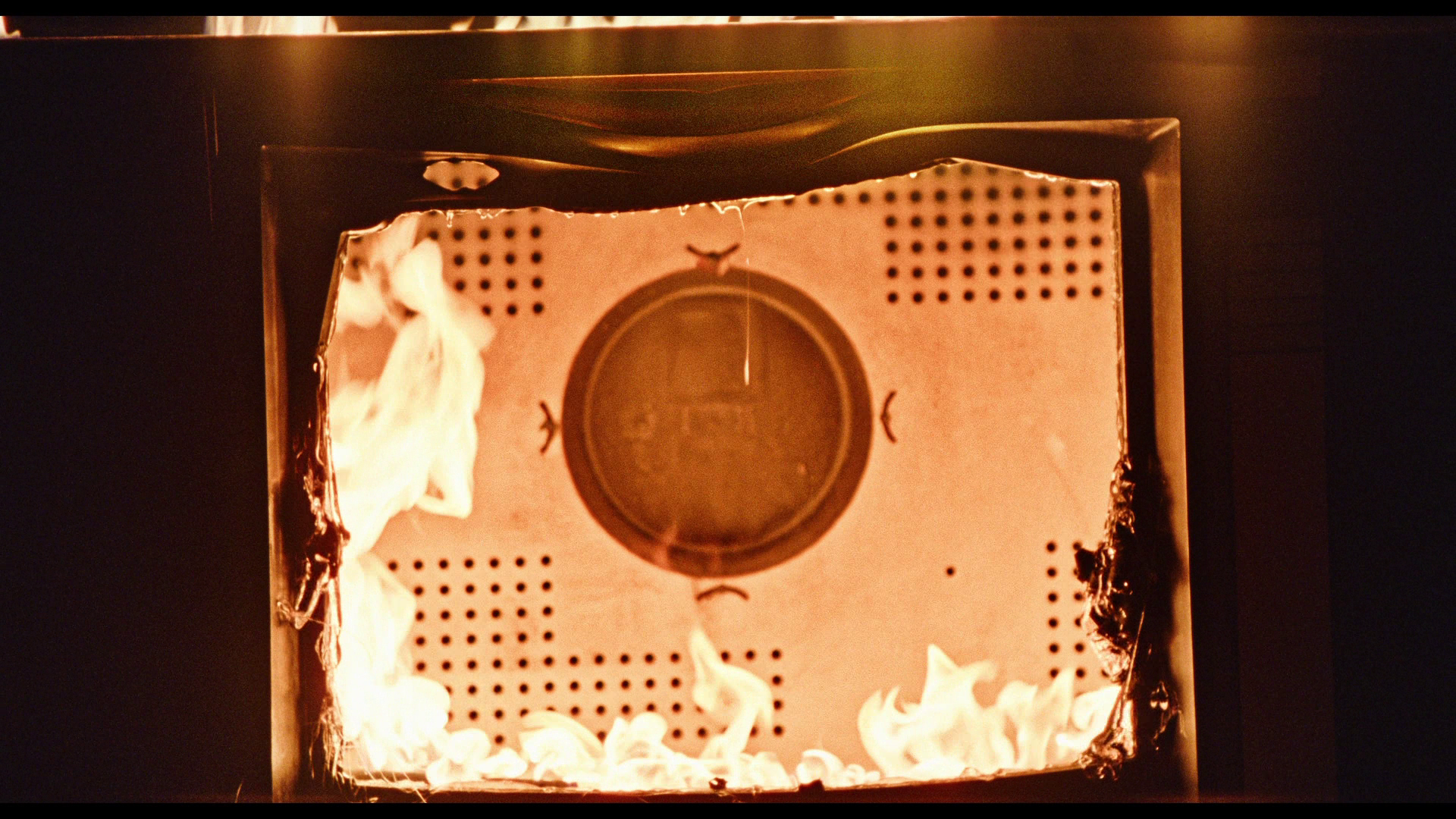
Maddy disappears without a trace the next summer the same month The Pink Opaque is cancelled, leaving behind only a burning TV:
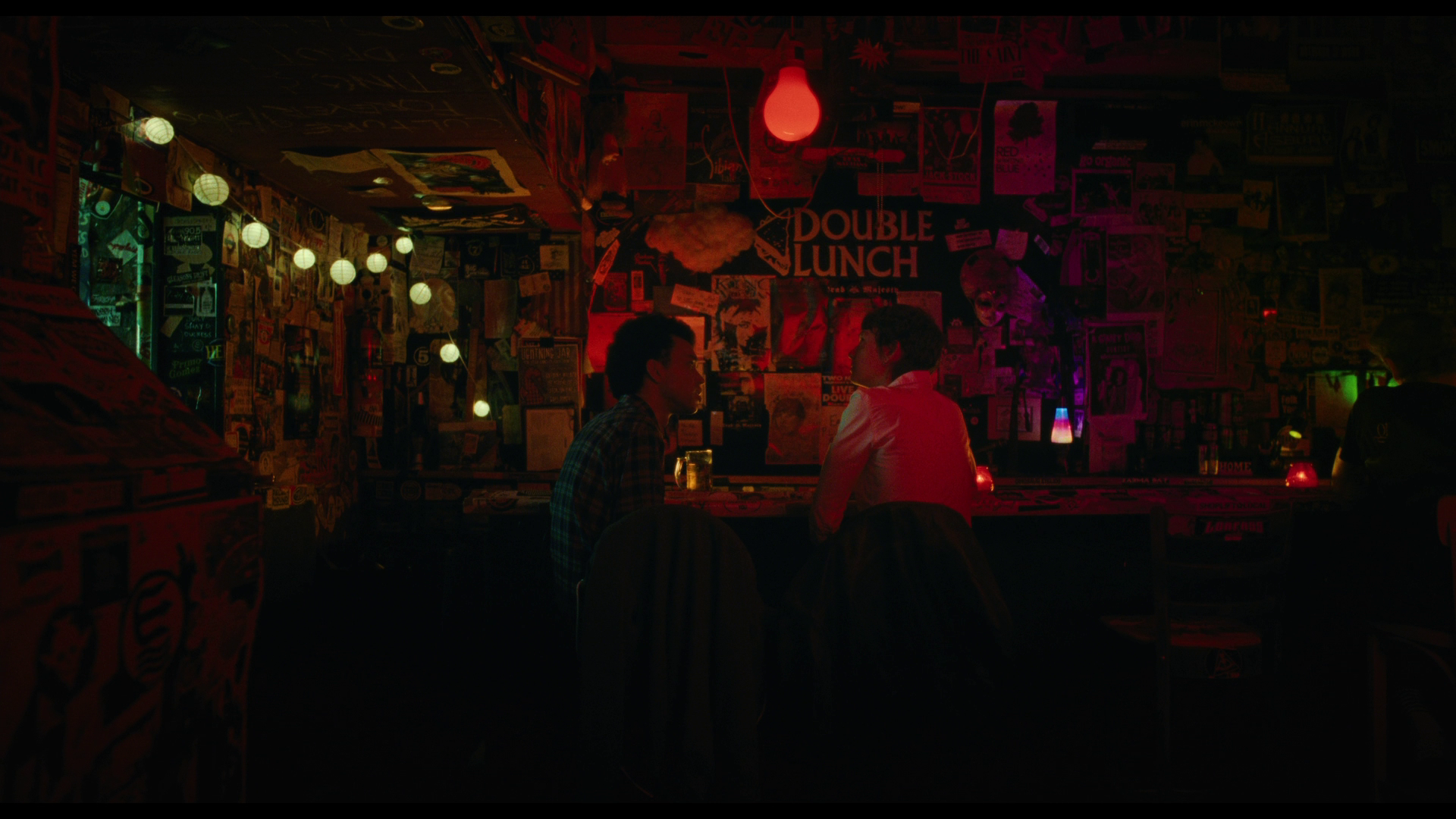
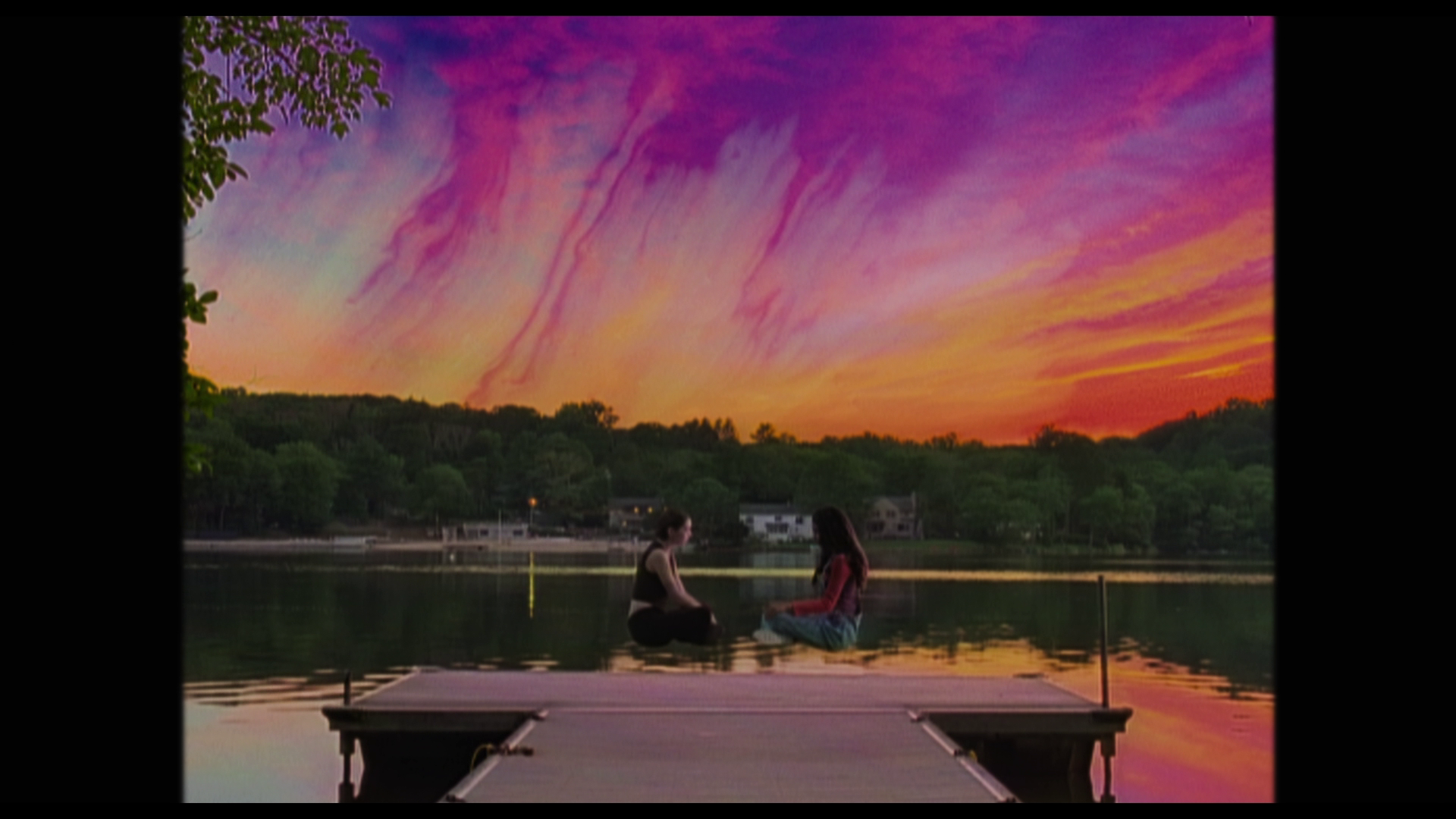
But returns eight years later and asks Owen to join her at “a place on the edge of town” where they can talk. Even though her first question for him is about The Pink Opaque, which he identifies as his “favorite TV show of all time” in his reply, he completely fails to notice that they are, impossibly, sitting in the Double Lunch, its answer to Buffy‘s Bronze:
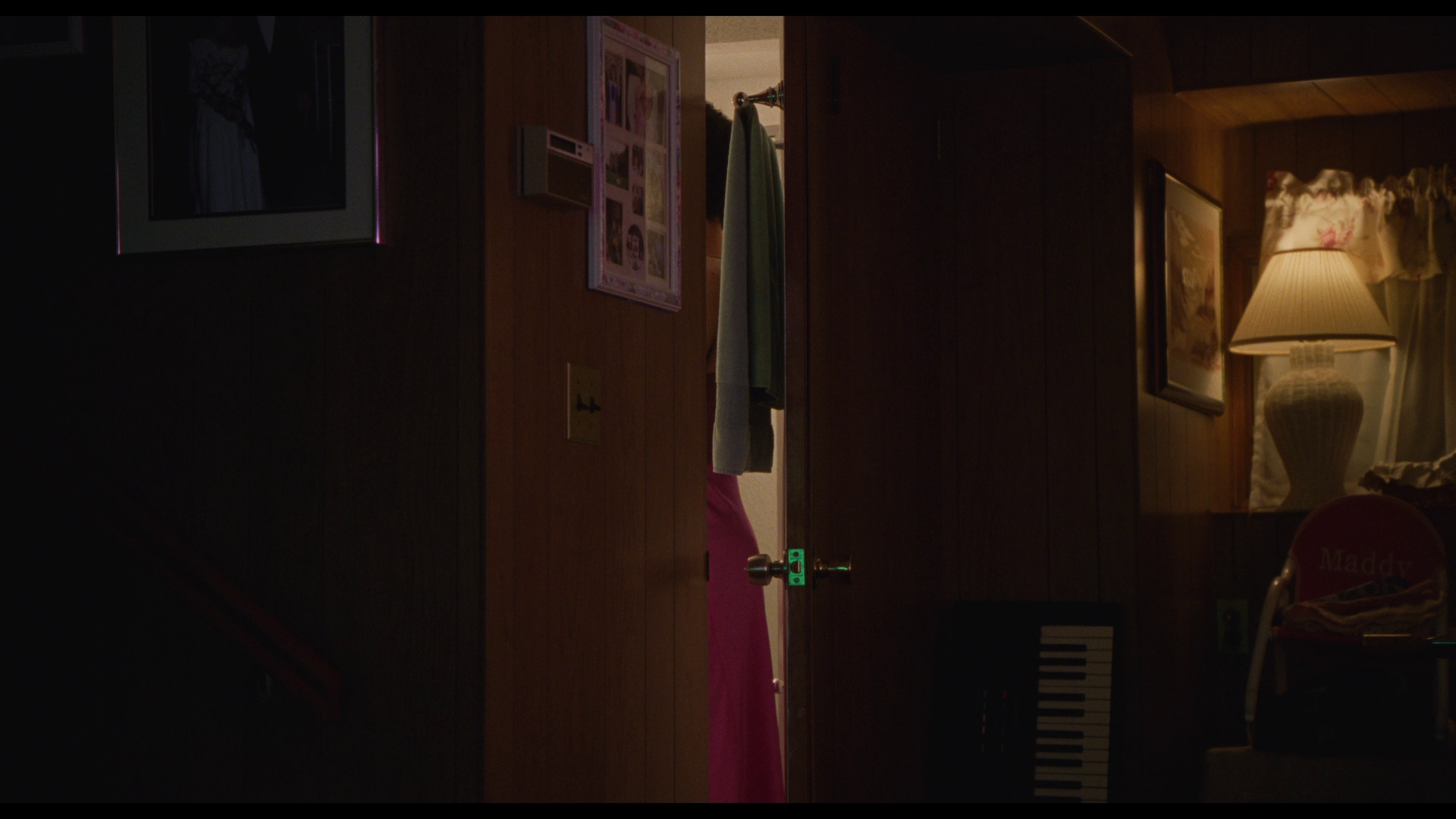
“When you think back on watching The Pink Opaque,” Maddy asks, “how do you remember it?” The movie cuts to a glimpse of an eight-years-younger Owen trying on a pink dress in Maddy’s bathroom as she goes on, “do you remember it as just a TV show?”
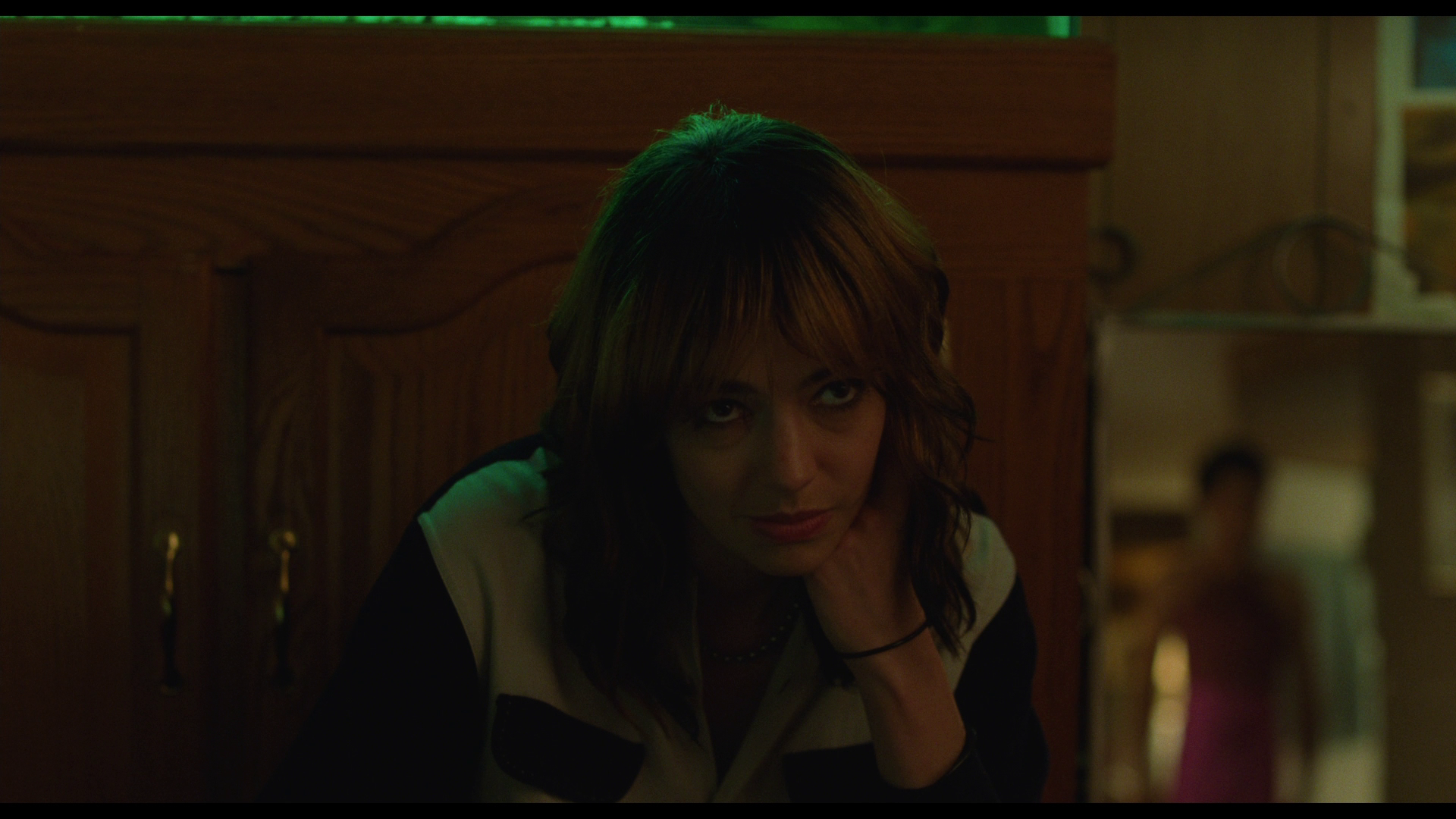
As she continues to press, this is followed by a reaction shot which reveals that the previous image was from her POV:
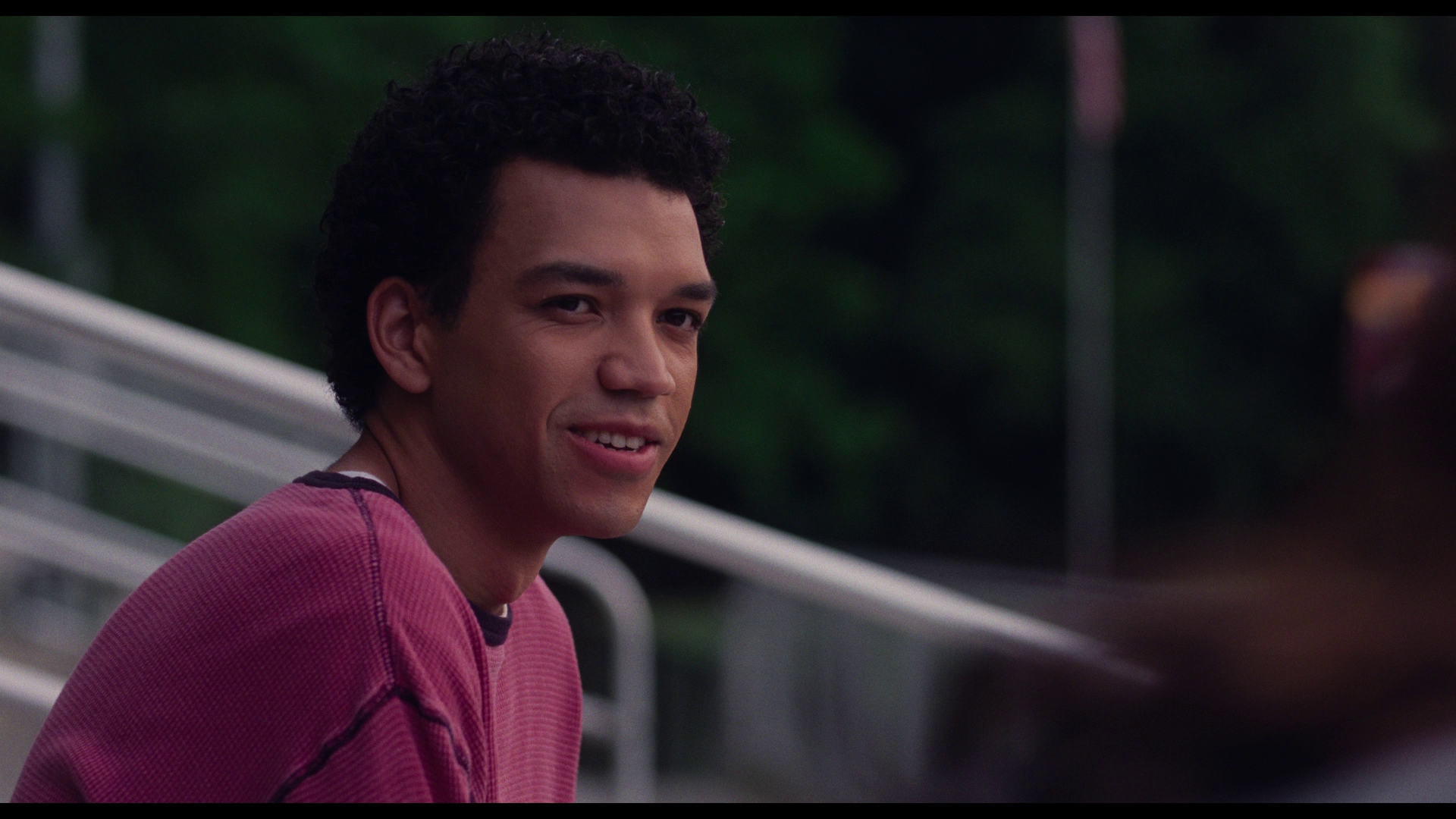
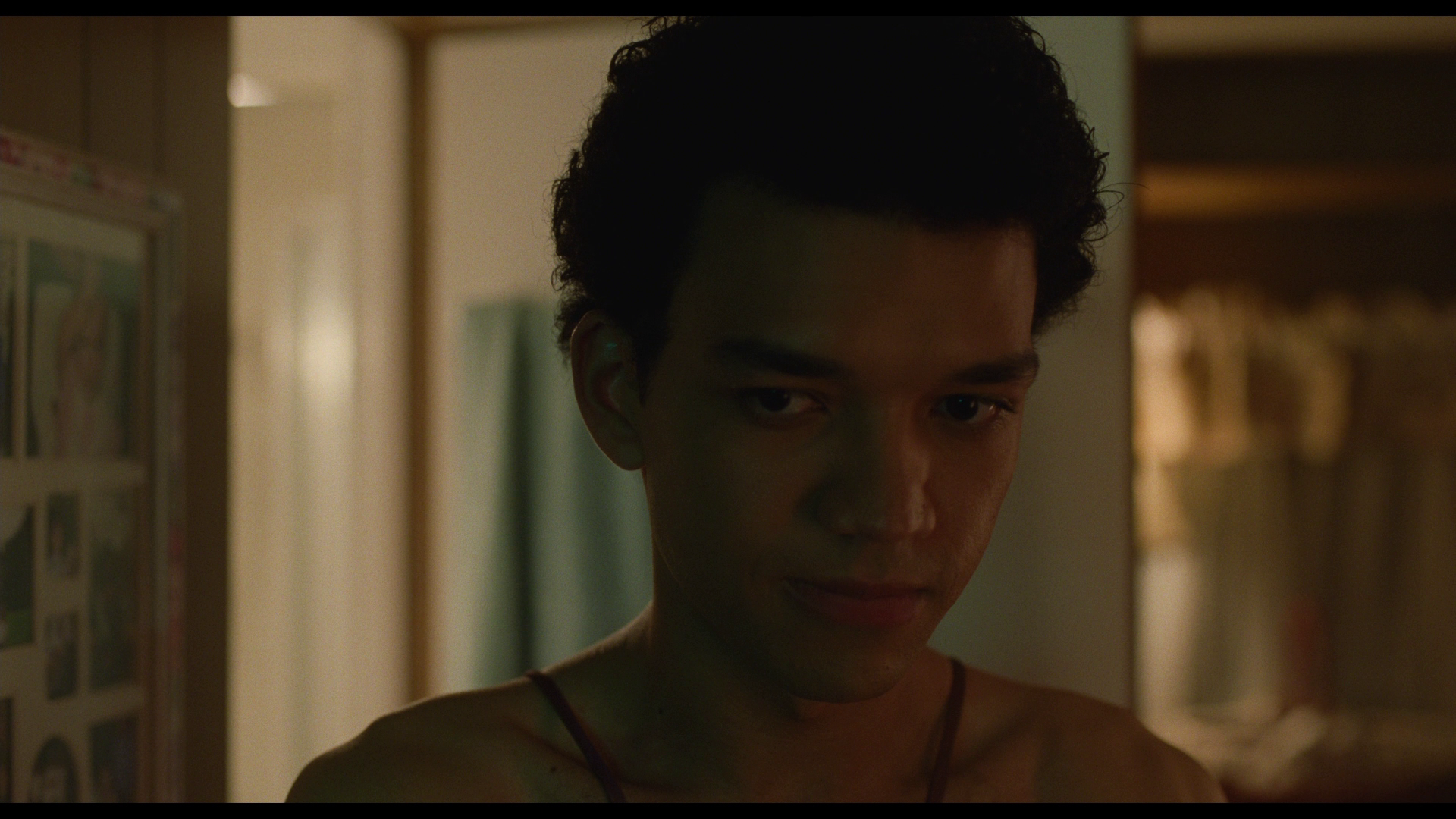
Then there’s a cut to a close-up of Owen wearing a faint but (for perhaps the only time in the whole film) genuine smile:
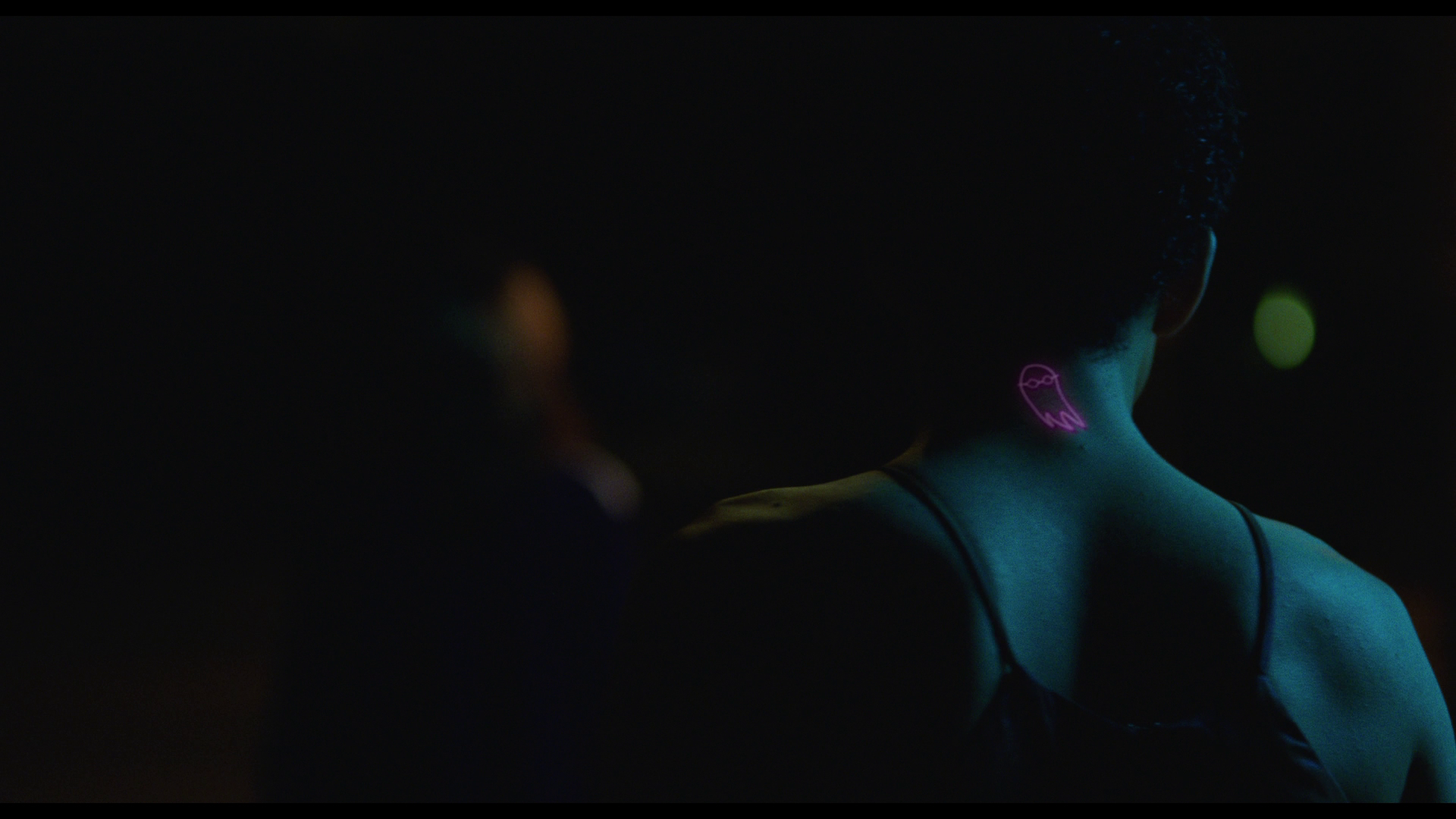
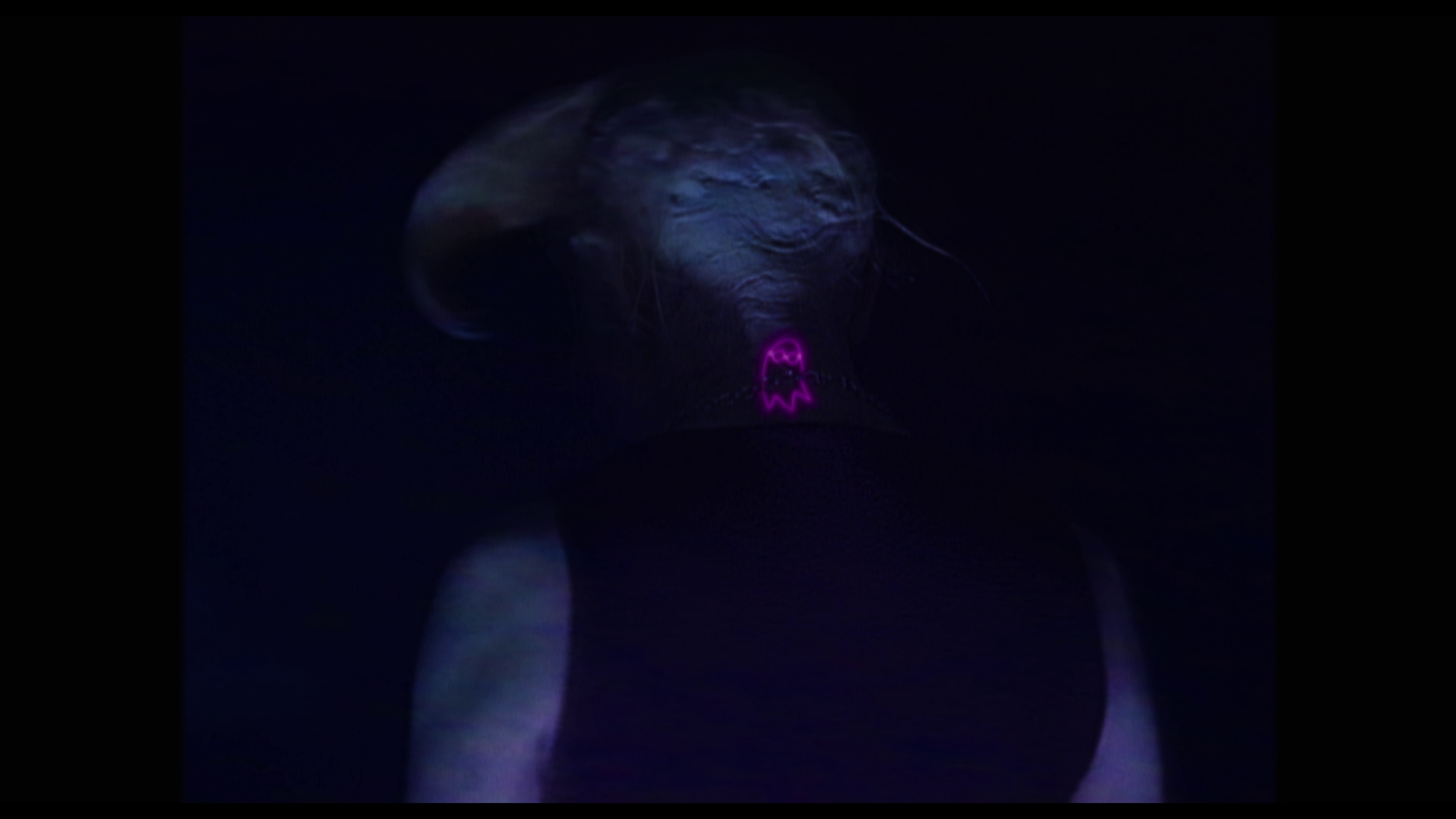
“Listen,” Maddy says, “I know this might sound crazy, but when you think back on The Pink Opaque, when you remember watching it in my basement on Saturday nights from 10:30 to 11:00pm, do you ever get confused? Like, maybe the memory isn’t quite right?” As Owen shakes his head and replies, “what do you mean ‘not quite right’?” there’s another cut to his younger self, still wearing the dress, following Maddy through the night as the ghost tattoo on the back of his neck suddenly glows pink:
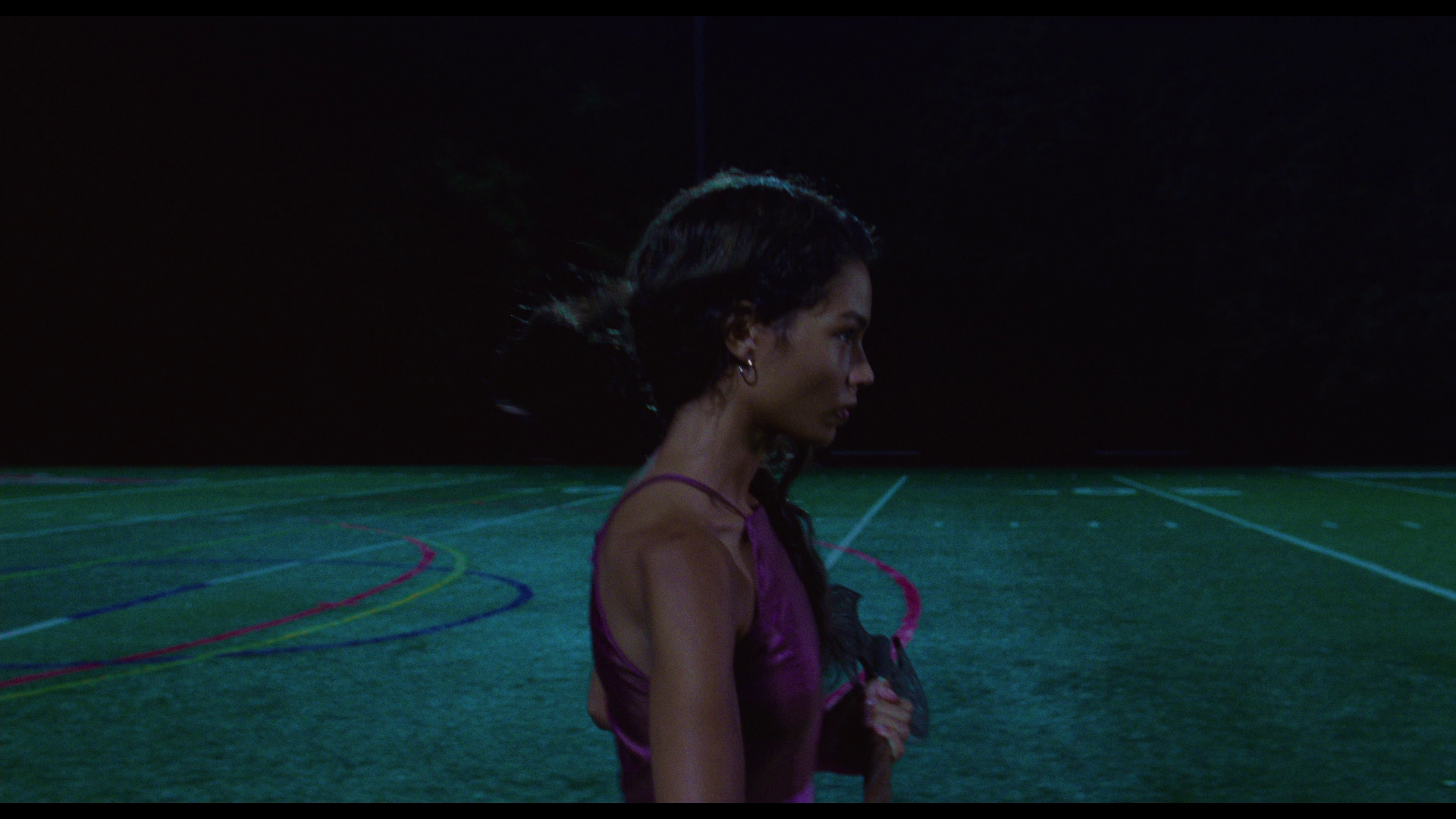
“Does time ever feel like it’s not moving normally?” Maddy clarifies. “Like it’s all out of whack? Do you ever feel like you’re narrating your own life, watching it play in front of you like an episode of television? Or do you ever have a hard time distinguishing between what happened in the show and what happened in real life? Like somehow the memories got jumbled around?” As Owen struggles to comprehend, there’s a cut to the same shot of Isabel with an axe that we saw before, only now it’s in a widescreen aspect ratio:
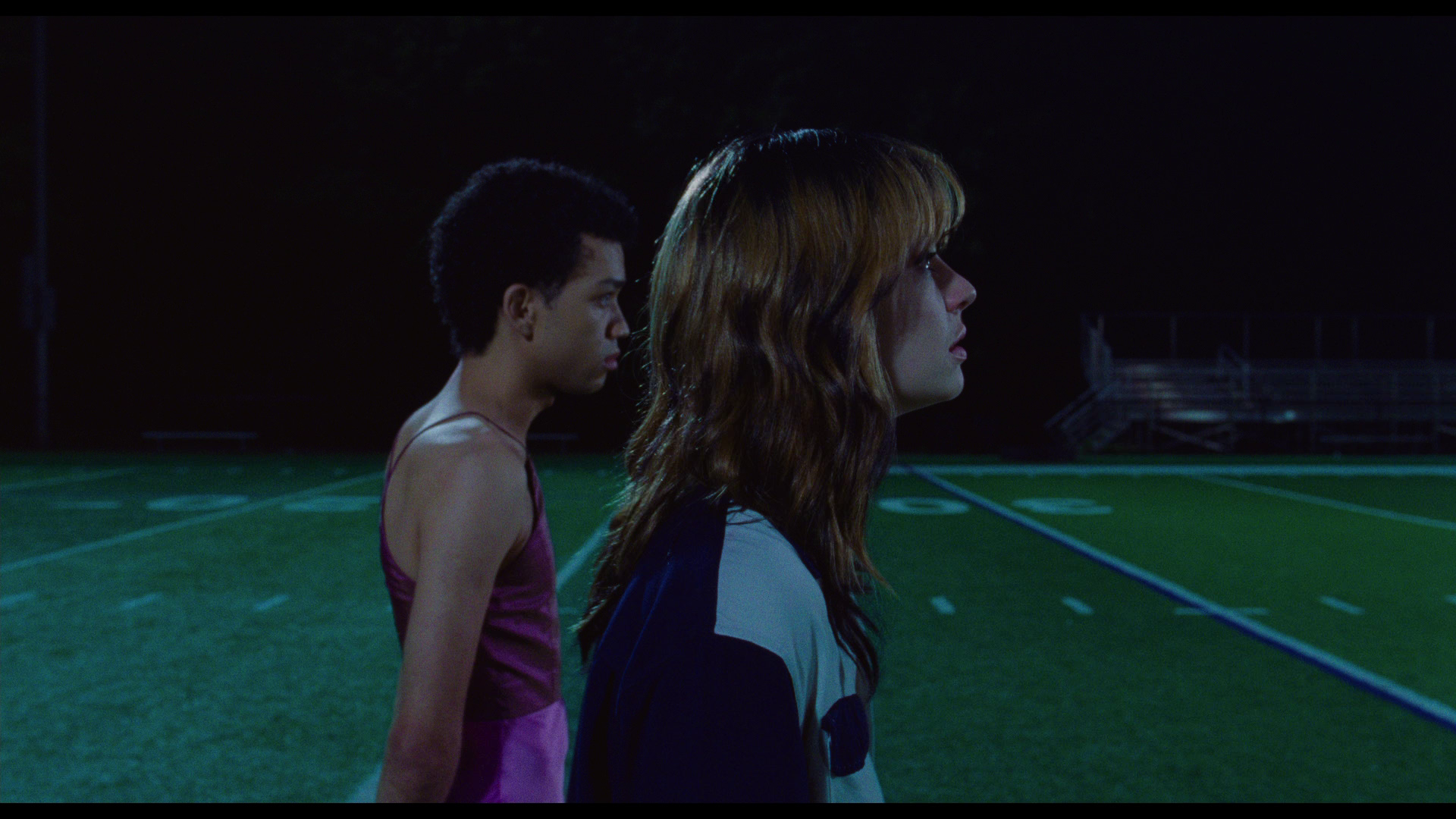
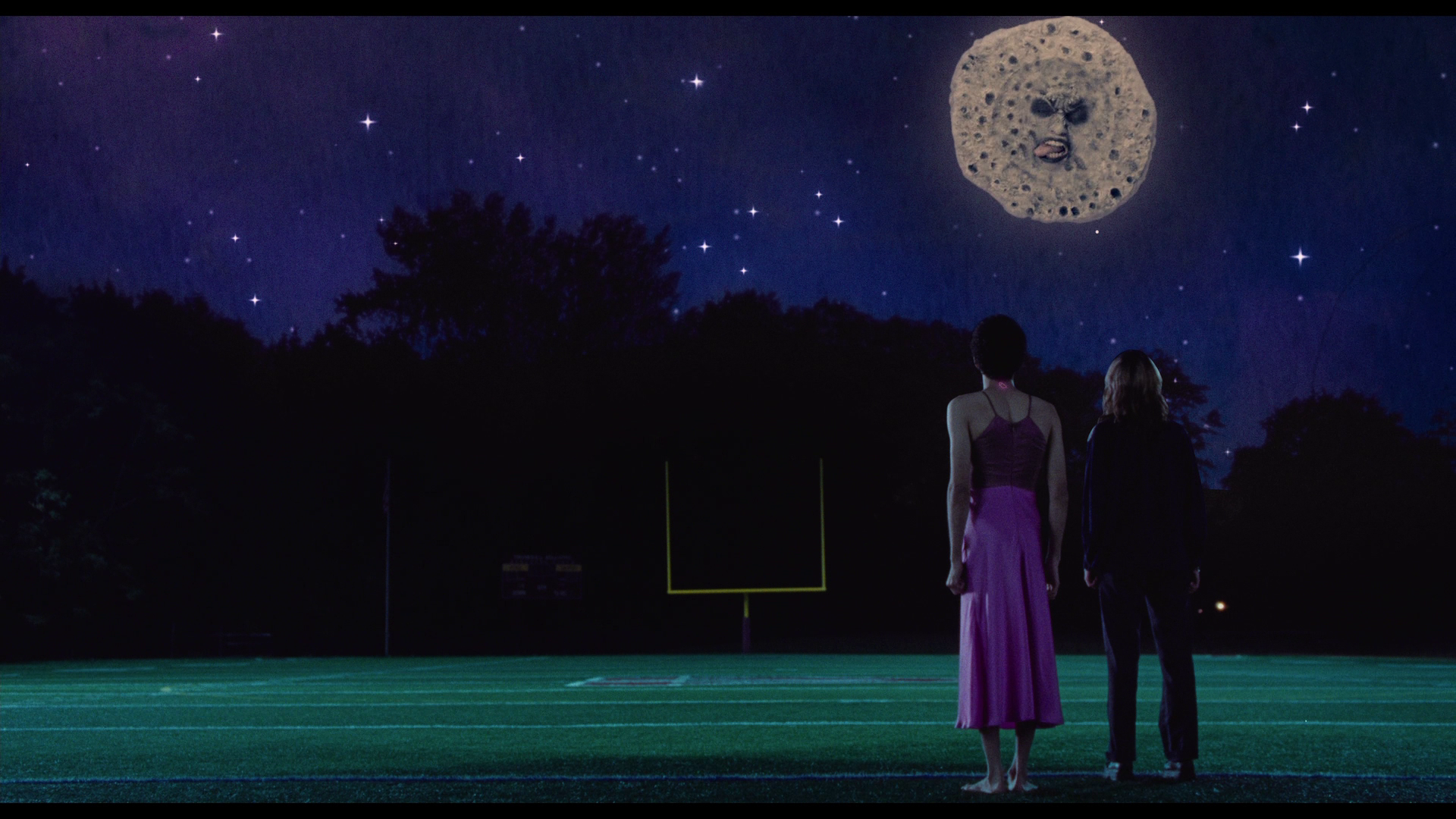
Which is replaced moments later by Maddy and Owen, who we now realize if we haven’t already is wearing Isabel’s dress, on the same football field:
“I’m trying to go slow,” Maddy says as Mr. Melancholy appears overhead in the flashback, “I don’t want to alarm you.”
Then, finally coming to the point, “I’ve been there. Inside the show. Inside The Pink Opaque.” Cue cathartic scream by musical guest King Woman:
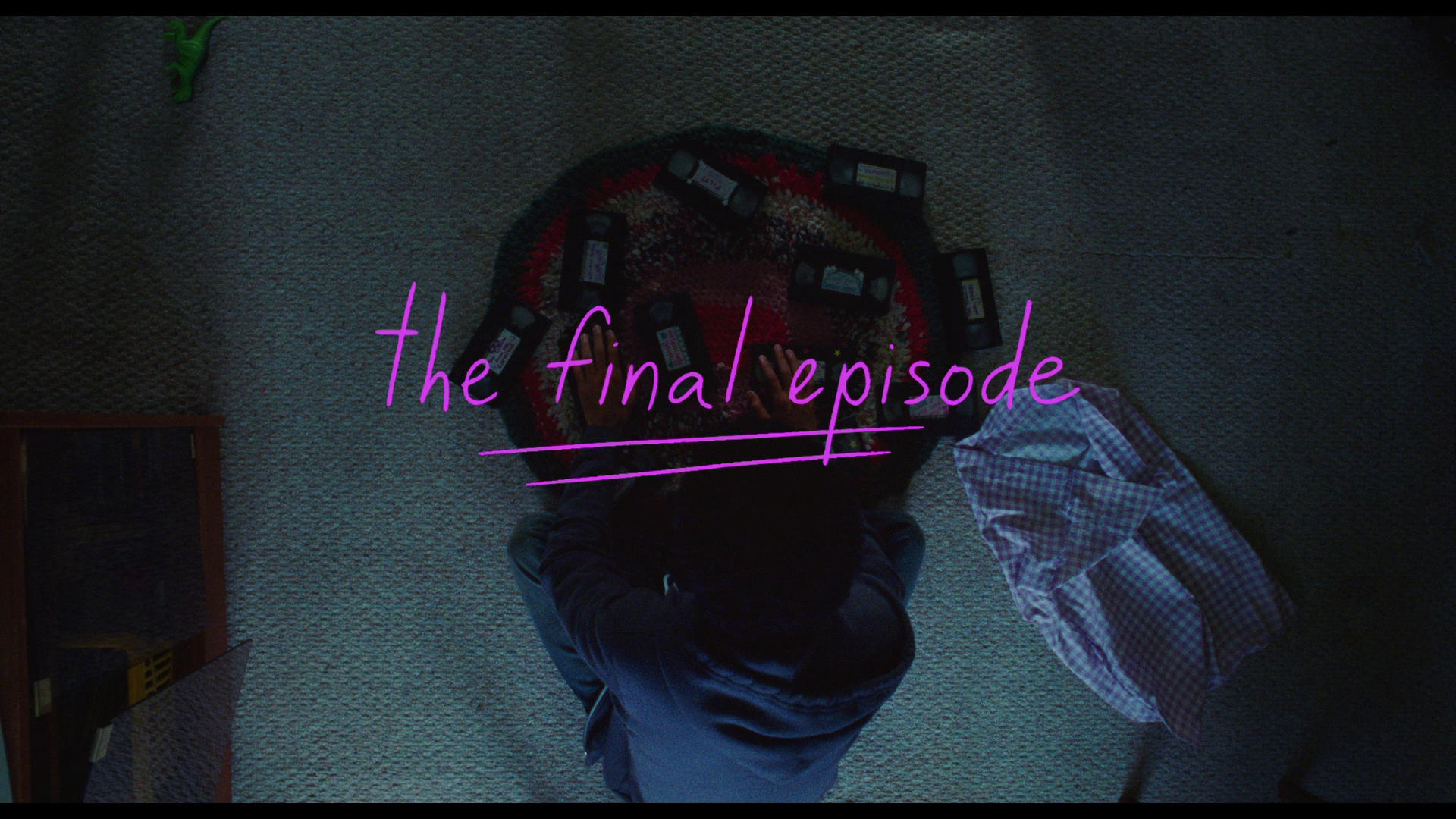
Owen rushes home and dumps out a bag where he’s been keeping all the VHS tapes Maddy made for him, one of which contains the final episode of The Pink Opaque ever broadcast.
He explains that he received this one in the mail after she disappeared and describes watching it then. As Caetlin Benson-Allott notes in a Film Quarterly column called “Life-Affirming Horror and the Films of Jane Schoenbrun,” the portions of it we see through his eyes are initially shown “in Academy aspect ratio, as befits a 1998 television program.”
Isabel follows a voice that she thinks belongs to Tara, but Tara has already been buried alive by Marco and Polo and it’s a trap:
They cut out her heart and feed her Luna Juice:
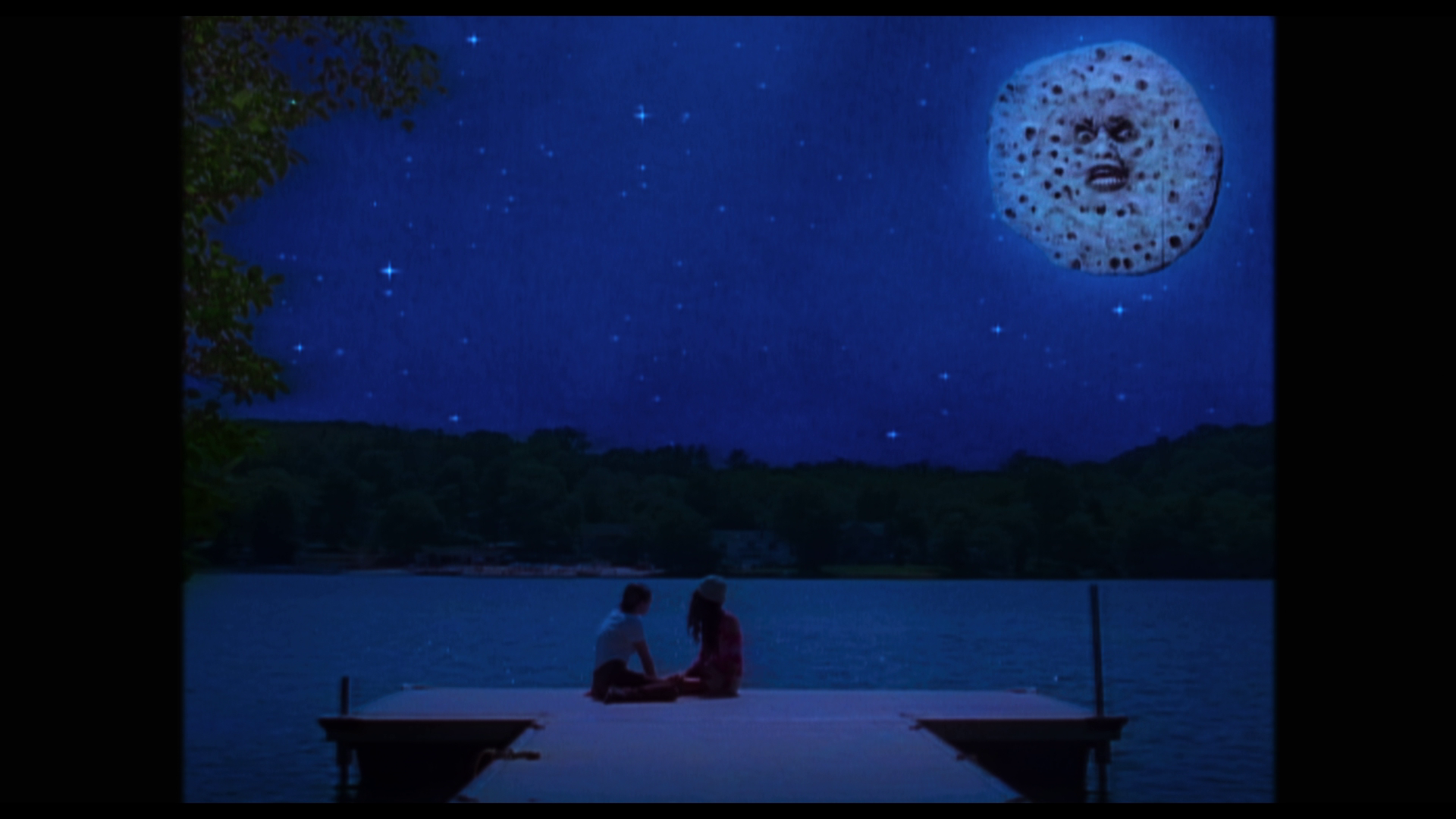
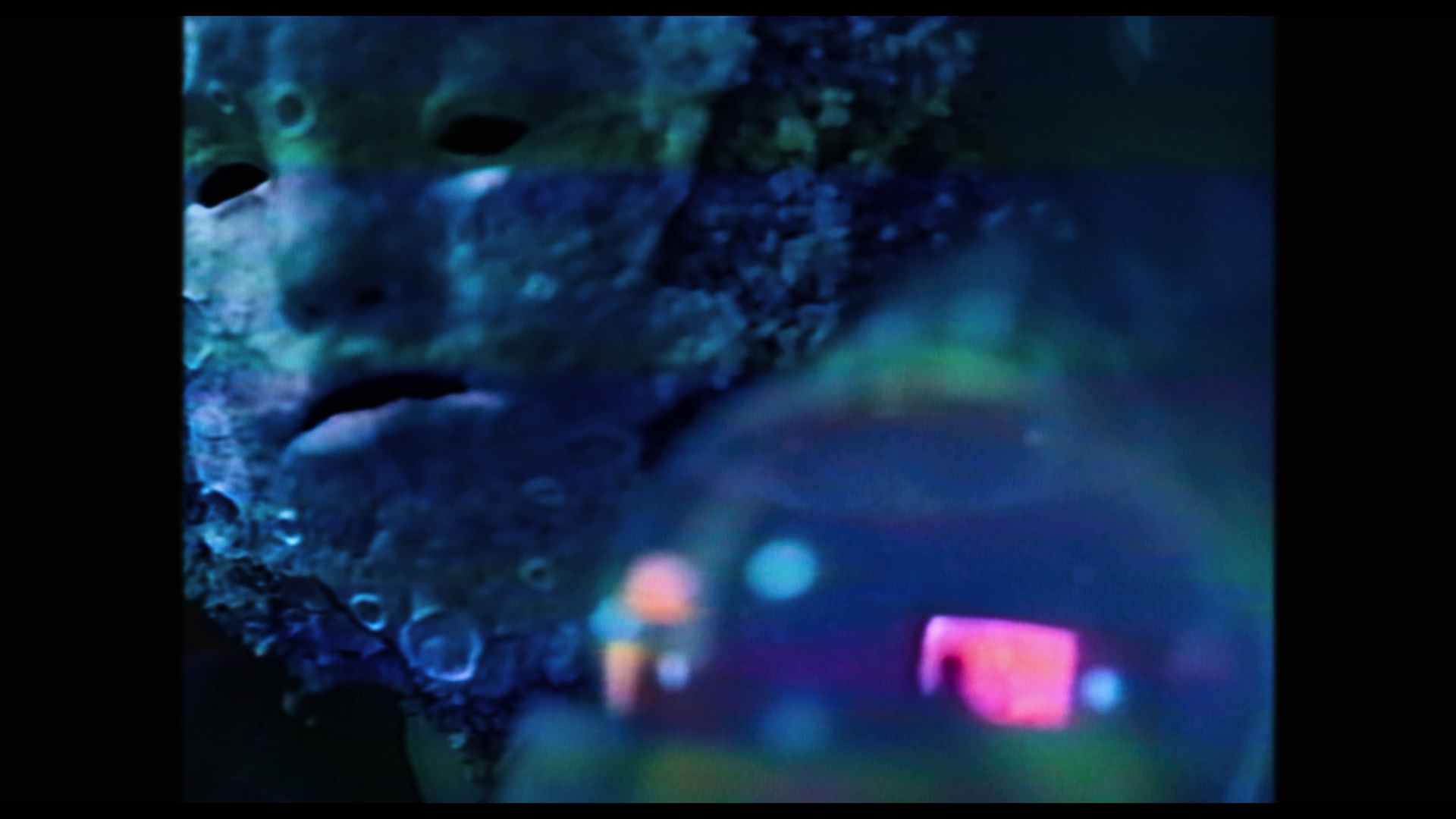
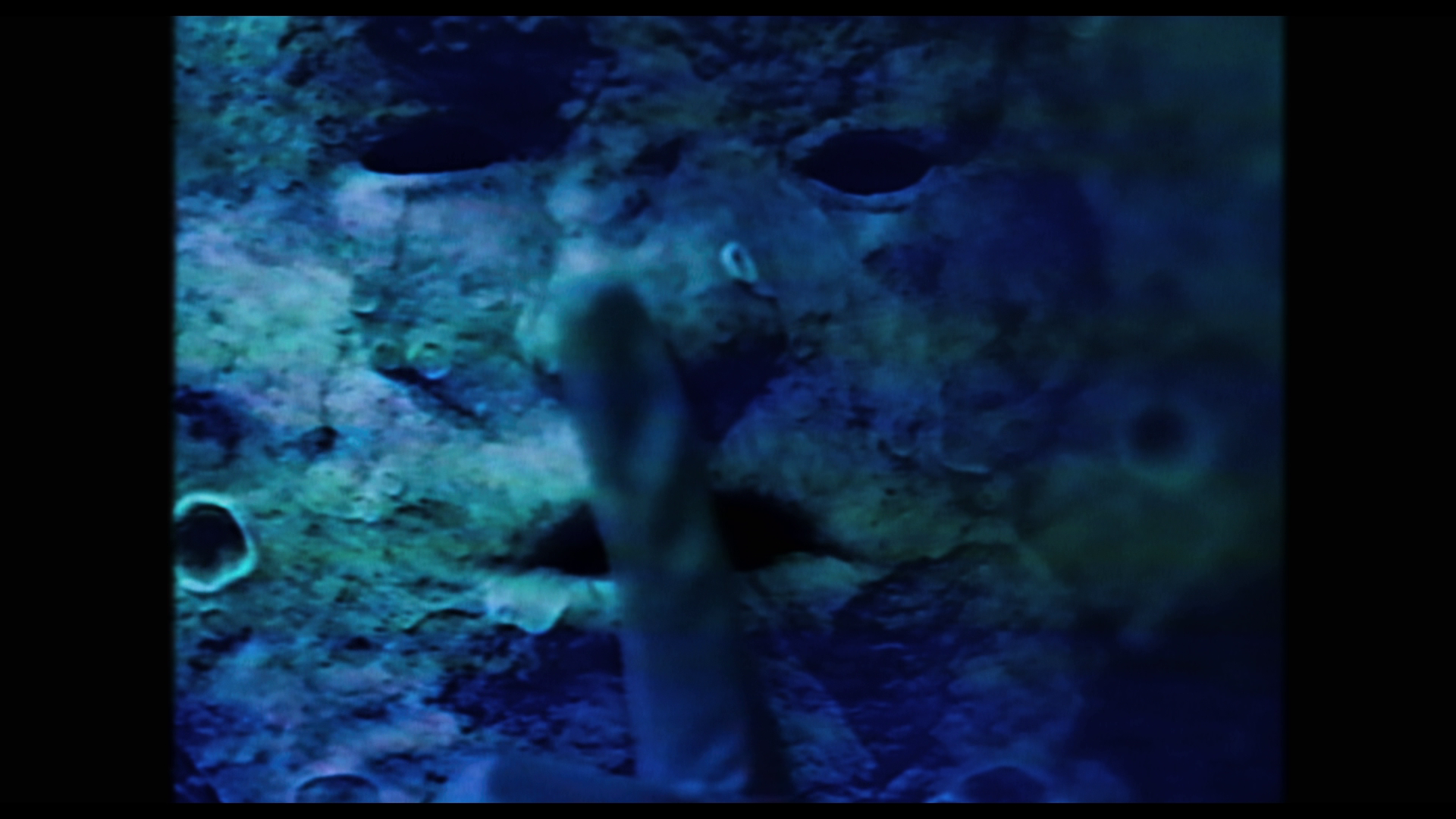
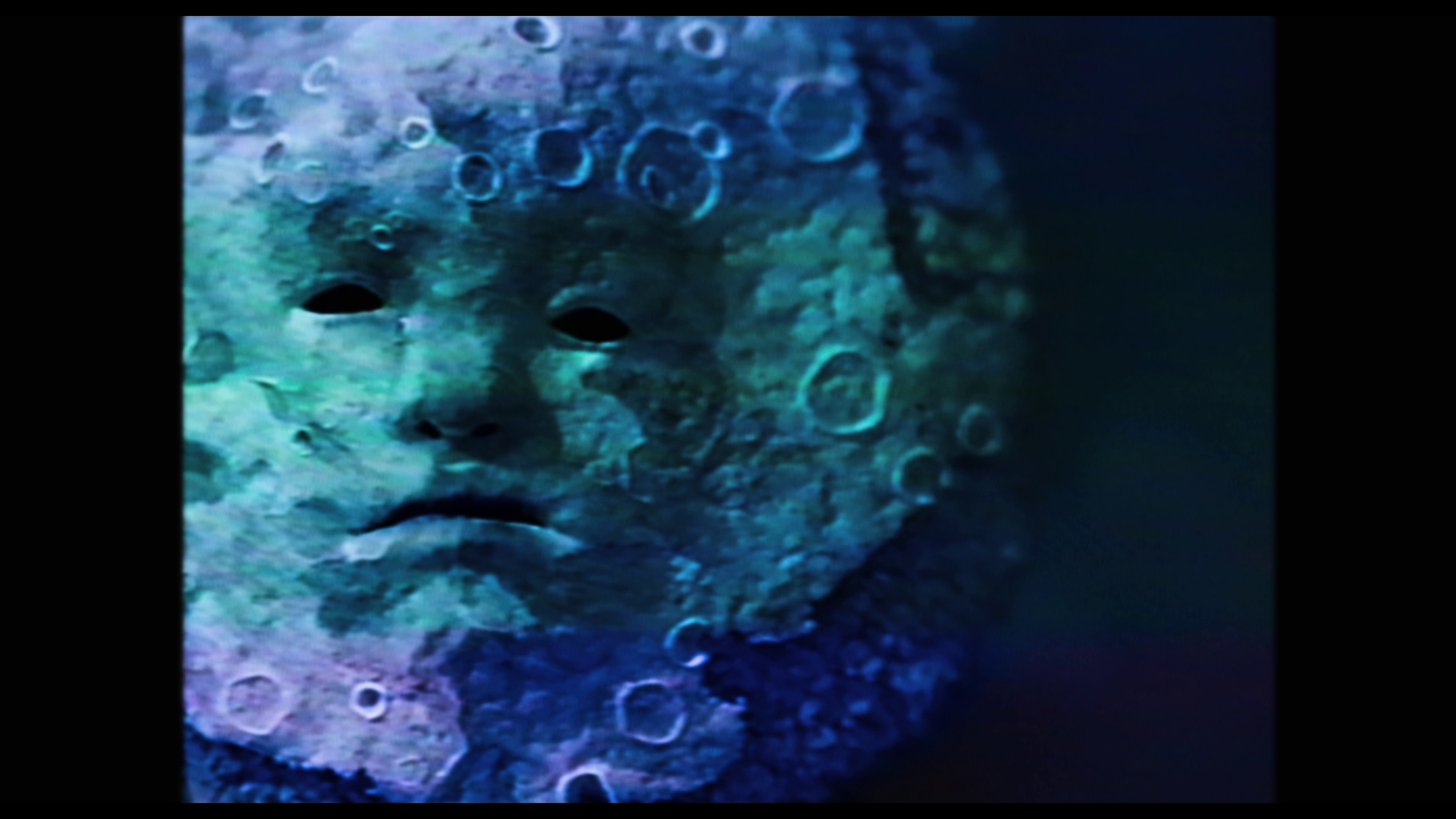
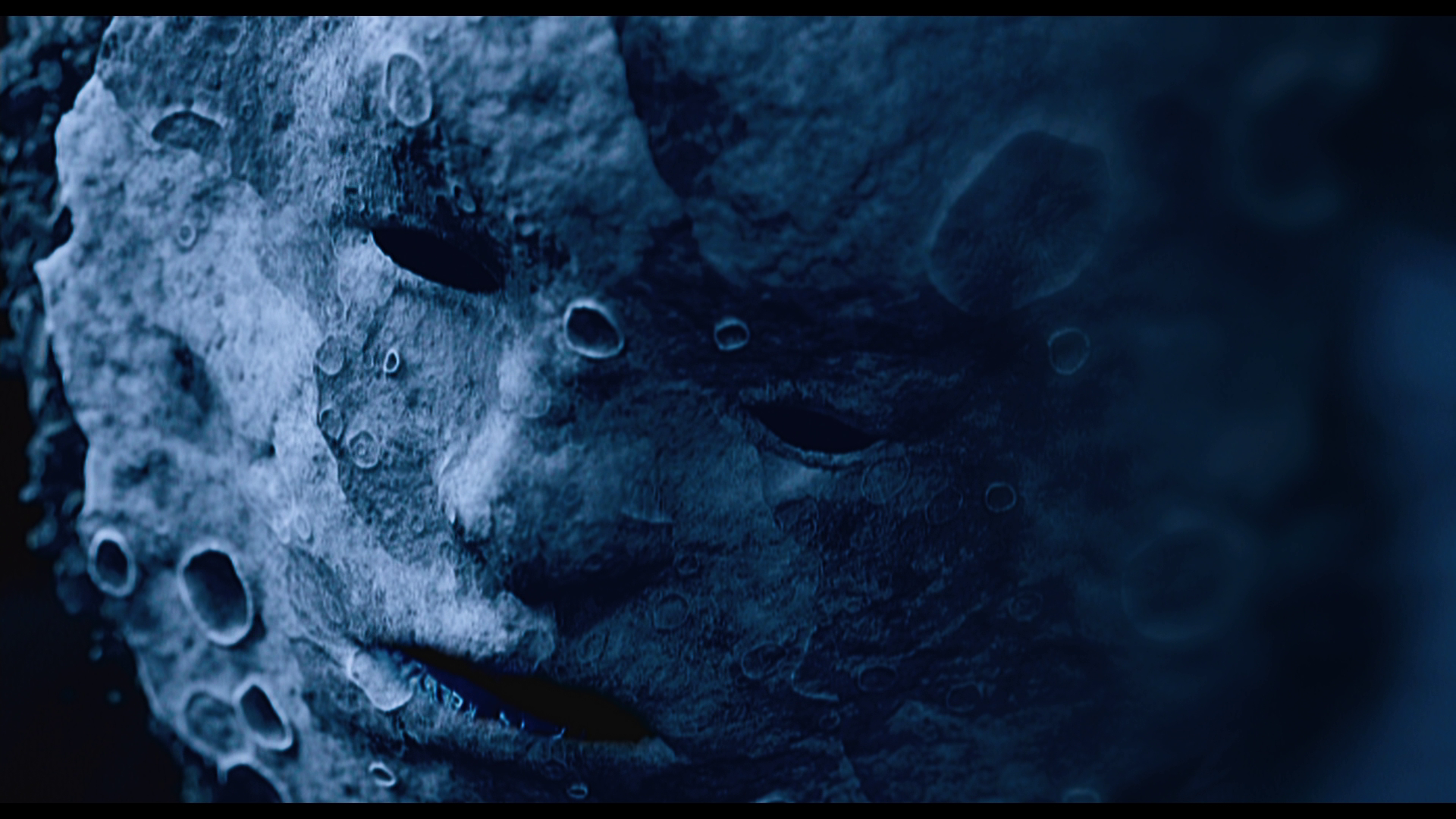
And then sit back to await the arrival of their boss. As Benson-Allott observes, “Owen narrates these developments until the arrival of Mr. Melancholy, a demonic man in the moon whose face resembles an ever-fluctuating caseous mask that quickly fills the entire frame.”
She continues:
His image is based on the pockmarked moon face from the Smashing Pumpkins’ music video “Tonight, Tonight” (Jonathan Dayton and Valerie Faris, 1996), which was itself based on the moon man of Georges Méliès’s Le voyage dans la lune (1902). Mr. Melancholy’s ominous visage pulsates as he tells Isabel, “Don’t fight it. Let my poison work its magic. Soon you won’t remember anything: your real name, your superpowers, your heart. You won’t even remember that you’re dying!” Isabel gasps for air, as Owen gasps for air during their many asthma attacks. Mr. Melancholy is indeed speaking to Owen as well, for as he talks the frame expands into the wide-screen aspect ratio that denotes Owen’s reality. Owen and Isabel’s mutual pulmonary distress confirms their connection even as it also manifests the stress of staying in the closet for Owen. Owen’s asthma indicates that they are dying within their male socialization, just as Isabel is asphyxiating underground.
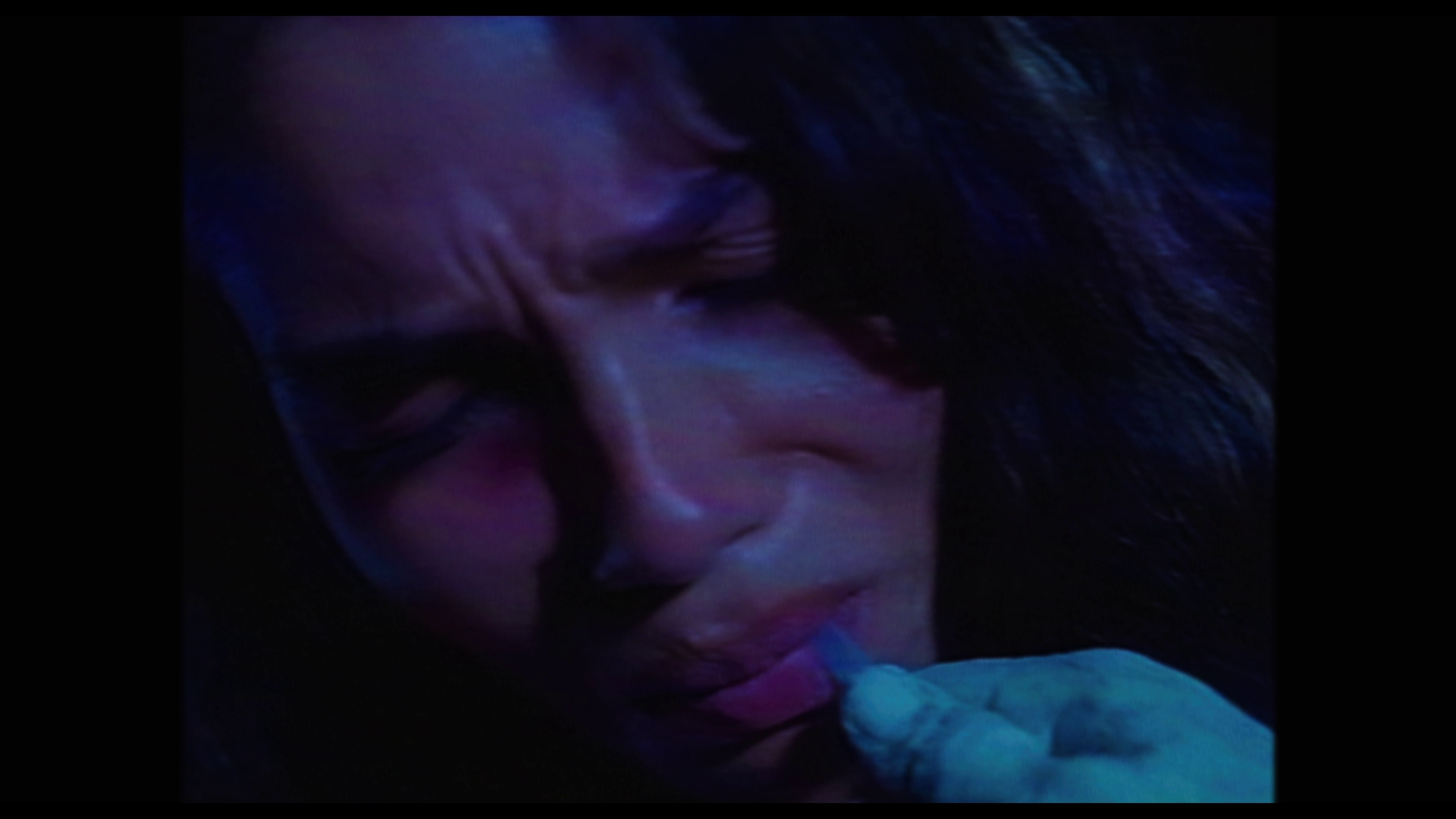
This scene ends with Owen apparently attempting to commit suicide by thrusting his head into his television set, then being rescued by his father (Fred Durst) who holds his head under the shower until he vomits up something blue which is depicted first via a prop and then a celluloid scratch effect:
And the next one begins back in the “present day” with Owen stepping out his front door to encounter two ghostly figures played by Pete & Pete themselves, Michael C. Maronna and Danny Tamberelli:
Maddy tells Owen the tale of how leaving town didn’t help because “the trees were different, but everything else was the same” in a tour de force monologue delivered inside an inflatable planetarium that concludes with her describing how she escaped her prison in Mr. Melancholy’s Midnight Realm by paying a “burnout kid” to bury her alive, a harrowing experience she woke up from as Tara:
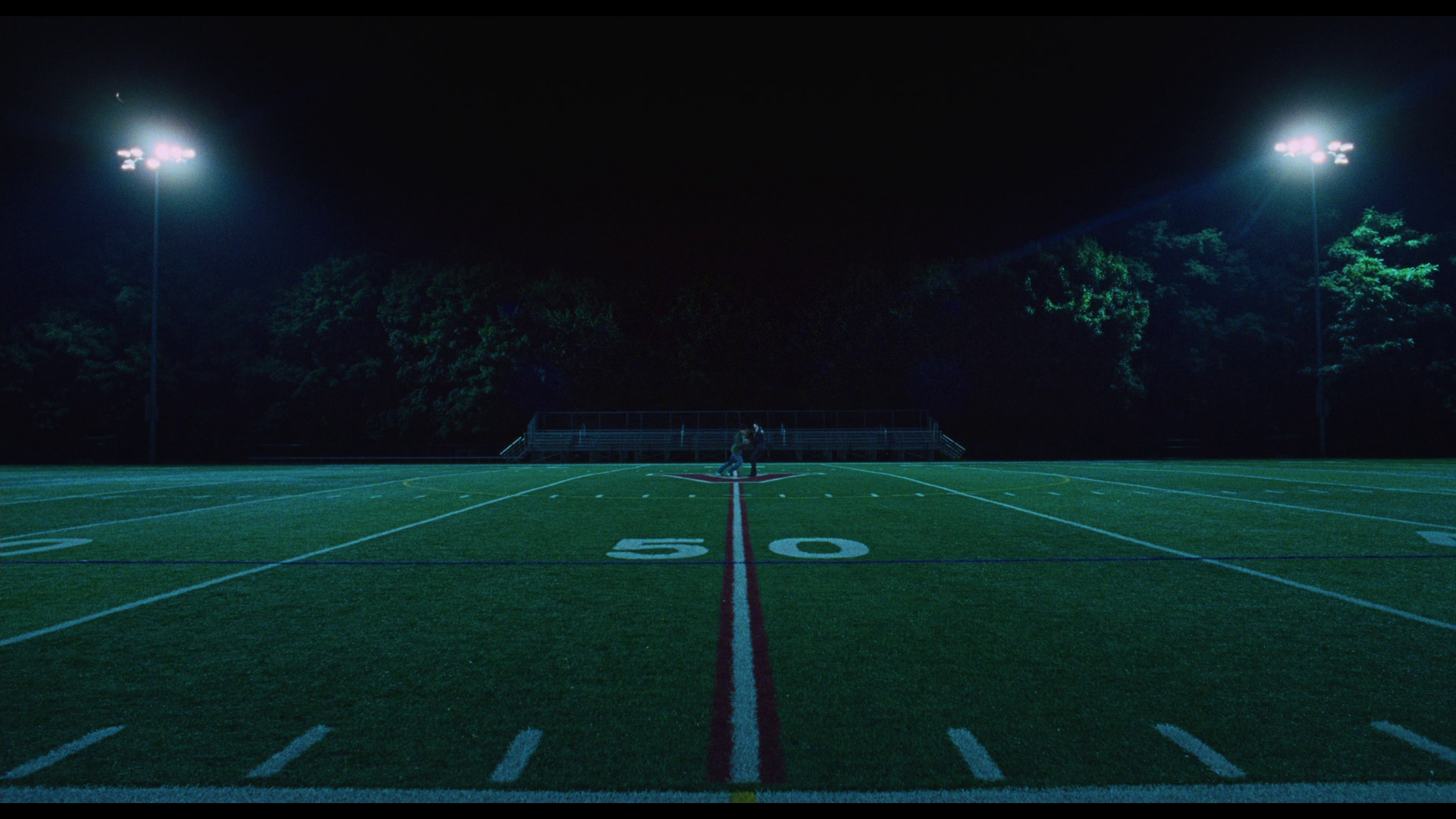
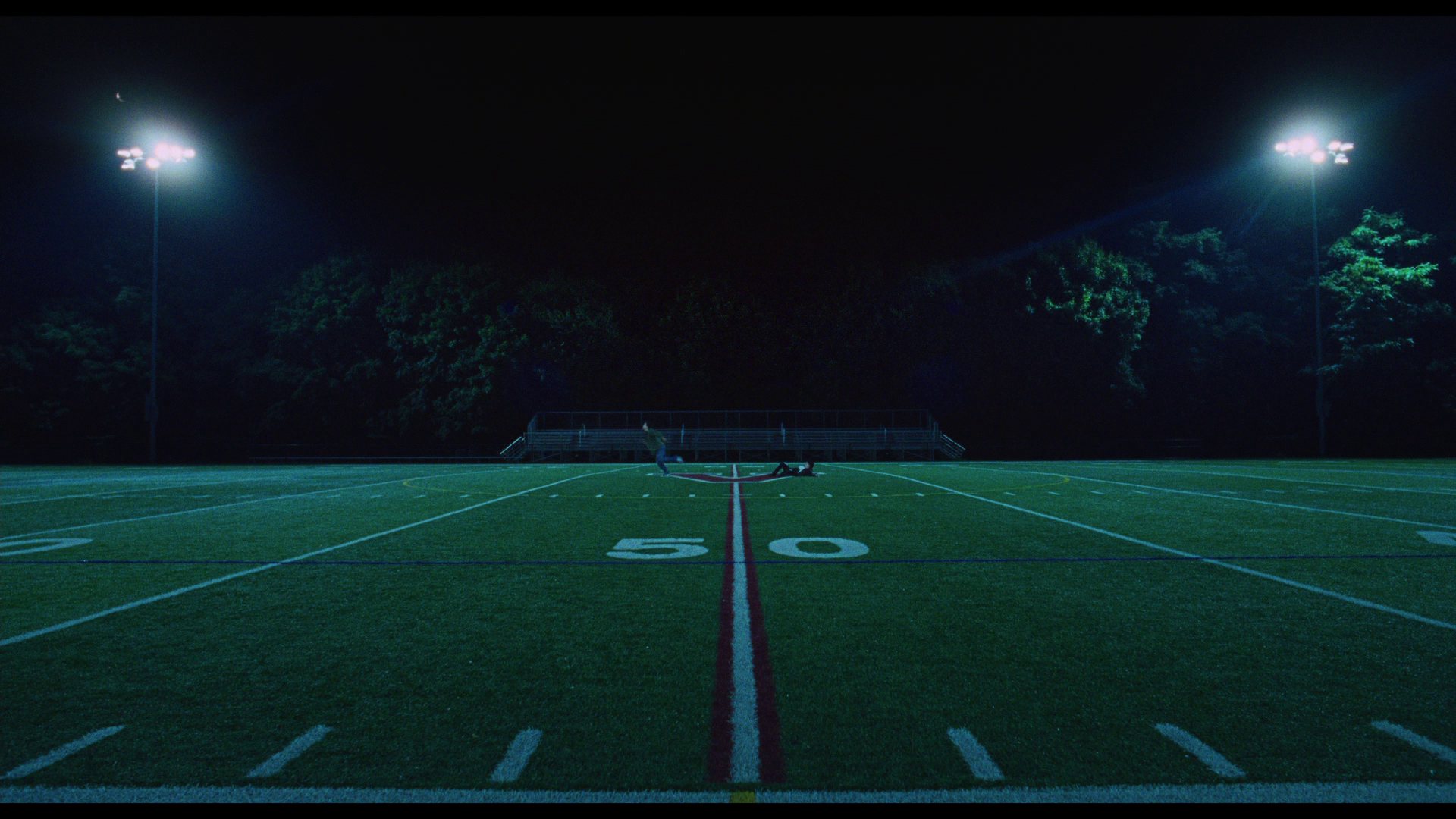
“I haven’t told you anything tonight that you don’t already know,” Maddy/Tara tells him, but although Owen allows himself to be led to the football field behind which she has dug him a grave, he pushes her down and runs away in an extreme long shot:
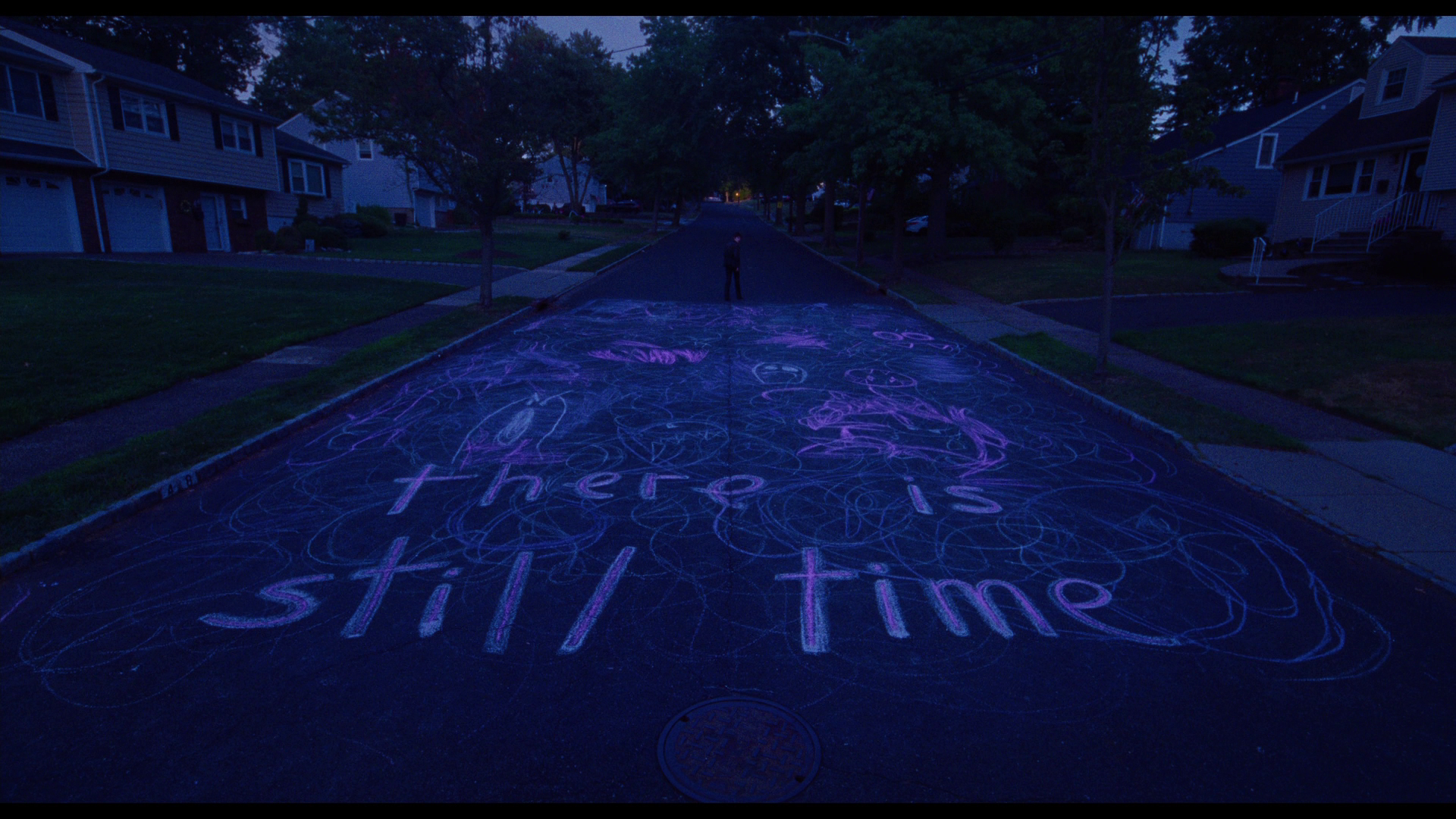
She leaves him a final message in chalk:
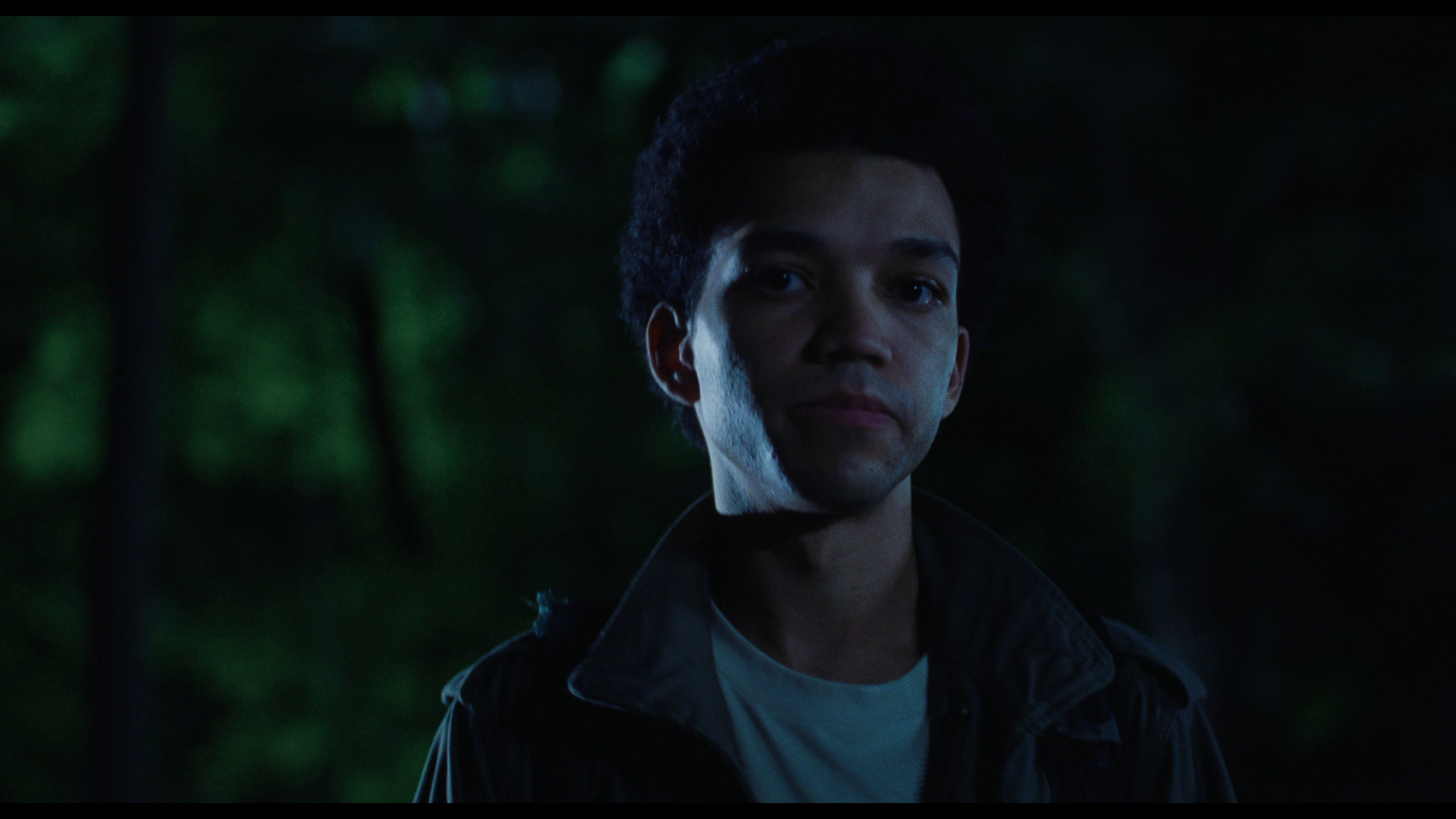
But never returns, and this turns out to be where we came in. “Anyway, like I was saying, it was raining the other night and I couldn’t sleep, so I started The Pink Opaque again,” Owen says addressing the camera:
But this time “the whole thing felt cheesy and cheap; dated, and not scary at all.”
That framework informed how I crafted TV Glow, which is so much about memory and the way that a television show can feel one way when you’re a kid and another when you revisit it later in life. But it’s also the ways in which life can feel both magical and utterly devoid of magic at times. With Owen, what’s tragic about that moment at the end of the film when he’s watching this weird, shitty kids show version of The Pink Opaque on Netflix is how he describes his feelings. It’s not just, “This was lame, and I’ve outgrown it.” He says he feels embarrassed, and what he’s actually dealing with there is shame.
Which would seem to pretty comprehensively refute the way I read it my first couple of times around. As I said on Letterboxd two years ago, “I don’t think we can write this off as ‘you can’t go home again’ because, 1) he has ostensibly seen it a million times, and 2) we’ve seen clips from the show, too, and this isn’t the same program!” Except that as Schoenbrun has also said in a fun interview with fellow director Gregg Araki for Filmmaker Magazine, this is all deceptively straightforward from a narrative perspective:
To me, the movie is not ambiguous in the way that, at the end of the movie, you’re presented with this question, is his reality real or was Maddy telling the truth when she told him that everything in his life was actually the fever dream of a dying TV character? To me, there’s no ambiguity there. He is absolutely in a grave somewhere far away, suffocating.
One of Mr. Melancholy’s tricks, per Maddy/Tara, is that he speeds up time in the Midnight Realm and makes seconds bleed into days, days into months, and months into years. But that’s not his only one. See also the way Owen’s manager Dave (Conner O’Malley) doesn’t seem to age at all between the sections of I Saw the TV Glow marked “eight years later” and “twenty years later” even as Owen is afflicted with a hunch, limp, and the worst case of chapped lips ever:
Or the way all of his co-workers go limp during his “I’m dying right now!” freak out since there’s no way to reconcile it with the fiction he’s inhabiting:
TV Glow acknowledges that at their worst television, movies, and music function in our lives just to pass time, but it also celebrates them as a way to freeze it in place while we consider who we really are. I was gratified to see Jeanne Thornton mention the film Seconds in her essay “An Act of Faith” included in A24’s bound edition of TV Glow‘s screenplay because I thought of it, too. That film ends with the sound of a drill, indicating that the clock has run out on John Randolph and Rock Hudson’s Tony Wilson; this one concludes with the nearly as ominous sound of Owen’s asthmatic wheezing. But if you can wheeze, you’re still breathing, and that means there is still time.
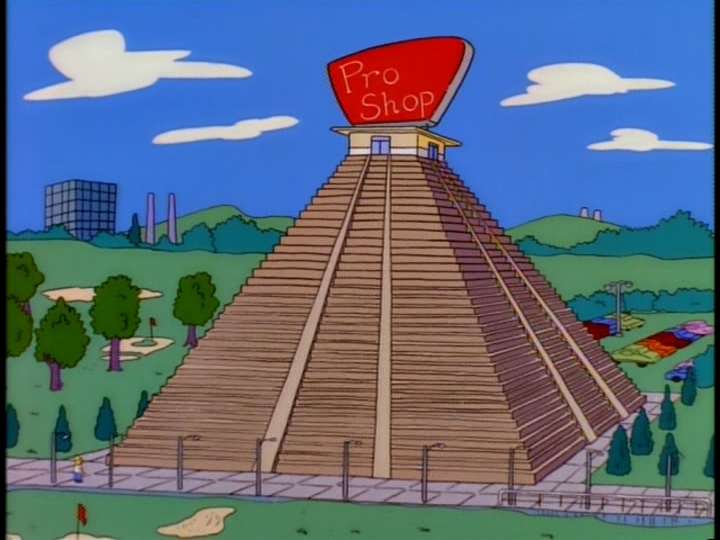
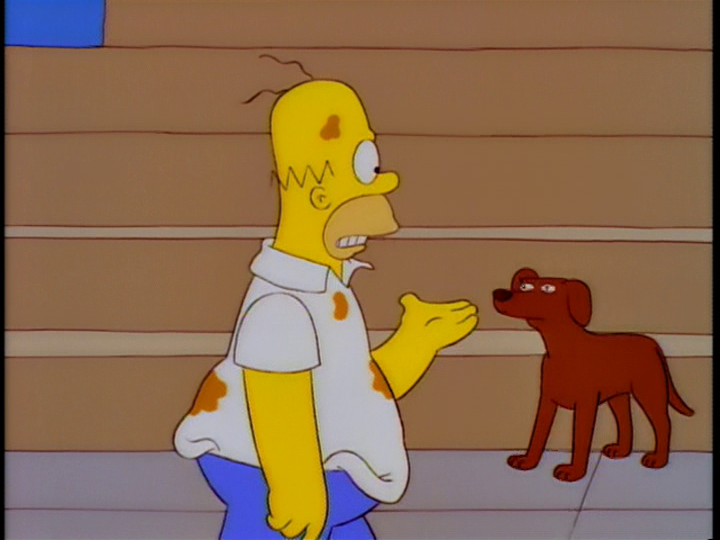
HOMER: Golf course? Did I dream that whole thing? Maybe the desert was just this sand trap. Oh! And I bet that crazy pyramid was just the pro shop! And that talking coyote was really just a talking dog.