One of my New Year’s resolutions was to be less of a movie snob and watch a few TV series with My Loving Wife. With December 2022 Drink & a Movie selection Elf director Jon Favreau’s latest Star Wars: The Mandalorian and Grogu opening on May 22, The Mandalorian seemed like a good place to start. Three episodes in, something struck me as strangely familiar.
I served on the University Senate at the University of Maryland from 2016-2019 and the Faculty Senate at Cornell University from 2022-2025, where I listened to many debates about endowment spending. They invariably began with one of my colleagues suggesting that doing more of it seemed like an obvious solution to a funding problem that troubled them, continued with someone else (usually an administrator) patiently explaining that this wasn’t as easy as it sounded and would be foolhardy in any case, and ended in stalemate because neither side ever came close to convincing the other.
We meet the Mandalorian “covert” just 18 minutes into season one. Bounty hunter Din Djarin aka “Mando” (Pedro Pascal) looks around to ensure the coast is clear, ducks into a doorway, and descends a staircase:

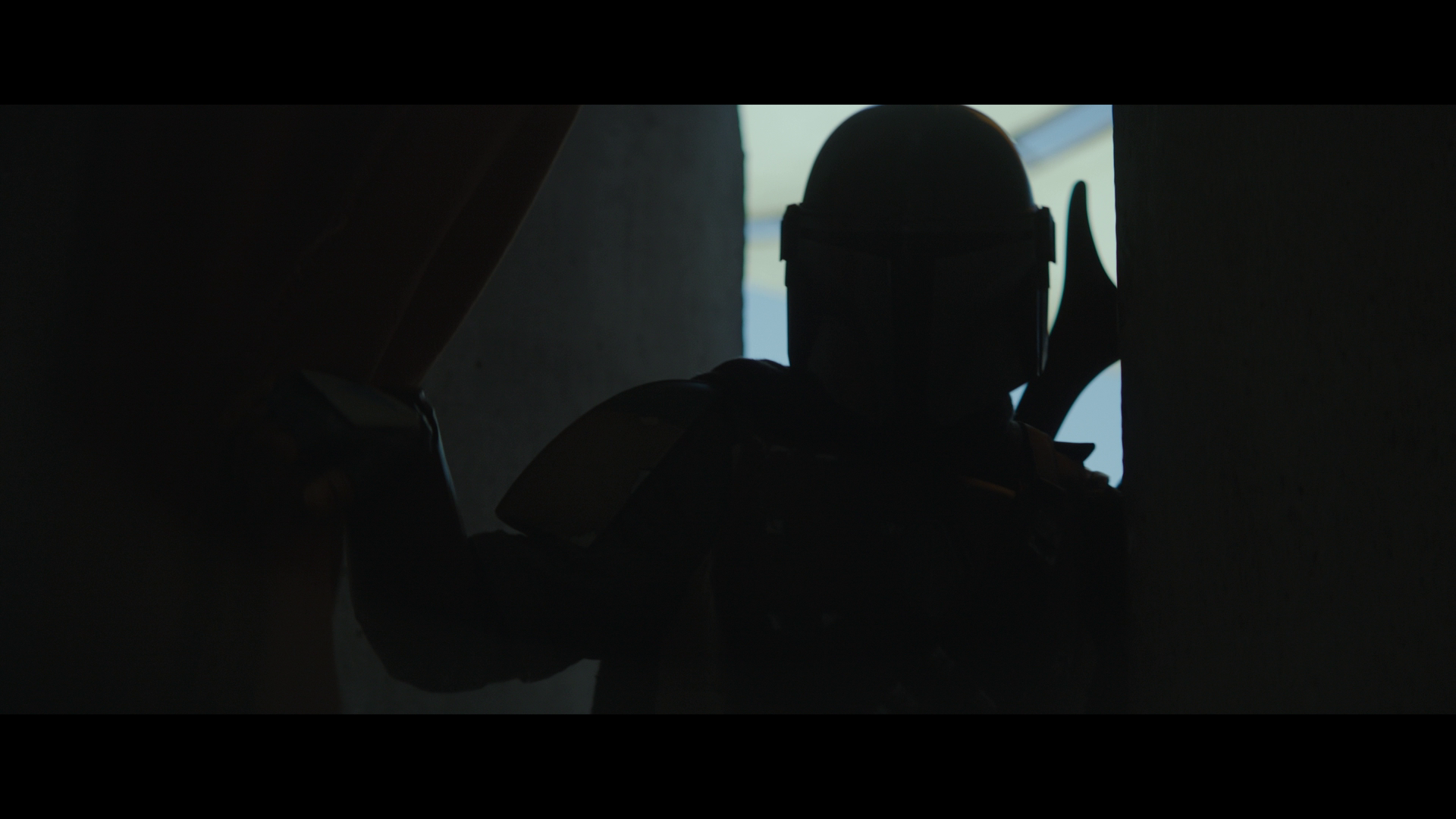
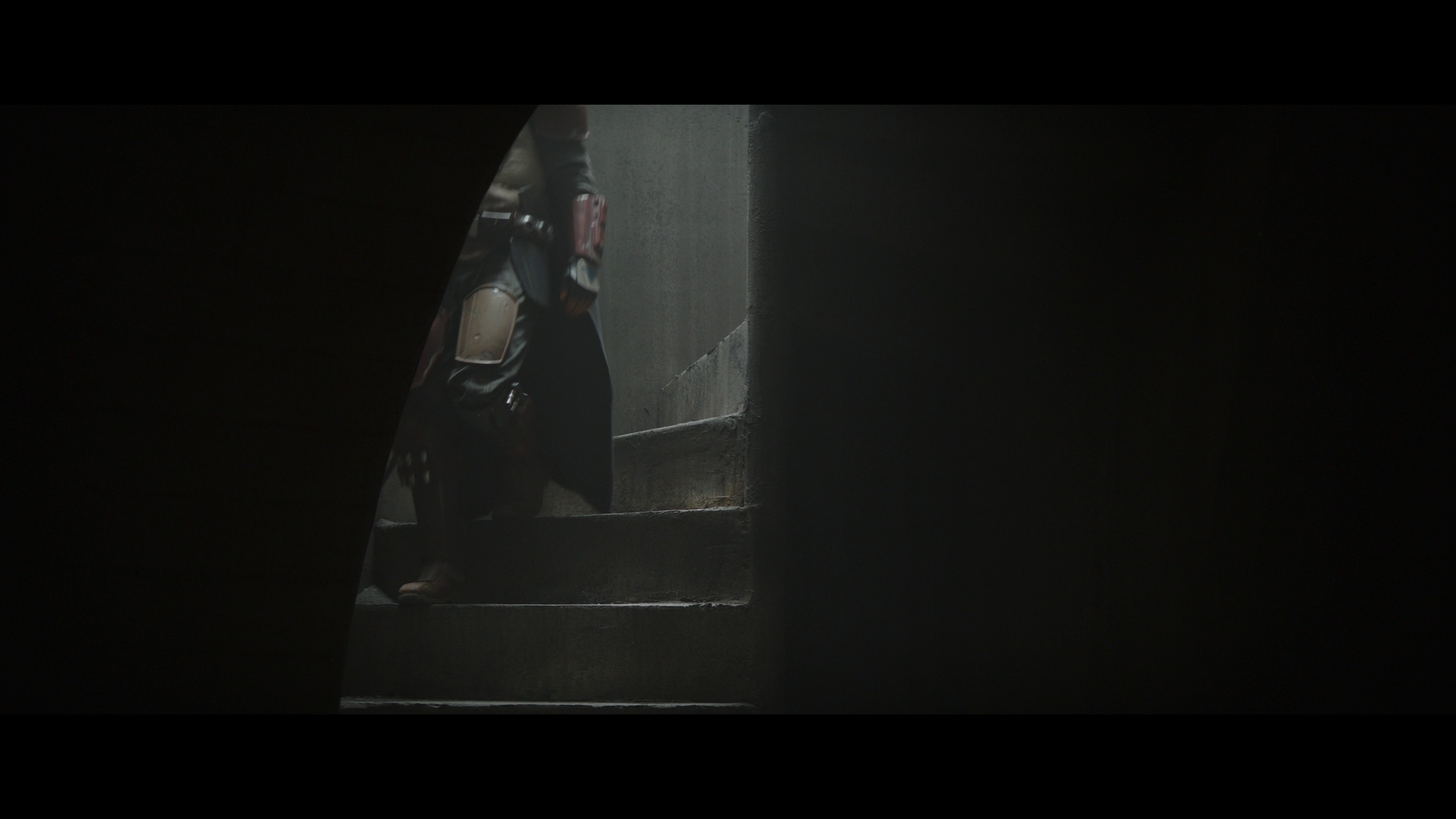
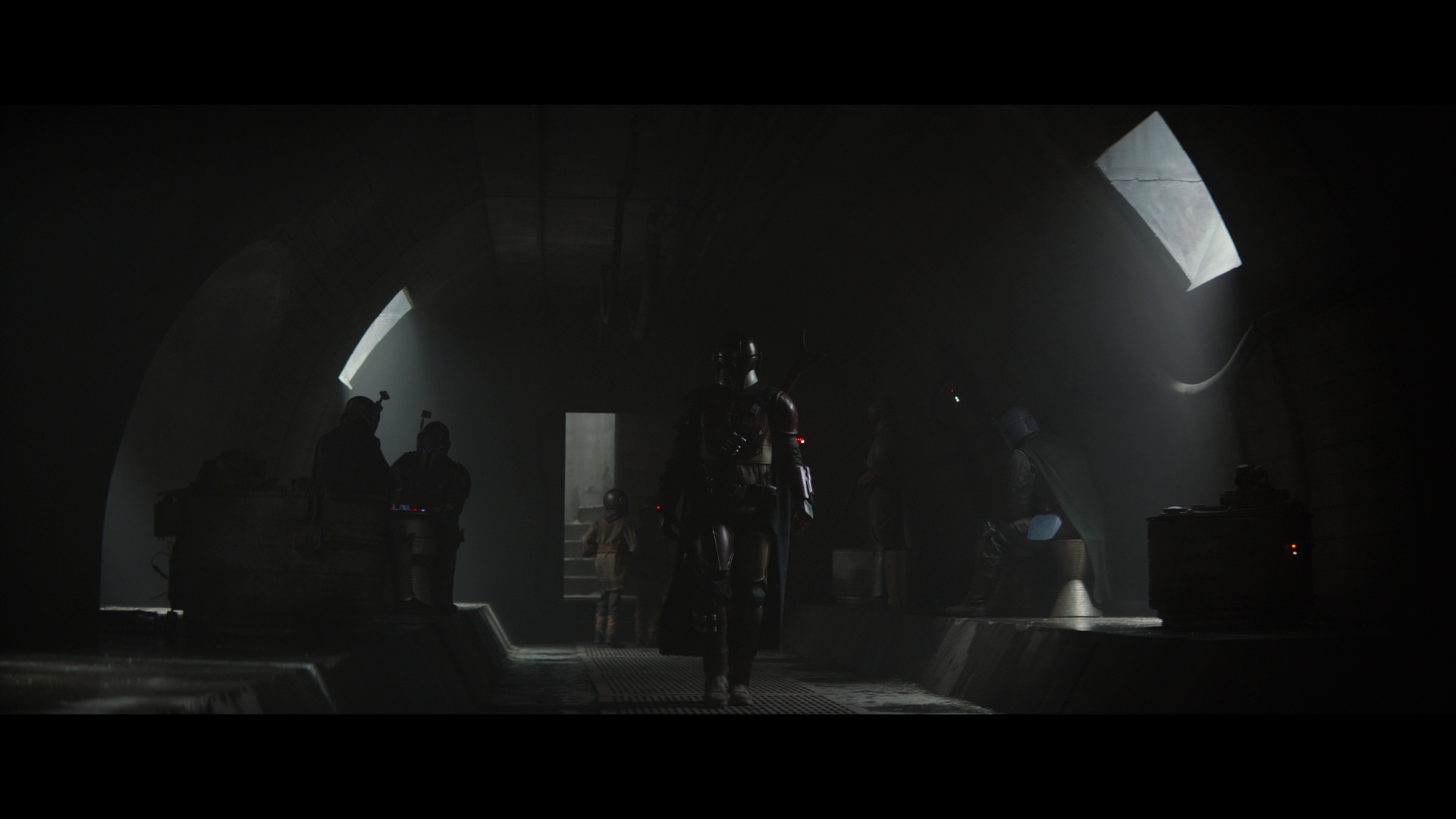
He makes his way past other helmeted figures to the Armorer (Emily Swallow):
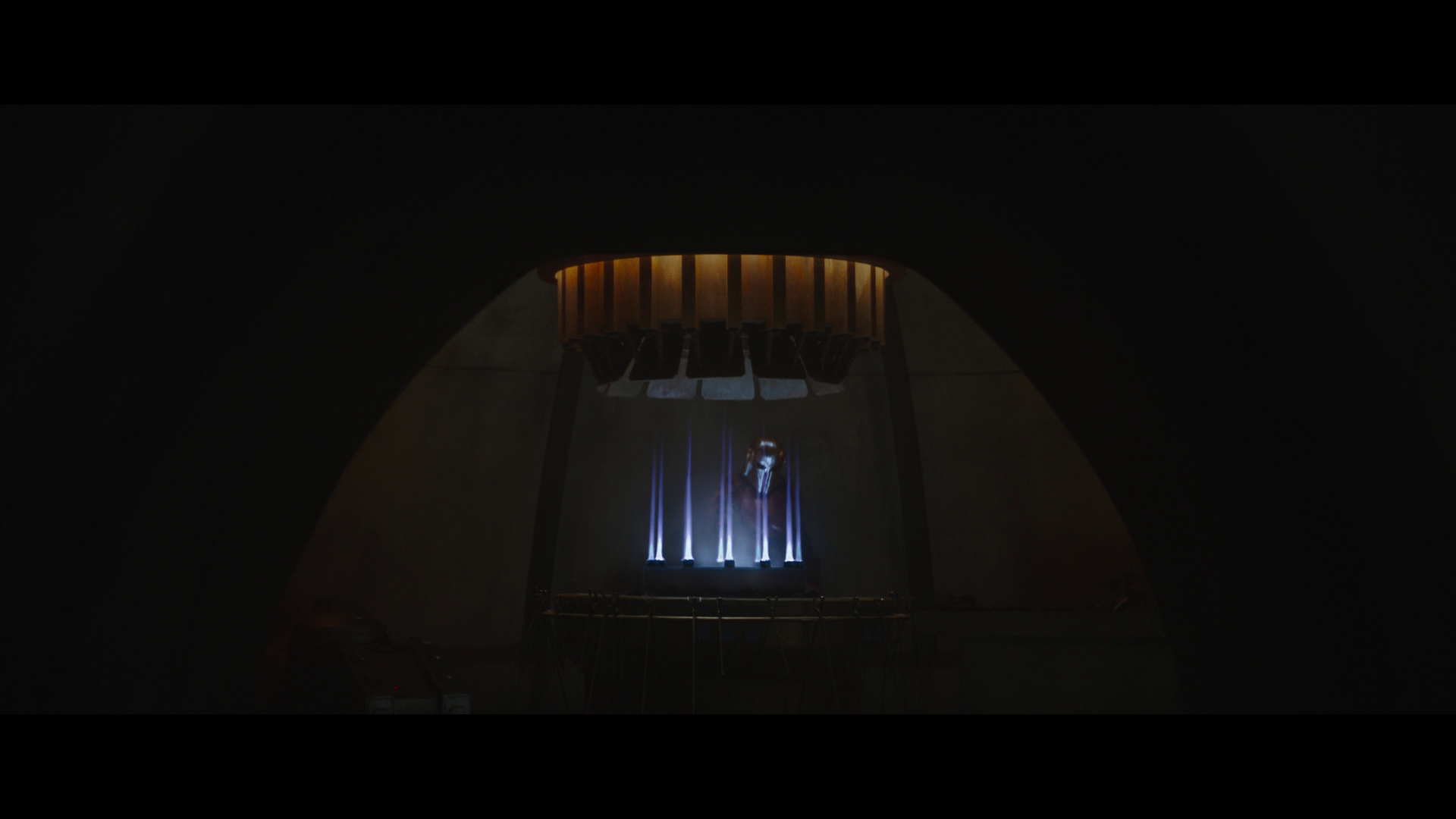
And places an ingot of Beskar steel from their ancestral homeworld that he received as pre-payment for a new commission before her:


“This is extremely generous,” she says as she melts it down. “The excess will sponsor many foundlings.”
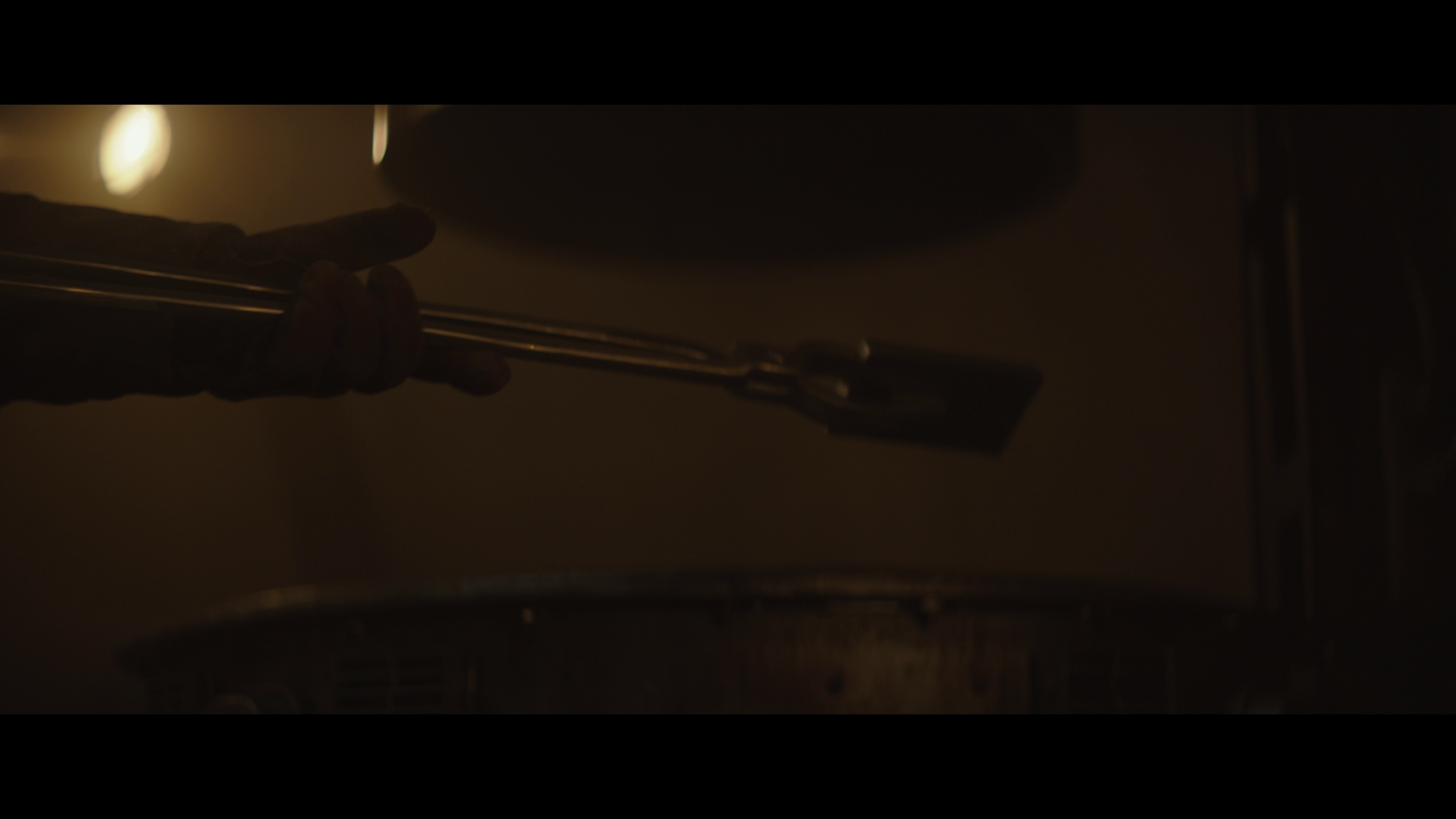


“That’s good,” he replies. “I was once a foundling.” As the Armorer hammers the steel into a pauldron, violent scenes from Mando’s childhood flash before his eyes:

Two episodes later his captured quarry Grogu becomes fascinated by the metal knob atop a lever in his starship, which for some reason easily screws off:

Mando is well compensated for delivering him to The Client played by Werner Herzog, another “Drink & a Movie” alum:
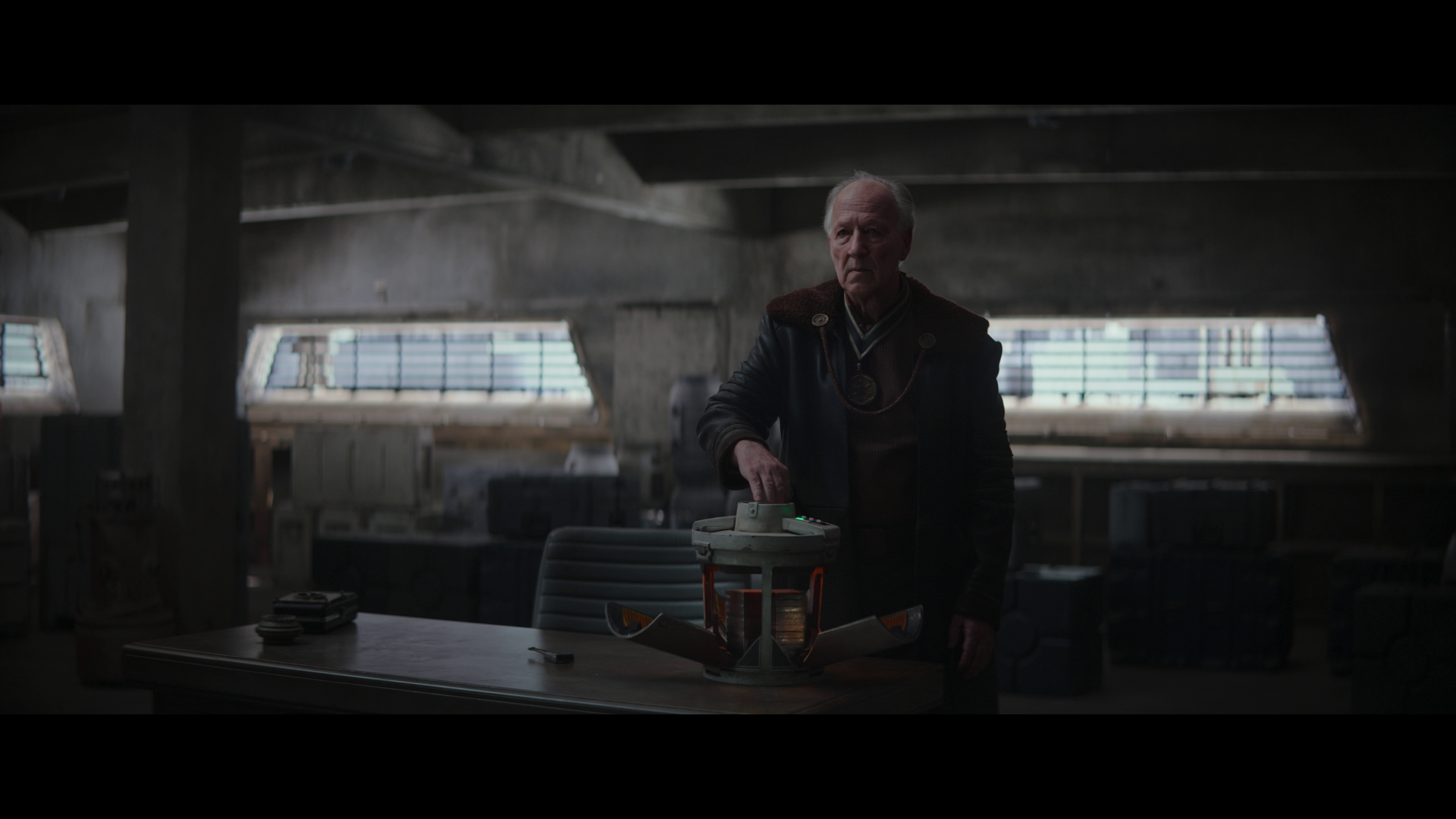

A crowd forms when he delivers the bounty to the Armorer, who informs him that it’s enough for a full cuirass:

But not everyone is impressed. Paz Vizsla aka “Heavy Infantry” picks up an ingot and studies it contemptuously:

Then initiates the following exchange with the Armorer:
HEAVY INFANTRY: These were cast in an Imperial smelter. These are the spoils of the Great Purge. The reason that we lie hidden like sand rats.
THE ARMORER: Our secrecy is our survival. Our survival is our strength.
HEAVY INFANTRY: Our strength was once in our numbers. Now we live in the shadows and only come above ground one at a time.
Mando asks the Armorer to reserve some excess Beskar for the foundlings, to which she replies, “the foundlings are our future.”

A few minutes of screentime later, Mando is getting ready to set off on a new adventure, when a rack focus suddenly alerts us to the fact that he never reinstalled the knob Grogu liked to play with:


He undergoes a change of heart and embarks on a rescue mission which goes well until it doesn’t. Just when all hope seems lost, Din Djarin’s fellow Mandalorians descend from the sky to save him and his new ward:


“You’re going to have to relocate the covert,” Mando says to Heavy Infantry, who answers with the words of their creed: “this is the Way.”


In his seminal Journal of Legal Studies article on the topic, Henry Hansmann argued that while university endowments “are now so familiar that their purpose is seldom questioned,” upon close examination “it is not obvious why they are accumulated.” On the one hand, as Hansmann notes, it’s quite simple: “the accumulation of endowment is, in effect, a form of saving, presumably for expenditure in the future.” But because “each dollar added to endowment represents a dollar less for current research or for educational services to current students or a dollar more in tuition that must be charged current students in order to provide them with the same level of services,” it only makes sense to refrain from spending this money if the amount saved will “be used to provide more research, more education, or lower tuition in the future.”
Universities concede by their actions that they can dip into their endowment each year: per Hansmann c. 1990, his home institution Yale was typical in adopting a policy whereby expenditures should not exceed the long-run real rate of return of its endowment investments to ensure that the real value of the endowment does not decrease. The only question, then, is how much is appropriate? Hansmann devotes 25 pages considering eleven common justifications for rules favoring endowment accumulation in turn before concluding that while ideas such as that they “serve as a financial buffer against periods of financial adversity” and/or “assist in passing on values prized by the present generation” are compelling, there’s little evidence either that they actually explain university behavior or “that the sizes of existing endowments, and the ways in which they are managed, are well chosen to serve these goals.”
The parallels between this and the case of the covert run surprisingly deep. Former foundling Din Djarin operating out in the open while everyone else remains literally underground represents a form of “spending to the real rate of return,” and a population that slowly and steadily increases is like an investment portfolio rich in growth stocks. More to the point, like Peter Conti-Brown during the Great Recession, Benjamin Bernard during the COVID-19 global pandemic, and Allison Tait last year shortly after the Trump administration began its attacks on higher education, the Armorer and her fellow Mandalorians decided that the “moral trade-off” (as Bernard put it) of inactivity during a time of crisis wasn’t worth it.
As a staunch believer in the old adage “there’s no such thing as a free lunch,” I confess that during my time as a senator the administrator argument that, as Karen W. Arenson quoted Princeton president Shirley M. Tilghman writing to her Senate Finance Committee, “the endowment does not function as a ‘piggy bank’ or ‘rainy day fund’ waiting to be used or allocated” rang true to me. And indeed this pile of armor initially suggests that the Mandalorians made a mistake by revealing themselves:

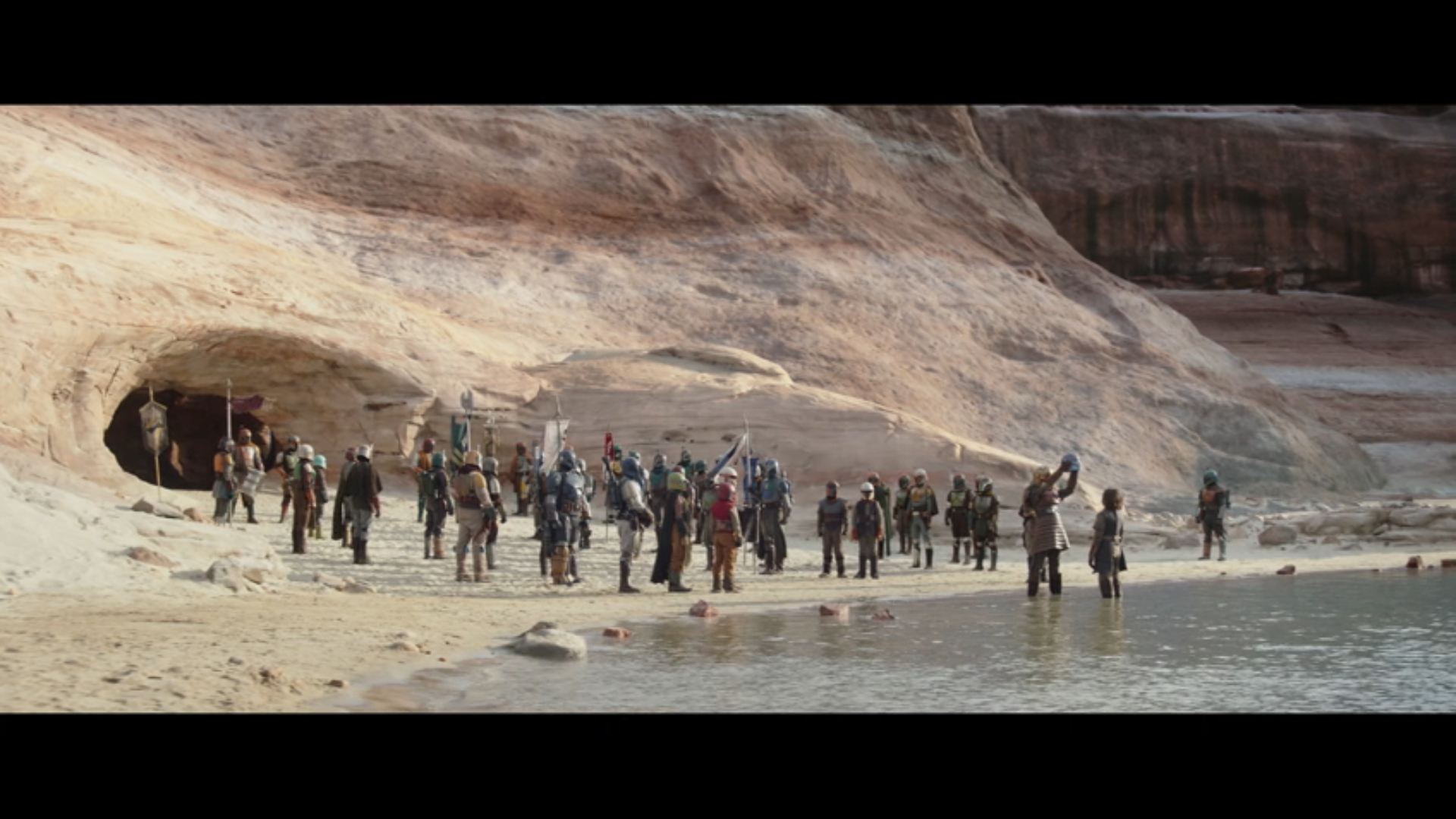
But season three dawns on Paz Vizsla’s son Ragnar Vizsla being initiated into the relocated covert, proving that their gamble did in fact pay off:
One consequence of using popular culture texts to explain concepts like endowment spending is that they’re often persuasive in ways you didn’t anticipate. That isn’t quite what happened here for me, but I do find myself pretty well convinced by Conti-Brown’s “cultural theory of endowment accumulation,” and The Mandalorian is a good illustration of one of its central points: the danger of confusing the means for the end. As Conti-Brown notes, an endowment “can be a point of reference and pride akin to a winning football team, the prominence of a faculty member, or the ranking of the university” because its absolute size “provides a clear criterion for objective ranking.” The problem arises when protecting it at all costs entails withholding benefits from the students of today in the name of the students of tomorrow–after all, that’s who they were when the bargain was struck!
Bernard observes that “the choices universities make now will also affect the future composition of the professoriate,” and it isn’t a coincidence that when the ceremony above is interrupted by a Dinosaur Turtle attack:
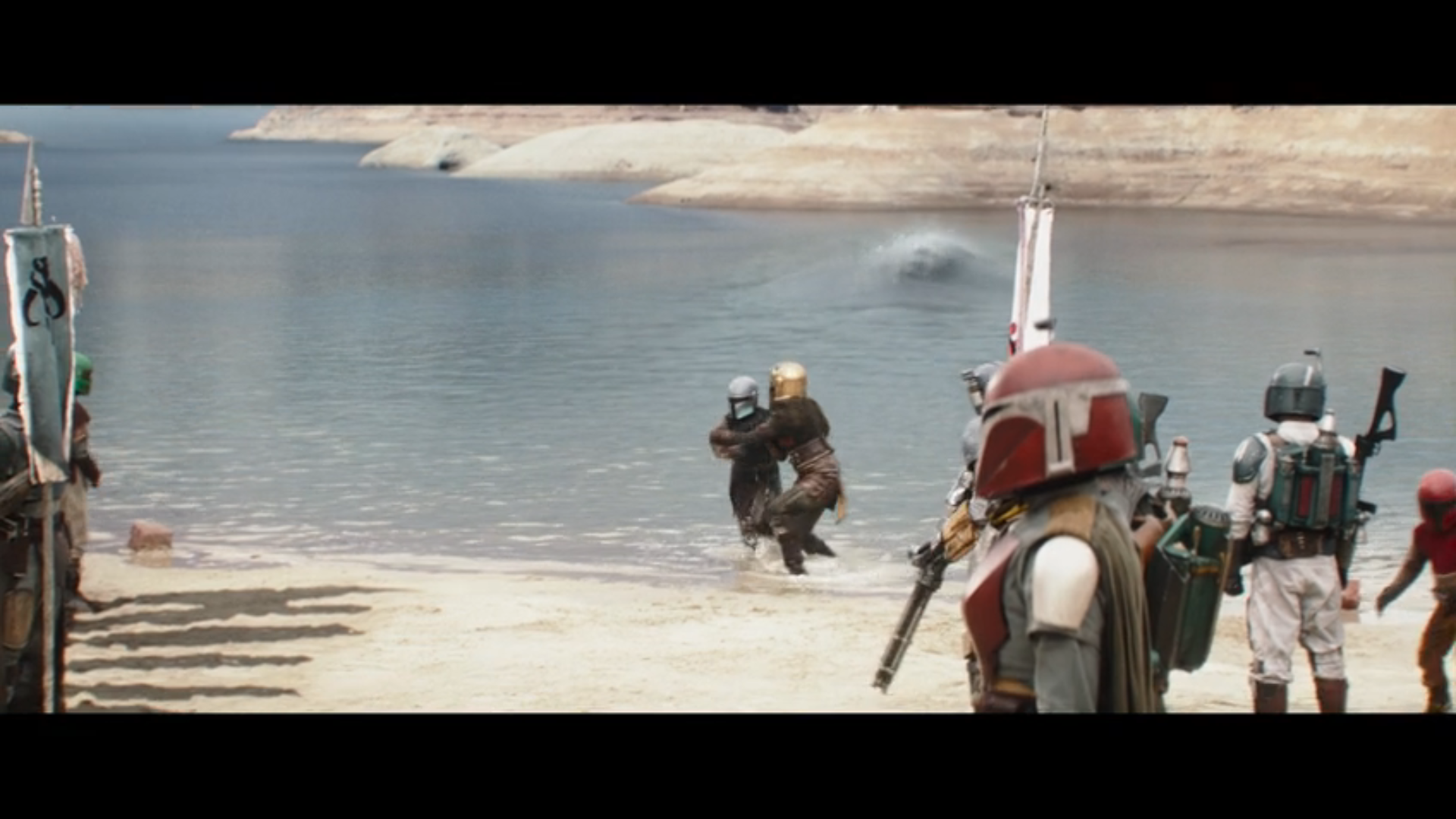
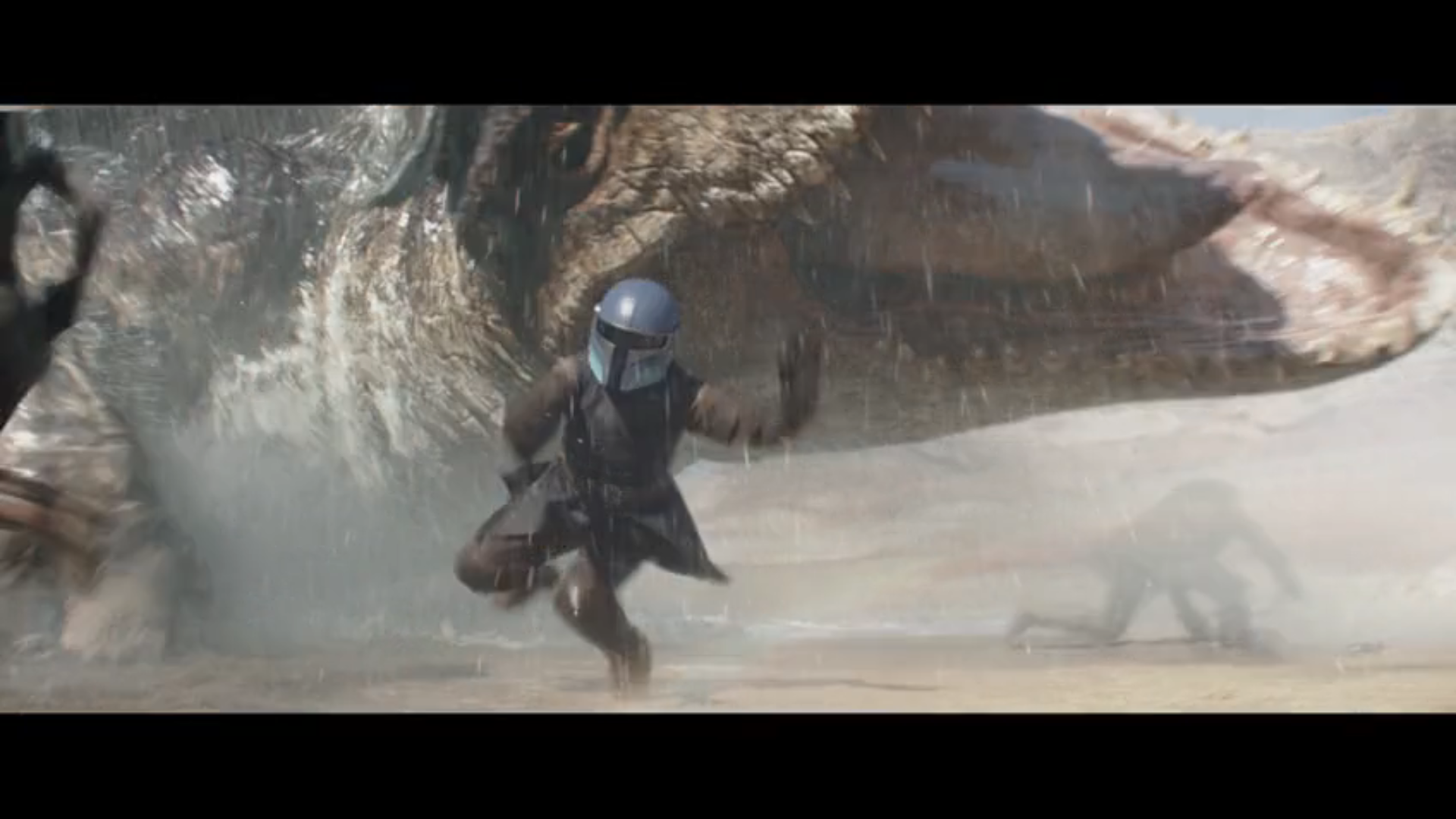
It’s Din Djarin and Grogu who arrive in the nick of time to play hero:
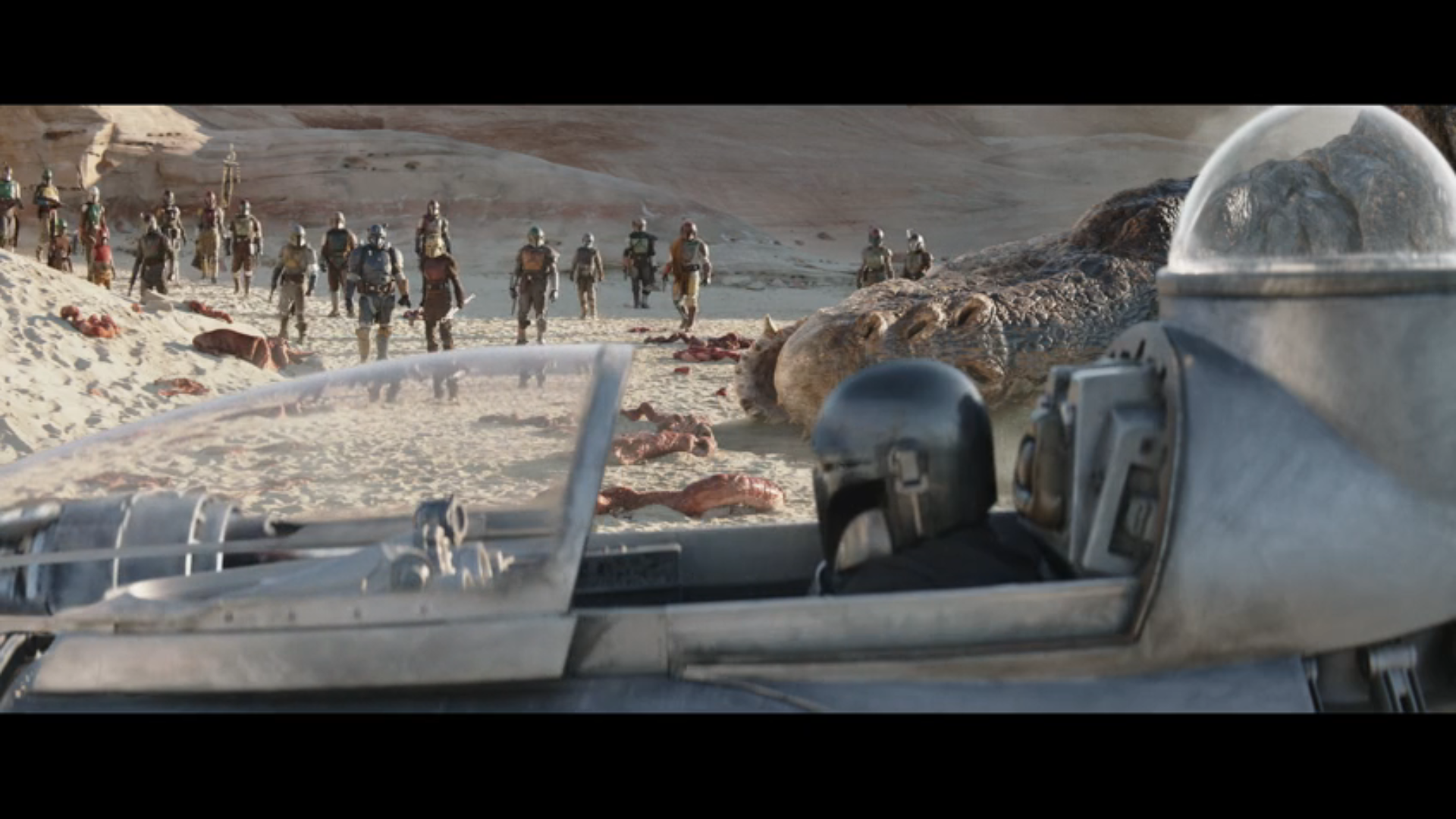

To put it in terms they would appreciate, this is the Way.


