Most days I’m lucky if 5-10 people visit this blog, but not on February 2 when every year hundreds of people Google “sweet vermouth on the rocks with a twist” and find their way to this 2019 post with the same name. Welcome, folks! Despite the fact that Groundhog Day is one of my all-time favorite movies, I wasn’t necessarily ever planning to include it in my Drink & a Movie series since I’ve already written so much about it and because I featured it in a shot-lived Twitter series called “Pairings” in 2018. Here’s the thing, though: while there’s absolutely nothing wrong with drinking good sweet vermouth on its own with a bit of ice, that’s probably the last time I did so myself! I’ve also been hoarding an observation for years thinking it would make good fodder for a video essay, but I haven’t made one of those since 2008 when Kevin B. Lee kindly did all the hard work. So in honor of the day and without further ado:
Bill Murray’s Phil Connors, Groundhog Day‘s protagonist, unconvincingly claims that sweet vermouth makes him “think of Rome, the way the sun hits the buildings in the afternoon.” This reminds me of the explanation James Bond (who you might also know from the movies) gives for ordering an Americano in Ian Fleming’s short story “From a View to Kill,” which is part of the 2008 anthology Quantum of Solace:
One cannot drink seriously in French cafés. Out of doors on a pavement in the sun is no place for vodka or whiskey or gin. A fine à l’eau is fairly serious, but it intoxicates without tasting very good. A quart de champagne or a champagne à l’orange is all right before luncheon, but in the evening one quart leads to another quart and a bottle of indifferent champagne is a bad foundation for the night. Pernod is possible, but it should be drunk in company, and anyway Bond had never liked the stuff because its liquorice taste reminded him of his childhood. No, in cafés you have to drink the least offensive of the musical comedy drinks that go with them, and Bond always had the same thing–an Americano–Bitter Campari, Cinzano, a large slice of lemon peel and soda.
Although this isn’t actually the strongest endorsement, I far prefer an Americano to plain vermouth. Here’s how you make this “fine speci-mine” of a drink:
1 1/2 ozs. Campari
1 1/2 ozs. Sweet vermouth (Method Spirits)
3 ozs. Club soda
Stir the Campari and sweet vermouth with ice in a chilled glass. Add the club soda and a garnish with an oversized lemon twist.
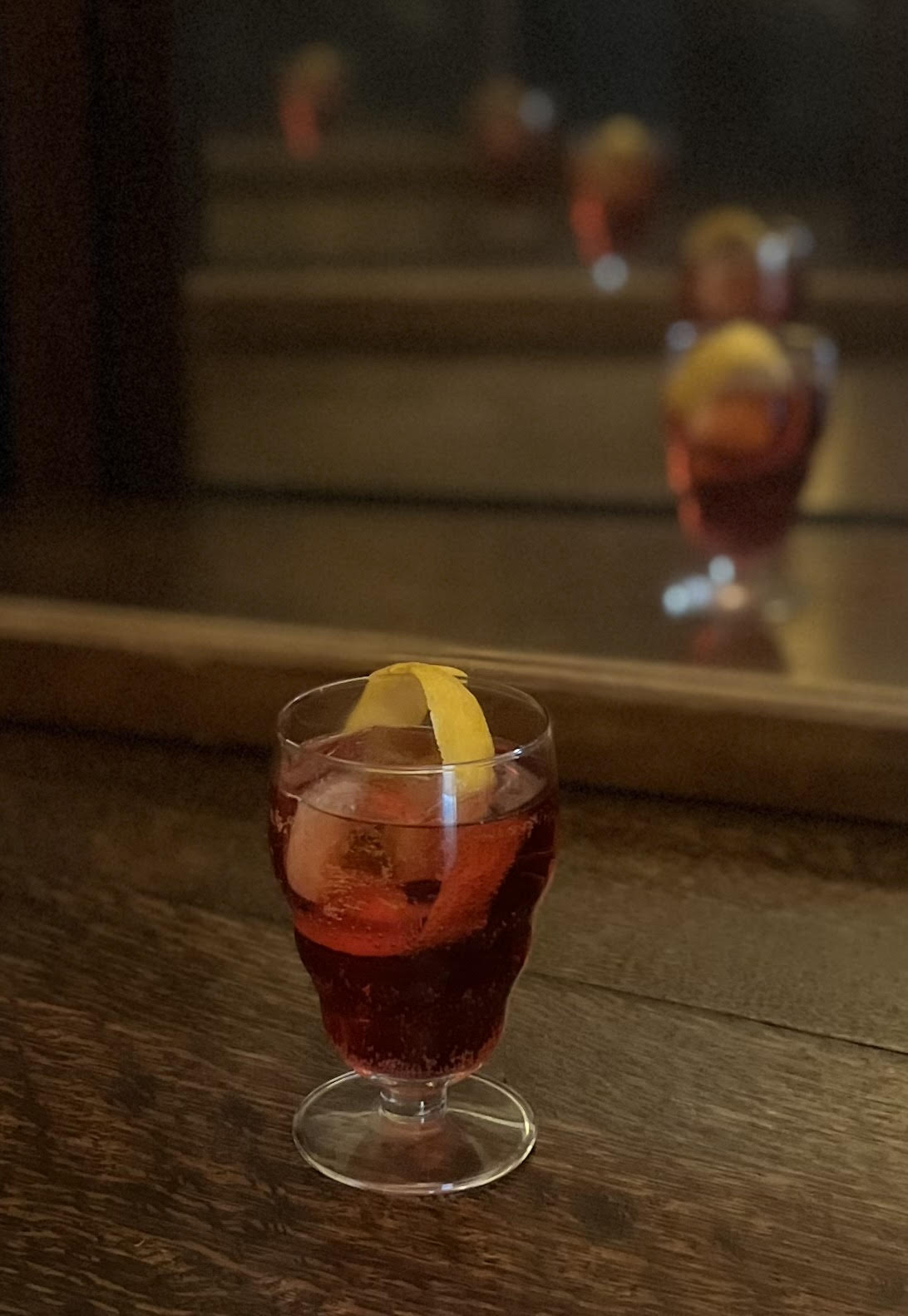
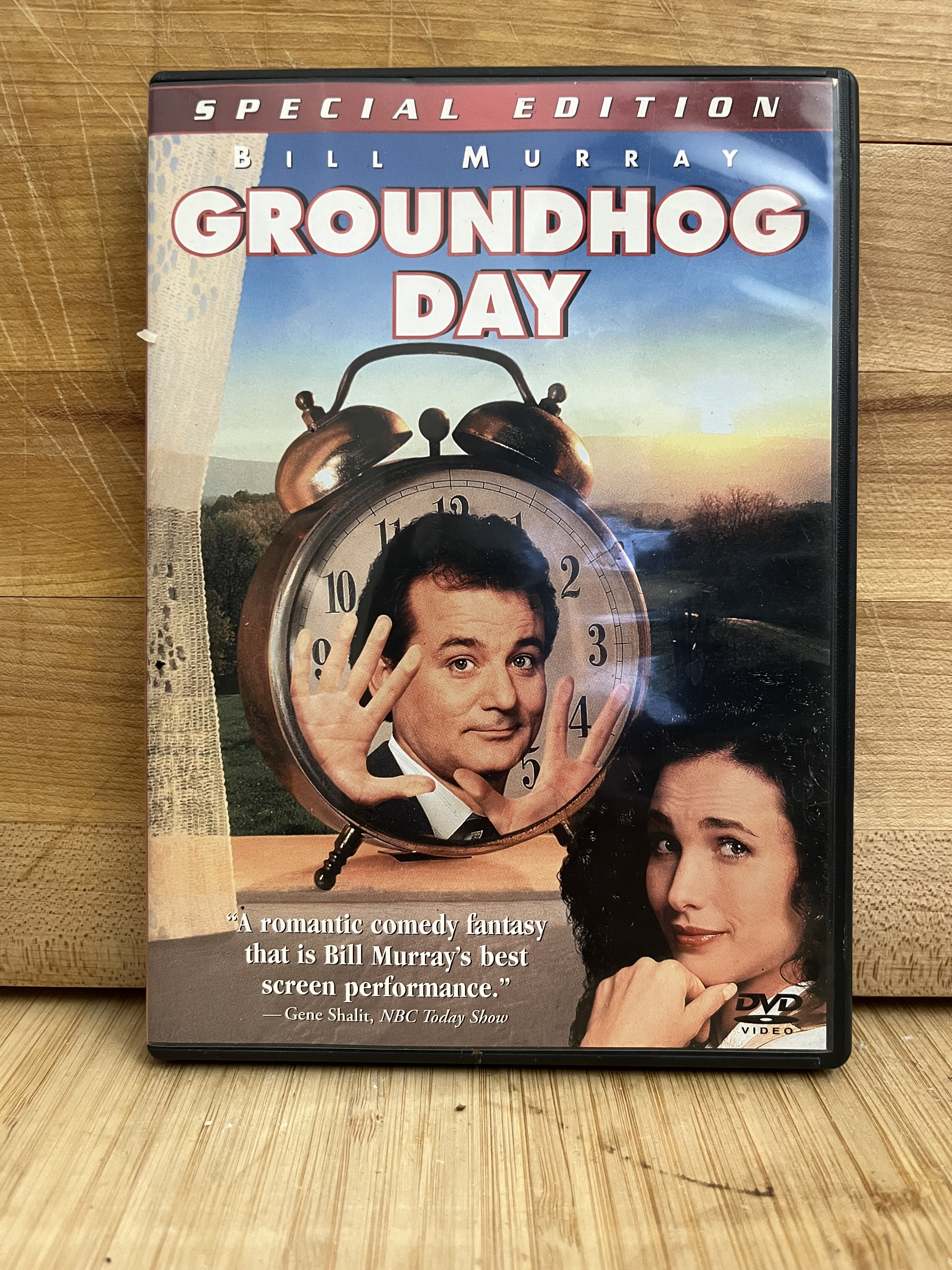
Carpano Antica, the vermouth I tweeted about in 2018, is still my favorite, but it’s way expensive these days compared to other quality options like Method, which is made a mere 30 miles away from where I live. The Campari adds bitterness and the soda effervescence and resulting cocktail is far more interesting than any of its three ingredients is on their own–no disrespect, Rita. On to the movie! Here’s a picture of the Columbia Pictures DVD release which I think I’ve owned since college:
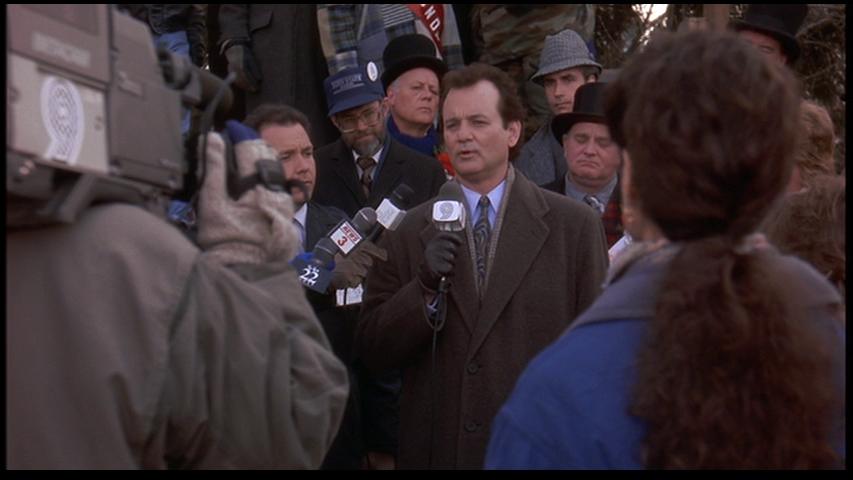
You can also rent the film from Apple TV+ or Prime Video. Groundhog Day is the rare movie that has entered the vernacular: even if you haven’t seen it, you probably know that Phil Connors finds himself living the same day, the titular holiday celebrated on February 2, again and again. We see pieces of about 40 repetitions onscreen, but there are references to many more (e.g. “I’ve killed myself so many times, I don’t even exist anymore”) and in his BFI Modern Classics monograph on the film, Ryan Gilbey claims that director Harold Ramis maintains that the original script specified that this goes on for 10,000 years. The scene I want to write about takes place on the last such day. It begins with Connors, a TV weatherman, giving far and away the best version of a report on Punxsutawney Phil we’ve already seen him deliver a number of times, complete with a Chekhov reference:
A reaction shot shows that his producer Rita (Andie MacDowell) is delighted with his work:
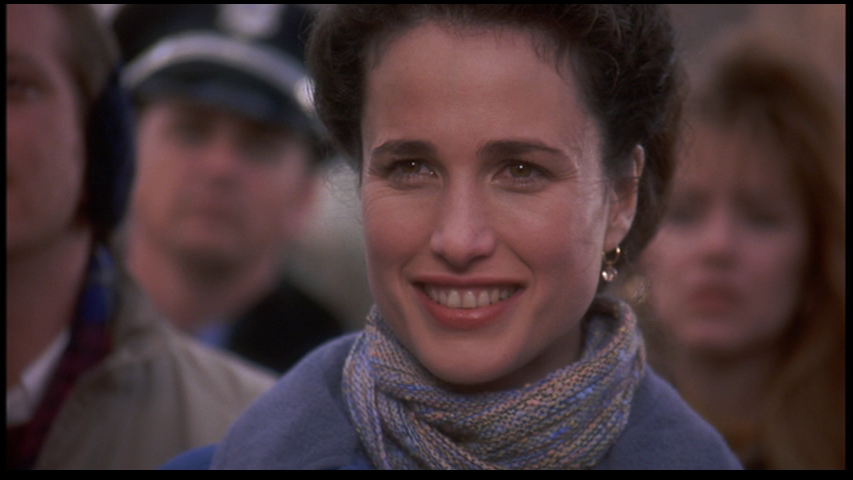
“That was . . . surprising!” she says to him afterward. “I didn’t know you were so versatile.” To which he replies, “I surprise myself sometimes.”
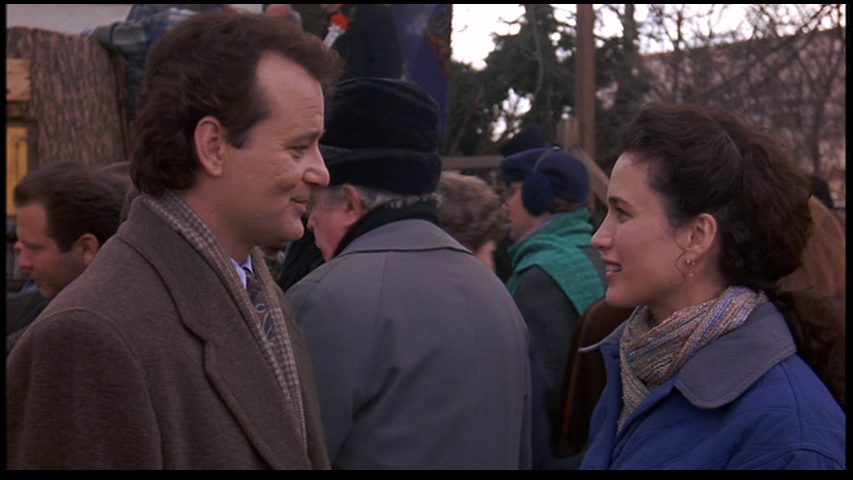
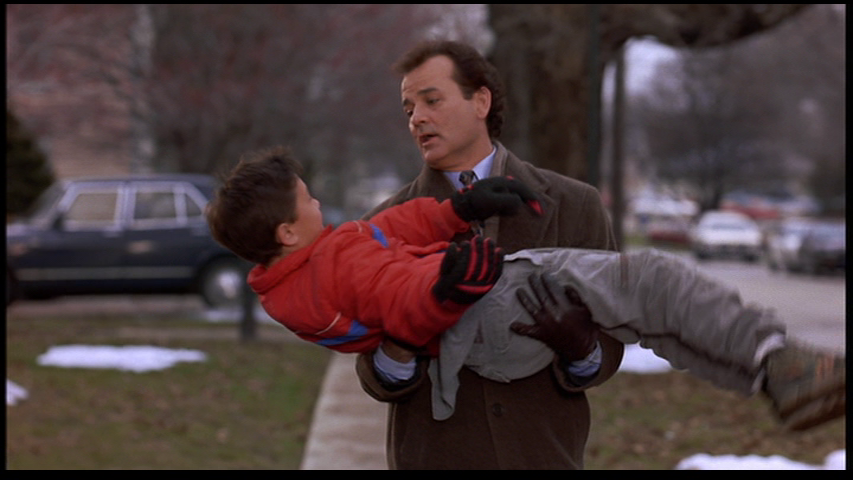
She invites him out for a cup of coffee, but he declines on the grounds that he has errands to run. “Errands? What errands? I thought we were going back,” she says. Which: of course she does! After all, this is their first interaction since cameraman Larry (Chris Elliott) dropped her off at her hotel the previous day after a car ride Phil spent peevishly complaining about their assignment. But by now he’s off. Although Rita doesn’t see where to, we do. First he catches a child who he knows is about to fall out of a tree:
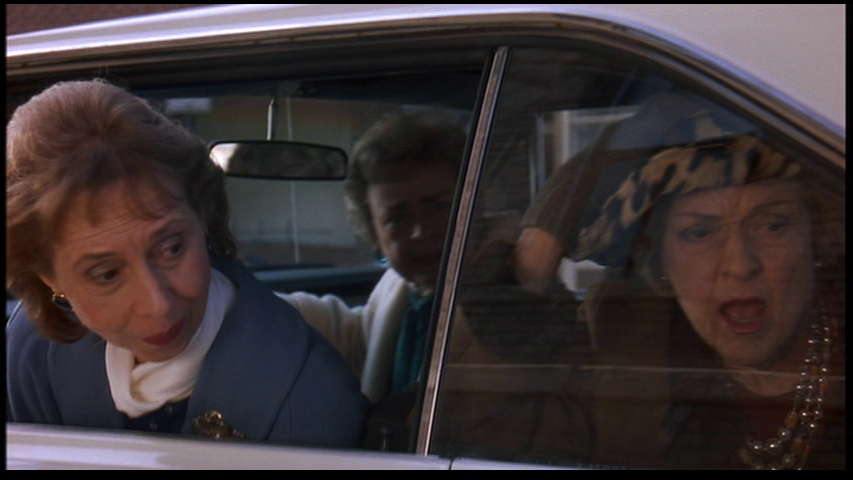
Then he shows up with a tire and a jack to help these ladies with a flat tire:
He appears in the nick of time to administer the Heimlich maneuver to Punxsutawney’s Mayor Buster Green (Brian Doyle-Murray):
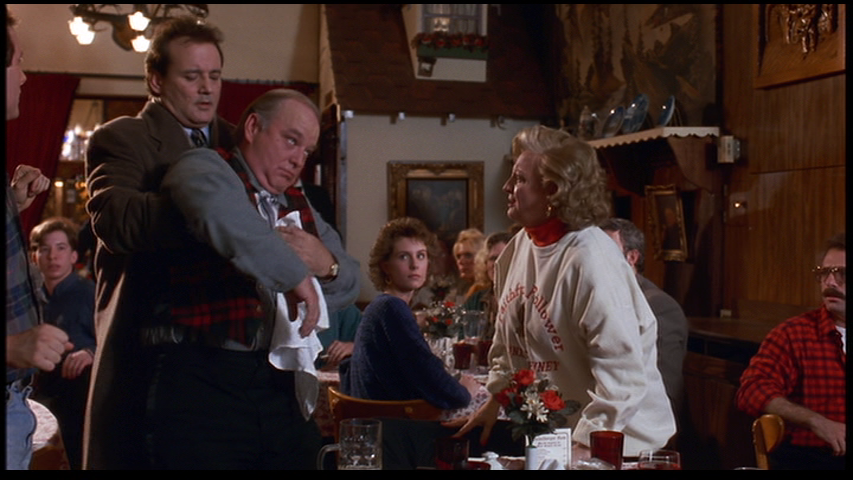
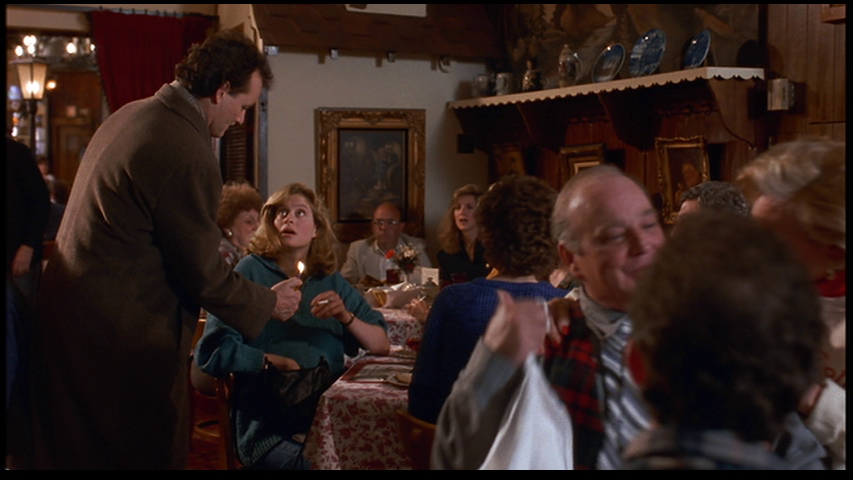
And stops on the way out to light a cigarette for a woman at the neighboring table:
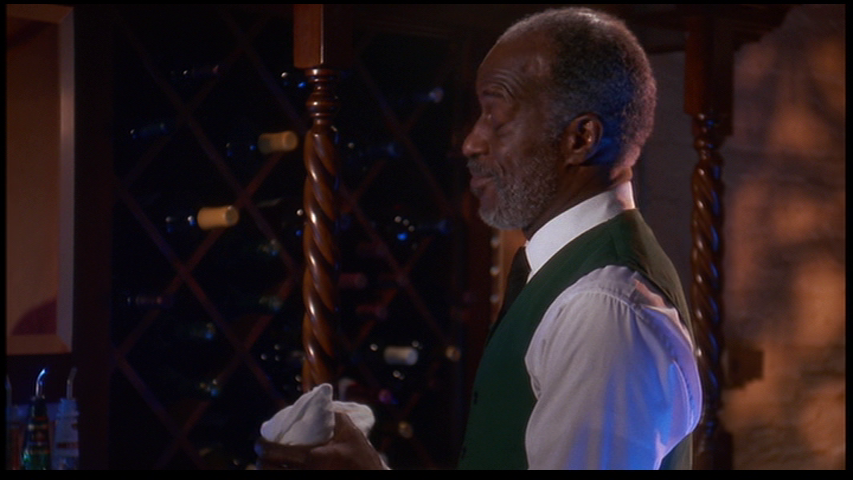
Cut to the Pennsylvanian Hotel that evening where Larry’s attempts to hit on Nancy (Marita Geraghty), who Phil spent a portion of eternity seducing, elicit a priceless look from the bartender played by John Watson Sr., who contrary to Jude Davies’s belief is not the only non-white character in the entire film:
On their way to the party next door they run into Rita, who suggests that they call Phil. “Phil Connors?” I think he’s already in there,” Nancy replies, leaving Rita puzzled:
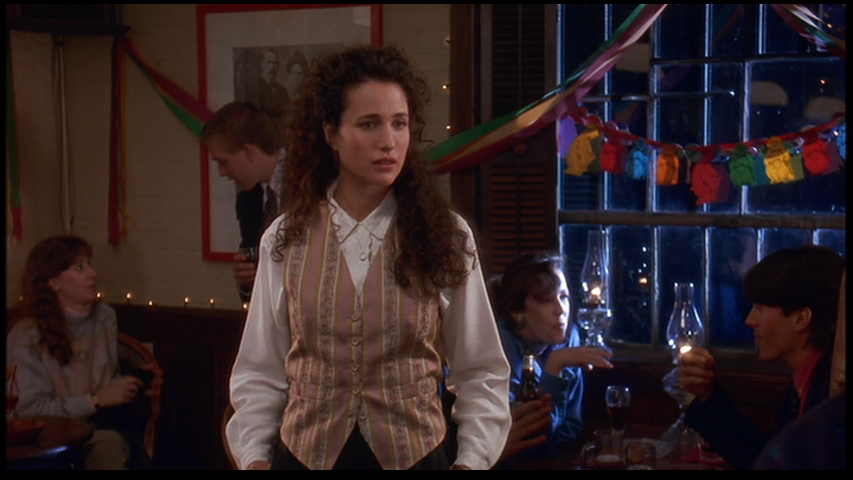
Inside she is astonished to find Phil playing the piano, and when he sees her he launches into a jazz riff on Rachmaninoff’s Rhapsody on a Theme of Paganini, Variation No. 18:
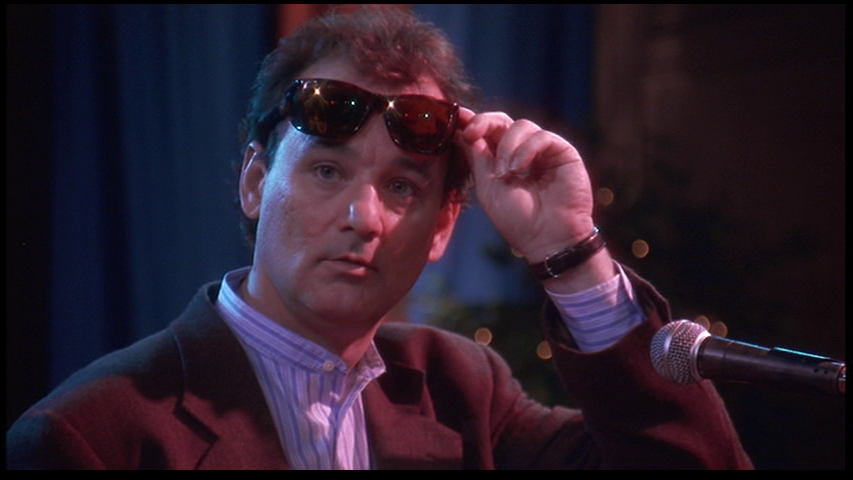
After he finishes, the woman standing next to Rita identifies herself as Phil’s teacher:
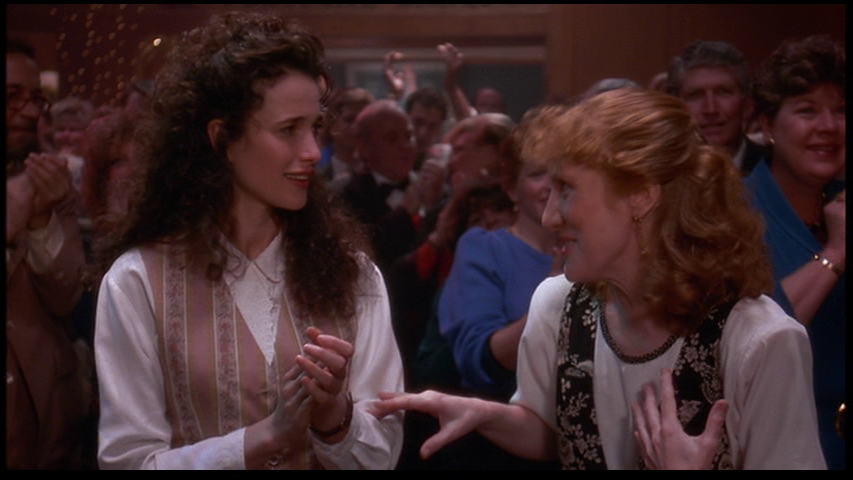
Her pride in him used to feel like a borderline plot hole to me (remember: from her perspective they met each other for the first time earlier that day) until I realized she must be looking ahead to instructing him in the future, not backwards to anything she’s already shown him. Anyway, Phil and Rita begin to slow dance:
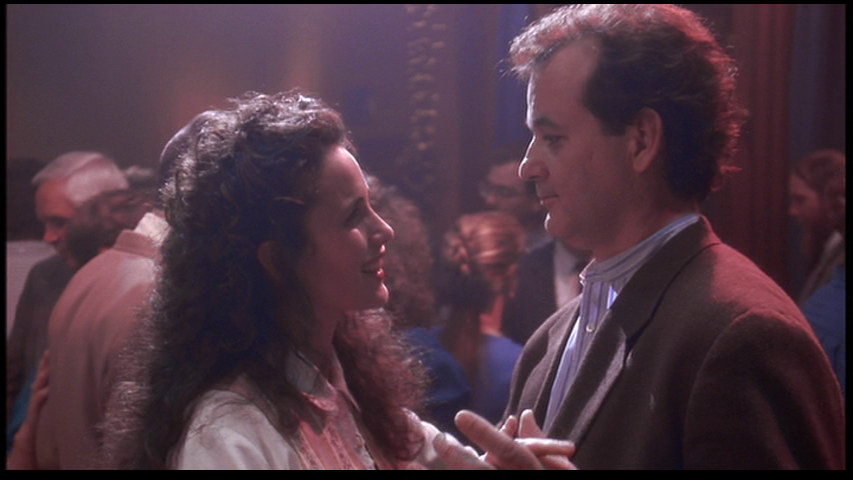
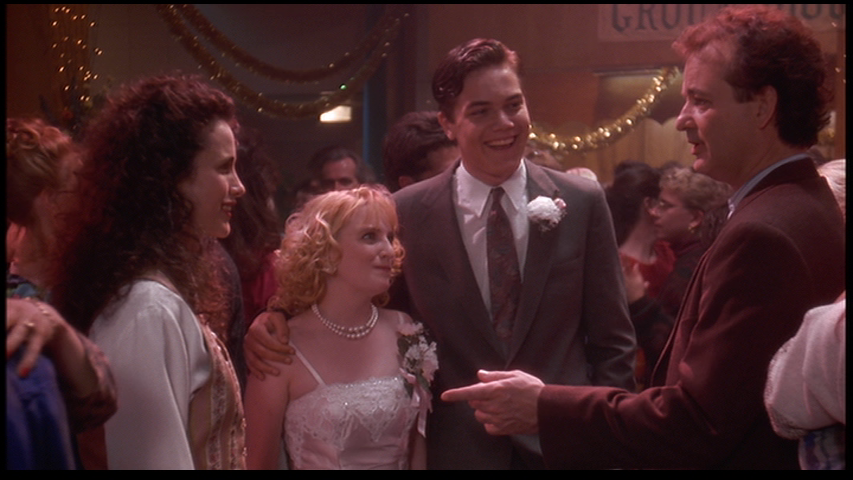
But keep getting interrupted by people wanting to thank Phil for things he did for them that day, including an incredibly young (he was seventeen during filming) Michael Shannon in his first film role as Fred Kleiser:
“There is something going on with you,” Rita says.
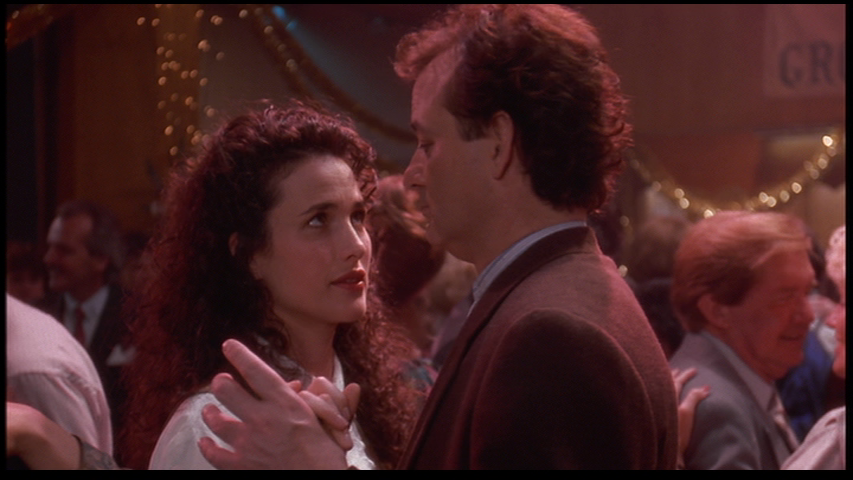
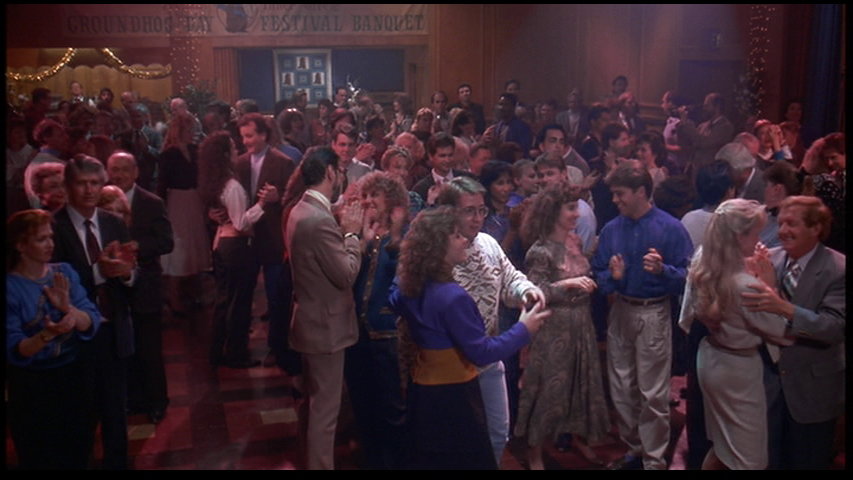
“Would you like the long version or the short version?” Phil asks. “Let’s start with the short and go from there,” Rita replies. The shots I want to write about are the ones that come next. Everyone applauds as the song that’s playing ends and there’s a cut to a long shot in which we can see Phil telling Rita something, although we can’t hear him:
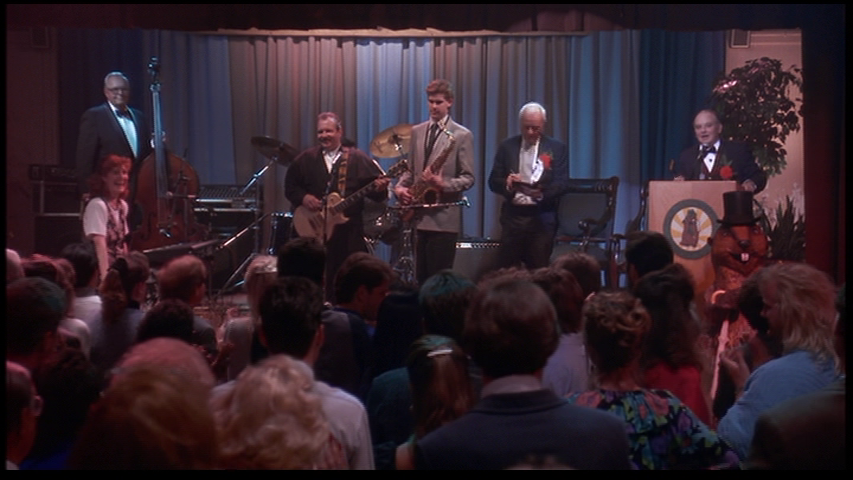
There’s another cut to a long shot of Buster telling everyone that a bachelor auction is about to begin:
But then we’re back to Phil and Rita, still talking.
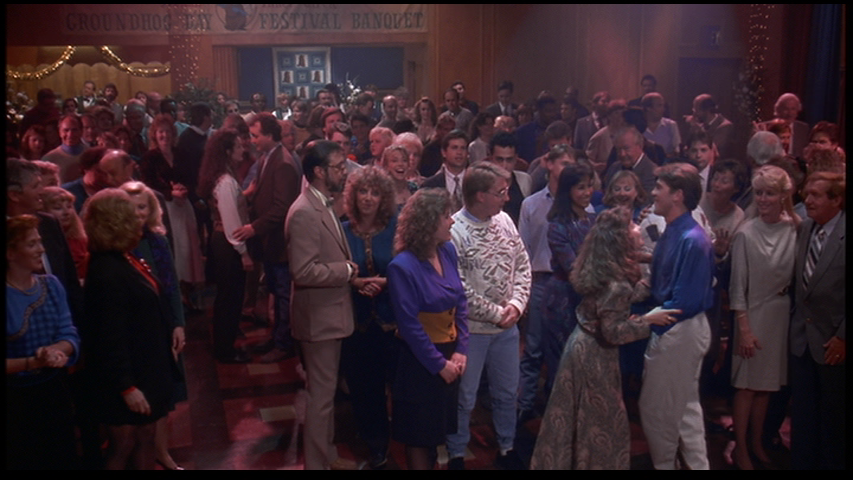
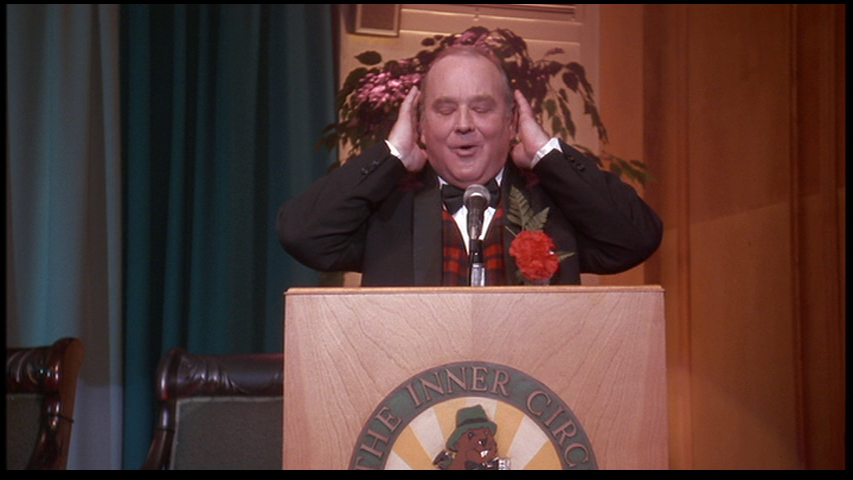
At one point you can see her nod, but once more we aren’t privy to what they’re saying. Amusingly, the next shot after this is one of Buster holding his hands in front of his ears and saying, “I don’t want to know about it!”
Robin Duke’s Doris, who we met earlier at the town’s diner, then interrupts Phil (who appear to still be talking) and drags him to the front of the room:
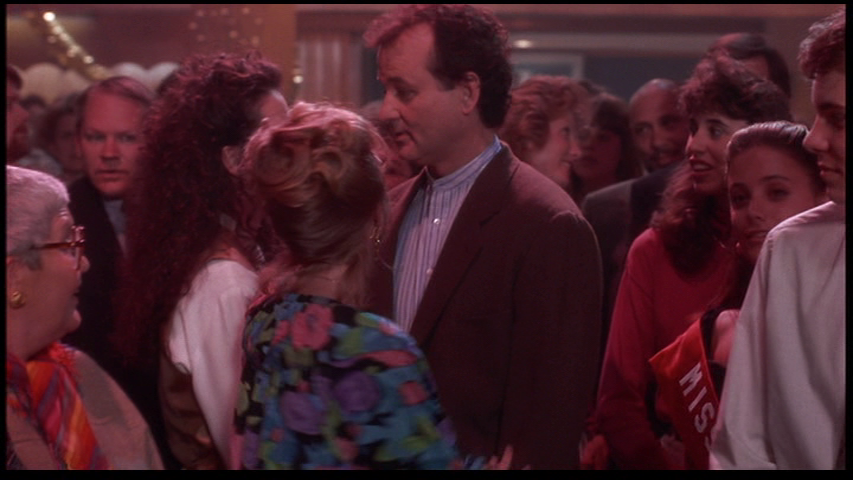
These shots account for just 30 seconds of screentime, but I consider them to be some of the film’s most important. I don’t think it’s strange that Rita would spend the entire $339.88 in her pocketbook to abruptly end the bidding war for Phil that subsequently erupts between Doris and (to Larry’s chagrin) Nancy:
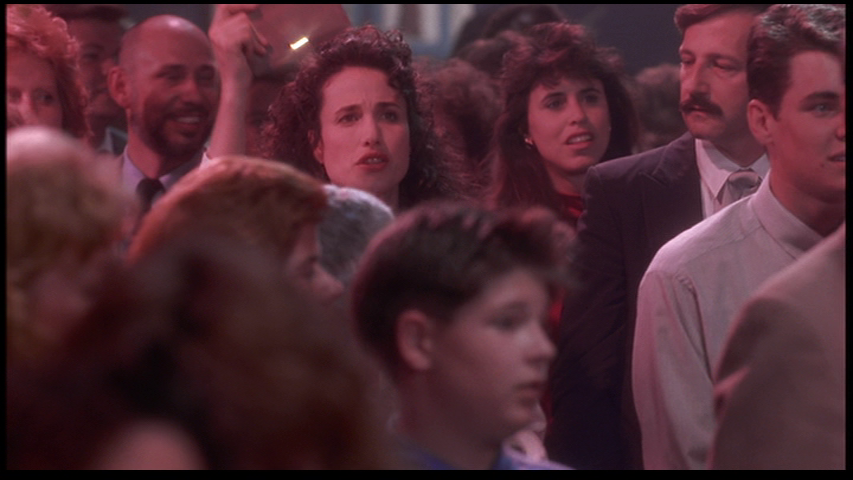
It’s for charity, after all, and she’s obviously very curious about how Phil came to be so popular. But although she doesn’t remember, this isn’t the first time they have spent part or all of this day together and on every previous occasion she recoiled when he expressed too much interest in her. Consider, for instance, the first time he made the mistake of saying “I love you” to her. “You don’t even know me,” she replied:
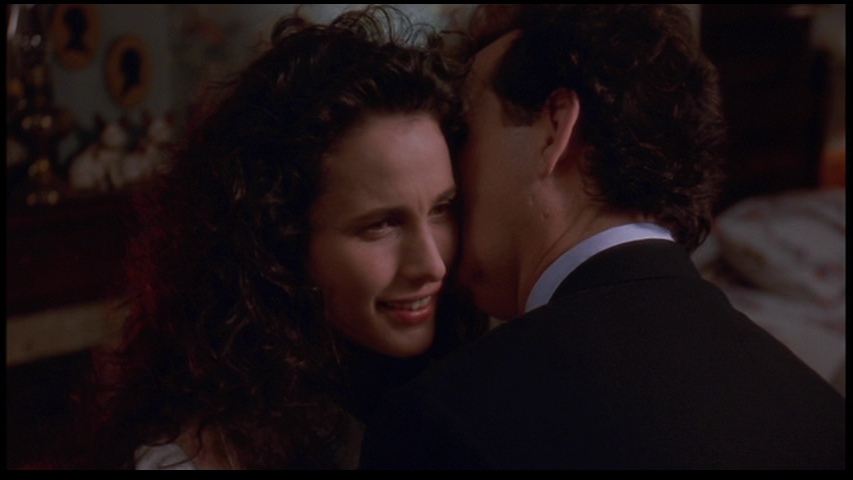
And then, presumably in a rush of recognition that it’s awfully coincidental that they like ALL of the same things, “oh no, I can’t believe I fell for this! This whole day has been one long setup.” To be sure, that’s a much different situation than suddenly being confronted with evidence that the coworker you thought was a jerk is actually the hero of an entire small town, but it’s still pretty crazy when that person presents you with this:
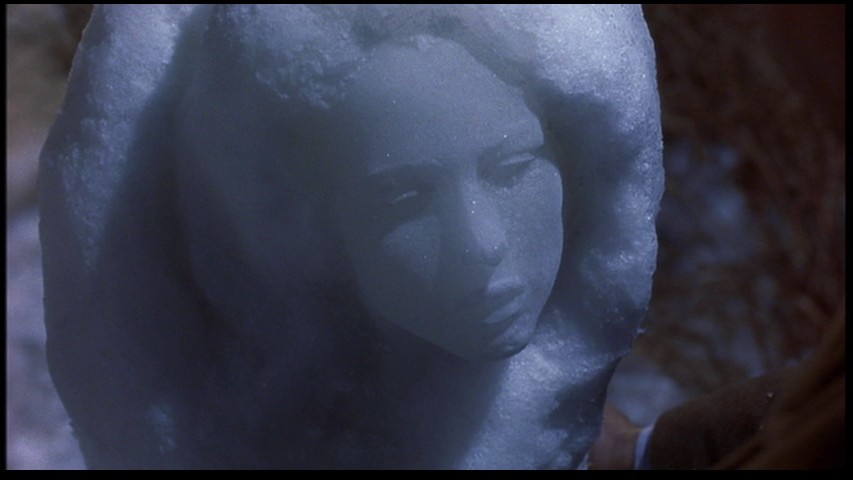
And says, “I know your face so well, I could have done it with my eyes closed.” Followed by: “no matter what happens tomorrow or for the rest of my life, I’m happy now because I love you.” But what does Rita say in reply? “I think I’m happy too.” And then they kiss:
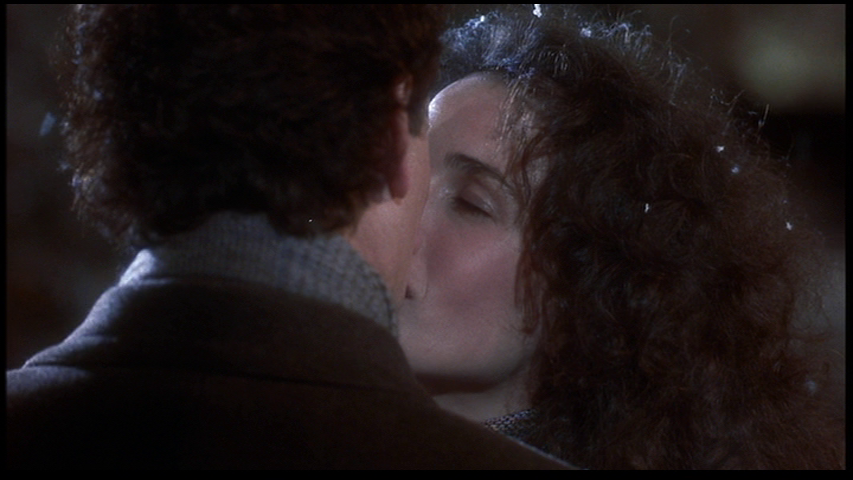
By this point in the film, Phil has long since stopped trying to escape February 2. He is, instead, constructing a day that he would be content to inhabit for the rest of time. There is absolutely no reason to believe he hasn’t already lived minor variants on this chain of events over and over and over. In fact, I contend that the long shots above provide concrete evidence that he has. Rita asks him for the short version of his story. Just as he apparently spent six months spending four to five hours a day perfecting the art of throwing playing cards into a hat:
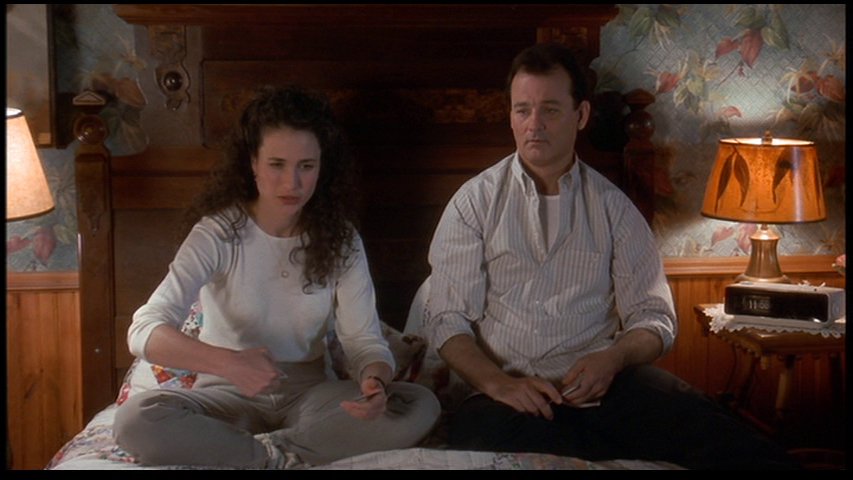
What we see here is the culmination of Phil’s efforts to perfect the art of explaining to Rita what has happened to him in only a few seconds!
Groundhog Day is not about a bad guy who learns to be a saint. One of the best things about it is that Phil retains (or, more accurately, loses but recovers) his wry sense of humor. He calls the boy he saves from the tree a “little brat” and shouts “I’ll see you tomorrow–maybe” after him as he runs away because he never says thank you, and the movie’s final line isn’t “let’s live here,” but rather, a beat later, “we’ll rent to start.” Much earlier on, Phil sits at a bar with two local drunks and asks, “what would you do if you were stuck in one place and every day was exactly the same and nothing that you did mattered?”
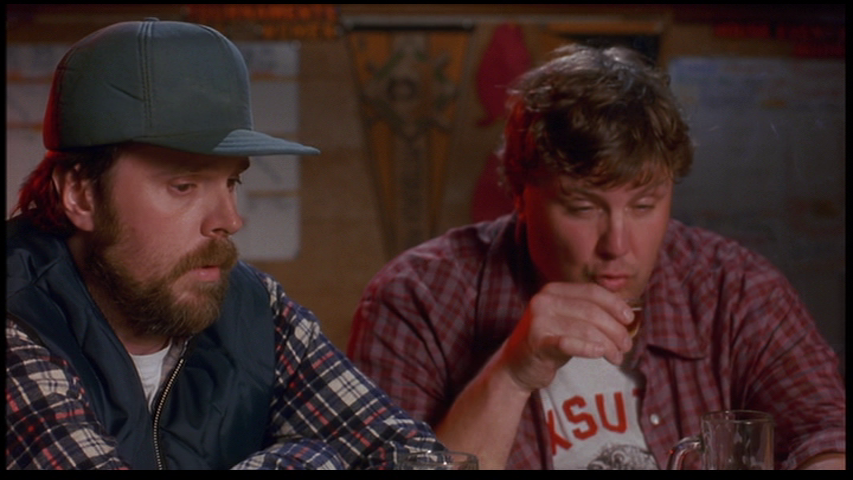
“That about sums it up for me,” Rick Overton’s Ralph replies as Rick Ducommun’s Gus takes a shot. Groundhog Day is the story of a man who discovers through the hard work of introspection how he really wants to live his life and does it without expecting any other kind of reward. We may not be stuck in a time loop, but there’s nothing stopping Ralph or us from doing the same. So: to the groundhog! Or world peace, if you must.
All original photographs in this post are by Marion Penning, aka My Loving Wife. Links to all of the entries in this series can be found here.


