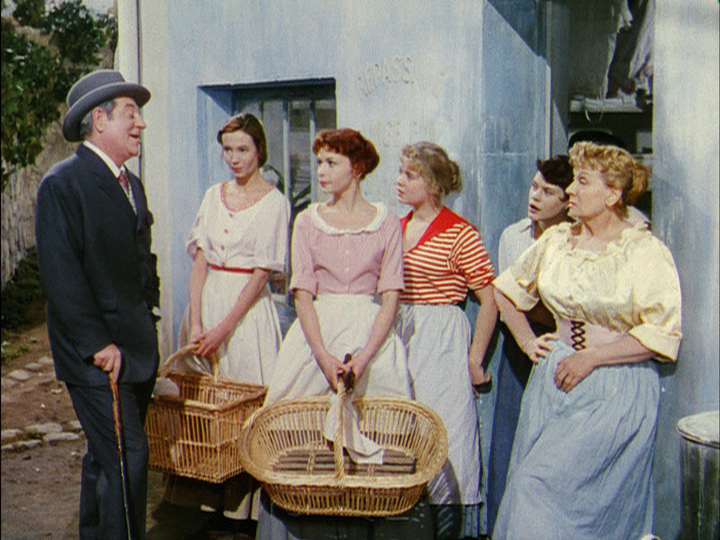
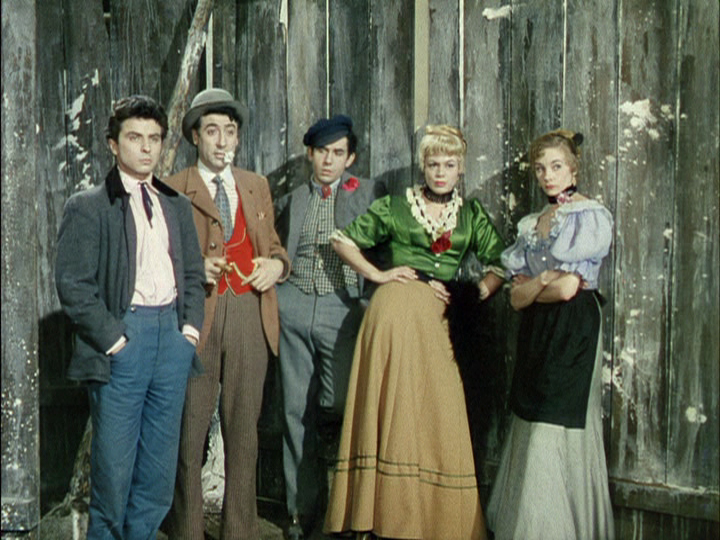
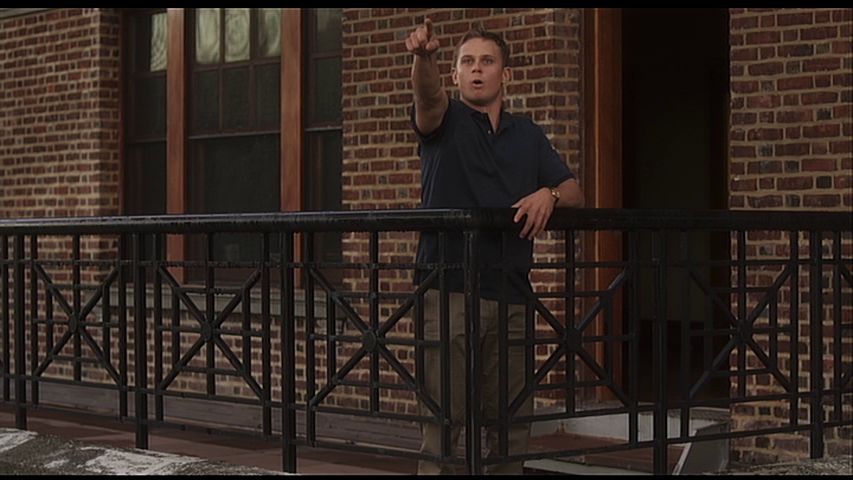
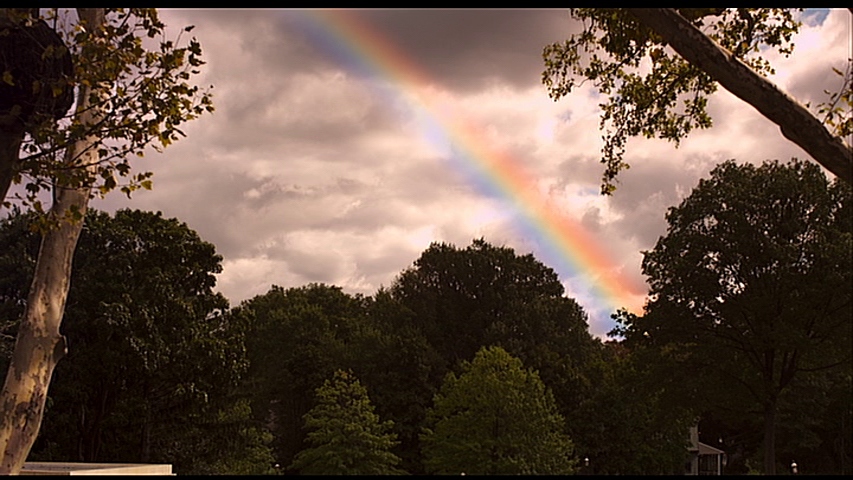
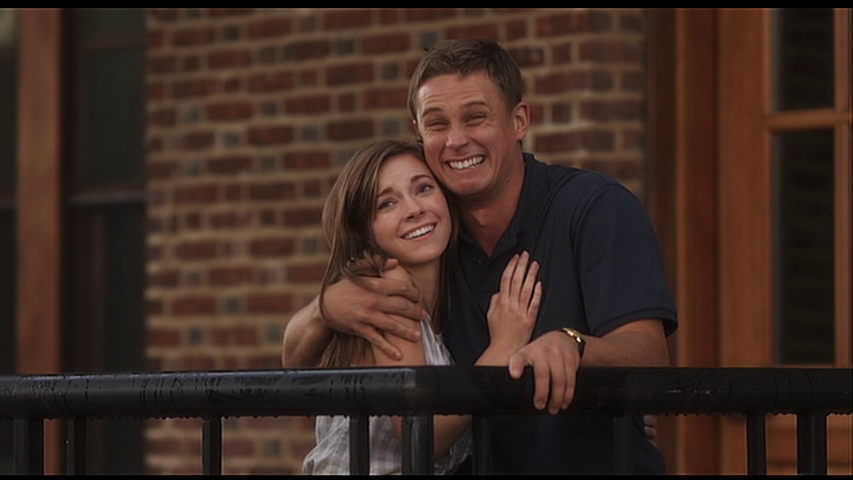
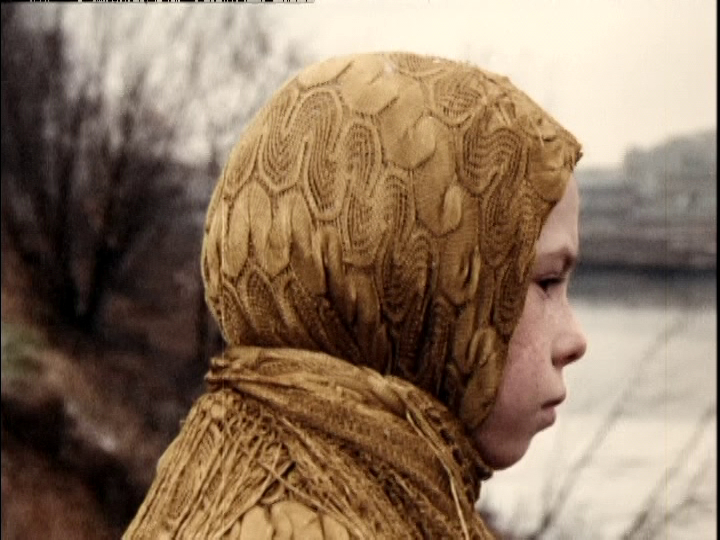
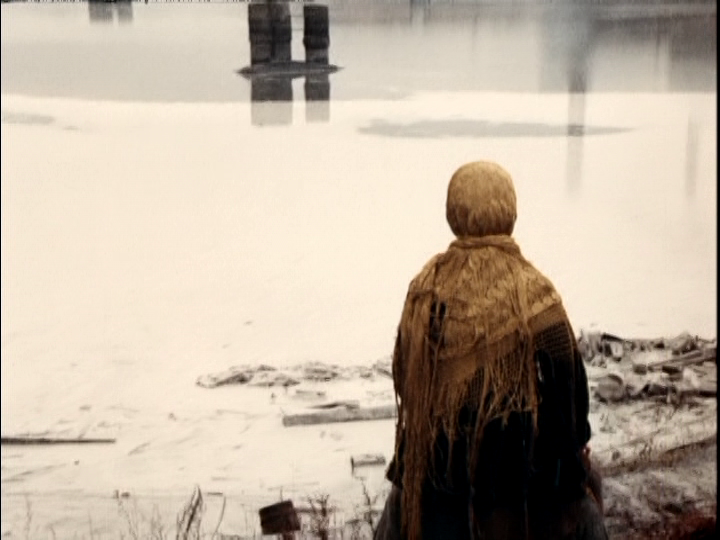
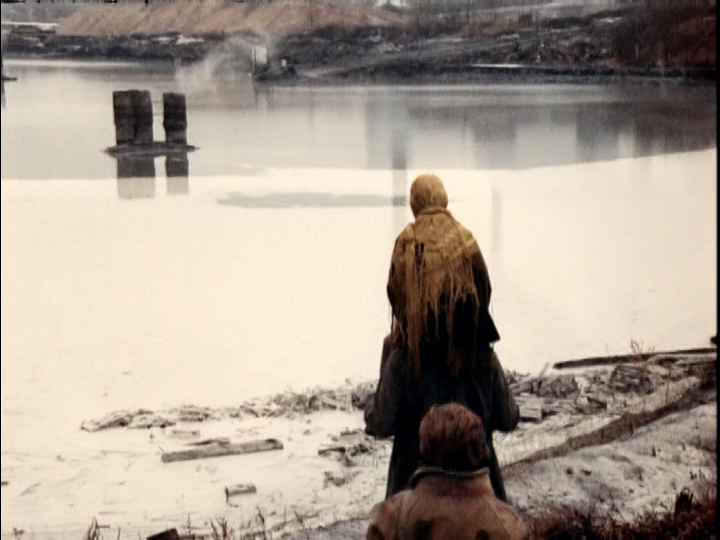
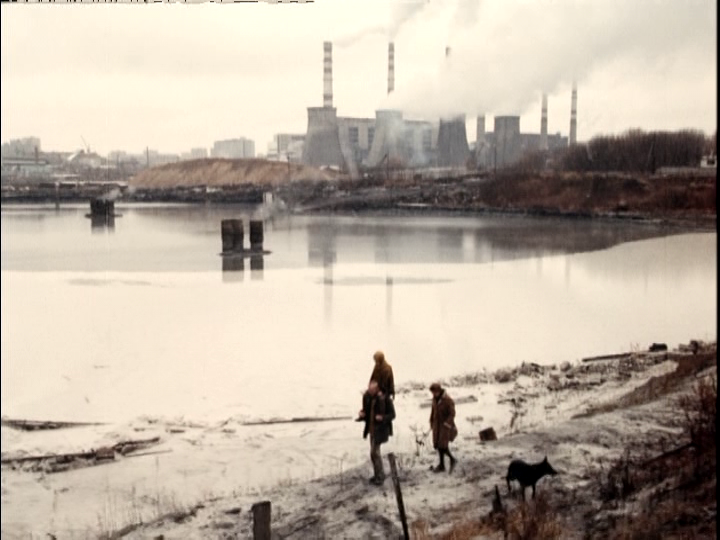
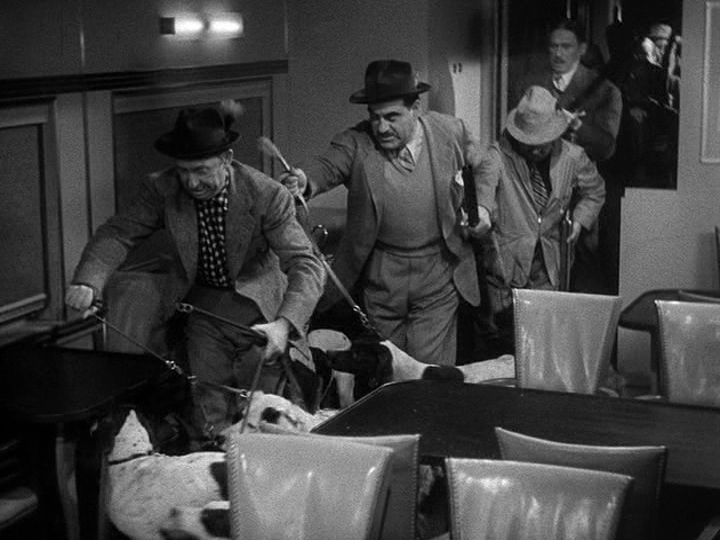
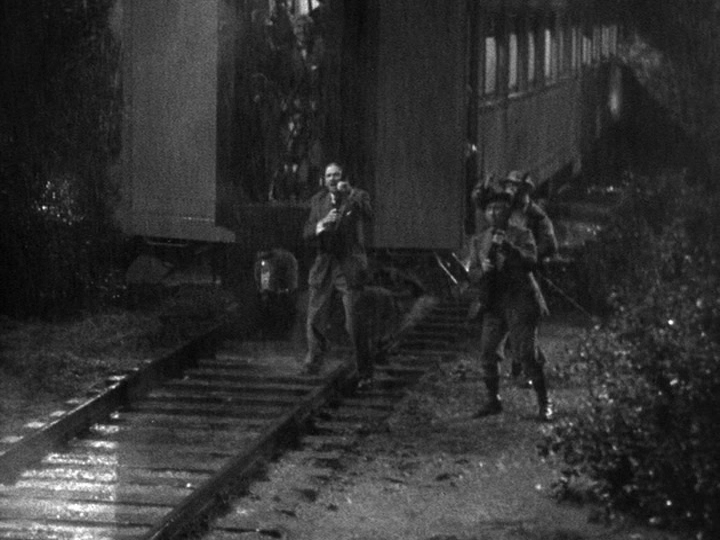
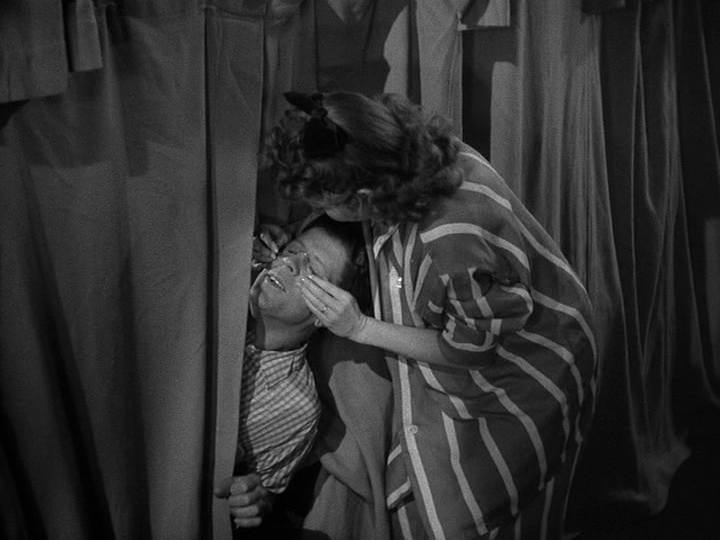
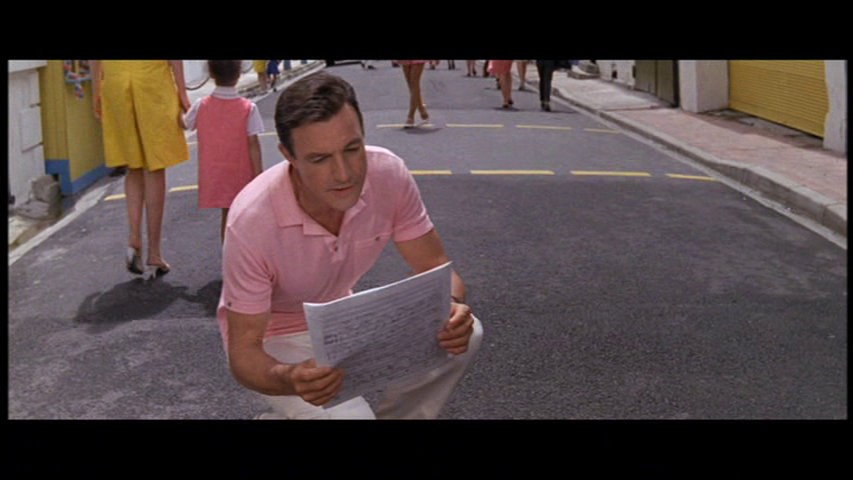
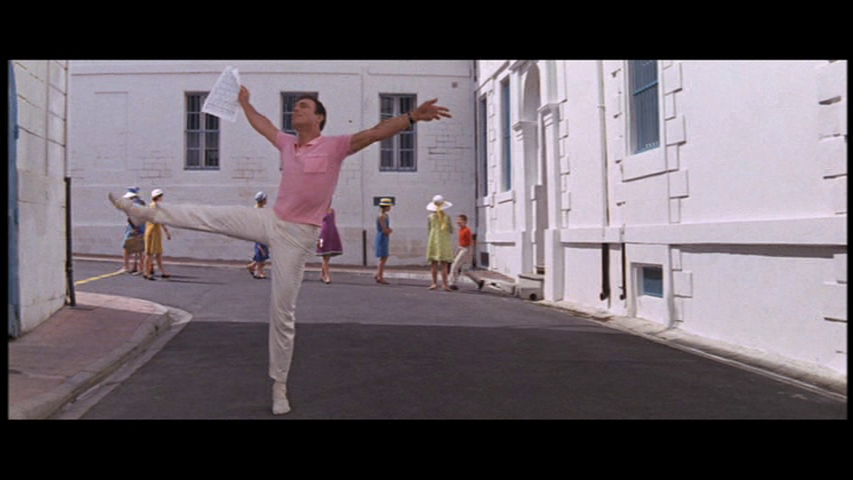
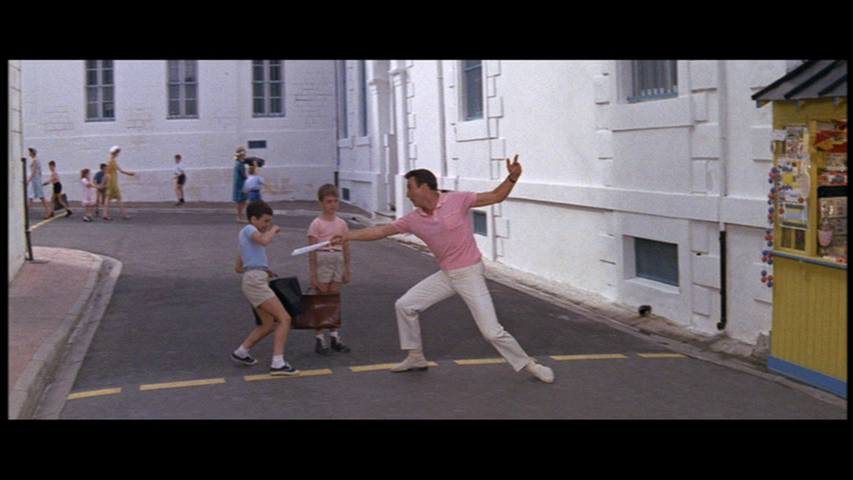
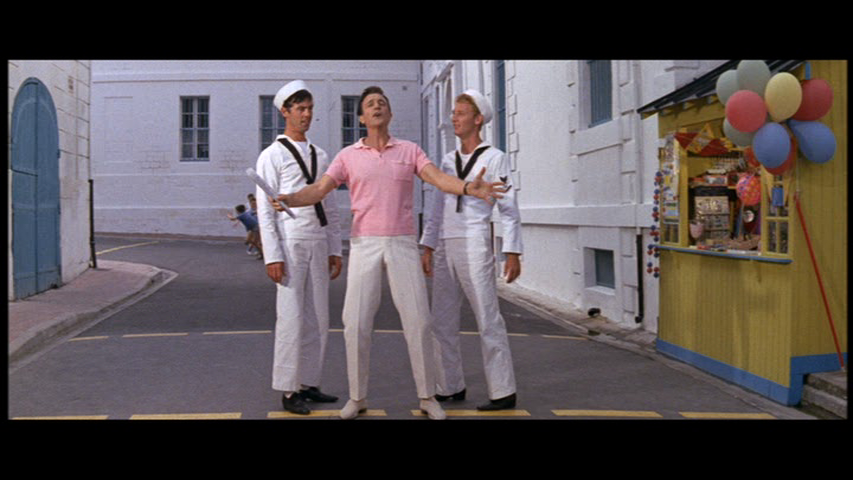
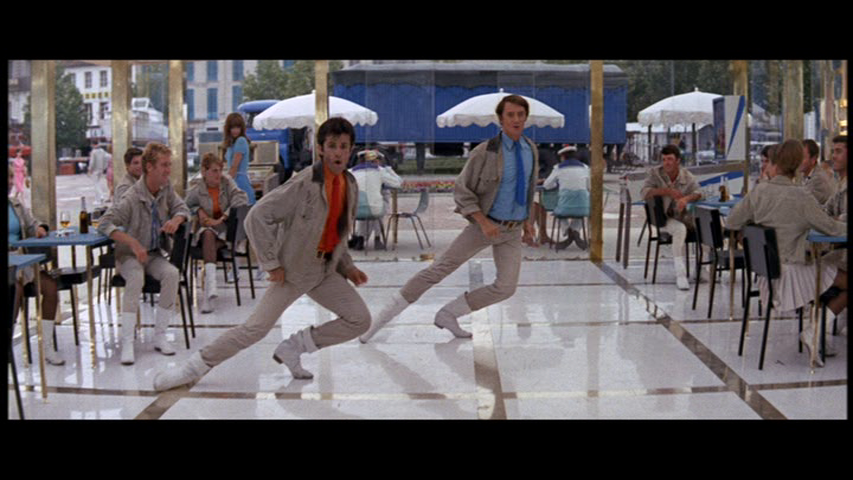
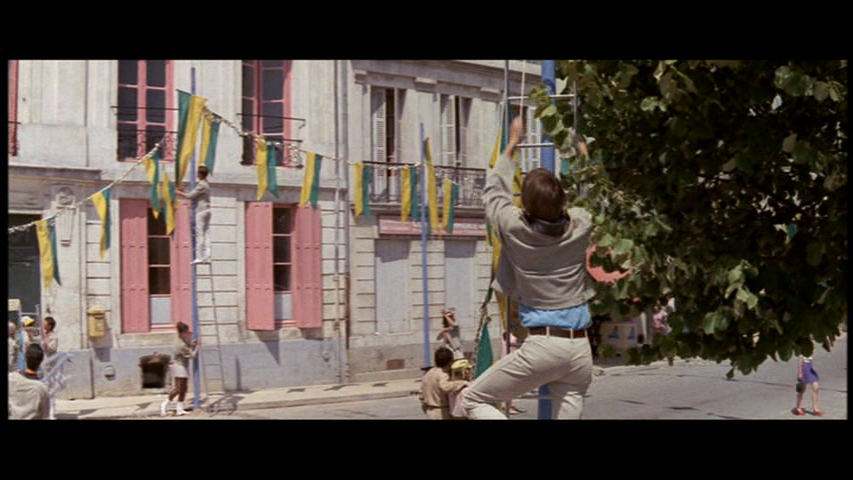
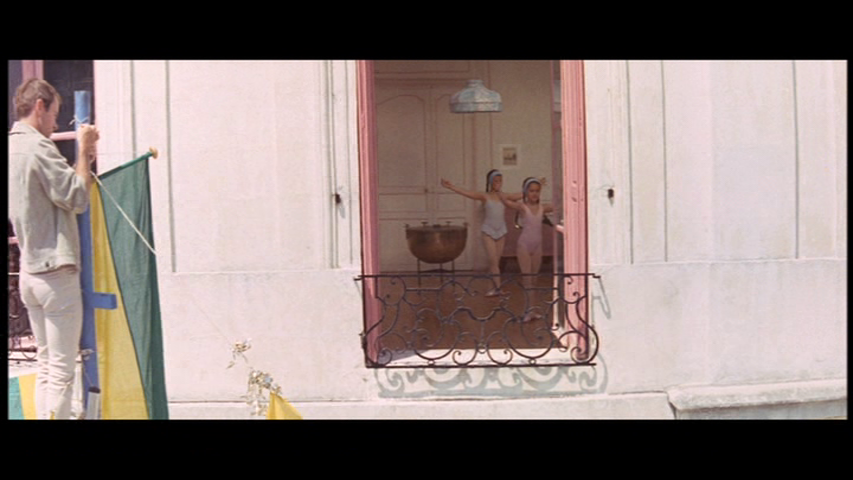
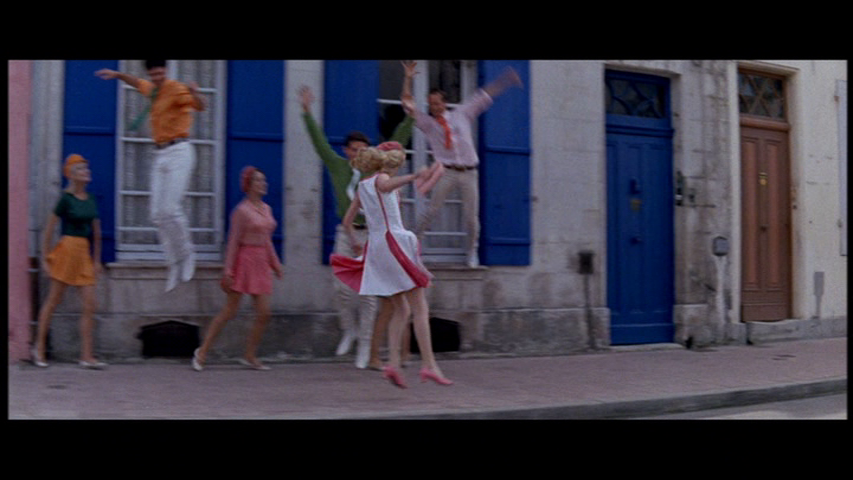
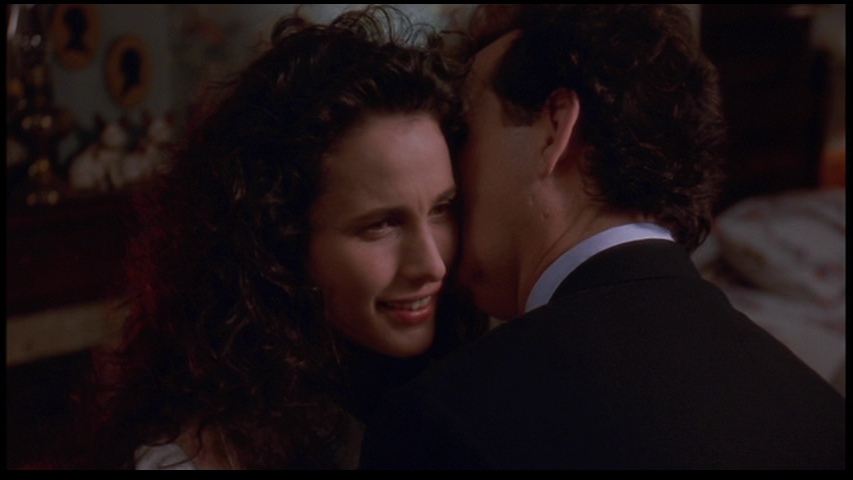
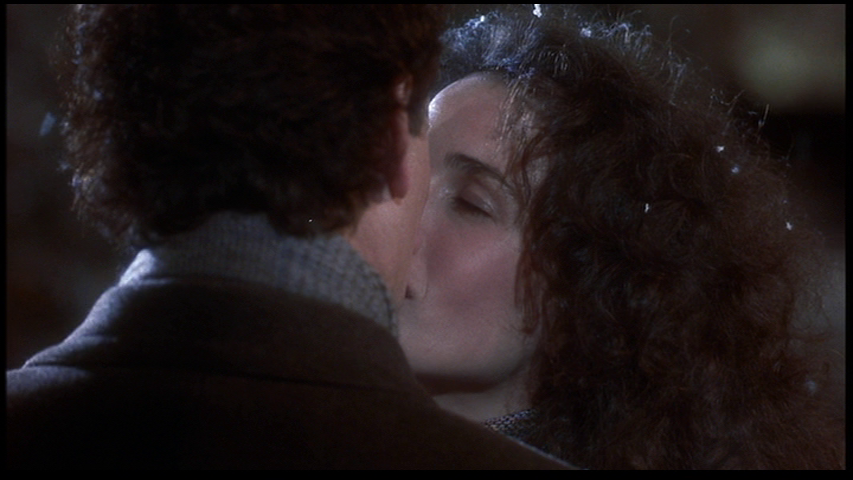
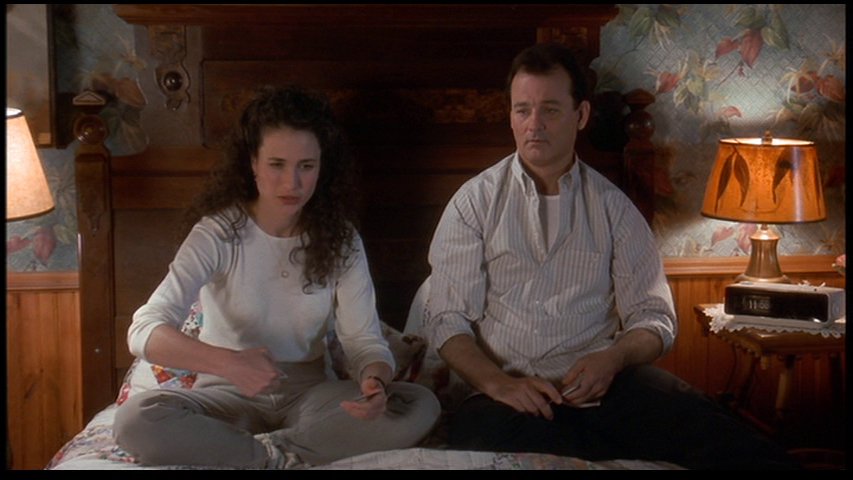
Thanks to Raquel Stecher’s Out of the Past blog, I recently became aware of two books published by Turner Classic Movies based on the same premise as my Drink & a Movie series: that cocktails and movies are natural partners! The first, Eddie Muller’s Noir Bar by TCM personality Eddie Muller aka “The Czar of Noir,” came out last fall and features a selection of movies from the titular genre paired with a combination of classic and modern cocktails as well as a handful created by the author, a former bartender turned “professional drinker,” which he defines in the introduction as “somebody who imbibes every day but never gets drunk. Well, almost never.” This is a pretty good label for me, too, and I appreciate Muller’s emphasis on accessible ingredients and recipes which can be easily adapted to a variety of circumstances over obscure spirits and elaborate techniques. It lends itself to smart pairings, too, as in the case of The Breaking Point, which he calls “the finest film ever made from a Hemingway book” and matches with the famous novelist’s “personal spin on a Caribbean classic,” the Hemingway Daiquiri. Although it may seem like an obvious choice, Muller justifies it with a suggestion to either substitute mezcal as the base spirit to better connect with the film’s Baja California setting or use Captain Morgan white rum as an homage to the character played by John Garfield.
Other thoughtful combinations include pairing The Big Sleep with a Gimlet because they feature prominently in another work by Raymond Chandler, the author of the novel that the film is based on; Force of Evil with a drink by Los Angeles bartender Paul Sanguinetti called The Blacklisted by way of acknowledging the “political imbroglio” that impacted key noir figures like the movie’s screenwriter Abraham Polonsky; and Side Street with San Francisco bartender Todd Smith’s Black Manhattan for the poetic reason that it’s a worthy companion to the film that Muller lauds as “the best New York noir.” I love the decision to use director Luis Buñuel’s personal Martini recipe in the pairing with Sweet Smell of Success, and I enjoyed both of Muller’s inventions that I tried, the Sailor Beware paired with The Lady from Shanghai and the Hammett Martini paired with The Maltese Falcon, which features a split-base spirit combination of vodka and rum that was new to me.
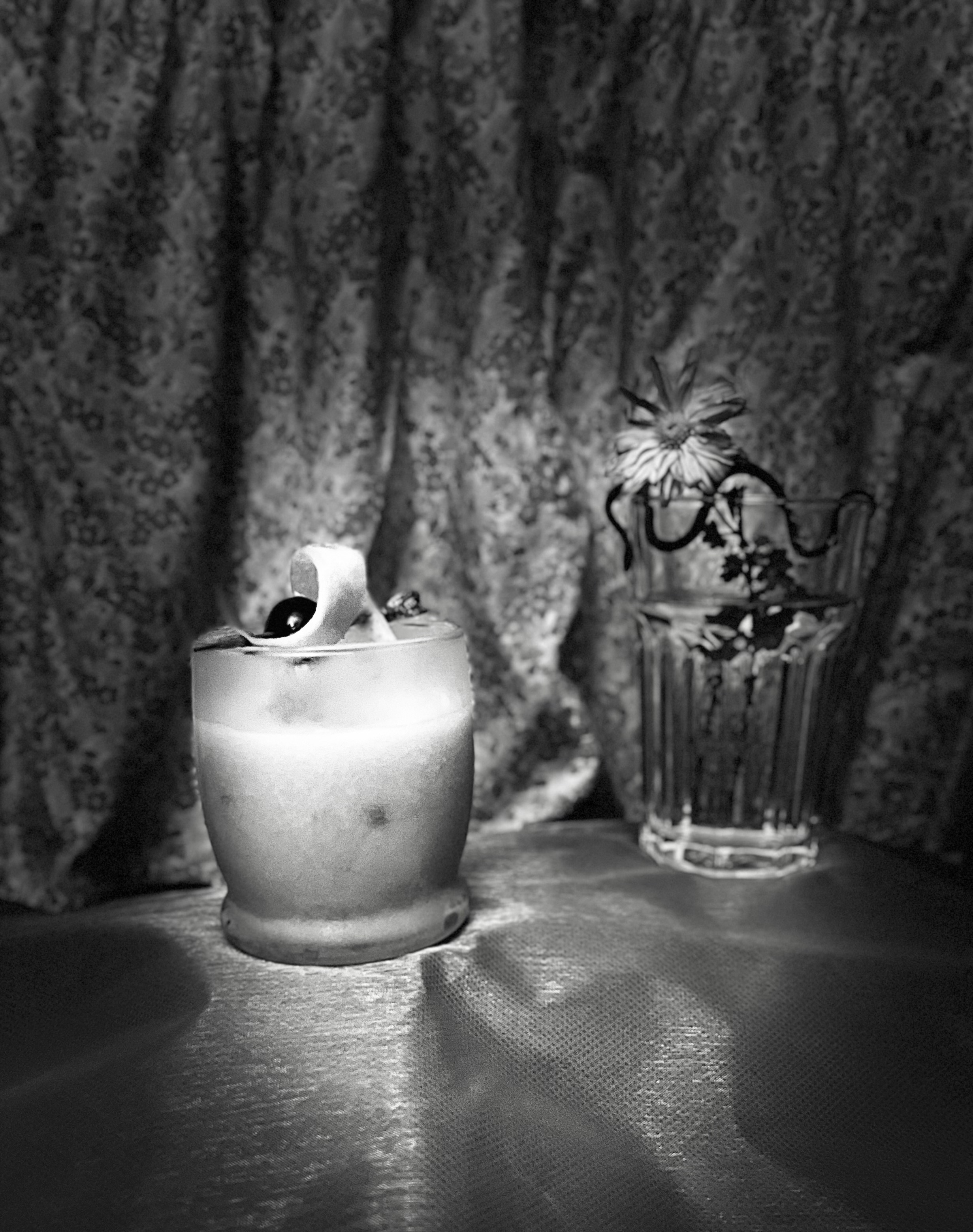
Noir Bar is organized alphabetically by movie title, which makes sense, and features ephemera from Muller’s personal collection like a prop “Wanted” poster from The Hitch-Hiker that reminds me of Ted Haigh’s Vintage Spirits and Forgotten Cocktails, which I intend as a high compliment! It also contains some of the most stylish (the black backgrounds were a great choice) and creative drink photography I’ve ever seen. I don’t endorse *every* aspect of Muller’s philosophy: I tend to agree with Toby Maloney’s statement in The Bartender’s Manifesto that “it’s gauche, it’s gross” to rub expressed citrus peels over the rim of a glass, for instance. All of them reflect Muller’s years of experience behind the stick, though, and represent a definite point of view, and I’d love to come over to the “full-scale cocktail lounge” in his garage for happy hour sometime!
André Darlington’s Forbidden Cocktails, which features “libations inspired by the world of pre-Code Hollywood,” unfortunately doesn’t stand up well to a side-by-side comparison. To lead with the positives, many of the film descriptions are quite good, such as the analysis of which “paradise cocktail” exactly we’re watching someone prepare in One Way Passage, and I like how it consists entirely of original creations made from ingredients from that period of film history, which stretched from roughly 1930 when the Motion Picture Producers and Distributors of America adopted the Hays Code to 1934 when they actually began enforcing it. But I wish it would have gone further in this direction by telling you in detail how to set up and stock an early 1930s bar and then offering a curated library of drinks that could be made with those ingredients which includes both classics and original creations along with the movie pairings. The main problem with going all-in on the latter is that Darlington’s recipes are mostly just slight variations on existing drinks, which would be fine were it not for the fact that they don’t always represent an improvement over the original. The My Pal Rye which accompanies Night Nurse, for instance, is a perfectly credible riff on an Old Pal, only it isn’t at all clear to me why this rather edgy film calls for a variation which “takes things in a softer direction” by switching out dry vermouth for Lillet Blanc. A more successful example is the Rose-Colored Glasses paired with 42nd Street, which replaces the creme de cacao in an Alexander cocktail with raspberry syrup to give it an attractive pink hue that evokes a line from the movie, but even this seems like only half an idea: why not add a floral component as well? The book also isn’t organized in any logical fashion, contains far less appealing pictures, and seems impersonal next to Muller’s guided tour of his sometimes delightfully idiosyncratic noir canon.
I applaud the fact that both books are available in spiral-bound editions and feature indexes organized around ingredients to make it easier to find and flip to a recipe you can make with the bottles you have on hand, and I’m going to enjoy having each of them in my collection–there are still a number of recipes in Forbidden Cocktails that I want to try! But Noir Bar is clearly my top recommendation. It would make a fabulous gift for lovers of that genre who also enjoy an occasional drink, drinkers who also like movies, or anyone who throws parties for people from either of the aforementioned groups who might enjoy picking it up off a coffee table and flipping through it.
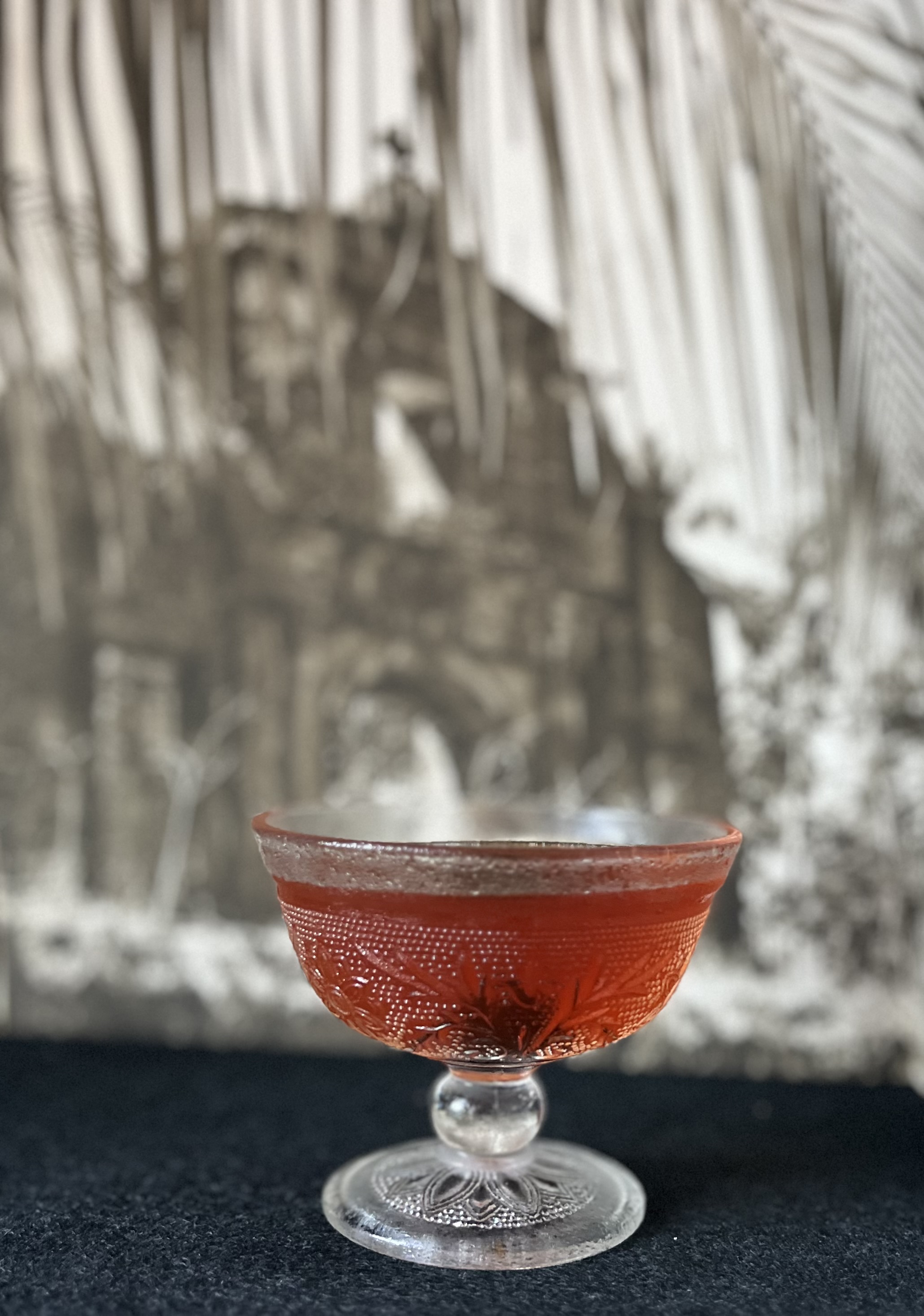
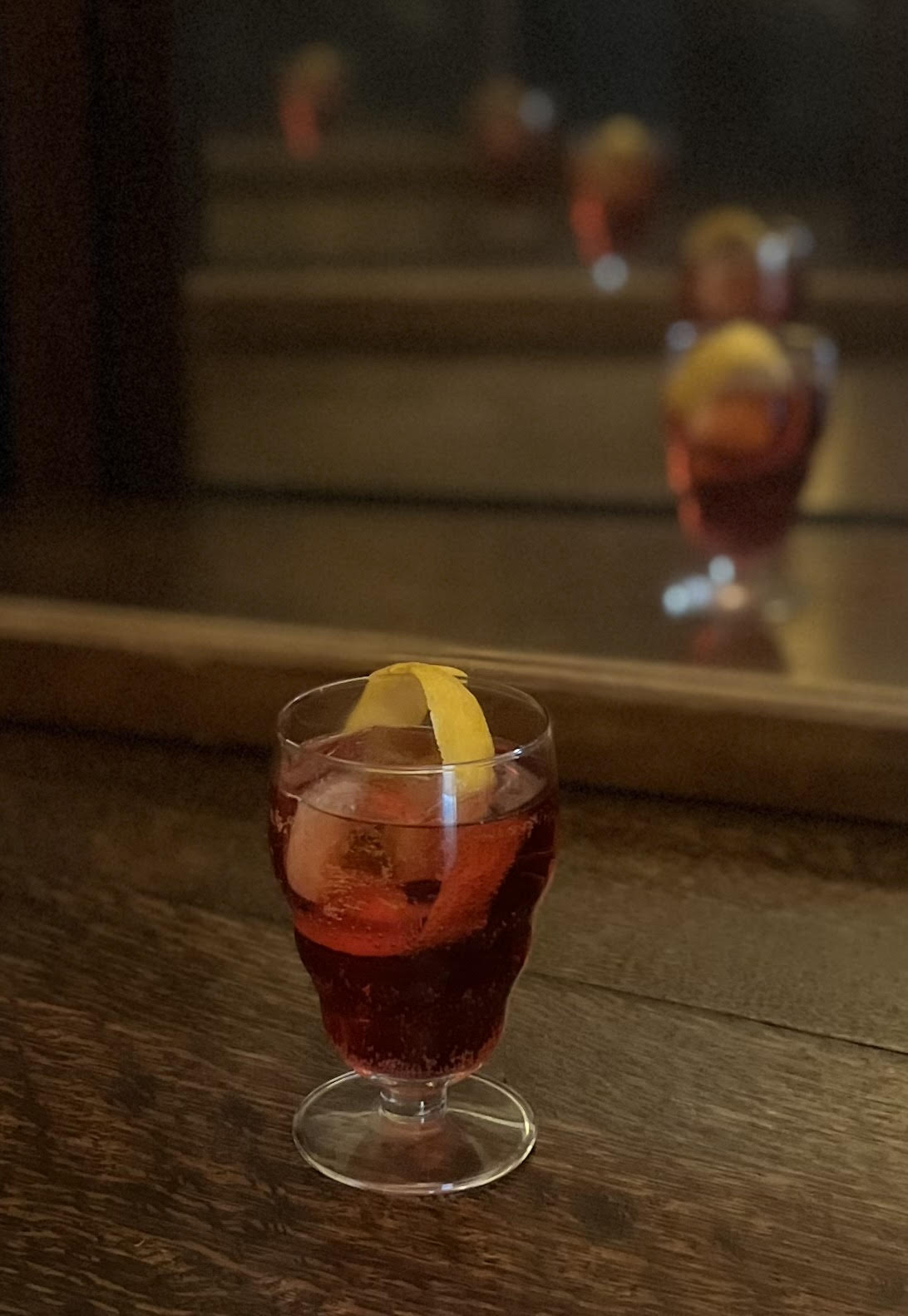
As I have mentioned previously, after I publish my last “Drink & a Movie” post in early 2026 I plan to edit all of them into a book. My chief model for this endeavor will be Vintage Spirits and Forgotten Cocktails by “Dr. Cocktail” Ted Haigh, which features a blend of images, drink lore, and practical advice in perfect proportions and which is spiral-bound for ease of use as all recipe books should be! Haigh’s version of the classic East India Cocktail has been in heavy rotation at our house since the end of raspberry season, so it seemed like a logical choice for this month’s drink. Here’s how we make it:
Make the raspberry syrup by simmering two cups of fresh raspberries with eight ounces of water in a medium saucepan for five to ten minutes until everything is approximately the same color, then strain. Add one cup of sugar while the mixture is still hot, stir until dissolved, let cool, then bottle and refrigerate. Make the cocktail by stirring all ingredients with ice and straining into a chilled glass. Garnish with a cherry.
The East India Cocktail is an elegant beverage. Haigh explains that it “was named not for the eastern part of India but for all of it and more: India, Burma, Malaya, Singapore, and the entirety of the British colonies.” This therefore struck me as a perfect opportunity to break out the bottle of yuzu Curaçao I picked up at The Wine Source in Baltimore last winter since I associate it with that corner of the world more than its West Indian cousin. The dominant flavor is of course cognac (there are three ounces of it, after all), but the other ingredients serve the same function as the atmosphere at the palace of Mopu, where most of this month’s movie Black Narcissus takes place: they exaggerate everything. So it’s fruitier, sweeter, more mysterious cognac. Speaking of which: considering how much of it you’re going to use, it’s definitely worth splurging on a good bottle! Frapin VSOP was a recommendation by someone at Ithaca’s always reliable Cellar d’Or and we like it here and to sip on its own quite a bit.
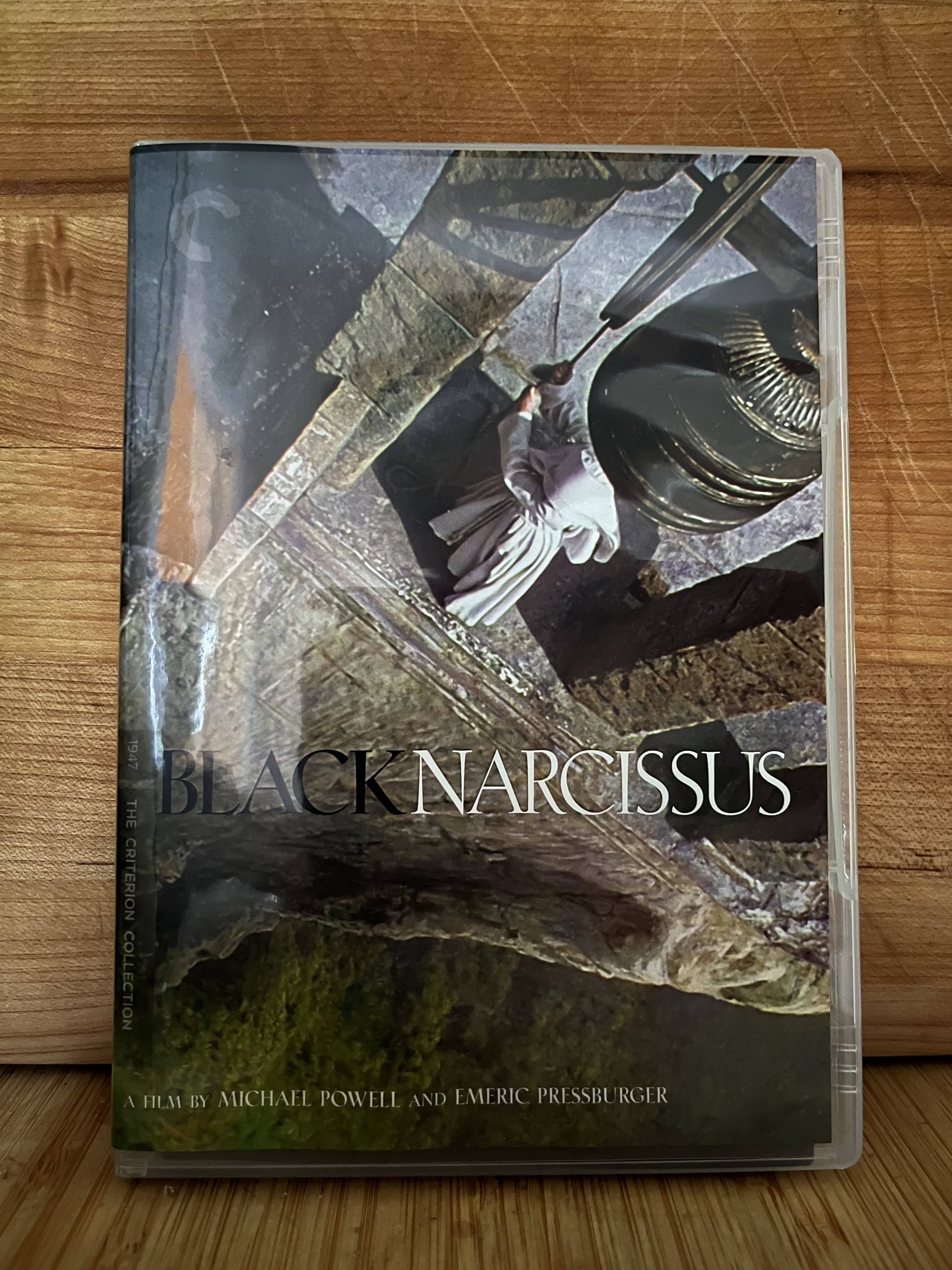
Black Narcissus is set in the part of the British Empire that the East India Cocktail is named after, and it has been on my mind ever since I was fortunate enough to see it at last year’s Nitrate Picture Show, so it was an obvious way to complete the pairing. Here’s a picture of my Criterion Collection DVD release:
It can also be streamed via The Criterion Channel and a number of other commercial platforms for free, with a subscription, or for a rental fee. Some people (including current Cornell University faculty, staff, and students) may have access to it through Kanopy via a license paid for by their local academic or public library as well.
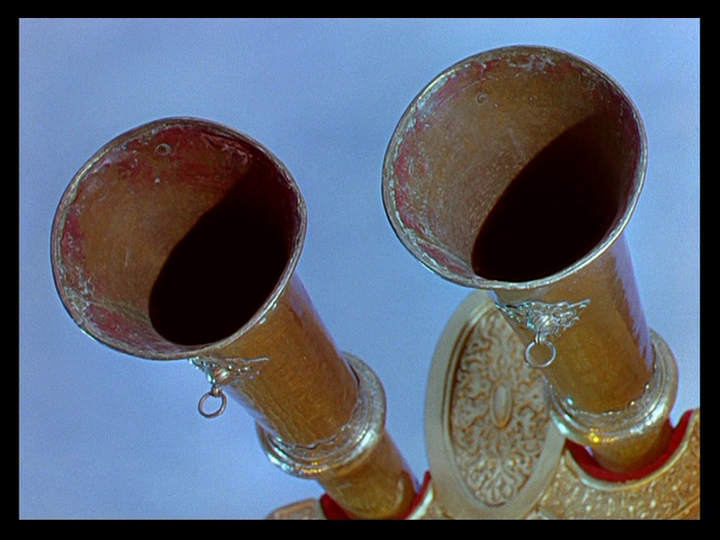
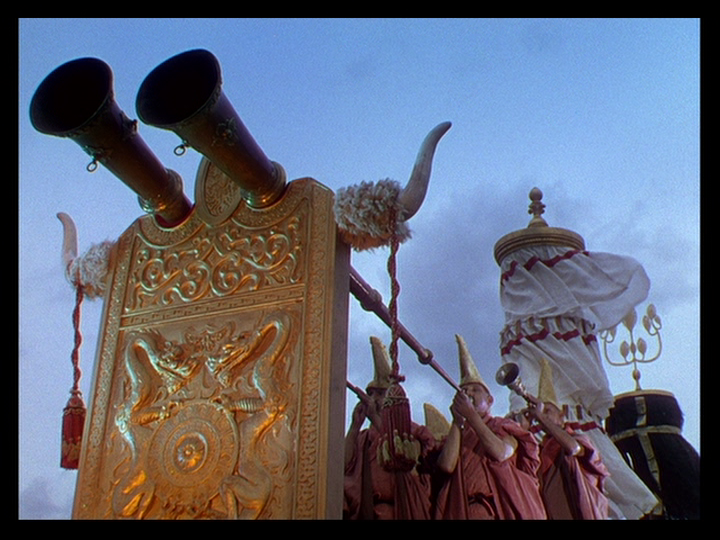
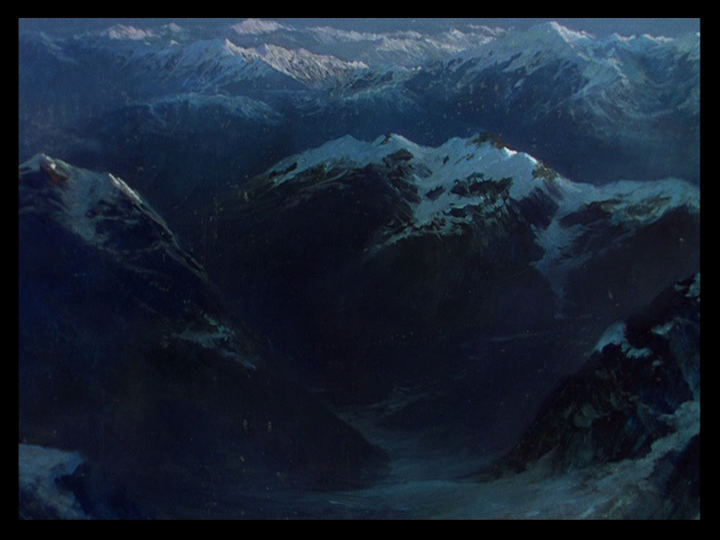
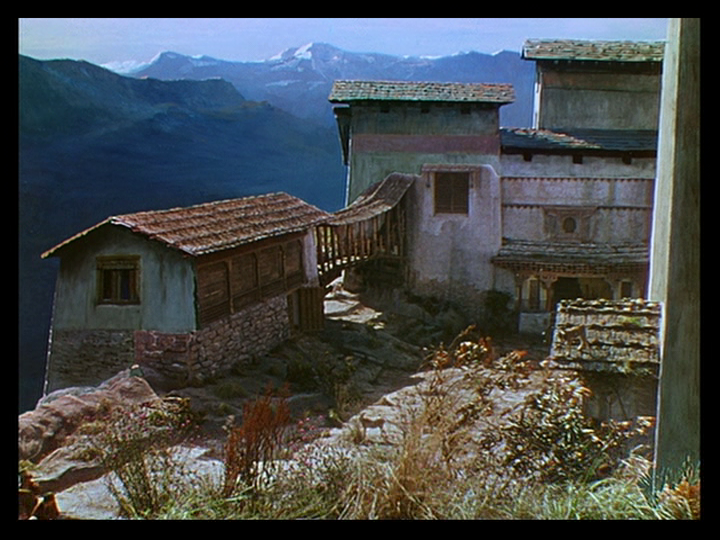
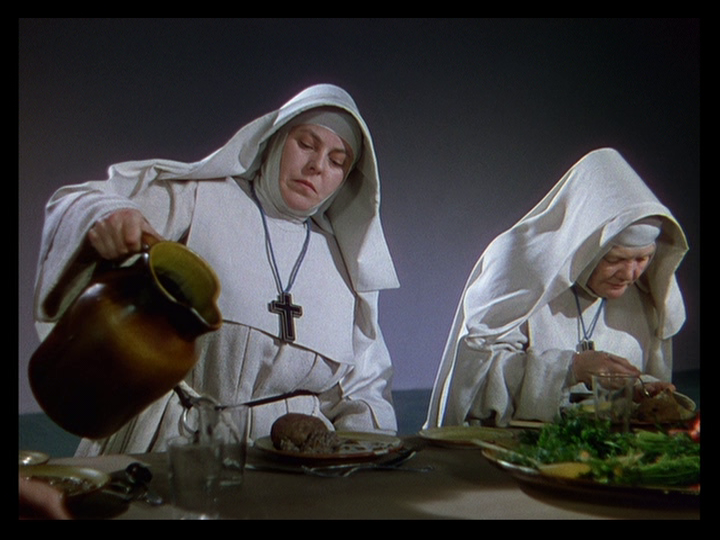
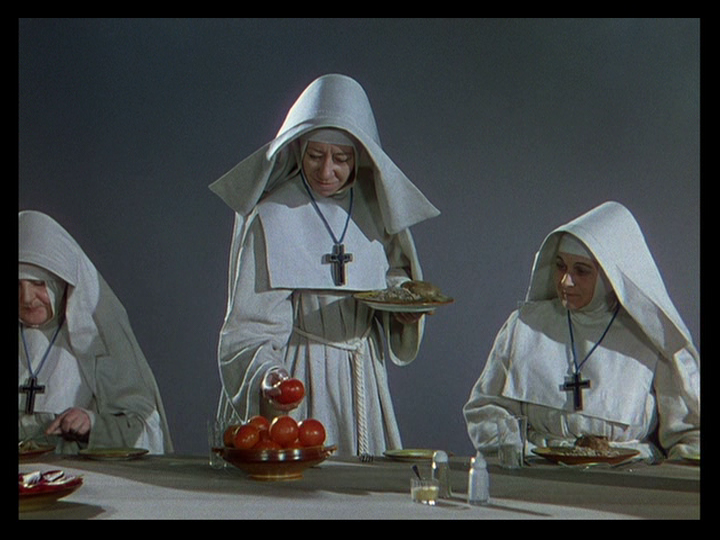
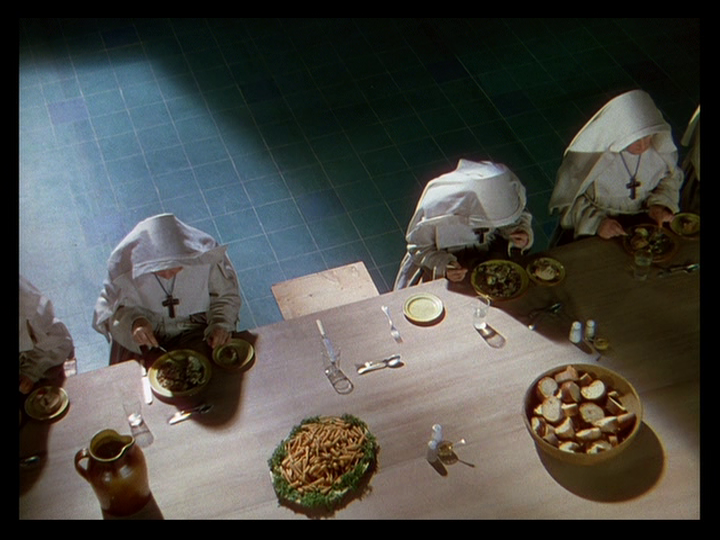
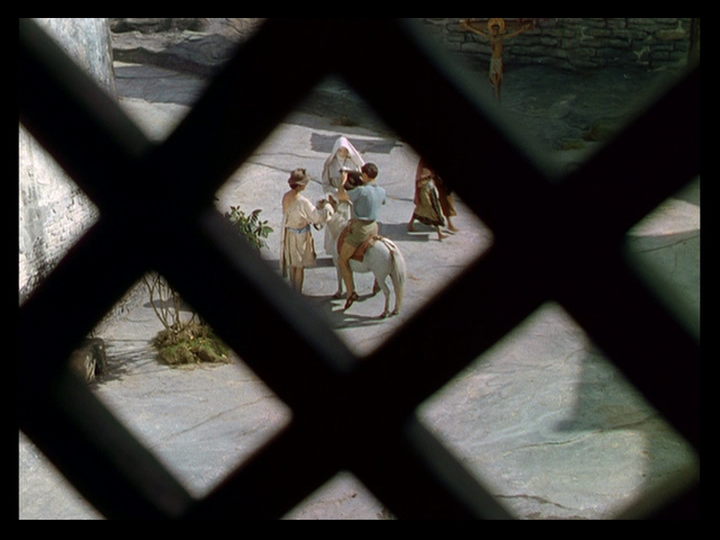
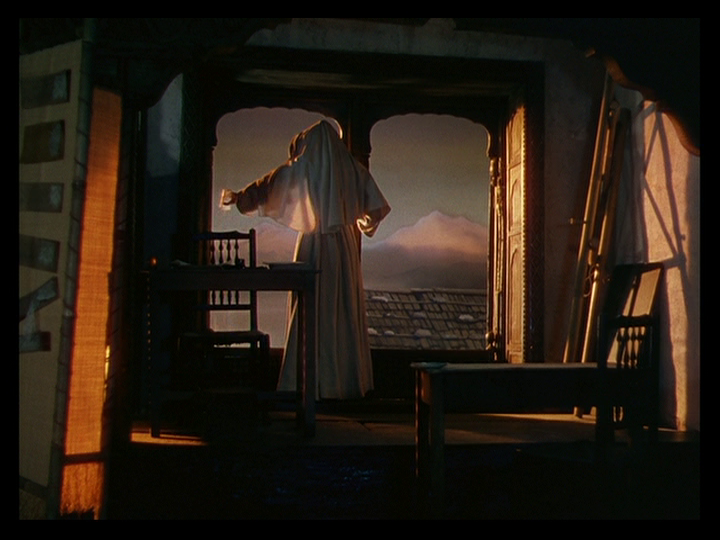
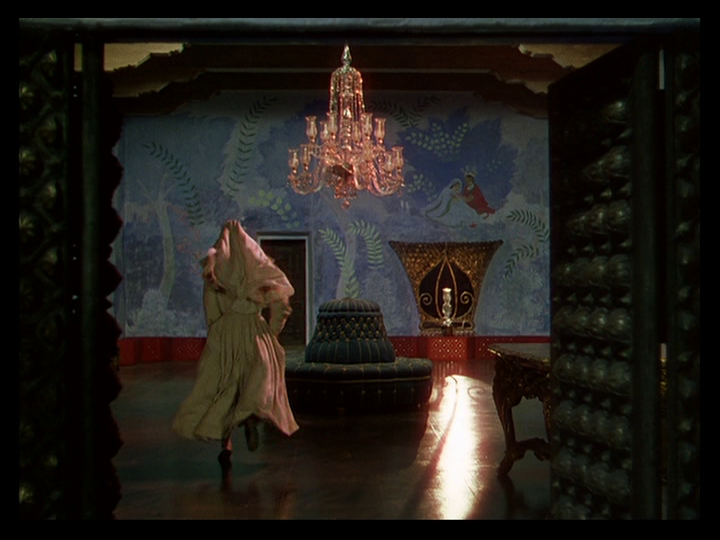
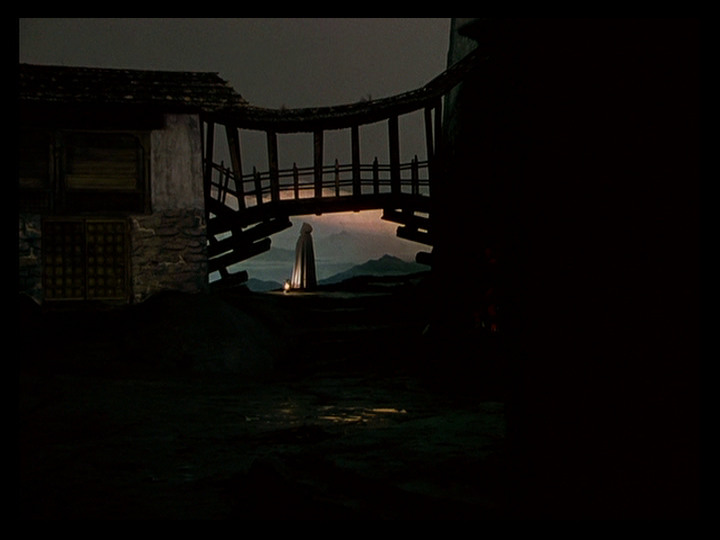
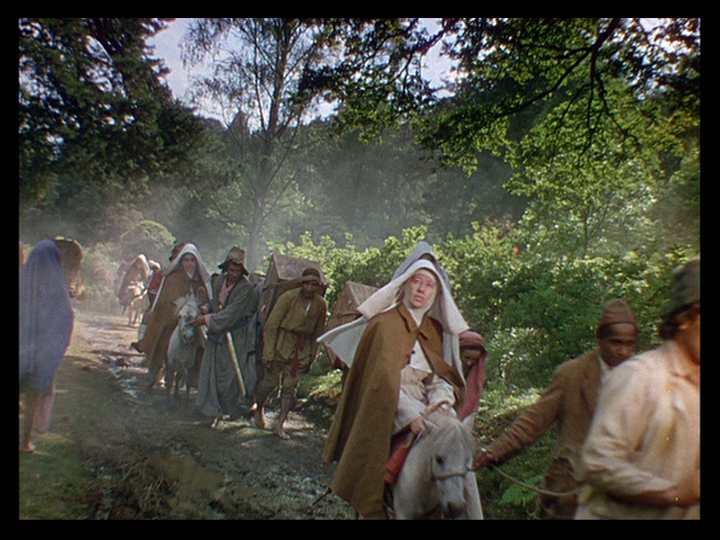
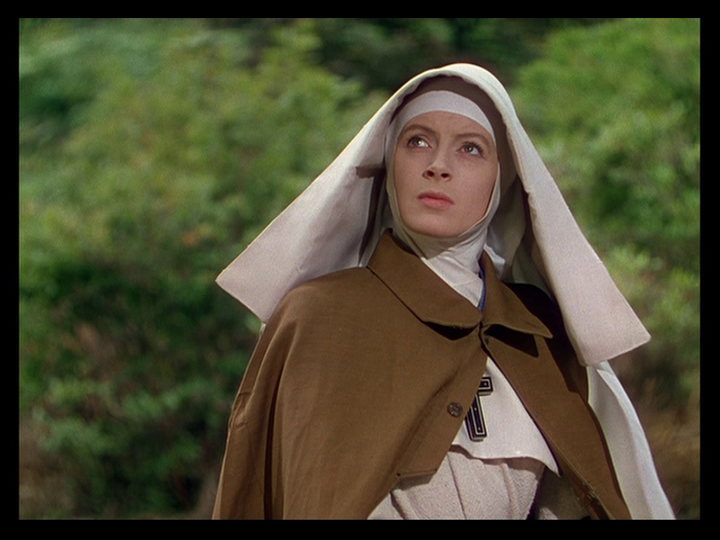
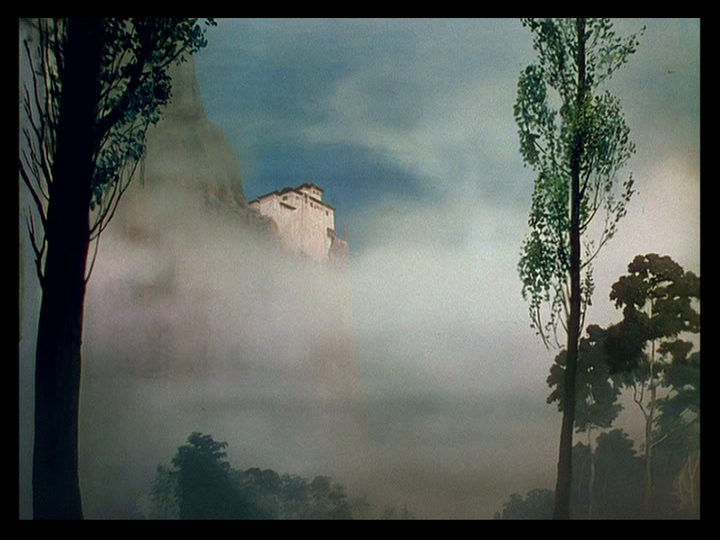
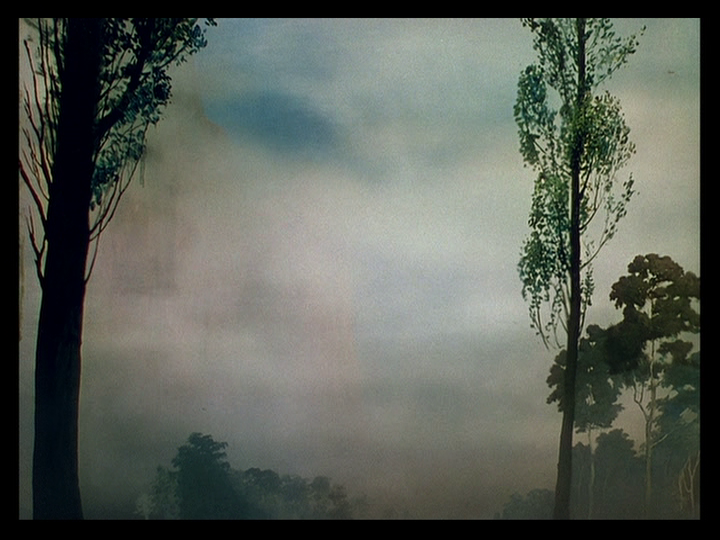
Thanks to brilliant Oscar-winning art direction by Alfred Junge and cinematography by Jack Cardiff, along with stunning matte paintings by W. Percy Day, Black Narcissus is one of the most transportative films ever shot entirely in a studio. It begins with a series of shots that establish the setting:
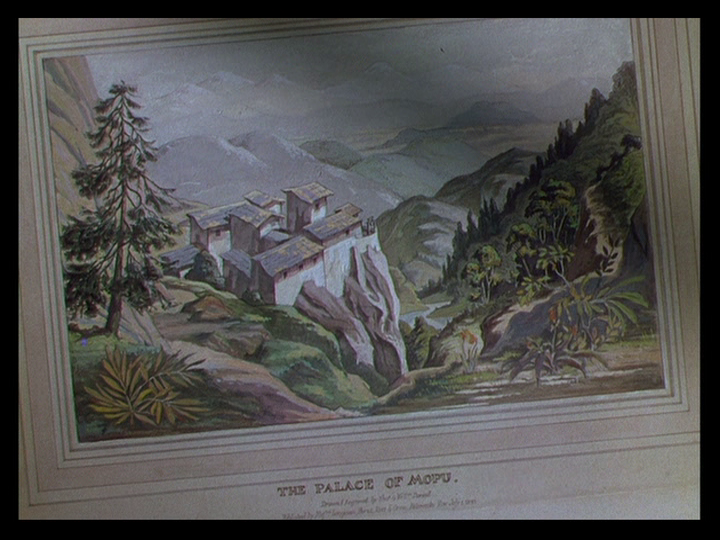
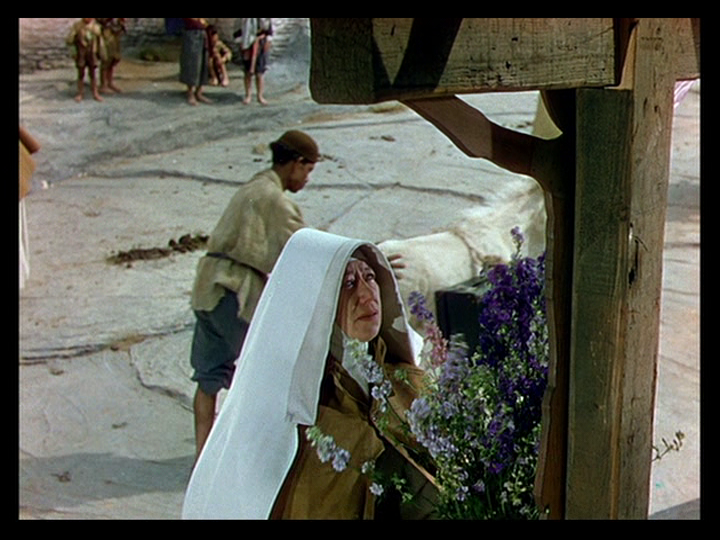
This is followed by an introduction to Mopu, which the Order of the Servants of Mary plans to convert into a convent, that Priya Jaikumar notes “is filtered through three people, all of whom are less than objective about the place and the nuns’ mission.” We see it first through the eyes of Reverend Mother Dorothea (Nancy Roberts), who ponders an illustration in a book:
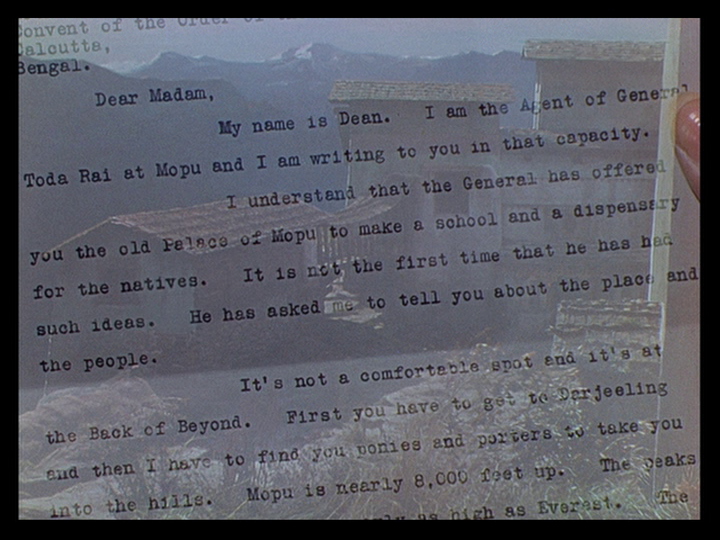
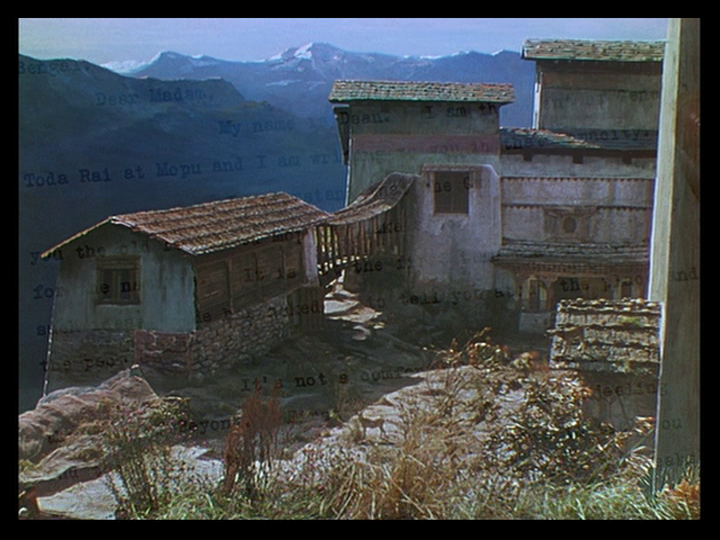
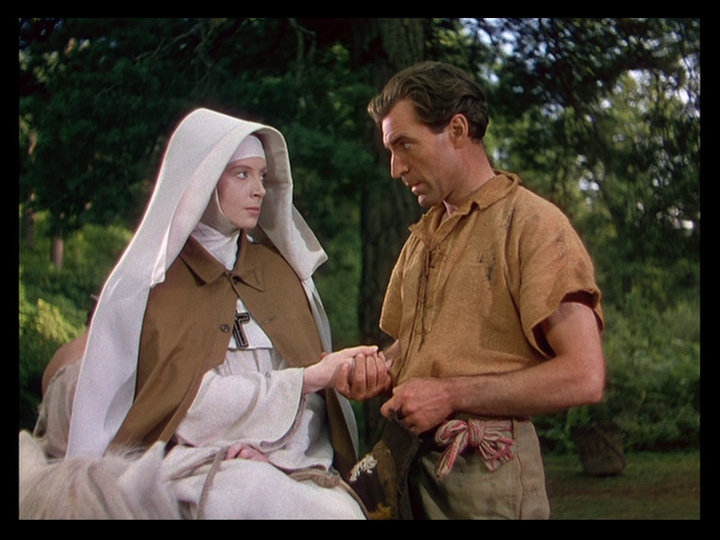
Then Sister Clodagh (Deborah Kerr), who is being sent there as the order’s youngest Sister Superior, imagines it as she reads a letter from Mr. Dean (David Farrar), the British agent of The Old General Toda Raj (Esmond Knight) who has given it to them:
Mr. Dean’s letter reveals that the General’s father previously housed his concubines in Mopu:
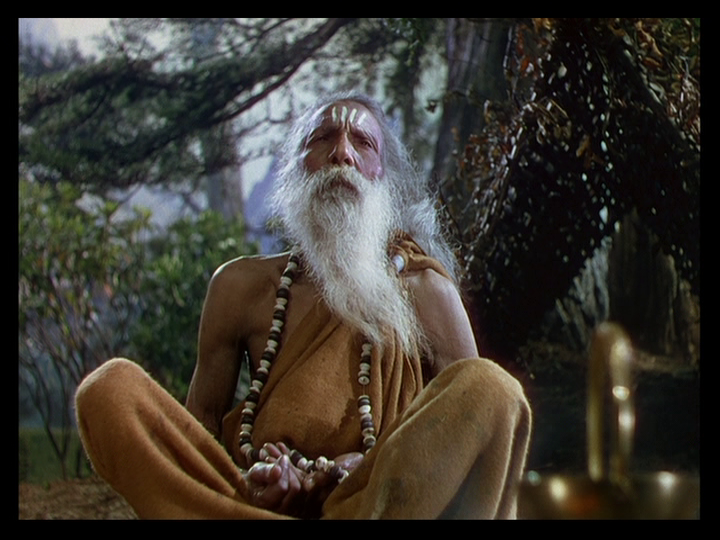
And introduces us to the local holy man who sits motionless day in and day out with his face to the mountains:
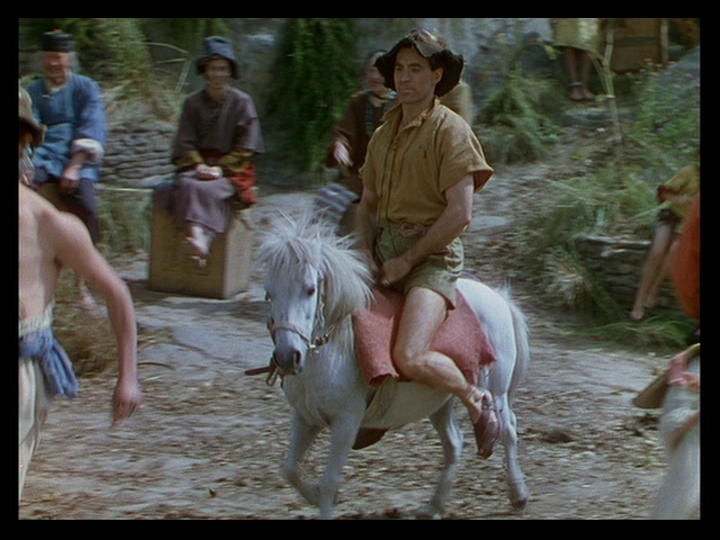
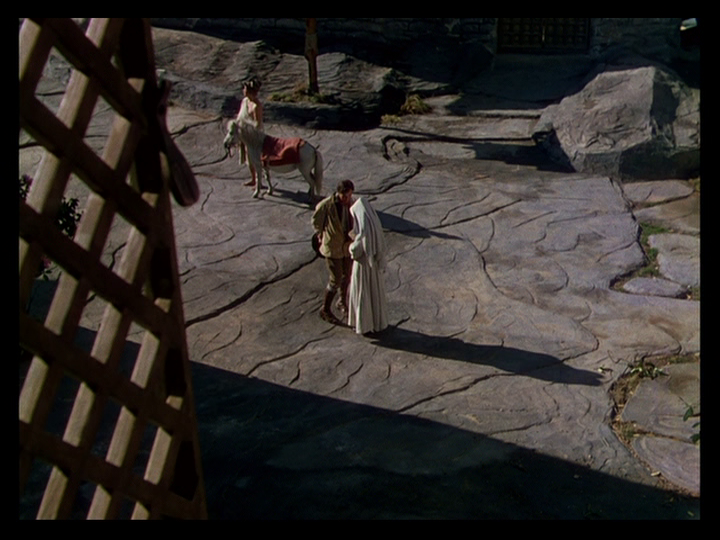
Before seamlessly transitioning into a depiction of the General giving instructions to Mopu’s housekeeper Angu Ayah (May Hallatt) and Mr. Dean, who we see for the first time riding a pony that is absurdly small for a man of his height:
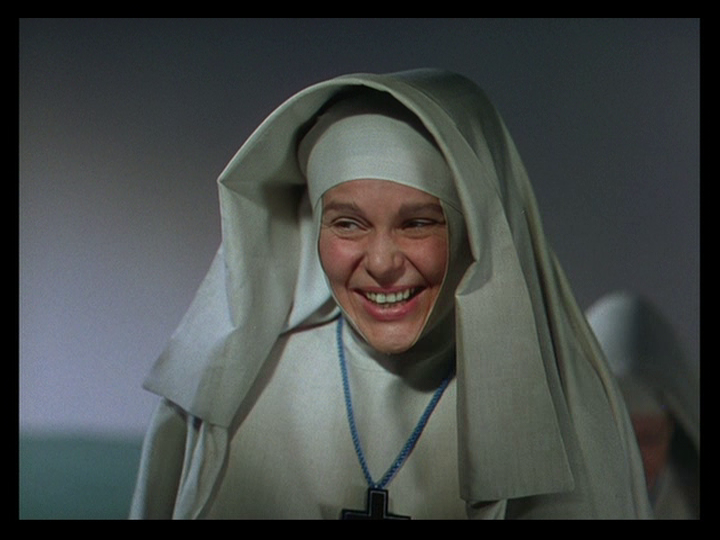
The rest of the nuns who will occupy Mopu, or Saint Faith as it is now to be called, are introduced in the next scene, which per Roderick Heath is reminiscent of “the kind of war movies where a team of talents is assembled for a dangerous mission in enemy territory.” There’s Sister Briony (Judith Furse), the strong one; Sister Philippa (Flora Robson) for the garden; and Sister Blanche or “Honey” (Jenny Laird), because Sister Clodagh will need to be popular:
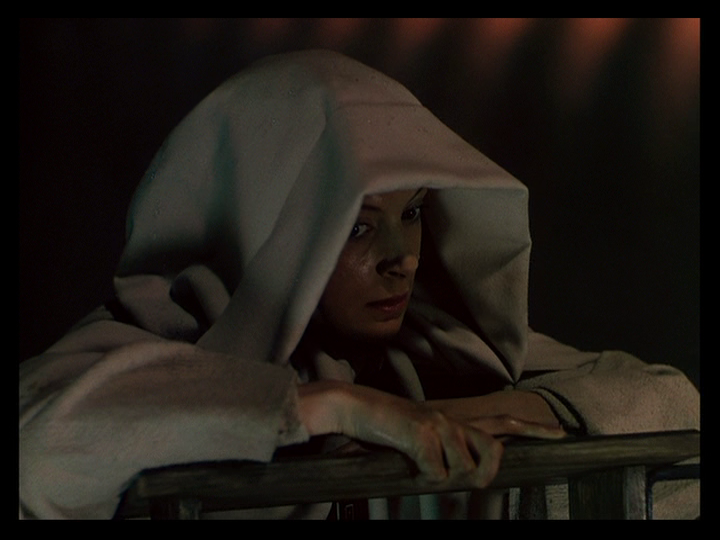
As well as Sister Ruth (Kathleen Byron) because “she’s a problem,” but “with a smaller community, she may be better.” Sister Ruth is initially represented as an empty place at the convent’s dinner table:
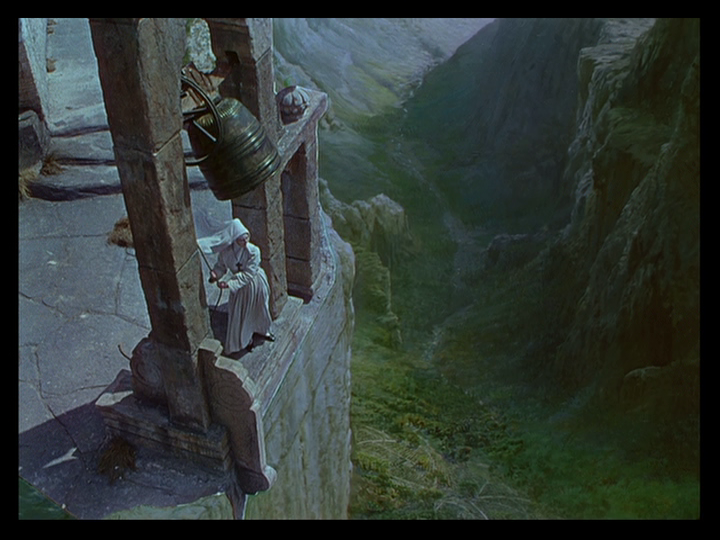
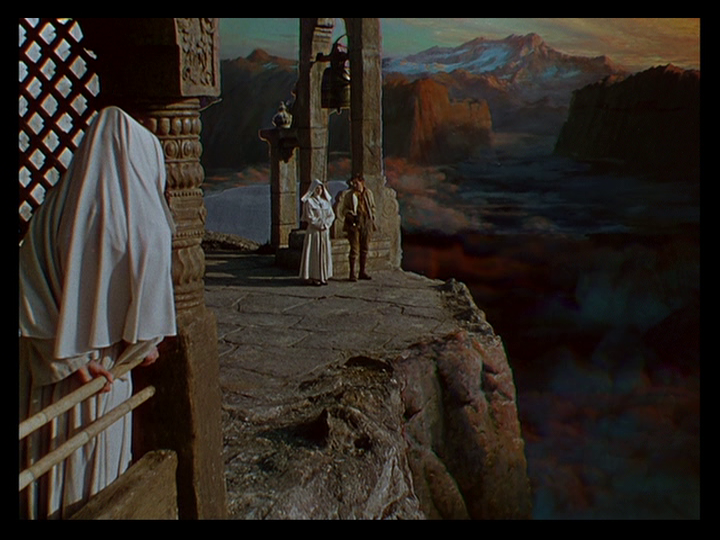
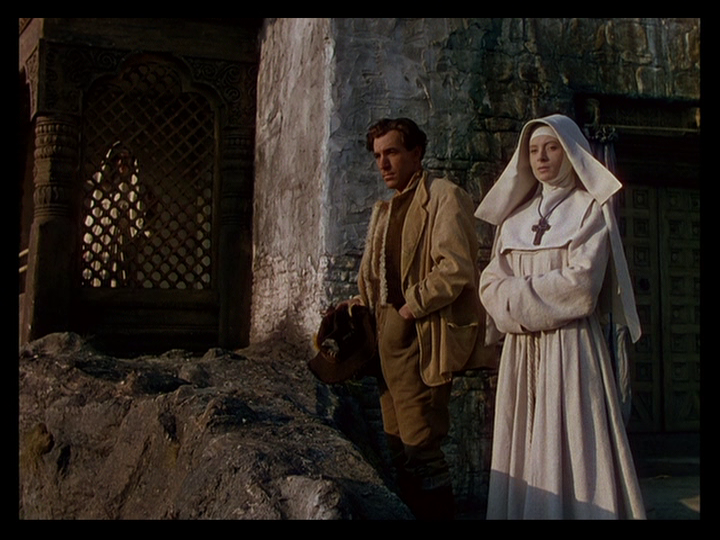
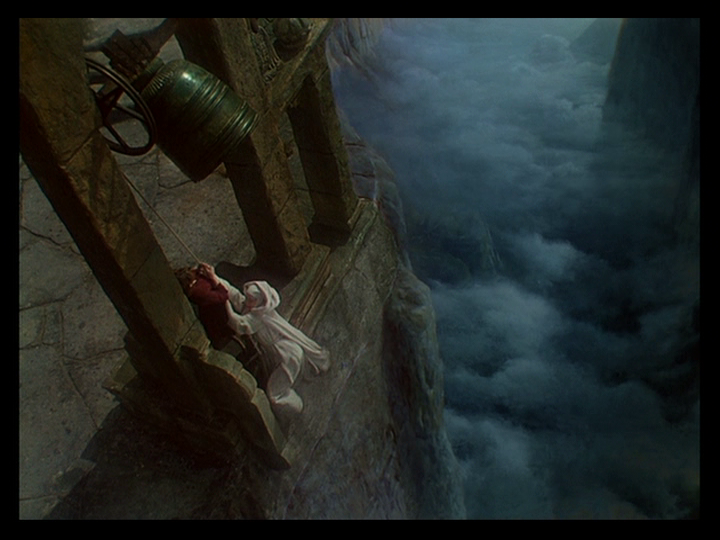
But she appears very soon afterward in corporeal form at Mopu ringing a bell perched at the end of a dizzying abyss which Bertrand Tavernier calls “absolutely breathtaking” in the DVD extra The Audacious Adventurer and an example of special effects that are more impressive than those of the digital era because “these seem to have a soul: they are not just the product of technology but are infused with emotion.”
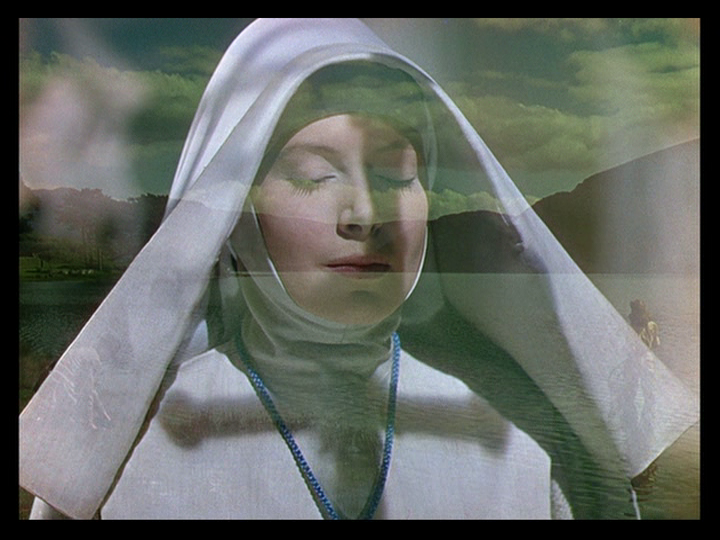
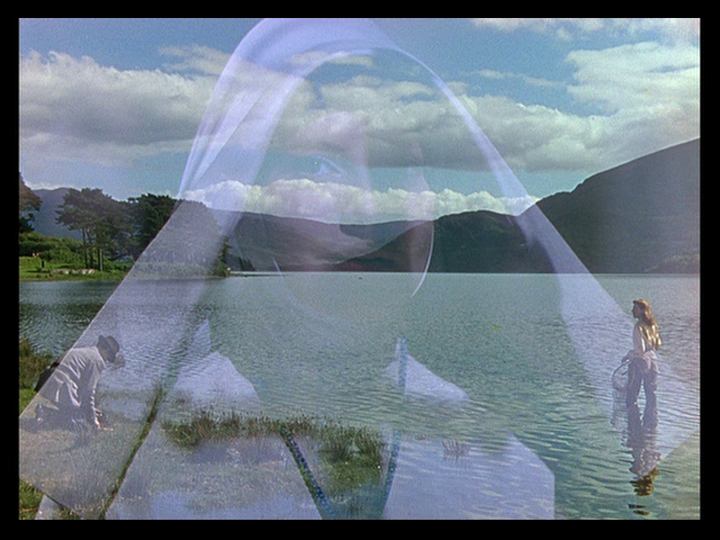
Dave Kehr observes that “despite the great wit and character of [Emeric] Pressburger’s dialogue, BlackNarcissus is a film that develops almost entirely through formal rather than dramatic means.” One of my favorite examples of this is the way the past elbows its way into the sisters’ present the longer they remain at Mopu. Early on, Sister Clodagh’s flashbacks are signaled by dissolves, like this one:
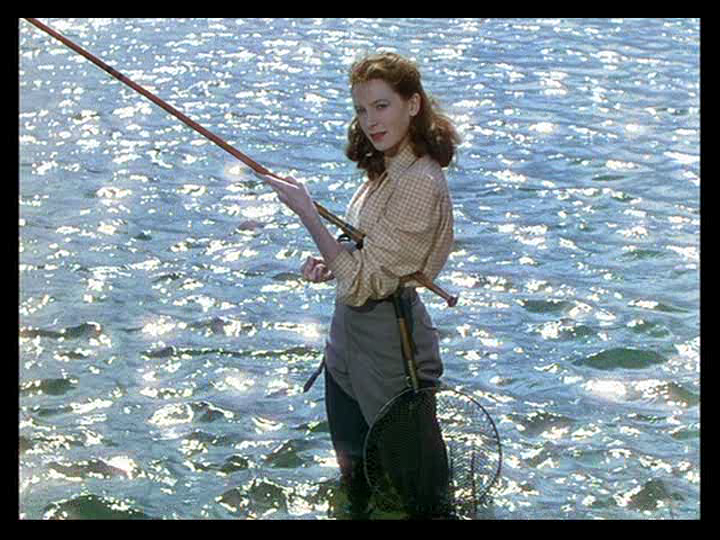
Which is followed by a medium shot of Clodagh fishing amidst a shimmering disco ball of sunlight glistening on the waves that Martin Scorsese accurately lauds in his DVD commentary track as “overwhelming” for those lucky enough to see the film on the big screen in a good print:
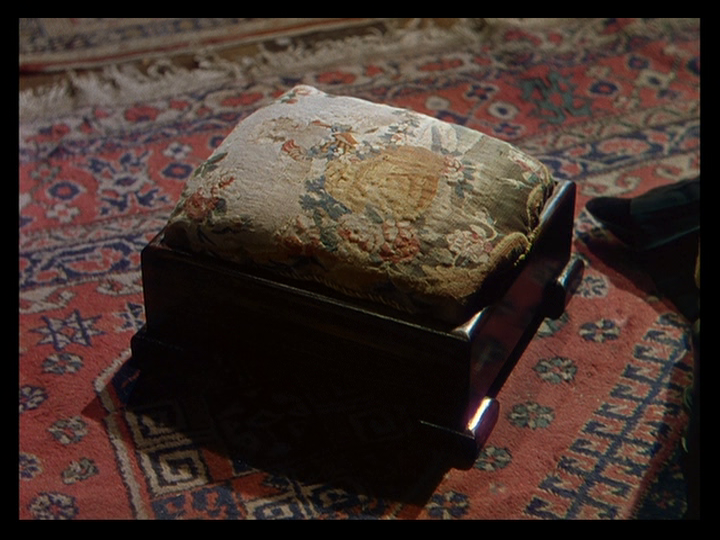
As the film progresses and her memories become as real as whatever she’s experiencing live, though, this is replaced by straight cuts, for instance from Sister Honey’s description of a jacket worn by the Old General’s heir (Sabu) as “just like my grandmother’s footstool” to this one from Sister Clodagh’s youth:
This sequence also ends with an astonishing moment which Ryland Walker Knight describes as transitioning “in one shot from technicolor beauty to the void, the loss of grounding becoming as powerful an edit as imaginable”:
Sister Philippa’s own struggles to combat the return of the repressed are similarly conveyed more by this image of her staring off into space:
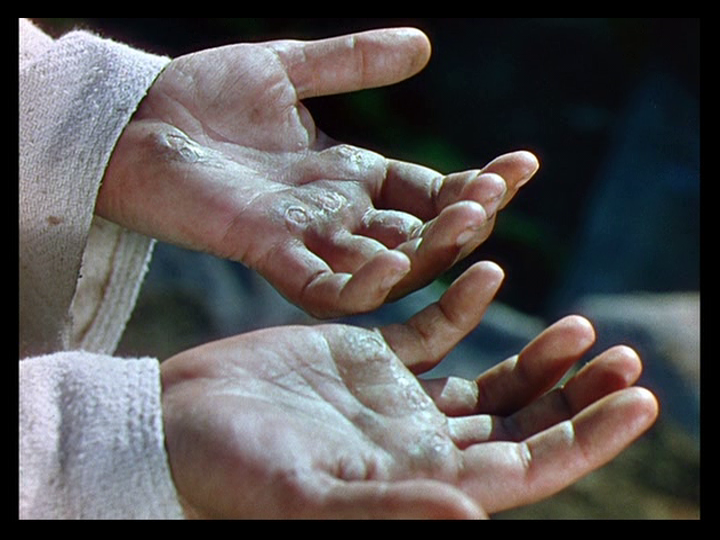
And this close-up of her blistered and calloused hands:
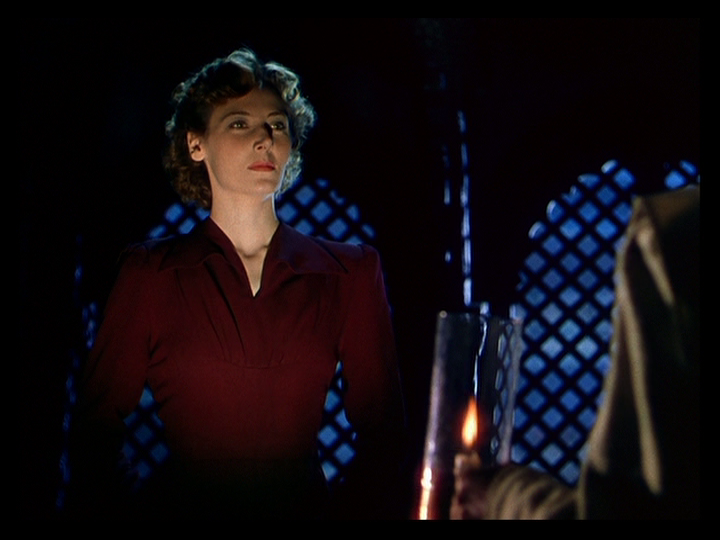
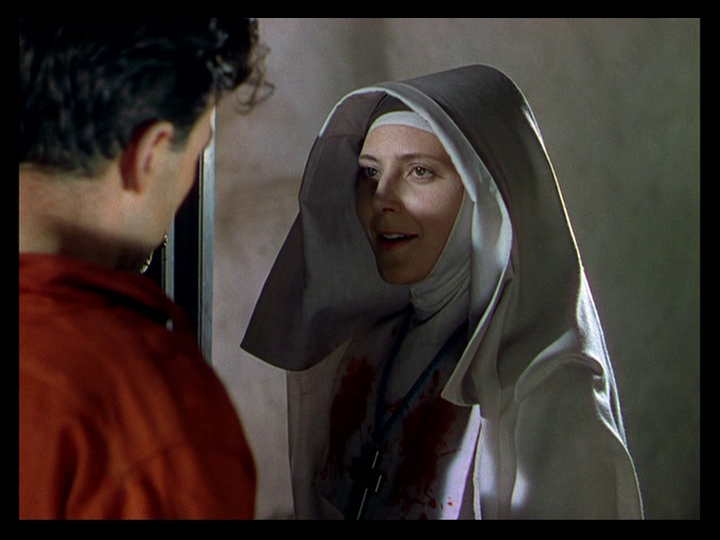
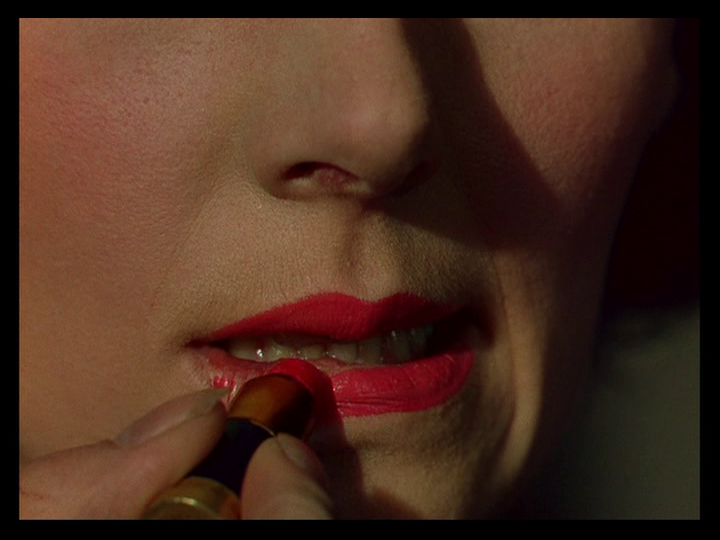
Than anything in the screenplay. But Kehr is right that this tendency is best exemplified in the incredible final sequence, where it’s “enough to see the bright, red lipstick that Sister Ruth has put on to know that the apocalypse is near.” He’s referring to the scene which follows her sudden appearance in a red dress to announce to put an exclamation point on her decision to not renew her vows (the Servants of Mary are only bound to their order for one year at a time):
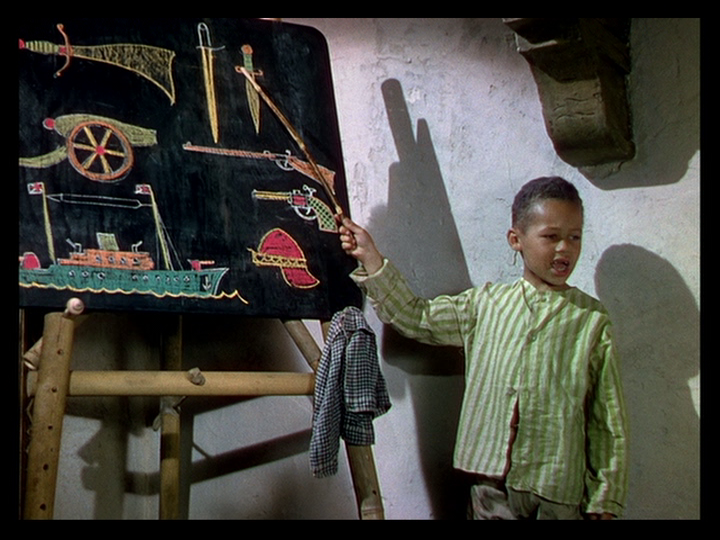
Which was foreshadowed much earlier by a shot of her watching Sister Clodagh speak to Mr. Dean while the convent’s young translator Joseph Anthony (Eddie Whaley Jr.) teaches students how to say the names of various weapons in English:
And set up by first a fatal act of attention and kindness by Mr. Dean, who thanks her for her misguided efforts to treat a woman bleeding to death in the convent’s hospital instead of immediately fetching the much more experienced Sister Briony:
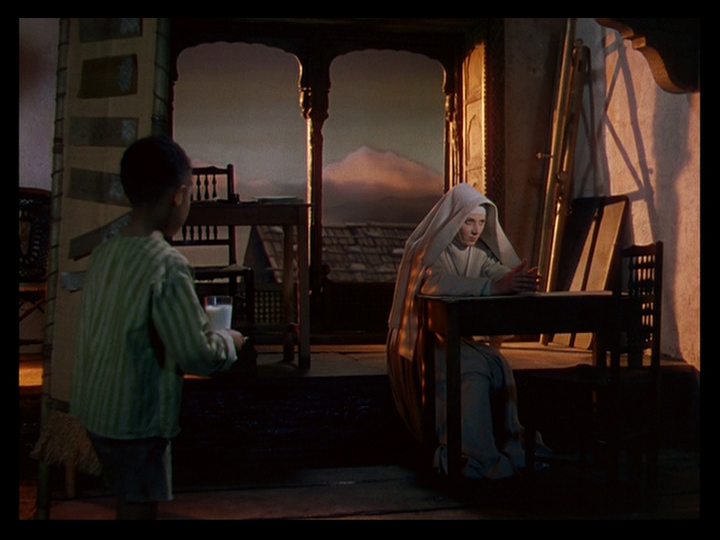
And then a fatal decision by Sister Clodagh to ask Joseph Anthony to bring her a glass of milk:
Sister Ruth dumps it out, assuming that it’s poisoned:
And spots Sister Clodagh talking to Mr. Dean once again:
She rushes downstairs past a dramatic streak of sunlight on the floor that Kristin Thompson says in her video essay “Color Motifs in Black Narcissus“ Technicolor technicians lobbied Cardiff to remove from the film after they misidentified it as a lens flare:
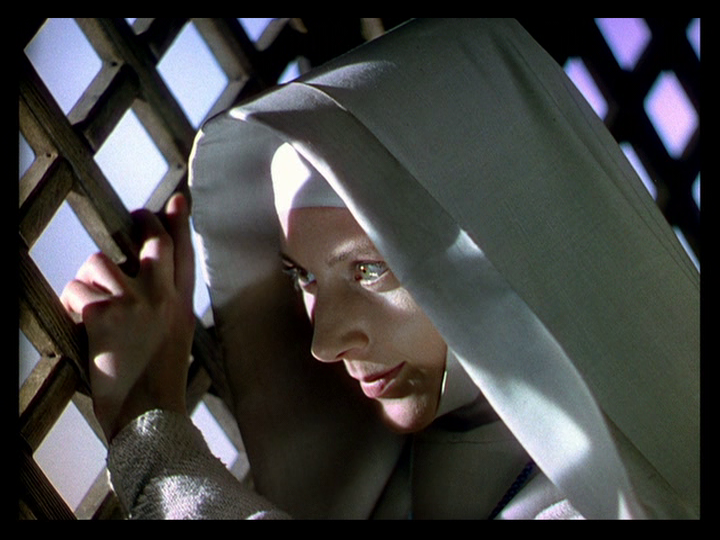
And takes up position behind a window so that she can eavesdrop on them:
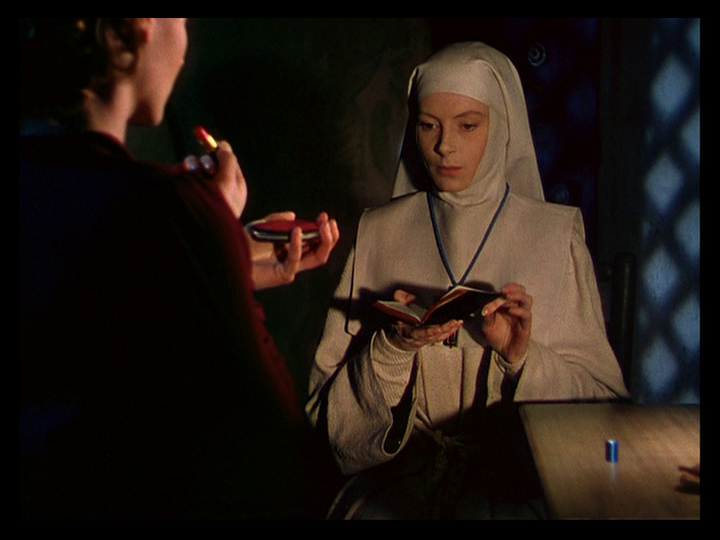
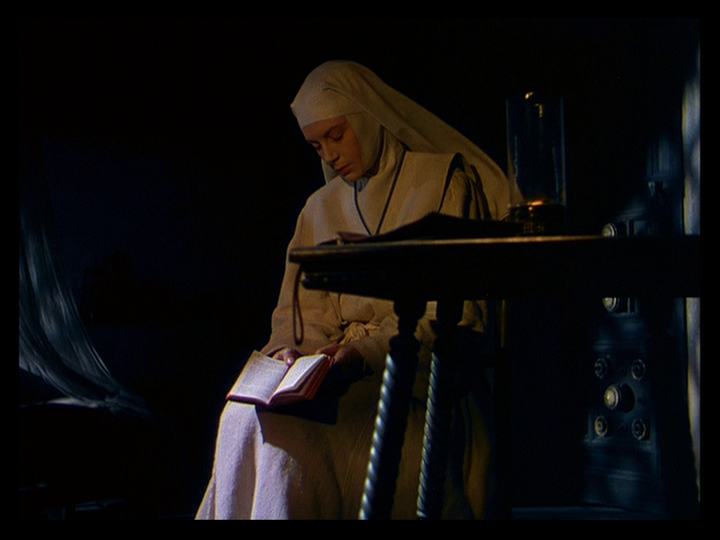
Hearing Mr. Dean console Sister Clodagh leads directly to Sister Ruth donning her red dress. Sister Clodagh implores her to at least wait until morning before departing Saint Faith. And so they settle in for a long night, Sister Ruth with her lipstick and compact and Sister Clodagh with her bible:
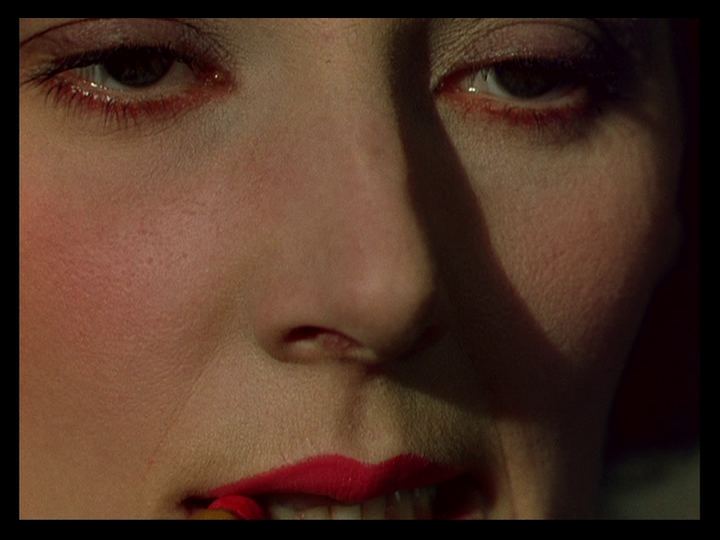
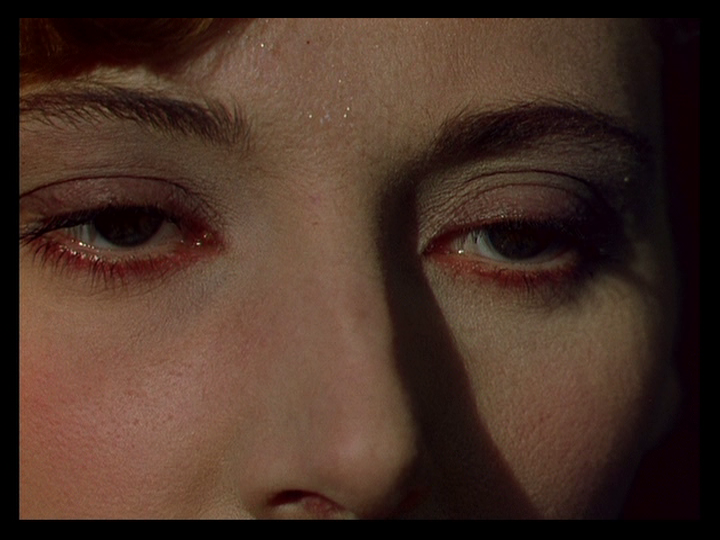
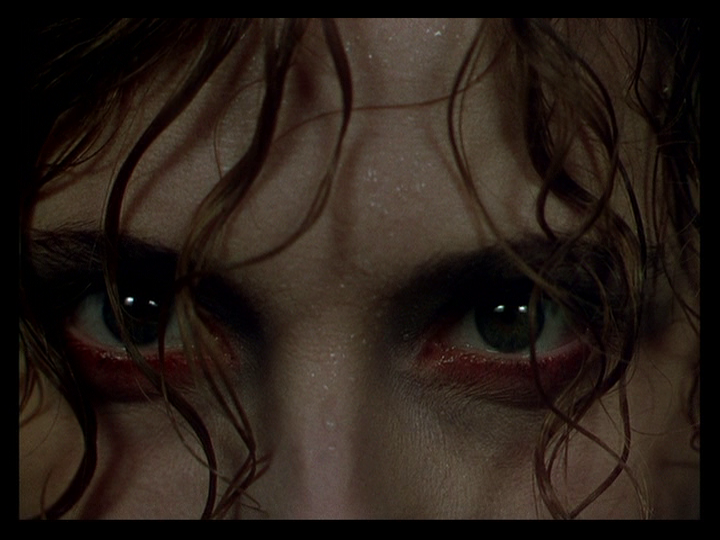
The camera tilts from Sister Ruth’s lips to her red eyes and a forehead dotted with beads of sweat:
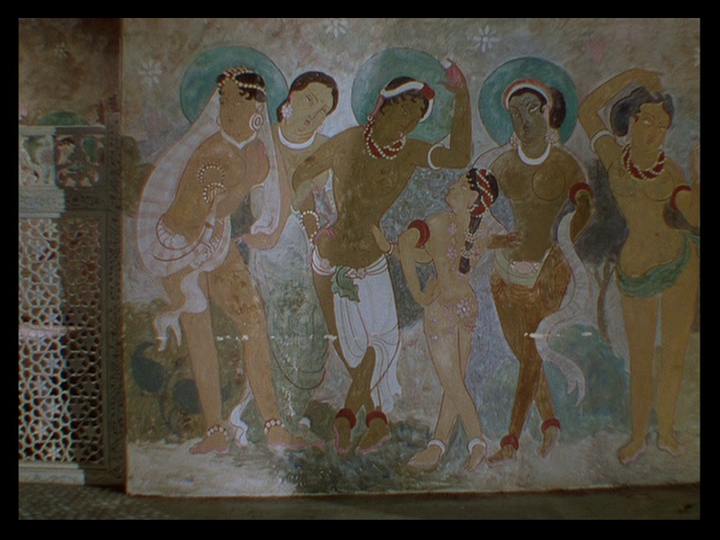
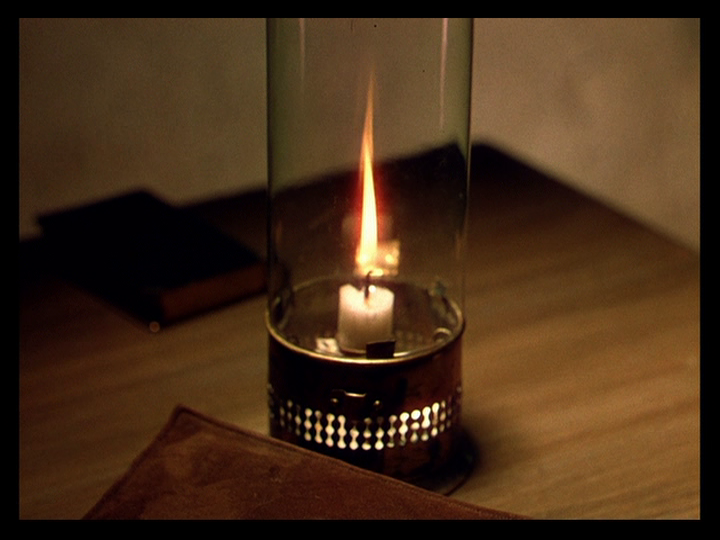
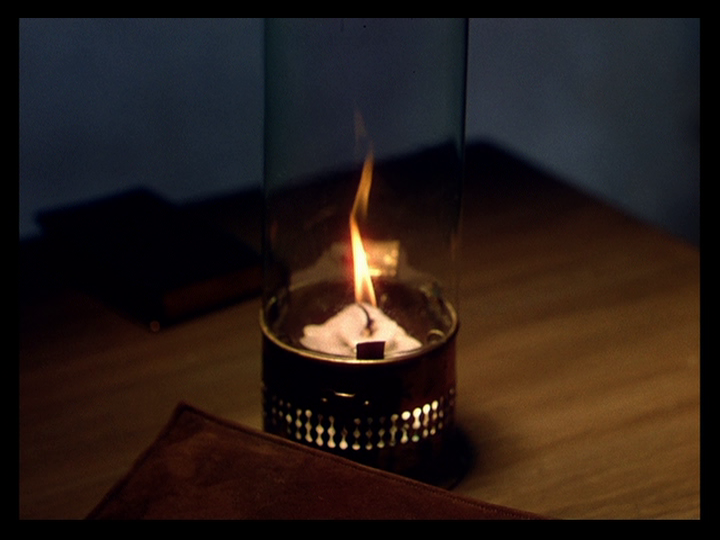
She outlasts Sister Clodagh in a staring contest of sorts in which the passage of time is indicated by cutting back and forth between a shrinking candle and the wall art in Mopu:
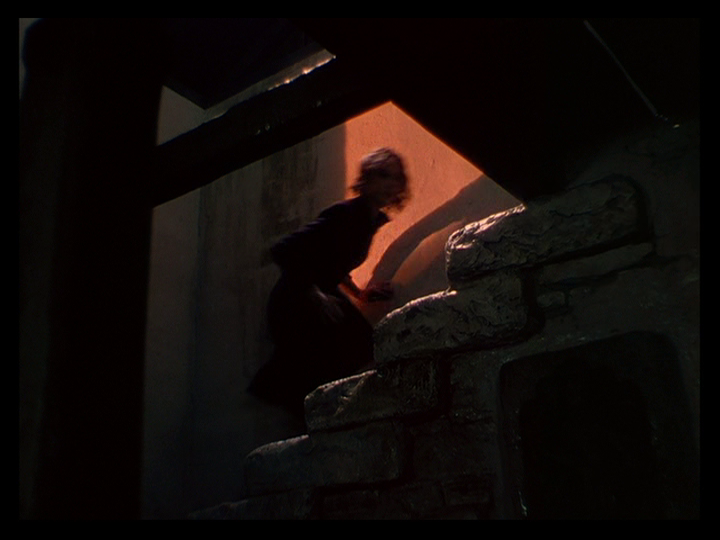
And makes her escape when Sister Clodagh finally succumbs to fatigue:
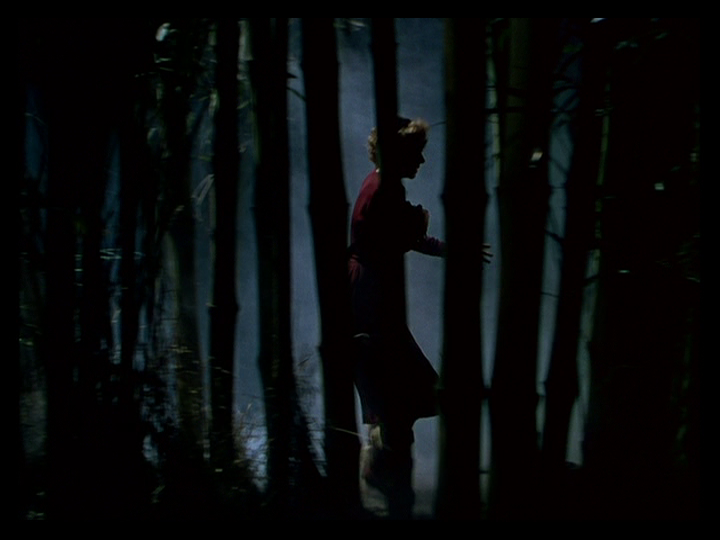
Sister Ruth treks through the jungle in a sequence which contains a shot that reminds me of one in Suspiria that I wrote about in my October, 2022 Drink & a Movie post:
And finally arrives at Mr. Dean’s bungalow, where she tells him she loves him. He rejects her, and she literally sees red and passes out:
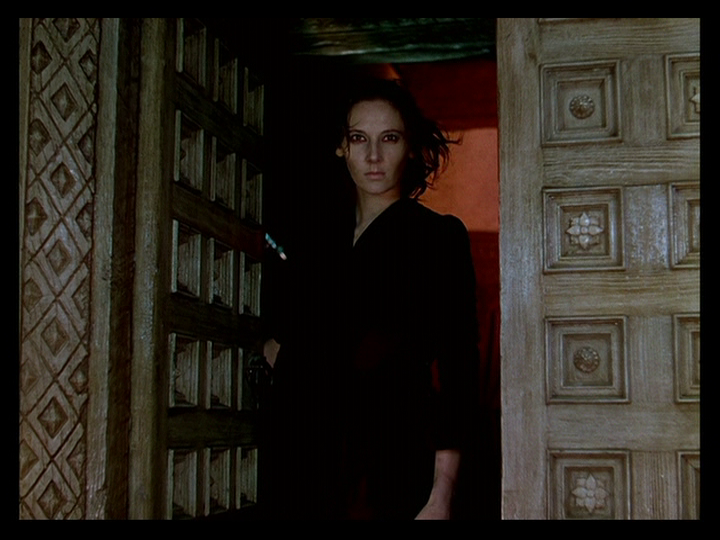
In his autobiography A Life in Movies, director Michael Powell describes the climax of Black Narcissus, which ensues after she comes to and returns to Mopu, as an experiment with “composed film” whereby the blocking and editing were timed to composer Brian Easdale’s music, as opposed to him creating this part of the score based on rushes. Reminiscent of a horror film, it begins with a two shot sequence of Sister Ruth watching Sister Clodagh intently in the predawn hours:
Sister Ruth stalks Sister Clodagh, her presence felt but never seen, as the latter woman attempts to go about a semblance of her morning routine:
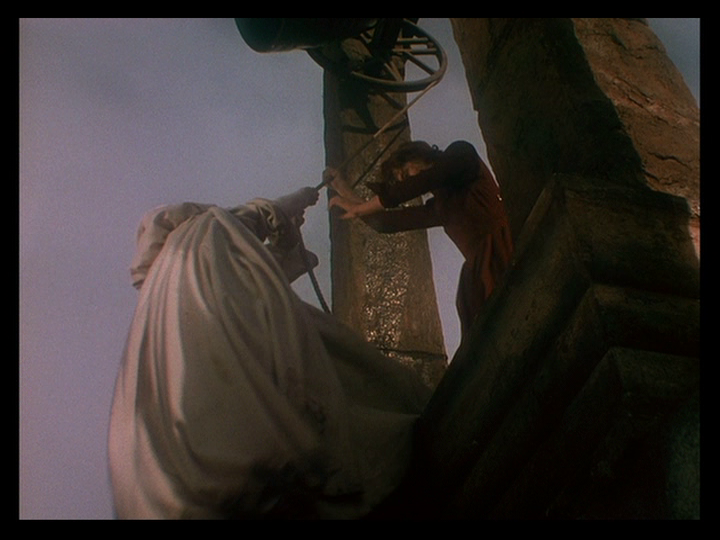
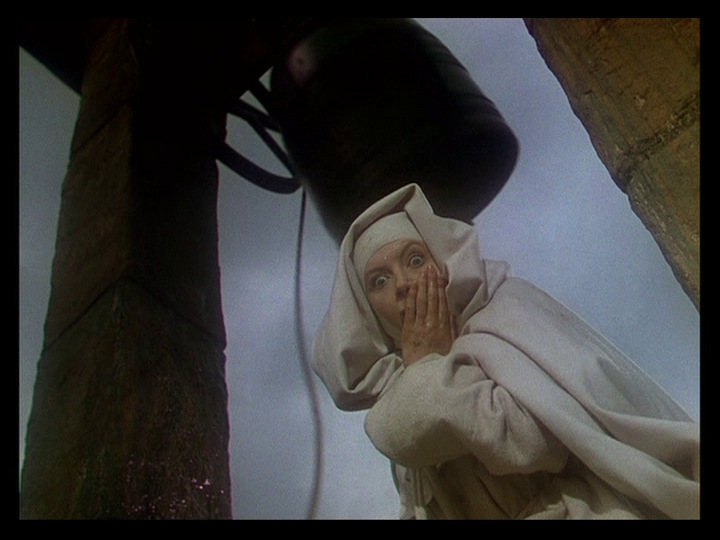
Finally, checking her watch and realizing what time it is, Sister Clodagh steps outside to ring the convent’s bell. This is followed by perhaps the film’s single most famous image:
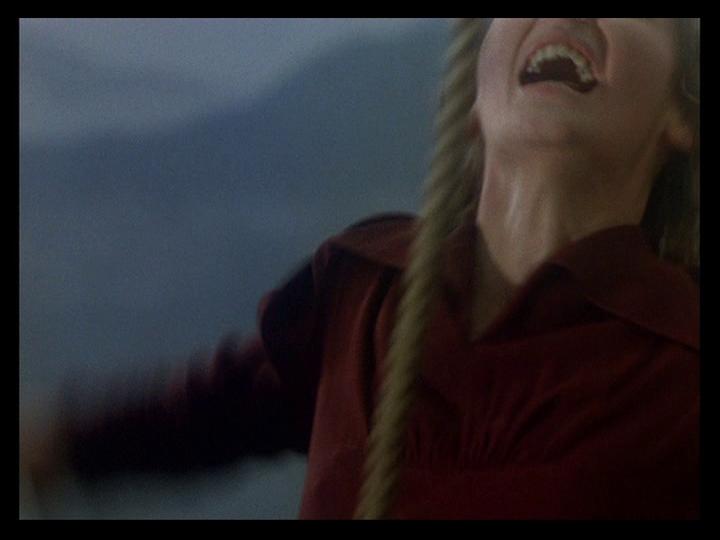
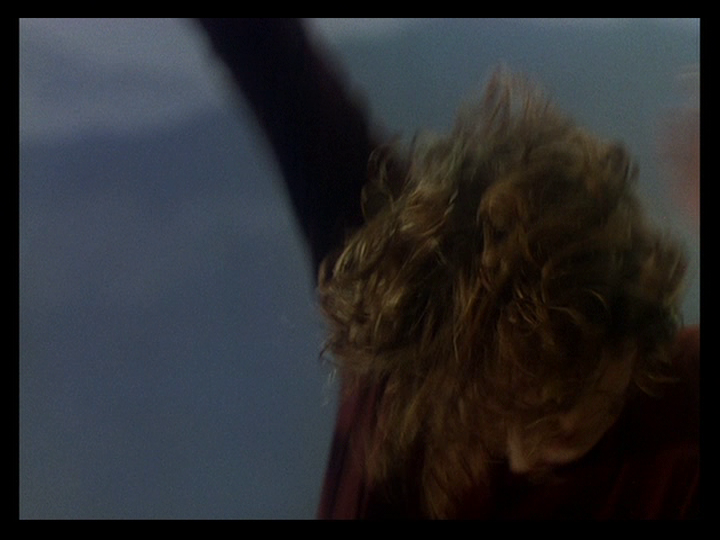
Sister Ruth attempts to push Sister Clodagh over Mopu’s cliffs:
But Sister Clodagh maintains her grip on the bell’s rope:
And in the ensuing struggle it is Sister Ruth who ultimately falls to her death:
Kehr notes that India achieved independence mere months after Black Narcissus‘s premiere on April 24, 1947 and suggests that the final images of a procession down from Mopu can be read as anticipating Britain’s departure.
“For Powell and Pressburger,” Kehr writes, “these are not images of defeat, but of a respectful, rational retreat from something that England never owned and never understood. It is the tribute paid by west to east, full of fear and gratitude.” This reading is complicated for me by the fact that the film doesn’t end with Sister Clodagh looking back at Mopu as it’s covered by mist:
But rather with Mr. Dean bidding a tender farewell to her:
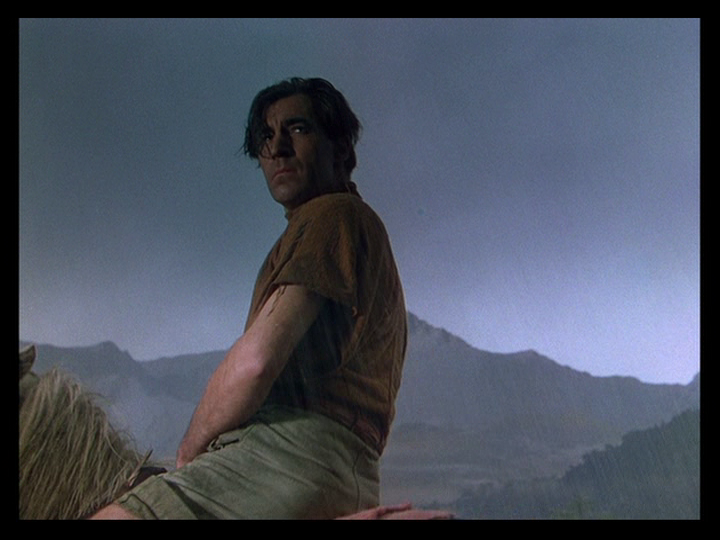
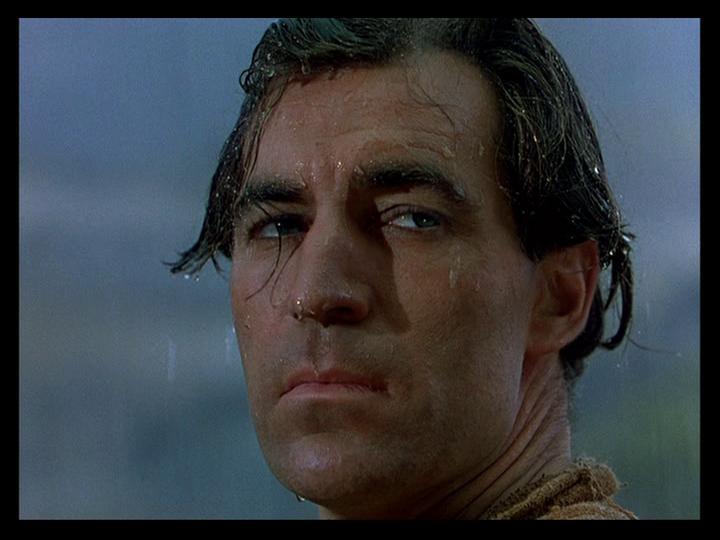
The rains beginning to fall, proving his prediction that the sisters wouldn’t last this long correct:
And finally him looking on as they ride away:
So, yes, the last image is of a British retreat, but it’s a POV shot from the perspective of an Englishman who will remain behind and who promises to take care of Sister Ruth’s grave. It therefore doesn’t play as a farewell to Empire for me so much as an elegy for a certain idea of Britishness, one caught impossibly between the two ways of living in a colonized land previously articulated by Sister Philippa: “either you must live like Mr. Dean, or . . . or like the holy man. Either ignore it or give yourself up to it.” Sister Clodagh intuits that there must be a third way, but cannot articulate what it is, which is why she and the surviving sisters must leave. It’s also why, for all of Black Narcissus‘s gorgeous and inspired cinematography, my favorite moment of all might be the simple scene in which Sister Philippa places the flowers she planted instead of vegetables like she was supposed to on Sister Ruth’s grave:
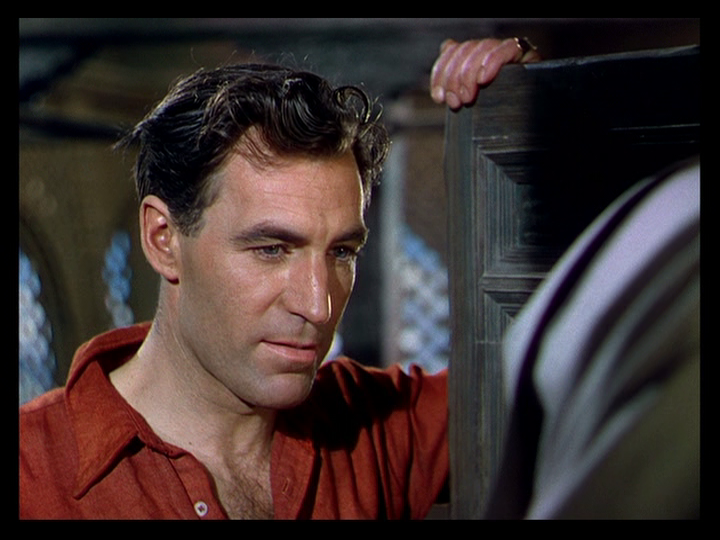
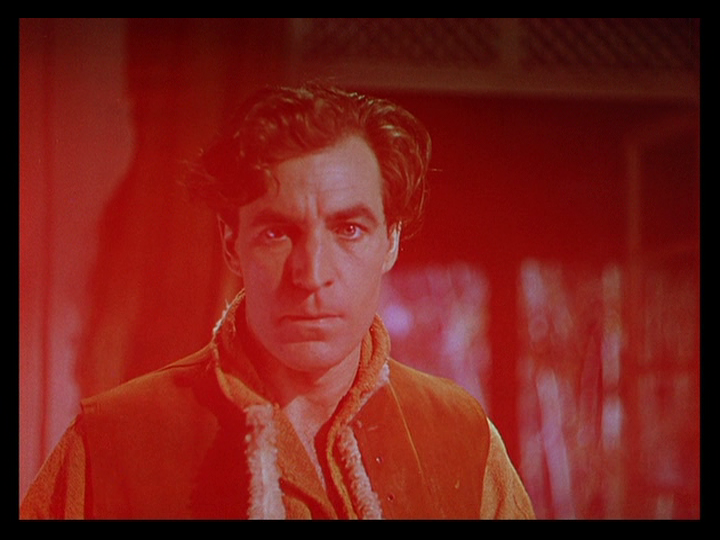
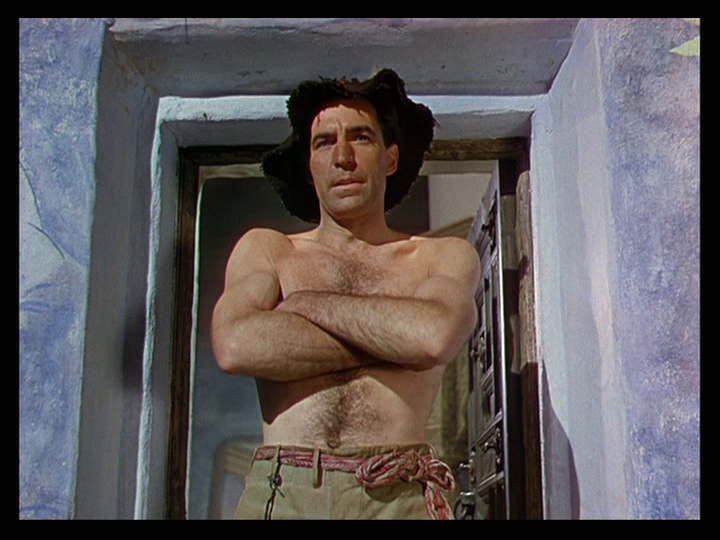
Here, more than the film’s actual final images, is the respect, fear, and gratitude that Kehr speaks of, as well as, appropriately, sadness. Which is too somber of a note to end a post in this particular series on, so here’s a shot of a shirtless Mr. Dean:
Cheers!
All original photographs in this post are by Marion Penning, aka My Loving Wife.Links to all of the entries in this series can be found here.
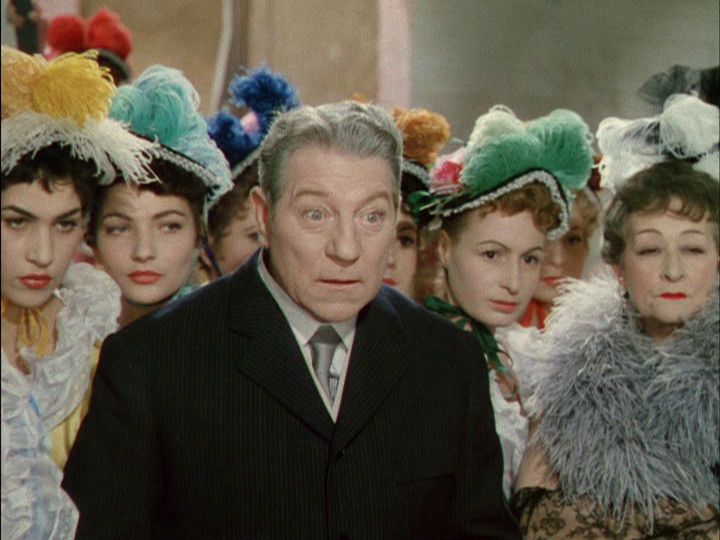
July is always the month of Bastille Day and the Tour de France and this year it also ushers in the Paris Summer Olympics, so I knew I was going to choose a French film to write about, but which one? I’ve long been meaning to highlight the Employees Only Martinez from Jason Kosmas and Dushan Zaric’s Speakeasy book, which has a dominant absinthe flavor that makes me think of Henri de Toulouse-Lautrec and the Moulin Rouge, so that seemed like a good starting point. From there it was a short hop, high kick, and cartwheel to my final destination, since with all due respect to John Huston, Baz Luhrmann, and the other filmmakers who have made it their subject, one film set in that famous establishment towers above the rest: French Cancan. But first, the drink! Here’s how you make it:
Make the absinthe bitters by combining 3/4 cup absinthe (Kosmas and Zaric call for Pernod 68, but I used St. George Absinthe Verte because that’s what we currently have in our bar), 1/8 cup Green Chartreuse, 1 1/2 teaspoons Fee Brothers mint bitters, 1/4 teaspoon Peychaud’s bitters, and 1/4 teaspoon Angostura bitters in a small jar. Stir the amount of bitters that the recipe calls for and all of the rest of the ingredients with ice and strain into a chilled glass. Garnish with a lemon twist.
Speakeasy calls for Beefeater 24 gin, but I wasn’t able to find it in Ithaca so I went with Drumshanbo (which I had not previously tried) because the website The Gin is In described it as having a similar flavor profile, including the green tea notes which Kosmas and Dushan Zaric made a point of listing as a key aspect of their cocktail’s finish. We agree with them that the “super velvetiness” of Dolin Blanc is essential to creating a texture that makes the Employees Only Martinez a pleasure to sip. It also contributes floral and vanilla notes that play well with the anise and matcha that come from the other ingredients. This is a bigger drink at four ounces and a potent one, so handle with care, but it was the perfect accompaniment to the Greek salad with feta-brined grilled chicken that we had for dinner the other night, and I look forward to trying it with briny oysters sometime soon per Speakeasy‘s recommendation that it goes great with “raw bar of any kind.”
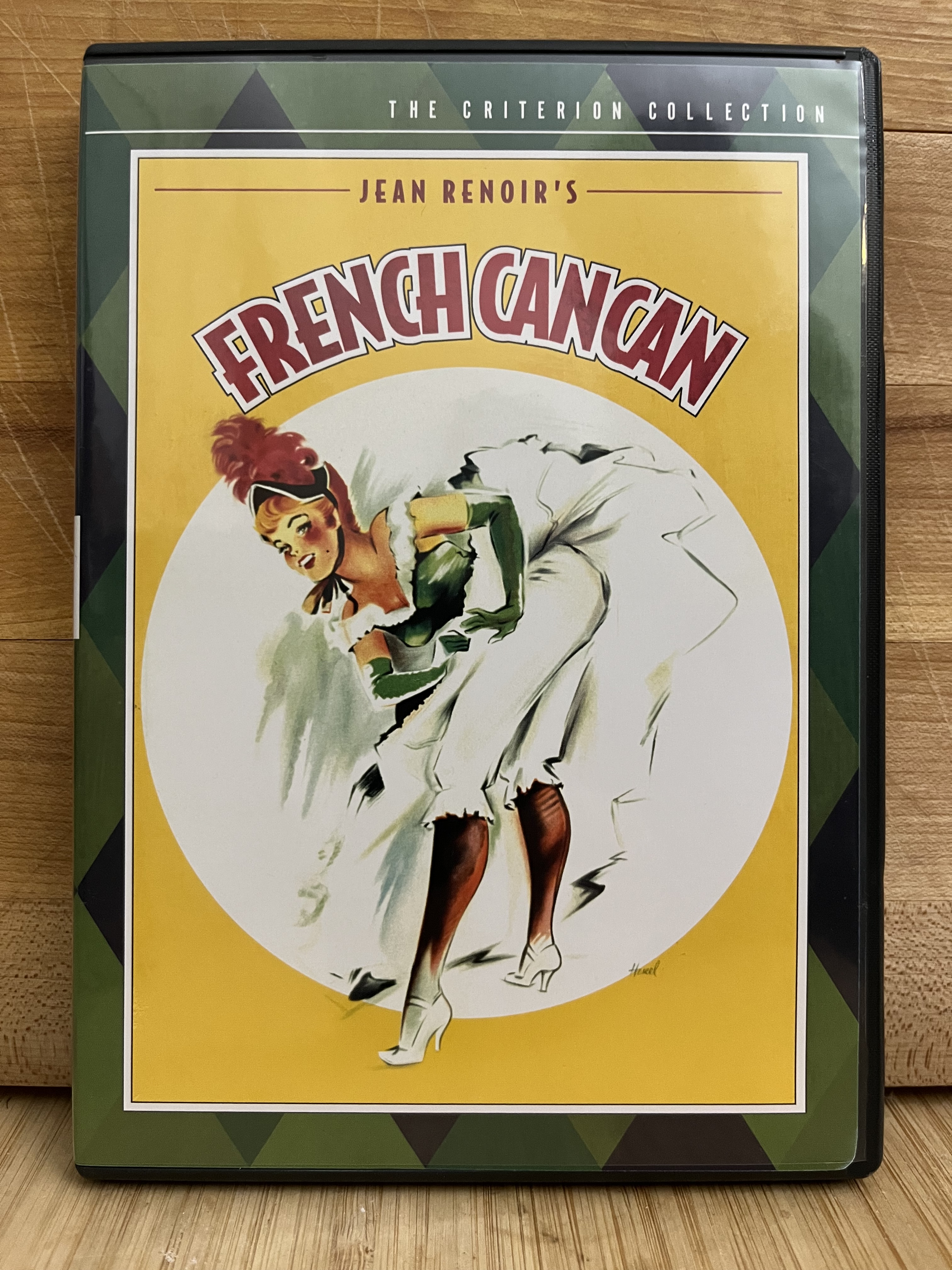
On to the movie! Here’s a picture of my Criterion Collection DVD release:
It can also be streamed via The Criterion Channel with a subscription, and some people (including current Cornell University faculty, staff, and students) may have access to it through Kanopy via a license paid for by their local academic or public library as well.
Although French Cancan begins with a notice that “this story and its characters are imaginary” and should therefore “not be seen to represent real people or events,” it’s transparently a fictionalized account of the Moulin Rouge’s founding. One night while slumming in Montmarte with rich patrons of his night club The Chinese Screen and his mistress/biggest star Lola de Castro de la Fuente de Extremadura aka “La Belle Abbesse” (María Félix), Jean Gabin’s Henri Danglard is struck by inspiration. As he explains later to his M.C. Casimir “le Serpentin” (Philippe Clay), “do you know what I’ll give them? A taste of the low life for millionaires. Adventure in comfort. Garden tables, the best champagne, great numbers by the finest artistes. The bourgeois will be thrilled to mix with our girls without fear of disease or getting knifed.”
He buys a dance hall called The White Queen with “drafts, promises, a lot of hot air,” and with the help of an investor named Baron Walter (Jean-Roger Caussimon) who knowingly shares Lola with him (“the precarious modern world judges by appearance only–respect them, and I’ll remain your supporter,” he tells Danglard) sets about transforming it. First, though, he returns to Montmarte, orders an absinthe, and waits for a young lady named Nini (Françoise Arnoul) who caught his eye on that fateful night out to wander by.
When she finally appears he follows her home and negotiates with her mother to secure her services in a scene which Janet Bergstrom has described as her “virtually sell[ing]” her daughter to Danglard:
He then recruits an old friend named Madame Guibole (Lydia Johnson) to teach Nini and a number of other girls a now-passé dance that she was famous for back in the day called the cancan, which he has the bright idea to revive as the “French Cancan” to tap into a fad for English names. The plan is almost torpedoed when a Russian prince (Giani Esposito) infatuated with Nini draws Lola’s attention to her presence at a government official’s visit to the Moulin Rouge construction site by conspicuously kissing her hand as the “Marseillaise” plays, making Lola jealous because she immediately realizes that Danglard has brought her there:
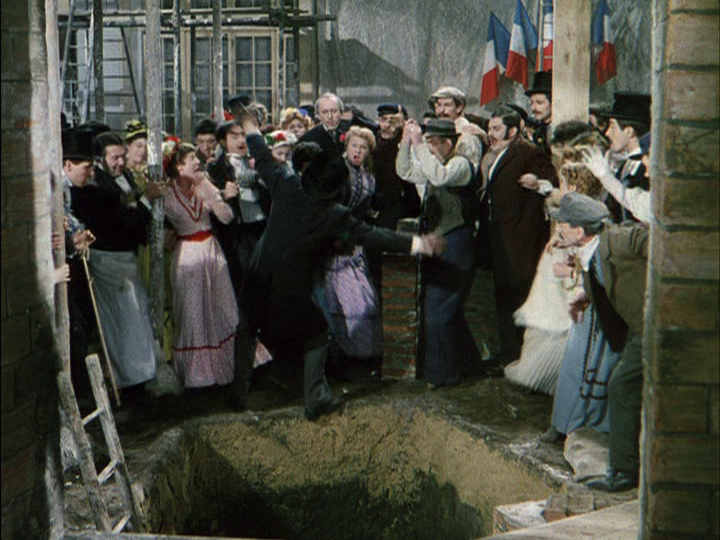
Lola kicks Nini in the shin, causing a brawl to break out. As Danglard attends to her, a troublemaker eggs Nini’s lover Paulo (Franco Pastorino) on by observing that “the boss is lifting your girl’s skirts,” which ultimately results in him pushing Danglard into a pit:
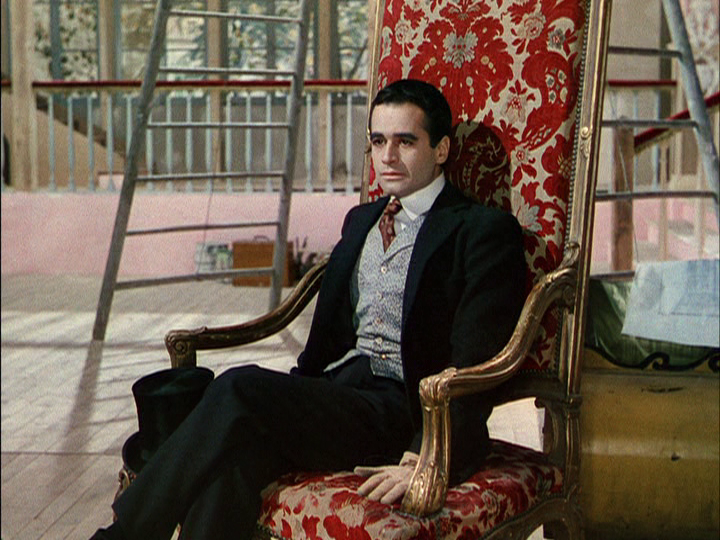
Baron Walter, enraged at the breach of Danglard’s verbal contract with him, withdraws his backing, but the prince steps in. Alas, he promptly tries to commit suicide when Lola makes him aware of the fact that Nini is love with Danglard following a remarkable scene in which he appears to sit motionless in a chair for many hours to confirm that they are indeed an item:
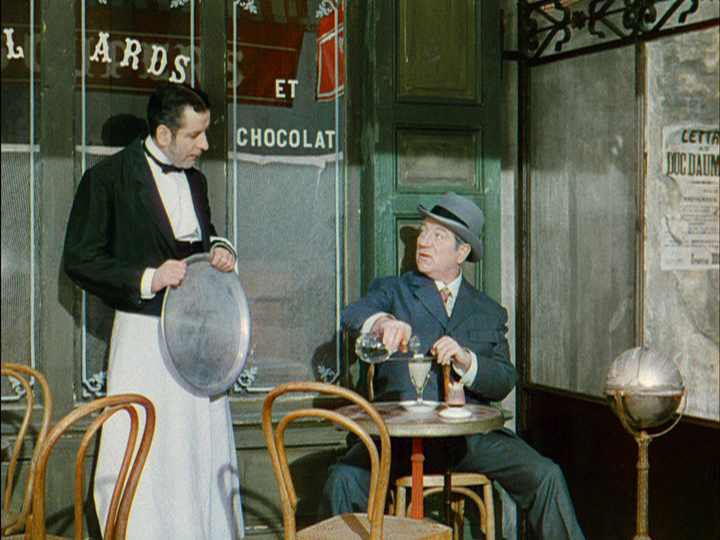
Luckily he bungles the attempt. He asks Nini for a “make-believe memory” that he can dazzle the younger generations with upon his return to Russia and they spend the evening touring all the Parisian hot spots in a sequence that features contemporary actors playing the biggest stars of the Belle Epoque, including Édith Piaf as Eugénie Buffet:
Afterward he presents Nini with the deeds to the Moulin Rouge in Danglard’s name (“it’s simplest”), but there’s one more rapids to navigate before the show can go on: Nini spies Danglard kissing his newest discovery Esther Georges (Anna Amendola) backstage on opening night and refuses to dance unless she can have him all to herself. A fiery speech by Danglard takes care of that, though:
And per David Cairns a contrite Nini wearing a “camouflaged dress” is finally “absorbed into the theatre”:
Bergstrom can’t forgive Renoir for what she calls French Cancan‘s “retrograde representation of male-female relationships,” a criticism which admittedly rings true when he and editor Borys Lewis place shots of Guibole leading Nini and her fellow dancers through a rehearsal next to one of pianist Oscar (Gaston Gabaroche) watering flowers:
But the film also contains multiple floods of women, which feels very much like an explicit acknowledgement that this is just a conceit–after all, dams break and, in the immortal words of Poison, “every rose has its thorns.” Here’s the first:
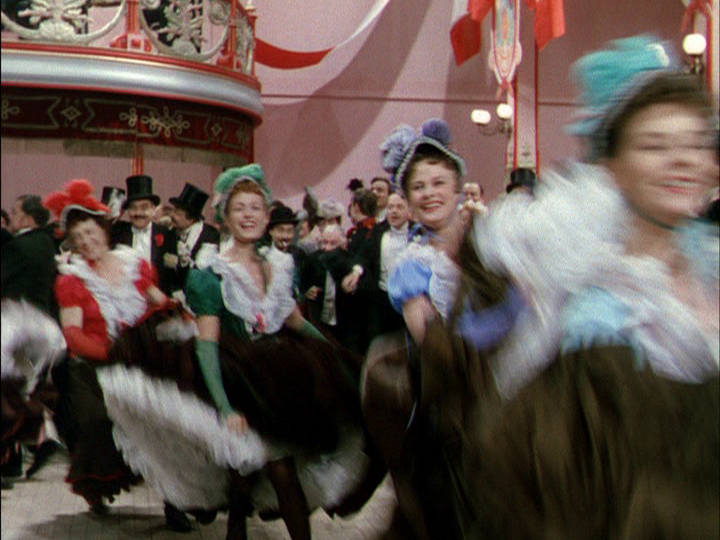
With the second being the nine-minute-long cancan that concludes the film which begins with dancers dropping from the ceiling, bursting through a poster on the wall, and leaping off a balcony:
And then explodes into a celebration of color and motion which is not merely the best thing about this film, but one of the most joyously spectacular sequences in all of cinema:
André Bazin writes beautifully about two other moments in his monograph on the director, which he offers in support of the statement that “Renoir’s is the only film I have ever seen which is as successful as the painting which inspired it in evoking the internal density of the visual universe and the necessity of appearances that are the foundation of any pictorial masterpiece.” First is the moment Danglard spots Esther from across an alleyway. “The decor, the colors, the subject, the actress, everything suggests a rather free evocation of Auguste Renoir, or perhaps even more of Degas. The woman bustles about in the half shadow of the room, then turning about, leans out the window to shake out her dustcloth. The cloth is bright yellow. It flutters an instant and disappears. Clearly this shot, which is essentially pictorial, was conceived and composed around the brief appearance of this splash of yellow.”
Next is this description of the young woman bathing in the background of the scene when Danglard takes Nini to Guibole’s for the first time. “She appears in the background through a half-open door, which she finally closes with a rather nonchalant modesty. This could well have been a subject dear to Auguste Renoir or to Degas. But the real affinity with the painters does not lie in this specific reference. It is a much more startling phenomenon: the fact that for the first time in the cinema the nude is not erotic but aesthetic.”
For Bazin moments like these combine to create the impression of “a painting which exists in time and has an interior development,” a sentiment echoed by his contemporary Pierre Leprohon, who says in his book Jean Renoir: An Investigation into His Films and Philosophy that “Renoir was not composing color canvases on the screen; he never forgot the essence of cinema, which is motion” and adds, “that is why French Cancan can be considered a major step in color films. It develops painting further without imitating it.”
Dave Kehr observes in his book When Movies Mattered: Reviews from a Transformative Decade that while Renoir frequently took actors as his subject, thisis the first and only time he decided to make a film about a director, and that he shared more in common with his protagonist than just their common profession:
There is, obviously, a lot of Renoir in Danglard–Danglard’s work in creating his show exactly parallels Renoir’s work in creating his film, and Danglard’s revisionist cancan finds its aesthetic equivalent in the artificial Paris Renoir has fashioned to contain it. And we can assume that there is a lot of Danglard in Renoir, particularly his fashion of handling his performers, accepting their eccentricities along with their talents, and trying to bring out their most profoundly individual abilities. But direction is the most mysterious of creative processes, and Renoir knows to respect the mystery. What does Danglard do, exactly? Not much that we can really see. For the most part, he is simply there, observing intently and saying nothing. And yet the vision that emerges is Danglard’s vision, developed through an almost imperceptible series of choices and in flections. It is Danglard’s sublime passivity that makes French Cancan Renoir’s most direct and penetrating statement of the art of the movies. The director is the medium between the world and the image: he takes from people the reality that belongs to them and then sells it back in heightened form.
Cairns sees another statement about cinema in the parade of shots of people watching the climactic cancan which is positioned near the end of it.
“These are curtain calls for all the bit-players and leads in the film,” he argues, “and also a kind of farewell to an era, and also something else — a celebration of the audience’s role in the entertainment, and therefore a warm tip of the hat to us, watching on a TV or computer sixty years after Renoir made the film, a hundred and twenty seven years after the events depicted in the film failed to happen in as elegant and colourful a manner in reality.” This would, of course, make the stumbling drunk’s bow in French Cancan‘s final image ours:
Which as the author of a series called “Drink & a Movie” I very much appreciate. So here’s to you and here’s to me!
Cheers!
All original photographs in this post are by Marion Penning, aka My Loving Wife.Links to all of the entries in this series can be found here.
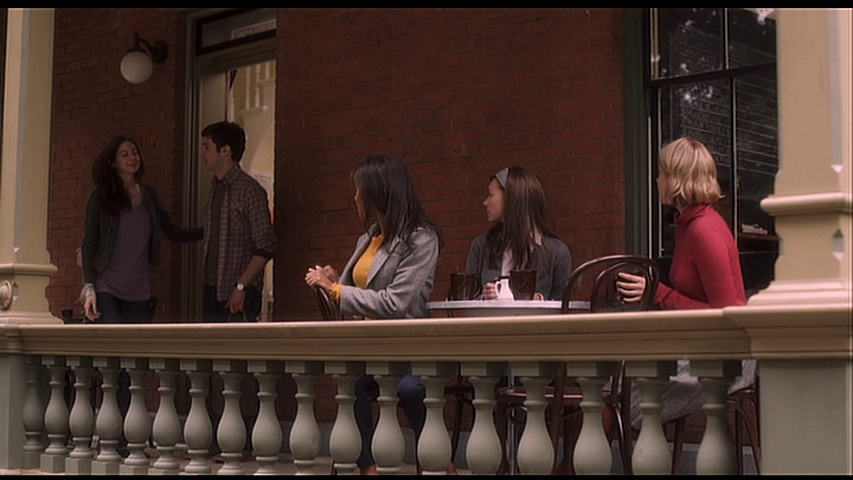
My number one source of new cocktails to try is Frederic Yarm’s Cocktail Virgin Slut blog. One thing I like about it is that he tends to work with spirits he already has in his bar, to the point where you can get enough of a sense for what’s there to pick up a few of those bottles yourself and follow along at home. Because the recipes he posts show up in my RSS feed every day, it took me longer than it should have to buy his Drink & Tell: A Boston Cocktail Book and Boston Cocktails: Drunk & Told books, but I’m glad I finally did because they’re great volumes to flip through in search of inspiration. While doing so with the latter awhile back, the Triumph of Pompei cocktail created by Tyler Wang of No. 9 Park jumped out at me as a great drink to pair with Damsels in Distress, one of my favorite movies of the 2010s, first because it’s name evokes Seven Oaks University’s Roman letter fraternities, but also because it’s similarly light and effervescent on the surface with a deeper, more complex core. Here’s how you make it:
Shake with ice and strain into a glass containing 1 1/2 ozs. club soda. Fill glass with ice, add a pinch of salt to the cube on top, and garnish with a grapefruit twist.
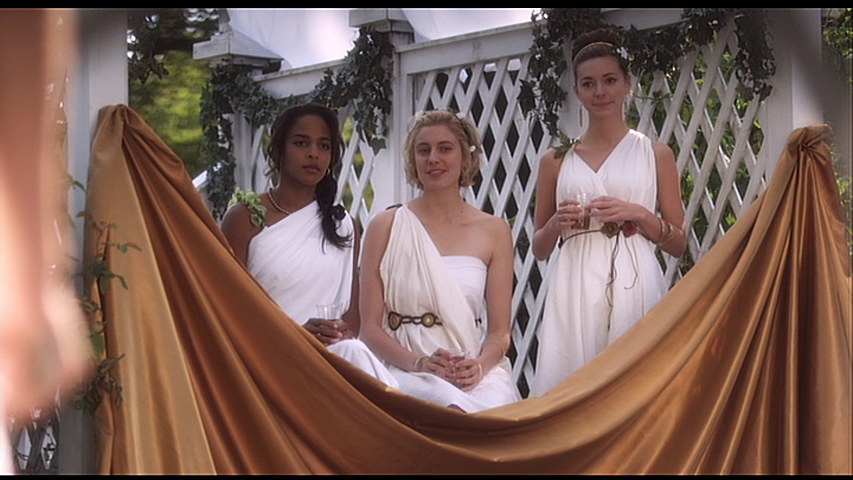
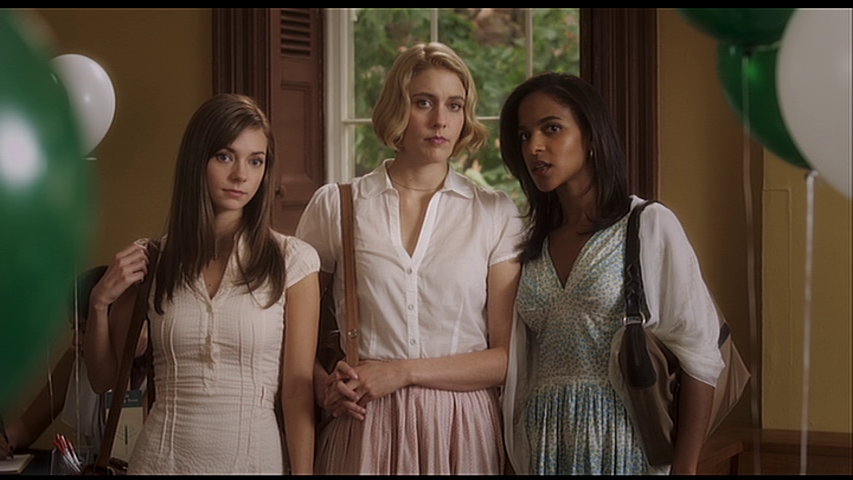
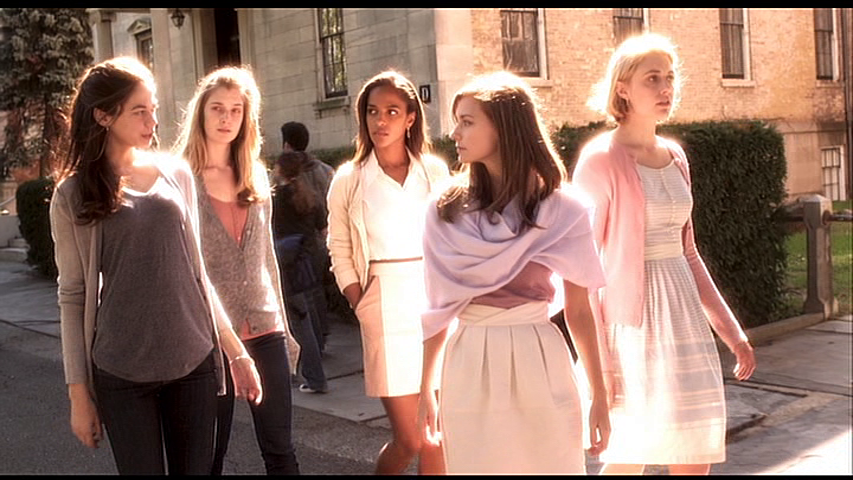
Yarm uses one “i” in the name of this drink in both the book and on his blog, but per Wikipedia that refers to the modern Italian city, whereas I’m interested in the ancient Roman one, so I’m going with two. However you spell it, the Triumph of Pompeii greets you with citrus on the nose and sweetness on the tongue. You get the Fernet right away along with the wine flavors of the Cocchi Americano, but the former stands out on the finish, which is where the grapefruit starts to assert itself as well. Diffords Guide recommends using grapefruit soda in place of club soda, but I think this disrupts the progression I just described: as is it’s a perfect accompaniment to grilling up dinner on an early June evening or settling in to enjoy the chaos of the Roman Holidays like these young ladies are doing:
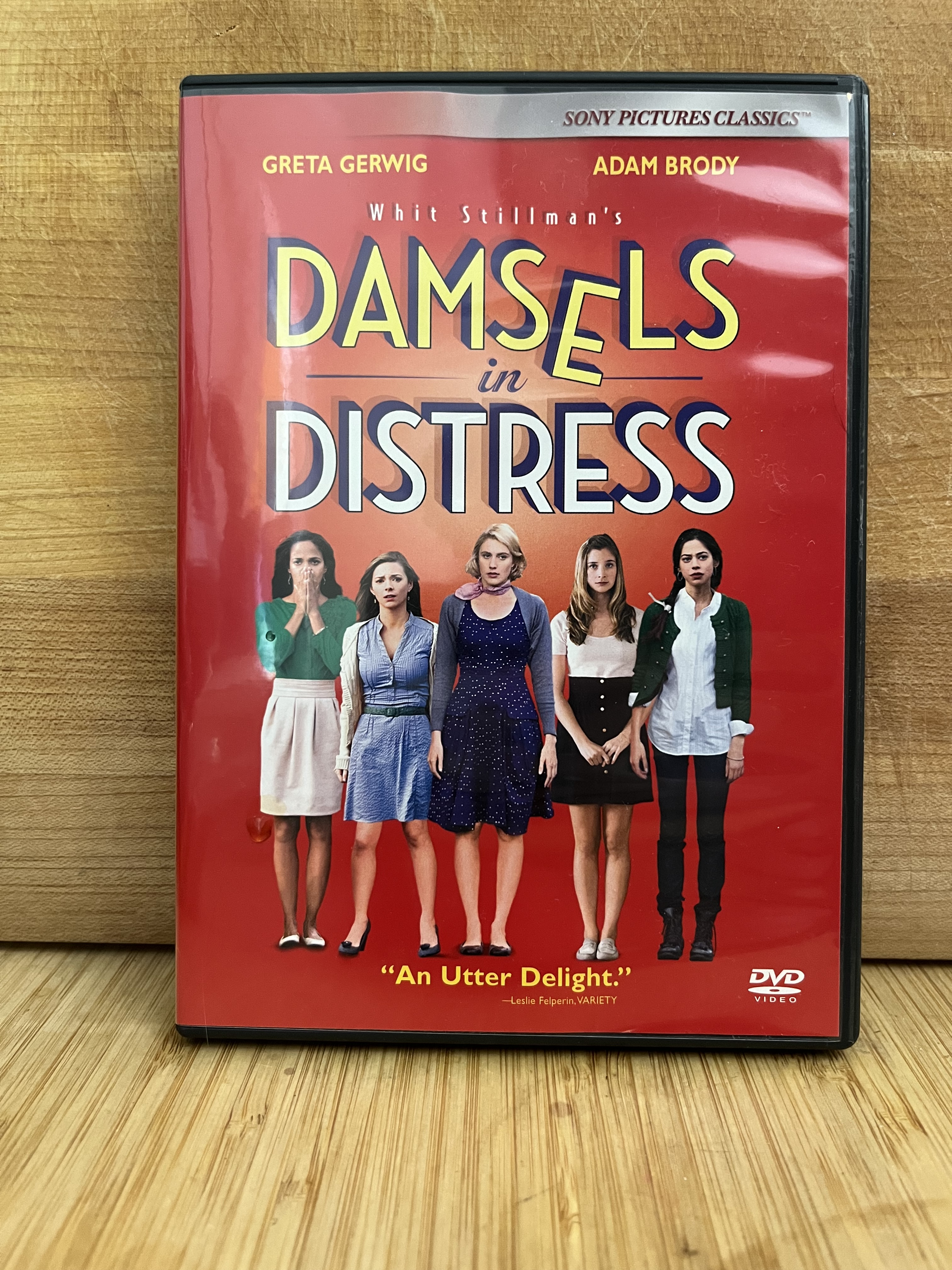
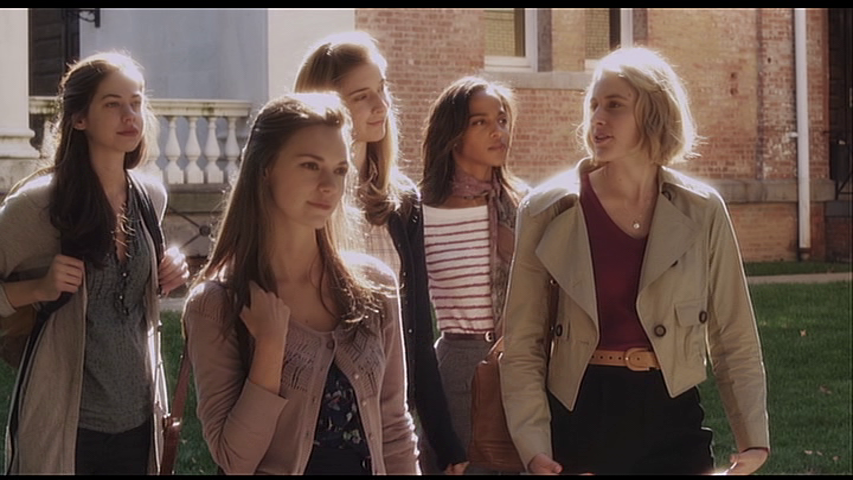
Speaking of whom, Rose (Megalyn Echikunwoke), Violet (Greta Gerwig), and Heather (Carrie MacLemore) are three of the titular damsels in distress in director Whit Stillman’s first film of the 21st century after a thirteen year pause. Here’s a picture of my Sony Pictures Classic DVD release:
It can also be streamed via Apple TV+ and Prime Video for a rental fee, and current Cornell University faculty, staff, and students have access to it via Academic Video Online as well.
Damsels begins during registration for Seven Oaks’s fall semester with Rose saying “there” and Violet responding, “yes, I think so.”
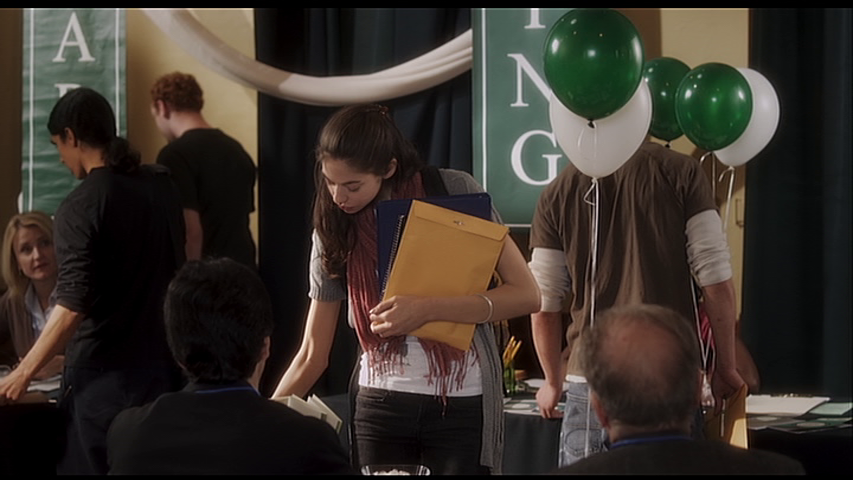
The person they are talking about is Lio Tipton’s Lily, a transfer student who they offer to “help.”
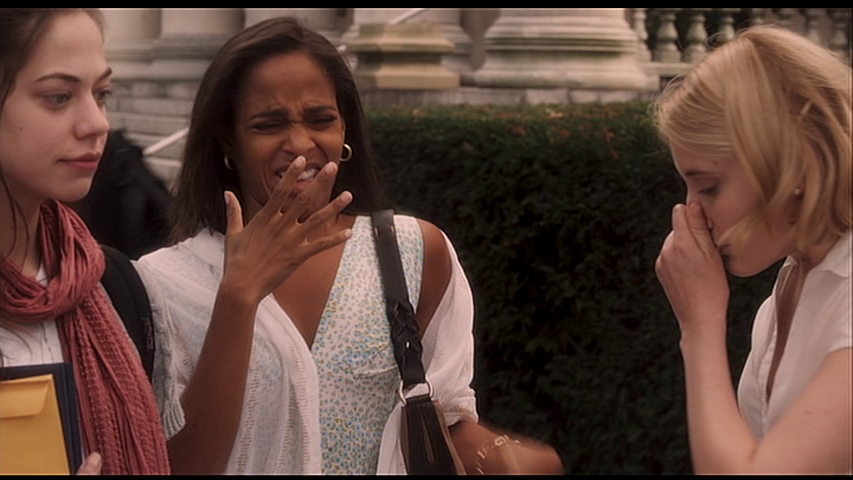
Lily doesn’t actually seem wildly enthusiastic about this idea, which is understandable considering that their first conversation starts out with Violet pointedly observing that “clothes can be critical for confidence — and an overall sense of well-being,” then pivots to an explanation of what “nasal shock syndrome” is after Rose violently reacts to the body odor of some passing male students:
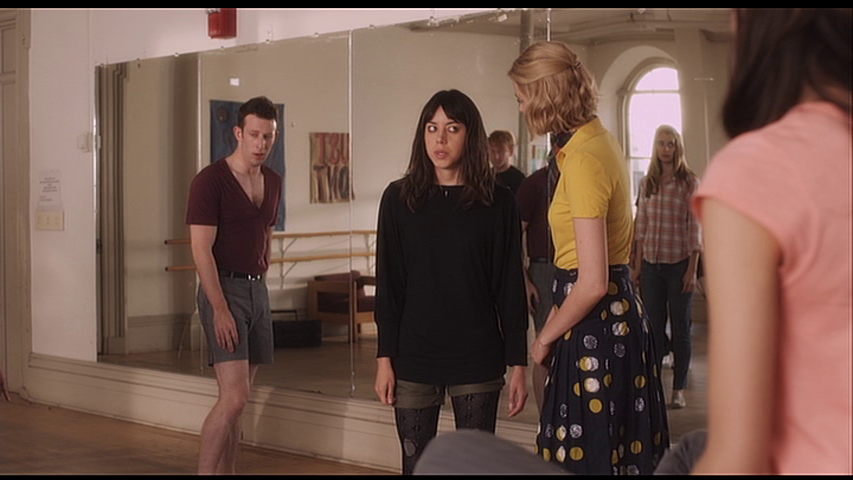
Lily has lost her housing assignment, though, and when her three new friends offer to let her room with them, she gratefully accepts. We follow the new quartet to the suicide prevention center they run through which they meet the temporary fifth member of the their group pictured on the DVD case, Caitlin Fitzgerald’s Priss, along with Nick Blaemire and Aubrey Plaza in memorable cameo roles as Freak Astaire and Depressed Debbie respectively, all three of whom can be seen in the screengrab below rehearsing a show that the center is putting on for therapeutic reasons:
Debbie is the person talking to Violet, Freak is to their left, and Priss is reflected in the mirror to Violet’s right.
The five leads, who are shot more than once to look like they are literally glowing, next crash the first meeting of the Daily Complainer, the school newspaper.
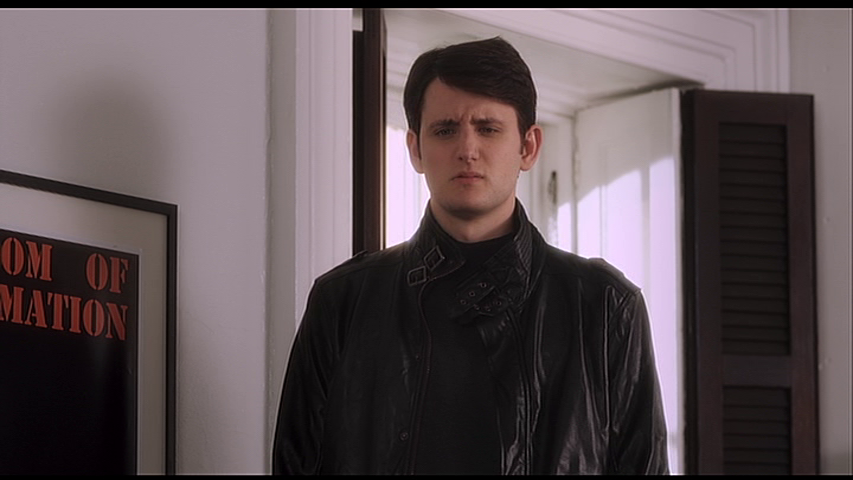
There they meet editor Rick De Wolfe, who is played by another stalwart of American comedies of the era, Zach Woods, seen here condescendingly explaining that the publication’s name derives from the fact that it comes out every day even though the questioner was obviously referring to the “Complainer” part:
The group has a falling out with Priss after she steals Violet’s boyfriend Frank (Ryan Metcalf), who doesn’t realize that his eyes are blue. “I’m not going to go around checking what color my eyes are!” he says:
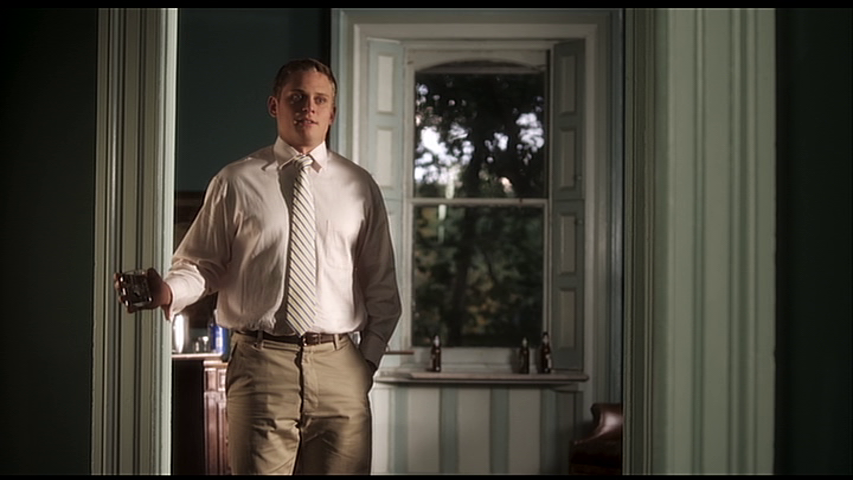
At least he knows what blue is–moments later we discover that his roommate Thor (Billy Magnussen) has not yet learned the colors. He’s not embarrassed, though: “What’s embarrassing is pretending to know what you don’t,” he explains, “or putting other people down just because you think they don’t know as much as you.”
The situation with Frank sends Violet into a “tailspin,” and her roommates are worried when she disappears, especially after Rose, who has known her since seventh grade, explains that Violet isn’t even her real name–she was born Emily Tweeter (“like a bird”), suffers from obsessive-compulsive disorder, and lost both of her parents. Luckily, whatever Violet’s original intentions were, she is saved by a bar of soap:
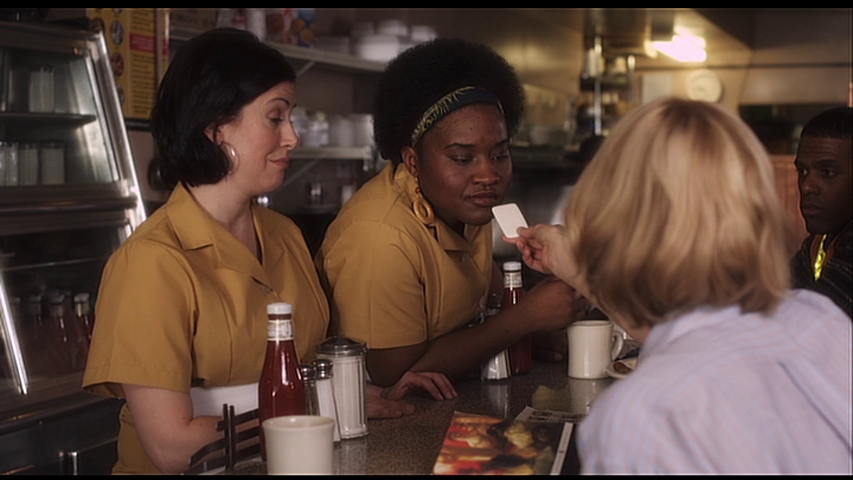
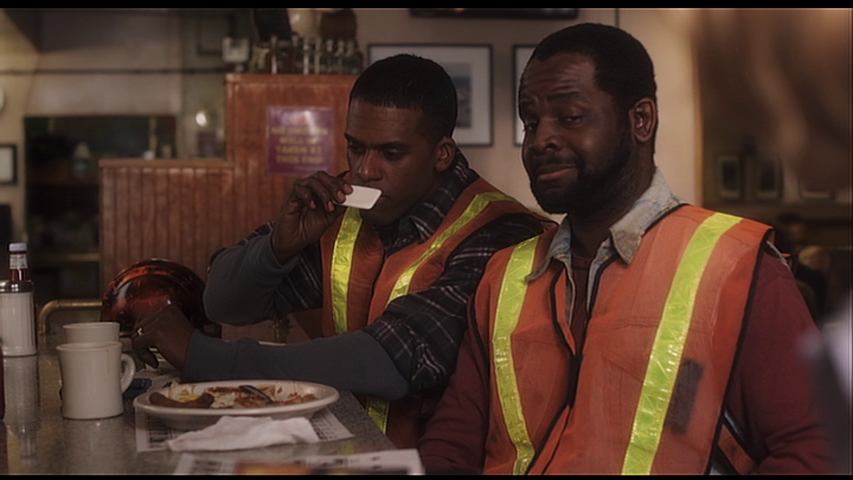
As she explains to the waitresses (Carolyn Farina, who portrayed Audrey Roget in Stillman’s films Metropolitan and The Last Days of Disco, and Shinnerrie Jackson) and some fellow customers (Gerron Atkinson and Jonnie Brown, who per IMDb is a fellow Pitt alum) at a diner she breakfasts at afterward who express concern that she’s one of “those depressed students down from the university” intent on killing herself, she’s not as crazy as she was yesterday “due to the salutary effect of scent on the human psyche”:
Meanwhile Lily gets involved first with two young men, a cinephilic graduate student from France named Xavier (Hugo Becker) who practices Catharism:
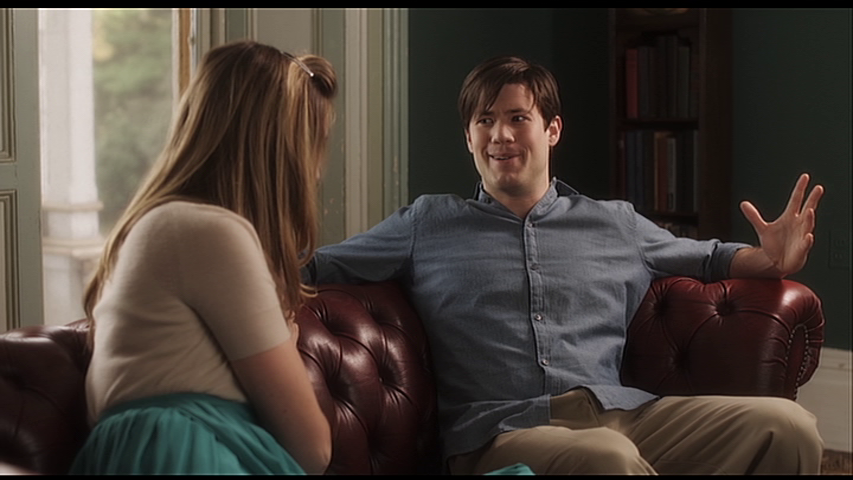
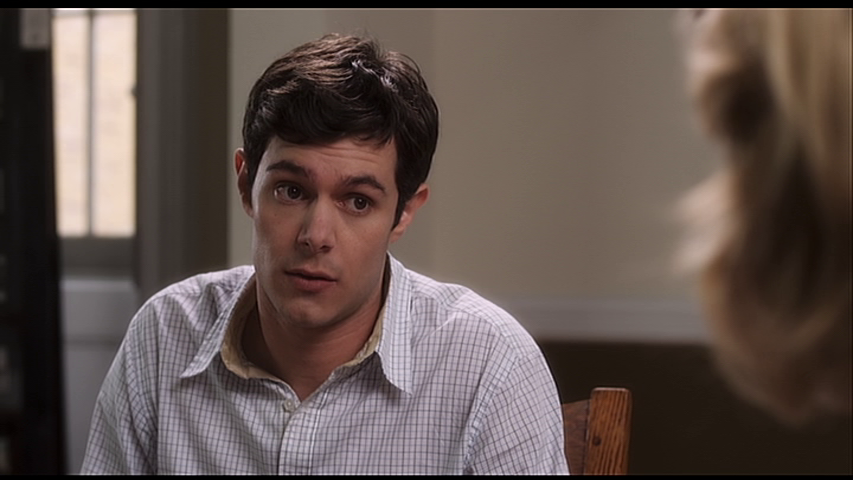
And Adam Brody’s Charlie Walker, whose real name is Fred Packenstacker and who has my favorite line in entire movie during a later scene in which Violet challenges his belief that decadence has declined. “How?” she asks. “How?” he replies, “or in what ways?”
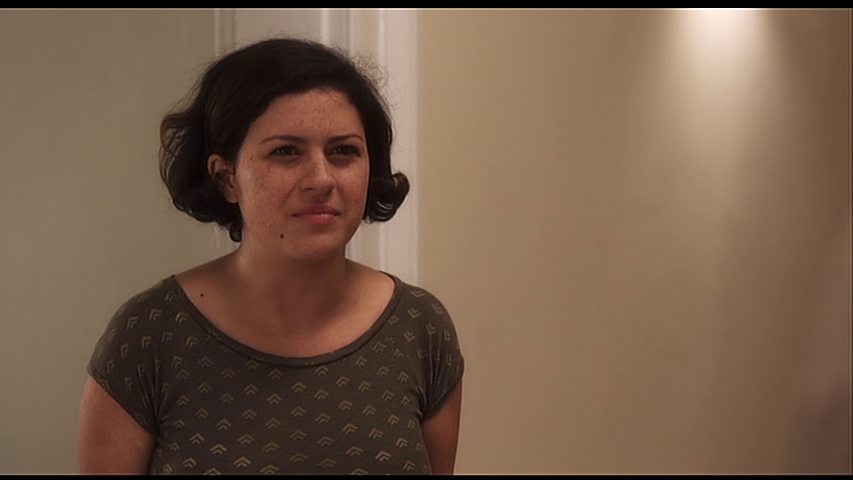
Anyway, Alia Shawkat makes an appearance:
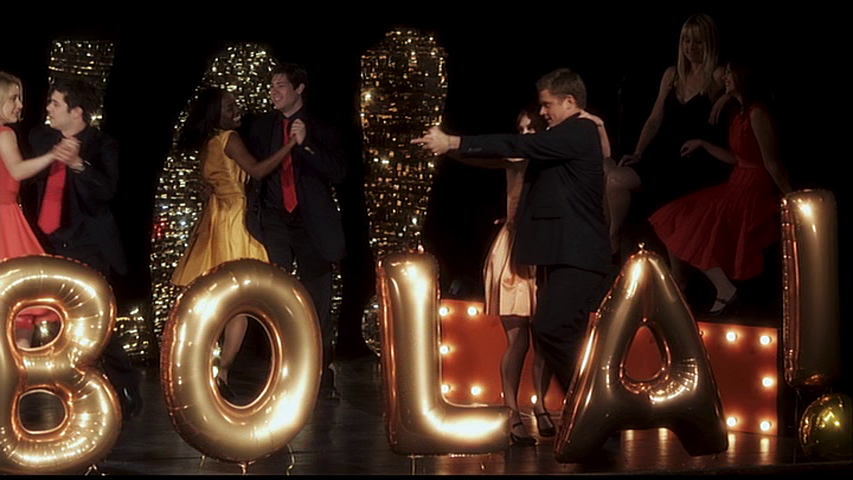
Violet ends up with Charlie/Fred, Lily confesses that all she really wants is to be “normal,” and the whole thing ends with first a musical number set to the song “Things Are Looking Up” from the 1937 Fred Astaire film A Damsel in Distress, then Violet fulfilling her dream of starting an international dance craze, the Sambola!
“Thor can do the Sambola! So can you!”
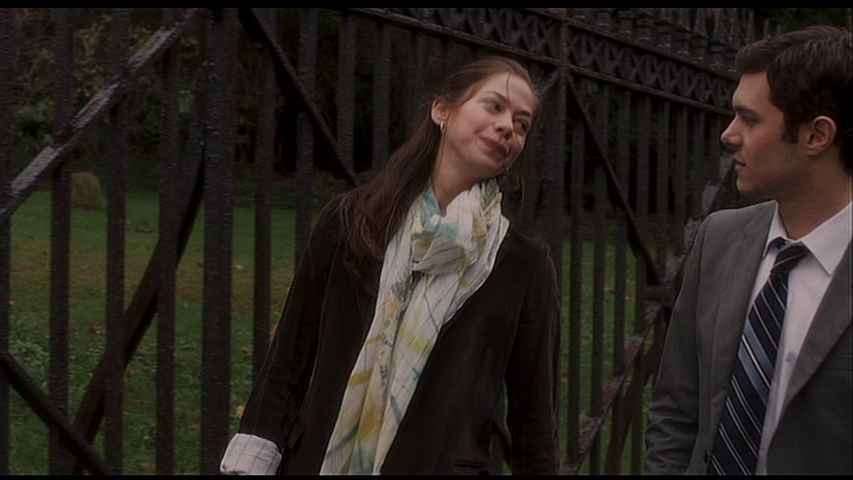
As you likely gathered, Damsels in Distress isn’t set in the “real” world. It is, instead, a stylized distillation of the essence of the college experience. In an Indiewire article containing highlights from a Q&A which followed a sneak preview screening, Stillman (who also wrote the film’s screenplay) explained that Lio Tipton “subverted [his] intentions” with their performance as Lily:
Lily was clearly the nemesis character, this person you think is going to be a friend, and you think is going to be wonderful, but they let you down. And Analeigh, by being really natural and likeable in scene after scene, had created this problem where audiences like and identify so much with Lily, that they dislike [Greta Gerwig’s] Violet character. And it subverts our purposes. That’s a negative commercially, but it somehow enriches the film. My cliches were unintentionally subverted by a superior actress.
Lily’s essential goodness comes through most clearly for me in the way she sort of hops when she talks:
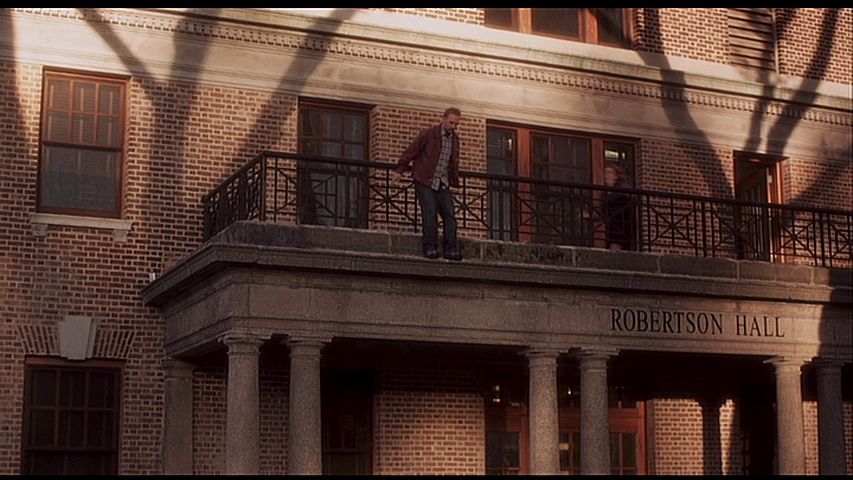
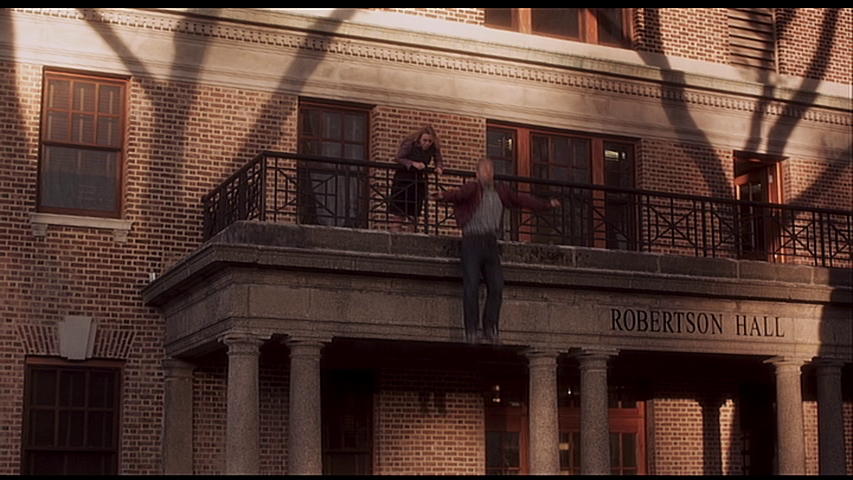
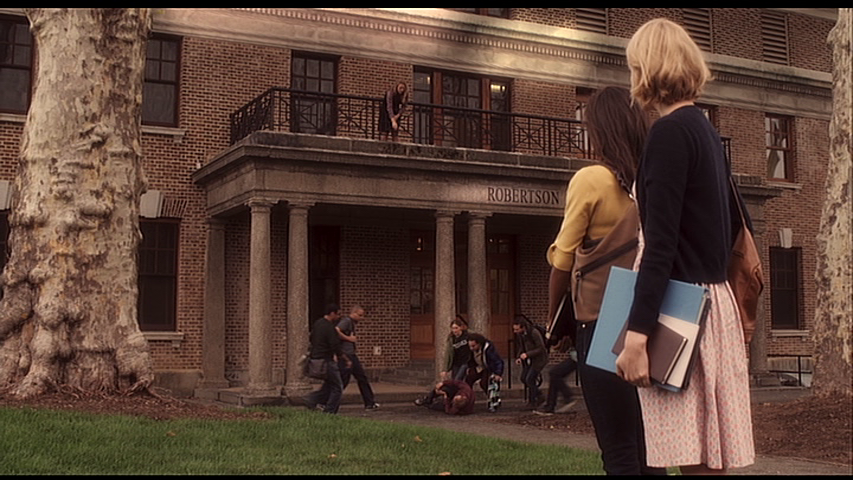
The key to understanding what’s going on here is the same thing I love most about the film: it celebrates college as a safe space for reinvention. Compare, for instance, the diner conversation referenced above about people who actually kill themselves by jumping in front of cars on the highway with the “suicidal Ed School” students who keep throwing themselves off the top of their two-story building, which I assume was inspired by Leonard’s Leap from A Damsel in Distress:
Going off to college is one of the best opportunities many of us ever get to actually become the individuals we aspire to be, which is much easier when you aren’t surrounded by people who have known you for your entire life and think they already know who you are, and for as long as you’re there you have access to a support system dedicated to helping you do so. Violet is the purest embodiment of this theme, which is why she’s the hero of the story, and which also explains why there’s nothing incidental about her dance craze aspiration. As Miriam Bale put it in her Damsels in Distress review for Slant, “‘Sambola!’ might be shorthand for a message that, if you follow certain steps, even sloppily, as long as you’re a pain-in-the neck about never compromising, as long as you keep at it, you too can be a better person.”
Rick DeWolfe is the closest thing the film actually has to a villain in large part because he clearly thinks he’s already his best self; Lily doesn’t really want to change, either, but because of the humanity that Tipton brings to the role, we don’t accept her rejection of Violet’s “doufi orientation” as the final word on who she is. After all she has learned a few things from her roommates, even if only in spite of herself, as shown by her reaction to the smell of Doar Dorm:
And so it is that she comes to represent a reminder that eccentrics like Violet aren’t ultimately defined just by the number of lost souls who they save, but also the regular people they transform in much subtler ways, which is much more interesting than just serving as a foil to her.
Along similar lines, Damsels is also one of the purest celebrations of the joy of learning you’ll ever find in the movies. Stillman notes on the commentary track included with the DVD that “color stands for all kinds of things you don’t know about,” and superficially ridiculous though it may be, it’s hard to imagine a better depiction of the thrill of finally getting to apply hard-earned knowledge in a practical setting than Thor, who has been “hitting the books,” shouting out the colors of the rainbow:
To be clear, though, the best thing about Damsels is Greta Gerwig, and I’m hard pressed to think of a role I enjoyed her in more. In a Q&A included on the DVD as an extra titled “An Evening with Damsels in Distress,” she explained what attracted her to the film: “I think my idea of what actors did at some point was: you’re in a musical, you have to be able to dance, and sing, and tap dance, specifically, so being able to be in this movie felt like the pinnacle of achievement of my acting career.”
And ends with another benediction from the sun that any actor from any era would be lucky to include in their highlight reel:
Looking at this and the hot pink Sony Pictures Classic logo that the movie begins with, I wonder if it’s too much to suggest that without Damsels, we might not have “I’m Just Ken”?
Probably yes, but this does bring us back to this month’s pairing, I think. The “triumph” of Pompeii is of course that we remember it to this day, and the message of Barbie is not that the eponymous doll was significant in any particular way, but rather that it’s meaningful in and of itself that she was part of the lives of millions of children. This sounds an awful lot like the answer Violet gives to Professor Black (Taylor Nichols, also of Metropolitan, in which he plays a character with the same last name) when he asks why she considers starting a dance craze so important. So here’s to the Sambola! Long may it “enhance and elevate the human experience” and continue “bringing together millions of people in a joyous celebration of our God-given faculties”!
Cheers!
All original photographs in this post are by Marion Penning, aka My Loving Wife.Links to all of the entries in this series can be found here.
I like spring peas, ramps, and fiddlehead ferns as much as the next fellow, but the seasonal ingredient I get most excited about during this time of year is rhubarb because it’s typically the first edible plant we’re able to harvest from our own yard. My favorite thing to use it in is pie, but it also makes an excellent shrub, and a couple of years ago I discovered that it can be transformed into a delicious syrup as well courtesy this drink recipe by Charlotte Voisey. Throw in the facts that, a) this cocktail is a great showcase for an excellent local spirit, 1911 Honeycrisp Vodka, and, b) it lends itself to garnishing with apple blossoms during the one week each year when they’re in flower, and you have an absolutely perfect beverage for upstate New York during the month of May! Here’s how we make it:
1 1/2 ozs. Apple vodka (1911) 3/4 oz. Rhubarb syrup 3/4 oz. Lemon juice 1 Tbsp Rosemary leaves
Lightly muddle the rosemary with the other ingredients. Add ice and shake, then double strain into a chilled glass and garnish with an apple blossom if you have one, an apple fan if you don’t and you’re feeling ambitious, or just serve as-is.
We don’t currently have a juicer, so we use this rhubarb simple syrup recipe from The Kitchn. The one place where we deliberately part from Voisey is by lightly muddling the rosemary before shaking. This could just be an issue with my technique, but we don’t get enough of that flavor otherwise, and its complexity is absolutely essential. An apple fan is a fun garnish, but the blossom takes this to a whole new aromatic level–it’s spring in a glass!
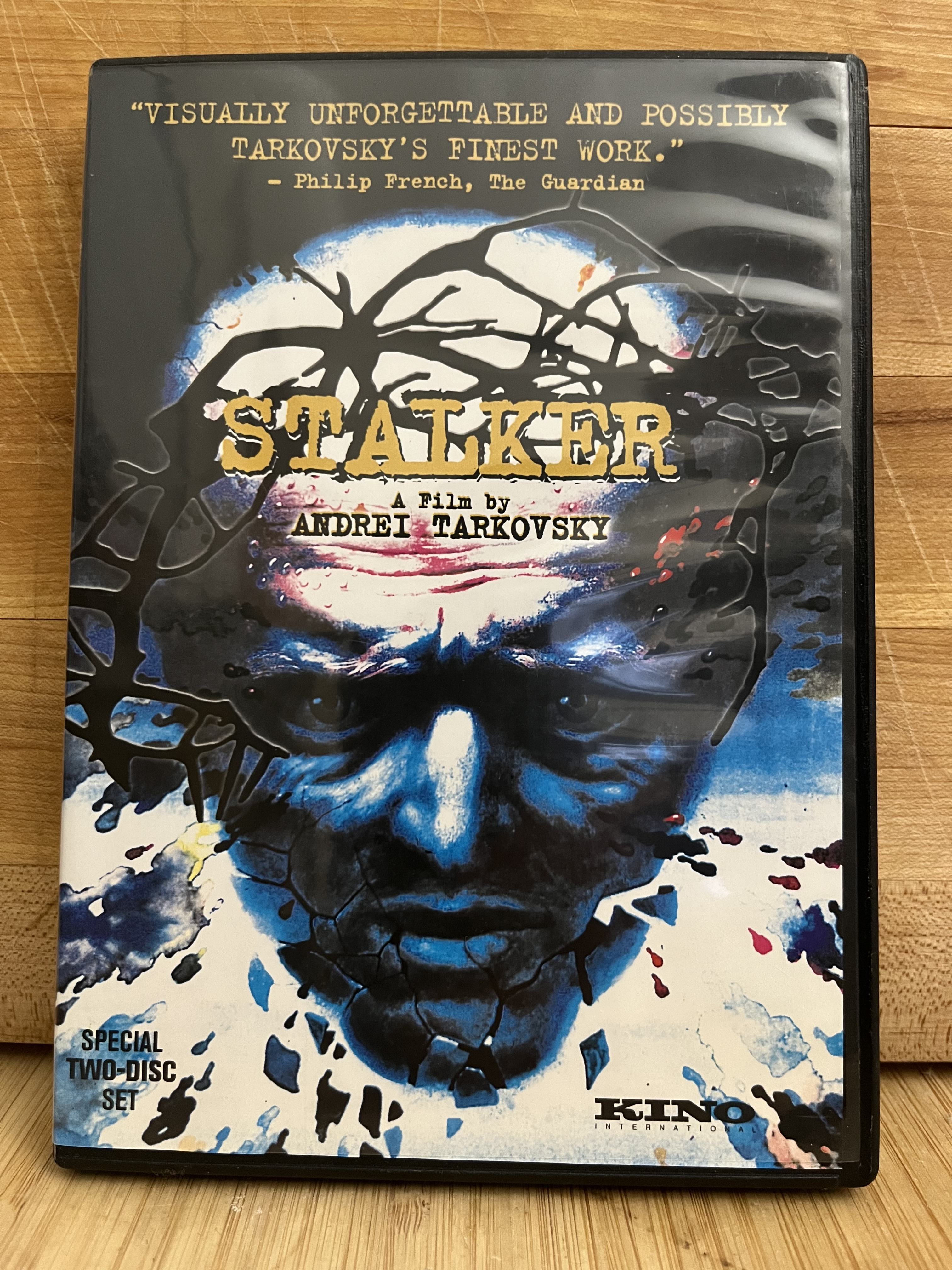
Between the rhubarb and the vodka, there was only one movie I was ever going to pair with this drink: Stalker. Here’s a picture of my Kino DVD release:
Stalker is adapted from Arkady and Boris Strugatsky’s novel Roadside Picnic, but only loosely despite the fact that both authors are credited as screenwriters alongside director Andrei Tarkovsky. Both the movie and book begin with excerpts from interviews with a Nobel Prize winner. The latter one is substantially longer, identifies the speaker’s discipline as physics, and confirms that the Zone where the titular stalker (whose name in the book is Red Schuhart) plies his trade is indeed the site of an extraterrestrial visit. From there the differences multiply: the action of the book spans years as opposed to the single day or so of the movie; Red’s/Stalker’s daughter Monkey’s affliction is not an inability to walk, but rather non-human features which become more pronounced over time; there’s a major storyline about reanimated corpses; etc.
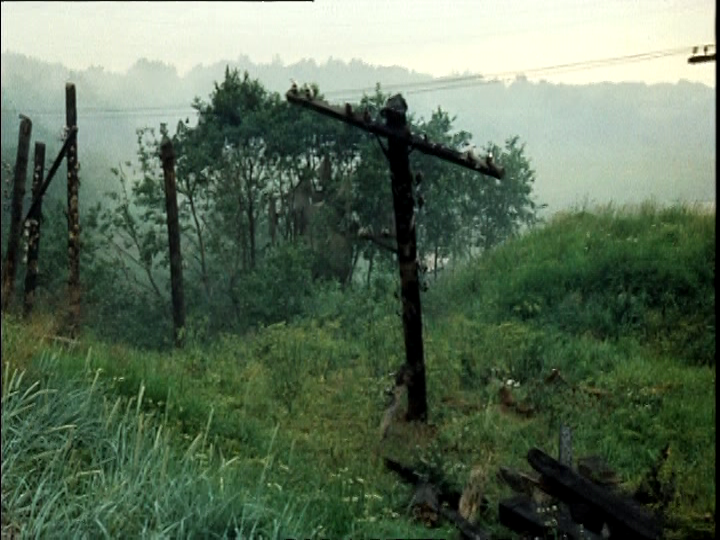
Perhaps the most relevant deviation is that in Roadside Picnic the Zone is littered with powerful (and in many cases dangerous) alien artifacts, which is how Red and his fellow stalkers make their living: they lead others on expeditions to recover them and sell some on the black market themselves. The movie, on the other hand, contains no corresponding futuristic props whatsoever. As Tarkovsky notes in Sculpting in Time: Reflections on the Cinema, “only the basic situation could be strictly called fantastic.” Instead, the profoundly otherworldly atmosphere of the Zone is created by what Maya Turovskaya calls “an infinitesimal dislocation of the everyday” in her book Tarkovsky: Cinema as Poetry. The example she cites is the phone which suddenly rings in a house which is completely cut off from the grid:
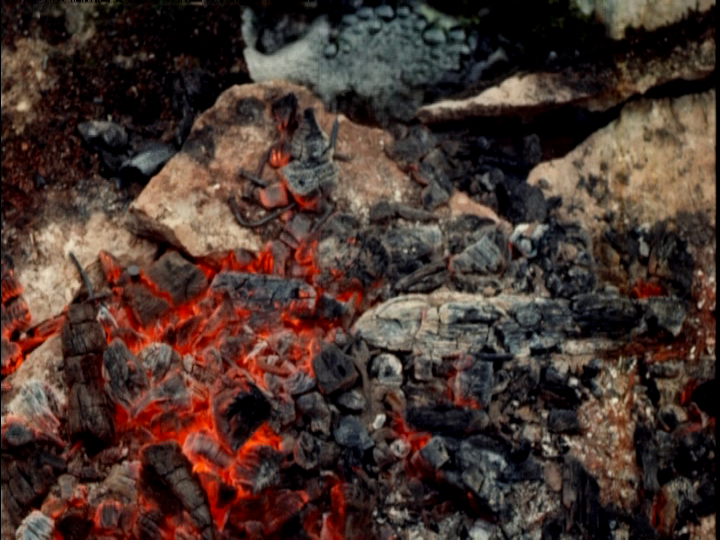
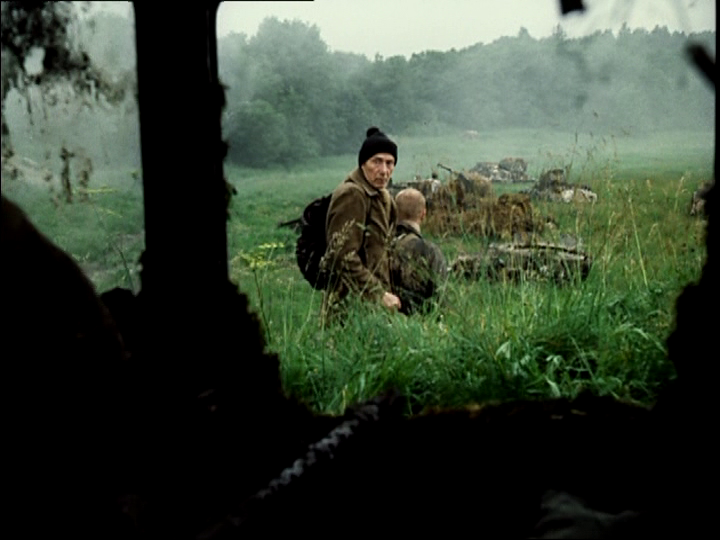
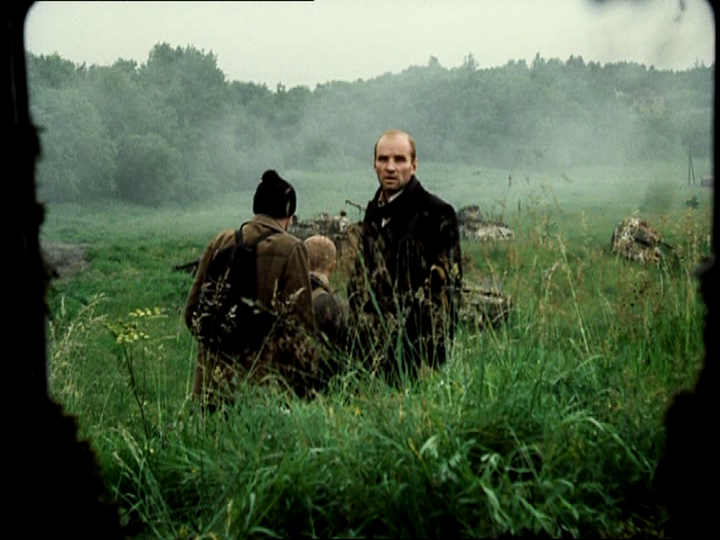
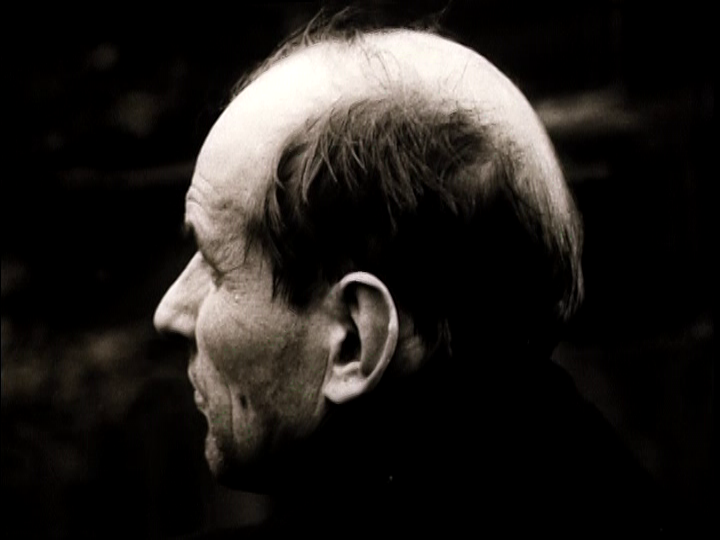
Another obvious one is these embers that Professor (the gentleman pictured above, played by Nikolay Grinko), Writer (Anatoliy Solonitsyn), and Stalker (Aleksandr Kaydanovskiy) encounter in a territory long deserted by people:
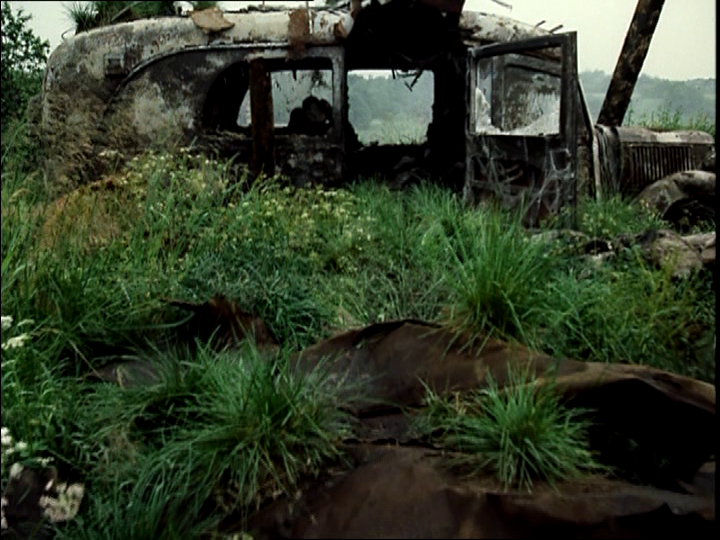
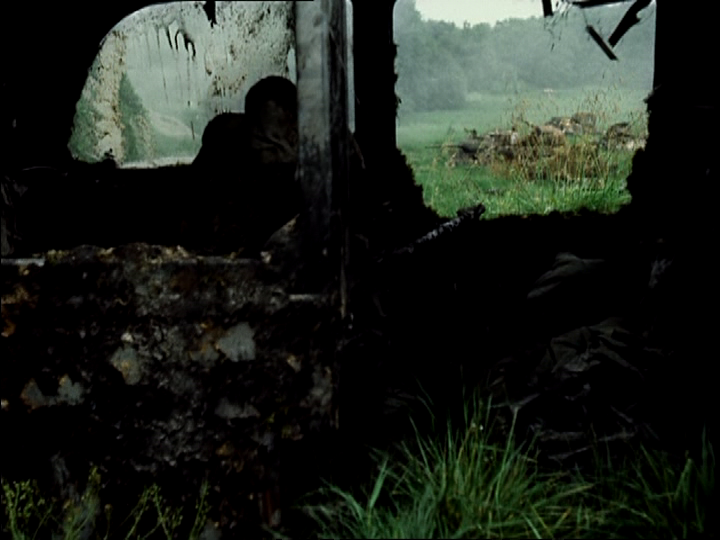
The effect is also achieved through subtler means like the strategic mismatches between sound and image that Andrea Truppin documents in a chapter in Rick Altman’s book Sound Theory, Sound Practice. As Stalker and his companions approach the remains of a military vehicle, for instance, the way the camera tracks forward, sound of footsteps, and additional touches like “the movement of successive tufts of grass at the bottom of the frame as if the feet of the character were crushing them” all imply a point-of-view shot:
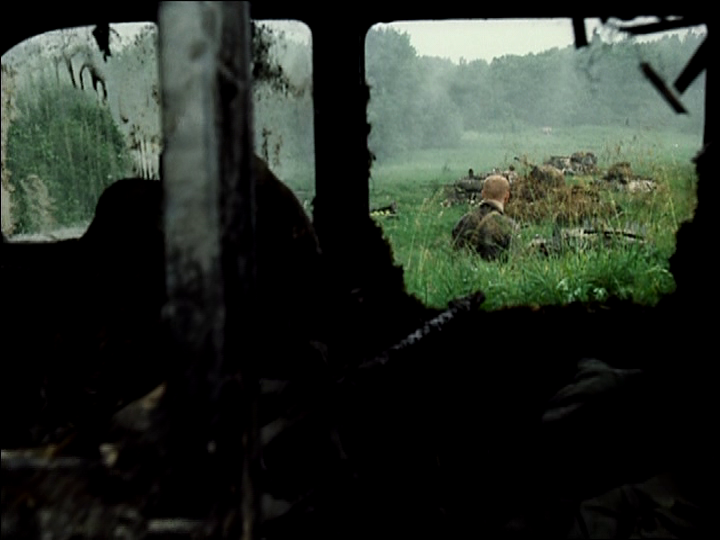
However, as the camera continues its progress the three characters whose perspective we presumed it embodied appear on screen, negating that possibility:
In their book The Films of Andrei Tarkovsky: A Visual Fugue, Vida T. Johnson and Graham Petrie note that “in a good print, the arrival at the Zone becomes genuinely magical, the grass a pulsating green that contrasts with the shabbiness and dinginess (yet, in a good print, intensely tactile detail) of the preceding sepia images”:
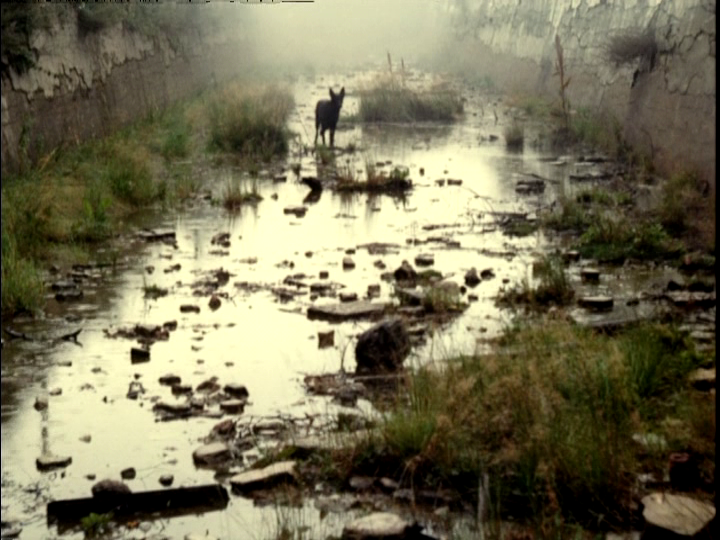
And to finish with the writer who got us started, Maya Turovskaya poetically describes the surprise appearance of a black dog as having “a hint of warning, like a distant echo of some half-forgotten legend” about it:
Stalker shares its technique of creating a science fiction universe out of images culled from the present with the 1965 film Alphaville, which also has a similar thesis. In Sculpting in Time, Tarkovsky says that in the former he makes “some sort of complete statement: namely that human love alone is–miraculously–proof against the blunt assertion that there is no hope for the world. This is our common, and incontrovertibly positive possession. Although we no longer know how to love. . . . ” Compare this to the final lines between Natacha von Braun (Anna Karina) and Lemmy Caution (Eddie Constantine) in the latter:
NATACHA: You’re looking at me oddly. It’s as if you’re waiting for me to say something. I don’t know what to say. I don’t know the words. I was never taught them. Help me.
LEMMY: I can’t, princess. You have to get there by yourself to be saved. If you can’t, then you’re as lost as the dead souls of Alphaville.
NATACHA: I . . . love . . . you. I love you.
But where that film’s director Jean-Luc Godard seems to be making the (unusually for him) simple argument that the seeds of a dystopian future have not only already been planted, but are in fact beginning to bear fruit, Tarkovsky is up to something different when he parades objects like this across the screen:
Or when he employs classical music in Stalker‘s incredible ending, which follows an ersatz miracle–a medium shot appears to show Monkey (Natalya Abramova) walking!
Until the camera pulls back to reveal that her father is carrying her on his shoulders across a landscape overlooked by cooling towers:
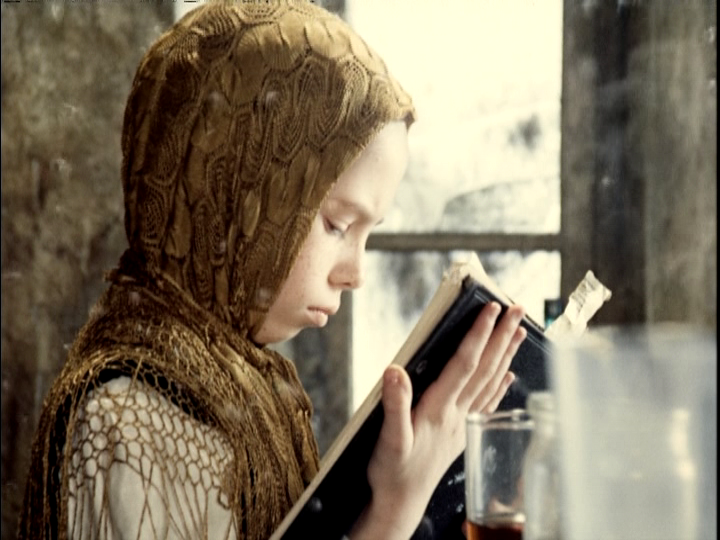
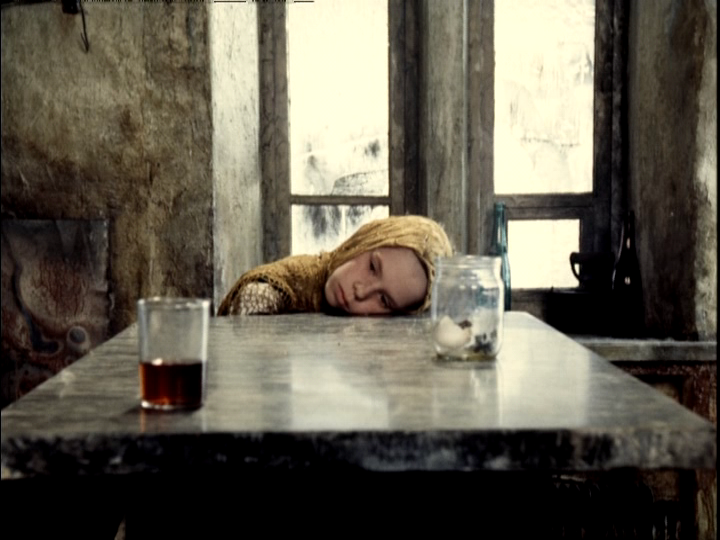
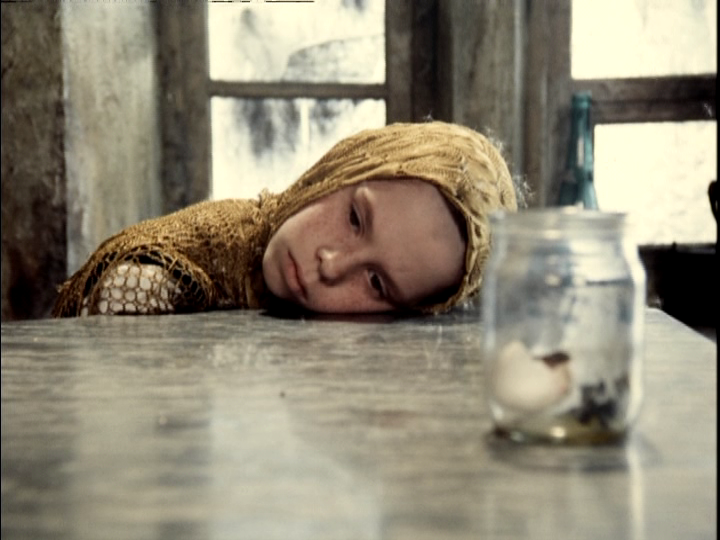
A few scenes later Monkey sits at a table reading a book:
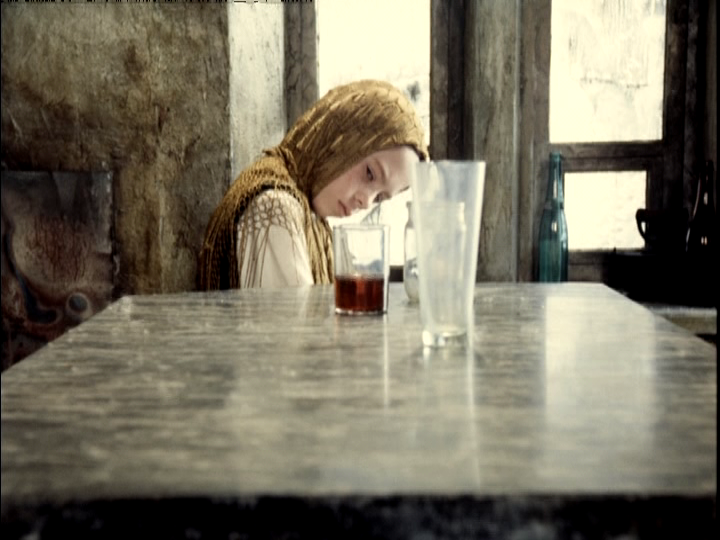
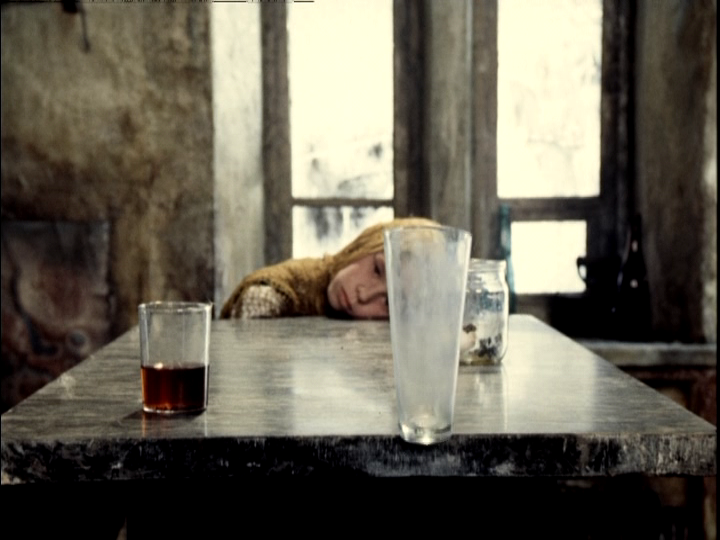
As the camera slowly and unsteadily retreats from her, revealing a trio of glasses at the bottom right corner of the frame, we hear a lone train whistle and an isolated synthesizer from electronic music pioneer Eduard Artemyev’s score. Seeds from dandelions or some other plant float across the screen and a voice begins to read a poem by Fyodor Tyutchev which Björk later turned into the song “The Dull Flame of Desire”:
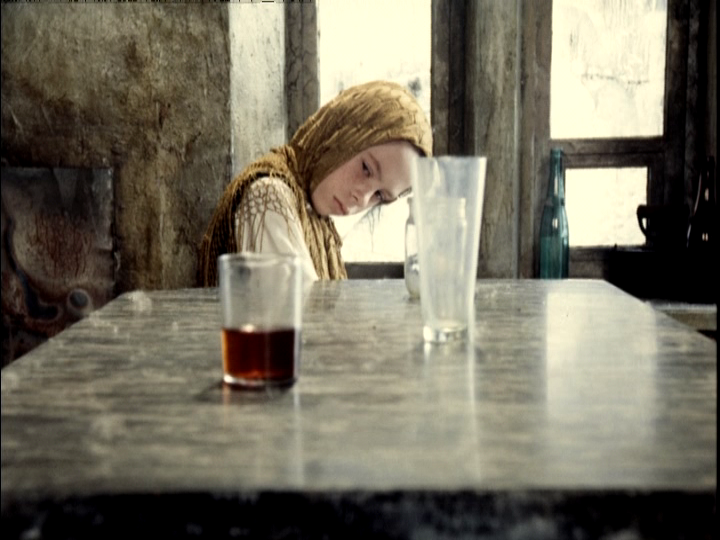
The train whistle sounds again and Monkey tilts her head to one side. Suddenly, the dog which accompanied Stalker back from the Zone whines and one of the glasses begins to move:
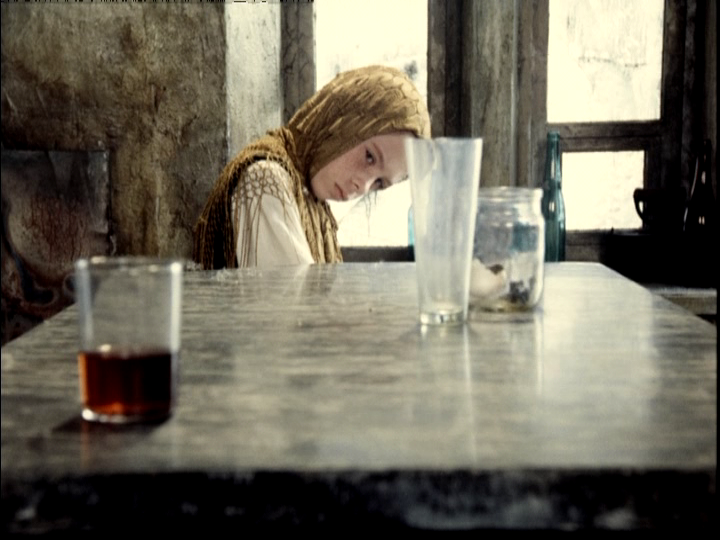
As it comes to rest at the corner of the table, a second glass, or rather a jar containing an egg shell, begins to inch forward in the same halting manner:
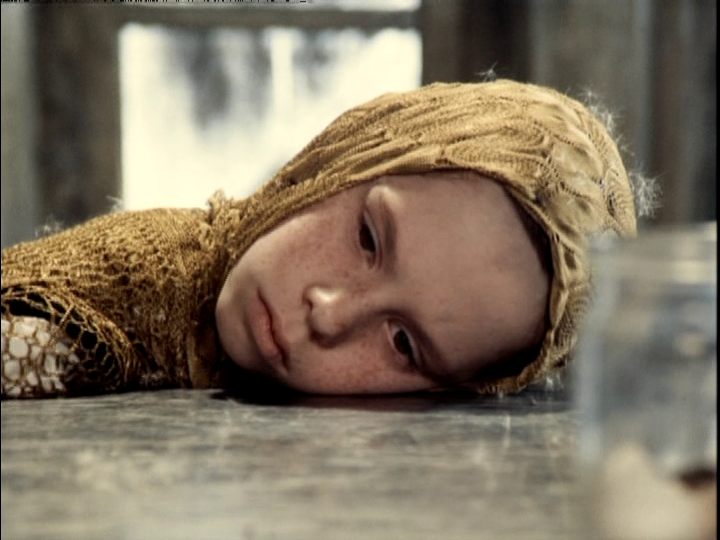
It stops a few moment later and the third glass begins to slide. Monkey rests her head on the table as it continues its journey all the way to the edge of the table, then over it:
As the glass lands with a thunk, the table starts to shake and the camera begins tracking toward Monkey:
In the sound of passing trains and in Beethoven’s music, we can hear a faint and fading echo of the restless striving of humanity as it tries to make sense of, conquer and colonize the universe, without as well as within. The scene makes it clear, however, that this grand project is a failure, and that what is ultimately of importance is something very different, something that will forever elude and outlast the signifying practices represented in the soundtrack.
His jumping-off point is a comment by Truppin that, “[i]f the train’s roar and its distorted music represent the destructive forces of Western civilization, the power of spirituality is represented by the small child, who calmly and gently moves the world, an embodiment of the Christian concept that ‘the meek shall inherit the earth.'”
The work of these scholars is some of my favorite writing on Stalker and they both provide ample support for their claims, but I don’t find their readings of this scene entirely convincing because Monkey’s telepathic powers have a different meaning for me than they do for them. I do agree with Pontara that “[t]he transfiguration in the last scene places the Stalker’s daughter firmly outside of civilization” and that “her relation to the sonic icons of modern civilization expresses in a radical way the possibility of overcoming and transcending the illusory ideals of that civilization.” What this reminds me of, though, is another classic of science fiction that the Strugatsky brothers surely must have been familiar with: Arthur C. Clarke’s Childhood’s End, which also involves children who develop in an unexpected directions as a result of interference by visitors from the stars. That book ends with the offspring of our species literally destroying the earth as part of their merger with a cosmic intelligence called the Overmind. Tarkovsky asserts in Sculpting in Time that “[i]n the end everything can be reduced to the one simple element which is all a person can count upon in his existence: the capacity to love.” The Monkey of Roadside Picnic appears to be evolving beyond that capacity; Stalker ends with that same character displaying the same sort of telekinetic powers that Jennifer Anne Greggson has in Childhood’s End. These associations are too tenuous for me to insist upon them, but they prevent me from embracing the ending of the film as unambiguously optimistic.
Noel Vera makes an interesting observation in his Critic After Dark blog post about Stalker: the room in the Zone that the main characters seek out which supposedly grants anyone who enters it their heart’s secret desire has catfish swimming about in it:
“What might they wish for, and have any of their wishes been granted?” he muses. Perhaps we should be like Kent Brockman and welcome these fish as our new overlords! If the very best aspects of humanity are inextricable from the absolute worst, it might be time to give someone else a crack at running the planet–why not them?
Cheers!
All original photographs in this post are by Marion Penning, aka My Loving Wife.Links to all of the entries in this series can be found here.
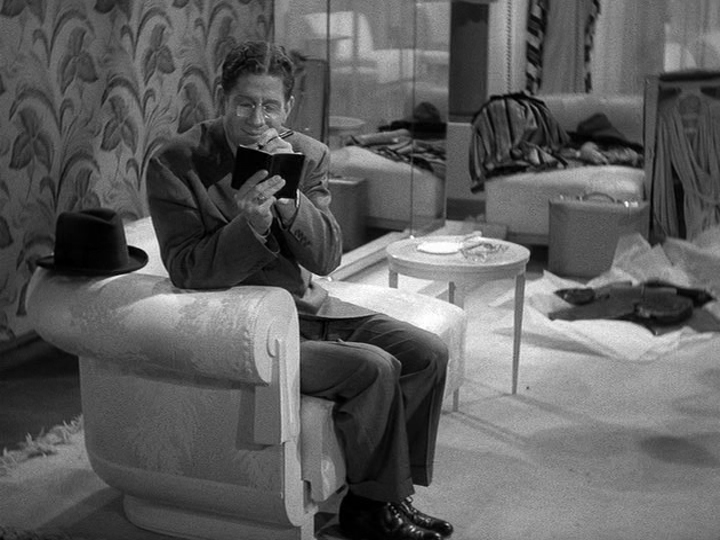
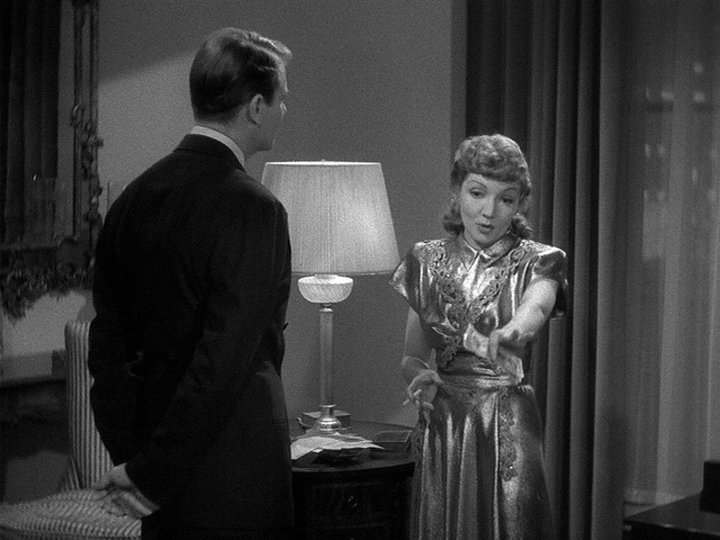
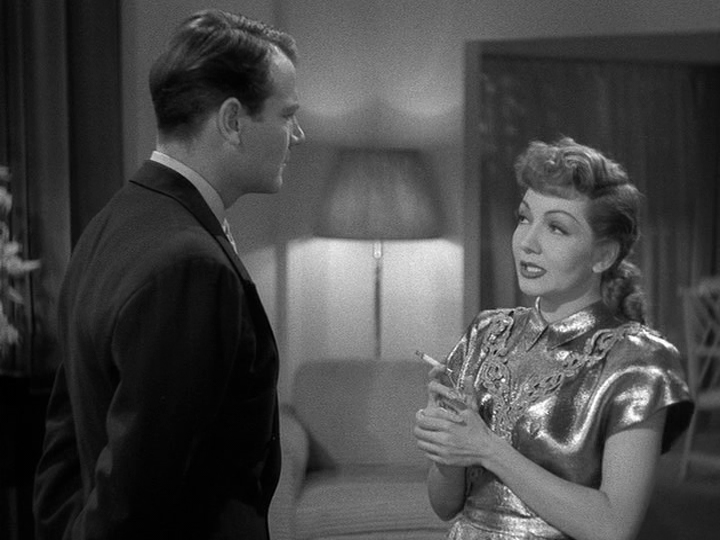
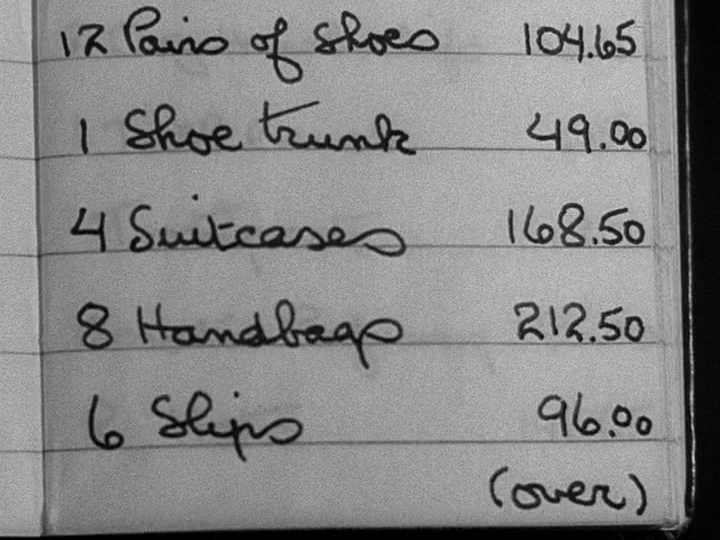
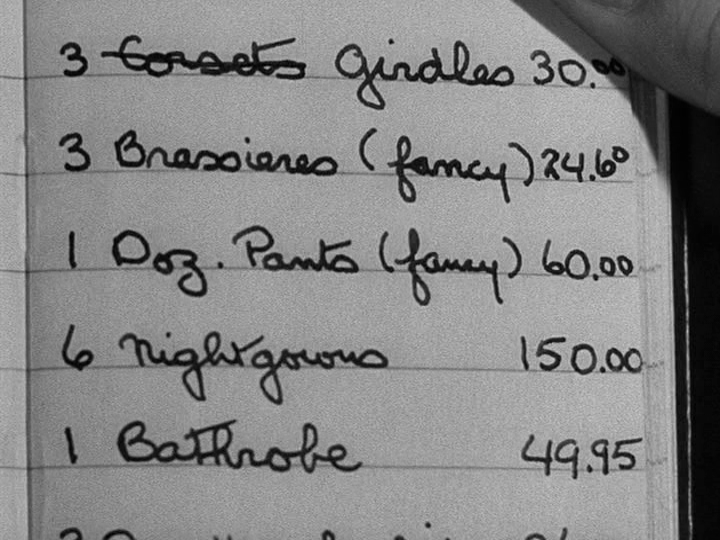
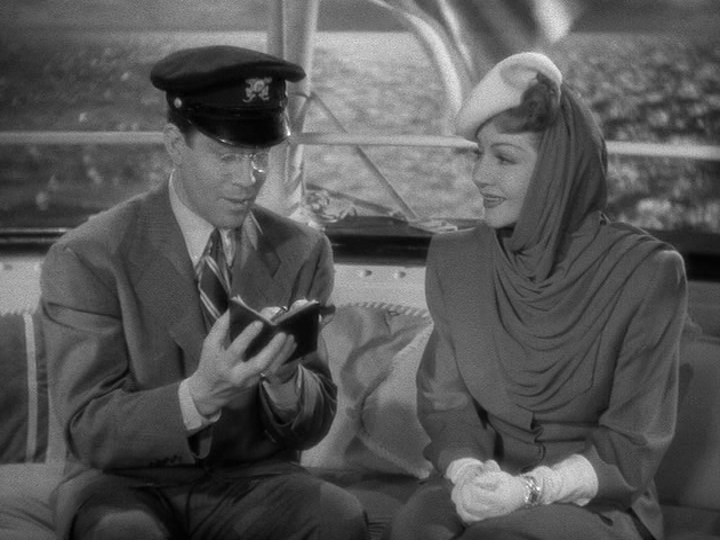
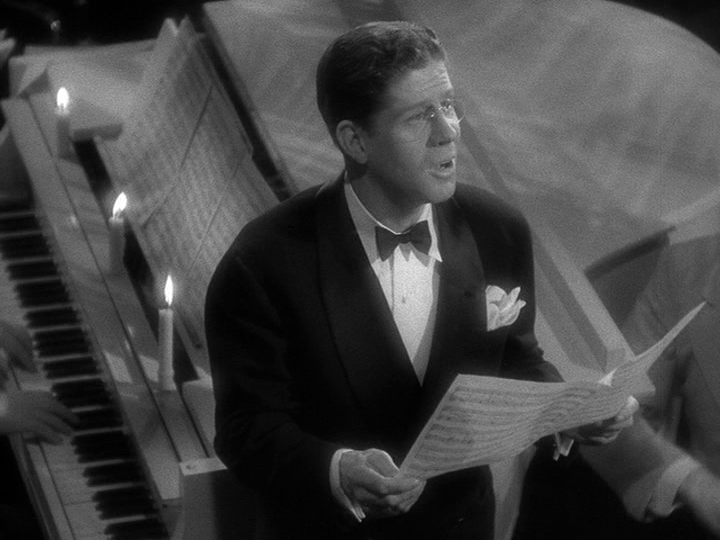
I don’t think I’ve ever made it to *February* 15 without filing my taxes, let alone Tax Day, but April is nonetheless a fine time to celebrate one of my all-time favorite movie props, the notebook in which J.D. Hackensacker III (Rudy Vallee) aka “Snoodles” from The Palm Beach Story writes down all of his expenses:
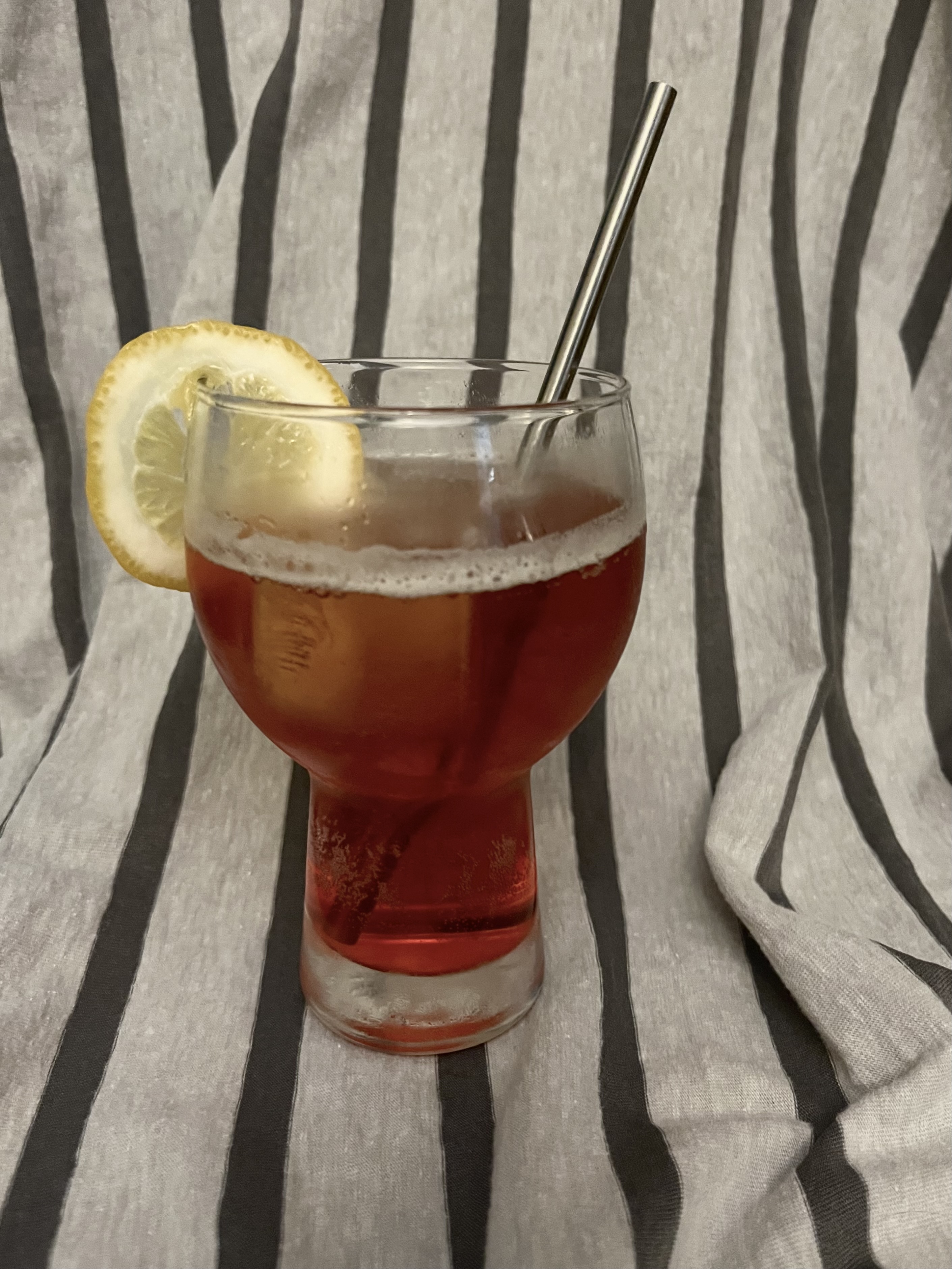
In honor of the Ale and Quail Club that he and Gerry Jeffers (Claudette Colbert) encounter on their way to Florida, this month’s drink is my favorite beer cocktail, the Campari & IPA Spritzer. I know about this elegantly simple concoction thanks to Anjali Prasertong from The Kitchn. She, in turn, spotted it in a 2011 New York Times article called “Summer Cocktails Made Simpler” in which author Robert Willey attributes it to Tucson bartender Cieran Wiese. Meanwhile, my brother-in-law Simon pointed out on Instagram that the cult favorite summer sipper the NASCAR Spritz follows the same formula. I suppose one of the lessons here is that the provenance of a highball is always going to be murky! Another is that the specific ingredients you choose count for a lot when there are only two (or three of you include the garnish) total, and to me this is the perfect showcase for my original favorite beer, Dogfish Head 90 Minute IPA, which emerged as a star of the American craft brewing scene right as I came of drinking age. Here’s how you make it:
Add Campari to a chilled glass containing two or three ice cubs. Slowly pour in the beer and gently stir a few times to combine. Garnish with a lemon slice.
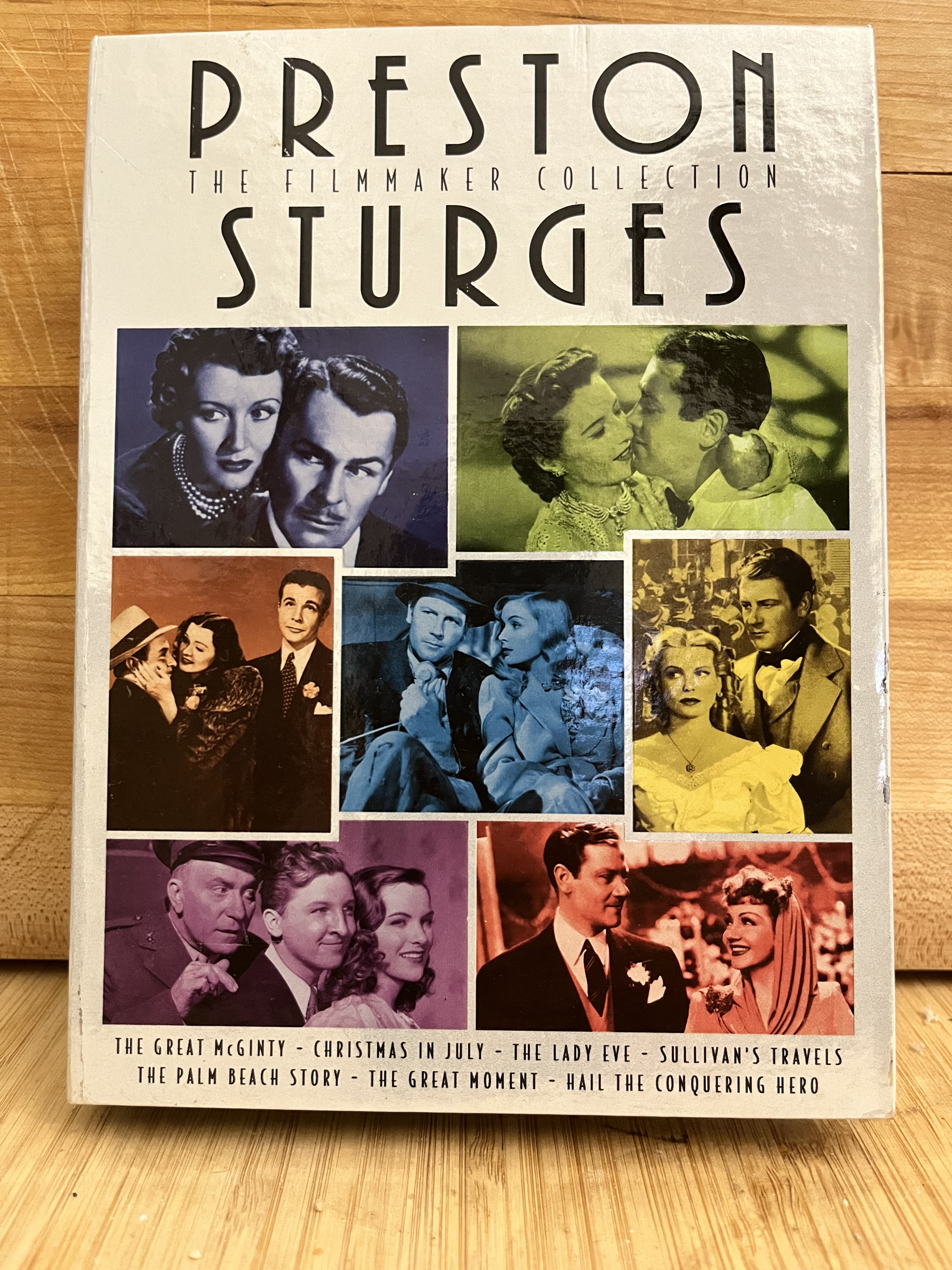
You don’t want just any IPA here–you need something with a lot of character to stand up to the Campari. You’re also looking for citrus, but not too much. Enter 90 Minute IPA, which is malty and piney and delicious on its own, but even better with a boost of sweetness and texture. While this definitely is a refreshing beverage, the high ABV and strong flavors will keep you warm when a cool breeze blows, which makes it perfect as a way to unwind after work on a spring evening or for a rainy night like the one Hackensacker and Gerry travel south on. But first, here’s a picture of my Preston Sturges: The Filmmaker Collection DVD box set by Universal:
The Palm Beach Story is also available for rental on a variety of streaming video platforms.
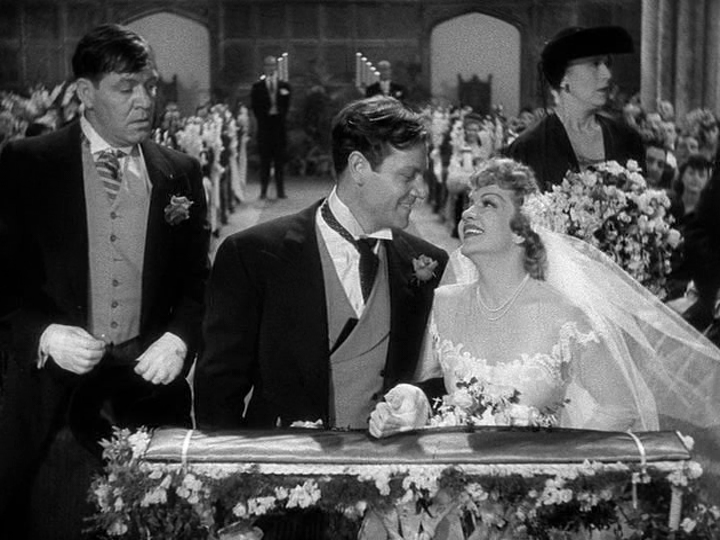
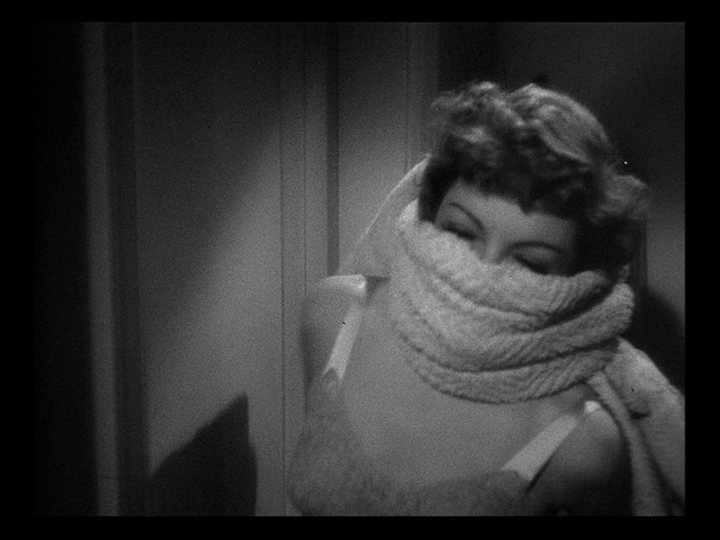
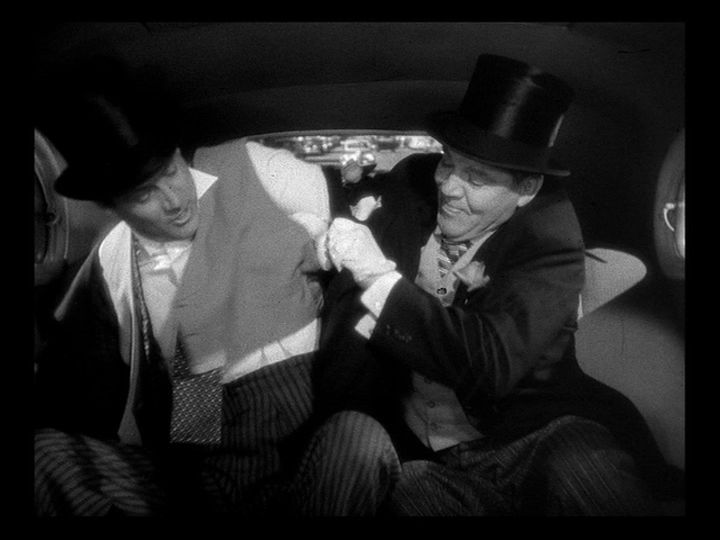
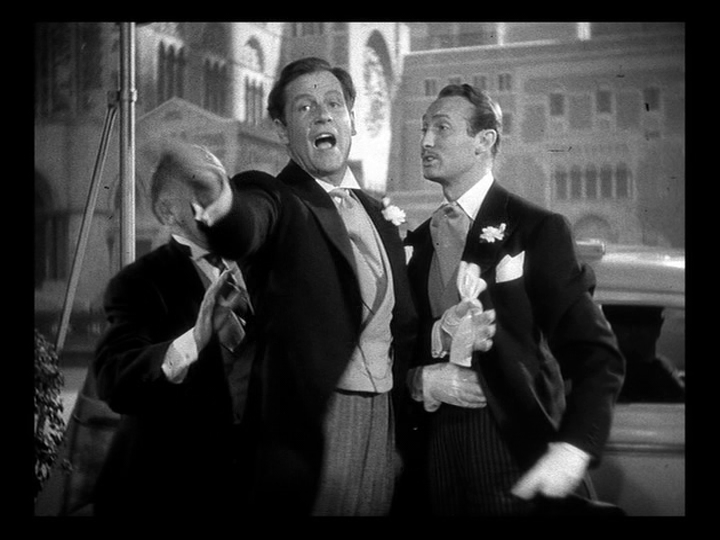
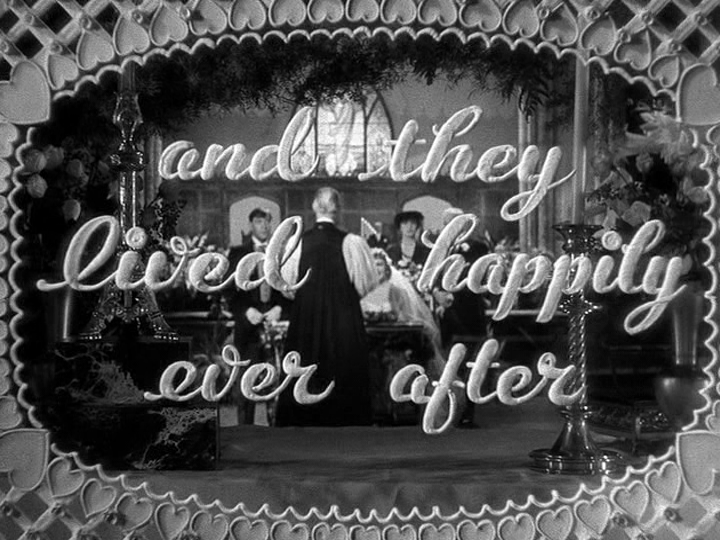
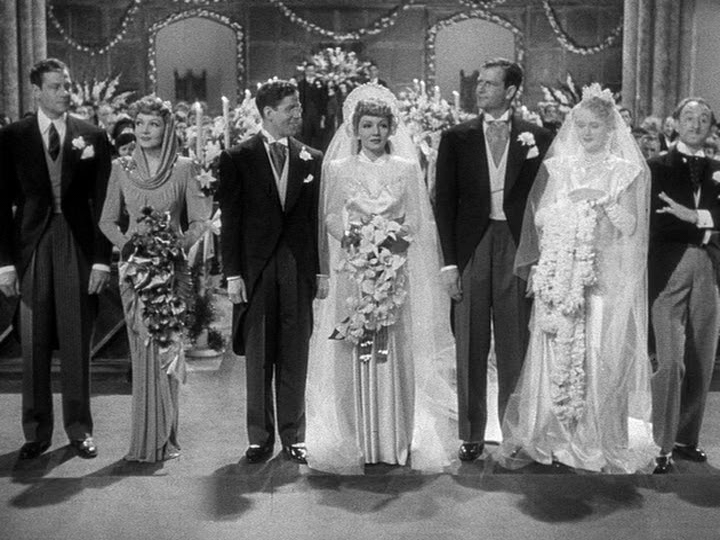
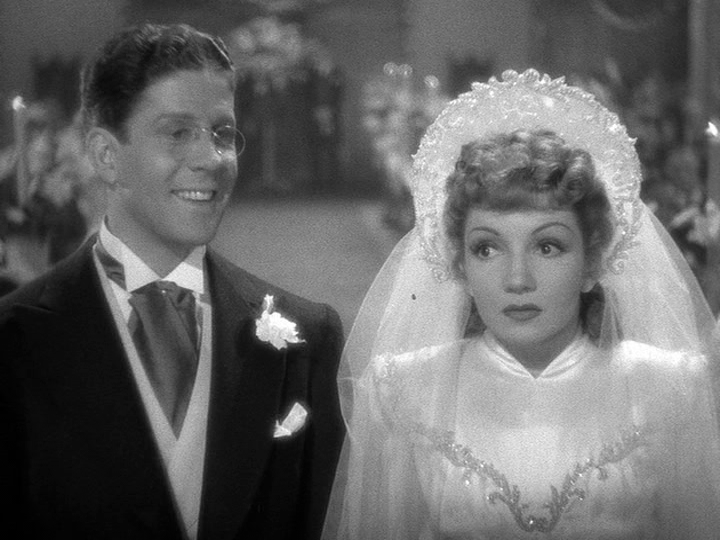
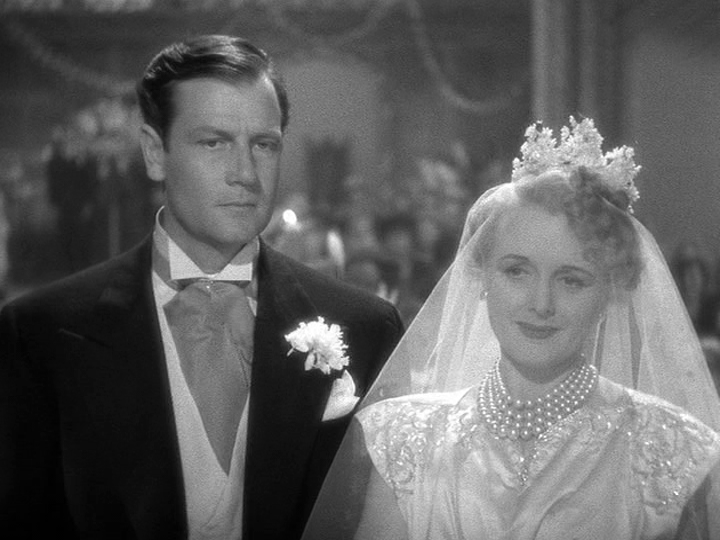
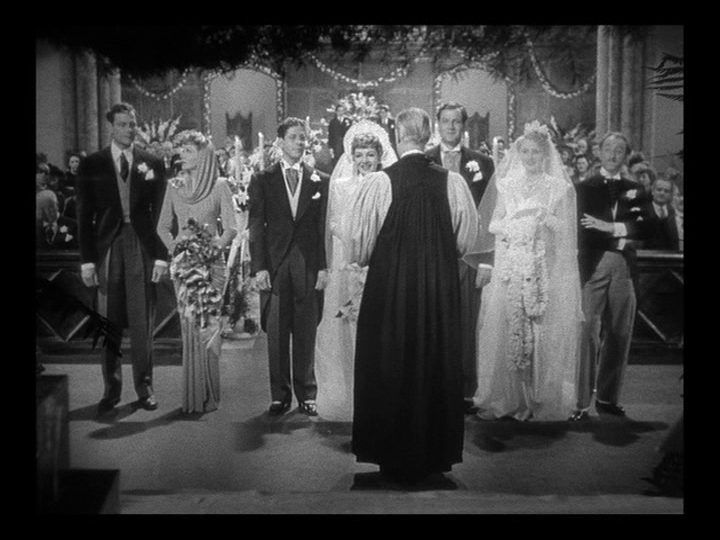
The seeds for that fateful train journey are planted years earlier. The Palm Beach Story begins with one of cinema’s great opening credits sequences, a silent retelling of the frantic hours leading up to Gerry’s marriage to Tom Jeffers (Joel McCrea), who may or may not be the man she intended to wed. You see, although it concludes with the two of them about to exchange vows:
They both had to beat a doppelgänger to the church. Gerry accomplishes this by locking hers in a closet:
While Tom (dark tie) and his best man (no mustache) may just have had better luck with cabs than their counterparts (light tie, no mustache):
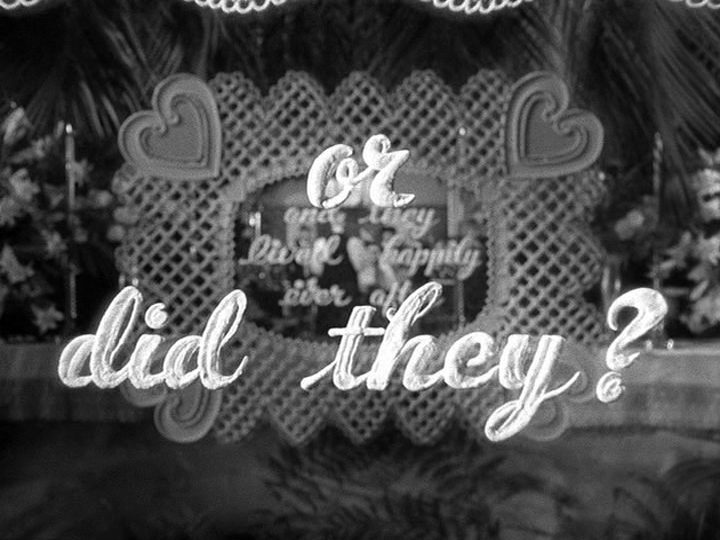
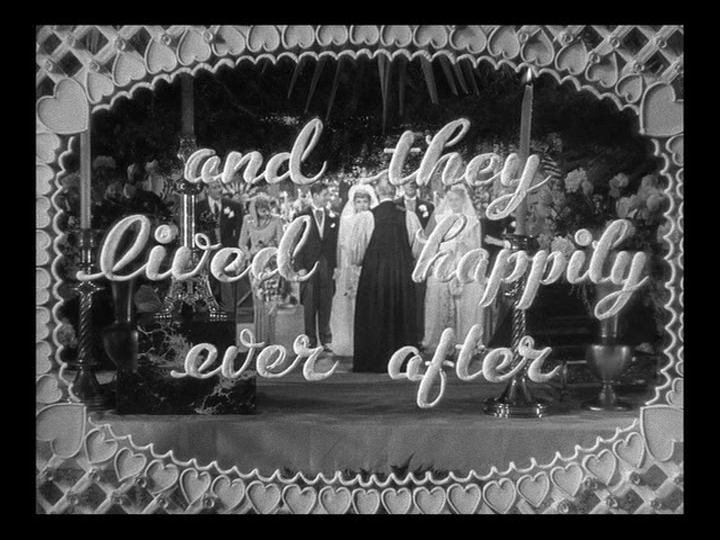
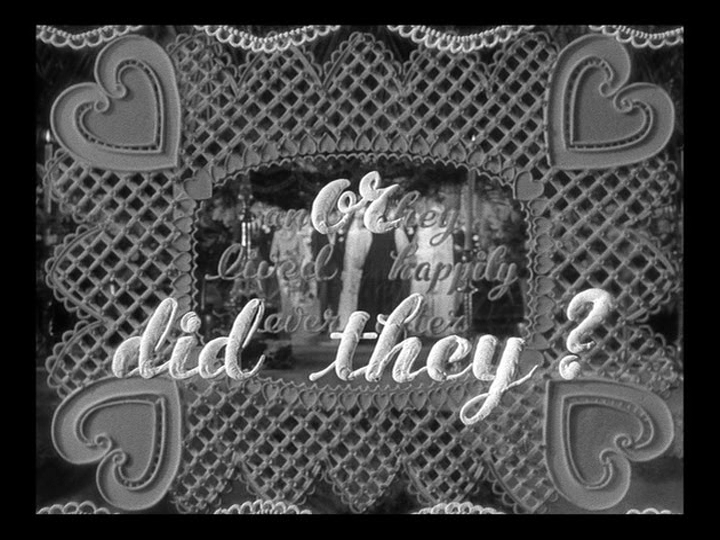
As Lisa Sternlieb writes in her American Shakespeare article “He Isn’t Exactly My Brother”: Shakespearean Illogic in The Palm Beach Story,” when these identical twins reappear at the end of the film following Tom’s comment “that was another plot entirely,” we are meant to suspect that he’s referring to the idea that “the Claudette Colbert who is gagged and locked in a closet has wanted to marry the Joel McCrea who marries her sister while the Joel McCrea who doesn’t make it to the church on time has wanted to marry the Claudette Colbert who marries his brother.” So who knows if Tom and Gerry (yes, like the cartoon cat and mouse) intended to marry each other at all? Given these uncertain beginnings, it’s hardly a surprise that the shot of the two of them is followed by title cards that say “and they lived happily ever after . . . or did they?”
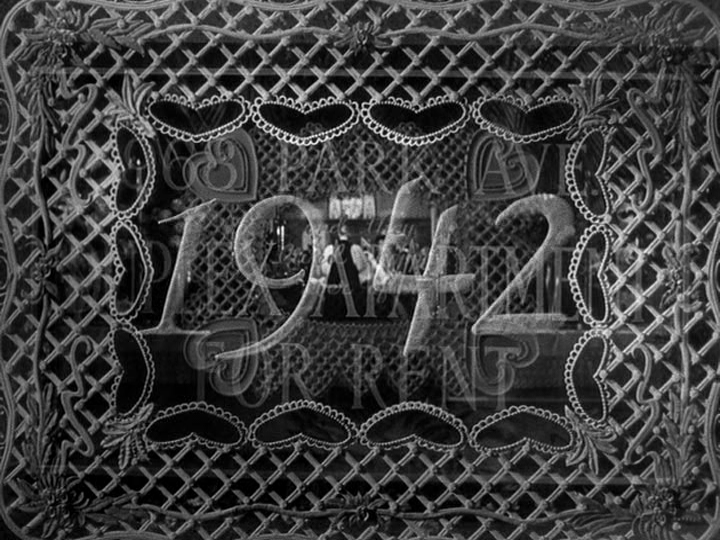
These are followed additional titles in the same font which establish the year of the main action as 1942, five years after the wedding we just witnessed, and two dissolves to first a sign advertising an apartment for rent, and then a group of people getting off an elevator:
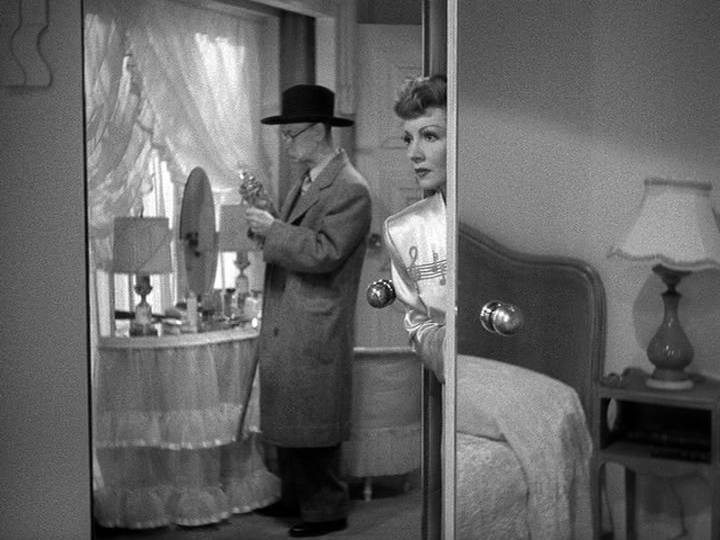
One of them is an old man played by Robert Dudley who, seemingly detecting that the apartment isn’t empty, uses what Stuart Klawans calls “his dog’s senses” in Crooked, But Never Common: The Films of Preston Sturges “to track the female presence he picks up”:
When she finally confronts him, he reveals that he’s the inventor of the Texas wienie (“lay off ’em, you’ll live longer”) and thus in possession of a bankroll that Preston Sturges’s screenplay (as published in Four More Screenplays by Preston Sturges) describes as big enough “to choke a crocodile”:
He gives her enough money to take care of all her debts because it makes him feel young again “to do a little favor for such a beautiful lady.” She can’t wait to tell Tom the good news, but he fails to appreciate it as such: “I mean, sex didn’t even enter into it,” he says sarcastically, to which Gerry replies, “but of course it did, darling!” And then, “sex always has something to do with it. From about the time you’re about so big . . . “
” . . . and wondering why your girl friends’ fathers are getting so arch all of a sudden.” She is, of course, talking about The Look: “you know, ‘how’s about this evening, babe?'”
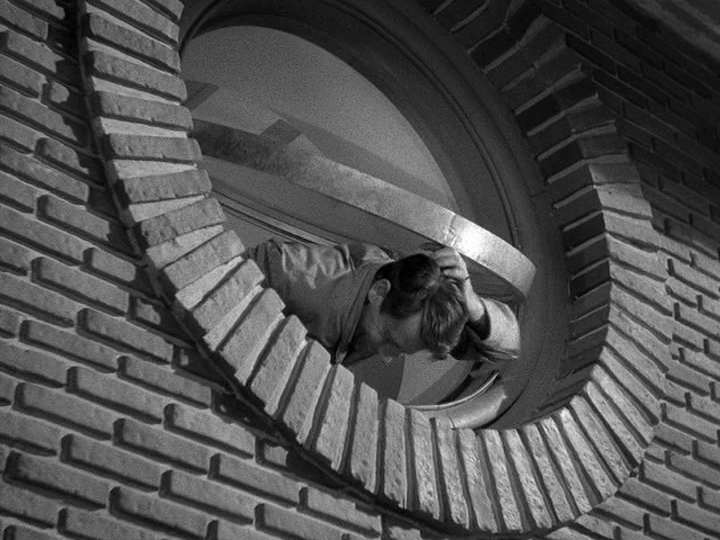
Their night eventually ends as all nights should with a boozy dinner and lovemaking, but she wakes up the next morning determined to capitalize on her youth and good looks while they still last to secure a more comfortable future her herself and her husband. After a bit of business with a round pivot window that Chevy Chase and National Lampoons’s Christmas Vacation (the subject of my December, 2023 Drink & a Movie post) director Jeremiah S. Chechik were presumably familiar with:
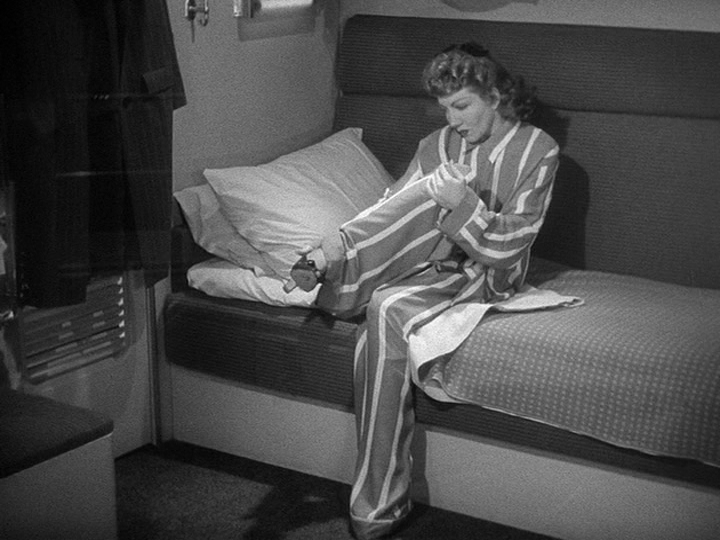
Gerry’s off to Palm Beach to secure a divorce courtesy the wealthy members of the Ale and Quail club, who, given enough “subtle” hints, would never leave a lady stranded. One of them is even chivalrous enough to loan her the pajamas that inspired this month’s drink photo:
Here they are serenading her with “Sweet Adelaide” later that evening:
Then engaging in some harmless indoor trap shooting:
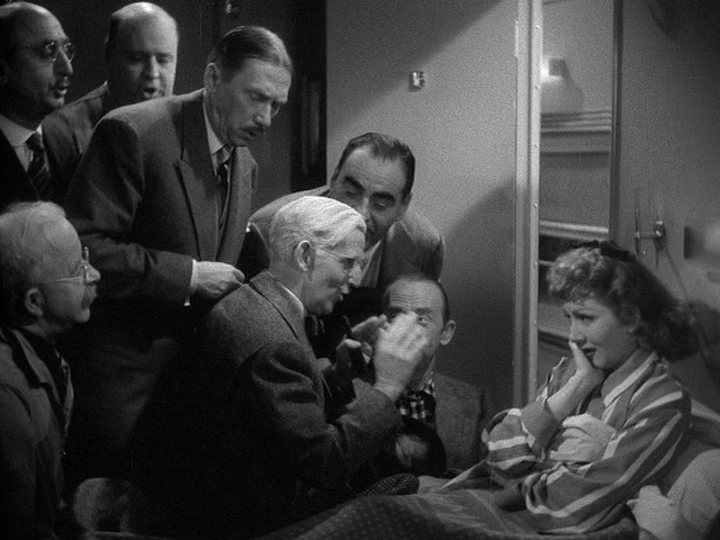
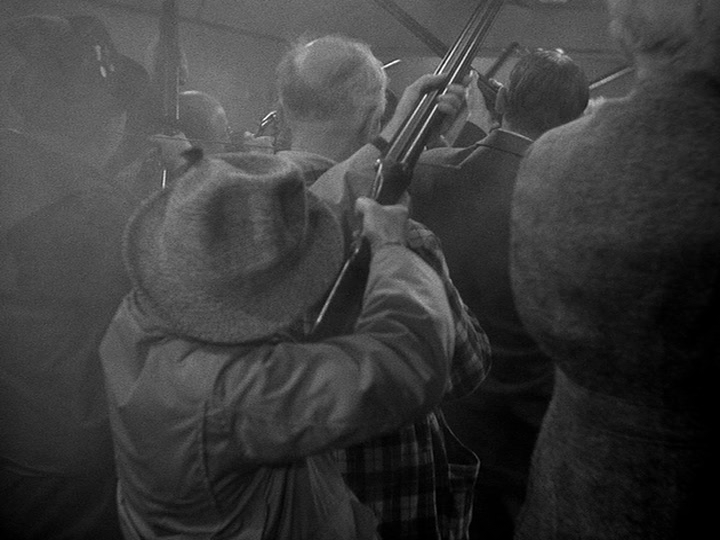
And finally, their sexual hopes frustrated, turning into what Klawans calls “a parody of a lynch mob”:
This sequence, which Alessandro Pirolini aptly describes in The Cinema of Preston Sturges: A Critical Study as being “as narratively useless as it is visually exhilarating,” ends with the conductor of the train cutting the Club’s private car (and all of Gerry’s clothes) loose:
Luckily, by this time Gerry has already met cute Hackensacker, a thinly-veiled caricature of John D. Rockefeller III, by crushing his pince-nez glasses while attempting to climb into the sleeping car bunk above his:
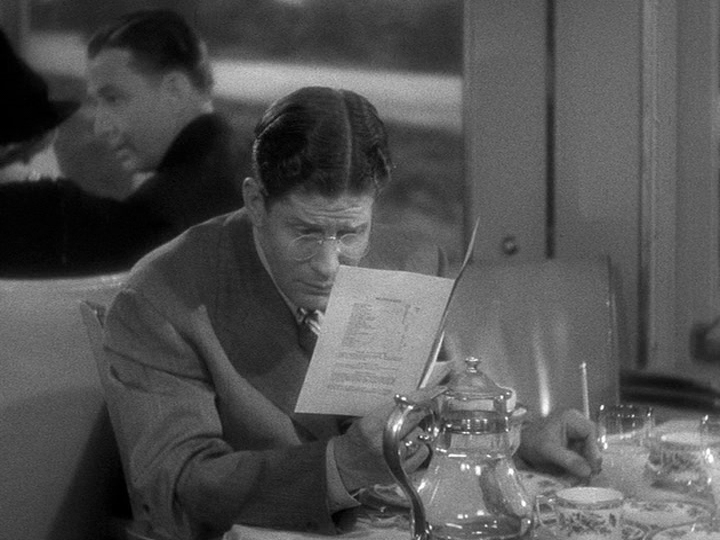
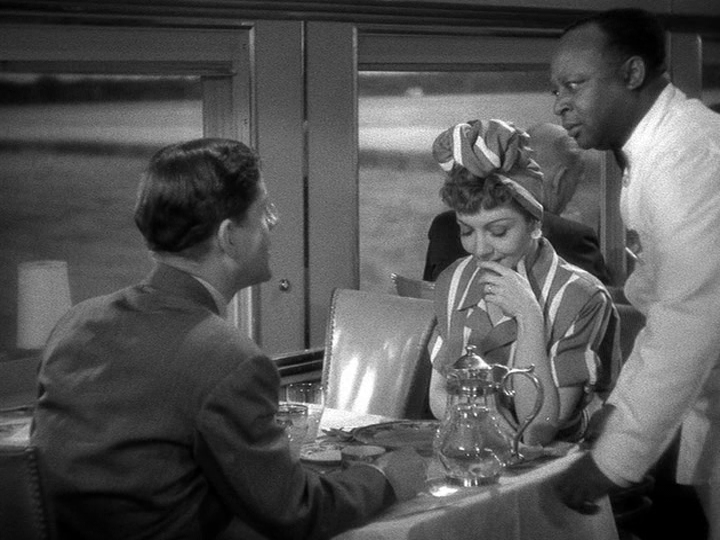
“Just pick off any little pieces you see, will you?” he says, ever the good sport. It’s at breakfast the following morning when we meet his notebook. Having turned her borrowed pajamas and a Pullman blanket into an almost presentable ensemble, she finds him in the dining car pouring over the menu.
“The thirty-five cent breakfast seems the best at first glance, but if you analyze it for solid value, the fifty-five center is the one.” They eventually settle on one seventy-five cent breakfast each with a la carte prairie oysters to start–“make mine on the half-shell,” he instructs the waiter.
While they wait for their food, he proposes that they get off the train in Jacksonville to buy her “the few little things” she needs, then proceed the rest of the way to Palm Beach (where he is going as well) by boat. Hackensacker dutifully records each purchase in his book:
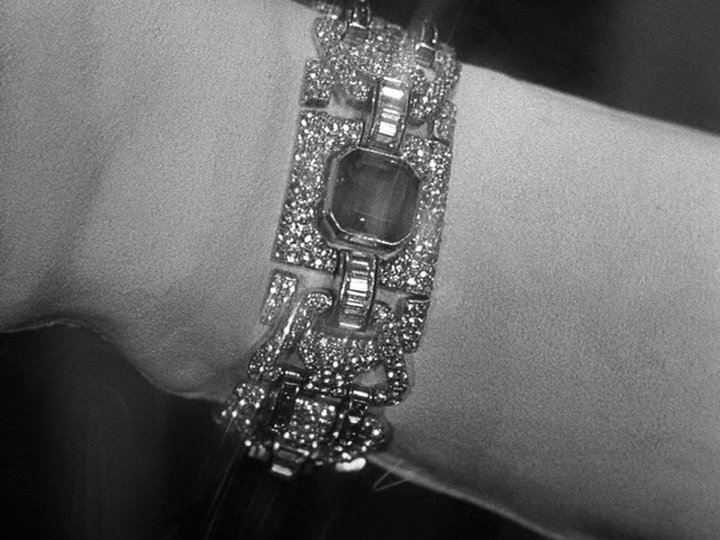
Including a piece of jewelry that the screenplay describes as “a ruby bracelet and then some”:
The dissonance between Hackensacker’s profligacy and scrupulousness understandably makes Gerry nervous. “I keep feeling that two men with butterfly nets are going to creep up behind you and lead you away,” she worries. The revelation that he’s actually the richest man in the world is followed by a punchline which hits close to home for someone like me who can’t ever quite manage to stick to a budget: “I write things down, but I never add them up.”
Meanwhile, following his own encounter with the old man who Manny Farber described (in a New Republic essay included in Farber on Film: The Complete Film Writings of Manny Farber) as possessing “the quality of a disembodied spirit, believably a pixie–or ‘The Wienie King,'” Tom is en route to Palm Beach himself via plane to intercept Gerry. The “enchanted figures who continually grant Tom and Gerry’s spoken and unspoken wishes” are just one of the ways that, per Sternlieb, “The Palm Beach Story intricately engages with the mechanics and actively opposes the logic of Shakespearean comedy, particularly its obsession with transformation and metamorphosis.” Gerry and Hackensacker meet Hackensacker’s sister, Mary Astor’s Princess Centimillia (an underrated Sturges name!) aka Maud and her hanger-on Toto (Sig Arno), and Tom is waiting on shore as all of them disembark. Gerry introduces Tom as her brother, prompting more than one person to comment on their supposed familial resemblance. To again quote Sternlieb:
In order to love Shakespeare’s comedies, we must continually suspend our disbelief so that we can fully appreciate boys dressed as girls dressed as boys or love at first sight or soliloquies that can’t be overheard on stage, but Sturges asks the opposite of us. He asks us to notice that people are always willing to believe anything, always eager to create their own reality, always ready to form opinions of us based on nothing at all. He asks us to notice that most of us are living in Cloud Cuckoo Land, and in Cloud Cuckoo Land people will always see what isn’t there. When Gerry introduces the Hackensackers to her ‘brother’, first Maud then Snoodles exclaims, ‘You look exactly alike’. We are constantly performing or being asked to perform to meet others’ uninformed expectations, but what a relief when we can finally be ourselves.
From here it’s not long before we’re basically right back where we started. The Princess wants to make Tom her eighth husband (“I’m thinking of an American–at the moment, it seems more patriotic”), but he has eyes only for Gerry, who Hackensacker attempts to seduce by singing to her outside her window:
Unfortunately for him, it just drives Gerry back into Tom’s arms:
They come clean about their true relationship the next morning. “I don’t suppose you have a twin sister. . . . ” Hackensacker says mournfully to Gerry, but of course she does! And Tom has a twin brother. Cut to all of them (and Toto, in a nice touch) at the altar:
The shot which follows is deceptively advanced for its era, as discussed by VFX artists The Corridor Crew starting at the 10:26 mark of this video–there’s a fairly straightforward duplicated shot (you can see the seem easily here because part of Rudy Vallee’s shadow is missing), but the camera is moving in a way that would have been difficult to coordinate with 1940s technology. Anyway, neither Gerry’s sibling nor Tom’s looks particularly happy to be here:
And as the camera tracks back, The Palm Beach Story ends with the same two title cards that set its plot in motion:
‘Round and ’round and ’round we go! Sturges originally wanted to call the film Is Marriage Necessary? That title didn’t survive the Hayes Office, but the sentiment did surely did. His cynicism, like the bitterness in a Campari & IPA Spritzer, goes down easy, though. So hit play again, why don’t you, and pour yourself another! It’s good for what ails you.
Cheers!
All original photographs in this post are by Marion Penning, aka My Loving Wife.Links to all of the entries in this series can be found here.
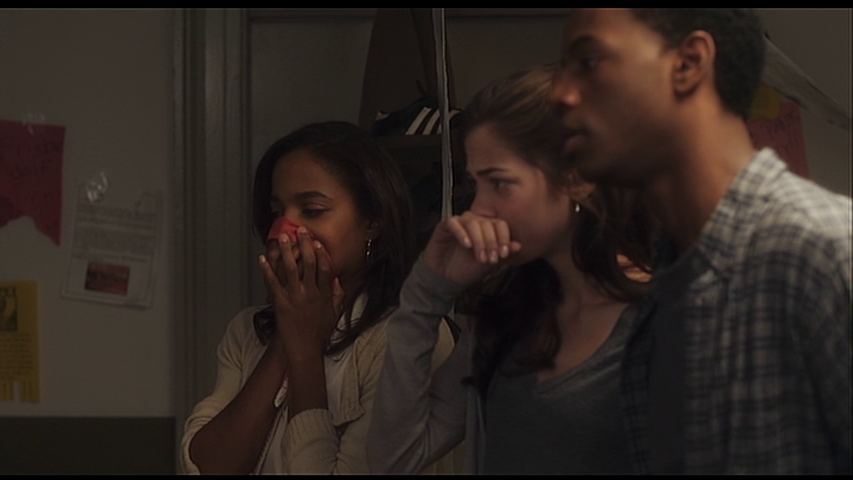
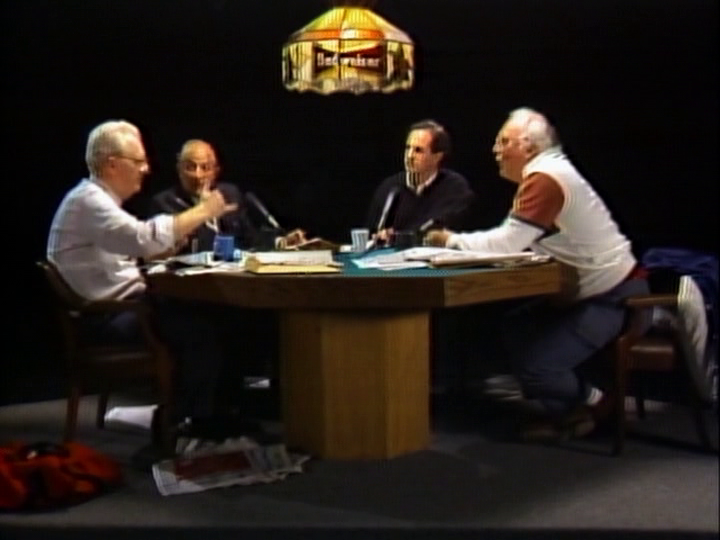
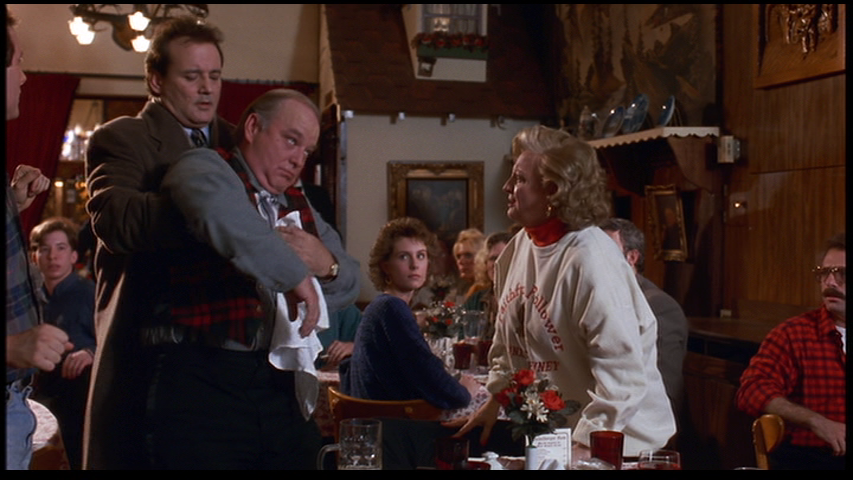
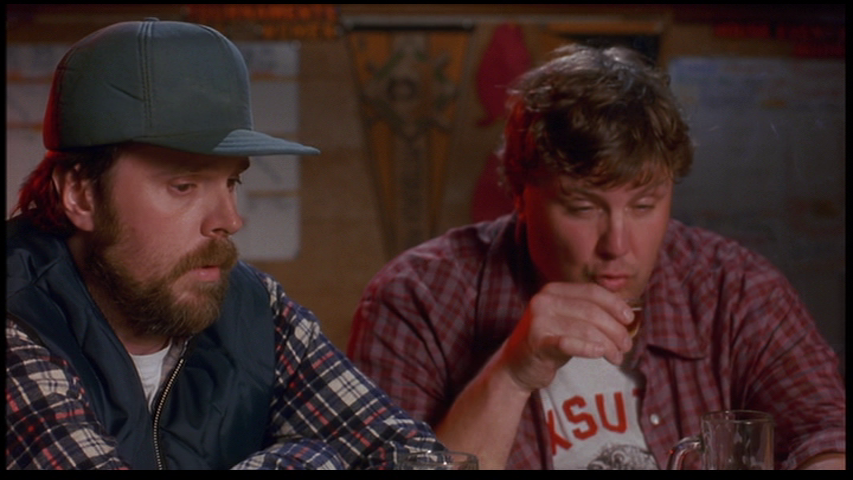
My Loving Wife is a proud graduate of Duke University, so the Tobacco Road recipe by Joe Bolam of Char Steak and Lounge in nearby Rochester, New York in the booklet which came with my new bottle of Fee Brothers Turkish Tobacco Bitters immediately caught my eye. When it turned out to taste like something these guys would love:
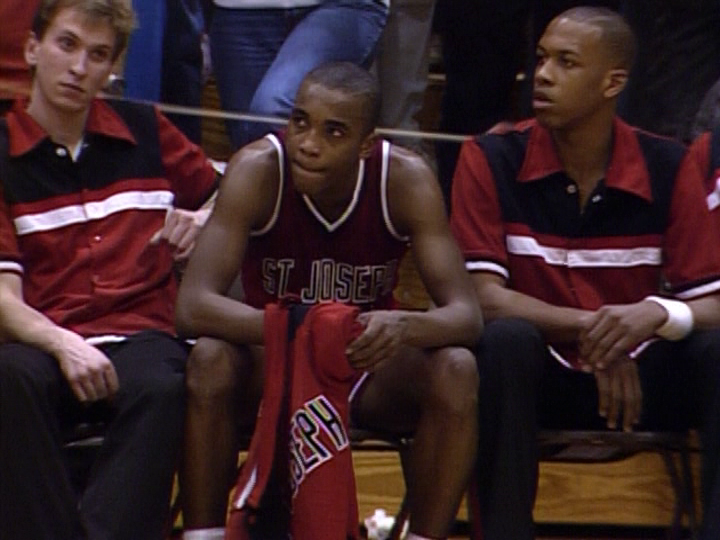
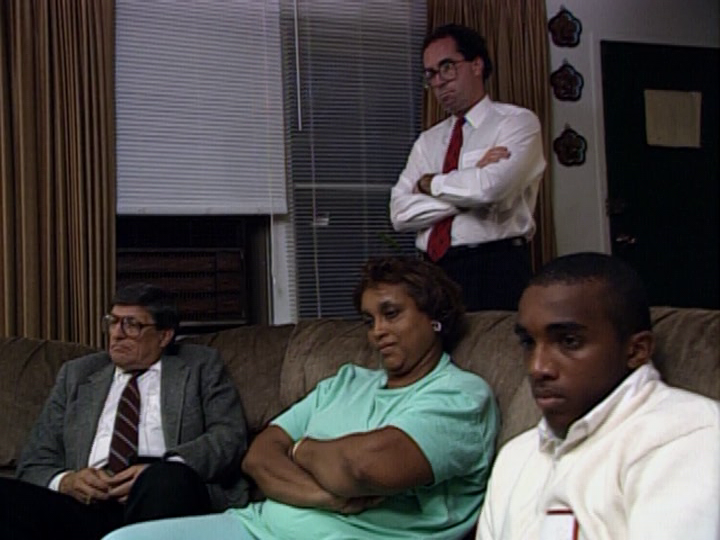
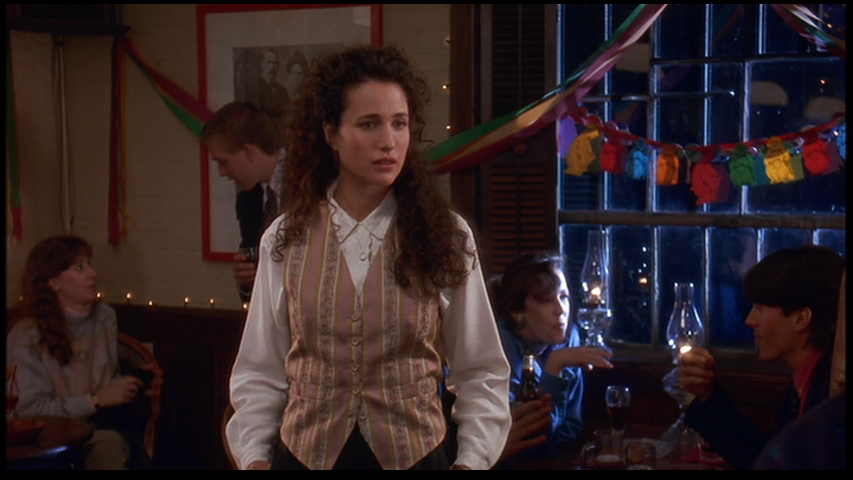
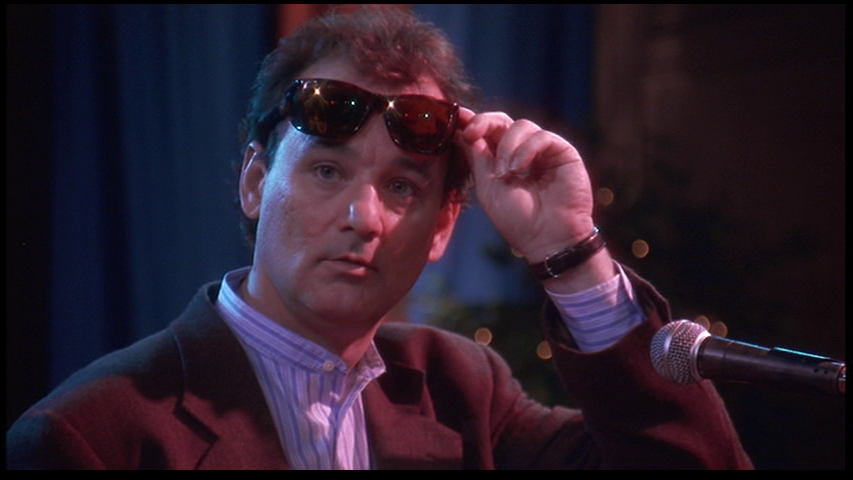
I knew I had my drink and a movie pairing for March! They are all panelists on the television program The Sports Writers on TV, and the person they are talking about is William Gates, who along with Arthur Agee is one of the two main subjects of the documentary Hoop Dreams. The sport they both play is basketball, which our household becomes fairly obsessed with each year at this time as the Atlantic Coast Conference (I’m a Pitt grad) regular season wraps up and we head into the postseason. Here’s how to make this month’s cocktail:
Stir all of the ingredients with ice and strain into a chilled glass.
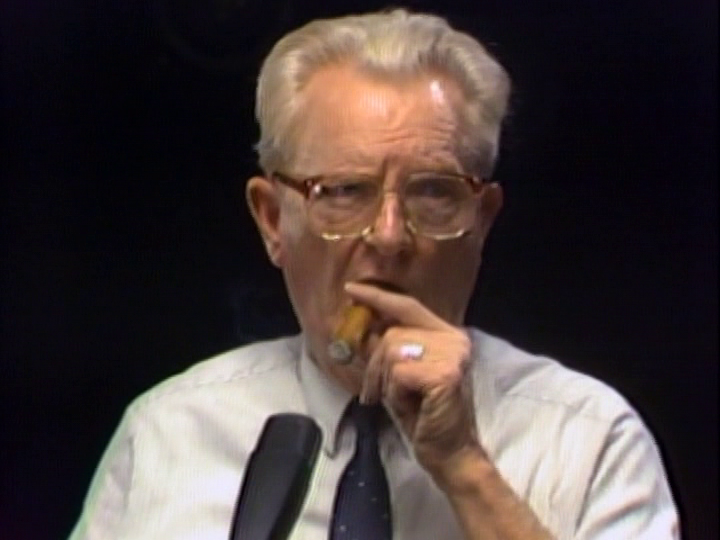
The Tobacco Road is a rich drink thanks to the Carpano Antica and Cherry Heering, so we left it ungarnished, but as a Black Manhattan variation, a Maraschino cherry would not be out of place. It has a lot of fruit on the nose, chocolate and coffee on the sip, and an almost sherry-like finish which suggests that it would go great with a cigar like the one Bill Gleason is smoking above in the image on the right.
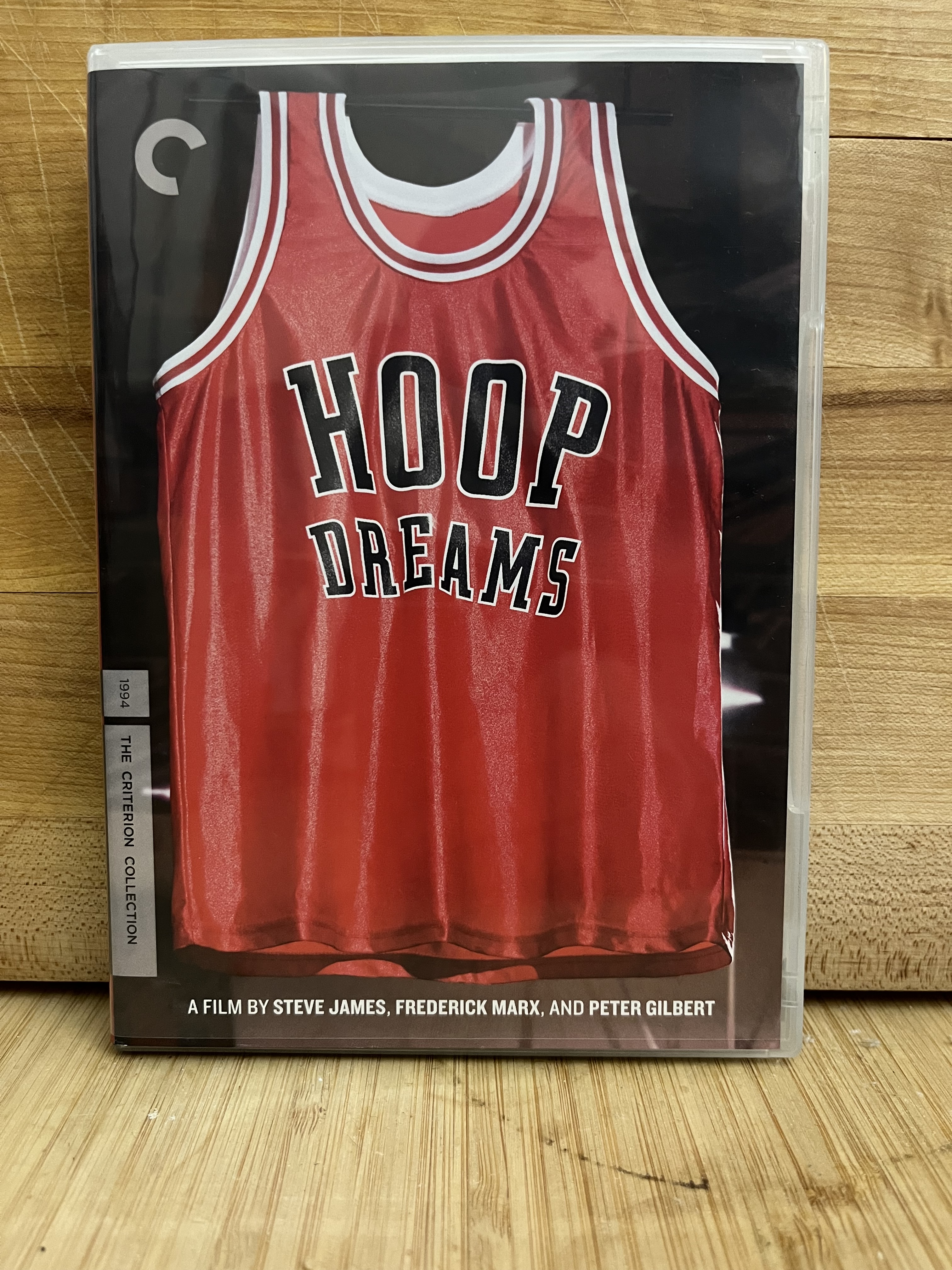
On to Hoop Dreams! Here’s a picture of my Criterion Collection DVD release:
It can also be streamed on a wide range of platforms, including both The Criterion Channel and Max with a subscription, and some people may have access to it via Kanopy through a license paid for by their local academic or public library as well.
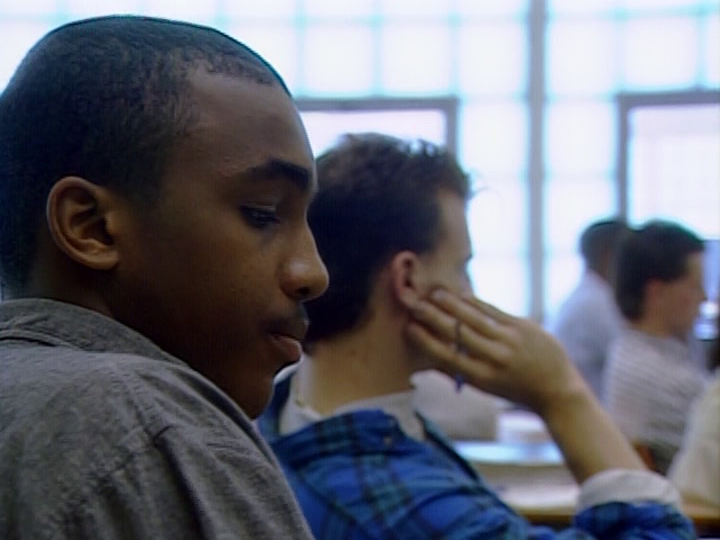
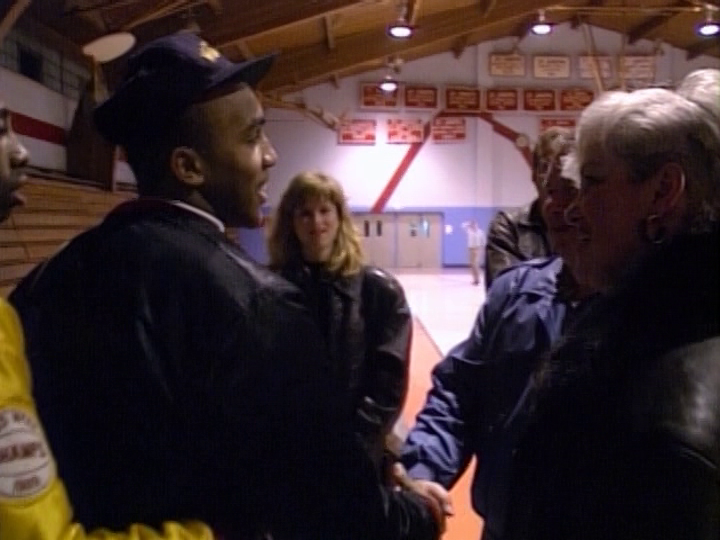
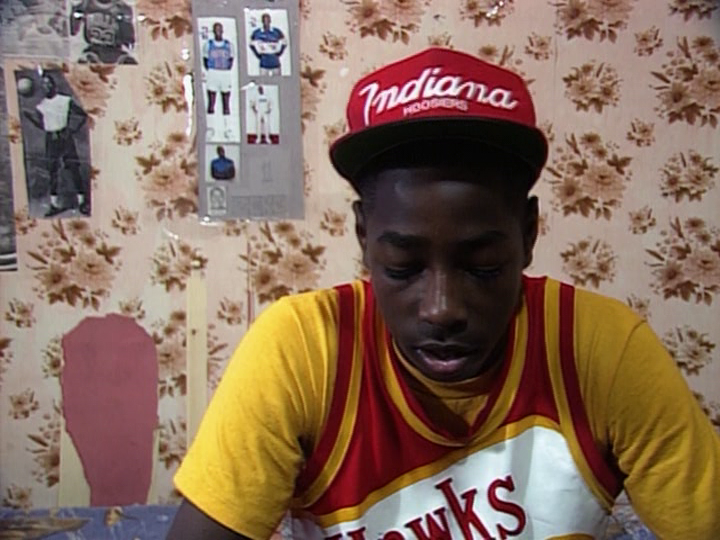
Hoop Dreams is a longitudinal documentary which follows Agee and Gates over a five-year period which begins with them being discovered on the streetball courts of inner city Chicago and recruited by St. Joseph, an elite prep school in the suburbs, and ends shortly after the conclusion of their respective high school basketball careers. At the start of the film, Gates is ascendant: the excerpts from The Sports Writers on TV that I began this post with are from the “Freshman Year” section of Hoop Dreams and in them Bill Gleason compares him to Hall of Fame point guard Isiah Thomas. Agee, on the other hand, is kicked out of St. Joseph his sophomore year after his family falls behind on their tuition payments. Gates suffers two major knee injuries during his junior year, though, and is therefore never able to lead St. Joseph to the promised land of the Illinois state championship tournament while Agee blossoms as an upperclassman and leads Marshall Metro High School on a Cinderella run to the semi-finals of the same event. The movie concludes with end titles indicating that both players are now seniors in college playing for Marquette and Arkansas State respectively, but noting that Gates has grown disillusioned with basketball.
Agee and Gates represent the millions of youth athletes in the United States fighting for a shot to become one of the roughly 500 professionals who appear in an NBA game each season. Competition is part of the film’s DNA, so it’s understandable that for many critics it’s of paramount importance to determine who its “winner” is. To bell hooks, writing in Sight & Sound in 1995, “the triumphant individual in the film is (the young) Arthur Agee, who remains obsessed with the game” while Gates “is portrayed as a victim” despite the fact that (or because) he “learns to critique the ethic of competition that he has been socialised to accept passively within white-supremacist, capitalist patriarchy.” Kimberly Chabot Davis argues against this interpretation in a South Atlantic Review article called “White Filmmakers and Minority Subjects: Cinema Vérité and the Politics of Irony in Hoop Dreams and Paris Is Burning“:
Hooks sees William Gates as the loser of the film because he eventually decides to reject the basketball dream, and she is upset that “his longing to be a good parent, to not be obsessed with basketball, is not represented [by the filmmakers] as a positive shift in his thinking,” whereas Arthur Agee, who never questions the dream, is represented as ‘the triumphant individual.’ In direct opposition to hooks’s reading, I came out of the film thinking that the filmmakers indirectly criticize Arthur Agee’s blind pursuit of the NBA dream and attempt to portray William Gates as the real winner because he learns that education and family responsibility are “truer” measures of success.
Comments made by filmmakers Steve James, Frederick Marx, and Peter Gilbert in the short documentary Life After Hoop Dreams included on the Criterion Collection DVD as an extra suggest that the latter may track more closely to their actual feelings, but the genius of the film is that it supports both readings. As John Edgar Wiseman notes in his essay “Serious Game,” its final cut “seems not based on assumptions the filmmakers formed before they encountered the actual lives of their subjects but a story that evolved naturally as footage accumulated.” While Hoop Dreams doesn’t insist on a moral, it definitely does have a point of view. Take, for instance, the transition between its first two sections. “Freshman Year” ends after St. Joseph’s varsity team is eliminated from the playoffs with voiceover narration by James that says, “despite the loss, William’s gutty performance bodes well for next year.”
“Sophomore Year” then begins with him in class:
James notes that he and Agee are both on partial scholarships which aren’t big enough to cover a recent tuition increase. Cut to Patricia Wier, President of Encyclopedia Britannica explaining how in response to a solicitation by St. Joseph she and her husband decided to sponsor a student, who turned out to be Gates. There’s a shot of Wier and husband in the stands watching a game:
Followed by one of them introducing Gates to their friends:
James’s narration explains that “with continuing support from Patricia Wier, William is assured that his entire education at St. Joe’s will be free.” This is immediately succeeded by a series of interviews with Agee, his mother, and St. Joseph basketball coach Gene Pingatore describing the chain of events that led to Agee being dismissed from the school. “I thought Pingatore and them would help me out, but. . . . ” Agee says, shaking his head:
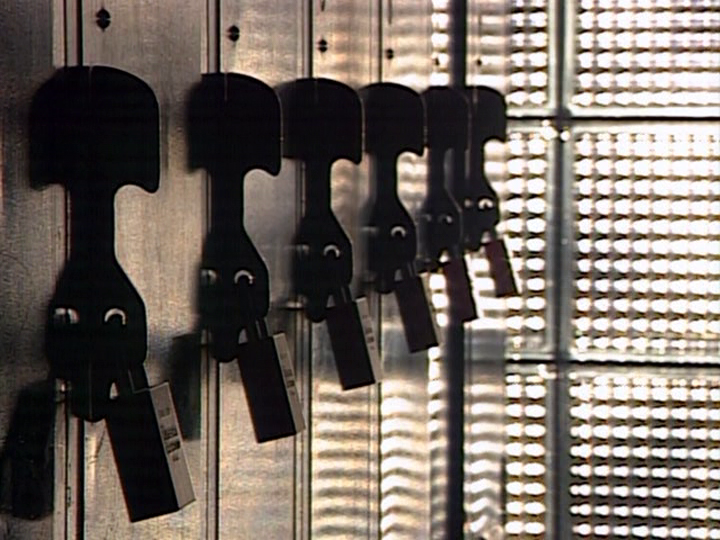
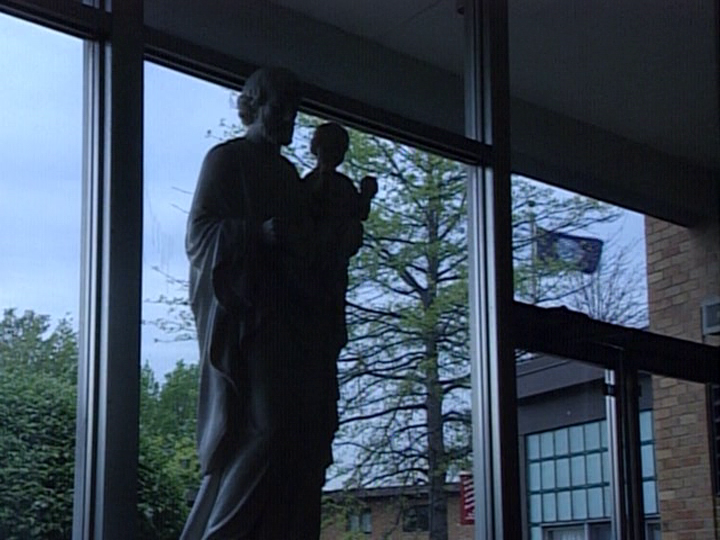
Pingatore, Agee, and Agee’s mother then all speak in turn: Pingatore defends the school’s decision on the grounds that St. Joseph is dependent on tuition dollars to function, Agee speculates that Pingatore was concerned about his height, and Agee’s mother states that she never would have enrolled her son at St. Joseph in the first place if she had known he might experience the anguish of being forced to change schools in the middle of the year. The scene ends with a four-shot montage sequence: it begins with empty desks and a row of padlocks:
Followed by a statue of Saint Joseph himself:
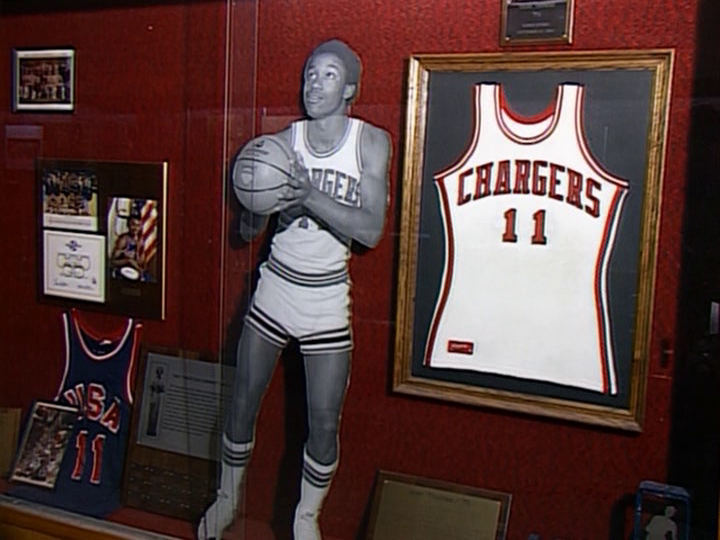
And then a shot of a sort of shrine to Isiah Thomas, who attended St. Joseph, in the school’s lobby which is shown multiple times throughout the movie:
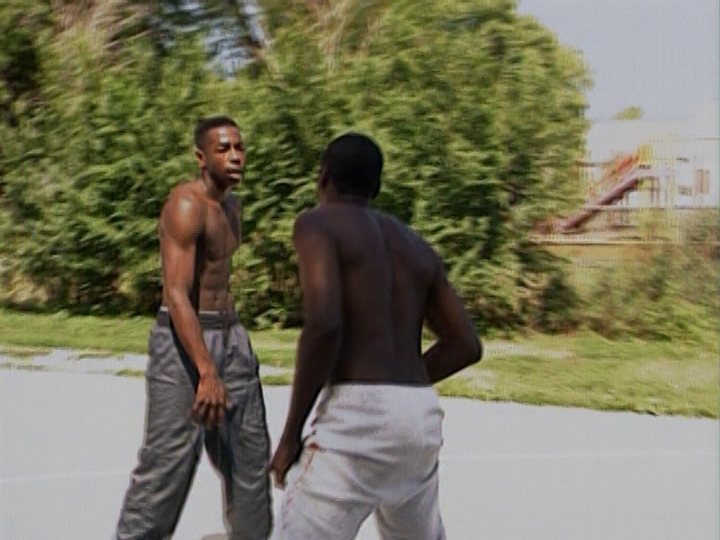
Whatever the filmmakers think of Agee’s and Gate’s choices and values, they clearly don’t believe that St. Joseph has treated the two boys equally and have a theory why not. Another thing I like about Hoop Dreams is the way it utilizes repetition effectively. Robert Greene discusses one great example in his essay “The Real Thing.” A one-on-one game between Agee and his father which takes place at the beginning of the film:
Is echoed by second near the end which, because of everything that has happened in between, “has the cadence and expressive power of an epic showdown.”
Another is the way the filmmakers leverage a recurring establishing shot of the Agee’s apartment at night with its lights on to efficiently communicate that their power has been turned off:
Speaking of efficient, James’s narration does a marvelous job of concisely telling the story of important basketball games, such as this one in which Agee and his teammates force a taller but slower opponent out of its comfort zone by holding the ball late into the shot clock:
And I love the way the film lets us into spaces we may never otherwise get to see such as a D1 recruiting visit:
And a nurse’s assistant graduation:
However, I was surprised to find that what I appreciated most after recently spending time with Criterion Collection edition of this film were the commentary tracks. The one featuring Agee and Gates comes closer to being “essential” than any other I’ve ever listened to: anyone willing to spend nearly three hours of your life watching Hoop Dreams absolutely will want to hear what its subjects have to say! The commentary track with James, Marx, and Gilbert is full of insights as well and the two sometimes work in tandem to show parts of the movie in a new light. To go back to St. Joseph’s treatment of Agee, both groups believe that school didn’t just treat him unfairly, but in fact acted contrary to its own best interests. The former players observe that it was a bad basketball decision:
ARTHUR: But they was just, like, “I guess we got room for one guy. And this one guy is gonna take us down state, like, we’re gonna put everything in him. We don’t need another guy that HE needs.” And they didn’t know that William needed me to take that pressure off of him.
WILLIAM: I mean, if there was somebody that understood me at St. Joe’s, it was Arthur. Because at that particular point I really felt like the only person who could have understood me out there was him. And I felt like not only did I lose a best friend at the time, I felt like a part of me was gone.
While the filmmakers express bewilderment that St. Joseph could be so un-PR-conscious to kick Arthur out of school knowing that he was the subject of a movie. At other times, illumination comes from the distance between the commenters’ different experiences of the same event such as when James and company lament not being told earlier that Gates had a daughter with his girlfriend, while he says this can’t possibly be true because the St. Joseph school newspaper ran a story about it. They also both note that Pingatore changed after the film but have different explanations for why: Agee and Gates think it’s because he learned from watching himself on screen and began yelling less and giving his players more freedom, whereas the filmmakers ascribe his more relaxed demeanor to finally winning a state championship in 1999, not anything to do with Hoop Dreams.
Mostly, though, it’s amazing to just listen to Agee and Gates relive pivotal moments in their lives like the two free throws that Gates misses at the end of his junior year which lead directly to a St. Joseph loss in the playoffs.
He explains that he heard his cartilage tear earlier and therefore didn’t want the ball at the end of the game. As Gates watches himself go to the line, he observes that he shot 100% from the line in the games leading up to this one and that “all of these games are high-pressure games. None of them are more high-pressure than the others.” To him, the reason he missed those two shots was simple: he couldn’t bend his knees and never should have let himself be inserted back into the game. “People think I’m disappointed because I missed the free throws,” had adds. “No, I’m disappointed because I wasn’t honest with myself or my teammates. I let my team down that year.”
If you do watch the film, both commentary tracks, and Life After Hoop Dreams, you will have spent more than 12 hours with Agee and Gates by the time you finish. The cumulative effect is that of revisiting your own sports memories, the way we Horbals like to break out our video recording of my little brother’s 4×800 relay team winning a Pennsylvania state track title in 2005. And that, I think, is the real achievement of the Criterion Collection’s presentation of Hoop Dreams: it makes these two young men and everyone in their lives seem like family.
Cheers!
All original photographs in this post are by Marion Penning, aka My Loving Wife.Links to all of the entries in this series can be found here.
One of the most fun parts of my “Drink & a Movie” series has been the twin experiences of, 1) seeing a movie for the first time and thinking of a cocktail that would pair great with it, and 2) trying a new drink and connecting it with a film. Pyaasa was an example of the former: as I tweeted shortly after I watched it, I knew right away that it was destined to accompany a Last Word. The Light and Day, which I discovered in the Death & Co. Modern Classic Cocktails book, is an example of the latter. Here’s how you make it:
Stir all of the ingredients with ice and strain into a chilled coupe glass.
Creator Alex Day described it in Vice as “somewhat of a martini but also sort of a sour drink” inspired by an Aviation. Per Day “it follows no convention of a cocktail,” but is absolutely delicious nonetheless. One of its distinctive features is that many of its ingredients are relatively gentle: Plymouth is one of the less assertive representatives of the London Dry style of gin, Yellow Chartreuse is Green’s more approachable sibling, and orange juice is far more easygoing than lemon or lime. This matches its pastel hue, but don’t be fooled: with two-and-a-half ounces of booze in it, the Light and Day packs a punch! It’s a sweet drink to be sure, but the maraschino and Chartreuse contribute a ton of complexity and harmonize beautifully to create something bright and sunny which is just the ticket in the middle of winter, especially since that’s when oranges are at their best.
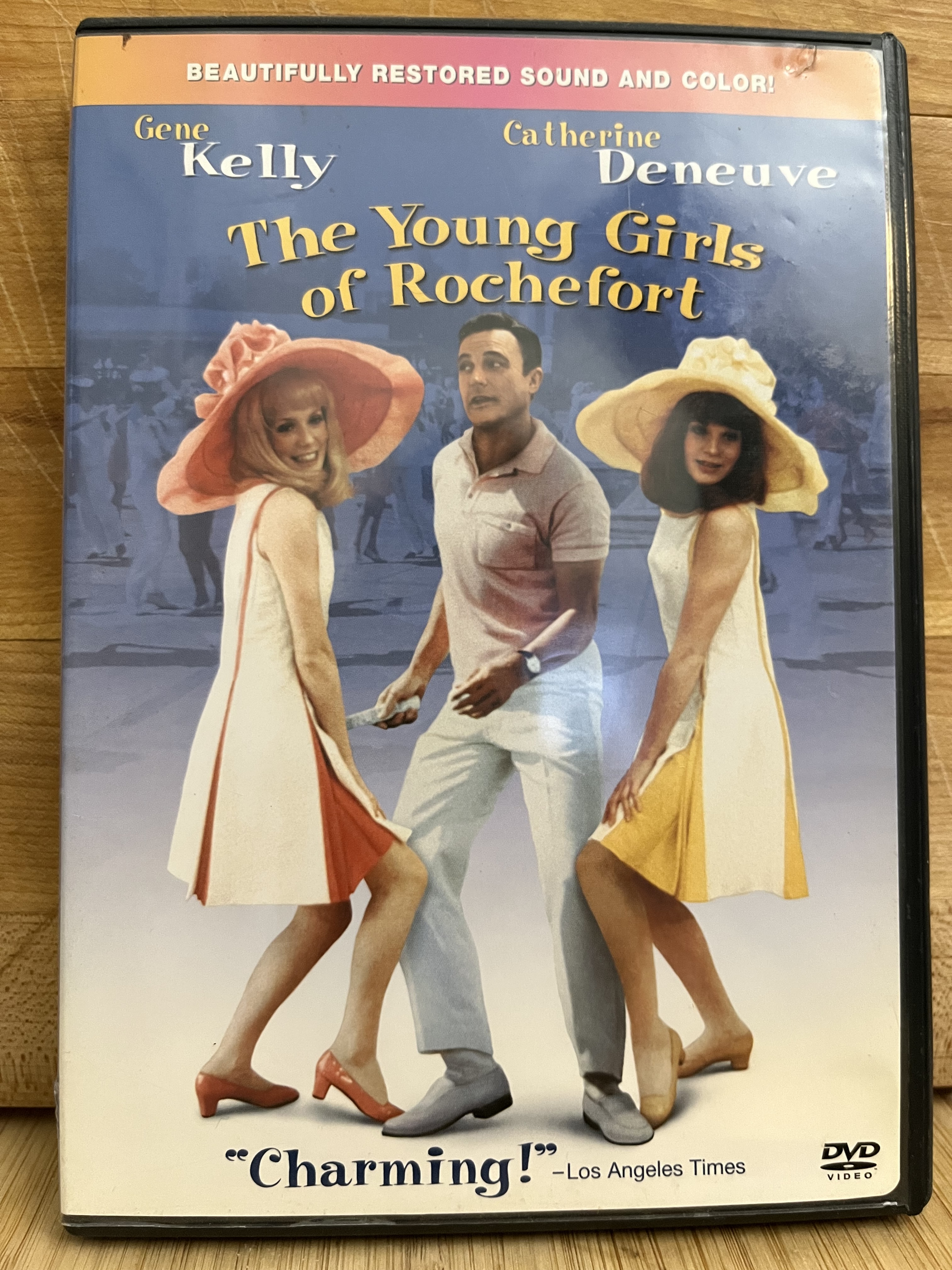
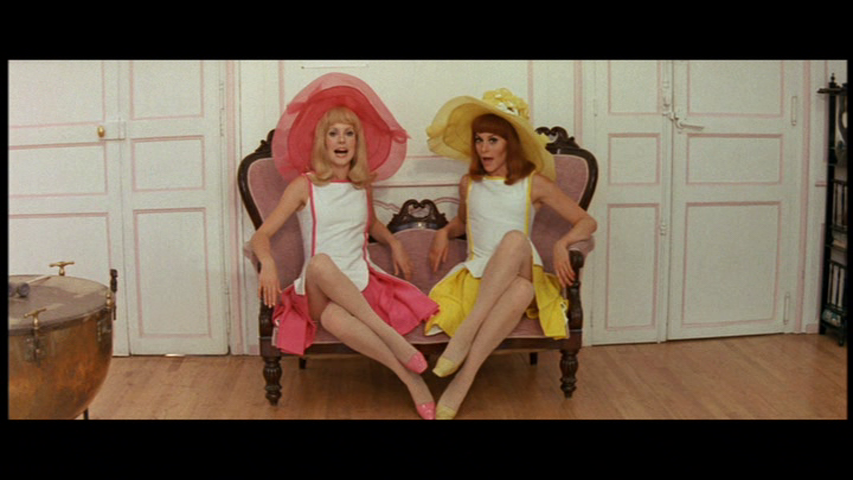
When I saw and tasted this soft but serious concoction, The Young Girls of Rochefort immediately popped into my head. Here’s a picture of my Miramax DVD release:
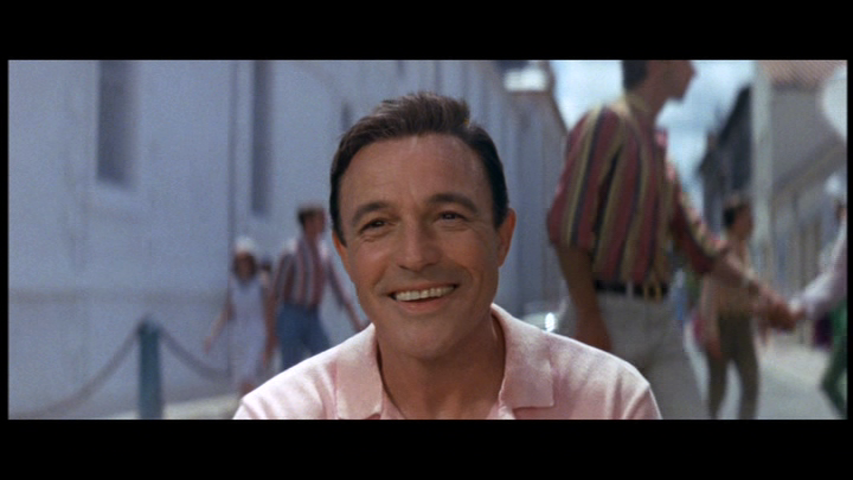
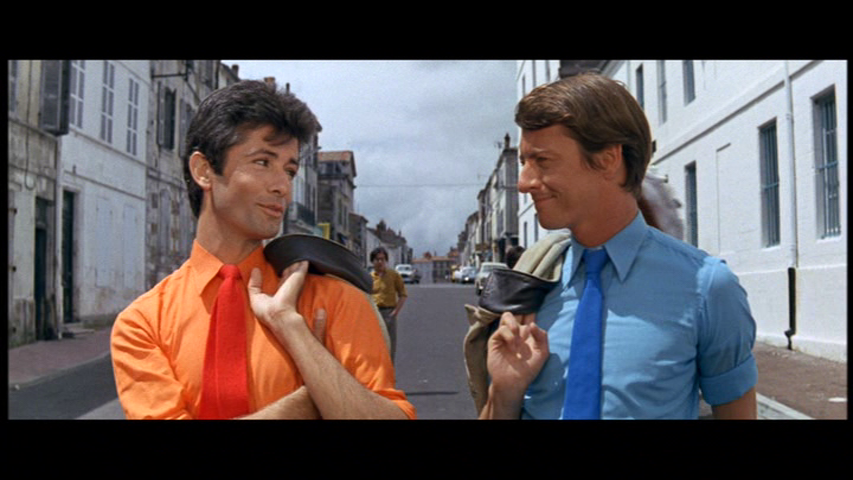
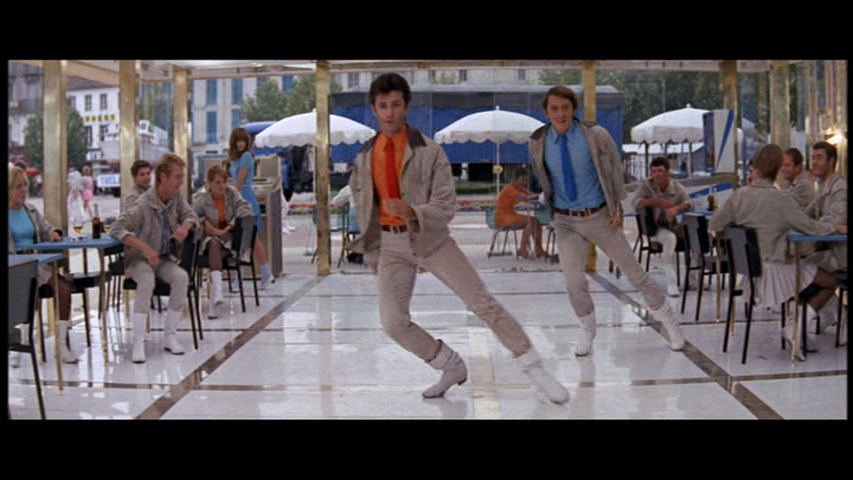
To begin, as you would with a cocktail, with the film’s appearance, critic Stephanie Zacharek noted in 1998 that director Jacques Demy “understood color as sheer entertainment.” The best exemplar of this for both of us is the attire of Gene Kelly’s Andy Miller. For her he is “one of the few performers of our era who could not only carry off a lilac sport coat, but also turn it into a symbol of enlightened masculinity.”
While I would argue that the pink polo shirt he wears under it looks even more glorious on its own:
Of course, the most important parts of his wardrobe are (to again quote Zacharek) the “confident grace and ease” on display in the dance scenes which (per Darren Waldron in his monograph on Demy) he choreographed himself:
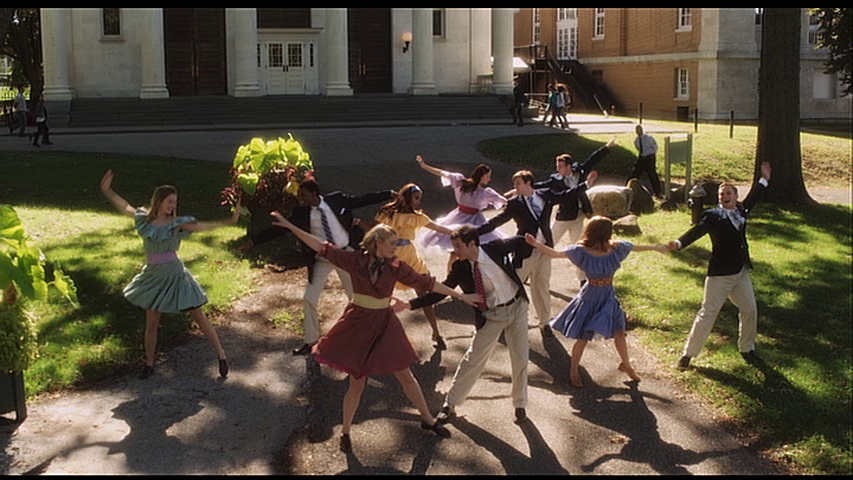
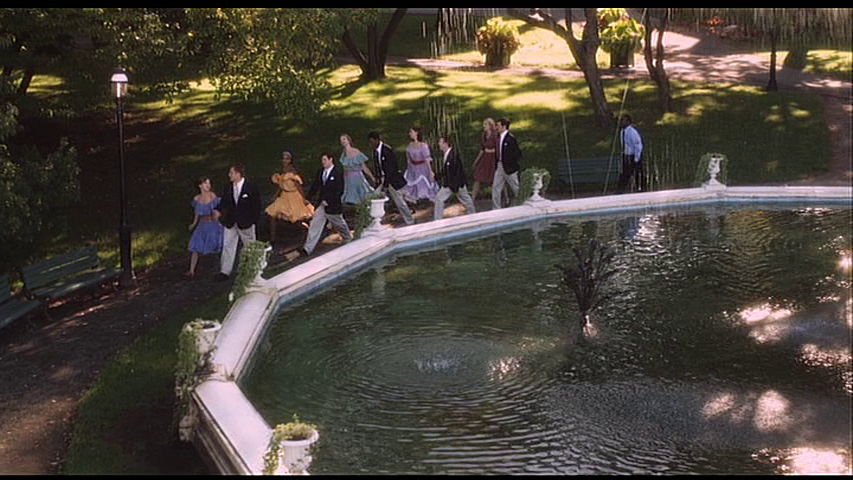
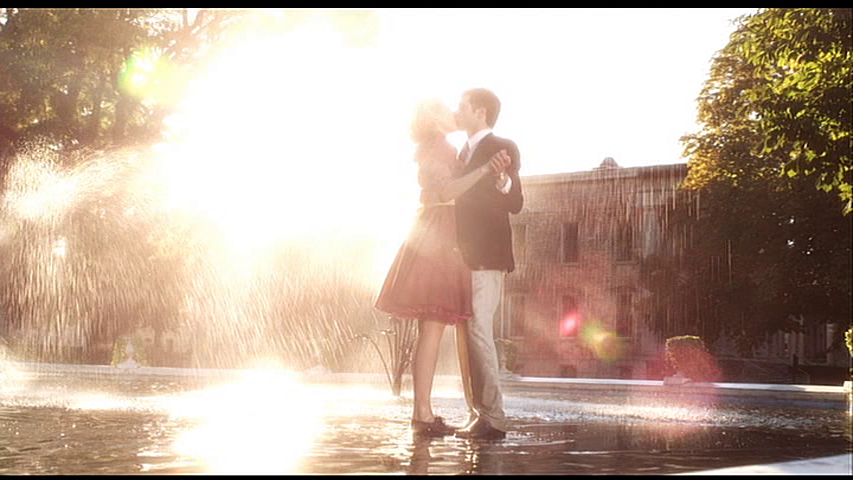
And most especially in the radiant smile he wears when he first lays eyes on his soul mate Solange Garnier (Françoise Dorléac):
Speaking of whom, the complementary outfits she and real-life sister Catherine Deneuve’s Delphine Garnier don in their scenes together are also wonderful:
As are the brilliant blue and orange (go Knicks and Mets!) button-up shirt and tie ensembles worn by George Chakiris’s Etienne and Grover Dale’s Bill which inspired this month’s drink photo:
Their dancing is terrific, too, by the way, especially their speed skater-like footwork in the musical number “Nous voyageons de ville en ville”:
Unfortunately, to many critics, the professional moves of Kelly, Chakiris, and Grove only serve to underscore a perceived “amateurish” lack of perfect timing elsewhere. For me this is mostly an unimportant byproduct of on-location shooting and Demy’s ambitious camerawork. Consider, for instance, the 84-second-long crane shot near the beginning of the film that starts with pole dancing on Rochefort’s Place Colbert:
Follows Bill and Etienne and company past the café where many subsequent scenes will take place:
And then ascends up to and through a second story window where Solange and Delphine are teaching a dance class:
Perhaps even more impressive is the 56-second-long tracking shot which follows Delphine as she walks from her half-brother Boubou’s (Patrick Jeantet) school to her soon to be ex-boyfriend Guillaume Lancien’s (Jacques Riberolles) art gallery, which critic Jonathan Rosenbaum celebrated for the sense of “exuberance combined with a sublime sense of absurdity” created by her slipping in and out of the choreography of the pedestrians dancing all around her. It begins in long shot:
Includes a medium shot of her being lifted by a sailor as she crosses the street:
And then resumes following her in long shot the rest of the way to her destination:
By my count 44 dancers, two moving cars, and three bike riders appear on screen, which is quite a feat of coordination even if everyone’s movements aren’t totally synchronized. Scholar Carlos Valladares (who is now a PhD student at Yale) goes a step further in a 2016 paper published in the Stanford Undergraduate Research Journal called “Dance and the Postmodern Sublime in Jacques Demy’s The Young Girls of Rochefort (1967).” He analyzes the “simple” (distinguishing it from the two sequences I cite above) dance on a transporter bridge which accompanies the opening credits, among other scenes, and contends that the movie’s “deliberately ‘sloppy’ steps are a realistic look at (and criticism of) traditional movie musicals” which challenges “the perception of the musical as an elitist art that only a few select masters (Minnelli, Donen, Kelly) have mastered.”
Whatever reading you prefer, this strikes me as a perfect example of the same kind of polite disregard for the rules that led to the creation of the Light and Day.
Tasting notes usually conclude with a discussion of the drink’s finish, and that’s where The Young Girls of Rochefort really shines. Rosenbaum’s most perceptive comments about the movie are related to what he calls “perhaps the most beautiful dovetailing of failed and achieved connections apart from Shakespeare and Jacques Tati’s Playtime.” Pointing as well to the lyrics of the song “La femme coupée en morceaux,” which is about an axe murder, and the threat of war omnipresent in newspaper headlines and Rochefort’s status as a garrison town:
He argues that even though the film “is on all counts Demy’s most optimistic film–the one in which every character eventually finds the person she or he is looking for–the missed connections preceding this resolution are relentless, and one may still wind up with a feeling of hopeless despair despite the overdetermined happy ending.” Michel Legrand’s addictive (my family is glad that I finally finished this post because I’ve been listening to it on repeat for weeks!) score, which might be my favorite movie music ever, deserves a huge amount of credit for this. The tragic death of Françoise Dorléac mere months after The Young Girls of Rochefort‘s premiere also casts a shadow over it for those who know that she and Deneuve would never again appear on screen together. But for me a lot of the welcome bitter counterpoint to its more apparent saccharine elements comes from the characters themselves. As Waldron observes:
We hear evidence of the selfishness that frames the construction of each character, preoccupied with their own narcissistic pursuit of happiness and lacking responsibility and compassion for others. Yvonne allows strangers Bill and Etienne to pickup Boubou up from school, and Solange dismisses Delphine when she claims she is sad after rupturing her relationship with Guillaume. Such egotism is extended in the Garnier women’s vanity; when flattered by Bill and Etienne, Yvonne and Delphine retort, separately, ‘on me l’a déjà dit’ (‘I’ve already been told that’).
And then, of course, there’s the whole matter of Yvonne (who is played by (Danielle Darrieux) leaving her fiancé Simon Dame (Michel Piccoli) because of his name! I recently mentioned to my friend Scott that one of my hopes for this series is that when I look back on it my choices will tell a story. My vague idea was that it might have something to do with seasonality, but he replied with the much more interesting suggestion that my theme is “the human experience of trying to become a better person,” with emphasis on the process employed by characters who are successful and the price for not doing “the right thing” paid by those who are not. The Young Girls of Rochefort may be the exception that proves the rule. Yvonne and Simon end up together in the end, but it is this the result of growth or just regret?
After all, sometimes the difference between leaving town in the company of carnies by yourself after your twin sister inexplicably no-shows without explanation:
And having your masculine ideal (aka Jacques Perrin’s Maxence) as your travelling companion is simply a matter of bad or good timing:
Cheers!
All original photographs in this post are by Marion Penning, aka My Loving Wife.Links to all of the entries in this series can be found here.
Most days I’m lucky if 5-10 people visit this blog, but not on February 2 when every year hundreds of people Google “sweet vermouth on the rocks with a twist” and find their way to this 2019 post with the same name. Welcome, folks! Despite the fact that Groundhog Day is one of my all-time favorite movies, I wasn’t necessarily ever planning to include it in my Drink & a Movie series since I’ve already written so much about it and because I featured it in a shot-lived Twitter series called “Pairings” in 2018. Here’s the thing, though: while there’s absolutely nothing wrong with drinking good sweet vermouth on its own with a bit of ice, that’s probably the last time I did so myself! I’ve also been hoarding an observation for years thinking it would make good fodder for a video essay, but I haven’t made one of thosesince 2008 when Kevin B. Lee kindly did all the hard work. So in honor of the day and without further ado:
Bill Murray’s Phil Connors, Groundhog Day‘s protagonist, unconvincingly claims that sweet vermouth makes him “think of Rome, the way the sun hits the buildings in the afternoon.” This reminds me of the explanation James Bond (who you might also know from the movies) gives for ordering an Americano in Ian Fleming’s short story “From a View to Kill,” which is part of the 2008 anthology Quantum of Solace:
One cannot drink seriously in French cafés. Out of doors on a pavement in the sun is no place for vodka or whiskey or gin. A fine à l’eau is fairly serious, but it intoxicates without tasting very good. A quart de champagne or a champagne àl’orange is all right before luncheon, but in the evening one quart leads to another quart and a bottle of indifferent champagne is a bad foundation for the night. Pernod is possible, but it should be drunk in company, and anyway Bond had never liked the stuff because its liquorice taste reminded him of his childhood. No, in cafés you have to drink the least offensive of the musical comedy drinks that go with them, and Bond always had the same thing–an Americano–Bitter Campari, Cinzano, a large slice of lemon peel and soda.
Although this isn’t actually the strongest endorsement, I far prefer an Americano to plain vermouth. Here’s how you make this “fine speci-mine” of a drink:
Stir the Campari and sweet vermouth with ice in a chilled glass. Add the club soda and a garnish with an oversized lemon twist.
Carpano Antica, the vermouth I tweeted about in 2018, is still my favorite, but it’s way expensive these days compared to other quality options like Method, which is made a mere 30 miles away from where I live. The Campari adds bitterness and the soda effervescence and resulting cocktail is far more interesting than any of its three ingredients is on their own–no disrespect, Rita. On to the movie! Here’s a picture of the Columbia Pictures DVD release which I think I’ve owned since college:
You can also rent the film from Apple TV+ or Prime Video. Groundhog Day is the rare movie that has entered the vernacular: even if you haven’t seen it, you probably know that Phil Connors finds himself living the same day, the titular holiday celebrated on February 2, again and again. We see pieces of about 40 repetitions onscreen, but there are references to many more (e.g. “I’ve killed myself so many times, I don’t even exist anymore”) and in his BFI Modern Classics monograph on the film, Ryan Gilbey claims that director Harold Ramis maintains that the original script specified that this goes on for 10,000 years. The scene I want to write about takes place on the last such day. It begins with Connors, a TV weatherman, giving far and away the best version of a report on Punxsutawney Phil we’ve already seen him deliver a number of times, complete with a Chekhov reference:
A reaction shot shows that his producer Rita (Andie MacDowell) is delighted with his work:
“That was . . . surprising!” she says to him afterward. “I didn’t know you were so versatile.” To which he replies, “I surprise myself sometimes.”
She invites him out for a cup of coffee, but he declines on the grounds that he has errands to run. “Errands? What errands? I thought we were going back,” she says. Which: of course she does! After all, this is their first interaction since cameraman Larry (Chris Elliott) dropped her off at her hotel the previous day after a car ride Phil spent peevishly complaining about their assignment. But by now he’s off. Although Rita doesn’t see where to, we do. First he catches a child who he knows is about to fall out of a tree:
Then he shows up with a tire and a jack to help these ladies with a flat tire:
He appears in the nick of time to administer the Heimlich maneuver to Punxsutawney’s Mayor Buster Green (Brian Doyle-Murray):
And stops on the way out to light a cigarette for a woman at the neighboring table:
Cut to the Pennsylvanian Hotel that evening where Larry’s attempts to hit on Nancy (Marita Geraghty), who Phil spent a portion of eternity seducing, elicit a priceless look from the bartender played by John Watson Sr., who contrary to Jude Davies’s belief is not the only non-white character in the entire film:
On their way to the party next door they run into Rita, who suggests that they call Phil. “Phil Connors?” I think he’s already in there,” Nancy replies, leaving Rita puzzled:
After he finishes, the woman standing next to Rita identifies herself as Phil’s teacher:
Her pride in him used to feel like a borderline plot hole to me (remember: from her perspective they met each other for the first time earlier that day) until I realized she must be looking ahead to instructing him in the future, not backwards to anything she’s already shown him. Anyway, Phil and Rita begin to slow dance:
But keep getting interrupted by people wanting to thank Phil for things he did for them that day, including an incredibly young (he was seventeen during filming) Michael Shannon in his first film role as Fred Kleiser:
“There is something going on with you,” Rita says.
“Would you like the long version or the short version?” Phil asks. “Let’s start with the short and go from there,” Rita replies. The shots I want to write about are the ones that come next. Everyone applauds as the song that’s playing ends and there’s a cut to a long shot in which we can see Phil telling Rita something, although we can’t hear him:
There’s another cut to a long shot of Buster telling everyone that a bachelor auction is about to begin:
But then we’re back to Phil and Rita, still talking.
At one point you can see her nod, but once more we aren’t privy to what they’re saying. Amusingly, the next shot after this is one of Buster holding his hands in front of his ears and saying, “I don’t want to know about it!”
Robin Duke’s Doris, who we met earlier at the town’s diner, then interrupts Phil (who appear to still be talking) and drags him to the front of the room:
These shots account for just 30 seconds of screentime, but I consider them to be some of the film’s most important. I don’t think it’s strange that Rita would spend the entire $339.88 in her pocketbook to abruptly end the bidding war for Phil that subsequently erupts between Doris and (to Larry’s chagrin) Nancy:
It’s for charity, after all, and she’s obviously very curious about how Phil came to be so popular. But although she doesn’t remember, this isn’t the first time they have spent part or all of this day together and on every previous occasion she recoiled when he expressed too much interest in her. Consider, for instance, the first time he made the mistake of saying “I love you” to her. “You don’t even know me,” she replied:
And then, presumably in a rush of recognition that it’s awfully coincidental that they like ALL of the same things, “oh no, I can’t believe I fell for this! This whole day has been one long setup.” To be sure, that’s a much different situation than suddenly being confronted with evidence that the coworker you thought was a jerk is actually the hero of an entire small town, but it’s still pretty crazy when that person presents you with this:
And says, “I know your face so well, I could have done it with my eyes closed.” Followed by: “no matter what happens tomorrow or for the rest of my life, I’m happy now because I love you.” But what does Rita say in reply? “I think I’m happy too.” And then they kiss:
By this point in the film, Phil has long since stopped trying to escape February 2. He is, instead, constructing a day that he would be content to inhabit for the rest of time. There is absolutely no reason to believe he hasn’t already lived minor variants on this chain of events over and over and over. In fact, I contend that the long shots above provide concrete evidence that he has. Rita asks him for the short version of his story. Just as he apparently spent six months spending four to five hours a day perfecting the art of throwing playing cards into a hat:
What we see here is the culmination of Phil’s efforts to perfect the art of explaining to Rita what has happened to him in only a few seconds!
Groundhog Day is not about a bad guy who learns to be a saint. One of the best things about it is that Phil retains (or, more accurately, loses but recovers) his wry sense of humor. He calls the boy he saves from the tree a “little brat” and shouts “I’ll see you tomorrow–maybe” after him as he runs away because he never says thank you, and the movie’s final line isn’t “let’s live here,” but rather, a beat later, “we’ll rent to start.” Much earlier on, Phil sits at a bar with two local drunks and asks, “what would you do if you were stuck in one place and every day was exactly the same and nothing that you did mattered?”
“That about sums it up for me,” Rick Overton’s Ralph replies as Rick Ducommun’s Gus takes a shot. Groundhog Day is the story of a man who discovers through the hard work of introspection how he really wants to live his life and does it without expecting any other kind of reward. We may not be stuck in a time loop, but there’s nothing stopping Ralph or us from doing the same. So: to the groundhog! Or world peace, if you must.
All original photographs in this post are by Marion Penning, aka My Loving Wife.Links to all of the entries in this series can be found here.
We tend to have a lot of egg whites on hand during the months of December and January as a result of nog making and my absolute favorite way to use them up is in Jeffrey Morgenthaler’s amaretto sour, which Imbibe notes has effectively become the standard way of making it. And for good reason! He boasts that it’s “the best Amaretto Sour you’ve ever had in your life,” and although I can’t claim to have verified this claim through extensive testing, that’s mostly because I haven’t felt the need to try another recipe since discovering this one. Here’s how you make it:
1 1/2 ozs. Amaretto (Disaronno) 3/4 oz. Cask-proof bourbon (1792) 1 oz. Lemon juice 1 tsp. 2:1 Simple syrup 1/2 oz. Egg white, lightly beaten
Dry shake all ingredients, then add ice and shake again. Strain into a chilled rocks glass with one big ice cube, making sure to get as much froth out of the shaker as you can, and garish with a cherry and a lemon twist.
My go-to bourbon for this drink is Maker’s Mark Cask Strength, but they make the spirit I featured in last month’s aged eggnog and I wanted to mix things up a bit. I’m glad I did: 1792 is just about as good of a value and contributes an even higher ABV, which is essential for cutting the sweetness of the amaretto and creating the “warm glowing warming glow” I’m looking for in the dead of winter. It results in a richer texture as well, and you definitely want to use 2:1 simple syrup for the same reason. Disaronno is delicious and easy to find and also has a great origin story: according to the company’s website, the woman the artist Bernardino Luini (a pupil of Leonardo di Vinci) chose as a model for the Madonna in one of his frescoes created it as a thank you gift. And so it was that this month’s pairing suggested itself, because when I think about painting and the winter holidays, one movie immediately springs to mind: Scarlet Street, which ends with perhaps the most cynical use of Christmas music in the history of cinema. Here’s a picture of my Kino Video DVD release:
It can also be streamed on Prime Video with a subscription or on Apple TV+ for a rental fee, and some people may have access to it via Kanopy through a license paid for by their local academic or public library as well.
Scarlet Street begins with a flurry of symbolism. An expensive-looking car pulls up to a building. As an organ grinder entertains its glamorous passenger:
The chauffeur ascends a set of stairs, walks past a woman knitting, and knocks on a door marked “private”:
Inside the men of J.J. Hogarth & Company celebrate Christopher Cross’s (Edward G. Robinson) 25 years with the firm as (hat tip: Joseph Gibson) cigar smoke rises unmotivated from the bottom of the frame:
The boss (Russell Hicks) quiets them and stands to make a speech:
Well boys, I hate to break up a good party, but you can’t keep a woman waiting, can you? You know how it is, boys. I can see you all understand, alright! Well, believe you me boys, I’ve had the time of my life tonight. And speaking of time, I have here a 14-karat, 17-jewel timepiece. And that’s only right because the man I’m giving it to is a 14-karat, 17-jewel cashier.
Cross reads the engraving and stammers out a brief speech of gratitude. Everyone belts the refrain of “For He’s a Jolly Good Fellow,” then J.J. treats Chris and his co-worker Charlie (Samuel S. Hinds) to fancy (“it’s made special for me, a dollar apiece”) cigar before excusing himself. As the others rush to the window to ogle the “dame” he can’t keep waiting:
Chris and Charlie quietly make their own exit. Charlie doesn’t have an umbrella, so Chris sees him to his bus. As they stand waiting for it, Chris tells Charlie that he wonders what it’s like to be loved by a young girl like the one their boss is seeing and that he dreamt of being an artist and still paints every Sunday. “Well, that’s one way to kill time,” Charlie replies. Chris invites Charlie to come see him the next day when the bus arrives, then goes looking for the East Side subway. Lost among the “mixed up” streets of Greenwich Village, he witnesses what he believes to be a mugging:
Emboldened by drink, Chris charges forward to defend the damsel in distress, then braces for an answering blow that never comes:
The woman (Joan Bennett) he has “saved,” who is wrapped in a cellophane raincoat, first tests her jaw:
Then checks on her assailant. Chris runs off to find a policeman. When they return, the man is gone. The woman, whose name we will soon learn is Kitty March, tells the cop he went thataway, then says to Chris, “let’s get out of here.” He consents to take her home, and with that his fate is sealed. We are barely ten minutes into a film with a runtime of 102.
A major topic of debate among film scholars and critics is whether or not Chris is too pathetic to be someone audiences can identify with. And to be sure, if you’re going to put an apron like this on, it really should be to make a statement, not just to prevent your clothes from getting dirty!
But I agree with Kino’s DVD commentator David Kalat that Edward G. Robinson’s performance is “extraordinarily warm and humane” and recognize a great many things in the character he brings to life, especially his struggle to find a sustainable balance between the hobby that brings him happiness and the career that pays his bills. In a book-length interview with Peter Bogdanovich, director Fritz Lang claims that “Robinson’s fate in the picture is the fate of an artist who cares much more for his paintings than for gaining money.” He then specifically references the scene in which Chris discovers that Kitty has been signing her name to his paintings so that she can sell them and instead of getting mad at her, acquiesces to the scheme: “it’s just like we were married, only I take your name,” he says.
In a chapter for Joe McElhaney’s A Companion to Fritz Lang, Vinzenz Hediger argues that for Chris, “the realization of his dream to be recognized as an artist, even though it only happens through the intermediary of the woman he loves, in combination with that woman’s attention, appears to be the only moment of genuine happiness he has experienced in life.” This is consonant with Jeanne Hall’s observation in a Film Criticism article called “‘A Little Trouble With Perspective’: Art and Authorship in Fritz Lang’s Scarlet Street“ that far from painting being his escape from a loveless marriage like many scholars claim, Chris’s hobby was what brought him to his wife Adele (Rosalind Ivan) in the first place when he rented a room from her in order to save money for paint. Chris describes what happened next to Charlie thusly: “oh she was sweet–butter wouldn’t melt in her mouth. And, uh, well, you know how these things go.” To translate this into (somewhat) contemporary terms, yada yada yada, now he has to paint in the bathroom:
In Kitty he thinks he has found not just a young girl who loves him, but a young girl who loves him and his work. Per Hediger, “[t]he recognition may be false but it can be lived vicariously so long as it is grounded in true devotion,” and for the length of time Chris believes it to be true, he blossoms. Dan Duryea’s Johnny Prince (more on him in a second) notes that Damon Janeway (Jess Barker), the art critic who has “discovered” Kitty, thinks that the work he produces during this time are the “best things [he’s] done,” and I agree with scholar Tom Gunning when he argues in The Films of Fritz Lang: Allegories of Vision and Modernity that “Chris’s identification with the image of a woman could also be seen as an essential step in his development as an artist, keeping him alive to his polymorphic childlike perversity, but gaining authority rather than regressing through it.” After all, as Gunning goes on to point out, “Chris’s lack of interest in signing his own name to his works and his feminine alter-ego, both recall the fundamental avant-gardist gestures of Marcel Duchamp: signing several works with the name of his feminine alter-ego (whom he had himself photographed as, in drag) Rose Selavy (glossed as Eros, c’est la vie).”
Chris loves to paint, but he’s also lonely. His marriage to Adele is a bitter disappointment because it not only failed to solve the latter problem, but jeopardizes his freedom to engage in the former activity when she threatens to give all his paintings and supplies to the junkman in retaliation for him not buying her a radio. Kitty gives him sustenance until, abruptly, she doesn’t. Although Mark Osteen is technically correct when in his Journal of Film and Video article “Framed: Forging Identities in Film Noir” he pinpoints Chris’s disavowal of his identity as an artist as the moment “Chris’s painter self dies along with the lover and the cashier,” but that self likely would have starved to death anyway even if Chris had responded to Kitty laughing in his face and saying “you’re old and ugly and I’m sick of you” by calmly placing the fateful ice pick back on the table he knocked it off of and walking away instead of, well, you know:
One of my favorite things about Scarlet Street is its treatment of Chris’s paintings, which were modeled after the work of Henri Rousseau and created by a friend of Fritz Lang named John Decker (who I assume was also responsible for the illustrations by “Tony Rivera” which adorn the walls of the apartment Chris rents for Kitty). Hall is right that the movie is unusual in the way it “encourages viewers to reflect on the socially-constructed and class-based nature of art and aesthetics by insistently raising questions about the quality of Chris’s work and persistently refusing to answer them.” Like Kitty, I personally think this one is pretty excellent:
And although “Self-Portrait” is a title he will later bestow upon a painting of Kitty, one of the film’s many dissolves suggests that maybe it would have been better applied here:
Meanwhile, the other painting which inspired this month’s photograph certainly is interesting:
Some of the other dissolves are absolutely brilliant, including these two involving of Johnny which Gunning discusses at length:
In the process of doing so, Gunning describes Johnny as being “[a]s nasty, slimy, sadistic, cowardly, lazy, ignorant and venial a character as one could find in a Hollywood film,” which is accurate. Dan Duryea is so effective in this role that I wonder if it was detrimental to his career–I recently saw Thunder Bay for the first time, and although his Johnny Gambi turns out to be a perfectly decent person, I kept waiting for him to do something horrible, which was incredibly distracting! The distinctively out-of-style hat he dons in Scarlet Street is practically a character in its own right, as evinced by these two different close-ups:
And as documented by Mike Grost, the rest of Johnny’s wardrobe is interesting, too. Other things to love or hate include the masterful use of practical effects to make studio lot exterior scenes look like they were shot on location:
And the dirty dishes in Kitty’s kitchen sink, aka my worst nightmare:
What makes this one of the most unforgettable movies ever made, though, is the way it ends. In a shocking plot twist, Johnny is sent to the electric chair for the murder committed by Chris.
Unable to shake the vision of Johnny and Kitty happily together in the afterlife, Chris tries to commit suicide, but is unsuccessful.
Years pass in an instant and now he is a derelict shuffling down the street to the tune of the Christmas carol “O Come All Ye Faithful,” which as Robert B. Pippin notes inFatalism in American FilmNoir “is a hymn to the baby Jesus”:
The soundtrack then shifts to “Melancholy Baby,” which is utilized throughout the film in a variety of versions for a wide range of purposes. One way to look at this is as simply a logical accompaniment to the painting which two men are carrying out of the gallery he’s passing by, which is of course his/Kitty March’s aforementioned “Self-Portrait.”
But Pippin has another interpretation:
The Christian notion of eschatological time suggests both that there is this radical revolutionary possibility in historical time, such that everything is different, full of new possibilities, after the Incarnation, and that an individual can be born again, decisively become almost literally a different person, free of the burden of the past, forgiven, after having been saved. Lang’s irony about this assumption is absolutely withering. The ‘baby’ of real relevance is not the baby Jesus, but, the music reveals, our melancholy baby. The aspiration for such revolutionary change is paired musically with the reality of the stuck-in-time, repetitive melancholy baby. And that means not only ‘melancholy’ because this tempting Christian way of thinking about time is naïve, but because melancholy is melancholy, not mourning in Freud’s famous sense. It is the impossibility of ‘moving on’ from a traumatic event, a compulsive need to suffer it all again and again, a refusal of the liberating work of mourning (a fate, in other words).
Wow! The soundtrack then shifts back to a Christmas carol, this time “Jingle Bells.” There is, again, an obvious explanation: the gallery owner Dellarowe (Arthur Loft) is saying to his customer (Constance Purdy), “well, there goes her masterpiece. I really hate to part with it.” To which she replies, “for ten thousand dollars, I shouldn’t think you’d mind!” So the jingling bells are those of the cash register.
But Pippin’s reading does this one better: “[t]he fate that Christianity naïvely believes can be mastered is not cosmic or divine fate but a socioeconomic, drastic restriction of possibilities, and it appears here as all powerful.” Whichever view you subscribe to, Scarlet Street‘s final images are independently shattering. Chris beholds the painting, but his expression barely changes. He puts his head down and resumes his slow walk:
Suddenly, all the people disappear:
It is, as Gunning describes it, “[a]s if a neutron bomb had exploded.” We hear Kitty’s voice whisper “jeepers I love you Johnny” one final time, and with that it’s all over.
Brrr. Typically I recommend mixing up the drinks in these posts before the movie I’m pairing them with starts, but it in this case you might want to save it for the end because you’re going to need something to warm you up afterward!
Cheers!
All original photographs in this post are by Marion Penning, aka My Loving Wife.Links to all of the entries in this series can be found here.