April, 2025 Drink & a Movie: Chapuline + Black Sheep

I didn’t conceive of it as such, but my “Drink & a Movie” series is a fair approximation of my personal cinema and cocktail canons because (predictably, in retrospect) I have mostly chosen to write about my “go-to” directors and ingredients and scenes and techniques, the ones I’ve spent the most time thinking about and which have therefore played the biggest roles in shaping my point of view as a cinephile and drinker. My tastes are constantly evolving, though, and to conclude my three-post-long celebration of crème de cacao I’ve selected two new discoveries from the past few years.

Shortly after I watched Black Sheep for the first time, I talked about it first in an “Ithaca Film Journal” home video recommendation as “total catnip for me,” then again a few months later in my “Top Ten Movies of 2023” post as “the most fun I had with a movie all year.” Here’s a picture of my bare-bones 20th Century Fox “Cinema Archives” DVD copy:
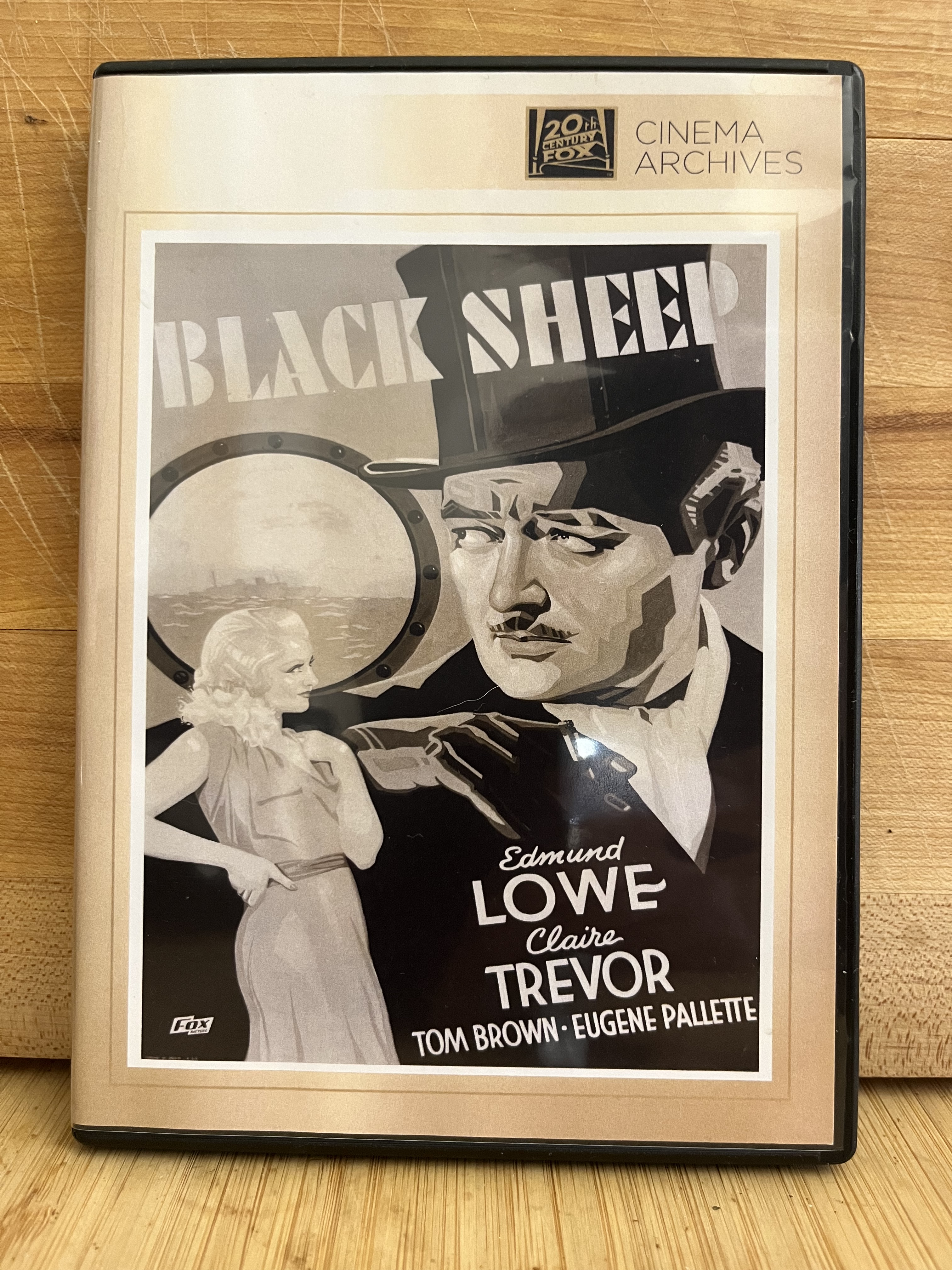
Black Sheep DVD case

Unfortunately, although I originally saw this film on the Criterion Channel as part of a collection called “Directed by Allan Dwan,” it doesn’t appear to be streaming anywhere right now.

One of the things I found so delightful about Black Sheep are the old-school drinks heroine Claire Trevor’s Janette Foster orders: she asks for, in sequence, crème de menthe, a crème de menthe frappé, and Dubonnet. I wanted to offer a more complex alternative to Janette’s usuals like I did with the sweet vermouth on the rocks with a twist ordered by Andie MacDowell’s Rita Hanson in my Drink & a Movie entry for Groundhog Day, and I quickly settled on the Chapuline, a delightful variation on the grasshopper created by Toby Maloney of Chicago’s The Violet Hour. He specifically calls for green crème de menthe, but does so while making a joke related to presentation: “the white pales in comparison.” I’ve never been able to find the bottle by Marie Brizard he recommends and every verdant variety that *is* available in Ithaca tastes unbearably artificial in comparison to Tempus Fugit Glaciale, so that’s what we went with. In addition to tasting much better, I submit that it also looks just fine in this yellow glass we picked out to serve it in. Here’s how we make it:

1 oz. Crème de cacao (Tempus Fugit)
1 oz. Crème de menthe (Tempus Fugit)
3/4 oz. Pisco (Macchu Pisco)
1 oz. Heavy cream

Shake all ingredients vigorously with ice and double strain into a chilled cocktail glass. Garnish with a spanked (to release its aromas) fresh mint leaf.

Chapuline in a cocktail glass with a pearl necklace

As he notes in The Bartender’s Manifesto, Maloney’s goal was “to prove that [he] could take a gauche drink and make it at least interesting, at best delicious.” Mission accomplished! The first thing you notice is its beautifully silky texture. The flavor that pops is peppermint immediately followed by chocolate–the effect would be almost exactly like eating a York Peppermint Pattie except that there’s also a burn which resolves into grape on the finish, as if the drink was morphing from a grasshopper to a stinger, the other classic cocktail most commonly associated with crème de menthe. You wouldn’t get this with a barrel-aged spirit like cognac, obviously, so the choice of pisco is quite brilliant!

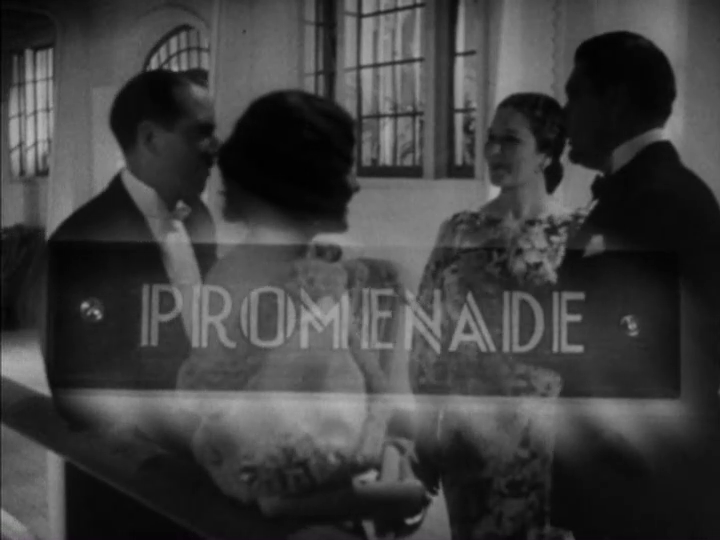
Maloney’s recipe includes instructions to shake “like it owes you money,” which is actually a pretty excellent segue into discussion of Black Sheep since income, like the film’s camera movements, represents both freedom and confinement for its protagonist John Francis Dugan (Edmund Lowe) and the other characters. As Frederic Lombardi writes in his book Allan Dwan and the Rise and Decline of the Hollywood Studios, “the opening shots of the film give a full sense of the great breadth of the ship Olympus but as the story unfolds, there are increasing attempts to restrict the space in which Dugan can move, so that he must literally know his place.” To start at the beginning, an introductory montage provides a tour of the ship’s first-class spaces:
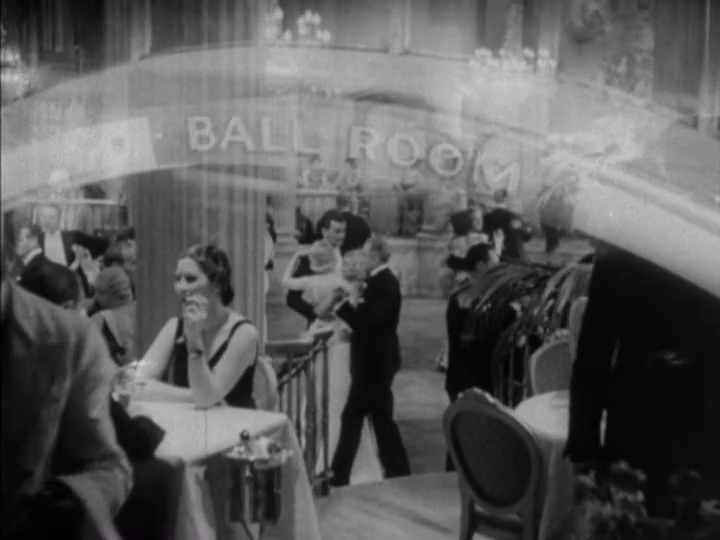
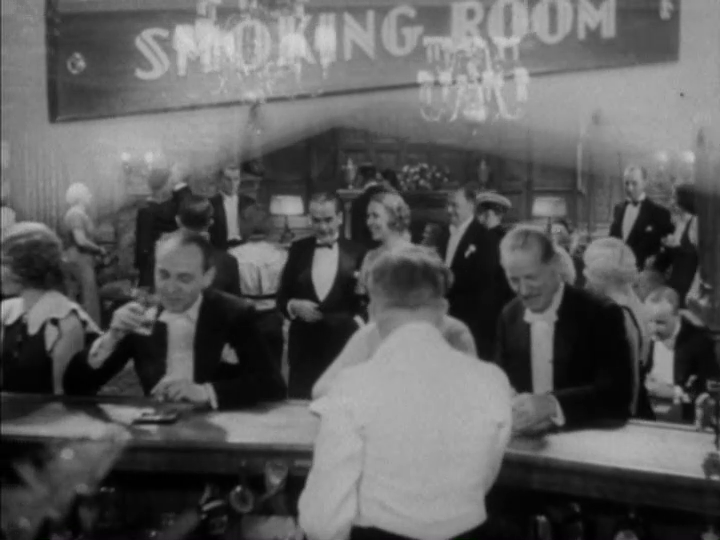
Double-exposed shot of a sign that reads "Ball Room" superimposed over that space
Double-exposed shot of a sign that reads "Smoking Room" superimposed over that space
Double-exposed shot of a sign that reads "Promenade" superimposed over that space

Before the gliding camera comes to rest on this sign:
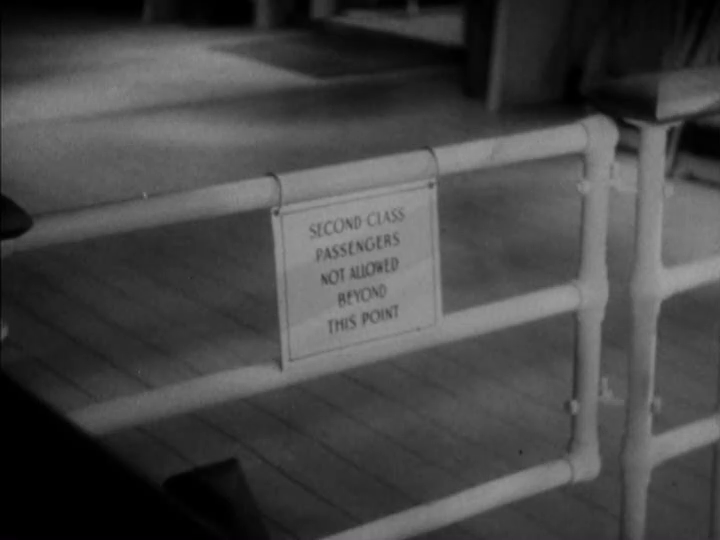
Close-up of a sign on a railing that reads "Second class passengers not allowed beyond this point"

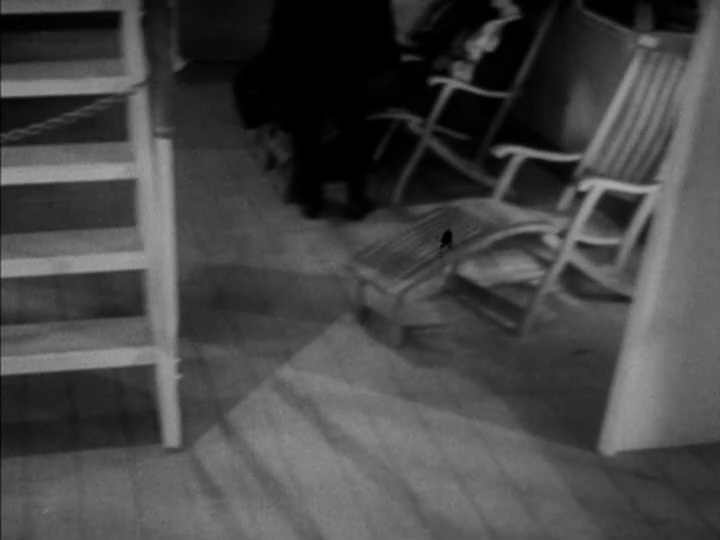
And then goes tumbling down the stairs:
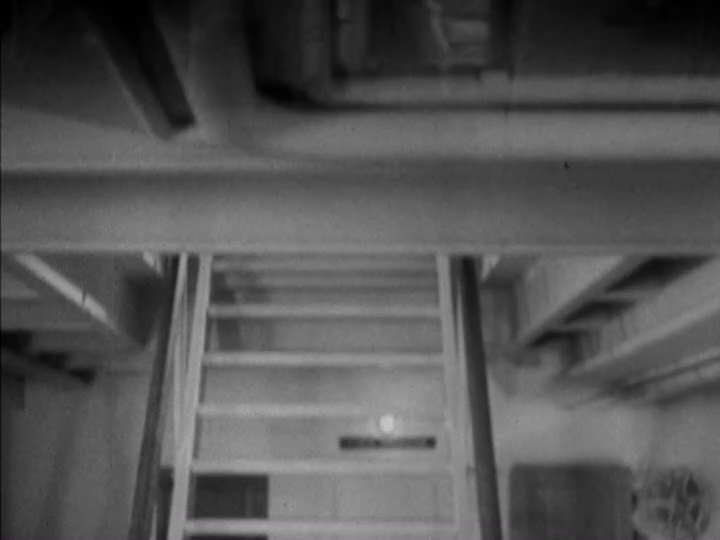
Close-up of the top of the stairs that the sign in the previous shot blocked
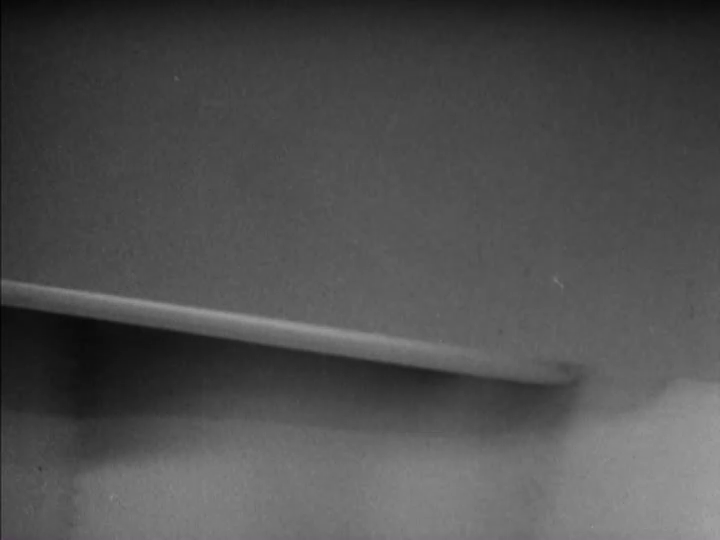
Close-up of the bottom of the stairs from the last two shots
Close-up of the ceiling of the deck that the stairs lead to, which in combination with the previous two screengrabs creates the impression of a fall

Moving at a much faster pace than it did earlier, cinematographer Arthur Miller’s camera now repeats its double-exposure trick to show us we’ve been taken down a notch to second class:
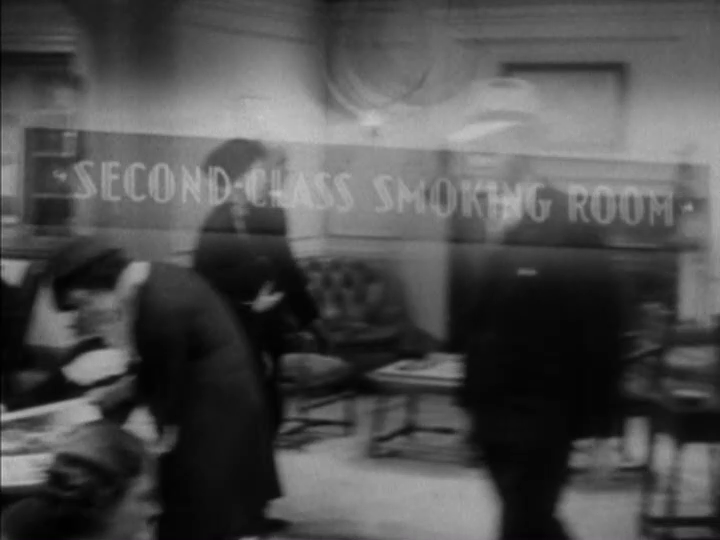
A sign that reads "Second-class smoking room" superimposed over that space, which is blurry because the camera is tracking rapidly to the right

Before it finally stops on a sign and cuts to Dugan playing solitaire:
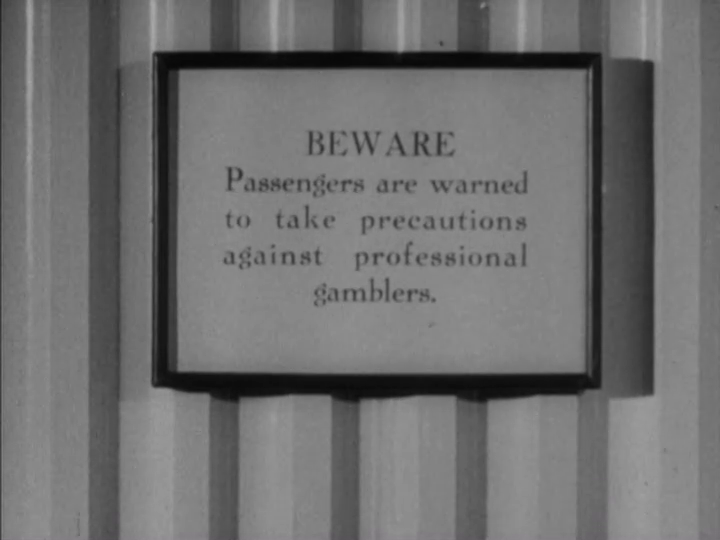
Close-up of a sign that reads "Beware: Passengers are warned to take precautions against professional gamblers"
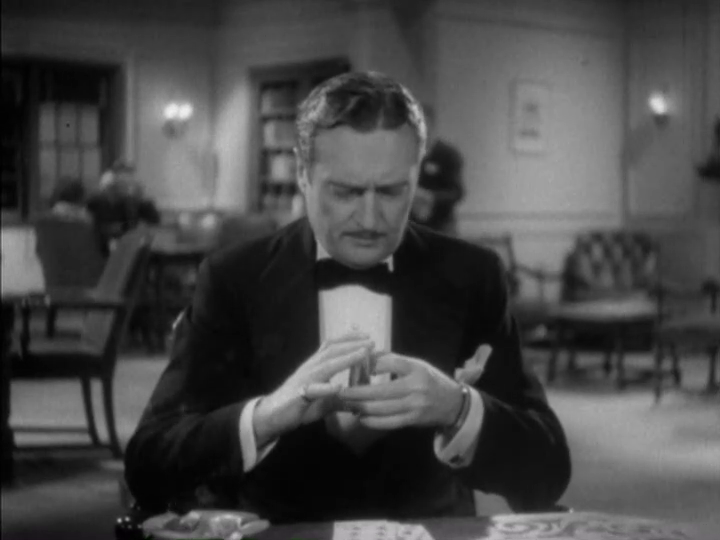
Close-up of John Francis Dugan

In just the first of many examples of what Fernando F. Croce calls Black Sheep‘s “limpid storytelling,” our logical assumption that he must be one of the sharps that the people on board the Olympus are cautioned to be wary of is confirmed by the two shots which follow him looking up from his game at his fellow denizens of the second-class smoking room.
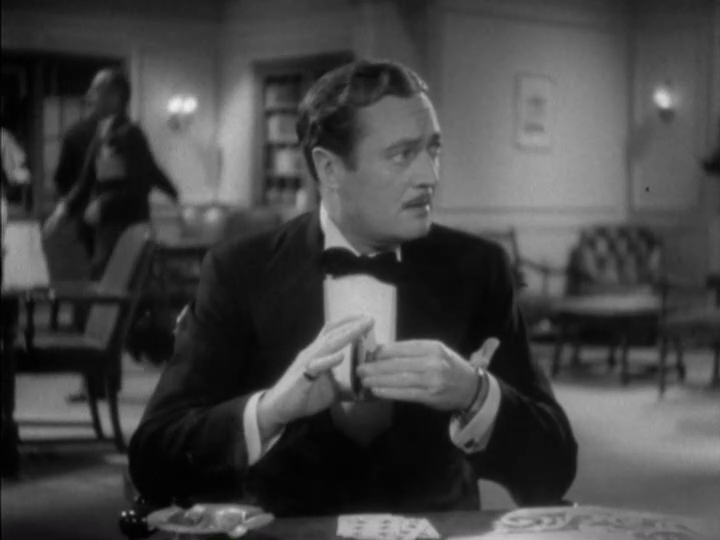
Medium shot of Dugan looking stage left

First a woman indignantly responds to her companion’s suggestion that they play bridge for a tenth of a cent per point by saying, “I should say not! I lost 55 cents at a twentieth last night. I’ll play for a fortieth or nothing.”

Medium shot of a bridge player looking indignant

Then one man responds to another’s suggestion that they play checkers by saying, “I don’t mind if you don’t play for money.”
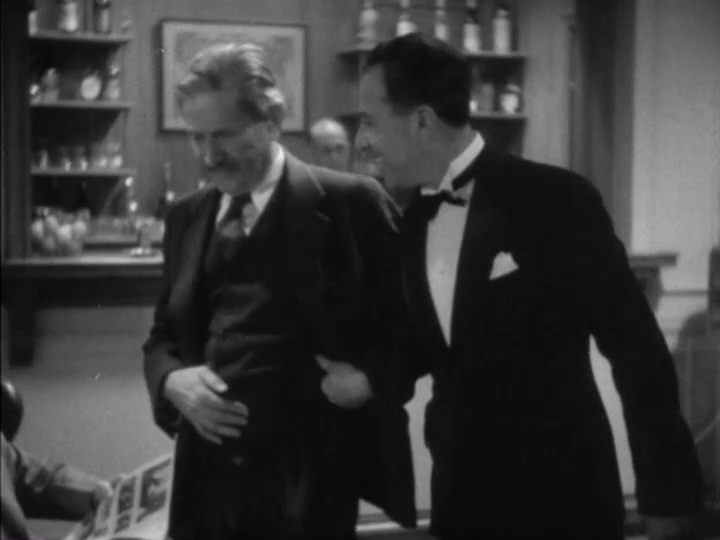
Medium shot of two men walking arm-in-arm to an offscreen checker board

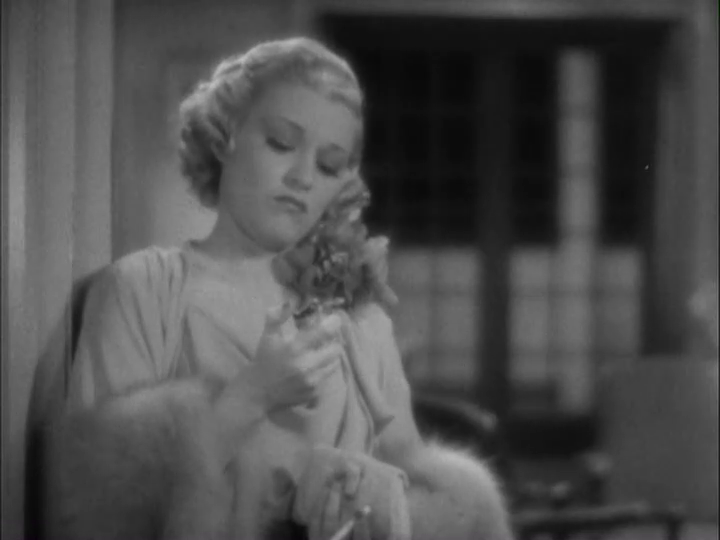
Dugan shakes his head and returns to his game, but is soon distracted by an offscreen clicking noise which a quick tracking shot soon reveals to be caused by Foster’s vain attempts light a cigarette:
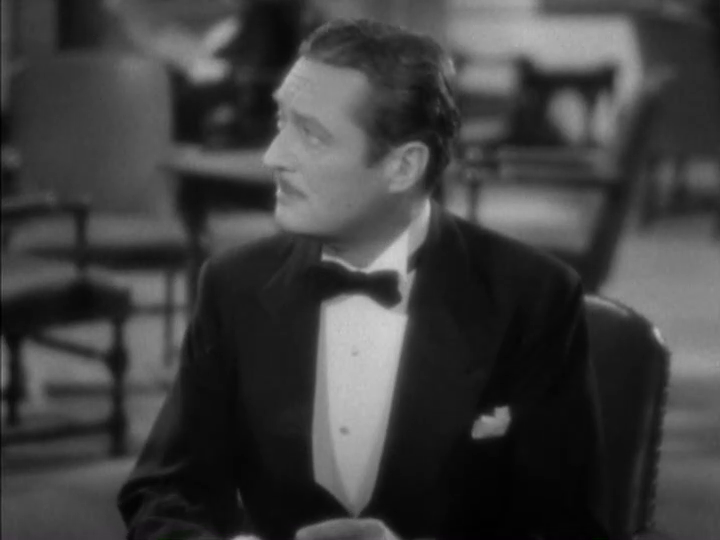
Medium shot of Dugan looking up and stage right
Medium shot of Claire Trevor's Janette Foster looking down and to stage left at a lighter that doesn't work

And with that we’re off and running! Foster’s lighter doesn’t work because it isn’t supposed to: “that’s how I meet so many nice people,” she informs Dugan. It’s a toss-up for me whether the *very* best thing about Black Sheep is the dialogue by director Allan Dwan (who wrote the story that the movie is based on) and screenwriter Allen Rivkin or the chemistry between its stars, who David Cairns brilliantly describes as “so delightful together you long for a whole season of Thin Man type romps for them to connive through (as he says, “sometimes film history just misses a trick”) although these things are of course related. The snappy one-liners come fast and furious right from the start: when Foster asks if she can buy Dugan a drink, his reply is “I don’t know, can you?” A few beaters later she labels them “two good mixers with no ingredients.” Then a bit further on after the two sneak upstairs to “see how the rich people live,” Dugan condenses a whole lifetime of back story into just a handful of sentences. “There are two things that always floor me,” he tells Foster, “horses and dames. One keeps me broke, the other crazy, and you can’t depend on either of them.” When she quips, “don’t tell me a horse jilted you!” he replies in kind: “yes, and a girl kicked me.”
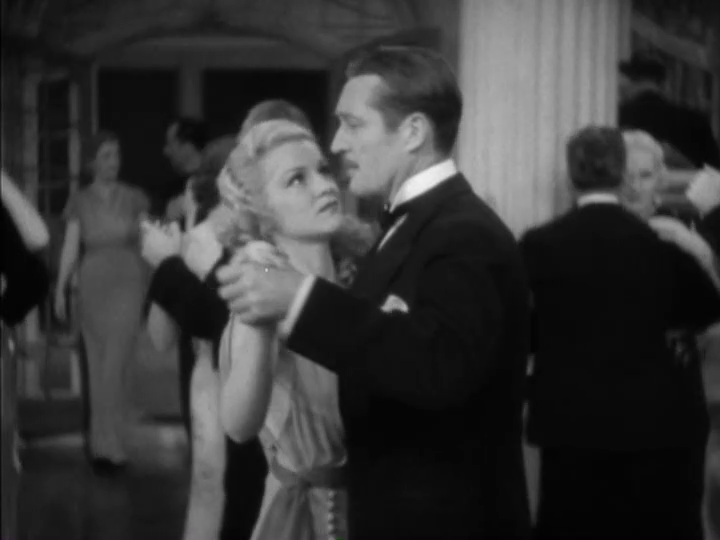
Medium-long shot of Dugan and Foster talking as they dance

But then he adds: “that was twenty years ago. Forget it.” Speaking of coin flips, in addition to sharing a profession in common with the main character of last month’s Drink & a Movie selection Bob le Flambeur, Dugan similarly uses them as an external signifier of his deference to the Fates:
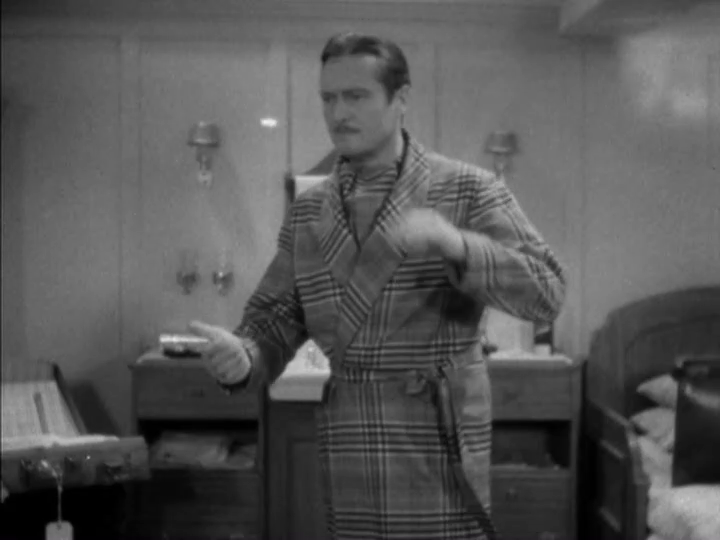
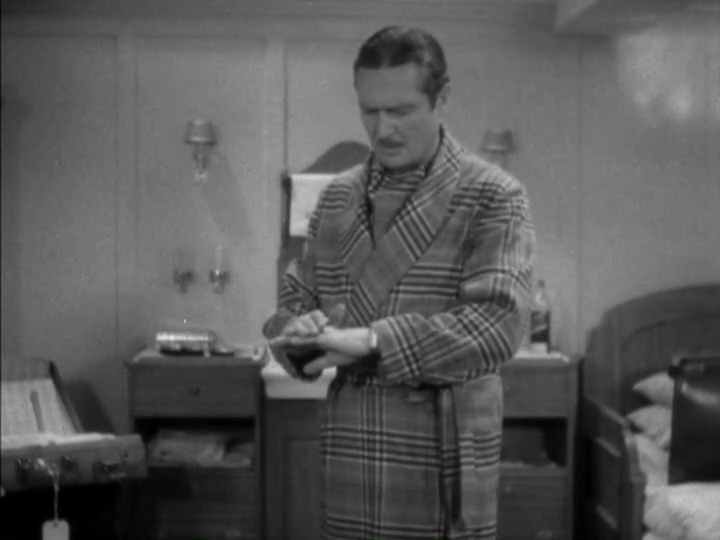
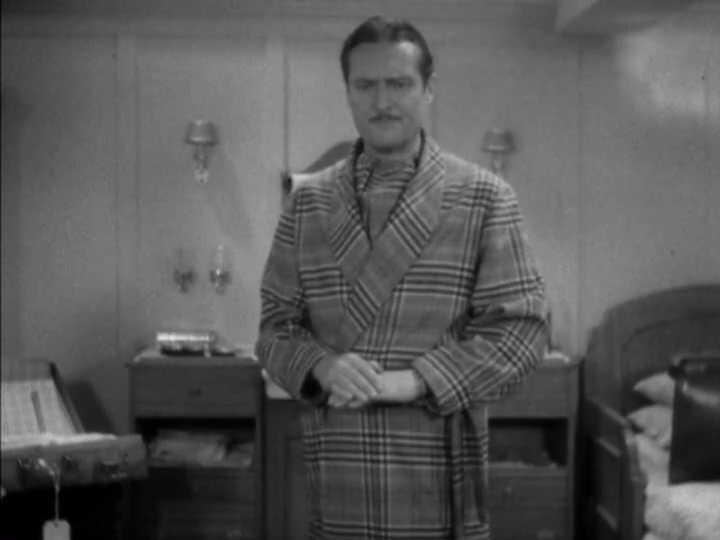
Medium-long shot of Dugan, who is wearing a bathrobe, preparing to catch a coin in midair
Medium-long shot of Dugan lifting his hand and peering at the result of the coin flip
Medium-long shot of Dugan looking somewhat displeased at the result of the coin flip

“Dugan and Foster stay in business,” he says after this one, referring to the partnership they have entered into to help a young man named Fred Curtis (Tom Brown) they observed getting fleeced in poker during their upper deck sojourn who also, as it happens, turns out to be Dugan’s son. This fact is revealed in a moment that Matt Strohl describes as “an emotional bolt of lightning in the middle of the film” which occurs after Dugan has helped Curtis win back some of the money he lost to Eugene Pallette’s and Jed Prouty’s buffoonish oil tycoons Colonel Upton Calhoun Belcher and Orville Schmelling by posing as his friend, but only at the expense of his own profits when he is forced to accept the checks Curtis wrote them as payment or risk giving up the ruse. He’s right in the middle of getting tough with Curtis (“I’ve got $1800 coming from you and I want it–in cash”) when suddenly he spots a set of framed photos:
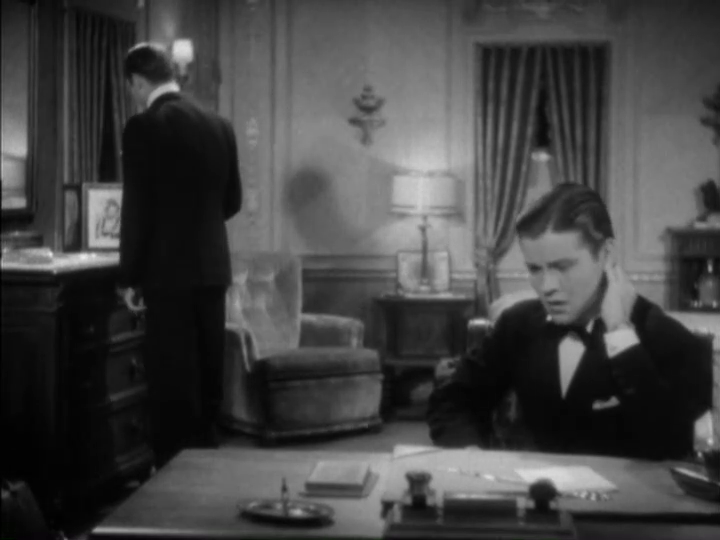
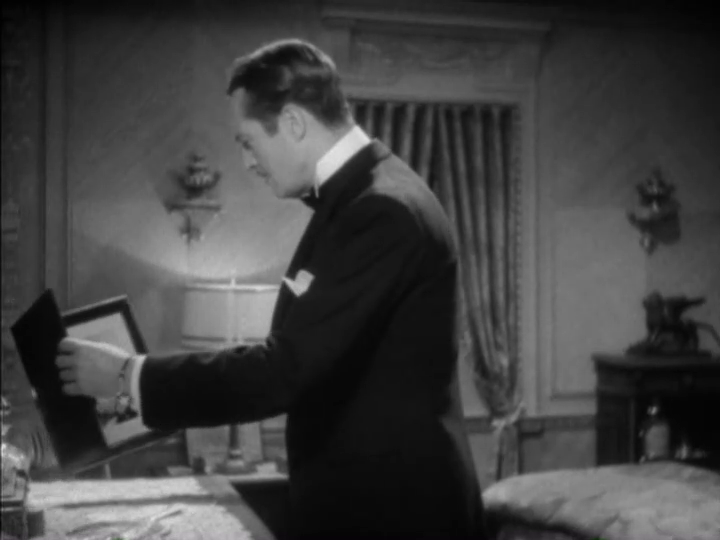
Curtis looks stressed in the foreground while Dugan spies a framed set of photos in the background
Medium shot of Dugan picking up the photos
Close-up of Dugan looking stunned

“What’s the matter?” Curtis asks him after he notices the older man’s reaction:
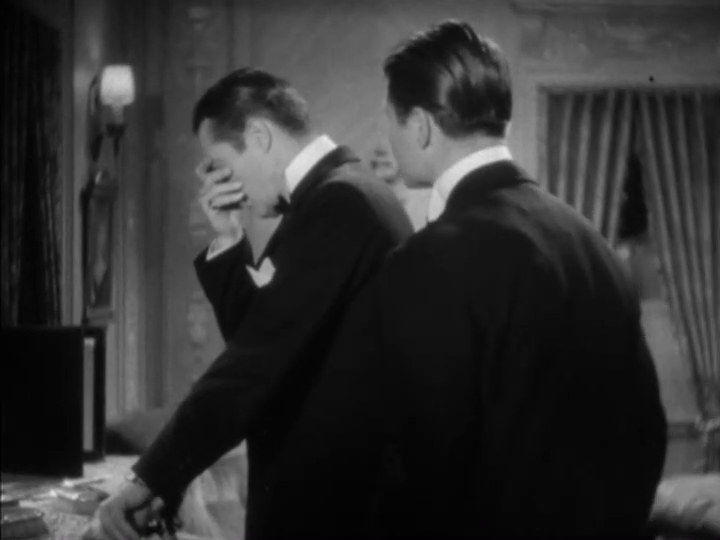
Medium shot of Curtis asking Dugan, who has his head in his hand, what is the matter

“Oh, nothing, nothing–I probably had too much to drink or something,” Dugan stammers. He gives no further explanation, but immediately changes his tune regarding repayment. “Where’s that note for those rubber checks?” he asks, then looks on with what my daughter Lucy would call a “thin smile” while Curtis writes it:
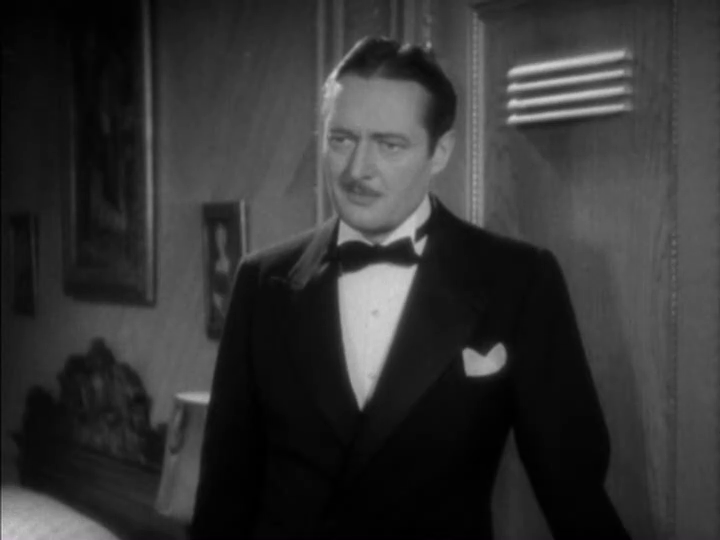
Medium-long shot of Dugan looking bemused

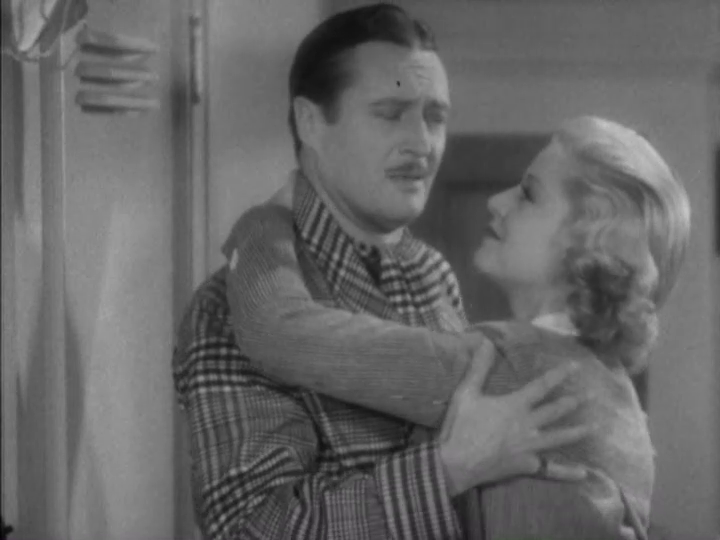
As Strohl notes, although Dugan never reveals his discovery to Curtis even through the end of the film, “that one reaction scene reverberates and lends weight to everything that follows,” including what I think must be the romantic non-kiss in the history of cinema. It takes place about halfway through a 30-second-long shot that begins right after the coin flip depicted above when Dugan notices Foster’s hand on the lapel of his bathrobe:
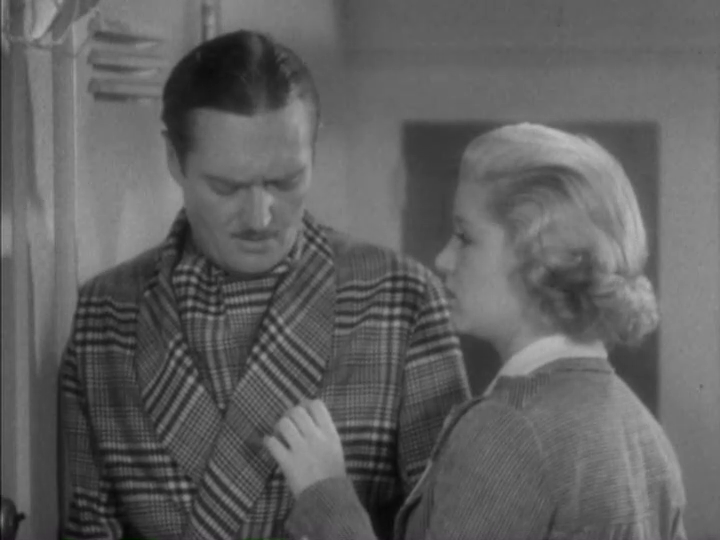
Medium shot of Dugan looking at Foster's hand

They put their arms around each other and lean in, but suddenly he pulls back:

Medium shot of Dugan and Foster leaning in for a kiss . . .
Dugan and Foster lean in closer
Suddenly Dugan pulls back

It’s just for a second and they lean in again, but the result is the same:

Medium shot of Dugan and Foster leaning in to each other again
Dugan pulls back again
Foster smiles as Dugan raises his head

Foster is already smiling as he lets out a perplexed sigh and is laughing by the time he calls for the steward to “take this lady out of here”:
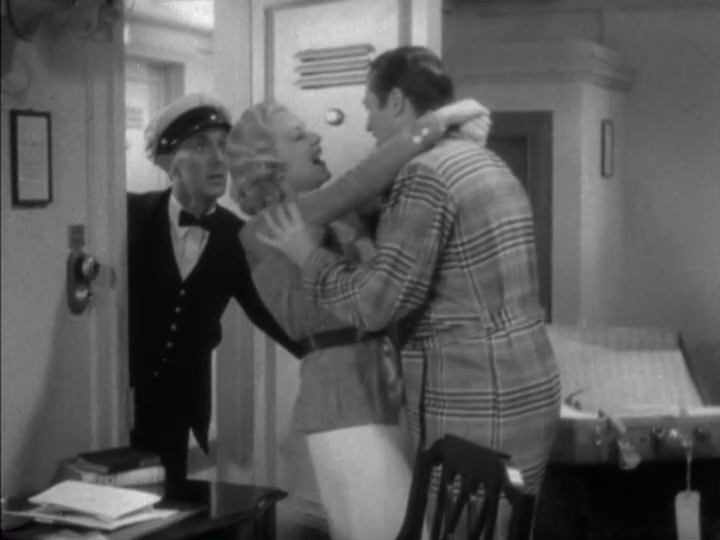
Medium-long shot of Foster, her arms still around Dugan's neck, laughing as steward opens the door and looks puzzled

Destiny can bring lovers together but in my experience the key to a happy marriage is that you have to really like each other! Dugan is clearly wondering what the heck happened to him and there’s work still to be done, so the wedding bells will have to wait, but these two clearly have a future together and he’s earned it. And that brings us right back to where we started! The steward appears in this scene because Dugan is supposedly under lock and key, and as Lombardi notes “restriction of movement is a severe violation for a Dwan character and film,” but Dugan “uses his room arrest to serve his ends.” In other words, all those attempts to put Dugan in his place ultimately fail, which is another connection between him and Bob Montagné: they both remain true to themselves no matter how down and out they find themselves and are eventually rewarded. Which now makes three “exceptions to the rule” I wrote about in my February Drink & a Movie post about The Young Girls of Rochefort, suggesting that it’s time to update my notion that “the human experience of trying to become a better person” is a theme of this series. After all, resisting the temptation to change more than you need to can itself be a challenge. Which, come to think of it, is the secret to the Chapuline’s success, too, isn’t it? Toby Maloney elevated the grasshopper by tweaking its proportions just a bit and adding one single ingredient. Or, to reframe this in terms that Dugan and Bob (and Kenny Rogers) would appreciate, sometimes the highest form of wisdom is knowing how to quite when you’re ahead.

Cheers!

All original photographs in this post are by Marion Penning, aka My Loving Wife. Links to all of the entries in this series can be found here.
Ithaca Film Journal: 4/3/25

What I’m Seeing This Week: I am currently out of town at a library conference, but I’m hoping to catch a few films at the Minneapolis St. Paul International Film Festival while I’m away. I’ll write them up in a dispatch blog post if I’m successful, so stay tuned! I’m also going to try to see The Woman in the Yard, which I’m hearing good things about from people I trust, at the Regal Ithaca Mall after I return.

Also in Theaters: If I was in Ithaca this week, I’d be prioritizing the Finger Lakes Environmental Film Festival, specifically the screenings at Cinemapolis of Snow Leopard on Friday; Sleep with Your Eyes Open on Saturday; and Little, Big, and Far on Tuesday. The best new movies now playing local theaters that I’ve already seen are the enjoyable genre exercises Black Bag (spy film), which continues its runs at both Cinemapolis and the Regal, and A Working Man (Jason Statham), which is at just the Regal. This week’s special events are highlighted by free screenings of the movies Improper Conduct and The Accelerator at Cornell Cinema on Monday and Tuesday respectively. Finally, your best bet for repertory fare is Princess Mononoke, which is at the Regal all week.

Home Video: I’ve been digging the fact that there have been many pre-Code movies with ~60 minute runtimes featured on Watch TCM lately because they’re the perfect thing to watch when, say, we miraculously get the kids settled on Thursday night with about an hour to spare before Top Chef comes on. My favorite recent discovery is the 1933 film Female, which starts where Movie Year 2024’s Babygirl ends: with a girlboss CEO exiling an employee she has slept with to a faraway branch office. A lot of people seem to be hung up on the messaging of the climax, but the preponderance of available evidence suggests to me that whatever they say to each other in the final scene, Ruth Chatterton’s Alison Drake is much more comfortable in the board room than George Brent’s engineer Jim Thorne is ever likely to be. Anyway, the film also features delightfully profligate back projection and some outrageous wipes, so be sure to check it out before it disappears from the platform on April 9!

Previous “Ithaca Film Journal” posts can be found here. A running list of all of my “Home Video” recommendations can be found here.

Ithaca Film Journal: 3/27/25

What I’m Seeing This Week: I’m a single parent for the next four days while My Loving Wife is out of town, and I’m planning to take the girls to see The Day the Earth Blew Up: A Looney Tunes Movie at the Regal Ithaca Mall while she’s away. I’m also going to try to sneak in a screening of A Working Man there during the brief window of time between her return and my departure for a conference in Minneapolis on Wednesday.

Also in Theaters: This week’s highlight is definitely the beginning of the Finger Lakes Environmental Film Festival! For the reasons described above, I won’t be able to make it to any of the initial screenings, but some titles that jumped out at me include Little, Big, and Far; Snow Leopard; and Youth (Hard Times), which screen at Cinemapolis tomorrow, Saturday, and Tuesday respectively. Eephus is the first serious contender for my Top Ten Movies of 2025 list, but it’s sadly down to its last two screenings at Cinemapolis today at 5:50 and 8:20pm. Best Picture Oscar winner Anora closes there today as well, and there’s also a screening of Best Documentary Feature Oscar winner No Other Land at Cornell Cinema tonight at 7pm. After that my top recommendation will become Black Bag, a relationship movie disguised as a spy thriller starring Michael Fassbender and Cate Blanchett and shot by Steven Soderbergh (sorry: Peter Andrews) to look like a sleepy child’s view of Christmas lights out a car window. Finally, your best bets for repertory fare are The Umbrellas of Cherbourg, which plays Cornell Cinema tomorrow, and Before Sunrise plus its sequel Before Sunset, both of which are at Cinemapolis all week.

Home Video: Speaking of Anora, it is now streaming on Hulu! Critic Noel Vera was kind enough to engage me in a back-and-forth in the comments section of his review last November about Ani, the character Mikey Madison won a Best Actress Oscar for portraying, and whether or not it’s believable that she falls so completely for Mark Eydelshteyn’s Vanya. To him Ani “feels too smart for that; at least as Madison plays her” and thus “the ending, glum as it is, doesn’t quite hit as hard” because the film “still feels every bit the fairy tale.” To me, though, that’s precisely the point. Ani may be clever and tough, but she still has Disney princess dreams that make her vulnerable. I rewatched Cinderella, the specific one she mentions, the other day, and it’s not like Prince Charming does anything to convince his bride that he’d be willing to stand up for her against his father the king if she turned out to be unable or unwilling to have children! Anyway, the mere fact that we spent so much time talking about this is a testament to how successful Madison and writer-director Sean Baker were at creating a memorable movie heroine and a world for her to inhabit.

Previous “Ithaca Film Journal” posts can be found here. A running list of all of my “Home Video” recommendations can be found here.

Ithaca Film Journal: 3/20/25

What I’m Seeing This Week: My top priority is On Becoming a Guinea Fowl, since it will be at Cinemapolis for one week only, and I’m planning to see Eephus there as well because I don’t want to risk missing it either. Finally, our plans for a “date night” outing to Black Bag at Cinemapolis or the Regal Ithaca Mall last week fell through, so My Loving Wife and I trying again tomorrow.

Also in Theaters: The best new movie now playing Ithaca RIGHT NOW that I’ve already seen No Other Land, but its final screening at Cinemapolis is today at 2:50pm. After that it will be Anora, which continues its post-Best Picture Oscar run at Cinemapolis and the Regal. That should definitely be your first choice if you somehow haven’t already checked it out, but otherwise it’s all about special events and repertory fare this week. Highlights on the former front include free screenings at Cornell Cinema of an experimental short films program called “Matter Falling Out of Form” tonight, The Year Between on Monday evening and a shorts program called the “Women’s Adventure Film Tour 2025” on Wednesday, as well as a double feature of The Umbrellas of Cherbourg and La La Land there on Saturday. My other “old movie” recommendation is Peeping Tom, which closes out Cornell Cinema’s “Powell and Pressburger: Titans of Technicolor” series tomorrow.

Home Video: My oldest daughter Lucy recently scored the first two points of her basketball career in the final game of her second season. We’re extremely proud of all the hard work she has put in on and off (her coaches think that indoor rock climbing has had a noticeable impact on her upper body strength) the court and have enjoyed watching her improve each week. In addition to the bucket, she also fought for rebounds and let her teammates know when she was open, which she attributes to our new pre-game ritual of playing the song “Defying Gravity” on repeat in the car so that she and her sister can lustily sing along to it to warm up her voice. In honor of this momentous event (which literally brought tears to My Loving Wife’s eyes!) in our family’s history, this week’s home video recommendation is Love & Basketball, which Cornell Cinema actually screened in February and which is now streaming on Peacock.

This film was released theatrically almost exactly one year before I officially became a diehard basketball fan during my freshman year at the University of Pittsburgh when my soon-to-be-beloved Panthers went on a Cinderella run during the Big East (RIP) tournament. Although this wasn’t enough to secure an NCAA Tournament bid that year, they went on to appear in the next ten and came within a heartbreaking miracle Scottie Reynolds coast-to-coast basket of the Final Four in 2009. Throughout this run they always had great point guards, so I was delighted when this turned out to be the position that Love & Basketball‘s protagonists Monica Wright (Sanaa Lathan) and Quincy McCall (Omar Epps) both play and in heaven when the movie’s pivotal moment turns out to be Wright taking a charge. It also features one of cinema’s great one-on-one games (along with Arthur Agee’s showdown with his father in my March, 2024 Drink & a Movie selection Hoop Dreams) followed by a heartwarming final scene celebrating the WNBA, which was still only in its third year of existence during shooting.

Previous “Ithaca Film Journal” posts can be found here. A running list of all of my “Home Video” recommendations can be found here.

March, 2025 Drink & a Movie: All In + Bob le Flambeur

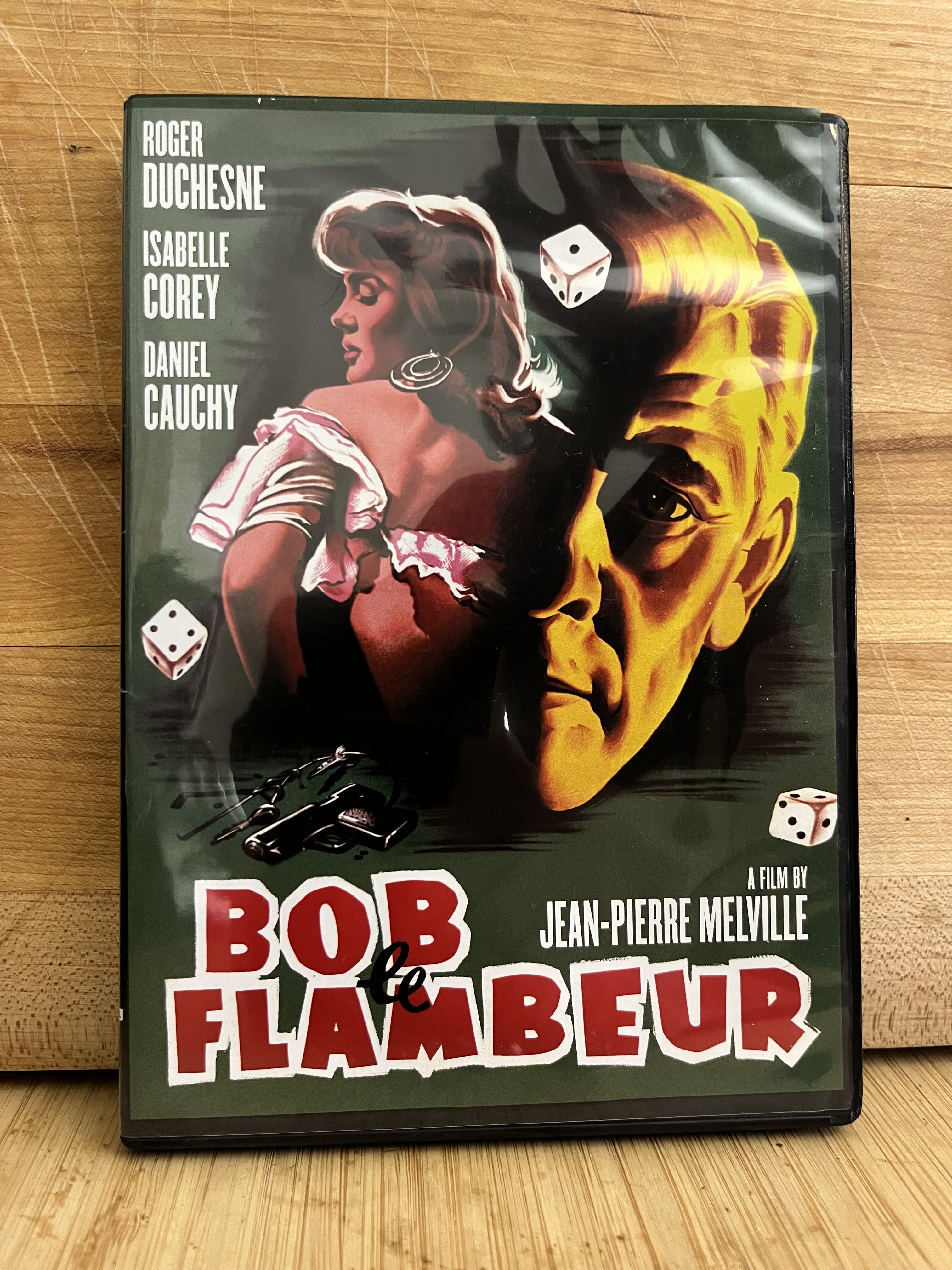
From where I’m standing the net impact of expanded legalized sports betting has clearly been negative. Research shows that it results in increased levels of debt for individual consumers, athletes are subject to unconscionable levels of abuse because of it, and the constant barrage of ads and ridiculous celebrity parlays makes the experience of watching sports on TV less fun. For all of these reasons I’d probably support more regulation at this point despite my libertarian inclinations, but as long as it remains so easy to place a bet, I will selfishly continue to enjoy doing so during certain times of year. March is one of them because of the NCAA Tournament, so lately I’ve been thinking about my favorite titular (which disqualifies Howard Ratner) movie gambler, Bob Montagné (Roger Duchesne). Here’s a picture of my Kino Lorber DVD copy of the film he lent his name to, Bob le Flambeur:

Bob le Flambeur DVD case

It is also available for rental from a variety of other platforms, and some people (including current Cornell University faculty, staff, and students) may have access to it through Kanopy via a license paid for by their local academic or public library as well.

The drink I’m pairing it with was created by Natasha David as boozy version of her favorite thing to eat, “dark, bitter chocolate.” Here, per Imbibe, is how you make her All In (which for the uninitiated is a poker term which refers to the act of pushing all of one’s chips into the middle of the table) cocktail:

1 1/2 ozs. Rye (Pikesville)
3/4 oz. Campari
3/4 oz. Dry vermouth (Dolin)
1/4 oz. Crème de cacao (Tempus Fugit)

Stir all ingredients with ice and strain into a chilled cocktail glass. Express a lemon twist over the top and discard.

All In in a cocktail glass

This concoction’s nose is dominated by lemon from the twist, and my brain therefore immediately latched on to the citrus notes in the Campari and Dolin on the sip. There’s also a lot of burn from the rye, though, which combines to create an initial impression not unlike drinking grappa. The swallow and finish are all very dark (think 85+% cacao) chocolate. David specifies rye that is 100-proof or higher, making this a perfect place to showcase Pikesville, which clocks in at 110 and is totally my jam these days. She also described her goal being “to create a dry chocolate cocktail that wasn’t limited to a dessert drink—a cocktail that could be enjoyed any time of the day,” and in that regard the All In is a resounding success.

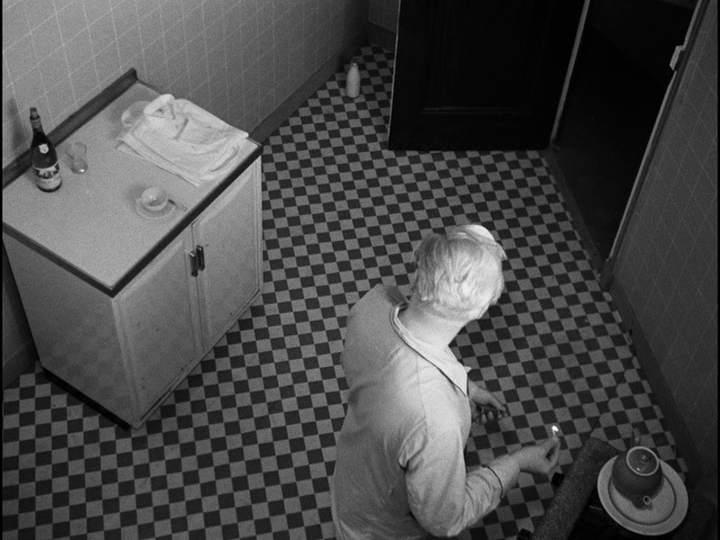
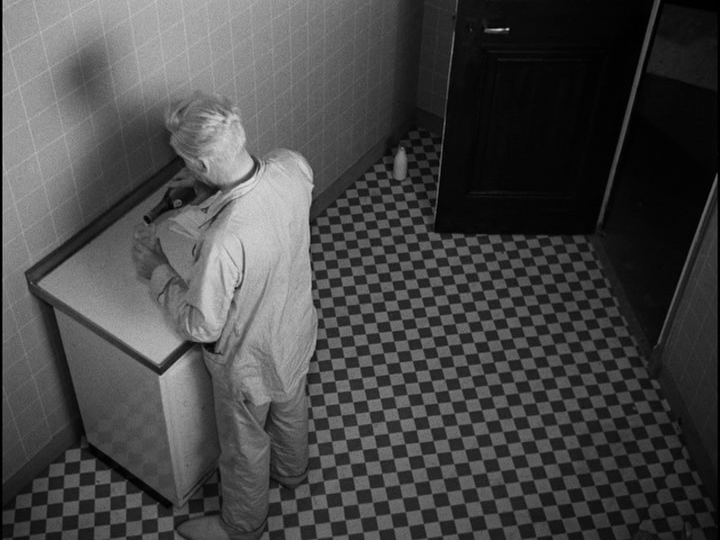
Bob would appreciate this beverage, as he is no stranger to imbibing during the daylight hours. Here, for instance, we see his best laid plans for breakfast being waylaid by a tempting bottle of wine:

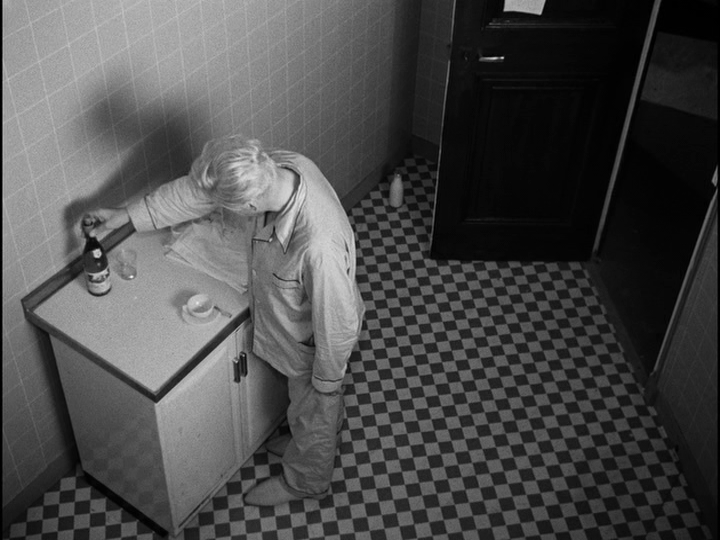
Overhead shot of Bob reading the label on a bottle of wine
Bob pauses while lighting the stove on the other side of the room to look back at the bottle
Overhead of shot of Bob pouring himself a glass of wine

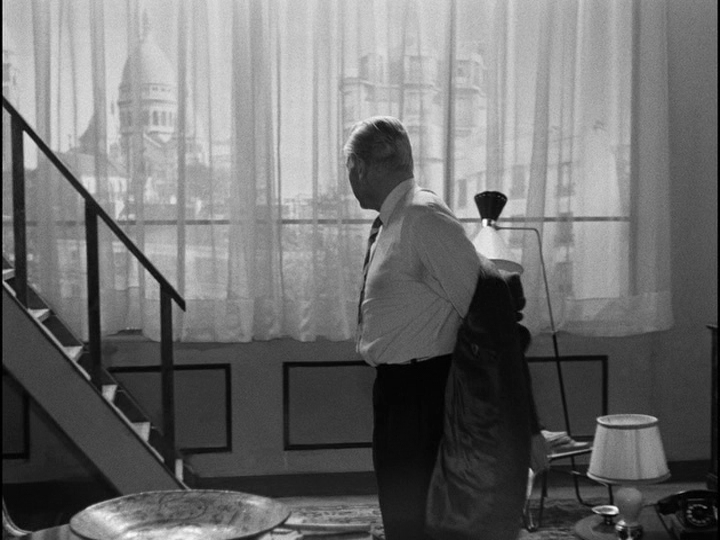
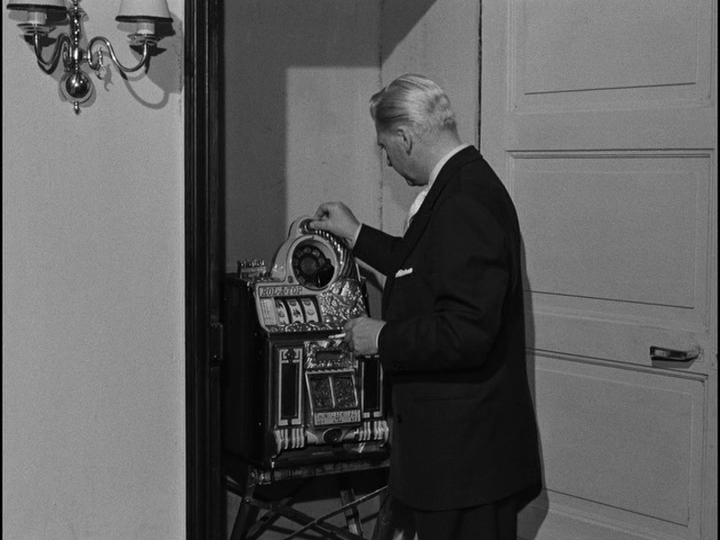
His luxurious apartment, which has one of the best views in the history of cinema and a slot machine in the closet:

Bob standing in front of a giant window with a great view of Paris
Bob pulling the lever on the slot machine he keeps in a closet

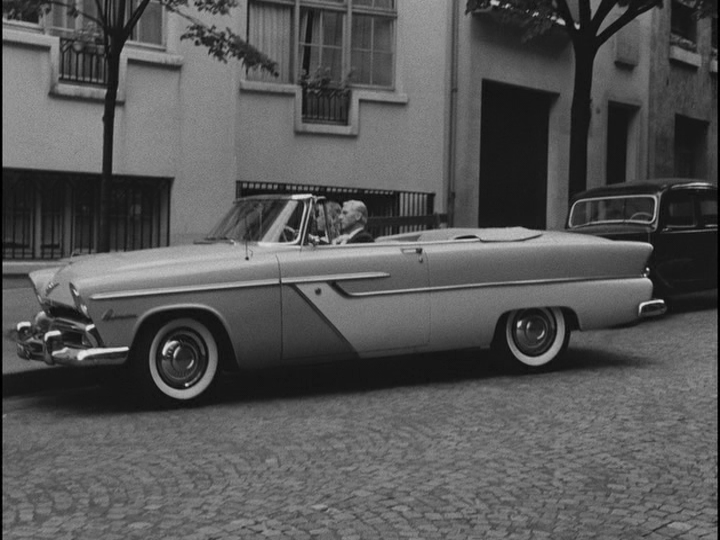
“Absolutely massive American car,” as Nick Pinkerton says in his DVD commentary track (where he also identifies it as a 1955 Plymouth Belvedere):

Medium shot of Bob's car

And the fact that he appears to have a standing invitation to join any high-stakes game in Paris all suggest that he must have been more disciplined in his youth, but he is become, in the words of his best friend Roger (André Garet), a “pitiful” compulsive gambler who squanders every big win by taking his profits elsewhere and promptly losing them.

Roger gives Bob some tough love after a bad night at the casino

Because he does so in style, though, and according to a moral code that includes generosity to those even less fortunate as one of its primary tenets, he nonetheless remains an idol to the young men in his circle like Paolo (Daniel Cauchy), whose late father knew Bob back in his gangster days:

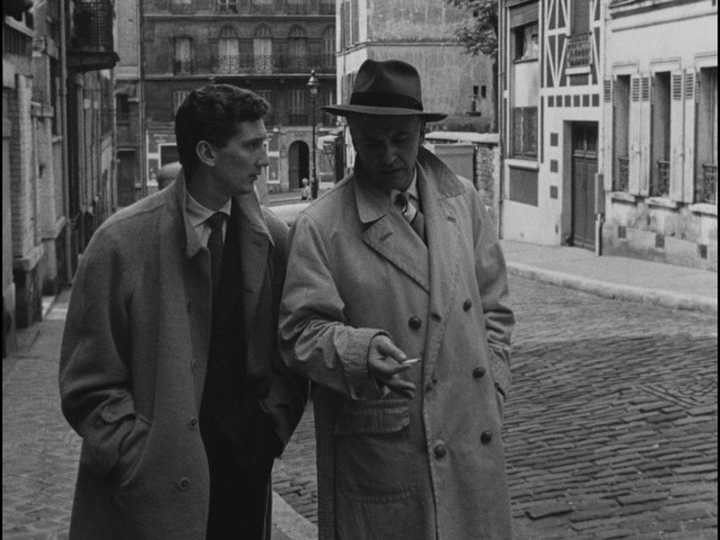
Medium shot of Bob regaling Paolo, who is dressed similarly, about a bad bead

A hero to young women like Isabelle Corey’s Anne, to whom he provides pocket money and a place to sleep with no expectation of repayment in any form:

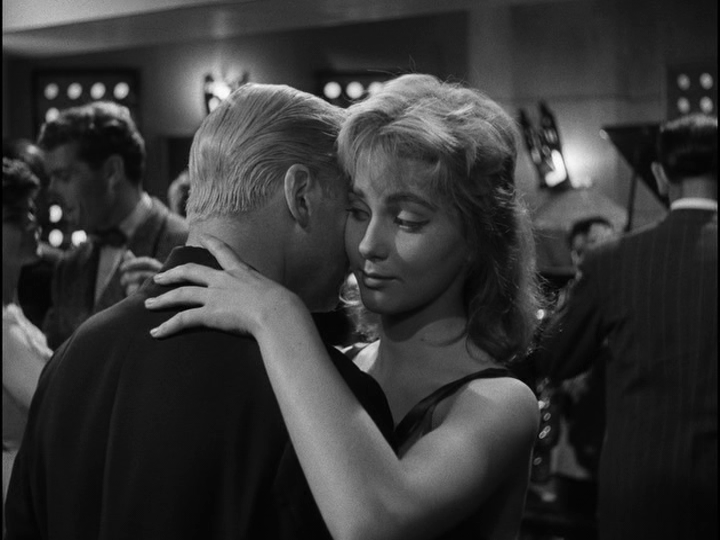
Medium shot of Anne dancing with Bob

And the object of fraternal or maternal affection from compatriots like Roger and Simone Paris’s Yvonne, who purchased her café with a loan from him:

Medium shot of Yvonne talking to Bob over a glass of pastis

As well as the recipient of professional courtesy from René Havard’s Inspector Morin of the police, whose life he once saved:

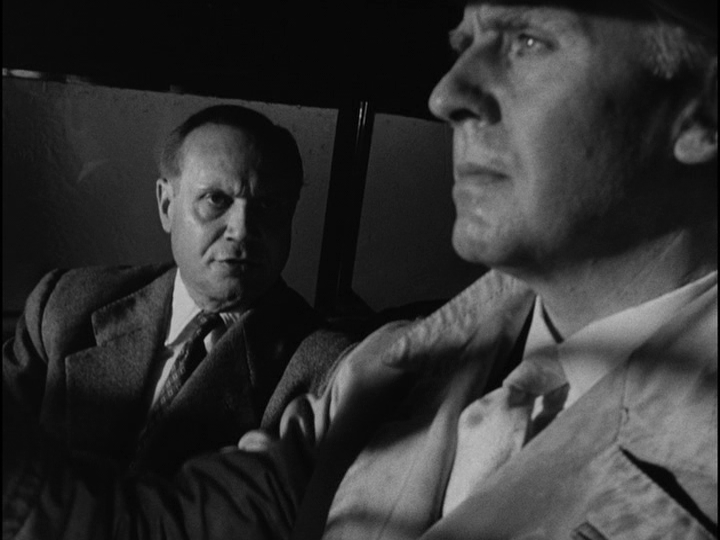
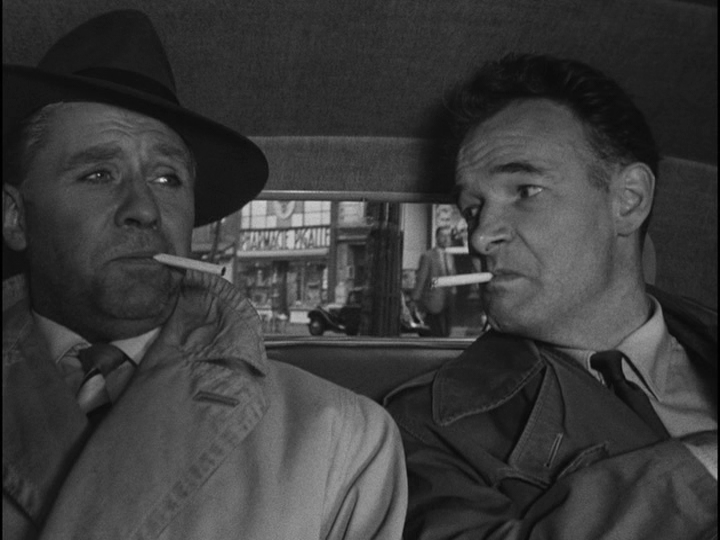
Inspector Morin and Bob talk in the back seat of a police car while smoking cigarettes

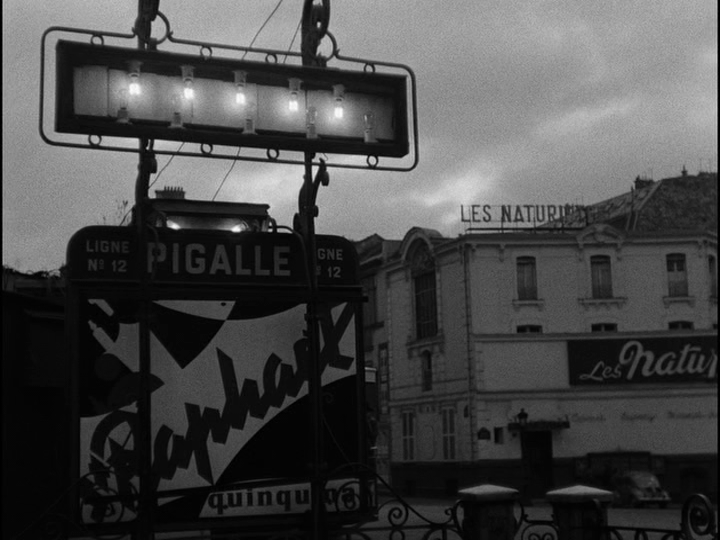
If you didn’t know this was a caper movie, you’d never guess it from the first 37 minutes, which function more as a sort of nature documentary showing Bob in his natural environment. As Glenn Erickson observes in his review of Kino Lorber’s 4K Ultra HD + Blu-ray copy of the film which came out last year, the location shooting makes it “a literal time capsule of a long-gone Montmartre, a collection of nightclubs and bars where colorful, unsavory night crawlers plot their next moves.” It begins with a monologue that characterizes the Parisian neighborhood as “both heaven and . . . hell” with the image of a descending funicular and accompanying musical cue during the ellipse.

Establishing shot of the Basilique du Sacré-Cœur de Montmartre
Long shot of the Montmartre funicular
Long shot of neon signs at dawn

Anne is introduced as an illustration of how “people of different destinies” cross paths in the pre-dawn hours not by name, but as a girl “with nothing to do” who is “up very early . . . and far too young” who passes a cleaning lady hurrying to work on the street:

Long shot of Anne passing a cleaning lady on the street

Finally, we meet Bob playing craps in an establishment featuring the first example of what J. Hoberman calls “the insistent checkerboard patterns that make the movie so emphatically black-and-white”:

Bob playing craps in a room with checkerboard-patterned walls

They appear again on the walls of Roger’s office, where author of A History of the French New Wave Cinema Richard Neupert argues they function “to remind the viewer that Bob, with his flowing white hair, sees the world as one big board game”:

Long shot of Bob and Roger talking in the latter's office, which is decorated in a checkerboard pattern reminiscent of the one in the previous image

Per Neupert, Bob le Flambeur inspired the French New Wave with its “raw, low-budget style that mixes documentary style with almost parodic artifice.” My favorite examples of both tendencies can be found in the rehearsals which lead up to the attempted robbery that Bob begins to plan after he learns that the safe in the Deauville casino will have 800 million francs (which as near as I can work out is about 20 million USD today) at 5am the morning of the upcoming Grand Prix race. After he and Roger find someone (Howard Vernon as McKimmie, who insists on a 50% cut of the take) to finance their operation in the first of many scenes that the 2001 remake of Ocean’s Eleven directed by Steven Soderbergh pays homage to, the “recruitment waltz” begins:

Medium shot of Bob recruiting someone to help him rob the Deauville casino
Medium shot of Roger signing up another member of their crew

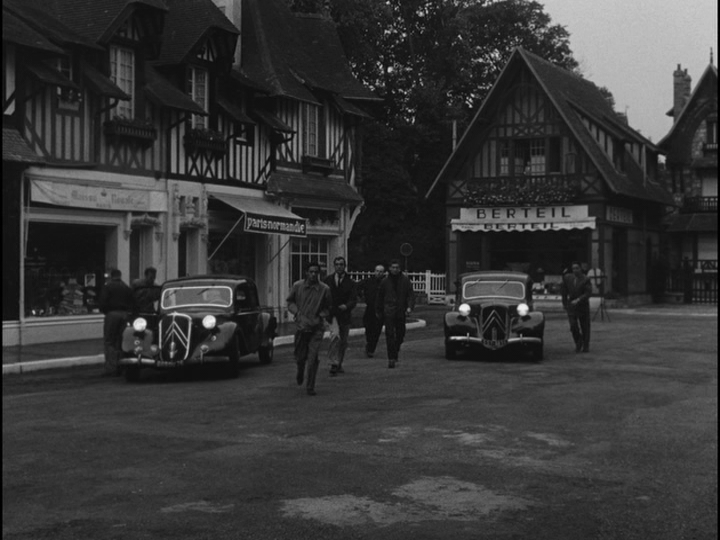
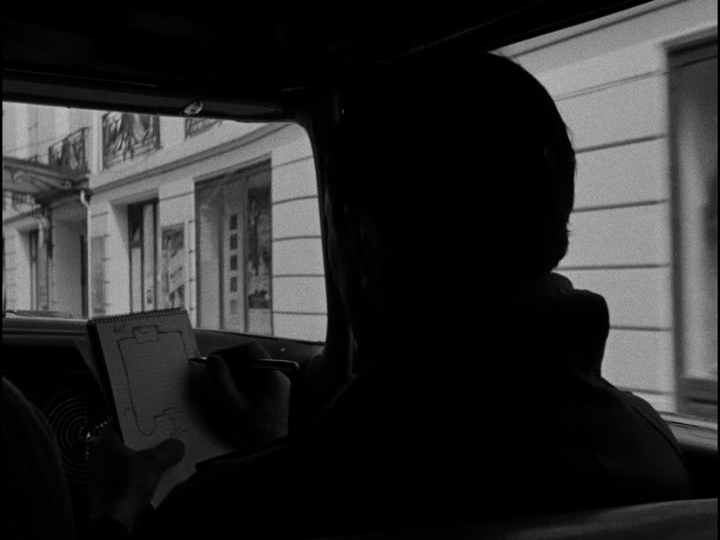
With their team assembled, they set about casing the joint by circling it repeatedly in a car and sketching an outline in a minute-long scene that embodies the “documentary style” Neupert describes:

The Deauville casino through the window of a car
The car's passenger sketches the outline of the building

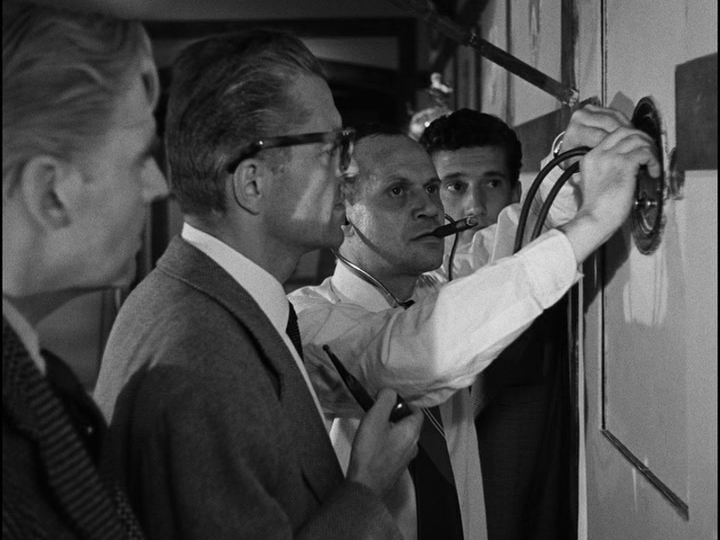
They also obtain blueprints and specs which they use to obtain a safe so that Roger can practice opening it:

Medium shot of Roger opening a safe as Bob, Paolo, and McKimmie look on

And best of all draw chalk outlines of the casino on a grass field so that they get an accurate sense of the space:

Medium shot of Bob gesturing at a floor plan
Bob directs a member of his crew to the spot on the outline of the casino where he is supposed to stand during the robbery
Bob standing at his spot

We also see Bob’s vision of how the operation is supposed to in a casino of empty of anyone except him and his crew, a technique borrowed by my July, 2023 Drink & a Movie selection Inside Man among scores of other films:

Bob imagines his crew arriving at the casino
The crew at their posts with guns drawn
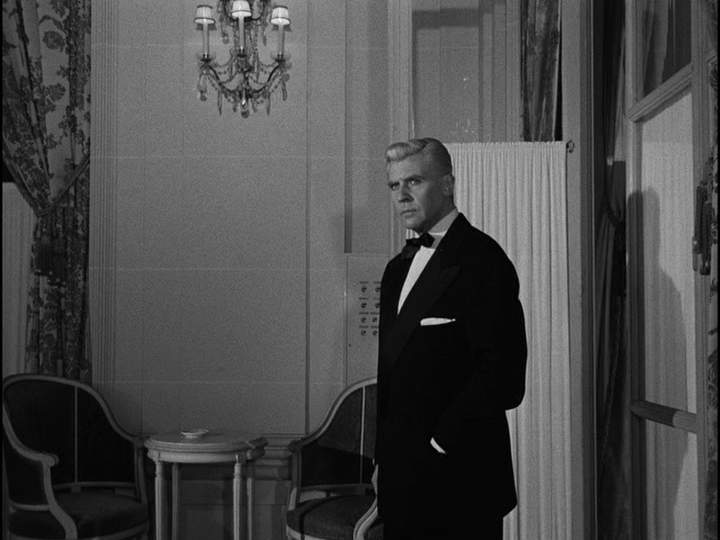
Bob in a tuxedo at his spot at the top of the stairs

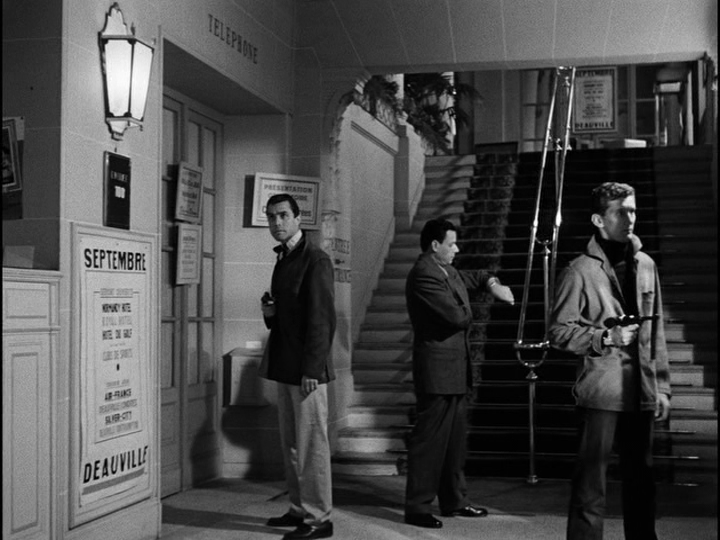
We never see the actual heist, though, because although Bob arrives at the casino to scope things out at 1:30am as planned in a stylish low-light sequence:

Long shot of blurry car headlights next to blurry streetlights that look like flowers

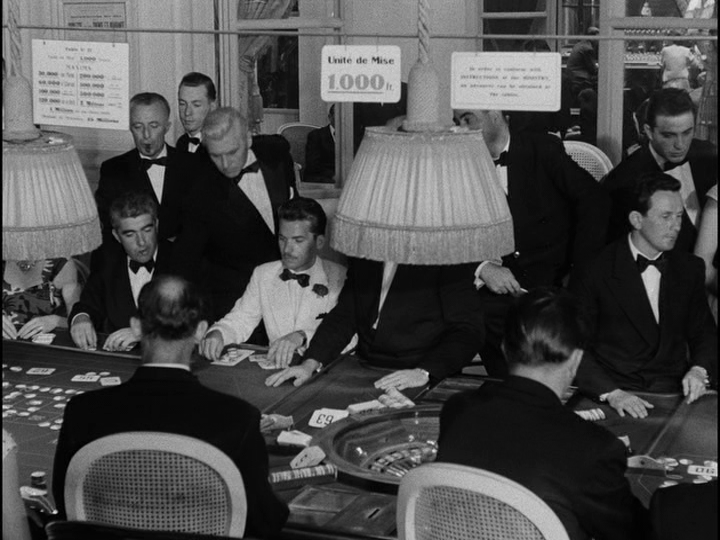
Instead of making contact with Claude Cerval’s Jean, their guy on the inside, like he’s supposed to, he forgets his promise to himself and Roger not to gamble until it is over and places a bet:

Long shot of Bob placing a bet on roulette

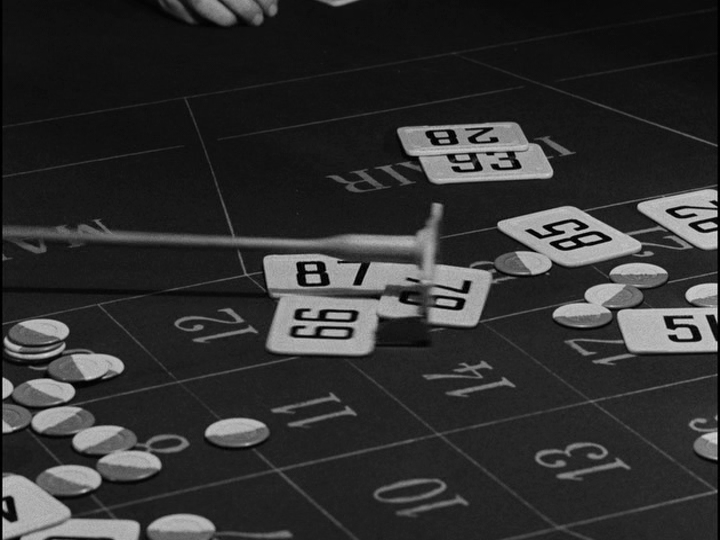
He wins, so he places another, this time at odds of 38 to 1:

Close-up of bets being placed on 15 in roulette

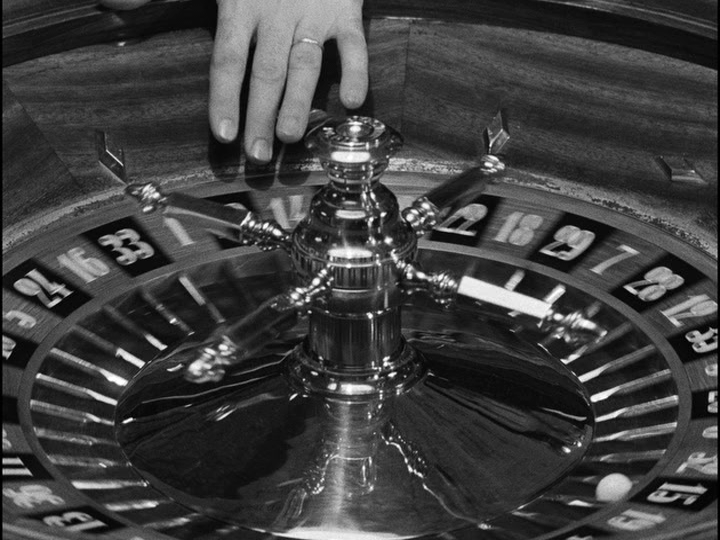
That hits, too:

Close-up of a roulette wheel landing on 15

And suddenly Bob is off on the heater of his life. The voiceover informs us although the roulette is over by 2:01, “the chemin de fer continues”:

Long shot of Bob playing chemin de fer

He is successful there, and at 2:45 he enters a the high-rollers room:

Medium shot of Bob entering the "private room"

It’s difficult to say for sure how much he wins there, but by 3:30 he has attracted a crowd of onlookers:

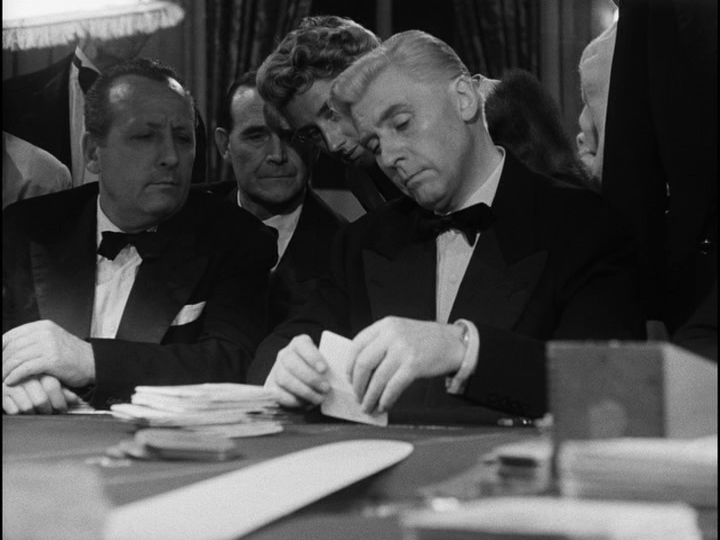
Well-dressed strangers look over Bob's shoulders to see what cards he has

And not long after that, he’s tipping the croupier one million francs at a time:

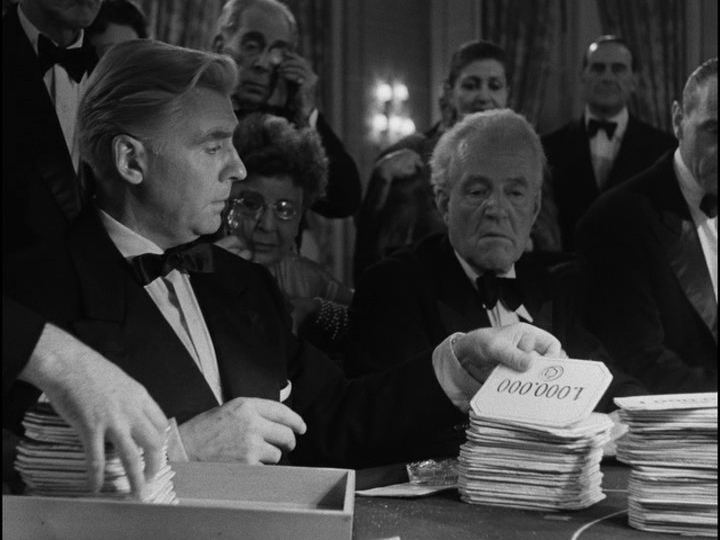
Bob picks up a 1 million franc chip to tip the croupier

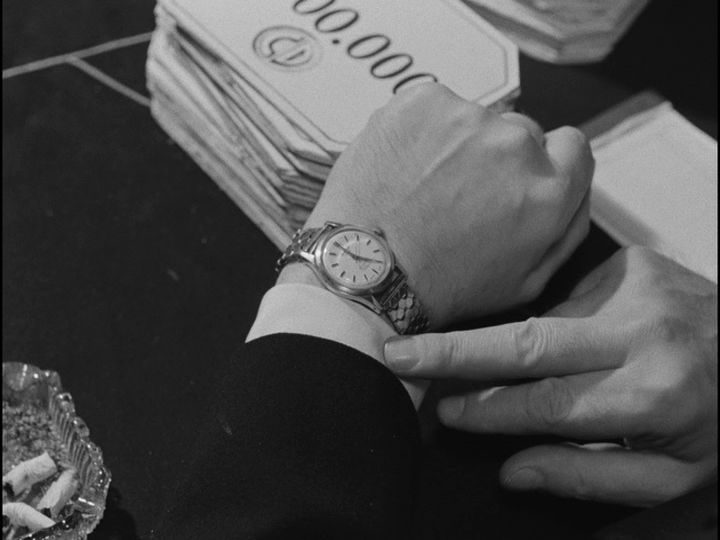
Based on the stacks of chips in shots like this, it appears that Bob’s winnings total nearly as much as the 400 million francs he and his crew are expecting to make from robbing the casino. Suddenly he chances to look at his watch and sees that it’s 5am:

Close-up of Bob's watch showing the time as 5:00

He shouts, “change all this, now!” and sprints to the entrance, but it’s too late: the police, tipped off by Jean and his wife (Colette Fleury) and an informant (Gérard Buhr) armed with details that Paolo carelessly let slip to Anne, are waiting for Bob’s crew when they arrive and Paolo dies in the shootout which ensues:

Overhead shot of Paolo "getting it," as the fella says

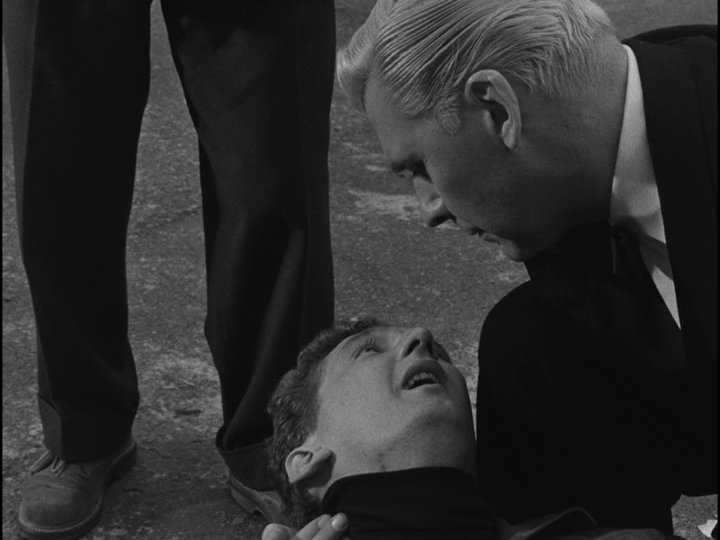
Bob arrives just in time to cradle his protege in his arms as his life expires:

Close-up of Bob cradling Paolo in his arms as he dies

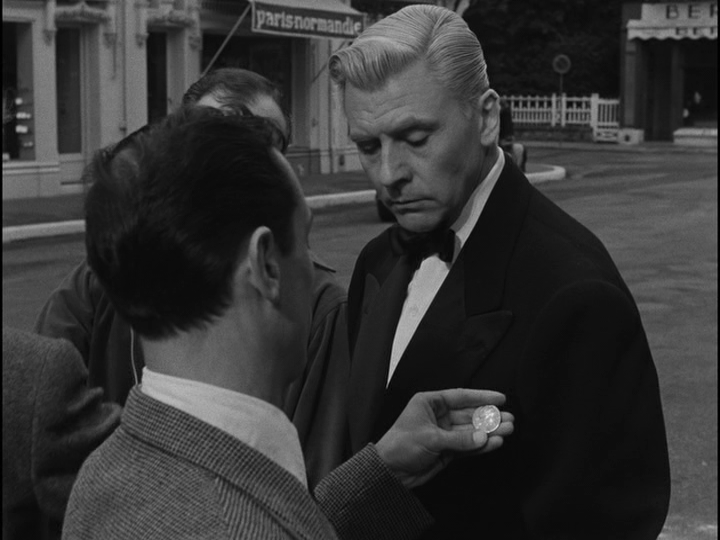
As Inspector Morin places Bob and Roger in handcuffs, one of his officers removes a coin from Bob’s pocket that we saw him flipping earlier.

A police officer inspects the coin he just removed from Bob's pocket

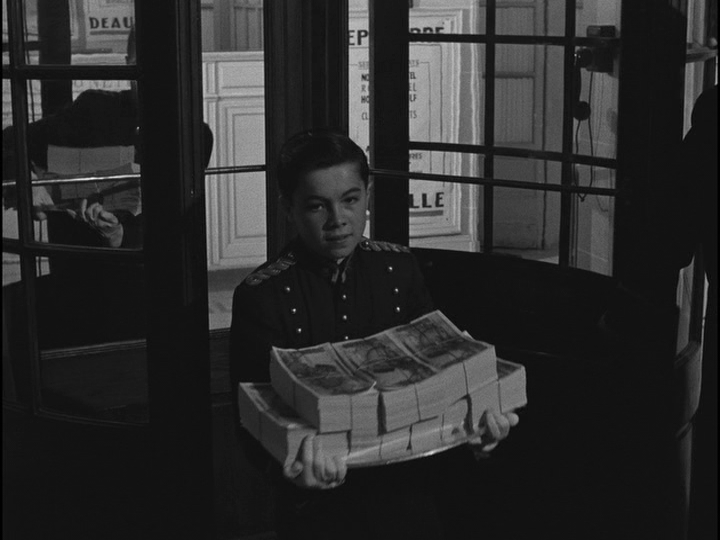
“I’ve known it was double-headed for ten years,” Roger tells him. “And I’ve known you knew for ten years,” Bob replies. “Paulo knew too,” he adds. Just then the somber mood is broken by a procession of bellhops bringing out Bob’s winnings:

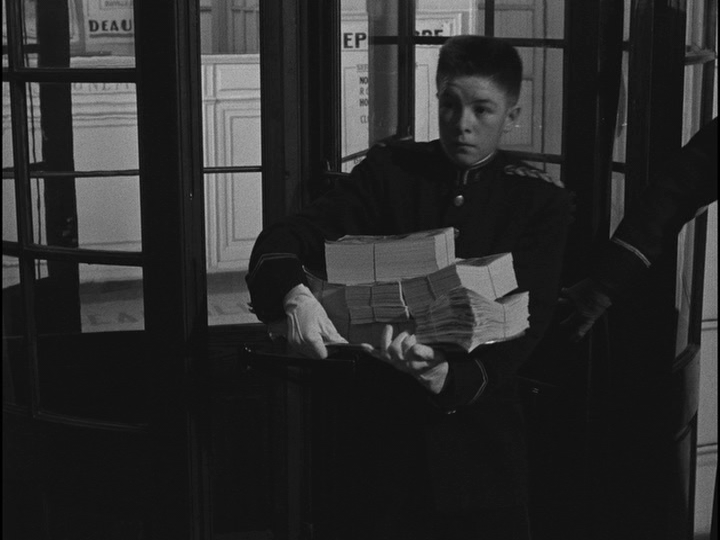
Medium shot of a bellhop holding a tray of cash
Another bellhop with an arm full of cash
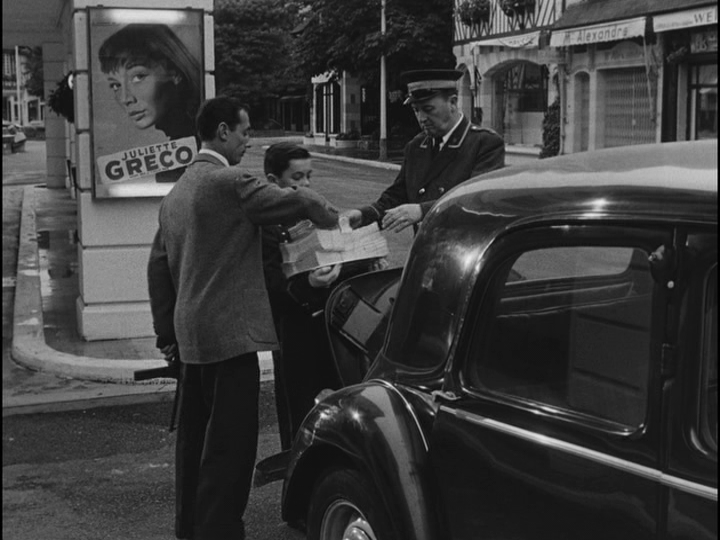
The police help one of the bellhops load the money he is carrying into the trunk of a police car

“And don’t let any of it go missing!” Bob says as he is led into a squad car. “Criminal intent to commit . . . you’ll get five years,” Morin says as he offers Bob and Roger cigarettes.

Medium shot of Inspector Morin offering cigarettes to Bob and Roger, who sit behind him in a car

“But with a good lawyer, you might get away with three years,” he continues. “With a very good lawyer, and no criminal intent, maybe an acquittal!” Roger adds. And finally Bob: “If I play my cards right, I might even be able to claim damages!” The movie ends with a amazing shot of his car sitting in front of the Deauville shore as the sun rises behind it:

Long shot of Bob's car in the bottom 1/3 of the frame and the coast in the top 1/3 of the frame, with empty sand in between

Dave Kehr writes in an essay that appears in his book When Movies Mattered that “[director Jean-Pierre] Melville is often described as an existentialist, but to execute a scene like the finish of Bob le Flambeur, even in jest, you need to have some faith in the basic benevolence of the world–some faith in a higher, protective power, such as the ‘luck’ that Bob turns his back on and that then returns, in the end, to save and reward him after all.” I couldn’t agree more with the first part of this statement, but would quibble just a bit with the latter. Bob never *abandons* Lady Luck; rather, ever the gentleman, he tries to take a hint and move on when it seems like he has lost her favor, but when he realizes his error, he’s more than happy to come home. As the voiceover remarked earlier as the seconds ticked down to 5:00, “that’s Bob the gambler as his mother made him!” I noted last February in a post about The Young Girls of Rochefort that a friend has suggested that the theme of this series is “the human experience of trying to become a better person.” I suppose that must make Bob le Flambeur another exception to this rule.

Cheers!

All original photographs in this post are by Marion Penning, aka My Loving Wife. Links to all of the entries in this series can be found here.

Ithaca Film Journal: 3/13/25

What I’m Seeing This Week: I wasn’t able to make it to Mickey 17 last week after all, so seeing it at Cinemapolis or the Regal Ithaca Mall is my first order of business. My Loving Wife and I are also planning a “date night” (we’re probably actually going to hit a matinee) outing to Black Bag at one of those two theaters as well.

Also in Theaters: The best new film now playing Ithaca that I’ve already seen is Close Your Eyes, which screens at Cornell Cinema on Sunday. No Other Land, which continues its run at Cinemapolis, made my “Top Ten Movies of 2024” list too, and I recommend Best Picture Oscar winner Anora (Cinemapolis and the Regal) as well. I’m also intrigued by Toxic, which is at Cornell Cinema tonight, and am looking forward to selecting Paddington in Peru (Regal) and The Day the Earth Blew Up: A Looney Tunes Movie (Cinemapolis and the Regal) for Family (née Friday) Movie Night later this year. Noteworthy special events include an event called “Nosferatu x Radiohead: A Silents Synced Film” at Cornell Cinema and a free Pi Day screening of the documentary Counted Out at Cinemapolis tomorrow; a free “Family Classics Picture Show” screening of An American Tail at Cinemapolis on Sunday; and a free screening of Alien at Cornell Cinema on Wednesday. Finally, your best bets for repertory fare are Peeping Tom and The Red Shoes, which play Cornell Cinema tonight and Saturday respectively.

Home Video: It recently occurred to me that The Crowd, one of my favorite movies of all time, has now been in the public domain in the United States for more than a year. I was utterly shocked to discover that it nonetheless remains unavailable on a good R1 Blu-ray/DVD release. It can, however, be streamed on Watch TCM until March 21. Here’s what I wrote about it on Letterboxd after revisiting it there last week:

John Sims (James Murray) stars as a man who inherits the vision of exceptionalism his father (Warner Richmond) had for him and learns the hard way each time how to fall in love with first the mother (Eleanor Boardman) of his first child (Freddie Burke Frederick); then Mary, the actual flesh-and-blood woman who occupies that role; and finally the life they’ve been really living all the while he was dreaming, hopefully just in time to finally lay a foundation before the Great Depression that not even the filmmakers know is barreling down upon them hits. Mary’s brothers (Daniel G. Tomlinson and Dell Henderson) are perfectly dour avatars of bourgeoisie judgmentalism, and the depictions of the titular urban masses constitute all-time great cinema images which clearly inspired David Lynch, Jacques Tati, Orson Welles, and any number of other giants who followed.

The Welles film most commonly associated with this one is The Trial, but the Crazy House sequence in The Lady from Shanghai, which I wrote about in January, was clearly inspired by it as well. The works by Lynch and Tati I mainly have in mind are Twin Peaks: The Return and Playtime, which I wrote about in December.

Previous “Ithaca Film Journal” posts can be found here. A running list of all of my “Home Video” recommendations can be found here.

Ithaca Film Journal: 3/6/25

What I’m Seeing This Week: I am excited to finally see Universal Language, which I heard great things about as it worked its way across the film festival circuit last year, at Cinemapolis! I am also going to try to catch Mickey 17 there or at the Regal Ithaca Mall on the only other evening I’m free.

Also in Theaters: Cornell Cinema has an absolutely killer lineup this week that my schedule doesn’t permit me to take advantage of, but you should if you can! If I was free on Saturday, I would definitely be going to the “unique Cornell version of Eno,” and if I was free tomorrow I’d probably prioritize Toxic ahead of Mickey 17 and Universal Language. They’re also screening Close Your Eyes, which landed at fifth place on my Top Ten Movies of 2024 list, tomorrow and my August, 2024 “Drink & a Movie” selection Black Narcissus on Sunday. Otherwise, the best new movie now playing Ithaca that I’ve already seen is newly-minted Best Documentary Feature Oscar winner No Other Land, which continues its run at Cinemapolis, as does this year’s Best International Feature Film I’m Still Here. Best Picture Oscar winner Anora is back in local theaters as well at both Cinemapolis and the Regal. Other noteworthy special events include “An Evening with John Cameron Mitchell” at Cornell’s Schwartz Center for the Performing Arts on Friday; free admission to the Streets Alive! Film Festival at Cinemapolis on Sunday, a free screening of Song Lang at Cornell Cinema on Wednesday, and a preview screening of The Friend at Cinemapolis that same evening. Finally, another repertory highlight is The Adventures of Prince Achmed at Cornell Cinema on Sunday.

Home Video: Speaking of my top ten list for 2024, the film that placed sixth on it, All We Imagine as Light, premieres live on the Criterion Channel at 9pm on Sunday! The first film from India to compete in the main competition at the Cannes Film Festival in 30 years, it won the Grand Prix there and placed fourth in the IndieWire Critics Poll, which is definitely the list of this type that I put the most stock in. Looking back on the only “Ithaca Film Journal” post where I actually had occasion to recommend this movie, I realize I didn’t say anything about it because I assumed I already had! Anyway, it’s a sumptuously photographed tale of platonic and romantic love with a delightfully poetic “plot twist” and an outstanding final shot that features a kid absolutely rocking out to headphone music.

Previous “Ithaca Film Journal” posts can be found here. A running list of all of my “Home Video” recommendations can be found here.
Top Ten Movies of 2024 + Oscar Picks

Last March I celebrated being fully back to “using cinema as a window on the world and a lens through which I can interrogate my thoughts and feelings and refine them into a more consistent and generous philosophy” with my first proper top ten list in many years. In the same post I mentioned the “mixtapes” I’ve been compiling bi-annually for the past decade and started sharing on this blog in 2022, but I didn’t quite make the connection that these are essentially the same activity.

Although I’ve historically been adamant that, as I said in 2021, the songs I include on my mixes “are not necessarily the best songs of the previous six months in my opinion, but rather the ones that gave me the most pleasure and/or affected me the most,” it recently struck me that after more than a decade of listening to hundreds of new albums each year, I likely know more about music than I give myself credit for, at least on an intuitive level; conversely, although I watch hundreds of new movies each year and also spend quite a bit of time immersed in older ones, my knowledge of cinema relative to people who write about it professionally isn’t nearly what it used to be in my 20s when I was fresh out of a film studies program and could afford to live as though I did as well. Even back then I tried to embrace my amateur status: that’s when I came up with the idea of a “movie year” that starts and ends in March instead of January, for instance. Just paying attention isn’t a surefire way to avoid falling into imitative patterns, though, and I recently found myself pondering whether or not this annual list-making exercise serves any purpose for me at all. Delaying its creation makes it a truer representation of my favorites from 2024 by allowing two extra months for many of the most important titles that posterity will label with that year to reach Ithaca and the streaming video services I subscribe to, sure, but is it really worth the time and effort?

To my very great surprise, the answer to this question came from my younger self. Nearly twenty years ago I wrote the following:

I suppose that it’s possible to construct a Top Ten that would satisfy me structured around a list of films numbered from 1-10 that devotes one or two sentences to each movie, with a paragraph-long introduction and conclusion. Possible, but certainly not likely–at any rate, there are better ways. A good list might include scenes from films or lines of dialogue. It can include upcoming films, old films, ideas for films. Buildings. Political scandals. People. Why not? If you’ve explained your goals adequately it can include anything.

At the very least it can include nine films, or eleven. It can include re-releases, short films, and television episodes/seasons/series.

Or. Or the critic can accept all of the limitations of the Top Ten list and simply scribble down ten films and be done with it. Let the readers do the leg work, right? My editor wants a list? Here you go: a list. Because any list of films is interesting, just not necessarily fraught with any particular meaning.

In the 2004 Village Voice year-end poll Lars von Trier’s Dogville (2003) placed third. This did not mean that Dogville was the year’s third best film. It did not mean that it was the year’s third most important, talked about, or divisive film. All that it meant was that Dogville finished third in the Village Voice‘s year-end poll. But by finishing third in this poll Dogville set off a round of discussion about itself, Lars von Trier, the Voice poll, year-end polls in general, and the movies that was important, talked about, and divisive.

What am I saying? I’m suggesting that we don’t need to do away with year-end polls entirely, but that we need to either think more about them or give them less space. That we need to strive to make them relevant and to articulate why we think we’ve succeeded, or that we need to treat them like coffee table books: as conversation starters, and nothing more.

It pains me to see so. many. italics, but I have to admit that the kid has a point. More than one, even! Top ten lists are inherently the kind of endeavor that most people are going to spend either too much time on or too little. Like movie reviews they have value in the aggregate, too, but each individual one of them says more about the person who compiled it than the films they selected, and the list maker can’t just assume that readers already have the necessary context to make sense of their choices–they have to provide it. Professional film critics probably don’t have much say in the matter: they have to deliver whatever the publication they write for wants on deadline with a word count. There’s nothing stopping me, though, from using as much space I need in order to not just explain my picks, but also canvass the entire pool of works I was choosing from and explore how it came to be. What made it to Ithaca . . . and what didn’t? What did I decide not to watch and why? Are there movies that I think the world needs which aren’t even being made?

The problem is that I don’t actually *want* to write this post. I do this for fun, after all, and I’m impatient to move on to Movie Year 2025. And that brings me back to the idea of a playlist. I only recently started providing any commentary at all about the songs on my mixes: initially I just shared the track listing and a Spotify link and called it a day because the idea was for people to actually listen to everything. And that’s true of my favorite films of the year as well! The 13 mentioned below are my answer to the hypothetical question “what should I watch?” They’re the ones I’m most eager to talk about and I can’t resist the urge to add a bit more commentary here, but I’ve already written about everything on Letterboxd and/or this blog at least once, and frankly I’m more interested in having an actual conversation than pontificating further, so please do check them out for yourself and tell me what you think!

Speaking of Letterboxd, one of the main reasons I can barely imagine life without it anymore despite becoming the last cinephile on earth to join little more than 18 months ago is because it makes it super easy to ascertain that I tagged 124 films “Movie Year 2024.” By way of illustrating what does and doesn’t qualify, when I watch Queer after it debuts on Max next month, I won’t tag it “Movie Year 2025” because it played Ithaca in December; however, Universal Language *will* qualify even though it was screened at the 2024 editions of Cannes and TIFF and a bunch of other film festivals because when it opens at Cinemapolis next week, that will be my first opportunity to see it. Anyway, I also saw everything in the Indiewire Critics Poll and CriticsTop10 top 50 lists except Queer and Youth (Hard Times), all of which means that, 1) my local movie theaters are awesome, and 2) this is basically the “top 10% in the class.” Here are the new releases I liked best:

10. Green Border. One of three movies I spent a lot of time thinking about this year as representative of philosophically different takes on the efficacy of depicting horrific acts of injustice. Green Border occupies the optimistic/determined quadrant: director Agnieszka Holland clearly believes that shining a light on the evil deeds desensitized people do in the dark when told enough times that it’s their job and/or their duty will eventually put a stop to them. No Other Land is similarly optimistic, but resigned to the possibility that we the viewers just don’t have the attention span anymore, while Incident is pessimistic but nonetheless keen to continue the fight.

9. Here. Perhaps the most formally audacious and emotionally satisfying film on this list and connected thematically to a number of the rest. Including:

8. La Chimera. Above-ground/beneath-the-surface cantastoria about what it means to live a good life: if your heart’s desire is buried in the dirt under your feet, do you build a shrine on it or dig?

7. About Dry Grasses. When you spend 197 minutes with an unsympathetic character and don’t tire of them, the movie they’re in did something right! Reminded me of college.

6. All We Imagine as Light. Either this film’s adaptation of the Phosphorescent song “Christmas Down Under” or the camera movement at the end of Here was my favorite closing shot of the year.

5. Close Your Eyes. Do you have to know you’re doing it for your life to be your art? Makes an interesting pairing with my first and maybe always favorite cinematic depiction of Ithaca My First Film in the way it depicts a filmmaker engaging with a work made in their youth.

4. Red Rooms. Perhaps the year’s most well-constructed movie. I am planning to write about its poker scenes after my “Drink & a Movie” series wraps in December.

3. Do Not Expect Too Much from the End of the World. History is supposedly written by the victors, but the idea of “winning” is as slippery as quote attribution and the fossil record and racial memory are harder to control than state media and schools, so if you’re thinking in a long enough timeframe, it’s more accurate to say that points will be tallied based on surviving documentation.

2. Evil Does Not Exist. Another film that explores the societal implications of the ideas about personal happiness that appealed to me so much in some of the titles on this list.

1. I Saw the TV Glow. Presumptive shoo-in for any Best of the 2020s list I might someday make along with Crimes of the Future and Petite Maman.

* * *

I also saw a number of terrific older films for the first time last year. Here are the ones that made the biggest impressions:

5. Whiplash. There are still a number of prominent movies released during my period of self-imposed semi-exile from “the lost continent of cinephilia” that I haven’t caught up with yet, but I’ll be surprised if I enjoy any of them half as much as I did Whiplash!

4. Man’s Castle. Instantly my second-favorite movie directed by Frank Borzage after my September “Drink & a Movie” selection History Is Made at Night.

3. House of Usher. I wrote about this film in the next entry in that series.

2. The Act of Killing. This is what the pessimistic/resigned quadrant in the framework I started to sketch out when talking about Green Border looks like.

1. The Long Day Closes. A legit contender for my 2032 Sight & Sound “Greatest Films of All Times” ballot!

* * *

Porcelain War played Cinemapolis for one week in January so I definitely did have an opportunity to see *all* of the films up for Oscars tonight! I guess I’ll have to settle for 48 out of 49. As always, these are the films I’m rooting for, not the ones I expect to win.

Actress in a Supporting Role: Ariana Grande – Wicked

Animated Short: Wander to Wonder

Animated Feature Film: Flow

Original Screenplay: A Real Pain

Adapted Screenplay: A Complete Unknown. I won’t be at all disappointed if Nickel Boys wins, but I loved Pete Seeger’s strategically ill-advised speech about the “teaspoon brigade” and the placement of Joan Baez’s comment “you’re kind of an asshole, Bob.”

Makeup & Hairstyling: The Substance. Demi Moore’s Elisabeth Sparkle’s first prematurely decrepit finger was one of Movie Year 2024’s standout moments for me.

Production Design: The Brutalist

Costume Design: Wicked

International Feature Film: I’m Still Here

Actor in a Supporting Role: Kieran Culkin – A Real Pain

Visual Effects: Dune: Part Two

Film Editing: The Brutalist

Documentary Short: Incident. The only way I won’t throw something at the television if it doesn’t win is if Instruments of a Beating Heart does instead.

Documentary Feature: No Other Land

Cinematography: The Brutalist. I’m incredulous that Nickel Boys wasn’t nominated in this category.

Live-Action Short: A Lien

Sound: Dune: Part Two

Original Score: The Brutalist

Original Song: “Mi Camino”Emilia Pérez. But how did “Claw Machine” from I Saw the TV Glow not even make the shortlist?

Actor in a Leading Role: Ralph Fiennes – Conclave. Give the man an Oscar already!

Directing: Brady Corbet – The Brutalist.

Actress in a Leading Role: Demi Moore – The Substance

Best Picture: The Brutalist.

Ithaca Film Journal: 2/27/25

What I’m Seeing This Week: As longtime readers of this blog know, I consider the “movie year” to begin and end on Oscar night. The Monkey, which I’m planning to catch at either Cinemapolis or the Regal Ithaca Mall, will therefore be my first theatrical screening of 2025. More about this when I publish my top ten list on Sunday!

Also in Theaters: No Other Land, the film I’ll be rooting for to win this year’s Best Documentary Feature Oscar, continues its run at Cinemapolis and remains the best new movie now playing Ithaca that I’ve already seen. I also recommend Best Picture nominees I’m Still Here and The Substance, which are at Cinemapolis all week, and A Complete Unknown, which closes there today. This week’s special events are highlighted by the Ithaca Experimental Film Festival, which is at Cinemapolis on Saturday and Cornell Cinema on Sunday. There is also a free screening of local filmmaker Ira McKinley’s The Throwaways accompanied by excerpts from his new work A Tale of Two Journeys at Cinemapolis tonight and a free screening of the movie Lilting at Cornell Cinema on Wednesday. Finally, doors open for Cinemapolis’s annual Oscar night fundraising gala at 6:30pm on Sunday. On the repertory front, your best best bets are the screenings of Black Narcissus (which I wrote about last August) and The Annihilation of Fish, the rerelease of which Carlos Valladares recently called “the cinematic event of the year,” at Cornell Cinema on Friday and The Red Shoes on Saturday.

Home Video: If you want to see *all* of this year’s Oscar-nominated shorts, you’ll need to head to Cinemapolis or (in the case of the documentaries) Cornell Cinema. The ones I’ll be rooting for are all available online, though! In the Best Animated Short Film category, my favorite is Wander to Wonder, a tale of survival starring characters from a creepy 70s/80s kids television program that uses Shakespearian quotation and engages with the idea of unfathomably (and therefore “indistinguishable from magic) advanced technology (here: VHS!) in a way that reminds me of Arthur C. Clarke’s classic science fiction novel Rendezvous with Rama. It is available for rental via Vimeo. My pick in the Best Live Action Short Film category is streaming on Vimeo for free: A Lien is a tense, effective Paul Greengrass-style shaky cam thriller about the despicable U.S. Immigration and Customs Enforcement (aka ICE) practice of arresting people at their green card interviews. But the cream of the whole crop is Best Documentary Short Film nominee Incident, which uses stunningly complex and effective split-screen editing to recreate the cacophony and chaos of being on the scene of an “incident” (the almost completely unmotivated killing of a black man by a white police officer) that everyone knows never should have happened and fears will blow up into something even more horrible any second and debunks the proceduralist myth of infallible law enforcement professionalism in the process. It is available via The New Yorker. By way of an honorable mention I also recommend Instruments of a Beating Heart, which I described on Letterboxd as “the Muppet Babies version of Whiplash” and which is probably my second-favorite one of these movies overall. It is available via The New York Times.

Previous “Ithaca Film Journal” posts can be found here. A running list of all of my “Home Video” recommendations can be found here.