A Canticle for Dr. Kelson

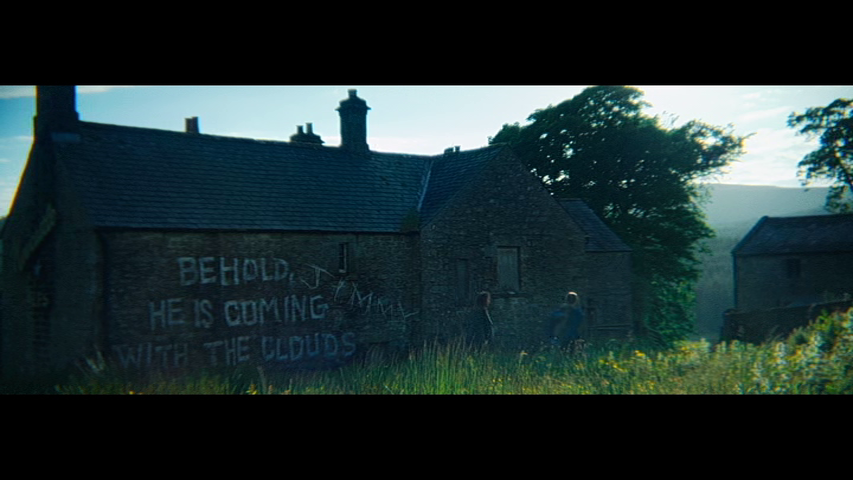
Like the previous director/screenwriter collaboration between Danny Boyle and Alex Garland, 28 Years Later ends with an abrupt tonal shift, and just as Sunshine‘s Pinbacker plotline makes me think of the music video for The Prodigy’s “Firestarter,” the more recent film immediately put me in mind of another turn-of-the-millennium alternative touchstone. But whereas in “Jesus of Suburbia” the protagonist of Green Day’s magnum opus American Idiot “read the graffiti in the bathroom stall, like the holy scriptures of the shopping mall,” the first encounters Alfie Williams’s Spike has with his St. Jimmy are far more sinister:
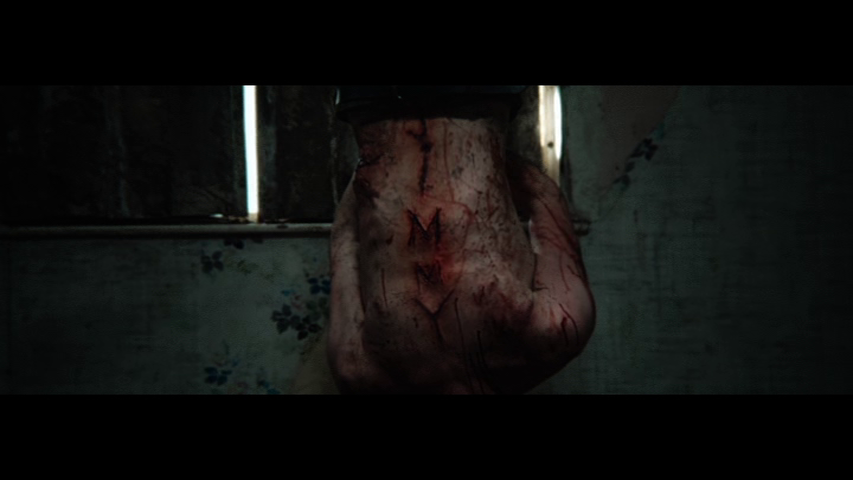
Medium close-up of a hooded body hanging upside down with the name "Jimmy" carved into its back
Long shot of Spike and his mother walking in front of a stone building that has the words "Behold He Is Coming With the Clouds" written on its wall in large white letters and the name "Jimmy" appended to the message in different handwriting

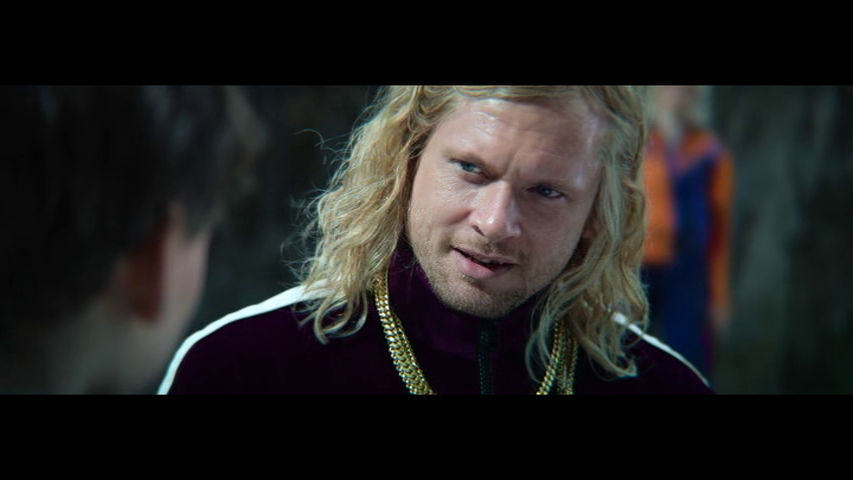
Which makes sense considering that Jack O’Connell’s Sir Lord Jimmy Crystal is no mere devil on the shoulder like Green Day’s creation, but instead fancies himself the actual Antichrist:
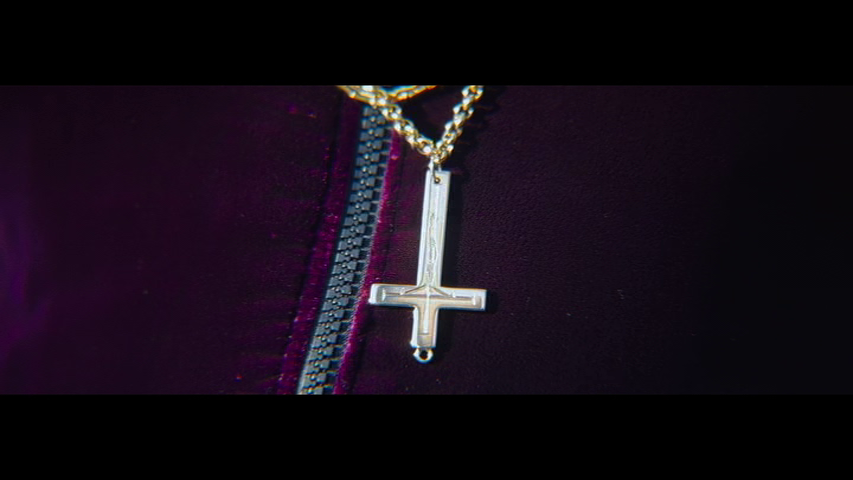
Close-up of an upside down cross pendant
Close-up of Sir Lord Jimmy Crystal wearing the pendant from the previous image

Spike’s journey through the first 28 Years Later movie and its sequel The Bone Temple contains many other echoes of American Idiot: “Holiday / Boulevard of Broken Dreams” starts with rain “comin’ down like an Armageddon flame,” “Give Me Novacaine / She’s a Rebel” describes the relationship between Dr. Ian Kelson (Ralph Fiennes) and Samson (Chi Lewis-Parry) perfectly, and “Extraordinary Girl / Letterbomb” anticipates the conclusion of a trilogy we sadly may never get by asking, “where will all the martyrs go when the virus cures itself?” Furthermore, while there’s no perfect analog for the album’s split personality subplot, Whatsername character, or St. Jimmy’s figurative suicide in “Homecoming,” the war for Spike’s soul that Kelson wages with Crystal serves much the same function.

I admit that you have to squint a bit to see all this, but the movies resonate even more clearly with one of my favorite books, A Canticle for Leibowitz by Walter M. Miller, Jr. Both narratives are set in motion by an apocalypse, and while Leibowitz differs from 28 Years Later in that we don’t open on its nuclear holocaust, the latter’s title card ushers us into a world very similar to the one presented in the novel’s opening line, which Cass Sunstein described as “amazing” last March in this Substack post about it: “Brother Francis Gerard of Utah might never have discovered the blessed documents, had it not been for the pilgrim with girded loins who appeared during that young novice’s Lenten fast in the desert.”

Sunstein also applauds the next line, which I think provides an even better sense of the book’s spirit: “Never before had Brother Francis actually seen a pilgrim with girded loins, but that this one was the bona fide article he was convinced as soon as he had recovered from the spine-chilling effect of the pilgrim’s advent on the far horizon, as a wiggling iota of black caught in a shimmering haze of heat.”

Which evokes this landscape shot:
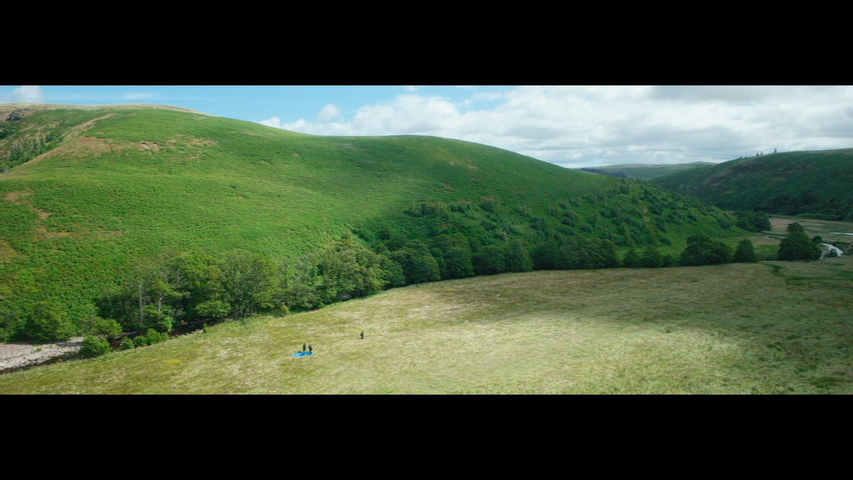
Extreme long shot of three figures dwarfed by the cloud shadow moving across the rolling hills around them

And the exchange which follows it between Spike and a shipwrecked Swedish soldier (Edvin Ryding) about the “Alphas” who have emerged as the leaders of the de facto tribes that many of the “infected” who haunt the British mainland have organized themselves into:

ERIK: Why do they get so huge? The bärsärk?

SPIKE: Well, Sam says on some the infection kinda works like steroids.

ERIK: Yeah?

SPIKE: I mean, I don’t know what steroids are, but I’m guessing that’s what turns them Alpha.

Like Brother Francis, who believes “Fallout” is the name of an actual demon which he visualizes as “half-salamander, because, according to tradition, the thing was born in the Flame Deluge,” Spike has grown up speaking a language that contains countless words for things completely alien to him. Sunstein’s interest in Leibowitz is grounded in the order of monks that Brother Francis belongs to, whose mission is to preserve as many remnants of a lost civilization, which they call Memorabilia, as possible. The reason Sunstein feels an affinity for them reminds me quite a bit of my own purpose in maintaining this blog:

In North America and Europe, a lot of people (particularly academics, I think) see themselves a bit like Miller’s monks did: as socially marginal, perhaps, but as maintaining certain documents and truths, or perhaps as moving identifiable projects forward, even if there is not a lot of interest in those projects. I speculate that some philosophers and some literature professors see themselves in that way; so, I speculate, do some historians.

They might have substantive ideas. They might focus on certain historical figures. They might prize certain methods. They might care about genres. They might focus on events, periods, and documents to which no one seems to be paying attention.

One of the many haunting features of Miller’s great book is that it casts light on why many people, engaged in work that is now widely ignored, are intensely committed to that work, and have high hopes for its future.

It also reminds me of Dr. Kelson, architect of the second 28 Years Later film’s titular bone temple.
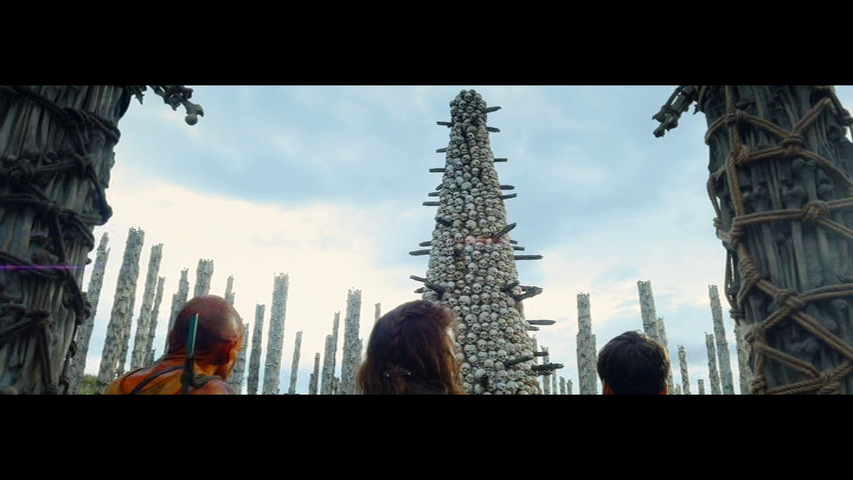
Low-angle shot of Dr. Kelson, Spike, and Spike's mother Isla (Jodie Comer) looking up at a tower of skulls flanked on all sides by pillars of bone

When Spike asks what it is, Kelson replies:

KELSON: I’ve been waiting almost 30 years for someone to ask that question. I often thought I would die here alone . . . of age or starvation or violence . . . never having had the chance to reply. Do you know the words “memento mori”?

SPIKE: No.

KELSON: It’s Latin. Ironically, it’s a dead language. (LAUGHS) It means “remember death.”

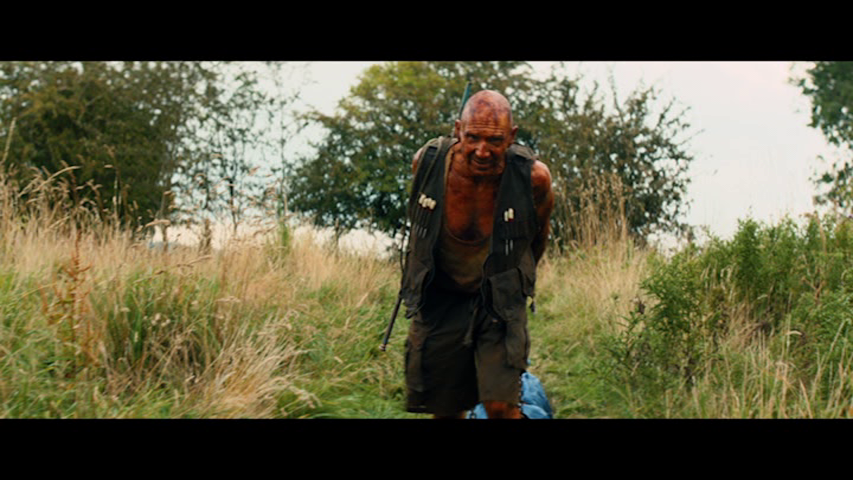
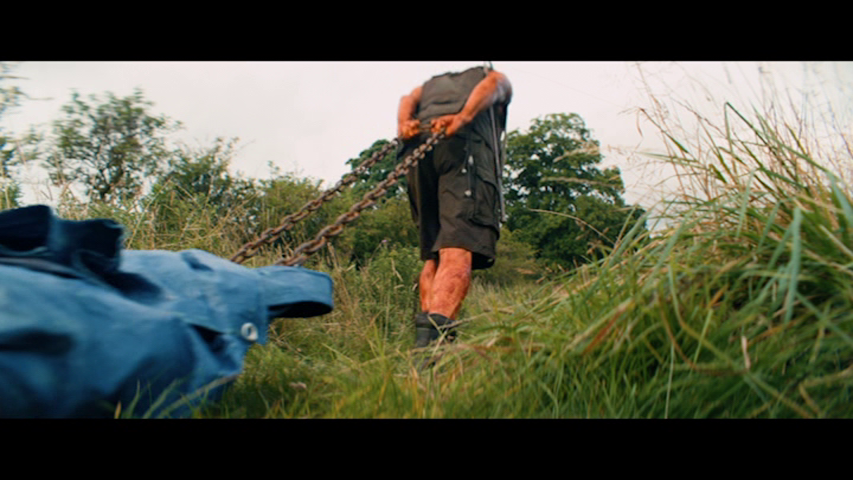
The Bone Temple deepens Dr. Kelson’s connection to Brother Francis and his fellow monks by introducing him straining to remember the lyrics to Duran Duran’s “Girls on Film” as he drags an addition to the temple to its new home:
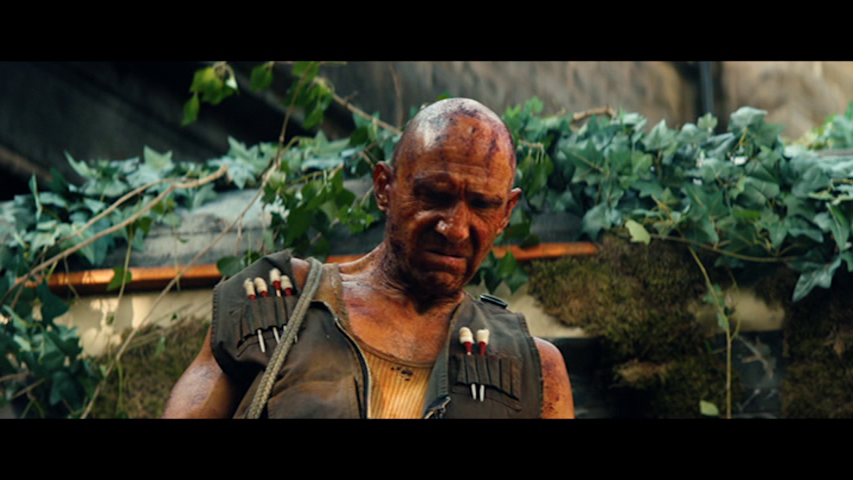
Close-up of Dr. Kelson in front of a vine-covered train car, wearing a vest festooned with poison darts
Medium long shot of Dr. Kelson from behind walking across the frame from left to right, dragging a body covered in a blue tarp behind him
Continuation of the previous image: we now see Kelson from the front, centered in the frame

He is revealed to be a keeper of classical learning as well as pop culture in the next scene when he says to Samson, whom he has drugged, “I named you for your size and strength and hair […] although right now I feel more like Androcles removing thorns from the lion’s paw.”
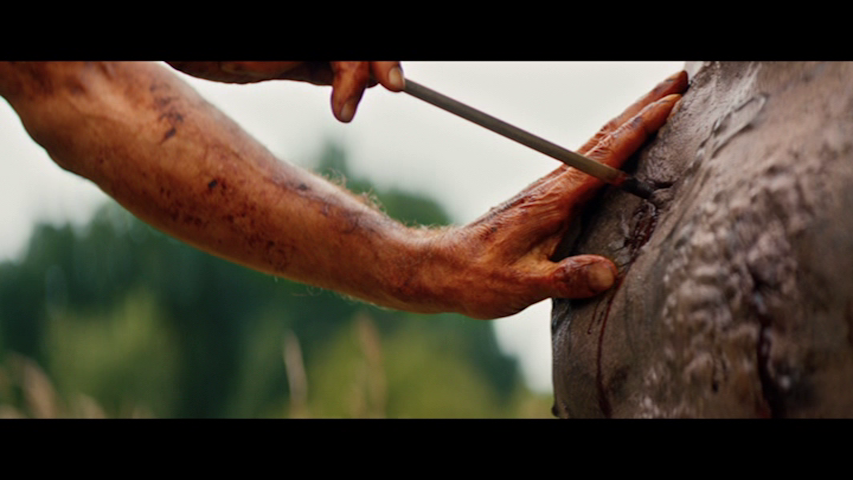
Close-up of Kelson removing an arrow from Samson's chest

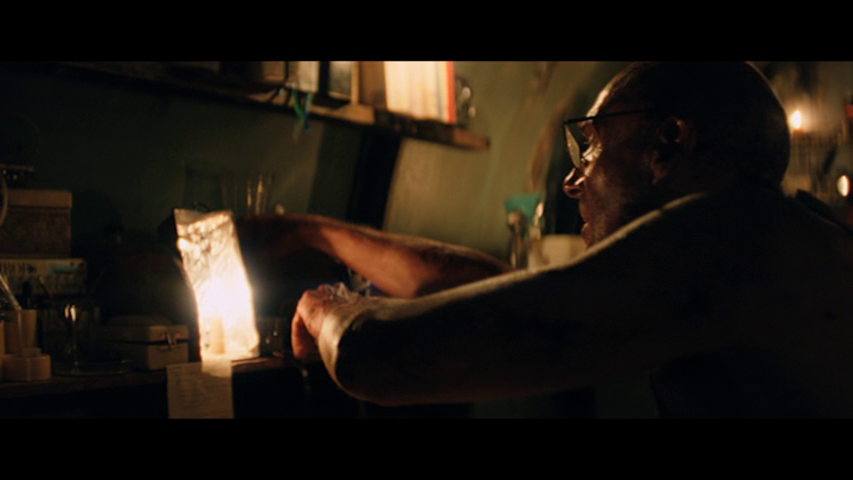
This is followed in due time by a trip to the bunker beneath the temple where Kelson sleeps, which resembles what I imagine the scriptorium of Brother Francis’s abbey might have looked like:
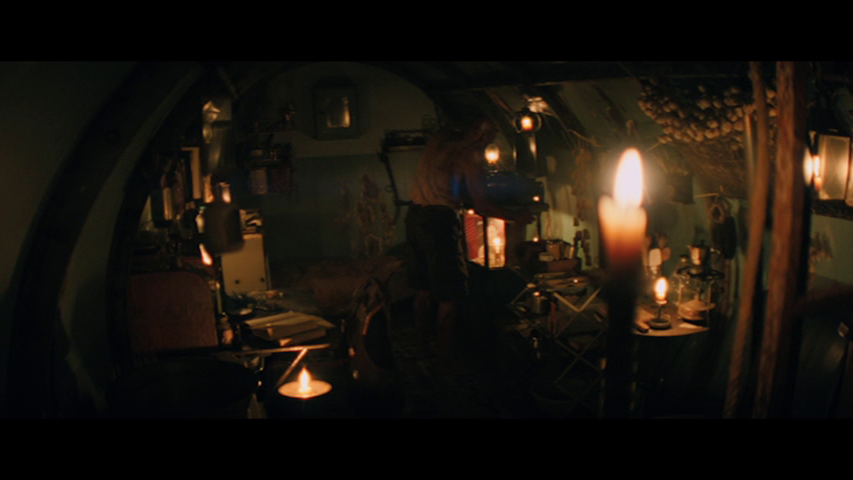
Fisheye lens long shot of Kelson's candlelit bunker

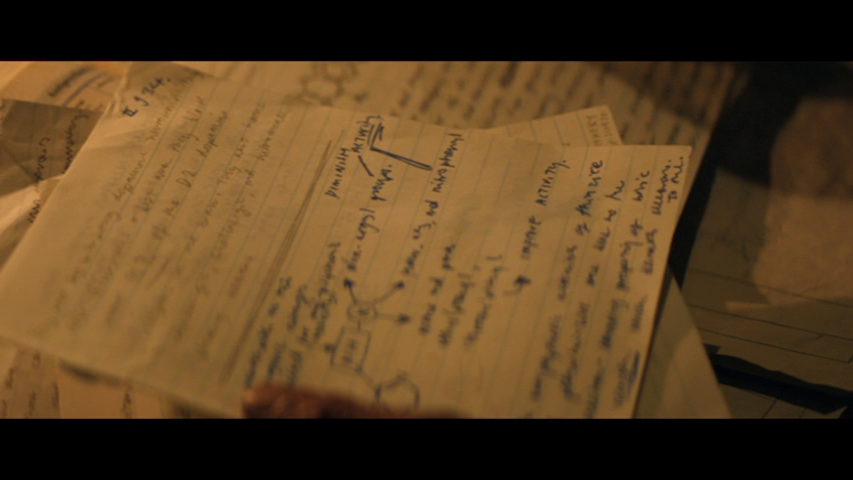
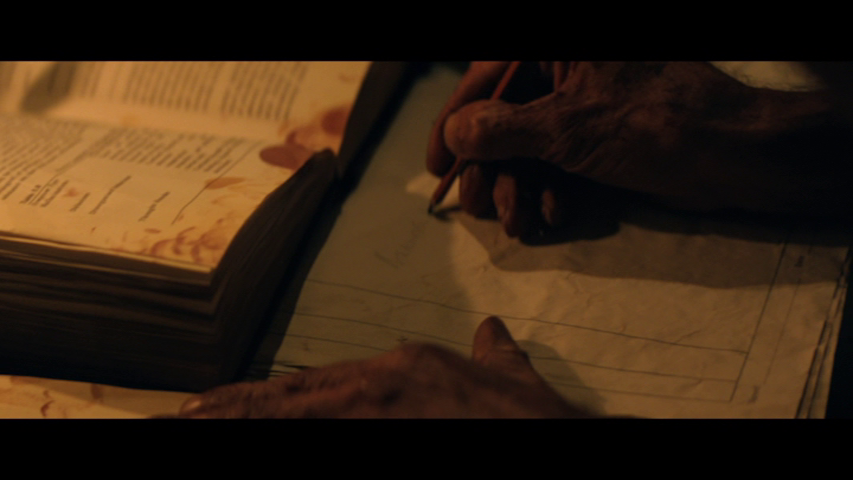
Especially when we’re invited back inside about 40 minutes later as Kelson pursues a hunch about the nature of the Rage Virus:
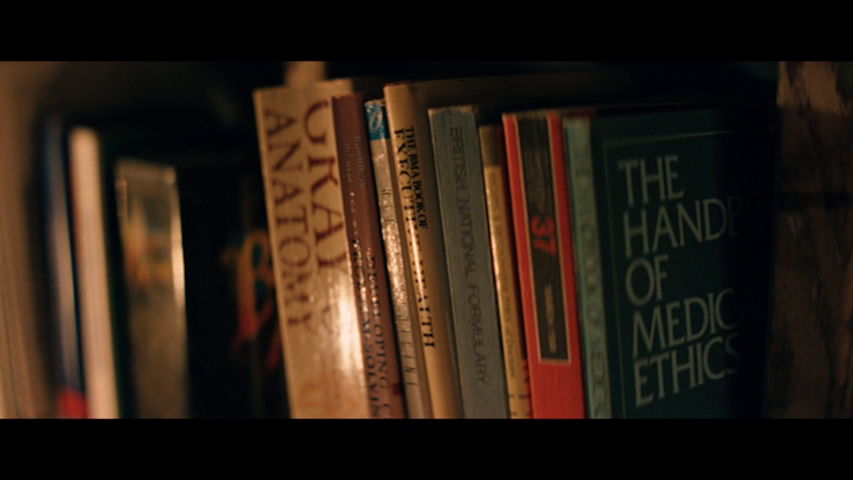
Close-up of a row of medical books
Close-up of Kelson writing in one book while consulting another
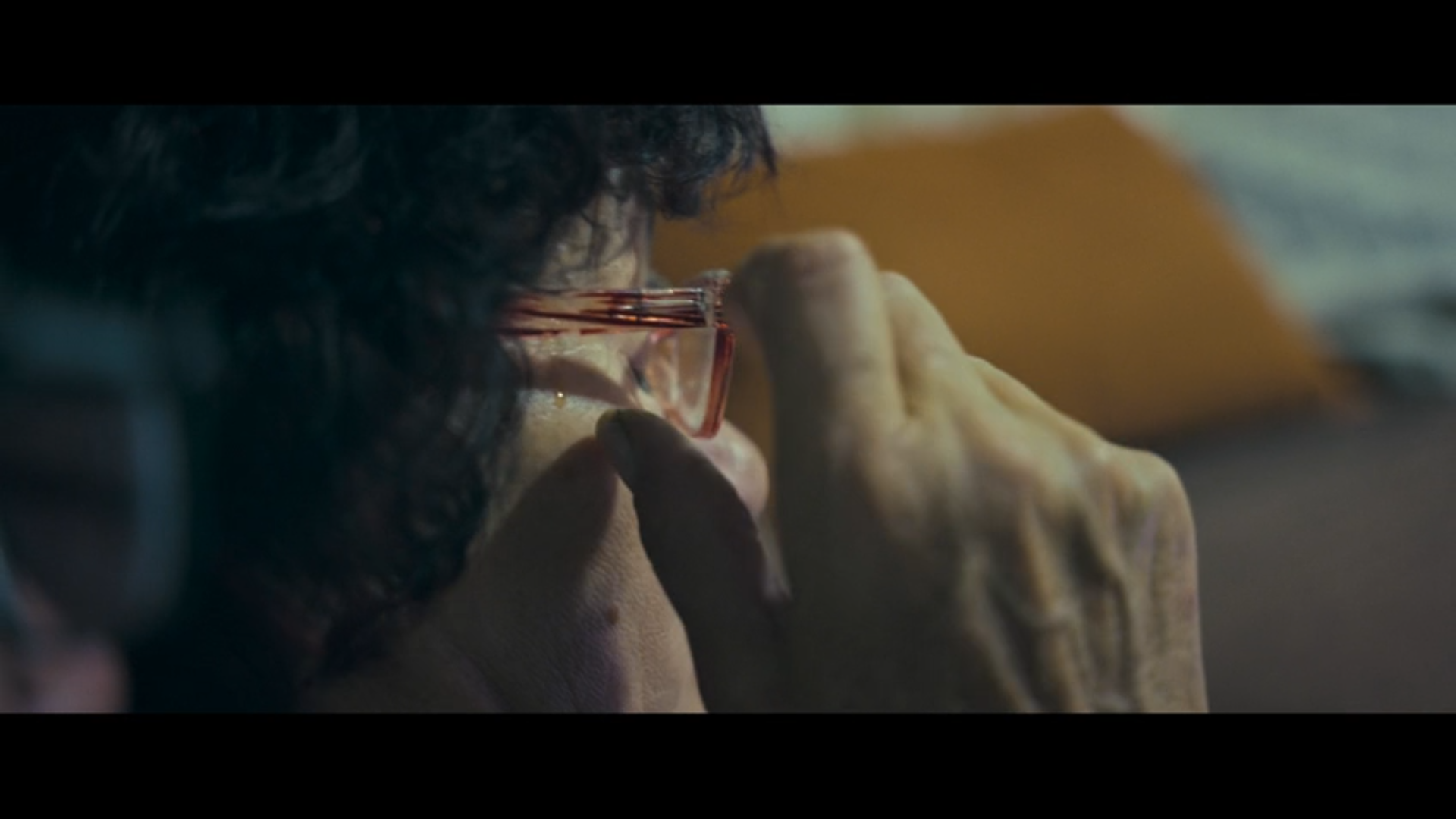
Close-up of a bespectacled Kelson reaching for a volume on the bookshelf in front of him
Close-up of sheets of paper covered in handwritten notes and diagrams

Other moments echo the first part of Leibowitz, “Fiat Homo,” which is set 600 years after the Flame Deluge: the bows Spike and his father (Aaron Taylor-Johnson) use to protect themselves are reminiscent of the arrow that ultimately kills Brother Francis, for instance, and Samson’s favorite snack echoes the cry of “Eat! Eat! Eat!” that accompanies his fall:
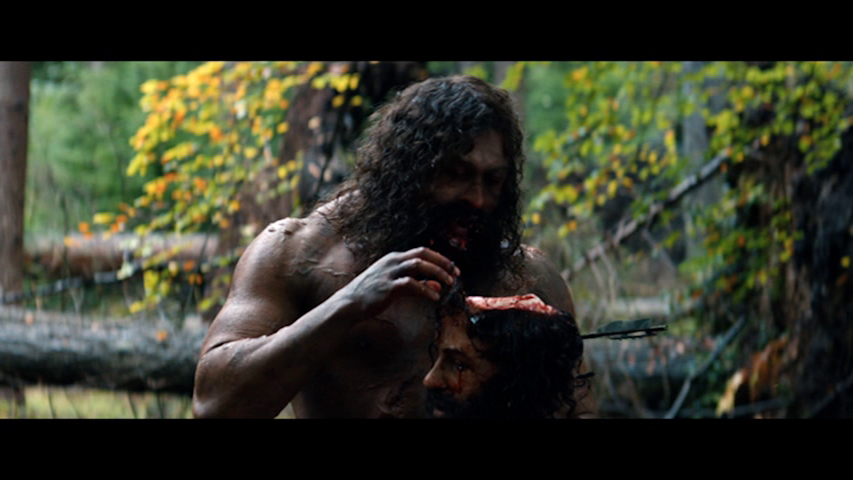
Medium close-up of Samson eating brains out of a decapitated skull

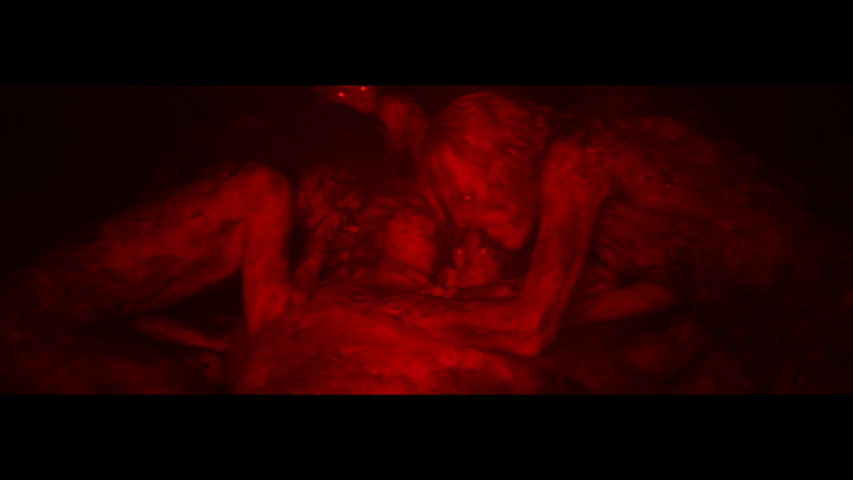
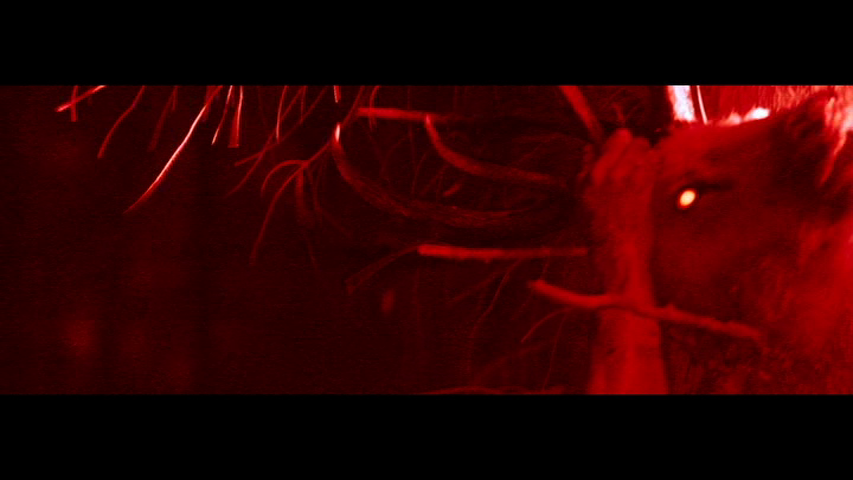
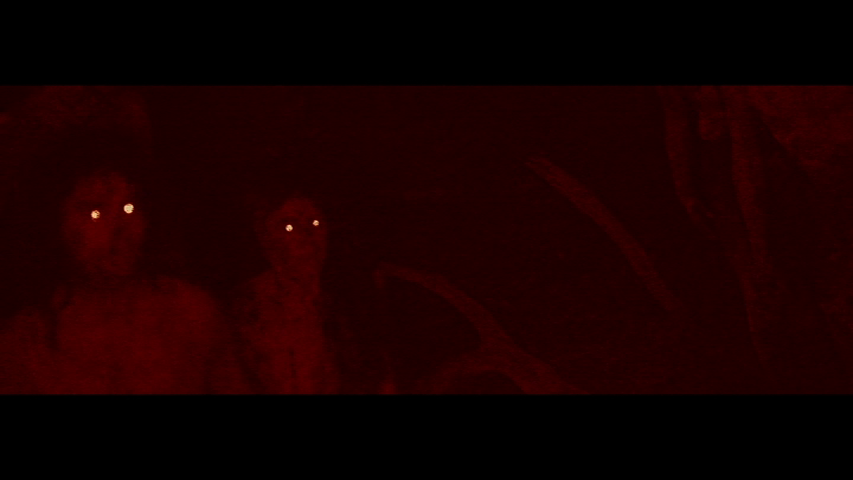
Meanwhile, the way Samson’s killing of a deer in the first 28 Years Later is depicted as being almost like a ritual:
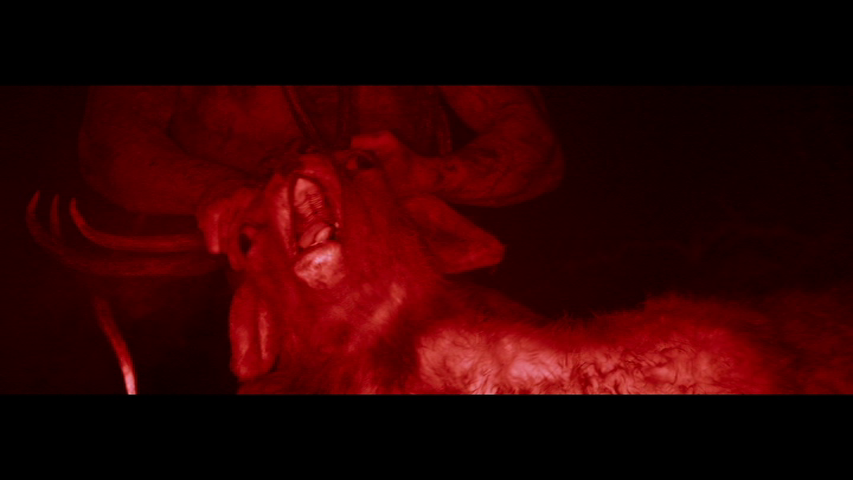
Nighttime close-up of Samson's hands twisting a deer's head shot with a red filter
Continuation of the previous image: the infected who follow Samson look on as he holds up the deer's head in the right foreground, the light reflecting eerily off their eyes
Continuation of the previous image: medium close-up of the infected who follow Samson feasting on the body of the deer he killed
Continuation of the previous image: Samson reaches up and impales the head of the deer he killed on a tree branch

And the red light the scene is bathed in made me think of the fireside passage in Part II of Leibowitz, “Fiat Lux,” in which Thon Taddeo Pfardentrott asks “Mad Bear” Hongan Os, chief of the Plains nomads, why his people drink no water:

“Who knows what the gods drink?” mumbled Mad Bear. “It is said that water is for cattle and farmers, that milk is for children and blood for men. Should it be otherwise?”

The insane one was not insulted. He studied the chief for a moment with searching gray eyes, then nodded at one of his fellows. “That ‘water for the cattle’ explains it,” he said. “The everlasting drought out here. A herdsman people would conserve what little water there is for the animals. I was wondering if they backed it by a religious taboo.”

The most important connection is to Part III, “Fiat Voluntas Tua,” though, which is set 1800 years after the Flame Deluge when the nations of earth have inexplicably (considering they know from experience exactly what will happen) brought themselves once more to the brink of nuclear war. Michael Alan Bennett argues in an article for The English Journal called “The Theme of Responsibility in Miller’s ‘A Canticle for Leibowitz'” that the book’s major theme “concerns the question of individual responsibility,” and that “Miller’s conclusion is that if nuclear holocaust occurs, the fault will lie with each individual who did nothing to prevent it.” This plays out most directly in the final chapters in the form of a debate between Abbot Jethrah Zerchi and Doctor Cors, a medic with the Green Star Relief Station where “hopeless cases” are encouraged to go to be put out of their misery. “It’s certainly better than letting them die horribly, by degrees,” argues Cors, to which Zerchi replies:

Is it? Better for whom? The street cleaners? Better to have your living corpses walk to a central disposal station while they can still walk? Less public spectacle? Less horror lying around? Less disorder? A few million corpses lying around might start a rebellion against those responsible. That’s what you and the government mean by better, isn’t it.

“The doctor is innocent of this charge,” is Bennett’s verdict, “but the government is not.” By the same logic, Dr. Kelson is absolved of administering a shot to Spike’s mother Isla (Jodie Comer), who is dying of cancer: as Cors defends his work to Zerchi, “what I meant by better was ‘more merciful.'” Meanwhile, Abbot Zerchi is obviously in no way directly responsible for the world ending a second time the same way as the first, but Bennett argues that Miller does consider him indirectly responsible:

As a monk, isolated in his monastery from the concerns of the world, he is symbolic of all those who are unconcerned, those who drop out, those who despair. Thus, A Canticle for Leibowitz is a novel of and for our time. In an age when the individual man feels ever further removed from the decisions of government which affect us all, Canticle reaffirms an old value. Says Miller: “I am my brother’s keeper!”

Dr. Kelson, whom I called an “orange-skinned anti-Trump” earlier this year on Letterboxd, starts off 28 Years Later like Zerchi, set off from the chaos around him by his bunker, a moat, and the iodine “prophylactic” he paints himself with to hold the Rage Virus at bay. When Sir Lord Jimmy Crystal shows up at the end of The Bone Temple, he is tempted to make the same deal with the devil as Thon Taddeo. Per Bennett, when that “well-meaning but hypocritical scientist” is confronted by evil, he “merely closes his eyes.” Kelson does him one better by dressing up as Old Nick to lend credence to Crystal’s claim that he has an unholy mandate to continue his “infernal mission”:
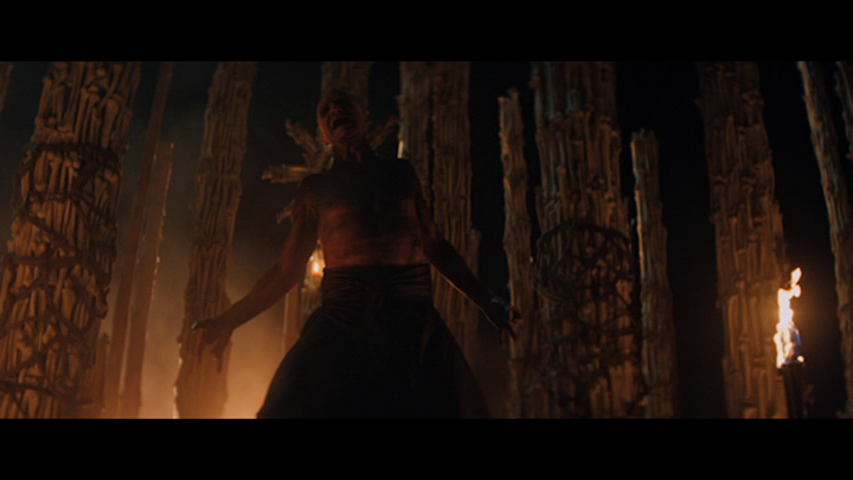
Low-angle medium close-up of Dr. Kelson disguised as Satan and dancing to the song "The Number of the Beast" by Iron Maiden in the bone temple, which is lit by torches

But he finds his courage when he realizes that Spike has been impressed into Crystal’s gang and adds one more command even though he knows it will likely spell his doom. “I require a sacrifice,” he says:
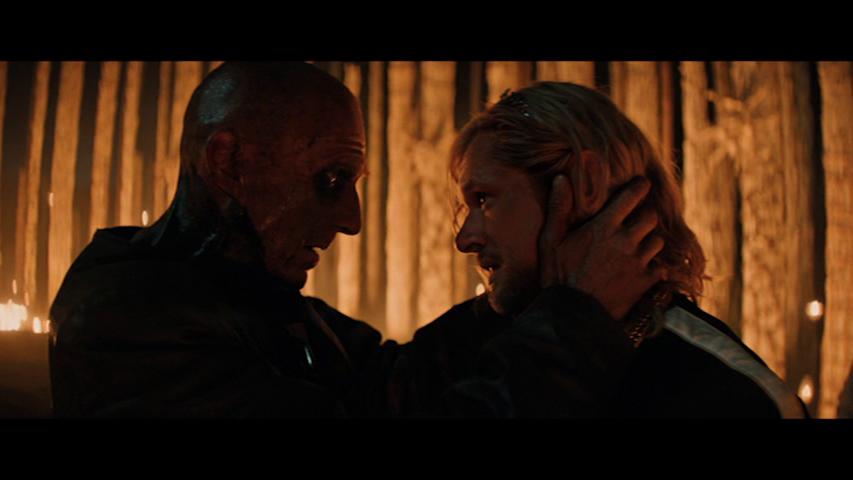
Medium close-up of Dr. Kelson holding Sir Lord Jimmy Crystal's head as he speaks to him in front of the torchlit Bone Temple

“You know that in order for God’s only son to ascend and take his place by his father’s side, Christ was first required to be crucified,” he tells Crystal. “You are my only son, Jimmy, Jimmy, Jimmy. I am your God. I require the same.” This unsurprisingly gets him a knife in the belly:
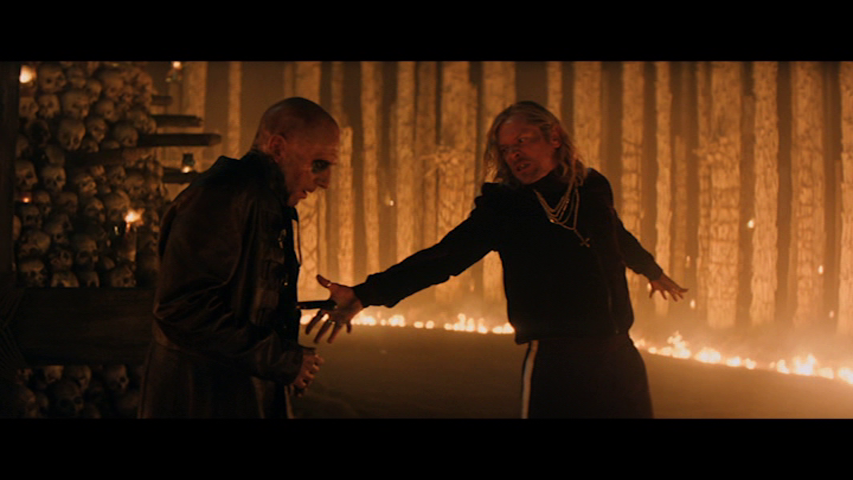
Medium close-up of Sir Lord Jimmy Crystal stabbing Dr. Kelson as he stands in front of his tower of skulls, a line of fire behind them

But the damage has already been done, and Crystal meets the same fate as the poor soul whose flesh he scrawled his name into in the previous film:
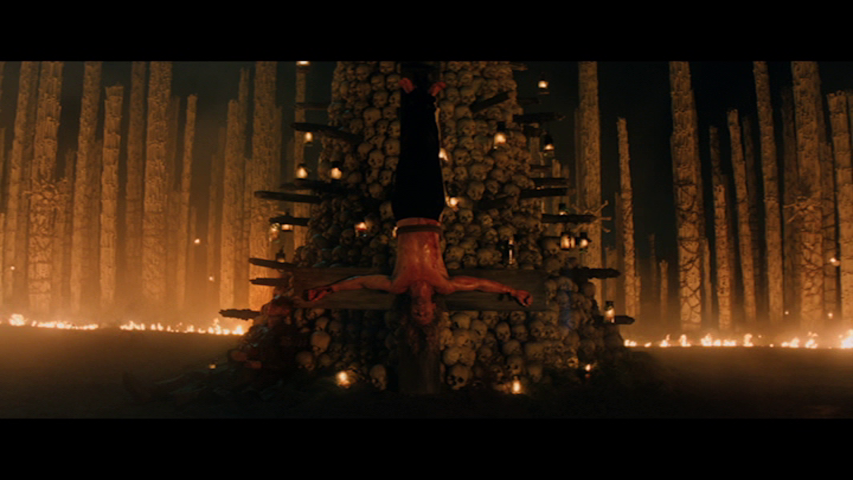
Long shot of Sir Lord Jimmy Crystal hanging upside down from a cross leaning against the tower of skulls

The Bone Temple is more optimistic than A Canticle for Leibowitz because while the latter also ends with Abbot Zerchi taking personal responsibility for what Bennett calls “the destiny of men,” by then it’s too late. American Idiot is somewhere in between, and that (plus the fact that it is great to run to) is why I love it. The album concludes with Jesus of Suburbia, having turned his back on both the nihilism of St. Jimmy and the revolution sung by Whatsername, reminiscing about the latter. “And in the darkest night,” he sings on the album’s final track, “If my memory serves me right/I’ll never turn back time/Forgetting you, but not the time.” The Genius annotation for these lyrics optimistically suggests they mean Jesus “doesn’t regret living his life on the streets, using it as a learning experience,” but of course this assumes that he’s going to do something with the knowledge he has gained. The same goes for Spike, whose story, at least for now, has also ended before we get to see what he does with everything Kelson taught him.

Cass Sunstein’s Leibowitz post appeals to me because I am proud of the way this “widely ignored” blog has kept its “focus on events, periods, and documents to which no one seems to be paying attention” for nearly a decade, but the 28 Years Later movies are a reminder that this isn’t enough. You could criticize American Idiot for not offering any answers or celebrate it as a cynically realistic takedown of all my fellow former protest punks for whom “growing up” meant abandoning activism. But I prefer to see it as a challenge: in a world perpetually mired in political crisis, it’s not enough to “Remember . . . whatever”–the question is, are you doing your part to use everything you learned to make things better?
2026: The Mixtape, Vol. 1

This is a full month ahead of schedule, but I’ve already heard 80 minutes worth of new music this year worthy of being immortalized in a mix. Without further ado, therefore, here’s an annotated track list for my 2026: The Mixtape, Vol. 1 Spotify playlist!

1. Blod – Jennys Sång

We begin and end as we did last year with a theme and its reprise, this time from the retro soundtrack for an imaginary film.

2. Duval Timothy & CJ Mirra – Journey to Lagos

Then we continue with a track from one of my favorite actual film scores of 2026 about a journey to the city that currently sits atop my dream travel destinations.

3. Charley Crockett – Diamond Belle (Country Boy)/I Shot Jesse James

I envision these two tracks being played back-to-back the way the classic rock radio DJs of my youth always paired Jackson Browne’s “The Load-Out” and “Stay” or Pink Floyd’s “Brain Damage” and “Eclipse.”

4. Julianna Barwick & Mary Lattimore – Rachel’s Song

Cover of a soundtrack song which doesn’t actually appear in the film (Blade Runner) it was written for.

5. Bill Callahan – Pathol O.G.

Unlike Andra Day’s character in Is This Thing On? I *don’t* feel like I’m 24 anymore, but like Bill Callahan I’m cool with this!

6. Robyn – Dopamine

A highly anticipated return which lived up to the hype!

7. Kevin Morby – Die Young

Another song for the proudly over the hill.

8. Arise & Go – Jos Cormier / Jock Broon’s 70th

My favorite song by a local band so far this year.

9. Luke Combs – Days Like These

A fun one to sing along with! I mess up the final twist on the chorus every time, though: it really feels like it should be “hell, I’d probably miss the leaves.”

10. Kiss Facility – Cheap Poetry

Reminds me of the best part of my least favorite plotline from Love Actually, the “Here With Me” needle drop after Andrew Lincoln says “enough” and resolves to finally stop harassing poor Keira Knightley.

11. Will Epstein – Dishwasher

Not so much a song of middle age as adulthood generally.

12. BLACKPINK – Champion

A good upbeat anthem for a World Cup year.

13. James Brandon Lewis & The Messthetics – Clutch

Probably my favorite track on this mix.

14. Courtney Barnett – Stay In Your Lane

Unless maybe this one is?

15. Alvarius B. – Rock N’ Roll

Killer road trip music.

16. Jill Scott feat. Trombone Shorty – Be Great

If this doesn’t make you want to get up and high-step around your living room, I don’t know what to tell you!

17. Daphni – Good Night Baby

Features a delightfully trippy music video that the girls like a lot.

18. Bleachers – you and forever

Epic in a way that reminds me of the novels I just finished reading, The Nobody People and its sequel The Somebody People by local author (and friend) Bob Proehl.

19. Hildur Guðnadóttir – The Bone Temple

I enjoyed Young Fathers’ score for the first 28 Years Later movie overall, but this track from its sequel is the best thing in either of them.

20. Blod – Jennys Sång (Repris)

See above.

Links to previous mixes I’ve posted about can be found here.

Juxtaposition #14

From The Tale of Silyan:

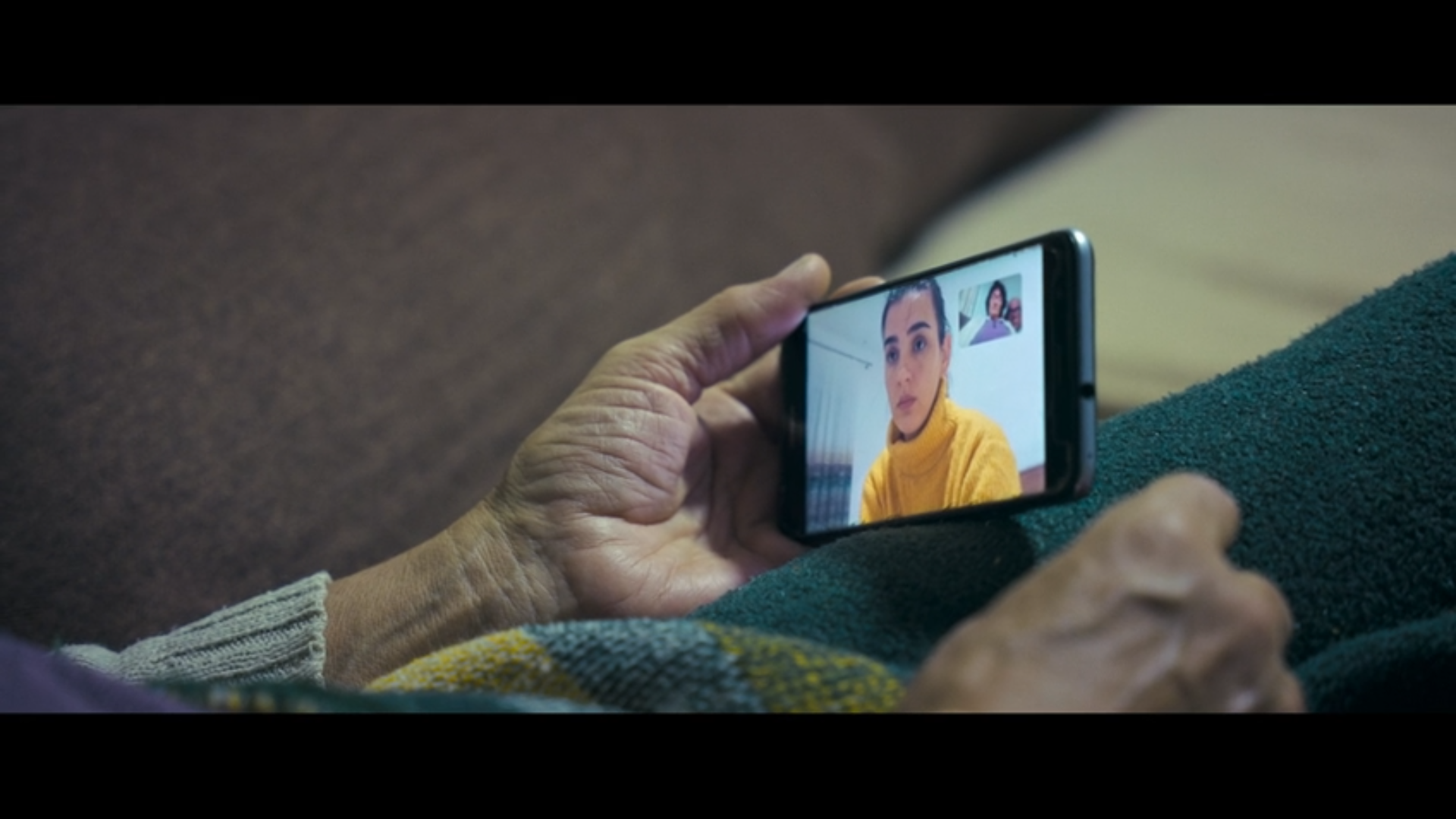
Close-up of Jana Coneva rubbing her eyes as a tear slowly streams down her face
Close-up of the smartphone that Jana is talking to her daughter Ana on
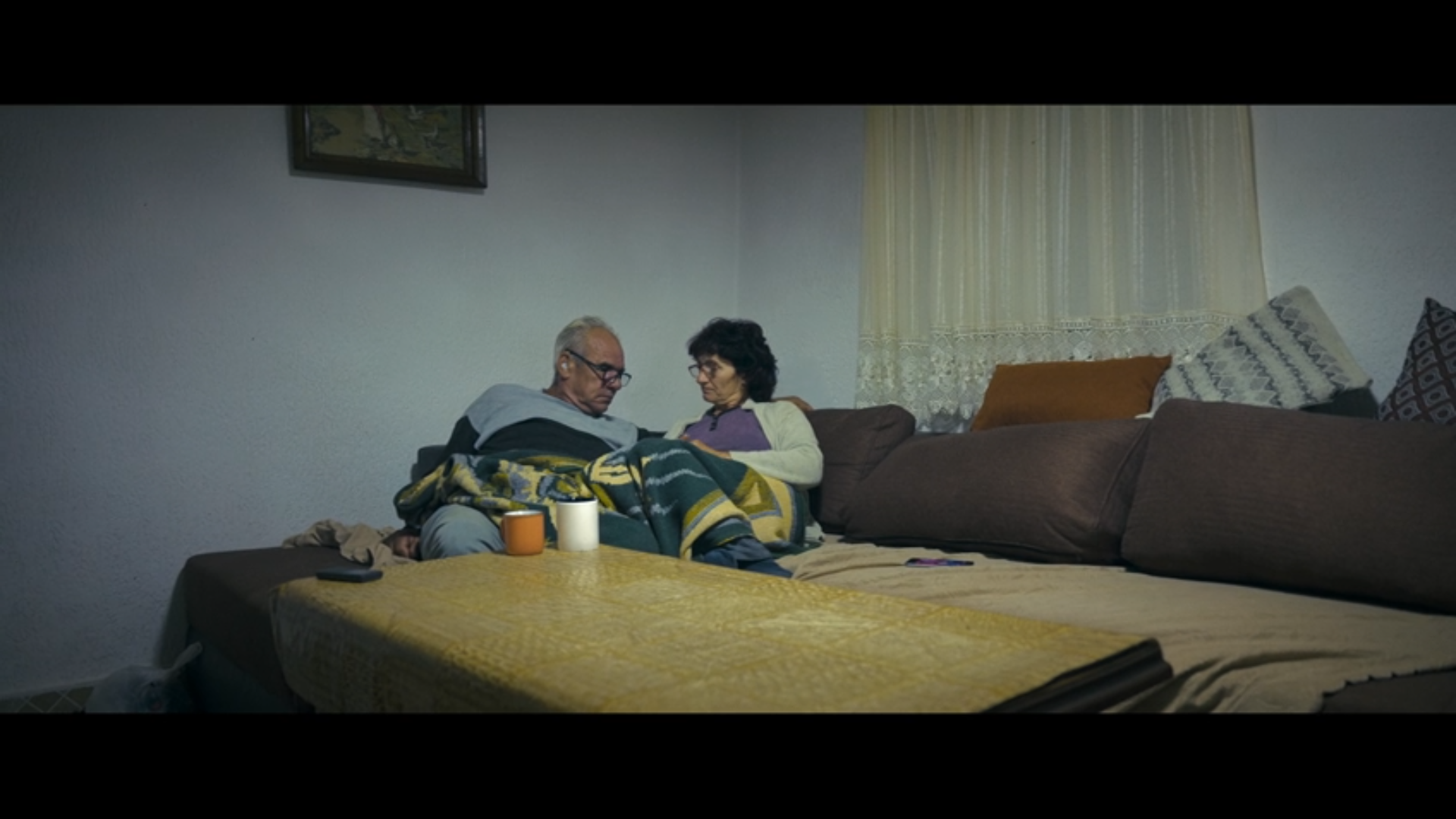
Long shot of Jana and her husband Nikola looking sadly at each other on their couch

From “Cold at Night” by the Mountain Goats:

On the third day, you said you felt sick
I could hear the clock tick
Well, the first thing you learn is that there’s always a clock ticking somewhere
(The first thing you learn is that there’s always a clock ticking somewhere)
And the next thing you learn is how cold it can get at night

Previous “Juxtaposition” posts can be found here.

2025: The Mixtape, Vol. 2 + updated Top Ten Movies All-Time list

Like always I’m going to wait until Oscar night to post my Movie Year 2025 “top ten” (it usually actually includes 11-15 titles) list to give critically-acclaimed films like Father Mother Sister Brother and No Other Choice time to make it to Ithaca before I make my selections, but as has also become traditional, I’m happy to share my 2025: The Mixtape, Vol. 2 Spotify playlist in the meantime! Just as Vol. 1 highlights the music I listed to the most between January-June, these are the songs that sustained me throughout the past six months:

1. Lia Ouyang Rusli – Happyend Theme (Opening)

Rusli has acknowledged that the late Ryuichi Sakamoto, whose “andata” led off my 2017: The Mixtape, Vol. 1 playlist, was an influence on her terrific score for Happyend, and when I discovered that its theme was split into “Opening” and “Closing” tracks, I knew I had my bookends!

2. Bruiser Wolf feat. Harry Fraud – Heart Broke

The wordplay isn’t exactly kid-friendly, but references to crème brûlée, Chevrolet, and Lamar Jackson make this track something of a family inside joke.

3. Amanda Shires – Maybe I

The first time she heard this, my youngest (who is more of a hard rock kind of gal) told me to turn it off . . . until Amanda Shires started singing, which caused her to immediately change her mind.

4. The Mountain Goats – Cold at Night

There truly is “always a clock ticking somewhere.”

5. David Byrne w/ Ghost Train Orchestra – My Apartment Is My Friend

An anthem for all us homebodies.

6. U.S. Girls – The Clearing

The first track added to this mix and still one of the best!

7. Kelly Moran – Chrysalis

Reminds me of a reworking of the Tord Gustavsen Trio’s “The Longing,” which I included on my 2022: The Mixtape, Vol. 1 playlist.

8. HUNTR/X – Golden

If you don’t have kids the correct age in your life, I doubt you realize just how much of a phenomenon KPop Demon Hunters was with the elementary school set.

9. Doja Cat – AAAH MEN!

I was born in 1981, so yeah: that sample works on me!

10. Jonny Greenwood – Perfidia Beverly Hills

The best track from maybe my favorite movie score of the year.

11. Tyler Childers – Bitin’ List

As I tweeted in July, this song “is *begging* to be used in a movie, maybe over an opening credits montage depicting our hero driving around with their arm hanging out the open window of a pickup truck?”

12. Lola Kirke, Peter Dreimanis, Brian Dunphy, Darren Holden and Jack O’Connell – Will Ye Go, Lassie Go?

It seems perverse to choose a non-blues song from the Sinners soundtrack, but this is a stunning rendition of a classic.

13. Jonathan Richman – David & Goliath

Another one by an old guy who’s still got it!

14. Jordan Seigel – After Hours

In which one major influence on The Baltimorons is acknowledged by the title of a track that sounds like an outtake from the Vince Guaraldi Trio’s score for another.

15. ROSALÍA feat. Dougie F – Porcelana

Perhaps the most cinematic track on this mix, including all the ones from actual movies.

16. Alex G – June Guitar

It was once summer and will be again before we know it!

17. Aiyana-Lee – Highest 2 Lowest

My pick for the Best Original Song Oscar.

18. Brian Dunne – Fake Version Of The Real Thing

“Born with a sword made of Bethlehem steel” might be my favorite lyric of the year.

19. STOMACH BOOK – FUKOUNA GIRL

Full disclosure: I had to look this reference up . . .

20. Kathleen Edwards – Need A Ride

. . . but “people get worked up about someone’s dad/trying to teach his kid how to open a can” I got completely on my own!

21. David Fleming – Vito

Great theme from an underrated movie!

22. Neko Case – Destination

The latest from a charter member of my mixtape hall of fame.

23. Lia Ouyang Rusli – Happyend Theme (Closing)

See above.

* * *

In August I was moved to compose my first “All-Time Top Ten Favorite Movies” list in more than a decade when I suddenly realized picking one film per decade for the 1910s-2010s minus the 80s gave me something that looked more or less correct. I guess whatever neurons are involved in such an exercise just needed a wake-up call, because they were firing again less than a week later when I found myself wondering if I should switch Stalker out for The Act of Seeing with One’s Own Eyes. Believe it or not people actually do ask me for these titles, including as recently as just a week ago, so I’ve decided to update it annually as part of this post. Which as you will see below has re-liberated me from the overly proscriptive model trap, so: hurrah! In alphabetical order:

  1. The Act of Seeing with One’s Own Eyes (dir. Stan Brakhage; 1971)
  2. Le Bonheur (dir. Agnès Varda; 1965)
  3. Groundhog Day (dir. Harold Ramis; 1993)
  4. Intolerance (dir. D.W. Griffith; 1916)
  5. The Passion of Joan of Arc (dir. Carl Theodor Dreyer; 1928)
  6. Pyaasa (dir. Guru Dutt; 1957)
  7. Stalker (dir. Andrei Tarkovsky; 1979)
  8. The Strange Case of Angelica (dir. Manoel de Oliveira; 2010)
  9. Wanda (dir. Barbara Loden; 1970)
  10. Wife! Be Like a Rose! (dir. Mikio Naruse; 1935)

First runner-up this time around was probably The Long Day Closes, but obviously the films I had to leave off to make room for the two newcomers were close too, as were All That Heaven Allows, Citizen Kane, The Searchers, and Kiki’s Delivery Service. I’m looking forward to seeing how this list continues to evolve now that I’m revisiting it on the regular!

* * *

As I said at the conclusion of my final “Drink & a Movie” post, I’m going alcohol-free for the duration of 2026, which makes further resolutions seem a bit superfluous. I do have a couple of goals for this blog, though, that I mention there as well. One is to edit that series into a self-published book. Another is to “keep up my pace of one illustrated longform post about movies per month on average.” The key word here for me is actually “illustrated,” not “longform,” since what I’m specifically hoping to preserve is being greeted with lots of screengrabs from my favorite films whenever I scroll through the landing page, but it will likely amount to about the same thing. I’m also going to try to be less of a MOVIE snob and watch a few TV series with My Loving Wife. Last but not least I intend to make a point of being less stingy with likes and comments to let everyone I enjoy reading know I appreciate them. So that’s what I’ve got going on. Thanks for stopping by, and Happy New Year!

Links to previous mixes I’ve posted about can be found here. Previous top ten lists can be found here.

Juxtaposition #11

From Burial Path:

Close-up of the silhouette of a dead bird

From “I Saw Another Bird” by Mount Eerie:

I can’t remember having crossed a threshold
Between the dust and the alive
So when a raven starts a convеrsation
I just stand there and blank out

But I’m wrong!

Therе is another world inside this one
It shines:

These birds trying for my attention
And my wordless reply

Previous “Juxtaposition” posts can be found here.

2025: The Mixtape, Vol. 1

I was worried that I wasn’t going to have enough material for my 2025: The Mixtape, Vol. 1 Spotify mix before the end of June as recently as just a few weeks ago, but then: bam! Ringo Starr’s latest album Look Up hit me the right way on a third listen, I liked Hayden Pedigo’s I’ll Be Waving as You Drive Away and Alexandre Desplat’s score for The Phoenician Scheme right from the start, and the end credits for The Life of Chuck were set to a creative interpretation of maybe my favorite song ever by Gregory Alan Isakov. Problem solved! Here, then, is an annotated track listing:

1. Nels Cline – Inner Wall

Has a similar ominous vibe to the track “Accident” from Justin Hurwitz’s score for Whiplash, which appears in a scene that isn’t a bad metaphor for what the first half of 2025 felt like at times.

2. Car Seat Headrest – The Catastrophe (Good Luck With That, Man)

A new one by an old favorite.

3. billy woods feat. Preservation – Waterproof Mascara

As I recently said on Bluesky and X, this song is my favorite horror film of Movie Year 2025 so far.

4. Morgan Wallen feat. Post Malone – I Ain’t Comin’ Back

In which Morgan Wallen and Post Malone finally resolve the question of whether or not they are Jesus. Someone needs to introduce these boys to Compass Box’s The Peat Monster!

5. Lucy Dacus – Ankles

Phantom Thread, The Musical.

6. Aesop Rock – Snail Zero

A description of what a breeding pair of black mollies are doing to my fish tank at home right now.

7. Alexandre Desplat – The Jungle Unit of the Intercontinental Radical Freedom Militia Corps

From my favorite original score of Movie Year 2025 so far.

8. These New Puritans – Bells

The songs on this particular mix skew shorter for some reason, so this is a welcome exception.

9. Alan Sparhawke w/ Trampled by Turtles – Stranger

Or: The Blogger’s Dilemma.

10. Takuro Okada – Taco Beach

And if the world does turn, and if London burns/I’ll be standing on the beach with my jazz guitar.

11. Lady Gaga – How Bad Do U Want Me

When I played this for My Loving Wife recently, she said it sounded like the opening credits song from an 80s movie.

12. Ringo Starr feat. Billy Strings – Breathless

Not a film reference . . . or is it?

13. Beirut – Garbo’s Face

Elegantly wistful, like the title says.

14. Tobacco City – Autumn

Features some of the year’s most evocative songwriting: “Jimmy and his niece/Scrambled eggs and country ham/Runnin’ from police/Drink the cream for free with Valerie”

15. Bonnie Prince Billy – Boise, Idaho

The first song to earn a spot on this mix, and still one of my favorites.

16. Salem 66 – Across the Sea

Okay, fine, this isn’t technically “new music.” But it’s new to me and I dig it!

17. Julien Baker & Torres – “Tape Runs Out”

Probably the most predictable selection on this mix?

18. Hayden Pedigo – I’ll Be Waving As You Drive Away

Not all goodbyes need be sorrowful!

19. Sharp Pins – I Can’t Stop

As Pitchfork‘s Shaad D’Souza wrote, “it’s likely to remind you of whatever music felt most romantic to you when you were growing up.”

20. Patterson Hood – Last Hope

Springsteen-esque.

21. Gregory Alan Isakov – The Parting Glass

I discovered “The Parting Glass” through Shaun Davey’s score for Waking Ned Devine and it was fun to encounter it again in a different movie. Isakov’s version is as understated as that one is grand

Links to previous mixes I’ve posted about can be found here.

2024: The Mixtape, Vol. 2 + New Year’s Resolutions

I’m going to wait until closer to Oscar night like I always do to pick my ten favorite movies of the year, since many of the top contenders (including The Brutalist, Hard Truths, and Nickel Boys) haven’t made it to Ithaca yet. I am, however, happy to usher in 2025 by sharing my 2024: The Mixtape, Vol. 2 Spotify playlist and new year’s resolutions for the blog! As usual, the songs which made it on the former shouldn’t *necessarily* be regarded as my choices for the “best” new music that has been released since I published Vol. 1 in June, but this is what I’ve been listing to on heavy rotation, so there’s a lot of overlap with any such list I might make. Here’s the track listing:

  1. Miranda Lambert – “Ain’t In Kansas Anymore”
  2. Osees – “Earthling”
  3. Mount Eerie – “I Saw Another Bird”
  4. Jamie xx feat. The Avalanches – “All You Children”
  5. Gillian Welch & David Rawlings – “The Day The Mississippi Died”
  6. Dame Area – “Si No Es Hoy Cuándo Es”
  7. Johnny Blue Skies – “Right Kind of Dream”
  8. Been Stellar – “I Have the Answer”
  9. Billy Strings – “In the Clear”
  10. Toro y Moi feat. Kevin Abstract & Lev – “Heaven”
  11. Father John Misty – “I Guess Time Just Makes Fools of Us All”
  12. Charley Crockett – “Ain’t Done Losing Yet”
  13. Kim Dracula & Alex Boniello – “Going Down”
  14. Los Campesinos! – “Feast of Tongues”
  15. Fucked Up – “Paternal Instinct”
  16. Doechii – “BOILED PEANUTS”
  17. Anna McClellan – “Like a Painting”
  18. Being Dead – “Ballerina”
  19. Jessica Pratt – “Life Is”
  20. Luke Combs – “Ain’t No Love in Oklahoma”

The mix begins and ends with songs from the soundtrack for Twisters, which I still think is the year’s best, and I’m using them to try to set up a rough double narrative: tracks 1-10 have an otherworldly The Wizard of Oz/The Man Who Fell to Earth vibe, while tracks 11-20 chart a path from disillusionment and anger to acceptance and determination.

As far as new year’s resolutions go, my ones for 2025 are pretty straightforward. If I publish thirteen Drink & a Movie posts over the upcoming twelve months like I’m planning to, I’ll be just one away from my ultimate goal of 54, so that’s my top priority. I’d also like to figure out a long-overdue social media strategy of some sort which preserves my desire to not spend too much time online, but exposes me to content from the people I want to follow who have migrated from X to Bluesky, Threads, and other platforms. On the personal front I’m boringly going to try to run more, drink less, and not fiddle so much with my fantasy football team. In other words, I’m fortunate enough to be in a pretty good spot in my life right now and am hoping to keep on keeping on!

Thanks for reading, and Happy New Year!

Links to previous mixes I’ve posted about can be found here.