“Bests”

For the past few months I’ve been revisiting the “mixtapes” (really playlists, but old habits die hard: I originally DID use actual cassettes for mixtaping, and then for a long while I always made sure to burn a CD, hence the 80-minute maximum length, but now I mostly just listen on my computer, phone, or TV) of new music that I’ve been making semi-annually since 2011. I started shortly after I moved away from Pittsburgh, the city where I had been dwelling for the past decade and my entire adult life, to take my first librarian job. Shaken out of my various ruts, I realized that it had been years since I had kept up with new music, so at the end of that year I resolved to listen to every album on Pitchfork’s Top 50 Albums of 2011 list. Having taken that step, it was inevitable that I would burn my favorites onto a CD so that I could listen to them in the car.

Librarian work and Spotify turned out to be a match made in heaven, and ten years later I still listen to a few hundred new albums a year at least once. In 2012 I mixed my favorite tracks into six CDs, which was excessive; from 2013-2015 I made a CD every season; finally, in 2016 I figured out that two CDs per year, one in June/July and one in December/January, was the perfect number. I always knew that if I kept this up long enough, I would eventually make some kind of “decade in review” mix, which is what brings me here today.

There no rules for my annual mixes, but I typically try to avoid including more than one track by the same artist and stick to original music released during the year in question. I’m also clear in my mind, and try to be clear in my references, that these are not necessarily the best songs of the year in my opinion, but rather the ones that gave me the most pleasure and/or affected me the most. All of this goes for these two mixes, which for want of a better idea I’m calling “A Decade in the Life” Vols. 1 and 2, as well. I also made sure to include at least one song from every year, and donated both track nines to my wife Marion. About that: I gave her a mix CD on our third or fourth date as one does, the ninth track of which was “Under the Milky Way Tonight” by The Church. This became the song we selected for our first dance at our wedding a few years later, which took place on August 9. Ever since then, “Under the Milky Way Tonight” is track nine on every mix I make for her. These mixes don’t get nearly as much playtime in our car as they used to, especially not since the pandemic nixed long distance travel, but she still listens to more music chosen by me than she really wants to, so I thought it was only fair to make sure at least a couple of HER favorite songs made the cut. Anyway, without further ado, here are Spotify URLs and track listings for both mixes:

A Decade in the Life, Vol. 1:

  1. Youth Lagoon – 17
  2. Strand of Oaks – Plymouth
  3. Ashley Monroe – Mother’s Daughter
  4. Craig Finn – Maggie I’ve Been Searching For Our Son
  5. The Wonder Years – Raining in Kyoto
  6. Baroness – Mtns. (The Crown & Anchor)
  7. Danny Brown – Grown Up
  8. Frank Ocean – Moon River
  9. Alex Winston – Locomotive
  10. Bruce Springsteen – Hello Sunshine
  11. Lori McKenna – The Bird & The Rifle
  12. Future ft. André 3000 – Benz Friends (Whatchutola)
  13. Chromatics – The River
  14. The 1975 – Paris
  15. Cloud Nothings – Stay Useless
  16. The Comet Is Coming – Summon The Fire
  17. DJ Quik – Fire And Brimstone
  18. Alison Krauss – You Don’t Know Me
  19. Spiritualized – So Long You Pretty Thing

A Decade in the Life, Vol. 2:

  1. Lucy Dacus – Fool’s Gold
  2. Jon Hopkins – Immunity
  3. Brand New – Limousine
  4. Vince Staples – Hands Up
  5. Shearwater – Quiet Americans
  6. Kamasi Washington – Fists of Fury
  7. Miranda Lambert – Runnin’ Just in Case
  8. Serengeti – Directions
  9. Laura Gibson – Milk-Heavy, Pollen-Eyed
  10. Sam Hunt – 2016
  11. Logic ft. Big Lenbo – Young Jesus
  12. The Mountain Goats – Harlem Roulette
  13. Aesop Rock – Marble Cake
  14. Donnie Trumpet & The Social Experiment – Sunday Candy
  15. Sturgill Simpson – The Promise
  16. Gord Downie – Bedtime
  17. Sharon Van Etten – Seventeen

As mentioned above, I started my first librarian job shortly embarking on this project. I also turned thirty, ate at Volt, met and eventually married Marion, bought and sold a house, had two kids, adopted two dogs, watched the Mets lose a World Series, got tenure, voluntarily left that position for one without tenure less than a year later, and moved to my current hometown of Ithaca, New York. It was, in short, an eventful period, and this is the music that carried me through it.

* * *

Since I’m here anyway writing about something which is kind of like a “Best of” list, I feel compelled to acknowledge that on August 5 I mentioned on Twitter that I had seen five movies worth including on year-end list, and that I was therefore tentatively planning on creating such a thing. Little did the person who wrote that know just how much more (let’s just say “virtual kindergarten” and leave it at that) 2020 had in store for him. I’m sorry to say that I saw very few additional new movies between that tweet and the end of the year, and that my Top Five list thus remains unchanged. For anyone who didn’t feel like clicking the link, the films I’m talking about are, in alphabetical order: Bacurau, Fourteen, Miss Juneteenth, One Day in the Life of Noah Piugattuk, and Tommaso. Here’s the thing, though: that’s a pretty impressive list! Add to that the facts that I saw one of my favorite films of the last BUNCH of years, Uncut Gems, at Cinemapolis early in 2020; that I enjoyed one of the great moviegoing experiences of my life when I took my daughter to see Frozen II at Cornell Cinema right before COVID-19 closed everything down; and that we MAY be witnessing the dawn of a Golden Age of holiday movies (which is basically the only kind I watch between Thanksgiving and Boxing Day) thanks to content-hungry streaming video services, and you get a year that at least in this one realm weirdly maybe wasn’t so bad after all.

I am not at all confident that I will be able to do much writing in 2021. I did, however, manage to finish THIS post, and we actually have been doing a pretty okay job of making space for movie nights lately, and I feel like an essay about National Lampoon’s Christmas Vacation (speaking of holiday movies) would pretty much write itself at this point, so who knows? Whatever the future may hold, I’m grateful to be here now. Stay safe, everybody!
Lucy Horbal’s First Trip to a Movie Theater

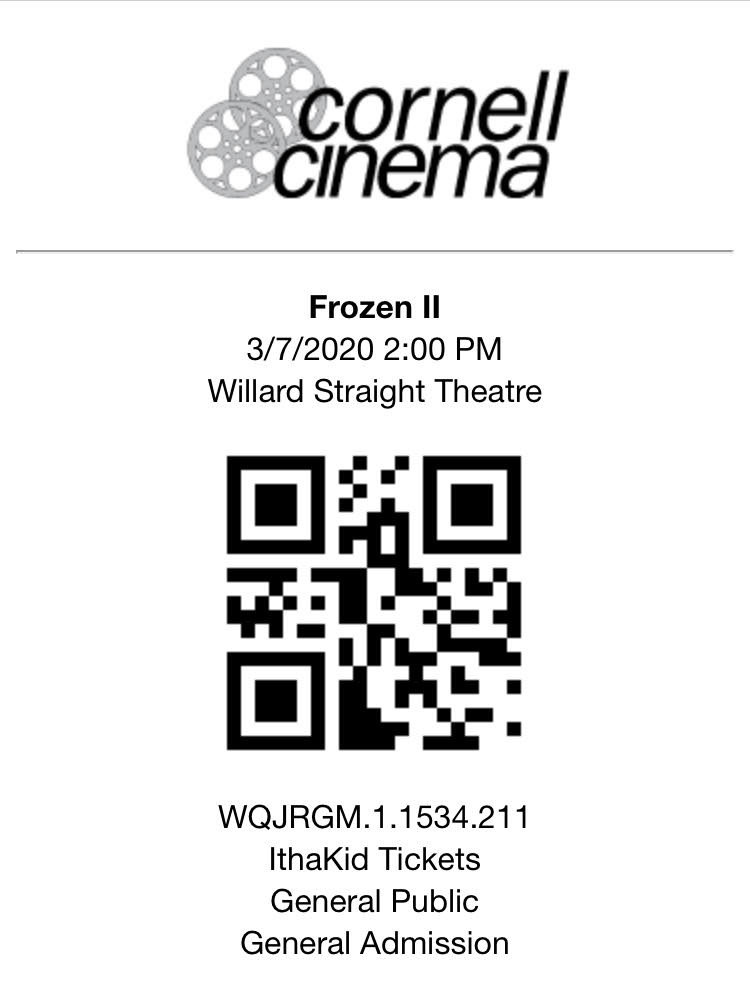
I celebrated a great milestone in my life today when I took my daughter Lucy to her first movie theater screening! We went to see Frozen II together at Cornell Cinema as part of their IthaKid Film Festival. Here’s my ticket:

Image of Frozen II ticket

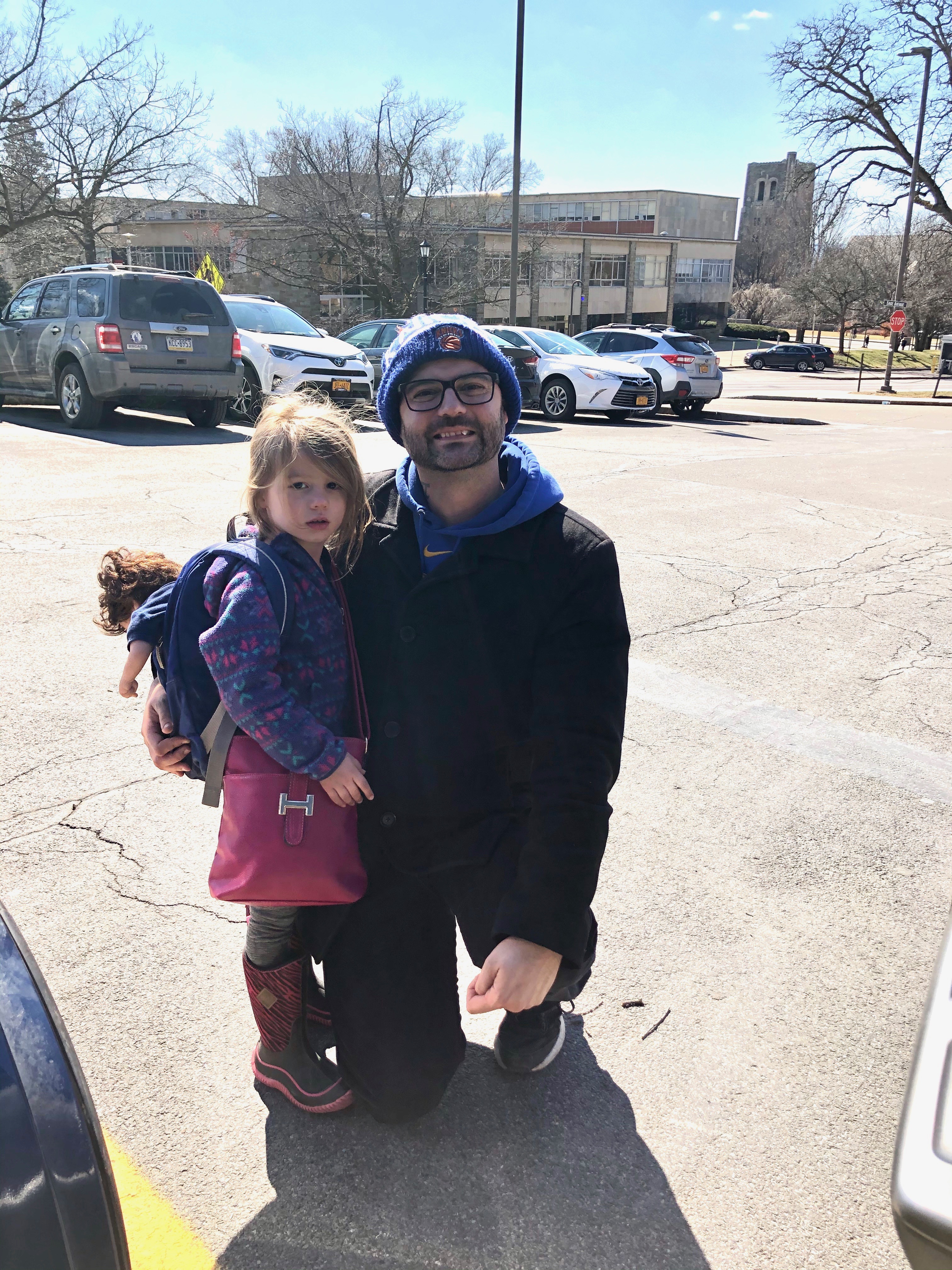
Lucy was napping when we arrived and needed a few minutes to wake up:

Picture of Andy and Lucy arriving at the movie

Picture of Lucy standing in front of sign

She was much more enthusiastic by the time we got to the lobby, though:

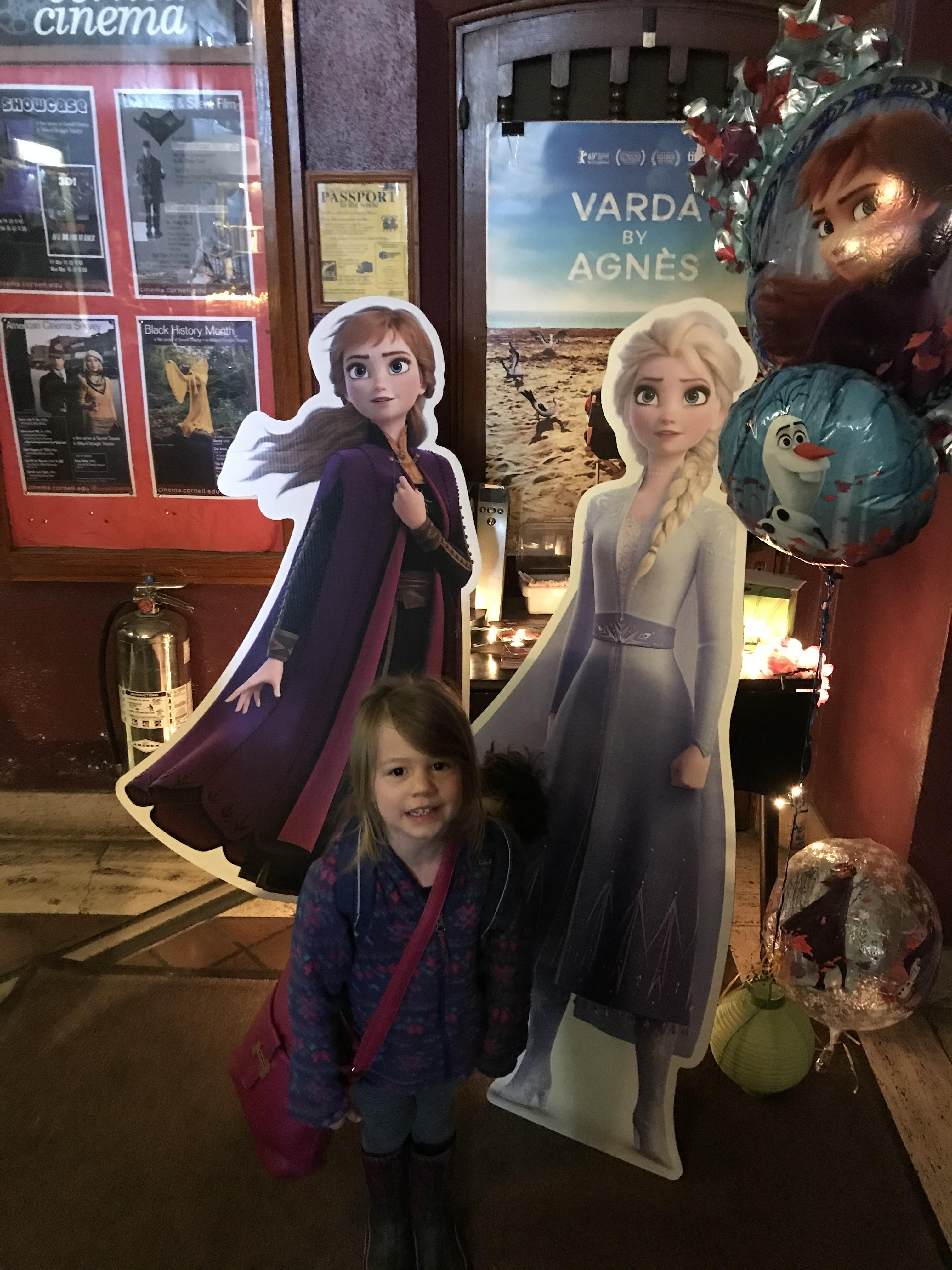
Picture of Lucy standing in front of cardboard cutouts from Frozen

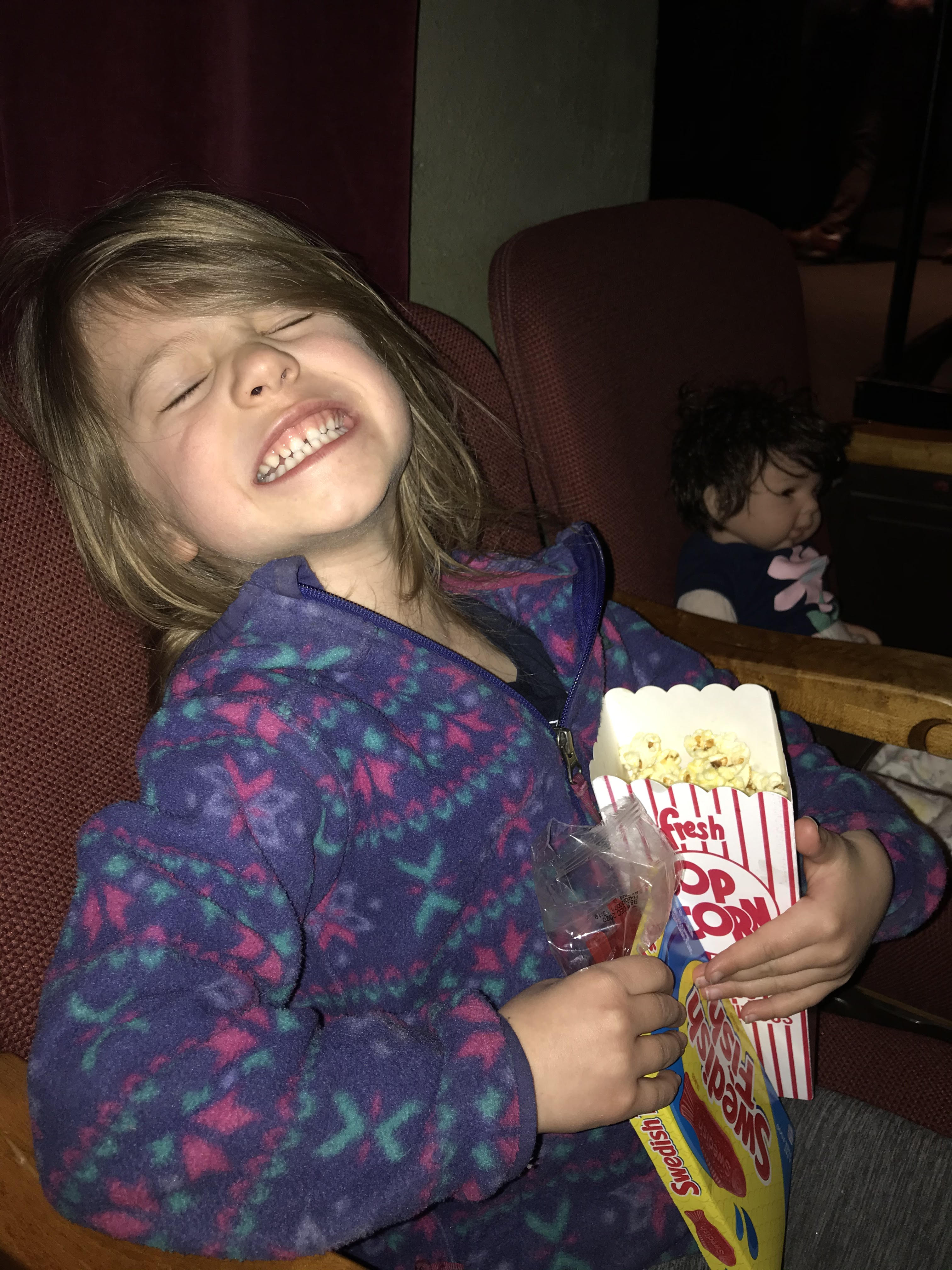
And by the time we loaded up with popcorn and Swedish fish, she and her plus one Comma (I love the fact that she named her doll Comma) were fully ready to go:

Lucy and Comma in their seats

I’m happy to report that Lucy had a great time and thoroughly enjoyed the film! Her review is as follows: “my favorite part was the horse, because I like horses.”

Happy (Belated) New Year!

Chicago Nog

When I launched this blog two Septembers ago, I promised myself that I wouldn’t aspire to any particular standards for volume and timeliness. No matter what happened, I didn’t want this site to fall victim to the same fate that befell so many of its predecessors, a vicious cycle of unrealistic expectations resulting in guilt and unhappiness and leading inevitably to deletion. And so it is that I bring you a post about my favorite of all Christmas movies, National Lampoon’s Christmas Vacation, in February. I had originally hoped to also publish a deep dive into just *why* love it so much, but life got in the way. I’m still planning to finish that post in time for next year’s holiday season, but in the meantime please enjoy the story behind and recipe for the beverage depicted above, an original creation I call Chicago Nog!

My starting off point was a drink called San Francisco Nog that I read about on Frederic Yarm’s Cocktail Virgin Slut blog a few years ago. For my first attempt at a drink inspired by Christmas Vacation, I simply substituted a Chicago-based spirit, Letherbee Distillers’ Fernet, for the Fernet Branca in this recipe:

Letherbee Fernet

It was good, but basically tasted exactly the same, so I next tried a different Letherbee product, Besk:

Letherbee Besk

The result tasted overwhelmingly of licorice, so I experimented with different combinations of Fernet and Besk before concluding that something was missing. Thinking about one of my favorite cocktails of all time, Jeffrey Morgenthaler’s Amaretto Sour, I first sought help from Jack Daniels, which definitely resulted in a more balanced drink. The light bulb really went off, though, when I switched this out for a housewarming present from my best friend Anthony, who used to live in Chicago and who jump-started my interest in mixology by taking me to The Violet Hour for the first time, New Liberty Dutch Malt Whiskey:

New Liberty Dutch Malt Whiskey

From there it was a simple matter of replacing the Sugar In The Raw I was using with a a 50-50 mixture of Lyle’s Golden Syrup and water for the sake of convenience and figuring out the optimal ratio of Besk to Fernet. I finally landed on the following:

  • ¾ oz. New Liberty Dutch Malt Whiskey
  • ½ oz. Letherbee Besk
  • ¼ oz. Letherbee Fernet
  • ¾ oz. cream
  • 1 oz. golden simple syrup
  • 1 egg yolk
  1. To make golden simple syrup: shake together equal quantities of Lyle’s Golden Syrup and water. 
  2. To make drink: dry shake all ingredients, then shake with ice. Serve in a moose glass, garnished with freshly grated nutmeg.

The drink is funky and sweet with a complex bitter finish, not entirely unlike Clark Griswold’s big family Christmas. It’s probably not for ALL tastes, but I definitely kept coming back for more, and will make this every year moving forward!

Dispatch from the 2019 Maryland Film Festival

MDFF Banner

I have been slowly working my way through Negative Space: Manny Farber on the Movies for the first time in years the past few months. My favorite essays in the book are Farber’s dispatches from the New York Film Festival, which see him taking advantage of the opportunity that watching a large number of new movies in a short period of time presents to draw conclusions about the current state of cinema. This seems to me to be the most highly evolved version of an irresistible temptation inherent in the film festival experience: cataloging the inevitable connections between everything you see. After all, there are only so many techniques and themes available to even the most gifted artists.

The most obvious and potentially meaningful commonality I noticed at this year’s Maryland Film Festival was a preoccupation with fake news. Donbass begins with actors preparing to appear on a television news broadcast as witnesses to a shelling attack. They will return at the end of the movie, when the price of their complicity in this deception is revealed. In between, director Sergei Loznitsa’s protagonist-less film presents roughly a dozen other vignettes depicting life in the Donbass region of Eastern Ukraine amidst the separatist conflict which started in the aftermath of Russia’s annexation of Crimea in 2014, and which does not appear (as someone who reads four news sites every day, it’s crazy how little I know about this) to have ever ended. As the credits rolled, I felt exhausted by the film’s relentless pessimism; three weeks later, however, I find myself thinking about Donbass more often than anything else I saw at MDFF. A room full of well-dressed men on their cell phones begging for money in particular has emerged as probably my favorite movie scene of the year so far.

The hijacking of the media by government interests was a topic near and dear to the heart of the subject of the only documentary I saw at this year’s festival, Recorder: The Marion Stokes Project. Alarmed by the way the official story about the Iran Hostage Crisis seemed to change nightly, Stokes, a public intellectual and former librarian from Philadelphia, began recording television news programs in 1979. This project eventually expanded into a 24/7 operation capturing everything shown on multiple networks, an endeavor involving more than 70,000 VHS tapes, entire apartments used for nothing but storage, and the assistance of paid help. The film falters toward the end when it tries too hard to use Stokes’s archive to make a case for her as a visionary without really grappling with the fact that only an EXTREMELY WEALTHY person would have had access to the immense (forgotten fact: video tapes were pretty expensive for much of the thirty year period Stokes was recording) resources this project required. Recorder is nevertheless a fascinating story about a unique individual and a welcome nod to the good people at the Internet Archive doing the hard work of making Stokes’s tapes available to the public.

In contrast to the sophisticated propaganda machines in Donbass and Recorder, the military government which haunts Aäläm-Wärqe Davidian’s Fig Tree doesn’t even bother trying to deceive anyone about what it’s up to. While 16-year-old Mina (Betalehem Asmamawe) lives in constant terror that her boyfriend will be impressed into military service, dictator Mengistu Haile Mariam makes speeches castigating the Ethiopian people for raising a “generation of cowards” because they don’t volunteer their sons to fight as soon as they’re old enough to hold a gun. Although Davidian succeeds in creating a palpable sense of what it was like for her to come of age in Addis Ababa against a backdrop of civil war, I felt that Fig Tree was outshined by another debut feature which also ends with a shot of its young woman protagonist running toward the camera, Annabelle Attanasio’s Mickey and the Bear.

Like Mina, Mickey (Camila Morrone) is struggling to navigate a path to adulthood complicated by war. In her case, it comes in the form of her father Hank (James Badge Dale), a survivor of two tours in Iraq struggling with a host of afflictions including PTSD, poverty, alcoholism, drug addiction, a war injury, and grief at the loss of his wife (Mickey’s mother) to cancer. As Mickey approaches the end of her senior year of high school, Hank’s destructive impulses begin to manifest in increasingly creepy and threatening forms, leaving her with an impossible choice between abandoning a loved one to his demons to accept a college scholarship and risking her own health and happiness to stay by the side of a man the film clearly identifies as being beyond saving. I thought Mickey and the Bear‘s Anaconda, Montana setting and the scenes of Mickey at work in her part time job as a taxidermist were terrific, but wanted much more of both, and I’m conflicted by the film’s depiction of Hank as a problem without a good solution. There’s no denying, though, that Morrone’s and Dale’s performances constitute some of the best acting I’m likely to see this year.

Ham on Rye (yet another debut feature) deals with a similar stage in life, but couldn’t be more different from Fig Tree and Mickey and the Bear. Working with a cast featuring numerous veterans of Disney Channel and Nickelodeon shows such as Danny Tamberelli (All That, The Adventures of Pete & Pete), Lori Beth Denberg (All That), Clayton Snyder (Lizzie McGuire), and Aaron Schwartz (The Adventures of Pete & Pete), director Tyler Taormina and cinematographer Carson Lund (who wrote about his experience shooting the film for Filmmaker Magazine) focus single-mindedly on recreating the feeling of finishing high school and going off to college (or not) in the suburbs in the late 90s and early 00s. As a member of Conestoga Valley High School‘s class of 2000, I was definitely picking up what Ham on Rye was laying down, but I still thought the film was overlong, an impression reinforced by my fonder memories of Little Waves, the short film which preceded it. The latter probably wouldn’t have worked as well stretched out to feature length either, but the point is that it wasn’t.

Rites of passage also figure prominently in my favorite of all the movies I saw at MDFF, South Mountain. It opens with Talia Balsam’s Lila and Scott Cohen’s Edgar hosting close friends for dinner at their home in the Catskills. Edgar excuses himself, supposedly to take a call about a script he’s working on, but in actuality to witness the birth of his child with another woman on his iPhone. The rest of the film could accurately be said to focus narrowly on Lila’s efforts to come to terms with this specific event and its aftermath while still trying to be there for an old friend recovering from breast surgery and her two daughters, one of whom is returning from camp and the other from a sea voyage. It would be even truer, however, to say that it’s more generally about coping with change that arrives at precisely a moment when you are planning on settling down for awhile, a theme that most viewers can likely relate to. I must admit that South Mountain appealed to me in part because of Lila’s house, which in real life belongs to director Hilary Brougher’s mother: I spent much of my time in between MDFF screenings setting up appointments to view houses for rent in Ithaca, so I enjoyed spending so much time with a lovely piece of upstate New York real estate. I was also extremely impressed by how present nature was in the film both visually and as part of the soundtrack.

All in all, the 2019 Maryland Film Festival was a fitting way to say farewell to the Baltimore film scene. I was never able to become as involved in it as I would have liked, but I’m still leaving with quite a few great memories. Most notably: meeting John Waters, meeting DeRay Mckessen (who’s quite the cinephile, by the way!), managing to visibly annoy Alex Karpovsky by not knowing when to let something go at a Q&A for Supporting Characters (“does that answer your question?” he asked, to which I replied, “no, not really . . . “), muddling my way through managing a sold out screening attended by not-yet-disgraced mayor Catherine Pugh, and all my interactions over the years with the wonderful MDFF staff and scores of my fellow volunteers. Special shout out here to Karol Martinez-Doane, who was always awesome to work with as Venue Manager, and who brought me bibimbap from Brown Rice Korean Grill one year just because! Of course, I still have family and friends in Baltimore, so this isn’t really goodbye. Let’s say, instead: ’till we meet again!

Dispatch from the 2019 Bastard Film Encounter

BFE Header.png

Two weeks ago I had the pleasure of attending the 2019 Bastard Film Encounter, a weekend-long event devoted to the screening and discussion of films which are “ill-conceived or received; embarrassing or beyond the bounds of acceptability; poor in conception or execution; undesirable to those who should be caring for them; proof of something that should have never happened.” Although noted cinephile and friend of the blog Brian Darr describes the BFRE as “legendary,” I must confess that I had never heard of it before organizer Stephanie Sapienza, a colleague at the University of Maryland, mentioned it to me a few months ago.

The first three iterations of this biennial affair were held in Raleigh, North Carolina. This year, though, it relocated to Baltimore, with most events and all screenings taking place at The Windup Space. I originally thought I wasn’t going to be able to attend, since we are right in the middle of trying to get our house on the market, but when I learned that a limited number of one-day passes were available, I leaped at the opportunity to snag one. The day began with a public domain film (which is actually available on YouTube) called Tip Over VNR presented by John Klacsmann from Anthology Film Archives as part of a program called “Teach Me, Teacher (Part I).” For me, it was an absolutely perfect way to start. The release of Pet Sematary has drawn my attention to the fact that since becoming a parent, I can’t even read about the death of a child in a movie review without feeling queasy, so it was fascinating to examine my reaction to a film comprised of nothing but fake children being crushed by furniture over and over again and contemplate (as Klacsmann suggested) what must have been going through the heads of the government officials who ran and recorded these simulations.

The rest of the program consisted of a film created to train Target employees to spot “hot” checks which featured an actor that presenter Dan Erdman was able to identify as a former wrestling heel from Minnesota, and a video found in a shopping mall 20 years ago which extolled a philosophy known as “informationalism.” The latter dominated the conversation which followed the films when a debate broke out over whether or not it was genuinely the copy of a copy of a copy that it looked like or some sort of art project. Nothing in the next block of screenings titled “Manly Pursuits” generated the same level of discussion, but the films were, if anything, even more interesting. I was particularly captivated by “A Hidden Index of Female Presence in a Vanishing Container,” which reminded me of the moment in The Tillman Story when I suddenly realized I was watching the creation of those weird video portraits they use in Sunday Night Football broadcasts, the origin of which I had never previously contemplated, and a video celebrating/roasting a Texas businessman which was presented by my fellow past chair of the American Library Association’s Film & Media Round Table Brian Boling.

In between the two morning programs, a number of bastards (as BFE attendees affectionately refer to one another) were invited on stage to show off talents including a Werner Herzog impression and a rendition of “Here Comes the Bride” on a fart piano (which is exactly what it sounds like), and we were treated to a slide show preview of a bike tour that one of the local participants was leading later in the weekend before lunch as well. Lunch itself arrived in the form of a taco bar provided by Golden West Cafe which, if you’re not familiar with Baltimore, is a pretty boss thing to come included for free with the price of registration. As were, by the way, the stylish t-shirts.

Anyway: the afternoon screenings kicked off with a program featuring what is apparently a BFE staple, footage depicting animals being used for medical research, and continued on with one called “Teach Me, Teacher (Part II: The #MeToo Edition),” which the schedule described as featuring “[f]ilms and videos meant to teach women something strange, obscure, or life-alteringly informational.” The latter included a “social media blackout,” whereby the audience was asked on behalf of the presenters to please not take pictures or discuss the details of the film being shown, a request that I absolutely will honor. I only mention it because I believe the existence of such a thing is a crucial part of BFE’s mission to facilitate free and open dialogue about film objects which aren’t typically and maybe even (in some cases) shouldn’t be studied and talked about.

The penultimate program of the day and last one I was able to stay for was called “Children of the Damned.” It started out with a clip from an absolutely fascinating BBC television production called Improvised Drama: An Enquiry Into Its Value in Education, which you can find on YouTube (we started at 13:18). The last two films were rough. The first, The Idiot Child, was an excerpt from Vsevolod Pudovkin’s Mechanics of the Brain, a documentary based on the work of Ivan Pavlov, presented by film studies scholar Marsha Gordon, and the second was a 1971 film called Who Should Survive? which made a fascinating, if disturbing, bookend with Tip Over VNR. Bret McCabe described it thusly in an article for Bmore Art:

The film was ostensibly made to start a conversation around medical ethics. The cultural shifts between then and now, however, are so profound that what once was normal vocabulary in medical science sounds absolutely appalling, and watching it now you might wonder why it was ever made. A better question: How should we think about it now?

The shorter version of Who Should Survive? that we viewed is available on YouTube here. The subject matter of the film is shocking and affecting, but it’s equally noteworthy for the disparate contexts in which it has been seen: its original screening at the Kennedy Center for the Performing Arts was covered by the New York Times as an intellectual event, but according to presenter Martin Johnson it might be all but forgotten today were it not subsequently adopted by the pro-life movement as an emotional appeal to potential supporters of their cause. In the discussion period which followed the film Johnson argued that it should be included in the National Film Registry, a compelling notion that this librarian for one supports.

All in all, the Bastard Film Encounter was a great experience. I connected with a surprisingly large number of colleagues from the University of Pittsburgh and elsewhere who I haven’t seen in years, made a few new friends, and was reminded of some reasons I became interested in movies in the first place which I haven’t thought about in a long time. My major regret is that I wasn’t able to participate in the social aspects of BFE, such as the 16mm mashup dance party, closing night dinner and duckpin bowling outing, and Sunday brunch at the home of two Baltimore-based bastards. I’m pretty sure that I’ll be back in 2021, though, so: next time!

Tentative Schedule for the 2019 MDFF

When I left Pittsburgh in 2011, I was a movie lover who worked in a library. By the time I moved to Baltimore in 2012 (following a transitional year in Westminster, Maryland), I had become a librarian who loved movies. The distinction is subtle, but important: whereas I reorganized my entire life to facilitate seeing as many films as possible at the Three Rivers Film Festival each year, the Maryland Film Festival was always an event that I scheduled around my obligations to work and, starting in 2016, family. I actually haven’t seen many films at the festival at all since I started serving as a volunteer in 2013: the theater captain shifts I typically signed up for each represented a six- to eight-hour commitment, so I had to choose whether each day of the festival was going to be one I worked or one where I watched, since as a parent I didn’t have time to do both.

This year’s MDFF is my last as a resident of Baltimore because (as I announced on Twitter earlier this month, but have not yet mentioned on this blog) I am moving to Ithaca, New York in June to begin a new job at Cornell University. To celebrate, I’ve decided to treat myself to an old school festival experience: I’m going to devote an entire day to seeing as many movies as I can. So as not to completely shirk all of my parental duties, I now (updating another recent Twitter post) plan to split this day up into two parts: I’m going to attend movies during the day on Friday and at night on Saturday, with one Thursday screening thrown in for good measure. As I did in days of yore, I’m posting my tentative schedule here. Please let me know if you think I should reconsider any of my choices, or if you’ll be in town and would like to meet up along the way! The full film guide can be found here. Without further ado:

Thursday, May 9

Two films in the last time slot on Thursday jump out at me: Mickey and the Bear, which is part of the ACID lineup at this year’s Cannes Film Festival, and Premature. Stephen Saito saw the former at SXSW and the latter at Sundance and hailed both for their acting. This will probably be a game-time decision.

Friday, May 10

I should be able to see three movies on Friday. The first time slot features an impossible decision between Donbass and Manta RayBoth have already spent some time on the festival circuit, where each of them picked up some impressive endorsements. Daniel Kasman saw Donbass at Cannes last year and described it as “the kind of film [the] festival should embrace, one which attacks the distress of the present with a virtuosic anger and desire to communicate experience.” Steve Dollar saw Manta Ray at New Directors/New Films earlier this month and said that it “has deep affinities with the work of Thailand’s better-known Apichatpong Weerasethakul, while inscribing the screen with its own uncanny grace.” Ray & Liz  is also playing during this time slot. Daniel Kasman saw it at Locarno and called it “one of the few new films here I haven’t been able to stop thinking about,” but others who caught it there or at the New York Film Festival have been less enthusiastic, so I think I’m going to pass.

I’m leaning toward Fig Tree for my second film of the day. Ethiopia is a part of the world I’d like to know more about, and according to Michael Sicinski director Aäläm-Wärqe Davidian “is successful at generating an all-enveloping atmosphere of panic and confusion as she recreates 1989 Addis Ababa and the Ethiopian Civil War.” I am also intrigued by One Man Dies a Million Times, which Steve Dollar saw at the American Film Festival in Wroclaw, Poland [note to self: research this event further!] and described as exerting “a hypnotic pull into its imagined world […] that is difficult to shake off once the lights come up.”

For my last film of the day I’ll likely either see Mickey and the Bear if I haven’t already or take a flyer on Recorder: The Marion Stokes Project, which hasn’t yet been reviewed much, but is about media preservation, a topic that as a librarian obviously interests me.

Saturday, May 11

As a rule I always try to see at least a few short films at every film festival I attend, so that will definitely be a part of my Saturday viewing schedule. Candidates include the “Character Study,” “Altered States,” and “WTF” programs. Depending on which one(s) I go with, I might also see American Factory, which documents the opening of a Chinese factory in Dayton, Ohio or South Mountain, which Beatrize Loayza described as one of the highlights of SXSW.

Juxtaposition #3

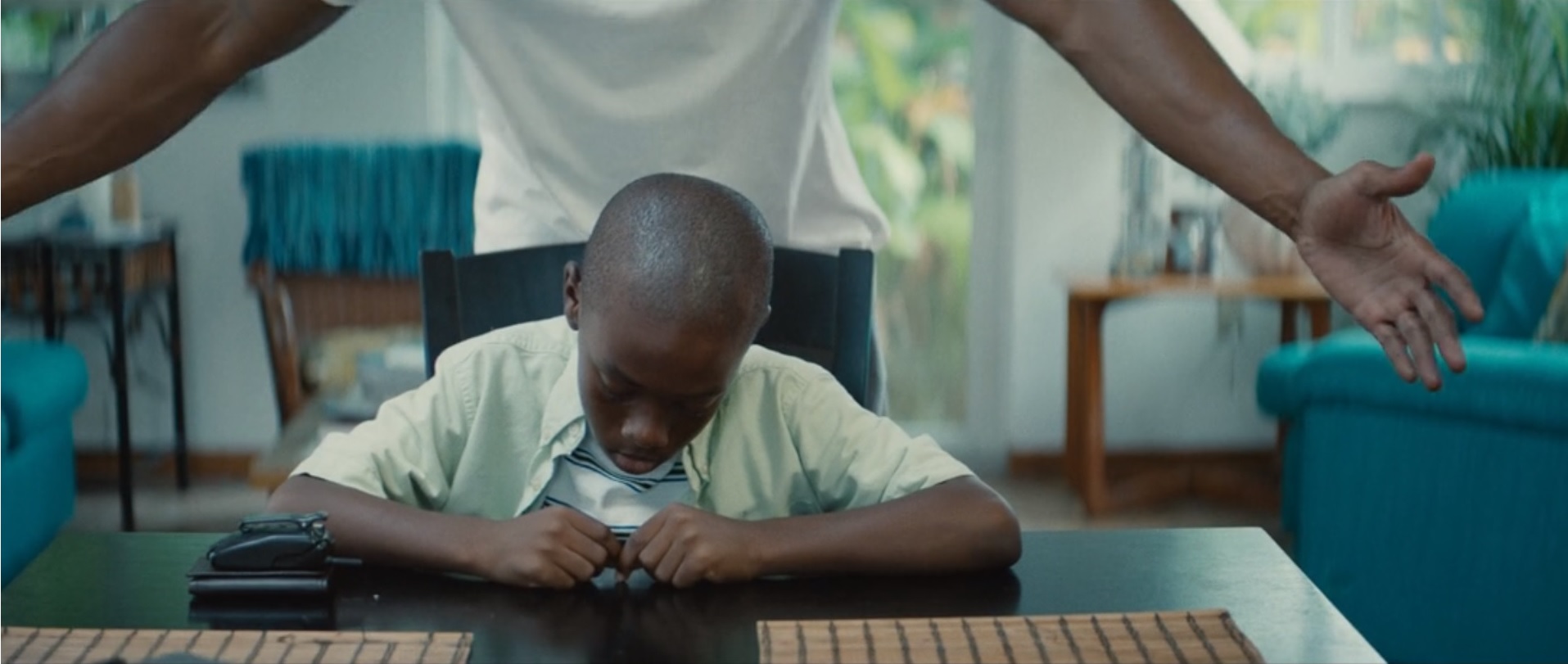
From Moonlight:

Screengrab from Moonlight #1

JUAN: Alright, first things first. You can’t sit at my table like that. You can’t sit with your back to the door. C’mon. [Juan slides Little’s chair around the table.] How you gonna know if somebody creepin’ up on you? Alright, see that? Now you can see everything.

From Dune by Frank Herbert:

Thufir Hawat slipped into the training room of Castle Caladan, closed the door softly. He stood there a moment, feeling old and tired and storm-leathered. His left leg ached where it had been slashed once in the service of the Old Duke.

Three generations of them now, he thought.

He stared across the big room bright with the light of noon pouring through the skylights, saw the boy seated with back to the door, intent on papers and charts spread across an ell table.

How many times must I tell that lad never to settle himself with his back to a door? Hawat cleared his throat.

Paul remained bent over his studies.

A cloud passed over the skylights. Again, Hawat cleared his throat.

Paul straightened, spoke without turning: “I know. I’m sitting with my back to a door.”

Hawat suppressed a smile, strode across the room.

Previous “Juxtaposition” posts can be found here.

Film Blogs, Etc. 2.0

One of my favorite things that I created during my first go-round as a blogger was a Google Customized Search Engine (CSE) called Film Blogs, Etc. When I returned to regularly watching movies and researching them late last year, I once again found myself in need of an easy way to track down the kind of high-quality open access film criticism often missed by review aggregators like Metacritic and Rotten Tomatoes (both of which, to be fair, have become much more inclusive since then) and film studies databases like the FIAF International Index to Film Periodicals and Film & Television Literature with Full Text. Thus was born Film Blogs, Etc. 2.0, which can be accessed through the following link:

http://cse.google.com/cse?cx=011362720037851721152:9nheu0l1d0s

Like I did previously, I will maintain a list of sites searched by this CSE on this blog post (which I will also link to on my “About” page for easy access) following the jump along with a “last updated” date. The best way I’ve found to use Film Blogs, Etc. 2.0 to find information about a specific film is by searching for the title of the film in quotation marks followed by the last name of the director, as per the following example:

“prince of darkness” carpenter

If you’re looking for information about an actor, director, or other individual, the best approach seems to be inputting the name of that person in quotation marks:

“john carpenter”

Film Blogs, Etc. 2.0 also accepts Boolean logic, so if you’re looking for information about either Prince of Darkness or Assault on Precinct 13, you could use the following search:

“prince of darkness” OR “assault on precinct 13” carpenter

The search |”prince of darkness” “assault on precinct 13” carpenter| without the OR would return results that contain both the phrases “prince of darkness” and “assault on precinct 13” as well as the name carpenter.

Without further ado, then, the list of sites currently included on Film Blogs, Etc. 2.0 follows the jump!

Continue reading “Film Blogs, Etc. 2.0”

On Kanopy’s “Free” Streaming Video Service

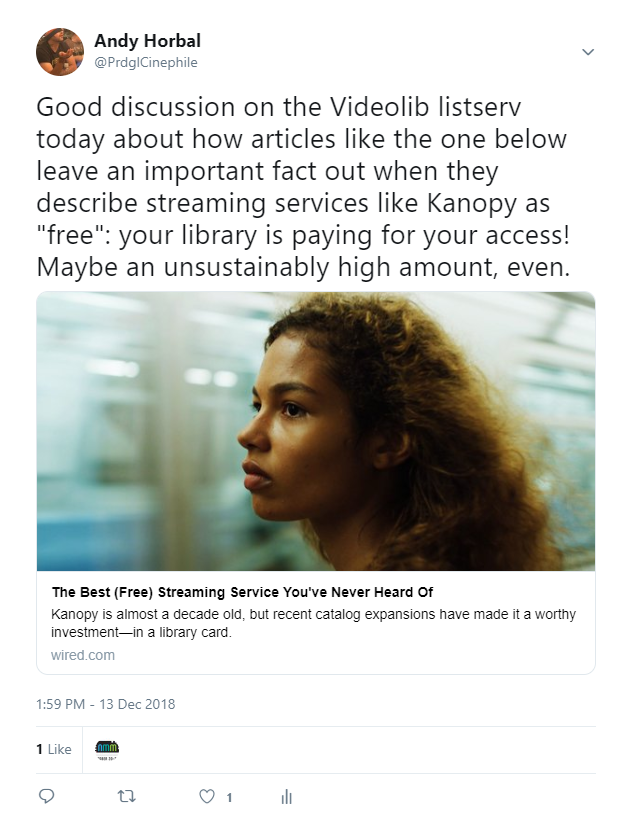
On December 13 I tweeted about an interesting conversation that media librarians were having on the Videolib listserv about a Wired article by Brian Raftery called “The Best (Free) Streaming Service You’ve Never Heard Of”:

Untitled

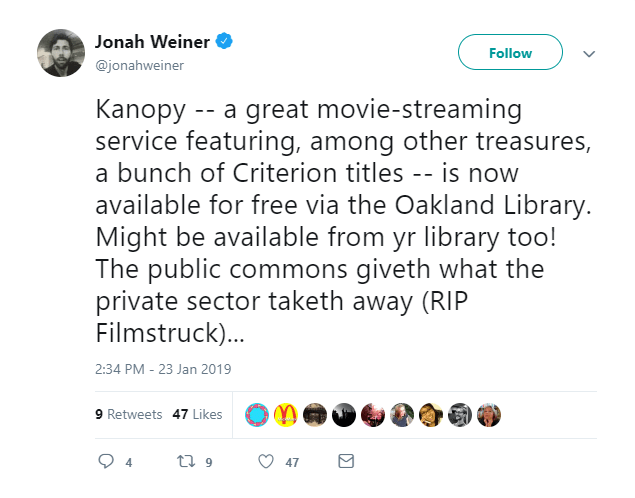
Also mentioned in this thread were an IndieWire piece by Chris O’Falt called “Free Streaming Nirvana: How to Access a Collection of the Greatest Movies Using Your Library Card” and the fact that Kanopy’s website touts its product as “streaming now for free with your library card.” On January 29, a Videolib poster drew attention to an Entertainment Weekly article by Maureen Lee Lenker called “What You Need to Know About (Free!) Streaming Video Service Kanopy,” and a few days later the following tweet by writer Jonah Wiener appeared on my timeline:

JW Tweet

Both the Wired and IndieWire articles, like Weiner’s tweet, hail Kanopy as an alternative to the subscription streaming video service FilmStruck, which ceased operations in November, 2018. To be fair, the IndieWire article does accurately describe Kanopy as a company which sells a product to a market that consists primarily of libraries, schools, and other non-profit organizations; the Entertainment Weekly article dips briefly into discussion of Kanopy’s business model as well, although it also refers to libraries and academic institutions as Kanopy’s “partners,” which obscures the fact that this is a vendor-customer relationship.

I have been reluctant to say much on this topic because I have very little firsthand experience with Kanopy aside from a few brief conversations with their representatives at National Media Market circa 2013-14. I am on the record as suggesting (on page 185) that use-driven acquisitions or UDA (which also goes by other names and acronyms including DDA, for demand-driven acquisitions, and PDA, for patron-driven acquisitions) plans like the one Kanopy offers might represent a better value for libraries than curated streaming video collections, so I’m not hostile toward their business model, but I call for more research on the subject later in the same article (on page 187), so I’m probably best described as a skeptic. That’s not really what worries me about articles and tweets like the ones I link to above, though. My concerns came into better focus as I was flipping through Rick Anderson’s recent book Scholarly Communication: What Everyone Needs to Know the other day. Here’s the passage that caught my eye:

In reality, of course, no library does anything for free. Library patrons are most assuredly paying for the services they receive–but since the payments are made indirectly (usually in the form of property taxes, tuition, or student fees) and since payment is separated in both time and space from the experience of library services, those services can easily give the false impression of being offered at no charge. In other words, the fact that you can walk into a library, select five books, and take them home with you without money changing hands during the transaction makes the transaction feel as if it came without cost. In reality, however, the money changed hands earlier, and made its way indirectly from your picket to the library’s budget.

Why is this point worth making? Because the proposition that libraries offer “free services” poses two risks that are mirror images of each other. First, it poses the risk that library services will be undervalued by those whose financial support is essential to their survival. It is a common rule of thumb in economics that we tend to value least those things in which we have the least invested, and for this reason alone it is unwise for any library to pretend that its patrons have not made concrete monetary investments in the library and its services.

More subtly, the claim that libraries provide “free services” is risky because it simply does not pass the smell test. Anyone who hears that claim and takes even a few moments to consider it will immediately recognize its falsity and may then start to wonder whether other things said by librarians (and their supporters) are actually trustworthy.

For libraries and their boosters who want to encourage better and more widespread use of the library, a more accurate and effective message might be: “Come see how we are making wise and effective use of the money you have entrusted us with.”

Presumably, Raftery, Lenker, and Weiner all chose to write about Kanopy out of a genuine desire to draw attention to the great films available through its streaming video service to patrons of the libraries and other institutions that subscribe to it. By failing to delve into the details of exactly how this happens, though, they may be contributing to a situation whereby the films are only free “until it’s unsustainable and your library has to switch to mediated access,” as one Videolib poster put it. After all, Kanopy is every bit as much of a commercial entity as FilmStruck was. I’d like to see more articles like O’Falt’s (headline aside) and this one that Glenn Kenny wrote for the New York Times called “Library Cards Unlock Film Vaults,” which are every bit as enthusiastic about the opportunity Kanopy represents for movie lovers, but without neglecting to express curiosity about what’s going on behind the scenes. Otherwise, the history of disappointment associated with FilmStruck might be doomed to repeat itself.