Ithaca Film Journal: 4/11/24

What I’m Seeing: I’m going with Here, which is screening at Cinemapolis this evening as part of the Finger Lakes Environmental Film Festival.

Also in Theaters: Two other FLEFF selections that I mentioned last week, Last Things and Pictures of Ghosts, are back at Cinemapolis again this afternoon and Sunday night respectively. Another good choice is the 1926 Soviet classic Mother, which continues a longstanding festival tradition of programming silent films when it screens there on Friday night accompanied by Ithaca’s own Cloud Chamber Orchestra. FLEFF’s full remaining lineup can be found on their website. The best new movie now playing Ithaca that I’ve already seen is 4x Oscar winner Poor Things, which is at Cornell Cinema tomorrow and Friday. The most intriguing new movies I haven’t seen are All Dirt Roads Taste of Salt, the 28th-place finisher in the most recent Indiewire Critics Poll, which is at Cornell Cinema on Sunday, and the concert film Ryuichi Sakamoto: Opus, which is there on Sunday. Other movies I’m hoping to see in the coming weeks include Civil War, which opens at Cinemapolis and the Regal Ithaca Mall tonight, and La Chimera, which begins a run at Cinemapolis tomorrow. On the repertory front your best bets are All That Breathes, my pick for last year’s Best Documentary Feature Oscar, which is at Cornell Cinema on Monday; The Discreet Charm of the Bourgeoisie, which is at Cornell Cinema tomorrow; and two films directed by Christopher Nolan, The Dark Knight and Interstellar, which are at the Regal tonight and Wednesday respectively.

Home Video: I’m delighted to report that Mambar Pierrette, which I wrote about for Educational Media Reviews Online and included on my “Top Ten Movies of 2023” list, is now streaming on The Criterion Channel as part of a collection called “Three by Rosine Mbakam”! It also includes two short films, Doors of the Past and You Will Be My Ally, which pay testament to how far Mbakam has come as a director since the start of her career. I discussed the four feature-length documentaries which bridge the intervening ten or twelve years (Criterion and IMDb disagree on a couple of dates), all of which are available to current Cornell University faculty, staff, and students via Docuseek, in January.

Previous “Ithaca Film Journal” posts can be found here.

April, 2024 Drink & a Movie: Campari & IPA Spritzer + The Palm Beach Story

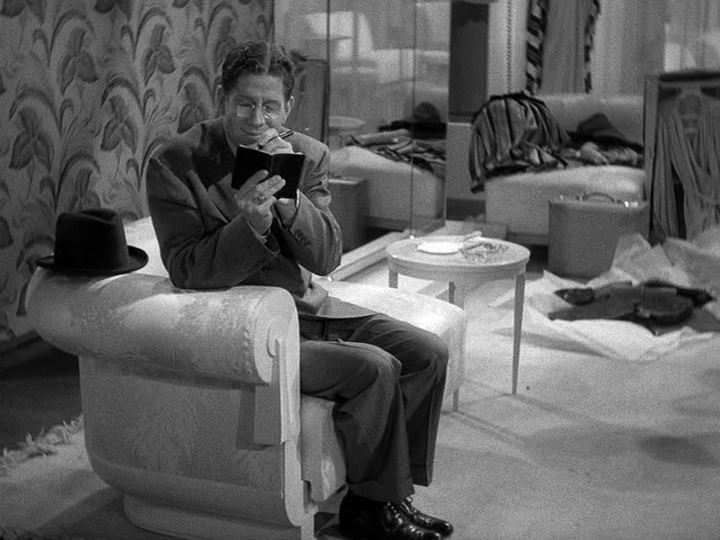
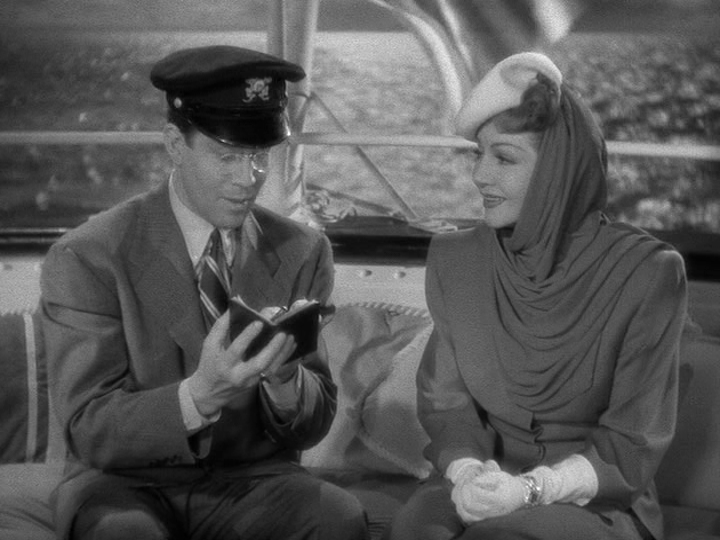
I don’t think I’ve ever made it to *February* 15 without filing my taxes, let alone Tax Day, but April is nonetheless a fine time to celebrate one of my all-time favorite movie props, the notebook in which J.D. Hackensacker III (Rudy Vallee) aka “Snoodles” from The Palm Beach Story writes down all of his expenses:

J.D. Hackensacker III and his notebook

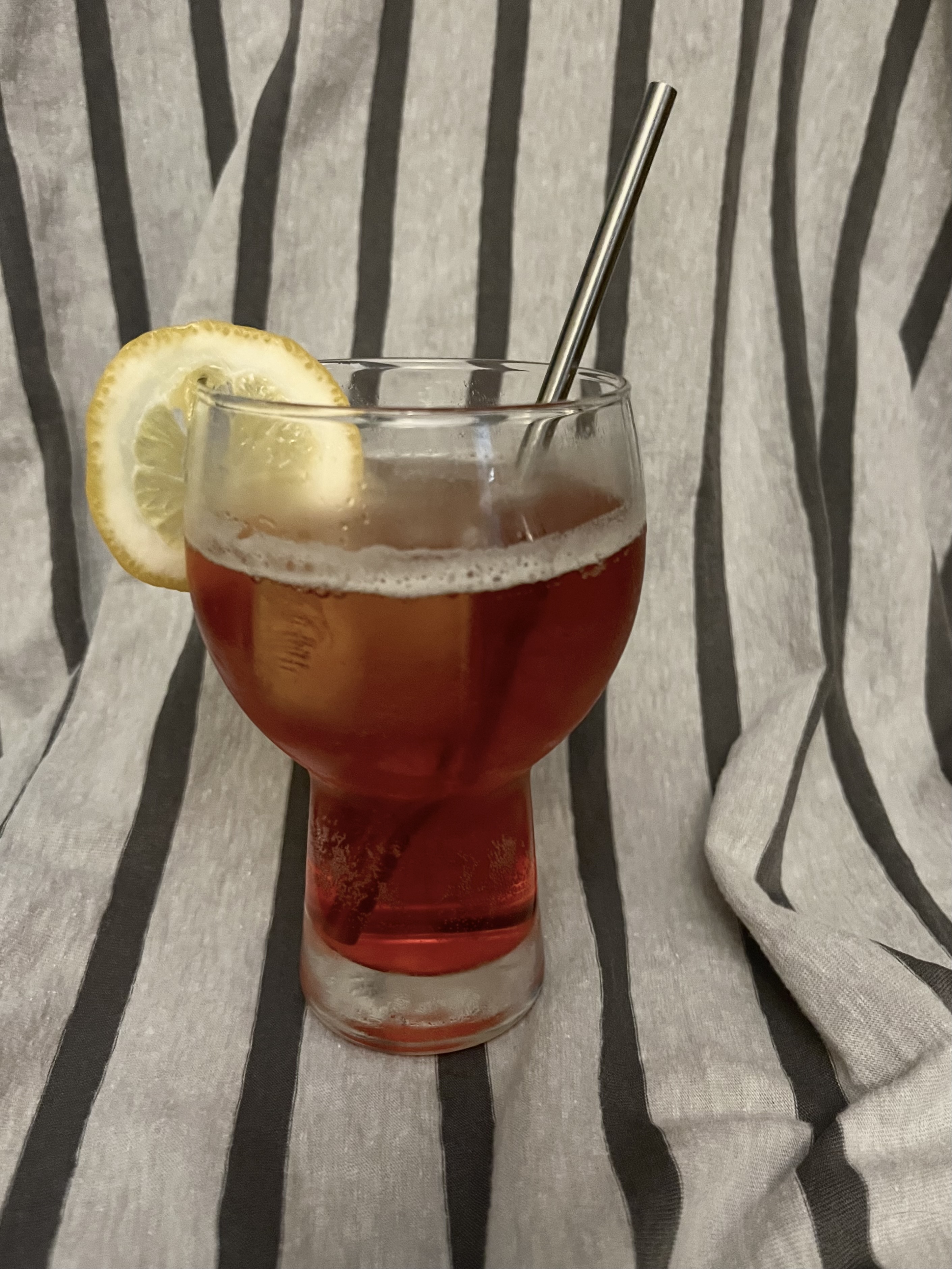
In honor of the Ale and Quail Club that he and Gerry Jeffers (Claudette Colbert) encounter on their way to Florida, this month’s drink is my favorite beer cocktail, the Campari & IPA Spritzer. I know about this elegantly simple concoction thanks to Anjali Prasertong from The Kitchn. She, in turn, spotted it in a 2011 New York Times article called “Summer Cocktails Made Simpler” in which author Robert Willey attributes it to Tucson bartender Cieran Wiese. Meanwhile, my brother-in-law Simon pointed out on Instagram that the cult favorite summer sipper the NASCAR Spritz follows the same formula. I suppose one of the lessons here is that the provenance of a highball is always going to be murky! Another is that the specific ingredients you choose count for a lot when there are only two (or three of you include the garnish) total, and to me this is the perfect showcase for my original favorite beer, Dogfish Head 90 Minute IPA, which emerged as a star of the American craft brewing scene right as I came of drinking age. Here’s how you make it:

1 1 /2 ozs. Campari
6 ozs. IPA (Dogfish Head 90 Minute)

Add Campari to a chilled glass containing two or three ice cubs. Slowly pour in the beer and gently stir a few times to combine. Garnish with a lemon slice.

Campari & IPA Spritzer

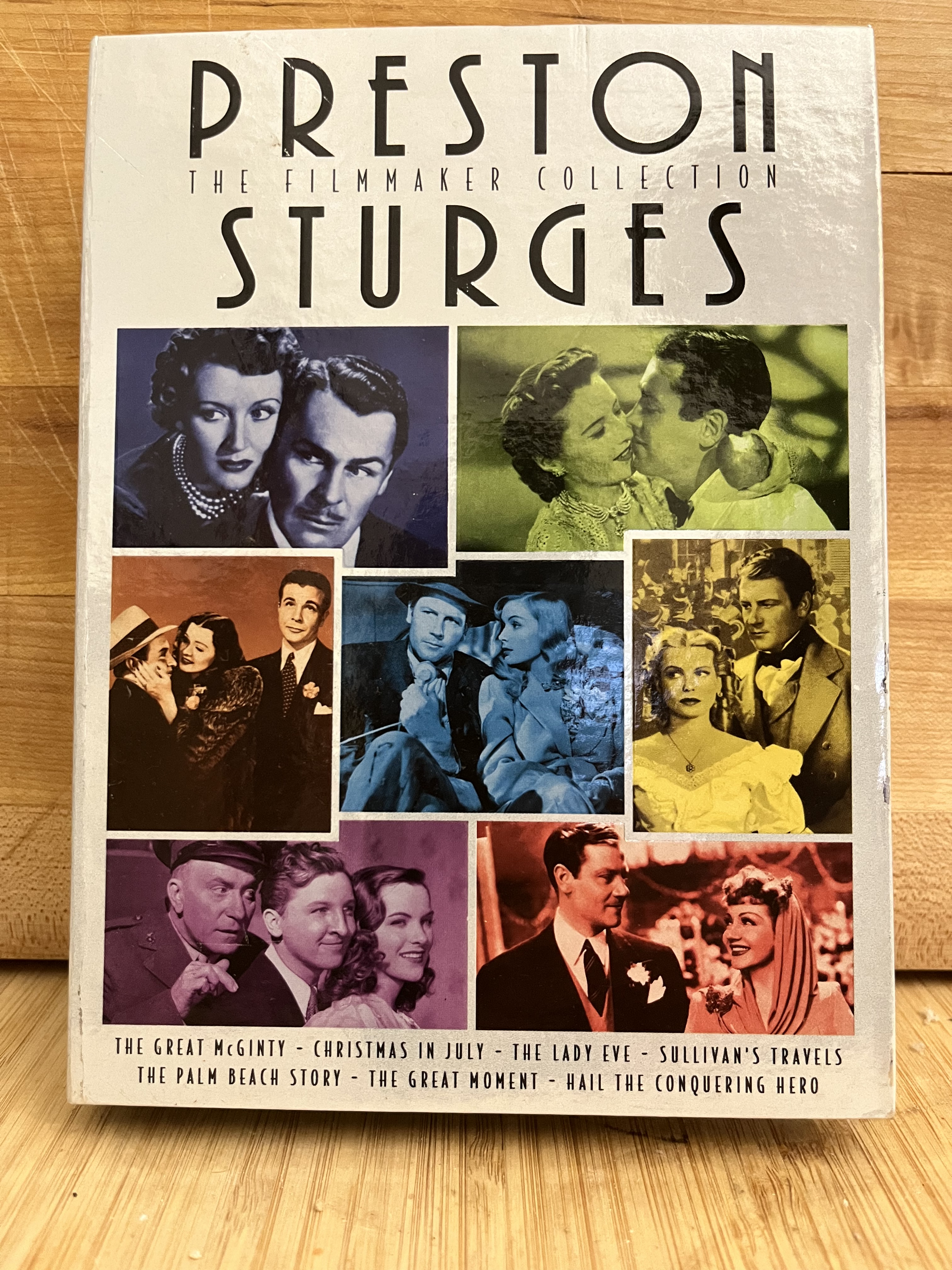
You don’t want just any IPA here–you need something with a lot of character to stand up to the Campari. You’re also looking for citrus, but not too much. Enter 90 Minute IPA, which is malty and piney and delicious on its own, but even better with a boost of sweetness and texture. While this definitely is a refreshing beverage, the high ABV and strong flavors will keep you warm when a cool breeze blows, which makes it perfect as a way to unwind after work on a spring evening or for a rainy night like the one Hackensacker and Gerry travel south on. But first, here’s a picture of my Preston Sturges: The Filmmaker Collection DVD box set by Universal:

The Palm Beach Story DVD case

The Palm Beach Story is also available for rental on a variety of streaming video platforms.

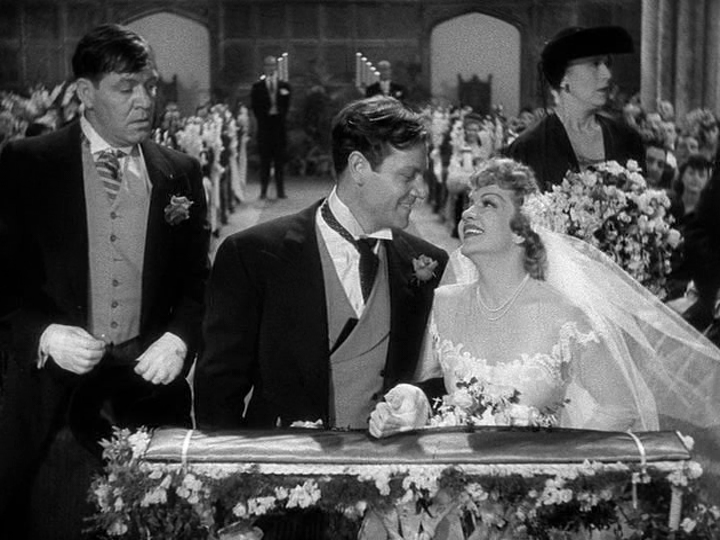
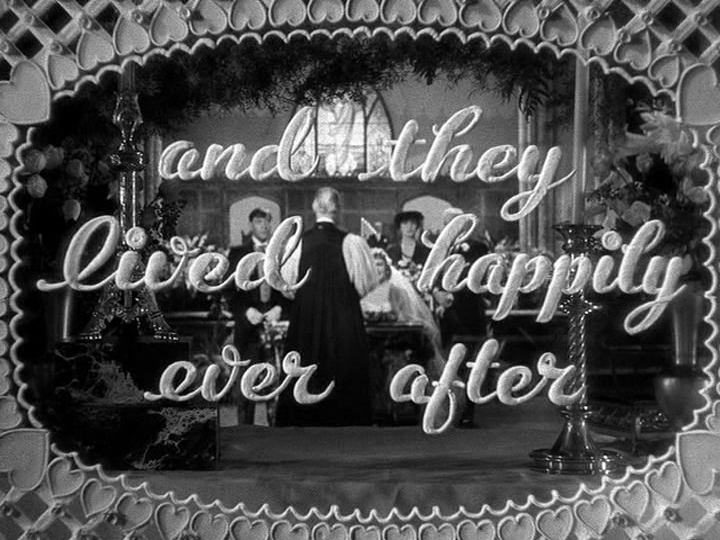
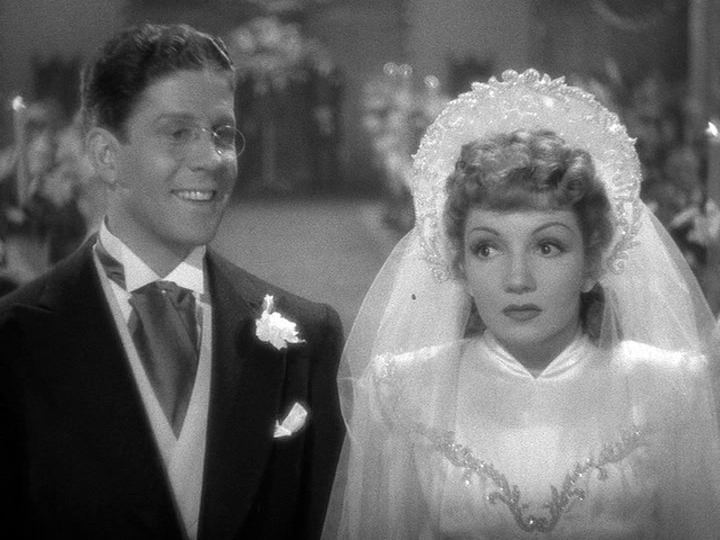
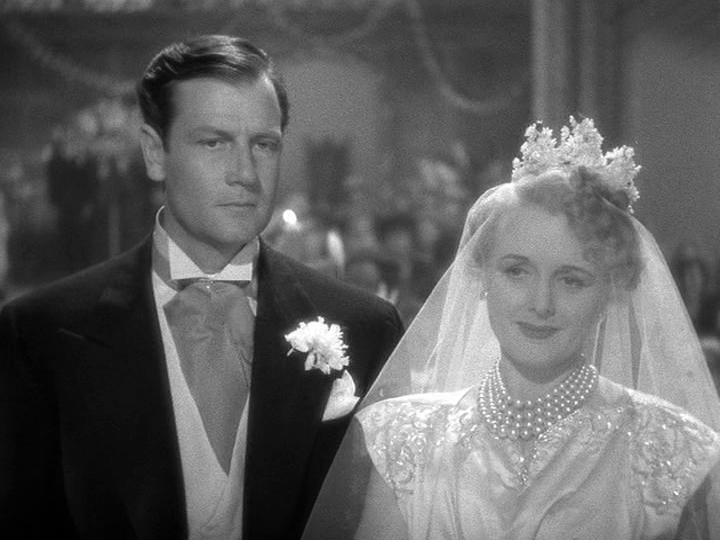
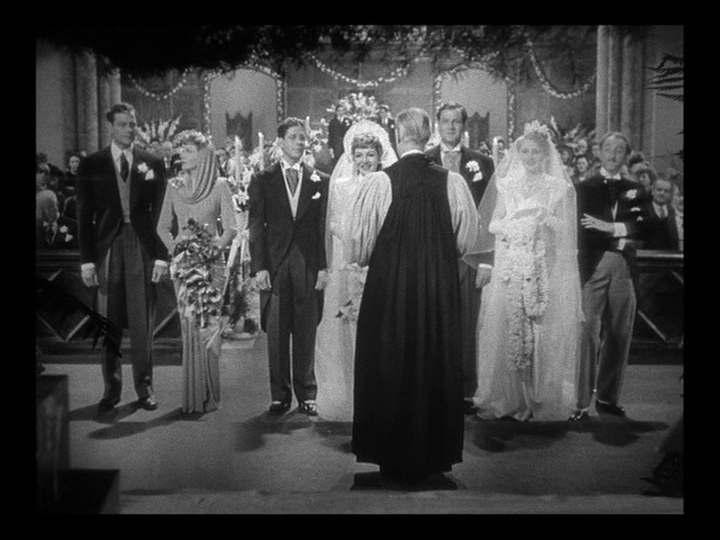
The seeds for that fateful train journey are planted years earlier. The Palm Beach Story begins with one of cinema’s great opening credits sequences, a silent retelling of the frantic hours leading up to Gerry’s marriage to Tom Jeffers (Joel McCrea), who may or may not be the man she intended to wed. You see, although it concludes with the two of them about to exchange vows:

Tom and Gerry right before they exchange vows

They both had to beat a doppelgänger to the church. Gerry accomplishes this by locking hers in a closet:

Medium shot of a woman who looks exactly like Gerry Jeffers bound and gagged in a closet

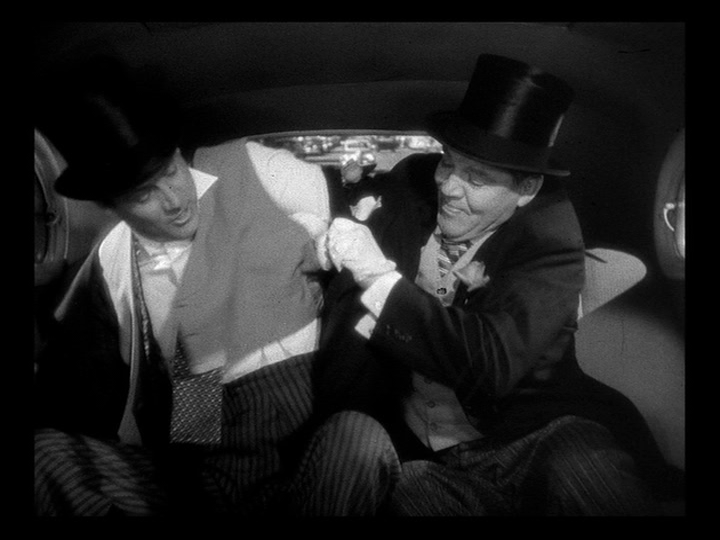
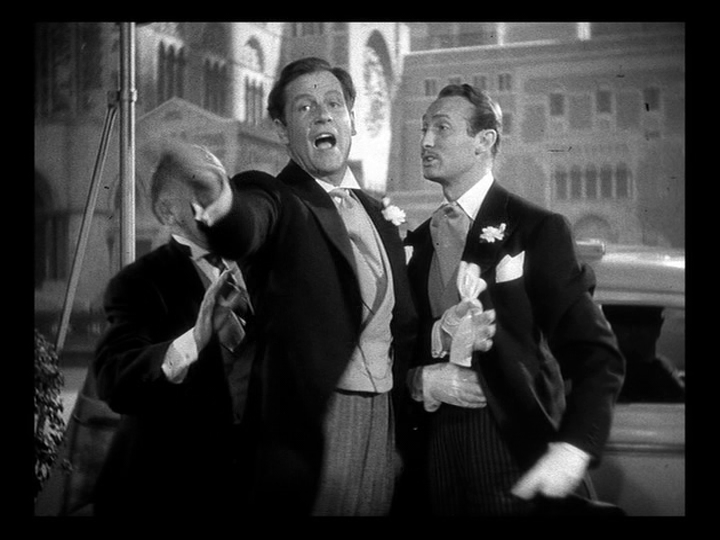
While Tom (dark tie) and his best man (no mustache) may just have had better luck with cabs than their counterparts (light tie, no mustache):

Tom Jeffers struggles to put on a tuxedo in the backseat of a cab with the aid of his best man
Tom's doppelganger and HIS best man prepare to get into a different cab

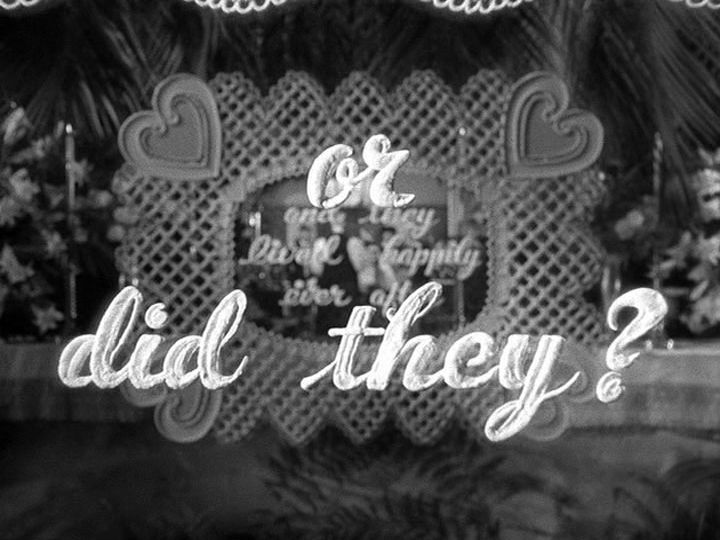
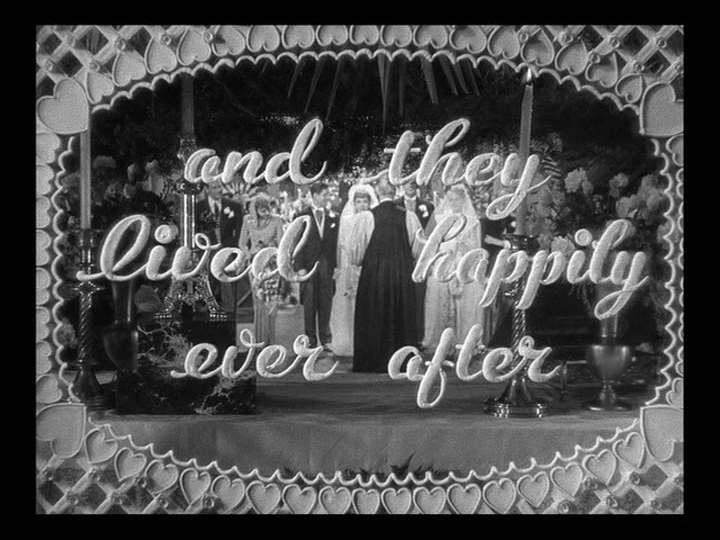
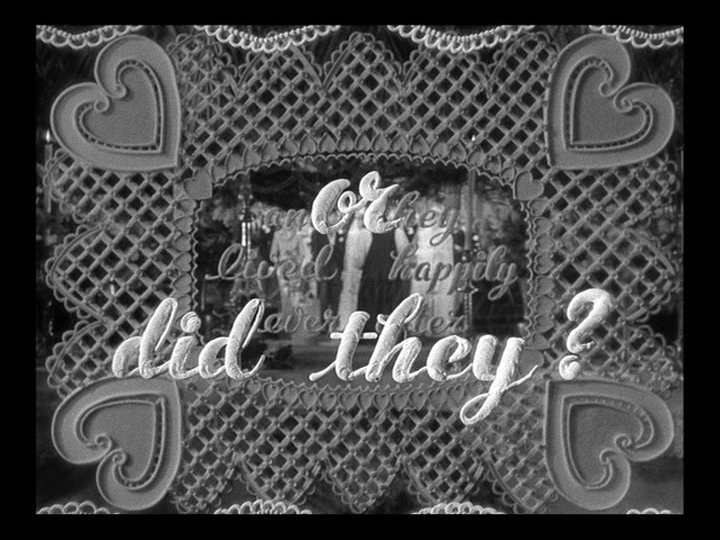
As Lisa Sternlieb writes in her American Shakespeare article “He Isn’t Exactly My Brother”: Shakespearean Illogic in The Palm Beach Story,” when these identical twins reappear at the end of the film following Tom’s comment “that was another plot entirely,” we are meant to suspect that he’s referring to the idea that “the Claudette Colbert who is gagged and locked in a closet has wanted to marry the Joel McCrea who marries her sister while the Joel McCrea who doesn’t make it to the church on time has wanted to marry the Claudette Colbert who marries his brother.” So who knows if Tom and Gerry (yes, like the cartoon cat and mouse) intended to marry each other at all? Given these uncertain beginnings, it’s hardly a surprise that the shot of the two of them is followed by title cards that say “and they lived happily ever after . . . or did they?”

First post-opening credits sequence title card
Second post-opening credits sequence title card

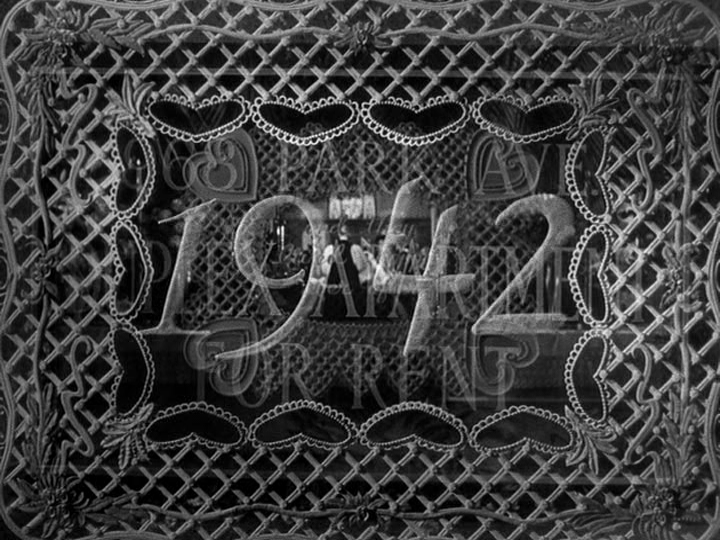
These are followed additional titles in the same font which establish the year of the main action as 1942, five years after the wedding we just witnessed, and two dissolves to first a sign advertising an apartment for rent, and then a group of people getting off an elevator:

Post-opening credits sequence dissolves, part one
Post-opening credits sequence dissolves, part two
Post-opening credits sequence dissolves, part three

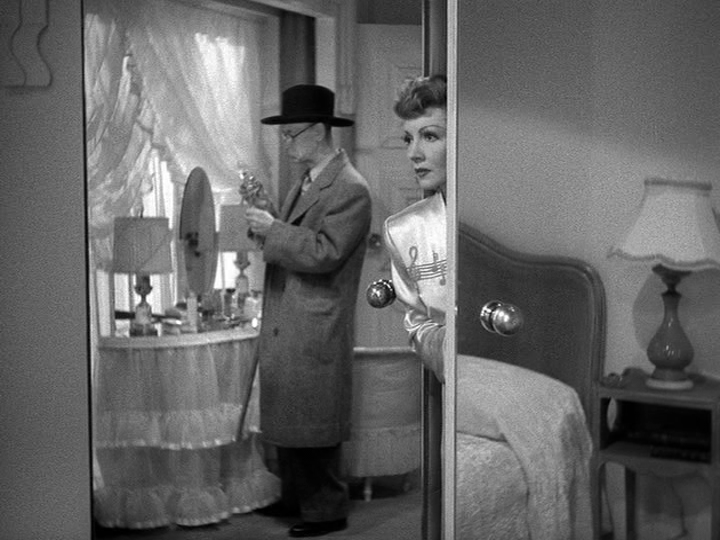
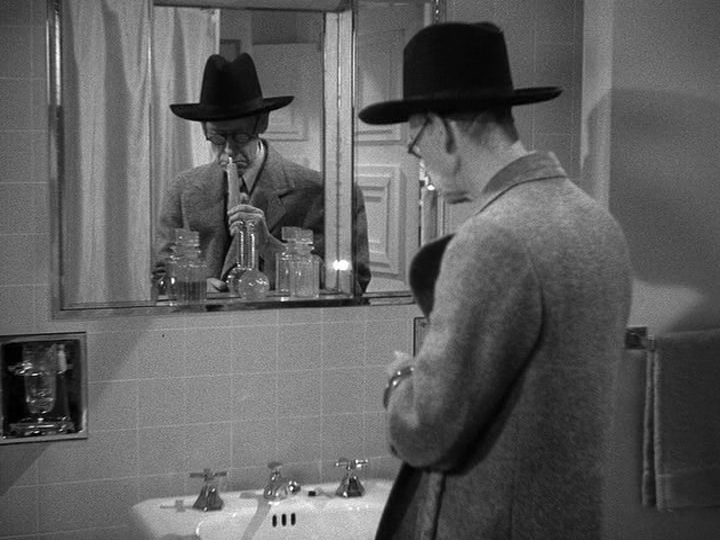
One of them is an old man played by Robert Dudley who, seemingly detecting that the apartment isn’t empty, uses what Stuart Klawans calls “his dog’s senses” in Crooked, But Never Common: The Films of Preston Sturges “to track the female presence he picks up”:

An old man sniffs Jerry's perfume as she looks one
The same old man tastes her toothpaste

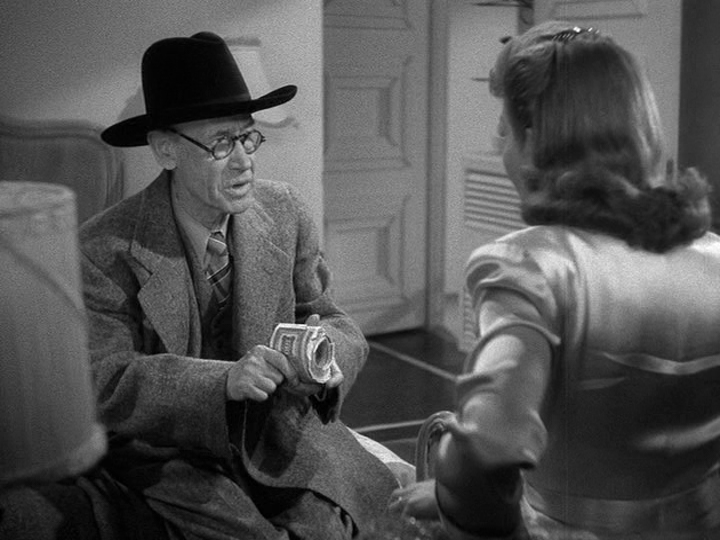
When she finally confronts him, he reveals that he’s the inventor of the Texas wienie (“lay off ’em, you’ll live longer”) and thus in possession of a bankroll that Preston Sturges’s screenplay (as published in Four More Screenplays by Preston Sturges) describes as big enough “to choke a crocodile”:

The Wienie King's bankroll

He gives her enough money to take care of all her debts because it makes him feel young again “to do a little favor for such a beautiful lady.” She can’t wait to tell Tom the good news, but he fails to appreciate it as such: “I mean, sex didn’t even enter into it,” he says sarcastically, to which Gerry replies, “but of course it did, darling!” And then, “sex always has something to do with it. From about the time you’re about so big . . . “

Gerry explaining The Look to Tom, part one

” . . . and wondering why your girl friends’ fathers are getting so arch all of a sudden.” She is, of course, talking about The Look: “you know, ‘how’s about this evening, babe?'”

Gerry explaining The Look to Tom, part two

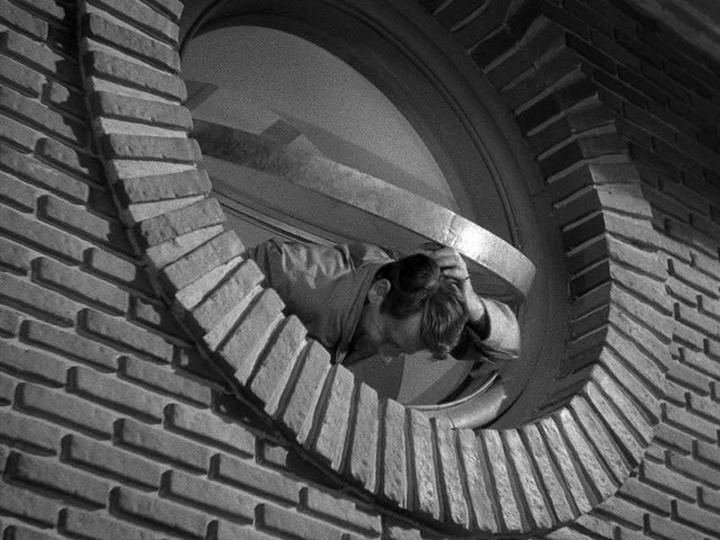
Their night eventually ends as all nights should with a boozy dinner and lovemaking, but she wakes up the next morning determined to capitalize on her youth and good looks while they still last to secure a more comfortable future her herself and her husband. After a bit of business with a round pivot window that Chevy Chase and National Lampoons’s Christmas Vacation (the subject of my December, 2023 Drink & a Movie post) director Jeremiah S. Chechik were presumably familiar with:

Tom Jeffers bumps his head on a round pivot window

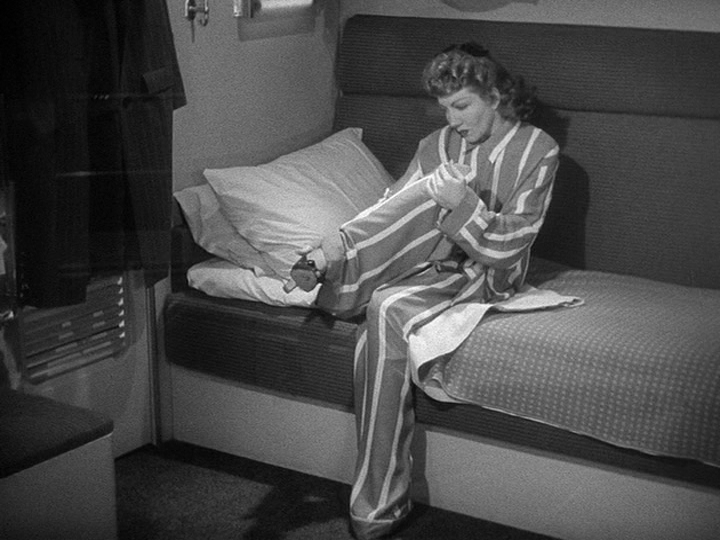
Gerry’s off to Palm Beach to secure a divorce courtesy the wealthy members of the Ale and Quail club, who, given enough “subtle” hints, would never leave a lady stranded. One of them is even chivalrous enough to loan her the pajamas that inspired this month’s drink photo:

Medium shot of Gerry in borrowed pajamas

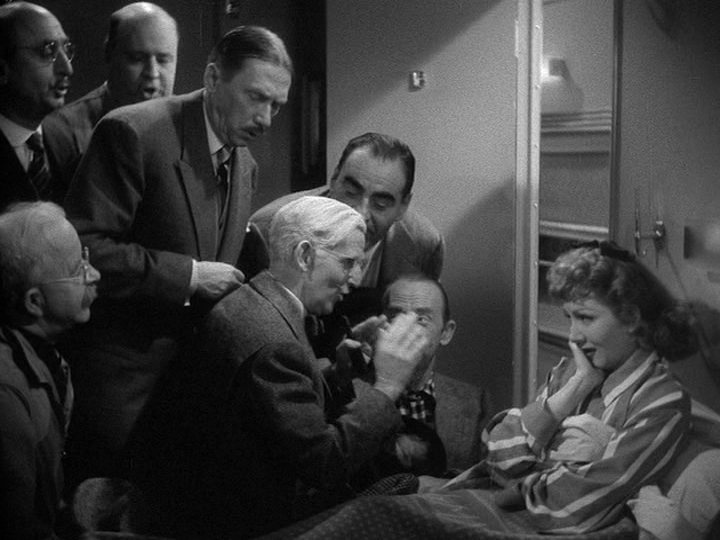
Here they are serenading her with “Sweet Adelaide” later that evening:

The Ale and Qual Club sings to Gerry

Then engaging in some harmless indoor trap shooting:

The Ale and Qual Club trap shooting

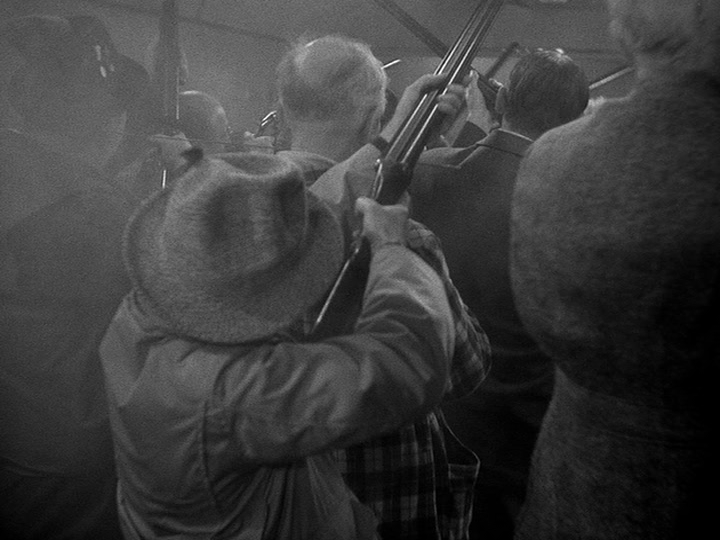
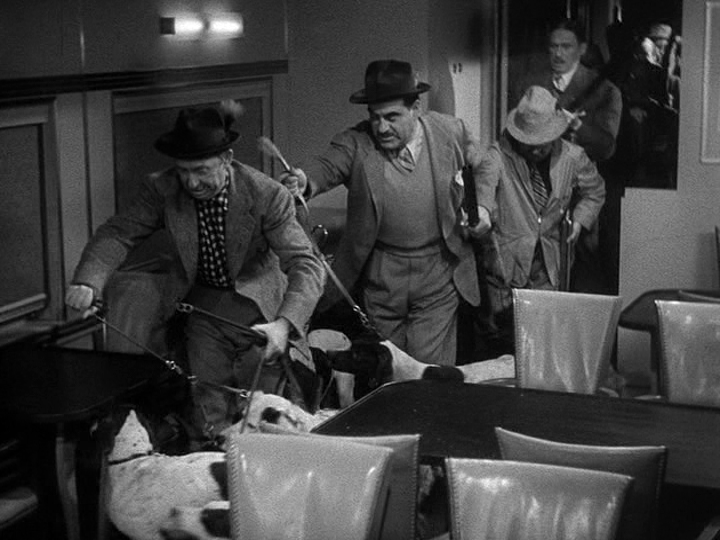
And finally, their sexual hopes frustrated, turning into what Klawans calls “a parody of a lynch mob”:

The members of the Ale and Quail Club search for Gerry

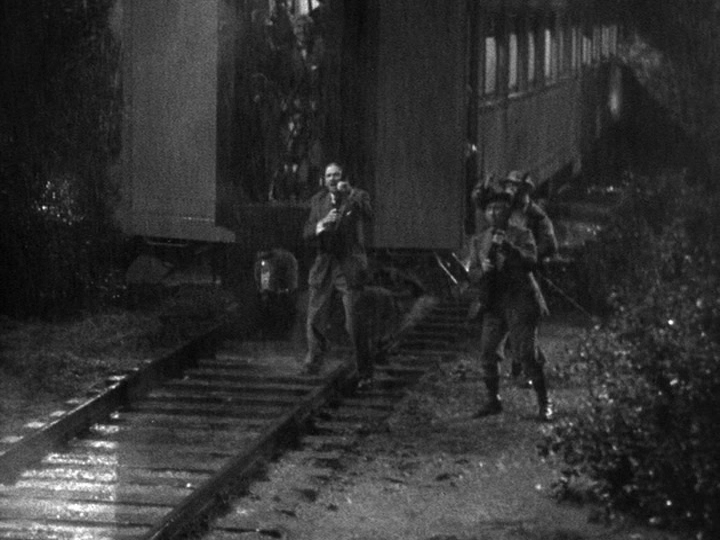
This sequence, which Alessandro Pirolini aptly describes in The Cinema of Preston Sturges: A Critical Study as being “as narratively useless as it is visually exhilarating,” ends with the conductor of the train cutting the Club’s private car (and all of Gerry’s clothes) loose:

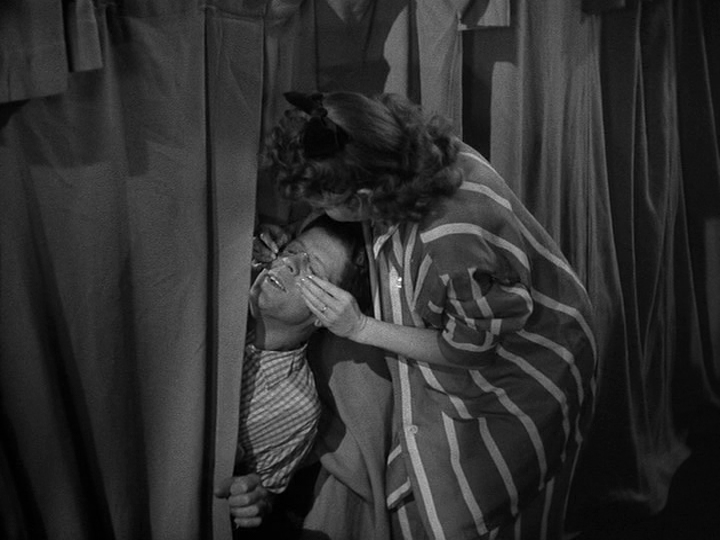
Luckily, by this time Gerry has already met cute Hackensacker, a thinly-veiled caricature of John D. Rockefeller III, by crushing his pince-nez glasses while attempting to climb into the sleeping car bunk above his:

Gerry attempts to help J.D. Hackensacker III after accidentally crushing his glasses

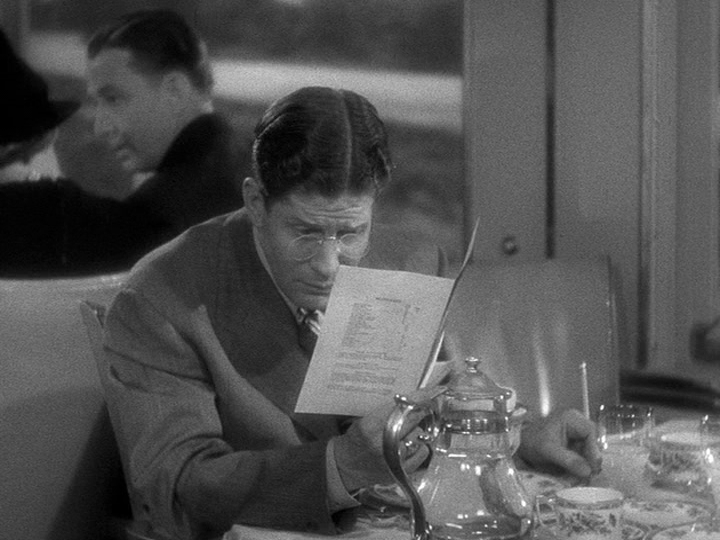
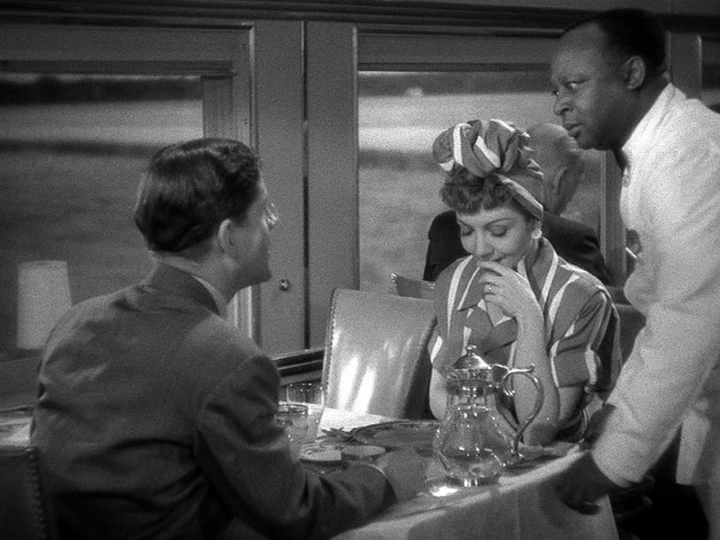
“Just pick off any little pieces you see, will you?” he says, ever the good sport. It’s at breakfast the following morning when we meet his notebook. Having turned her borrowed pajamas and a Pullman blanket into an almost presentable ensemble, she finds him in the dining car pouring over the menu.

J.D. Hackensacker III takes notes on a menu

“The thirty-five cent breakfast seems the best at first glance, but if you analyze it for solid value, the fifty-five center is the one.” They eventually settle on one seventy-five cent breakfast each with a la carte prairie oysters to start–“make mine on the half-shell,” he instructs the waiter.

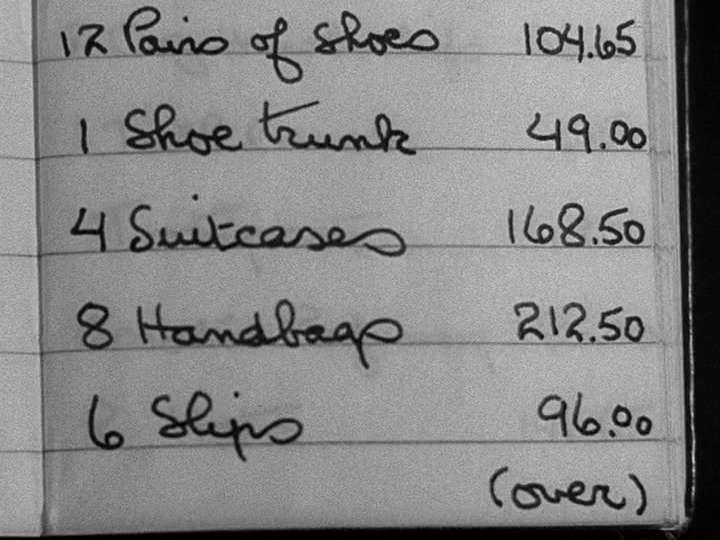
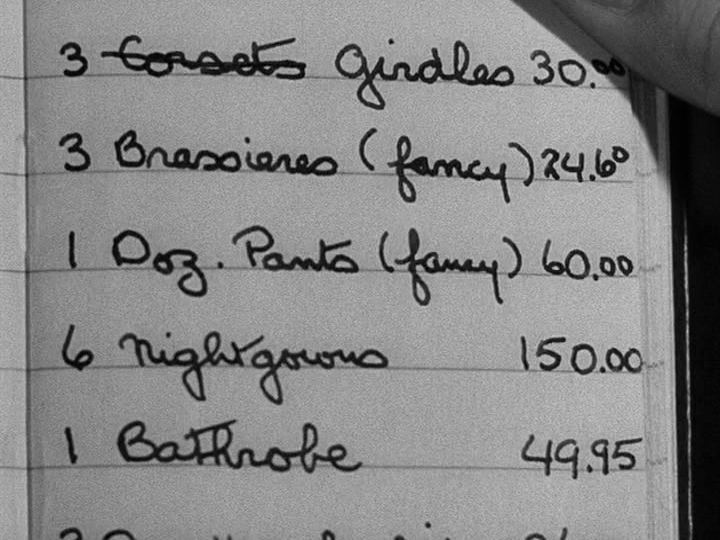
While they wait for their food, he proposes that they get off the train in Jacksonville to buy her “the few little things” she needs, then proceed the rest of the way to Palm Beach (where he is going as well) by boat. Hackensacker dutifully records each purchase in his book:

Close-up of a page from Hackensacker's notebook
Close-up of the next page

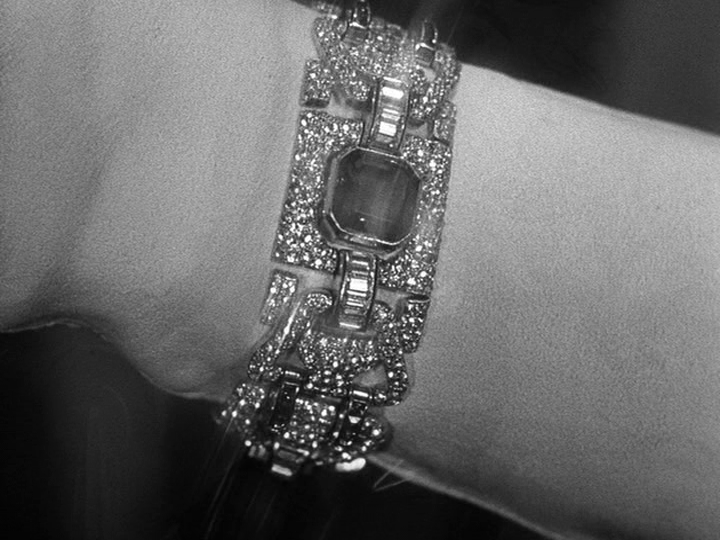
Including a piece of jewelry that the screenplay describes as “a ruby bracelet and then some”:

Close-up of the ruby bracelet

The dissonance between Hackensacker’s profligacy and scrupulousness understandably makes Gerry nervous. “I keep feeling that two men with butterfly nets are going to creep up behind you and lead you away,” she worries. The revelation that he’s actually the richest man in the world is followed by a punchline which hits close to home for someone like me who can’t ever quite manage to stick to a budget: “I write things down, but I never add them up.”

Hackensacker explains the origin story of his notebook

Meanwhile, following his own encounter with the old man who Manny Farber described (in a New Republic essay included in Farber on Film: The Complete Film Writings of Manny Farber) as possessing “the quality of a disembodied spirit, believably a pixie–or ‘The Wienie King,'” Tom is en route to Palm Beach himself via plane to intercept Gerry. The “enchanted figures who continually grant Tom and Gerry’s spoken and unspoken wishes” are just one of the ways that, per Sternlieb, “The Palm Beach Story intricately engages with the mechanics and actively opposes the logic of Shakespearean comedy, particularly its obsession with transformation and metamorphosis.” Gerry and Hackensacker meet Hackensacker’s sister, Mary Astor’s Princess Centimillia (an underrated Sturges name!) aka Maud and her hanger-on Toto (Sig Arno), and Tom is waiting on shore as all of them disembark. Gerry introduces Tom as her brother, prompting more than one person to comment on their supposed familial resemblance. To again quote Sternlieb:

In order to love Shakespeare’s comedies, we must continually suspend our disbelief so that we can fully appreciate boys dressed as girls dressed as boys or love at first sight or soliloquies that can’t be overheard on stage, but Sturges asks the opposite of us. He asks us to notice that people are always willing to believe anything, always eager to create their own reality, always ready to form opinions of us based on nothing at all. He asks us to notice that most of us are living in Cloud Cuckoo Land, and in Cloud Cuckoo Land people will always see what isn’t there. When Gerry introduces the Hackensackers to her ‘brother’, first Maud then Snoodles exclaims, ‘You look exactly alike’. We are constantly performing or being asked to perform to meet others’ uninformed expectations, but what a relief when we can finally be ourselves.

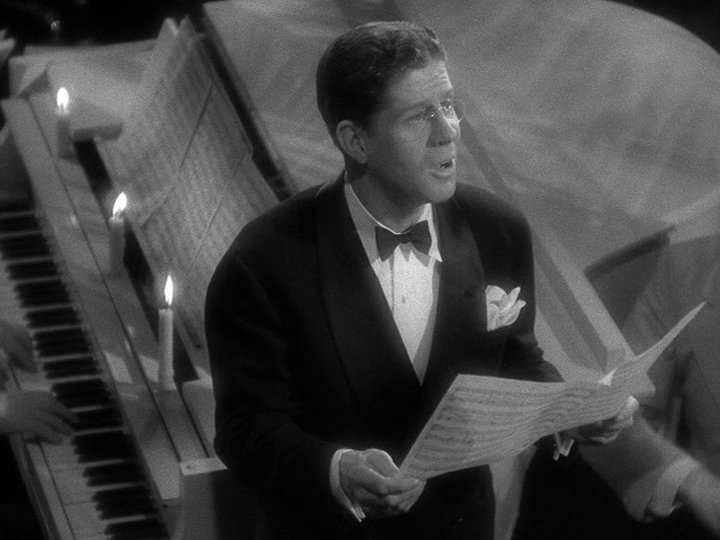
From here it’s not long before we’re basically right back where we started. The Princess wants to make Tom her eighth husband (“I’m thinking of an American–at the moment, it seems more patriotic”), but he has eyes only for Gerry, who Hackensacker attempts to seduce by singing to her outside her window:

J.D. Hackensacker serenades Gerry

Unfortunately for him, it just drives Gerry back into Tom’s arms:

"I hope you realize this is costing us millions," Gerry tells Tom as she kisses him

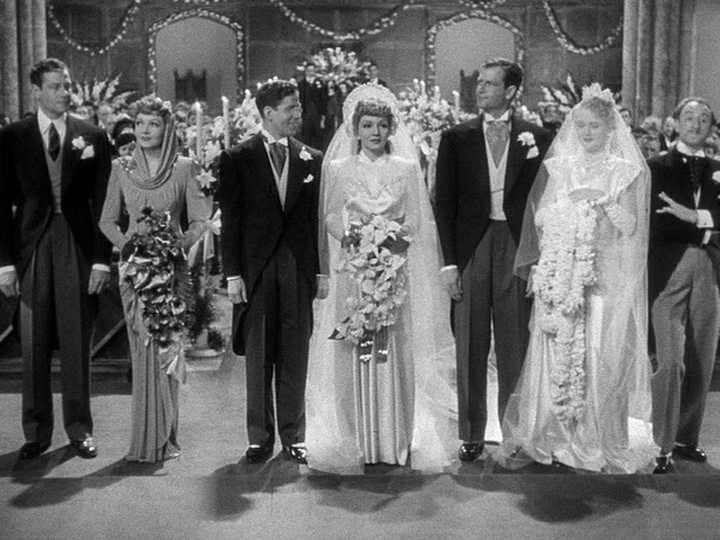
They come clean about their true relationship the next morning. “I don’t suppose you have a twin sister. . . . ” Hackensacker says mournfully to Gerry, but of course she does! And Tom has a twin brother. Cut to all of them (and Toto, in a nice touch) at the altar:

Tom and Gerry and their twins and Hackensacker and his sister and Toto dressed for a wedding

The shot which follows is deceptively advanced for its era, as discussed by VFX artists The Corridor Crew starting at the 10:26 mark of this video–there’s a fairly straightforward duplicated shot (you can see the seem easily here because part of Rudy Vallee’s shadow is missing), but the camera is moving in a way that would have been difficult to coordinate with 1940s technology. Anyway, neither Gerry’s sibling nor Tom’s looks particularly happy to be here:

Medium shot of Gerry's twin with J.D. Hackensacker III
Medium shot of Tom's twin with the Princess Centimillia

And as the camera tracks back, The Palm Beach Story ends with the same two title cards that set its plot in motion:

Closing shot, part one
Closing shot, part two
Closing shot, part three

‘Round and ’round and ’round we go! Sturges originally wanted to call the film Is Marriage Necessary? That title didn’t survive the Hayes Office, but the sentiment did surely did. His cynicism, like the bitterness in a Campari & IPA Spritzer, goes down easy, though. So hit play again, why don’t you, and pour yourself another! It’s good for what ails you.

Cheers!

All original photographs in this post are by Marion Penning, aka My Loving Wife. Links to all of the entries in this series can be found here.

Ithaca Film Journal: 4/4/24

What I’m Seeing This Week: We’ll be out of town for the next five days, but My Loving Wife and I are going to take advantage of the fact that we’re staying with willing babysitters to see Stalker at The Screening Room in Kingston, Ontario tonight.

Also in Theaters: The Finger Lakes Environmental Film Festival kicks off in earnest tomorrow with two screenings at Cinemapolis, where all remaining events will take place. Highlights include three films which made a splash on the festival circuit last year: Green Border, winner of a Special Jury Prize at the Viennale, on Saturday; Last Things and Youth (Spring) on Monday; and Pictures of Ghosts, which is directed by Kleber Mendonça Filho, whose last feature Bacurau was the topic of my May, 2023 Drink & a Movie blog post, on Tuesday. You can find reviews of all of them by searching my Film Blogs, Etc. 2.0 CSE by title. The best new film now playing locally that I’ve already seen remains Dune: Part Two, which is at both Cinemapolis and the Regal Ithaca Mall. Wicked Little Letters, which My Loving Wife wants to see, opens at the same two theaters tonight. Anything with both Olivia Colman and Jessie Buckley in it is an easy sell for me, so we might have to make plans for another date night soon! I’m intrigued by two action movies at the Regal: Monkey Man, which is directed by one of my favorite actors, Dev Patel, and the Liam Neeson vehicle In the Land of Saints and Sinners. Critics seem to like both! Cornell Cinema returns from Spring Break with free screenings of the Burkinabé film Borders on Tuesday and A Pocketful of Miracles: A Tale of Two Siblings on Wednesday. The latter will be followed by a Q&A with director Aviva Kempner and Cornell professor Elliot Shapiro. Otherwise, your best bets for repertory fare are a trio of films playing the Regal: Gone with the Wind on Sunday, Monday, and Wednesday; The Matrix tonight; and The Dark Knight on Wednesday.

Home Video: As mentioned previously on this blog, I was troubled by this year’s Oscar winner for Best International Feature Film and Best Sound The Zone of Interest. While that remains the case, I feel like I have more appreciation for what it is *trying* to do after finally seeing The Act of Killing, which it references in a key moment that I now understand clarifies that Christian Friedel’s Rudolf Höss knows that he is a monster. This is important because I don’t think “living next to Auschwitz” is a terribly useful metaphor. The Act of Killing and its companion film The Look of Silence delve deep into the psychology of killers like Höss (in this case the leaders of gangs that murdered hundreds of thousands of so-called “communists” in Indonesia in the 60s) by way of depicting in harrowing detail not just the sky-high cost of resisting them in the moment, but also the Sisyphean task of holding them accountable afterward should they emerge victorious. This is, to me, a far more potent “there but for the grace of God” than the fear we might one day be judged by history and/or our maker to have been “good Nazis” because it doesn’t let us off the hook so easily—we can’t just say not me, I attended a protest/changed my profile picture to a flag/cast a protest vote against Joe Biden/whatever. Anyway, these movies would be a mortal lock for any Best Films of the Millennium list I might be moved to create, so: highest possible recommendation! The Act of Killing is now streaming on Peacock, The Look of Silence is available on Prime Video, and current Cornell University faculty, staff, and students have access to both via Academic Video Online.

Previous “Ithaca Film Journal” posts can be found here.

A Metaphor for Film Criticism, Courtesy of The Eight Mountains

Last January I described eight reasons I read film criticism. I thought about this post the other day after I checked Letterboxd (which I am now finally using, obviously) to see if anyone I follow had logged The Seen and Unseen and was delighted to find a review by Michael Sincinski. But why did that make me so happy? And which of my categories did this fit into? The closest fit would seem to be #2 “to check my own impressions of a film I just watched against that of the critical community” because of my timing, but I wasn’t motivated by fear of missing something. I definitely do enjoy Sicinski’s writing, but #7 “for pleasure” didn’t seem quite right either. All of a sudden the movie The Eight Mountains popped into my head. It’s about climbing mountains in the Italian Alps, among other things, and documents a ritual whereby climbers leave messages for those who will follow in notebooks buried at the summit of each peak before beginning their descent:

Luca Marinelli's Pietro Guasti digs up a notebook
Pietro removes the notebook from a plastic bag
Pietro reads the notebook

In the film this facilitates intergenerational communication between the man pictured in the screengrabs above, Luca Marinelli’s Pietro Guasti, and his late father Giovanni (Filippo Timi), who he had ceased speaking to years before he died, as do the maps that the latter used to record where he had gone:

Pietro marks a climb on his father's map

Movies, like food, are for me very consciously a substitute for travel. I can’t afford to pop off to Turin on a whim, but I can watch a movie shot there or pick up a bottle of Barolo pretty much any time I like and learn something about the region that way. I also think of cinema as a terrain to explore in its own right. Film criticism is like the lines on Giovanni’s map: it says, “this place is worth going to!” It’s also like the messages in the notebooks he and Pietro find on their climbs: “I passed this way, too, and here is what I saw.” Which is to say that that engaging with it doesn’t always have to have a deliberate purpose–sometimes you follow a trail just to see where it leads and then you read whatever you find at the end of the road because it’s there.

Ithaca Film Journal: 3/28/24

What I’m Seeing: I’m going with Problemista at Cinemapolis.

Also in Theaters: The 2024 edition Finger Lakes Environmental Film Festival, which has the theme “turbulence,” kicks off on Monday with an online new media exhibition. More on this next week after the movies get started! You’ve got one last chance to see the dubbed version of The Boy and the Heron with “bonus content” at the Regal Ithaca Mall tonight; otherwise Dune: Part Two, which is at both Cinemapolis and the Regal, remains the best new film now playing locally that I’ve seen, but depending on what else you’re into I might recommend Love Lies Bleeding, which is at Cinemapolis, instead. There are two free screenings at Cornell Cinema tonight which feature conversations with the filmmakers afterward, first Jole Dobe Na / Those Who Do Not Drown at 4:45pm and then The Art of Un-War at 7:30. Three films that garnered attention (some positive, some negative) on the festival circuit last year open at the Regal tonight: They Shot the Piano Player; Asphalt City (which premiered at Cannes with the title Black Flies), and Late Night with the Devil. Your best bets for repertory fare are Chinatown, which is at the Regal tonight; Dogtooth, which is at Cornell Cinema tomorrow; and The Matrix, which has a 25th anniversary screening at the Regal on Wednesday.

Home Video: One of my favorite things about The Criterion Channel is the wealth of short films available on it. Whenever I’m not pressed for time, I like to watch one before each feature I view at home. Many of them are grouped into collections, and I recently worked my way through everything in the “Animated Shorts” program. Three titles won’t be available after March 31 and are absolutely worth checking out before they leave. Spook Sport is directed by Mary Ellen Bute, whose Synchromy No. 4: Escape made a huge impression on me when I saw it at last year’s Nitrate Picture Show, and features direct animation by the OG Norman McLaren. Papageno is silhouette animation set to Mozart’s The Magic Flute directed by another giant of cinema, Lotte Reiniger, which has terrific backgrounds that lend outstanding depth to her compositions. Finally, A Night on Bald Mountain is a pioneering pinscreen animation by the technique’s inventors Alexandre Alexeïeff and Claire Parker which has many affinities with Movie Year 2023’s Godland (also on The Criterion Channel), including black and white living and dead horses, an erupting volcano, and the theme of civilization vs. nature. Additional highlights include Les Escargots, a tale of giant snails that my kids loved, and Something to Remember, a melancholy snapshot of a society of animals on the verge of collapse remarkably made in 2019 when, you know, HUMAN society was teetering on the brink. The pick of the litter, though, is the utterly charming Cockaboody, which recreates one of the great privileges and pleasures of parenthood: overhearing snippets of imaginative play.

Previous “Ithaca Film Journal” posts can be found here.

Ithaca Film Journal: 3/21/24

What I’m Seeing This Week: Lots of possibilities, but I think I’m going with Hundreds of Beavers at Cinemapolis unless I audible to Problemista, which is playing there as well.

Also in Theaters: Deserving Best Animated Feature Oscar winner The Boy and the Heron is back at the Regal Ithaca Mall in dubbed and subtitled versions, both with “bonus content.” The next best new movie that I’ve already seen is the satisfyingly epic Dune: Part Two, which is there and at Cinemapolis. Love Lies Bleeding is at both of these theaters as well, and if you saw its trailer and thought “that’s my kind of movie,” you won’t be disappointed–it’s absolutely bonkers! The “immersive feature documentary and profound sensory experience” 32 Sounds that I mentioned last week is back at Cornell Cinema on Saturday and Sunday. If none of that sounds good, there are quite a few choice repertory options this week, including a 50th anniversary screening of Chinatown at the Regal on Wednesday, a screening of Wings of Desire at Cinemapolis that same night co-sponsored by Buffalo Street Books as part of their “Stories to Explore” series, and a screening of Babette’s Feast at Cornell Cinema on Tuesday which is accompanied by lectures on the “science of taste” and a “special tasting.”

Home Video: In my “Top Ten Movies of 2023” post earlier this month I mentioned that I had not yet seen John Wick: Chapter Four because My Loving Wife and I were saving it for a movie marathon. That day came sooner rather than later when Jason Bailey of the New York Times alerted us to the fact that the first three films leave Netflix on March 30. Long story short, we enjoyed them all immensely! As someone who can’t watch high-rise collapse in an action movie without thinking of all the people who live in it who might not have renter’s insurance, I appreciate the fact that there is astonishingly little collateral damage in these films. I counted a handful of parked cars that will need some body work and any number of buildings end up with bullet holes in them, but civilians are conspicuously absent from most of the major fight sequences, which tend to take place in spaces that are coded as either abandoned or belonging to the bad guys. And my goodness, what a riot of color, grace, and inventiveness they are! My favorite installments in the saga are the original John Wick, which takes its sweet time coming to a simmer, and the last, which spends nearly its entire 170 minute runtime at full boil. I believe these will be regarded as classic movies of our era and I look forward to watching them again in a few years, at which time I might even dare to try to say something original about why.

Previous “Ithaca Film Journal” posts can be found here.

Ithaca Film Journal: 3/14/24

What I’m Seeing This Week: My Loving Wife and I have a Dune: Part Two date night planned for this weekend at either Cinemapolis or the Regal Ithaca Mall, plus I’m going to see Love Lies Bleeding at one of those theaters as well.

Also in Theaters: There’s a ton of interesting stuff at Cornell Cinema this week! The highlight for me is probably a visit from experimental filmmaker Christopher Harris with his works Reckless Eyeballing, Distant Shores, and Still/Here tomorrow or the screening of the “immersive feature documentary and profound sensory experience” 32 Sounds on Saturday. Only 100 tickets are available to the latter so that every member of the audience can be given their own set of headphones. Two movies that appeared on plenty of top ten lists last year, How to Have Sex and Monster, are also there tonight and this weekend. Unfortunately, *none* of these showtimes work with my schedule! Oh well. The best new film that I’ve already seen remains The Taste of Things, which is at Cinemapolis, for at least one more week. The two biggest winners at this year’s Oscars, Oppenheimer and Poor Things, are back at the Regal. Finally, my top repertory recommendation is The Secret of Kells, which is at Cornell Cinema on Sunday afternoon.

Home Video: After all the controversy that Saltburn generated last year and with Swimming Home garnering attention on the festival circuit, I though it was high time that I finally watched Teorema, which both movies have been compared to. As a film almost entirely constructed out of captivating screen presences (including most notably Terence Stamp, Anne Wiazemsky, and Silvana Mangano) being captivating, it’s absolutely worth seeing. I’m not entirely convinced that it achieves all that it appears to aspire to in the realms of philosophy or theology, but at worst it may just be the definitive cinematic text on the phenomenon of the quarter/midlife crisis. It also features an intriguing sepia-toned silent introduction to the main action, Ninetto Davoli as a spirited herald-mailman, and a naked and epically hairy Massimo Girotti stumbling through an ashen Mount Etna landscape. Teorema is now streaming on The Criterion Channel.

Previous “Ithaca Film Journal” posts can be found here.

March, 2024 Drink & a Movie: Tobacco Road + Hoop Dreams

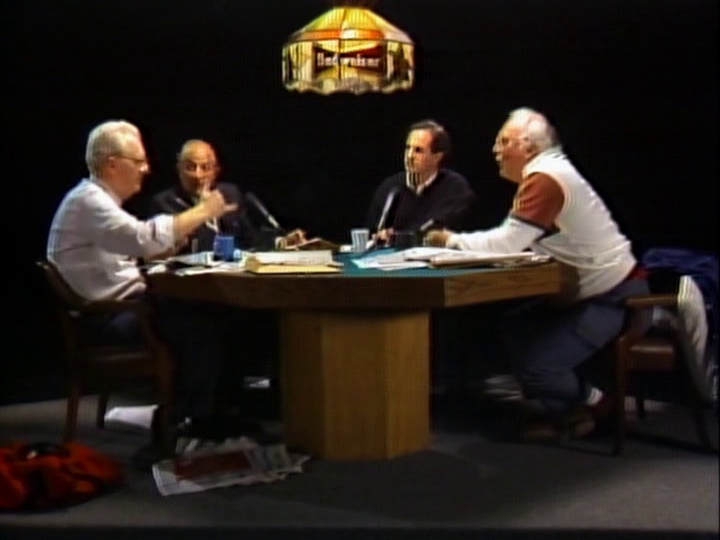
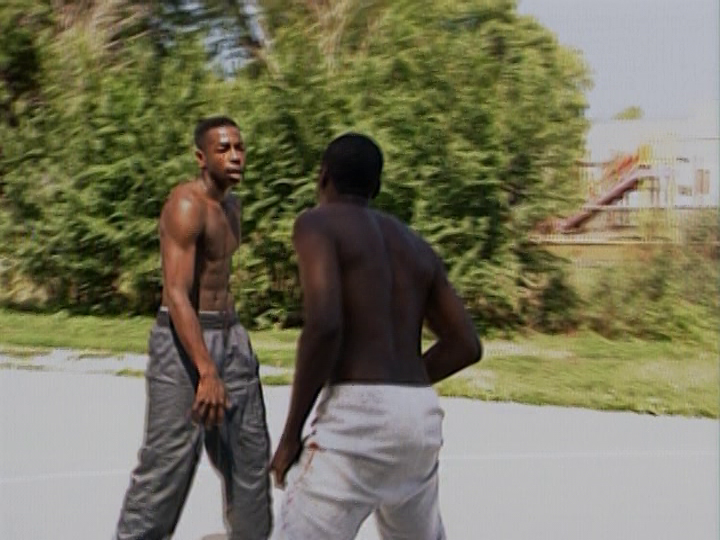
My Loving Wife is a proud graduate of Duke University, so the Tobacco Road recipe by Joe Bolam of Char Steak and Lounge in nearby Rochester, New York in the booklet which came with my new bottle of Fee Brothers Turkish Tobacco Bitters immediately caught my eye. When it turned out to taste like something these guys would love:

The Sportswriters on TV set
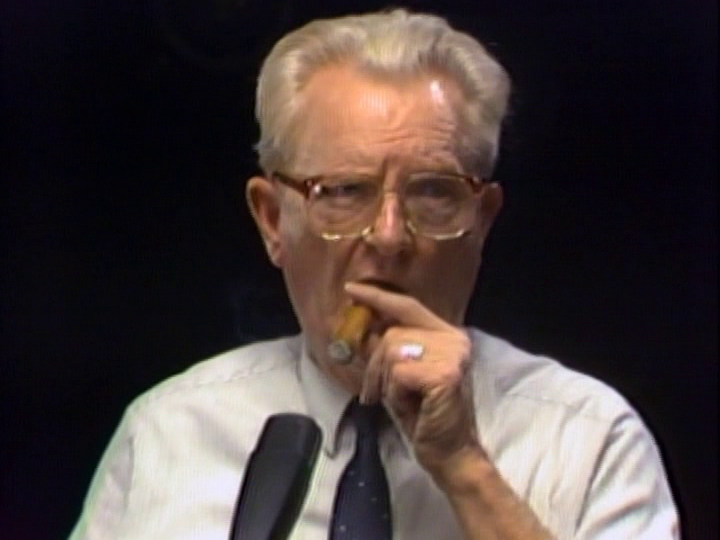
Bill Gleason smoking a cigar

I knew I had my drink and a movie pairing for March! They are all panelists on the television program The Sports Writers on TV, and the person they are talking about is William Gates, who along with Arthur Agee is one of the two main subjects of the documentary Hoop Dreams. The sport they both play is basketball, which our household becomes fairly obsessed with each year at this time as the Atlantic Coast Conference (I’m a Pitt grad) regular season wraps up and we head into the postseason. Here’s how to make this month’s cocktail:

1 1/2 ozs. Basil Hayden Red Wine Cask Finish
1/2 oz. Cherry Heering
1/2 oz. Averna
1/2 oz. Carpano Antica
2 dashes Fee Brothers Black Walnut Bitters
2 dashes Fee Brothers Turkish Tobacco Bitters

Stir all of the ingredients with ice and strain into a chilled glass.

Tobacco Road

The Tobacco Road is a rich drink thanks to the Carpano Antica and Cherry Heering, so we left it ungarnished, but as a Black Manhattan variation, a Maraschino cherry would not be out of place. It has a lot of fruit on the nose, chocolate and coffee on the sip, and an almost sherry-like finish which suggests that it would go great with a cigar like the one Bill Gleason is smoking above in the image on the right.

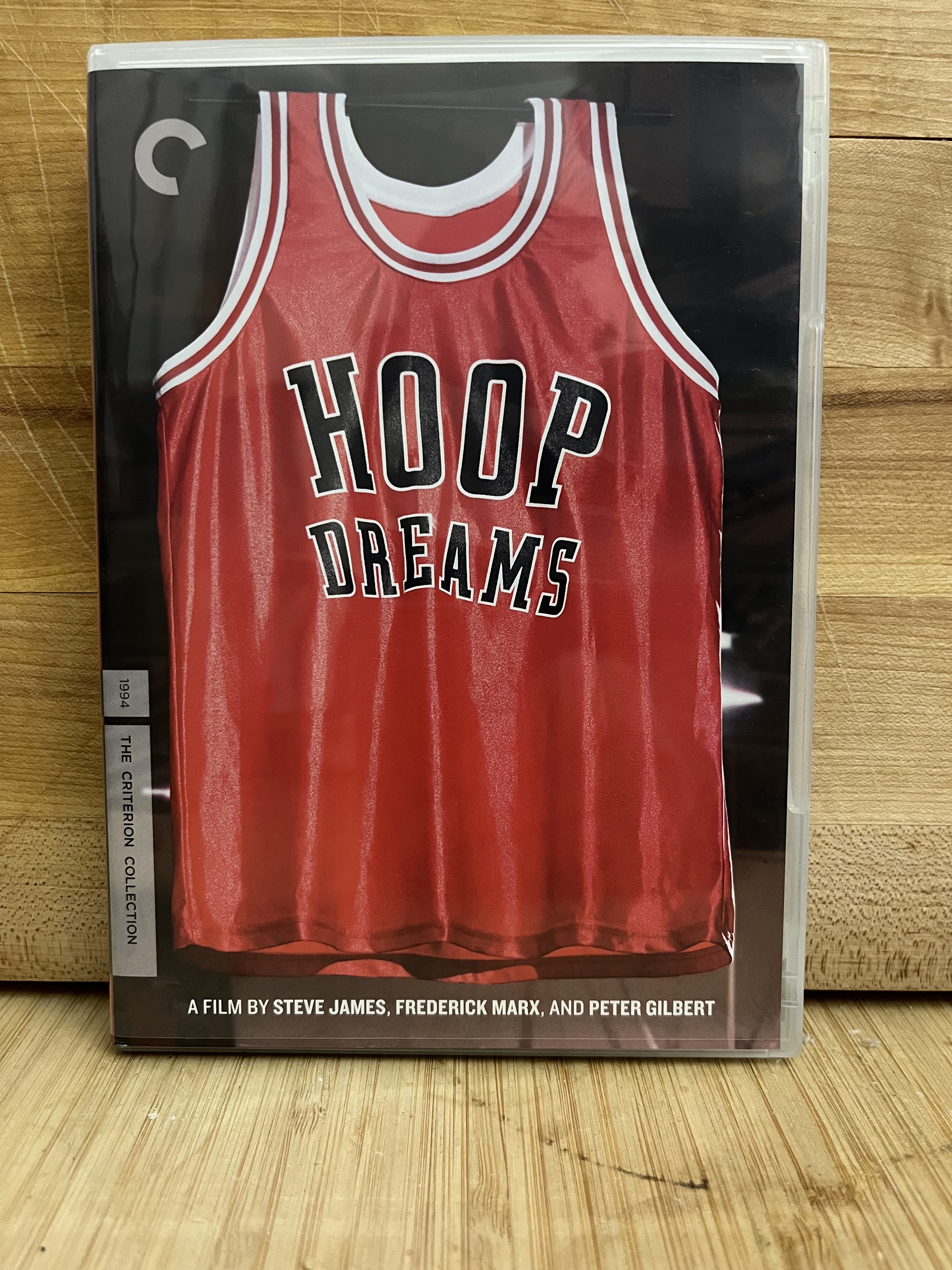
On to Hoop Dreams! Here’s a picture of my Criterion Collection DVD release:

Hoop Dreams DVD case

It can also be streamed on a wide range of platforms, including both The Criterion Channel and Max with a subscription, and some people may have access to it via Kanopy through a license paid for by their local academic or public library as well.

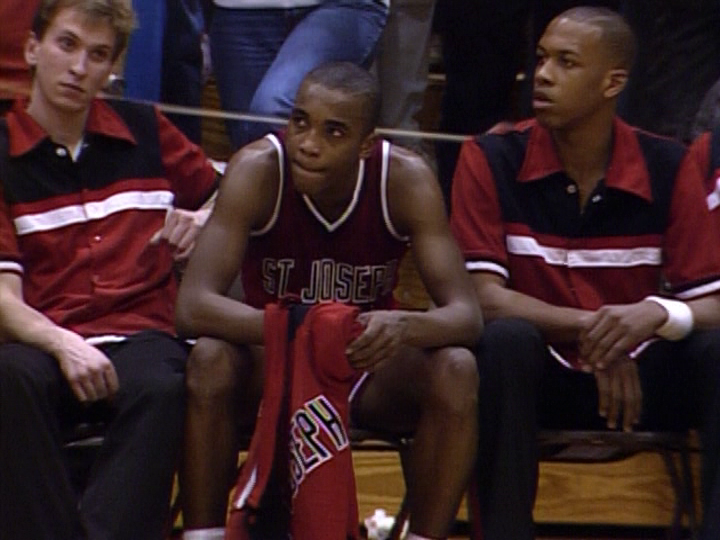
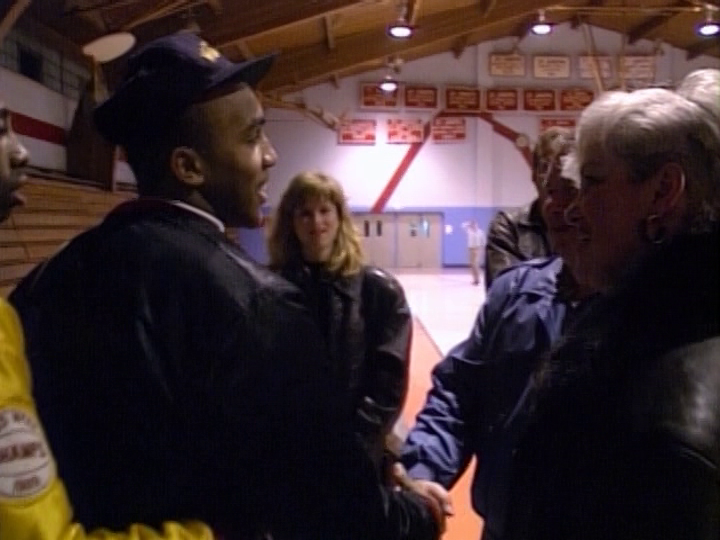
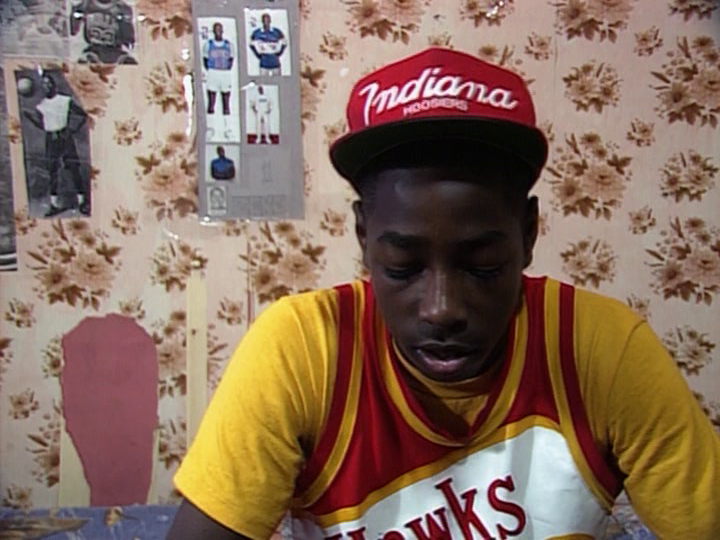
Hoop Dreams is a longitudinal documentary which follows Agee and Gates over a five-year period which begins with them being discovered on the streetball courts of inner city Chicago and recruited by St. Joseph, an elite prep school in the suburbs, and ends shortly after the conclusion of their respective high school basketball careers. At the start of the film, Gates is ascendant: the excerpts from The Sports Writers on TV that I began this post with are from the “Freshman Year” section of Hoop Dreams and in them Bill Gleason compares him to Hall of Fame point guard Isiah Thomas. Agee, on the other hand, is kicked out of St. Joseph his sophomore year after his family falls behind on their tuition payments. Gates suffers two major knee injuries during his junior year, though, and is therefore never able to lead St. Joseph to the promised land of the Illinois state championship tournament while Agee blossoms as an upperclassman and leads Marshall Metro High School on a Cinderella run to the semi-finals of the same event. The movie concludes with end titles indicating that both players are now seniors in college playing for Marquette and Arkansas State respectively, but noting that Gates has grown disillusioned with basketball.

Agee and Gates represent the millions of youth athletes in the United States fighting for a shot to become one of the roughly 500 professionals who appear in an NBA game each season. Competition is part of the film’s DNA, so it’s understandable that for many critics it’s of paramount importance to determine who its “winner” is. To bell hooks, writing in Sight & Sound in 1995, “the triumphant individual in the film is (the young) Arthur Agee, who remains obsessed with the game” while Gates “is portrayed as a victim” despite the fact that (or because) he “learns to critique the ethic of competition that he has been socialised to accept passively within white-supremacist, capitalist patriarchy.” Kimberly Chabot Davis argues against this interpretation in a South Atlantic Review article called “White Filmmakers and Minority Subjects: Cinema Vérité and the Politics of Irony in Hoop Dreams and Paris Is Burning“:

Hooks sees William Gates as the loser of the film because he eventually decides to reject the basketball dream, and she is upset that “his longing to be a good parent, to not be obsessed with basketball, is not represented [by the filmmakers] as a positive shift in his thinking,” whereas Arthur Agee, who never questions the dream, is represented as ‘the triumphant individual.’ In direct opposition to hooks’s reading, I came out of the film thinking that the filmmakers indirectly criticize Arthur Agee’s blind pursuit of the NBA dream and attempt to portray William Gates as the real winner because he learns that education and family responsibility are “truer” measures of success.

Comments made by filmmakers Steve James, Frederick Marx, and Peter Gilbert in the short documentary Life After Hoop Dreams included on the Criterion Collection DVD as an extra suggest that the latter may track more closely to their actual feelings, but the genius of the film is that it supports both readings. As John Edgar Wiseman notes in his essay “Serious Game,” its final cut “seems not based on assumptions the filmmakers formed before they encountered the actual lives of their subjects but a story that evolved naturally as footage accumulated.” While Hoop Dreams doesn’t insist on a moral, it definitely does have a point of view. Take, for instance, the transition between its first two sections. “Freshman Year” ends after St. Joseph’s varsity team is eliminated from the playoffs with voiceover narration by James that says, “despite the loss, William’s gutty performance bodes well for next year.”

William Gates in the final game of his freshman season at St. Joe's

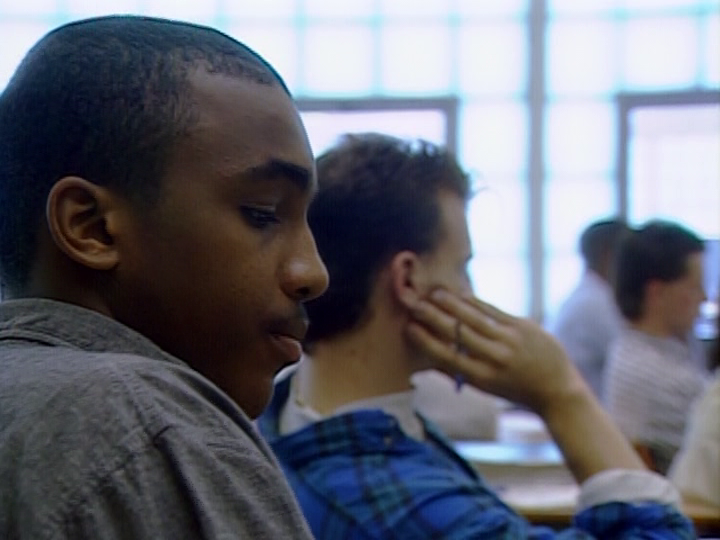
“Sophomore Year” then begins with him in class:

William Gates in class at St. Joe's

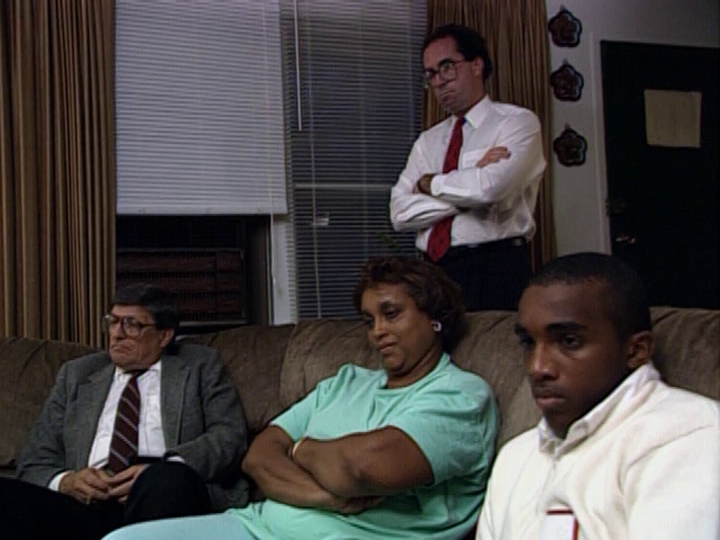
James notes that he and Agee are both on partial scholarships which aren’t big enough to cover a recent tuition increase. Cut to Patricia Wier, President of Encyclopedia Britannica explaining how in response to a solicitation by St. Joseph she and her husband decided to sponsor a student, who turned out to be Gates. There’s a shot of Wier and husband in the stands watching a game:

Patricia Wier and her husband watch St. Joe's play

Followed by one of them introducing Gates to their friends:

Patricia Weir introduces William Gates to friends

James’s narration explains that “with continuing support from Patricia Wier, William is assured that his entire education at St. Joe’s will be free.” This is immediately succeeded by a series of interviews with Agee, his mother, and St. Joseph basketball coach Gene Pingatore describing the chain of events that led to Agee being dismissed from the school. “I thought Pingatore and them would help me out, but. . . . ” Agee says, shaking his head:

Arthur Agee discusses being forced to leave St. Joe's

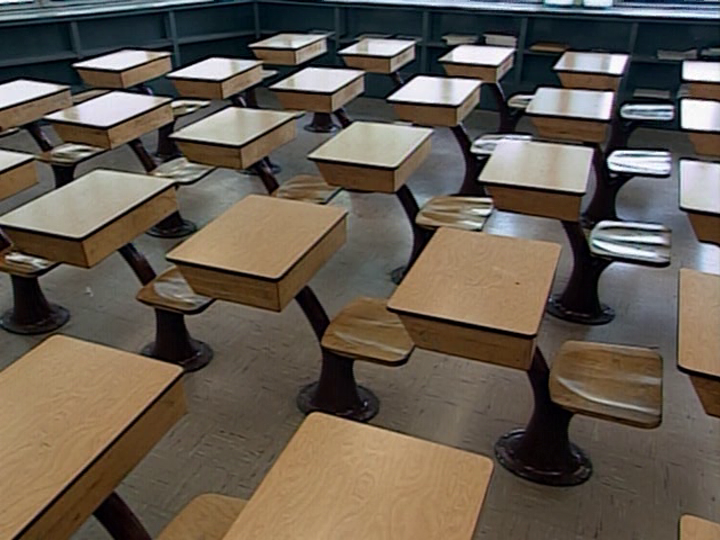
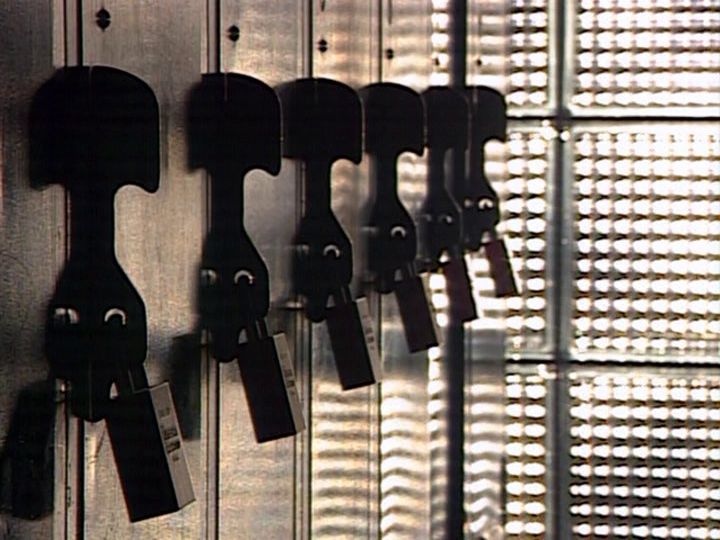
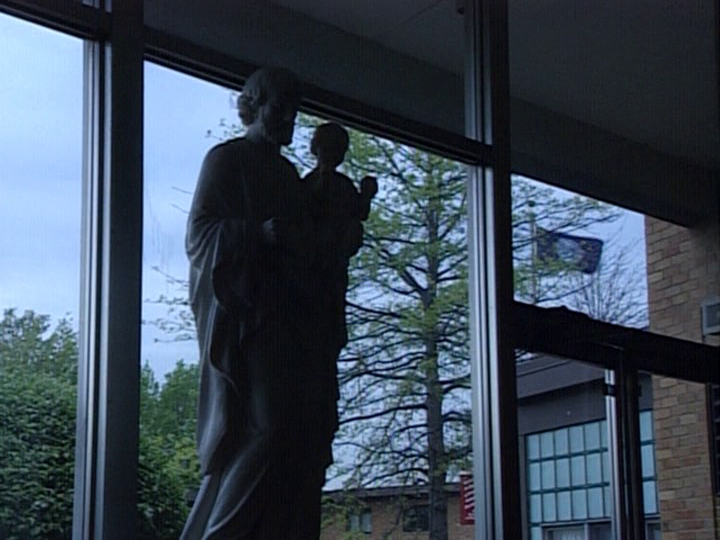
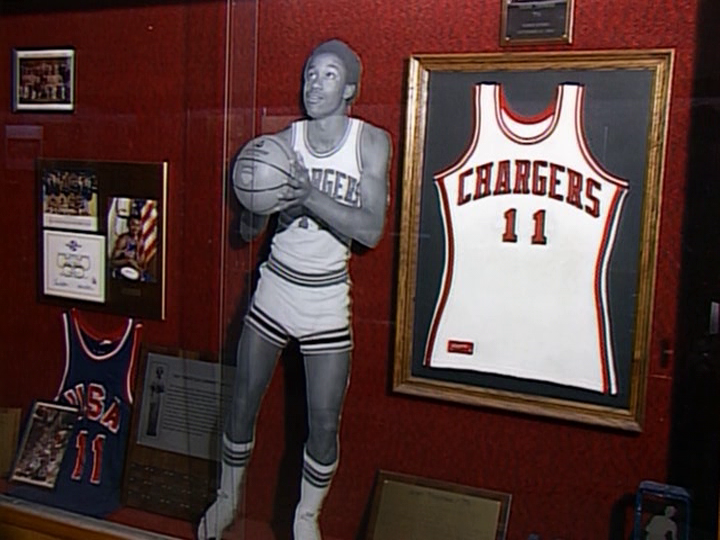
Pingatore, Agee, and Agee’s mother then all speak in turn: Pingatore defends the school’s decision on the grounds that St. Joseph is dependent on tuition dollars to function, Agee speculates that Pingatore was concerned about his height, and Agee’s mother states that she never would have enrolled her son at St. Joseph in the first place if she had known he might experience the anguish of being forced to change schools in the middle of the year. The scene ends with a four-shot montage sequence: it begins with empty desks and a row of padlocks:

Empty desks
A row of lockers

Followed by a statue of Saint Joseph himself:

Statue of Saint Joseph

And then a shot of a sort of shrine to Isiah Thomas, who attended St. Joseph, in the school’s lobby which is shown multiple times throughout the movie:

St. Joe's honors its most famous alumnus

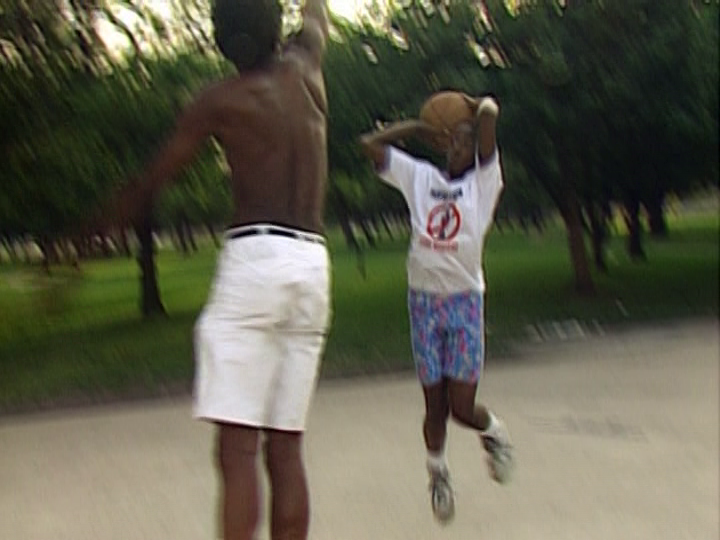
Whatever the filmmakers think of Agee’s and Gate’s choices and values, they clearly don’t believe that St. Joseph has treated the two boys equally and have a theory why not. Another thing I like about Hoop Dreams is the way it utilizes repetition effectively. Robert Greene discusses one great example in his essay “The Real Thing.” A one-on-one game between Agee and his father which takes place at the beginning of the film:

Arthur Agee plays his father in basketball before the start of his freshman year

Is echoed by second near the end which, because of everything that has happened in between, “has the cadence and expressive power of an epic showdown.”

Arthur and Bo meet on the court again after when Arthur is a senior

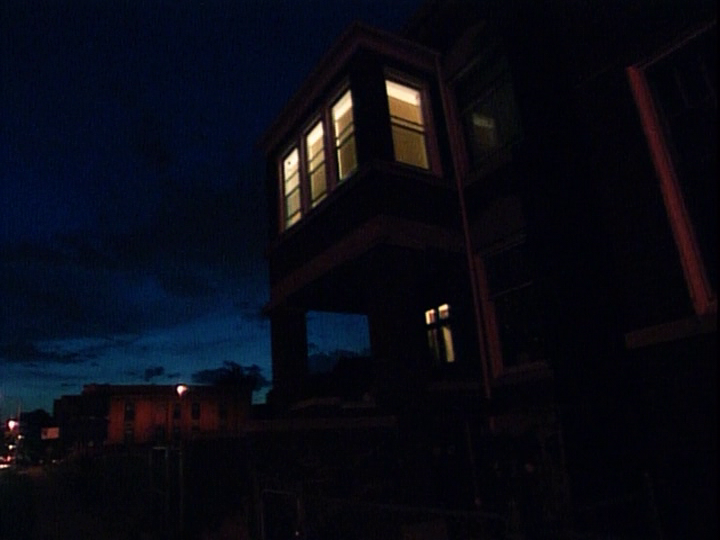
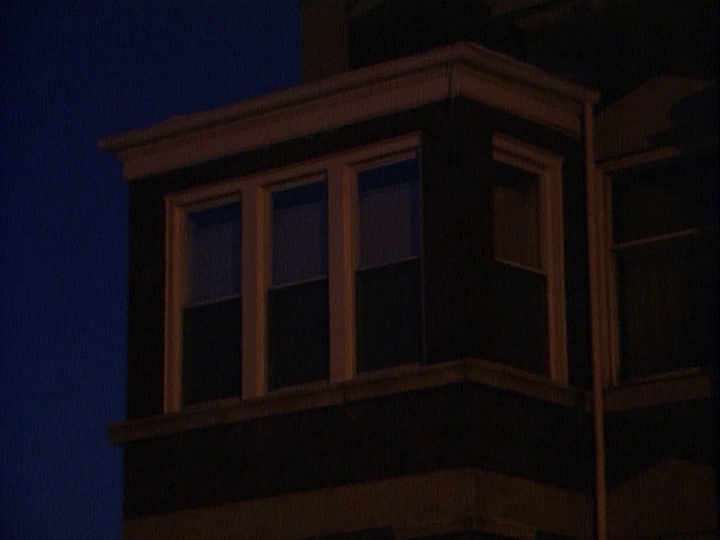
Another is the way the filmmakers leverage a recurring establishing shot of the Agee’s apartment at night with its lights on to efficiently communicate that their power has been turned off:

Agee apartment at night with lights
Agee apartment at night without lights

Speaking of efficient, James’s narration does a marvelous job of concisely telling the story of important basketball games, such as this one in which Agee and his teammates force a taller but slower opponent out of its comfort zone by holding the ball late into the shot clock:

"Arthur simply holds the ball as the clock ticks away."

And I love the way the film lets us into spaces we may never otherwise get to see such as a D1 recruiting visit:

Marquette coach Kevin O'Neill visits William Gates on a recruiting visit

And a nurse’s assistant graduation:

Arthur Agee's mother graduates from nurse's assistant school

However, I was surprised to find that what I appreciated most after recently spending time with Criterion Collection edition of this film were the commentary tracks. The one featuring Agee and Gates comes closer to being “essential” than any other I’ve ever listened to: anyone willing to spend nearly three hours of your life watching Hoop Dreams absolutely will want to hear what its subjects have to say! The commentary track with James, Marx, and Gilbert is full of insights as well and the two sometimes work in tandem to show parts of the movie in a new light. To go back to St. Joseph’s treatment of Agee, both groups believe that school didn’t just treat him unfairly, but in fact acted contrary to its own best interests. The former players observe that it was a bad basketball decision:

ARTHUR: But they was just, like, “I guess we got room for one guy. And this one guy is gonna take us down state, like, we’re gonna put everything in him. We don’t need another guy that HE needs.” And they didn’t know that William needed me to take that pressure off of him.


WILLIAM: I mean, if there was somebody that understood me at St. Joe’s, it was Arthur. Because at that particular point I really felt like the only person who could have understood me out there was him. And I felt like not only did I lose a best friend at the time, I felt like a part of me was gone.

While the filmmakers express bewilderment that St. Joseph could be so un-PR-conscious to kick Arthur out of school knowing that he was the subject of a movie. At other times, illumination comes from the distance between the commenters’ different experiences of the same event such as when James and company lament not being told earlier that Gates had a daughter with his girlfriend, while he says this can’t possibly be true because the St. Joseph school newspaper ran a story about it. They also both note that Pingatore changed after the film but have different explanations for why: Agee and Gates think it’s because he learned from watching himself on screen and began yelling less and giving his players more freedom, whereas the filmmakers ascribe his more relaxed demeanor to finally winning a state championship in 1999, not anything to do with Hoop Dreams.

Mostly, though, it’s amazing to just listen to Agee and Gates relive pivotal moments in their lives like the two free throws that Gates misses at the end of his junior year which lead directly to a St. Joseph loss in the playoffs.

William Gates goes to the line

He explains that he heard his cartilage tear earlier and therefore didn’t want the ball at the end of the game. As Gates watches himself go to the line, he observes that he shot 100% from the line in the games leading up to this one and that “all of these games are high-pressure games. None of them are more high-pressure than the others.” To him, the reason he missed those two shots was simple: he couldn’t bend his knees and never should have let himself be inserted back into the game. “People think I’m disappointed because I missed the free throws,” had adds. “No, I’m disappointed because I wasn’t honest with myself or my teammates. I let my team down that year.”

If you do watch the film, both commentary tracks, and Life After Hoop Dreams, you will have spent more than 12 hours with Agee and Gates by the time you finish. The cumulative effect is that of revisiting your own sports memories, the way we Horbals like to break out our video recording of my little brother’s 4×800 relay team winning a Pennsylvania state track title in 2005. And that, I think, is the real achievement of the Criterion Collection’s presentation of Hoop Dreams: it makes these two young men and everyone in their lives seem like family.

Cheers!

All original photographs in this post are by Marion Penning, aka My Loving Wife. Links to all of the entries in this series can be found here.

Ithaca Film Journal: 3/7/24

What I’m Seeing This Week: My Dune: Part Two date night with My Loving Wife remains a week away, so I’m going with The Peasants at Cinemapolis.

Also in Theaters: You can still see all of this year’s Oscar-nominated short films at Cinemapolis all week even after their annual fundraising gala, which returns for the first time in four years, on Sunday. The best new feature-length movie playing there or anywhere in Ithaca that I’ve seen is The Taste of Things. Director Wim Wenders’ Perfect Days, which is also at Cinemapolis, is worth checking out as well, but his fellow 2023 Cannes Film Festival entry Anselm, which is screening at Cornell Cinema in 3D on Sunday, looks like it might be more interesting. The week’s best repertory options are the entertaining “ramen western” Tampopo, which is at Cornell Cinema tonight; The Iron Giant, one of my favorite animated films of the past 25 years, which is at the Regal Ithaca Mall on Saturday; and the gorgeous Irish animated film Song of the Sea, which is at Cornell Cinema on Sunday. Last but not least, two Cornell alums, director Jason Goldman and colorist Greg Reese, are presenting their documentary Rowdy Girl at Cornell Cinema tomorrow. More information about this screening can be found here.

Home Video: Earlier this week I published my top ten list for Movie Year 2023. The following titles from it are available on Blu-ray/DVD; streaming for free or via a major subscription service; or available to Cornell University students, staff, and faculty on one of the platforms that the Library subscribes to:

Previous “Ithaca Film Journal” posts can be found here.

Top Ten Movies of 2023

When I launched this blog five and a half years ago in 2018, my reasons for naming it Prodigal Cinephile were partly aspirational. Sure enough, although I easily kept up with the pace I set for myself of at least six essays per year supplemented by occasional short posts for its first eight months of existence, a move across state lines in summer 2019 derailed me for the rest of that year. I returned briefly in early 2020, but then the world turned upside down and I only published twice more before the end of 2021. Inspiration struck shortly afterward, though, when it occurred to me that tying a movie to the cocktail recipes I was writing on a chalkboard in my dining room every month might prove to be a good way of generating regular content. It did indeed and 29 posts later, that series is still going strong! One year later I decided to make a point of tweeting something about every new movie I saw. Although this idea didn’t stand the test of time, it did result in me becoming the last cinephile on earth to join Letterboxd this past summer, which I have found to be the perfect place to jot down notes that I can refer back to later. The final piece of the puzzle fell into place this fall when turned my weekly study of Ithaca, New York movie showtimes, into a platform for brief commentary on what I’m seeing in theaters and watching at home.

So it is that I look around today and see that at long last I’m truly back to using cinema as a window on the world and a lens through which I can interrogate my thoughts and feelings and refine them into a more consistent and generous philosophy. I believe that seeing one film a week in theaters really does make me a better person, and it occurred to me the other day that my daughters may someday find all these writings interesting, which ought to provide additional motivation at times when my energy is at low ebb and thus increase the sustainability of my approach even further. Just as the “mixtapes” I’ve been making bi-annually for the past decade have encouraged me to explore a ton of music I probably wouldn’t have discovered otherwise, having a system has exposed me to a larger, more adventurous selection of movies as well. Since last year’s Oscars, for instance, I have seen 117 new films (including 51 in theaters, where I also attended 28 repeat or repertory screenings). I also managed to catch 39 of the top 50 finishers in theIndieWire Critics’ Poll, 42 of the top 50 on the Critics’ Top Ten Best Movies of 2023 list, and everything in either one’s top 25 except John Wick: Chapter Four, which My Loving Wife and I are saving for a movie marathon since we haven’t seen any of the three previous films in the series either. To be sure, my 25-year-old self would not be impressed! But he had a lot more free time on his hands and for the first time in ages, I feel like I sampled enough of what Movie Year 2023 had to offer to make a top ten list reflective more of my tastes than what I missed.

Before I get into my selections, why am I doing this in March instead of December like everybody else? The answer is simple: many of the year’s most important films don’t make it as far as Ithaca until after January 1 and our local theaters are dominated by Academy Award nominees in the weeks leading up to the ceremony. As someone who isn’t able to travel to see movies more than a handful of times each year, Oscar night therefore makes much more sense to me as an occasion to mark the end of one year and the beginning of another. Without further ado, then, here are my favorite films of 2023:

10. Mambar Pierrette

Rosine Mbakam’s debut narrative feature seems like the culmination of the lessons learned from the four documentaries she directed between 2018-23 and promises great things to come. The reason it’s on this list, though, is because of its depiction of a Cameroonian seamstress (Pierrette Aboheu Njeuthat in the year’s best performance by a non-professional actor) who perseveres through hardship thanks to the self-worth that fulfilling work, a loving family, and supportive community have given her and a sudden pivot away from what initially appears to be a descent into miserabilism into something far more surprisingly, wise, and hopeful which made me laugh out loud with delight.

9. A Thousand and One

I started getting into movies in high school in large part because they served as a gateway to other forms of expression like literature, fashion, and most especially music. The days when the soundtrack to a movie like 24 Hour Party People could completely rock my universe are mostly gone, but I still appreciate discovering something new. A Thousand and One featured my favorite original movie music of the year, and I gave the opening theme by Gary Gunn pride of place on my 2023: The Mixtape, Vol. 1 compilation. I was also impressed by Teyana Taylor’s lead performance as a pressure-hardened, combustible woman named Inez de la Paz, and by the slow metamorphosis of an empty apartment into a home followed by its sudden collapse into haunted ruin.

8. 20 Days in Mariupol

Transformation is one of the subjects of 20 Days in Mariupol as well, in this case the reduction of a thriving city into a desolate wasteland in less than three weeks after Russia’s invasion of Ukraine in February, 2022. Director Mstyslav Chernov situates the devastating images of Ukrainian citizens of all ages suffering for the crime of living too close to an area of strategic importance that he and his fellow and Associated Press journalists made famous in the context of the other footage they shot, which in many cases is far too graphic for television. Timely for its unflinching depiction of war crimes committed by the Russian Federation; timeless as a reminder that until we grow up as a species, no human being on this planet is ever more than a few days away from having every good thing in their life utterly destroyed.

7. The Teachers’ Lounge

A feature-length rebuttal to the blackboard scene in A Christmas Tale which I wrote about two years ago. Leonie Benesch’s Carla Nowak and Leonard Stettnisch’s Oskar are, like that film’s Claude (Hippolyte Girardot) and Abel (Jean-Paul Roussillon), believers in the power of logic and mathematics to help us navigate the ground before us, no matter how rocky it is. But a Rubik’s Cube is nothing compared to the social dynamics of a modern school, and far from showing them the way to freedom, all of their calculations just make everything worse. Benesch is magnificent, as are the actors who play the “bad” teachers, who bring just enough humanity to their roles to make us being to wonder if our perception of them is the result of testimony from an unreliable narrator when things start to go haywire, especially when combined with the claustrophobic framing and Marvin Miller’s tense score.

6. Poison

My favorite of the five movies directed by Wes Anderson which were released in 2023. Each of the four shorts based on Roald Dahl stories is a fine adaptation, but Poison does the best job of honoring and enhancing its source material through decisions like having Ben Kingsley’s Dr. Ganderbai hold objects like a piece of rubber tubing, bottle of alcohol, and syringe up to the camera as Dev Patel’s Timber Woods narrates in rapid-fire staccato on from the other half of a split-screen composition to draw attention to Dahl’s specific word choices and the camera work and lighting which lead up to the completely original ending.

5. All of Us Strangers

All of Us Strangers would make a great double feature with Petite Maman, one of my favorite movies from 2022, which also suggests that understanding our parents (or, conversely, our children) is an undertaking which is neither precisely poetic or psychological, but something else. It contains some of favorite scenes of the year, including the opening shot, an all-time great Christmas sequence starring the song “Always on My Mind” by the Pet Shop Boys which I think I’ve listened to at least once a day since seeing it, and Andrew Scott’s Adam literally forgetting how to be intimate with someone, which is not something I can remember ever seeing on screen before, but which I assure you can happen! Scott is brilliant, as are Paul Mescal, Claire Foy, and Jamie Bell, and there’s a shaking head on a train that reminded me of the painter Francis Bacon via the film Jacob’s Ladder.

4. The Boy and the Heron

I discovered director Hayao Miyazaki in college, but my daughters are growing up with his films. My Neighbor Totoro was a staple of their earliest years, and now The Boy and the Heron has arrived in their lives at a time when my oldest is struggling to make her peace with the concept of mortality. She still isn’t quite old enough to really dive into it, but now she knows it’s waiting for her when she’s ready. My line on this movie is that if it had been playing the 2002 Toronto Film Festival instead of Spirited Away, I believe my life would have been changed in much the same way. That remains true, but I’ve stopped telling everyone how surprised I am that I enjoyed the dubbed version as much as the subtitled one now that I’ve read David Ehrlich’s IndieWire article about how much work went into it. Joe Hisaishi’s score was my second favorite of the year after A Thousand and One.

3. Menus-Plaisirs — Les Troisgros

Although this four-hour long portrait of the Les Troisgros family of restaurants directed by legendary documentarian Frederick Wiseman earned a spot on my list while The Taste of Things didn’t, the latter’s Dodin Bouffant (Benoît Magimel) would surely be gratified to see what kind of hands French gastronomy is in and to know that they’re still consulting Escoffier on the proper cleaning and cooking of brains nearly a century after his death! It’s constructed like a progressive menu that only fully comes together in the dessert course, and the pace is deliberately unhurried except when it’s not, mirroring the rhythm of a high-end kitchen. Effective pairings can be contrasting as well as congruent, and Menus-Plaisirs — Les Troisgros would also go well with one of my favorite films from last year, The Menu, were it not for its length: whereas the latter’s Hawthorn was hermetically sealed off from the rest of the world, this movie’s Le Bois sans Feuilles is integrated into its surroundings via relationships with the farmers and artisans that supply its ingredients and more accessible offshoot establishments like a food truck.

2. The Killer

The Killer is in conversation with Le Samouraï from start to finish. Alain Delon’s Jef Costello from the latter film is the very epitome of cool, but his apartment is so monochromatically drab that I genuinely wonder if it was a reference for the North Pole scenes from Elf. It’s unlikely that anyone will want to emulate the fashion choices of Michael Fassbender’s unnamed assassin from The Killer, but when he’s not hanging out in abandoned WeWork offices, he lives in a palatial home in the Dominican Republic with a beautiful woman (Sophie Charlotte) who appears to really love him. Both have knowledge of a shadow world of garages and storage units where a person with the right connections can pick up new license plates or guns and they ply their trade not with futuristic gizmos, but everyday objects: Costello uses the biggest keychain you’ve ever seen to steal cars, while Fassbender breaks into “high-security” penthouses with a tool he buys online and retrieves from an Amazon Locker. Finally, the two films have basically the same ending: these men live by a strict code that liberates them, but also dictates their fate. What fascinates me about The Killer is how dramatically different its conclusion feels despite the fact that Fassbender’s character isn’t any more or less noble or rigorous than Costello’s — it’s all in how the story is told. Unless you too spent huge portions of your teens and twenties carefully adjusting the brim of your fedora and listening to the Smiths, this film won’t resonate with you nearly as much as it does with me, but it’s also technically perfect and features my third-favorite score of the year (by Trent Reznor and Atticus Ross), brilliant cinematography and sound mixing, and Tilda Swinton, so I feel confident in recommending to everyone anyway!

1. Ferrari

Ferrari contains both my favorite small moment and grand set piece from Movie Year 2023, Adam Driver’s Enzo Ferrari deftly twisting his wrist while pouring wine so as not to spill a single drop and the thousand-mile long Mille Miglia road race respectively, which is a testament to the meticulous attention to detail present in every frame. Fellow holiday season release The Iron Claw also did a good job of depicting the extreme emotional and physical toll that professional sports can take on athletes and their families and even gestured toward their role in global politics, which I tend to value much more highly than celebrations of said athletes’ artistry and skill because contemporary television broadcasts have that pretty much down to a science. What separates Ferrari from the crowd is not just that it successfully accomplishes both of these things in one film, but that it shows how they’re two sides of the same coin: Ferrari is a national treasure (in the sense of possessing value for the country of Italy) not just because the cars he builds go fast, but because they push the boundaries of what is possible and safe, which, as he explains to his son Piero (Giuseppe Festinese) in another great scene, is what makes them beautiful. This is not to say that the 1957 Mille Miglia wasn’t a tragedy–the race was rightfully banned after the fatal crash unforgettably depicted in the film. But now consider how many wars have been fought since the wasteful loss of life described in the end titles for Napoleon and tell me why I shouldn’t continue to hold out hope that one day we’ll channel our irrepressibly competitive tribal urges entirely into sports.

* * *

Although no “old” movies totally blew my mind last year, some noteworthy experiences include seeing Matter Out of Place, which would have made my “Most Memorable Films of 2022” list had it arrived in Ithaca sooner, and my first two documentaries directed by Sergey Loznitsa (Babi Yar. Context and The Natural History of Destruction) at the Finger Lakes Environmental Film Festival; attending my first Nitrate Picture Show; and finally catching up with History Is Made at Night on The Criterion Channel. Three other first-time viewings stood out for me:

3. Werckmeister Harmonies

I don’t like to use one text as a cudgel against another, but I’ve been wondering if I would have found The Zone of Interest nearly as distasteful as I did had I not seen Werckmeister Harmonies at the Maine International Film Festival this summer. The latter movie does a fine job of evoking the Holocaust and inviting us to contemplate what happens when the people who commit such atrocities go home to their families at night in just a few scenes–it is really necessary to make their domestic lives the subject of an entire feature-length film?

2. Black Sheep

I watched this on The Criterion Channel in September when they included it in their terrific “Directed by Allan Dwan” series and it was the most fun I had with a movie all year. I have since purchased it on DVD and am now planning to feature it in a “Drink & a Movie” blog post next March–stay tuned!

1. Eijanaika

I watched as many films as I could directed by Shōhei Imamura last year in preparation for a review of Warm Water Under a Red Bridge and this was the one I’d single out as a “must see,” although The Ballad of Narayama is close and now is a great time to watch Black Rain, which is about a family that survives the dropping of an atomic bomb on Hiroshima, with Godzilla Minus One and Oppenheimer both up for Oscars. But I digress somewhat: Eijanaika is a productively messy, sprawling film which captures the end-of-the-world feeling of living through a pivotal moment in history (the Meiji Restoration) that we’re now all lamentably so familiar with.

* * *

Somehow I managed to see 48 out of 52 of this year’s Oscar nominees which means . . . that any predictions I might offer would still be completely useless, since I’ve never put any effort into studying what’s important to Academy voters. This does, however, mean that I have stronger rooting interests than usual! Here’s who I’ll be cheering for in each category:

Animated Feature Film: The Boy and the Heron, obviously, but I enjoyed all of this year’s nominees with the possible exception of Robot Dreams, which I haven’t seen yet.

Actor in a Supporting Role: Robert Downey Jr. for Oppenheimer, but I wish Paul Mescal and/or Jamie Bell had been nominated for their work in All of Us Strangers.

Actress in a Supporting Role: Da’Vine Joy Randolph for The Holdovers.

Documentary Feature Film: 20 Days in Mariupol, obviously, but as with the Animated Feature Film category, I think this is a pretty strong field even though many of my favorite documentaries of the year like Menus-Plaisirs — Les Troisgros and Smoke Sauna Sisterhood weren’t nominated.

Short Film (Live Action): The Wonderful Story of Henry Sugar. I have not yet seen either Invincible or Red, White and Blue, but director Wes Anderson and company set a pretty high bar, so I doubt it matters.

Cinematography: El Conde. Paula Luchsinger’s Carmencita’s baby bird first attempts to fly and vampires over Santiago at night in glorious black and white are some of my favorite images of Movie Year 2023.

Makeup and Hairstyling: Poor Things. Willem Dafoe’s prosthetics are a movie in unto themselves!

Costume Design: Poor Things, but I would not be disappointed to see Barbie win.
International Feature Film: The Teachers’ Lounge, obviously. Note: I have not yet seen Io Capitano.

Documentary Short Film: The Repair Shop, but I would not be disappointed to see Island in Between win.
Short Film (Animated): Letter to a Pig, but I would not be disappointed to see Pachyderme win. Or anything but War Is Over! really.
Production Design: Poor Things, but as with the Costume Design award I would not be disappointed to see Barbie win.
Music (Original Score): Killers of the Flower Moon. RIP Robbie Robertson.

Visual Effects: The Creator, but I would not be disappointed to see Godzilla Minus One win.

Writing (Original Screenplay): The Holdovers.

Writing (Adapted Screenplay): Oppenheimer.

Sound: Oppenheimer.

Music (Original Song): “I’m Just Ken” from Barbie.

Film Editing: Killers of the Flower Moon. Did you know that Thelma Schoonmaker is a 1961 Cornell grad?

Director: Martin Scorsese for Killers of the Flower Moon, but I would not be disappointed to see Christopher Nolan win for Oppenheimer.

Actor in a Leading Role: Colman Domingo for Rustin, but I would not be disappointed to see Cillian Murphy win for Oppenheimer or Paul Giamatti win for The Holdovers.

Actress in a Leading Role: Emma Stone for Poor Things, but I would not be disappointed to see Lily Gladstone win for Killers of the Flower Moon.

Best Picture: Killers of the Flower Moon, but I would not be disappointed to see Oppenheimer win.