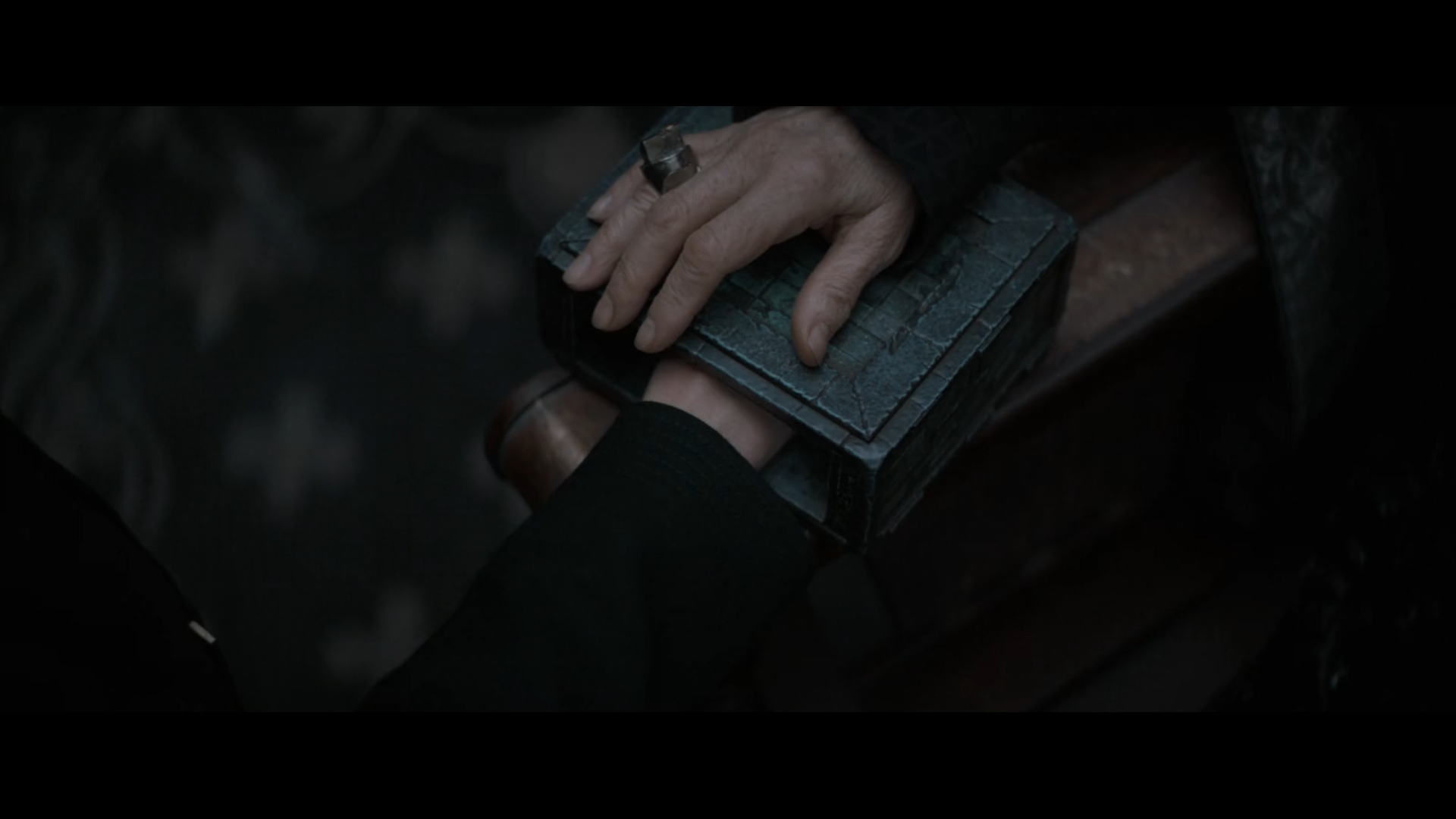
REVEREND MOTHER MOHIAM: Like sifting sand through a screen. We sift people. If you were unable to control your impulses–like an animal–we could not let you live. You inherit too much power.
MOTHER'S VOICE: I'm not going to swat that fly. I hope they are watching. They'll see . . . they'll see . . . and they'll know . . . and they'll say, 'why, she wouldn't even harm a fly.'"
What I’m Seeing This Week: I’m heading to the family cottage in Ontario tomorrow, so there are no theatrical screenings in my immediate future.
Also in Theaters: It looks like Twisters, which continues its run at the Regal Ithaca Mall, will reign as my favorite new movie in local theaters that I’ve already seen for at least three weeks! I also recommend Inside Out 2, which is there as well. If I *was* able to see something this week, it would probably be one of the films opening at Cinemapolis: Kneecap, Widow Clicquot, or Touch in that order. Other noteworthy new movies include Trap, director M. Night Shyamalan’s latest, and Harold and the Purple Crayon, which is based on the beloved children’s book. Your best bet for repertory fare is legendary Japanese animator Hayao Miyazaki’s Ponyo, which is at the Regal in a dubbed version on Sunday and Tuesday and with subtitles on Saturday, Monday, and Wednesday. Finally, the tenth edition of Movies in the Park kicks off tomorrow with a free screening of Wonka at Stewart Park.
Home Video:As reported by the Ithaca Voice last month, Fancy Dance is the first widely-distributed film to prominently feature the Gayogohó:nǫˀ or Cayuga language spoken by members of the Seneca-Cayuga Nation. It is now available for streaming on Apple TV+ and is definitely worth checking out if you missed it during its run at Cinemapolis. I liked Lily Gladstone’s performance as inveterate con artist Jax, a scene in which she plays a siren while her young niece Roki (Isabel Deroy-Olson, who is also very good) steals a mark’s car keys, and the movie’s treatment of Roki’s first period. I wasn’t as keen on the ending, but this is nonetheless a very solid debut feature by Ithaca resident Erica Tremblay.
Previous “Ithaca Film Journal” posts canbe found here.
Also in Theaters: It’s close, but Twisters has usurped Inside Out 2 as my favorite new movie now playing in Ithaca that I’ve already seen on the strength of its outstanding soundtrack. If 103.7 QCountry is your go-to local radio station too, you’re probably already familiar with “Ain’t No Love In Oklahoma” by Luke Combs; I also really like “Song While You’re Away” by Tyler Childers, “Ain’t In Kansas Anymore” by Miranda Lambert, and “The Cards I’ve Been Dealt” by Warren Zeiders. Both of these films are at the Regal. And, jeez, that’s kinda it. If you’re a horror movie fan, I recommend MaXXXine (Cinemapolis) over Longlegs (both Cinemapolis and the Regal).
Also in Theaters:Inside Out 2, which continues it’s run at the Regal Ithaca Mall, remains the best new movie in Ithaca that I’ve already seen. I enjoyed Thelma, a crowd pleaser starring June Squibb as a nonagenarian vigilante at Cinemapolis which also features the late Richard Roundtree in his final role, as well. In addition to everything I’m seeing this week, I’m hoping to catch Twisters at the Regal before it closes or maybe at Cornell Cinema this fall. Your best bets for repertory fare are two family-friendly films at the Regal: The NeverEnding Story, which has screenings on Sunday and Monday, and The Lion King, which is there all week.
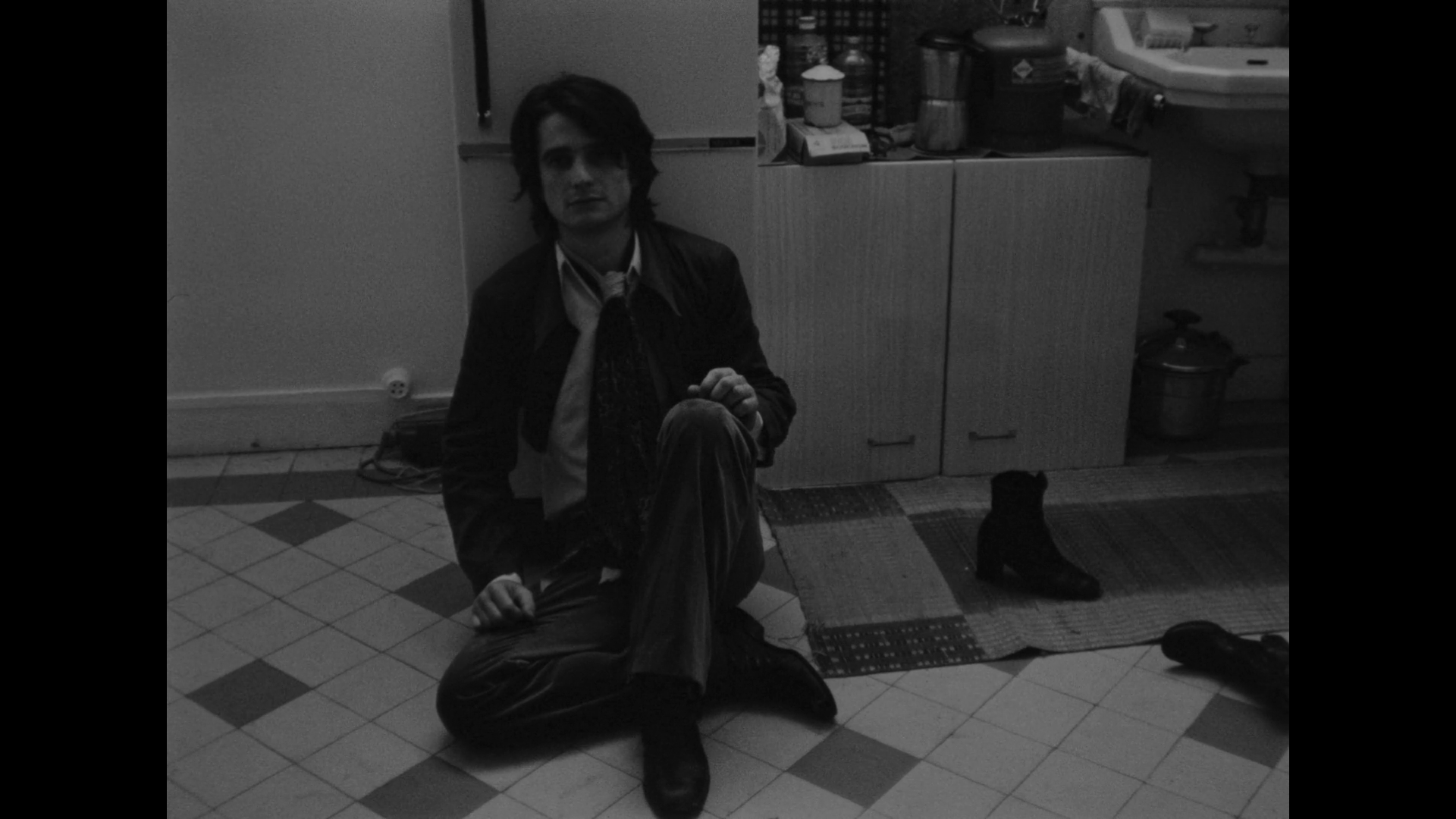
Home Video: Like many people I’m shaken by current events. I found solace in two films I watched a few nights ago and am therefore recommending them as a double feature. The first is The Pig, a cinéma vérité-style short (50 minutes) documentary directed by Jean Eustache which is available on The Criterion Channel. Like his previous film The Virgin of Pessac, this one (which was made in 1970) seems to cry out to be read as commentary on the events of May 1968 given its proximity to them. If you’re a chef you might disagree–after all, it’s a fairly straightforward depiction of the butchering of the titular animal: we watch as it’s bled, scalded, and broken down into primal cuts, then witness the preparation of casings and stuffing of sausages. Introductory text explains that because the subjects are speaking in a local dialect, there are no subtitles, and although even non-French speakers will catch a few words they recognize like “coeur,” for the most part we’re left to our own devices to make sense of what we see. If you eat meat, you might reach for words like “timeless,” “humane,” or even “beautiful”; however, if you’re a vegetarian, it probably strikes you as barbaric. What I’m certain of is that both camps can benefit from this clear-eyed look at what exactly happens when a hog becomes “pork” which depicts an event that took place at a specific time and place, but also has happened every day around the world for generations.
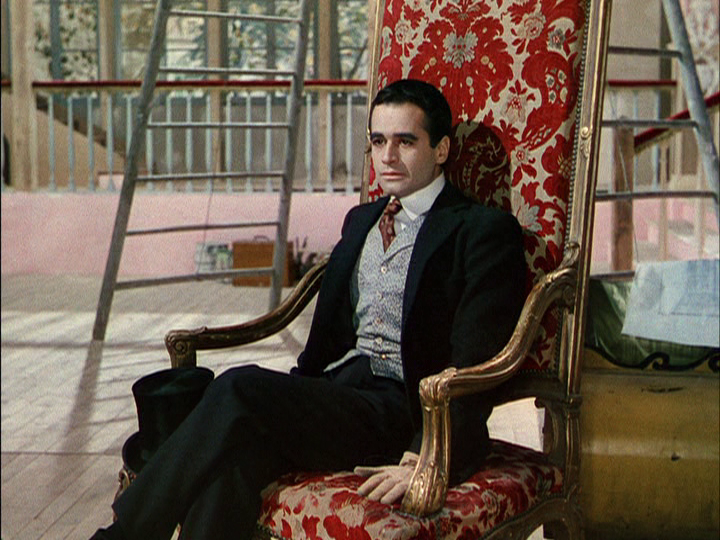
I followed The Pig up with House of Usher, which was directed by the recently deceased B-movie legend Roger Corman, stars Vincent Price as Roderick Usher with a Draco Malfoy haircut, and is available on Turner Classic Movies On Demand and WatchTCM until July 25. It’s highly enjoyable for its lurid colors, overwrought performances, and nervous breakdown soundscape. Watching it when I did, I was also struck by the terms Usher uses to describe the curse which he believes afflicts his family:
This house is centuries old. It was brought here from England. And with it every evil rooted in its stones. Evil is not just a word. It is reality. Like any living thing it can be created and was created by these people. The history of the Ushers is a history of savage degradations. First in England, and then in New England. And always in this house. Always in this house. Born of evil which feels, it is no illusion. For hundreds of years, foul thoughts and foul deeds have been committed within its walls. The house itself is evil now.
Poe’s story already was a tale about original sin become self-fulfilling prophecy, but in the hands of Corman and screenwriter Richard Matheson it takes on practically geopolitical dimensions! I don’t mean to suggest that either House of Usher or The Pig offers *answers* for our current moment, but they’re both full of great questions that it would behoove ourselves to ask, most notably who are we (however you define that): pig or butcher? Roderick Usher or Mark Damon’s Philip Winthrop? Philip Winthrop or Myrna Fahey’s Madeline Usher? Or Harry Ellerbe’s Bristol, perhaps? And then, of course, what now?
Previous “Ithaca Film Journal” posts canbe found here.
What I’m Seeing This Week: I’m dropping My Loving Wife and our dog Sally off at the family cottage in Ontario–our kids are there already with their grandmother–this weekend, then returning home alone to spend the rest of the month by myself before I join them all again in early August. During this time I’ll be at liberty to see as many movies as I want, and I plan to kick things off with screenings of both Thelma and Kinds of Kindness at Cinemapolis.
Also in Theaters:Inside Out 2, which I started writing about last weekend, is the best new movie in local theaters that I’ve already seen, but the quietly intense coming of age (sort of) story Janet Planet isn’t far behind. The former is at the Regal Ithaca Mall, the latter is at Cinemapolis. In addition to the films I’m seeing this week, I’m also hoping to catch the horror movies MaXXXine and Longlegs at one of those two theaters before it closes. Can You Still Love Me, the directorial debut by local filmmaker Adam Howard, screens at Cinemapolis on Sunday. Finally, your best bet for repertory fare is either Princess Mononoke, which is at the Regal Sunday through Wednesday, or The Lion King, which is there all week, depending on whether you’re more of a Studio Ghibli or Disney kind of person.
Home Video:Last week I promised a list of my five favorite films directed by Asghar Farhadi. Here it is!
5. A Hero (available on Prime Video). Not just a return to form after the relative disappointment of Everybody Knows–I could justify ranking this as high as third! I’ve been trying to avoid reflexively using auteurist terminology like “Farhadi’s A Hero,” etc. out of respect for the complexity of filmmaking, but I do still tend to organize my movie watching around individual artists (i.e. not just directors) in large part because I enjoy encountering the same techniques, ideas, and faces appear again and again and watching them accrue ever more complex and subtle meanings. Here the opening shots of Naqsh-e Rostam are some of my favorites in Farhadi’s entire oeuvre: it’s his signature house in a state of disrepair, except the house is the nation of Iran! Similarly, Amir Jadidi isn’t just playing Rahim, he’s also playing the side of Shahab Hosseini’s Hojjat that we don’t get to see in A Separation. Speaking of which:
4.A Separation (available on Prime Video). Farhadi’s first Oscar winner (for Best Foreign Language Film of the Year–it was also nominated for Best Writing, Original Screenplay) and considered by many to be his best film. Payman Maadi’s Nader is perhaps Farhadi’s best unlikeable protagonist, but what stands out most in my mind is Shahab Hosseini’s terrifyingly wild physicality in the role of Hodjat, which is even more striking because he plays one of the most sympathetic characters in Farhadi’s previous film About Elly, which I’ll discuss further in just a minute.
3.The Past (available for rental from Apple TV+ and Prime Video). Easily the most underrated film on this list. I think it can sometimes be challenging to encounter a familiar director working in another language or setting because it forces you to reconsider what exactly you like about them. In the case of Farhadi, I suspect that his movies introduced many Americans to an Iranian U.H.B. that they didn’t know existed; transplant them to France, and what previously felt like a bridge between the citizens of countries two whose leaders are antagonistic toward one another becomes a case of “yeah, well of course *they’re* just like us.” Farhadi is hardly the first filmmaker who had to learn from experience that a little flash goes a long way, and A Separation is his first movie after he truly got all of the “art school” out of his system, but it advances almost too far in the direction of neorealism. The Past has all of that movie’s virtues, but with more three-dimensional characters and a successful return to stylistic flourishes like shots of people talking who we can’t hear because we’re separated from them by soundproof glass which he didn’t yet know hot to utilize fully effectively in films like Beautiful City: in other words, it’s his most “mature” work to this point.
2. About Elly (current Cornell University faculty, staff, and students have access through Kanopy via a license paid for by the Library; it is also available for rental from Apple TV+).There’s also a lot to be said for youthful exuberance, though! I had never heard of Asghar Farhadi when I saw this movie at the Silk Screen Film Festival (RIP) in Pittsburgh, PA in 2010 and it absolutely knocked my socks off. Had I been making year-end top ten lists at the time, I’m nearly certain it would have come in at number one. So this could be a sentimental pick, but I also think that it’s a masterful portrait of people who spend so much time and energy trying to convince themselves and others that they’re living their best lives that there’s none left over for genuine empathy, which is of course also a recipe for political complacency, and Taraneh Alidoosti’s Elly flying a kite is pure joy.
1.The Salesman (available on Prime Video). Not just number one on this list, one of the best movies of the 21st century so far. From the House of Usher opening to the subtle intertwining of its plot and themes with the play-within-a-movie Death of a Salesman to lead performances by Shahab Hosseini and Taraneh Alidoosti, my favorite Farhadi regulars, that draw power from the other roles they’ve played for him, The Salesman represents his richest and most original treatment of his main themes.
Previous “Ithaca Film Journal” posts canbe found here.
Are all the personified emotions that scurry around inside the head of the movie’s young heroine supposed to be an allegory for her developing consciousness? Or is Riley actually being controlled by whatever adorable cartoon has seized the console at the moment, like she’s a mecha in the shape of a 13-year-old girl?
She notes that after the first Inside Out movie she would have said the former, but isn’t so sure now that she has seen its sequel. This was my initial impression as well, and I thought that it marked Inside Out 2 as being inferior. Then I read Maya Phillips’ New York Times article about how its depiction of anxiety is true to her own experience, specifically the way the emotion with that name voiced by Maya Hawke banishes Joy (Amy Poehler) and the other feelings which constituted the original film’s main characters from the helm of Riley’s mind. She proposes that this is one of its chief virtues:
Perhaps ‘Inside Out 2’ is providing children with a peek into the future, not as a prophecy of doom but as a route to understanding an emotion that has become more recognizable and prevalent in people of all ages.
Maybe the upshot is that when young ‘Inside Out’ fans inevitably become caught in one of those brutal storms of anxious thoughts, they can then summon a clear image of the chaos of their mind, as though it’s a bright, colorful Pixar film. Maybe then they can recognize that orange bearer of dreadful tidings and gently guide her to a seat.
Phillips’ reading lends itself to either answer to Willmore’s questions, but thinking through which one is a better fit drew my attention to something intriguing. Joy is pretty clearly the leader of Riley’s emotions until Anxiety supplants her. She’s the first one to appear, minutes after Riley is born:
At first the console has but one button, and when Joy pushes it, baby Riley laughs:
33 seconds later, she starts to cry, which is when Joy realizes she has company:
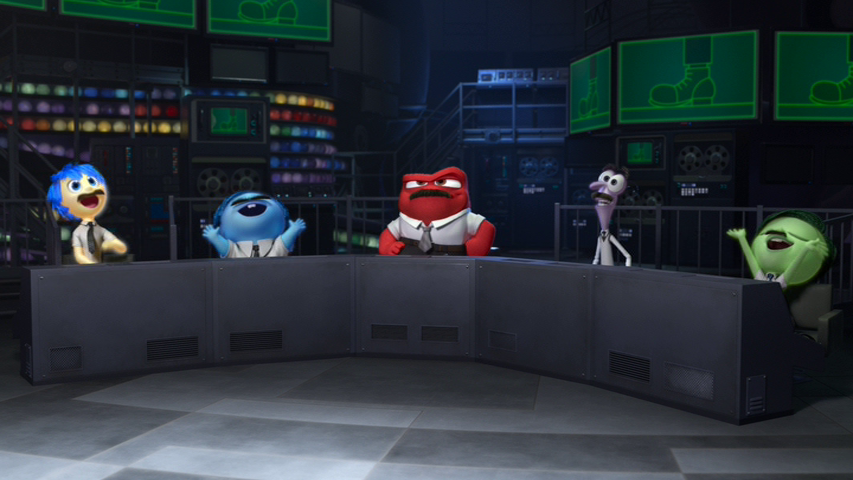
Joy and Sadness (Phyllis Smith) are soon joined by the other OG emotions, Fear (Bill Hader in the first movie, Tony Hale in the second), Disgust (Mindy Kaling/Liza Lapira), and Anger (Lewis Black). Each has the ability to take control, and as Phillips notes the console changes to purple, green, or red respectively when they do:
Joy spends the most time in the driver’s seat, though, and the other emotions also look to her for direction. What’s interesting about this situation is that it appears to have parallels in the control centers of most of the other humans we get glimpses of. Sadness (Lori Alan) occupies the center position both times we see Riley’s mother’s mind, for instance:
And her father’s emotions go so far as to address Anger (director Pete Docter) as “sir”:
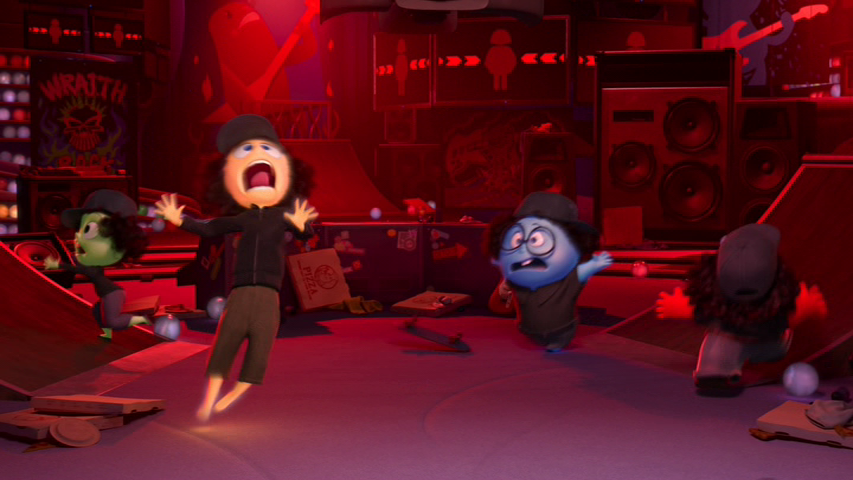
This does not seem to be explained by the fact that her mom and dad are feeling sadness or anger in these scenes because they aren’t, really. Although the one other human mind we see during the movie proper is completely unhelpful because the emotions in the mind of the adolescent boy Riley talks to are in a state of panic at being addressed by a girl:
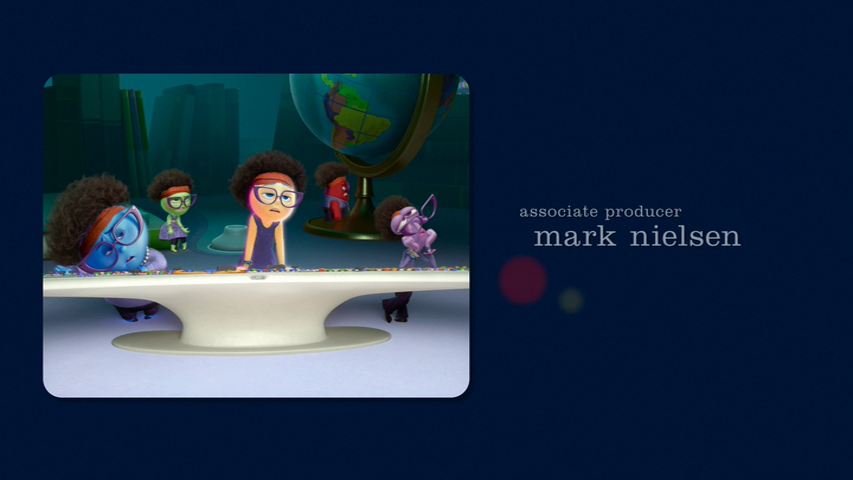
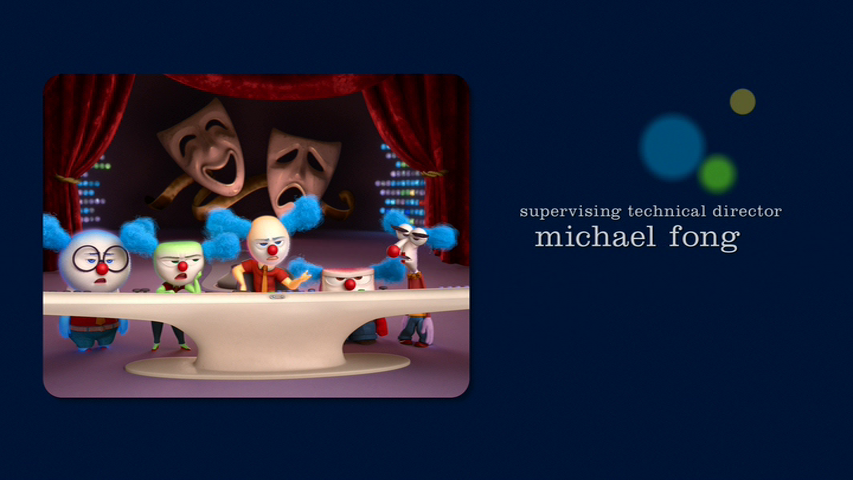
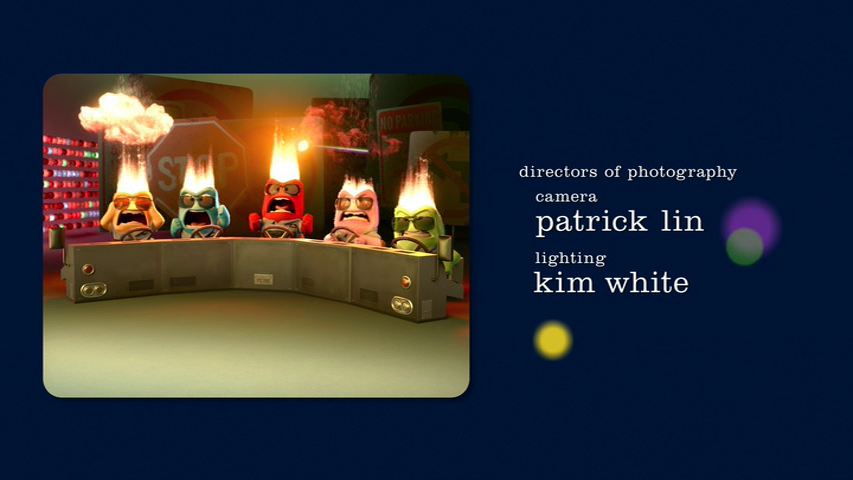
The minds of Riley’s teacher, a barista, and a clown that we see during the end credits do seem to support this interpretation:
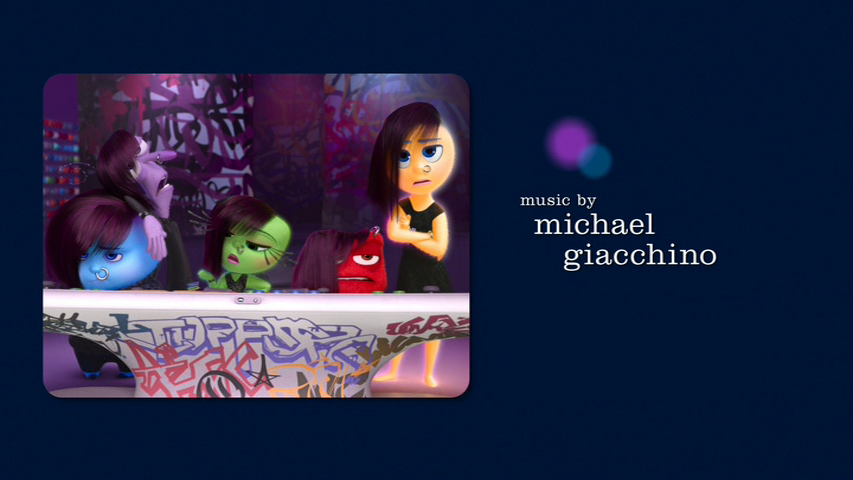
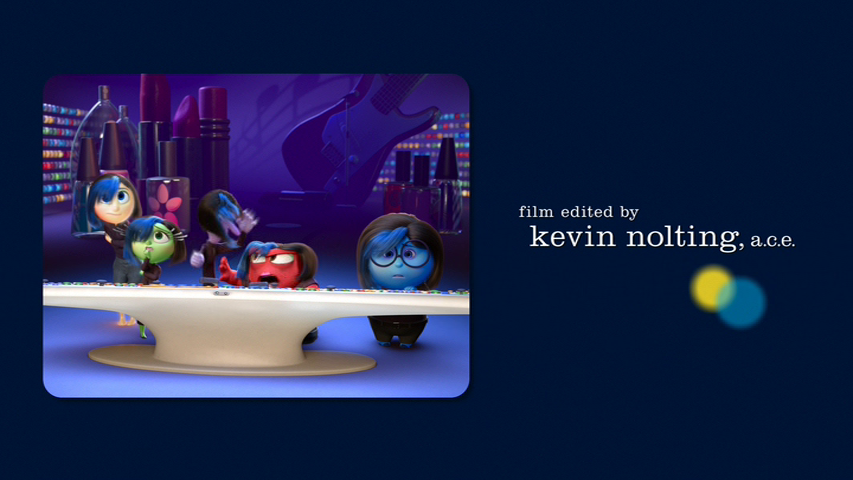
There’s even a provocative suggestion that these are healthy, adult minds where the chief emotion has learned to listen to the others in the form of a contrasting peek inside the brain of a “cool girl” where Fear gets pushed out of the way by Anger in a manner reminiscent of the way Joy initially treats Sadness:
I can’t help but wonder what determines which emotion is ascendent. Is it just whichever one appears first? If so, this would justify Phillips’ support for the fact that in the Inside Out universe controlling your anxiety looks like “sitting her down in a cozy recliner with a cup of tea.” But could a person who isn’t anxious all the time have a mind where Anxiety is in the driver’s seat but takes advice from other emotions in much the same way that Sadness and Anger do in the case of her parents? Suddenly I find myself eager to spend some time with Inside Out 2 after it comes out on DVD (hence the “Part One” in the title of this post) to see if it offers any hints! In the meantime, I’ve found a satisfactory explanation for what had been my least favorite moment in the first film because I couldn’t make sense of it, the way Riley’s control panel starts to go dark and become unresponsive when she decides to run away from home:
As fun as all of this detective work is, Inside Out cautions us not to take it *too* literally. Take, for instance, this joke about what the mind of a school bus driver looks like:
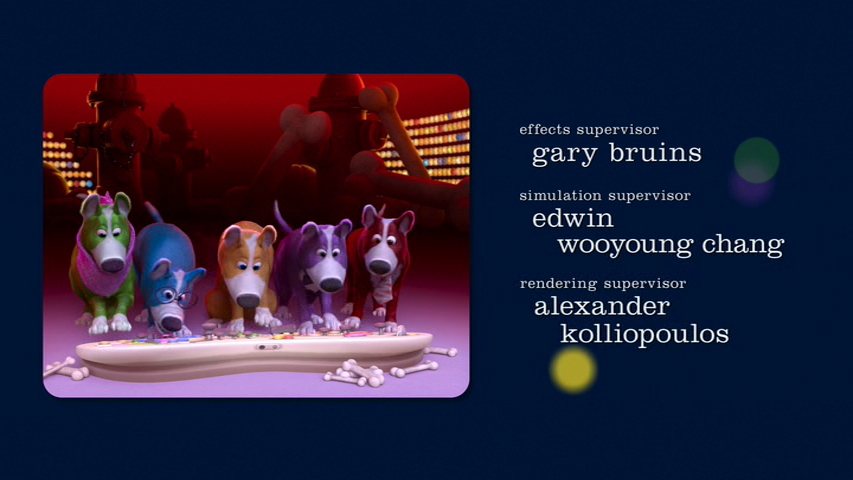
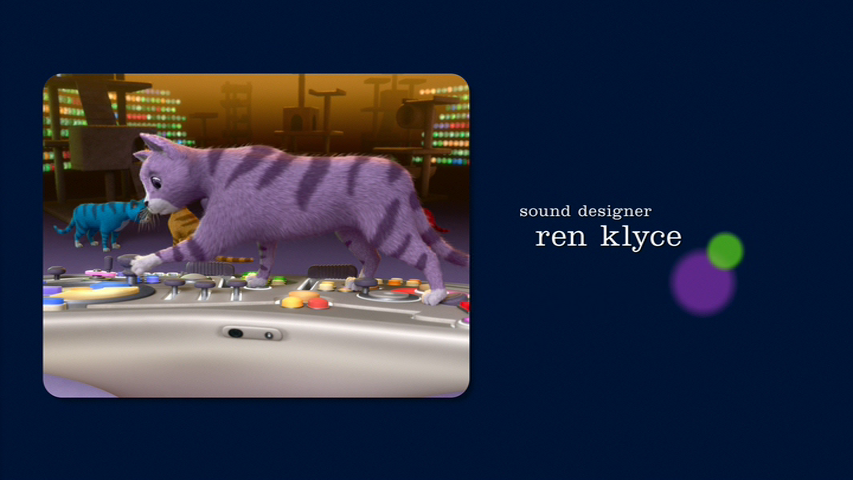
Or these depictions of the brains of a dog and cat:
I like the idea of a generation of young people growing up with more mastery of their potentially destructive feelings thanks to these movies, but where they resonate with me most is as a representation of the experience of being a parent: the films’ personified emotions, whichever one is “driving,” all want to be part of their person’s life so that they can help them grow up into a strong, independent adult. The lesson of the runaway scene is that this requires balance, care, and maybe a bit of luck: if you’re either too preoccupied with your own life or too pushy, you risk losing them forever.
Also in Theaters: The best new movie in local theaters *right now* that I’ve already seen is Fancy Dance, which was directed by Ithaca resident Erica Tremblay, but it closes at Cinemapolis today. After that the title will pass to Inside Out 2, which continues its run at the Regal Ithaca Mall and which I think I’m planning to write about. The other films I thought about seeing this week were The Bikeriders, Kinds of Kindness, and MaXXXine, all of which are at both Cinemapolis and the Regal. A Quiet Place: Day One and Kingdom of the Planet of the Apes are the latest editions in franchises that don’t interest me much which are at the Regal and seem to be getting decent reviews? I’m much more likely to eventually see Sundance darling Thelma (Cinemapolis), which features a pretty incredible cast, or Kill (Regal), an Indian action movie. Your best bets for repertory fare are Close Encounters of the Third Kind, which is at the Regal on Sunday and Wednesday, and Altered States, which is at Cinemapolis on Wednesday.
Home Video: In preparation for my recent Beautiful City review for Educational Media Reviews Online, I watched or rewatched every film directed by Asghar Farhadi. I’ll be back next week with my five favorites, but in honor of Independence Day, my recommendation this week is his third feature Fireworks Wednesday, which current Cornell University faculty, staff, and students and New York state residents can watch online for free via Projectr. This is a must-see for all Farhadi fans, as like Beautiful City it contains many of his trademark techniques and themes in a not-yet-fully-developed state as well as a great lead performance by Taraneh Alidoosti. It’s a great “observer effect movie,” too, in that her character Roohi’s constantly shifting understanding of the truth of the situation she has landed in is very much affected by the reactions of others to her well-intentioned but impulsive interventions, and it may also change the way you look at About Elly, as it uses the sound of firecrackers in a very similar way as that movie uses of the sound of the ocean.
Previous “Ithaca Film Journal” posts canbe found here.
July is always the month of Bastille Day and the Tour de France and this year it also ushers in the Paris Summer Olympics, so I knew I was going to choose a French film to write about, but which one? I’ve long been meaning to highlight the Employees Only Martinez from Jason Kosmas and Dushan Zaric’s Speakeasy book, which has a dominant absinthe flavor that makes me think of Henri de Toulouse-Lautrec and the Moulin Rouge, so that seemed like a good starting point. From there it was a short hop, high kick, and cartwheel to my final destination, since with all due respect to John Huston, Baz Luhrmann, and the other filmmakers who have made it their subject, one film set in that famous establishment towers above the rest: French Cancan. But first, the drink! Here’s how you make it:
Make the absinthe bitters by combining 3/4 cup absinthe (Kosmas and Zaric call for Pernod 68, but I used St. George Absinthe Verte because that’s what we currently have in our bar), 1/8 cup Green Chartreuse, 1 1/2 teaspoons Fee Brothers mint bitters, 1/4 teaspoon Peychaud’s bitters, and 1/4 teaspoon Angostura bitters in a small jar. Stir the amount of bitters that the recipe calls for and all of the rest of the ingredients with ice and strain into a chilled glass. Garnish with a lemon twist.
Speakeasy calls for Beefeater 24 gin, but I wasn’t able to find it in Ithaca so I went with Drumshanbo (which I had not previously tried) because the website The Gin is In described it as having a similar flavor profile, including the green tea notes which Kosmas and Dushan Zaric made a point of listing as a key aspect of their cocktail’s finish. We agree with them that the “super velvetiness” of Dolin Blanc is essential to creating a texture that makes the Employees Only Martinez a pleasure to sip. It also contributes floral and vanilla notes that play well with the anise and matcha that come from the other ingredients. This is a bigger drink at four ounces and a potent one, so handle with care, but it was the perfect accompaniment to the Greek salad with feta-brined grilled chicken that we had for dinner the other night, and I look forward to trying it with briny oysters sometime soon per Speakeasy‘s recommendation that it goes great with “raw bar of any kind.”
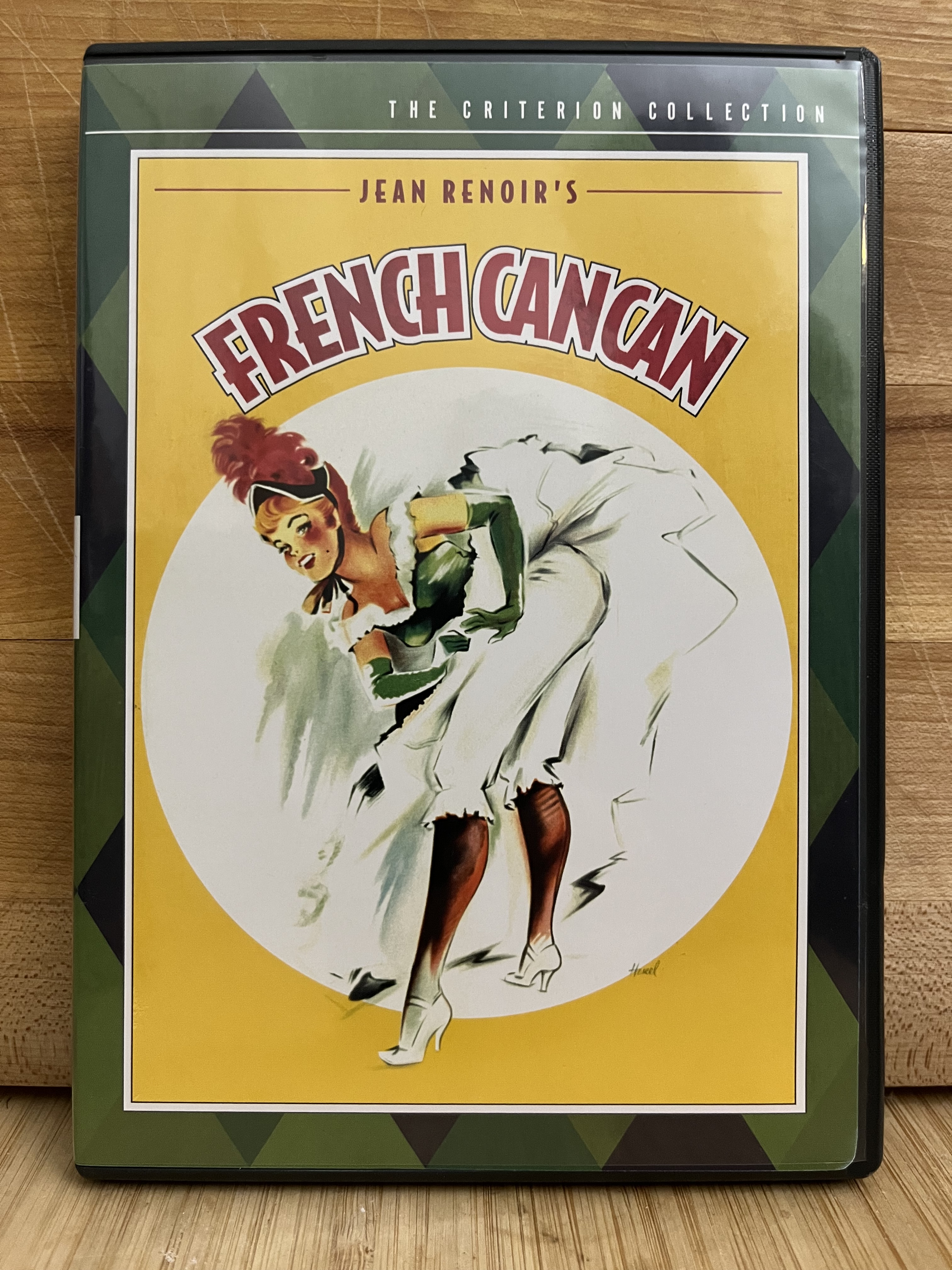
On to the movie! Here’s a picture of my Criterion Collection DVD release:
It can also be streamed via The Criterion Channel with a subscription, and some people (including current Cornell University faculty, staff, and students) may have access to it through Kanopy via a license paid for by their local academic or public library as well.
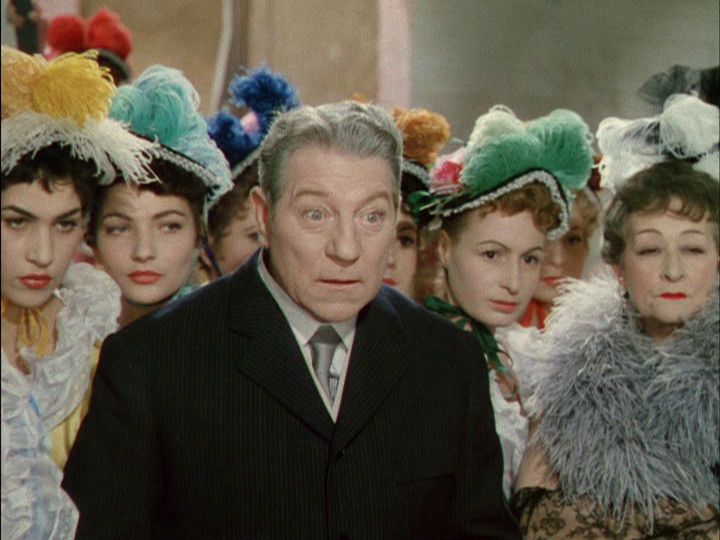
Although French Cancan begins with a notice that “this story and its characters are imaginary” and should therefore “not be seen to represent real people or events,” it’s transparently a fictionalized account of the Moulin Rouge’s founding. One night while slumming in Montmarte with rich patrons of his night club The Chinese Screen and his mistress/biggest star Lola de Castro de la Fuente de Extremadura aka “La Belle Abbesse” (María Félix), Jean Gabin’s Henri Danglard is struck by inspiration. As he explains later to his M.C. Casimir “le Serpentin” (Philippe Clay), “do you know what I’ll give them? A taste of the low life for millionaires. Adventure in comfort. Garden tables, the best champagne, great numbers by the finest artistes. The bourgeois will be thrilled to mix with our girls without fear of disease or getting knifed.”
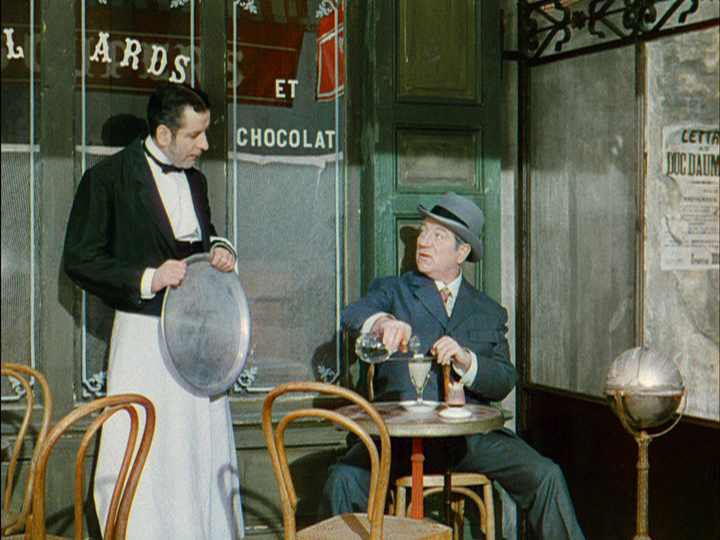
He buys a dance hall called The White Queen with “drafts, promises, a lot of hot air,” and with the help of an investor named Baron Walter (Jean-Roger Caussimon) who knowingly shares Lola with him (“the precarious modern world judges by appearance only–respect them, and I’ll remain your supporter,” he tells Danglard) sets about transforming it. First, though, he returns to Montmarte, orders an absinthe, and waits for a young lady named Nini (Françoise Arnoul) who caught his eye on that fateful night out to wander by.
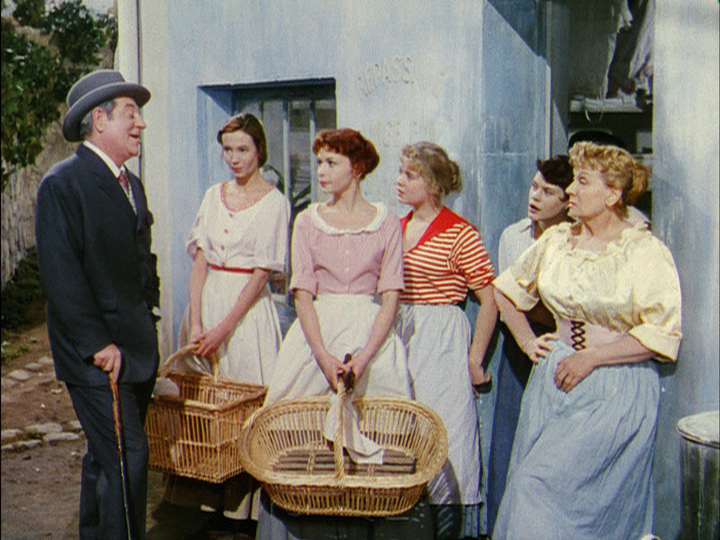
When she finally appears he follows her home and negotiates with her mother to secure her services in a scene which Janet Bergstrom has described as her “virtually sell[ing]” her daughter to Danglard:
He then recruits an old friend named Madame Guibole (Lydia Johnson) to teach Nini and a number of other girls a now-passé dance that she was famous for back in the day called the cancan, which he has the bright idea to revive as the “French Cancan” to tap into a fad for English names. The plan is almost torpedoed when a Russian prince (Giani Esposito) infatuated with Nini draws Lola’s attention to her presence at a government official’s visit to the Moulin Rouge construction site by conspicuously kissing her hand as the “Marseillaise” plays, making Lola jealous because she immediately realizes that Danglard has brought her there:
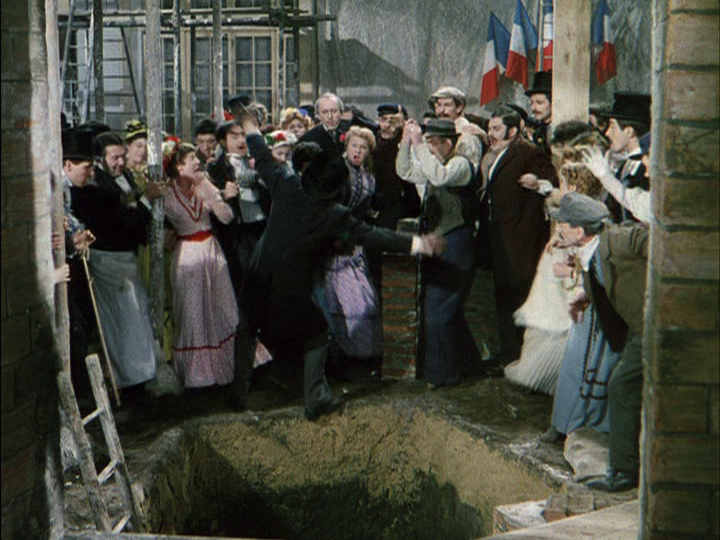
Lola kicks Nini in the shin, causing a brawl to break out. As Danglard attends to her, a troublemaker eggs Nini’s lover Paulo (Franco Pastorino) on by observing that “the boss is lifting your girl’s skirts,” which ultimately results in him pushing Danglard into a pit:
Baron Walter, enraged at the breach of Danglard’s verbal contract with him, withdraws his backing, but the prince steps in. Alas, he promptly tries to commit suicide when Lola makes him aware of the fact that Nini is love with Danglard following a remarkable scene in which he appears to sit motionless in a chair for many hours to confirm that they are indeed an item:
Luckily he bungles the attempt. He asks Nini for a “make-believe memory” that he can dazzle the younger generations with upon his return to Russia and they spend the evening touring all the Parisian hot spots in a sequence that features contemporary actors playing the biggest stars of the Belle Epoque, including Édith Piaf as Eugénie Buffet:
Afterward he presents Nini with the deeds to the Moulin Rouge in Danglard’s name (“it’s simplest”), but there’s one more rapids to navigate before the show can go on: Nini spies Danglard kissing his newest discovery Esther Georges (Anna Amendola) backstage on opening night and refuses to dance unless she can have him all to herself. A fiery speech by Danglard takes care of that, though:
And per David Cairns a contrite Nini wearing a “camouflaged dress” is finally “absorbed into the theatre”:
Bergstrom can’t forgive Renoir for what she calls French Cancan‘s “retrograde representation of male-female relationships,” a criticism which admittedly rings true when he and editor Borys Lewis place shots of Guibole leading Nini and her fellow dancers through a rehearsal next to one of pianist Oscar (Gaston Gabaroche) watering flowers:
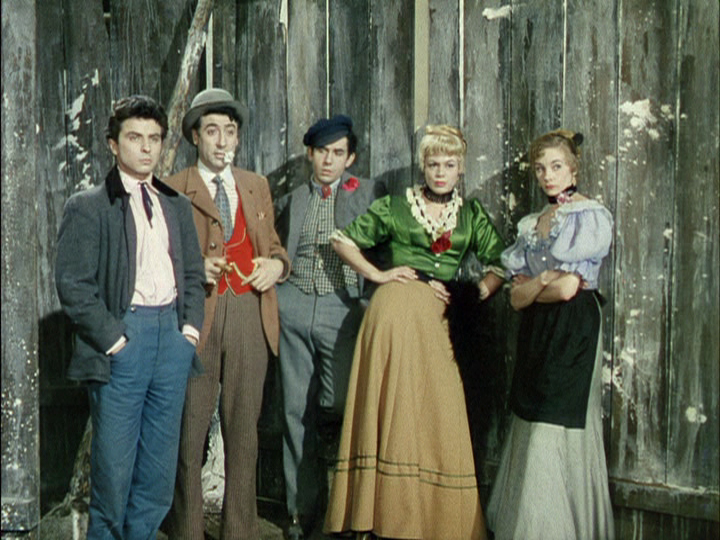
But the film also contains multiple floods of women, which feels very much like an explicit acknowledgement that this is just a conceit–after all, dams break and, in the immortal words of Poison, “every rose has its thorns.” Here’s the first:
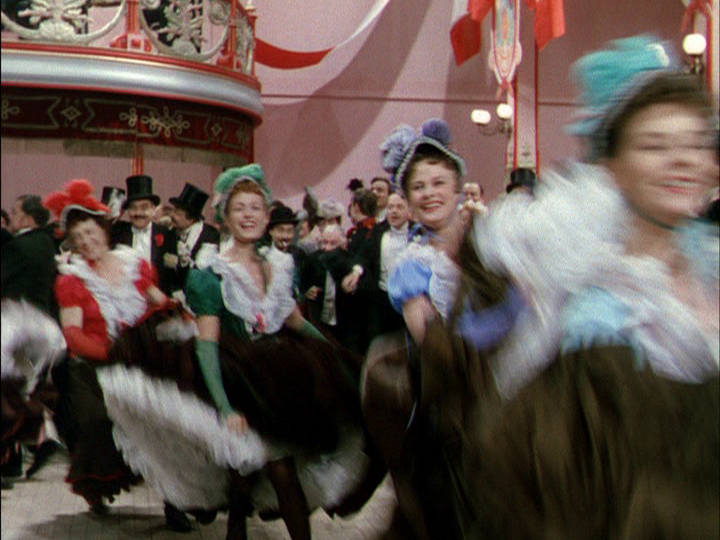
With the second being the nine-minute-long cancan that concludes the film which begins with dancers dropping from the ceiling, bursting through a poster on the wall, and leaping off a balcony:
And then explodes into a celebration of color and motion which is not merely the best thing about this film, but one of the most joyously spectacular sequences in all of cinema:
André Bazin writes beautifully about two other moments in his monograph on the director, which he offers in support of the statement that “Renoir’s is the only film I have ever seen which is as successful as the painting which inspired it in evoking the internal density of the visual universe and the necessity of appearances that are the foundation of any pictorial masterpiece.” First is the moment Danglard spots Esther from across an alleyway. “The decor, the colors, the subject, the actress, everything suggests a rather free evocation of Auguste Renoir, or perhaps even more of Degas. The woman bustles about in the half shadow of the room, then turning about, leans out the window to shake out her dustcloth. The cloth is bright yellow. It flutters an instant and disappears. Clearly this shot, which is essentially pictorial, was conceived and composed around the brief appearance of this splash of yellow.”
Next is this description of the young woman bathing in the background of the scene when Danglard takes Nini to Guibole’s for the first time. “She appears in the background through a half-open door, which she finally closes with a rather nonchalant modesty. This could well have been a subject dear to Auguste Renoir or to Degas. But the real affinity with the painters does not lie in this specific reference. It is a much more startling phenomenon: the fact that for the first time in the cinema the nude is not erotic but aesthetic.”
For Bazin moments like these combine to create the impression of “a painting which exists in time and has an interior development,” a sentiment echoed by his contemporary Pierre Leprohon, who says in his book Jean Renoir: An Investigation into His Films and Philosophy that “Renoir was not composing color canvases on the screen; he never forgot the essence of cinema, which is motion” and adds, “that is why French Cancan can be considered a major step in color films. It develops painting further without imitating it.”
Dave Kehr observes in his book When Movies Mattered: Reviews from a Transformative Decade that while Renoir frequently took actors as his subject, thisis the first and only time he decided to make a film about a director, and that he shared more in common with his protagonist than just their common profession:
There is, obviously, a lot of Renoir in Danglard–Danglard’s work in creating his show exactly parallels Renoir’s work in creating his film, and Danglard’s revisionist cancan finds its aesthetic equivalent in the artificial Paris Renoir has fashioned to contain it. And we can assume that there is a lot of Danglard in Renoir, particularly his fashion of handling his performers, accepting their eccentricities along with their talents, and trying to bring out their most profoundly individual abilities. But direction is the most mysterious of creative processes, and Renoir knows to respect the mystery. What does Danglard do, exactly? Not much that we can really see. For the most part, he is simply there, observing intently and saying nothing. And yet the vision that emerges is Danglard’s vision, developed through an almost imperceptible series of choices and in flections. It is Danglard’s sublime passivity that makes French Cancan Renoir’s most direct and penetrating statement of the art of the movies. The director is the medium between the world and the image: he takes from people the reality that belongs to them and then sells it back in heightened form.
Cairns sees another statement about cinema in the parade of shots of people watching the climactic cancan which is positioned near the end of it.
“These are curtain calls for all the bit-players and leads in the film,” he argues, “and also a kind of farewell to an era, and also something else — a celebration of the audience’s role in the entertainment, and therefore a warm tip of the hat to us, watching on a TV or computer sixty years after Renoir made the film, a hundred and twenty seven years after the events depicted in the film failed to happen in as elegant and colourful a manner in reality.” This would, of course, make the stumbling drunk’s bow in French Cancan‘s final image ours:
Which as the author of a series called “Drink & a Movie” I very much appreciate. So here’s to you and here’s to me!
Cheers!
All original photographs in this post are by Marion Penning, aka My Loving Wife.Links to all of the entries in this series can be found here.
What I’m Seeing This Week: I’ll be in San Diego for the American Library Association’s annual conference until Tuesday. I always try to make space on my schedule for a visit to a local arthouse theater, and although it feels a bit odd to travel to the whole other end of the country to watch a movie directed by someone (Erica Tremblay) who lives in Ithaca, the most appealing option playing at the Digital Gym Cinema while I’m there is Fancy Dance, and I’m just gonna roll with it. I also intend to see The Cinema Within at the conference itself when it screens as part of the Now Showing @ ALA Film Program.
Also in Theaters:Furiosa: A Mad Max Saga holds on to the title of Best New Movie in Ithaca That I’ve Already Seen for one more week, but it’s down to one screening per day at the Regal Ithaca Mall, so its reign is probably coming to an end. Inside Out 2, which is there as well, unsurprisingly doesn’t live up to its predecessor, but none the less makes for a good time out with the whole family. The reviews for Janet Planet, which opens at Cinemapolis today, are absolutely glowing, so that’s the new release I’m most looking forward to seeing; as a devotee of Top Chef I’m instinctively wary of “trios,” but I’m hoping to catch director Yorgos Lanthimos’s latest Kinds of Kindness there before it closes as well. This may mean I’m waiting for The Bikeriders (Cinemapolis and the Regal), Ghostlight (just Cinemapolis), and Thelma (ditto) to arrive on a streaming video platform, but they’re all on my list as well. On the repertory front your best bet is definitely 2001: A Space Odyssey, which kicks off a “Staff Picks” series at Cinemapolis on Wednesday. You can also see the imaginative 2018 animated film Spider-Man: Into the Spider-Verse at the Regal on Tuesday and Wednesday.
Home Video: I’m apprehensive about Jury Prize recipient Emilia Pérez based on what I’ve heard about it, but I’m going to close out my series on 2024 Cannes award winners with director Jacques Audiard anyway because his 2005 film The Beat That My Heart Skipped, a brilliant riff on writer-director James Toback’s Fingers, was one of my very favorites of that movie year. It doesn’t appear to be available on any streaming video platforms, but you can pick up a DVD copy on Amazon for barely more than the price of a rental like I just did upon realizing that it wasn’t already part of my physical media collection. Audiard is probably best known for his follow-up effort A Prophet, which is available for rental from Apple TV+ and Prime Video. Finally, his three most recent films are all available to stream for free with subscriptions or on ad-supported platforms. In reverse order: Paris, 13th District is on Hulu; The Sisters Brothers is on Tubi; and Dheepan is on The Criterion Channel.
Previous “Ithaca Film Journal” posts canbe found here.

























 The Prodigal Cinephile