What I’m Seeing This Week: I still haven’t made it to a screening of Seven Samurai at Cinemapolis, so that remains next up for next up for me.
Also in Theaters: My top new movie recommendation is still Ithaca’s own My First Film, which ends its regular run at Cinemapolis tonight, but returns for a special screening on Tuesday that will be followed by a moderated discussion featuring director Zia Anger, co-writer Billy Feldman, and DP Ashley Connor. Other 2024 releases I enjoyed include Between the Temples, which closes at Cinemapolis tonight, and Sing Sing, which will be there at least through the end of the week. The real action this week is special events and re-releases, though. To start with the former, the Reproductive Rights Film Festival runs tonight through Sunday at Cinemapolis and features five free screenings each followed by a “talkback” session. You can also attend the world premiere of a film called Possible Landscapes at Cornell Cinema on Tuesday. Finally, there’s a free screening of the documentary The Berrigans: Devout and Dangerous followed by a talkback with subject Frida Berrigan at Cinemapolis on Wednesday. On the repertory front, the highlight is definitely Seven Samurai, but I wouldn’t blame you if you went with Whiplash, which is at both Cinemapolis and the Regal Ithaca Mall and which features an outstanding Oscar-winning performance by J.K. Simmons and one of the best endings of the past decade, instead. You can also see The Matrix at the Regal tonight and on Sunday, and Cornell Cinema’s solid lineup includes The Manchurian Candidate (tomorrow), Fight Club (tomorrow), and Roman Holiday (Sunday).
Home Video: If you can’t make it to My First Film today or Tuesday, fear not! It’s already available on Mubi.
Previous “Ithaca Film Journal” posts can be found here.
What I’m Seeing This Week: I audibled to My First Film last Friday to catch one of the screenings at Cinemapolis introduced by director Zia Anger, which means Sing Sing (also at Cinemapolis) is still next up for me. I’m super excited to see Seven Samurai there as well since I think it’s literally been decades since I last watched it, so I’m going to try to make this a two movie week.
Also in Theaters:My First Choice is my top recommendation this week. It is instantly my favorite movie about/set in Ithaca–I especially appreciate the way it connects to our surprisingly rich cinema heritage through the inclusion of clips and reuse of locations from If Women Only Knew, which was shot here more than a century ago–and also contains one of the boldest and original filmic depiction of abortion I’ve ever seen. I also enjoyed Between the Temples, which remains at Cinemapolis, and two movies that continue their impressively long runs at the Regal Ithaca Mall: Inside Out 2 and Twisters. New movies I haven’t yet seen but want to include Beetlejuice Beetlejuice (Cinemapolis and the Regal) and Dìdi (Cinemapolis); I’d love to catch Blink Twice (Regal) before it closes as well, but it’s already down to one showtime per day, so this probably isn’t in the cards. There’s a free screening of the documentary Divisible at Cinemapolis tonight followed by a panel discussion which includes director, producer, and cinematographer Lizzy Barrett. In addition to Seven Samurai, the other standouts in a great week for repertory fare include The Godfather and The Shining, which are at Cinemapolis tomorrow and Saturday respectively as part of the Ithaca is Books festival; Roman Holiday, which is at Cornell Cinema on Saturday; and Blazing Saddles, which is at the Regal on Sunday and Wednesday.
Home Video: One of the highlights of the 2023 Nitrate Picture Show was a film I had never even heard of before despite the fact that it is directed (Fritz Lang), shot (Charles Lang), and scored (Kurt Weill) by a trio of legends, You and Me. The scenes that made the biggest impression on me after my first viewing were the ones in which Sylvia Sidney’s Helen Roberts performs calculations on a blackboard to “prove” that crime doesn’t pay, which reminded me of Hippolyte Girardot’s mathematics in A Christmas Tale, and the tour of late-30s New York City ethnic restaurants that she and new husband (George Raft) embark upon in lieu of a honeymoon. This time it was the expressionistic prison break flashback sequence that stuck out as the most obvious example of its genius. Anyway, the film is now available on the Criterion Channel as part of their “Rebels at the Typewriter: Women Screenwriters of the 1930s” collection and you should definitely watch it!
Previous “Ithaca Film Journal” posts canbe found here.
Although the majority of it technically falls within summer, it’s hardly any wonder that in the United States the month of September is more closely associated with fall when it marks the beginning of the school year, return of football, and appearance of pumpkin beer on grocery store endcaps. This makes the Autumn Winds created by St. Louis bartender Matt Seiter and collected in Gary Regan’s The Joy of Mixology a perfect cocktail to highlight right now because it uses sage, which I’ll always associate with Thanksgiving stuffing no matter how many times I combine it with ingredients like peaches and tomatoes, to whisper of the season to come while still offering up enough lemony brightness to make it a great porch sipper. Here’s how you make it:
Make the Brown Butter Sage liqueur by browning 10 tablespoons of butter, stirring constantly, over medium heat. Remove from heat, add 3/4 oz. lemon juice and a chiffonade of 12-15 sage leaves, and rest for 10 minutes. Add 1 cup simple syrup and 12 ozs. vodka (Tito’s) and allow to stand at room temperature for 4-6 hours. Refrigerate overnight, skim solids from the top of the mixture, and strain into a bottle. Make the cocktail by shaking all ingredients with ice, straining into a chilled champagne coupe, and garnishing with a spanked fresh sage leaf.
If you’ve never spanked a sage leaf, it’s exactly what it sounds like, and you don’t want to skip this step as it releases odors that are essential to the way the drink works. Regan mentions that a small amount of butter solids will remain in the liqueur even after straining, which is true, and that it’s best to shake the bottle before mixing to make sure you get all of that flavor. Seiter calls for Ransom Old Tom, the first gin I ever fell in love with, in this Feast Magazine article, and I’m sure it works great, especially in late September when it actually starts to get cold! But I like Citadelle because it resonates not just with baking spices in the liqueur, but also the lemon, plus it’s an additional (along with the Bénédictine) French connection to this month’s movie. Speaking of which:
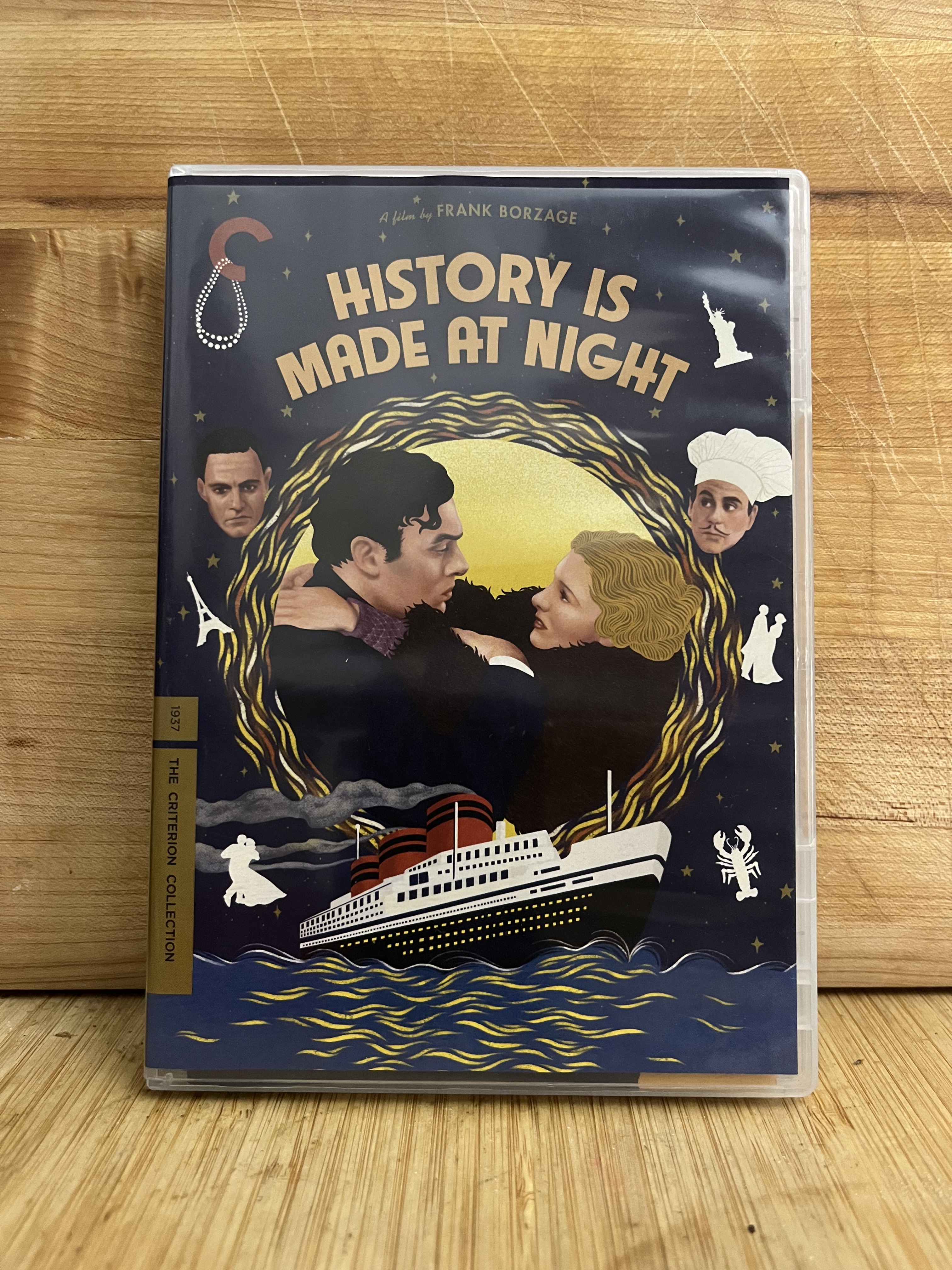
History Is Made at Night contains one of the most deliriously happy endings in cinema history, but even more than most movies made in the 1930s, its atmosphere is redolent with signs of World War II. Here’s a picture of my Criterion Collection DVD release:
It can also be streamed via The Criterion Channel with a subscription, and some people (including current Cornell University faculty, staff, and students) may have access to it through Kanopy via a license paid for by their local academic or public library as well.
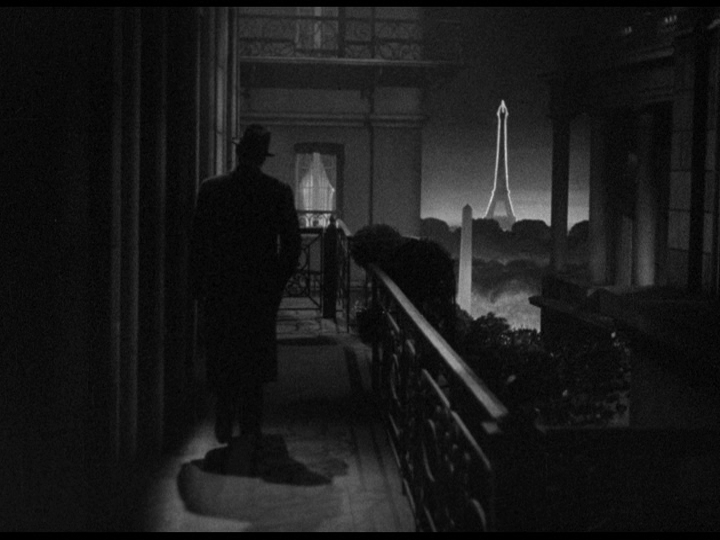
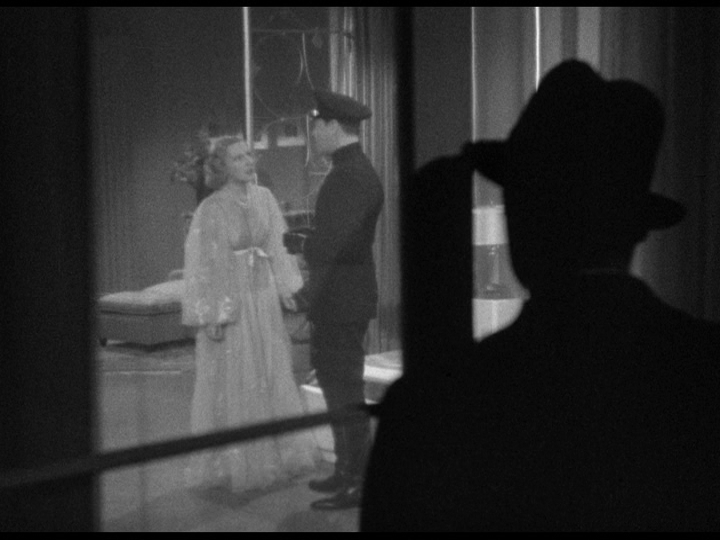
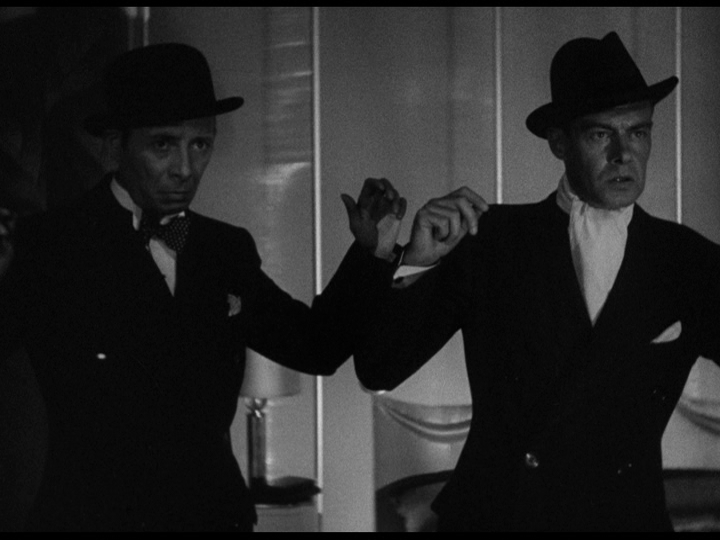
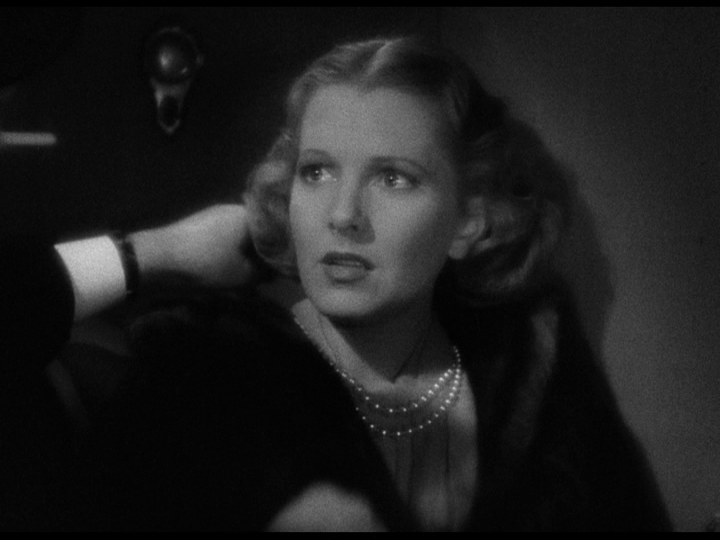
Andrew Sarris famously argued in The American Cinema: Directors and Directions 1929-1968 that “History Is Made at Night is not only the most romantic title in the history of cinema but also a profound expression of [director Frank] Borzage’s commitment to love over probability.” The specific paramours in this case are Charles Boyer’s Paul Dumond and Jean Arthur’s Irene Vail, who as the film begins is attempting to leave her husband, Colin Clive’s sadistic and irrationally jealous shipping magnate Bruce Vail. Unwilling to accept the possibility that she hasn’t been cheating on him, but unable to prove that she has, he devises a scheme to “catch” her in his chauffeur Michael’s (Ivan Lebedeff) arms in order to prevent the divorce from becoming final (because she will no longer be “blameless” in the eyes of the law). Unfortunately for Vail, Paul just happens to be putting a drunken companion to bed (“you can’t drink all of the wine in Paris in one night–it’s practically impossible!”) next door from the apartment where the tawdry scene will play out and hears something:
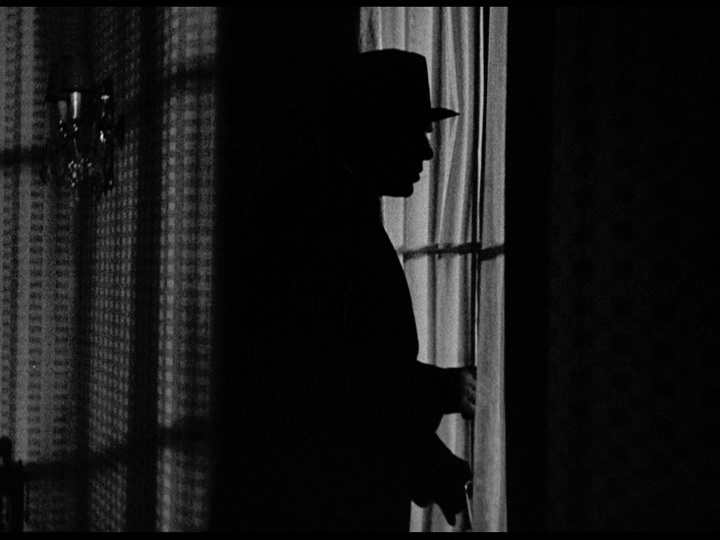
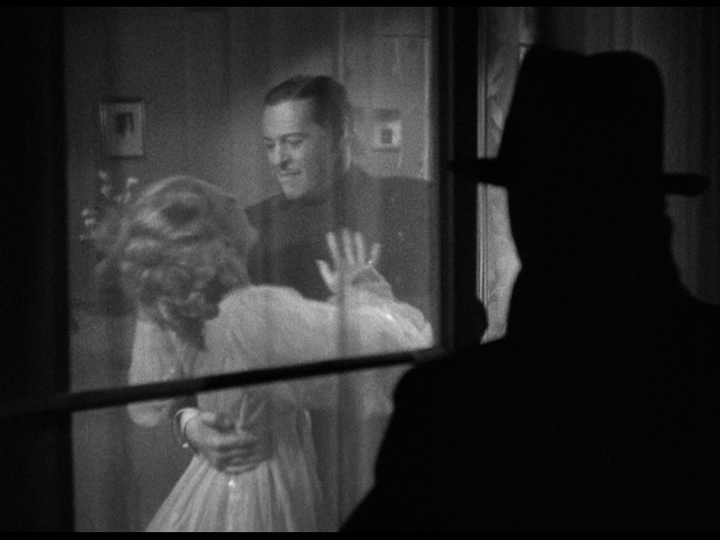
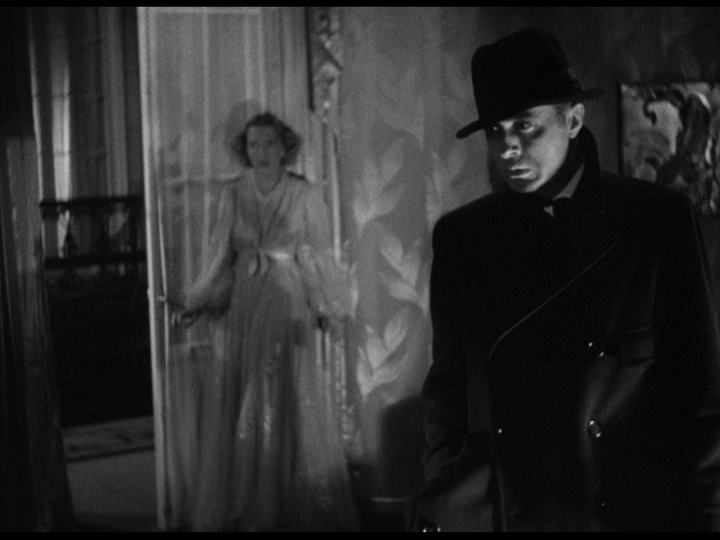
He creeps out onto the balcony and peers through the neighboring window:
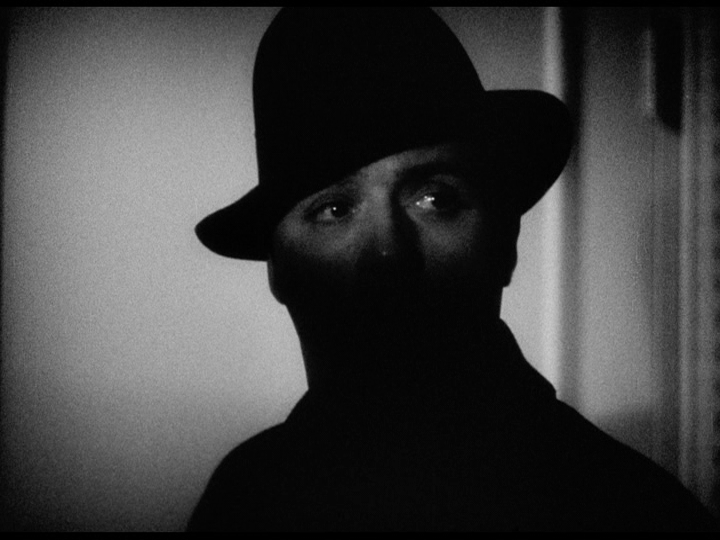
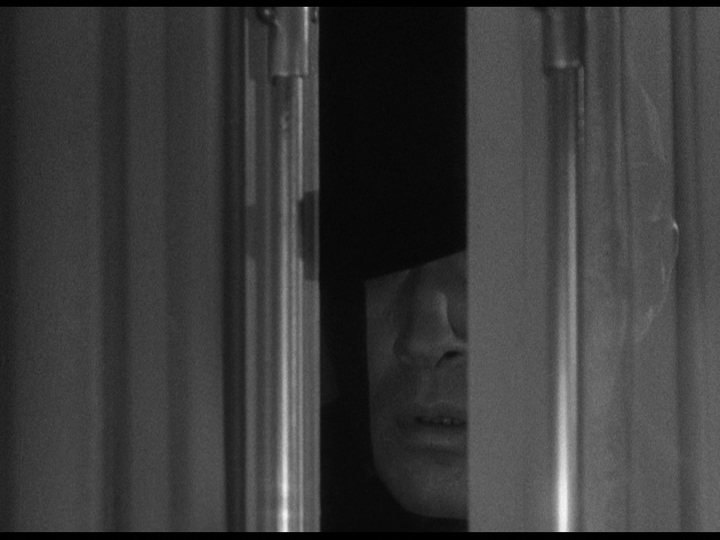
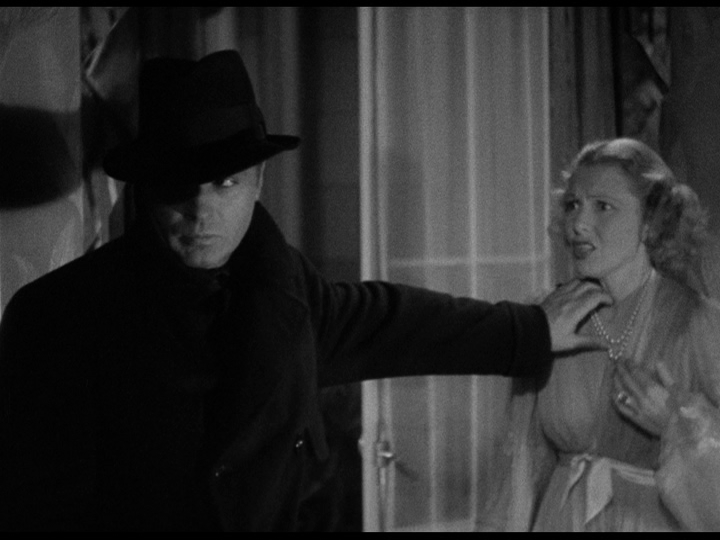
When Michael begins to force himself on Irene, Paul makes a split-second decision to pose as a robber. He pulls his hat down over his eyes:
Climbs inside:
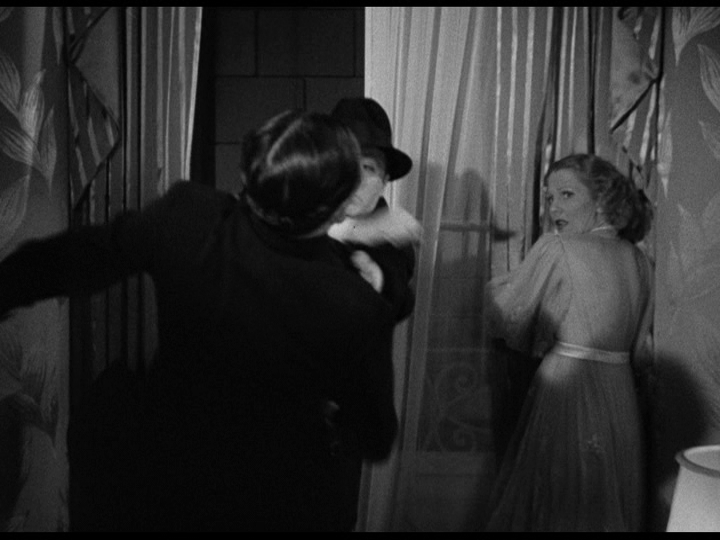
And lays Michael out with what Nick Pinkerton amusingly characterizes as “one of those right-on-the-chin one-punch knockout swings so prevalent in Golden Age Hollywood filmmaking”:
Just then Vail and his lawyer Norton (George Meeker) come rushing in. Paul holds them with a pretend gun (the old finger in the coat pocket trick):
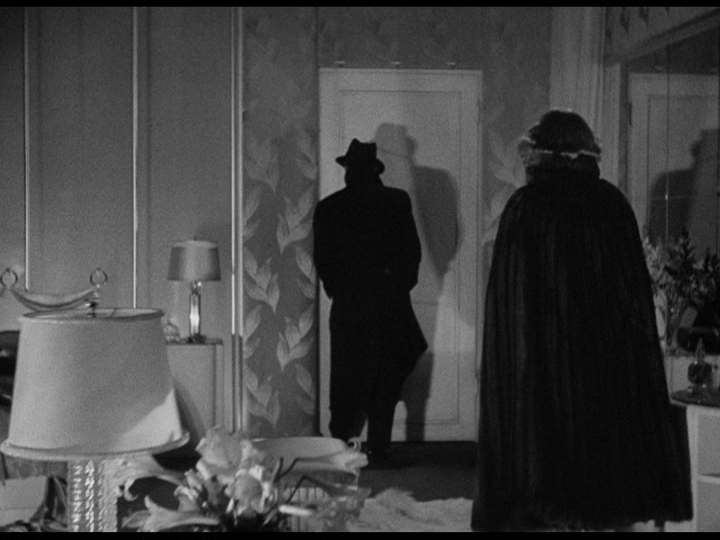
“Steals” Irene’s pearl necklace and other jewelry as they look on and then orders her to get her coat:
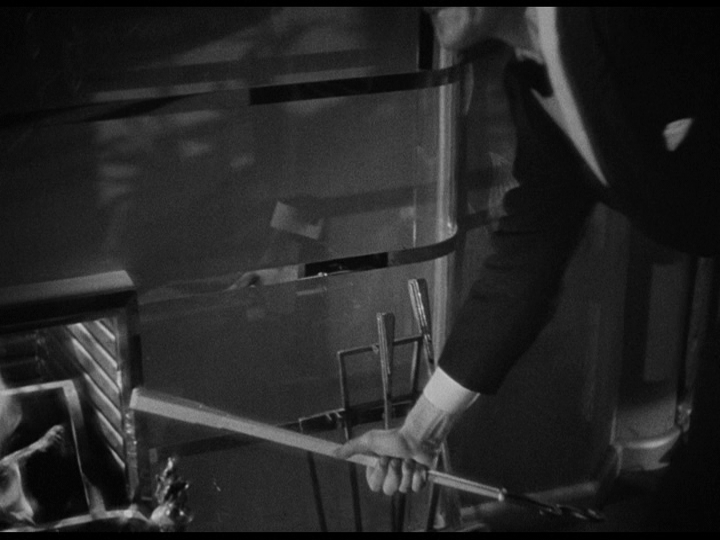
Finally, Paul locks Vail and his lawyer in the closet and he and Irene make their escape:
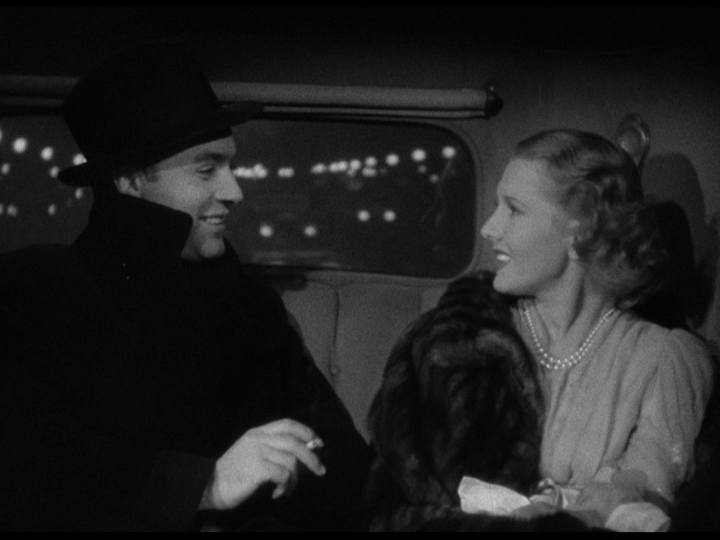
Cue the film’s first of many major tonal shifts. As described by Hervé Dumont in his book Frank Borzage: The Life and Films of a Hollywood Romantic, “after this busy, Dashiell Hammett-like aperitif, regulated like a ballet and photographed in the style of film noir (Gregg Toland), we go into an English waltz.” Once they are alone together in a cab, Paul first offers a puzzled Irene a cigarette, then returns her necklace and jewels:
He explains that he is not, in fact, a thief and merely wanted to help her out of a sticky situation, to which she says, “all I can seem to say is ‘oh!'”
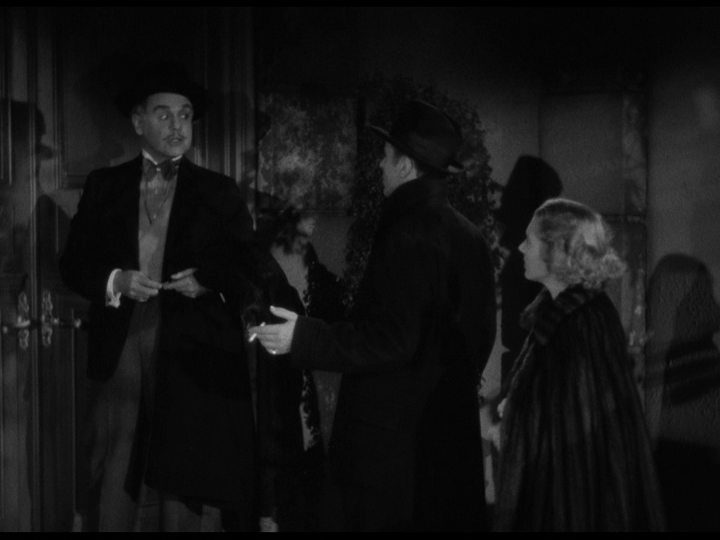
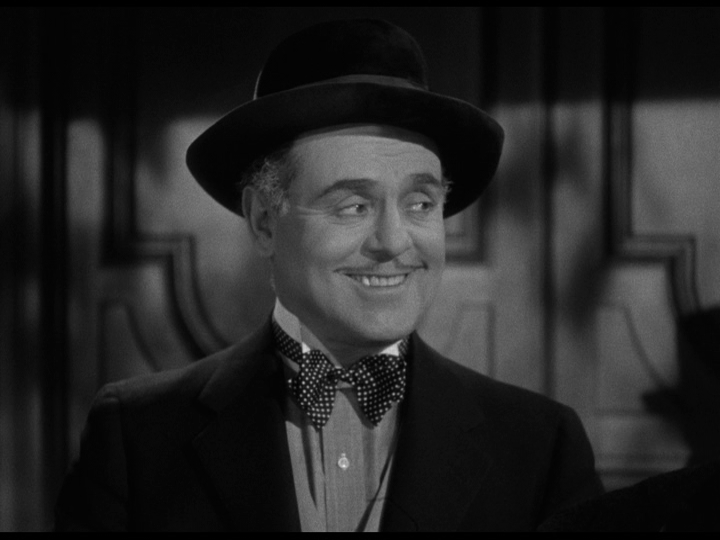
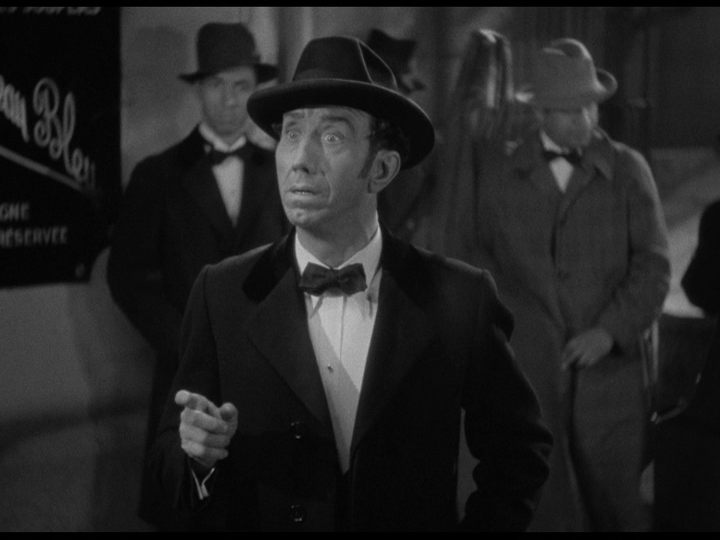
Paul proposes dinner and instructs the driver to head to an establishment called the Château Bleu when she accepts. Unfortunately, the neon sign out front goes out right as they arrive. This doesn’t deter Paul, who addresses the gentleman locking up (Leo Carrillo): “Cesare, you are not closing!” He replies, “no, we are not closing–we are closed!”
But Paul appears to know more about this man than just his name, and by playing to his vanity (“everyone here knows that you are the greatest chef in Paris, that is no news, but would you believe that you were that famous in America?”) convinces him to reopen the kitchen for a private engagement:
The musicians and their leader (George Davis) who preceded Cesare out the door are brought back even more easily by the mere mention of a champagne party:
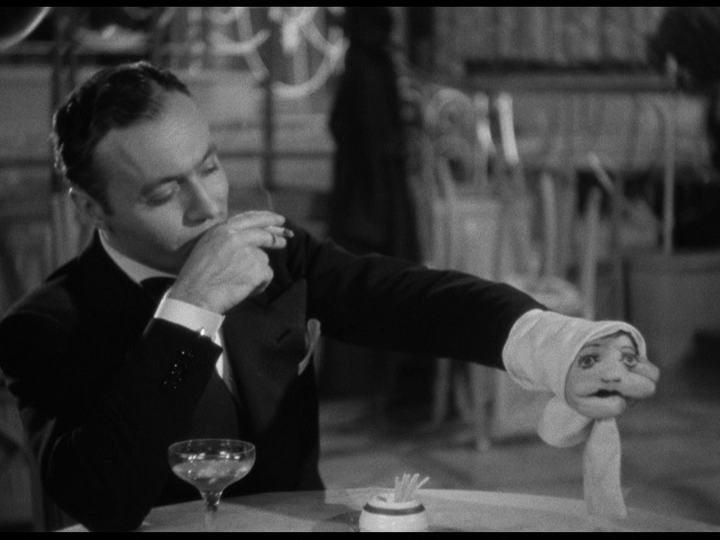
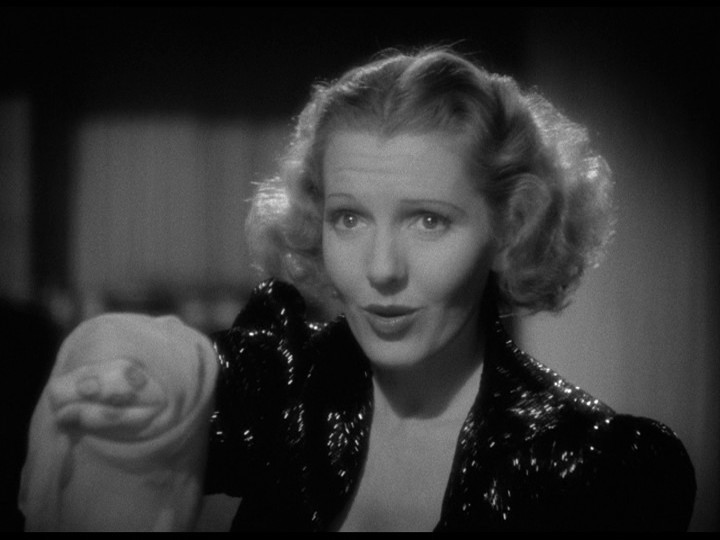
And with that what Dumont calls “the paradigm of sequence of seduction” is off and running. Paul orders lobster cardinale (which according to Saveur was invented in Baltimore, where I spent most of the 2010s, by the way) à laCesare and salad chiffonnade. Then he draws a face on his hand, as one does, and introduces Irene to “the woman he lives with,” Coco:
I admit to feeling perplexed by this particular decision the first few times I watched History, but part of the shtick is that Coco doesn’t have a filter, which gives Paul a way to let Irene know that he is single and ask her what the hell precipitated the scene in her apartment earlier without technically violating societal norms. Dan Callahan further observes that when she reappears toward the end of the film, “Borzage uses this comic explosion to keep us off balance, unguarded, making us laugh so that when the lovers are reminded of their problems, we feel their pain much more deeply.”
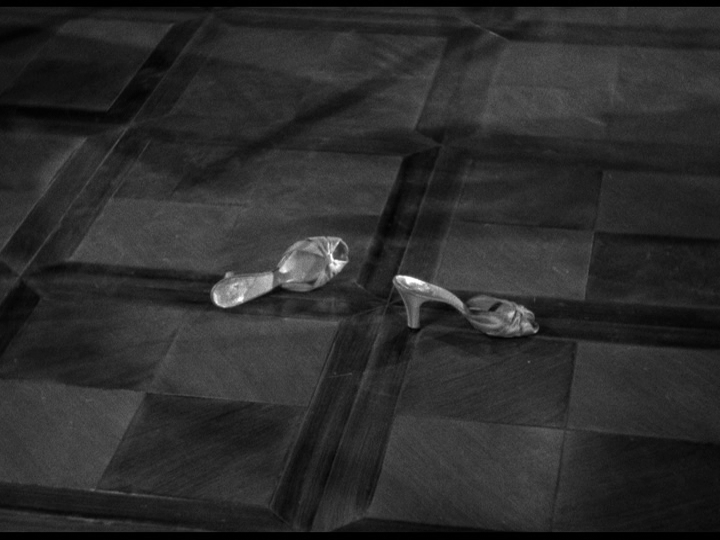
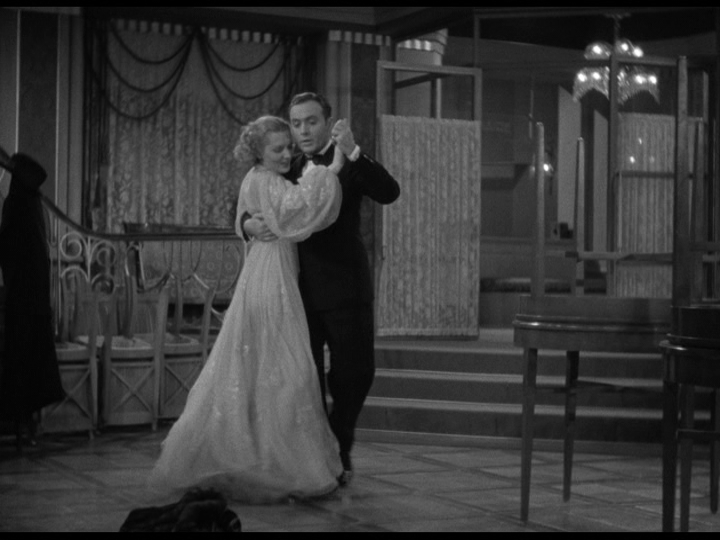
Anyway, Paul and Irene tell Cesare to keep their food warm, much to his chagrin, and commence to dance until dawn, with Irene discarding clothing all the while. To again quote Dumont:
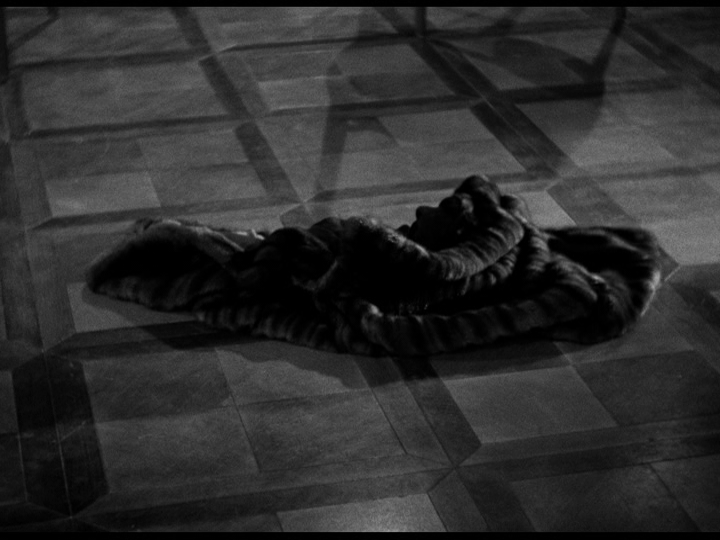
The camera frames Irene’s shoes, pans to her mink stole lying on the floor, and finally insistently follows the languorous steps of the dancers. The polysemy of images makes this erotic striptease–Irene is only wearing a long silk negligee–the outward expression of confidence and progressive abandonment (without saying a word, she says more to aul than she has ever said to her husband), but also one of detachment, of breaking off: jewels, shoes, and mink are signs of Bruce Vail’s property.
But although to them the night they have passed together qualifies as the year that Paul must wait as a gentleman before its in good taste for him to utter the one the “only thing important enough to say to [Irene] tonight,” they soon discover that they are not yet free to be together. Irene returns home, she thinks just to pack up her belongings, to find Vail waiting for her. He leads her and the police to believe that Paul’s blow killed Michael, when in reality he finished the poor guy off himself:
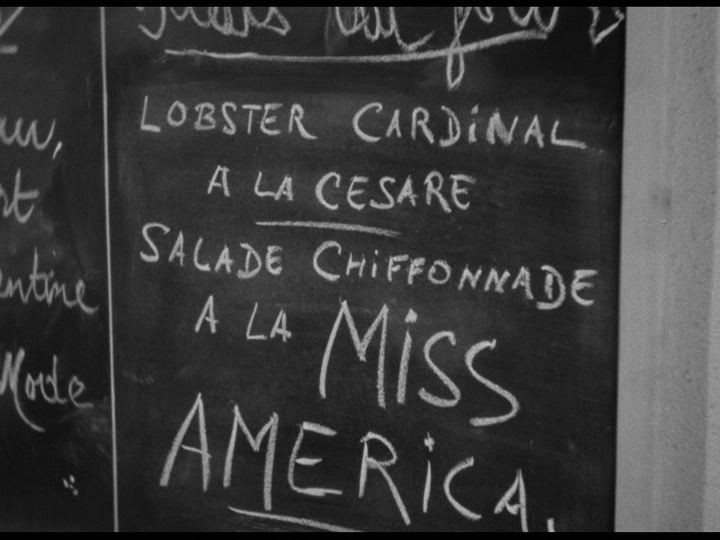
Then tells her that unless she joins him on a trans-Atlantic steamer that very afternoon, he’ll commit all of his resources to “finding the murderer.” Cut to Paul at the Château Bleu, where–surprise!–he is the head waiter. He recommends a French 75 to the man he put to bed the previous evening as a hangover cure, then writes the special du jour on a blackboard:
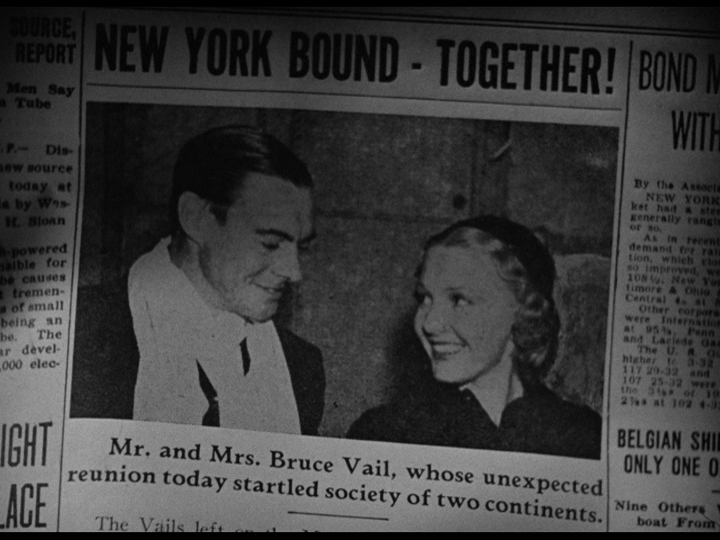
He’s expecting Irene to join him at five o’clock, and when his shift is over buys a newspaper to read while he waits. That’s when he sees this headline:
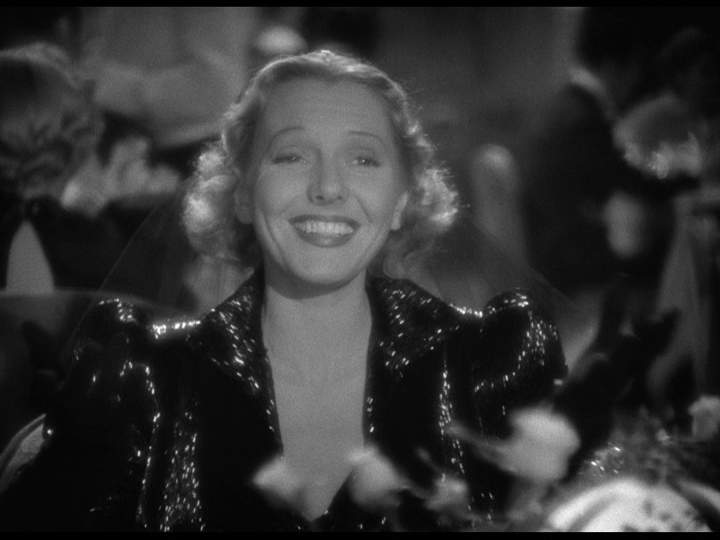
He resolves to follow Irene to New York, but locating her proves to be more challenging than he expected, because duh. Luckily Cesare decided to join him, and the two hatch a scheme to convince the owner of a restaurant called Victor’s to hire them to turn it into the hottest place in the city, which they do. Finally, one night Irene shows up in a dress that I’d *love* to see sparkle on a good nitrate print and claims the table he has ordered the staff to keep empty for her every night.
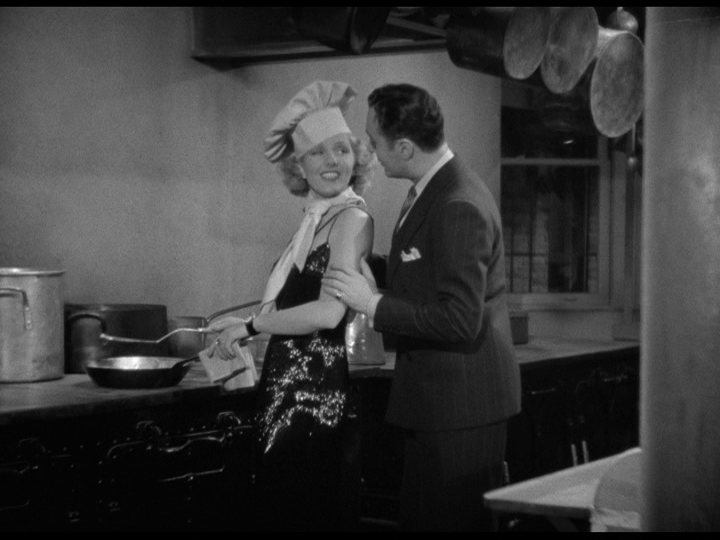
Sure, she’s with Vail, but yada yada yada the next thing you know she’s showing Paul how to make “eggs à la Kansas” the following morning:
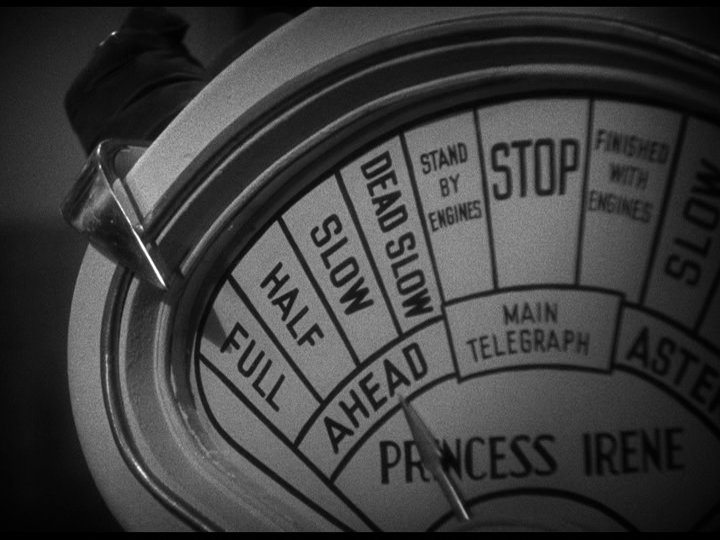
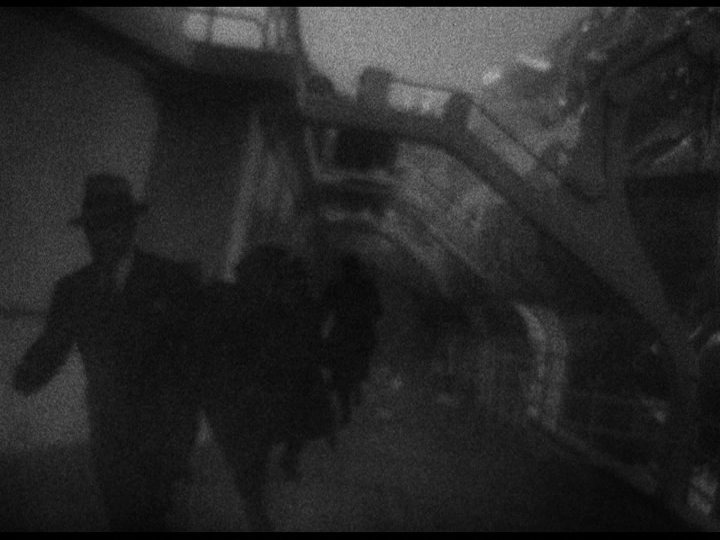
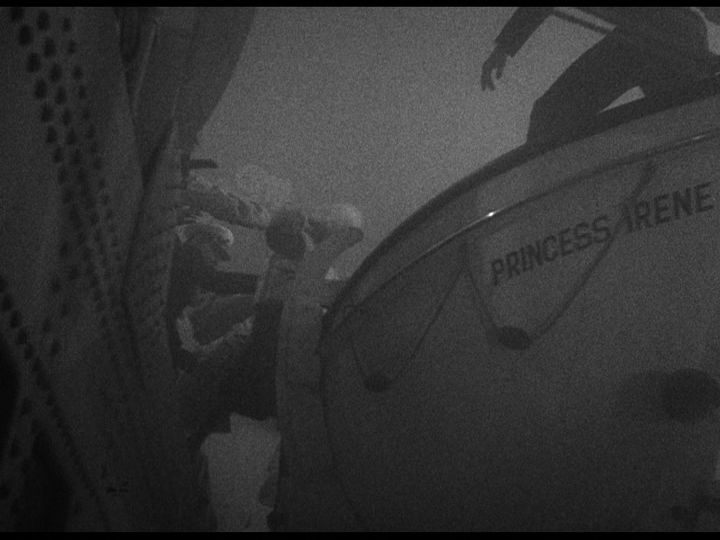
And that, two-thirds of the way through History Is Made at Night, is when things *really* start to get interesting. Because, as noted by Brian Darr, screenwriters Gene Towne and Graham Baker appear to have intentionally capitalized on the 25th anniversary of the sinking of the Titanic by ending the movie with a ship hitting an iceberg! There is, as yet, no hint of this in the breakfast scene depicted above, but on a postprandial stroll Irene lets it slip that the reason she and Vail were about to depart for Paris on the Hindenburg (seriously) was so that she could testify against the man arrested for the death of Michael. Paul barely hesitates: he and Irene will return to Paris on Vail’s boat the Princess Irene because he cannot allow an innocent man to go to the guillotine for a crime he believes he committed. And suddenly the stakes Borzage are gambling become clear. He is famous for placing obstacles between his romantic leads, but this one is a doozy even by his standards: the barrier is their own human decency. The film’s climax reenacts their star-crossed love affair, but on a bigger canvas to emphasize the universality of their plight. When Vail orders the captain of the Princess Irene to speed forward despite the hazardous conditions his vessel is sailing through, ostensibly to set a record but really to destroy Paul and Irene, he is no longer imperiling just their lives, but thousands of others.
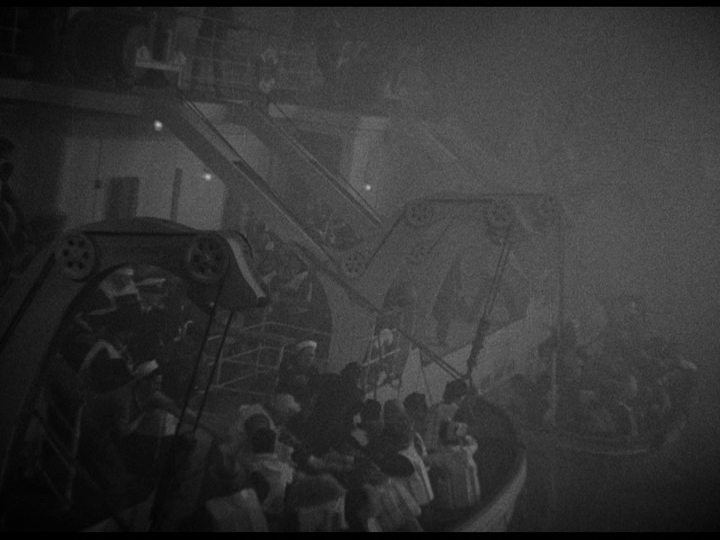
Their union was already on death row, but once the ship starts sinking and its lifeboats fill up, the sentence is extended to hundreds of other couples.
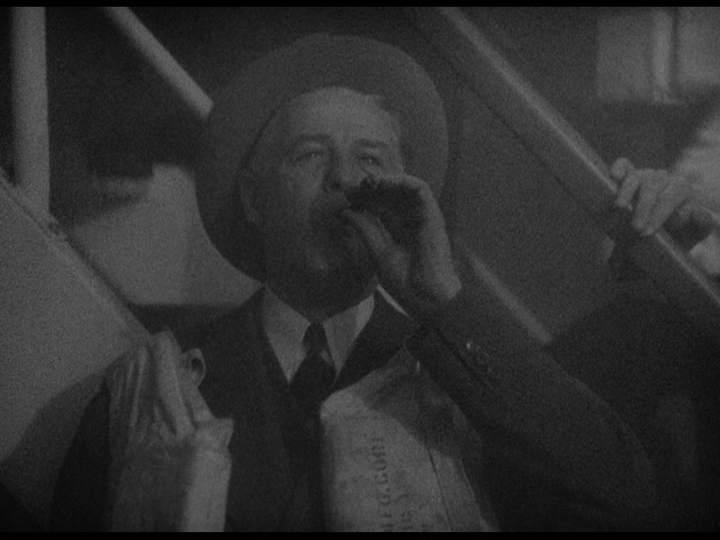
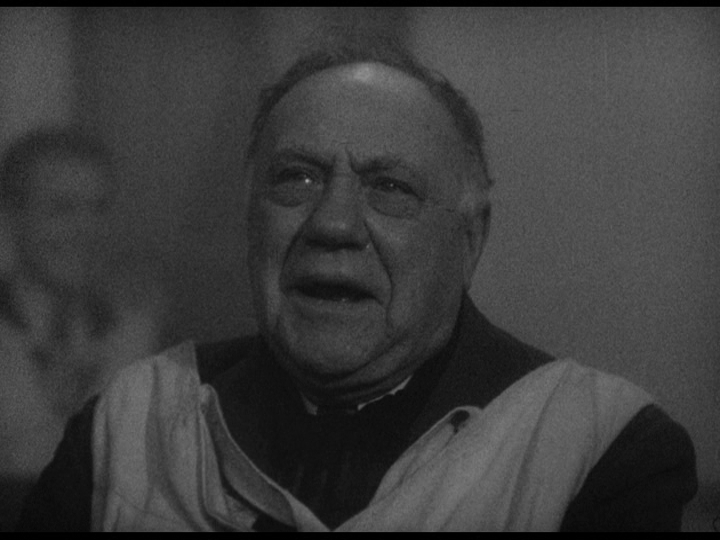
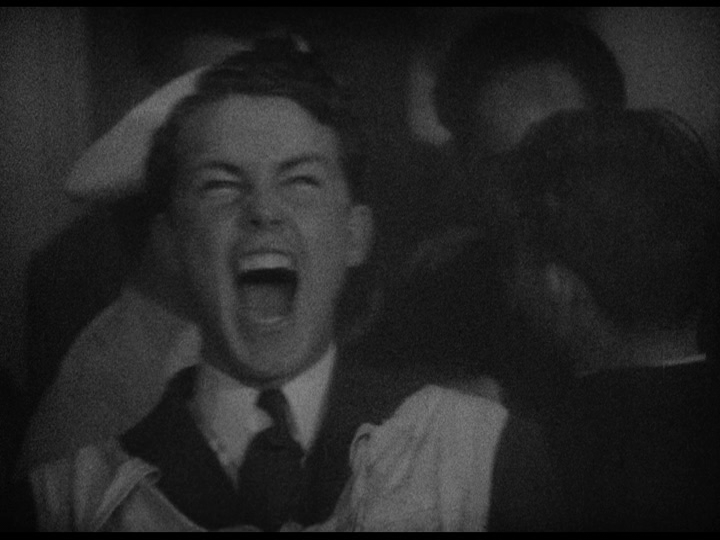
The fundamental injustice of the two soulmates being separated from one another has been compounded, their sacrifice takes on even more heroic dimensions, and the only suitable reward is a miracle: although he and Irene don’t know it yet, Paul has already been acquitted, and a pardon comes through for their fellow passengers at the eleventh hour as well: “attention everyone, attention. The forward bulkheads are holding and the ship is in no danger of sinking,” comes the unexpected announcement. “Help is on the way. The lifeboats are standing by and you will soon be with your families.” Their reactions represent the full range of emotions that Paul and Irene, who for now still think they’ve only been granted a stay of execution, will presumably soon feel:
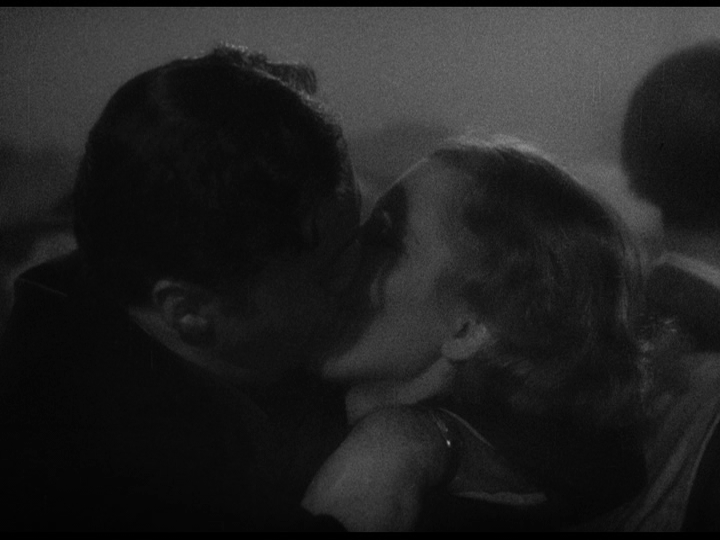
The final image of a kiss promises that our heroes truly will live happily ever after:
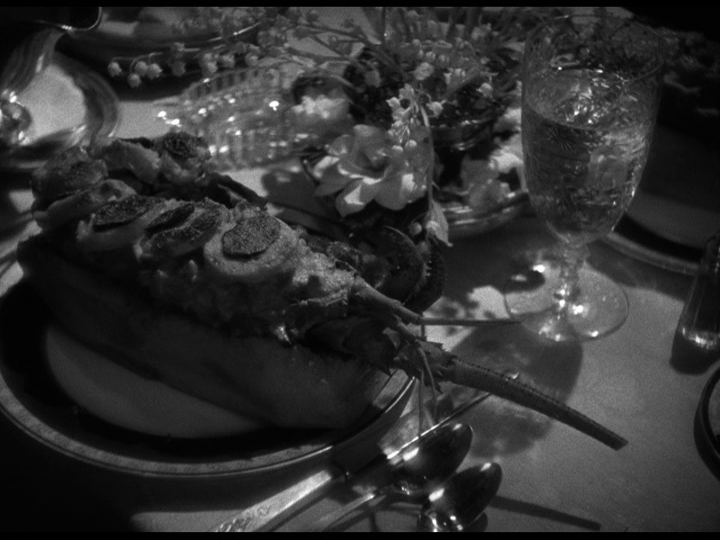
…at least until the Germans march into Paris about three years later. Of course, we could take things one step further and read the suicide of Bruce Vail as anticipating the end of that conflict. This, ultimately, is what connects this month’s movie and drink in my mind: the thing to remember about autumn is that it’s followed by winter, spring, and summer, just as war follows peace follows war. So be merry, pour yourself another glass of champagne, and have another helping of lobster cardinale:
Because the worst of times must by definition eventually get better, and nothing gold can stay.
Cheers!
All original photographs in this post are by Marion Penning, aka My Loving Wife.Links to all of the entries in this series can be found here.
What I’m Seeing This Week: Colman Domingo might be my favorite working American actor, so this is an easy choice: I am going with Sing Sing at Cinemapolis.
Also in Theaters: My favorite new film playing in Ithaca RIGHT NOW is Good One, but its final screening at Cinemapolis is today at 2pm–see it if you can! Starting tomorrow my top recommendation will once again be Between the Temples, which is also at Cinemapolis. I wrote about why last week. Other new films I enjoyed include Inside Out 2 and Twisters, which are at the Regal Ithaca Mall, and Love Lies Bleeding, which is at Cornell Cinema tomorrow night. There are more other movies I’m interested in playing Ithaca theaters than I’ll have time to see, with Beetlejuice Beetlejuice (Cinemapolis and the Regal), Blink Twice (the Regal), and Dìdi (Cinemapolis) topping the list. All three screenings of My First Film, which opens at Cinemapolis tomorrow, will be introduced by director Zia Anger, who is an Ithaca College grad. There will be a free screening of the film Cornell Commits to Confronting Climate Change Activists at Cinemapolis tomorrow followed by a Q&A with local activists and members of the crew. Finally, your best bet for repertory fare is Eyes Wide Shut, which screens at Cornell Cinema on Saturday as part of their “Party Like It’s 1999” series. I still remember walking home alone at night along Route 30 after seeing it at the Wonderland 4 Cinema (RIP) when I was in high school, as on-edge as I ever had been in my entire life. I’d actually prioritize this ahead of any of the new movies I mention above, especially if you’ve never seen it on a big screen before.
Home Video: My favorite movies from the first half of Movie Year 2024 are starting to hit the streaming platforms, which means it’s time to start revisiting them. Do Not Expect Too Much from the End of the World, has actually been available on Mubi with a subscription for awhile, but I finally got around to watching it again the other night and it’s even better on a second viewing. I got so lost in its wildly inventive narrative mélange the first time, for instance, that I failed to appreciate the beautifully textured 16mm black & white photography of what I’m lazily going to call the “main” plot. It also has a wonderfully thought-provoking title. Who or what exactly should we temper our expectations about? Ourselves, because we’re too busy cultivating social media personae to ever stand up and do more than just rage against the falling of a 40 hour work week, safe roads, civil liberties, &c? Or are reports of the total subjugation of the proletariat greatly exaggerated so long as there are still people as smart and resourceful as protagonist Angela Raducanu (Ilinca Manolache) around? Neither interpretation is a perfect fit, but I favor an optimistic reading. It also features a killer soundtrack, which some kind soul compiled into a Spotify playlist. Do Not Expect Too Much from the End of the World is now a lock for my top ten list for 2024, so: more to come!
Previous “Ithaca Film Journal” posts canbe found here.
What I’m Seeing This Week: I am going with Good One, which opens at Cinemapolis today.
Also in Theaters: My top recommendation is Between the Temples, which continues its run at both Cinemapolis and the Regal Ithaca Mall. It stars Jason Schwartzman and Carol Kane as student/teacher dyad (each plays both roles at different times) and features my favorite sound effect of Movie Year 2024, a defective door which swings open unbidden with an anguished wail reminiscent of someone being tortured on The Machine from Kane’s The Princess Bride, as well as one of the funniest and most original depictions of a drug experience that I’ve ever seen in a film from any era. I also enjoyed Twisters, Inside Out 2, and Trap, all of which are at the Regal Ithaca Mall, and Love Lies Bleeding, which is at Cornell Cinema on Saturday. New movies which I haven’t seen yet, but hope to before they leave theaters, include Sing Sing(Cinemapolis), Blink Twice (Cinemapolis and the Regal), and Dìdi (Cinemapolis). Finally, your best bets for repertory fare are two blasts from my past: Coraline, which is concludes its run at the Regal tonight, and 10 Things I Hate About You, which plays Cornell Cinema tomorrow. It has been a minute since I last watched either of them, but I enjoyed both when they were originally released 25 and 15 years ago respectively.
Home Video: One of my most gratifying cinephile parent experiences to date has been watching my kids grow up with the work of director Hayao Miyazaki, who *I* didn’t discover until college. When my oldest recently selected Howl’s Moving Castle as her Family (née Friday) Movie Night selection, I assumed that I had already seen it, but it quickly became apparent that I was wrong. Between the fact that it’s one of Miyazaki’s least schematic films and the capriciousness of the transformations that afflict so many characters, I suspect it feels like an allegory for whatever you went through most recently. I love the scene where Howl takes the form of a king and announces that they’re abandoning a military tactic because it exposes civilians to too much danger, then the real king comes in and obviously couldn’t care less about such things, and as someone who continues to enjoy each new stage of life as much as the ones which preceded it, I also dig the depiction of old age as a “curse” that also comes with plenty of benefits. Howl’s Moving Castle, like all Studio Ghibli titles, is exclusively available for streaming on Max with a subscription, but you can also easily find it on DVD and Blu-ray for not much money at all.
Previous “Ithaca Film Journal” posts canbe found here.
Thanks to Raquel Stecher’s Out of the Past blog, I recently became aware of two books published by Turner Classic Movies based on the same premise as my Drink & a Movie series: that cocktails and movies are natural partners! The first, Eddie Muller’s Noir Bar by TCM personality Eddie Muller aka “The Czar of Noir,” came out last fall and features a selection of movies from the titular genre paired with a combination of classic and modern cocktails as well as a handful created by the author, a former bartender turned “professional drinker,” which he defines in the introduction as “somebody who imbibes every day but never gets drunk. Well, almost never.” This is a pretty good label for me, too, and I appreciate Muller’s emphasis on accessible ingredients and recipes which can be easily adapted to a variety of circumstances over obscure spirits and elaborate techniques. It lends itself to smart pairings, too, as in the case of The Breaking Point, which he calls “the finest film ever made from a Hemingway book” and matches with the famous novelist’s “personal spin on a Caribbean classic,” the Hemingway Daiquiri. Although it may seem like an obvious choice, Muller justifies it with a suggestion to either substitute mezcal as the base spirit to better connect with the film’s Baja California setting or use Captain Morgan white rum as an homage to the character played by John Garfield.
Other thoughtful combinations include pairing The Big Sleep with a Gimlet because they feature prominently in another work by Raymond Chandler, the author of the novel that the film is based on; Force of Evil with a drink by Los Angeles bartender Paul Sanguinetti called The Blacklisted by way of acknowledging the “political imbroglio” that impacted key noir figures like the movie’s screenwriter Abraham Polonsky; and Side Street with San Francisco bartender Todd Smith’s Black Manhattan for the poetic reason that it’s a worthy companion to the film that Muller lauds as “the best New York noir.” I love the decision to use director Luis Buñuel’s personal Martini recipe in the pairing with Sweet Smell of Success, and I enjoyed both of Muller’s inventions that I tried, the Sailor Beware paired with The Lady from Shanghai and the Hammett Martini paired with The Maltese Falcon, which features a split-base spirit combination of vodka and rum that was new to me.
Noir Bar is organized alphabetically by movie title, which makes sense, and features ephemera from Muller’s personal collection like a prop “Wanted” poster from The Hitch-Hiker that reminds me of Ted Haigh’s Vintage Spirits and Forgotten Cocktails, which I intend as a high compliment! It also contains some of the most stylish (the black backgrounds were a great choice) and creative drink photography I’ve ever seen. I don’t endorse *every* aspect of Muller’s philosophy: I tend to agree with Toby Maloney’s statement in The Bartender’s Manifesto that “it’s gauche, it’s gross” to rub expressed citrus peels over the rim of a glass, for instance. All of them reflect Muller’s years of experience behind the stick, though, and represent a definite point of view, and I’d love to come over to the “full-scale cocktail lounge” in his garage for happy hour sometime!
André Darlington’s Forbidden Cocktails, which features “libations inspired by the world of pre-Code Hollywood,” unfortunately doesn’t stand up well to a side-by-side comparison. To lead with the positives, many of the film descriptions are quite good, such as the analysis of which “paradise cocktail” exactly we’re watching someone prepare in One Way Passage, and I like how it consists entirely of original creations made from ingredients from that period of film history, which stretched from roughly 1930 when the Motion Picture Producers and Distributors of America adopted the Hays Code to 1934 when they actually began enforcing it. But I wish it would have gone further in this direction by telling you in detail how to set up and stock an early 1930s bar and then offering a curated library of drinks that could be made with those ingredients which includes both classics and original creations along with the movie pairings. The main problem with going all-in on the latter is that Darlington’s recipes are mostly just slight variations on existing drinks, which would be fine were it not for the fact that they don’t always represent an improvement over the original. The My Pal Rye which accompanies Night Nurse, for instance, is a perfectly credible riff on an Old Pal, only it isn’t at all clear to me why this rather edgy film calls for a variation which “takes things in a softer direction” by switching out dry vermouth for Lillet Blanc. A more successful example is the Rose-Colored Glasses paired with 42nd Street, which replaces the creme de cacao in an Alexander cocktail with raspberry syrup to give it an attractive pink hue that evokes a line from the movie, but even this seems like only half an idea: why not add a floral component as well? The book also isn’t organized in any logical fashion, contains far less appealing pictures, and seems impersonal next to Muller’s guided tour of his sometimes delightfully idiosyncratic noir canon.
I applaud the fact that both books are available in spiral-bound editions and feature indexes organized around ingredients to make it easier to find and flip to a recipe you can make with the bottles you have on hand, and I’m going to enjoy having each of them in my collection–there are still a number of recipes in Forbidden Cocktails that I want to try! But Noir Bar is clearly my top recommendation. It would make a fabulous gift for lovers of that genre who also enjoy an occasional drink, drinkers who also like movies, or anyone who throws parties for people from either of the aforementioned groups who might enjoy picking it up off a coffee table and flipping through it.
What I’m Seeing This Week: I’m going with either Between the Temples or Didi at Cinemapolis, but that’s only because I’ll be in Pennsylvania this weekend, which means I’m going to miss the free “Silent Movie Under the Stars” screening of The Mark of Zorro at Upper Robert Treman State Park on Saturday. Blast! More details can be found here on the Wharton Studio Museum’s website.
Also in Theaters: Honestly, my favorite new film now playing Ithaca is probably still Twisters, which continues its run at the Regal Ithaca Mall this week, but repeating that each week is starting to get boring, so I’m going to talk about something else there instead. Trap is, like director M. Night Shyamalan’s last outing Knock at the Cabin, a story about the battle of good vs. evil, but this time it’s the latter that’s under siege. It also shares a surprising affinity with Inside Out 2 (which is also at the Regal) in that both posit that it’s not healthy to be happy all the time because that isn’t sustainable for normal people. Shyamalan further suggests that we should be deeply suspicious of anyone who is able to maintain the facade for a lengthy period of time, which I totally get: Josh Hartnett’s Cooper Adams is way creepier to me than either Nicholas Cage’s titular character in Longlegs or Simon Prast’s obviously insane preacher in MaXXXine. My other new movie recommendation is Love Lives Bleeding, which announces the triumphant return of Cornell Cinema on Saturday. This is your annual reminder that at the crazy low prices of $25 for graduate students, $30 for undergraduate students, $36 for staff, and $40 for everyone else, their year-long All-Access Passes are the best arts and culture value in Ithaca! I’m also hoping to see Blink Twice at either Cinemapolis or the Regal before it closes. Your best bet for repertory fare is obviously Rear Window, which is at the Regal on Sunday and Wednesday, but I have a story about Wet Hot American Summer, which is at Cinemapolis on Sunday! In late August 2001 I was an entering sophomore at the University of Pittsburgh and me and many of my friends bonded over our mutual love of MTV’s sketch comedy television series The State. When we learned that a film by alum David Wain and starring many other cast members was screening theatrically in New York we drove through the night to see it, only to discover that it wasn’t playing the day we arrived. So we went to the Twin Towers instead with the intention of riding the elevator to the top. It cost more than we expected, though, so we bailed when one of my companions noted that “it’s not like they’re going anywhere.” Anyway: fun movie!
Home Video: My friend Scott and I have a two-person movie club whereby each month one of us selects a film which we both watch at least twice, then we talk about it. This has proven to be a great opportunity for me to catch up on titles that have been lingering on my watch list for far too long and sometimes, in the case of his choices, things which I didn’t even know I was missing out on! Last month, for instance, he chose the very solid spaghetti western Death Rides a Horse, which is available on Prime Video. I love the introduction to John Phillip Law’s laconic hero Bill as an adult in which he shows off his prowess with a gun, the bevy of great one-liners that Luciano Vincenzoni’s screenplay give shim and Lee Van Cleef’s Ryan, and Ennio Morricone’s top-notch score. In case you care about such things, though: boy howdy does this film fail the Bechdel test with flying colors!
Previous “Ithaca Film Journal” posts canbe found here.
What I’m Seeing This Week: I’m going with director M. Night Shyamalan’s latest Trap at the Regal Ithaca Mall.
Also in Theaters: My top recommendation *right now* is The Widow Clicquot, my favorite period piece of Movie Year 2024 so far which features an excellent seduction scene between Haley Bennett, who is terrific in the lead role, and a very entertaining Sam Riley; a brief look at an ancestor of the modern French courtrooms we’ve lately learned to love from films like Saint Omer and Anatomy of a Fall; and first-rate costumes by Marie Frémont. Alas, it closes at Cinemapolis tonight, so Twisters will reclaim the title of Best New Movie Now Playing In Ithaca That I’ve Already Seen tomorrow, with Inside Out 2 once again close behind in second. Both are screening at the Regal. Other new titles that I hope to see in theaters before they close include Cuckoo, Didi, and Made in England: The Films of Powell & Pressburger, all of which are at Cinemapolis; Cuckoo is at the Regal as well. Your best bet for repertory fare is definitely Stray Dog, which is at Cinemapolis on Sunday.
Home Video: The other night I mixed up a My Pal Rye from the book Forbidden Cocktails as part of my research for a review I’m writing of it for ye olde blog. When I saw that Night Nurse, the movie author André Darlington pairs is with, is on WatchTCM until August 28, I figured I had to watch it. I actually didn’t love the drink, but the film is magnificent! It embodies everything that is appealing about the Hollywood’s “pre-code” period between the adoption of the Hays Code in 1930 and the beginning of its actual enforcement in 1934: you’ve got Barbara Stanwyck and Joan Blondell stripping down to their underwear every few minutes and climbing into bed together at one point, a Depression-era socialite party depicted as a veritable circle of hell, and the very clear suggestion that some crimes (here bootlegging) pay very nicely, thank you. It also includes a sinister Clark Gable, entertainingly naturalistic working class dialogue, and a runtime of just 72 minutes, plus its bookended by delightful POV shots from inside an ambulance. There is absolutely no reason not to watch this sometime during the next fortnight if you have access!
Previous “Ithaca Film Journal” posts canbe found here.
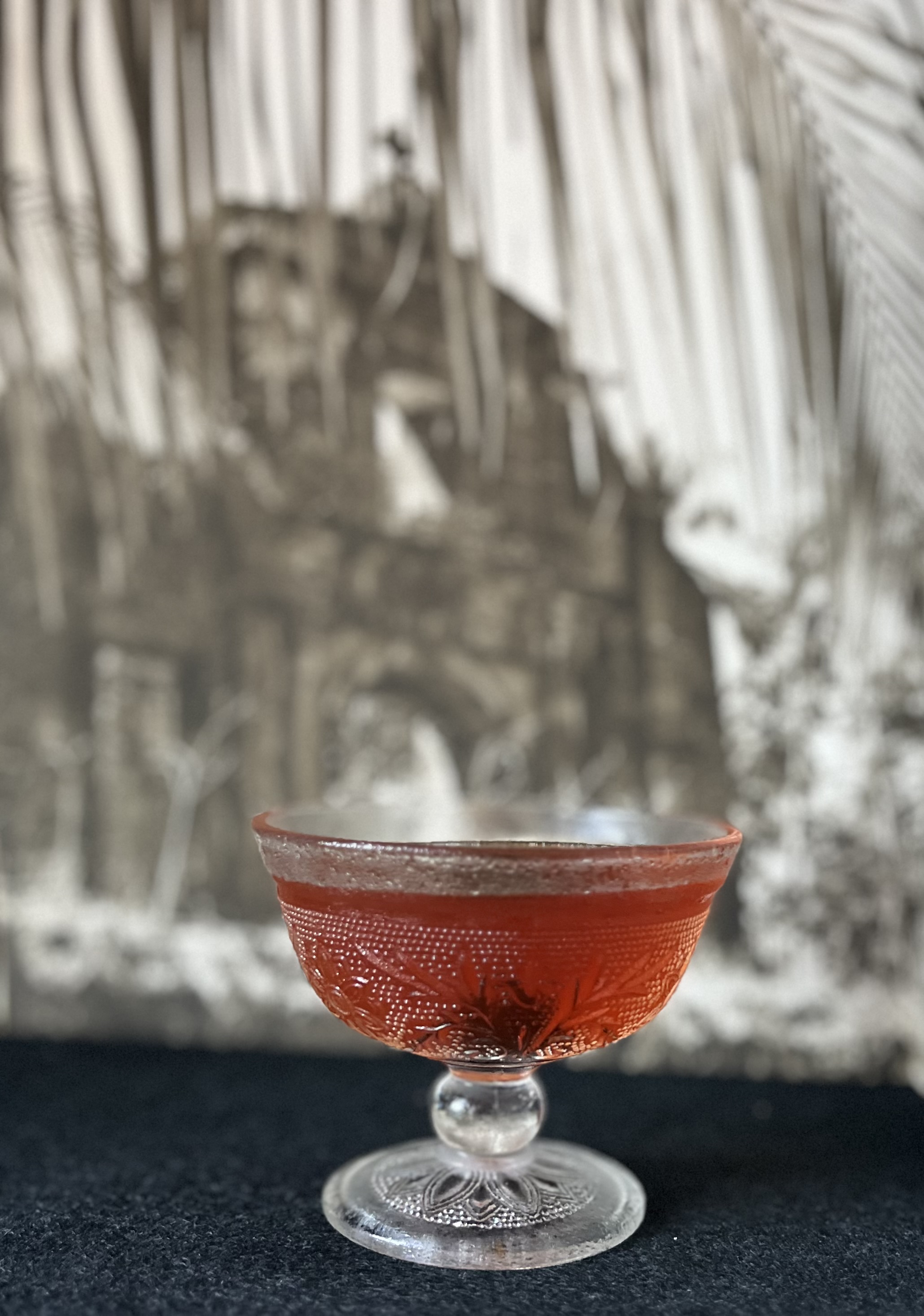
As I have mentioned previously, after I publish my last “Drink & a Movie” post in early 2026 I plan to edit all of them into a book. My chief model for this endeavor will be Vintage Spirits and Forgotten Cocktails by “Dr. Cocktail” Ted Haigh, which features a blend of images, drink lore, and practical advice in perfect proportions and which is spiral-bound for ease of use as all recipe books should be! Haigh’s version of the classic East India Cocktail has been in heavy rotation at our house since the end of raspberry season, so it seemed like a logical choice for this month’s drink. Here’s how we make it:
Make the raspberry syrup by simmering two cups of fresh raspberries with eight ounces of water in a medium saucepan for five to ten minutes until everything is approximately the same color, then strain. Add one cup of sugar while the mixture is still hot, stir until dissolved, let cool, then bottle and refrigerate. Make the cocktail by stirring all ingredients with ice and straining into a chilled glass. Garnish with a cherry.
The East India Cocktail is an elegant beverage. Haigh explains that it “was named not for the eastern part of India but for all of it and more: India, Burma, Malaya, Singapore, and the entirety of the British colonies.” This therefore struck me as a perfect opportunity to break out the bottle of yuzu Curaçao I picked up at The Wine Source in Baltimore last winter since I associate it with that corner of the world more than its West Indian cousin. The dominant flavor is of course cognac (there are three ounces of it, after all), but the other ingredients serve the same function as the atmosphere at the palace of Mopu, where most of this month’s movie Black Narcissus takes place: they exaggerate everything. So it’s fruitier, sweeter, more mysterious cognac. Speaking of which: considering how much of it you’re going to use, it’s definitely worth splurging on a good bottle! Frapin VSOP was a recommendation by someone at Ithaca’s always reliable Cellar d’Or and we like it here and to sip on its own quite a bit.
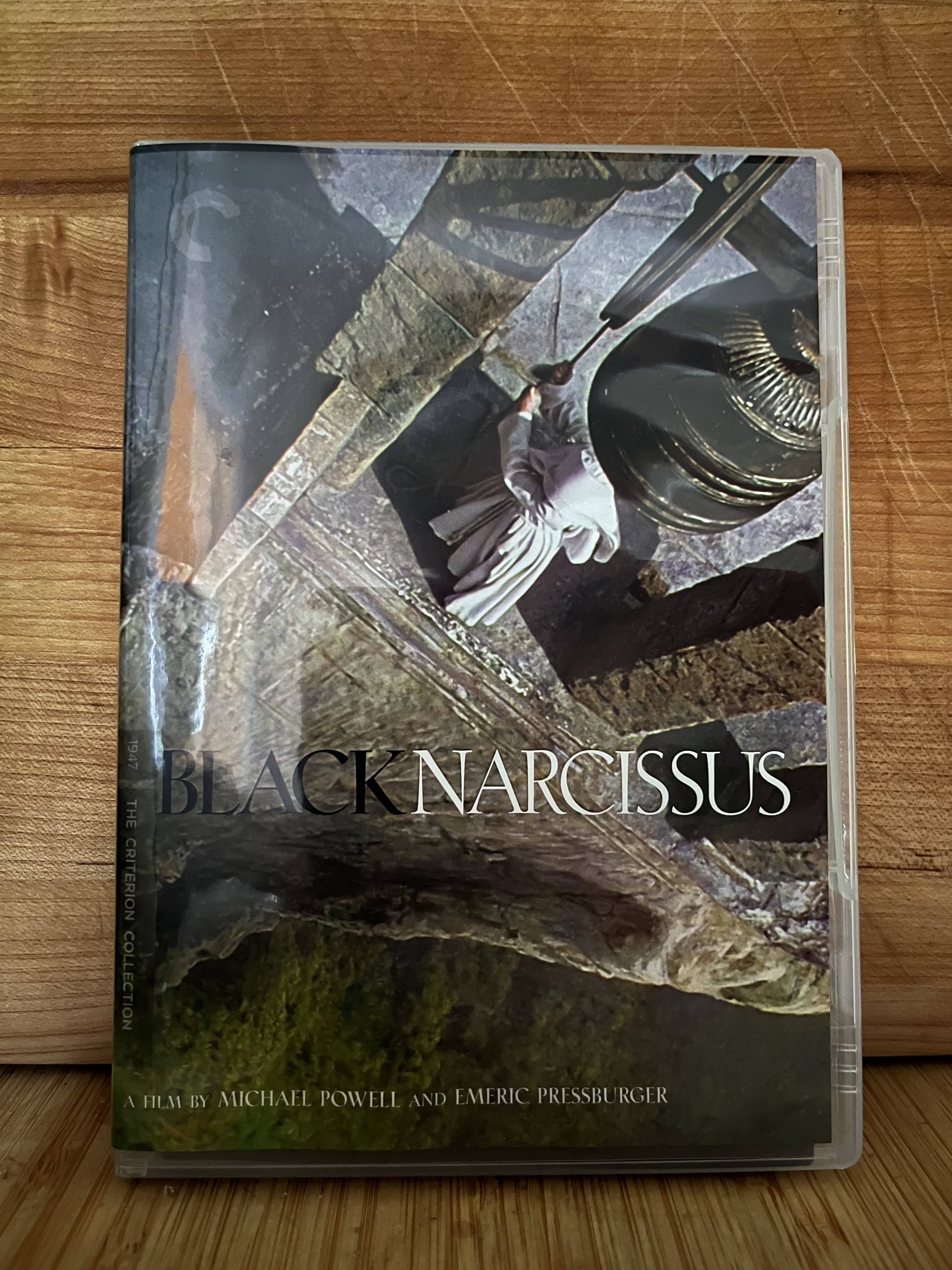
Black Narcissus is set in the part of the British Empire that the East India Cocktail is named after, and it has been on my mind ever since I was fortunate enough to see it at last year’s Nitrate Picture Show, so it was an obvious way to complete the pairing. Here’s a picture of my Criterion Collection DVD release:
It can also be streamed via The Criterion Channel and a number of other commercial platforms for free, with a subscription, or for a rental fee. Some people (including current Cornell University faculty, staff, and students) may have access to it through Kanopy via a license paid for by their local academic or public library as well.
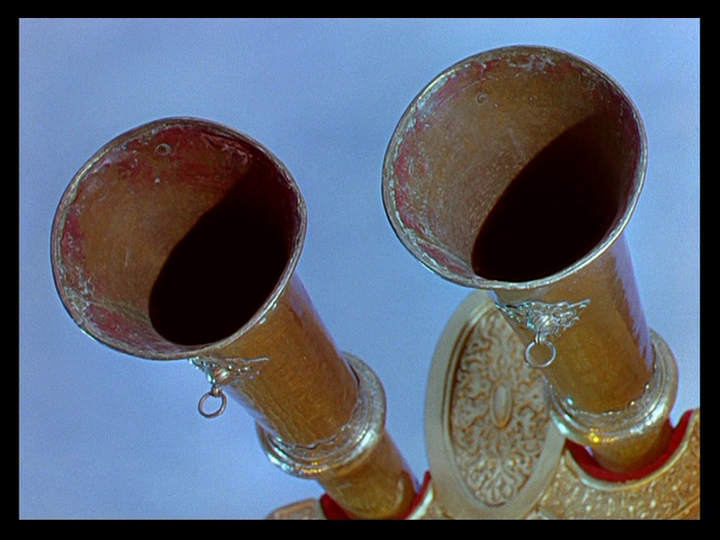
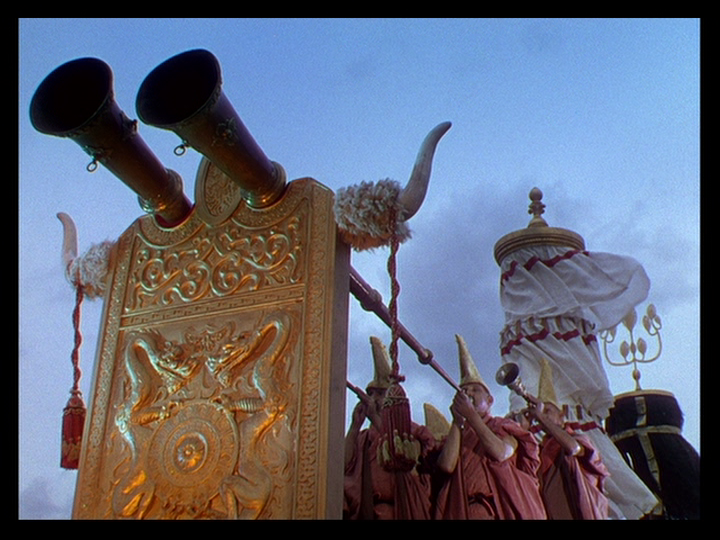
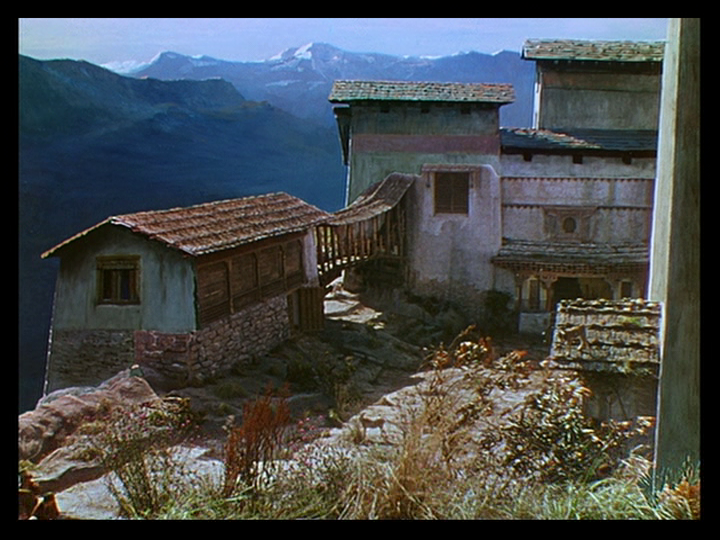
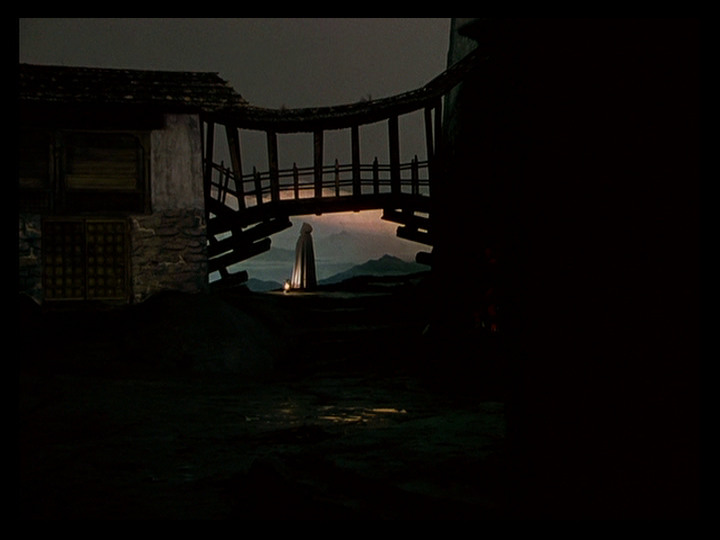
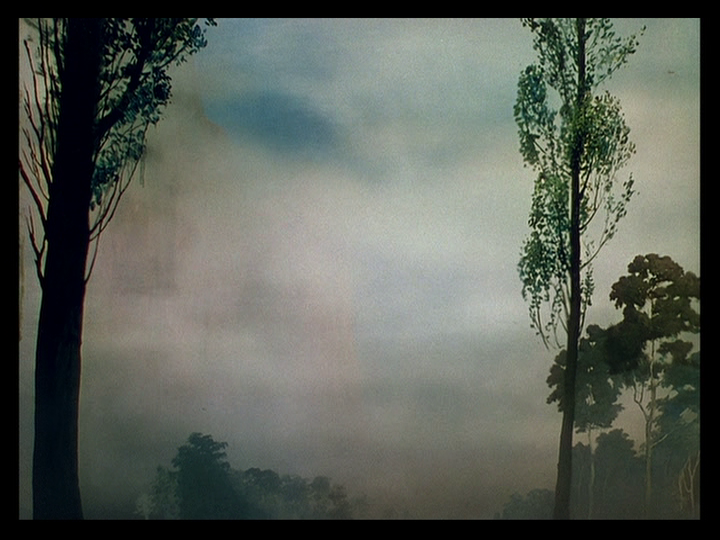
Thanks to brilliant Oscar-winning art direction by Alfred Junge and cinematography by Jack Cardiff, along with stunning matte paintings by W. Percy Day, Black Narcissus is one of the most transportative films ever shot entirely in a studio. It begins with a series of shots that establish the setting:
This is followed by an introduction to Mopu, which the Order of the Servants of Mary plans to convert into a convent, that Priya Jaikumar notes “is filtered through three people, all of whom are less than objective about the place and the nuns’ mission.” We see it first through the eyes of Reverend Mother Dorothea (Nancy Roberts), who ponders an illustration in a book:
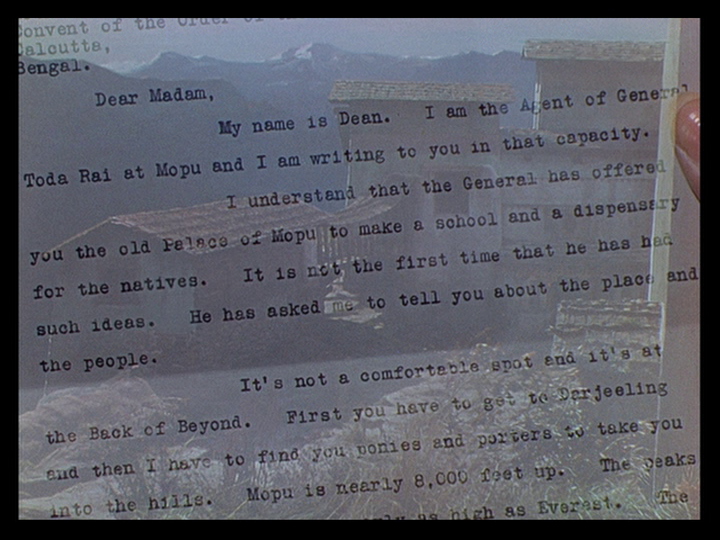
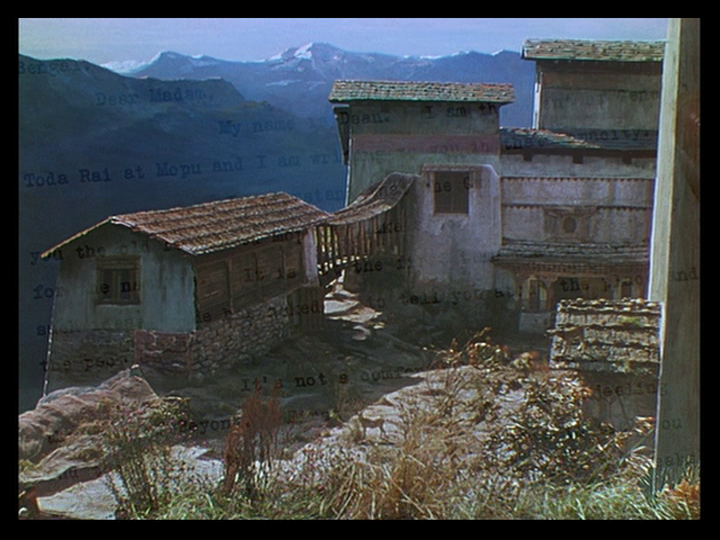
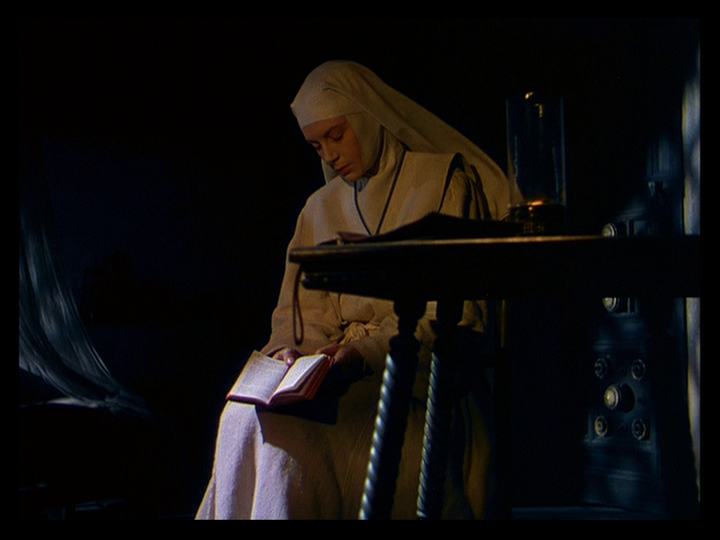
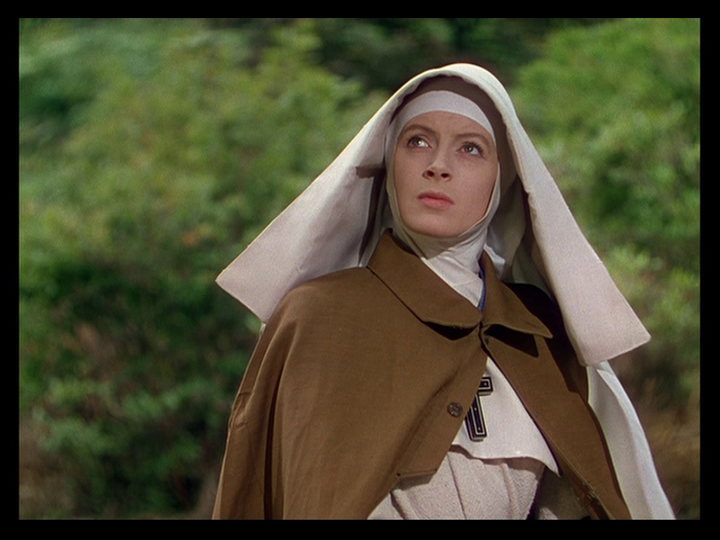
Then Sister Clodagh (Deborah Kerr), who is being sent there as the order’s youngest Sister Superior, imagines it as she reads a letter from Mr. Dean (David Farrar), the British agent of The Old General Toda Raj (Esmond Knight) who has given it to them:
Mr. Dean’s letter reveals that the General’s father previously housed his concubines in Mopu:
And introduces us to the local holy man who sits motionless day in and day out with his face to the mountains:
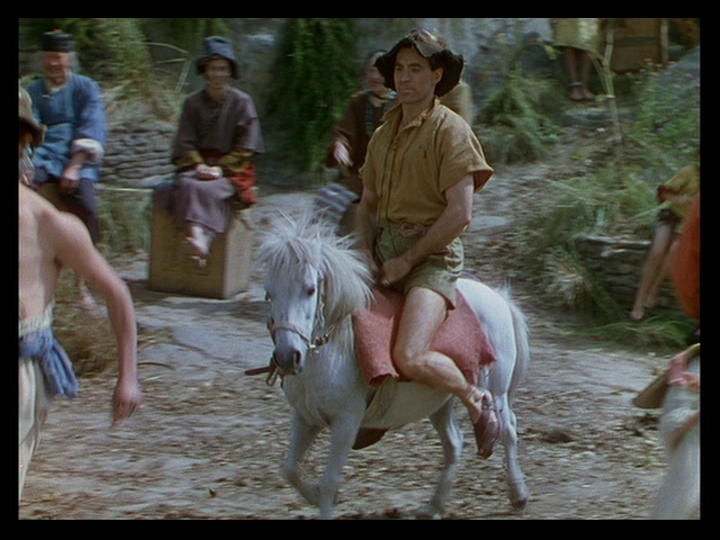
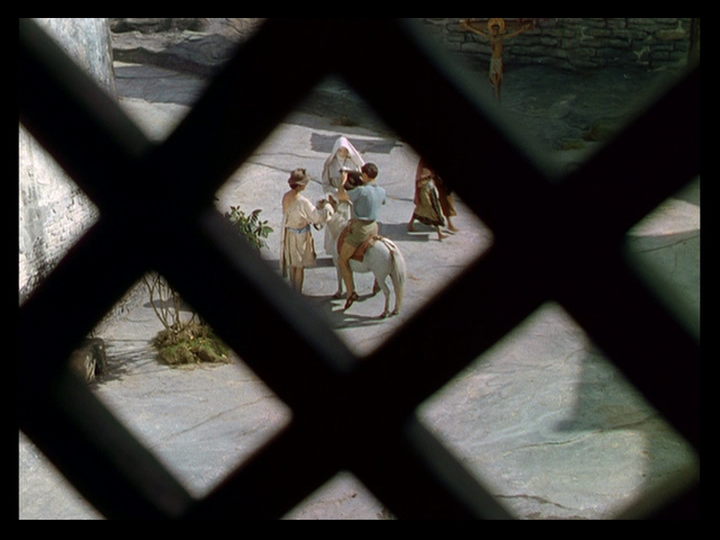
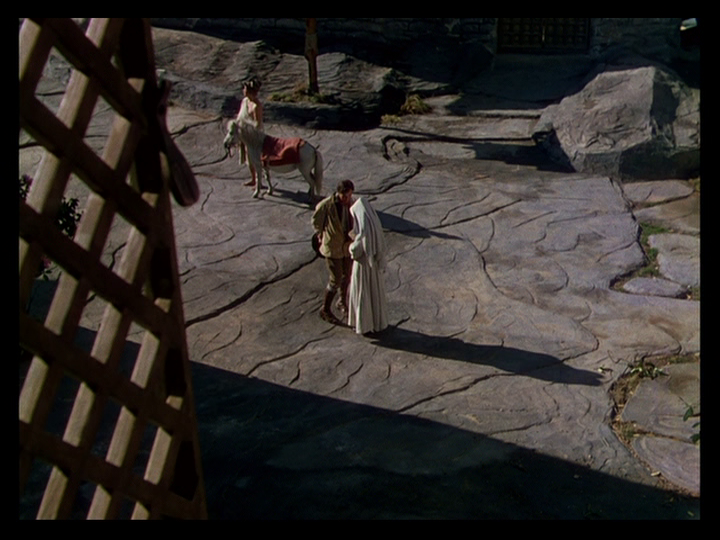
Before seamlessly transitioning into a depiction of the General giving instructions to Mopu’s housekeeper Angu Ayah (May Hallatt) and Mr. Dean, who we see for the first time riding a pony that is absurdly small for a man of his height:
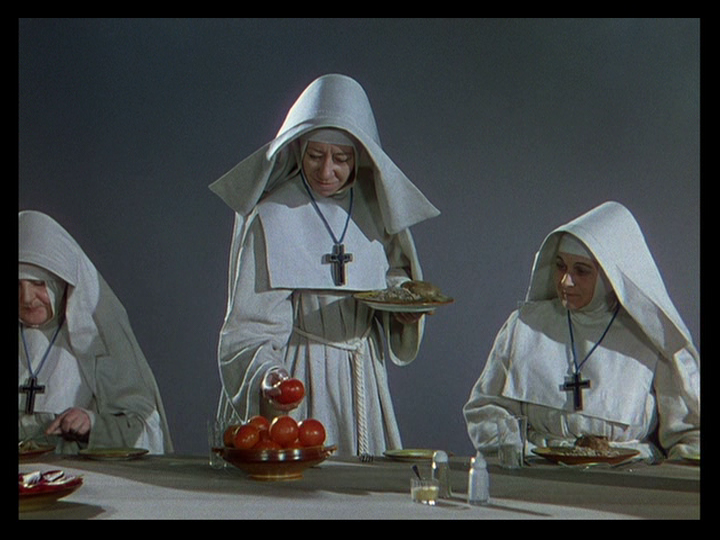
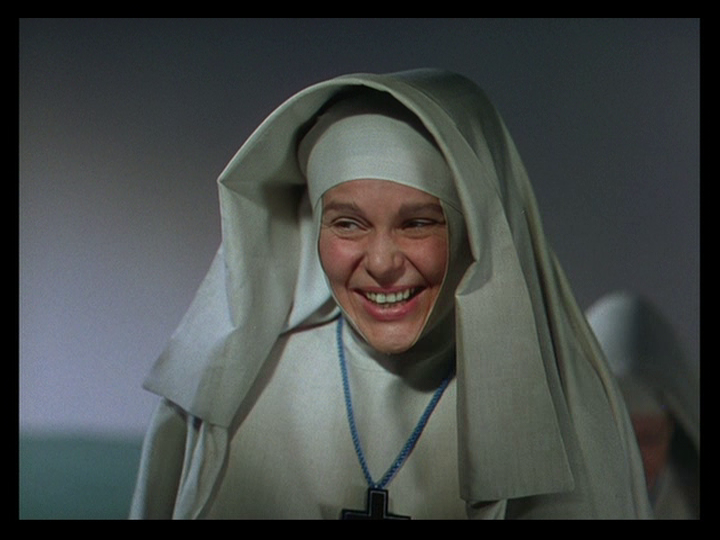
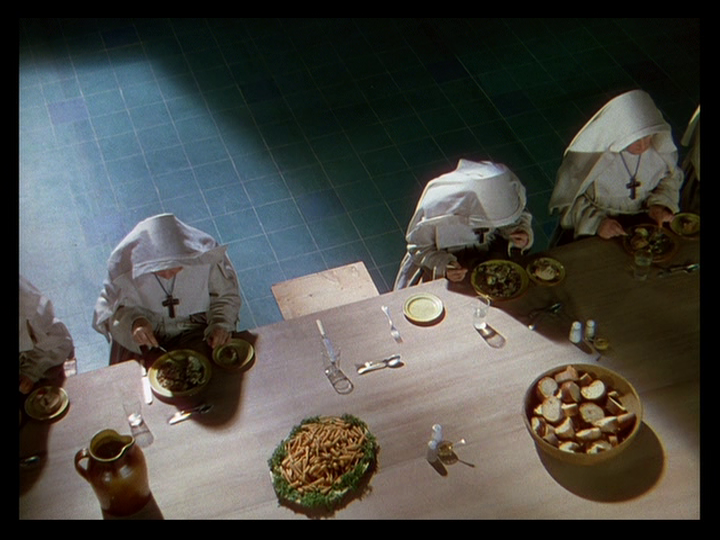
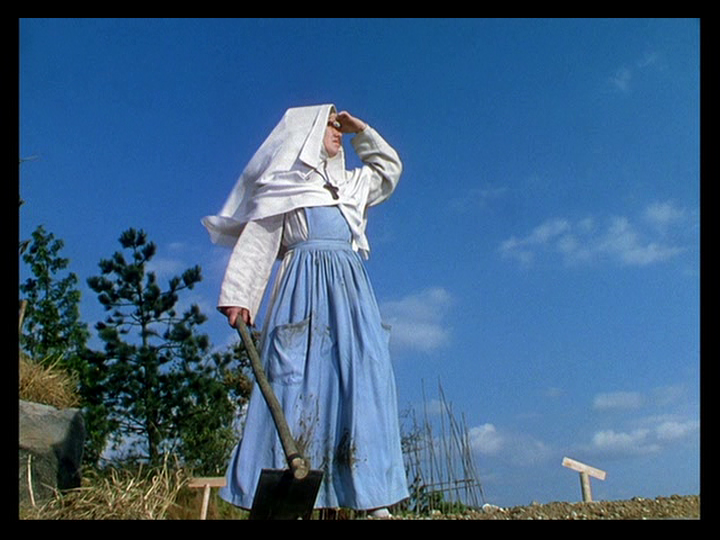
The rest of the nuns who will occupy Mopu, or Saint Faith as it is now to be called, are introduced in the next scene, which per Roderick Heath is reminiscent of “the kind of war movies where a team of talents is assembled for a dangerous mission in enemy territory.” There’s Sister Briony (Judith Furse), the strong one; Sister Philippa (Flora Robson) for the garden; and Sister Blanche or “Honey” (Jenny Laird), because Sister Clodagh will need to be popular:
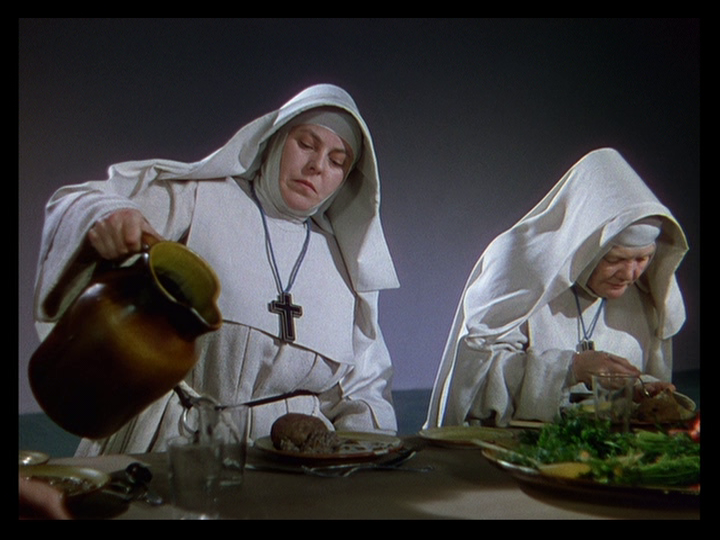
As well as Sister Ruth (Kathleen Byron) because “she’s a problem,” but “with a smaller community, she may be better.” Sister Ruth is initially represented as an empty place at the convent’s dinner table:
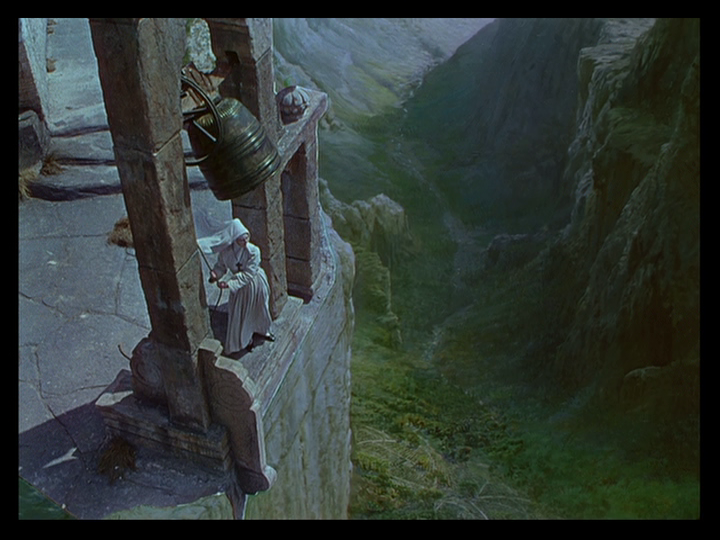
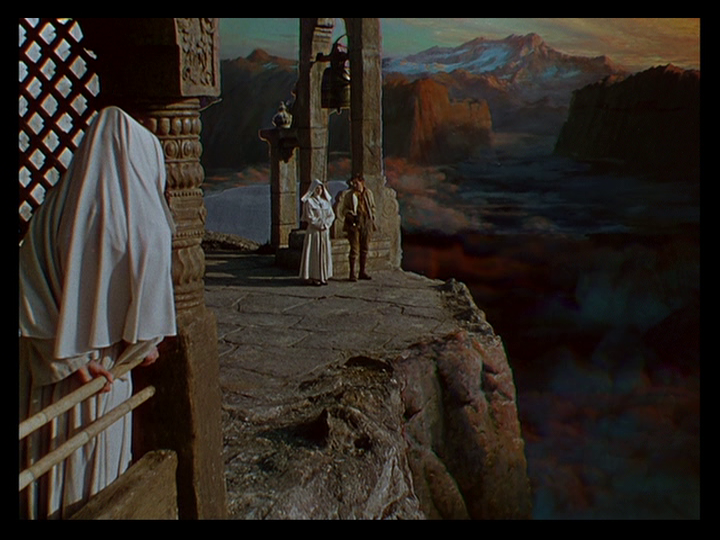
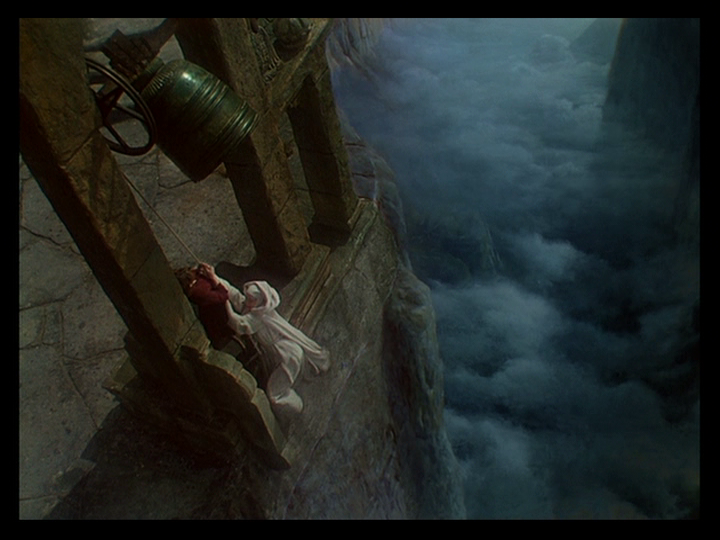
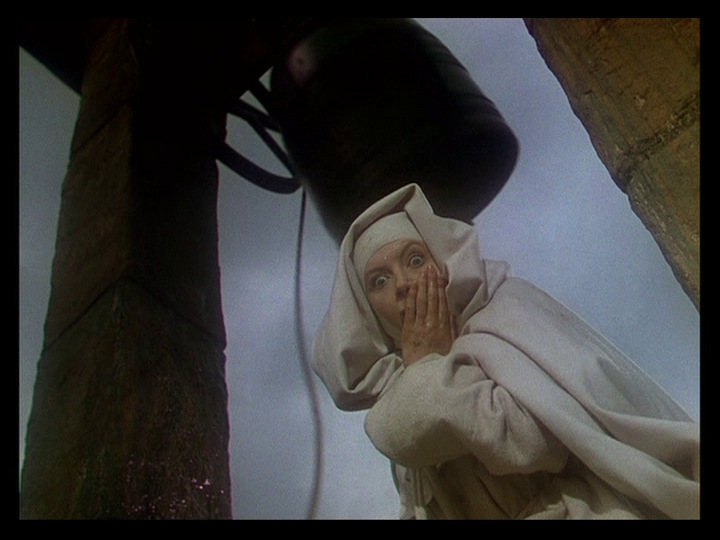
But she appears very soon afterward in corporeal form at Mopu ringing a bell perched at the end of a dizzying abyss which Bertrand Tavernier calls “absolutely breathtaking” in the DVD extra The Audacious Adventurer and an example of special effects that are more impressive than those of the digital era because “these seem to have a soul: they are not just the product of technology but are infused with emotion.”
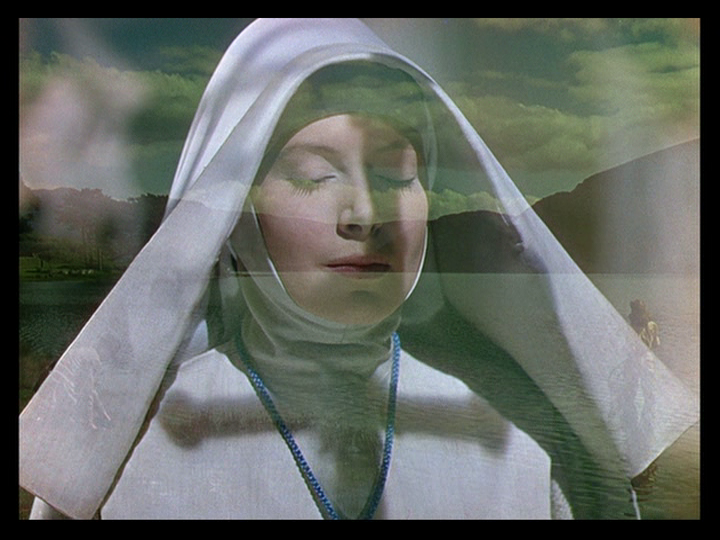
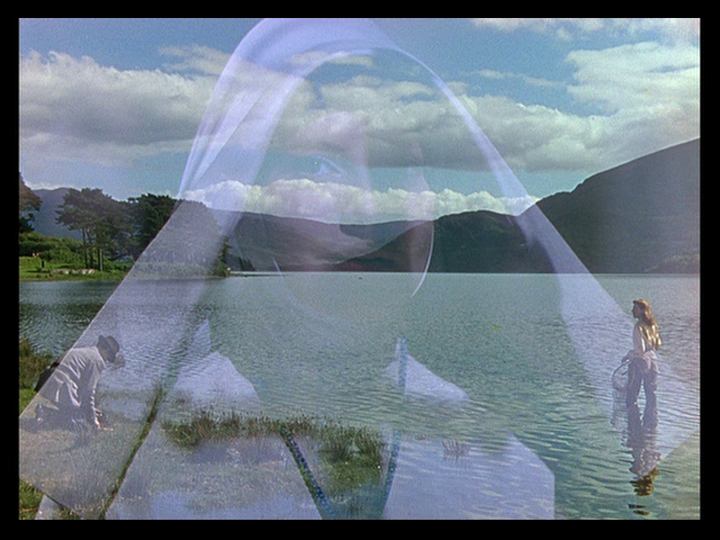
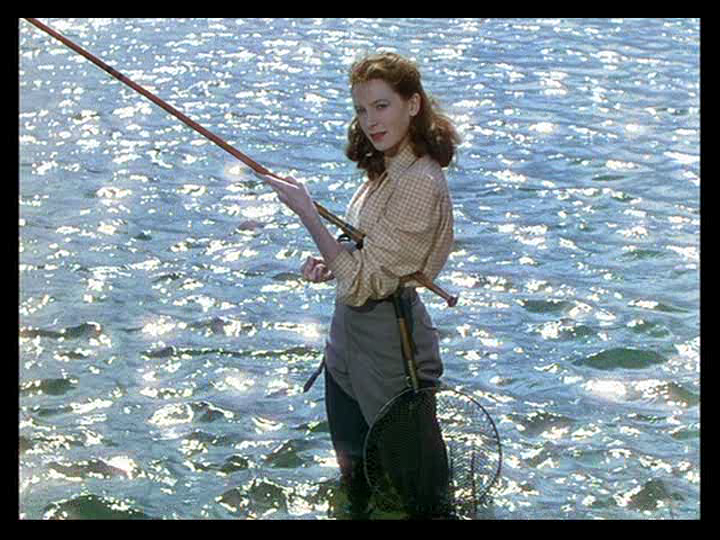
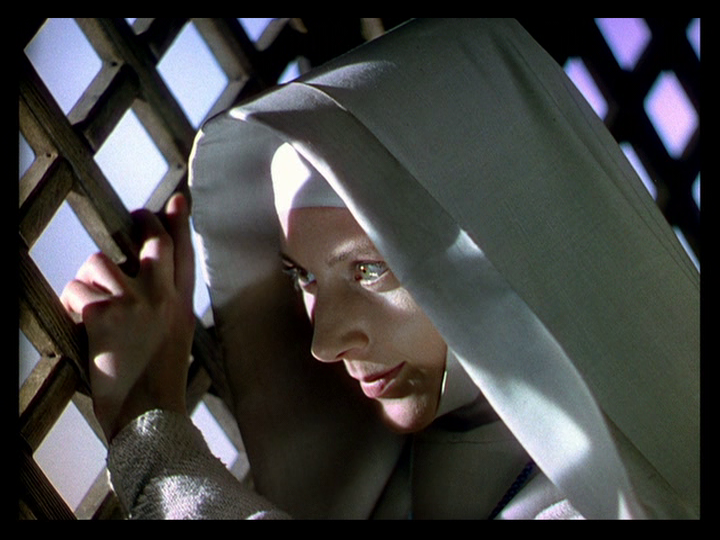
Dave Kehr observes that “despite the great wit and character of [Emeric] Pressburger’s dialogue, BlackNarcissus is a film that develops almost entirely through formal rather than dramatic means.” One of my favorite examples of this is the way the past elbows its way into the sisters’ present the longer they remain at Mopu. Early on, Sister Clodagh’s flashbacks are signaled by dissolves, like this one:
Which is followed by a medium shot of Clodagh fishing amidst a shimmering disco ball of sunlight glistening on the waves that Martin Scorsese accurately lauds in his DVD commentary track as “overwhelming” for those lucky enough to see the film on the big screen in a good print:
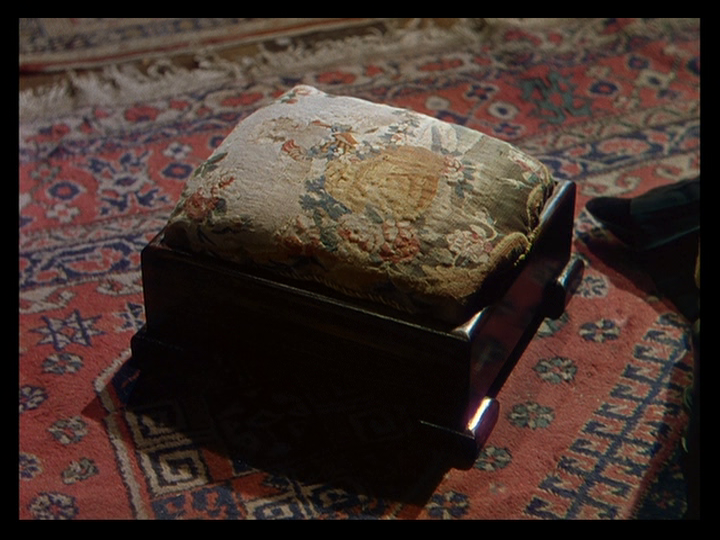
As the film progresses and her memories become as real as whatever she’s experiencing live, though, this is replaced by straight cuts, for instance from Sister Honey’s description of a jacket worn by the Old General’s heir (Sabu) as “just like my grandmother’s footstool” to this one from Sister Clodagh’s youth:
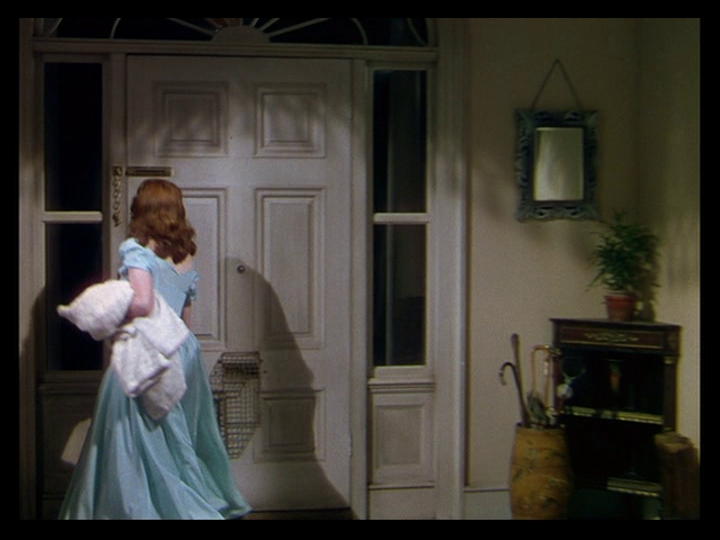
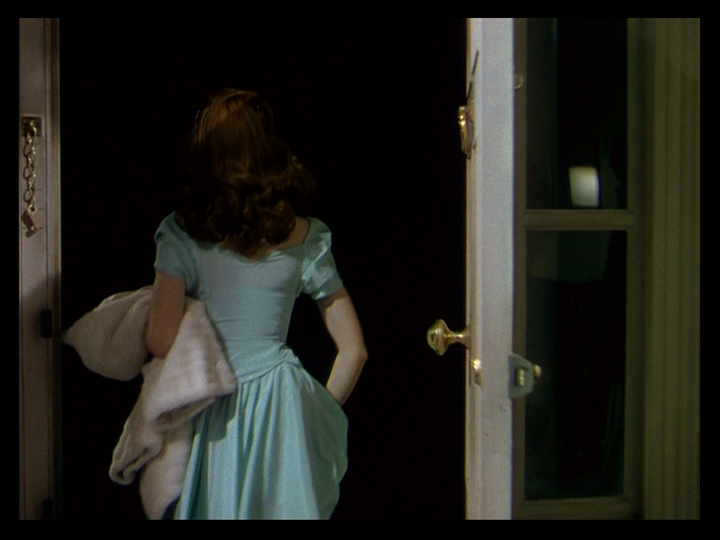
This sequence also ends with an astonishing moment which Ryland Walker Knight describes as transitioning “in one shot from technicolor beauty to the void, the loss of grounding becoming as powerful an edit as imaginable”:
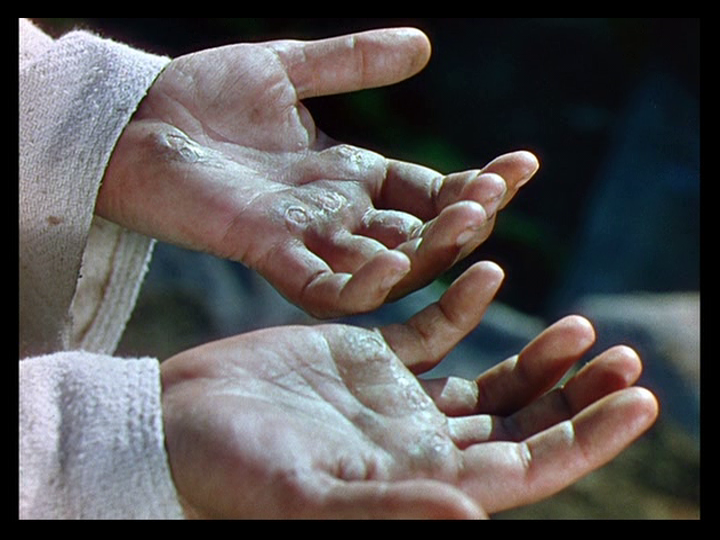
Sister Philippa’s own struggles to combat the return of the repressed are similarly conveyed more by this image of her staring off into space:
And this close-up of her blistered and calloused hands:
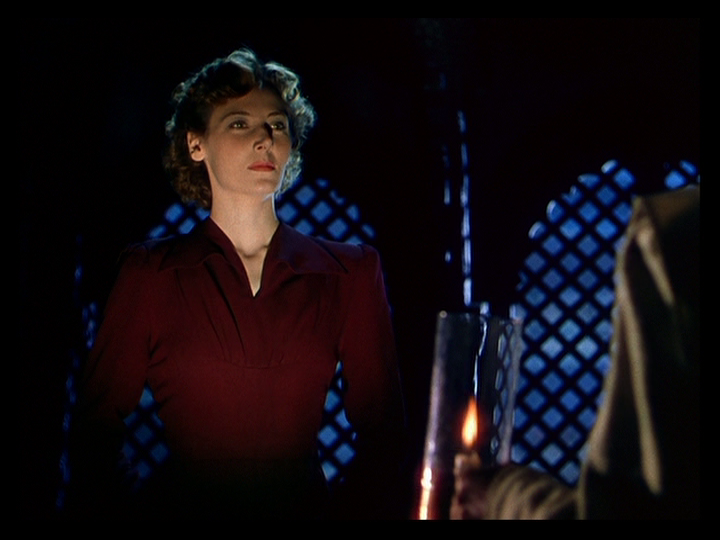
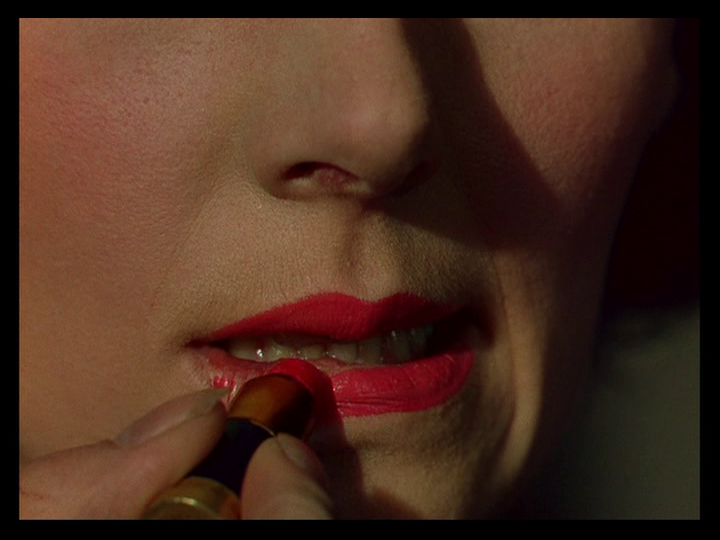
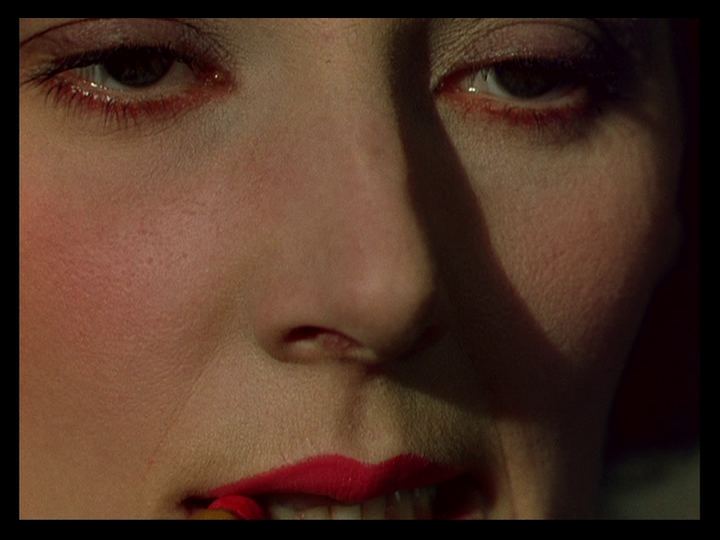
Than anything in the screenplay. But Kehr is right that this tendency is best exemplified in the incredible final sequence, where it’s “enough to see the bright, red lipstick that Sister Ruth has put on to know that the apocalypse is near.” He’s referring to the scene which follows her sudden appearance in a red dress to announce to put an exclamation point on her decision to not renew her vows (the Servants of Mary are only bound to their order for one year at a time):
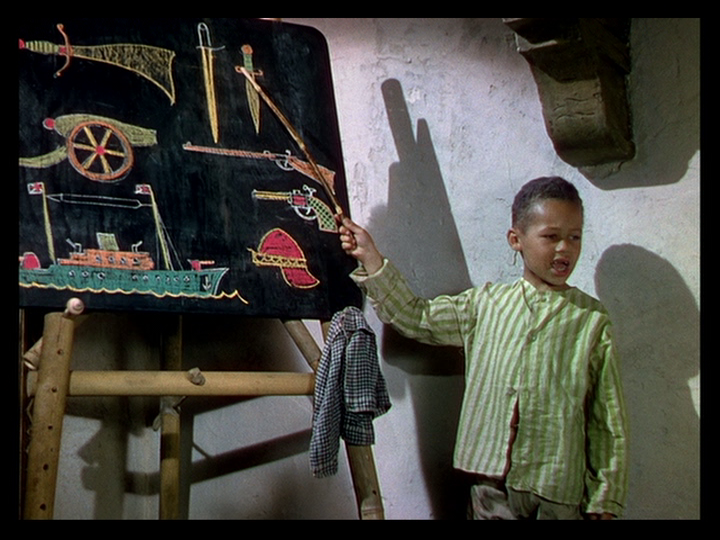
Which was foreshadowed much earlier by a shot of her watching Sister Clodagh speak to Mr. Dean while the convent’s young translator Joseph Anthony (Eddie Whaley Jr.) teaches students how to say the names of various weapons in English:
And set up by first a fatal act of attention and kindness by Mr. Dean, who thanks her for her misguided efforts to treat a woman bleeding to death in the convent’s hospital instead of immediately fetching the much more experienced Sister Briony:
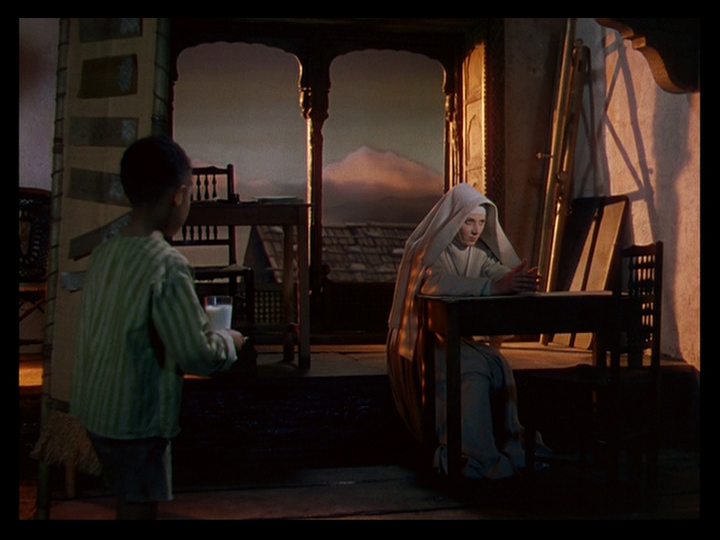
And then a fatal decision by Sister Clodagh to ask Joseph Anthony to bring her a glass of milk:
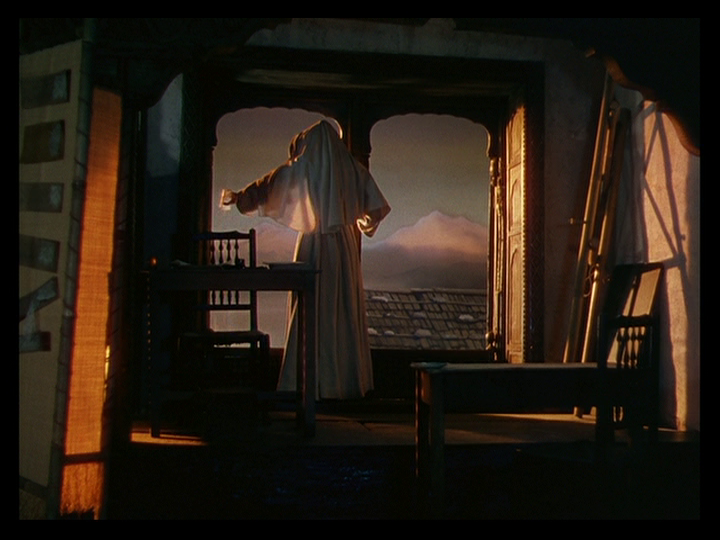
Sister Ruth dumps it out, assuming that it’s poisoned:
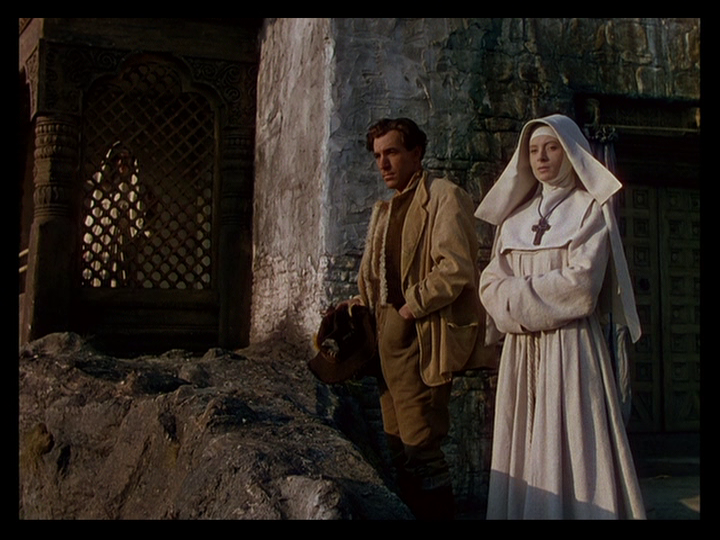
And spots Sister Clodagh talking to Mr. Dean once again:
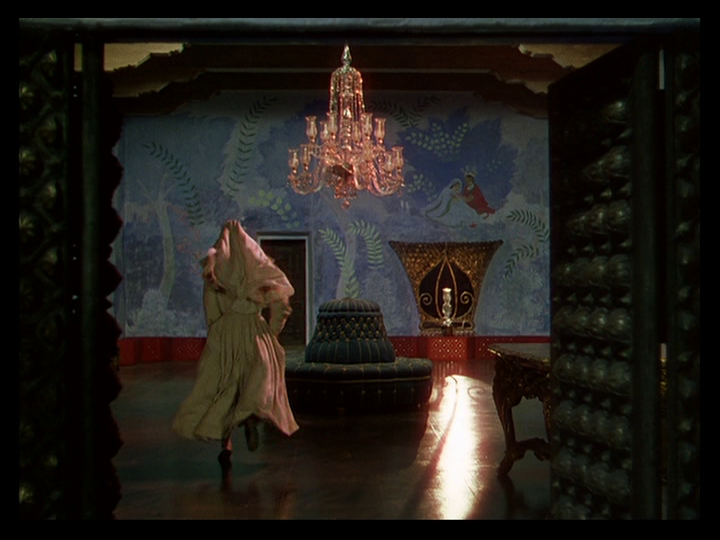
She rushes downstairs past a dramatic streak of sunlight on the floor that Kristin Thompson says in her video essay “Color Motifs in Black Narcissus“ Technicolor technicians lobbied Cardiff to remove from the film after they misidentified it as a lens flare:
And takes up position behind a window so that she can eavesdrop on them:
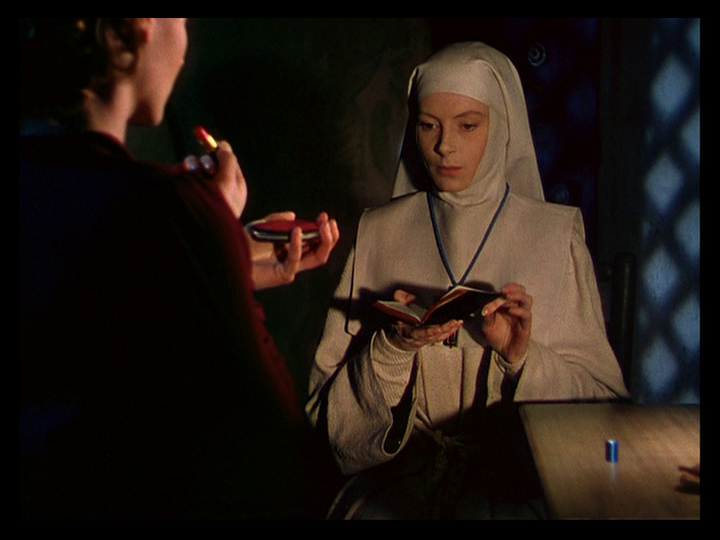
Hearing Mr. Dean console Sister Clodagh leads directly to Sister Ruth donning her red dress. Sister Clodagh implores her to at least wait until morning before departing Saint Faith. And so they settle in for a long night, Sister Ruth with her lipstick and compact and Sister Clodagh with her bible:
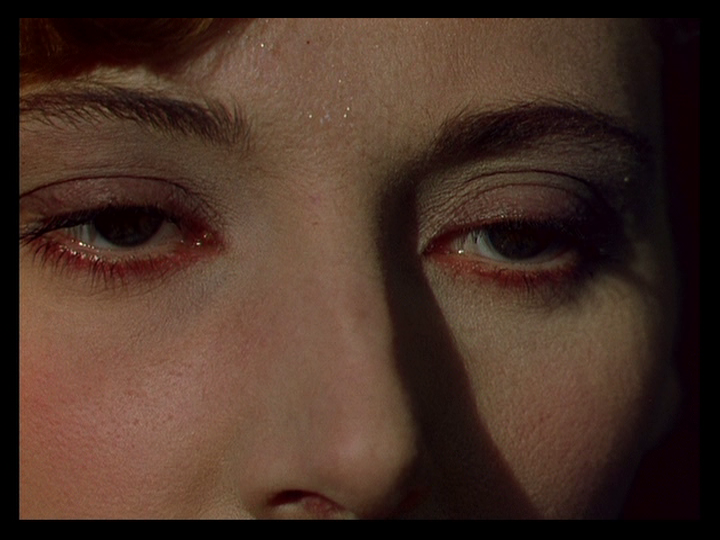
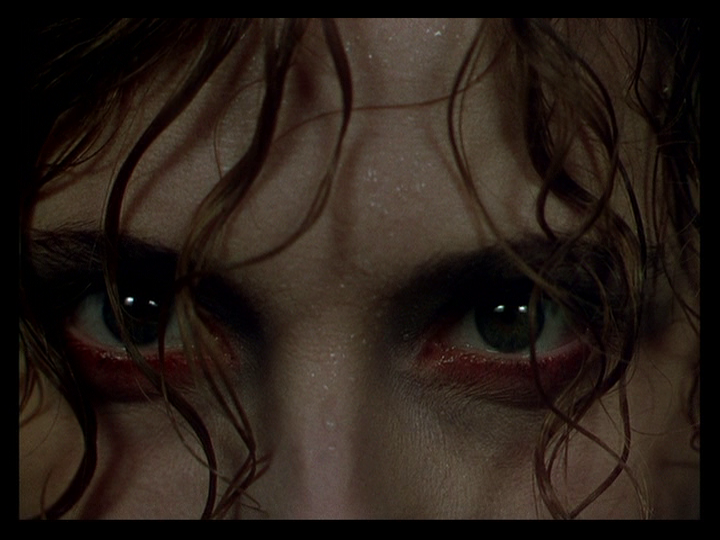
The camera tilts from Sister Ruth’s lips to her red eyes and a forehead dotted with beads of sweat:
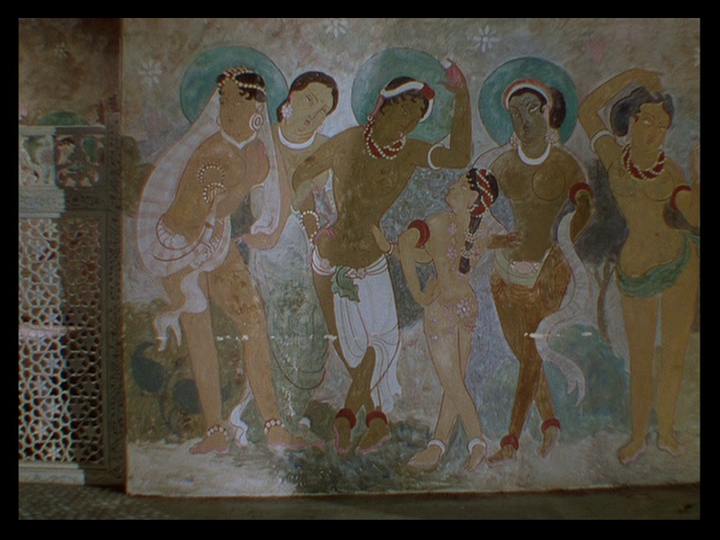
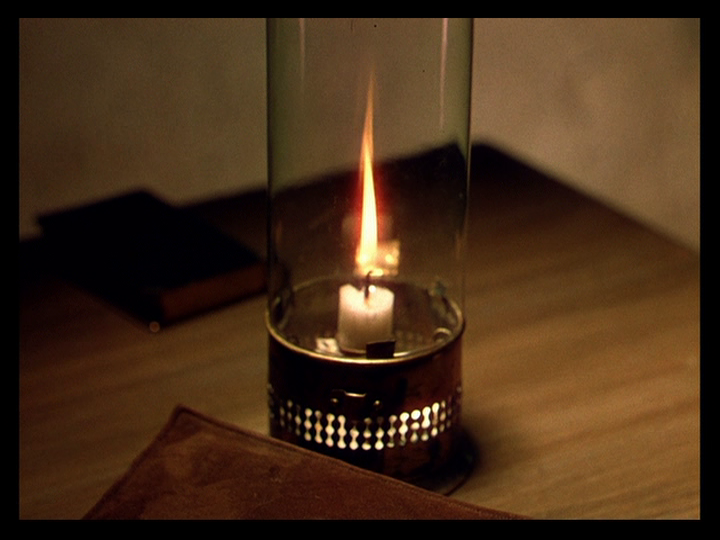
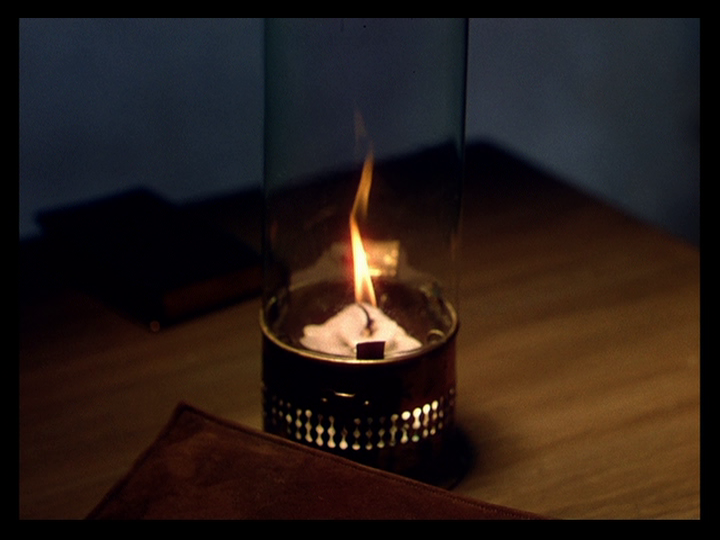
She outlasts Sister Clodagh in a staring contest of sorts in which the passage of time is indicated by cutting back and forth between a shrinking candle and the wall art in Mopu:
And makes her escape when Sister Clodagh finally succumbs to fatigue:
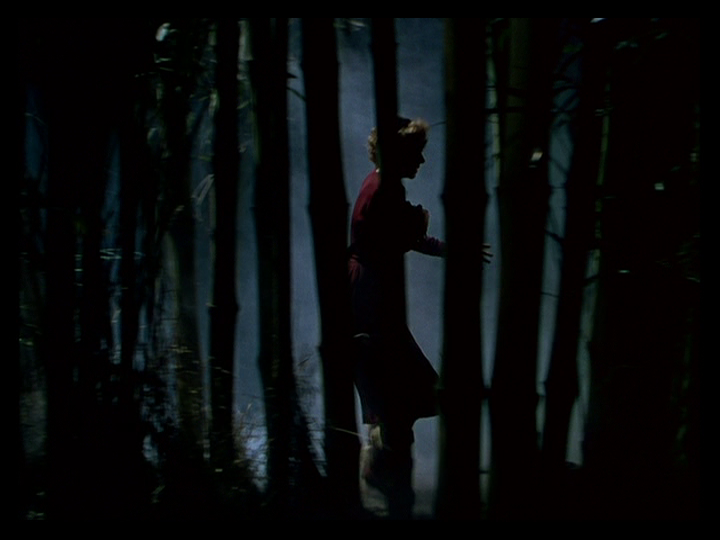
Sister Ruth treks through the jungle in a sequence which contains a shot that reminds me of one in Suspiria that I wrote about in my October, 2022 Drink & a Movie post:
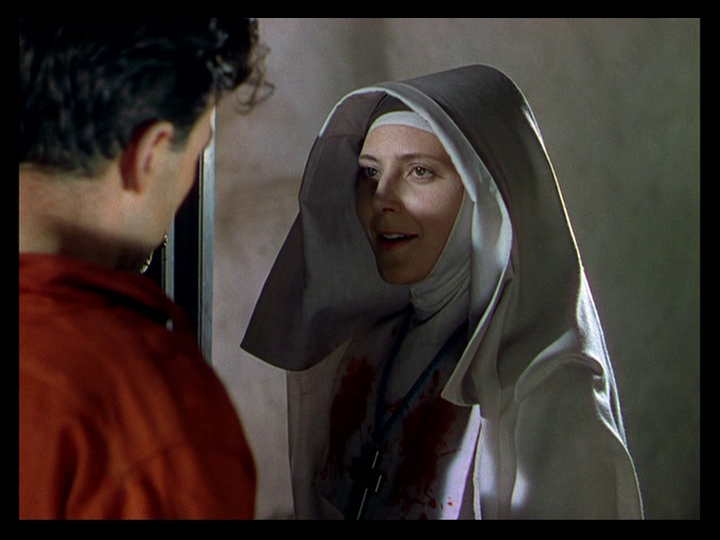
And finally arrives at Mr. Dean’s bungalow, where she tells him she loves him. He rejects her, and she literally sees red and passes out:
In his autobiography A Life in Movies, director Michael Powell describes the climax of Black Narcissus, which ensues after she comes to and returns to Mopu, as an experiment with “composed film” whereby the blocking and editing were timed to composer Brian Easdale’s music, as opposed to him creating this part of the score based on rushes. Reminiscent of a horror film, it begins with a two shot sequence of Sister Ruth watching Sister Clodagh intently in the predawn hours:
Sister Ruth stalks Sister Clodagh, her presence felt but never seen, as the latter woman attempts to go about a semblance of her morning routine:
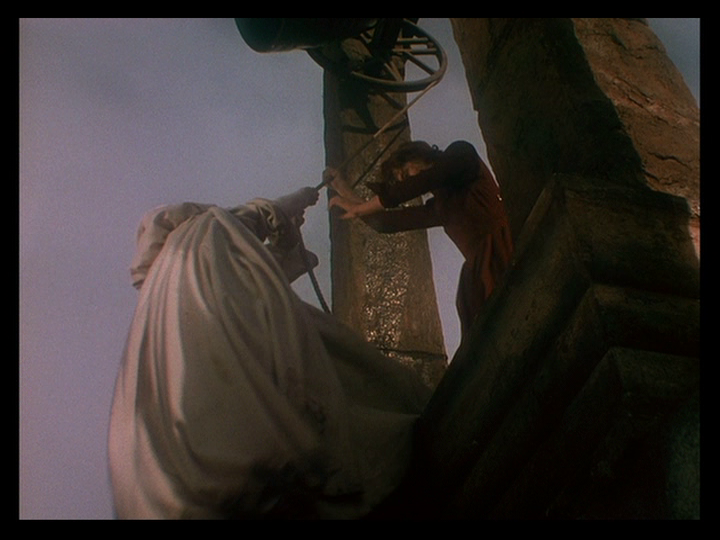
Finally, checking her watch and realizing what time it is, Sister Clodagh steps outside to ring the convent’s bell. This is followed by perhaps the film’s single most famous image:
Sister Ruth attempts to push Sister Clodagh over Mopu’s cliffs:
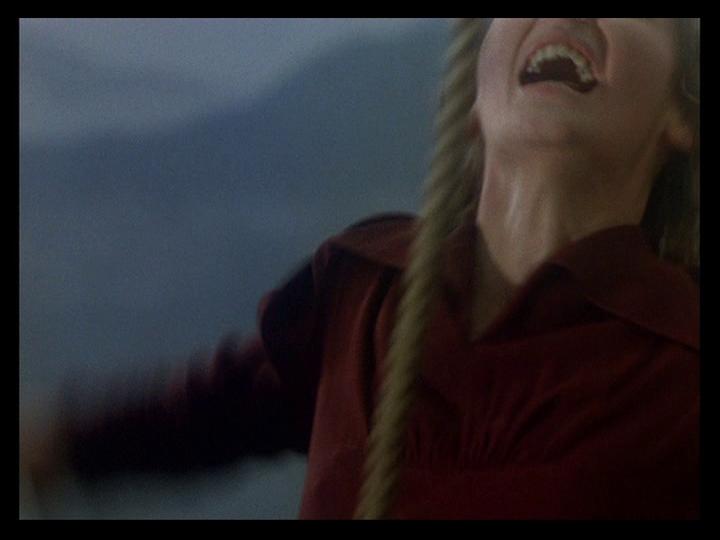
But Sister Clodagh maintains her grip on the bell’s rope:
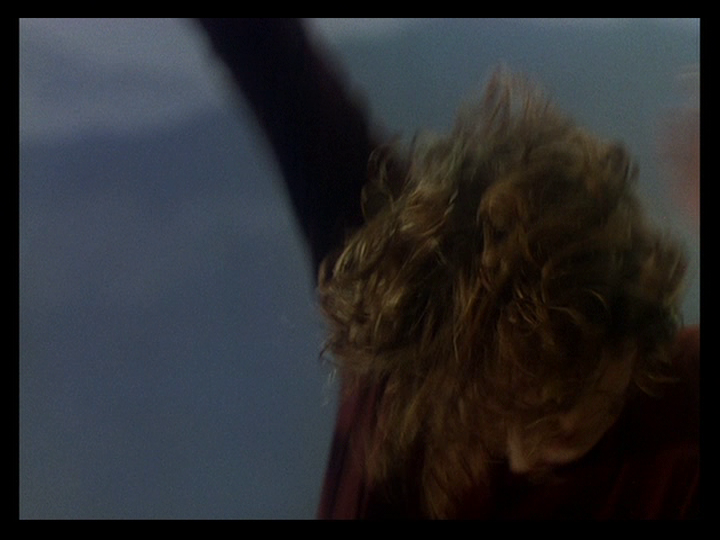
And in the ensuing struggle it is Sister Ruth who ultimately falls to her death:
Kehr notes that India achieved independence mere months after Black Narcissus‘s premiere on April 24, 1947 and suggests that the final images of a procession down from Mopu can be read as anticipating Britain’s departure.
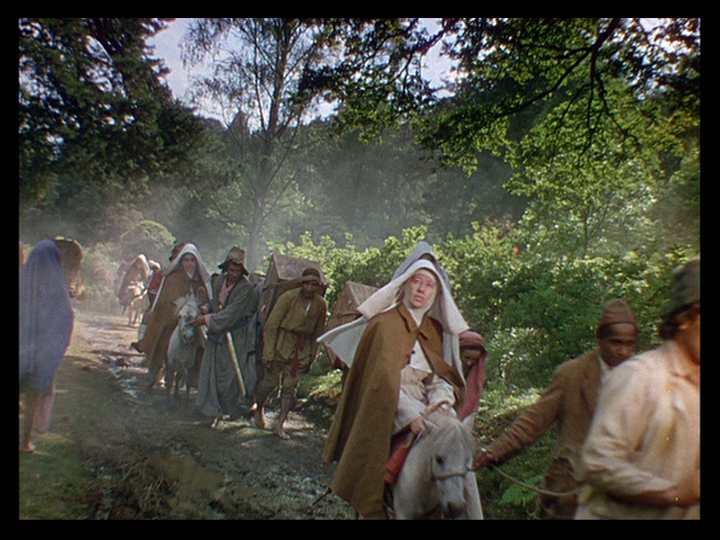
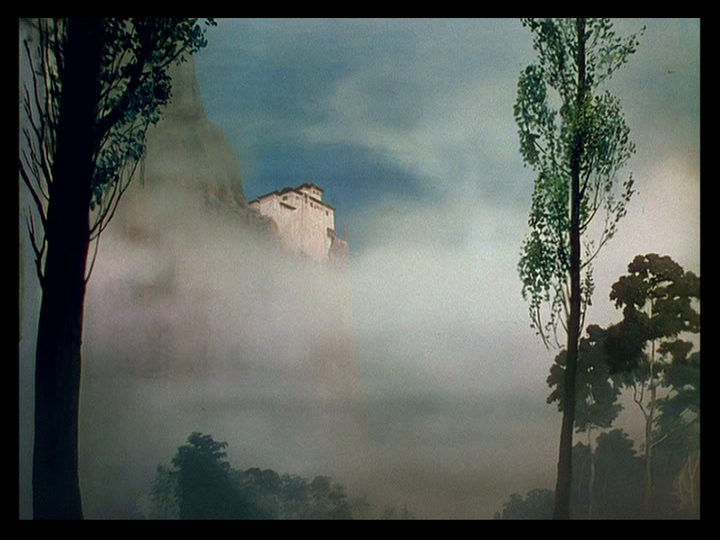
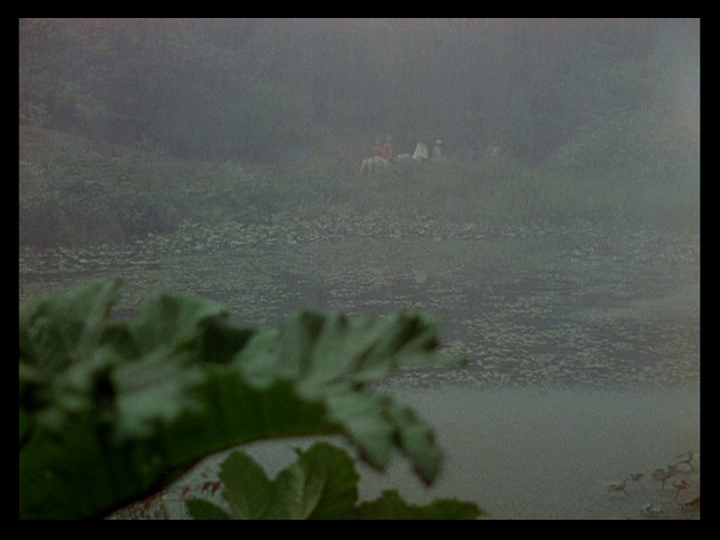
“For Powell and Pressburger,” Kehr writes, “these are not images of defeat, but of a respectful, rational retreat from something that England never owned and never understood. It is the tribute paid by west to east, full of fear and gratitude.” This reading is complicated for me by the fact that the film doesn’t end with Sister Clodagh looking back at Mopu as it’s covered by mist:
But rather with Mr. Dean bidding a tender farewell to her:
The rains beginning to fall, proving his prediction that the sisters wouldn’t last this long correct:
And finally him looking on as they ride away:
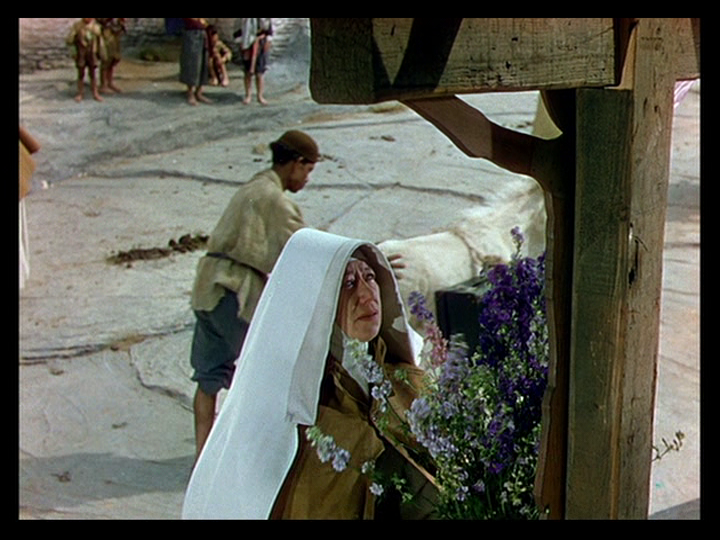
So, yes, the last image is of a British retreat, but it’s a POV shot from the perspective of an Englishman who will remain behind and who promises to take care of Sister Ruth’s grave. It therefore doesn’t play as a farewell to Empire for me so much as an elegy for a certain idea of Britishness, one caught impossibly between the two ways of living in a colonized land previously articulated by Sister Philippa: “either you must live like Mr. Dean, or . . . or like the holy man. Either ignore it or give yourself up to it.” Sister Clodagh intuits that there must be a third way, but cannot articulate what it is, which is why she and the surviving sisters must leave. It’s also why, for all of Black Narcissus‘s gorgeous and inspired cinematography, my favorite moment of all might be the simple scene in which Sister Philippa places the flowers she planted instead of vegetables like she was supposed to on Sister Ruth’s grave:
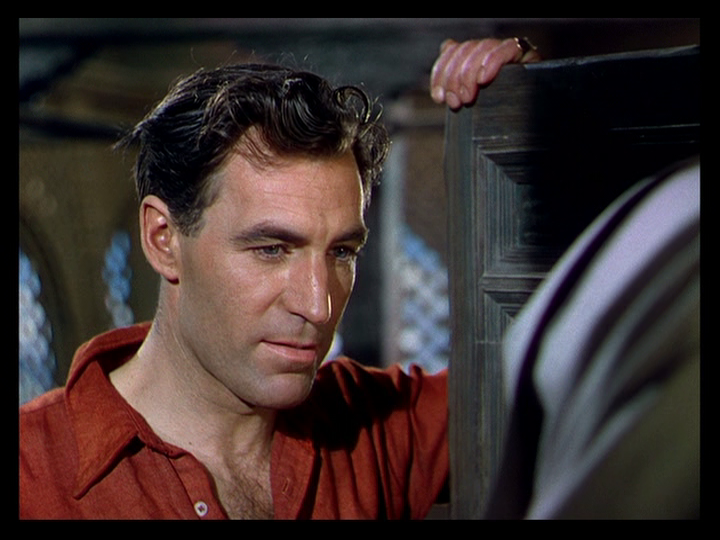
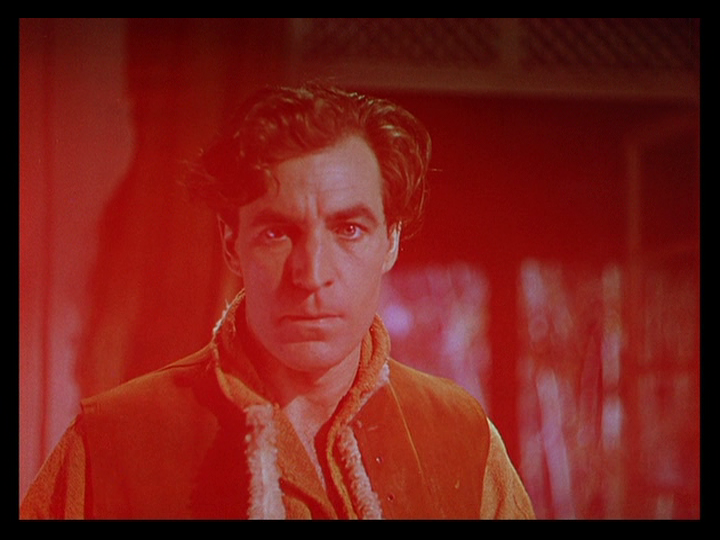
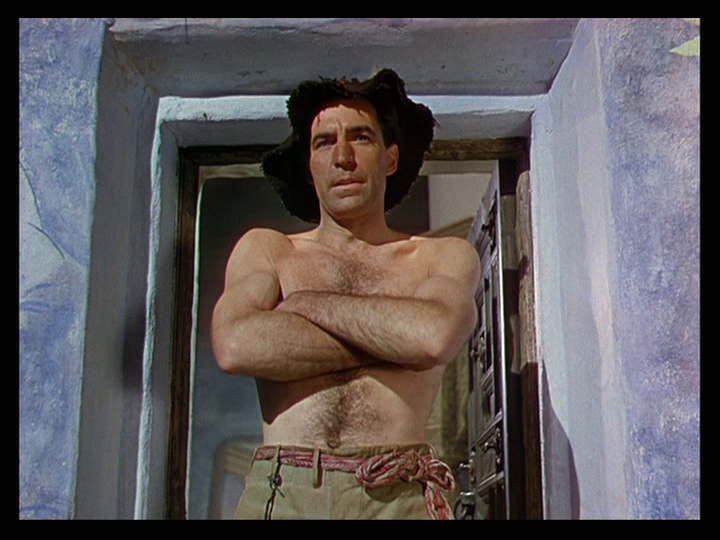
Here, more than the film’s actual final images, is the respect, fear, and gratitude that Kehr speaks of, as well as, appropriately, sadness. Which is too somber of a note to end a post in this particular series on, so here’s a shot of a shirtless Mr. Dean:
Cheers!
All original photographs in this post are by Marion Penning, aka My Loving Wife.Links to all of the entries in this series can be found here.
Also in Theaters: I haven’t seen been to a movie theater since last week’s post, so Twisters remains my favorite new movie in Ithaca that I’ve already seen and I once again also recommend Inside Out 2. Both films are at the Regal. Among new releases not already mentioned which I haven’t seen, the ones which intrigue me the most are Kneecap and Touch, which are both at Cinemapolis, and Cuckoo, which is there and at the Regal. “Ithaca-raised” filmmaker Nicholas Geisler will present three short films at Cinemapolis tonight as part of a program called “An Evening with Salt Cellar Films” that I unfortunately won’t yet be back in town for (I’m writing this from Ontario). There’s a free community screening of a short film called Restoring Joy at Cinemapolis on Monday. Your best bet for repertory fare is the 1962 epic Lawrence of Arabia, which all movie lovers should see on the big screen at least once, and which plays the Regal on Sunday and Monday. You can also catch Cool Hand Luke at Cinemapolis on Sunday.
Home Video: I recently worked my way through the “The Dirty Stories of Jean Eustache” collection on The Criterion Channel. Eustache’s The Mother and the Whore has lived large in my imagination as potentially one of the greatest films I’d never seen for many years and while I *respect* it immensely after two viewings–especially the acting by leads Jean-Pierre Léaud, Françoise Lebrun, and Bernadette Lafont–and agree that it’s an essential watch for anyone who presumes to understand the French New Wave, I confess to feeling a bit underwhelmed. I seem to be in the minority here, and if you find yourself disagreeing with me you’ll definitely want to check out Eustache’s follow-up My Little Loves, which stars Martin Loeb as a boy who could plausibly grow up to be Léaud’s character in Mother, as well. I much prefer The Pig, which I recommended in this space last month, though. I was also impressed by Santa Claus Has Blue Eyes, a short featuring Léaud as a handsy Père Noël who is right up there with Percy Helton’s drunk in Miracle on 34th Street and Artie Lange’s guy who smells like beef and cheese in Elf as my favorite cinematic “bad Santas,” and The Virgin of Pessac, a fascinating “meanwhile, in a nearby small town . . . ” documentary about the May, 1968 protests in France. The other titles I definitely recommend are A Dirty Story, a reenactment of a man (Michael Lonsdale) telling a Peeping Tom story shot in 35mm followed by a documentary depiction of the person (Jean-Noël Picq, who appeared in both Mother and Little Loves) who supposedly actually lived the event recounting the same tale shot in 16mm which is greater than its two constituent parts, and the 1982 César Award-winning short Alix’s Pictures.
Previous “Ithaca Film Journal” posts canbe found here.









 The Prodigal Cinephile