February, 2022 Drink & a Movie: Brigadier + Downhill Racer

With the 2022 Winter Olympics now officially under way, the second installment in my new Drink & a Movie series was a no-brainer.
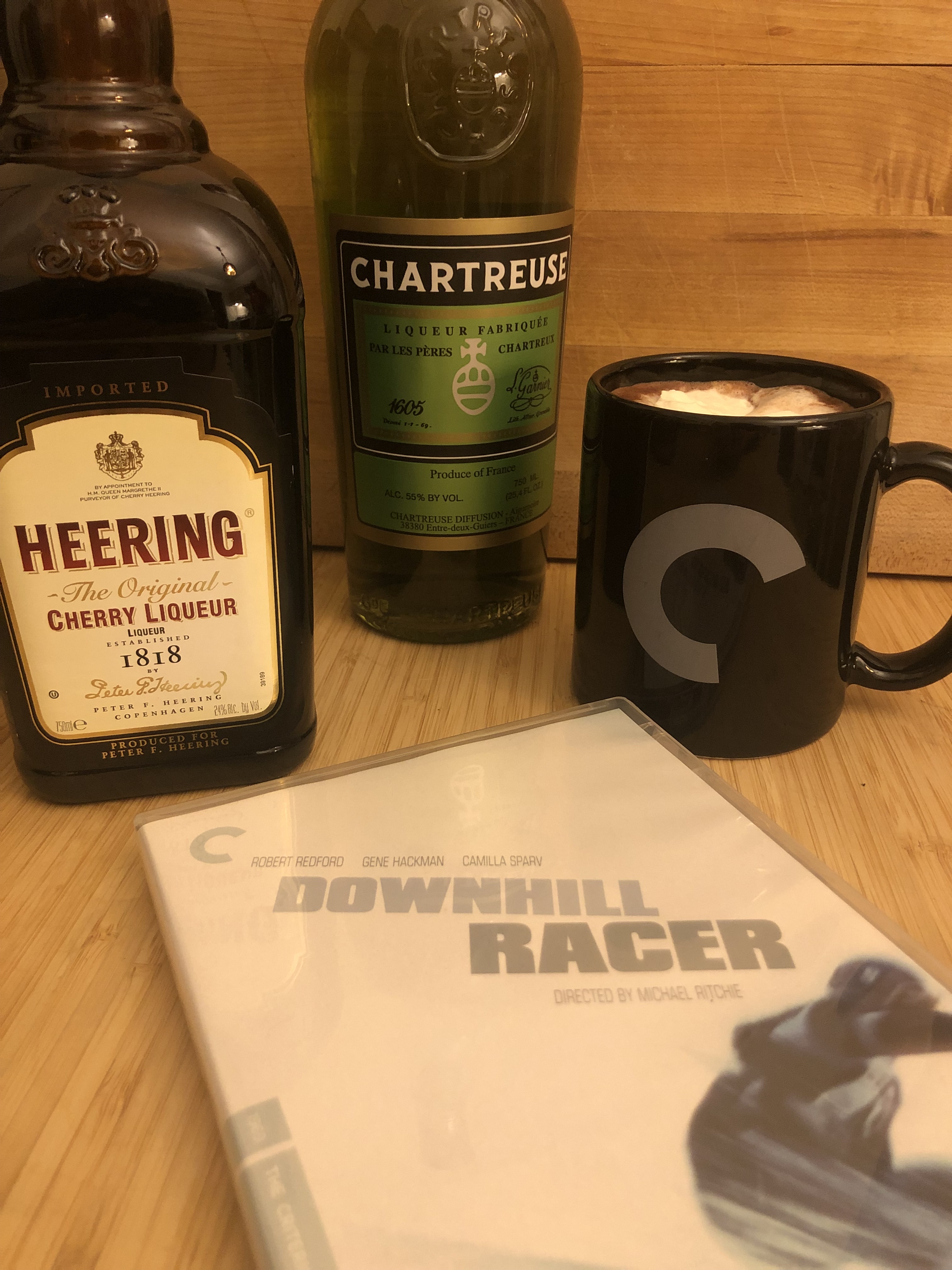
Picture of a Brigadier hot drink, Downhill Racer Blu-Ray case, and bottles of Cherry Heering and Green Chartreuse arranged in a tableau.

Pictured here is the Blu-ray copy of Michael Ritchie’s Downhill Racer I bought a while back from the Criterion Collection store, where it’s still available on both DVD and Blu-ray. The images in this post came from a Criterion DVD that I checked out from my library. Downhill Racer can also currently be streamed via the Criterion Channel with a subscription or Amazon Prime for a rental fee. The drink I chose to go with it is a Brigadier, which Paul Clarke attributed to San Francisco bartender Neyah White when he wrote about it for Serious Eats. Here’s the recipe as I make it:

8 oz. Hot Chocolate
1/2 oz. Green Chartreuse
1/2 oz. Cherry Heering
Sweetened, Chartreuse-spiked whipped cream

Add the booze and hot chocolate to a mug and stir to combine. Top with the whipped cream, being sure not to let the mug overflow, unless of course you like that sort of thing. Drink while piping hot!

Dead simple, right? I like the hot chocolate recipe on pages 172-173 of J. Kenji López-Alt’s The Food Lab for this, both because it’s not too sweet (you get a lot of extra sugar from the spirits) and to keep things in the Serious Eats family. For the whipped cream, I made myself measure and it turns out that I use about two tablespoons of confectioners’ sugar and a 1/2 ounce (aka one tablespoon) of Chartreuse per one cup of heavy cream. The consistency doesn’t really matter, since the whipped cream will melt in the heat of the cocoa pretty quickly, but I go for something dollop-able. As far as ratios are concerned, Clarke mentions that you can use up to one ounce each of the two spirits, but I find that half is plenty, especially with the extra hit of Chartreuse from the whipped cream. I highly recommend experimenting, though!

This drink is exactly what I would want to be handed should I ever find myself stepping into a chateau in the French Alps after a day of downhill skiing. It’s warm and rich and the Chartreuse (one of my very favorite things in the whole world) hails from the Aiguenoire distillery in Isère, France, one of the locations where Downhill Racer was filmed. Speaking of which: Downhill Racer may be best known for the POV footage shot by Joe Jay Jalbert, which was cutting edge for its time (see this interview with him by Hillary Weston for more details).

Screengrab from Downhill Racer shot from the point of view of a skier.

Starting with the very first images, a close up of the wheels on a ski lift followed by dramatic mountain landscapes, Ritchie and his production team (including cinematographer Brian Probyn and editor Richard Harris) also do a wonderful job of capturing the experience of competing in and watching downhill skiing events by serving up grand and granular views of the sport in perfect proportion to one another:

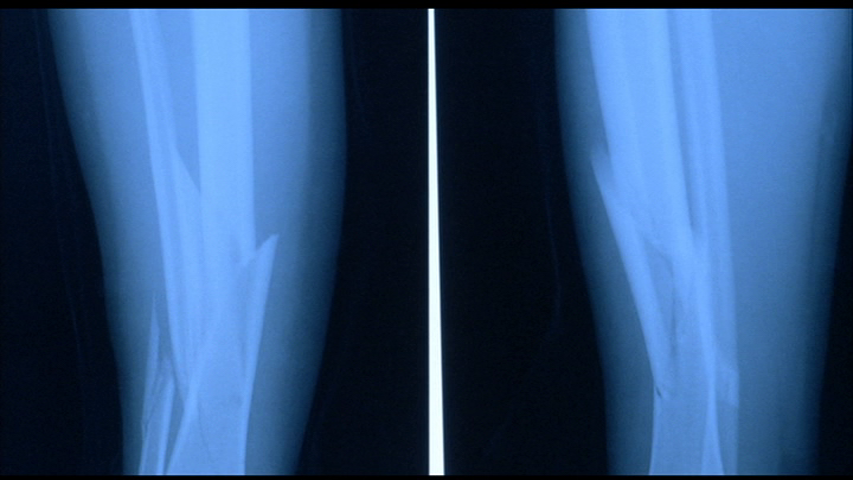
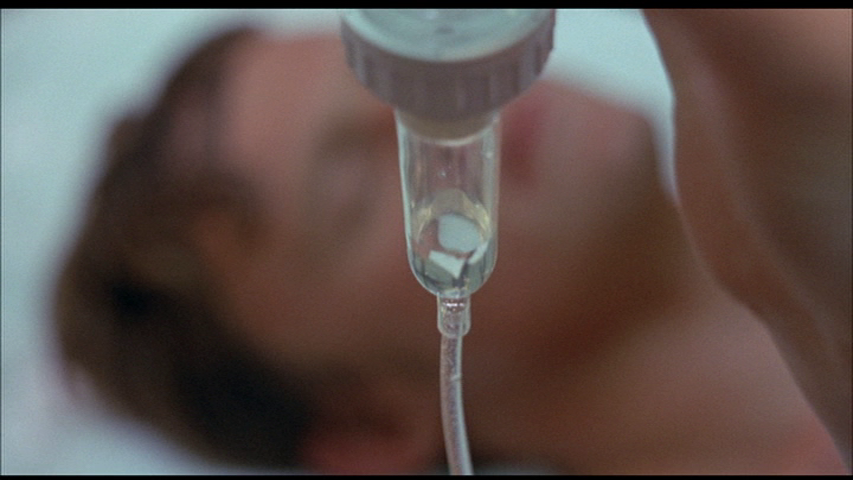
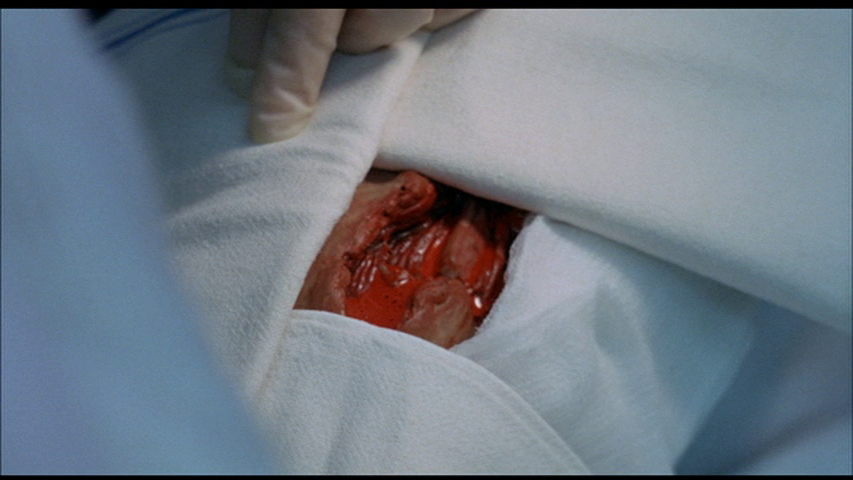
The same attention to detail is brought to scenes of a skier being treated in a hospital following a crash:

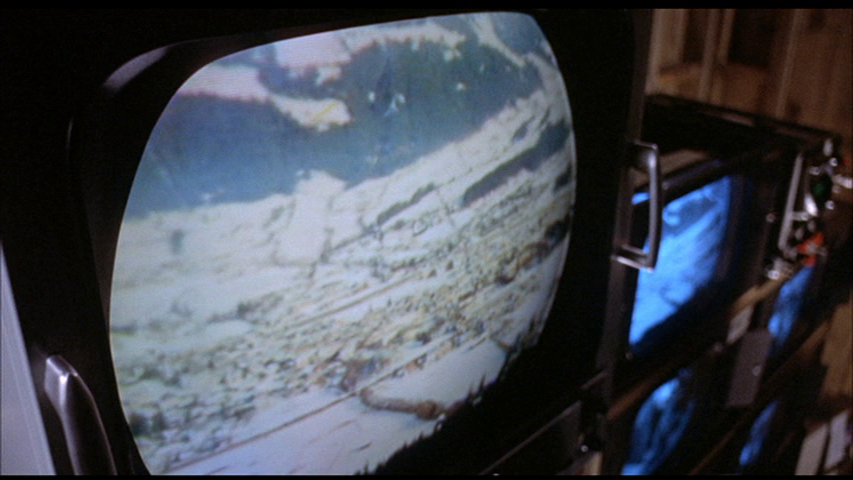
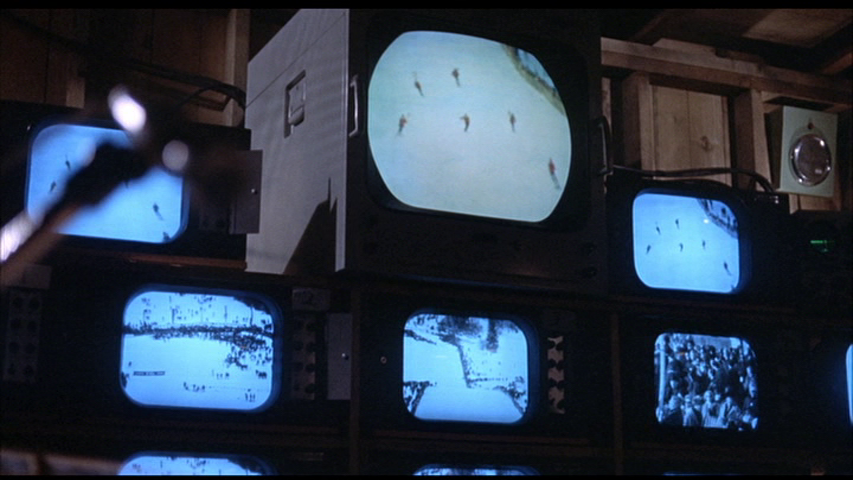
And to the television broadcasts of the various skiing events shown in the film:
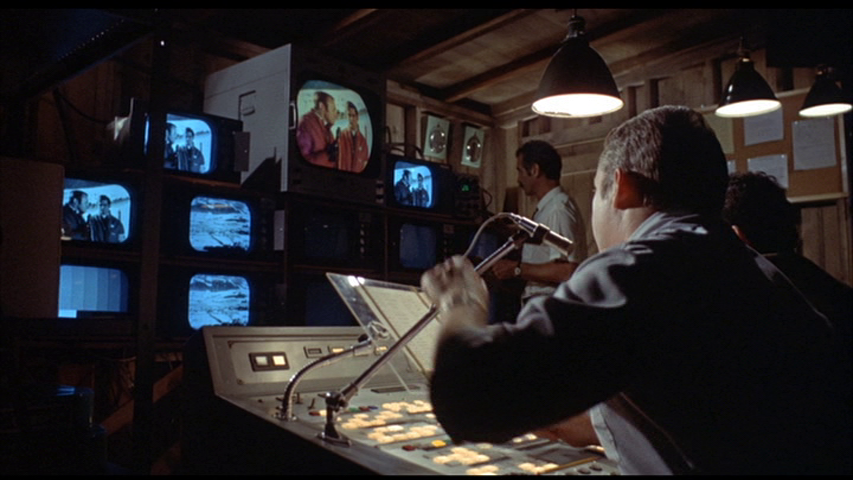
It’s the latter in particular that make this a perfect film to watch right now. Downhill Racer‘s subject isn’t just skiing or sports in general, but rather how sport is mediated through television, which is how I’m assuming everyone reading this blog will experience the 2022 Winter Olympics. It may be enough for a sports fan to say that the best athlete won the race, but networks pay a lot of money for the broadcast rights to events like the Olympics in the hope that they can convince more than just sports fans to tune in. The way they do this is by relentlessly mining for the meaning behind each gold. What I like most about Downhill Racer is the way it shuffles through the same sort of narrative explanations for Dave Chappellet’s (Robert Redford) eventual triumph that we’ll hear again and again over the course of the next two weeks without really appearing to subscribe to any single one. There are at least five by my count:

  1. Chappellet is talking to his coach Eugene Claire (Gene Hackman) after the last race of the season. Chappellet, who had the best time through the first half of the course but then crashed, is saying that he could have won if he had been given a better starting position. “No,” says Claire. “What do you mean ‘no’?” asks Chappellet. “You just weren’t good enough, that’s all,” says Claire. “You lost your strength, and then the bumps took you out, that’s it. You’ve got to have your strength right up to the end. These guys aren’t amateurs, they’re national heroes. You’re trying to beat them out of their way of life. You’re just not strong enough.” The very next scene shows Claire’s fellow coach Alec Mayo (Dabney Coleman) making Chappellet run extra laps during offseason training. Chappellet starts to actually win races the following season.
  2. Back home in Idaho Springs, Colorado, Chappellet’s father (Walter Stroud) says, “I just hope you don’t end up asking yourself the same question some folks ask me: ‘what’s he do it for?'” Chappellet says it’s because he’ll be famous and a champion. “World’s full of ’em,” his father replies.
  3. Shortly before the Olympics, Chappellet’s girlfriend Carole (Camilla Sparv) abandons him over Christmas, prompting Chappellet to end things in a terrific bit of acting involving a car horn. Is this the moment when he finally dedicates himself fully to skiing?
  4. Or is it maybe when Claire chews him out for challenging his teammate to a race after practice which results in the latter crashing? “It comes from a certain consideration for the sport,” Claire says,” a desire to learn. That’s something you never had. You never had a real education, did you? All you ever had were your skis, and that’s not enough.”
  5. But no, it surely has to be when that same teammate crashes again during their next race and suffers an injury that will cause him to miss the Olympics, right? After all, what could be more powerful motivation than the desire to win one for the Gipper?

The film’s point isn’t that none of these explanations are true or that it doesn’t matter: it’s that it can’t possibly be so simple. At the end of the day all we really know for sure is that Chappellet didn’t win a championship during his first season in Europe because he crashed, and that he does win a gold medal two years later because an unnamed German fails to capitalize on his own blazing-fast start for the same reason. Chappellet briefly catches that skier’s eye after the race:
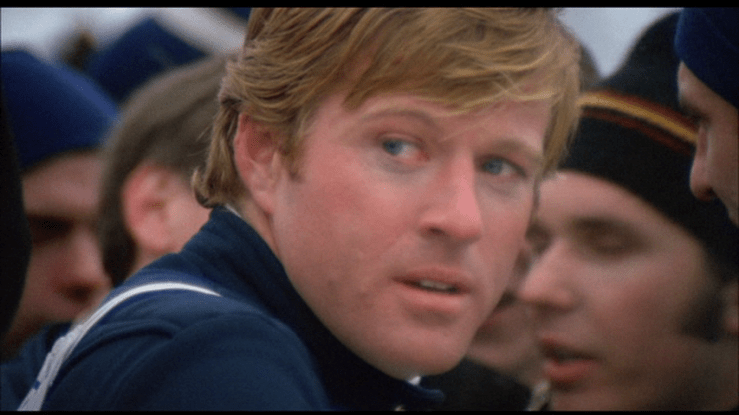
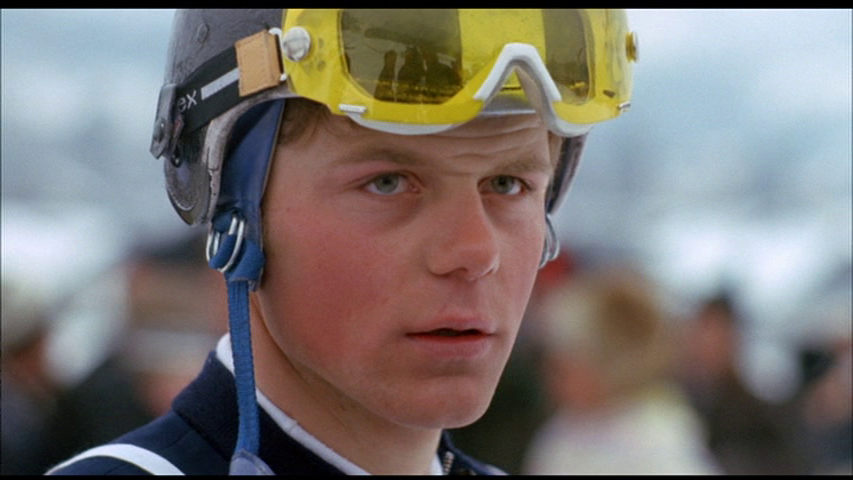
Screengrab from Downhill Racer showing the aforementioned German skier catching the eye of Dave Chappellet.

But the film ends with the crowd hoisting Chappellet on its shoulders:
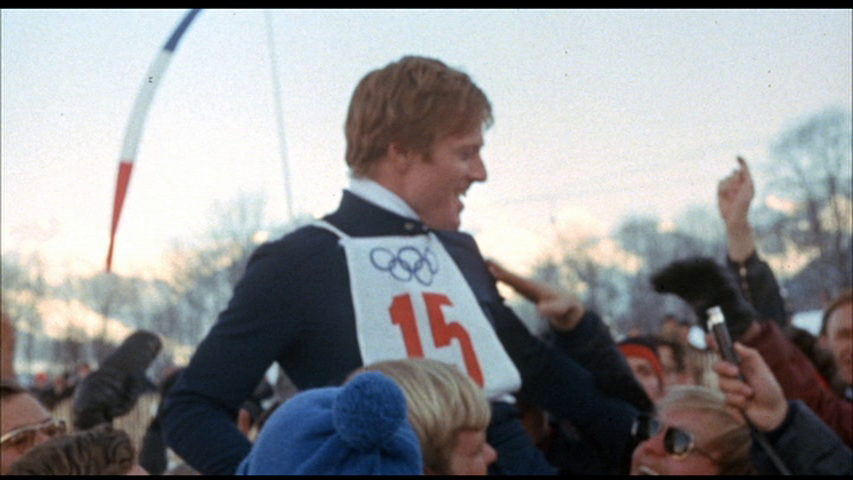
Screengrab from Downhill Racer showing Dave Chappellet being hoisted upon the crowd's shoulders after his gold medal victory.

It’s not so much that we only care about him because he won: rather, if it wasn’t for the good people at NBC, most of us wouldn’t even know that there was a human being named Dave Chappellet who we could choose to care about or not in the first place.

I would be remiss if I didn’t include at least one screengrab featuring Gene Hackman, since his smirks are one of my very favorite things about Downhill Racer. Here’s one:
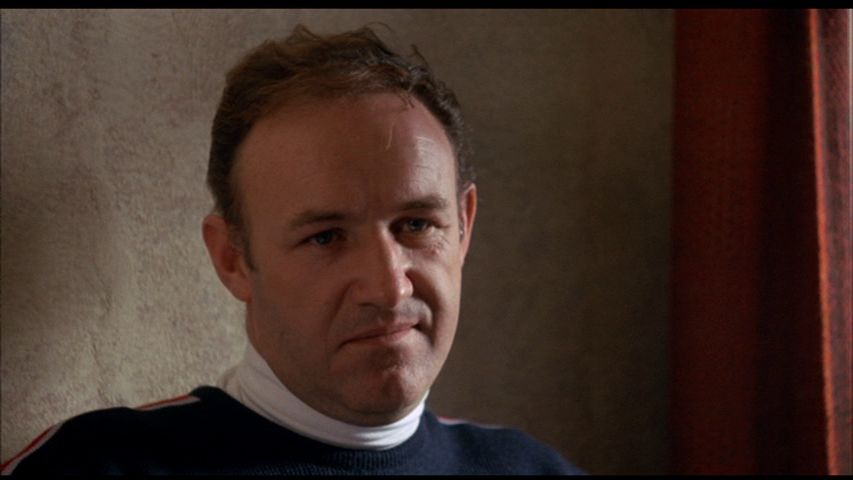
Screengrab from Downhill Racer showing Gene Hackman smirking.

And actually, here’s another one from one of the scenes showing him hustling for funding for the U.S. national ski team, which I also enjoy:

Screengrab from Downhill Racer showing Gene Hackman's character trying to raise funds for the U.S. national ski team.

Last but not least, here’s Robert Redford contemplating a bidet:
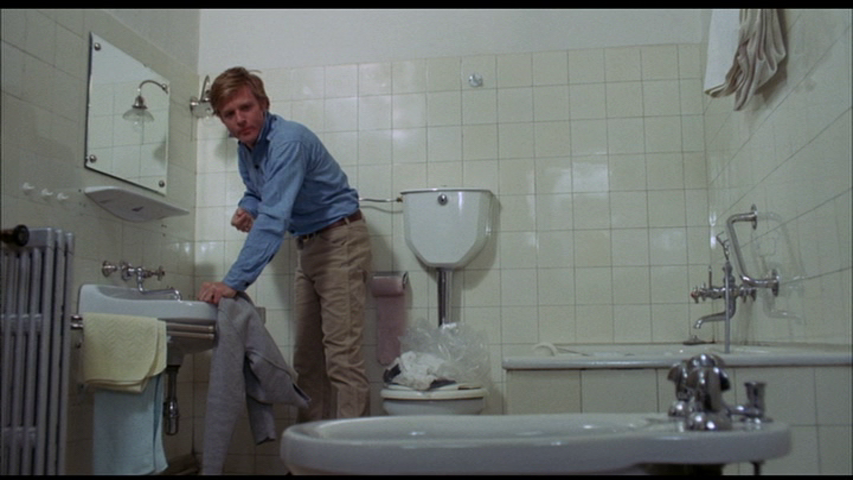
Screengrab from Downhill Racer showing Robert Redford's character contemplating a bidet.

Cheers!

All original photographs in this post are by Marion Penning, aka My Loving Wife. Other entries in this series can be found here.


January, 2022 Drink & a Movie: Standby’s Corn ‘n Oil + The Tamarind Seed

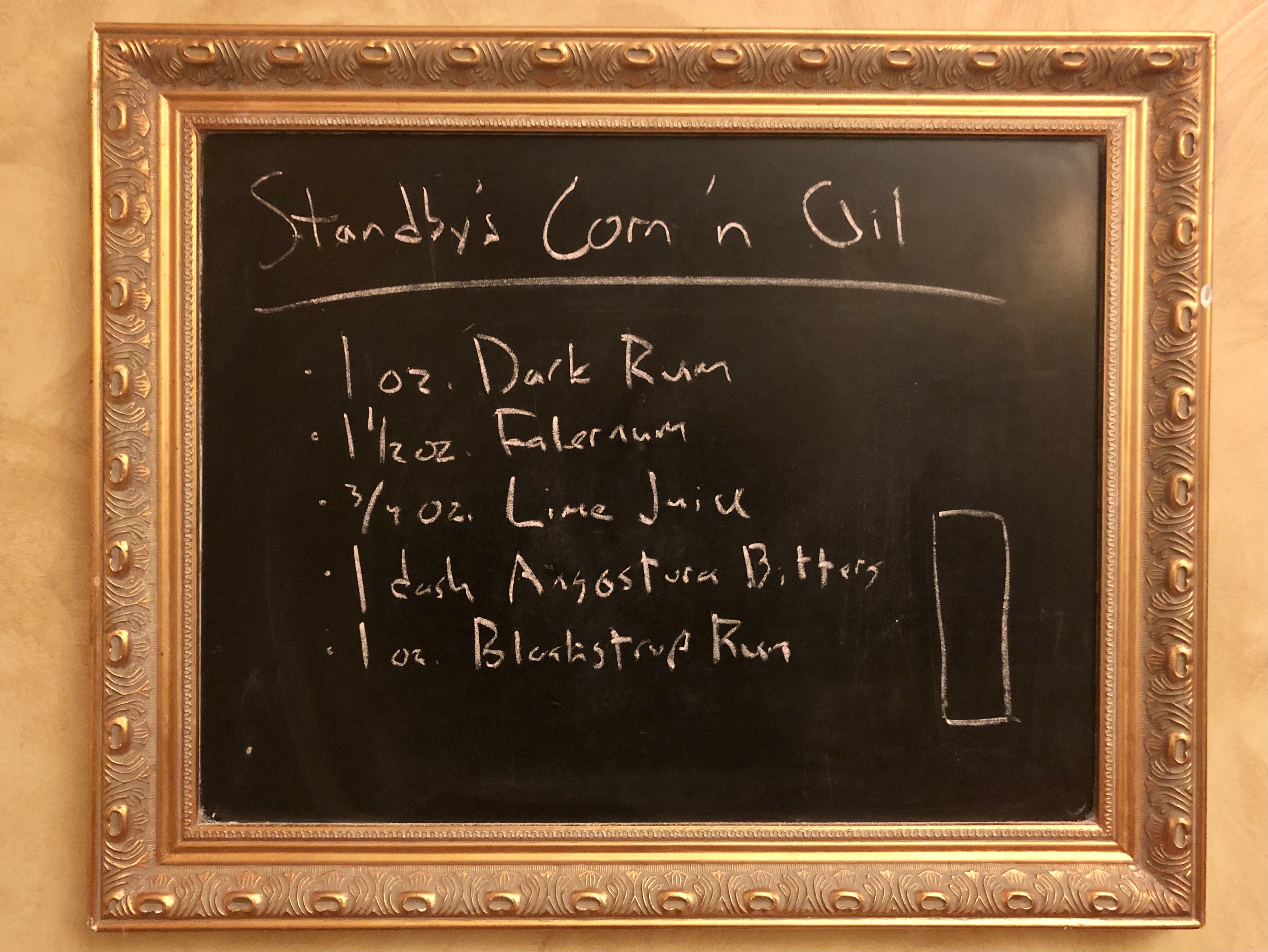
I’ve always enjoyed creating New Year’s resolutions, and this year the choice was easy: blog more! When I started this site in 2018, it was important to me not to stress myself out by creating unsustainable expectations for how much content I was going to produce. I really do want to write, though, and it has become increasingly clear to me that one of my biggest problems is that I’m out of practice. While pondering this situation the other day, I found myself staring at this chalkboard in my dining room:

Chalkboard with a cocktail recipe on it

If you’re standing in my house, odds are you know that I love cocktails and that I don’t need much prompting to offer you one. This board, which I update once a month or so, is an invitation to ask me to do so and an order suggestion based on the spirits, syrups, and juices we have on hand. Currently it features a Corn ‘n Oil recipe from the Detroit cocktail bar Standby published by Imbibe Magazine a few years ago. This drink is the best application I’ve found for the Maggie’s Farm Falernum Liquor (made by a distillery located in my old stomping grounds of Pittsburgh) My Loving Wife got me for my birthday last year and a fine use for the bottle of Cruzan Black Strap Rum I always seem to have in my liquor cabinet as well. The clove notes in the falernum also create a bridge to the recently expired holiday season, while the tropical flavors are just the ticket for a brief respite from the cold of early January in upstate New York.

Suddenly it hit me: what if I picked a movie to go with this drink? And then came up with additional pairings and posted them monthly throughout the rest of the year? I was fond of the TBS television series Dinner & a Movie as a youngster and have always thought that as a person who spends most of my waking moments thinking about either food or film, there surely must be a way I could run with this basic concept. I’ve never had any luck coming up with anything before now, but maybe this was it? After all, I’m basically doing this all the time anyway, I just need to start showing my work.

So that’s the gimmick! Each month, I will highlight a cocktail and a film on this blog that I think go well together. Although in the future the inspiration for these posts could begin with cinema or spirits, I decided to stick with what was already on the board for the first installment. And so I bring you a drink, Standby’s Corn ‘n Oil:

1 oz. Dark Rum (Plantation Original Dark)
1 1/2 oz. Falernum (Maggie’s Farm)
3/4 oz. Lime Juice
1 dash Angostura Bitters
1 oz. Black Strap Rum (Cruzan)

Shake dark rum, falernum, and lime juice with ice until chilled and strain into a Collins glass. Add crushed ice, then float the black strap rum and bitters over the top to combine. Standby and Imbibe recommend stirring to combine before drinking, and I don’t disagree, but make sure you take a second to admire it first!

Corn 'n Oil cocktail in a Collins glass

And a movie, Blake Edwards’s The Tamarind Seed:

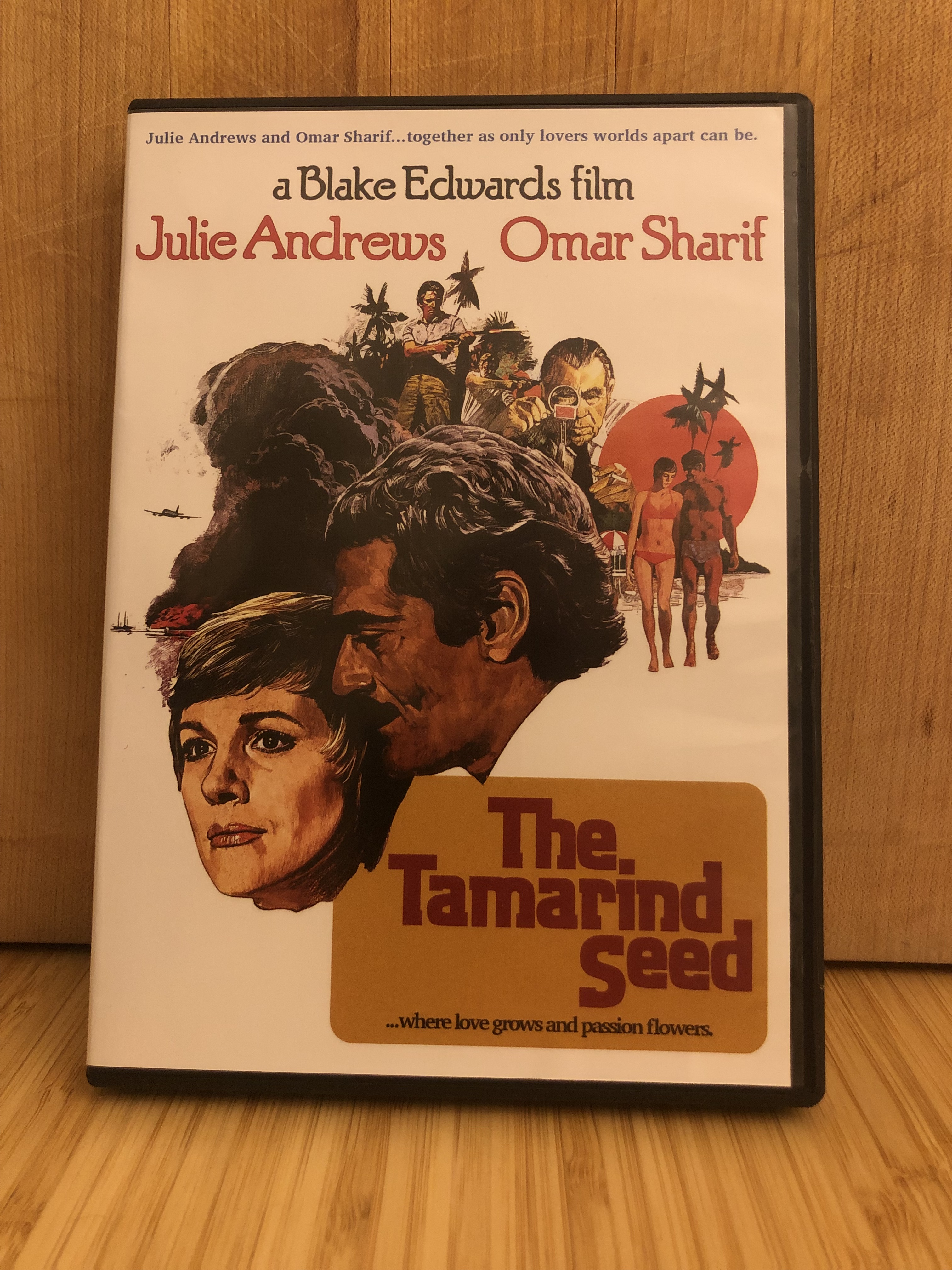
The Tamarind Seed DVD case

Pictured here is the DVD I bought on Amazon. The film is also available on Blu-ray and can currently be streamed via Amazon Prime for a rental fee and the Roku Channel for free. The main reason I selected it is because it was shot on location in Barbados, birthplace of falernum. This is also one of the reasons I prefer to use Plantation Original Dark, since it hails from the same place. It’s also lighter in color than many dark rums, and although master distiller at R.L. Seale (creator of John D. Taylor’s Velvet Falernum, the most well-known version of the spirit) Richard Seale disputes the notion that the Corn ‘n Oil is named after its appearance (he believes it’s actually a biblical reference), the striking contrast between the dark and light hues in Standby’s rendition of the drink is one of my favorite things about it. The visual style of The Tamarind Seed echoes this in a red/blue two-color motif which first appears in the titles designed by James Bond veteran Maurice Binder and recurs throughout the film:

Screengrab from the Tamarind Seed showing Omar Sharif's face tinted red and Julie Andrews's face tinted blue

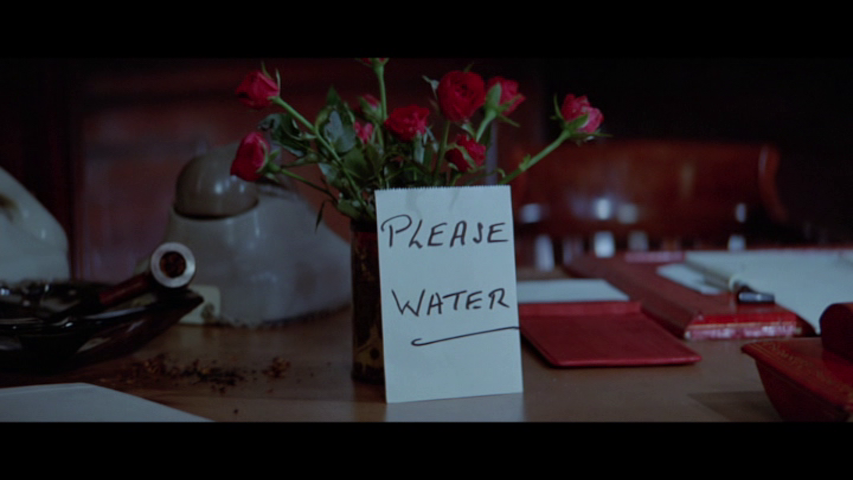
More importantly, this is a thoroughly grown-up film to enjoy with your adult beverage. Despite the fact that it’s a Cold War drama, characters are defined as “good” or “bad” based on how they treat each other and the world (I submit that the sign below which appears at around the halfway mark is a pivotal moment in the film) rather than which side they’re on, and their uncommonly intelligent dialogue reflects an awareness of the fact that this is a minority viewpoint.

Screengrab from The Tamarind Seed showing a sign reading "Please Water" placed in front of a bouquet of flowers

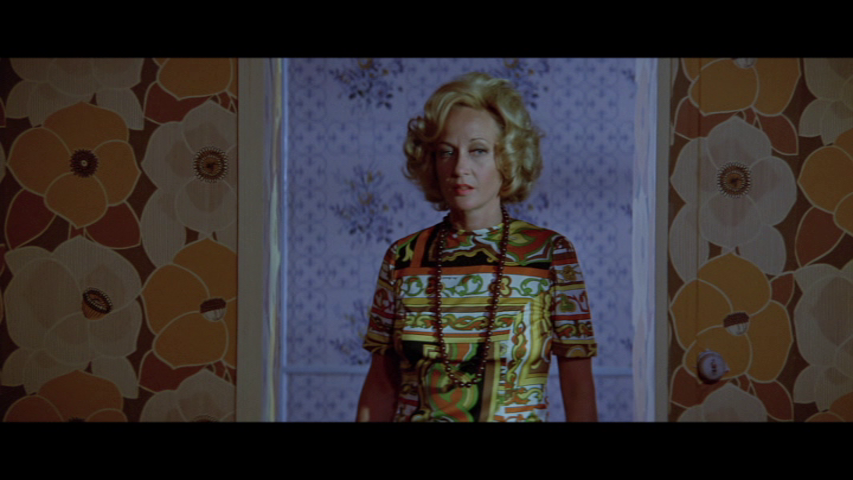
The Tamarind Seed is quite lovely to look at, a few baffling (to this child of the ’90s) aesthetic choices aside:

Screengrab from the Tamarind Seed showing a woman in a garish earth-toned dress in a room with two different floral wallpapers

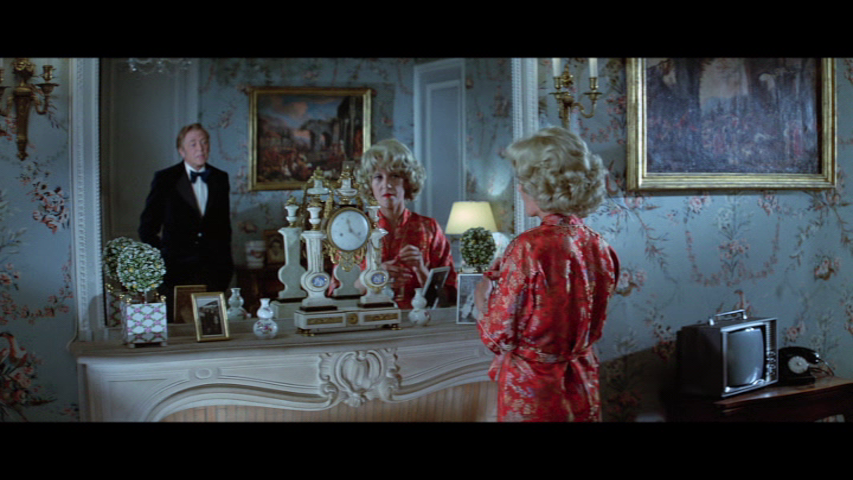
I’m particularly fond of the use of mirrors and windows to create baroque compositions like this one:

Screengrab from The Tamarind Seed showing a woman and a man standing in front of a mirror with many other things in the frame

And to foreshadow future plot developments:

Screengrab from The Tamarind Seed showing Julie Andrews reclining in front a glass door that Omar Sharif is reflected in, making it look like they're next to each other

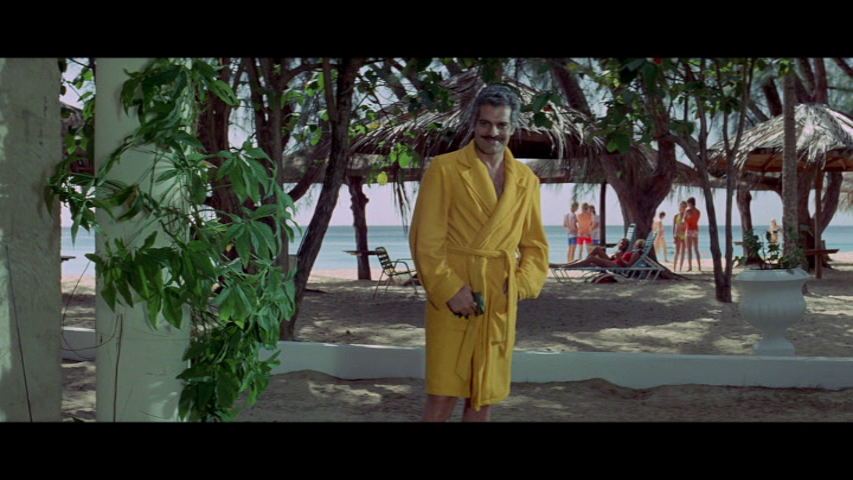
Which, why yes, that *is* Omar Sharif in a bright yellow robe!

Screengrab from The Tamarind Seed showing Omar Sharif in a bright yellow robe

He dons it again near the end of the film in one of my favorite sequences, which builds tension through John Barry’s effective score, deep-focus photography:

Screengrab from The Tamarind Seed showing Julie Andrews talking on the phone in front of a window through which you can see a boat
The boats in this image and the next bear the would-be agents of our heroes’ demise

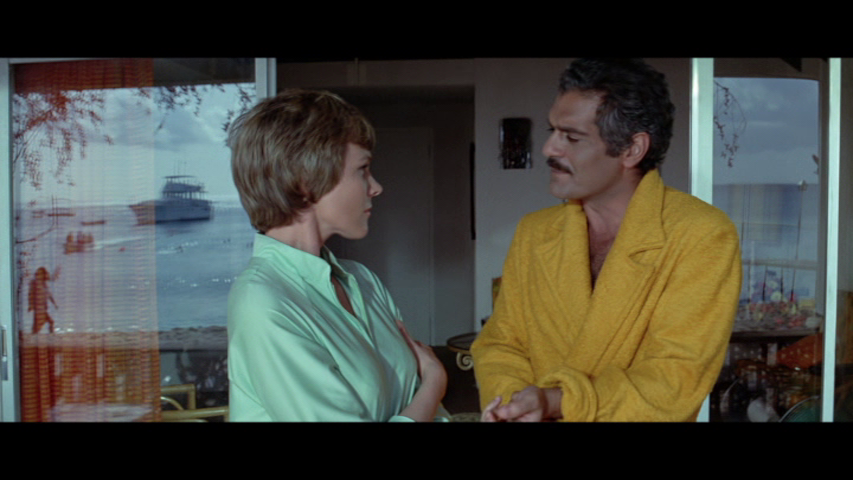
And more reflections:

Screengrab from The Tamarind Seed showing Julie Andrews and Omar Sharif shot through a window that two boats are reflected in

The supporting cast is terrific, especially Anthony Quayle, and it can even be quite funny at times (“Has it ever occurred to you that I might be slightly frustrated myself?” says Julie Andrews after almost two hours of refusing to go to bed with Sharif). Throw in a few breathtaking Bajan sunsets:

Screengrab from The Tamarind Seed showing a sunset

And you have the perfect companion to a tropical libation, not to mention a film that I’m surprised I haven’t heard more about.

Cheers!

All original photographs in this post are by Marion Penning, aka My Loving Wife. Future entries in this series will be findable here as soon as they exist.

Juxtaposition #3

From Moonlight:

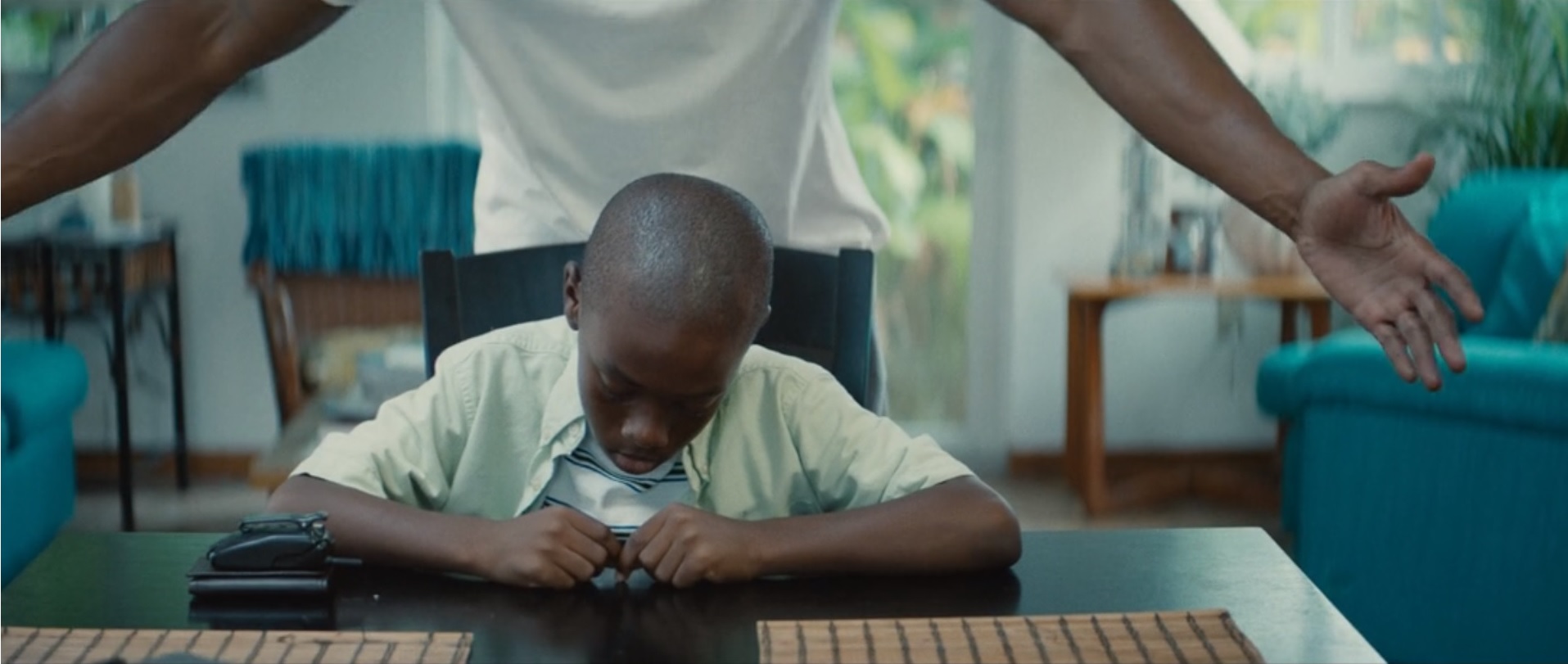
Screengrab from Moonlight #1

JUAN: Alright, first things first. You can’t sit at my table like that. You can’t sit with your back to the door. C’mon. [Juan slides Little’s chair around the table.] How you gonna know if somebody creepin’ up on you? Alright, see that? Now you can see everything.

From Dune by Frank Herbert:

Thufir Hawat slipped into the training room of Castle Caladan, closed the door softly. He stood there a moment, feeling old and tired and storm-leathered. His left leg ached where it had been slashed once in the service of the Old Duke.

Three generations of them now, he thought.

He stared across the big room bright with the light of noon pouring through the skylights, saw the boy seated with back to the door, intent on papers and charts spread across an ell table.

How many times must I tell that lad never to settle himself with his back to a door? Hawat cleared his throat.

Paul remained bent over his studies.

A cloud passed over the skylights. Again, Hawat cleared his throat.

Paul straightened, spoke without turning: “I know. I’m sitting with my back to a door.”

Hawat suppressed a smile, strode across the room.

Previous “Juxtaposition” posts can be found here.
Sweet Vermouth on the Rocks with a Twist

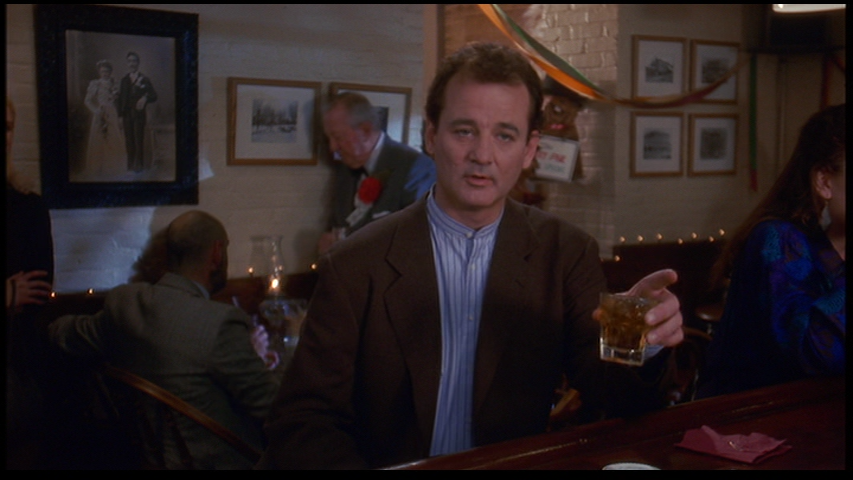
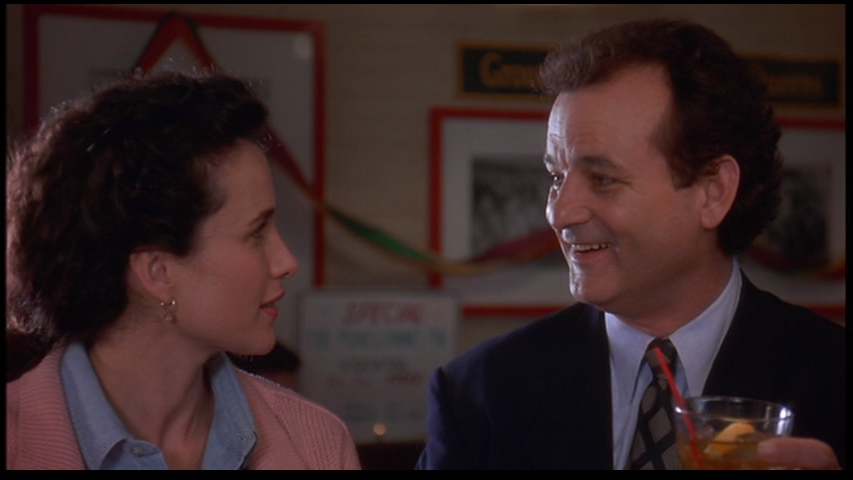
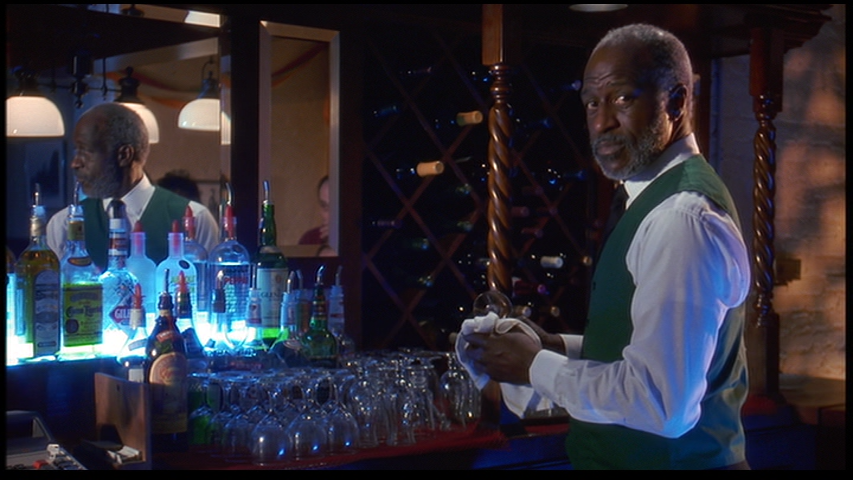
Eighteen minutes into Groundhog Day, weatherman Phil Connors (Bill Murray) sits in the bar of the Pennsylvanian Hotel and orders “one more of these with some booze in it”:

Screengrab from Groundhog Day #1

Judging from its appearance and subsequent scenes, the drink in question is most likely Jim Beam on the rocks with a splash of water, which Phil orders from the same bar later in the movie, using his fingers to indicate exactly how much of each component he wants:

Screengrab from Groundhog Day #2

It might also be Jack Daniels, which I think is what he is swigging from the bottle in this scene:

Screengrab from Groundhog Day #3

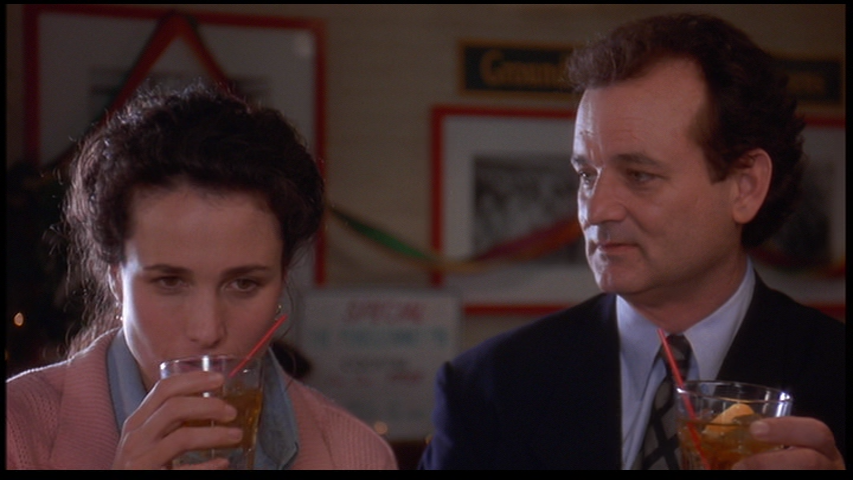
Either way, Phil seems to be partial to whiskey. His producer Rita (Andie MacDowell) is not: her tipple of choice, as we learn from her first drink order, is “sweet vermouth on the rocks with a twist.” Upon discovering that he is stuck in Punxsutawney, Pennsylvania living the same day over and over, Phil decides to seduce Rita to pass the time. His plan begins back in the bar at the Pennsylvanian. “Can I buy you a drink?” he asks her. When she says yes, he not-so-innocently requests “sweet vermouth, rocks, with a twist, please.” After telling the bartender (John Watson Sr.) she wants the same, Rita turns to him with a smile. “That’s my favorite drink!” she exclaims. “Mine, too!” he replies with mock astonishment. “It always makes me think of Rome, the way the sun hits the buildings in the afternoon.” He proposes a toast to the groundhog, but it falls flat (more on this in a bit):

Screengrab from Groundhog Day #4

So he takes a sip of his drink. It’s the face he makes next that I want to talk about first:

Screengrab from Groundhog Day #5

Obviously, he’s not a fan. But why not, and what does it tell us? A good starting point is to try to determine what exactly they’re drinking. Unfortunately, the film itself is of little help in this regard. There’s only one good shot of the backbar at the Pennsylvanian:

Screengrab from Groundhog Day #6

You actually can make out quite a few labels: I see Jose Cuervo Especial, Bushmills Irish Whiskey, Kahlua, Glenlivit, and Absolut Peppar, for instance, but nothing clearly identifiable as sweet vermouth. There’s another shot in the film that theoretically could tell us something about what brands were available in Punxsutawney at the time, of the backbar at the German restaurant where Phil and Rita eat dinner later that evening, but it’s similarly unhelpful:

Screengrab from Groundhog Day #8

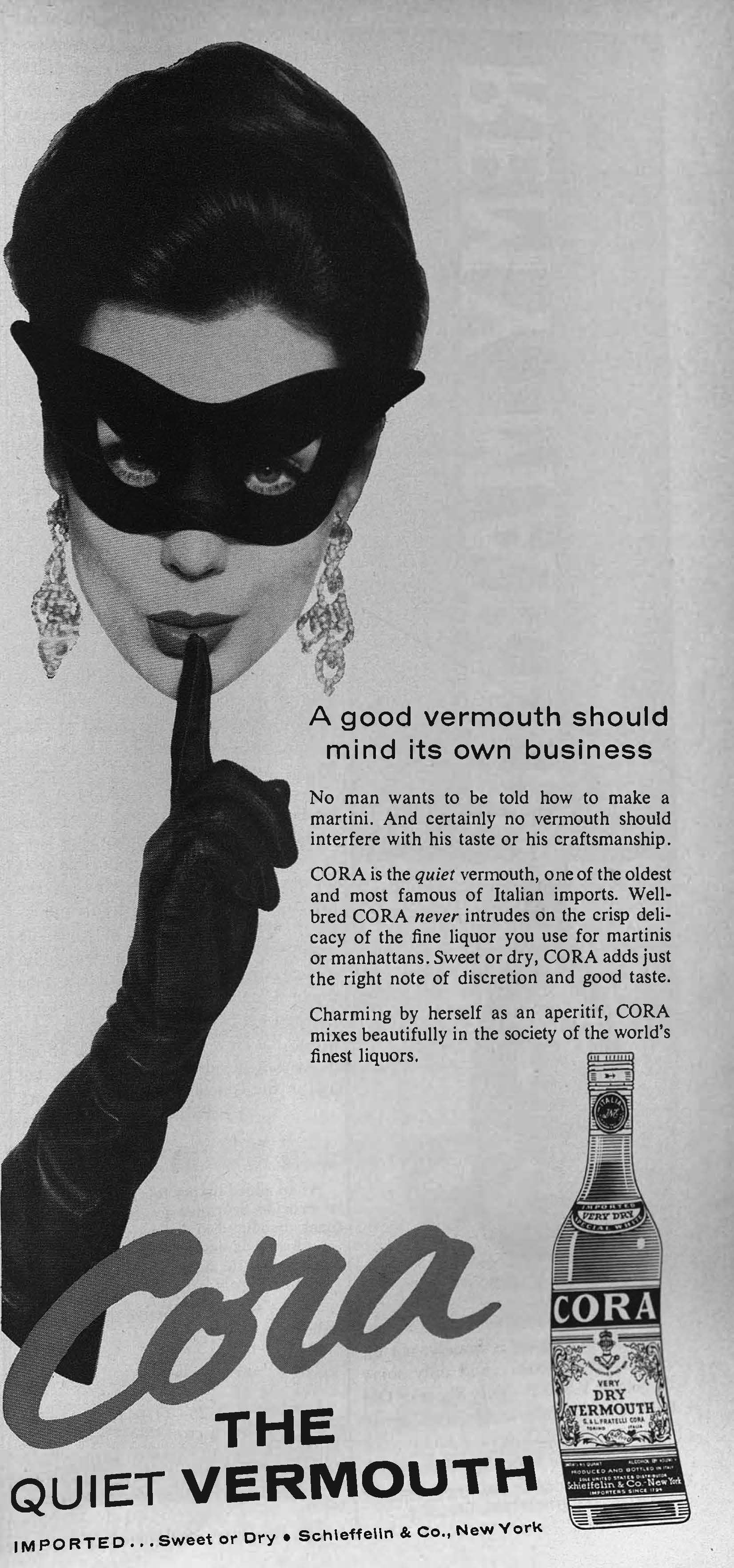
I see Maker’s Mark, J&B Scotch Whisky, Tanqueray, Frangelico, and a few other things here, but again, no vermouth. Even lacking a smoking gun, though, I think we can make some strong inferences. As chronicled by Adam Ford in his book Vermouth: The Revival of the Spirit that Created America’s Cocktail Culture, vermouth had its heyday in the United States in the 1930s and 40s. While Helen Weaver describes drinking “sweet vermouth on the rocks with a twist of lemon” at a Greenwich Village lesbian bar called The Bagatelle as late as 1955 in The Awakener: A Memoir of Jack Kerouac and the Fifties, according to Ford the spirit had been in decline since the end of World War II, and its fall from grace was expedited shortly afterward when foreign producers began reformulating the vermouths they exported to the United States into less flavorful styles marketed as a perfect complementary ingredient in cocktails like the martini and manhattan. The reason? “As men returned from the war and found women in increasingly powerful roles, a faux-masculinity appeared, which resulted in men demanding ‘stronger’ drinks” (Vermouth, p. 110). This advertisement for Cora vermouth in the March 12, 1960 edition of The New Yorker (one of two brands of vermouth with ads in the issue!) cited by Ford says it all:

Advertisement for Cora Vermouth

Bill Murray was born in 1950. If Phil is approximately the same age, then he would have grown up surrounded by messages like this one about how he should act and drink. Is it any wonder that he prefers reading Hustler to attending Punxsutawney’s annual Groundhog Dinner, that he’s incredulous at the idea that a man would cry in front of a woman, or that one of the ways he chooses to spend immortality is by living out this fantasy?

Screengrab from Groundhog Day #8

Is it any surprise that he would be disgusted by a weak, “girlie” drink like unadulterated sweet vermouth? In an article in the journal Critical Studies in Mass Communication called “The Spiritual Power of Repetitive Form: Steps Toward Transcendence in Groundhog Day,” Suzanne M. Daughton argues that the film “presents one man’s metaphorical journey away from the stereotypically masculine pursuit of Power and Agency” and toward “acceptance of Spirit and communion” by subverting “the traditional masculine theme of the romantic quest, where the hero must travel far away to meet his challenges” and replacing it with “a feminine initiation ritual” (p. 143). Proponents of this reading could plausibly see Phil’s reaction as one of the pivotal moments in the film: he recoils from its bitter taste, but his medicine has been taken.

A more charitable explanation for Phil’s reaction is suggested by his reference to Rome. Adam Ford begins his history of vermouth by talking about how he came to be interested in it:

When we got back down into the Aosta Valley about a week later, in the serene mountain town of Courmayeur, we rewarded ourselves with a fancy hotel room and an expensive dinner at a small side-street café, a little bit off the main town square. During dinner, my wife noticed that others in the restaurant were drinking vermouth, and of course she ordered a glass. We had never seen the brand before. She took it cellar temperature in a classic Italian wine glass, like everyone else, and loved it.

For the first time I tried it too, and found it unlike anything I’d ever drunk before. The flavors were intriguing, enigmatic, and distended. I asked the bartender (in Spanish) what the ingredients were and he told us (in Italian) that–as with all vermouths–it was a highly guarded secret, but that everyone had their opinions as to some of the ingredients. An Israeli couple next to us overheard and suggested a few possibilities: Maybe gentian? Or angelica? Certainly some cinnamon. The night ended with a list of almost a dozen potential candidates that I wrote down on the back of a napkin, sadly long since lost.

We closed out the restaurant, and despite the amount we had drunk, we walked back to our hotel room still sober and excited, holding hands like a couple of junior-high kids. While I looked at her and she looked toward the stars, I asked Glynis what she wanted to do when we got back to America. She said she wanted more nights like the one we just had.

Ford goes on to note that when they returned to the United States, they did start drinking more vermouth, but that the only ones they were able to find paled in comparison to what they had consumed in Europe: “[t]hey were like buying a suit off the rack after years of having tailor-made; it was fine, but you didn’t feel like you were at the top of the food chain.” An experience like this is plausibly how Rita and the real-life inspiration for her drink order (as described in the director’s commentary on the special edition DVD), Harold Ramis’s wife, came to develop their preferences for vermouth as well. If we assume that, like Bill Murray’s character in Scrooged, Phil wasn’t always a jerk, maybe he, too, has a memory that the drink he is served at the Pennsylvanian just can’t live up to.

The most likely solution may be the simplest one, though. Good vermouths like Punt e Mes, a personal favorite which is mentioned in a New York Times article dated November 1, 1992, definitely were being exported to the United States in the early 1990s when Groundhog Day is set, but it’s unclear whether or not they would have been available in rural Pennsylvania. It seems far more probable that Phil and Rita would have been served a major global brand like Martini & Rossi (which was acquired by Bacardi Ltd. just a few months before the film was released in a move that the Wall Street Journal reported created the world’s fifth-largest wine and spirits company) or a bottom-shelf American label like Tribuno, which I remember collecting dust on my parents’ home bar in Lancaster, Pennsylvania. That bottle from my youth was almost certainly purchased from a state store supplied by the same Pennsylvania Liquor Control Board that the commercial establishments in Punxsutawney would have been legally required to buy their spirits from. In other words, the drink may just not have been very good. And that, finally, brings me back to Phil’s toast.

Recall that Phil and Rita are sitting in a bar in the hometown of Punxsutawney Phil, “the world’s most famous weatherman,” on Groundhog Day. Phil offers to buy Rita a drink. She accepts. She asks him, “well, what should we drink to?” He responds, “to the groundhog!” This is entirely appropriate under the circumstances, but what does Rita do? She gives him a disappointed look:

Screengrab from Groundhog Day #4

And says, “I always drink to world peace.” Maybe the film makes a joke out of Rita’s bad taste in booze, maybe it doesn’t: I don’t think it’s saying anything significant about her either way. But what are we supposed to make of a person who reacts this way to a perfectly respectable toast?

To quote Adam Ford one last time, the genius of the inventor of vermouth, Antonio Benedetto Carpano, was that he “perfected a drink that hit upon the two most popular flavors at the time: sweet and bitter” (p. 66). There are beautiful scenes in Groundhog Day. Here’s one I’m particularly fond of:

Screengrab from Groundhog Day #10

But treacle needs to be cut, as Danny Thomas once said to Time magazine, and that’s what moments like Rita’s reaction to Phil’s toast accomplish. After all, she may look like an angel when she stands in the snow, but she isn’t one: she’s a human being with flaws, and however well Phil knows Rita by the end of February 2, February 3 is a new day and only the second one she’s ever spent with him. And so, “let’s live here!” Phil says at the end of the film. But then, immediately afterward: “we’ll rent to start.” To quote the Nat King Cole song which plays over the credits with a slight change in emphasis, it’s almost like being in love.

Not at All What We Had in Mind

Screengrab from Prince of Darkness #2

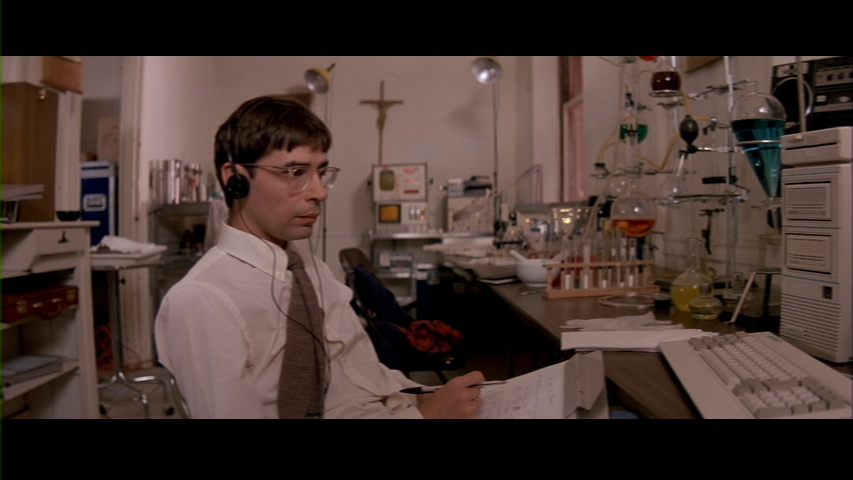
I’ve been thinking a lot about this character in John Carpenter’s Prince of Darkness lately. His name is Etchinson (not that anyone ever addresses him as such–we have to wait until the end credits to find this out) and he’s played by the actor Thom Bray. He is on screen for 4:08 total in a film with a 102 minute runtime (~3% of the whole), and all of his appearances are confined to the 11 minutes (~9%) between the 26:36 and 37:38 marks. We know that he is a graduate student, and that his discipline is biochemistry. That’s about it, though.

His chief claim to fame is, of course, being the first person in the film to be killed:

Screengrab from Prince of Darkness #3

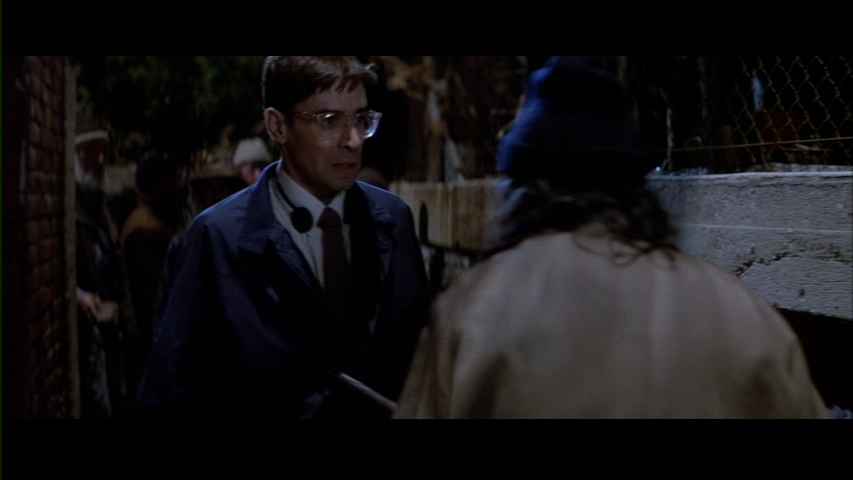
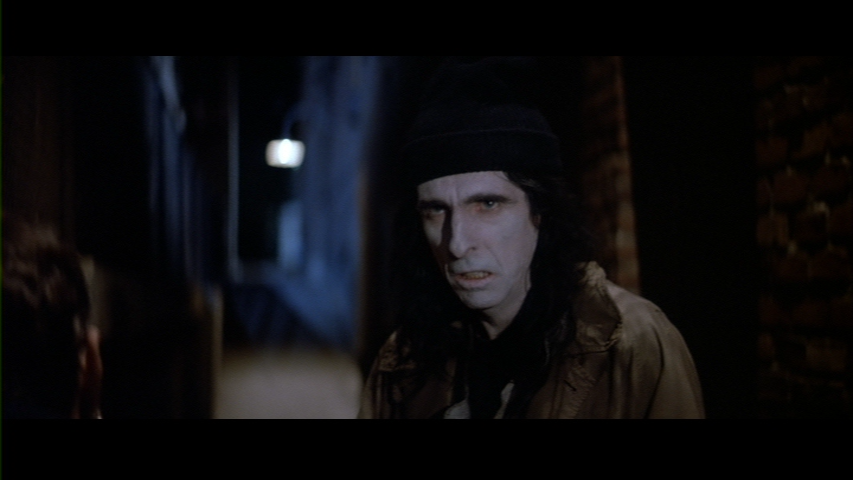
Part of what makes him memorable is how he goes, impaled on a bicycle in an impressive stunt borrowed from Alice Cooper’s stage show (per Gilles Boulenger’s John Carpenter: The Prince of Darkness, p. 204) by a “street schizo” played by Cooper himself:

Screengrab from Prince of Darkness #4

It’s a sudden, brutal death to be sure, but so are many others in the film: why is this the one that stuck with me? First, at the risk of being obvious, the scene is well done. In addition to the stunt work mentioned above, this is a good example of the director’s mastery of what Michelle Le Blanc and Colin Odell call “the act of depicting nothing” in their book John Carpenter. As they note, “[a]n empty room is ominous because cinema is generally concerned with action–emptiness represents suspicion or disruption of order” (p. 19). In the case of Prince of Darkness, anticipation is created by the inaction of the homeless people who have been arriving at Saint Godard’s (the church where the bulk of the film’s action is set) in greater and greater numbers since Etchinson and his colleagues began appearing, and who are described thusly seconds before Etchinson exits the film:

KELLY: Now, a friend of mine at UCLA did a study of chronic schizophrenics. They’re supposed to have stereotyped routines that they repeat every 20 minutes or so, you know, like a stuck record in their brains repeating the same phrase over and over. Well, I have been watching them on and off all day, and they don’t seem to be making any movements. They just stand there.

Second, the scene remains effective even after you’ve seen the rest of the movie; in fact, if anything, it’s more surprising in retrospect than it is in the moment. A viewer familiar with Robin Wood’s ideas about the horror genre and the “return of the repressed” (as articulated in his book Hollywood from Vietnam to Reagan and elsewhere) or the rules for surviving a horror movie presented in Scream could be forgiven for assuming that Etchinson was chosen as the first victim as punishment for the promiscuity implied by his one memorable line: “how married?” he asks after being told that the attractive young woman he has just inquired after is spoken for. The subsequent carnage doesn’t follow anything like this pattern, however, and in the end it seems that Etchinson is guilty of nothing more than being in the wrong place at the wrong time (and possibly of being a graduate student, who are, as we know, the worst).

More than just being random, though, this points to the most disturbing aspect of what Etchinson’s demise implies. John Carpenter is famously enamored of the work of Howard Hawks: his second full-length feature Assault on Precinct 13, for instance, is essentially a remake of Hawks’s Rio Bravo. In a Hawksian universe, survival depends on being “good enough” or, if you’re not, understanding your limitations and staying within them. Etchinson’s murder is our first clear indication that, unlike other Carpenter movies, Prince of Darkness is not set in such a universe. To quote the film’s Professor Birack (Victor Wong), “while order does exist in the universe, it is not at all what we had in mind!” In other words, being good enough might not be good enough to make it out alive.

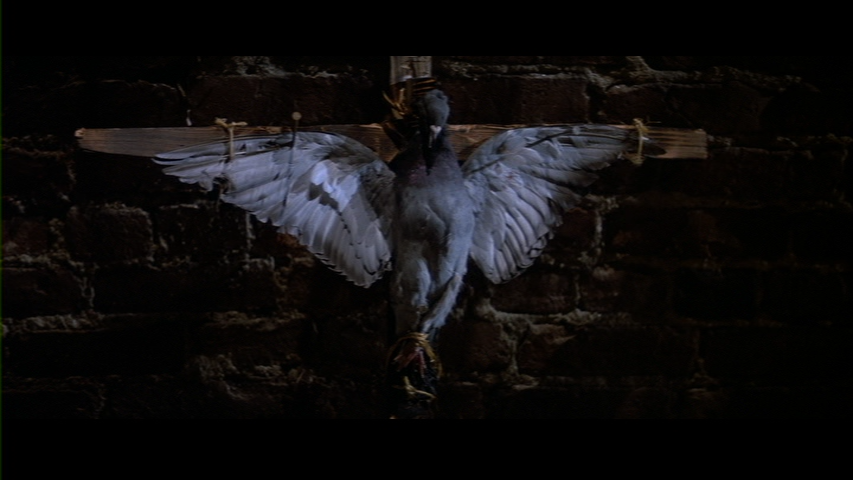
Writing in Film Comment, Kent Jones observed that John Carpenter is “one of the few modern artists whose subject is the contemplation of true evil” and that in contrast to Hawks, “where all the energy goes into the beauty of people in action,” Carpenter’s films “are filled with moments of paralyzing immobility, of dry-mouthed discomfort brought about by the realization that there is something new and awful in the world.” Etchinson actually freezes three times in his final scene: once when he sees this crucified pigeon:

Screengrab from Prince of Darkness #5

Once when he realizes he’s surrounded, and one last time the moment he understands he’s about to die. This is, I think, exactly what Jones was talking about, and that’s what makes Etchinson such a memorable character despite his limited screen time: he’s a perfect example of some of the most interesting and original aspects of Carpenter’s artistic vision.


Juxtaposition #2

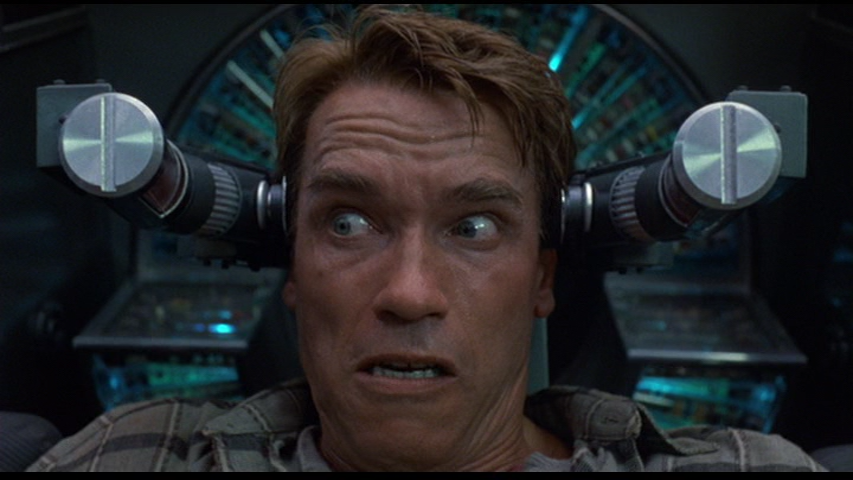
From Total Recall:

Screengrab from Total Recall 1

COHAAGEN: Relax, Quaid. You’ll like being Hauser.

QUAID: The guy’s a fucking asshole!

From The Demolished Man by Alfred Bester:

“No. I mean something else. Three or four hundred years ago, cops used to catch people like Reich just to kill them. Capital punishment, they called it.”

“You’re kidding.”

“Scout’s honor.”

“But it doesn’t make sense. If a man’s got the talent and guts to buck society, he’s obviously above average. You want to hold on to him. You straighten him out and turn him into a plus value. Why throw him away? Do that enough and all you’ve got left are the sheep.”

“I don’t know. Maybe in those days they wanted sheep.”

Previous “Juxtaposition” posts can be found here.
Juxtaposition #1

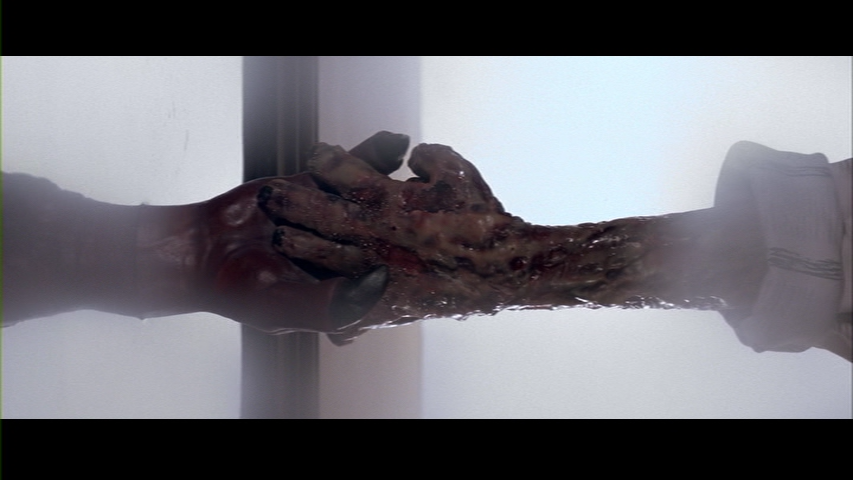
From Prince of Darkness:

Screengrab from Prince of Darkness #1

From Childhood’s End by Arthur C. Clarke:

A vast silence lay over the whole world for the space of twenty seconds–though, afterward, no one could believe that the time had been so short. Then the darkness of the great opening seemed to move forward, and Karellen came forth into the sunlight. The boy was sitting on his left arm, the girl on his right. They were both too busy playing with Karellen’s wings to take any notice of the watching multitude.

It was a tribute to the Overlords’ psychology, and to their careful years of preparation, that only a few people fainted. Yet there could have been fewer still, anywhere in the world, who did not feel the ancient terror brush for one awful instant against their minds before reason banished it forever.

There was no mistake. The leathery wings, the little horns, the barbed tail–all were there. The most terrible of all legends had come to life, out of the unknown past. Yet now it stood smiling, in ebon majesty, with the sunlight gleaming upon its tremendous body, and with a human child resting trustfully on either arm.

Additional “Juxtaposition” posts can be found here.