Ithaca Film Journal: 7/31/25

What I’m Seeing This Week: I am hoping to catch Sketch at the Regal Ithaca Mall and Together either there or at Cinemapolis.

Also in Theaters: My favorite new release now playing Ithaca that I’ve already seen is Sorry, Baby, a strong debut feature by director Eva Victor (who also stars) which does wonderful things with windows, especially its variations on the postcard-perfect cozy yellow glow of lit rooms as seen from outside on a cold night and which continues its run at Cinemapolis. I also enjoyed Eddington, which you can see there as well; The Final Four: First Steps, which is at the Regal; and Superman, which is at both. As someone who was born in 1981 and grew up watching the original The Naked Gun at sleepovers, I’m definitely intrigued by the reboot with the same name which opens at the Regal today, but also kind of terrified. It’s garnering strong reviews, though, so I’m going to try to see it before it closes. This week’s special events highlight is the free Continuum Film Showcase for local filmmakers at Cinemapolis on Sunday, which I unfortunately won’t be able to attend, but you should! There’s also a free screening of the documentary Counted Out there on Saturday. Finally, your best bets for repertory fare are Spirited Away, which I would have included on *my* Best Movies of the 21st Century ballot and which plays Cinemapolis on Wednesday as part of their “Food on Film” August Staff Picks series, and Sunset Boulevard, which celebrates its 75th birthday with screenings at the Regal on Sunday and Monday.

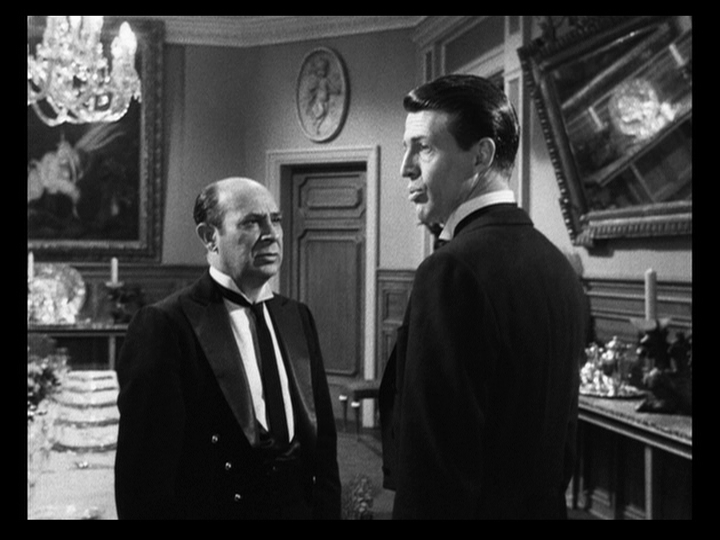
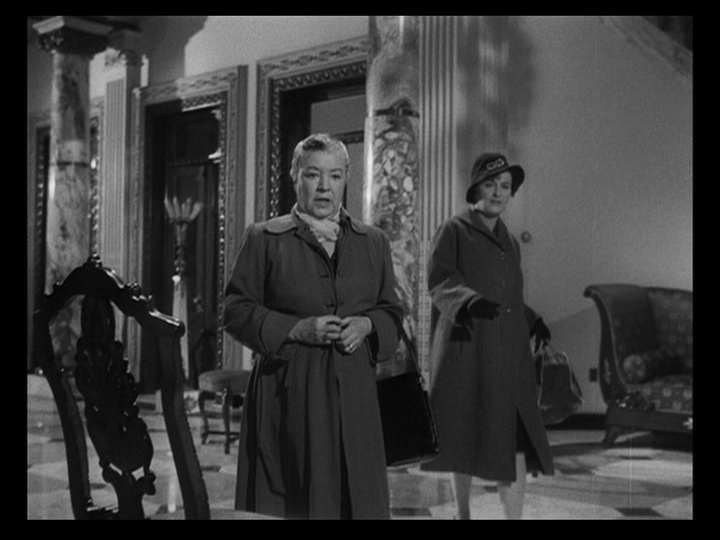
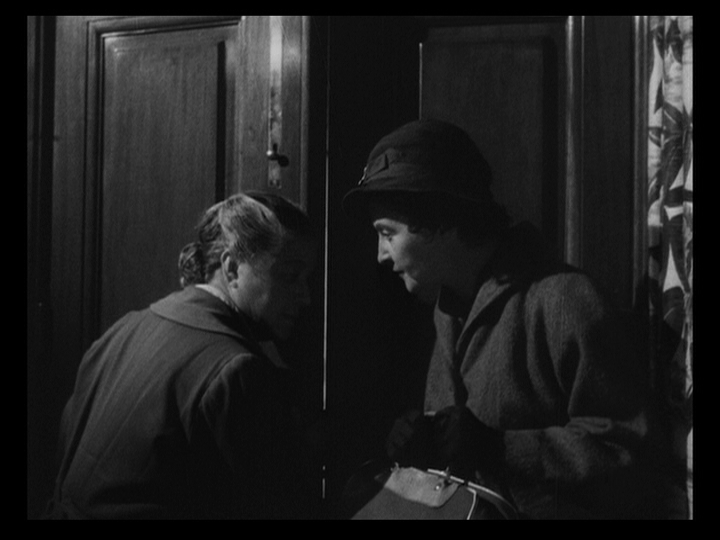
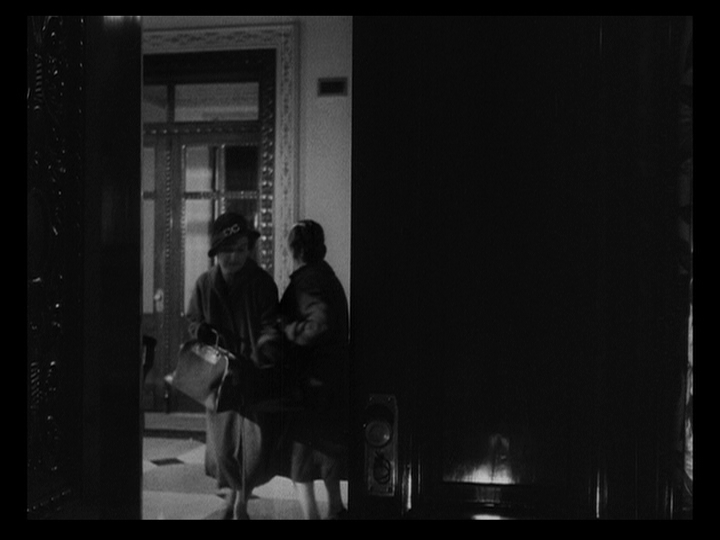
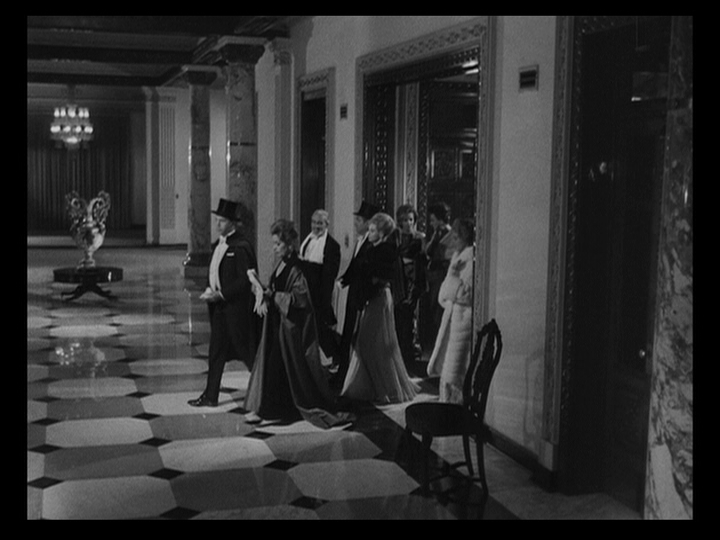
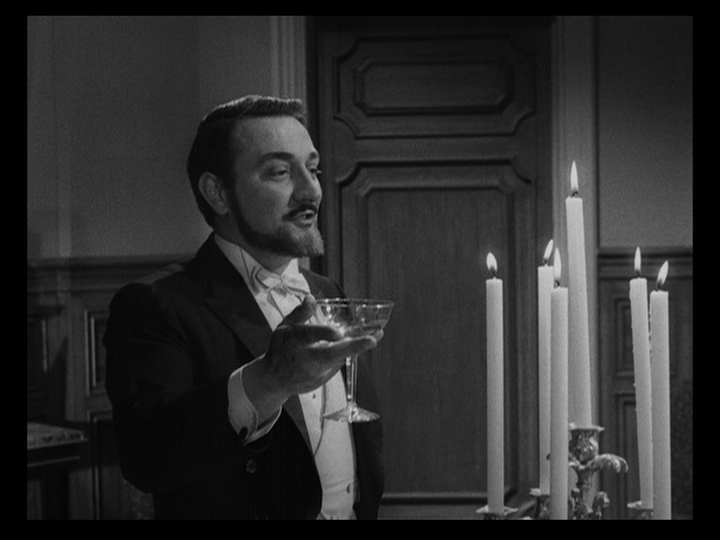
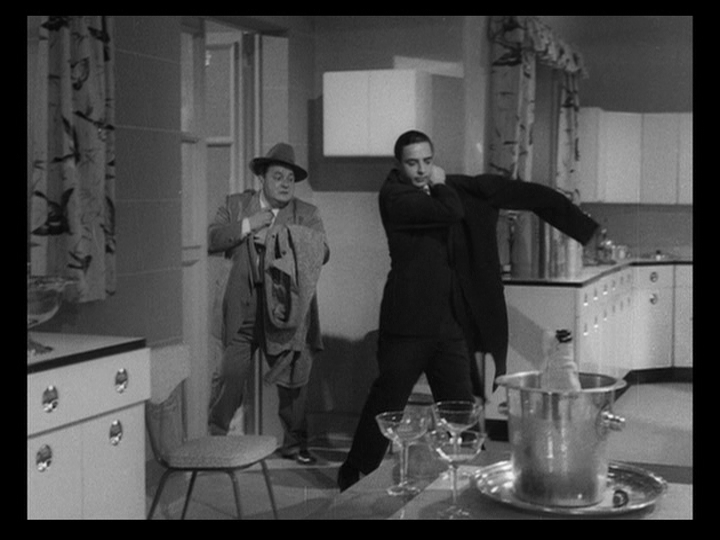
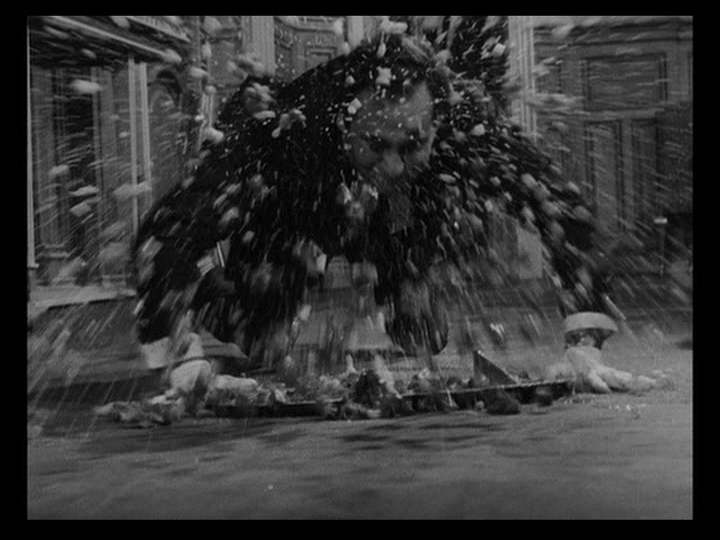
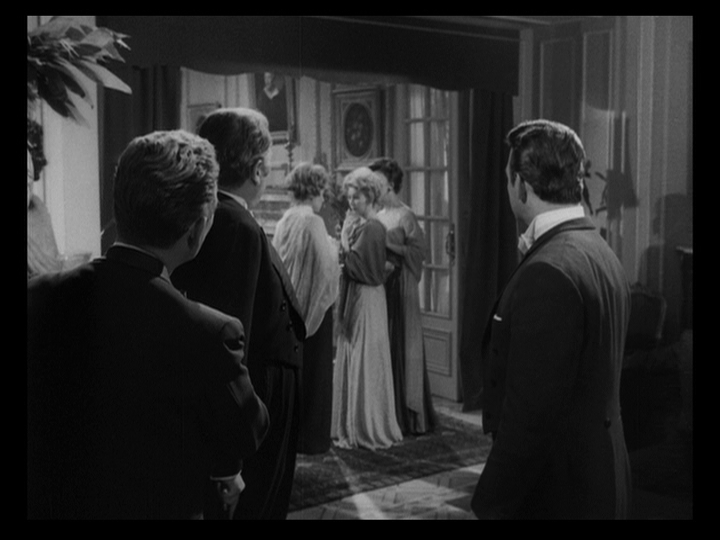
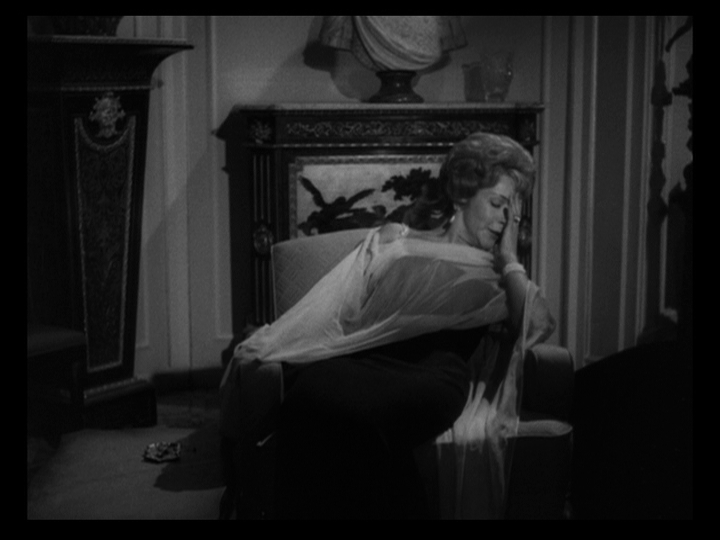
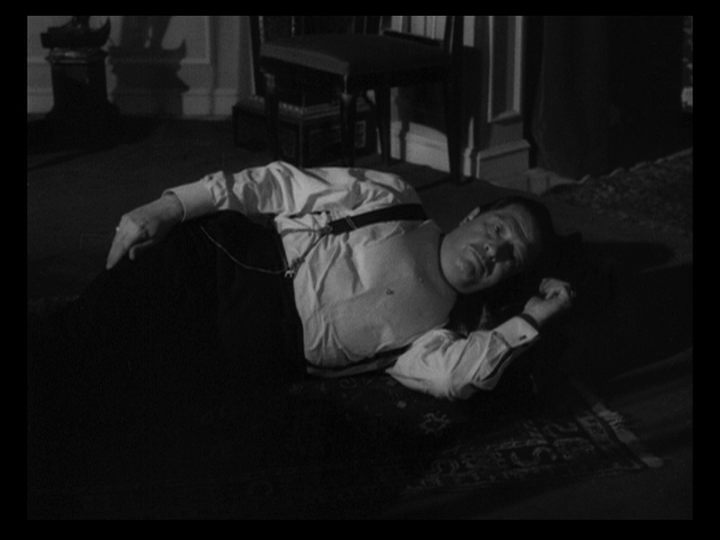
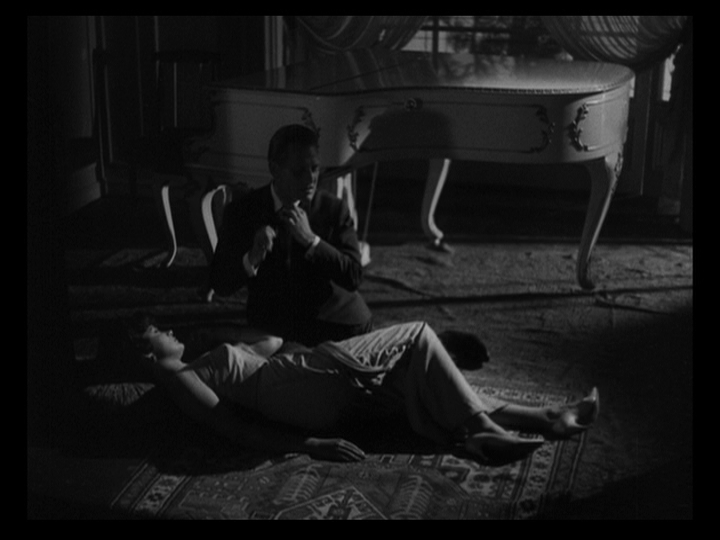
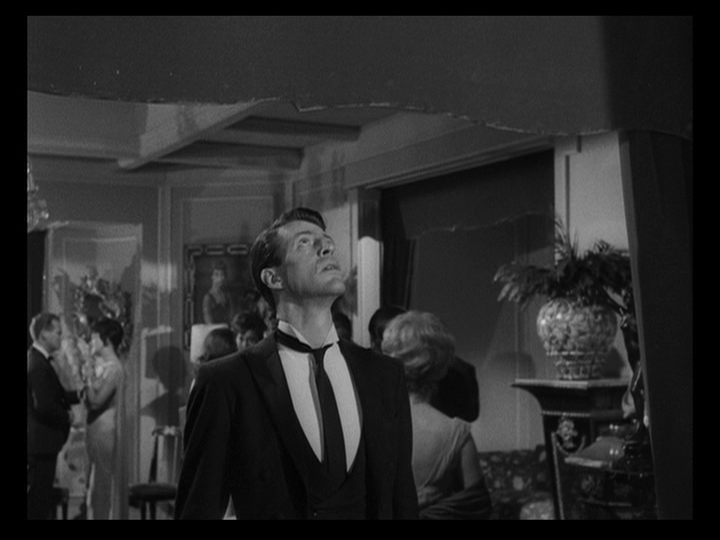
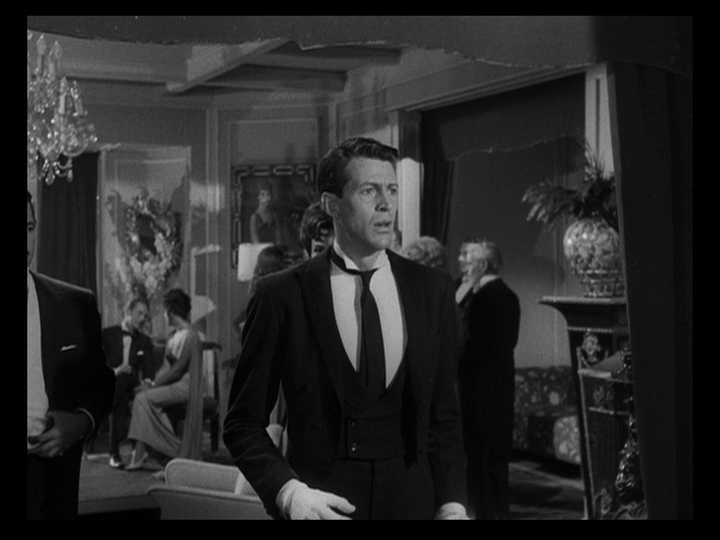
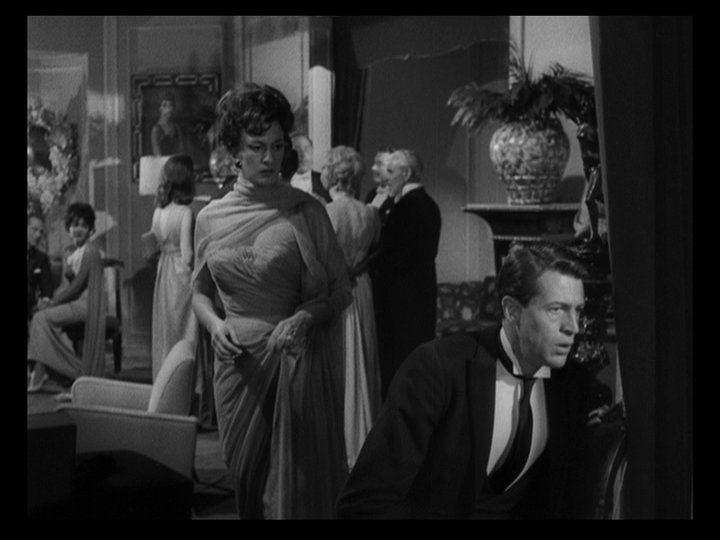
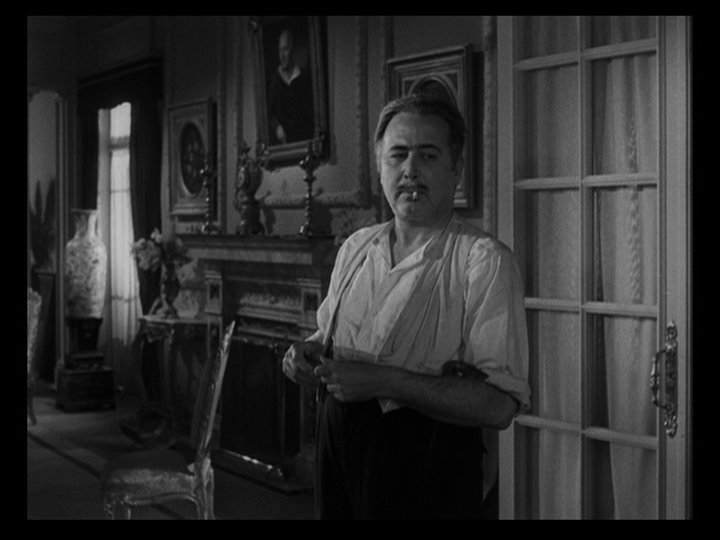
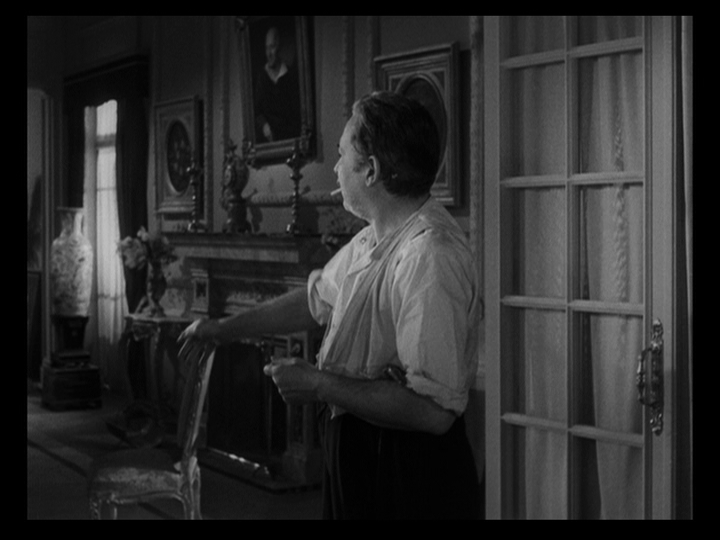
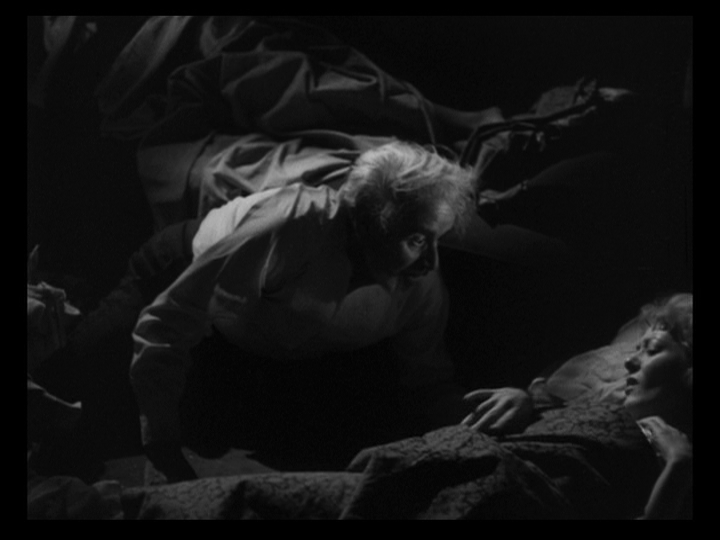
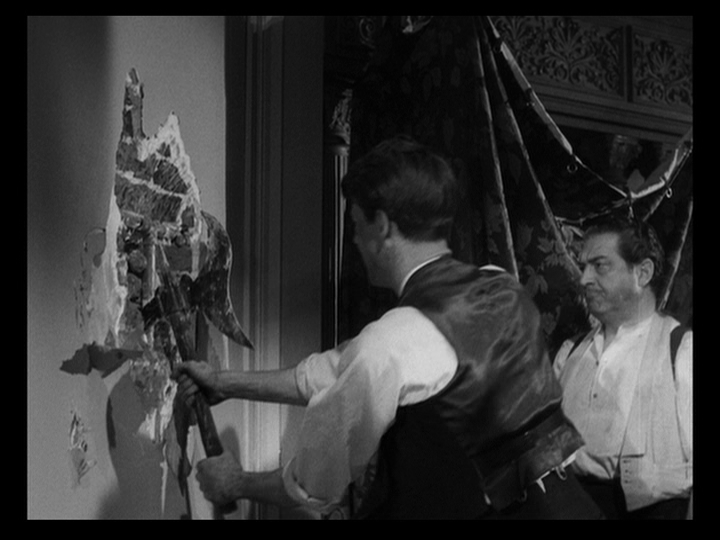
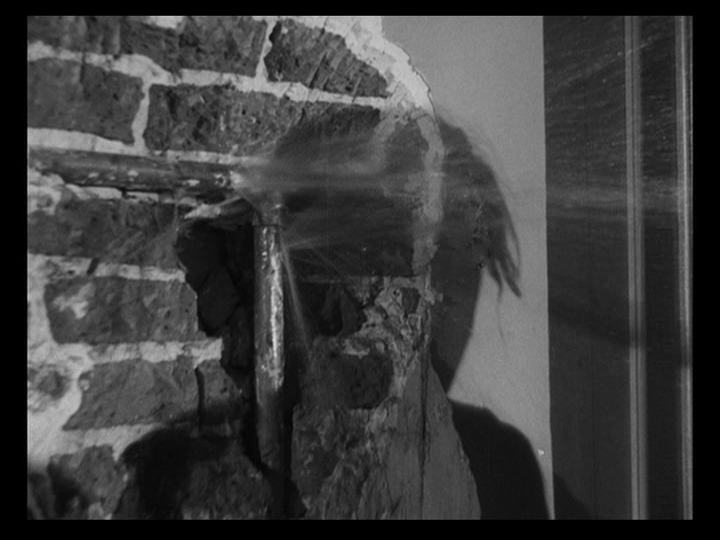
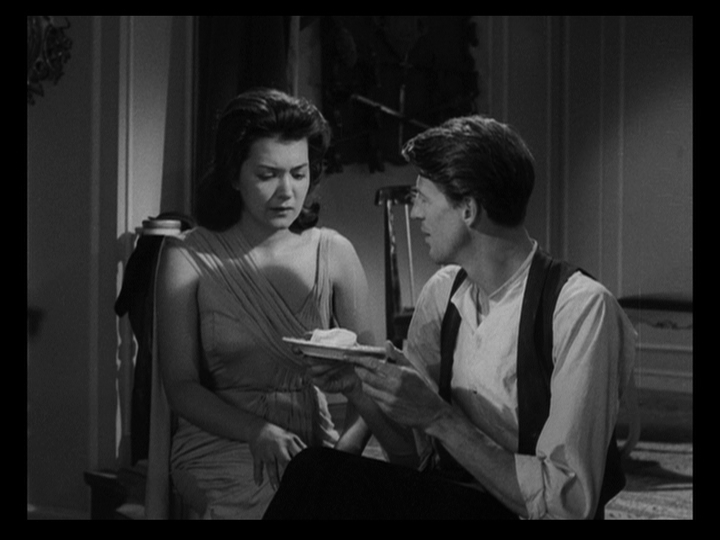
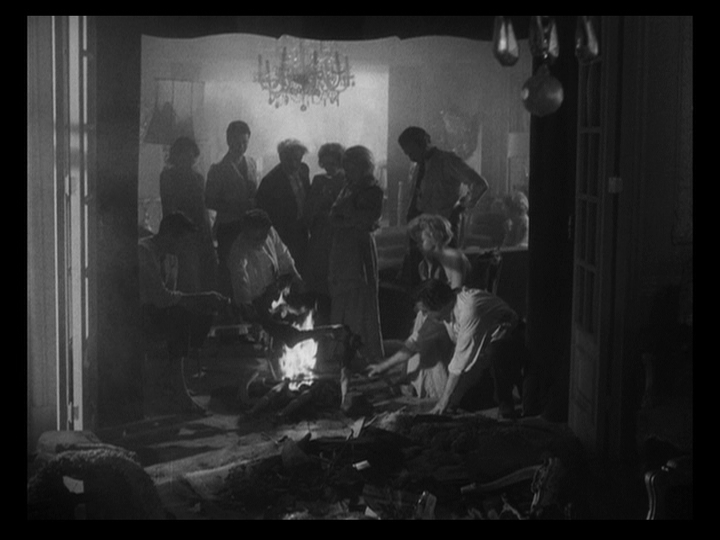
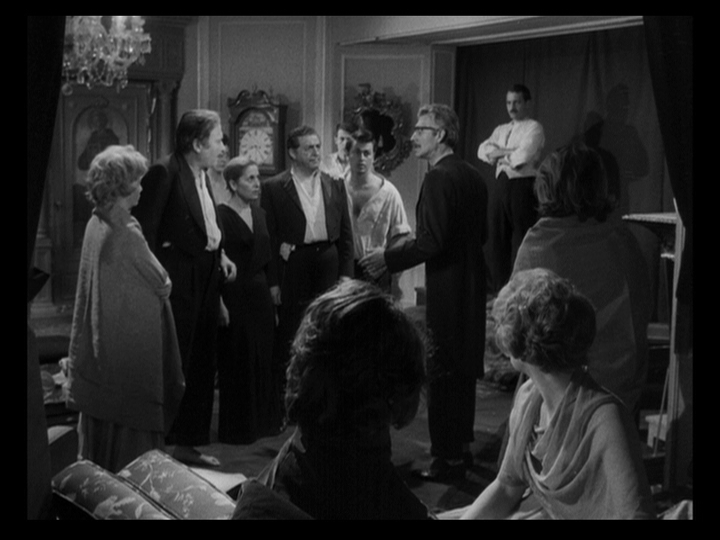
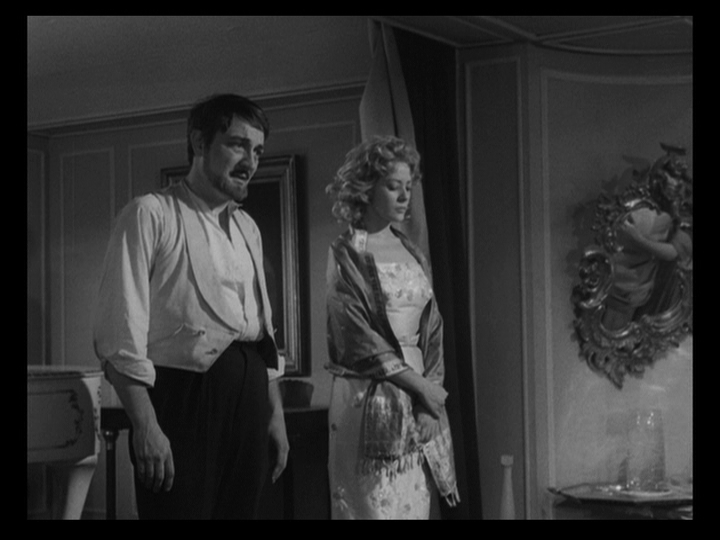
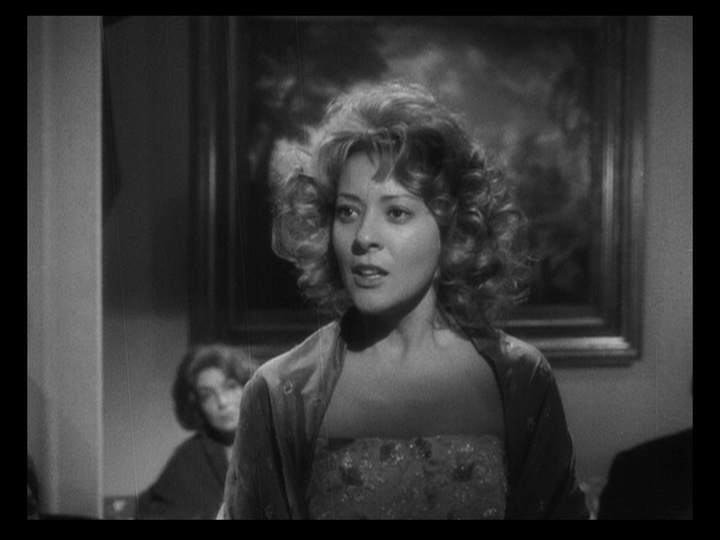
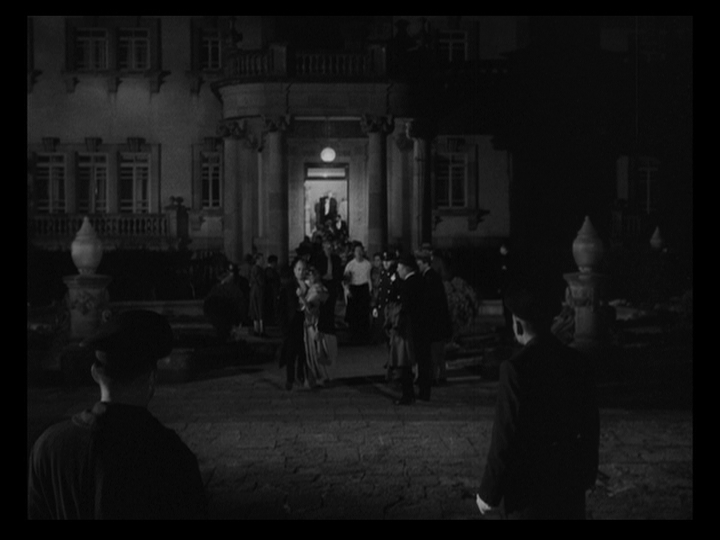
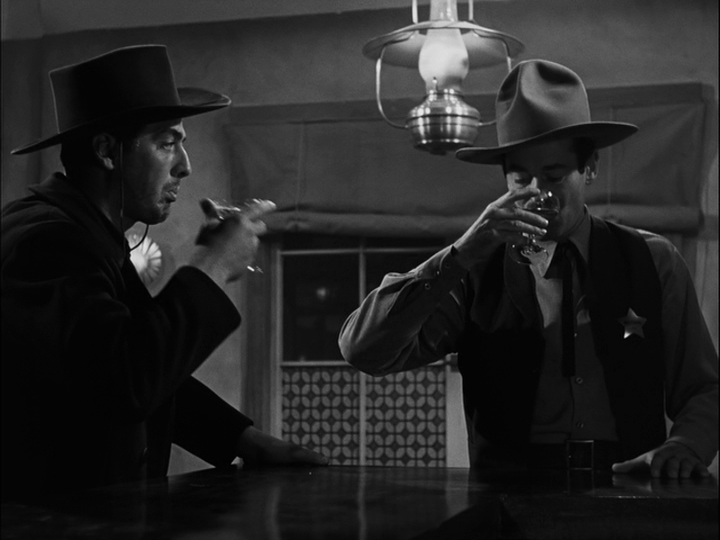
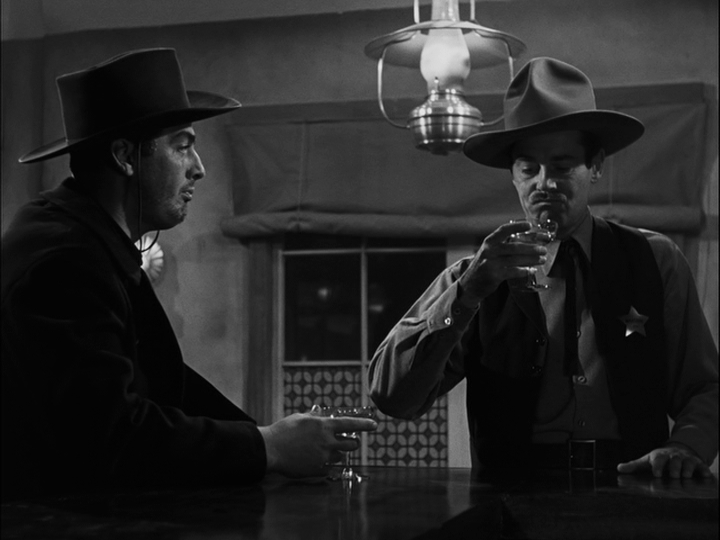
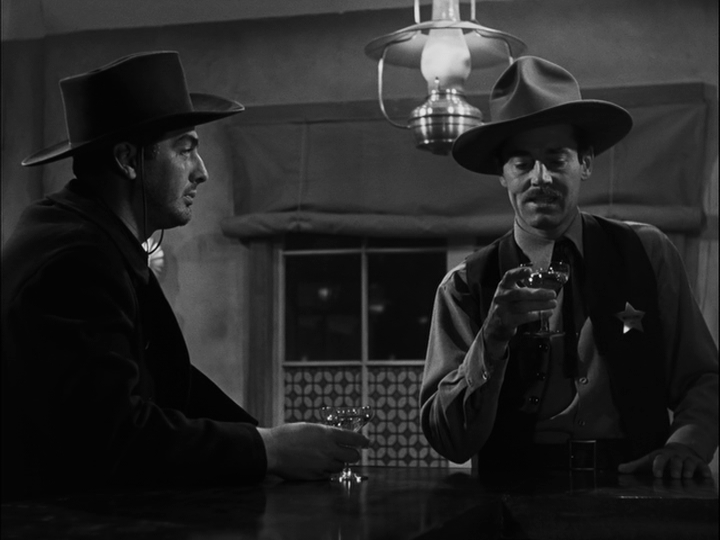
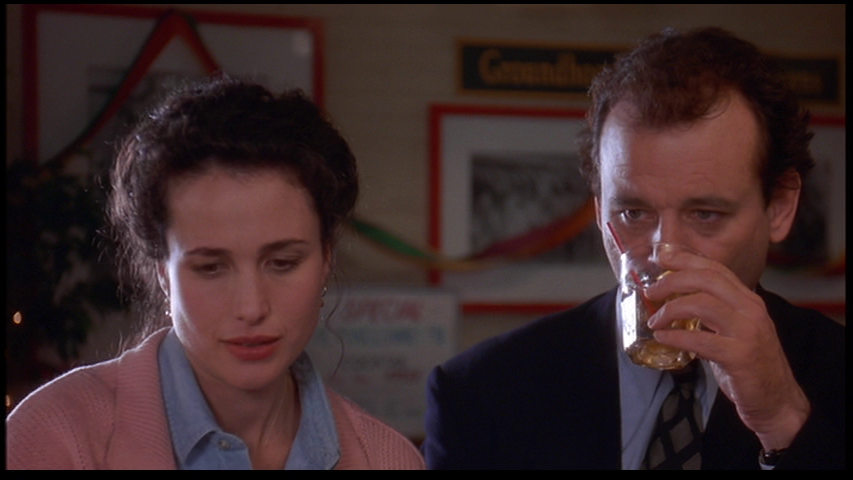
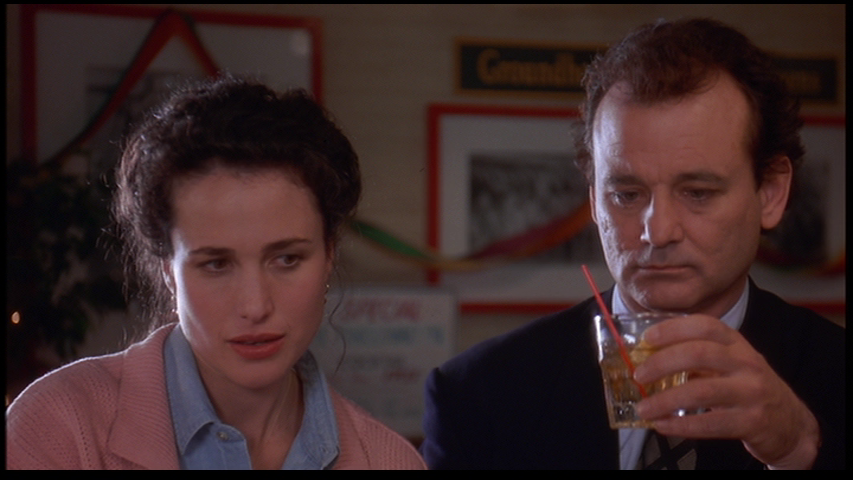
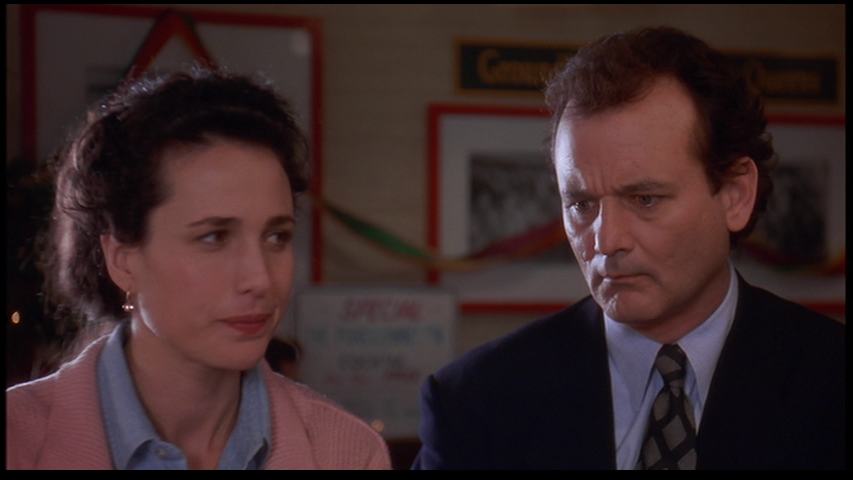
Home Video: I recently observed that My Darling Clementine features Henry Fonda’s Wyatt Earp reacting to a sip of champagne almost exactly the same way Bill Murray’s Phil Connors responds to sweet vermouth in Groundhog Day. As I noted on Letterboxd, the scene in which the scene in which Earp and Victor Mature’s Doc Holliday happen upon Alan Mowbray’s Granville Thorndyke reciting the “To be, or not to be” speech from Hamlet also echoes this description of Hazel from Madeline Miller’s 2022 introduction to the 50th anniversary edition of Watership Down, which I’m currently reading:

His notable traits are his gentleness, his quiet conviction in doing what’s right and his willingness to listen to things others would dismiss, including his strange, mystic friend Fiver. Yet still, the others trust him and choose him to lead. Why? He isn’t the best fighter (Bigwig), the fastest (Dandelion), the best storyteller (Dandelion again), the cleverest (Blackberry), the farthest seeing (Fiver), or the most authoritative (Holly). But he has several tremendous gifts, first and foremost his humility. Like Socrates, he knows what he doesn’t know. When Blackberry figures out how to float the rabbits across the river, Hazel scarcely understands what’s happening, but he has the ability to see that Blackberry understands–and gives the order to go forward.

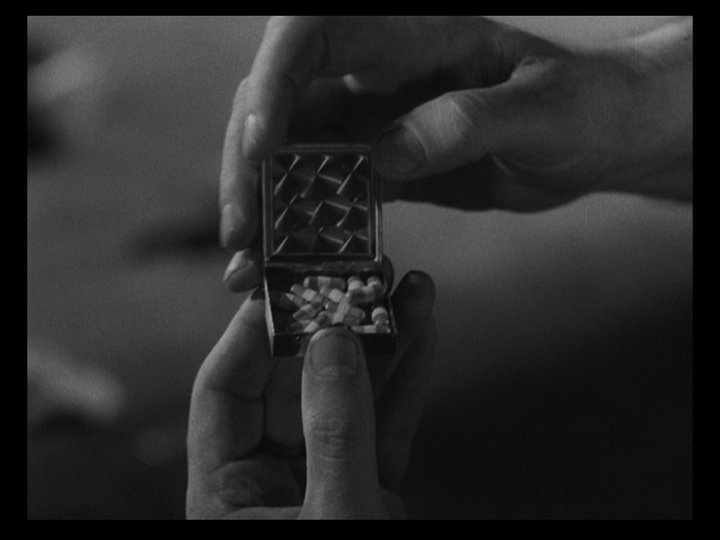
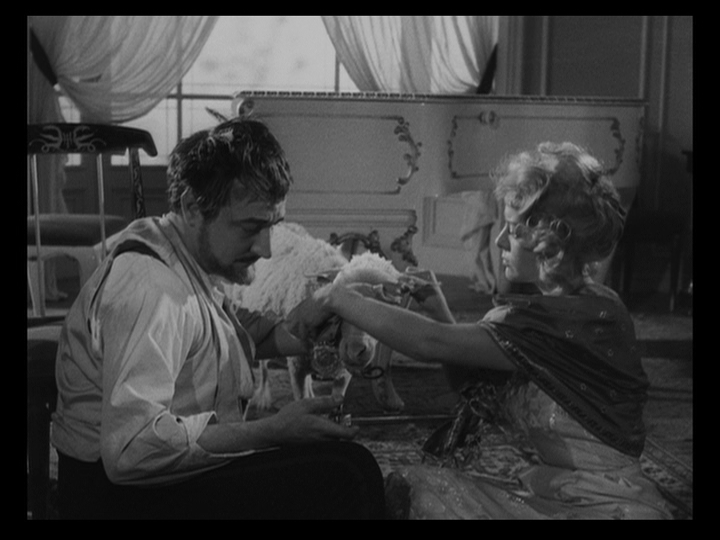
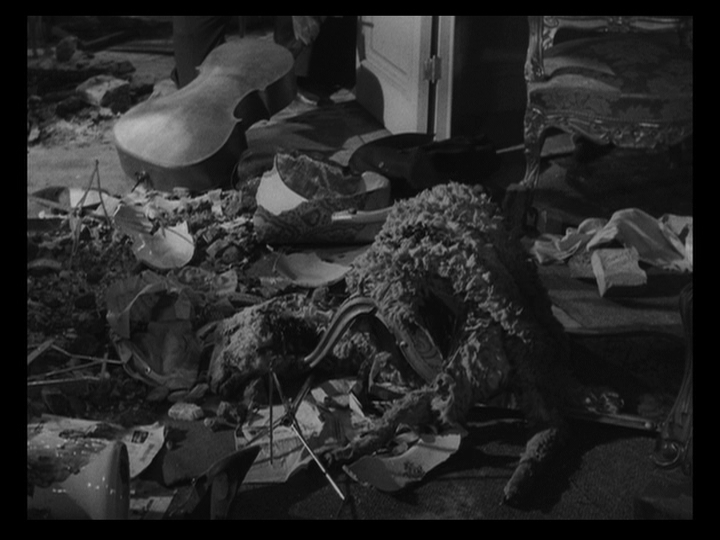
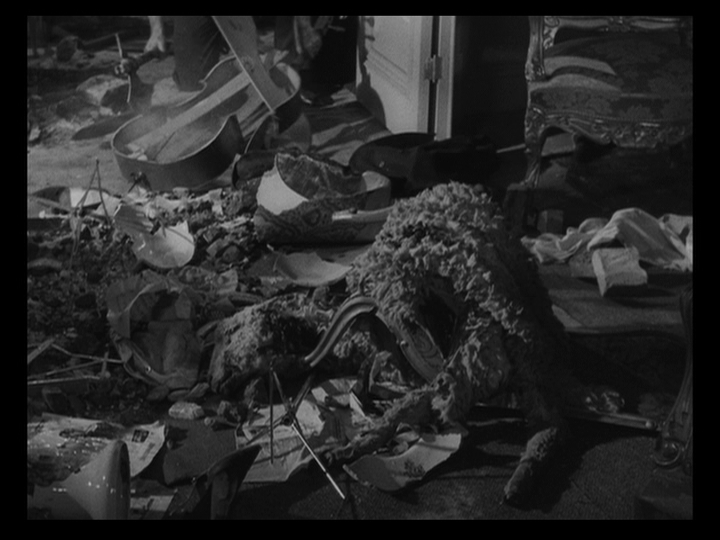
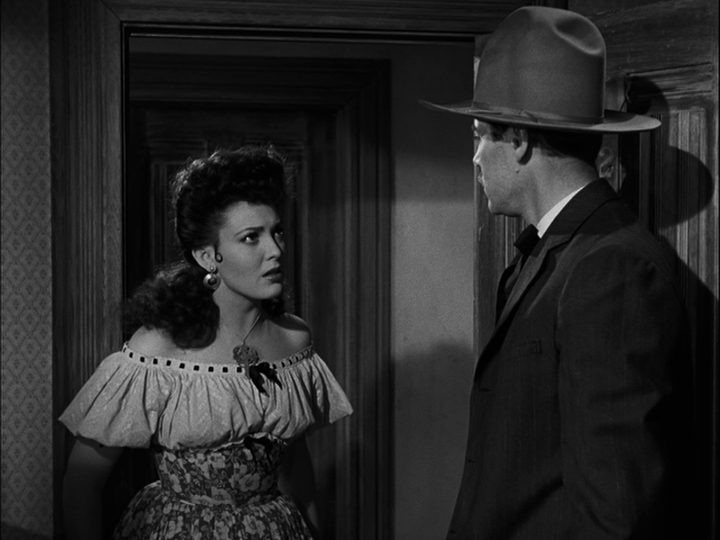
If those admittedly idiosyncratic resonances aren’t enough to convince you, I submit that you’ll never find a more perfect illustration of the “Rule of Thirds” than the piece of jewelry Linda Darnell’s Chihuahua wears in the scene below, which director John Ford makes sure we spot moments before Earp does:

My Darling Clementine is available on Blu-ray and DVD from the Criterion Collection and can be streamed for a rental fee via Apple TV+ and Prime Video.

Previous “Ithaca Film Journal” posts can be found here. A running list of all of my “Home Video” recommendations can be found here.

Bonus Drink & a Movie Post #5: Sherry Tale Ending + Lonesome

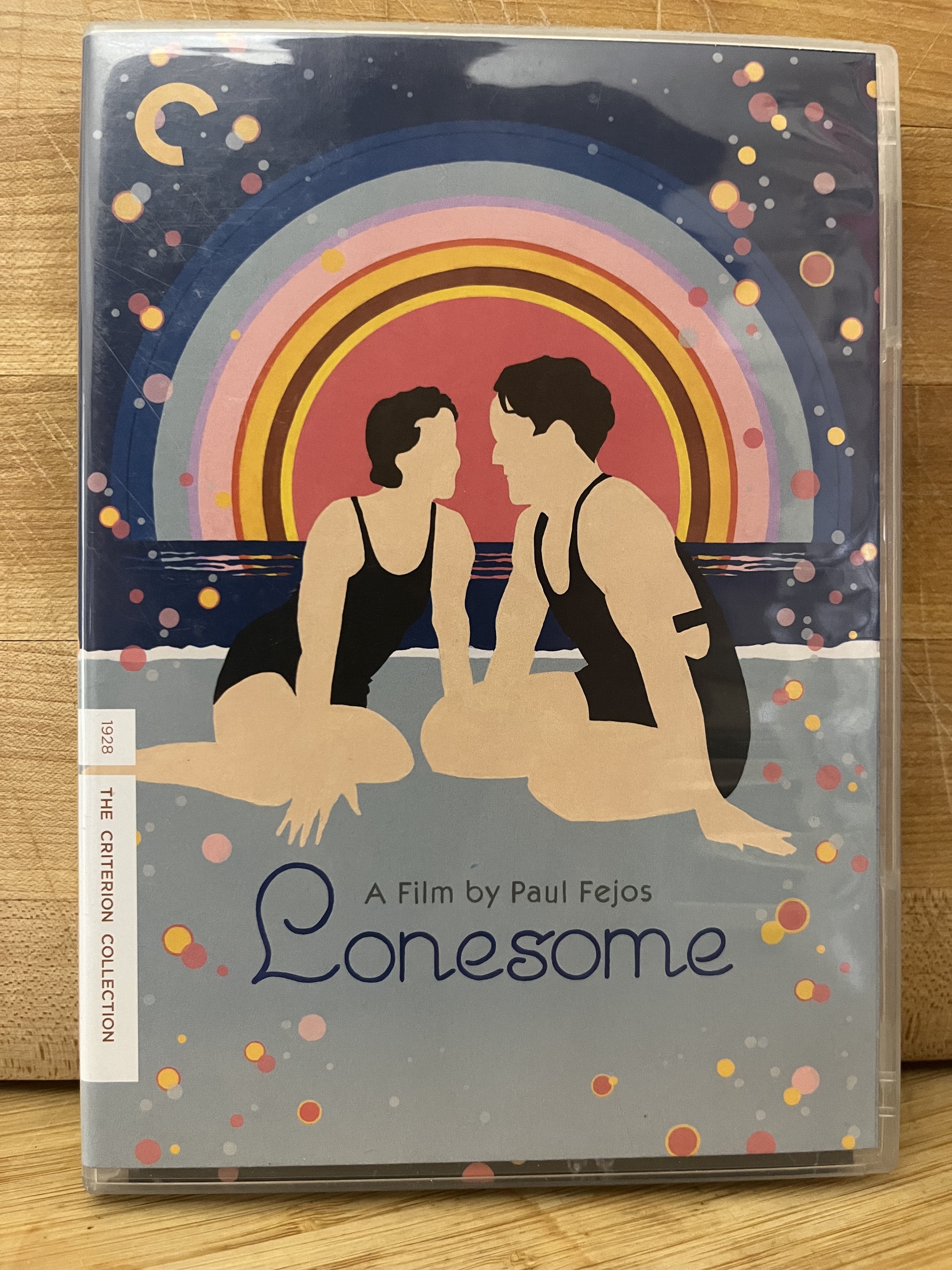
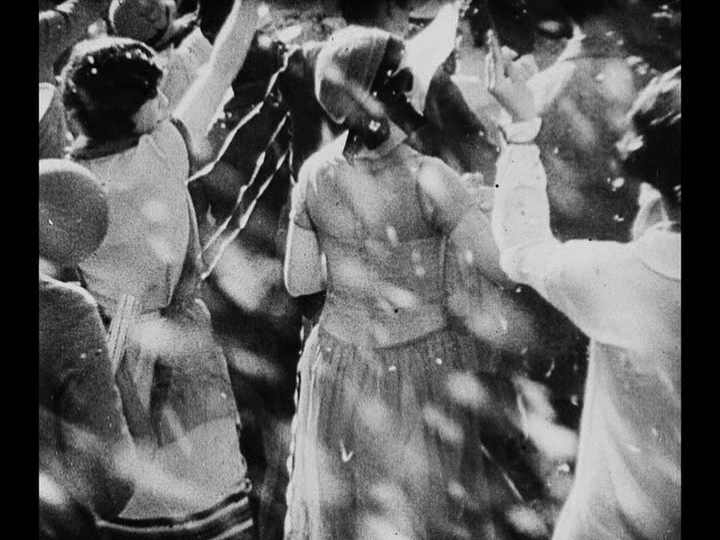
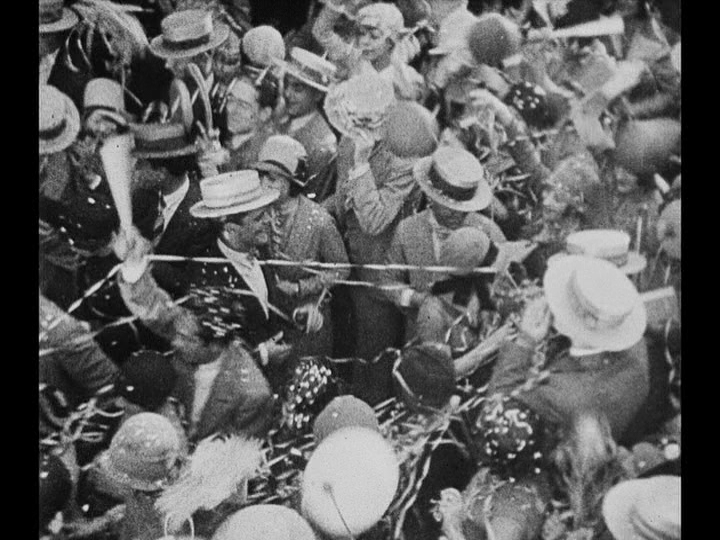
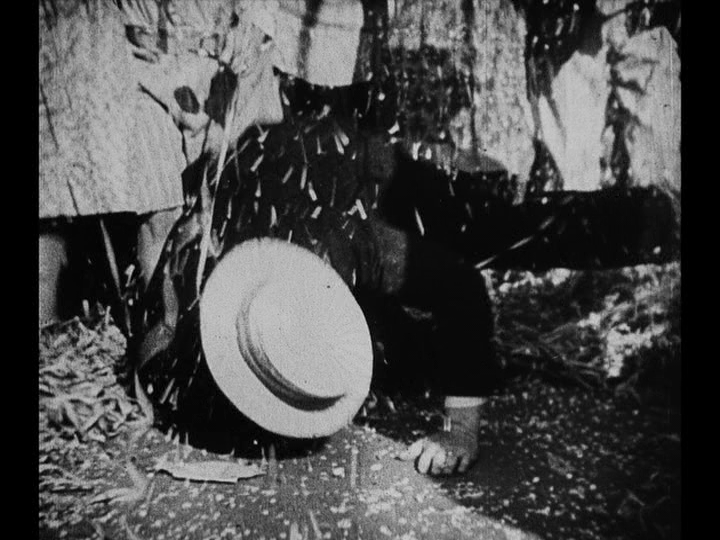
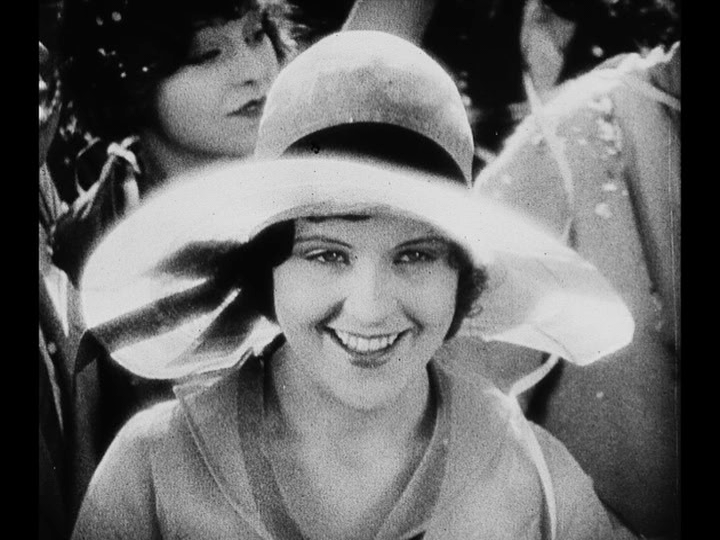
After writing about the Tour de France, blackcap bush in my backyard, and 2024 Paris Olympics in my first three July Drink & a Movie posts, I had two obvious places to look for inspiration for my last one. Rather than choose between the birthday celebrations of the two countries members of our household have citizenship in, though, I decided to leverage my penultimate “bonus” post (my goal is 54 in four years, so just one per month won’t quite cut it) to do both. It’s arriving a bit later than intended, but my follow-up to my Canada Day commemoration featuring Crimes of the Future therefore highlights what I think surely must be the greatest “3rd of July” film ever made, Lonesome. Here’s a picture of my Criterion Collection DVD copy:

Lonesome DVD case

As a film in the public domain, you can also easily find it streaming for free on platforms like Tubi. The beverage I’m pairing with it is the Sherry Tale Ending that Toronto-based bartender Colie Ehrenworth created for the fourth Canadian season of the Speed Rack bartending competition, which is included in the book A Quick Drink by its founders Lynnette Marrero and Ivy Mix. Here’s how to make it:

1 1/2 ozs. Reposado tequila (Espolòn)
3/4 oz. Amontillado sherry (Lustau)
1/2 oz. Lillet Blanc
1/4 oz. Maple-sugar syrup
3 dashes Angostura bitters

Make the maple-sugar syrup by combining equal parts by volume of maple syrup, turbinado sugar, and water in a small saucepan and stir over low heat until the sugar has fully dissolved. Remove from heat and cool completely. To make the cocktail, stir all ingredients with ice and strain into a chilled cocktail glass.

Sherry Tale Ending in a couple glass

Normally I try to avoid repeating base spirits in consecutive months, but that actually doesn’t seem so inappropriate in an extra post arriving hot on the heels of its predecessor–think of it as a sort of “two for one” deal! I like the Canada connection for the same reason, which: Ehrenworth advises using maple syrup from Ontario and that definitely is the way to go, especially if like us you’re lucky enough to have family who make their own and are willing to share. This drink was specifically engineered to be a lower ABV nightcap by combining elements of the Adonis, a sherry-based classic cocktail, and a 50/50 Manhattan and yet another affinity between this month’s concoction and its predecessor is that the tequila is once again a supporting player. The dominant flavors here are instead dried fruit notes from the amontillado on the sip which gracefully give way to the candied citrus from the Lillet on the swallow. So it’s a sweet drink, yes, but an agave and dark molasses finish prevents it from ever coming across as cloying, making the Sherry Tale Ending a light but satisfyingly complex way to finish your night.

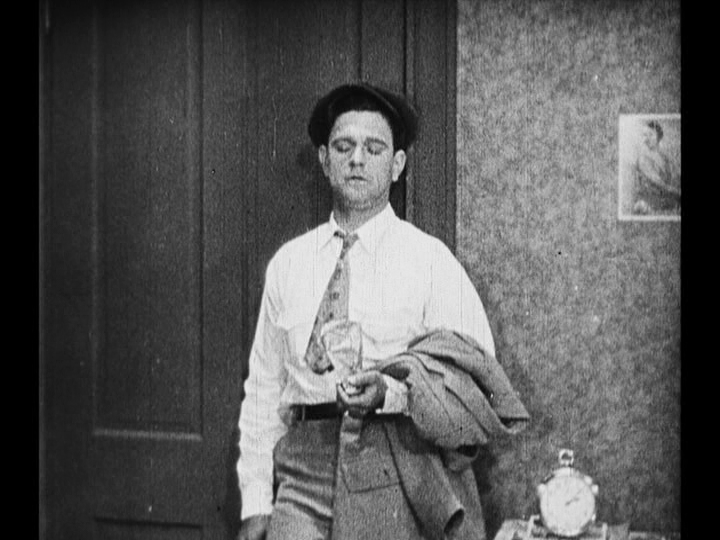
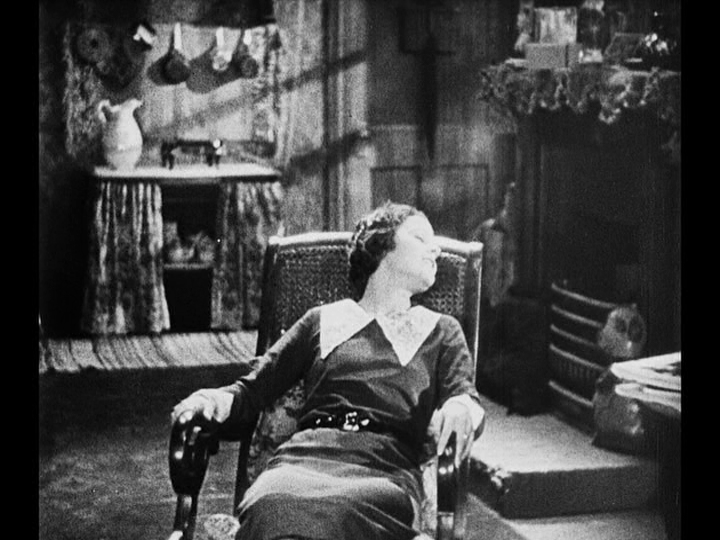
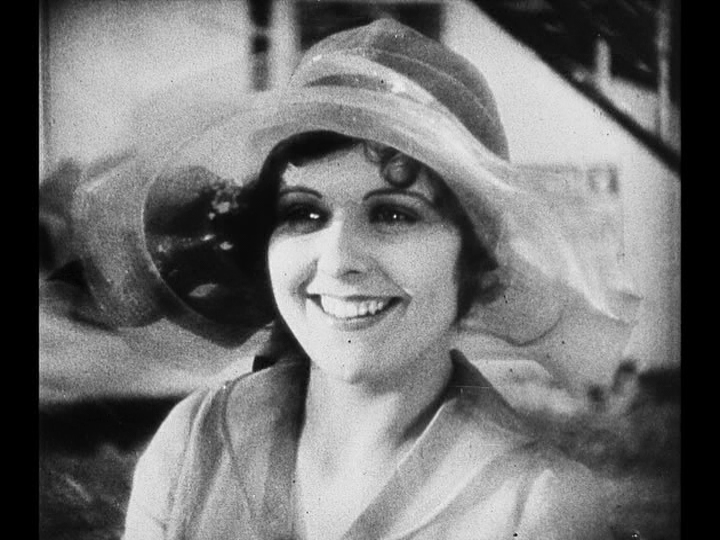
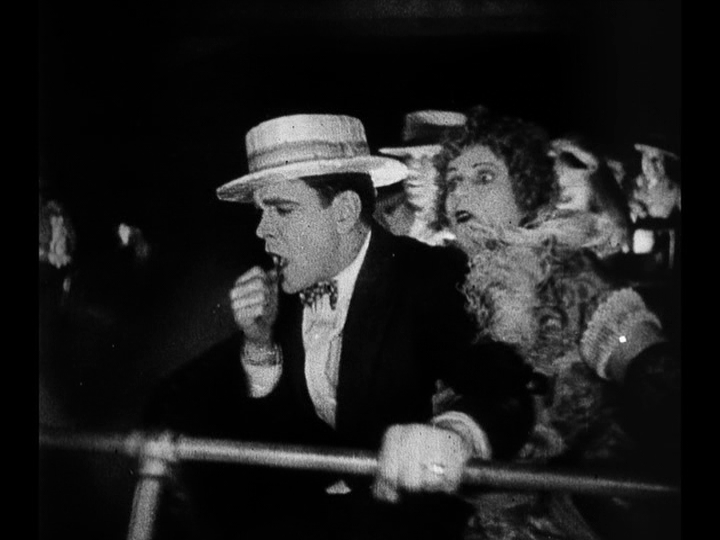
At just 69 minutes, Lonesome would also be a great way to unwind after an evening out. The plot is simple: lonely hearts Jim (Glenn Tryon) and Mary (Barbara Kent) arrive home to their respective empty apartments after a half-day at work feeling listless:

Medium long shot of Jim leaning against his doorway
Medium long shot of Mary languishing in a chair

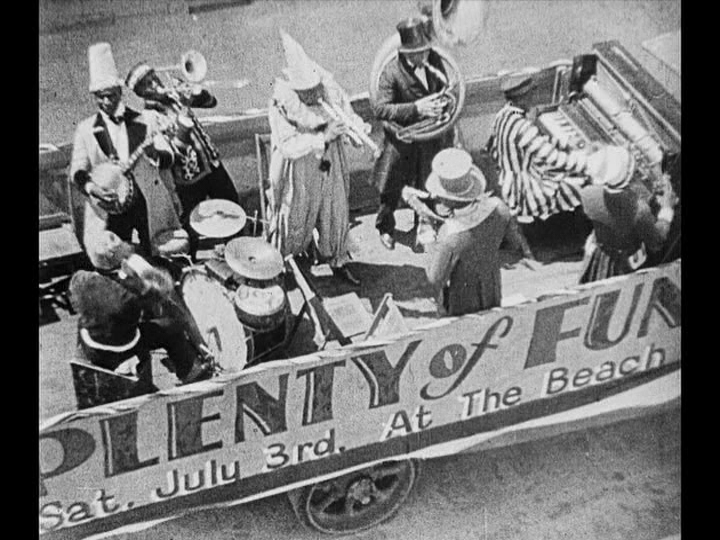
Suddenly, each hears this bandwagon as it passes by on the street below:

Overhead shot of a band featuring a clown on trumpet playing aboard a truck festooned with a banner that reads "Plenty of Fun--July 3rd. At The Beach"

Lured by its siren song, both decide to head to Coney Island beach. Jim spies her on the bus ride there fending off a would-be Romeo with the implicit threat of brooch pin violence

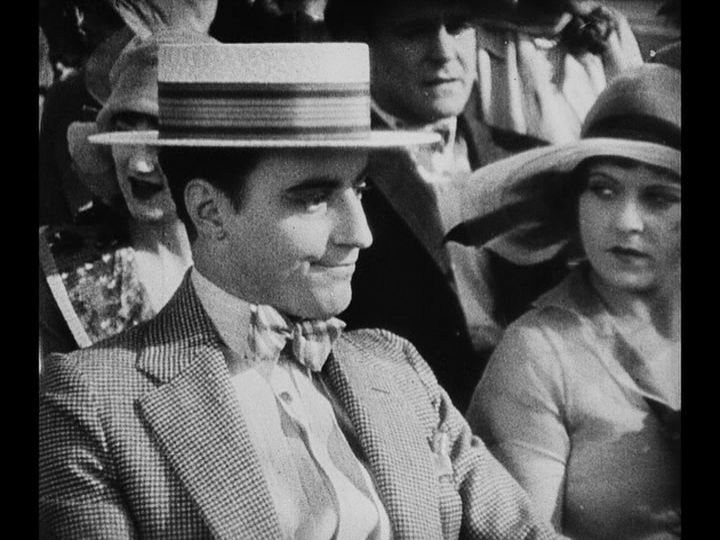
Medium shot of Jim
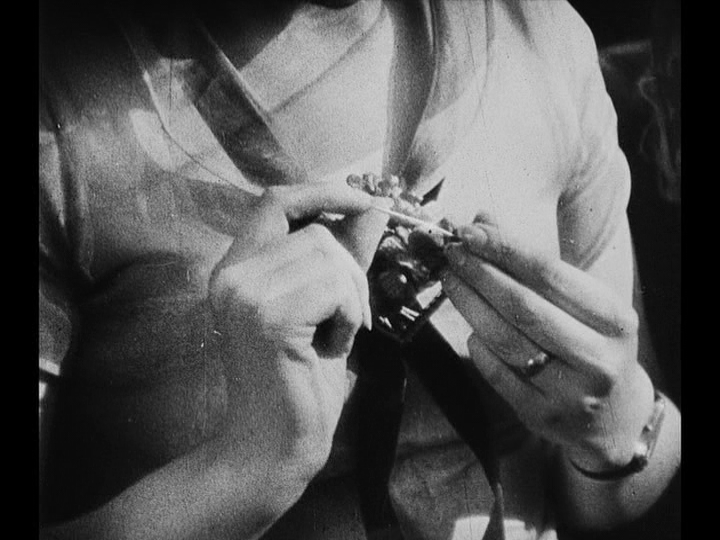
Close-up of Mary testing the sharpness of a brooch pin with her finger
Medium shot of a young man looking perturbed on the left side of the frame as Mary glares at him from the right
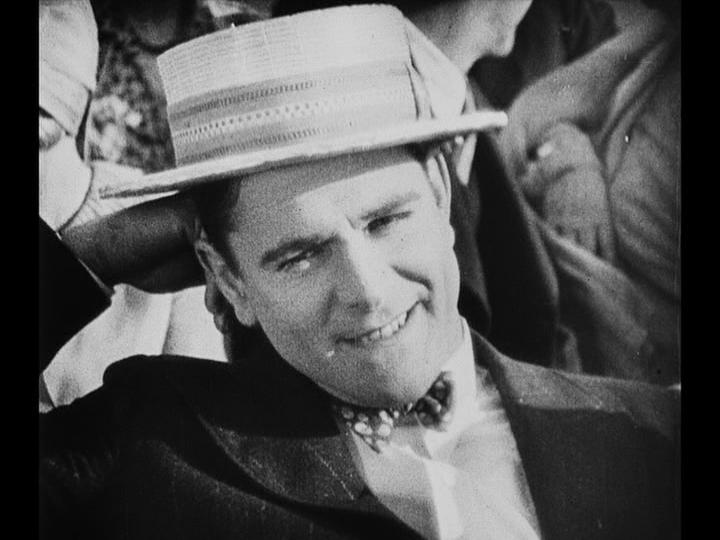
Medium shot of Jim, whose interest has clearly been piqued

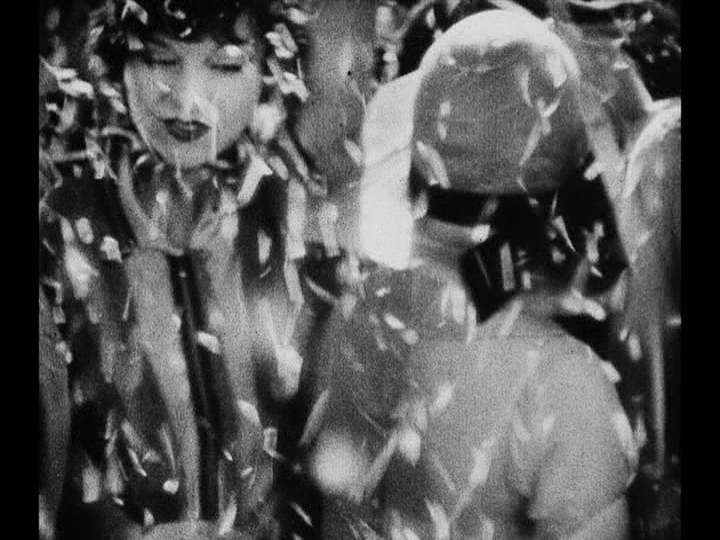
Impressed, he pursues her through the crowd upon arrival:

Medium shot of Jim in a throng of people
POV shot of Mary from behind from Jim's perspective
Overhead long shot of Jim following Mary through a crowd

Undeterred by either a young hooligan who trips him:

Or her apparent disinterest in watching him perform feats of strength:

Medium shot of Mary apparently looking at Jim
Medium shot of Mary turning away
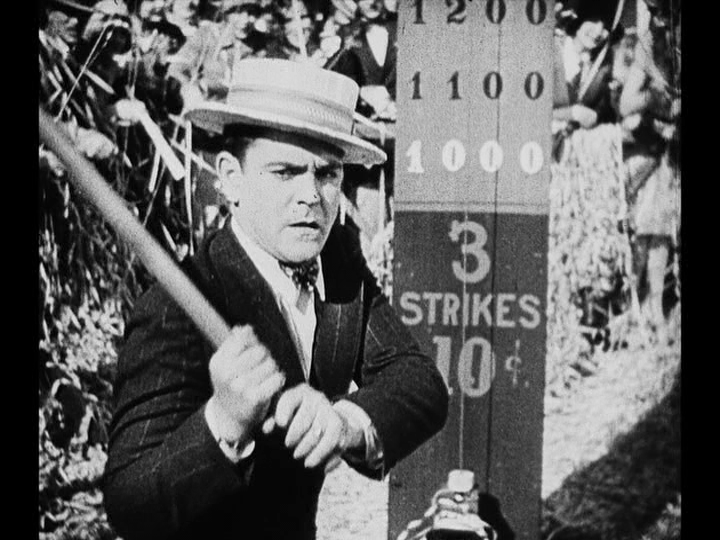
Medium shot of Jim, about to try his luck with a strength tester, realizing that Mary is no longer watching him

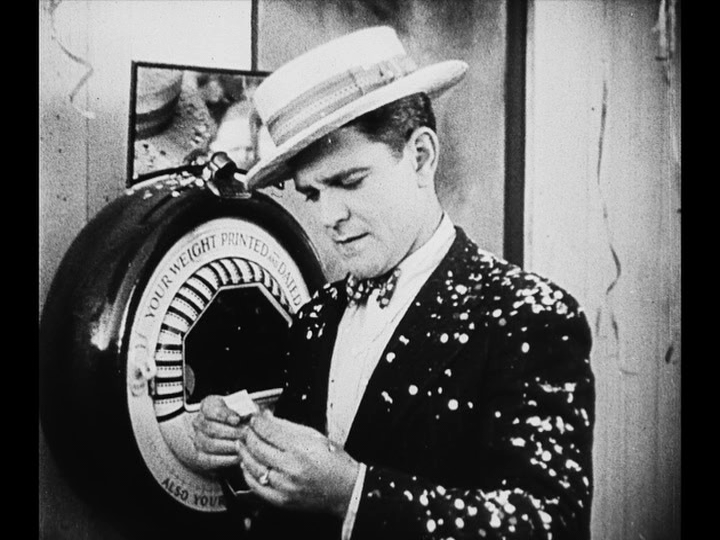
And with a bit of extra prompting from an auspicious fortune that reads “you’re about to meet your heart’s desire”:

Medium shot of Jim reading a fortune

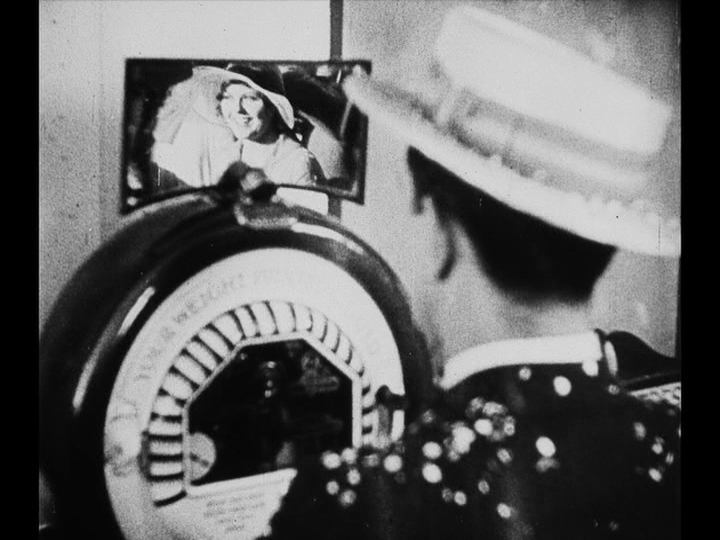
He finally succeeds in catching her eye in a very nice rack-focus shot:

Medium shot of Jim in the foreground, looking toward the back of the frame at Mary's reflection in the mirror in front of him, out of focus
Continuation of the previous shot: Mary's reflection is now in focus
Medium shot of Mary, apparently looking offscreen at Jim

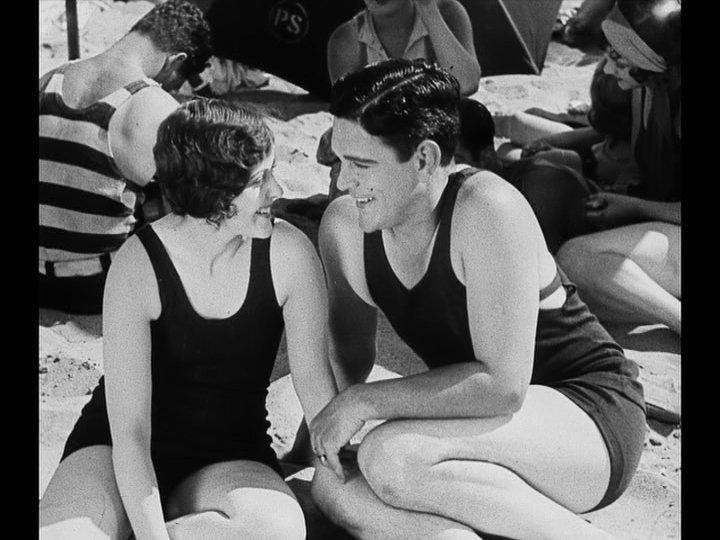
And before long they’re talking to each other on the beach:

Clad in bathing suits and surrounded by people, Jim and Mary finally speak

Literally: while its first 29 minutes are silent (although they do feature a sophisticated sound mix timed to the action), Lonesome contains three dialogue sequences which most critics revile, but that Aaron Cutler argued in a blog post for Moving Image Source “add to the rest of the film largely because they are inconsistent with it.” Referring also to the final one, he continues:

For the first time in their lives onscreen, Jim and Mary speak, and they do it because of each other. When Jim promises Mary that “We’ll never be lonesome anymore,” he says it in his own voice, out loud; when he later argues with a judge and police, he does so with the voice that Mary helped him find. Even after the lovers fall back into silence, we retain the sounds of their voices in our heads, distinguishing them as individuals.

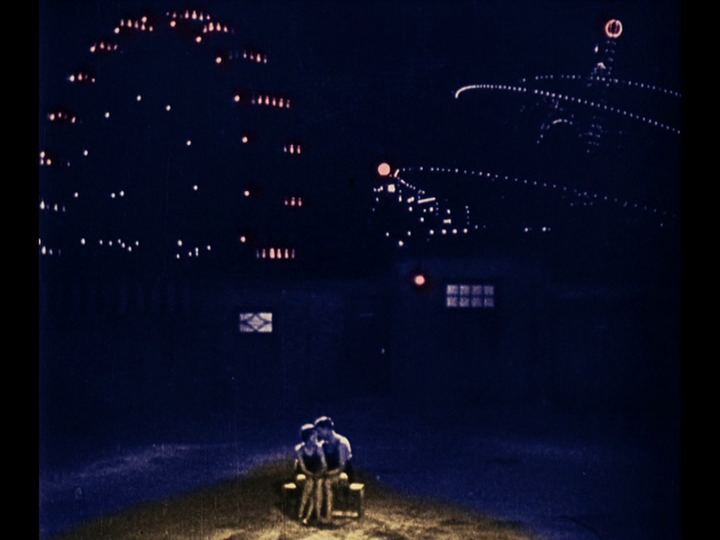
To Cutler the “brightly smeared” colors that suddenly make an appearance in the film’s 37th minute perform a similar function.

Extreme long shot of Jim and Mary bathed in golden light at the bottom of the frame in front of a backdrop of the colored lights of amusement park rides

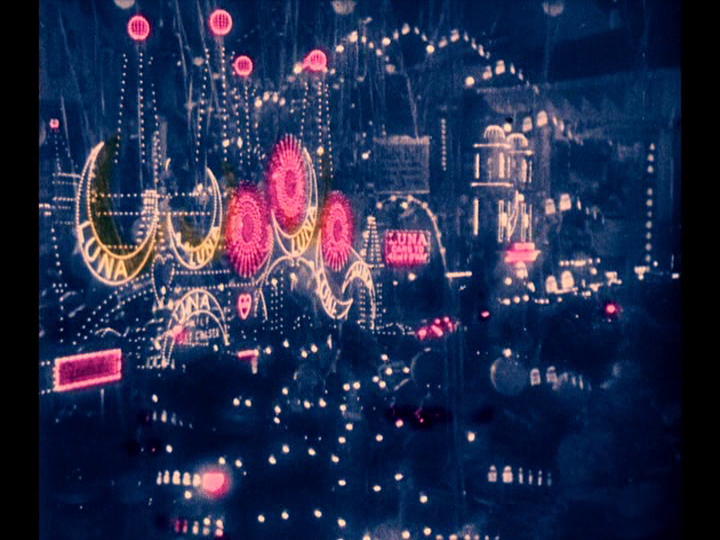
“Within a long-shot world,” he says, “Jim and Mary see each other in medium and close-up; within a black-and-white, silent world, they can see and hear each other in color and in sound.” Anyway, Jim and Mary have lots of fun together on the boardwalk after the sun goes down:

Long shot of the Coney Island boardwalk in a shot that features applied colors
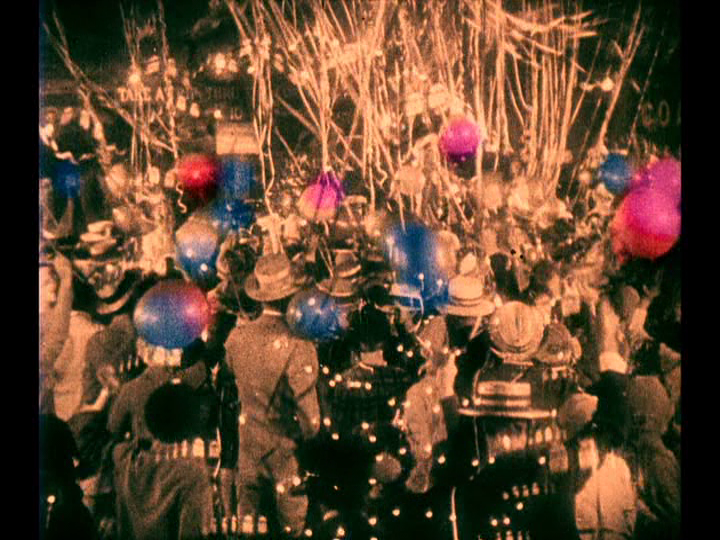
Yellow-tinted overhead long shot of a crowd that features blue and red balloons
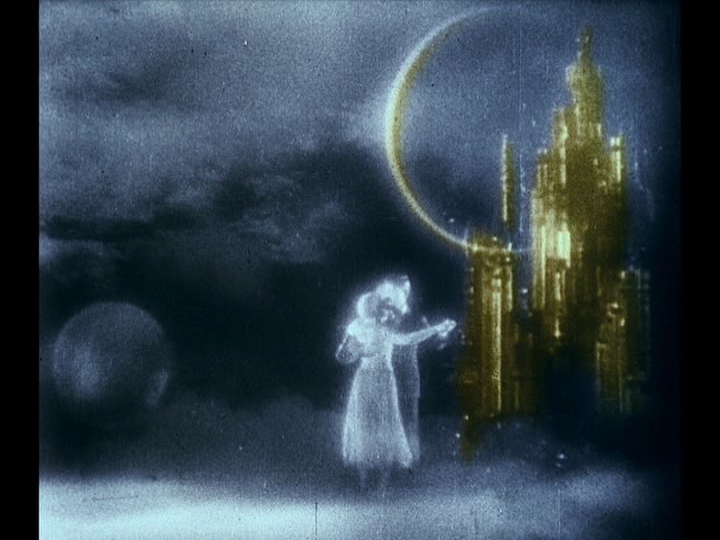
Jim and Mary dance in an extreme long shot in front of a yellow castle and crescent moon

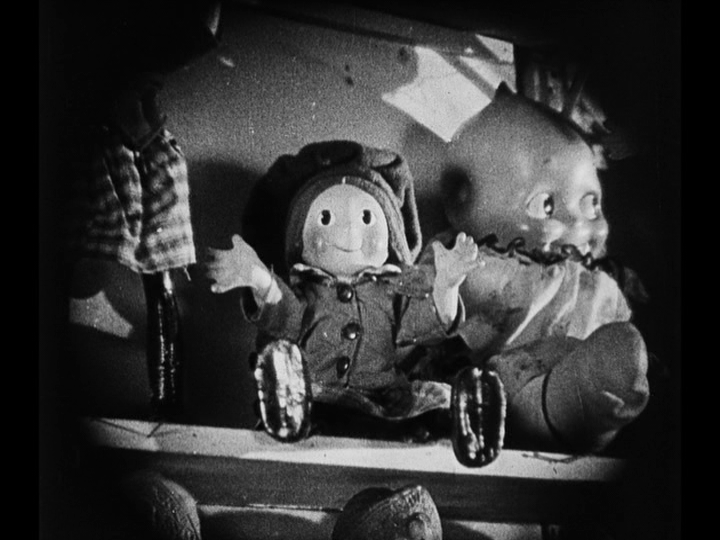
And he wins her a doll:

Close-up iris shot of a doll

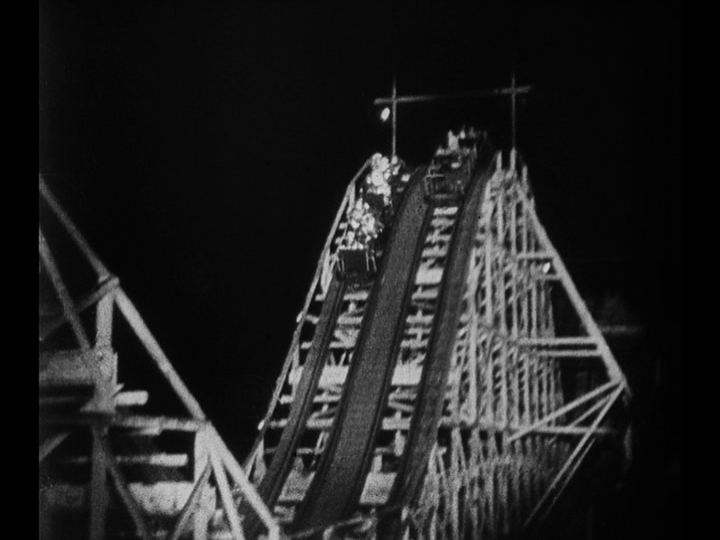
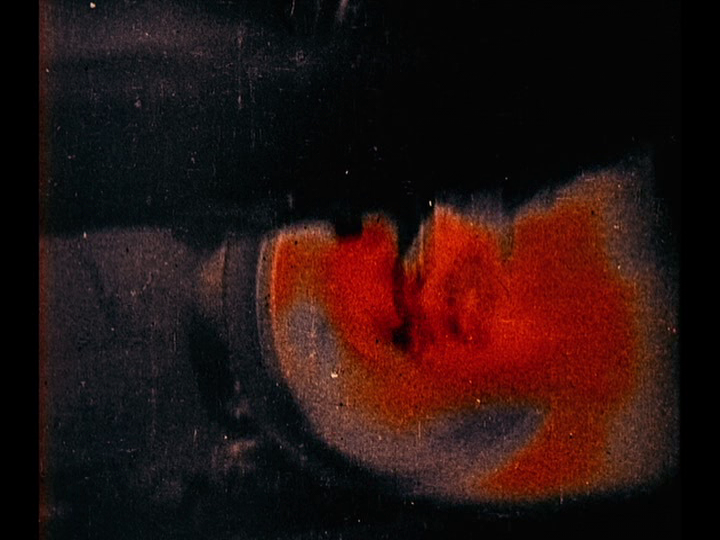
But the party ends during a ride on the dual-track Jackrabbit Racer roller coaster when a wheel on Mary’s car catches fire:

Longshot of Jim and Mary riding the Jackrabbit Racer
Medium shot of Jim reacting in horror as he realizes Mary's car is on fire
Close-up of a wheel on fire with the flames rendered in red

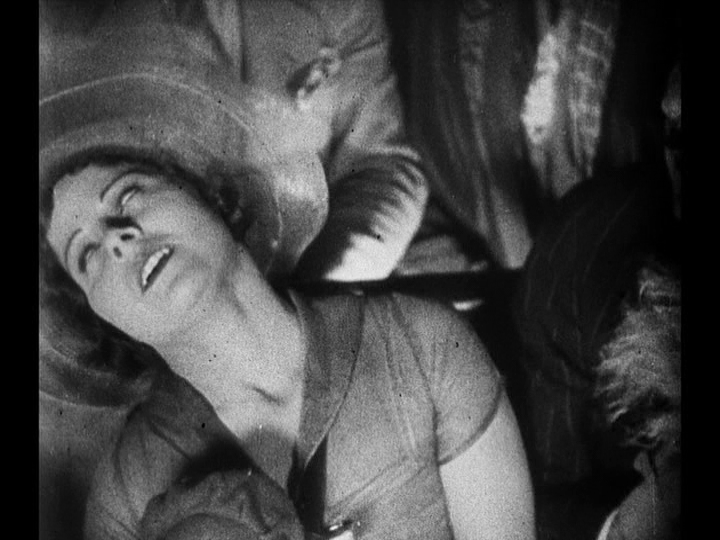
She faints:

Close-up of Mary fainting

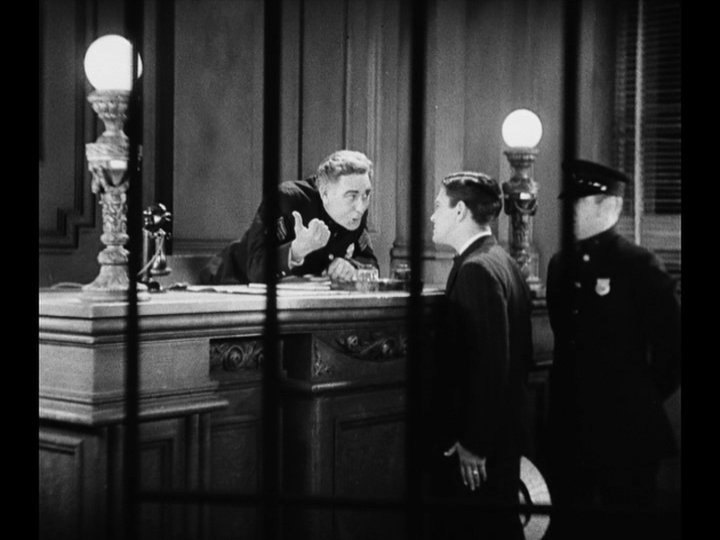
And when Jim tries to come to her aid, he is arrested by a bizarrely aggressive cop, leading to the scene described by Cutler above in which his obvious passion earns him a reprieve:

Long shot of Jim arguing his case before two police officers with bars out of focus in the foreground

Alas, he and Mary are unable to locate each other again in the throng:

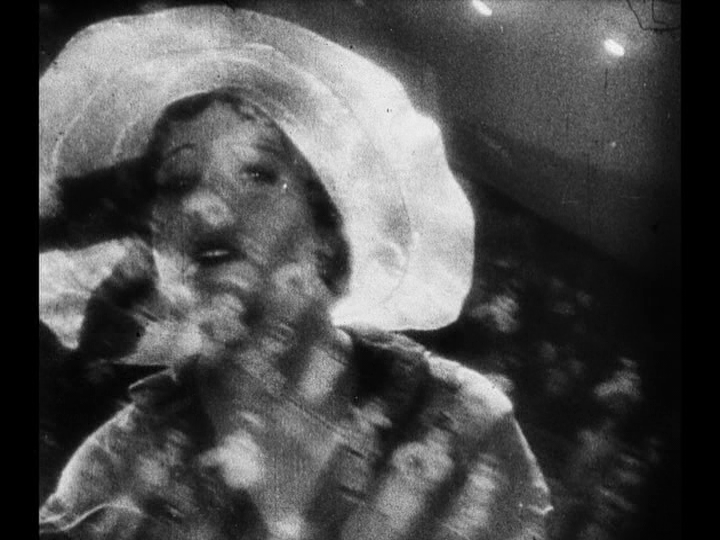
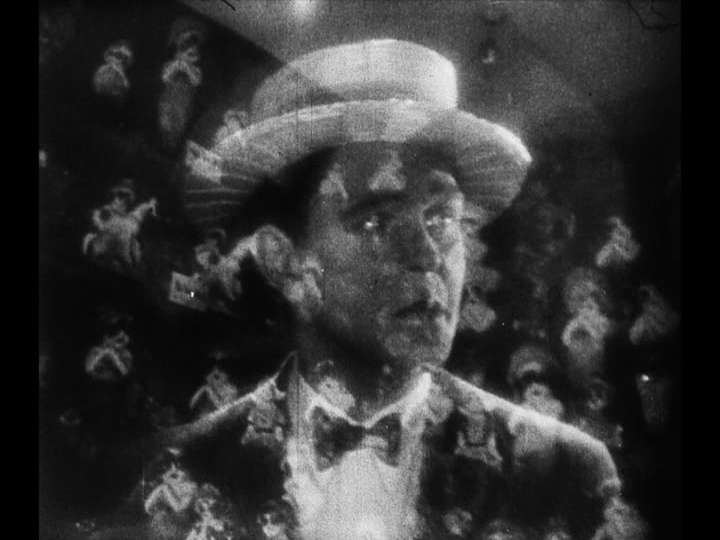
Close-up of Mary searching for Jim superimposed over a crowd shot
Close-up of Jim searching for Mary also superimposed over a crowd shot
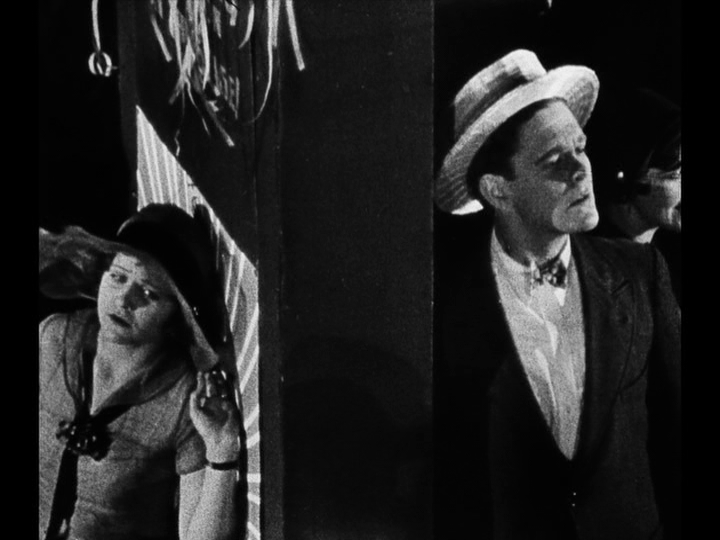
Medium long shot of Jim and Mary in the same frame, but not seeing each other because they are separated by a barrier

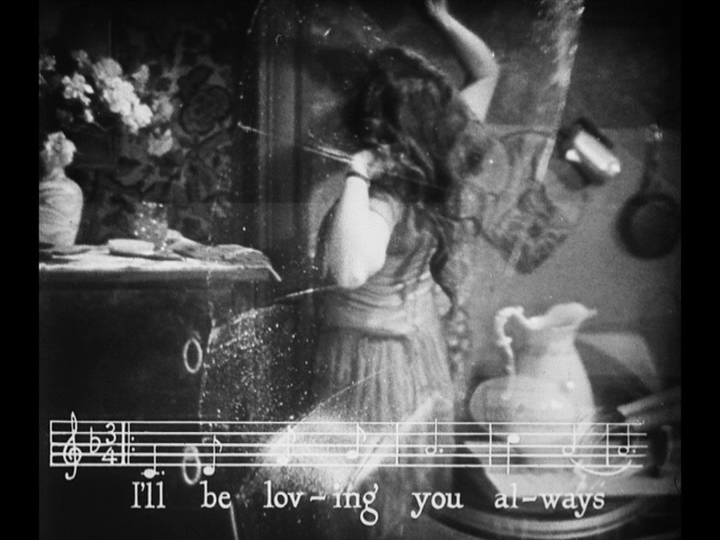
A squall suddenly blows up while they’re searching and, not having exchanged contact information, they return home despondent and alone. But wait! Jim puts on a record of the song he and Mary danced to earlier; in the next shot, she hears it coming through the walls and pounds on them, yelling for her neighbor to turn it off:

Long shot of Mary pounding on the walls of her apartment with both a record player and the music and lyrics from the song "Always" superimposed over it

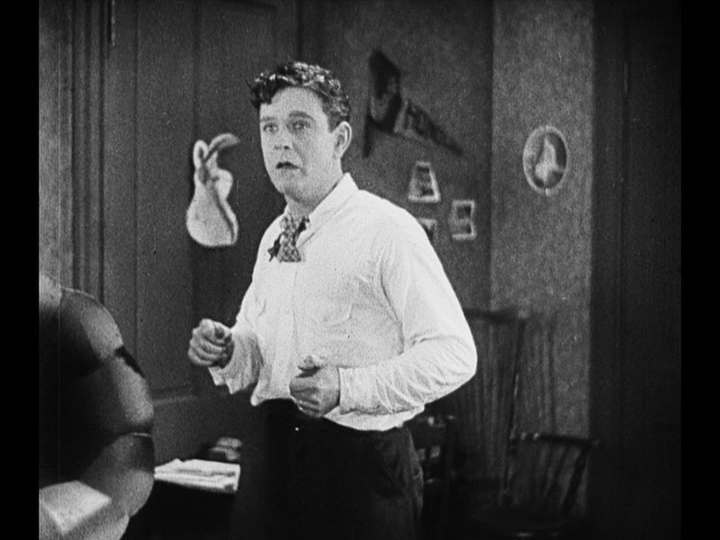
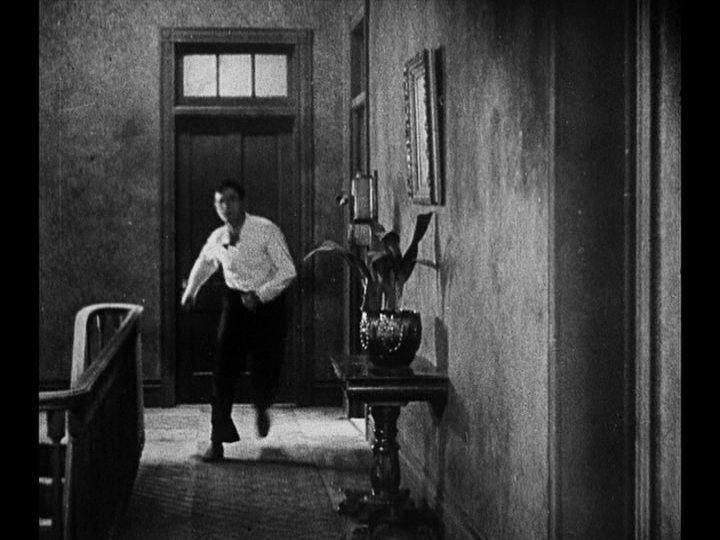
Jim recognizes Mary’s voice and rushes down the hall:

Medium shot of Jim depicting the moment of revelation
Long shot of Jim rushing down a hallway toward the camera

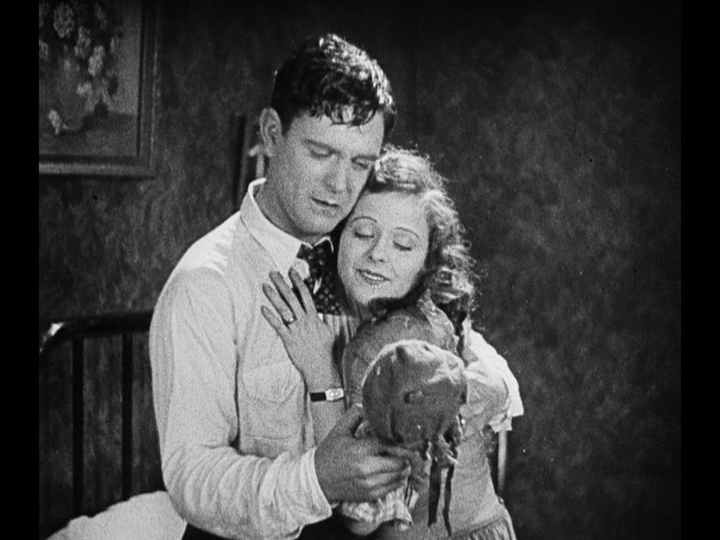
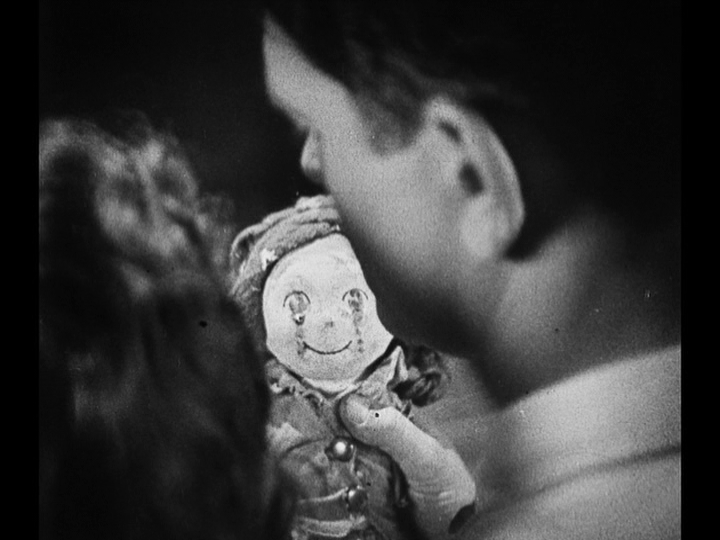
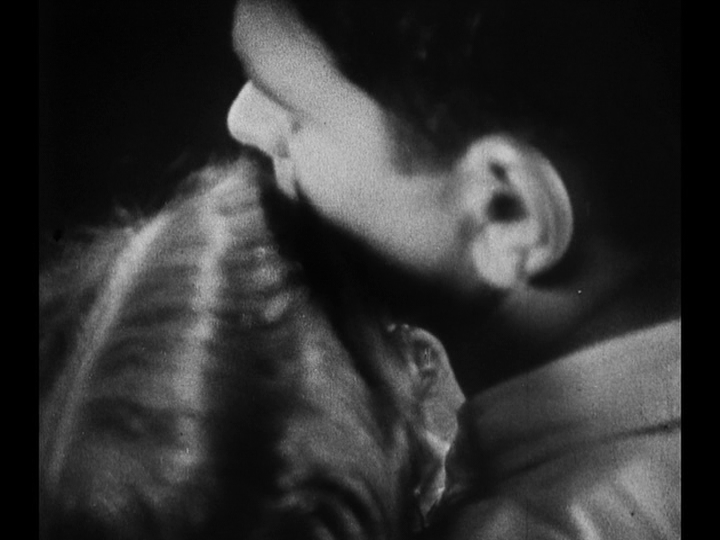
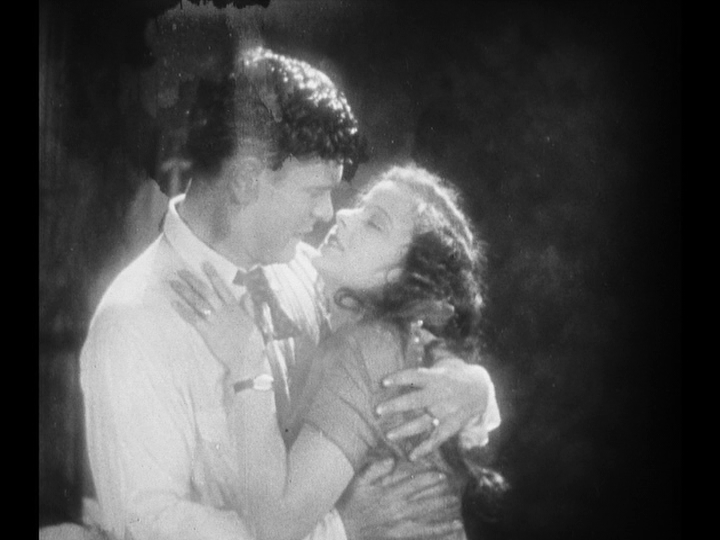
They’ve been living next to each other all along! As they embrace, the lovers contemplate Mary’s doll, which as Glenn Erickson noted in a Blu-ray review has had “its face half washed away in ‘tears'” by the storm, thus becoming a “physical ‘locator'” for the heartbreak they have just triumphed over:

Medium shot of Jim and Mary looking at her doll as they embrace
Over-the-shoulder close-up of the doll partially blocked by Jim and Mary's out-of-focus heads in the foreground
Continuation of the previous shot: the doll is now completely hidden

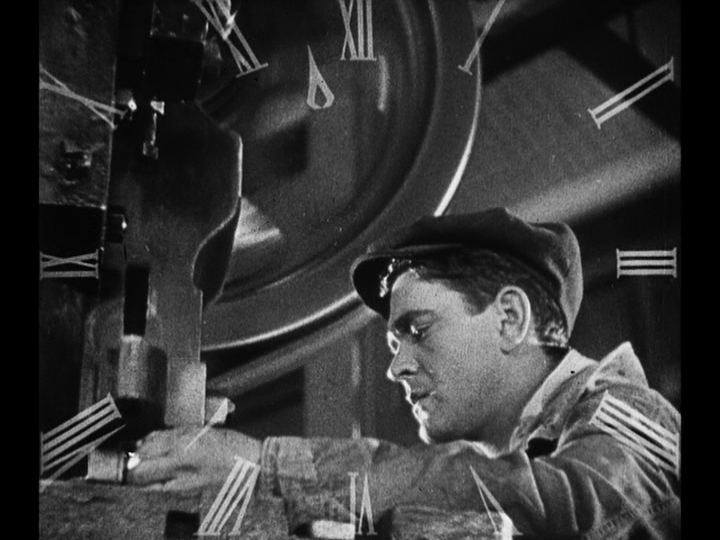
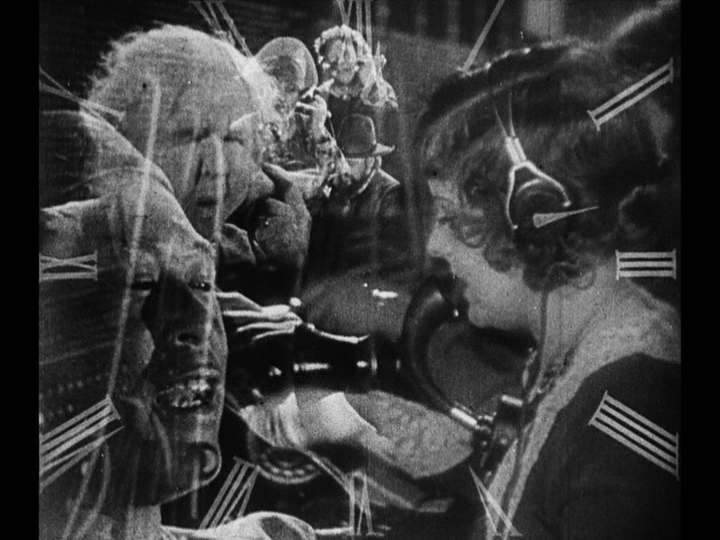
The end. Lonesome is brilliantly, restless inventive from start to finish and probably contains twice its running time’s worth of visual information if you count the many superimpositions, such as the clock face which accompanies shots of Jim and Mary at work and portraits of the people she is connecting to one another in her job as a switchboard operator:

Medium shot of Jim at work at a punch press with a clock face superimposed over him
Medium shot of Mary at work at a switchboard, also with a clockface superimposed over her and portraits of the people she's connecting to one another as well

As Richard Koszarski observes in his excellent DVD commentary track, even director Pál Fejös’s most ostentatious images are far more innovative than they appear:

When a shot of Mary at work seems to elbow a shot of Jim right out of the frame, we are seeing this new optical printing technology at work. The effect is not, as some historians have said, a panning shot in which the camera moves to the left or right, but a much more complicated technical exercise introduced to Hollywood only a few months before Fejös shot this film in which the optical printer and a new Kodak duplicating film stock could allow filmmakers the sort of flexibility in shaping the image that prefigures the development of digital cinema decades later.

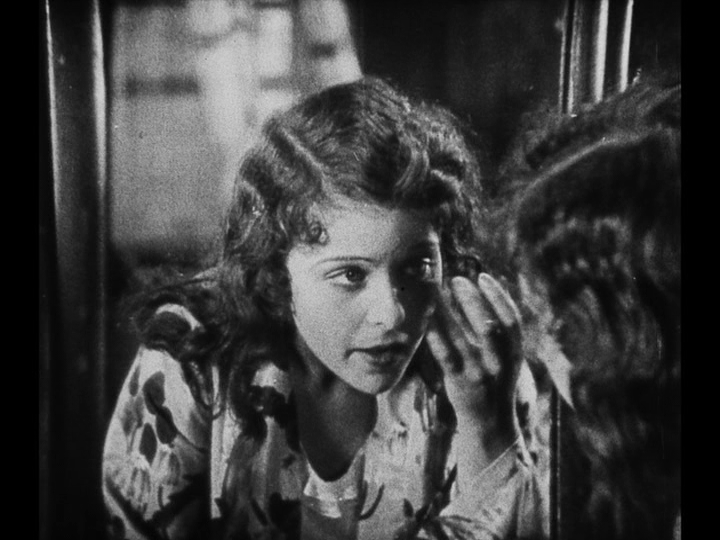
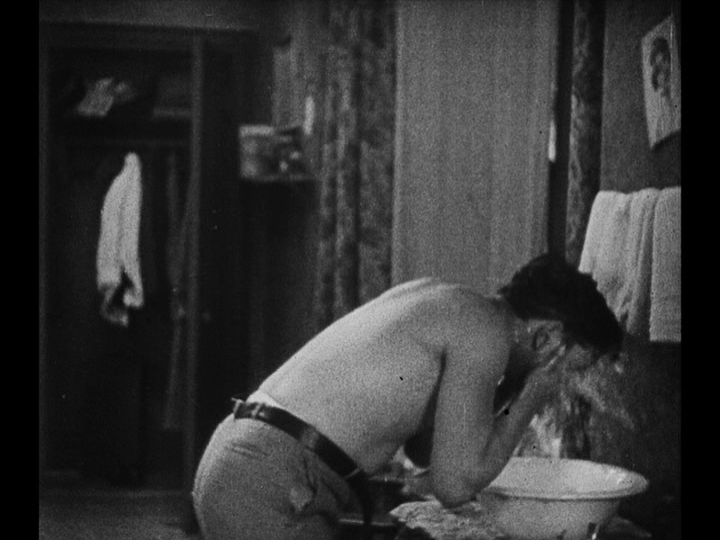
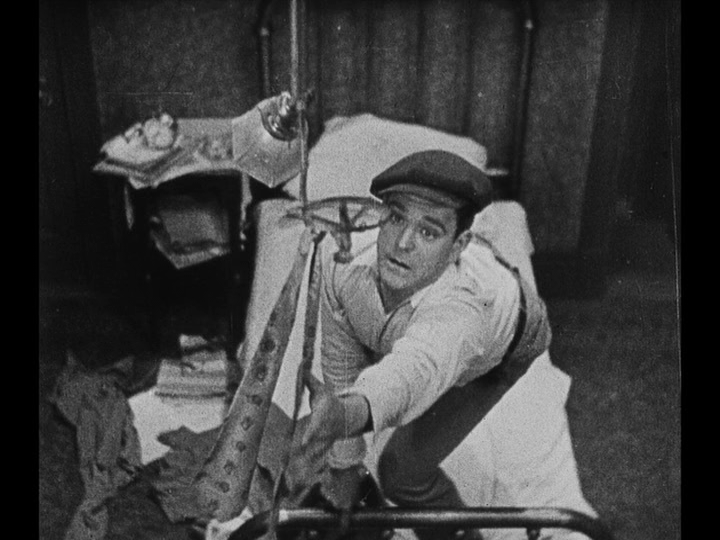
Meanwhile, for the ostensibly more straightforward scenes that begin the film, cinematographer Gilbert Warrenton “developed a small mobile camera system that allowed him to follow the actors very closely as they moved within the cramped confines of their cold water flats”:

Close-up of Mary looking at herself in the mirror after waking up
Medium shot of Jim washing his face in a basin
Overhead medium shot of Jim reaching for the tie which hangs from a light fixture in his apartment

Fejös and company also make great use of a technique which was falling out of style with the advent of sound in the applied color sequences, which as Joshua Yumibe explains in his chapter for the book Color and the Moving Image were “proving difficult to apply in ways that did not interfere with soundtracks on prints.” Universal nonetheless approved their use here both to facilitate marketing the film in the company’s publicity journal Universal Weekly as “the first talking picture with color sequences” and because they “greatly enhance an already beautiful story.” Specifically, per Yumibe, color formally reinforces the narrative ambivalence he (riffing on Siegfried Kracauer) reads into Lonesome‘s insistence on tearing Jim and Mary apart before it allows them to be together by using “the same hues that previously colored their romance” for the flames that result in their separation.

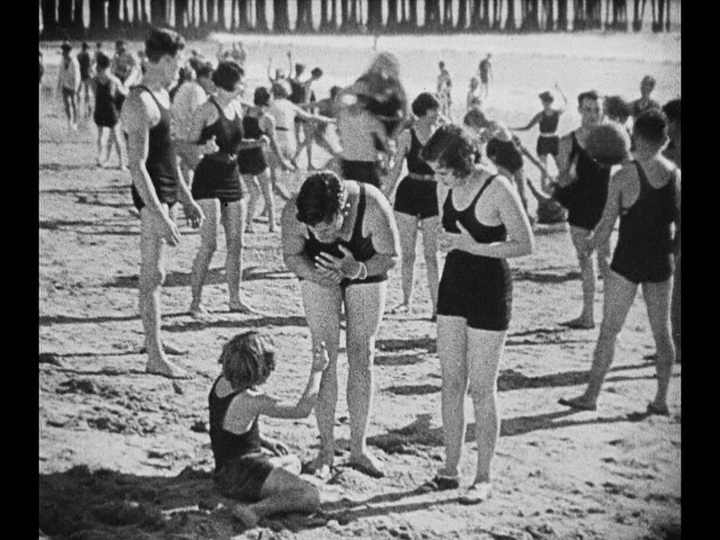
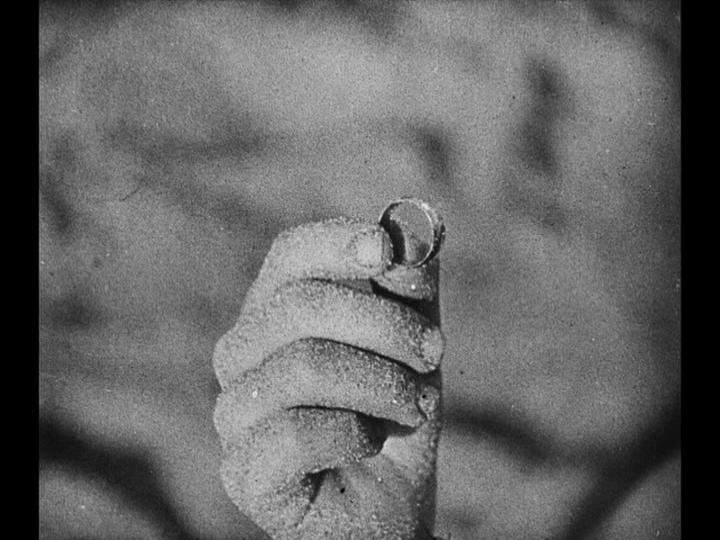
A sequence in which Jim and Mary search for a lost ring on the beach serves a similar function. Sure, they are ultimately successful:

Long shot of a child holding up something as Jim bends down to talk to him, pantomiming placing a ring on his finger
Close-up of the child's sand-covered hand holding up the ring they're looking for

But what were the chances? As Jonathan Rosenbaum said about my February, 2024 Drink & a Movie selection The Young Girls of Rochefort, despite the fact that all eventually ends well, “the missed connections preceding this resolution are relentless, and one may still wind up with a feeling of hopeless despair despite the overdetermined happy ending.” No wonder, then, that he numbers both that film and Lonesome among his hundred favorite films!

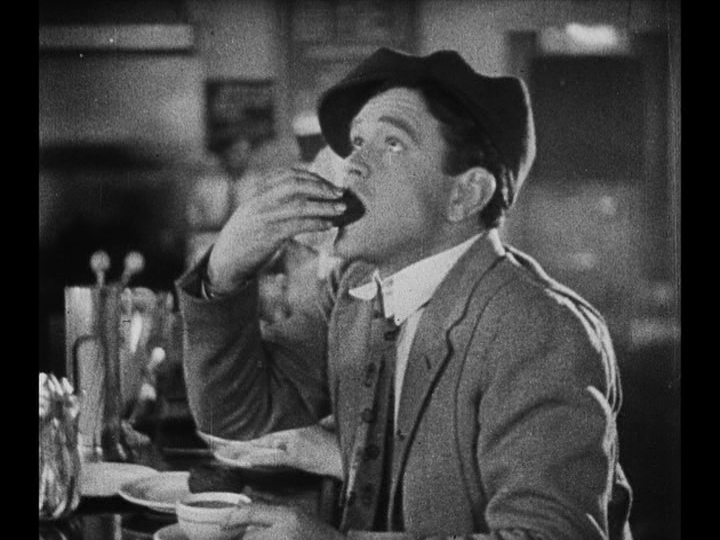
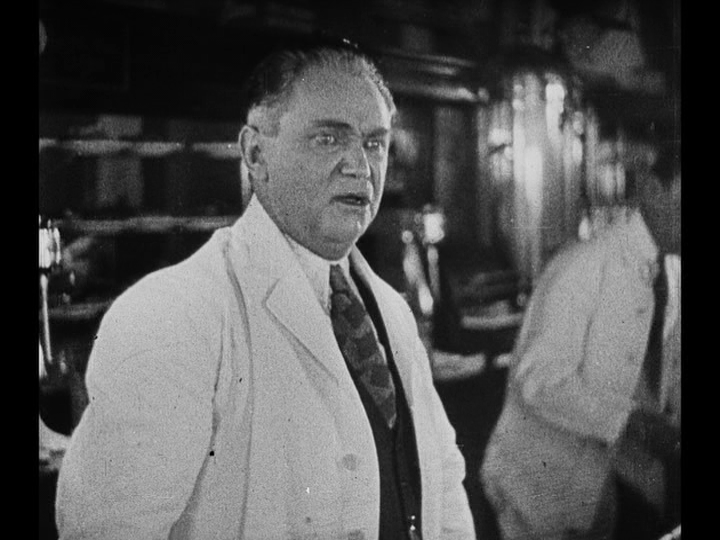
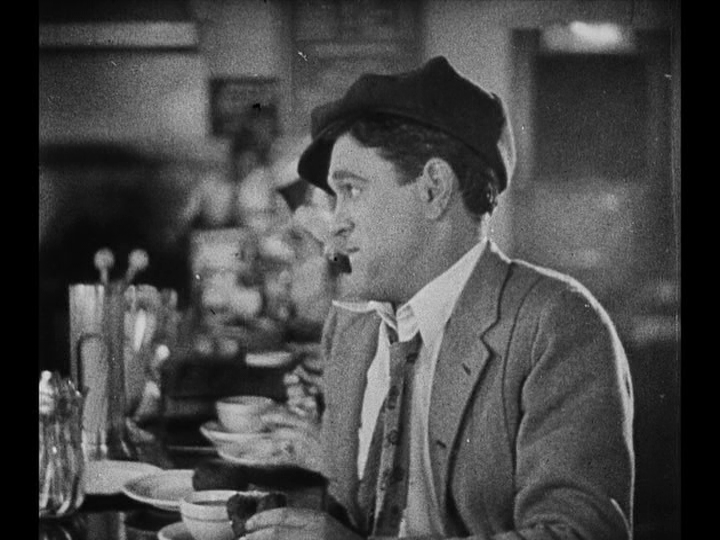
One of the best things about Koszarski’s commentary are when he points out places where, with his assistance, things obviously seem to be missing like a “gag title” to explain Jim’s exchange with the man who serves him coffee and doughnuts on his way to work:

Medium shot of Jim shoving a doughnut into his mouth
Reaction shot of Jim's server looking at him with a horrified expression
Medium shot of Jim appearing to offer some sort of explanation

Flaws like this are on of the reasons that David Cairns, another champion of Lonesome‘s dialogue scenes, provides for calling it “a magnificent one-off” in a 2016 blog post: “I wish the part-soundie era had lasted another five years. When the two leads abruptly start speaking to each other in live sound on the beach at Coney Island, the jarring transition from one medium to another is beautiful. You can’t get that in a perfect film, only in a makeshift masterpiece like this one, a superproduction assembled on shifting sands.” Talking about this moment:

He concludes by saying, “When the film reaches its tearful conclusion, sudden nitrate decomposition afflicts the footage, with PERFECT artistic timing — it drives home the fragility of what we’ve been watching.” It may be a bit of a stretch, but this strikes me as a possible callback to the delicate balance of the Sherry Tale Ending and even the holiday that occasioned this post. It’s great that the United States has made it to 249, but if we’re not careful it won’t still be around next year to mark its Semiquincentennial, let alone make it all the way to the year 2074.

Cheers!

All original photographs in this post are by Marion Penning, aka My Loving Wife. Links to all of the entries in this series can be found here.

Ithaca Film Journal: 7/10/25

What I’m Seeing This Week: ‘Tis the season for blockbuster fare that I’m not *that* interested in, but will see anyway for want of better options. This week that means Jurassic World: Rebirth and/or Superman, both of which are now playing at both Cinemapolis and the Regal Ithaca Mall.

Also in Theaters: The Phoenician Scheme, which continues its run at Cinemapolis, has now tied Sinners‘ Movie Year 2025 record for most consecutive weeks (four) as my favorite new release in local theaters. I also enjoyed 28 Years Later, which is there and at the Regal, and Mission: Impossible – The Final Reckoning, which is just at the latter. This week’s special events are highlighted by a screening of the film Open Country at Cinemapolis on Monday that benefits WRFI Community Radio and local publisher PM Press and features both live music and a Q&A with the filmmakers. Finally your best bet for repertory fare is One Flew Over the Cuckoo’s Nest, which is celebrating its 50th anniversary with showtimes at the Regal on Sunday and Wednesday.

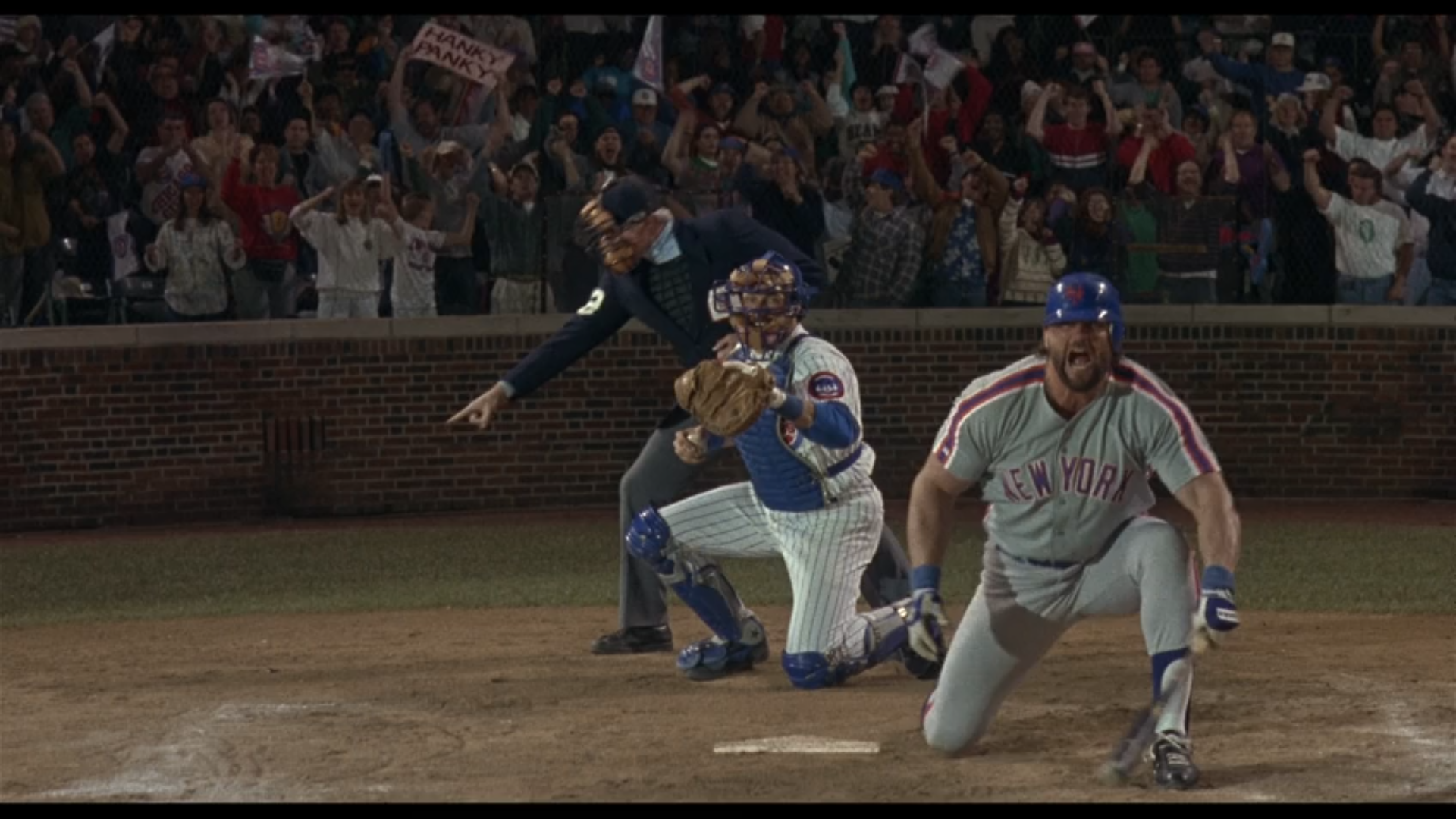
Home Video: The future is starting to look bright again for Mets fans as we head into the All-Star break following a Subway Series win over the Yankees and with Sean Manaea and Kodai Senga returning to action, but the month of June was a reminder that it doesn’t matter how good a team is if the entire pitching rotation is on the DL. No matter what this season has in store for us, one thing is certain: the ending won’t be as embarrassingly tragicomic as the final outs of the one depicted in the movie Rookie of the Year, which is currently streaming on Disney+.

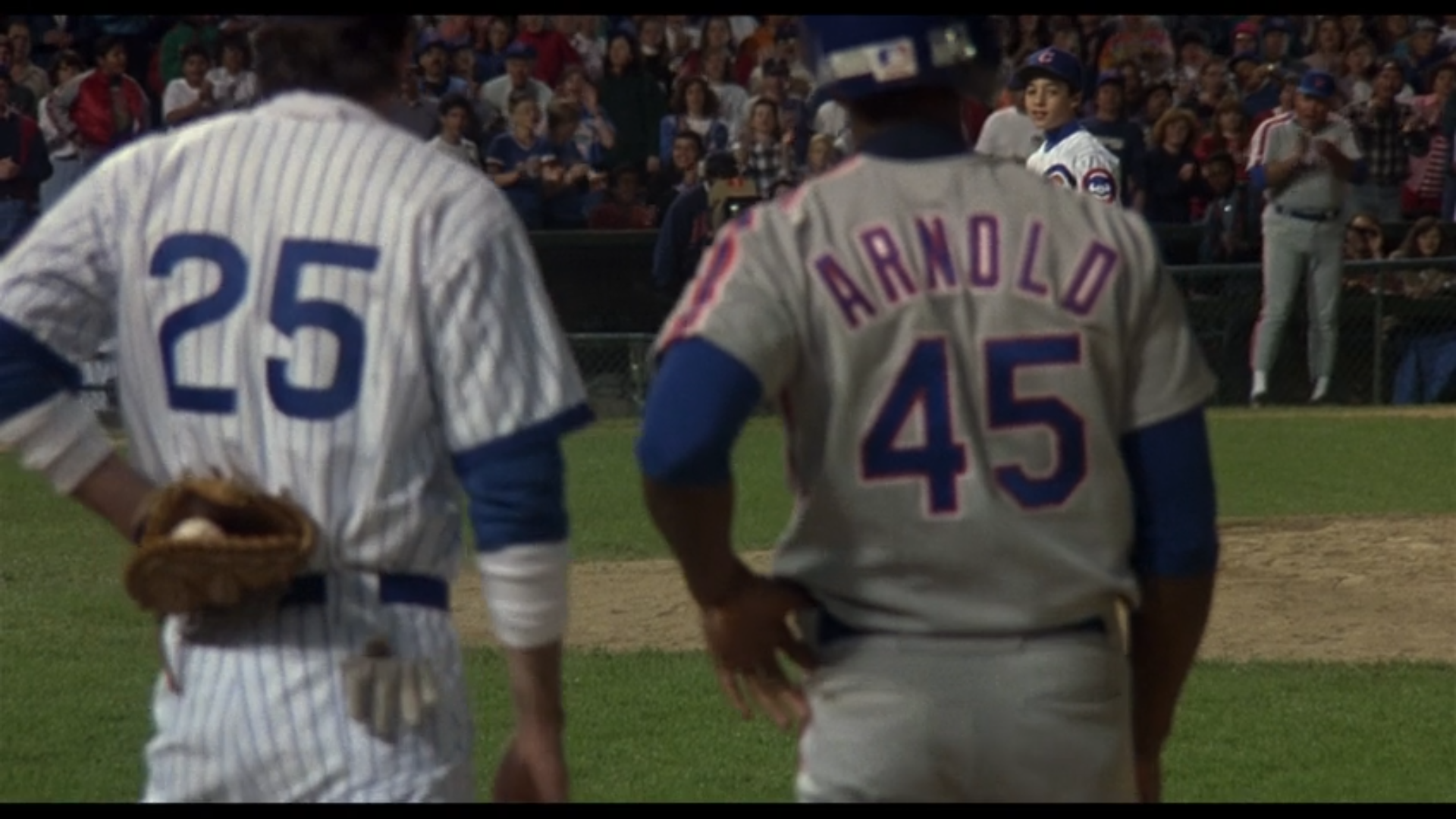
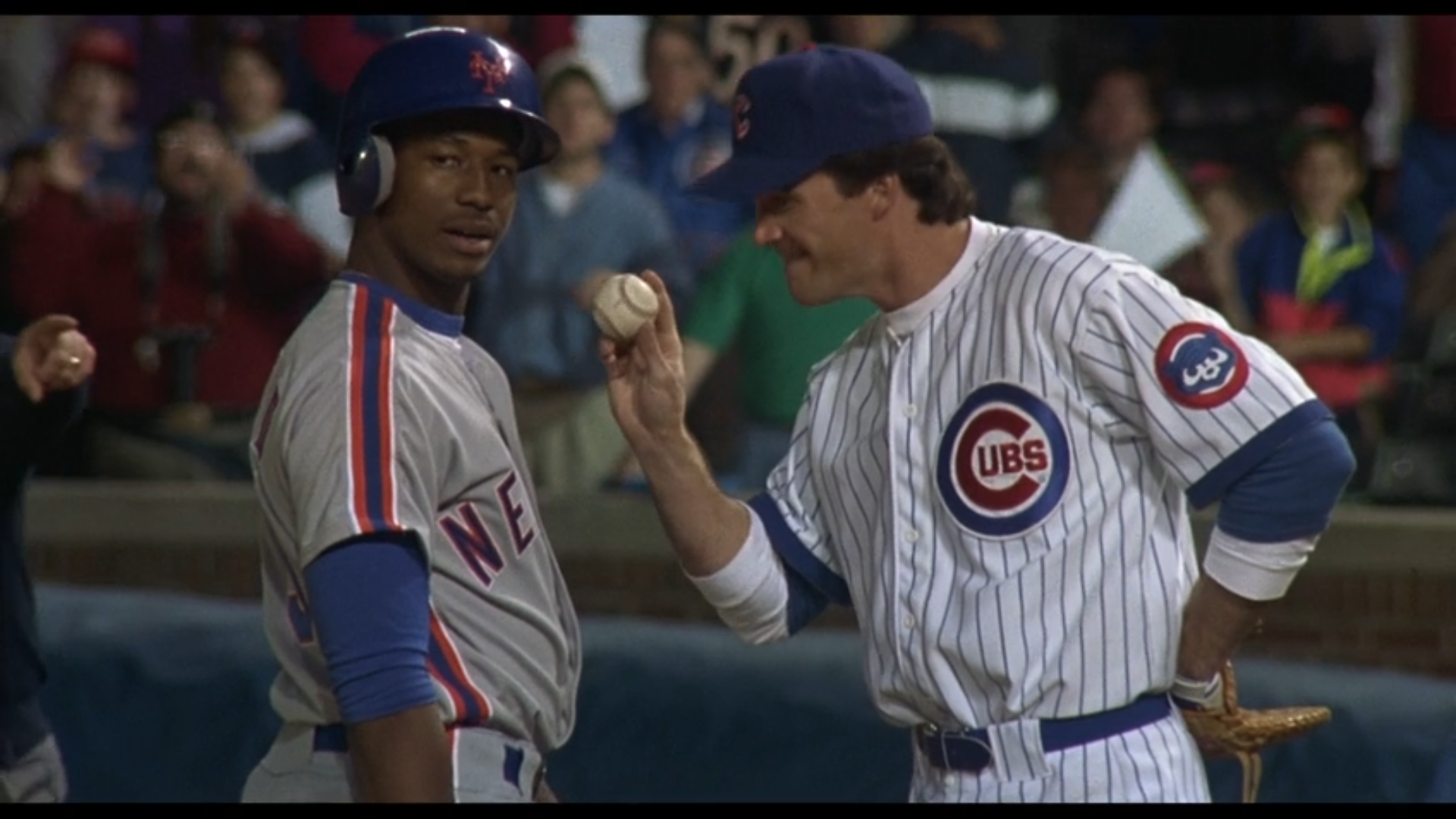
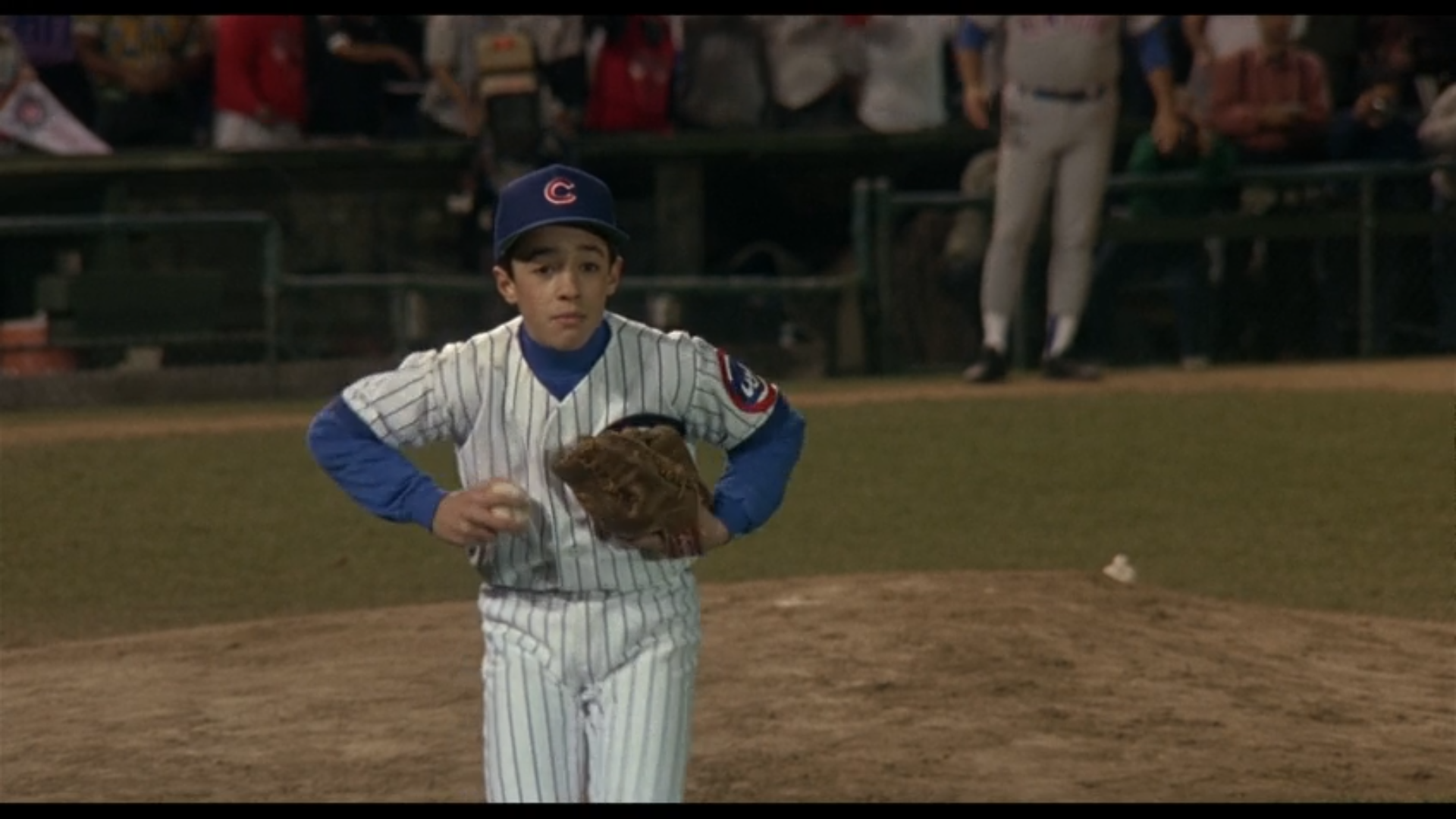
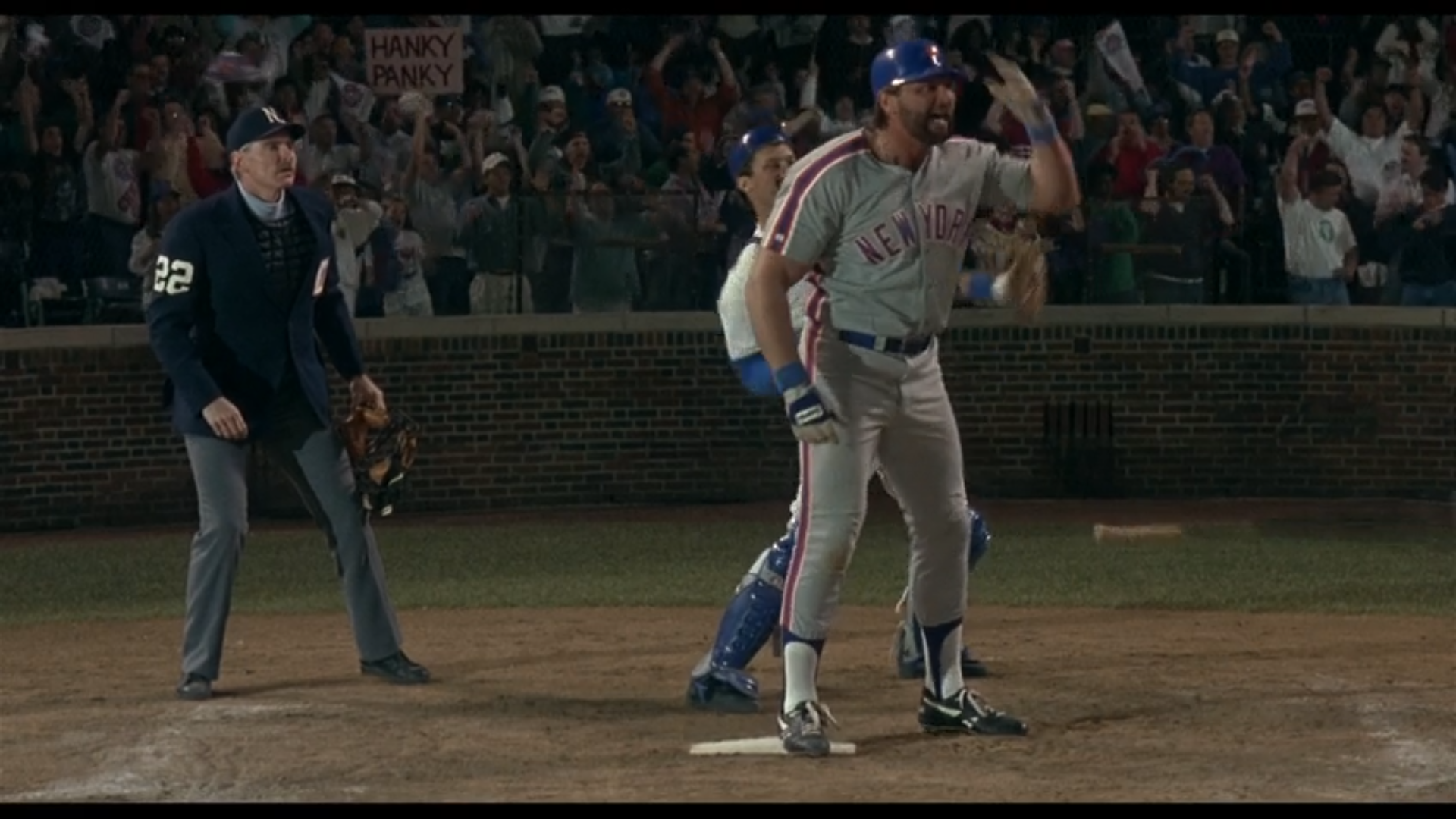
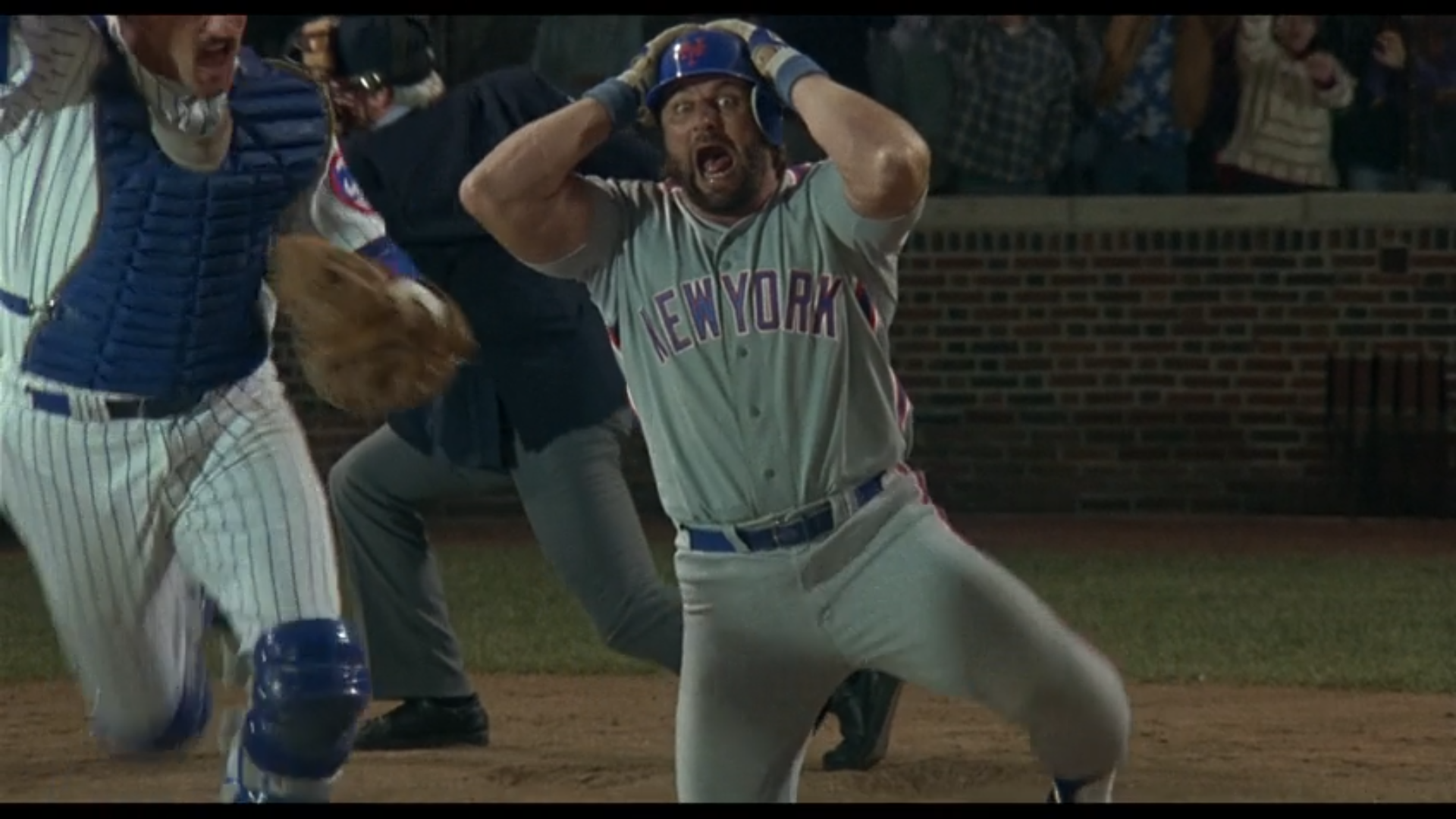
For those unfamiliar with the plot, Thomas Ian Nicholas plays a 12-year-old boy named Henry Rowengartner who recovers from a broken arm with the ability to throw a 100 mph fastball (which as Wikipedia helpfully notes “is well beyond the normal range of a Little League player”) and is signed by the Cubs. He leads them to within three outs of winning “the division,” which of course would earn them a berth in the World Series. Their opponent in the fateful final game of the season? My Metropolitans. When Henry slips on a baseball has he heads out onto the field to pitch the ninth and loses his supernatural abilities as suddenly as he gained them, the Mets seemed primed to advance to what would presumably be their first crack at a title since 1986. But that’s not how things go. Instead, leadoff hitter #45 Arnold (B.J. Sanabria) gets himself picked off following what is effectively an intentional walk to open the inning after falling victim to what John Candy’s announcer Cliff Murdoch refers to as “the old hidden baseball trick”:

The Cubs first baseman hides the ball in his glove unbeknownst to the Mets player standing next to him out of focus in the foreground as Henry looks on from the top-right of the frame
The Mets runner looks offscreen at Henry in disbelief from the left side of the frame as he's tagged out by the Cubs player to the right of him

Henry also gives a free pass to his teammate #16 White (Cristian Mendez), who even more frustratingly allows himself to be goaded into a foolish attempt to steal second by taunts of “chicken”:

Medium shot of Henry taunting a baserunner by pantomiming a chicken

This sets up a rematch with #6 Heddo, the gargantuan power hitter who weeks earlier in the film welcomed Henry to the majors with a home run. But while he may “eat fastballs for breakfast,” he can’t handle to slow stuff, and Henry strikes him out on three straight pitches:

Long shot of an umpire calling a strike behind a catcher getting ready to throw the ball back to Henry behind Heddo howling in disbelief
Heddo tosses his bat in frustration, again in long shot in front of the Cubs catcher and the umpire
Heddo falls to the ground holding his head as the umpire calls strike three and the catcher runs to the mound to celebrate

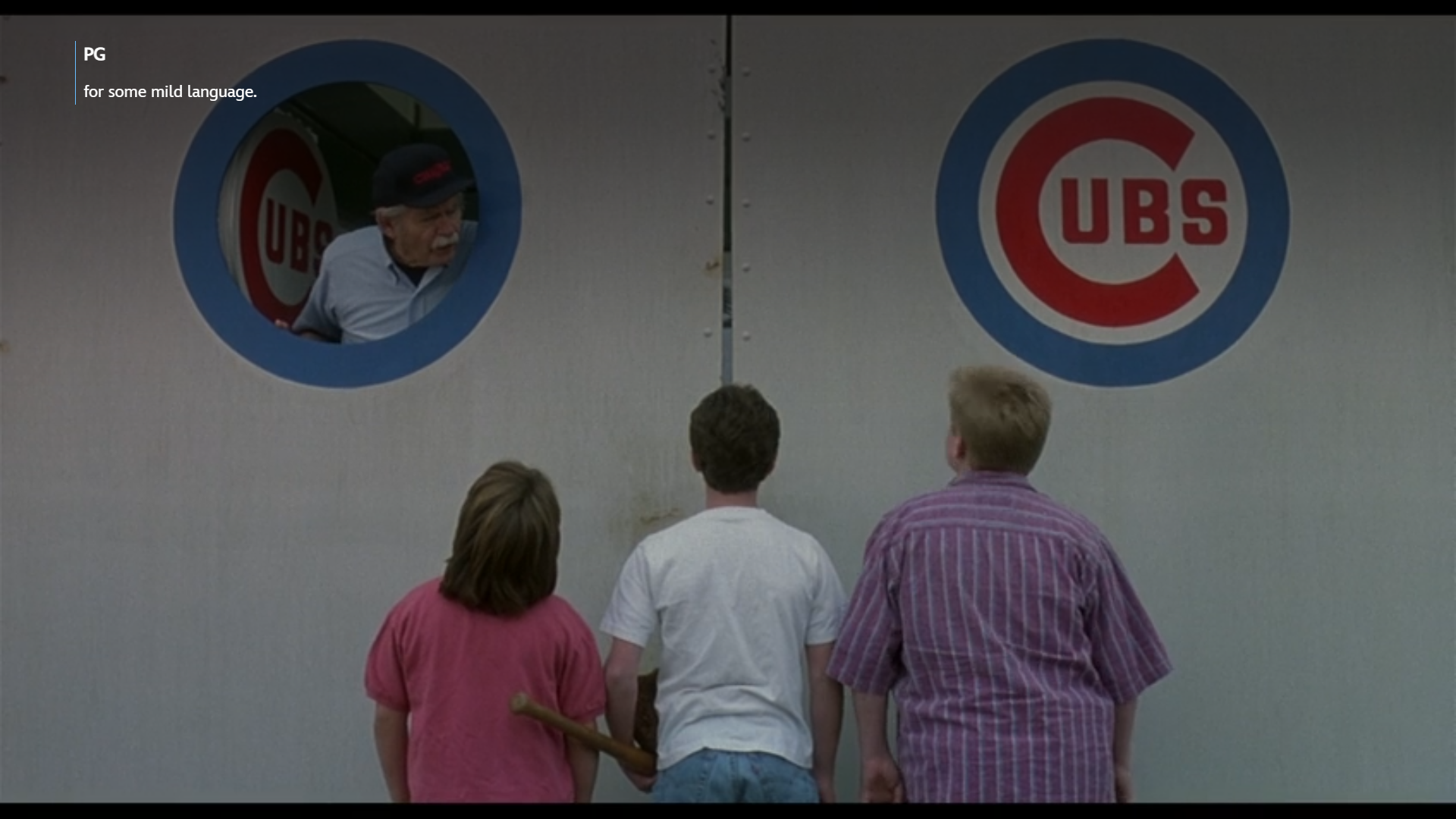
Roger Ebert called Rookie of the Year “pure wish-fulfillment” in a contemporaneous review that ended with him saying, “I really shouldn’t give it three stars, but I’m going to anyway.” It has actually aged pretty well, though, in large part because it never forgets it’s a fantasy, as demonstrated by this clever reference to The Wizard of Oz:

Henry and his friends ask a character credited as the "Wizard of Wrigley" (James Andelin) for entrance into the Cubs' stadium

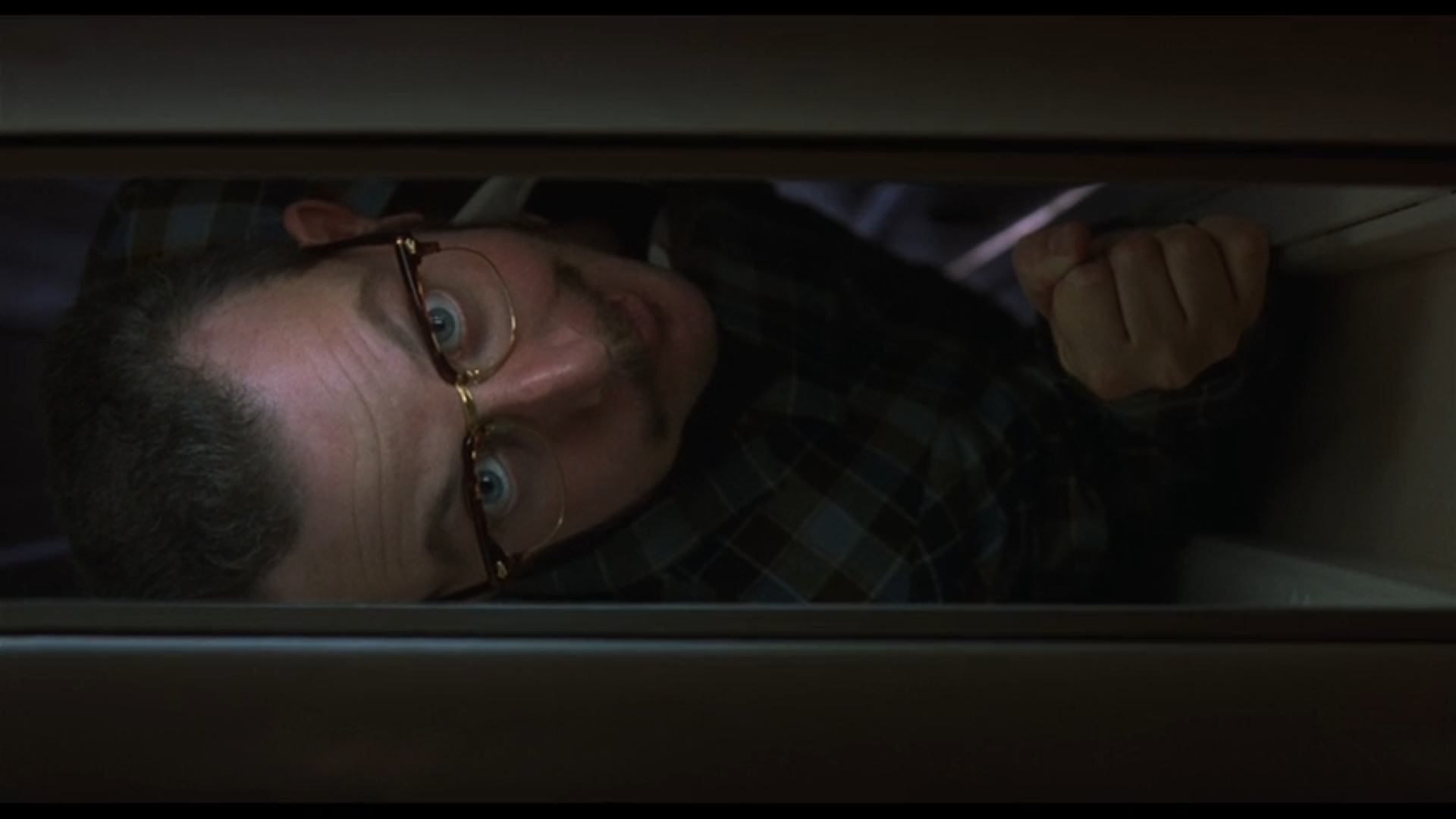
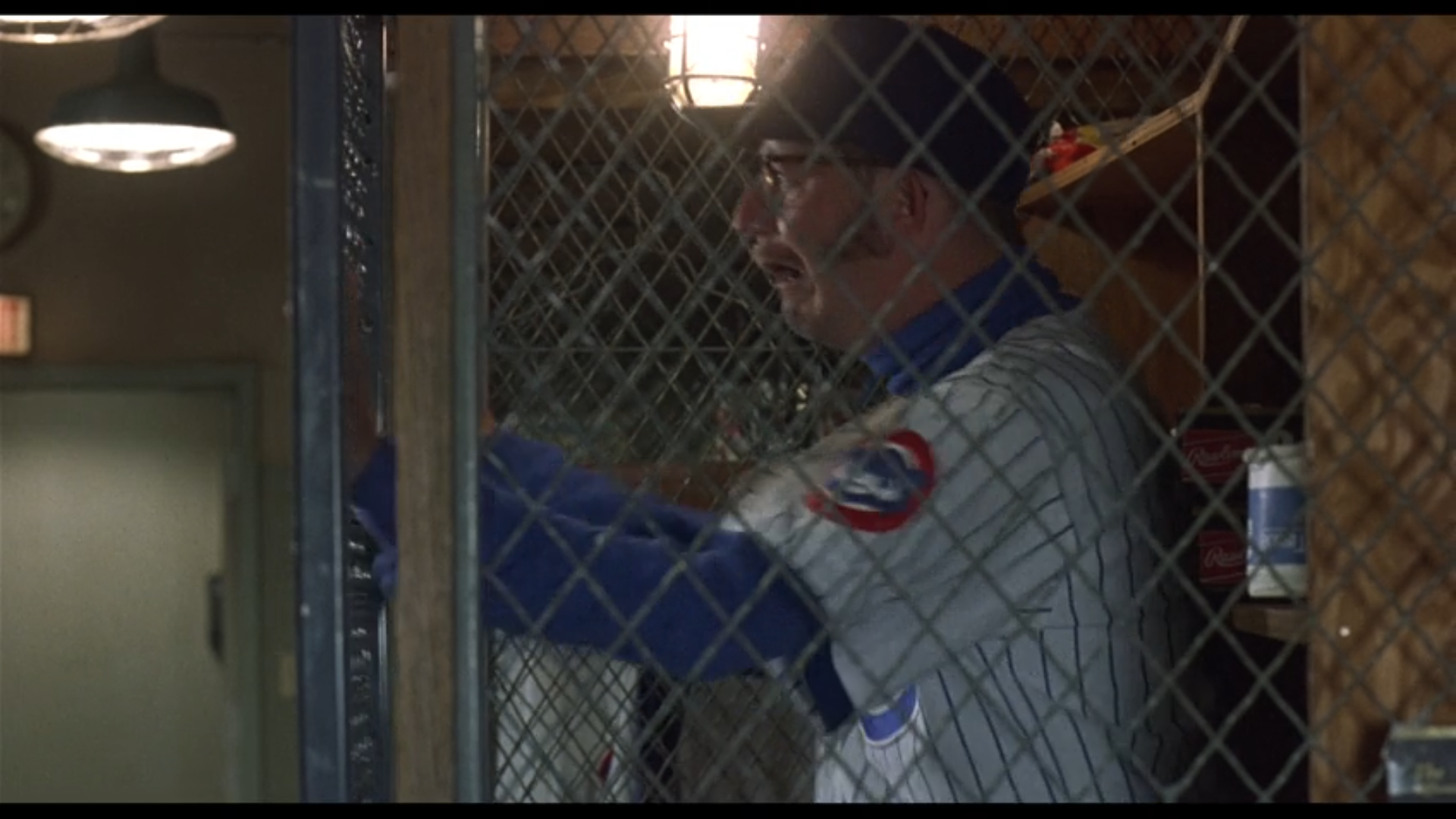
First- (and only-) time feature film director Daniel Stern makes lots of other interesting decisions, including devising a wide variety of ways to satisfy Twentieth Century Fox’s desire for him to play pitching coach Brickma but not actually appear on screen much by (as he told Kent Garrison in a 2020 interview for The Athletic) coming up with multiple gags where he misses games because he’s locked himself inside something, all of which somehow work:

Overhead close-up of Brickma sandwiched between two doors
Medium shot of Brickma inside a cage

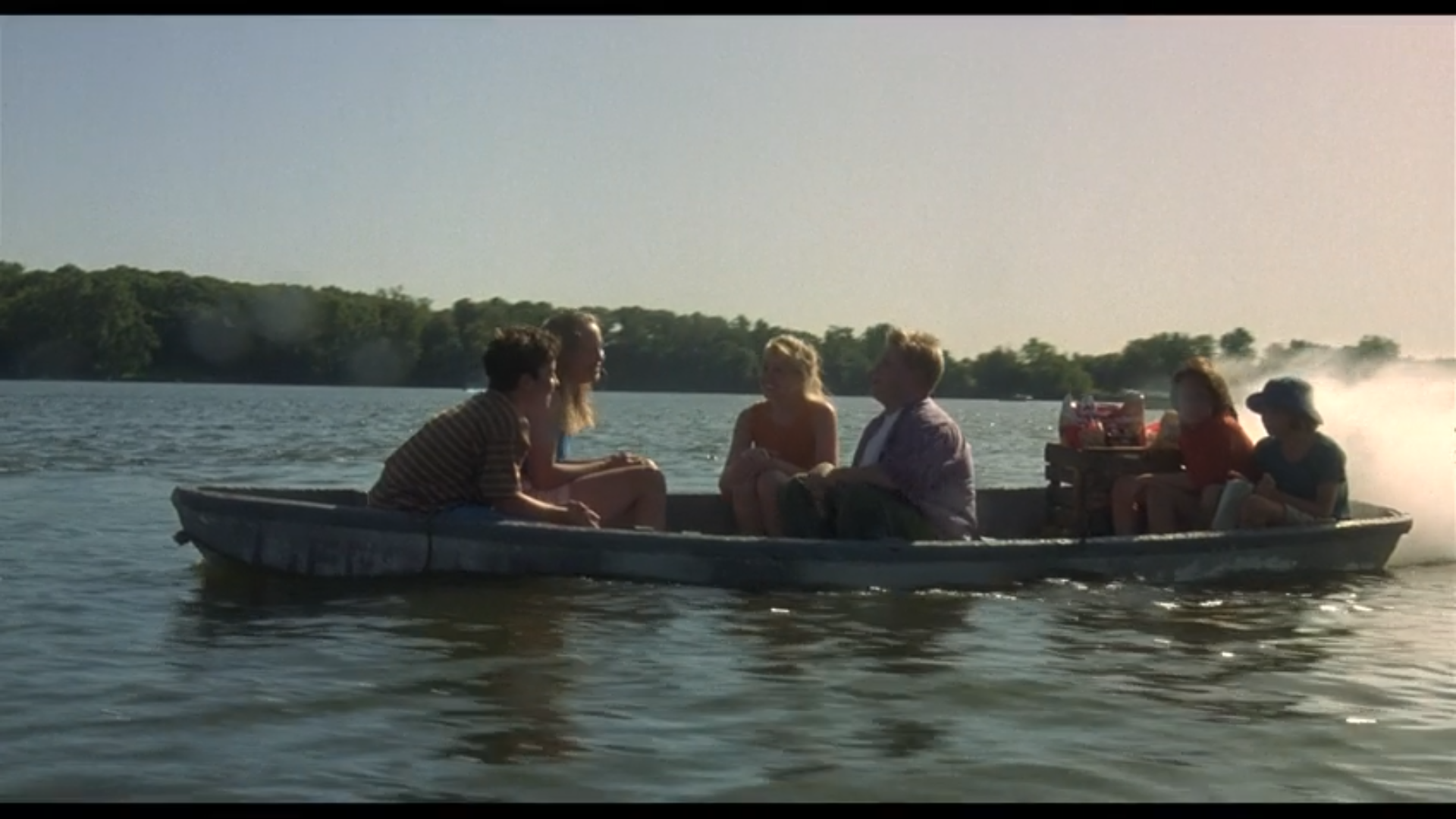
Anyway, as painful as the climax was for me as a fan of the losing team, and despite the fact that this overcrowded boat full of kids not wearing life jackets traumatized My Loving Wife the rowing coach:

Long shot of six kids in a motor boat low in the water

Rookie of the Year made for one of our most enjoyable Family (née Friday) Movie Nights of the past year. There are surprisingly few good films about baseball considering that it’s the “national pastime” of the country that Hollywood is located in, so consider this one if you find yourself getting antsy as you wait for the games to resume next week!

Previous “Ithaca Film Journal” posts can be found here. A running list of all of my “Home Video” recommendations can be found here.

July, 2025 Drink & a Movie: Waltermelon + Crimes of the Future

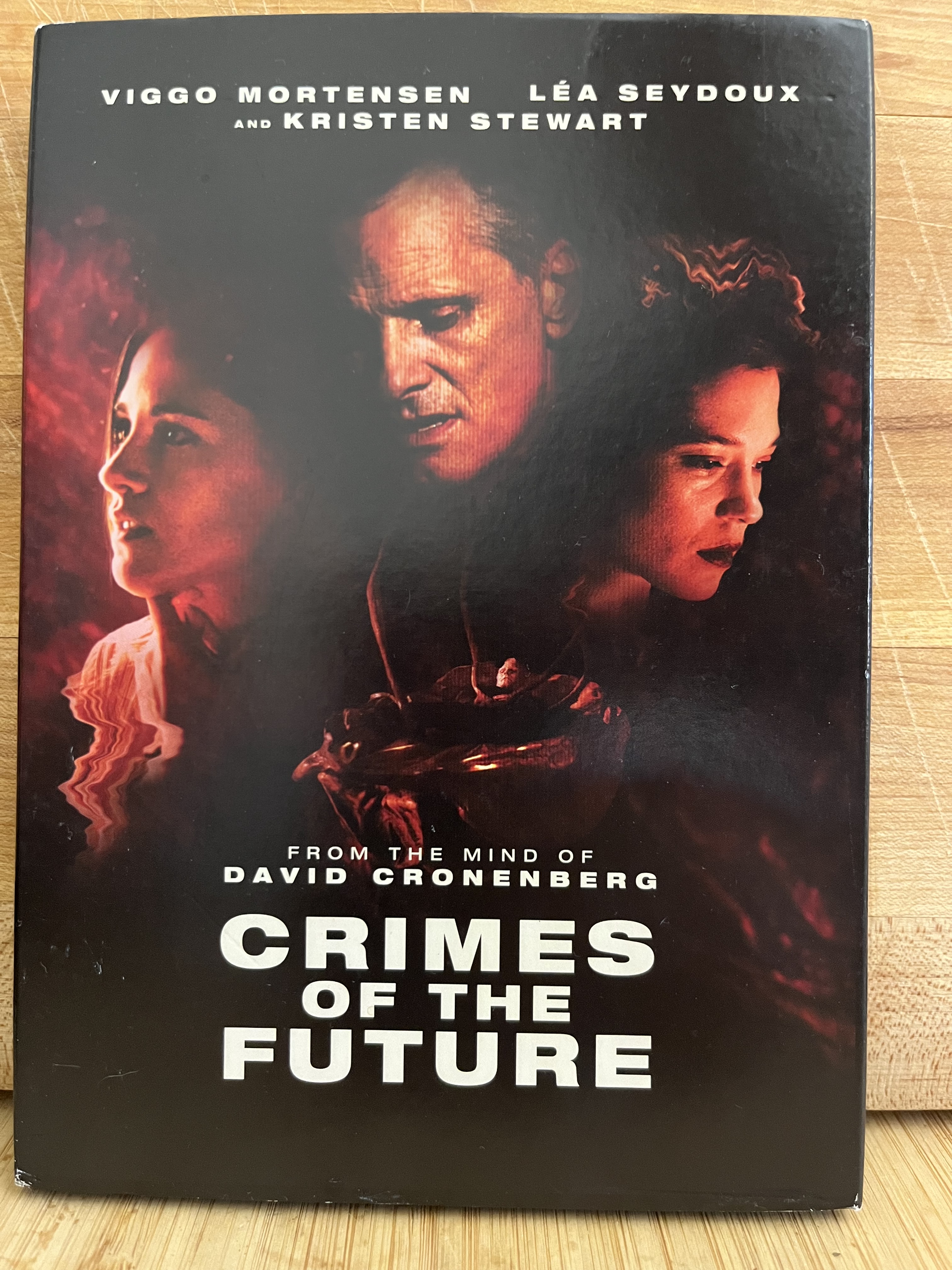
Happy Canada Day! This month’s post honors that country’s first citizen of cinema, David Cronenberg, and its de facto national cocktail, the Caesar. To begin with the former, here’s a picture of my Neon DVD copy of Crimes of the Future, one of *my* best movies of the 21st century so far:

Crimes of the Future DVD case

It’s also currently available on Hulu with a subscription and via a number of other platforms for a rental fee, and some people may have access to it through Kanopy via a license paid for by their local academic or public library as well.

Everyone in my household except me is a Canadian citizen and we spend a lot of time north of the border, so Caesars are a staple of our holiday and other gatherings. I knew that I eventually wanted to write about a drink from the excellent book Caesar Country: Cocktails, Clams & Canada by Aaron Harowitz & Zack Silverman, which was published the same year this series began, and when I settled on Crimes of the Future as the movie I’d be pairing it with the choice became obvious. Here’s how to make our very slightly modified version of their ingenious Waltermelon:

1 1/2 ozs. Reposado tequila (Espolòn)
2 ozs. Watermelon juice
2 ozs. Caesar mix
1/4 oz. Simple syrup
1/4 oz. Lemon juice

Make the Caesar mix by roasting 4 1/2 lbs. halved Roma tomatoes cut-side down on a baking sheet lined with parchment paper or a Silpat mat with a seeded, stemmed, and halved jalapeño chili (skin-side up) and four whole cloves of garlic with their skins left on about 30 minutes until nicely browned. Let cool completely, then remove the skins from the garlic, add everything to a blender with two tablespoons fresh oregano (or two teaspoons dried), and blend until smooth. Add one cup of water, 1/2 cup clam juice, 1/4 cup lemon juice, 1/4 cup simple syrup, and two teaspoons sea salt and blend again to homogenize. Add 1/4 teaspoon cayenne powder, 1/4 teaspoon celery seed, 1/4 teaspoon freshly-ground black pepper, 1/4 teaspoon onion powder, and 1/4 teaspoon paprika and quickly blend again. Strain the mixture through a fine-mesh strainer and cheesecloth (you’ll need to squeeze, which can be messy if you’re not careful) and adjust the consistency with additional water as needed and/or seasoning with more salt. To make the cocktail, stir all of the ingredients with ice and strain into a chilled Collins or highball glass rimmed with kosher salt. Serve on the rocks garnished with cubes of feta cheese and watermelon on a skewer.

Waltermelon in a cocktail glass

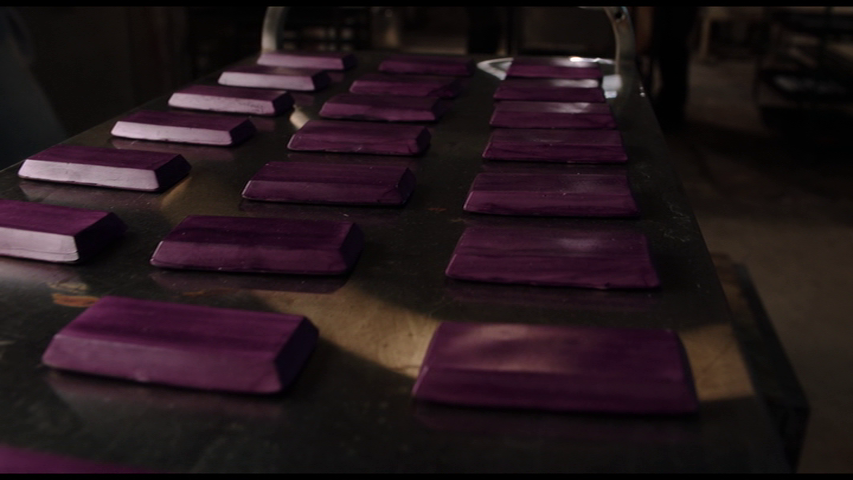
This beverage is certain to surprise and delight Caesar fans for sure, but even more so anyone who only knows its cousin the Bloody Mary. Thanks to the addition of watermelon juice, which per Harowitz & Silverman was inspired by an observation by chef José Andrés that “tomatoes with watermelon is a simple, refreshing, and perfectly balanced combination,” it’s sweeter and much lighter in body than the brunch staple you’re familiar with, which I personally find unpleasantly sludgy. Watermelon is also probably the flavor that will dominate your initial impression, but only because it’s unexpected: starting with the second sip, it feels like the world’s most natural companion to the umami-rich Caesar base. Finally, there’s a nice bit of heat on the finish, which is also where you finally pick up agave notes from the tequila and the oregano (one of the ingredients in the original Caesar created by Calgary bartender Walter Chell, as the book notes) we added as a second connection to Greece, where Crimes of the Future was shot. The first is of course the cubed feta garnish, which reminds me a bit of these trapezoidal purple “candy bars”:

Close-up of purple "candy bars" on an assembly line

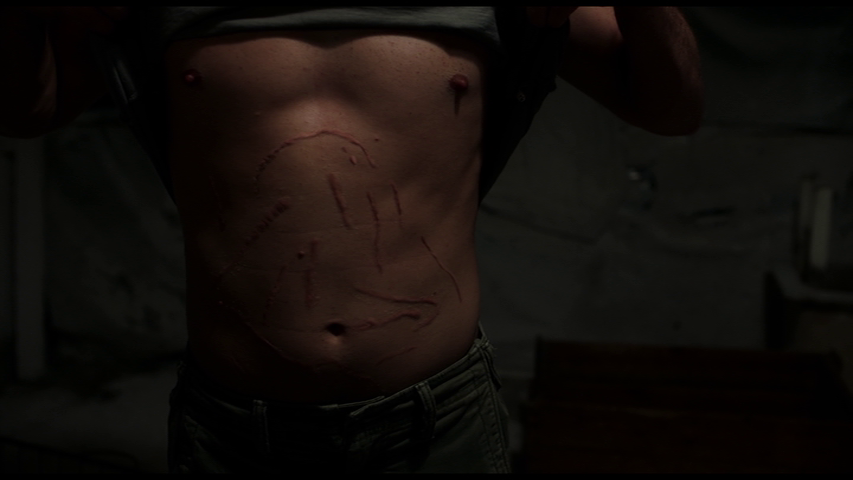
They aren’t actually candy, hence the scare quotes: this is, rather, what you eat after you get the elective surgery that leaves these scars:

Close-up of a man lifting up his shirt to reveal a torso covered in scars

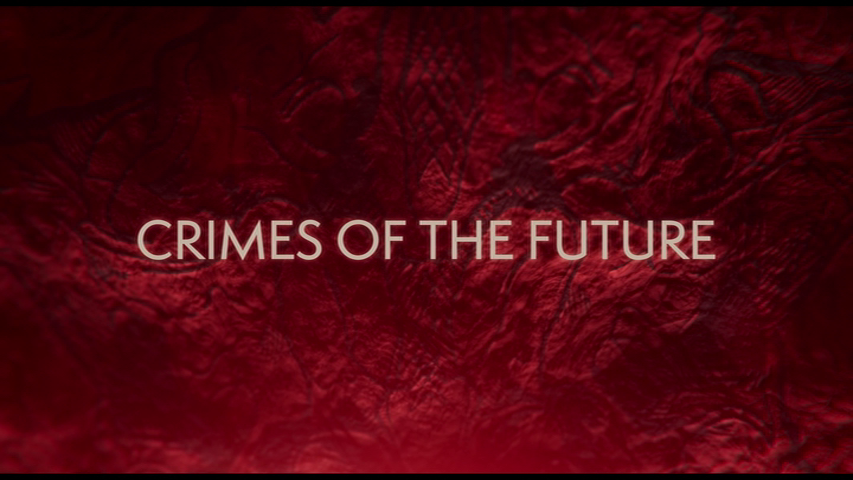
And replaces your digestive system with one capable of converting reprocessed industrial waste into energy. But we’re getting just a bit ahead of ourselves. Following the opening credits sequence that inspired this month’s drink photo:

Title card for Crimes of the Future, which features a red background of tattooed internal organs

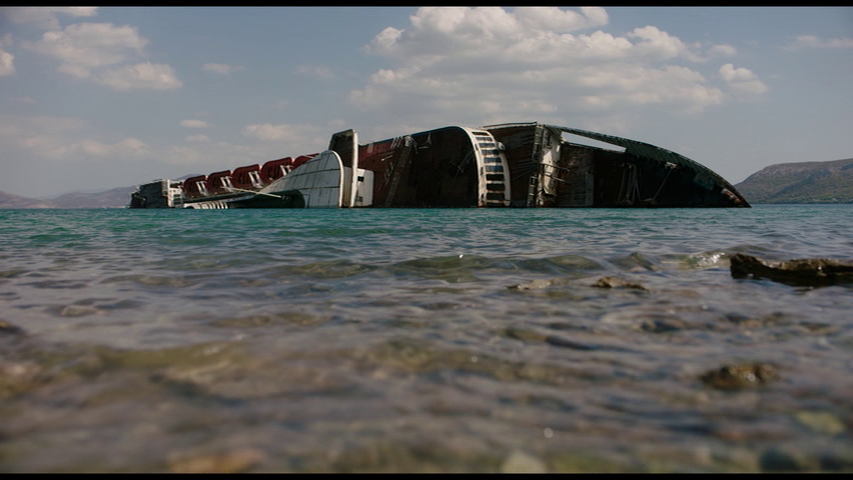
Crimes of the Future begins with a shot of a structure that looks simultaneously futuristic and decrepit viewed from the shoreline of a rocky beach:

Crimes of the Future's first image

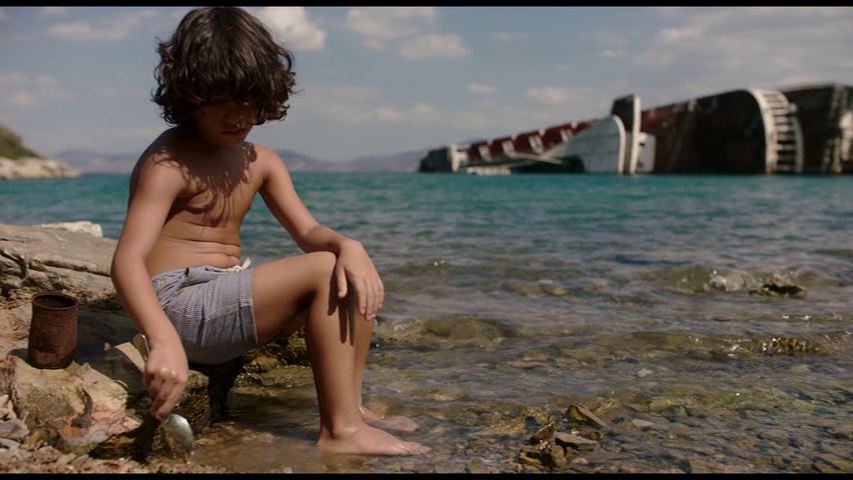
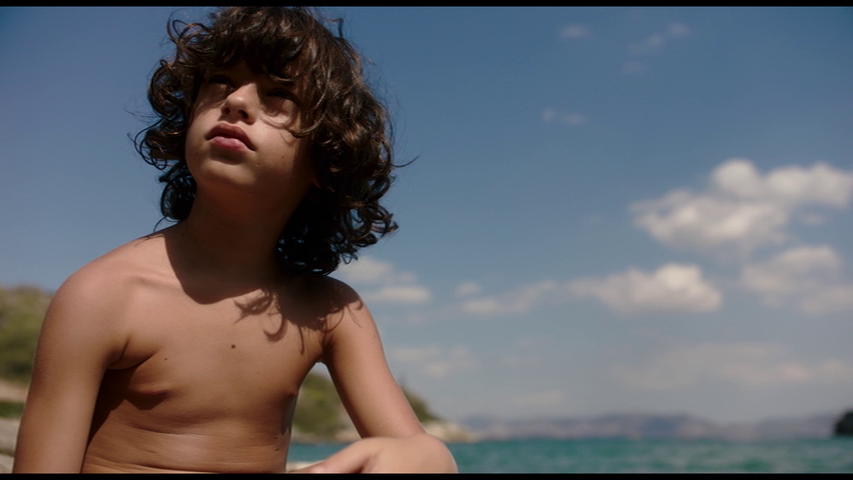
The camera pulls back to reveal a boy (Sotiris Siozos) sitting next to a rusty can and digging in the water with a spoon:

Long shot of the aforementioned boy in the foreground in front of a now out-of-focus structure

Then circles around to the right before tracking in, almost as if were studying him. A woman’s voice says “Brecken” and he looks up:

Medium shot of Brecken, who now occupies the entire left side of the frame

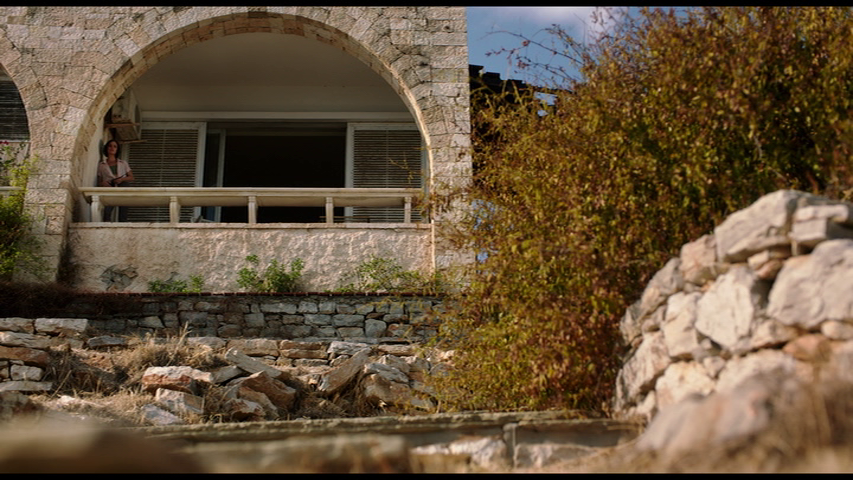
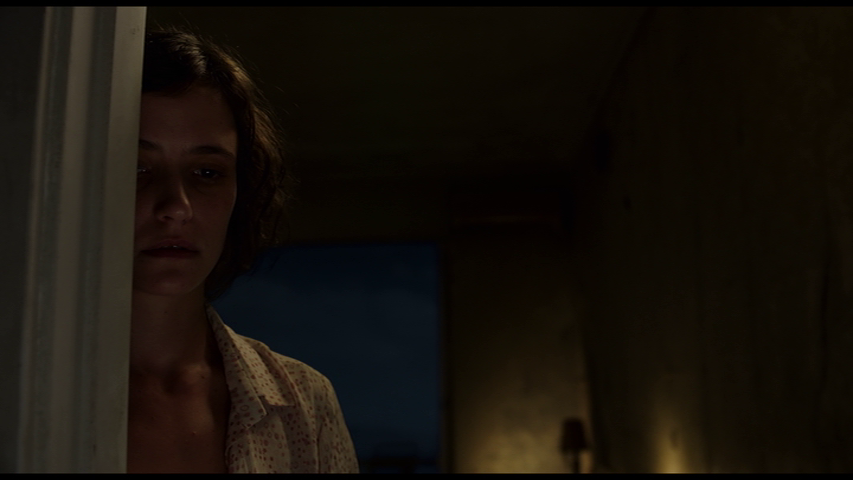
Cut to a long shot of the speaker, his mother Djuna (Lihi Kornowski): “I don’t want you eating anything you find in there, you understand me? I don’t care what it is.”

Extreme long shot of Djuna standing on a balcony beneath an archway

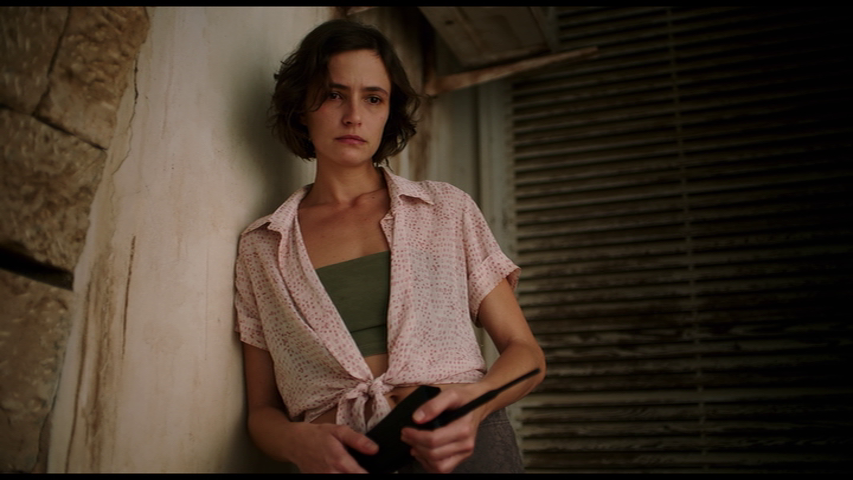
Cut back to Brecken, who rises, then back to a medium shot of Djuna as she mutters “I don’t care what it is” to herself a second time, her voice quavering.

Medium shot of Brecken staring into the distance offscreen left
Medium shot of Djuna holding a cordless phone and looking offscreen to the right

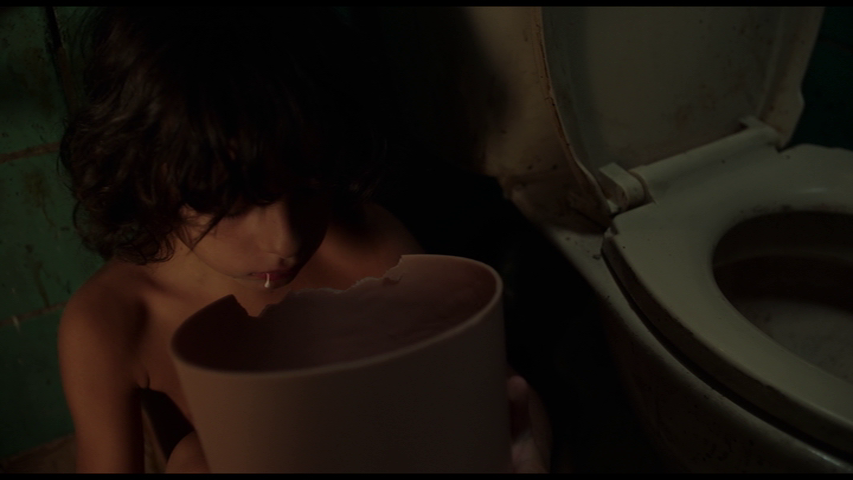
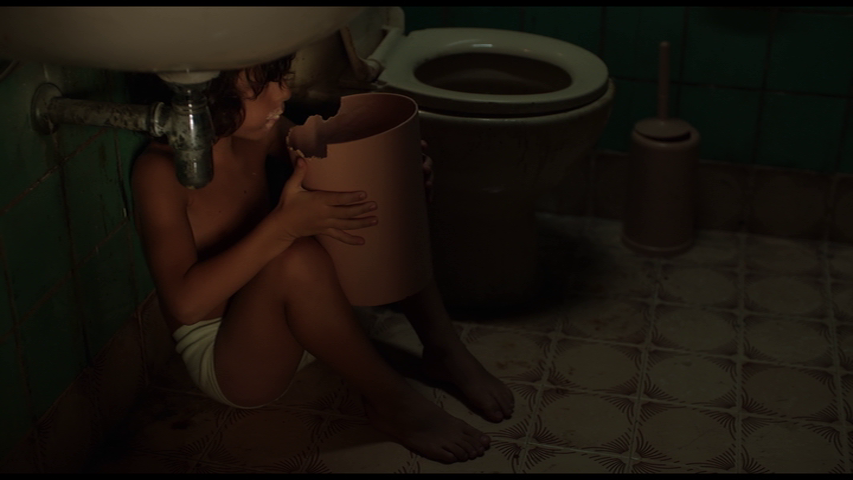
It’s an odd exchange and on a first viewing the logical assumption is that she’s concerned about him consuming marine animals or fish, possibly because the water is polluted? But the real cause of her duress is revealed about 30 seconds later when Brecken finishes brushing his teeth and begins to munch on a plastic wastebasket as Djuna looks on:

Close up of Brecken sitting on the floor next to a toilet eating the plastic wastebasket as foamy white drool trickles out of the corner of his mouth
Close-up of Djuna watching from the doorway
Long shot of Brecken as he continues to eat

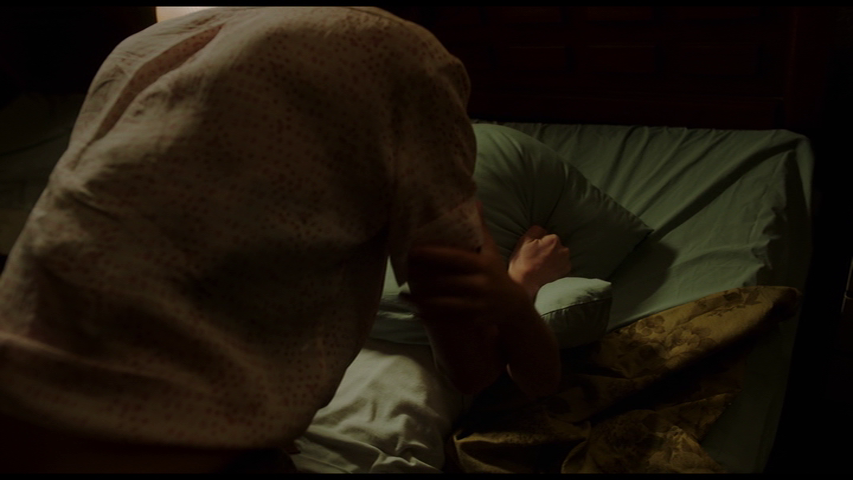
What happens next is even more shocking. As Brecken sleeps, Djuna smothers him with a pillow:

Medium shot of Djuna's back as she holds a pillow over Brecken's face

She confesses her crime over the phone in the scene that follows, and although her words are unrepentant (“yes, yes, I mean the Brecken thing”), there are tears in her eyes when she hangs up:

Close-up of Djuna's tear-stained face, which occupies the entire right side of the screen

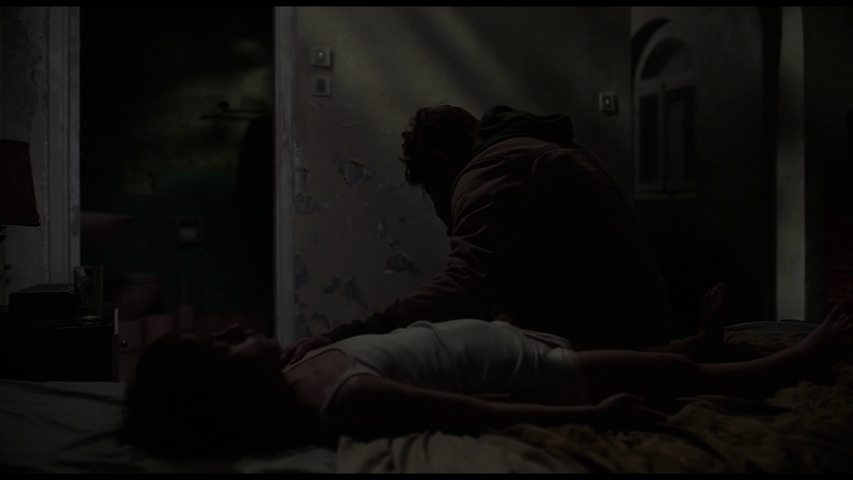
The person at the other end of the line is an associate of Djuna’s ex-husband Lang (Scott Speedman), who is understandably also reduced to sobs when he shows up to claim his son’s body:

Lang sits on the edge of the bed that Brecken's body is lying on and cries

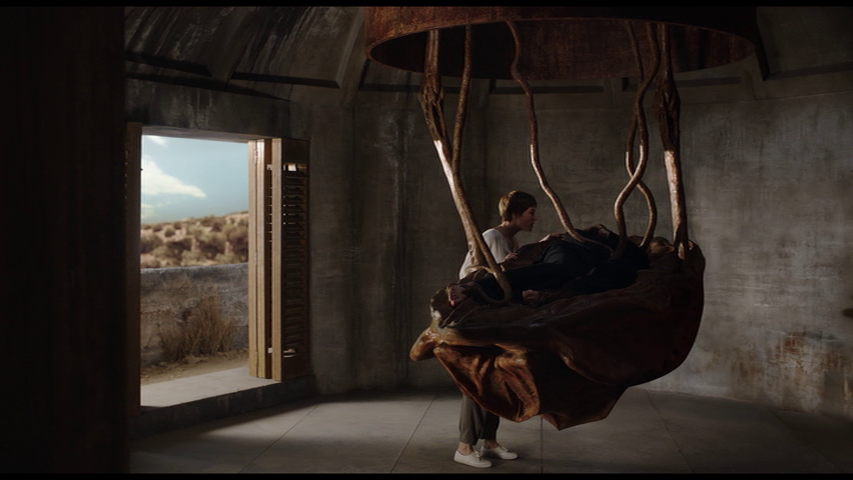
And with one murder in the books, we’re off. The next shot introduces us to Crimes of the Future‘s protagonists, Saul Tenser (Viggo Mortensen) and his partner Caprice (Léa Seydoux). She awakens him from a restless night in his LifeFormWare OrchidBed with good news: there’s a new hormone in his body!

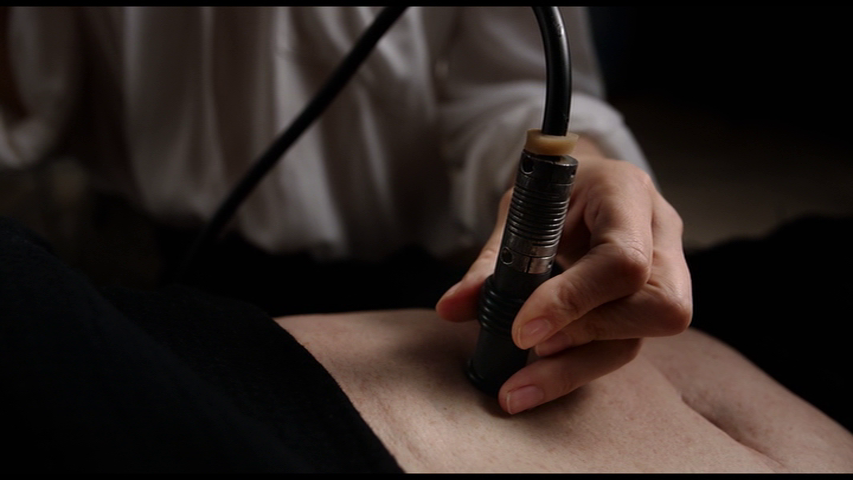
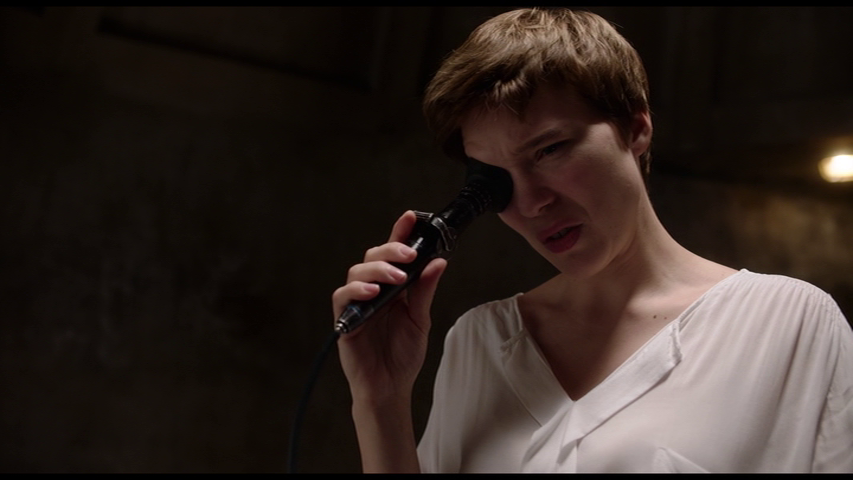
You see, he suffers from a condition called Accelerated Evolution Syndrome whereby his body produces new organs, which Caprice tattoos while they’re still in his body:

Close up of Caprice's hand as she tattoos Saul's new organ
Medium shot of Clarice looking through an eyepiece

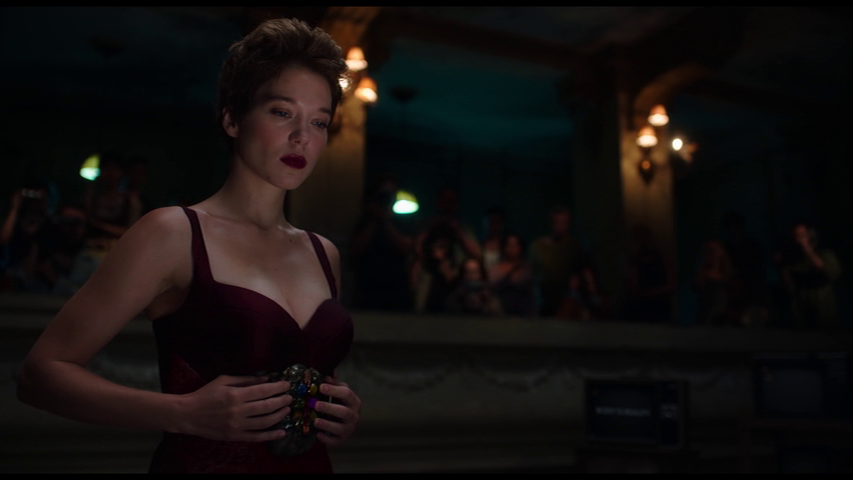
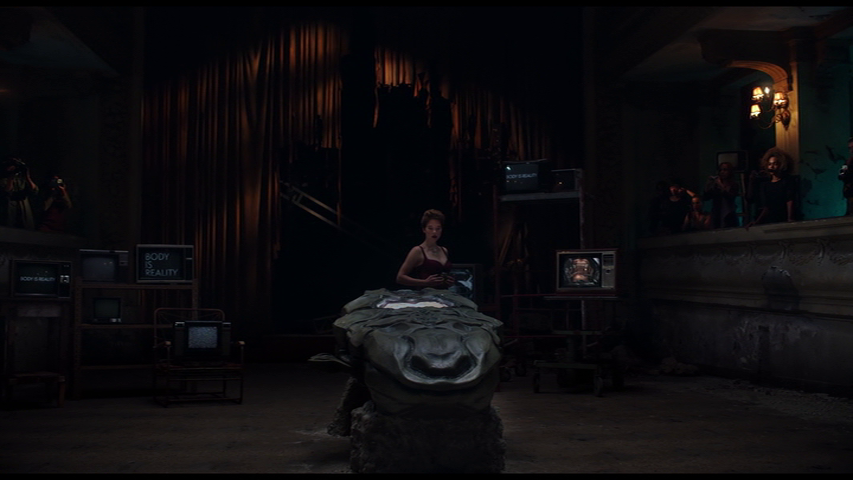
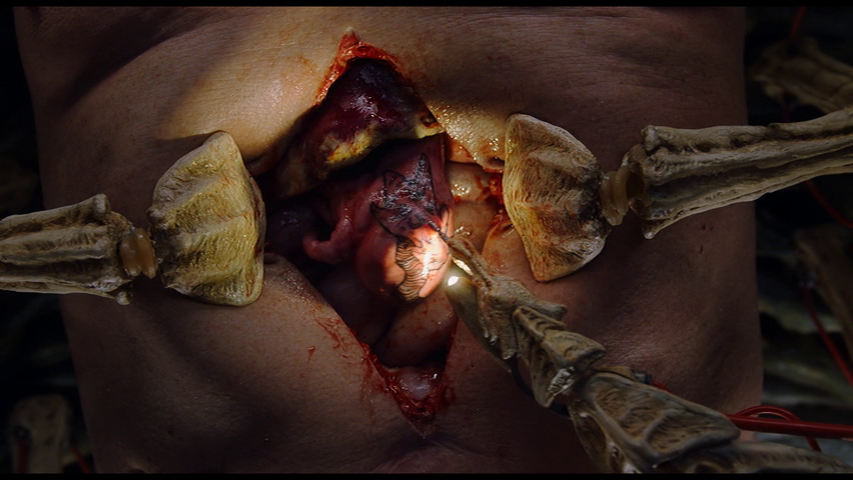
Then removes in front of a live audience using another LifeFormWare product, the Sark autopsy module, which has made them stars of the performance art world:

Medium shot of Caprice operating the Sark autopsy module in front of an audience
Extreme long shot of Caprice and the Sark
Close up of the Sark removing Saul's tattooed new organ

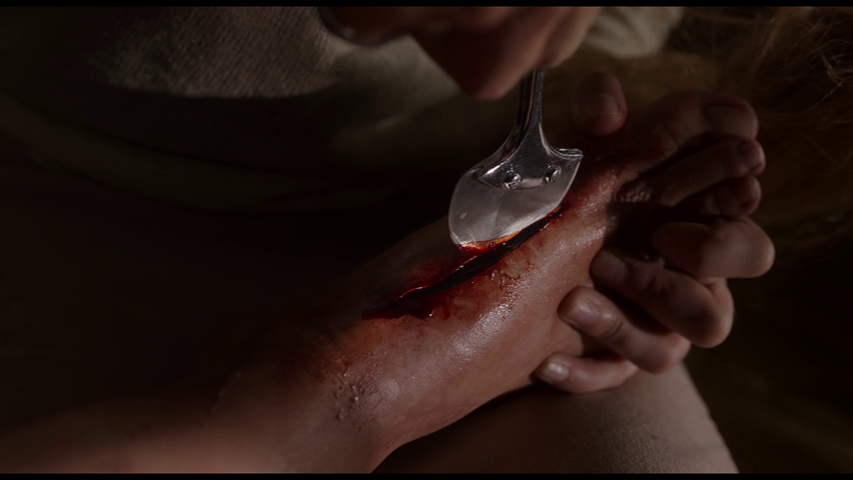
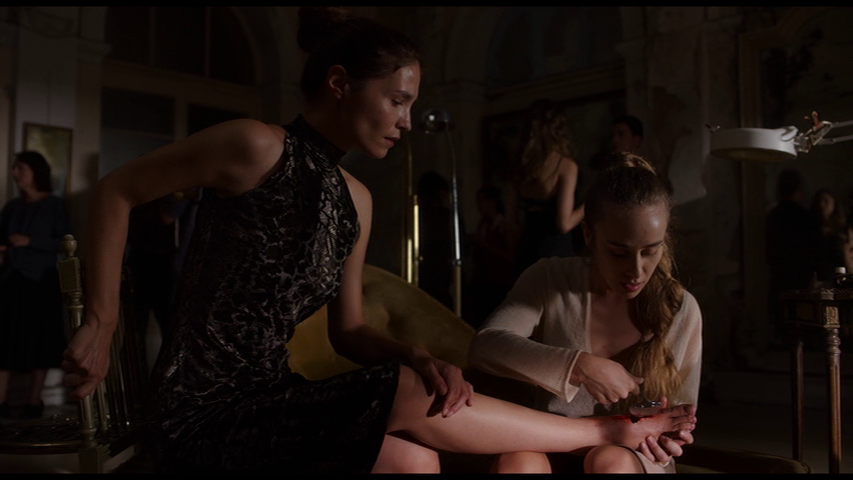
There’s no need for anesthesia or sterilization because human beings have ceased to feel pain except in their sleep and infections have disappeared for reasons unknown. People now get their thrills from a new fad called “desktop surgery,” which basically consists of cutting into each other:

Close up of a blade cutting into a foot
Medium shot of the cutter and cuttee from the previous image

And the entire situation is making the government nervous. As the two bureaucrats who staff the National Organ Registry it establishes in response explain, “human evolution is the concern. That it’s going wrong. That it’s . . . uncontrolled, it’s . . . insurrectional.”

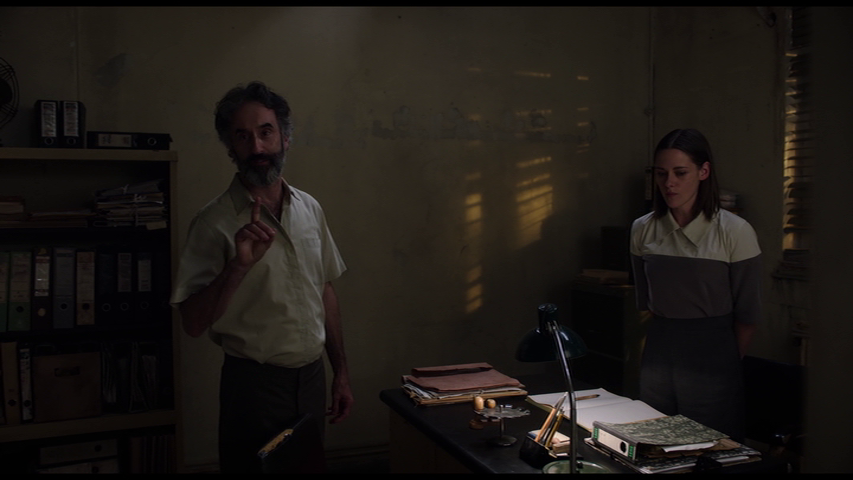
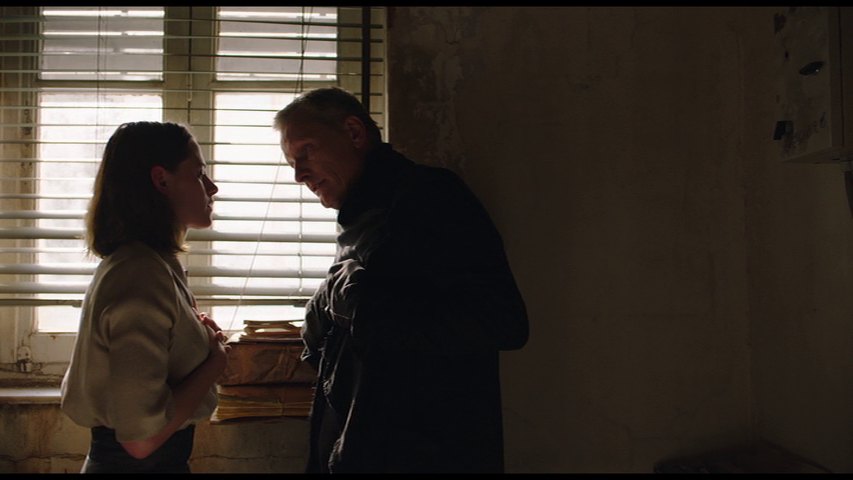
Medium long shot of Don McKellar's Wippet and Kristen Stewart's Timlin in the dimly-lit offices of the NRO

Violet Lucca reads Crimes as being deeply autobiographical in her monograph on Cronenberg, but immediately goes on to note that there’s far more going on here than just taking stock and settling scores:

Saul is Cronenberg himself, performance art is cinema, “body art” is “body horror” (the questionable subgenre Cronenberg supposedly invented), the National Organ Registry stands in for TIFF and Telefilm Canada, and Timlin (Kristen Stewart) and Wippet (Don McKellar), the jittery geeks who work at the NOR, are a heady mix of film fans and people who work in film (critics, archivists, programmers, publicists, or whatever). However, the way in which these parallels are drawn–and Saul’s succinctly croaked objections to the various interpretations of his work, the state of performance art, and to the state of the world–are commentaries that are just as applicable to our reality as they are in the film’s. The government’s endeavors to control both art and body are meant to protect those who are already powerful, going so far as to deny nature and very clear biological warnings.

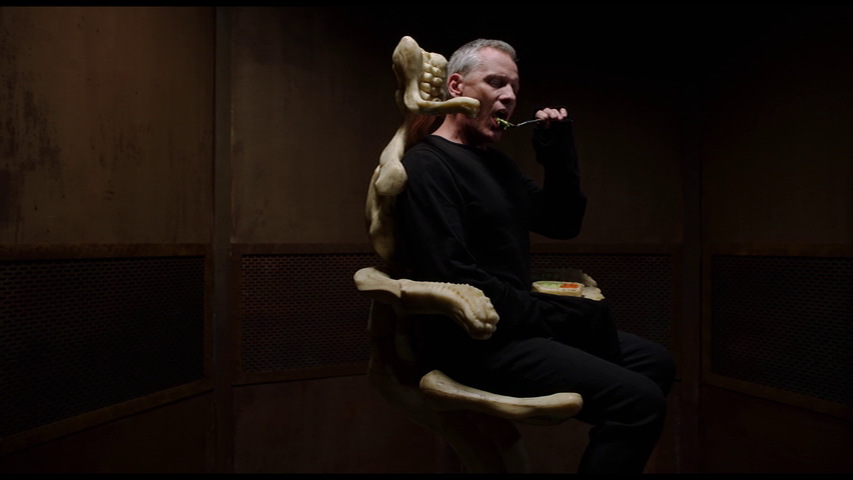
What takes the movie to the next level and makes it what Neil Bahadur calls on Letterboxd “one of the most visionary works of science fiction in the history of cinema” is how this is accomplished: “it deemphasizes technology for exploring changes in human habit, psychology, and physiology.” Deemphasizes is exactly the word–there’s plenty of tech in the movie, but like LifeFormWare’s Breakfaster Chair it’s shown to be unable to keep pace with the body’s endeavors to heal itself.

Enter Lang, who is not only Brecken’s father, but also the leader of the “plastic-eaters” mentioned above. He cannot explain how their body modifications came to manifest naturally in a new generation beyond referring to the boy as their “miracle child,” but approaches Saul and Caprice with the idea of performing a public autopsy on his son’s body “to show the world that the future of humanity existed and was good–was at peace and harmony with the techno world that we’ve created.”

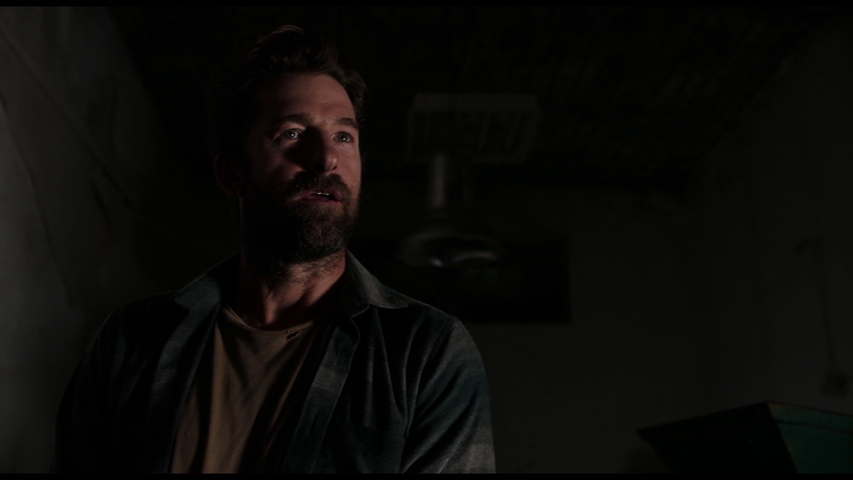
Medium shot of Lang in front of dark background

Saul accepts under orders from his handler in the government’s New Vice Unit, which unbeknownst even to Caprice he works for as an undercover agent, ostensibly to earn Lang’s trust so that he can infiltrate his group, but really because they’ve already gotten to Brecken’s body:

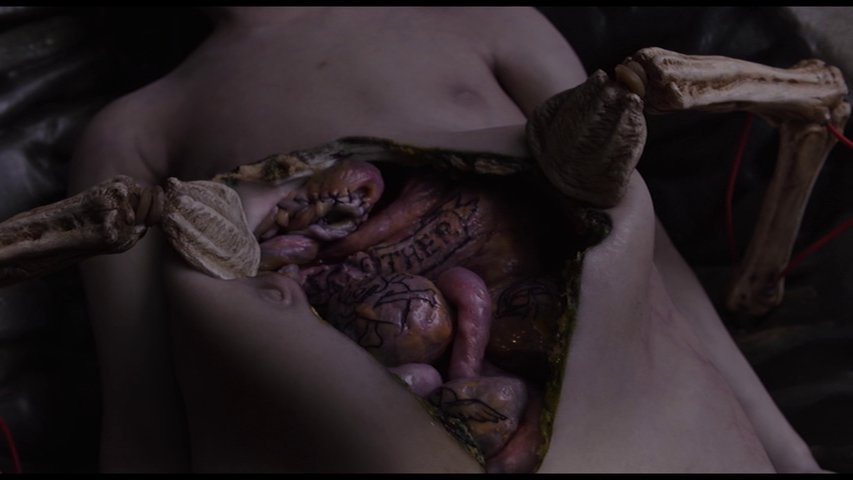
Close-up of the Sark autopsy module opening up Brecken's body to reveal a set of tattooed organs, indicating that whatever was there before has been replaced

Meanwhile, LifeFormWare is making plans of its own to ensure the continued viability of its products:

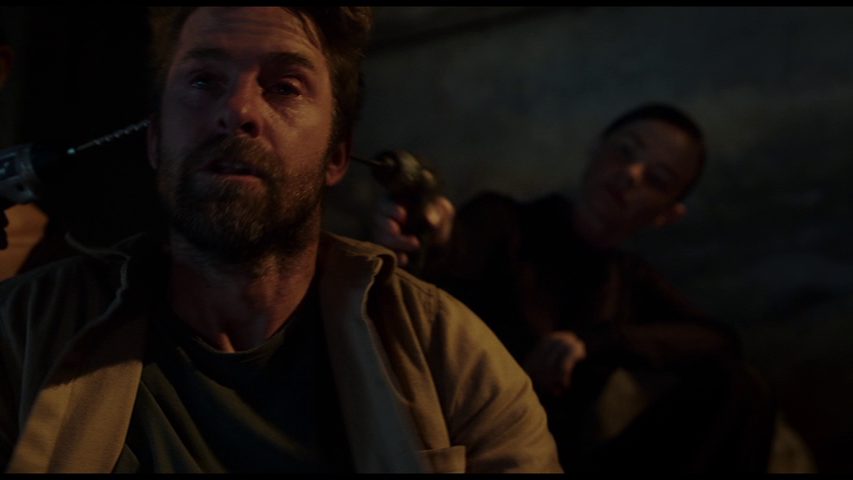
Medium shot of two LifeFormWare agents assassinating Lang by drilling holes in either side of his head

Crimes of the Future is also quite erotic, to the point where the album Pinkerton by Weezer could almost function as an alternative soundtrack to it, especially the tracks “Tired of Sex,” which matches well with this awkward encounter between Saul and Timlin:

Medium shot of Saul explaining to Timlin that he's "just not very good at the old sex" as they stand in front of a window in the left side of the frame

“The Good Life,” which might as well be all about him, and “Butterfly,” our new accompaniment to the end titles that follow this brilliant final image:

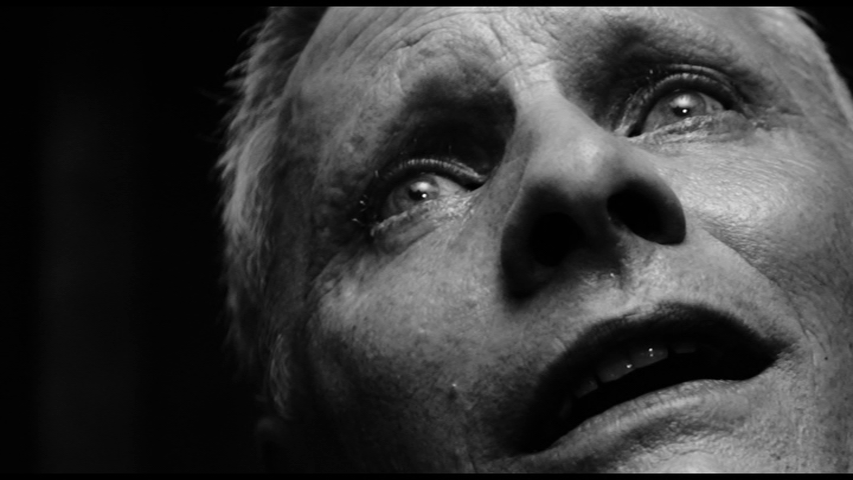
Black and white close-up of Saul's face in ecstasy occupying the entire right two-thirds of the frame as a tear rolls down his cheek

Speaking of which, many critics identify it as a reference to my February, 2023 Drink & a Movie selection The Passion of Joan of Arc, but it also marks the conclusion of a motif that started with the 14th and 15th screengrabs in this post by putting a new twist on it. Djuna and Lang both weep for things lost, in her case the familiar world she knew in her youth, and in his the unexpected delay of long-anticipated future he thought had already arrived. Saul’s tear, on the other hand, is like Joan’s a sign of acceptance. Caprice gives him a bite of Lang’s “modern food”:

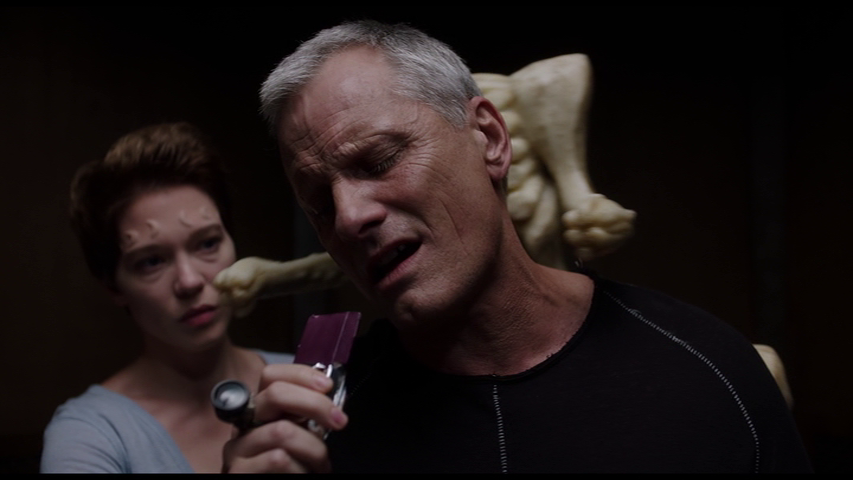
Medium shot of Caprice holding a purple "candy bar" in front of Saul as he sits in his Breakfaster Chair

The Breakfaster Chair stops moving:

Medium-long shot of Saul in his Breakfaster Chair occupying the left side of the frame as an out-of-focus Caprice films him from the right foreground

And to paraphrase a different set of alternative rockers active in the 90s, it’s the end of the world as we know it–but he feels fine. To Bahadur, “Cronenberg’s deep fear here – as it should be to all of us – is of reactionaryism: that those who are deemed different are then deemed subhuman, if not human at all. The title is in reference to this alone: is difference or the new the crime of the future? Is it already the crime of the now?” Noel Vera similarly suggests in a blog post about Crimes that by the end for Saul “the coming apocalypse isn’t so much a calamity as a fascinating new condition to explore and exploit, even embrace.” He also observes in passing that his name might be a reference to Alfred Bester’s classic sci fi novel The Demolished Man, something that occurred to me as well, specifically this nonsense rhyme that Ben Reich learns to prevent his thoughts from being read in a future where telepathy is common:

 Eight, sir; seven, sir;
Six, sir; five, sir;
Four, sir; three, sir;
Two, sir; one!
Tenser, said the Tensor.
Tension, apprehension,
And dissension have begun.

What’s interesting is the way that story ends. It revolves around Reich’s attempts to commit the perfect crime and escape his world’s worst punishment, something with the threatening name of “Demolition.” But it’s not what we think it is, as we finally discover in the final pages:

Reich squalled and twitched.

“How’s the treatment coming?”

“Wonderful. He’s got the stamina to take anything. We’re stepping him up. Ought to be ready for rebirth in a year.”

“I’m waiting for it. We need men like Reich. It would have been a shame to lose him.”

“Lose him? How’s that possible? You think a little fall like that could–“

“No, I mean something else. Three or four hundred years ago, cops used to catch people like Reich just to kill them. Capital punishment, they called it.”

“You’re kidding.”

“Scout’s honor.”

“But it doesn’t make sense. If a man’s got the talent and guts to buck society, he’s obviously above average. You want to hold on to him. You straighten him out and turn him into a plus value. Why throw him away? Do that enough and all you’ve got left are the sheep.”

“I don’t know. Maybe in those days they wanted sheep.”

Harowitz & Silverman argue that a big part of what makes the Caesar a great drink is that it’s infinitely customizable: they define it as “a cocktail (alcoholic or non-alcoholic) made with a base of vegetable juice and an element of the sea.” It thus can be adapted to almost any dietary preference or restriction, so mix yourself up a Watermelon like we recommend or try something different: whether you do or don’t drink, are an omnivore or vegetarian, or even (judging from Crimes‘ first line) eat plastic, Caesar Country is your roadmap to a satisfying Canada Day concoction.

Cheers!

All original photographs in this post are by Marion Penning, aka My Loving Wife. Links to all of the entries in this series can be found here.
June, 2025 Drink & a Movie: The Navigator + The Strange Case of Angelica

You’d never know it from this monthly series, but My Loving Wife and I aren’t drinking as much as we used to, and the most common way I discover new cocktails these days is by trying to find novel uses for old bottles which have been languishing in our liquor cabinet and refrigerator for far too long. And so it was that I found myself mixing up The Navigator which Frederic Yarm featured on his blog in 2018 earlier this year with some of the madeira I purchase each December to make bigos, a nod to both my upbringing in Pennsylvania Dutch country where we eat pork and sauerkraut on New Year’s day for good luck and the two years of Polish I took in college. When it proved to be a perfect platform for not just that spirit, but two other household favorites, Bacardí Reserva Ocho and Rothman & Winter’s Orchard Apricot Liqueur, I immediately decided to feature it in one of my last remaining Drink & a Movie posts. Here’s how to make it:

1 oz. Bacardí Reserva Ocho
1 oz. Rainwater Madeira (Leacock’s)
3/4 oz. Lemon juice
1/2 oz. Simple syrup
1/4 oz. Apricot liqueur (Rothman & Winter)

Combine all ingredients with ice and strain into a chilled cocktail glass. Garnish with an edible orchid and a lemon twist.

The Navigator in a cocktail glass

Punch provided a great overview of rainwater Madeira in 2017 for their “Bringing It Back Bar” series. Once considered the most prestigious style in the category in United States, it emerged from Prohibition with a debased reputation but has recently found favor with bartenders who find it “attractive not only for its relatively low price point, but for its subtlety.” It functions in The Navigator the same way as it does in the recipes linked to in that article–as a medium-dry counterpoint to the apricot liqueur and rum, resulting in an easy-drinking concoction which is sweet, but subtle instead of cloying. That’s actually not a terrible way to describe the movie I’m pairing it with, The Strange Case of Angelica, which like Madeira and The Navigator’s presumptive namesake Prince Henry hails from Portugal. Here’s a picture of my Cinema Guild DVD copy:

The Strange Case of Angelica DVD case

It’s also available for rental or purchase on Apple TV+, and some people (including current Cornell University faculty, staff, and students) may have access to it through Kanopy via a license paid for by their local academic or public library as well.

Director Manoel de Oliveira was 101 years old and had 30 features under his belt when The Strange Case of Angelica debuted at Cannes in 2010, and it has a stately mien and pacing befitting such a remarkable resume. The film begins with an epigraph by Antero de Quental: “yonder, lily of celestial valleys, your end shall be their beginning, our loves ne’er more to perish.” This is followed by two languorous minutes of titles accompanied by Portuguese pianist Maria João Pires performing the third movement of Chopin’s Piano Sonata No. 3 in Bi Minor which unspool over a nighttime cityscape of Régua from a vantage point across the Douro River:

Régua cityscape at night

The action begins with a 3:30 single take street scene also shot with a stationary camera and featuring a “strongly diagonal” (per James Quandt on the DVD commentary track) composition that will accrete significance as the movie progresses. A man inquires as to the whereabouts of the photographer who lives above the shop is car has stopped in front of:

And is told that he’s out of town, but a passerby helpfully offers directions to the home of a young “Sephardi emigrant” he knows who “takes photos all over the place.” This turns out to be Isaac (Oliveira’s grandson Ricardo Trêpa), who we meet bent over a malfunctioning wireless in what J. Hoberman identifies as a reference to Jean Cocteau’s Orphée in an essay collected in his book Film After Film:

Isaac, framed by a doorway, fiddles with a radio in front of a pile of books

Unable to make the “static-garbled radio transmissions” any clearer, Isaac shoves the device forward in frustration, knocking a pile of books onto the floor. When one volume falls open to this page:

An illustration of an angel in a book lying open on a pile of others, which are closed
Close-up of a detail of a star in the palm of the angel's hand

He picks it up and begins to read. “Dance! O stars, that in constant dizzying heights you follow unchanging. Exalt, and escape for an instant the path that you are chained to.” Suddenly, there’s a knock at the door.

Medium shot of Isaac, book in hand, staring off into space

“It’s the angel!” Isaac exclaims and returns to the book. “Time, stand still, and you, former beings, who roam fantastical, celestial ways. Angels, open the gates of heaven, for in my night is day, and in me is God.” As he finishes the passage, there’s another knock, now accompanied by a voice calling his name. Shaken at last from his reverie, Isaac puts the book down and answers the door to find that it’s his landlady Madam Justina (Adelaide Teixeira), who Quandt describes as “like a kind of one-woman Greek chorus,” bearing a message that he has been summoned by a “very important lady” to take pictures of her daughter.

Upon arrival Isaac is greeted outside at the foot of a staircase by a nun (Sara Carinhas) who turns out to be the sister of the woman he is there to photograph (Pilar López de Ayala) and her maid (Isabel Ruth).

Isaac arrives at the Portas estate

They inform him that his subject Angelica has just passed and that his commission is to create “one last souvenir, even if it is very sad” at the behest of her mother. Isaac asks for a stronger bulb for the room’s only light, which Hajnal Király characterizes as “a historical memento of the Oliveira family, owners, at the beginning of the twentieth century, of a factory manufacturing electric devices” in her book The Cinema of Manoel De Oliveira:

Medium shot of Isaac accepting a lightbulb from Angelica's sister and their maid
Continuation of previous shot: Isaac changes the bulb in a ceiling lamp that hangs in the center of the room
Continuation of the previous shot: the light is now noticeably brighter

Then sets to work in a photo shoot depicted through a combination of long shots of Isaac:

Isaac crouches in the middle right of the frame and takes a picture of Angelica, whose body lies on a fainting couch in the foreground

And point-of-view shots complete with frame lines showing us exactly what he’s looking at as he focuses his camera:

Out of focus POV medium shot of Angelica's body with frame lines
In focus POV medium shot of Angelica's body with frame lines

He moves in for a close-up:

Isaac moves in for a close-up of Angelica

When suddenly Angelica appears to open her eyes and smile at him:

Close-up of Angelica as seen through Isaac's camera with her eyes open
Continuation of the previous shot: Angelica is now beaming at the camera

He is obviously shocked:

Medium shot of Isaac in the left third of the frame looking shocked

But upon realizing that no one else has noticed anything strange hastily finishes up and departs. The next day as he’s developing the pictures he took, an image of Angelica again comes to life, causing him to once more jump back in surprise:

Close-up of three photos of Angelica
Continuation of the previous shot: in the third photo, Angelica is now smiling
Medium shot of Isaac jumping back from the photos in the previous two images in surprise

Moments later he spies some laborers tilling the soil in a vineyard across the river:

Medium shot of Isaac with binoculars looking toward the camera
Binoculars-shaped POV shot showing laborers at work

And resolves the photograph them, much to the chagrin of Madam Justina, who laments the fact that “hardly anyone works like that these days”:

Medium long shot of Madam Justina in Isaac's apartment with a tray of breakfast centered in the frame and looking at the camera

As Quandt notes, “Oliveira’s materialist appreciation of sound is wonderfully apparent” in the sequence that follows, which features more slanted lines:

And a charming call-and-response working song about a shabby suit of clothes. It ends with Isaac appearing to hear bells calling mourners to Angelica’s funeral, for he next appears in the church where one of the friends gathered around her coffin comments that “she looks like an angel from heaven”:

Medium shot of Isaac in the right third of the frame listening to church bells
Close-up of Angelica in her coffin
Medium shot of Isaac centered in the frame and flanked by mourners looking at Angelica's body

Which inspires him to recite the snippet of poetry he read earlier. That night in a scene which begins with what we soon realize is a shot of his reflection in a mirror, Isaac wakes up and walks over the photos hanging on a line in front of his balcony:

Isaac in bed in the middle of the bottom third of the frame with darkness all around him
Medium shot of Isaac and his reflection in the middle of the frame
Medium shot of Isaac, still reflected in a mirror, looking at the photos hanging on a line in front of his balcony

As he stands there an apparition materializes behind him:

Isaac contemplates what appears to be Angelica's ghost

He passes through the doorway and becomes translucent himself. The two of them embrace and rise into the sky:

Medium shot of the spirits of Isaac and Angelica embracing
Continuation of the previous shot: the two figures rise off the ground...
...and disappear through the top of the frame

Leading forthwith to my favorite image from this movie, the epically goofy grin plastered on Isaac’s face as he floats supine through the air:

Isaac, still embracing Angelica and now vertical, smiles at the camera

Which he wears right up until the moment when a strikingly topographical overhead shot of the Douro abruptly gives way to one of him in freefall:

Overhead shot of the Douro at night
Long shot of a flailing Isaac tumbling through the air

He awakens the next morning with a start and lights a cigarette:

Medium shot of Isaac in night clothes sitting on the edge of his bed smoking a cigarette and talking to himself

“That strange reality . . . perhaps it was just a hallucination? But it was just as real as this. Could I have been to that place of absolute love I’ve heard about?” Then: “I must be out of my mind.” The second half of the film chronicles his self-deportation from the land of the living, which Daniel Kasman read as reminiscent of the director of my September, 2024 Drink & a Movie selection History is Made at Night in a dispatch filed from Cannes 2010: “as in Borzage, escape from the world’s ails to the bliss of an otherworldly love is at once the most cowardly and most heroic of actions.” As part of The Strange Case of Angelica‘s very first wave of viewers, Kasman understandably focuses specifically on the titular character’s role in precipitating Isaac’s withdrawal from his fellow lodgers:

Medium long shot of Isaac in the left third of the frame standing apart from his Madam Justina and her other lodgers, who are congregated around a breakfast table which fills the right 2/3 of the frame

Growing frustration when Angelica remains tantalizingly out of reach even in his dreams::

Long shot of Isaac in bead reaching for Angelica's spirit, which hovers over him out of reach

And increasingly public erratic behavior:

Medium shot of Isaac holding on to the gate to the cemetery where Angelica is buried and shouting her name

But as Rita Benis notes in a paper collected in the book Fearful Symmetries called “The Abysses of Passion in Manoel de Oliveira’s The Strange Case of Angelica,” the film’s fantastical elements like Isaac’s visions of Angelica are strongly linked to its realist sequences like his efforts to document the “old-fashioned” ways of the vineyard workers visible from his apartment and “their contrast is what generates the real fear implicit in the film,” such as in “the distressing sequence where he desperately follows a tractor working the rocky soil, taking furious snapshots to the fading traces of an ancient world (the connection between man and earth)”:

Close-up of Isaac facing the camera and taking a picture
Close up of the back of a tractor
Another close-up of Isaac taking a picture
Another close-up of the back of a tractor

These shots are, of course, immediately followed by one of him thrashing around in his bed, haunted by the sounds of hoes striking the earth over and over again, and they finally unlock the secret to all those diagonals: each of Isaac’s impossible loves are a step on what is ultimately one long stairway to heaven.

J. Hoberman closes his essay on The Strange Case of Angelica with a quote:

The last living filmmaker born during the age of the nickelodeon, Oliveira told an interviewer that cinema today is “the same as it was for Lumiére, for Méliès and Max Linder. There you have realism, the fantastic, and the comic. There’s nothing more to add to that, absolutely nothing.” The great beauty of this love song to the medium is that Oliveira’s eschewal remains absolute. It’s a strange case–pictures move and time stands still.

The other night at dinner we went around the table at the request of my children and all said what we’d eat if we had to subsist on just one food for the rest of our lives. Neither Oliveira’s film nor The Navigator may be the most daringly innovative creation featured in this series, but they both contain everything I’m looking for in a drink and a movie respectively, and while it would be suboptimal (to say the least) to be confined to such a limited diet, I can think of far worse answers to the cinema and cocktail versions of my kids’ question!

Cheers!

All original photographs in this post are by Marion Penning, aka My Loving Wife. Links to all of the entries in this series can be found here.
May, 2025 Drink & a Movie: Cinema Highball + Masculine Feminine

I knew right from the start that this series would eventually feature the Cinema Highball, an ingenious rum and Coke variation created by Don Lee and included in The PDT Cocktail Book, but what to pair it with? A name like that suggests primacy of place–should I save it for the final entry and write about it alongside my favorite movie, I wondered? But then I’d have to pick a single favorite, and as the days went by my options narrowed. The Flowers of St. Francis and Early Summer came off the board within six months of this project beginning and The Passion of Joan of Arc and Pyaasa followed in its second year of existence. Meanwhile, another question was beginning to vex me: which of the 100+ films directed by Jean-Luc Godard was I going to tackle? The solution to both my problems arrived simultaneously last May when I realized I wouldn’t finish my post about Stalker before the first of the month, eliminating a possible hook: what better way to commemorate May Day 2025 than with a post celebrating “the children of Marx and Coca-Cola”?

Title card in French which reads "This film could be called" in white all-caps font against a black background
Title card in French which reads "the children of Marx and Coca-Cola" in the same font
Title card in French which reads "understand what you will" in the same font

The source of these title cards is, of course, Masculine Feminine. Here’s a picture of my Criterion Collection DVD copy:

Masculine Feminine DVD case

You can also stream it on the Criterion Channel and Max with subscriptions or via Prime Video for a rental fee, and some people (including current Cornell University faculty, staff, and students) may have access to it through Kanopy via a license paid for by their local academic or public library as well.

The drink, which lends itself beautifully to batching and bottling (Lee sold them out of a vending machine at his Greenwich Village bar Existing Conditions), requires advance preparation, but is otherwise dead simple. Here’s how you make it:

4 1/2 ozs. Coca-Cola Classic
2 ozs. Popcorn-infused Flor de Caña Silver Dry Rum

Infuse the rum by combining one ounce of freshly popped corn per 750 milliliters of rum in a nonreactive container and let sit at room temperature for one hour. Strain to remove the solids, then add one ounce of clarified butter per 750 milliliters of rum, cover, and let sit for 24 hours at room temperature. Freeze the liquid for four additional hours to solidify the butter, then fine-strain and bottle. To make the cocktail, combine both ingredients in a chilled cocktail glass filled with ice cubes.

Cinema Highball in a highball glass

The impression of taking a big swig of soda while your mouth is still full of movie theater popcorn is so pronounced that you may instinctively start trying to pick kernels out of your teeth! If you can’t get Flor de Caña, another smooth silver rum like Planteray 3 Stars would work just fine here as well. Finally, while I suppose you *could* use something other than Mexican Coke made with real cane sugar in this drink, I don’t know why you would.

Masculine Feminine‘s Paul (Jean-Pierre Léaud) is actually a highball drinker himself, although he prefers Vittel (a brand of mineral water) and cassis.

Paul, Madeleine, and Elisabeth drinking at a counter

He is shown here with Madeleine (Chantal Goya), whose character’s name also comes from Guy de Maupassant’s short story “Paul’s Mistress,” and her roommate Elisabeth (Marlène Jobert). This is one of two by the author that inspired the movie; as Richard Brody notes in his book Everything is Cinema: The Working Life of Jean-Luc Godard, the other manifests most directly in the form of the erotic Swedish film (which many people also interpret as a parody of The Silence) these characters go to see with their friend Catherine (Catherine-Isabelle Duport).

Close up of Birger Malmsten's "man in the film" looking at a comically distorted image of his face in a mirror

Despite apparently missing this connection completely, Roger Ebert surfaces another even more interesting one in his review of the 2005 American rerelease:

The movie was inspired by two short stories by Guy de Maupassant. I have just read one of them, “The Signal,” which is about a married woman who observes a prostitute attracting men with the most subtle of signs. The woman is fascinated, practices in the mirror, discovers she is better than the prostitute at attracting men, and then finds one at her door and doesn’t know what to do about him. If you search for this story in “Masculine-Feminine,” you will not find it, despite some talk of prostitution. Then you realize that the signal has been changed but the device is still there: Leaud’s character went to the movies, saw [Jean-Paul] Belmondo attracting women, and is trying to master the same art. Like the heroine of de Maupassant’s story, he seems caught off-guard when he makes a catch.

He is referring to a cigarette flip trick Paul attempts numerous times through the film (I stopped counting after five) but isn’t ever quite able to execute, making him look silly instead of cool:

Long shot of Paul attempting to flip a cigarette into his mouth

“Paul’s Mistress” also shines light on how to interpret our hero’s failure to survive the film, which in her insightful contemporaneous review Pauline Kael describes as “like a form of syntax marking the end of the movie.” Or, as Godard himself says in an interview with Gene Youngblood collected in David Sterritt’s book Jean-Luc Godard: Interviews, “even though my adaptation is very different, the de Maupassant story ended with Paul’s death. But I think death is a very good answer in that kind of movie. There is no meaning in it.”

Quotations from other works abound as well, most conspicuously in the form of three members of the original French cast of Amiri Baraka’s play Dutchman (Chantal Darget, Med Hondo, and Benjamin Jules-Rosette) performing dialogue from it in character, which introduces a racial component to film’s sociological analysis of male-female relationships:

And perhaps most famously in Paul’s monologue about his generation’s relationship to the movies, which per Brody is clipped “nearly verbatim from Georges Perec’s novel Les Choses,” with Godard’s main contribution being the specific reference to American cinema:

We went to the movies often. The screen would light up, and we’d feel a thrill. But Madeleine and I were usually disappointed. The images were dated and jumpy. Marilyn Monroe had aged badly. We felt sad. It wasn’t the movie of our dreams. It wasn’t that total film we carried inside ourselves. That film we would have liked to make, or, more secretly, no doubt, the film we wanted to live.

Scenes like these, each of which would require a blog post entirely its own to fully unpack, represent Masculine Feminine at its most intricate, as does the 39 second-long sequence Richard Roud analyzes in his monograph about Godard which flips back and forth between day and night five times in a way that “more or less” parallels what we hear on the soundtrack. The first shot accompanies a voiceover by Paul in which he says, “lonely and dreadful is the night after which the day doesn’t come”:

Interior long shot of Elizabeth and Madeleine sitting at the counter of a café at night

The second, third, and fourth go along with voiceovers by Catherine and Paul’s friend Robert Packard (Michel Debord) saying, “American scientists succeeded in transmitting ideas from one brain to another, by injection” and “man’s conscience doesn’t determine his existence–his social being determines his conscience” respectively:

Daytime street scene shot through a café window
Nighttime street scene in the rain
Extreme long shot of Catherine and Robert walking along a sidewalk toward the camera

And finally the fourth, fifth, and sixth are paired with voiceovers by Elizabeth and Madeleine saying “we can suppose that, 20 years from now, every citizen will wear a small electrical device that can arouse the body to pleasure and sexual satisfaction” and “give us a TV set and a car, but deliver us from liberty” in turn:

Continuation of the previous shot, but Catherine and Robert are now almost upon the camera
Exterior shot of a shop window at night
Daytime shot of public works employees cleaning a city street wet from rain

Roud postulates that “one could make out a case that Godard has treated this sequence dramatically.” According to the theoretical argument he outlines, “darkness corresponds to Paul’s loneliness, to Robert’s pessimistic view of life and to Madeleine’s plea for a television-set,” while “daytime would correspond to Catherine’s rosy optimism about what science will be able to do and to Elizabeth’s Utopian future in which sexual problems will be solved by a gadget.” He believes that such ideas are “meant to be only lightly suggested,” though, and to him the real interest of this sequence is that it “shows Godard reaching towards that almost total escape from the shot as filmed” that he will achieve later in his career” and “brings out even more strongly than before that dialectical tension between reality and abstraction which forms the basis of all Godard’s later films.”

Did you get all that? I certainly didn’t my first (or second) time around, and I still don’t agree with every part of it, but the genius of Masculine Feminine is that it’s apparent that *something* is going on, which keeps you coming back to take a closer look. The fact that this is invariably rewarding is what I think Dave Kehr is talking about when he calls Godard “very strict in his sloppiness” in his capsule review for the Chicago Reader. The movie also offers many more straightforward pleasures, including an extremely animated Paul telling a Robert a story in a laundromat sequence punctuated by a panoply of jump cuts:

Long shot of Paul facing right in front of a bank of washing machines, gesturing with a cup of coffee
Basically the same shot as the previous one, only now Paul is facing left

A hilariously cheeky depiction of him “putting himself in someone else’s shoes” by copying the actions of man who asking for directions to the local stadium:

A man asks for directions in the left foreground of the frame while Paul observes him in the right background--Robert is at the same table as him in the middle of the frame
The same shot, only the man in the foreground is gone and Paul is starting to rise from his seat
Paul is now in the left foreground "asking for directions" from a woman at a hostess stand while Robert looks on from his table in the background

Paul telling the story of how his father “discovered” why the earth revolves around the sun, an experience I myself had in a third-grade science class when I figured out where rainbows come from seconds before the teacher explained it to me and my fellow students:

Paul and Elizabeth, facing the camera on the left half of the frame, talk from their seats at a café table covered in food and wine

And Chantal Goya’s songs, which are crucially far more interesting than any statement Paul or Robert ever makes on screen.

Medium shot of Madeleine in a recording studio framed such the entire top half of the image is basically just empty space

Penelope Gilliatt called Masculine Feminine “the picture that best captures what it was like to be an undergraduate in the sixties” in an article for The New Yorker, but moments like these are remarkable because they also feel timeless to one like me who went to college in the early 2000s. As do, sadly, the random acts of political and tabloid violence that Gilliatt speaks of next: “five deaths recorded; total apathy expressed by the characters.” Only two are depicted, a woman shooting her husband outside a café:

Interior shot of a woman loading a pistol in the foreground as she exists a café while Paul looks on from a table in the background
In a continuation of the previous shot, the woman aims her gun through the doorway of the café
Exterior long shot through the window of the café of a man being shot

And a man (Yves Afonso) who appears to be about to mug Paul before he suddenly turns his knife on himself:

Long shot of a man threatening Paul with a knife, shot through a screened window
Medium shot of the same man stabbing himself in the stomach

Non-diegetic gunshots also appear throughout on the soundtrack, though, which Adrian Martin describes in his essay for the Criterion Collection as “harsh aural interruptions, firing at unpredictable points” that represent “the violence of everyday modern urban life” in concentrated form. Can you blame Paul if he’s so inured to it that he’s more worried about the draft coming in through an open door than the murder taking place outside of it, or about his matches than the man about to immolate himself with them in protest of the Vietnam War? Maybe so, but my point is that while Godard, who styled Masculine Feminine a “concerto on youth” in an interview with Pierre Daix collected in the Grove Press film book about it, may not approve of his protagonists playing at pop stardom and philosophy while the word burns, he (to paraphrase another great work of music) obviously understands that they didn’t start the fire.

One of the movie’s most talked-about shots is Paul’s single take interview with “Miss 19” (Elsa Leroy), which lasts nearly seven minutes and is introduced by a title card which reads “dialogue with a consumer product.”

Medium shot of Miss 19 framed by a window

His questions are seemingly designed to reveal her ignorance about current events, but as Stephanie Zacharek observes in her 2005 review, “the scene is fascinating because although on the surface it seems Godard is asking us to join in ridiculing this girl, in the end it’s Paul’s vulnerability and naiveté that are exposed.” He is also every bit as concerned with his image as Madeleine is, it’s just that where she’s specifically focused on hair and makeup:

Close-up of Madeleine looking in a compact and putting lipstick on

He’s attuned to the power of mise-en-scène in all its dimensions (remember that cigarette prop?) and nearly scraps a marriage proposal entirely when he can’t make the location he has scouted work:

Paul grabs Madeleine's arm in close-up and pulls her away from a café counter
Medium long shot of Paul gesturing with his arm to indicate that the room he and Madeleine have repaired to still isn't right
Medium shot of Paul raising his hand in frustration on the right side of the frame because the table he and Madeline, who is on the left side of the frame, are now sitting at still doesn't meet his standards

It really is too bad that Masculine Feminine‘s boys map so clearly and simplistically to Godard’s notion of the “children of Marx” and its girls to the progeny of Coca-Cola, but it strikes me as a major stretch to say that the former come away looking better than the latter, especially when, as Ed Gonzalez points out in his Slant Magazine review, the ladies get the final word: “the last shot of the film acts as a female-empowering solution to Godard’s philosophical algorithm of the sexual politic. FIN.”

Title card in French which reads "feminine" in white all-caps font against a black background
The same title card, only all of the letters have been eliminated except three that spell out "fin."

Cheers!

All original photographs in this post are by Marion Penning, aka My Loving Wife. Links to all of the entries in this series can be found here.
April, 2025 Drink & a Movie: Chapuline + Black Sheep

I didn’t conceive of it as such, but my “Drink & a Movie” series is a fair approximation of my personal cinema and cocktail canons because (predictably, in retrospect) I have mostly chosen to write about my “go-to” directors and ingredients and scenes and techniques, the ones I’ve spent the most time thinking about and which have therefore played the biggest roles in shaping my point of view as a cinephile and drinker. My tastes are constantly evolving, though, and to conclude my three-post-long celebration of crème de cacao I’ve selected two new discoveries from the past few years.

Shortly after I watched Black Sheep for the first time, I talked about it first in an “Ithaca Film Journal” home video recommendation as “total catnip for me,” then again a few months later in my “Top Ten Movies of 2023” post as “the most fun I had with a movie all year.” Here’s a picture of my bare-bones 20th Century Fox “Cinema Archives” DVD copy:

Black Sheep DVD case

Unfortunately, although I originally saw this film on the Criterion Channel as part of a collection called “Directed by Allan Dwan,” it doesn’t appear to be streaming anywhere right now.

One of the things I found so delightful about Black Sheep are the old-school drinks heroine Claire Trevor’s Janette Foster orders: she asks for, in sequence, crème de menthe, a crème de menthe frappé, and Dubonnet. I wanted to offer a more complex alternative to Janette’s usuals like I did with the sweet vermouth on the rocks with a twist ordered by Andie MacDowell’s Rita Hanson in my Drink & a Movie entry for Groundhog Day, and I quickly settled on the Chapuline, a delightful variation on the grasshopper created by Toby Maloney of Chicago’s The Violet Hour. He specifically calls for green crème de menthe, but does so while making a joke related to presentation: “the white pales in comparison.” I’ve never been able to find the bottle by Marie Brizard he recommends and every verdant variety that *is* available in Ithaca tastes unbearably artificial in comparison to Tempus Fugit Glaciale, so that’s what we went with. In addition to tasting much better, I submit that it also looks just fine in this yellow glass we picked out to serve it in. Here’s how we make it:

1 oz. Crème de cacao (Tempus Fugit)
1 oz. Crème de menthe (Tempus Fugit)
3/4 oz. Pisco (Macchu Pisco)
1 oz. Heavy cream

Shake all ingredients vigorously with ice and double strain into a chilled cocktail glass. Garnish with a spanked (to release its aromas) fresh mint leaf.

Chapuline in a cocktail glass with a pearl necklace

As he notes in The Bartender’s Manifesto, Maloney’s goal was “to prove that [he] could take a gauche drink and make it at least interesting, at best delicious.” Mission accomplished! The first thing you notice is its beautifully silky texture. The flavor that pops is peppermint immediately followed by chocolate–the effect would be almost exactly like eating a York Peppermint Pattie except that there’s also a burn which resolves into grape on the finish, as if the drink was morphing from a grasshopper to a stinger, the other classic cocktail most commonly associated with crème de menthe. You wouldn’t get this with a barrel-aged spirit like cognac, obviously, so the choice of pisco is quite brilliant!

Maloney’s recipe includes instructions to shake “like it owes you money,” which is actually a pretty excellent segue into discussion of Black Sheep since income, like the film’s camera movements, represents both freedom and confinement for its protagonist John Francis Dugan (Edmund Lowe) and the other characters. As Frederic Lombardi writes in his book Allan Dwan and the Rise and Decline of the Hollywood Studios, “the opening shots of the film give a full sense of the great breadth of the ship Olympus but as the story unfolds, there are increasing attempts to restrict the space in which Dugan can move, so that he must literally know his place.” To start at the beginning, an introductory montage provides a tour of the ship’s first-class spaces:

Double-exposed shot of a sign that reads "Ball Room" superimposed over that space
Double-exposed shot of a sign that reads "Smoking Room" superimposed over that space
Double-exposed shot of a sign that reads "Promenade" superimposed over that space

Before the gliding camera comes to rest on this sign:

Close-up of a sign on a railing that reads "Second class passengers not allowed beyond this point"

And then goes tumbling down the stairs:

Close-up of the top of the stairs that the sign in the previous shot blocked
Close-up of the bottom of the stairs from the last two shots
Close-up of the ceiling of the deck that the stairs lead to, which in combination with the previous two screengrabs creates the impression of a fall

Moving at a much faster pace than it did earlier, cinematographer Arthur Miller’s camera now repeats its double-exposure trick to show us we’ve been taken down a notch to second class:

A sign that reads "Second-class smoking room" superimposed over that space, which is blurry because the camera is tracking rapidly to the right

Before it finally stops on a sign and cuts to Dugan playing solitaire:

Close-up of a sign that reads "Beware: Passengers are warned to take precautions against professional gamblers"
Close-up of John Francis Dugan

In just the first of many examples of what Fernando F. Croce calls Black Sheep‘s “limpid storytelling,” our logical assumption that he must be one of the sharps that the people on board the Olympus are cautioned to be wary of is confirmed by the two shots which follow him looking up from his game at his fellow denizens of the second-class smoking room.

Medium shot of Dugan looking stage left

First a woman indignantly responds to her companion’s suggestion that they play bridge for a tenth of a cent per point by saying, “I should say not! I lost 55 cents at a twentieth last night. I’ll play for a fortieth or nothing.”

Medium shot of a bridge player looking indignant

Then one man responds to another’s suggestion that they play checkers by saying, “I don’t mind if you don’t play for money.”

Medium shot of two men walking arm-in-arm to an offscreen checker board

Dugan shakes his head and returns to his game, but is soon distracted by an offscreen clicking noise which a quick tracking shot soon reveals to be caused by Foster’s vain attempts light a cigarette:

Medium shot of Dugan looking up and stage right
Medium shot of Claire Trevor's Janette Foster looking down and to stage left at a lighter that doesn't work

And with that we’re off and running! Foster’s lighter doesn’t work because it isn’t supposed to: “that’s how I meet so many nice people,” she informs Dugan. It’s a toss-up for me whether the *very* best thing about Black Sheep is the dialogue by director Allan Dwan (who wrote the story that the movie is based on) and screenwriter Allen Rivkin or the chemistry between its stars, who David Cairns brilliantly describes as “so delightful together you long for a whole season of Thin Man type romps for them to connive through (as he says, “sometimes film history just misses a trick”) although these things are of course related. The snappy one-liners come fast and furious right from the start: when Foster asks if she can buy Dugan a drink, his reply is “I don’t know, can you?” A few beaters later she labels them “two good mixers with no ingredients.” Then a bit further on after the two sneak upstairs to “see how the rich people live,” Dugan condenses a whole lifetime of back story into just a handful of sentences. “There are two things that always floor me,” he tells Foster, “horses and dames. One keeps me broke, the other crazy, and you can’t depend on either of them.” When she quips, “don’t tell me a horse jilted you!” he replies in kind: “yes, and a girl kicked me.”

Medium-long shot of Dugan and Foster talking as they dance

But then he adds: “that was twenty years ago. Forget it.” Speaking of coin flips, in addition to sharing a profession in common with the main character of last month’s Drink & a Movie selection Bob le Flambeur, Dugan similarly uses them as an external signifier of his deference to the Fates:

Medium-long shot of Dugan, who is wearing a bathrobe, preparing to catch a coin in midair
Medium-long shot of Dugan lifting his hand and peering at the result of the coin flip
Medium-long shot of Dugan looking somewhat displeased at the result of the coin flip

“Dugan and Foster stay in business,” he says after this one, referring to the partnership they have entered into to help a young man named Fred Curtis (Tom Brown) they observed getting fleeced in poker during their upper deck sojourn who also, as it happens, turns out to be Dugan’s son. This fact is revealed in a moment that Matt Strohl describes as “an emotional bolt of lightning in the middle of the film” which occurs after Dugan has helped Curtis win back some of the money he lost to Eugene Pallette’s and Jed Prouty’s buffoonish oil tycoons Colonel Upton Calhoun Belcher and Orville Schmelling by posing as his friend, but only at the expense of his own profits when he is forced to accept the checks Curtis wrote them as payment or risk giving up the ruse. He’s right in the middle of getting tough with Curtis (“I’ve got $1800 coming from you and I want it–in cash”) when suddenly he spots a set of framed photos:

Curtis looks stressed in the foreground while Dugan spies a framed set of photos in the background
Medium shot of Dugan picking up the photos
Close-up of Dugan looking stunned

“What’s the matter?” Curtis asks him after he notices the older man’s reaction:

Medium shot of Curtis asking Dugan, who has his head in his hand, what is the matter

“Oh, nothing, nothing–I probably had too much to drink or something,” Dugan stammers. He gives no further explanation, but immediately changes his tune regarding repayment. “Where’s that note for those rubber checks?” he asks, then looks on with what my daughter Lucy would call a “thin smile” while Curtis writes it:

Medium-long shot of Dugan looking bemused

As Strohl notes, although Dugan never reveals his discovery to Curtis even through the end of the film, “that one reaction scene reverberates and lends weight to everything that follows,” including what I think must be the romantic non-kiss in the history of cinema. It takes place about halfway through a 30-second-long shot that begins right after the coin flip depicted above when Dugan notices Foster’s hand on the lapel of his bathrobe:

Medium shot of Dugan looking at Foster's hand

They put their arms around each other and lean in, but suddenly he pulls back:

Medium shot of Dugan and Foster leaning in for a kiss . . .
Dugan and Foster lean in closer
Suddenly Dugan pulls back

It’s just for a second and they lean in again, but the result is the same:

Medium shot of Dugan and Foster leaning in to each other again
Dugan pulls back again
Foster smiles as Dugan raises his head

Foster is already smiling as he lets out a perplexed sigh and is laughing by the time he calls for the steward to “take this lady out of here”:

Medium-long shot of Foster, her arms still around Dugan's neck, laughing as steward opens the door and looks puzzled

Destiny can bring lovers together but in my experience the key to a happy marriage is that you have to really like each other! Dugan is clearly wondering what the heck happened to him and there’s work still to be done, so the wedding bells will have to wait, but these two clearly have a future together and he’s earned it. And that brings us right back to where we started! The steward appears in this scene because Dugan is supposedly under lock and key, and as Lombardi notes “restriction of movement is a severe violation for a Dwan character and film,” but Dugan “uses his room arrest to serve his ends.” In other words, all those attempts to put Dugan in his place ultimately fail, which is another connection between him and Bob Montagné: they both remain true to themselves no matter how down and out they find themselves and are eventually rewarded. Which now makes three “exceptions to the rule” I wrote about in my February Drink & a Movie post about The Young Girls of Rochefort, suggesting that it’s time to update my notion that “the human experience of trying to become a better person” is a theme of this series. After all, resisting the temptation to change more than you need to can itself be a challenge. Which, come to think of it, is the secret to the Chapuline’s success, too, isn’t it? Toby Maloney elevated the grasshopper by tweaking its proportions just a bit and adding one single ingredient. Or, to reframe this in terms that Dugan and Bob (and Kenny Rogers) would appreciate, sometimes the highest form of wisdom is knowing how to quite when you’re ahead.

Cheers!

All original photographs in this post are by Marion Penning, aka My Loving Wife. Links to all of the entries in this series can be found here.
March, 2025 Drink & a Movie: All In + Bob le Flambeur

From where I’m standing the net impact of expanded legalized sports betting has clearly been negative. Research shows that it results in increased levels of debt for individual consumers, athletes are subject to unconscionable levels of abuse because of it, and the constant barrage of ads and ridiculous celebrity parlays makes the experience of watching sports on TV less fun. For all of these reasons I’d probably support more regulation at this point despite my libertarian inclinations, but as long as it remains so easy to place a bet, I will selfishly continue to enjoy doing so during certain times of year. March is one of them because of the NCAA Tournament, so lately I’ve been thinking about my favorite titular (which disqualifies Howard Ratner) movie gambler, Bob Montagné (Roger Duchesne). Here’s a picture of my Kino Lorber DVD copy of the film he lent his name to, Bob le Flambeur:
Bob le Flambeur DVD case

It is also available for rental from a variety of other platforms, and some people (including current Cornell University faculty, staff, and students) may have access to it through Kanopy via a license paid for by their local academic or public library as well.

The drink I’m pairing it with was created by Natasha David as boozy version of her favorite thing to eat, “dark, bitter chocolate.” Here, per Imbibe, is how you make her All In (which for the uninitiated is a poker term which refers to the act of pushing all of one’s chips into the middle of the table) cocktail:

1 1/2 ozs. Rye (Pikesville)
3/4 oz. Campari
3/4 oz. Dry vermouth (Dolin)
1/4 oz. Crème de cacao (Tempus Fugit)

Stir all ingredients with ice and strain into a chilled cocktail glass. Express a lemon twist over the top and discard.

All In in a cocktail glass

This concoction’s nose is dominated by lemon from the twist, and my brain therefore immediately latched on to the citrus notes in the Campari and Dolin on the sip. There’s also a lot of burn from the rye, though, which combines to create an initial impression not unlike drinking grappa. The swallow and finish are all very dark (think 85+% cacao) chocolate. David specifies rye that is 100-proof or higher, making this a perfect place to showcase Pikesville, which clocks in at 110 and is totally my jam these days. She also described her goal being “to create a dry chocolate cocktail that wasn’t limited to a dessert drink—a cocktail that could be enjoyed any time of the day,” and in that regard the All In is a resounding success.
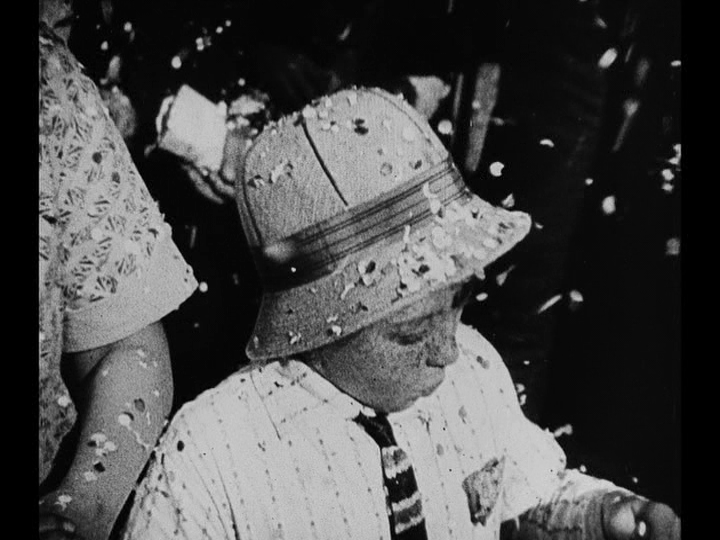
Bob would appreciate this beverage, as he is no stranger to imbibing during the daylight hours. Here, for instance, we see his best laid plans for breakfast being waylaid by a tempting bottle of wine:

Overhead shot of Bob reading the label on a bottle of wine
Bob pauses while lighting the stove on the other side of the room to look back at the bottle
Overhead of shot of Bob pouring himself a glass of wine

His luxurious apartment, which has one of the best views in the history of cinema and a slot machine in the closet:

Bob standing in front of a giant window with a great view of Paris
Bob pulling the lever on the slot machine he keeps in a closet

“Absolutely massive American car,” as Nick Pinkerton says in his DVD commentary track (where he also identifies it as a 1955 Plymouth Belvedere):

Medium shot of Bob's car

And the fact that he appears to have a standing invitation to join any high-stakes game in Paris all suggest that he must have been more disciplined in his youth, but he is become, in the words of his best friend Roger (André Garet), a “pitiful” compulsive gambler who squanders every big win by taking his profits elsewhere and promptly losing them.

Roger gives Bob some tough love after a bad night at the casino

Because he does so in style, though, and according to a moral code that includes generosity to those even less fortunate as one of its primary tenets, he nonetheless remains an idol to the young men in his circle like Paolo (Daniel Cauchy), whose late father knew Bob back in his gangster days:

Medium shot of Bob regaling Paolo, who is dressed similarly, about a bad bead

A hero to young women like Isabelle Corey’s Anne, to whom he provides pocket money and a place to sleep with no expectation of repayment in any form:

Medium shot of Anne dancing with Bob

And the object of fraternal or maternal affection from compatriots like Roger and Simone Paris’s Yvonne, who purchased her café with a loan from him:

Medium shot of Yvonne talking to Bob over a glass of pastis

As well as the recipient of professional courtesy from René Havard’s Inspector Morin of the police, whose life he once saved:

Inspector Morin and Bob talk in the back seat of a police car while smoking cigarettes

If you didn’t know this was a caper movie, you’d never guess it from the first 37 minutes, which function more as a sort of nature documentary showing Bob in his natural environment. As Glenn Erickson observes in his review of Kino Lorber’s 4K Ultra HD + Blu-ray copy of the film which came out last year, the location shooting makes it “a literal time capsule of a long-gone Montmartre, a collection of nightclubs and bars where colorful, unsavory night crawlers plot their next moves.” It begins with a monologue that characterizes the Parisian neighborhood as “both heaven and . . . hell” with the image of a descending funicular and accompanying musical cue during the ellipse.

Establishing shot of the Basilique du Sacré-Cœur de Montmartre
Long shot of the Montmartre funicular
Long shot of neon signs at dawn

Anne is introduced as an illustration of how “people of different destinies” cross paths in the pre-dawn hours not by name, but as a girl “with nothing to do” who is “up very early . . . and far too young” who passes a cleaning lady hurrying to work on the street:

Long shot of Anne passing a cleaning lady on the street

Finally, we meet Bob playing craps in an establishment featuring the first example of what J. Hoberman calls “the insistent checkerboard patterns that make the movie so emphatically black-and-white”:

Bob playing craps in a room with checkerboard-patterned walls

They appear again on the walls of Roger’s office, where author of A History of the French New Wave Cinema Richard Neupert argues they function “to remind the viewer that Bob, with his flowing white hair, sees the world as one big board game”:

Long shot of Bob and Roger talking in the latter's office, which is decorated in a checkerboard pattern reminiscent of the one in the previous image

Per Neupert, Bob le Flambeur inspired the French New Wave with its “raw, low-budget style that mixes documentary style with almost parodic artifice.” My favorite examples of both tendencies can be found in the rehearsals which lead up to the attempted robbery that Bob begins to plan after he learns that the safe in the Deauville casino will have 800 million francs (which as near as I can work out is about $20 million USD today) at 5am the morning of the upcoming Grand Prix race. After he and Roger find someone (Howard Vernon as McKimmie, who insists on a 50% cut of the take) to finance their operation in the first of many scenes that the 2001 remake of Ocean’s Eleven directed by Steven Soderbergh pays homage to, the “recruitment waltz” begins:

Medium shot of Bob recruiting someone to help him rob the Deauville casino
Medium shot of Roger signing up another member of their crew

With their team assembled, they set about casing the joint by circling it repeatedly in a car and sketching an outline in a minute-long scene that embodies the “documentary style” Neupert describes:

The Deauville casino through the window of a car
The car's passenger sketches the outline of the building

They also obtain blueprints and specs which they use to obtain a safe so that Roger can practice opening it:

Medium shot of Roger opening a safe as Bob, Paolo, and McKimmie look on

And best of all draw chalk outlines of the casino on a grass field so that they get an accurate sense of the space:

Medium shot of Bob gesturing at a floor plan
Bob directs a member of his crew to the spot on the outline of the casino where he is supposed to stand during the robbery
Bob standing at his spot

We also see Bob’s vision of how the operation is supposed to in a casino of empty of anyone except him and his crew, a technique borrowed by my July, 2023 Drink & a Movie selection Inside Man among scores of other films:

Bob imagines his crew arriving at the casino
The crew at their posts with guns drawn
Bob in a tuxedo at his spot at the top of the stairs

We never see the actual heist, though, because although Bob arrives at the casino to scope things out at 1:30am as planned in a stylish low-light sequence:

Long shot of blurry car headlights next to blurry streetlights that look like flowers

Instead of making contact with Claude Cerval’s Jean, their guy on the inside, like he’s supposed to, he forgets his promise to himself and Roger not to gamble until it is over and places a bet:

Long shot of Bob placing a bet on roulette

He wins, so he places another, this time at odds of 38 to 1:

Close-up of bets being placed on 15 in roulette

That hits, too:

Close-up of a roulette wheel landing on 15

And suddenly Bob is off on the heater of his life. The voiceover informs us although the roulette is over by 2:01, “the chemin de fer continues”:

Long shot of Bob playing chemin de fer

He is successful there, and at 2:45 he enters a the high-rollers room:

Medium shot of Bob entering the "private room"

It’s difficult to say for sure how much he wins there, but by 3:30 he has attracted a crowd of onlookers:

Well-dressed strangers look over Bob's shoulders to see what cards he has

And not long after that, he’s tipping the croupier one million francs at a time:

Bob picks up a 1 million franc chip to tip the croupier

Based on the stacks of chips in shots like this, it appears that Bob’s winnings total nearly as much as the 400 million francs he and his crew are expecting to make from robbing the casino. Suddenly he chances to look at his watch and sees that it’s 5am:

Close-up of Bob's watch showing the time as 5:00

He shouts, “change all this, now!” and sprints to the entrance, but it’s too late: the police, tipped off by Jean and his wife (Colette Fleury) and an informant (Gérard Buhr) armed with details that Paolo carelessly let slip to Anne, are waiting for Bob’s crew when they arrive and Paolo dies in the shootout which ensues:

Overhead shot of Paolo "getting it," as the fella says

Bob arrives just in time to cradle his protege in his arms as his life expires:

Close-up of Bob cradling Paolo in his arms as he dies

As Inspector Morin places Bob and Roger in handcuffs, one of his officers removes a coin from Bob’s pocket that we saw him flipping earlier.

A police officer inspects the coin he just removed from Bob's pocket

“I’ve known it was double-headed for ten years,” Roger tells him. “And I’ve known you knew for ten years,” Bob replies. “Paulo knew too,” he adds. Just then the somber mood is broken by a procession of bellhops bringing out Bob’s winnings:

Medium shot of a bellhop holding a tray of cash
Another bellhop with an arm full of cash
The police help one of the bellhops load the money he is carrying into the trunk of a police car

“And don’t let any of it go missing!” Bob says as he is led into a squad car. “Criminal intent to commit . . . you’ll get five years,” Morin says as he offers Bob and Roger cigarettes.

Medium shot of Inspector Morin offering cigarettes to Bob and Roger, who sit behind him in a car

“But with a good lawyer, you might get away with three years,” he continues. “With a very good lawyer, and no criminal intent, maybe an acquittal!” Roger adds. And finally Bob: “If I play my cards right, I might even be able to claim damages!” The movie ends with a amazing shot of his car sitting in front of the Deauville shore as the sun rises behind it:

Long shot of Bob's car in the bottom 1/3 of the frame and the coast in the top 1/3 of the frame, with empty sand in between

Dave Kehr writes in an essay that appears in his book When Movies Mattered that “[director Jean-Pierre] Melville is often described as an existentialist, but to execute a scene like the finish of Bob le Flambeur, even in jest, you need to have some faith in the basic benevolence of the world–some faith in a higher, protective power, such as the ‘luck’ that Bob turns his back on and that then returns, in the end, to save and reward him after all.” I couldn’t agree more with the first part of this statement, but would quibble just a bit with the latter. Bob never *abandons* Lady Luck; rather, ever the gentleman, he tries to take a hint and move on when it seems like he has lost her favor, but when he realizes his error, he’s more than happy to come home. As the voiceover remarked earlier as the seconds ticked down to 5:00, “that’s Bob the gambler as his mother made him!” I noted last February in a post about The Young Girls of Rochefort that a friend has suggested that the theme of this series is “the human experience of trying to become a better person.” I suppose that must make Bob le Flambeur another exception to this rule.

Cheers!

All original photographs in this post are by Marion Penning, aka My Loving Wife. Links to all of the entries in this series can be found here.