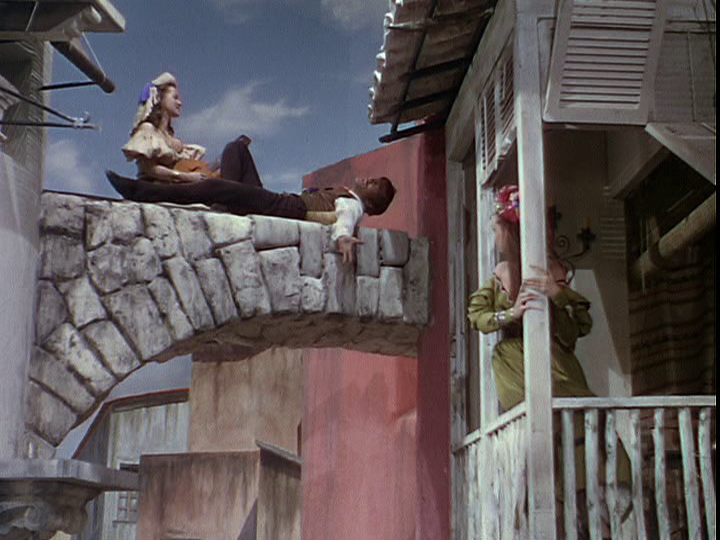
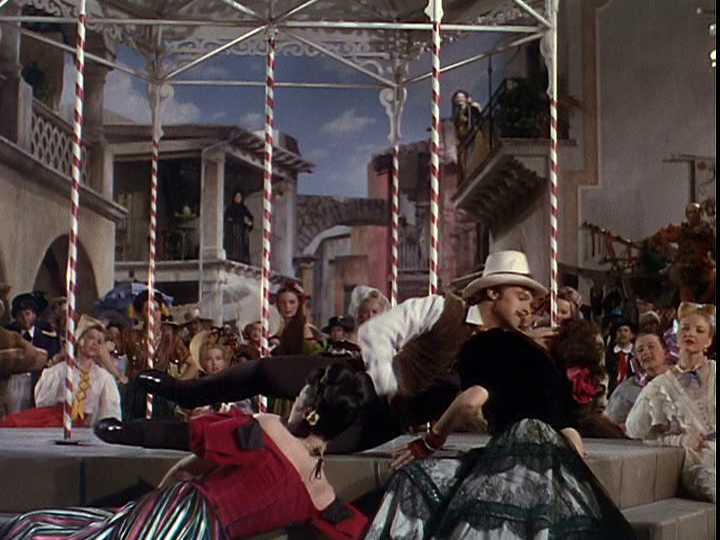
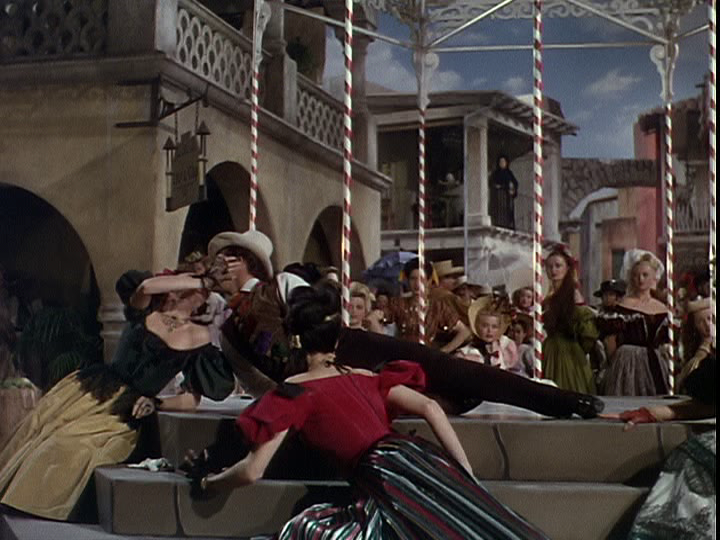
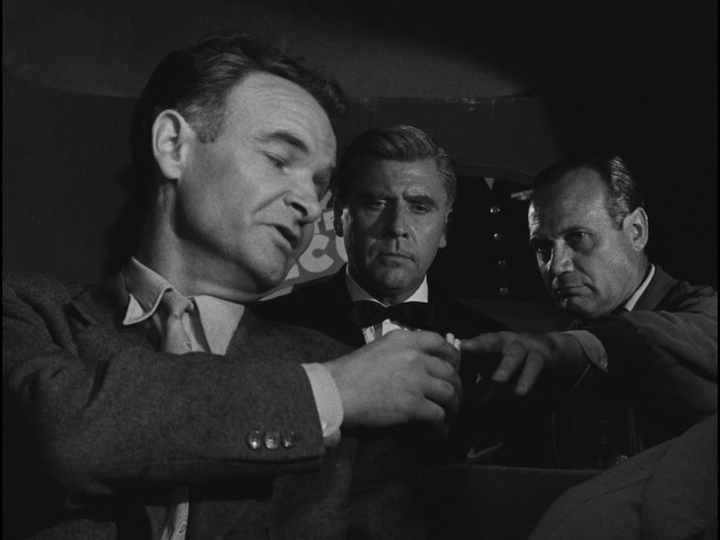
From The Pirate:
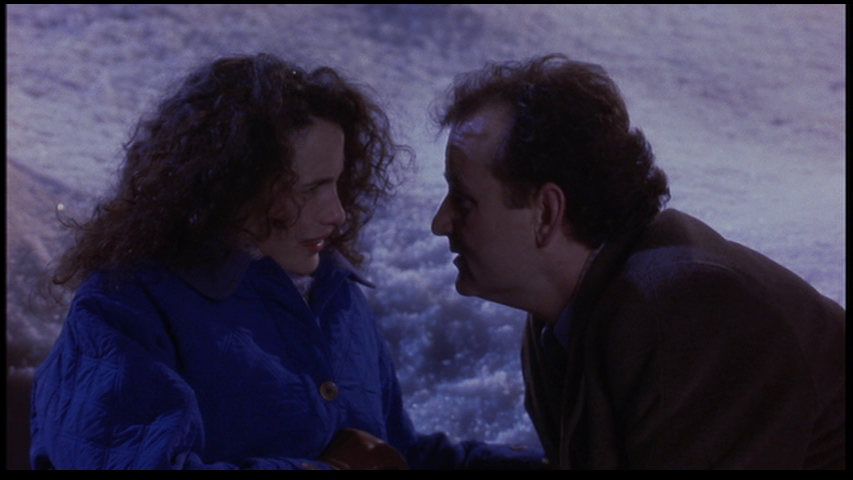
From Groundhog Day:
Previous “Juxtaposition” posts can be found here.
You’d never know it from this monthly series, but My Loving Wife and I aren’t drinking as much as we used to, and the most common way I discover new cocktails these days is by trying to find novel uses for old bottles which have been languishing in our liquor cabinet and refrigerator for far too long. And so it was that I found myself mixing up The Navigator which Frederic Yarm featured on his blog in 2018 earlier this year with some of the madeira I purchase each December to make bigos, a nod to both my upbringing in Pennsylvania Dutch country where we eat pork and sauerkraut on New Year’s day for good luck and the two years of Polish I took in college. When it proved to be a perfect platform for not just that spirit, but two other household favorites, Bacardí Reserva Ocho and Rothman & Winter’s Orchard Apricot Liqueur, I immediately decided to feature it in one of my last remaining Drink & a Movie posts. Here’s how to make it:
1 oz. Bacardí Reserva Ocho
1 oz. Rainwater Madeira (Leacock’s)
3/4 oz. Lemon juice
1/2 oz. Simple syrup
1/4 oz. Apricot liqueur (Rothman & Winter)
Combine all ingredients with ice and strain into a chilled cocktail glass. Garnish with an edible orchid and a lemon twist.

Punch provided a great overview of rainwater Madeira in 2017 for their “Bringing It Back Bar” series. Once considered the most prestigious style in the category in United States, it emerged from Prohibition with a debased reputation but has recently found favor with bartenders who find it “attractive not only for its relatively low price point, but for its subtlety.” It functions in The Navigator the same way as it does in the recipes linked to in that article–as a medium-dry counterpoint to the apricot liqueur and rum, resulting in an easy-drinking concoction which is sweet, but subtle instead of cloying. That’s actually not a terrible way to describe the movie I’m pairing it with, The Strange Case of Angelica, which like Madeira and The Navigator’s presumptive namesake Prince Henry hails from Portugal. Here’s a picture of my Cinema Guild DVD copy:
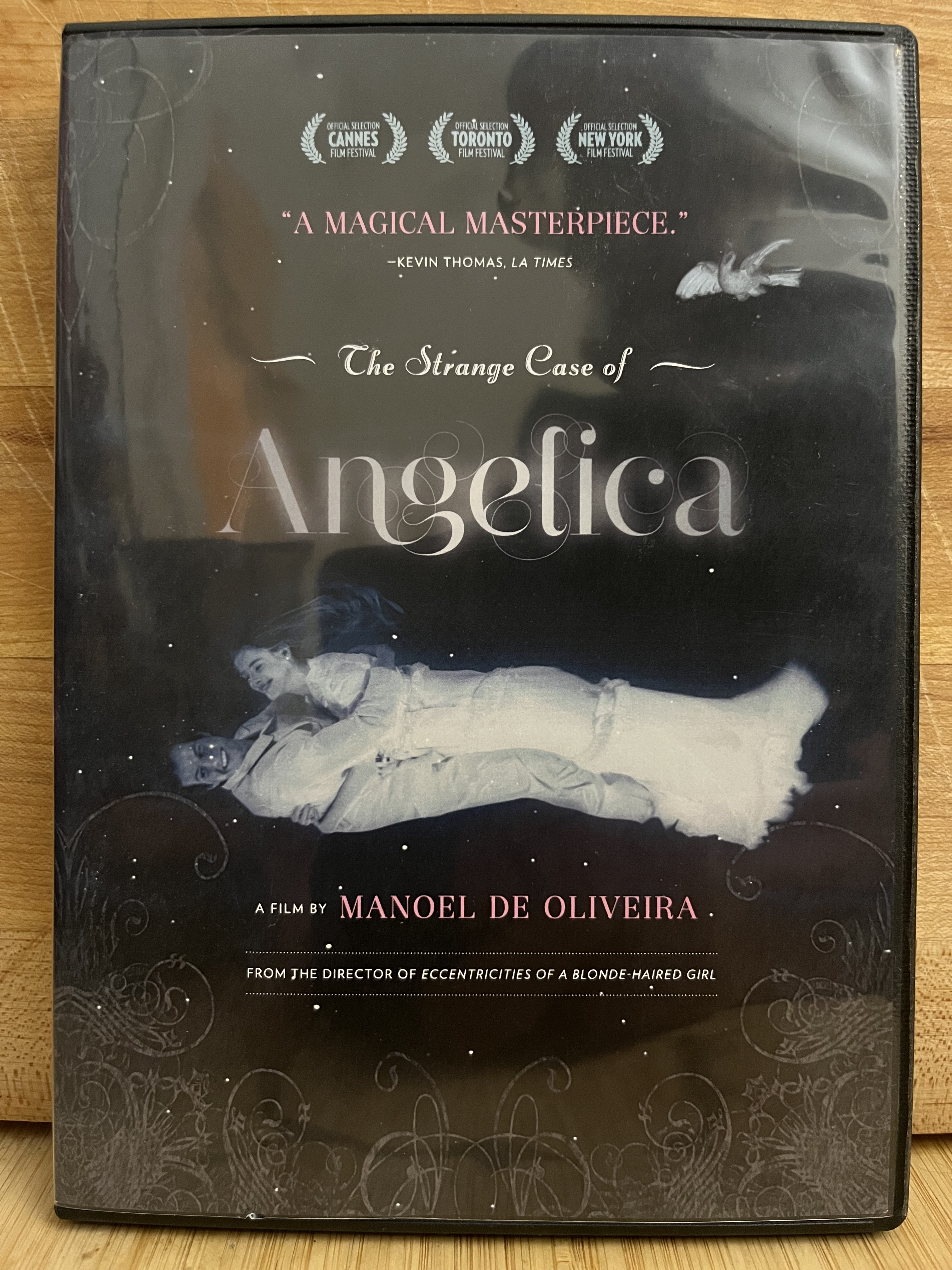
It’s also available for rental or purchase on Apple TV+, and some people (including current Cornell University faculty, staff, and students) may have access to it through Kanopy via a license paid for by their local academic or public library as well.
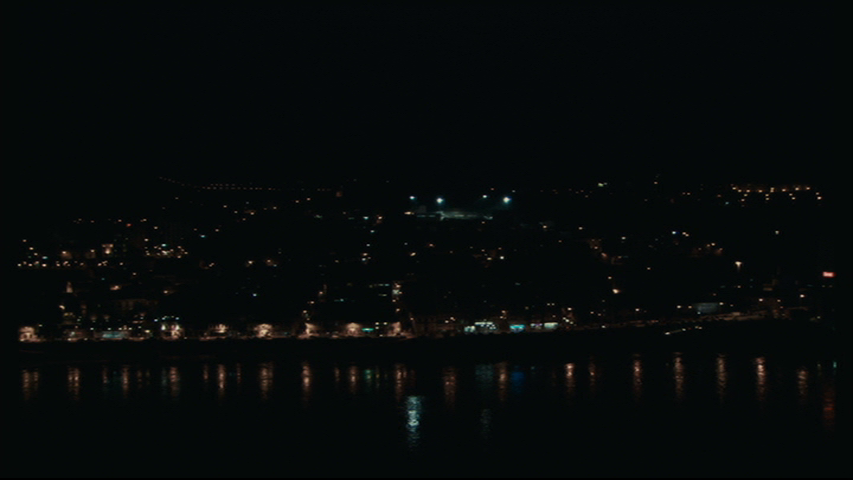
Director Manoel de Oliveira was 101 years old and had 30 features under his belt when The Strange Case of Angelica debuted at Cannes in 2010, and it has a stately mien and pacing befitting such a remarkable resume. The film begins with an epigraph by Antero de Quental: “yonder, lily of celestial valleys, your end shall be their beginning, our loves ne’er more to perish.” This is followed by two languorous minutes of titles accompanied by Portuguese pianist Maria João Pires performing the third movement of Chopin’s Piano Sonata No. 3 in Bi Minor which unspool over a nighttime cityscape of Régua from a vantage point across the Douro River:
The action begins with a 3:30 single take street scene also shot with a stationary camera and featuring a “strongly diagonal” (per James Quandt on the DVD commentary track) composition that will accrete significance as the movie progresses. A man inquires as to the whereabouts of the photographer who lives above the shop is car has stopped in front of:
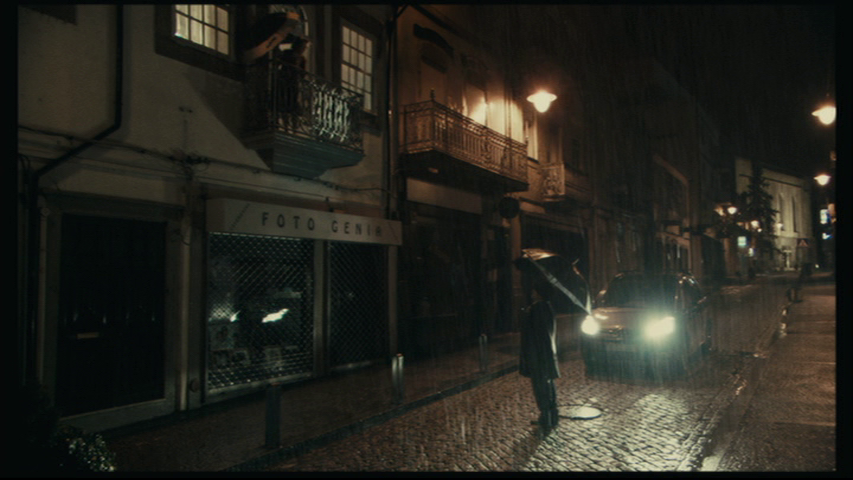
And is told that he’s out of town, but a passerby helpfully offers directions to the home of a young “Sephardi emigrant” he knows who “takes photos all over the place.” This turns out to be Isaac (Oliveira’s grandson Ricardo Trêpa), who we meet bent over a malfunctioning wireless in what J. Hoberman identifies as a reference to Jean Cocteau’s Orphée in an essay collected in his book Film After Film:
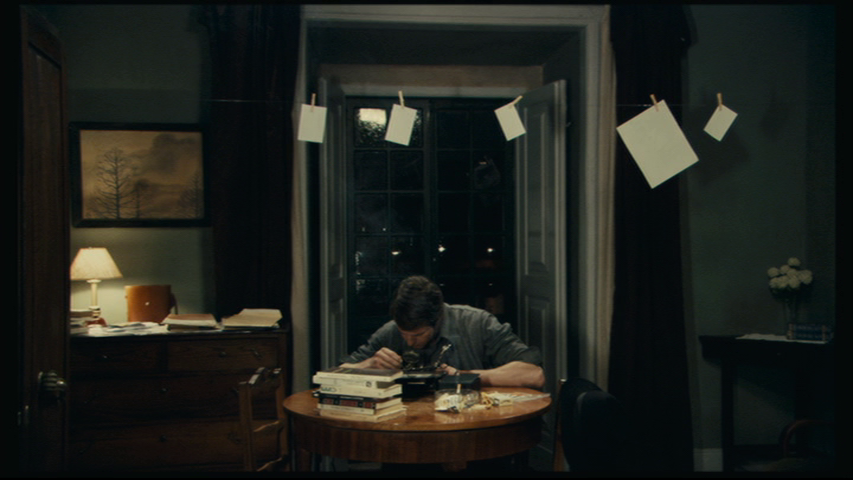
Unable to make the “static-garbled radio transmissions” any clearer, Isaac shoves the device forward in frustration, knocking a pile of books onto the floor. When one volume falls open to this page:
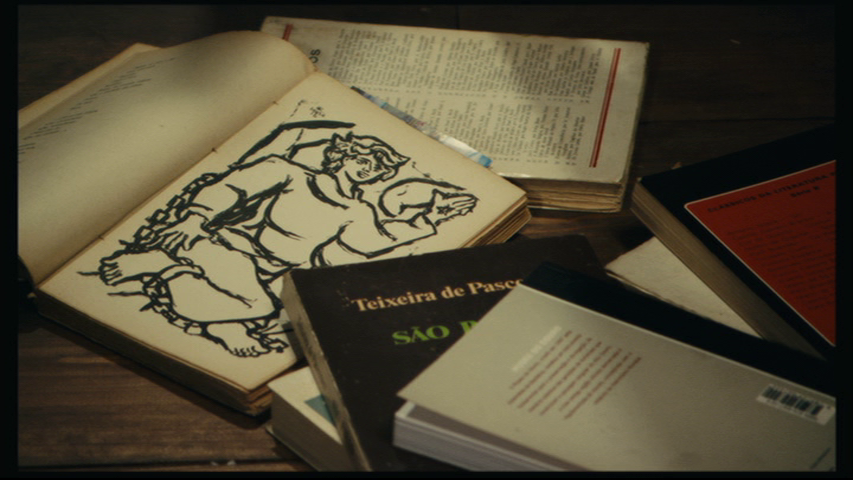
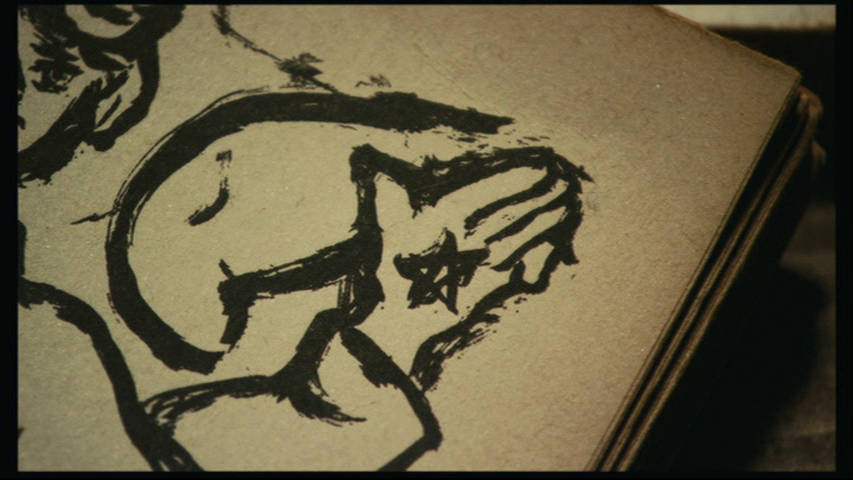
He picks it up and begins to read. “Dance! O stars, that in constant dizzying heights you follow unchanging. Exalt, and escape for an instant the path that you are chained to.” Suddenly, there’s a knock at the door.
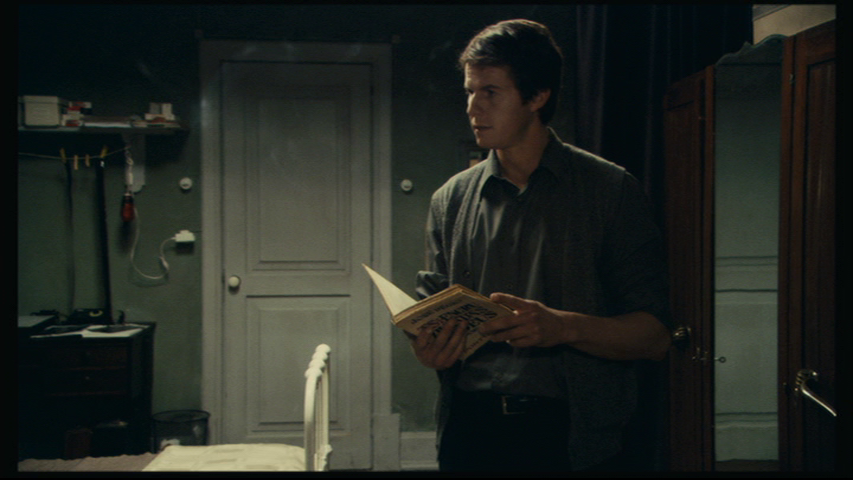
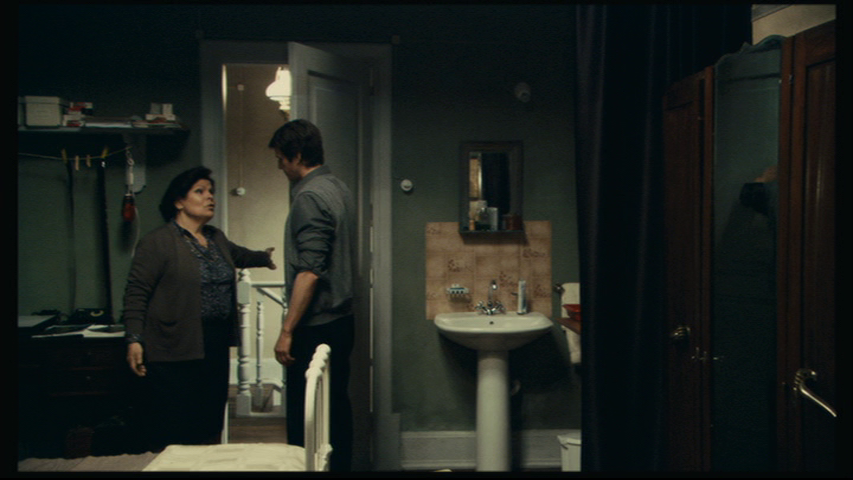
“It’s the angel!” Isaac exclaims and returns to the book. “Time, stand still, and you, former beings, who roam fantastical, celestial ways. Angels, open the gates of heaven, for in my night is day, and in me is God.” As he finishes the passage, there’s another knock, now accompanied by a voice calling his name. Shaken at last from his reverie, Isaac puts the book down and answers the door to find that it’s his landlady Madam Justina (Adelaide Teixeira), who Quandt describes as “like a kind of one-woman Greek chorus,” bearing a message that he has been summoned by a “very important lady” to take pictures of her daughter.
Upon arrival Isaac is greeted outside at the foot of a staircase by a nun (Sara Carinhas) who turns out to be the sister of the woman he is there to photograph (Pilar López de Ayala) and her maid (Isabel Ruth).
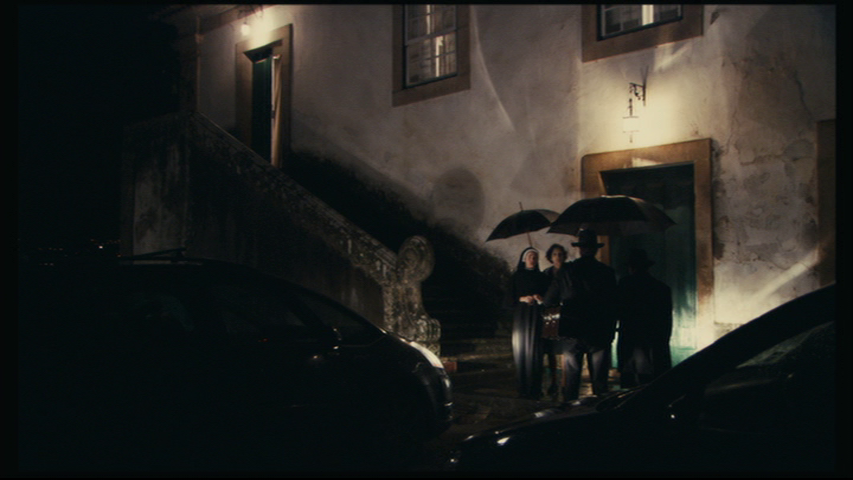
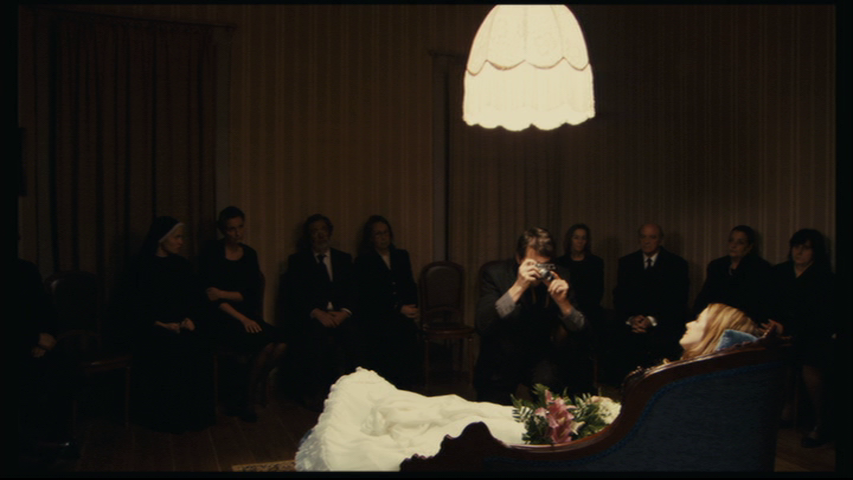
They inform him that his subject Angelica has just passed and that his commission is to create “one last souvenir, even if it is very sad” at the behest of her mother. Isaac asks for a stronger bulb for the room’s only light, which Hajnal Király characterizes as “a historical memento of the Oliveira family, owners, at the beginning of the twentieth century, of a factory manufacturing electric devices” in her book The Cinema of Manoel De Oliveira:
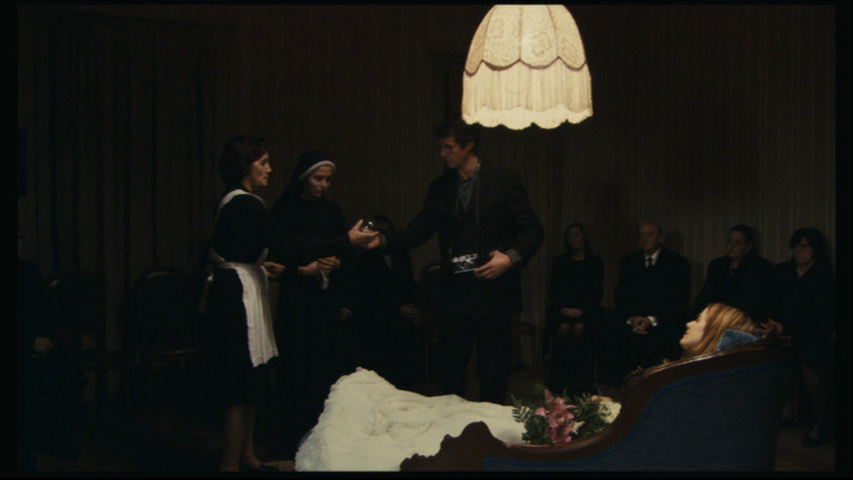
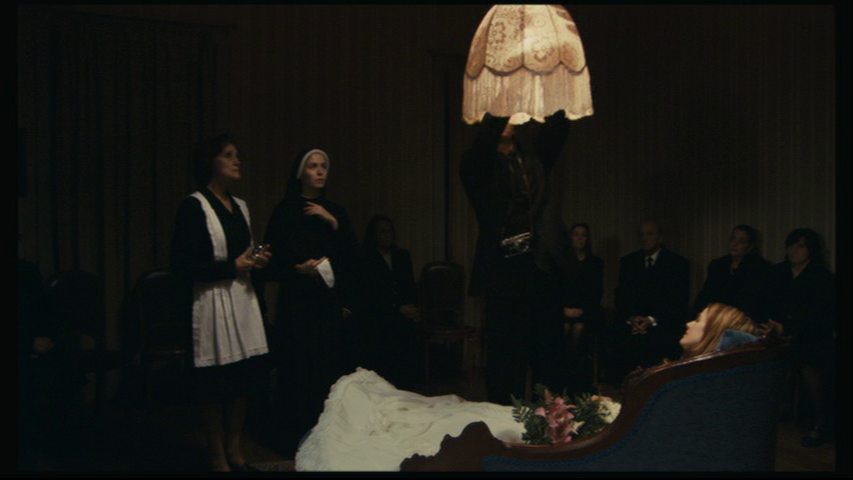
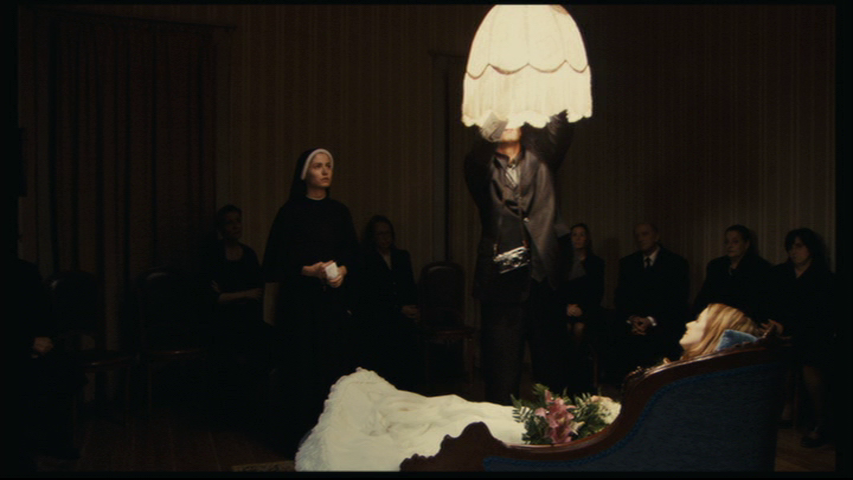
Then sets to work in a photo shoot depicted through a combination of long shots of Isaac:
And point-of-view shots complete with frame lines showing us exactly what he’s looking at as he focuses his camera:
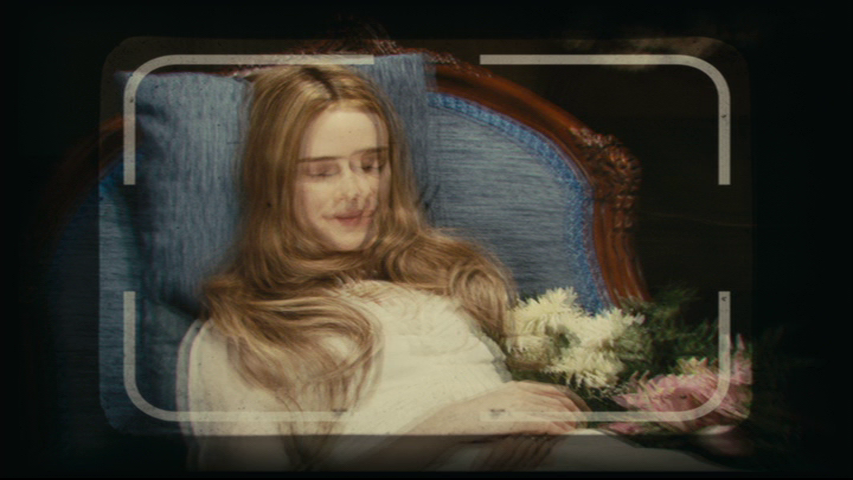
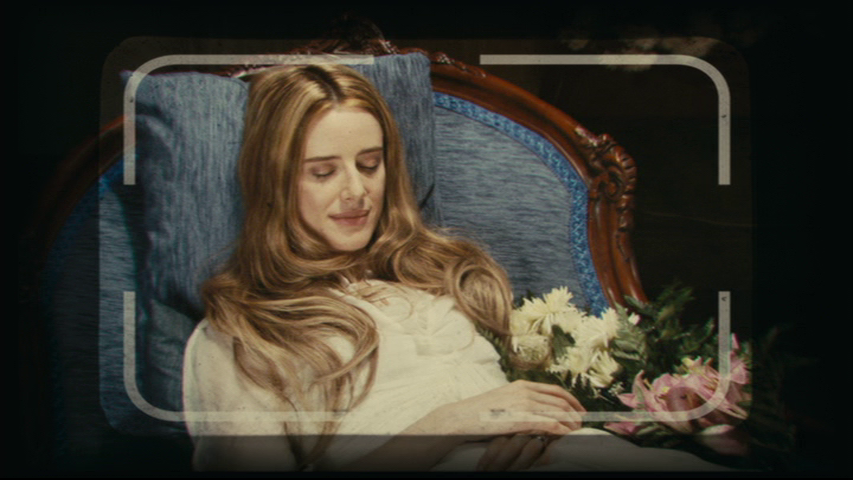
He moves in for a close-up:
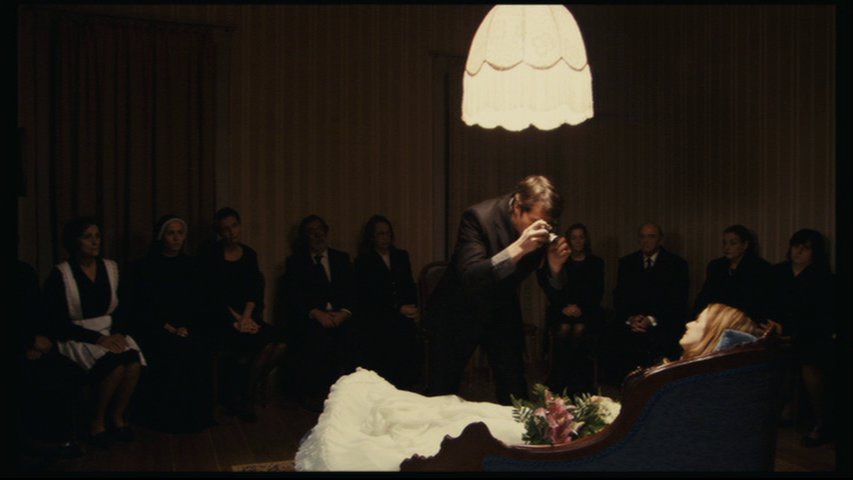
When suddenly Angelica appears to open her eyes and smile at him:
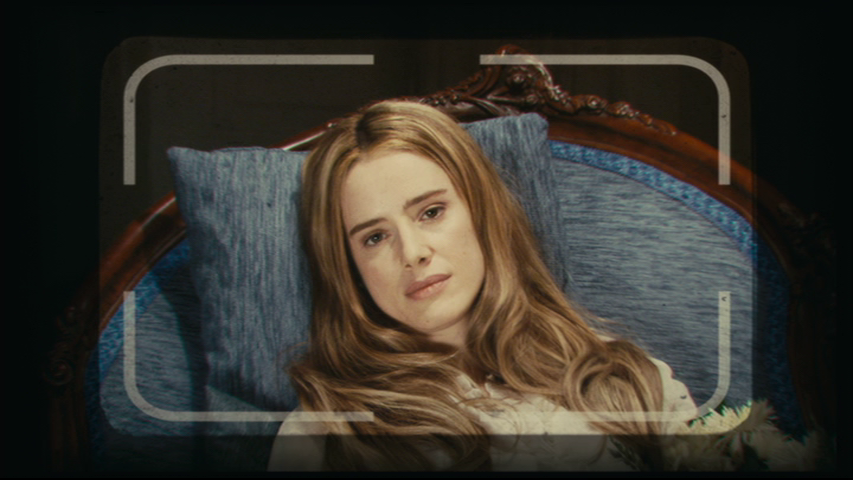
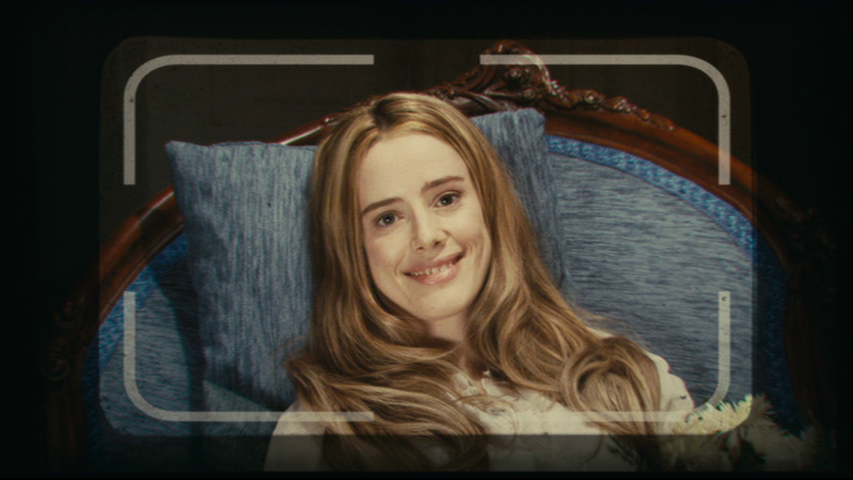
He is obviously shocked:
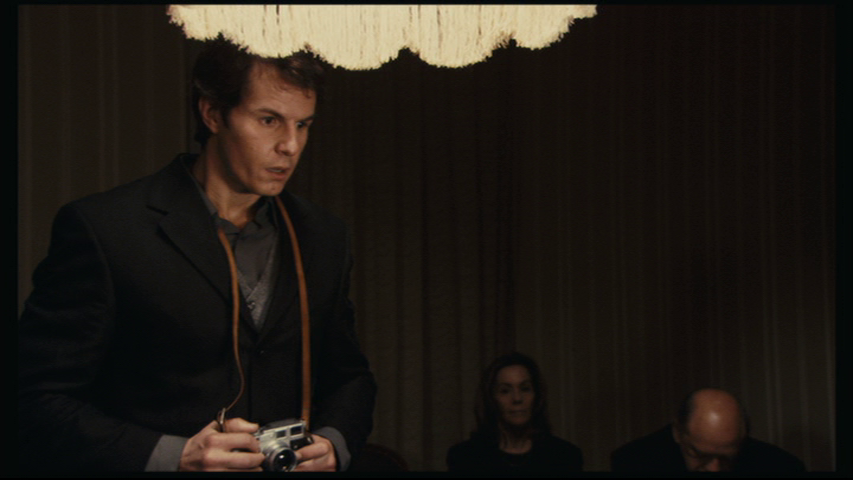
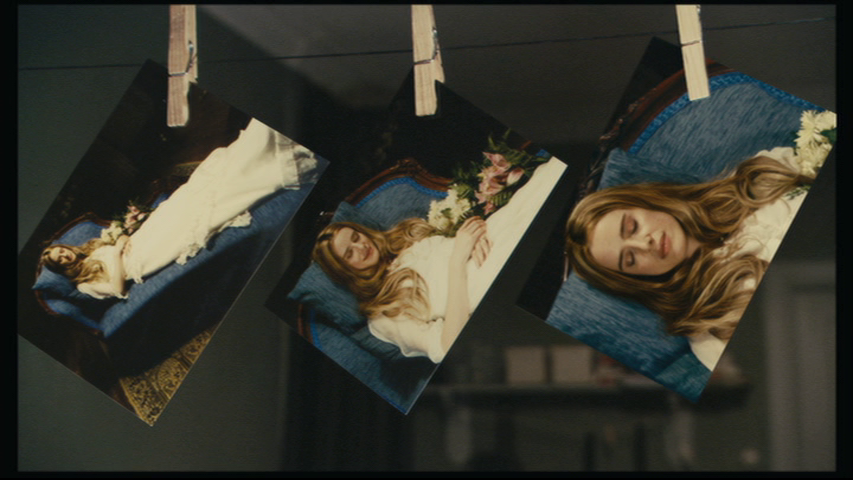
But upon realizing that no one else has noticed anything strange hastily finishes up and departs. The next day as he’s developing the pictures he took, an image of Angelica again comes to life, causing him to once more jump back in surprise:
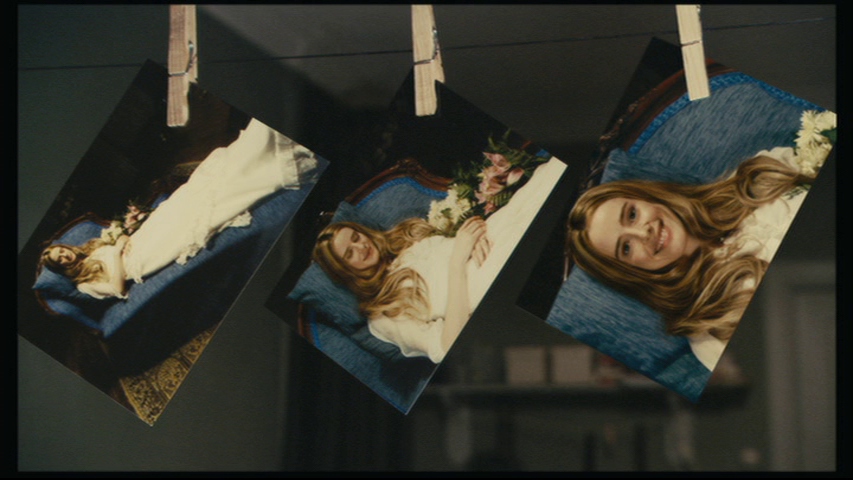
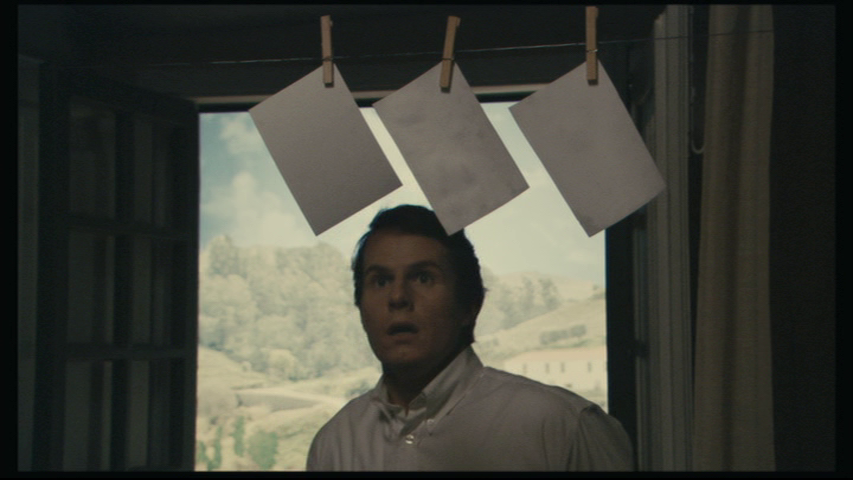
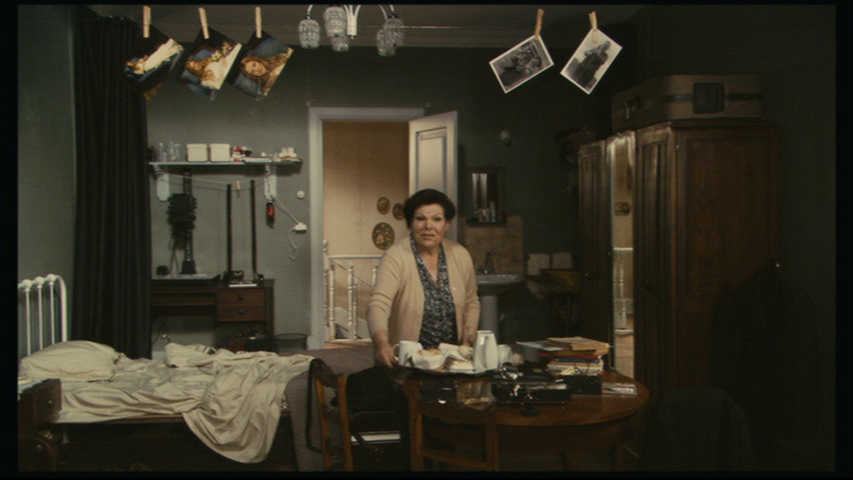
Moments later he spies some laborers tilling the soil in a vineyard across the river:
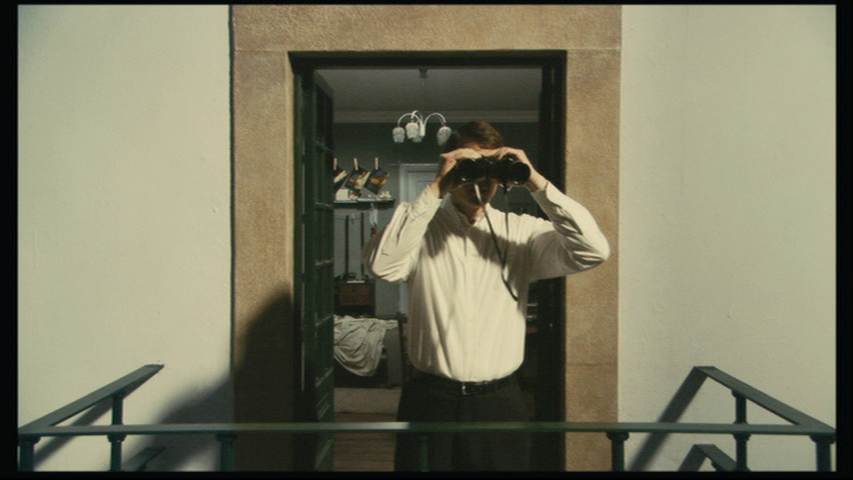
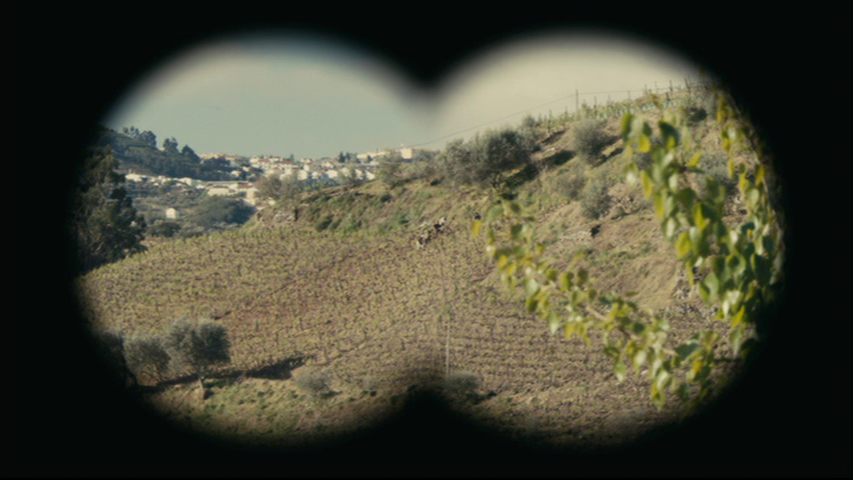
And resolves the photograph them, much to the chagrin of Madam Justina, who laments the fact that “hardly anyone works like that these days”:
As Quandt notes, “Oliveira’s materialist appreciation of sound is wonderfully apparent” in the sequence that follows, which features more slanted lines:
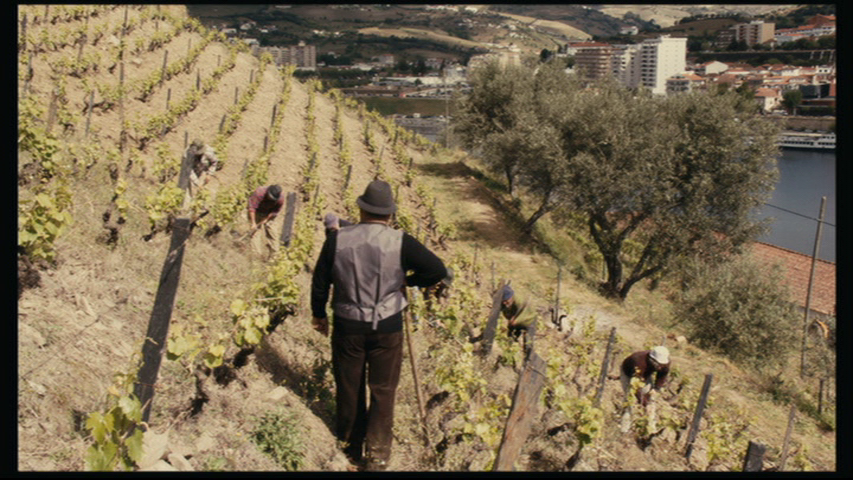
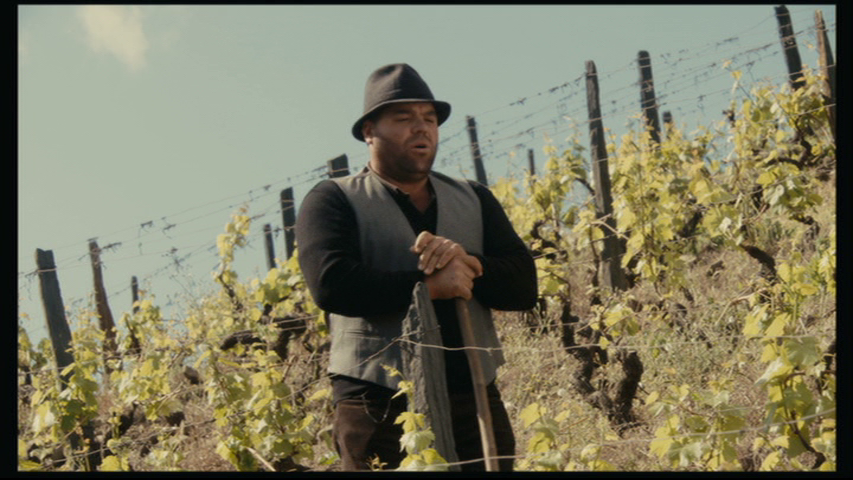
And a charming call-and-response working song about a shabby suit of clothes. It ends with Isaac appearing to hear bells calling mourners to Angelica’s funeral, for he next appears in the church where one of the friends gathered around her coffin comments that “she looks like an angel from heaven”:
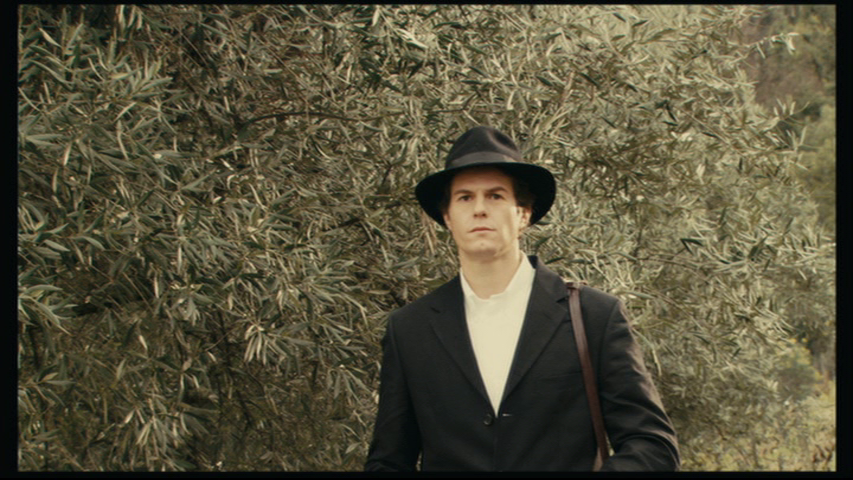
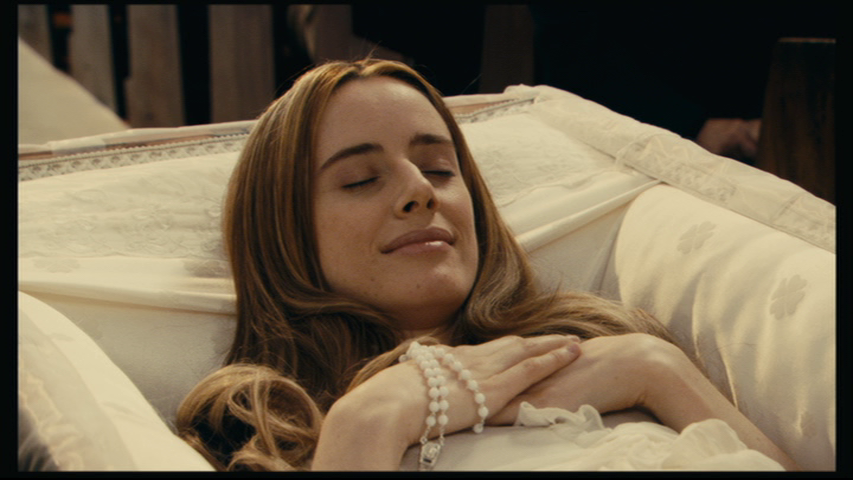
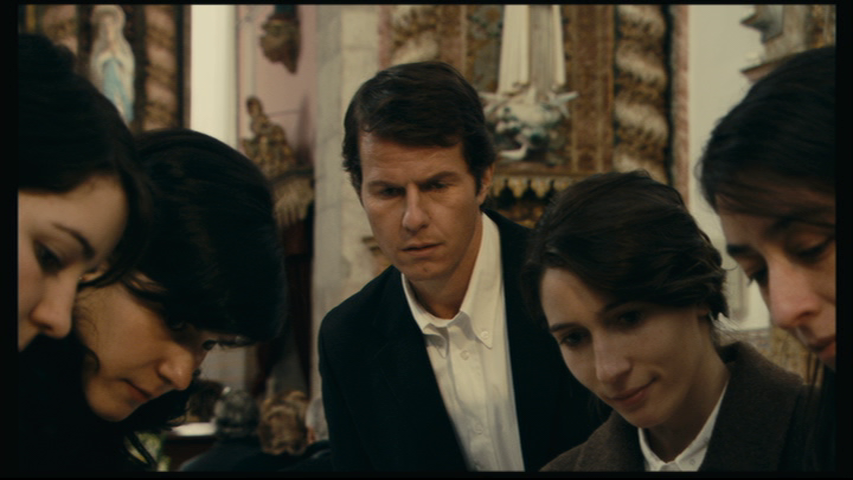
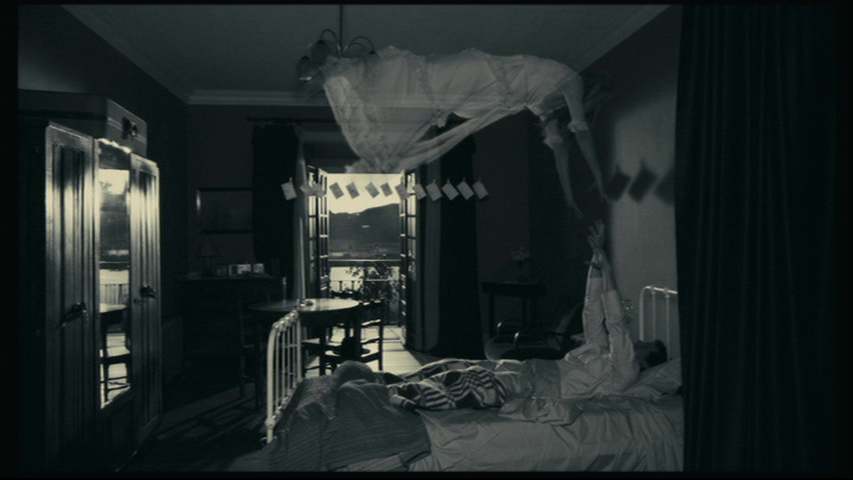
Which inspires him to recite the snippet of poetry he read earlier. That night in a scene which begins with what we soon realize is a shot of his reflection in a mirror, Isaac wakes up and walks over the photos hanging on a line in front of his balcony:
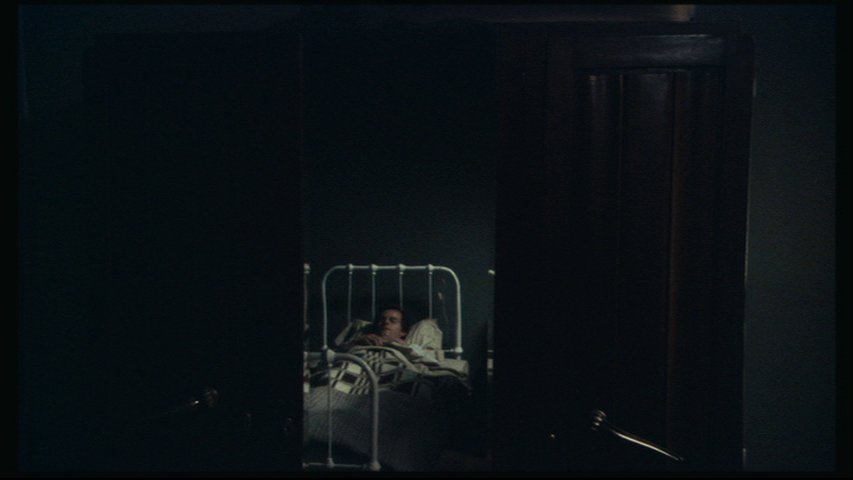
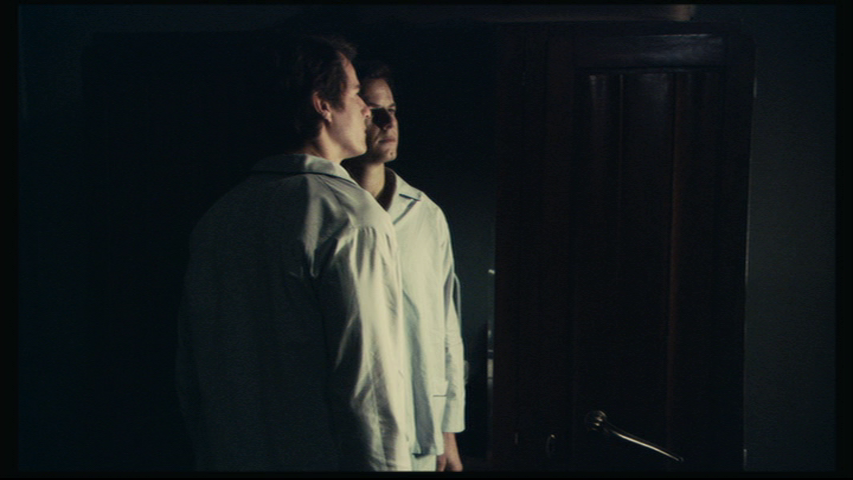
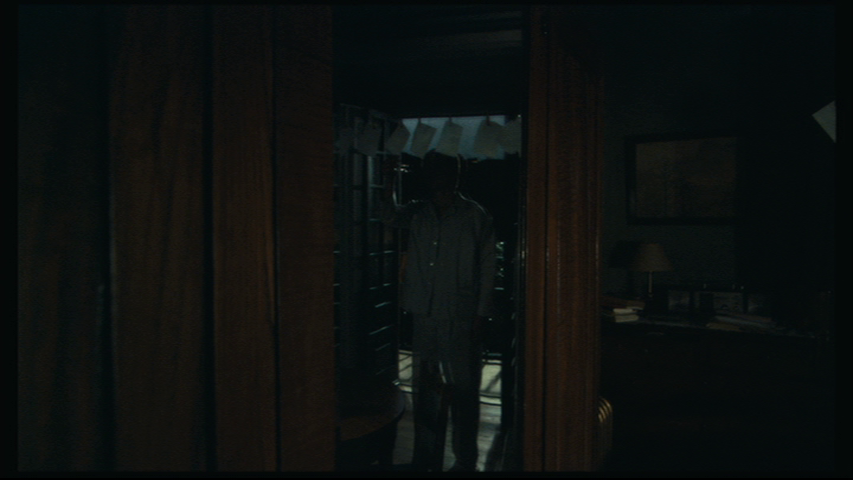
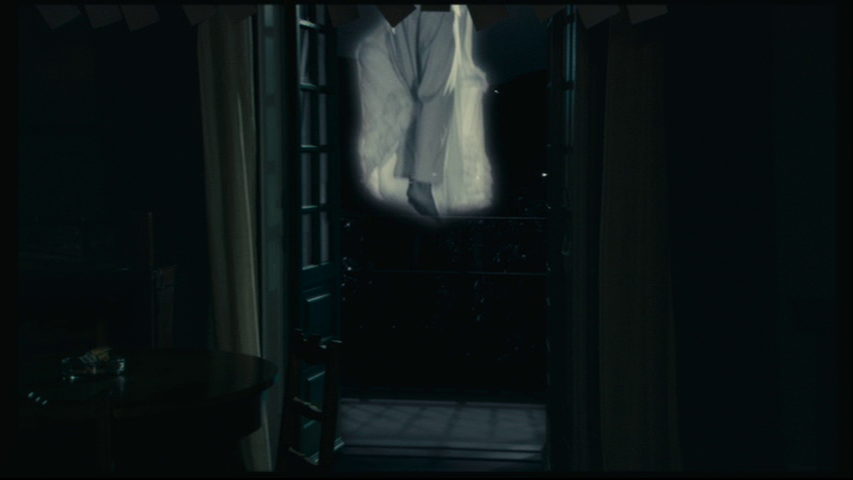
As he stands there an apparition materializes behind him:
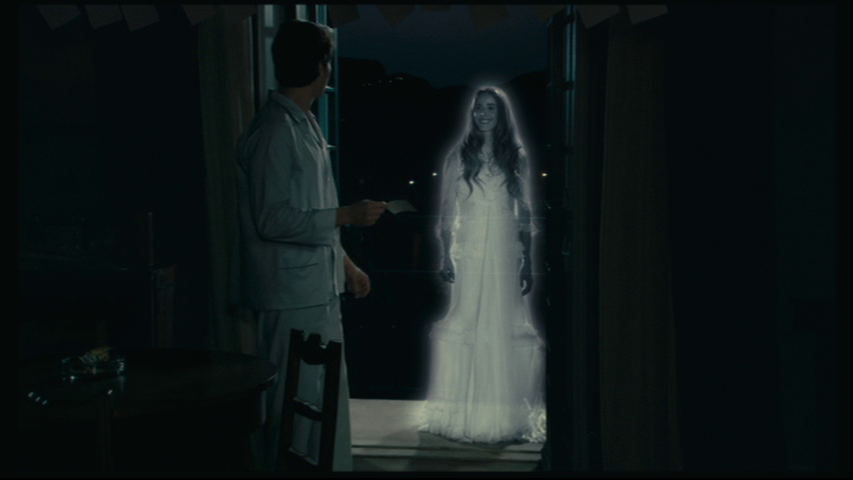
He passes through the doorway and becomes translucent himself. The two of them embrace and rise into the sky:
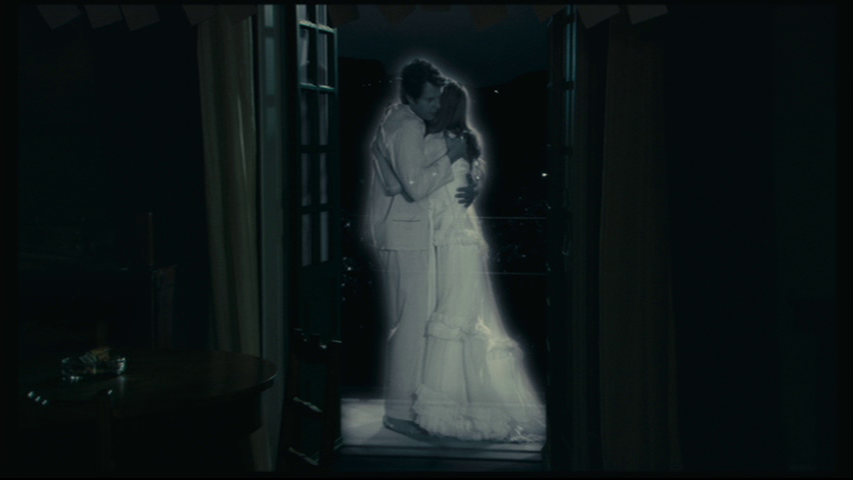

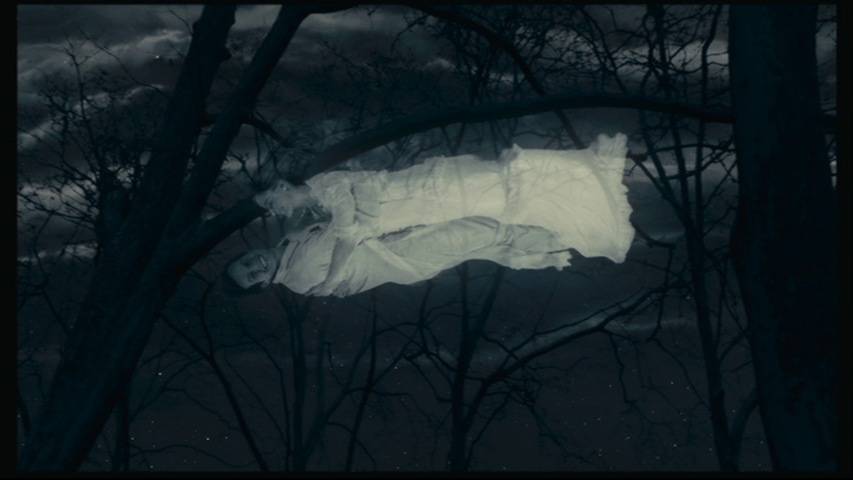
Leading forthwith to my favorite image from this movie, the epically goofy grin plastered on Isaac’s face as he floats supine through the air:
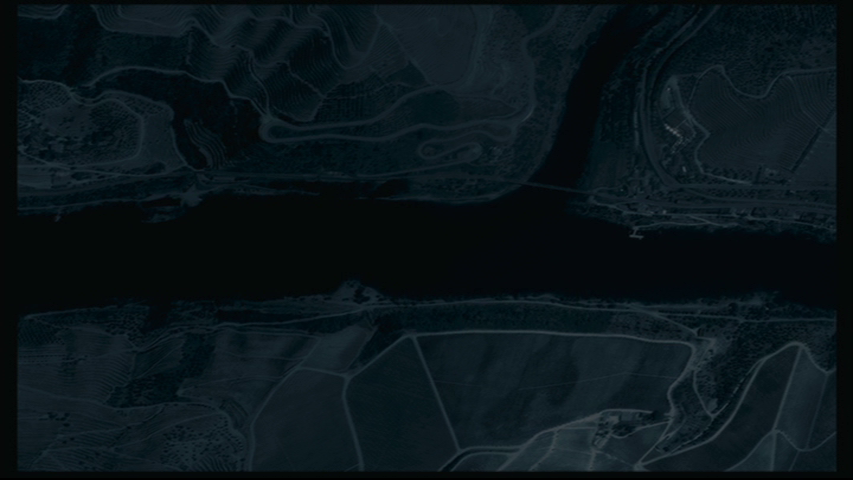
Which he wears right up until the moment when a strikingly topographical overhead shot of the Douro abruptly gives way to one of him in freefall:
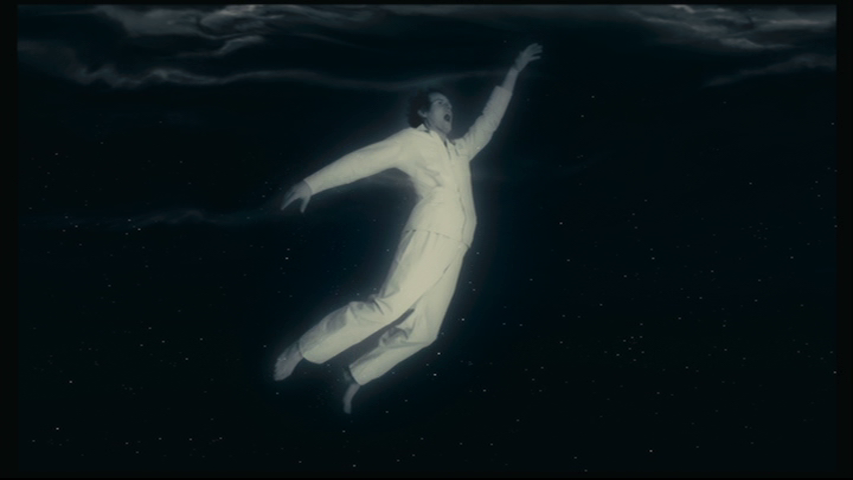
He awakens the next morning with a start and lights a cigarette:
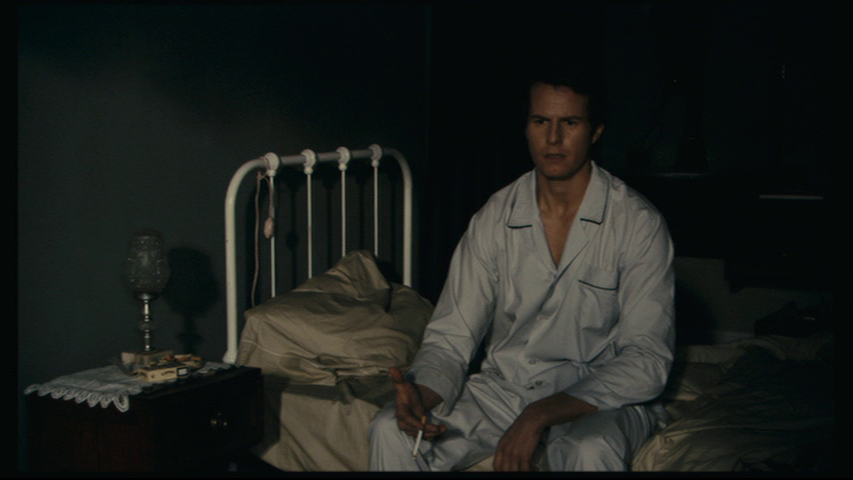
“That strange reality . . . perhaps it was just a hallucination? But it was just as real as this. Could I have been to that place of absolute love I’ve heard about?” Then: “I must be out of my mind.” The second half of the film chronicles his self-deportation from the land of the living, which Daniel Kasman read as reminiscent of the director of my September, 2024 Drink & a Movie selection History is Made at Night in a dispatch filed from Cannes 2010: “as in Borzage, escape from the world’s ails to the bliss of an otherworldly love is at once the most cowardly and most heroic of actions.” As part of The Strange Case of Angelica‘s very first wave of viewers, Kasman understandably focuses specifically on the titular character’s role in precipitating Isaac’s withdrawal from his fellow lodgers:
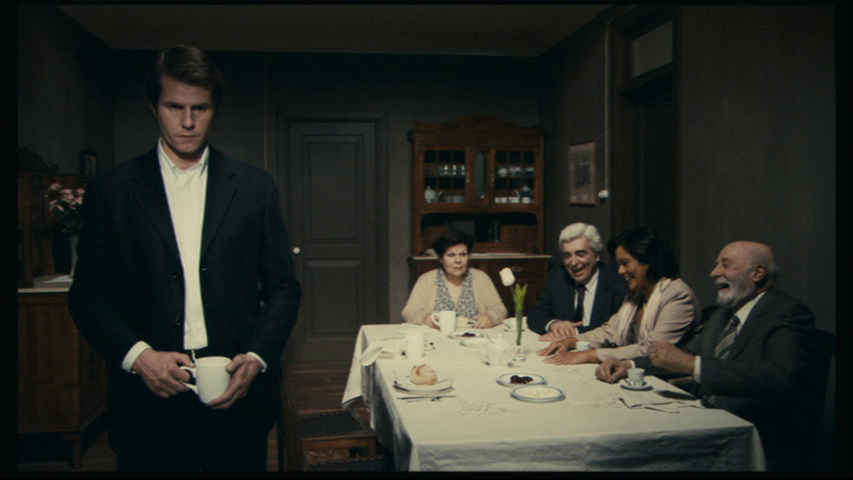
Growing frustration when Angelica remains tantalizingly out of reach even in his dreams::
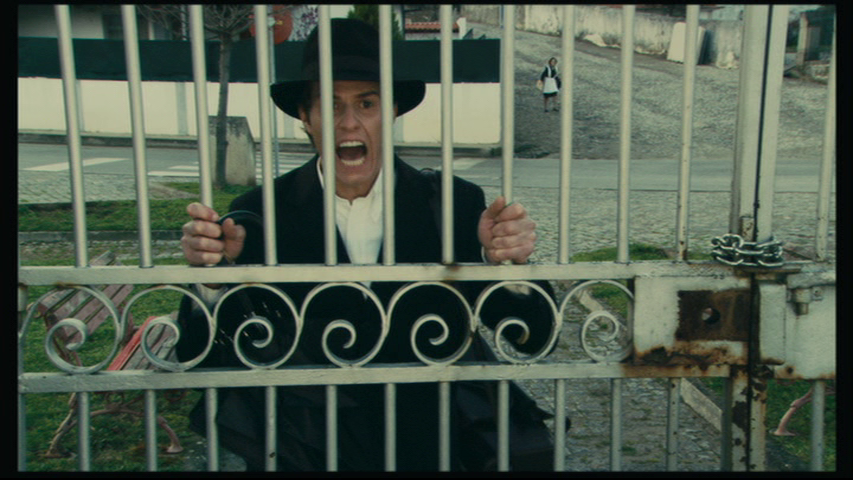
And increasingly public erratic behavior:
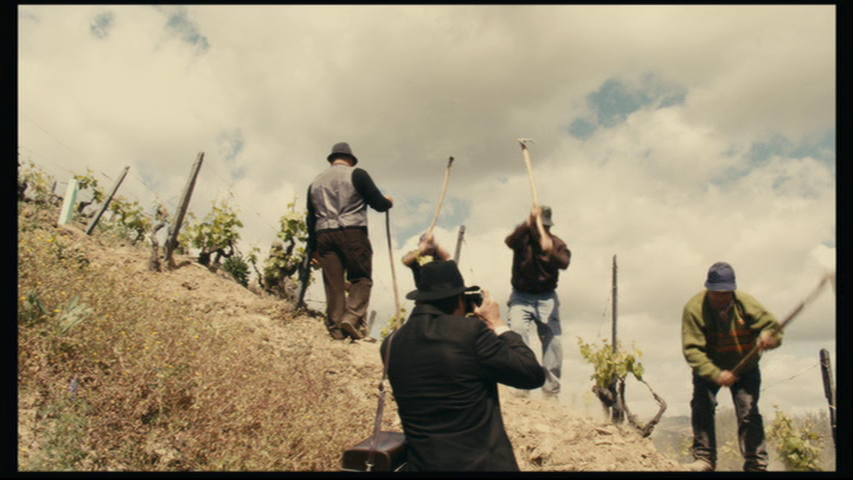
But as Rita Benis notes in a paper collected in the book Fearful Symmetries called “The Abysses of Passion in Manoel de Oliveira’s The Strange Case of Angelica,” the film’s fantastical elements like Isaac’s visions of Angelica are strongly linked to its realist sequences like his efforts to document the “old-fashioned” ways of the vineyard workers visible from his apartment and “their contrast is what generates the real fear implicit in the film,” such as in “the distressing sequence where he desperately follows a tractor working the rocky soil, taking furious snapshots to the fading traces of an ancient world (the connection between man and earth)”:
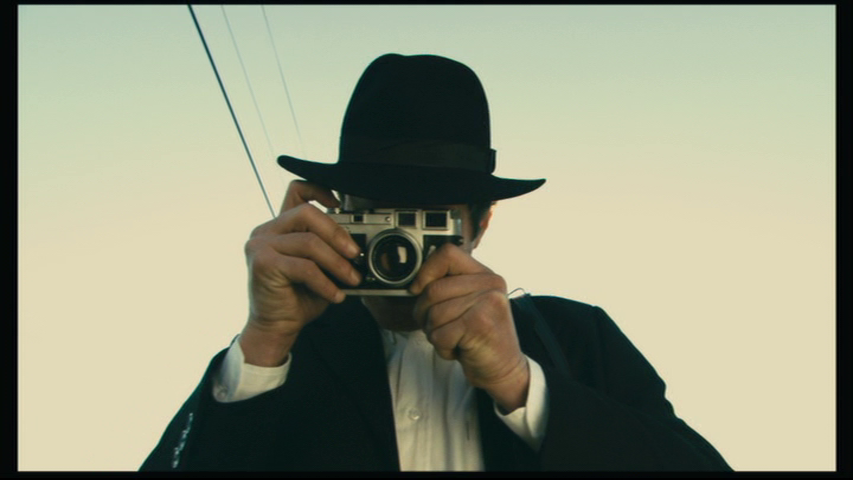
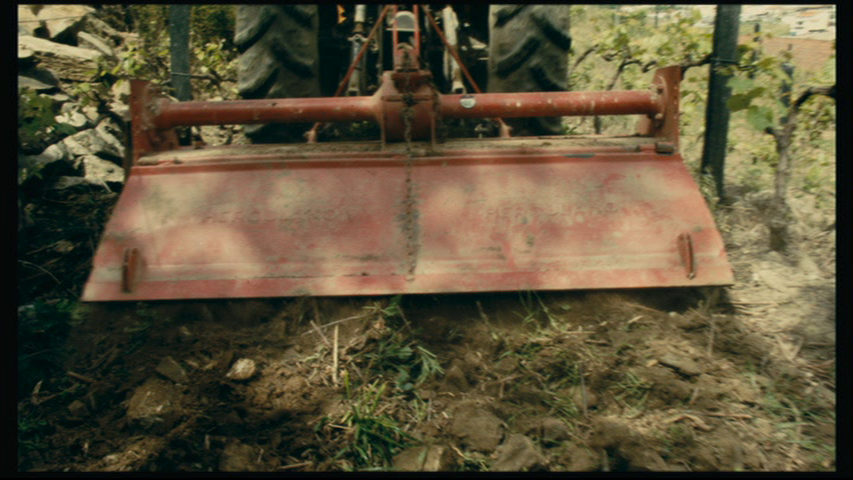
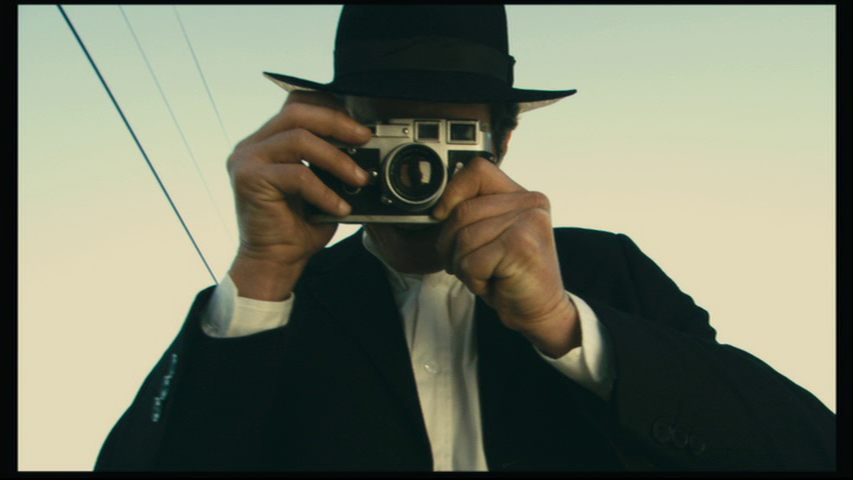
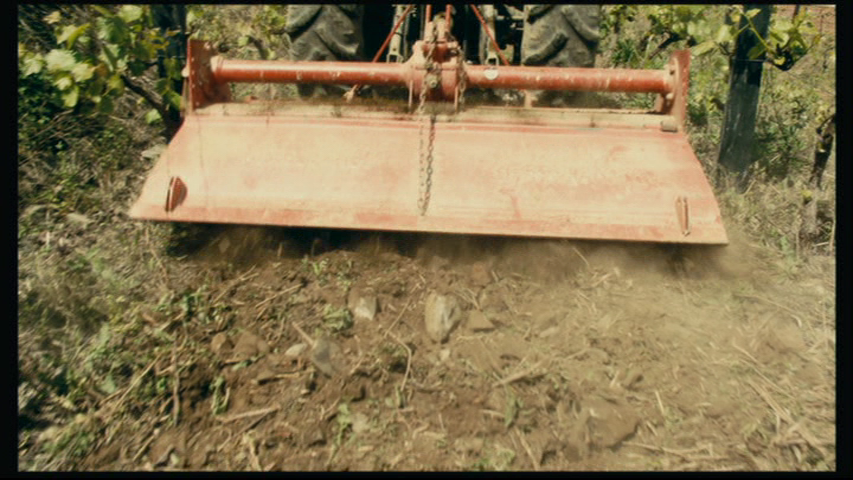
These shots are, of course, immediately followed by one of him thrashing around in his bed, haunted by the sounds of hoes striking the earth over and over again, and they finally unlock the secret to all those diagonals: each of Isaac’s impossible loves are a step on what is ultimately one long stairway to heaven.
J. Hoberman closes his essay on The Strange Case of Angelica with a quote:
The last living filmmaker born during the age of the nickelodeon, Oliveira told an interviewer that cinema today is “the same as it was for Lumiére, for Méliès and Max Linder. There you have realism, the fantastic, and the comic. There’s nothing more to add to that, absolutely nothing.” The great beauty of this love song to the medium is that Oliveira’s eschewal remains absolute. It’s a strange case–pictures move and time stands still.
The other night at dinner we went around the table at the request of my children and all said what we’d eat if we had to subsist on just one food for the rest of our lives. Neither Oliveira’s film nor The Navigator may be the most daringly innovative creation featured in this series, but they both contain everything I’m looking for in a drink and a movie respectively, and while it would be suboptimal (to say the least) to be confined to such a limited diet, I can think of far worse answers to the cinema and cocktail versions of my kids’ question!
Cheers!
All original photographs in this post are by Marion Penning, aka My Loving Wife. Links to all of the entries in this series can be found here.
I knew right from the start that this series would eventually feature the Cinema Highball, an ingenious rum and Coke variation created by Don Lee and included in The PDT Cocktail Book, but what to pair it with? A name like that suggests primacy of place–should I save it for the final entry and write about it alongside my favorite movie, I wondered? But then I’d have to pick a single favorite, and as the days went by my options narrowed. The Flowers of St. Francis and Early Summer came off the board within six months of this project beginning and The Passion of Joan of Arc and Pyaasa followed in its second year of existence. Meanwhile, another question was beginning to vex me: which of the 100+ films directed by Jean-Luc Godard was I going to tackle? The solution to both my problems arrived simultaneously last May when I realized I wouldn’t finish my post about Stalker before the first of the month, eliminating a possible hook: what better way to commemorate May Day 2025 than with a post celebrating “the children of Marx and Coca-Cola”?
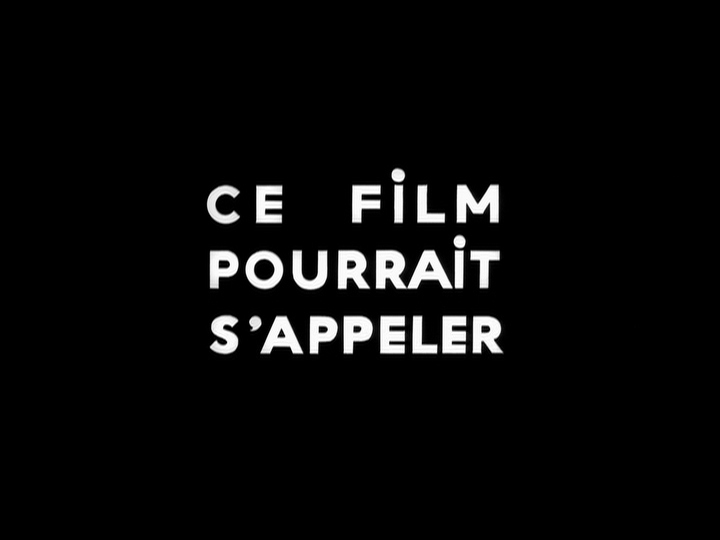
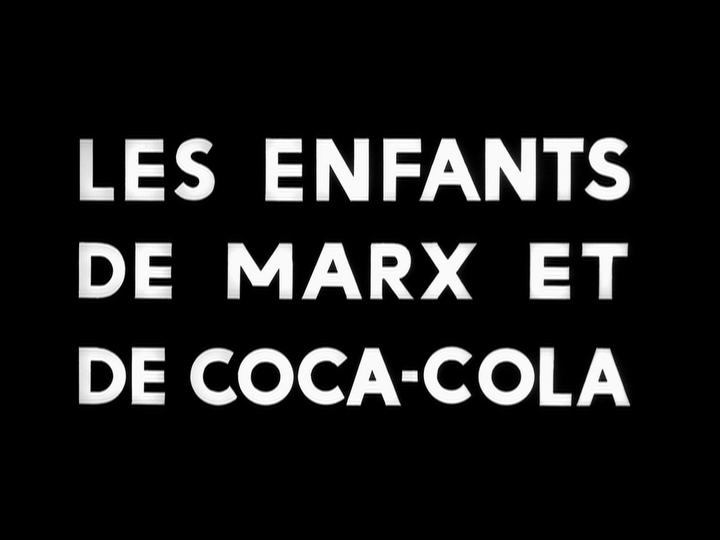
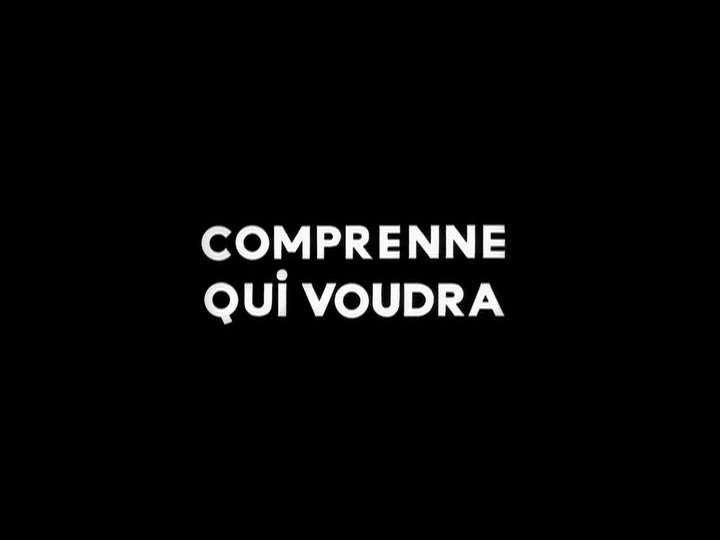
The source of these title cards is, of course, Masculine Feminine. Here’s a picture of my Criterion Collection DVD copy:
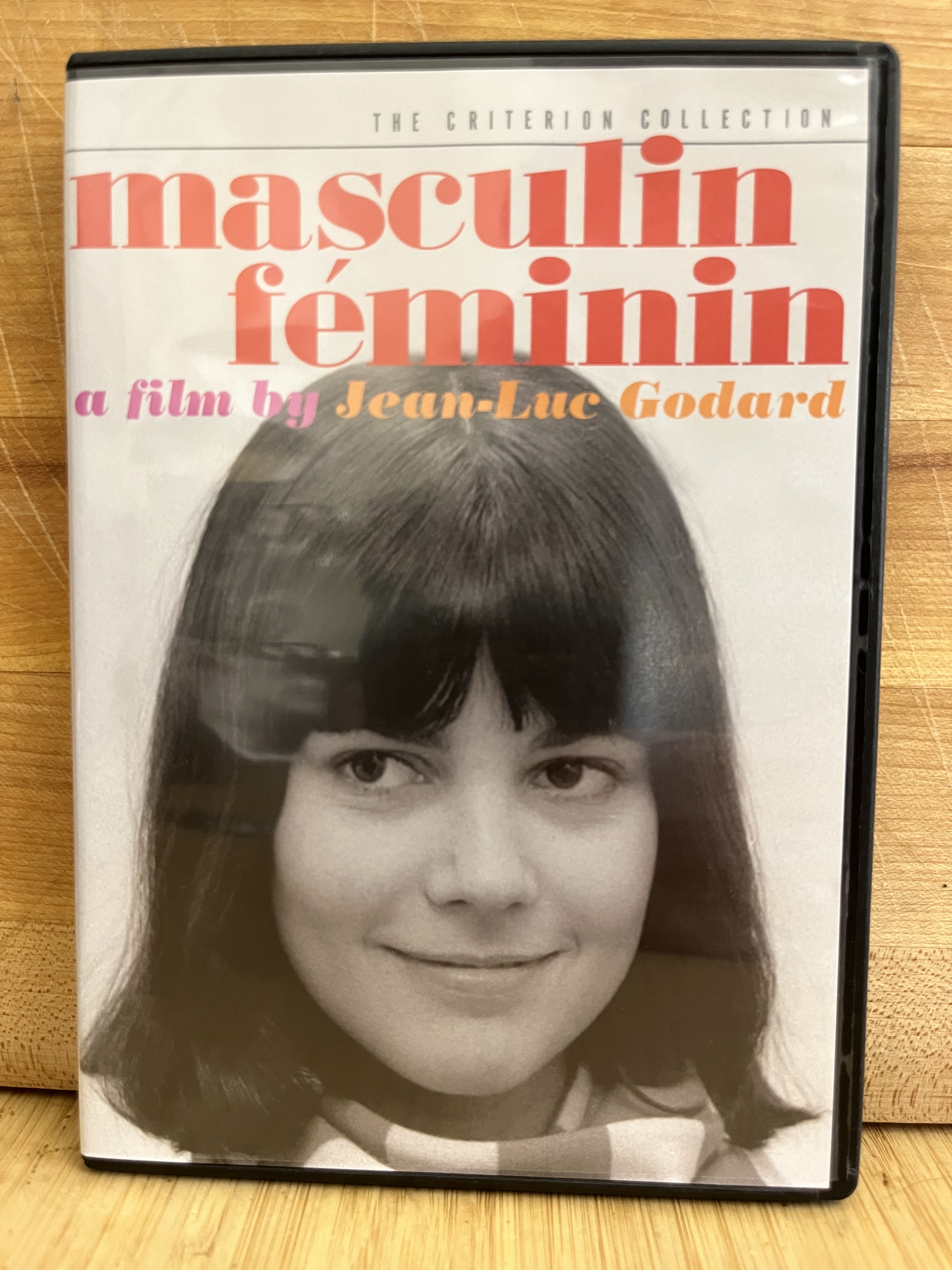
You can also stream it on the Criterion Channel and Max with subscriptions or via Prime Video for a rental fee, and some people (including current Cornell University faculty, staff, and students) may have access to it through Kanopy via a license paid for by their local academic or public library as well.
The drink, which lends itself beautifully to batching and bottling (Lee sold them out of a vending machine at his Greenwich Village bar Existing Conditions), requires advance preparation, but is otherwise dead simple. Here’s how you make it:
4 1/2 ozs. Coca-Cola Classic
2 ozs. Popcorn-infused Flor de Caña Silver Dry Rum
Infuse the rum by combining one ounce of freshly popped popcorn per 750 milliliters of rum in a nonreactive container and let sit at room temperature for one hour. Strain to remove the solids, then add one ounce of clarified butter per 750 milliliters of rum, cover, and let sit for 24 hours at room temperature. Freeze the liquid for four additional hours to solidify the butter, then fine-strain and bottle. To make the cocktail, combine both ingredients in a chilled cocktail glass filled with ice cubes.

The impression of taking a big swig of soda while your mouth is still full of movie theater popcorn is so pronounced that you may instinctively start trying to pick kernels out of your teeth! If you can’t get Flor de Caña, another smooth silver rum like Planteray 3 Stars would work just fine here as well. Finally, while I suppose you *could* use something other than Mexican Coke made with real cane sugar in this drink, I don’t know why you would.
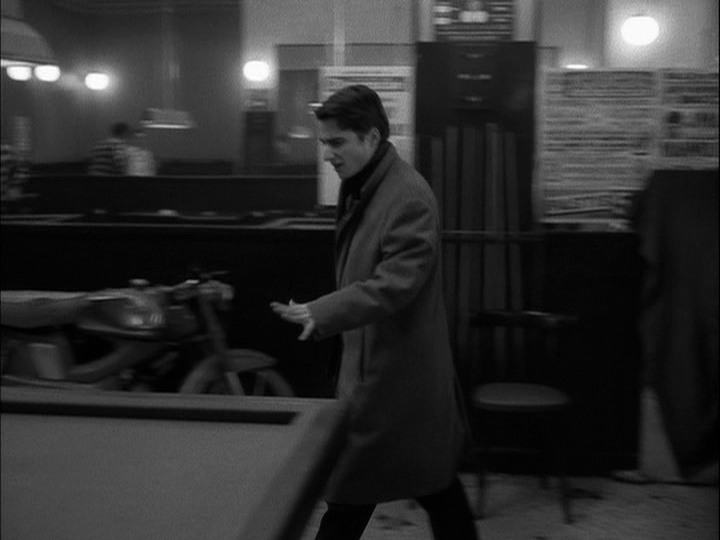
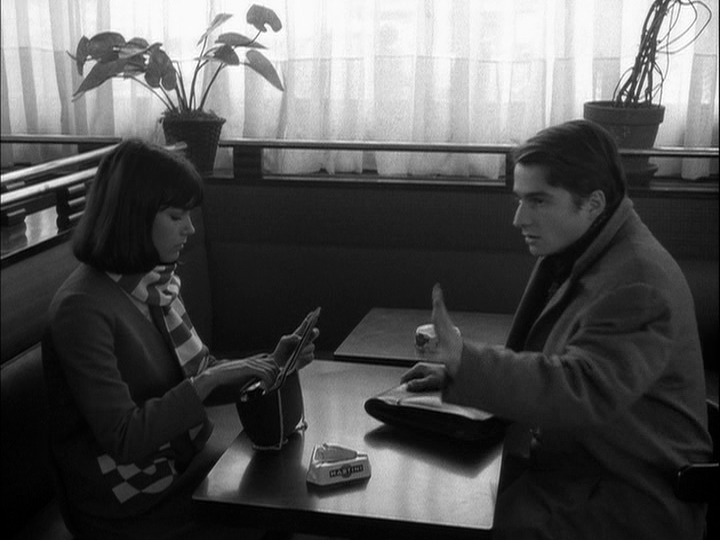
Masculine Feminine‘s Paul (Jean-Pierre Léaud) is actually a highball drinker himself, although he prefers Vittel (a brand of mineral water) and cassis.
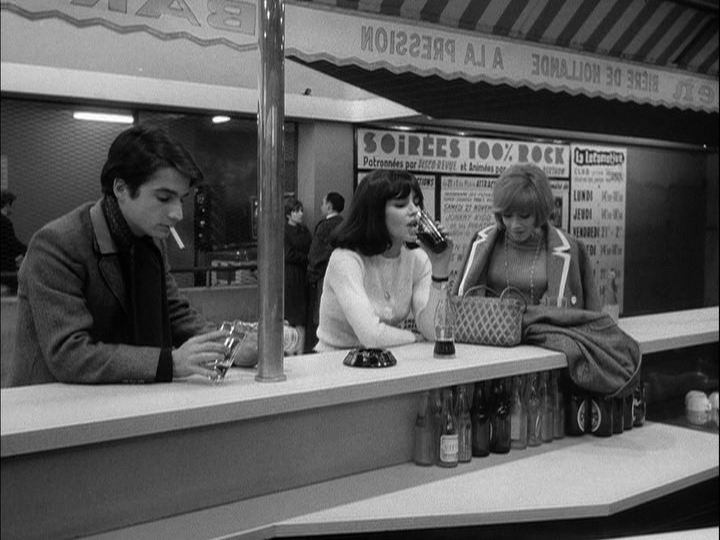
He is shown here with Madeleine (Chantal Goya), whose character’s name also comes from Guy de Maupassant’s short story “Paul’s Mistress,” and her roommate Elisabeth (Marlène Jobert). This is one of two by the author that inspired the movie; as Richard Brody notes in his book Everything is Cinema: The Working Life of Jean-Luc Godard, the other manifests most directly in the form of the erotic Swedish film (which many people also interpret as a parody of The Silence) these characters go to see with their friend Catherine (Catherine-Isabelle Duport).
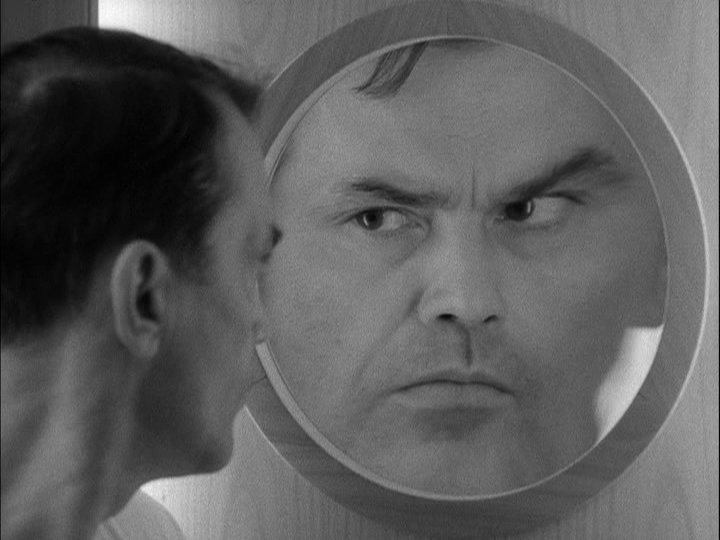
Despite apparently missing this connection completely, Roger Ebert surfaces another even more interesting one in his review of the 2005 American rerelease:
The movie was inspired by two short stories by Guy de Maupassant. I have just read one of them, “The Signal,” which is about a married woman who observes a prostitute attracting men with the most subtle of signs. The woman is fascinated, practices in the mirror, discovers she is better than the prostitute at attracting men, and then finds one at her door and doesn’t know what to do about him. If you search for this story in “Masculine-Feminine,” you will not find it, despite some talk of prostitution. Then you realize that the signal has been changed but the device is still there: Leaud’s character went to the movies, saw [Jean-Paul] Belmondo attracting women, and is trying to master the same art. Like the heroine of de Maupassant’s story, he seems caught off-guard when he makes a catch.
He is referring to a cigarette flip trick Paul attempts numerous times through the film (I stopped counting after five) but isn’t ever quite able to execute, making him look silly instead of cool:
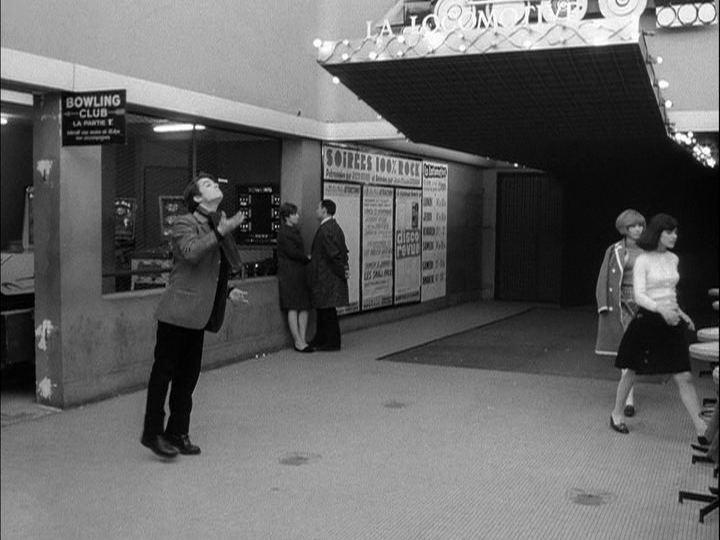
“Paul’s Mistress” also shines light on how to interpret our hero’s failure to survive the film, which in her insightful contemporaneous review Pauline Kael describes as “like a form of syntax marking the end of the movie.” Or, as Godard himself says in an interview with Gene Youngblood collected in David Sterritt’s book Jean-Luc Godard: Interviews, “even though my adaptation is very different, the de Maupassant story ended with Paul’s death. But I think death is a very good answer in that kind of movie. There is no meaning in it.”
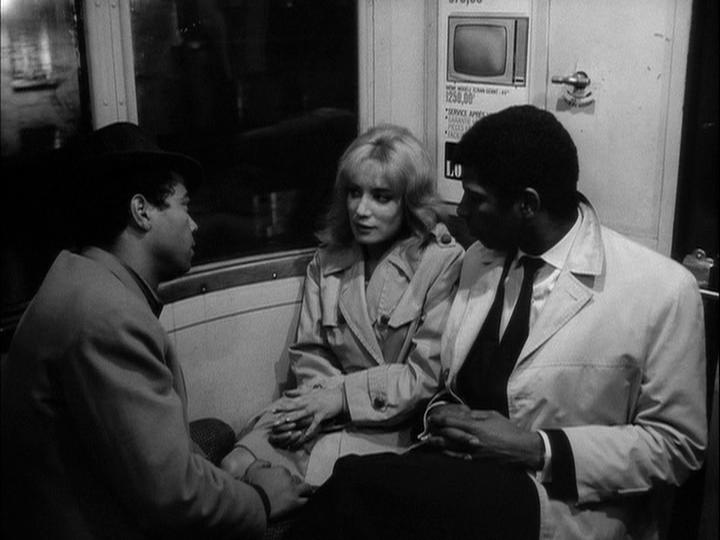
Quotations from other works abound as well, most conspicuously in the form of three members of the original French cast of Amiri Baraka’s play Dutchman (Chantal Darget, Med Hondo, and Benjamin Jules-Rosette) performing dialogue from it in character, which introduces a racial component to film’s sociological analysis of male-female relationships:
And perhaps most famously in Paul’s monologue about his generation’s relationship to the movies, which per Brody is clipped “nearly verbatim from Georges Perec’s novel Les Choses,” with Godard’s main contribution being the specific reference to American cinema:
We went to the movies often. The screen would light up, and we’d feel a thrill. But Madeleine and I were usually disappointed. The images were dated and jumpy. Marilyn Monroe had aged badly. We felt sad. It wasn’t the movie of our dreams. It wasn’t that total film we carried inside ourselves. That film we would have liked to make, or, more secretly, no doubt, the film we wanted to live.
Scenes like these, each of which would require a blog post entirely its own to fully unpack, represent Masculine Feminine at its most intricate, as does the 39 second-long sequence Richard Roud analyzes in his monograph about Godard which flips back and forth between day and night five times in a way that “more or less” parallels what we hear on the soundtrack. The first shot accompanies a voiceover by Paul in which he says, “lonely and dreadful is the night after which the day doesn’t come”:
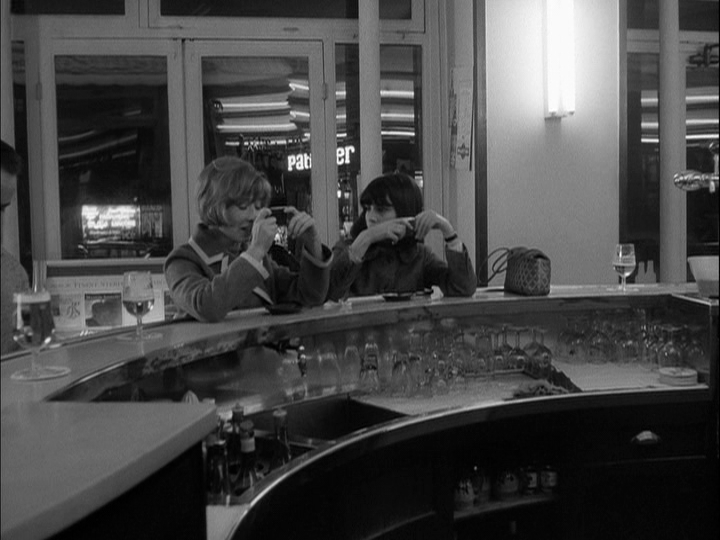
The second, third, and fourth go along with voiceovers by Catherine and Paul’s friend Robert Packard (Michel Debord) saying, “American scientists succeeded in transmitting ideas from one brain to another, by injection” and “man’s conscience doesn’t determine his existence–his social being determines his conscience” respectively:
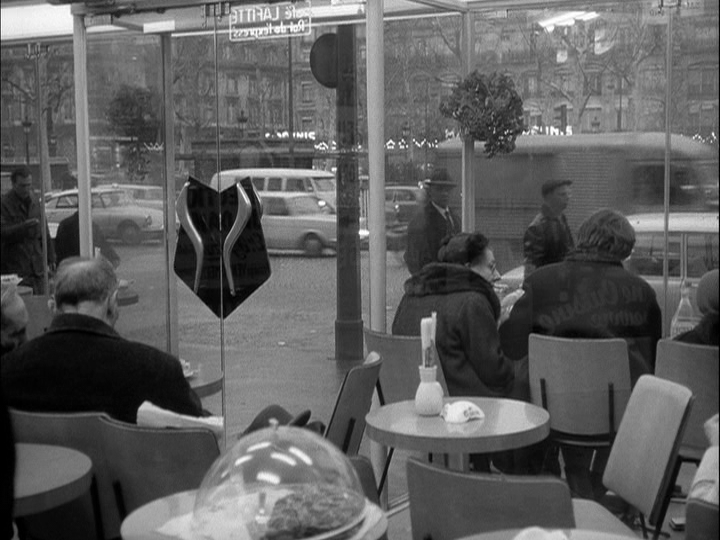

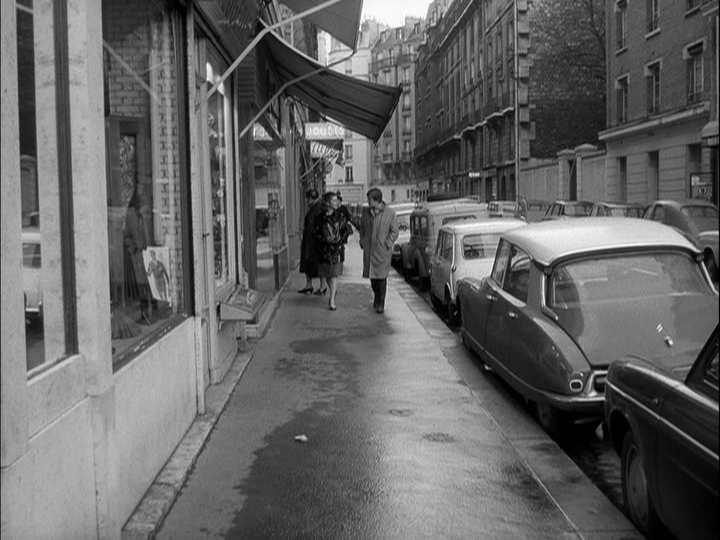
And finally the fourth, fifth, and sixth are paired with voiceovers by Elizabeth and Madeleine saying “we can suppose that, 20 years from now, every citizen will wear a small electrical device that can arouse the body to pleasure and sexual satisfaction” and “give us a TV set and a car, but deliver us from liberty” in turn:
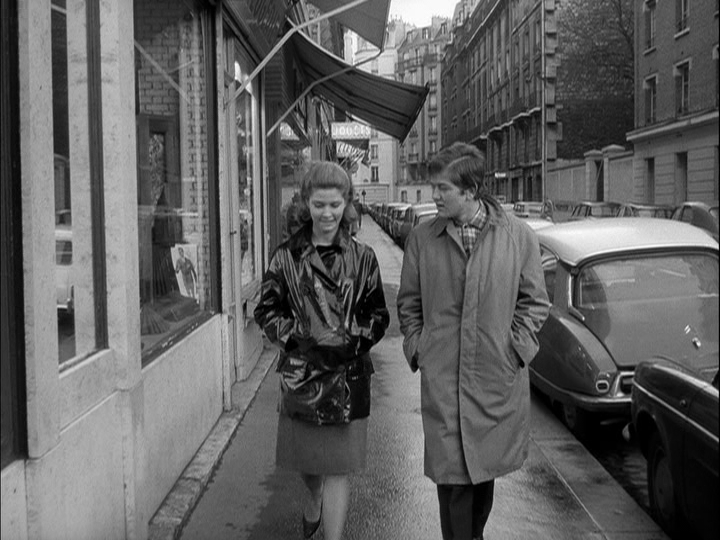
Roud postulates that “one could make out a case that Godard has treated this sequence dramatically.” According to the theoretical argument he outlines, “darkness corresponds to Paul’s loneliness, to Robert’s pessimistic view of life and to Madeleine’s plea for a television-set,” while “daytime would correspond to Catherine’s rosy optimism about what science will be able to do and to Elizabeth’s Utopian future in which sexual problems will be solved by a gadget.” He believes that such ideas are “meant to be only lightly suggested,” though, and to him the real interest of this sequence is that it “shows Godard reaching towards that almost total escape from the shot as filmed” that he will achieve later in his career” and “brings out even more strongly than before that dialectical tension between reality and abstraction which forms the basis of all Godard’s later films.”
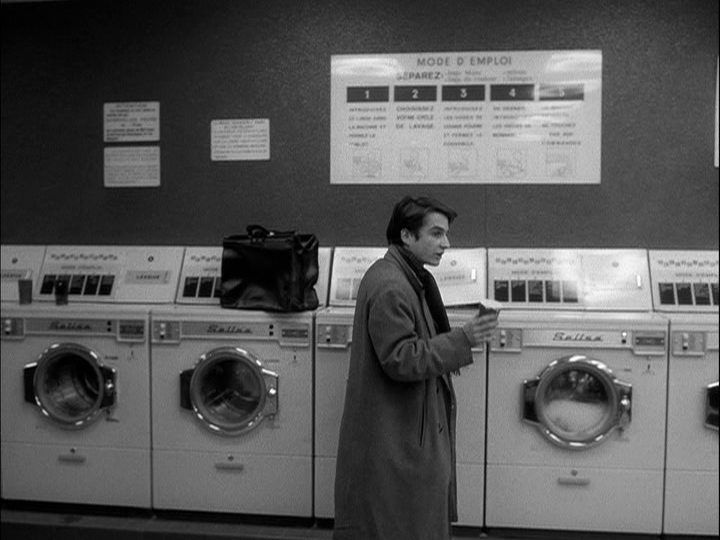
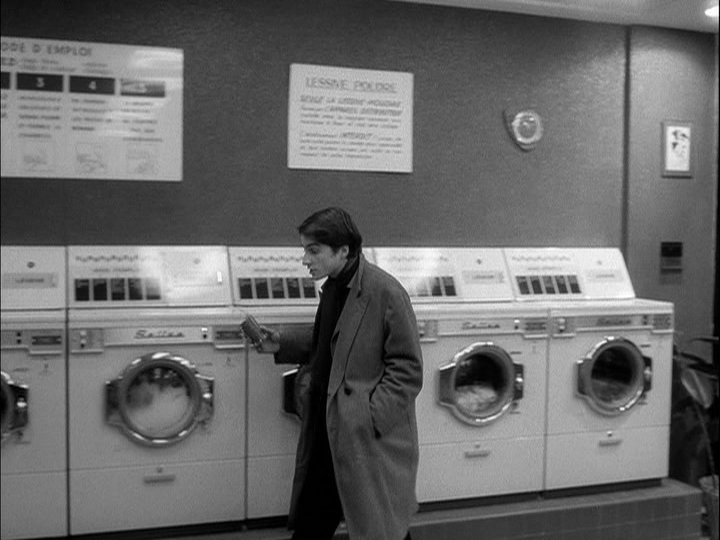
Did you get all that? I certainly didn’t my first (or second) time around, and I still don’t agree with every part of it, but the genius of Masculine Feminine is that it’s apparent that *something* is going on, which keeps you coming back to take a closer look. The fact that this is invariably rewarding is what I think Dave Kehr is talking about when he calls Godard “very strict in his sloppiness” in his capsule review for the Chicago Reader. The movie also offers many more straightforward pleasures, including an extremely animated Paul telling a Robert a story in a laundromat sequence punctuated by a panoply of jump cuts:
A hilariously cheeky depiction of him “putting himself in someone else’s shoes” by copying the actions of man who asking for directions to the local stadium:
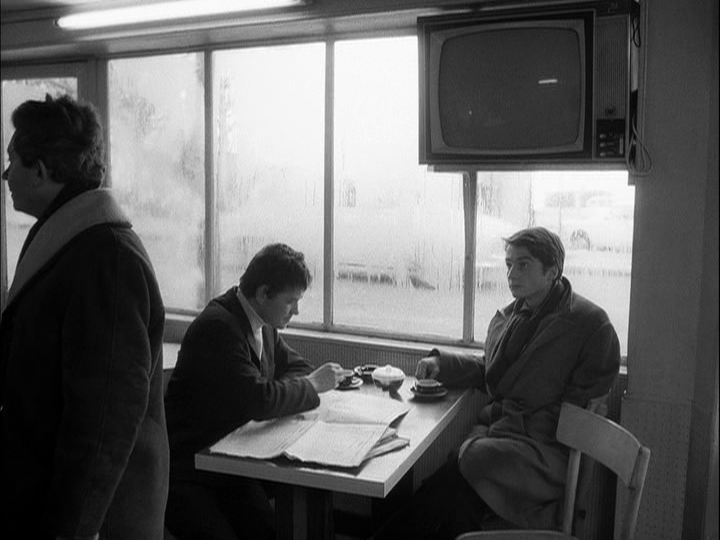
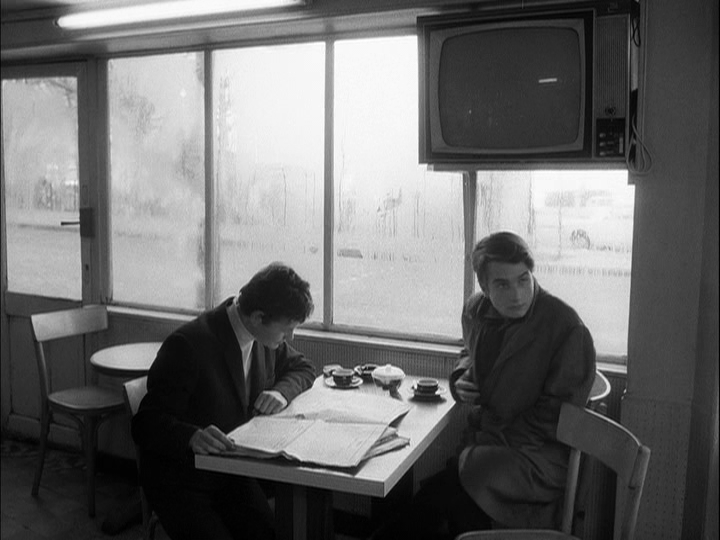
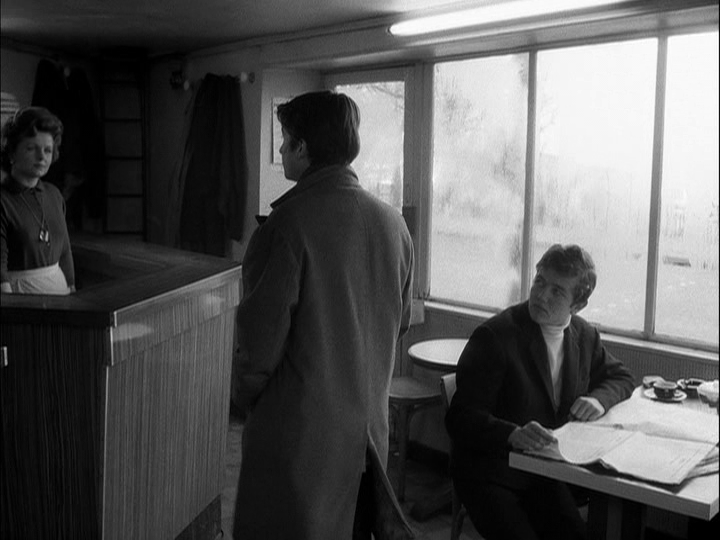
Paul telling the story of how his father “discovered” why the earth revolves around the sun, an experience I myself had in a third-grade science class when I figured out where rainbows come from seconds before the teacher explained it to me and my fellow students:
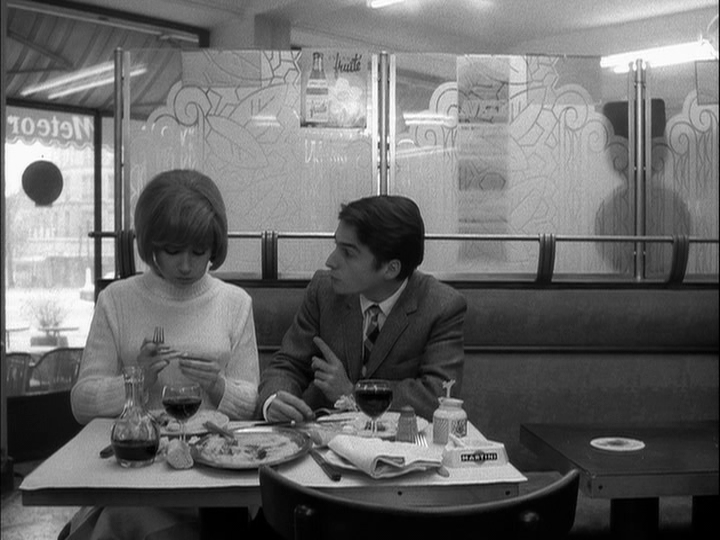
And Chantal Goya’s songs, which are crucially far more interesting than any statement Paul or Robert ever makes on screen.
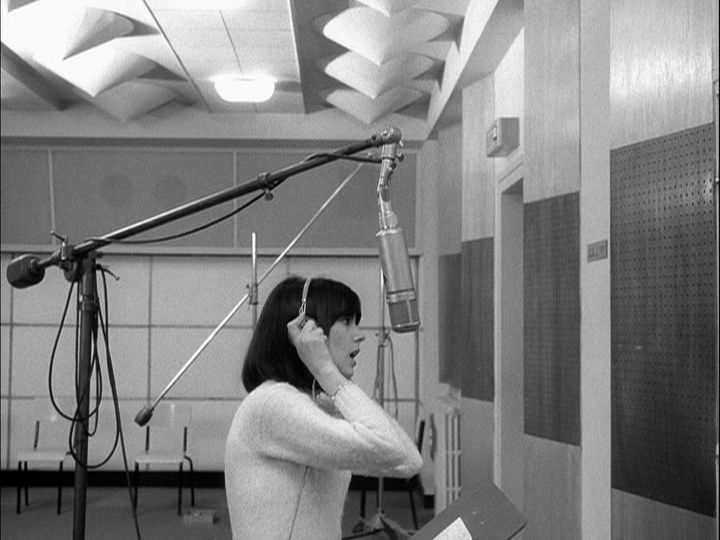
Penelope Gilliatt called Masculine Feminine “the picture that best captures what it was like to be an undergraduate in the sixties” in an article for The New Yorker, but moments like these are remarkable because they also feel timeless to one like me who went to college in the early 2000s. As do, sadly, the random acts of political and tabloid violence that Gilliatt speaks of next: “five deaths recorded; total apathy expressed by the characters.” Only two are depicted, a woman shooting her husband outside a café:
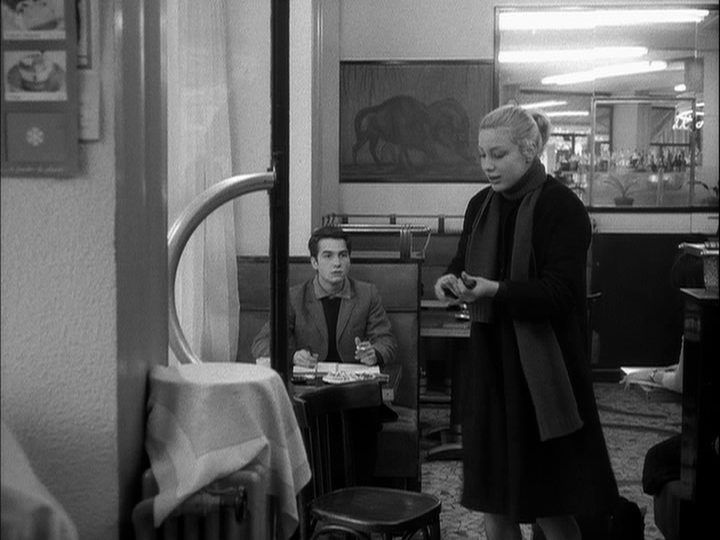

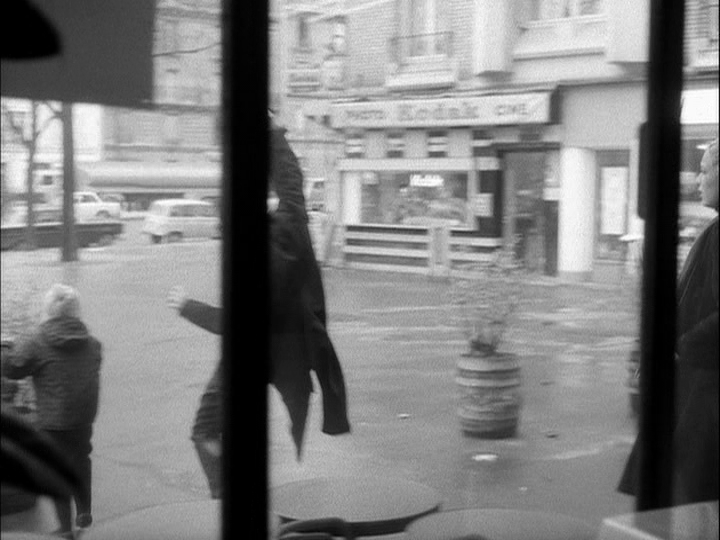
And a man (Yves Afonso) who appears to be about to mug Paul before he suddenly turns his knife on himself:
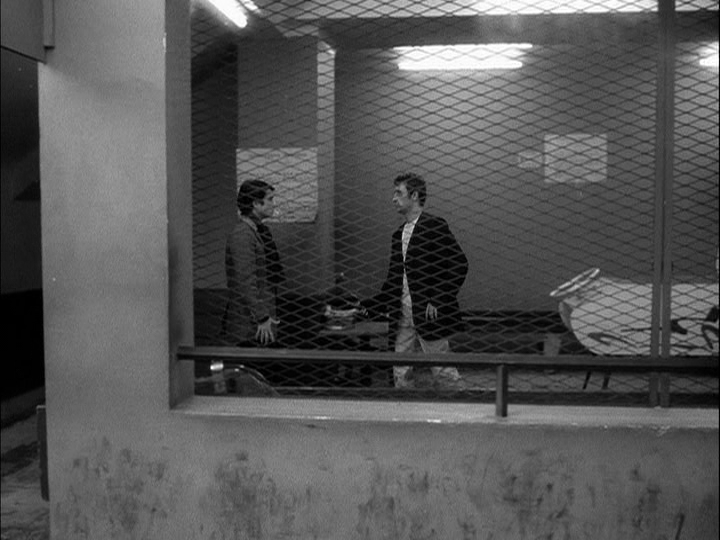
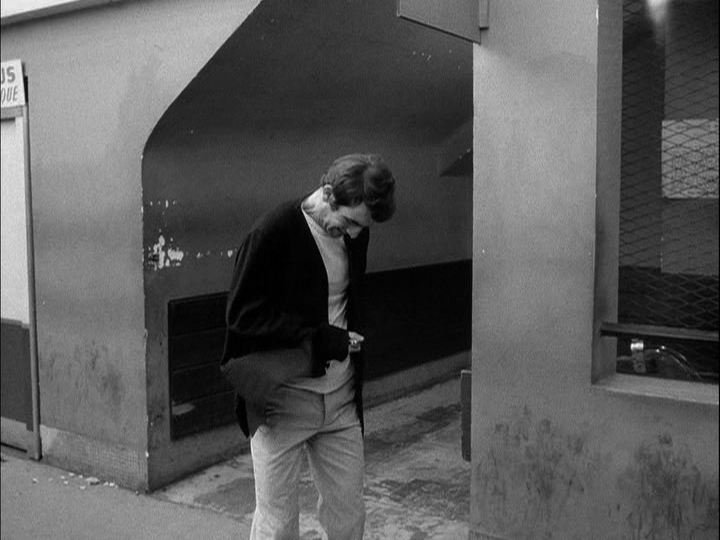
Non-diegetic gunshots also appear throughout on the soundtrack, though, which Adrian Martin describes in his essay for the Criterion Collection as “harsh aural interruptions, firing at unpredictable points” that represent “the violence of everyday modern urban life” in concentrated form. Can you blame Paul if he’s so inured to it that he’s more worried about the draft coming in through an open door than the murder taking place outside of it, or about his matches than the man about to immolate himself with them in protest of the Vietnam War? Maybe so, but my point is that while Godard, who styled Masculine Feminine a “concerto on youth” in an interview with Pierre Daix collected in the Grove Press film book about it, may not approve of his protagonists playing at pop stardom and philosophy while the word burns, he (to paraphrase another great work of music) obviously understands that they didn’t start the fire.
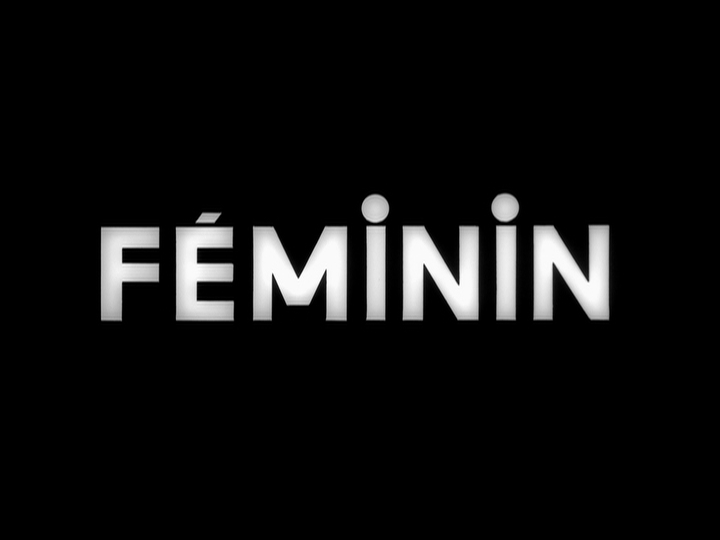
One of the movie’s most talked-about shots is Paul’s single take interview with “Miss 19” (Elsa Leroy), which lasts nearly seven minutes and is introduced by a title card which reads “dialogue with a consumer product.”
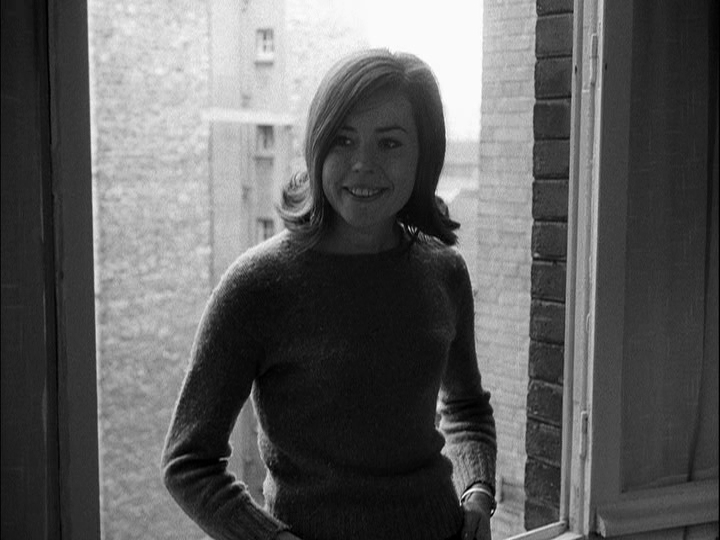
His questions are seemingly designed to reveal her ignorance about current events, but as Stephanie Zacharek observes in her 2005 review, “the scene is fascinating because although on the surface it seems Godard is asking us to join in ridiculing this girl, in the end it’s Paul’s vulnerability and naiveté that are exposed.” He is also every bit as concerned with his image as Madeleine is, it’s just that where she’s specifically focused on hair and makeup:
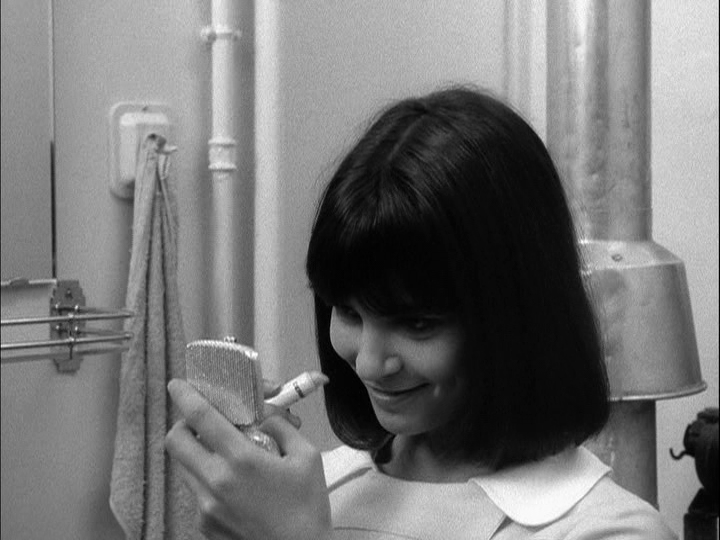
He’s attuned to the power of mise-en-scène in all its dimensions (remember that cigarette prop?) and nearly scraps a marriage proposal entirely when he can’t make the location he has scouted work:
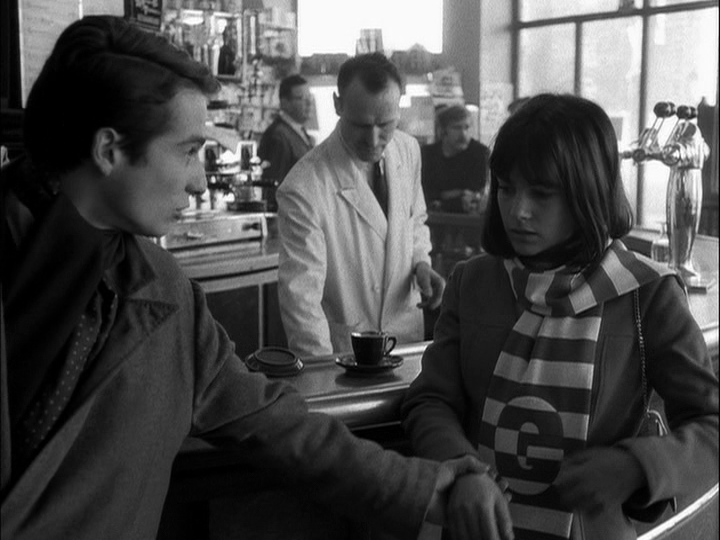
It really is too bad that Masculine Feminine‘s boys map so clearly and simplistically to Godard’s notion of the “children of Marx” and its girls to the progeny of Coca-Cola, but it strikes me as a major stretch to say that the former come away looking better than the latter, especially when, as Ed Gonzalez points out in his Slant Magazine review, the ladies get the final word: “the last shot of the film acts as a female-empowering solution to Godard’s philosophical algorithm of the sexual politic. FIN.”

Cheers!
All original photographs in this post are by Marion Penning, aka My Loving Wife. Links to all of the entries in this series can be found here.
I didn’t conceive of it as such, but my “Drink & a Movie” series is a fair approximation of my personal cinema and cocktail canons because (predictably, in retrospect) I have mostly chosen to write about my “go-to” directors and ingredients and scenes and techniques, the ones I’ve spent the most time thinking about and which have therefore played the biggest roles in shaping my point of view as a cinephile and drinker. My tastes are constantly evolving, though, and to conclude my three-post-long celebration of crème de cacao I’ve selected two new discoveries from the past few years.
Shortly after I watched Black Sheep for the first time, I talked about it first in an “Ithaca Film Journal” home video recommendation as “total catnip for me,” then again a few months later in my “Top Ten Movies of 2023” post as “the most fun I had with a movie all year.” Here’s a picture of my bare-bones 20th Century Fox “Cinema Archives” DVD copy:
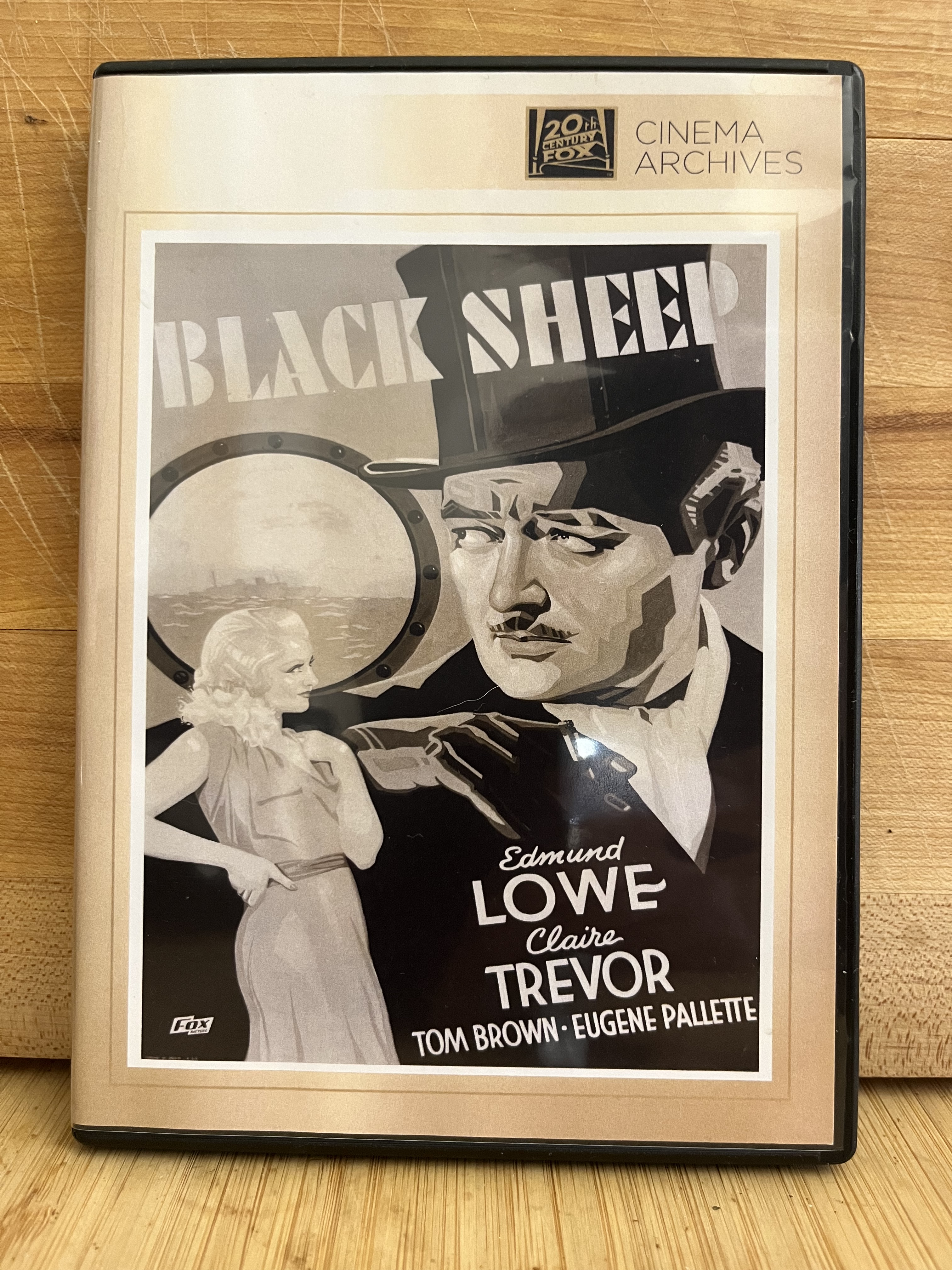
Unfortunately, although I originally saw this film on the Criterion Channel as part of a collection called “Directed by Allan Dwan,” it doesn’t appear to be streaming anywhere right now.
One of the things I found so delightful about Black Sheep are the old-school drinks heroine Claire Trevor’s Janette Foster orders: she asks for, in sequence, crème de menthe, a crème de menthe frappé, and Dubonnet. I wanted to offer a more complex alternative to Janette’s usuals like I did with the sweet vermouth on the rocks with a twist ordered by Andie MacDowell’s Rita Hanson in my Drink & a Movie entry for Groundhog Day, and I quickly settled on the Chapuline, a delightful variation on the grasshopper created by Toby Maloney of Chicago’s The Violet Hour. He specifically calls for green crème de menthe, but does so while making a joke related to presentation: “the white pales in comparison.” I’ve never been able to find the bottle by Marie Brizard he recommends and every verdant variety that *is* available in Ithaca tastes unbearably artificial in comparison to Tempus Fugit Glaciale, so that’s what we went with. In addition to tasting much better, I submit that it also looks just fine in this yellow glass we picked out to serve it in. Here’s how we make it:
1 oz. Crème de cacao (Tempus Fugit)
1 oz. Crème de menthe (Tempus Fugit)
3/4 oz. Pisco (Macchu Pisco)
1 oz. Heavy cream
Shake all ingredients vigorously with ice and double strain into a chilled cocktail glass. Garnish with a spanked (to release its aromas) fresh mint leaf.

As he notes in The Bartender’s Manifesto, Maloney’s goal was “to prove that [he] could take a gauche drink and make it at least interesting, at best delicious.” Mission accomplished! The first thing you notice is its beautifully silky texture. The flavor that pops is peppermint immediately followed by chocolate–the effect would be almost exactly like eating a York Peppermint Pattie except that there’s also a burn which resolves into grape on the finish, as if the drink was morphing from a grasshopper to a stinger, the other classic cocktail most commonly associated with crème de menthe. You wouldn’t get this with a barrel-aged spirit like cognac, obviously, so the choice of pisco is quite brilliant!
Maloney’s recipe includes instructions to shake “like it owes you money,” which is actually a pretty excellent segue into discussion of Black Sheep since income, like the film’s camera movements, represents both freedom and confinement for its protagonist John Francis Dugan (Edmund Lowe) and the other characters. As Frederic Lombardi writes in his book Allan Dwan and the Rise and Decline of the Hollywood Studios, “the opening shots of the film give a full sense of the great breadth of the ship Olympus but as the story unfolds, there are increasing attempts to restrict the space in which Dugan can move, so that he must literally know his place.” To start at the beginning, an introductory montage provides a tour of the ship’s first-class spaces:
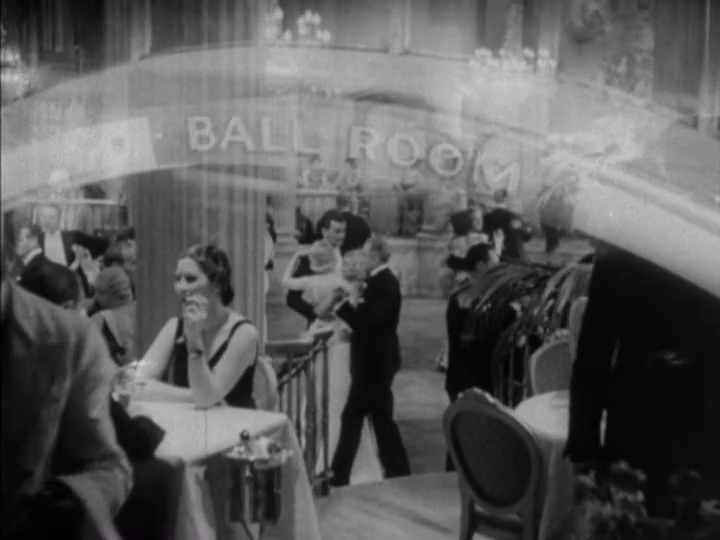
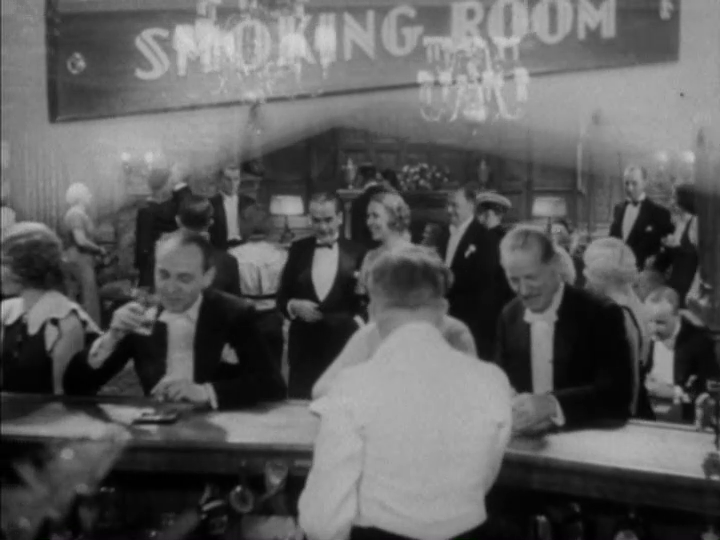
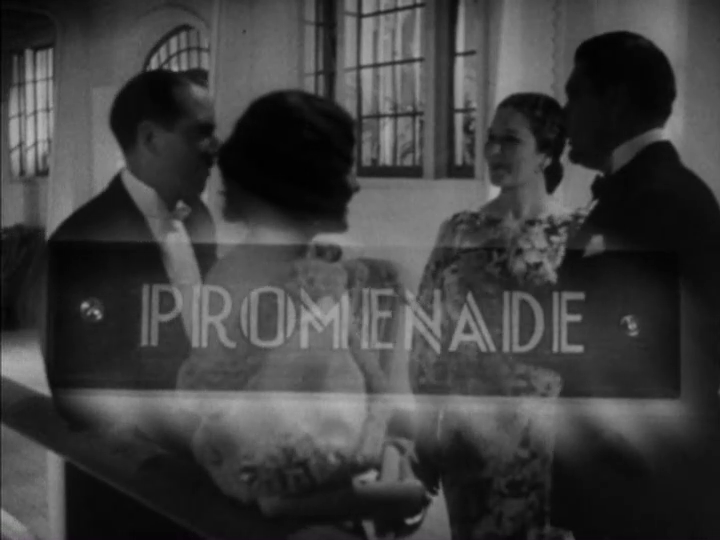
Before the gliding camera comes to rest on this sign:
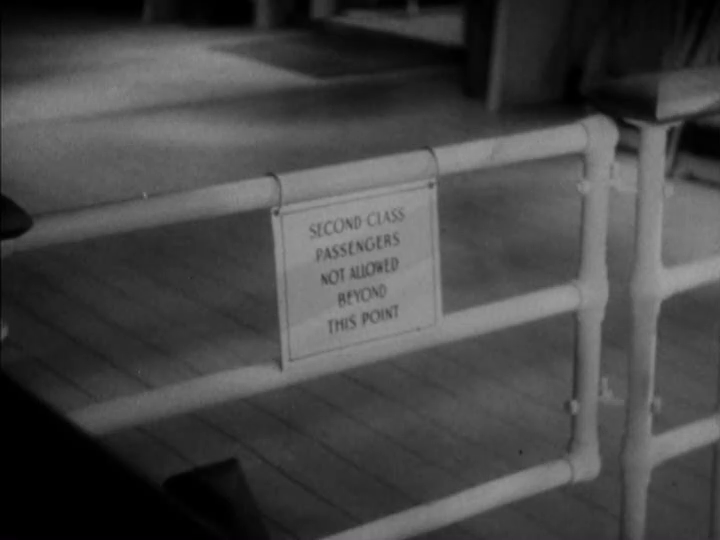
And then goes tumbling down the stairs:
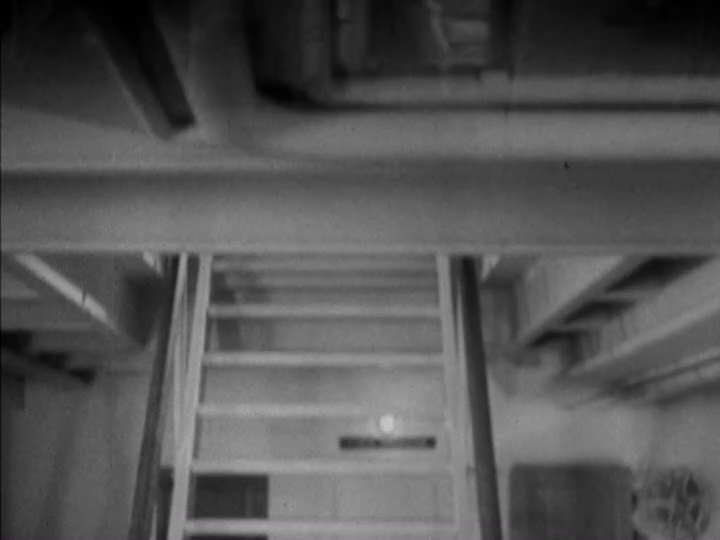
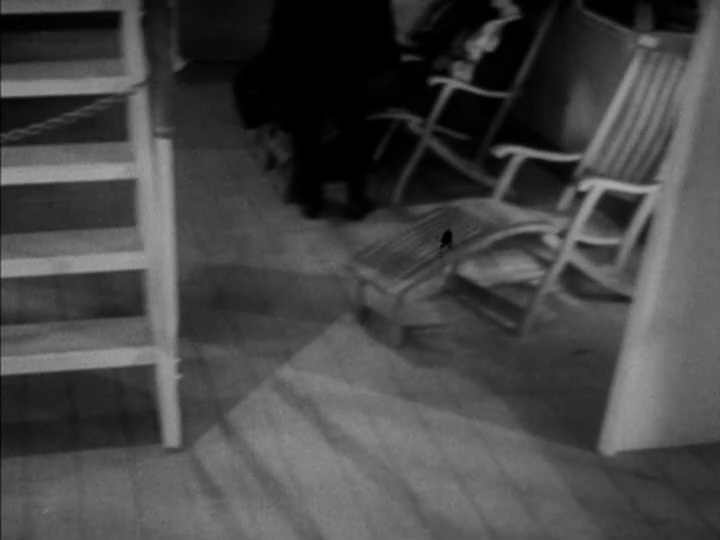
Moving at a much faster pace than it did earlier, cinematographer Arthur Miller’s camera now repeats its double-exposure trick to show us we’ve been taken down a notch to second class:
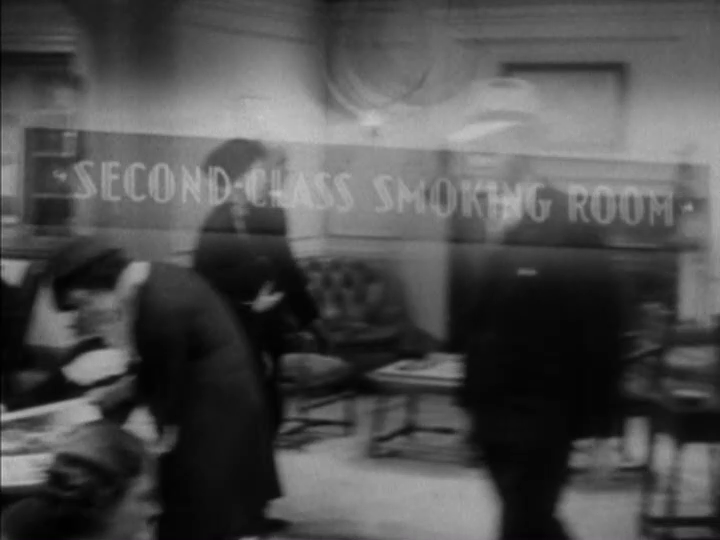
Before it finally stops on a sign and cuts to Dugan playing solitaire:
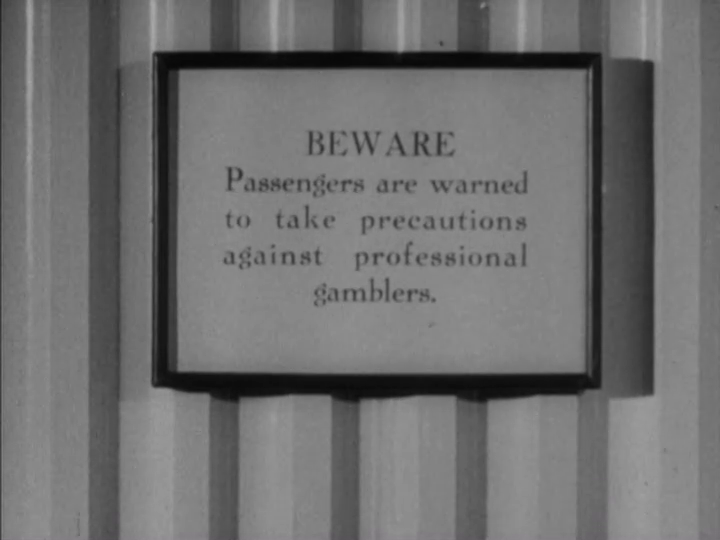
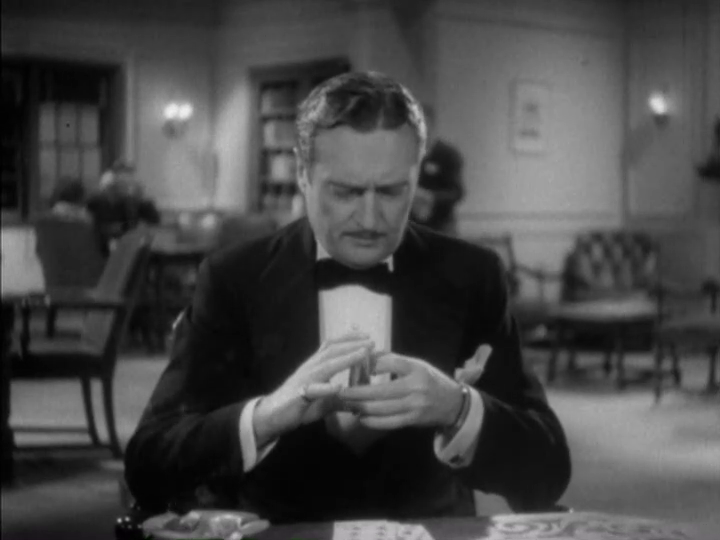
In just the first of many examples of what Fernando F. Croce calls Black Sheep‘s “limpid storytelling,” our logical assumption that he must be one of the sharps that the people on board the Olympus are cautioned to be wary of is confirmed by the two shots which follow him looking up from his game at his fellow denizens of the second-class smoking room.
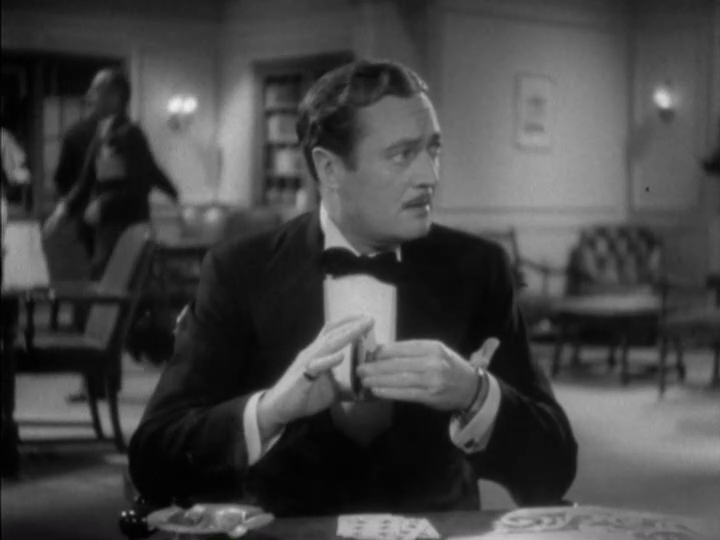
First a woman indignantly responds to her companion’s suggestion that they play bridge for a tenth of a cent per point by saying, “I should say not! I lost 55 cents at a twentieth last night. I’ll play for a fortieth or nothing.”

Then one man responds to another’s suggestion that they play checkers by saying, “I don’t mind if you don’t play for money.”
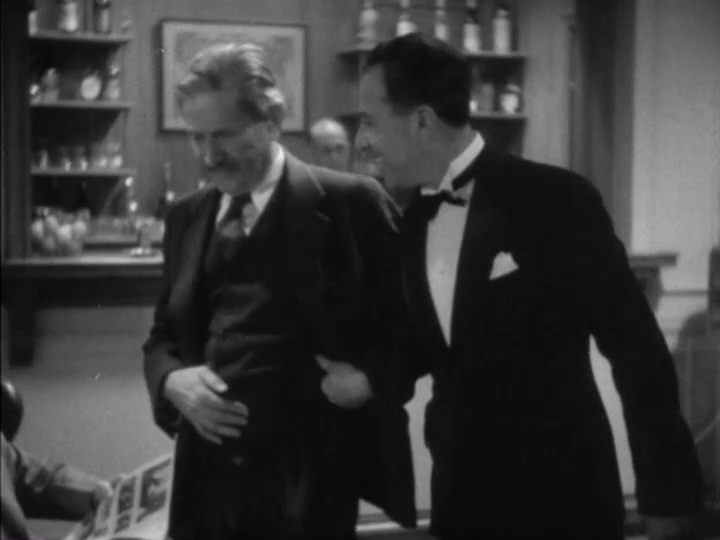
Dugan shakes his head and returns to his game, but is soon distracted by an offscreen clicking noise which a quick tracking shot soon reveals to be caused by Foster’s vain attempts light a cigarette:
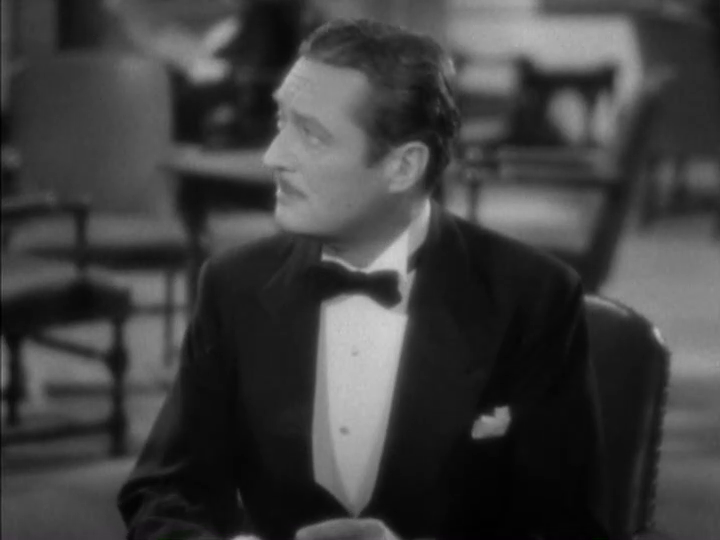
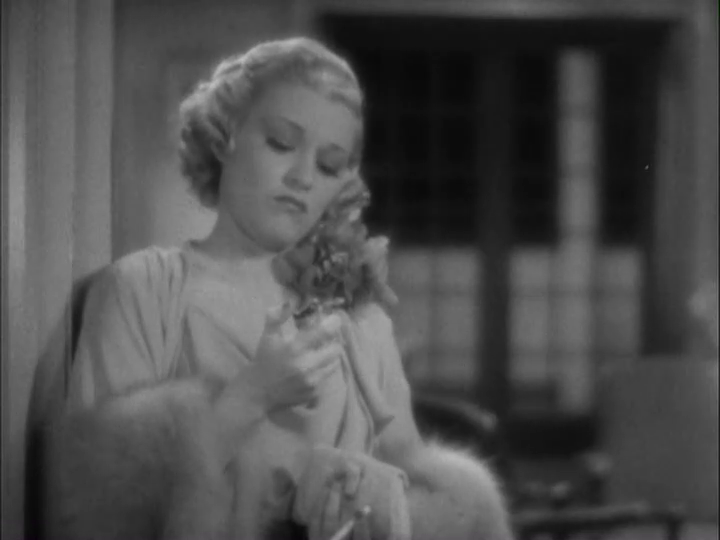
And with that we’re off and running! Foster’s lighter doesn’t work because it isn’t supposed to: “that’s how I meet so many nice people,” she informs Dugan. It’s a toss-up for me whether the *very* best thing about Black Sheep is the dialogue by director Allan Dwan (who wrote the story that the movie is based on) and screenwriter Allen Rivkin or the chemistry between its stars, who David Cairns brilliantly describes as “so delightful together you long for a whole season of Thin Man type romps for them to connive through (as he says, “sometimes film history just misses a trick”) although these things are of course related. The snappy one-liners come fast and furious right from the start: when Foster asks if she can buy Dugan a drink, his reply is “I don’t know, can you?” A few beaters later she labels them “two good mixers with no ingredients.” Then a bit further on after the two sneak upstairs to “see how the rich people live,” Dugan condenses a whole lifetime of back story into just a handful of sentences. “There are two things that always floor me,” he tells Foster, “horses and dames. One keeps me broke, the other crazy, and you can’t depend on either of them.” When she quips, “don’t tell me a horse jilted you!” he replies in kind: “yes, and a girl kicked me.”
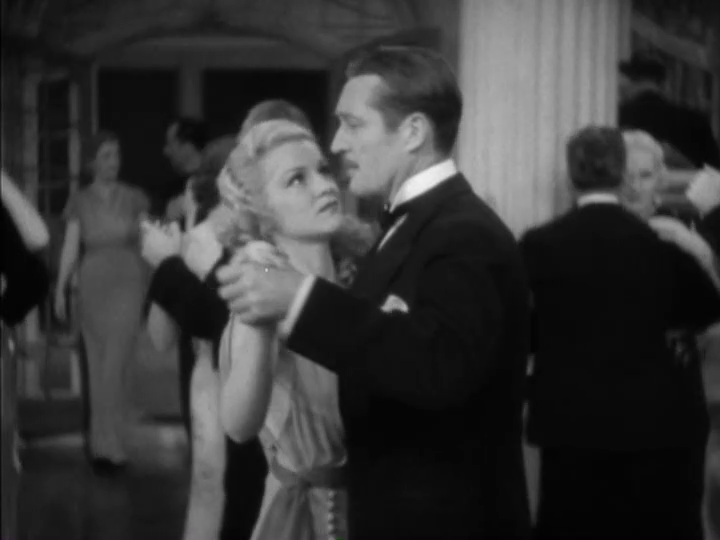
But then he adds: “that was twenty years ago. Forget it.” Speaking of coin flips, in addition to sharing a profession in common with the main character of last month’s Drink & a Movie selection Bob le Flambeur, Dugan similarly uses them as an external signifier of his deference to the Fates:
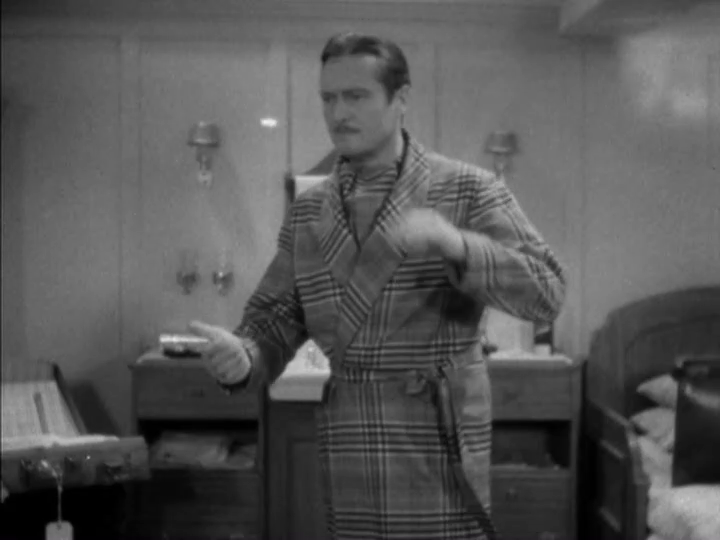
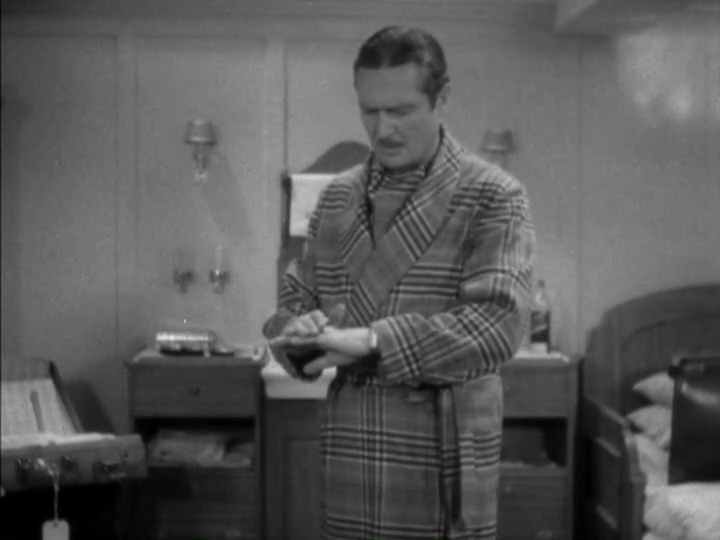
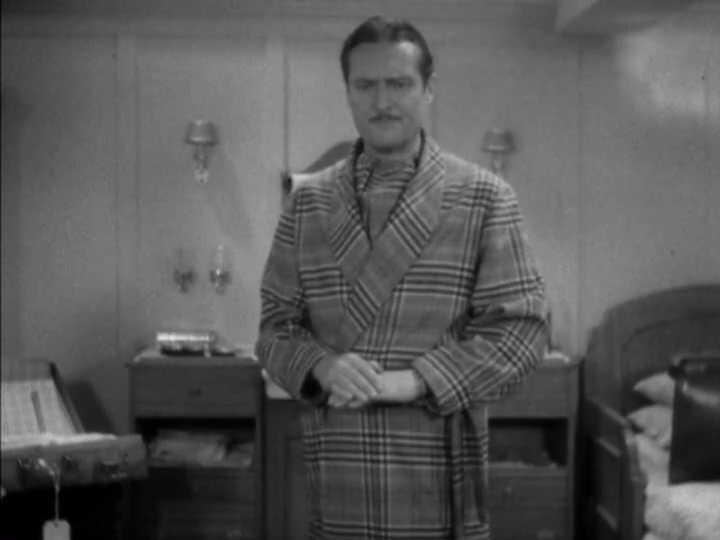
“Dugan and Foster stay in business,” he says after this one, referring to the partnership they have entered into to help a young man named Fred Curtis (Tom Brown) they observed getting fleeced in poker during their upper deck sojourn who also, as it happens, turns out to be Dugan’s son. This fact is revealed in a moment that Matt Strohl describes as “an emotional bolt of lightning in the middle of the film” which occurs after Dugan has helped Curtis win back some of the money he lost to Eugene Pallette’s and Jed Prouty’s buffoonish oil tycoons Colonel Upton Calhoun Belcher and Orville Schmelling by posing as his friend, but only at the expense of his own profits when he is forced to accept the checks Curtis wrote them as payment or risk giving up the ruse. He’s right in the middle of getting tough with Curtis (“I’ve got $1800 coming from you and I want it–in cash”) when suddenly he spots a set of framed photos:
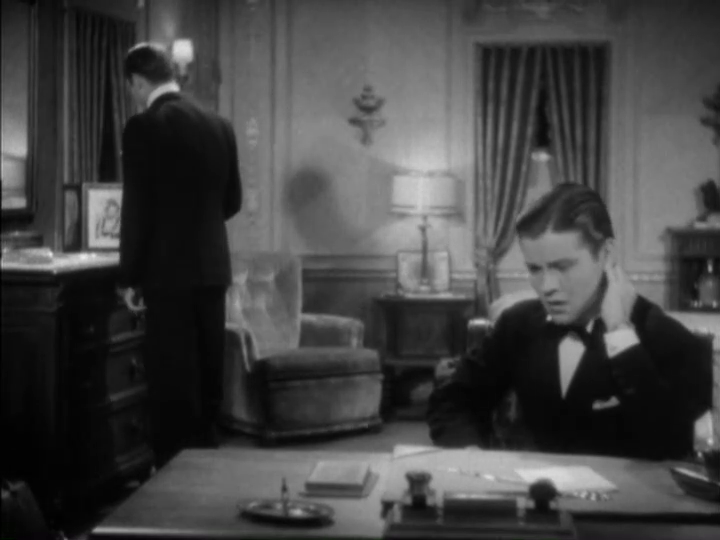
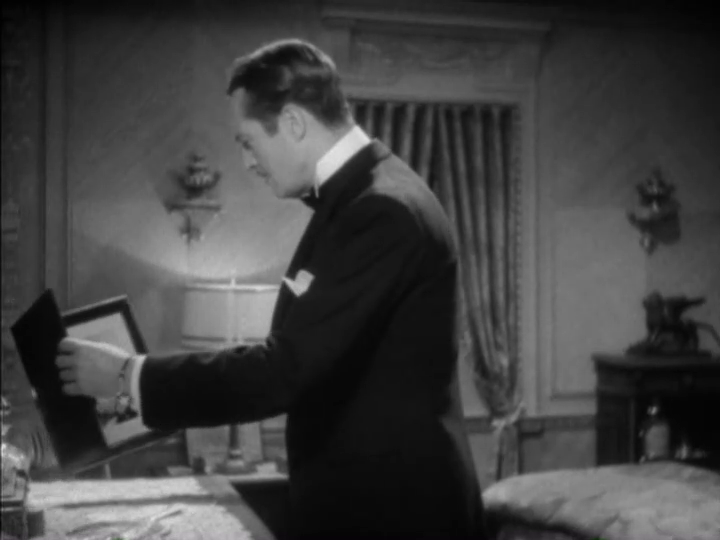
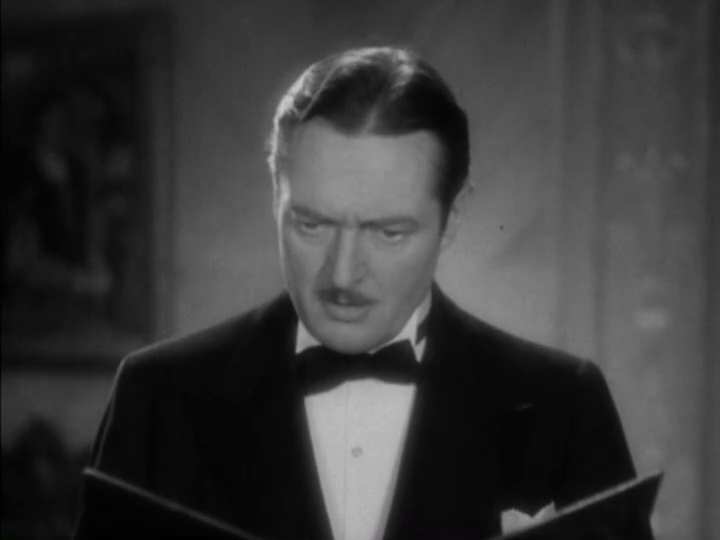
“What’s the matter?” Curtis asks him after he notices the older man’s reaction:
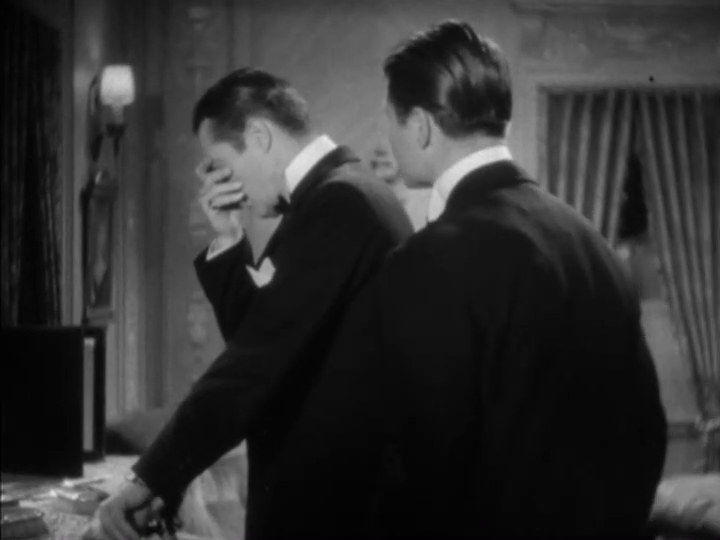
“Oh, nothing, nothing–I probably had too much to drink or something,” Dugan stammers. He gives no further explanation, but immediately changes his tune regarding repayment. “Where’s that note for those rubber checks?” he asks, then looks on with what my daughter Lucy would call a “thin smile” while Curtis writes it:
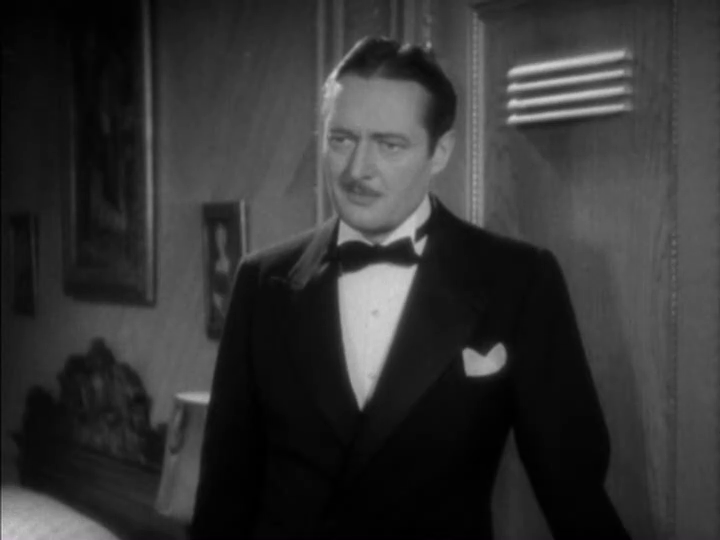
As Strohl notes, although Dugan never reveals his discovery to Curtis even through the end of the film, “that one reaction scene reverberates and lends weight to everything that follows,” including what I think must be the romantic non-kiss in the history of cinema. It takes place about halfway through a 30-second-long shot that begins right after the coin flip depicted above when Dugan notices Foster’s hand on the lapel of his bathrobe:
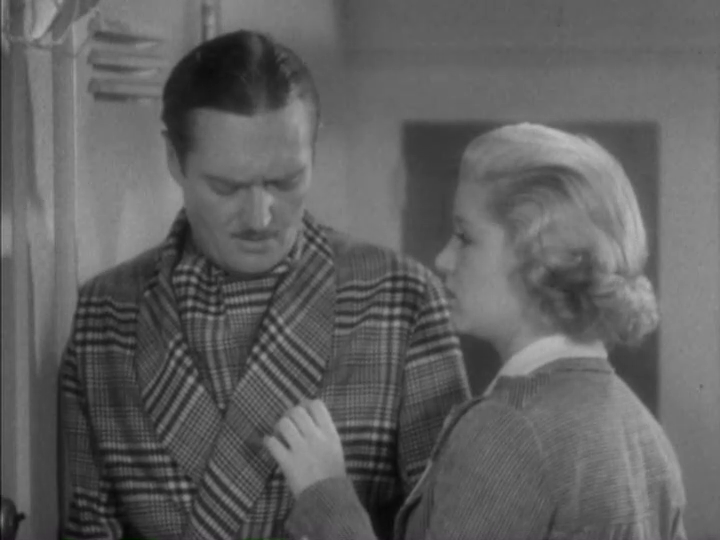
They put their arms around each other and lean in, but suddenly he pulls back:
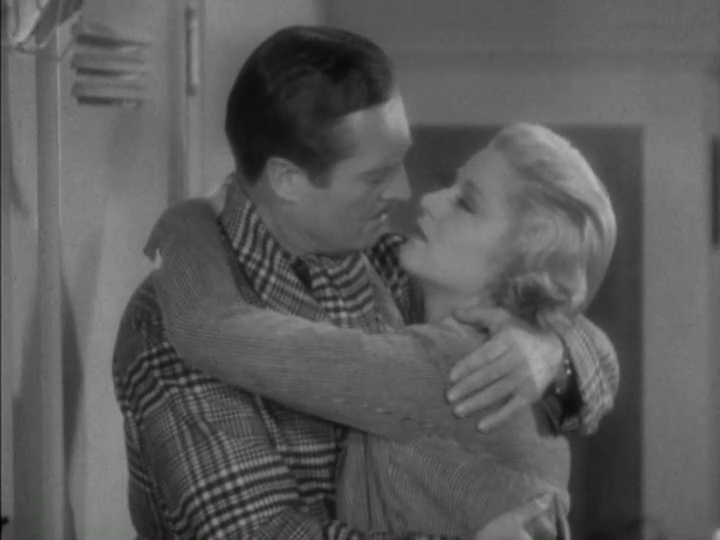
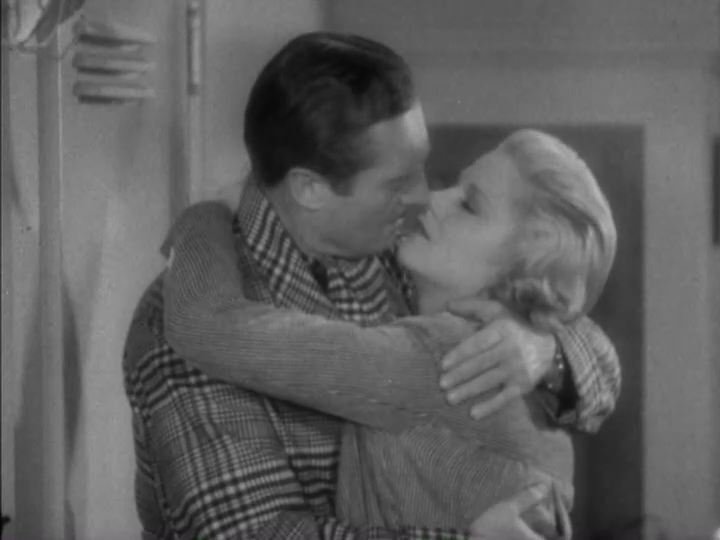
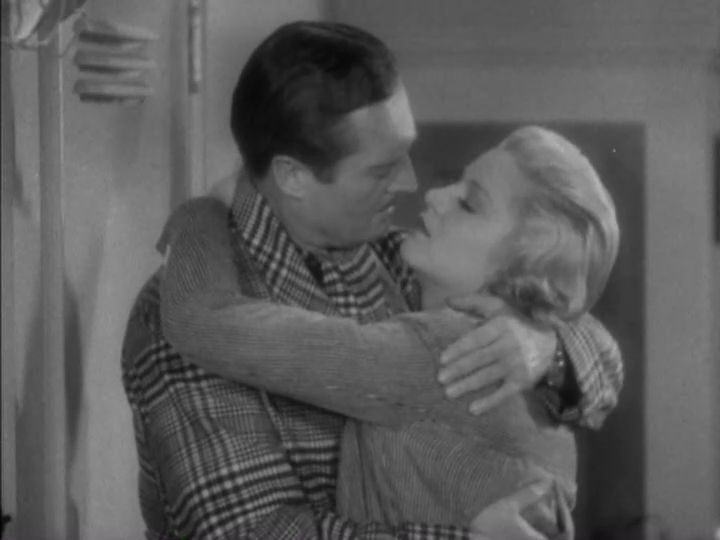
It’s just for a second and they lean in again, but the result is the same:
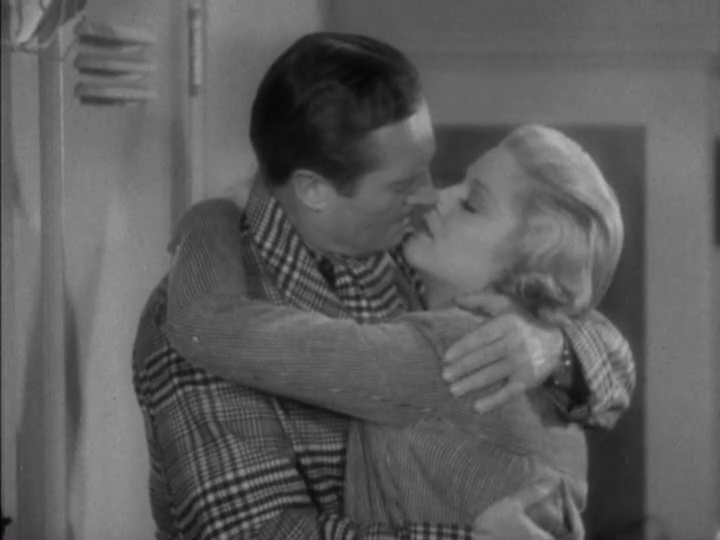
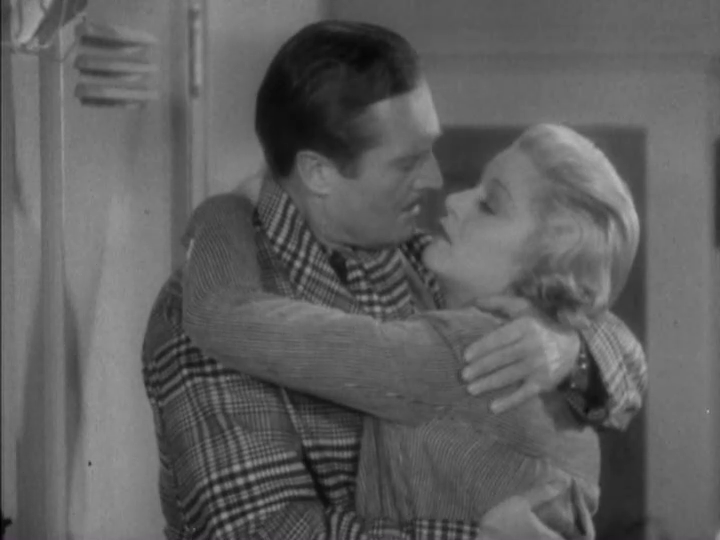
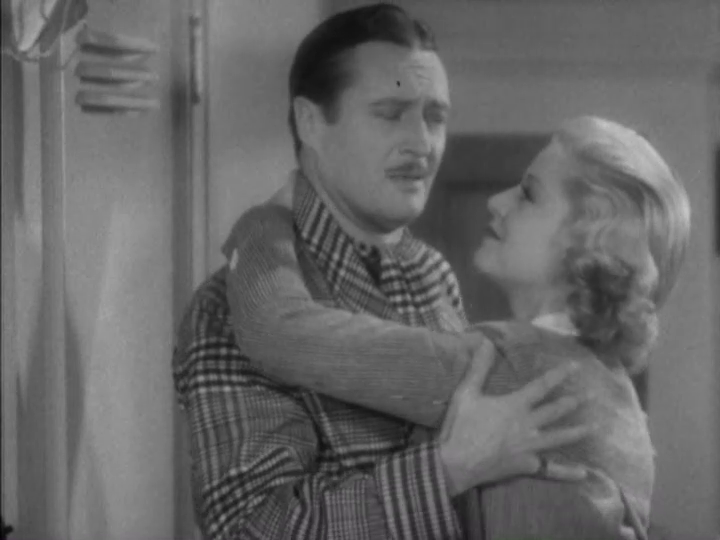
Foster is already smiling as he lets out a perplexed sigh and is laughing by the time he calls for the steward to “take this lady out of here”:
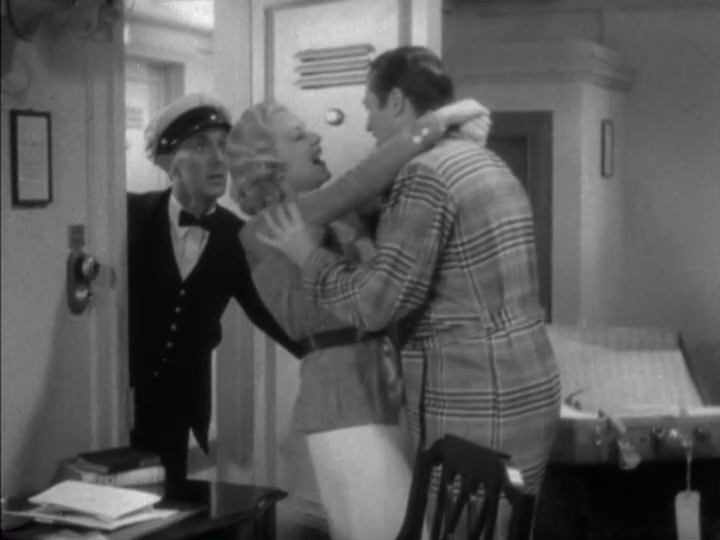
Destiny can bring lovers together but in my experience the key to a happy marriage is that you have to really like each other! Dugan is clearly wondering what the heck happened to him and there’s work still to be done, so the wedding bells will have to wait, but these two clearly have a future together and he’s earned it. And that brings us right back to where we started! The steward appears in this scene because Dugan is supposedly under lock and key, and as Lombardi notes “restriction of movement is a severe violation for a Dwan character and film,” but Dugan “uses his room arrest to serve his ends.” In other words, all those attempts to put Dugan in his place ultimately fail, which is another connection between him and Bob Montagné: they both remain true to themselves no matter how down and out they find themselves and are eventually rewarded. Which now makes three “exceptions to the rule” I wrote about in my February Drink & a Movie post about The Young Girls of Rochefort, suggesting that it’s time to update my notion that “the human experience of trying to become a better person” is a theme of this series. After all, resisting the temptation to change more than you need to can itself be a challenge. Which, come to think of it, is the secret to the Chapuline’s success, too, isn’t it? Toby Maloney elevated the grasshopper by tweaking its proportions just a bit and adding one single ingredient. Or, to reframe this in terms that Dugan and Bob (and Kenny Rogers) would appreciate, sometimes the highest form of wisdom is knowing how to quite when you’re ahead.
Cheers!
All original photographs in this post are by Marion Penning, aka My Loving Wife. Links to all of the entries in this series can be found here.
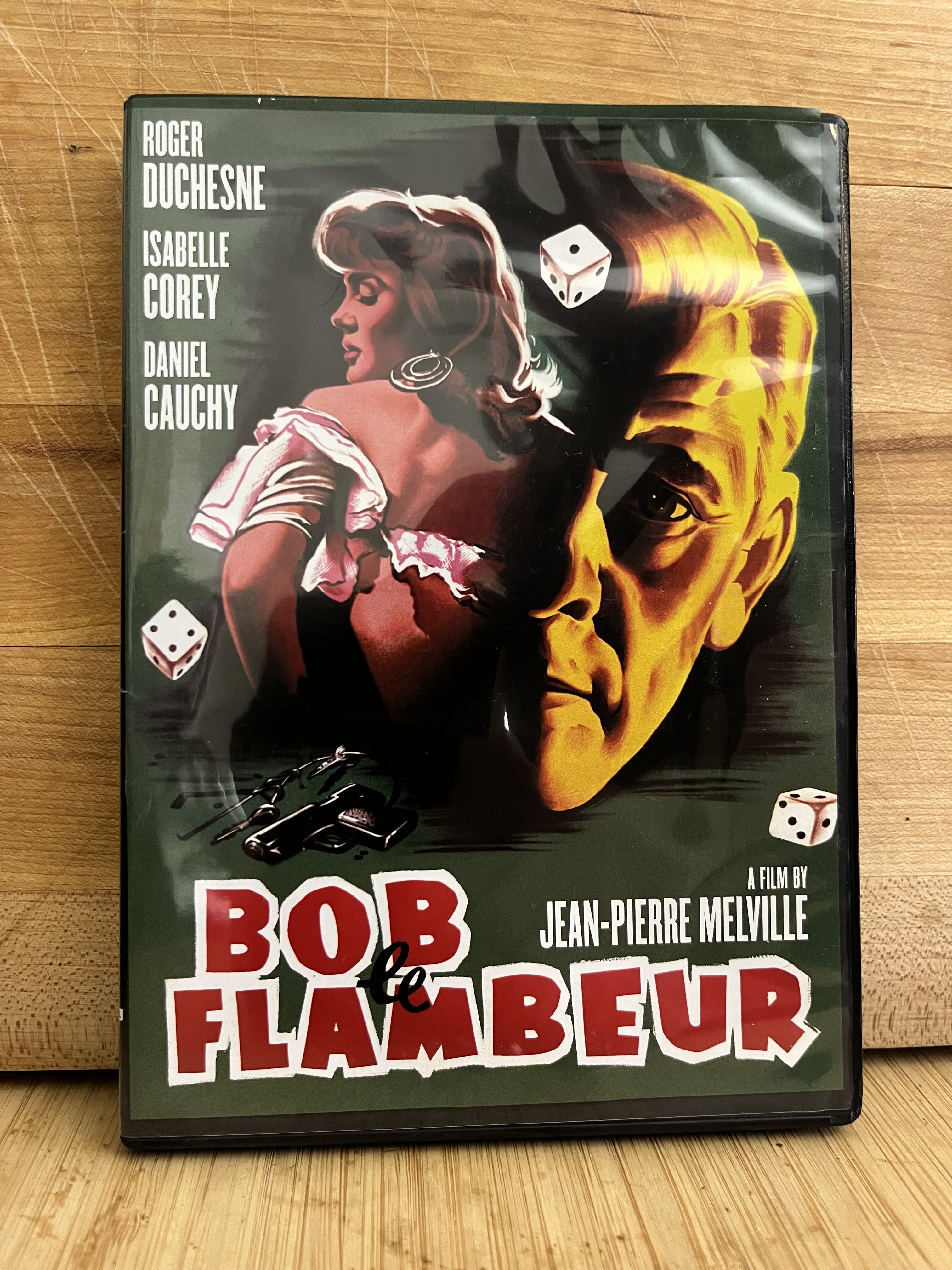
From where I’m standing the net impact of expanded legalized sports betting has clearly been negative. Research shows that it results in increased levels of debt for individual consumers, athletes are subject to unconscionable levels of abuse because of it, and the constant barrage of ads and ridiculous celebrity parlays makes the experience of watching sports on TV less fun. For all of these reasons I’d probably support more regulation at this point despite my libertarian inclinations, but as long as it remains so easy to place a bet, I will selfishly continue to enjoy doing so during certain times of year. March is one of them because of the NCAA Tournament, so lately I’ve been thinking about my favorite titular (which disqualifies Howard Ratner) movie gambler, Bob Montagné (Roger Duchesne). Here’s a picture of my Kino Lorber DVD copy of the film he lent his name to, Bob le Flambeur:
It is also available for rental from a variety of other platforms, and some people (including current Cornell University faculty, staff, and students) may have access to it through Kanopy via a license paid for by their local academic or public library as well.
The drink I’m pairing it with was created by Natasha David as boozy version of her favorite thing to eat, “dark, bitter chocolate.” Here, per Imbibe, is how you make her All In (which for the uninitiated is a poker term which refers to the act of pushing all of one’s chips into the middle of the table) cocktail:
1 1/2 ozs. Rye (Pikesville)
3/4 oz. Campari
3/4 oz. Dry vermouth (Dolin)
1/4 oz. Crème de cacao (Tempus Fugit)
Stir all ingredients with ice and strain into a chilled cocktail glass. Express a lemon twist over the top and discard.

This concoction’s nose is dominated by lemon from the twist, and my brain therefore immediately latched on to the citrus notes in the Campari and Dolin on the sip. There’s also a lot of burn from the rye, though, which combines to create an initial impression not unlike drinking grappa. The swallow and finish are all very dark (think 85+% cacao) chocolate. David specifies rye that is 100-proof or higher, making this a perfect place to showcase Pikesville, which clocks in at 110 and is totally my jam these days. She also described her goal being “to create a dry chocolate cocktail that wasn’t limited to a dessert drink—a cocktail that could be enjoyed any time of the day,” and in that regard the All In is a resounding success.
Bob would appreciate this beverage, as he is no stranger to imbibing during the daylight hours. Here, for instance, we see his best laid plans for breakfast being waylaid by a tempting bottle of wine:
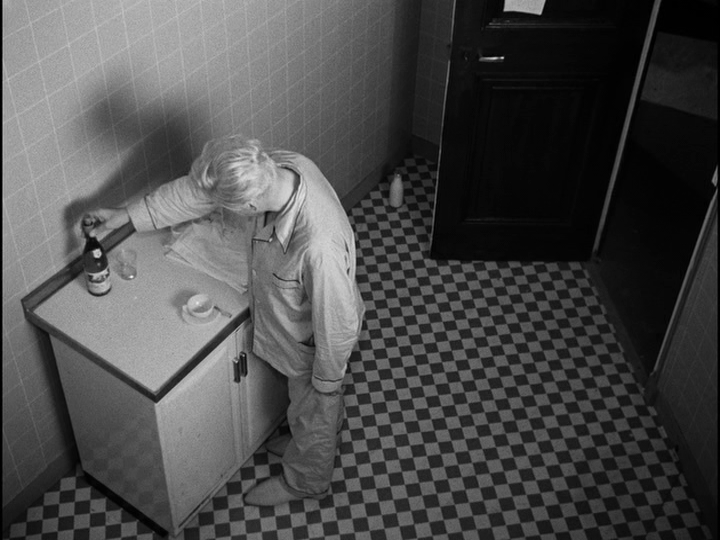
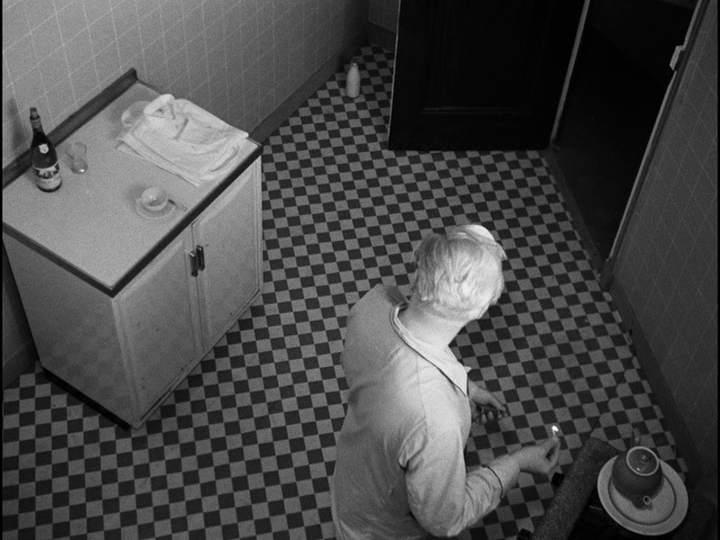
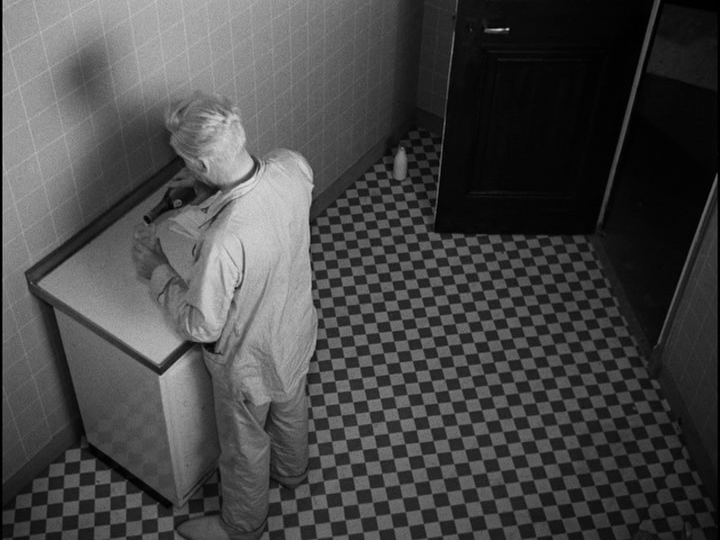
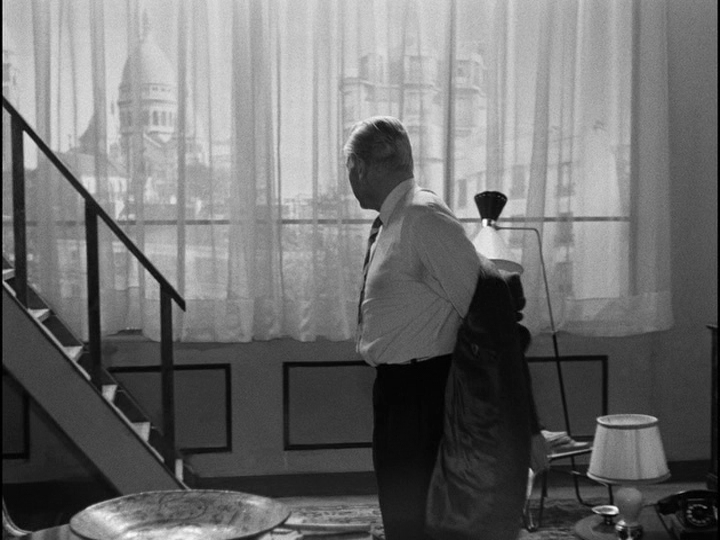
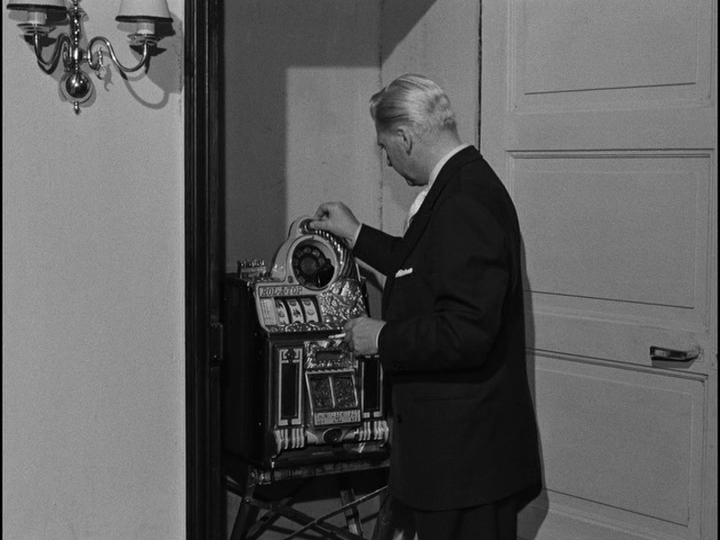
His luxurious apartment, which has one of the best views in the history of cinema and a slot machine in the closet:
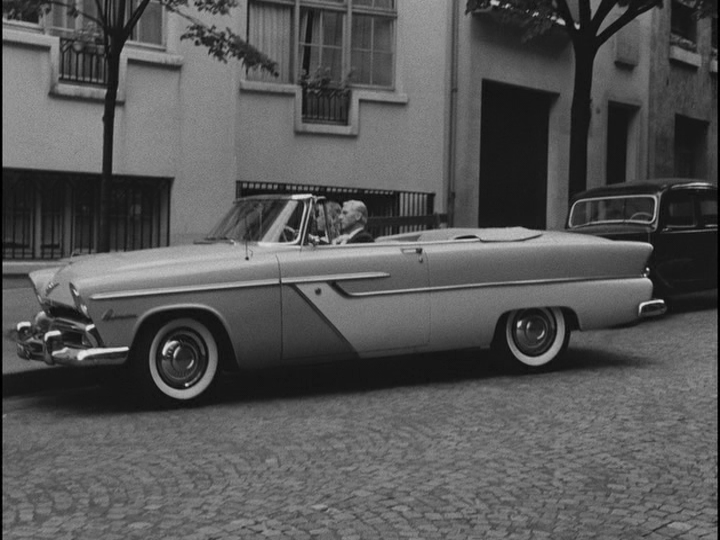
“Absolutely massive American car,” as Nick Pinkerton says in his DVD commentary track (where he also identifies it as a 1955 Plymouth Belvedere):
And the fact that he appears to have a standing invitation to join any high-stakes game in Paris all suggest that he must have been more disciplined in his youth, but he is become, in the words of his best friend Roger (André Garet), a “pitiful” compulsive gambler who squanders every big win by taking his profits elsewhere and promptly losing them.
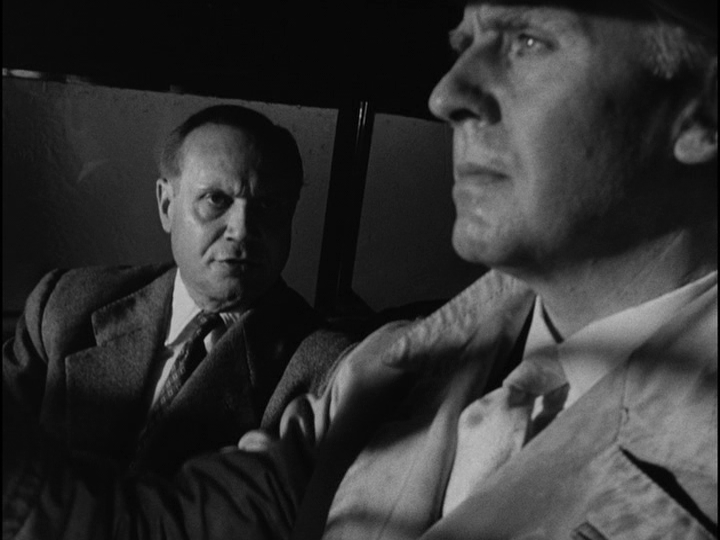
Because he does so in style, though, and according to a moral code that includes generosity to those even less fortunate as one of its primary tenets, he nonetheless remains an idol to the young men in his circle like Paolo (Daniel Cauchy), whose late father knew Bob back in his gangster days:
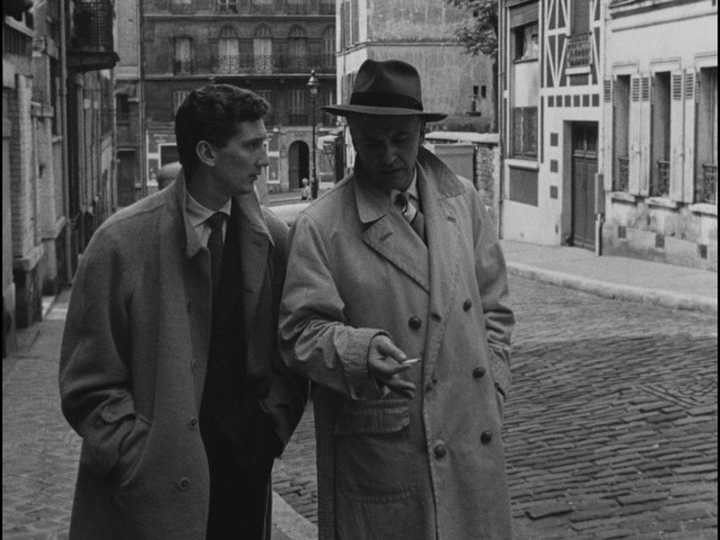
A hero to young women like Isabelle Corey’s Anne, to whom he provides pocket money and a place to sleep with no expectation of repayment in any form:
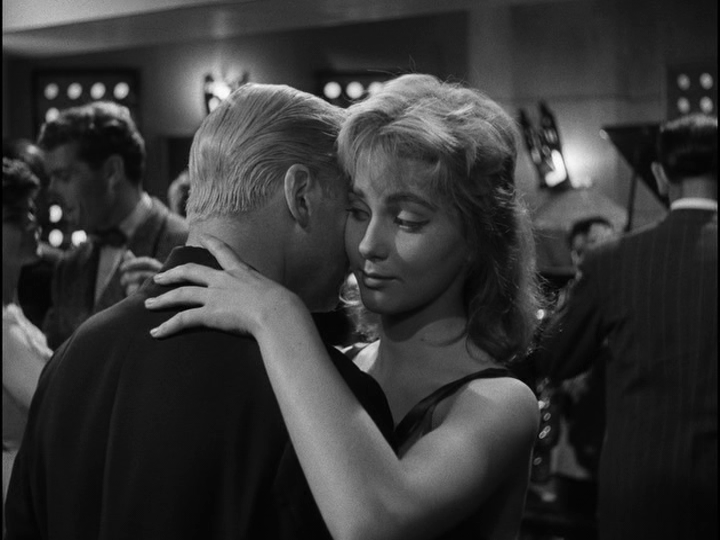
And the object of fraternal or maternal affection from compatriots like Roger and Simone Paris’s Yvonne, who purchased her café with a loan from him:

As well as the recipient of professional courtesy from René Havard’s Inspector Morin of the police, whose life he once saved:
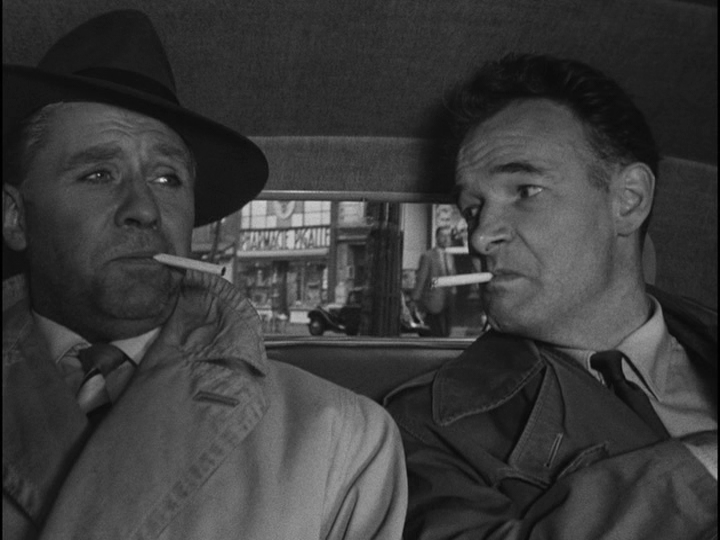
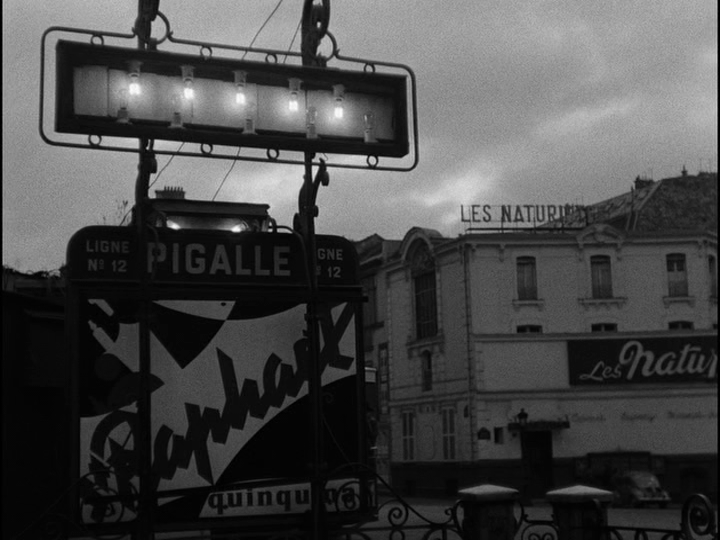
If you didn’t know this was a caper movie, you’d never guess it from the first 37 minutes, which function more as a sort of nature documentary showing Bob in his natural environment. As Glenn Erickson observes in his review of Kino Lorber’s 4K Ultra HD + Blu-ray copy of the film which came out last year, the location shooting makes it “a literal time capsule of a long-gone Montmartre, a collection of nightclubs and bars where colorful, unsavory night crawlers plot their next moves.” It begins with a monologue that characterizes the Parisian neighborhood as “both heaven and . . . hell” with the image of a descending funicular and accompanying musical cue during the ellipse.


Anne is introduced as an illustration of how “people of different destinies” cross paths in the pre-dawn hours not by name, but as a girl “with nothing to do” who is “up very early . . . and far too young” who passes a cleaning lady hurrying to work on the street:

Finally, we meet Bob playing craps in an establishment featuring the first example of what J. Hoberman calls “the insistent checkerboard patterns that make the movie so emphatically black-and-white”:

They appear again on the walls of Roger’s office, where author of A History of the French New Wave Cinema Richard Neupert argues they function “to remind the viewer that Bob, with his flowing white hair, sees the world as one big board game”:

Per Neupert, Bob le Flambeur inspired the French New Wave with its “raw, low-budget style that mixes documentary style with almost parodic artifice.” My favorite examples of both tendencies can be found in the rehearsals which lead up to the attempted robbery that Bob begins to plan after he learns that the safe in the Deauville casino will have 800 million francs (which as near as I can work out is about $20 million USD today) at 5am the morning of the upcoming Grand Prix race. After he and Roger find someone (Howard Vernon as McKimmie, who insists on a 50% cut of the take) to finance their operation in the first of many scenes that the 2001 remake of Ocean’s Eleven directed by Steven Soderbergh pays homage to, the “recruitment waltz” begins:


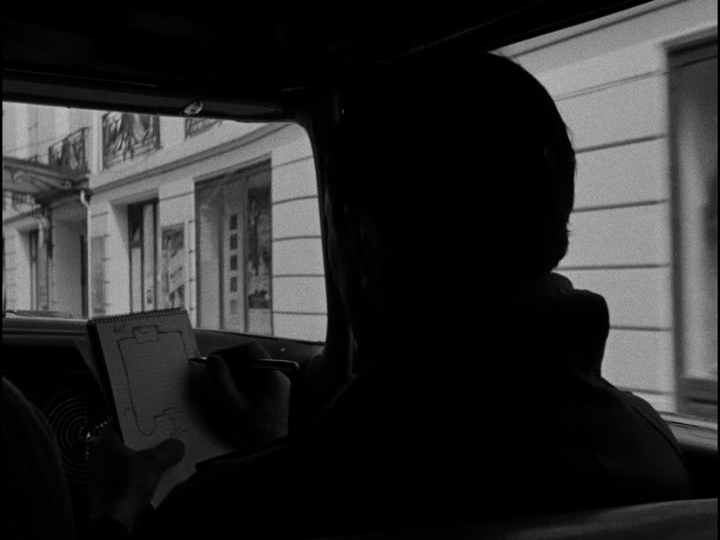
With their team assembled, they set about casing the joint by circling it repeatedly in a car and sketching an outline in a minute-long scene that embodies the “documentary style” Neupert describes:

They also obtain blueprints and specs which they use to obtain a safe so that Roger can practice opening it:
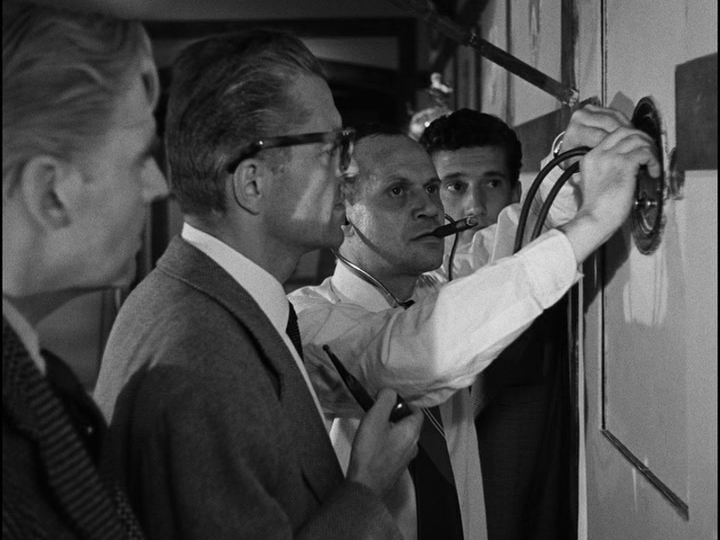
And best of all draw chalk outlines of the casino on a grass field so that they get an accurate sense of the space:


We also see Bob’s vision of how the operation is supposed to in a casino of empty of anyone except him and his crew, a technique borrowed by my July, 2023 Drink & a Movie selection Inside Man among scores of other films:
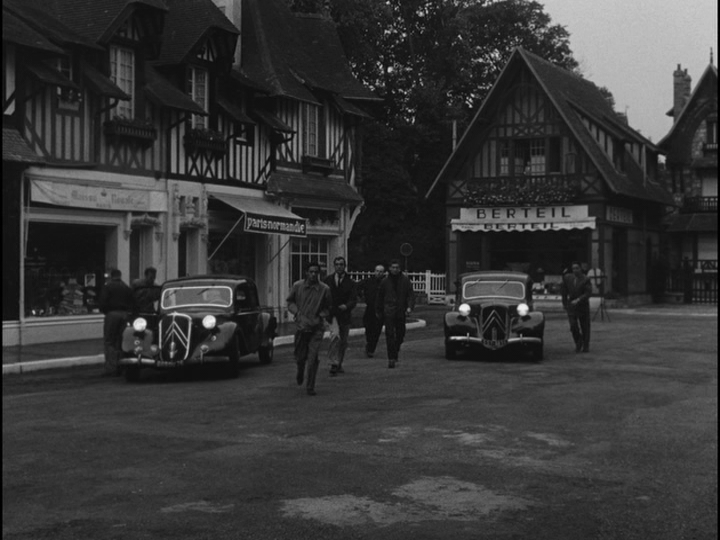
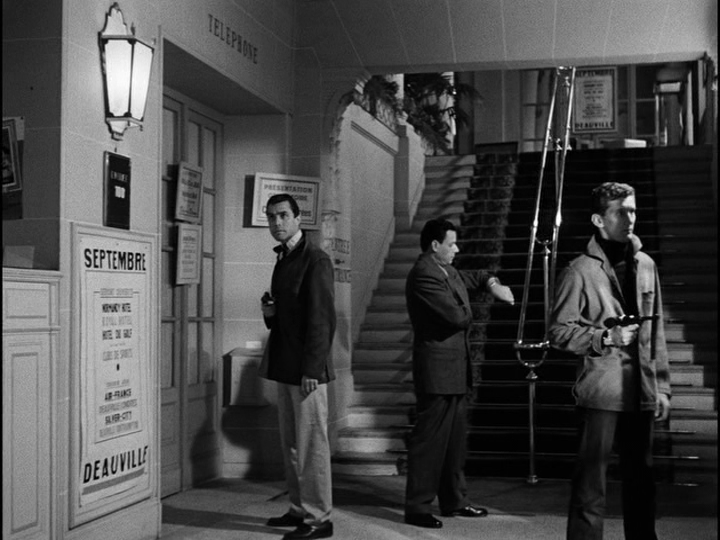

We never see the actual heist, though, because although Bob arrives at the casino to scope things out at 1:30am as planned in a stylish low-light sequence:

Instead of making contact with Claude Cerval’s Jean, their guy on the inside, like he’s supposed to, he forgets his promise to himself and Roger not to gamble until it is over and places a bet:
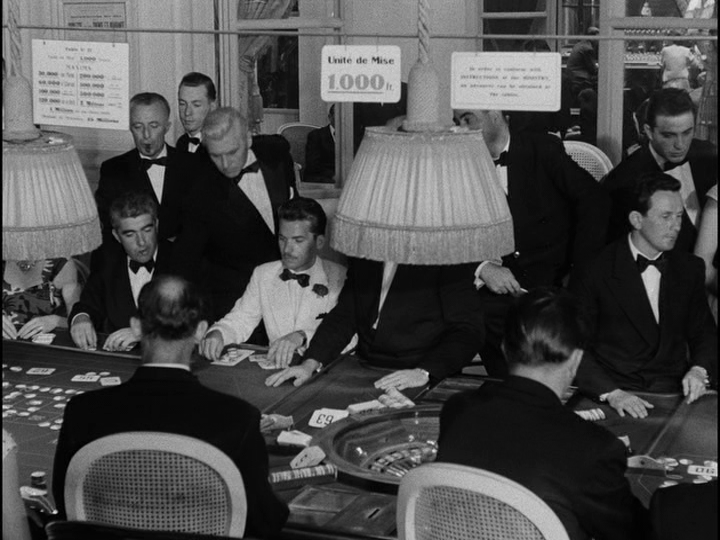
He wins, so he places another, this time at odds of 38 to 1:
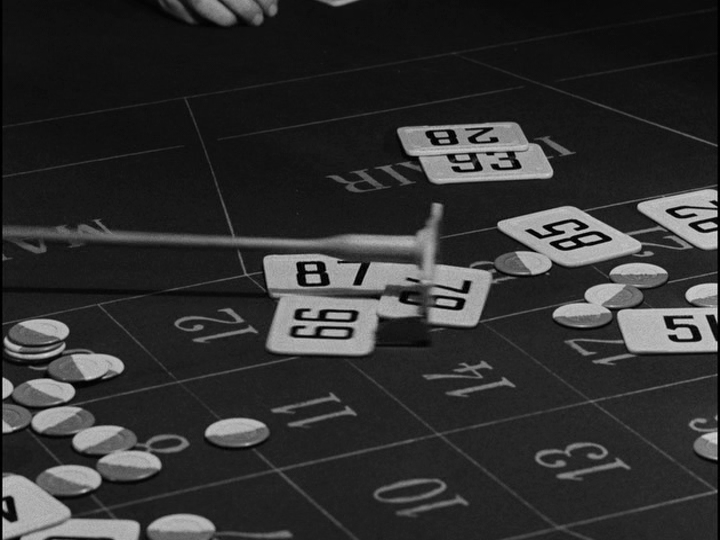
That hits, too:
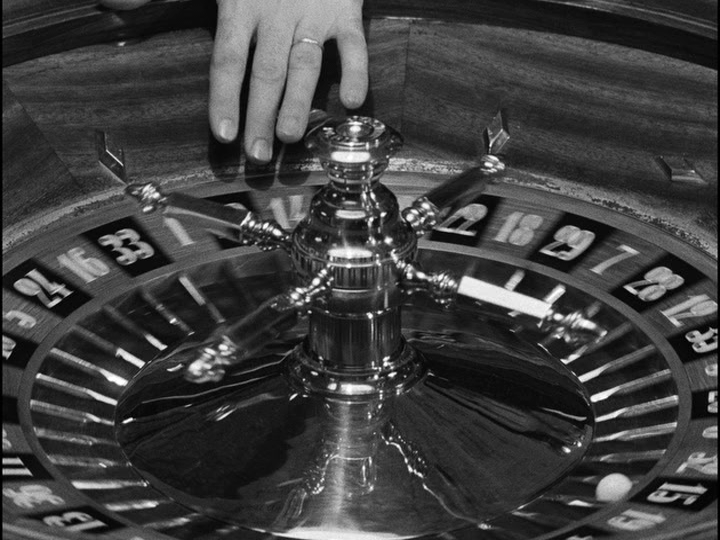
And suddenly Bob is off on the heater of his life. The voiceover informs us although the roulette is over by 2:01, “the chemin de fer continues”:

He is successful there, and at 2:45 he enters a the high-rollers room:
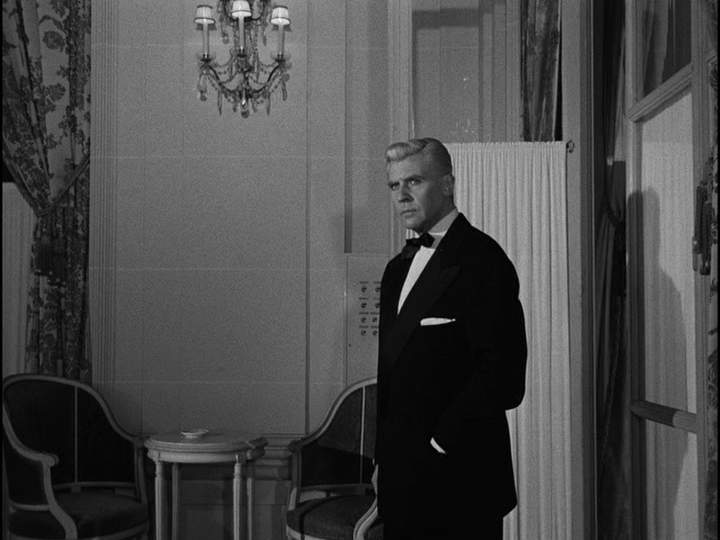
It’s difficult to say for sure how much he wins there, but by 3:30 he has attracted a crowd of onlookers:
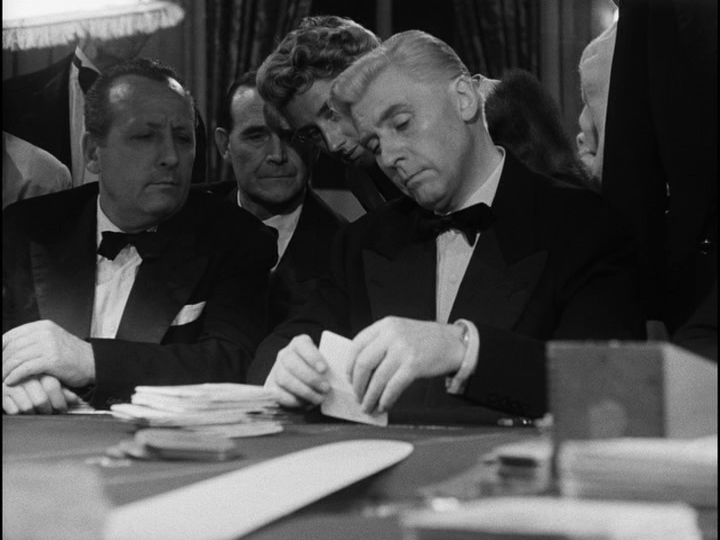
And not long after that, he’s tipping the croupier one million francs at a time:
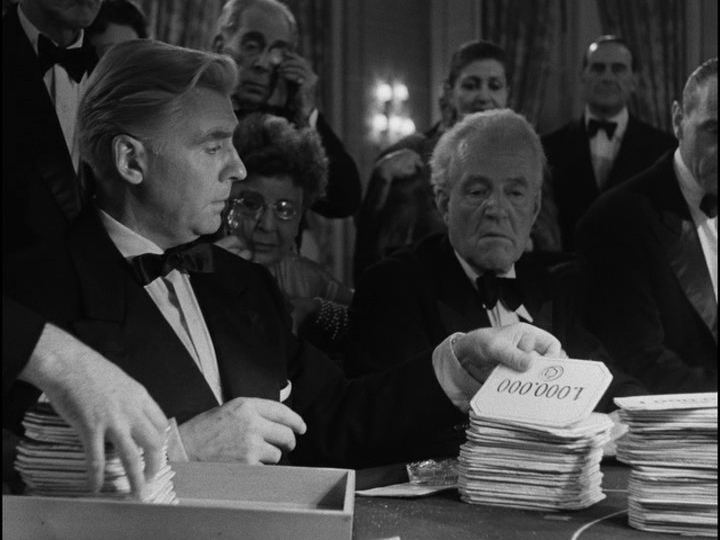
Based on the stacks of chips in shots like this, it appears that Bob’s winnings total nearly as much as the 400 million francs he and his crew are expecting to make from robbing the casino. Suddenly he chances to look at his watch and sees that it’s 5am:
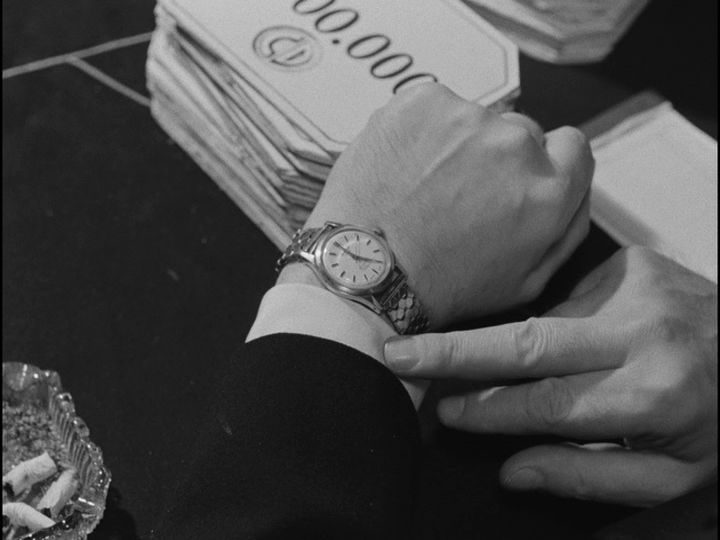
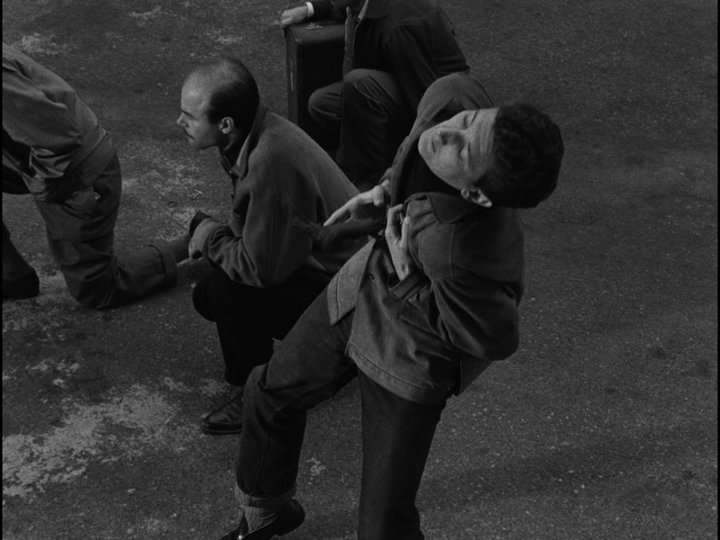
He shouts, “change all this, now!” and sprints to the entrance, but it’s too late: the police, tipped off by Jean and his wife (Colette Fleury) and an informant (Gérard Buhr) armed with details that Paolo carelessly let slip to Anne, are waiting for Bob’s crew when they arrive and Paolo dies in the shootout which ensues:
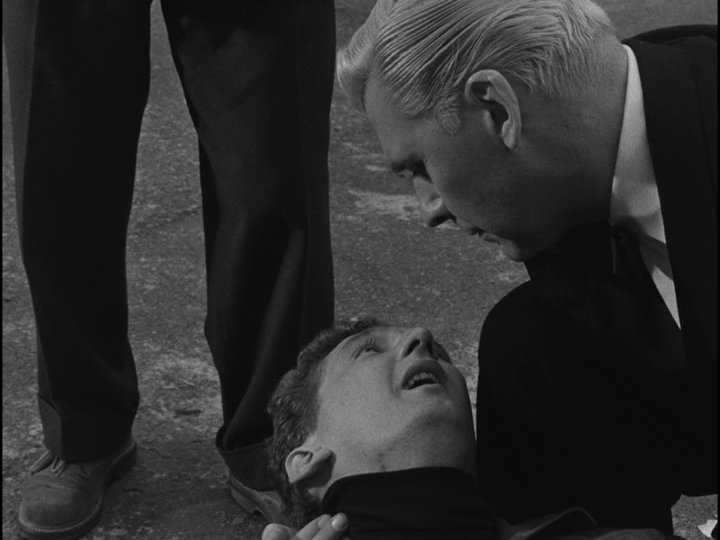
Bob arrives just in time to cradle his protege in his arms as his life expires:
As Inspector Morin places Bob and Roger in handcuffs, one of his officers removes a coin from Bob’s pocket that we saw him flipping earlier.
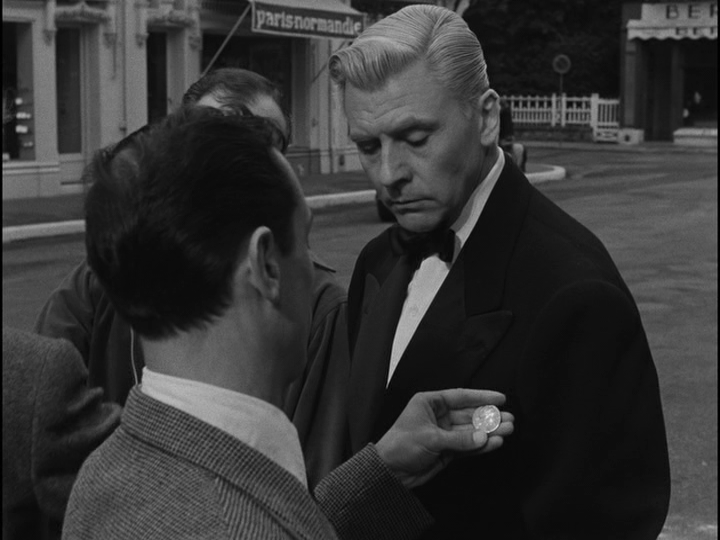
“I’ve known it was double-headed for ten years,” Roger tells him. “And I’ve known you knew for ten years,” Bob replies. “Paulo knew too,” he adds. Just then the somber mood is broken by a procession of bellhops bringing out Bob’s winnings:
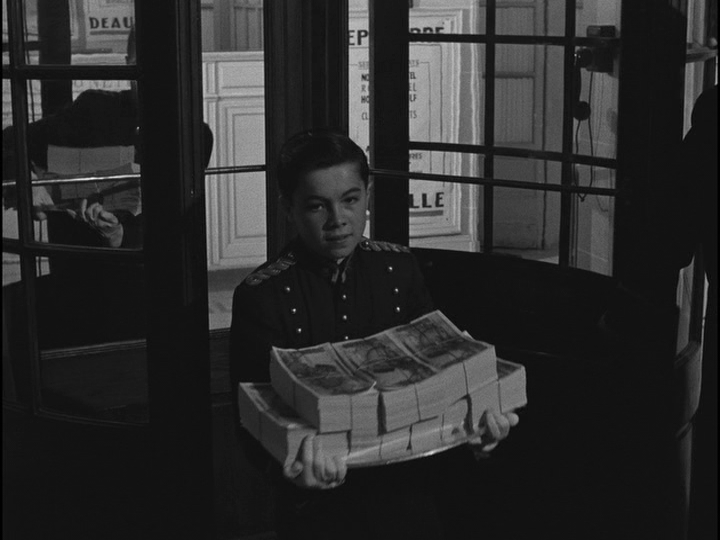
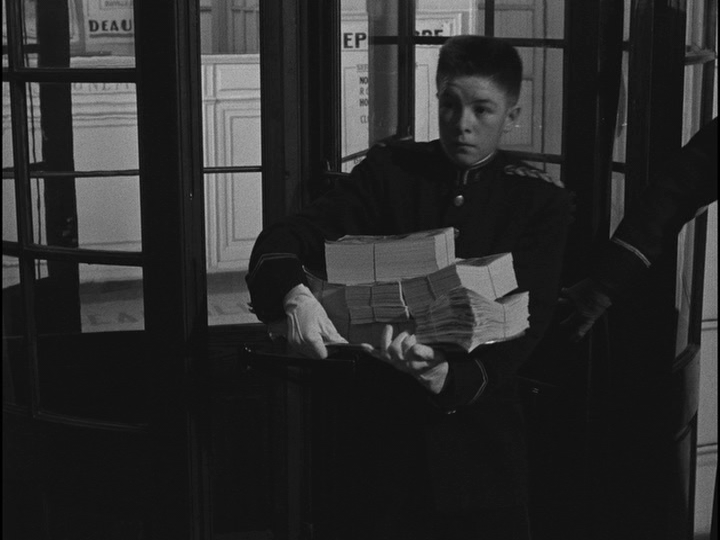
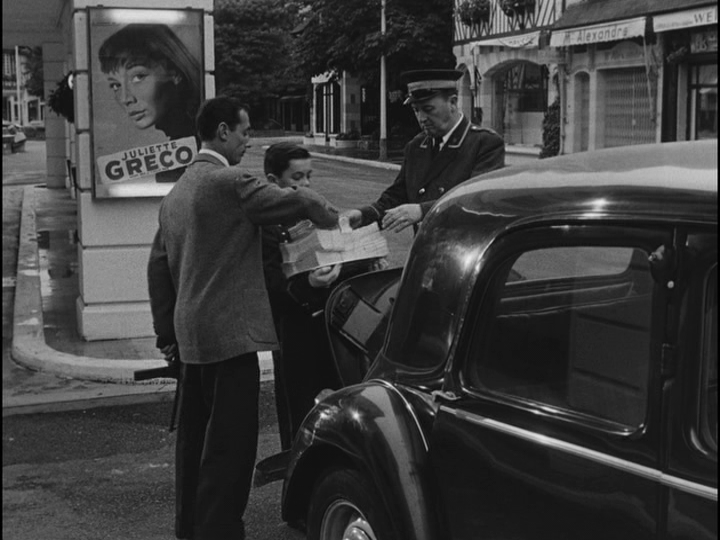
“And don’t let any of it go missing!” Bob says as he is led into a squad car. “Criminal intent to commit . . . you’ll get five years,” Morin says as he offers Bob and Roger cigarettes.
“But with a good lawyer, you might get away with three years,” he continues. “With a very good lawyer, and no criminal intent, maybe an acquittal!” Roger adds. And finally Bob: “If I play my cards right, I might even be able to claim damages!” The movie ends with a amazing shot of his car sitting in front of the Deauville shore as the sun rises behind it:

Dave Kehr writes in an essay that appears in his book When Movies Mattered that “[director Jean-Pierre] Melville is often described as an existentialist, but to execute a scene like the finish of Bob le Flambeur, even in jest, you need to have some faith in the basic benevolence of the world–some faith in a higher, protective power, such as the ‘luck’ that Bob turns his back on and that then returns, in the end, to save and reward him after all.” I couldn’t agree more with the first part of this statement, but would quibble just a bit with the latter. Bob never *abandons* Lady Luck; rather, ever the gentleman, he tries to take a hint and move on when it seems like he has lost her favor, but when he realizes his error, he’s more than happy to come home. As the voiceover remarked earlier as the seconds ticked down to 5:00, “that’s Bob the gambler as his mother made him!” I noted last February in a post about The Young Girls of Rochefort that a friend has suggested that the theme of this series is “the human experience of trying to become a better person.” I suppose that must make Bob le Flambeur another exception to this rule.
Cheers!
All original photographs in this post are by Marion Penning, aka My Loving Wife. Links to all of the entries in this series can be found here.
From Ocean’s Eleven:
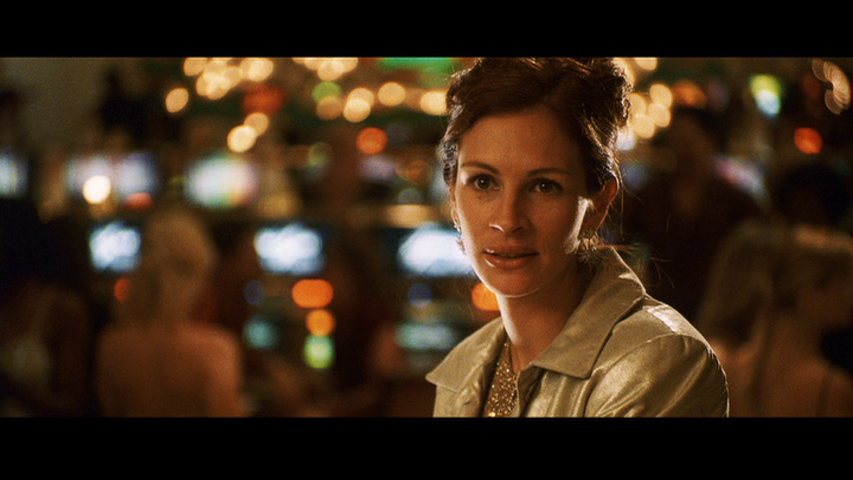
TESS: You of all people should know, Terry, in your hotel, there’s always someone watching.
From Rashomon:
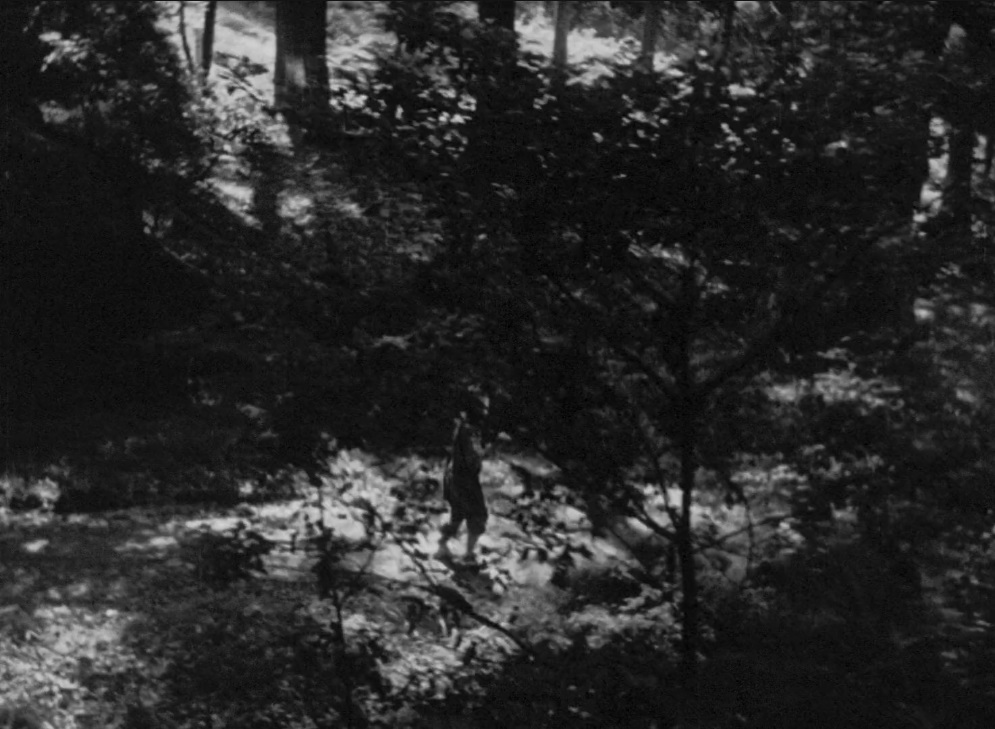
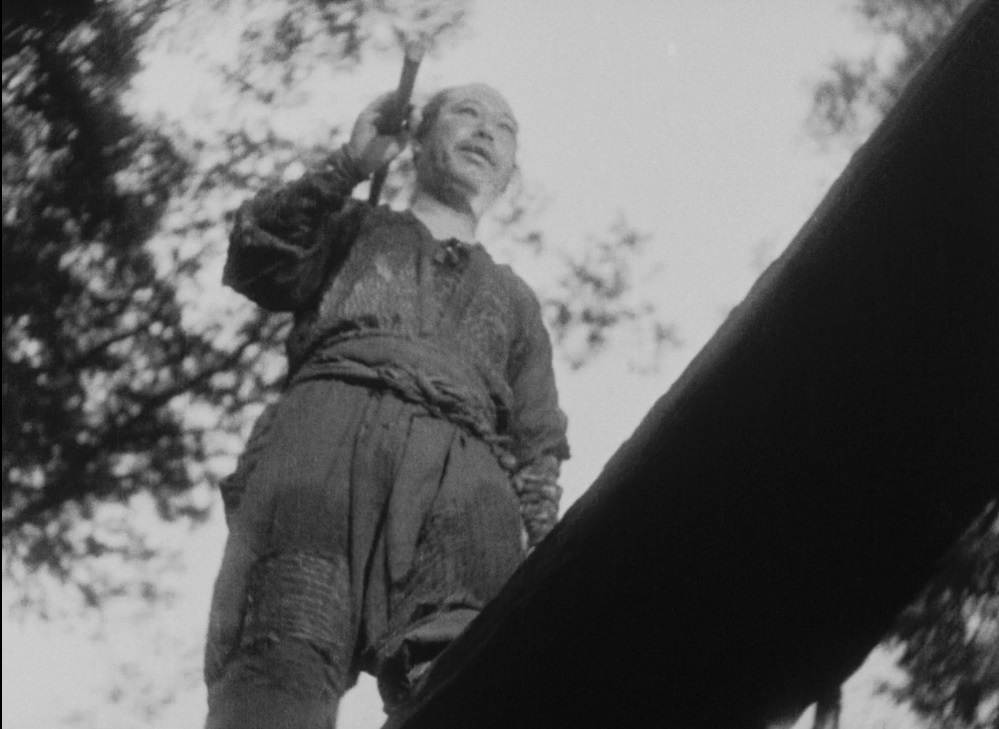
Previous “Juxtaposition” posts can be found here.
Between Valentine’s Day in February and Easter in March/April, I think it’s fair to say we’re in the “chocolate quarter” of the calendar year! In honor of such, this is the first of three Drink & a Movie posts in a row that will feature a drink made with one of my favorite underrated heroes of the back bar: crème de cacao. As Paul Clarke notes in The Cocktail Chronicles, its bad reputation is likely attributable “the substandard quality of many chocolate liqueurs” prevalent on the market until Tempus Fugit Spirits’ version became widely available about ten years ago. It and the Giffard white crème de cacao that I prefer in the 20th Century cocktail I wrote about in 2022 for reasons of color are both excellent, though, and there’s no longer any use to shy away from this ingredient. As described in a post on his blog, Clarke created this month’s drink, the Theobroma, as his version of a chocolate martini. Here’s how to make it:
2 ozs. Reposado tequila (Mi Campo)
1/2 oz. Punt e Mes
1/4 oz. Bigallet China-China
1 tsp. Crème de cacao (Tempus Fugit)
2 dashes Bittermens Xocolatl Mole Bitters
Stir all ingredients with ice and strain into a chilled cocktail glass. Garnish with an orange twist.

The Theobroma begins with orange on the nose and an impression of sweet and bitter on the sip which quickly comes into focus as agave and chocolate. “Definitely a tequila drink,” said My Loving Wife, and I wouldn’t want to use something much more assertive than Mi Campos, which in my opinion is currently the best value in the reposado category available here in Ithaca, NY. It is rested in wine barrels, which contributes vanilla flavors also prominent in Tempus Fugit’s crème de cacao that come through on the swallow along with spice and more orange. Clarke’s description of his concoction as “a bold, elbow-throwing mixture that’s unafraid to let its chocolate flag fly” is spot-on, and I’m not going to try to improve on it!
Believe it or not, the chocolate martini was created by actors Rock Hudson and Elizabeth Taylor on the set of the movie Giant. The book Rock Hudson: His Story contains the tale:
Rock and Elizabeth stayed in rented houses across from each other, and it was in one of those houses on a Saturday night in 1955 that they invented the chocolate martini. They both loved chocolate and drank martinis. Why not put chocolate liqueur and chocolate syrup in a vodka martini? They thought it tasted terrific and made a great contribution to society until they began to suffer from indigestion. “We were really just kids, we could eat and drink anything and never needed sleep,” Rock said.
Given these origins, what better film to pair with the Theobroma than a riff on the Rock Hudson vehicle All That Heaven Allows that hails from Germany, “the land of chocolate,” and involves stomach problems as a plot point? I am, of course, referring to Ali: Fear Eats the Soul. Here’s a picture of my Criterion Collection DVD:
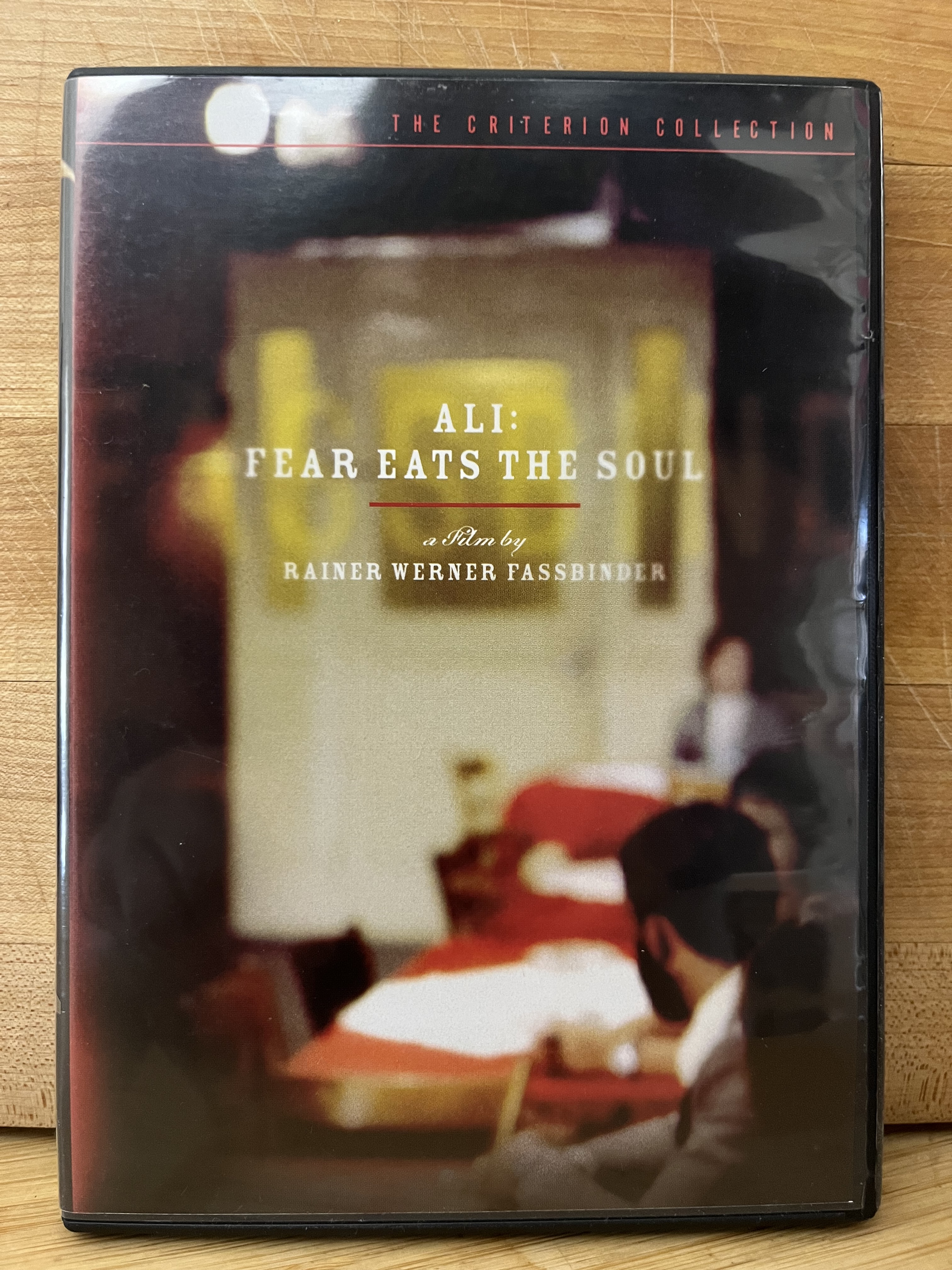
It is also streaming on the Criterion Channel and Max with a subscription, can be rented from a variety of other platforms, and some people (including current Cornell University faculty, staff, and students) may have access to it through Kanopy via a license paid for by their local academic or public library as well.
As Klaus Ulrich Militz writes in his book Personal Experience and the Media, the relationship between Ali: Fear Eats the Soul and All That Heaven Allows “is not as clear as it may seem at first.” For starters, although both films revolve around a May-December romance, director Rainer Werner Fassbinder must have conceived of his movie before he encountered its supposed inspiration for the first time in autumn 1970 because “a rough outline of the film’s story-line is told by the chambermaid in the film The American Soldier,” which he shot two months earlier. The fact that his protagonists Emmi (Brigitte Mira) and Ali (El Hedi ben Salem) enter into a relationship with each other at the beginning of it also represents a major structural break with the earlier movie directed by Douglas Sirk, which “largely follows the emancipatory logic of the melodramatic genre because his heroine only gradually manages to overcome her passivity before she eventually commits herself to her lover.” Nonetheless, per Militz, “the fact remains that when Fassbinder eventually made Ali: Fear Eats the Soul in 1973 this was done under the impression of Sirk’s films.”
One place many people feel the influence of All That Heaven Allows is in Fassbinder’s use of color. For instance, in her chapter for the book Fassbinder Now: Film and Video Art, Brigitte Peucker observes that the “formal, conformist grey clothing” that Emmi and Ali get married in marks them as “constrained by the social order,” but that it’s offset “by the Sirkian red carnations that emblematize emotion”:
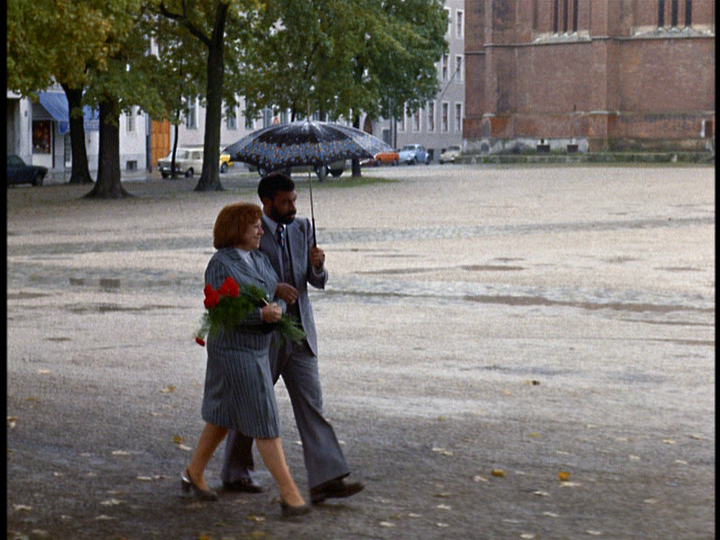
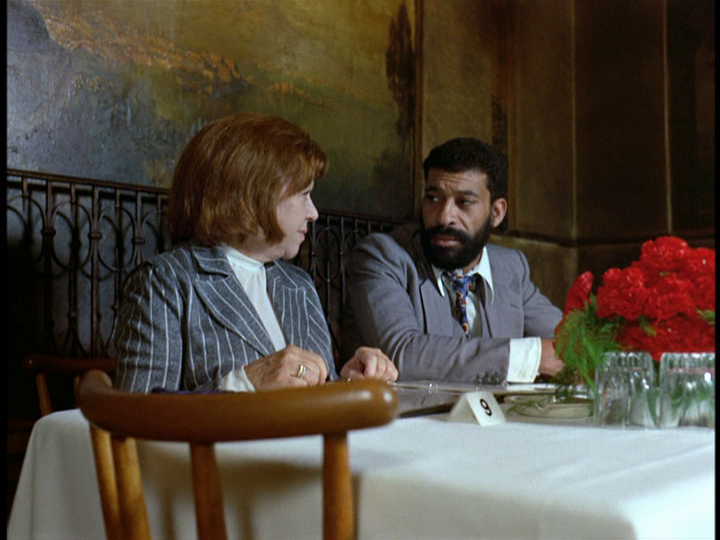
This seems to echo what Brian Price describes in his chapter for the book A Companion to Rainer Werner Fassbinder as the typical reading of the vibrant red dress Jane Wyman’s Cary Scott wears in Heaven to show “what remains inside and–owing to social constraints–invisible.”
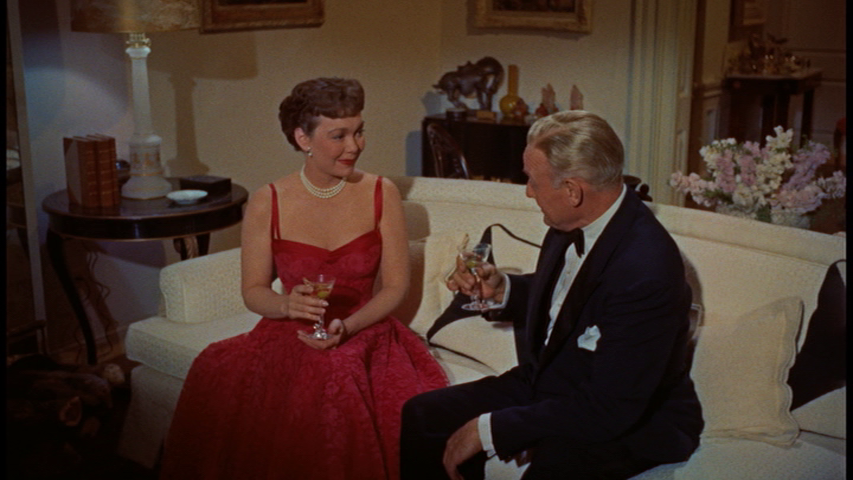
As he notes, though, Emmi’s flowers are different in that “Fassbinder’s colors, unlike Sirk’s, tend toward disharmony and away from the kind of color coordination that makes analogy possible.” Pointing out that the man Cary is with in the image above, Conrad Nagel’s Harvey, is wearing clothing that matches the furniture they are sitting on, Price argues that this provokes a simile: “Harvey, we might say, is like a couch, something to rest on, something solid but soft, immovable–and worst of all for Harvey, something inanimate, or merely functional.” Contrast this with the dresses Emmi favors elsewhere in Ali, such as the one she has on as she sits “in front of an amateur painting of horses running executed in pale yellow gold tones decidedly less bold than the ones Emmi wears” and curtains “which are no less busy than her dress but are nevertheless discordantly situated with respect to it–baby blue instead of navy blue, a dull grayish green instead of the saturated green to which it stands, in the overall composition, in odd contrast”:
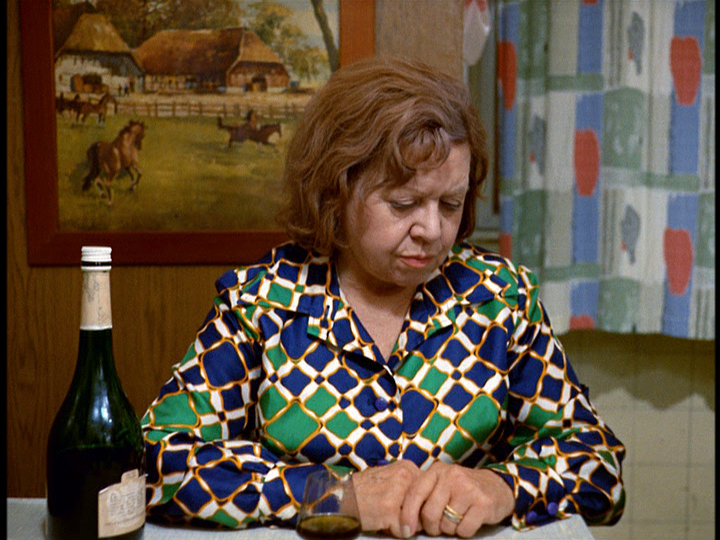
To Price “the contrast eludes metaphor” and because “this green is not like that green, then Emmi cannot be defined by the objects and spaces that constitute her on a contingent–and thus reversible–basis.”
My Loving Wife explained to me that this is also a wrap dress like the one designed by Diane von Furstenberg, which per this Time Magazine article she created “for the kind of woman she aspired to be: independent, ambitious, and above all, liberated.” Fascinatingly, it also states that “von Furstenberg was told from a young age that ‘fear is not an option.'” The similarity of that quote to the title of this month’s movie may be just a coincidence, but Emmi’s fashion sense surely isn’t, especially when you consider how many of these garments she has in her wardrobe:
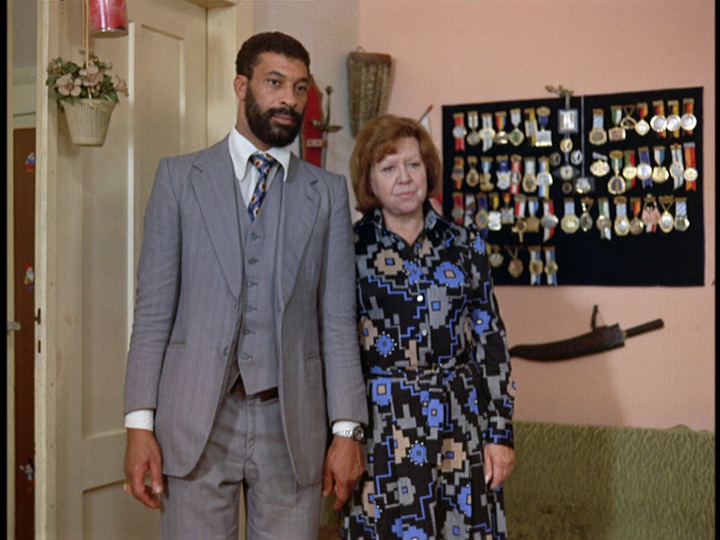
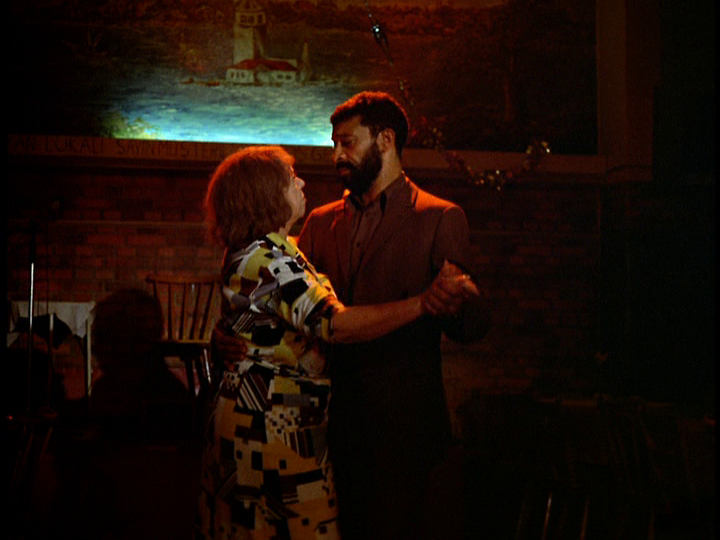
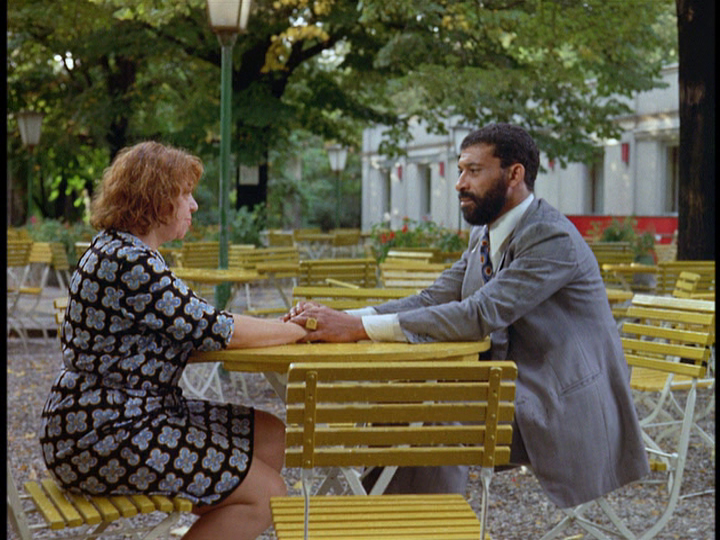
Fassbinder similarly uses the television and frames within frames that appear in Heaven, represented here by a single powerful camera movement:
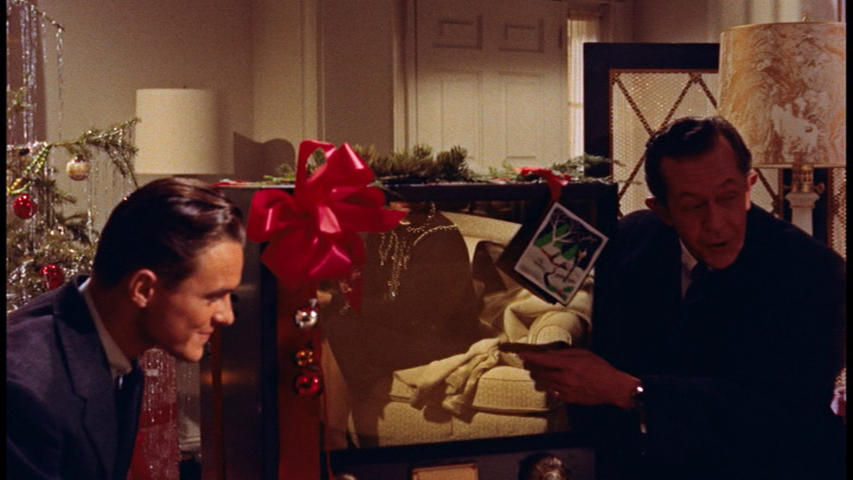
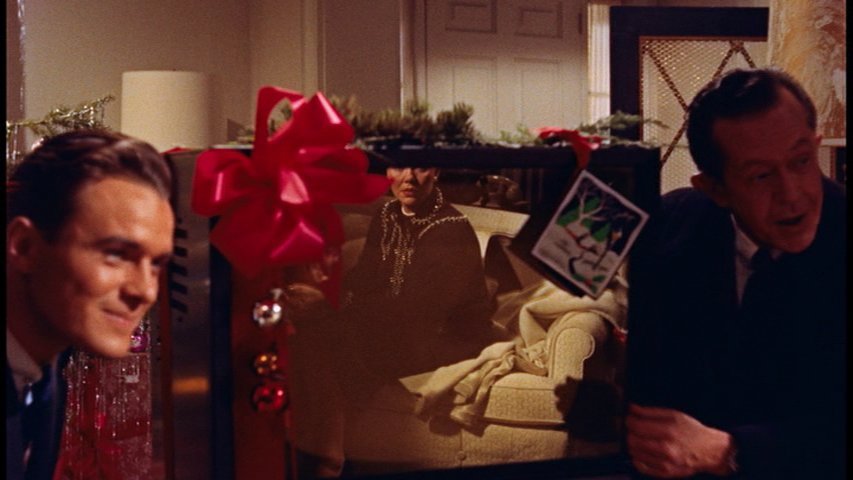
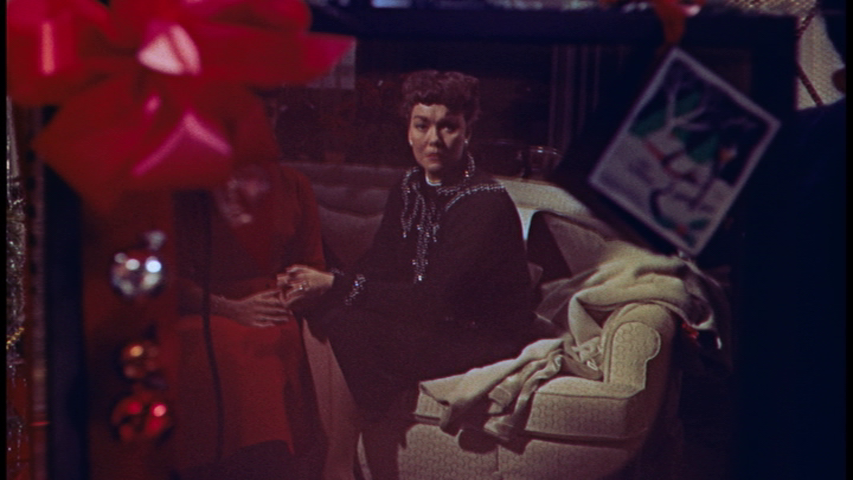
As a launchpad to do his own thing. He transforms the TV from a would-be prison cell into an symbol for the respectable German family that Emmi’s son Bruno (Peter Gauhe) believes she has disgraced with her choice of husband:
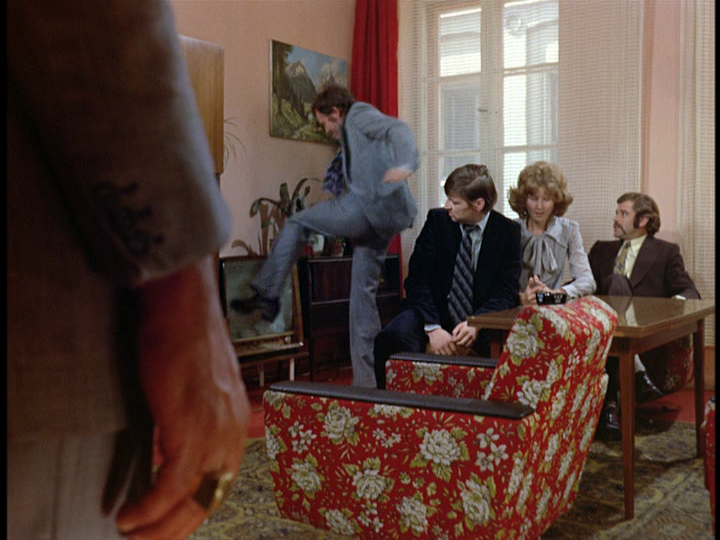
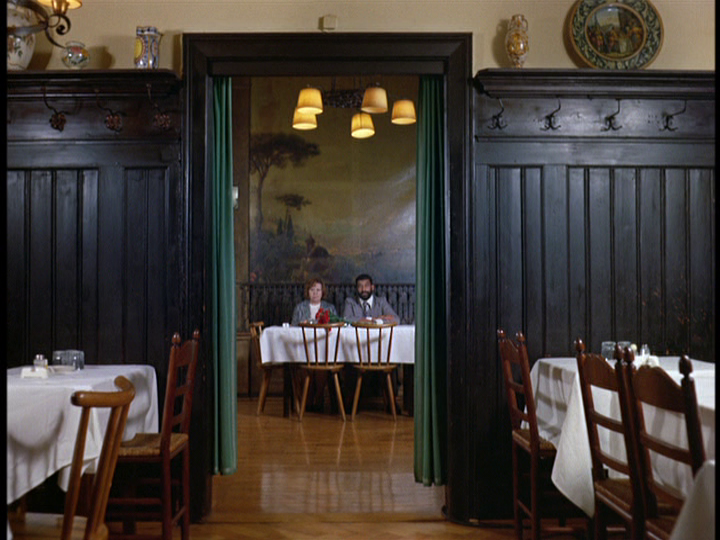
Meanwhile, almost every other aspect of the film’s mise-en-scène is a cage. This includes the wedding where Ali and Emmi celebrate their wedding:
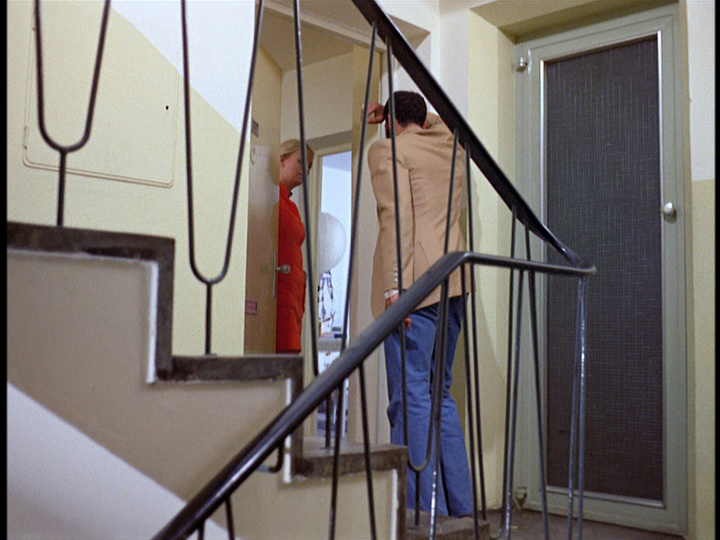
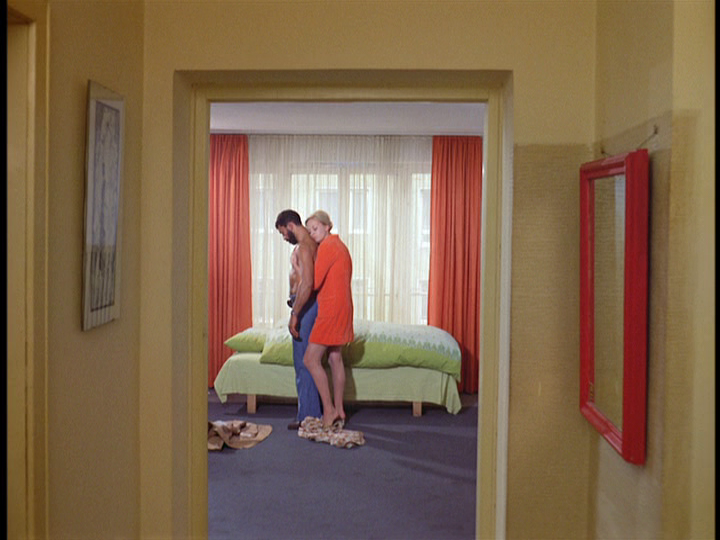
The apartment and bedroom where Ali seeks solace (and couscous!) after his relationship with Emmi calcifies into yet another instrument of exploitation:
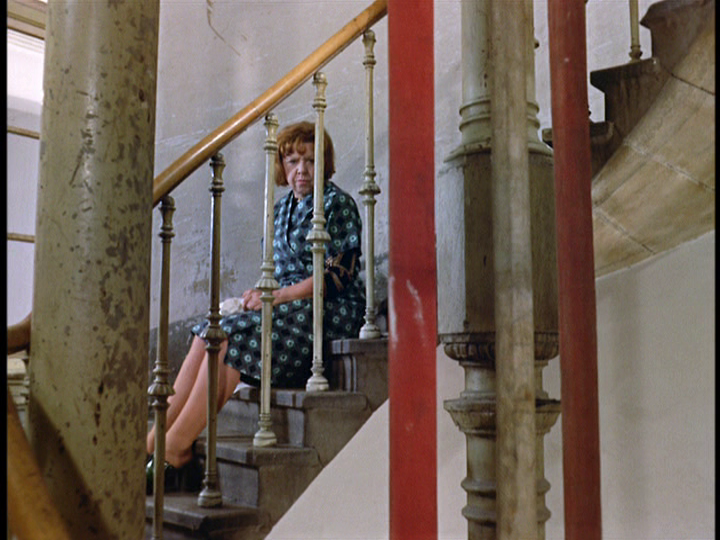
The stairwell where Emmi eats lunch alone after being shunned by her charwomen:
Then, once back in their good graces, joins them in giving the cold shoulder to their new co-worker Yolanda (Helga Ballhaus), a Herzegovinian immigrant:
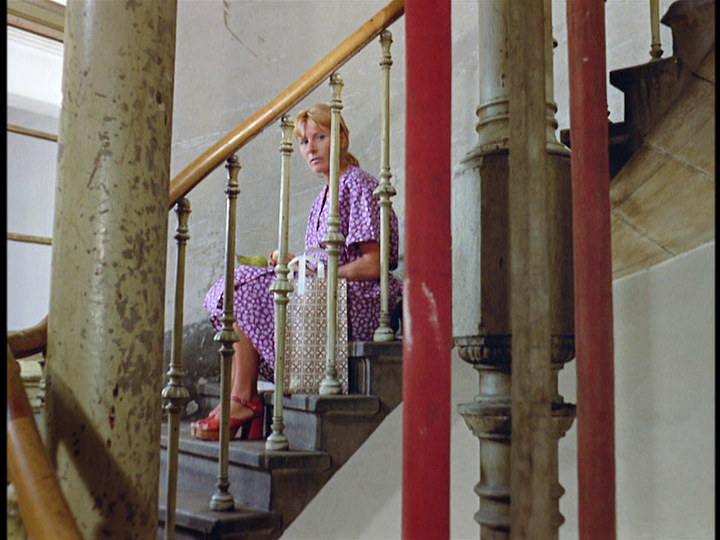
And a shot-reverse shot of a nosy neighbor (Elma Karlowa) watching Ali and Emmi mount the stairs of her building that, Manny Farber writes in an essay collected in the book Negative Space, “suggests all three, like all Fassbinder’s denizens, are caught in a shifting but nevertheless painful power game of top dogs and underdogs”:
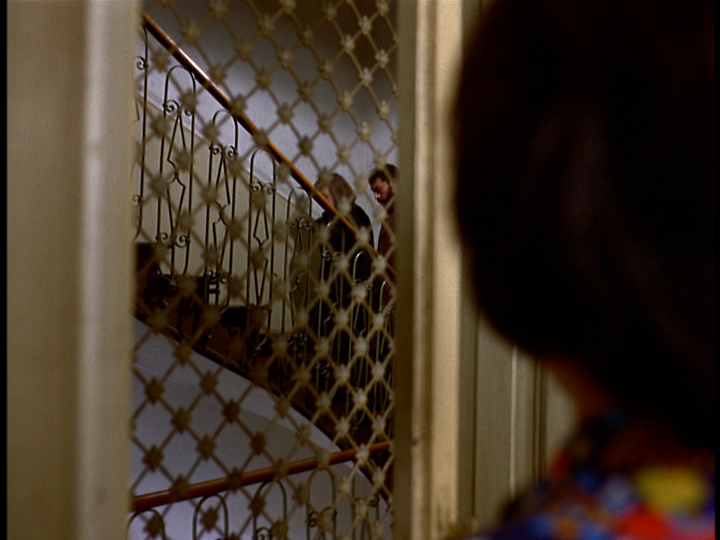
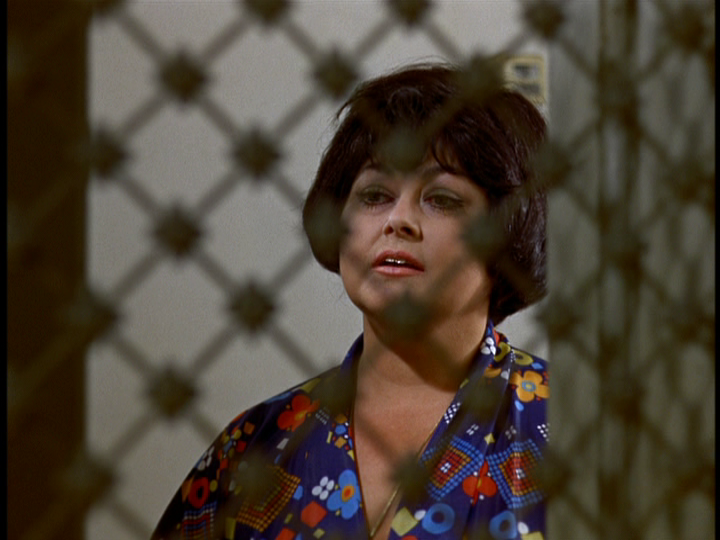
But my favorite aspect of Ali is reminiscent less of Sirk than something Richard Jameson once said about the movie Once Upon a Time in the West. He described it as “an opera in which arias are not sung but stared,” and that’s a perfect fit for this film as well! You can practically hear the thoughts of Asphalt Bar proprietress Barbara (Barbara Valentin) as she sizes up Emmi, who has appeared in her establishment for a second time hoping to find Ali:
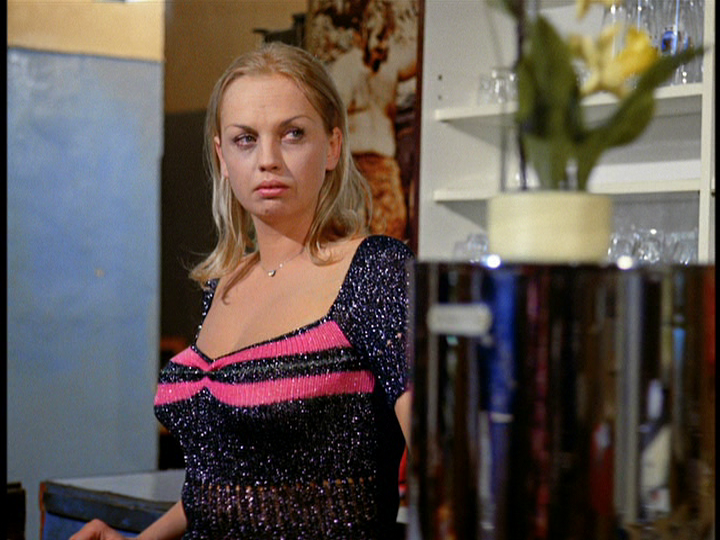
And those of the waiter (Hannes Gromball) at the restaurant “where Hitler used to eat from 1929 to ’33” (!) as he contemplates his unusual customers:
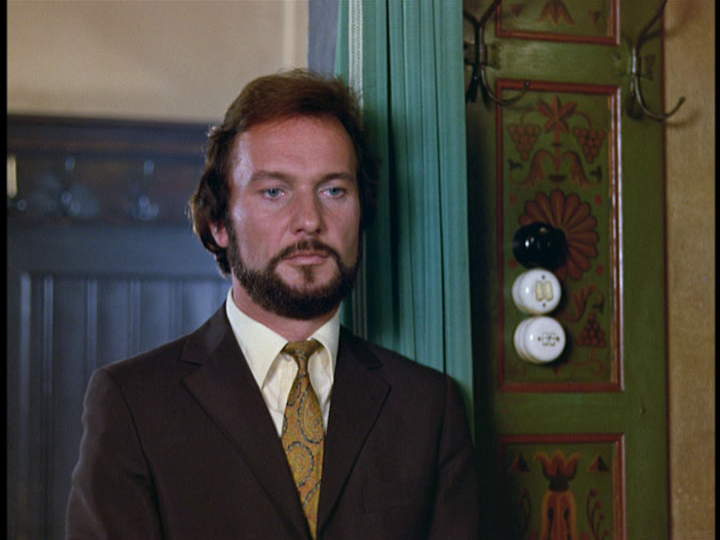
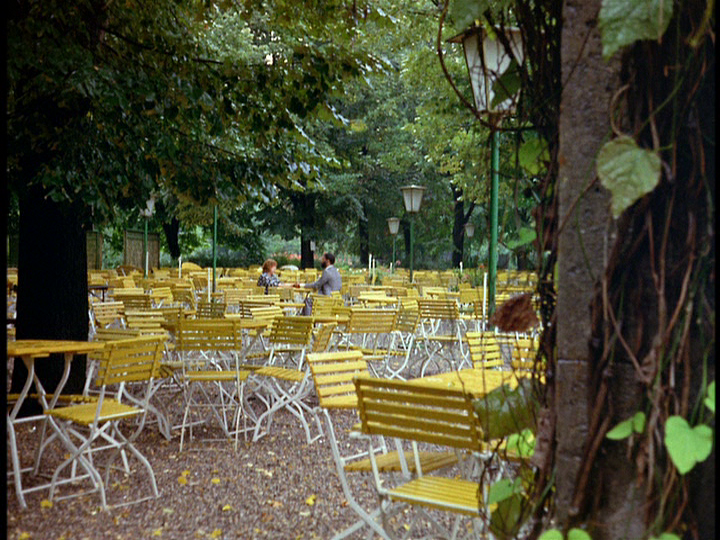
“Sometimes, long silences seem to be an expression of the social hostility encountered by Emmi and Ali, as in the climactic scene in an outdoor cafe immediately before their regenerative vacation,” notes James C. Franklin in a Literature/Film Quarterly article called “Method and Message: Forms of Communication in Fassbinder’s Angst Essen Seele Auf“ (the movie’s German title) where “the interaction of the visual image and the silence creates an atmosphere of utter coldness and hostility”:
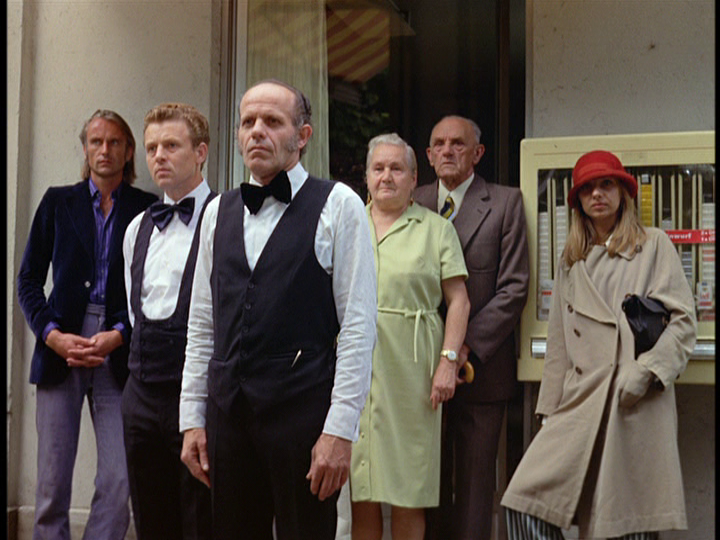
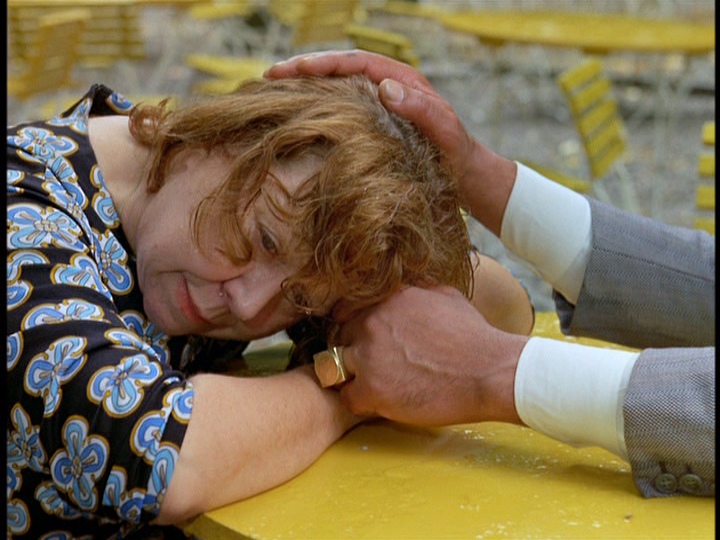
However, my favorite examples of where (as Franklin eloquently puts it) “there is much to be heard in the silence of the soundtrack” are the looks Ali and Emmi give each other the morning after he first comes back from a night out blackout drunk:
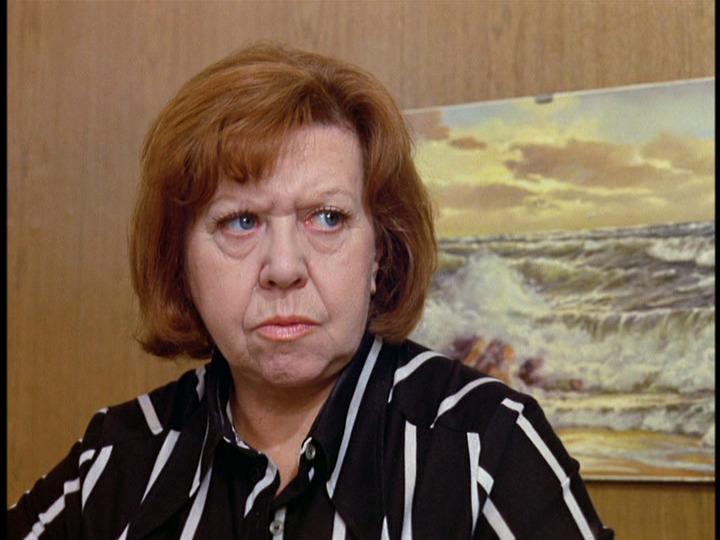
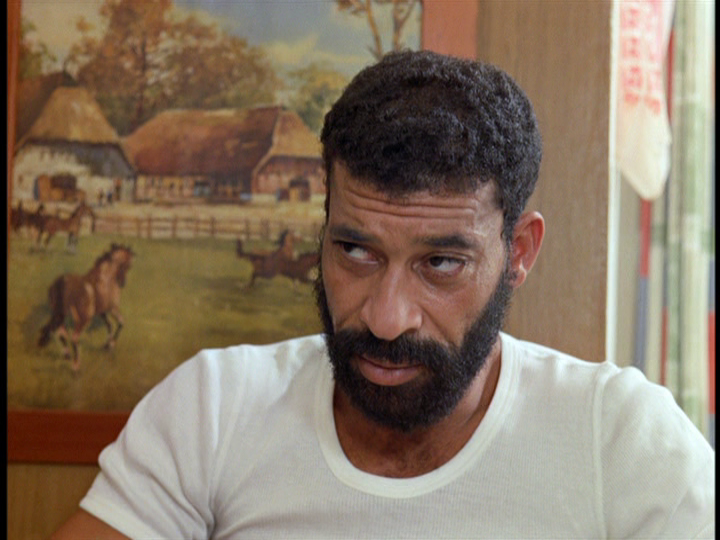
And then doesn’t arrive home at all:
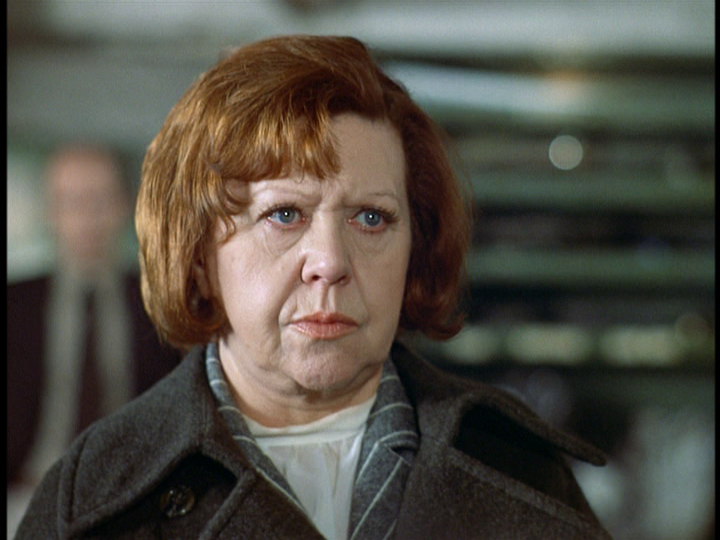
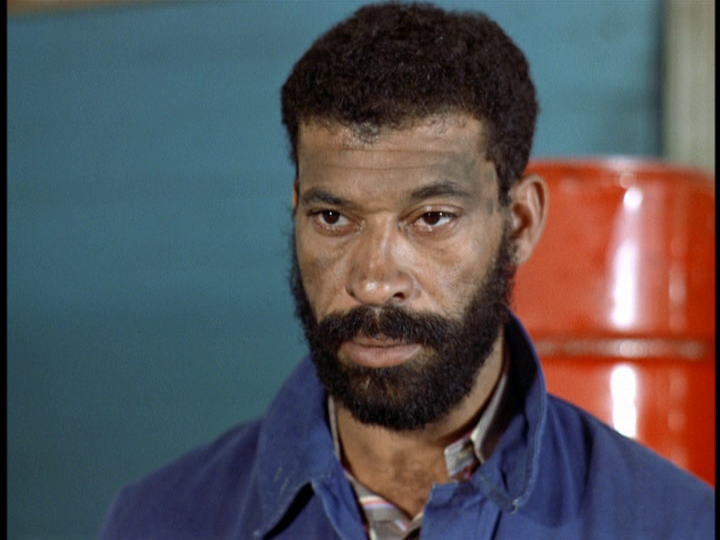
The latter occur in the film’s final ten minutes. In a response to a chapter in Robert Pippin’s book Douglas Sirk: Filmmaker and Philosopher for the national meeting of the American Society for Aesthetics that he posted on Letterboxd, Matt Strohl comments on a phenomenon that he calls the “double ending” of subversive melodramas whereby “an ostensible happy ending is subverted by some unsettling element, which might then prompt us to reflect on whether it was really such a happy ending after all and to reinterpret the film in this light.” Although All That Heaven Allows concludes with Cary resolving to “come home” to her lover Ron (Hudson), both scholars argue that we should feel uneasy about this, Pippin (as paraphrased by Strohl) because Cary “did not make the decision to enter into this relationship” but rather “fell into it because of Ron’s newfound need for a caretaker” and Strohl because “Cary has not gotten over her fears and become a full-fledged agent, but rather has slid into a different socially-defined gendered role that she has not actively chosen.”
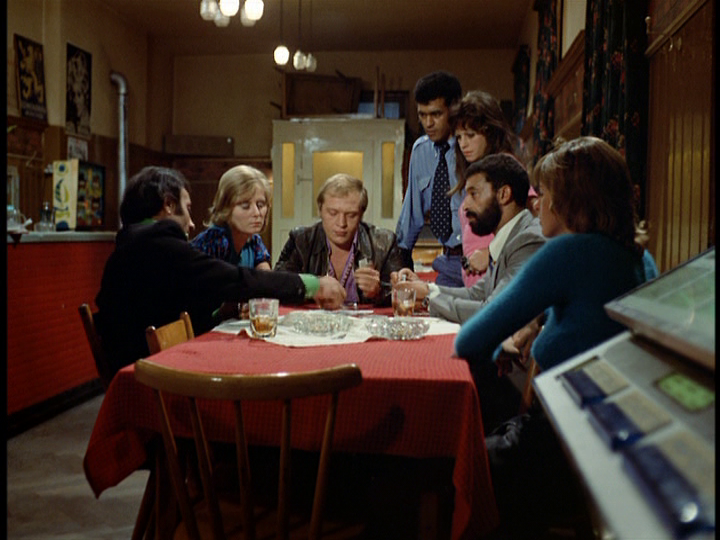
Ali: Fear Eats the Soul is a different kind of beast. The scene after the second staredown depicted above opens with Ali “gambling away a week’s wages” (as Barbara points out to him) at the Asphalt Bar:
He busts out and sends a friend to his place for 100 more marks. While he waits for the money, Ali goes to the restroom and proceeds to slap himself in the face multiple times in a weird twist on Jackie Gleason’s Minnesota Fats freshening-up routine in The Hustler:
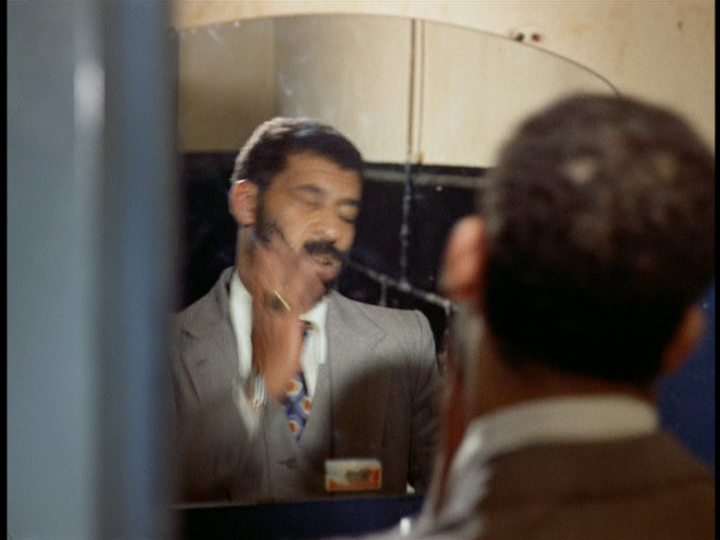
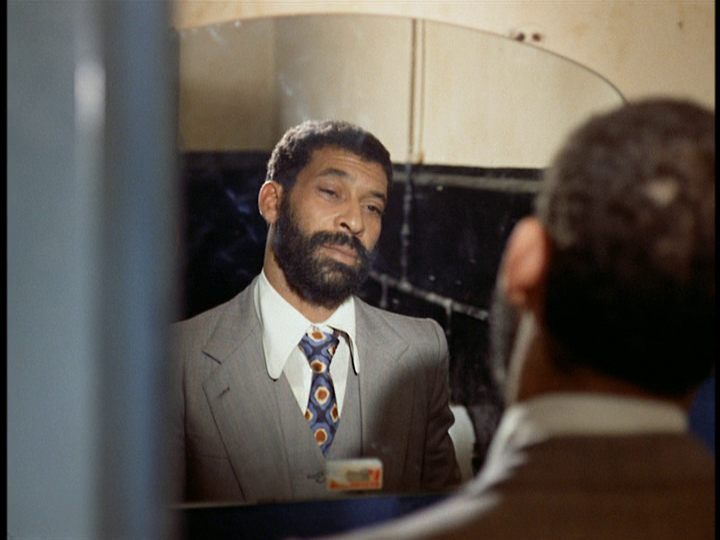
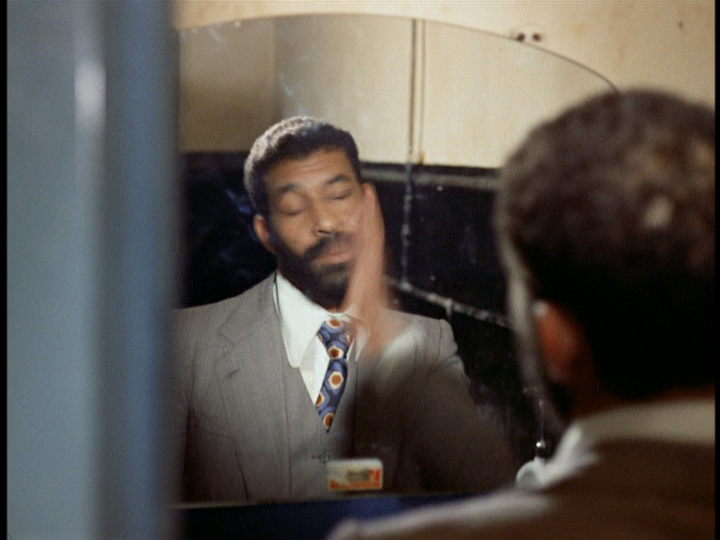
As he sits back down at the table and immediately proceeds to lose a hand, Emmi enters the bar in the background:
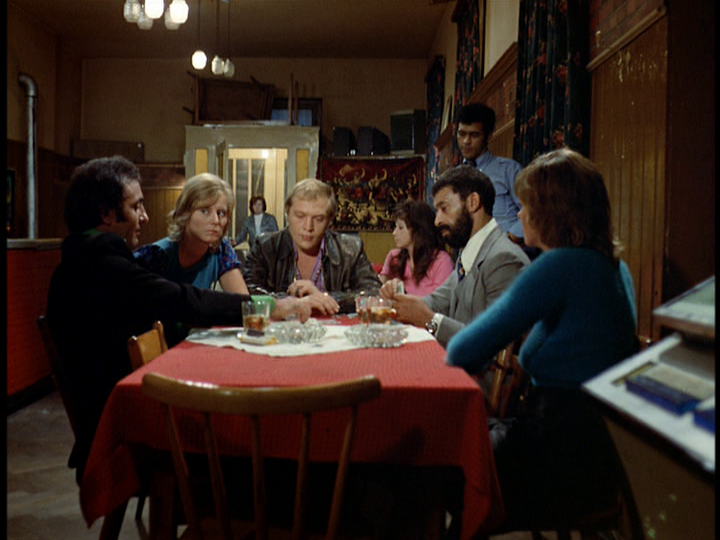
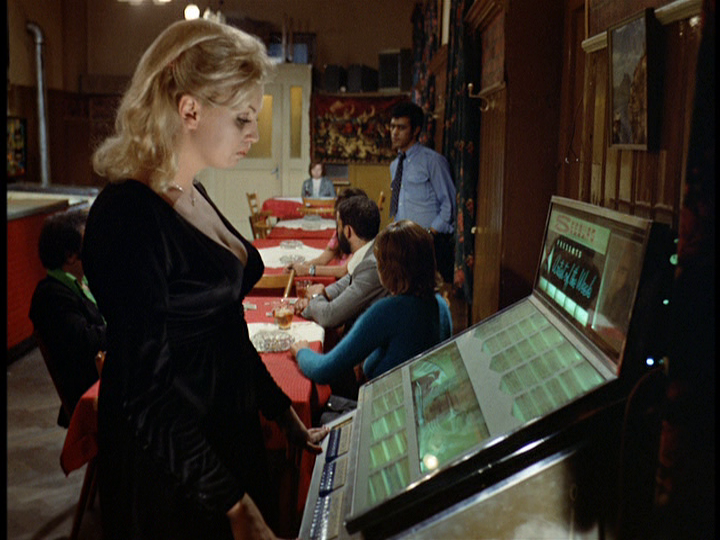
Barbara brings her a Coke, the drink she ordered the night she met Ali, and Emmi asks her to play the tune they later danced to. Ali and his companions stare at Emmi as Barbara selects the song on the jukebox in the foreground of a three-layer composition:
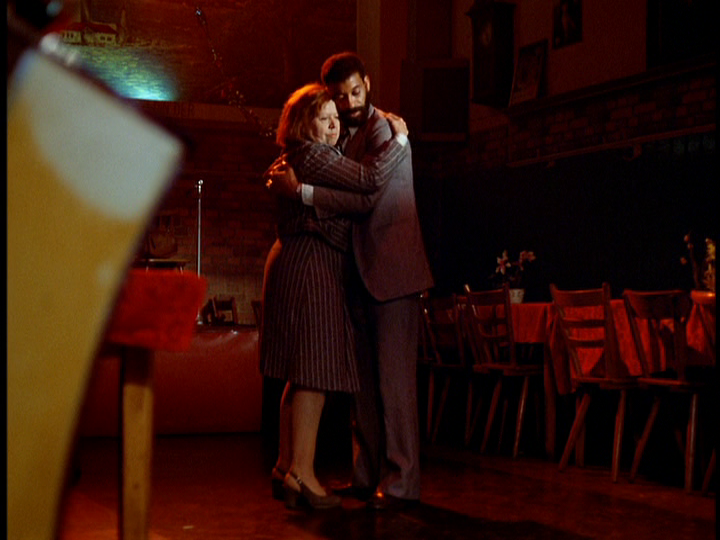
As soon as the music begins playing, Ali stands up and asks Emmi to dance. As the sway back and forth he confesses that he has slept with other women, but she assures him the it isn’t important and that he’s a free man who can do as he likes. “But when we’re together, we must be nice to each other,” she says. “Otherwise, life’s not worth living.”
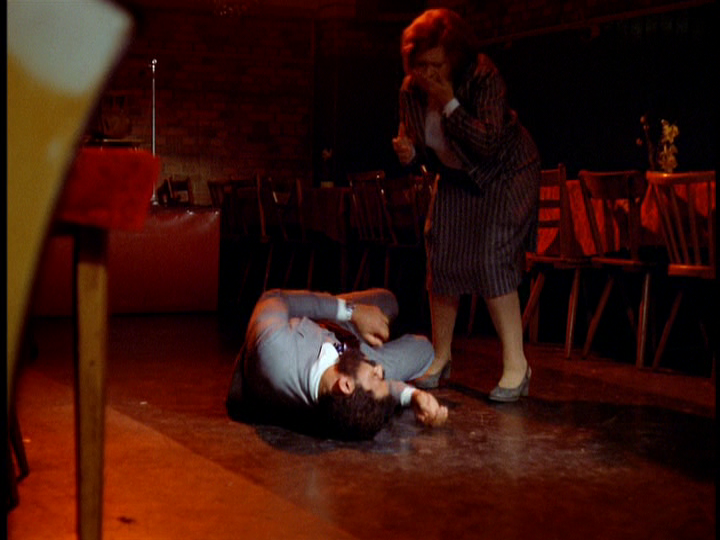
“I don’t want other women,” he responds. “I love only you.” Suddenly, he collapses to the ground, moaning in pain:
The final scene takes place in a hospital. “He has a perforated stomach ulcer,” a doctor (Hark Bohm) tells Emmi. “It happens a lot with foreign workers. It’s the stress. And there’s not much we can do. We’re not allowed to send them to convalesce. We can only operate. And six months later they have another ulcer.”
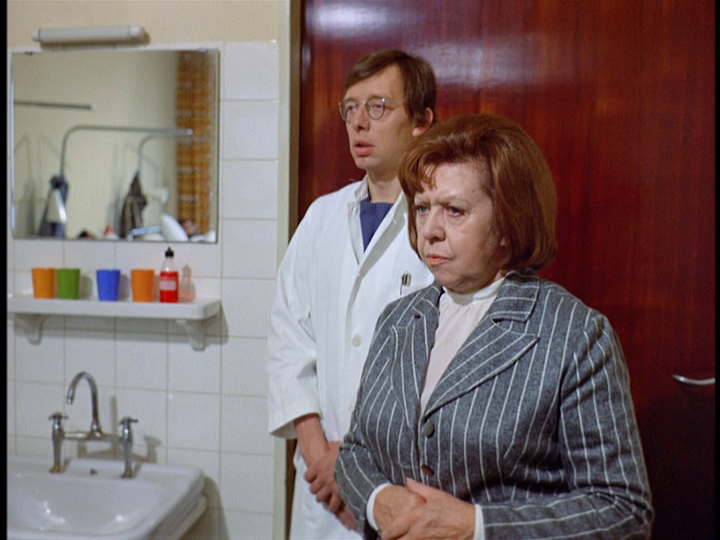
“No he won’t,” Emmi insists. “I’ll do everything in my power. . . . ” The clearly skeptical doctor interrupts her: “Well, the best of luck anyway.” Emmi walks over to Ali and the camera tracks in on their reflection in the mirror:
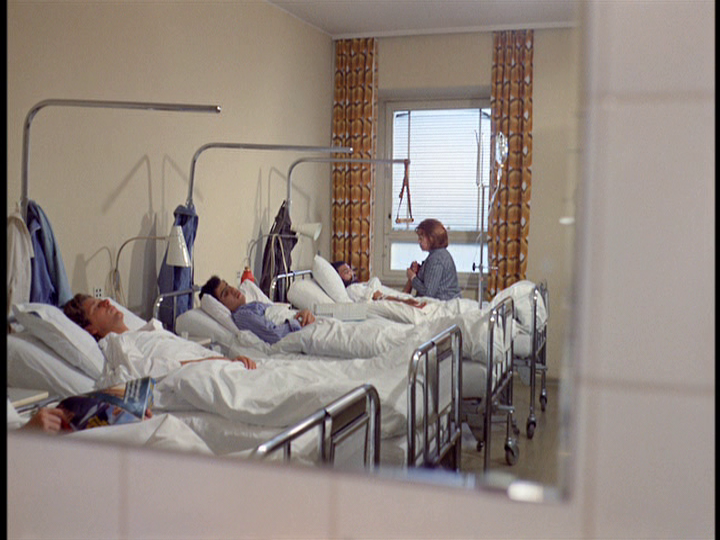
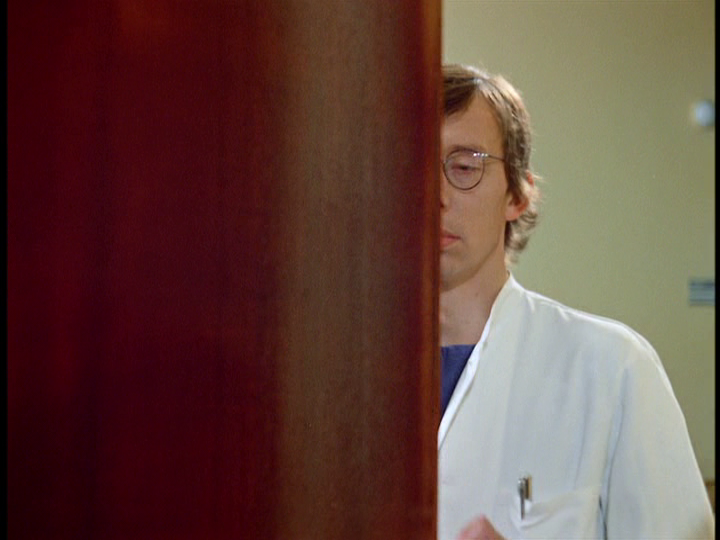
The doctor closes the door:
And the film ends with a shot of Emmi crying as she holds an unconscious Ali’s hand:
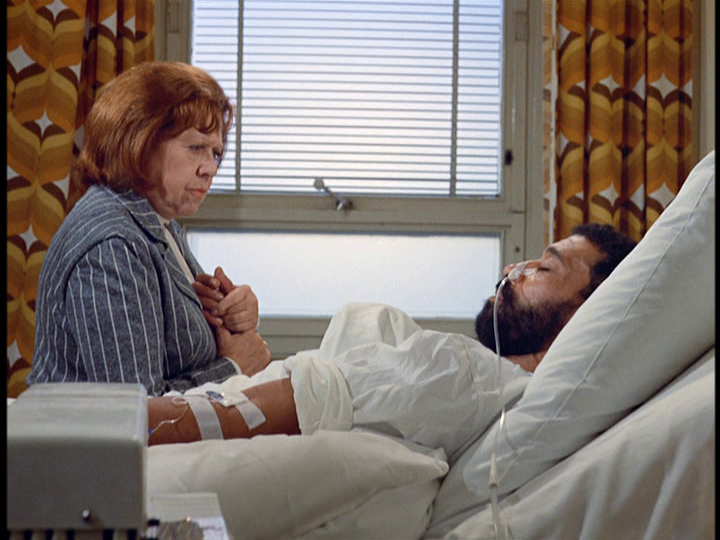
The utility of the “double ending” for Strohl is that it can explicate an otherwise inchoate sense that “there’s something off” about a Hollywood ending. There’s obviously no need for that here, but if broaden this concept and reinterpret it through the lens of the drink writing idea of a “finish,” it can also give voice to whatever lingers in your mind after the final credits have rolled. Ali‘s finish is the same as the Theobroma’s: they’re both bittersweet, which, if you don’t think that’s appropriate to the Valentine Season, you’ve never really been in love.
Cheers!
All original photographs in this post are by Marion Penning, aka My Loving Wife. Links to all of the entries in this series can be found here.
The San Francisco Nog created at Waltham, Massachusetts bar Deep Ellum has been a favorite in our house ever since Frederic Yarm wrote about it on his Cocktail Virgin Slut blog a few years ago. With Fernet Branca on my mind, it was natural that my thoughts would also turn to San Francisco, since for reasons Grant Marek chronicled for SFGate that spirit is linked to the city “in the same way that Malort is to Chicago and Guinness is to Dublin, Ireland.” This led me to a movie filmed there that I’ve been entranced with ever since I encountered stills from it in David Cook’s A History of Narrative Film as an undergraduate film studies major: The Lady from Shanghai. A dairy-based beverage would be a terrible fit for its hot and sweaty first half, so instead I’m taking a cue from the yacht the Circe which belongs to the titular lady Elsa Bannister (Rita Hayworth) and her husband Arthur (Everett Sloane) and pairing it with the Don’t Give Up the Ship cocktail that most drinks historians agree first appeared by that name (there’s also a concoction called a Napoleon in The Savoy Cocktail Book with the exact same ingredients) in Crosby Gaige’s 1941 Cocktail Guide and Ladies Companion, but which, like the Last Word I wrote about in 2023, owes its present-day popularity to Seattle’s Zig Zag Cafe.
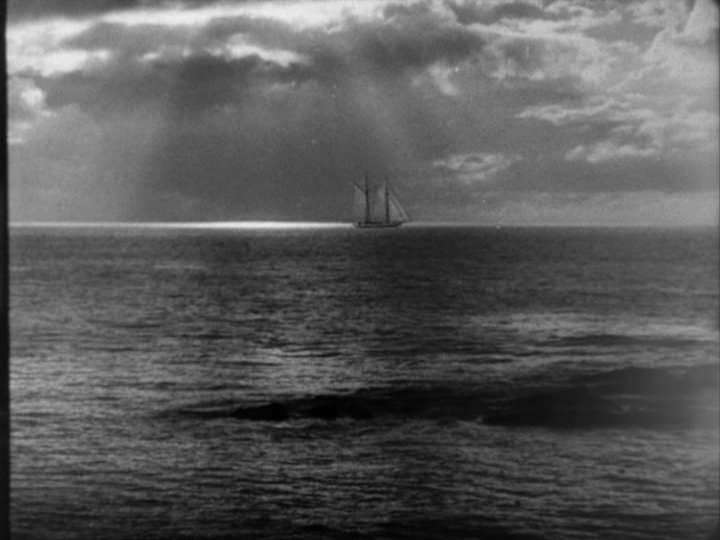
As Jason O’Bryan noted in The Robb Report, there are now two versions of the drink. He favors the rendition made with Cointreau and sweet vermouth, but My Loving Wife and I enjoy the one that features Grand Marnier and Dubonnet Rouge more. He’s actually a fan of both and describes the original as “a lower-toned winter drink,” which is obviously appropriate to the season, and we think it’s a better platform for the fernet as well. Using a movie comparison that I appreciate as a child of the 90s, O’Bryan speculates on his Drinks and Drinking blog that this “may be a Happy Gilmore/Billy Madison situation.” Anyway, the recipe by Zig Zag’s Ben Dougherty which O’Bryan and others link to is no longer on Food & Wine magazine’s website, but you can still find it in their 2007 Annual Cookbook. Here’s how to make it:
1 1/2 ozs. Gin (Junipero)
1/2 oz. Dubonnet Rouge
1/4 oz. Grand Marnier
1/4 oz. Fernet Branca
Stir all ingredients with ice and strain into a chilled glass.
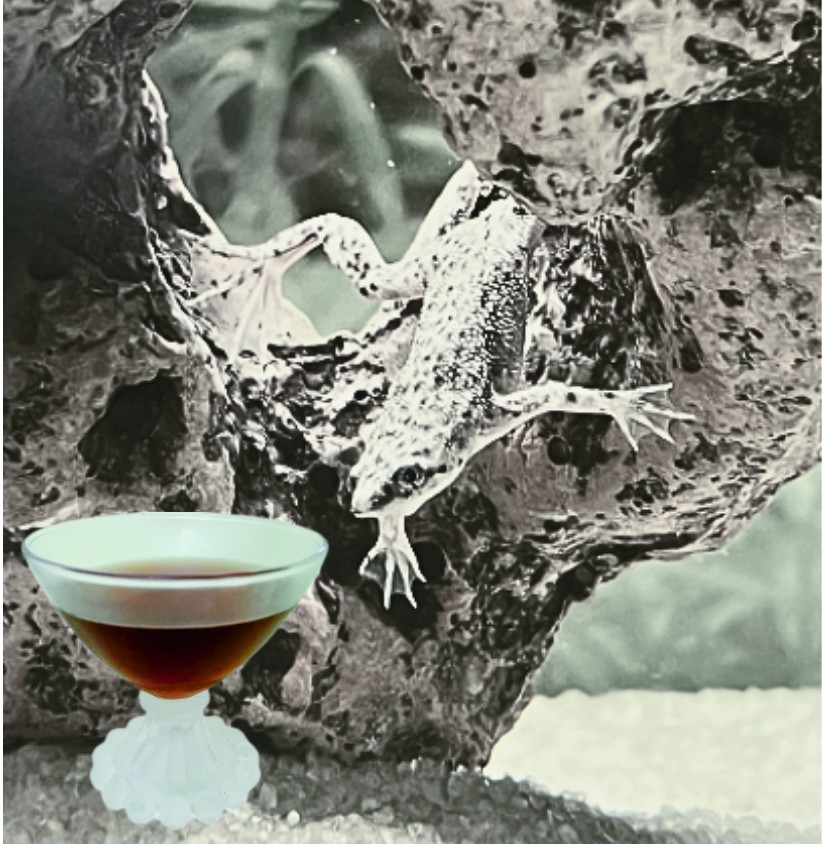
Junipero is ideal here because it’s made in San Francisco and also matches O’Bryan’s call for a “big, robust, juniper-forward” selection. In addition to being delicious, Grand Mariner is also made with a brandy base, which as Eddie Mueller says in his description of the Sailor Beware cocktail he created to pair with The Lady from Shanghai for his Noir Bar book seems “a likely libation for sinister shyster Arthur Bannister.” Both the gin and fernet are very prominent, so steer clear if you aren’t a fan of those ingredients. But if, like us, you love them: full speed ahead! On to the film. Here’s a picture of my TCM Vault Collection Blu-ray/DVD:
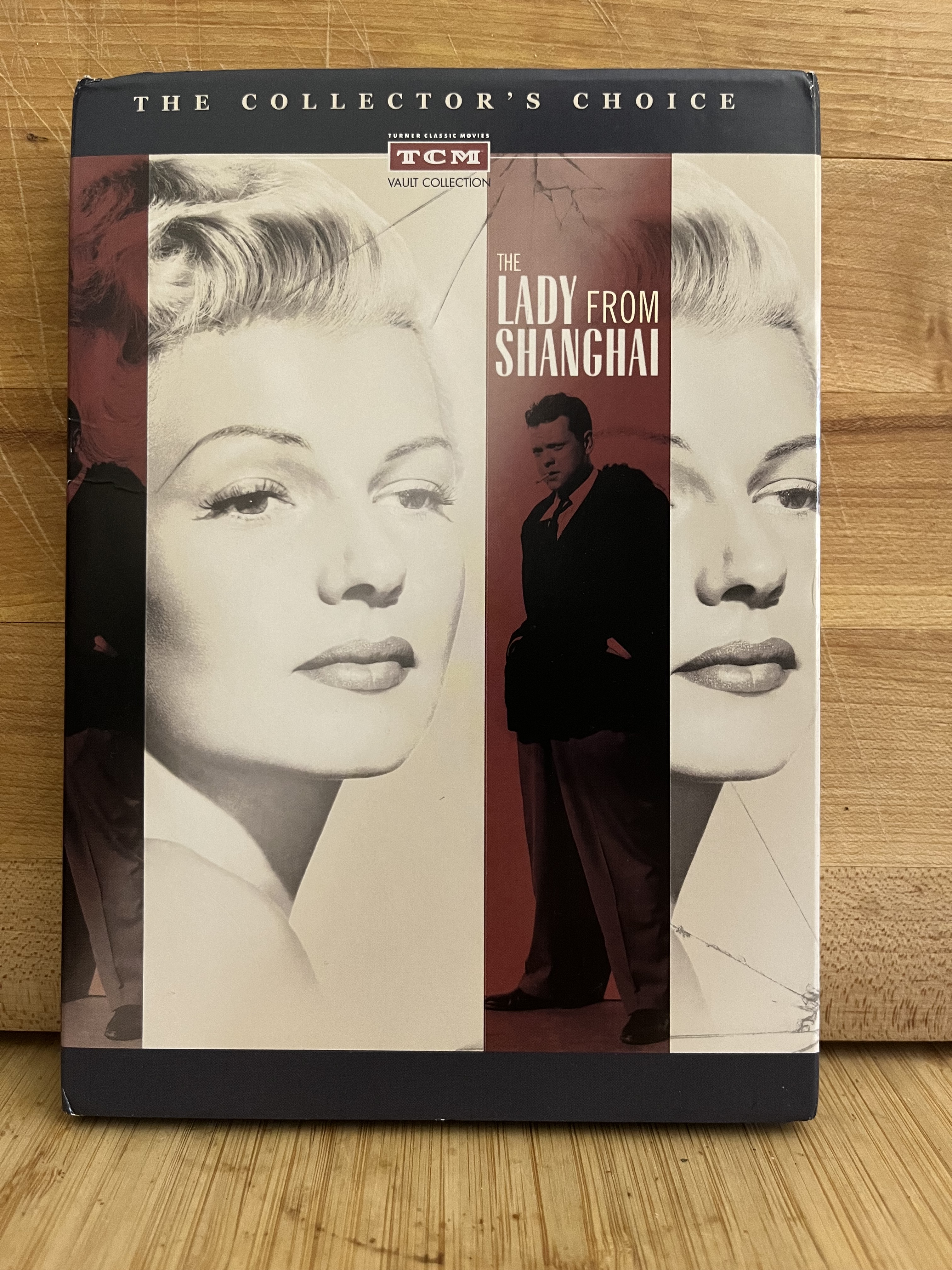
It can also be rented from a wide range of streaming video platforms.
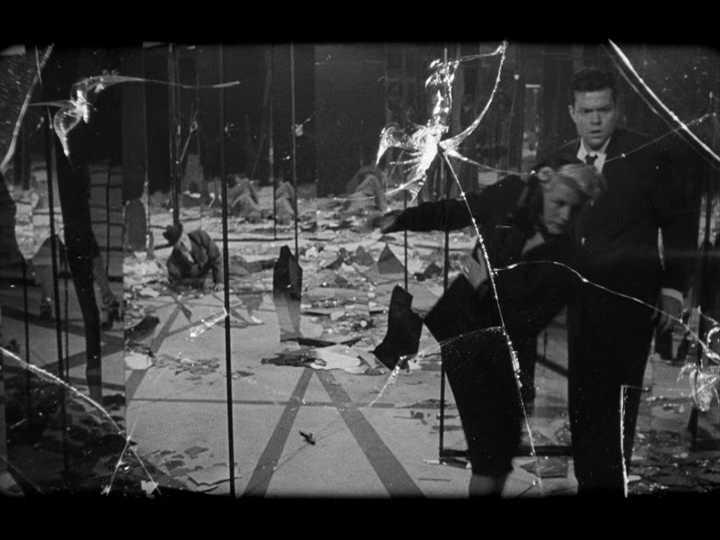
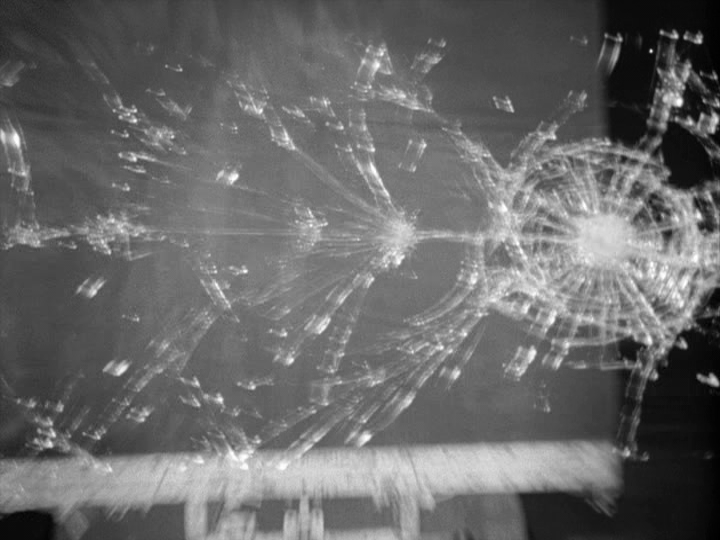
Dave Kehr famously called The Lady from Shanghai “the weirdest great movie ever made,” but as James Naremore writes in his book The Magic World of Orson Welles, “its strangeness did not result from an early, deliberate plan.” Instead, he argues that as a result of some combination of interference by Columbia Pictures and the “weariness, contempt, or sheer practical jokery” of its director, “the movie seems to have been made by two different hands.” Naremore points to the fact that it was “reduced by almost an hour from its prerelease form” and “substantially revised” at the behest of studio chief Harry Cohn (who allegedly offered $1,000 to anyone who could explain its plot to him after viewing the rough cut) as his primary evidence for this, but I haven’t read anywhere that Welles ever intended to edit the film himself and it’s hard to know for sure what exactly a finished version that he had more say in might have looked like. Based on the interviews with him that Peter Bogdanovich compiled into the book This Is Orson Welles and reads from on the commentary track on my DVD, for instance, the single-take version of the opening Central Park sequence (which American Cinematographer reported set a record for the longest dolly shot ever filmed) was always destined to be cut apart and down. It’s also not as if every shot overseen by Welles that made the final cut is beyond reproach. As Naremore says about one that I’m unfortunately no longer able to not see, the decision to use a panning movement which causes the jagged edges of glass at the corners of the frame below to move “is clearly a director’s error”:
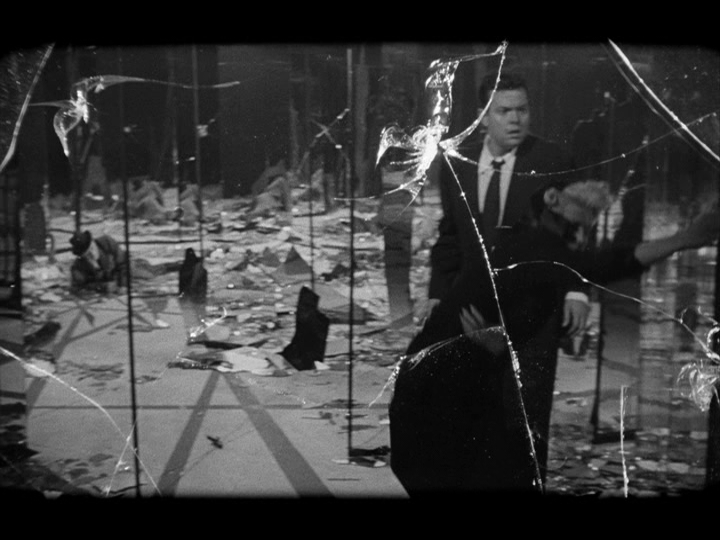
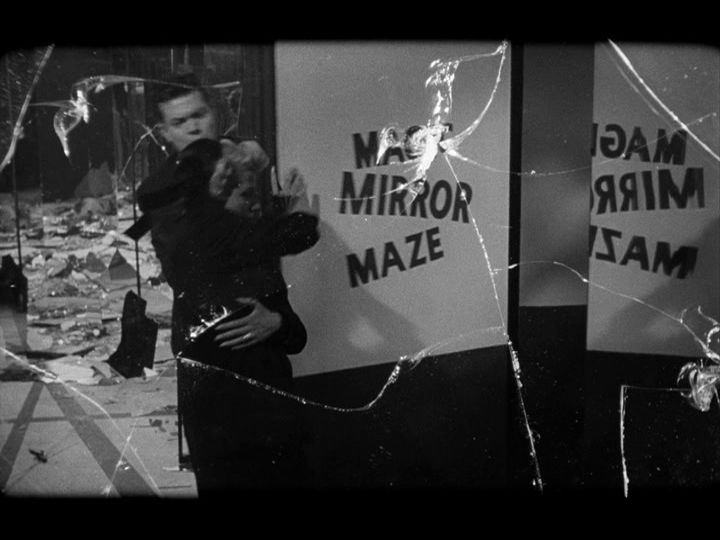
Welles’s biggest objection seems to have been to the music by Heinz Roemheld, exemplified for him by the “Disney”-esque glissando added to this dive:
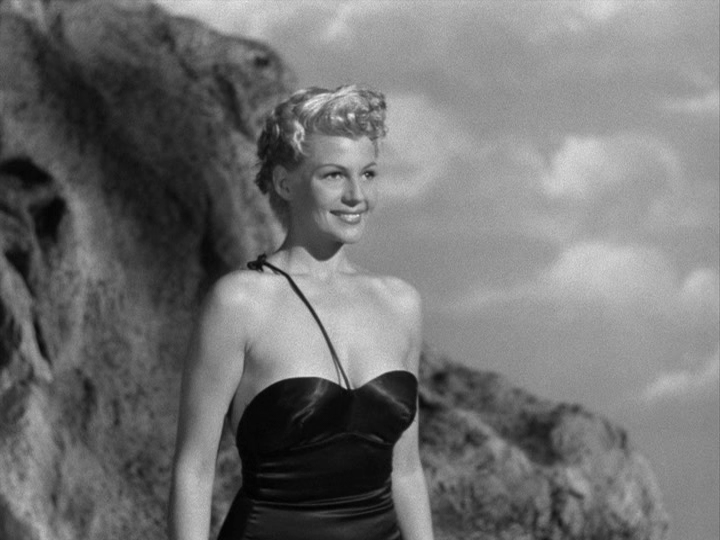
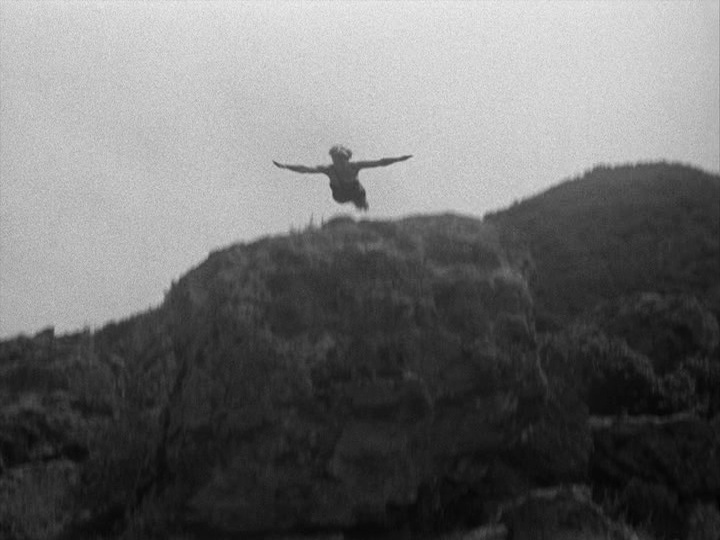
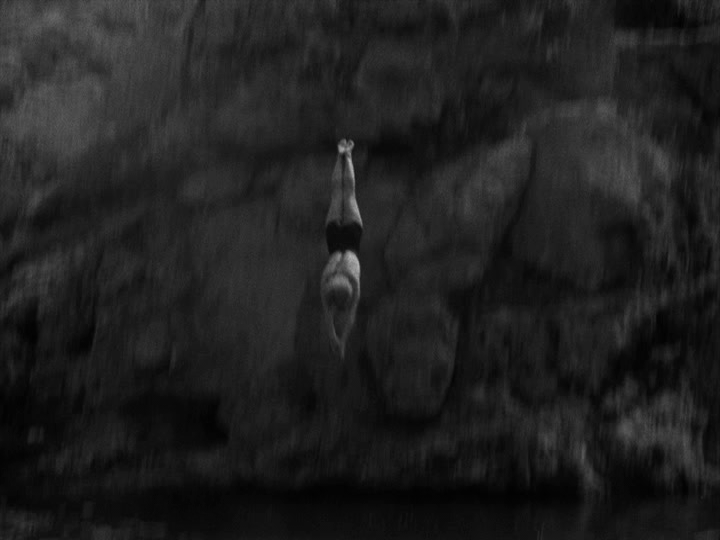
And although I don’t actually have a problem with the way the climactic Magic Mirror Maze shootout sounds today, it’s hard not to be intrigued when Welles tells Bogdanovich that it “should have been absolutely silent except for the crashing glass and ricocheting bullets–like that, it was terrifying.” Even more obviously tragic are the cuts from the final shooting script for the Acapulco sequence which Naremore describes in Biblical terms as depicting Glenn Anders’s George Grisby “tempting” Welles’s Michael O’Hara atop a mountain:
As Grisby and O’Hara stroll up the hillside from the beach, Grisby’s remarks are systematically played off against American tourists in the background, whose conversations about money become obsessive and nightmarish. We see a little girl attempting to get her mother to buy her a fancy drink. “But mommy,” she says, “it ain’t even one dollar!” Then a honeymoon couple walks past. “Sure it’s our honeymoon,” the young man says, “but that’s a two-million dollar account.” An older lady and her husband cross in front of the camera, arguing about taxi fare. “I practically had to pay him by the mile,” the lady complains. A gigolo speaks to a girl seated on a rock. “Fulco made it for her,” he announces. “Diamonds and emeralds–must’ve cost a couple of oil wells. And she only wears it on her bathing suit.” Another young couple walks up the steps from the beach, the man rubbing his nose with zinc oxide as he mutters, “but listen, Edna, you’ve got to realize pesos is real money.” Two girls enter the scene, one of them saying “Heneral–that means General–in the army like. Only this one’s rich.” Meanwhile, through all of this, Grisby babbles about the atomic bomb and the end of the world, ultimately turning and asking O’Hara, “How would you like to make five thousand dollars, fella?”
All that remains of this dialogue are the line from the gentleman afraid of sunburn and the Spanish lesson (although you can also see a couple of the other characters) and as a result all of this meaning is pretty much entirely lost.
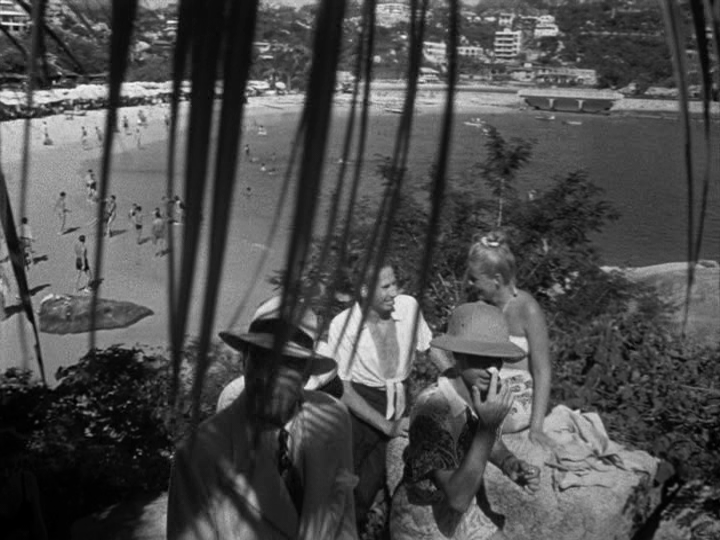
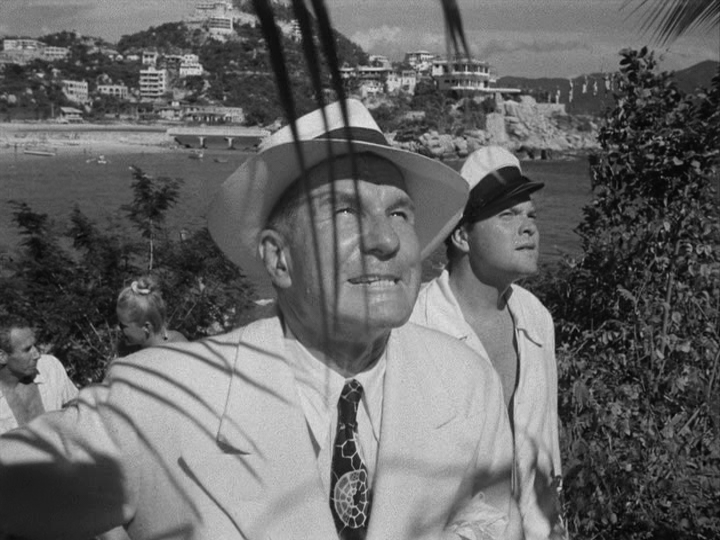
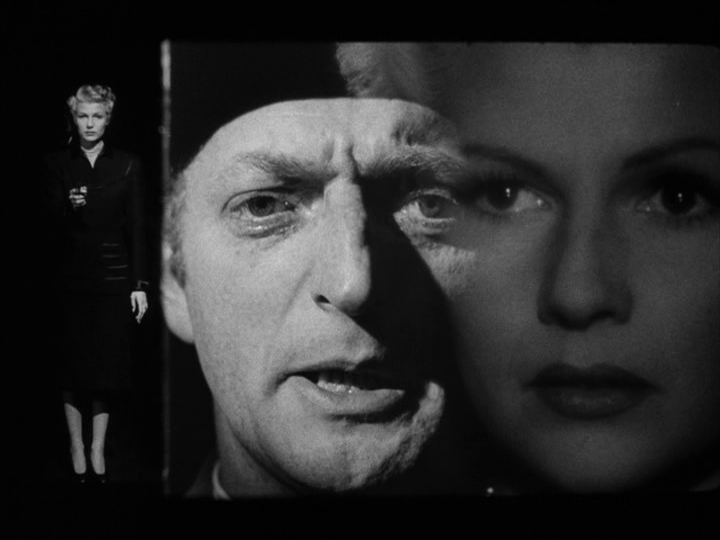
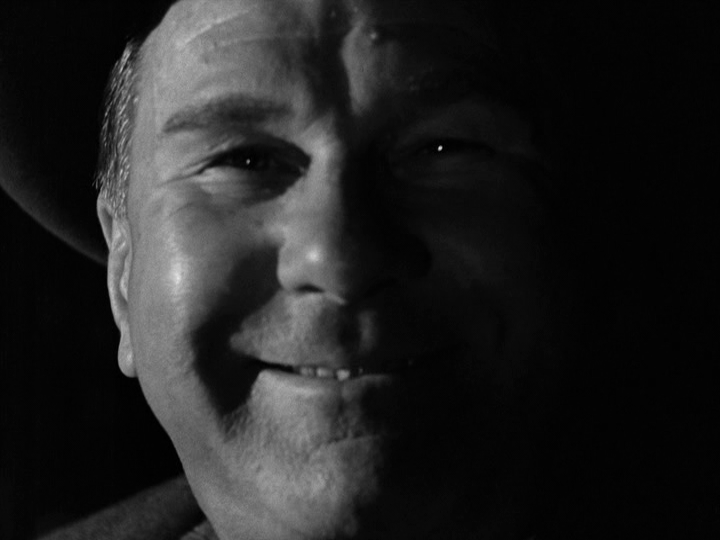
And yet! This scene is nonetheless burned into my memory because it ends with one of my favorite shots in the whole history of cinema. Grisby explains that all Michael needs to do to earn the money he’s offering is to kill someone. “Who, Mr. Grisby?” O’Hara asks. “I’m particular who I murder.” Cut to a sharp-focus close-up of Grisby’s face that contrasts strikingly with a softer one of Michael’s, which Naremore argues is an example of how “glamorous studio portrait photography contributes to the film’s aura of surrealism:
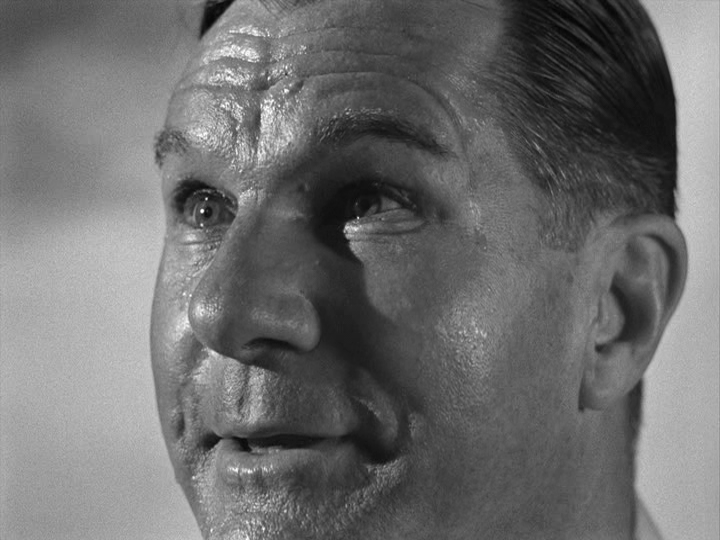
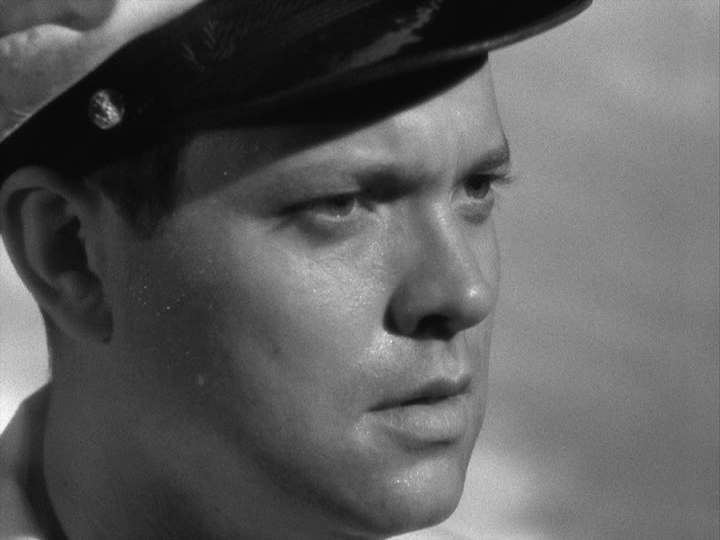
“It’s me,” Grisby says. What follows is brilliantly disorienting because when combined with an earlier establishing shot that places the two men on a sort of parapet:
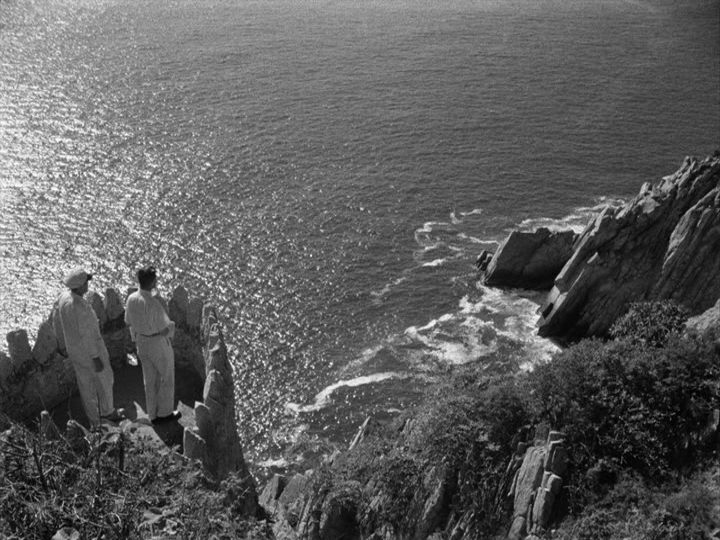
The high angle perspective makes it look like Grisby is falling off the edge of the frame to his death when he says “so long, fella!” and suddenly steps away:
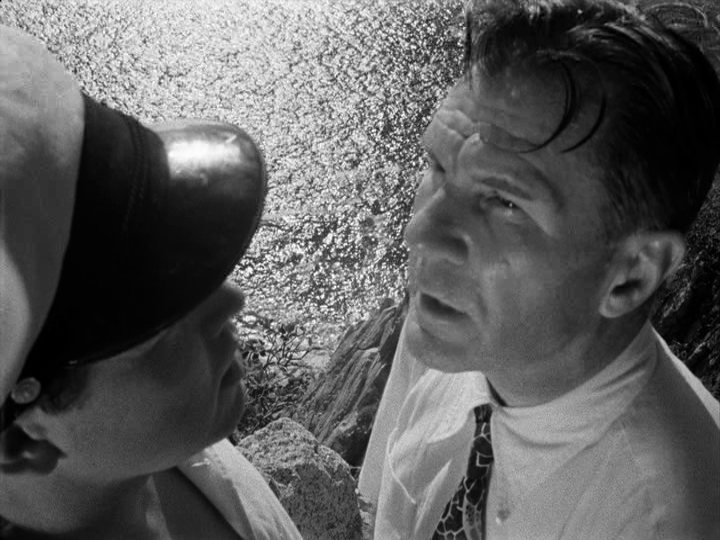
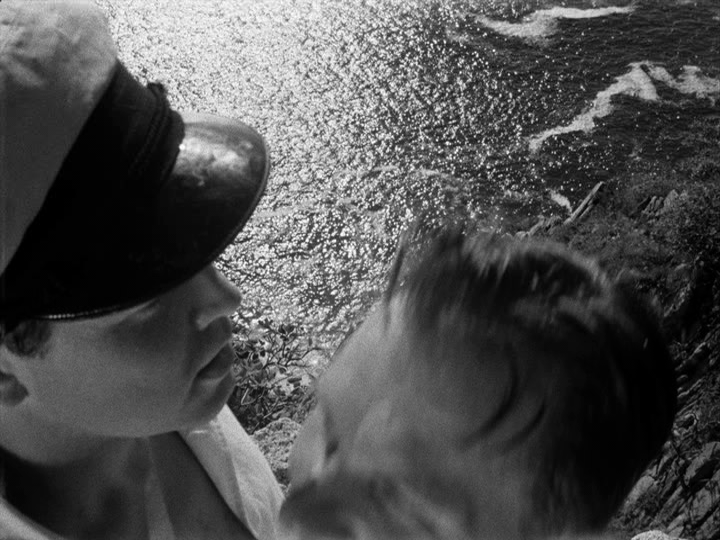
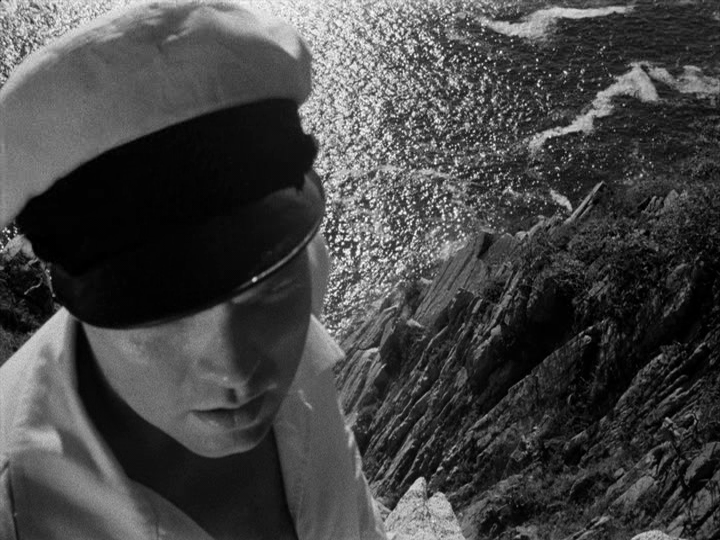
This impression is compounded by the fact that the next scene includes an image of Elsa looking ghostlike as she runs in front of a nighttime cityscape in a white dress:
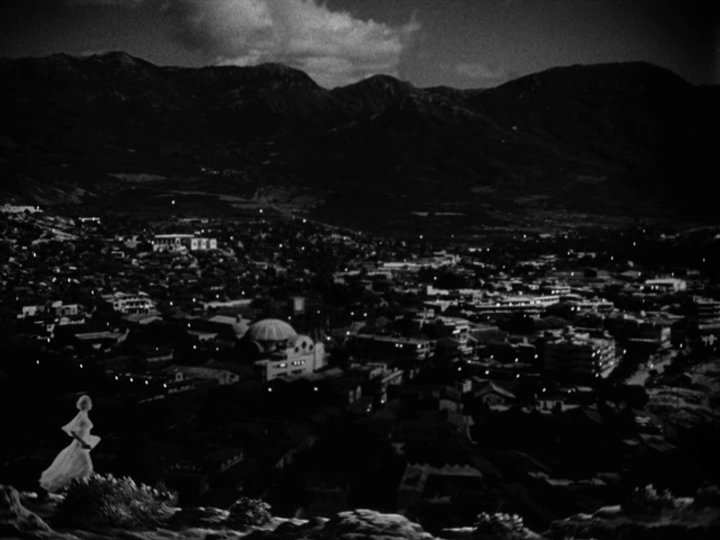
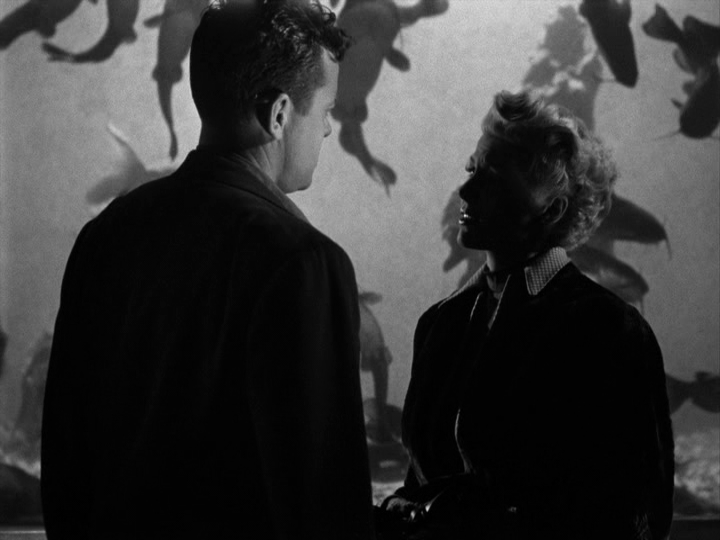
To the point that it’s strange to hear her and Michael talk about Grisby in the present tense. Equally unforgettable is their later meeting in the Steinhart Aquarium, which Brian Darr called “its most striking location shoot” in an article for SFGate, that features them talking in silhouette as sea creatures of symbolic import swim by:
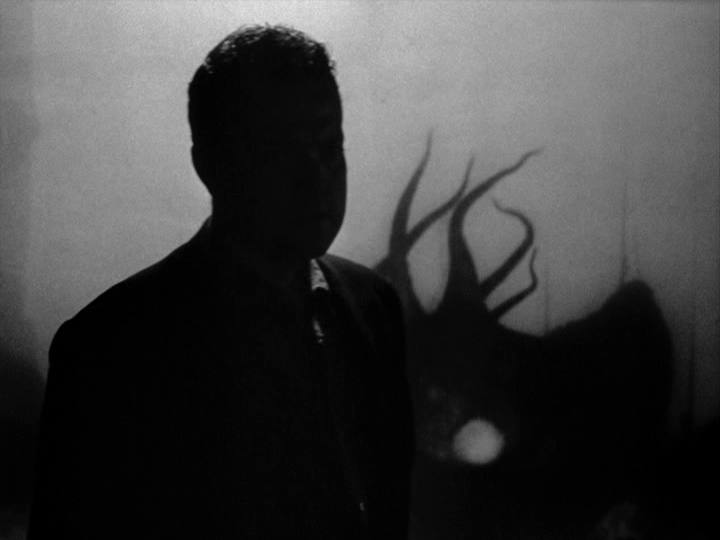
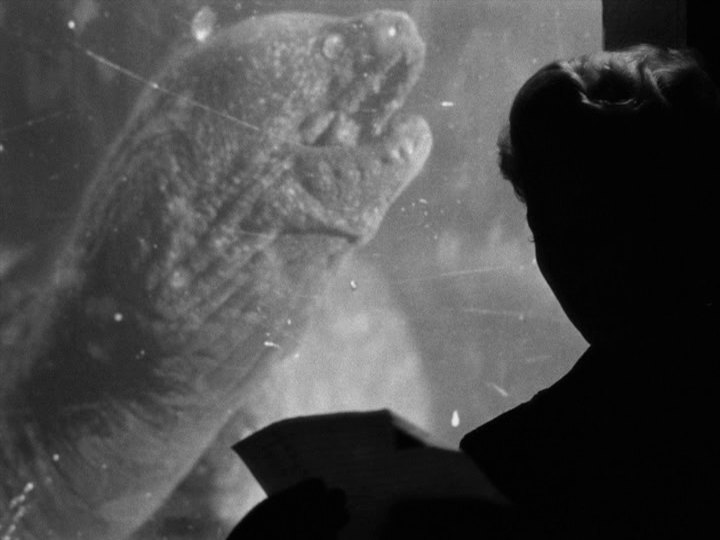
And a moray eel enlarged to monstrous proportions which reminds me of the one at the National Aquarium in Baltimore we visited every snow day when we lived there:
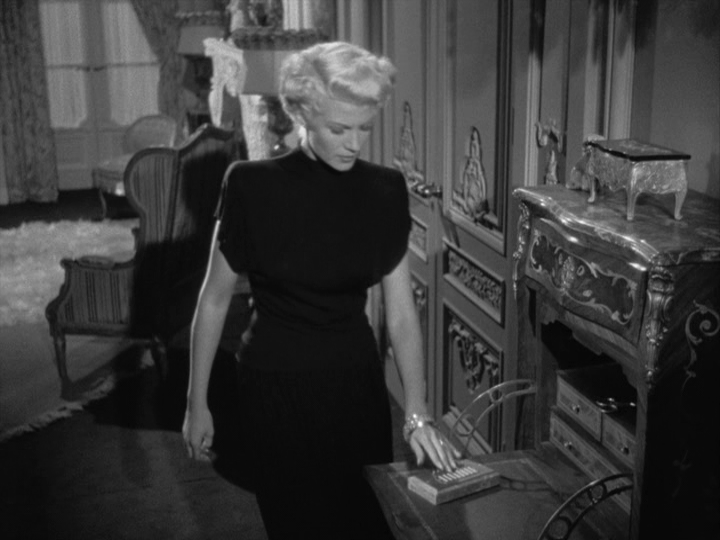
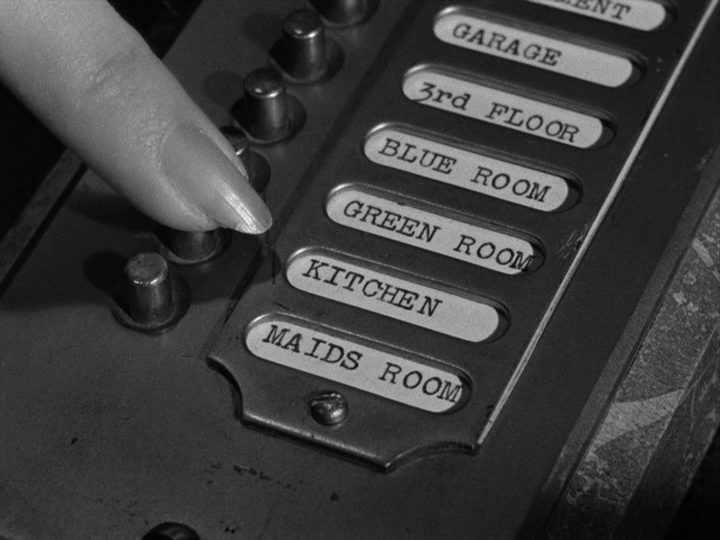
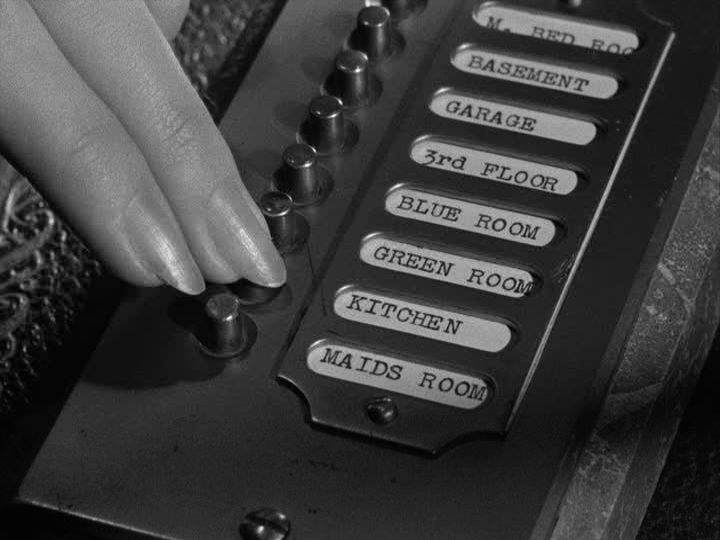
I also love the shots of Elsa stabbing at buttons on an intercom which appear to cause a man who has been shot to burst through a door in another room:
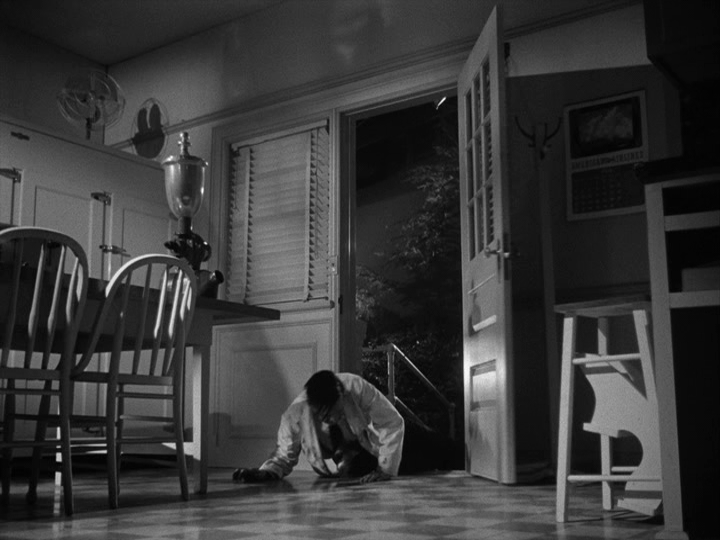
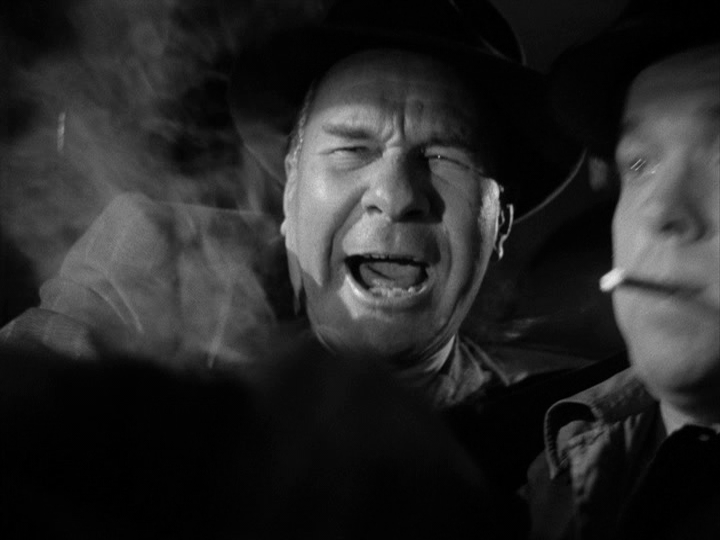
And a car carrying Michael and Grisby to accelerate and collide with the truck in front of it:
Finally, as American Cinematographer amusingly noted, “the climax of the picture, during which the antagonists shoot it out in this mirrored room, is one of those unforgettable cinematic moments that seem to occur all too rarely these days.”
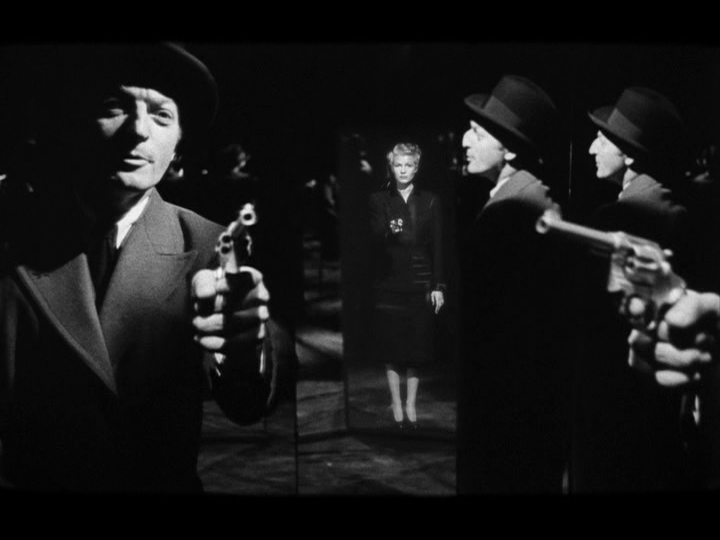
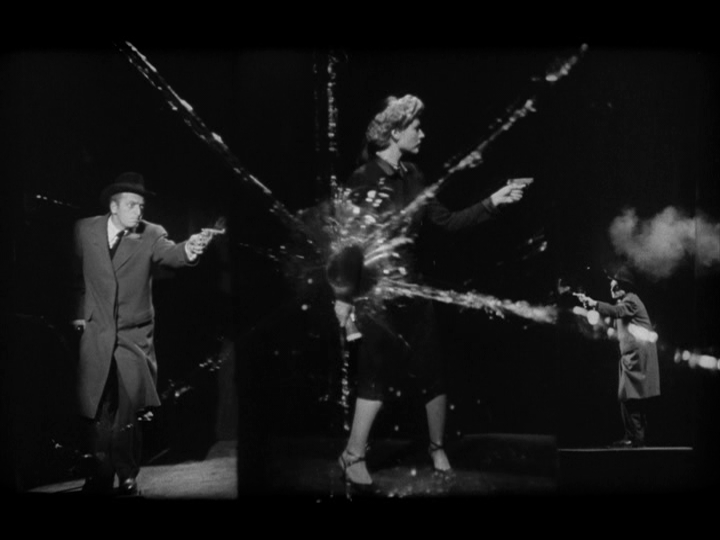
The joke is that those words were written in 1948, not tweeted out yesterday! Sure, the Crazy House sequence that precedes this one, which Welles told Bogdanovich would have been even more acclaimed had it remained intact, is reduced to just 90 seconds of shadows, signs, and slides:
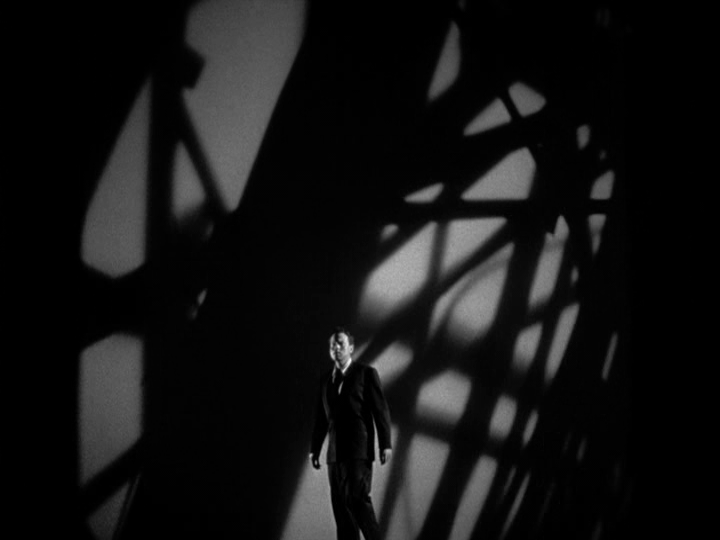
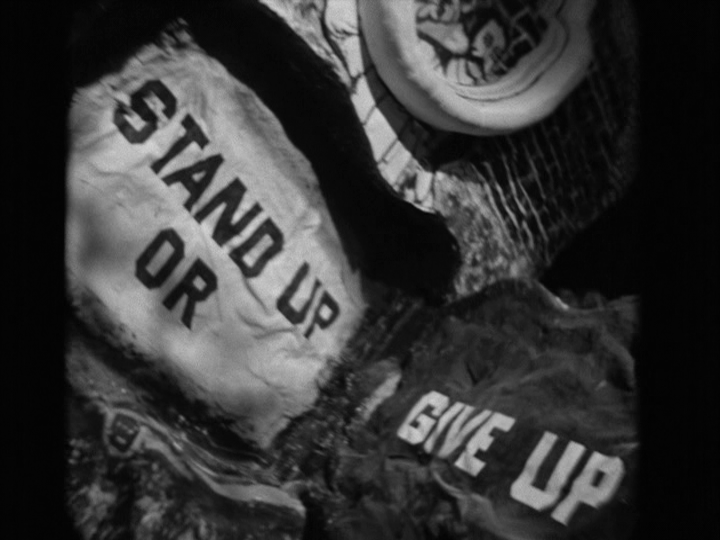
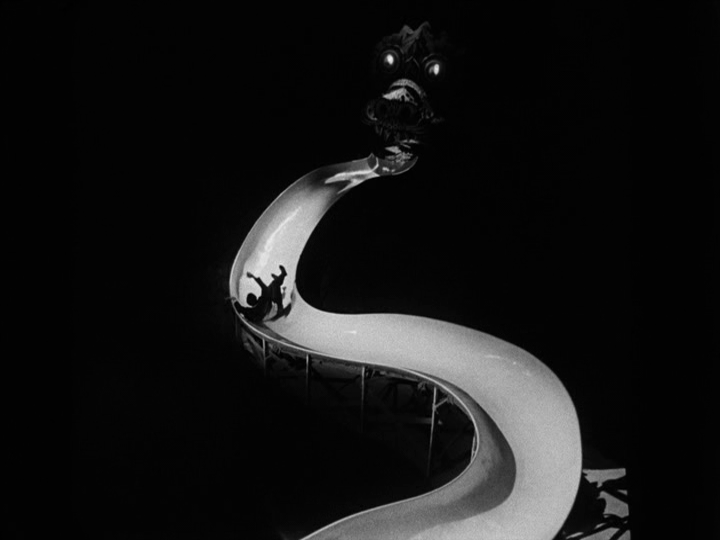
But a little bit of The Cabinet of Dr. Caligari (which according to Simon Callow’s biography Welles screened for his cast and crew) goes a long way.
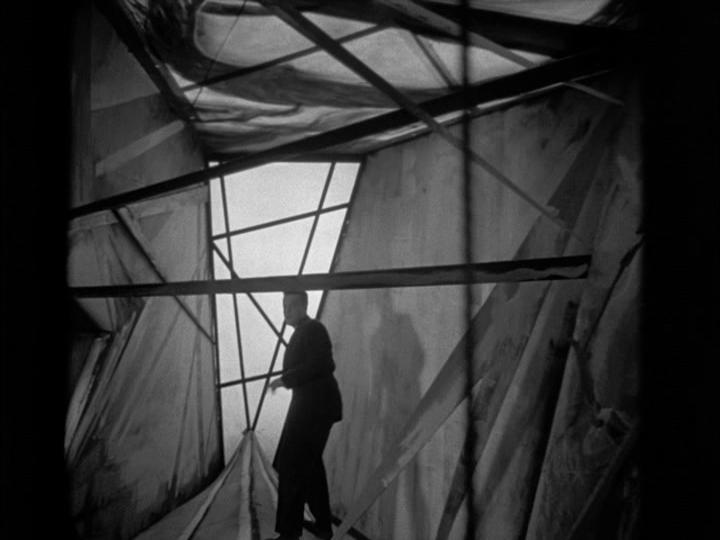
And in the end Naremore concludes that “there is a sense in which all of Columbia’s tampering with the film has not been as disruptive as, say, RKO’s revisions of The Magnificent Ambersons.” To him this is primarily because it is “characterized by a sort of inspired silliness, a grotesquely comic stylization that has moved beyond expressionism toward absurdity.” This certainly is true of Glenn Anders’s performance, which Bogdanovich describes as “free in its eccentricity and eccentric in its freedom.”
I think it’s also because as Robert B. Pippin observes in his book Fatalism in American Film Noir, “Michael plans to be a novelist” and “what we are hearing as the voiceover appears to be the novel he has written after all these events are over,” so the inconsistencies can all be chalked up as bad writing or the sins of an unreliable narrator.
Last but not least Barbara Leaming notes in her biography of Welles that he “read and assimilated [Bertolt] Brecht” shortly before The Lady from Shanghai in preparation for a collaboration that never came to fruition, which to her “explains the peculiar presence of the otherwise incongruous (and hitherto mysterious) Chinese theater sequence toward the end.” Although the translations of the film’s unsubtitled Cantonese dialogue that Kelly Oliver and Benigno Trigo provide in their book Noir Anxiety demonstrate that these scenes are thematically consonant (the opera “performs the trial of a woman accused of being a sinner”) with the rest of the work, her observations that this is also the reason no one in the audience seems bothered by Michael and Elsa talking since “the alienated acting of the Chinese theater is perfectly tolerant of interruptions and disturbances” and that “Brecht writes that the Chinese actor occasionally looks directly at the audience, even as he continues his performance–and so it is in this sequence when the police arrive” remain valid:
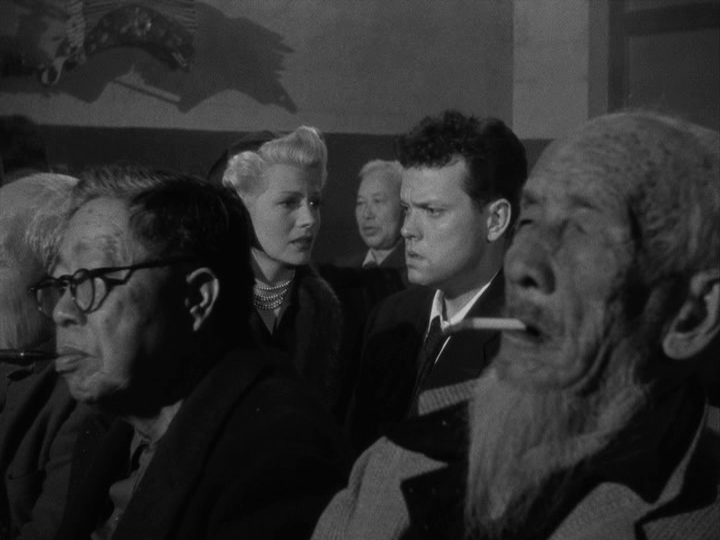
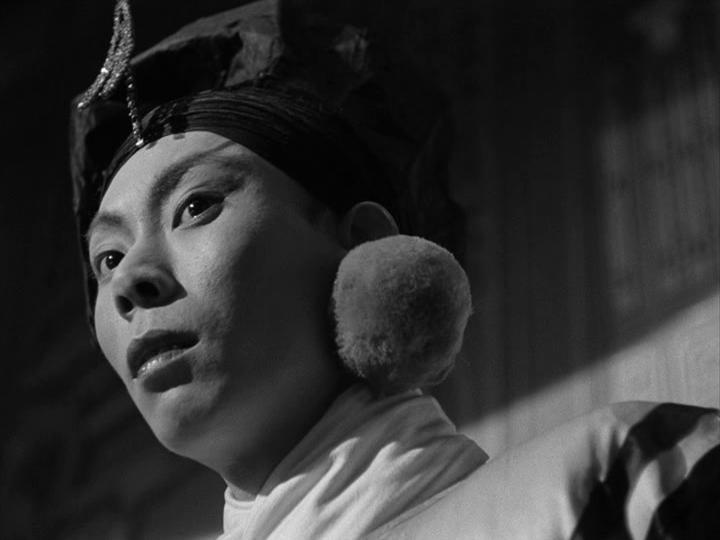
As does her suggestion that “the Chinese theater sequence illuminates the distinctly odd–almost chilly–acting style that permeates the film as a whole.” So, yeah, The Lady from Shanghai is an odd duck of a film! But here’s something even crazier: it also appears to be an inspiration for my December, 2022 Drink & a Movie selection Elf! Compare this shot of two people blatantly flaunting smoking regulations:
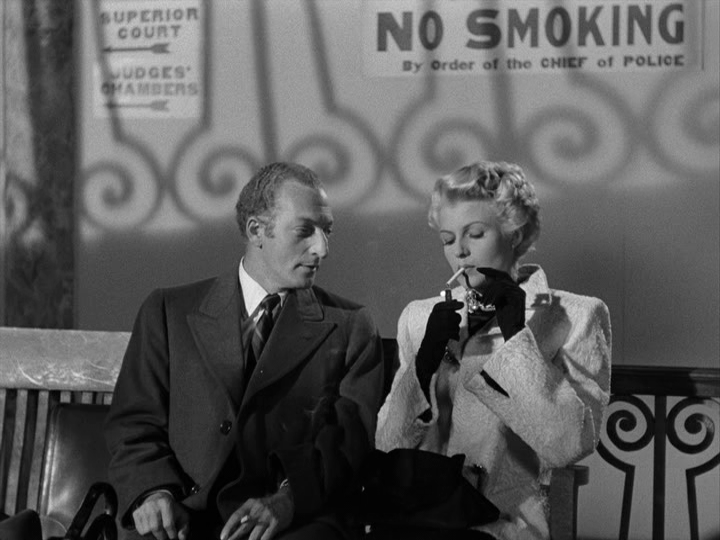
With this one:
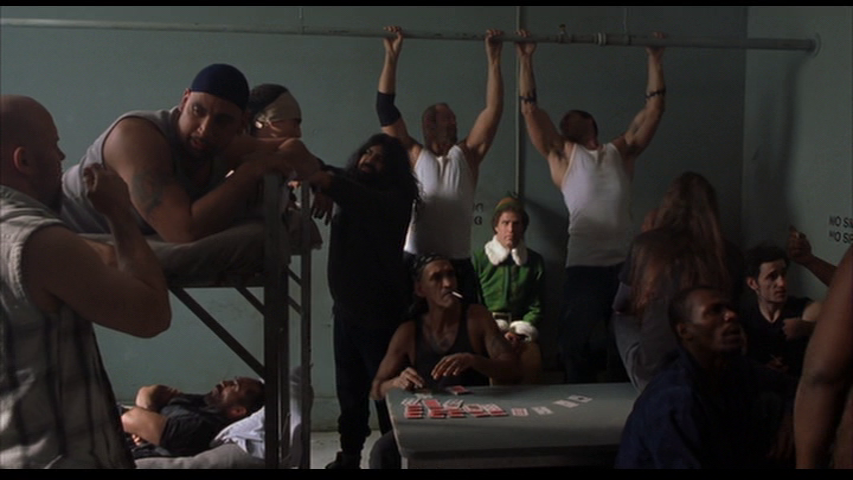
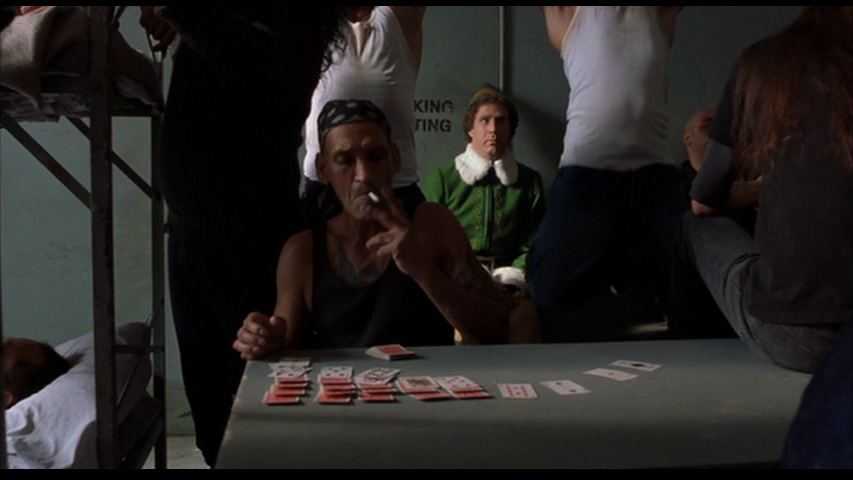
Which, okay, you’re not convinced. I get it. But consider as well this description of Michael from Joseph McBride’s Welles biography:
Part of what makes Welles’s film so unsettling is the ironic tension between the moral issues and the characters’ apparent lack of interest in them. K.’s whole life in The Trial is changed by his investigation into the principles behind his case, and Quinlan in Touch of Evil spends most of his time rectifying the moral inadequacy of the law; but in The Lady from Shanghai O’Hara treats his legal predicament as only an unpleasant adventure he must get through so he can move on to a more important concern–Elsa Bannister, the lawyer’s wife. Unfortunately, as he discovers, she is the instigator of the whole complex murder plot, and the issues encroach heavily on his fate despite his avoidance of them. At the end he has been forced to formulate a philosophical position similar to the tragic understanding Welles’s other heroes achieve, but of a less definitive nature.
Doesn’t that sound a lot like the exact inverse of the way the contagious goodness of a certain “deranged elf-man” we all know and love teaches a cynical world how to believe again? Something to ponder while you enjoy your drink!
Cheers!
All original photographs in this post are by Marion Penning, aka My Loving Wife. Links to all of the entries in this series can be found here.
After seeing Inside Out 2 at the Regal Ithaca Mall in June, I posted about something that intrigued me about it and its predecessor. One of the five emotions (Joy, Sadness, Anger, Disgust, and Fear) in the “command center” of every human and animal that appears in either film seems to be positioned as hierarchically senior to the others, but it isn’t the same one each time. Referencing this New York Times article by Maya Phillips, I wrote:
I can’t help but wonder what determines which emotion is ascendent. Is it just whichever one appears first? If so, this would justify Phillips’ support for the fact that in the Inside Out universe controlling your anxiety looks like “sitting her down in a cozy recliner with a cup of tea.” But could a person who isn’t anxious all the time have a mind where Anxiety is in the driver’s seat but takes advice from other emotions in much the same way that Sadness and Anger do in the case of her parents? Suddenly I find myself eager to spend some time with Inside Out 2 after it comes out on DVD (hence the “Part One” in the title of this post) to see if it offers any hints!
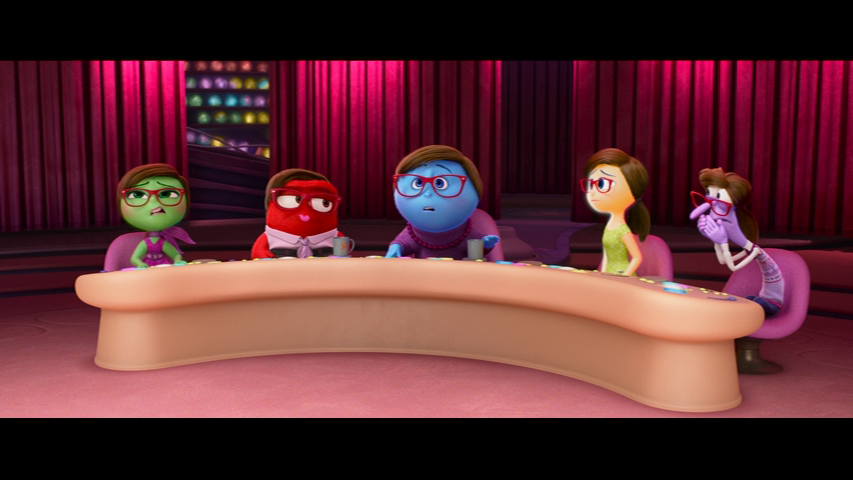
Unfortunately, a second viewing of the sequel didn’t shed much light on the matter. We get just brief glimpses into the command centers of only four characters other than Riley. “Well, we all knew this day would come,” says Riley’s mom’s Anger (Paula Pell) the morning after Riley enters puberty, in reply to which her Sadness (Lori Allen), who is in the driver’s seat, reminds everyone to remain calm and “stick to the prepared script.” She then pushes a button that causes Riley’s mom (Diane Lane) to launch into a speech about a “beautiful butterfly”:
Next, we see the emotions of Riley’s friends Bree (Sumayyah Nuriddin-Green) and Grace (Grace Lu) during a conversation that ends with Riley discovering they won’t all be going to the same high school like she thought:
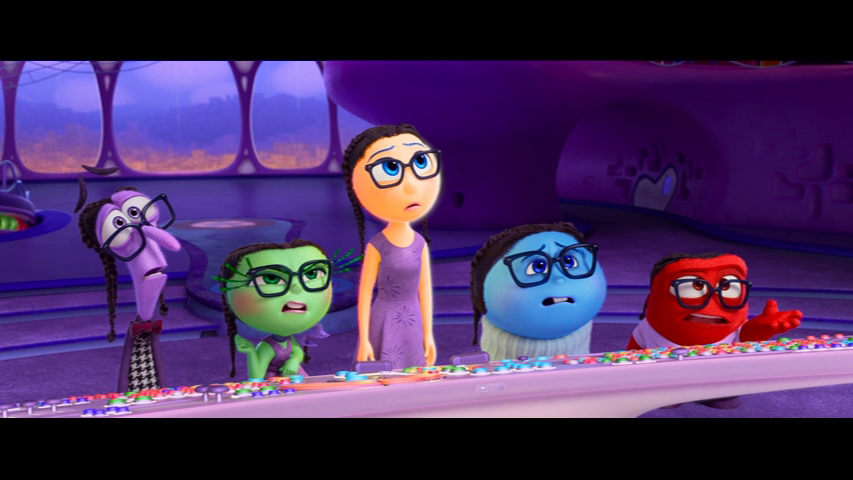
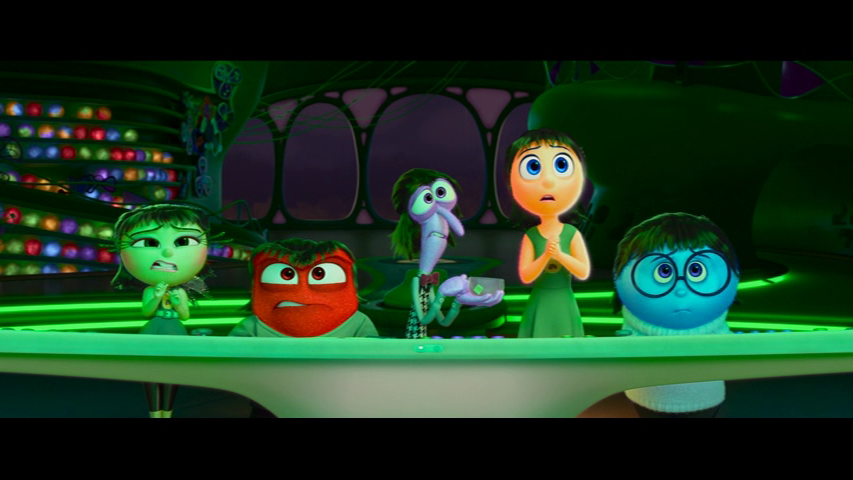
Their positioning suggests that Joy is in charge of Bree’s emotions (left) and Fear is in charge of Grace’s (right), which seems to match what little we know about each girl, but this is obviously inconclusive. Finally, we meet someone else’s new (since the last film) emotion for the first time when Riley’s mom and dad (Kyle MacLachlan) react to her terse (“it was good”) response to a question about how the sleep-away hockey camp she just got back from was during the end credits. “What about the red in her hair? Did she join a gang?” worries her mom’s Anxiety (Mona Marshall), to which her Sadness replies, “welcome back” and hands her a cup of tea:
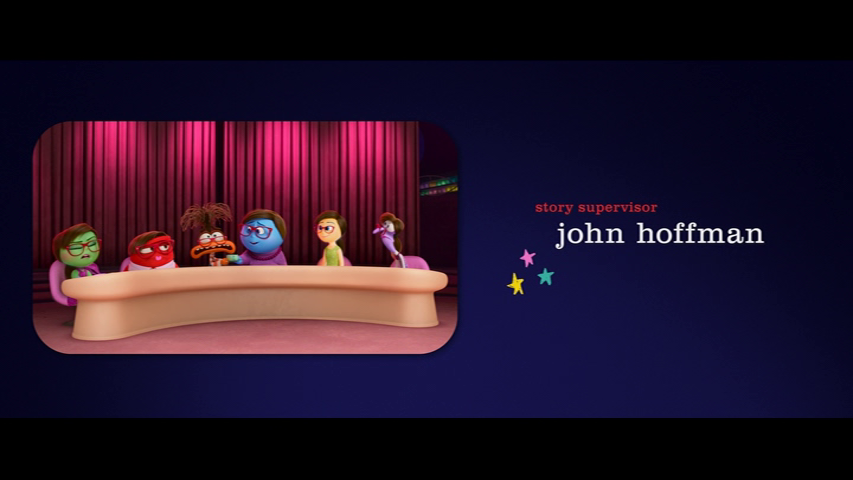
Then Riley’s dad’s Anxiety (Roger Craig Smith) bursts into his command center and cries, “she goes away for three days and all we get is ‘good’?”
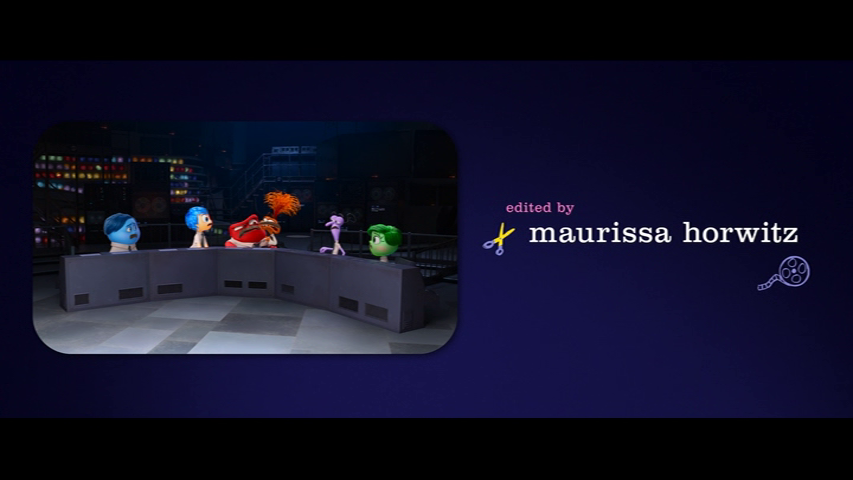
“Yeah, sounds right, back to the game,” says his Anger (Pete Docter):
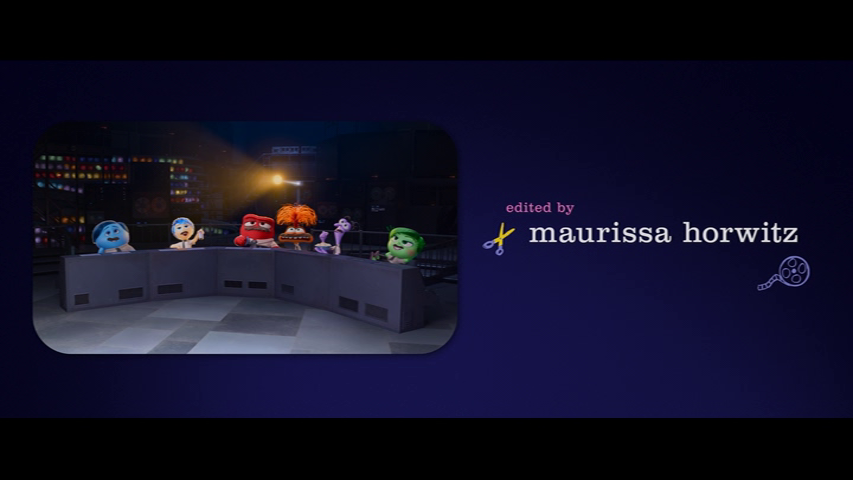
Interestingly, a popping can sound effect indicates that at least one of his emotions (Joy?) may be drinking a beer, which connects his response to Anxiety to that of his wife and daughter. As mentioned by Phillips, a calming beverage is also how Riley’s emotions control their Anxiety:

That’s it for new evidence, though, so I guess we’ll have to wait for a third installment in the franchise to learn whether a peaceful coup is possible in the Inside Out universe or if the only minds dominated by Anxiety are unhealthy ones.
Thanksgiving dinner was one of the first meals I ever taught myself to cook. My roommates and I moved off campus prior to our sophomore year at the University of Pittsburgh, and to our delight we learned that we could earn a free turkey by accruing points when we did our grocery shopping at the local Giant Eagle. Thus was born an annual “Friendsgiving” tradition which became my earliest foray into wine pairing when I turned 21. Having no real idea what I was looking for, it’s little wonder that I gravitated toward the endcaps laden with colorfully-labeled Beaujolais nouveau. Although it’s no longer a fixture on my holiday table, I usually can’t resist the urge to pick up a bottle or two every year for old time’s sake. Most (including this year’s selection, the Clos du Fief Beaujolais-Villages Nouveau La Roche 2024 I purchased from Northside Wine & Spirits) are genuinely enjoyable on their own, but my preferred use for them is in Jim Meehan’s Nouveau Sangaree from The PDT Cocktail Book. Here’s how to make it:
2 ozs. Beaujolais nouveau (Clos du Fief Beaujolais-Villages Nouveau La Roche 2024)
1 1/2 ozs. Bonded apple brandy (Laird’s 10th Generation)
1/2 oz. Sloe gin (Hayman’s)
1/4 oz. Maple syrup
2 dashes Angostura bitters
Stir all ingredients with ice and strain into a chilled cocktail glass. Garnish with grated cinnamon.
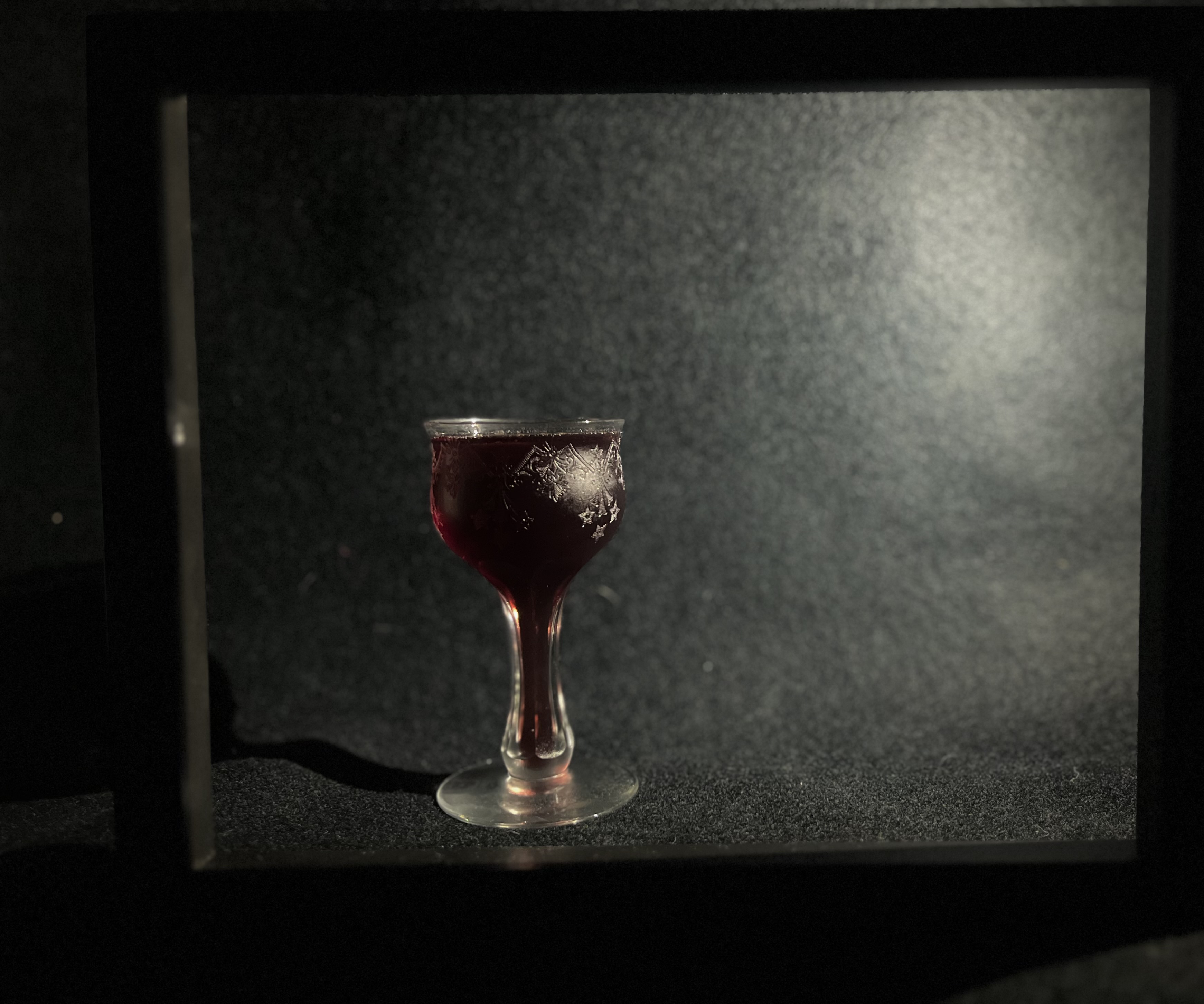
As Robert Simonson said when writing about this drink for the New York Times, “sloe gin and maple syrup remind you that life should be sweet during the holidays.” The former amplifies the floral and fruity notes of the wine, while the latter creates a creamy texture and combines with the caramel and vanilla flavors of the applejack to linger on the palate. The overall impression is something like a poached pear. Meehan’s recipe specifically calls for “Grade B” maple syrup, but as I mentioned back in August, 2022 that rating no longer exists, so use “Grade A Dark Robust” or just the best stuff you can find. Finally, he employs an apple fan garnish, which probably would announce the presence of the brandy more clearly, but this is a bit fussy for us and we’re happy with just grated cinnamon.
The movie Playtime is a perfect match for this beverage because its centerpiece Royal Garden sequence embodies the celebratory and improvisational nature of the celebrations from my 20s I want to commemorate. They’re also both great fits for the month of December. In the case of the cocktail that’s because it can help use up leftover bottles of wine, while the movie employs a seasonally-appropriate green and red color scheme to great effect. Here’s a picture of my Criterion Collection DVD copy of the latter:

It can also be streamed on the Criterion Channel with a subscription and rented from a variety of other platforms, and some people (including current Cornell University faculty, staff, and students) may have access to it through Kanopy via a license paid for by their local academic or public library as well.
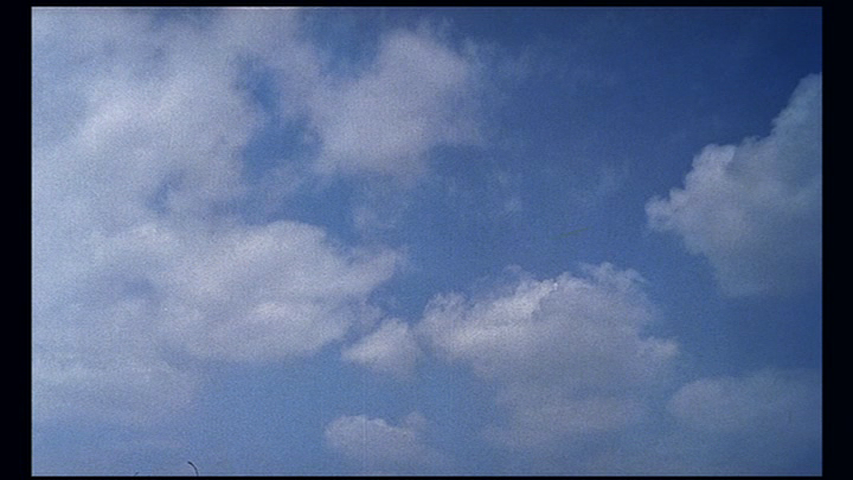
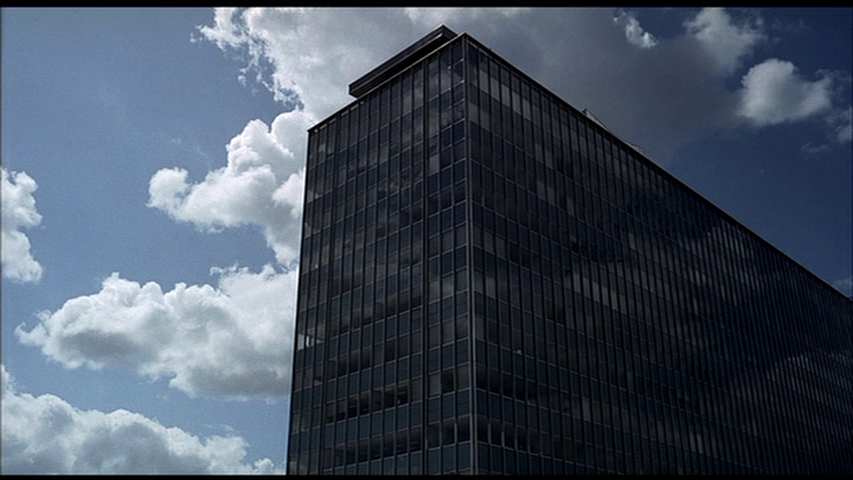
Playtime begins in a place that My Loving Wife, watching it for the first time, assumed was some sort of anteroom to the afterlife, a reading that I imagine director Jacques Tati would have loved. An opening credits sequence featuring clouds, which ties it to some of my other favorite movies, gives way to an establishing shot of a glass and steel skyscraper:
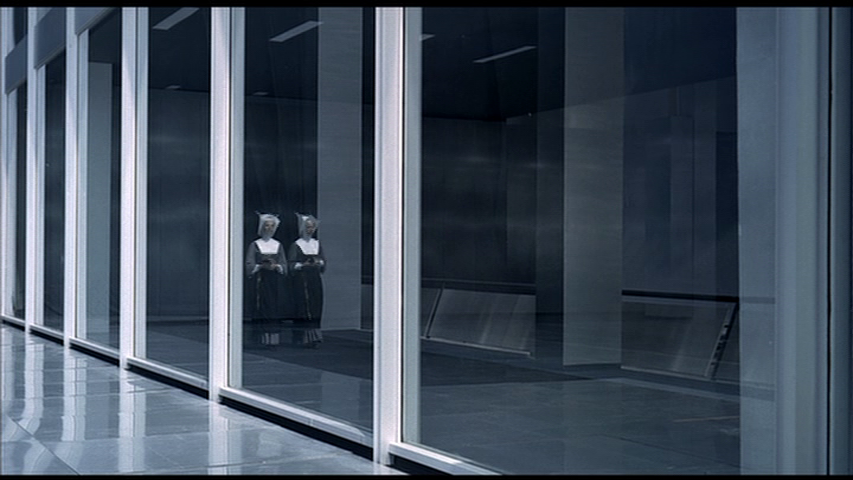
The first human beings we see are two nuns:
And a cut on motion sets up the film’s first gag. Two people, a man and a woman, talk in the foreground.
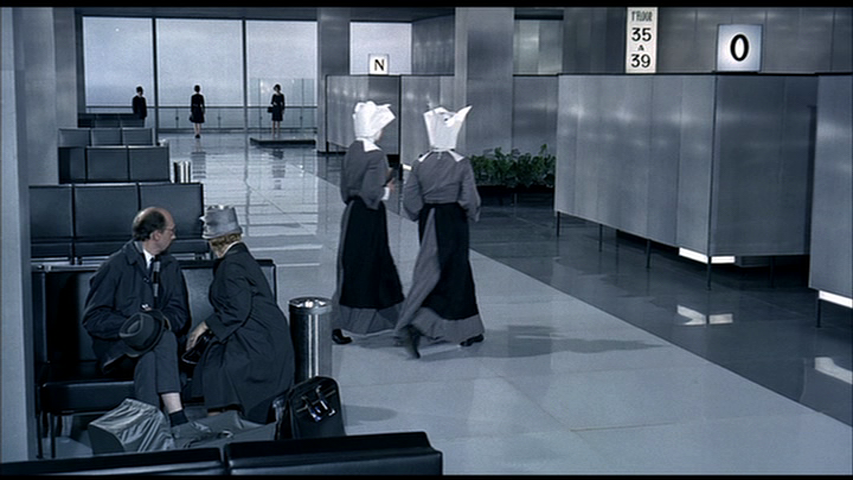
We can tell from their conversation that he’s going somewhere: “wrap your scarf around so you don’t catch cold,” his companion tells him, and “take care of yourself.” They also talk about the other people who appear in the frame with them, including first a man who “looks important” and then “an officer”:
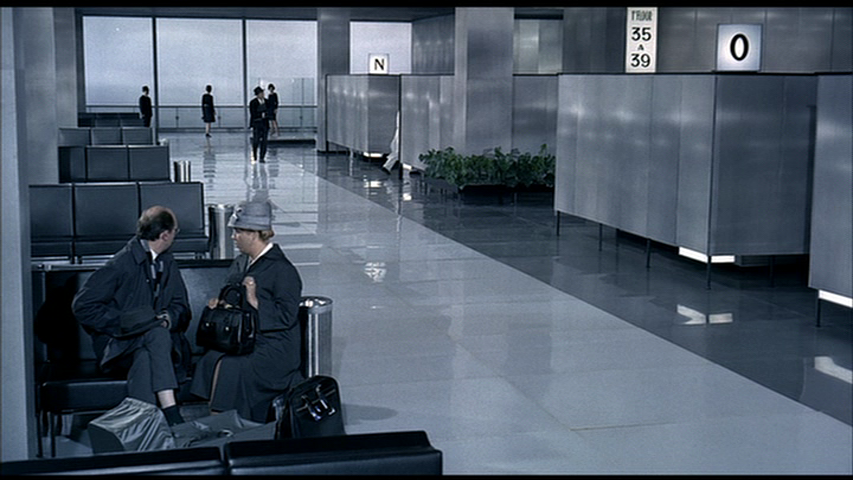
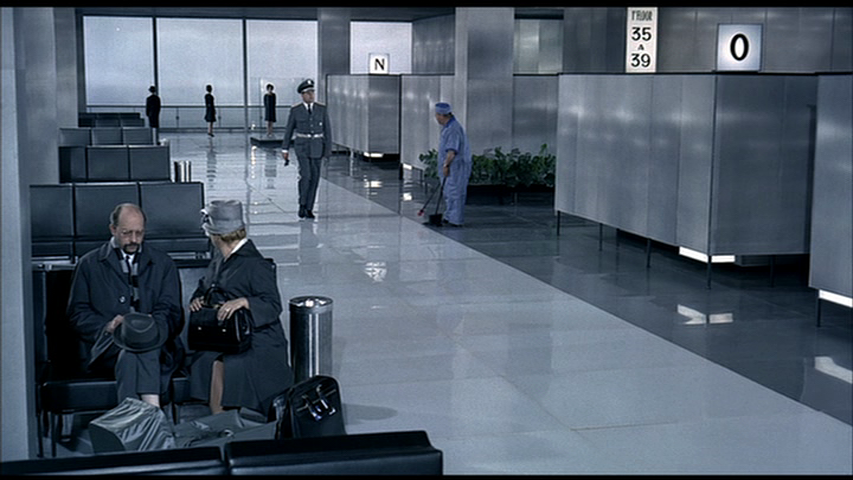
It’s only when a woman who looks like she could be a nurse carrying a bundle of towels that resemble an infant in swaddling clothes appears accompanied by the sound of a baby crying that we notice the gray stroller in front of them which up until this point had completely blended into its surroundings:
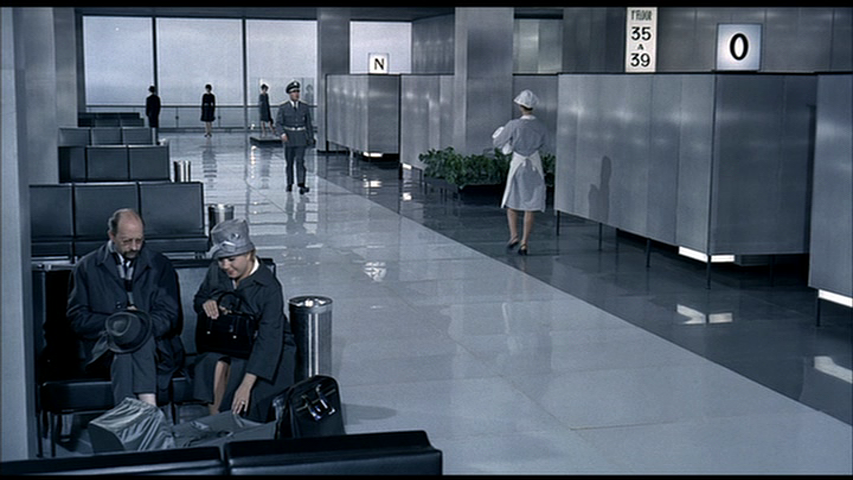
This is just the first of many instances of what Lucy Fischer (who was chair of the film studies department at Pitt when I was a student there) calls “one of the major functions of Tati’s remarkable soundtracks” in a Sight & Sound article called “‘Beyond Freedom & Dignity’: An Analysis of Jacques Tati’s Playtime“–the way they “provide aural cues to guide our visual perception.” As Fischer notes, he uses color the same way, beginning with the elaborate presentation of a gift which we pick out from a crowded monochrome mise-en-scène in large part because of its bright red bow:
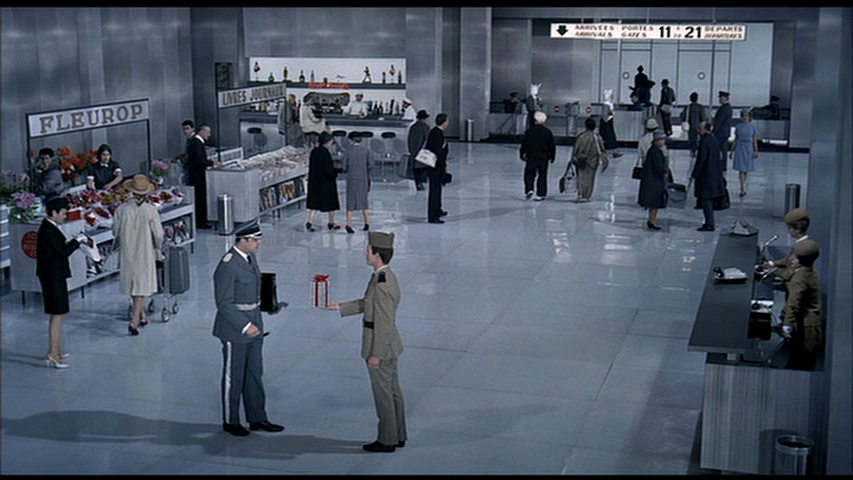
It’s also an early example of what Lisa Landrum identifies as Tati’s use of color to “symbolically to reveal narrative and allegorical meaning” in her chapter in the book Filming the City, here as a “crimson reminders of life’s more sensual pleasures.”
We next encounter a gaggle of American tourists who will eventually lead us out of what by now we realize is an airport:
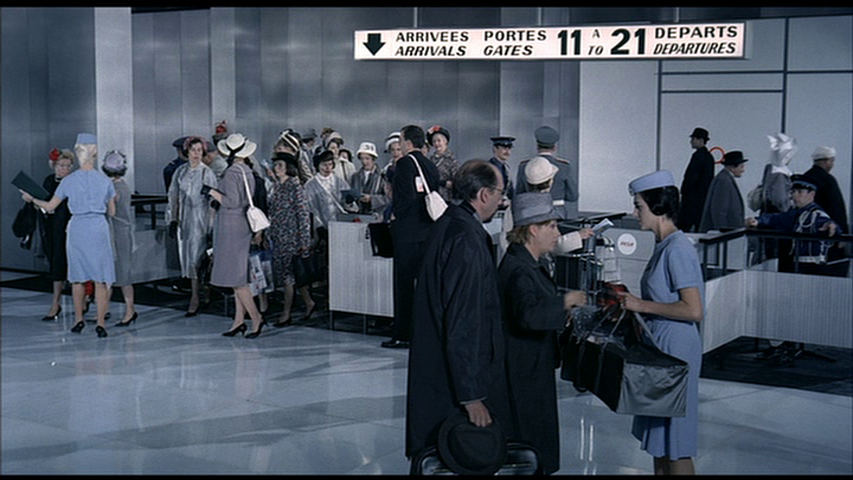
Followed by the introductory appearance of our ostensible protagonist Monsieur Hulot (Tati) with his signature hat, overcoat, and umbrella in the background of the same scene:
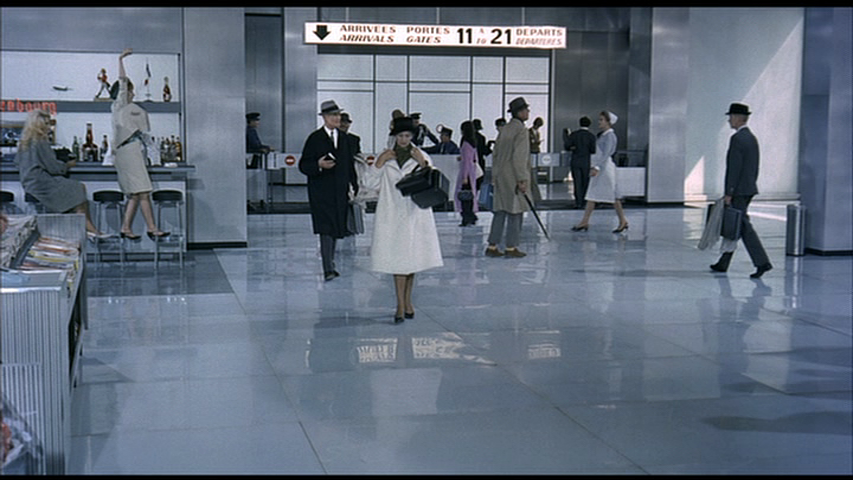
And the inaugural example of what Jonathan Rosenbaum refers to as “‘false’ Hulots” a few moments later:
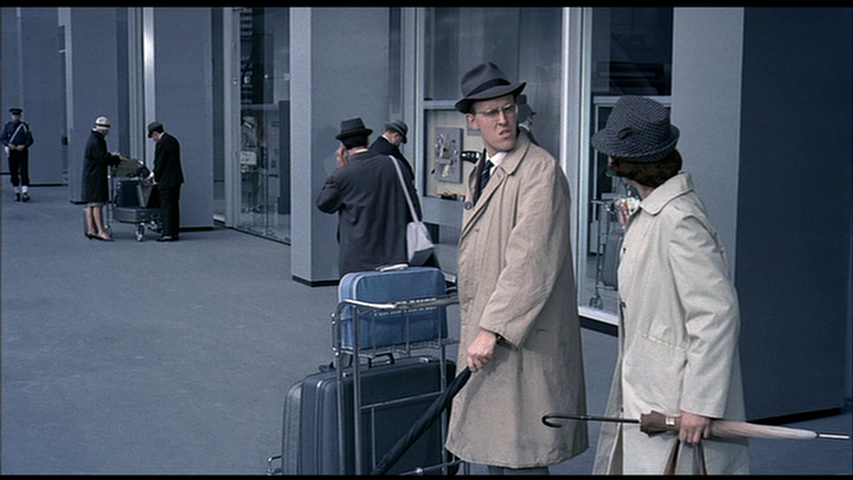
It’s unclear (and completely irrelevant) what Hulot is doing at the airport, but we next encounter him making his way to an appointment in another modern high-rise, where he is announced via the most over-engineered intercom system on this side of Toontown:
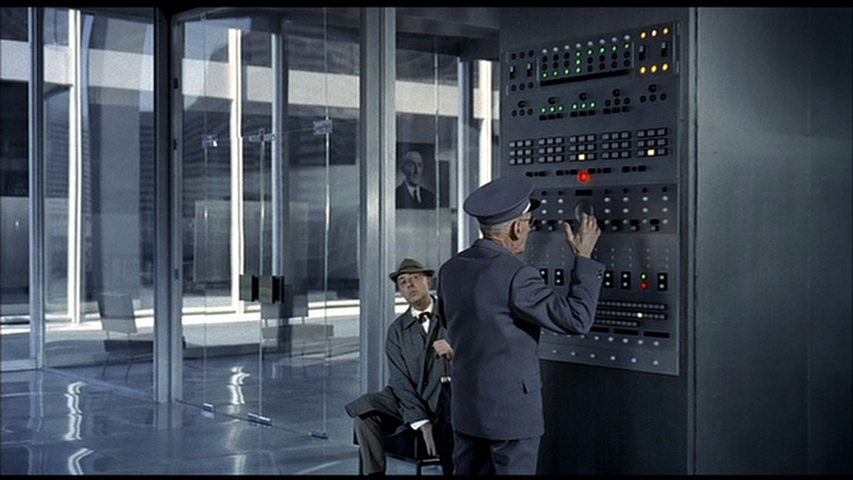
We hear the footsteps of the man he’s there to meet, Monsieur Giffard (Georges Montant), before we see him approaching down a deep focus corridor so long that the doorman (Léon Doyen) tells Hulot to sit back down twice:
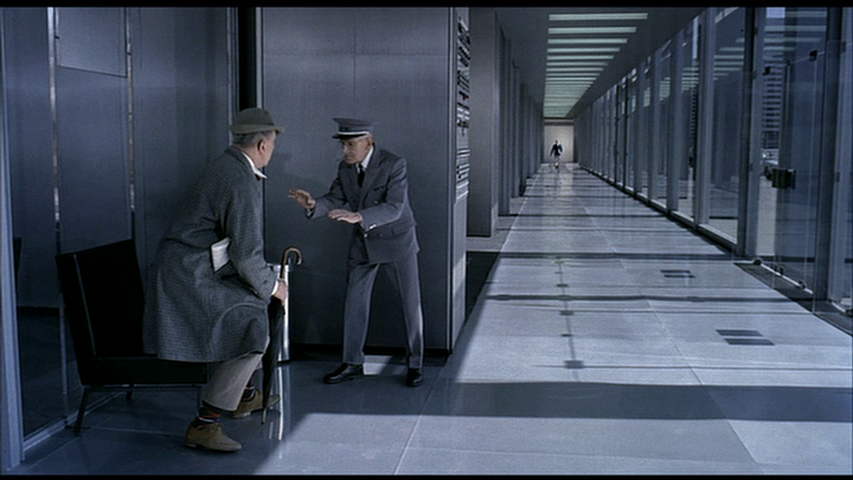
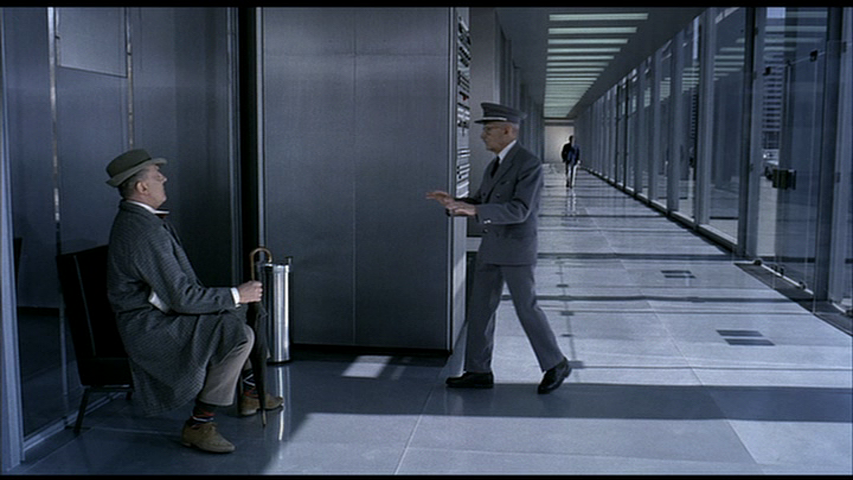
When Giffard finally arrives, he ushers Hulot into a display case-like waiting room filled with portraits that seem to disapprovingly watch his every move:
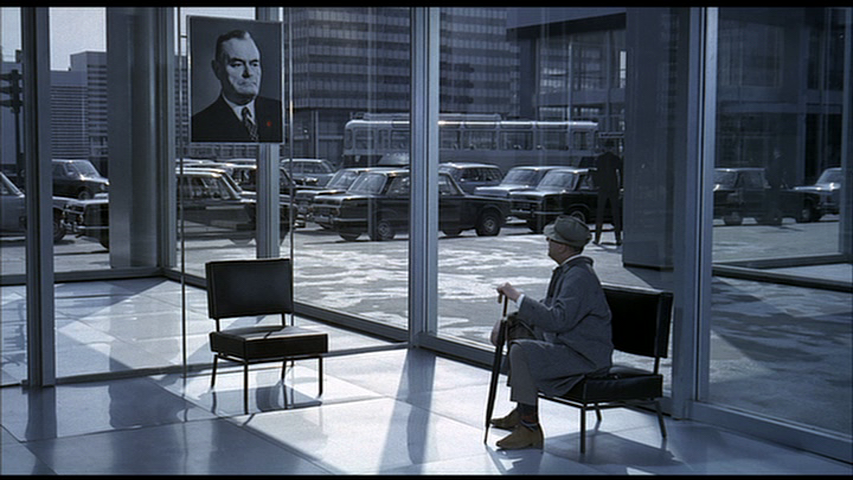
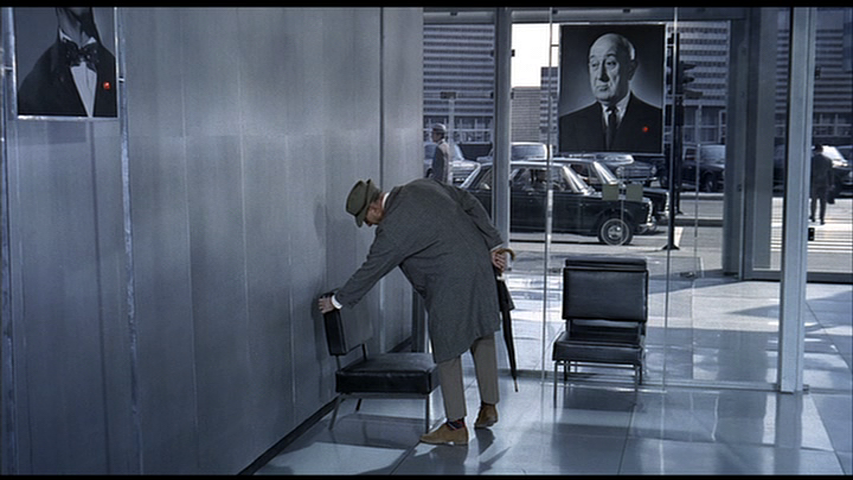
A man with fascinatingly robotic habits that seem to mark him as a natural inhabitant of this sterile environment:
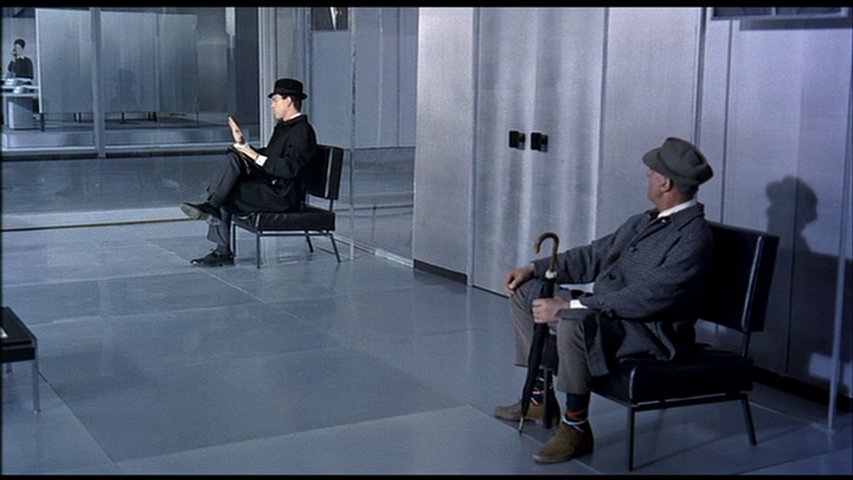
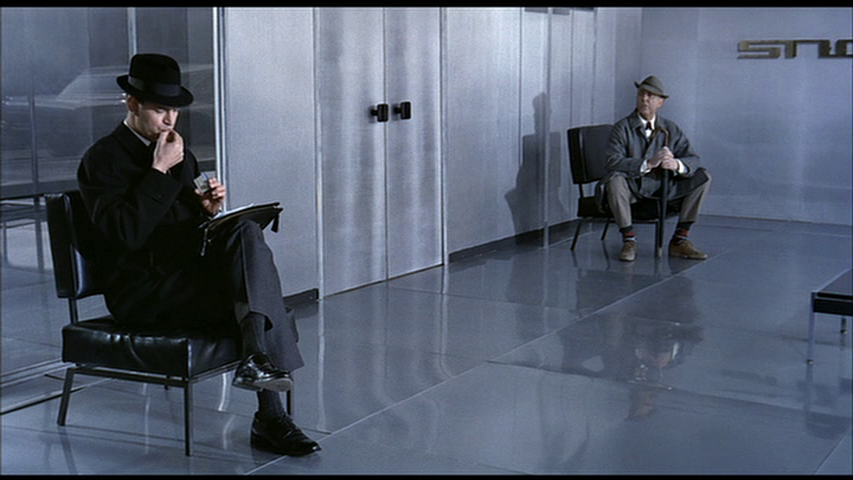
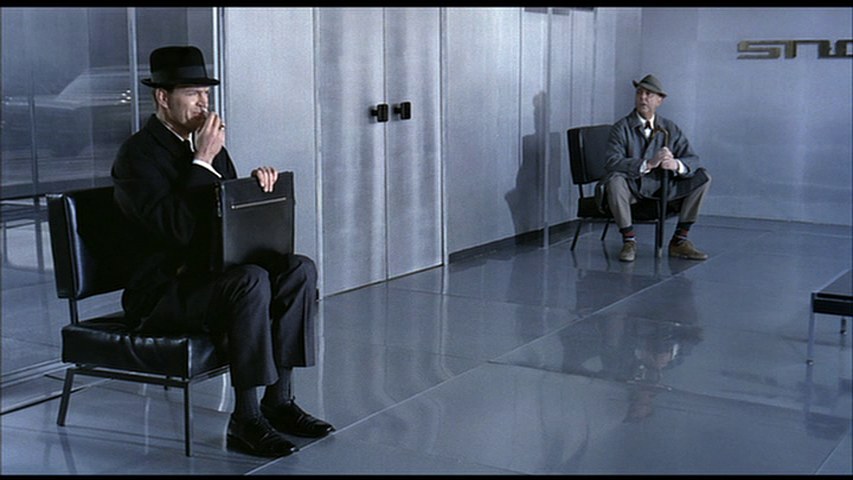
And a slippery floor that causes what Rosenbaum describes as “the first significant curve in the film that undermines all the straight lines and right angles dictated by the architecture and echoed by all the human movements”:
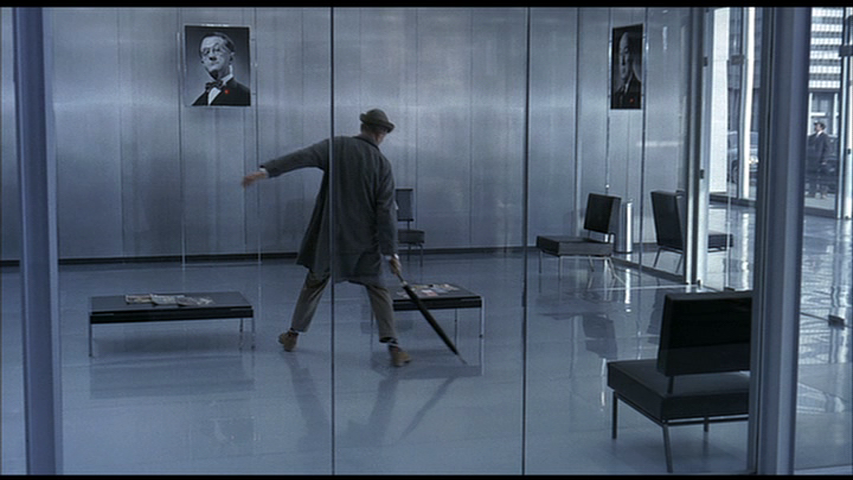
Giffard and Hulot wind up chasing each other through a maze of cubicles in which a receptionist’s rotating chair creates the impression of turning a corner and getting nowhere:
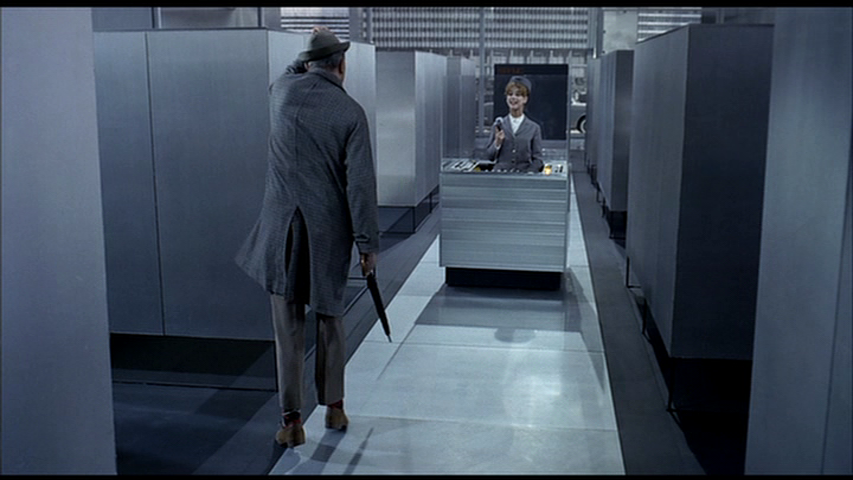
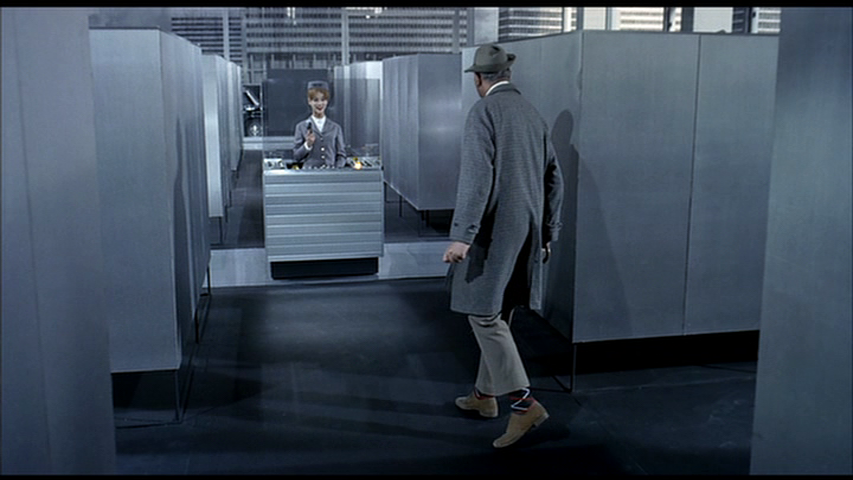
Green (bottom right of frame) and red lights (top left) draw our attention to two people who don’t realize they’re standing right next to each other talking on the phone:
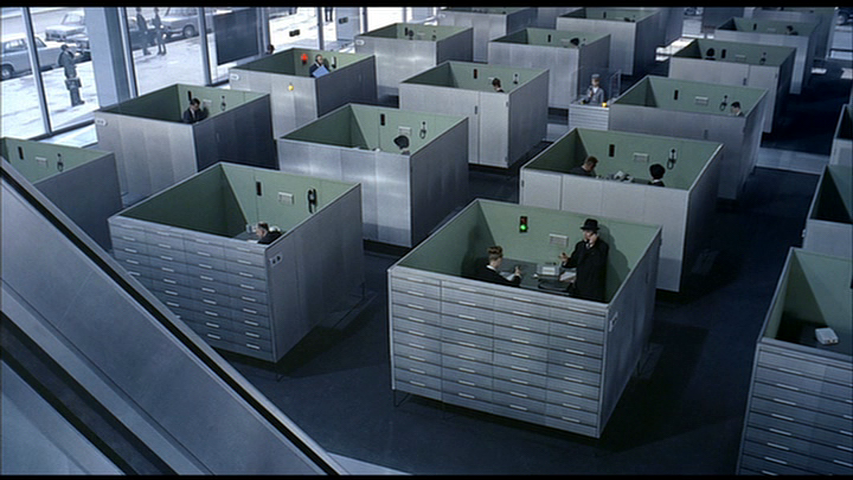
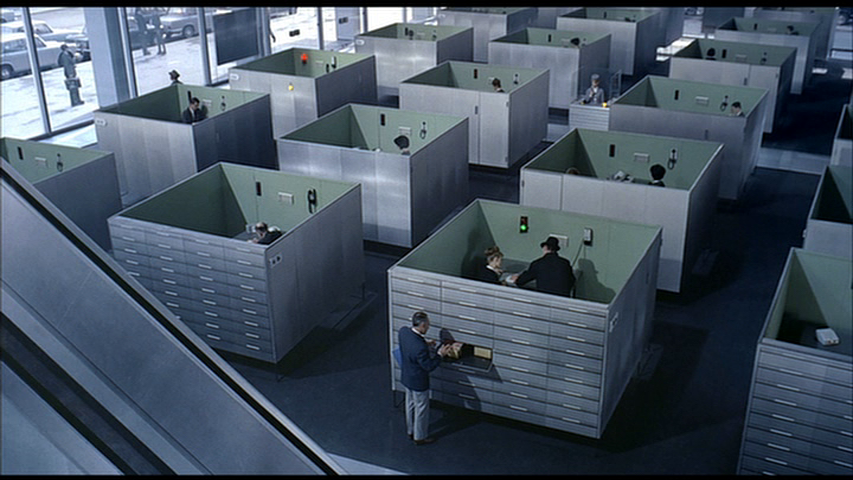
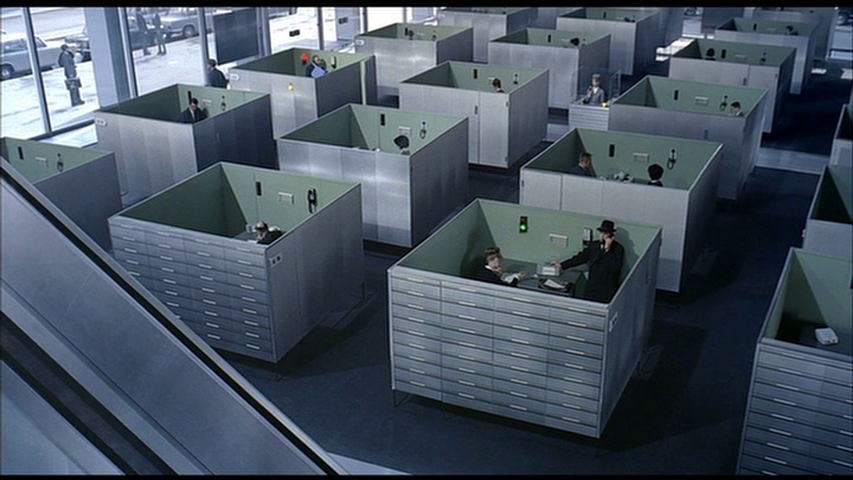
And Giffard’s reflection results in them losing each other for good when Hulot leaves the building they’re both in for the identical one next door:
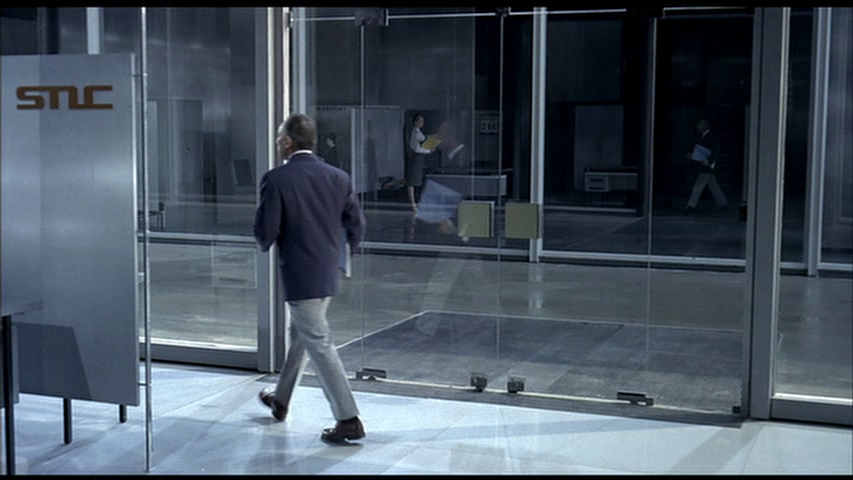

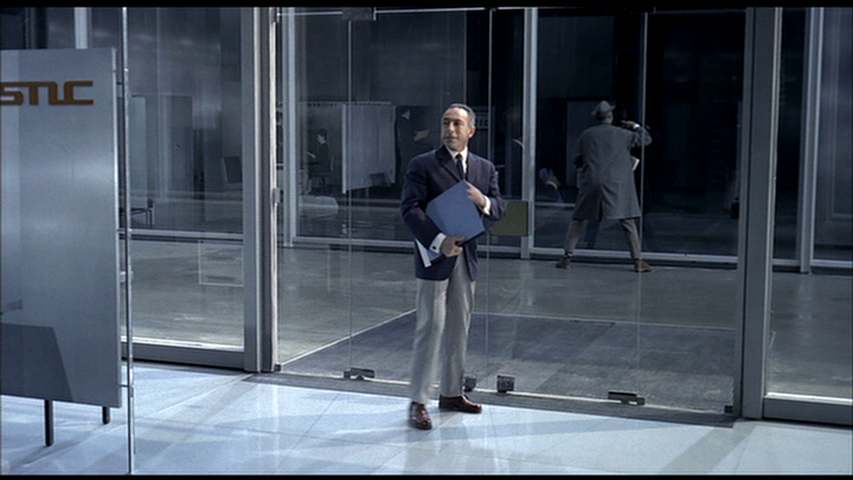
The next 20 minutes or so of the film unfold during a business exposition that both Hulot and the Americans from the airport find themselves attending, him by accident and them on purpose. One tourist named Barbara (Barbara Dennek) pursues an illusive “real Paris” that she’s only able to glimpse in reflections while her companions ooh and aah over a broom with headlights:
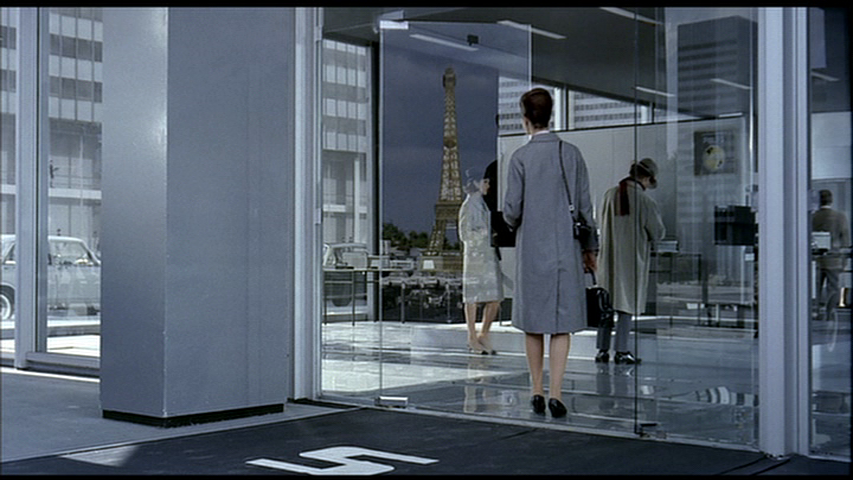
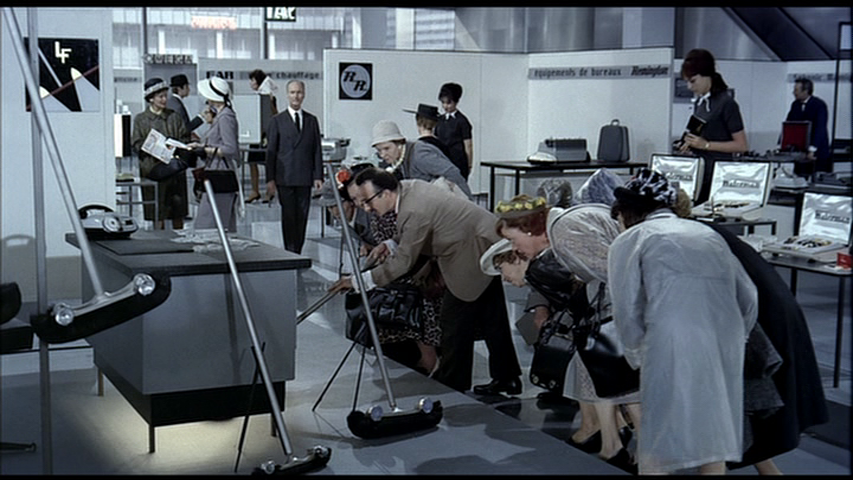
Meanwhile, Hulot is mistaken (due to confusion with another false Hulot) for first a corporate spy by a German businessman whose company’s motto is “Slam your Doors in Golden Silence,” then a lamp salesman when he loses his trademark outerwear:
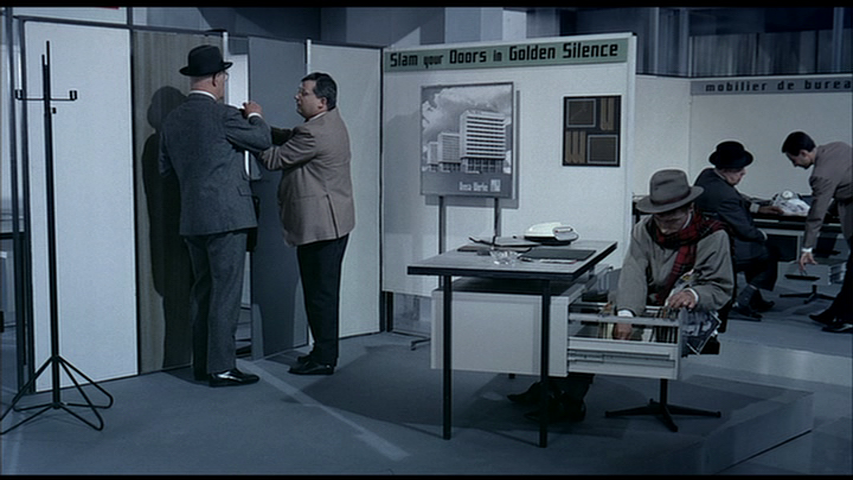
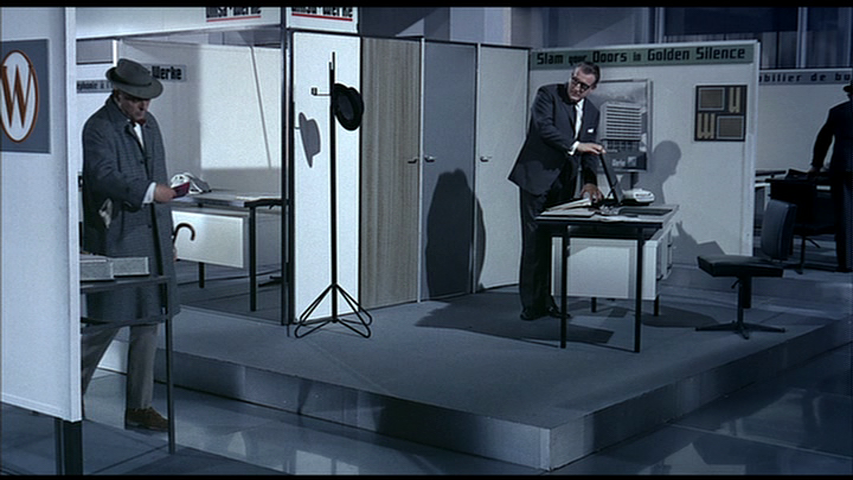
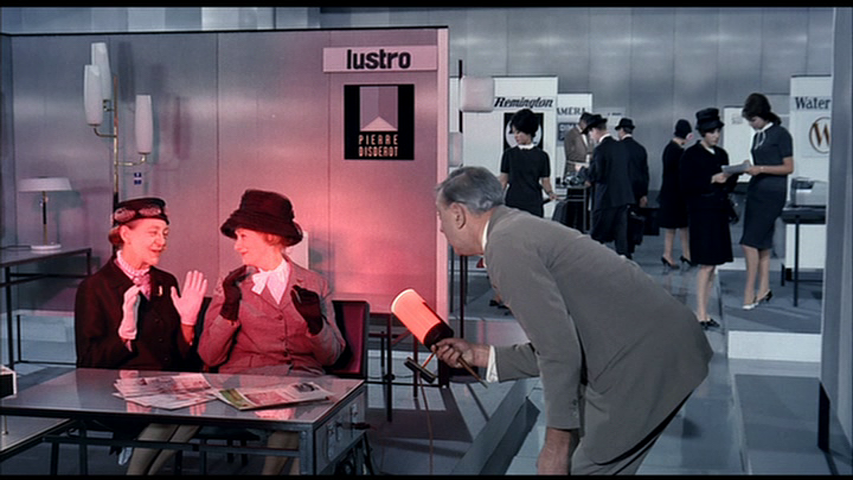
The sequence ends with Tati making his critique of the sameness of contemporary architecture more explicit via a set of travel agency posters:
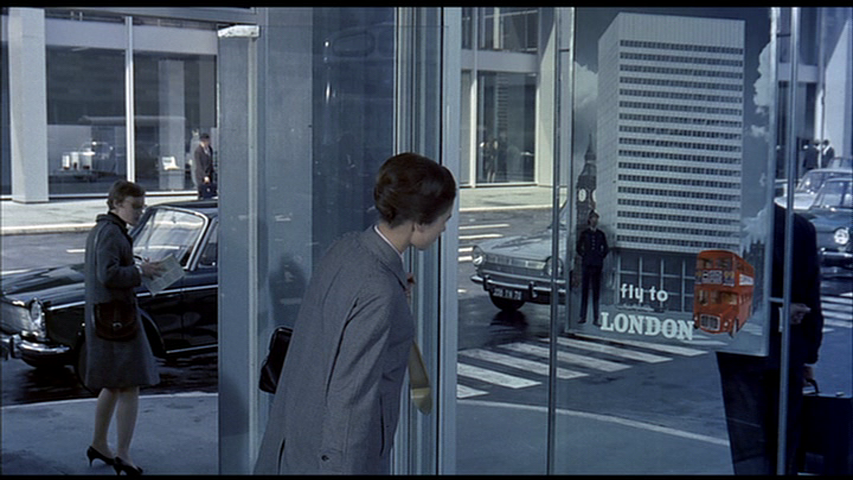
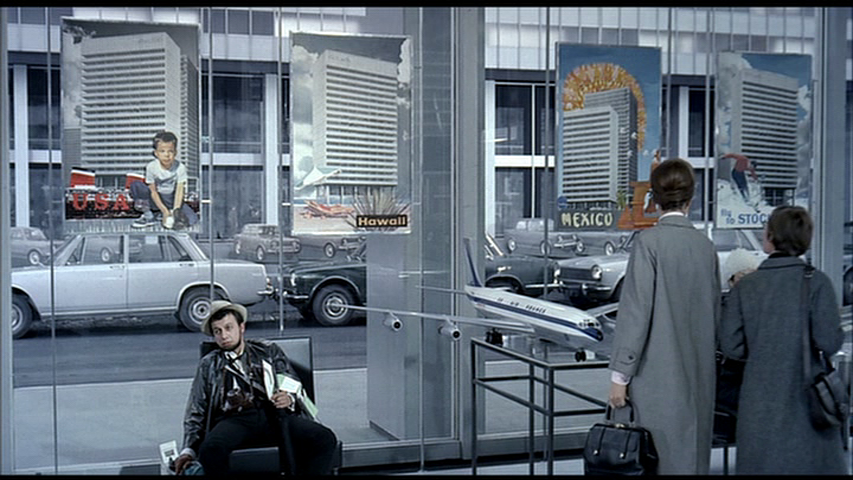
Hulot watching the appearance of a disembodied pair of dancing feet created by a busy travel agent on a stool with wheels when viewed from behind:
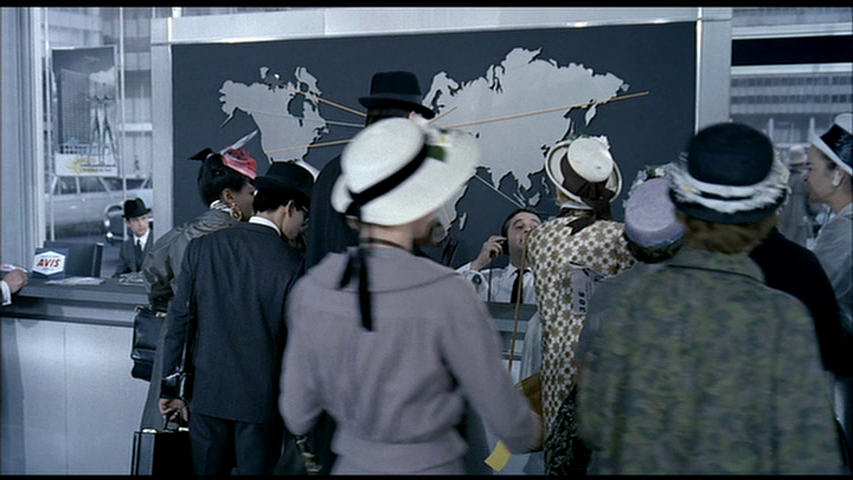
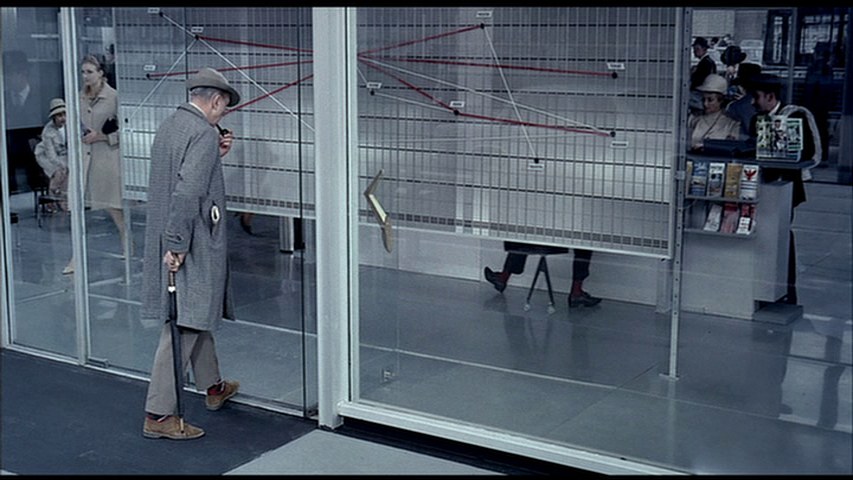
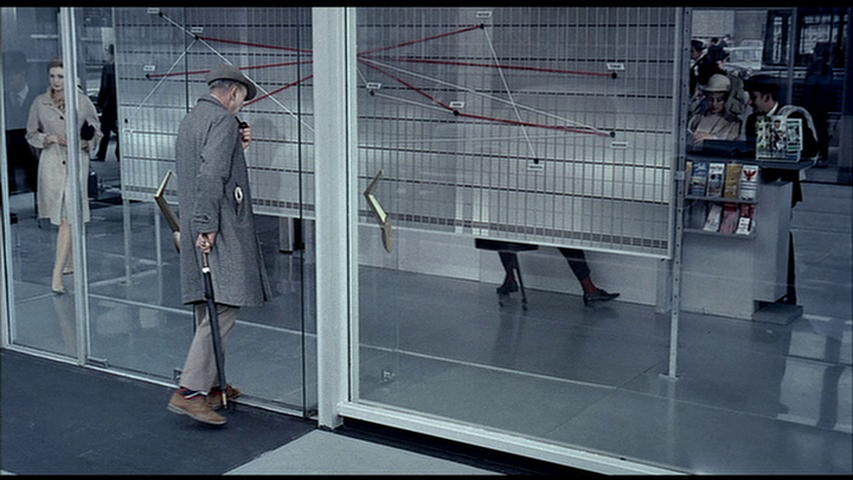
And Giffard bumping his nose when he attempts to wave down yet another false Hulot through yet another pane of glass:
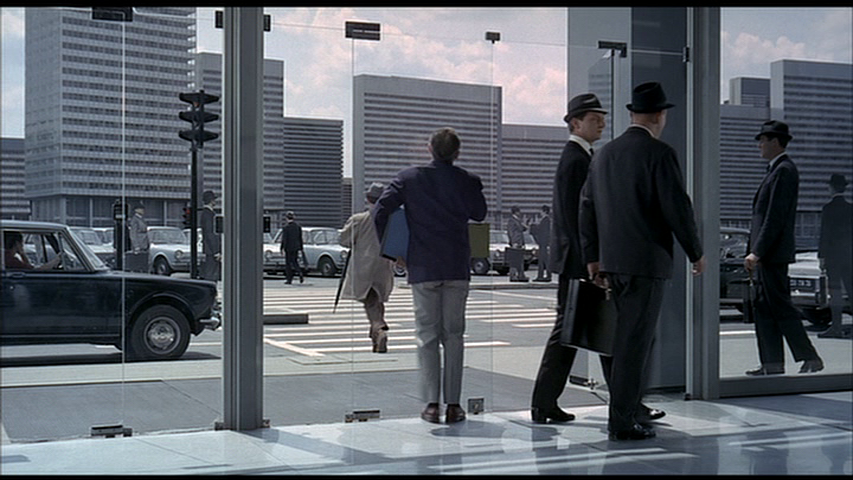
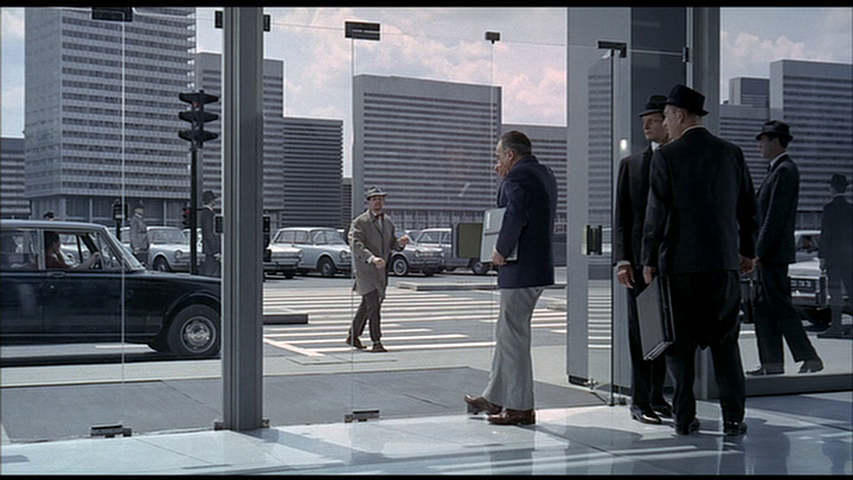
The gap to the three set pieces that are the reason Playtime rates as one of cinema’s all-time great comedies in my book is bridged by a transition featuring a nice bit of business whereby Hulot holds onto a lamp thinking it’s part of the bus he’s riding:
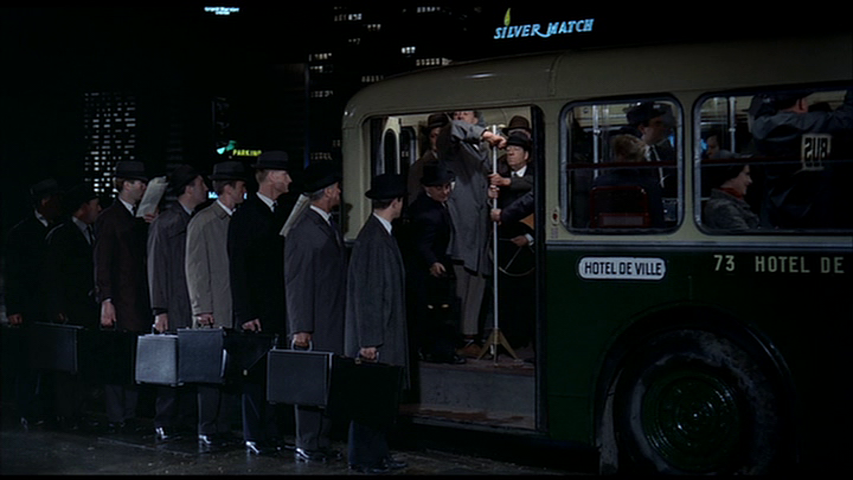
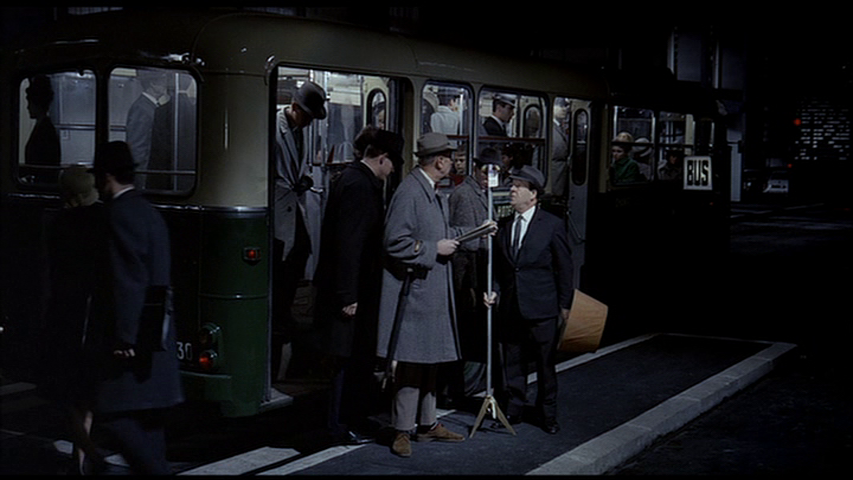
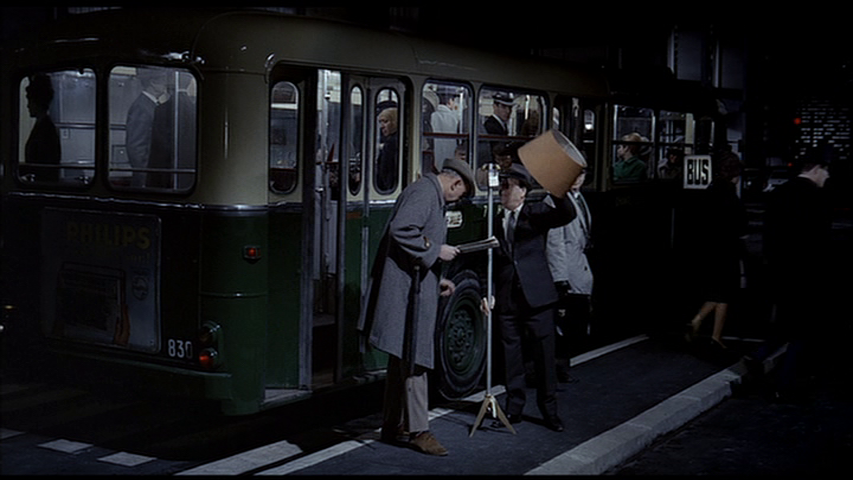
As soon as he disembarks, he is hailed by an old army buddy named Schneider (Yves Barsacq) who invites him to the apartment that inspired this month’s drink photo:
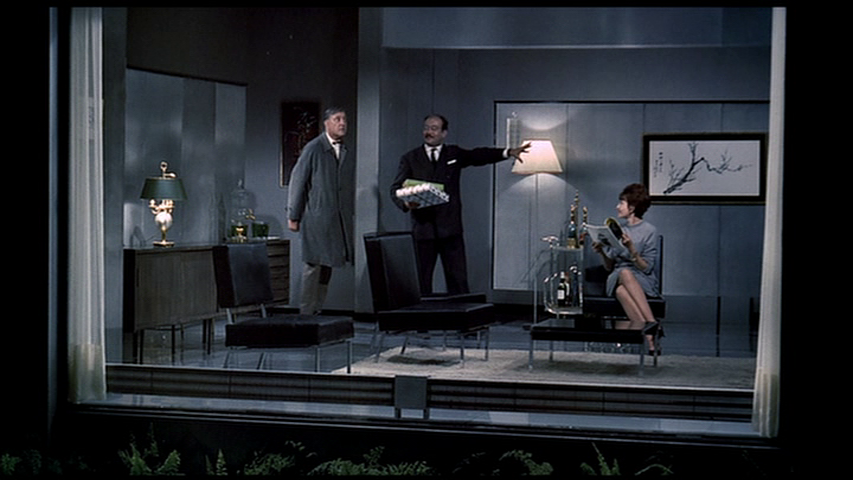
We view everything that transpires over the subsequent ten minutes from this same outside view, and when the camera pulls back to also show the neighbors’ living room as well, characters who can’t really see each other seem to be interacting. The apartment next door turns out to belong to Giffard, and the Schneiders and Hulot appear to stare in surprise when he comes inside with a bandaged nose:
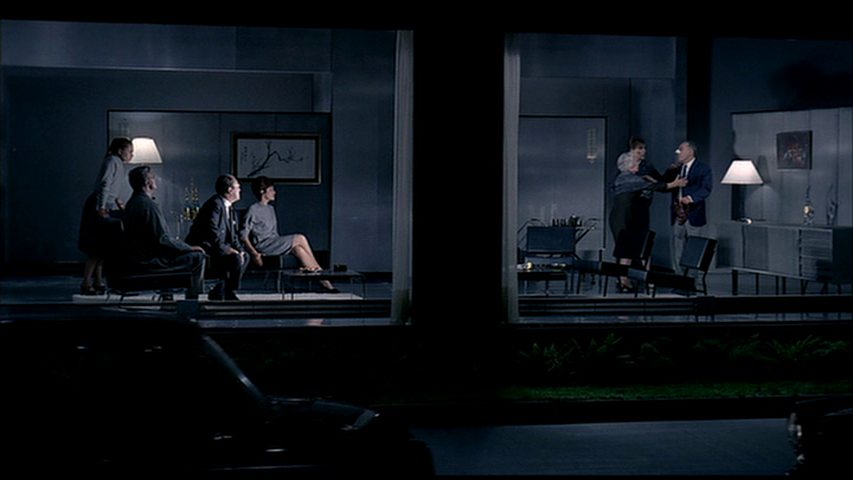
The sequence also includes what look to us like offended reactions to rude gestures:
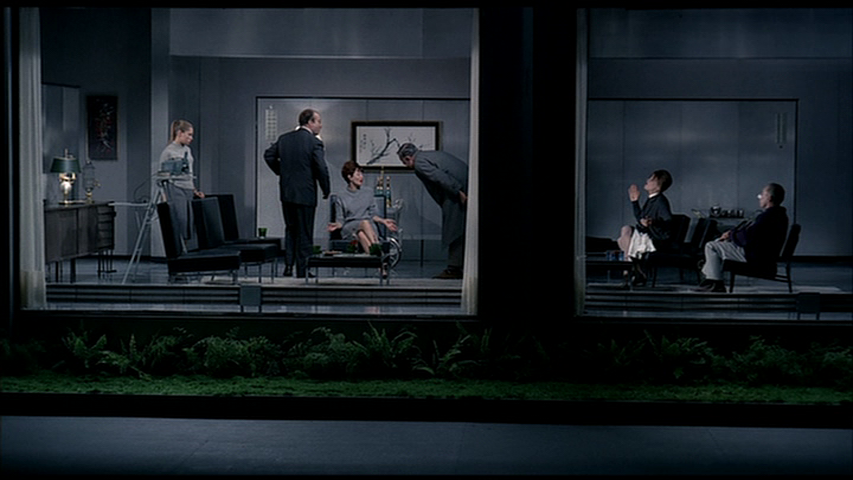
And, best of all, a striptease:
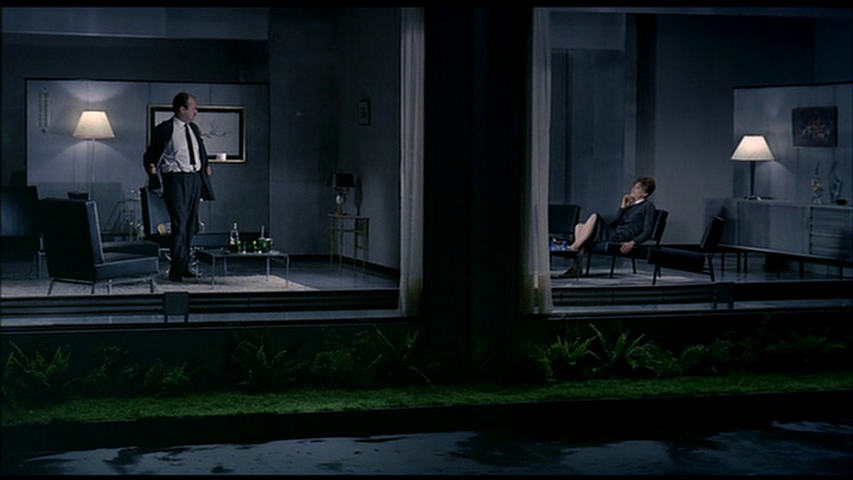
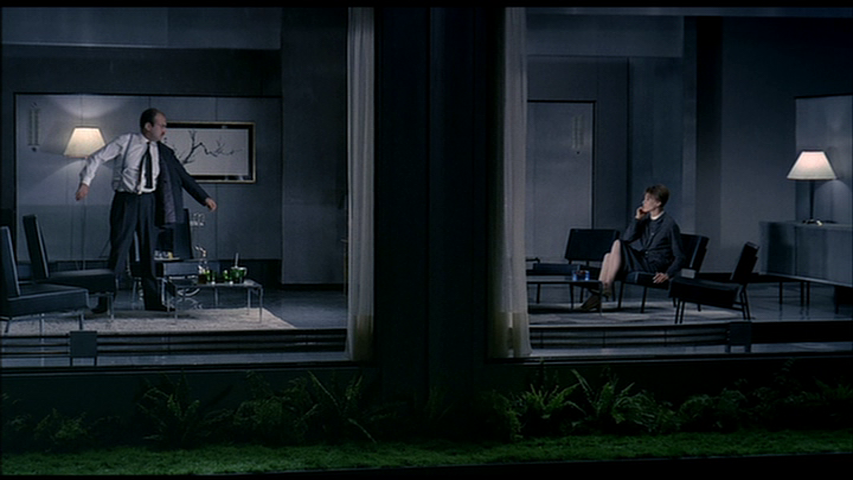
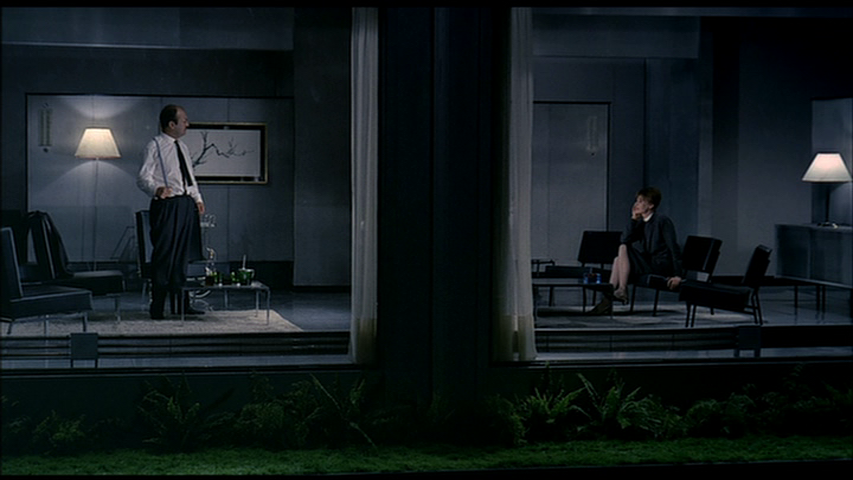
After departing, Hulot finally meets up with Giffard in a crowd of bystanders watching some construction workers who look like they’re performing a vaudeville routine:
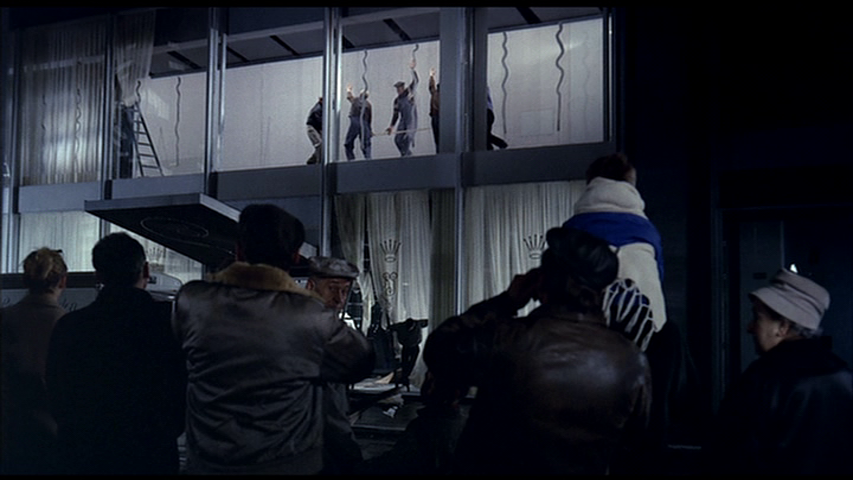
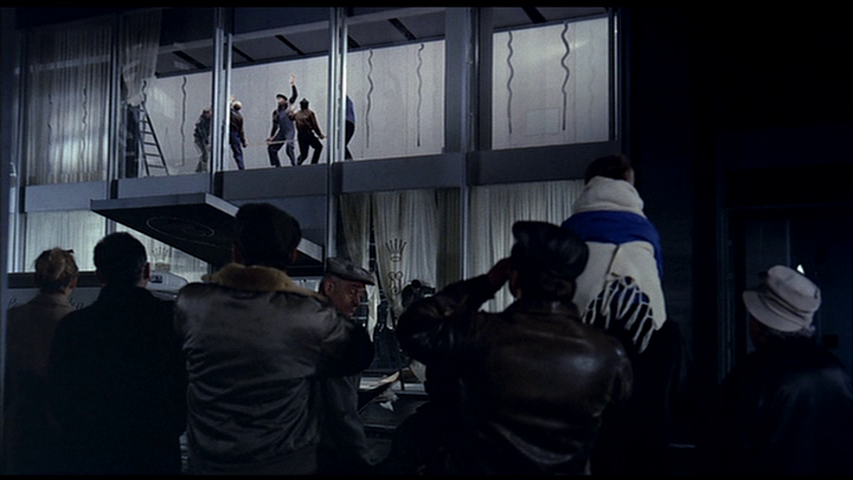

Before finding himself at the soft opening of an establishment called the Royal Garden at the invitation of the doorman (Tony Andal), another friend from his military days. Of course, this tour-de-force, nearly hour-long sequence has been going on for twenty minutes by the time he arrives, which is about par for the course according to Malcom Turvey, who calculates in his book Play Time: Jacques Tati and Comedic Modernism that Hulot is on screen less than 50% of the movie up to this point. I’d need a whole separate post to do justice to the way the nightclub basically falls apart over the course of a single service to the delight of its guests, who have more and more fun as the evening spirals further and further out of control, but highlights include a waiter fixing a broken tile in the background while another pantomimes saucing a fish in the foreground using the exact same motions:
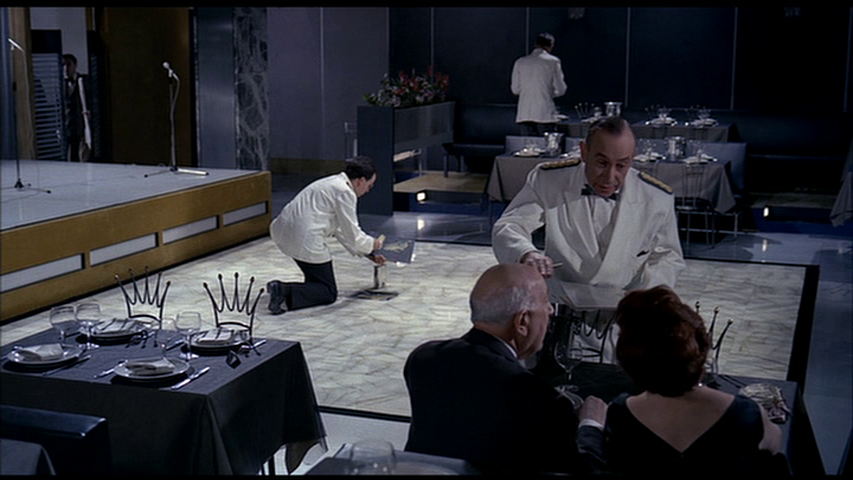
Barbara and her companions arriving to complaints from the locals that they’re “so tourist,” but also admiring comments about how chic her outfit is, which solidifies a theme running throughout the film that there’s actually very little we can do to control how other see us and that this is neither inherently positive or negative:
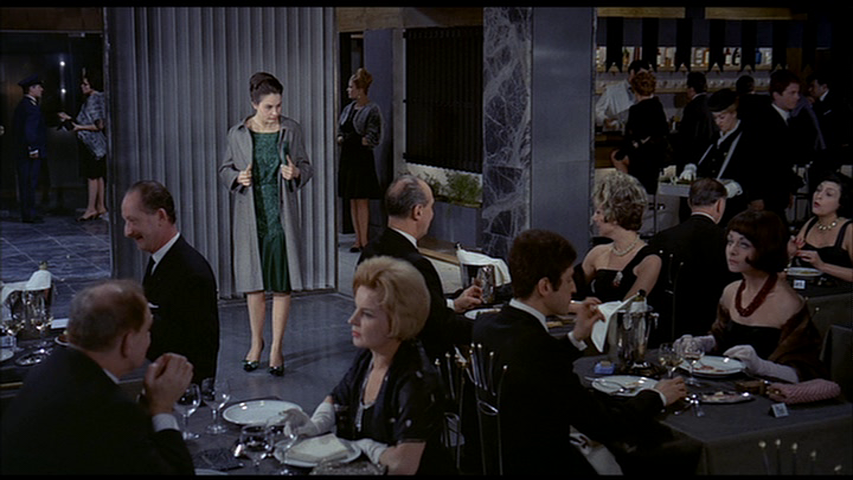
Hulot’s friend letting people in and out of a mobile invisible door after Hulot walks into it and shatters the glass:
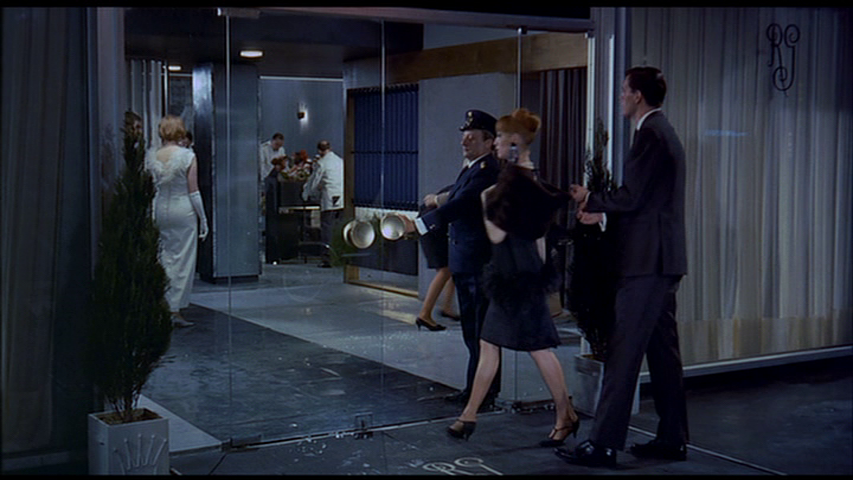
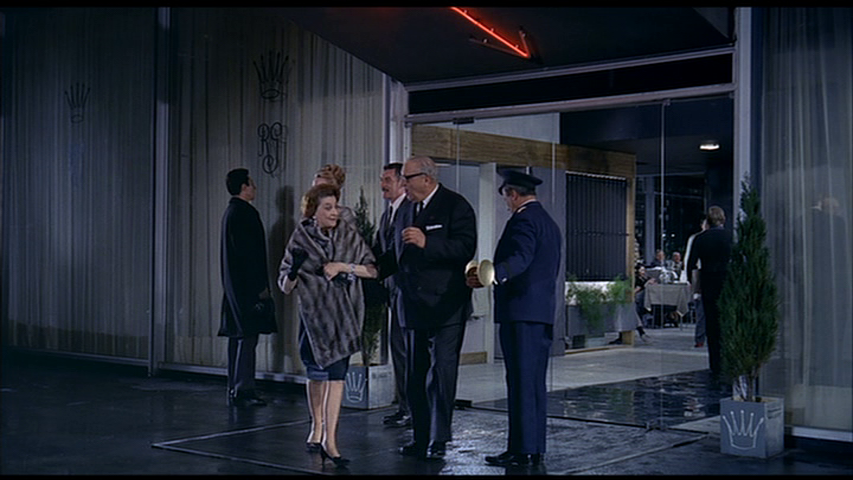
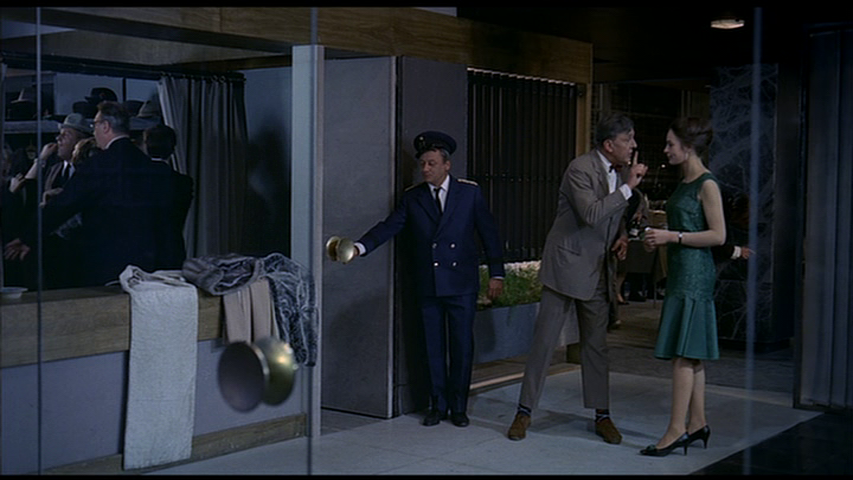
A ceiling that comes tumbling down when Hulot leaps for a golden apple decoration at the behest of a wealthy customer named Schultz (Billy Kearns), whose nationality Turvey finds significant because “it is Americans and American culture that disrupt the homogeneity of the modern environment, thereby allowing for the carnivalesque, utopian moments of communal enjoyment,” and which further ties the movie to the drink I’m pairing it with via the Laird’s:
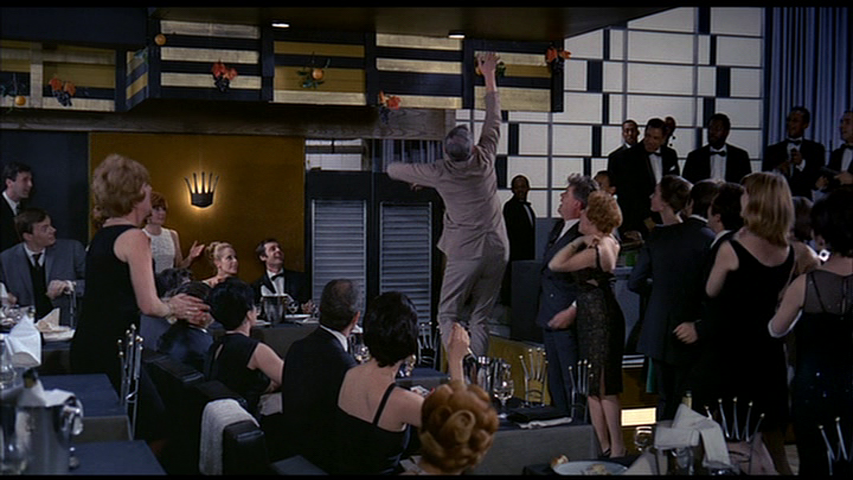
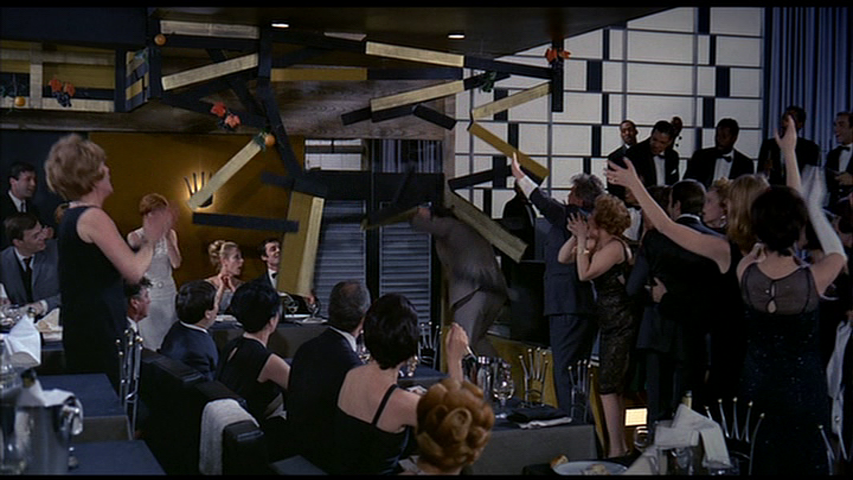
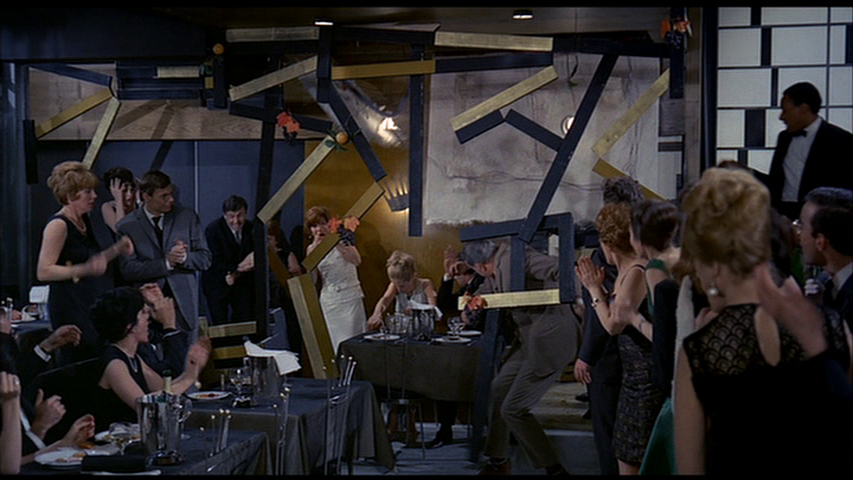
A drunk who has just been kicked out of the Royal Garden following its neon arrow sign back inside:
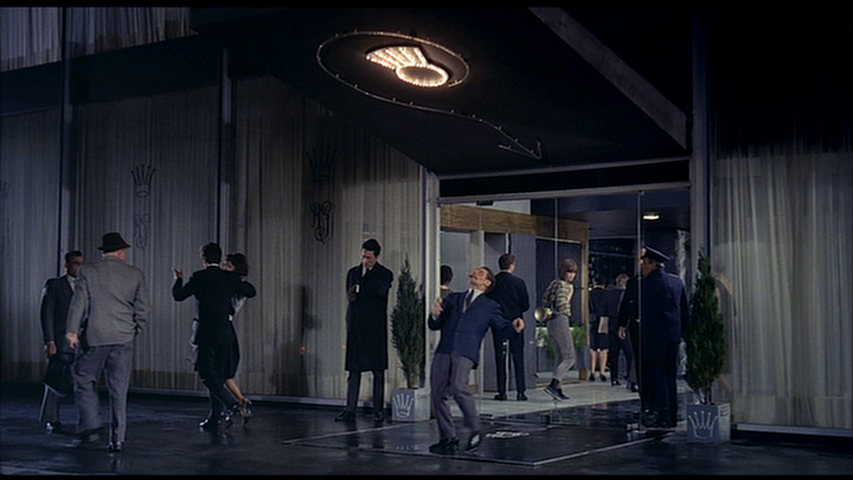
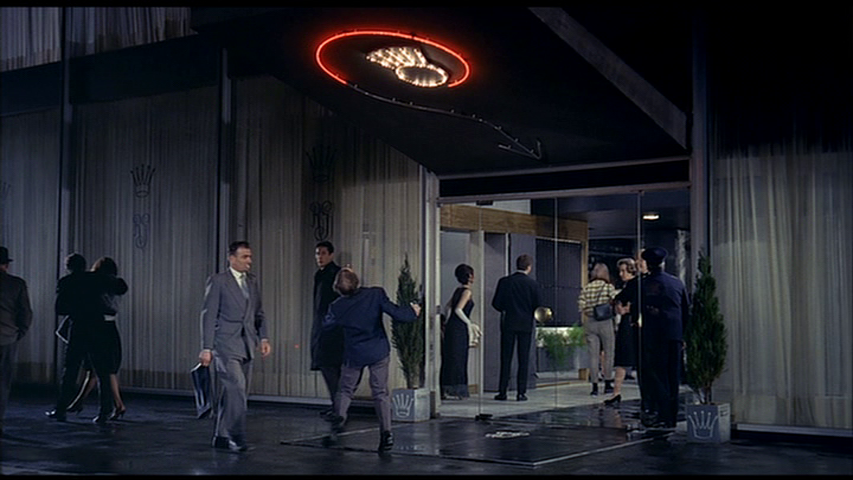
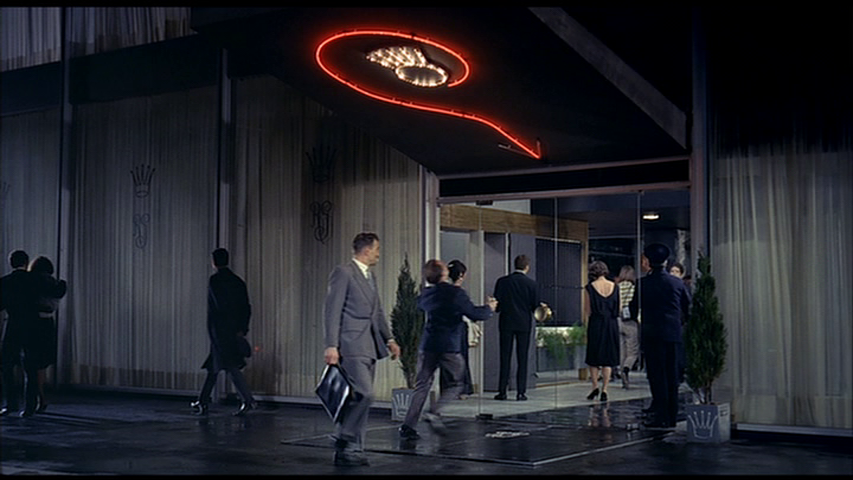
Flowers that look like they’re being watered with champagne:
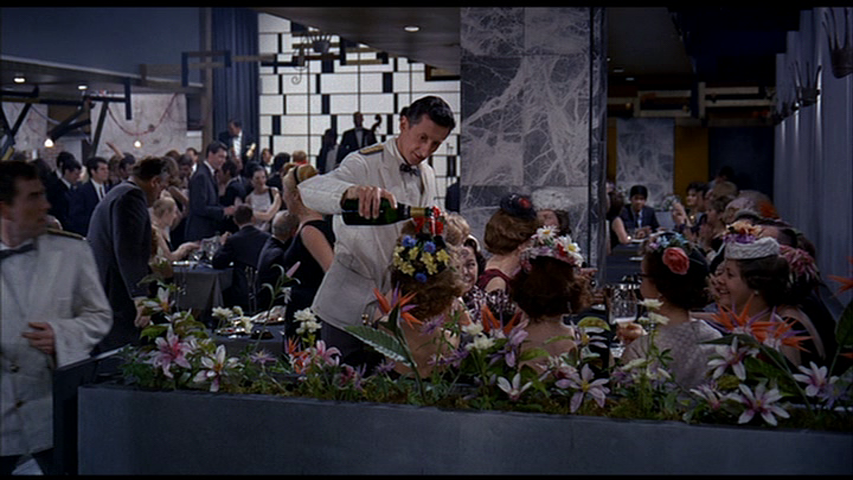
And another drunk confusing the lines on a marble pillar for a map:
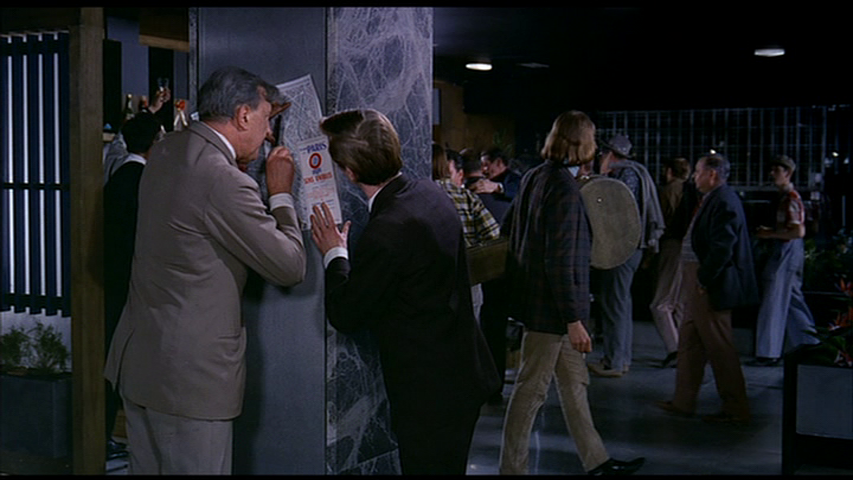
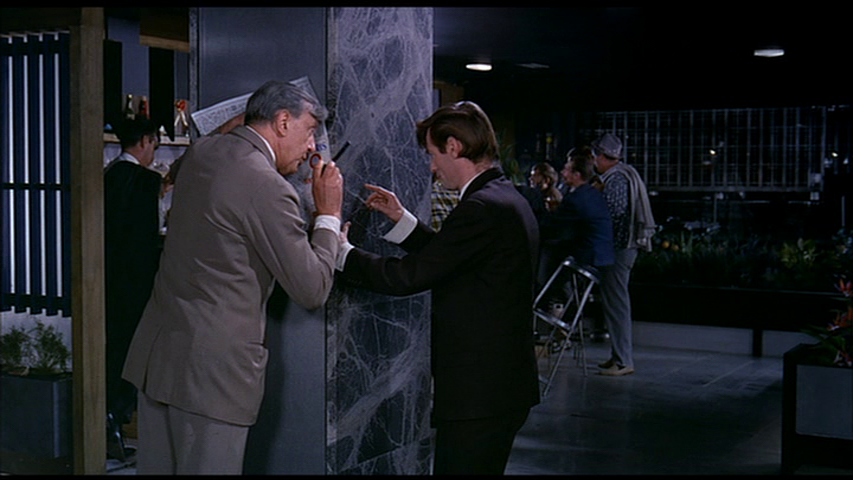
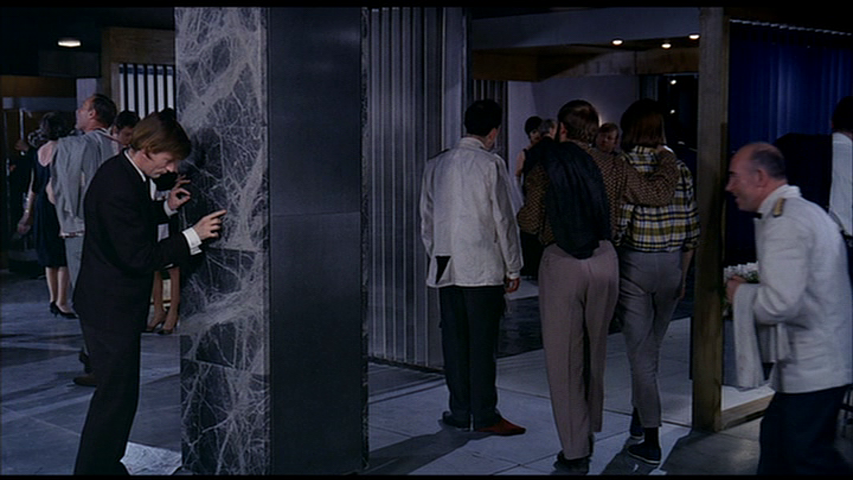
But for all the joyful anarchy of this scene, my favorite part of Playtime is definitely its ending. As Barbara and her tour group make their way back to the airport the following morning, Paris transforms into a carnival, complete with a traffic circle carousel that stops and restarts when a man puts a coin in a parking meter:
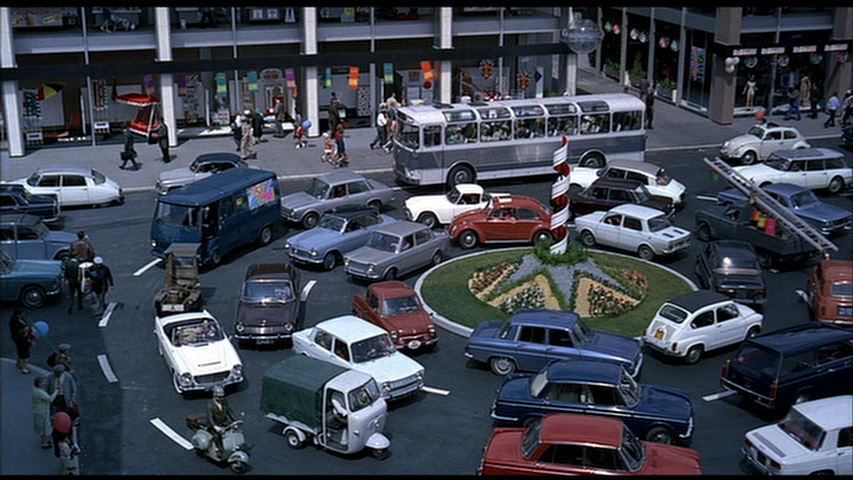
A hydraulic lift ride:
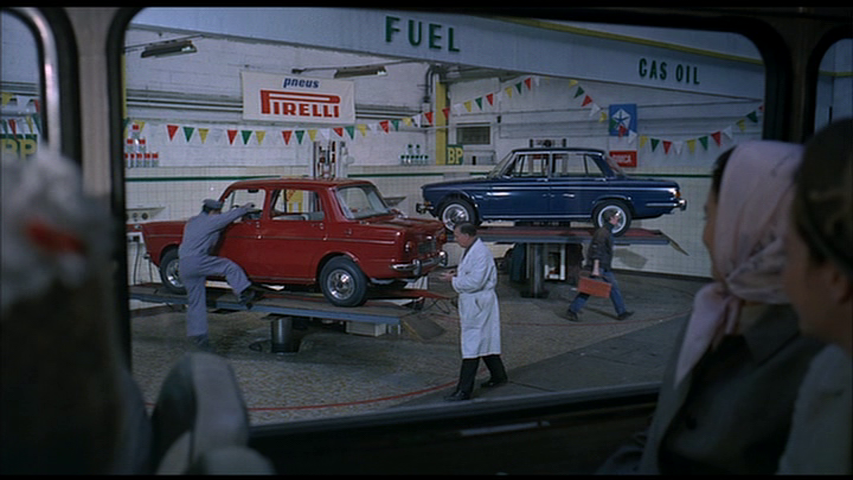
A vertiginous effect created by a tilted window:
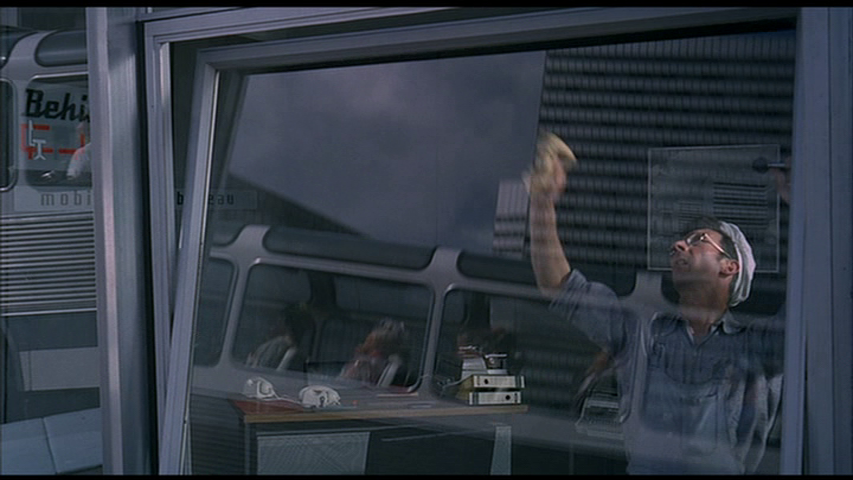
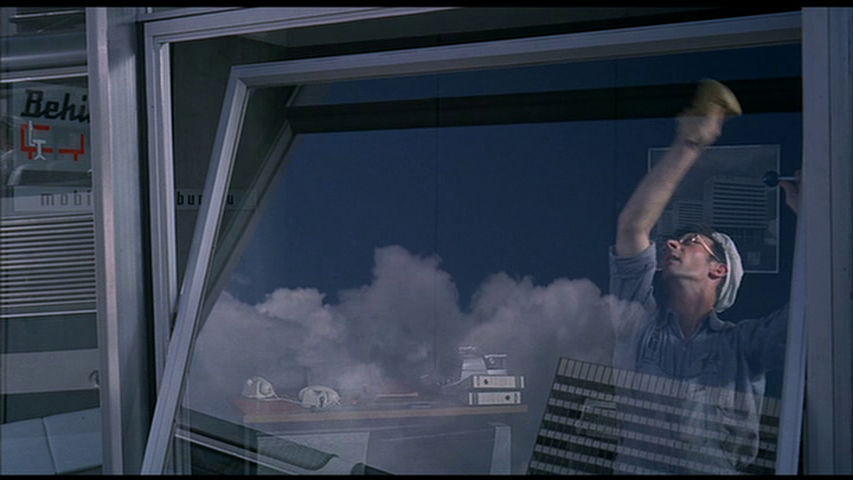
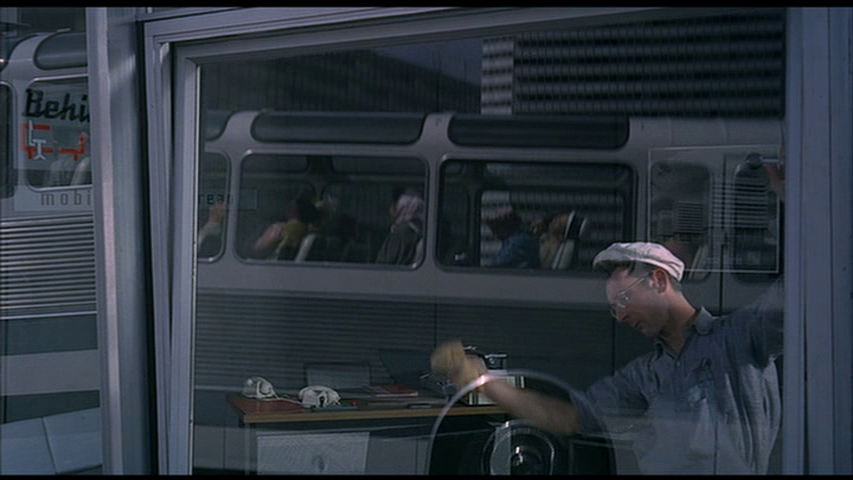
And streetlights that will now forever remind you of lilies of the valley thanks to a thoughtful parting gift that Hulot gives Barbara:
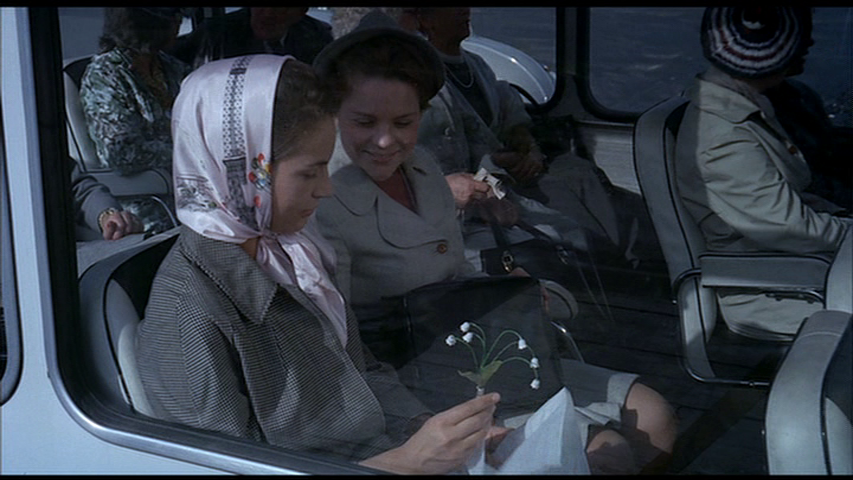
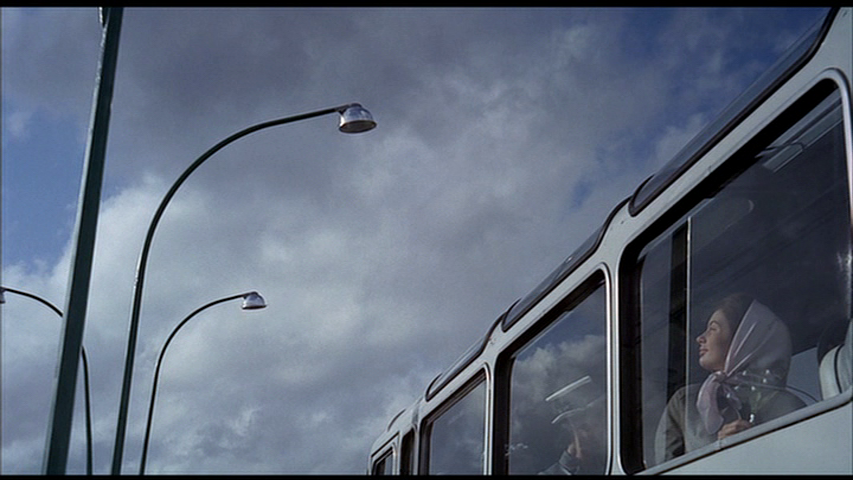
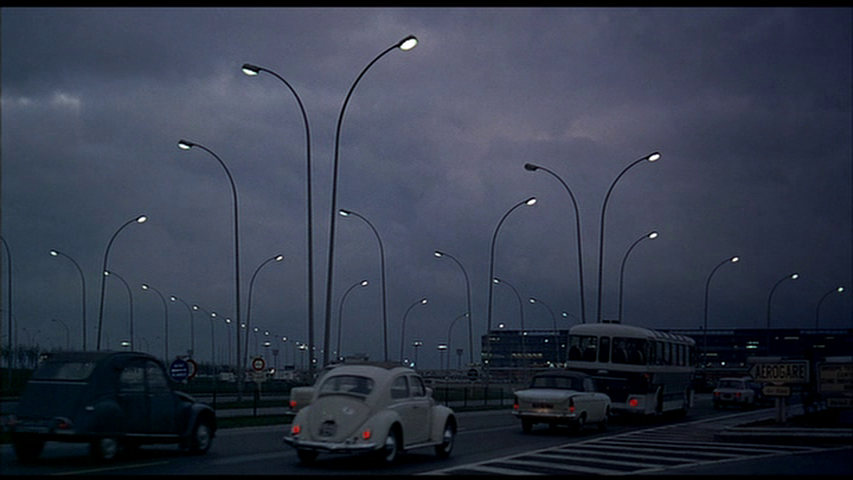
As Sheila O’Malley writes in a blog post about the movie, “if urban alienation is portrayed in Playtime (and it is), it is portrayed in a way that is distinctly absurdist, turning the mundane into the surreal. It does not bemoan the fate of modern man, it does not say, ‘Oh, look at how we are all cogs in a giant wheel, and isn’t it so sad?’ It says, ‘Look at how we behave. Look at how insane it is. We need to notice how insane it is, because it’s hilarious.’” While you absolutely can read the film as a critique of what automation and commercialism have done to the world of the 1960s and today, I prefer to treat it the same way O’Malley does, as a how to guide to finding pleasure in it: keep your eyes open, use your imagination, and don’t take yourself to seriously. Which is pretty good advice for stress-free hosting and family dinners, too, so: happy holidays!
Cheers!
All original photographs in this post are by Marion Penning, aka My Loving Wife. Links to all of the entries in this series can be found here.
 The Prodigal Cinephile