Top Chef Season 21

Last month I exported all of my tweets from my rewatch of seasons 1-18 of Top Chef between 2020-21 and the ones I posted following each episode of seasons 19 and 20. To complete this project here are my tweets from season 21, which just ended last Wednesday. Because this installment is more or less current, I’m not going to bury it after a jump. Without further ado:

Episode One:

  • I’m counting down the hours to @BravoTopChef S211E2, which means it’s time for impressions of E1! This season is all about Kristen, obvs, and the initial returns = positive! We’ll see how much we miss Padma’s puckishness, but experience as a competitor is an interesting tradeoff.
  • I’m down with the new rules. No feel for this year’s TC kitchen yet because they didn’t spend any time in it. I love Milwaukee + it looked good here! Great transition from a bridge at night to the same one in the morning. Thumbs up to the JUDICIOUS use of split screens.
  • The Tom’s “hat game” montage could have been twice as long IMO! I think soup is the task you wanted for the elimination challenge, followed by filled pasta–if you didn’t bring a surefire dough recipe, what are you doing here? Roast chicken = last because there’s nowhere to hide.
  • I watched E1 twice, once live w/ @mepkat, then again w/ our girls. My youngest was super bummed out that David went home, but my oldest shouted out “stop saying ‘sexy,’ it’s annoying!” Watching him pour salt into his poaching liquid during the climactic cook made me wince.
  • Speaking of which: it was basically a bonus episode of LAST CHANCE KITCHEN, yeah? Hopefully these three chefs now know exactly what to expect if they end up competing in it. It’s too early to actually know anything, but FWIW here’s how I have the chefs ranked as we head into E2:
  • 1) Manny (natch), 2) Danny, 3) Michelle, 4) Dan, 5) Rasika, 6) Kévin, 7) Alisha, 8) Charly, 9) Savannah, 10), Laura, 11) Amanda, 12) Valentine, 13) Kaleena, 14) Kenny. If you read this far, you’re clearly also a TC fan. Here’s to a second episode even better than the first!

Episode Two:

  • I’m counting down the hours to #TopChef S211E3, which means it’s time for tweets about E2! Good challenges this week! I like that the Quickfire, Elimination Challenge, and LCK had a through-line, but didn’t beat you over the head with it. To start at the very beginning:
  • Hops are an ingredient I’d expect anyone cast in TC: WISCONSIN to have practiced w/. Laura learned exactly the right lesson from Manny’s E1 win. That said, Michelle’s flank steak is the dish I’d most want to try. Elevated beer snacks progressive menu = great team elim challenge!
  • 10 minutes didn’t seem like nearly enough time for menu planning, but the chefs coped just fine. Whenever the judges describe a dish as “too salty,” I think “I’d probably like that!” Kévin’s trio of olive canapés = no exception.
  • The exchange w/ Joe Flamm about “traps” vs. “opportunities” + @tomcolicchio‘s enthusiasm for Rasika’s dessert tells you everything you need to know about why he’s still doing this after 21 seasons: he clearly believes the format yields dishes which might never otherwise exist!
  • Danny didn’t shine this week, but he thinks about food the way the judges want him to, which makes him a contender. Manny’s mixed nut mole = dish I’d most like to try. Kenny’s pave looked good, too, but how much credit goes to his teammates? Unclear, so his stock holds steady.
  • Dan was brave to disclose his Kennedy’s disease diagnosis so early, and probably strategically wise. His is one of the most compelling story lines of the past few seasons. But my favorite thing about E2 was the sequence at ~25:00 where Kenny + Rasika narrate Team Yellow’s menu:
  • Go back + rewatch! I maybe only noticed because I recently saw DAYBREAK EXPRESS, but it’s color-coordinated: they found the yellowest part of everyone’s dish! Finally, not addressing David’s absence from LCK = an unforced error. Tom’s contradictory explanations here don’t count.
  • Anyway, two good dishes there, too! I’d have gone PA Dutch: pot pie w/ the saffron + one of the proteins, probably lobster. Rankings: 1) Rasika, 2) Manny, 3) Michelle, 4) Danny, 5) Dan, 6) Kévin, 7) Laura, 8) Amanda, 9) Savannah, 10) Alisha, 11) Charly, 12) Kaleena, 13) Kenny.

Episode Three:

  • I’m counting down the hours to #TopChef S21E4, which means it’s time for thoughts on E3! Nothing much to say about the Quickfire–cherries + a “mystery door” ingredient is a solid idea for a challenge and all the food looked good, even if nothing stood out.
  • A cheese-based Elimination challenge was inevitable + I wonder if that’s the reason for the impromptu fritter fest? Everyone came prepared w/ the dish they would make + didn’t want to deviate too far from it even when they realized eight other people were doing something similar.
  • I see why the judges would be annoyed by this, but as a guest I think I would have enjoyed comparing all of them! This is a perilously easy challenge to “Monday morning QB” since what exactly you make depends on WHICH cheese you get, hence fritters: they work w/ nearly anything!
  • But I felt validated by LCK since the first places my mind went were buldak + eggplant parm. Also blue cheese and watermelon. Anyway: Michelle’s dish was far + away the best sounding/looking one! Danny’s also struck me as a smart use of aged cheddar in a (croquette) vacuum.
  • I wasn’t surprised that Kenny went home because it sounds like the judges tasted a flawed (not enough relish) version of an unsuccessful (bottom three for the guests) dish vs. two variations on boring (use of cheese curds and bland).
  • As my favorite (for Vulture) recapper @roxana_hadadi observed last week, S21 has hit its stride + is very much what we’ve come to expect from TC. Kristen isn’t just an ersatz Padma (yay!), but nor has she significantly altered the dynamic of the Quickfire or Judges’ Table.
  • The rule changes haven’t upended things either. In fact, to bring back my “eras of TC” from 2021, I see very little which distinguishes S21 from S16-19 Modern/”Nice” TC. Exempting S20 (all-stars), this makes the era five seasons old, which is as long as any other one lasted.
  • This is both good + bad: on the one hand, I’m definitely down for 11 more episodes of the same! On the other, as I said after S19, this will *eventually* start to get boring, right? But maybe a double elimination is just what the doctor ordered!
  • Here are my “power rankings” as we head into E4: 1) Michelle, 2) Rasika, 3) Danny, 4) Manny, 5) Dan, 6) Savannah, 7) Laura, 8) Amanda, 9) Kévin, 10) Alisha, 11) Charly, 12) Kaleena. Have fun watching it, y’all!

Episode Four:

  • I’m counting down the hours to #TopChef S21E5, which means it’s time for thoughts on E4! Awarding immunity to people who Elimination challenges instead of Quickfires makes sense to me, but the latter remain important + I’m disappointed there wasn’t one again this week.
  • They provide insight into how the chefs think about food + more than double the number of dishes we get to see most weeks, which is why many of us watch! Oh well. No issues here w/ extending Michelle’s immunity to Charly–volunteering to be her teammate was risky, after all.
  • But @roxana_hadadi is right that it = a missed opportunity to reward someone. Partnering the winner of the absent Quickfire w/ Michelle = one way to do it. Immunity for Dan/Kaleena as last week’s runner-up = another. There’s also precedent for giving Michelle the challenge off.
  • Otherwise, good challenge! I was surprised there wasn’t more talk about local/”site-specific” ingredients. Cutting room floor, maybe? Rasika + Danny’s dish looked great and sounded delicious–I’m intrigued by the use of green Chartreuse! Alisha + Kaleena had a very bad day.
  • I liked shortening Judges’ Table better than manufactured drama: I suspect there was no way to tell this story honestly where it wasn’t obvious who was going to win/who was going home. But they also could have called EVERYONE back, which I’d have preferred to Kristen’s pep talk.
  • My “power rankings” have been spot on so far this year–I’m winning the TC Pick’Em game I run! Of course I just jinxed myself, so handle w/ care! Here they are for E5: 1) Rasika, 2) Michelle, 3) Danny, 4) Dan, 5) Manny, 6) Laura, 7) Savannah, 8) Amanda, 9) Kévin, 10) Charly

Episode Five:

  • I’m counting down the hours to #TopChef S21E6, which means it’s time for thoughts on episode five! Both challenges had everything I’m looking for: strong connections to the host city, hard but not impossible, conducive to food being created that looks + sounds delicious.
  • I liked the “shop before you know what you’re cooking” Quickfire twist because it seems like it would be fun to get $100 to spend strategically at a great farmer’s market. Providing all the ingredients for a Carson Gulley sauce to go w/ what the chefs bought = eminently fair.
  • W. Kamau Bell + Tory Miller were excellent guest judges–fun + fair–and the Harvey House was a beautiful venue for the Elimination Challenge. I like it when the chefs are served a meal to draw inspiration from because it’s a whole set of bonus dishes to ogle. In this case . . .
  • The prime rib that Joe + Shaina Papach = what I’d eat if I could have *anything* from this episode. If restricted to just competition dishes, I’d probably go w/ Savannah’s chicken because even though it didn’t win, the judges did like it, and I love the idea of tonkatsu + caviar.
  • Both relish trays looked terrific, too! I love chicken liver mousse + well-executed crudités, so cheers to Dan! I coincidentally made black garlic tahini last weekend + it was delicious, so Danny’s intrigued me, too. As previously noted this season, “too salty” ≠ a problem here.
  • I really have just one complaint: the chefs should have had more than $1000 to shop w/ considering that they each had to feed almost 50 people w/ their share–$1500 would have been better. But looking at how much more successful Team Purple was than Green, I concede the point.
  • It will be fun to see how everyone reacts when Soo joins the competition this week. W/out further ado, here are my power rankings: 1) Michelle, 2) Rasika, 3) Danny, 4) Dan, 5) Manny, 6) Savannah, 7) Soo, 8) Laura, 9) Amanda, 10) Kaleena, 11) Kévin. Enjoy tonight’s episode, y’all!

Episode Six:

  • I’m counting down the hours to #TopChef S21E7, so it’s time for thoughts on episode six! This one was a shocker. I had Michelle + Rasika pegged as top contenders, so it was jarring to see them stare down a double elimination together. Michelle was clearly stumped by the brief.
  • This isn’t a *great* sign for her, but it wasn’t clear to me what the judges were looking for either, so it may not be predictive of future struggles. Meanwhile, Rasika will be a tough out in LCK, so I absolutely wouldn’t assume that this is the last we’ve heard from her.
  • ating okonomiyaki in Kyoto was one of the great culinary experiences of my life and funnel cake was my go-to fair food in my youth, so Dan’s elimination challenge dish is the one I’d most like to try. Danny’s = more evidence that he’s on the same wavelength as the judges.
  • I worried that Soo’s LCK success wouldn’t translate, but the initial returns couldn’t be much more positive! I thought last week’s preview tipped Savannah’s success + this week’s editing foreshadowed Danny’s win, but these things can go either way, so it’s probably nothing.
  • Despite having Rasika at number two last week, I’m still winning my TCS21 Pick’Em game! Without further ado, here are my new power rankings: 1) Danny, 2) Michelle, 3) Dan, 4) Soo, 5) Manny, 6) Amanda, 7) Laura, 8) Savannah, 9) Kaleena, 10) Kévin. Enjoy tonight’s episode, y’all!

Episode Seven:

  • I’m counting down the hours to #TopChef S21E8, so it’s time for thoughts on episode seven! The flambé Quickfire was fine + it’s always nice to see Bryan Voltaggio! The team Elimination challenge was a solid rendition of the standard tie-in to the local sports franchise.
  • None of the food really stood out: if I could pick one dish to try, I’d be tempted by Soo’s corn dog, but would probably go w/ Michelle’s winning étouffée + creamy grits on the recommendation of the judges. Where things really got interesting this week was in LAST CHANCE KITCHEN!
  • I love “cook as many dishes as you want” formats + this one reminded me of an evolved version TCS2 winner Ilan Hall’s old Esquire Network cooking show KNIFE FIGHT, which I liked more than any of the *actual* TOP CHEF spinoffs. The outcome was a surprise, but seemed fair.
  • Next up = Restaurant Wars! Springing this on everyone when there are an odd number of chefs left was a nice touch. Hopefully it will otherwise be as old school as the preview suggests, though–if it ain’t broke, don’t fix it! Speaking of the preview, I don’t usually watch them…
  • But I do before RW because that one contains valuable clues for the TC Pick’Em game I run. My strategy assumes that this will be a double elimination + that Channel will win because losing Danny (exec chef) + Michelle (front of house) now would be the biggest shock in TC history.
  • Without further ado, here are my power rankings as we head into this pivotal episode: 1) Danny, 2) Michelle, 3) Dan, 4) Amanda, 5) Savannah, 6) Soo, 7) Manny, 8) Laura, 9) Kaleena. Enjoy Restaurant Wars, y’all!

Episode Eight:

  • I’m counting down the hours to #TopChef S21E9, so it’s time for thoughts on episode eight! Another Restaurant Wars is in the books! True to their word, the judges + producers refrained from additional twists after they let Michelle pick her own team. Speaking of which:
  • This was an extra set of hands for Channel, but also meant each chef got $2k less for winning, so you can literally put a dollar figure on how valuable it was. I say Dos by Deul came out ahead! Anyway, if the episode lacked drama, that’s a testament to how well both teams did:
  • Either could have won many previous editions of RW, although I think some past winners also would have beat Channel. The pivotal moments seemed to be: 1) Dan redesigning his dish to better fit his team’s theme, and 2) too many crispy components that sat too long for Dos by Deul.
  • Both teams’ service issues canceled each other out, and Michelle was hardly a front-of-house disaster, plus she seemed to adjust her approach between the first + judges seatings. I always want to try the winning dish, but I’m even more intrigued by Danny’s carrot-clam chowder:
  • Dishes that feature carrots are some of my favorites to order out because you can do so much with them, but many techniques represent a time/equipment stretch for home cooks, especially those of us who have to feed children! I’m bummed that both teams’ cocktails got short shrift.
  • Tonight’s episode has enormous potential + many previous seasons of TC only really took off after RW: here’s hoping that’s the case here! “Power rankings”: 1) Danny, 2) Michelle, 3) Dan, 4) Soo, 5) Laura, 6) Manny, 7) Savannah, 8) Amanda. Have fun, y’all!

Episode Nine:

  • I’m counting down the hours to #TopChef S21E10, so it’s time for thoughts on episode nine! Best one of the season so far. @roxana_hadadi points out in her Vulture recap that it repeats both the Quickfire *and* Elimination from S12E6, but I find this interesting, not problematic:
  • Those challenges were kinda gimmicky: the latter not only limited the chefs’ pantry, but also restricted them to just cookware available during the Plymouth Colony’s “First Thanksgiving.” Here the point seems to be more purely honoring indigenous foodways, not tripping people up.
  • So you could say, look how far we’ve come in ten years! Anyway, if I could conjure up a Michelin-starred restaurant in Ithaca, it would serve food like what we saw on this episode. I do agree with Hadadi that S21 is having an identity crisis. We’re clearly in a new “era” . . .
  • But at this point I doubt we’ll know what to call it even after the finale. Which: I think I dig it? Uncertainty > stagnation! Most intriguing food = Savannah’s squash + maple jelly, natch, but also Dan’s sunflower chokes. I want to see those in the freezer aisle at Wegman’s!
  • Speaking of Savannah: I’m kicking myself for ranking her as low as seventh, my first big misstep of the season. Lesson = learned! I’m also still in first place in my TC Pick’Em game. We are now officially in “anyone can win it territory,” which is always an exciting moment.
  • Here are my new “power rankings”: 1) Danny, 2) Michelle, 3) Dan, 4) Savannah, 5) Soo, 6) Manny. I would consider most of these folks to be either the favorite to win LAST CHANCE KITCHEN or second to Laura, although that too is anybody’s game really. Enjoy episode 10, y’all!

Episode 10:

  • I’m counting down the hours to #TopChef S21E11, so it’s time for thoughts on E10! I don’t have a ton to say about this one, but not because there was anything wrong w/ it: challenges w/ strong ties to the host city/state have always been my favorite + the chefs did well overall!
  • That said, none of the food jumped off the screen. Danny made another great carrot (side) dish, and that’s what I would try if I was watching via Wonka Vision. My favorite moment was the close-up of a lonely ear of corn lying in the sand at around the 30 minute mark.
  • The Elimination Challenge verdicts seemed just, and for the first time in awhile there was some genuine suspense: it seemed like the win might have almost gone to Michelle, and that either Manny or Savannah could legitimately have been told to pack their knives and go to LCK.
  • Speaking of which: this wasn’t my favorite season! Too wonky, what with the mystery surrounding David’s non-participation + the weirdly unscripted pivot after Kaleena declined to try her luck a second time. Aside from some cool techniques by Soo, the food wasn’t memorable either.
  • But it’s over now + S21 is entering the home stretch. Laura is a true contender, so it remains anyone’s game, but Danny has clearly established himself as the favorite. Don’t sleep on Dan, though! “Power rankings”: 1) Danny, 2) Dan, 3) Michelle, 4) Savannah, 5) Laura, 6) Manny.

Episode 11:

  • I’m counting down the hours to #TopChef S21E12, so it’s time for thoughts on E11! Just as not all movies need to be thrillers, it’s 100% fine if there’s very little suspense heading into Judges’ Table. The most important question is always: was the story of the episode told well?
  • I loved how this one cut back + forth between Laura serenely listening to her muse + Savannah desperately trying to get food on the plate (er, table) before time expired. I also thought the complicated Quickfire came across crystal clear, which couldn’t have been easy to achieve!
  • I was impressed by how well *all* the chefs did in the latter, which proves my point that we have truly entered the point of the season where anyone can win. @mepkat
    and I both wanted more details about how Laura made her baklava rings + hers is the dish we would try if we could.
  • I don’t have much else to say about E11 except: poor Michelle! This = a classic “bad day in the kitchen” elimination. Looking forward to saying “Goodbye Wisconsin”–it was a better host than I expected! Power rankings: 1) Danny, 2) Dan, 3) Savannah, 4) Laura, 5) Manny. Enjoy E12!

Episode 12:

  • I’m counting down the hours to #TopChef S21E13, so it’s time for thoughts on E12! This week featured two great achievements in TC history: first, Manny getting 23/26 in the blind taste test is right up there w/ Hung’s prep relay exploits. It’s too bad he couldn’t capitalize!
  • Second, I was blown away by Savannah’s storytelling in the Elimination Challenge. Ask @mepkat: every rave comment by the judges was something I had just said while Savannah presented her dish! Then ask her how she feels about me always talking while she’s trying to watch. Anyway:
  • Savannah’s pave looked delicious, but if I had Wonkavision I’d use it for the Quickfire: I love a good Caesar, so I’m very intrigued by version w/ cheddar, and I also wish I could experience Dan’s “train wreck” steak + eggs for myself, because how could anything be THAT bad?
  • As we head into the final two episodes, let’s take a look at the stats! Danny has three Elimination Challenge + two Quickfire wins, Savannah has two of the former + three of the latter, Laura has one of each, and Dan has won two Elimination Challenges but no Quickfires.
  • Meanwhile, Danny was on top in six Elimination Challenges total but only on the bottom once, for Savannah it was five and two, for Laura it was two and two, and for Dan it was seven and two. Add it all up and I think I’m ranking everyone in the same order I had them last week:
  • 1. Danny, 2. Dan, 3. Savannah, 4. Laura. But as I’ve been saying every since Laura returned to the competition from LCK, this anybody’s game and there’s no outcome that would surprise or disappoint me! Enjoy E13, y’all, and see you next week w/ my penultimate set of tweets!

Episode 13:

  • Happy Juneteenth! No work today, so here are early thoughts on #TopChef S21E13 as we count down the hours to the finale. That was disappointing, huh? It wasn’t the fault of the challenges: kissing up to sponsors (a TC tradition) aside, I loved the fish-centric Elimination.
  • The Quickfire was good, too: the idea surely was that everyone would come ready to put their own spin on keshi yena since it’s only, you know, the national dish of Curaçao. Only Savannah really did this but she still lost, proving that better food > nailing the brief every time.
  • Anyway, none of the chefs’ food jumped off the screen, which is too bad. If I had Wonkavision I would have used it on Masaharu Morimoto’s dinner for them: I’ve had the pleasure of ordering omakase @ his Philly restaurant twice, but wasn’t served his famous tuna pizza either time!
  • The judges blamed stress, but @mepkat
    + I couldn’t help but wonder if swimming with stingrays maybe wasn’t the best way to get yourself ready to cook, but hopefully everyone just needed to shake off some rust after six weeks off and is now ready to cook some killer finale food!
  • I’m in first place in my TC Pick’Em game by 46 points, which means I’ve already won since the finale is only worth 20. I could therefore indulge myself by ranking the chefs according to my rooting interests, but I’ve had them in the same order all season so why mix things up now?
  • 1. Danny, 2. Dan, 3. Savannah. But it really is anyone’s game! I’ll be back next week w/ a final set of tweets + I do mean ever: now that I’ve migrated all of my thoughts on previous seasons of TC over to ye olde blog, that’s where I’ll post anything I write about S22. Till then!

Episode 14:

  • #TopChef S21 is in the books, so it’s time for one last set of tweets about the finale! I was absolutely convinced that Dan was the winner after Judges’ Table, so @tomcolicchio‘s pique that the edit doesn’t support the outcome is very much justified–I’d be miffed, too!
  • That said, @mepkat *wasn’t* surprised, so I was eager to watch it again. IMO they definitely do make it seem like Dan has it, but on closer inspection it at least has the looks of a razor-thin margin that could go either way. Per Tom on X, Dan’s first dish was a bit of a clunker.
  • The evidence is kinda there, but it’s implied that Danny under seasoning his scallops is nearly as bad as the weird texture of Dan’s tuna. Still: Danny’s dish *looked* stunning. So whether by a wide margin or not, he clearly took that course. Nos. 2 + 3 on the other hand . . .
  • Both appear to go to Dan, correctly or not. There’s no criticism of his snapper at all, so case closed there. Meanwhile the raw pumpkin + cook of the lobster in Danny’s third course get a *lot* more attention than Dan’s oxtail being maybe too sweet + rustic. On to dessert:
  • Danny clearly is the winner, but the comments selected for the episode suggest that it was very close. So it’s 2-2 with Dan appearing to win on goal differential. This is what I think must have been inaccurate–if it’s clear Danny dominated courses one + four we feel differently!
  • Ditto if Danny’s sauce work in course three was enough to make up for its flaws + the judges were in agreement that his degree of difficulty was higher. Oh well! I actually thought Savannah’s menu *sounded* the best, but she was out after less than flawless pasta + “mofong-no!”
  • Back to the edit: I think there are just a few key shots missing, so it’s not a disaster. I also liked the cut from Danny troubleshooting running out of melon to Dan saying “we have a fire on deck four!” Other nice moments = chefs losing their partners in the grocery store . . .
  • And Tom razzing Savannah about Duke/UNC (@mepkat
    is a Dukie). I was impressed w/ how Danny conducted himself in the kitchen: he PUSHES Manny w/out seeming PUSHY. The dishes I most want to try are, in order: 1) Danny’s dessert, 2) Danny’s scallops, 3) Savannah’s saltfish fritters.
  • Finally, the fact that I’m talking about the edit + not Kristen is a huge compliment to her! She had big shoes to fill but made the host role her own. While that handoff was impressively smooth, this was still a transition year + I hope S22 has a better sense what it wants to be.
  • I’ll definitely be watching + will no doubt have thoughts! But I’m planning to share them on ye olde blog, not here–maybe a post at the start of the season, another around Restaurant Wars, and a third after the finale? And perhaps one more just before it? We’ll see. Till then!

Links to previous posts about Top Chef can be found here.
Top Chef Rewatch: Seasons 1-6

Starting during the pandemic summer of 2020, I rewatched seasons one through seventeen of Top Chef and tweeted reactions to all of them. I had so much fun that I’ve tweeted responses to each individual episode of the series which has aired since then. This is actually pretty much the only thing I use X for any more, and as such I can’t see myself paying for an account should they ever stop offering free ones, which seems likely. I therefore thought it might be prudent to migrate all of this content to ye olde blog while I still can, since I spent quite a few hours of my life creating this content and wouldn’t want to lose access to it. There’s quite a lot, so I’m going to break this up into three posts and put everything after a jump. I’ll also create one post each for season 18-21, and may or may not archive a few other things as well. But without further ado, I give you my tweets about seasons 1-6!

Continue reading “Top Chef Rewatch: Seasons 1-6”

October, 2023 Drink & a Movie: Corpse Reviver #2 + Heaven and Earth Magic / The Very Eye of Night Double Feature (and Chili!)

This month’s Drink & a Movie post is dedicated to Ithaca, New York legend Park Doing, who has one of the greatest Halloween rituals I’ve ever encountered. Each year he watches Harry Smith’s twelfth (I mention this because it’s sometimes referred to as No. 12) film Heaven and Earth Magic with whatever friends and neighbors find themselves at his house. It’s a non-intuitive, but inspired choice, which makes it absolutely perfect for this series. What I thought I’d do here is combine Park’s tradition with one my family borrowed from chef Grant Achatz a few years ago and a couple of new ones. Let us begin with a beverage. In Vintage Spirits and Forgotten Cocktails, Ted Haigh observes that the Corpse Reviver originated at the turn of the twentieth century as “more a class of drink than a single recipe” which was sometimes referred to simply as a “reviver” or an “eye opener.” In other words, it was originally meant to be imbibed in the morning! Albeit cautiously: as Harry Craddock notes in The Savoy Cocktail Book, “four of these taken in quick succession will unrevive the corpse again.” My recommendation is therefore to consume just one to give you fortitude at the beginning of the evening. Here’s how we make it:

3/4 oz. Dry gin (Broker’s)
3/4 oz. Lillet Blanc
3/4 oz. Cointreau
3/4 oz. Lemon juice
1 tsp. Absinthe (St. George Absinthe Verte)

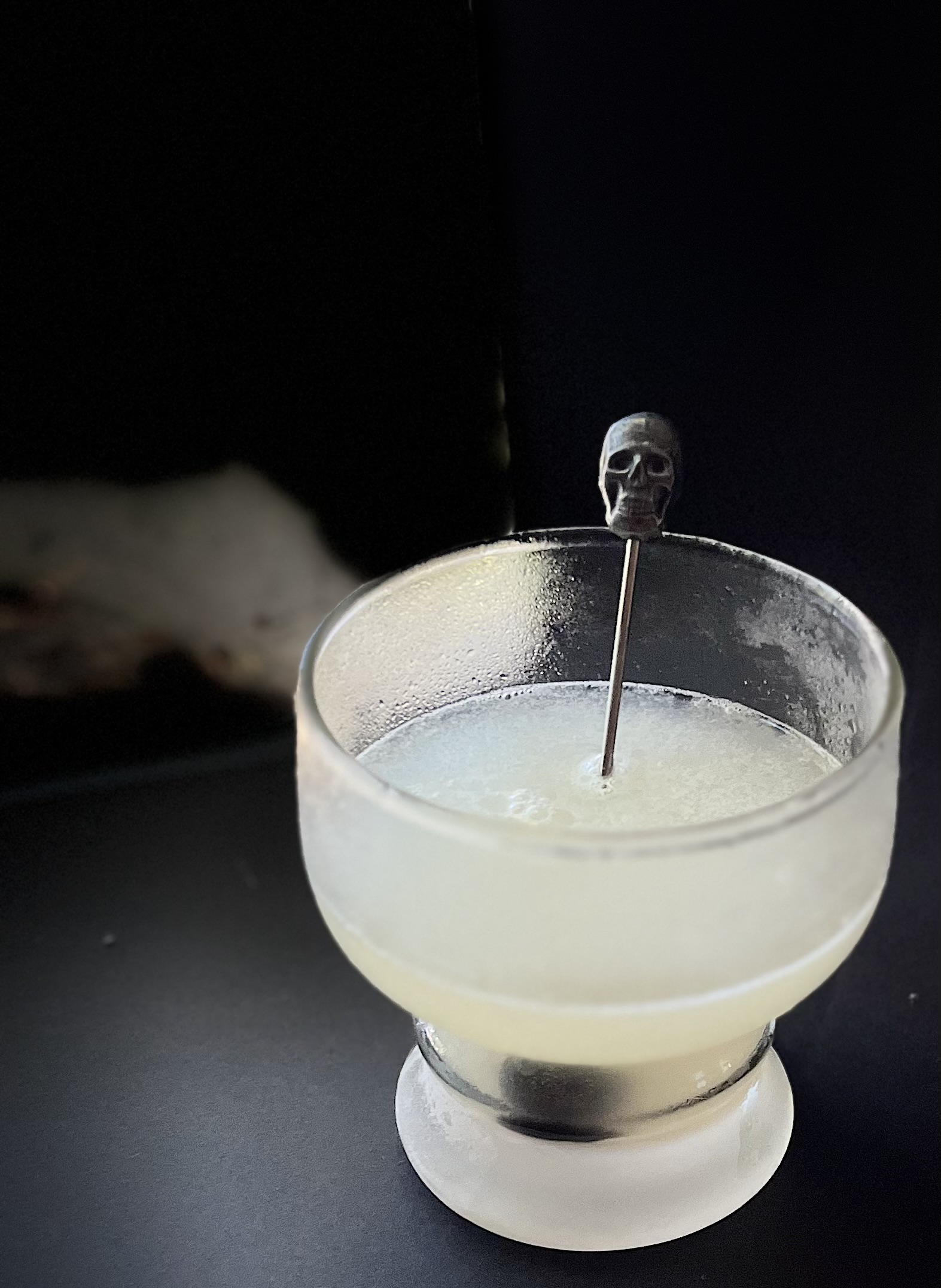
Shake all ingredients with ice and strain into chilled cocktail glass. Garnish with a cherry impaled on a skull pick.

Corpse Reviver #2 in a cocktail glass

I shamelessly pilfered the skull and cherry presentation from local establishment Nowhere Special Libations Parlor, which uses it to striking effect. We prefer Craddock’s proportions for this drink, which if we follow David Wondrich’s lead once again like we did in August should lead us to use only 1/4 teaspoon of absinthe. Ted Haigh similarly calls for just 1-3 drops and Jim Meehan goes with a rinse in the PDT Cocktail Book, but we think a full teaspoon works wonders here. Broker’s has been our house London Dry gin for awhile, and we’re not the only ones–I’ve had at least three conversations recently about how it’s one of the best spirits values around right now!

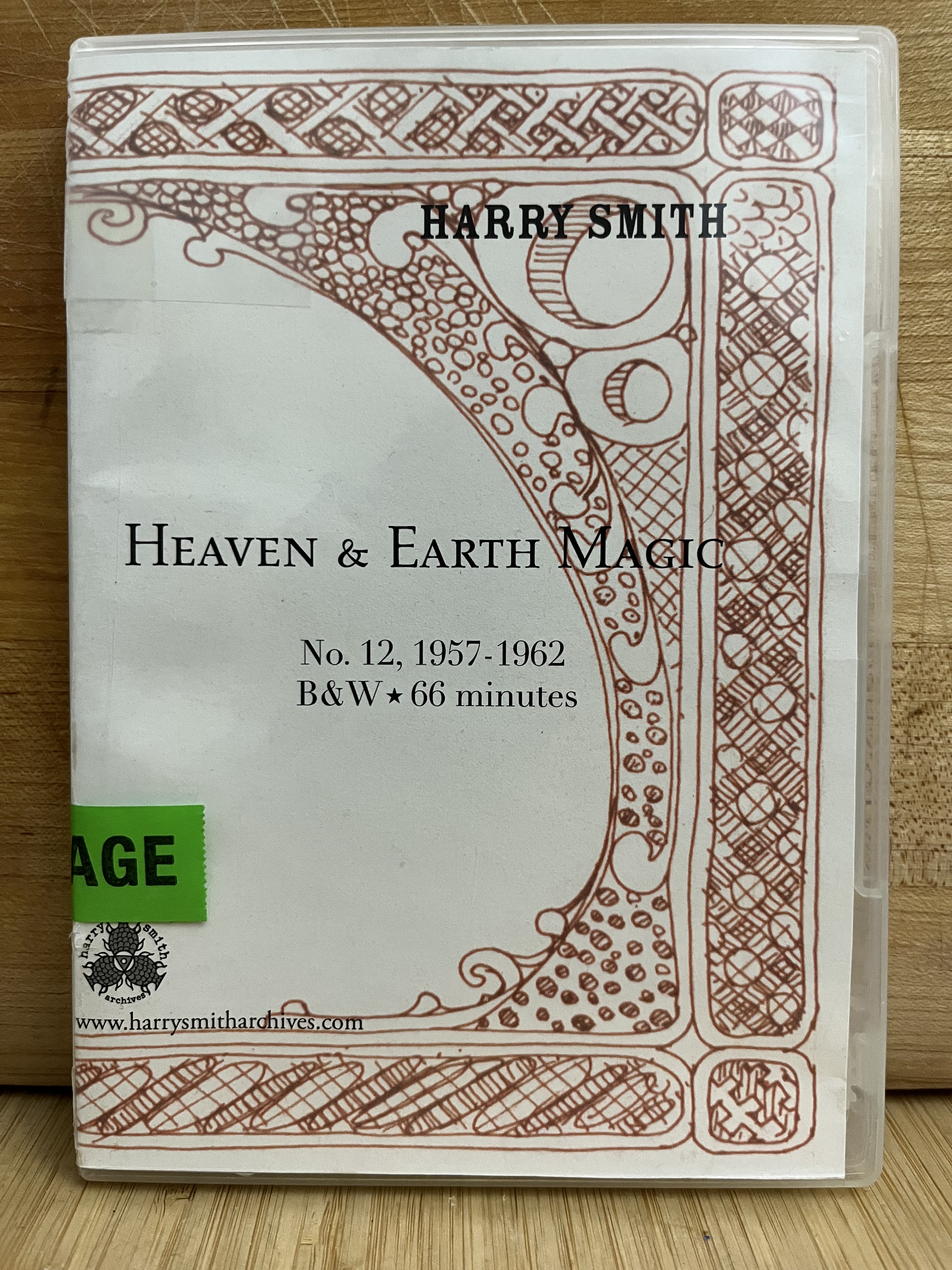
Next, of course, we have a movie. Here’s a picture of the Harry Smith Archives DVD release of the Heaven and Earth Magic that I borrowed via interlibrary loan:

Heaven and Earth Magic DVD

I actually do own a DVD-R copy of the film that I bought off eBay awhile back, but I didn’t want to use images from it because its provenance is uncertain. I’d love to add a Harry Smith Archives edition to my personal collection, but unfortunately it has been out of print for ages.

Most people’s primary source of information about Heaven and Earth Magic seems to be P. Adams Sitney’s Visionary Film: The American Avant-Garde, 1943-2000 which includes notes that Harry Smith composed for the catalog of the Film-Makers’ Cooperative which describe his “semi-realistic animated collages” as being part of his “alchemical labors of 1957 to 1962” and indicate that the film was made under the influence of “almost anything, but mainly deprivation.” They also summarize the movie’s plot:

The first part depicts the heroine’s toothache consequent to the loss of a very valuable watermelon, her dentistry and transportation to heaven. Next follows an elaborate exposition of the heavenly land in terms of Israel, Montreal and the second part depicts the return to earth from being eaten by Max Muller on the day Edward the Seventh dedicated the Great Sewer of London.

Sitney characterizes this synopsis as “ironic,” but notes that it is accurate in broad terms; he also provides his own interpretation. The main characters are a man and a woman:

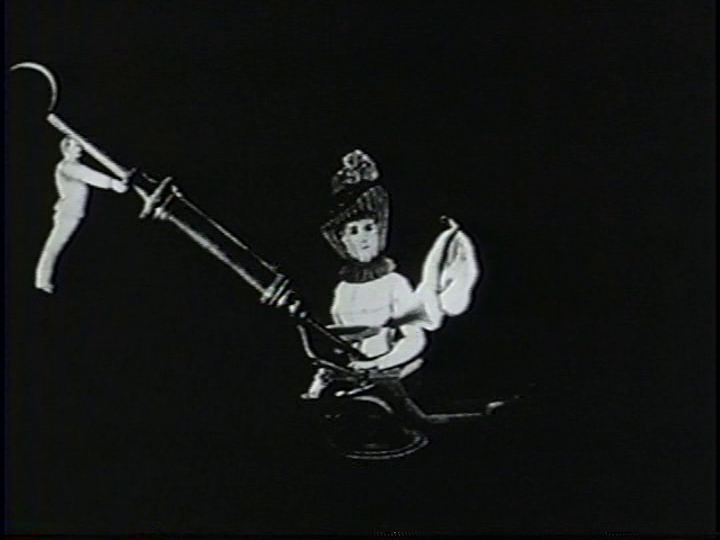
The main characters from Heaven and Earth magic

Like many of the film’s elements, both started life as engravings from a late-nineteenth-century illustrated magazine. Per Sitney, the man is identifiable as a magus by “his continual manipulations in the alchemical context of No. 12, coupled with his almost absolute resistance to change when everything else, including the heroine, is under constant metamorphosis.” As she sits in a “diabolical” dentist’s chair, the magus injects her with a magical potion:

The magus injects the woman with a potion

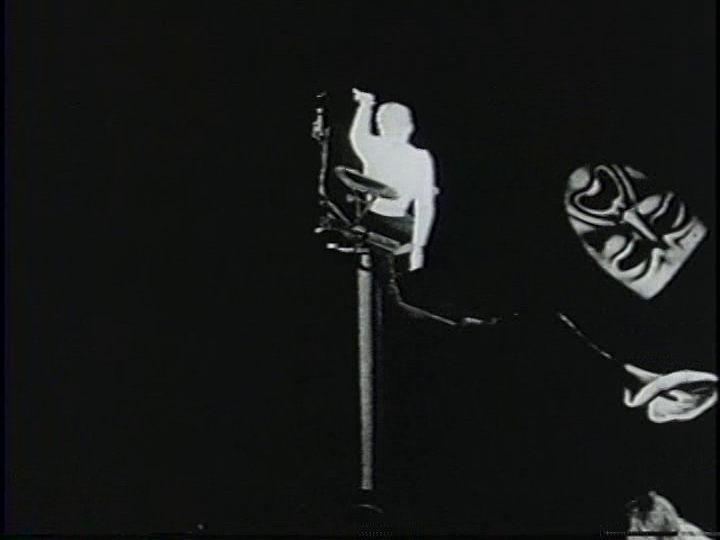
This causes her to rise to heaven, where she becomes fragmented:

The woman becomes fragmented

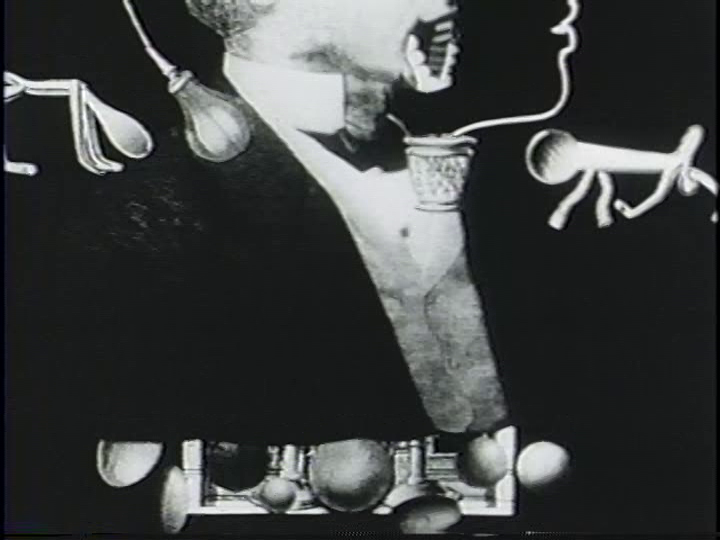
He spends much of the rest of the movie attempting to put her back together again, but “does not succeed until after they are eaten by the giant head of a man (Max Muller), and they are descending to earth in an elevator”:

The head of Max Muller
Descending to earth
The woman reassembled

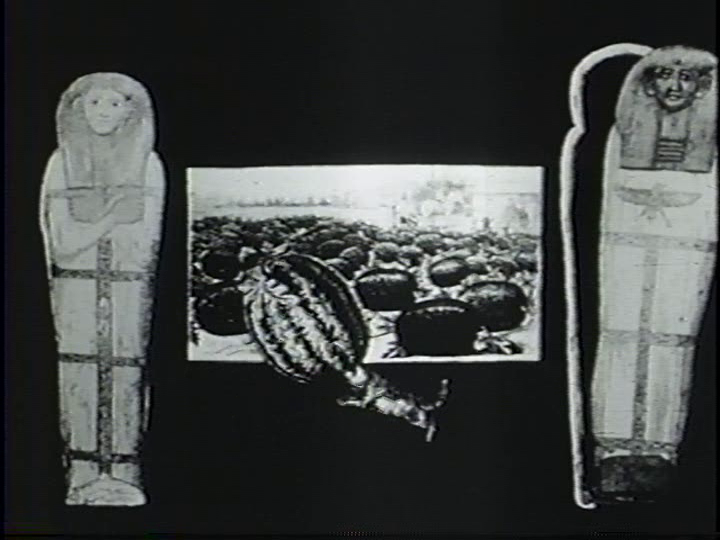
This narrative absolutely is discernable upon repeat viewings, and Heaven and Earth Magic easily lends itself to a variety of interpretations as well. Scholar Noël Carroll, for instance, reads it as a “mimesis of the drug experience” and a “metaphor of cinema as mind.” The viewer does need to put some effort into it, though, which lends credence to Sitney’s claim that Heaven and Earth Magic is Harry Smith’s “most ambitious and difficult work.” Whether or not you enjoy this film is utterly dependent on how interesting you find its images and musique concrète score. Apparently Smith preferred an original cut which was more than four times as long, but I think it’s just about perfect at 66 minutes. The use of what Carroll calls “literalization” is consistently surprising and hilarious, such as when the theft of the watermelon is accompanied by the sound of water:

Dog stealing a watermelon

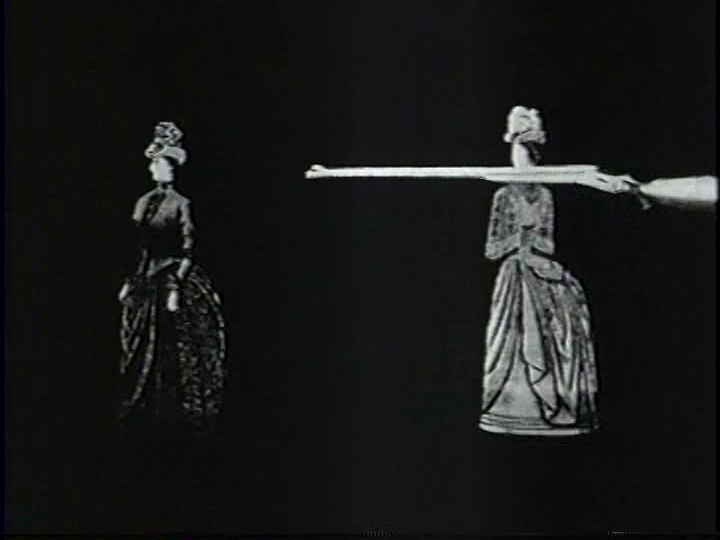
As is the doggedness (pun very much intended) with which these Victorian ladies pursue the thief:

Two Victorian ladies pursue the watermelon thief with a shotgun

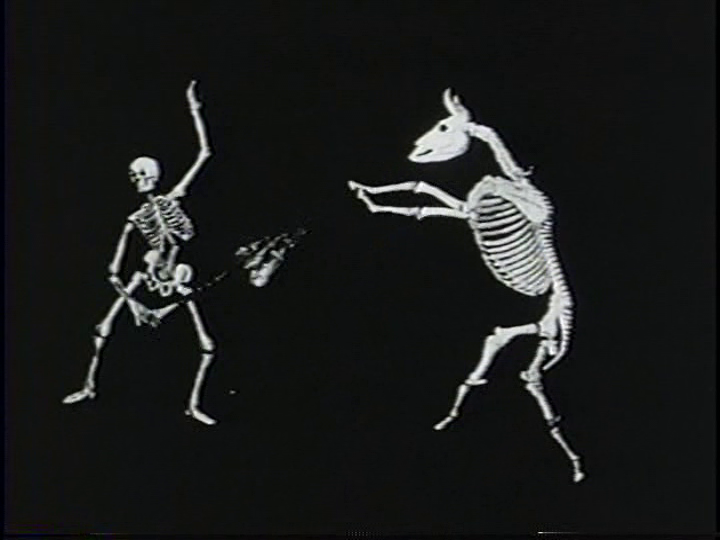
These dancing skeletons remind me of my oldest daughter’s equine phase, which included a brief but intense fascination with a Nature mini-series called “Equus: Story of the Horse”:

A human skeleton and a horse skeleton

I love these wild phantasmic images which appear later in the elevator sequence referenced above:

Ghost like-images of the woman fill the screen

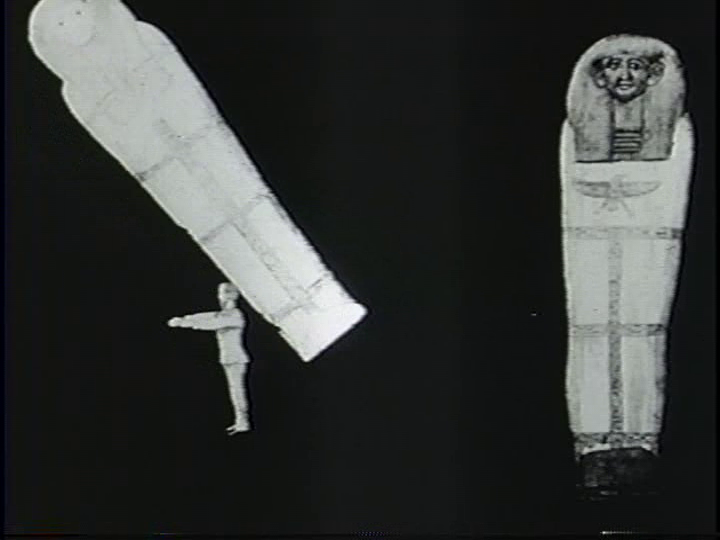
And the symmetry of Heaven and Earth Magic‘s final and first images, which mirror each other, is quite satisfying:

Image from the end of Heaven and Earth Magic
Image from the beginning of the film which mirrors the previous one

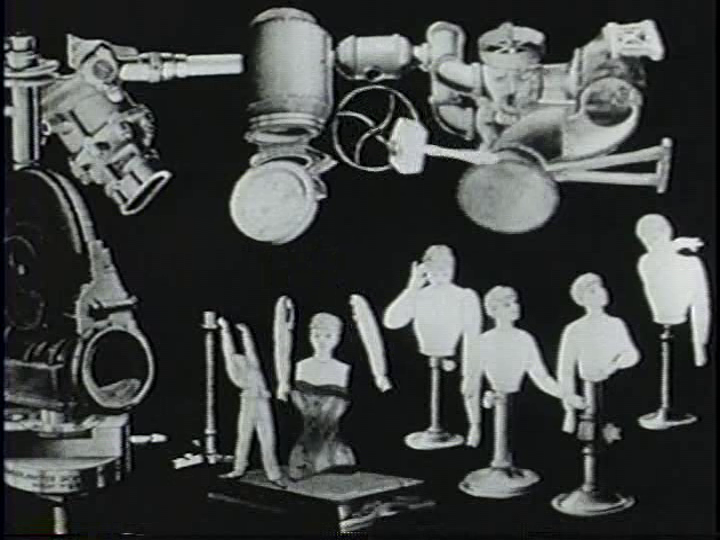
My loving wife (who has a graduate degree in art history) observed that Smith is an obvious influence on the animated sequences Terry Gilliam created for Monty Python’s Flying Circus and flagged this scene as her favorite:

The magus assembles busts of human beings

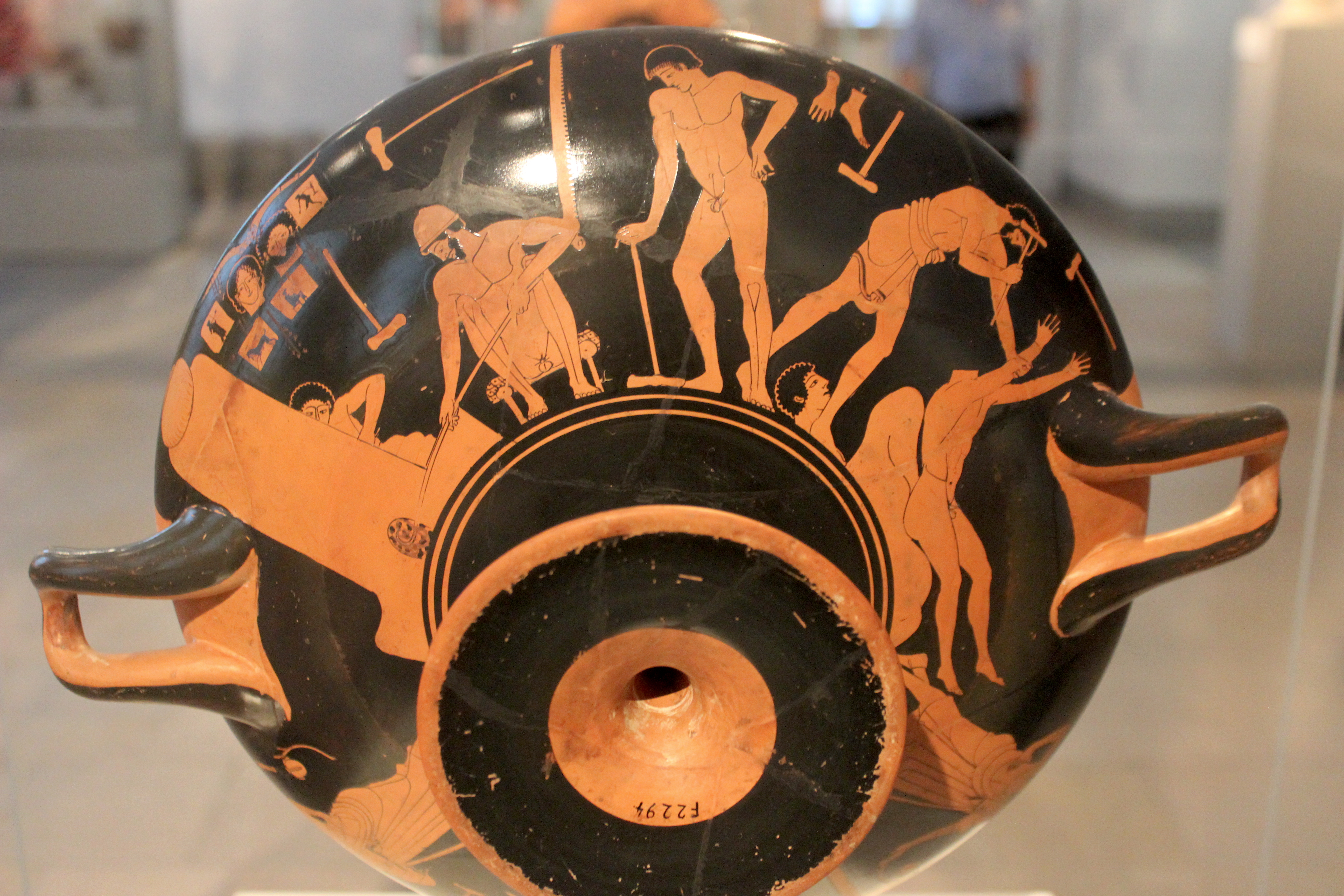
Because it reminded her of the Berlin Foundry Cup, which depicts a Athenian bronze workshop:

Photo by Miguel Hermoso Cuesta and used according to the terms of a CC BY-SA 4.0 license

And this brings us to a second movie. You see, this is an example of red-figure vase painting, and that is precisely what the negative photography in Maya Deren’s The Very Eye of Night has always made me think of! Considering the facts that with its 15-minute runtime, this film plus Heaven and Earth Magic are roughly the same length as a short feature, and that both are frequently lumped together as examples of avant-garde/experimental/underground cinema, this struck me as a perfect opportunity for a double feature. So here’s a picture of my Kino Lorber/Re:Voir DVD release of The Maya Deren Collection:

The Very Eye of Night DVD

Although The Very Eye of Night (like Heaven and Earth Magic) does not appear to be currently on commercial streaming video platforms, some people may have access to it via Kanopy through a license paid for by their local academic or public library.

In an article about the film, scholar Elinor Cleghorn refers to The Very Eye of Night as Maya Deren’s “most technically complex and medium-specific film” and clearly establishes that it was regarded as a major work during its initial screenings in 1959. The titles of recent appreciations by Ok Hee Jeong (“Reflections on Maya Deren’s Forgotten Film, The Very Eye of Night) and Harmony Bench (“Cinematography, choreography and cultural influence: rethinking Maya Deren’s The Very Eye of Night) demonstrate that it is not thought of as such today, which Cleghorn attributes to our friend P. Adams Sitney, who was otherwise a champion of Deren but dismissive of this film, which he felt represented an unwise divergence from “the powerful element of psycho-drama” that he prized in her earlier work.

The Very Eye of Night is similar to Heaven and Earth Magic in that it has an elaborate story that can probably only be followed by viewers who know what to look for. As described by scholar Sarah Keller in her book Maya Deren: Incomplete Control, it begins with an elaborate credit sequence which introduces the characters and “upholds the philosophical, mythical, and/or metaphysical principles espoused by the film as a whole,” as in the case of this image which references an eye with an iris, the yin-and-yang symbol, and Leonardo da Vinci’s “Vitruvian Man”:

Card from The Very Eye of Night's opening credits

It is more than a minute after the final title card before the first dancers (Richard Englund as Uranus and Rosemary Williams as Urania) appear, arcing across a field of stars accompanied by music by Deren’s future husband Teiji Ito:

A male dancer gestures at a woman dancer with her back to him

Doubling/mirroring proliferates throughout the film, not just in the way the dancers are paired with one another:

A male and female dancer with arms clasped

But also through costume elements such as the tights worn by the actors who portray Gemini (Don Freisinger and Richard Sandifer):

Two actors portraying Gemini in black and white tights which mirror each other

And this ribbon:

White woman dancer with a black ribbon

The most enchanting images for me are the ensemble shots:

Ensemble of six dancers

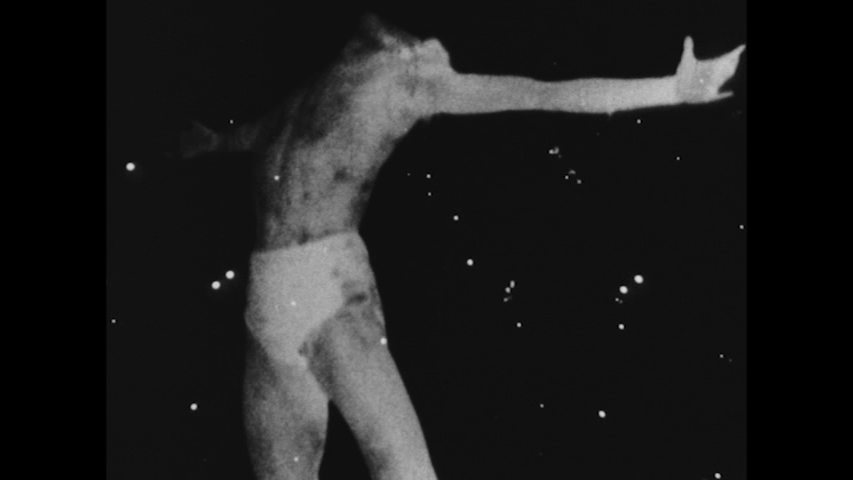
But the entire film has a timeless quality which supports Deren’s statement of purpose which was originally published in Film Culture magazine and reprinted in the book Essential Deren: Collected Writings on Film: “whether or not the viewer formulates it, I am convinced that he will know that I am proposing that day life and night life are as negatives of each other, and that he will feel the presence of Destiny in the imperturbable logics of the night sky and in the irrevocable, interdependent patterns of gravitational orbits.” In an essay called “‘The Eye for Magic’: Maya and Méliès” published in Maya Deren and the American Avant-Garde, scholar Lucy Fischer argues that “for Deren the sky was a site of rapture” and that “just as outer space presents a field in which earthly laws are violated and superseded, so the domain of film dance liberates the body through the magic of cinematography and editing.” I think something of this mindset can be seen in the triumphant gesture which concludes the dancing:

Close up of Uranus with his arms spread wide

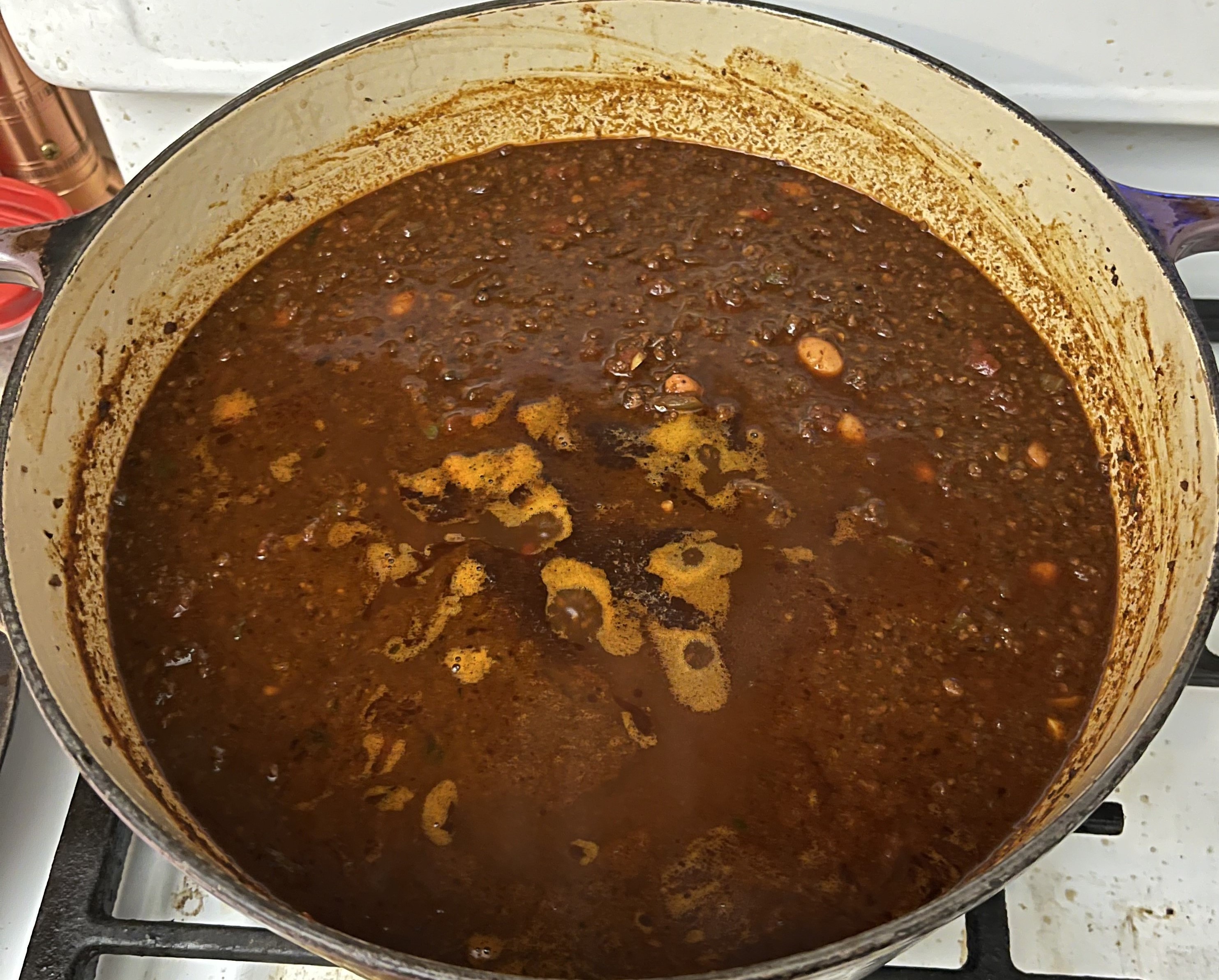
It is fair to observe that The Very Eye of Night is not as rigorous as Heaven and Earth Magic, but to my eyes it’s also more beautiful, and I don’t consistently prefer one over the other. Meanwhile, both are perfect fits thematically and visually for a night associated with transformation, mystery, and experimentation. I’d actually suggest watching them in reverse order of how they’re discussed in this post, staring with The Very Eye of Night as an accompaniment to your Corpse Reviver #2 and saving Heaven and Earth Magic for after trick-or-treating is over. You’ll probably be hungry, which brings me to my final recommendation: this recipe for beef chili with beans. Author Grant Achatz notes that it’s a modified version of the one his mother made for him and his cousins every Halloween. We gave it a try a couple of years ago and have been making it annually ever since. Although Achatz says he ate it at the beginning of the evening “as a way to counteract the sugar buzz to come,” we prefer to save it for after we return home both as a way to warm up from a usually cold (and sometimes rainy) night outside and a strategy for breaking up our kids’ candy consumption. It’s hard to make chili look good, but here’s a picture of the pot which is now hanging out in our freezer awaiting its big night anyway:

Pot of chili

Definitely don’t skimp on the ancho and pasilla powders, which you can easily make yourself as far in advance as you want by toasting seeded and stemmed dried chilies, letting them cool, and then grinding them. We usually grind our own beef as well, but that’s nowhere near as essential. The recipe itself doesn’t mention them, but serving them with sour cream and cilantro as shown in the picture in Food & Wine is a great move.

And there you have it, a ready-made itinerary for your upcoming All Hallow’s Eve festivities!

Cheers!

All original photographs in this post are by Marion Penning, aka my loving wife. Links to all of the entries in this series can be found here.

Bonus Drink & a Movie Post #2: Halekulani Cocktail + Lilo & Stitch

My family has engaged in a cooking competition during the holidays every year since 2010. This oddball tradition began as a fun way to evenly distribute the labor of getting Thanksgiving dinner on the table: everyone made a course, then we scored each dish based on creativity, taste, and presentation. The rules quickly grew quite complicated after that. 2011 wasn’t too bad: it consisted of a series of Chopped-style showdowns using “basket” ingredients. In 2012, though, we all had to cook a dish which: 1) corresponded to a specific course (appetizer, entree, or dessert), 2) was inspired by a specific Christmas carol, 3) included a secret ingredient purchased by another competitor which was linked to one of the carols, and 4) also utilized a specific kind of breakfast cereal. This more or less culminated in 2017 and three rounds of head-to-head matchups based on the cooking show Knife Fight in which we cooked as many things as we desired featuring sets of three secret ingredients during two-hour-long cooking sessions. I won that year, and if I remember correctly prepared 13 separate dishes during my six total hours in the kitchen.

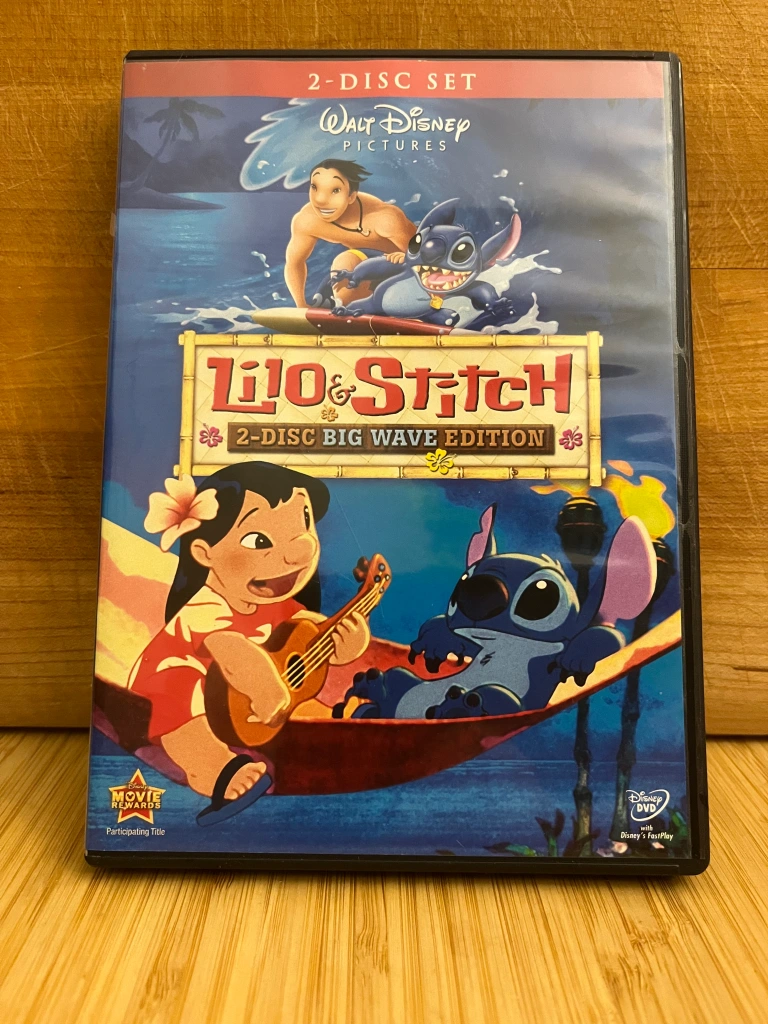
We chilled out a bit after that, and the requirements of recent editions have been as simple as making Christmas cookies (first round) and a casserole (second round) in 2019 and creating an edible tableau which was judged solely on appearance and description in 2020 when we couldn’t gather in person because of the pandemic. This year’s rules were similarly straightforward: with everyone gathering in a crazy pirate-themed house in Davenport, Florida for a rare pre-Thanksgiving family vacation, we decided to each make a snack inspired by a Disney movie. My partner Lucy and I selected Dean DeBlois and Chris Sanders’s Lilo & Stitch, which, fun fact, appeared on my very first official top ten list for The Pitt News. Here’s a picture of the Disney “2-Disc Big Wave Edition” DVD that I don’t remember picking up, but obviously acquired sometime after 2009 when it was released:

Picture of Lilo & Sitch DVD case

You can also stream Lilo & Stich via Disney+ with a subscription or from most major streaming video services for a rental fee. We dubbed the salty-sweet concoction we created in its honor Hurricane Elvis Popcorn. It’s basically a mash-up between the Hurricane Popcorn recipe from the food blog Delicious Not Gorgeous, the Perfect Popcorn recipe from the food blog Simply Recipes, and an Elvis sandwich. Here’s how you make it:

12 ozs. diced thick-cut bacon
1 2.7 oz. bag Bare® Simply Banana Chips
2 oz. arare, broken into bite-sized pieces if necessary
1/8 cup furikake
1 tsp. kosher salt
1/2 cup popcorn kernels
2 Tbsp. salted butter
2 Tbsp. roasted peanut oil (not to be confused with regular peanut oil: you want a finishing oil like La Tourangelle that punches you in the nose with the smell of roasted peanuts when you open it)

  1. Cook the bacon in a skillet until crisp. Remove to a paper towel-lined plate using a slotted spoon.
  2. Strain 4 1/2 ounces of bacon fat into a large saucepan. Warm over medium high heat, adjusting temperature downward as necessary to keep it from smoking.
  3. Put three or four popcorn kernels into the pot and wait for them to pop. Remove them to a large bowl with a slotted spoon when they do.
  4. Add the rest of the kernels to the pot in an even layer, remove from heat, and cover.
  5. Count to 30 slowly, then return the pan to the heat until nearly all the kernels have popped, gently moving the pan back and forth over the burner to prevent burning.
  6. Remove the popped corn to a large bowl.
  7. Immediately add salted butter to the still-hot pan you cooked the popcorn in and melt it. A little browning is a good thing–it adds flavor! Once the butter is melted, add the peanut oil. Set aside.
  8. Toss the popped corn, melted butter/peanut oil mixture, crispy bacon, and remaining ingredients in a very large bowl or plastic bag (see below). Season with additional salt as necessary and serve.
Hurricane Elvis popcorn

I mentioned a bag in the instructions above: part of the reason we went this route was because we didn’t know quite what kind of kitchen we’d be cooking in. At home we have a HUGE metal mixing bowl which works great for this, but down in Florida we found a plastic bag to be the best tool available:

Mixing up a batch of Hurricane Elvis Popcorn

The young man in this picture is my nephew Pete, who kindly offered to help us out with this part. Although we only finished in fifth place, we’re quite proud of our handiwork! Here’s a photo of Lucy and me with the finished product:

The inventors of Hurricane Elvis Popcorn posing with their creation

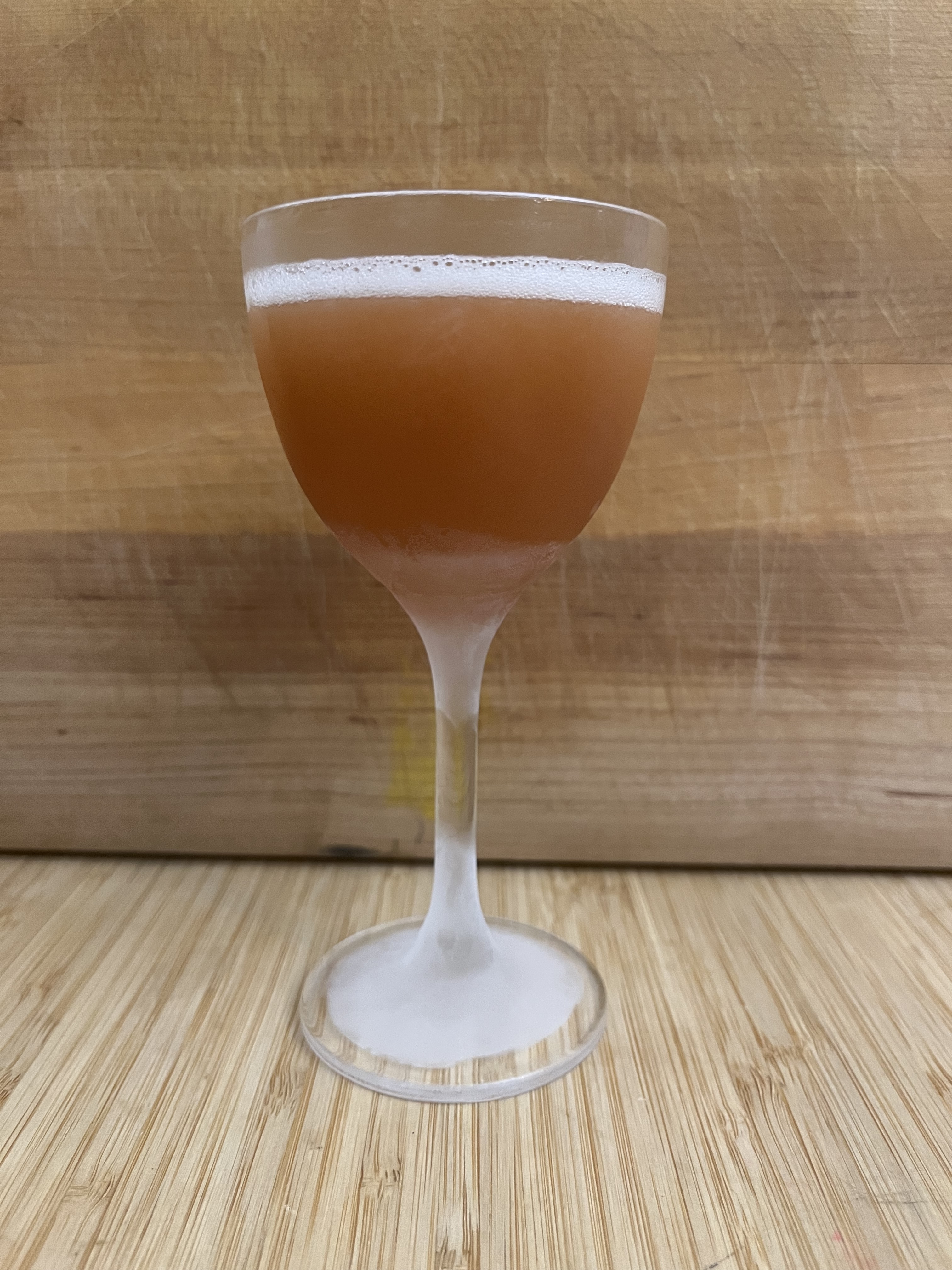
It seemed like a waste not to turn this into another bonus Drink & a Movie post, so I selected a drink to pair with the movie and snack, the Halekulani Cocktail from Martin and Rebecca Cate’s Smuggler’s Cove book about their legendary San Francisco rum bar. Here’s how to make it:

1/2 oz. lemon juice
1/2 oz. orange juice
1/2 oz. pineapple juice
1/2 oz. demerara syrup
1/2 teaspoon grenadine
1 1/2 ozs. bourbon (Hudson Whiskey Bright Lights, Big Bourbon)
1 dash Angostura bitters

Combine all ingredients and shake with ice. Strain into a chilled coupe or Nick and Nora glass. Garnish with an edible orchid flower if you have one handy, or leave the drink unadorned like we do here:

Halekulani Cocktail in a coupe glass

We made this with Smuggler’s Cove’s house demerara syrup (which is thicker than most of the ones I’m familiar with) and grenadine, recipes for both of which can be found in the book, but I feel like any ones you like would work fine here. The Cates explain that this drink originated at the House Without a Key lounge in Waikiki Beach in the 1930s and call for it to be made with bourbon, but decline to recommend a specific brand. I first tried one of my go-tos, Elijah Craig Small Batch, but felt that the result, although extremely well-balanced, lacked character. Then I read a Punch article by Chloe Frechette which notes that the Halekulani Cocktail would originally have been made with “[t]he only native spirit of Hawaii, okolehao, commonly known as oke, [which] is, in essence, Hawaiian moonshine,” and realized that New York’s own Hudson Whiskey’s Bright Lights, Big Bourbon would work perfectly here. Despite the fact that it’s aged for a minimum of three years, it still tastes a bit on the young side to me, but that’s a feature, not a bug in this particular application and many others–whereas the Elijah Craig just sort of disappeared into the drink, the taste of this spirit shines through.

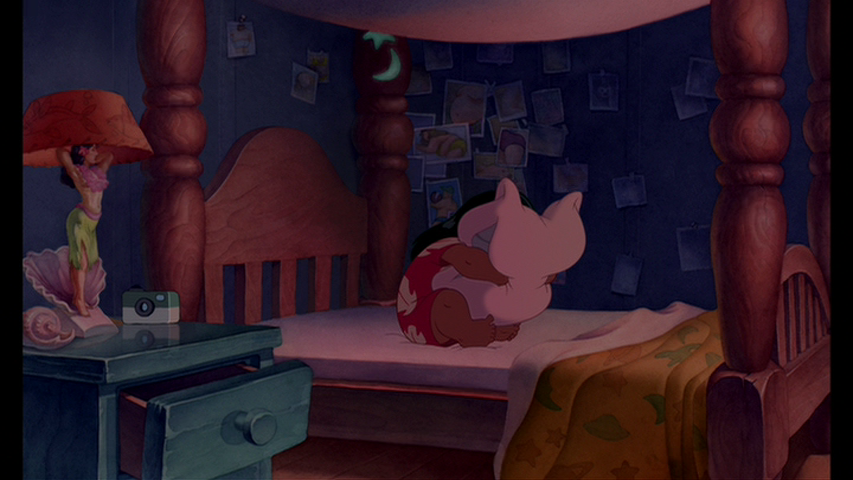
For anyone not familiar with the film, an alien on the run from the Galactic Federation voiced by director Chris Sanders crash lands on the island of Kaua’i, where he masquerades as a stray dog to avoid being recaptured. He is adopted by a little girl named Lilo (voiced by Daveigh Chase) who names him Stitch. In an effort to turn him into a “model citizen,” she encourages him to emulate Elvis Presley:

Screengrab from Lilo & Stitch

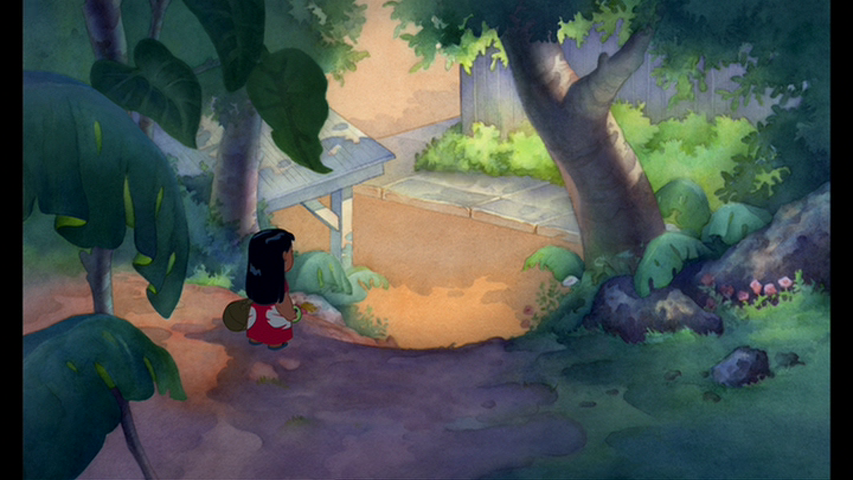
Hurricane Popcorn is a popular Hawaiian snack, Hurricane Elvis is the popular name of a severe storm that hit Memphis, Tennessee in 2003, and the Halekulani is a famous Hawaiian hotel with more than a century of history. So that’s how everything connects. I actually don’t have a heck of a lot to say about Lilo & Stitch that wasn’t covered in Bilge Ebiri’s recent definitive oral history of the film, but to echo a few points made there, the film contains absolutely gorgeous watercolor backgrounds of a sort that literally had not been seen in a Disney movie in sixty years:

Screengrab from Lilo & Stitch 2

The interactions between Lilo and her sister-turned-guardian Nani (voiced by native Hawaiian Tia Carrere), capture both the extreme frustration:

And intimacy that can emerge from such a complicated relationship:

Screengrab from Lilo & Stitch

Art Director Ric Sluiter is 100% right that the pink sea foam in the surfing scenes looks incredible:

Screengrab from Lilo & Stitch

And designing a social worker around Marsellus Wallace and then actually casting Ving Rhames to voice him really was a stroke of genius:

Screengrab from Lilo & Stitch

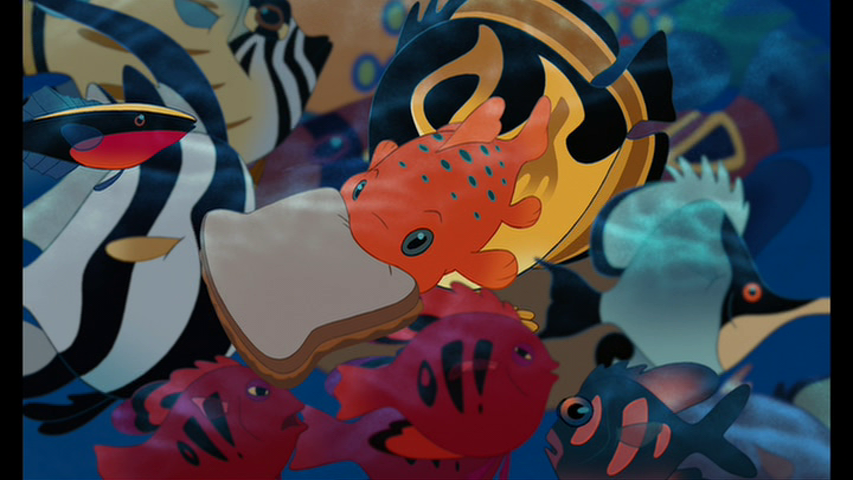
I’ve also always loved Pudge the Fish who controls the weather:

Screengrab from Lilo & Stitch

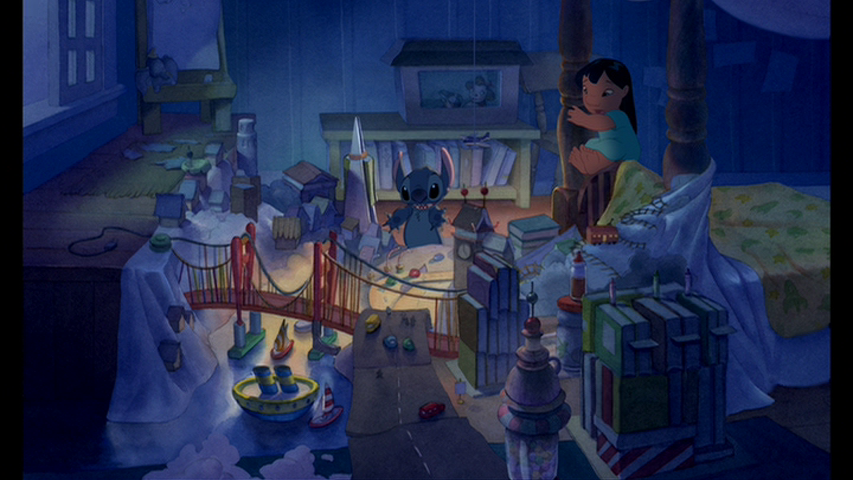
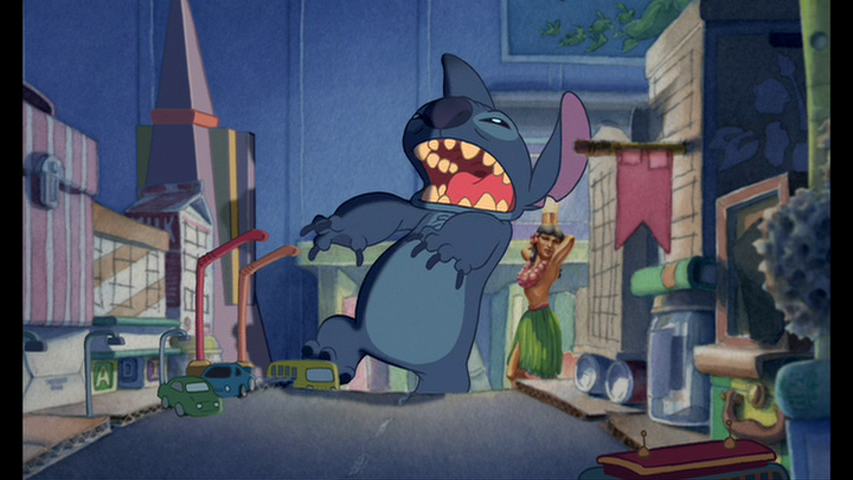
And the scene in which Stitch builds a model of San Francisco just so that he can run amuck over it:

Goodness knows I don’t stand by my 22-year-old self’s writing style, but it’s nice to see some signs of the adult human being he would eventually grow into in his work. Now if I could just get my real-life daughters to actually *watch* Spirited Away. . . .

Cheers!

All original photographs in this post are by Marion Penning, aka my loving wife, except the one me and Lucy wearing pirate hats, which was taken by my mother. Other entries in this series can be found here.

June, 2022 Drink & a Movie: Whisky Highball + Early Summer

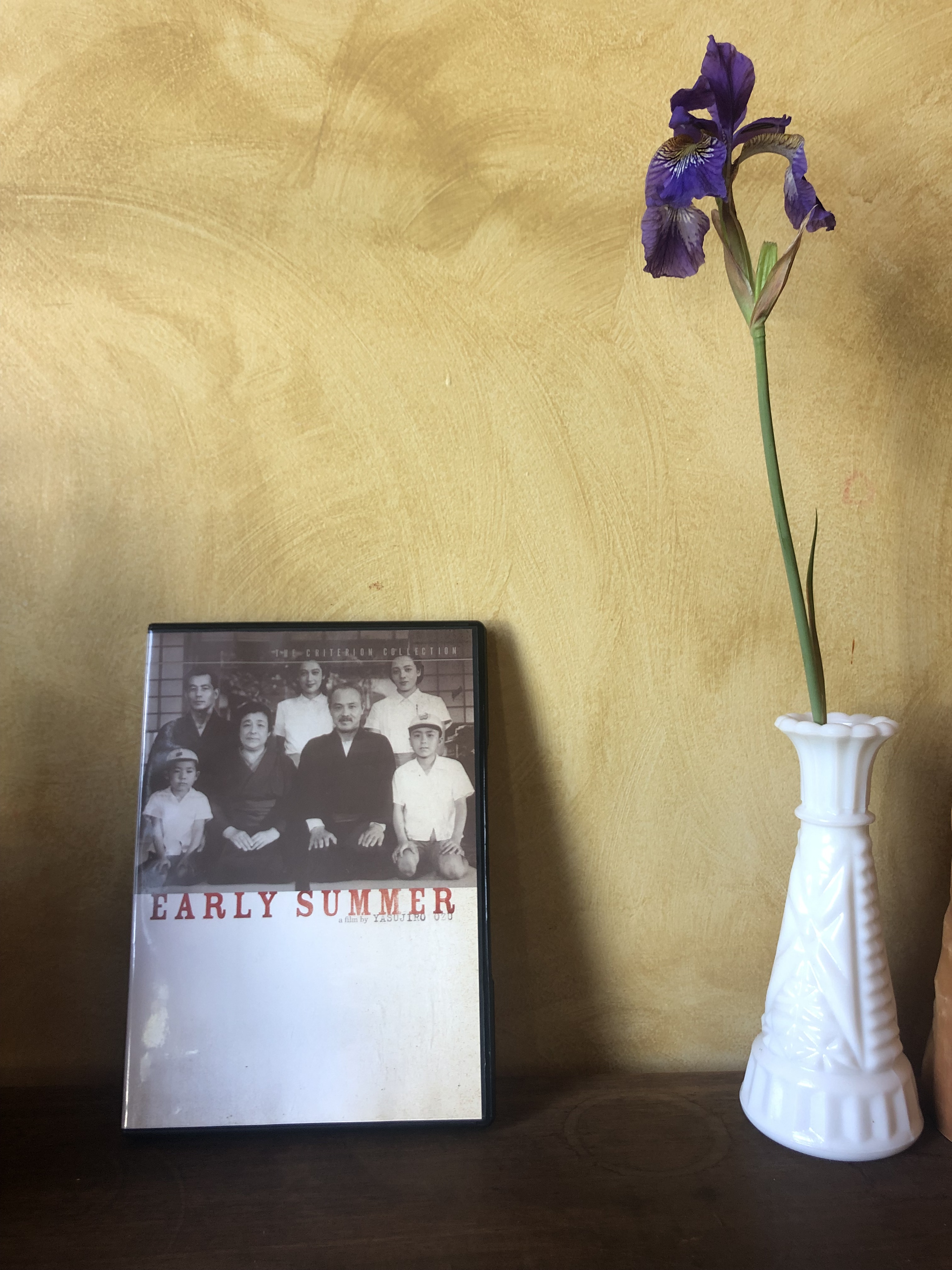
Summer is a great time to live in Ithaca, New York. After the Cornell University and Ithaca College students leave at the end of the school year, there are literally half as many people contending for the same number of precious restaurant tables, parking spaces, and spots in line at Wegman’s. Although I’ve always thought of myself as an autumn person, I’ve also come to look forward to things like the reopening of the Cascadilla Gorge Trail (which accounts for nearly half of my walk to and from work when it isn’t closed for winter) and the appearance of ripe fruit on the black raspberry bush in my back yard as much as anything in my life. Considering that I’ve long thought of Yasujiro Ozu’s Early Summer as a favorite film, it therefore seemed like a obvious pick for this month’s Drink & a Movie post. Pictured here is the Criterion Collection DVD copy of it that I’ve owned for just about forever:

Picture of Early Summer DVD case

It’s still both in print and in stock there, and can also be streamed via the Criterion Channel and HBO Max with a subscription or Apple TV for a rental or purchase fee. The drink I’m selecting to pair with it is another understated masterpiece, the whisky highball:

1.5 oz. Suntory Toki Whisky
4.5 oz. Fever-Tree Club Soda

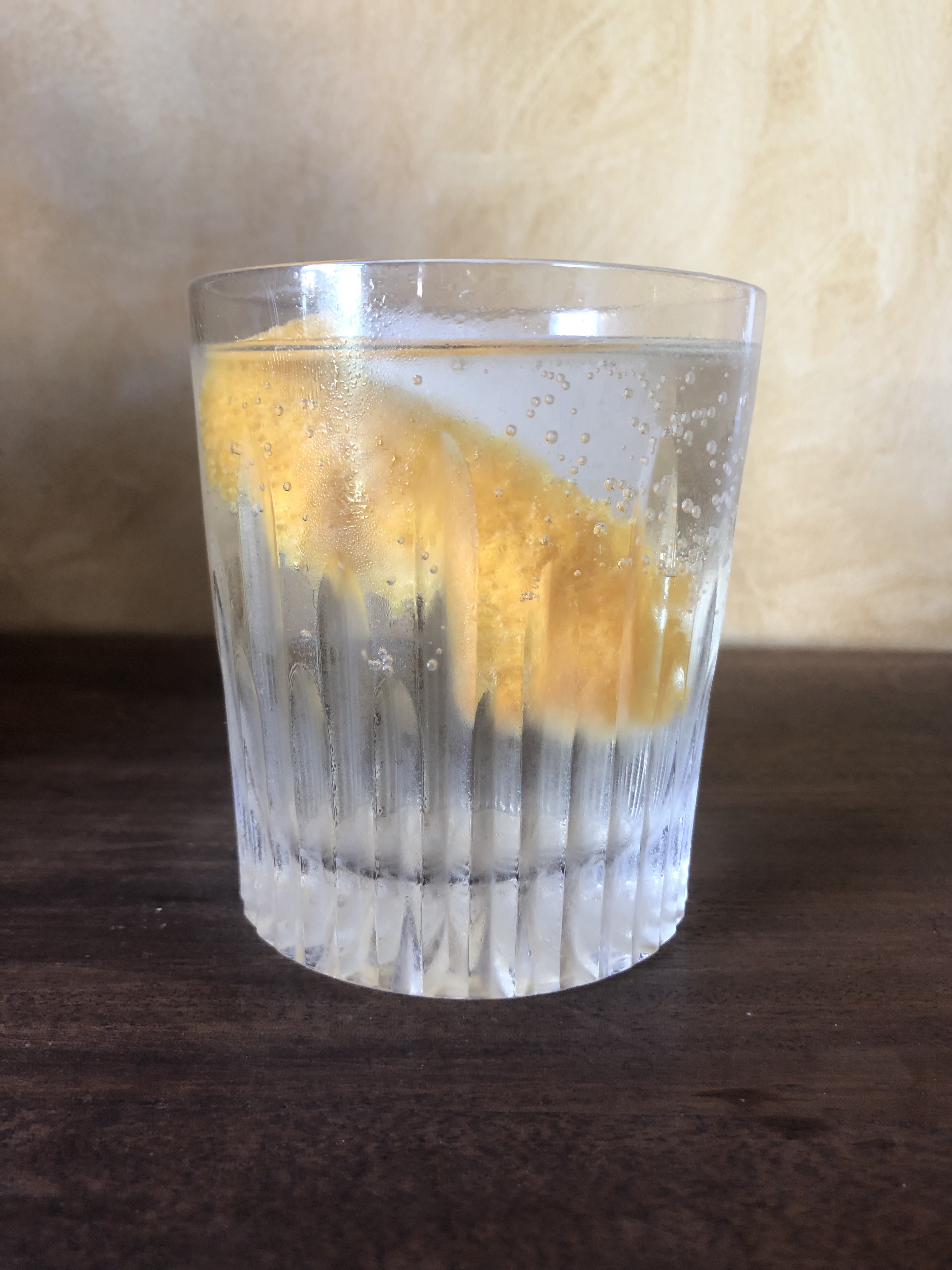
Chill whisky, then add to a chilled rocks glass which contains one large ice cub. Stir just once with a bar spoon and garnish with a twist of grapefruit.

Whisky Highball in a rocks glass

Although the majority of the tips and tricks highlighted in the decidedly un-Ozu-like videos on the “Rituals” section of Suntory Whisky’s Toki website are beyond the reach of most home bartenders (e.g. hand carve your ice to perfectly fit the glass that the drink will be served in), they do include two suggestions that I fully endorse: 1) chilling both the glass and all of the ingredients prior to mixing makes for a better drink, and 2) a grapefruit or other citrus twist is a great addition. I also agree with Julia Black of Bon Appétit that it’s worth splurging on high-carbonation club sodas like Fever Tree. My recipe may not measure up to the custom machine-dispensed concoctions (which: wowzers, do I want to try one of those!) describe by Black, but it’s delightfully effervescent and just the thing for a hot summer day.

For me, it also tastes like a specific moment in my life. I saw Early Summer for the first time as part of an Ozu retrospective which played Pittsburgh Filmmakers’ Melwood Screening Room (RIP) in 2005 and fell in love with it immediately. On Thursdays during that era, I could often be found at ’80s night at the dance venue Upstage (also RIP), where my drink of choice was a Scotch and soda. I have no idea how this tradition started, because I don’t think I consumed them anywhere else, which is presumably a big part of why I remembered this thing past when a poker buddy turned me on to Suntory Toki as a delicious and reasonably priced introduction to Japanese whisky a couple of years ago.

It’s so easy to make further connections between this drink and Ozu’s film that I don’t even think it’s worth the effort. Suffice to say that the former is a fine rendition of a Scottish spirit with a name that means “time,” while the latter tells the story of a multigenerational Japanese family navigating a transitional period in their country’s history when people might wear a kimono one day and a Western-style clothes the next.

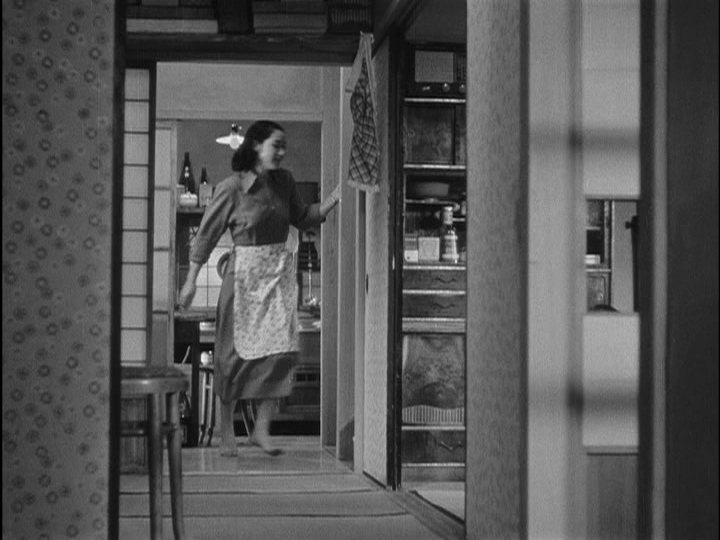
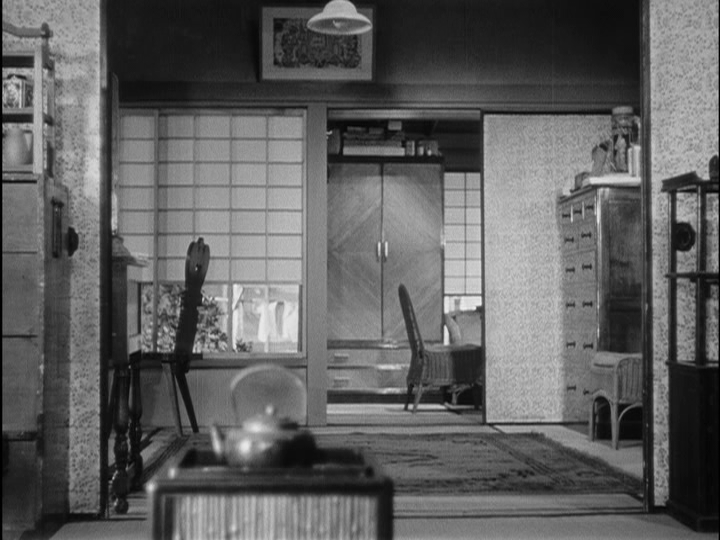
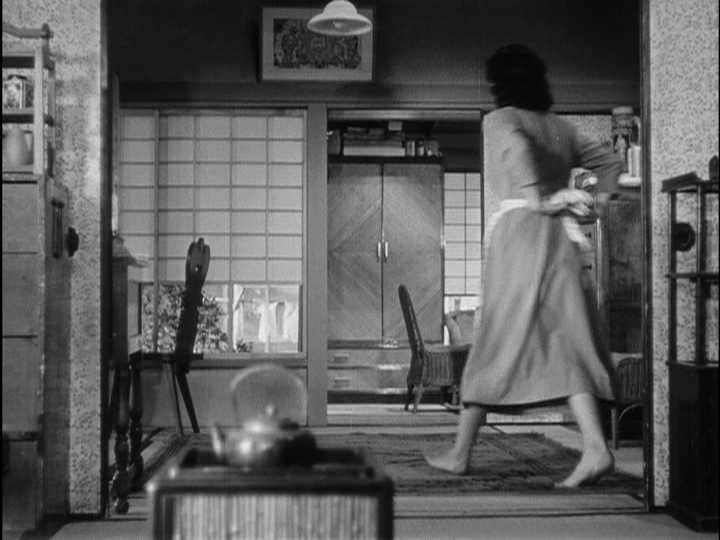
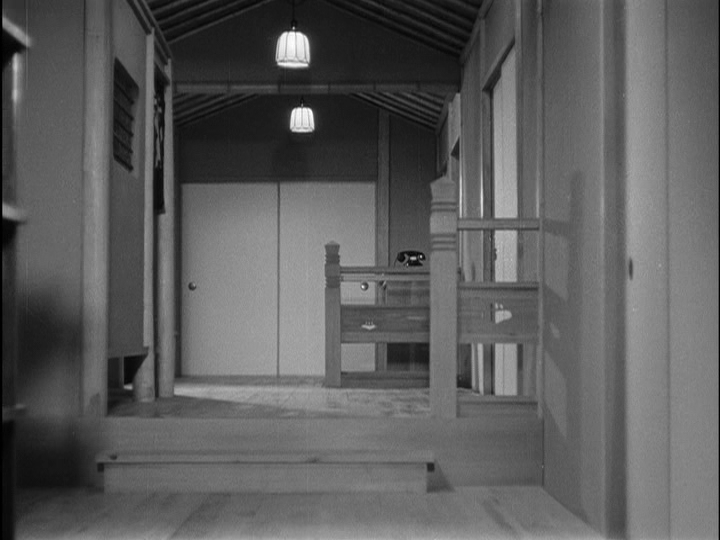
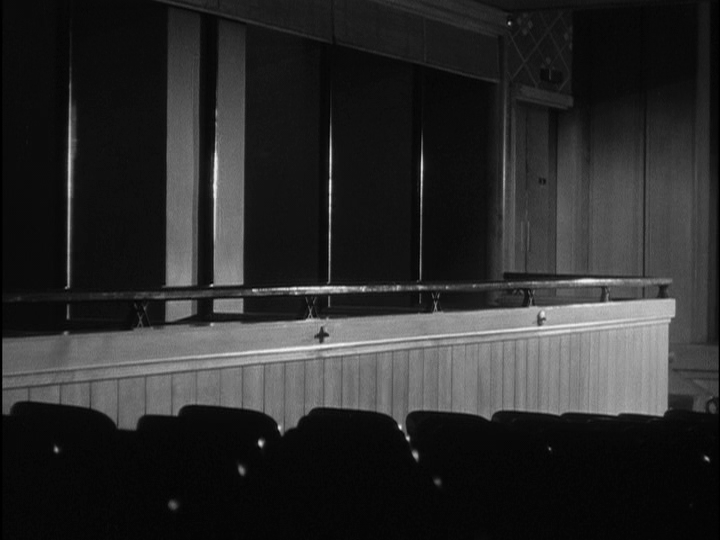
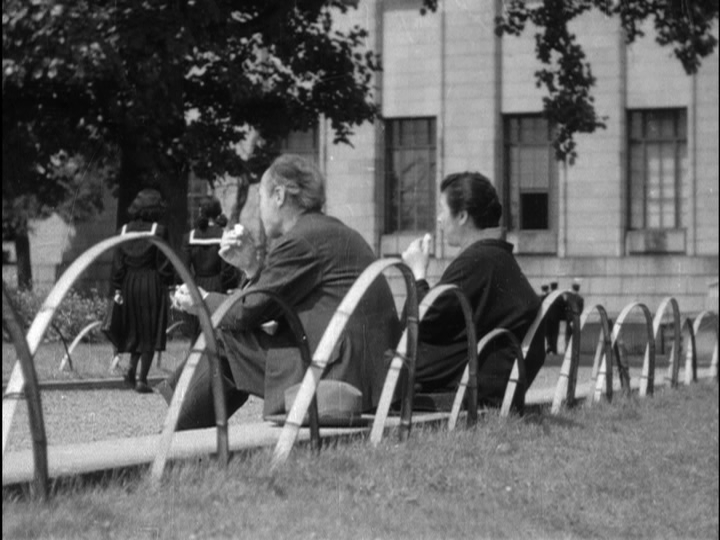
In an essay for the booklet included with the Criterion release of Early Summer, filmmaker Jim Jarmusch talks about finding the images he encountered even on his first visit to Japan “oddly familiar” thanks to Ozu. I had the same experience, but I don’t think it’s simply a matter of having seen them before. Ozu invites the viewer to study the spaces he depicts more than other filmmakers. One way he does this is by lingering on hallways and rooms for a few seconds after characters leave and cutting to them a beat or two before anyone enters:

When done in sequence, as in the shots above, this also allows audiences to construct mental maps of these same spaces. Of course, this wouldn’t be nearly so effective if the rooms Ozu’s characters inhabit weren’t so interesting to look at! This goes for his exteriors as well:

Screengrab from Early Summer showing an exterior with a city in the foreground, forested hills in the background, and a train running through the middle of the frame

Ozu also connects spaces with camera movement, such as these two rooms in a now-empty theater where the Mamiyas just saw a play together, which are united by dolly shots:

Screengrab from Early Summer showing an empty room in a theater
Screengrab from Early Summer showing another empty room in a theater

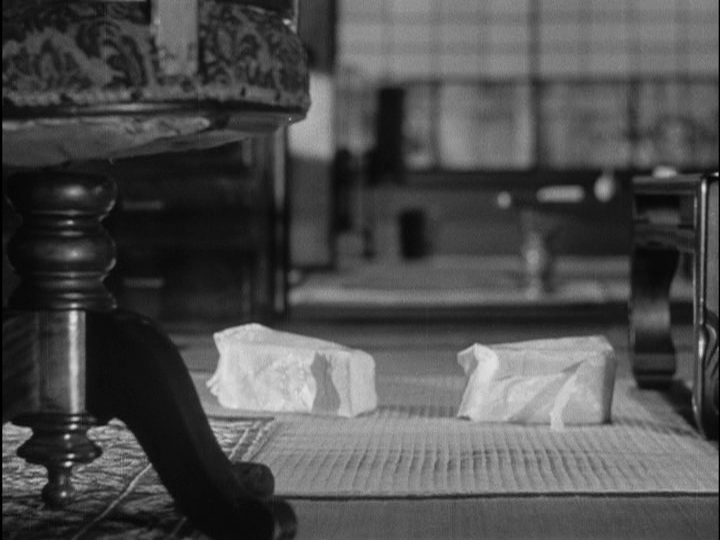
The same technique is employed in the service of more symbolical ends elsewhere, as in the case of this tracking shot toward a loaf of bread (which we’ll come back to in a moment):

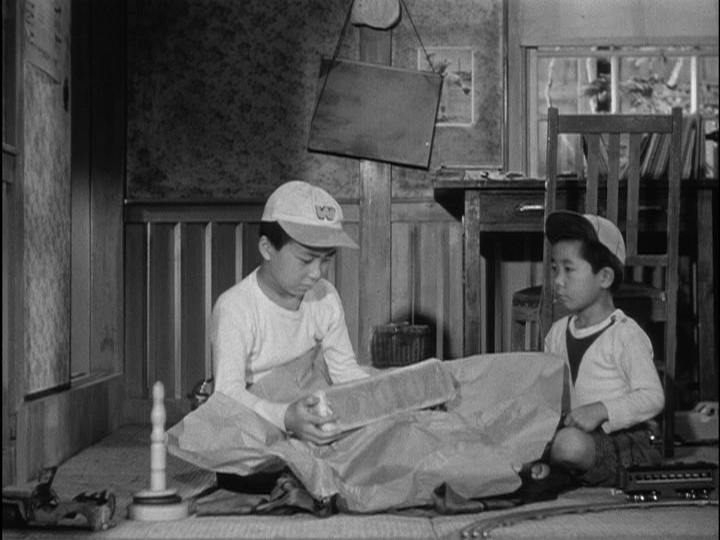
Screengrab from Early Summer showing a broken loaf of bread

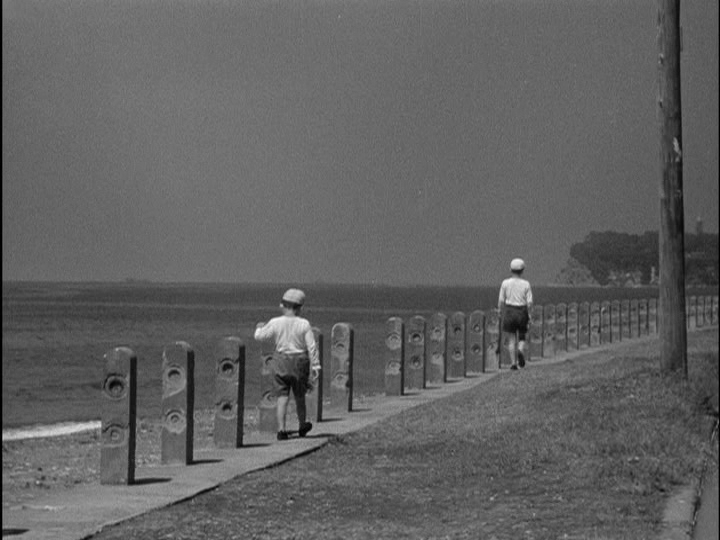
Which is immediately followed by one following the two little scamps (Minoru and Isamu Mamiya, played by Zen Murase and Isao Shirosawa respectively) who broke it:

Screengrab from Early Summer showing  Minoru and Isamu Mamiya walking along the waterfront

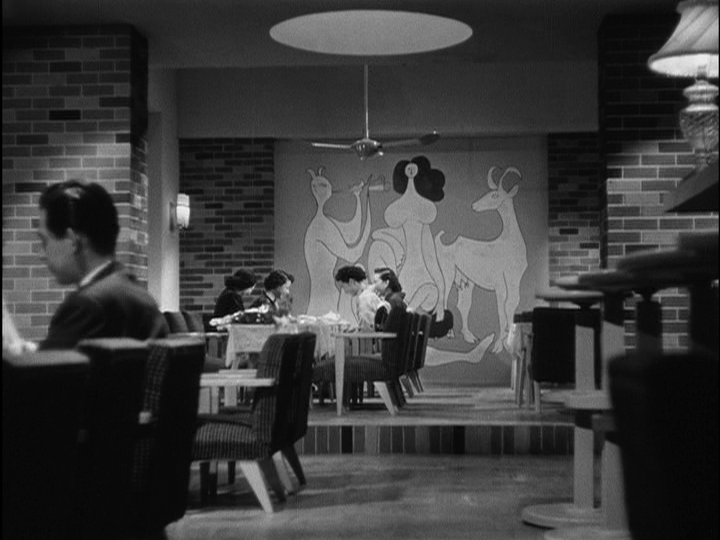
Where characters are positioned in relation to one another matters a lot, too, such as in this shot of Noriko Mamiya (Setsuko Hara, who is terrific in this role) and her fellow single friend Aya (Chikage Awashima) on the left and their two married schoolmates Taka (Kuniko Igawa) and Mari (Matsuko Shige) on the right:

Screengrab from Early Summer showing Noriko sitting next to her single friend Aya and across a table from their married friends Taka and Mari

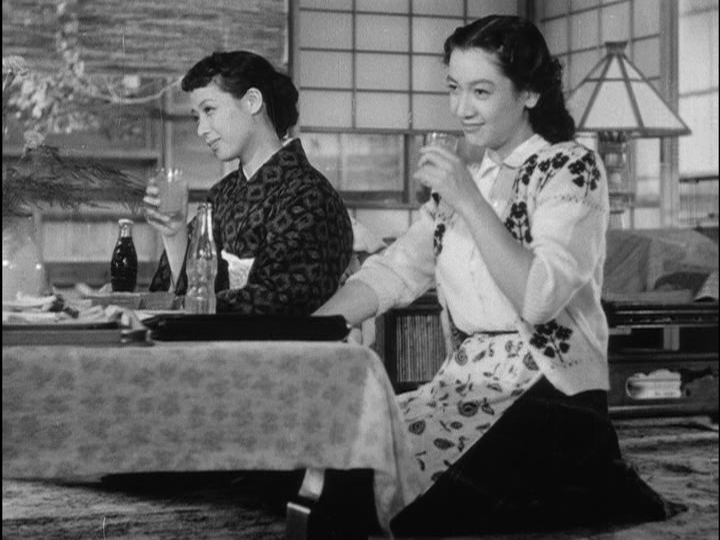
Where things really start to get nuts is when Ozu starts to create layers of meaning, such as when he cuts from this later shot of Noriko and Aya talking apart how their friend group is drifting apart and drinking soda:

Screengrab from Early Summer showing Noriko and Aya drinking soda together

To this one of Noriko’s parents Shukichi (Ichirô Sugai) and Shige (Chieko Higashiyama) eating food and having a conversation in which they ruminate on the fact that although they “could be happier” (a reference to their son Shoji, who went missing in action during World War II), this is probably the happiest their family has ever been:

Screengrab from Early Summer showing Shukichi and Shige Mamiya having a conversation

During this conversation Shukichi says “we mustn’t want too much,” which is almost a thesis statement, as is another line of his later: “I wish we could live together forever, but that’s impossible.” But the tremendous power that these words have owes more to the many scenes which precede them and clearly establish that they refer to more than just the matter at hand than to their pithy wisdom.

Noriko’s relationship with Aya is another one of my favorite things about Early Summer. They aren’t just the last two single people in their peer group. Consider this exchange in which Aya attempts to convince Noriko that she has actually fallen in love with the man she has decided to marry:

NORIKO: It’s like when you look for something all over the place, and then you find it was right in front of you all along.

AYA: Mother’s always looking for her glasses when they’re right on her nose.

NORIKO: That’s how it was.

AYA: How so?

NORIKO: He was so close at hand I didn’t realize he was the one.

AYA: So you did love him.

NORIKO: No, it wasn’t like I was in love with him. I’d known him well since childhood, and I knew I could trust him.

AYA: That means you love him.

NORIKO: No, I just feel I can trust him with all my heart and be happy. Don’t you understand?

AYA: If that’s not being in love, what is?

NORIKO: No, it’s not.

AYA: Yes, it is. You’re in love. You’ve fallen in love with him.

NORIKO: Have I?

AYA: Yes, you have. Don’t make me hit you!

NORKIO: You better not. I know how you hit.

AYA: Here I come.

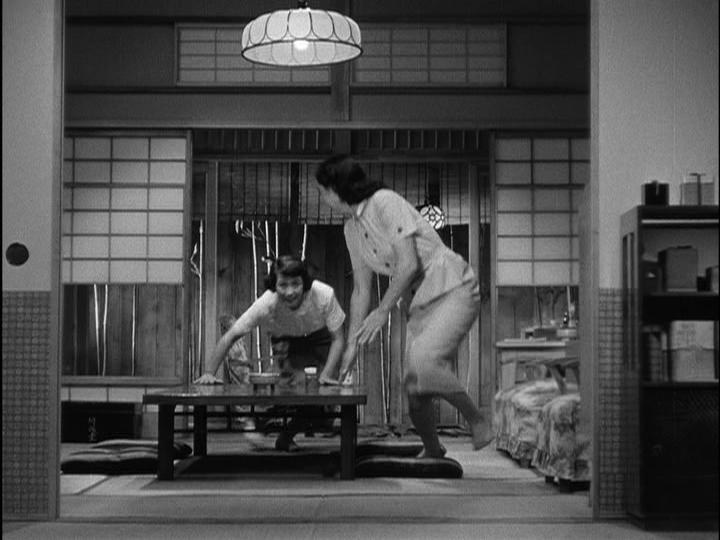
Aya then proceeds to chase Noriko around the table:

Screengrab from Early Summer showing Aya getting up to chase Noriko around a table

This scene is a good example of why the film gets better with subsequent viewings. A short while after this Noriko will give her sister-in-law an extremely cogent explanation for choosing this husband over the one her family had picked out for her: “Frankly, I felt I couldn’t trust a man who was still unattached and drifting around at 40. I think a man with a child is more trustworthy.” Aya, her friend, knows what we can’t in this moment, but will grow to appreciate if we spend enough time in their world, which is that this isn’t the whole story: Noriko seems to be making a solid decision whether you judge it by the standards of the head or the heart, and anyone who cares about her as much as Aya obviously does would want to make sure she realizes it.

Early Summer is a movie that I feel like I could study for a lifetime and never run out of new things to say about it. That’s not really the point of this particular series of blog posts, though, so instead let’s go back to that loaf of bread I mentioned! Here it is again:

Minoru looks so disappointed because he thought this package contained track for his model train set. Above I cited the film’s title as the main reason I decided to write about it now. Even if I hadn’t already made up my mind, though, I suspect I would have been tempted to change course when I opened up the May/June 2022 edition of Cook’s Illustrated and read their article on shokupan, or Japanese milk bread! Maybe it was just my previous lack of experience with Pullman pans, but Early Summer was the first thing I thought of. Anyway, for the second month in a row I have a bonus food pairing to recommend. First, here’s a picture of the loaf that my loving wife made recently using the magazine’s recipe, which is unfortunately only available to subscribers:

Picture of shokupan

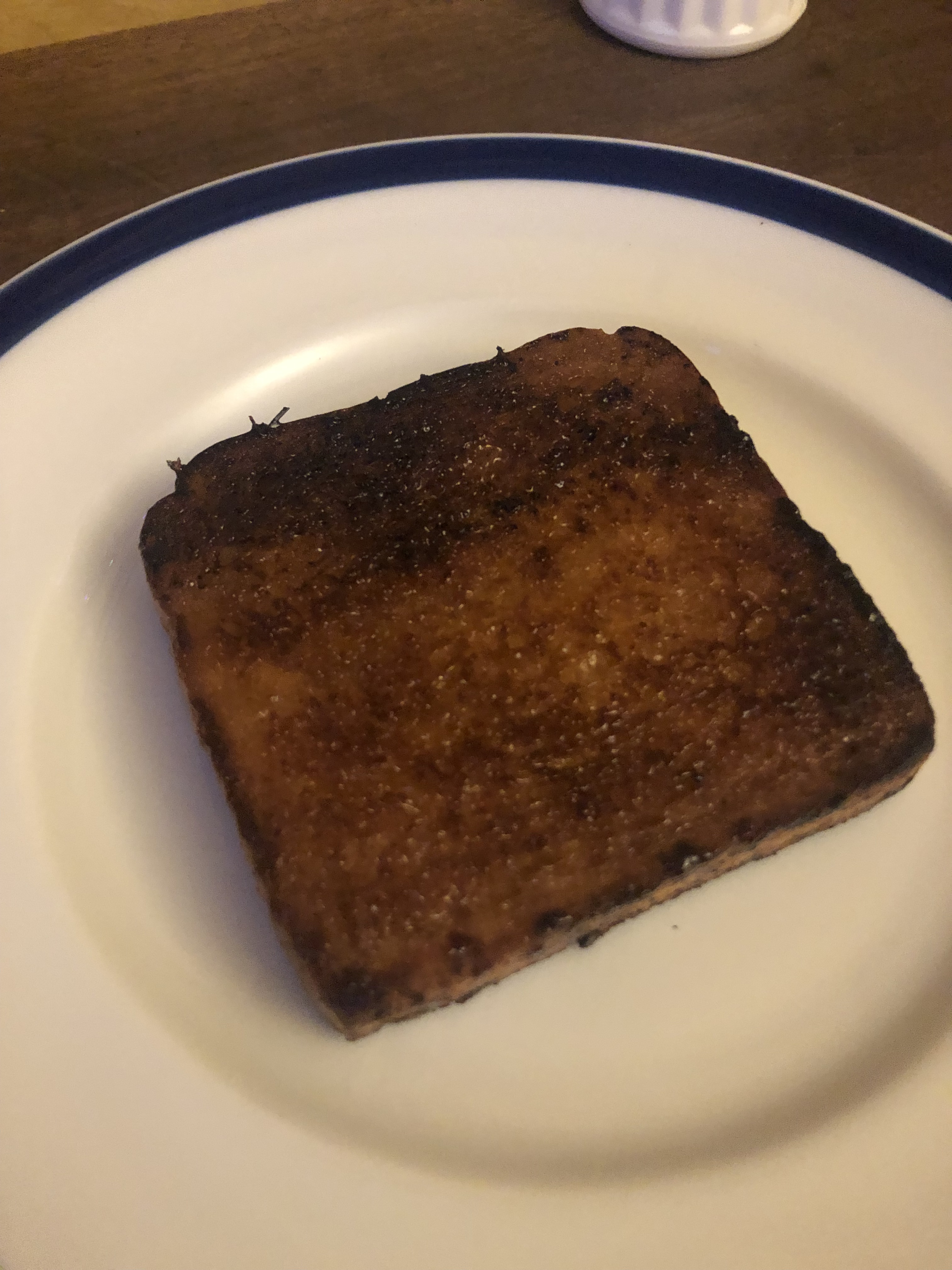
This was somehow even more delicious than it looks! Whether you bake milk bread yourself or buy it at the store, definitely make a point of using it to make Cook’s Illustrated‘s caramelly brown sugar toast, which happily is not behind a paywall. Here’s a photo of a slice I made:

Picture of caramelly brown sugar toast

This totally works as a sweet drinking snack! Just don’t kick it, is all.

Cheers!

All original photographs in this post are by Marion Penning, aka my loving wife. Other entries in this series can be found here.

May, 2022 Drink & a Movie: Lilac-Elderflower Prosecco Cocktail + The Flowers of St. Francis

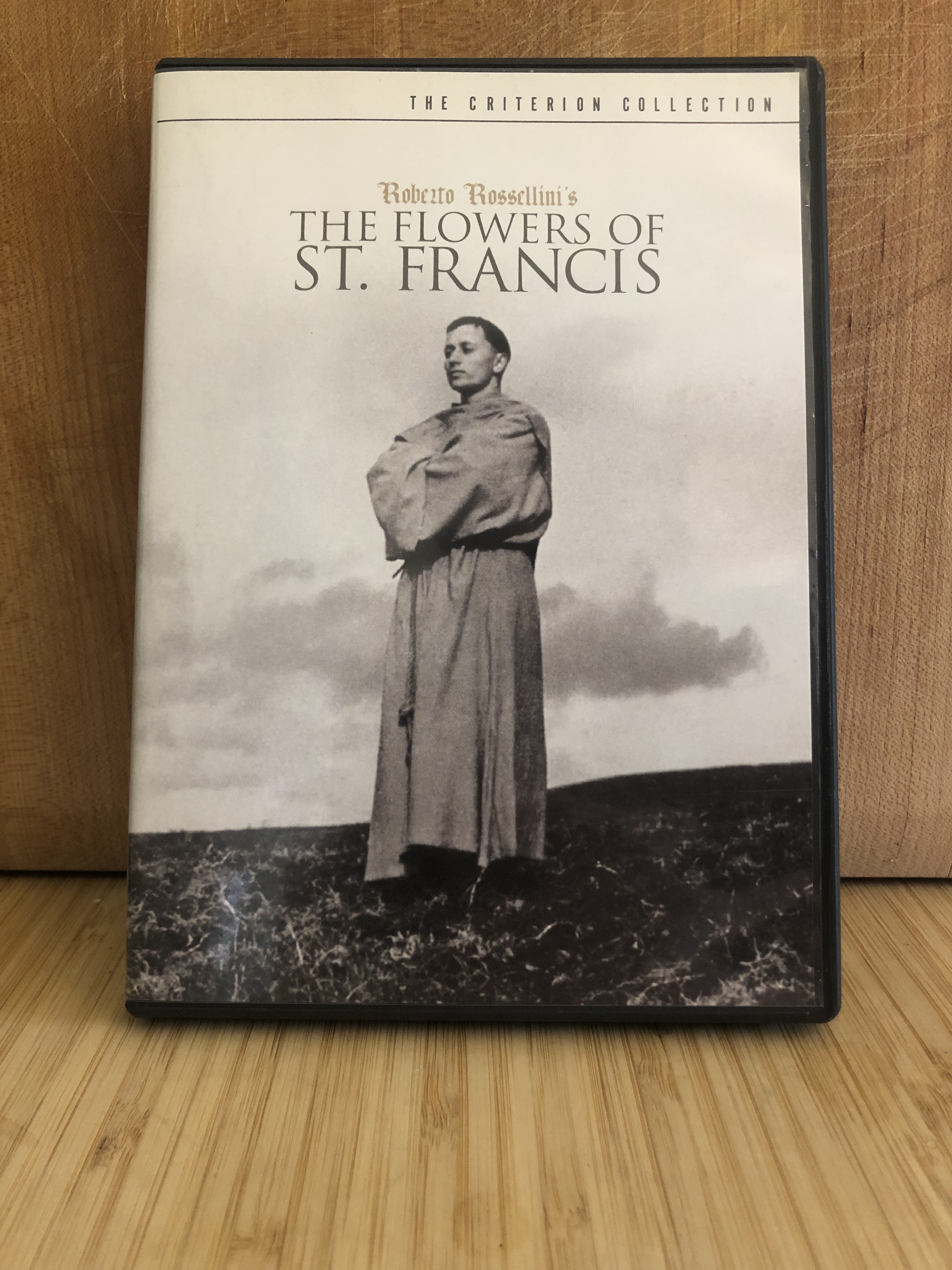
The April showers represented by The Hole have turned to May flowers here at ye olde blog, specifically Roberto Rossellini’s The Flowers of St. Francis. Pictured here is the used DVD copy of the Criterion Collection release of the film that I bought off Amazon a month or two ago:

Picture of The Flowers of St. Francis DVD case

Not pictured are the helpful definitions of underlined words and phrases that the previous owner scribbled into the 36-page booklet which accompanies it (“neo: in a new way,” they wrote under “neorealism”). According to the Criterion Collection Store, this title is merely out of stock, not out of print, so new copies will hopefully be available soon. In the meantime, The Flowers of St. Francis can also be streamed via both the Criterion Channel and HBO Max with a subscription. Some people may have access to it through Kanopy via a license paid for by their local academic or public library as well.

The drink I chose to accompany it is an original (albeit HIGHLY derivative) concoction crying out for an upgrade from its working title, the Lilac-Elderflower Prosecco Cocktail. The idea for it began with a batch of lilac sugar that my loving wife made last year using flowers from the bush in our front yard. Although tasty, we weren’t able to find a ton of uses for it, and so had quite a bit left over. I mixed it with an equal amount of water by weight, brought it to a simmer over medium heat and whisked to combine, cooled it down, and then strained out the flowers to make lilac simple syrup.

For further inspiration, I next turned to my trusty copy of Amy Stewart’s The Drunken Botanist, where I found a recipe for a Lavender-Elderflower Champagne Cocktail. I cut back on the syrup and St-Germain elderflower liqueur and substituted Prosecco for the Champagne in a nod to the country that both Rossellini and St. Francis called home and lilac blossoms for the lavender spring garnish for reasons that I hope are obvious, and suddenly had a lovely, floral drink that felt like it would go beautifully with brunch. My final tweak was to switch out the Prosecco for Prosecco rosé, which is an actual official thing as of just a couple of years ago:

1/4 oz. lilac simple syrup
1/4 oz. St-Germain
4 oz. Prosecco rosé
Lilac blossoms

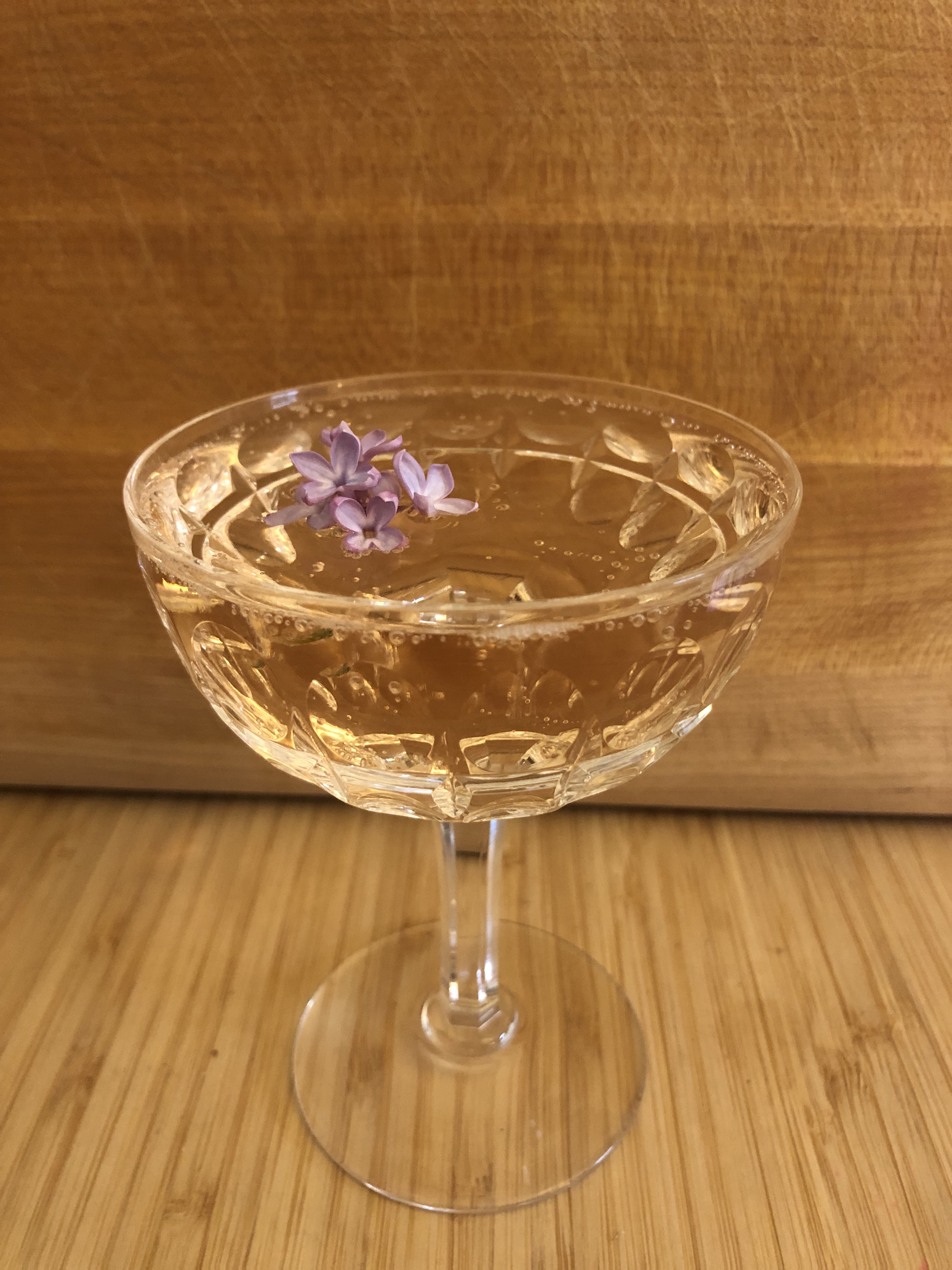
Add the syrup and St-German to a Champagne coupe and top with Prosecco rosé. Garnish with the lilac blossoms.

Lilac-Elderflower Prosecco Cocktail in a Champagne coupe

Although this drink isn’t quite as dry as I usually like, that seems like a virtue when we’re talking about pairing it with a movie about a man who, per the voiceover with which The Flowers of St. Francis begins, made himself contemptible and humble in order to vanquish the world by spreading the power of his meekness and “sweet love of peace.”

What stuck with me most from my first viewing of this film goodness knows how many years ago was the way Francis and his followers run everywhere they go, whether that be to:

Screengrab from The Flowers of St. Francis showing monks running toward the camear

Fro:

Screengrab from The Flowers of St. Francis showing monks running away from the camera

Or with bells on:

Screengrab from the St. Francis showing two monks running while carrying bells

Much has been made of the fact that Francis himself is indistinguishable from his followers in many ways and arguably isn’t even the main character of the second half of the film. Which: I can dig it! Nazario Gerardi (who famously was an actual Franciscan monk, not a professional actor) definitely does turn in a memorable performance in the lead role, though. What I like most is his sense of humor, evident here in a scene in which he forbids Brother Ginepro (Severino Pisacane) from giving away his tunic to the poor (which he seems to do every time he goes into town) without permission. Note how Francis casts knowing glances at the brothers to his left:

Screengrab from The Flowers of St. Francis showing Francis looking left

Then his right:

Screengrab from The Flowers of St. Francis showing Francis looking right

And then smiles beatifically at Ginepro:

Screengrab from The Flowers of St. Francis showing Francis smiling at Brother Ginepro

Gerardi’s acting and Rossellini’s direction turn a few seconds of screen time into an eloquent sermon about what it means to be meek.

I also love the scene in which Francis asks some birds to please quiet down so that he can pray, particularly the moment after one settles on his shoulder.

Screengrab from the Flowers of St. Francis showing Francis looking at a bird which has landed on his shoulder

Gerardi reaches for it in what I assume was originally meant to be a single graceful gesture, but drops the poor thing and has to quickly grab it again.

Screengrab from The Flowers of St. Francis showing Francis reaching for the bird on his shoulder
Screengrab from The Flowers of St. Francis showing Francis dropping the bird he is reaching for
Screengrab from The Flowers of St. Francis showing Francis regaining control of the bird he is reaching for

At last he is successful and raises the bird in front his face so that he can address it:

Screengrab from The Flowers of St. Francis showing Francis talking to a bird

I didn’t mention it in my February Drink & a Movie post, but there’s a scene in Downhill Racer where Gene Hackman trips over his words while lecturing Robert Redford that I like for the same reason as this one. Apparently Hackman was upset when he realized this made it into the film, but director Michael Ritchie thought it felt real, and I agree. Lists of the Best Kisses in Movie History and whatnot proliferate because one of the things film does for us is give us templates for what “perfect” moments look and sound like. When we get them right, our lives feel like a movie; it’s nice to also to have cinematic referents to reassure us that even when we inevitably screw up, we haven’t ruined anything.

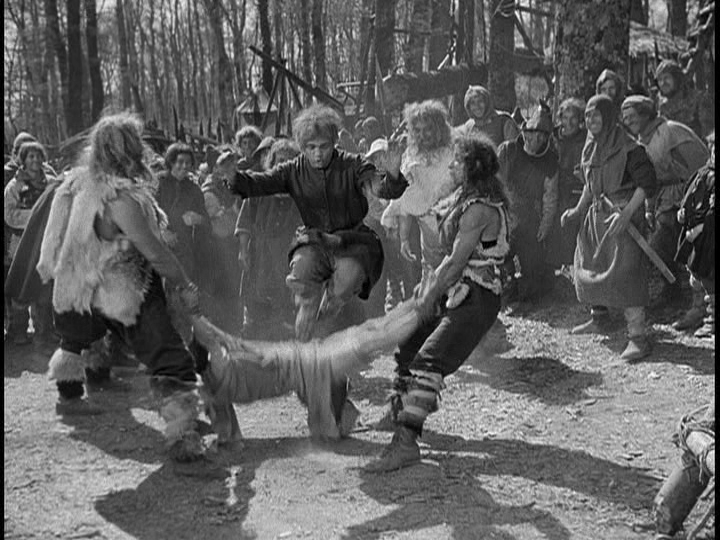
My favorite part of The Flowers of St. Francis might be Brother Juniper’s visit to the camp of the tyrant Nicolaio (Aldo Fabrizi). First, you have to admire Severino Pisacane (who like Nazario Gerardi was a monk, not an actor) for being willing to let his body be used as a jump rope:

Screengrab from The Flowers of St. Francis showing the tyrant Nicolaio's men using Brother Juniper as a jump rope

Next, praise be to Rossellini for giving us the pricelessly ridiculous image of a man who is practically lost inside armor much too big for him:

Screengrab from The Flowers of St. Francis showing Nicolaio struggling to see through is over-sized armor

Best of all is Nicolaio’s subsequent confrontation with Brother Juniper in his tent, which begins with Nicolaio intending to kill him and ends with him abruptly deciding to lift his siege of the town of Viterbo. Critic Noel Vera has a wonderful theory to describe what happens:

And then, perhaps, it might have occurred to Nicolaio that watching his thumbs squeeze the man’s eyeballs out of their sockets and listening to the screams would have been pointless–that there is more to man, to this man at least, than mere meat and quivering jelly. And that the concept of immateriality–of an immortal spirit, a (dare we say it?) soul–was so startling to the brute that he decide to lift the siege and ponder it further. Viterbo he could always massacre later; this mystery demanded his complete and undivided attention.

Brilliant. As are the long shots which follow showing Brother Juniper wandering about gazing at the tremendous commotion his actions have caused:

Screengrab from The Flowers of St. Francis showing Brother Ginepro gazing watching Nicolaio's camp break up

Another thing I appreciate a lot more after spending time with this film is the way it ends with not one:

Screengrab from The Flowers of St. Francis showing a shot of clouds

Not two:

Screengrab from The Flowers of St. Francis showing another shot of clouds

But four consecutive shots of clouds:

Screengrab from The Flowers of St. Francis showing a third consecutive shot of clouds
Screengrab from The Flowers of St. Francis showing a fourth consecutive shot of clouds

The key to what Rossellini is doing her can be found much earlier in the film in the section titled “How Francis, praying one night in the woods, met the leper.” In a terrific close reading of this scene, film scholar Justin Ponder argues that a point-of-view shot near the beginning of the sequence establishes that Francis actually sees God in the sky:

Screengrab from The Flowers of St. Francis showing Francis looking up at the sky and smiling
Screengrab from The Flowers of St. Francis showing the sky, apparently as seen by Francis

And that this connection is solidified by the upward pan which ends this sequence:

Screengrab from The Flowers of St. Francis showing Francis lying in a field
Screengrab from The Flowers of St. Francis showing the sky above Francis

What’s really exciting about this interpretation to me personally is that it offers a possible new way of looking at the beginning of another one of my favorite movies:

Screengrab showing the title card from the movie Groundhod Day

Last but not least, I have a bonus food suggestion to go along with this month’s drink and movie. Dave Kehr observes in a review collected in his book When Movies Mattered that “[t]he closest St. Francis comes to offering a genuine miracle is when Ginepro trundles off to borrow a large pot from a neighboring group of shepherds. Ginepro returns, running down the hillside, with the gigantic pot bouncing along at his heels like a faithful puppy.”

Screengrab from The Flowers of St. Francis showing Brother Ginepro running down a hill trailed by a large kettle

In my house we have very much been enjoying the spring herbs soup with fregola and pancetta that appeared in the May, 2021 issue of Food & Wine magazine lately. I mentioned previously that my Lilac-Elderflower Prosecco Cocktail seemed like a perfect accompaniment to brunch. Well, this is what you want to eat with it. The herbs stirred in at the end echo the “lots of greens” in Brother Ginepro’s soup, it contains chicken stock to also make your body humble like Ginepro’s hens, and the pancetta recalls the foot generously donated by Brother Pig. I definitely think it’s likewise “good for the brain” as well:

Throw in a nice hunk of bread and some good butter, and you’ve got the makings of a pretty wonderful spring Saturday or Sunday afternoon here.
Cheers!

All original photographs in this post are by Marion Penning, aka my loving wife. Other entries in this series can be found here.