What I’m Seeing This Week:Cornell Cinema kicks off Ithaca’s 12th annual Silent Movie Month on Sunday with a screening of The Toll of the Sea accompanied by an “original, live experimental score” by local ensemble Cloud Chamber Orchestra. This is part of a series that they are presenting in partnership with Cinemapolis and the Wharton Studio Museum called “From Silent Film Star to American Icon: Celebrating Anna May Wong.” In addition to featuring Wong’s first starring roll, Cornell Cinema’s website notes that The Toll of the Sea is also the first-ever two-strip Technicolor film. With a runtime of just 48 minutes, this will only require giving up a small portion of my football Sunday and even less than usual with the Falcons and Jaguars playing in London at 9:30am Eastern, which seems well worth it!
Also in Theaters: A restored version of director Jonathan Demme’s Talking Heads concert film Stop Making Sense opens at Cinemapolis on Friday to commemorate the film’s 40th anniversary. Oppenheimerenters the final week of its run there and probably the Regal Ithaca Mall (where it’s down to just one screening a day) as well, although it will be coming to Cornell Cinema soon. As reported by The Ithaca Voice, a documentary with local ties called Common Ground will screen at Cinemapolis on Sunday followed by a “talk-back” event.
Home Video: Critic Farran Smith Nehme aka the Self-Style Siren recently tweeted a link to an updated version of an old essay about the Joan Fontaine vehicle Ivy, which is now available on the Criterion Channel as part of their “Noir by Gaslight” series. It contains some striking cinematography by Russell Metty, breathtakingly perfect costume design by Orry-Kelly, effective use of music by Daniele Amfitheatrof, and quite possibly my favorite performance by Fontaine that I’ve seen so far.
Previous “Ithaca Film Journal” posts canbe found here.
What I’m Seeing This Week:Our Bodywould be an easy choice for me, but unfortunately neither of the two showtimes at Cornell Cinema is compatible with my schedule. Meanwhile, My Loving Wife and I enjoyed the first two Hercule Poirot films directed by Kenneth Branagh and she has made it clear that she does not want me to see A Haunting in Venice, which is at both Cinemapolis and the Regal Ithaca Mall, without her. So it transpires that I’m going to revisit In the Mood for Love, which is regularly cited as one of the best films of the millennium, but which I’ve never even thought of as one of my favorite movies directed by Wong Kar-Wai. Considering that Cornell Cinema is showing a restored 35mm print, it seems quite possible that I will look back on my calendar mishegoss as a blessing in disguise.
Also in Theaters: I’m not sure why Jawan, which continues its run at the Regal this week, hasn’t gotten more attention stateside. Our nation has turned its lonely eyes to Tom Cruise to save cinema, but he can’t do it on his own–after all, even Joltin’ Joe DiMaggio shared the film with eight other Yankees! Shah Rukh Khan is a Star and this is a Movie. So is Oppenheimer, which continues its runs at Cinemapolis and the Regal this week and which remains my pick for best new film of 2023 for now. If you just don’t have nearly three hours to spare, I recommend Bottoms, which is playing the same two theaters and clocks in at a clip 90 minutes. If you’re in the mood for repertory fare, Interstellar features an unforgettable lunar rover chase scene and screens at Cornell Cinema tomorrow.
Home Video: Critic Jason Bailey helpfully notes that Annihilationis leaving Netflix on September 29. I saw this and Twin Peaks: The Return for the first time during lockdown, and they will forever be linked in my mind as texts which capture the relentlessly haunting feeling that the call you dread receiving may be coming from INSIDE YOUR OWN BODY. If you’re looking for something lighter, High Tension, which is now available on the Criterion Channel as part of their “Directed by Allan Dwan” series, contains a nice bit of business with a piano.
Previous “Ithaca Film Journal” posts canbe found here.
What I’m Seeing This Week: There aren’t a ton of reviews of the Indian action spectacle Jawan, which is now playing the Regal Ithaca Mall, floating around on the movie publications I frequent, but I’m intrigued by the ones that are.
Also in Theaters: It’s a good week for family-friendly fare in Ithaca! You can see Singin’ in the Rain, a mortal lock for any Top 25 Movies of All Time I might ever compose, for just $2 at Cinemapolis or $10 for a “family group” of five or more on Sunday as part of their Family Classics Picture Show. Meanwhile, Cornell Cinema is screening Mary Poppins on Saturday and Sunday as part of their 100 Years of Disney series. I took my then four- and six-year old daughters to see this film at Cinemapolis last year with, and while it was a bit long for them, they loved it. Cornell Cinema is also showing Elemental, which at least for the time being remains one of my favorite movies of the year, on Monday. More mature moviegoers who haven’t already seen it should prioritize Sweet Sweetback’s Baadasssss Song, which screens at Cornell Cinema tonight as part of their Cult Classics series.
Home Video: As a virtually uncoachable (for reasons of, er, let’s say “youthful overconfidence”) former cross country runner, I’m puzzled that it took me until last week to finally watch The Loneliness of the Long Distance Runner! It’s now screening on WatchTCM with a subscription, and although it doesn’t quite measure up to its fellow British “kitchen sink” realist film This Sporting Life (which is currently available on the Criterion Channel with a subscription), I like it for a lot of the same reasons. Sports fans far too often forget that there are real-life human beings under the laundry they root for, but these movies are reminders that when the game is over, the athletes who played in them often have to go back to work or under the knife to treat their latest injury. And whether you’re an anonymous amateur or Aaron Rodgers, the latter hurts like hell.
Previous “Ithaca Film Journal” posts canbe found here.
What I’m Seeing This Week: I finally caught up with Shiva Baby, the harrowing first full-length collaboration between director Emma Seligman and star Rachel Sennott, on Max and am now excited to see their follow-up effort Bottoms at Cinemapolis!
Also in Theaters: I saw Blue Jean, which plays Cornell Cinema tonight and Monday, at the Gene Siskel Film Center this summer when I was in Chicago for a conference and recommend it for Rosey McEwan’s terrific performance in the lead role and as a generally impressive debut feature by director Georgia Oakley. There’s a John Carpenter film at the Regal Ithaca Mall for the second week in a row, which is awesome! This time they’re honoring the 40th anniversary of Christine with screenings on Wednesday and Friday. That’s also the only place in town where you can see the new Shah Rukh Khan vehicle Jawan. Finally, Oldboy, which is even more epically demented than I remembered, remains at Cinemapolis until at least Thursday.
Home Video:Last week I recommended two films directed by Shōhei Imamura, but was remiss in not mentioning a third: with Oppenheimer still in theaters, now is a perfect time to watch Black Rain, which Jonathan Rosenbaum called “one of the few movies that’s addressed Hiroshima without blinking.” It is now available on Mubi with a subscription as part of a double feature with The Ballad of Narayama. With director Yorgos Lanthimos’s Poor Things earning an eight-minute standing ovation at the Venice Film Festival, I also recommended checking out 2017 Oscar nominee (for Best Original Screenplay) The Lobster on Max with a subscription.
Previous “Ithaca Film Journal” posts canbe found here.
As a kid who liked school, I’ve always been fond of September. Now as a higher ed lifer, the part of it I look forward to most is Labor Day. The fall semester of every college and university I’ve ever worked at has started during the last or penultimate week of August, and the holiday long weekend is a perfectly-positioned opportunity to recover from those frantic first few days. Although we currently live hundreds of miles from the nearest ocean, the beach remains the best place to spend it in my book, hence this month’s Drink & a Movie selections. The Last Wave (get it?) is a film which has loomed large in my memory ever since I saw it as an undergraduate film studies major at the University of Pittsburgh, while the White Negroni Daiquiri was created by bartender Mary White at The Lobo in Sydney, Australia where that movie is set. Here’s how we make it:
Shake all ingredients with ice and strain into a chilled coupe glass. Garnish with a triangle-shaped lemon twist.
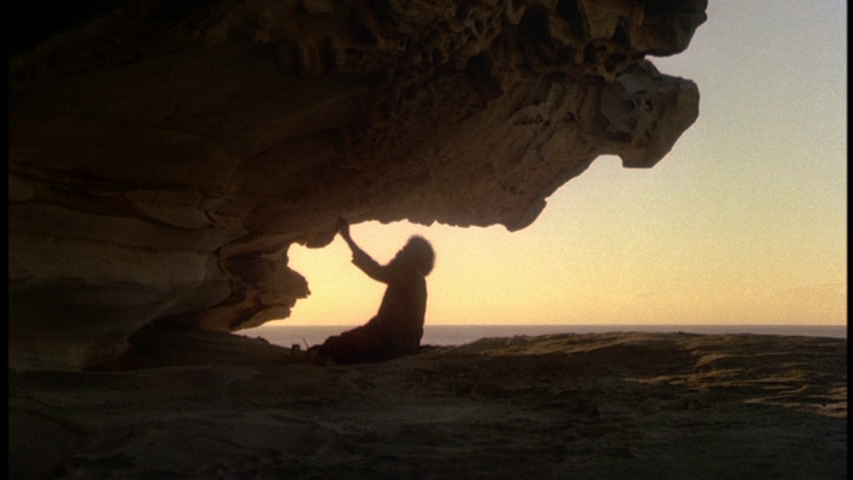
I can’t remember whether I first came across this drink in Imbibe, which simply calls for “white rum,” or in Australian Bartender, which specifies Bacardi Carta Blanca; meanwhile, the Lobo’s website currently lists Plantation 3 Stars as an ingredient. The latter two would both make a fine cocktail, but Clairin Communal, which blends distillates from four Haitian villages, caught my eye on recent trip to Ithaca establishment The Cellar d’Or and I think it works brilliantly here. The nose is intense and led me to expect Cachaça-level funkiness, but it’s remarkably smooth and thus lends complexity and intrigue without changing the essential character of the drink. Speaking of which: it is bracing thanks to the Suze, but goes down easy thanks to the Lillet, and has a relatively low ABV courtesy the 50:50 ratio of base spirit to fortified wine and liqueur, making it an ideal beachside sipper. Finally, as anyone who has already seen The Last Wave no doubt realized, the triangle-shaped garnish is meant to evoke this prop from the film:
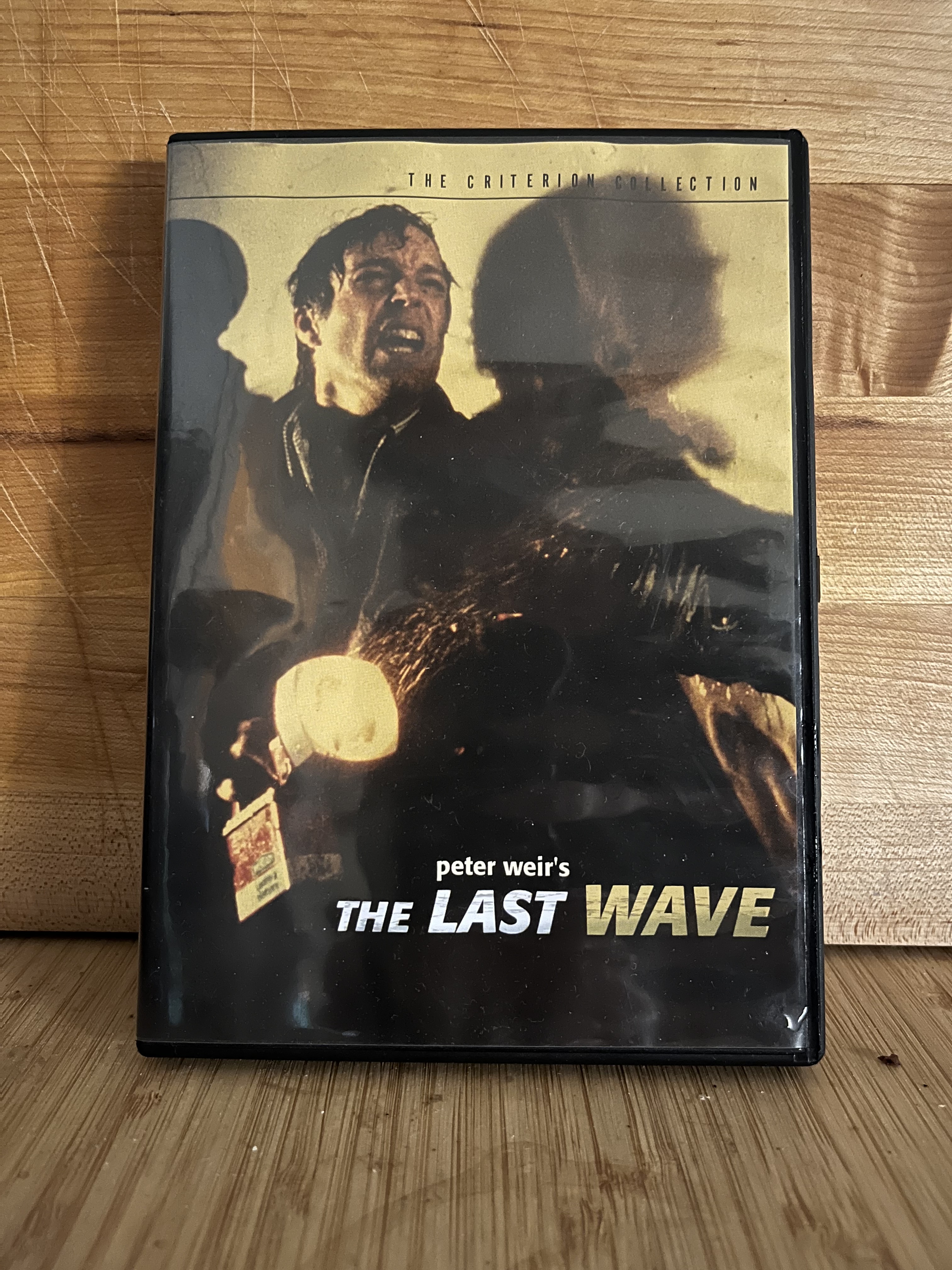
It also contrasts nicely with the square base of the glass we chose, yeah? Which, by the way: like most of the glassware we’ve been featuring this year, My Loving Wife found this at Finger Lakes ReUse. Anyway, here’s a picture of my Criterion Collection DVD release of The Last Wave:
It can be streamed via the Criterion Channel or Max with a subscription as well or via most other major commercial streaming video platforms for a rental fee.
In a review included in 5001 Nights at the Movies, critic Pauline Kael insightfully notes that the plot of The Last Wave “is a throwback to the B-movies of the 30s and early 40s, and the dialogue–by the young director Peter Weir and his two co-scriptwriters, Tony Morphett and Peter Popescu, is vintage R K O and Universal.” More importantly, as Kael continues, Weir “knows how to create an allusive, ominous atmosphere.” This starts with the film’s first image of an Aboriginal Australian man who we will come to know as Charlie (Nandjiwarra Amagula) painting signs on a rock outcropping :
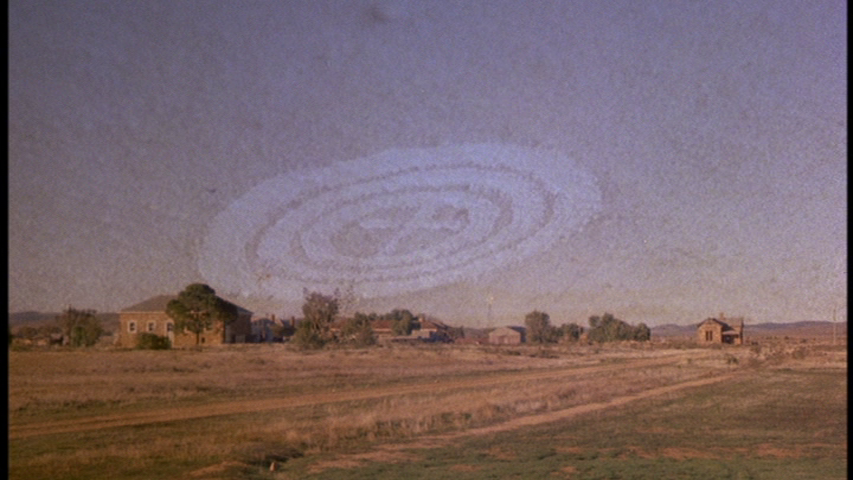
A dissolve creates the impression of one of them looming over the outback community where the next scene is set:
Two Aboriginal children walk toward the camera down a dusty road:
As they reach an elder, he stands up and gestures at the sky:
Cut back to the road, which momentarily changes color:
Cut to a group of white children playing cricket in a schoolyard:
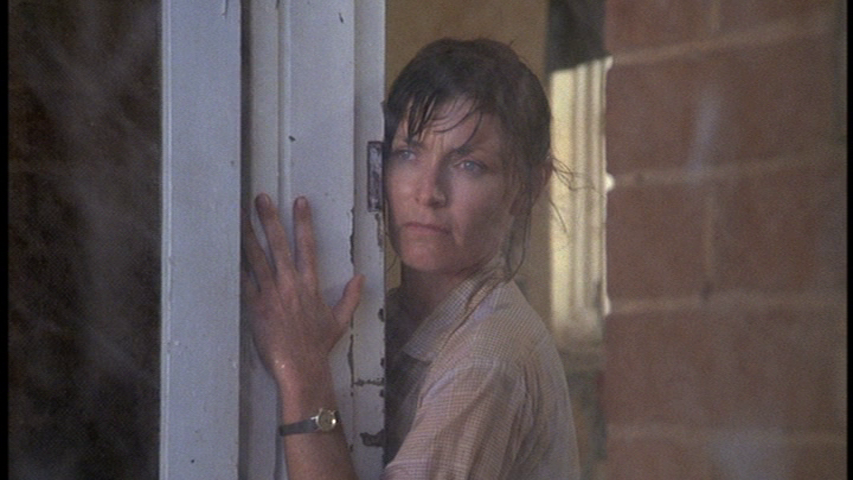
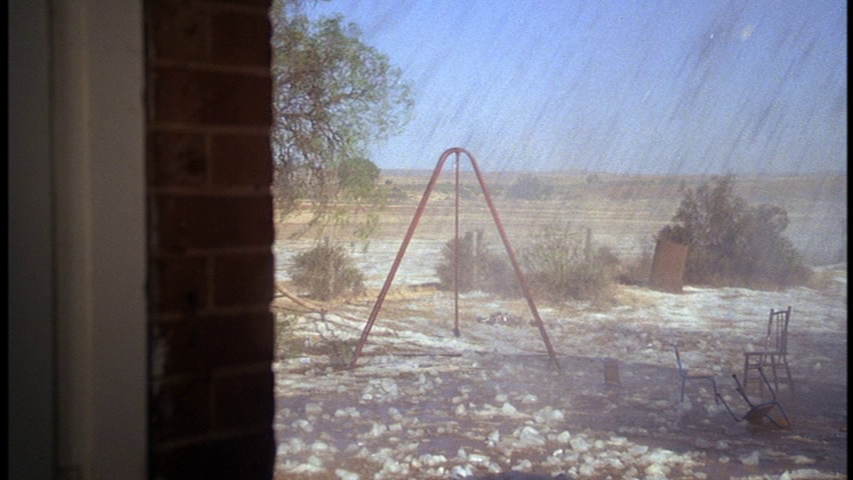
Although the sky is virtually cloud-free, there is a clap of thunder followed by a sudden torrential downpour. The children’s teacher (Penny Leach) hustles them inside. Suddenly, they hear the sound of hail on the roof of the school:
A giant ball of ice crashes through the window, bloodying a student:
The scene ends with the teacher contemplating the scene outside as the storm ends as abruptly as it started:
Cut to a strange rainbow over Sydney, where the rest of the film takes place:
Which reminds me of the functionally-similar crescent moon omen from Prince of Darkness:
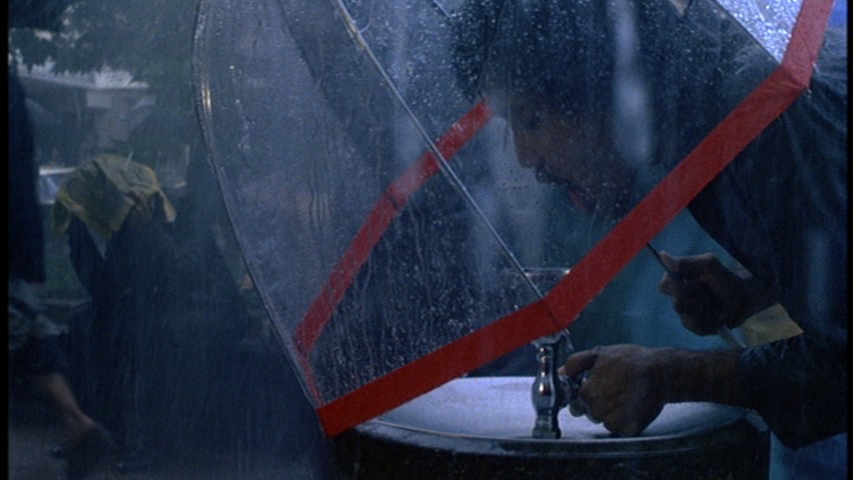
Kael’s review skews negative: she calls it “hokum without the fun of hokum” because “the occult manifestations are linked to the white Australians’ guilt over their treatment of the aborigines.” Like scholar Jerod Ra’Del Hollyfield, I believe she’s missing the point somewhat. The subject of The Last Wave isn’t guilt, but rather anxiety over what Hollyfield describes in a chapter about the film for the book Postcolonial Film: History, Empire, Resistance as “the problems inherent in any attempt at reconciliation between Aboriginal and white Australian culture.” He notes that Weir bookends the narrative of lawyer protagonist David Burton (Richard Chamberlain) with images of water “demonstrating the limits of systems such as pipes to control nature.” Scholar Michael Bliss also discusses the film’s water images, which I personally find quite fun, in Dreams Within a Dream: The Films of Peter Weir, arguing that they “have a virtually surrealistic force.” Here’s one of my favorites:
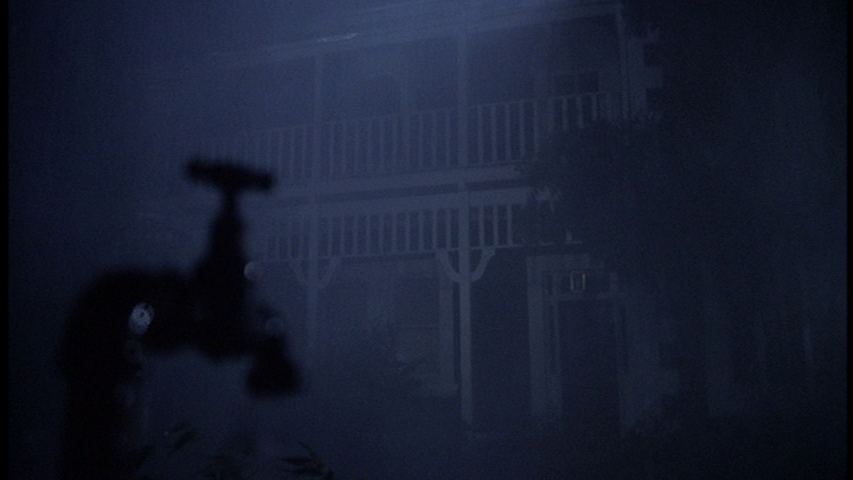
Per Bliss, this “absurd and contradictory” shot “succinctly communicates the tension between the spigot (a man-made object meant to restrain or divert water) and a natural force, the rain, that is simultaneously available in its unrestrained form.” Or take this faucet outside David’s house:
Bliss argues that it foreshadows “the eventual conflict between white civilization and natural phenomena that is one of the film’s primary concerns” because it drips: “this man-made bulwark against water’s pressures cannot stop the force of the water any more than the flimsy awareness of David’s conscious mind can prevent the repeated intrusion of visionary episodes.” I’d be tempted to call this reading overdetermined were it not for the fact that this shot appears twice. Speaking of visionary episodes, here’s one in which water pours into David’s car through the radio:
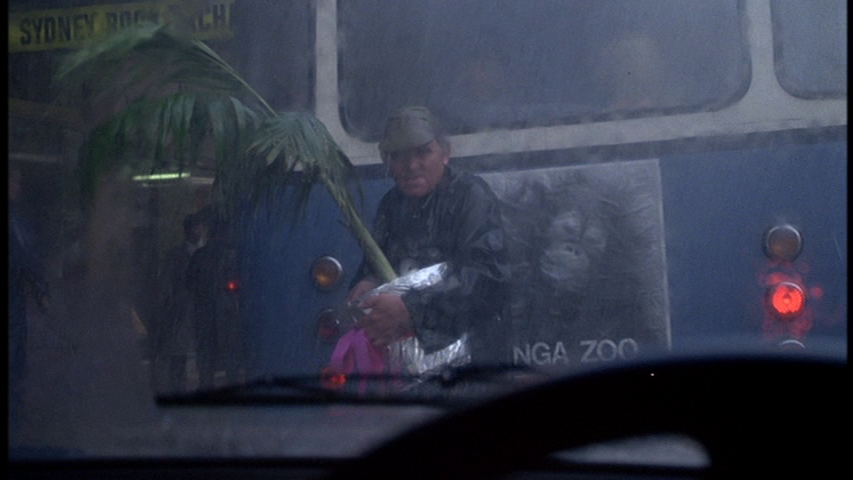
He looks up from this to find that the people he saw outside his windshield a moment before are suddenly submerged:
The man with the palm in the middle image actually appeared much earlier in the film carrying the same plant. I appreciate Bliss’s comments about the pictures of animals which adorn the bus in this scene, a leopard and a chimpanzee:
One of the ways that Weir maintains a successful ambiguity in the film is by concentrating on action and images that at first seem to have nothing to do with the story. At one point, Weir zooms in on a British Leland car, only vaguely intimating that there is some connection between the leopard on the car’s logo and the film’s story. The car logo, as well as the bus poster for the [Taronga] Zoo, which features two chimpanzees, not only demonstrates how white society appropriates the power and significance of animals and turns them to commercial account but also highlights the society’s use of natural images as nothing more than superficial signs instead of meaningful symbols.
This is a big part of what Chris (David Gulpilil), an Aboriginal man David defends in court against a charge of murder, is talking about when he says to him, “you don’t know what dreams are anymore.” This in turn becomes the primary cause of David’s fear that he is failing to apprehend something important, which drives him as mad as a Val Lewton heroine. This manifests most clearly in a confrontation between David and his pastor stepfather (Frederick Parlow) after David loses his case when Chris chooses to incriminate himself instead of revealing the secrets of his tribe:
REV. BURTON: You lost the case, but you haven’t lost the world. DAVID: Haven’t I? I’ve lost the world I thought I had. The world where what you just said meant anything. Why didn’t you tell me there were mysteries? REV. BURTON: David, my whole life has been about a mystery. DAVID: No! You stood in that church and explained them away!
In an essay astonishingly written at the ripe old age of 19, Australian critic Adrian Martin identifies “the suggestion is that children are closer to the marvellous, and have a potentially keener perception of it – that is, before the adult world socialises it out of them forever” as a key motif in The Last Wave, citing David’s daughter Grace’s (Ingrid Weir, real-life daughter of director Peter) interpretation of a vivid dream she had as being about Jesus as an example.
This, to me, is the slam-dunk argument against the idea that the film is preoccupied by liberal guilt. If it were, we might have expected David to channel his angst into making sure his children grew up with a better sense of the history of the land they live on than him or his wife, a self-described “fourth-generation Australian” who had never met an Aboriginal before Chris and Charlie join them for dinner in the film. Instead, because he is egocentric, he convinces himself that he has been chosen to save his people from destruction.
In a conversation with Tom Ryan and Brian McFarlane published in Peter Weir: Interviews, Weir admits to being dissatisfied with The Last Wave‘s ending, and I agree that it’s the weakest part of the film. This absolutely does not extend to the final shot, though! There’s a time and place for Hollywood-style special effects, but this isn’t it: give me a screen full of color and motion every time!
I love this sequence of shots which precedes the fall of a “black rain” that a newspaper headline will later suggest was caused by pollution for similar reasons:
This is the same kind of economical filmmaking that I applauded when I wrote about Hester Street last September. And that brings me back to the White Negroni Daiquiri. Although I consumed the ones I made while writing this in my back yard, I felt like I was at the beach. Hopefully this pairing will transport you to Australia, with no need to purchase an airplane ticket or gas!
Cheers!
All original photographs in this post are by Marion Penning, aka My Loving Wife.Links to all of the entries in this series can be found here.
What I’m Seeing This Week: I’m going to opt for the restored and remastered 4k version of Oldboy at Cinemapolis. I think I must have caught this at either the Manor or Squirrel Hill Theatre in Pittsburgh during its original theatrical run in 2005, but haven’t revisited it since. My backup plan if I find myself running behind schedule is the teen comedy Bottoms, which is garnering positive reviews and screening at the same location 45 minutes later in the evening on Saturday, Monday, and Wednesday.
Also in Theaters: It’s a great week for repertory fare in Ithaca! In addition to Oldboy being at Cinemapolis, Cornell Cinema is screeningBeau Travail on Friday and Sunday as part of their “The Greatest Films of All Time?” series, which highlights top finishers in last year’s Sight & Sound Critics’ Poll. They will also show the Cuban film Death of a Bureaucrat on Thursday. Meanwhile, the Regal Ithaca Mall is featuring a trio of anniversary re-releases, including the wildly entertaining John Carpenter movie They Live (35 years old) and classic anime film Perfect Blue (25 years old) on Sunday and Wednesday and Jurassic Park (30 years old), one of the only movies my parents ever took me to see in theaters when I was a kid, all week. Looking just at 2023 films, my favorites are Oppenheimer, which is at both Cinemapolis and the Regal; Elemental, which is at the Regal; Passages, which is at Cinemapolis; and Asteroid City, which is at Cornell Cinema on Saturday and Thursday.
Home Video: I have been binging on films directed by Shōhei Imamura lately in preparation for a review. Eijanaika, which is available on the Criterion Channel with a subscription, rates as a Must See in my book. If you like that one, 1983 Palme d’Or winner The Ballad of Narayama is definitely worth the price of a $1.99 rental on Prime Video as well.
Additional “Ithaca Film Journal” posts canbe found here.
My favorite cocktails are generally the ones that taste the best to me. This might not seem like such a revelatory statement, but appearance and aroma are also huge parts of a beverage’s appeal, and since this blog’s primary focus is on film, a visual medium, you might think that the former in particular would be just as big a factor in determining which ones I feature on it. While My Loving Wife and I have spent more and more time thinking about glassware, garnishes, and how we stage our photographs, though, all of this decision-making usually follows our selection of what to include in our Drink & a Movie series. But there are exceptions. The brilliant hue of the Yellow Cocktail immediately made me think of the word “Technicolor,” which led me to Suspiria in short order last October. This month’s pairing also started with the drink.
The Aviation was one of my first favorite classic cocktails, probably in large part because The PDT Cocktail Book is organized in alphabetical order. But Jim Meehan’s accurate description of it as “azure-colored” also played a role: it absolutely does remind me of the sky! My research for this post led me back to Hugo R. Ensslin’s Recipes For Mixed Drinks, where a recipe for the Aviation was first published. Unlike most pre-prohibition tomes, his begins with a guide to measures; unfortunately, it indicates that a “pony” equals a “jigger,” which doesn’t make a lick of sense and therefore is of little help in figuring out what he means when he says that one of either is also equivalent to “1/4 whiskey glass” and two (i.e. “1/2 whiskey glass”) make one “drink.” Luckily, the Aviation’s proportions of 2/3 gin to 1/3 lemon juice plus two dashes each of Maraschino and crême de violette closely resemble those of Ensslin’s Manhattan: 2/3 whiskey, 1/3 sweet Italian vermouth, and two dashes of Angostura bitters. These are of course the very proportions most bartenders use today. If we assume that Ensslin’s drink should also contain about three ounces of spirits, we can work backwards and determine that his Aviation calls for two ounces of gin and one of lemon juice.
Setting aside a second the fact that this cannot possibly taste balanced to anyone (we tried it and it’s every bit as overbearingly tart as you’d assume), we can at least make an educated guess what the original Aviation looked like. Using David Wondrich’s recommendation to interpret one “dash” of liqueur as being approximately equivalent to 2/3 of a teaspoon per two ounces of base spirit, Ensslin’s concoction can be assumed to have contained 10 parts clear (gin + Maraschino) and 4.5 parts cloudy (lemon juice) ingredients to one part purple (the crême de violette), or a 14.5:1 ratio of non-purple to purple components. Many updated versions of this drink either omit the crême de violette (a trend which began with a mistake or editorial decision in Harry Craddock’s influentialSavoy Cocktail Book) or contain so much of it that the resulting mixture more closely resembles that ingredient’s namesake flower than any shade of sky I’ve ever seen. This is not true of Ensslin’s recipe, though, or the one in PDT that I originally fell in love with, which consists of 10 parts clear and three parts cloudy ingredients to one part purple. Wondrich’s own Aviation recipe calls for 1/2 ounce of lemon juice and 1 1/2 teaspoons of Maraschino, which conveniently equates to 1/4 ounce. He only uses one teaspoon of crême de violette, but if we scale this up just a smidge to 1/4 ounce we end up with a drink that contains nine parts clear and two parts cloudy ingredients to one part purple or an 11:1 ratio of non-purple to purple ingredients, which in’t too far apart from Ensslin’s. And it tastes great! So here, then, is how we make an Aviation:
2 ozs. Gin (Aviation) 1/2 oz. Lemon juice 1/4 oz. Maraschino liqueur 1/4 oz. Crême de violette (Rothman & Winter)
Shake all ingredients with ice and strain into a chilled Nick & Nora glass. No garnish.
Hugo Ensslin specifically calls for El Bart gin, which only recently resumed production and which I’ve never seen in the United States, but Aviation gin was created with this cocktail in mind and is “clean and balanced and not too intense” like Wondrich calls for in his tweets, so it’s perfect here. The result is a balanced drink which is floral but not at all to the point of tasting like “fancy hand soap.” Beautiful and delicious!
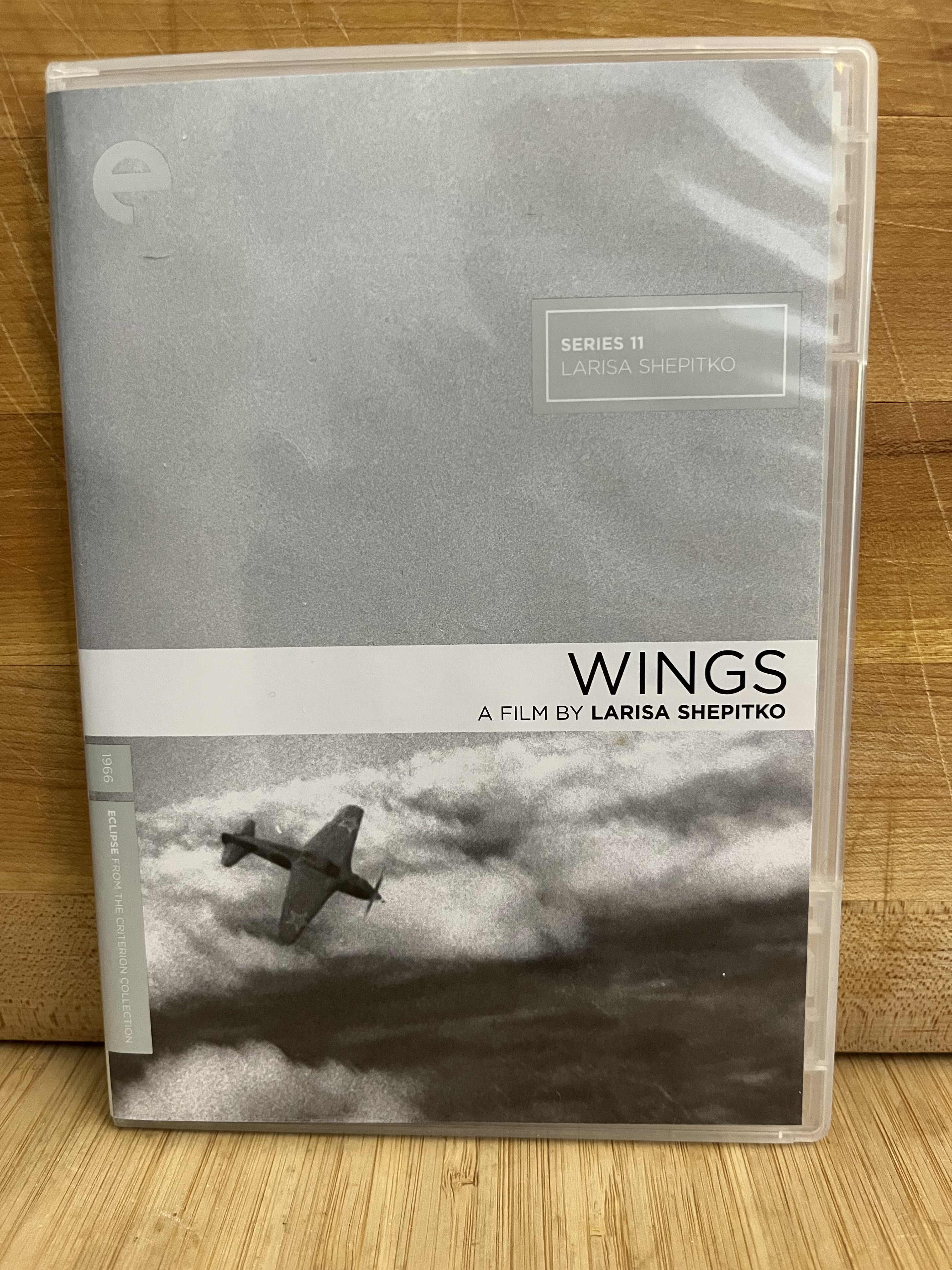
The movie I’m choosing to go with it features the purest depictions of aviation as a means to escape the surly bonds of quotidian reality that I’ve ever seen, Ukrainian director Larisa Shepitko’s Wings. Here’s a picture of my Criterion Collection Eclipse Series DVD release of the film:
It can also be streamed via the Criterion Channel with a subscription, and some people may have access to it via Kanopy via a license paid for by their local academic or public library as well.
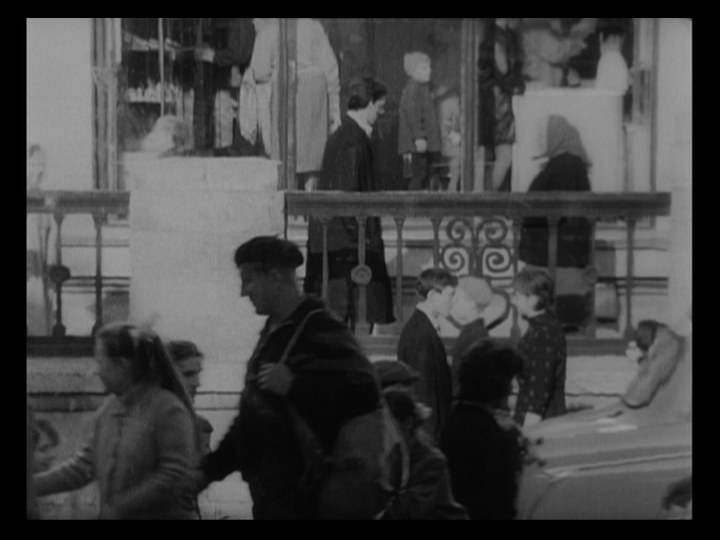
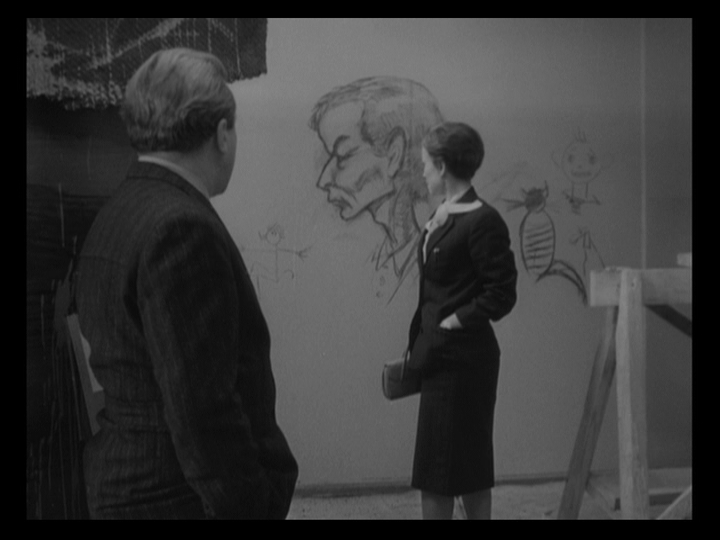
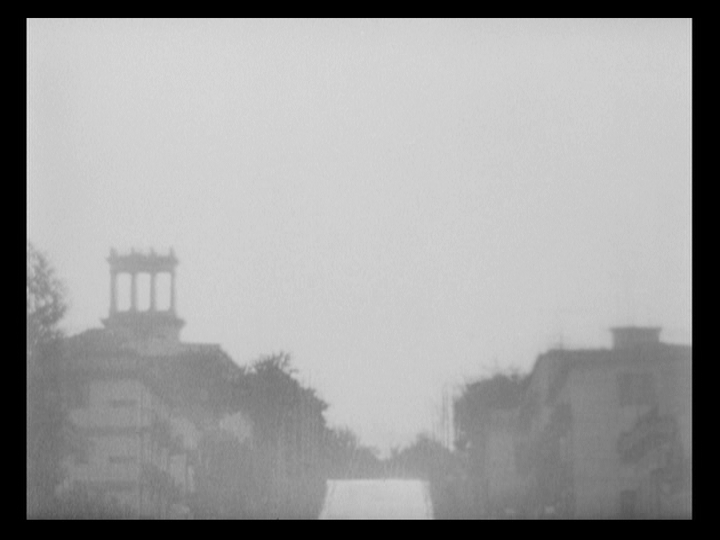
Wings begins with a strikingly layered composition:
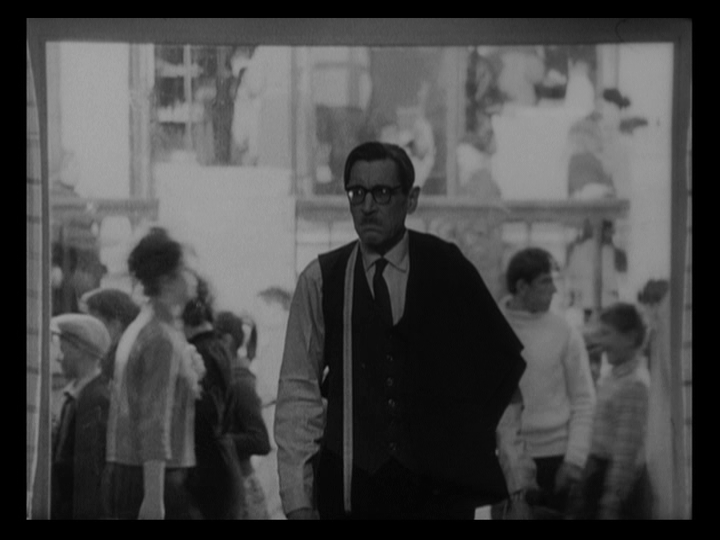
Which is revealed to be even more complex than it first appears when a tailor emerges in the foreground:
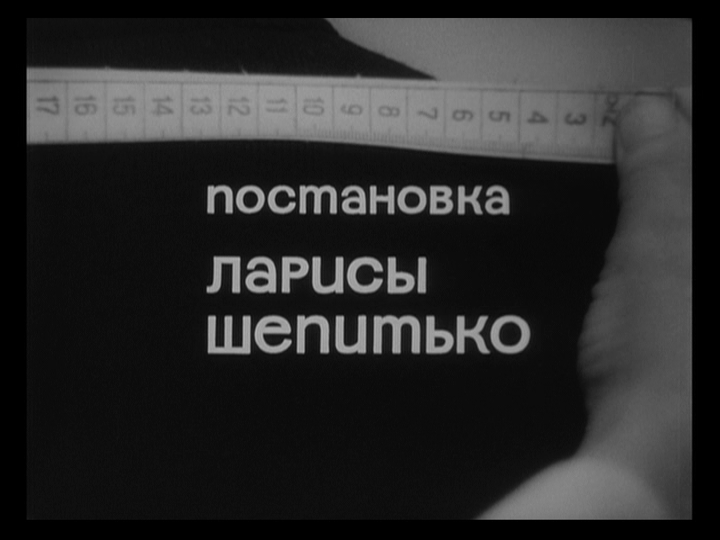
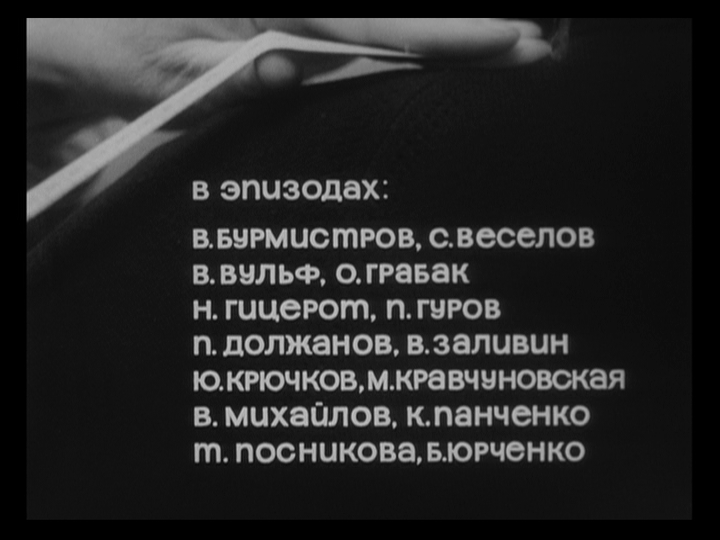
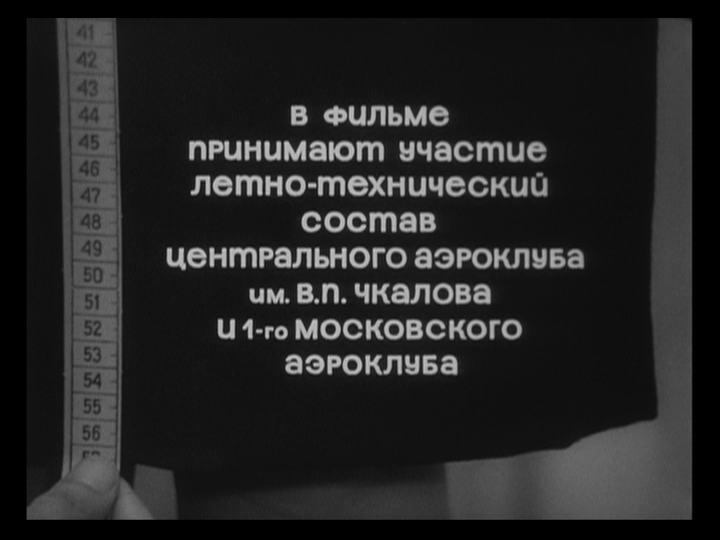
The opening shot is succeeded by a title sequence (which it may be interesting to compare to Tár) consisting of a series of close-ups which critic Dave Kehr reads as depicting the film’s protagonist Nadezhda Petrukhina (Maya Bulgakova) “being fitted with a straitjacket, a garment that will leave her no room to spread the wings that war had given her.”
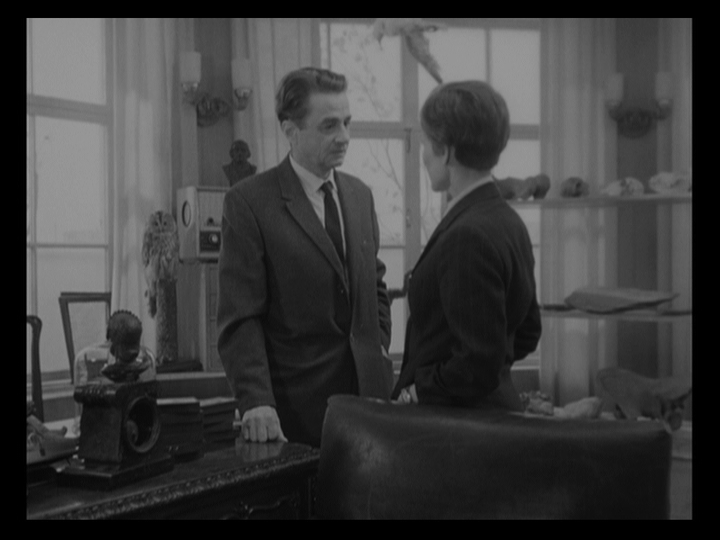
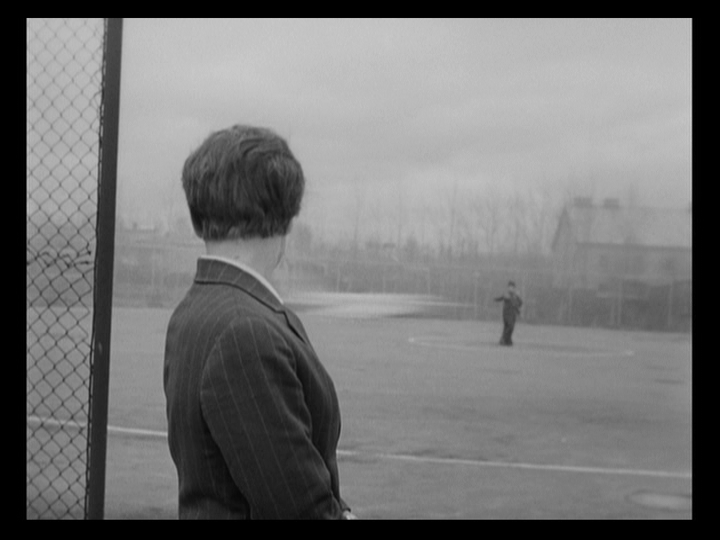
She was a fighter pilot during the Great Patriotic War but now works as the administrator of a vocational school and serves on Sevastopol’s city council. Despite her lofty position she is demonized by her students:
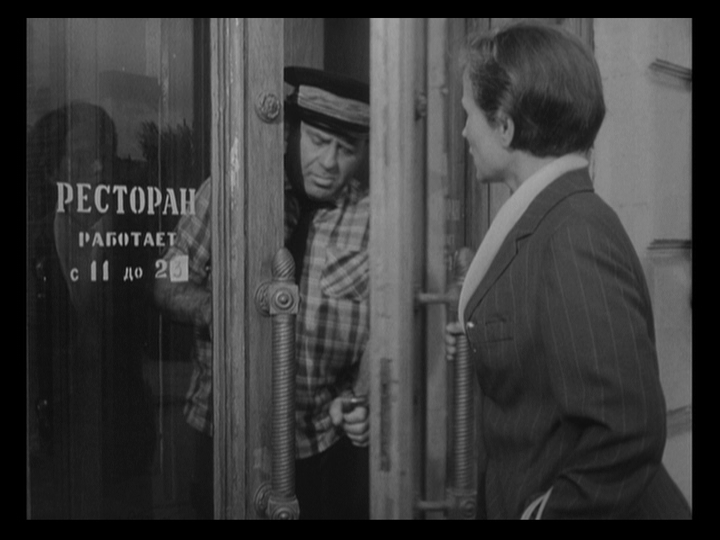
Can’t go into a restaurant after 6pm without an escort because she’s a woman:
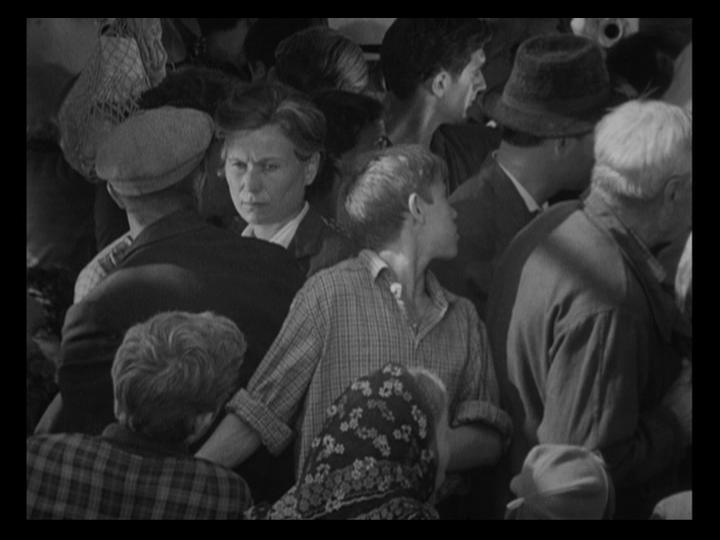
And is generally out of synch with post-Stalin Soviet “Thaw” society:
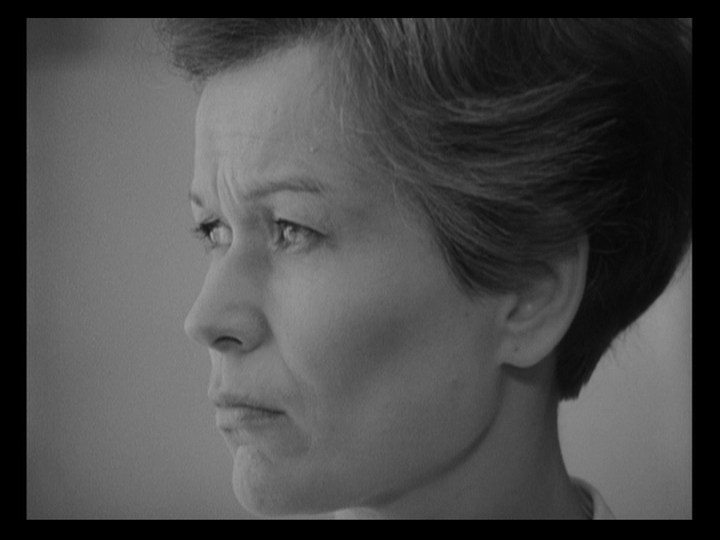
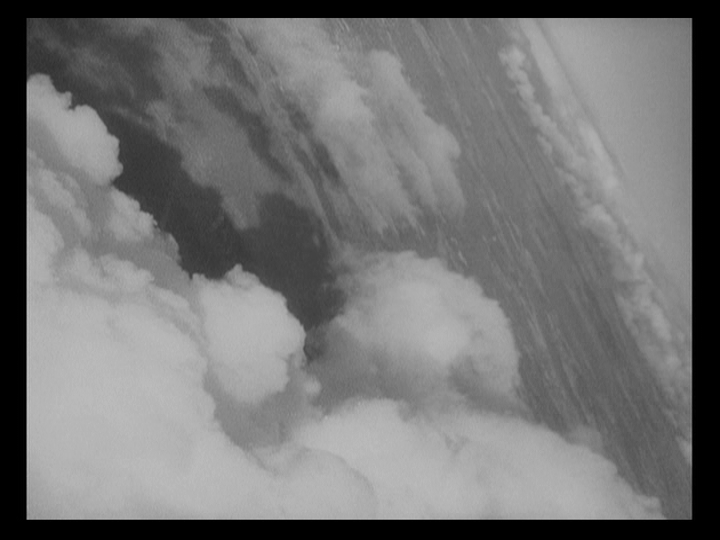
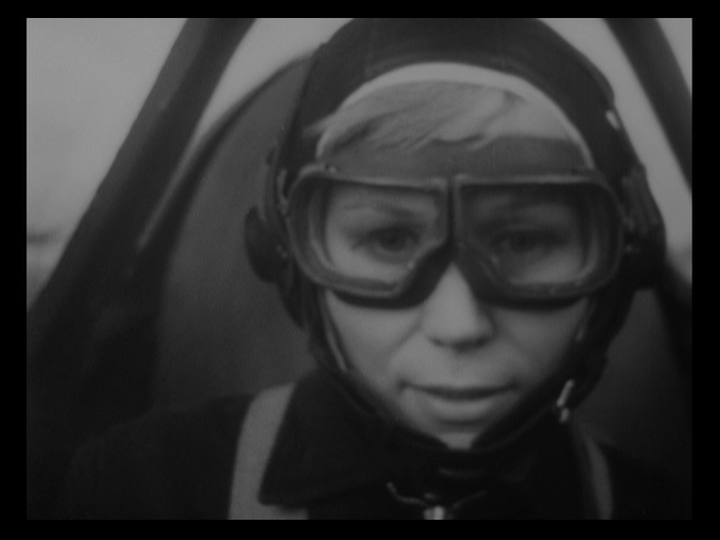
Meanwhile, she is prone to staring off into space and dreaming of flying, which is depicted each time via a two-shot combination of a close-up of Petrukhina followed by aerial footage accompanied by the film’s wistful main theme:
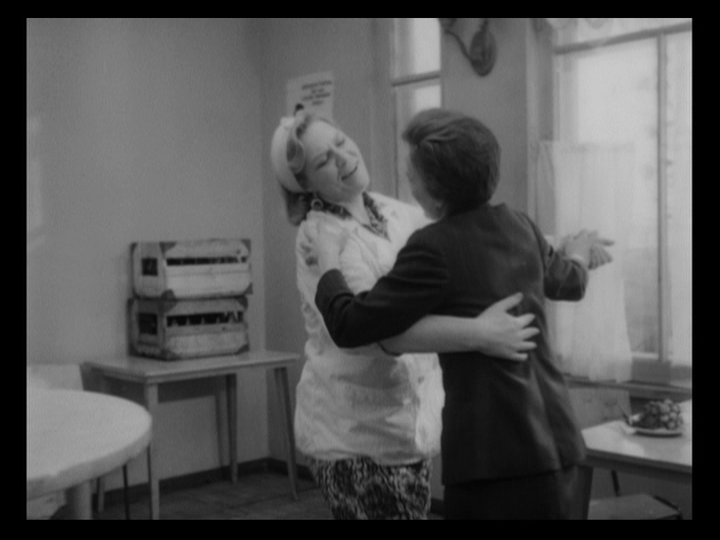
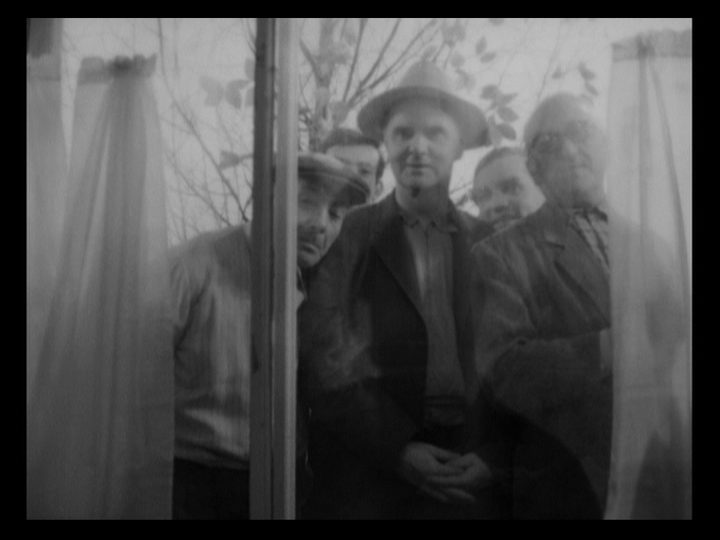
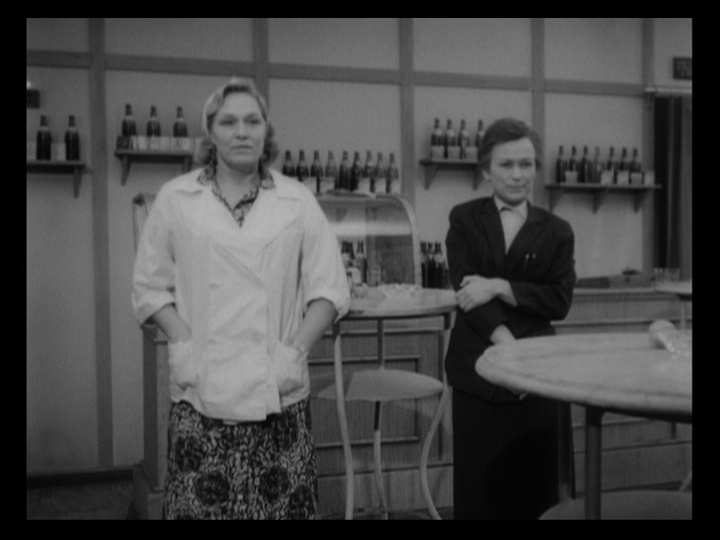
Gender is definitely a contributing factor to Petrukhina’s sense of alienation. A rare interlude in which she and a café owner named Shura (Rimma Markova) allow themselves the luxury of reminiscing about their school days and wind up waltzing together ends with them self-consciously realizing that a group of men is gawking at them through the window:
Or consider scholar Lilya Kaganovsky’s description of another key scene:
Nadezhda has no place to occupy in the patriarchal system that tries to reassert traditional and normative gender roles after decades of Stalinist reorganization. This is particularly evident in the concert hall scene, when Nadezhda volunteers to take a student’s place during a performance. The costumes are large Matryoshka dolls, but while all the other girls are neatly enclosed inside their doll costumes (which have both a front and a back, indeed are “seamless”), Nadezhda has to be supported by two boys as she awkwardly fits herself inside the largest doll. This doll has only a “front,” and the boys carry Nadezhda around the stage while she crouches inside waving her arms. The “donned armor of an alienating identity” is here represented as incomplete and “propped up” by the male. The boys offer Nadezhda’s “feminine” representation a scaffolding without which the illusion would collapse and be exposed for what it is: a dominant cultural fantasy resting on a phantasmatic support.
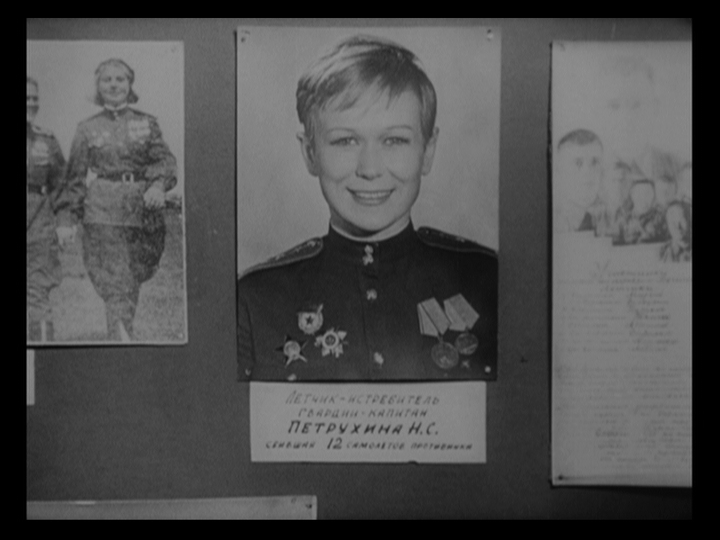
Scholar Anastasia Sorokina further notes that “Nadezhda” is “a name unique to women that means ‘hope,’ an irony lost on non-Russian speakers” which helps “shed light on Nadezhda’s alienation as a middle-aged female war veteran occupying a society in which she is no longer relevant” and that Matryoshka dolls are “a traditional symbol of motherhood” used here “in a sarcastic nod to Nadezhda’s lack of biological children and her inability to connect with her surrogates at home and at school.”
Of course, there’s a fine line between inability and unwillingness and some of this is undeniably her own fault. Petrukhina’s daughter Tanya (Zhanna Bolotova) doesn’t know she’s adopted, so this doesn’t explain why she’s estranged from her mother. The scene where the latter surprises her outsider her apartment complex with a bottle of wine and cake might, though. Petrukhina is there to finally meet her son-in-law Igor (Vladimir Gorelov), but whatever inclination we might feel to sympathize with her is quickly undermined by her stubborn insistence on guessing which of the people gathered in the living room is him. She chooses . . . poorly:
Embarrassed, she proceeds to exhort the assembled “young people” to cheer up and “play [their] boogie-woogie.” Oof! But underlying all of this is the trauma Petrukhina experienced during World War II, especially the moment when she watched her lover Mitya (Leonid Dyachkov) die in a fiery crash, which brings us to the film’s controversial ending and back to the reason I chose to write about Wings in relation to the Aviation. Mitya appears for the first time in the final third of the film following Petrukhina’s purchase of handful of cherries from a street vendor.
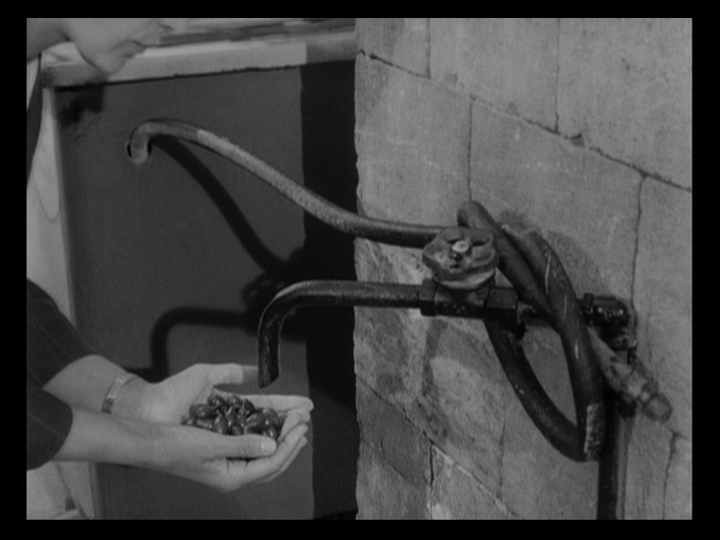
She attempts to run them under a faucet, but it doesn’t work:
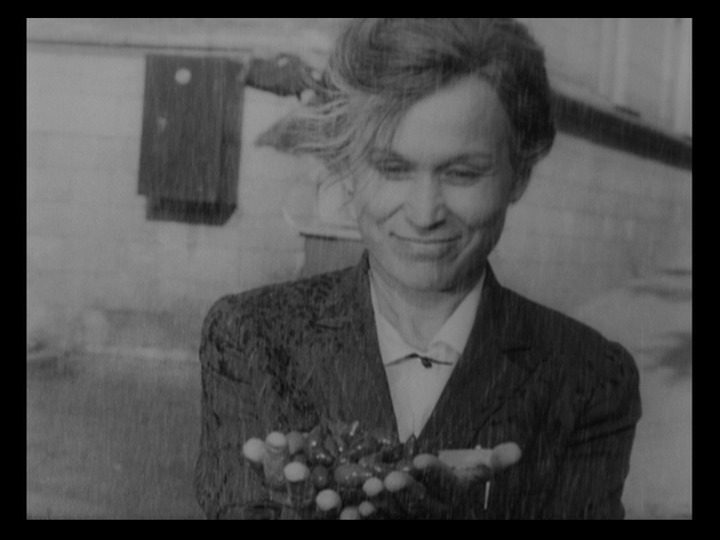
Just that moment it starts to rain. Petrukhina holds the cherries up to be washed:
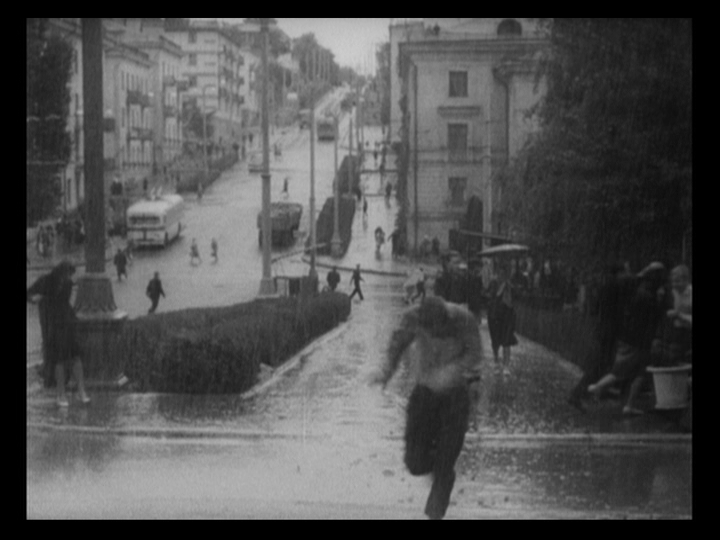
As everyone around her scatters:
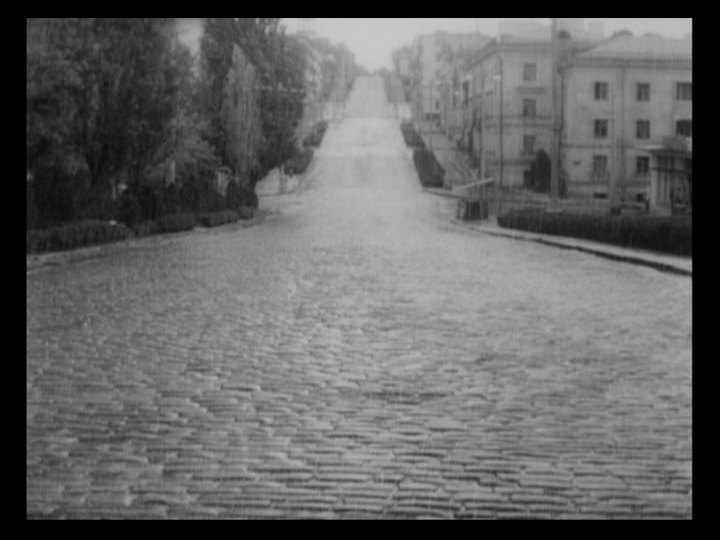
She beholds the empty street:
And the camera tilts up to a white sky:
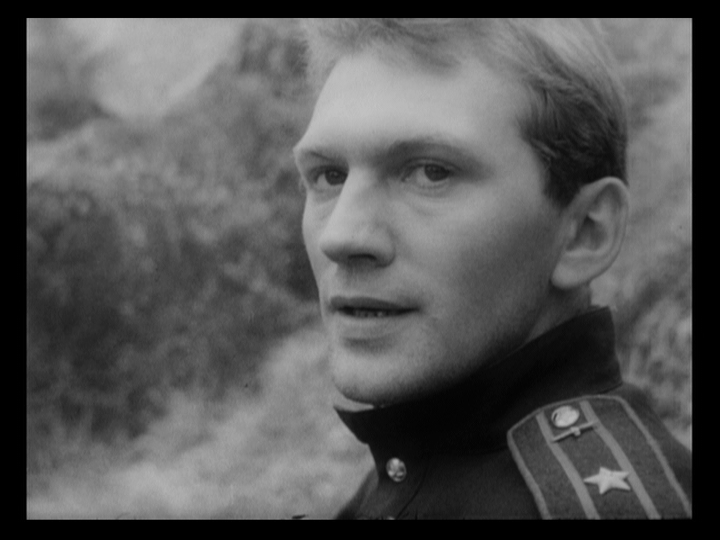
Suddenly we behold a lone figure running through a forest. We hear Petrukhina’s voice say “Mitya.” As the figure materializes into a man, we realize it’s a POV shot. He sits down next to Petrukhina. As he turns to look at her, the image freezes:
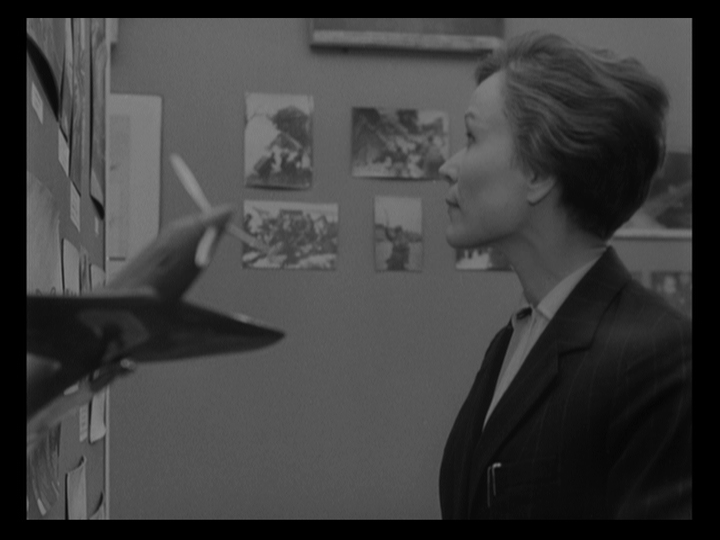
This is followed by four more freeze frames, all on shots of Mitya. The following scene finds Petrukhina visiting the museum directed by her friend Pasha (Panteleymon Krymov) where there’s an exhibit devoted to Mitya which she figures in as one of his apprentices:
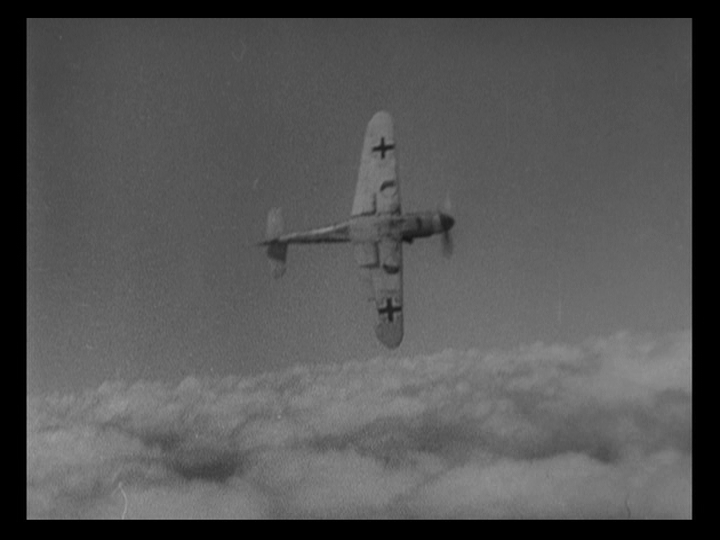
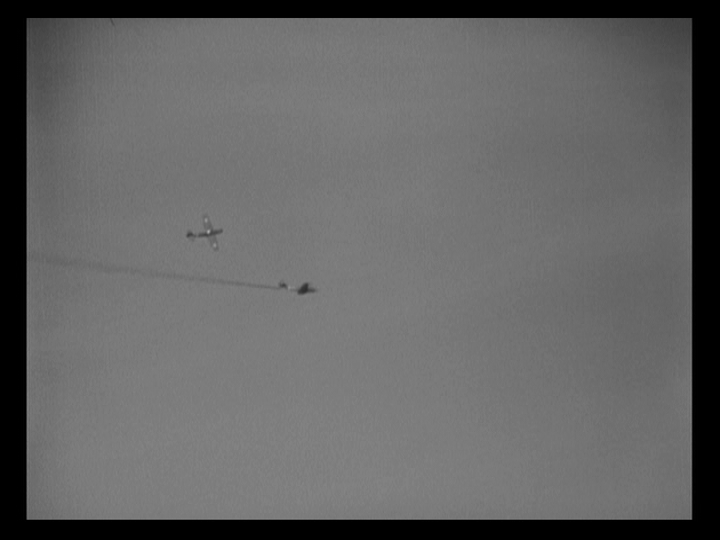
Cut to aerial footage of a plane:
Followed by a close-up of Petrukhina flying another craft:
She tries to talk to Mitya over the radio, but there’s no response. She attempts a maneuver to revive him, but his plane continues to trail smoke, and all she can do is fly next to him as he plummets to the ground:
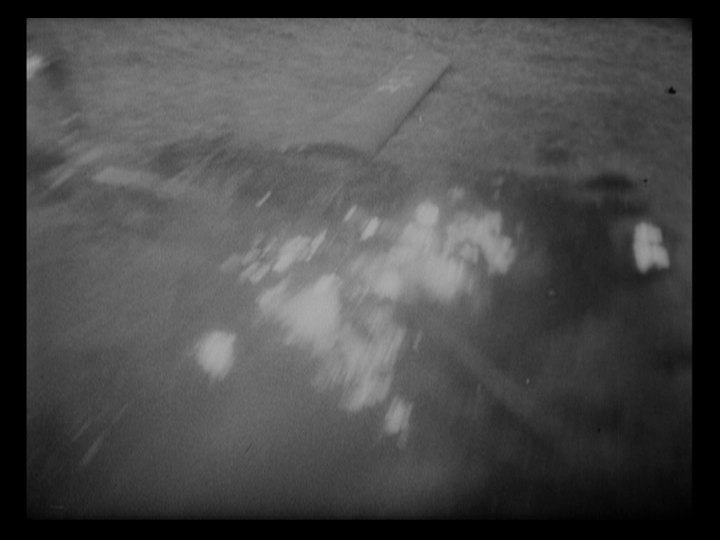
There is one final freeze frame over a POV shot of his wrecked plane in flames on the ground:
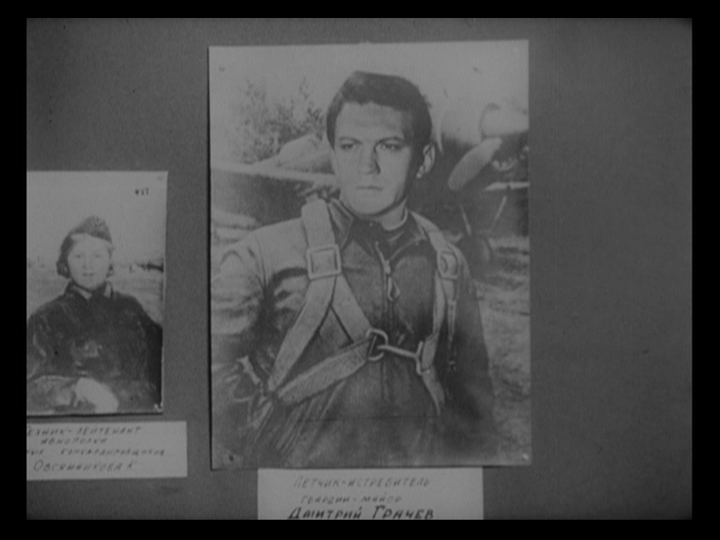
Followed soon after by a shot of a photograph of Mitya which is part of the museum exhibit:
Which pans down to one of Petrukhina:
Pasha finally shows up and begins rambling on about scientists finding a mammoth frozen in the tundra, thawing it, and cooking its meat. Petrukhina interrupts him: “marry me,” she says.
When he doesn’t reply, she continues, “you don’t want to. Can’t you see it? The museum director marries one of his exhibits.” She wonders aloud if perhaps the woman pictured in the exhibit did die in the war after all and tells Pasha that she has quit her job at the school and is starting a new life. The next scene finds her watching children fly toy planes:
There’s an abrupt cut and suddenly she’s at an airfield:
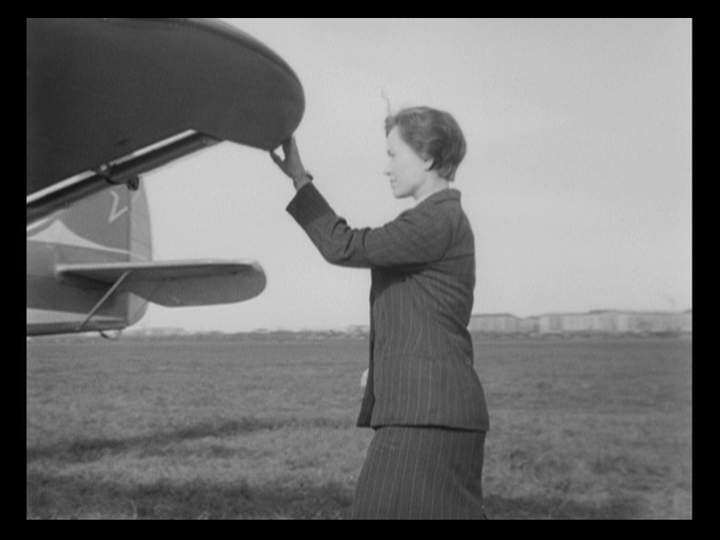
It begins to rain. Petrukhina starts to seek shelter under the wing of a plane:
Then climbs into it:
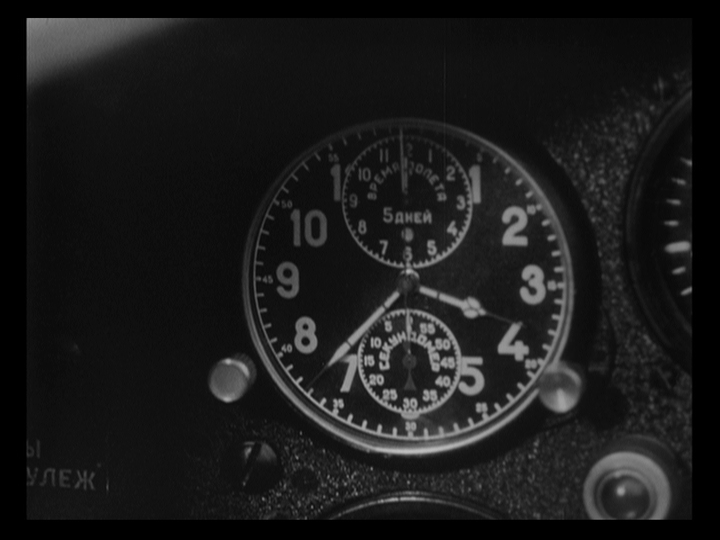
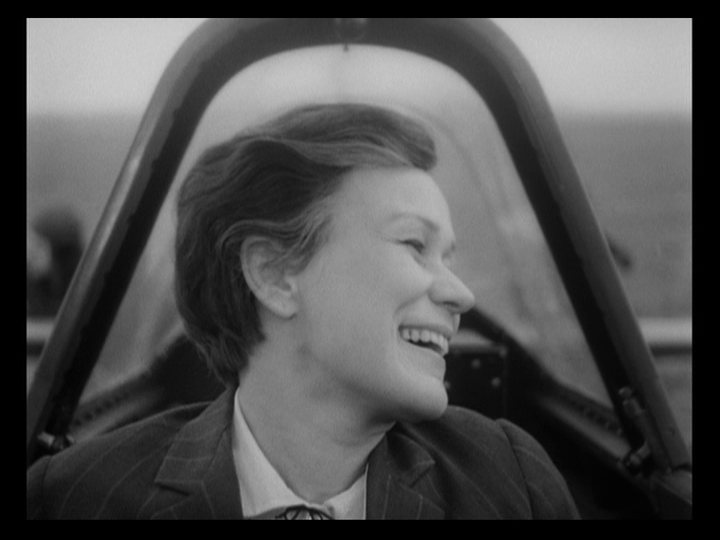
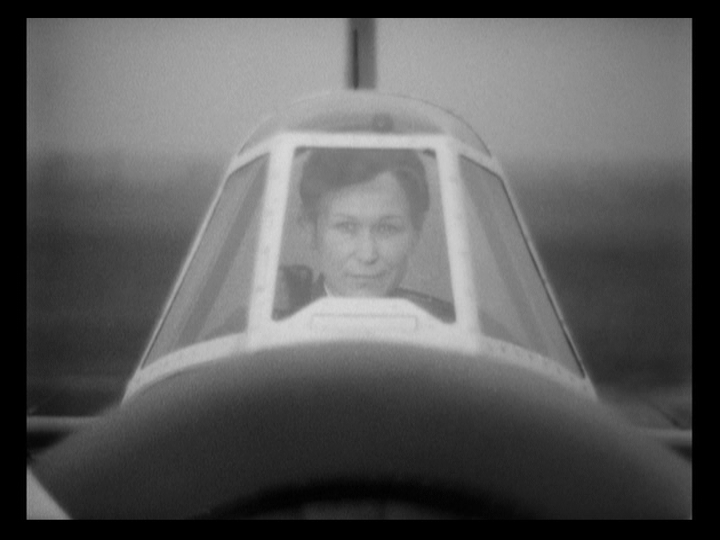
There’s a POV shot of the instruments followed by a close-up of Petrukhina smiling:
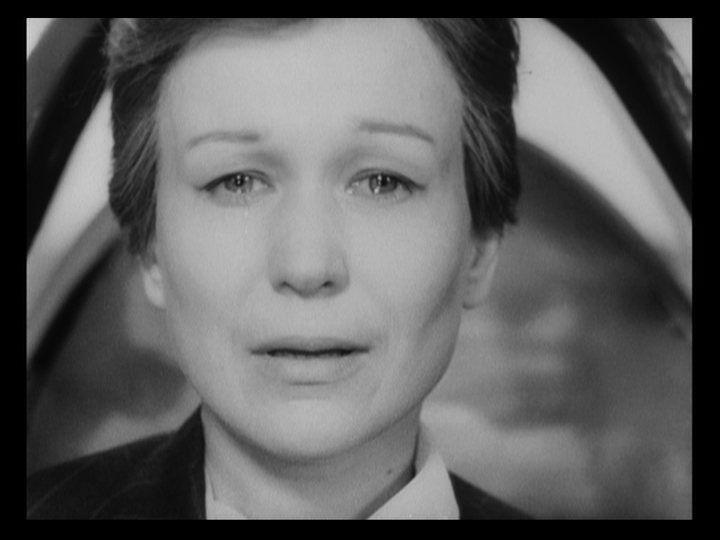
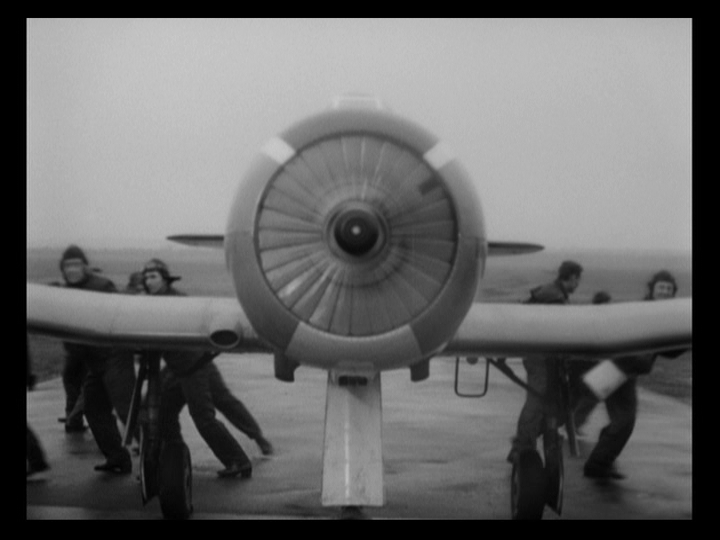
A group of pilots show up and decide to push her to the hangar in the plane so that she can “feel the wind in her face.” There’s a shot of her looking happy followed by one of her with a tear in her eye:
As the plane approaches the hangar, Petrukhina shakes her head no. Suddenly the plane starts up:
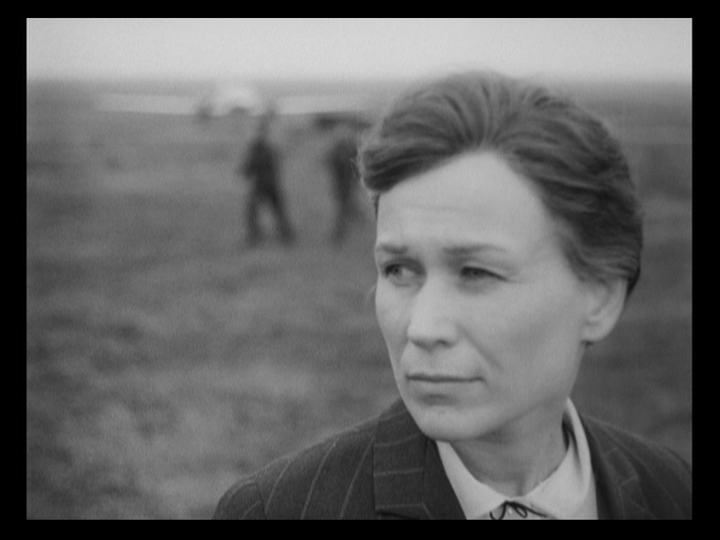
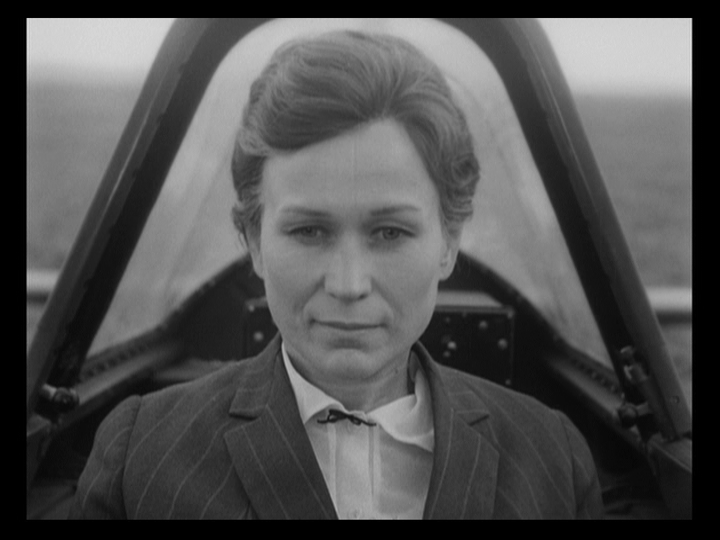
There is one last shot of Petrukhina:
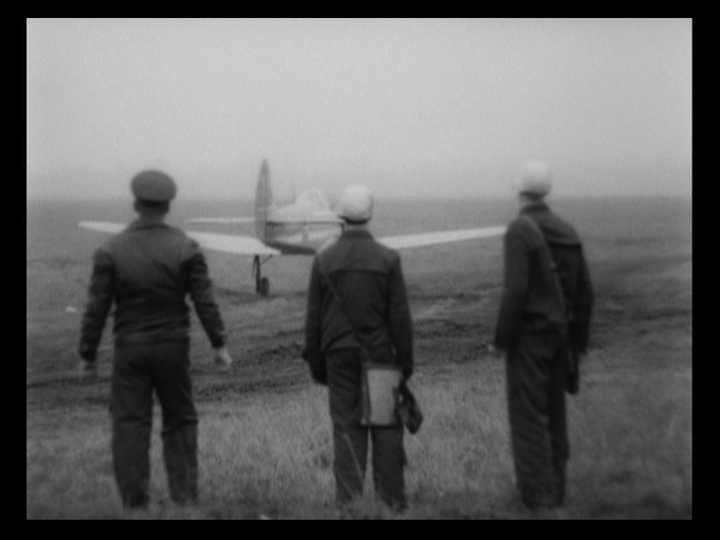
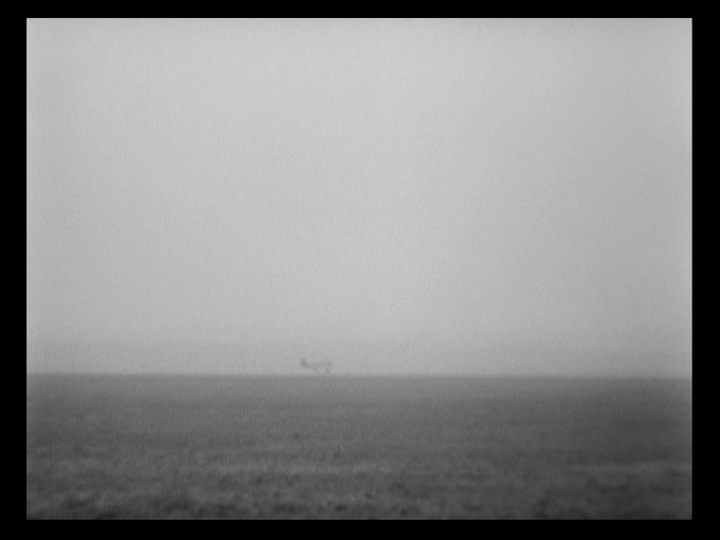
Then the plane begins to taxi and as the pilots watch helplessly it takes off and disappears into the fog:
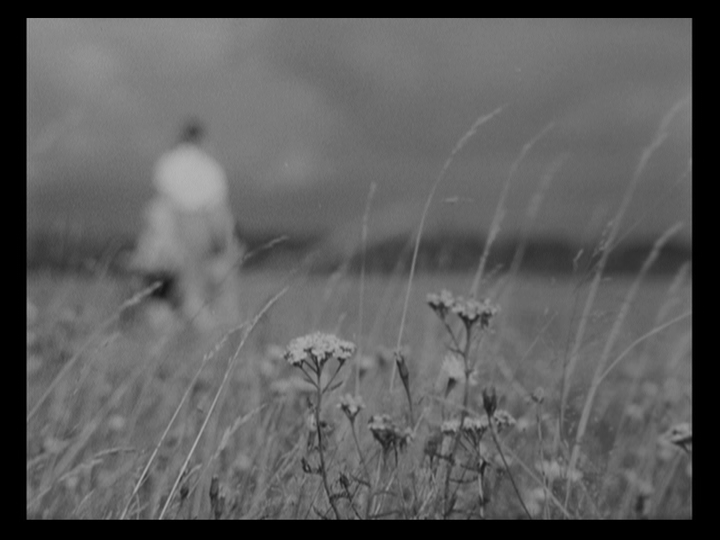
The film ends with two aerial shots followed by the end title. Scholar Åsne Ø. Høgetveit notes that this is most commonly interpreted as implying a suicide, but observes that throughout this scene Petrukhina’s facial expressions “change from nostalgic to insecure, determined, bold, happy, sad, melancholic, rebellious and victorious—quite an emotional roller coaster!” and that “[s]he does not seem like a defeated woman as she fires up the engine and takes off.” I agree. In fact, I was tempted to interpret the film’s conclusion as one more fantasy, only it begins and ends basically the same way as Petrukhina’s first visit to the airfield at the beginning of the movie. There, as Petrukhina leaves with her neighbor’s children, who she is babysitting, the camera racks focus to a close-up of a flower:
The final shot of Wings is, like this one, an image of hope. Høgetveit is not wrong that Petrukhina “takes off in what has got to be difficult flying conditions, keeping in mind the heavy fog on the airfield and the airplane model she has not flown before.” She might not land safely, and she will presumably be in a lot of trouble even if she does. But in Larisa Shepitko’s own words (as quoted by Høgetveit), she has also “come back to heaven, to herself, to her talent, to what she was born for, so to speak, because this is her natural vocation.” It’s an ending for dreamers, and the Aviation is the perfect drink to accompany it, so be sure to save some for the final reel!
Cheers!
All original photographs in this post are by Marion Penning, aka My Loving Wife.Links to all of the entries in this series can be found here.
Earlier this year I mentioned that I like to listen to movie podcasts during my walks to and from work. Recently I discovered that I especially enjoy those which are recorded at film festivals and feature critics talking to each other about what they’ve seen, such as The Film Comment Podcast and Nicholas Rapold’s The Last Thing I Saw. While I sincerely admire the ability of professional critics to see four plus movies in a single day while jet lagged and then write cogently about them on tight deadlines, I’ve long been skeptical that this practice, economically necessary though it may be, is optimal for the reviewers or the filmmakers they’re covering. The conversational (and therefore provisional) nature of podcasts and epistolary exchanges like the ones which are a staple of MUBI’s Notebook‘s festival coverage strike me as a much better match for the realities of seeing a series of new works in rapid succession under less than ideal circumstances because they foreground the challenges inherent in doing so. It makes sense for a critic to casually mention that they saw a given film at the end of the festival while battling exhaustion in this context whereas it wouldn’t in a formal review. The conditions under which a person sees a film absolutely do affect their opinion of it, sometimes profoundly, and it can be helpful to the listener/reader to know about them. I also wonder if it makes it easier for the critic to revise their opinion later.
Anyway, these thoughts and the pile of food and movie magazines in my living room got me thinking about what my ideal film publication would look like. Currently I subscribe to the following: Cineaste, the Journal of Cinema and Media Studies (via my membership in the Society of Cinema and Media Scholars), Cinema Scope, and MUBI’s Notebook magazine. I learn plenty from all of them, but the arrival of a new issue in the mailbox doesn’t make me *happy* the way the latest Bon Appétit, Cook’s Illustrated, and Food & Wine do. I believe that this is because the latter are more successful at fulfilling the purpose that “print magazines” currently serve in my life. Their function is to slowly accumulate until such time as I want something to flip while I’m eating lunch or hanging out with family during the holidays or on vacation. I make note of recipes that I want to try and products which might make good presents for My Loving Wife and file away information about what ingredients, cuisines, and chefs seem to be trendy right now. Then we put them on a shelf to wait until we’re ready to cook out of them.
I use film magazines basically the same way, but less successfully. The problem is that most want to be read closely. This is understandable, especially in the case of a scholarly publication like JCMS, but even this I treat it the same way I do American Libraries, which also arrives in my mailbox unbidden by dint of a professional association membership–I skim for names I recognize and topics of particular interest to me and only really read pieces of writing I find them in. Don’t get me wrong: I have nothing against in-depth journal articles! But I’d rather seek them out via database searches when I’m researching something than take time away from whatever book I’m reading just because they’re there.
So what would my ideal film publication look like? Here are some ideas completely divorced from the financial realities of running one, which: if this post has any merit (and I fully acknowledge that it might not!) whatsoever, it’s derived from the fact that this represents one would-be reader’s attempt to describe what kind of content he’d be willing to pay for. It is not PRESCRIPTIVE in any way. Without further ado, then:
My favorite food magazines post all of their recipes online, which is essential for discoverability. While a print magazine is an essential part of my vision, it also needs to include an online component.
Speaking of discoverability: for all the reasons described in the first paragraph of this post, my preferred form of film festival coverage is podcasts whereby critics talk to one another about the movies they’re seeing. These would ideally be accompanied on the website by full-text transcripts and good metadata so that the precise moments where these and other films are discussed can be retrieved via search later. I worry that a lot of great film criticism is going uncited because not all podcasters think about this sort of thing! Meanwhile, the festival coverage I’d most enjoy reading in the print magazine are “round-up” posts which assess the event as a whole after the fact, which might look something like Slate‘s Movie Club, and/or which include a significant travelogue component: I’d like to know where the writers stayed during the festival, what they ate, etc. The idea is to describe the festival to people who might actually go to it themselves in terms that would be useful to them when making plans.
Visits to locations where films were shot might make for good travel-based film criticism as well.
In addition to film festivals, events like anniversaries (e.g. the 50th anniversary of the release of whatever), Blu-Ray/DVD and book releases, and other major screenings like retrospectives could comprise the core of each issues. I remember Film Comment (which I’d happily re-subscribe to should it ever reappear as a print publication, by the way!) as being good at this, and Jonathan Rosenbaum’s “Global Discoveries on DVD” column in Cinema Scope is another example of what I’m thinking about here. I would like to see more screengrabs, though!
Interviews would also be an excellent fit for the kind of publication I have in mind.
I don’t watch a lot of TV, but I’d appreciate recommendations from movie people about what’s worth spending my time on. Ditto (non-film) books, music, plays, and other kinds of creative works–perhaps the hook could be analysis of movie characters are watching, listening to, looking at, etc. and what it means? If we expand this to also include what they’re eating and drinking, we’ve found a way to justify including recipes, too!
When talking about what I like about the food magazines I subscribe to, I mentioned products which would make good presents. What about articles focused on costume and set design? “Here are things that you could incorporate into your own aesthetic were you so inclined,” but again with a film criticism focus: discussion of the reasons *why* these things were chosen for the movies they appear in and an assessment of how effective they are absolutely key.
I love the New York Times‘ “Watching” newsletter because it’s hard to keep track of what is available on the major streaming video platforms. This seems like another logical focus for articles and recurring columns.
Since I’m daydreaming here: I regularly consult the capsule reviews that Dave Kehr, Jonathan Rosenbaum, Pat Graham, and others wrote for the Chicago Reader Film section and would love to have access to a similarly comprehensive but more up to date resource for brief, reliable takes on what is and isn’t worth seeing. This would presumably be an online-only feature.
This post started with podcasts, but focused only on one type of them. I also enjoy those which feature thematically discrete seasons like Karina Longworth’s You Must Remember This and Rico Gagliano’s MUBI Podcast.
Lest all this sound too commercial, I think there’s a big place in this vision for non-mainstream forms of filmmaking as well as for events that not everyone has heard of. Drawing just from my own recent experiences, for instance, I can easily imagine articles about the Finger Lakes Environmental and Maine International Film Festivals which guide would-be visitors to where to stay and eat while they’re in town. Michael Sicinski’s writing on experimental film in Cinema Scope is another model.
In a similar vein, one of my favorite columns in Lucky Peach, a defunct publication that I dearly miss, were the regular dispatches from “Southeastern Pennsylvania correspondent” Mark Ibold. I’d appreciate regular updates on what’s going on in film hubs like New York City and Paris.
Also speaking of Lucky Peach: movie-inspired short fiction! And/or film criticism in comic form.
Last but not least, I think it would be cool to feature profiles of movie theaters around the country written and/or accompanied by writing by local critics. This could once more be travel-oriented, or not: maybe this is a reversal of the “dispatches from film hubs” idea above designed to educate readers in the capital cities of moviedom about what’s going on in the provinces. But either way I definitely like the notion of providing a national platform for writers who might not already have one.
And there you have it! If I am somehow your target audience, now you know what I want!
I heard about the Maine International Film Festival for the first time a few months ago. I was chatting with legendary cinephile Brian Darr (whose blog Hell On Frisco Bay remains one of this site’s chief inspirations, although he has been posting mostly on Letterboxd and Twitter lately) about this year’s Nitrate Picture Show, which we were both hoping to attend. Although he wasn’t ultimately able to make it, we somehow realized that we would both be in Maine (us to see my father and his wife) at the same time this summer, and when Brian mentioned that there was a pretty good film festival in Waterville, we decided to meet up there instead.
Brian had other plans the first Tuesday evening we were in town, but on his recommendation I decided to check out 20,000 Species of Bees, which he said had been getting good buzz (his pun, not mine!) on my own. The film is about a crucial summer in the life of eight-year-old the world sees as a boy named Aitor, but who is beginning to identify as a girl named Lucía. Actress Sofía Otero won a Silver Bear for Best Leading Performance at this year’s Berlinale for her performance in this role, and the honor was well-deserved. She embodies a character whose calm exterior masks a storm raging within, which is extremely impressive for someone who just turned ten a few months ago. First time feature film director Estibaliz Urresola Solaguren also deserves kudos for the balancing act she performs. Bees teeters on the edge of tragedy for nearly the entirety of its two-hour runtime, but resists pat resolution of either the unbelievably happy or unnecessarily sad variety, culminating in a forest search scene that had my fellow audience members calling out to the people on screen. They mostly got what they wanted, but I doubt it was as cathartic as they were hoping it would be. Which, that’s real life for you! Patricia López Arnaiz is very good as Aitor/Lucía’s sculptor mother, and the supporting cast is excellent as well. This movie deserves to be widely seen and I hope to see it show up in Ithaca later this year so that I can recommend it to everyone.
The MIFF program included a strong contingent of repertory screenings, but the chance to finally see Werckmeister Harmonies made choosing between them easy. I’ve long suspected that director Béla Tarr represented one of my biggest cinematic blind spots and now I’m certain of it. Nearly two-and-a-half hours long but consisting of only 39 shots, the film is an allegory of the cataclysms that befell Europe during the twentieth century. It opens with a magnificent long take set during closing time at a bar in an unnamed town. The drunks refuse to go home until local mailman János (Lars Rudolph) organizes a dramatization of a solar eclipse. Had this been the only indelible image Werckmeister left me with, I still would have been glad to have seen it. This isn’t even the movie’s best shot, though! That could be the almost unbearably long march of a mob to the hospital where they intend to unleash chaos, unless it’s the one at the end of this scene in which, chagrined by the site of an perilously frail old man’s naked body, they shuffle home afterward. Or maybe it’s the harrowing sight of Hanna Schygulla’s Tünde Eszter dancing with a drunk police chief (Péter Dobai) with a gun or the brilliantly lit entrance of a “circus” into town. But no, surely it must be one of the shots of the whale carcass which is its star attraction! My point, obviously, is that I loved it.
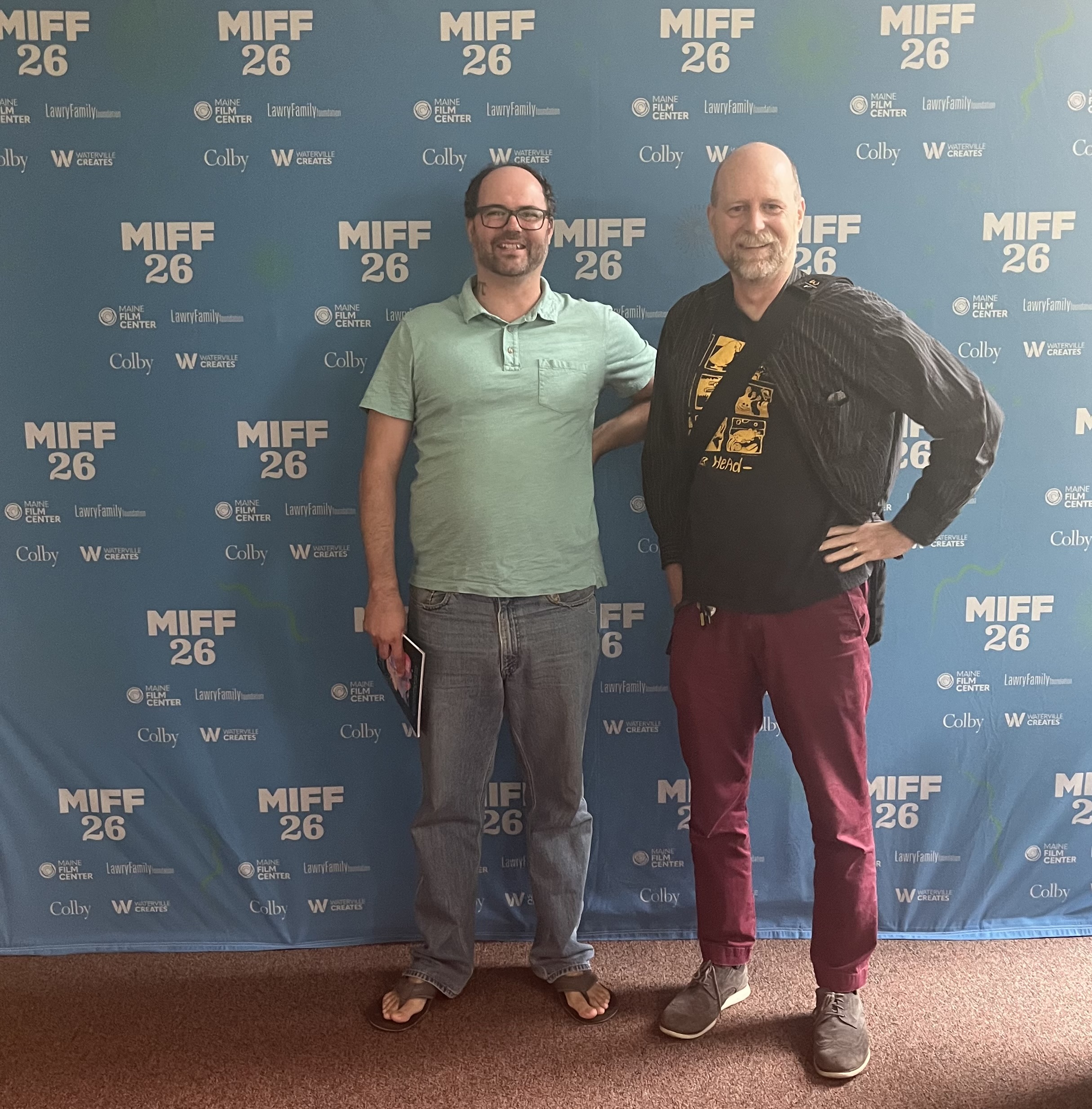
Werckmeister Harmonies played to an understandably small (given that it was 4pm on a weekday) crowd at the beautiful Waterville Opera House, a suitably grand venue for an undeniably great film. Afterward My Loving Wife snapped the following picture of me and Brian standing in front of the MIFF logo wall, which I believe is the first time I’ve ever utilized one of these things for its intended purpose:
What I perhaps appreciate most about film festivals is the opportunity they provide to identify connections between movies it may not otherwise have ever occurred to you to compare. So it is that I find myself thinking about Aurora’s Sunrise partly in terms of the film which preceded it. Arshaluys Mardigian endured unthinkable horrors during the Armenian genocide, but survived to play herself (under the name Aurora Mardiganian) in a silent film called Auction of Souls. Aurora’s Sunrise blends original (partially rotoscoped, as described by director Inna Sahakyan in this interview with Creative Armenia) animation, interviews with Mardigian shot on video in the 80s, and clips from the 20 minutes of surviving footage from Auction of Souls to tell Mardigian’s story. One of its most impactful moments comes at the end, when Mardigian suggests that the failure of the rest of the world’s governments to publicly condemn what happened in Armenia empowered the Nazis, which links the movie to Werckmeister Harmonies through the person of the old man mentioned above, who deliberately evokes the Holocaust. Another is the juxtaposition of a crucifixion scene from Auction of Souls that wouldn’t be out of place in a Cecil B. DeMille epic with an animated sequence which depicts in graphic detail the even more inhuman form of torture that Mardigian actually witnessed whereby Ottoman soldiers killed Armenian women after raping them by forcing them to sit on pointed stakes, impaling them through their vaginas. But lest I inadvertently make the film sound unrelentingly bleak, my favorite line is probably Mardigian’s wry response to arriving in St. Petersburg (then Petrograd) en route to America in the midst of the Russian Revolution: “after everything I’d seen, now this!?”
I also value festivals for the chance they provide to see films which for whatever reason probably *aren’t* coming soon to a theater near me. In the case of my final MIFF selection Bravo, Burkina! the problem is its runtime. At 64 minutes it isn’t quite a feature, but is also too long for most shorts programs; however, this made it the perfect length for the second half of an ad hoc double feature with Aurora’s Sunrise! The movie is a love story about two Burkinabe emigrants who meet first in Italy, then again in Burkina Faso after they separately return to their homeland. Each is played by multiple actors, and while this isn’t quite a “non-narrative film,” the plot is definitely of secondary importance to the sound and images. Where it is most successful is making two very different African and European locations look differently but equally beautiful. It also features spectacular costume design, which isn’t at all surprising considering that director Walé Oyéjidé is a fashion designer (he is the founder of Ikiré Jones) who worked on both Black Panther and Coming 2 America. Bravo, Burkina! would pair well with the thematically similar Past Lives and would be a perfect fit for the Criterion Channel’s “Afrofuturism” collection, which favors a big tent interpretation of that term.
All in all I had a wonderful experience at MIFF! I obviously never visited the Maine Film Center at its old Railroad Square Cinema location, but the Paul J. Schupf Art Center, which it moved to late last year, seems like a good home. Parking was easy to find, there are numerous nearby food and drink options, and the seats are maybe the most comfortable ones I’ve sat in all year. With family one town over in Fairfield, I think we’ll almost certainly be back, quite possibly sooner rather than later. I will be looking forward to it!
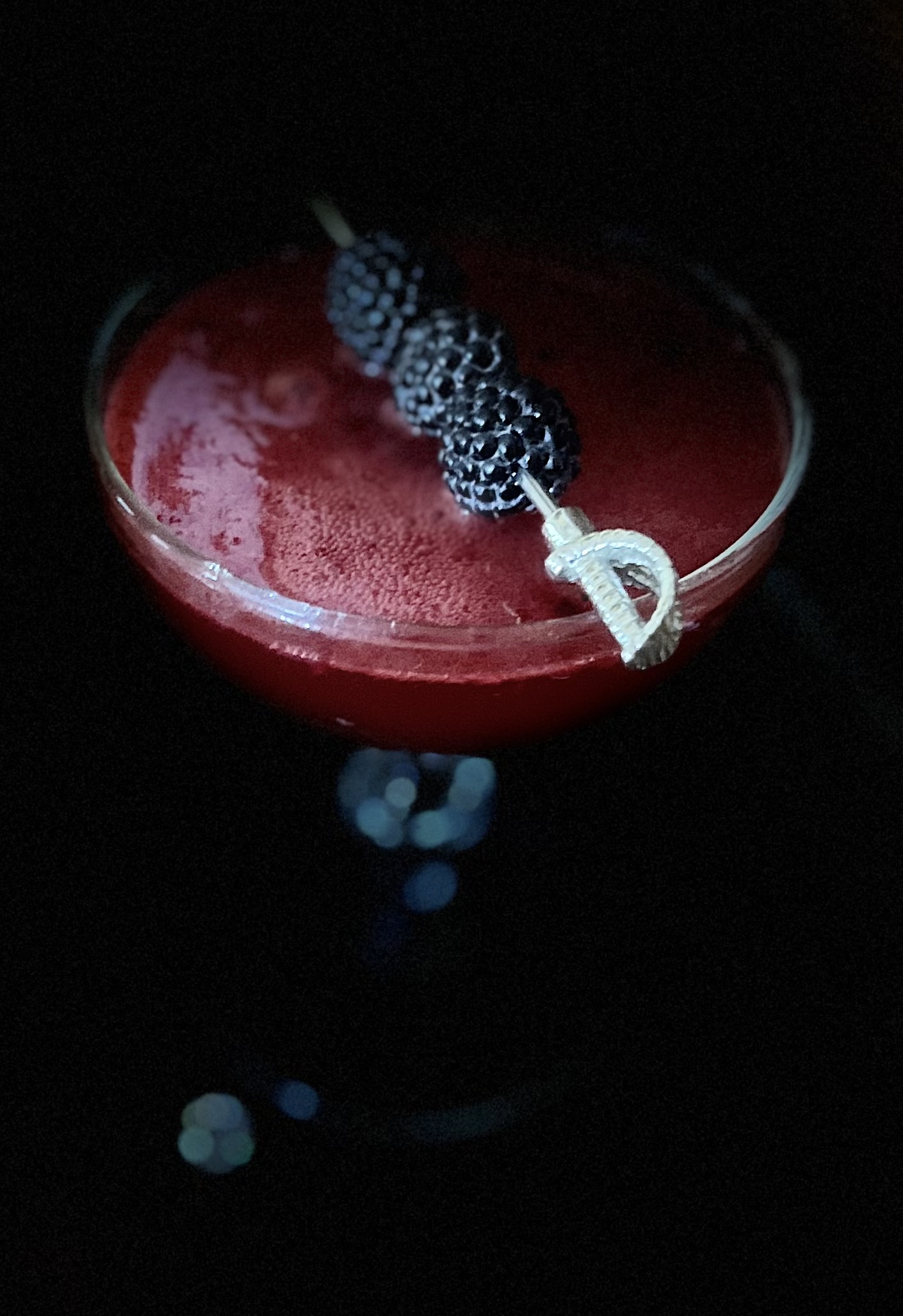
My favorite thing in the whole entire universe, after my family, might just be the black raspberry bush growing in my back yard. It only produces fruit for a few weeks each summer, but those are some of the best days of the entire year because they begin with a harvest of berries that find their way into nearly every meal we eat during this time. They make terrific muffins and pies, are a brilliant addition to salads and yogurt parfait, and can even be converted into a wide range of savory condiments like barbeque sauce or salsa. They also go great in cocktails, of course! Raspberries freeze well, and thusly preserved can be made into tasty syrups all throughout the year, but my favorite way to use them is fresh off the vine in a modified version of the Knickerbocker in Dale DeGroff”s The Craft of the Cocktail. This drink, which DeGroff notes is adapted from Jerry Thomas, is emblematic of the fresh fruit-forward concoctions he and restauranteur Joe Baum championed it at New York City’s Rainbow Room in the 80s when nearly everyone else was relying exclusively on commercial mixes. Here’s how we make it:
2 ozs. Appleton Estate Signature rum 3/4 oz. Lemon juice 1/2 oz. Orange curaçao (Cointreau) 1/4 oz. Honey syrup 10-12 black raspberries Lemon wedge
Muddle 7-9 raspberries with the lemon juice and curaçao in a mixing glass. Add ice and rum. Squeeze the lemon wedge into the glass, drop it in, shake well, and double strain into a chilled cocktail glass. Garnish with three fresh berries on a pick.
Appleton Estate Signature is a workhorse rum that’s perfect here because it isn’t showy and this drink is all about the berries; if you have another go-to for mixing, I’m sure it would work fine as well. DeGroff calls for 1/2 oz. raspberry syrup in lieu of fresh berries when they’re out of season, but our “blackcaps” are more tart than red raspberries, so we like to add a bit of 1:1 [water to] honey syrup to add sweetness even when they are. I’d normally reach for Pierre Ferrand Dry Curaçao in this situation, but it hasn’t been in stock in Ithaca the last few times I looked. Based on comparisons to the other orange liqueurs we do have on hand, though, Cointreau works just as well or possibly even better. Last but not least, we’ve tried this both with and without the lemon wedge, and it definitely is worth the extra step: versions that include it are discernably more complex than those without.
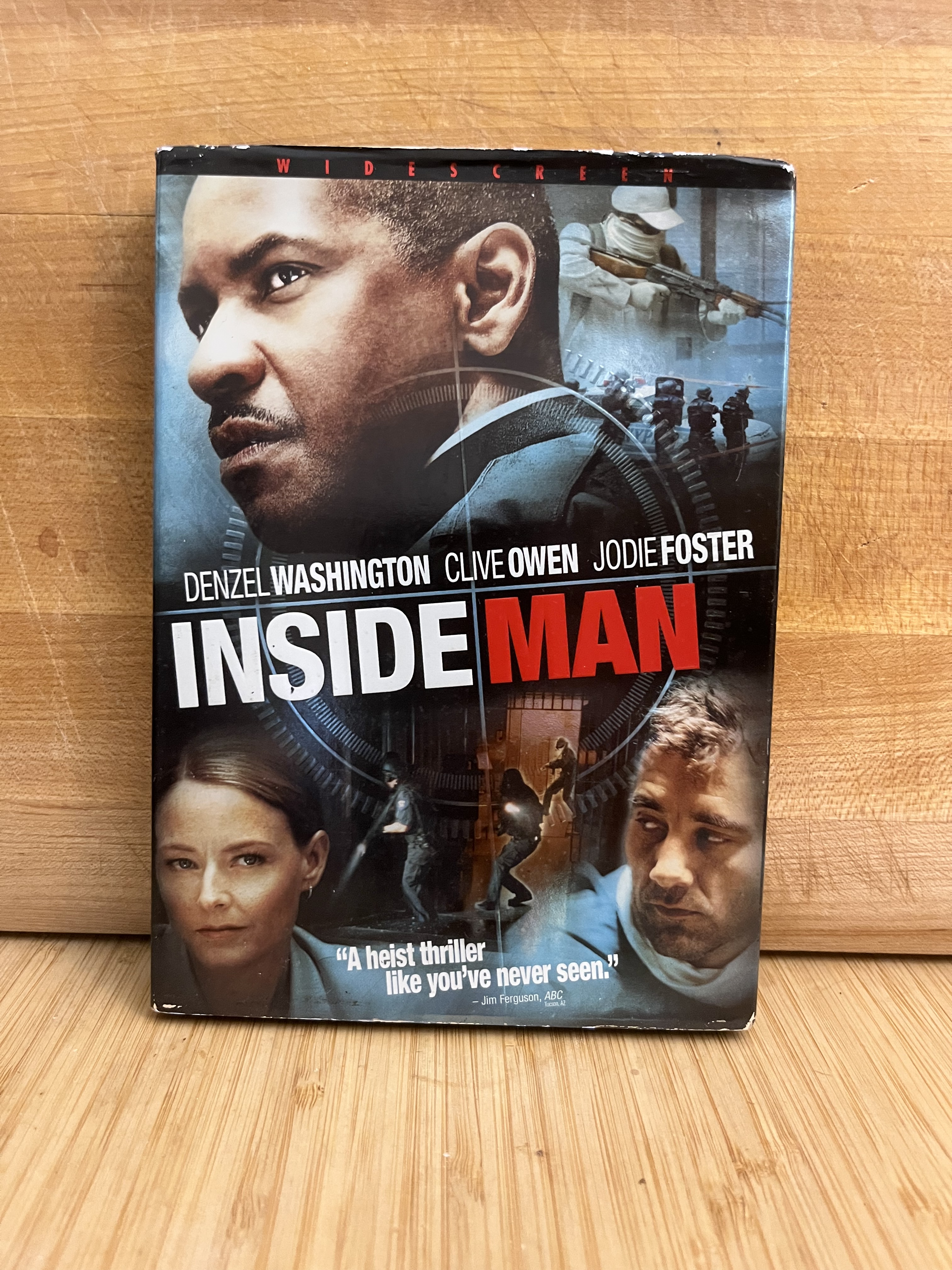
The movie I chose to pair with this showcase for upstate New York produce is famous Knicks fan Spike Lee’s underrated heist film Inside Man. Here’s a picture of my Universal Pictures Home Entertainment DVD release, which is suddenly a bit worse for wear after some recent shabby treatment by the baggage handlers at BWI airport:
It can also be streamed via Netflix with a subscription or most other major platforms for a rental fee.
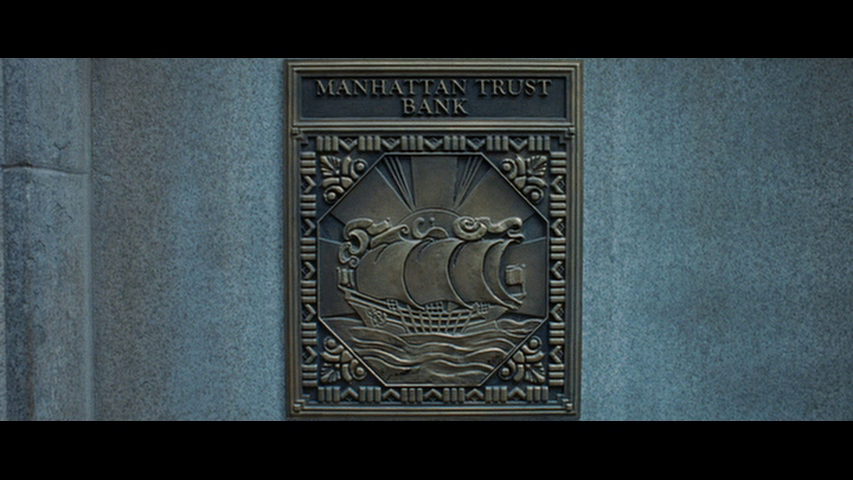
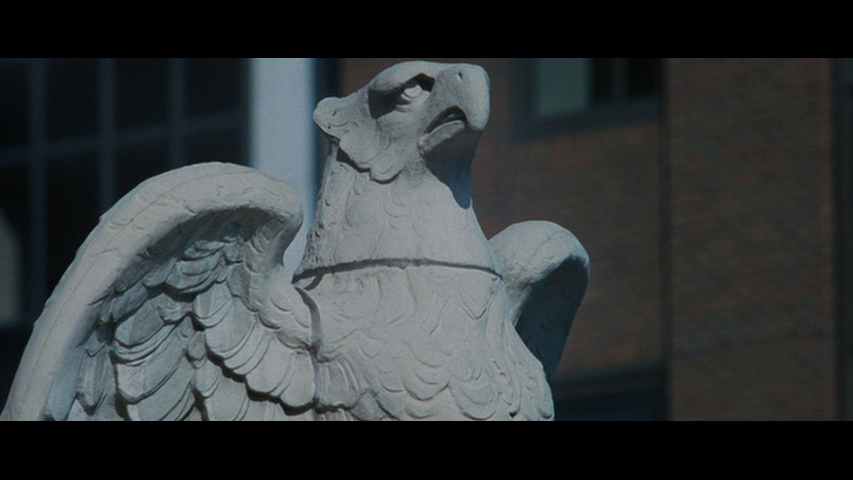
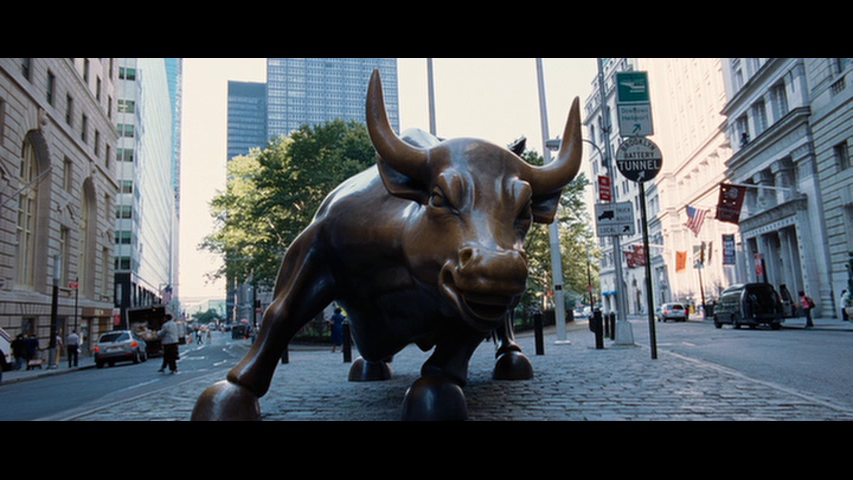
Inside Man opens with a credit sequence set to the song “Chaiyya Chaiyya” from the Indian film Dil Se. Contemporary reviewers mostly saw this as a nod to New York City’s multiculturalism, but with the benefit of hindsight it is obviously significant that the latter movie is an extremely political: it starts out like a simple love story, but ends with the protagonist blowing himself and the woman he is infatuated with up to prevent the latter from committing a suicide bombing. Similarly, although the beginning of InsideMan appears at first glance to consist of nothing more than a simple series of establishing shots, R. Colin Tait argues in Fight the Power! The Spike Lee Reader that it in fact is “confronting [viewers] with the early iconography of the financial origins of New York City” through images of ships:
“Gargoyles” (I believe this is actually technically a grotesque because it isn’t a waterspout):
And the New York Stock Exchange:
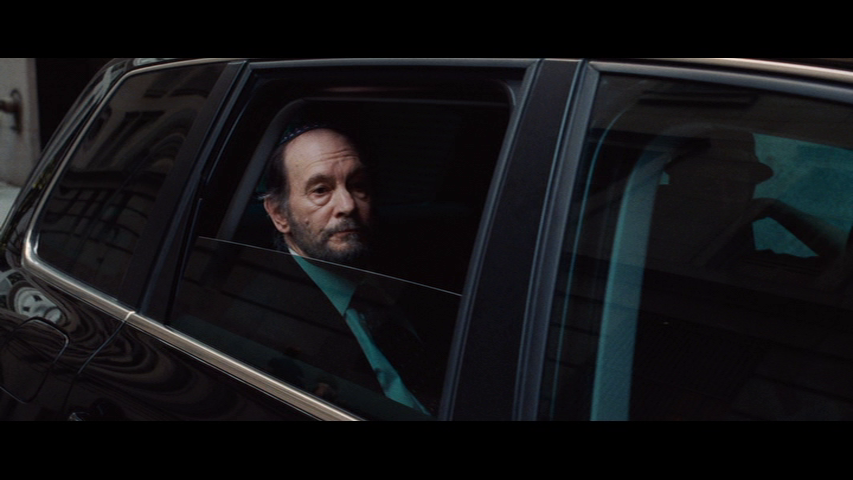
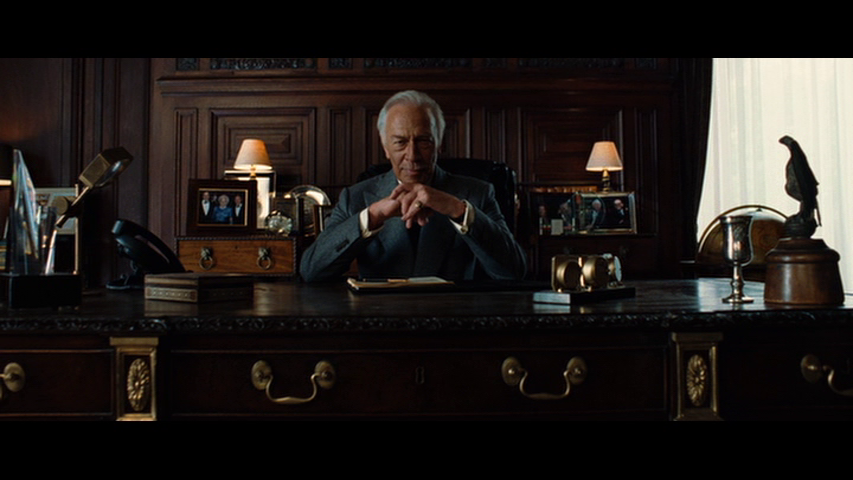
By the time it ends, we will have learned that one of the motives for the robbery that the film is about is to expose banker Arthur Chase (Christopher Plummer) as a war criminal who made his fortune by selling his friends out to the Nazis. In addition to making the film more interesting, this also provides an explanation for how Dalton Russell (Clive Owen) came to know about his target, safety deposit box 392, in the first place. After all, one of his accomplices (Bernard Rachelle) is a professor at Columbia Law who specializes in genocide, slave labor, and war reparation claims and who also has a nephew who is a jeweler.
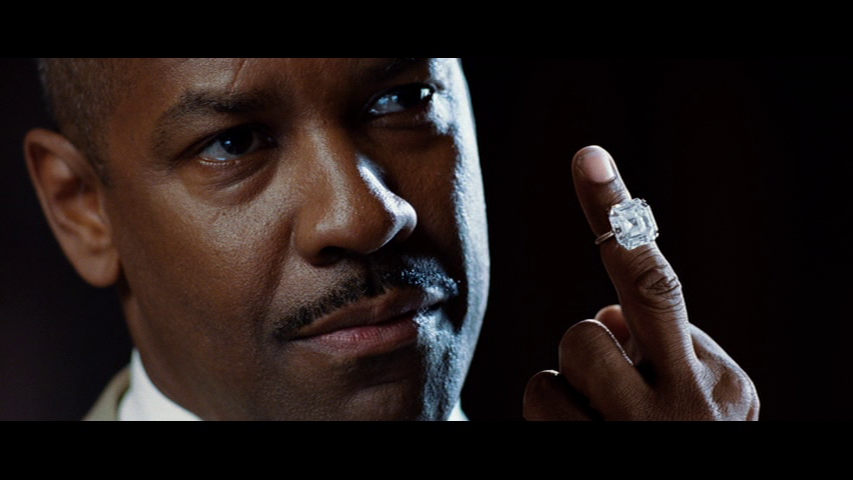
This seems like exactly the kind of person who might be able to track down a Cartier ring missing since the French Jewish family it belonged to was shipped off to concentration camps during World War II:
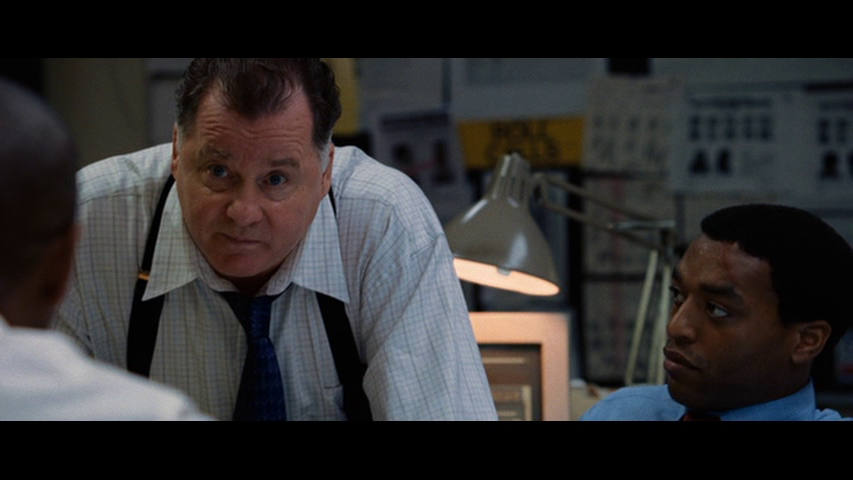
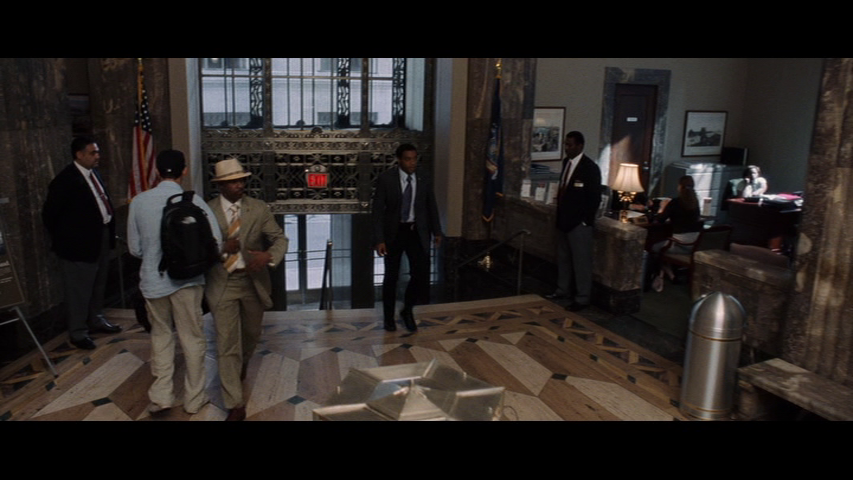
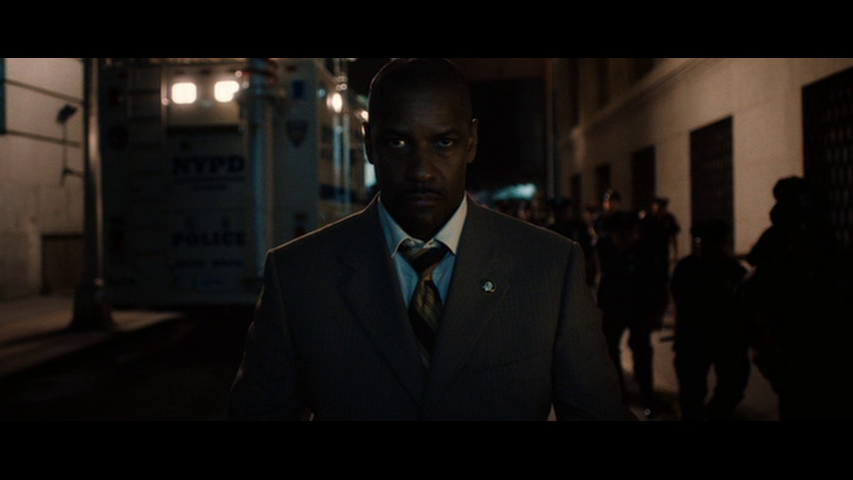
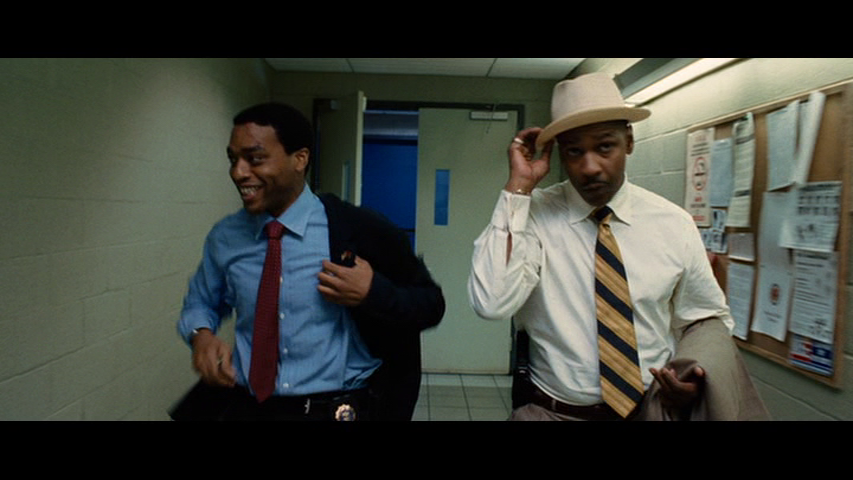
But this is all window dressing. What makes Inside Man noteworthy is the way Russell Gewirtz’s screenplay turns out to be an ideal showcase for Lee’s signature style and themes and performances by an outstanding cast led by Denzel Washington. His Detective Keith Frazier has great chemistry with his partner Bill Mitchell (Chiwetel Ejiofor) and its tons of fun to watch them riff off each other and Peter Gerety’s Captain Coughlin:
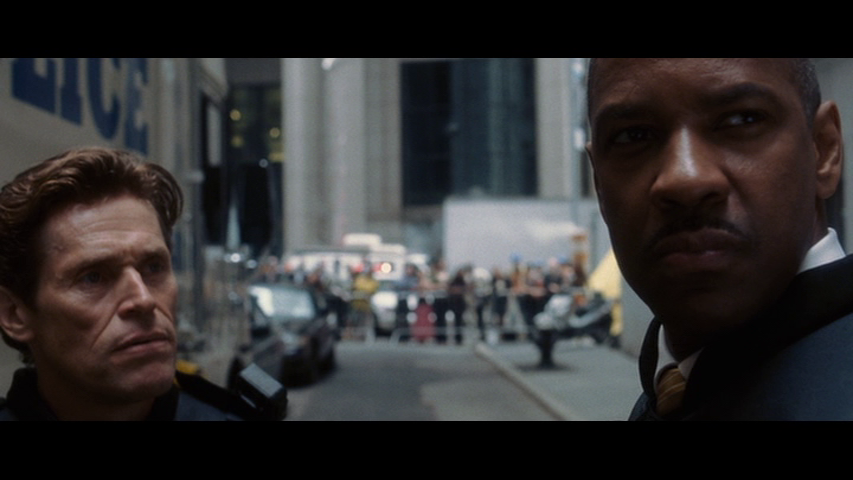
Frazier is also one of cinema’s great people managers, with a judo-like preference to let his adversaries and co-workers make the first move that works wonders on Willem Dafoe’s initially standoffish Captain John Darius:
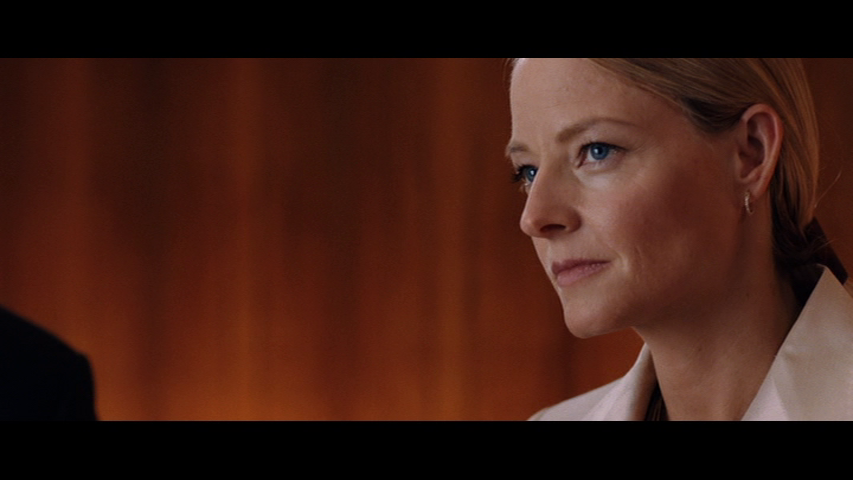
Jodie Foster’s stylish fixer Madeline White, whose condescending smiles turn to an icy stare when she realizes he has beaten her at her own game:
And even Russell, who secretly slips a diamond into his pocket as a token of gratitude (paid in advance) for bringing Case to justice and sign of respect:
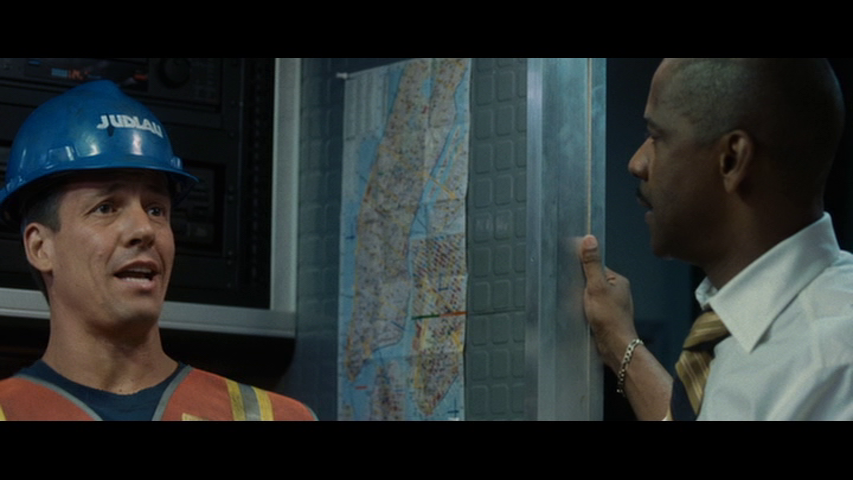
The dialogue is full of lines that might not have worked if other actors were reading them, but that I’ve been quoting regularly since 2006 because of how they sound in this film. My favorite belongs to Washington: “thank you, bank robber!” he replies when Russell tells him that if he and his girlfriend really love each other, money shouldn’t get in the way of them getting married. But the best example of what I mean might be Al Palagonia’s construction worker Kevin, who identifies the language being spoken in audio footage the cops record from inside the bank as being “100% Albanian.”
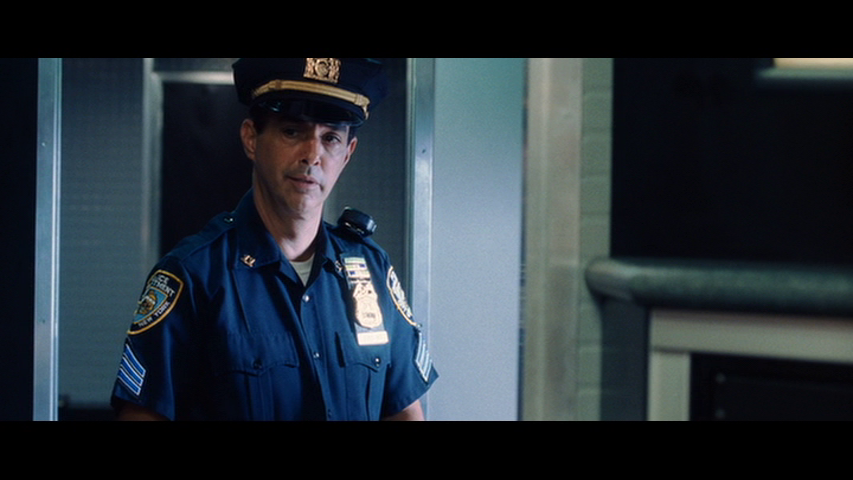
Neither really makes sense unless you’ve seen the film, but if you have they work beautifully in all manner of situations! Similarly, Inside Man features some wonderful reaction shots, including Captain Darius’s puzzled response “five bucks?” to a cryptic reference by Frazier to the “last time [he] had [his] Johnson pulled that good” and this look that Victor Colicchio’s Sergeant Collins gives everyone else in the Mobile Command Unit following a clueless comment from a not-yet-disgraced Arthur Chase, who thinks their only problem is that they can’t afford a jet:
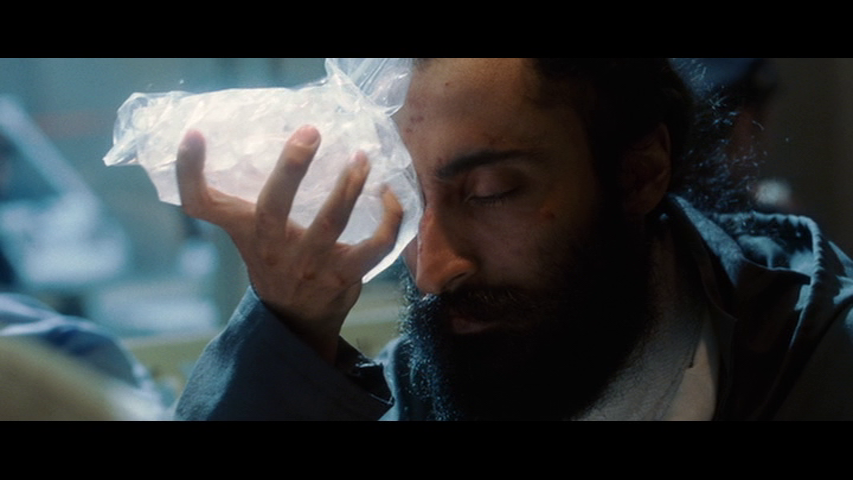
Sergeant Collins, along with his fellow police officers, is also a vehicle for Lee’s typically nuanced treatment of racial tensions, here in a specifically post-9/11 America setting. They are all clearly competent and apparently decent, but their speech is nonetheless peppered with unequivocally racist language. Additionally, Lee adds a Sikh character named Vikram Walia (Waris Ahluwalia) to the film who wasn’t originally in Gewirtz’s script. “Oh, shit! A fucking Arab!” a SWAT team member shouts when he emerges from the bank with a note asking for food for the other hostages. Darius will later say “I don’t think you heard that” to him in a conversation that begins with Walia refusing to talk to the police until they return his turban, but ends with him laughing at a Mitchell’s joke that although he can’t go through airport security with being “randomly” selected for a security check, at least he can get a cab.
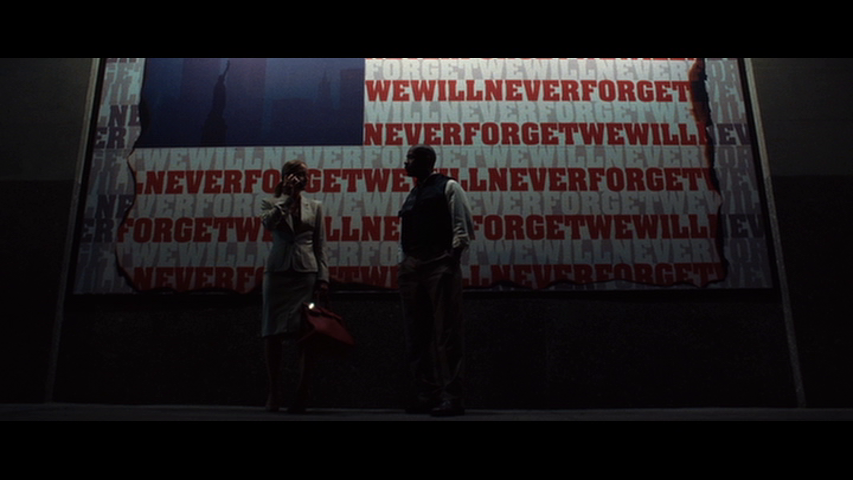
And stages a conversation between Frazier and White in front of this mural:
Lee is, I think, drawing a distinction between personal and institution racism. He doesn’t let people guilty of the former off the hook: Frazier calls Collins out for his “color commentary,” and I don’t doubt that Detective Mitchell really will help Walia file a formal complaint against the NYPD for the way they treated him. But Case walking around free is a bigger problem than any of this, and if even he must ultimately be held accountable for his misdeeds, it’s evidence that the long arc of the moral universe really does bend toward justice.
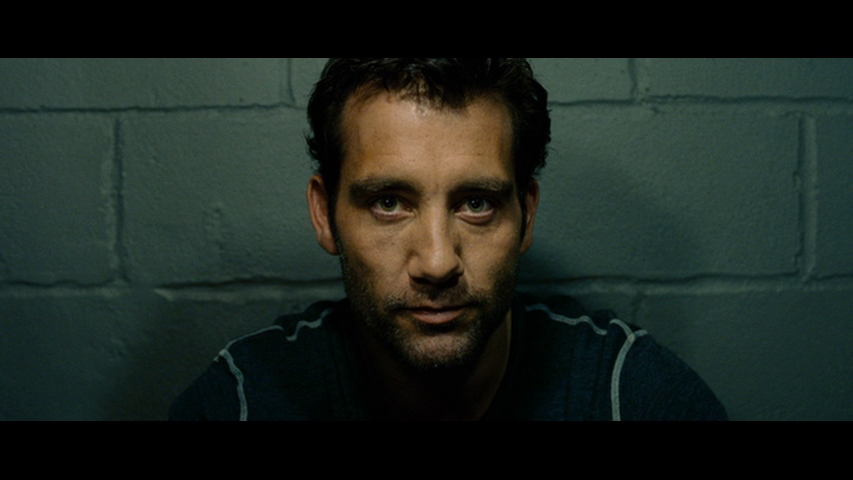
Inside Man also contains multiple examples of one of Spike Lee’s favorite techniques, whereby both the actor and camera are placed on a dolly to create the effect of a character gliding through space. In his book Rumble and Crash: Crises of Capitalism in Contemporary Film, Milo Sweedler describes the function of the first and last of the four such shots he catalogs, which depict Dalton Russell in his “prison cell,” as establishing and then confirming that “things are not what they appear to be in this movie, where appearances are perpetually deceiving”:
They also connect the character that most people who write about this film assume is the “inside man” of the title and Sweedler’s nomination, Arthur Case, who gets the double dolly treatment during a scene in which Russell describes his ruthlessly selfish actions during World War II to Madeleine White:
In his monograph Spike Lee, Todd McGowan suggests that this shot reveals that “what defines [Case] as a character–what gives him his singularity–is his act of profiteering on the Holocaust” and that “[n]othing can remove this singularity, not simply because of the horror of the act itself but because he continues to enjoy the monetary gains from it.” McGown also writes at length about the last remaining double dolly, which shows Detective Frazier moving toward the Manhattan Trust Bank following what he believes is the execution of a hostage:
Per McGowan, “Lee opts for the signature dolly shot here because Frazier’s anger separates him from his context. Though his anger is justified (unlike Case’s profiteering on the Holocaust), it nonetheless exceeds the context in which he is located. He can no longer act in the objective capacity of the negotiator but now has a passionate investment in the situation. His singularity at this moment comes to the fore.”
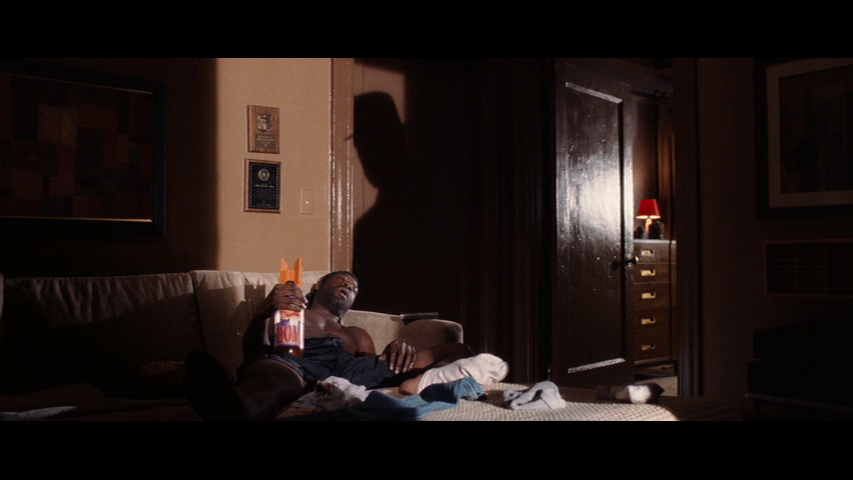
In other words, there’s much more to Inside Man than meets the eye! In this respect it’s actually quite different from the Knickerbocker, which is very much a case of what you see is what you get. But contrast is a perfectly legitimate basis for a pairing, and the main thing here is that the two together constitute a fine way to spend a warm summer evening. Like the carefully-adjusted hat that Detective Frazier wears:
Which casts a perfect Sam Spade shadow:
They’re cool. Ya dig?
Cheers!
All original photographs in this post are by Marion Penning, aka My Loving Wife.Links to all of the entries in this series can be found here.

















 The Prodigal Cinephile