What I’m Seeing This Week: I am absolutely thrilled that Cinemapolis is bringing Magellan to Ithaca tomorrow! It clocked in at ninth on my “Cannes 2025 Films That I Am Most Eager to See” list and was the highest-ranked title that I didn’t think would ever open here, so even though they only expect to have it for one week, that’s more than I expected. Best International Film Oscar nominee The Voice of Hind Rajab begins a limited engagement there tomorrow as well. As a Luc Besson loyalist, I intend to eventually see Dracula at the Regal Ithaca Mall, too, but probably not until next week.
Also in Theaters: As was the case last week, you can currently see three films likely to make my Movie Year 2025 top ten list on the big screen locally. The mix is slightly different, though: Marty Supreme remains at the Regal and No Other Choice (which repeats as my TOP recommendation) continues its run at Cinemapolis, as does Arco, which as I recently noted on Letterboxd “features one of the most surprising and convincing, and thus extremely moving, depictions of an authentic gesture of love by a robot capable of genuine emotions toward its human ward that I’ve ever encountered in a movie.” Meanwhile, 28 Years Later: The Bone Temple, which is down to one screening per day at the Regal, is my first favorite film of Movie Year 2026, and I also enjoyed Hamnet and Send Help, which both continue their respective runs at both Cinemapolis and the Regal.
Special events highlights include a bevy of free events at Cornell Cinema starting tomorrow with a screening of The Conversation, which Cornell professor Dr. Karen Levy will use as the basis for a discussion on “the social and ethical aspects of data-intensive technologies.” A four-part film series called “Exploring Ethnographic Filmmaking” then begins on Monday with a “Scientific Cinema” program featuring Four Families, Trance and Dance in Bali, and Groh Groh (Rehearsal for Rangda). Cornell professor Michell Chresfield will introduce the documentary In My Blood It Runs on Tuesday. Last but not least, a filmmaker Q&A will follow a screening of Rule Breakers on Wednesday. Finally, noteworthy repertory options include screenings of Total Recall, Letter from an Unknown Woman, and Ran at Cornell Cinema tonight, Saturday, and Sunday respectively, and Lost in Translation at the Regal on Monday.
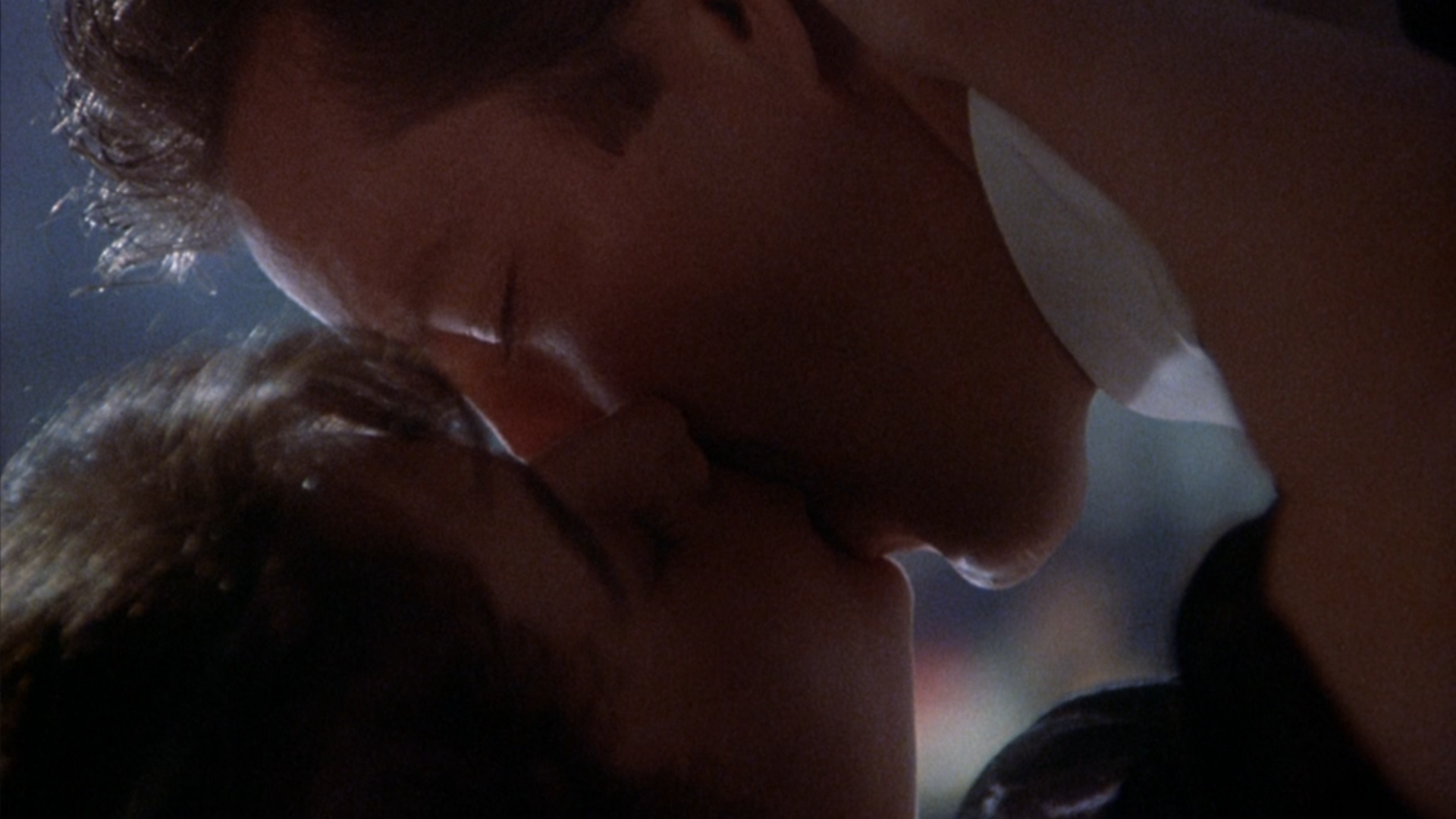
Home Video Recommendation: My Loving Wife’s last Family (née Friday) Movie Night selection was The Cutting Edge, a childhood VHS staple for both of us. Although stylistically very much a product of the early ’90s, it held up way better than I expected and the girls liked it, too, although they were both frustrated by the fact that it ends with a kiss before we learn what scores Moira Kelly’s Kate Moseley and D.B. Sweeney’s Doug Dorsey received for their climactic pairs figure skating long program at the 1992 Winter Olympics:
I don’t remember this bothering *me* when I was a kid, but there’s a lot of fuss about an empty medal case, so I get it. Except! Here’s one thing that definitely did not ever occur to me before: the Albertville Games were the last ones held before the IOC split the Winter and Summer Olympics into separate four-year cycles, so this is the exact moment in history where it’s maximally plausible that Terry O’Quinn’s overbearing father Jack Moseley would be perfectly satisfied with a high score that set his daughter up to be one of the favorites at the Lillehammer Games just two years down the road! Anyway, The Cutting Edge is easy to find on DVD and is also available for rental and purchase on a variety of streaming video platforms.
Previous “Ithaca Film Journal” posts canbe found here.A running list ofall of my “Home Video” recommendations can be found here.
On the third day, you said you felt sick I could hear the clock tick Well, the first thing you learn is that there’s always a clock ticking somewhere (The first thing you learn is that there’s always a clock ticking somewhere) And the next thing you learn is how cold it can get at night
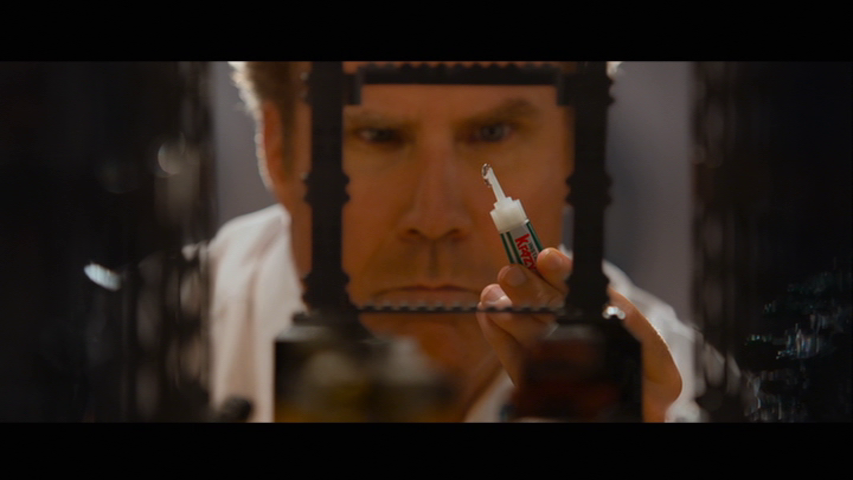
Also in Theaters: You can currently see three films likely to make my Movie Year 2025 top ten list on the big screen locally! I’ve already written about No Other Choice, which continues its run at Cinemapolis, and Marty Supreme, which is there and at the Regal. I was also impressed by The Testament of Ann Lee, a visually and sonically inventive big swing anchored by a powerful lead performance by Amanda Seyfried that succeeds in translating the appeal of the Shaker movement her title character founded into contemporary terms–just switch celibacy out for polyamory and either veganism or temperance and their Niskayuna settlement starts to look like an 18th-century precursor to hippie communes and Silicon Valley. It’s at Cinemapolis, where you have two final chances to see my first favorite film of Movie Year 2026 as well, the surprisingly contemplative follow-up to this week’s home video recommendation (see below) 28 Years Later: The Bone Temple, which is also at the Regal. Noteworthy special events include part two of the Ithaca Underground Music Video Festival at Cinemapolis tonight and free screenings of the films Wisdom of Happiness on Sunday at Cinemapolis and Soundtrack to a Coup d’Etat on Monday at Cornell Cinema. Finally, a solid week for repertory fare is highlighted by screenings of Total Recall at Cornell Cinema on Saturday, The Godfather Part II at the Regal on Saturday, and Groundhog Day at the Regal on Monday. The Lego Movie, which recently inspired me to post some musings on film criticism, is there in 3D tomorrow through Wednesday, too.
Don’t wanna be a post-zombie apocalypse quarantine British idiot. Curious to see where the Sympathy for the Infected plotline goes. Is this as close as anyone has come yet to making a movie version of A Canticle for Leibowitz?
Sentence #1 was originally intended as a jokey reference to Green Day’s “punk rock opera” American Idiot, but The Bone Temple actually does develop Jack O’Connell’s character into something very much like a evil St. Jimmy and his battle with Ralph Fiennes’ orange-skinned anti-Trump Dr. Ian Kelson for the soul of Alfie Williams’ Spike more or less follows the contours of the album’s plot. But while 28 Years Later arguably shares some of the same flaws that Robert Christgau pointed out two decades ago, “there’s no economics, no race, hardly any compassion” reads more as an inventory of facts than a critique when it’s referring to a story that begins with the end of the world. Which: this trilogy definitely *is* shaping up to be as close to an adaptation of Walter M. Miller Jr.’s classic sci fi novel A Canticle for Liebowitz, one of my favorites, that we may ever get! The first installment also features a terrific score by Young Fathers that like Fiennes’ performance should have been nominated for an Oscar and a number of unforgettably gorgeous-harrowing scenes like a race across a partially-submerged causeway under the aurora borealis. It is now streaming on Netflix and is also available on both Blu-ray and DVD from Sony Pictures Home Entertainment.
Previous “Ithaca Film Journal” posts canbe found here.A running list ofall of my “Home Video” recommendations can be found here.
The Lego Movie obviously exists to sell Legos, specifically sets based on high-value licensed IP like Batman and Lord of the Rings. This may not be such a noble goal, but as a parent I appreciate the pitch it uses. If my kids want to play with Gandalf but don’t have a Gandalf toy, they’ll make one out of whatever materials at hand, even if it takes all day. Which is awesome! But they’ll happily level up if you *give* them a Gandalf toy and spend that same amount of time creating a balrog or Saruman to fight him or turning their bedroom into a replica of the Shire. You might believe one of these two forms of creativity is superior to the other, but *I* don’t and I agree that one of the cool things about a Lego set is that it accommodates both: you can build what’s pictured on the box, or you can turn the minifigures that come with it loose in an entirely different world.
Most films come with the equivalents of box art and instructions and it’s silly to pretend otherwise. Cast and director interviews, posters, press notes, and previews all tell us how we’re meant to read the work, as do aspects of the text itself like dialogue, production design, and shot selection. To say that a movie appears or (even worse) claims to be doing one thing but is in fact doing another is to shoulder the burden of proof. If you don’t show your work, you can’t expect people to take you seriously. But in the same way that you can always take a set of Legos and makesomething else with it, so too do viewers reserve the right to do what they please with whatever they watch. It isn’t CRITICISM, though, unless you account for all the pieces supplied by the film, its context, and its creators.
So: yes to this horror movie is more entertaining if you think of it as a comedy–as long as you explain why and ideally what it means! This is the same as arguing that you can make what’s on the box if you want, but what’s on the box is super lame and you can use the pieces that come in it to make this other really cool thing instead. Absolutely yes to spackling a crack in narrative logic. And potentially yes as well to suggesting that Happy Gilmore 2 is a Rosetta Stone for understanding the mindset of American conservatives even if you disagree with the politics of the piece and its writer, provided it has explanatory value. But no, no, no to both stridently insisting on a One True Interpretation and completely ignoring the intent of the authors, even if we don’t need to treat their word as gospel. Criticism isn’t about either following a manual or just pretending you got what you really wanted for Christmas: it’s about putting whatever actually was under the tree through its paces and maybe pushing the envelope a bit.
Previous posts about film criticism canbe found here.
What I’m Seeing This Week:Cornell Cinema is starting off their spring lineup with a bang and I’m exited to see the new 35mm print of 8½ that they’re screening on Friday and Sunday! I’m planning to catch The Testament of Ann Lee at Cinemapolis as well. Finally, while I’m also eager to see Orwell: 2+2=5, which plays Cornell Cinema on Saturday, I’m going to wait until it returns next Thursday.
Also in Theaters: With the unveiling of this year’s Oscar nominees later this morning, four contenders for my Movie Year 2025 list are now playing Ithaca: No Other Choice continues its run at Cinemapolis, One Battle After Another and Sinners have returned to the Regal Ithaca Mall, and Marty Supreme is at both. You can’t go wrong with any of them, but my *top* recommendation is No Other Choice, one of the most thoughtful and darkly hilarious takes on the A.I. revolution we’re living through I’ve seen to date. Meanwhile, Movie Year 2026 is off to a good start with 28 Years Later: The Bone Temple, part two of a mashup-up between Green Day’s album American Idiot and Walter M. Miller Jr.’s novel A Canticle for Liebowitz that I’m beginning to think MIGHT just be a pop culture near-masterpiece–ask me again after I’ve gotten a chance to rewatch the first 28 Years Later film! I also enjoyed Father Mother Sister Brother, which continues its run at Cinemapolis; ’70s throwback Dead Man’s Wire, which you can see at the Regal; and Hamnet, which is at both. I should probably also mention that It Was Just an Accident is playing Cornell Cinema tonight because I seem to be an outlier in not thinking it is one of the best movies of the year (even though I do agree that it’s an important work and that its very existence represents a monumental achievement considering the circumstances under which it was made and current events). This week’s special events highlight is the return of the Ithaca Underground Music Video Festival to Cinemapolis on Wednesday. Finally, noteworthy repertory options include the etymologically essential Gaslight at Cornell Cinema this evening, The Matrix at the Regal on Sunday, and the “final cut” version of Blade Runner there on Wednesday.
Beautifully observed dispatch from the amorphous, arbitrary borderlands between disreputable and respected in Jewish New York City at the turn of the 1970s with a central message as relevant today as it was fifty-five years ago: don’t keep your boudoir photos in a ground-level drawer in the living room if you have kids!
Previous “Ithaca Film Journal” posts canbe found here.A running list ofall of my “Home Video” recommendations can be found here.
Also in Theaters:Marty Supreme, which continues its runs at Cinemapolis and the Regal, remains the best new movie now playing Ithaca that I’ve already seen. I also enjoyed Father Mother Sister Brother, a perfect date movie for couples just starting to get serious, and Hamnet, a perfect date movie for couples with children, both of which are at Cinemapolis. This week’s special events highlight is the free screening of What’s Up, Doc? at Cinemapolis on Sunday. Finally, other noteworthy repertory options include screenings of Brick, Reservoir Dogs, and Lady Bird at the Regal today, tomorrow, and Wednesday respectively. You can also see Lord of the Rings: The Fellowship of the Ring, The Two Towers, and The Return of the King there on Friday, Saturday, and Sunday respectively.
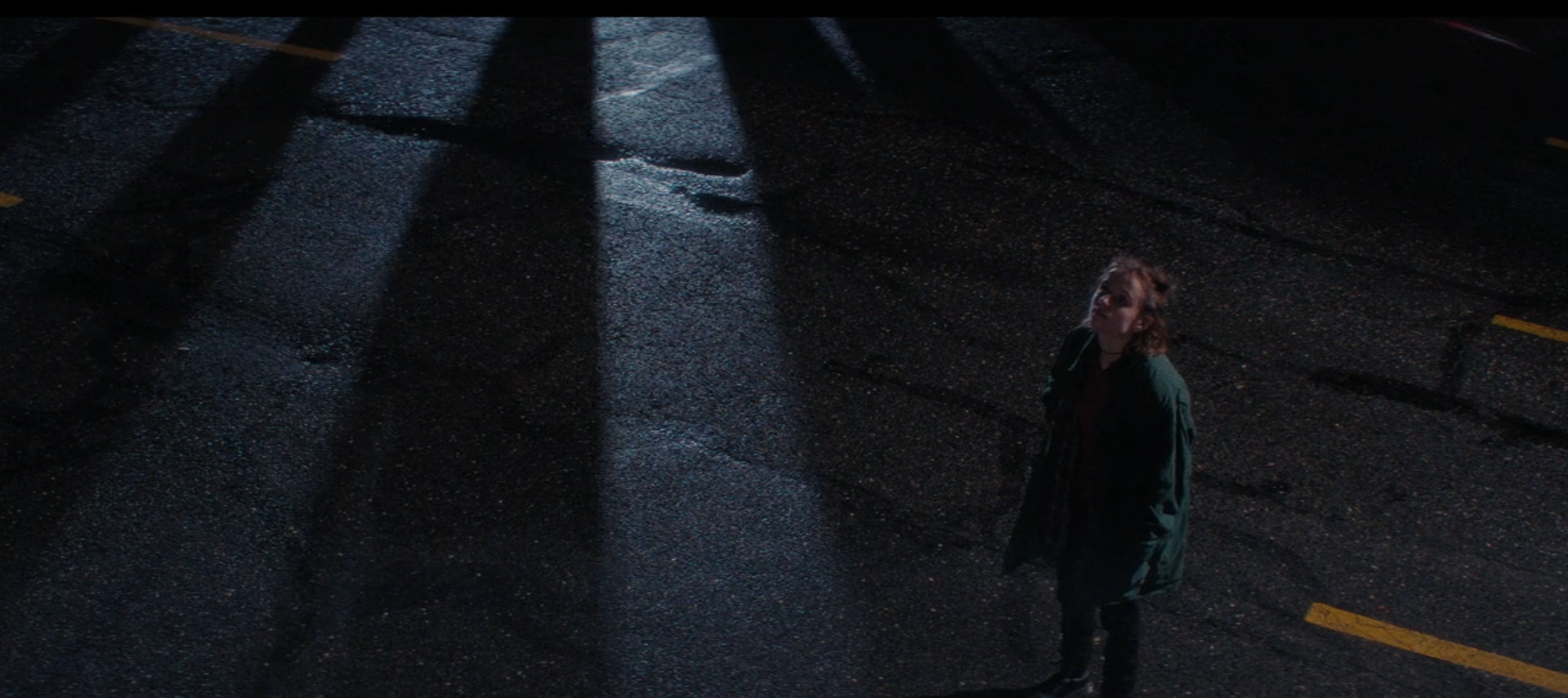
Home Video Recommendation: As I mentioned in this space last week while recommending The Baltimorons, Movie Year 2025 came complete with not one, but two new additions to my holiday rotation. The other is Christmas Eve in Miller’s Point, which landed on a number of 2024 top ten lists, but never played theatrically in Ithaca and didn’t debut on a streaming service I subscribe to until after Oscar night, and therefore retains “rookie eligibility” in my book. It features absolutely stunning camera work by Eephus director Carson Lund, a non-seasonal soundtrack that pairs oldies music evocative of the idea of nostalgia paired with ghosts of Christmas past (red and green M&Ms! The same tree topper my grandmother had!) that I’m nostalgic for, and my favorite cut of the year, from this shot of Matilda Fleming’s Emily looking up at the suburban night sky:
To this one of her mother (Maria Dizzia) looking down on a winter “scene” like the one we put up every December:
Also in Theaters:Resurrection is my favorite new movie playing Ithaca that I’ve already seen RIGHT NOW, but it unfortunately only has one show left at Cinemapolis today at 3pm. Marty Supreme, which continues its run there and at the Regal, is also a strong contender for my Movie Year 2025 top ten list, so at that time it will inherit the title. I enjoyed Hamnet, which soldiers on at Cinemapolis, too. There once again do not appear to be any special events worth noting, but repertory highlights include Labyrinth, which has 40th anniversary screenings at the Regal tonight through Sunday, as well as The Wizard of Oz and Indiana Jones and the Temple of Doom, which play there Monday and Wednesday respectively.
Home Video Recommendation: Speaking of my top ten list, The Baltimorons, which is now streaming on Sundance Now, has basically locked up a spot on it. You may need to have lived in its namesake city to pick up *everything* it’s laying down (although then you’re also liable to be annoyed by some of the driving routes the main characters take like My Loving Wife was) but the wounded chemistry and perfect comedy timing of leads Michael Strassner (who is also credited as a screenwriter) and Liz Larsen has universal appeal. It also features excellent original music by Jordan Seigel that riffs on the Vince Guaraldi Trio’s beloved score for A Charlie Brown Christmas and other seasonal classics. After a first viewing The Baltimorons struck me as reminiscent of last year’s The Holdovers, with the main difference being, as I suggested on Letterboxd, “that here the heart is comedy with accents of pathos instead of vice versa.” While I felt much less of an affinity between the two films the second time around, they’re both welcome new additions to my holiday rotation. As is next week’s recommendation, actually, which: cliffhanger!
Previous “Ithaca Film Journal” posts canbe found here.A running list ofall of my “Home Video” recommendations can be found here.
Like always I’m going to wait until Oscar night to post my Movie Year 2025 “top ten” (it usually actually includes 11-15 titles) list to give critically-acclaimed films like Father Mother Sister Brother and No Other Choice time to make it to Ithaca before I make my selections, but as has also become traditional, I’m happy to share my 2025: The Mixtape, Vol. 2 Spotify playlist in the meantime! Just as Vol. 1 highlights the music I listed to the most between January-June, these are the songs that sustained me throughout the past six months:
1. Lia Ouyang Rusli – Happyend Theme (Opening)
Rusli has acknowledged that the late Ryuichi Sakamoto, whose “andata” led off my 2017: The Mixtape, Vol. 1 playlist, was an influence on her terrific score for Happyend, and when I discovered that its theme was split into “Opening” and “Closing” tracks, I knew I had my bookends!
2. Bruiser Wolf feat. Harry Fraud – Heart Broke
The wordplay isn’t exactly kid-friendly, but references to crème brûlée, Chevrolet, and Lamar Jackson make this track something of a family inside joke.
3. Amanda Shires – Maybe I
The first time she heard this, my youngest (who is more of a hard rock kind of gal) told me to turn it off . . . until Amanda Shires started singing, which caused her to immediately change her mind.
4. The Mountain Goats – Cold at Night
There truly is “always a clock ticking somewhere.”
5. David Byrne w/ Ghost Train Orchestra – My Apartment Is My Friend
An anthem for all us homebodies.
6. U.S. Girls – The Clearing
The first track added to this mix and still one of the best!
If you don’t have kids the correct age in your life, I doubt you realize just how much of a phenomenon KPop Demon Hunters was with the elementary school set.
9. Doja Cat – AAAH MEN!
I was born in 1981, so yeah: that sample works on me!
10. Jonny Greenwood – Perfidia Beverly Hills
The best track from maybe my favorite movie score of the year.
11. Tyler Childers – Bitin’ List
As I tweeted in July, this song “is *begging* to be used in a movie, maybe over an opening credits montage depicting our hero driving around with their arm hanging out the open window of a pickup truck?”
12. Lola Kirke, Peter Dreimanis, Brian Dunphy, Darren Holden and Jack O’Connell – Will Ye Go, Lassie Go?
It seems perverse to choose a non-blues song from the Sinners soundtrack, but this is a stunning rendition of a classic.
The latest from a charter member of my mixtape hall of fame.
23. Lia Ouyang Rusli – Happyend Theme (Closing)
See above.
* * *
In August I was moved to compose my first “All-Time Top Ten Favorite Movies” list in more than a decade when I suddenly realized picking one film per decade for the 1910s-2010s minus the 80s gave me something that looked more or less correct. I guess whatever neurons are involved in such an exercise just needed a wake-up call, because they were firing again less than a week later when I found myself wondering if I should switch Stalker out for The Act of Seeing with One’s Own Eyes. Believe it or not people actually do ask me for these titles, including as recently as just a week ago, so I’ve decided to update it annually as part of this post. Which as you will see below has re-liberated me from the overly proscriptive model trap, so: hurrah! In alphabetical order:
The Act of Seeing with One’s Own Eyes (dir. Stan Brakhage; 1971)
First runner-up this time around was probably The Long Day Closes, but obviously the films I had to leave off to make room for the two newcomers were close too, as were All That Heaven Allows, Citizen Kane, The Searchers, and Kiki’s Delivery Service. I’m looking forward to seeing how this list continues to evolve now that I’m revisiting it on the regular!
* * *
As I said at the conclusion of my final “Drink & a Movie” post, I’m going alcohol-free for the duration of 2026, which makes further resolutions seem a bit superfluous. I do have a couple of goals for this blog, though, that I mention there as well. One is to edit that series into a self-published book. Another is to “keep up my pace of one illustrated longform post about movies per month on average.” The key word here for me is actually “illustrated,” not “longform,” since what I’m specifically hoping to preserve is being greeted with lots of screengrabs from my favorite films whenever I scroll through the landing page, but it will likely amount to about the same thing. I’m also going to try to be less of a MOVIE snob and watch a few TV series with My Loving Wife. Last but not least I intend to make a point of being less stingy with likes and comments to let everyone I enjoy reading know I appreciate them. So that’s what I’ve got going on. Thanks for stopping by, and Happy New Year!
Links to previous mixes I’ve posted about can be found here. Previous top ten lists can be found here.
Also in Theaters:The Secret Agent and Hamnet, which continue their respective runs at Cinemapolis, obviously remain my top new movie recommendations. In addition to the titles listed above, I’m also still hoping to catch The Housemaid before it closes at the Regal. It’s another quiet week on the special events front, but noteworthy repertory options include John Wick at the Regal today, Ghostbusters there on Monday, and Mission: Impossible there on Tuesday.
Home Video Recommendation: New Year’s Day is a time for resolutions, but not everyone is actually going to change. The Conformist, which current Cornell faculty, staff, and students can view on Kanopy courtesy a license paid for by the library and which is available for rental on a variety of other platforms, is perhaps therefore not as incongruous a title to mention here as it may first seem. Here’s what I recently said about it on Letterboxd:
All surfaces, often literally–the camera will suddenly rack focus in the middle of a conversation between the occupants of a car to make sure we don’t miss its idle windshield wipers–and noteworthy less for any grand statement you want to read into it than the poetry of its constituent parts, such as a servant sneaking bites of spaghetti out of the bowl she just served her employers from, a low-angle tracking shot toward a car through giant fallen leaves blown by wind nowhere to be found earlier in the scene, and a blue sky baby room wall that says “yes, and . . . ” to the acres of marble which preceded it.
Previous “Ithaca Film Journal” posts canbe found here.A running list ofall of my “Home Video” recommendations can be found here.
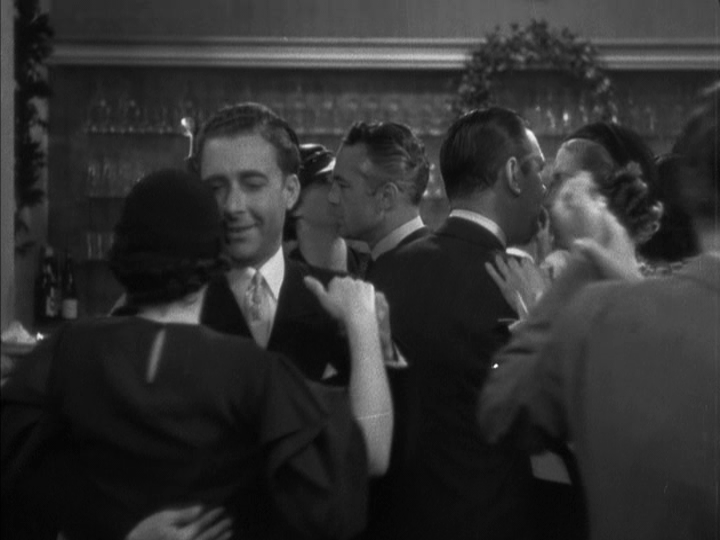
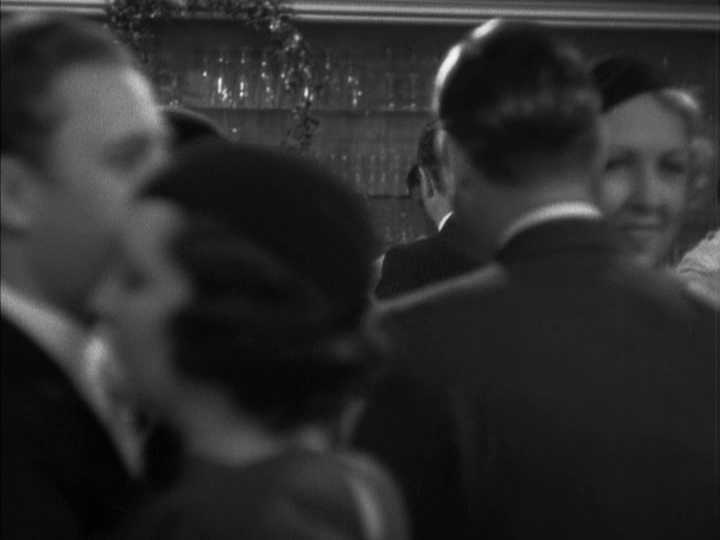
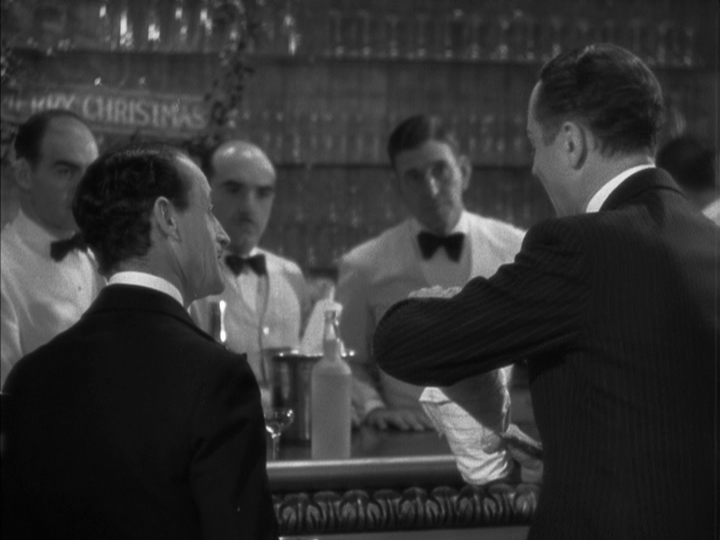
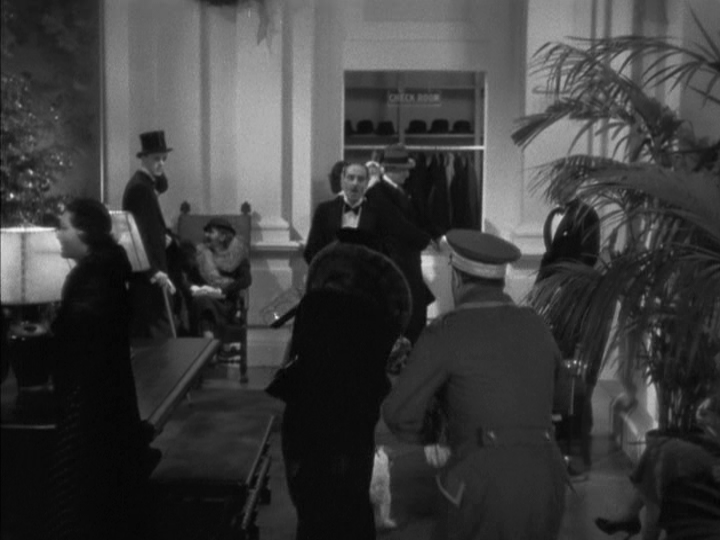
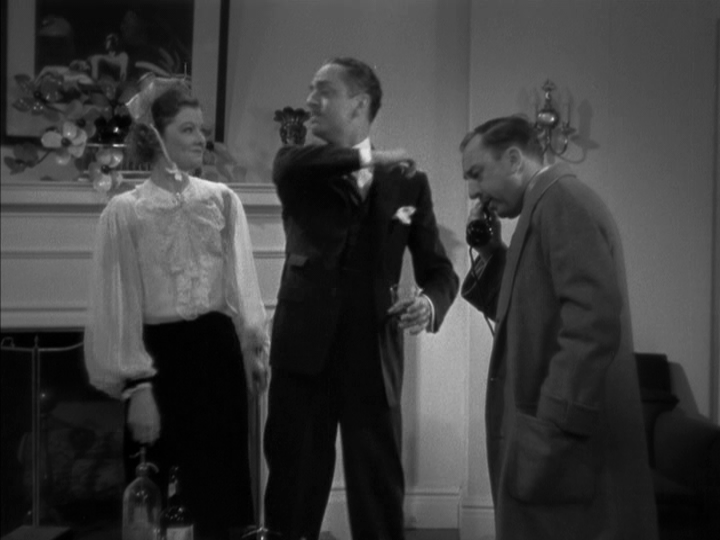
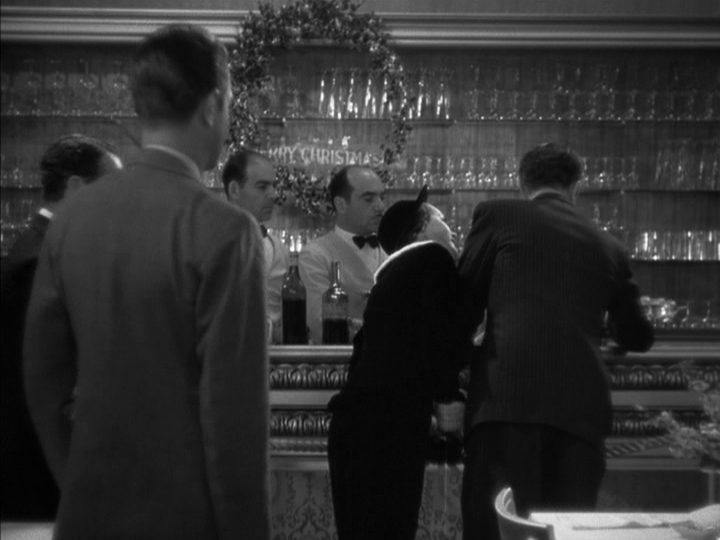
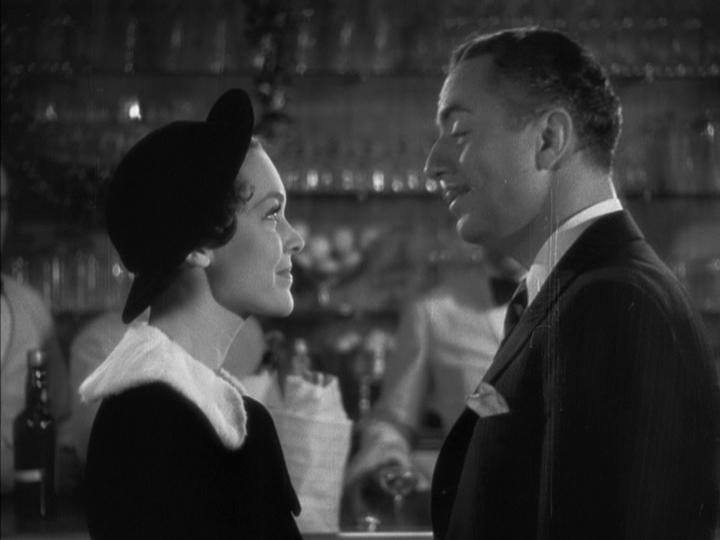
I started this series four years ago as a way to get back into the habit of regular writing. It proved to be so effective that by July I had made up my mind to keep it going through 2025 and supplement it with enough “bonus” posts to give me the equivalent of a year-long weekly film series. Eventually it occurred to me that if I added one more, I could edit everything into a self-published book complete with an introduction, and when I created a two-column landing page a 54th became inevitable. But now after 95,940 words and 1,746 screengrabs, we have finally reached the finish line! We end as we must with the most canonical drink I haven’t yet written about, the Martini. I’m pairing it with The Thin Man and the screen couple who may well be responsible for James Bond’s outdated impression that it’s supposed to be shaken instead of stirred, Nick (William Powell) and Nora (Myrna Loy) Charles. After all, that’s how Nick is preparing one when we first meet him at the end of a 50-second-long tracking shot that makes its way through a crowded dance floor before coming to rest on our hero:
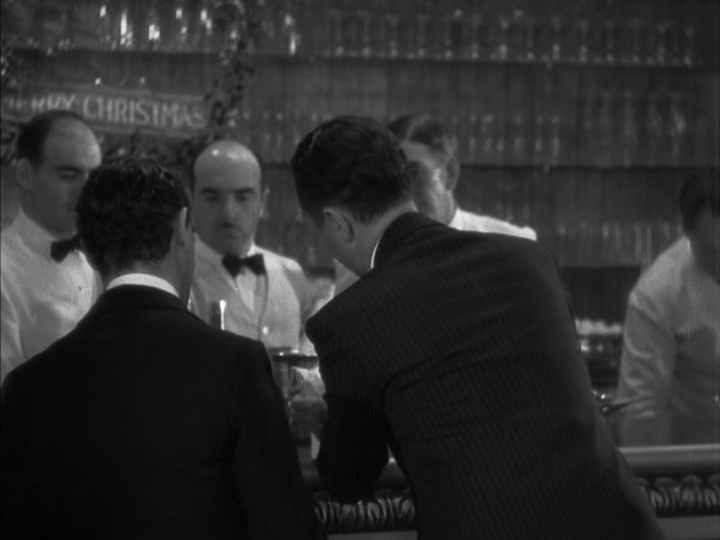
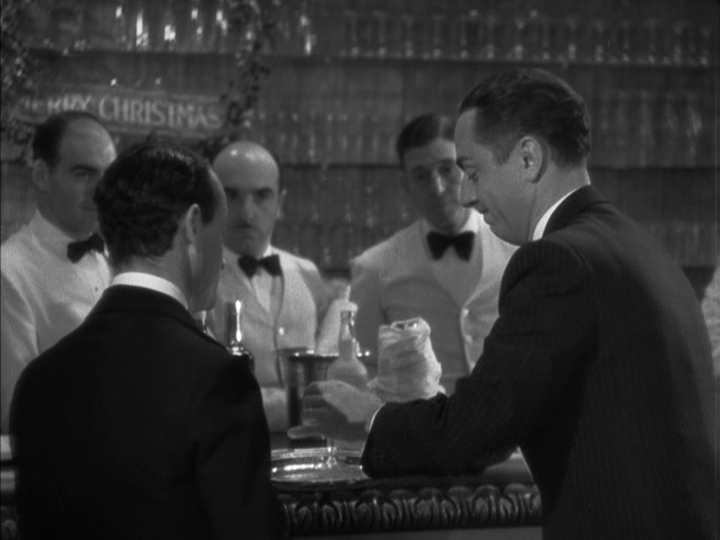
“You should always have rhythm in your shaking,” he tells the bartenders who watch him, rapt. “Now, a Manhattan you shake to foxtrot time.” He begins to strain the concoction into a glass:
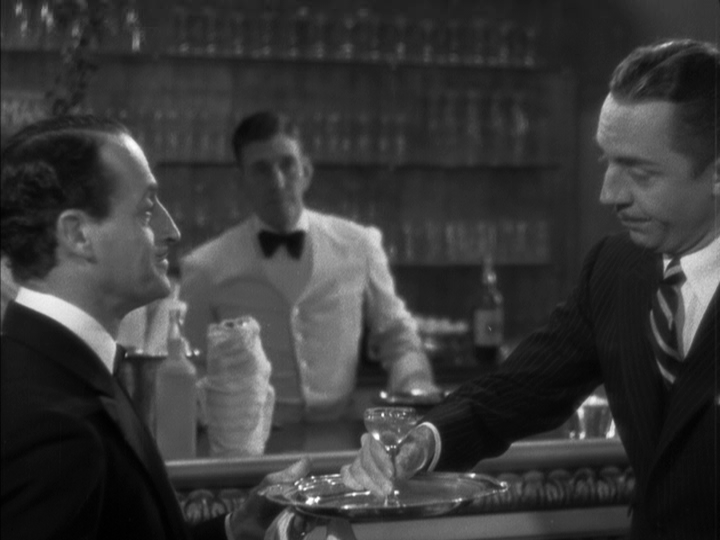
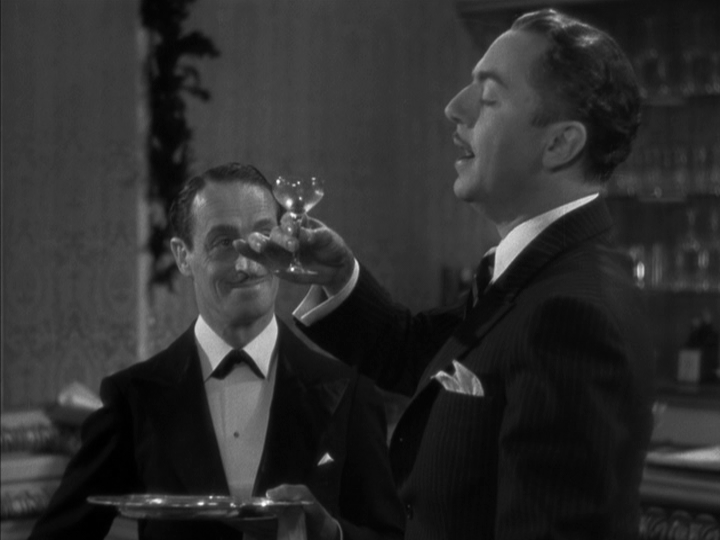
“A Bronx to two-step time,” he continues, placing the drink on a tray:
“The dry Martini you always shake to waltz time,” he concludes. Which: this *would* guarantee that the shaking is done gently, limiting aeration and dilution to acceptable levels, and I don’t think a barspoon is capable of anywhere near the same degree of bespoke sophistication, so maybe the technique is overdue for a revival! The Martini proportions in The PDT Cocktail Book are perfect as far as I’m concerned, but in a nod to the Christmas season (which is when The Thin Man takes place) we’ve been making ours with a dash of an extra ingredient and a festive garnish. Here’s how:
Stir all ingredients with ice and strain into a chilled Nick & Nora (of course!) glass. Garnish with three fermented Christmas cranberries on a cocktail pick.
Élixir Végétal de la Grande-Chartreuse is the original product that its more famous descendants green and yellow Chartreuse are based on and a little goes a very long way. Here it contributes distinctive herbal notes to the nose and sip and, just as important for our purposes, a pale but pronounced green color that contrasts beautifully with the brick red garnish. The cranberries, in turn, provide just the slightest bit of effervescence, which accentuate the citrus notes of the Plymouth, but fear not: everyone we’ve served this to agrees that the little surprises we’ve added know their place and that our version has the classic finish of the one Nick proceeds to serve himself:
And savor:
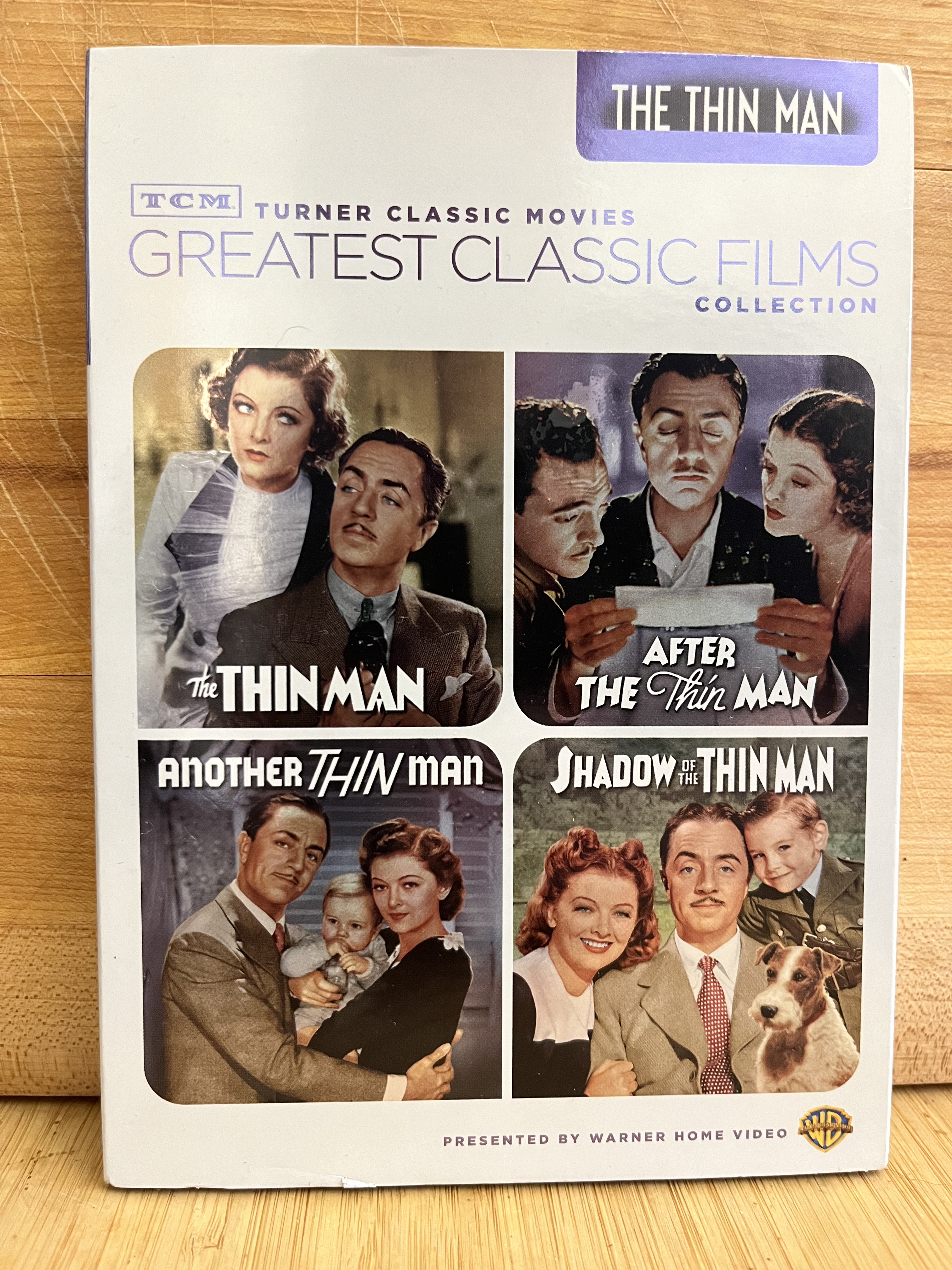
The images in this post all come from my TCM Greatest Classic Films Collection box set which includes the first three Thin Man sequels, too:
The original can also be streamed on Tubi for free if you don’t mind commercial breaks or rented and purchased from a variety of platforms if you do.
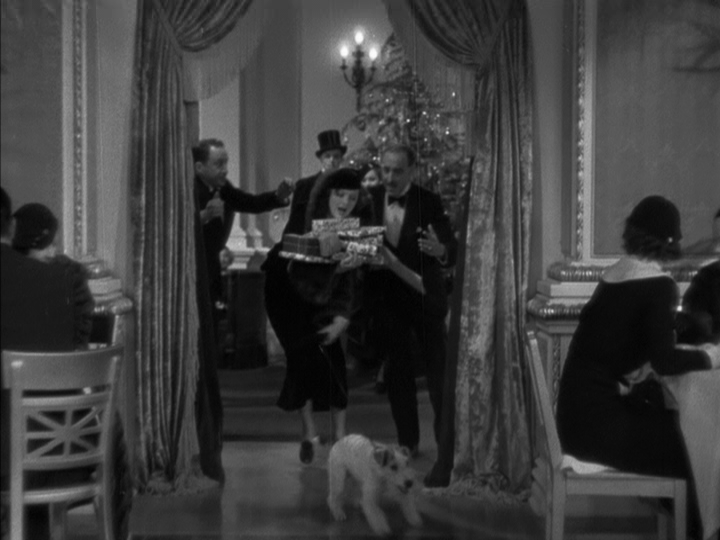
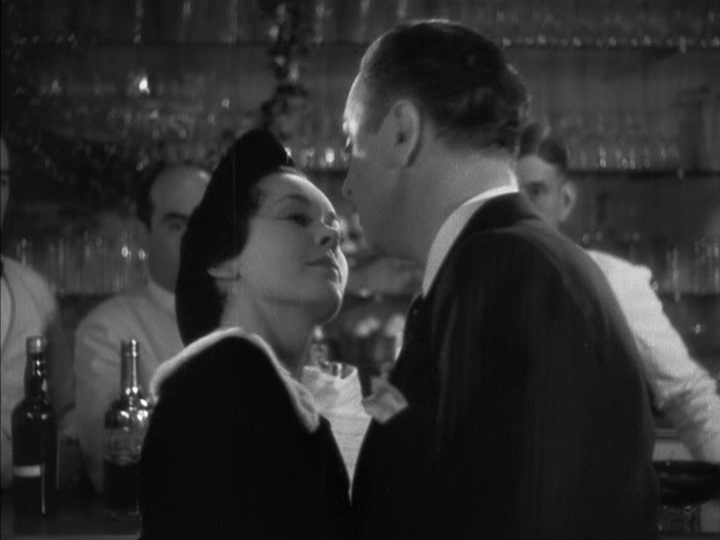
Martha Nochimson argues in her book Screen Couple Chemistry: The Power of 2that The Thin Man “is not structured by Hollywood’s familiar gender formula: woman/body–man/mind.” She submits as evidence the fact that both Nick and Nora first appear from behind, him in the mixing ritual depicted above which “requires an atypical male absorption in his body,” while her entrance behind their dog Asta “uses the cliche of female closeness to animality and body to make a joke of Hollywood’s traditional images of female glamour”:
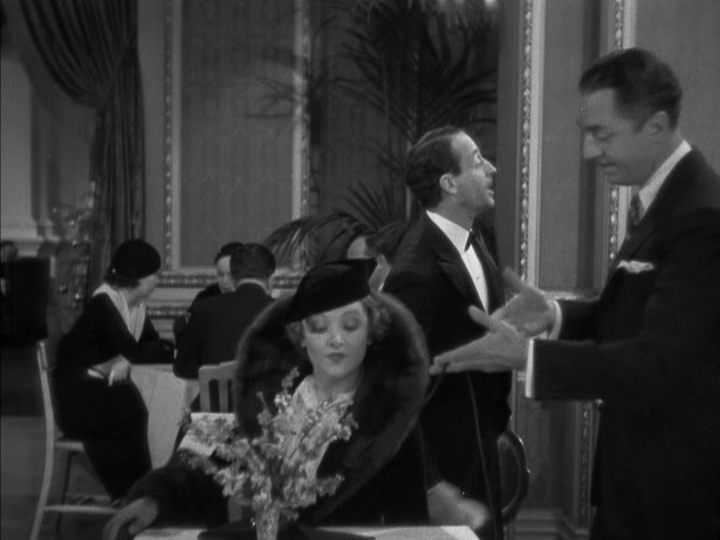
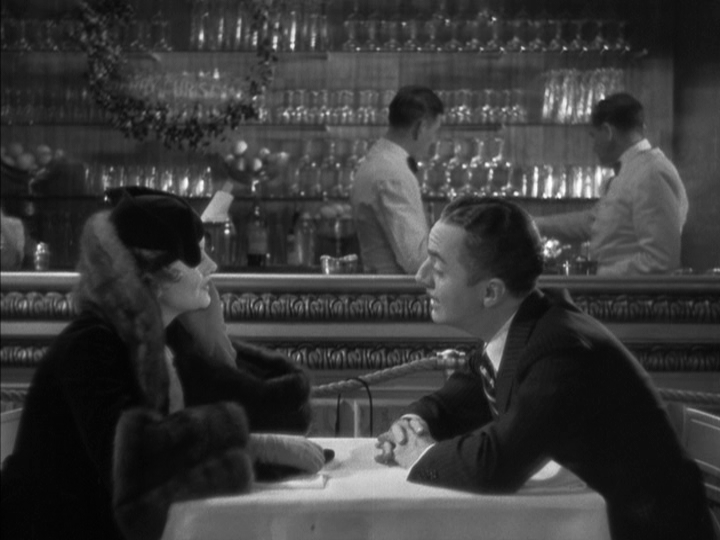
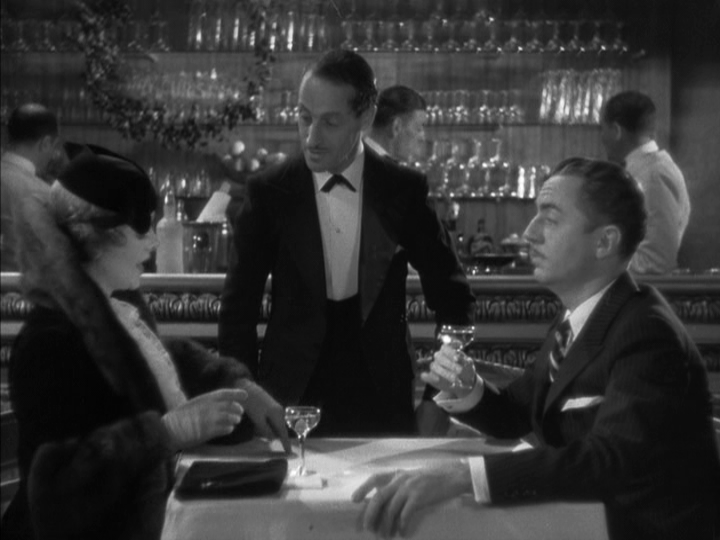
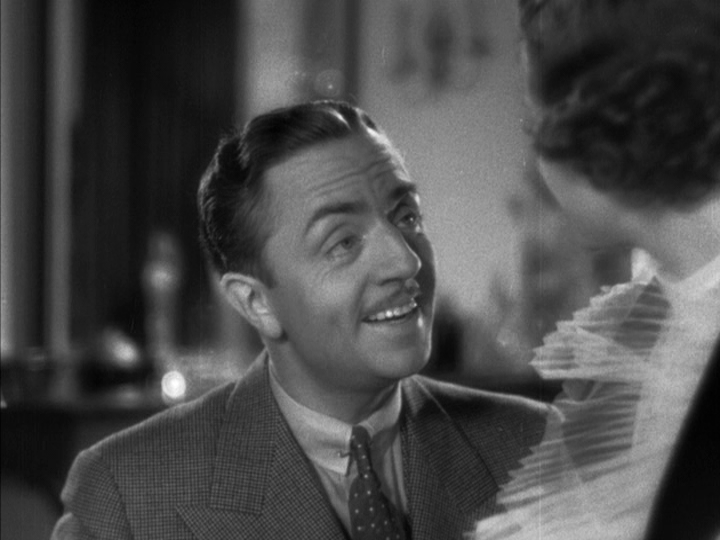
As Rob Kozlowski describes it in his book Becoming Nick and Nora, their first conversation “takes place over the course of a single, forty-seven-second shot” that has nothing to do with the murder mystery that the film is ostensibly about “but everything to do with showing us this marvelous relationship.” It is preceded by Nick, who is visibly but amiably tipsy throughout this scene and much of the movie, forgetting the word “cocktail” but still managing to make himself understood to a waiter as he invites Nora to sit down and join him in one:
The long take which follows is, per Kozlowski, “very economical,” but also “absolutely the correct approach from a narrative standpoint”:
Because:
By holding both Nick and Nora in the frame, we’re able to see them both speaking, and both listening, at the same time. Nora, adorned in a fur coat with her chin resting in her hand, perpetually amused by the sight of her besotted and blotto husband, has her focus entirely on him. Nick, with his arms resting on the table, his hands inches away from hers, has his focus entirely on her.”
The scene ends with Nora asking Nick how many he has had. “Six martinis,” he replies. Her response is to immediately order five more to catch up, which to Kozlowski captures the essence of what makes theirs “the friendliest, most fun marriage ever captured on screen.”
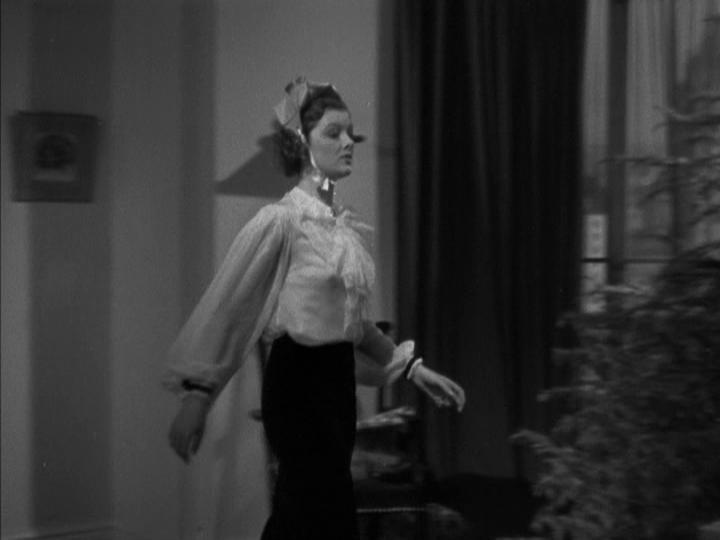
“They’re almost always playing,” he explains, “and they’re equals on top of it all.” Nochimson agrees with him about this sequence, which she calls paradoxically “both archly witty and genuinely earthy,” but also notes that while “time has veiled Nick and Nora in sentimental nostalgia,” upon closer inspection “their abrasive qualities burst off the screen.” In a not-quite-but-almost-acknowledgement of the darker side of drinking, the latter wakes up the following morning with a hangover (instead of alcohol poisoning, which might be more realistic), but rather than make her more relatable, the ice bag she wears like an elegant hat only serves to reinforce Nochimson’s description of her as “tall, slim, condescending, and always appareled in stunning, regal, intricately designed and infuriating (for those in the audience who will never be able to afford such things) ‘outfits'” who “stands with that ramrod carriage that summons images of young girls schooled relentlessly in balancing books on their heads”:
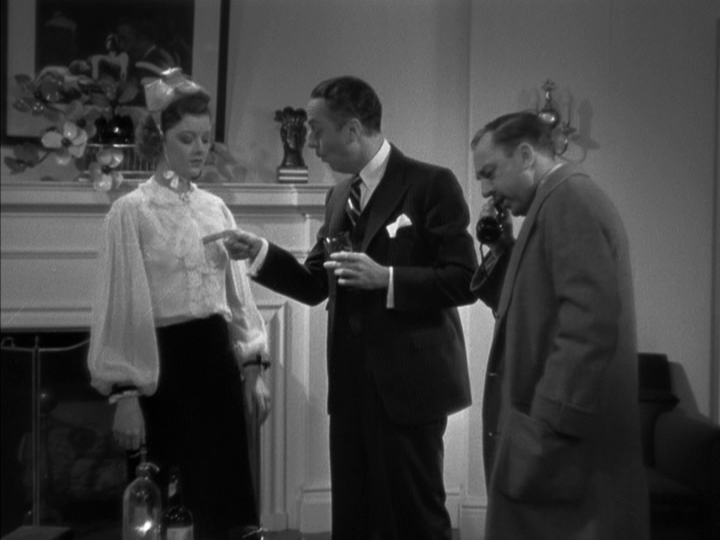
Meanwhile Nick, whose speech is already beginning to slur from what appears to be a breakfast of Scotch and soda, does indeed have “the loose-jointed bearing of a man just about to fall into a heap” as he first flicks her nose:
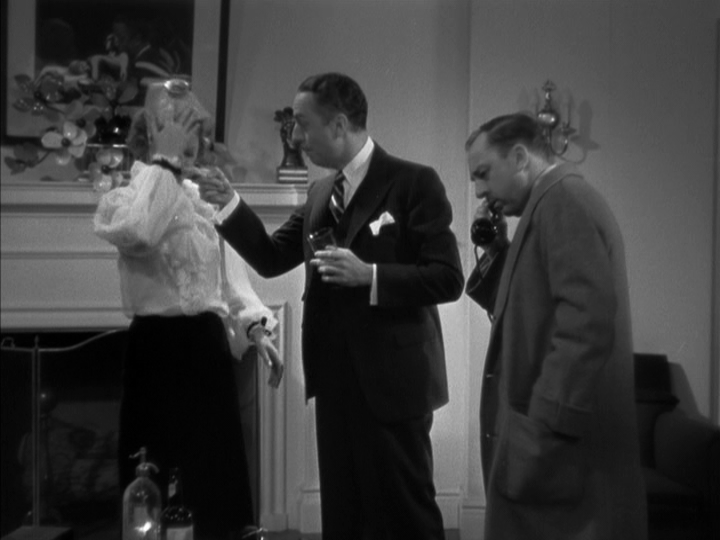
Then pantomimes smacking her in retribution for a well-deserved slap on the back of the head:
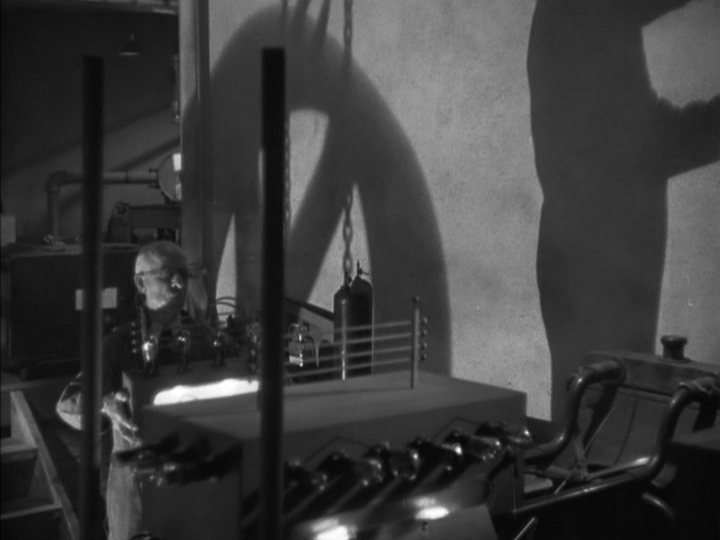
The man on the phone in the foreground is Herbert MacCaulay (Porter Hall), lawyer to inventor Clyde Wynant (Edward Ellis), who we see here working in his laboratory:
And the mixology lesson we started this post with was interrupted by Wynant’s daughter Dorothy (Maureen O’Sullivan), who remembers Nick, a former private detective, from a case he worked on for her father in her youth:
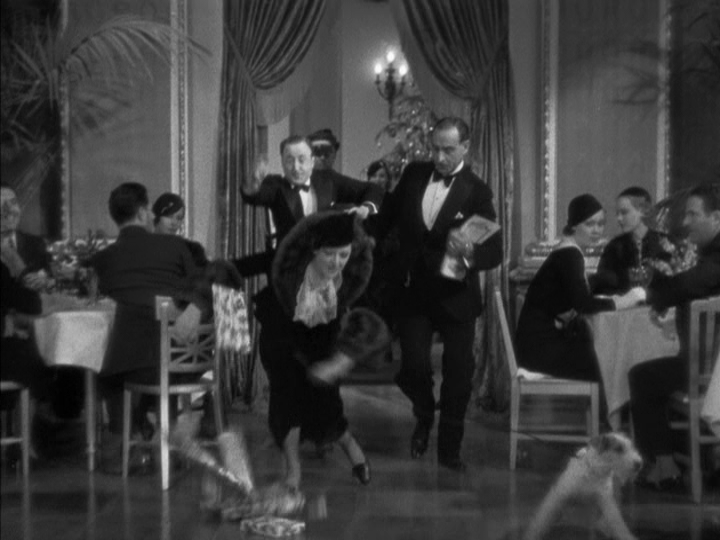
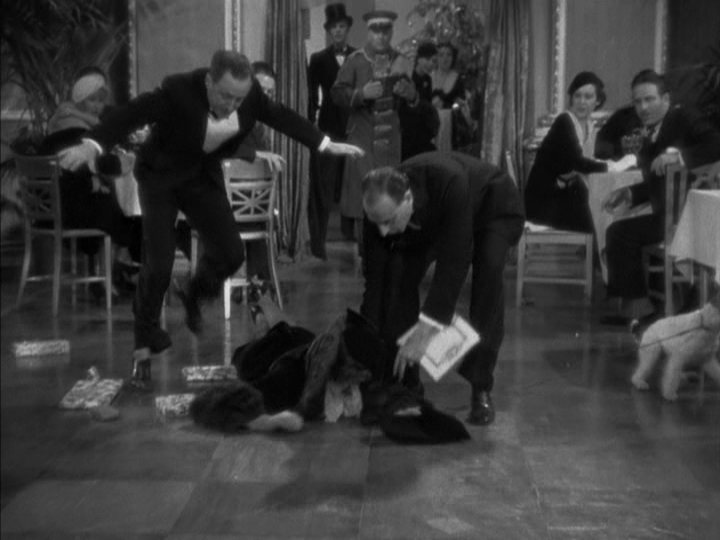
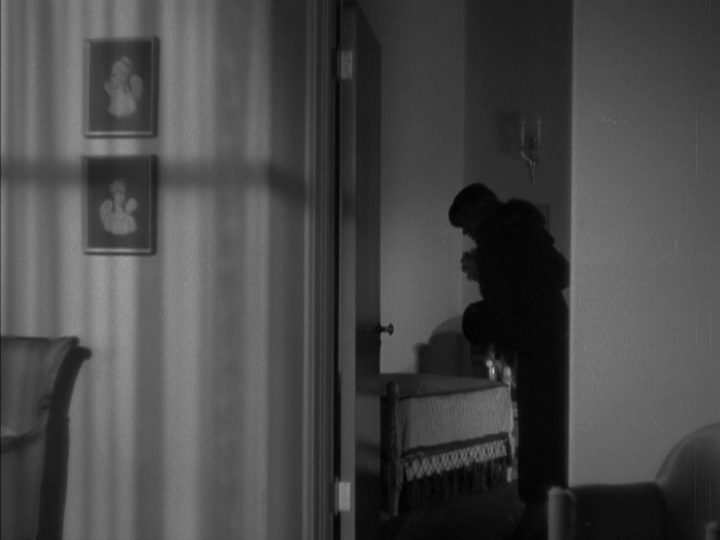
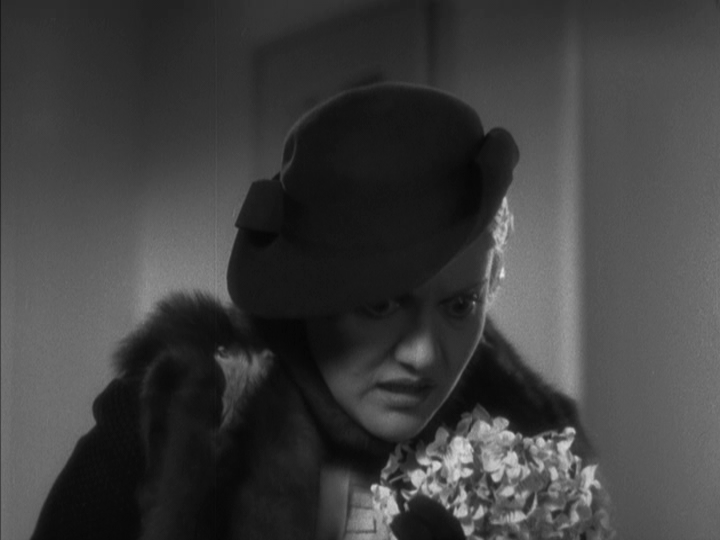
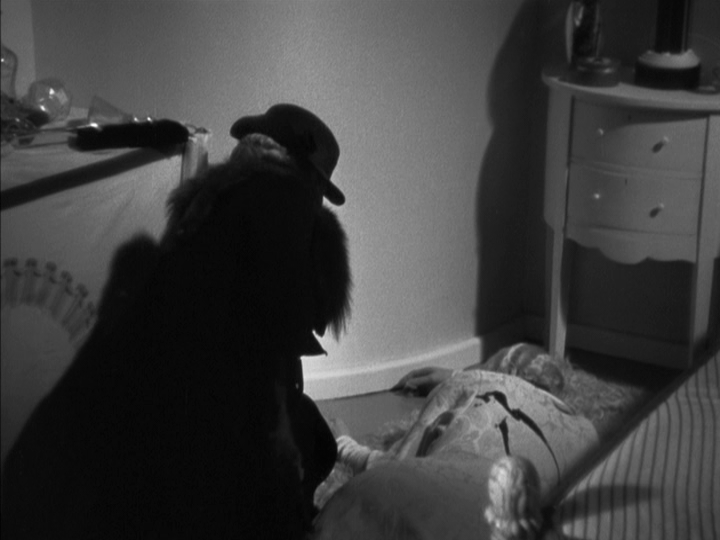
You see, Clyde has disappeared. Or maybe he hasn’t: the phone call MacCaulay takes informs him that Wynant is back in town and wants to meet. Except that Wynant doesn’t show, and in the meantime his secretary-cum-mistress Julia Wolf (Natalie Moorhead) turns up dead. Coincidentally, she had just agreed to meet Wynant’s ex-wife Mimi Jorgenson (Minna Gombell), Dorothy’s mother, who upon discovering the body first screams:
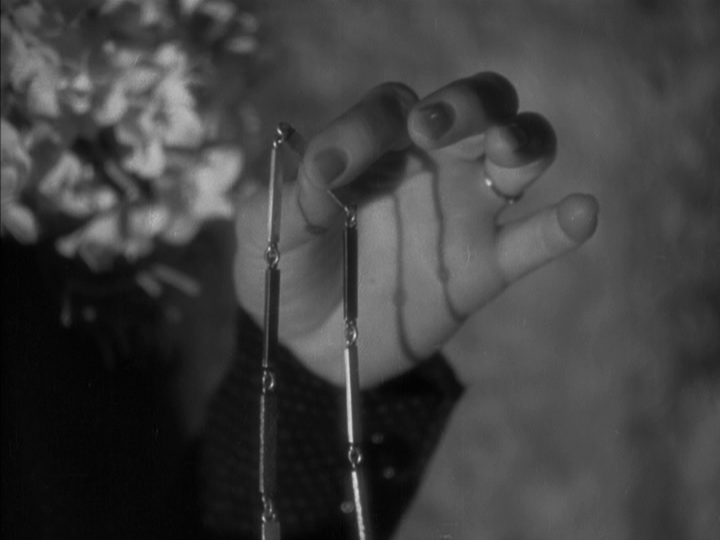
But then makes a face and leans forward to remove something from the crime scene:
Upon revealing to Dorothy, who suspects her mother of robbing Wolf, that what she took was a metal chain known to belong to Wynant:
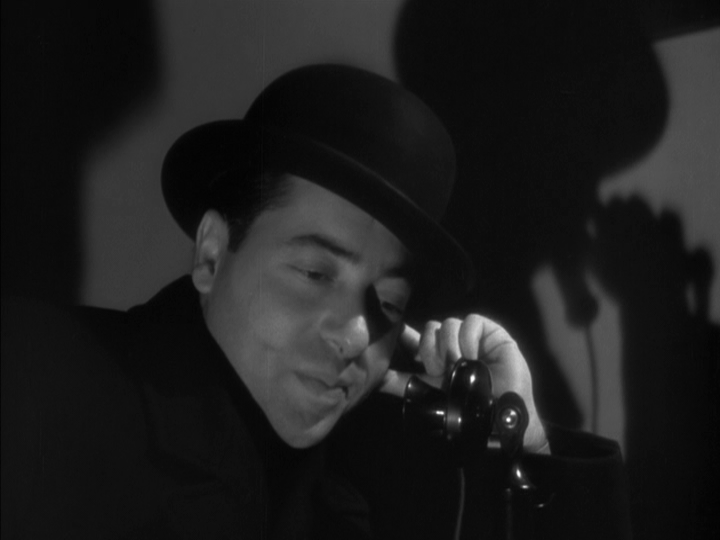
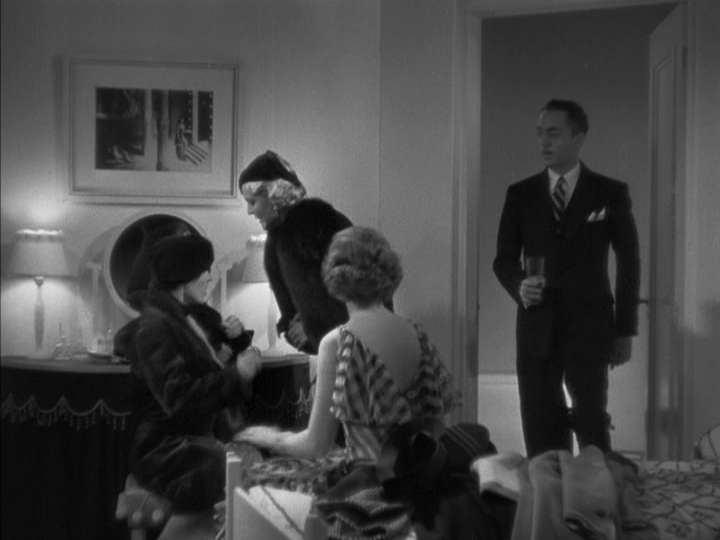
They and Dorothy’s brother Gilbert (William Henry) all descend on a Christmas party that Nick and Nora are hosting in their apartment for an eclectic collection of colorful figures from Nick’s former life. During the festivities a shady figure named Nunheim (Harold Huber) calls in with information related to the case:
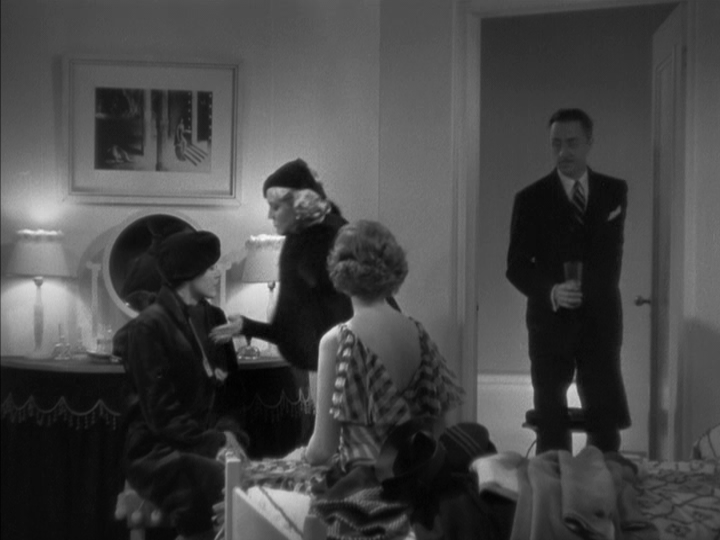
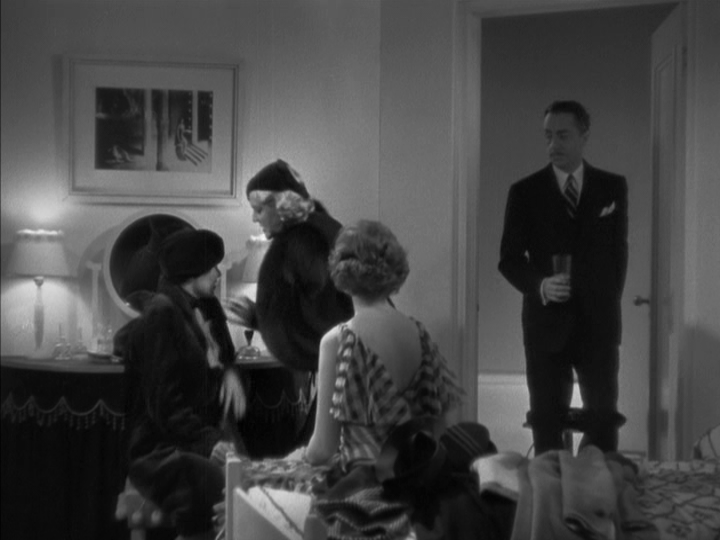
As described by Fran Mason in his book Hollywood’s Detectives, the result of all of this is to “disorder Nick’s world, most obviously when Mimi slaps Dorothy in front of Nick and Nora because she believes that Dorothy has revealed information that thwarts her plan to blackmail Wynant on his expected reappearance”:
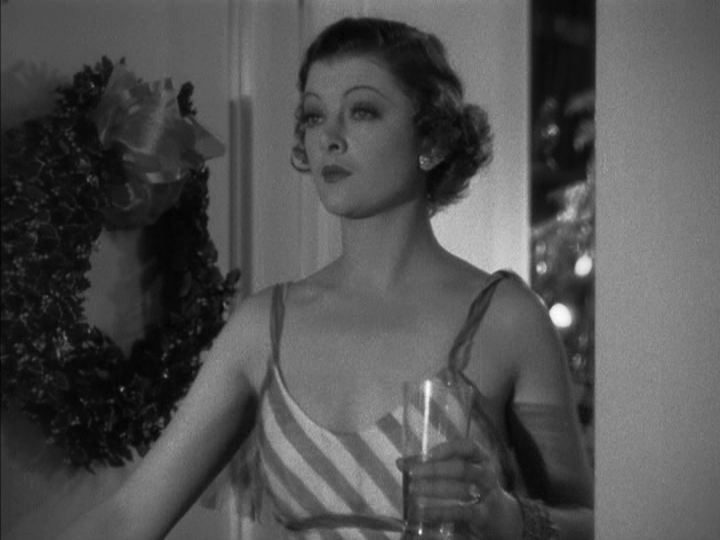
And although it isn’t until after they leave that the party “degenerates into an anarchy of tuneless singing, drunken disagreements and maudlin sentimentality,” Mason argues that “it is implied that they cause the disorder by bringing their world of crime, venal desire and pathologies to the hotel room to disturb the small world of Nick and Nora.” Thus when Nora sighs, “oh Nicky, I love you because you know such lovely people” at the end of the evening:
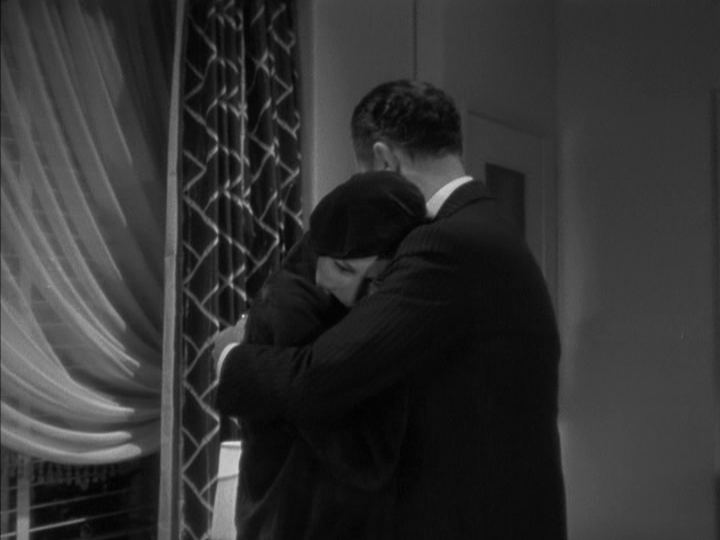
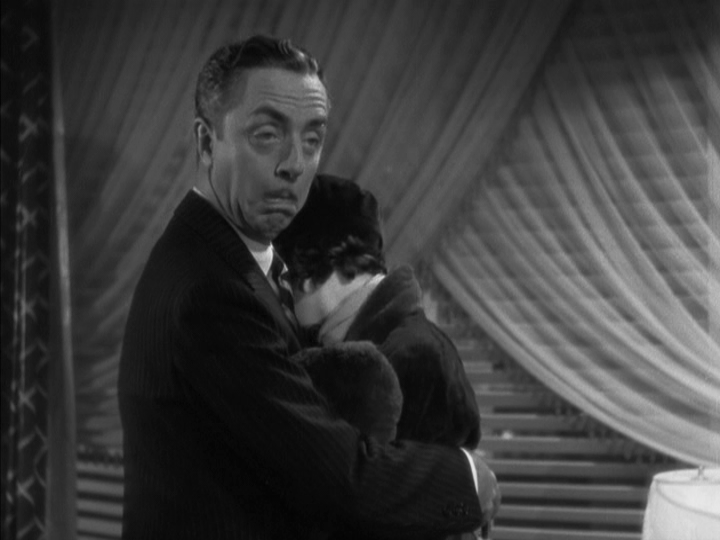
The line “applies as much to the Jorgensens and people like them as it does to the working class and underworld figures from among Nick’s acquaintances who are still present.” This sequence also again showcases the strong bond between the central couple when Nora walks in on Dorothy embracing Nick, which Kozlowski notes director W.S. Van Dyke “stages as if it would become one of those dramatic incident in which a wife sees her husband with another woman in her arms”:
He follows it with two quick pans, though, one to Nick making a face at his wife:
And then one of her crinkling her nose at him in return:
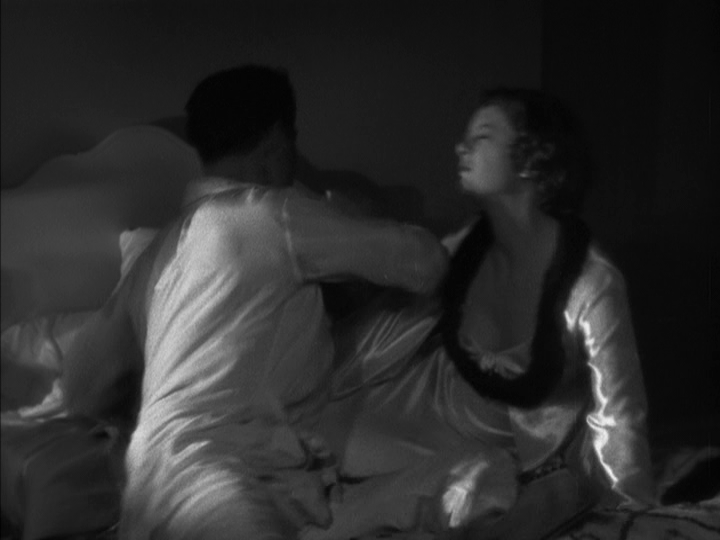
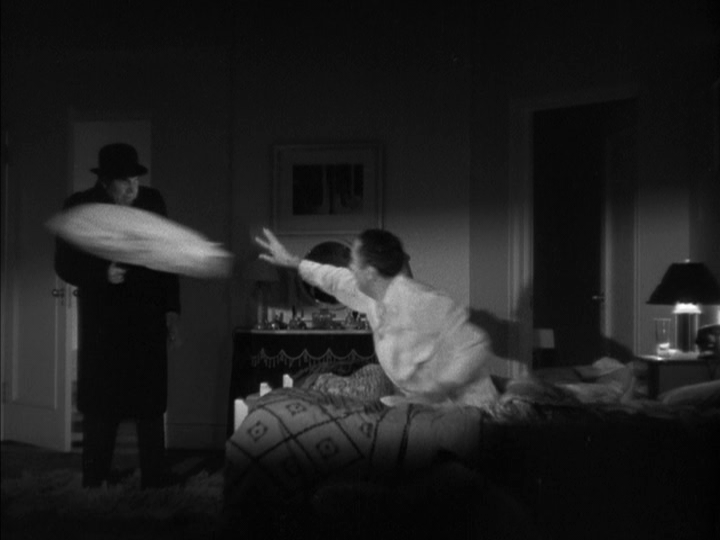
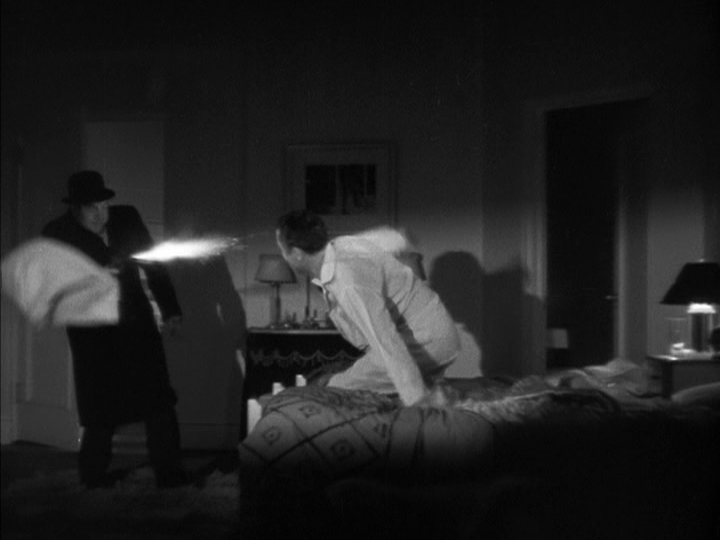
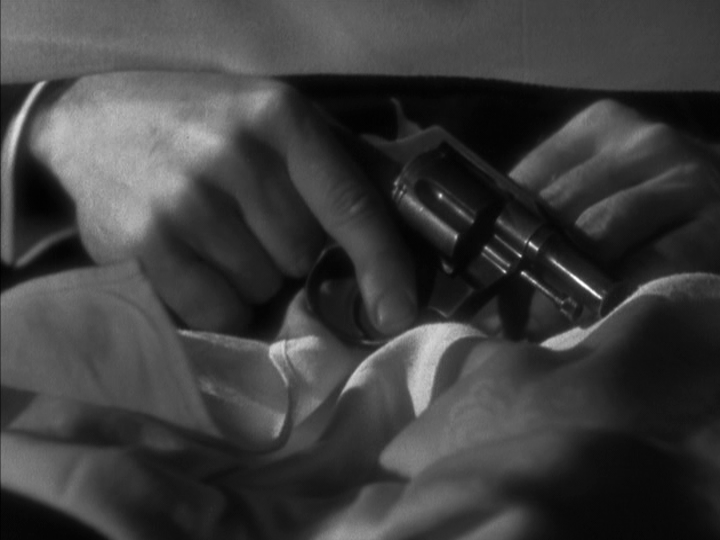
“By panning between the embrace and Nora’s reaction rather than cutting between them,” Kozlowski observes, “again we have Nick and Nora as one unit rather than being edited apart from each other, and we establish again that this married couple trusts each other completely.” That night Nick saves Nora’s life by knocking her out before the man who has broken into their apartment (Edward Brophy) can shoot her:
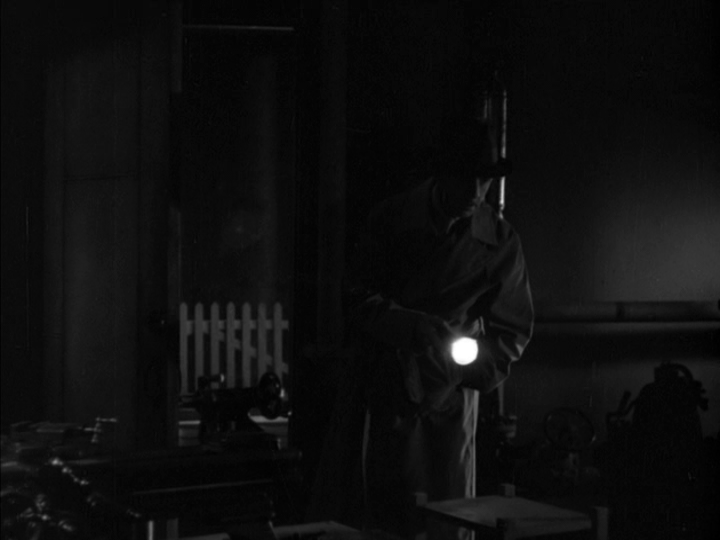
Now well and truly implicated in the case, Nick proves his mettle by solving it in relatively short order with an assist from Asta, who locates a body in Wynant’s factory when Nick decides to visit it on a hunch:
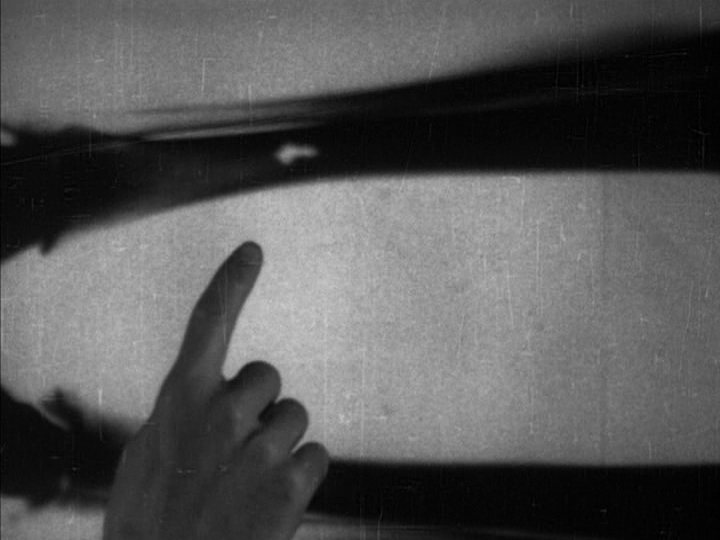
The police fall for the false clues buried with it and conclude that they’ve found someone else who was killed by Wynant, who at this point is their number one suspect, but Nick recognizes a piece of shrapnel visible in fluoroscopy:
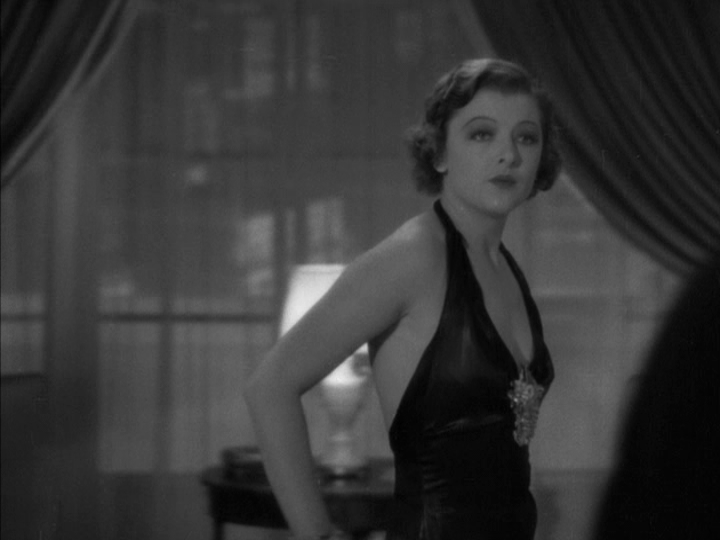
And in classic murder mystery style organizes an elaborate dinner party to reveal who *did* do it, but not before he asks if Nora has a “nice evening gown” to wear to it, which per Nochimson confirms that he shares her “forthright understanding of glamour as armor and costume that the two of them manipulate.”
She does, and it is indeed “a lulu”:
After sadistically torturing nearly every guest by suggesting that they are the guilty party, Nick provokes the real killer into incriminating themself before the main course is even served:
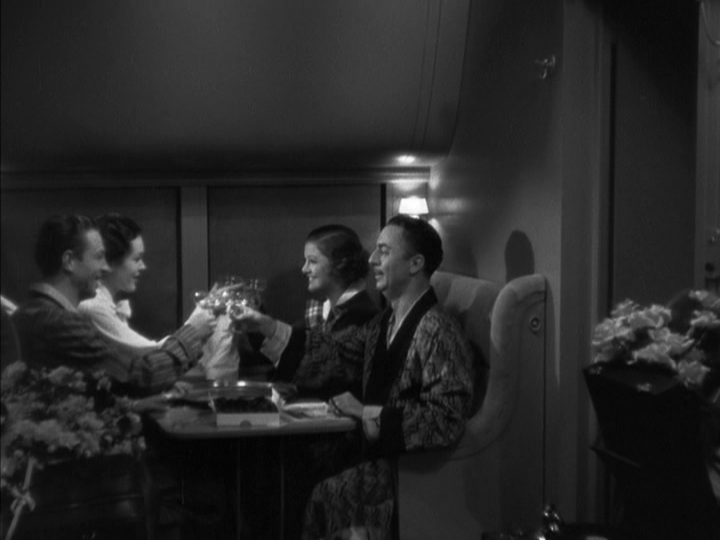
And the movie’s penultimate scene finds Nick and Nora in the sleeping car of a cross-country train toasting their success with Dorothy and her new husband Tommy (Henry Wadsworth) in an off-center composition by cinematographer James Wong Howe that makes it clear the Charles’s have overstayed their welcome by including the door:
Hopefully the honeymooners have been paying attention, because their elders have been giving them and us a master class on the art of a happy marriage. As summarized by Elizabeth Kraft in her book Restoration Stage Comedies and Hollywood Remarriage Films, the central theme is that “it is a supremely adult activity and requires both maturity and common sense, along with the opposite ability, that is, the childlike ability to play and invent and enjoy.” Which come to think of it reminds me of my description of Drink & a Movie #1 The Tamarind Seed as “a thoroughly grown-up film to enjoy with your adult beverage”! I’m not sure whether or not there’s an overarching theme there, but it strikes me as a fine place to leave off regardless. As mentioned above I’m planning to turn these posts into a book, which I think will involve a lot of cutting. A graphic designer friend has offered to help me, and I’m optimistic that the end result will make for an attractive and useful Christmas present for family and friends, so with any luck I’ll be done before next New Year’s Eve. I’ll order a few extra and sell them at cost from this site, so stay tuned if you’re interested! In the meantime, my liver has earned a good, long rest for services rendered, and I’m planning to abstain from alcohol for the duration of 2026–after all, even Nick Charles himself eventually confined himself to cider for the entire runtime of The Thin Man Goes Home! This means no cocktail commentary for awhile, but I do intend to keep up my pace of one illustrated long-form post about movies per month on average. It isn’t midnight yet, though, so I have time for one last Martini before then. Here’s to you for reading!
Cheers!
All original photographs in this post are by Marion Penning, aka My Loving Wife.Links to all of the entries in this series can be found here.





 The Prodigal Cinephile