May, 2022 Drink & a Movie: Lilac-Elderflower Prosecco Cocktail + The Flowers of St. Francis

The April showers represented by The Hole have turned to May flowers here at ye olde blog, specifically Roberto Rossellini’s The Flowers of St. Francis. Pictured here is the used DVD copy of the Criterion Collection release of the film that I bought off Amazon a month or two ago:
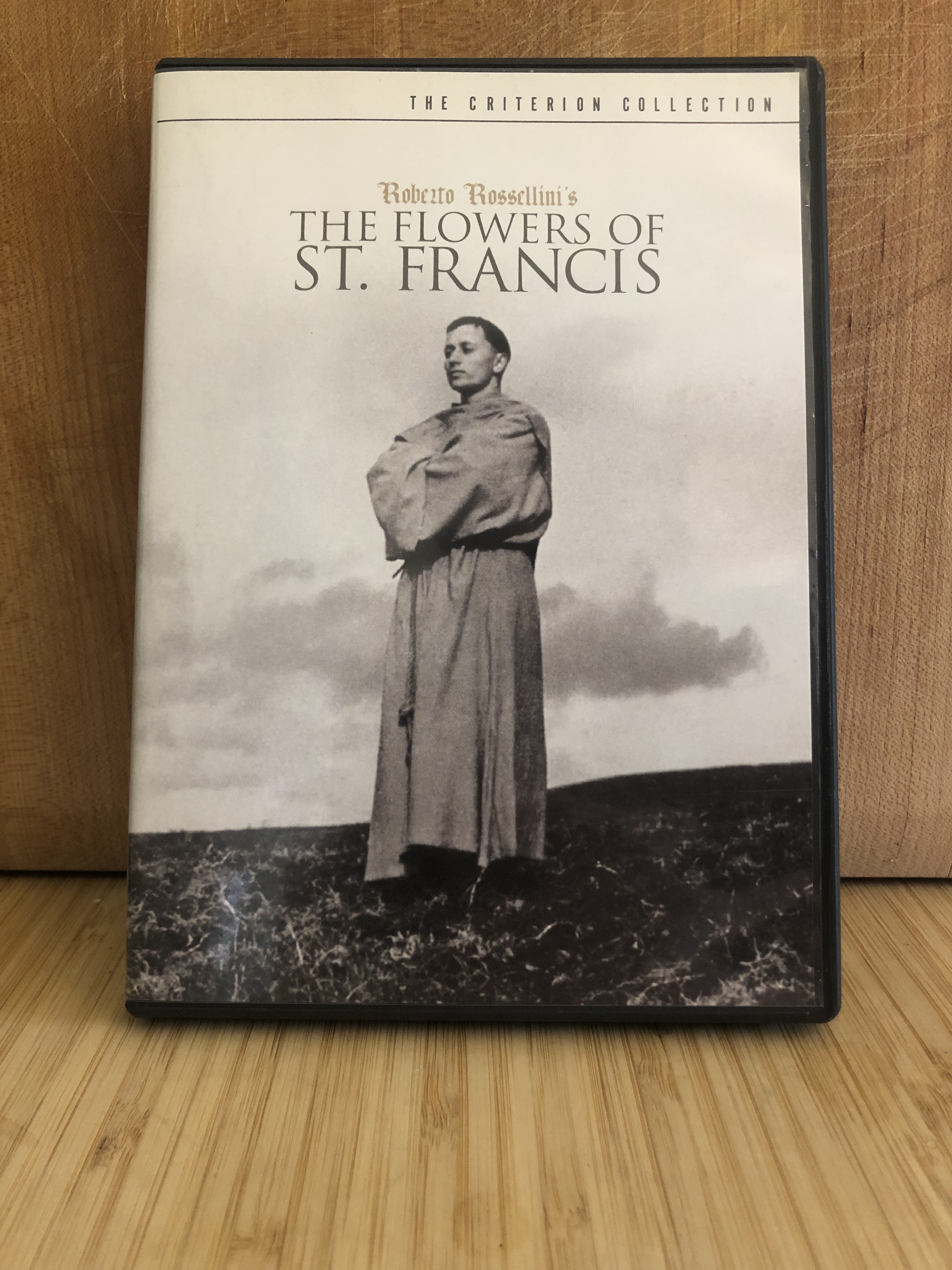
Picture of The Flowers of St. Francis DVD case

Not pictured are the helpful definitions of underlined words and phrases that the previous owner scribbled into the 36-page booklet which accompanies it (“neo: in a new way,” they wrote under “neorealism”). According to the Criterion Collection Store, this title is merely out of stock, not out of print, so new copies will hopefully be available soon. In the meantime, The Flowers of St. Francis can also be streamed via both the Criterion Channel and HBO Max with a subscription. Some people may have access to it through Kanopy via a license paid for by their local academic or public library as well.

The drink I chose to accompany it is an original (albeit HIGHLY derivative) concoction crying out for an upgrade from its working title, the Lilac-Elderflower Prosecco Cocktail. The idea for it began with a batch of lilac sugar that my loving wife made last year using flowers from the bush in our front yard. Although tasty, we weren’t able to find a ton of uses for it, and so had quite a bit left over. I mixed it with an equal amount of water by weight, brought it to a simmer over medium heat and whisked to combine, cooled it down, and then strained out the flowers to make lilac simple syrup.

For further inspiration, I next turned to my trusty copy of Amy Stewart’s The Drunken Botanist, where I found a recipe for a Lavender-Elderflower Champagne Cocktail. I cut back on the syrup and St-Germain elderflower liqueur and substituted Prosecco for the Champagne in a nod to the country that both Rossellini and St. Francis called home and lilac blossoms for the lavender spring garnish for reasons that I hope are obvious, and suddenly had a lovely, floral drink that felt like it would go beautifully with brunch. My final tweak was to switch out the Prosecco for Prosecco rosé, which is an actual official thing as of just a couple of years ago:

1/4 oz. lilac simple syrup
1/4 oz. St-Germain
4 oz. Prosecco rosé
Lilac blossoms

Add the syrup and St-German to a Champagne coupe and top with Prosecco rosé. Garnish with the lilac blossoms.
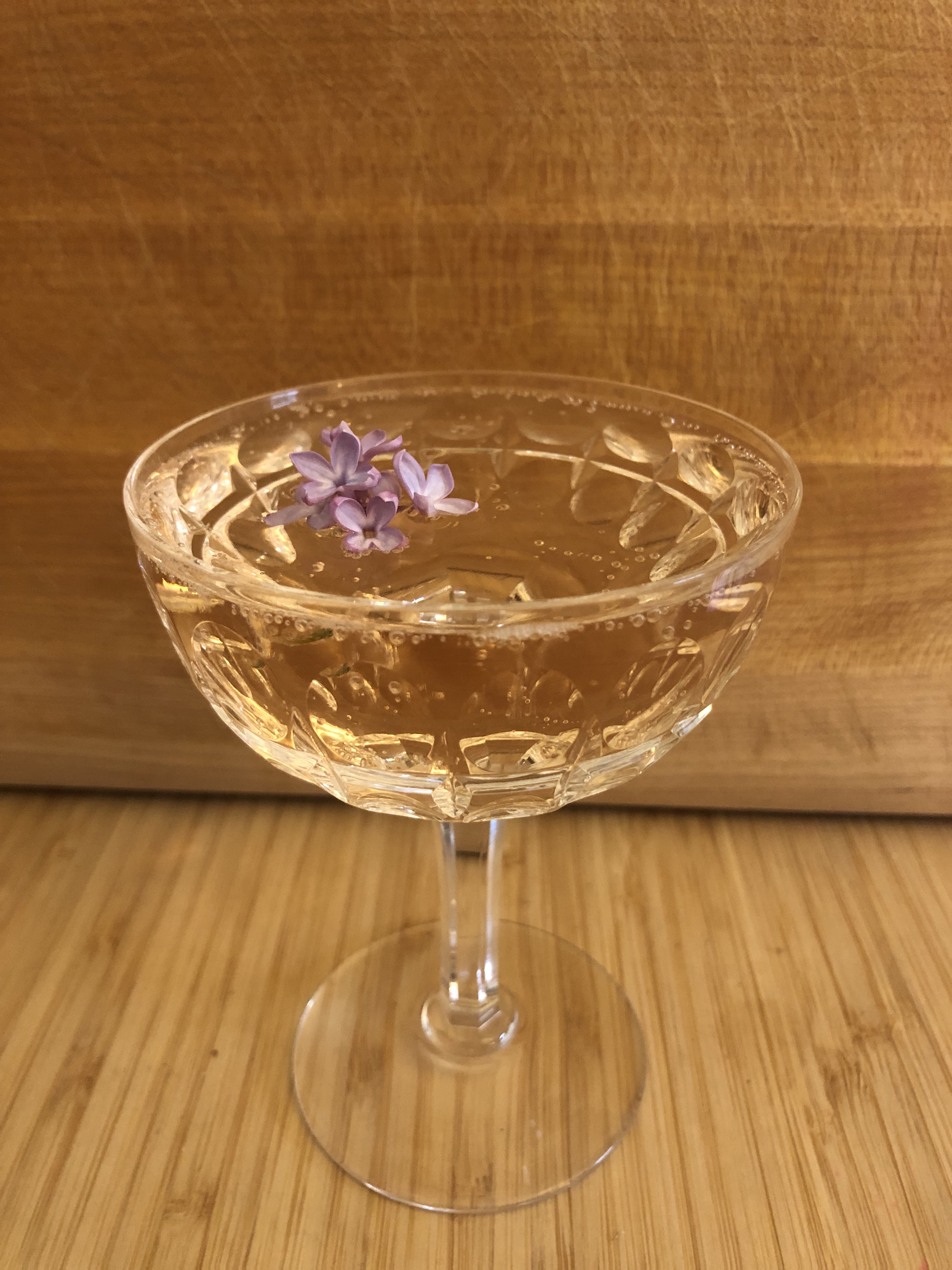
Lilac-Elderflower Prosecco Cocktail in a Champagne coupe

Although this drink isn’t quite as dry as I usually like, that seems like a virtue when we’re talking about pairing it with a movie about a man who, per the voiceover with which The Flowers of St. Francis begins, made himself contemptible and humble in order to vanquish the world by spreading the power of his meekness and “sweet love of peace.”

What stuck with me most from my first viewing of this film goodness knows how many years ago was the way Francis and his followers run everywhere they go, whether that be to:

Screengrab from The Flowers of St. Francis showing monks running toward the camear

Fro:

Screengrab from The Flowers of St. Francis showing monks running away from the camera

Or with bells on:

Screengrab from the St. Francis showing two monks running while carrying bells

Much has been made of the fact that Francis himself is indistinguishable from his followers in many ways and arguably isn’t even the main character of the second half of the film. Which: I can dig it! Nazario Gerardi (who famously was an actual Franciscan monk, not a professional actor) definitely does turn in a memorable performance in the lead role, though. What I like most is his sense of humor, evident here in a scene in which he forbids Brother Ginepro (Severino Pisacane) from giving away his tunic to the poor (which he seems to do every time he goes into town) without permission. Note how Francis casts knowing glances at the brothers to his left:

Screengrab from The Flowers of St. Francis showing Francis looking left

Then his right:

Screengrab from The Flowers of St. Francis showing Francis looking right

And then smiles beatifically at Ginepro:

Screengrab from The Flowers of St. Francis showing Francis smiling at Brother Ginepro

Gerardi’s acting and Rossellini’s direction turn a few seconds of screen time into an eloquent sermon about what it means to be meek.

I also love the scene in which Francis asks some birds to please quiet down so that he can pray, particularly the moment after one settles on his shoulder.

Screengrab from the Flowers of St. Francis showing Francis looking at a bird which has landed on his shoulder

Gerardi reaches for it in what I assume was originally meant to be a single graceful gesture, but drops the poor thing and has to quickly grab it again.

Screengrab from The Flowers of St. Francis showing Francis reaching for the bird on his shoulder
Screengrab from The Flowers of St. Francis showing Francis dropping the bird he is reaching for
Screengrab from The Flowers of St. Francis showing Francis regaining control of the bird he is reaching for

At last he is successful and raises the bird in front his face so that he can address it:
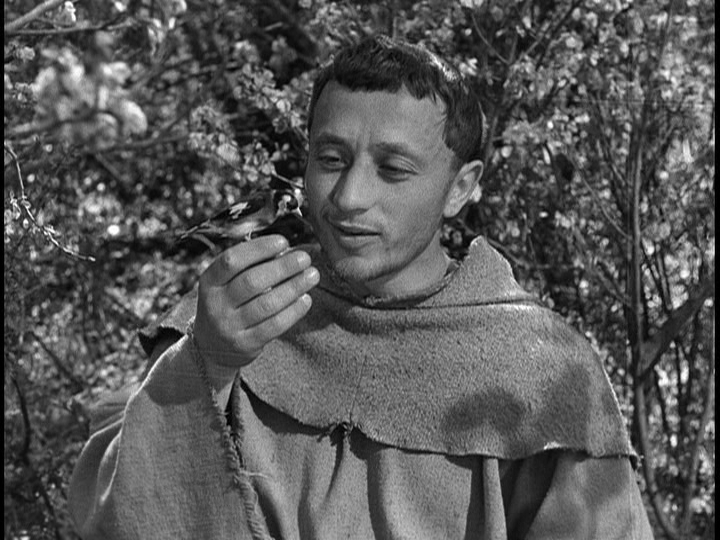
Screengrab from The Flowers of St. Francis showing Francis talking to a bird

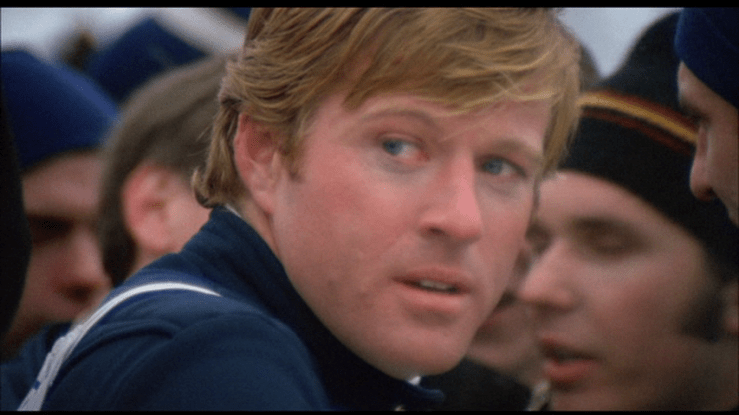
I didn’t mention it in my February Drink & a Movie post, but there’s a scene in Downhill Racer where Gene Hackman trips over his words while lecturing Robert Redford that I like for the same reason as this one. Apparently Hackman was upset when he realized this made it into the film, but director Michael Ritchie thought it felt real, and I agree. Lists of the Best Kisses in Movie History and whatnot proliferate because one of the things film does for us is give us templates for what “perfect” moments look and sound like. When we get them right, our lives feel like a movie; it’s nice to also to have cinematic referents to reassure us that even when we inevitably screw up, we haven’t ruined anything.

My favorite part of The Flowers of St. Francis might be Brother Juniper’s visit to the camp of the tyrant Nicolaio (Aldo Fabrizi). First, you have to admire Severino Pisacane (who like Nazario Gerardi was a monk, not an actor) for being willing to let his body be used as a jump rope:
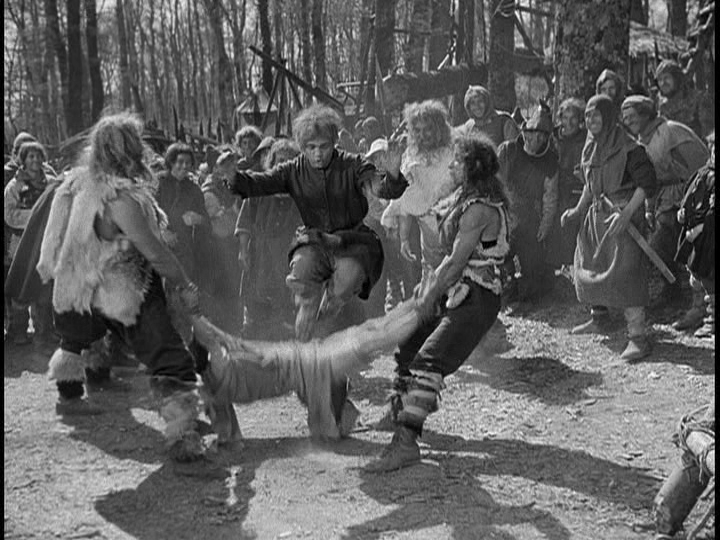
Screengrab from The Flowers of St. Francis showing the tyrant Nicolaio's men using Brother Juniper as a jump rope

Next, praise be to Rossellini for giving us the pricelessly ridiculous image of a man who is practically lost inside armor much too big for him:
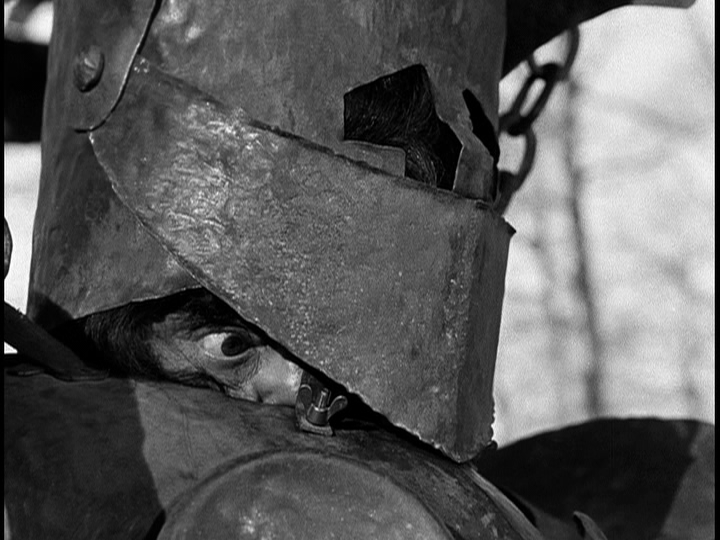
Screengrab from The Flowers of St. Francis showing Nicolaio struggling to see through is over-sized armor

Best of all is Nicolaio’s subsequent confrontation with Brother Juniper in his tent, which begins with Nicolaio intending to kill him and ends with him abruptly deciding to lift his siege of the town of Viterbo. Critic Noel Vera has a wonderful theory to describe what happens:

And then, perhaps, it might have occurred to Nicolaio that watching his thumbs squeeze the man’s eyeballs out of their sockets and listening to the screams would have been pointless–that there is more to man, to this man at least, than mere meat and quivering jelly. And that the concept of immateriality–of an immortal spirit, a (dare we say it?) soul–was so startling to the brute that he decide to lift the siege and ponder it further. Viterbo he could always massacre later; this mystery demanded his complete and undivided attention.

Brilliant. As are the long shots which follow showing Brother Juniper wandering about gazing at the tremendous commotion his actions have caused:

Screengrab from The Flowers of St. Francis showing Brother Ginepro gazing watching Nicolaio's camp break up

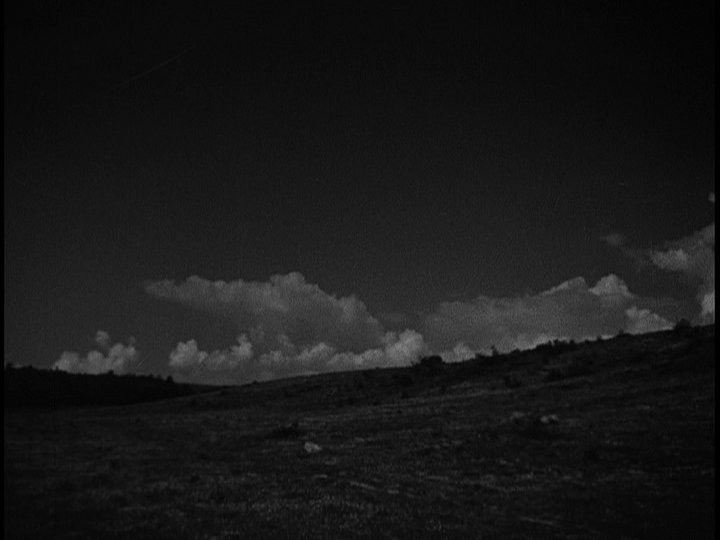
Another thing I appreciate a lot more after spending time with this film is the way it ends with not one:
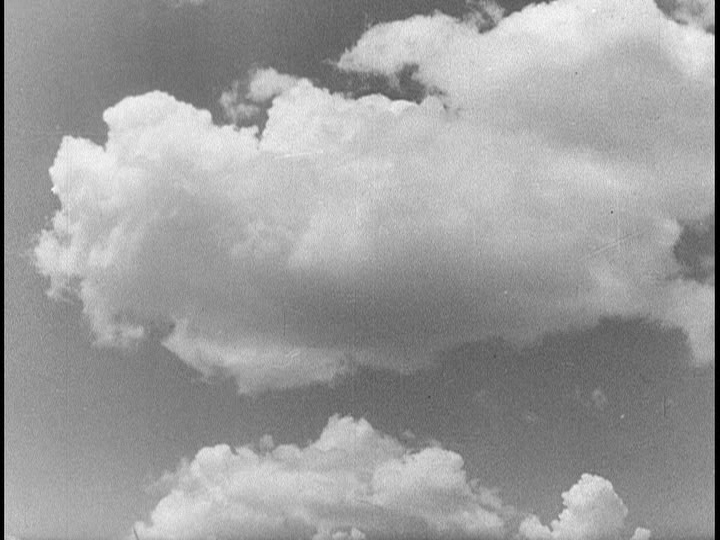
Screengrab from The Flowers of St. Francis showing a shot of clouds

Not two:

Screengrab from The Flowers of St. Francis showing another shot of clouds

But four consecutive shots of clouds:

Screengrab from The Flowers of St. Francis showing a third consecutive shot of clouds
Screengrab from The Flowers of St. Francis showing a fourth consecutive shot of clouds

The key to what Rossellini is doing her can be found much earlier in the film in the section titled “How Francis, praying one night in the woods, met the leper.” In a terrific close reading of this scene, film scholar Justin Ponder argues that a point-of-view shot near the beginning of the sequence establishes that Francis actually sees God in the sky:

Screengrab from The Flowers of St. Francis showing Francis looking up at the sky and smiling
Screengrab from The Flowers of St. Francis showing the sky, apparently as seen by Francis

And that this connection is solidified by the upward pan which ends this sequence:
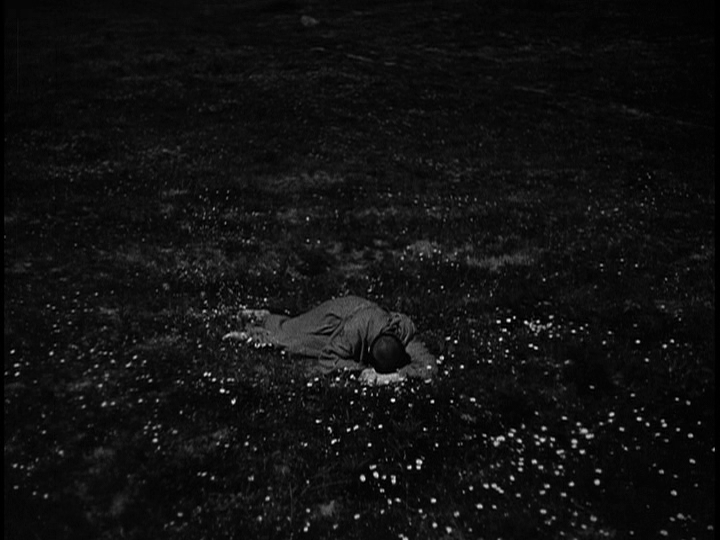
Screengrab from The Flowers of St. Francis showing Francis lying in a field
Screengrab from The Flowers of St. Francis showing the sky above Francis

What’s really exciting about this interpretation to me personally is that it offers a possible new way of looking at the beginning of another one of my favorite movies:

Screengrab showing the title card from the movie Groundhod Day

Last but not least, I have a bonus food suggestion to go along with this month’s drink and movie. Dave Kehr observes in a review collected in his book When Movies Mattered that “[t]he closest St. Francis comes to offering a genuine miracle is when Ginepro trundles off to borrow a large pot from a neighboring group of shepherds. Ginepro returns, running down the hillside, with the gigantic pot bouncing along at his heels like a faithful puppy.”

Screengrab from The Flowers of St. Francis showing Brother Ginepro running down a hill trailed by a large kettle

In my house we have very much been enjoying the spring herbs soup with fregola and pancetta that appeared in the May, 2021 issue of Food & Wine magazine lately. I mentioned previously that my Lilac-Elderflower Prosecco Cocktail seemed like a perfect accompaniment to brunch. Well, this is what you want to eat with it. The herbs stirred in at the end echo the “lots of greens” in Brother Ginepro’s soup, it contains chicken stock to also make your body humble like Ginepro’s hens, and the pancetta recalls the foot generously donated by Brother Pig. I definitely think it’s likewise “good for the brain” as well:

Throw in a nice hunk of bread and some good butter, and you’ve got the makings of a pretty wonderful spring Saturday or Sunday afternoon here.

Cheers!

All original photographs in this post are by Marion Penning, aka my loving wife. Other entries in this series can be found here.
April, 2022 Drink & a Movie: 20th Century + The Hole

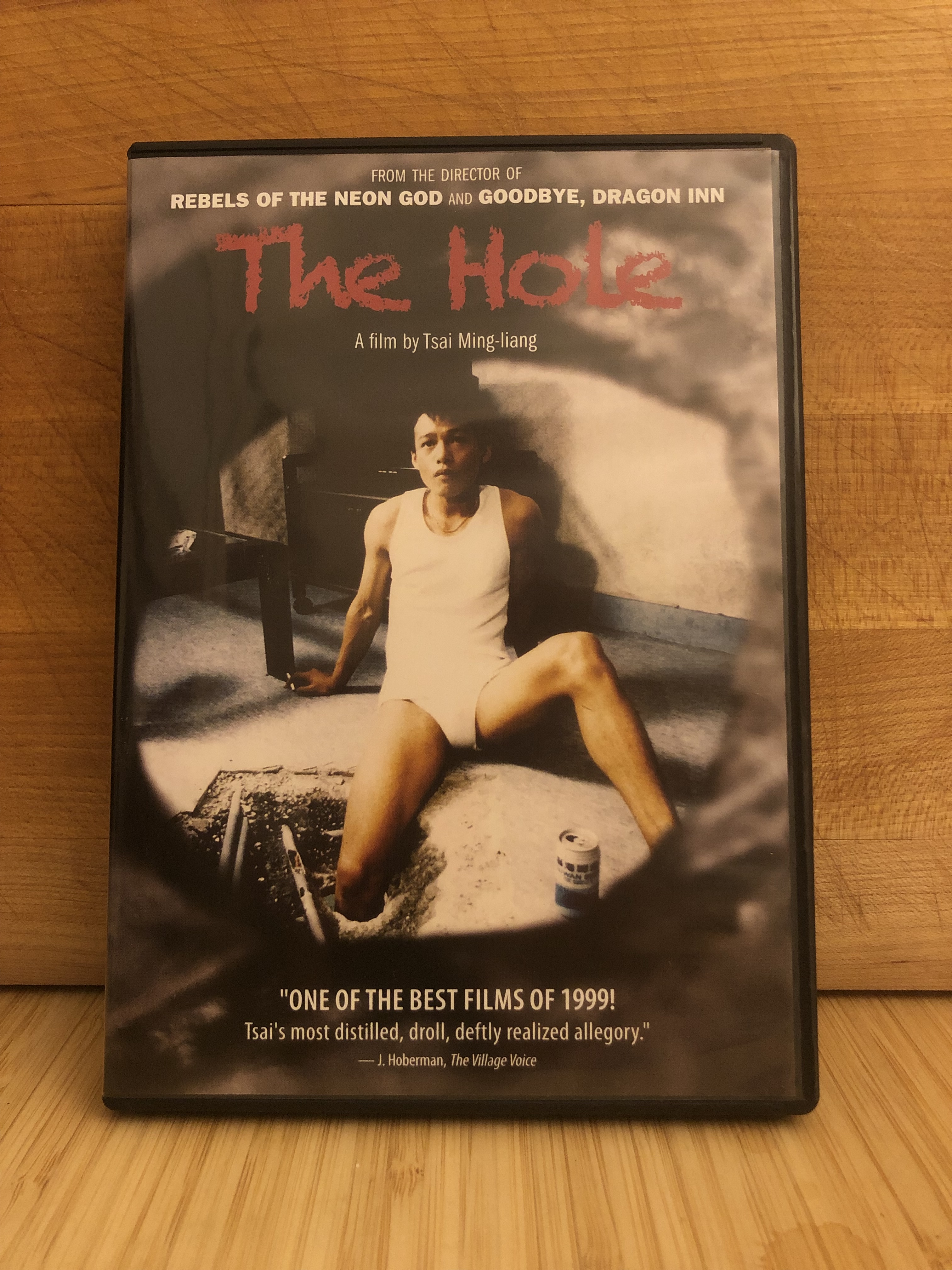
For my first April Drink & a Movie post, my mind went to one of the rainiest movies I know, Tsai Ming-liang’s The Hole. Pictured here is the copy of the Big World Films DVD I bought on Amazon a couple of months ago:

Picture of The Hole DVD case

The film can also be can rented or purchased for Video On Demand viewing through the Big World Films website. Some people may have access to it through Kanopy via a license paid for by their local academic or public library as well.

Despite Boston-based film critic Sean Burns’s eminently reasonable suggestion in a review published this past September that The Hole “might be the best film about how it feels to be alive right now,” the drink I’m selecting to pair with it is called the 20th Century, specifically the version in The PDT Cocktail Book which author Jim Meehan attributes to C. A. Tuck via W. J. Tarling (author of the Café Royale Cocktail Book where it was first recorded):

1.5 oz. Plymouth Gin
.75 oz. Marie Brizard White Crème de Cacao (Giffard)
.75 oz. Lillet Blanc
.75 oz. Lemon Juice

Shake with ice and strain into a chilled coupe (I used my favorite Nick and Nora glass). No garnish.

20th Century in a Nick and Nora glass

In addition to changing the glassware, I also used Giffard white crème de cacao instead of the Marie Brizard that Meehan calls for throughout this book, since I’ve never been able to find it. Honestly, though, I haven’t sweated this ingredient too much ever since a bartender at The Violet Hour in Chicago told me that *they* aren’t very picky about it a few years ago, and I’d advise you not to be either. Just go for white over brown for the sake of the appearance of the drink, is all.

As Meehan notes, the drink is actually named for “the 20th Century Limited luxury train that traveled between New York City and Chicago from 1902 to 1967.” Said train has appeared in many movies, including North by Northwest, The Sting, and of course Howard Hawks’s Twentieth Century, but so far as I am aware no character ever orders the cocktail named after it. Which is too bad for them, because it’s one of my absolute favorites! One thing that makes it unique is its unusual combination of flavors that don’t seem like they should go together–chocolate, juniper, and lemon. This is why I chose The Hole to pair with it, because do you know what else doesn’t sound like it makes sense? A bleak depiction of life in a city beset by both an epidemic and a never-ending rain storm shot mostly in long takes and containing very little dialogue that also includes cheerful, lip-synched musical numbers based on the songs of singer-actress Grace Chang!

Both the drink and the movie absolutely do work, though. In the case of the former, each ingredient brings an important component of balance to the party: the crème de cacao supplies sweetness and texture, the gin gives the drink substance, and the citrus chips in acidity, all of which matter more than how each them tastes. Similarly, both the fantastical and realistic elements of the film are necessary to bring to life the surreal experiences of being isolated from one’s fellow humans even while being surrounded by them and trying to piece together a coherent narrative about the virus upending your life from one meager scrap of information at a time.

Like the train that the drink is named after, The Hole is meant to represent an aspect of the century during which it was created. It was commissioned as part of a series called 2000, Seen By…, and “eerily prophetic” (quoth Jeffrey M. Anderson of the San Francisco Examiner) though it may be, Tsai’s focus was very much on the present when he conceived it. As he told socialist film critic David Walsh, “[w]hen they first came to me with this project of making a film about the new millennium, I thought the end of the century was too close to describe a future predicament, so it’s actually a reflection of contemporary society.”

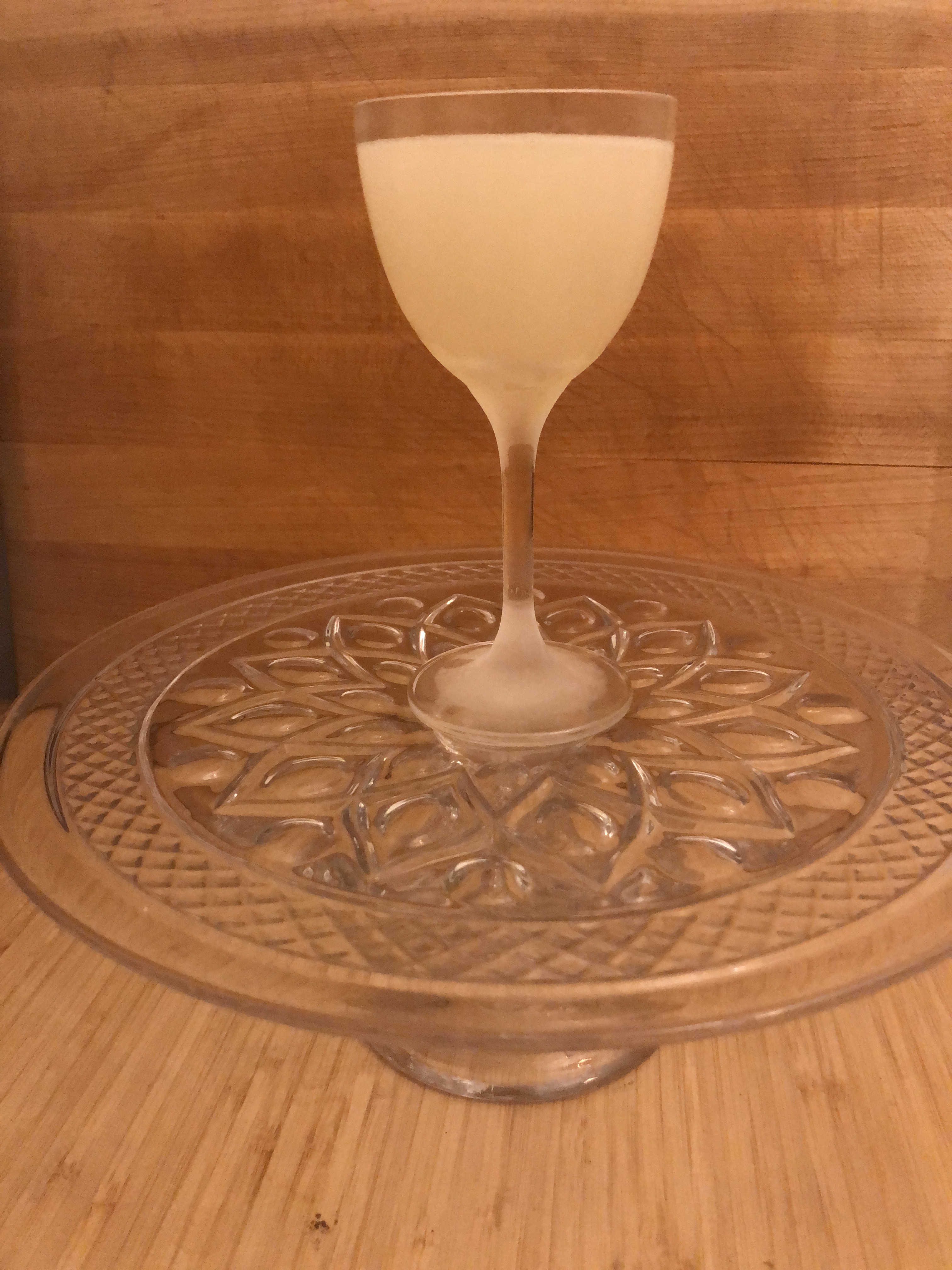
Last but not least as far as connections between this month’s drink and movie go, scroll up again and take another look at the picture of a 20th Century taken by my loving wife. Now dig this shot of Yang Kuei-Mei’s The Woman Downstairs from The Hole‘s penultimate sequence, which the brilliant Darren Hughes says “might be the most extraordinary of Tsai’s career”:

Screengrab from The Hole which contains beautiful lighting

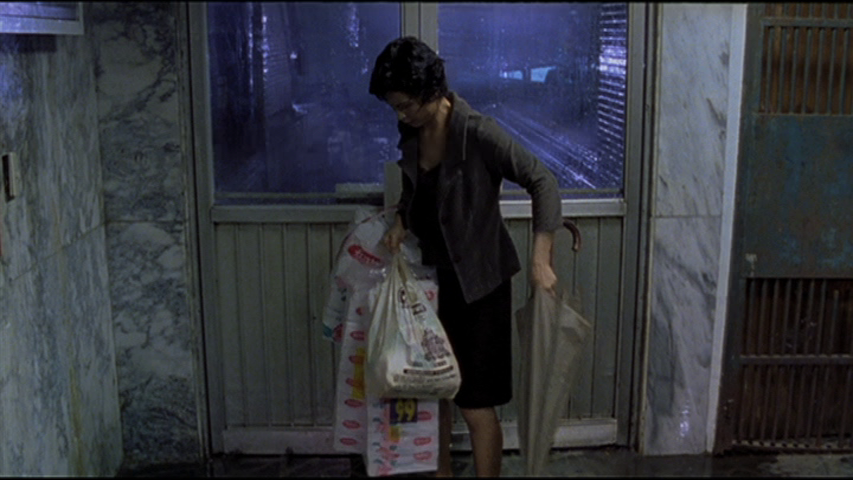
They both glow, yeah? Certainly each one is beautiful. As far as the rest of the film goes, it really is bonkers how many moments it contains that are likely to resonate with contemporary audiences. Take this shot The Woman Downstairs arriving home with a haul of toilet paper:

Screengrab from The Hole showing The Woman Downstairs wrestling with an umbrella and three large packages of toilet paper


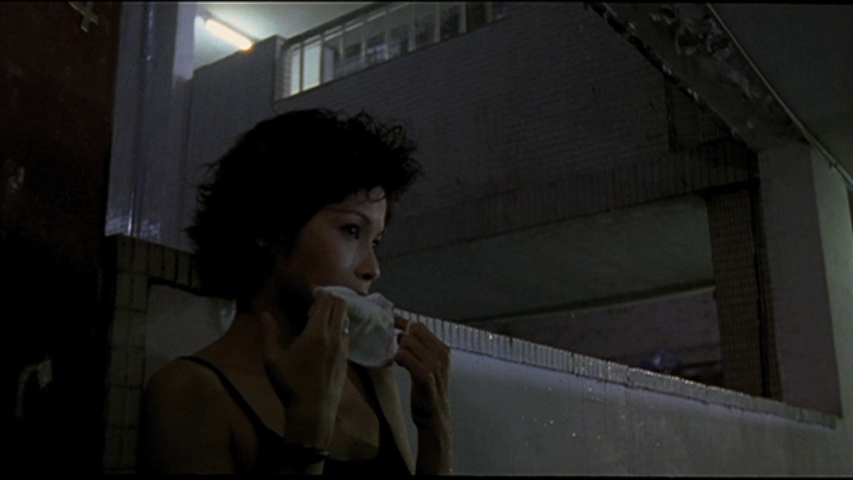
Or this use of a mask as an erotic device, our first indication that the Woman Downstairs is attracted to Lee Kang-sheng’s The Man Upstairs:

Screengrab from The Hole showing The Woman Downstairs erotically mouthing a mask

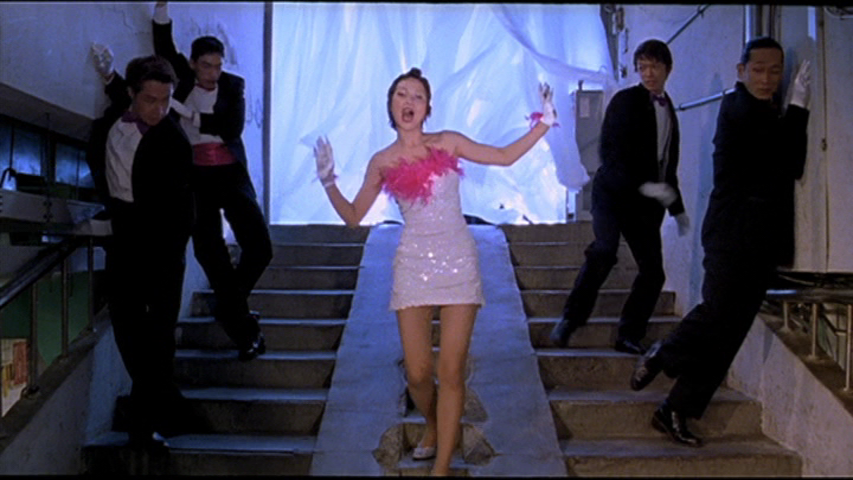
Or the fantasy world dramatization of the onset of the “flu-like symptoms” we’ve all been dreading for the past two years set to “Achoo Cha Cha”:

Screengrab from "Achoo Cha Cha" musical number from The Hole

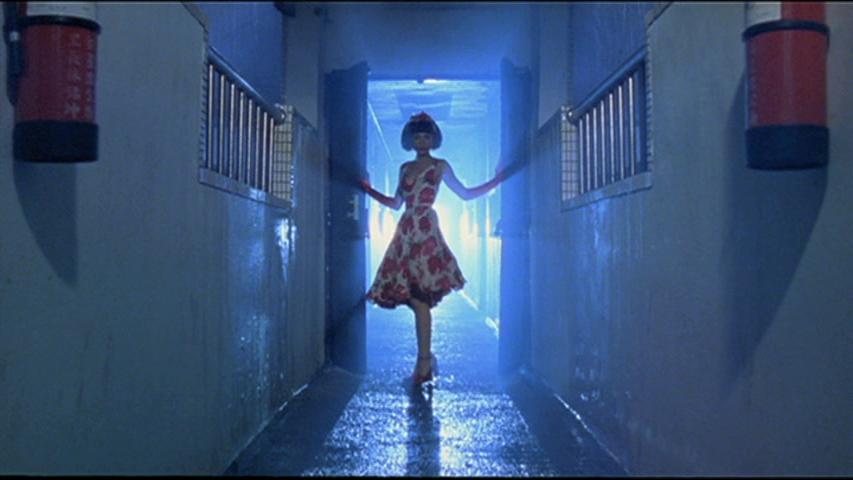
The rest of the song and dance sequences are quite wonderful, too. I particularly love the beginning of the one for “Tiger Lady,” which starts right after The Woman Downstairs defends herself against incursions into her apartment through the hole in her ceiling for the first time using bug spray:

Screengrab from the "Tiger Lady" musical number from The Hole showing The Woman Downstairs bathed in light, as though powered by some kind of supernatural force

This is superhero lighting! Another thing I get a kick out of is Tsai’s use of clocks, which are more often associated with his next film What Time Is It There? than this one. Here they seem to function as an index of how time has different meaning during a time of crisis. I count three of them. Number one can be seen lying on a table while The Woman Downstairs watches a news report about how long you need to boil untreated water for and how many days afterward it’s drinkable:

Screengrab from The Hole showing the first appearance of a clock in the film

The Man Upstairs walks by clock number two holding a can of food for a stray cat he has been feeding:

Screengrab from The Hole showing the second clock which appears in the film

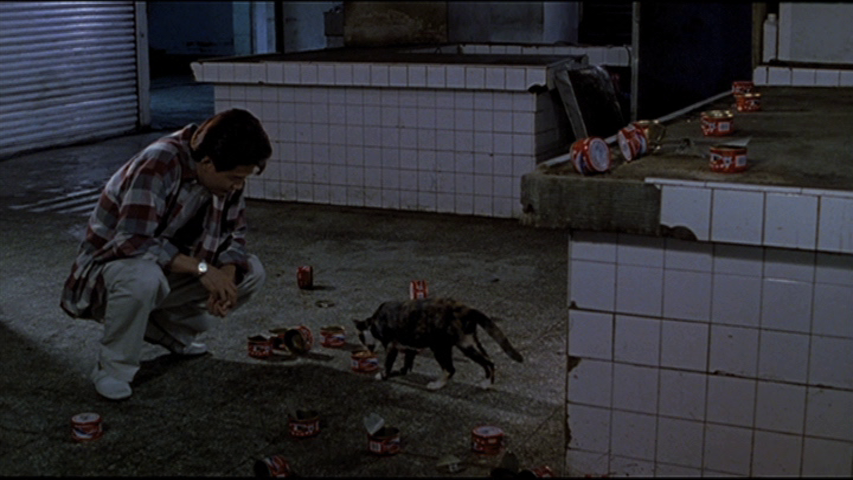
As he rounds the corner, the number of empty cans strewn about cue us in to the fact that this has been part of his daily routine for quite awhile!

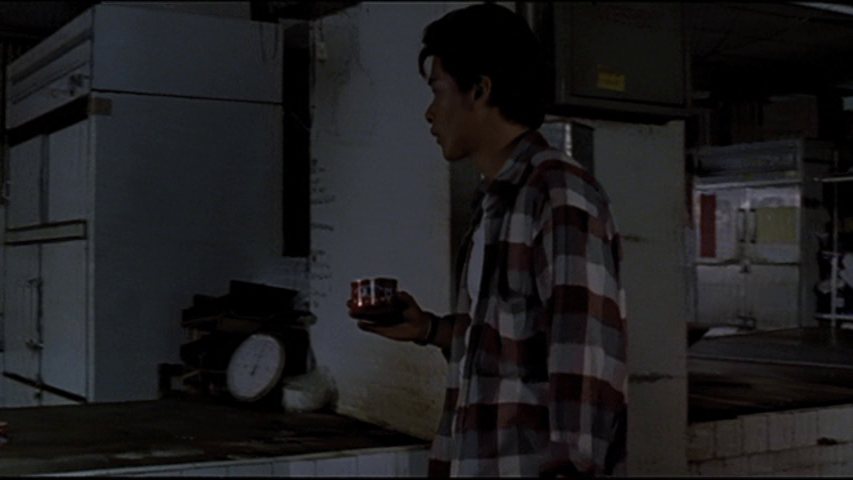
Screengrab from The Hole showing The Main Upstairs feeding a cat in a room littered with empty cat food tins

Finally, clock number three appears at the end of Tien Mao’s cameo appearance as A Shopper. He asks The Man Upstairs if his store carries a particular brand of bean sauce. “They stopped making it years ago,” is the reply. The Shopper stares at what he now realizes is his last can and then wanders off in a daze in a shot which lasts nearly a minute:

Screengrab from The Hole showing the third appearance of a clock in the film

In all three instances, the point seems to be that you don’t mark time in seconds, minutes, or even hours when you’re living in quarantine and have no place to go.

I’m worried that I’m making The Hole sound more depressing than it is, so I will close by note that it ends with the Man Upstairs and the Woman Downstairs together:

And a signed note from Tsai preceding the end titles which says “in the year 2000, we are grateful that we will have Grace Chang’s songs to comfort us.” This is, ultimately, a film about getting through something. Be it a century, pandemic, cross-country train journey, or just a long day of work, how better to celebrate than with a drink and a movie?

Cheers!

All original photographs in this post are by Marion Penning, aka my loving wife. Other entries in this series can be found here.
March, 2022 Drink & a Movie: In Vida Veritas + A Christmas Tale

The idea for my first Drink & a Movie post started with the beverage, while the inspiration for the second one was the film. This month’s edition is sort of a hybrid. I was cycling through possible hooks (lions, lambs, March Madness, etc.) when my mind lit on Pi Day. I immediately remembered the bottle of Zirbenz Stone Pine Liqueur of the Alps that I bought over the holidays, and suddenly I was all set! The drink I’m writing about today is a concoction by Misty Kalkofen of Boston, Massachusetts (whose name you’ll see again if I keep this series going) called In Vida Veritas. With a hat tip to the Haus Alpenz website, here’s how you make it:

1 1/2 oz. Del Maguey Vida Mezcal (Vida de Muertos)
3/4 oz. Zirbenz
3/4 oz. Nux Alpina Walnut Liqueur
1/2 oz. Benedictine
10 drops Xocolatl Mole Bitters (Bittermens)

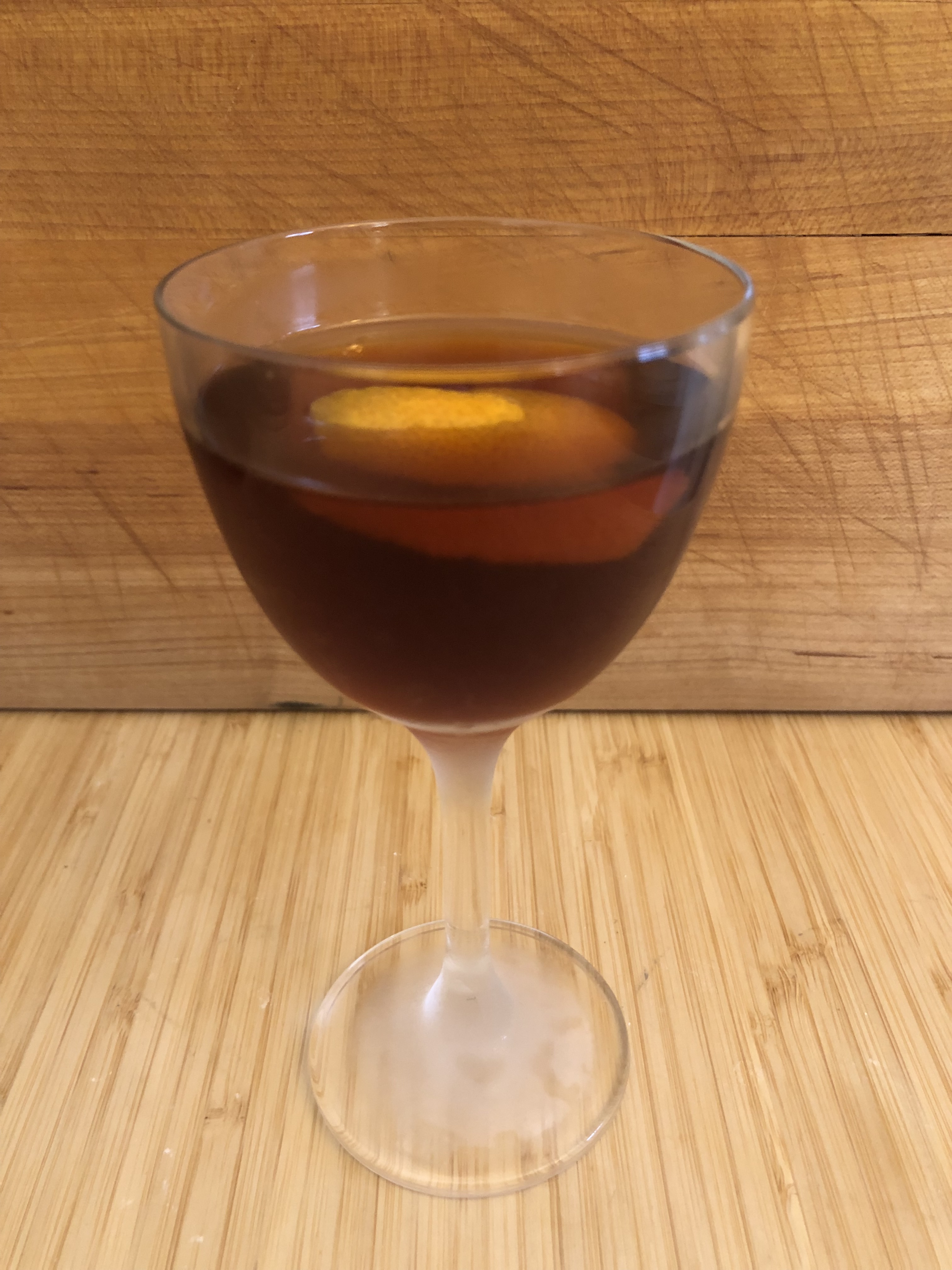
Stir with ice, strain into a chilled Nick and Nora glass, and garnish with an orange twist.

In Vida Veritas in a Nick and Nora glass

The movie I’m selecting to go with it is Arnaud Desplechin’s A Christmas Tale. Here’s a picture of the DVD I bought from the Criterion Collection Store during a flash sale of yore:

A Christmas Tale DVD case

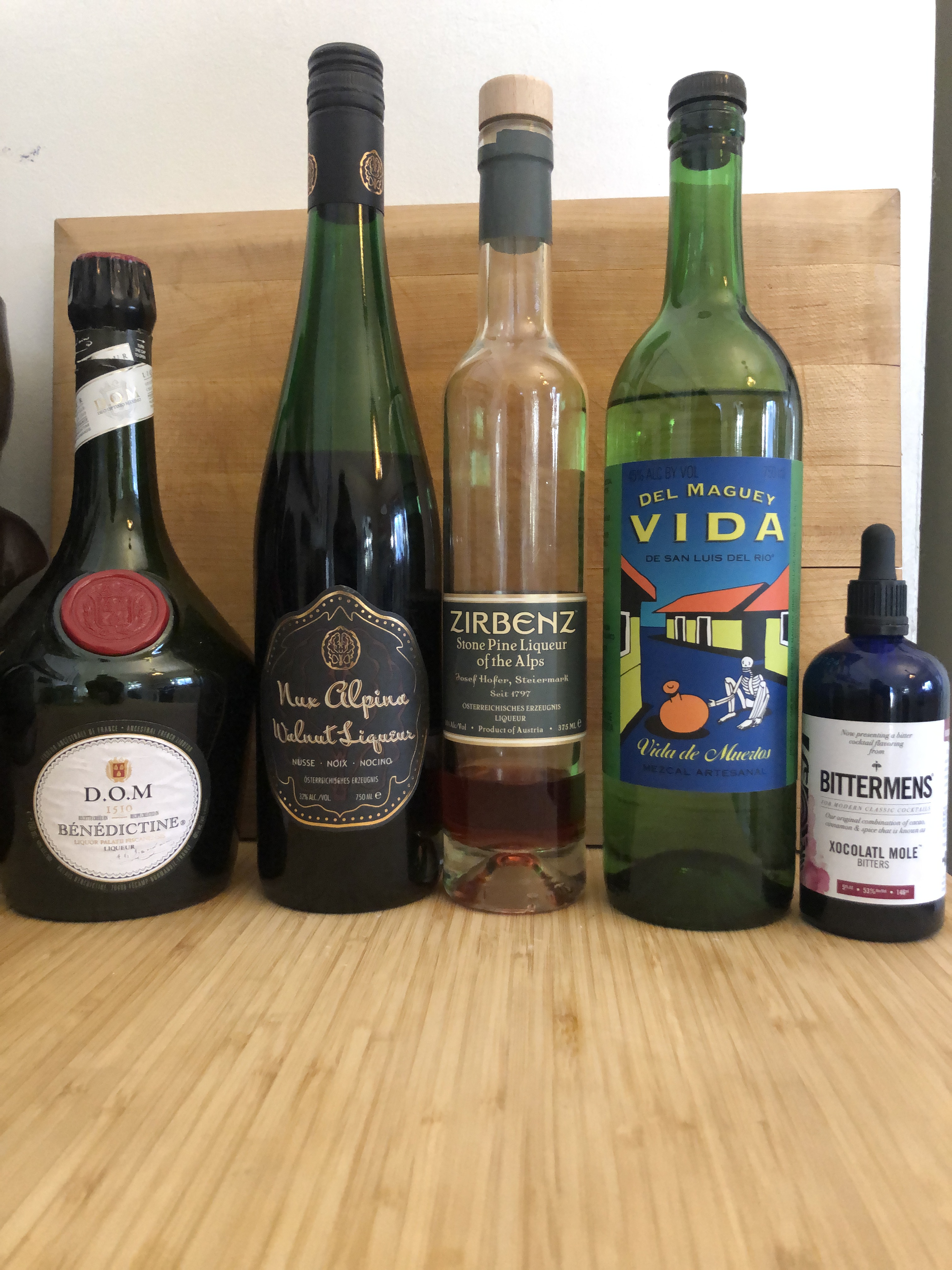
It’s still available there on both DVD and Blu-Ray, and can also be streamed via the Criterion Channel with a subscription or Amazon Prime for a rental fee. On a very superficial level, the drink (thanks to the pine notes of the Zirbenz) and the movie share a Yuletide vibe. They both also feature casts of eccentric characters that don’t seem like they should be able to co-exist in the same glass or house until they do, but afterward you almost can’t imagine them apart from each other. Here are the stars of In Vida Veritas:

In Vida Veritas ingredients

Be forewarned: some of these ingredients may be hard to source. I had to ask the good people at Red Feet Wine Market in Ithaca to special order me a bottle of the Nux Alpina, for instance. That’s also the only place around here I’ve seen Xocolatl Mole bitters. The version of the recipe published on Kindred Cocktails calls for Fee Brothers Whiskey Barrel-Aged Bitters instead, which might not require as much of a search. No matter which one you choose, I like how the bitters bring a bit more CONCACAF thunder to the party to keep the mezcal company amidst all these Europeans. Speaking of which, Del Maguey Vida Mezcal is one of my absolute favorite value spirits. Where I live a decent bottle of single malt Scotch will set you back $80 easy, but even the 45 ABV Vida de Muertos special release pictured here costs half that and delivers something just as complex, smoky, and sippable. Anyway, whatever effort you have to put in will be amply rewarded! This exactly is the kind of deeply intriguing, miraculously balanced drink that made me fall in love with cocktails in the first place.

As far as the movie is concerned, the connection to Pi Day is a scene in which Claude (Hippolyte Girardot), a Fields Medal-winning mathematician, shows up to help his wife’s family decide whether or not their matriarch Junon Vuillard (Catherine Deneuve) should accept a bone-marrow transplant to treat the degenerative cancer that has a 75% chance of killing her or decline based on the fact that it could result in a condition called graft versus host disease or GVH that itself has a 35% mortality rate.

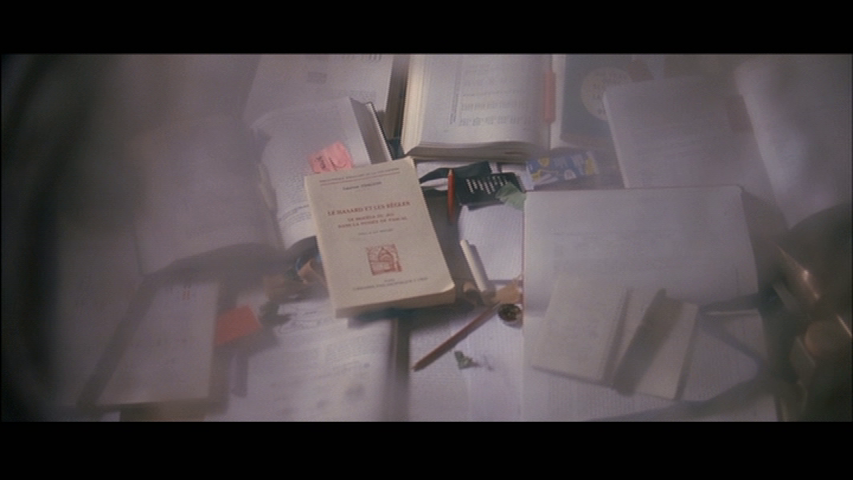
It begins not quite halfway through the film with a shot of a pile of books gradually coming into focus as seen through a frosty window pane.

Screengrab from A Christmas Tale showing a pile of books

Cut to Claude.

Screengrab from A Christmas Tale showing the character Claude.

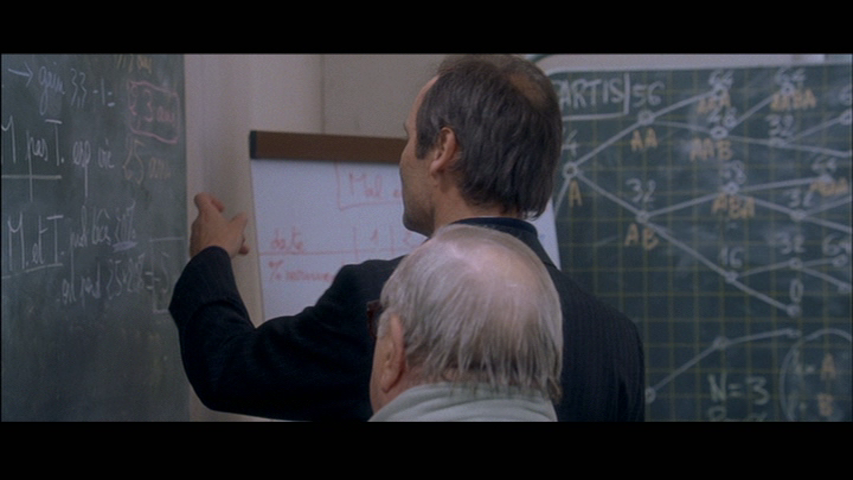
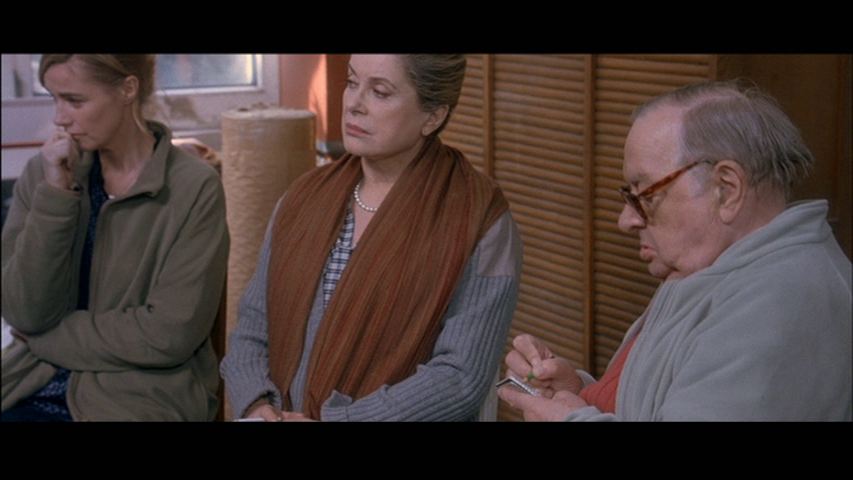
What he’s beholding here are the chalkboards and easel pads which his father in law Abel (Jean-Paul Roussillon) has been using to try to calculate the correct course of action. “What’s this?” he asks.

Screengrab from A Christmas Tale showing Claude and Abel looking at a chalkboard covered in mathematical equations

“I can’t remember what I wrote,” Abel replies. “There’s still a tiny chance that Junon’s not sick.” Claude taps the board.

Screengrab from A Christmas Tale showing Claude tapping on the chalkboard

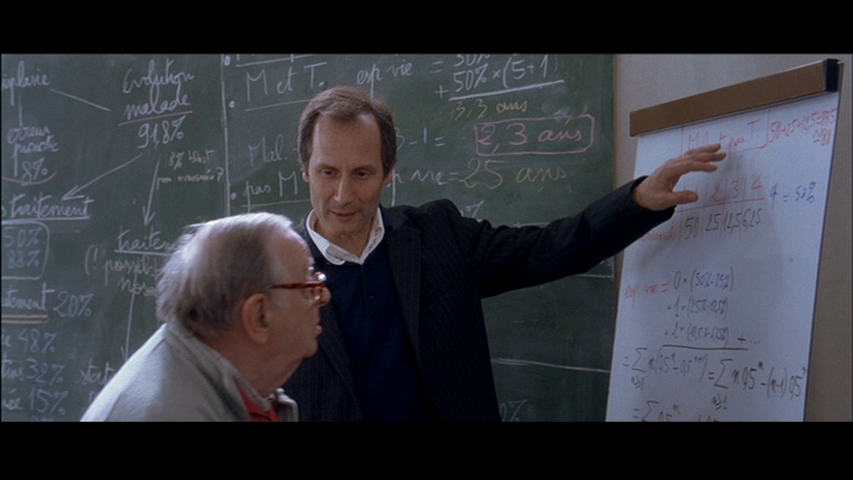
“You’re pessimistic,” he says. “Survival increases life expectancy. This is what you’re scared of. The doctors kill a healthy woman.” “She’d lose five years without being sick!” Abel replies. So Claude goes to work. “You can’t keep reasoning in segments. Counting from one year to another. Junon is going to die at a precise moment. Not on an anniversary.”

Screengrab from A Christmas Tale showing Claude gesturing at an easel pad

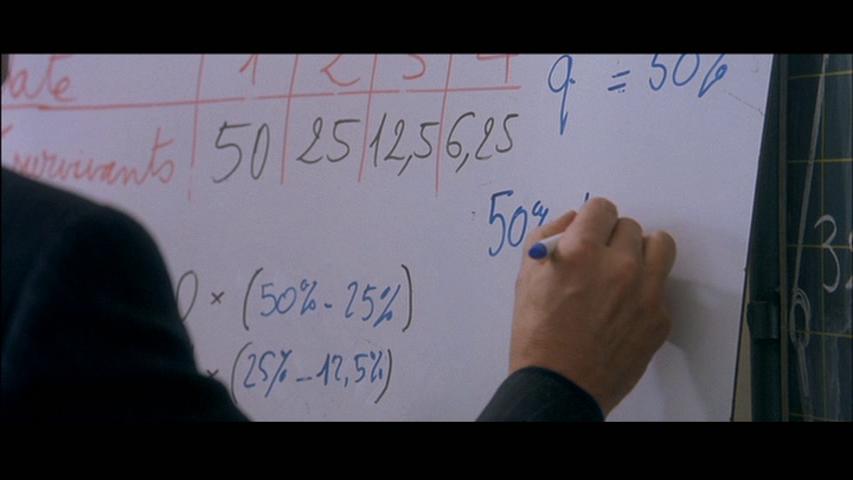
“Getting hurt or dying are absolute events,” he continues. “You don’t die a 10 or 12% death. You get the entire event. The game is on, like it or not. You either treat it or you don’t. You die or you don’t. You’re playing the game. Go from the discrete to the continuous.” He grabs a marker.

Screengrab from A Christmas Tale showing Claude writing a mathematical equation on the easel pad

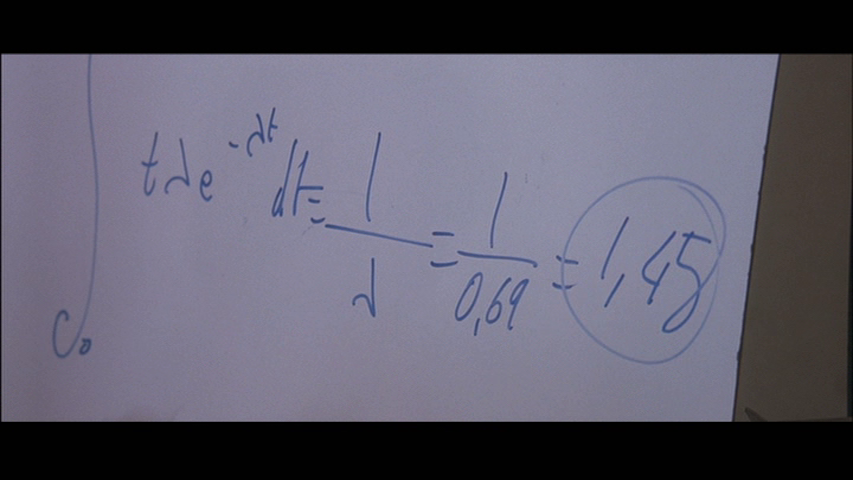
“The ratio is not one half. 50% equals 1 minus exponential minus lambda. Lambda, the logarithm of 2. The survival formula is an integral from zero to infinity.” Abel takes notes on a pad while his wife and daughter Elizabeth (Claude’s wife, who is played by Anne Consigny) listen.

Screengrab from A Christmas Tale showing Abel taking notes on what Claude is saying while Junon and Elizabeth listen

“1.45 years,” Claude declares, circling the answer.

Screengrab from A Christmas Tale showing a mathematical equation with the answer circled.

He switches back to the chalkboard. “No transplant gets you six more months. In the same way, with treatment, this increases to 3.7.” He circles that number, too.

Screengrab from A Christmas Tale showing Claude doing math on a chalkboard

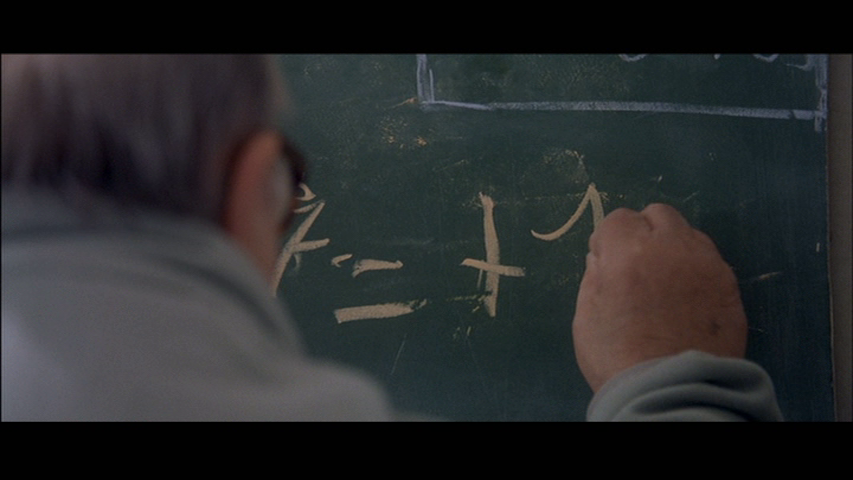
“Now weigh your living five fewer years with its low probability against 2.3 extra years with treatment weighed with a higher probability,” Claude continues. “And you get. . . . ” Abel interrupts him. “May I?” he asks. “Be my guest,” Claude replies. He approaches the board and solves the equation.

Screengrab from A Christmas Tale showing Abel doing math on a chalkboard

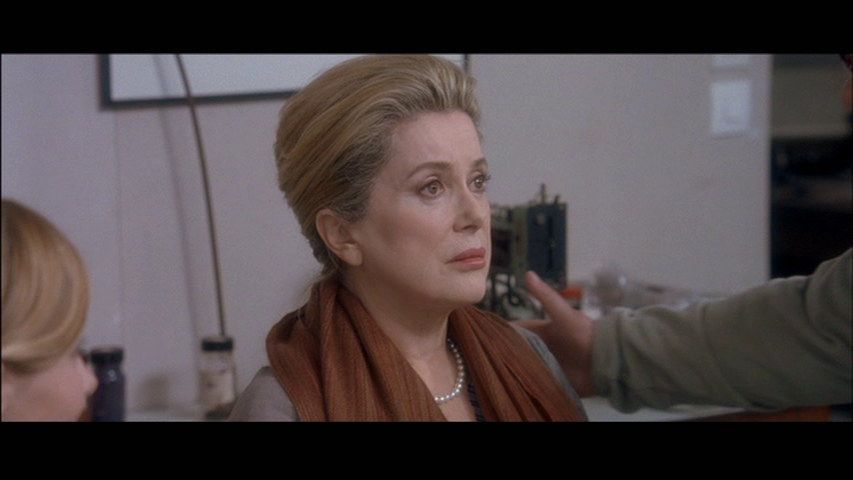
“Sick or not, if you’re treated you gain about two years,” Claude explains. “You’d rather pass. Your only freedom is to bet.” Abel’s response: “That’s better.” Although the expression on Junon’s face makes it clear that she is not similarly reassured, she, too, will eventually come to the same conclusion.

Screengrab from A Christmas Tale showing Junon looking shocked

This scene resonates with me because it basically explains why I got a pi tattoo twenty odd years ago. The idea wasn’t that pi itself has any particular significance for me, but rather that it represents something that does. And this is it! When I first learned about irrational numbers as a child, I was captivated. The idea that you could spend a lifetime calculating, but never succeed in expressing them in decimal form fascinated me, as did the notion that from a practical standpoint, it doesn’t matter! Because pi can be represented by a single character just as surely as the numbers one, two, and three can: π. My twelve-year-old self saw this as inspirational: maybe you can’t ever figure out exactly who you are, but that doesn’t mean you can’t still be useful!

There’s a lesson in this for the Vuillard clan, I think. Each of them is a relentless seeker of meaning, whether they look for it in books, the bottle, or the bedroom. But that isn’t what makes them a family. Similarly, the numbers on Abel’s chalkboards and pads aren’t a perfect representation of reality, but they don’t need to be. Like Claude says, the game is afoot, and that means that even if Junon refuses to act, she is nonetheless making a decision, whether she realizes it or not. By showing her and her family this, Claude illuminates the path they are on and makes others visible. Seeing the paths laid out before them and where they lead, they can choose which one they want to take. Choosing sets them free. How cool is that?

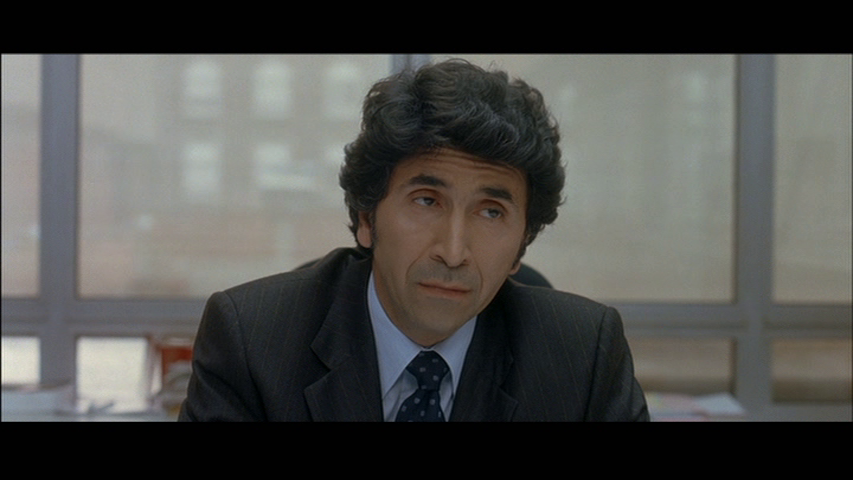
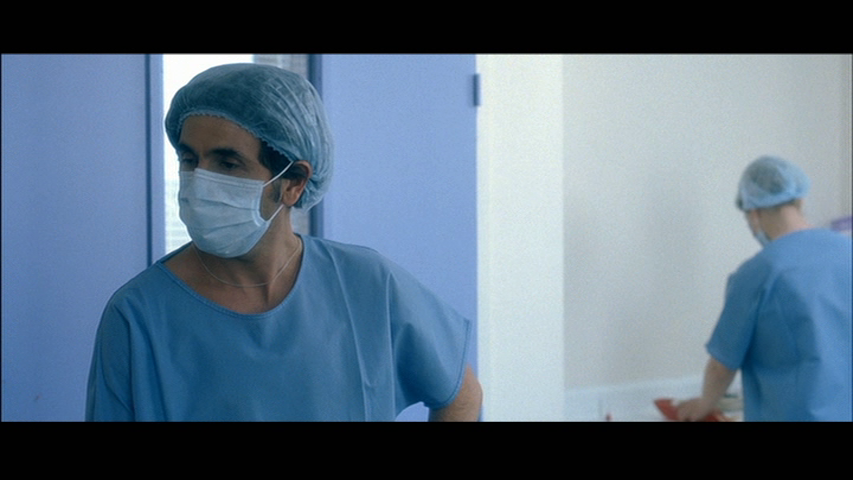
A Christmas Tale is a dense film bursting with references and allusions, wonderful performances, and delightful cinematographic tricks. I could easily write a whole other post on any of those things, and maybe someday I will. For now, though, I’m going to close with an observation that surely must be trite by now, but is new to this blog. I didn’t think there was anything unusual about any of the scenes that featured Doctor Zraïdi (Azize Kabouche):

Screengrab from A Christmas Tale showing Doctor Zraïdi 

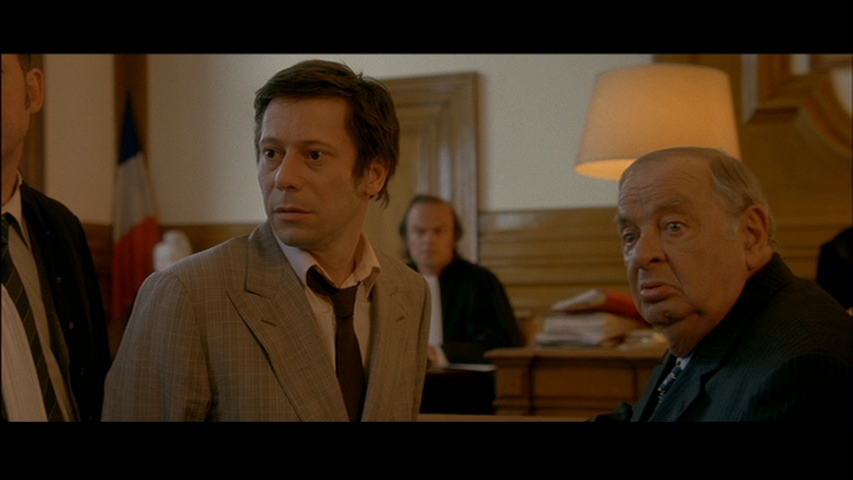
Or any of the scenes that included Henri (Mathieu Amalric):

Screengrab from A Christmas Tale showing Henri

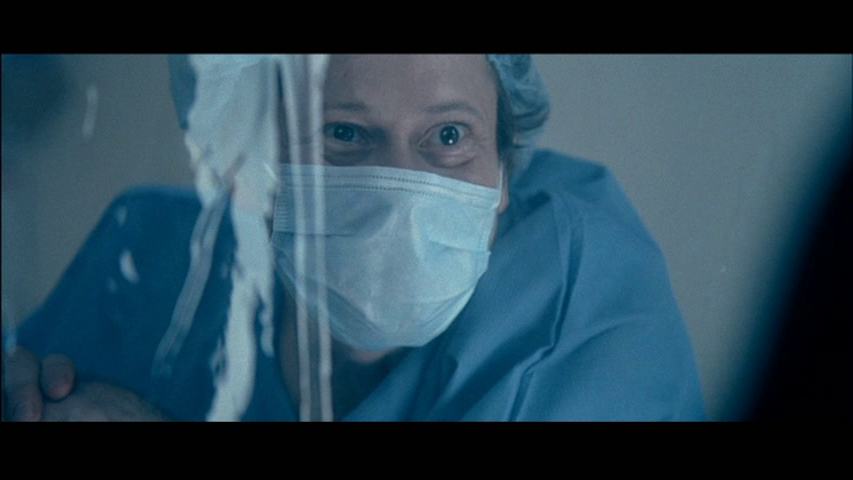
Until very late in the film when they appear like this:

Screengrab from A Christmas Tale showing Doctor Zraïdi wearing a surgical mask
Screengrab from A Christmas Tale showing Henri wearing a surgical mask

Which, this looks more normal to me now! But maybe not for much longer, though? One can hope.

Cheers!

All original photographs in this post are by Marion Penning, aka my loving wife. Other entries in this series can be found here.


February, 2022 Drink & a Movie: Brigadier + Downhill Racer

With the 2022 Winter Olympics now officially under way, the second installment in my new Drink & a Movie series was a no-brainer.

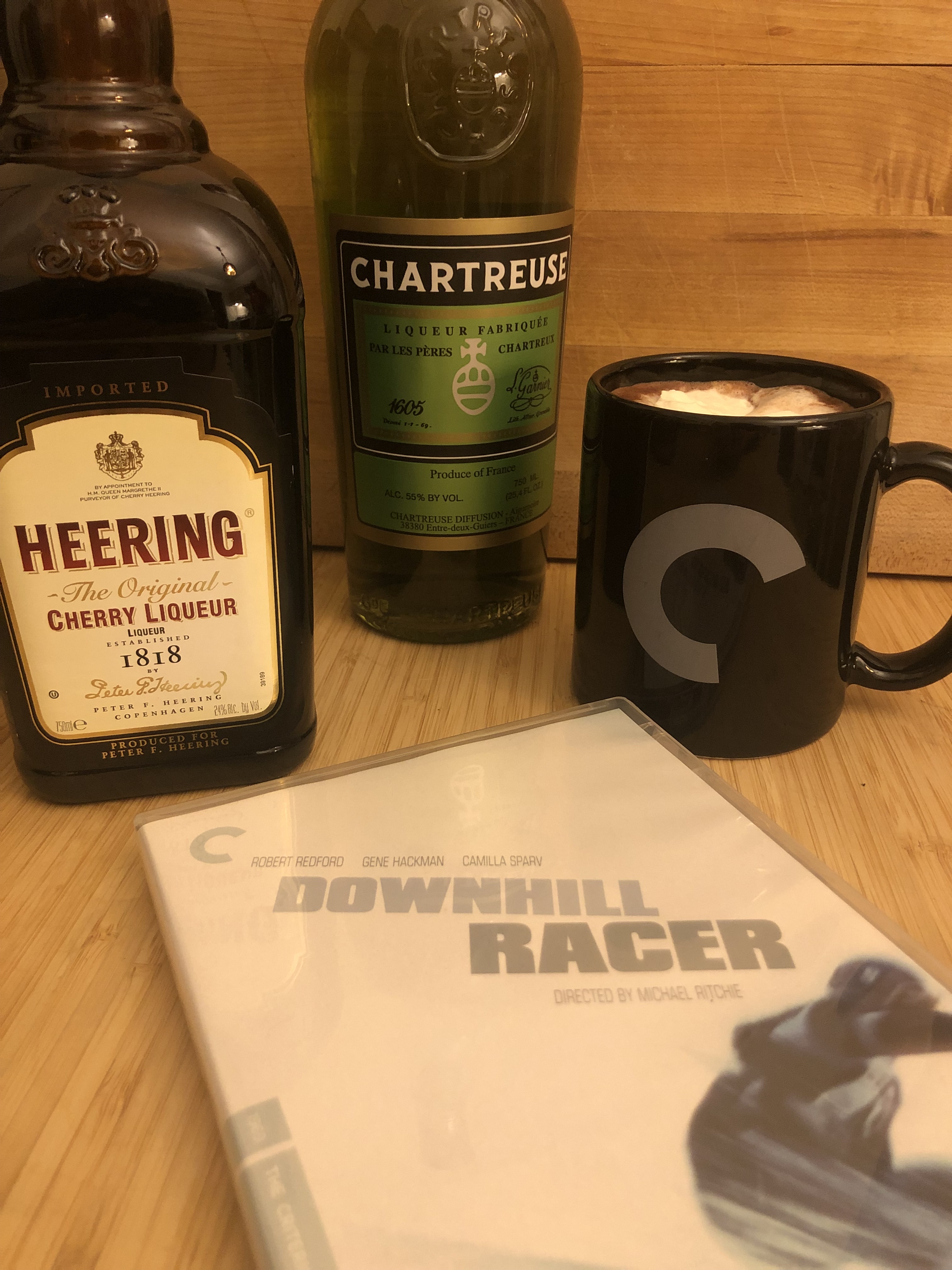
Picture of a Brigadier hot drink, Downhill Racer Blu-Ray case, and bottles of Cherry Heering and Green Chartreuse arranged in a tableau.

Pictured here is the Blu-ray copy of Michael Ritchie’s Downhill Racer I bought a while back from the Criterion Collection store, where it’s still available on both DVD and Blu-ray. The images in this post came from a Criterion DVD that I checked out from my library. Downhill Racer can also currently be streamed via the Criterion Channel with a subscription or Amazon Prime for a rental fee. The drink I chose to go with it is a Brigadier, which Paul Clarke attributed to San Francisco bartender Neyah White when he wrote about it for Serious Eats. Here’s the recipe as I make it:

8 oz. Hot Chocolate
1/2 oz. Green Chartreuse
1/2 oz. Cherry Heering
Sweetened, Chartreuse-spiked whipped cream

Add the booze and hot chocolate to a mug and stir to combine. Top with the whipped cream, being sure not to let the mug overflow, unless of course you like that sort of thing. Drink while piping hot!

Dead simple, right? I like the hot chocolate recipe on pages 172-173 of J. Kenji López-Alt’s The Food Lab for this, both because it’s not too sweet (you get a lot of extra sugar from the spirits) and to keep things in the Serious Eats family. For the whipped cream, I made myself measure and it turns out that I use about two tablespoons of confectioners’ sugar and a 1/2 ounce (aka one tablespoon) of Chartreuse per one cup of heavy cream. The consistency doesn’t really matter, since the whipped cream will melt in the heat of the cocoa pretty quickly, but I go for something dollop-able. As far as ratios are concerned, Clarke mentions that you can use up to one ounce each of the two spirits, but I find that half is plenty, especially with the extra hit of Chartreuse from the whipped cream. I highly recommend experimenting, though!

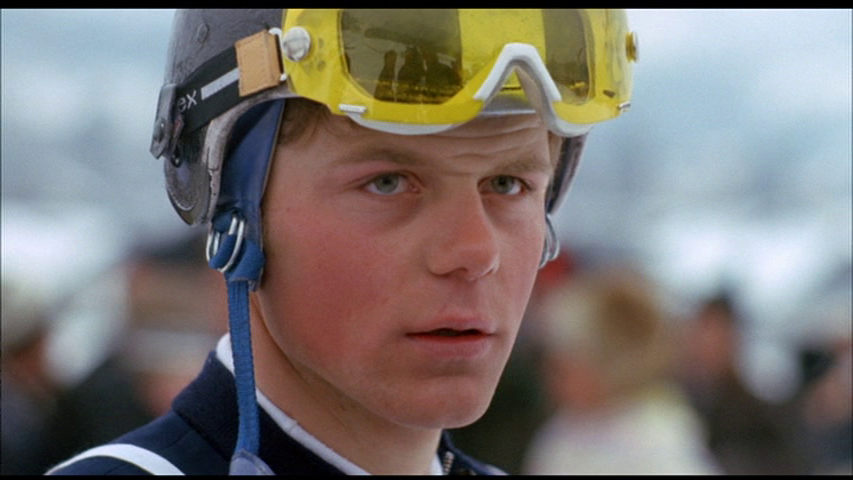
This drink is exactly what I would want to be handed should I ever find myself stepping into a chateau in the French Alps after a day of downhill skiing. It’s warm and rich and the Chartreuse (one of my very favorite things in the whole world) hails from the Aiguenoire distillery in Isère, France, one of the locations where Downhill Racer was filmed. Speaking of which: Downhill Racer may be best known for the POV footage shot by Joe Jay Jalbert, which was cutting edge for its time (see this interview with him by Hillary Weston for more details).

Screengrab from Downhill Racer shot from the point of view of a skier.

Starting with the very first images, a close up of the wheels on a ski lift followed by dramatic mountain landscapes, Ritchie and his production team (including cinematographer Brian Probyn and editor Richard Harris) also do a wonderful job of capturing the experience of competing in and watching downhill skiing events by serving up grand and granular views of the sport in perfect proportion to one another:

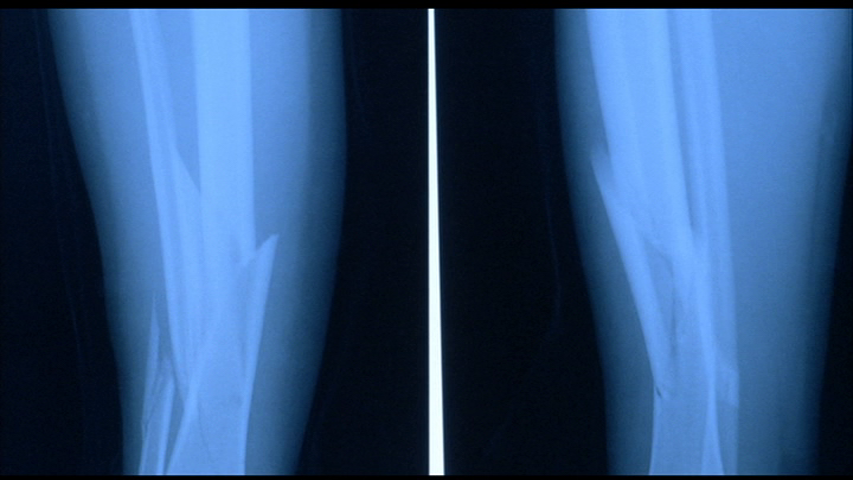
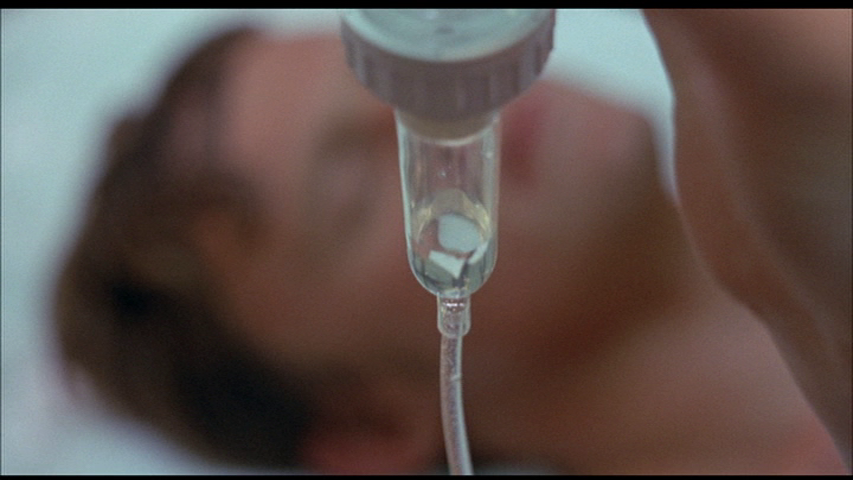
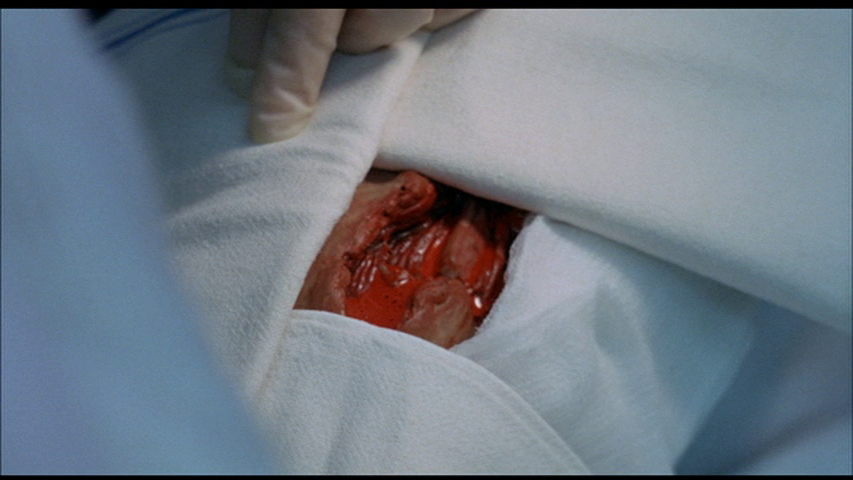
The same attention to detail is brought to scenes of a skier being treated in a hospital following a crash:

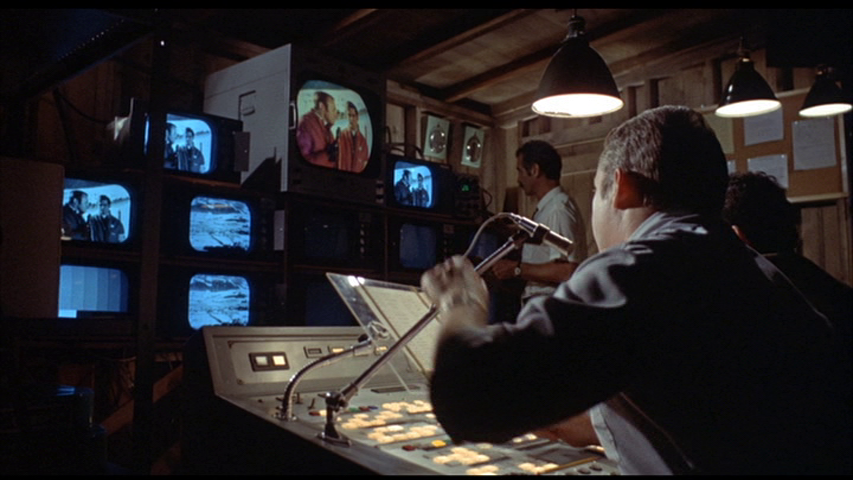
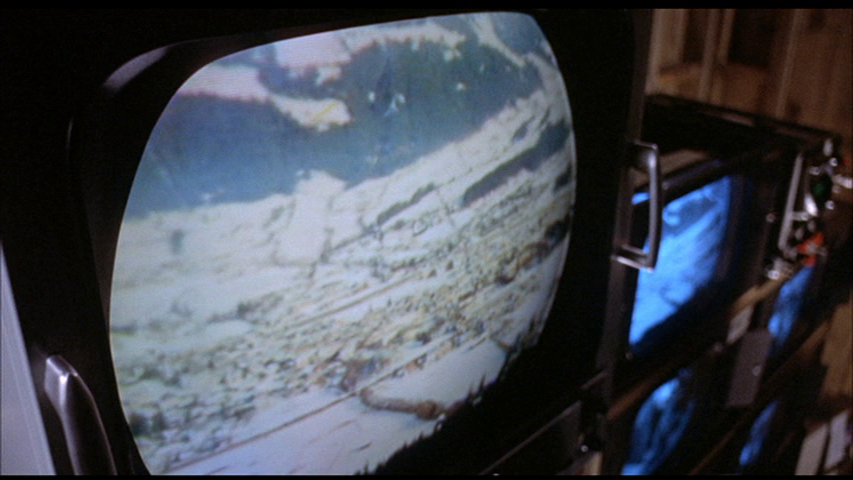
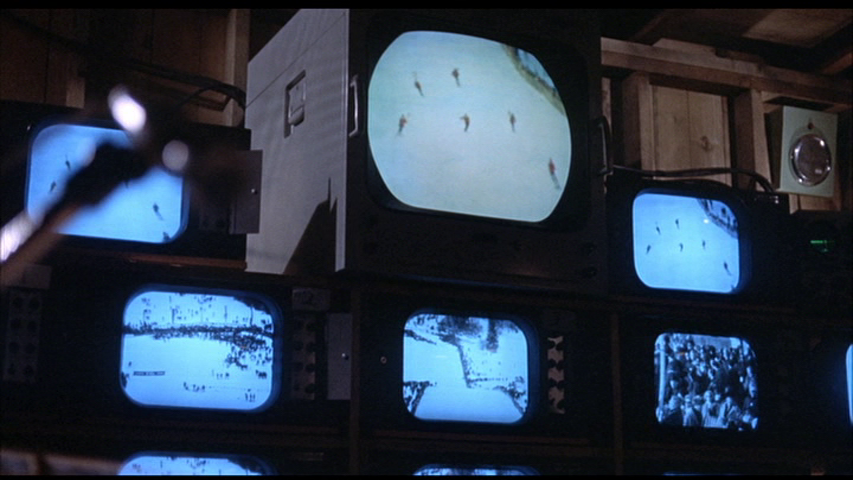
And to the television broadcasts of the various skiing events shown in the film:

It’s the latter in particular that make this a perfect film to watch right now. Downhill Racer‘s subject isn’t just skiing or sports in general, but rather how sport is mediated through television, which is how I’m assuming everyone reading this blog will experience the 2022 Winter Olympics. It may be enough for a sports fan to say that the best athlete won the race, but networks pay a lot of money for the broadcast rights to events like the Olympics in the hope that they can convince more than just sports fans to tune in. The way they do this is by relentlessly mining for the meaning behind each gold. What I like most about Downhill Racer is the way it shuffles through the same sort of narrative explanations for Dave Chappellet’s (Robert Redford) eventual triumph that we’ll hear again and again over the course of the next two weeks without really appearing to subscribe to any single one. There are at least five by my count:

  1. Chappellet is talking to his coach Eugene Claire (Gene Hackman) after the last race of the season. Chappellet, who had the best time through the first half of the course but then crashed, is saying that he could have won if he had been given a better starting position. “No,” says Claire. “What do you mean ‘no’?” asks Chappellet. “You just weren’t good enough, that’s all,” says Claire. “You lost your strength, and then the bumps took you out, that’s it. You’ve got to have your strength right up to the end. These guys aren’t amateurs, they’re national heroes. You’re trying to beat them out of their way of life. You’re just not strong enough.” The very next scene shows Claire’s fellow coach Alec Mayo (Dabney Coleman) making Chappellet run extra laps during offseason training. Chappellet starts to actually win races the following season.
  2. Back home in Idaho Springs, Colorado, Chappellet’s father (Walter Stroud) says, “I just hope you don’t end up asking yourself the same question some folks ask me: ‘what’s he do it for?'” Chappellet says it’s because he’ll be famous and a champion. “World’s full of ’em,” his father replies.
  3. Shortly before the Olympics, Chappellet’s girlfriend Carole (Camilla Sparv) abandons him over Christmas, prompting Chappellet to end things in a terrific bit of acting involving a car horn. Is this the moment when he finally dedicates himself fully to skiing?
  4. Or is it maybe when Claire chews him out for challenging his teammate to a race after practice which results in the latter crashing? “It comes from a certain consideration for the sport,” Claire says,” a desire to learn. That’s something you never had. You never had a real education, did you? All you ever had were your skis, and that’s not enough.”
  5. But no, it surely has to be when that same teammate crashes again during their next race and suffers an injury that will cause him to miss the Olympics, right? After all, what could be more powerful motivation than the desire to win one for the Gipper?

The film’s point isn’t that none of these explanations are true or that it doesn’t matter: it’s that it can’t possibly be so simple. At the end of the day all we really know for sure is that Chappellet didn’t win a championship during his first season in Europe because he crashed, and that he does win a gold medal two years later because an unnamed German fails to capitalize on his own blazing-fast start for the same reason. Chappellet briefly catches that skier’s eye after the race:

Screengrab from Downhill Racer showing the aforementioned German skier catching the eye of Dave Chappellet.

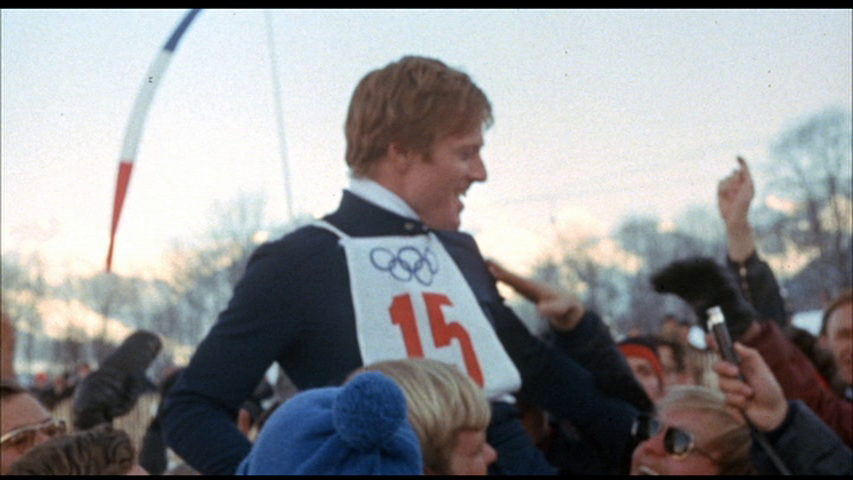
But the film ends with the crowd hoisting Chappellet on its shoulders:

Screengrab from Downhill Racer showing Dave Chappellet being hoisted upon the crowd's shoulders after his gold medal victory.

It’s not so much that we only care about him because he won: rather, if it wasn’t for the good people at NBC, most of us wouldn’t even know that there was a human being named Dave Chappellet who we could choose to care about or not in the first place.

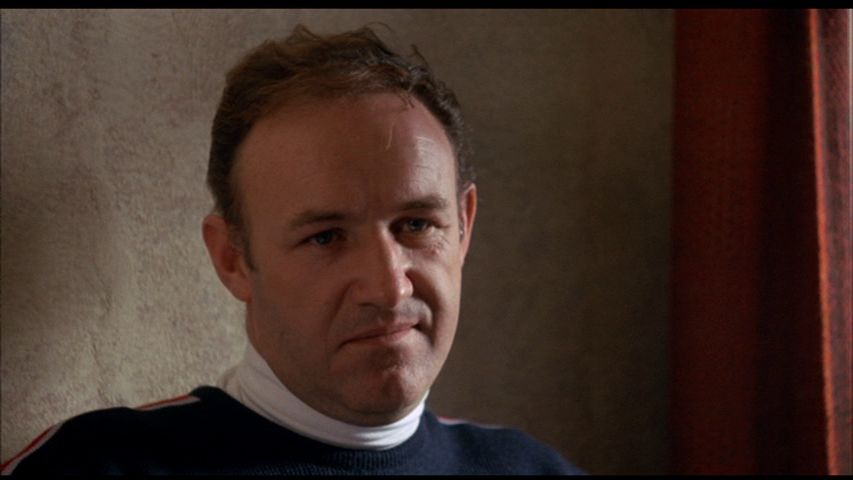
I would be remiss if I didn’t include at least one screengrab featuring Gene Hackman, since his smirks are one of my very favorite things about Downhill Racer. Here’s one:

Screengrab from Downhill Racer showing Gene Hackman smirking.

And actually, here’s another one from one of the scenes showing him hustling for funding for the U.S. national ski team, which I also enjoy:

Screengrab from Downhill Racer showing Gene Hackman's character trying to raise funds for the U.S. national ski team.

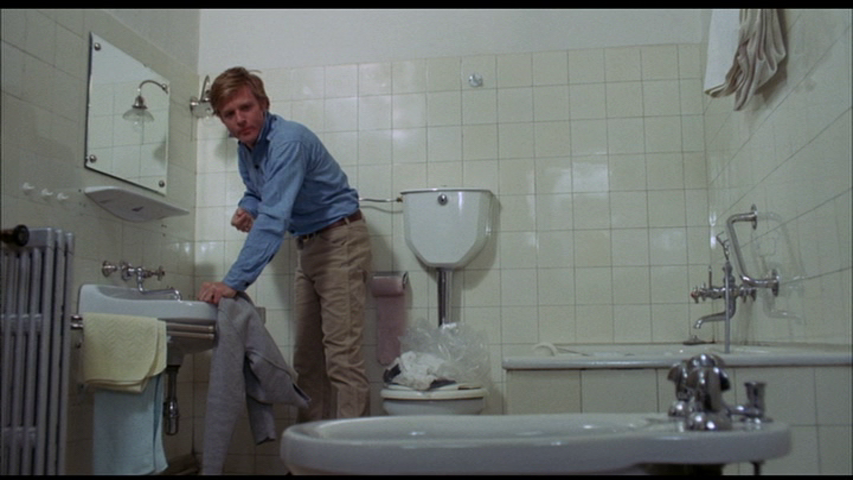
Last but not least, here’s Robert Redford contemplating a bidet:

Screengrab from Downhill Racer showing Robert Redford's character contemplating a bidet.

Cheers!

All original photographs in this post are by Marion Penning, aka my loving wife. Other entries in this series can be found here.


January, 2022 Drink & a Movie: Standby’s Corn ‘n Oil + The Tamarind Seed

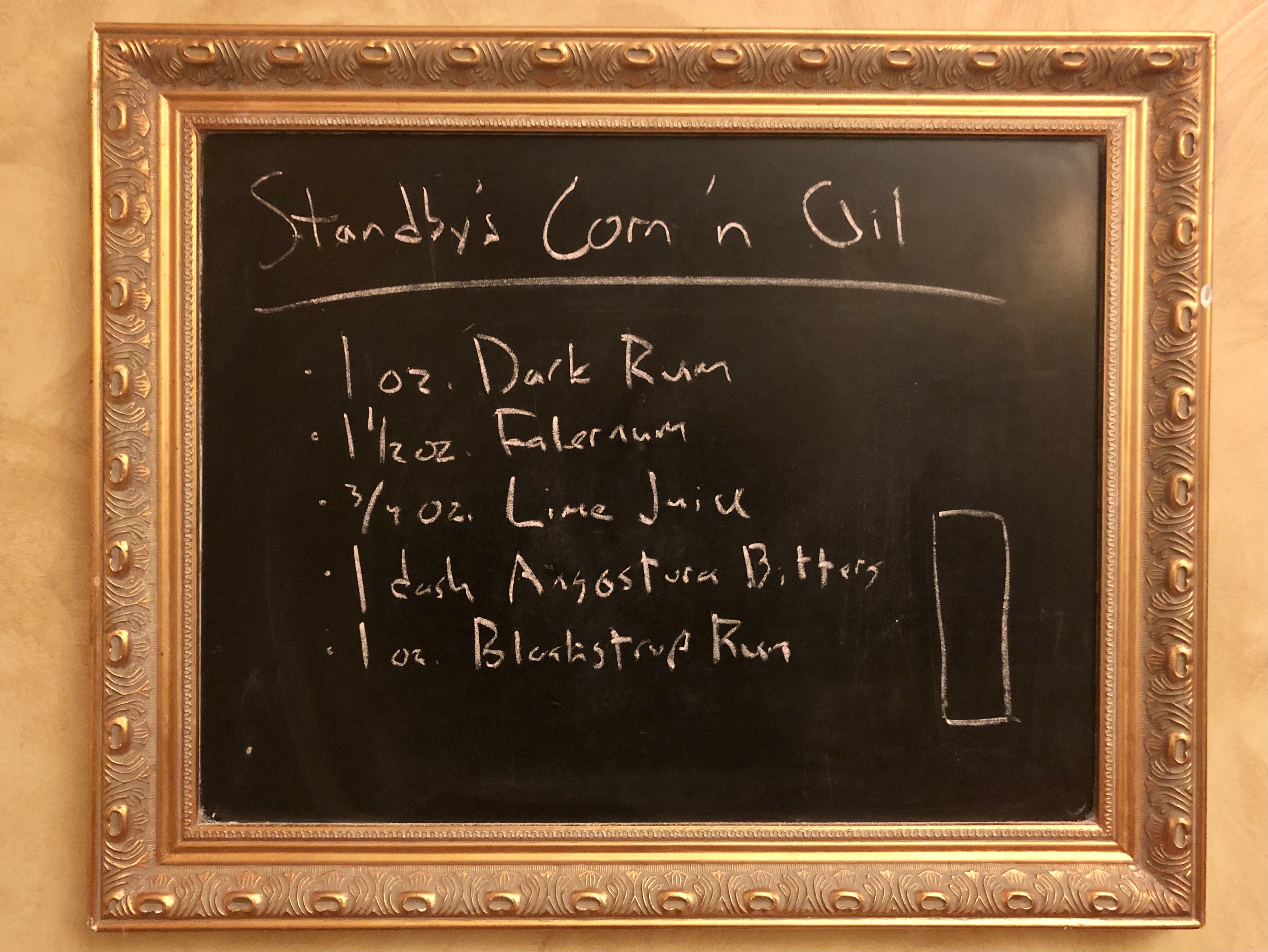
I’ve always enjoyed creating New Year’s resolutions, and this year the choice was easy: blog more! When I started this site in 2018, it was important to me not to stress myself out by creating unsustainable expectations for how much content I was going to produce. I really do want to write, though, and it has become increasingly clear to me that one of my biggest problems is that I’m out of practice. While pondering this situation the other day, I found myself staring at this chalkboard in my dining room:

Chalkboard with a cocktail recipe on it

If you’re standing in my house, odds are you know that I love cocktails and that I don’t need much prompting to offer you one. This board, which I update once a month or so, is an invitation to ask me to do so and an order suggestion based on the spirits, syrups, and juices we have on hand. Currently it features a Corn ‘n Oil recipe from the Detroit cocktail bar Standby published by Imbibe Magazine a few years ago. This drink is the best application I’ve found for the Maggie’s Farm Falernum Liquor (made by a distillery located in my old stomping grounds of Pittsburgh) my loving wife got me for my birthday last year and a fine use for the bottle of Cruzan Black Strap Rum I always seem to have in my liquor cabinet as well. The clove notes in the falernum also create a bridge to the recently expired holiday season, while the tropical flavors are just the ticket for a brief respite from the cold of early January in upstate New York.

Suddenly it hit me: what if I picked a movie to go with this drink? And then came up with additional pairings and posted them monthly throughout the rest of the year? I was fond of the TBS television series Dinner & a Movie as a youngster and have always thought that as a person who spends most of my waking moments thinking about either food or film, there surely must be a way I could run with this basic concept. I’ve never had any luck coming up with anything before now, but maybe this was it? After all, I’m basically doing this all the time anyway, I just need to start showing my work.

So that’s the gimmick! Each month, I will highlight a cocktail and a film on this blog that I think go well together. Although in the future the inspiration for these posts could begin with cinema or spirits, I decided to stick with what was already on the board for the first installment. And so I bring you a drink, Standby’s Corn ‘n Oil:

1 oz. Dark Rum (Plantation Original Dark)
1 1/2 oz. Falernum (Maggie’s Farm)
3/4 oz. Lime Juice
1 dash Angostura Bitters
1 oz. Black Strap Rum (Cruzan)

Shake dark rum, falernum, and lime juice with ice until chilled and strain into a Collins glass. Add crushed ice, then float the black strap rum and bitters over the top to combine. Standby and Imbibe recommend stirring to combine before drinking, and I don’t disagree, but make sure you take a second to admire it first!

Corn 'n Oil cocktail in a Collins glass

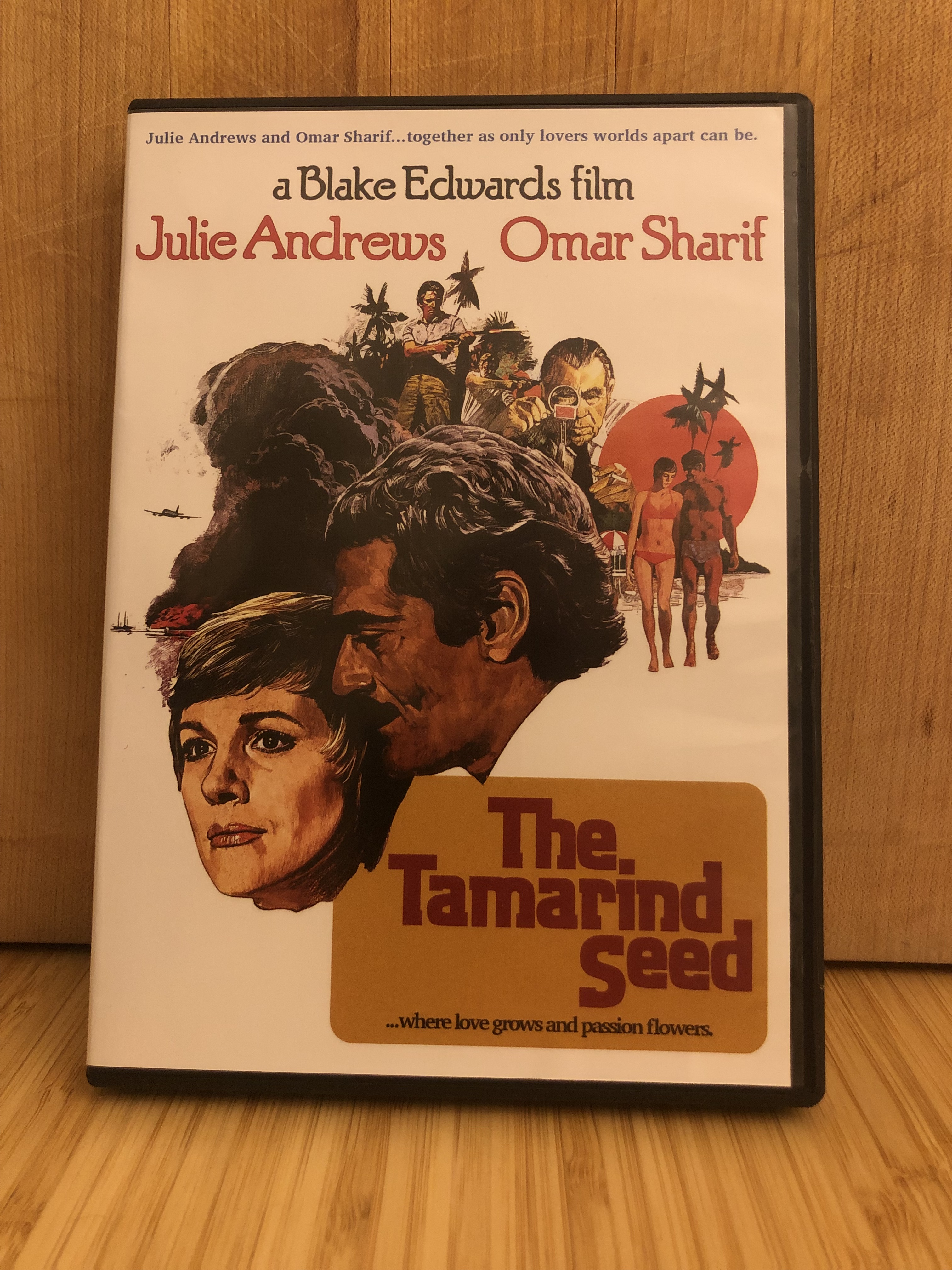
And a movie, Blake Edwards’s The Tamarind Seed:

The Tamarind Seed DVD case

Pictured here is the DVD I bought on Amazon. The film is also available on Blu-ray and can currently be streamed via Amazon Prime for a rental fee and the Roku Channel for free. The main reason I selected it is because it was shot on location in Barbados, birthplace of falernum. This is also one of the reasons I prefer to use Plantation Original Dark, since it hails from the same place. It’s also lighter in color than many dark rums, and although master distiller at R.L. Seale (creator of John D. Taylor’s Velvet Falernum, the most well-known version of the spirit) Richard Seale disputes the notion that the Corn ‘n Oil is named after its appearance (he believes it’s actually a biblical reference), the striking contrast between the dark and light hues in Standby’s rendition of the drink is one of my favorite things about it. The visual style of The Tamarind Seed echoes this in a red/blue two-color motif which first appears in the titles designed by James Bond veteran Maurice Binder and recurs throughout the film:

Screengrab from the Tamarind Seed showing Omar Sharif's face tinted red and Julie Andrews's face tinted blue

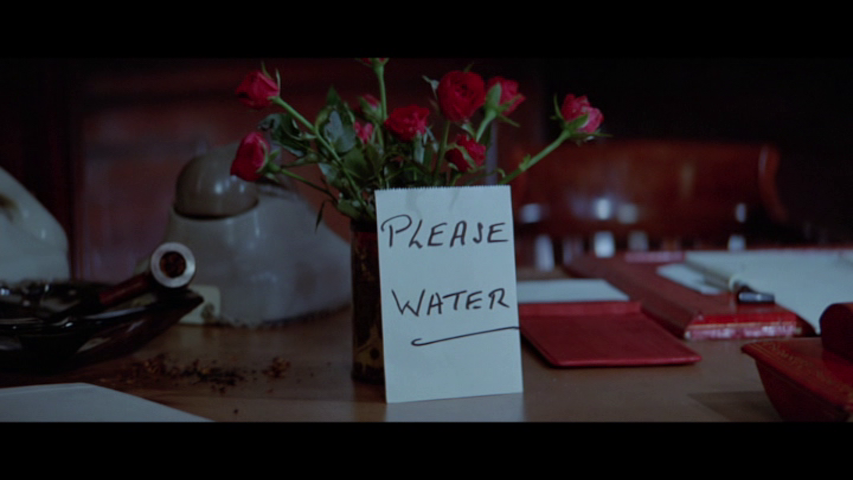
More importantly, this is a thoroughly grown-up film to enjoy with your adult beverage. Despite the fact that it’s a Cold War drama, characters are defined as “good” or “bad” based on how they treat each other and the world (I submit that the sign below which appears at around the halfway mark is a pivotal moment in the film) rather than which side they’re on, and their uncommonly intelligent dialogue reflects an awareness of the fact that this is a minority viewpoint.

Screengrab from The Tamarind Seed showing a sign reading "Please Water" placed in front of a bouquet of flowers

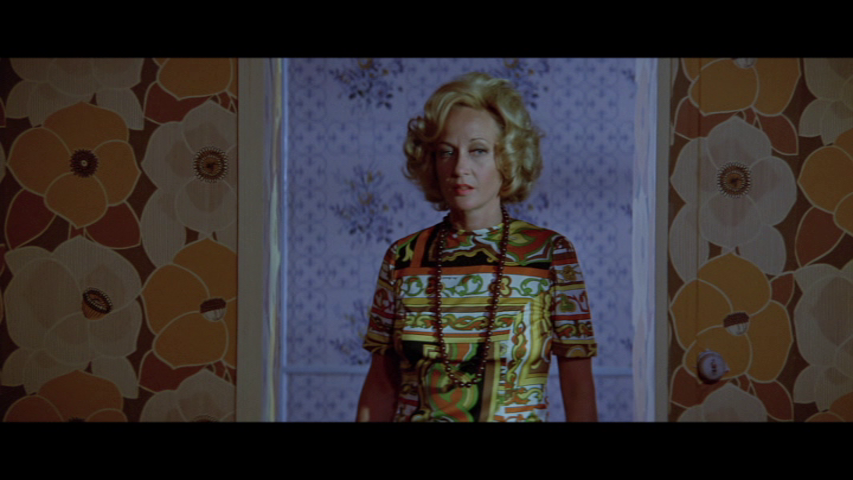
The Tamarind Seed is quite lovely to look at, a few baffling (to this child of the ’90s) aesthetic choices aside:

Screengrab from the Tamarind Seed showing a woman in a garish earth-toned dress in a room with two different floral wallpapers

I’m particularly fond of the use of mirrors and windows to create baroque compositions like this one:

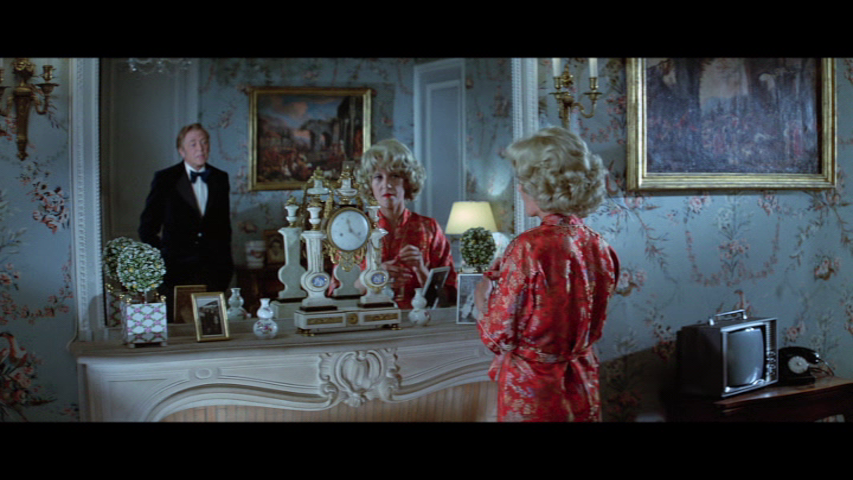
Screengrab from The Tamarind Seed showing a woman and a man standing in front of a mirror with many other things in the frame

And to foreshadow future plot developments:

Screengrab from The Tamarind Seed showing Julie Andrews reclining in front a glass door that Omar Sharif is reflected in, making it look like they're next to each other

Which, why yes, that *is* Omar Sharif in a bright yellow robe!

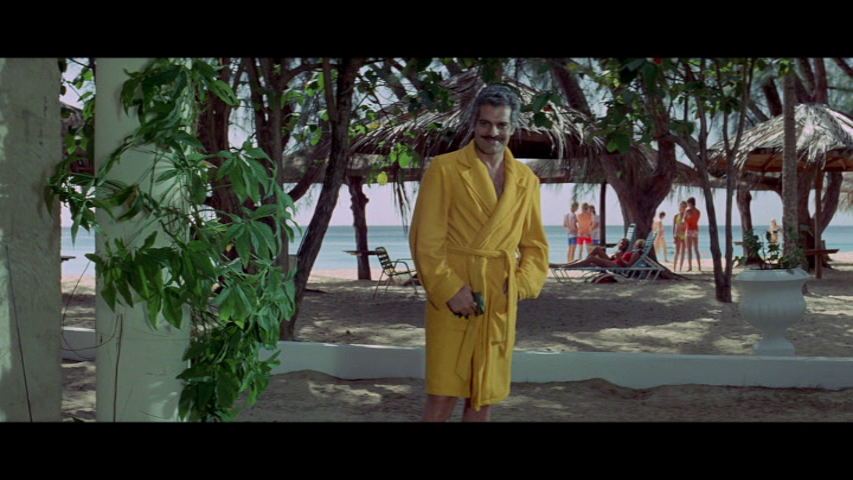
Screengrab from The Tamarind Seed showing Omar Sharif in a bright yellow robe

He dons it again near the end of the film in one of my favorite sequences, which builds tension through John Barry’s effective score, deep-focus photography:

Screengrab from The Tamarind Seed showing Julie Andrews talking on the phone in front of a window through which you can see a boat
The boats in this image and the next bear the would-be agents of our heroes’ demise

And more reflections:

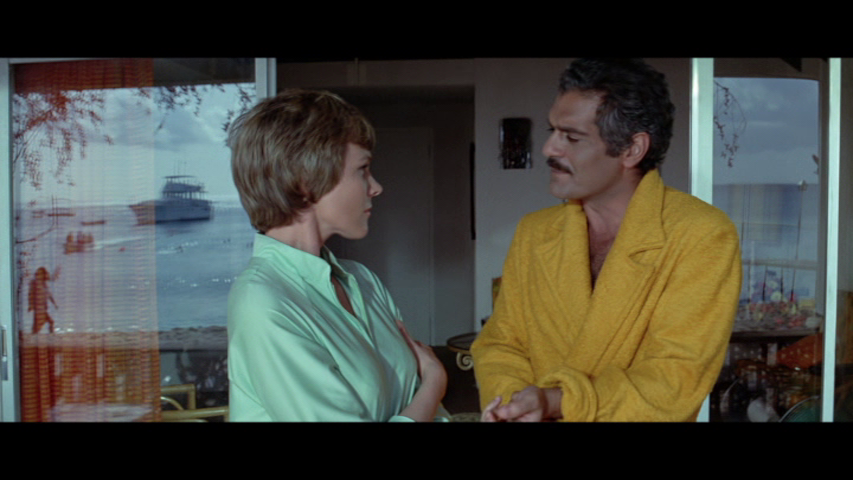
Screengrab from The Tamarind Seed showing Julie Andrews and Omar Sharif shot through a window that two boats are reflected in

The supporting cast is terrific, especially Anthony Quayle, and it can even be quite funny at times (“Has it ever occurred to you that I might be slightly frustrated myself?” says Julie Andrews after almost two hours of refusing to go to bed with Sharif). Throw in a few breathtaking Bajan sunsets:

Screengrab from The Tamarind Seed showing a sunset

And you have the perfect companion to a tropical libation, not to mention a film that I’m surprised I haven’t heard more about.

Cheers!

All original photographs in this post are by Marion Penning, aka my loving wife. Thanks, Mep! Future entries in this series will be findable here as soon as they exist.

Happy (Belated) New Year!

Chicago Nog

When I launched this blog two Septembers ago, I promised myself that I wouldn’t aspire to any particular standards for volume and timeliness. No matter what happened, I didn’t want this site to fall victim to the same fate that befell so many of its predecessors, a vicious cycle of unrealistic expectations resulting in guilt and unhappiness and leading inevitably to deletion. And so it is that I bring you a post about my favorite of all Christmas movies, National Lampoon’s Christmas Vacation, in February. I had originally hoped to also publish a deep dive into just *why* love it so much, but life got in the way. I’m still planning to finish that post in time for next year’s holiday season, but in the meantime please enjoy the story behind and recipe for the beverage depicted above, an original creation I call Chicago Nog!

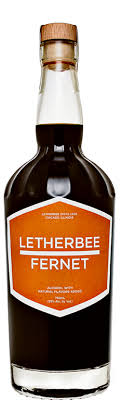
My starting off point was a drink called San Francisco Nog that I read about on Frederic Yarm’s Cocktail Virgin Slut blog a few years ago. For my first attempt at a drink inspired by Christmas Vacation, I simply substituted a Chicago-based spirit, Letherbee Distillers’ Fernet, for the Fernet Branca in this recipe:

Letherbee Fernet

It was good, but basically tasted exactly the same, so I next tried a different Letherbee product, Besk:

Letherbee Besk

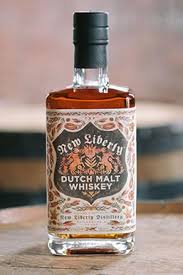
The result tasted overwhelmingly of licorice, so I experimented with different combinations of Fernet and Besk before concluding that something was missing. Thinking about one of my favorite cocktails of all time, Jeffrey Morgenthaler’s Amaretto Sour, I first sought help from Jack Daniels, which definitely resulted in a more balanced drink. The light bulb really went off, though, when I switched this out for a housewarming present from my best friend Anthony, who used to live in Chicago and who jump-started my interest in mixology by taking me to The Violet Hour for the first time, New Liberty Dutch Malt Whiskey:

New Liberty Dutch Malt Whiskey

From there it was a simple matter of replacing the Sugar In The Raw I was using with a a 50-50 mixture of Lyle’s Golden Syrup and water for the sake of convenience and figuring out the optimal ratio of Besk to Fernet. I finally landed on the following:

  • ¾ oz. New Liberty Dutch Malt Whiskey
  • ½ oz. Letherbee Besk
  • ¼ oz. Letherbee Fernet
  • ¾ oz. cream
  • 1 oz. golden simple syrup
  • 1 egg yolk
  1. To make golden simple syrup: shake together equal quantities of Lyle’s Golden Syrup and water. 
  2. To make drink: dry shake all ingredients, then shake with ice. Serve in a moose glass, garnished with freshly grated nutmeg.

The drink is funky and sweet with a complex bitter finish, not entirely unlike Clark Griswold’s big family Christmas. It’s probably not for ALL tastes, but I definitely kept coming back for more, and will make this every year moving forward!

Sweet Vermouth on the Rocks with a Twist

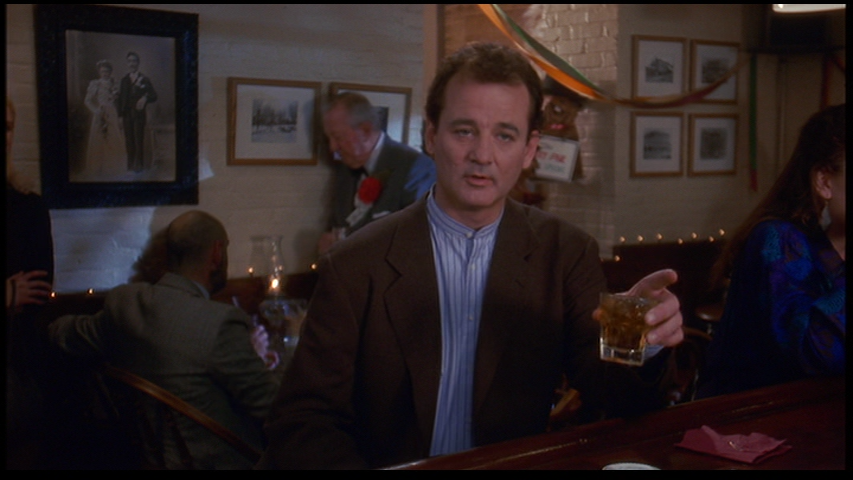
Eighteen minutes into Groundhog Day, weatherman Phil Connors (Bill Murray) sits in the bar of the Pennsylvanian Hotel and orders “one more of these with some booze in it”:

Screengrab from Groundhog Day #1

Judging from its appearance and subsequent scenes, the drink in question is most likely Jim Beam on the rocks with a splash of water, which Phil orders from the same bar later in the movie, using his fingers to indicate exactly how much of each component he wants:

Screengrab from Groundhog Day #2

It might also be Jack Daniels, which I think is what he is swigging from the bottle in this scene:

Screengrab from Groundhog Day #3

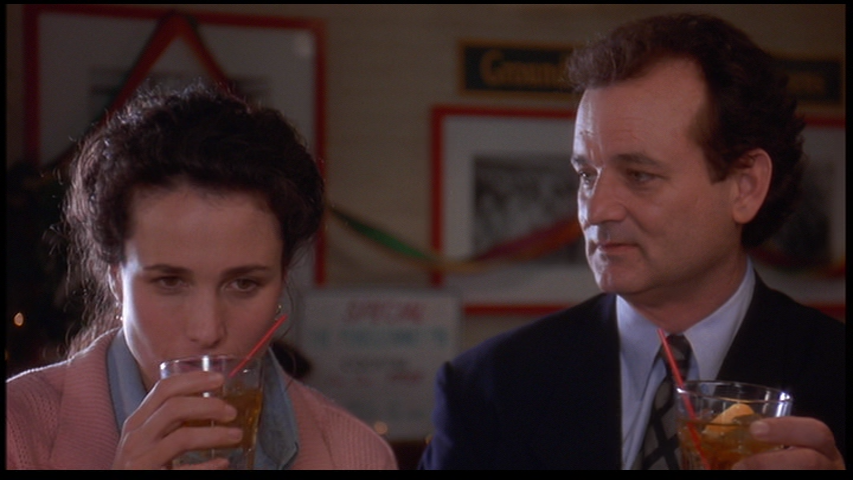
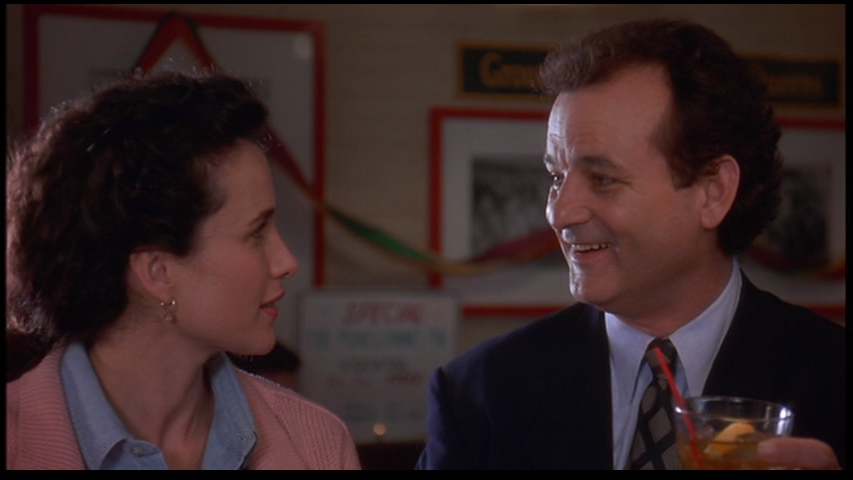
Either way, Phil seems to be partial to whiskey. His producer Rita (Andie MacDowell) is not: her tipple of choice, as we learn from her first drink order, is “sweet vermouth on the rocks with a twist.” Upon discovering that he is stuck in Punxsutawney, Pennsylvania living the same day over and over, Phil decides to seduce Rita to pass the time. His plan begins back in the bar at the Pennsylvanian. “Can I buy you a drink?” he asks her. When she says yes, he not-so-innocently requests “sweet vermouth, rocks, with a twist, please.” After telling the bartender (John Watson Sr.) she wants the same, Rita turns to him with a smile. “That’s my favorite drink!” she exclaims. “Mine, too!” he replies with mock astonishment. “It always makes me think of Rome, the way the sun hits the buildings in the afternoon.” He proposes a toast to the groundhog, but it falls flat (more on this in a bit):

Screengrab from Groundhog Day #4

So he takes a sip of his drink. It’s the face he makes next that I want to talk about first:

Screengrab from Groundhog Day #5

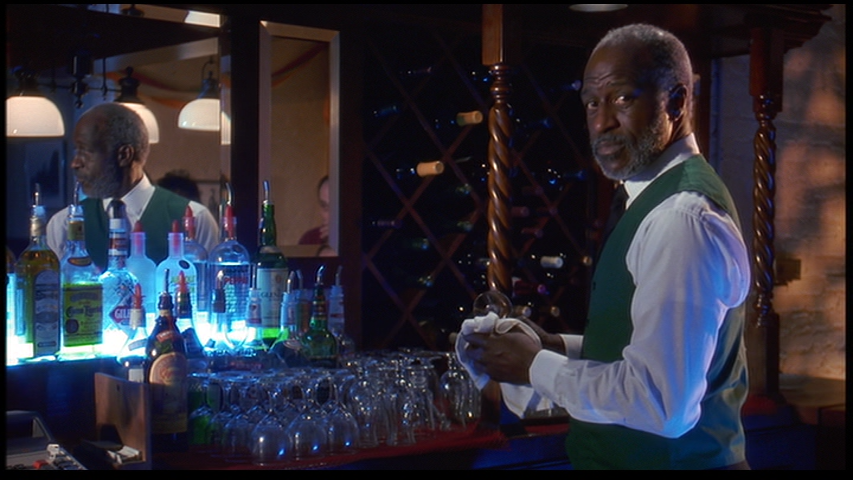
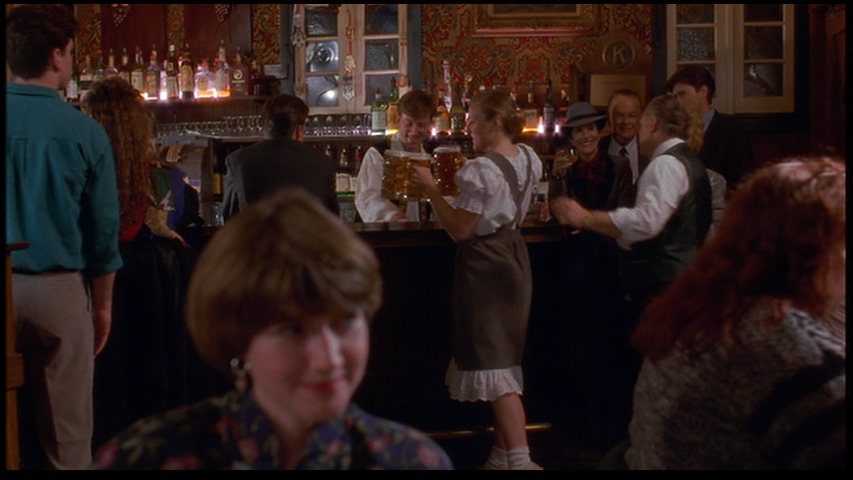
Obviously, he’s not a fan. But why not, and what does it tell us? A good starting point is to try to determine what exactly they’re drinking. Unfortunately, the film itself is of little help in this regard. There’s only one good shot of the backbar at the Pennsylvanian:

Screengrab from Groundhog Day #6

You actually can make out quite a few labels: I see Jose Cuervo Especial, Bushmills Irish Whiskey, Kahlua, Glenlivit, and Absolut Peppar, for instance, but nothing clearly identifiable as sweet vermouth. There’s another shot in the film that theoretically could tell us something about what brands were available in Punxsutawney at the time, of the backbar at the German restaurant where Phil and Rita eat dinner later that evening, but it’s similarly unhelpful:

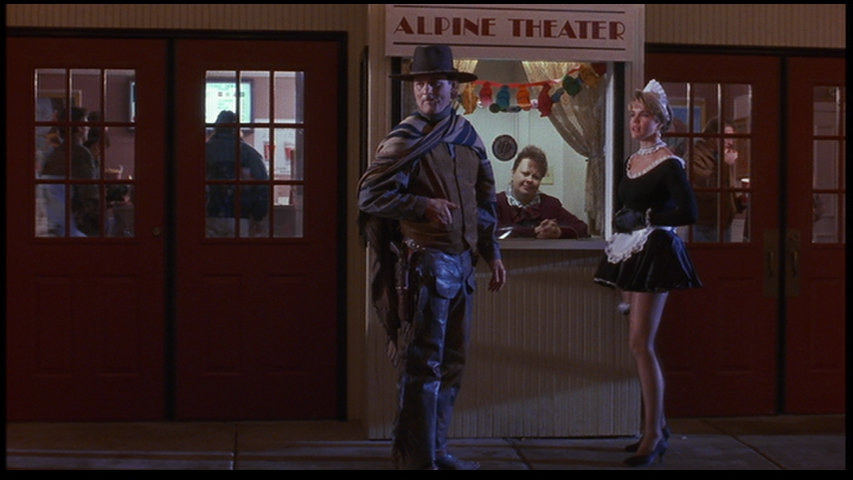
Screengrab from Groundhog Day #8

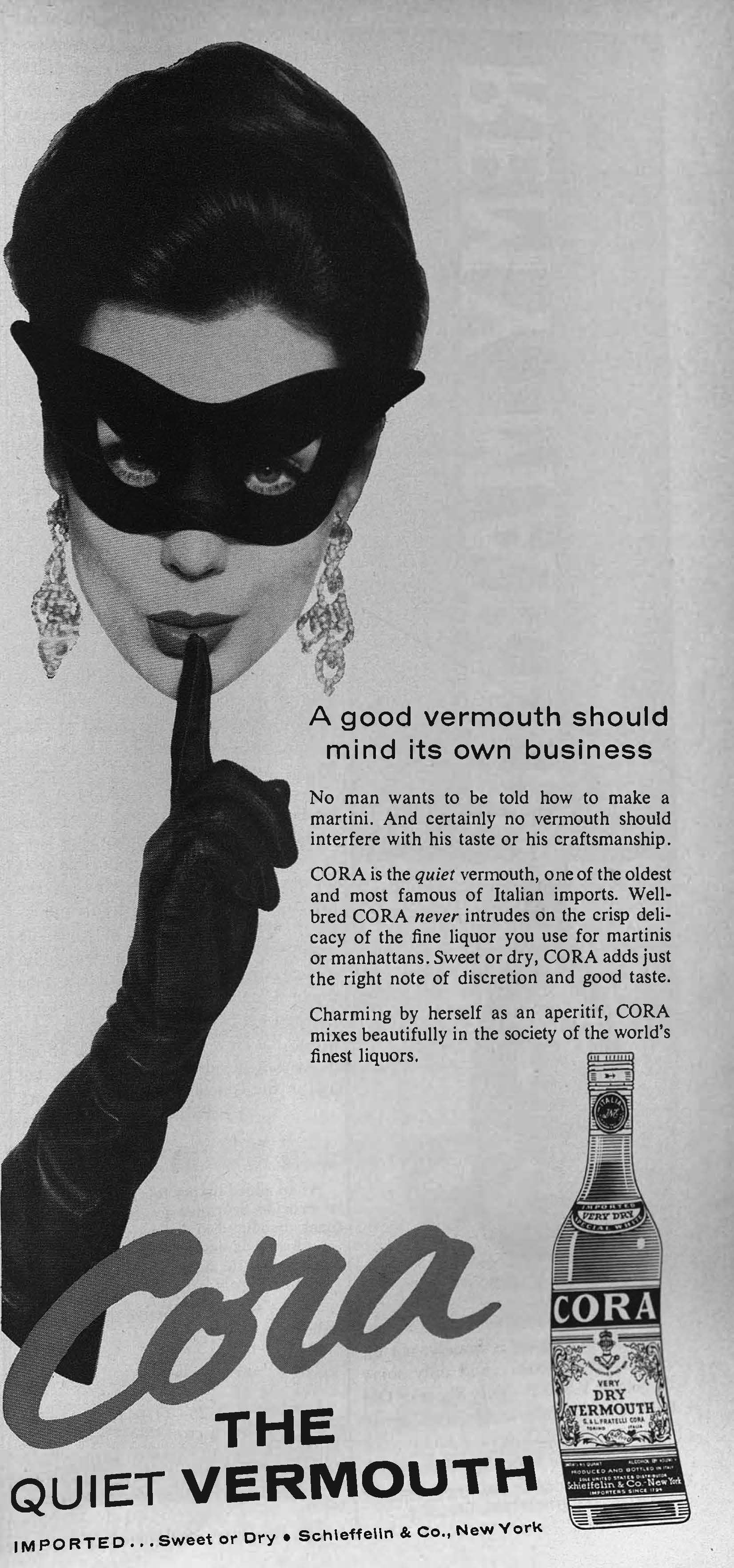
I see Maker’s Mark, J&B Scotch Whisky, Tanqueray, Frangelico, and a few other things here, but again, no vermouth. Even lacking a smoking gun, though, I think we can make some strong inferences. As chronicled by Adam Ford in his book Vermouth: The Revival of the Spirit that Created America’s Cocktail Culture, vermouth had its heyday in the United States in the 1930s and 40s. While Helen Weaver describes drinking “sweet vermouth on the rocks with a twist of lemon” at a Greenwich Village lesbian bar called The Bagatelle as late as 1955 in The Awakener: A Memoir of Jack Kerouac and the Fifties, according to Ford the spirit had been in decline since the end of World War II, and its fall from grace was expedited shortly afterward when foreign producers began reformulating the vermouths they exported to the United States into less flavorful styles marketed as a perfect complementary ingredient in cocktails like the martini and manhattan. The reason? “As men returned from the war and found women in increasingly powerful roles, a faux-masculinity appeared, which resulted in men demanding ‘stronger’ drinks” (Vermouth, p. 110). This advertisement for Cora vermouth in the March 12, 1960 edition of The New Yorker (one of two brands of vermouth with ads in the issue!) cited by Ford says it all:

Advertisement for Cora Vermouth

Bill Murray was born in 1950. If Phil is approximately the same age, then he would have grown up surrounded by messages like this one about how he should act and drink. Is it any wonder that he prefers reading Hustler to attending Punxsutawney’s annual Groundhog Dinner, that he’s incredulous at the idea that a man would cry in front of a woman, or that one of the ways he chooses to spend immortality is by living out this fantasy?

Screengrab from Groundhog Day #8

Is it any surprise that he would be disgusted by a weak, “girlie” drink like unadulterated sweet vermouth? In an article in the journal Critical Studies in Mass Communication called “The Spiritual Power of Repetitive Form: Steps Toward Transcendence in Groundhog Day,” Suzanne M. Daughton argues that the film “presents one man’s metaphorical journey away from the stereotypically masculine pursuit of Power and Agency” and toward “acceptance of Spirit and communion” by subverting “the traditional masculine theme of the romantic quest, where the hero must travel far away to meet his challenges” and replacing it with “a feminine initiation ritual” (p. 143). Proponents of this reading could plausibly see Phil’s reaction as one of the pivotal moments in the film: he recoils from its bitter taste, but his medicine has been taken.

A more charitable explanation for Phil’s reaction is suggested by his reference to Rome. Adam Ford begins his history of vermouth by talking about how he came to be interested in it:

When we got back down into the Aosta Valley about a week later, in the serene mountain town of Courmayeur, we rewarded ourselves with a fancy hotel room and an expensive dinner at a small side-street café, a little bit off the main town square. During dinner, my wife noticed that others in the restaurant were drinking vermouth, and of course she ordered a glass. We had never seen the brand before. She took it cellar temperature in a classic Italian wine glass, like everyone else, and loved it.

For the first time I tried it too, and found it unlike anything I’d ever drunk before. The flavors were intriguing, enigmatic, and distended. I asked the bartender (in Spanish) what the ingredients were and he told us (in Italian) that–as with all vermouths–it was a highly guarded secret, but that everyone had their opinions as to some of the ingredients. An Israeli couple next to us overheard and suggested a few possibilities: Maybe gentian? Or angelica? Certainly some cinnamon. The night ended with a list of almost a dozen potential candidates that I wrote down on the back of a napkin, sadly long since lost.

We closed out the restaurant, and despite the amount we had drunk, we walked back to our hotel room still sober and excited, holding hands like a couple of junior-high kids. While I looked at her and she looked toward the stars, I asked Glynis what she wanted to do when we got back to America. She said she wanted more nights like the one we just had.

Ford goes on to note that when they returned to the United States, they did start drinking more vermouth, but that the only ones they were able to find paled in comparison to what they had consumed in Europe: “[t]hey were like buying a suit off the rack after years of having tailor-made; it was fine, but you didn’t feel like you were at the top of the food chain.” An experience like this is plausibly how Rita and the real-life inspiration for her drink order (as described in the director’s commentary on the special edition DVD), Harold Ramis’s wife, came to develop their preferences for vermouth as well. If we assume that, like Bill Murray’s character in Scrooged, Phil wasn’t always a jerk, maybe he, too, has a memory that the drink he is served at the Pennsylvanian just can’t live up to.

The most likely solution may be the simplest one, though. Good vermouths like Punt e Mes, a personal favorite which is mentioned in a New York Times article dated November 1, 1992, definitely were being exported to the United States in the early 1990s when Groundhog Day is set, but it’s unclear whether or not they would have been available in rural Pennsylvania. It seems far more probable that Phil and Rita would have been served a major global brand like Martini & Rossi (which was acquired by Bacardi Ltd. just a few months before the film was released in a move that the Wall Street Journal reported created the world’s fifth-largest wine and spirits company) or a bottom-shelf American label like Tribuno, which I remember collecting dust on my parents’ home bar in Lancaster, Pennsylvania. That bottle from my youth was almost certainly purchased from a state store supplied by the same Pennsylvania Liquor Control Board that the commercial establishments in Punxsutawney would have been legally required to buy their spirits from. In other words, the drink may just not have been very good. And that, finally, brings me back to Phil’s toast.

Recall that Phil and Rita are sitting in a bar in the hometown of Punxsutawney Phil, “the world’s most famous weatherman,” on Groundhog Day. Phil offers to buy Rita a drink. She accepts. She asks him, “well, what should we drink to?” He responds, “to the groundhog!” This is entirely appropriate under the circumstances, but what does Rita do? She gives him a disappointed look:

Screengrab from Groundhog Day #4

And says, “I always drink to world peace.” Maybe the film makes a joke out of Rita’s bad taste in booze, maybe it doesn’t: I don’t think it’s saying anything significant about her either way. But what are we supposed to make of a person who reacts this way to a perfectly respectable toast?

To quote Adam Ford one last time, the genius of the inventor of vermouth, Antonio Benedetto Carpano, was that he “perfected a drink that hit upon the two most popular flavors at the time: sweet and bitter” (p. 66). There are beautiful scenes in Groundhog Day. Here’s one I’m particularly fond of:

Screengrab from Groundhog Day #10

But treacle needs to be cut, as Danny Thomas once said to Time magazine, and that’s what moments like Rita’s reaction to Phil’s toast accomplish. After all, she may look like an angel when she stands in the snow, but she isn’t one: she’s a human being with flaws, and however well Phil knows Rita by the end of February 2, February 3 is a new day and only the second one she’s ever spent with him. And so, “let’s live here!” Phil says at the end of the film. But then, immediately afterward: “we’ll rent to start.” To quote the Nat King Cole song which plays over the credits with a slight change in emphasis, it’s almost like being in love.