Ithaca Film Journal: 6/12/25

What I’m Seeing This Week: There are tons of movies I want to see in local theaters right now! I’m definitely hoping to catch Pavements before it closes at Cinemapolis today and The Phoenician Scheme and maybe Materialists there or the Regal Ithaca Mall later in the week as well.

Also in Theaters: In addition to the titles above, I’m also intrigued by The Life of Chuck, which opens at the Regal today and Cinemapolis tomorrow. Sticking just to stuff I’ve already seen, my favorite among the first-run fare is Ballerina, a spinoff contemporaneous with the events of John Wick: Chapter 3 – Parabellum that impressed me with colorful, imaginative action sequences that aren’t merely ornamental, but also perform the load-bearing function of advancing character development. I also enjoyed Mission: Impossible – The Final Reckoning, a satisfying farewell to a favorite franchise which makes up for a surfeit of self-aggrandizing fluff with an underwater set piece and bi-plane stunt that can stand toe-to-toe with anything in the previous seven films, and the entertaining dark bromance comedy Friendship, which continue their runs at the Regal and Cinemapolis respectively. Fun repertory options include Bill & Ted’s Excellent Adventure, which you can see for free at Cinemapolis on Sunday as they close out this season of their “Family Classics Picture Show,” and Indiana Jones and the Last Crusade, which plays the Regal on Saturday, Sunday, and Wednesday. Finally, special events highlights include a screening of Marcella at Cinemapolis on Monday followed by a Q&A with director Peter Miller and one of Lost Nation there on Wednesday followed by a Q&A with writer/director Jay Craven and musical score producers Judy Hyman and Jeff Claus.

Home Video: I’m still working on my dispatch from this year’s Nitrate Picture Show. In the meantime, I noticed that Land of the Pharaohs, which as a lover of costume drams and procedurals has always been a favorite of mine, is streaming on Watch TCM until June 29. Upon revisiting it I realized that Jack Hawkins’s Pharaoh Khufu is pretty much exactly who Jorge Salcedo’s José Moran from NPS 2025 selection Hardly a Criminal wants to be–each is even described by a close associate in terms of a virtually identical story about a time when they were greedy in their youth! As such it isn’t a surprise that Moran similarly is so consumed by fears of losing the money he is finally able to accumulate during the course of the movie that he is unable to ever enjoy it. Pharaohs is also basically the perfect CinemaScope movie as famously defined by Fritz Lang in Contempt since it’s essentially a slow build epic funeral for snakes rendered as Orientalist poetry. If none of that sounds like your cup of tea, watch the first few minutes anyway and drink in the site of columns of thousands of real-life human extras receding into the distance: this is one case where it is completely accurate to observe that they really don’t make ’em like they used to!

Previous “Ithaca Film Journal” posts can be found here. A running list of all of my “Home Video” recommendations can be found here.

Ithaca Film Journal: 6/5/25

What I’m Seeing This Week: My loving wife and I are finally going to see Mission: Impossible – The Final Reckoning at Cinemapolis or the Regal Ithaca Mall this weekend in celebration of her birthday! I’m also hoping to catch Ballerina at the Regal.

Also in Theaters: I’m excited that The Phoenician Scheme is finally opening at Cinemapolis and the Regal, but we’re saving this for our next date night. As I mentioned last week, our oldest has informed us that she’s going to make Lilo & Stitch, which continues its run at the Regal, her next Family (née Friday) Movie Night selection, and I’m determined not to miss Pavements, which opens at Cinemapolis tomorrow, so I’ve got those films in my near future as well. Sinners, which is still going strong at both Cinemapolis and the Regal, remains my favorite new movie that I’ve already seen for the fourth week in a row; I also enjoyed Friendship, which is at the same two theaters. Finally, your best bet on the special events/repertory front are the two screenings of Trainspotting at Cinemapolis on Tuesday as part of their “Trains, Trains, Trains” staff picks series

Home Video: I’m still working on tying all of my thoughts on this year’s unexpectedly divisive Nitrate Picture Show together into a blog post, but hope to have it up within the next few days. A big what-if involves La Ronde, which was apparently almost picked for the “Blind Date with Nitrate” slot that isn’t announced in advance. We’ll never know for sure whether or not that would have staved off the controversy now raging (stay tuned!) about the programming decision made instead, but I likely would have mentioned it here regardless because the restored version available on DVD from the Criterion Collection and streaming on the Criterion Channel appears to be a cut above most of the other features from this year’s festival available in those formats. It’s also an ethereally suave masterpiece of form which judging from the surprisingly low percentage of people I follow on Letterboxd who have logged it may be weirdly underseen–has director Max Ophüls fallen out of style? Anyway, it’s well worth a look if you haven’t watched it recently or ever!

Previous “Ithaca Film Journal” posts can be found here. A running list of all of my “Home Video” recommendations can be found here.

June, 2025 Drink & a Movie: The Navigator + The Strange Case of Angelica

You’d never know it from this monthly series, but my loving wife and I aren’t drinking as much as we used to, and the most common way I discover new cocktails these days is by trying to find novel uses for old bottles which have been languishing in our liquor cabinet and refrigerator for far too long. And so it was that I found myself mixing up The Navigator which Frederic Yarm featured on his blog in 2018 earlier this year with some of the madeira I purchase each December to make bigos, a nod to both my upbringing in Pennsylvania Dutch country where we eat pork and sauerkraut on New Year’s day for good luck and the two years of Polish I took in college. When it proved to be a perfect platform for not just that spirit, but two other household favorites, Bacardí Reserva Ocho and Rothman & Winter’s Orchard Apricot Liqueur, I immediately decided to feature it in one of my last remaining Drink & a Movie posts. Here’s how to make it:

1 oz. Bacardí Reserva Ocho
1 oz. Rainwater Madeira (Leacock’s)
3/4 oz. Lemon juice
1/2 oz. Simple syrup
1/4 oz. Apricot liqueur (Rothman & Winter)

Combine all ingredients with ice and strain into a chilled cocktail glass. Garnish with an edible orchid and a lemon twist.

The Navigator in a cocktail glass

Punch provided a great overview of rainwater Madeira in 2017 for their “Bringing It Back Bar” series. Once considered the most prestigious style in the category in United States, it emerged from Prohibition with a debased reputation but has recently found favor with bartenders who find it “attractive not only for its relatively low price point, but for its subtlety.” It functions in The Navigator the same way as it does in the recipes linked to in that article–as a medium-dry counterpoint to the apricot liqueur and rum, resulting in an easy-drinking concoction which is sweet, but subtle instead of cloying. That’s actually not a terrible way to describe the movie I’m pairing it with, The Strange Case of Angelica, which like Madeira and The Navigator’s presumptive namesake Prince Henry hails from Portugal. Here’s a picture of my Cinema Guild DVD copy:

The Strange Case of Angelica DVD case

It’s also available for rental or purchase on Apple TV+, and some people (including current Cornell University faculty, staff, and students) may have access to it through Kanopy via a license paid for by their local academic or public library as well.

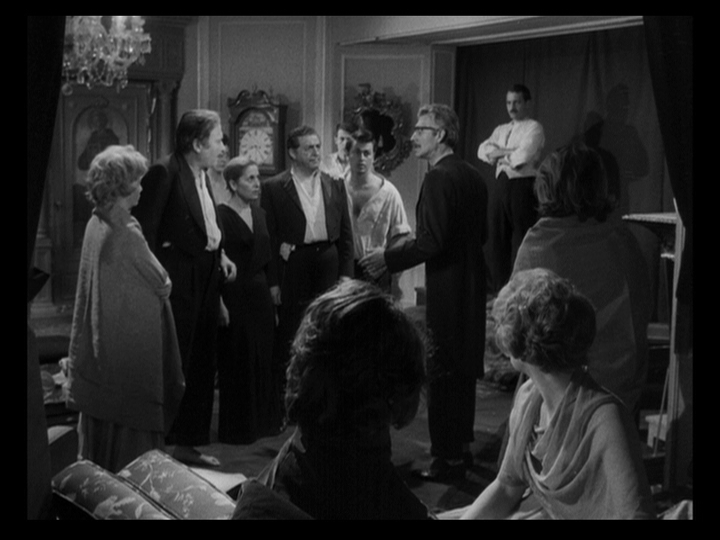
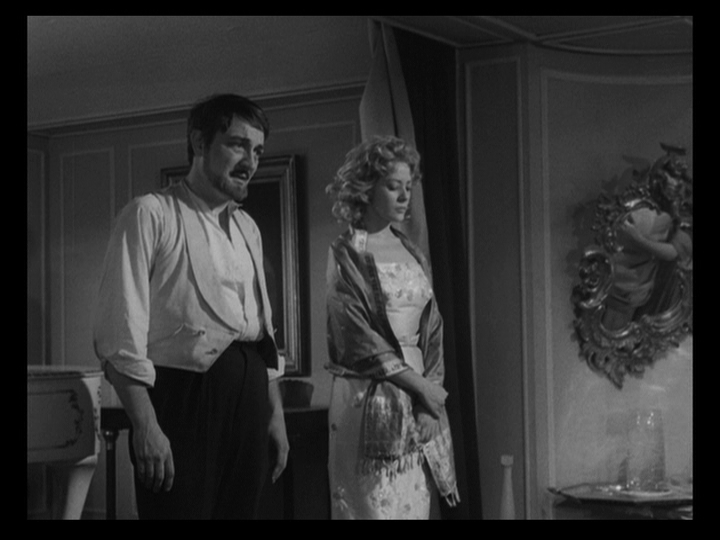
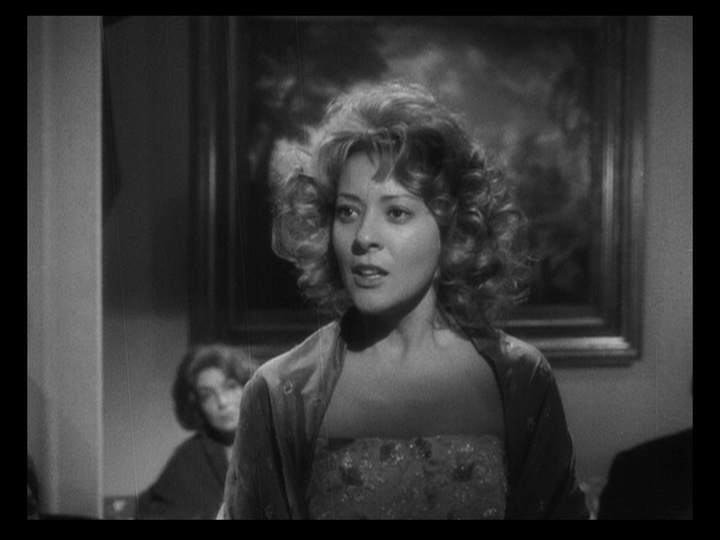
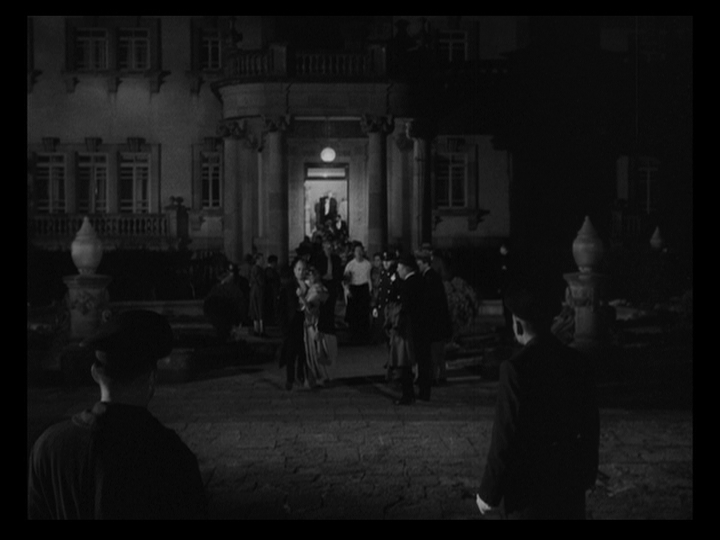
Director Manoel de Oliveira was 101 years old and had 30 features under his belt when The Strange Case of Angelica debuted at Cannes in 2010, and it has a stately mien and pacing befitting such a remarkable resume. The film begins with an epigraph by Antero de Quental: “yonder, lily of celestial valleys, your end shall be their beginning, our loves ne’er more to perish.” This is followed by two languorous minutes of titles accompanied by Portuguese pianist Maria João Pires performing the third movement of Chopin’s Piano Sonata No. 3 in Bi Minor which unspool over a nighttime cityscape of Régua from a vantage point across the Douro River:

Régua cityscape at night

The action begins with a 3:30 single take street scene also shot with a stationary camera and featuring a “strongly diagonal” (per James Quandt on the DVD commentary track) composition that will accrete significance as the movie progresses. A man inquires as to the whereabouts of the photographer who lives above the shop is car has stopped in front of:

And is told that he’s out of town, but a passerby helpfully offers directions to the home of a young “Sephardi emigrant” he knows who “takes photos all over the place.” This turns out to be Isaac (Oliveira’s grandson Ricardo Trêpa), who we meet bent over a malfunctioning wireless in what J. Hoberman identifies as a reference to Jean Cocteau’s Orphée in an essay collected in his book Film After Film:

Isaac, framed by a doorway, fiddles with a radio in front of a pile of books

Unable to make the “static-garbled radio transmissions” any clearer, Isaac shoves the device forward in frustration, knocking a pile of books onto the floor. When one volume falls open to this page:

An illustration of an angel in a book lying open on a pile of others, which are closed
Close-up of a detail of a star in the palm of the angel's hand

He picks it up and begins to read. “Dance! O stars, that in constant dizzying heights you follow unchanging. Exalt, and escape for an instant the path that you are chained to.” Suddenly, there’s a knock at the door.

Medium shot of Isaac, book in hand, staring off into space

“It’s the angel!” Isaac exclaims and returns to the book. “Time, stand still, and you, former beings, who roam fantastical, celestial ways. Angels, open the gates of heaven, for in my night is day, and in me is God.” As he finishes the passage, there’s another knock, now accompanied by a voice calling his name. Shaken at last from his reverie, Isaac puts the book down and answers the door to find that it’s his landlady Madam Justina (Adelaide Teixeira), who Quandt describes as “like a kind of one-woman Greek chorus,” bearing a message that he has been summoned by a “very important lady” to take pictures of her daughter.

Upon arrival Isaac is greeted outside at the foot of a staircase by a nun (Sara Carinhas) who turns out to be the sister of the woman he is there to photograph (Pilar López de Ayala) and her maid (Isabel Ruth).

Isaac arrives at the Portas estate

They inform him that his subject Angelica has just passed and that his commission is to create “one last souvenir, even if it is very sad” at the behest of her mother. Isaac asks for a stronger bulb for the room’s only light, which Hajnal Király characterizes as “a historical memento of the Oliveira family, owners, at the beginning of the twentieth century, of a factory manufacturing electric devices” in her book The Cinema of Manoel De Oliveira:

Medium shot of Isaac accepting a lightbulb from Angelica's sister and their maid
Continuation of previous shot: Isaac changes the bulb in a ceiling lamp that hangs in the center of the room
Continuation of the previous shot: the light is now noticeably brighter

Then sets to work in a photo shoot depicted through a combination of long shots of Isaac:

Isaac crouches in the middle right of the frame and takes a picture of Angelica, whose body lies on a fainting couch in the foreground

And point-of-view shots complete with frame lines showing us exactly what he’s looking at as he focuses his camera:

Out of focus POV medium shot of Angelica's body with frame lines
In focus POV medium shot of Angelica's body with frame lines

He moves in for a close-up:

Isaac moves in for a close-up of Angelica

When suddenly Angelica appears to open her eyes and smile at him:

Close-up of Angelica as seen through Isaac's camera with her eyes open
Continuation of the previous shot: Angelica is now beaming at the camera

He is obviously shocked:

Medium shot of Isaac in the left third of the frame looking shocked

But upon realizing that no one else has noticed anything strange hastily finishes up and departs. The next day as he’s developing the pictures he took, an image of Angelica again comes to life, causing him to once more jump back in surprise:

Close-up of three photos of Angelica
Continuation of the previous shot: in the third photo, Angelica is now smiling
Medium shot of Isaac jumping back from the photos in the previous two images in surprise

Moments later he spies some laborers tilling the soil in a vineyard across the river:

Medium shot of Isaac with binoculars looking toward the camera
Binoculars-shaped POV shot showing laborers at work

And resolves the photograph them, much to the chagrin of Madam Justina, who laments the fact that “hardly anyone works like that these days”:

Medium long shot of Madam Justina in Isaac's apartment with a tray of breakfast centered in the frame and looking at the camera

As Quandt notes, “Oliveira’s materialist appreciation of sound is wonderfully apparent” in the sequence that follows, which features more slanted lines:

And a charming call-and-response working song about a shabby suit of clothes. It ends with Isaac appearing to hear bells calling mourners to Angelica’s funeral, for he next appears in the church where one of the friends gathered around her coffin comments that “she looks like an angel from heaven”:

Medium shot of Isaac in the right third of the frame listening to church bells
Close-up of Angelica in her coffin
Medium shot of Isaac centered in the frame and flanked by mourners looking at Angelica's body

Which inspires him to recite the snippet of poetry he read earlier. That night in a scene which begins with what we soon realize is a shot of his reflection in a mirror, Isaac wakes up and walks over the photos hanging on a line in front of his balcony:

Isaac in bed in the middle of the bottom third of the frame with darkness all around him
Medium shot of Isaac and his reflection in the middle of the frame
Medium shot of Isaac, still reflected in a mirror, looking at the photos hanging on a line in front of his balcony

As he stands there an apparition materializes behind him:

Isaac contemplates what appears to be Angelica's ghost

He passes through the doorway and becomes translucent himself. The two of them embrace and rise into the sky:

Medium shot of the spirits of Isaac and Angelica embracing
Continuation of the previous shot: the two figures rise off the ground...
...and disappear through the top of the frame

Leading forthwith to my favorite image from this movie, the epically goofy grin plastered on Isaac’s face as he floats supine through the air:

Isaac, still embracing Angelica and now vertical, smiles at the camera

Which he wears right up until the moment when a strikingly topographical overhead shot of the Douro abruptly gives way to one of him in freefall:

Overhead shot of the Douro at night
Long shot of a flailing Isaac tumbling through the air

He awakens the next morning with a start and lights a cigarette:

Medium shot of Isaac in night clothes sitting on the edge of his bed smoking a cigarette and talking to himself

“That strange reality . . . perhaps it was just a hallucination? But it was just as real as this. Could I have been to that place of absolute love I’ve heard about?” Then: “I must be out of my mind.” The second half of the film chronicles his self-deportation from the land of the living, which Daniel Kasman read as reminiscent of the director of my September, 2024 Drink & a Movie selection History is Made at Night in a dispatch filed from Cannes 2010: “as in Borzage, escape from the world’s ails to the bliss of an otherworldly love is at once the most cowardly and most heroic of actions.” As part of The Strange Case of Angelica‘s very first wave of viewers, Kasman understandably focuses specifically on the titular character’s role in precipitating Isaac’s withdrawal from his fellow lodgers:

Medium long shot of Isaac in the left third of the frame standing apart from his Madam Justina and her other lodgers, who are congregated around a breakfast table which fills the right 2/3 of the frame

Growing frustration when Angelica remains tantalizingly out of reach even in his dreams::

Long shot of Isaac in bead reaching for Angelica's spirit, which hovers over him out of reach

And increasingly public erratic behavior:

Medium shot of Isaac holding on to the gate to the cemetery where Angelica is buried and shouting her name

But as Rita Benis notes in a paper collected in the book Fearful Symmetries called “The Abysses of Passion in Manoel de Oliveira’s The Strange Case of Angelica,” the film’s fantastical elements like Isaac’s visions of Angelica are strongly linked to its realist sequences like his efforts to document the “old-fashioned” ways of the vineyard workers visible from his apartment and “their contrast is what generates the real fear implicit in the film,” such as in “the distressing sequence where he desperately follows a tractor working the rocky soil, taking furious snapshots to the fading traces of an ancient world (the connection between man and earth)”:

Close-up of Isaac facing the camera and taking a picture
Close up of the back of a tractor
Another close-up of Isaac taking a picture
Another close-up of the back of a tractor

These shots are, of course, immediately followed by one of him thrashing around in his bed, haunted by the sounds of hoes striking the earth over and over again, and they finally unlock the secret to all those diagonals: each of Isaac’s impossible loves are a step on what is ultimately one long stairway to heaven.

J. Hoberman closes his essay on The Strange Case of Angelica with a quote:

The last living filmmaker born during the age of the nickelodeon, Oliveira told an interviewer that cinema today is “the same as it was for Lumiére, for Méliès and Max Linder. There you have realism, the fantastic, and the comic. There’s nothing more to add to that, absolutely nothing.” The great beauty of this love song to the medium is that Oliveira’s eschewal remains absolute. It’s a strange case–pictures move and time stands still.

The other night at dinner we went around the table at the request of my children and all said what we’d eat if we had to subsist on just one food for the rest of our lives. Neither Oliveira’s film nor The Navigator may be the most daringly innovative creation featured in this series, but they both contain everything I’m looking for in a drink and a movie respectively, and while it would be suboptimal (to say the least) to be confined to such a limited diet, I can think of far worse answers to the cinema and cocktail versions of my kids’ question!

Cheers!

All original photographs in this post are by Marion Penning, aka my loving wife. Links to all of the entries in this series can be found here.

Ithaca Film Journal: 5/29/25

What I’m Seeing This Week: I’ll be in Rochester for the Nitrate Picture Show today through Sunday, but am hoping to catch Bring Her Back at Cinemapolis or the Regal Ithaca Mall after I return. My loving wife and I are also still working on carving out time for a date night outing to Mission: Impossible – The Final Reckoning at one of those two theaters or the IMAX screen at the Regal Destiny USA in Syracuse, and my oldest daughter has informed us that her next Family (née Friday) Movie Night selection will be Lilo & Stitch at the Regal, so I’ve got those two films in my near future as well.

Also in Theaters: Sinners, which continues its runs at Cinemapolis and the Regal, is my top new movie recommendation for the third week in a row and fourth overall. I didn’t love any of the other first run fare that I’ve already seen, although the jury is still out on Friendship, the demented evil twin of one of my favorite American comedies of the past twenty years I Love You, Man which is also at both Cinemapolis and the Regal. That potentially just makes the screenings of The Lady Vanishes at Cinemapolis on Tuesday as part of their train-themed June “Staff Picks” series even more compelling, though! There doesn’t appear to be anything of note happening on the repertory and special events fronts otherwise.

Home Video: NPS’s opening night selection Becky Sharp is new to me, the first time in three visits that this has been the case, which is exciting! It has some big shoes to fill, though, because the last two were bangers. I called Black Narcissus “one of the most transportative films ever shot entirely in a studio” when I wrote about it last August for my Drink & a Movie series, and while there’s no way to recreate the experience of seeing on a “better than very good” (per intro speaker Graham Brown) legendary (it opened the influential 1992 Pacific Film Archive series The Primal Screen) nitrate print, the formal qualities I’m referring to shine through just fine on the Criterion Collection’s Blu-ray and DVD releases; you can also stream it via a number of other commercial platforms. Meanwhile, although I was on the fence when I logged it on Letterboxd last year, I’ve since decided that I would indeed include Intolerance on any all-time Top Ten list I might find myself compelled or moved to create. As I heard someone say on the way out of the Dryden Theatre, even after more than a century it still represents perhaps the most sophisticated use of intertwining narratives in film history, and the lavish Babylon sequences may never be surpassed for sheer monumental grandeur. As a public domain title it’s widely available, so do check it out if you’ve never seen it or if it has been awhile!

Previous “Ithaca Film Journal” posts can be found here. A running list of all of my “Home Video” recommendations can be found here.

Ithaca Film Journal: 5/22/25

What I’m Seeing This Week: I’m going with Friendship, which opens at Cinemapolis tomorrow, and Holy Motors, which will screen there on Wednesday as part of their “Staff Picks” series. My loving wife and I are also planning a date night outing to Mission: Impossible – The Final Reckoning at Cinemapolis, the Regal Ithaca Mall, or possibly the IMAX screen at the Regal Destiny USA in Syracuse, but we’re not sure yet when.

Also in Theaters: Sinners is proving hard to knock off its perch as the best new movie now playing Ithaca that I’ve already seen, but maybe this is the week! It’s also pretty quiet on the repertory fare and special events fronts, aside of course from the screening of Holy Motors mentioned above.

Home Video: Speaking of my loving wife, she and I recently rewatched the first seven Mission: Impossible movies on Paramount+ in preparation for The Final Reckoning and I am happy to present the following definitive ranking from least to most essential:

7. Mission: Impossible III

With all due respect to Philip Seymour Hoffman, who plays the part he was given extremely well, this movie is too damn mean. But the fact that it’s last place on the list is precisely why I’m bother to compose it in the first place: these are some lofty heights for a nadir!

6. Mission: Impossible – Rogue Nation

The one where Tom Cruise’s Ethan Hunt is described as “the living manifestation of destiny” and “sometimes […] the only one capable of seeing the only way,” establishing him as a sort of demigod who, more than having a preternatural ability to understand and play the odds, can actually *manipulate* luck. Which, in the words of Simon Pegg’s Benji Dunn, “[takes] things too far.”

5. Mission: Impossible II

Only fifth on my list, but if it’s true that many people regard *this* as the series’ weakest link, then it may be underrated! The Ethan Hunt free-climbing Dead Horse Point opening credits sequence remains the best beginning to a M:I movie.

4. Mission: Impossible – Dead Reckoning

We don’t have to call this “Part One” any more now that its sequel has a different name, right? Anyway, the golden light, hushed tones, high ceilings, and columns of the otherwise apparently extraneous DoorDash sequence near the beginning evoke a cathedral and mark black-clad Hunt as the Bishop of Bon Chance, which I hope represents the final evolution of his relationship to luck, but we’ll see! The Oriental Express sequence is also one of the franchise’s finest set pieces, and the Rome sequence contains its best car chase.

3. Mission: Impossible – Fallout

Although Hunt is still frequently bathed in light in director Christopher McQuarrie (M:I‘s first repeat helmer) follow-up to Rogue Nation, that film’s erroneously audacious suggestion that he may in fact be divine is thankfully withdrawn in favor of reconnecting with all its other predecessors, including the only two that I consider to be true must-sees:

2. Mission: Impossible – Ghost Protocol

The one where Hunt fully emerges as the Bob Montagné of the secret agent set: a legend in his own time trapped in a never ending game with rapidly escalating blinds and a growing family of followers to look after which forces him to chase longer and longer odds to keep up. The energy behind his unhinged smile in the movie that started it all (see below) is still there, but now all of it is channeled into his work, which includes keeping things light and making it look easy. Featuring my favorite combination of his teammates, two of the series’ best ancillary characters in Anil Kapoor’s Brij Nath and Léa Seydoux’s Sabine Moreau, and probably its most impressive stunt (climbing the Burj Khalifa), Ghost Protocol can make a legitimate claim to not just be number one on this list, but also an all-time great action movie. Of course, that label doesn’t really describe:

1. Mission: Impossible

I definitely remembered this as being as not quite of a piece with the films that followed it, but the big pleasant surprise of our rewatch project is that this is more similar to the way Friday Night Lights the movie is completely different from but equally enjoyable to Friday Night Lights the TV series than it is to the way season one of The Simpsons is a very rough draft for the seven seasons that followed before the show was tragically cancelled right in the middle of its prime. The Channel Tunnel sequence is also a masterpiece of cutting–but not bleeding–edge special effects, the exploding fish tank and the Langley break-in remain among the franchise’s two most memorable single moments, and there is a stick of green light/red light “chewing gum” enshrined in my personal movie prop hall of fame. Add it all up and you’ve got one of the most entertaining movies I’ve ever seen!

Previous “Ithaca Film Journal” posts can be found here. A running list of all of my “Home Video” recommendations can be found here.

Ithaca Film Journal: 5/15/25

What I’m Seeing This Week: I’m going with Secret Mall Apartment at Cinemapolis.

Also in Theaters: Sinners, which continues its run at Cinemapolis and the Regal Ithaca Mall, holds on to the title of Best New Movie Now Playing Ithaca That I’ve Already Seen for another week. I’m not super excited about the other first-run fare populating local screens, but there are a couple of decent repertory options even without Cornell Cinema (which is on summer break) chipping in. Most notably, Kiki’s Delivery Service, which might be my favorite film directed by Hayao Miyazaki, plays the Regal Saturday through Wednesday, and director Joe Wright’s lively 2005 Pride & Prejudice adaptation starring Keira Knightly in her first Oscar-nominated role is at Cinemapolis all week. You can also see Superbad there on Wednesday. Finally, special events highlights include a free “Family Classics Picture Show” screening of Snoopy Come Home and one showing only of the new documentary There Is Another Way at Cinemapolis on Sunday.

Home Video: I wasn’t planning to go in this direction with my write-up until just the other day, but the titular protagonist from week’s home video recommendation Wanda makes for an interesting contrast with Lewis Pullman’s Bob from Thunderbolts*, which is now playing Cinemapolis and the Regal. He is part of a long cinematic lineage of attractive, otherwise strong characters rendered vulnerable by a mental (usually) or physical trait who our hearts go out to when they’re exploited by others for selfish and often villainous purposes. The most prominent example is probably Giulietta Masina’s Gelsomina in La Strada, who likewise cries out for a protector who sees her as more than a mere tool. I’m wary of moments like the one in the Thunderbolts* where Florence Pugh’s Yelena Belova attempts to literally rescue Bob from himself with a loving embrace, though, because they flatter us too much: Yelena isn’t treating him like a human therapy dog, she’s saving the world! As written, directed, and played by Barbara Loden, Wanda defies this tendency: Michael Higgins’s Mr. Dennis attempts to use her, but she’s such a frustrating non-entity that he can’t. Which is precisely what makes the movie she appears in memorably challenging. You can no more take care of her than you can a tumbleweed, and it would be equally unfulfilling to support her without expecting anything in return because there’s no evidence that she’d do anything worthwhile with this freedom, which I believe is the point of the opening sequence that reminds me of Pull My Daisy. And so you’re left with a puzzle in extreme long shot, a white-clad woman making her way from nowhere to nowhere through dirty dark side of the moon mountains of anthracite who you can’t just abandon with a clear conscience, but who you’ll also never have the pleasure of “saving.” Wanda is now streaming on the Criterion Channel with a subscription and is also available on Blu-Ray and DVD from the Criterion Collection where everything is 30% off through May 26. Highest possible recommendation!

Previous “Ithaca Film Journal” posts can be found here. A running list of all of my “Home Video” recommendations can be found here.

Ithaca Film Journal: 5/8/25

What I’m Seeing This Week: I’m going with The Surfer and Thunderbolts*, both of which are at both Cinemapolis and the Regal Ithaca Mall. My oldest daughter has chosen A Minecraft Movie for our next Family (née Friday) Movie Night, so we’re all going to see that at the Regal as well.

Also in Theaters: The best new film playing Ithaca RIGHT NOW that I’ve already see is The Shrouds, but after its final screening at Cinemapolis tonight, Sinners (which continues its run there and at the Regal) will reclaim this coveted title. In addition to everything listed above, I also hope to see Secret Mall Apartment before it closes at Cinemapolis. There don’t appear to be any compelling special events this week, but on the repertory front my May, 2024 Drink & a Movie selection Stalker is playing Cinemapolis on Wednesday as part of their latest “Staff Picks” series. I caught the 4k restoration they’re showing on the big screen at Kingston, Ontario’s The Screening Room last April and can assure you that you definitely don’t want to miss it!

Home Video: In my recent Drink & a Movie post about Masculine Feminine, I quote Penelope Gilliatt as calling it “the picture that best captures what it was like to be an undergraduate in the sixties.” This inspired me to finally revisit Funny Ha Ha, which current Cornell University faculty, staff, and students have access to through Kanopy via a license paid for by the Library and which can be streamed as a rental via a variety of commercial platforms as well, for the first time in twenty years. Here’s what I said about it on Letterboxd afterward:

When I saw Funny Ha Ha for the first time in 2005 I would have been less than a year into my first full-time job after graduation and still a couple away from enrolling in a master’s program and it hit me like a bolt of lightning because I finally got to experience something for myself that I had read other people describe: the shock of recognizing myself onscreen. Which even then I felt just a bit sheepish about; after all, American movies have always been chock full of white middle class young people. But they’d never before looked exactly like my friends, unglamorous yet always dressed in the perfect killer thrift store find t-shirt. They’d never before sounded just like us, smart but inarticulate and begging the god(s) we didn’t so much not believe in as rarely think about to please not let us be misunderstood. They’d never before drifted listlessly through the Kuiper Belt of planetoid hangouts that didn’t quite rise to the level of parties orbiting some other college town, helping themself the requisite meager offering of bottom shelf bottles en route to another hookup and maybe a deeper connection and eventually an actual adult life in an entirely different place. Because, to go back to Gilliat, Funny Ha Ha is the picture that best describes what it was like to be recently *not* an undergraduate in the mid-2000s but, like Kate Dollenmayer’s Marnie, not quite as far along the road to things like a career and a long-term relationship as your peers, many of whom were beginning to leave, leaving you behind.

I can confidently recommend this film to almost anyone as the rootstock of mumblecore, a historical record of the brief time when cellphones coexisted alongside answering machines, and a rebuttal to the “No Girls Allowed” sign outside Jean-Luc Godard’s Children of Marx clubhouse. You probably aren’t going to be gobsmacked by the scene in which Andrew Bujalski’s Mitchell impulsively drops a beer off a balcony unless you once did the same thing with an empty bottle of champagne for the same silly reasons, though.

Previous “Ithaca Film Journal” posts can be found here. A running list of all of my “Home Video” recommendations can be found here.

May, 2025 Drink & a Movie: Cinema Highball + Masculine Feminine

I knew right from the start that this series would eventually feature the Cinema Highball, an ingenious rum and Coke variation created by Don Lee and included in The PDT Cocktail Book, but what to pair it with? A name like that suggests primacy of place–should I save it for the final entry and write about it alongside my favorite movie, I wondered? But then I’d have to pick a single favorite, and as the days went by my options narrowed. The Flowers of St. Francis and Early Summer came off the board within six months of this project beginning and The Passion of Joan of Arc and Pyaasa followed in its second year of existence. Meanwhile, another question was beginning to vex me: which of the 100+ films directed by Jean-Luc Godard was I going to tackle? The solution to both my problems arrived simultaneously last May when I realized I wouldn’t finish my post about Stalker before the first of the month, eliminating a possible hook: what better way to commemorate May Day 2025 than with a post celebrating “the children of Marx and Coca-Cola”?

Title card in French which reads "This film could be called" in white all-caps font against a black background
Title card in French which reads "the children of Marx and Coca-Cola" in the same font
Title card in French which reads "understand what you will" in the same font

The source of these title cards is, of course, Masculine Feminine. Here’s a picture of my Criterion Collection DVD copy:

Masculine Feminine DVD case

You can also stream it on the Criterion Channel and Max with subscriptions or via Prime Video for a rental fee, and some people (including current Cornell University faculty, staff, and students) may have access to it through Kanopy via a license paid for by their local academic or public library as well.

The drink, which lends itself beautifully to batching and bottling (Lee sold them out of a vending machine at his Greenwich Village bar Existing Conditions), requires advance preparation, but is otherwise dead simple. Here’s how you make it:

4 1/2 ozs. Coca-Cola Classic
2 ozs. Popcorn-infused Flor de Caña Silver Dry Rum

Infuse the rum by combining one ounce of freshly popped popcorn per 750 milliliters of rum in a nonreactive container and let sit at room temperature for one hour. Strain to remove the solids, then add one ounce of clarified butter per 750 milliliters of rum, cover, and let sit for 24 hours at room temperature. Freeze the liquid for four additional hours to solidify the butter, then fine-strain and bottle. To make the cocktail, combine both ingredients in a chilled cocktail glass filled with ice cubes.

Cinema Highball in a highball glass

The impression of taking a big swig of soda while your mouth is still full of movie theater popcorn is so pronounced that you may instinctively start trying to pick kernels out of your teeth! If you can’t get Flor de Caña, another smooth silver rum like Planteray 3 Stars would work just fine here as well. Finally, while I suppose you *could* use something other than Mexican Coke made with real cane sugar in this drink, I don’t know why you would.

Masculine Feminine‘s Paul (Jean-Pierre Léaud) is actually a highball drinker himself, although he prefers Vittel (a brand of mineral water) and cassis.

Paul, Madeleine, and Elisabeth drinking at a counter

He is shown here with Madeleine (Chantal Goya), whose character’s name also comes from Guy de Maupassant’s short story “Paul’s Mistress,” and her roommate Elisabeth (Marlène Jobert). This is one of two by the author that inspired the movie; as Richard Brody notes in his book Everything is Cinema: The Working Life of Jean-Luc Godard, the other manifests most directly in the form of the erotic Swedish film (which many people also interpret as a parody of The Silence) these characters go to see with their friend Catherine (Catherine-Isabelle Duport).

Close up of Birger Malmsten's "man in the film" looking at a comically distorted image of his face in a mirror

Despite apparently missing this connection completely, Roger Ebert surfaces another even more interesting one in his review of the 2005 American rerelease:

The movie was inspired by two short stories by Guy de Maupassant. I have just read one of them, “The Signal,” which is about a married woman who observes a prostitute attracting men with the most subtle of signs. The woman is fascinated, practices in the mirror, discovers she is better than the prostitute at attracting men, and then finds one at her door and doesn’t know what to do about him. If you search for this story in “Masculine-Feminine,” you will not find it, despite some talk of prostitution. Then you realize that the signal has been changed but the device is still there: Leaud’s character went to the movies, saw [Jean-Paul] Belmondo attracting women, and is trying to master the same art. Like the heroine of de Maupassant’s story, he seems caught off-guard when he makes a catch.

He is referring to a cigarette flip trick Paul attempts numerous times through the film (I stopped counting after five) but isn’t ever quite able to execute, making him look silly instead of cool:

Long shot of Paul attempting to flip a cigarette into his mouth

“Paul’s Mistress” also shines light on how to interpret our hero’s failure to survive the film, which in her insightful contemporaneous review Pauline Kael describes as “like a form of syntax marking the end of the movie.” Or, as Godard himself says in an interview with Gene Youngblood collected in David Sterritt’s book Jean-Luc Godard: Interviews, “even though my adaptation is very different, the de Maupassant story ended with Paul’s death. But I think death is a very good answer in that kind of movie. There is no meaning in it.”

Quotations from other works abound as well, most conspicuously in the form of three members of the original French cast of Amiri Baraka’s play Dutchman (Chantal Darget, Med Hondo, and Benjamin Jules-Rosette) performing dialogue from it in character, which introduces a racial component to film’s sociological analysis of male-female relationships:

And perhaps most famously in Paul’s monologue about his generation’s relationship to the movies, which per Brody is clipped “nearly verbatim from Georges Perec’s novel Les Choses,” with Godard’s main contribution being the specific reference to American cinema:

We went to the movies often. The screen would light up, and we’d feel a thrill. But Madeleine and I were usually disappointed. The images were dated and jumpy. Marilyn Monroe had aged badly. We felt sad. It wasn’t the movie of our dreams. It wasn’t that total film we carried inside ourselves. That film we would have liked to make, or, more secretly, no doubt, the film we wanted to live.

Scenes like these, each of which would require a blog post entirely its own to fully unpack, represent Masculine Feminine at its most intricate, as does the 39 second-long sequence Richard Roud analyzes in his monograph about Godard which flips back and forth between day and night five times in a way that “more or less” parallels what we hear on the soundtrack. The first shot accompanies a voiceover by Paul in which he says, “lonely and dreadful is the night after which the day doesn’t come”:

Interior long shot of Elizabeth and Madeleine sitting at the counter of a café at night

The second, third, and fourth go along with voiceovers by Catherine and Paul’s friend Robert Packard (Michel Debord) saying, “American scientists succeeded in transmitting ideas from one brain to another, by injection” and “man’s conscience doesn’t determine his existence–his social being determines his conscience” respectively:

Daytime street scene shot through a café window
Nighttime street scene in the rain
Extreme long shot of Catherine and Robert walking along a sidewalk toward the camera

And finally the fourth, fifth, and sixth are paired with voiceovers by Elizabeth and Madeleine saying “we can suppose that, 20 years from now, every citizen will wear a small electrical device that can arouse the body to pleasure and sexual satisfaction” and “give us a TV set and a car, but deliver us from liberty” in turn:

Continuation of the previous shot, but Catherine and Robert are now almost upon the camera
Exterior shot of a shop window at night
Daytime shot of public works employees cleaning a city street wet from rain

Roud postulates that “one could make out a case that Godard has treated this sequence dramatically.” According to the theoretical argument he outlines, “darkness corresponds to Paul’s loneliness, to Robert’s pessimistic view of life and to Madeleine’s plea for a television-set,” while “daytime would correspond to Catherine’s rosy optimism about what science will be able to do and to Elizabeth’s Utopian future in which sexual problems will be solved by a gadget.” He believes that such ideas are “meant to be only lightly suggested,” though, and to him the real interest of this sequence is that it “shows Godard reaching towards that almost total escape from the shot as filmed” that he will achieve later in his career” and “brings out even more strongly than before that dialectical tension between reality and abstraction which forms the basis of all Godard’s later films.”

Did you get all that? I certainly didn’t my first (or second) time around, and I still don’t agree with every part of it, but the genius of Masculine Feminine is that it’s apparent that *something* is going on, which keeps you coming back to take a closer look. The fact that this is invariably rewarding is what I think Dave Kehr is talking about when he calls Godard “very strict in his sloppiness” in his capsule review for the Chicago Reader. The movie also offers many more straightforward pleasures, including an extremely animated Paul telling a Robert a story in a laundromat sequence punctuated by a panoply of jump cuts:

Long shot of Paul facing right in front of a bank of washing machines, gesturing with a cup of coffee
Basically the same shot as the previous one, only now Paul is facing left

A hilariously cheeky depiction of him “putting himself in someone else’s shoes” by copying the actions of man who asking for directions to the local stadium:

A man asks for directions in the left foreground of the frame while Paul observes him in the right background--Robert is at the same table as him in the middle of the frame
The same shot, only the man in the foreground is gone and Paul is starting to rise from his seat
Paul is now in the left foreground "asking for directions" from a woman at a hostess stand while Robert looks on from his table in the background

Paul telling the story of how his father “discovered” why the earth revolves around the sun, an experience I myself had in a third-grade science class when I figured out where rainbows come from seconds before the teacher explained it to me and my fellow students:

Paul and Elizabeth, facing the camera on the left half of the frame, talk from their seats at a café table covered in food and wine

And Chantal Goya’s songs, which are crucially far more interesting than any statement Paul or Robert ever makes on screen.

Medium shot of Madeleine in a recording studio framed such the entire top half of the image is basically just empty space

Penelope Gilliatt called Masculine Feminine “the picture that best captures what it was like to be an undergraduate in the sixties” in an article for The New Yorker, but moments like these are remarkable because they also feel timeless to one like me who went to college in the early 2000s. As do, sadly, the random acts of political and tabloid violence that Gilliatt speaks of next: “five deaths recorded; total apathy expressed by the characters.” Only two are depicted, a woman shooting her husband outside a café:

Interior shot of a woman loading a pistol in the foreground as she exists a café while Paul looks on from a table in the background
In a continuation of the previous shot, the woman aims her gun through the doorway of the café
Exterior long shot through the window of the café of a man being shot

And a man (Yves Afonso) who appears to be about to mug Paul before he suddenly turns his knife on himself:

Long shot of a man threatening Paul with a knife, shot through a screened window
Medium shot of the same man stabbing himself in the stomach

Non-diegetic gunshots also appear throughout on the soundtrack, though, which Adrian Martin describes in his essay for the Criterion Collection as “harsh aural interruptions, firing at unpredictable points” that represent “the violence of everyday modern urban life” in concentrated form. Can you blame Paul if he’s so inured to it that he’s more worried about the draft coming in through an open door than the murder taking place outside of it, or about his matches than the man about to immolate himself with them in protest of the Vietnam War? Maybe so, but my point is that while Godard, who styled Masculine Feminine a “concerto on youth” in an interview with Pierre Daix collected in the Grove Press film book about it, may not approve of his protagonists playing at pop stardom and philosophy while the word burns, he (to paraphrase another great work of music) obviously understands that they didn’t start the fire.

One of the movie’s most talked-about shots is Paul’s single take interview with “Miss 19” (Elsa Leroy), which lasts nearly seven minutes and is introduced by a title card which reads “dialogue with a consumer product.”

Medium shot of Miss 19 framed by a window

His questions are seemingly designed to reveal her ignorance about current events, but as Stephanie Zacharek observes in her 2005 review, “the scene is fascinating because although on the surface it seems Godard is asking us to join in ridiculing this girl, in the end it’s Paul’s vulnerability and naiveté that are exposed.” He is also every bit as concerned with his image as Madeleine is, it’s just that where she’s specifically focused on hair and makeup:

Close-up of Madeleine looking in a compact and putting lipstick on

He’s attuned to the power of mise-en-scène in all its dimensions (remember that cigarette prop?) and nearly scraps a marriage proposal entirely when he can’t make the location he has scouted work:

Paul grabs Madeleine's arm in close-up and pulls her away from a café counter
Medium long shot of Paul gesturing with his arm to indicate that the room he and Madeleine have repaired to still isn't right
Medium shot of Paul raising his hand in frustration on the right side of the frame because the table he and Madeline, who is on the left side of the frame, are now sitting at still doesn't meet his standards

It really is too bad that Masculine Feminine‘s boys map so clearly and simplistically to Godard’s notion of the “children of Marx” and its girls to the progeny of Coca-Cola, but it strikes me as a major stretch to say that the former come away looking better than the latter, especially when, as Ed Gonzalez points out in his Slant Magazine review, the ladies get the final word: “the last shot of the film acts as a female-empowering solution to Godard’s philosophical algorithm of the sexual politic. FIN.”

Title card in French which reads "feminine" in white all-caps font against a black background
The same title card, only all of the letters have been eliminated except three that spell out "fin."

Cheers!

All original photographs in this post are by Marion Penning, aka my loving wife. Links to all of the entries in this series can be found here.

Ithaca Film Journal: 5/1/25

What I’m Seeing This Week: I still haven’t made it to The Legend of Ochi, so seeing it at Cinemapolis or the Regal Ithaca Mall is my top priority. I’m also hoping to catch The Surfer at one of those two theaters before it closes, but I’m going to take a gamble that it will stick around for more than a week and see La Haine at Cinemapolis on Wednesday instead.

Also in Theaters: I’m still processing The Shrouds, a typically visionary outing by director David Cronenberg which maybe didn’t come together in the final reel the way I was expecting it to? But that may well have been the entire point, and it definitely is my favorite new movie now playing Ithaca that I’ve already seen. Sinners isn’t that far behind, though. Both films are at Cinemapolis and the latter is at the Regal as well. I also enjoyed Drop and One to One: John & Yoko, which continue their runs at the Regal and Cinemapolis respectively. Thunderbolts* doesn’t really seem like my cup of tea, but it’s garnering positive reviews, so I probably will see it at Cinemapolis or the Regal eventually. This week’s special events are highlighted by Cornell Cinema‘s traditional end-of-semester “mystery screening” tonight and a presentation of the “vegan horror” movie A44, which was shot in upstate New York, at Cinemapolis on Saturday followed by a Q&A with cash members. Finally, your best bet for repertory fare is Monty Python and the Holy Grail, which is at the Regal on Sunday and Wednesday.

Home Video: I went on a Toots & the Maytals listening binge after the MUBI Podcast featured The Harder They Come as part of their “Needle on the Record” season a couple of years ago, but somehow never got around to watching the film itself until just the other day. Here’s what I said about it on Letterboxd:

Sun sparkling on the water straight out of Black Narcissus and one of the great movie soundtracks of all time. It isn’t just a *container* for great music, though: it’s a mischievously subversive acknowledgement that these songs are dangerous which works because director Perry Henzell & co. also successfully argue that suppressing them would be an even bigger mistake. Jimmy Cliff’s Ivan, who at his heart is apolitical, is a much bigger threat as a one-hit wonder revolutionary martyr than as a popular entertainer, because Lord help the establishment if someone comes along later and groks the FULL power of the lyric “they know not what they’ve done.”

You can stream The Harder They Come on Peacock with ads, but I sprang for the Criterion Collection Blu-ray, which is out of print but still readily available through Amazon and other retailers.

Previous “Ithaca Film Journal” posts can be found here. A running list of all of my “Home Video” recommendations can be found here.
How I Learned to Stop Worrying and Love “Professional Top Chef”

If memory serves me right (as Chairman Kaga used to say), once upon a time the Food Network used to bend over backwards to avoid referring to Top Chef by name. I first noticed this begin to change in the waning years of Iron Chef America, when competitors started to call on people with TC experience more and more often to serve as their sous-chefs. Then, of course, TCS4 winner Stephanie Izard actually became an Iron Chef prior to the show’s final season. Today Top Chef veterans are everywhere on the channel: last week, for instance, Antonia Lofaso (S4 + S8) became the fourth to win Guy Fieri’s Tournament of Champions in six seasons, which is even more impressive when you consider that she beat Sara Bradley (S16 + S20) to do it, who in turn had to get past Lee Ann Wong (S1, S15, S17) in the semi-finals. Meanwhile, you couldn’t make it through a single commercial break without seeing an advertisement for shows hosted by Eric Adjepong (S16 + S17), Brian Malarkey (S3 + S17), and other alums.

This makes sense when you consider that while there’s a lot of overlap, the skillset of a successful chef isn’t exactly the same as that of a television cooking competition champion. Bravo figured out early that compelling back stories, diverse cooking styles, and telegenic personalities shine brightest in an evenly-matched field and has made an artform out of balancing these attributes with traits like the ability to handle adversity and work quickly, endurance, and familiarity with emerging cuisines and techniques likely to impress the judges week after week. As their casting improved, it created a virtuous cycle whereby appearing on the show has opened doors for a higher and higher percentage of people, giving Bravo an even more impressive field of applicants to select from, resulting in an even bigger hit rate, etc. Couple this with enhanced vetting introduced after allegations of sexual harassment against Gabe Erales surfaced shortly after he won season 18, which at least so far has worked as intended, and Top Chef is basically doing the Food Network’s job of identifying rising stars for it.

The elevated standard has had a discernable impact on the show. Most gratifyingly, with total duds now far less frequent, a decision was finally made to start showing every dish prepared in the Quickfire challenges starting in season 19, and I think this year’s new prize of getting to cook an exclusive dinner at the James Beard House is also a product of increased confidence that whoever wins will be worthy of the honor. It has likewise enabled Top Chef to survive the departure of longtime host Padma Lakshmi without skipping a beat by providing the producers with a deep bench of highly-qualified replacements to choose from (Kristen Kish, the one they chose, also deserves a ton of credit for rising to the occasion, of course) and providing a chance to introduce enough sensible tweaks to things like how “immunity” is awarded to create the sense that the show is continuing to evolve without moving too far away from what made it a hit in the first place.

It has, however, created a bit of a dilemma for me as well. Like Tyler Cowen and Matt Yglesias, I consider the opportunity cost of watching television to be substantial relative to that of movies and thus allocate the overwhelming majority of my viewing hours to the latter. After season 19, I wondered for the first time if a consistently high floor might actually start to get boring at some point and mentioned this again on X last year following S21E3 in a thread that also referenced the Top Chef “eras” I came up with in 2018. Here they are again in a revised version that I’m about to add to:

  • Seasons 1-3 = Early Top Chef
  • Seasons 4-8 = Classic Top Chef: “I suspect these are the seasons most fans of the show consider to be the best, but upon second viewing the top contenders benefit from less competition than the winners who will follow them.”
  • Seasons 9-10 = Baroque Top Chef: “It’s almost like the only way they could think of to top All-Stars was by going as big as they could with the challenges and setting, and then of course S10 features the biggest cast in series history. It’s all just too much.”
  • Season 11-15 = Neoclassical Top Chef: “You could drop S11, S12, and S15 into the Classic era and they would fit right in. S13 very intentionally reflects on the show’s history, and S14 of course brings back eight former contestants.”
  • Seasons 16-20 = Modern or “Nice” Top Chef: “As described by Michelle on S16, ‘We don’t bully each other, we lift each other up. We’re all extremely talented and we’re above all that.'”

At the time I thought season 21 fit into the final category, which would have made it the longest in duration in the show’s history. I now think that S20, the second All-Stars season, served a similar function as its predecessor S8, though, which was to put the capstone on an epoch. And so I give you era number six:

  • Seasons 21-present = Professional Top Chef. The final positive evolution of the show. TC now functions in reality as well as rhetoric to usher chefs into the national spotlight by funneling people into the competitive cooking circuit and, to a lesser extent, by providing national exposure for future industry thought leaders like Kwame Onwuachi. Minor tweaks to the rules to optimize entertainment value are welcome, but if it changes significantly again, look out for signs that it has “jumped the shark.”

This isn’t just a matter of deciding once and for all where to slot the most recent seasons in my schema–it represents a significant change in the way I’m thinking about it. Just as I’m not expecting the NBA or NFL or any other professional sports league I watch on TV to change from year to year, nor am I looking for Top Chef to continue to evolve. And while I still feel great about my decision to stop tweeting out reactions to each individual episode last year in favor of one or two blog posts per season, I’m no longer worried that I’ll eventually have nothing at all to say about each one. The Top Chef Pick’Em game I run for family and friends (and friends of friends) is now eight years old, and I can easily see it still going strong at twice that age if Tom Colicchio and company stick around that long.

It would be silly to publish a post about Top Chef on the very eve of Restaurant Wars without saying anything specifically about the current season! Tristen has established himself as the prohibitive favorite in my eyes, especially now that he has immunity going into the challenge which has been the bane of many a frontrunner in the past. Behind him César’s pickle dessert from episode six is the dish from this season that I’d most like to try, and I still consider Lana a contender even though she hasn’t actually won anything yet; however, there’s a big gap after that which no one except maybe Vinny has shown they might be able to close. I like this year’s challenges, which have showcased Ontario and given the chefs every opportunity to excel, and the production design is typically first class, if not necessarily noteworthy in any obvious way. In other words, long live “professional Top Chef“!

Links to previous posts about Top Chef can be found here.