Ithaca Film Journal: 11/13/25

What I’m Seeing This Week: I’m going with Happyend and Lurker at Cornell Cinema and The Librarians at Cinemapolis.

Also in Theaters: This week’s theatrical highlight is probably once again the 35mm print of Ghost Dog: The Way of the Samurai screening at Cornell Cinema tomorrow night. Looking just at first run fare, my top recommendation is Die My Love, an instant classic of mother-in-law cinema that continues its runs at both Cinemapolis and the Regal. I also enjoyed Frankenstein, which opens at Cinemapolis tomorrow, for Kate Hawley’s outstanding costumes and Movie Year 2025’s most tragically unrealistic closing line. In addition to the titles listed in the previous section, I’d like to see Nuremberg, which opens at Cinemapolis and the Regal Ithaca Mall, as well, but I promised my loving wife I’d save it for a future Friday night; I’m interested in Bugonia (Cinemapolis and the Regal) and Good Fortune (just the Regal), too, but the latter is down to just one screening per day, so it’s probably not going to happen. Special events highlights include a program of works by the Irish film collective aemi called “The Said and the Unsaid” at Cornell Cinema tonight and free screening of Kirikou and the Sorceress at Cinemapolis on Sunday as part of their Family Classics Picture Show series. Finally, noteworthy repertory options include The Boy and the Heron at the Regal Saturday-Wednesday, All That Jazz at Cornell Cinema on Sunday, and the movie my loving wife and I saw on our very FIRST date, Hugo, at the Regal on Saturday.

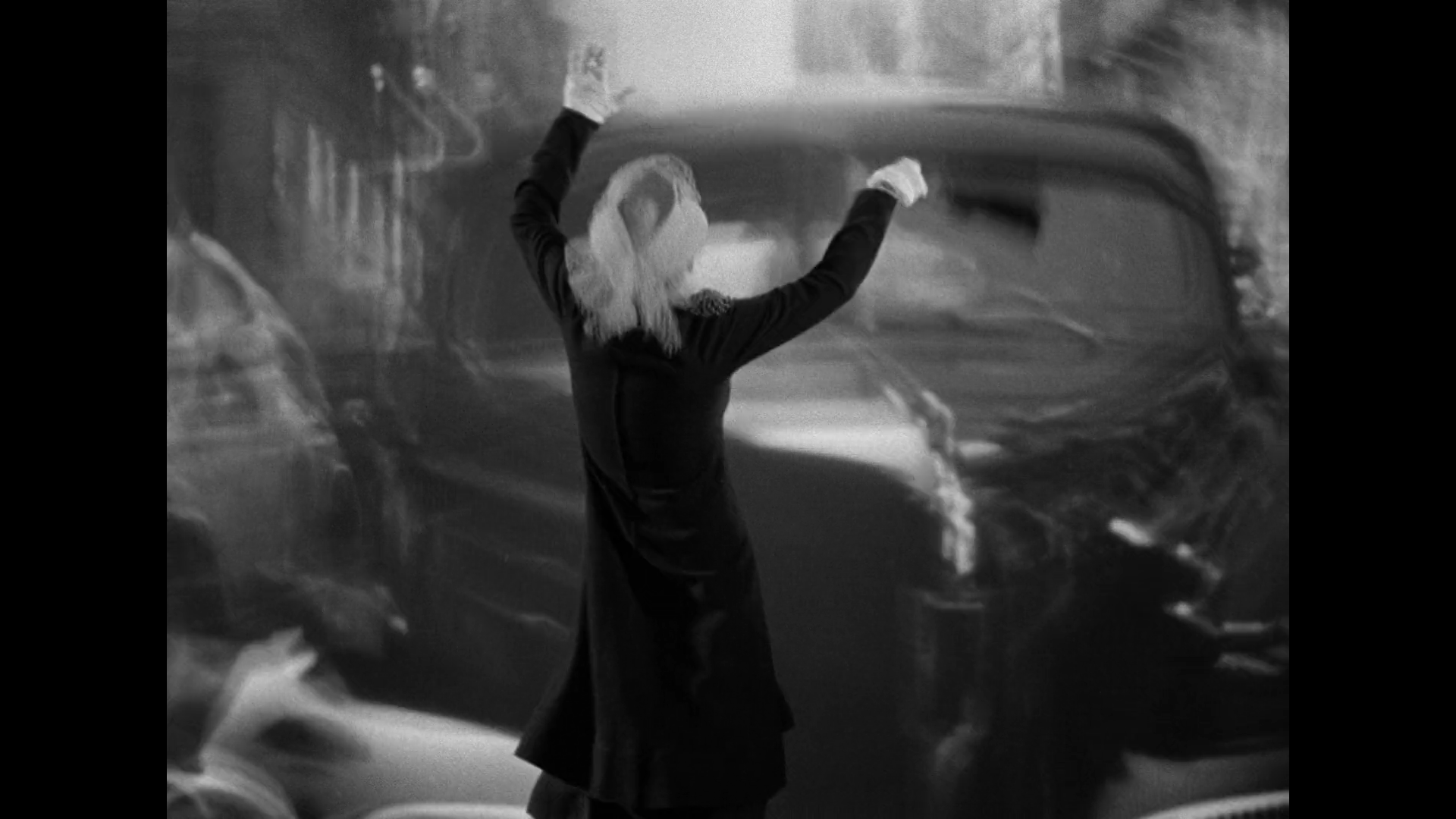
Home Video: A couple of weeks ago I mentioned that I’ve been slowly but surely picking off the greatest films I’ve never seen according to the 2022 Sight and Sound critics poll. They’ve universally been terrific and The Last Laugh is no exception. Here’s what I said about it on Letterboxd after my second viewing:

After more than a century, still the cinematic gold standard depiction of the idea that, as Sarah Jaffe put it, “work won’t love you back.” Also the feelings of being pleasantly soused and crushed (literally here, by a high-rise) by guilt. But it’s the violent tonal swings that make this a masterpiece: almost Linnaean in their comprehensiveness, they catalog the various tricks (circumstantial, psychological, social, etc.) we “civilized” human beings compulsively employ to make ourselves and one another miserable and, by cancelling each other out, show how unnecessary and avoidable the entire pathological enterprise really is.

Current Cornell University faculty, staff, and students can watch this film on Kanopy via a license paid for by the library, and because it’s in the public domain in the United States, everyone else can view it on a variety of free platforms such as Tubi.

Previous “Ithaca Film Journal” posts can be found here. A running list of all of my “Home Video” recommendations can be found here.

Ithaca Film Journal: 11/6/25

What I’m Seeing This Week: I’m going with It Was Just an Accident at Cinemapolis and Die My Love either there or at the Regal Ithaca Mall. I’m also going to try to see Frankenstein at Penn Cinema while visiting home this weekend.

Also in Theaters: It’s a hockey line change week, so today is your last chance to see Blue Moon, The Mastermind, and One Battle After Another at Cinemapolis. After that my top recommendation would have to be the 35mm print of Ghost Dog: The Way of the Samurai playing Cornell Cinema tonight at 8:30pm. Another special events highlight is the free screening of the essay film John Lilly and the Earth Coincidence Control Office there on Monday followed by a conversation with writer/director Courtney Stephens. In addition to the titles listed in the previous section, I’m also hoping to see Bugonia (Cinemapolis & the Regal) and Good Fortune (just the Regal) before they close. Finally, noteworthy repertory options include 40th anniversary screenings of Back to the Future at the Regal all week, The Wizard of Oz at Cornell Cinema on Sunday, and Saving Private Ryan at the Regal on Tuesday.

Home Video: 432 minutes is an intimidating runtime, and with two intermissions, Sátántangó *can* be broken up into three viewings. It really is worth making an occasion out of it, though. As I recently wrote on Letterboxd:

I’ve now set out to watch this film in a single go while the family was away twice, first starting at 10am and then 9:00, but didn’t finish until long after the sun went down either time. I’d eventually like to try a theatrical screening on for size, too, but as of this writing I’m not at all convinced that stopping at the chapter breaks and intermissions to have a think while you walk the dog, smoke a cigarette (don’t tell!) and cook a meal or two and basically structuring an entire day around it isn’t in fact the best way to approach this lowkey apocalypse.

Which: Sátántangó could swap titles with Do Not Too Much from the End of the World to no ill effect in either direction. If I owned a hip bar, I’d cut all the long takes of Mihály Vig’s Irimiás and Putyi Horváth’s Petrina walking with trash swirling all around them in the wind together and play them on a loop with the sound off. The two characters function here like minor demons, terrifying to the poor mortals unfortunate enough to catch their gaze, but virtually anonymous in the immense bureaucracy of hell. Animal imagery is one structuring device, but it’s never too on the nose: a slow camera movement in on an owl suggests that Irimiás is a raptor, except that dialogue confirms that he fancies himself as a spider, and who’s to say that one of the escaped horses at the end isn’t actually the best fit? Throw the ten minute single take opening shot of meandering cows into the mix and you end up with an extradiegetic synthesis like he’s a sheepdog with wild traits not eradicated, but harnessed for a purpose.

However you want it, he’s a careful observer on a spectrum that has damnation on one end and fast (Erika Bók’s Estike) or slow (Peter Berling’s alcoholic doctor) death on the other, with the distracted villagers who make up most of the rest of the cast constituting the vast purgatorial middle. And then, of course, there are the twelve steps of the tango and a diagram of the solar system in the doctor’s house which foreshadow the reappearance of many of these same ideas and themes in Werckmeister Harmonies six years later. Which movie you prefer is likely just a matter of taste: a diffuse nebula and bright star are both beautiful! Definitely an experience.

Current Ithaca faculty, staff, and students have access to this film on Kanopy via an institutional streaming video license paid for by the library; all others are encouraged to purchase it on Blu-ray from Arbelos Films.

Previous “Ithaca Film Journal” posts can be found here. A running list of all of my “Home Video” recommendations can be found here.

November, 2025 Drink & a Movie: Normandy + The Ring

If you’ve been following this series from the start, it is no doubt obvious to you by now that when it comes to both drinks and movies, there’s nothing I prize more than thoughtful twists on familiar templates. I’ve been keeping one of my very favorites in reserve, but with fall in full swing it’s finally time to raise a glass to the Normandy Cocktail invented by novelist and famous tippler Kingsley Amis as a cheaper apple-based alternative to the classic Champagne Cocktail. As he says in his book Everyday Drinking, “Calvados is a few bob dearer than a three-star cognac, but the classiest cider is a fraction of the cost of the commonest champagne.” Amis originally penned those words in England in the early 1980s, and while they may not still be true today, his description of his creation as “a delicious concoction, deceptively mild in the mouth” absolutely is. Here’s how we make it using ingredients from closer to home:

2 ozs. Laird’s 10th Generation Apple Brandy
3 ozs. South Hill Cider’s Baldwin
1 dash Angostura bitters
1 tsp Demerara syrup

Stir the brandy, bitters, and syrup with ice and strain into a chilled champagne coupe. Add the sparkling cider and garnish with an apple slice.

Normandy in a champagne coupe

The Normandy has an apple candy nose, but champagne flavors from the cider, which South Hill’s website accurately describes as “bone dry,” dominate on the way down. This includes toasty notes that I like a lot. The finish is all tart apple (“like a MacIntosh,” said my loving wife), though, reminding you what you’re drinking and of the season. The Cornelius Applejack I featured in my September, 2022 Drink & a Movie post is an even more local option for upstate New Yorkers, but I like the extra oomph you get from the higher ABV of the Laird’s; it does, however, result in a quite boozy cocktail that as Amis writes “tends to go down rather faster than its strength calls for,” so be careful lest you too end up with “heads in the soup when offering it as an apéritif”!

The movie I’m pairing it with also has an English provenance and is positively drenched in bubbly. Here’s a picture of my “Alfred Hitchcock: 3-Disc Collector’s Edition” DVD box set by Lions Gate which includes The Ring:

The Ring DVD case

It is also streaming on Tubi and a variety of other free platforms, albeit not as many as I would have expected considering that it entered the public domain in the United States a few years ago.

Director Alfred Hitchcock famously referred to The Ring in François Truffaut’s book-length interview with him Hitchock/Truffaut as “the next Hitchcock picture” after The Lodger; as nearly everyone who writes about it inevitably notes, it’s also the only one in his long career that he ever directed from his own original screenplay (although most sources agree that his wife Alma Reville contributed to it as well). It begins with a series of images from a carnival that Christopher D. Morris characterizes as “a vertiginous multiplication of circles, of frantic and enforced gaity” in his book The Hanging Figure: On Suspense and the Films of Alfred Hitchcock that includes an opening close-up of a drum followed by a shot of children on a swing ride:

Close-up of a hand banging on a drum with a mallet
Medium shot of children on a swing ride

A point-of-view shot from the perspective of a woman on a gondola ride:

Long shot of a gondola ride
Close-up of a woman screaming as she swings back and forth on the ride
Blurry overhead point-of-view shot of the ground from the perspective of the woman in the previous image

A grotesque extreme close-up of a barker’s mouth:

Extreme close-up of pursed lips in mid-shout
Continuation of the previous shot: the mouth is now open

And two sadistic little boys throwing rotten eggs at a Black man in a dunk tank under the eye of a police officer that only becomes watchful when a higher, disapproving authority figure appears:

Long shot of two extremely mischievous boys centered in the frame in the foreground of a crowd shot getting ready to throw eggs
Medium long shot of a man wiping egg of his face
Close-up of a police officer laughing
Long shot of the police officer from the previous image shooing the egg-throwing boys away

It becomes obvious in the very next scene that the fellow standing behind the two hooligans in the first image above, who we will eventually learn is named Bob Corby (Ian Hunter), is one of our main characters. He spots a woman through the crowd whom a title card identifies only as The Girl (Lillian Hall-Davis), but who a telegram will later reveal is named Mabel:

Alas for him, she’s romantically attached to her co-worker “One-Round” Jack Sander (Carl Brisson), who takes on all comers with the promise that if they can last just a single round in the ring with him, they’ll win a pound:

Long shot of Jack Sander in the middle of the frame flanked by his trainer, who holds a sign with his name on it upside down, to his right and Harry Terry's The Showman to his left

In a scene that Raymond Durgnat praises in his book The Strange Case of Alfred Hitchcock for the way it “picks out the variety of types who make a crowd; none, in themselves, highly original or individual; but the whole is more than the sum of its parts,” a number of men either confidently step forward to fight Jack like this burly sailor:

Long shot of a big sailor pointing at his chest in the midst of a crowd

Or reluctantly allow themselves be cajoled into do like this henpecked husband:

Long shot of a woman dragging a man to the front of the crowd

Corby appears to be a variation on that theme, given that he seemingly only throws his hat in the ring after Sander goads him into it when he spots him flirting with Mabel:

Long shot of Corby flirting with The Girl from the perspective of Sander
Medium shot of Sander pantomiming boxing
Long shot of Corby chucklingly acknowledging the challenge as the crowd laughs

But we soon realize that he’s a different animal entirely from his fellow challengers through a device that Hitchcock (“winningly,” per Durgnat) sounds quite proud of when describing it to Truffaut: “at the end of the first round the barker took out the card indicating the round number, which was old and shabby, and they put up number two. It was brand-new! One-Round Jack was so good that they’d never got around to using it before!”

Close-up of a hand removing a worn out sign with a number "1" on it from a round indicator
Continuation of the previous shot: hands replace the old "1" sign with a sparkling clean "2"

Much of the fight is shown from Mabel’s perspective, which means we don’t actually see much since she’s watching from her post at the ticket booth:

Medium shot of Mabel peering through a flap in the carnival tent that the fight is taking place in
Long shot of Corby barely visible through a crowd of onlookers who dominated the bottom 3/4 of the frame

But we do cut to an interior medium long shot for its final moments:

Medium long shot of the referee holding Corby's hand out, victorious

Mabel is initially pretty displeased at the result. “We were hoping to get married, and now you’ve probably lost him his job!” she tells the victorious Corby and his companion (Forrester Harvey):

But is all soft-focus smiles when they reveal who they are:

Close up of a business card that reads "James Ware, manager to Bob Corby, heavyweight champion of Australia"
Soft-focus close-up of Mabel smiling

When they return that evening to offer Sander a job as Corby’s sparring partner, the latter presents Mabel with an armlet, which Hitchcock cleverly portrays as being part of a single devil’s bargain:

Medium shot of Corby's manager shaking hands with Sander
Close-up of the handshake
Close-up of Corby sliding a bracelet onto Mabel's list
Medium shot of Corby and Mabel with the bracelet

A fortune teller (Clare Greet) sees the whole thing and tries to warn Mabel (to paraphrase Don Henley and Glenn Frey) not to draw the king of diamonds, girl, because the king of hearts is always her best bet, but Sander blunders in and declares, “that’s me. Diamonds–I’m going to make real money now.”

Medium shot of Sander reaching past Mabel to pick up a playing card
Close-up of Sander selecting the king of diamonds and not the king of hearts
Medium shot of Sander smiling as he contemplates his card

He remains oblivious through the armlet falling into a pond right in front of him when Mabel explains that because Corby purchased it with money he won from fighting Sander, “it was really you who gave it to me”:

Close-up of the armlet sliding off Mabel and into a pond
Medium shot of Sander's and Mabel's reflections in the pond, distorted by ripples
Medium shot of Sander looking at the armlet he has plucked out of the pond

And the boorish toast Corby makes after Sander and Mabel finally wed: “I think the prize at the booth should have been this charming bride; anyway, now he’s my sparring partner I shall take my revenge”:

Medium shot of Corby pantomiming boxing

But it isn’t until the film’s near-exact halfway point that he finally gets wise and acknowledges that, “it seems as though I shall have to fight for my wife, after all”:

Medium shot of Sander making a statement

This is followed by another montage technique that Hitchcock claims credit for inventing in his interview with Truffaut: “to show the progress of a prize fighter’s career, we showed large posters on the street, with his name on the bottom. We show different seasons–summer, autumn, winter–and the name is printed in bigger and bigger letters on each of the posters. I took great care to illustrate the changing seasons: blossoming trees for the spring, snow for the winter, and so on.”

Summer scene of a billboard advertising upcoming fights; Jack Sander's name is in the smallest font size
Continuation of the previous shot: it's now fall, and Sander's name is bigger
Continuation of the previous shot: the ground is covered in snow and Sander's name is bigger still
Continuation of the previous shot: it's now summer and Sander's name is in the second-largest font size

Sander is by now plagued by surrealistic nightmare visions of adultery:

An image of Corby kissing Mabel is superimposed over elongated piano keys and a turntable

But nonetheless manages to win his next fight, securing him a title bout with Corby. Mabel isn’t there when he arrives home to celebrate, though. He pours champagne for his friends, who stare at it as intently as starving men ogling the first food they’ve seen in weeks:

Medium shot of Sander holding an uncorked bottle of champagne which is bubbling over
Medium shot of Sander's friends staring intently at the champagne

But expecting her arrival any minute, he insists that they wait. “And so,” as Hitchcock tells Truffaut, “the champagne goes flat”:

Close-up of a very effervescent glass of champagne
Close-up of a glass champagne bubbling way, but less vigorously than in the previous shot
Close-up of a glass of flat champagne

Not content with merely wasting their contents, an enraged Sander finishes off the glasses themselves when Mabel finally gets home by throwing a framed photo of Corby at them:

Medium shot of Sander preparing to throw a framed photo of Corby on the right side of the frame while Mabel glares at him from the left
Close-up of the glasses of champagne exploding as the photo crashes into them
Continuation of the previous shot

She uses the photo as a shield after he rips her dress a few seconds later and flees:

Medium shot of Mabel clutching Corby's photo to her exposed chest as she backs away from Sander, who occupies the left third of the frame in the foreground

Sander goes looking for Corby and upon finding him continues his vendetta against sparkling wine by way of rejecting a peace offering:

Close-up of Sander pouring out a glass of champagne

They basically decide to settle things in the ring, and that’s where most of rest of the film takes place. In his monograph on Hitchcock, Patrick McGilligan calls this sequence, which is set in Albert Hall, “a triumph of illusion, indebted to the recently invented Schüfftan process, first exploited by Fritz Lang in Metropolis, and which Hitchcock had brought home from Germany as his most valuable souvenir.” Per McGilligan, this technique allowed the director “to stage scenes in public places, without the expense (or permission) of actually filming there, by blending live action in the foreground against miniatures, photographs, or painted scenery.”

The fight is also noteworthy for Hitchcock’s documentarian eye for things like canvas preparation:

And a film crew getting ready to record it:

Long shot of a camera crew getting ready to cover the fight

The judicious use of first-person shots to heighten the drama of big hits like this one:

Close-up of Corby's face from Sander's perspective
The moment of impact is represented by a bright light
Another shot of Corby's face from Sander's perspective superimposed over the stadium background

And another bubbly being opened and dumped on Sander’s head to revive him ahead of the penultimate round:

Close-up of a cornerman opening a bottle of champagne
Medium shot of said cornerman pouring the champagne over Sander's head

At this point it looks like our hero is on his way to another loss, but the tide turns when Mabel discards the fur coat Corby gave her and goes to Sander before the final bell:

Medium long shot of Mabel in her fur coat
Medium long shot of Mabel rising, leaving the coat behind
Medium shot of Mabel next to Sander in his corner

“I’m with you . . . in your corner,” she tells him. What’s interesting is how he becomes aware of her presence. Here’s how Michael Walker describes it in his book Hitchcock’s Motifs:

By now, Jack is too dazed to realise she is beside him, reassuring him that she’s back, but as he looks down at his pail of water, he sees her reflection. In fact, Hitchcock films this subjective image ambiguously: since Mabel’s image in the water dissolves into a reflection of Jack looking at himself, it is not certain that her reflection really is there or whether Jack has conjured it up from hearing her voice.

Medium shot of a dazed Sander in his corner looking offscreen and downward to his right
Overhead point-of-view close-up from Sander's perspective of Mabel's face reflected in the rippling water of a bucket
Continuation of the previous shot: the reflection has resolved into Jack's own

This is, perhaps, why the tender look Mabel and Sander exchange after he knocks Corby out doesn’t seem to presage a happily ever after.

Soft-focus medium shot of Mabel and Sander looking at each other tenderly

As Walker says, “the connection between Mabel and water suggests her elusiveness: she becomes as difficult to hold on to as her reflection.” Of course, although we fade to black, this isn’t the movie’s final shot! Hitchcock instead chooses to end with Corby in his changing room. “Look what I found at the ring-side, Guv’nor,” says a member of his team, holding up the armlet he gave Mabel:

Medium shot of Corby contemplating the armlet that a member of his team has found

Corby contemplates it for a single beat:

Medium shot of Corby contemplating the armlet

Then flips it back to the person who found it and resumes adjusting his collar:

Medium shot of Corby flipping the bracelet back to the person who found it
Medium shot of Corby adjusting his collar with an utterly unconcerned expression on his face

“It’s this lazy, sharp, sensible, apathetic gesture which, retrospectively, gives the film its asperity,” Durgnat says. “Since the affair didn’t matter much to him, it shouldn’t have mattered much to anybody.” Jack E. Cox’s fight cinematography is decades ahead of its time; ending a sports movie with an athlete utterly unconcerned about his defeat either literally in the ring or symbolically in the game of love would be a remarkable decision even today. Which also describes Kingsley Amis’s inspired substitution of apple spirits for grape ones in The Normandy and is the very definition of “timeless,” is it not?

Cheers!

All original photographs in this post are by Marion Penning, aka my loving wife. Links to all of the entries in this series can be found here.

Ithaca Film Journal: 10/30/25

What I’m Seeing This Week: I didn’t make it to The Mastermind at Cinemapolis last week, so that’s my top priority. I’m hoping to catch If I Had Legs I’d Kick You, which opens there tomorrow, as well.

Also in Theaters: One Battle After Another, which closes at the Regal Ithaca Mall tonight but remains at Cinemapolis at least through next Thursday, contains some of the most exhilarating moments of Movie Year 2025. I think I *might* prefer Blue Moon, which also continues its run at Cinemapolis, overall, though. Here’s what I recently said about it on Letterboxd:

Ethan Hawke plays Lorenz Hart as a man so drunk with beauty wherever he finds it that when he reaches a pass where his dignity is the most valuable thing he has left in the world, he offers it up with a sacrifice without hesitation. Which: I’ve always loved John Leguizamo’s Toulouse-Lautrec from Moulin Rouge! but never thought he could carry an entire movie by himself. And indeed *that* character probably couldn’t, but this one is buttressed by a brilliantly witty screenplay, great supporting cast, and the origin story for a beloved children’s literature character. Lacks Springsteen: Deliver Me from Nowhere‘s (an inevitable comparison considering that they’re sharing theater marquee space across the country right now) insistence that we must feel gratitude and pity for the artist in equal measure, which is to its credit.

In addition to the movies listed above, I’d like to see Good Fortune and Bugonia before they close, too, but I’ll be out of town most of next week, so I don’t know if it’s going to happen. The former is at the Regal and the latter is both there and at Cinemapolis. This week’s special events include “Sing-Along” screenings of KPop Demon Hunters at the Regal Friday through Sunday, a screening of the film Framing Ménerbes followed by a “talkback” with director Daniel Gwirtzman at Cinemapolis on Sunday at 3pm, and a program of three experimental films directed by women called “At Home/Far Away” at Cornell Cinema that day at 5:30pm. Finally, repertory highlights include 40th anniversary screenings of Back to the Future at the Regal all week, Halloween at Cornell Cinema tomorrow, Singin’ in the Rain there on Sunday, and Clue at Cinemapolis on Monday.

Home Video: I’ve been trying to mix the greatest films I’ve never seen before according to the 2022 Sight and Sound critics poll in with all the scary season fare I’ve been enjoying lately. One title that checked both boxes was Possession, which I recently watched for the first time ever on the Criterion Channel. Despite the presence of Sam Neill, it took me a second viewing to come around to it, but now that I have, I can definitely see it continuing to grow in my estimation. Here’s what I said about it on Letterboxd:

“Live every day like it’s your last one on earth,” they say. But what if people you want to spend it with are doing the same but have different priorities, and your actions and/or theirs appear to be somehow responsible for bringing it about? Or: H.P. Lovecraft updated for the nuclear age with terrific acting and maybe the best rendering of a collapsing marriage I’ve ever encountered outside of Richard Yates’s Revolutionary Road. Isabelle Adjani’s heels in her opening scenes are one of cinema’s great costume design decisions.

Previous “Ithaca Film Journal” posts can be found here. A running list of all of my “Home Video” recommendations can be found here.

Ithaca Film Journal: 10/23/25

What I’m Seeing This Week: Lots of movies are arriving in Ithaca that I’ve been looking forward to! Most notably, The Mastermind, which I identified last June as the Cannes 2025 selection I was third-most eager to see, opens at Cinemapolis tonight. I’m also going to try to catch Blue Moon there and Springsteen: Deliver Me from Nowhere there or at the Regal Ithaca Mall.

Also in Theaters: I’ve got high hopes for The Mastermind, obviously, but One Battle After Another remains my favorite new movie now playing Ithaca that I’ve already seen for now. It continues its respective runs at both Cinemapolis and the Regal, although it’s down to one showtime per day at the latter. Otherwise, this week is all about special events! Two silent films lead the pack: you can see Dawson City: Frozen in Time at Cinemapolis tonight, and Cornell Cinema continues an annual Halloween tradition by screening The Phantom of the Opera at Sage Chapel with a live musical accompaniment by The Invincible Czars tomorrow. The Wharton Studio Museum’s Silent Movie Month then concludes with The Gold Rush at Cinemapolis on Sunday. There are three free screenings at Cornell Cinema this week: Cracking the Code: Phil Sharp and the Biotech Revolution on Monday, Chasing Time (which also features free concessions) on Tuesday, and Io Capitano on Wednesday. Finally, seasonally appropriate repertory highlights include screenings of Dracula at the Regal tomorrow, Frankenstein there tomorrow, Halloween at Cornell Cinema on Saturday, and Nosferatu the Vampyr at Cinemapolis on Tuesday among many other options.

Home Video: One Battle After Another is the third movie this year to reign as my favorite new release in Ithaca theaters for at least four straight weeks. I recommended The Phoenician Scheme in this spot last month, and it’s high time that I mentioned that the first to do it, Sinners, has been streaming on HBO Max with a subscription for a while now! Here’s what I said about it on Letterboxd back in April:

As someone who grew up reading Anne Rice novels about immortals, the first post-credits scene might be the part of this movie that resonated with me the most, economically gesturing as it does toward a whole alternative universe of her Vampire Chronicles in just a few minutes. It was interesting to have the Dutchman quotation from Masculine Feminine and the Django quotation from The Harder They Come rattling in my brain throughout this also very referential movie. Ruth E. Carter’s costume designs are worthy of another Oscar nomination.

As an added bonus, if you watch it now you can pair it with the short film Return to Glennascaul, an atmospheric ghost story set in Ireland, which is available on Watch TCM until November 2.

Previous “Ithaca Film Journal” posts can be found here. A running list of all of my “Home Video” recommendations can be found here.

Ithaca Film Journal: 10/16/25

What I’m Seeing This Week: I’m going with After the Hunt at either Cinemapolis or the Regal Ithaca Mall.

Also in Theaters: Ideally I’d also catch Anemone (which I wasn’t able to make it to last week), Good Boy, Good Fortune before they close, but it’s a busy time of year, so we’ll see. Anemone is at Cinemapolis and the other two are at the Regal. One Battle After Another continues its reign as king of the first run fare I *have* seen for a third consecutive week. It’s at both of those venues. I also enjoyed Eleanor the Great and The Smashing Machine, which are just at Cinemapolis. Special events highlights include free screenings of the films E.T. the Extra-Terrestrial and The Big Payback at Cinemapolis on Sunday and Tuesday respectively and of Marwencol at Cornell Cinema on Tuesday. Finally, this week’s noteworthy repertory options include screenings of Spirited Away, which is at the Regal Saturday-Wednesday; a Harold Lloyd double feature of Speedy and Now or Never at Cornell Cinema on Saturday; Meet Me in St. Louis there on Sunday; and Event Horizon at the Regal on Tuesday.

Home Video: I try to always have enough silly projects going to guarantee I’m never bored enough to start contemplating the meaning of life or lack thereof, and recently it occurred to me that I should make sure I’ve actually seen every feature and short I own on physical media. So it was that I found myself systematically working my way through my copy of the Criterion Collection’s By Brakhage anthologies. Old favorites Dog Star Man and Mothlight were every bit as impactful as I remembered and new discovery The Garden of Earthly Delights if anything improves on the latter, but the real revelation for me was The Act of Seeing with One’s Own Eyes. Here’s what I said about it on Letterboxd:

An even more rigorous cinematic rendering of the Holy of Holies than Window Water Baby Moving. This is a humble work, and director Stan Brakhage casts himself as neither High Priest nor the one who tears the temple veil–he is, rather, just the person holding the camera. Extraordinary.

Just in case I’m underselling it, the all-time top ten list I published in August was my first one in probably ten years; I saw Act of Seeing less than a week later and was tempted to immediately make another update to substitute it in for Stalker as my very favorite film of the 1970s! I’m still not *quite* ready to go there two months on, but it’s close, and I’m now thinking about folding this exercise into my annual end of year posts so that I can keep changing my mind back and forth. Anyway, we’re about due for a Criterion Collection flash sale, and if you don’t already own By Brakhage, this one title alone merits adding it to your cart!

Previous “Ithaca Film Journal” posts can be found here. A running list of all of my “Home Video” recommendations can be found here.