June, 2024 Drink & a Movie: Triumph of Pompeii + Damsels in Distress

My number one source of new cocktails to try is Frederic Yarm’s Cocktail Virgin Slut blog. One thing I like about it is that he tends to work with spirits he already has in his bar, to the point where you can get enough of a sense for what’s there to pick up a few of those bottles yourself and follow along at home. Because the recipes he posts show up in my RSS feed every day, it took me longer than it should have to buy his Drink & Tell: A Boston Cocktail Book and Boston Cocktails: Drunk & Told books, but I’m glad I finally did because they’re great volumes to flip through in search of inspiration. While doing so with the latter awhile back, the Triumph of Pompei cocktail created by Tyler Wang of No. 9 Park jumped out at me as a great drink to pair with Damsels in Distress, one of my favorite movies of the 2010s, first because it’s name evokes Seven Oaks University’s Roman letter fraternities, but also because it’s similarly light and effervescent on the surface with a deeper, more complex core. Here’s how you make it:

1 1/4 ozs. Cocchi Americano
3/4 oz. Fernet Branca
1 oz. Grapefruit juice
1/2 oz. Simple syrup

Shake with ice and strain into a glass containing 1 1/2 ozs. club soda. Fill glass with ice, add a pinch of salt to the cube on top, and garnish with a grapefruit twist.

Triumph of Pompeii

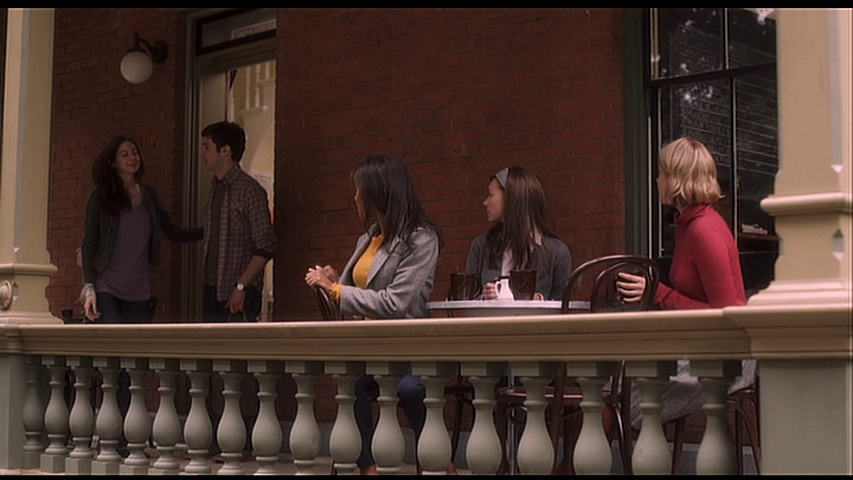
Yarm uses one “i” in the name of this drink in both the book and on his blog, but per Wikipedia that refers to the modern Italian city, whereas I’m interested in the ancient Roman one, so I’m going with two. However you spell it, the Triumph of Pompeii greets you with citrus on the nose and sweetness on the tongue. You get the Fernet right away along with the wine flavors of the Cocchi Americano, but the former stands out on the finish, which is where the grapefruit starts to assert itself as well. Diffords Guide recommends using grapefruit soda in place of club soda, but I think this disrupts the progression I just described: as is it’s a perfect accompaniment to grilling up dinner on an early June evening or settling in to enjoy the chaos of the Roman Holidays like these young ladies are doing:
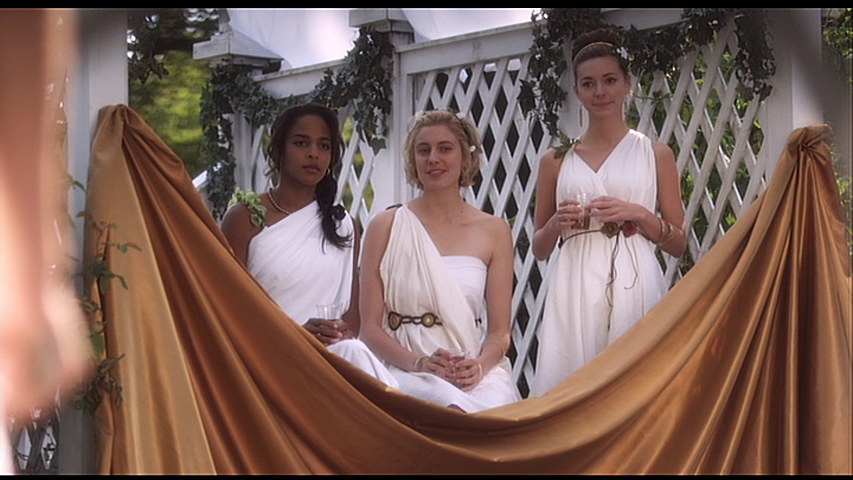
Rose, Violet, and Heather observe the Roman Holidays

Speaking of whom, Rose (Megalyn Echikunwoke), Violet (Greta Gerwig), and Heather (Carrie MacLemore) are three of the titular damsels in distress in director Whit Stillman’s first film of the 21st century after a thirteen year pause. Here’s a picture of my Sony Pictures Classic DVD release:
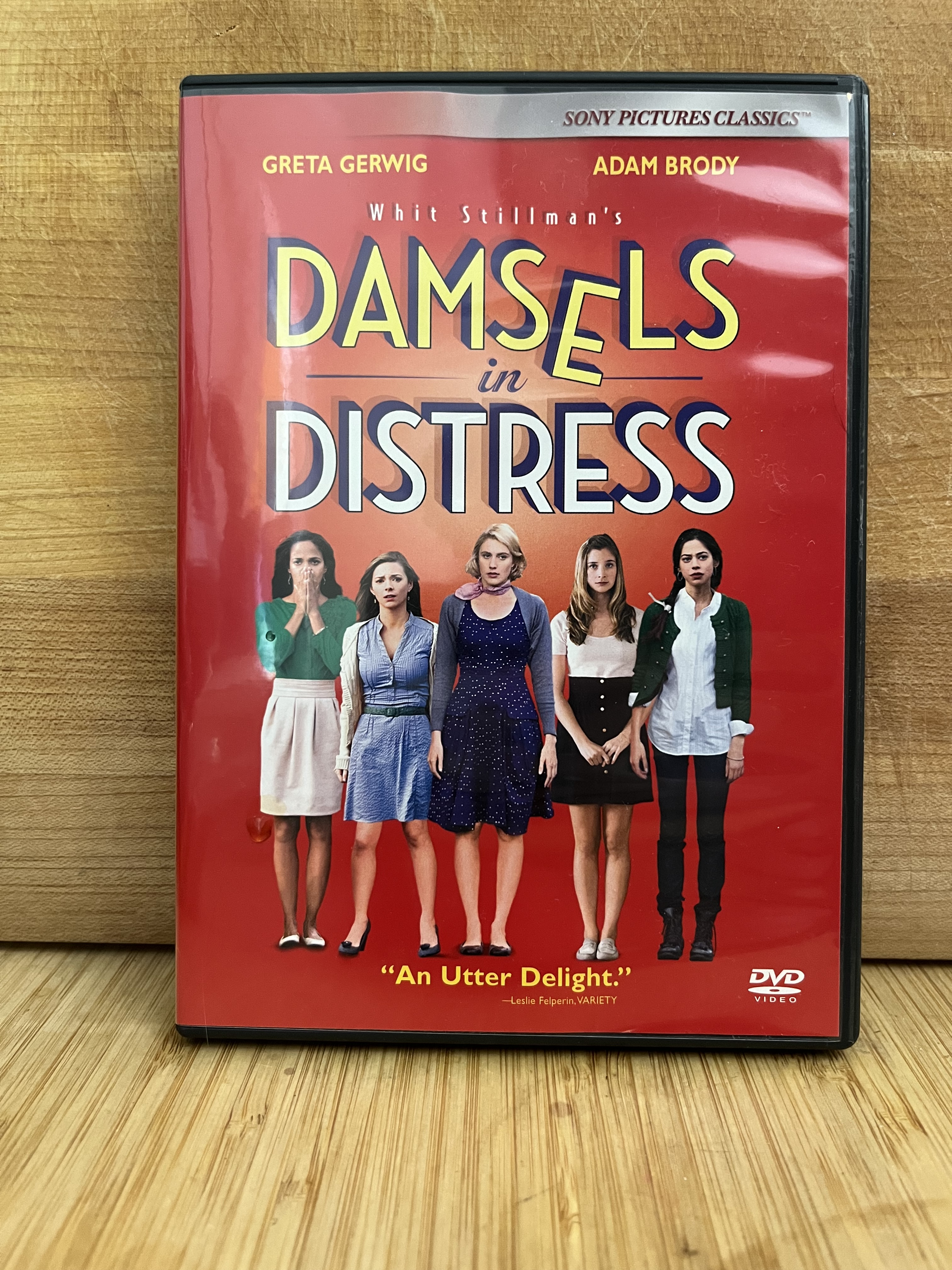
Damsels in Distress DVD case

It can also be streamed via Apple TV+ and Prime Video for a rental fee, and current Cornell University faculty, staff, and students have access to it via Academic Video Online as well.

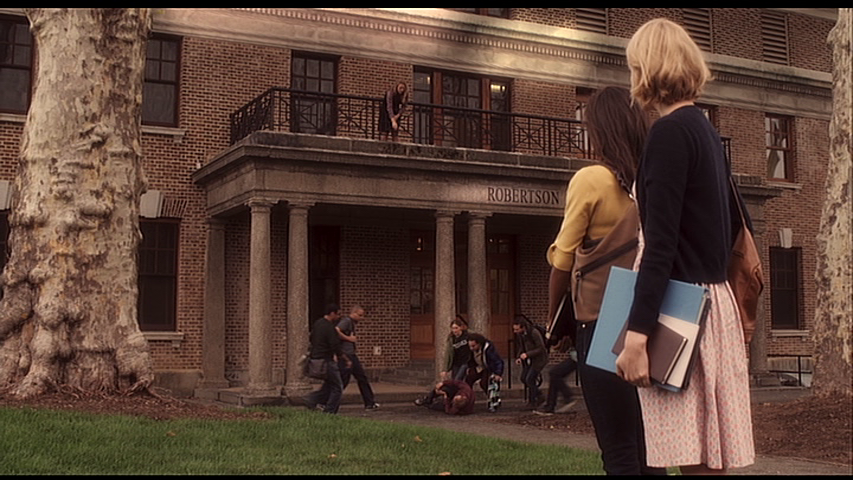
Damsels begins during registration for Seven Oaks’s fall semester with Rose saying “there” and Violet responding, “yes, I think so.”
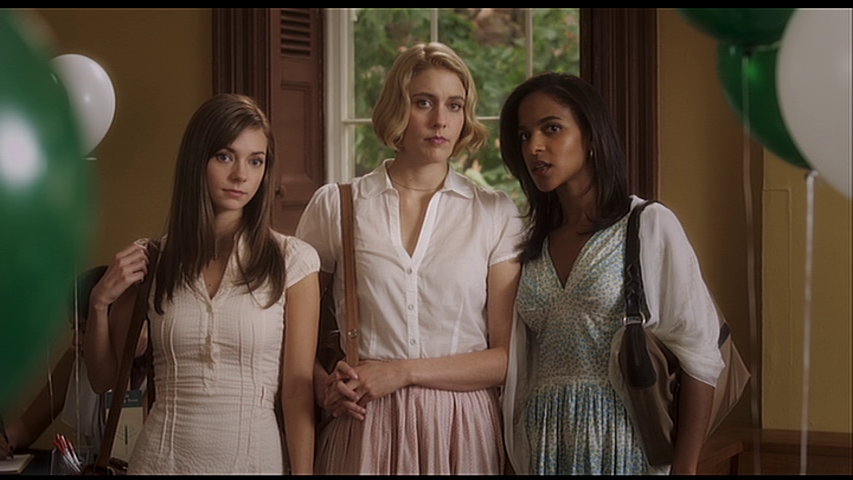
Heather, Violet, and Rose spot Lily

The person they are talking about is Lio Tipton’s Lily, a transfer student who they offer to “help.”
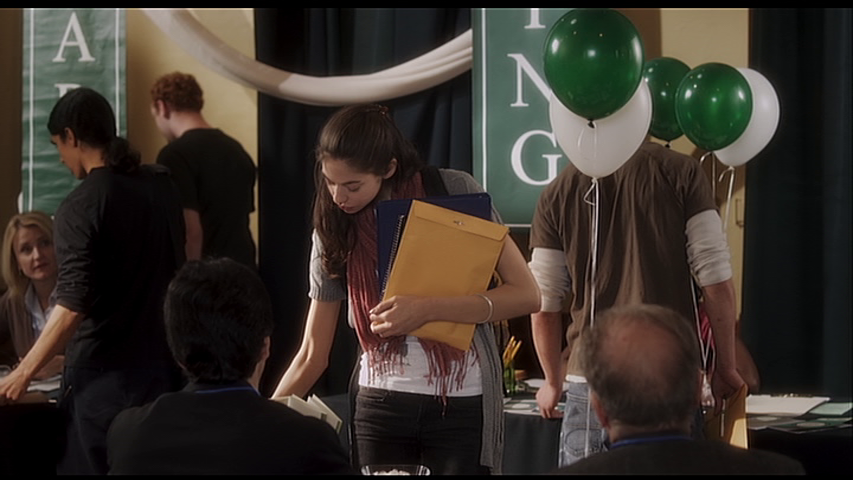
First appearance of Lily

Lily doesn’t actually seem wildly enthusiastic about this idea, which is understandable considering that their first conversation starts out with Violet pointedly observing that “clothes can be critical for
confidence — and an overall sense of well-being,” then pivots to an explanation of what “nasal shock syndrome” is after Rose violently reacts to the body odor of some passing male students:
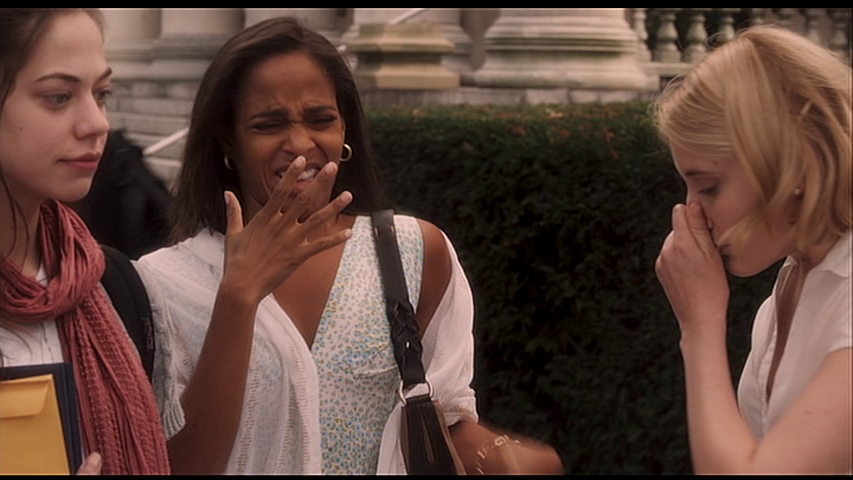
Rose suffers a bout of nasal shock syndrome

Lily has lost her housing assignment, though, and when her three new friends offer to let her room with them, she gratefully accepts. We follow the new quartet to the suicide prevention center they run through which they meet the temporary fifth member of the their group pictured on the DVD case, Caitlin Fitzgerald’s Priss, along with Nick Blaemire and Aubrey Plaza in memorable cameo roles as Freak Astaire and Depressed Debbie respectively, all three of whom can be seen in the screengrab below rehearsing a show that the center is putting on for therapeutic reasons:
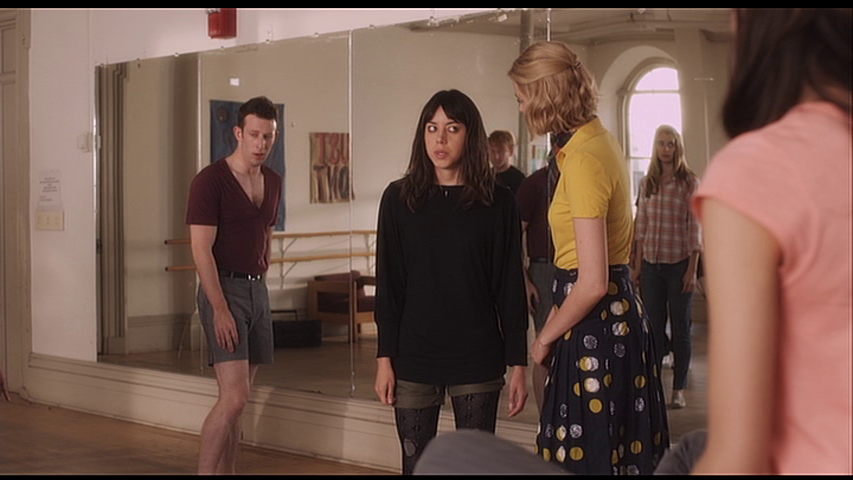
Depressed Debbie talks to Violet while Freak Astaire, Priss, and the other dancers wait for them to finish
Debbie is the person talking to Violet, Freak is to their left, and Priss is reflected in the mirror to Violet’s right.

The five leads, who are shot more than once to look like they are literally glowing, next crash the first meeting of the Daily Complainer, the school newspaper.
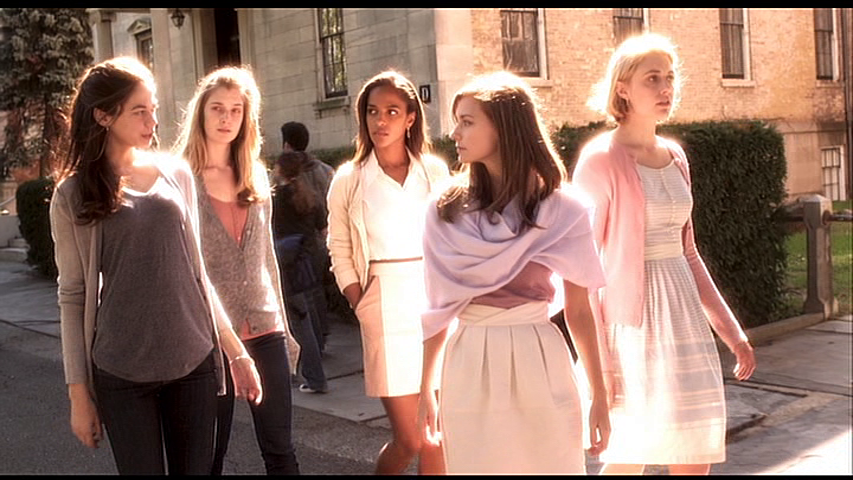
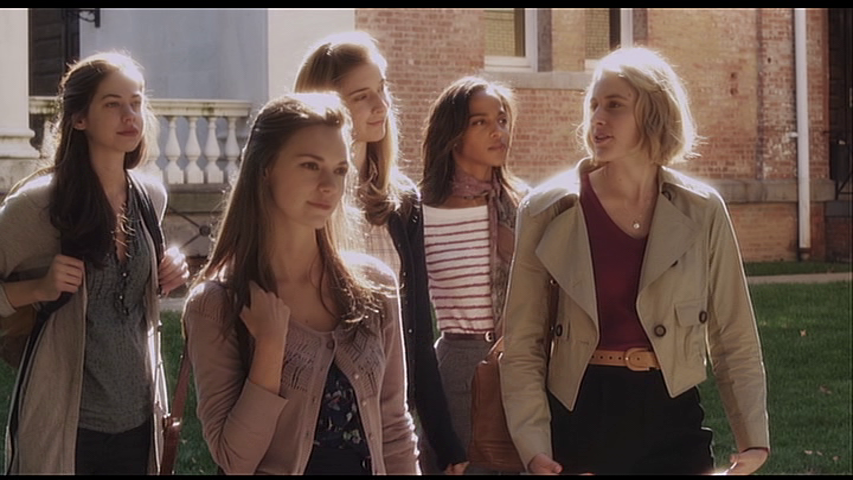
Radiant young women, part one
Radiant young women, part two

There they meet editor Rick De Wolfe, who is played by another stalwart of American comedies of the era, Zach Woods, seen here condescendingly explaining that the publication’s name derives from the fact that it comes out every day even though the questioner was obviously referring to the “Complainer” part:
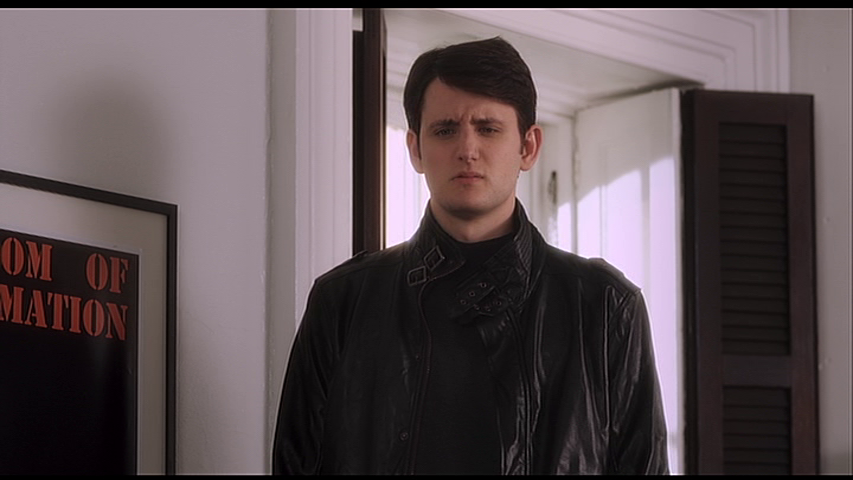
Medium shot of Rick De Wolfe looking unimpressed with the quality of questions he is receiving

The group has a falling out with Priss after she steals Violet’s boyfriend Frank (Ryan Metcalf), who doesn’t realize that his eyes are blue. “I’m not going to go around checking what color my eyes are!” he says:
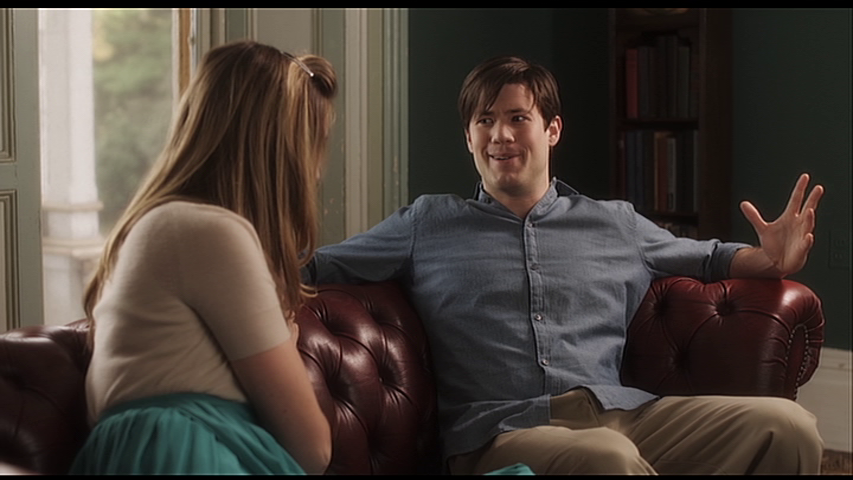
Frank explains to Priss why he doesn't know what color his eyes are

At least he knows what blue is–moments later we discover that his roommate Thor (Billy Magnussen) has not yet learned the colors. He’s not embarrassed, though: “What’s embarrassing is pretending to know what you don’t,” he explains, “or putting other people down just because you think they don’t know as much as you.”
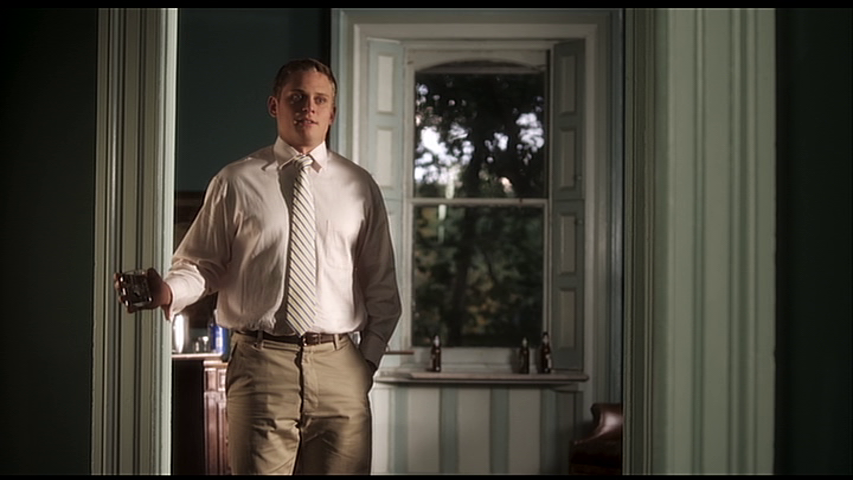
The situation with Frank sends Violet into a “tailspin,” and her roommates are worried when she disappears, especially after Rose, who has known her since seventh grade, explains that Violet isn’t even her real name–she was born Emily Tweeter (“like a bird”), suffers from obsessive-compulsive disorder, and lost both of her parents. Luckily, whatever Violet’s original intentions were, she is saved by a bar of soap:
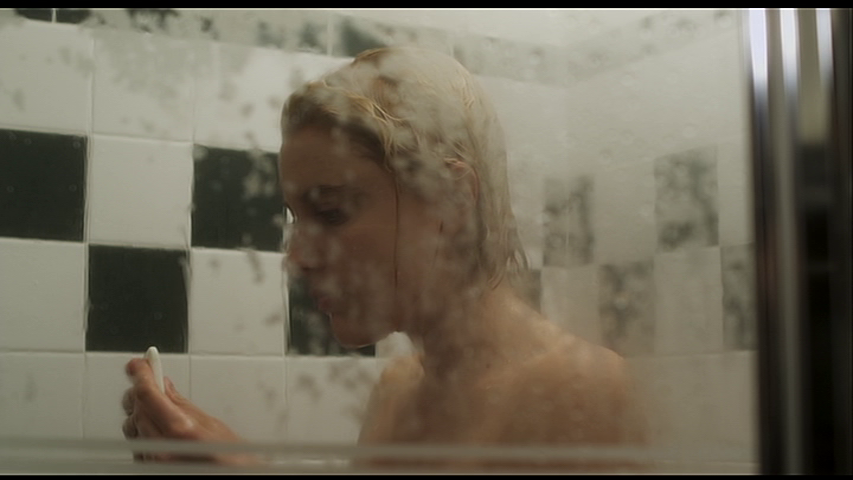
Violet discovers the "wonder bar" while taking a shower in the Motel 4 she has escaped to

As she explains to the waitresses (Carolyn Farina, who portrayed Audrey Roget in Stillman’s films Metropolitan and The Last Days of Disco, and Shinnerrie Jackson) and some fellow customers (Gerron Atkinson and Jonnie Brown, who per IMDb is a fellow Pitt alum) at a diner she breakfasts at afterward who express concern that she’s one of “those depressed students down from the university” intent on killing herself, she’s not as crazy as she was yesterday “due to the salutary effect of scent on the human psyche”:
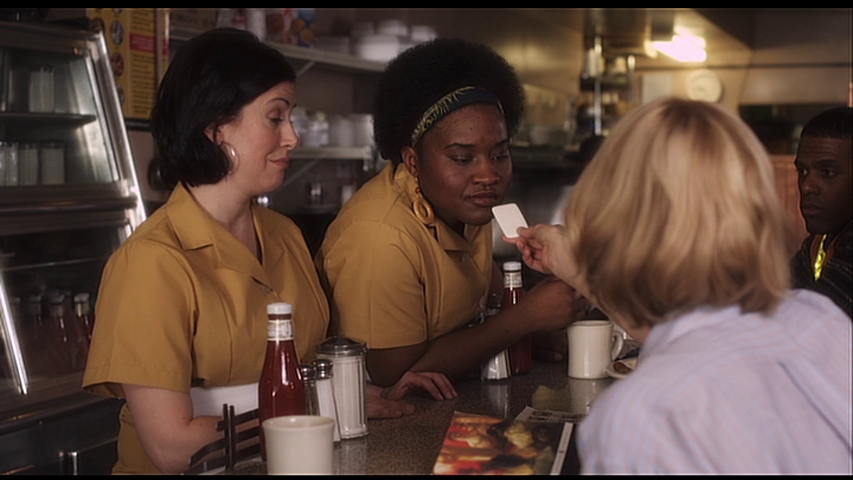
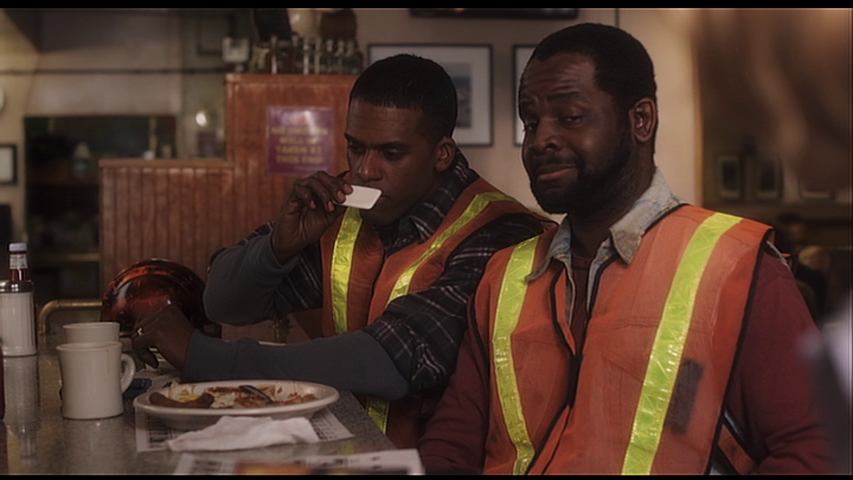
Smelling soap, part one
Smelling soap, part two

Meanwhile Lily gets involved first with two young men, a cinephilic graduate student from France named Xavier (Hugo Becker) who practices Catharism:
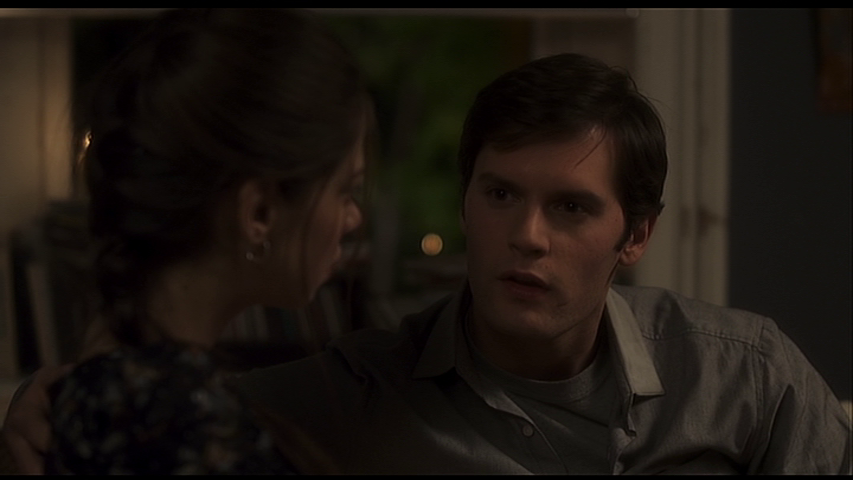
Xavier tells Lily that he's "trying to
follow the path the Cathars marked
out"

And Adam Brody’s Charlie Walker, whose real name is Fred Packenstacker and who has my favorite line in entire movie during a later scene in which Violet challenges his belief that decadence has declined. “How?” she asks. “How?” he replies, “or in what ways?”
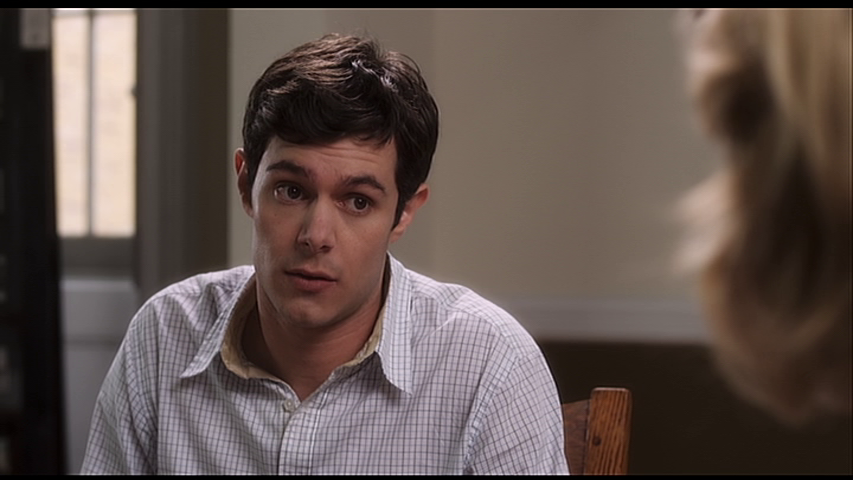
Charlie aka Fred tells Violet about his final paper on "The Decline of Decadence"

Anyway, Alia Shawkat makes an appearance:
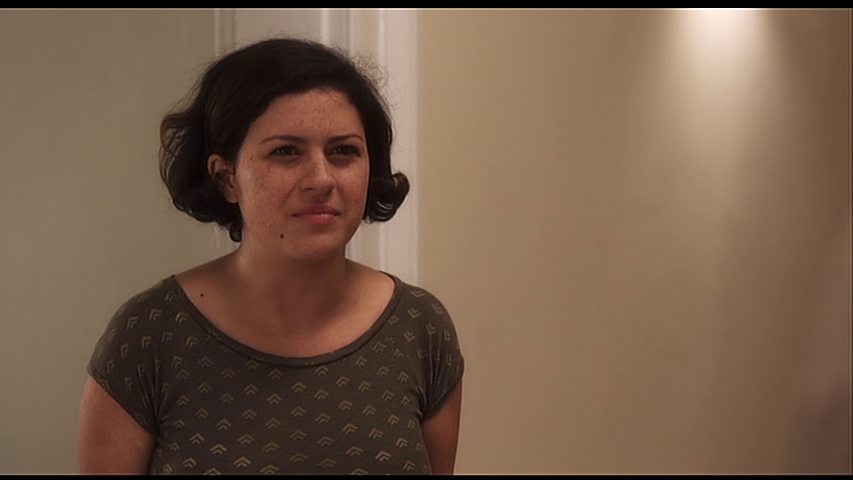
Medium shot of Alia Shawkat's character Mad Madge:

Violet ends up with Charlie/Fred, Lily confesses that all she really wants is to be “normal,” and the whole thing ends with first a musical number set to the song “Things Are Looking Up” from the 1937 Fred Astaire film A Damsel in Distress, then Violet fulfilling her dream of starting an international dance craze, the Sambola!
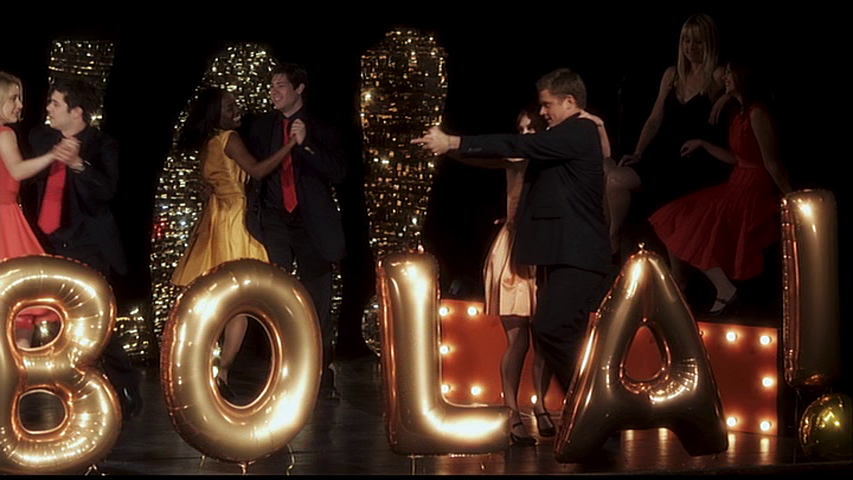
The cast of Damsels in Distress performs the Sambola!
“Thor can do the Sambola! So can you!”

As you likely gathered, Damsels in Distress isn’t set in the “real” world. It is, instead, a stylized distillation of the essence of the college experience. In an Indiewire article containing highlights from a Q&A which followed a sneak preview screening, Stillman (who also wrote the film’s screenplay) explained that Lio Tipton “subverted [his] intentions” with their performance as Lily:

Lily was clearly the nemesis character, this person you think is going to be a friend, and you think is going to be wonderful, but they let you down. And Analeigh, by being really natural and likeable in scene after scene, had created this problem where audiences like and identify so much with Lily, that they dislike [Greta Gerwig’s] Violet character. And it subverts our purposes. That’s a negative commercially, but it somehow enriches the film. My cliches were unintentionally subverted by a superior actress.

Lily’s essential goodness comes through most clearly for me in the way she sort of hops when she talks:
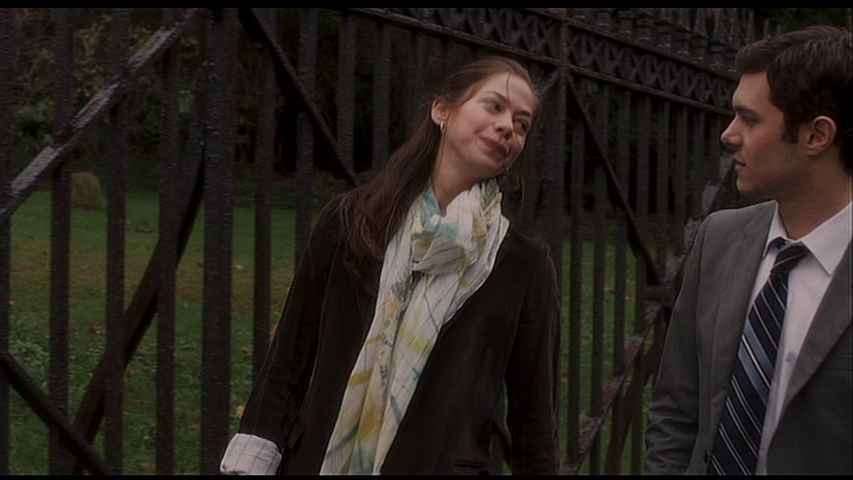
Lily hops, part one
Lily hops, part two

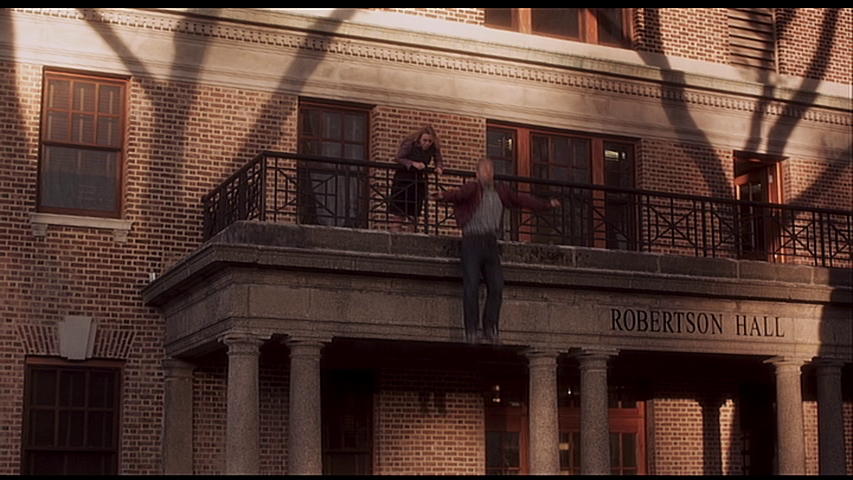
The key to understanding what’s going on here is the same thing I love most about the film: it celebrates college as a safe space for reinvention. Compare, for instance, the diner conversation referenced above about people who actually kill themselves by jumping in front of cars on the highway with the “suicidal Ed School” students who keep throwing themselves off the top of their two-story building, which I assume was inspired by Leonard’s Leap from A Damsel in Distress:
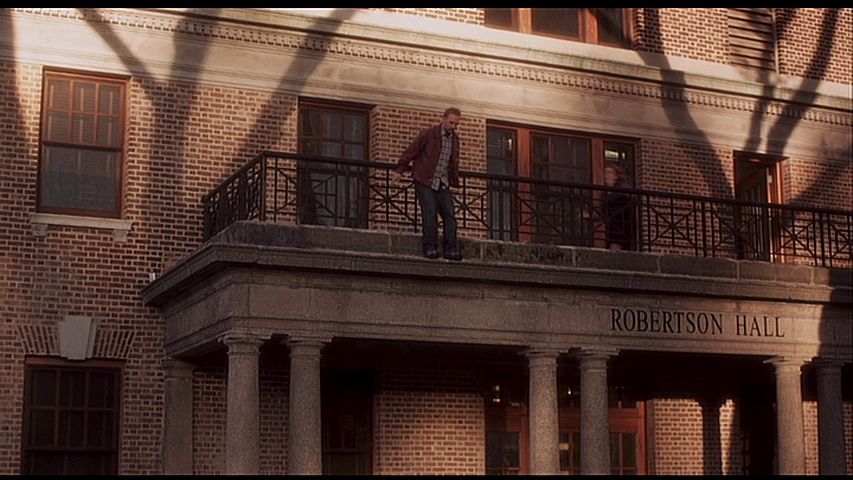
An Ed School student at the end of his rope, part one
An Ed School student at the end of his rope, part two
An Ed School student at the end of his rope, part three

Going off to college is one of the best opportunities many of us ever get to actually become the individuals we aspire to be, which is much easier when you aren’t surrounded by people who have known you for your entire life and think they already know who you are, and for as long as you’re there you have access to a support system dedicated to helping you do so. Violet is the purest embodiment of this theme, which is why she’s the hero of the story, and which also explains why there’s nothing incidental about her dance craze aspiration. As Miriam Bale put it in her Damsels in Distress review for Slant, “‘Sambola!’ might be shorthand for a message that, if you follow certain steps, even sloppily, as long as you’re a pain-in-the neck about never compromising, as long as you keep at it, you too can be a better person.”

Rick DeWolfe is the closest thing the film actually has to a villain in large part because he clearly thinks he’s already his best self; Lily doesn’t really want to change, either, but because of the humanity that Tipton brings to the role, we don’t accept her rejection of Violet’s “doufi orientation” as the final word on who she is. After all she has learned a few things from her roommates, even if only in spite of herself, as shown by her reaction to the smell of Doar Dorm:
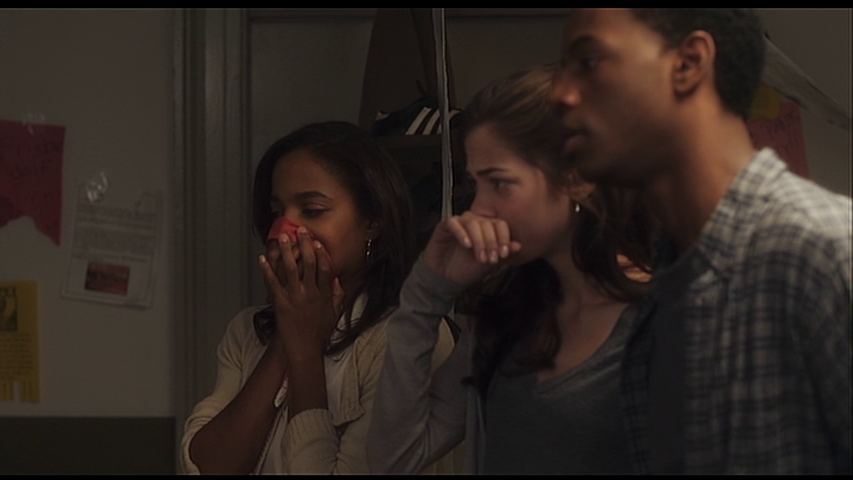
Lily experiences a nasal shock

And so it is that she comes to represent a reminder that eccentrics like Violet aren’t ultimately defined just by the number of lost souls who they save, but also the regular people they transform in much subtler ways, which is much more interesting than just serving as a foil to her.

Along similar lines, Damsels is also one of the purest celebrations of the joy of learning you’ll ever find in the movies. Stillman notes on the commentary track included with the DVD that “color stands for all kinds of things you don’t know about,” and superficially ridiculous though it may be, it’s hard to imagine a better depiction of the thrill of finally getting to apply hard-earned knowledge in a practical setting than Thor, who has been “hitting the books,” shouting out the colors of the rainbow:
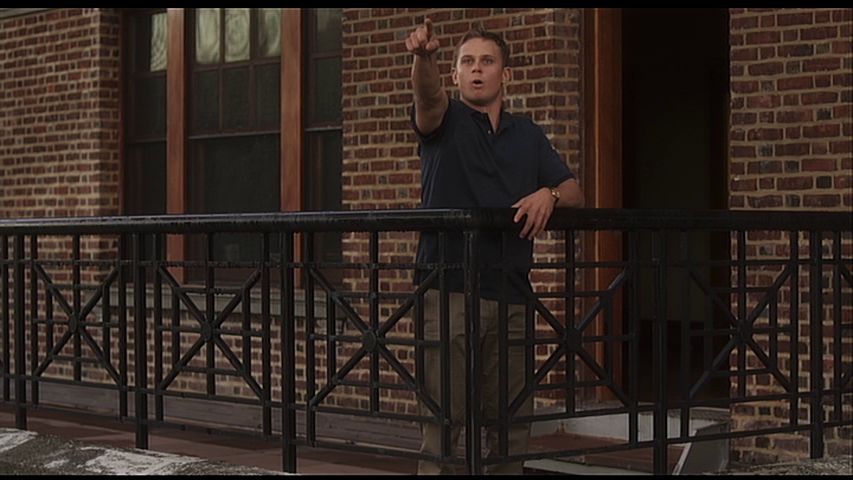
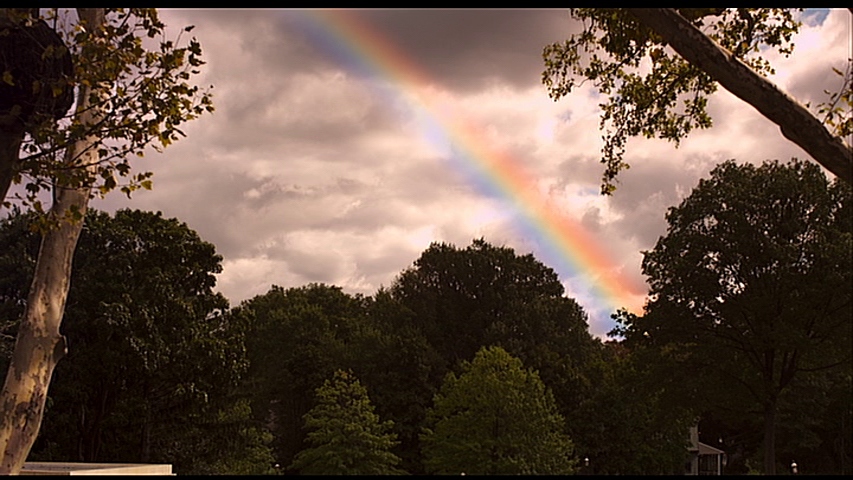
Thor correctly identifies the colors of the rainbow, part one
Thor correctly identifies the colors of the rainbow, part two
Thor correctly identifies the colors of the rainbow, part three

To be clear, though, the best thing about Damsels is Greta Gerwig, and I’m hard pressed to think of a role I enjoyed her in more. In a Q&A included on the DVD as an extra titled “An Evening with Damsels in Distress,” she explained what attracted her to the film: “I think my idea of what actors did at some point was: you’re in a musical, you have to be able to dance, and sing, and tap dance, specifically, so being able to be in this movie felt like the pinnacle of achievement of my acting career.”

The climactic musical number at the end of Damsels features steps, dresses, and a fountain that Peter Tonguette notes are reminiscent of my February Drink & a Movie selection The Young Girls of Rochefort:
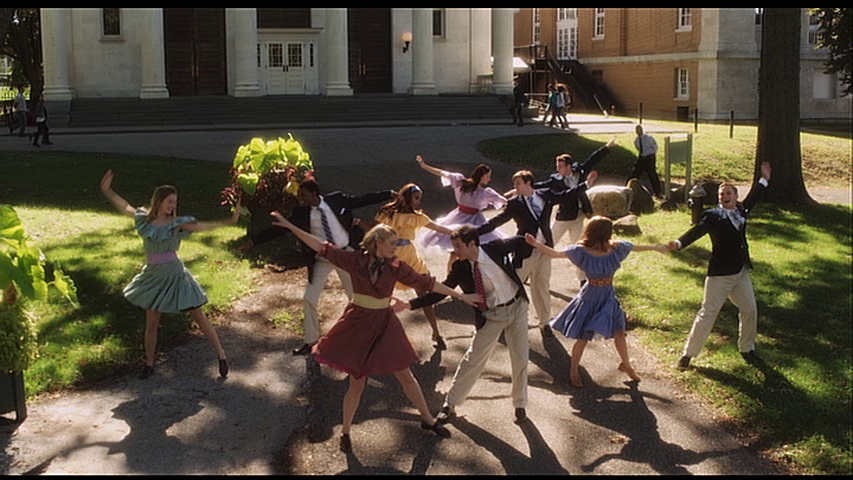
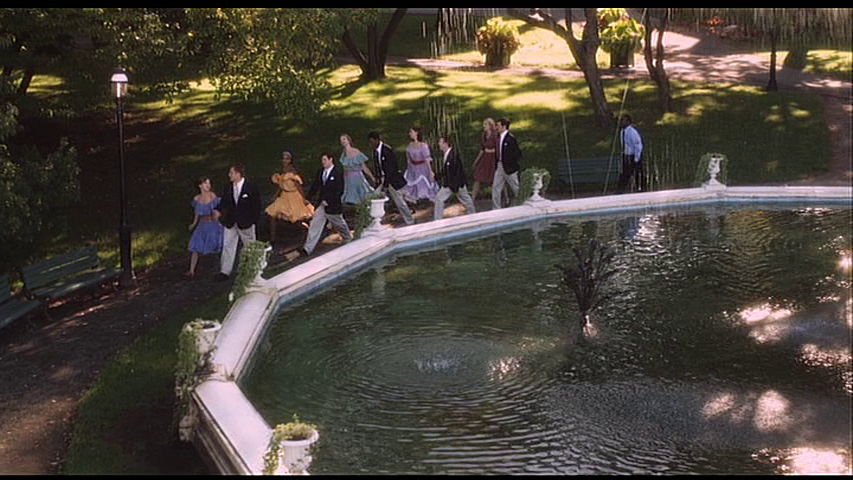
Image from the climactic "Things Are Looking Up" musical number
Another image from the climactic "Things Are Looking Up" musical number

And ends with another benediction from the sun that any actor from any era would be lucky to include in their highlight reel:

Violet and Charlie/Fred kiss during the "Things Are Looking Up" musical number

Looking at this and the hot pink Sony Pictures Classic logo that the movie begins with, I wonder if it’s too much to suggest that without Damsels, we might not have “I’m Just Ken”?

Pink SPC logo

Probably yes, but this does bring us back to this month’s pairing, I think. The “triumph” of Pompeii is of course that we remember it to this day, and the message of Barbie is not that the eponymous doll was significant in any particular way, but rather that it’s meaningful in and of itself that she was part of the lives of millions of children. This sounds an awful lot like the answer Violet gives to Professor Black (Taylor Nichols, also of Metropolitan, in which he plays a character with the same last name) when he asks why she considers starting a dance craze so important. So here’s to the Sambola! Long may it “enhance and elevate the human experience” and continue “bringing together millions of people in a joyous celebration of our God-given faculties”!

Cheers!

All original photographs in this post are by Marion Penning, aka My Loving Wife. Links to all of the entries in this series can be found here.
Dispatch from the 2024 Nitrate Picture Show

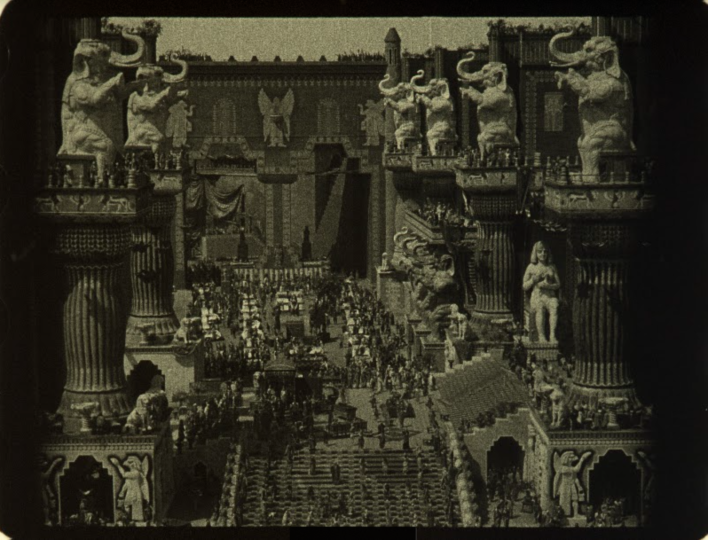
Image from Intolerance

How you watch a film inarguably impacts the way you respond to it. The Nitrate Picture Show is a unique viewing experience in a very obvious way: every screening features specific nitrate prints that people in the audience worked on, projected by individuals who, far from remaining anonymous as they typically would, are instead introduced each time as the stars of the show. Because nitrate was phased out in the early 1950s, it also consists exclusively of titles made before then. Lately I’ve been thinking about some proclivities of mine which I believe matter to my personal brand of cinephilia. For instance, even though movies are a hugely important part of how I make sense of the world, they’re something that I fit into my life around my family and job. The way I accomplish this is by favoring sparsely attended late afternoon and early evening showtimes. I also prefer to be near the screen–not necessarily as close as possible to “receive the images first” like Matthew from The Dreamers, but ideally in the middle of the third or fourth row–which in practice means I don’t always even know whether or not I’m the only person in the theater (I frequently am) because anyone else who arrives is likely to sit behind me.

NPS screenings are all packed, and not just anyone is willing to travel to Rochester, New York for an event like this, so in addition to being the biggest crowds I’m likely to be part of this year, they were also probably the most intelligent and opinionated. All of this absolutely affects my reactions. As does the weather! This year we were blessed with sunny days great for walking that introductory speaker Bryony Dixon described as perfect conditions for experiencing A Day in the Country, which played as the second half of a double featurette with The Plow That Broke the Plains. The two served as a study in how captivating black-and-white skies can be on nitrate: the ones in the latter showcased about 50,000 different shades of gray, while the former was distinguished by a mesmerizingly deep, dark color that my brain keeps insisting must actually have been blue. The low-angle shots of Sylvia Bataille‘s Henrietta standing up on a swing set were not at all ruined for me by Dixon’s tongue-in-cheek description of them as “upskirting” and were probably the most joyous images I saw all weekend.

The closest competitor for this honor would probably be the lavish Babylon sequences from opener Intolerance, which can be glimpsed in the image at the top of this post that I grabbed off the NPS website. This film is also connected to Plow via World War I, which ties it to the first feature that screened the next day as well. De Mayerling à Sarajevo portrays Archduke Franz Ferdinand (John Lodge) as a would-be reformer cut down too early by the enemies of tolerance and love; in fact, I kept wanting to identify war as a throughline for the whole festival, but its appearance in so many movies may be attributable to nothing more than the entirety of the nitrate era being within a decade of a global conflict. Anyway: I’ve always respected Intolerance, but now appreciate it more than ever as a full-fledged masterpiece made barely twenty years after the Lumière brothers introduced the world to moving pictures. I particularly enjoyed the hallucinatory Temple of Love scenes and emotional close-ups of the stellar female leads Mae Marsh, Margery Wilson, and Constance Talmadge, which are another link to Sarajevo: there’s a shot of Edwige Feuillère in a pearl-studded veil that would have fit perfectly alongside them.

Per introductory speaker Peter Bagrov, director Max Ophüls rushed to finish that film in the early days of World War II, which is perhaps most evident in a handful of still images used in place of actual establishing shots which felt extremely out of place in a work otherwise characterized by a lively camera. A still image of ambiguous intentionality also appears in the first movie that screened in the “Nitrate Shorts Program” that kicked off day two of the festival, The Flute of Krishna, which like Intolerance was accompanied by the legendary Philip Carli on piano. This dance film attributed to Martha Graham and an uncredited Rouben Mamoulian was shot at Rochester’s Eastman Theatre and features beautiful, strong colors produced by an experimental Kodachrome two-color process. Unlike last year, the majority of the rest of the movies in the program were black-and-white or tinted, such as the five burlesque films compiled into a single program and given the name Juke-Box Follies. The exceptions were a Terrytoons cartoon starring Gandy Goose and Sourpuss the Cat called Lights Out and two “advertising snipes” which would have played in between movies during the nitrate era, a Chevrolet ad called A Wise Choice and a promo for a “Halloween Fun Fest.” Like Know for Sure, a film about the dangers of syphilis and how to avoid it that Lewis Milestone directed for the United States Public Health Services, all of these titles served as welcome reminders that that the moviegoing experience has always encompassed more than just features. NPS’s didactic impulses were also on display in the decision to screen Disney’s The Skeleton Dance twice in a row: we were told that we’d see safety diacetate and nitrate prints back to back, but not in what order, and then asked to guess which was which. Most everyone (again: this is a smart crowd!) realized that the one with inkier blacks was actually the safety print, which looked “better” because it was in superior condition–the unique properties of nitrate are worth celebrating, but it isn’t magic.

The shorts were rounded out by Le Vieux Chateau, an animated film with cubist influences set to a lighthearted song about a haunted and rat-infested medieval mansion by the French duo Pills and Tabet that is now on our Halloween mix, a delightfully absurd amateur/experimental film by native Rochesterian James Sibley Watson Jr. called It Never Happened, and the highlight of the program Zarozhdenie Zhizni, which uses a variety of frame rates to create what director Vsevelod Pudovkin called a “close-up in time.” It also contains a shirtless reaper whose body glistens with sweat that rhymes with the glint of sunlight on the blade of his scythe and the sparkling dew on the grass he’s mowing who I won’t soon forget.

My most noteworthy discovery was The Good Fairy. It opens with children being led in song by a woman who exhorts them to sing with “more freedom,” then the camera pulls back to reveal the bars of the fence that surrounds the orphanage they all live in. Real and metaphorical jails figured in many of this year’s NPS selections, but here it’s just the first of an avalanche of jokes, which is hardly surprising considering that the screenplay is adapted from Ferenc Molnár’s Hungarian play by Preston Sturges, who must have loved the fact that the main character’s name is Luisa Ginglebusher. She’s played by an utterly charming Margaret Sullavan, who gets to swing from a light fixture and admire herself in an infinity mirror wearing “genuine foxine.” This movie got bigger laughs than any other, and when Herbert Marshall’s Dr. Max Sporum finally kisses Luisa, everyone applauded. But my favorite part was the fairy tale ending at the end, unless it was the scene in which Sporum waxes poetic about a new pencil sharpener, or maybe it was Frank Marshall’s business tycoon pretending to be a “wizard” in a film made four full years before that actor was cast the titular role of a certain Judy Garland vehicle that played NPS last year. In other words, it was a blast! The print we saw came from director William Wyler’s personal collection, which was also cool.

The Good Fairy was one of three movies that Alan Hale appeared in, along with Stella Dallas and The Strawberry Blonde. He plays a carousing gambler who falls on hard times in the former, which had quite a few people in tears. The one moment that almost got me was Barbara O’Neil’s Helen leaving the blinds open so that Barbara Stanwyck‘s Stella Dallas can watch her daughter Laurel (a radiant Anne Shirley) get married without attending the wedding, but I was too distracted by doubts that this noble “sacrifice” was either necessary or even good for Laurel to really lose myself in it. Hale’s best performance of all, though, is as the quick-tempered father to James Cagney’s Biff Grimes in The Strawberry Blonde, a love letter to the Gay Nineties which I had somehow never gotten around to seeing before. I’ll definitely be coming back to it for Olivia de Havilland perfecting the art of the suggestive wink, Rita Hayworth stealing a kiss from Cagney in silhouette, and the dinner scene in which a bunch of perplexed Americans square off against an unfamiliar foreign delicacy called “spaghetti” for the first time.

A very different attitude toward the past is on display in Kikyō, a somber and ultimately angry elegy for the soul of post-war Japan directed by Hideo Ōba, a filmmaker I confess I wasn’t previously familiar with who intro speaker Jo Osawa described as a mentor to Japanese New Wave icon Nagisa Ōshima. Per Peter Bagrov this was the first known U.S. screening of this movie since 1978, which explains why it isn’t better known in this country. Kikyō ends with an image of a man smoking a cigarette in front of his own grave, but this is exponentially less bitter than the conclusion of Germany Year Zero, a chronicle of life in another defeated Axis power which is right up there with Intolerance as my most memorable screening of NPS 2024. Protagonist Edmund Köhler (Edmund Moeschke) is almost exactly the same age as Willing Mandible, the hero of Lionel Shriver’s novel The Mandibles: A Family, 2029-2047; both are only slightly older than my children, and my fear that there’s no good reason to think this can’t happen here are further exacerbated by my having seen The Natural History of Destruction, which shows how prosperous Germany Year Zero‘s bombed-out Berlin settings looked just a few years earlier, at last year’s Finger Lakes Environmental Film Festival. This movie’s subject is something that pretty much no one wanted to see when it was made in 1948: Ken Fox’s program notes describe it as “a bitter pill for either victor or vanquished to swallow” which temporarily (thankfully!) destroyed director Roberto Rossellini’s reputation. That’s exactly what makes it essential, though. “We saw disaster coming and did nothing to prevent it,” says Edmund’s father (Ernst Pittschau)–if we lack the conviction to ask whether or not this describes us, too, we’re begging to suffer the same fate.

Germany Year Zero is a devastating and brilliant film, never more so than during its one moment of transcendence, a man playing an organ in the ruins of a church, which is abruptly cut short; the Finnish release print we watched, which featured both Finnish and Swedish printed-in subtitles, also taught me a lesson itself. My local arthouse theater Cinemapolis has a great practice that they call “Captioned Wednesday” whereby all screenings between 5-6pm on that day are presented with English subtitles. Although I think this is a terrific initiative, I’ve been avoiding these screenings myself, but I now see that this is silly: neither the subtitles on this movie nor the German ones on De Mayerling à Sarajevo distracted me at all! This isn’t all I learned. I mentioned earlier that we were quizzed after The Skeleton Dance. I did not raise my hand even though I thought I knew which print was which because I wasn’t sure, but last year I probably wouldn’t have had any idea, and maybe next year I’ll have the confidence to venture a guess. The point is that NPS isn’t just a lot of fun, it’s also making me a more educated and perceptive viewer. Throw in Rochester’s great food and drink options (Swillburger and Rohrbach Brewing Company‘s Space Kitty Double IPA were my favorite new experiences on this trip) and the fact that I can get there quickly and cheaply via OurBus, and I’m starting to believe that I’d be crazy not to make this an annual excursion. Certainly I’m going to return next year, schedule permitting. Till then!

Previous film festival dispatches can be found here.

Ithaca Film Journal: 6/6/24

What I’m Seeing This Week: My gamble paid off! Evil Does Not Exist, which I passed on two weeks ago in favor of The Fall Guy knowing I would have to wait until after the Nitrate Picture Show to see it, is still at Cinemapolis, so that’s my pick this week because director Ryûsuke Hamaguchi’s last film Drive My Car was one of my favorite films of Movie Year 2021.

Also in Theaters: My Loving Wife and I have a date night outing to see Furiosa: A Mad Max Saga, which is at both Cinemapolis and the Regal Ithaca Mall, planned for next week, so that’s very much on my radar. The best new movie now playing in Ithaca which I’ve already seen is I Saw the TV Glow, which continues its run at Cinemapolis. Here’s a good piece about it by Emily St. James. I can also recommend the stylish and entertaining Challengers and The Fall Guy, which is a good, old-fashioned romantic comedy. With explosions. The former is at Cinemapolis and the latter is at the Regal. Babes (Cinemapolis), The Dead Don’t Hurt (Regal), and In a Violent Nature (both) have all garnered solid reviews, so if they sound interesting to you, they may be worth checking out as well. On the repertory front the highlight is Run Lola Run, which is at Cinemapolis. I originally saw it at the Point of View Cinema in Millersville, Pennsylvania (RIP) during high school, and I thought it was just about the coolest thing I’d ever seen. Finally, a 70-minute shorts program will screen at Cinemapolis on Saturday as part of the sixth annual Quiet on the Set! Film Festival sponsored by the Wharton Studio Museum.

Home Video: If you’re like me the announcement of this year’s Cannes Film Festival award winners was a prompt to start adding previous work by the people who made them to your watchlist in anticipation of everything arriving in stateside theaters come fall. I’ll be using this space over the course of the next few weeks to highlight titles available on streaming video platforms beginning with films directed by Sean Baker, who took home the Palme d’Or for Anora. I first became aware of Baker about ten years ago, but somehow never got around to seeing a single one of his films. Well, unless you count his Taco Bell commercial, I guess. That’s all about to change, though! Here’s what I’ll be watching in the coming weeks and where:

Red Rocket is also available for rental on a number of platforms.

Previous “Ithaca Film Journal” posts can be found here.

Ithaca Film Journal: 5/30/24

What I’m Seeing This Week: I am heading to Rochester, NY for the Nitrate Picture Show in a few hours and will spend the majority of the next three days watching movies! The opening night selection is Intolerance, and the rest of the schedule will be announced at a press conference later this morning. I’m hoping to post initial reactions on Letterboxd within ~24 hours of each screening and publish a dispatch on this blog like the one I wrote last year sometime during the next week or two–stay tuned!

Also in Theaters: I Saw the TV Glow is my favorite film of Movie Year 2024 so far and it continues its run at Cinemapolis this week, so that’s obviously my top recommendation! I also enjoyed Challengers, which is there and at the Regal Ithaca Mall, and The Fall Guy, which is just at the Regal. I played with fire a bit when I decided to see the latter earlier this week instead of Evil Does Not Exist, since I am hoping to catch that film before it closes at Cinemapolis–hopefully it will stick around awhile longer! My Loving Wife and I are also making plans for a date night outing to Furiosa: A Mad Max Saga either there or at the Regal. My number one repertory pick for this week is The Muppet Movie, which is screening at the Regal on Sunday and Monday to commemorate its 45th anniversary.

Home Video: Intolerance star Lillian Gish’s last silent film appearance was in the The Wind, which entered the public domain in the United States this past New Year’s Day. I finally caught up with it the other day and was impressed by both her performance and the stunningly expressionistic final scene. Although the ostensibly “happy” ending is one of the more notorious examples of studio interference in Hollywood history, numerous people I follow on Letterboxd suggest that it leaves an even more bitter taste in your mouth than the original one would have, and I’m inclined to agree. This is now fair game for screenings, and if that’s the kind of thing you organize, you should consider programming this one–I think contemporary audiences would dig it! The Wind is available on DVD and the ad supported free streaming video platform Tubi.

Previous “Ithaca Film Journal” posts can be found here.

Top Chef Rewatch: Seasons 1-6

Starting during the pandemic summer of 2020, I rewatched seasons one through seventeen of Top Chef and tweeted reactions to all of them. I had so much fun that I’ve tweeted responses to each individual episode of the series which has aired since then. This is actually pretty much the only thing I use X for any more, and as such I can’t see myself paying for an account should they ever stop offering free ones, which seems likely. I therefore thought it might be prudent to migrate all of this content to ye olde blog while I still can, since I spent quite a few hours of my life creating this content and wouldn’t want to lose access to it. There’s quite a lot, so I’m going to break this up into three posts and put everything after a jump. I’ll also create one post each for season 18-21, and may or may not archive a few other things as well. But without further ado, I give you my tweets about seasons 1-6!

Continue reading “Top Chef Rewatch: Seasons 1-6”

Ithaca Film Journal: 5/23/24

What I’m Seeing This Week: I’m going with Evil Does Not Exist at Cinemapolis.

Also in Theaters: Hands down the best new movie now playing in Ithaca that I’ve seen is I Saw The TV Glow, which is at Cinemapolis. It’s mostly set in a late 90s suburban environment I remember well, stars Brigette Lundy-Paine as a fellow member of the Class of 2000, and includes a terrific rendition of “Anthems For a Seventeen Year-Old Girl,” one of my favorite songs, so in some ways I’m its target audience. I came to many of its pop culture touchstones like Buffy the Vampire Slayer late, though, and don’t have firsthand experience with the issues of identity that it creates a new cinematic vocabulary to explore except in the most general sense, so may I humbly suggest that you consider this a “two thumbs up” ® endorsement from two different people: one who saw himself up on the screen, and one who loved it as a window into an unfamiliar world? I’m letting Furiosa: A Mad Max Saga, which is at both Cinemapolis and the Regal Ithaca Mall, ride for a couple of weeks in the hope that I can see it with My Loving Wife, but that’s the next most interesting title in local theaters; Challengers, which is at the same two theaters, is the second best new movie that I’ve already seen. It’s all quiet on the repertory front unless you’re one of those people who was really into The Crow, which is at the Regal Wednesday evening; you also have one last chance to see Amélie at Cinemapolis later today.

Home Video: I missed I Saw The TV Glow director Jane Schoenbrun’s previous film We’re All Going to the World’s Fair during its theatrical run at Cinemapolis after my whole family came down with COVID, and when I caught up with it on streaming video at home a few months later, I confess that I was somewhat underwhelmed. This isn’t unusual for movies with a lot of buzz (I heard a lot about this one coming out of Sundance) which I was only able to see on the small screen, though, so I’m not surprised that I found it much more interesting the second time around. Like I Saw the TV Glow it features an excellent soundtrack by Alex G, a strong lead performance (especially considering that Anna Cobb was still a teenager during production), and some incredible images–I was especially taken by the static shot of us watching Cobb’s Casey watch the video that We’re All Going to the World’s Fair derives its title from. I think my previous hang-up was that as a result of age and inclination, the internet has never really been anything more to me than a place to look stuff up, so I don’t identify with it nearly as closely as the location of broken social scenes like the internet game community that Casey is a part of. Now that I’m looking at this as a Pink Opaque analog, the film resonates differently. Now streaming on Max.

Previous “Ithaca Film Journal” posts can be found here.