What I’m Seeing This Week: I am excited to finally see All We Imagine as Light, the first film from India to compete in the main competition at the Cannes Film Festival in 30 years, at Cinemapolis!
Also in Theaters:Flow and Anora, which conclude their respective runs at Cinemapolis this week, are both contenders for the back half of my Movie Year 2024 top ten list, so those are definitely my top new film recommendations. I also enjoyed A Real Pain, which is also playing Cinemapolis just until the end of the week, as is Queer, which it sadly looks like I’m going to miss. All the blockbusters dominating local screens that I’ve seen deliver more or less what their previews and posters promise, so if you *think* you’d like them, you’re probably right: in (very) approximate order of preference, that’s Gladiator II (the Regal Ithaca Mall), Moana 2 (Regal), Wicked (Cinemapolis + Regal), and Red One (Regal). There are no repertory screenings of note this week, but there are a whole bunch of other movies opening at both Cinemapolis and the Regal on Tuesday or Wednesday that I’m eager to see, including Babygirl, A Complete Unknown, and Nosferatu.
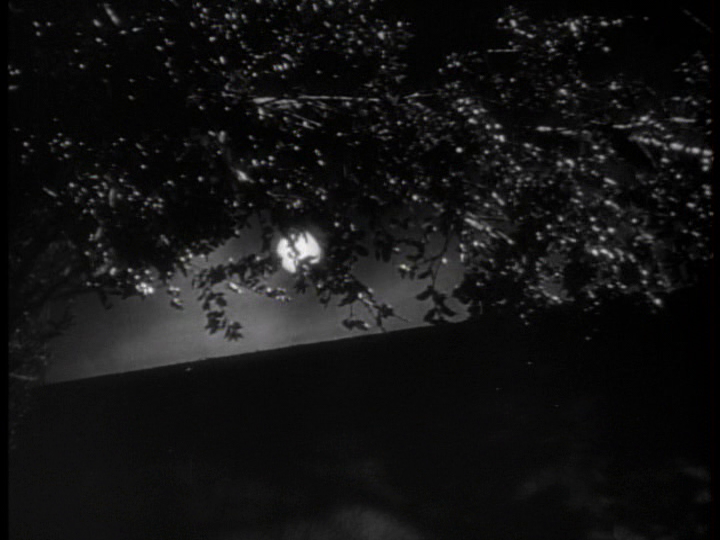
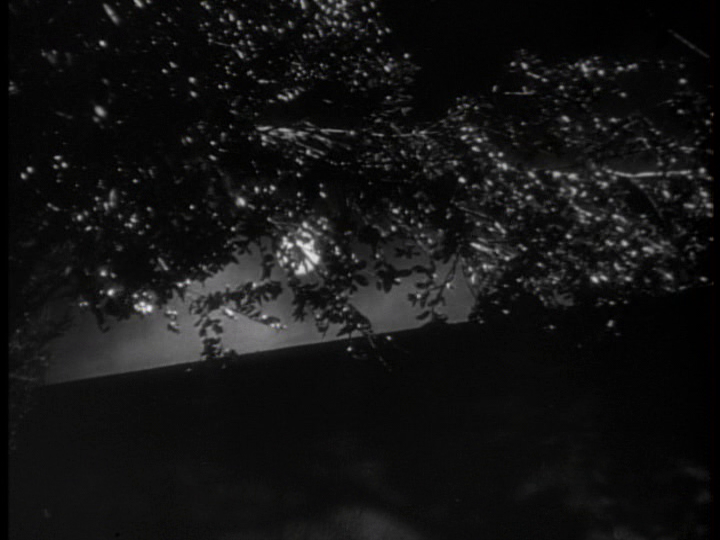
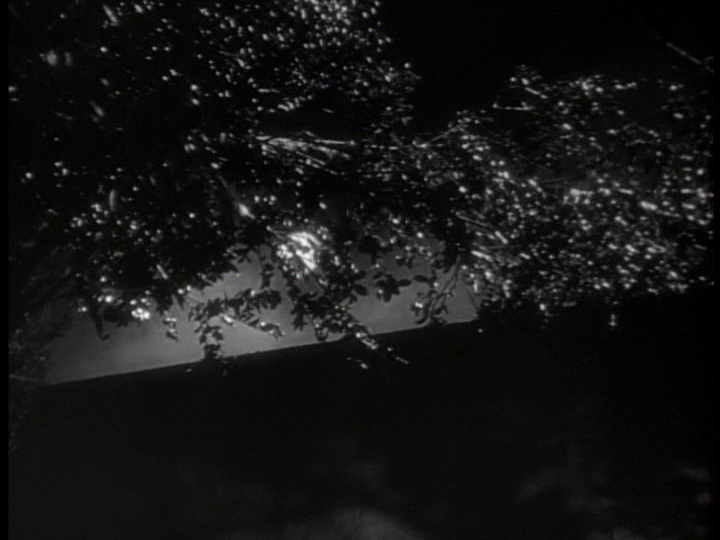
Home Video: If you missed The Night of the Hunter when it played Cinemapolis last month as part of their “Noirvember” series, fear not: it’s screening on the Criterion Channel until the end of the year! This retelling of the fable of the reed and the oak features velvety black and white cinematography by Stanley Cortez that opens with disembodied heads on a starscape reminiscent of October, 2023 Drink & a Movie selection The Very Eye of Night and contains two of cinema’s most indelible images, a dead woman’s hair slow dancing with underwater reeds at the bottom of the river and knuckles tattooed with the words “love” and “hate.” With an ending set on Christmas morning, it’s also a great example of what I call a “holiday mixtape movie” in that it’s a terrifically terrifying change of pace from the wonderful, but tonally similar seasonal favorites that many of us spend the month of December watching.
Previous “Ithaca Film Journal” posts canbe found here.A running list ofall of my “Home Video” recommendations can be found here.
Also in Theaters:All We Imagine as Light is appearing on all sorts of year-end Best lists, so I’ll definitely make sure to see it at Cinemapolis before we start our holiday travels next week! Queer–director Luca Guadagnino’s second film of Movie Year 2024 after Challengers, which I enjoyed–opens there tomorrow as well. My favorite new films now playing Ithaca that I’ve already seen remain Anora and A Real Pain, both of which are also at Cinemapolis. Moana 2 is “fun for the whole family,” as the fella says, and Gladiator II and Wicked deliver more or less what they promise, too. All three movies are at the Regal, and Wicked is at Cinemapolis as well. Finally, your best bets for repertory fare are holiday favorites A Christmas Story, which screens at Cinemapolis on Sunday, and White Christmas, which plays the Regal Sunday-Tuesday.
Home Video: With Anora still going strong in theaters, now is a fine time to check out Tangerine, the film that put director Sean Baker on the map, on Netflix. Especially since it takes place on December 24! To be sure, it’s even less of a “Christmas movie” than (in)famous debate cases like Die Hard, but it does feature a centerpiece performance of the song “Toyland” by protagonist Sin-Dee (Kitana Kiki Rodriguez) that calls to mind Judy Garland singing “Have Yourself a Merry Little Christmas” in Meet Me in St. Lous . With no disrespect to his latest effort, this remains my favorite one of Baker’s features.
Previous “Ithaca Film Journal” posts canbe found here.
What I’m Seeing This Week: We rented a theater at Cinemapolis for a private screening of my oldest’s favorite movie The Mitchells vs. the Machines for her ninth birthday party, which we’re all pretty excited about! I’m planning to see Gladiator II there or at the Regal Ithaca Mall this week as well.
Also in Theaters: I’d be seeing Flow, which opens at the Regal tonight and Cinemapolis tomorrow, if I wasn’t saving it for next week when it will be eligible to be my Family (née Friday) Movie Night selection. In the meantime, my favorite new film now playing Ithaca remains Anora, which is at Cinemapolis, and I enjoyed A Real Pain (Cinemapolis), Conclave (Cinemapolis), and The Wild Robot (Regal) as well. Upcoming special events include the free student-led Hilltop Film Festival of Diversity and Inclusion screening at Cinemapolis on Sunday and Cornell Cinema‘s traditional end-of-semester “mystery screening” of a 35mm film print tonight. They’ll be back with their spring lineup in January. Finally, your best bet for repertory fare is the Studio Ghibli classic My Neighbor Totoro, which is at the Regal Saturday through Wednesday.
Home Video: With no disrespect to winner Encanto, The Mitchells vs. the Machines was easily my favorite nominee for the 2022 Best Animated Feature Film Oscar, so you really should check it out on Netflix if you haven’t already! Our girls, who have never known a world without YouTube, dig its clever use of a meme aesthetic, while My Loving Wife and I appreciate the way it finds meaningful things to say about parenting without devolving into sappiness, and we all love Beck Bennett and Fred Armisen voicing malfunctioning robots with the “human names” of Eric and Deborah . . . bot . . . 5000.
Previous “Ithaca Film Journal” posts canbe found here.
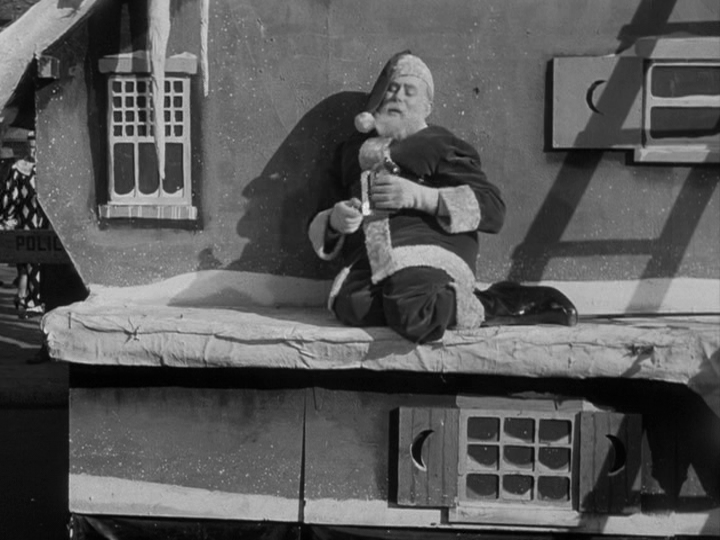
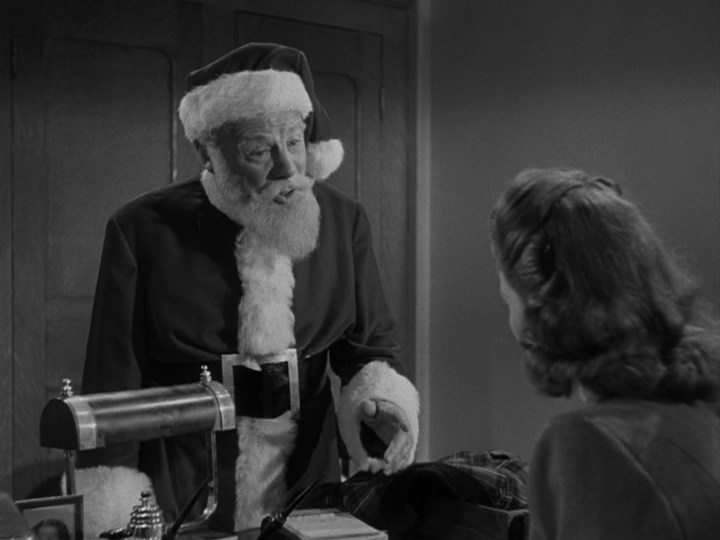
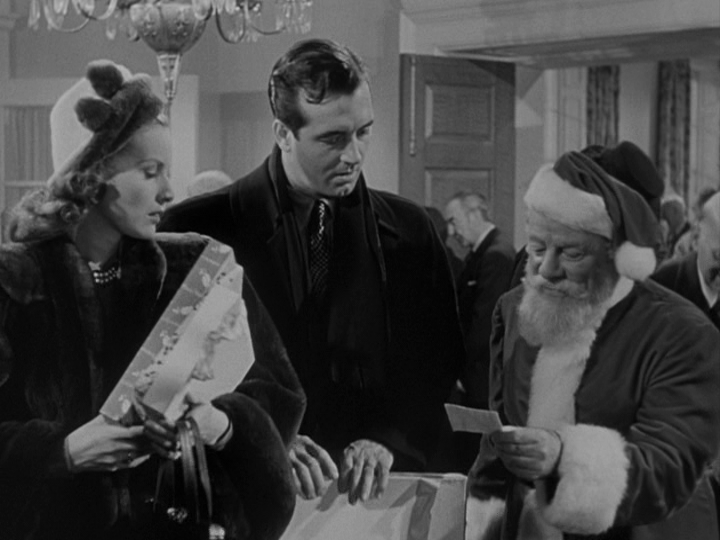
As I have mentioned on this blog before, the first movie my family traditionally watches after Thanksgiving is Miracle on 34th Street, which made it an obvious choice to fill one of the six “bonus” Drink & a Movie slots I need to get me to my goal of 54 total posts. The beverage we’re pairing it with is from Sarah Baird’s Flask book and it would surely be just as effective at keeping the intoxicated Santa Claus (Percy Helton) Macy’s originally hired to star in their annual holiday parade warm as whatever is in this bottle:
I’ll bet it tastes better, too! The recipe is a creation by New York-based bartender Sother Teague, who writes that it was inspired by shots of Rittenhouse rye that a friend of his used to serve with 14 dashes of Angostura bitters added to them, which turned it dark like the bread that the drink is named after. Here’s how you make Teague’s version, which Baird describes as “the perfect flask cocktail to sip after a long Thanksgiving of listening to relatives argue about politics, television, and who makes the best green bean casserole”:
3 ozs. 100-proof rye (Rittenhouse) 1 1/2 ozs. Ramazzoti amaro 1 oz. Punt e Mes 14 dashes Angostura bitters Lemon twist
Stir all liquid ingredients with ice, express the lemon twist over them, and funnel into a flask.
This is a seriously bitter drink, but it’s also delicious, and to me this makes it ideal for slowly consuming over the course of an entire evening via very small sips. The Ramazzoti tastes to my palate like a milder version of one of my favorite amaros for Manhattan variations, Amaro Montenegro, and it works beautifully here in combination with Punt e Mes as a counterpoint to the Angostura. Rittenhouse is my go-to rye for cocktails, and while it isn’t necessary in this drink per se, you definitely want something high ABV.
Our 20th Century DVD Fox DVD copy of Miracle comes packaged with the colorized version of the film created in the 80s, but I don’t think anyone has ever watched it all the way through, because why would they? Here’s a picture of the case:
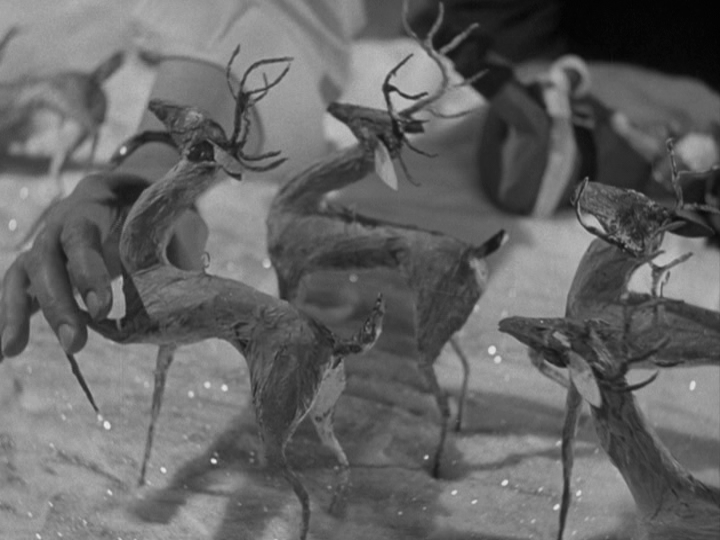
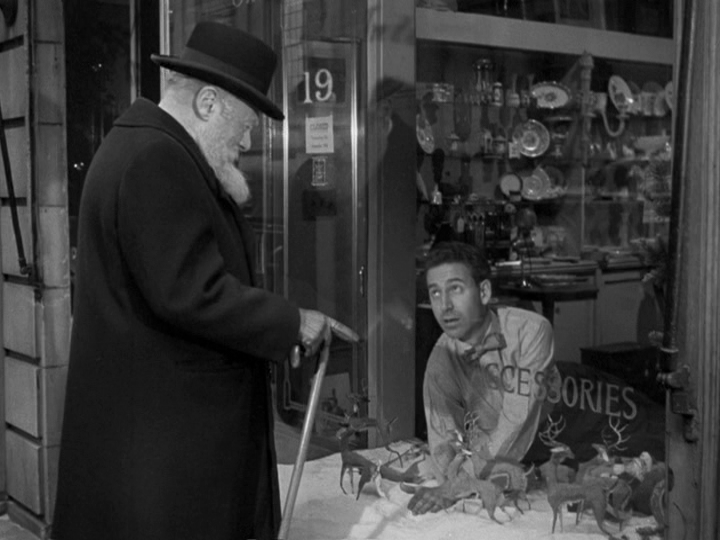
The film is also available on Disney+ with a subscription or via a number of other platforms for a rental fee. Ostensibly a film about whether or not Santa Claus really exists, Miracle stars (Best Actor in a Supporting Role Oscar notwithstanding) Edmund Gwenn as a man named Kris Kringle who we first meet attempting to correct the reindeer work of a window dresser (Robert Gist) which inspired this month’s drink photo:
When he proves to be a great success at replacing the aforementioned drunk Santa in their parade, Macy’s employees Doris Walker (Maureen O’Hara) and Julian Shellhammer (Philip Tonge) ask him to continue playing the role for the duration of the holiday season. Needing to find him a place to stay when he isn’t at the store, their highly questionable original plan is for Shellhammer to ply his wife (Lela Bliss) with “triple-strength” martinis as a preface to asking her if Kris can use their spare bedroom.
It works, but by that time lawyer Fred Gailey (John Payne) has already leaped at the excuse to see single mother Doris, his neighbor, more often by offering up his extra bed. Kris is a hit with Macy’s customers and although Fred annoys Doris by taking her daughter Susan (Natalie Wood) to see him while he’s working (“We should be realistic and completely truthful with our children and not have them growing up believing in a lot of legends and myths,” she tells him), everything seems to be going well otherwise–until she finds out that Kris openly identifies himself as the genuine article:
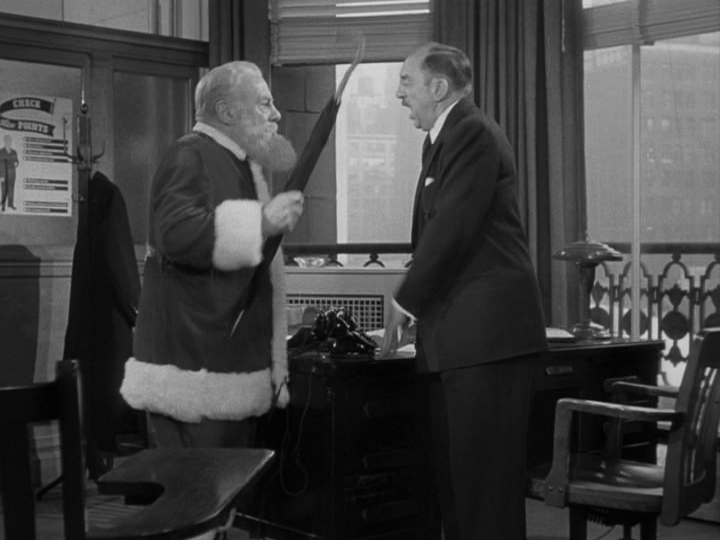
Leading her to worry that he may be insane. This ultimately results in a petty and vindictive store psychologist named Granville Sawyer (Porter Hall) who Kris bops on the head (which, to be fair, is assault) getting him committed:
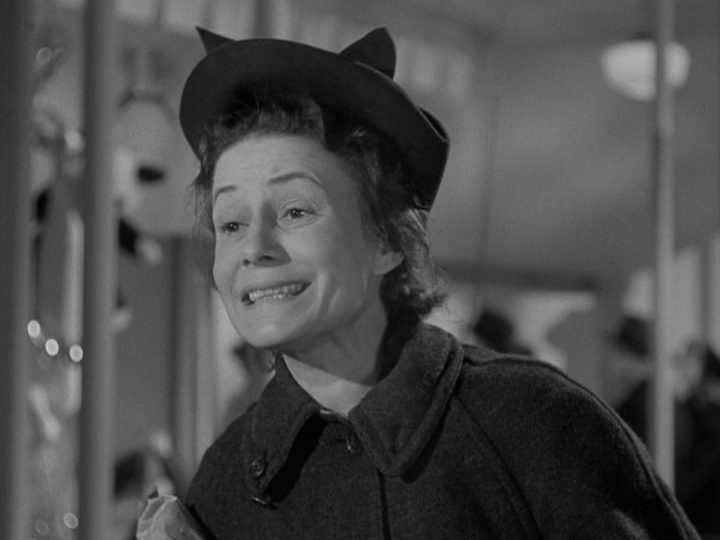
And it’s up Fred to get him released by successfully executing the unorthodox strategy of proving in court that Kris really is who he says. What’s interesting about Miracle is it’s clear that no one in the movie over the age of ten actually has any doubts on the matter, and they divide not along lines of believers and non-believers but rather those who think Kris’s delusions are harmless or even valuable and those who consider them dangerous. Hall of Fame character actor Thelma Ritter, in her first (uncredited) screen role, is unequivocally in the former camp:
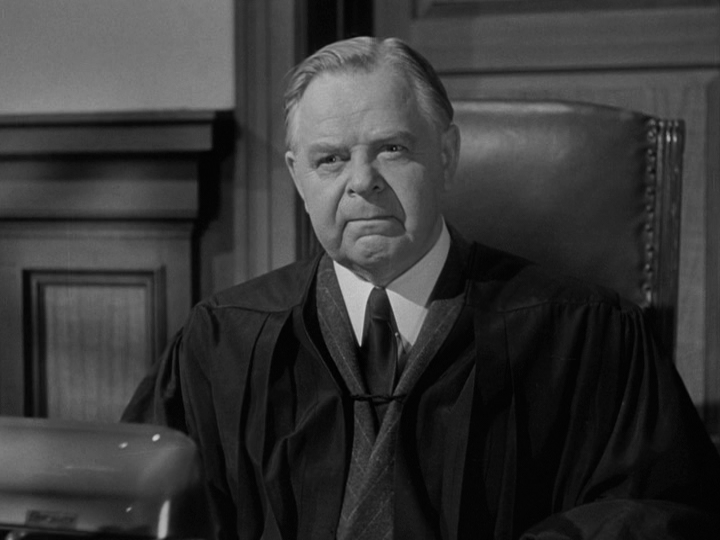
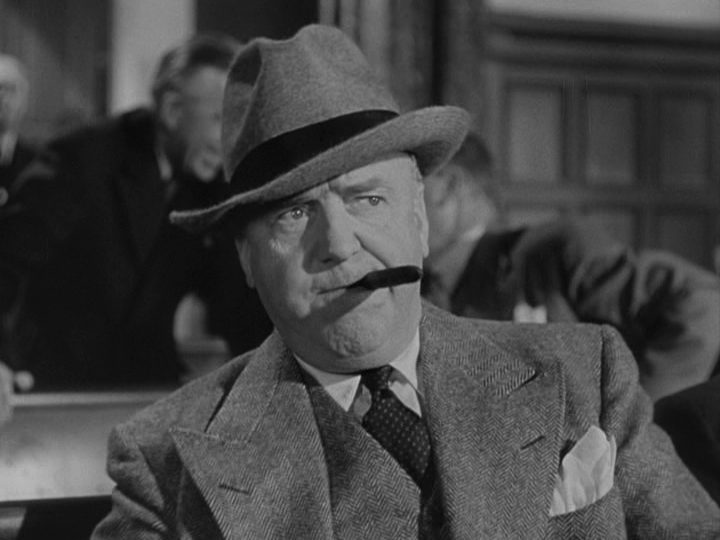
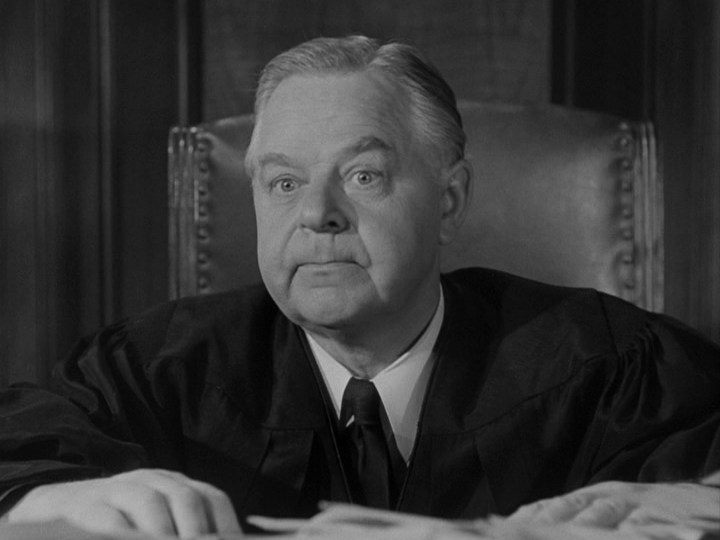
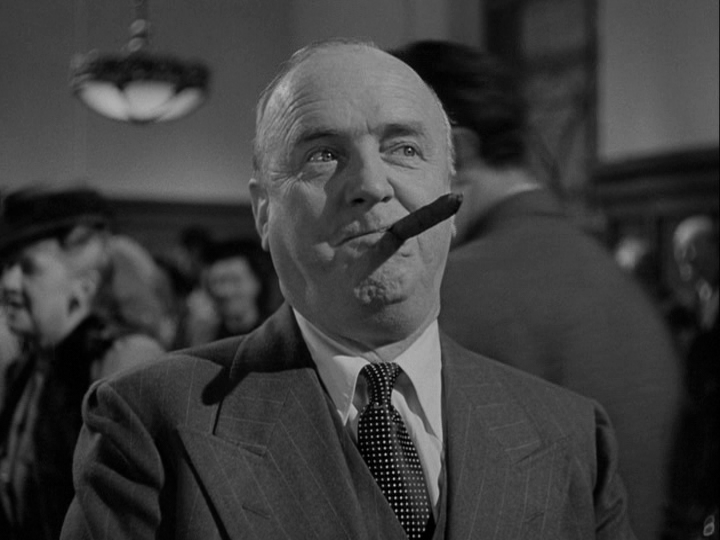
While Mr. Sawyer is the champion of the latter. Doris and Mr. Shellhammer aren’t sure at first, but when Mr. Macy himself concludes that Kris’s insistence on sending parents to other stores to get the toy their children want if that’s where the best price can be found is good for his bottom line (“we’ll be known as the helpful store, the friendly store, the store with a heart, the store that places public service ahead of profits–and, consequently, we’ll make more profits than ever before!”), they quickly come around. The real drama, though, accompanies Fred’s attempts to convince Judge Henry X. Harper (Gene Lockhart), who has to balance his apparently sincere desire to faithfully discharge his public duty with the need to appease the electorate who gets to decide if he will continue in his role. Score is kept by the number of approving or concerned looks his political advisor (William Frawley) shoots him every time the hearing takes an unexpected turn:
Meanwhile Kris, far from being a mere pawn in the games of others, has been pursuing an agenda of his own the whole time. “Christmas isn’t just a day,” he tells Doris, “it’s a frame of mind, and that’s what’s been changing. That’s why I’m glad I’m here–maybe I can do something about it. And I’m glad I met you and your daughter: you two are a test case for me.” She’s obviously confused, so he continues, “yes–you’re sort of the whole thing in miniature. If I can win you over, then there’s still hope.”
It isn’t just Mr. Macy’s approval that makes up Doris’s mind, but also witnessing the ripple effects of his altruism. His practice of referring customers elsewhere instead of pushing overstock on them is soon adopted as official store policy, then co-opted by rival department store Gimbel’s, then rolled out to all of each of their branch locations resulting in the following photo op:
And thus was born “compassionate conservatism”
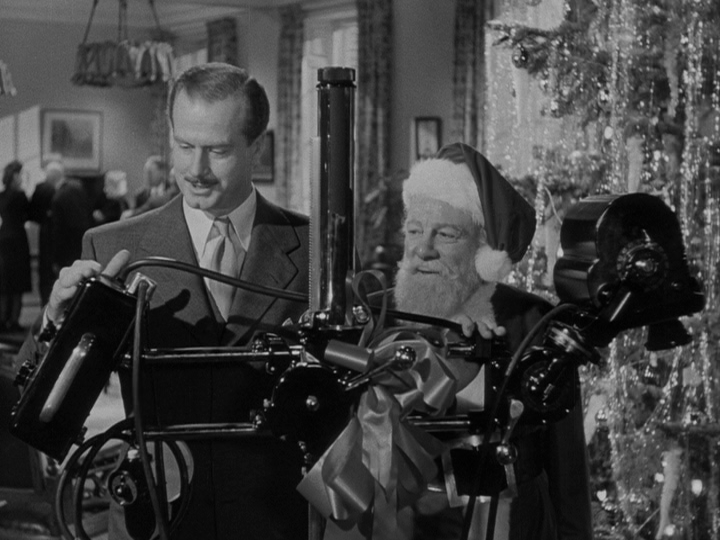
And a promise to procure a much-needed expensive new x-ray machine for a doctor (James Seay) Kris knows:
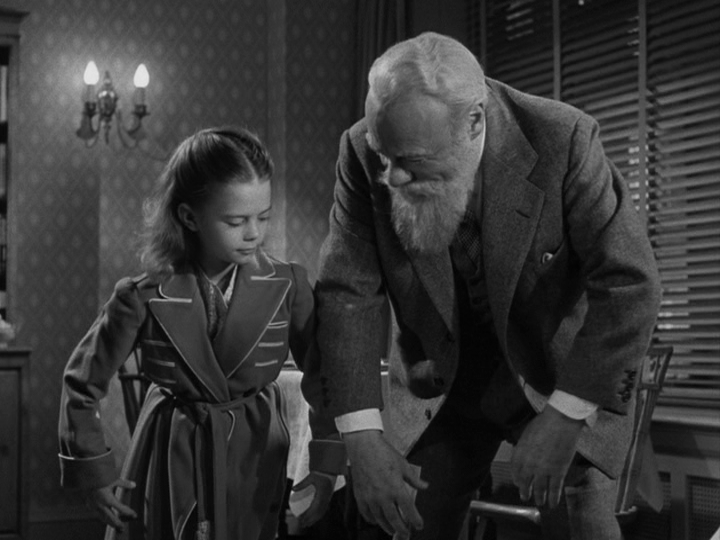
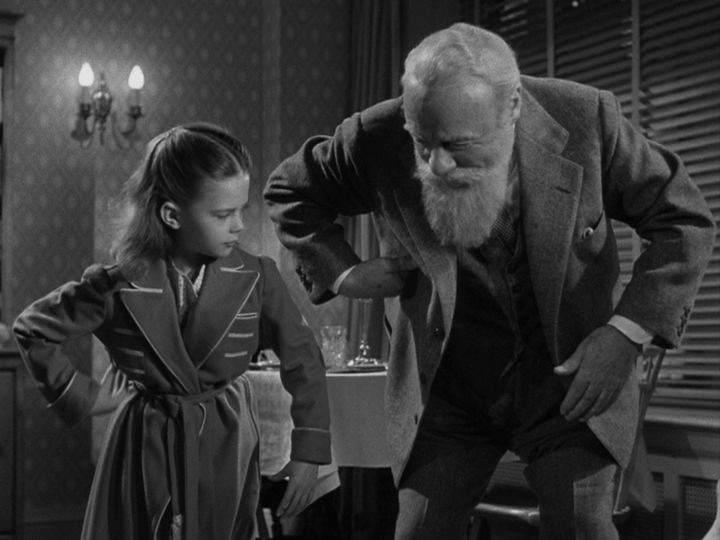
Kris sets the stage for Susan’s conversion by teaching her the joys of imaginative play by showing her how to be a monkey:
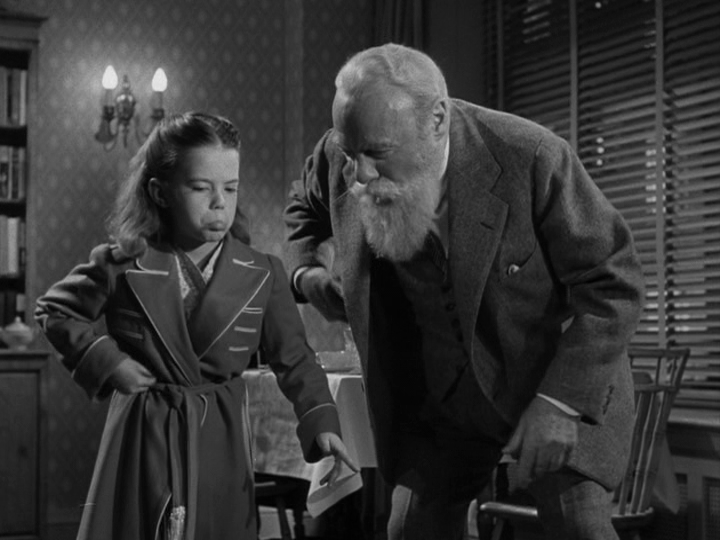
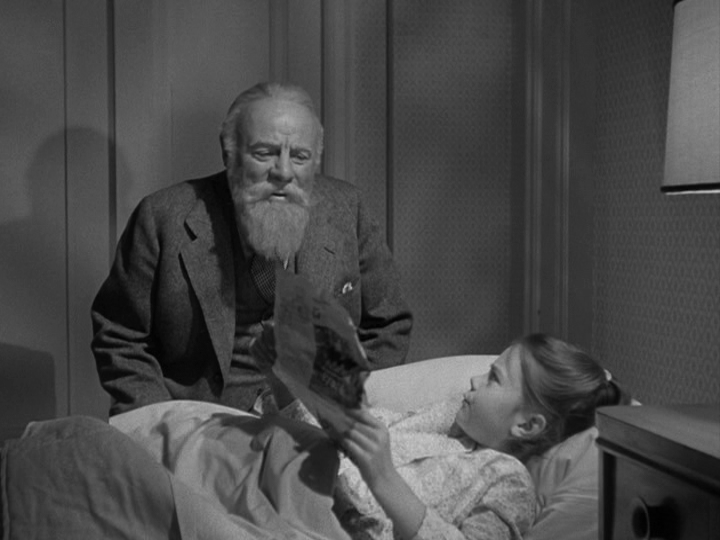
And after much prodding she finally tells him what she really wants for Christmas:
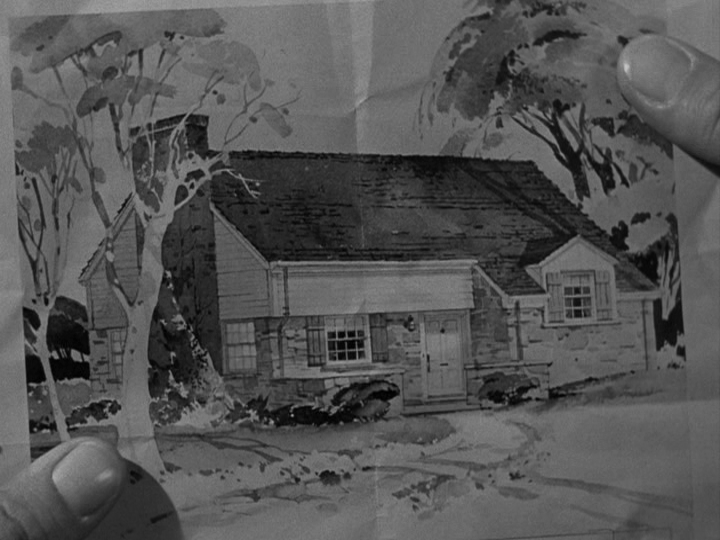
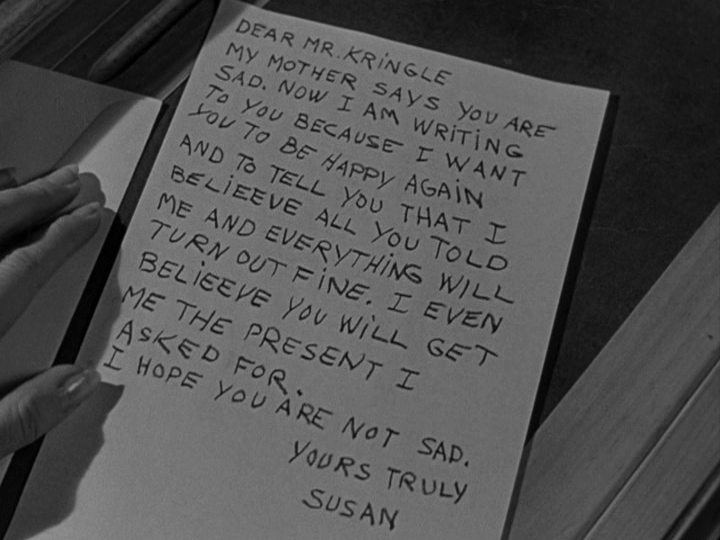
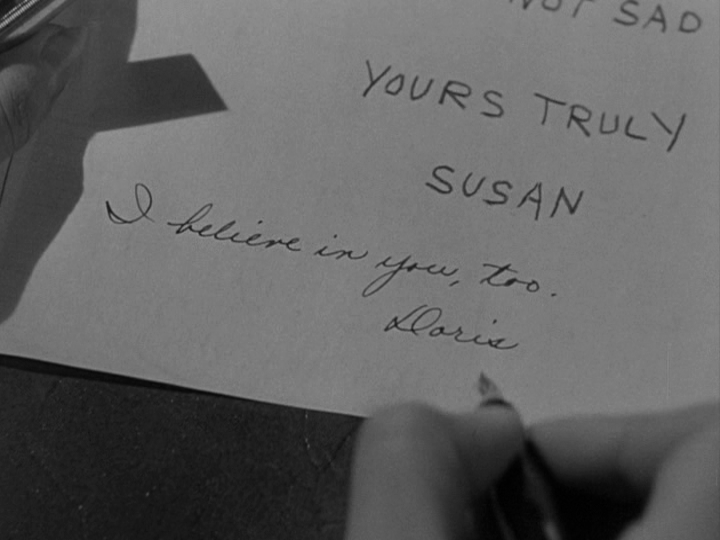
No, not a doll’s house: a real one. Interestingly, this dream is similar to one harbored by Fred, who confides to Kris that someday he’d like to get a place in Long Island. “Not a big house,” he tells him, “one of those junior-partner deals around Manhasset.” Anyway, just when Kris’s mental competency hearing seems to be definitively heading south, Susan writes him a letter that Doris appends a note of her own to:
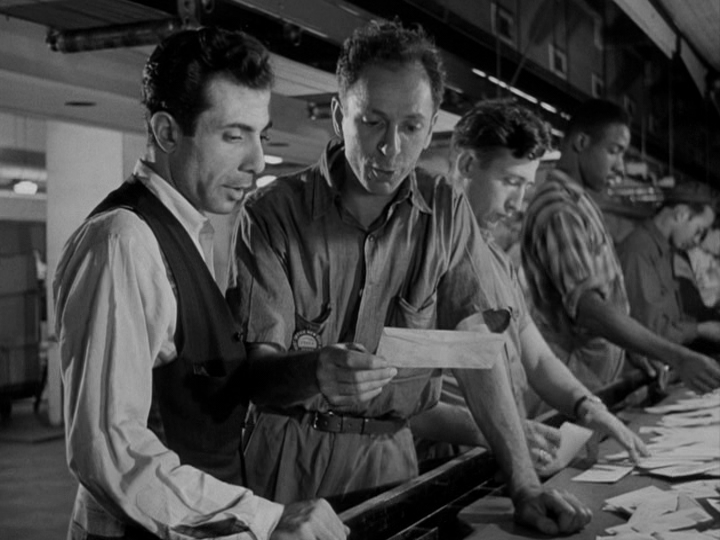
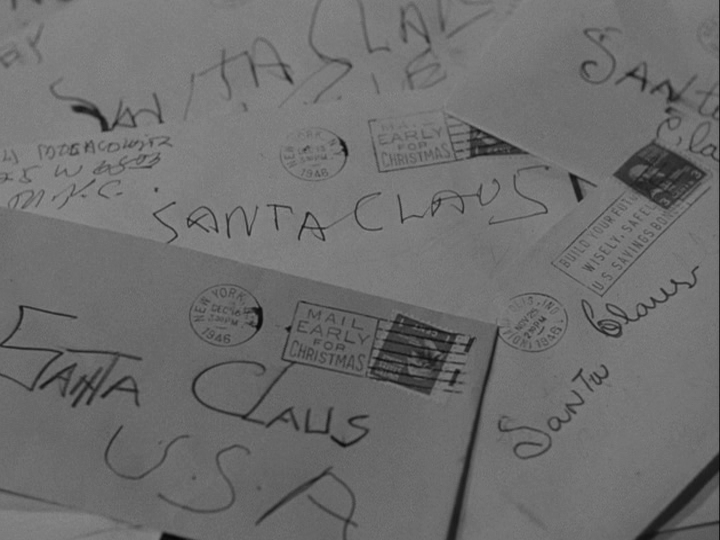
And it morphs into a deus ex machina that arrives just in the St. Nick of time when a couple of opportunistic United States Post Office employees named Al (Jack Albertson) and Lou (Guy Thomajan) identify it as a way to finally relieve themselves of thousands of previously undeliverable letters addressed to Santa…
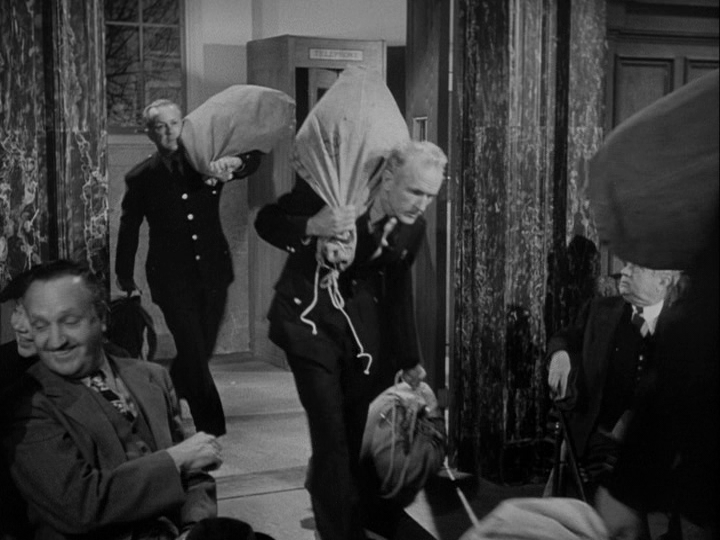
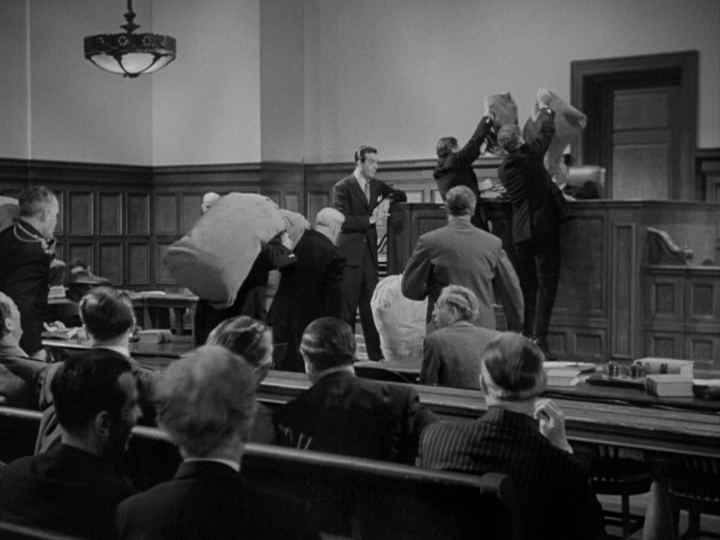
…thus handing Fred the ability to provide Judge Harper with an out in the form of the ability to appeal to a higher legal authority. He has all of the letters that have been delivered to the court house dumped out on Harper’s desk:
Harper makes eye contact with his political adviser one last time:
Then announces that, “since the United States government declares this man to be Santa Claus, this court will not dispute it. Case dismissed!” Miracle ends with Kris providing Doris, Fred, and Susan directions home from a Christmas party they’re all attending which will supposedly help them “miss a lot of traffic.”
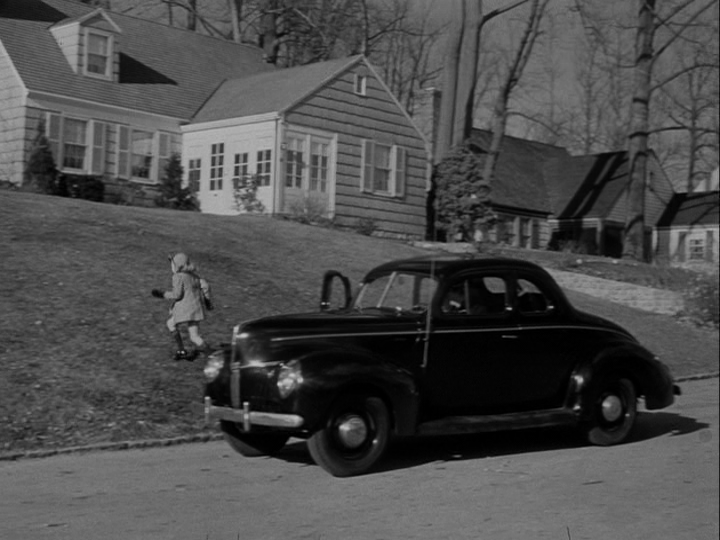
As they’re driving along, Susan’s eyes suddenly go wide:
“Stop, Uncle Fred! Stop!” she cries and hurtles herself out of the car.
The camera pans left, and we see that she’s running toward a house that’s a dead ringer for the picture she showed Kris, only this one has a “For Sale” sign in front of it:
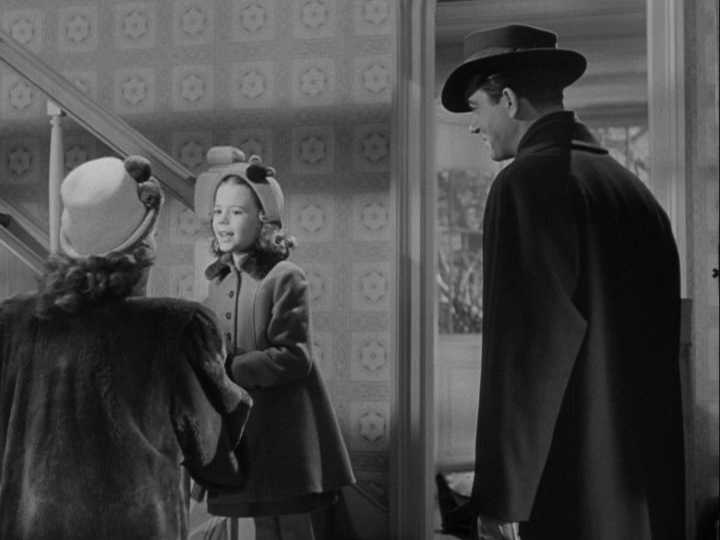
Doris and Fred follow her inside, where Doris admonishes her: “you know you shouldn’t run around in other people’s houses!” “But this is my house,” Susan replies, “the one I asked Mr. Kringle for!”
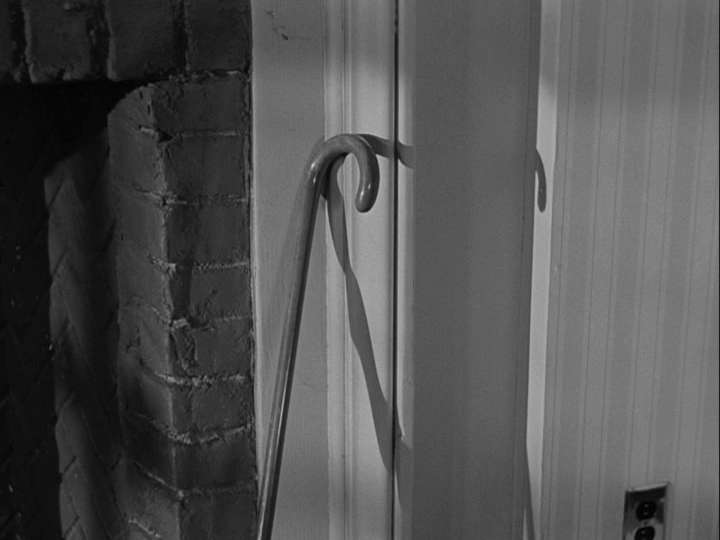
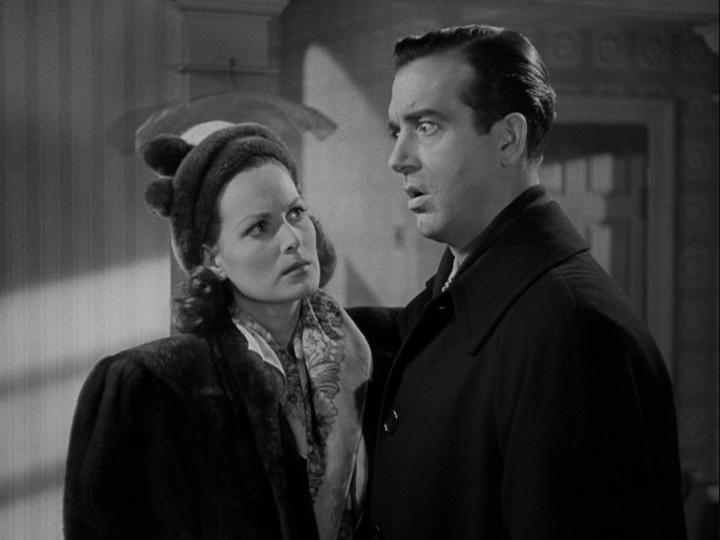
As she runs to see whether or not there’s a swing (“there is one!”), Fred takes Doris in his arms and kisses her. “The sign outside says it’s for sale,” he says, “we can’t let her down.” Then: “it even makes sense to believe in me now. I must be a pretty good lawyer. I take a little old man and legally prove that he’s Santa Claus.” But suddenly he stops mid-sentence, distracted by something offscreen:
“Oh no, it can’t be!” Doris exclaims. “It must have been left here by the people who moved out!” But it certainly does look a lot like the one we saw Kris with earlier, and as “Jingle Bells” plays in the background, Fred replies, “maybe I didn’t do such a wonderful thing after all.”
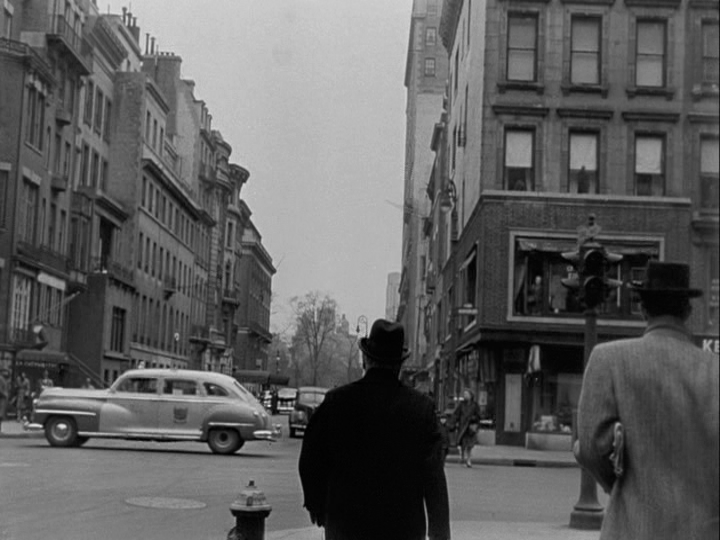
Nothing here definitively dispels the possibility that Kris is just a guy who knows how to read toy advertisements and real estate listings, but the film’s style and tone has inarguably evolved from its opening credits sequence that features an almost neo-realist following shot of him walking the streets of Manhattan:
To this fantastical conclusion. And yet, to its enormous credit, it does not matter which side we come down on. The important thing is that Susan has discovered (as I recently suggested to my own budding rationalist) that life is more fun when not everything has a strictly logical explanation, and as long as you’re confident that all of your options are good ones, it can occasionally be liberating to take a break from constant decision making and let the universe choose for you. We are a secular family, so for us Jesus isn’t the reason for the Christmas season. This is what the holiday is all about. And that’s why Miracle on 34th Street isn’t only the first Christmas movie we watch each year, but also one of our favorites.
Cheers!
All original photographs in this post are by Marion Penning, aka My Loving Wife.Links to all of the entries in this series can be found here.
Also in Theaters: There wasn’t much turnover in local theaters, so most of my recommendations are the same as last week: my favorite 2024 film now playing Ithaca is Anora, which is at Cinemapolis, and I enjoyed A Real Pain (Cinemapolis), Conclave (Cinemapolis), and The Wild Robot (Regal) as well. In addition to the two I’m seeing, the new release dominating screens nationwide is Gladiator II, which is at Cinemapolis and the Regal. Finally, Cornell Cinema once again has both the most interesting-looking special event and your best bet for repertory fare, the opening of an exhibit called “Inspired by Edith Head: Fashion Vignettes for a Film Series” at the Jill Stuart Gallery on Cornell’s campus on Wednesday at 4pm followed by a screening of Samson and Delilah at Willard Straight Theatre at 7pm.
Home Video: Looking for a palate cleanser between epic blockbusters past and present? Please allow me to recommend Here, which is now streaming on The Criterion Channel! At 84 minutes it’s short, and it features quiet but sophisticated sound design, contemplative extreme close-ups of moss, a multifaceted extended roots metaphor, and a scene in which a bunch of men sit around eating soup and talking about their emotions, all of which also makes it a great way to take a break from the hubbub of the holidays. As I mentioned on Letterboxd, pretty much the only thing I *don’t* like about it is its name, which it confusingly shares with another, more prominent Movie Year 2024 release (that I haven’t yet seen).
Previous “Ithaca Film Journal” posts canbe found here.
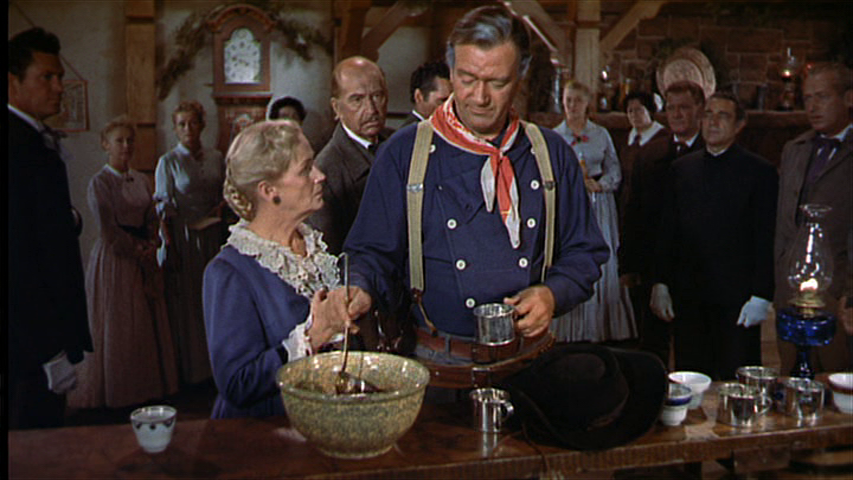
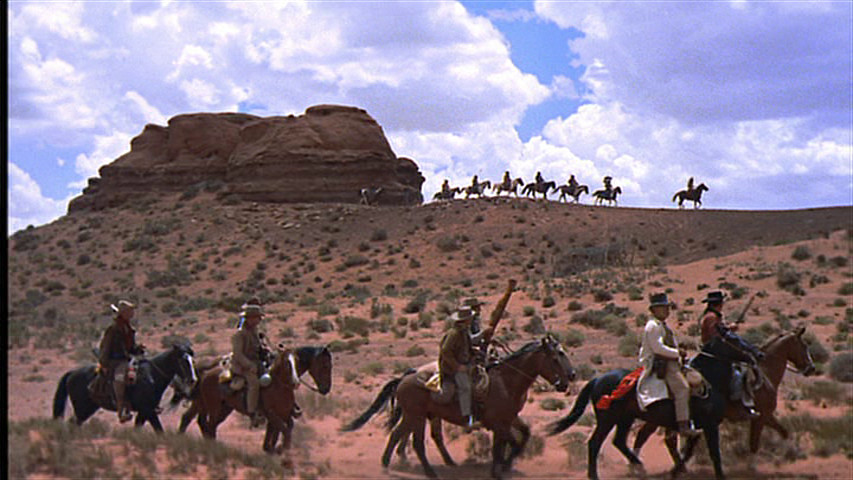
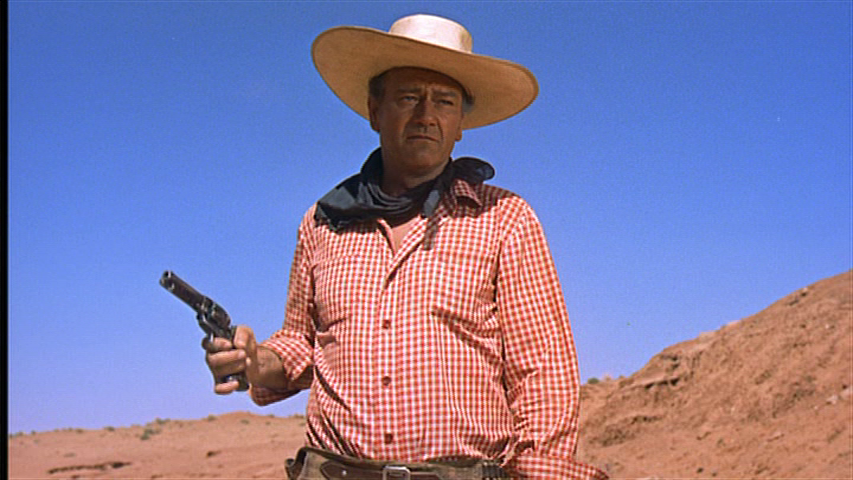
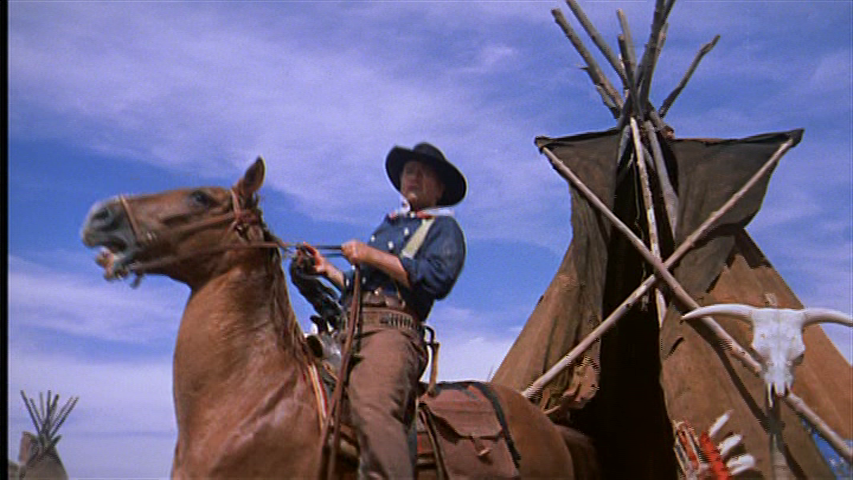
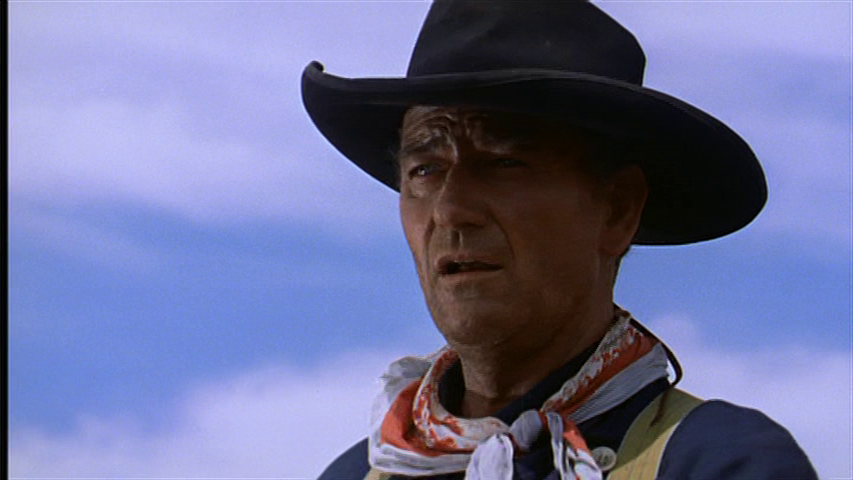
USS Richmond Punch was a big hit when I made it for Thanksgiving a few years ago. It’s on the menu again this year, so I definitely wanted feature it in this month’s Drink & a Movie post. When thinking about what film to pair it with, the name immediately made me think of one of cinema’s great antiheroes, unapologetic former Confederate soldier Ethan Edwards (John Wayne) from The Searchers. Interestingly, David Wondrich identifies the recipe as originating during the Civil War era, which means it theoretically could be the concoction in this punch bowl:
Prepare an oleo-saccharum by removing the peels from the lemon, trying to get as little of the pith as possible, and muddling them with the sugar. Set aside for at least an hour. Meanwhile, juice the lemons and make the tea by pouring 16 ounces of hot (but not boiling) water over two tea bags and steeping for exactly five minutes. Add the lemon juice and tea to the oleo-saccharum and strain into a gallon container. Add the spirits and refrigerate overnight. When ready to serve, add to a punch bowl with a block of ice and the sparkling wine. Garnish with lemon slices and grated nutmeg.
As a special occasion beverage, this is definitely a time to break out your favorite spirits, which is why we go with Smith & Cross, Pierre Ferrand 1840 Original Formula, and Roederer Estate Brut. We are a family of tea drinkers and that flavor is prominent here, which is one of the main reasons we love this punch, which is sweet and tart and just a bit effervescent. It does pack a wallop, though, and the tannins on the finish will make you want to take another sip and then another, so handle with care! Or, you know, just be sure to snack liberally while you imbibe.
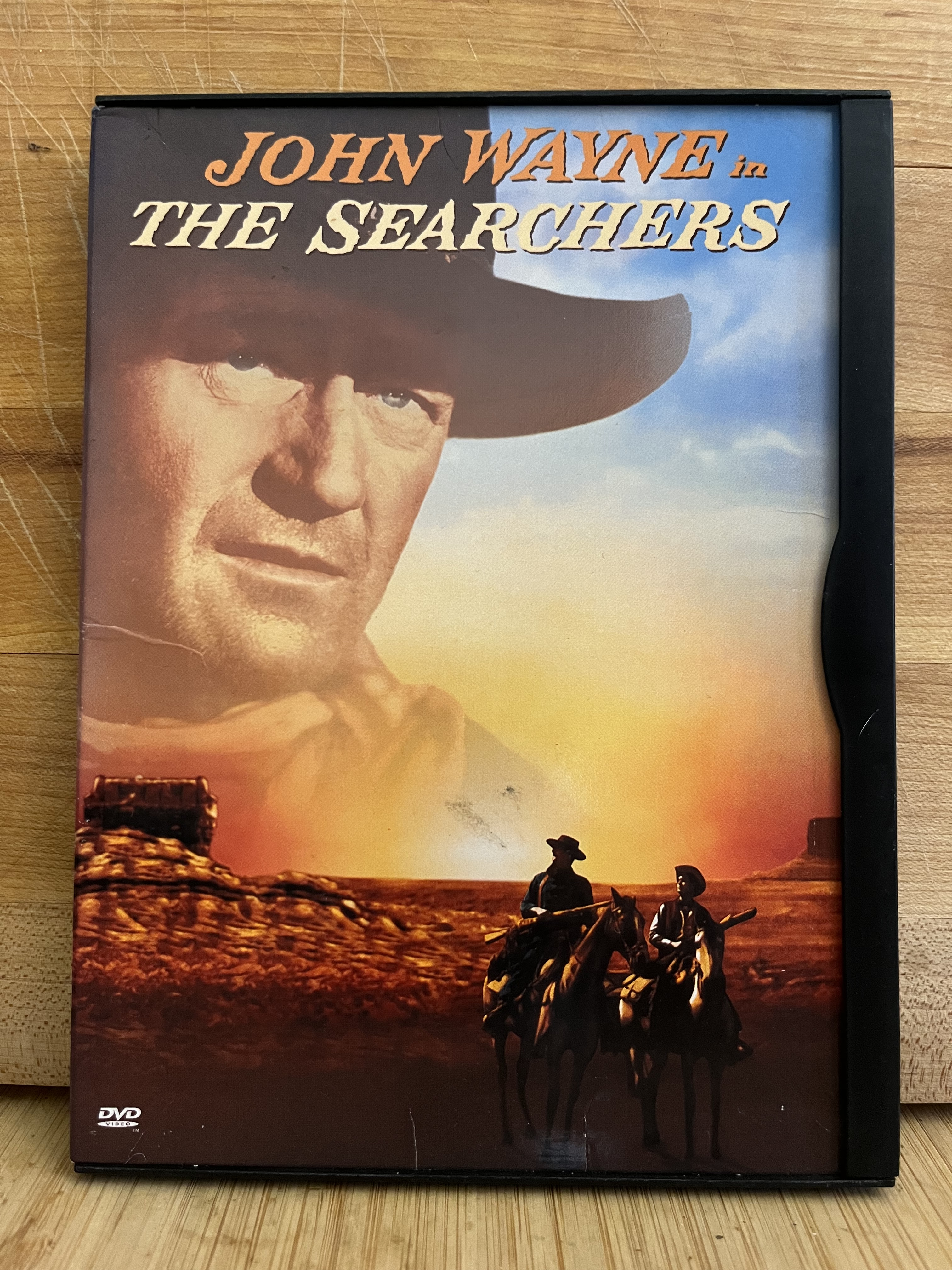
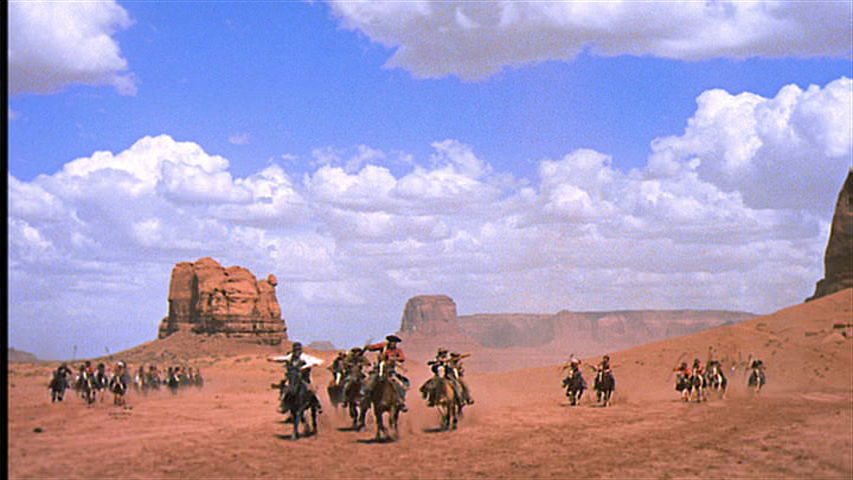
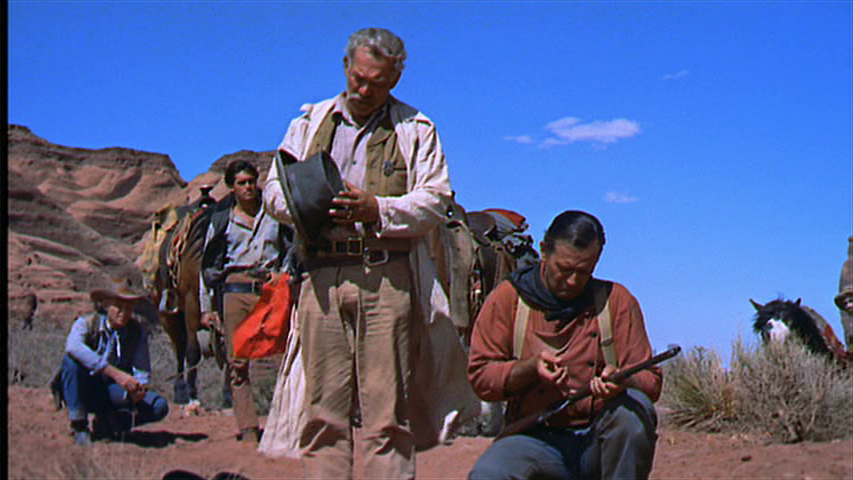
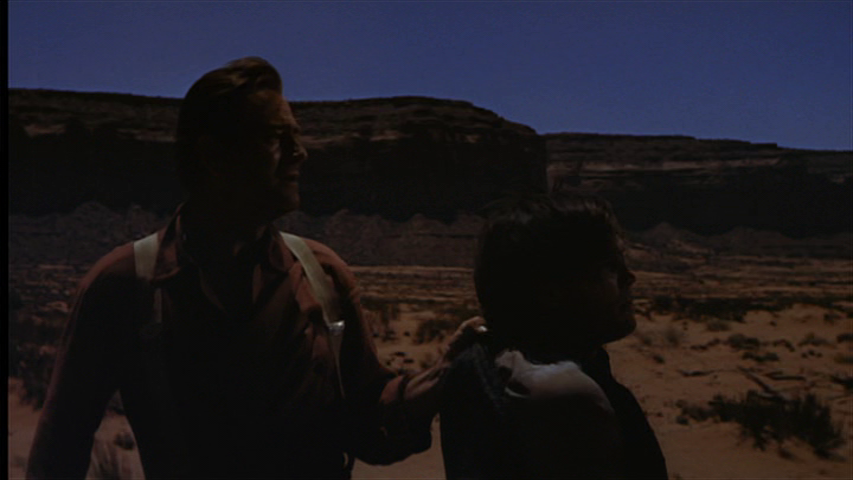
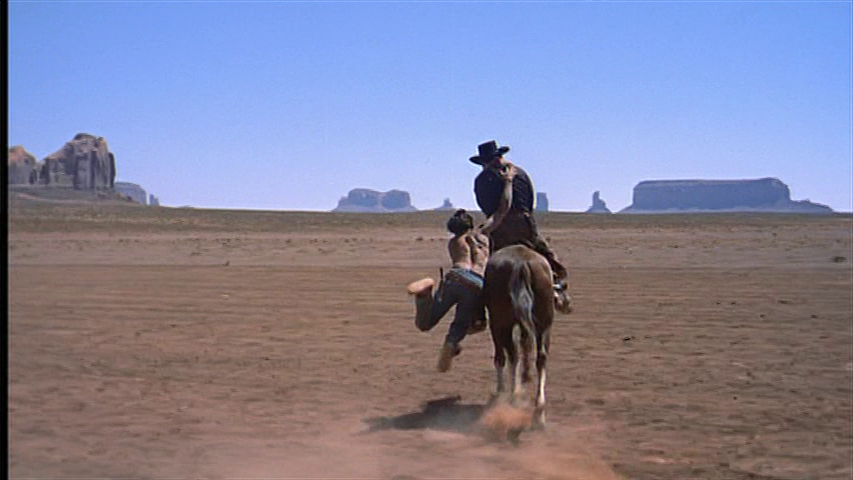
The screengrabs in this post are from my Warner Home Video DVD copy of the film, which is still going strong after 25 years:
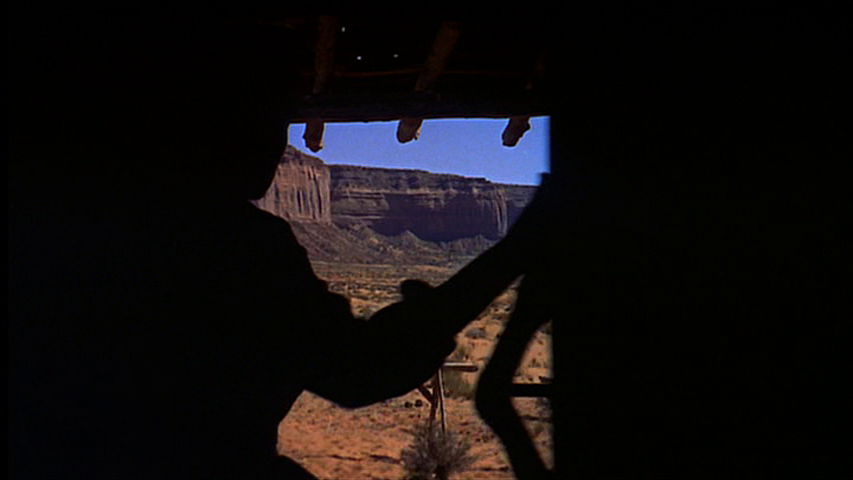
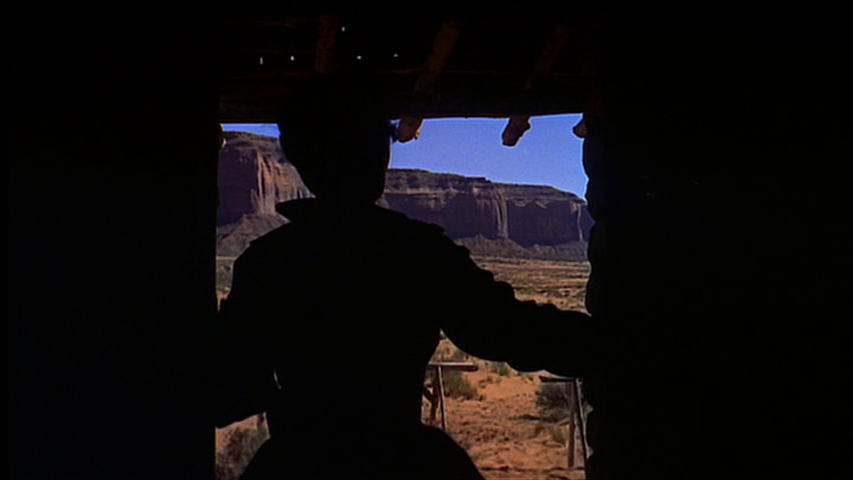
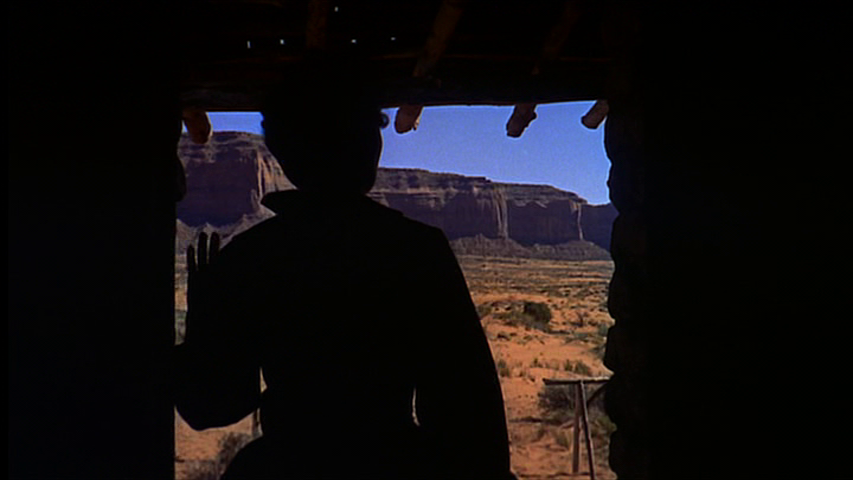
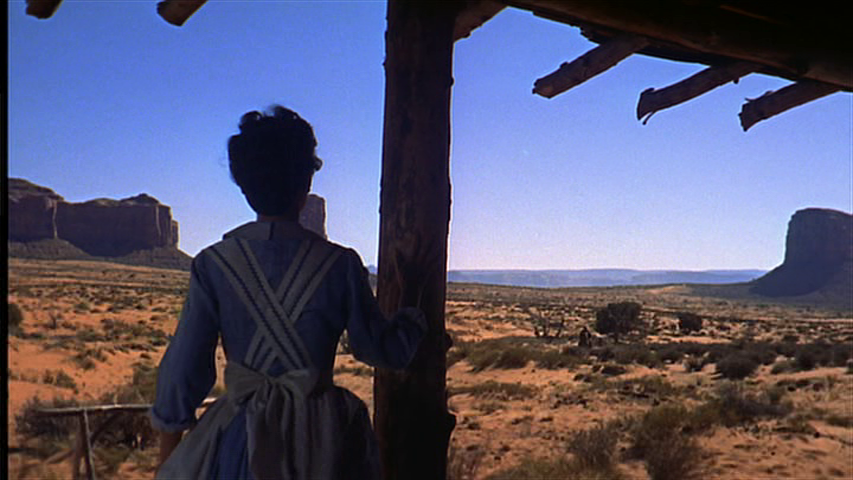
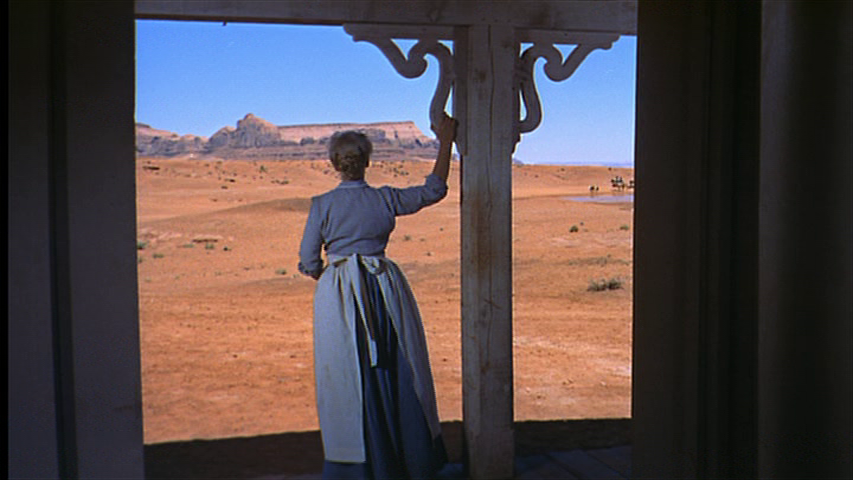
It can also be rented from a number of streaming video platforms. The Searchers is hardly immune from the sins of representation which plague many classic westerns: see, for instance, Tom Grayson Colonnese’s observation in the collection of essays on the film edited by Arthur Eckstein and Peter Lehman that allowing the Navajo extras who play Comanches to speak their own language is as discordant “as if when we meet the Jorgensens, they have Italian accents, or as if the Hispanic Comanchero who finally leads the searchers to Scar speaks with a heavy Swedish accent.” Unlike most of them, though, racism is one of its explicit themes. It begins, famously, in “Texas 1868” (as an introductory title card reads) with Dorothy Jordan’s Martha Edwards opening a door:
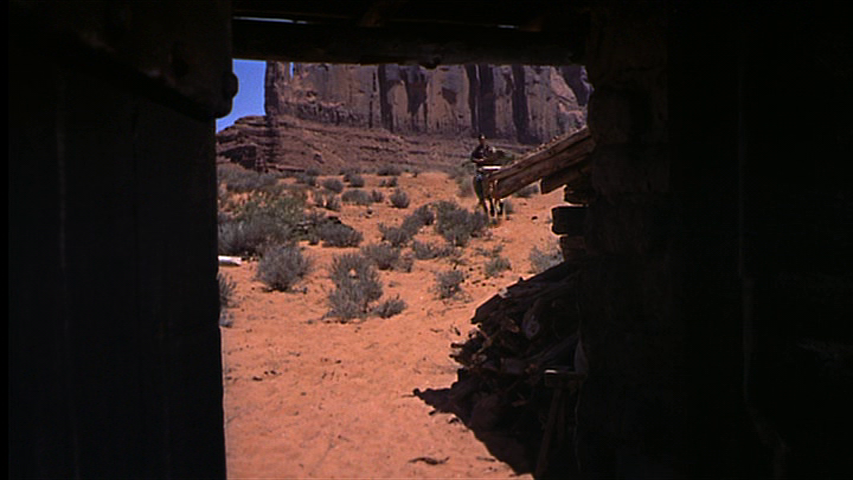
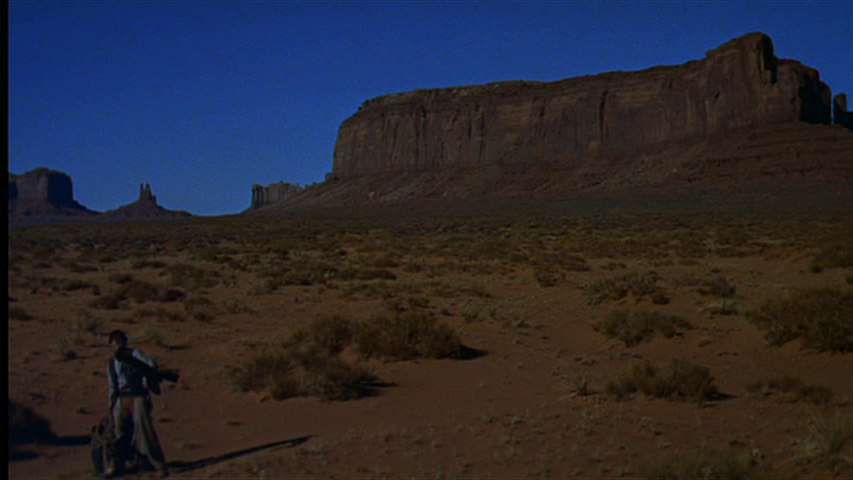
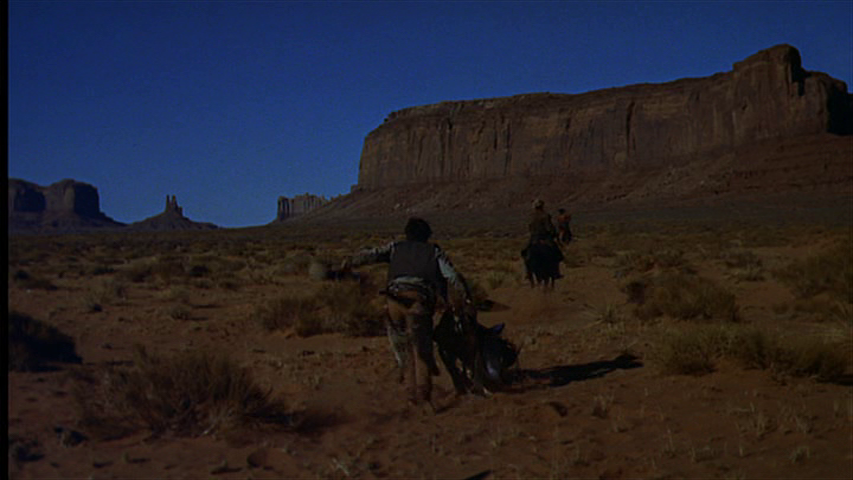
As the camera tracks forward, following her outside, a tiny figure on horseback emerges out of the striking desert landscape:
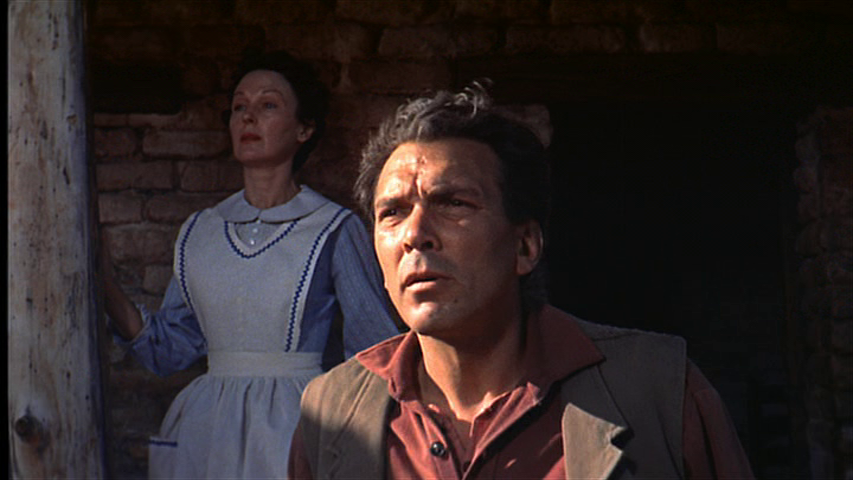
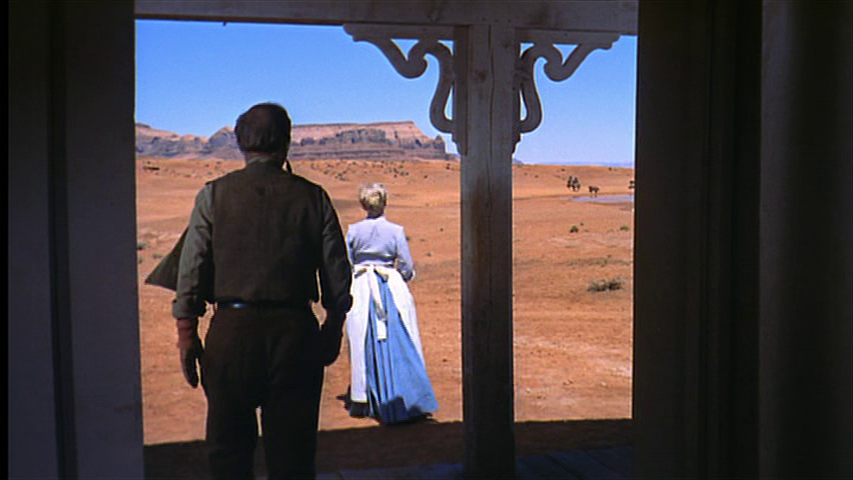
As it draws closer, Martha is joined first by her husband Aaron (Walter Coy):
Then their three children. “That’s your Uncle Ethan!” says Pippa Scott’s Lucy to Robert Lyden’s Ben.
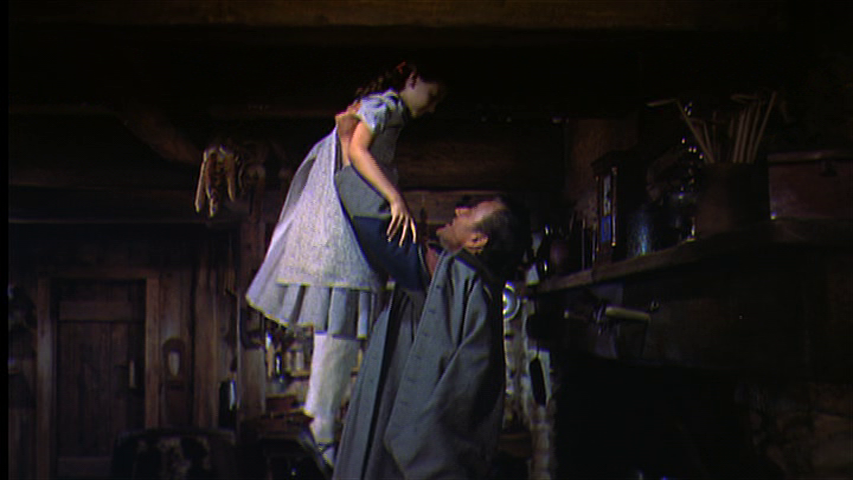
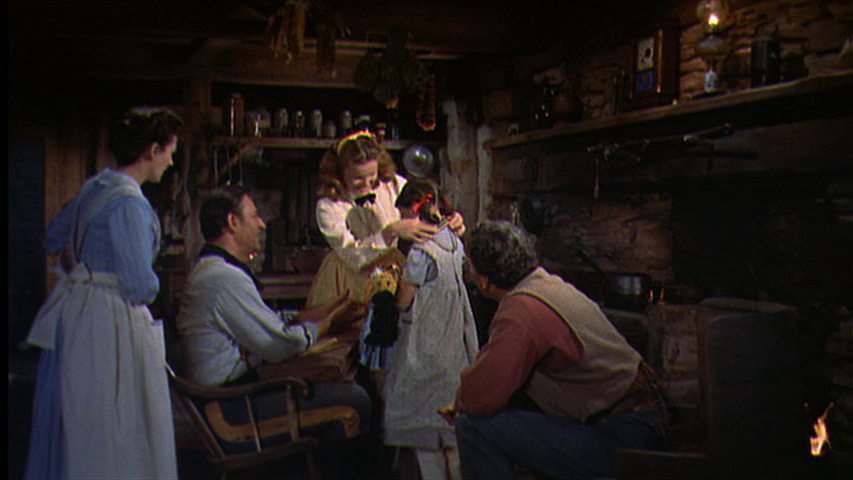
Inside, Ethan lifts his youngest niece Debbie (Lana Wood) to the rafters:
And although he declines to answer Aaron’s question about where he’s been for the past three years, he does specify that it wasn’t California, gazing at Martha the whole while:
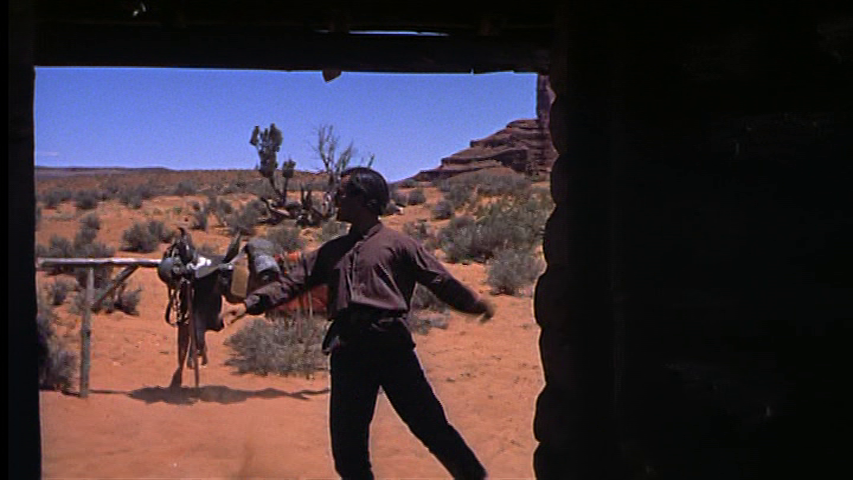
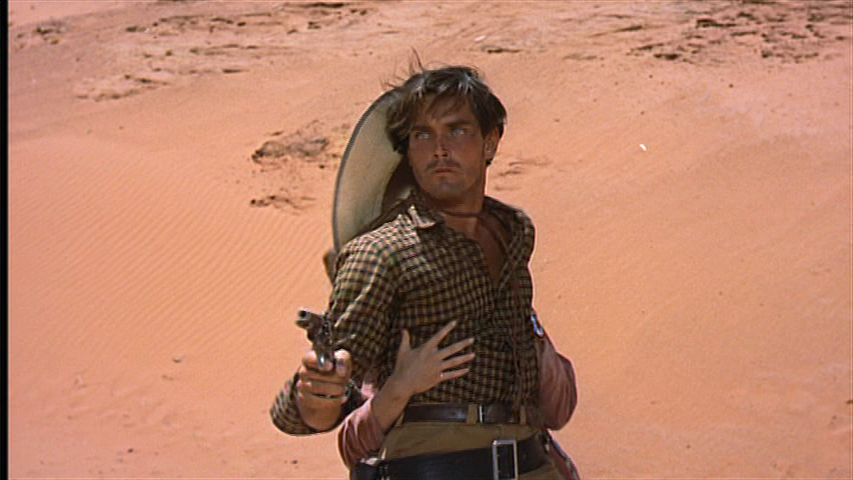
The final member of the family, Jeffrey Hunter’s Martin Pawley, is introduced in the next scene in a variation on Ethan’s entrance:
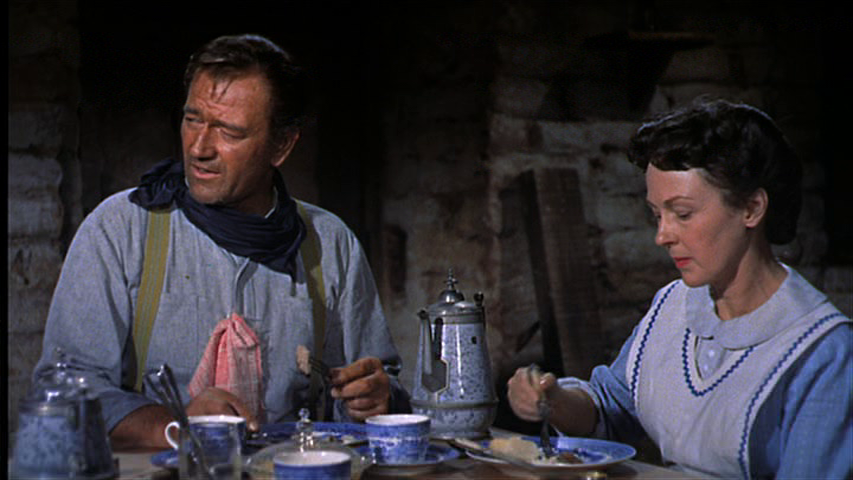
“Fella could mistake you for a half-breed,” Ethan tells him over dinner.
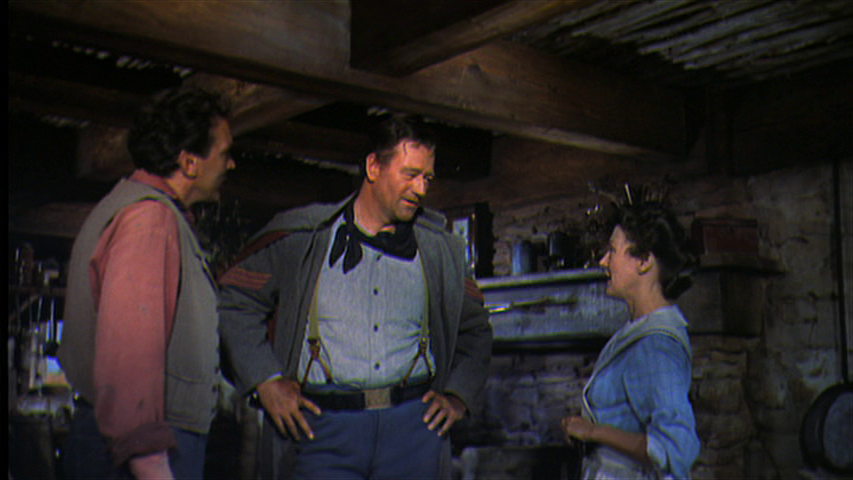
“Not quite: I’m one-eighth Cherokee, and the rest is Welsh and English,” he replies. “At least that’s what they tell me.” You see, “it was Ethan who found you, squalling under a sage clump after your folks had been massacred,” Aaron explains. “It just happened to be me,” Ethan says, “no need to make more of it.” That night before the children to go bed, he makes Debbie a present of what Frank Nugent’s screenplay describes as “something appropriate to Maximilian of Mexico”:
Moments later, he tosses Aaron two bags of double eagles by way of clarifying that he expects to pay his way.
“That’s fresh minted–there ain’t a mark on it!” Aaron observes, to which Ethan simply says, “so?” The next morning breakfast is interrupted by a visit from Ward Bond’s Reverend Captain Samuel Johnson Clayton and his company of Texas Rangers, who are looking for cattle rustlers who they think have run off the herd belonging to Lars Jorgensen (John Qualen), whose son Brad (Harry Carey Jr.) has been “sittin’ up with” Lucy. Their intention is to deputize Aaron and Marty, but Ethan tells his brother to stay close in case the real culprits were Comanche. As they prepare to depart, Clayton chivalrously declines to observe a goodbye which makes it clear that Ethan and Martha are in love with each other:
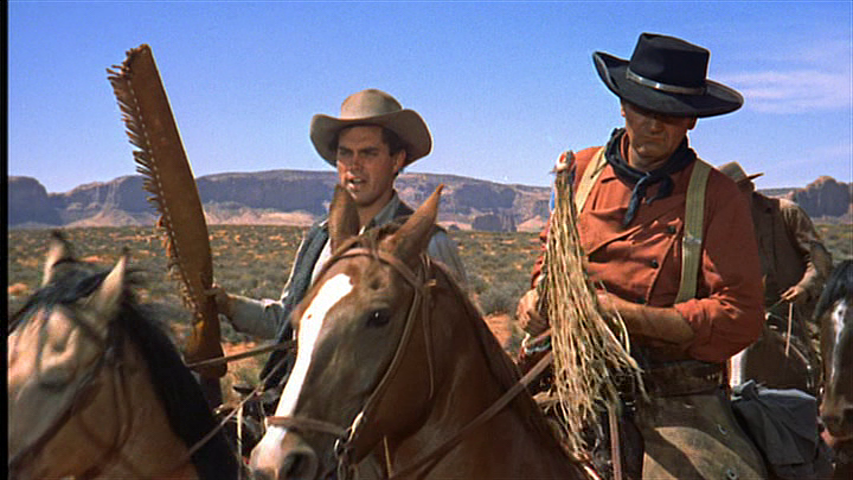
The posse is 40 miles away when Marty rides up to Ethan to comment that “there’s something mighty fishy about this trail.”
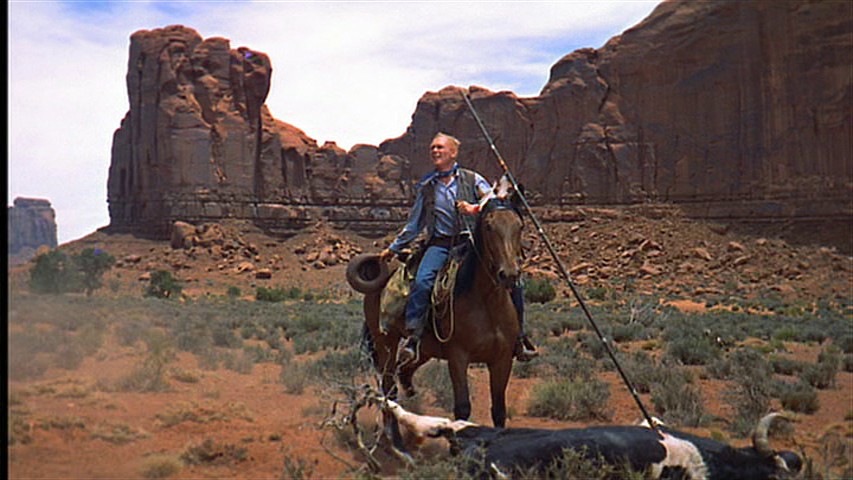
Sure enough, Brad finds his father’s prize bull with a Comanche lance in it.
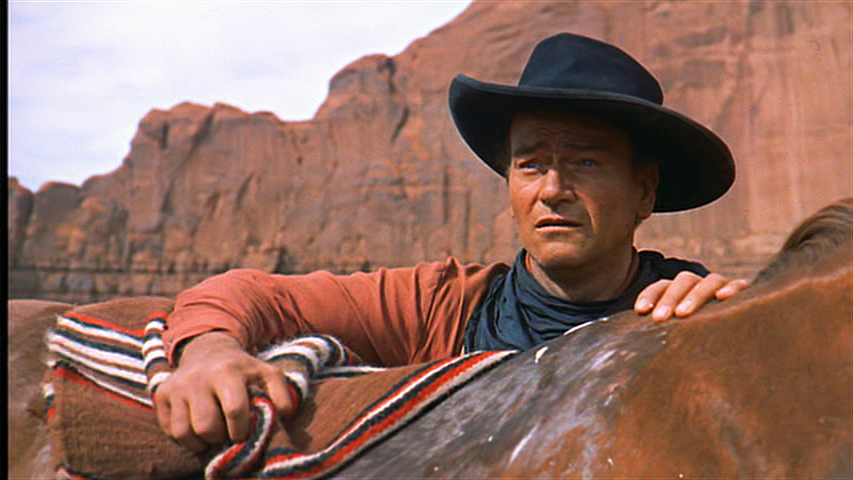
Ethan is the first to realize what it means: “stealing the cattle was just to pull us out. This is a murder raid.” The most likely targets are either the Jorgensen or Edwards places, and the majority of the Rangers ride for the former because it’s closer. Marty immediate heads for home against the advice of Ethan, who observes that their horses need rest and grain. The younger man obviously thinks he’s being callous, but the anguished look on Ethan’s face as he rubs down his horse is anything but:
The attack itself isn’t shown, only the brilliantly tense lead-up to it which features outstanding crepuscular lighting:
A devastating camera movement toward Lucy when she realizes what’s about to happen:
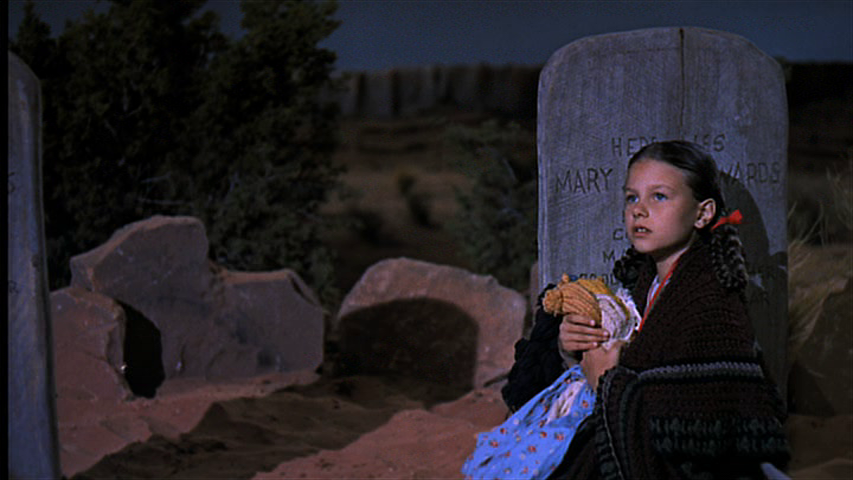
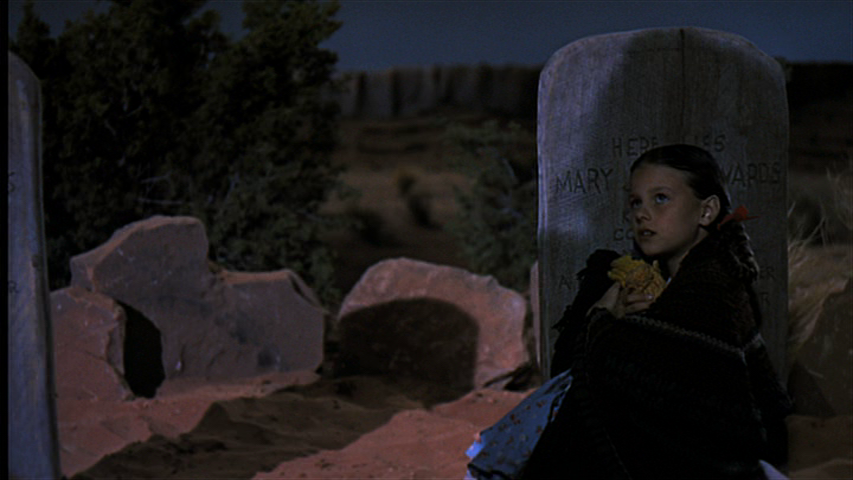
And a terrifying shadow falling over a tombstone that informs us that Ethan and Aaron’s mother was also killed by Comanches:
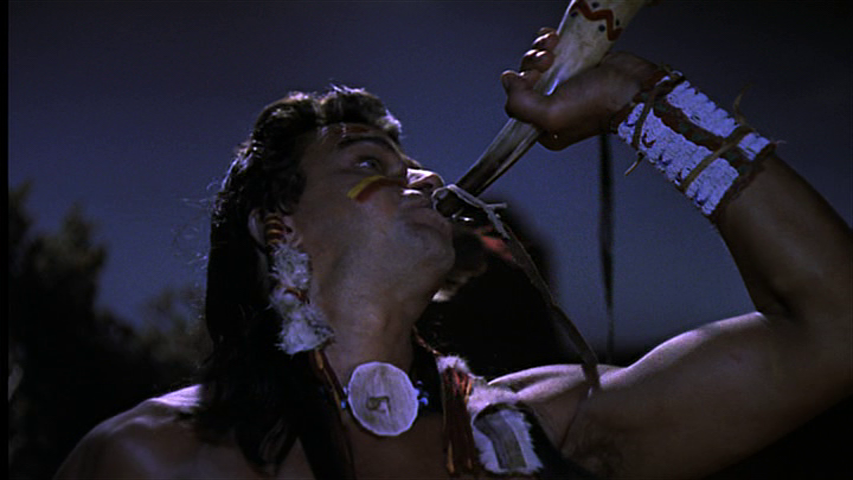
It ends on a close-up of the Comanche chief Scar, who unfortunately is played by a white man (Henry Brandon), blowing a horn to signal the start of the attack:
Fade to black. Ethan is proven right about the horses when he and Mose Harper (Hank Worden), who stayed behind with him, overtake Marty and ride past him:
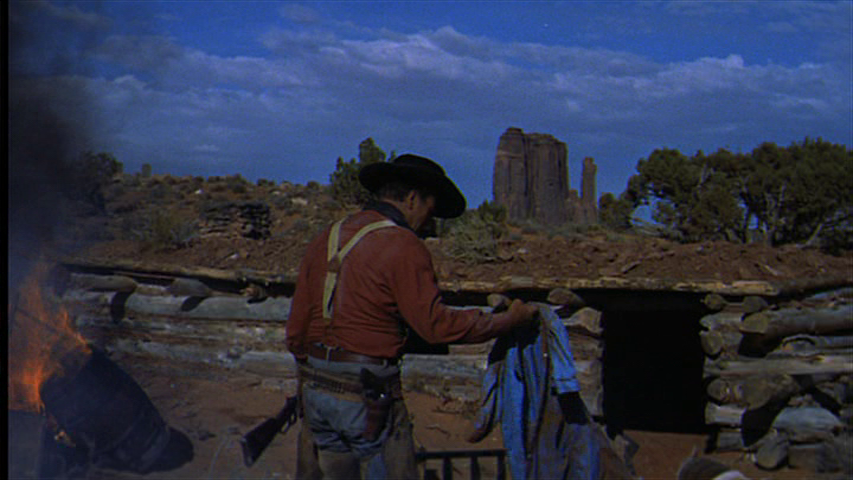
But they arrive too late to help. Ethan discovers Martha’s body in another reprise of the film’s opening shot:
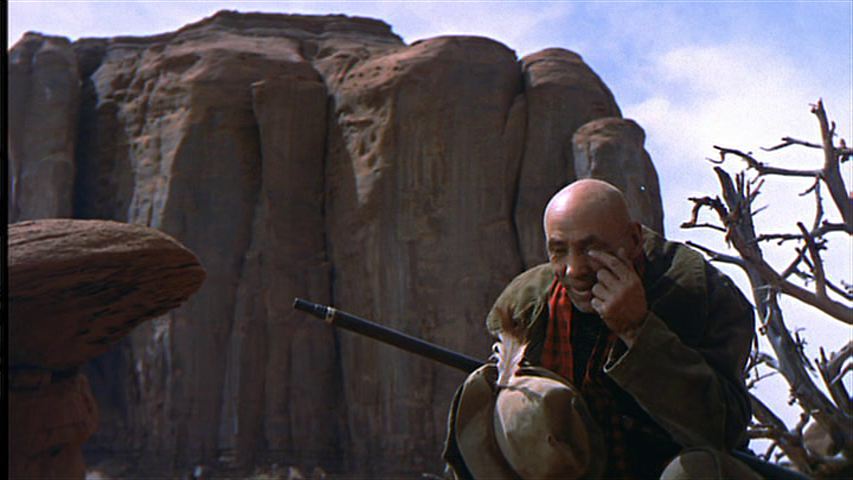
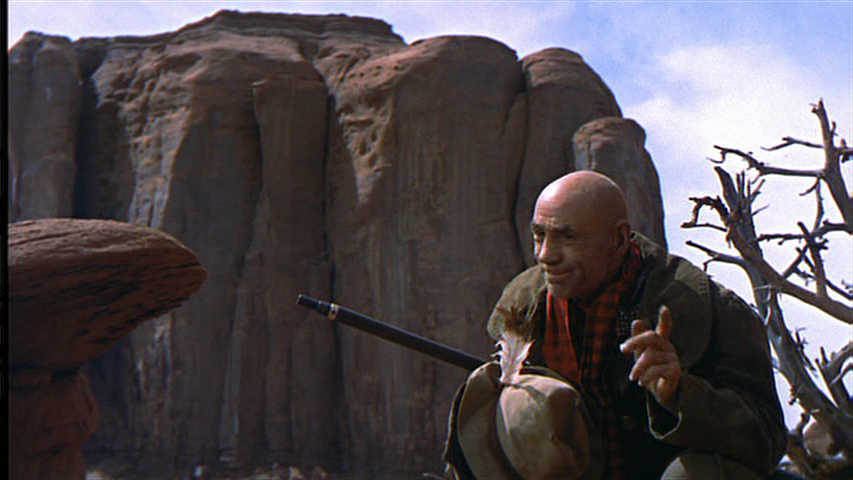
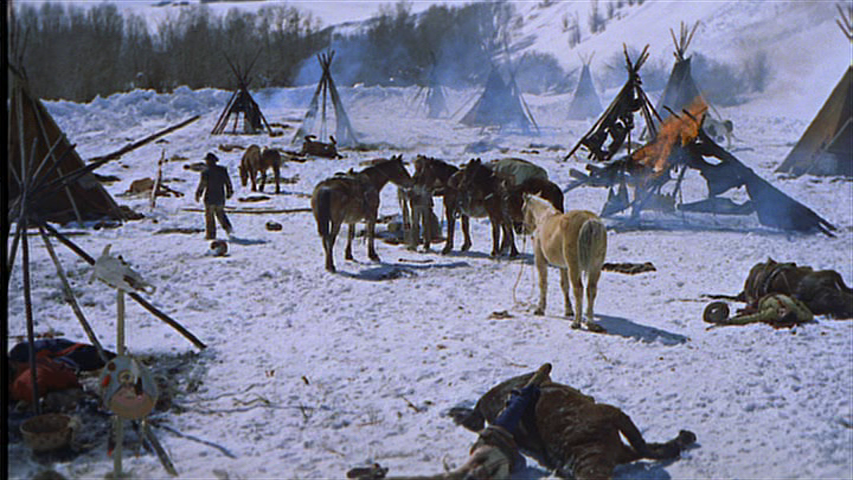
Aaron and Ben are also dead, while Debbie and Lucy have been captured. And thus begins the titular search. The same number of men ride out after the girls as went looking for Jorgensen’s cattle earlier, and soon enough they’re following a trail of corpses as warriors Aaron wounded die on the trail. Ethan shoots out the eyes of one, prompting Clayton to ask him, “what good did that do you?”
Mose pantomimes Ethan’s cold reply: “by what you preach, none, but what that Comanche believes, ain’t got no eyes, can’t enter the spirit land and has to wander forever between the winds. You get it, Reverend.”
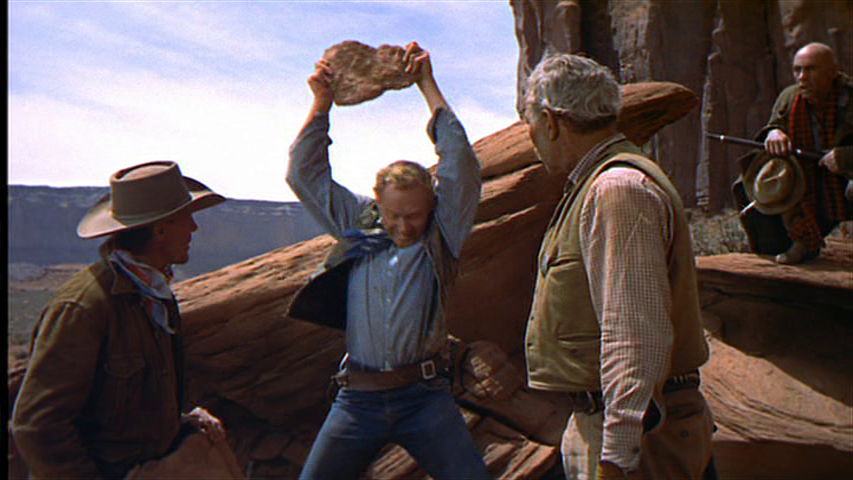
Sam Girgus writes in his book Hollywood Renaissance: The Cinema of Democracy in the Era of Ford, Capra, and Kazan, “of course, Ethan doesn’t ‘get’ that he really has just described his own life and destiny of wandering over a nightmare landscape that denies ‘the spirit’ and the value and meaning of life,” but I find it significant that his action is prompted by Brad desecrating the body first with a rock:
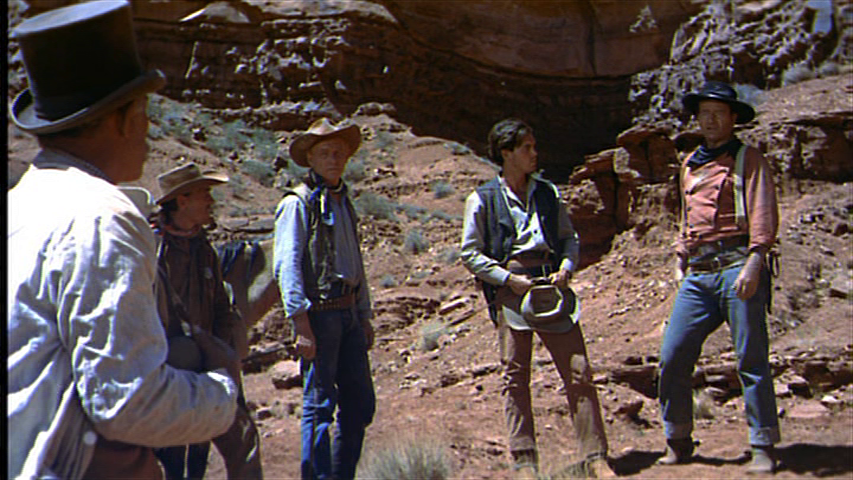
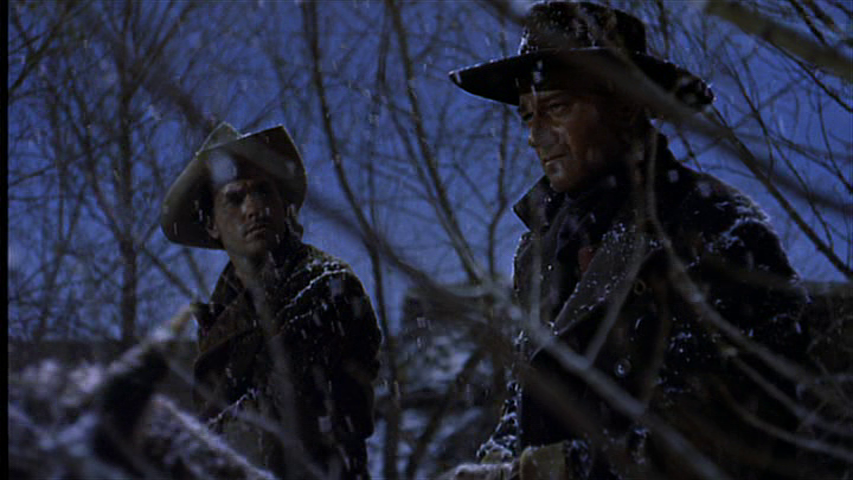
In fact, not even Ethan’s most extreme racist actions or sentiments expresses are unique to him, which seems to support the statement Joseph McBride and Michael Wilmington make in their monograph on director John Ford that “it is chillingly clear that Ethan’s craziness is only quantitatively different from that of civilization in general.” Anyway, he soon locates the raiders they’re looking for and proposes that they wait until nightfall and then jump them. Clayton decides they’ll try to run off their horses instead. Ethan disagrees, but Clayton says, “that’s an order.” Ethan replies by hurling a canteen at him with the words, “yes sir, but if you’re wrong, don’t ever give me another.”
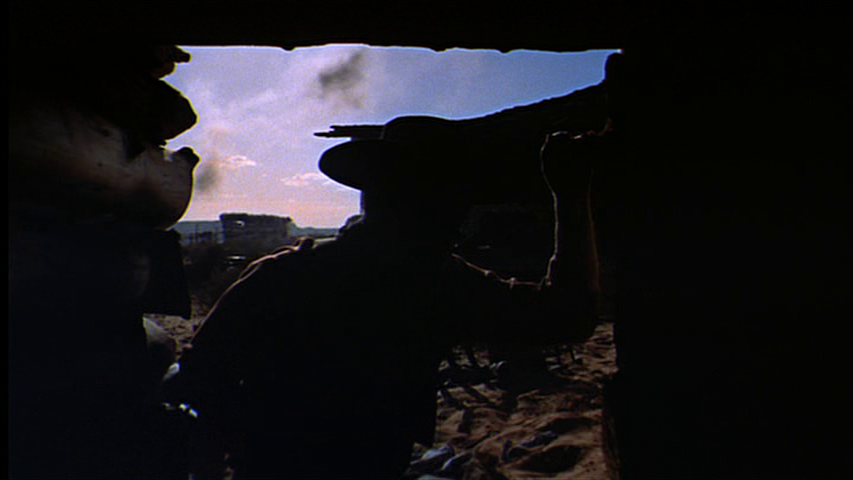
This is followed by another one of the movie’s great set pieces, a frantic ride to a strong defensive position across a river that features lots of great parallel and intersecting lines after Clayton’s plan fails and the posse finds itself surrounded:
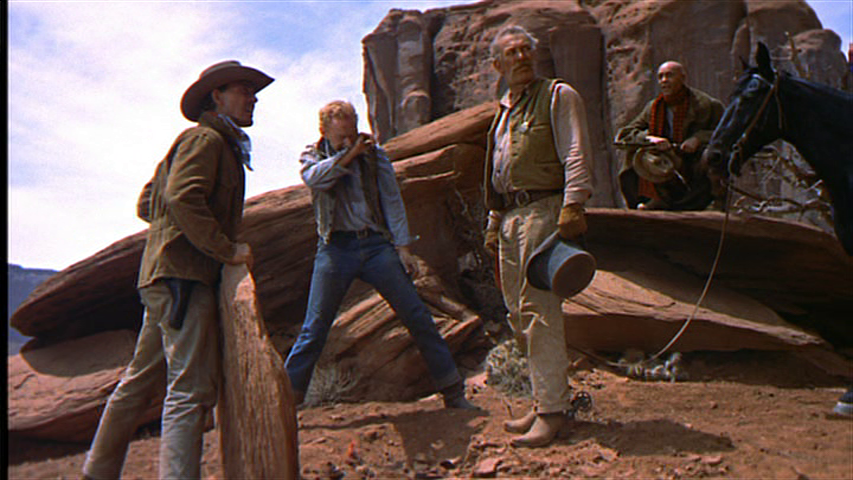
Ethan continues the search alone with Brad and Marty because, as Clayton acknowledges, “this is a job for a whole company of Rangers, or this is a job for one or two men.”
Three become two a few minutes of screentime later when Brad suicidally confronts the Comanches alone after Ethan finds and buries Lucy’s defiled body, which we hear but don’t see:
The final two searchers lose the trail soon after. “We’re beat and you know it,” Marty says. Ethan’s reply is my favorite line in this or any film (obsolete pejorative slang aside), because it’s basically the inverse of my philosophy of life: “Injun’ll chase a thing till he thinks he’s chased it enough, then he quits. Same way when he runs. Seems like he never learns there’s such a thing as a critter’ll just keep comin’ on.”
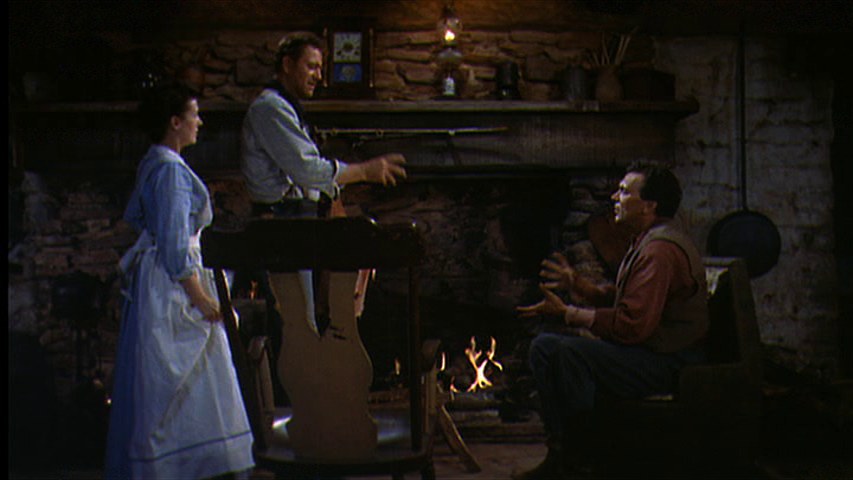
They briefly return home to the Jorgensens in a sequence that features framing which ought to look familiar by now:
But are off again the next morning in pursuit of a lead that came to the Jorgensens in the form of a letter, much to the chagrin of daughter Laurie (Vera Miles), who reveals to Marty that “you and me have been goin’ steady since we was three years old.”
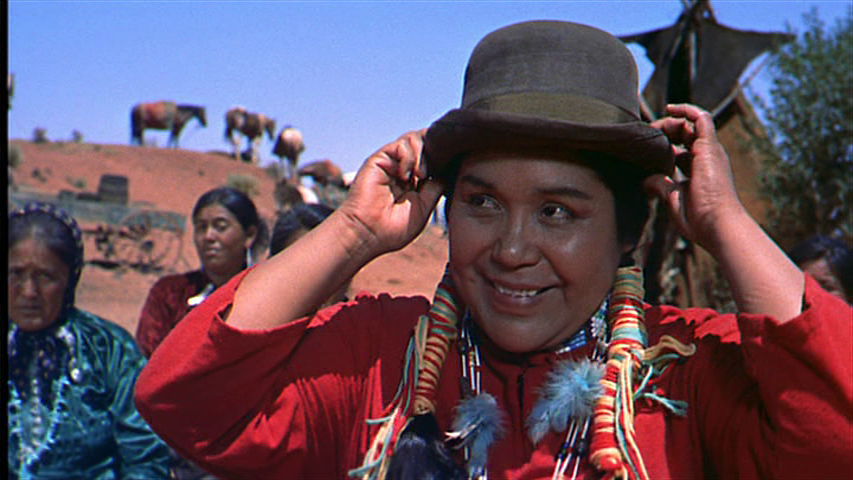
A big chunk of what happens next is shown in flashback as Laurie reads a letter that Marty writes to her, including his accidental (he thought he was trading for a blanket, not a bride) marriage to a woman named Wild Goose Flying in the Night Sky (Beulah Archuletta) that many people find distasteful in the way it’s played for comedy, but which M. Elise Marubbio defends as essential to understanding how “Ford’s direction throughout the film suggest an understanding of racism as a neurosis that permeates a community, including the viewer” in a chapter in the book Native Apparitions: Critical Perspectives on Hollywood’s Indians:
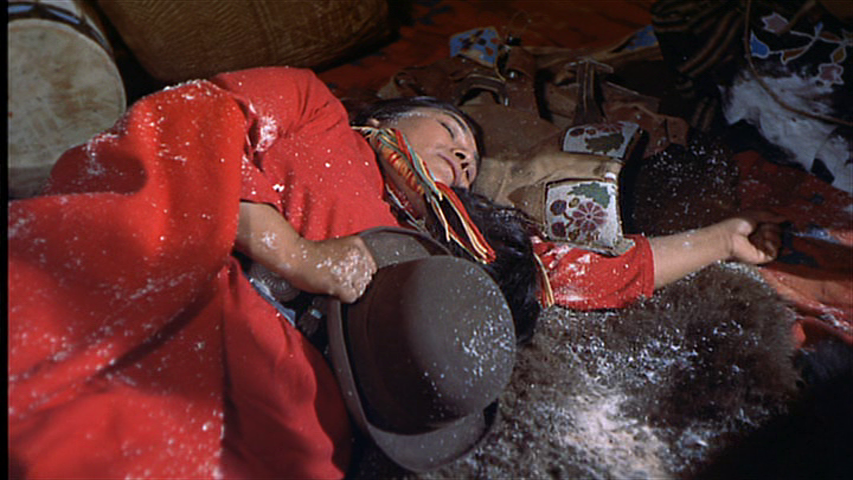
And an encounter with a cavalry troupe that has just massacred an entire Comanche village, including Marty’s wife, who ran off (possibly to look for Debbie) after she heard the two men talking about Scar.
Ethan and Marty finally catch up with him in New Mexico Territory, where the medal Ethan gave Debbie at the beginning of the film reappears during a conversation in which the chief reveals that two of his sons were killed by white settlers:
Debbie (now played by Natalie Wood) is there, too, and runs after Ethan and Marty when they leave to warn them they’re in danger:
When she tells them, “these are my people,” Ethan pulls his gun.
But Marty is having none of it:
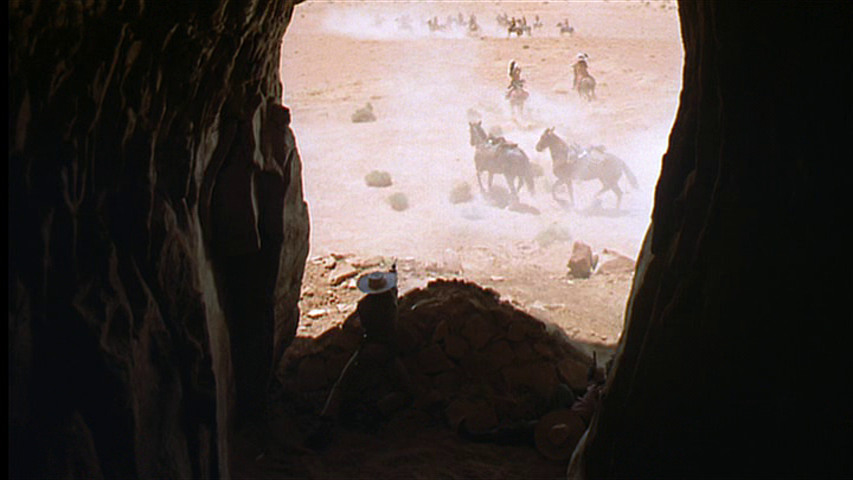
They’re interrupted by a poison arrow which wounds Ethan in the shoulder and escape (without Debbie) to a nearby cave where they fend off another attack:
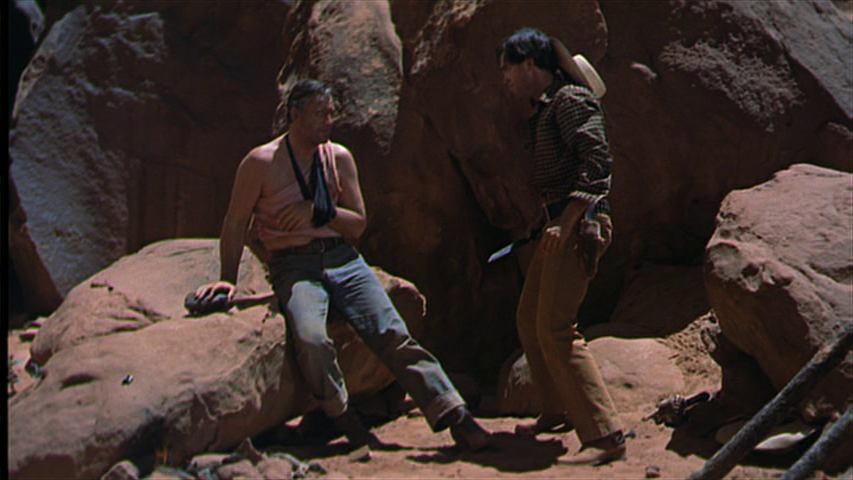
And where Ethan attempts to write a will that leaves all of his possessions to Marty on the grounds that he has “no blood kin,” to which Marty says, “I hope you die.”
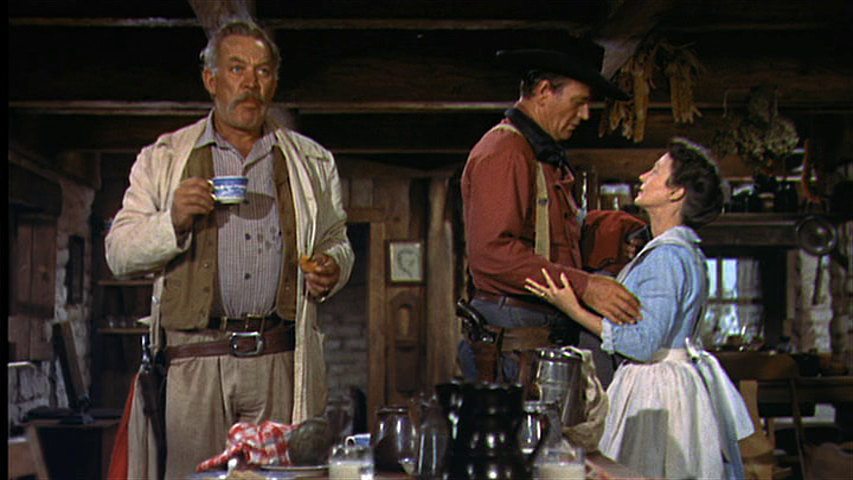
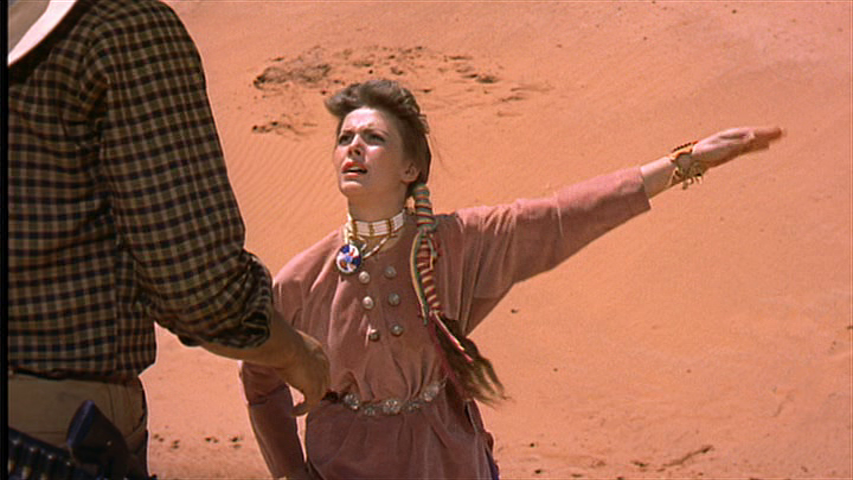
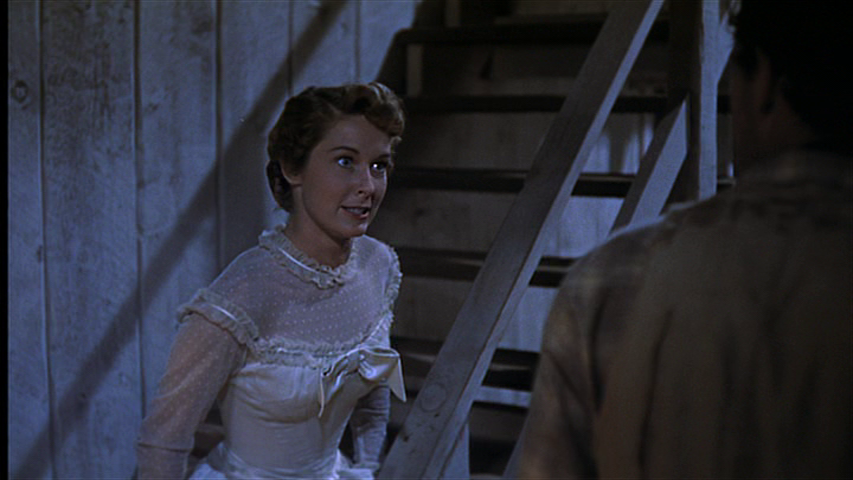
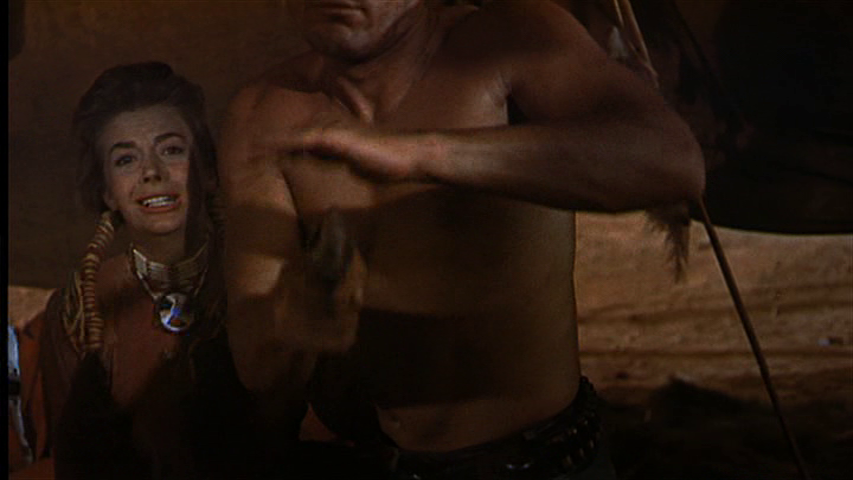
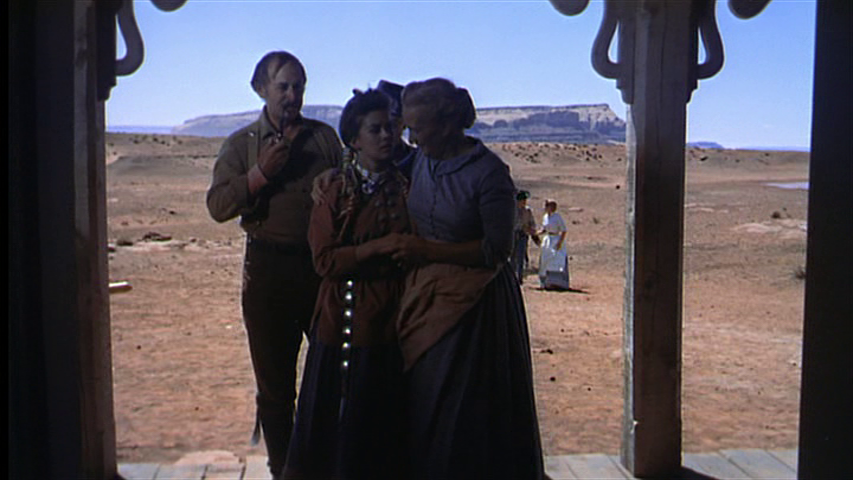
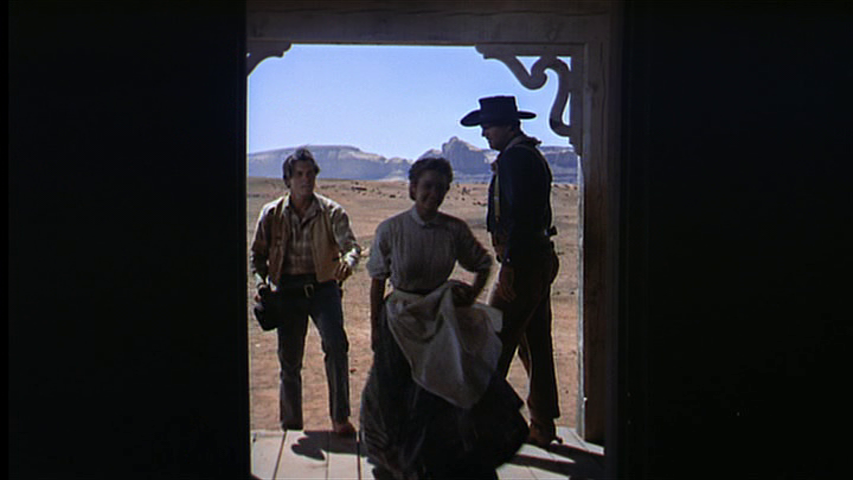
Which finally brings us to the wedding in the screengrab at the beginning of this post, where Laurie, who McBride and Wilmington describe as “resplendent in the virginal white of her wedding dress,” harshly echoes the sentiments Marty almost just stabbed Ethan for when he tells her he has to leave one last time to retrieve Debbie, who they’ve just been notified is camped nearby with Scar and the rest of his band. “Fetch what home?” she cries. “The leavings of Comanche bucks sold time and again to the highest bidder with savage brats of her own? Do you know what Ethan will do if he has a chance? He’ll put a bullet in her brain. I tell you, Martha would want him to.”
This leads pretty directly to the film’s key moments. Marty daringly sneaks into the camp alone and convinces Debbie to leave with him, but has to kill Scar in self defense, raising the alarm.
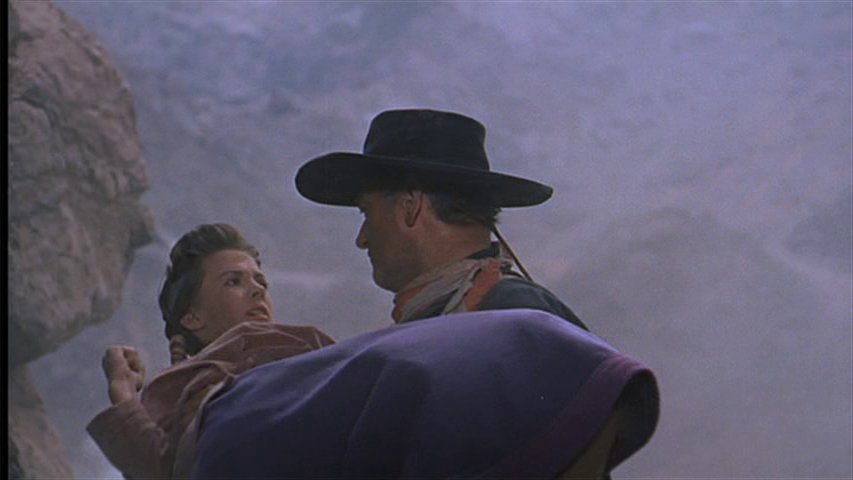
The Rangers ride in after them, and Ethan claims Scar’s scalp, which judging from his face doesn’t bring the closure he expected:
Just then he spots Debbie:
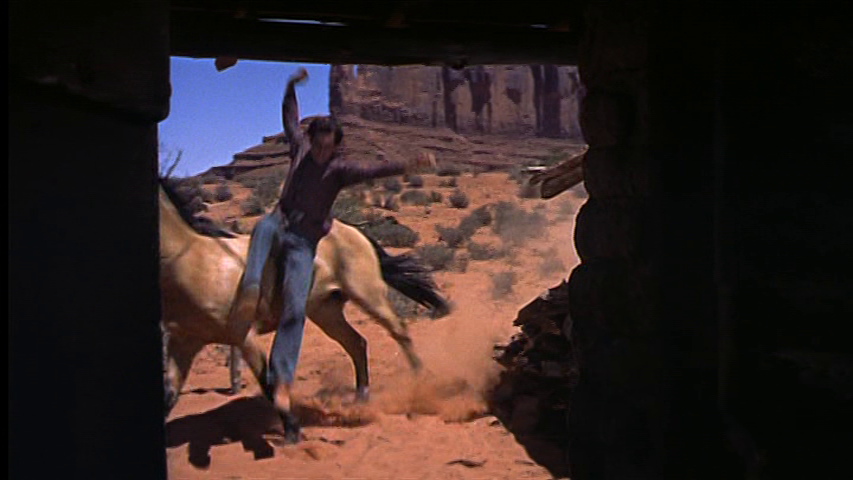
Marty tries and fails to prevent him from riding after her:
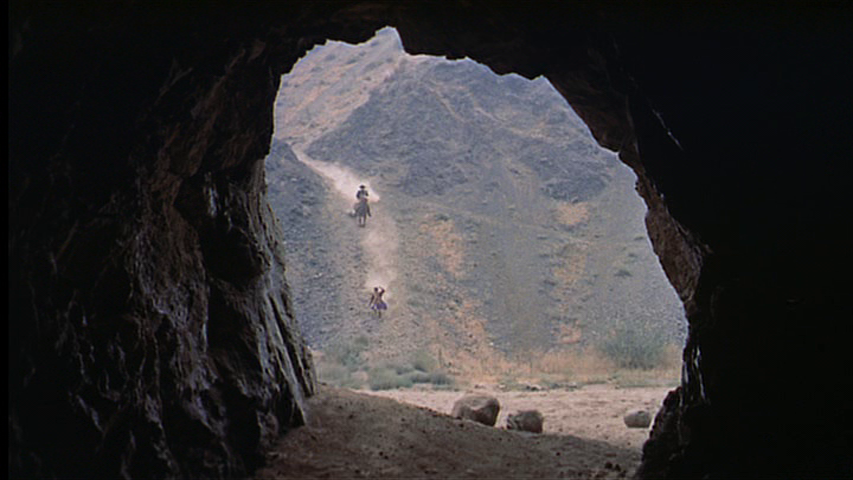
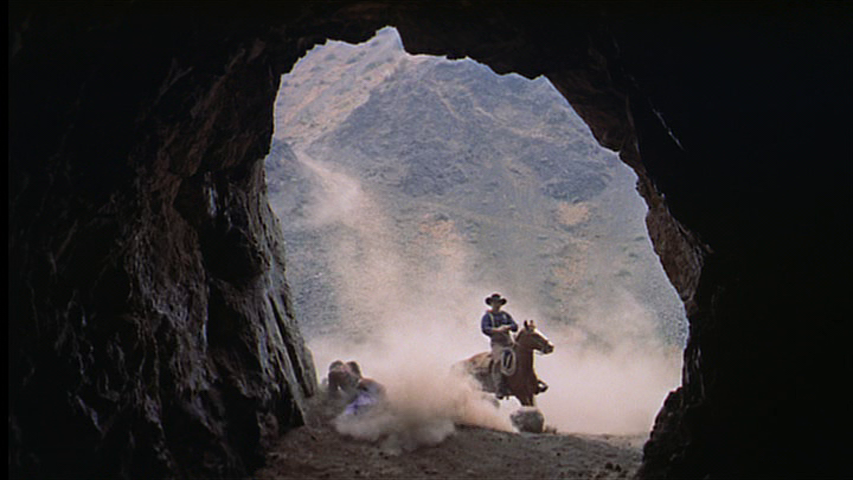
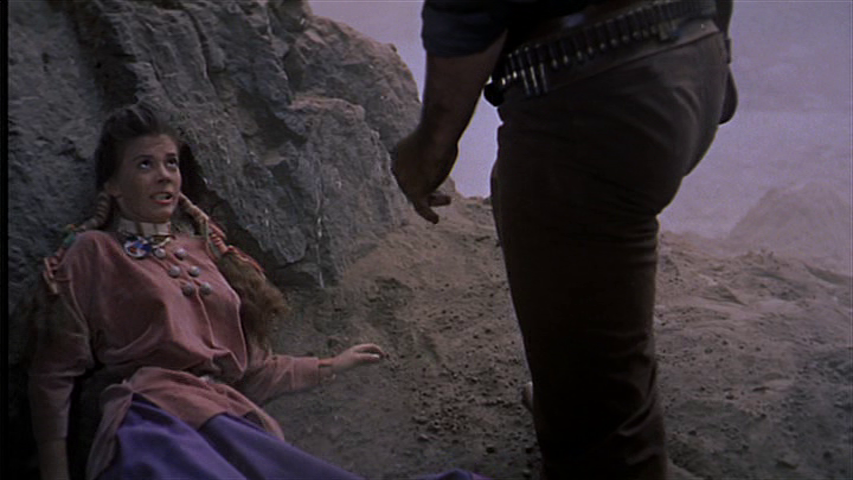
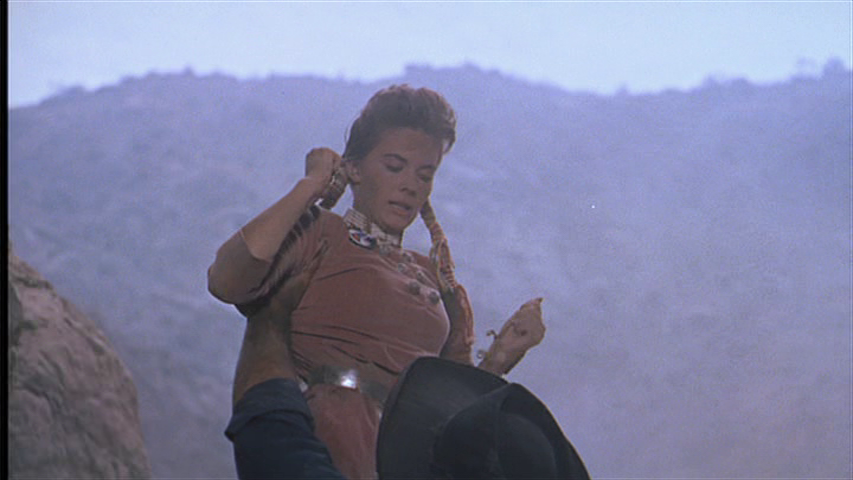
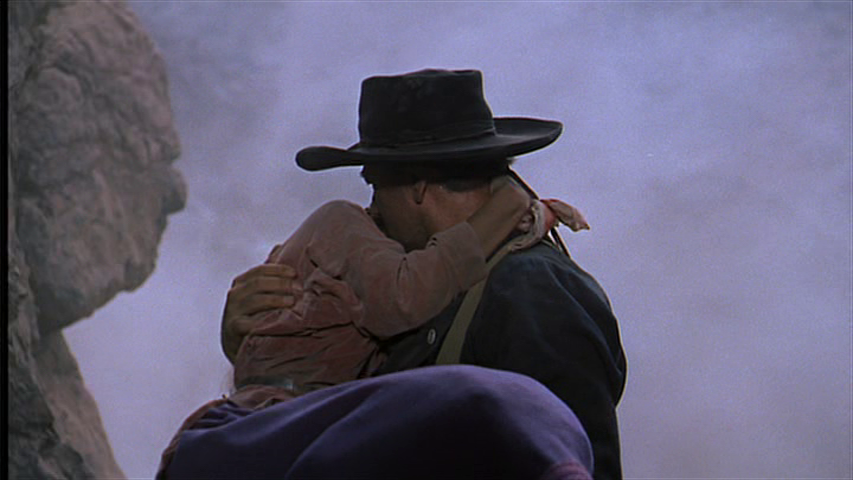
And Ethan catches up with Debbie in front of another cave:
To Glenn Kenny it’s “an unabashed and matter of fact depiction of the mysterious workings of grace” which can’t be parsed in any rational way, while to Pippin “what we and [Ethan] discover is that he did not know his own mind, that he avowed principles that were partly confabulations and fantasy.” Whatever the case may be, and while I find Ethan every bit as compelling a character as I did in my youth when I first discovered this film, what I find myself pondering the most these days is what this scene and the final one that follows it say about America. After all, as Jeffrey Church points out in an article published in the journal Perspectives on Political Science, “the film is not called ‘The Searcher.'” Much ink has been spilled about the way Ethan stands alone in the final scene after Mr. and Mrs. Jorgensen (Olivia Carey) take Debbie inside, then Laurie and Marty push past him:
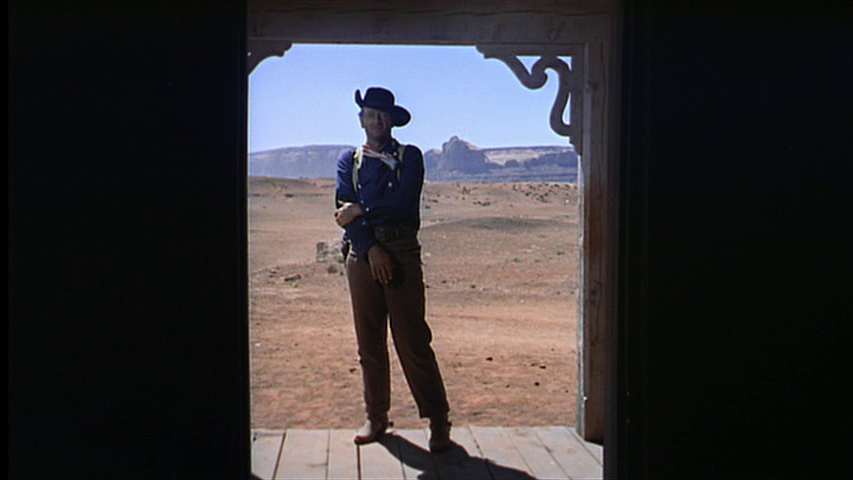
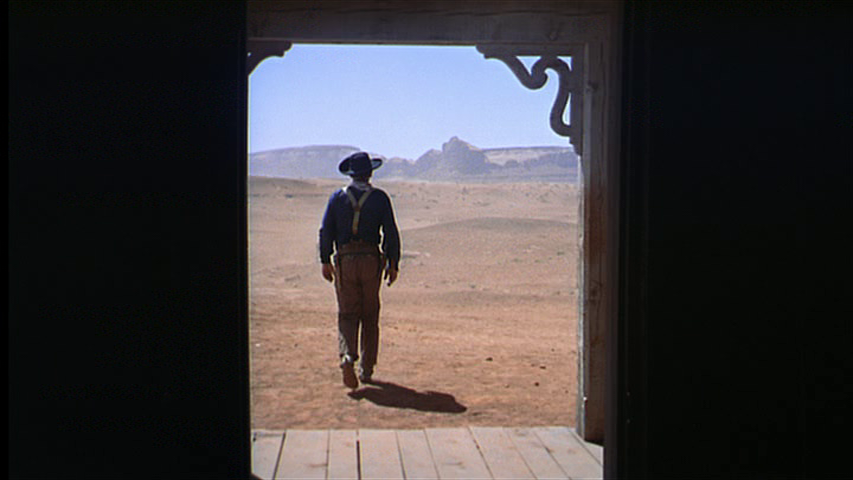
I think it’s absolutely essential to note that after John Wayne, the actor, clutches his arm in a moving homage to silent film star Harry Carey (father of the actor who plays Brad and husband to the actress who plays Mrs. Jorgensen), Ethan, the character he plays, chooses to turn and walk away:
Girgus reads Marty’s presence as “dramatically [subverting] Ethan’s wish to form a nation of one without any responsibility to anyone outside of himself” by turning their search for Debbie into a social experience that mirrors “the situation of America as a democracy of continued relevance to its own people and for the world during a period of increasing activism by minorities and people of color,” which seems just as true today as it did in 1956 when The Searchers was released or 1998 when Girgus’s book was published. But where he argues that Ethan “cannot (my italics) enter the interior spaces of the house” despite the fact that he “represents steadfast masculine strength, power, and aggression that constitute essentials for the survival of any society, including a democracy,” Pippin emphasizes the absence of a reconciliation scene with Ethan and suggests that he may instead be recusing himself from participating in the one taking place within because it is “while not a complete fantasy, much more fragile than those ‘inside’ are prepared to admit.”
My point with all this is that Ethan is, to borrow some phrases from the film, “a human man.” As are, of course, the Comanches he spends its runtime opposing. And the country built on their bones is indeed “a fine, good place to be.” But it can be even better. So let’s spare a thought for all of them as we gather around the communal punch bowl this Thanksgiving, because those who forget the past are doomed to repeat it.
Cheers!
All original photographs in this post are by Marion Penning, aka My Loving Wife.Links to all of the entries in this series can be found here.
What I’m Seeing This Week: I have been planning to revisit The Night of the Hunter for awhile, so there’s no way I’m going to miss a chance to see it on the big screen at Cinemapolis on Wednesday!
Also in Theaters: For all the reasons I mentioned last week, the best new movie now playing Ithaca that I’ve already seen remains Anora, which continues its run at Cinemapolis. I also enjoyed A Real Pain and Conclave, which are at Cinemapolis, and The Wild Robot, which is at the Regal Ithaca Mall. The big news this week is of course the wide release of Gladiator II and Wicked: Part I, including at Cinemapolis and the Regal locally, tonight and Moana 2 (Regal) on Tuesday. I’m planning to see all three, which probably means I’m waiting for Heretic (Cinemapolis) to hit the streaming video platforms. So it goes. Finally, your most interesting-looking special event and best bet for repertory fare (aside from Night of the Hunter, natch) is the “Science on Screen” presentation of Ratatouille at Cornell Cinema tonight which will include presentations on “food nostalgia” and a tasting inspired by the film.
Home Video: I saw Seconds for the first time last month and I confess that initially I found it to be a bit tedious. Upon revisiting it a couple of weeks later, though, its various mysteries (including a man in an airport and a deceptively ambiguous final image) engaged me much more. Now I find myself thinking about it over and over again in connection to films from the past year like I Saw the TV Glow, which it surely must be a conscious reference point for, and a slew of movies about mid-life crises (Hit Man) and things that look like them (A Real Pain, Between the Temples). I’m still not sold on it as a masterpiece, but it’s leaving the Criterion Channel at the end of the month and I definitely think it’s a text that all cinephiles should be familiar with, so check it out if you’re a subscriber!
Previous “Ithaca Film Journal” posts canbe found here.
What I’m Seeing This Week: I think I’m going to go with Here, which closes at Cinemapolis today but continues its run at the Regal Ithaca Mall at least through Thursday, but I might audible to A Real Pain at Cinemapolis.
Also in Theaters: The best new movie now playing Ithaca that I’ve already seen is Anora, which I described on Letterboxd as “a container for some of the year’s best performances (most notably, as you’ve heard, by Mikey Madison and Yura Borisov, who is like a Frank Borzage hero in the way he immediately knows the woman of his dreams when he sees her and keeps his eyes locked on her for the duration of the movie) further elevated by a handful of standout moments.” I also enjoyed Conclave, which is at both Cinemapolis and the Regal; The Wild Robot, which is just at the Regal; and Sing Sing, which is at Cornell Cinema tonight only. Other new films that I hope to see in theaters include Small Things Like These (Regal) and Heretic (Cinemapolis and the Regal). We might also take the whole family to seeRed One at the Regal as well because we’re suckers for Christmas movies and Dwayne Johnson. This week’s special events are highlighted by CatVideoFest 2024 at Cornell Cinema on Sunday. A portion of the ticket proceeds will be donated to the SPCA of Tompkins County. Last but by no means least, your best bets for repertory fare are two modern classics, The Fifth Elementand Brick. The former is at the Regal on Sunday and Wednesday, and the latter is at Cinemapolis on Wednesday.
Home Video:My Old Ass, which is now available on Prime Video, has a premise that I find irresistible: what if you could communicate with your past or future (I suspect whether you’re closer to 18 or 39 has a huge bearing on how exactly you experience this movie) self via cellphone and occasional in-person meetups? What advice would you give yourself, and would you take it? Given that it also stars Aubrey Plaza as the older version of protagonist Elliott, I went in expecting to enjoy myself; I was surprised and delighted to discover that it’s also quite moving. Other reasons to see it include Maisy Stella’s spirited performance as someone who very plausibly could grow up to be Plaza and beautiful Ontario lake country locations.
Previous “Ithaca Film Journal” posts can be found here.
What I’m Seeing This Week: I’m excited to finally see this year’s Palme d’Or winner Anora at Cinemapolis!
Also in Theaters: There aren’t any new movies now playing Ithaca which I truly adored, but as I mentioned last week I won’t be rooting *against* The Wild Robot, which is at the Regal Ithaca Mall, or Conclave, which is both there and at Cinemapolis, when they’re inevitably nominated for some of this year’s Oscars. If I wasn’t out of town, I’d be seeing Sugarcane at Cornell Cinema tonight, which is screening as part of a double feature with Cornell professor Jeffrey Palmer’s Ghosts. Other films I’m hoping to see in local theaters before they close include Here and Heretic, which are both at both Cinemapolis and the Regal, and Small Things Like These, which is at the Regal. Noteworthy special events include free screenings of Butterfly in the Sky at Cinemapolis on Tuesday and Oedipus Rex at Cornell Cinema on Wednesday. It’s a good week for repertory fare, with Mr. Smith Goes to Washington and The Matrix screening at Cornell Cinema tomorrow, E.T. the Extra-Terrestrial there on Sunday, and In a Lonely Place at Cinemapolis on Wednesday.
Home Video:I Saw the TV Glow has been streaming on Max for awhile now and I finally got around to rewatching it the other day. I’m pretty sure that it’s still my favorite film of Movie Year 2024. As I wrote on Letterboxd:
The key scene for me is the one in which Owen (Justice Smith) rewatches his favorite television show The Pink Opaque as an adult and it’s *completely different* from how he remembers it. Which: I don’t think we can write this off as “you can’t go home again” because, 1) he has ostensibly seen it a million times, and 2) we’ve seen clips from the show, too, and this isn’t the same program! The one we’ve caught glimpses of is a mash-up of Buffy the Vampire Slayer and The Adventures of Pete and Pete which veers on some seriously dark territory; the one Owen returns to is basically just a riff on the latter’s classic “What We Did on Our Summer Vacation” episode pitched at an even younger audience. Clues to what’s actually going on here are provided in the form of the games at the arcade Owen works at based on characters from the more grown-up version of TPO, which we could interpret as merchandizing, except that the lack of branding and fact that the show was cancelled decades earlier suggest that a more likely explanation may be that he invented the “complicated mythology” as a way of repressing what all those Saturday night sleepovers with Brigette Lundy-Paine’s Maddy were *really* about. This would presumably also explain how this supposed super fan somehow fails to comment on the fact that at one point he finds himself actually in the show’s Double Lunch hangout spot.
I suspect that by writing all of this out I’m exposing myself to a possible response of “well, duh, you dummy,” but what I find compelling is the way director Jane Schoenbrun presents it. Owen knows all of this, but he is unable to act. Like Arthur Hamilton/Tony Wilson (John Randolph/Rock Hudson) in Seconds, he sees the necessity for transformation, but remains tragically convinced that this is something he needs someone else to do *to* him. That film ends with the sound of a drill announcing that it’s too late for its hero; this one holds out the possibility that “there is still time.” It’s also quite a bit more sympathetic to both the mainstream and “counter” cultures it depicts, but that comparison might be a good place to start a deep dive.
P.S. I’m still a member of team “‘Claw Machine’ for this year’s Best Original Song Oscar”!
Previous “Ithaca Film Journal” posts can be found here.
I had so much fun creating a double feature for last year’s October Drink & a Movie post that it was an easy decision to do it again. This time I’m celebrating the film I’ve long thought of as my favorite B movie, The Leopard Man, and the one which recently stole that crown, House of Usher. Here’s a picture of my Warner Archive Collection DVD copy of the former:
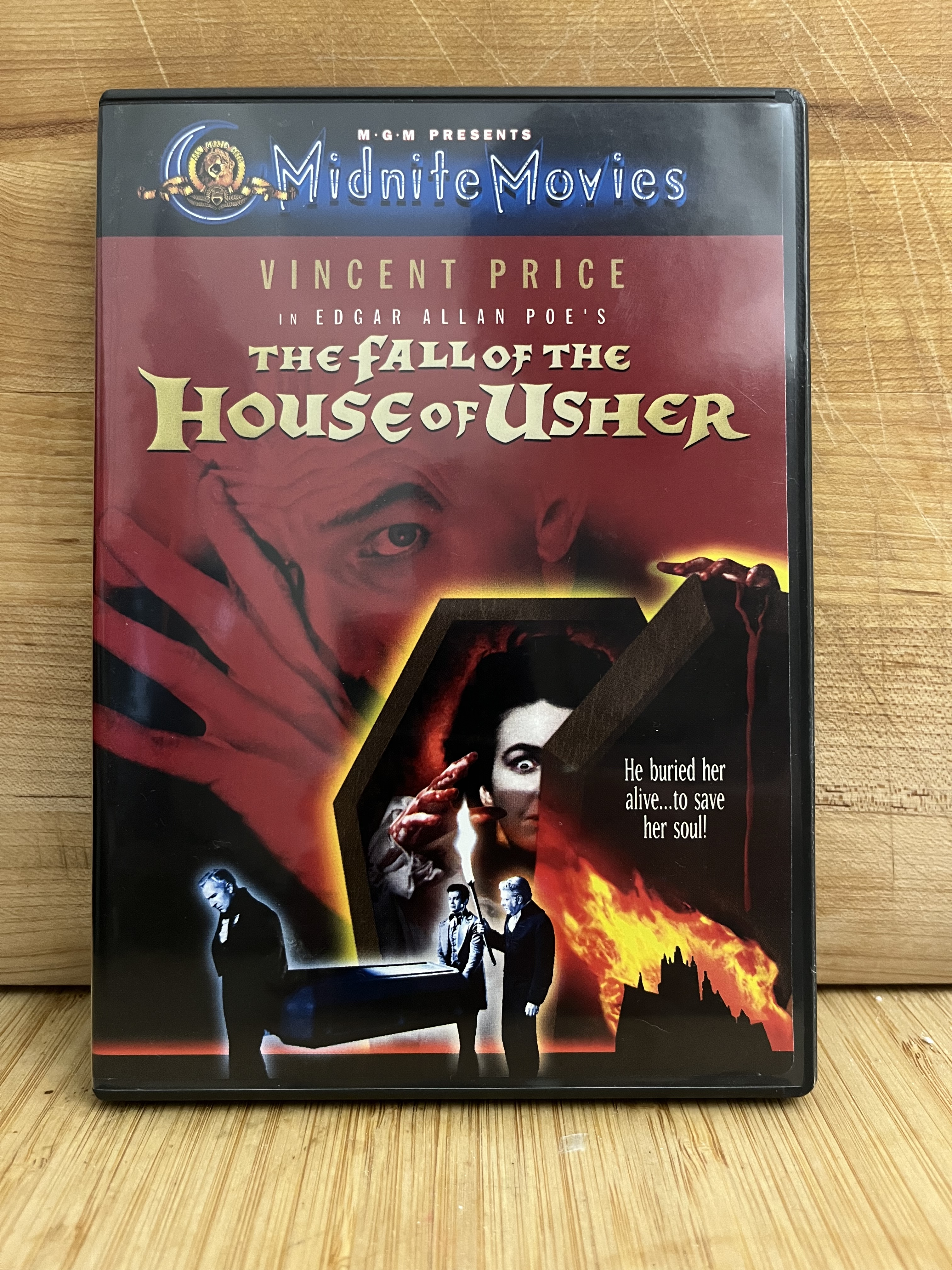
And here’s a picture of my MGM “Midnite Movies” DVD edition of the latter:
The Leopard Man is also currently streaming on Watch TCM until November 19 and is available for rental and purchase on a variety of platforms, while House of Usher can be rented and purchase on Apple TV+.
This month’s beverage pairing was admittedly inspired primarily by The Leopard Man‘s title, but although the Lion’s Tale would almost certainly be too spicy for the delicate palate of Vincent Price’s Roderick Usher (as Paul Clarke notes in The Cocktail Chronicles, where the recipe we use comes from, a little bit of St. Elizabeth Allspice Dram goes a long way), its bold pumpkin pie spice flavors make it a perfect match for the film he appears in and other scary season fare. Here’s how you make it:
Shake all ingredients with ice and strain into a chilled cocktail glass.
Clarke garnishes this drink with a lime wheel, which is probably what I would do if I was making it during the summer, but in the fall we typically serve it unadorned as pictured above. In addition to its name, I was drawn to the Lion’s Tale right now because I’ve been itching to make a bourbon drink before my bottle of Evan Williams Single Barrel, far and away the best you can get at its price point, runs out. Without too many other ingredients to compete with, this is a great showcase for it. If you’re using a less full-bodied whiskey, consider employing a 2:1 simple syrup to counter the pungency of the lime juice and allspice liqueur.
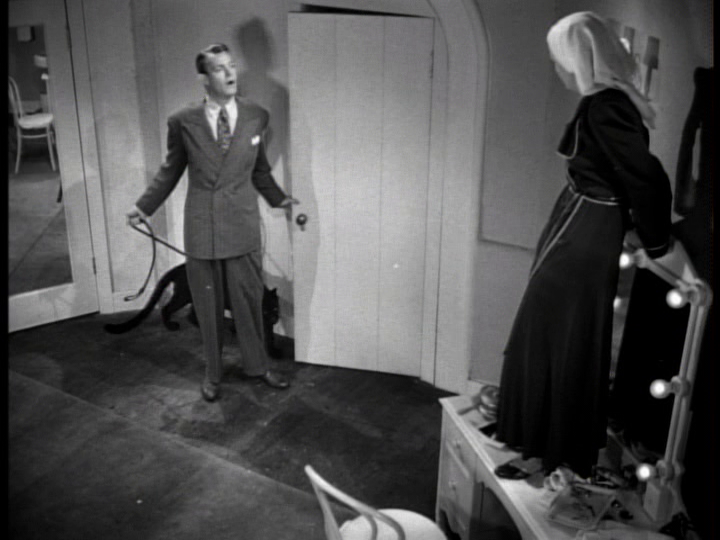
Both films featured in this post are about contagion, but neither involves a literal disease. In the case of The Leopard Man, it’s bad luck which is passed from character to character. The film begins with P.R. man Jerry Manning (Dennis O’Keefe) introducing his star client Kiki Walker (Jean Brooks) to his latest idea for drumming up publicity, a tame leopard:
At first Kiki isn’t impressed:
But then Manning explains that he envisioned Kiki making a grand entrance with the cat during the act of a rival performer named Clo-Clo (Margo):
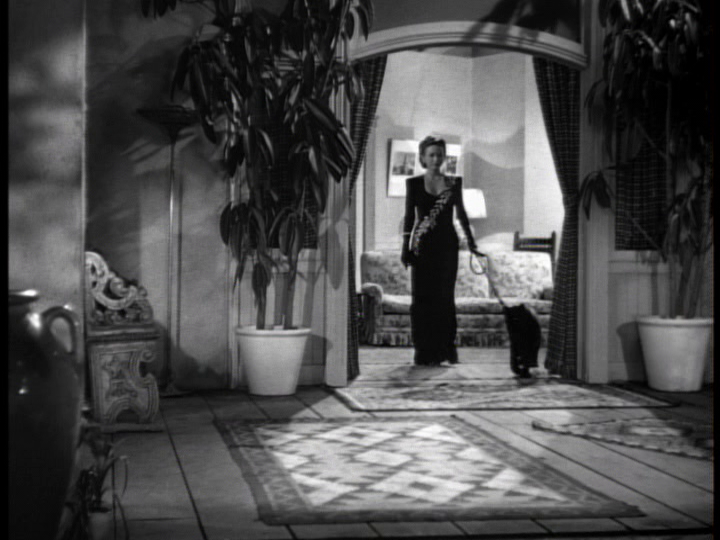
Kiki and the leopard do cut a striking figure together:
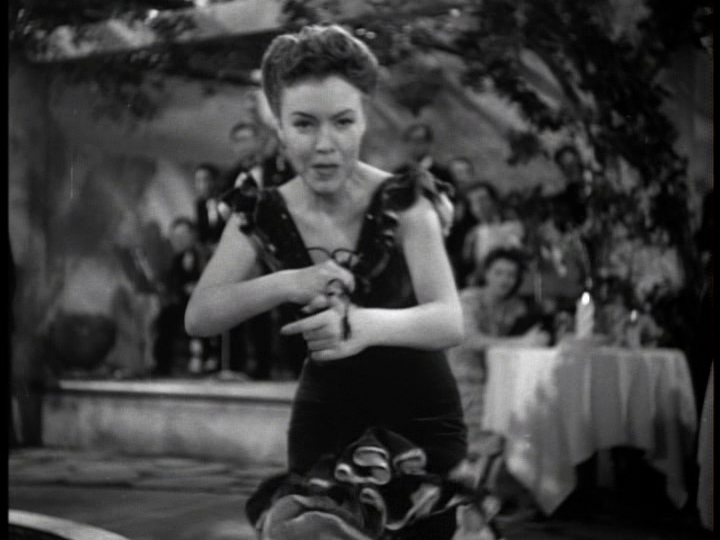
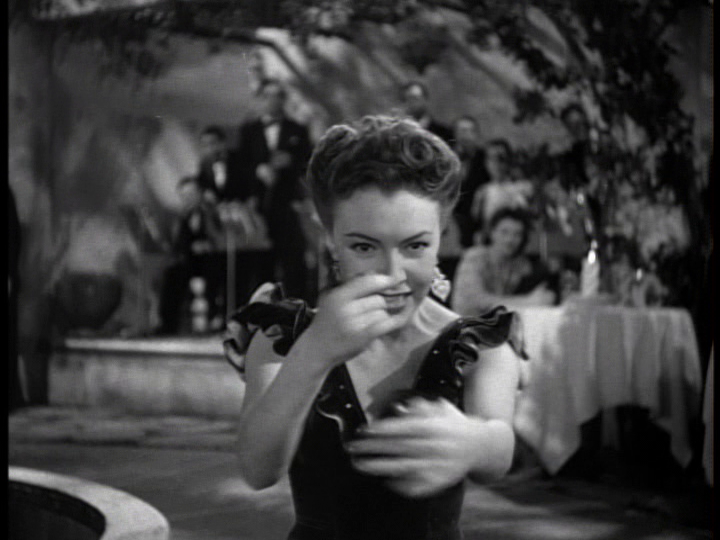
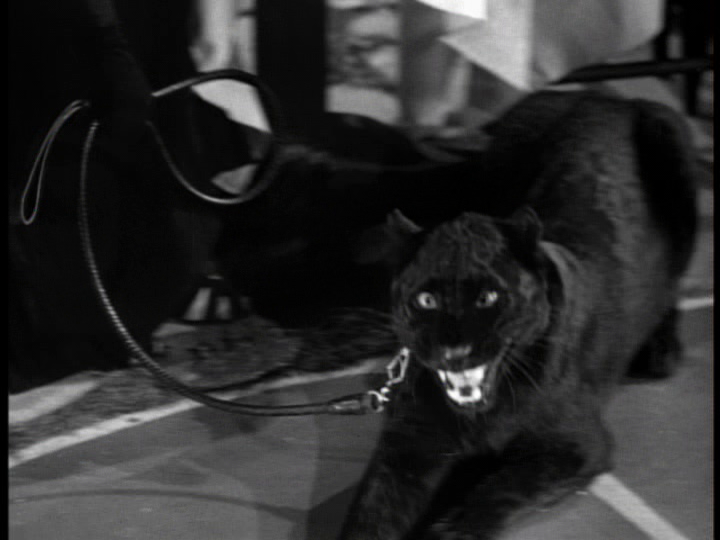
And initially the stunt achieves its desired affect of getting everyone’s attention; however, Clo-Clo takes exception to having the spotlight stolen from her, and deliberately frightens the leopard with her castanets in what interestingly appears to be a point-of-view shot from the perspective of the cat:
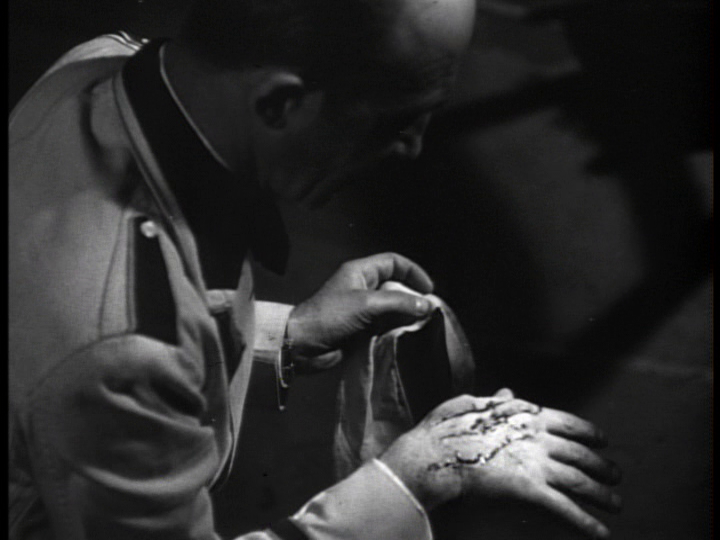
It recoils, then lunges away into the night, but not before scratching the hand of a waiter:
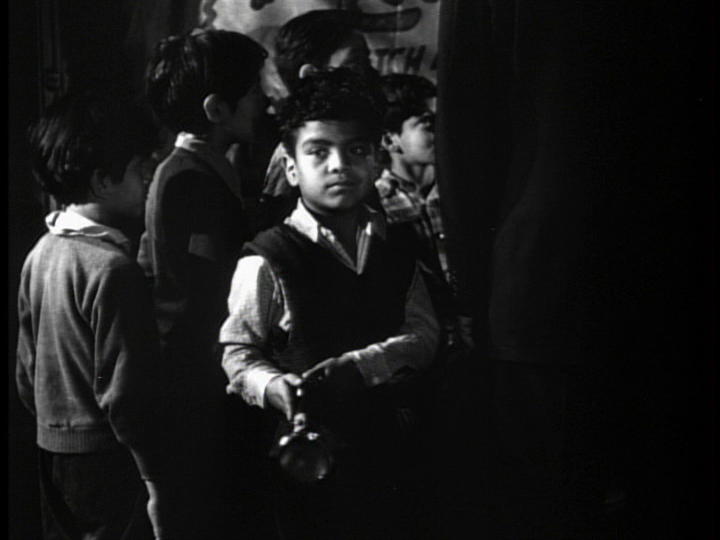
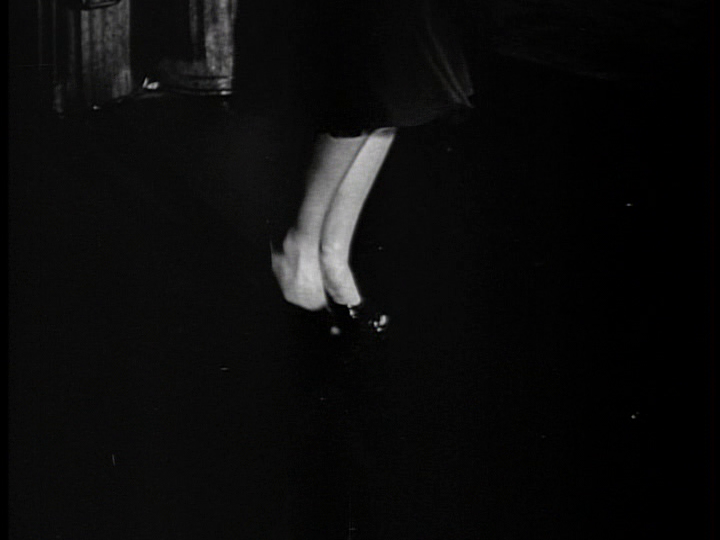
Later that evening everyone is looking for the escaped leopard. A boy shines a flashlight on Clo-Clo’s legs:
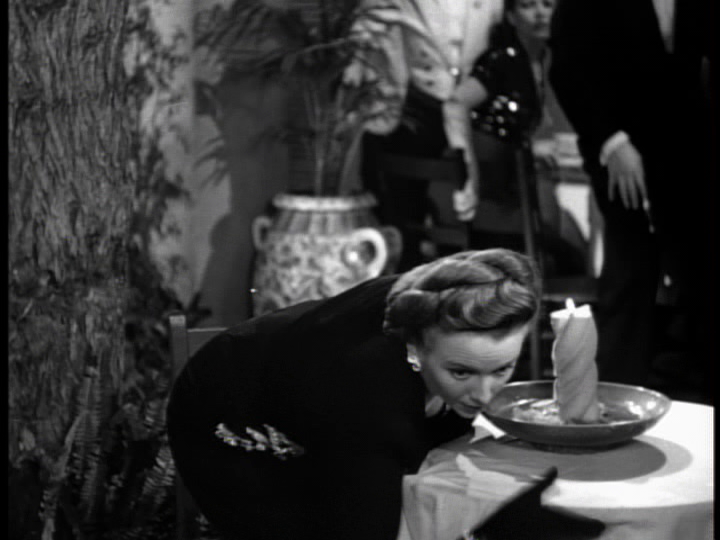
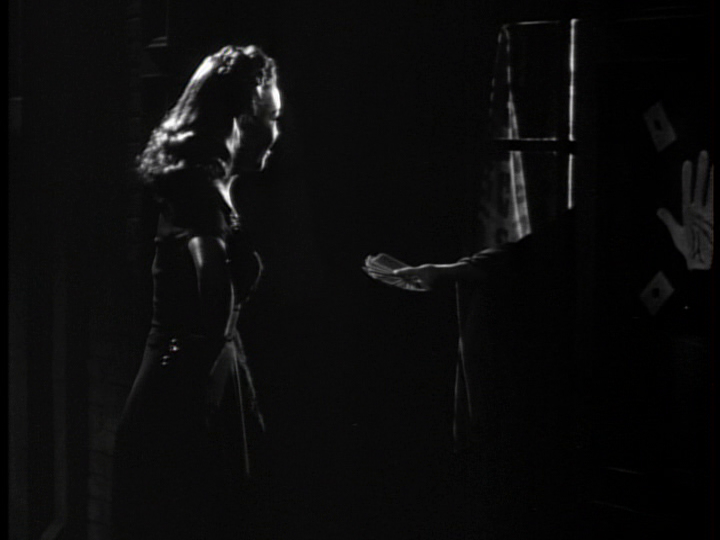
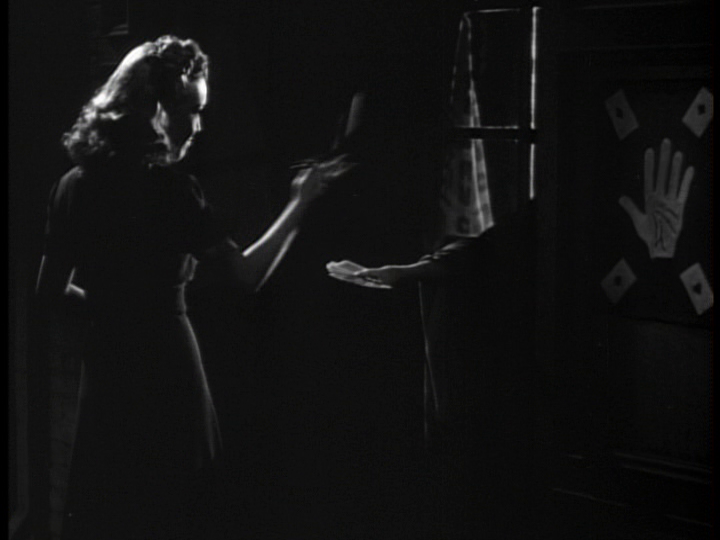
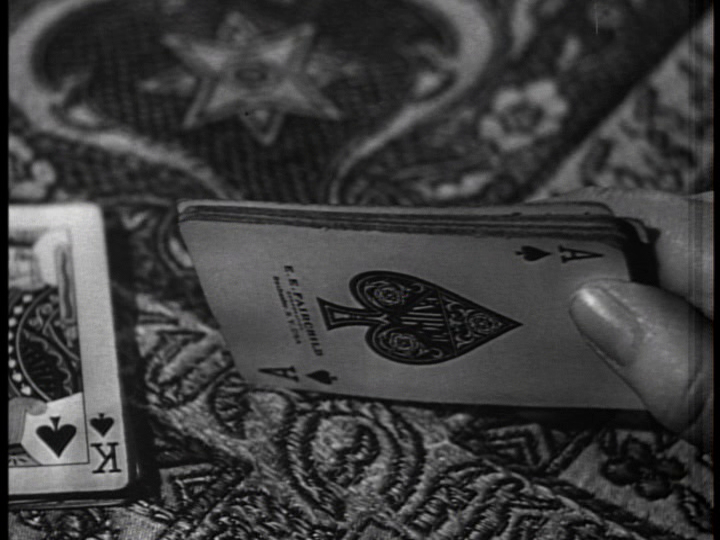
She stamps and the light goes out, but the camera stays with her as she walks through the streets. A fortune teller friend Maria (Isabel Jewell) calls out, “take a card, Clo-Clo, see what the night holds for you.”
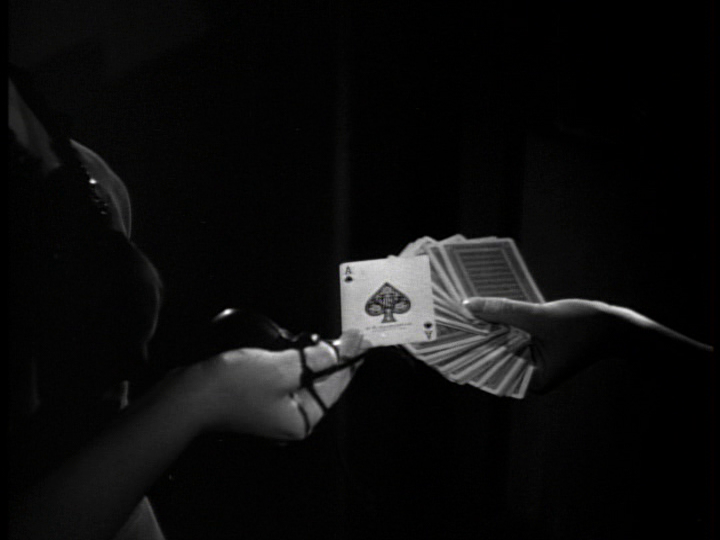
Her face tells us everything we need to know about the significance of the ace of spades she draws:
But she quickly recovers and flicks it away, calling “faker!” back over her shoulder:
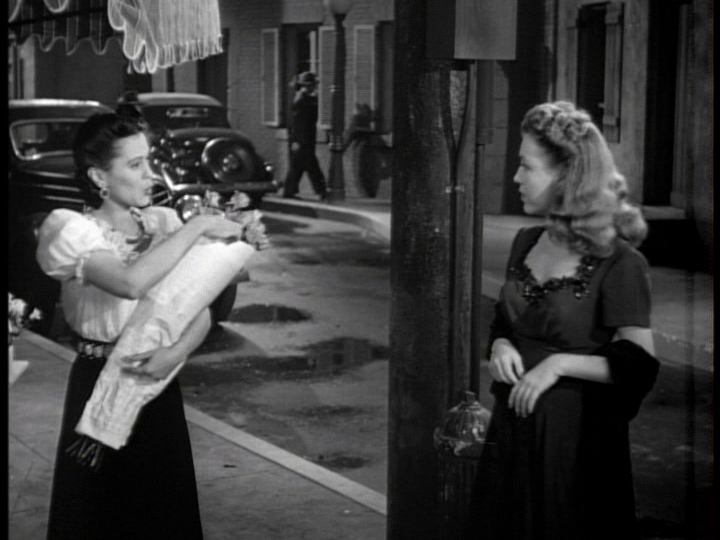
Clo-Clo greets people as she passes them and the camera stays with her until suddenly it doesn’t. “Hello, chiquita,” she says to a girl in a window, and with that the narrative torch has been passed:
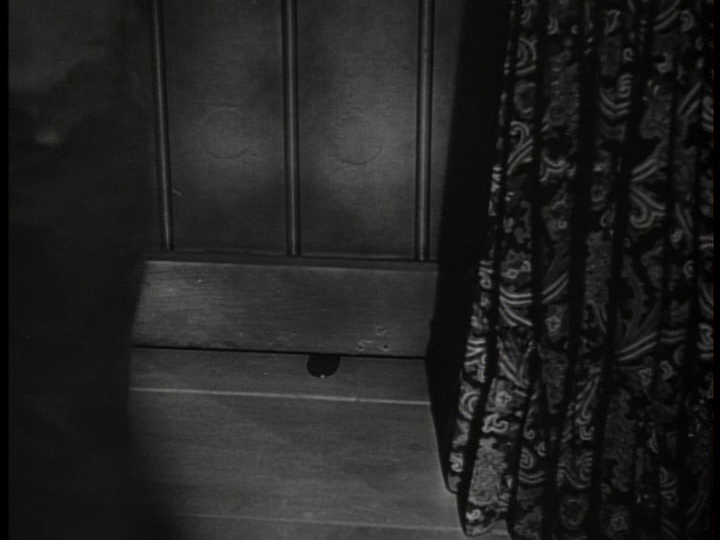
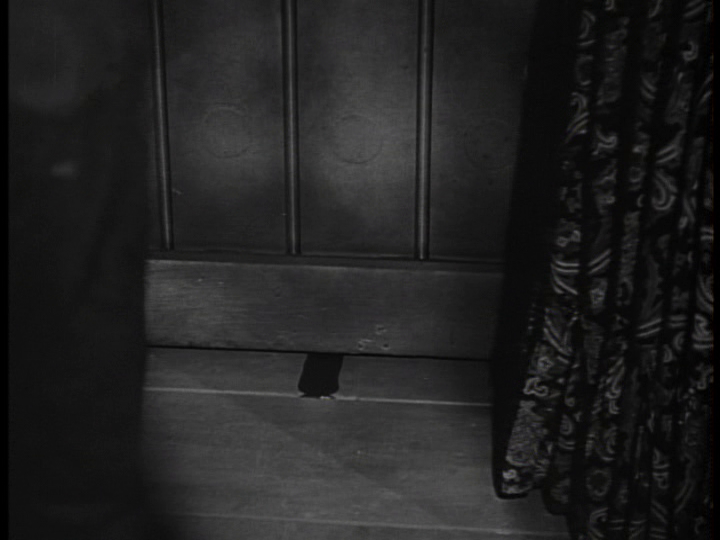
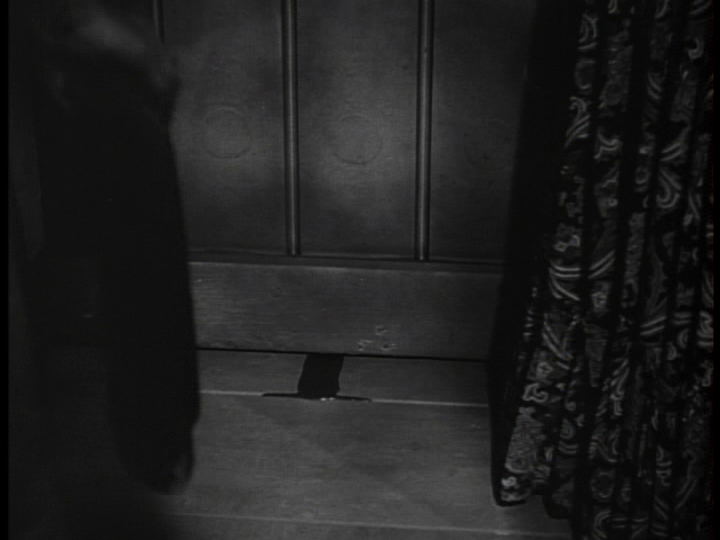
This is Teresa Delgado (Margaret Landry) and she is about to be sent on a nighttime errand to get cornmeal for the tortillas for her father’s dinner in a scene which lasts five full, harrowing minutes of screentime and ends with the unforgettable image of her blood seeping through the crack beneath her front door:
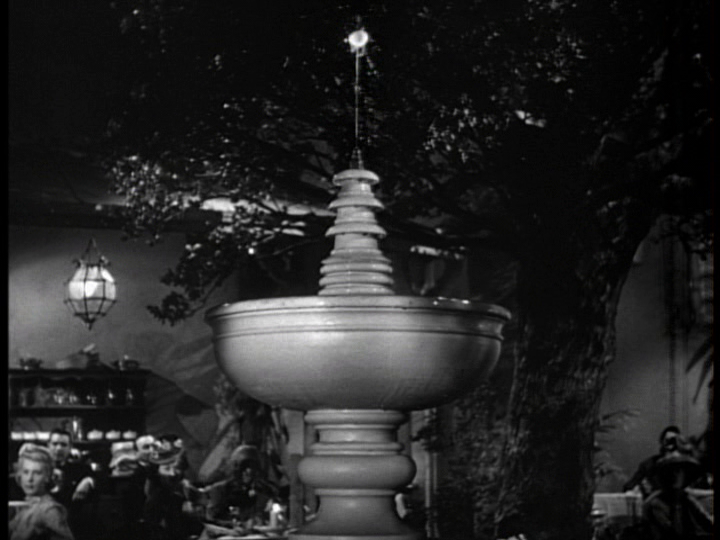
The film spends some time investing in exposition after Teresa’s funeral. A posse is formed to track down the animal that killed her. Maria reads Clo-Clo’s fortune again, but no matter how hard she tries to avoid it, the ace of spade keeps appearing. “What did they say before the bad card came up?” she asks. “You will meet a rich man and he will give you money,” Maria replies. Finally, Jerry introduces Kiki to a local museum curator named Galbraith (James Bell) who was on the posse with him. At dinner that night Galbraith gestures at a fountain with his pipe and says, “I’ve learned one thing about life. We’re a good deal like that ball dancing on the fountain. We know as little about the forces that move us and move the world around us as that empty ball does about the water that pushes it into the air, let’s it fall, and catches it again.”
The next scene picks Clo-Clo up again as she tries to sweet talk a flower seller into giving her a free rose. “My mistress, Señora Consuelo Contreras, does not have to beg for flowers. She won’t miss one,” says another customer (Fely Franquelli).
As was the case with Teresa Delgado, the camera stays with her, but this time only for awhile. Consuelo (Tula Parma), the girl she works for, actually turns out to be both our new subject and the next murder victim, and the moments just before her death feature another POV shot, we think showing a branch bending under the weight of the leopard that’s about to kill her:
Except that at the crime scene the next morning, Jerry offers a different theory: “it might not be a cat this time,” he suggests to a skeptical police chief (Ben Bard) and Galbraith.
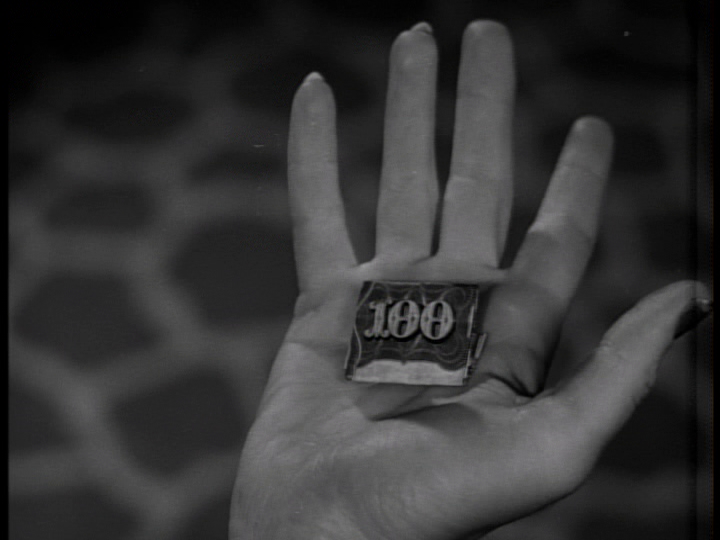
The second half of the film chronicles his efforts to prove his hunch correct. Clo-Clo receives $100 from the wealthy benefactor Maria saw in her future, but the death card is still after her and the scene after it appears one final time is her last.
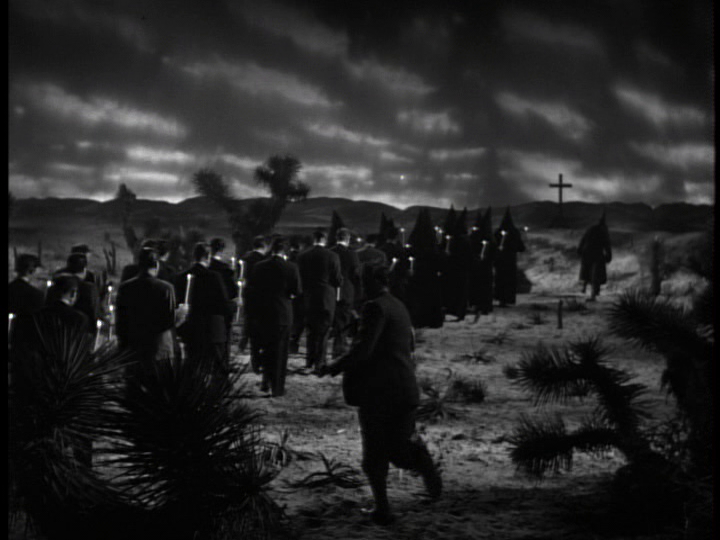
Everyone thinks she’s the leopard’s third victim except Jerry, who correctly interprets signs that Clo-Clo put lipstick on right before she was killed as evidence that her murderer was a man. When the skinned, week-old carcass of the cat is found shortly afterward in a canyon that Galbraith searched by himself earlier, he finally has a suspect. Kiki and Consuelo’s boyfriend Raoul (Richard Martin) help him successfully set a trap. Galbraith escapes, though, and flees into a procession that commemorates the slaughter of a peaceful village of Native Americans by Spanish conquistadores, which per J.P. Telotte links his crimes to that tragedy “to suggest a continuum of such inexplicable human horrors”:
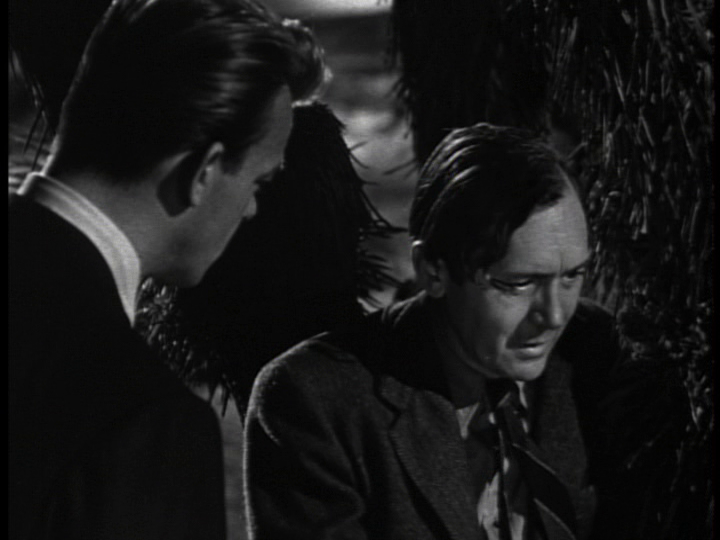
Jerry and Raoul quickly apprehend him and extract an explanation of sorts as they drag him away: “I didn’t want to kill, but I had to.”
Speaking specifically about Consuelo he continues, “I looked down. In the darkness I saw her white face. The eyes full of fear. Fear! That was it. The little frail body, the soft skin. And then, she screamed.” Suddenly a shot rings out and Galbraith falls dead, shot by Raoul. As Telotte notes, this is a superficially classic resolution: “The publicity agent-detective has played his hunch and unraveled a murder mystery; the killer has confessed and is killed in retribution.” Except that this isn’t how the movie ends. The final images are instead of Jerry and Kiki walking away as Robles informs Raoul that he will have to stand trial for Galbraith’s death in the background:
The parting reminder that Raoul must be punished because “he too bears that murderous potential, a dark and unpredictable possibility that society, for its own preservation, has to repress” leaves us “with a sense that there is no real ending yet in sight, certainly no true consolation here for the victims’ families, and no satisfying feeling that things have at least been ‘made right,’ just a disturbing residue from these terrible events.”
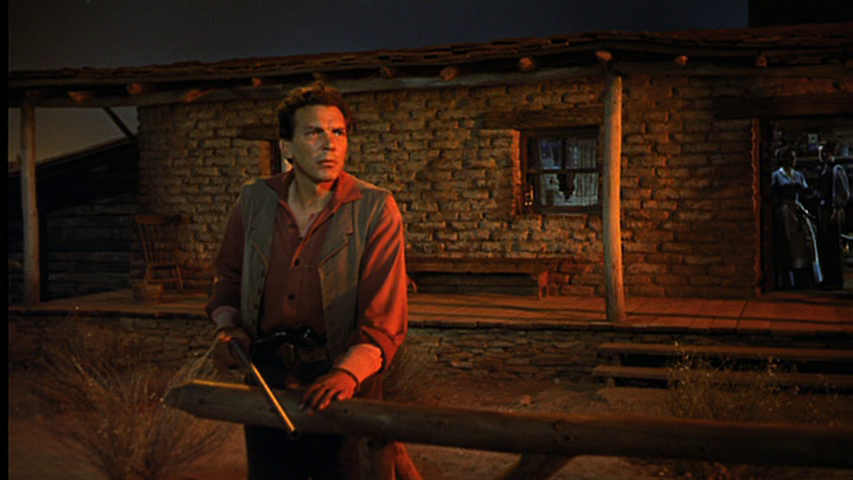
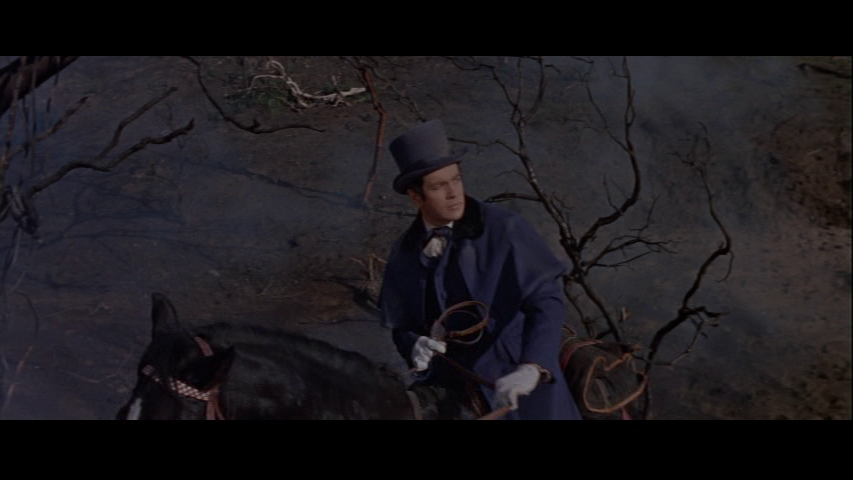
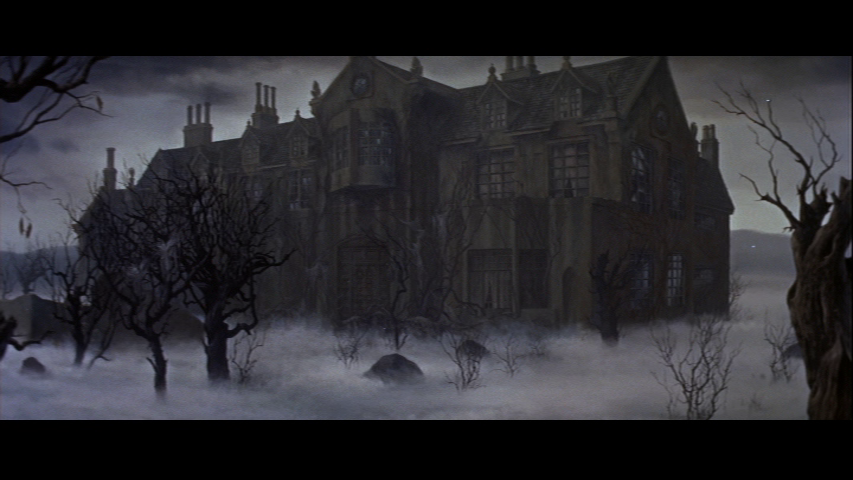
Chris Fujiwara, writing in his monograph about director Jacques Tourneur, suggests that The Leopard Man‘s disturbing effect derives from the fact that the doom which circulates from character to character represents “a debt that no one owes and that is owed to no one but that nonetheless insists on being paid.” There is no such doubt about who must pay the bills in House of Usher, at least not in the mind of the last male heir of the titular family. He lives in a mansion which we encounter at the beginning of the film as Mark Damon’s Philip Winthrop rides up to it through a desolate landscape that director Roger Corman explains in his autobiography How I Made a Hundred Movies in Hollywood and Never Lost a Dime he opportunistically shot following a forest fire:
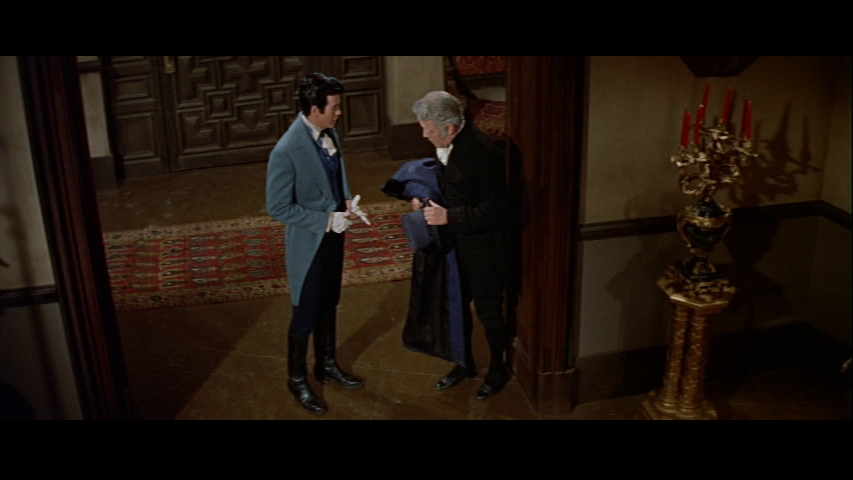
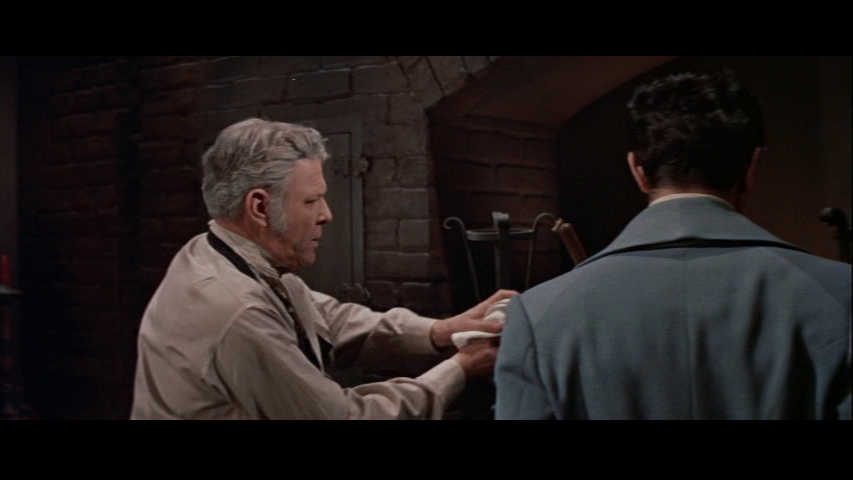
He is admitted inside by a servant named Bristol (Harry Ellerbe), who cryptically asks him to remove his boots in a high-angle shot which almost seems like it’s from the house’s perspective:
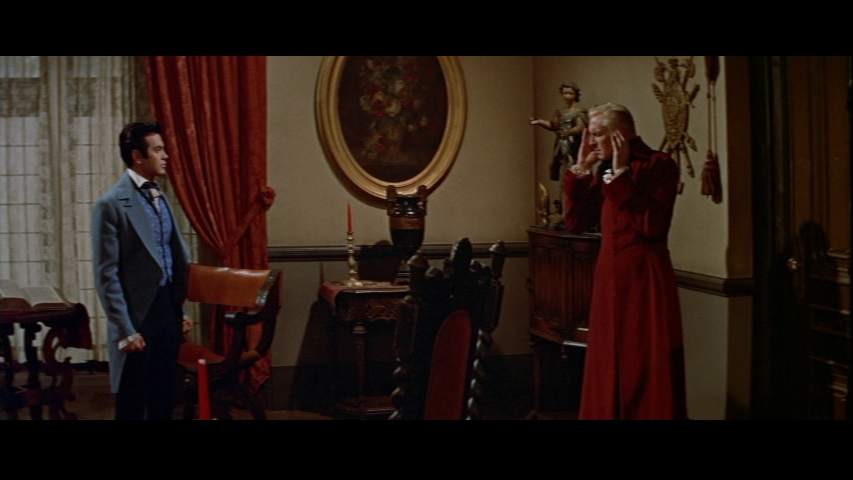
We learn why in the next scene. Roderick, who is none too pleased by Philip’s presence, is afflicted with hypersensitive hearing: “sounds of any exaggerated degree cut into my brain like knives,” he explains.
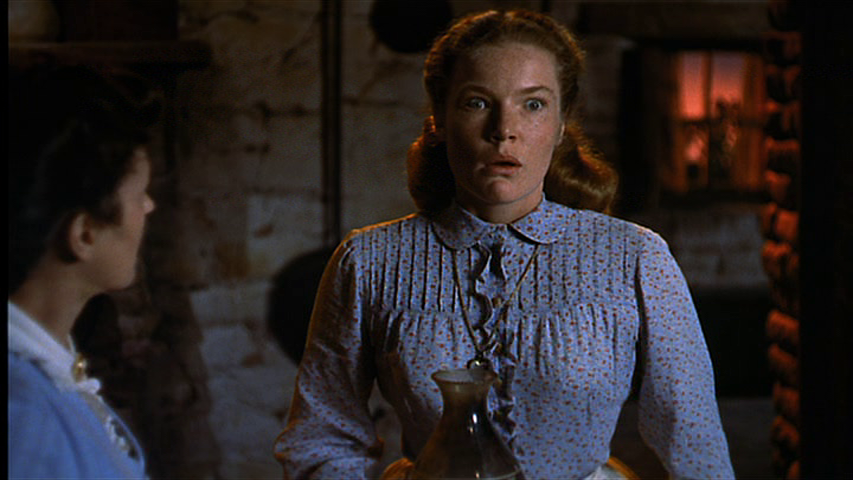
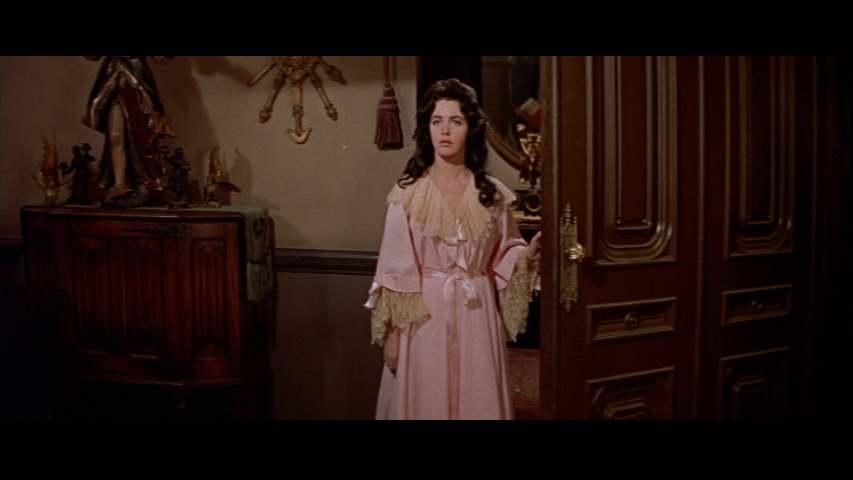
Roderick orders Philip to leave, but Philip informs him that he isn’t going anywhere without his fiancée Madeline (Myrna Fahey). She is supposedly bedridden, but appears in the room moments later:
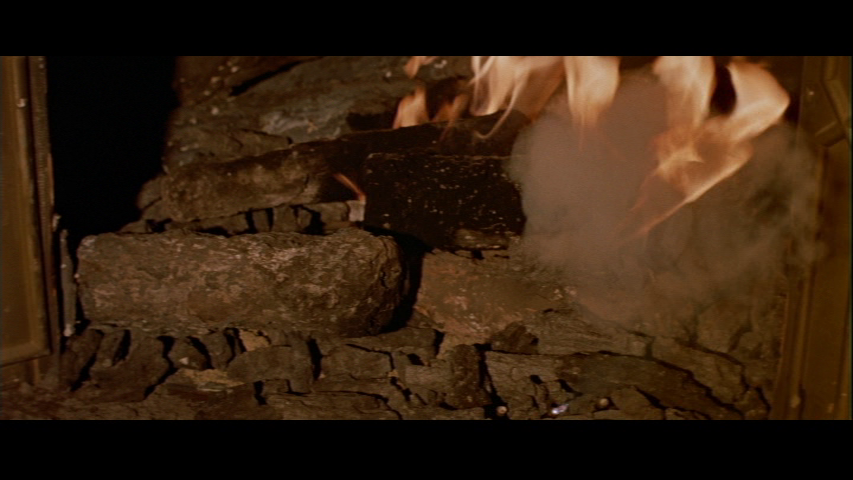
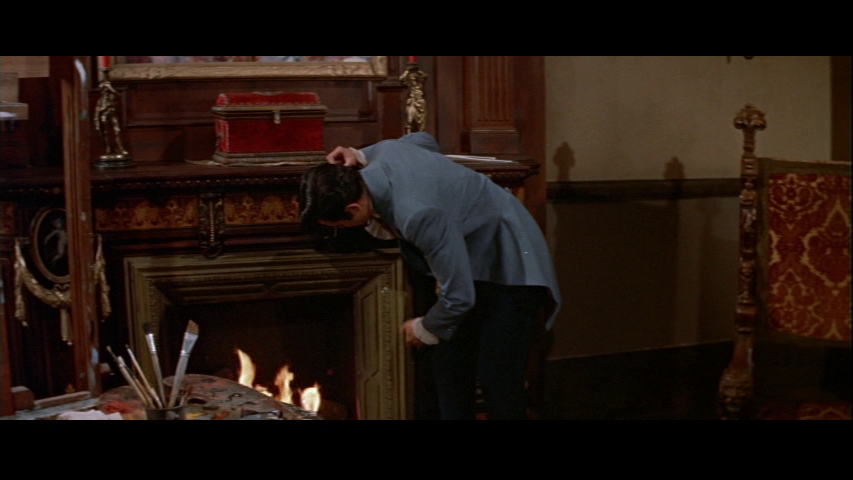
And that’s basically the film’s entire plot! Roderick reluctantly agrees to let Philip stay and leads Madeline back to bed. While they’re gone coals jump out of the fireplace and singe Philip’s pants:
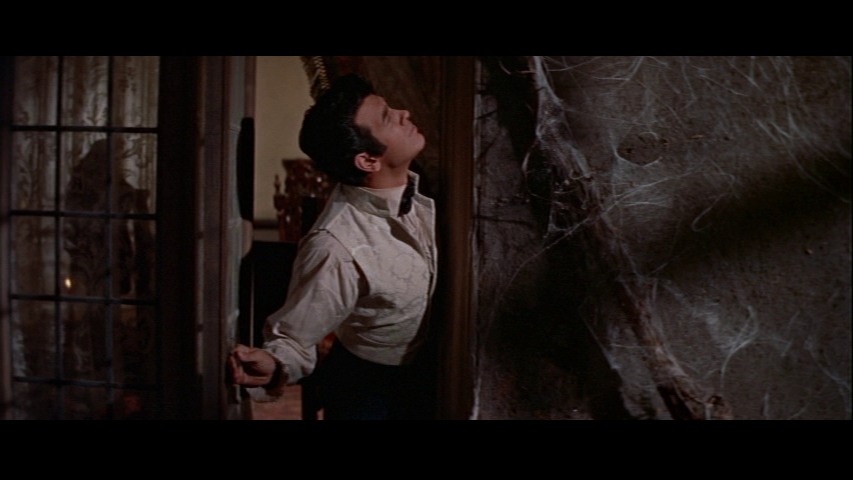
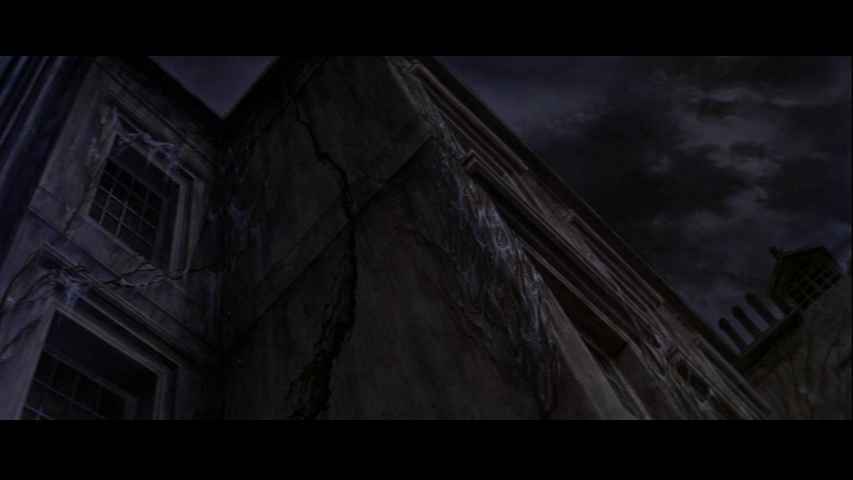
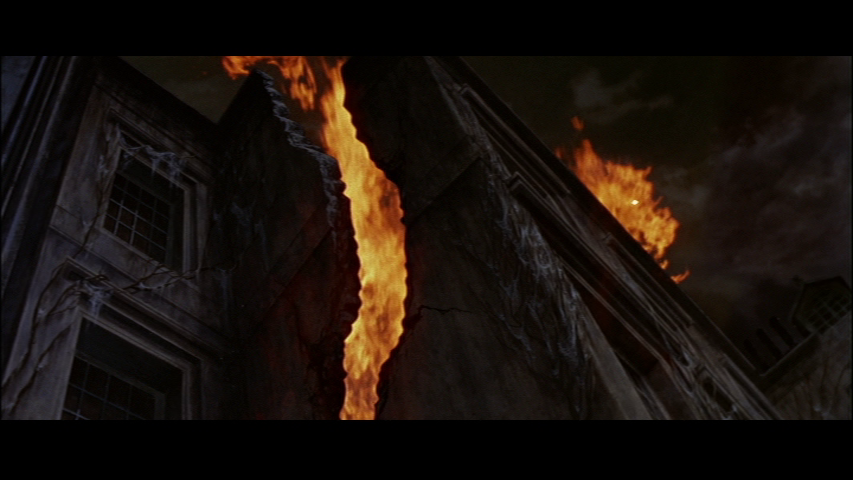
That evening the house trembles, and looking out the window Philip spies a crack running its entire length:
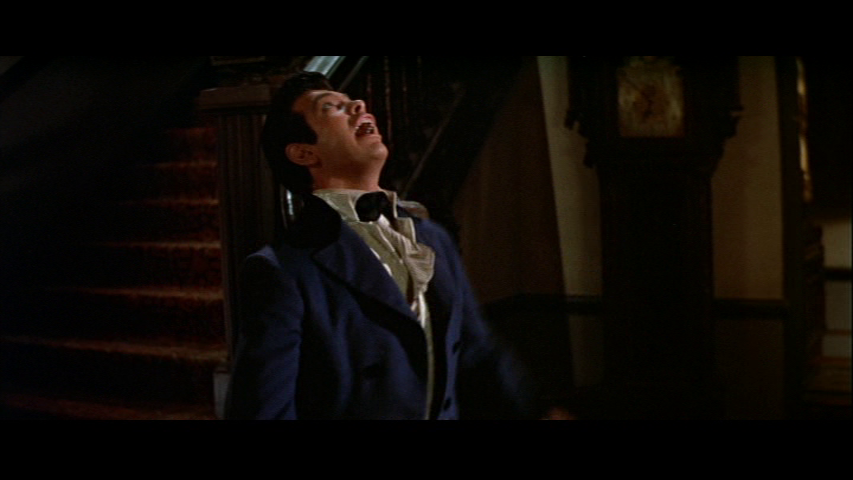
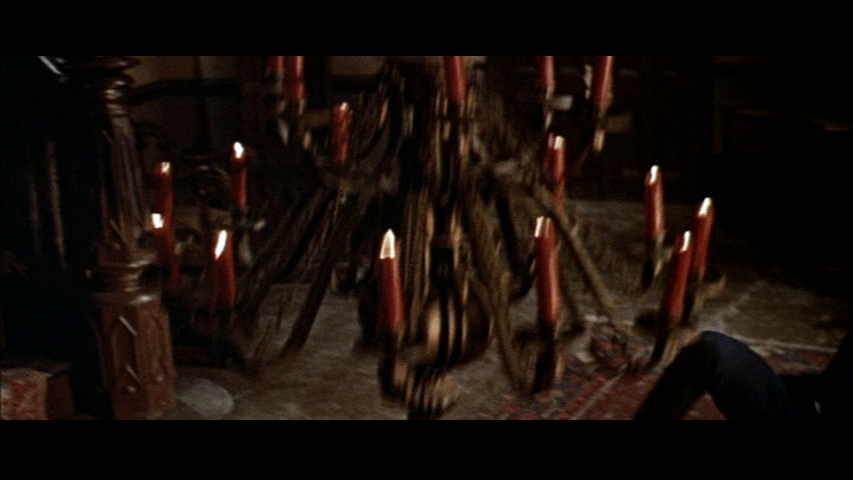
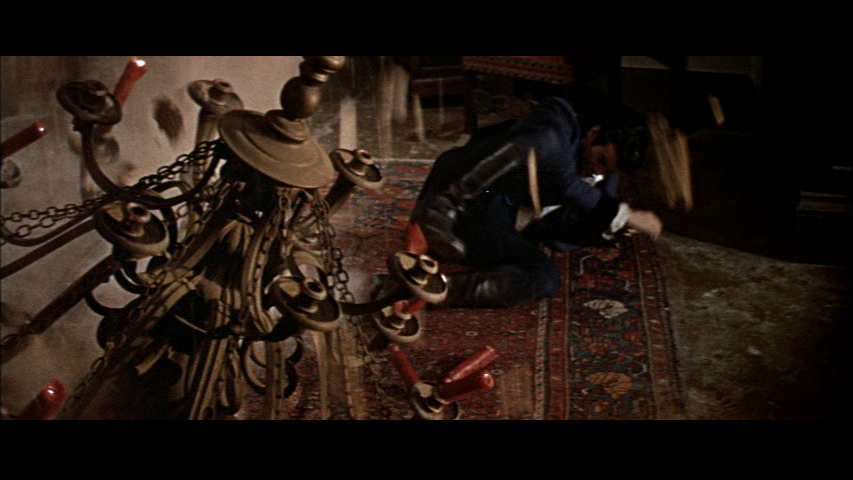
One his way down to dinner a few minutes later, a chandelier falls from the ceiling and misses him by mere inches:
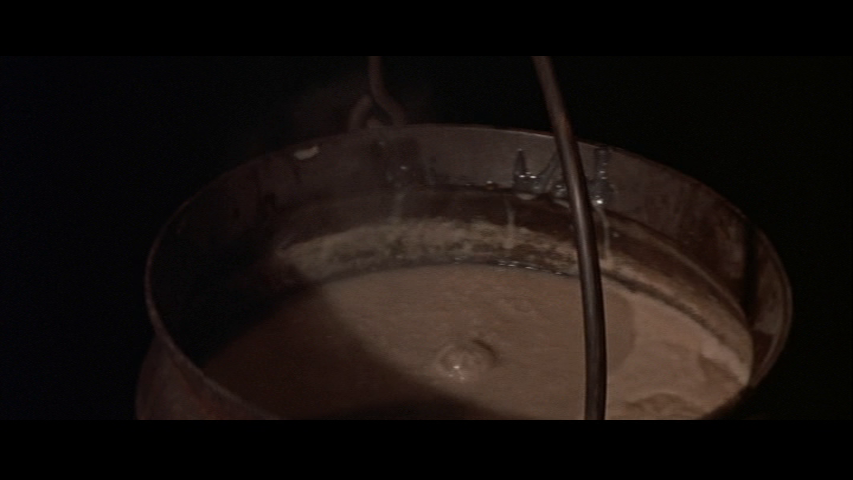
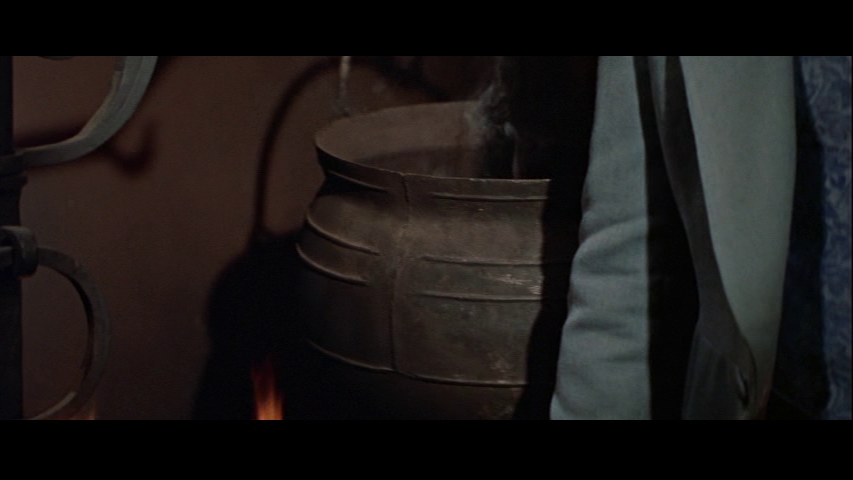
The next morning Philip visits the kitchen and says he wants to take Madeline’s breakfast to her. A cauldron of gruel, which per Bristol “is the most she’s ever eaten in the morning,” edges ever closer to Philip while they talk, but luckily Bristol notices before it burns him:
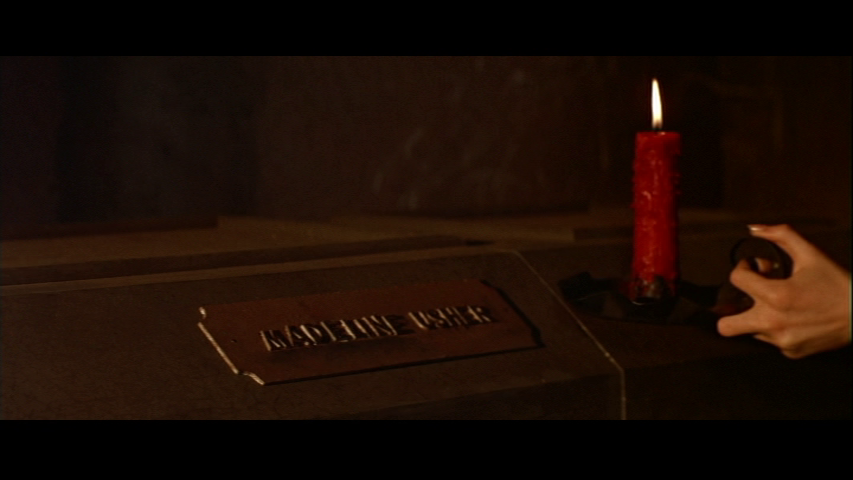
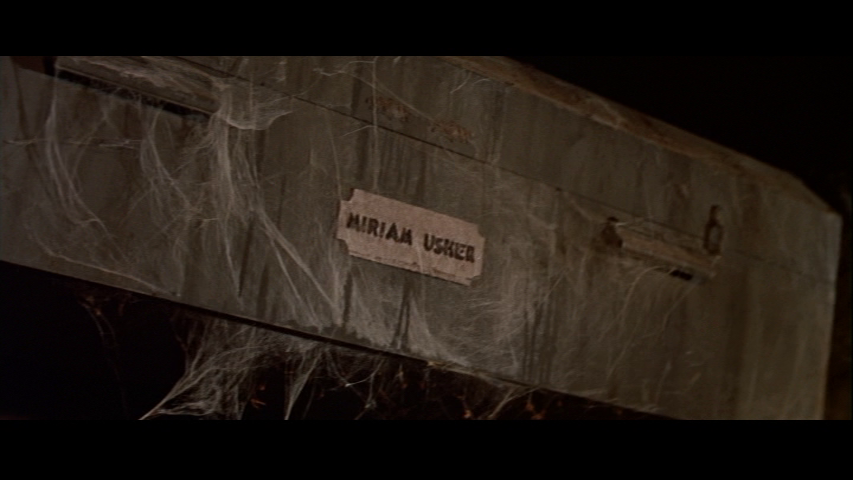
Up in Madeline’s room Philip tries to persuade her to leave with him. “Perhaps you’ll feel differently after you’ve seen,” she says, and takes him downstairs to the family crypt. She shows him the coffins of her great-grandparents, grandparents, parents . . . and an empty one labeled “Madeline Usher.”
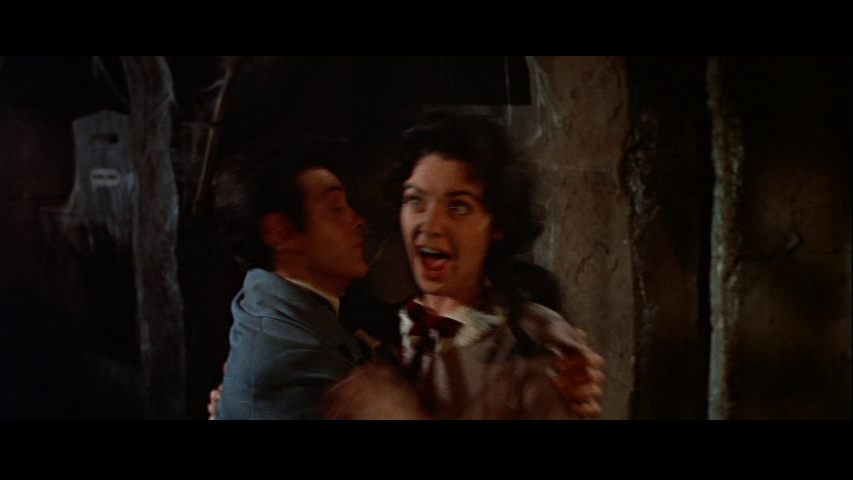
Suddenly, as they talk a coffin tumbles down nearly on top of them:
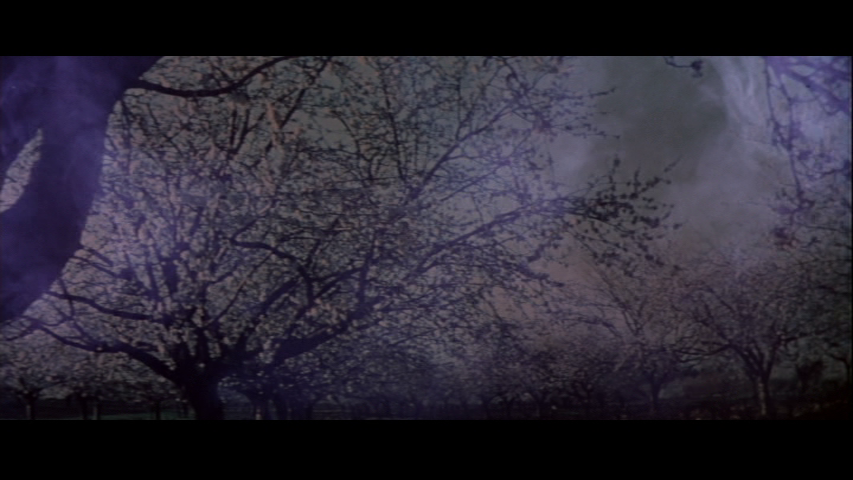
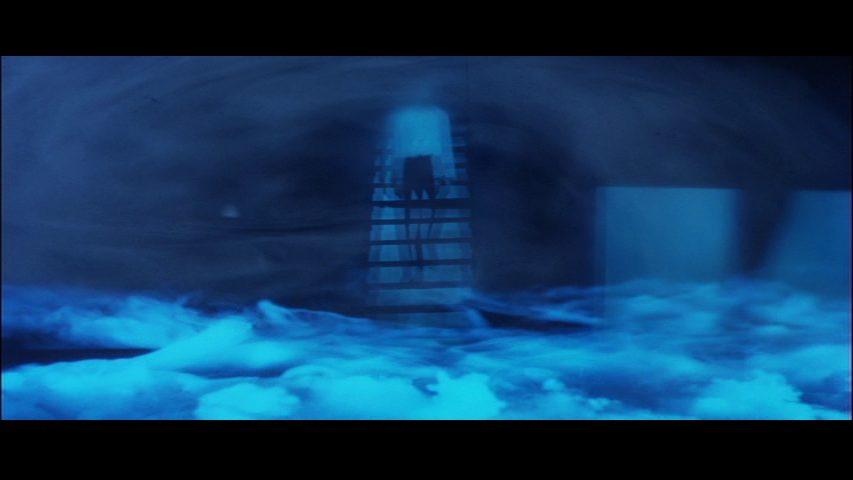
“I think you still do not understand,” Roderick tells Philip in the aftermath of this incident, “and I think it’s time that you did.” They repair to the balcony, where Roderick explains that the land around the house once was fertile, which is depicted through an effectively haunting camera effect:
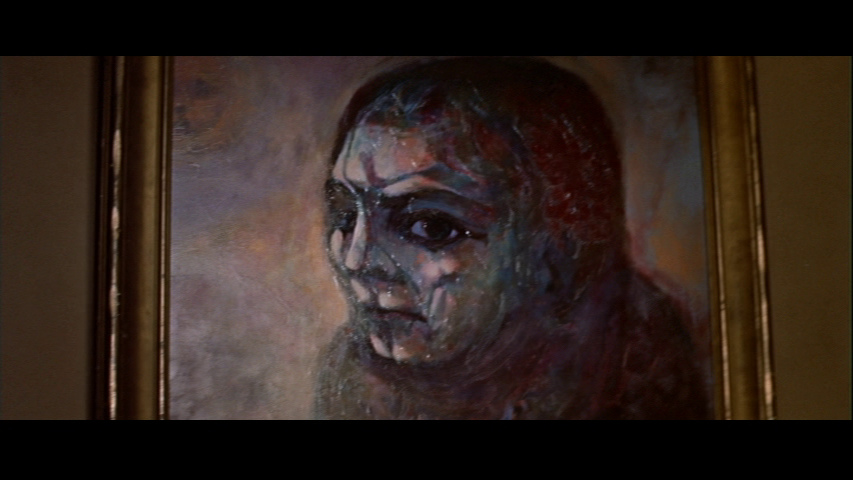
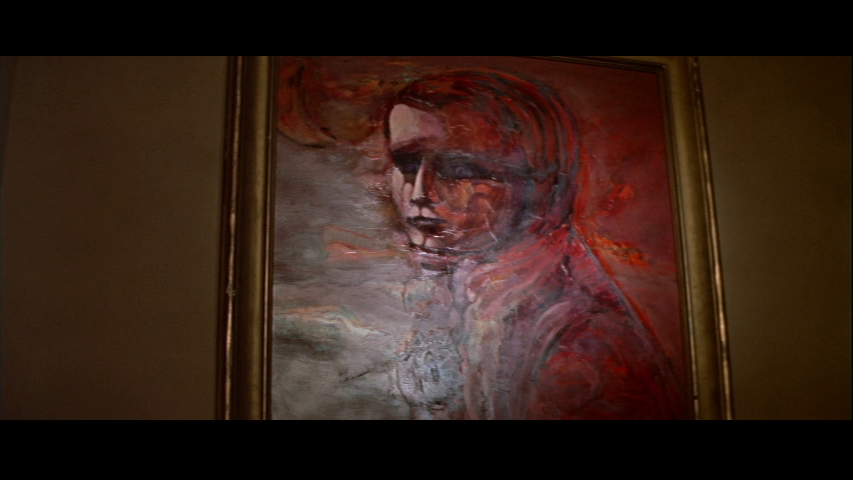
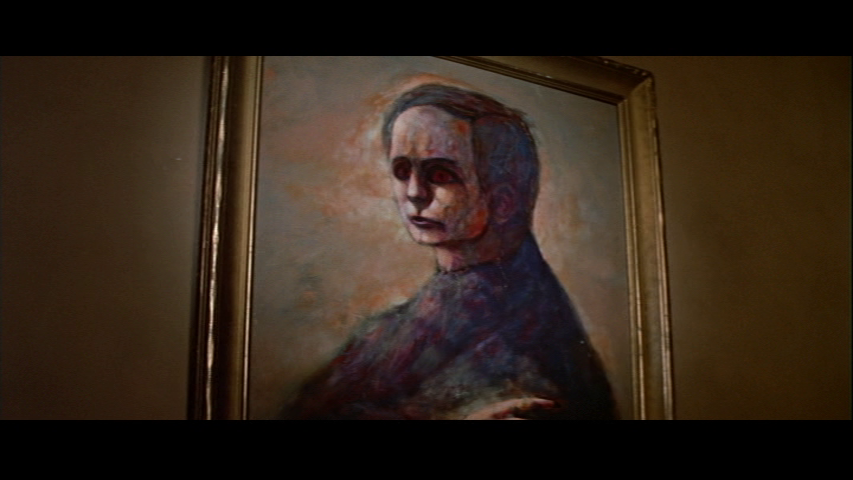
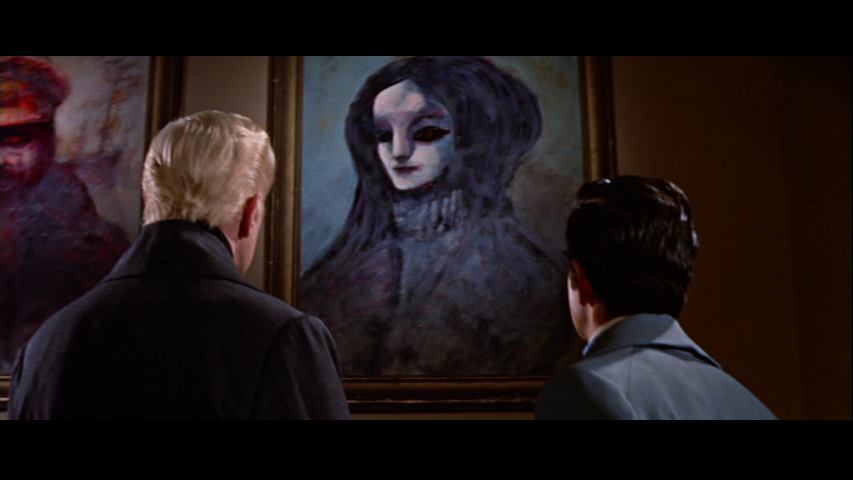
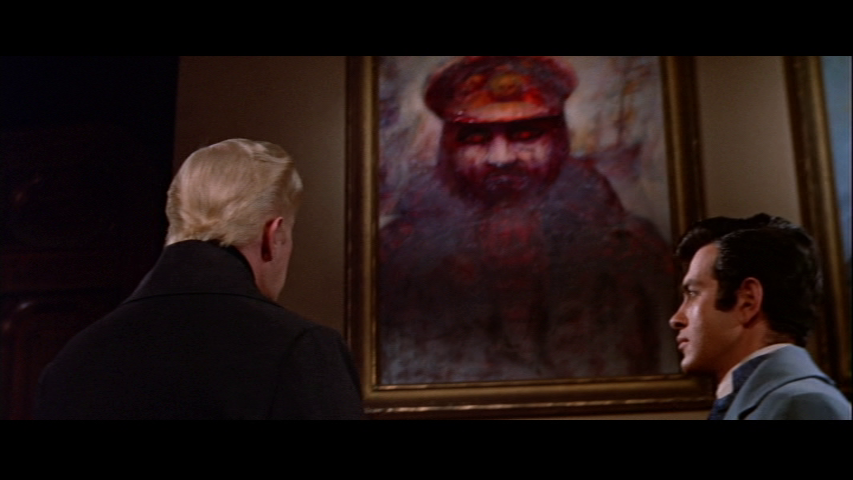
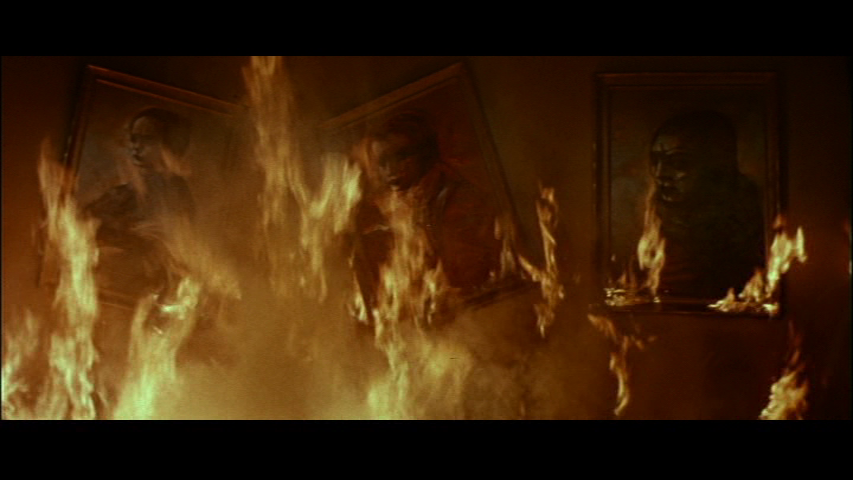
Then they go back inside for my favorite scene, a history of the Usher line accompanied by close-ups of each family member’s anachronistically modern portraits and a list of their crimes. Anthony Usher was a “thief, usurer, merchant of flesh” and Bernard Usher was a “swindler, forger, jewel thief, drug addict.”
Francis Usher was a “professional assassin,” while Vivian Usher was a “blackmailer, harlot, murderess. She died in a madhouse.” Finally, Captain David Usher is identified as a “smuggler, slave trader, mass murderer.”
At the conclusion of the tour, Roderick shares the thesis which governs his life:
This house is centuries old. It was brought here from England. And with it every evil rooted in its stones. Evil is not just a word. It is reality. Like any living thing it can be created and was created by these people. The history of the Ushers is a history of savage degradations. First in England, and then in New England. And always in this house. Always in this house. Born of evil which feels, it is no illusion. For hundreds of years, foul thoughts and foul deeds have been committed within its walls. The house itself is evil now.
In an interview with Lawrence French, Corman suggests that the fictional painters of these portraits (which in real life were created by artist Burt Schoenberg) “may have been picking up the distortion from the evil in the minds of the people he was painting.” This would be another example of transmissibility, but I like My Loving Wife’s explanation that they are a creation of the house better, especially since it reinforces the claim Corman makes in How I Made a Hundred Movies that in this film “the house is the monster.” Consider this exchange between Roderick and an incredulous Philip from the same scene:
RODERICK: Mr. Winthrop, do you think those coals jumping from the fire onto you were an accident? Do you think that chandelier falling was an accident? Do you think that falling casket was an accident?
PHILIP: Are you trying to tell me that the house made those things happen?
RODERICK: Yes.
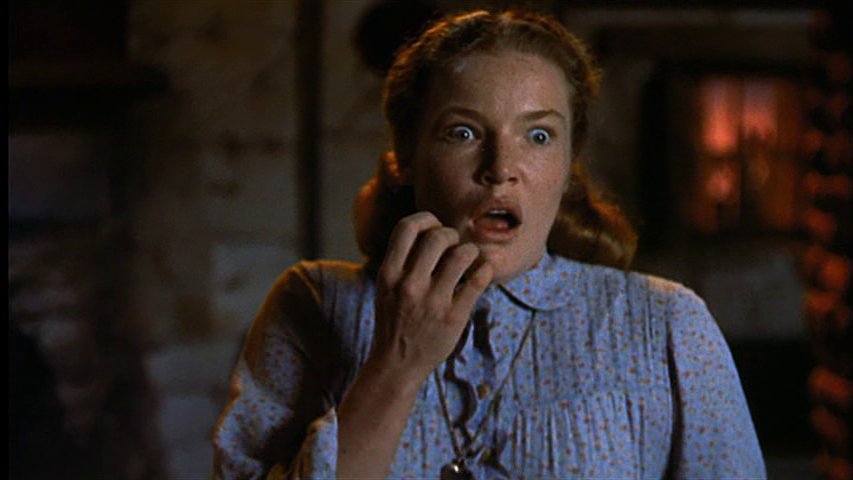
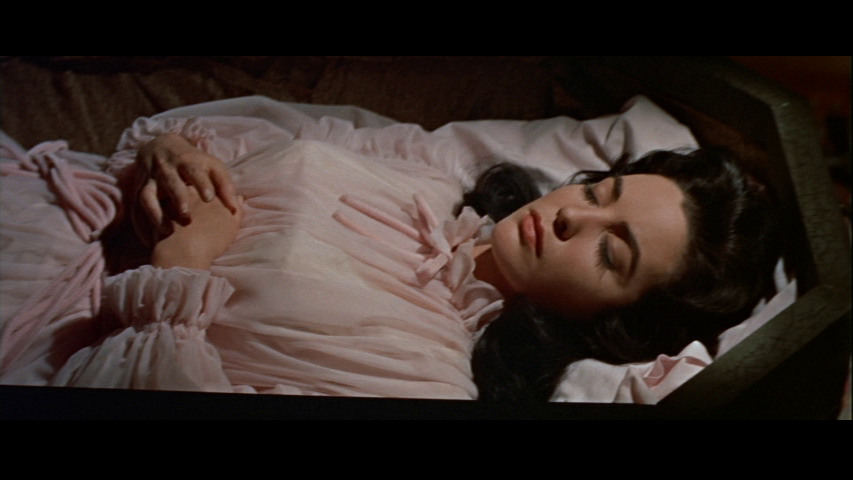
Philip is unconvinced, though, and shouts at Roderick, “I’ll tell you what’s evil in this house, sir: you!” He finally persuades Madeline to leave with him, but she dies before they can depart. Or so Philip thinks. We catch on before he does that all is not as it seems thanks to the twitch of a finger as she lies in her casket:
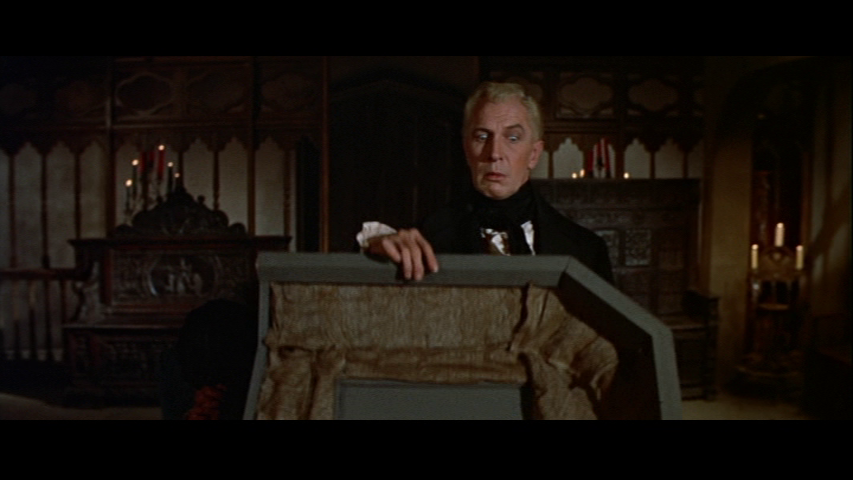
Philip doesn’t notice, but Roderick sure does, and he reacts exactly like you’d expect someone who just realized their beloved sister is actually alive to:
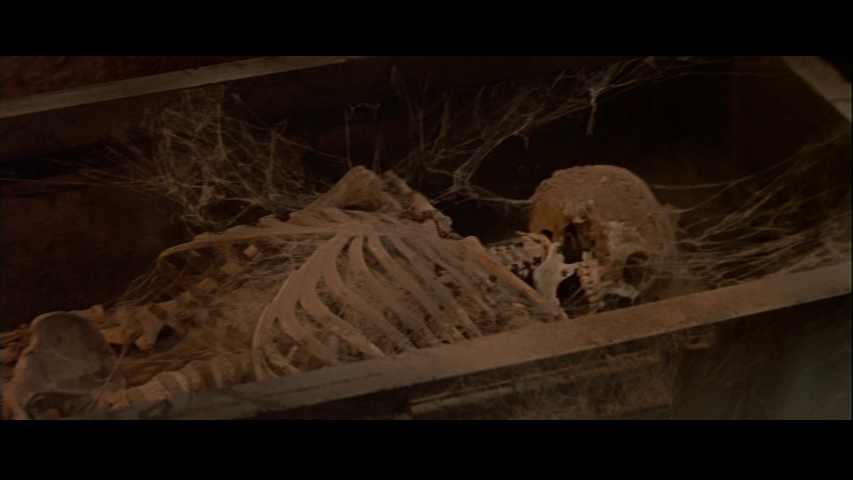
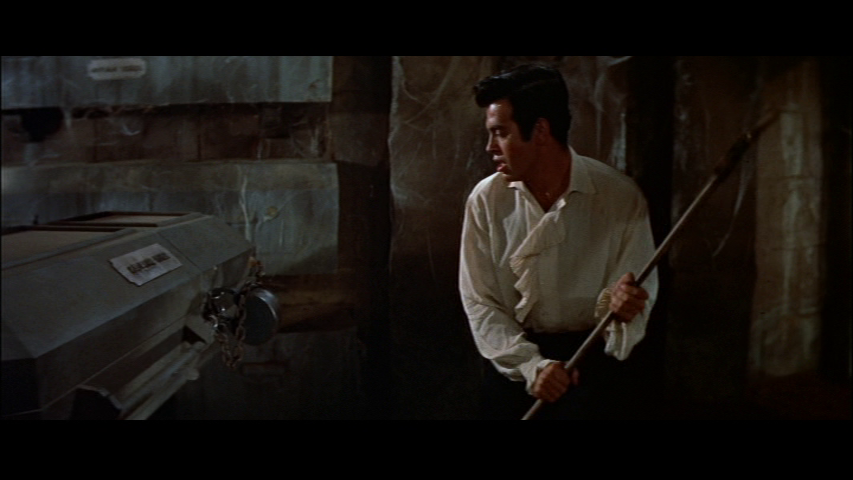
The next morning over coffee, Bristol accidentally lets it slip that Madeline was prone to catalepsies. Philip now suspects that they buried her alive, but when he breaks open her casket, it’s empty:
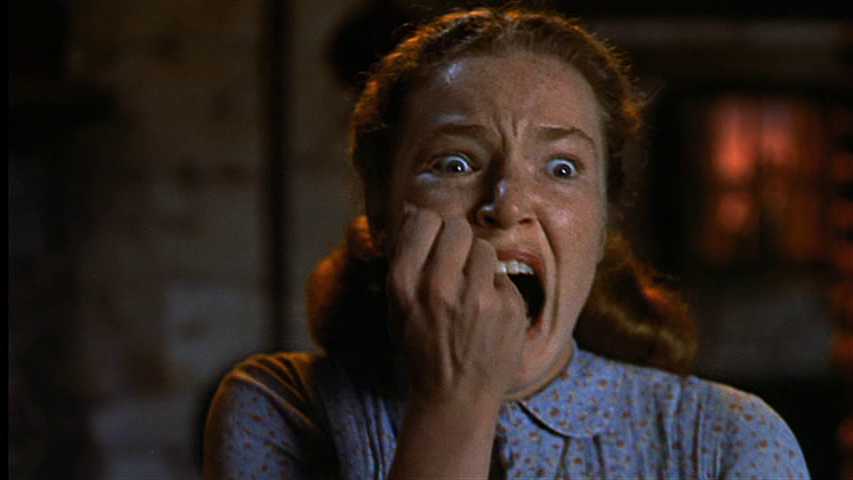
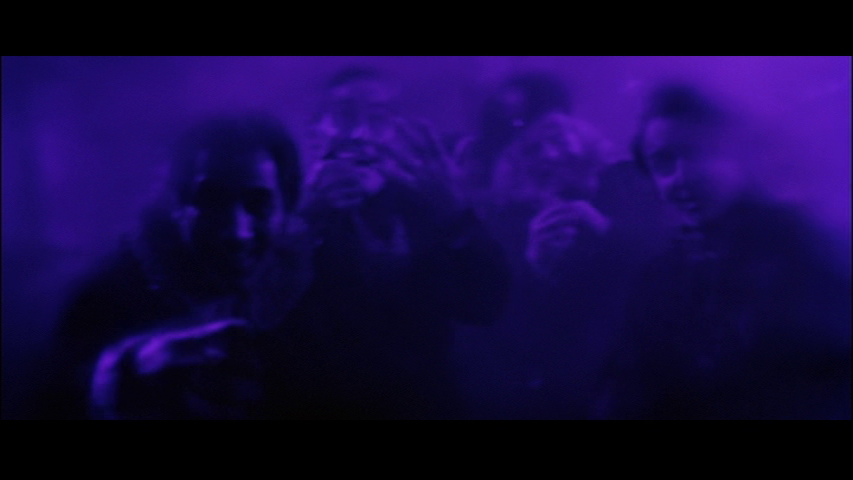
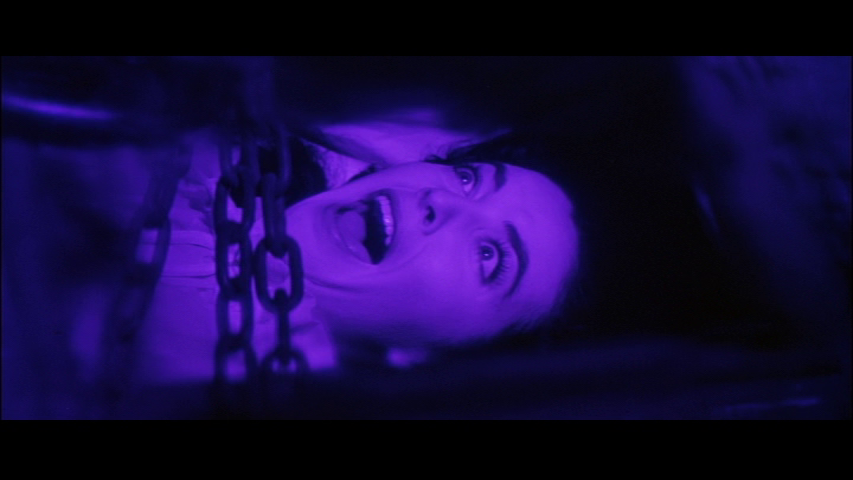
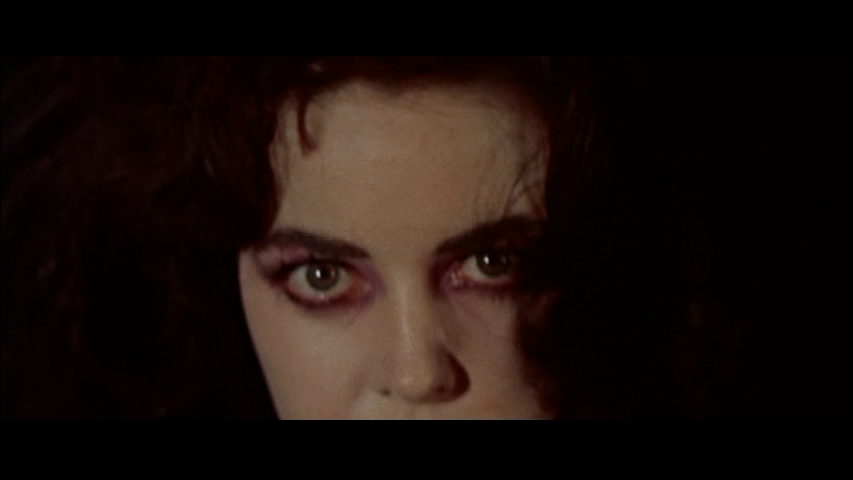
Things escalate quickly from here. Roderick won’t tell Philip where he has hidden Madeline’s body and Bristol doesn’t know. After a day of fruitless searching, Philip collapses into a tormented surrealist nightmare sequence featuring multiple generations of evil Ushers that ends with Madeline screaming:
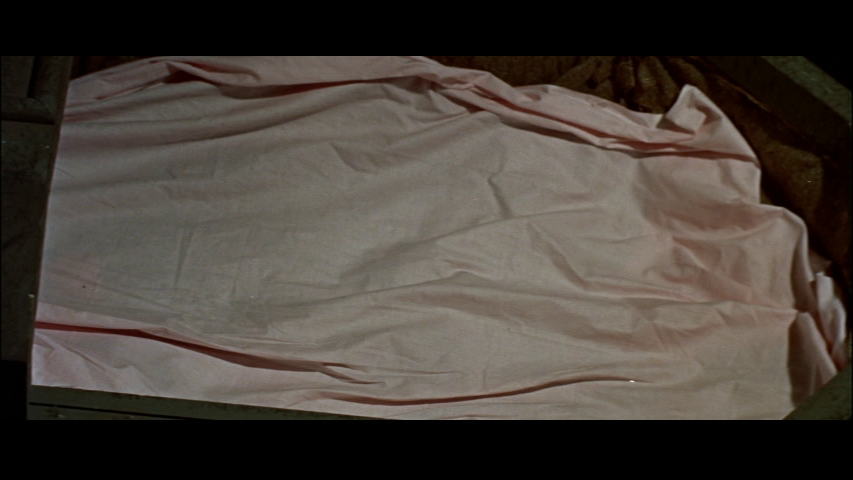
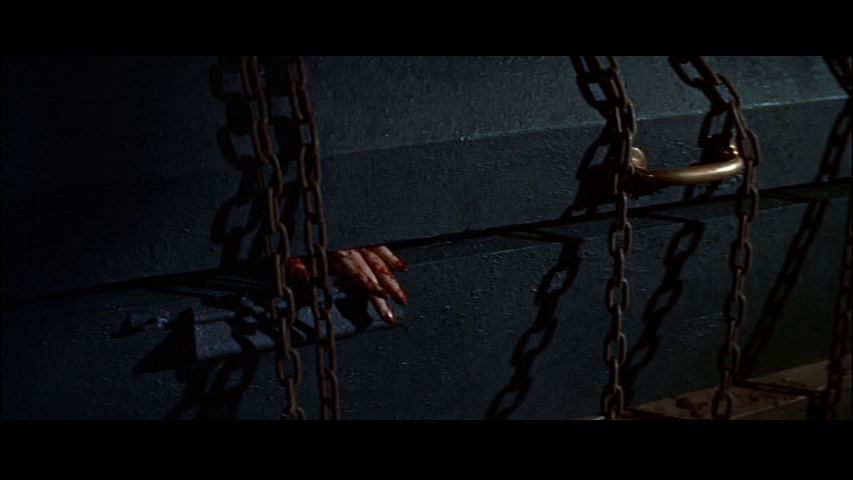
Upon awakening, he confronts Roderick again, who in the course of their conversation reveals that he is tortured by the sounds of Madeline moving even now. As he describes her “scratching at the lid with bloody fingernails, staring, screaming, wild with fury, the strength in her,” we cut to her bloody fingers emerging from beneath the lid of her coffin:
With a presidential election looming, the political dimensions of these two films fairly leap off the screen, and viewed as a double feature, I think they do have a cogent message. It’s not enough to just remember our nation’s twin original sins of genocide and slavery like the participants in the ceremony which concludes The Leopard Man, but as demonstrated by House of Usher, guilt absolutely can be taken to nihilistic and pathological extremes. What unites them even more directly is their compactness: with runtimes of 66 and 79 minutes respectively, these are two of the most brilliantly concise films you’re ever going to see. Which, come to think of it, is another thing they have in common with a Lion’s Tale–after all, it’s basically just a whiskey sour with extra zip. So here’s to good ingredients and technique and letting them speak for themselves!
Cheers!
All original photographs in this post are by Marion Penning, aka My Loving Wife.Links to all of the entries in this series can be found here.




















 The Prodigal Cinephile