A thought popped into my head awhile back when fresh sweet corn from regions to the south started to appear in local grocery stores: I should make a drink reminiscent of elotes! As J. Kenji López-Alt has written, it is after all “the best way to serve corn, period,” and by enshrining its flavors in a cocktail, I’d be able to enjoy it year-round even when its main ingredient is out of season. So I grabbed a bottle of Finger Lakes Distilling’s Glen Thunder Corn Whiskey out of the pantry, fat-washed it with cotija cheese, mixed it up with some lemon juice to make a sour . . . and went straight back to the drawing board, because the resulting concoction was absolutely terrible. In fact, my first BUNCH of attempts were failures. Among the things I learned from these experiences were that:
- Finger Lakes Distilling isn’t even making Glen Thunder any more, as I found out when I drove all the way out to one of their tasting rooms to try in vain to refresh the bottle I had just kicked
- Unless handled with an extremely deft hand, cheese-infused spirits risk making the drink you’re using them in taste, to quote My Loving Wife, “vomitous”
- You can take corn out of a can, but you can’t take the canned flavor out of that corn pretty much no matter what you do with it
The turning point came when I remembered this Food & Wine article and special ordered a bottle of Nixta Licor de Elote from Ithaca’s Red Feet Wine Market. My pivot to Mellow Corn as a replacement for the Glen Thunder also turned out to be a blessing in disguise when it proved to play much nicer with others, and a few tweaks later I had something that not only tasted the way I wanted to, but also remained distinctive enough from the popular Elote Old-Fashioned I discovered around the same time that I remain comfortable claiming my drink as an original creation. Here’s how you make it:
1 1/2 ozs. Mellow Corn
3/4 oz. Nixta Licor de Elote
1/2 oz. Lime juice
1/2 oz. Ancho Reyes
1 teaspoon 2:1 simple syrup
1 Egg white
Start by rimming a chilled cocktail glass with this mixture (I recommend using a mortal and pestle if you have one) inspired by Trader Joe’s Everything But The Elote seasoning, which you could obviously use as an alternative, but it won’t be nearly as good:
- 1 Tbsp Grated Parmesan cheese
- 1/2 tsp Lime zest
- 1/2 tsp Kosher salt
- 1/2 tsp Granulated sugar
- 1/2 tsp Chipotle powder
- 1/4 tsp Dried cilantro
- 1/8 tsp Citric acid
Combine all of the cocktail ingredients in a shaker and mix with a immersion blender until frothy. Add ice and shake, then strain into your prepared glass over a large ice cube:

The egg white is essential for achieving the creamy texture I’m going for, so don’t leave it out! If this ingredient makes you squeamish, please note that we usually err on the side of extreme caution by pasteurizing the eggs using an immersion circulator to hold them at 130 degrees in a water bath for 45 minutes to an hour before separating them, which neutralizes the food safety threat without noticeably impacting them otherwise. Cheese, smoke, and heat are the first things you’ll notice, but corn is definitely present on the swallow and even more so on the finish. The drink starts out on the sour side thanks to the citric acid in the spice mixture on the rim, but once your lips stop tingling the balance of the beverage itself is, if I may say so myself, perfect, ensuring that no ingredient overpowers the other and making this more than a novelty cocktail that’s enjoyable for the first few sips but inevitably overstays its welcome. Which is, of course, a reference to the film I’m pairing it with, The Exterminating Angel. Here’s a picture of my Criterion Collection DVD copy:

It’s also currently streaming on the Criterion Channel with a subscription and is available via a number of other platforms for a rental fee.
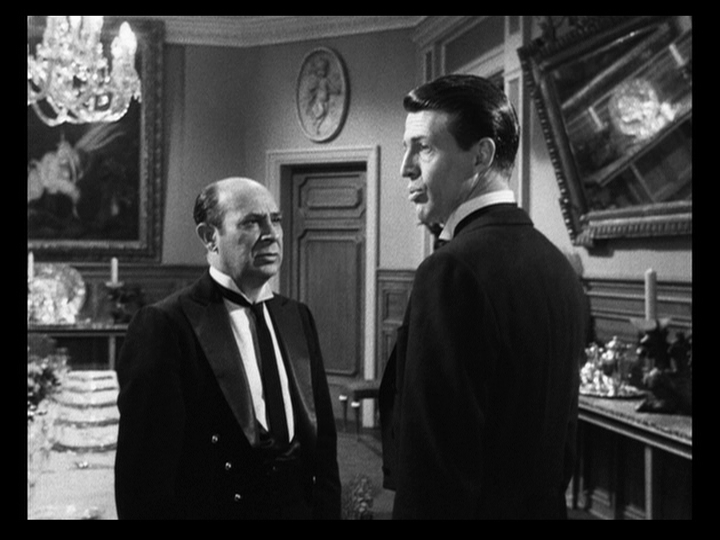
One of my high school English teachers used to say that the hallmark of great literature was a work possessed of both individuality and universality. I can’t think of many movies that better embody this dual standard than The Exterminating Angel, which is to say that I agree with both Seth Colter Walls, who hailed it as “2009’s most indispensable film” in a Newsweek article published shortly after the release of the DVD pictured above, and Mark Harris, who described it in Film Comment eight years later as a “bleak, caustic vision of rich people presiding over the end of civilization” that “does not seem like a movie behind the times so much as a movie of no particular time.” Noting that an opera adaptation by Thomas Adès was set to debut in just a few months and that a musical version by Stephen Sondheim and David Ives was also in the works, the latter went on to suggest that “it can’t be good news that its time may finally have come,” and I believe that’s right, too, for reasons I hope to make clear anon! The Exterminating Angel opens on a household in a flurry of activity. Mexican aristocrats, Edmundo (Enrique Rambal) and Lucía Nobile (Lucy Gallardo) are hosting a dinner for their wealthy friends after a night at the opera, but something is amiss, as we discover when the doorman Lucas (Pancho Córdova. I think–IMDb says Ángel Merino, but the screenplay published by Onion Press in 1969 credits him as “Waiter,” so I’m ruling in favor of Wikipedia) decides to go for a walk even though it means the loss of his job. “Well, if he didn’t like it here, good riddance,” says the majordomo Julio (Claudio Brook)–“there are many Lucases in the world.”
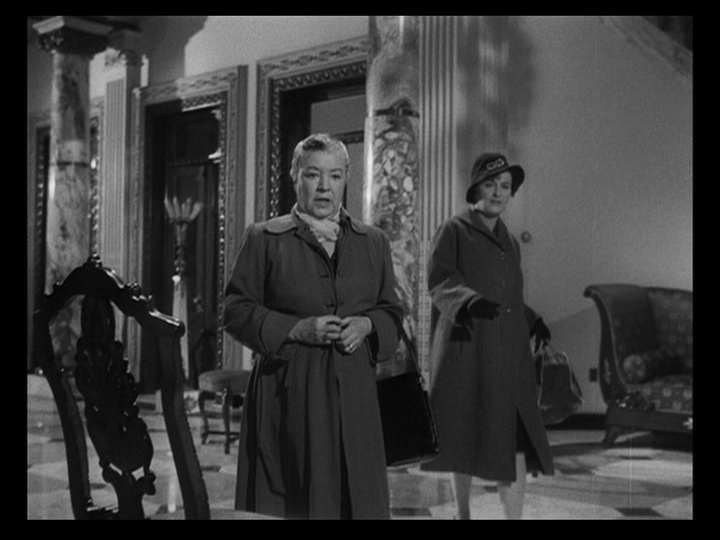
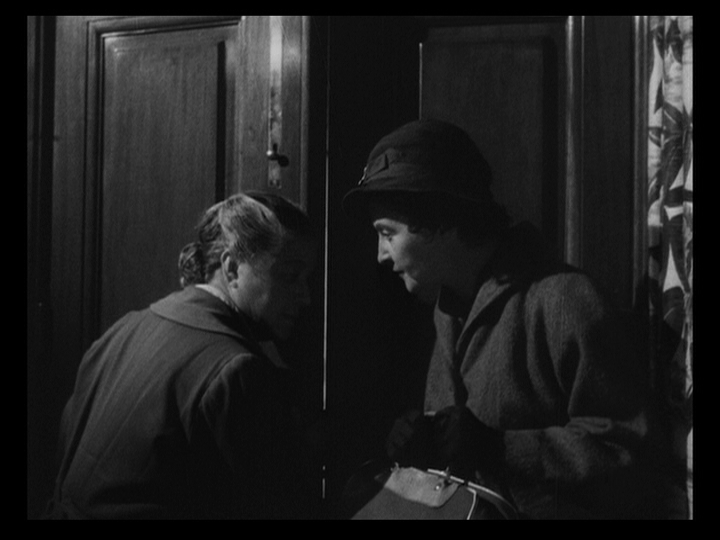
Be that as it may, he isn’t the last to leave and other strange things are afoot at the Casa Nobile, as these two maids discover when their attempt to flee is temporarily thwarted by the untimely arrival of their employers and their guests not just once:
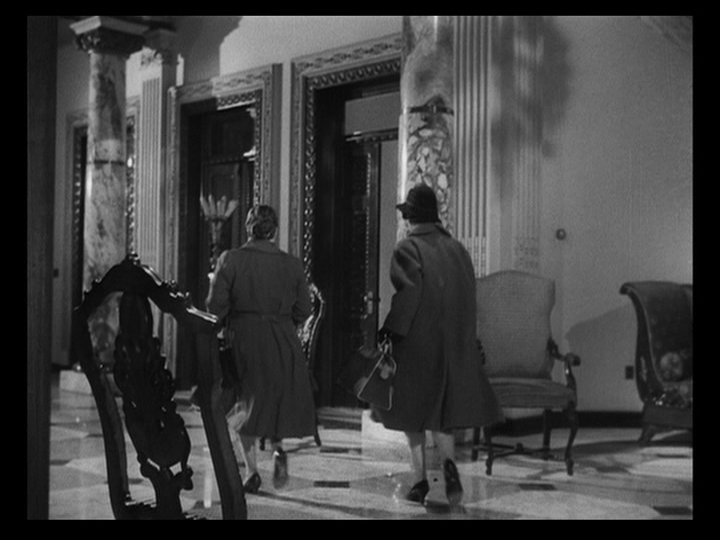
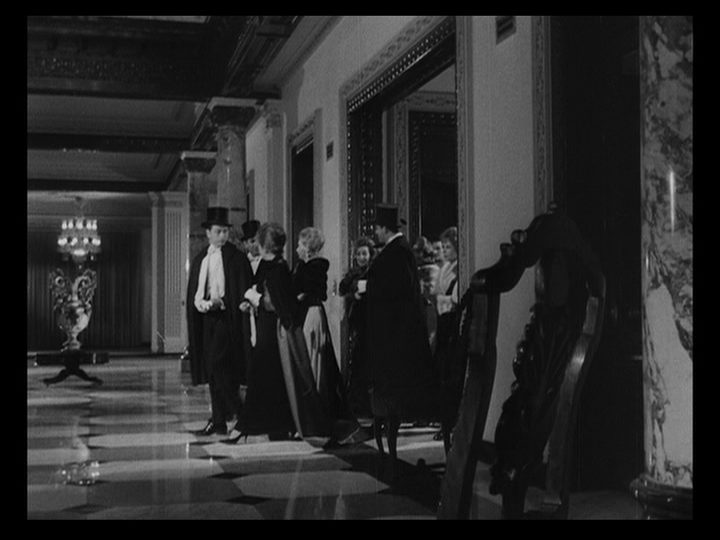
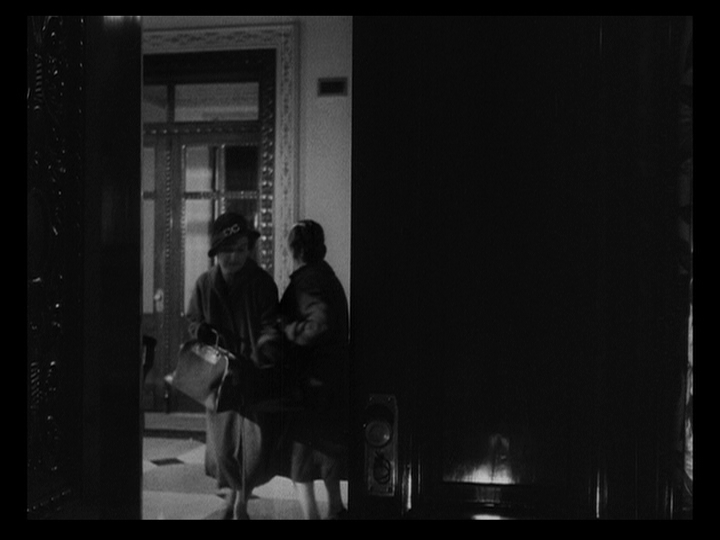
But, inexplicably, twice:
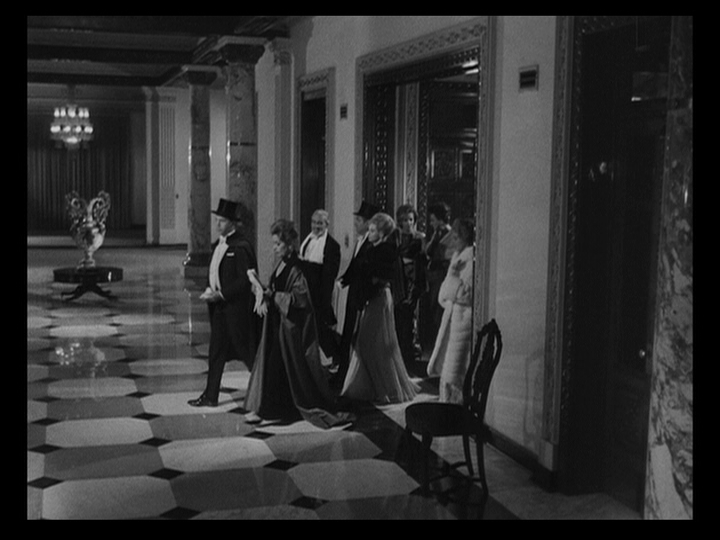
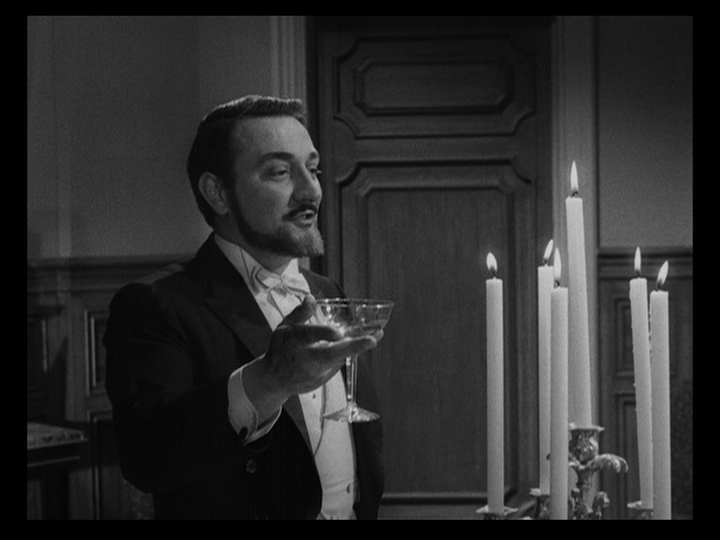
As they sit down to dinner, the repetitions (which director Luis Buñuel suggests he was the first to use this way in a movie in an interview with José de la Colina and Tomás Pérez Turrent collected in their book Objects of Desire) continue as Edmundo gives the same toast a second time:
And the remaining staff follow the maids out the door:
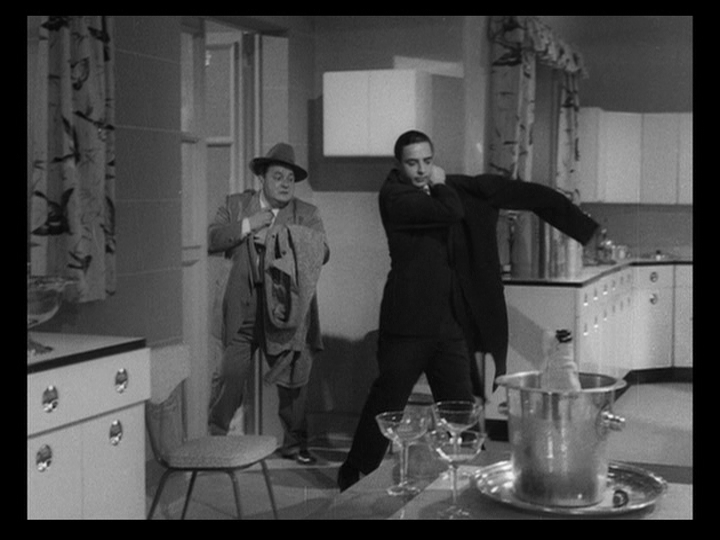
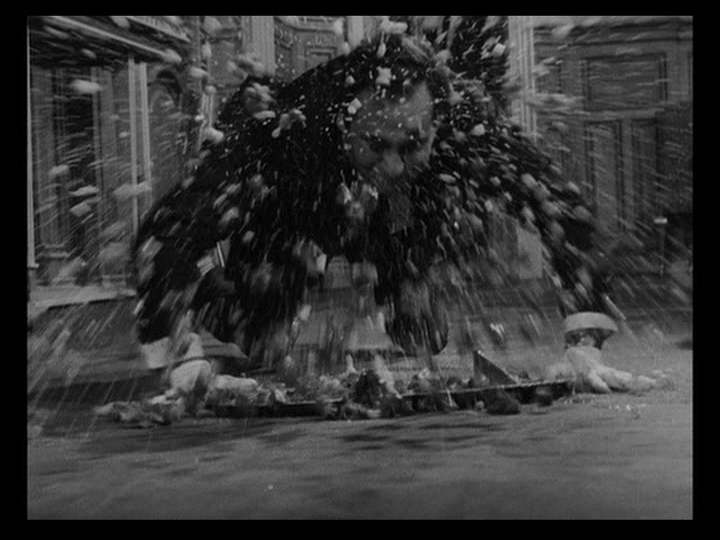
Lucía also decides to abandon a jest involving a bear and some sheep after her guest Mr. Russell (Lucy Gallardo) responds negatively to one whereby a waiter (Merino) deliberately “trips” while serving the first course:
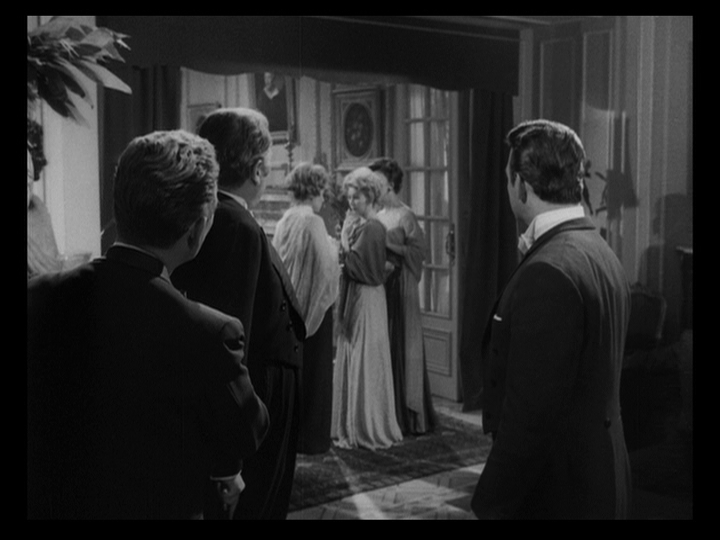
Finally, matters really take a turn toward the surreal after dinner when the guests would normally leave, but find instead that none of them are able to cross the threshold of the drawing room:
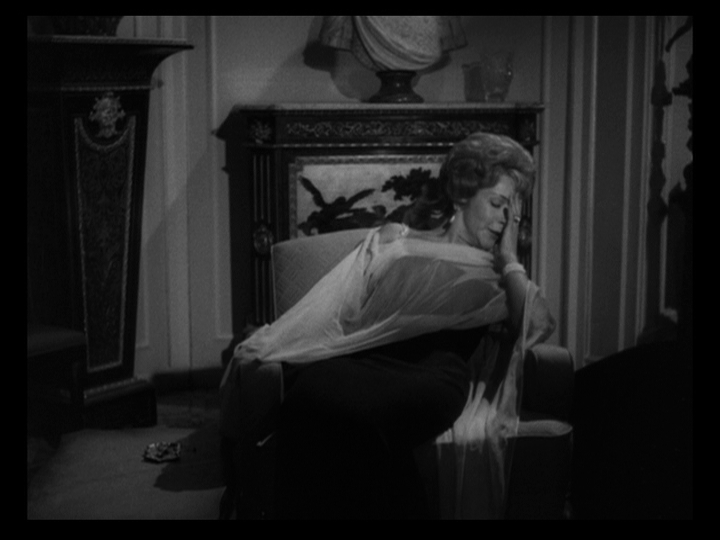
So against every rule of etiquette they settle in for the night:
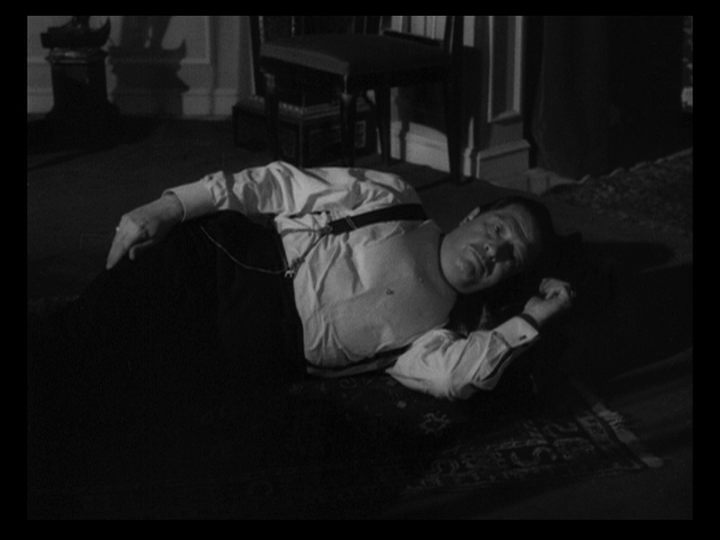
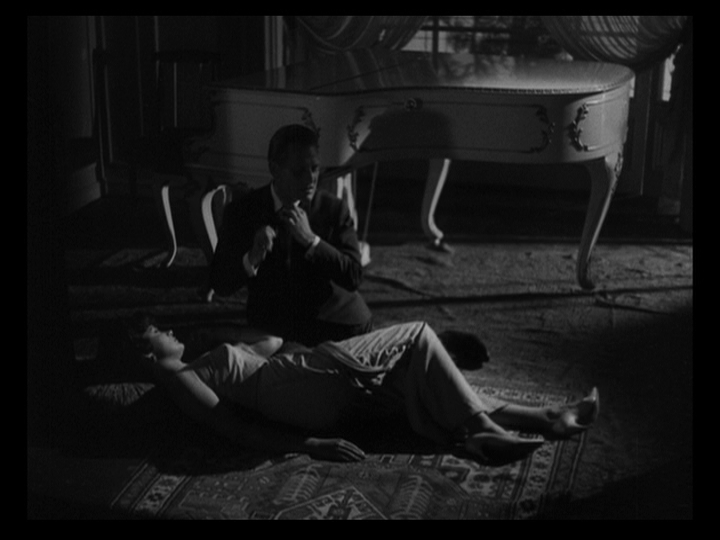
When Julio arrives with leftovers for breakfast the following morning, he discovers that he is now trapped as well:
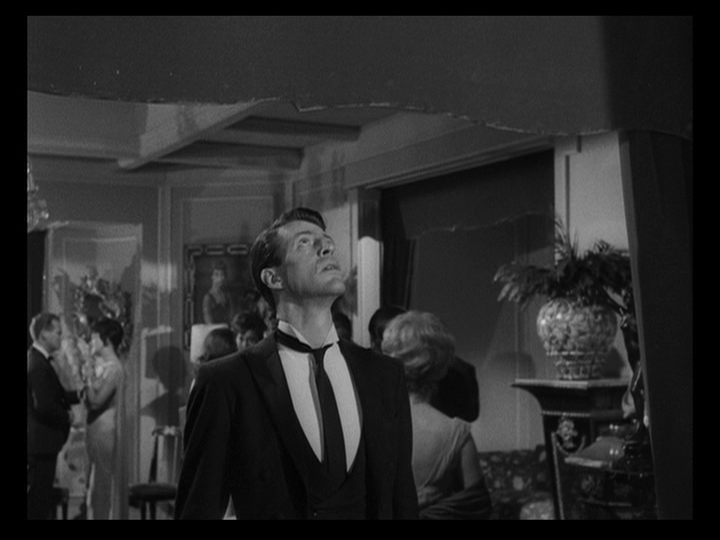
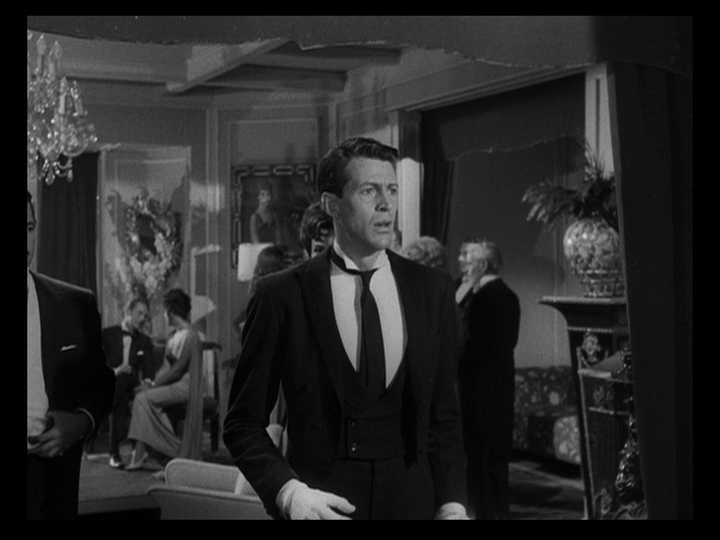
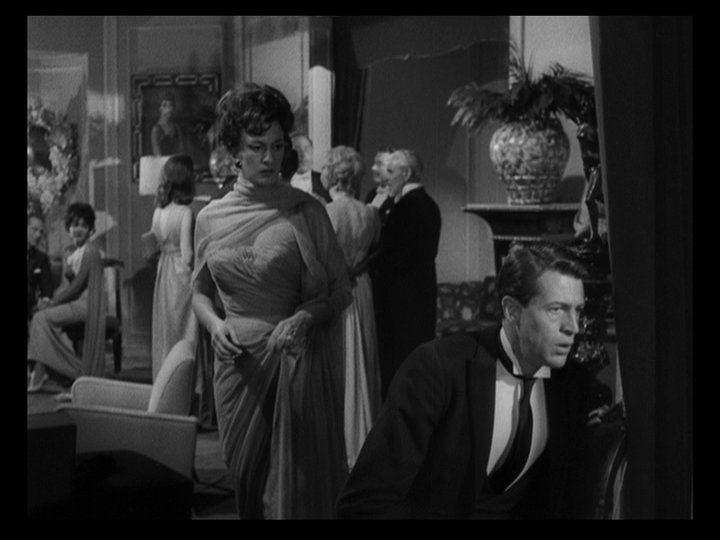
Which brings us to just about exactly 1/3 of the way through the film’s 95-minute runtime. In an interview included with the Criterion DVD as an extra, Silvia Pinal (who plays a guest named Leticia aka “The Valkyrie) quotes a friend of hers as saying that “Buñuel invented reality shows with The Exterminating Angel.” Most of the remaining hour does indeed prove that no one is there to make friends and as the days stretch into weeks the increasingly uncivilized assembly take turns throwing each other under the bus by surreptitiously tossing life-saving medicine where it can’t be reached:
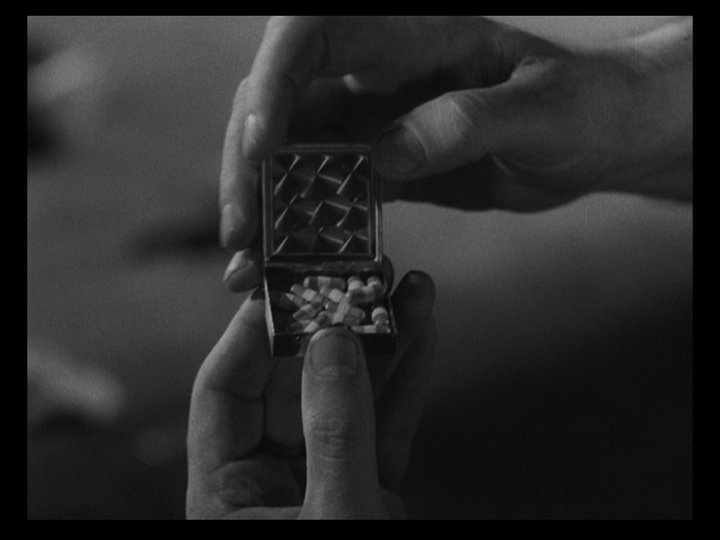
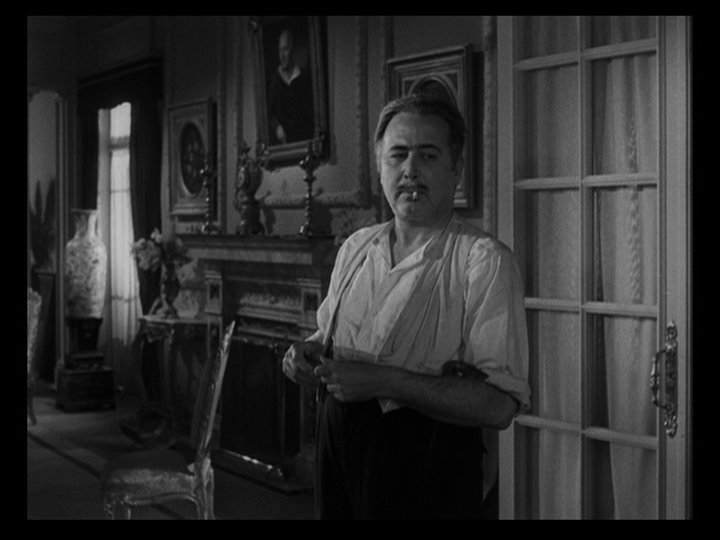
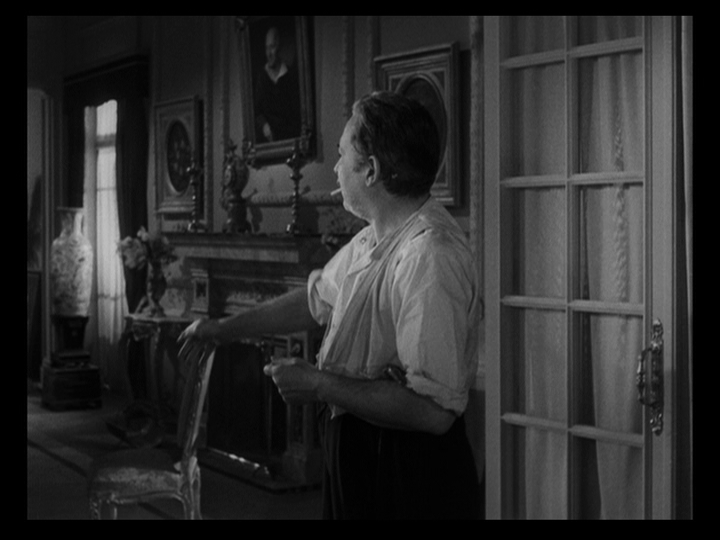
Engaging in sexual abuse under the cover of darkness:
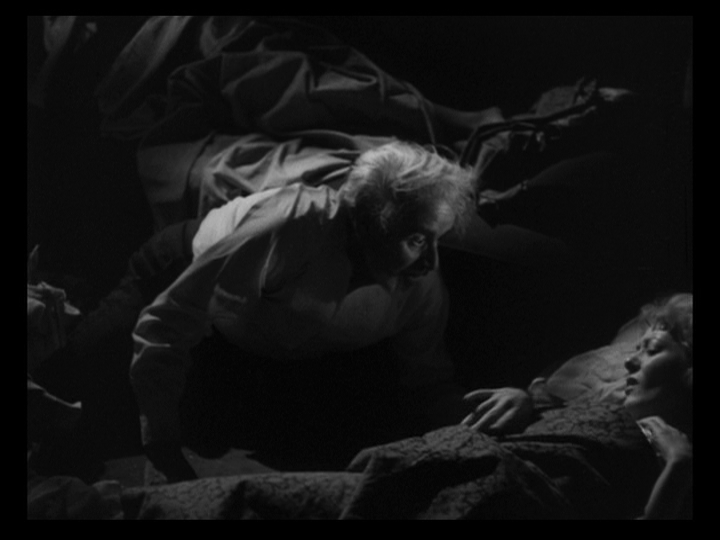
And threatening to resort to human sacrifice despite the total lack of evidence that it would accomplish anything. They break open a pipe in the wall to find water:
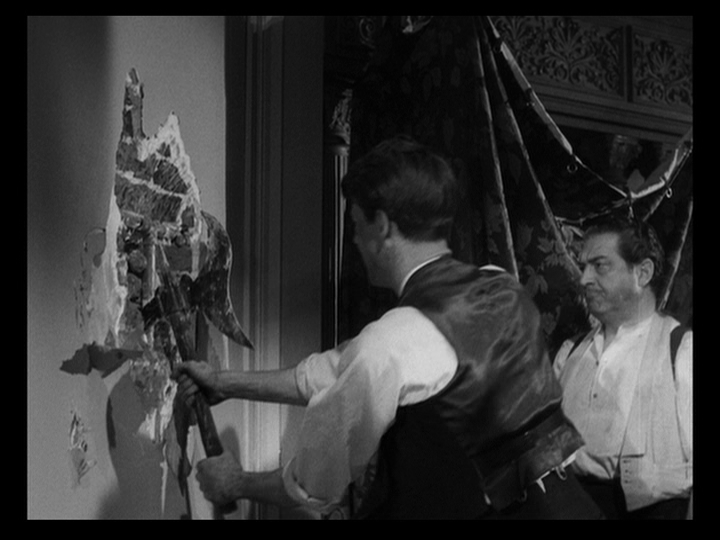
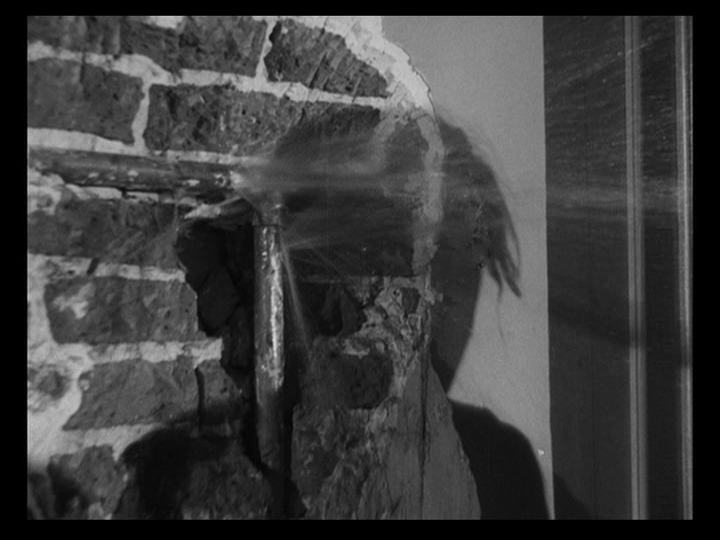
But are reduced to eating paper when the leftovers from dinner run out:
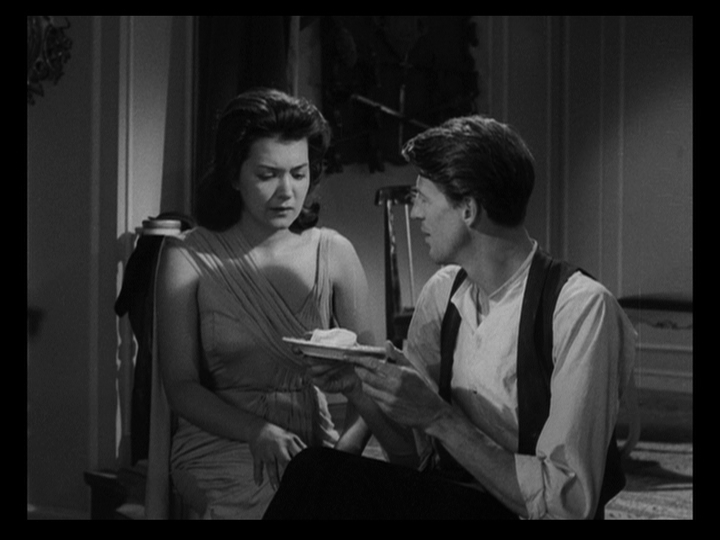
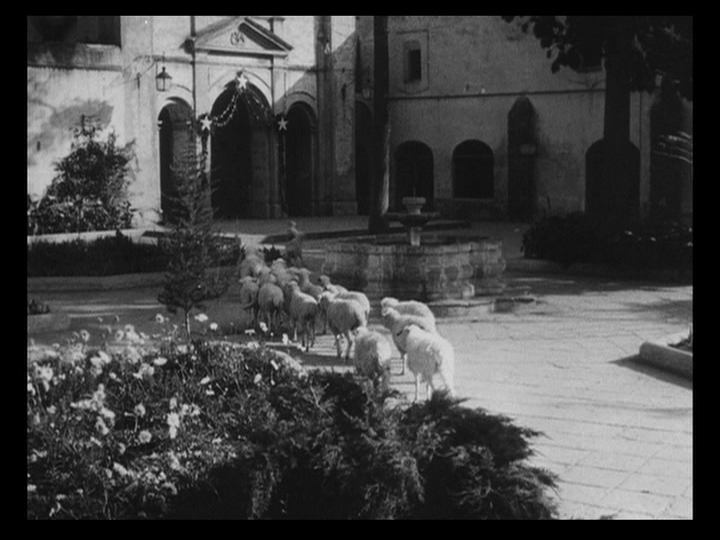
Until the bear from earlier miraculously chases the sheep which were to be part of the same entertainment into the drawing room:
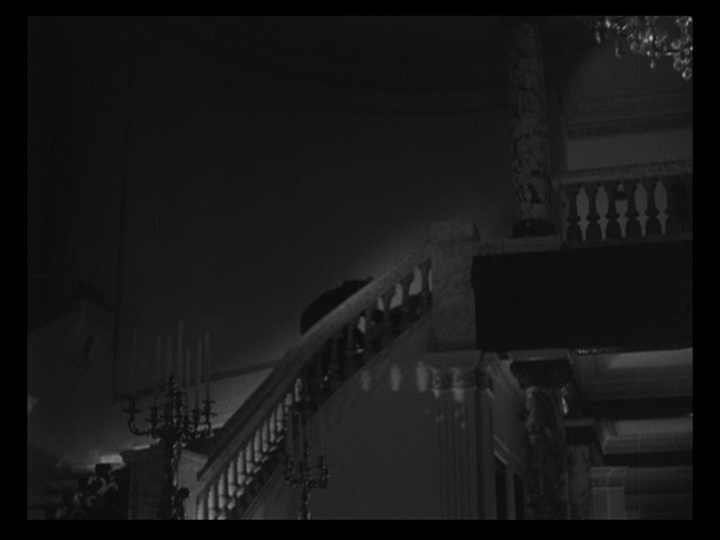
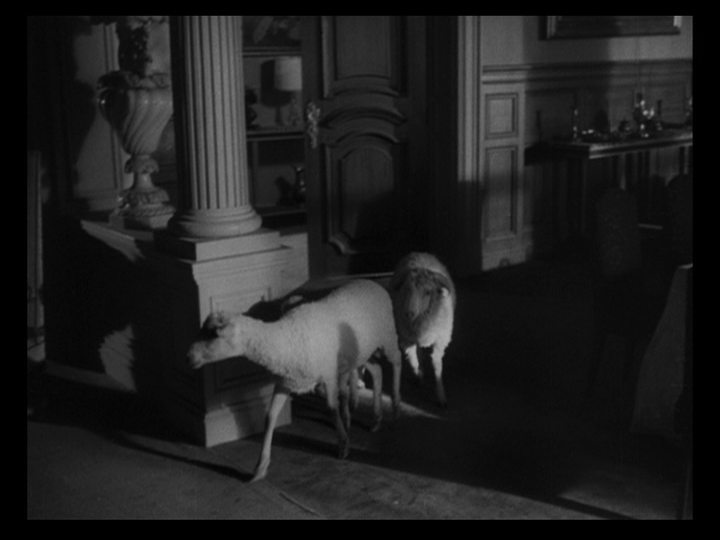
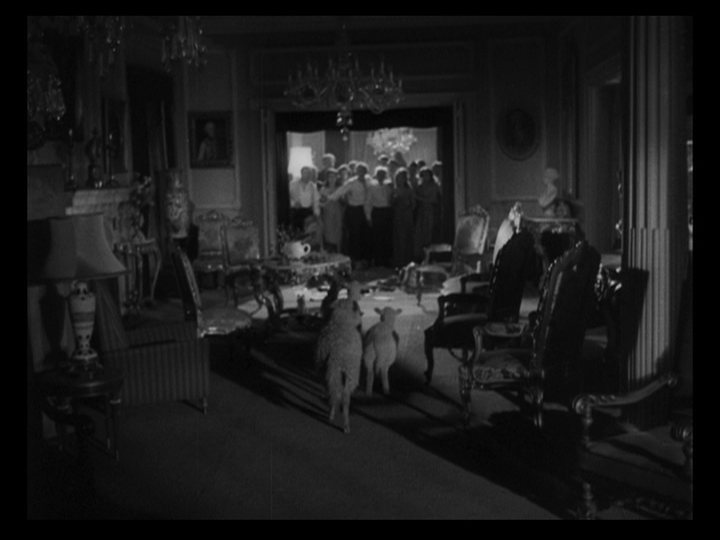
Where they are blindfolded:
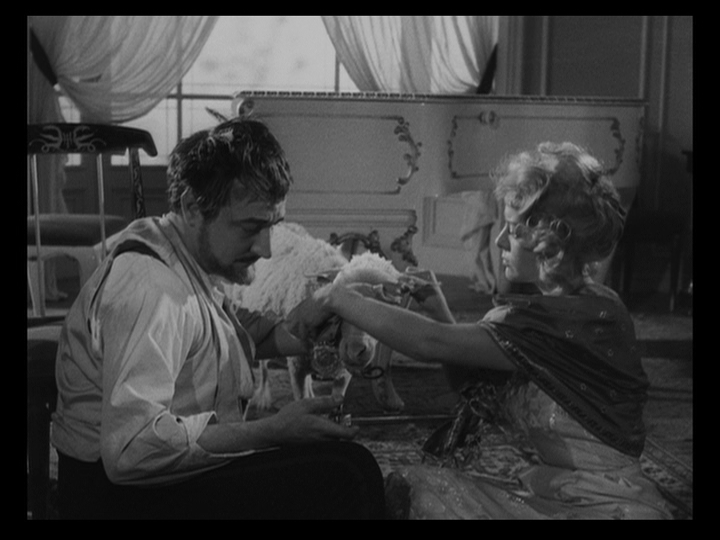
Slaughtered, and cooked over a fire made with wood from a smashed cello:
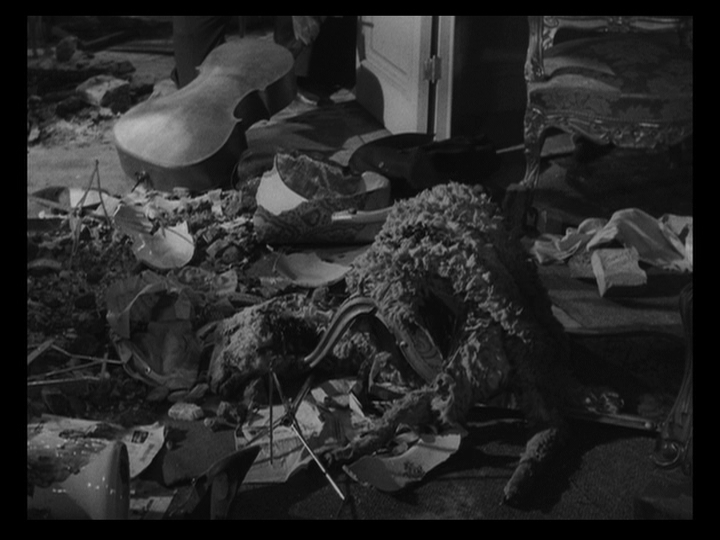
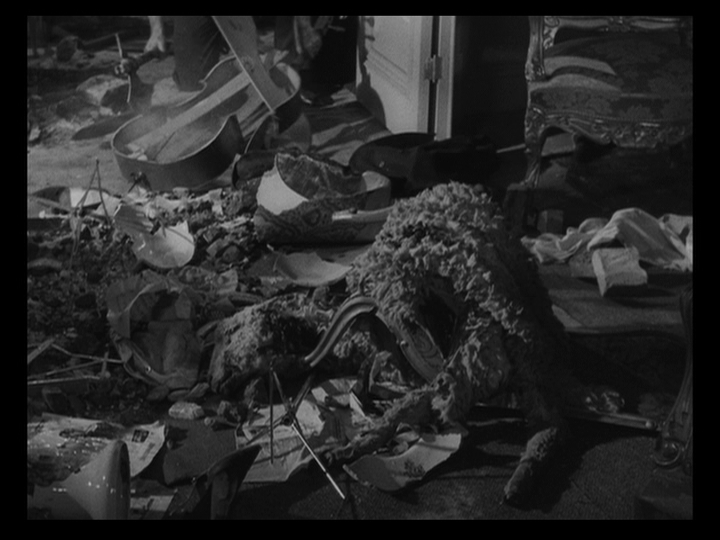
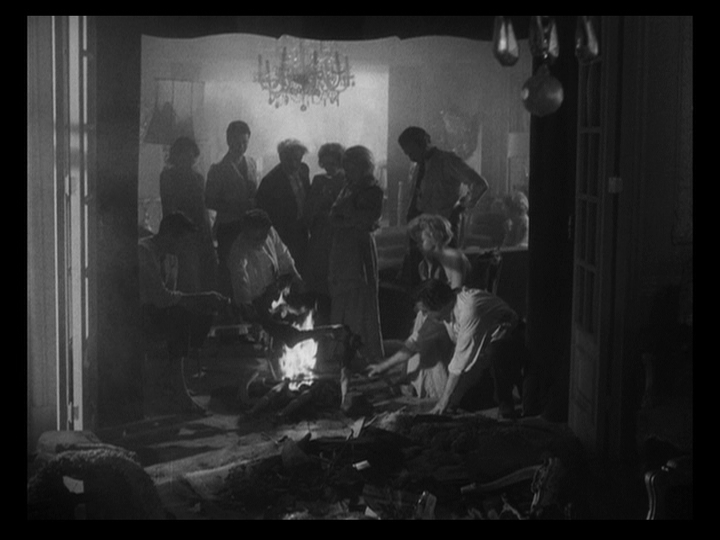
Bodies nonetheless begin to pile up after Russell expires of natural causes:
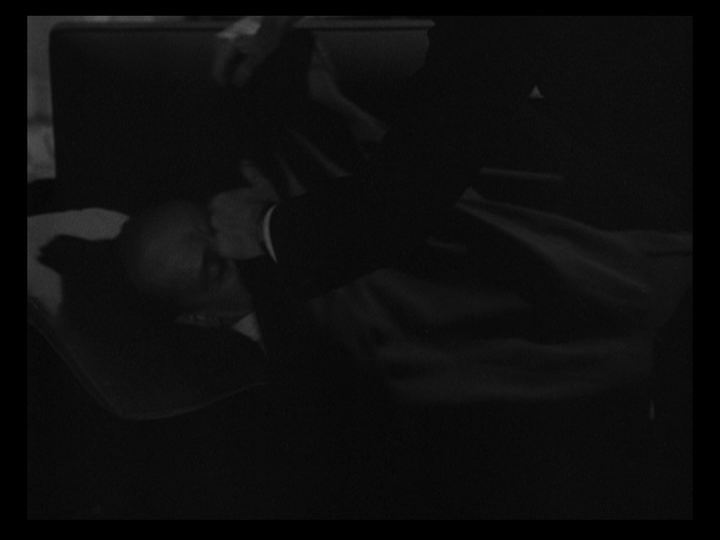
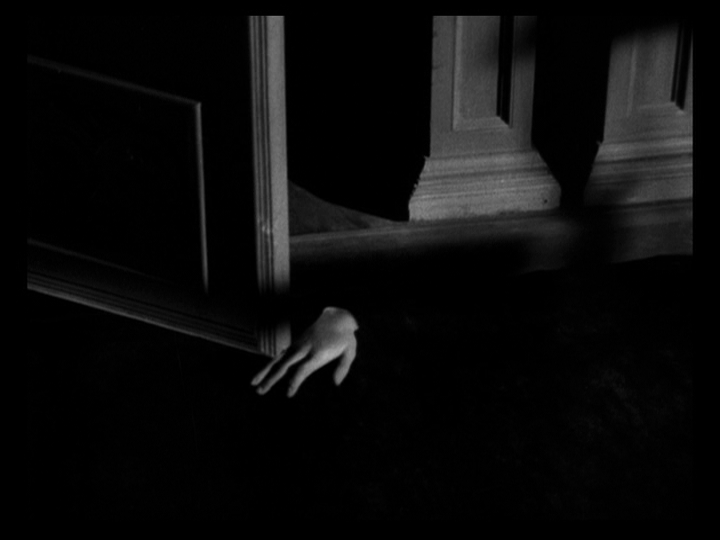
And two of the trapped guests who are having an affair choose a lovers’ suicide over attempting to go on. Haunted by nightmare images like this disembodied hand:
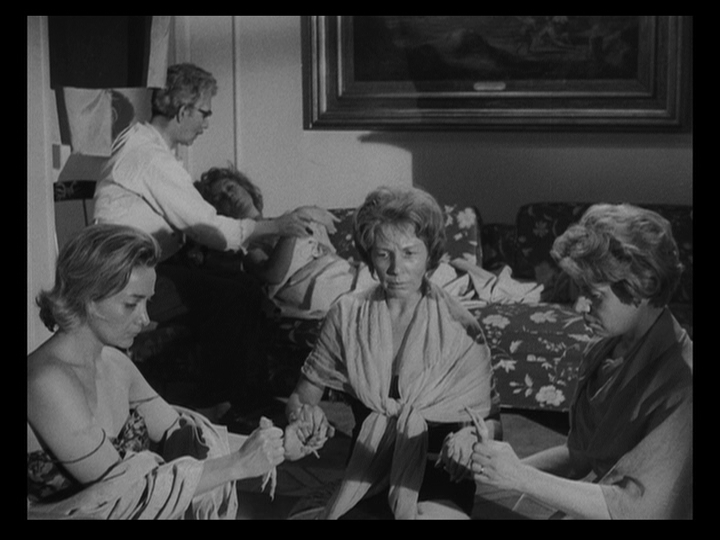
And let down by rituals such as these kabbalistic “keys”:
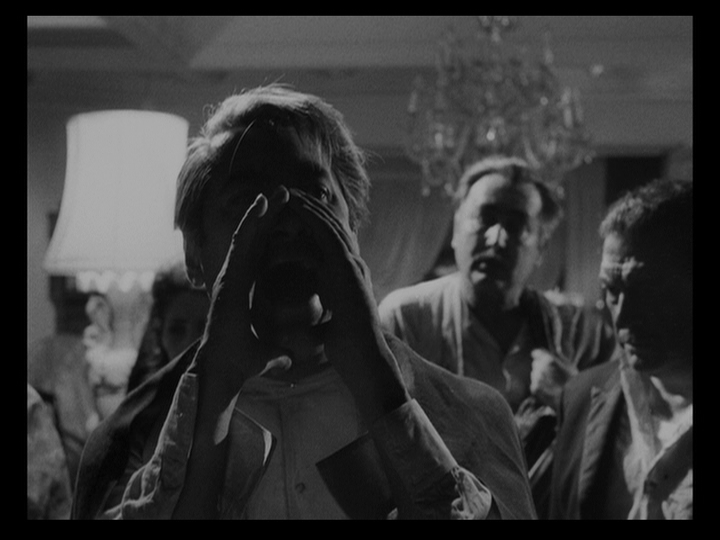
The Masonic cry for help:
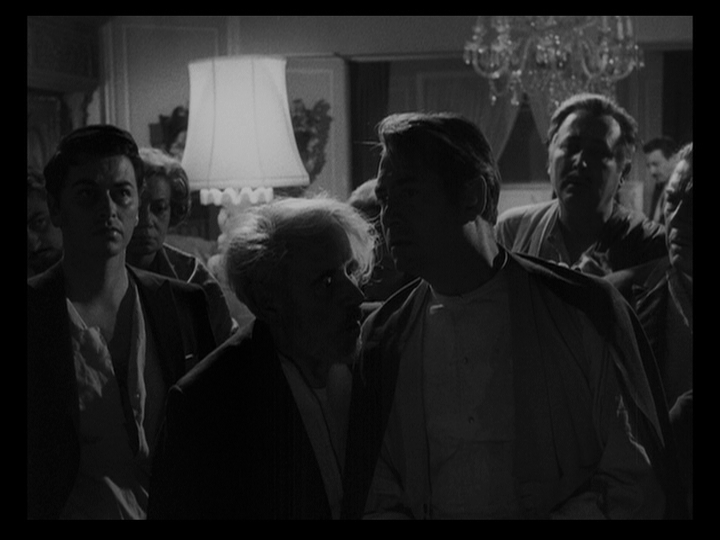
And “the unpronounceable word”:
A contingent of the remaining guests indicate that they are determined to go through with their plan to kill Edmundo under the reasoning that “when the spider’s dead, the web unravels.” Dr. Carlos Conde (Augusto Benedico) opposes them saying, “but you’re crazy! It’s ridiculous, completely irrational.”
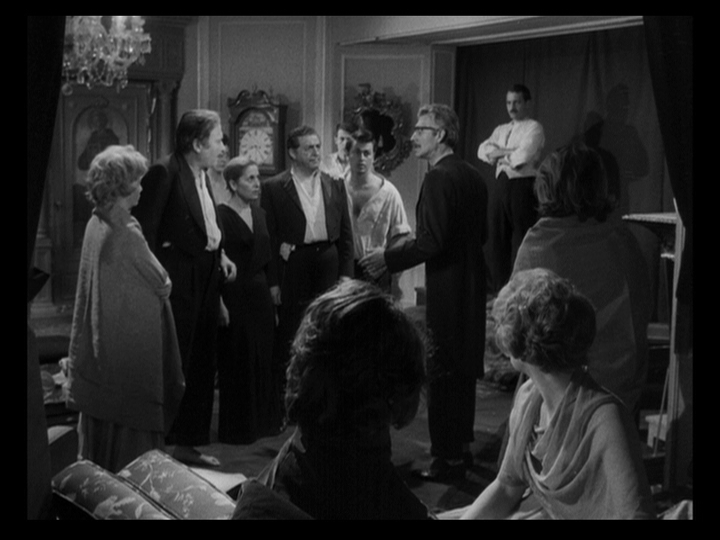
To which they reply, “we’re not interested in reason: we want to get out of here.” Suddenly, Edmundo appears standing next to Leticia and nobly tells them that “there’s no use fighting something so easily achieved”:
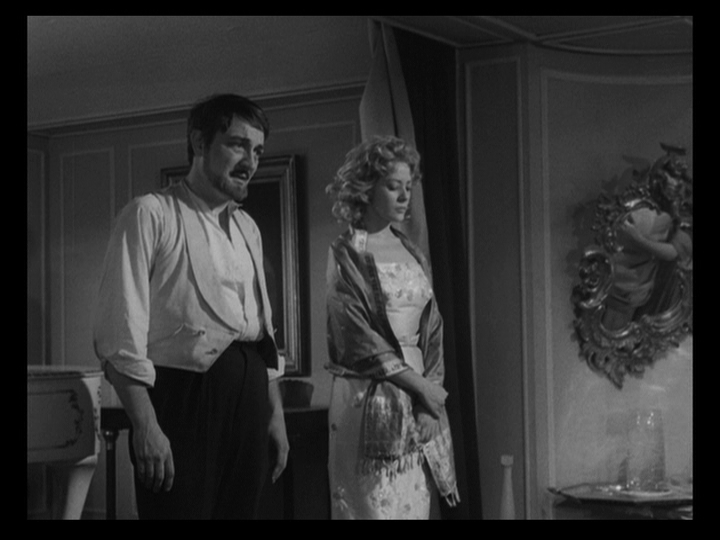
He retrieves a revolver from a cabinet but before he is able to turn it on himself Leticia cries out, “wait!” She announces that she has realized that “like pieces on a chessboard, moved thousands of times” they’ve somehow all returned to the very spots they were standing in the night they got trapped.
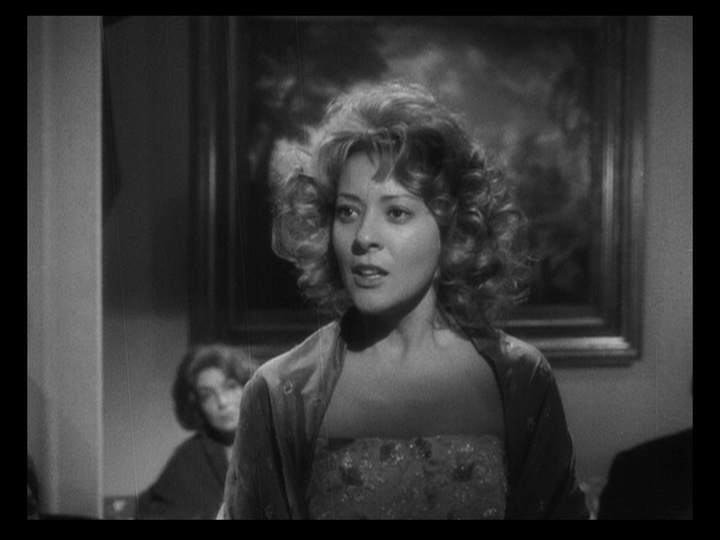
They fumblingly repeat the things they said then and follow her out the door, freed just as mysteriously as they were imprisoned:
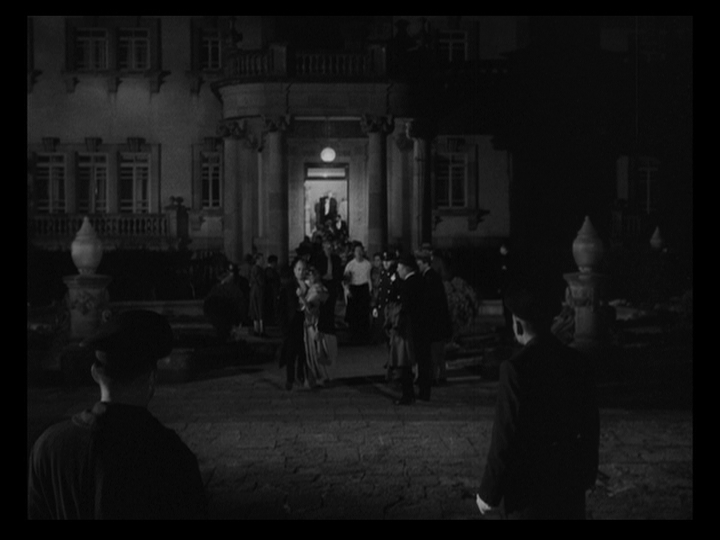
To Skrikanth Srinivasan, The Exterminating Angel is “the greatest of detective films, since its object is not the discovery of the culprit […] but the discovery of the nature of our human and social condition and its motivations.” He finds the answer in the movie’s two-part structure. The first, which concludes with the scene above, “tells us that man has no escape if he locks himself up in society’s rules, opposed to the imperative rules of nature, which can manifest themselves within society’s rules only in a barbaric and secret form in direct contradiction with the spirit of these social rules.” Where Pinal’s friend sees reality television here, scholar James Ramey finds “a cinematic articulation of what in recent years has been described as a posthumanist attitude towards the human” in his article “Buñuel’s social close-up: An entomological gaze on El ángel exterminador/The Exterminating Angel (1962),” noting that it’s “not unlike an ant colony transferred to a glass casement for entomological observation.”
Part two chronicles the tragedy of said colony’s liberation. As Gilles Deleuze observes in Cinema 1: The Movement-Image, “the [Exterminating] Angel’s guests want to commemorate, that is, to repeat the repetition that has saved them; but in this way they fall back into a repetition which ruins them.” And so we find them congregating together once more, this time for a Te Deum at their local cathedral:
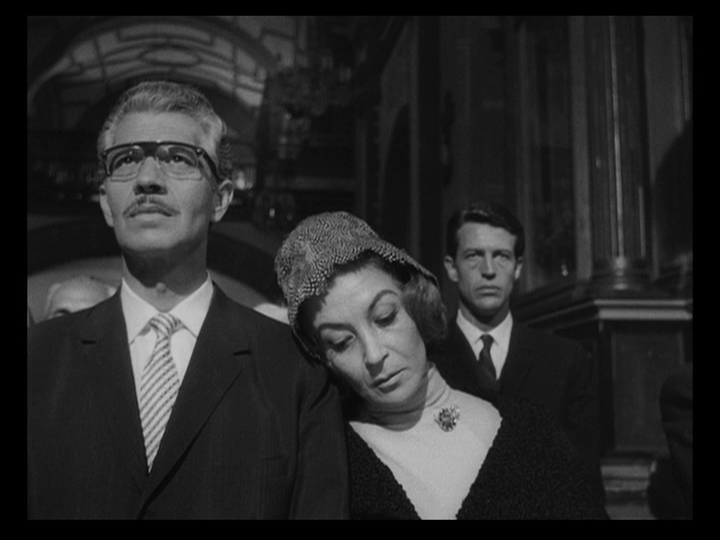
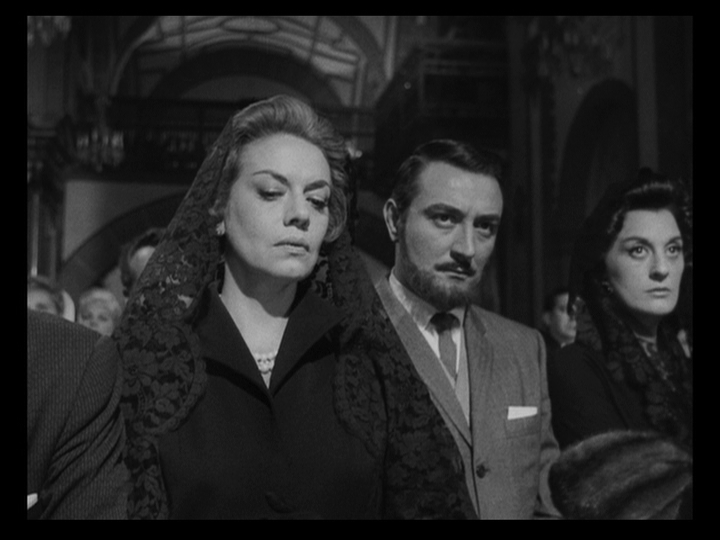
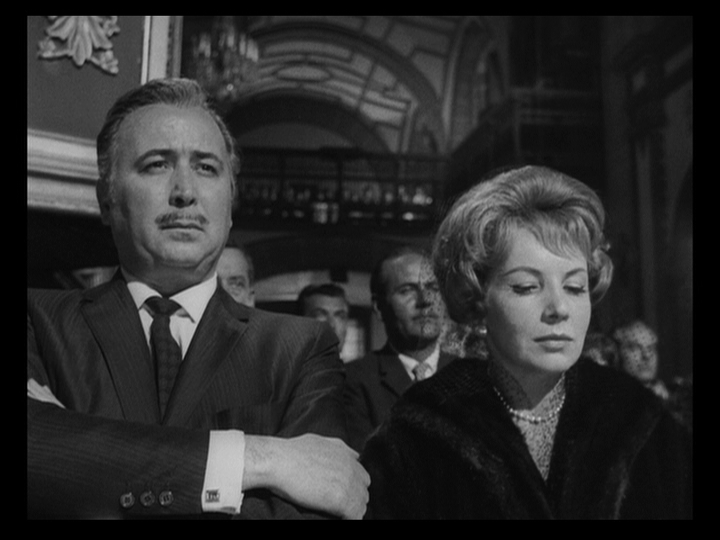
As the service ends, the priests stop at the door. “Why don’t we wait until after the faithful have left?” one of them says.
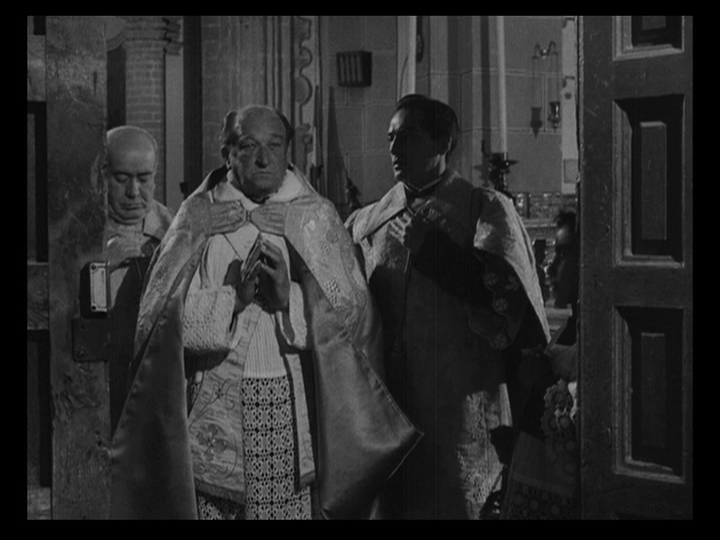
The film ends with a plague flag over the cathedral:
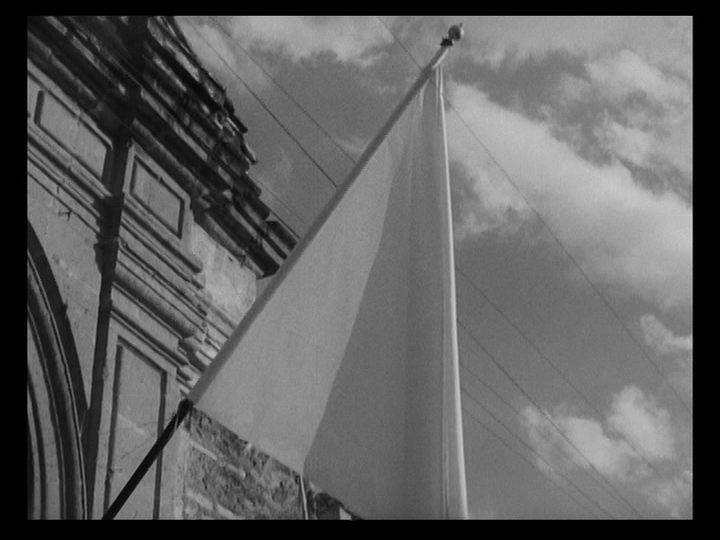
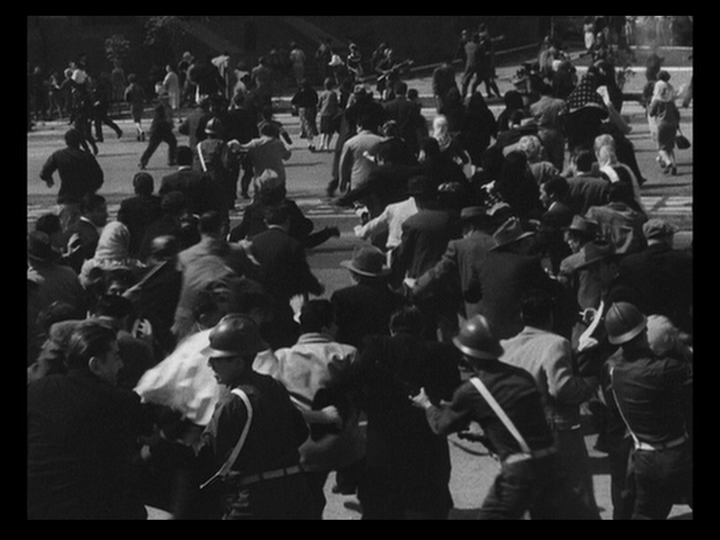
Violence on the adjacent town square:
And another group of sheep offering themselves up as food for the incarcerated:
Per Srinivasan, “the elliptical brutality of the last section and the speed with which we arrive at the renewal of the phenomenon of avolition gives us the impression that it’s going to return with ten or twenty times the force,” which echoes something Buñuel himself says in Objects of Desire and reminds me of the ending to The Happening: “the church will be worse because this time it’s not just twenty people, but two hundred. It’s like an epidemic that extends outwards to infinity.” For Srinivasan the cause of all this is clearly religion, but Wael Khairy found that it echoed something even more immediate in a piece for RogerEbert.com published on April 6, 2020:
Much like COVID-19, an invisible force prevents the visitors from stepping outside the confines of the house. The title suggests that this is the work of an exterminating angel. I would never liken an infectious disease to an angel, but one can’t help but dwell on the eerie similarities of how this invisible force is affecting society as a whole. Like “The Exterminating Angel,” this outbreak feels like a wake-up call. Mother Nature is stepping in and exposing fragility of society and how easily the facade we’ve built around us can collapse.
He concludes by wondering, “What will happen after this global nightmare comes to an end, and millions of families exit their homes? Will we emerge from our homes as changed people with a new awareness of the world, or will we fall back into the same trap?” Sadly, five years later, I think we all know what the answer to this question is. But, hey, when the end comes, at least now you have a new drink to toast it with, right?
Cheers!
All original photographs in this post are by Marion Penning, aka My Loving Wife. Links to all of the entries in this series can be found here.

 The Prodigal Cinephile