My number one source of new cocktails to try is Frederic Yarm’s Cocktail Virgin Slut blog. One thing I like about it is that he tends to work with spirits he already has in his bar, to the point where you can get enough of a sense for what’s there to pick up a few of those bottles yourself and follow along at home. Because the recipes he posts show up in my RSS feed every day, it took me longer than it should have to buy his Drink & Tell: A Boston Cocktail Book and Boston Cocktails: Drunk & Told books, but I’m glad I finally did because they’re great volumes to flip through in search of inspiration. While doing so with the latter awhile back, the Triumph of Pompei cocktail created by Tyler Wang of No. 9 Park jumped out at me as a great drink to pair with Damsels in Distress, one of my favorite movies of the 2010s, first because it’s name evokes Seven Oaks University’s Roman letter fraternities, but also because it’s similarly light and effervescent on the surface with a deeper, more complex core. Here’s how you make it:
1 1/4 ozs. Cocchi Americano
3/4 oz. Fernet Branca
1 oz. Grapefruit juice
1/2 oz. Simple syrup
Shake with ice and strain into a glass containing 1 1/2 ozs. club soda. Fill glass with ice, add a pinch of salt to the cube on top, and garnish with a grapefruit twist.
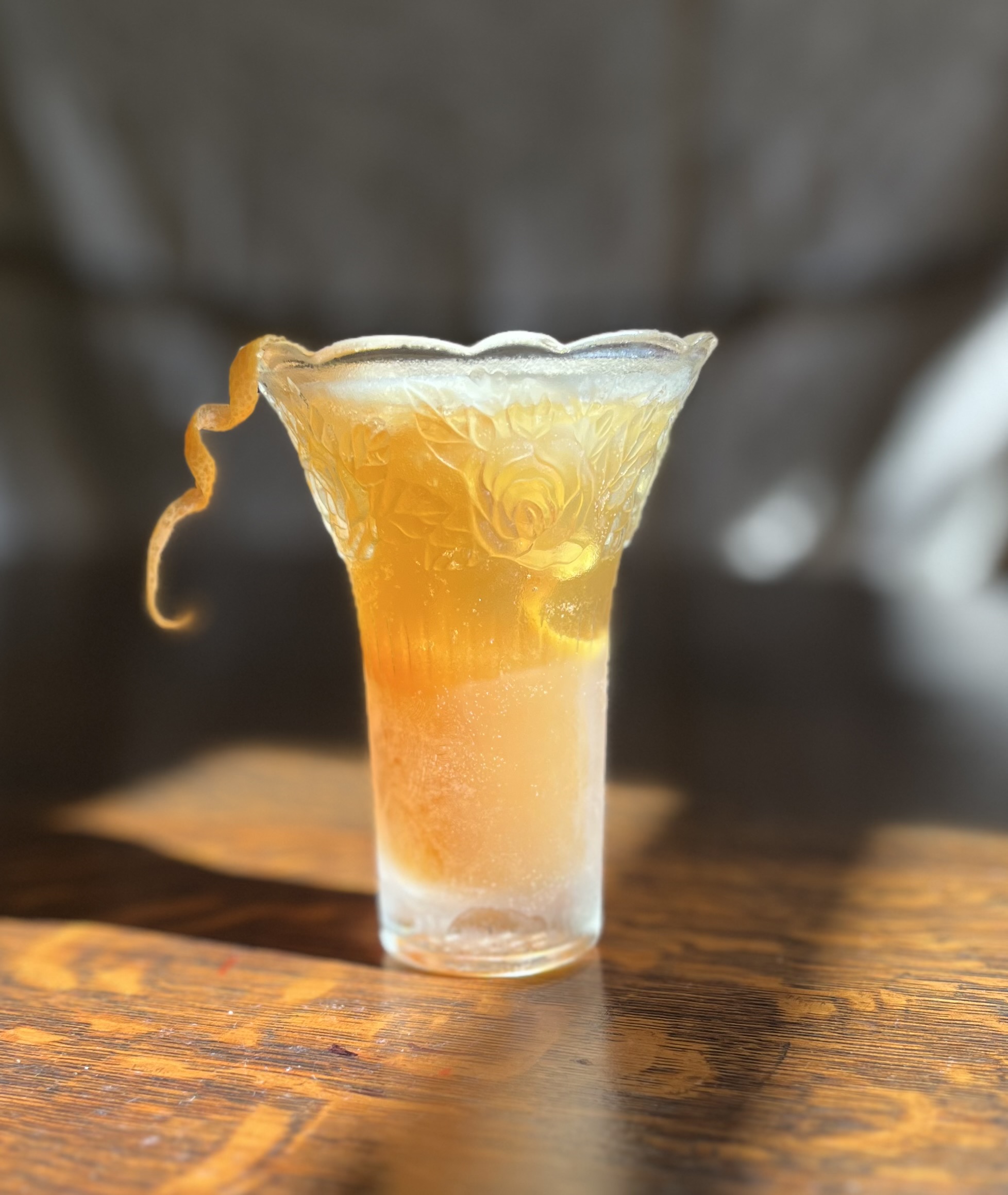
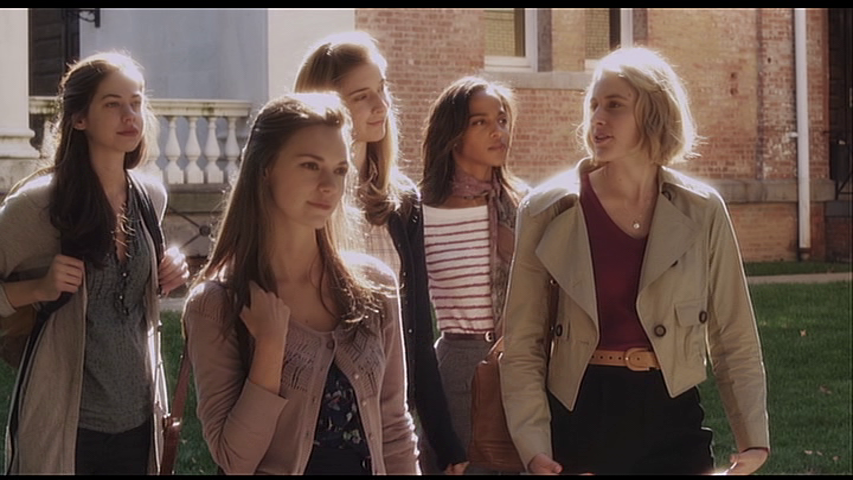
Yarm uses one “i” in the name of this drink in both the book and on his blog, but per Wikipedia that refers to the modern Italian city, whereas I’m interested in the ancient Roman one, so I’m going with two. However you spell it, the Triumph of Pompeii greets you with citrus on the nose and sweetness on the tongue. You get the Fernet right away along with the wine flavors of the Cocchi Americano, but the former stands out on the finish, which is where the grapefruit starts to assert itself as well. Diffords Guide recommends using grapefruit soda in place of club soda, but I think this disrupts the progression I just described: as is it’s a perfect accompaniment to grilling up dinner on an early June evening or settling in to enjoy the chaos of the Roman Holidays like these young ladies are doing:
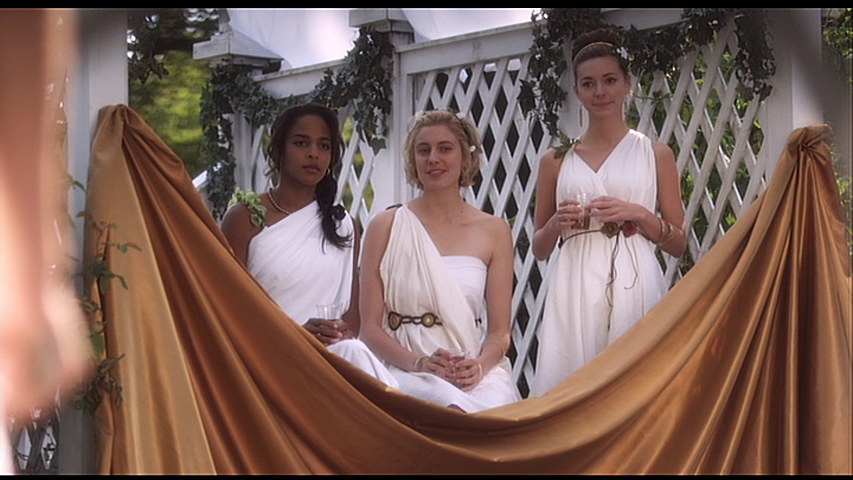
Speaking of whom, Rose (Megalyn Echikunwoke), Violet (Greta Gerwig), and Heather (Carrie MacLemore) are three of the titular damsels in distress in director Whit Stillman’s first film of the 21st century after a thirteen year pause. Here’s a picture of my Sony Pictures Classic DVD release:
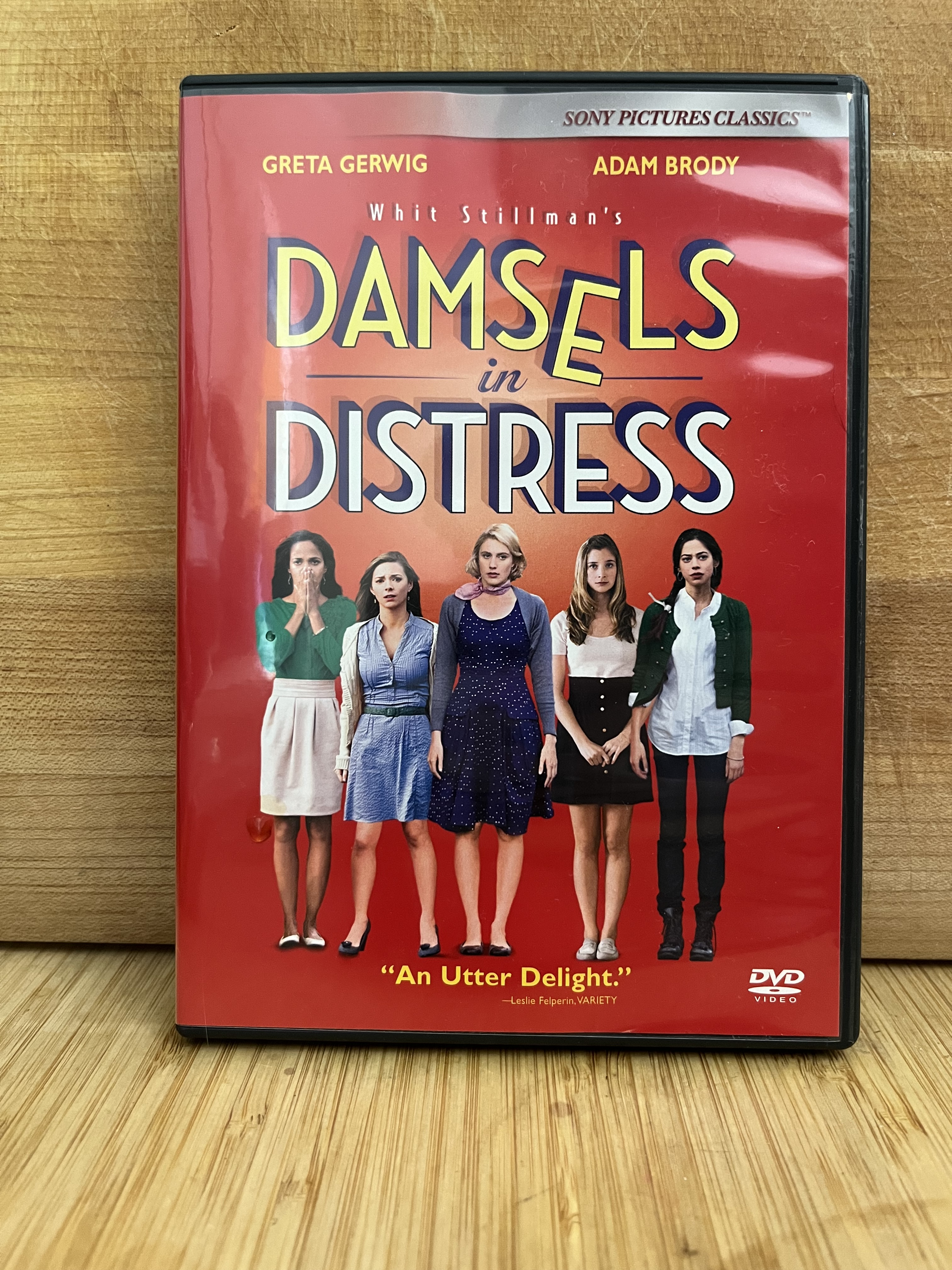
It can also be streamed via Apple TV+ and Prime Video for a rental fee, and current Cornell University faculty, staff, and students have access to it via Academic Video Online as well.
Damsels begins during registration for Seven Oaks’s fall semester with Rose saying “there” and Violet responding, “yes, I think so.”
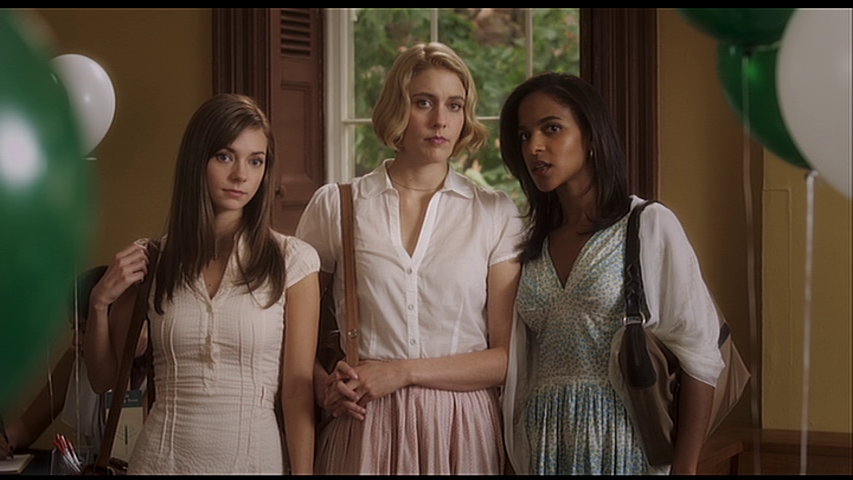
The person they are talking about is Lio Tipton’s Lily, a transfer student who they offer to “help.”
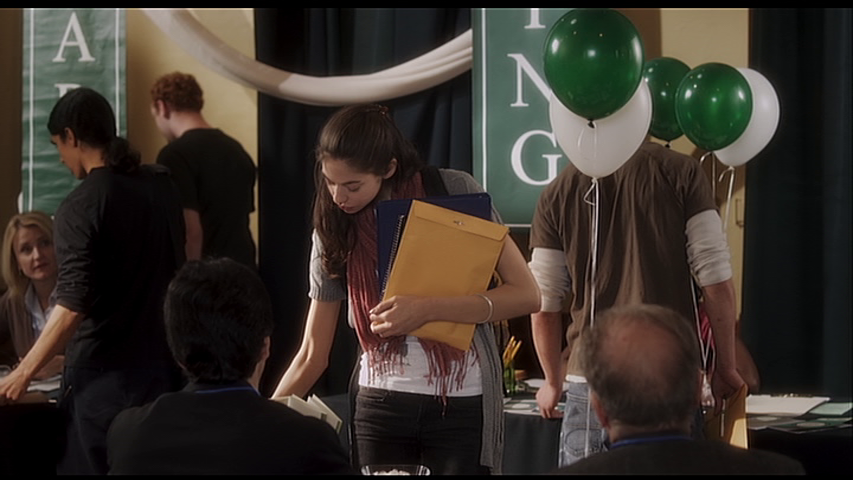
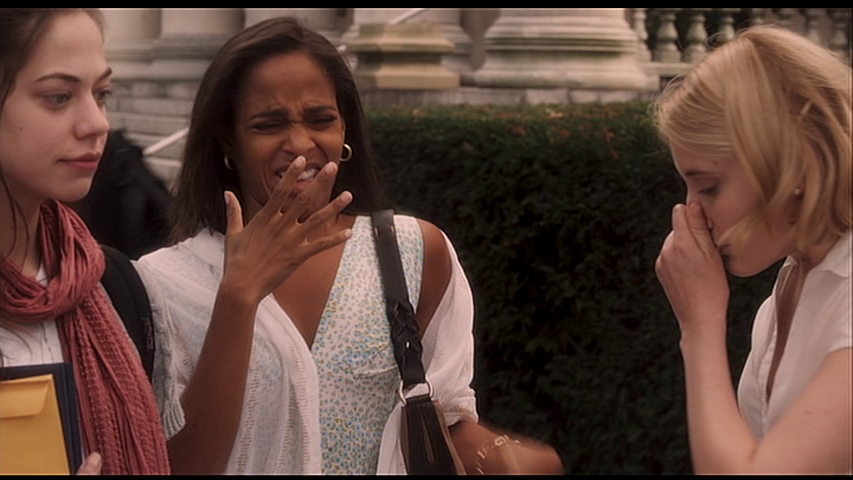
Lily doesn’t actually seem wildly enthusiastic about this idea, which is understandable considering that their first conversation starts out with Violet pointedly observing that “clothes can be critical for
confidence — and an overall sense of well-being,” then pivots to an explanation of what “nasal shock syndrome” is after Rose violently reacts to the body odor of some passing male students:
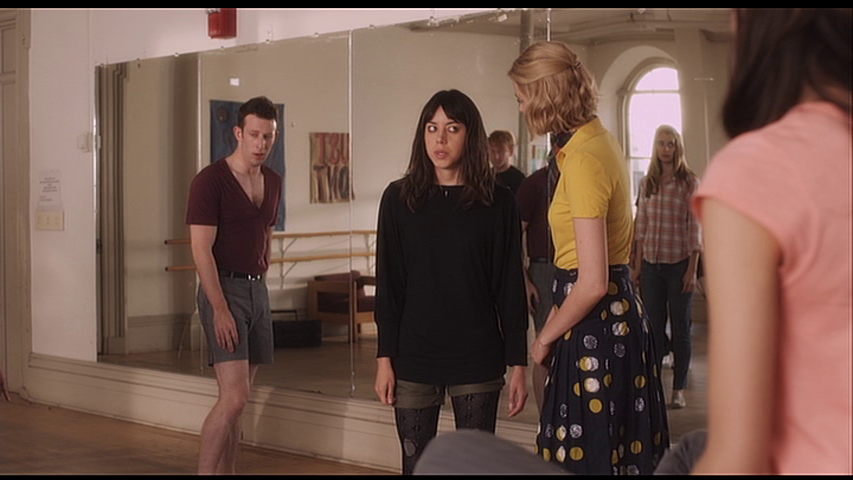
Lily has lost her housing assignment, though, and when her three new friends offer to let her room with them, she gratefully accepts. We follow the new quartet to the suicide prevention center they run through which they meet the temporary fifth member of the their group pictured on the DVD case, Caitlin Fitzgerald’s Priss, along with Nick Blaemire and Aubrey Plaza in memorable cameo roles as Freak Astaire and Depressed Debbie respectively, all three of whom can be seen in the screengrab below rehearsing a show that the center is putting on for therapeutic reasons:
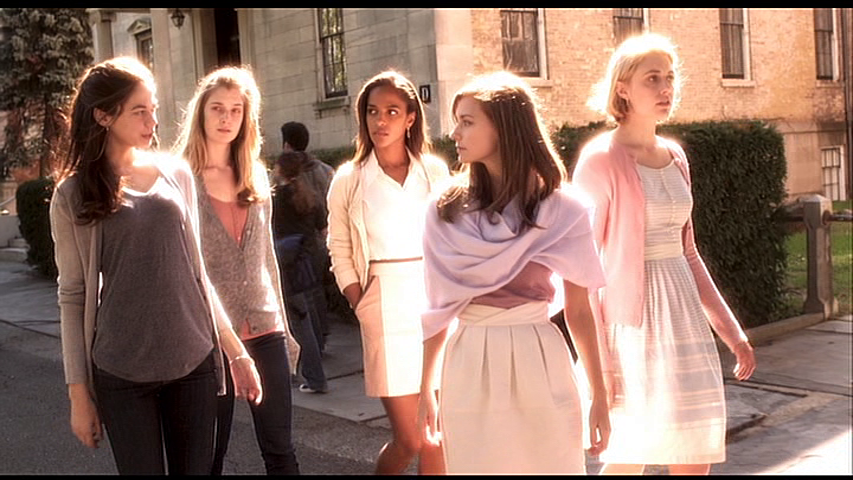
The five leads, who are shot more than once to look like they are literally glowing, next crash the first meeting of the Daily Complainer, the school newspaper.
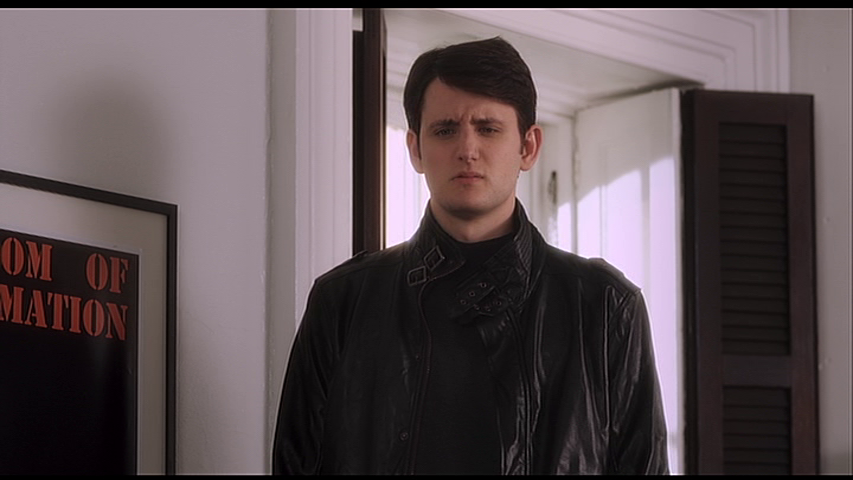
There they meet editor Rick De Wolfe, who is played by another stalwart of American comedies of the era, Zach Woods, seen here condescendingly explaining that the publication’s name derives from the fact that it comes out every day even though the questioner was obviously referring to the “Complainer” part:
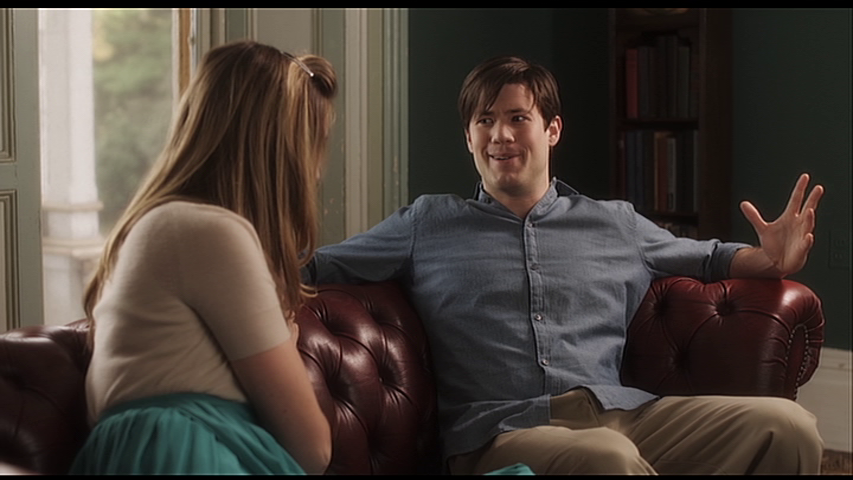
The group has a falling out with Priss after she steals Violet’s boyfriend Frank (Ryan Metcalf), who doesn’t realize that his eyes are blue. “I’m not going to go around checking what color my eyes are!” he says:
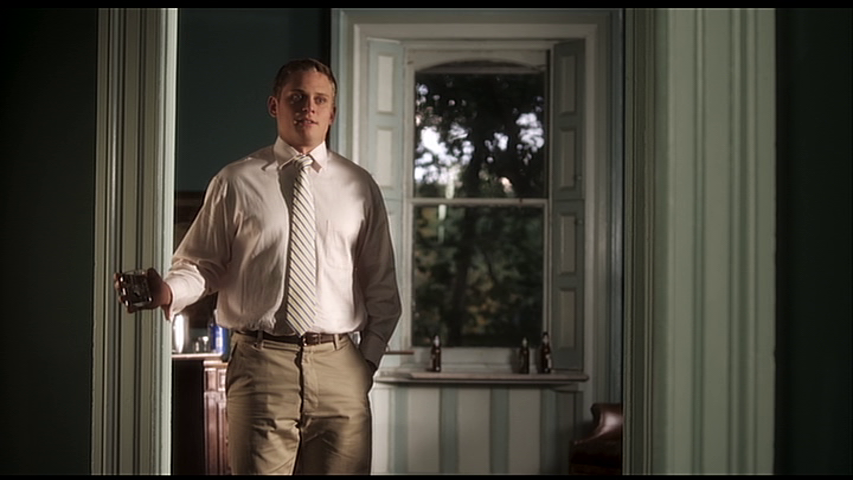
At least he knows what blue is–moments later we discover that his roommate Thor (Billy Magnussen) has not yet learned the colors. He’s not embarrassed, though: “What’s embarrassing is pretending to know what you don’t,” he explains, “or putting other people down just because you think they don’t know as much as you.”
The situation with Frank sends Violet into a “tailspin,” and her roommates are worried when she disappears, especially after Rose, who has known her since seventh grade, explains that Violet isn’t even her real name–she was born Emily Tweeter (“like a bird”), suffers from obsessive-compulsive disorder, and lost both of her parents. Luckily, whatever Violet’s original intentions were, she is saved by a bar of soap:

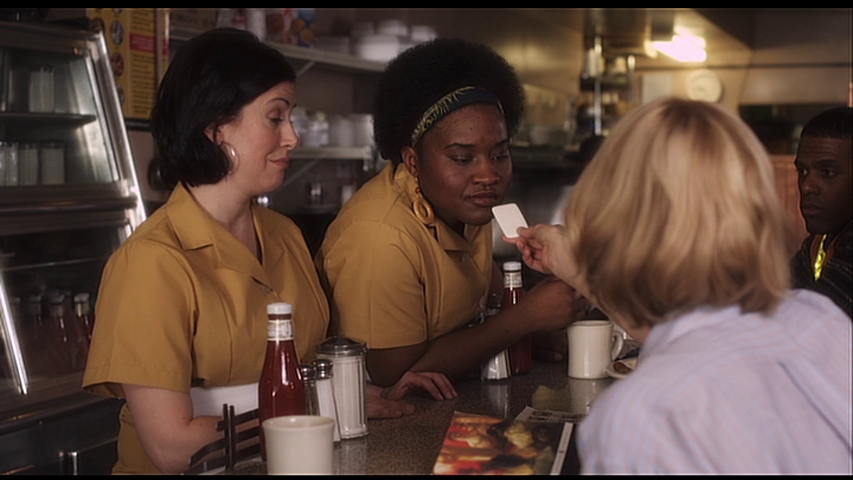
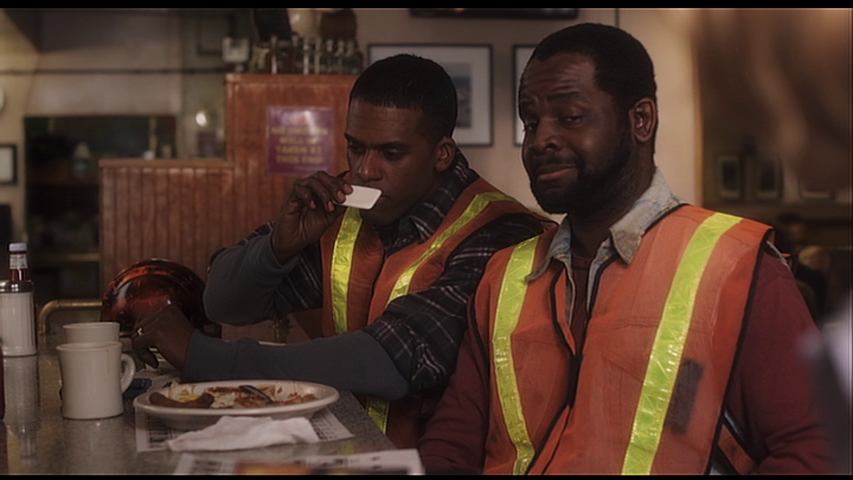
As she explains to the waitresses (Carolyn Farina, who portrayed Audrey Roget in Stillman’s films Metropolitan and The Last Days of Disco, and Shinnerrie Jackson) and some fellow customers (Gerron Atkinson and Jonnie Brown, who per IMDb is a fellow Pitt alum) at a diner she breakfasts at afterward who express concern that she’s one of “those depressed students down from the university” intent on killing herself, she’s not as crazy as she was yesterday “due to the salutary effect of scent on the human psyche”:
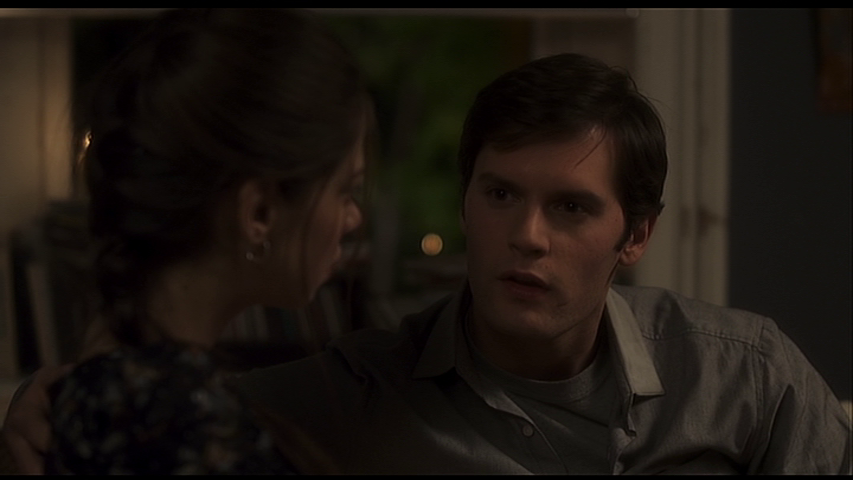
Meanwhile Lily gets involved first with two young men, a cinephilic graduate student from France named Xavier (Hugo Becker) who practices Catharism:
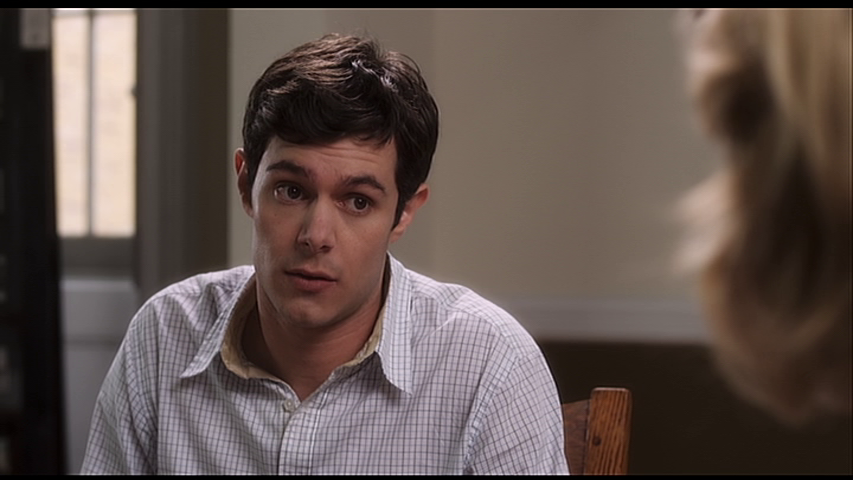
And Adam Brody’s Charlie Walker, whose real name is Fred Packenstacker and who has my favorite line in entire movie during a later scene in which Violet challenges his belief that decadence has declined. “How?” she asks. “How?” he replies, “or in what ways?”
Anyway, Alia Shawkat makes an appearance:
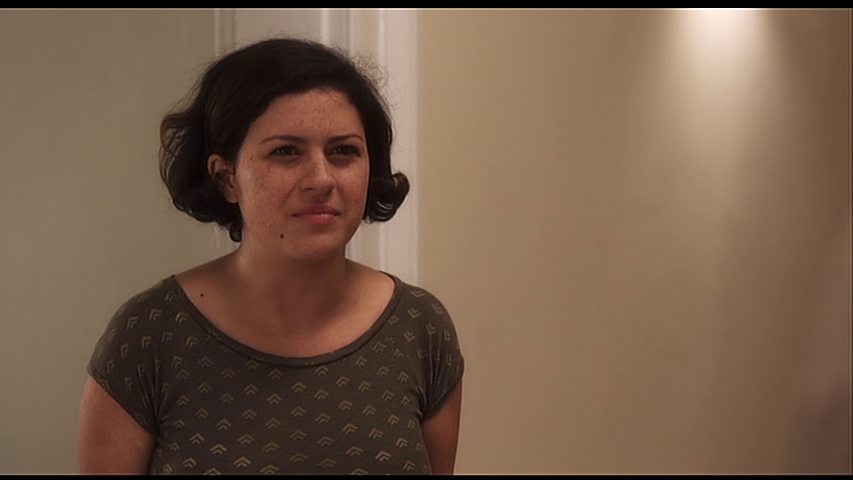
Violet ends up with Charlie/Fred, Lily confesses that all she really wants is to be “normal,” and the whole thing ends with first a musical number set to the song “Things Are Looking Up” from the 1937 Fred Astaire film A Damsel in Distress, then Violet fulfilling her dream of starting an international dance craze, the Sambola!
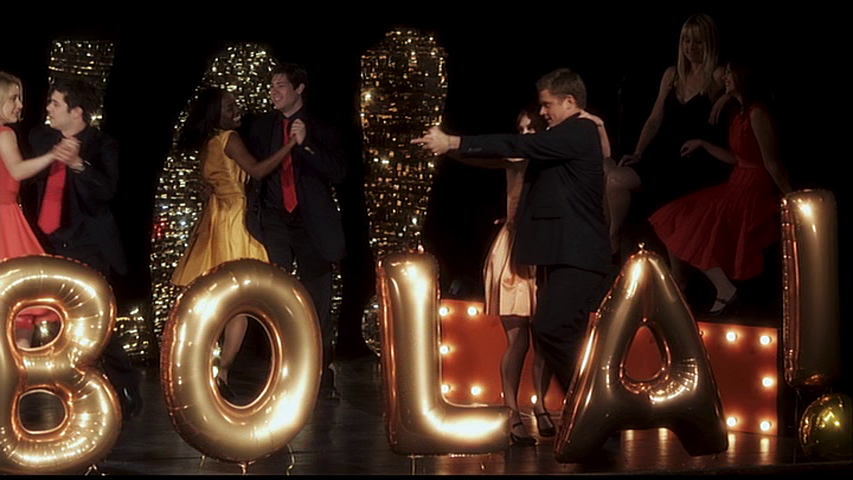
As you likely gathered, Damsels in Distress isn’t set in the “real” world. It is, instead, a stylized distillation of the essence of the college experience. In an Indiewire article containing highlights from a Q&A which followed a sneak preview screening, Stillman (who also wrote the film’s screenplay) explained that Lio Tipton “subverted [his] intentions” with their performance as Lily:
Lily was clearly the nemesis character, this person you think is going to be a friend, and you think is going to be wonderful, but they let you down. And Analeigh, by being really natural and likeable in scene after scene, had created this problem where audiences like and identify so much with Lily, that they dislike [Greta Gerwig’s] Violet character. And it subverts our purposes. That’s a negative commercially, but it somehow enriches the film. My cliches were unintentionally subverted by a superior actress.
Lily’s essential goodness comes through most clearly for me in the way she sort of hops when she talks:
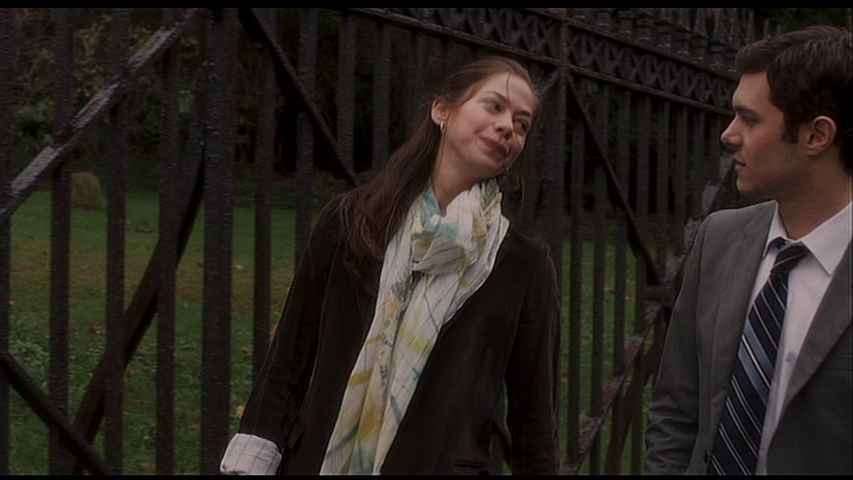
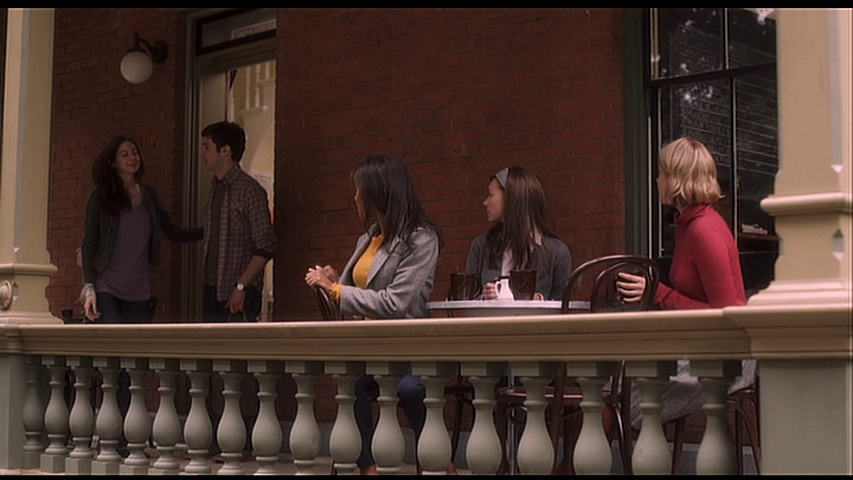
The key to understanding what’s going on here is the same thing I love most about the film: it celebrates college as a safe space for reinvention. Compare, for instance, the diner conversation referenced above about people who actually kill themselves by jumping in front of cars on the highway with the “suicidal Ed School” students who keep throwing themselves off the top of their two-story building, which I assume was inspired by Leonard’s Leap from A Damsel in Distress:
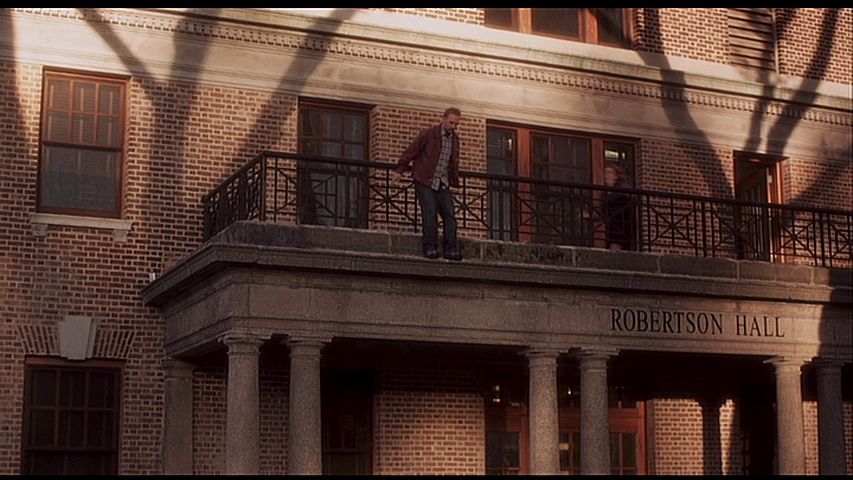
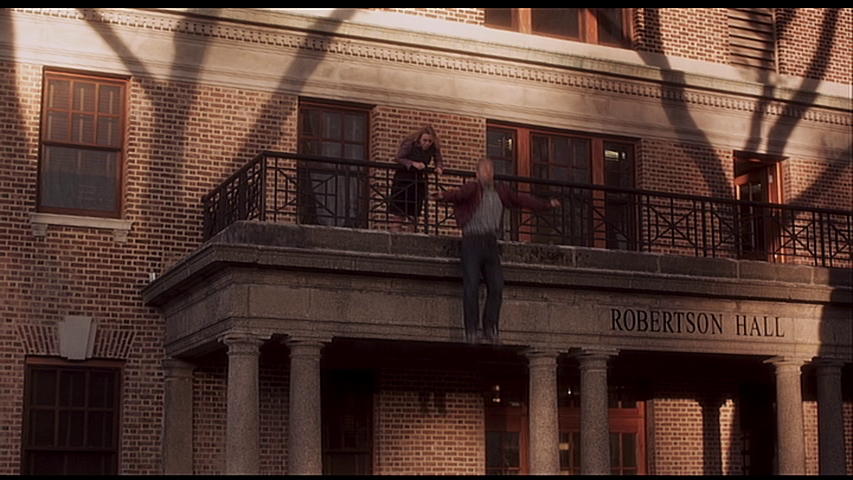
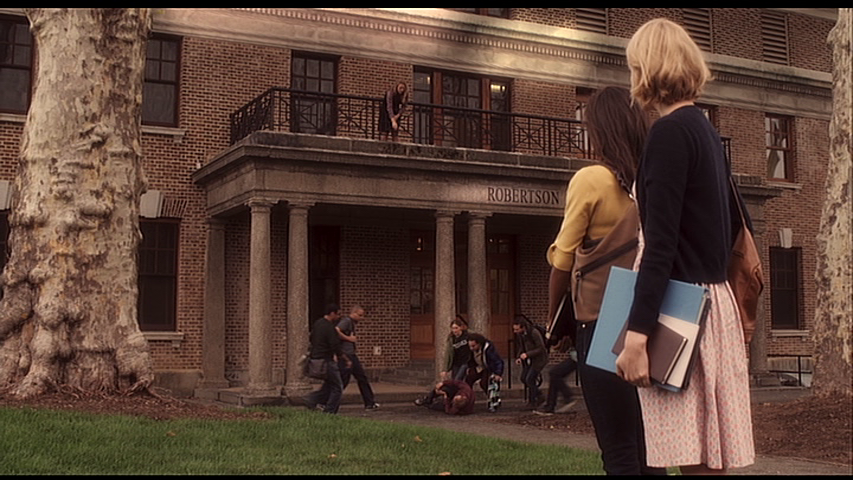
Going off to college is one of the best opportunities many of us ever get to actually become the individuals we aspire to be, which is much easier when you aren’t surrounded by people who have known you for your entire life and think they already know who you are, and for as long as you’re there you have access to a support system dedicated to helping you do so. Violet is the purest embodiment of this theme, which is why she’s the hero of the story, and which also explains why there’s nothing incidental about her dance craze aspiration. As Miriam Bale put it in her Damsels in Distress review for Slant, “‘Sambola!’ might be shorthand for a message that, if you follow certain steps, even sloppily, as long as you’re a pain-in-the neck about never compromising, as long as you keep at it, you too can be a better person.”
Rick DeWolfe is the closest thing the film actually has to a villain in large part because he clearly thinks he’s already his best self; Lily doesn’t really want to change, either, but because of the humanity that Tipton brings to the role, we don’t accept her rejection of Violet’s “doufi orientation” as the final word on who she is. After all she has learned a few things from her roommates, even if only in spite of herself, as shown by her reaction to the smell of Doar Dorm:
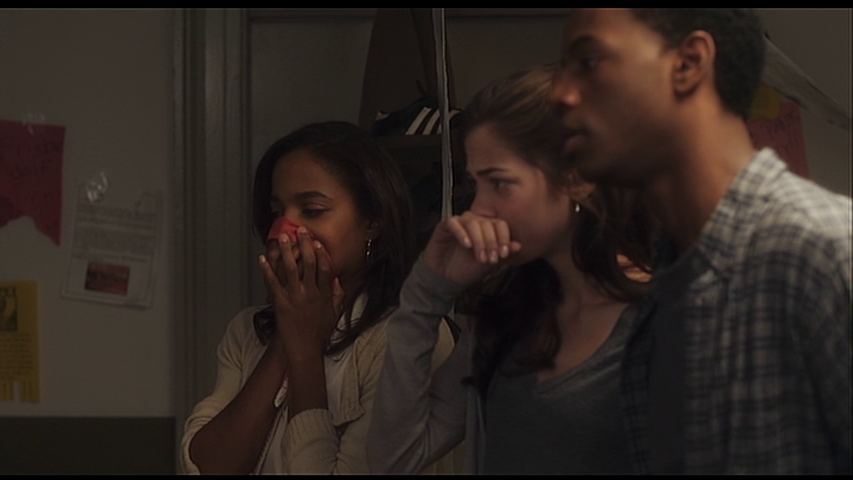
And so it is that she comes to represent a reminder that eccentrics like Violet aren’t ultimately defined just by the number of lost souls who they save, but also the regular people they transform in much subtler ways, which is much more interesting than just serving as a foil to her.
Along similar lines, Damsels is also one of the purest celebrations of the joy of learning you’ll ever find in the movies. Stillman notes on the commentary track included with the DVD that “color stands for all kinds of things you don’t know about,” and superficially ridiculous though it may be, it’s hard to imagine a better depiction of the thrill of finally getting to apply hard-earned knowledge in a practical setting than Thor, who has been “hitting the books,” shouting out the colors of the rainbow:



To be clear, though, the best thing about Damsels is Greta Gerwig, and I’m hard pressed to think of a role I enjoyed her in more. In a Q&A included on the DVD as an extra titled “An Evening with Damsels in Distress,” she explained what attracted her to the film: “I think my idea of what actors did at some point was: you’re in a musical, you have to be able to dance, and sing, and tap dance, specifically, so being able to be in this movie felt like the pinnacle of achievement of my acting career.”
The climactic musical number at the end of Damsels features steps, dresses, and a fountain that Peter Tonguette notes are reminiscent of my February Drink & a Movie selection The Young Girls of Rochefort:
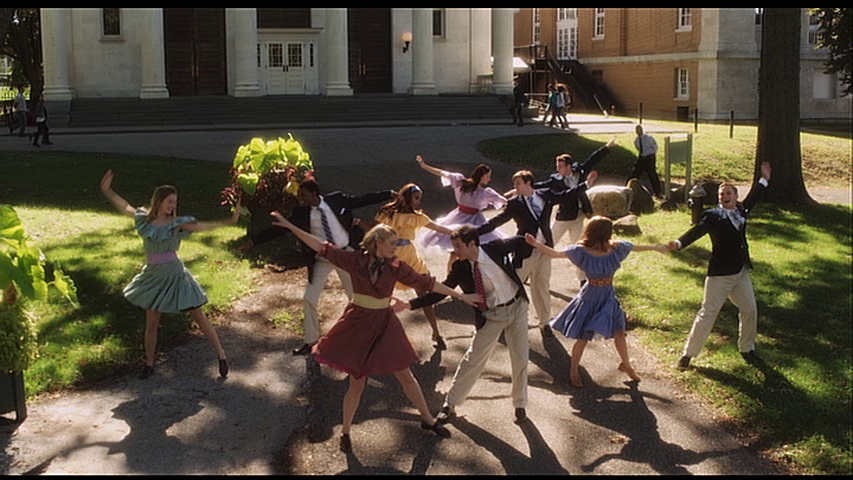
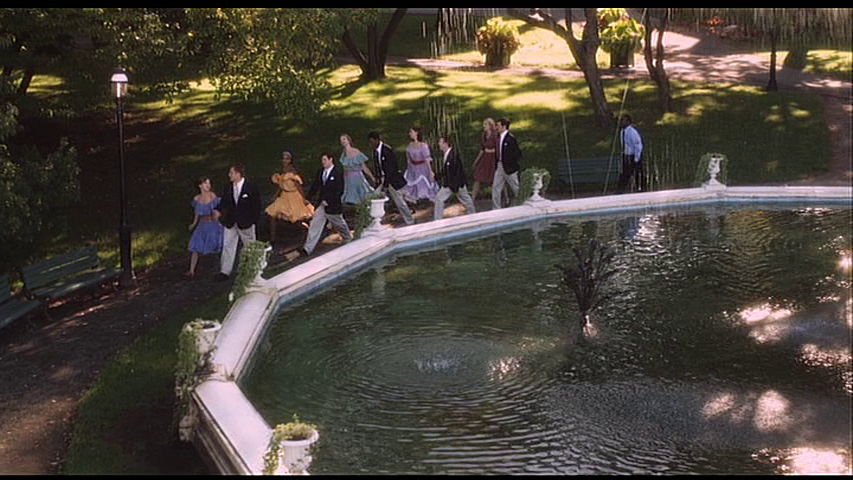
And ends with another benediction from the sun that any actor from any era would be lucky to include in their highlight reel:

Looking at this and the hot pink Sony Pictures Classic logo that the movie begins with, I wonder if it’s too much to suggest that without Damsels, we might not have “I’m Just Ken”?

Probably yes, but this does bring us back to this month’s pairing, I think. The “triumph” of Pompeii is of course that we remember it to this day, and the message of Barbie is not that the eponymous doll was significant in any particular way, but rather that it’s meaningful in and of itself that she was part of the lives of millions of children. This sounds an awful lot like the answer Violet gives to Professor Black (Taylor Nichols, also of Metropolitan, in which he plays a character with the same last name) when he asks why she considers starting a dance craze so important. So here’s to the Sambola! Long may it “enhance and elevate the human experience” and continue “bringing together millions of people in a joyous celebration of our God-given faculties”!
Cheers!
All original photographs in this post are by Marion Penning, aka My Loving Wife. Links to all of the entries in this series can be found here.

 The Prodigal Cinephile