My Loving Fiancée Marion became My Loving Wife on August 9, 2014. We really wanted to make something for our wedding guests, and given our interests a cocktail was an obvious choice, so we infused Woodford Reserve bourbon with local Ontario peaches, prepared some homemade vanilla bitters, taught our younger brothers the correct ratio of these ingredients to sparkling white wine, and asked them to make sure they were ready in time for the toast. When one of these brothers (mine) announced that he was getting married this month, I knew exactly what my corresponding Drink & a Movie pairing would be. To start with the second half of the equation, here’s a picture of my Milestone Film Killer of Sheep: The Charles Burnett Collection DVD release which includes My Brother’s Wedding:
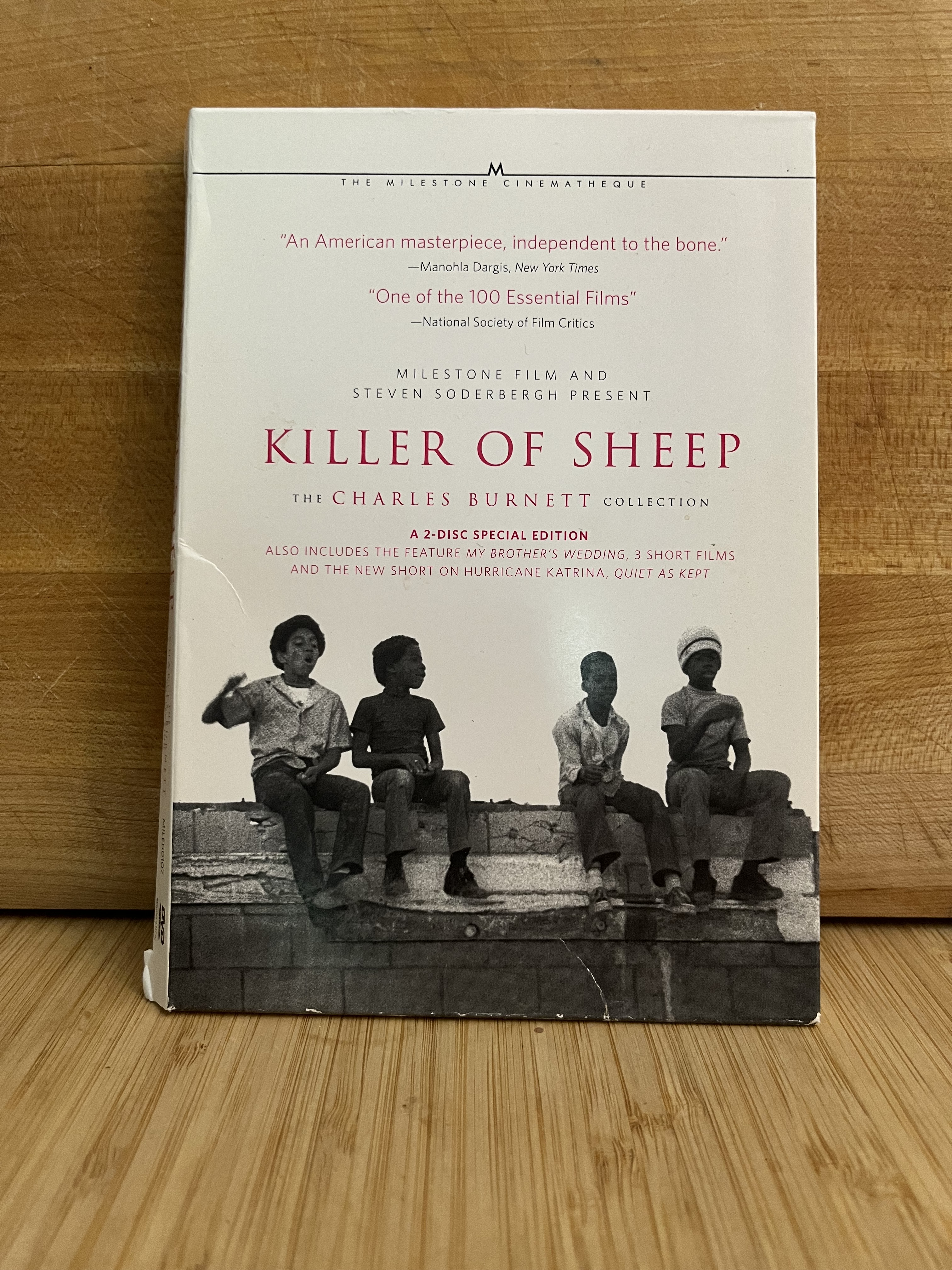
It can also be streamed via the Criterion Channel with a subscription, and some people may have access to it through Kanopy via a license paid for by their local academic or public library as well.
As far as the drink goes, I’d long been meaning to explore what else The Twentieth Century Guide For Mixing Fancy Drinks by James C. Maloney had to offer aside from the “bell-ringer” (his term for an apricot liqueur rinse) drinks that inspired me to purchase this book in the first place after Frederic Yarm mentioned them last year. The Peach Blossom caught my eye because it features a prominent flavor from the cocktail we served at our wedding, but like many pre-prohibition recipes it struck us as far too sweet. A gratifyingly small amount of tinkering fixed that right up, though! Here’s our version of this forgotten classic:
1 1/2 ozs. Smith & Cross Jamaica Rum
1/2 oz. Cornelius Peach Flavored Brandy
3/4 ozs. Lemon juice
1/2 oz. Rothman & Winter Orchard Apricot Liqueur
1/2 oz. Pineapple syrup
1 oz. Roederer Estate Brut
12 drops Fee Brothers Peach Bitters
Shake rum, brandy, lemon juice, apricot liqueur, and syrup with ice and strain into a chilled cocktail class. Top with sparkling wine and garnish with 12 drops of peach bitters.
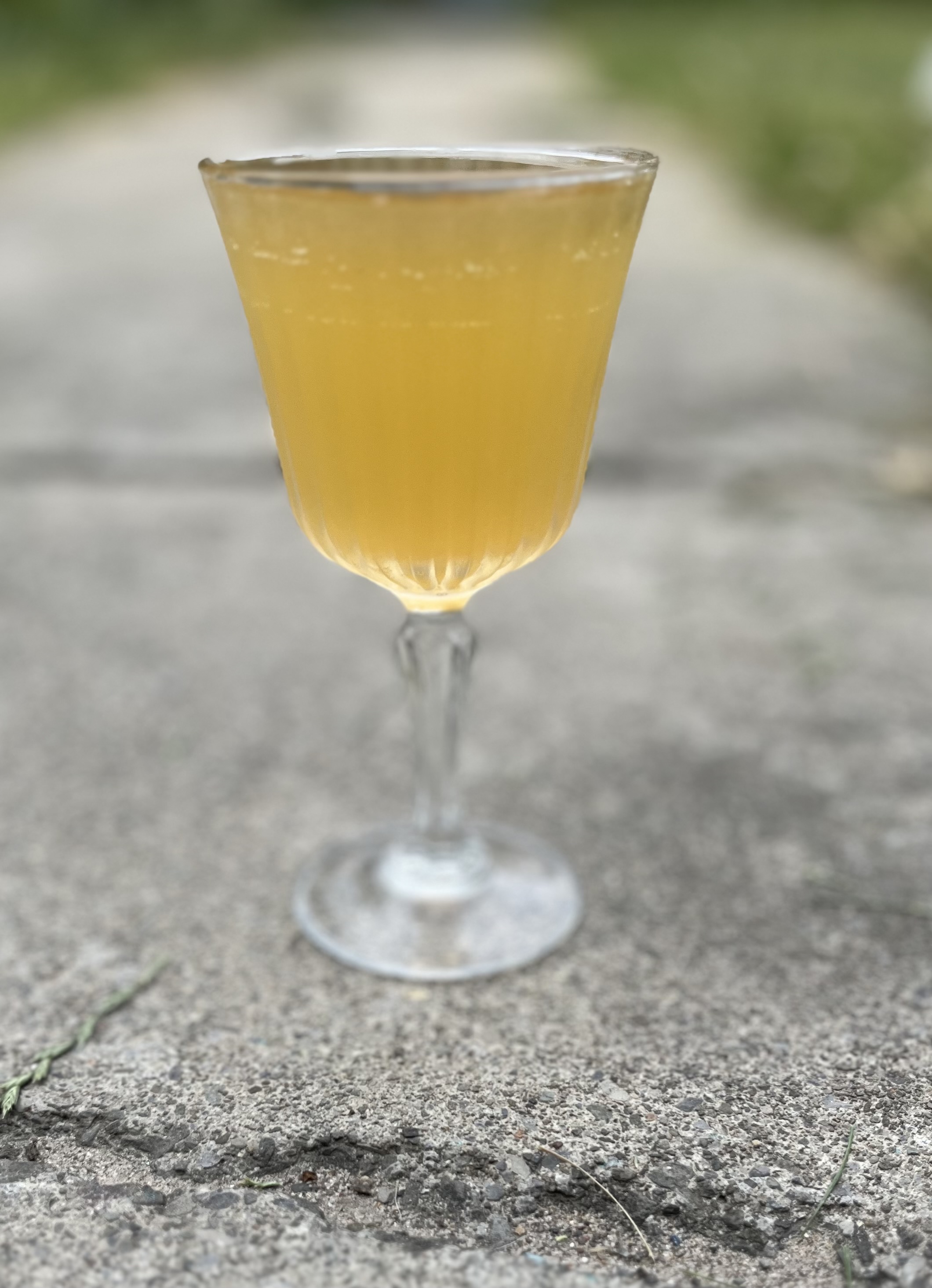
Veteran mixologists may have already realized that this is the same 8:4:3 ratio of strong to citrus to sweet utilized in a Gold Rush as adapted by Jim Meehan for The PDT Cocktail Book, which in my opinion is a perfect drink. I thought of Smith & Cross Jamaica rum as my base spirit because it works great in David Wondrich’s Fish House Punch, which also contains peach brandy. For pineapple syrup, we use the recipe from Employees Only’s Speakeasy book which produces a fresh, pure fruit flavor. Last but not least, the idea for the peach bitter garnish comes from The Bartender’s Manifesto, which uses this technique to great aromatic effect in the Woolworth Manhattan and elsewhere. Throw them all together and you get a balanced concoction that showcases the rum and is full–but not too full–of peachy flavor.
I believe I saw My Brother’s Wedding for the first time in 2007 at the Three Rivers Film Festival shortly after the long-overdue first theatrical run of director Charles Burnett’s debut feature Killer of Sheep. Although the latter is almost universally regarded as the superior movie, I’ve always thought of the former as my favorite. I realize now that this is due in large part to its central character Pierce Mundy, who is played by Everett Silas, and the way he relates to his family, friends, and neighborhood of Watts. According to James Naremore Silas delayed production by disappearing in the middle of the shoot (Naremore also notes that he reappeared “wearing a Dracula cape and demanding more money”), which perhaps explains why this is his only film credit, but I think his performance is terrific. Like the brothers in The Flowers of St. Francis, he and his best friend Soldier (Ronnie Bell) are perpetually in a hurry to get from point A to point B:
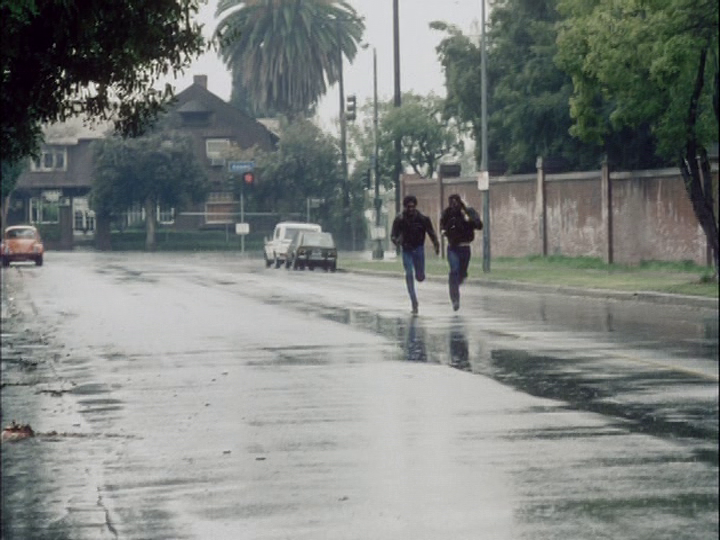
In an interview with Monona Wali published in a book by Robert E. Kapsis, director Charles Burnett describes this as a metaphor:
In My Brother’s Wedding, three different things are going on at the same time: the wedding, his friend getting killed, and Pierce’s promise to his mother. The conflict evolves: Pierce has got to be at his brother’s wedding at the same time as his friend’s funeral, and he can’t decide which is most important. So, he’s no help to anybody. It creates a conflict–a crisis–because he’s not able to evaluate things. If he had made a decision and not made promises he couldn’t keep, he wouldn’t have created a sad situation. […] The metaphor is running blindly–a man who refuses to take control of his life. These guys are rushing into life with limited knowledge. No, it’s not so much knowledge they lack, it’s wisdom.
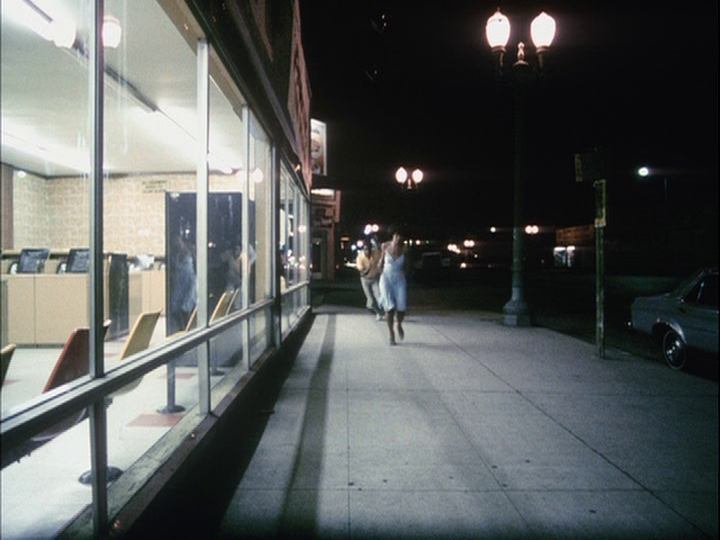
This explains why Pierce runs in the scene which I think depicts him at his very worst, when he chases after a woman (Julie Bolton) that Soldier has forced himself on:
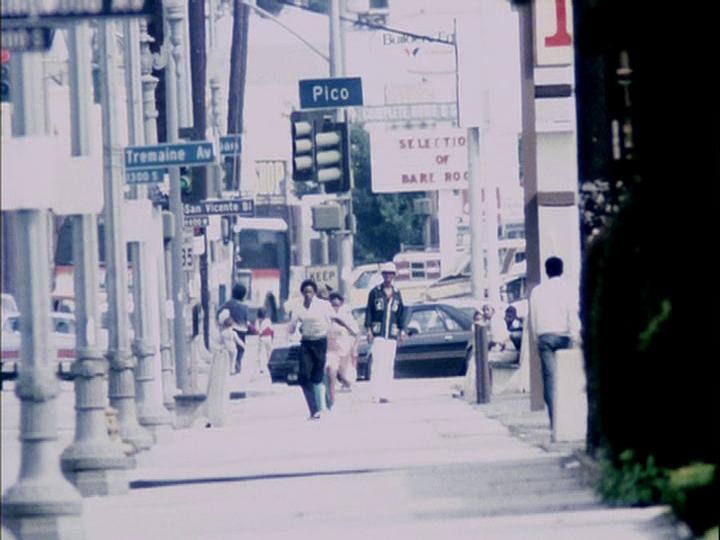
Running is also associated with tragedy: after Pierce finds out that Soldier has died, Burnett (who is also the film’s cinematographer) shoots him from so far away that it initially seems like he’s stuck in one spot:
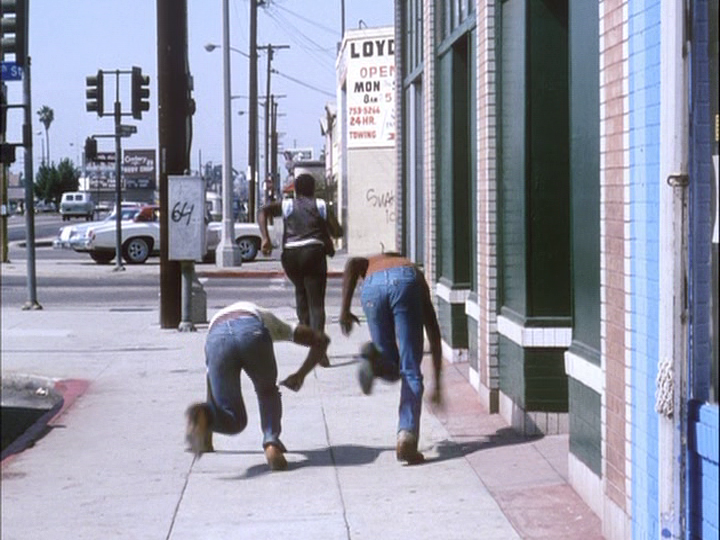
Finally, in my favorite running scene of all, Pierce and Soldier don’t just chase a would-be assassin (Garnett Hargrave) through the streets, they hurl themselves after him with utter disregard for their bodies or the law of gravity, skidding across and careening off features of the urban landscape:
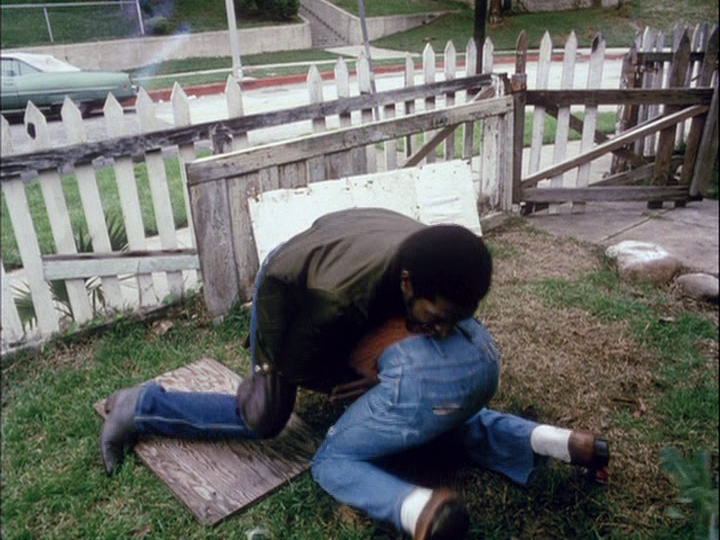
Although elsewhere the behavior is more innocent and pure, the multiple instances of roughhousing are probably even more reminiscent of the simple enthusiasm of Francis’s followers. Wrestling seems to be Pierce’s love language. Here he grapples with Soldier:
And here his father (Dennis Kemper):
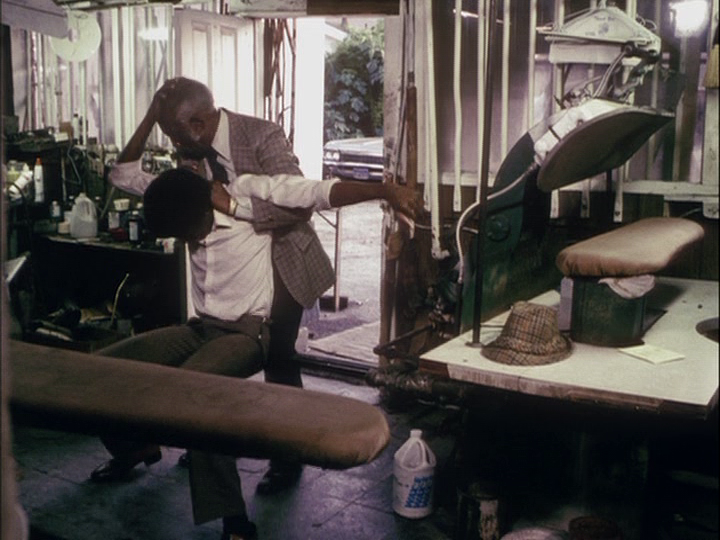
This and his mother (Jessie Holmes) swatting him hard on the back in one scene and shoving him down a short flight of steps in another lets us know that it runs in the family. But the strongest indication of all that, despite his complicity in Soldier’s misdeeds, Pierce is at heart a good person can be found in the way his neighbors regard him. The narrative begins with a woman trying to recruit him to be the father of her sister’s baby:
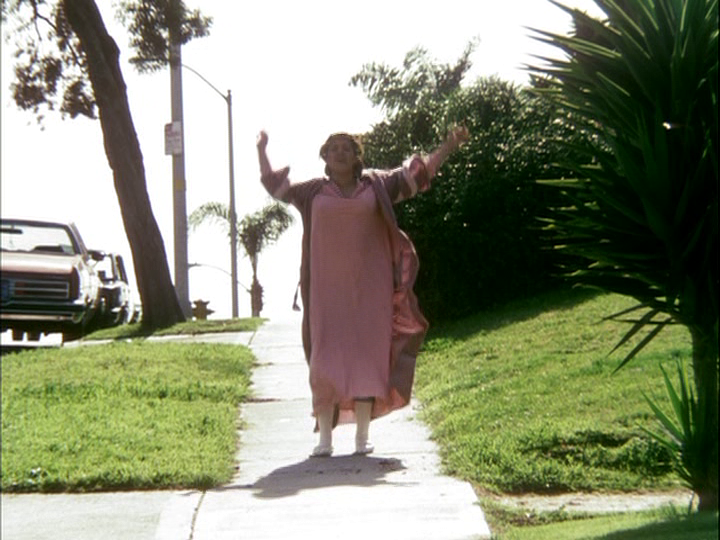
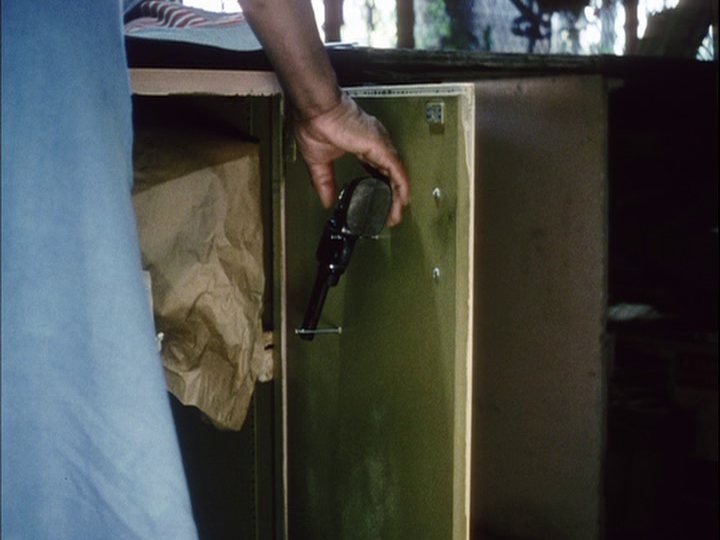
Later, Pierce is unable to find Soldier a job, but it’s clear that any of the prospective employers he talks to would hire him in a heartbeat. His mother may not be able to look past the fact that he isn’t a lawyer like his brother, but everyone else in Watts seems to see him as a pillar of the community. This is, by the way, a neighborhood in transition: it’s becoming a much more dangerous place. Everyone who lives there keeps a gun handy, including Pierce’s mother:
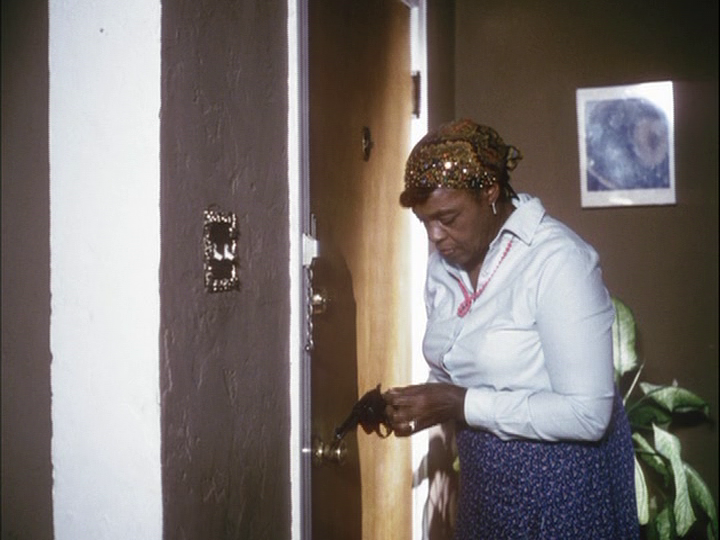
His Aunt Hattie (Jackie Hargrave):
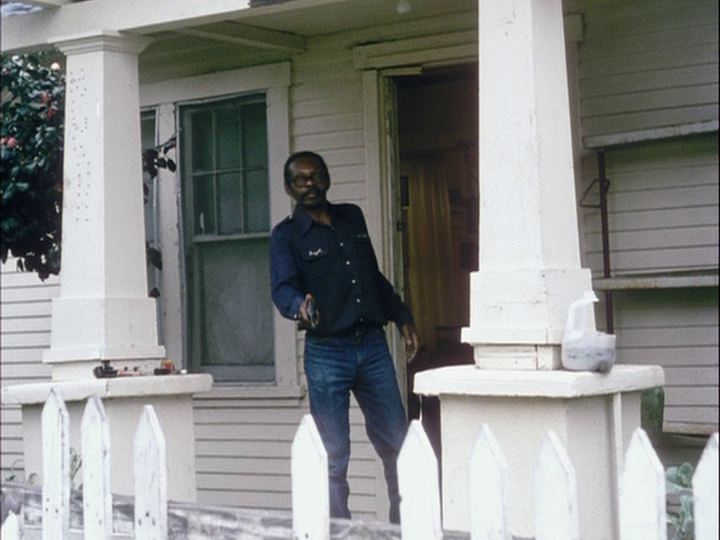
And the owner of the yard he and Soldier are wrestling in above:
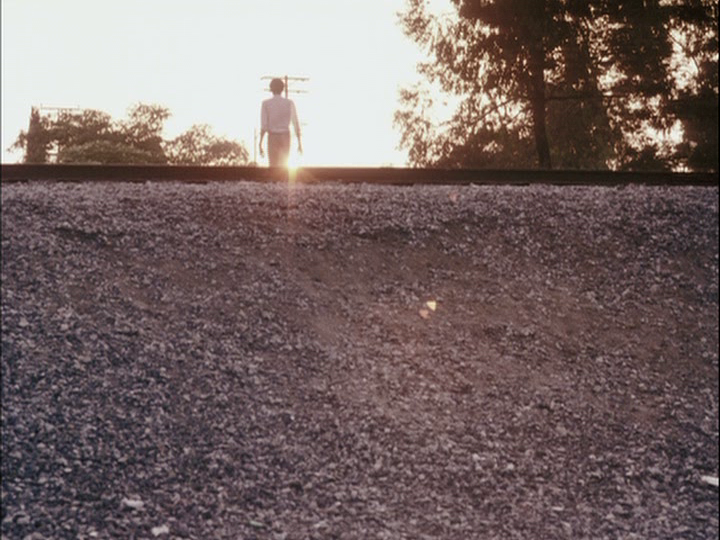
My Brother’s Wedding doesn’t include any individual images to rival those in Killer of Sheep of children gliding from rooftop to rooftop or chasing after a freight train, but it does include a number of memorable compositions. My favorite is this one of Pierce lost in his worries:
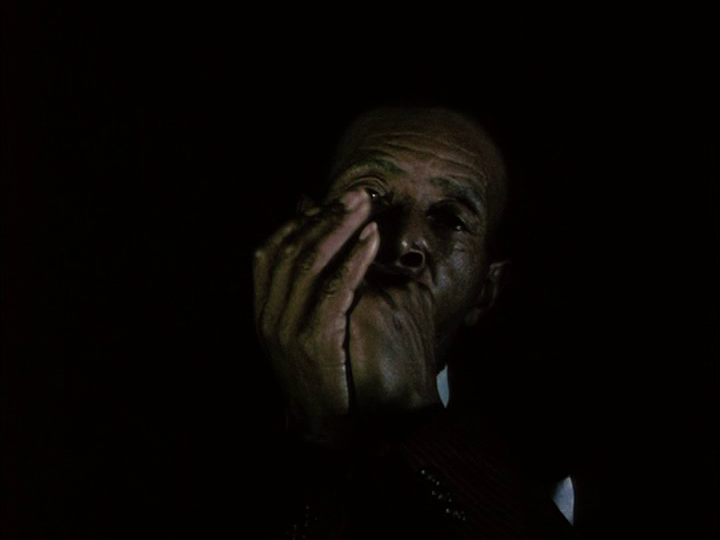
The opening shot of a man playing the harmonica (Dr. Henry Gordon) is also striking:
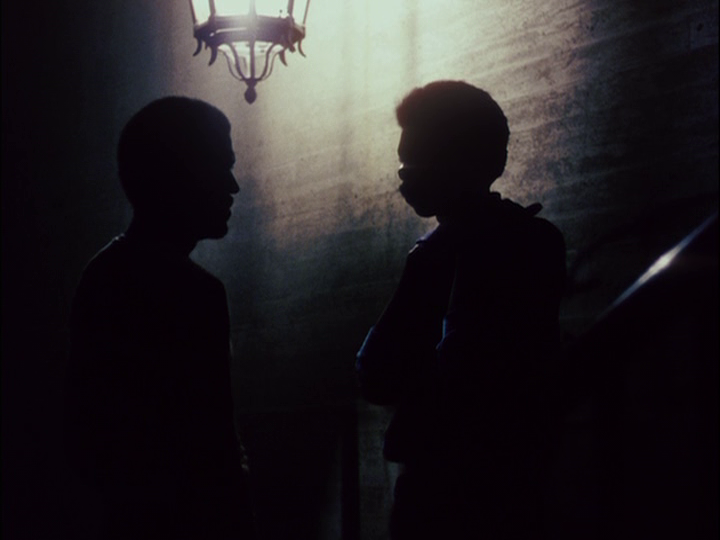
As is a later shot of Pierce and Soldier talking about how all their friends are dead or gone:
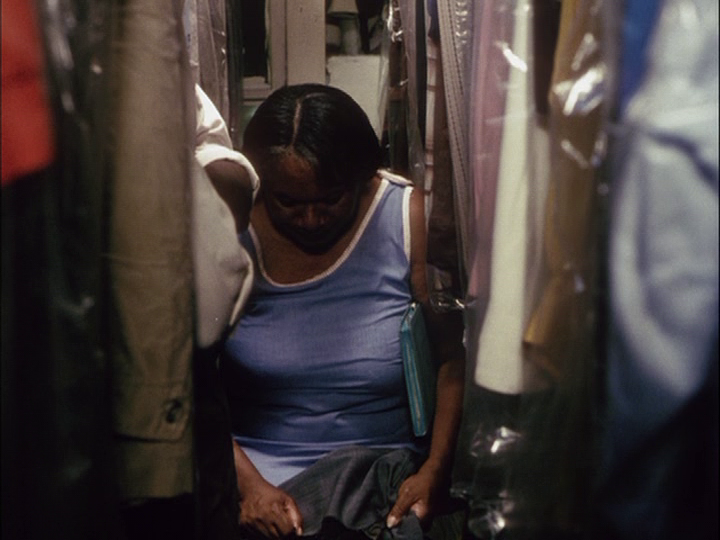
Other pictures worth a thousand words include Mrs. Mundy sighing over split pants:
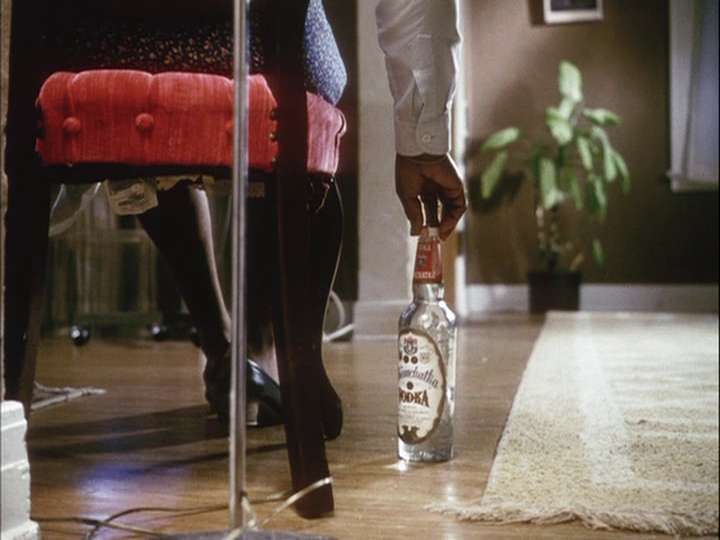
Aunt Hattie’s bottle of vodka:
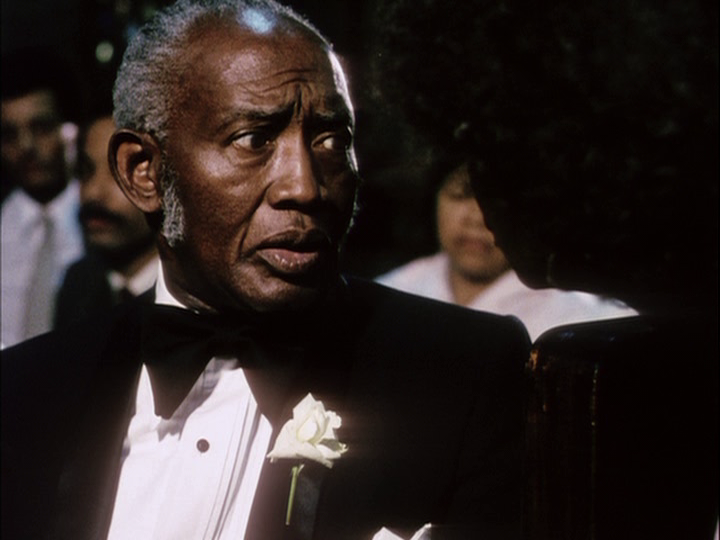
And the look on Mr. Mundy’s face when Mrs. Dubois (Frances Nealy) hisses “where is your son?” at him:
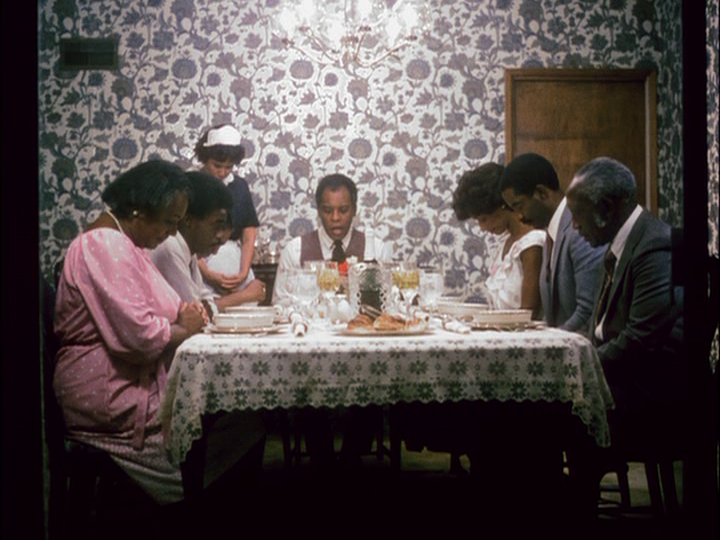
This is so different from her conduct up until now that it suggests that Pierce wasn’t entirely off-base when he referred to his future sister-in-law Sonia (Gaye Shannon-Burnett) as being “as fake as a three-dollar bill.” I’m not sure whether the best thing about the scene where the two families eat dinner together (which Amy Corbin calls “Brechtian”) is this wallpaper and tablecloth:
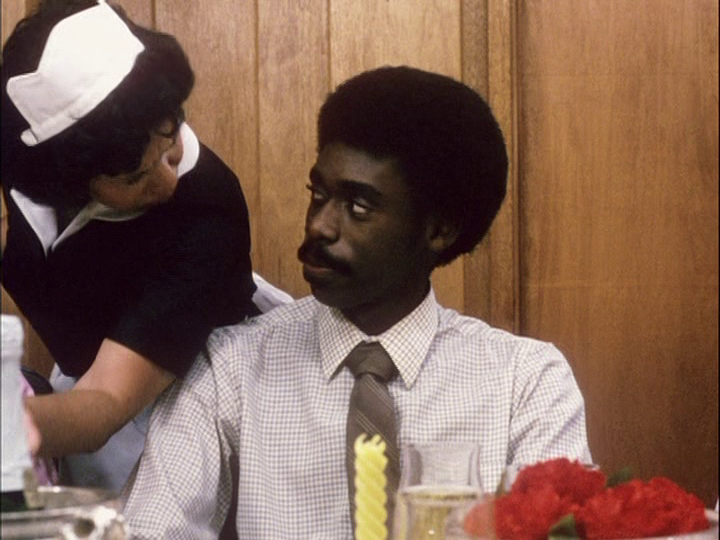
Or the glances Maria (Margarita Rodríguez) and Pierce exchange after he makes an obsequious show of thanking her in an attempted gesture of working class solidarity:
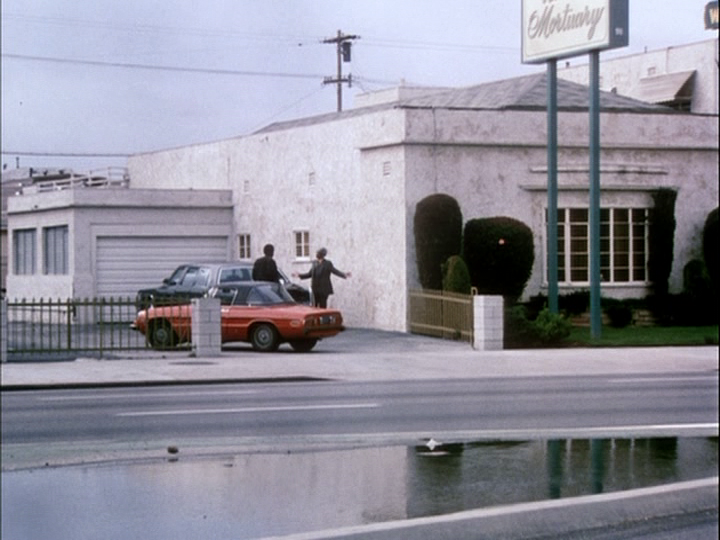
My Brother’s Wedding ends with Pierce unhappily stuck at the titular event while Soldier’s funeral takes place across town. He tries to take advantage of a delay caused by the late arrival of Sonia’s favorite uncle by borrowing a car from someone, but by the time he gets to the mortuary, the mourners are all gone:
The movie ends with a slow-motion zoom in on the wedding ring which Pierce suddenly realizes he still has, concluding with an out-of-focus freeze frame:
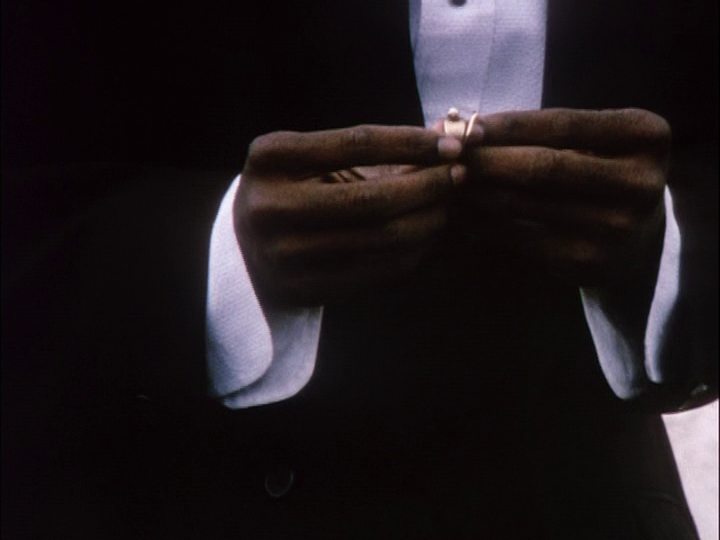
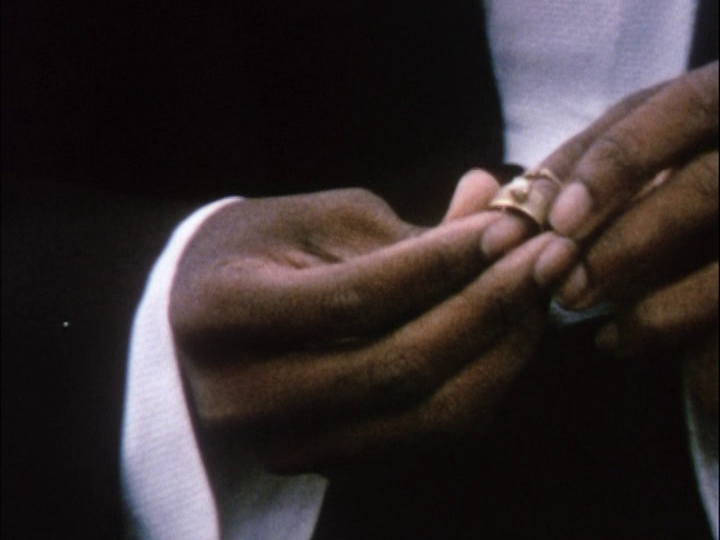
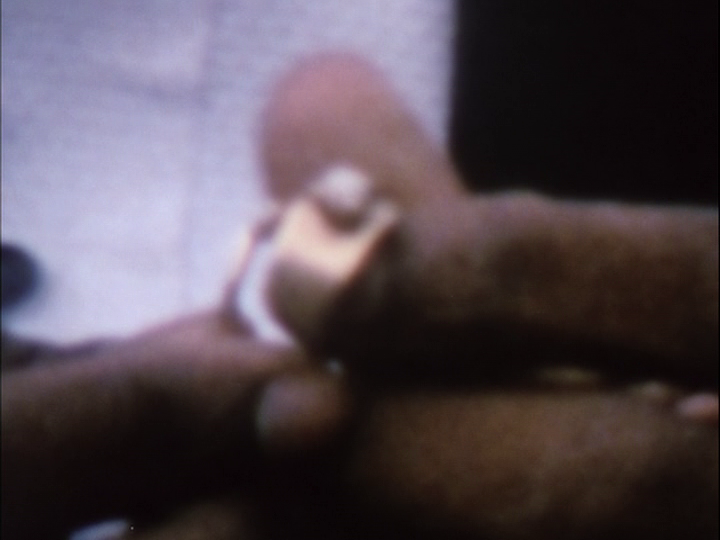
Marion commented that this is a good example of a scene that wouldn’t make sense in the age of cell phones the last time we watched it together. While she’s obviously right that the execution would be different, I don’t think it would need to substantially alter the meaning. Instead of blindly rushing off from one event to the other and missing them both, perhaps Pierce foolishly tries to time everything perfectly and still gets stuck in traffic. Either way he is still impulsive and immature and relatably stranded between mutually exclusive life choices.
It doesn’t ultimately matter whether or not My Brother’s Wedding is a *better* film than Killer of Sheep, just as I could care less if the Peach Blossom in this post is superior to the drink we served at my wedding or the ones James Maloney mixed back in the 19th century. There’s a time and a place for all of them, which: I actually believe that may be the whole point of this series!
Cheers!
All original photographs in this post are by Marion Penning, aka My Loving Wife. Links to all of the entries in this series can be found here.

 The Prodigal Cinephile