The night I moved in with My Loving Wife (then girlfriend) Marion in Baltimore in 2011 we went out to dinner at a place down the street called B&O American Brasserie. I don’t remember what anyone ate, but I’ll never forget my first sip of a concoction called a B&O Manhattan, an original creation by bartender Brendan Dorr (now co-owner of Dutch Courage, which I hear raves about and am determined to visit the next time I’m in town) that contained maple syrup and port in place of the traditional sweet vermouth, or the clever dehydrated orange wheel garnishes. I knew immediately that I had probably lucked upon the city’s best cocktails and I never went anywhere in the subsequent eight years I lived there that came close to changing my mind.
I can’t swear that Dorr’s El Oso was on the menu that evening, but I’m certain I had it there more than once. I found myself thinking about this drink the other day and was pleased to discover that it appears in Gregory and Nicole Priebe’s book Forgotten Maryland Cocktails: A History of Drinking in the Free State, so I bought a copy and whipped a couple up. The Priebes note that El Oso was created for the 2010 U.S. National Bärenjäger competition and that the judges who awarded it first prize called it “perfectly balanced” and “an instant classic.” We very much concur! Here’s how you make it:
1 3/4 ozs. Añejo tequila (Espolón)
3/4 ozs. Bärenjäger
1/3 ozs. Maraschino liqueur
2 dashes Jerry Thomas’ Own Decanter bitters
Dehydrated orange wheel (we used this recipe by Martha Stewart)
Stir all ingredients with ice and strain into a rocks glass which contains the orange wheel and one big ice cube.

Maraschino is to me the flavor of sophistication, but only if you don’t overdo it. Here, as in a Martinez made with barreled gin (my favorite is Ransom Old Tom), the warm and lively base spirit and distinctive bitters keep it in its place. The drink has a great texture as well.
El Oso is Spanish for “bear,” and between that name and the fact that Bärenjäger hails from Germany, it felt obvious what movie I should pair with this drink. Here, then, is a picture of my Lions Gate Home Entertainment DVD release of Werner Herzog’s Grizzly Man:

It can also be streamed via most major platforms for a rental fee.
Grizzly Man‘s most famous scene is without doubt the one in which Herzog listens to audio tape of the film’s subject Timothy Treadwell and his girlfriend Amie Huguenard being mauled to death by the bears they visited Alaska each summer to study and protect:

The person holding the camera in this screengrab is Jewel Palovak, Treadwell’s friend and collaborator and an executive producer of Grizzly Man. “Jewel, you must never listen to this,” Herzog says as he puts down his headphones. “I’m never going to,” she replies. It’s tempting to read this scene, which is positioned halfway through the film, and this extreme close-up of a bear which appears near the end as comprising a thesis statement of sorts.

“What haunts me is in that in all the faces of all the bears that Treadwell ever filmed I discover no kinship, no understanding, no mercy,” Herzog says in voiceover during the latter. “I see only the overwhelming indifference of nature.” These moments seem to hearken back to beginning of the movie and suggest that the “story of astonishing beauty and depth” that Herzog found in the 100+ hours of footage that Treadwell shot during his last five summers in Alaska before his death is, to paraphrase Herzog’s “Minnesota Declaration,” a mysterious and elusive one that cannot simply be shown straight-on, but only fully apprehended via imagination.
Upon revisiting Grizzly Man, though, I found myself thinking that Herzog is perfectly serious when he suggests the part of his mission is to defend Treadwell “not as an ecologist, but as a filmmaker.” A comment that his footage contains “such glorious improvised moments the likes of which the studio directors with their union crews can never dream of” is accompanied by this delightfully abstract shot of the inside of a tent while a fox climbs on top of it:
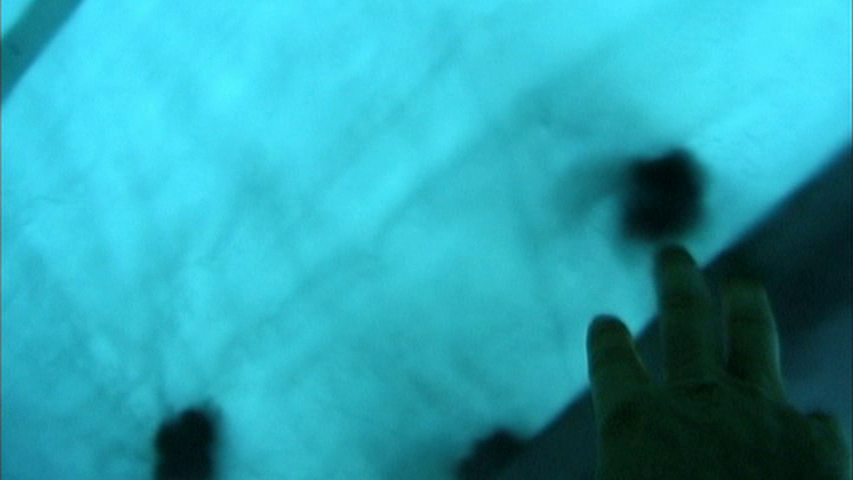
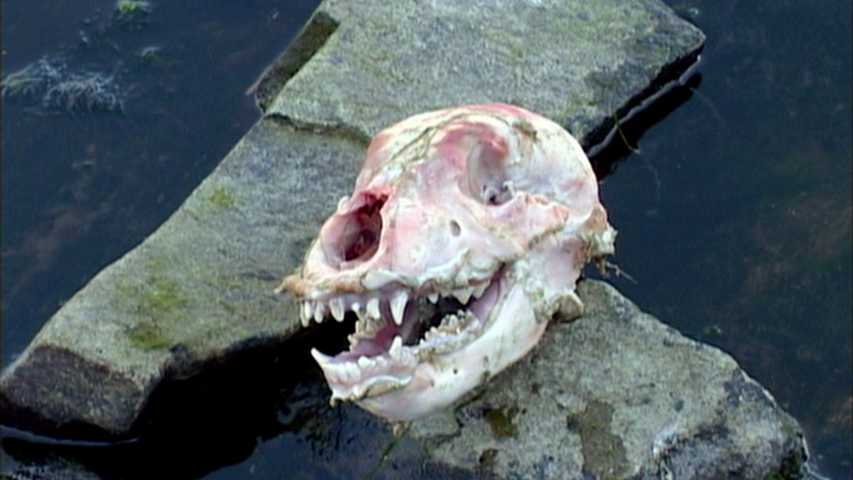
Herzog includes others criticizing Treadwell in Grizzly Man on the grounds that “he was acting like he was working with people wearing bear costumes” and didn’t sufficiently respect nature, but also demonstrates that however rightfully or wrongfully distraught Treadwell was by the violent acts that occurred around him, he didn’t shy away from filming things like the skull of a cub that starved to death which had been picked clean by its fellow bears in a matter of days:
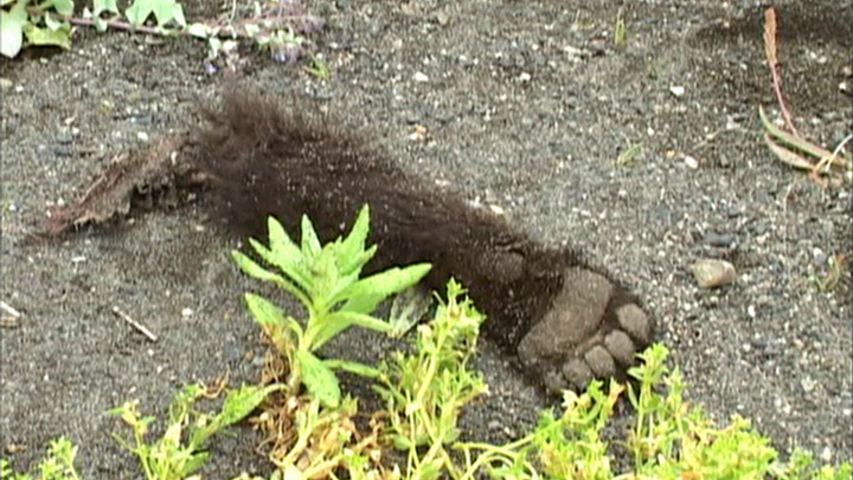
Or the severed limb of one killed by a male that wanted its mother to stop lactating so that he could “fornicate” (Herzog’s word) with her:
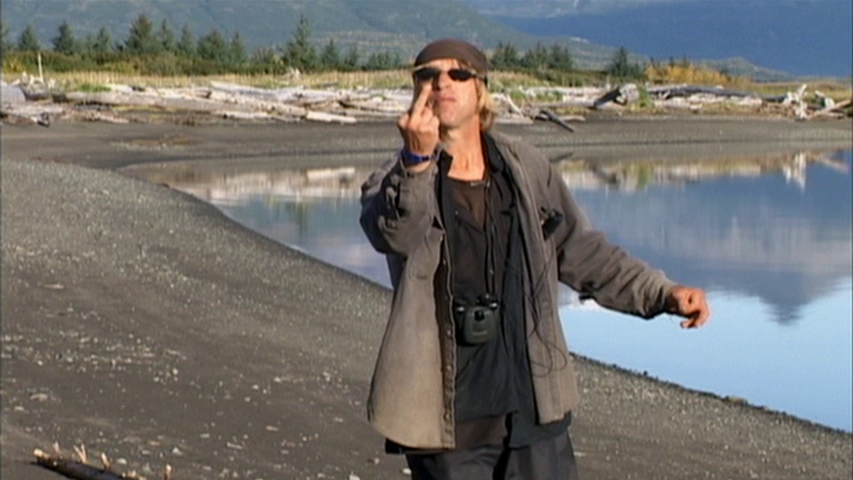
Treadwell clearly intended to eventually assemble his videos into a cohesive work. Herzog calls him “methodical” as a filmmaker and reports that he often repeated takes up to fifteen times. Some of this footage presumably wasn’t meant to be included in this project, such as a lengthy tirade against the National Park Service:
Treadwell may have filmed the dead bears just for himself as well, but he was always going to have to work with a professional editor and it’s not at all hard to picture this material finding its way into whatever they created together. In fact, Jewel Palovak’s comment in Eric Kohn’s 2020 oral history of Grizzly Man that “Timmy would’ve really liked the movie” invites one to imagine a world in which the person Treadwell collaborated with somehow turned out to be Werner Herzog, who presumably would have insisted on it. And maybe scenes like the one in which Treadwell turns his ire on the gods (“Let’s have some water, Jesus boy! Let’s have some water, Christ man or Allah or Hindu floaty thing. Let’s have some fucking water for these animals!”) as well:
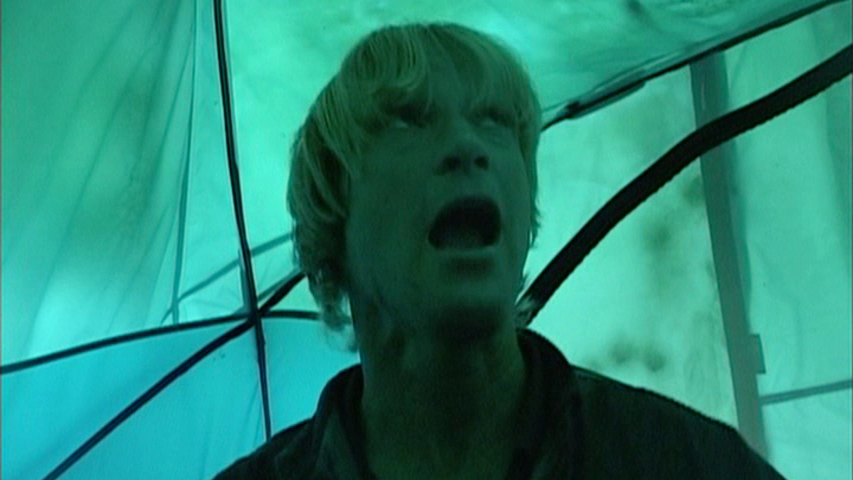
Meanwhile, the bear fight that Treadwell captures is every bit as astonishing and dramatic as anything you will ever see in any nature documentary ever:


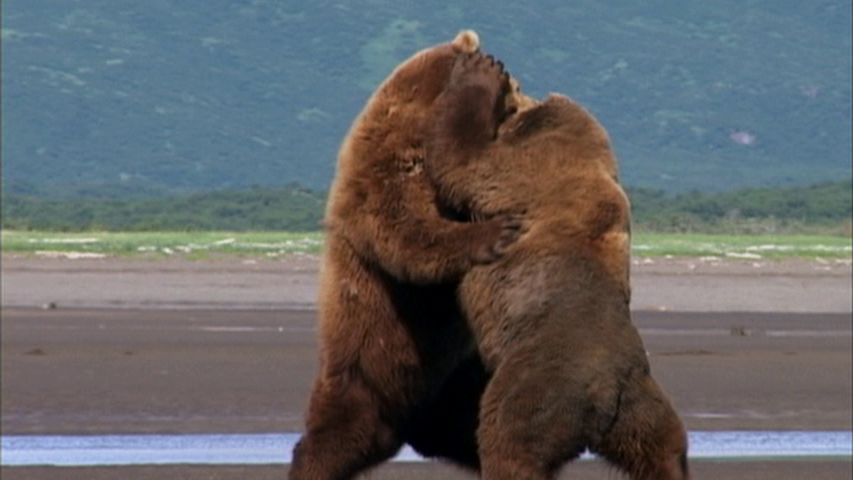
I always thought of Grizzly Man as a great film that Werner Herzog made out of Timothy Treadwell’s footage, but now it seems to me more of a sincere attempt by the former to finish the latter’s work. Of Herzog’s original content, my favorite is probably this interview with Willy Fulton, the pilot who dropped Treadwell off at Katmai National Park at the beginning of each summer and picked him up again in the fall. What appear to be flashes of light in this screengrab are actually flies:

The air is thick with them and as they flit about the camera they make little pinging noises. Maybe more than anything else in the film, this constant sound and motion illustrates just how uncomfortable the life Timothy Treadwell chose was.
Also deserving of mention is the music improvised by an ensemble led by Richard Thompson and the excellent DVD extra In the Edges: The “Grizzly Man” Session which documents its creation. By drawing my attention more explicitly to touches like the ominous cello tones present during this scene it increased my appreciation for how music shapes our perception of Treadwell’s footage and elevates it:
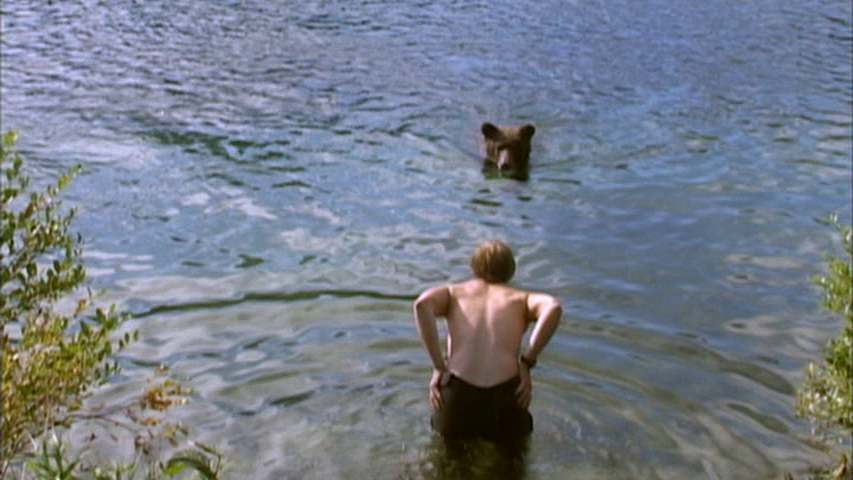
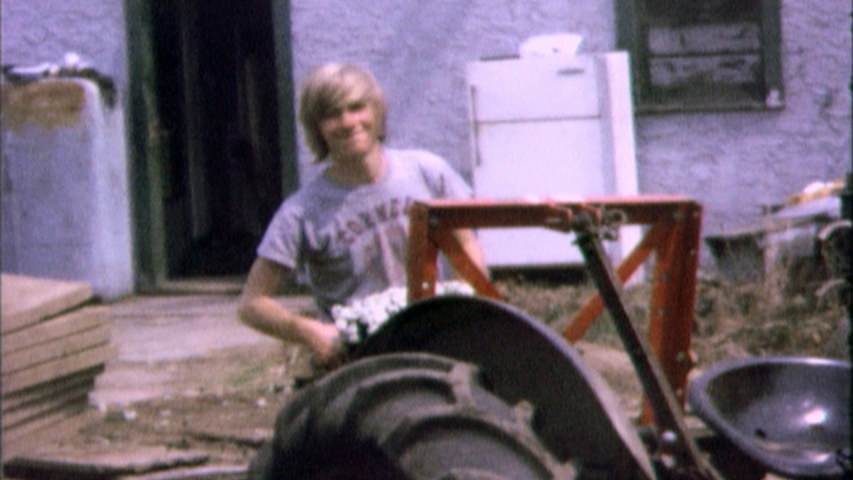
I would be remiss if I didn’t note that Timothy Treadwell is wearing a Cornell t-shirt in a photograph from his youth:
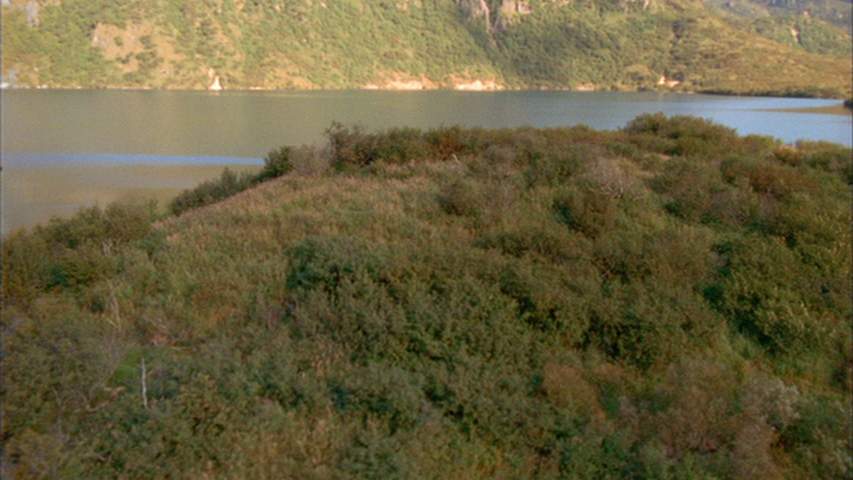
Finally, Grizzly Man contains some terrific landscapes including these aerial shots of the areas where Treadwell camped at the beginning and end of each summer respectively which are effective at establishing a sense of space. Here’s the plain he called the Sanctuary:

And here’s the “densely-overgrown” Grizzly Maze:
But even better is this nearby glacier “in turmoil” which Herzog calls a metaphor for Treadwell’s soul:
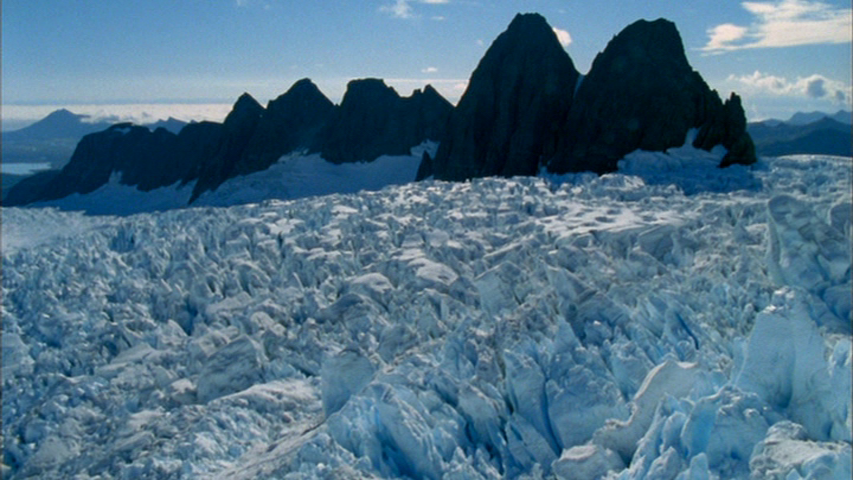
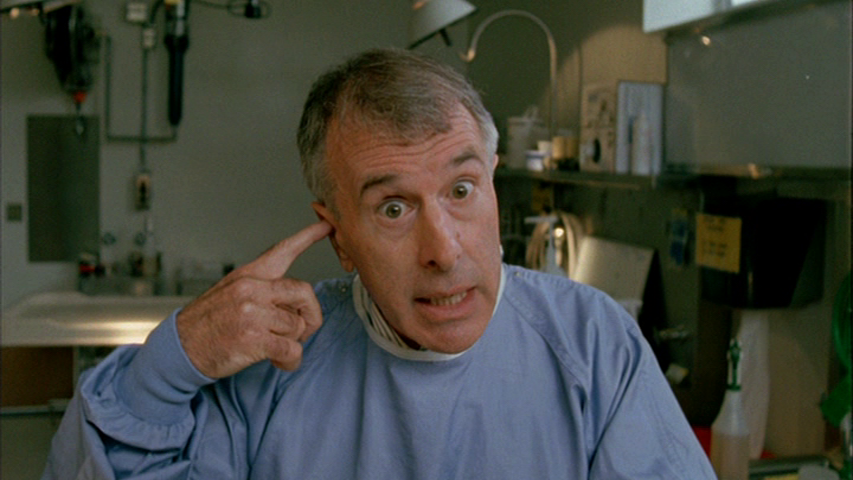
Which kind of reminds me of the album cover for Joy Division’s Unknown Pleasures? Normally I’d conclude this post by circling back to the drink and talking a bit more about why I think it pairs well with the movie I chose, but this month it really isn’t any more complicated than just “bears.” I’ll therefore instead leave you with this image of coroner Franc G. Fallico:
Cheers!
All original photographs in this post are by Marion Penning, aka My Loving Wife. Other entries in this series can be found here.

 The Prodigal Cinephile