As anyone who knows me would presumably tell you, I am not a sentimental person. It may therefore surprise some readers of this blog to learn that I am absolutely nuts about Christmas music! My family maintains a holiday playlist on our home computer which has grown to include nearly a thousand songs that we add to every year, and I turn it on every time I go downstairs in the morning and come home from work in the evening from the day after Thanksgiving clear through the end of the year. We’re also big on Christmas movies in our house. There are about 20 that we watch every single year, which doesn’t leave a lot of time for other films during the month of December.
I actually think this is part of the appeal for me–I try to keep up my one theatrical screening per week regimen, but otherwise am happy to take a bit of a breather from new movies. The very fact that I’m *not* super emotional is also a factor: cinema provides a safe space where people like me can experience feelings like hope and and sadness and goodwill for our fellow human beings without fear that letting our guard down in such a way will immediately lead to our inevitable demise. Christmas movies are particularly well-suited to this sort of thing–the fact that they often reference one another and are chock full of holiday music creates a sort of “force multiplier” effect.
There are plenty of drinks that I make this time every year as well, and in keeping with last month’s resolution to continue highlighting local spirits, my December pairing features my favorite way to use Finger Lakes Distilling’s Riesling Grappa, a concoction by Boston-based bartender Misty Kalkofen (creator of the In Vida Veritas cocktail I wrote about in March) called The Grinch. As fellow Cornellian Frederic Yarm notes in his Cocktail Virgin Slut post about it, Kalkofen actually renamed it Mistaken for Strangers in order to prevent it from being confined just to holiday menus, but I prefer the original appellation, not least because it really is the same color as the Dr. Seuss character! Here’s how to make it:
1 oz. Grappa (Finger Lakes Distilling Riesling Grappa)
1 oz. Green Chartreuse
1/2 oz. Lime juice
1/2 oz. Simple syrup
Shake all ingredients with ice and strain into a chilled rocks glass. No garnish.

Finger Lakes Distilling’s grappa is flavorful, but pretty mellow compared to some I’ve known (such as the one responsible for me and My Loving Wife flipping a canoe in the middle of the night the evening we got engaged–but that’s a story for another day!) and it shines in mixed drinks like this one because it’s substantial enough to stand up to other potent ingredients, but doesn’t take over. The first thing to hit you here are actually herbs and sweetness from the Chartreuse and syrup, and I believe it might make The Grinch a perfect introduction to grappa for people who think they don’t like it. The movie I’m pairing it with is one of my two or three Christmas movies of all time, Jon Favreau’s Elf. Here’s a picture of my copy of New Line Home Entertainment’s “Infinifilm” (the less said about that terrible idea, the better) DVD release of the film:
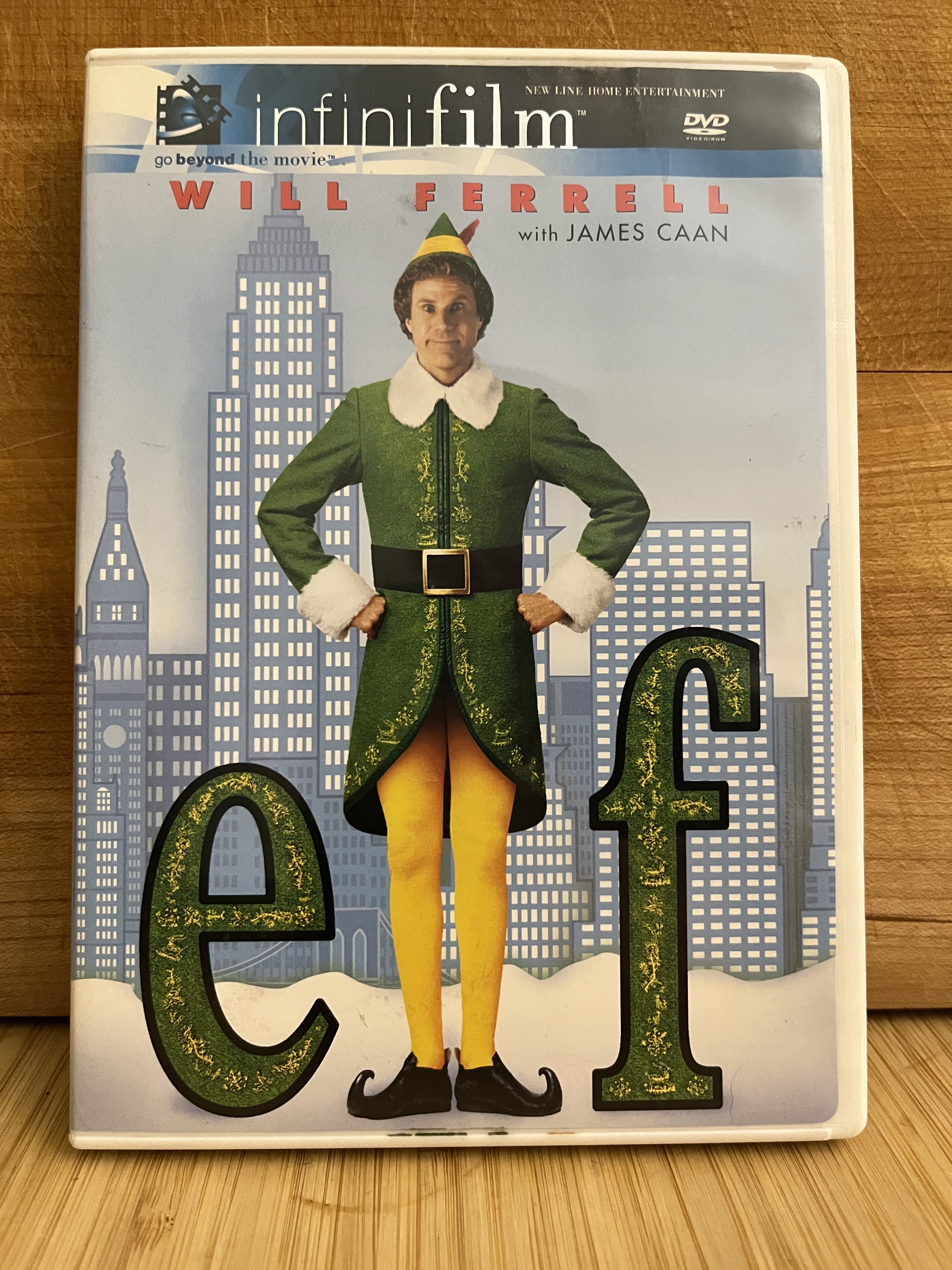
Elf can also be streamed via HBO Max with a subscription and can be rented or purchased from most major consumer platforms, including Amazon Prime and Apple TV.
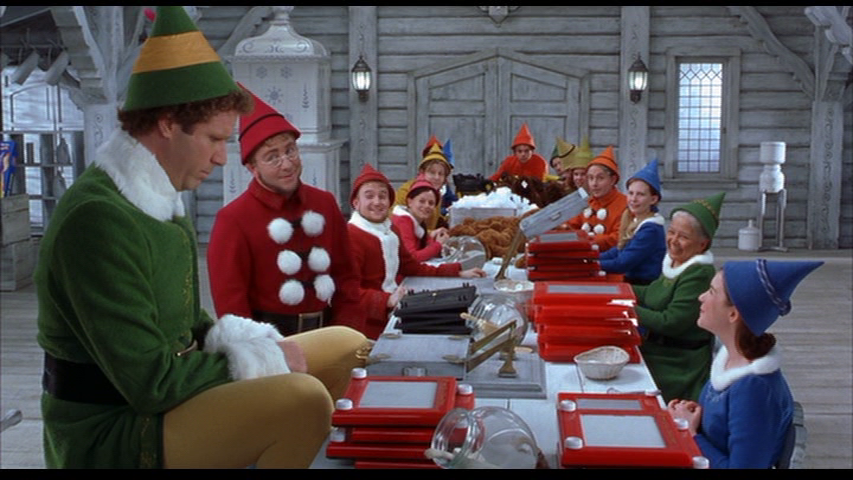
My love affair with this film goes all the way back to the first time I saw it in either 2006 or 2007. My roommates and I got to the end and immediately watched it again! There are five main things that make this a legitimately good movie. First, there are the gorgeous North Pole costumes, sets, and old school special effects. The film opens with a dissolve from a children’s book-style rendition of Bob Newhart playing Papa Elf to the man himself:
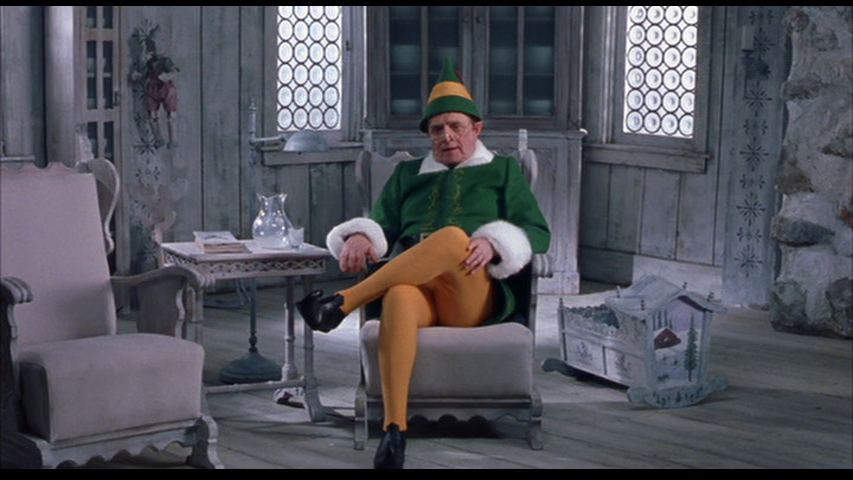
He is, of course, wearing an exact replica of the clothes the Head Elf wears in Rudolph the Red-Nosed Reindeer, and like all the elf costumes it looks outstanding against the monochrome gray stone and wood that the elves apparently use for all their non-toy construction projects. This is followed by an opening credits sequence that features these delightful stop-motion animated arctic creatures, including one (the polar bear cub) voiced by legendary special effects artist Ray Harryhausen:
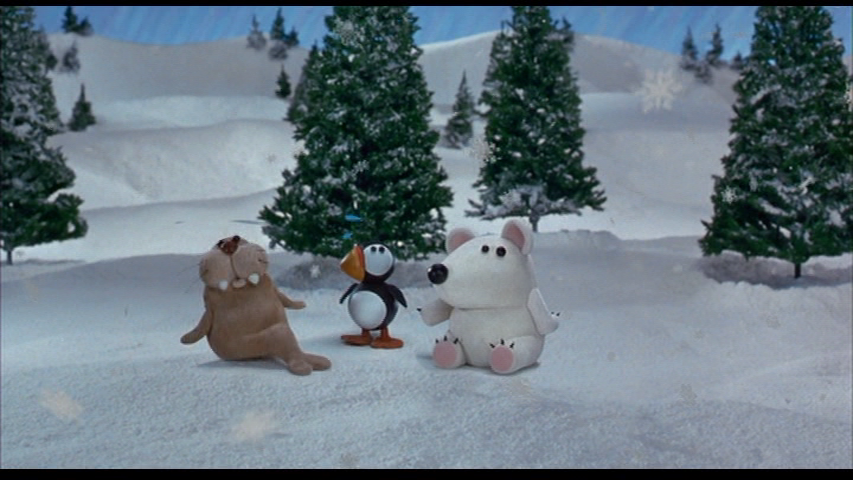
The film proper begins with the story of how Will Ferrell’s Buddy the Elf, who is actually a human, climbed out of his crib at an orphanage and into Santa’s sack of presents, in which he was transported to the North Pole and ultimately adopted by Papa Elf. Forced perspective is used effectively throughout this whole opening sequence, and although it occasionally looks obvious in freeze frame:
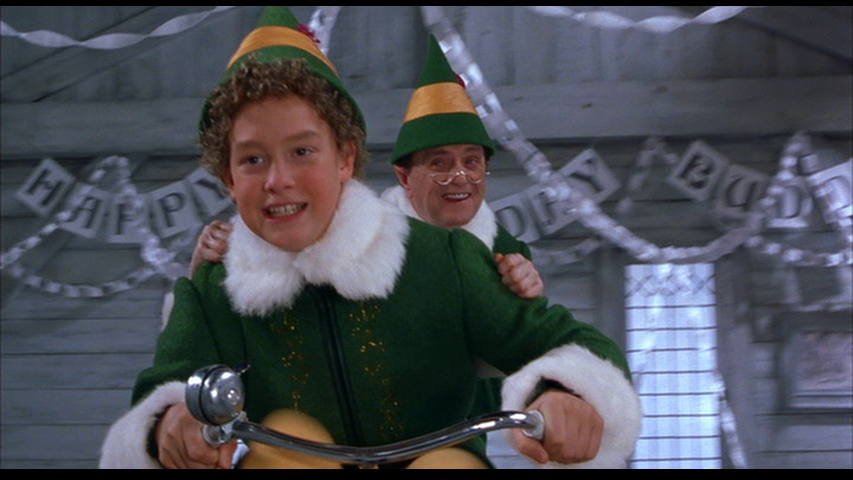
Elsewhere the joins between the human- and elf-sized sets are nearly impossible to spot even upon close inspection:
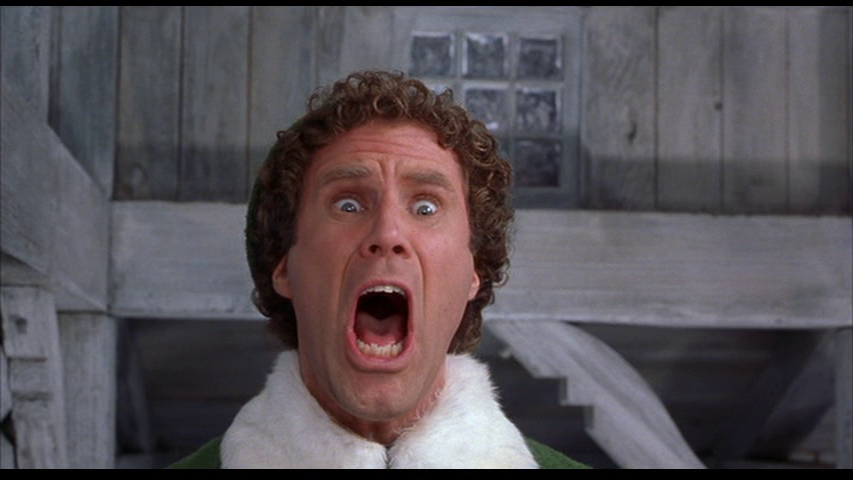
The next great thing about Elf is Will Ferrell’s acting. You could write an entire blog post just on his reaction shots. Here he is devastated to find out that his biological father is on the naughty list:
And here entranced by the Rockefeller Center Christmas tree:
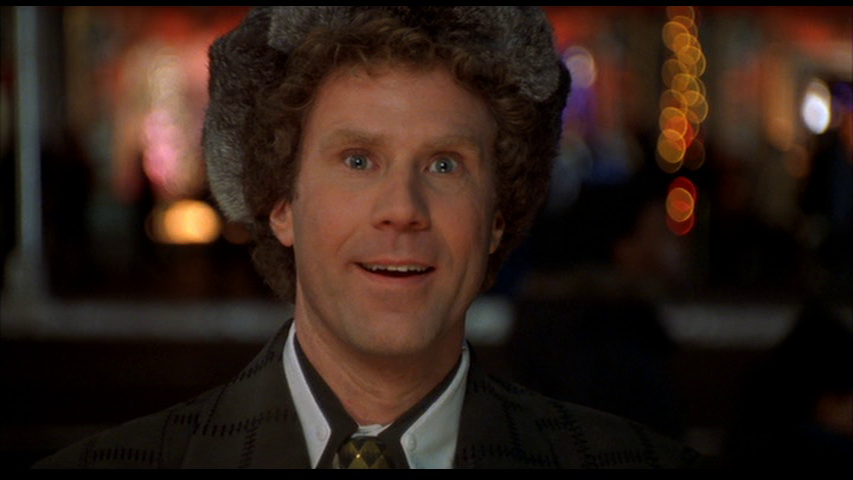
Here he is utterly disgusted by an imposter Santa:

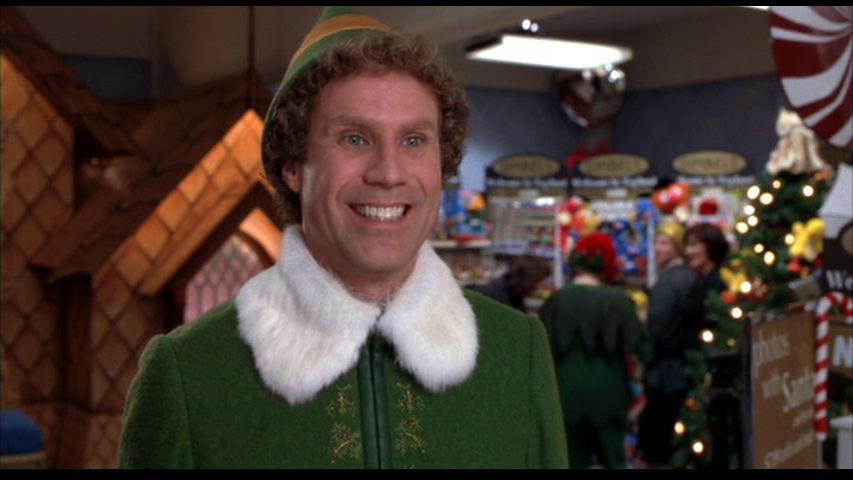
And here smiling is his favorite:
The rest of the casting is brilliant, too. If Ferrell is the grappa in The Grinch, James Caan’s Walter Hobbs is definitely the lime, adding an essential astringent element to the proceedings:
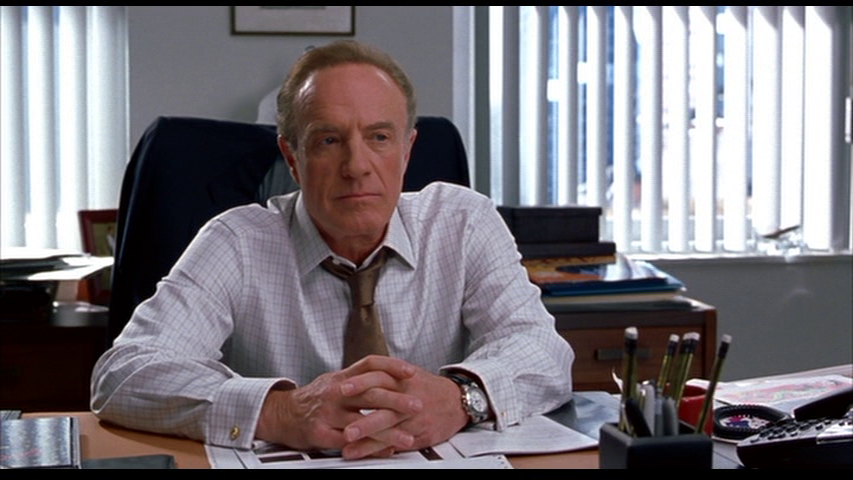
That’s as far as I’m going to take this analogy, but Ed Asner’s down-to-earth Santa also deserves a shout out:
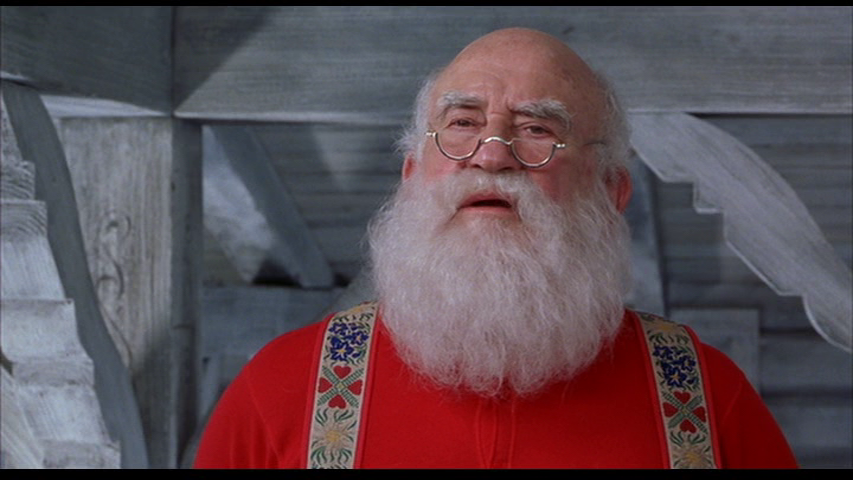
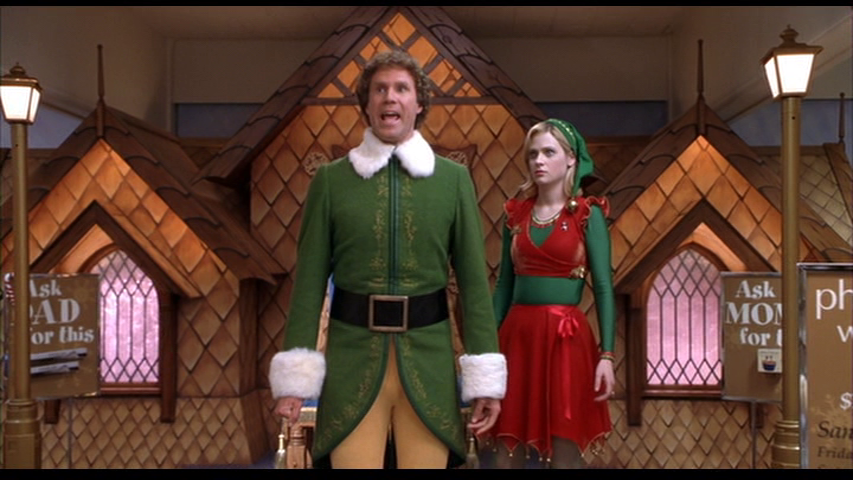
As does Zooey Deschanel’s portrayal of Buddy’s love interest Jovie:
And Mary Steenburgen in the role of Walter’s wife Emily:
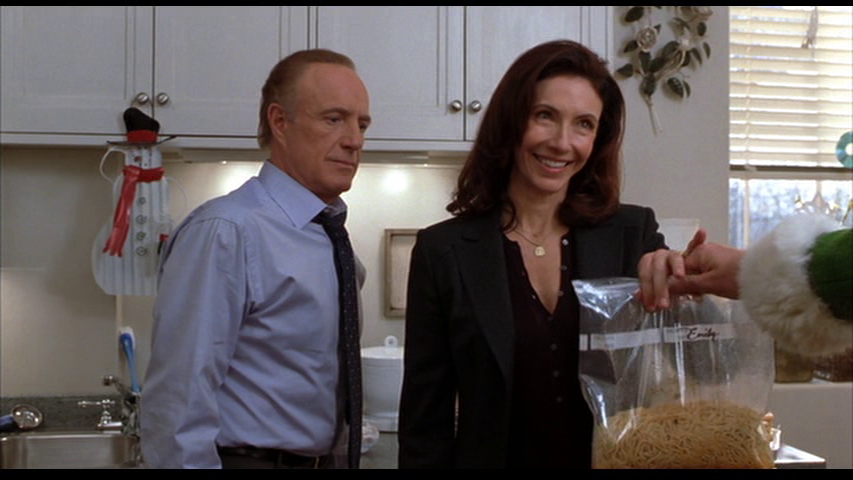
Deschanel and Steenburgen play their roles more or less straight, which in the latter case makes Walter’s eventual redemption believable, since we presume she never would have married him if he was really a bad person. But both help us see the practical value of Buddy’s irrepressible enthusiasm.
Memorable performances are also contributed by Peter Dinkledge as children’s book author Miles Finch, Amy Sedaris as Walter’s secretary Deb, Peter Billingsley (of A Christmas Story fame) as Ming Ming the elf, and my personal favorite Faizon Love as a department store manager named Wanda:
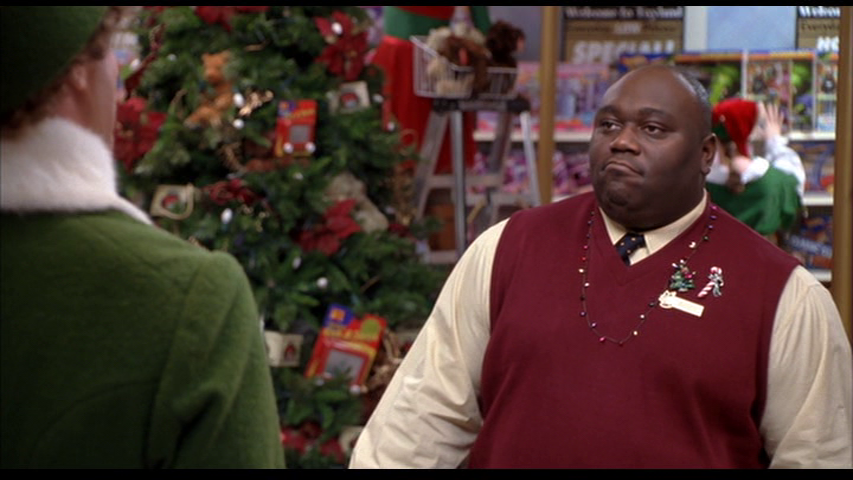
Oh! And who could forget this guy?
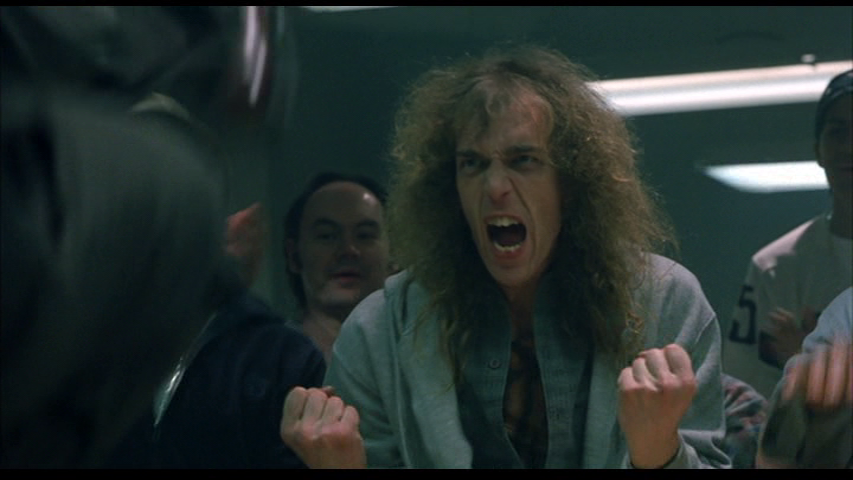
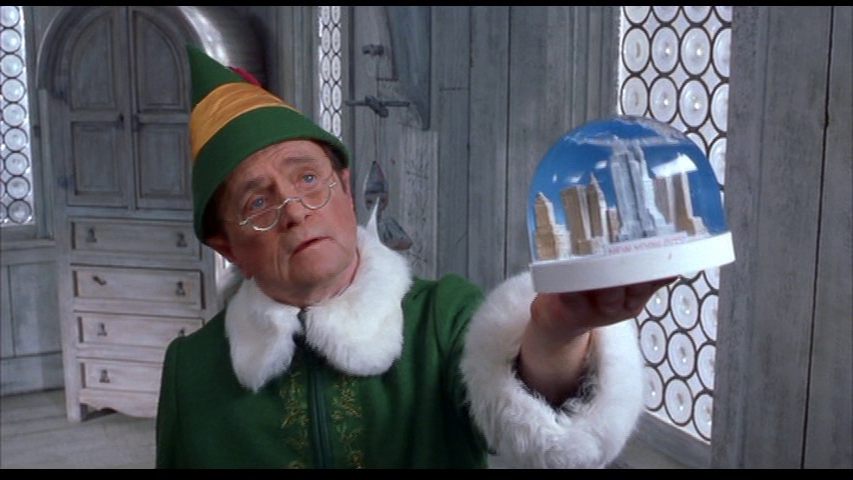
Praiseworthy element number four is the music, both the soundtrack and John Debney’s underrated score. I’m particularly fond of “Buddy’s Theme,” which I consider to be one of our best contemporary Christmas melodies alongside John Williams’s “Somewhere in My Memory” from Home Alone. Last but not least, when Papa Elf hands Buddy an Empire State Building snow globe and says his biological lives in “a magical land called New York City,” it isn’t just a joke!
Jon Favreau has spoken in interviews about how Elf was filmed not long after the 9/11 attacks on the World Trade Center as being part of a deliberate effort to “reclaim” Manhattan, and a huge part of the movie’s charm for me is its obvious affection for the city. There’s both an appreciation for its grandeur:
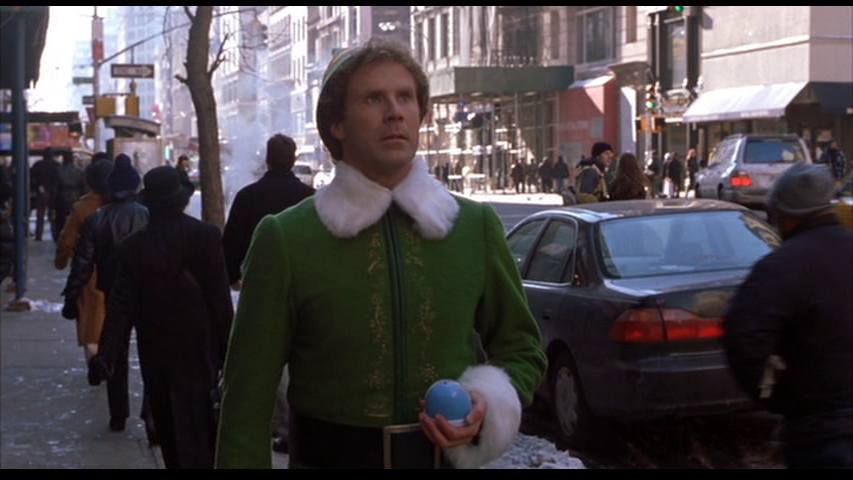

And even more importantly a successful effort to look at its more quotidian wonders through fresh eyes that see the buttons in an elevator as beautiful:
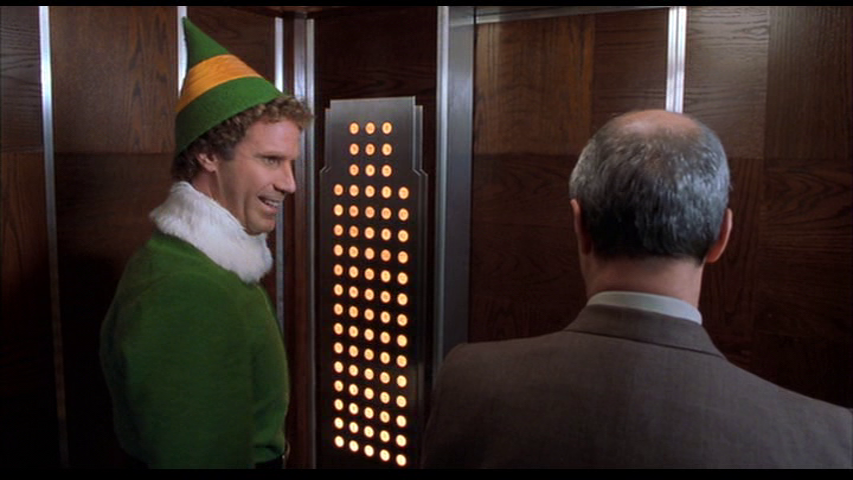
Escalators as a challenge:

and classify taxi cabs as “yellow ones” that “don’t stop”:
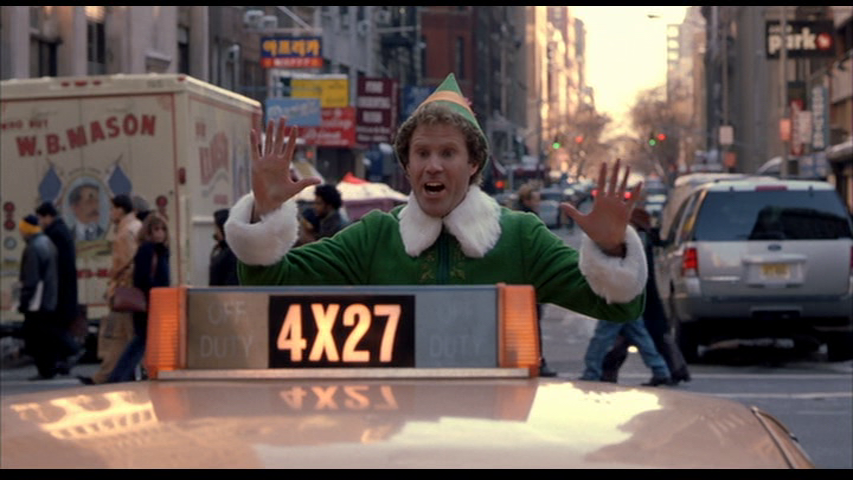
I would in fact submit that the montage sequence set to Louis Prima’s “Pennies From Heaven” is one of the best cinematic representations of New York ever, without any additional qualifications. Which, this is a excellent example of what makes Elf stand out from some of the other movies I only watch in December: like The Grinch/Mistaken for Strangers, it deserves to be appreciated year round!
Cheers!
All original photographs in this post are by Marion Penning, aka My Loving Wife. Other entries in this series can be found here.

 The Prodigal Cinephile