I enjoyed highlighting local (upstate New York) spirits in each of my last two “Drink & a Movie” posts, and have therefore resolved to keep the streak going through January! I talked about Harvest Spirits’ Cornelius Applejack in September and Myer Farm Distillers‘ Cayuga Gold Barrel Gin in October; this month’s drink features Glen Thunder corn whiskey, which the Finger Lakes Distilling website describes as having an aroma “reminiscent of pulling back the husk from an ear of sweet summer corn.” My mind goes more toward popcorn, but whatevs: the distinction doesn’t really matter in my favorite concoction to use it in, cereal milk punch. The recipe for it appears in this New York magazine article, which attributes it to mixologist Jeff Bell of one of this blog’s favorite bars, PDT in New York City. Here’s how to make it:
2 oz. Momofuku Milk Bar cereal milk
1 1/4 oz. Bernheim wheat whiskey
3/4 oz. Glen Thunder corn whiskey
1/2 oz. Bärenjäger
Shake with ice and strain into a chilled rocks glass containing one large ice cube. Garnish with grated nutmeg.
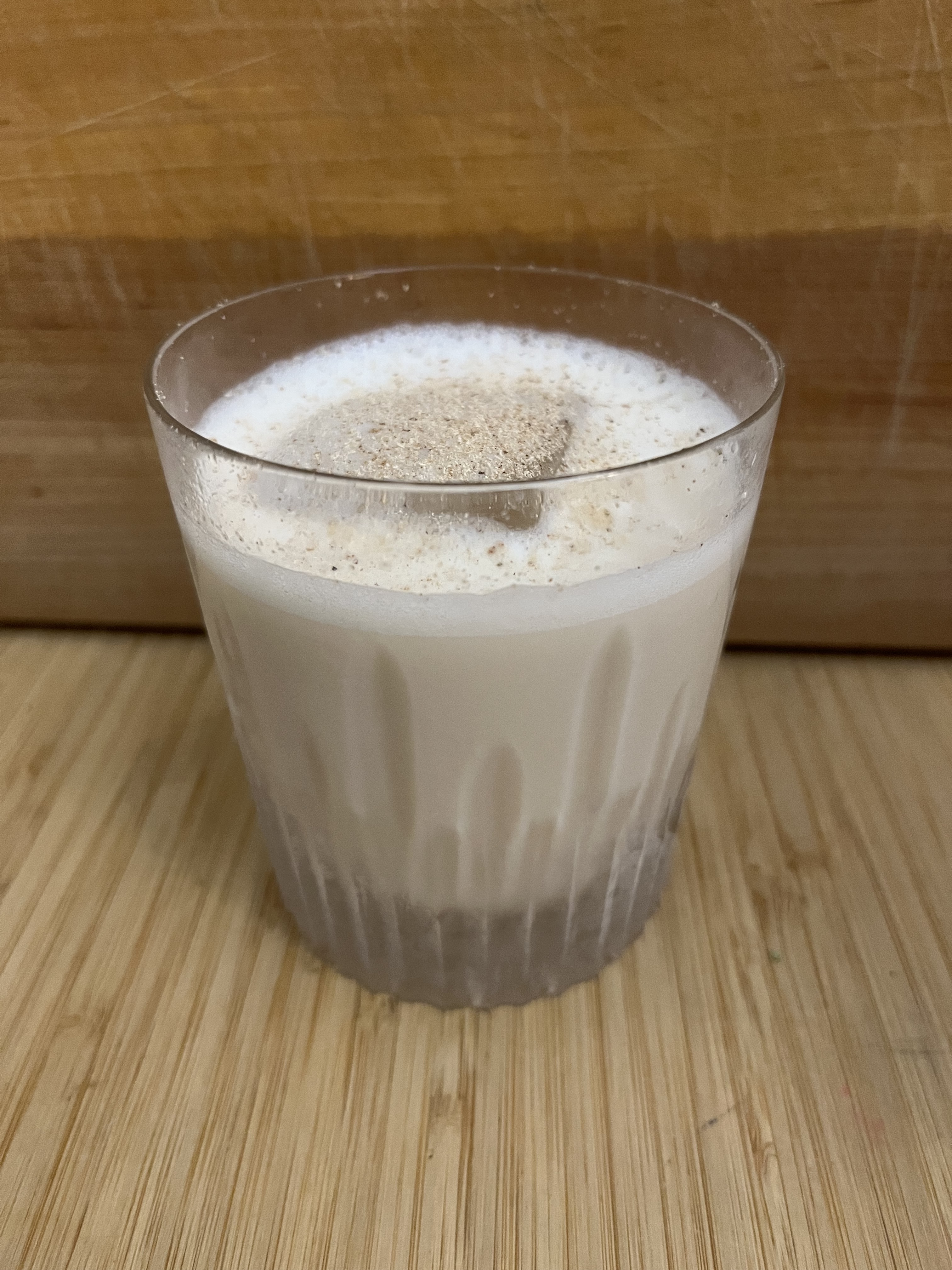
You might be able to buy genuine Momofuku Milk Bar cereal milk wherever you live, but we prefer to make our own using this recipe published on Serious Eats. If you have a dog, don’t neglect the parenthetical note about what to do with your cornflake remains–they’re one of the four-legged member of our family’s favorite treats!
I love how this drink combines cereal milk with spirits that taste distinctly like different grains to remind the imbiber what the stuff that comes out of the box was originally. It’s also so good that you may be tempted to say you want to bathe in it, which brings us to this month’s movie, Souleymane Cissé’s masterpiece Yeelen. Here’s a picture of my copy of Kino Lorber’s DVD release of the film:
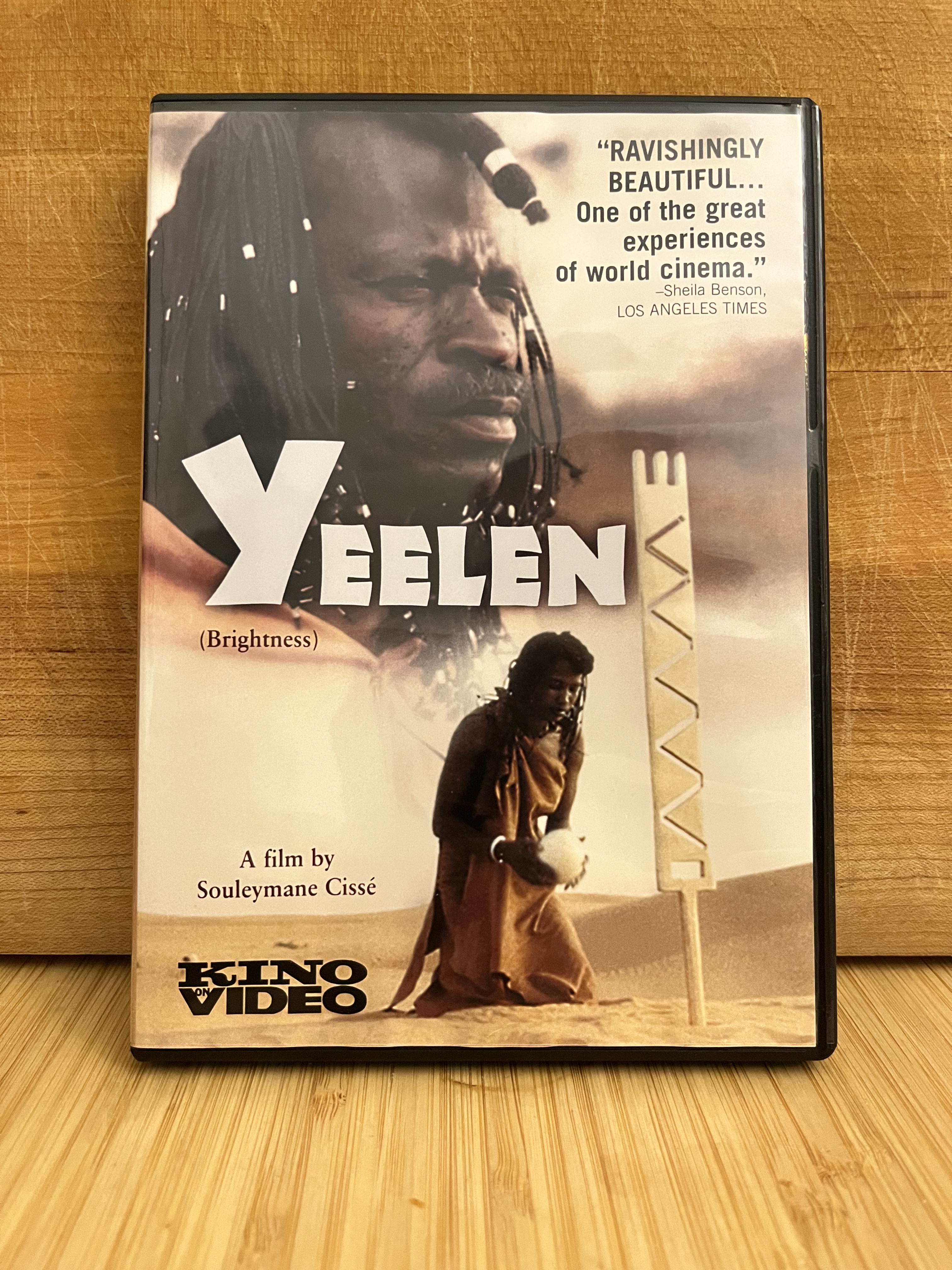
Although Yeelen doesn’t appear to currently be widely available to stream, some people may have access to it through Kanopy via a license paid for by their local academic or public library.
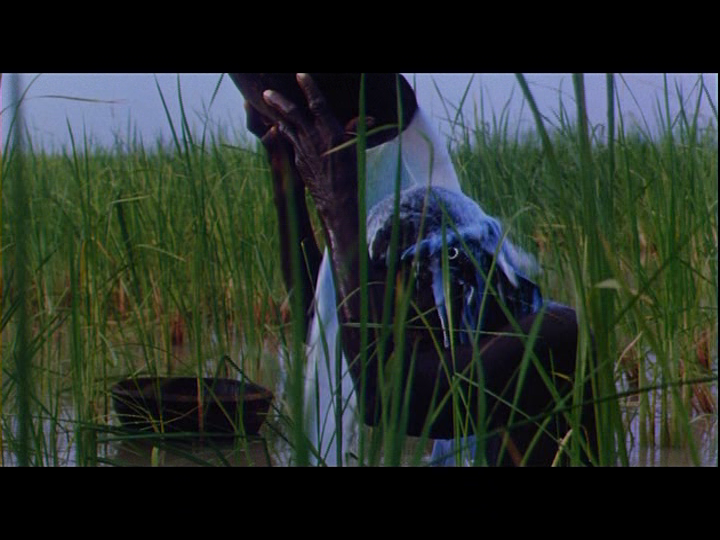
Early in the film, the hero’s mother (Soumba Traore) wades into a marsh and pours a bowl of milk over her head as part of a ritual prayer for her son’s protection:
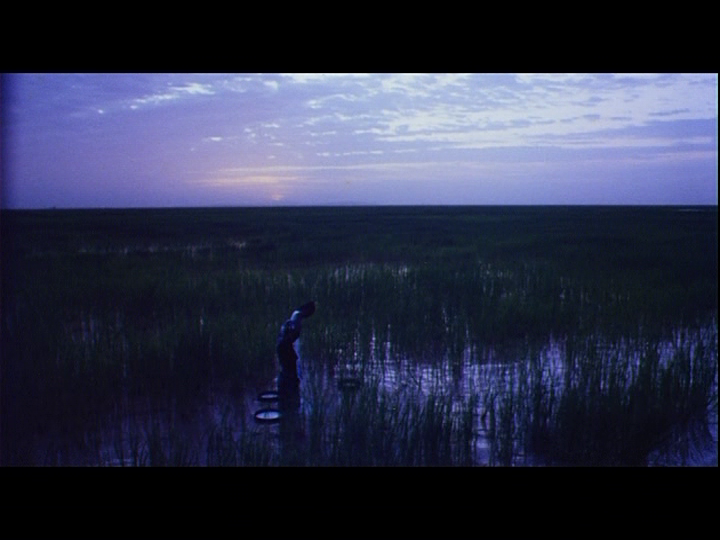
“Do you hear this forlorn creature?” she cries. “Goddess of the waters! Hear me, mother of mothers! Hear this helpless mother. Save my son! Keep him from harm! Save this land from ruin! Don’t let the weeds overgrow the house of the Diarra.” Then she lets the contents of another bowl rain down over her:
Milk appears in the very next scene as well. Our hero, whose name is Nianankoro (Issiaka Kane), has been captured as a suspected cattle thief:
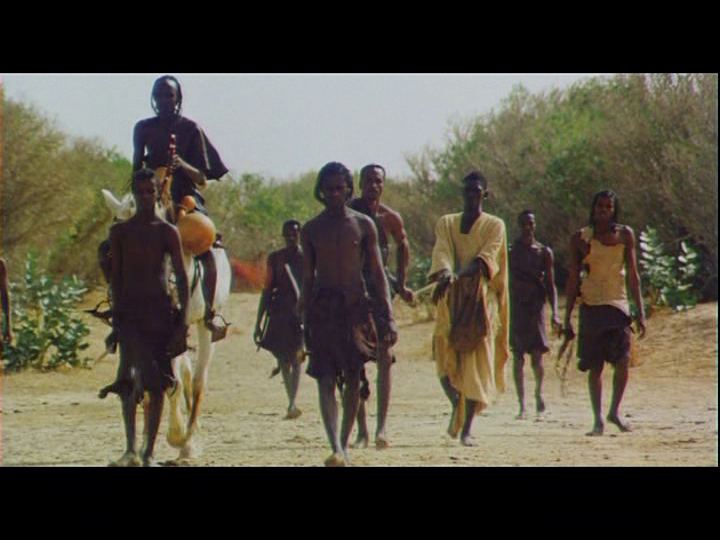
The leader of the men taking him to their king lifts a gourd canteen to his lips and takes a swig:
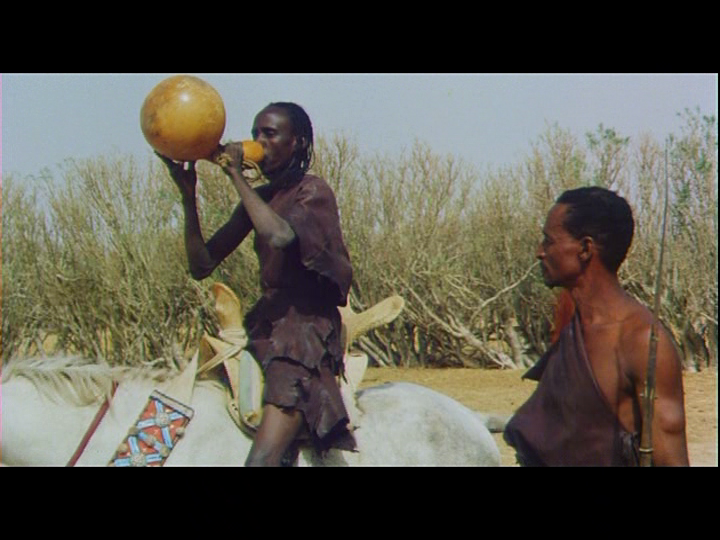
He turns to a comrade and says, “here is milk. Drink it.” This guard hands it to another member of the band:
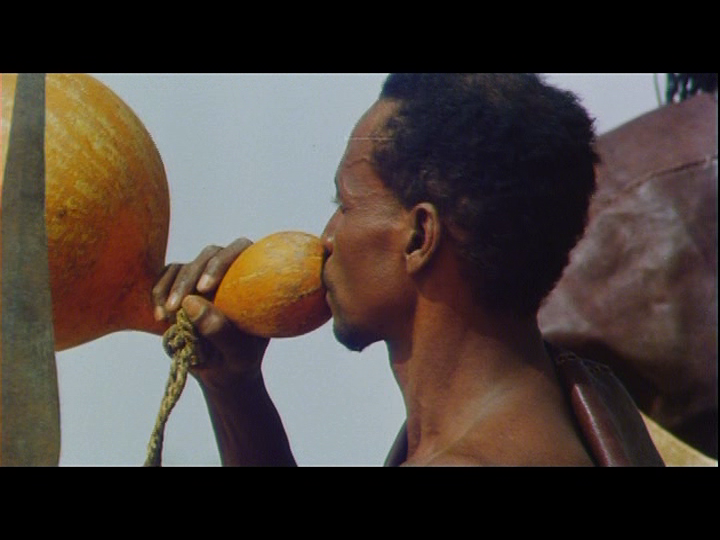
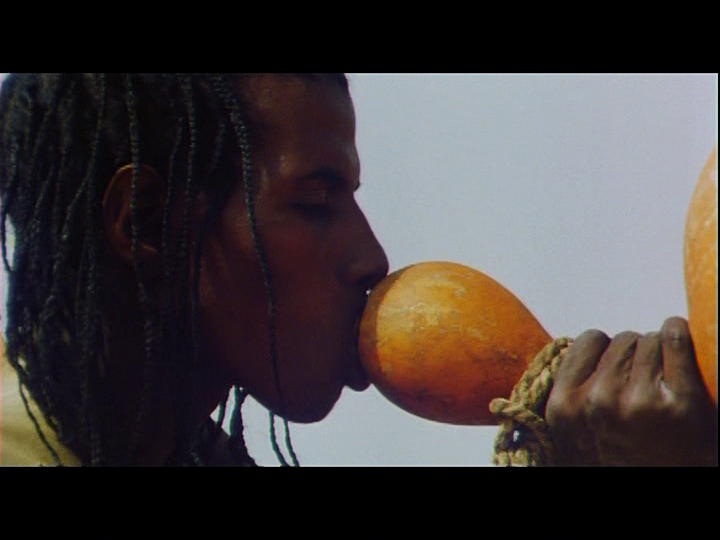
And so on until only Nianankoro is left to go thirsty:
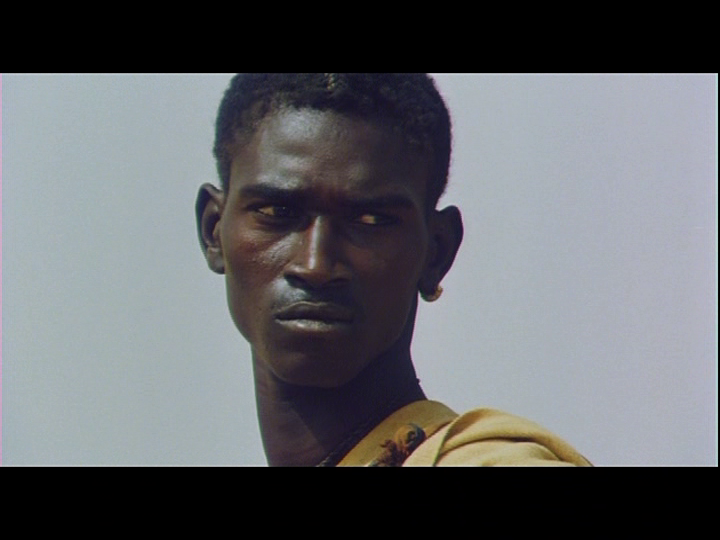
Contrast this with the third appearance of milk a little while later, when the same king (Balla Moussa Keita) Nianankoro was being taken to as a prisoner personally offers him a drink:
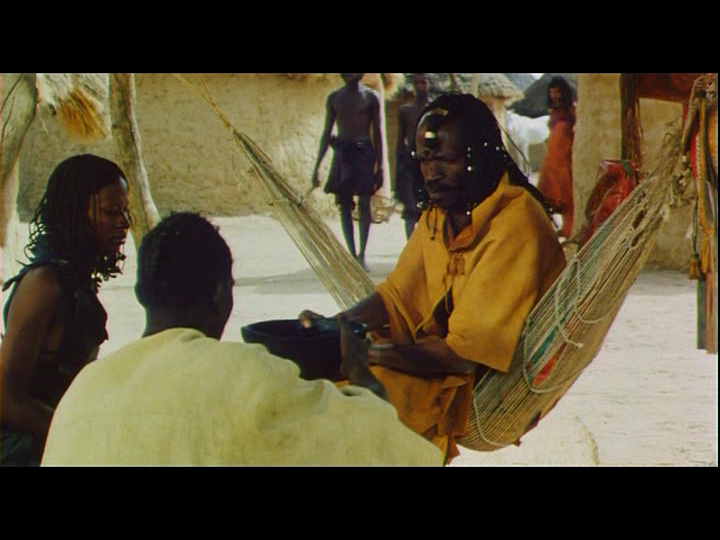
What has changed in the intervening scenes is that Nianankoro has revealed himself to be a powerful sorcerer and, using the right leg-bone of a horse:
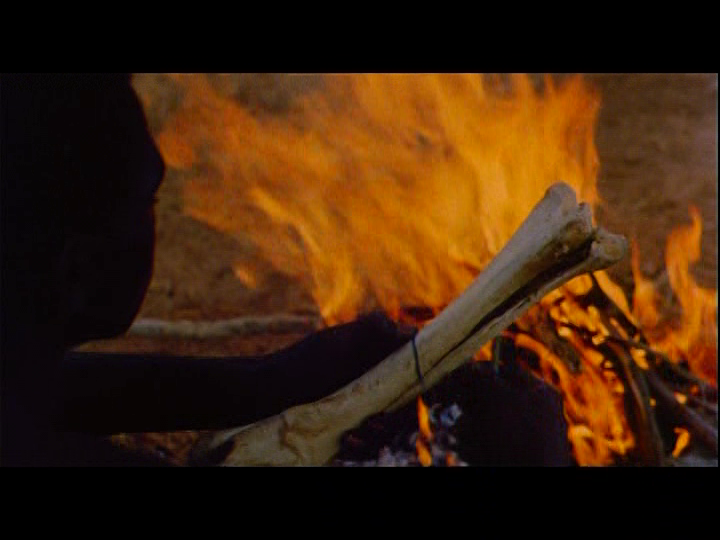
That he buried in a termite mound:
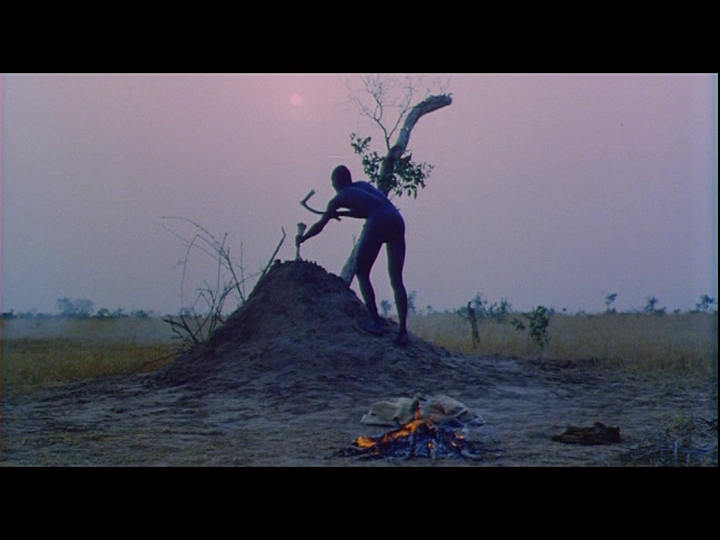
Has conjured bees and fire to defeat an invading army:
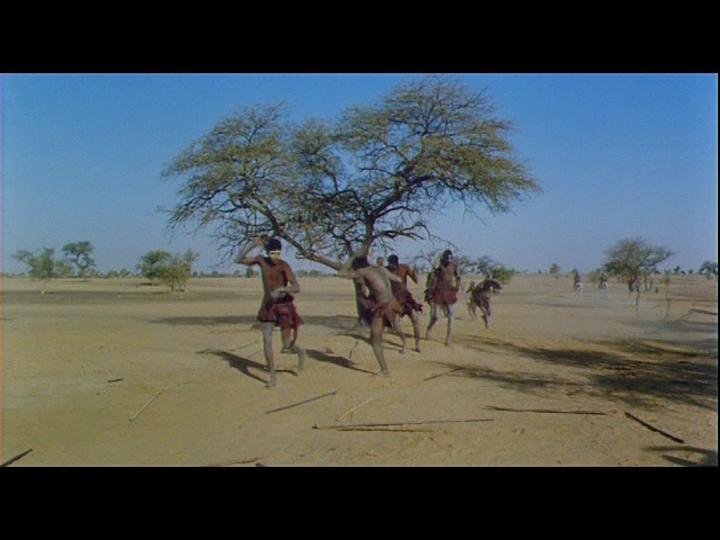
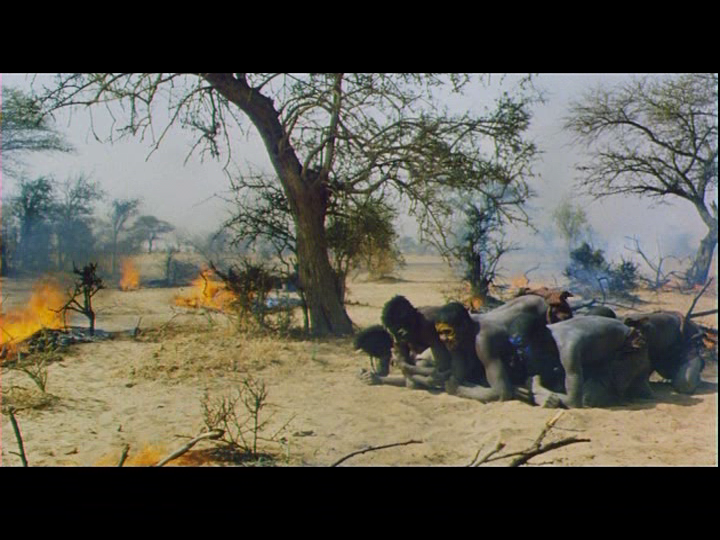
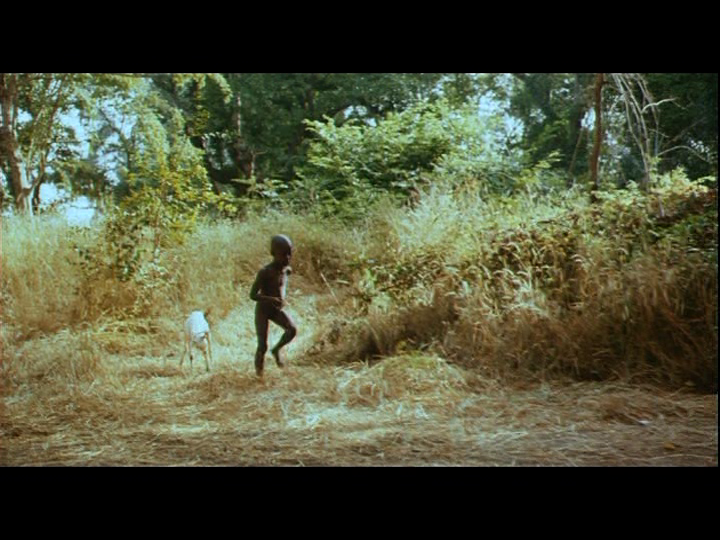
This is another reason for this month’s drink and a movie pairing: cereal milk is the Proust madeleine of my generation, with power to transport people back to the breakfast tables of their childhoods. In other words, it’s magic! The passage of time factors into Yeelen‘s narrative strategy as well, as represented by the image of a boy (Youssouf Tenin Cissé) who we eventually realize is Nianankoro’s son and a goat that appears at both the beginning and end of the film:
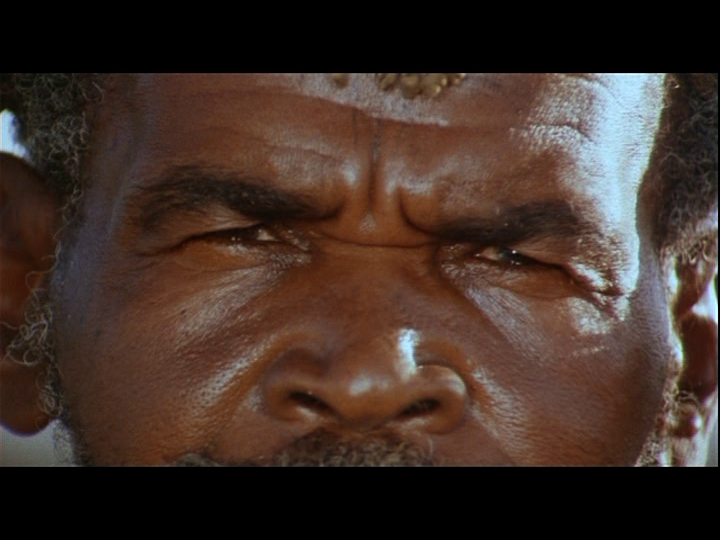
The best part of Yeelen has got to be the epic wizard duel between Nianankoro and his father Soma (Niamanto Sanogo), who has spent the entire movie trying to track him down and kill him. It contains some stare songs (to bastardize a lovely turn of phrase by Richard T. Jameson) straight out of the oeuvre of Sergio Leone:
And two killer dissolves:
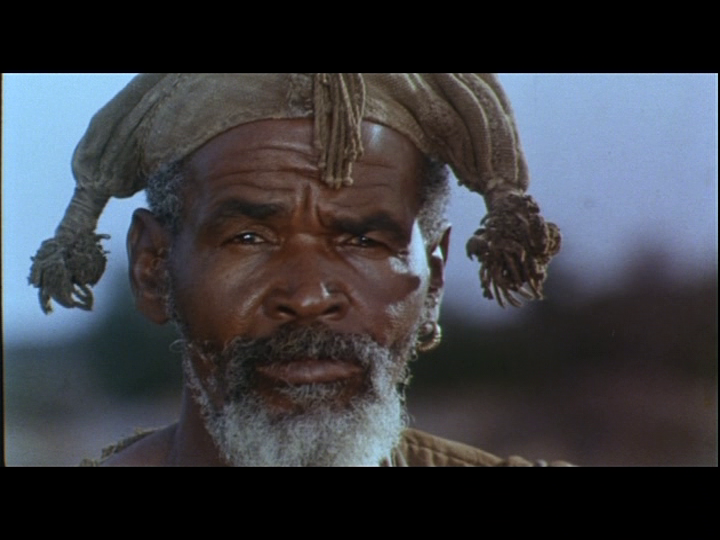
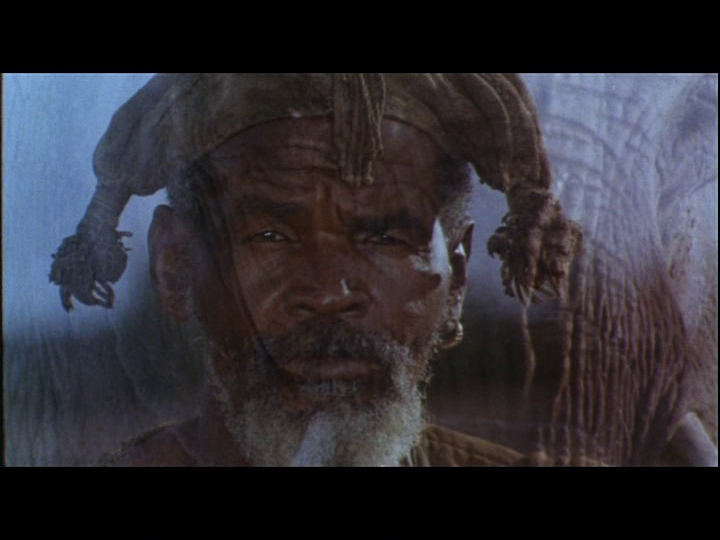
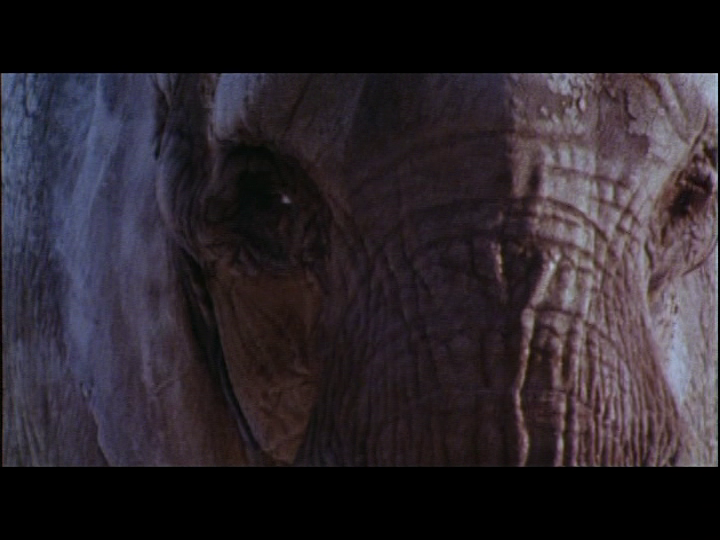
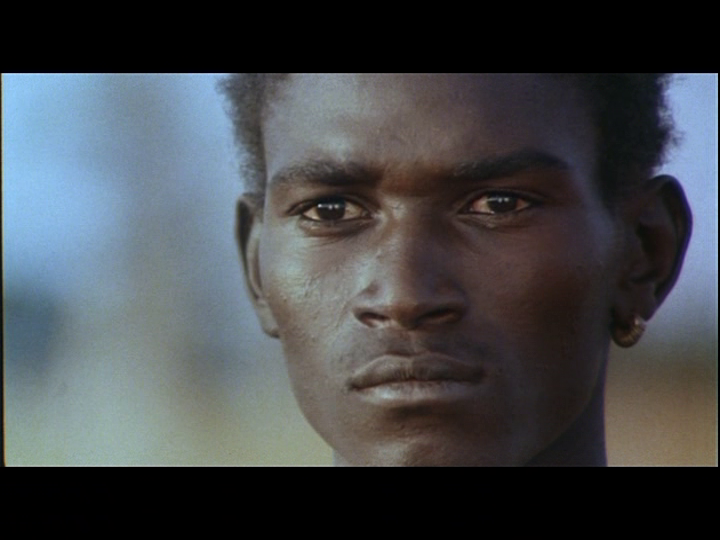
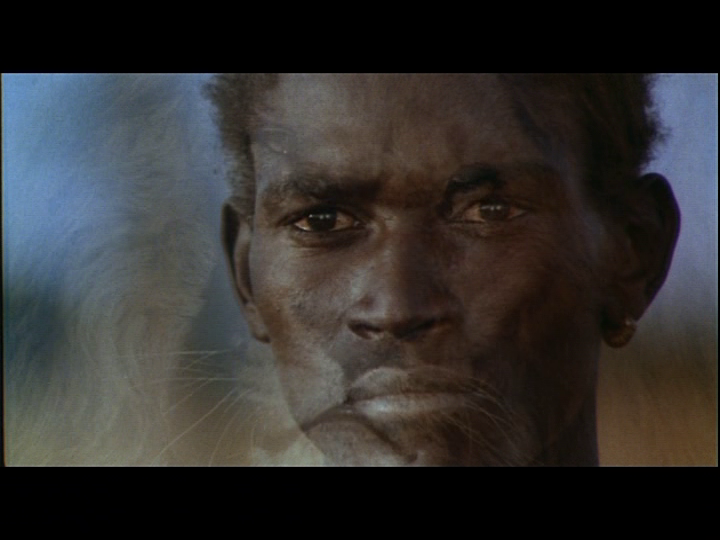
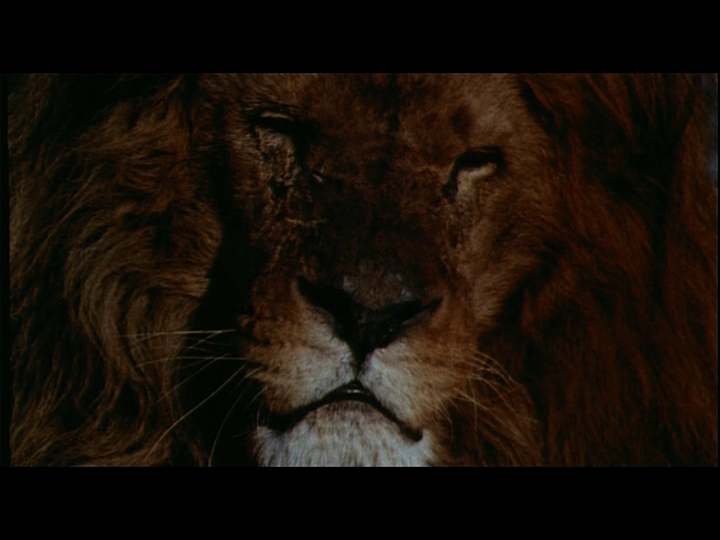
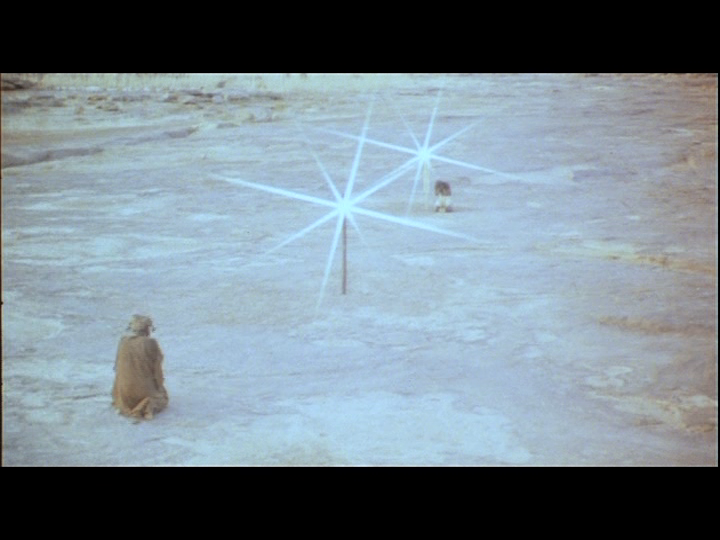
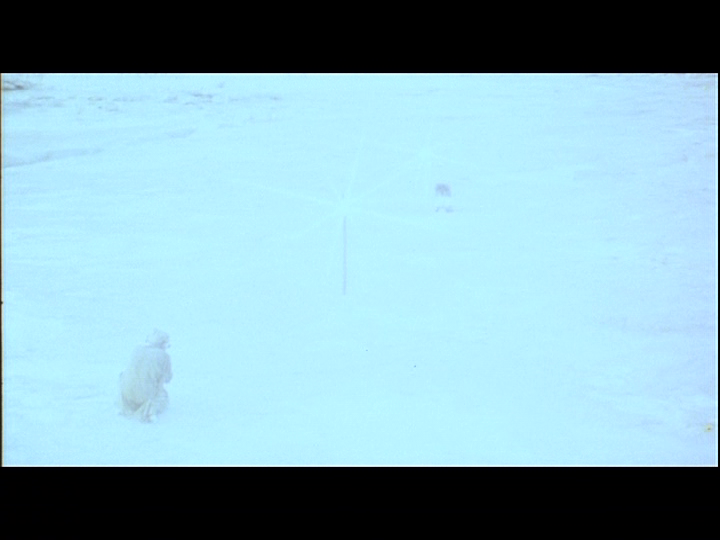
Before concluding with both characters being subsumed into the “brightness” (the English translation of the Bambara word “yeelen”) of the film’s title:

Another one of my favorite moments in Yeelen is this closeup of Nianankoro’s future wife Attu (Aoua Sangare):
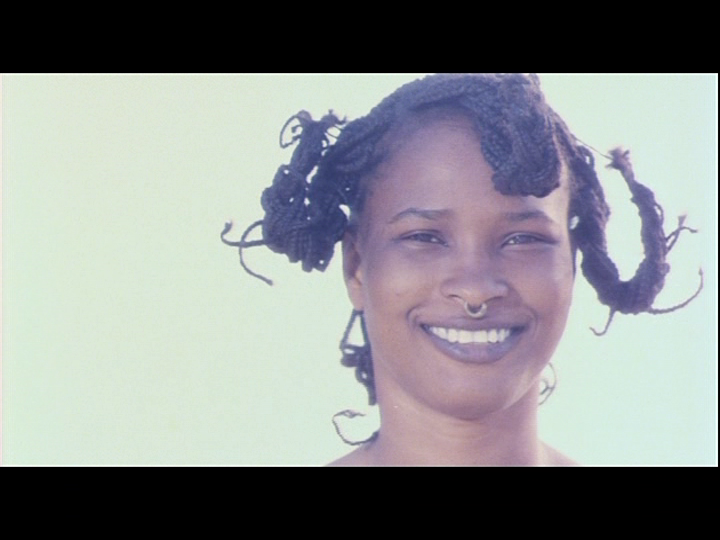
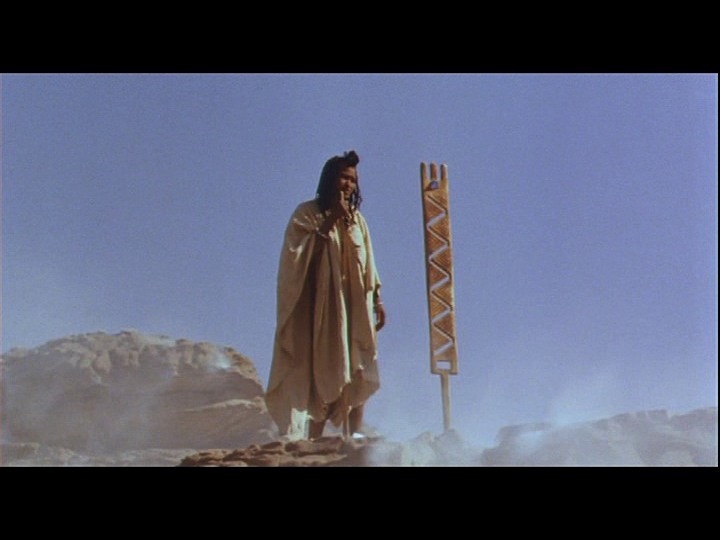
They meet when the king mentioned above asked Nianankoro to cure her of infertility. Which he certainly does do, but then he and Attu give into their lust for one another, ultimately leading to their exile. This single beautiful load-bearing image tells an impressively large portion of that story. And then, finally, there is the movie’s ending. Years (I assume) later, Attu returns to the scene of Nianankoro’s battle with Soma to retrieve the Kore wing (the scepter of the 7th and final Bambara initiation society per the titles which precede the film) which was her husband’s weapon during it:
Meanwhile her son finds two ostrich eggs buried in the sand nearby:

He retrieves one and presents it to his mother:
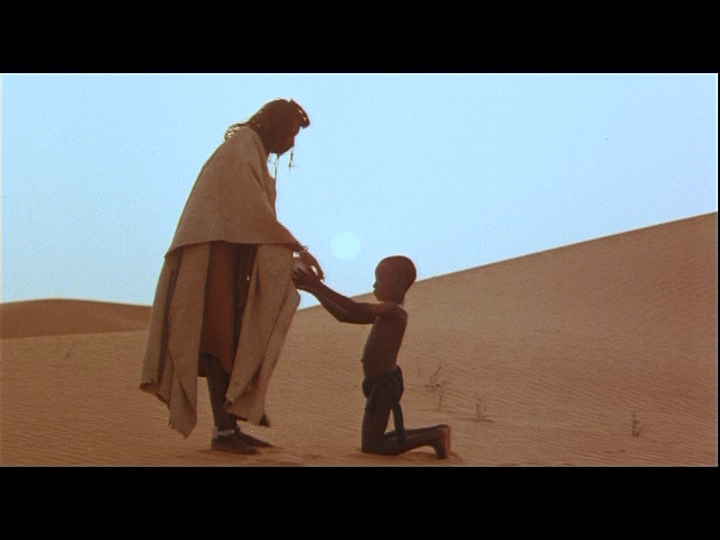
She re-buries it at the spot where the Kore wing stands, then gives it to her son along with Nianankoro’s clock. They walk away together bearing both objects:
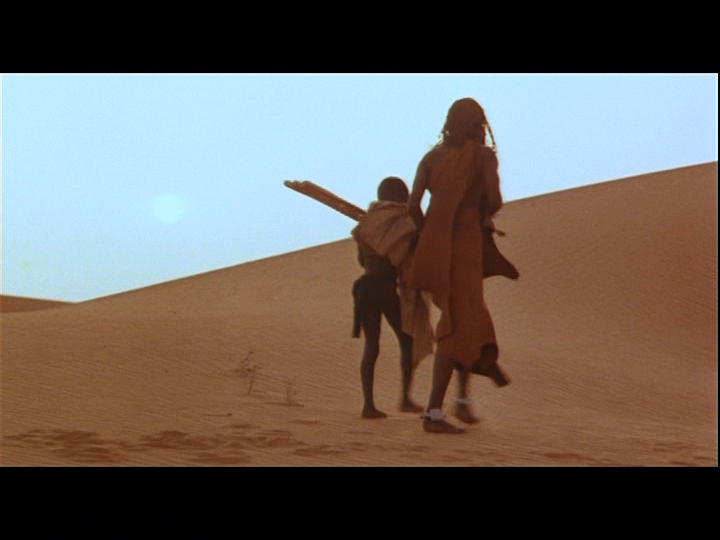
There is a closeup of the remaining ostrich egg alone in the sand:

And then a shot of Nianankoro’s son striding confidently into the future with the Kore wing and his father’s cloak:
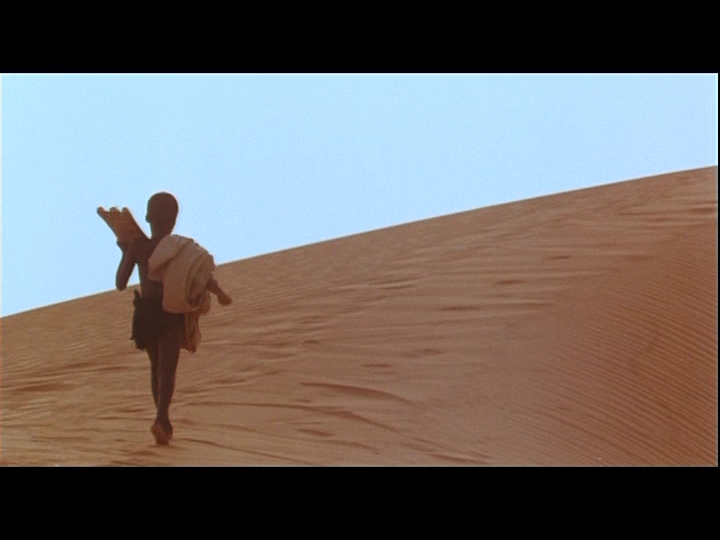
For a breakdown of exactly what’s happening here, see Suzanne H. MacRae’s Research in African Literatures article “Yeelen: A Political Fable of the Komo Blacksmith/Sorcerers.” It doesn’t take extensive knowledge of Malian history to understand that this represents Nianankoro’s triumph over Soma, though. Or, to translate this into cocktail terms: like cereal milk punch, it’s good on both the sip and the swallow!
Cheers!
All original photographs in this post are by Marion Penning, aka My Loving Wife. Other entries in this series can be found here.

 The Prodigal Cinephile