Summer is a great time to live in Ithaca, New York. After the Cornell University and Ithaca College students leave at the end of the school year, there are literally half as many people contending for the same number of precious restaurant tables, parking spaces, and spots in line at Wegman’s. Although I’ve always thought of myself as an autumn person, I’ve also come to look forward to things like the reopening of the Cascadilla Gorge Trail (which accounts for nearly half of my walk to and from work when it isn’t closed for winter) and the appearance of ripe fruit on the black raspberry bush in my back yard as much as anything in my life. Considering that I’ve long thought of Yasujiro Ozu’s Early Summer as a favorite film, it therefore seemed like a obvious pick for this month’s Drink & a Movie post. Pictured here is the Criterion Collection DVD copy of it that I’ve owned for just about forever:
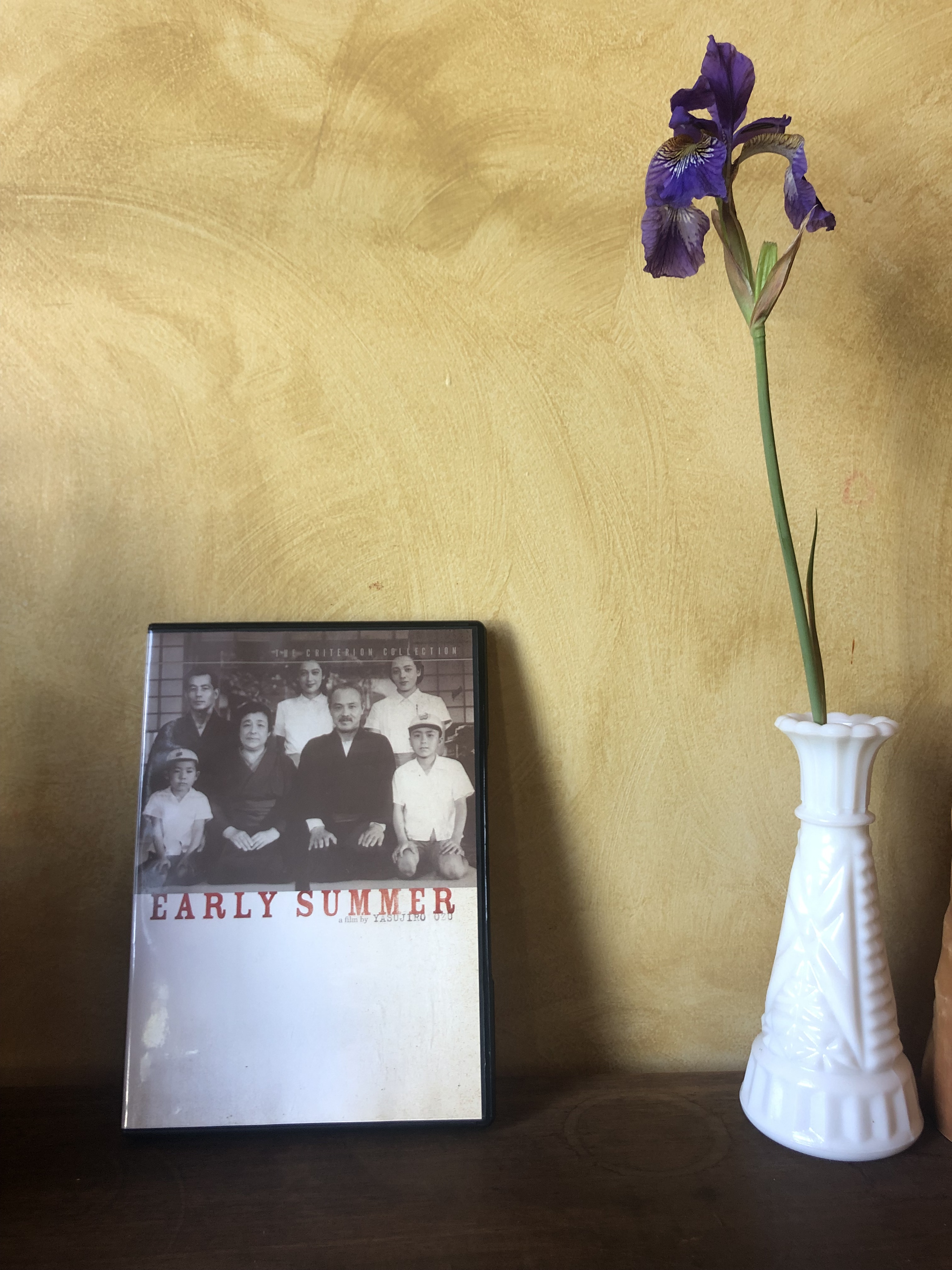
It’s still both in print and in stock there, and can also be streamed via the Criterion Channel and HBO Max with a subscription or Apple TV for a rental or purchase fee. The drink I’m selecting to pair with it is another understated masterpiece, the whisky highball:
1.5 oz. Suntory Toki Whisky
4.5 oz. Fever-Tree Club Soda
Chill whisky, then add to a chilled rocks glass which contains one large ice cub. Stir just once with a bar spoon and garnish with a twist of grapefruit.
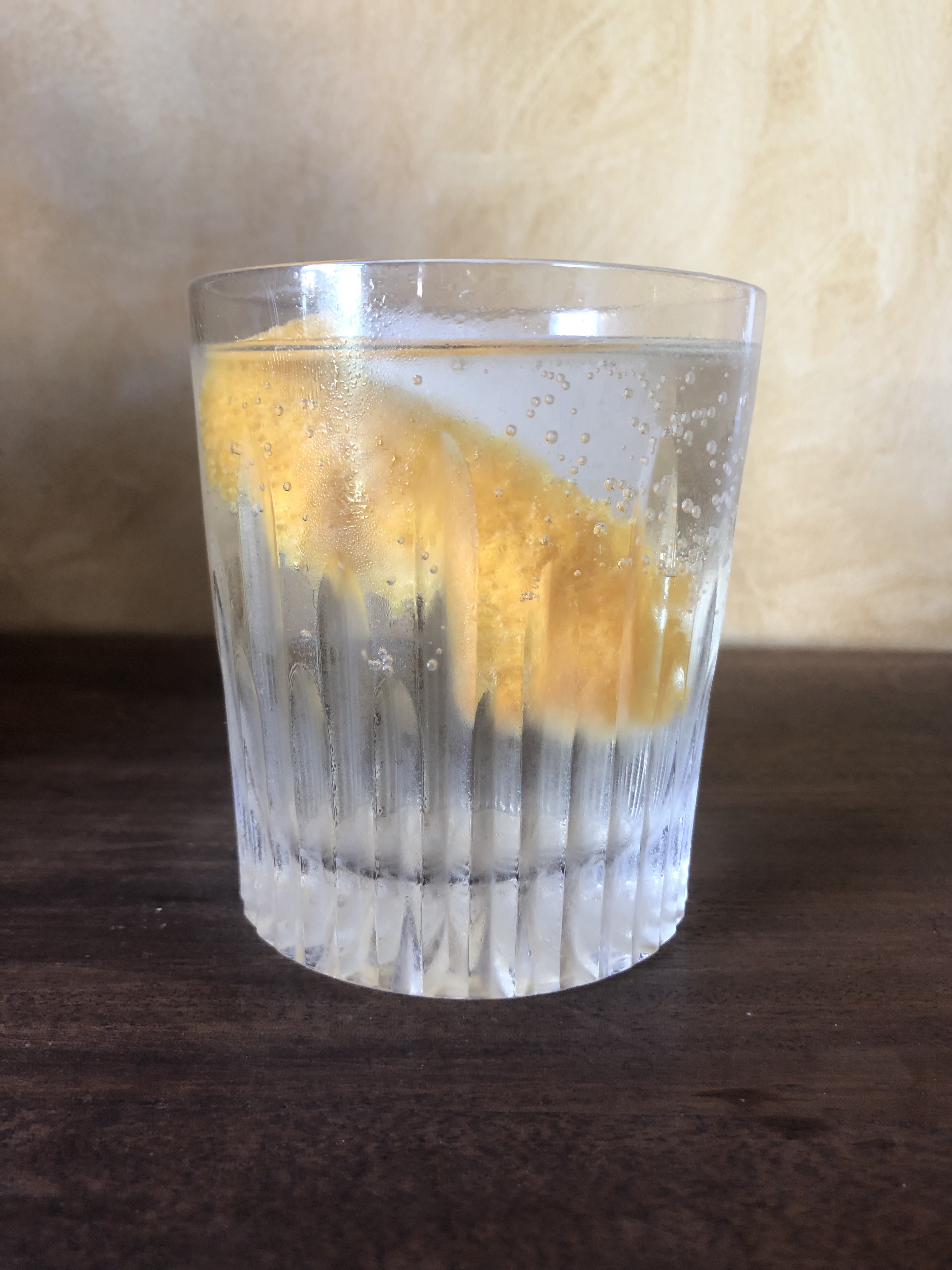
Although the majority of the tips and tricks highlighted in the decidedly un-Ozu-like videos on the “Rituals” section of Suntory Whisky’s Toki website are beyond the reach of most home bartenders (e.g. hand carve your ice to perfectly fit the glass that the drink will be served in), they do include two suggestions that I fully endorse: 1) chilling both the glass and all of the ingredients prior to mixing makes for a better drink, and 2) a grapefruit or other citrus twist is a great addition. I also agree with Julia Black of Bon Appétit that it’s worth splurging on high-carbonation club sodas like Fever Tree. My recipe may not measure up to the custom machine-dispensed concoctions (which: wowzers, do I want to try one of those!) describe by Black, but it’s delightfully effervescent and just the thing for a hot summer day.
For me, it also tastes like a specific moment in my life. I saw Early Summer for the first time as part of an Ozu retrospective which played Pittsburgh Filmmakers’ Melwood Screening Room (RIP) in 2005 and fell in love with it immediately. On Thursdays during that era, I could often be found at ’80s night at the dance venue Upstage (also RIP), where my drink of choice was a Scotch and soda. I have no idea how this tradition started, because I don’t think I consumed them anywhere else, which is presumably a big part of why I remembered this thing past when a poker buddy turned me on to Suntory Toki as a delicious and reasonably priced introduction to Japanese whisky a couple of years ago.
It’s so easy to make further connections between this drink and Ozu’s film that I don’t even think it’s worth the effort. Suffice to say that the former is a fine rendition of a Scottish spirit with a name that means “time,” while the latter tells the story of a multigenerational Japanese family navigating a transitional period in their country’s history when people might wear a kimono one day and a Western-style clothes the next.
In an essay for the booklet included with the Criterion release of Early Summer, filmmaker Jim Jarmusch talks about finding the images he encountered even on his first visit to Japan “oddly familiar” thanks to Ozu. I had the same experience, but I don’t think it’s simply a matter of having seen them before. Ozu invites the viewer to study the spaces he depicts more than other filmmakers. One way he does this is by lingering on hallways and rooms for a few seconds after characters leave and cutting to them a beat or two before anyone enters:
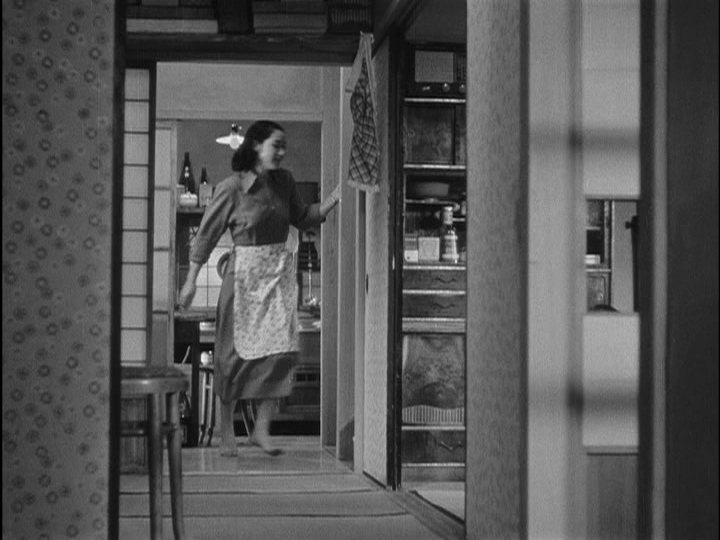

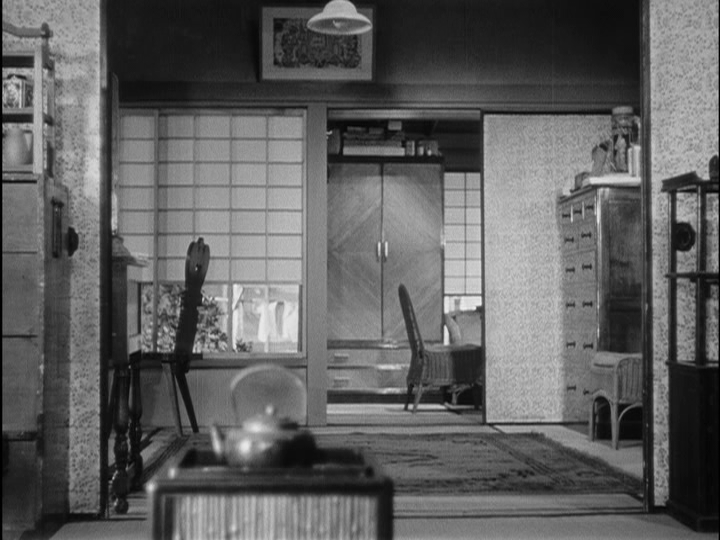
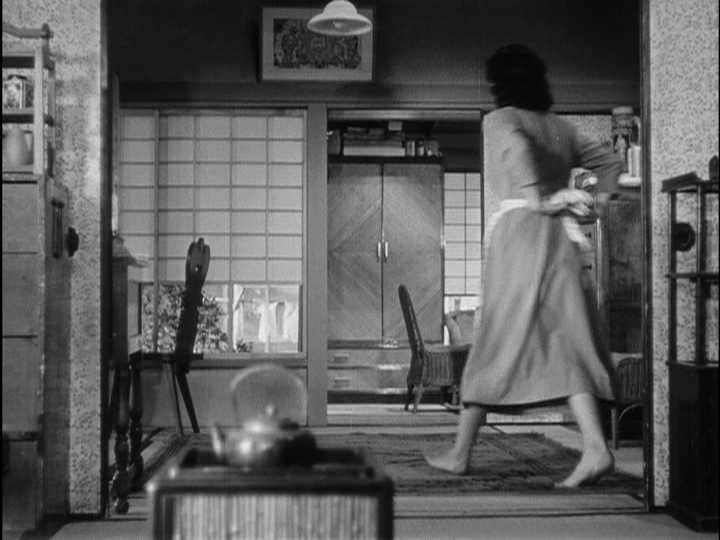
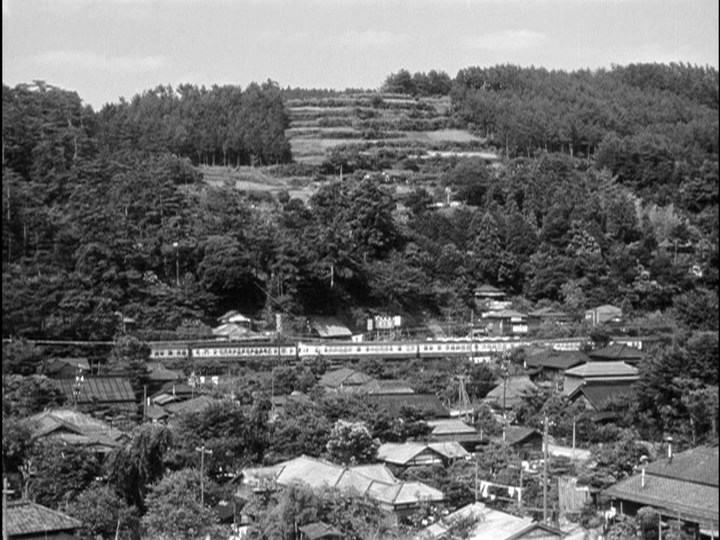
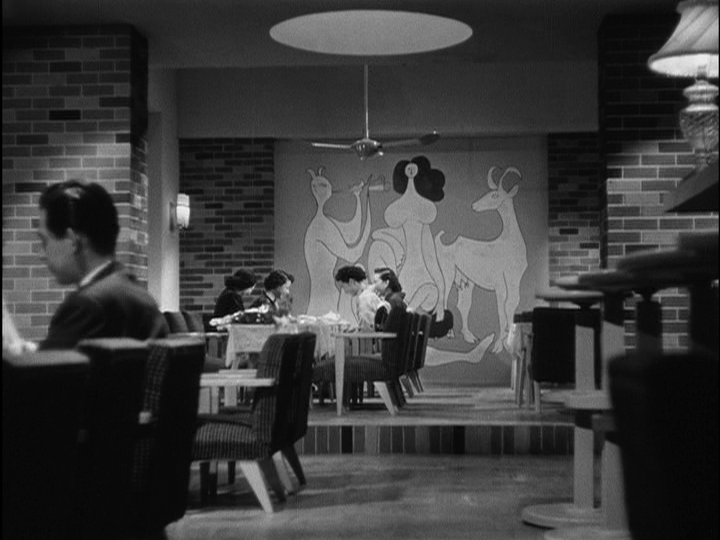
When done in sequence, as in the shots above, this also allows audiences to construct mental maps of these same spaces. Of course, this wouldn’t be nearly so effective if the rooms Ozu’s characters inhabit weren’t so interesting to look at! This goes for his exteriors as well:
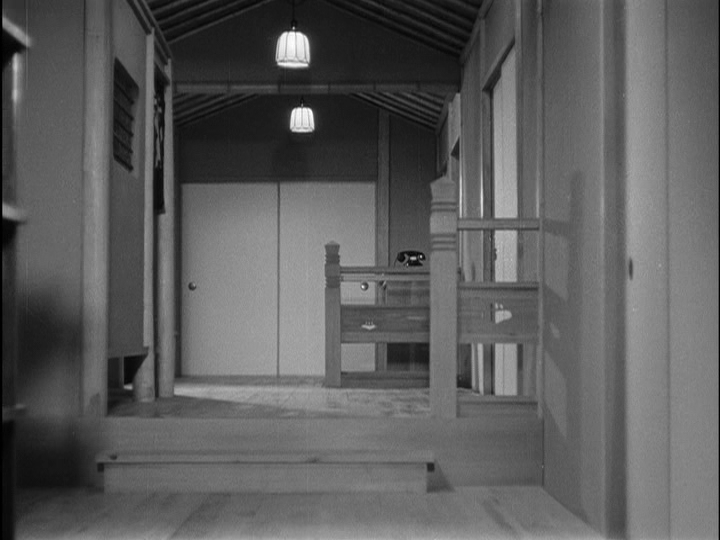
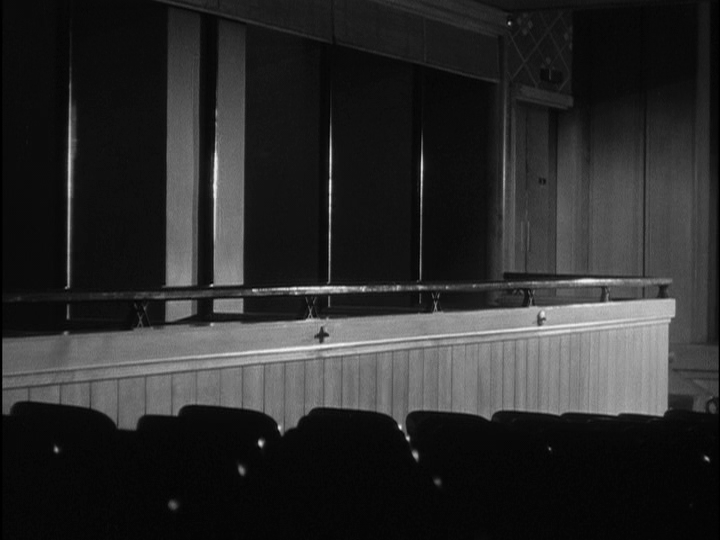
Ozu also connects spaces with camera movement, such as these two rooms in a now-empty theater where the Mamiyas just saw a play together, which are united by dolly shots:
The same technique is employed in the service of more symbolical ends elsewhere, as in the case of this tracking shot toward a loaf of bread (which we’ll come back to in a moment):
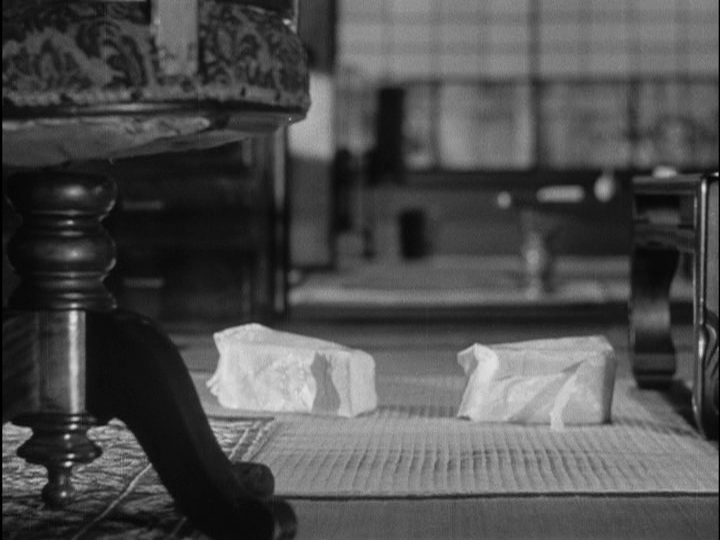
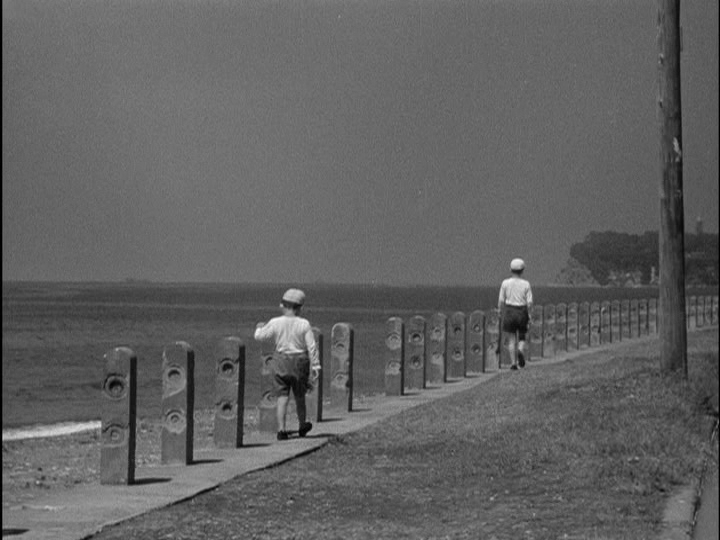
Which is immediately followed by one following the two little scamps (Minoru and Isamu Mamiya, played by Zen Murase and Isao Shirosawa respectively) who broke it:
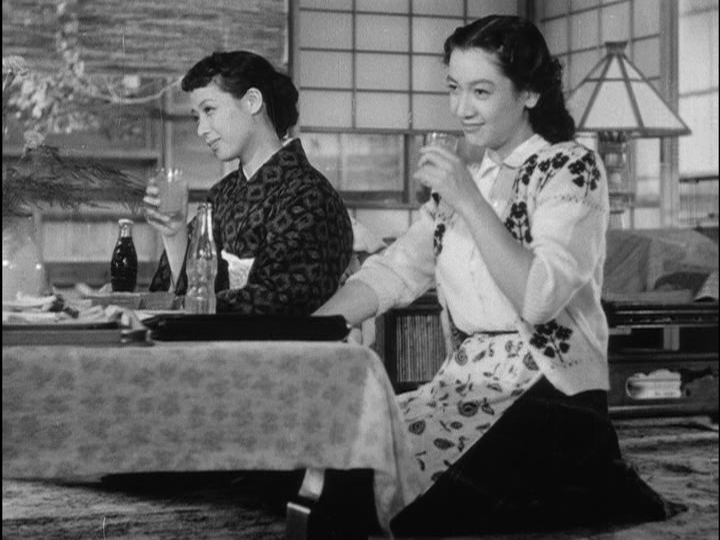
Where characters are positioned in relation to one another matters a lot, too, such as in this shot of Noriko Mamiya (Setsuko Hara, who is terrific in this role) and her fellow single friend Aya (Chikage Awashima) on the left and their two married schoolmates Taka (Kuniko Igawa) and Mari (Matsuko Shige) on the right:
Where things really start to get nuts is when Ozu starts to create layers of meaning, such as when he cuts from this later shot of Noriko and Aya talking apart how their friend group is drifting apart and drinking soda:
To this one of Noriko’s parents Shukichi (Ichirô Sugai) and Shige (Chieko Higashiyama) eating food and having a conversation in which they ruminate on the fact that although they “could be happier” (a reference to their son Shoji, who went missing in action during World War II), this is probably the happiest their family has ever been:
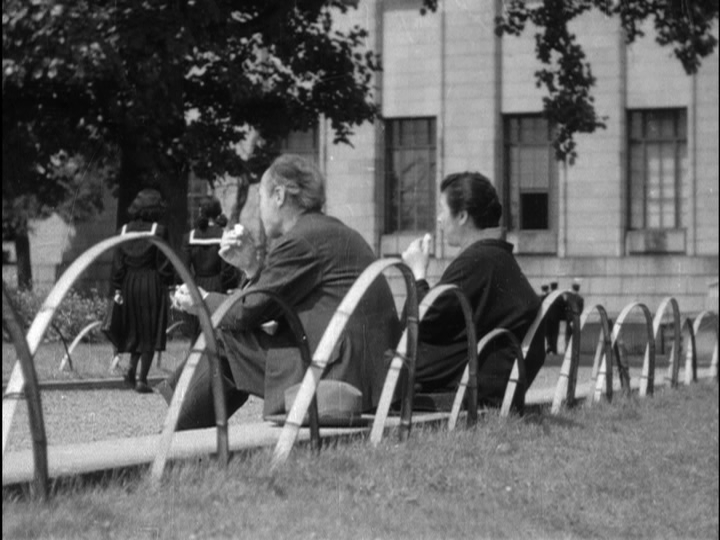
During this conversation Shukichi says “we mustn’t want too much,” which is almost a thesis statement, as is another line of his later: “I wish we could live together forever, but that’s impossible.” But the tremendous power that these words have owes more to the many scenes which precede them and clearly establish that they refer to more than just the matter at hand than to their pithy wisdom.
Noriko’s relationship with Aya is another one of my favorite things about Early Summer. They aren’t just the last two single people in their peer group. Consider this exchange in which Aya attempts to convince Noriko that she has actually fallen in love with the man she has decided to marry:
NORIKO: It’s like when you look for something all over the place, and then you find it was right in front of you all along.
AYA: Mother’s always looking for her glasses when they’re right on her nose.
NORIKO: That’s how it was.
AYA: How so?
NORIKO: He was so close at hand I didn’t realize he was the one.
AYA: So you did love him.
NORIKO: No, it wasn’t like I was in love with him. I’d known him well since childhood, and I knew I could trust him.
AYA: That means you love him.
NORIKO: No, I just feel I can trust him with all my heart and be happy. Don’t you understand?
AYA: If that’s not being in love, what is?
NORIKO: No, it’s not.
AYA: Yes, it is. You’re in love. You’ve fallen in love with him.
NORIKO: Have I?
AYA: Yes, you have. Don’t make me hit you!
NORKIO: You better not. I know how you hit.
AYA: Here I come.
Aya then proceeds to chase Noriko around the table:
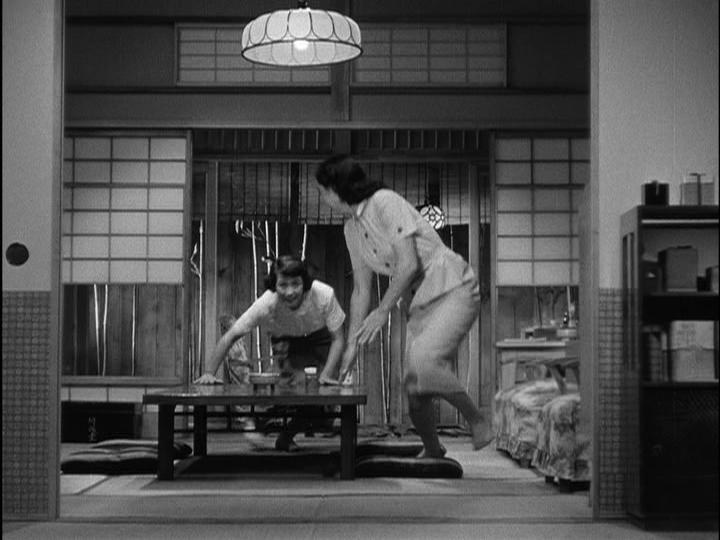
This scene is a good example of why the film gets better with subsequent viewings. A short while after this Noriko will give her sister-in-law an extremely cogent explanation for choosing this husband over the one her family had picked out for her: “Frankly, I felt I couldn’t trust a man who was still unattached and drifting around at 40. I think a man with a child is more trustworthy.” Aya, her friend, knows what we can’t in this moment, but will grow to appreciate if we spend enough time in their world, which is that this isn’t the whole story: Noriko seems to be making a solid decision whether you judge it by the standards of the head or the heart, and anyone who cares about her as much as Aya obviously does would want to make sure she realizes it.
Early Summer is a movie that I feel like I could study for a lifetime and never run out of new things to say about it. That’s not really the point of this particular series of blog posts, though, so instead let’s go back to that loaf of bread I mentioned! Here it is again:
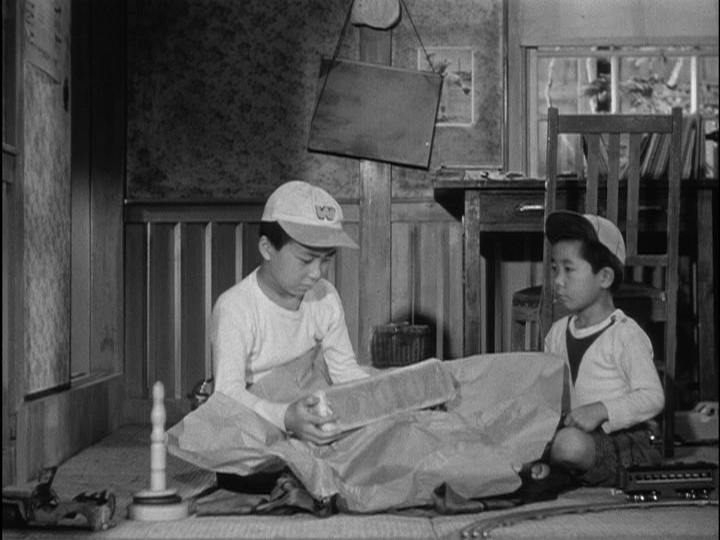
Minoru looks so disappointed because he thought this package contained track for his model train set. Above I cited the film’s title as the main reason I decided to write about it now. Even if I hadn’t already made up my mind, though, I suspect I would have been tempted to change course when I opened up the May/June 2022 edition of Cook’s Illustrated and read their article on shokupan, or Japanese milk bread! Maybe it was just my previous lack of experience with Pullman pans, but Early Summer was the first thing I thought of. Anyway, for the second month in a row I have a bonus food pairing to recommend. First, here’s a picture of the loaf that My Loving Wife made recently using the magazine’s recipe, which is unfortunately only available to subscribers:

This was somehow even more delicious than it looks! Whether you bake milk bread yourself or buy it at the store, definitely make a point of using it to make Cook’s Illustrated‘s caramelly brown sugar toast, which happily is not behind a paywall. Here’s a photo of a slice I made:

This totally works as a sweet drinking snack! Just don’t kick it, is all.
Cheers!
All original photographs in this post are by Marion Penning, aka My Loving Wife. Other entries in this series can be found here.

 The Prodigal Cinephile