For my first April Drink & a Movie post, my mind went to one of the rainiest movies I know, Tsai Ming-liang’s The Hole. Pictured here is the copy of the Big World Films DVD I bought on Amazon a couple of months ago:
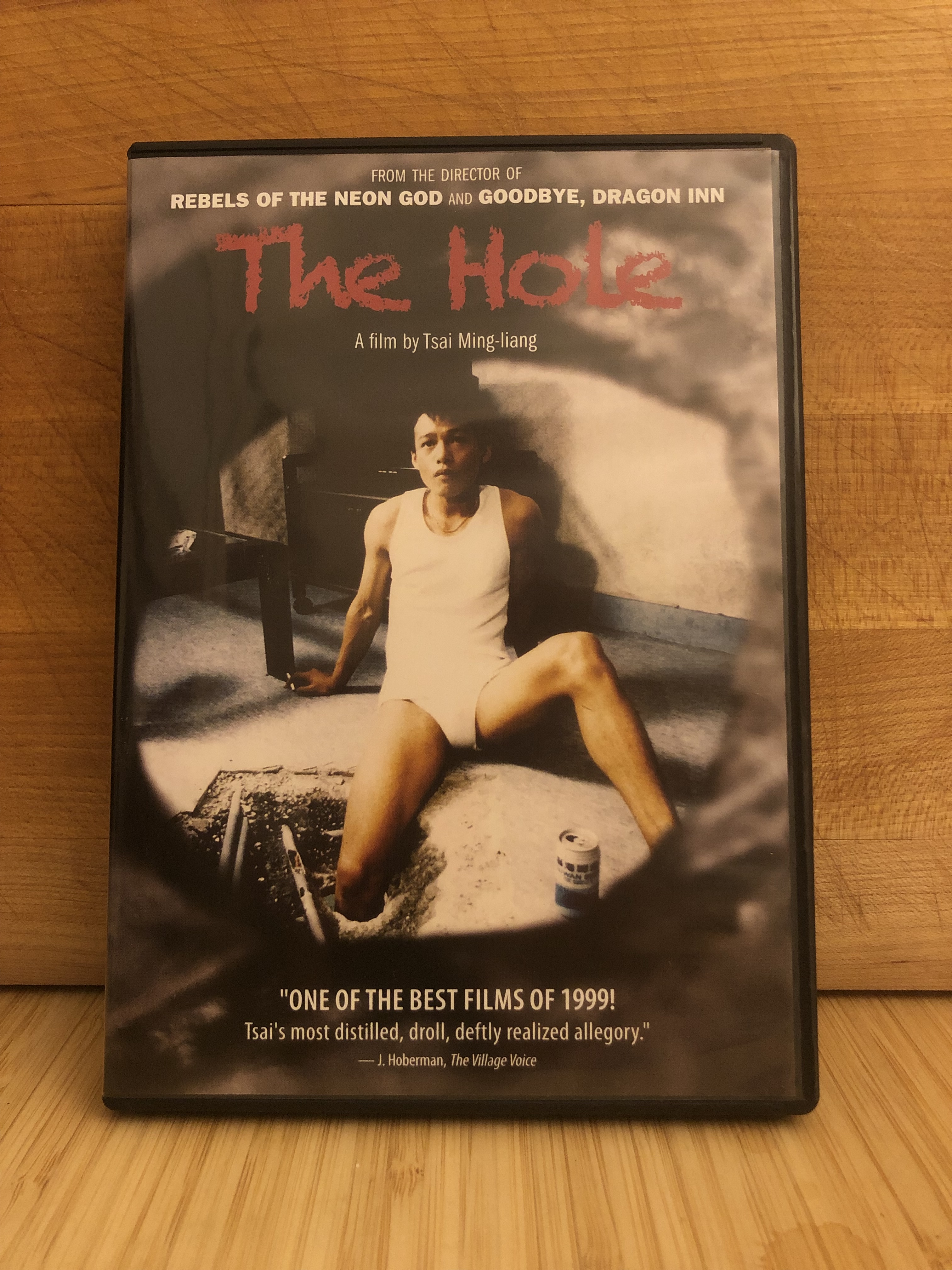
The film can also be can rented or purchased for Video On Demand viewing through the Big World Films website. Some people may have access to it through Kanopy via a license paid for by their local academic or public library as well.
Despite Boston-based film critic Sean Burns’s eminently reasonable suggestion in a review published this past September that The Hole “might be the best film about how it feels to be alive right now,” the drink I’m selecting to pair with it is called the 20th Century, specifically the version in The PDT Cocktail Book which author Jim Meehan attributes to C. A. Tuck via W. J. Tarling (author of the Café Royale Cocktail Book where it was first recorded):
1.5 oz. Plymouth Gin
.75 oz. Marie Brizard White Crème de Cacao (Giffard)
.75 oz. Lillet Blanc
.75 oz. Lemon Juice
Shake with ice and strain into a chilled coupe (I used my favorite Nick and Nora glass). No garnish.
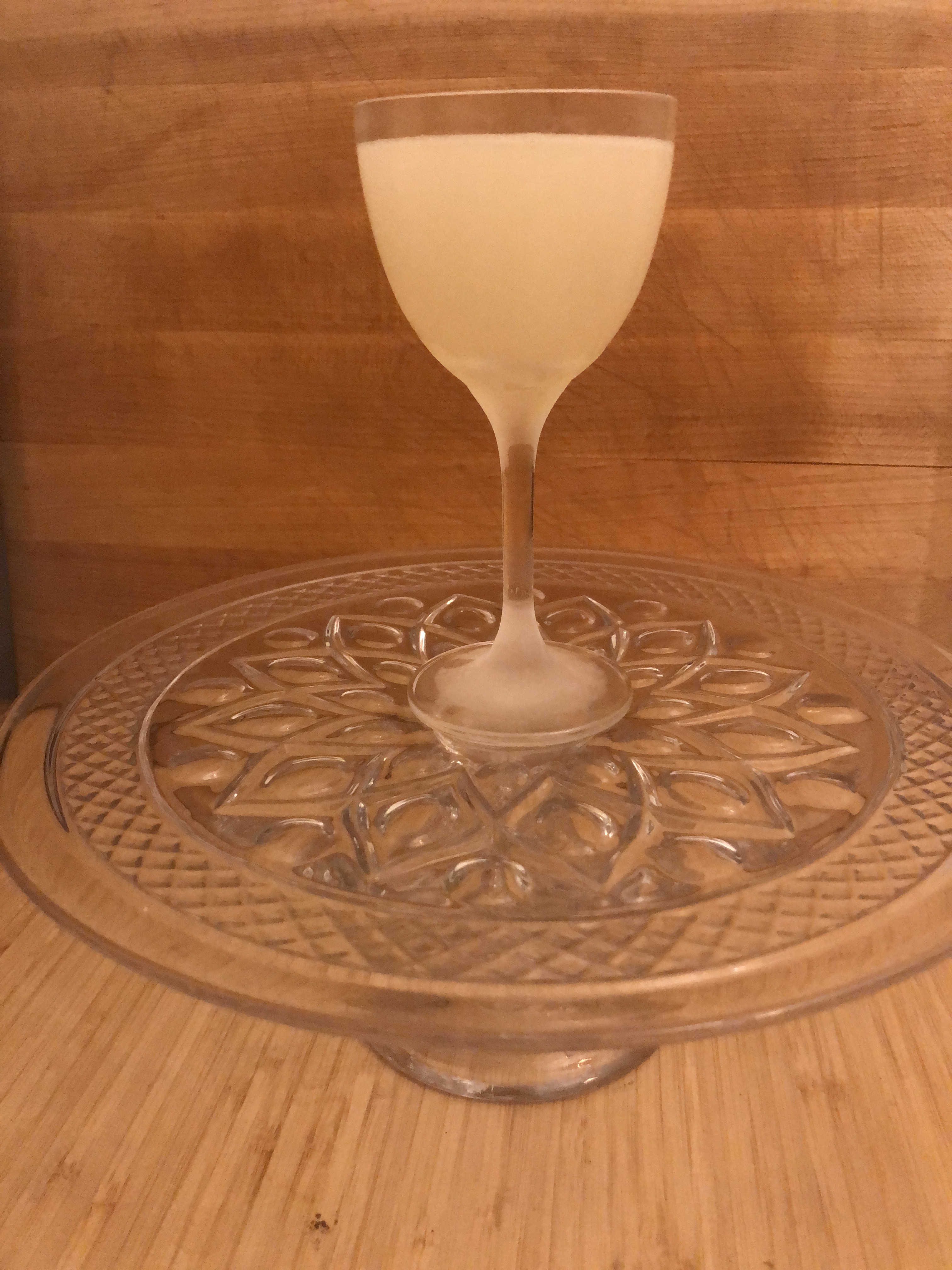
In addition to changing the glassware, I also used Giffard white crème de cacao instead of the Marie Brizard that Meehan calls for throughout this book, since I’ve never been able to find it. Honestly, though, I haven’t sweated this ingredient too much ever since a bartender at The Violet Hour in Chicago told me that *they* aren’t very picky about it a few years ago, and I’d advise you not to be either. Just go for white over brown for the sake of the appearance of the drink, is all.
As Meehan notes, the drink is actually named for “the 20th Century Limited luxury train that traveled between New York City and Chicago from 1902 to 1967.” Said train has appeared in many movies, including North by Northwest, The Sting, and of course Howard Hawks’s Twentieth Century, but so far as I am aware no character ever orders the cocktail named after it. Which is too bad for them, because it’s one of my absolute favorites! One thing that makes it unique is its unusual combination of flavors that don’t seem like they should go together–chocolate, juniper, and lemon. This is why I chose The Hole to pair with it, because do you know what else doesn’t sound like it makes sense? A bleak depiction of life in a city beset by both an epidemic and a never-ending rain storm shot mostly in long takes and containing very little dialogue that also includes cheerful, lip-synched musical numbers based on the songs of singer-actress Grace Chang!
Both the drink and the movie absolutely do work, though. In the case of the former, each ingredient brings an important component of balance to the party: the crème de cacao supplies sweetness and texture, the gin gives the drink substance, and the citrus chips in acidity, all of which matter more than how each them tastes. Similarly, both the fantastical and realistic elements of the film are necessary to bring to life the surreal experiences of being isolated from one’s fellow humans even while being surrounded by them and trying to piece together a coherent narrative about the virus upending your life from one meager scrap of information at a time.
Like the train that the drink is named after, The Hole is meant to represent an aspect of the century during which it was created. It was commissioned as part of a series called 2000, Seen By…, and “eerily prophetic” (quoth Jeffrey M. Anderson of the San Francisco Examiner) though it may be, Tsai’s focus was very much on the present when he conceived it. As he told socialist film critic David Walsh, “[w]hen they first came to me with this project of making a film about the new millennium, I thought the end of the century was too close to describe a future predicament, so it’s actually a reflection of contemporary society.”
Last but not least as far as connections between this month’s drink and movie go, scroll up again and take another look at the picture of a 20th Century taken by My Loving Wife. Now dig this shot of Yang Kuei-Mei’s The Woman Downstairs from The Hole‘s penultimate sequence, which the brilliant Darren Hughes says “might be the most extraordinary of Tsai’s career”:

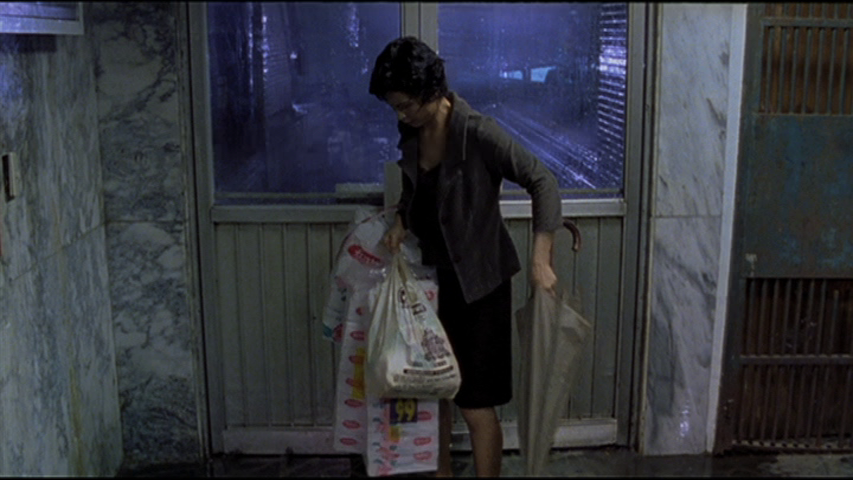
They both glow, yeah? Certainly each one is beautiful. As far as the rest of the film goes, it really is bonkers how many moments it contains that are likely to resonate with contemporary audiences. Take this shot The Woman Downstairs arriving home with a haul of toilet paper:
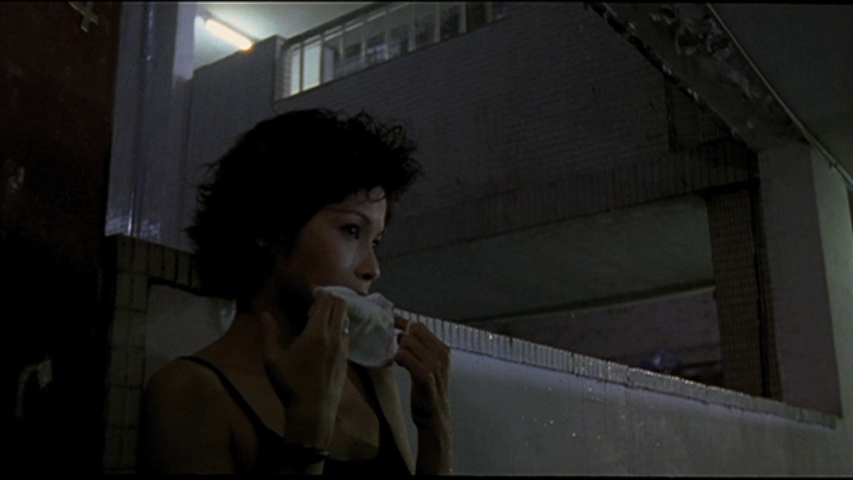
Or this use of a mask as an erotic device, our first indication that the Woman Downstairs is attracted to Lee Kang-sheng’s The Man Upstairs:
Or the fantasy world dramatization of the onset of the “flu-like symptoms” we’ve all been dreading for the past two years set to “Achoo Cha Cha”:
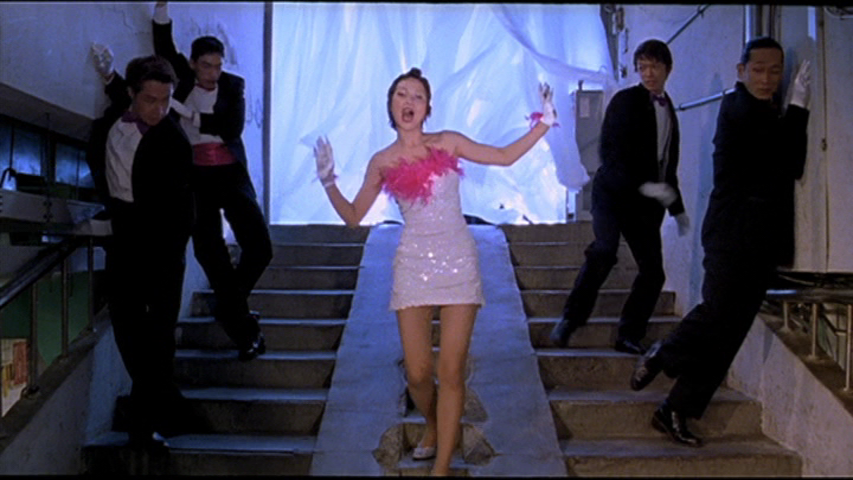
The rest of the song and dance sequences are quite wonderful, too. I particularly love the beginning of the one for “Tiger Lady,” which starts right after The Woman Downstairs defends herself against incursions into her apartment through the hole in her ceiling for the first time using bug spray:
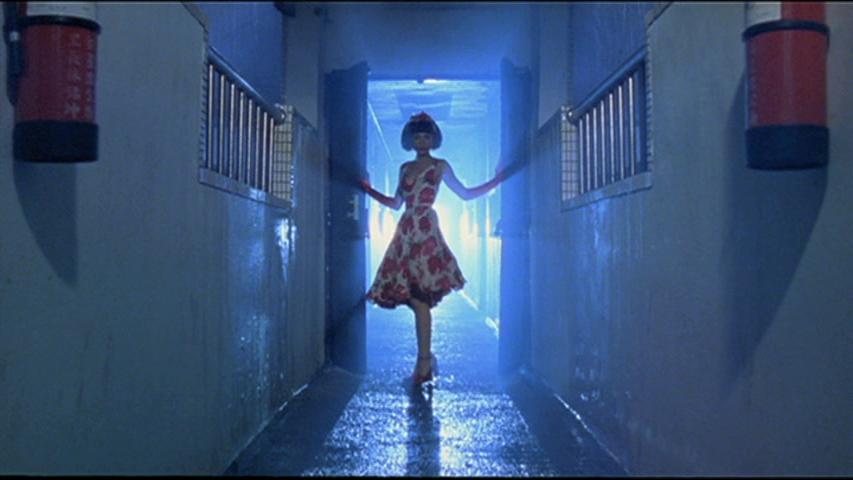
This is superhero lighting! Another thing I get a kick out of is Tsai’s use of clocks, which are more often associated with his next film What Time Is It There? than this one. Here they seem to function as an index of how time has different meaning during a time of crisis. I count three of them. Number one can be seen lying on a table while The Woman Downstairs watches a news report about how long you need to boil untreated water for and how many days afterward it’s drinkable:

The Man Upstairs walks by clock number two holding a can of food for a stray cat he has been feeding:
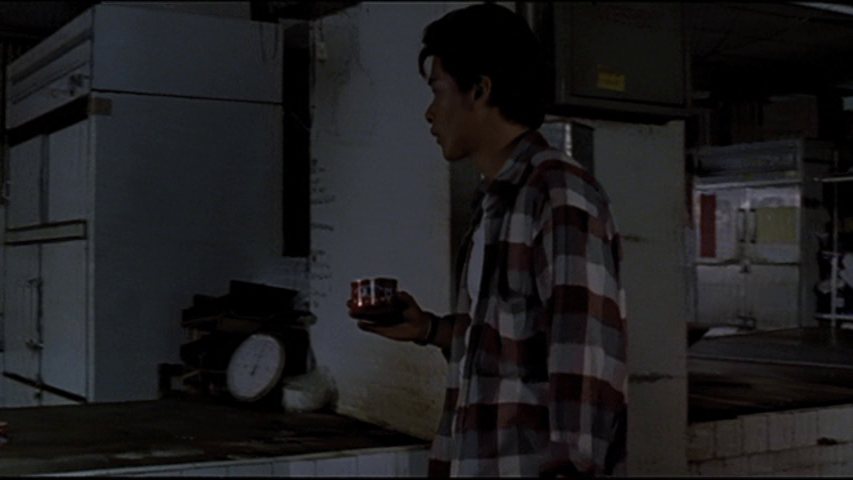
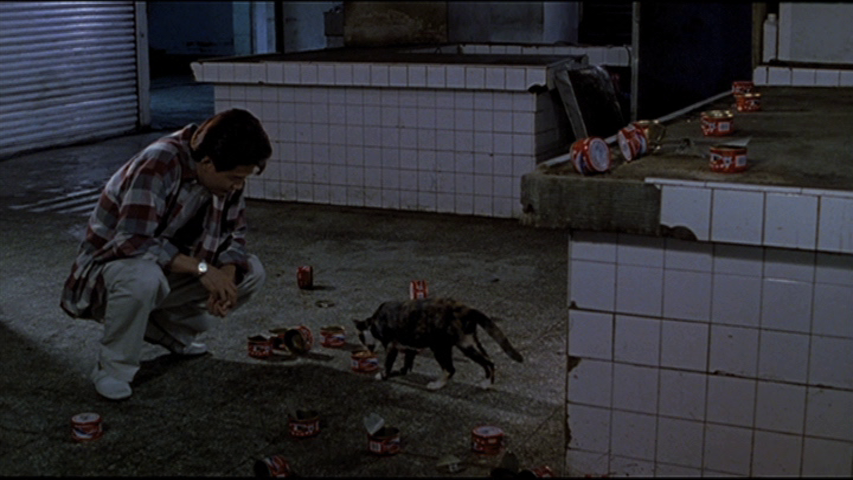
As he rounds the corner, the number of empty cans strewn about cue us in to the fact that this has been part of his daily routine for quite awhile!
Finally, clock number three appears at the end of Tien Mao’s cameo appearance as A Shopper. He asks The Man Upstairs if his store carries a particular brand of bean sauce. “They stopped making it years ago,” is the reply. The Shopper stares at what he now realizes is his last can and then wanders off in a daze in a shot which lasts nearly a minute:

In all three instances, the point seems to be that you don’t mark time in seconds, minutes, or even hours when you’re living in quarantine and have no place to go.
I’m worried that I’m making The Hole sound more depressing than it is, so I will close by note that it ends with the Man Upstairs and the Woman Downstairs together:

And a signed note from Tsai preceding the end titles which says “in the year 2000, we are grateful that we will have Grace Chang’s songs to comfort us.” This is, ultimately, a film about getting through something. Be it a century, pandemic, cross-country train journey, or just a long day of work, how better to celebrate than with a drink and a movie?
Cheers!
All original photographs in this post are by Marion Penning, aka My Loving Wife. Other entries in this series can be found here.

 The Prodigal Cinephile