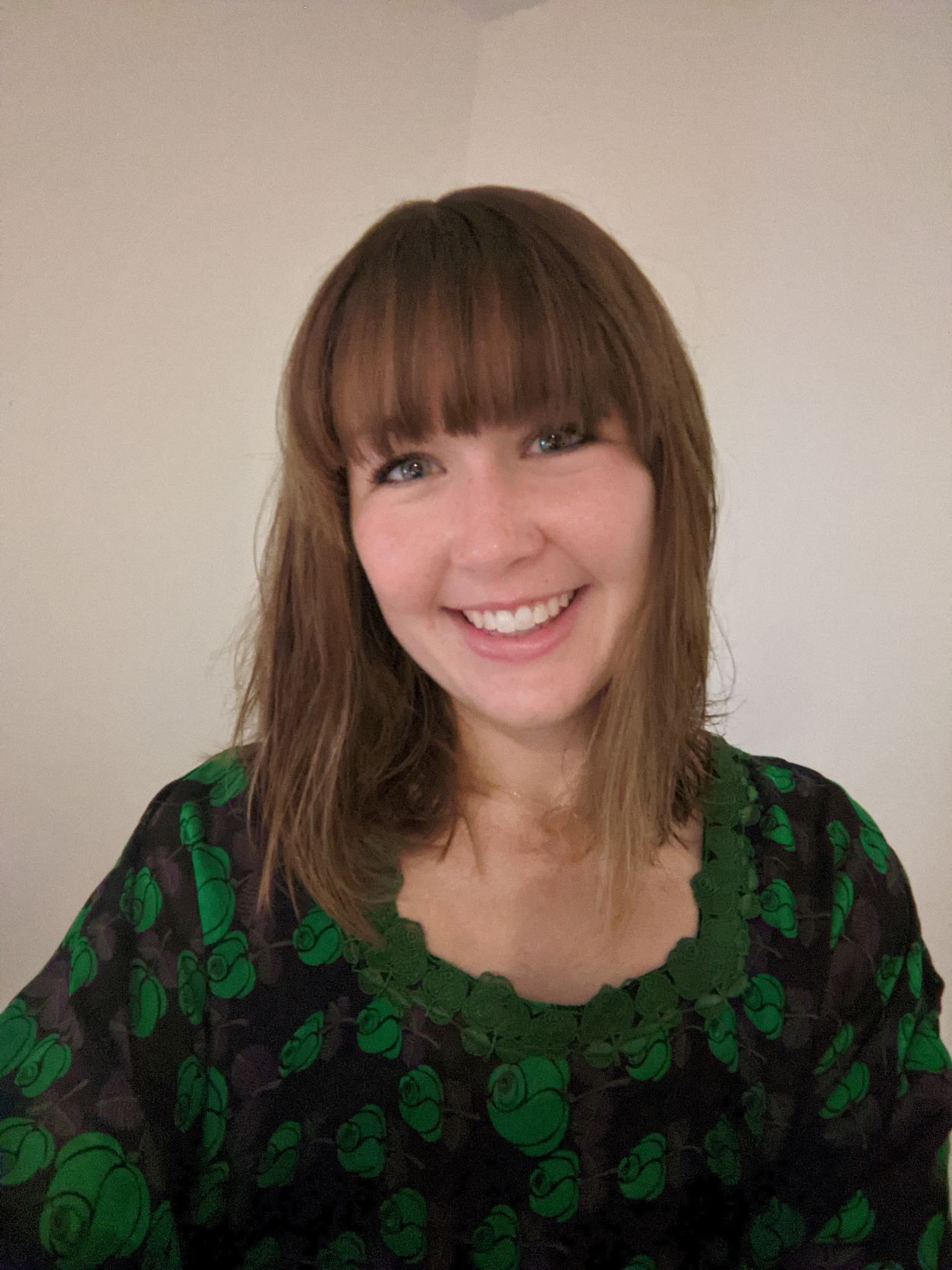
Cornell Cinema is not only Ithaca’s oldest movie theater, but also one of the best places in town to enjoy repertory fare and special events, as well as the only venue that still regularly shows films on celluloid. Director Molly Ryan was kind enough to sit down with me recently to talk about this fall’s coming attractions, why 35mm prints are worth the effort, how programming a campus cinema is like solving a mystery, and what’s on tap for the spring.
This interview has been edited for length and clarity.
Thank you so much for taking the time to talk to me today! Cornell Cinema was founded in 1970. What is it like directing an organization with this much history?
I’ve been at Cornell Cinema for almost four years now, and it’s been a really incredible ride. I had the great privilege of taking over my role from a predecessor, Mary Fessenden, who was in her role for almost 30 years, so I had a lot of learning to do and big shoes to fill. My first few years felt a bit like an experiment. I was getting to know Cornell University, getting to know Cornell Cinema itself, and also getting to know Ithaca and what plays well here, what folks respond to.
There are practices and strands that have been part of Cornell Cinema since its earliest days. One example is a proud history of presenting experimental work, artists and filmmakers pushing the boundaries of what the medium can do. It’s something that I didn’t prioritize my first couple years, but over the past year have been trying to reintroduce more regularly.
The program has always been dynamic and infused by the person who’s at the helm and their creative approach, scholarly background, or interests, as well as the interests that are palpable in the Cornell community at the time. So even though it has a deep history, it has never felt static, and it’s exciting to be part of that. People come up to me and say, “this is the specific experience that I had that has stayed with me through my whole life.” To be the recipient of those fond memories fuels the work of wanting to create that for new generations of Ithacans and Cornellians.
Do you have much direct contact with Mary or your other predecessors in this role?
Mary was incredibly generous when I first started. She sat with me for several days to say, “these are the things I think you might need to know, these are the people who are important, these are the ideas that I had but never acted on.” She still comes to Cornell Cinema to watch films and also continues to every once in a while share an idea that she thinks is inspiring. It doesn’t always work out that I can program it, but I trust her counsel for big decisions and her instincts as a programmer. I’ve only met one of the other directors of Cornell Cinema, Richard Herskowitz, but there have only been five or six, and one of my dreams is to convene that group for something like a podcast or a roundtable.
Cornell Cinema is the last local theater still regularly projecting celluloid. Your vision statement mentions a focus on exposing audiences to a variety of film formats. What does success look like, and in what direction do you see this evolving?
One of the core reasons to show films on film is that it’s presenting them as a work of art in the way their creators designed them to be experienced. It’s hard to articulate, but it’s a different feeling: there’s a way of light, a texture to the print, something to the color capacity. It’s an exciting experience. We’re very lucky at Cornell Cinema to have not only projectors that have been well-maintained and are still working, but also a head projectionist, Tim White, who apprenticed for many years and got his start in Rochester at the Little Theatre, worked at the Dryden Theatre at the George Eastman Museum for a long time, and then had a remarkable career in New York City.
What’s fun is when former staff members regale me with tales of the day where everything was on 35mm: running down to the bus depot to get print reels, and one of the reels was missing, and the film was tomorrow, what do we do? It’s a pretty recent phenomenon that this has become less common as a cinema experience, but there’s a real risk of it going away. What success looks like is having regular access to prints that have been preserved by film archives or libraries. That can be challenging for a number of reasons. One is cost. It is expensive to ship, borrow, and license films. The other is lead time. Because there are a finite number of prints that exist in the world, archives are booked up months in advance, so if you don’t know in January what you want for September, they’re likely not accepting requests anymore.
There are also limitations from a staffing perspective. We only have one person that can show 35mm prints. Pretty much as soon as students are trained up, they leave and may or may not go into a career as a projectionist. We have at least one Cornell alum who has stayed in that career path and works at Film at Lincoln Center now, but it’s a labor-intensive process. It takes a lot of time to inspect a print, test screen it, rewind it, ship it, make sure the condition has stayed the same, which is the goal of a screening. It was hard my first couple of years because I was new, so it was hard to be ahead of the game enough to request prints as often as I wanted, but I’m hoping as I continue to get settled in here, we can do more and more of that.
Do these screenings draw bigger crowds?
They tend to, yeah. We showed a new print of Fellini’s 8½, and one of the cool things about that screening is that folks were listening to the introduction, because we talked about the subtitling and how sometimes it’s washed out because of burning white text into the celluloid, and some of our audience members mentioned it in surveys at the end of the year. For me that’s what success looks like, too: being able to talk about why this practice matters.
What changes have you instituted since you came to Cornell?
I’m interested in interdisciplinary teaching and learning, and have worked to invite communities, scholars, student organizations, and departments across campus to come to Cornell Cinema to explore their ideas. We’ve had a strong response to that. I’ve also introduced at least one fun tradition: at the end of every semester, we do a mystery session. The first year there were maybe 30 or 40 people that came, but over the past couple years it’s become kind of a tradition, and I appreciate that because it is purely an exercise in trust. You arrive for the film and you don’t know what you’re going to experience until it starts. It’s been a pretty eclectic mix, but the idea is to create a memorable experience that’s a bit unexpected and introduce you to something that you didn’t know to choose. One example is last December our surprise film was The Way We Were, which is based on a novel about the author’s Cornell experience, but also Robert Redford had passed that fall, so it was a dual campus connection/tribute screening.
One of the challenges of working at a university is that a huge chunk of the population turns over each year, which is not something that your commercial and nonprofit counterparts like the Regal Ithaca Mall or Cinemapolis have to deal with. How does this shape your programming decisions?
One of the things that’s unique about Cornell Cinema is that our programming follows the academic year, which is a very different schedule than cinemas that operate all year round. Our planning timelines are also different. I’m thinking three to six, even twelve months ahead, whereas independent cinemas or commercial theaters are responding to new releases all the time. In some ways I have more flexibility because I can bring to campus a whole range of films: there’s no preset menu. But I also have less flexibility because, like publishing a syllabus, we have to have a lineup ready for the whole semester.
I try not to repeat things too often because there are so many great films in the world. The undergraduate experience is about four years, and I’ve been thinking on that as a framework: if you started as a freshman, four years later–roughly, everyone’s journey is different–there would be potential for a whole changeover in our student audience. But sometimes there are opportunities to show films on a shorter timeline than that. That’s part of my work: to not dismiss something just because it’s happened before, but instead think about new ways to revisit filmmakers and create new contexts in which they can be discovered.
How do you balance your personal curatorial interests with the range of campus and community audiences you program for?
When I started at Cornell Cinema, I was intimidated by this opportunity to get to creative direct a whole semester of film programming. I’d been used to working in arts organizations where there was a lot more vying for your own idea. I’ve tried to cultivate some of that because I think cultural spaces are more dynamic when more people’s voices and perspectives are at play. One of the joys of my role is that I get to champion films I believe in, and there’s a balance in programming things that are more popular versus more esoteric. Fortunately, at Cornell and in Ithaca we have an audience for that, and there are folks I know will show up for certain things and not for other things, and that’s great! That’s part of the vision, that there’s something for everyone. This fall is a good example because there are two films I saw at festivals last year, Levitating and Filipiñana, that astounded me in their approach, and to get to be the ones who bring them to Ithaca for the first time is exciting.
A highlight of your annual calendar is the silent film with live music at Sage Chapel each October. This year’s selection, Faust, played Cinemapolis as part of the Finger Lakes Environmental Film Festival last spring, and it was probably the most packed screening I attended. Has it been your experience that silent movies resonate with students, too?
It was a surprise, but a really exciting one, for me to arrive in Ithaca and realize what a supportive community it was for silent film. I can’t assign total responsibility to one area, but Ithaca does have a rich silent film history that my colleague Diana Riesman of the Wharton Studio Museum has been working hard to preserve, share, and deepen our understanding of over the past ten or so years. There was a silent film studio in Stewart Park, and there were movies that were being made here, most of which are lost.
The Sage Chapel screening is not a tradition I started: it’s one I inherited and have continued. We have this band called the Invincible Czars that comes back every year. That’s a unique and very Cornell experience, to watch a spooky film in this immaculate chapel. We try to do that work also beyond Sage Chapel, and this fall we’ll have an Italian film from 1917 called Malombra, and musicians Donald Sosin and Joanna Seaton will come and perform an original live score for that as well.
Thanks to Gabriela Gómez Estévez, the director of Cornell Orchestras, there’s going to be a screening with a live score of Dr. Jekyll and Mr. Hyde by composer Sheldon Mirowitz, and he’ll be with us to conduct the orchestra. It’s been a dream of mine that Cornell students could be involved in that work, so it’s exciting to see it coming to life. That’s going to be a free event at Bailey Hall in November.
You mentioned experimental film earlier–can you talk a bit more about the role it plays in your programming?
The experimental strands for me have opened opportunities to reach beyond Ithaca to folks in Rochester, Binghamton, Syracuse. It’s a thing that you’d make a trip for, partially because artist films often are more complicated to access; seeing these films in dialogue also helps you understand them differently. Cornell has a long history of artist filmmaking that’s happened in this region, but experimental filmmaking is not the primary focus of the curriculum here, so it’s been cool to also draw in these other communities.
The “Wayfaring Strangers” series caught my eye because piggybacking off a new release like The Odyssey is one of my favorite ways to get people to see older movies. How does selecting titles for a more oblique theme like this differ from a series organized, say, around an individual director or a film movement?
Thanks for calling that out because it’s one of the things I’m most excited about for the fall! With “Wayfaring Strangers,” I knew I wanted to do something with The Odyssey. Initially, I was like, “we’ll do a bunch of Greek mythology adaptations, that’ll be fun.” But that didn’t feel like the most interesting way. What I got excited about was this idea of a psychologically charged journey on foot, so I brought together art house European films that are, frankly, among my favorites I’ve ever seen and reflect this process of discomfort and self-discovery and disconnection from the world around you that I think is a core part of Odysseus’s journey. These films are not so much about getting to a place as the experience along the way. They’re all strange and wonderful and awesome. I hope people embrace the opportunity to think deeply in different directions and contexts about grappling with the modern world and your place within it, which is a timeless theme.
Do you talk to Executive Director of Cinemapolis Kate Donohue and other exhibitors in the region about what you’re all programming to avoid overlap?
One of the things that’s exciting for me about working as a film programmer in Ithaca is that there are multiple cinemas. That’s a rare thing, actually, and I’ve described it as similar to restaurants. If you have multiple options it creates areas for specialization, and I think that’s what our cinema culture does here. Because we’re on a college campus, we’re considered an educational or non-theatrical client. That means I don’t typically get first dibs on brand new releases: things like the latest Marvel movie will need to premiere at the Regal or Cinemapolis before Cornell Cinema can have access to it.
I talk to Kate regularly and think of her as a close collaborator and thought partner! I certainly am noting which films haven’t made it to Ithaca, but there’s also no harm in another chance to see something great. At the end of the semester, we’re showing a film called Sound of Falling that played at Cinemapolis last spring, but it had a short run, and it fits with another idea we’ll be exploring in November. That’s my job as a programmer: not only to come up with a list of movies that I think are neat, but also to navigate the changing landscape of film distribution, which is interesting and exciting and more complicated than most people understand. It’s kind of like a big detective hunt every semester, trying to figure out what’s coming. Who has the film? When does it make sense? Does it conflict with anything else? All of those kinds of considerations.
Are you already working on the schedule for next semester and, if so, what might we have to look forward to?
The answer is yes and no. I’m sort of bogged down by the start of the fall semester right now, but always thinking ahead. One thing I’ve been wanting to do for a while is a series on giallo, which is Italian horror psychological thrillers from the 1970s, so perhaps it’ll be that. I guess I’ve had horror on the brain, but I’ve also been thinking mid-century horror, like Universal Pictures from the 50s, could be a fun series. And then one of the things I like to do is focus on a different type of film labor. Directors and lead actors get a lot of fanfare, but I’m interested in trying to look at the body of work of a costume designer, a sound designer, a screenwriter–how could that help us think differently about the art of filmmaking? In the spring, I’m toying with the idea of either doing production design as a focus or visual effects, ideally practical effects. Stay tuned!
Previous interviews can be found here.


