Redbelt‘s first image doesn’t appear until more than a minute into an open credits sequence that, as director David Mamet explains in the commentary track included on Sony Pictures’ 2008 DVD release, was inspired by an early silent version of King Lear.

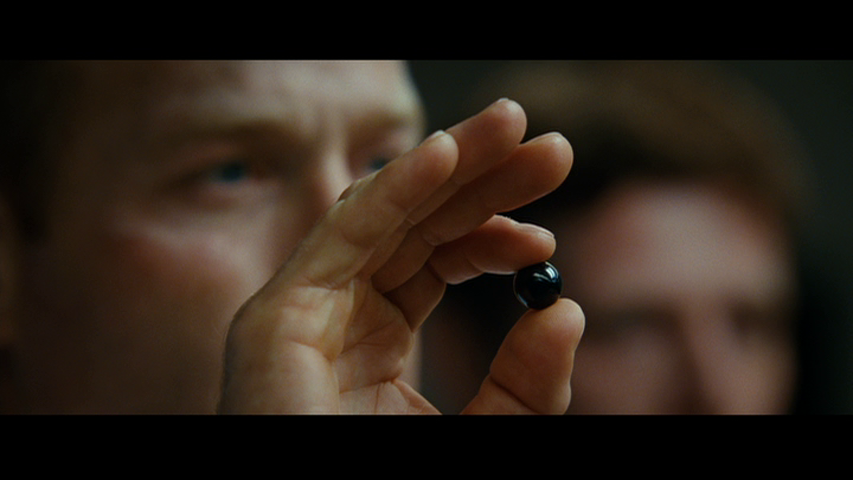
It’s a close-up of three marbles, two white and one black, resting on the concave bottom of an upturned metal cup:
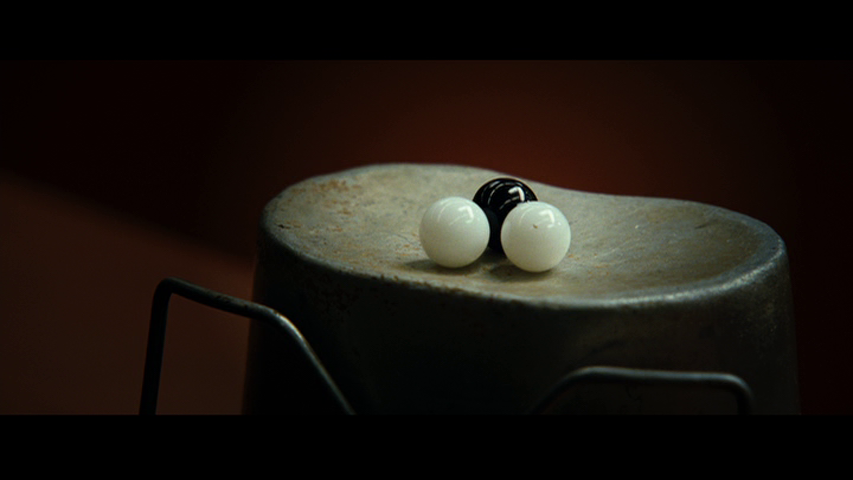
As we cut back and forth to additional title cards, a story slowly emerges in stroboscopic increments. A hand places the marbles in the cup and holds it aloft. Another reaches up and takes one.
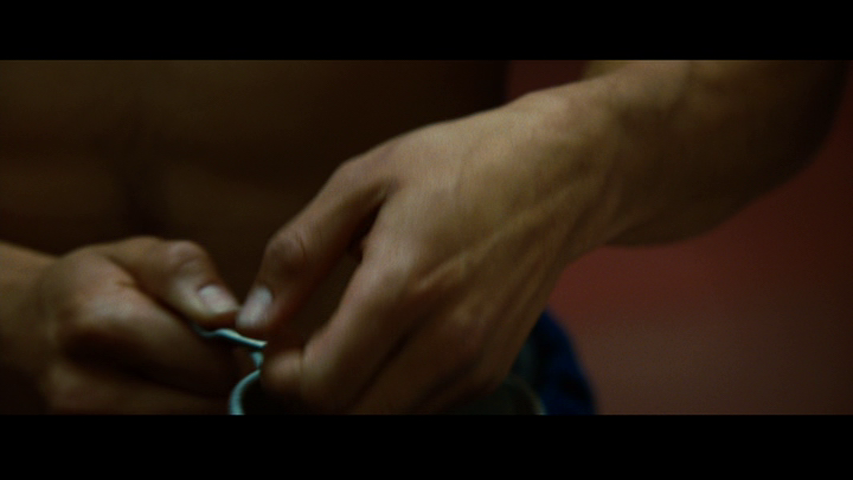
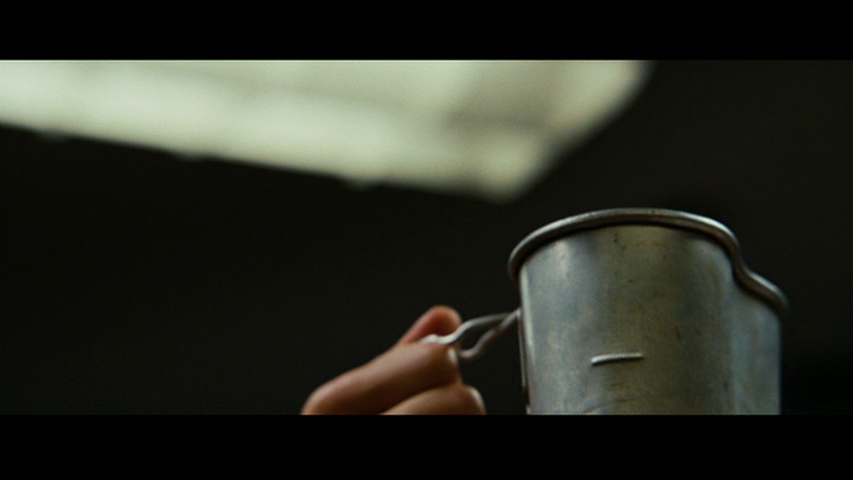
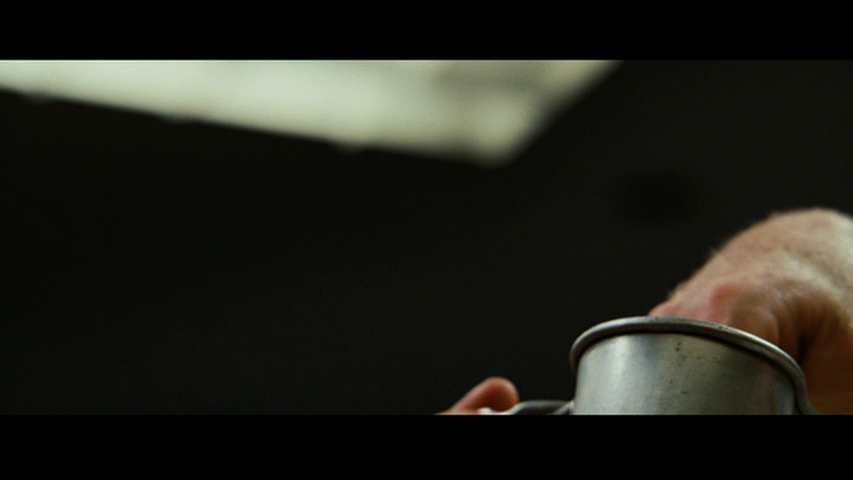
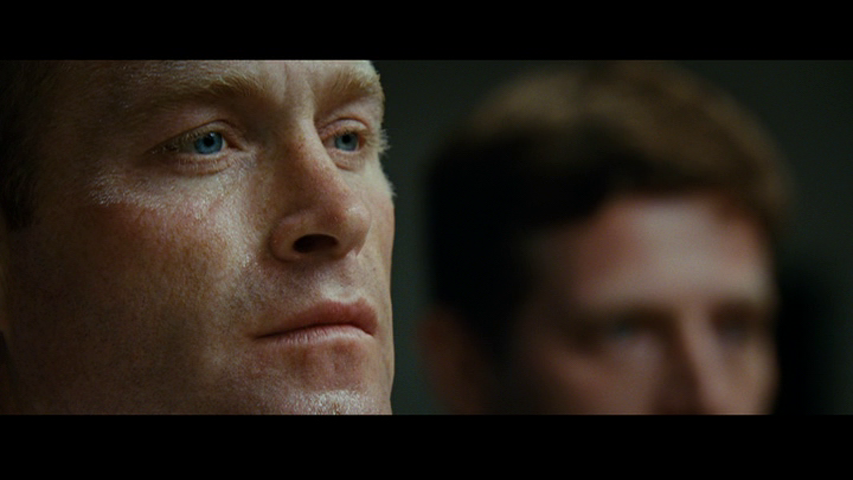
There’s a close-up of a fighter’s face, then a rack focus as he holds up his marble. It’s the black one:
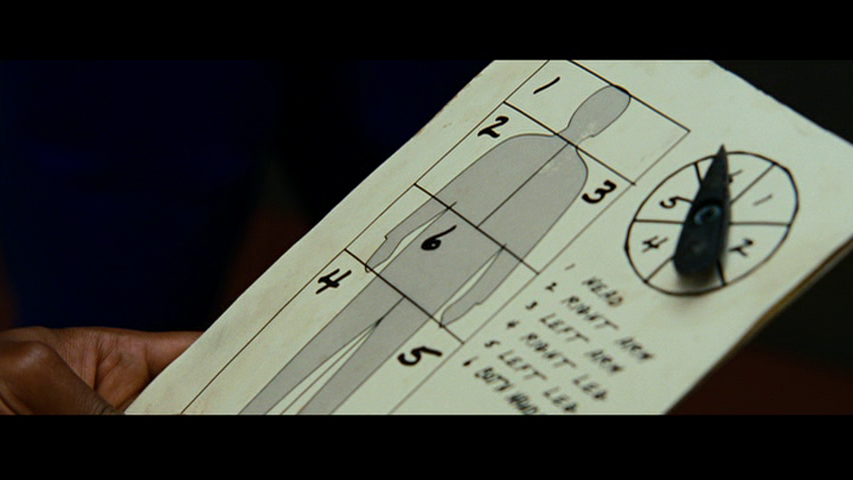
A wheel spins:
There’s a cut to one final credit:
And the action begins in earnest with our hero Mike Terry (Chiwetel Ejiofor) saying, “tie him up.”
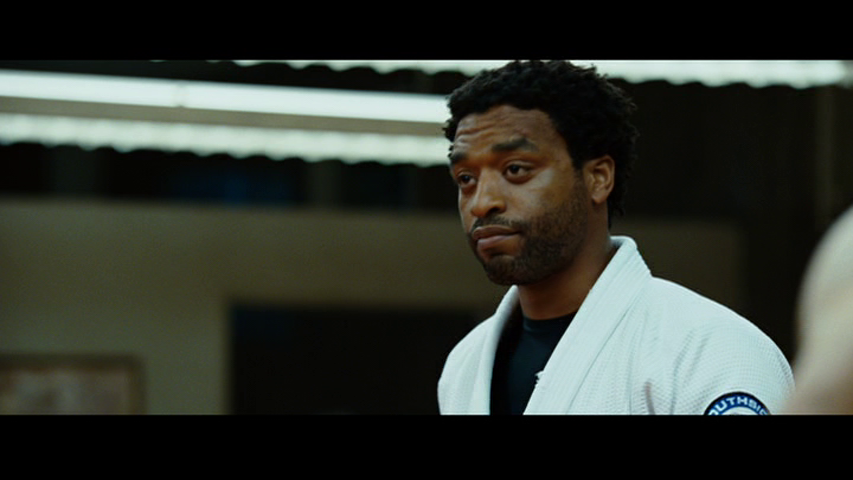
He’s the owner of a dojo, and what we’ve been watching is his signature training method. “Who imposes the terms of the battle will impose the terms of the peace,” he explains, drawing out the final word. “You think he has a handicap?” he asks his other students, referring to the one who drew the black marble. “No! The other guy has a handicap if he cannot control himself. You control yourself, you control him.” Then: “take him to court.” And thus begins the film’s first fight.
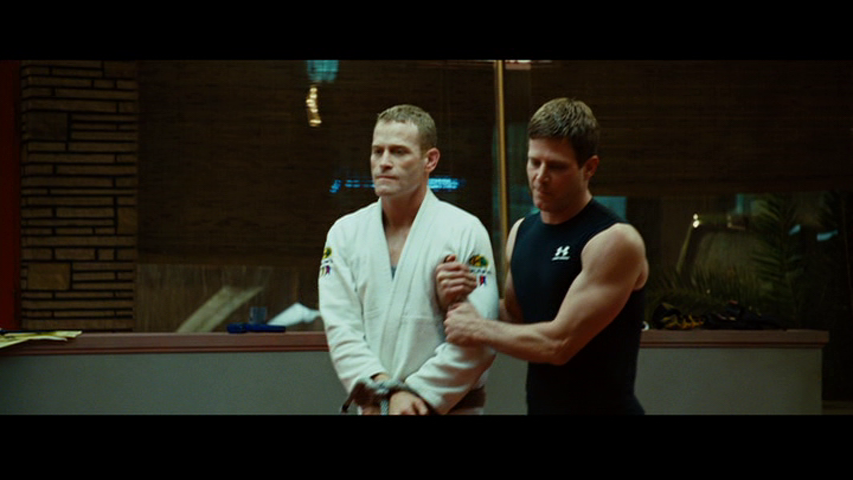
The man being “taken to court” is Officer Joe Collins (Max Martini) of the LAPD and his hands are bound because this is what it means to draw the black marble: you are given a handicap based on which number the wheel lands on, in this case six, which corresponds to the fighter’s hands. “Good!” Mike says as Officer Joe turns the situation to his advantage with a takedown.
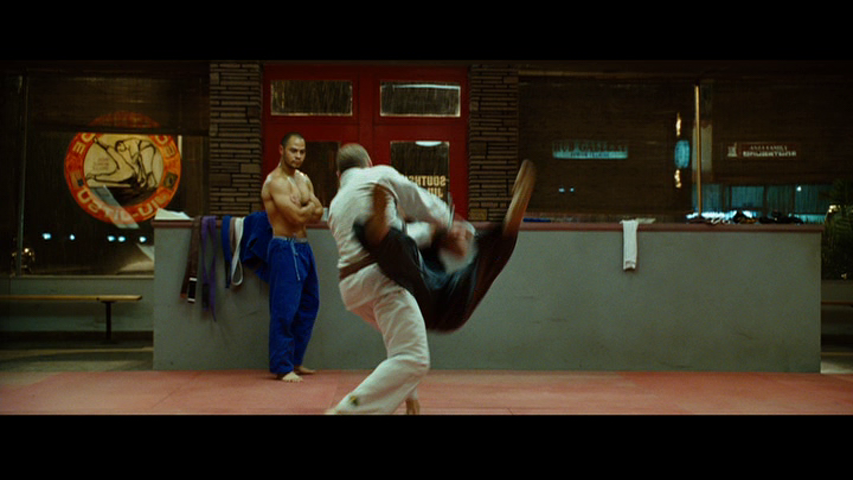
“That’s it–the fight’s over. Finish it here,” Mike continues. Joe finds himself on his back seconds later, though:
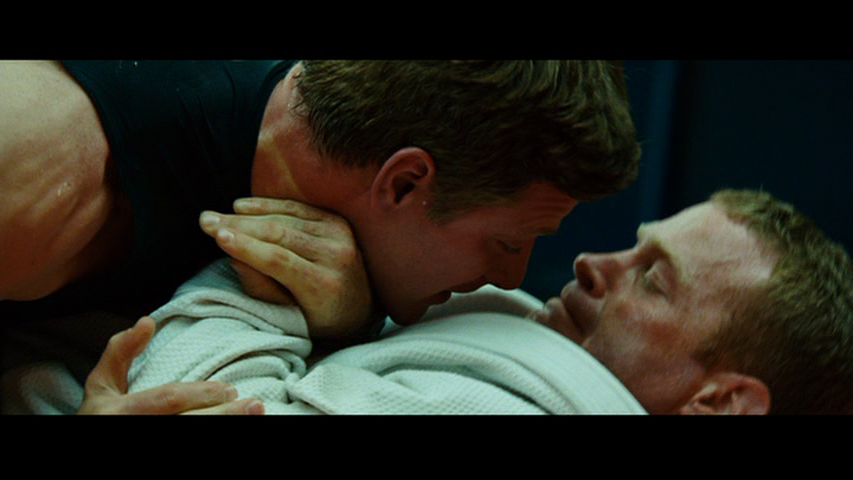
“Okay! Improve the position!” Mike shouts at him. He breaks free, but it isn’t long before he’s even worse off than before, pinned to the wall in a chokehold:
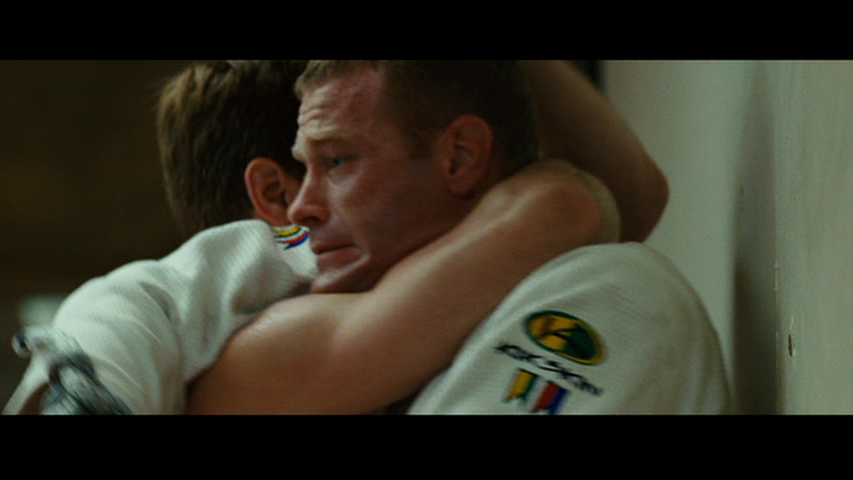
I’m writing about Redbelt because the mantra-like words that come out of Mike’s mouth next mean more to me than any other movie dialogue I’ve ever heard. “Breathe. Breathe. Breathe,” he says as we cut to a close-up of him. “You know the escape.”
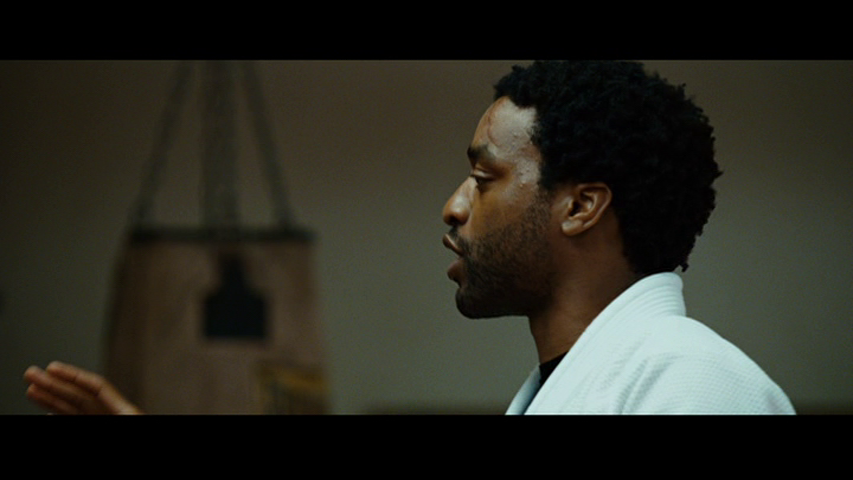
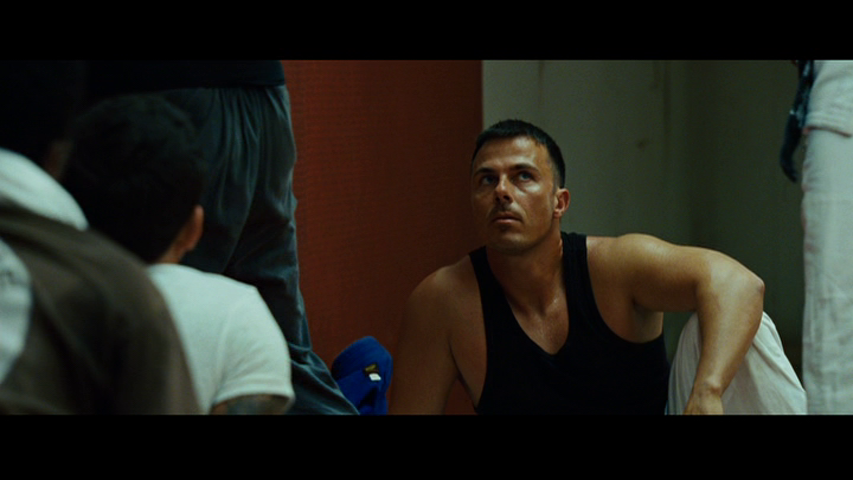
“You know the escape!” he repeats. “Breathe. Breathe. There’s always an escape.” We cut to a reaction shot of another student (Tino Struckmann) looking up at his teacher:
Then back to Mike as he repeats, “you know the escape. You know the escape. Breathe! There’s always an escape.”
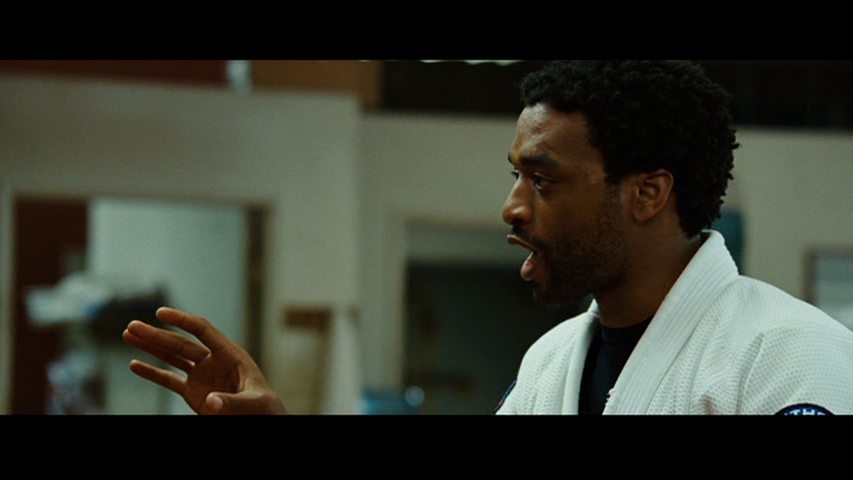
But as we cut back to Officer Joe he grunts “passing out” and Mike taps the other fighter on the shoulder to end the fight. “Great class!” he says, smiling at his assistant Snowflake (Jose Pablo Cantillo), to whom he also nods ever so slightly:
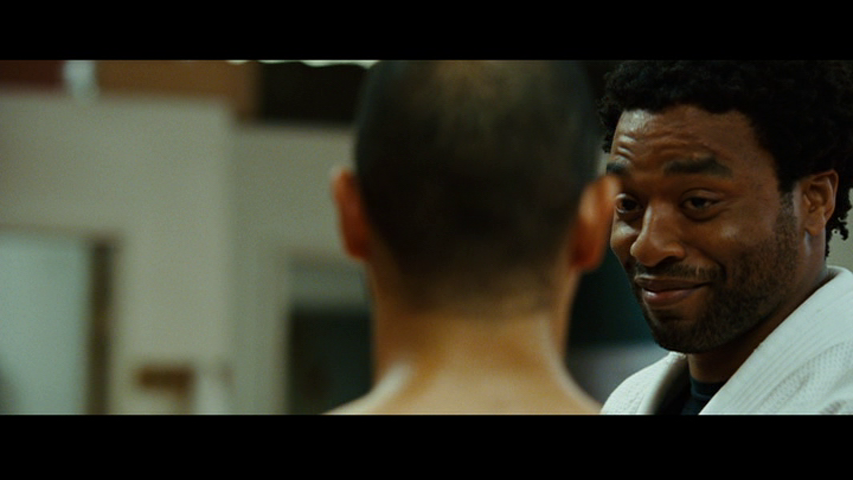
As Officer Joe begins to walk away, Mike tells him to stick around. “You don’t fight your way clear?” he asks. “There is no situation you cannot escape from,” he reiterates firmly. “You know the escape. You know the escape. Show it to me.”
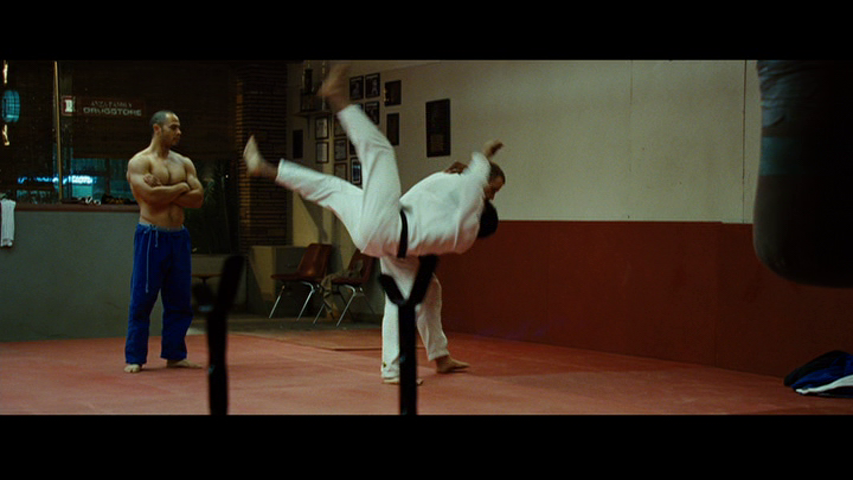
“Good!” Mike cries from flat on his back when he does. “You know the escape, you just got tired. What’s the lesson?” he asks. “Don’t get tired,” Officer Joe says sheepishly. “Let the other guy get tired,” Mike responds, thumping his student on the chest.
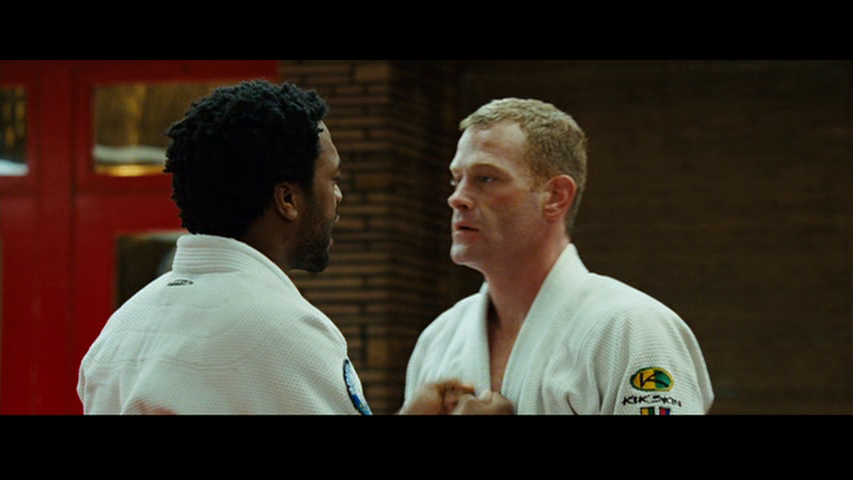
Sean Axmaker called Redbelt “a complete redefinition of the kind of film that Jean-Claude Van Damme cranked out in the eighties” when it was released on DVD in 2008, connecting it to Bloodsport, a favorite from my youth. Writing for Slant Magazine the same year, Nick Schager compared it to a formative text from my college years, Le Samouraï, all of which is to acknowledge that writer-director David Mamet and company are tilling fertile ground for me personally. That’s hardly a guarantee of success, though, and while some moments–like the explanation of the purpose of the handicaps (“you never know when you may be disabled”) shoehorned into the screenplay later–undeniably register as more silly than serious:
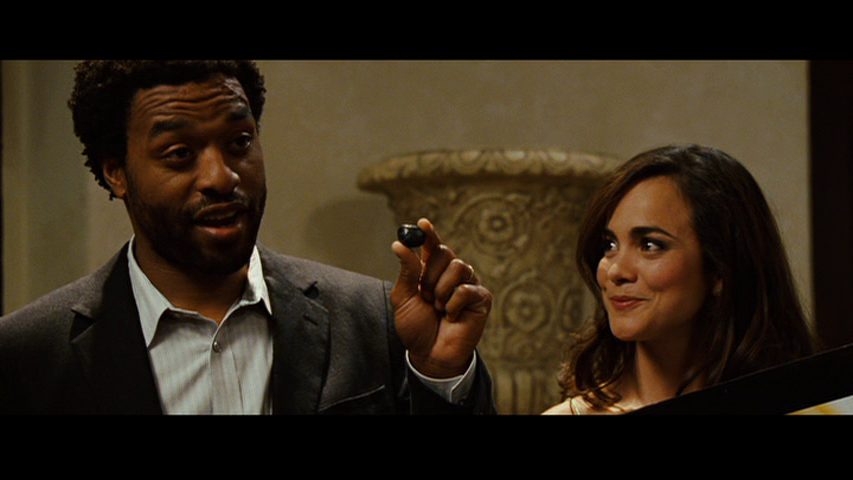
Redbelt earns the ending it ultimately rewards Mike with because we recognize in no uncertain terms that it isn’t a “happy” one. As Axmaker notes, he isn’t just a last bastion of nobility standing strong against a corrupt society, “he is also an idealist with little concern for taking care of himself and his family, financially speaking, in a material world.” His wife Sondra, the woman smiling at him in the image above, cannot perhaps be forgiven for betraying him, but it’s easy to see why she wouldn’t want to continue supporting him at the expense of her own business. More importantly, there’s one person who isn’t watching when Mike’s mentor, “the Professor” João Moro (Dan Inosanto), presents him with the eponymous red belt in the film’s final scene: Officer Joe, who committed suicide 35 minutes of screen time earlier to avoid bringing dishonor on the academy.
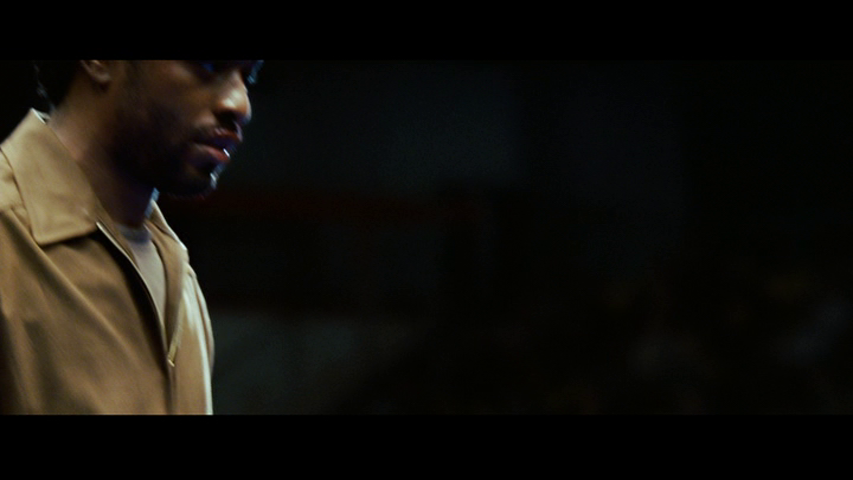
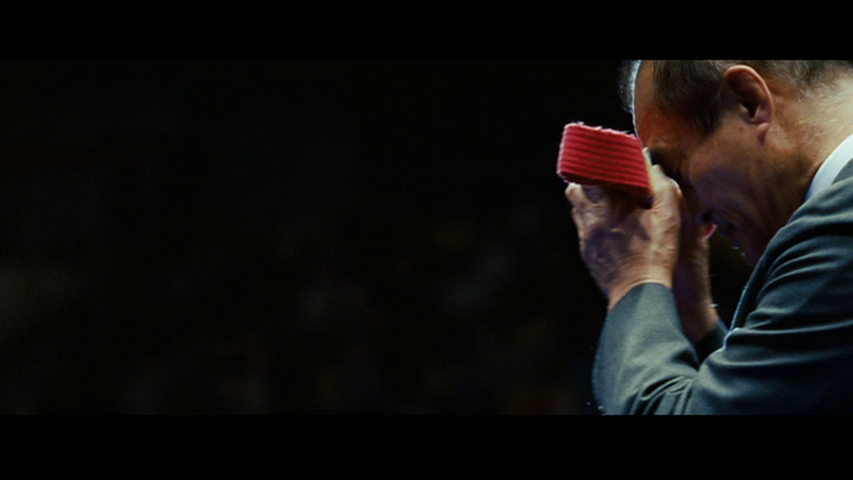
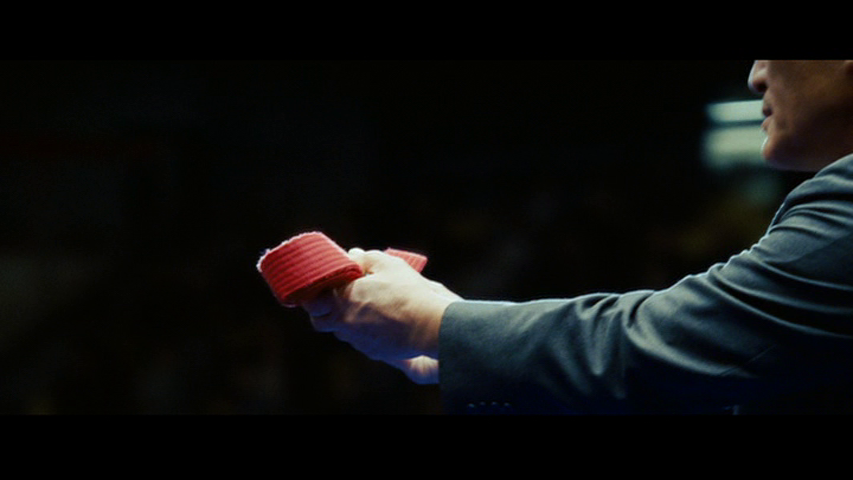
As Mamet explains in the DVD commentary track, the journey Mike’s on isn’t one toward vindication so much as fully understanding the stakes he’s been playing all along:
What it hid, in him, is the idea of “I don’t want to leave the academy. In the academy, I control everything. I get to know who fights who, whatever I say, my word is law.” It’s really easy to be pure in the academy. But when you get into the wider world where people are making up their own rules, it’s much, much harder to be pure. And what happens to him, Mike Terry, is he gets out into the wider world and he kind of falls off the wagon and he decides to quit. So he’s got to teach himself the lesson he’s trying to teach others, which is never give up.
The methods Mike learned from the Professor and has spent his life passing on to others really do work: there is always an escape. If you know you have a good plan, just breathe. Breathe. Improve the position. You know the escape! But also–and this is the hard part–never forget that your road will end someday no matter what you do because there’s one opponent who never gets tired: Father Time.

 The Prodigal Cinephile