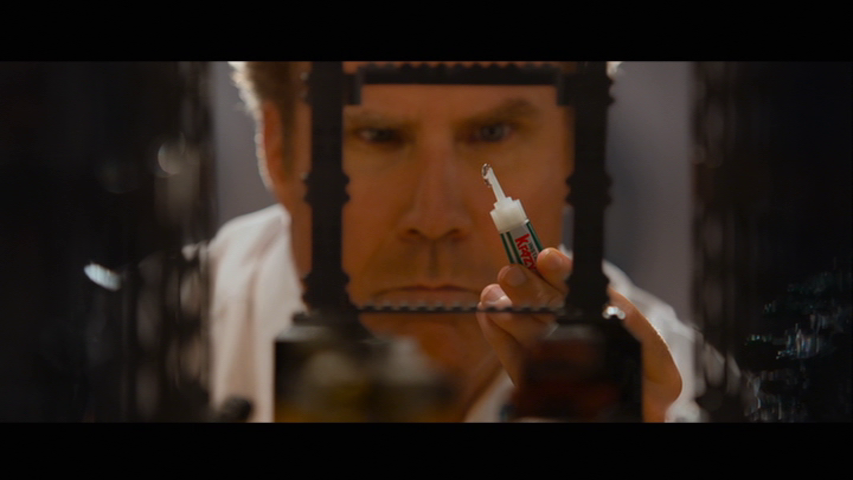
The Lego Movie obviously exists to sell Legos, specifically sets based on high-value licensed IP like Batman and Lord of the Rings. This may not be such a noble goal, but as a parent I appreciate the pitch it uses. If my kids want to play with Gandalf but don’t have a Gandalf toy, they’ll make one out of whatever materials at hand, even if it takes all day. Which is awesome! But they’ll happily level up if you *give* them a Gandalf toy and spend that same amount of time creating a balrog or Saruman to fight him or turning their bedroom into a replica of the Shire. You might believe one of these two forms of creativity is superior to the other, but *I* don’t and I agree that one of the cool things about a Lego set is that it accommodates both: you can build what’s pictured on the box, or you can turn the minifigures that come with it loose in an entirely different world.
Most films come with the equivalents of box art and instructions and it’s silly to pretend otherwise. Cast and director interviews, posters, press notes, and previews all tell us how we’re meant to read the work, as do aspects of the text itself like dialogue, production design, and shot selection. To say that a movie appears or (even worse) claims to be doing one thing but is in fact doing another is to shoulder the burden of proof. If you don’t show your work, you can’t expect people to take you seriously. But in the same way that you can always take a set of Legos and make something else with it, so too do viewers reserve the right to do what they please with whatever they watch. It isn’t CRITICISM, though, unless you account for all the pieces supplied by the film, its context, and its creators.
So: yes to this horror movie is more entertaining if you think of it as a comedy–as long as you explain why and ideally what it means! This is the same as arguing that you can make what’s on the box if you want, but what’s on the box is super lame and you can use the pieces that come in it to make this other really cool thing instead. Absolutely yes to spackling a crack in narrative logic. And potentially yes as well to suggesting that Happy Gilmore 2 is a Rosetta Stone for understanding the mindset of American conservatives even if you disagree with the politics of the piece and its writer, provided it has explanatory value. But no, no, no to both stridently insisting on a One True Interpretation and completely ignoring the intent of the authors, even if we don’t need to treat their word as gospel. Criticism isn’t about either following a manual or just pretending you got what you really wanted for Christmas: it’s about putting whatever actually was under the tree through its paces and maybe pushing the envelope a bit.
Previous posts about film criticism can be found here.

 The Prodigal Cinephile